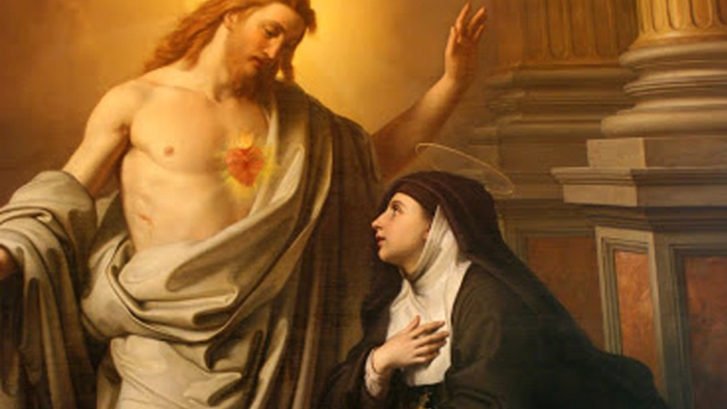
Saint Margaret Mary, a soul of divine predilection, was born at Terreau in Burgundy, on July 22, 1647. During her infancy she showed a wonderfully sensitive revulsion to the very idea of sin, and while still a young child always recited the entire Rosary every day. She lost her father at the age of eight years, and her mother placed her with the Poor Clares. She was often sick and for four years was bedridden, losing almost entirely the use of her members. She made a vow to Our Lady to become one of Her daughters if She cured her, and was suddenly entirely well.
She was of a happy temperament and her heart became easily attached to human affections. God began her purification when the charge of her mother's house was confided to persons who reduced the family to a sort of servitude. Margaret Mary turned to God for strength and consolation when she was accused of various crimes she had not committed. In short, the Saint of the Sacred Heart learned to suffer for Christ, with patience, what innocence can suffer in such situations.
She desired to be a religious, but her mother could not bear to hear a word of that desire. Finally God came to her assistance through a Franciscan priest, who told her brother that he would answer to God for the vocation of his sister. In 1671 she entered the Order of the Visitation of Mary, at Paray-le-Monial, and was professed the following year. She followed all the practices of the monastery in perfect obedience, spending as much time as she could in the chapel with her Lord. After sanctifying her by many trials, Jesus appeared to her in numerous visions, displaying to her His Sacred Heart, sometimes burning as a furnace, and sometimes torn and bleeding on account of the coldness and sins of men. "Behold this Heart which has so loved men, and been so little loved by them in return!"
In 1675, she was told by Our Lord that she, with the aid of Father Claude de la Colombiere of the Society of Jesus, was to be His instrument for instituting the feast of the Sacred Heart, and for spreading that devotion everywhere. This was not accomplished without great sufferings. The good Jesuit did all in his power to make known and loved the Heart of Jesus, but when it seemed all obstacles were about to disappear, his credit diminished, and his Superiors sent him to England. He returned to France exhausted and soon died.
Saint Margaret Mary was for a time Mistress of Novices, and in this office exercised a true apostolate, working to win for the Heart of Jesus the hearts of the young girls who were aspiring to religious consecration. She was persecuted when she sent one of them home, not having seen in her the indications of a genuine vocation; the family attempted to have her deposed. She remained in the charge but was deprived of Holy Communion on the First Friday of the month. This practice was one of Our Lord's specific requests; for souls who communicate nine First Fridays in succession, He promised the most wonderful graces. The demons also persecuted her visibly; nonetheless her entire Community was finally won over to devotion to the Divine Heart.
(Little Pictorial Lives of the Saints, 1894)
LAST-MODIFIED:20221020T212324Z SEQUENCE:605518 X-ACCESS:1 X-HITS:139 X-COLOR:f0b80e X-SHOW-END-TIME:1 END:VEVENT BEGIN:VEVENT DTSTART;VALUE=DATE:20221024 DTEND;VALUE=DATE:20221025 UID:3E52786E-33DB-4038-B034-B0318BD50C81 SUMMARY:St. Raphael Archangel CREATED:20221013T211126Z DTSTAMP:20221013T211126Z URL:https://www.stpaulsweymouth.org/component/dpcalendar/event/144?calid=13 DESCRIPTION:St. Raphael, Archangel\N\NThis holy Archangel, sent by the Almighty to Tobias, himself explained who he was, in the following words: "I am the angel Raphael, one of the seven who stand before the Lord." Several authors maintain that he is one of those heavenly spirits who constitute the first and highest choir, and are called Seraphim. He is generally called an Archangel like St. Michael and St. Gabriel. Our knowledge of him is taken from the book of Tobias, the substance of which is as follows : Tobias, one of the captive Jews at Ninive, a good and faithful servant of God, when old and blind, remembered that he had lent a sum of money to a relative named Gabelus, living in the city of Rages, in Media, and wished to send his son, the young Tobias, to collect it. But unwilling to send him alone, he bade him go and seek a travelling companion to bring him safely to the place of his destination and back again. Hardly had the youth gone into the streets of Ninive, where he lived, to seek one, when he saw a beautiful young man standing girded as if ready to set out on a journey. This youth, as will be seen, was St. Raphael. Tobias asked him who he was and if he knew the road to Rages. Raphael answered that he was the son of the great Ananias, and knew well the way to Rages, and had made his abode with Gabelus, an inhabitant of that city. Tobias rejoiced and told it to his parents, who called the youth before them, and asked him whether he would conduct their son to Rages and back again for fair wages. Raphael consented, promising to do as they desired. The two youths then set out on their journey. After the first day's march, Tobias rested on the bank of the river Tigris, and when he went to wash his feet in this river, an immense fish came suddenly up to devour him. When he called to his companion for help, Raphael told him to seize the fish courageously and draw him to land. Tobias did so ; after which Raphael told him to open the fish, take out the entrails, and keep the heart, liver and gall, as useful medicines. They continued their journey, and took lodgings in the house of Raguel, who was of the same tribe as Tobias and who had an only daughter, named Sara, whom Raphael advised Tobias to take to wife. Tobias feared to do this, as he had heard that Sara had already been given in marriage to seven husbands, all of whom had been killed by the devil. Raphael, however, said: "Hear me, and I will tell thee who they are, over whom the devil can prevail. It is they who in such manner receive matrimony, as to shut out God from their heart and mind." Tobias exactly followed the directions of his holy companion, and remained unharmed. From how many evils would persons about to be married be saved if they had first received and followed suitable instructions from their pastors who, in regard to them, take the place of Raphael, advising them what they should do in order to enter the state of holy matrimony properly prepared. They should purify their heart by a good general confession and be married, not like heathens in the darkness of night, but at mass receiving the blessing of the priest at the altar. After marriage they should live as becomes the marriage state, faithfully fulfilling the admonition of St. Paul, sanctifying each other and taking care that their children shall become without delay children of God through baptism. Indeed how much displeased must be the guardian Angels of new-born children at seeing them, through the neglect of their parents to have them baptized in time, left in the power of the devil, in original sin and in danger of eternal perdition. While Tobias remained at the house of Raguel, his heavenly companion went to Rages, demanded and received without any hesitation, the borrowed money from Gabelus, returned to Raguel and having made a short stay there, accompanied Tobias back to his home at Ninive.Anna, Tobias' mother, had meanwhile, grieved very much at the long absence of her son. She daily went to a high mountain and looked into the distance, to see whether her son was coming; and when, on the day of his return, she saw him from afar, she ran to her husband and informed him of his son's coming. Being blind, Tobias gave his hand to a servant and went to meet his son, as also did Anna. Both fell on his neck, kissed him and wept for joy. Having all entered their house, they adored the Almighty and gave due thanks to Him for the happy issue of the journey. Tobias, the son, then took some of the gall of the fish, and anointed his father's eyes, as the Angel Raphael had told him to do before they had reached the house; and immediately the blind father recovered his sight. Indescribably great was the joy of the father, the mother, the whole household and neighbor hood. Having given humble thanks to God for this new grace, Tobias told his parents how many benefits he had received from his travelling companion. "He conducted me and brought me safe back again," said he; "he received the money from Gabelus, he caused me to obtain my wife, and he chased from her the evil spirits and gave joy to her parents. Myself he delivered from being devoured by the fish; thee also, father hath he made to see the light of heaven, and we are filled with all good things through him. What can we give him sufficient for all these?" Before his father could answer, he begged him to give so faithful a companion, as recompense, one-half of all the things they had brought. Tobias acceded to this proposal of his son without hesitation, and calling the Angel, they both begged him to accept one-half of all the things they had brought, as a recompense for his services. But the Angel said to them: "Bless ye the God of heaven; give glory to Him in the sight of all that live; because he hath showed mercy to you. For it is good to hide the secret of a king; but honorable to confess and reveal the works of God. Prayer is good with fasting and alms, more than to lay up treasures of gold; for alms delivereth from death, and the same is that which purgeth away sin and maketh us to find mercy and life everlasting. But they that commit sin and iniquity, are enemies to their own soul. When thou didst pray with tears, and didst bury the dead, and didst leave thy dinner, and hide the dead by day in thy house, and bury them by night, I offered thy prayers to the Lord. And because thou wast acceptable to God, it was necessary that temptation should prove thee. And now the Lord hath sent me to heal thee, and to deliver Sara thy son's wife from the devil. For I am the Angel Raphael, one of the seven who stand before the Lord." Having thus spoken, the holy Archangel was silent, but Tobias and his son were seized with fear, and fell trembling, with their faces to the ground. The Angel cheered them, with the words: "Peace be to you; fear not. For when I was with you, it was by the will of God: bless ye Him, and sing praises unto Him. It is time now that I return to him that sent me: but bless ye God, and publish all his wonderful works." Having said these words, he vanished from their sight. They, however, lay prostrate on the ground for three hours, partly from fear, partly in wonder at the great goodness of God who had sent so high a prince of heaven to protect, comfort and help them. At length, having overcome their fear, they repeated their thanks to God, and announced everywhere, the benefits He had bestowed on them. The beautiful hymn of praise which Tobias composed on that occasion is to be found in Holy Writ. From this event, as true as it is wonderful, several historians, not without reason, conclude that the intercession of St. Raphael ought to be invoked by those who are either troubled or tempted by the Evil One, who are blind, or otherwise infirm, or who go on a journey. The name, Raphael, means "the remedy, or the physician of God," and shows that this holy Angel assists particularly those who are sick, either in soul or body. The true Church teaches those who intend to undertake a journey to pray: "May the Angel Raphael be with us on our way!" from which we infer, that he is the especial patron of all travellers.\NPRACTICAL CONSIDERATIONS.\NFrom the instructions which St. Raphael gave to the old as well as to the young Tobias, learn, first, that we must give thanks to God and praise Him for all benefits received; and learn, secondly, how agreeable to the Almighty and how useful to men are prayer, fasting and alms. Whoever practises these, is more happy than he who gathers the greatest treasures of gold and silver; for gold and silver can save no one from eternal death, cleanse him from sin, or open heaven to him; while, according to the angel's words, alms and other good works cleanse and save man.\N \NLearn also that the good works done by men are offered by the holy Angels to the Almighty, and are not lost, though they are not immediately followed by a reward. Lastly, understand well why the pious Tobias was visited with blindness. "Because thou wast acceptable to God, it was necessary that temptation should prove thee," said St. Raphael. Hence, it is no sign that we are forsaken by God, or that we are not in favor with Him, when we have to suffer, although we lead a pious life. " The misfortunes which assail the pious, are a proof of virtue, and not a sign of divine anger," says St. Gregory.\N \N(by Father Francis Xavier Weninger, 1876) X-ALT-DESC;FMTTYPE=text/html: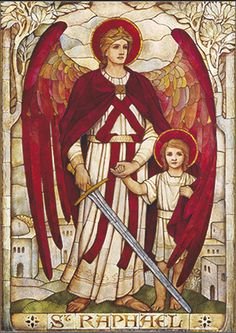
PRACTICAL CONSIDERATIONS.
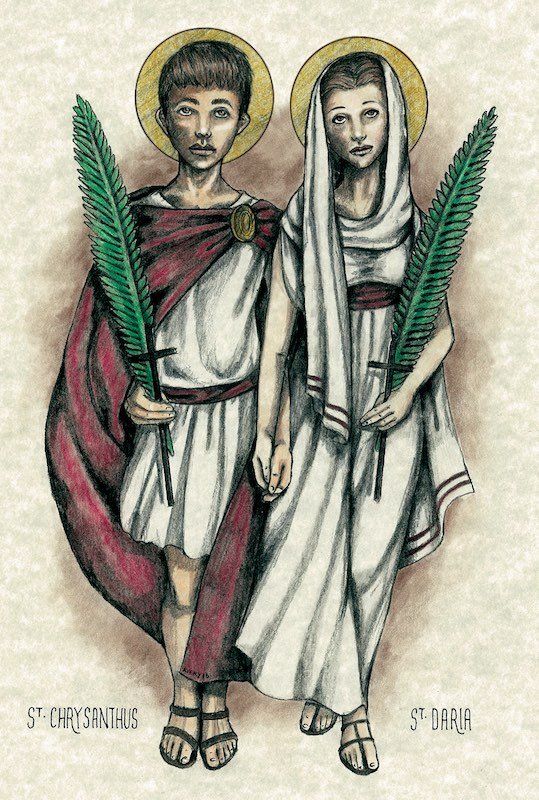
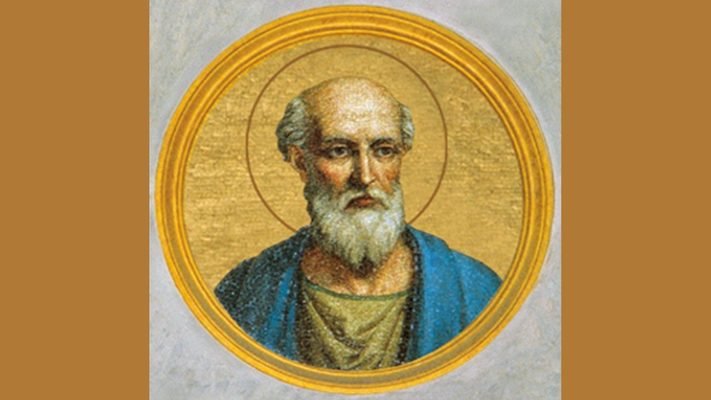
Saint Evaristus succeeded Saint Anacletus on the throne of Saint Peter, elected during the second general persecution, under the reign of Domitian. That emperor no doubt did not know that the Christian pontificate was being perpetuated in the shadows of the catacombs. The text of the Liber Pontificalis, says of the new pope:
Evaristus, born in Greece of a Jewish father named Juda, originally from the city of Bethlehem, reigned for thirteen years, six months and two days, under the reigns of Domitian, Nerva and Trajan, from the Consulate of Valens and Veter (96) until that of Gallus and Bradua (108). This pontiff divided among the priests the titles of the city of Rome. By a constitution he established seven deacons who were to assist the bishop and serve as authentic witnesses for him. During the three ordinations which he conducted in the month of December, he promoted six priests, two deacons and five bishops, destined for various churches. Evaristus received the crown of martyrdom. He was buried near the body of Blessed Peter in the Vatican, October 25, in 108.
It was at the same time as Saint Ignatius, the illustrious bishop of Antioch, that Pope Saint Evaristus gave his life by martyrdom. The acts of his martyrdom are lost, but we perceive that the same faith, heroism and devotion united the churches of the East and of the West. He is often represented with a sword because he was decapitated, or with a crib, because it is believed that he was born in Bethlehem, from which his father migrated.
Reflection: The disciples of the apostles, by assiduous meditation on heavenly things, were so rapt by foreshadowings of the life to come, that they seemed no longer to inhabit this world. If Christians esteem and set their hearts on earthly goods and lose sight of eternity, they are no longer animated by the spirit of the primitive Saints and have become children of this world, slaves to its vanities and to their own irregular passions. If we do not correct this disorder of our heart and conform our interior life, with its decisions and propensities, to the spirit of Christ, we cannot be heirs to His promises.
(Les Petits Bollandistes: Vies des Saints, by Msgr. Paul Guérin (Bloud et Barral: Paris, 1882), Vol. 12; Little Pictorial Lives of the Saints, a compilation based on Butler's Lives of the Saints and other sources by John Gilmary Shea, Benziger Brothers: New York, 1894)
LAST-MODIFIED:20221020T214143Z SEQUENCE:606617 X-ACCESS:1 X-HITS:160 X-COLOR:f0b80e X-SHOW-END-TIME:1 END:VEVENT BEGIN:VEVENT DTSTART;VALUE=DATE:20221028 DTEND;VALUE=DATE:20221029 UID:B3E68F66-E304-475B-9E02-AE2C94ED024A SUMMARY:Sts Simon & Jude Apostles CREATED:20221013T211126Z DTSTAMP:20221013T211126Z URL:https://www.stpaulsweymouth.org/component/dpcalendar/event/169?calid=13 DESCRIPTION:Sts. Simon & Jude, Apostles\N\NSimon was a simple Galilean, a brother of Jesus, as the ancients called one's close relatives — aunts, uncles, first cousins; he was one of the Saviour's four first cousins, with James the Less, Jude and Joseph, all sons of Mary, the wife of Alpheus, or Cleophas, either name being a derivative of the Aramaic Chalphai.The latter was the brother of Saint Joseph, according to tradition. All the sons of this family were raised at Nazareth near the Holy Family. (See the Gospel of Saint Matthew 13:53-58.) Simon, Jude and James were called by Our Lord to be Apostles, pillars of His Church, and Joseph the Just was His loyal disciple.\NSaint Simon the Zealot or the Zealous, was the name this Apostle bore among the twelve. He preached in Egypt, Mauritania (Spain), and Lybia, leaving behind him the fertile hills of Galilee, where he had been engaged in the healthful cultivation of the vineyards and olive gardens. He later rejoined his brother, Saint Jude, in Persia, where they labored and died together. At first they were respected by the king, for they had manifested power over two ferocious tigers who had terrorized the land. With the king, sixty thousand Persians became Christians, and churches rose over the ruins of the idolatrous temples.\NBut the ancient enemy, who never sleeps, rose up, and when the two went elsewhere the pagans commanded them to sacrifice to the sun. Both Apostles, just before that time, had seen Our Lord amid His Angels. Simon said to Jude, One of the Angels said to me, I will take you out of the temple and bring the building down upon their heads. I answered him, Let it not be so; perhaps some of them will be converted. They prayed for mercy for the people and offered their lives to God. Saint Simon told the crowd that their gods were only demons, and ordered them to come out of the statues, which they did, revealing themselves under hideous forms. But the idolaters fell on the Apostles and massacred them, while they blessed God and prayed for their murderers.\NSaint Jude has left us a short but powerful epistle, written after the death of his brother James, bishop of Jerusalem, and addressed to the new Christians being tempted by false brethren and heretics.\NReflection: Zeal is an ardent love which makes a man fearless in defense of God's honor, and earnest to make known the truth at all costs. If we desire to be children of the Saints, we must be zealous for the Faith.\N(Vie des Saints pour tous les jours de l'année, by Abbé L. Jaud, Mame: Tours, 1950) X-ALT-DESC;FMTTYPE=text/html: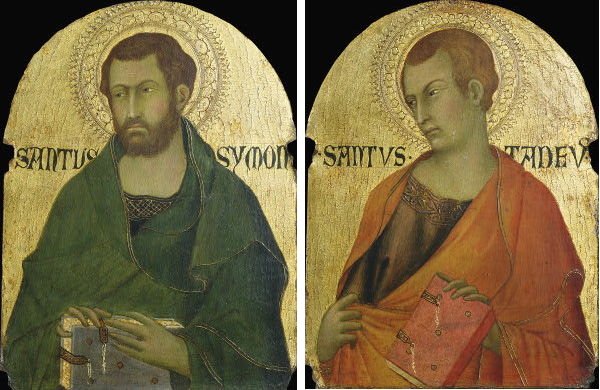
Simon was a simple Galilean, a brother of Jesus, as the ancients called one's close relatives — aunts, uncles, first cousins; he was one of the Saviour's four first cousins, with James the Less, Jude and Joseph, all sons of Mary, the wife of Alpheus, or Cleophas, either name being a derivative of the Aramaic Chalphai.The latter was the brother of Saint Joseph, according to tradition. All the sons of this family were raised at Nazareth near the Holy Family. (See the Gospel of Saint Matthew 13:53-58.) Simon, Jude and James were called by Our Lord to be Apostles, pillars of His Church, and Joseph the Just was His loyal disciple.
Saint Simon the Zealot or the Zealous, was the name this Apostle bore among the twelve. He preached in Egypt, Mauritania (Spain), and Lybia, leaving behind him the fertile hills of Galilee, where he had been engaged in the healthful cultivation of the vineyards and olive gardens. He later rejoined his brother, Saint Jude, in Persia, where they labored and died together. At first they were respected by the king, for they had manifested power over two ferocious tigers who had terrorized the land. With the king, sixty thousand Persians became Christians, and churches rose over the ruins of the idolatrous temples.
But the ancient enemy, who never sleeps, rose up, and when the two went elsewhere the pagans commanded them to sacrifice to the sun. Both Apostles, just before that time, had seen Our Lord amid His Angels. Simon said to Jude, One of the Angels said to me, I will take you out of the temple and bring the building down upon their heads. I answered him, Let it not be so; perhaps some of them will be converted. They prayed for mercy for the people and offered their lives to God. Saint Simon told the crowd that their gods were only demons, and ordered them to come out of the statues, which they did, revealing themselves under hideous forms. But the idolaters fell on the Apostles and massacred them, while they blessed God and prayed for their murderers.
Saint Jude has left us a short but powerful epistle, written after the death of his brother James, bishop of Jerusalem, and addressed to the new Christians being tempted by false brethren and heretics.
Reflection: Zeal is an ardent love which makes a man fearless in defense of God's honor, and earnest to make known the truth at all costs. If we desire to be children of the Saints, we must be zealous for the Faith.
(Vie des Saints pour tous les jours de l'année, by Abbé L. Jaud, Mame: Tours, 1950)
LAST-MODIFIED:20221028T201704Z SEQUENCE:1292738 X-ACCESS:1 X-HITS:113 X-COLOR:f0b80e X-SHOW-END-TIME:1 END:VEVENT BEGIN:VEVENT DTSTART;VALUE=DATE:20221029 DTEND;VALUE=DATE:20221030 UID:FA2BA822-9869-4605-B4B2-910FC02BA053 SUMMARY:St Bede the Venerable CREATED:20221013T211126Z DTSTAMP:20221013T211126Z URL:https://www.stpaulsweymouth.org/component/dpcalendar/event/152?calid=13 DESCRIPTION:St. Bede the Venerable, Confessor - Father of the Church\N\NSaint Bede, the illustrious ornament of the Anglo-Saxon Church and its first English historian, was consecrated to God in 680 at the age of seven, and entrusted to the care of Saint Benedict Biscop at Weremouth. He became a monk in the sister-house of Jarrow, which he would never leave, and there he trained no fewer than six hundred scholars, whom his piety, learning, and sweet disposition had gathered around him.\NHe was ordained a priest in 702. To the toils of teaching and the exact observance of his Rule he added long hours of private prayer, with the study of every branch of science and literature then known. He was familiar with Latin, Greek, and Hebrew. In a treatise which he compiled for his scholars, still extant, he assembled all that the world had then conserved of history, chronology, physics, music, philosophy, poetry, arithmetic, and medicine. In his Ecclesiastical History he has left us beautiful lives of Anglo-Saxon Saints and holy Fathers, while his commentaries on the Sacred Scriptures are still in use by the Church.\NIt was to the study of the Divine Word that he devoted the whole energy of his soul, and at times his compunction was so overpowering that his voice would break with weeping, while the tears of his scholars mingled with his own. Once he was accused of heresy by certain jealous ones, but this scholar who had always made a great effort not to depart from tradition, wrote a letter which vindicated him and stopped the bad reports. He had little aid from others, and during his later years suffered from constant illness; yet he worked and prayed up to his last hour. It has been said of him that it is easier to admire him in thought than to do him justice in expression.\NThe Saint was employed in translating the Gospel of Saint John from the Greek, even to the hour of his death, which took place on the eve of the Ascension in the year 735. He spent that day joyfully, writes one of his scholars. In the middle of the afternoon he said: It is time that I return to the One who gave me being, creating me out of nothing... The moment of my liberty is approaching; I desire to be freed from the bonds of the body and to join Jesus Christ. Yes, my soul longs to see Jesus Christ its king, in the splendor of His glory. In the evening a scribe attending him said, Dear master, there is yet one chapter unwritten; would you be disturbed if we asked you additional questions? He answered, No; take your pen, and write quickly, which the disciple did. He prayed then until his last breath.\NReflection. The Imitation of Christ says: The more a man is at peace within himself and interiorly simple, the more and deeper things does he understand without labor; for he receives the light of understanding from on high.\N(Little Pictorial Lives of the Saints, a compilation based on Butler's Lives of the Saints and other sources by John Gilmary Shea (Benziger Brothers: New York, 1894); Les Petits Bollandistes: Vies des Saints, by Msgr. Paul Guérin (Bloud et Barral: Paris, 1882), Vol. 6) X-ALT-DESC;FMTTYPE=text/html: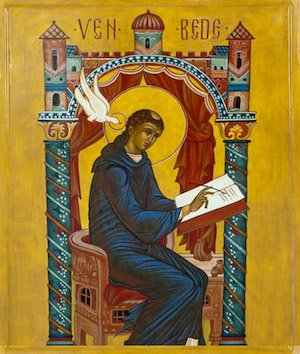
Saint Bede, the illustrious ornament of the Anglo-Saxon Church and its first English historian, was consecrated to God in 680 at the age of seven, and entrusted to the care of Saint Benedict Biscop at Weremouth. He became a monk in the sister-house of Jarrow, which he would never leave, and there he trained no fewer than six hundred scholars, whom his piety, learning, and sweet disposition had gathered around him.
He was ordained a priest in 702. To the toils of teaching and the exact observance of his Rule he added long hours of private prayer, with the study of every branch of science and literature then known. He was familiar with Latin, Greek, and Hebrew. In a treatise which he compiled for his scholars, still extant, he assembled all that the world had then conserved of history, chronology, physics, music, philosophy, poetry, arithmetic, and medicine. In his Ecclesiastical History he has left us beautiful lives of Anglo-Saxon Saints and holy Fathers, while his commentaries on the Sacred Scriptures are still in use by the Church.
It was to the study of the Divine Word that he devoted the whole energy of his soul, and at times his compunction was so overpowering that his voice would break with weeping, while the tears of his scholars mingled with his own. Once he was accused of heresy by certain jealous ones, but this scholar who had always made a great effort not to depart from tradition, wrote a letter which vindicated him and stopped the bad reports. He had little aid from others, and during his later years suffered from constant illness; yet he worked and prayed up to his last hour. It has been said of him that it is easier to admire him in thought than to do him justice in expression.
The Saint was employed in translating the Gospel of Saint John from the Greek, even to the hour of his death, which took place on the eve of the Ascension in the year 735. He spent that day joyfully, writes one of his scholars. In the middle of the afternoon he said: It is time that I return to the One who gave me being, creating me out of nothing... The moment of my liberty is approaching; I desire to be freed from the bonds of the body and to join Jesus Christ. Yes, my soul longs to see Jesus Christ its king, in the splendor of His glory. In the evening a scribe attending him said, Dear master, there is yet one chapter unwritten; would you be disturbed if we asked you additional questions? He answered, No; take your pen, and write quickly, which the disciple did. He prayed then until his last breath.
Reflection. The Imitation of Christ says: The more a man is at peace within himself and interiorly simple, the more and deeper things does he understand without labor; for he receives the light of understanding from on high.
(Little Pictorial Lives of the Saints, a compilation based on Butler's Lives of the Saints and other sources by John Gilmary Shea (Benziger Brothers: New York, 1894); Les Petits Bollandistes: Vies des Saints, by Msgr. Paul Guérin (Bloud et Barral: Paris, 1882), Vol. 6)
LAST-MODIFIED:20221020T215642Z SEQUENCE:607516 X-ACCESS:1 X-HITS:91 X-COLOR:f0b80e X-SHOW-END-TIME:1 END:VEVENT BEGIN:VEVENT DTSTART;VALUE=DATE:20221101 DTEND;VALUE=DATE:20221102 UID:875C0D51-7912-48F0-AFF1-5677CC927CCE SUMMARY:All Saints CREATED:20221013T211126Z DTSTAMP:20221013T211126Z URL:https://www.stpaulsweymouth.org/component/dpcalendar/event/153?calid=13 DESCRIPTION:Solemnity of All the Saints\N\NThe Church day by day gives special veneration to one or more of the holy men and women who have helped to establish it by their blood, develop it by their labors, or edify it by their virtues. But, in addition to those whom the Church honors by special designation or has inscribed in her calendar, how many martyrs are there whose names are not recorded! How many humble virgins and holy penitents! How many unknown anchorites and monks, Christian fathers and mothers, young children snatched away in their innocence! How many courageous Christians, whose merits are known only to God and His heavenly court!\NShould we forget those who remember us in their intercession? Are not some among them our ancestors? members of our immediate family? our friends and fellow-Christians, with whom we have lived in daily companionship? In fact, all of Heaven is but one family — Our Lord's, as He Himself said: Who is My mother and who are My brethren? And stretching forth His hand towards His disciples, He said, Behold My mother and My brethren! For whoever does the Will of My Father in heaven, is My brother and sister and mother. Today we have the opportunity to thank God, if at other times we forget, for their aid and their love. And today we adore Him with them, for the grace which raised them to their present joy. The Church requires this homage of us, by making this day a holy day of obligation for all. Our place, too, is awaiting us in this home of eternal light, peace and love, if we persevere to the end in the fulfillment of God's holy Will.\NReflection: Let us be solicitous to render ourselves worthy of that chaste generation, so beautiful amid the glory where it dwells. (Cf. Wisdom 4:1)\N(Little Pictorial Lives of the Saints, a compilation based on Butler's Lives of the Saints and other sources by John Gilmary Shea, Benziger Brothers: New York, 1894) X-ALT-DESC;FMTTYPE=text/html: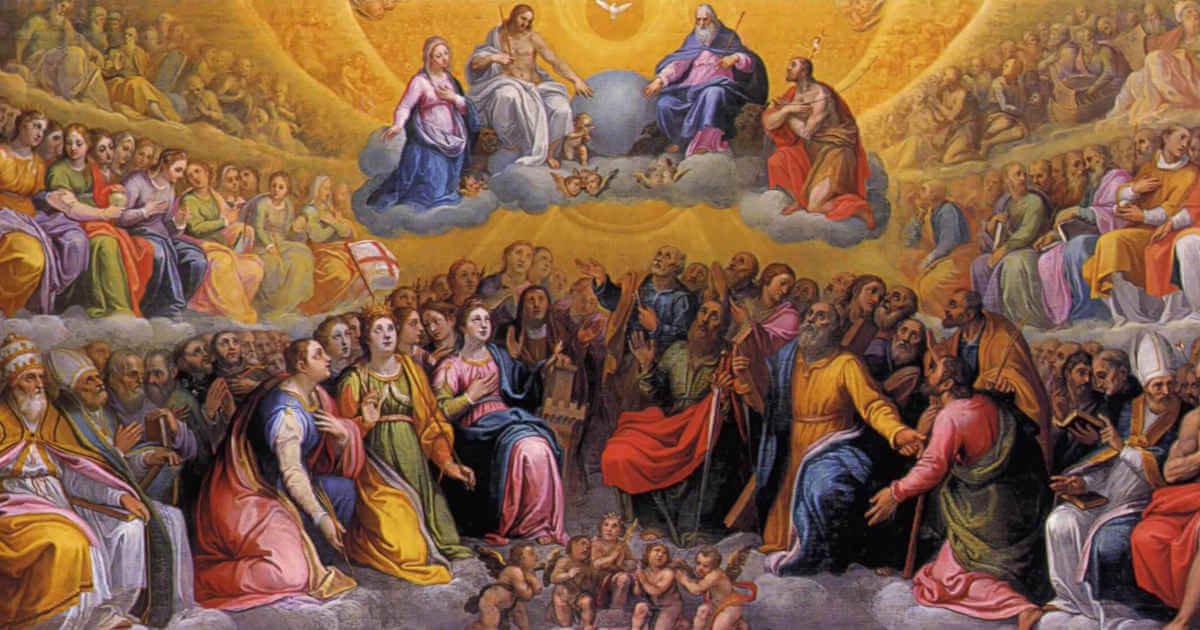
The Church day by day gives special veneration to one or more of the holy men and women who have helped to establish it by their blood, develop it by their labors, or edify it by their virtues. But, in addition to those whom the Church honors by special designation or has inscribed in her calendar, how many martyrs are there whose names are not recorded! How many humble virgins and holy penitents! How many unknown anchorites and monks, Christian fathers and mothers, young children snatched away in their innocence! How many courageous Christians, whose merits are known only to God and His heavenly court!
Should we forget those who remember us in their intercession? Are not some among them our ancestors? members of our immediate family? our friends and fellow-Christians, with whom we have lived in daily companionship? In fact, all of Heaven is but one family — Our Lord's, as He Himself said: Who is My mother and who are My brethren? And stretching forth His hand towards His disciples, He said, Behold My mother and My brethren! For whoever does the Will of My Father in heaven, is My brother and sister and mother. Today we have the opportunity to thank God, if at other times we forget, for their aid and their love. And today we adore Him with them, for the grace which raised them to their present joy. The Church requires this homage of us, by making this day a holy day of obligation for all. Our place, too, is awaiting us in this home of eternal light, peace and love, if we persevere to the end in the fulfillment of God's holy Will.
Reflection: Let us be solicitous to render ourselves worthy of that chaste generation, so beautiful amid the glory where it dwells. (Cf. Wisdom 4:1)
(Little Pictorial Lives of the Saints, a compilation based on Butler's Lives of the Saints and other sources by John Gilmary Shea, Benziger Brothers: New York, 1894)
LAST-MODIFIED:20221027T090014Z SEQUENCE:1165728 X-ACCESS:1 X-HITS:15 X-COLOR:f0b80e X-SHOW-END-TIME:1 END:VEVENT BEGIN:VEVENT DTSTART;VALUE=DATE:20221102 DTEND;VALUE=DATE:20221103 UID:A3438CC2-4BCC-42E5-A6D6-CF31BF699525 SUMMARY:All Souls CREATED:20221013T211126Z DTSTAMP:20221013T211126Z URL:https://www.stpaulsweymouth.org/component/dpcalendar/event/154?calid=13 DESCRIPTION:All Souls - Commemoration of All the Faithful Departed\N\NThe Church teaches us that the souls of the just who have left this world with traces of venial sin remain for a time in a place of expiation, where they suffer whatever punishment may be due to their offenses. Even if pardon has been obtained for our sins, satisfaction must be made to God, our Creator, in this world or in the next; for His sanctity has been, as it were, insulted by the self-will of one of His ignoble creatures. The more noble the person offended, the more serious the offense, even according to human laws. It is a dogma of our faith that the suffering souls are relieved by the intercession of the Saints in heaven and by the prayers of the faithful upon earth. To pray for the dead is therefore an act of charity and of piety, certainly obligatory for a Christian who professes to have charity in his heart. We read in Holy Scripture: It is a holy and wholesome thought to pray for the dead, that they may be loosed from their sins. (II Maccabees 12:46)\NWhen towards the close of the tenth century, Our Lord inspired Saint Odilon, Abbot of Cluny, to establish in his Benedictine Order a general commemoration of all the faithful departed, the practice was soon afterwards adopted by the entire Western Church and has been continued unceasingly to our day. Let us always bear in mind the departed who have died in the love of God, and offer up our prayers and sacrifices to help expiate for them. By showing this mercy to the suffering souls in purgatory, we gain for ourselves very devoted friends, who will in their turn pray for us. We shall then be entitled to be treated with mercy at our departure from this world, and to share more abundantly in the suffrages of the Church, continually offered for all who have fallen asleep in Christ.\NReflection: When we offer satisfaction to God in this life for our offenses, there is merit attached to our penances. There is no longer any merit in purgatory; others must provide. Let us reflect well that if we do not ourselves repair our sins and faults, we place our burden on others; is that what we want?\N(Little Pictorial Lives of the Saints, a compilation based on Butler's Lives of the Saints and other sources by John Gilmary Shea, Benziger Brothers: New York, 1894) X-ALT-DESC;FMTTYPE=text/html: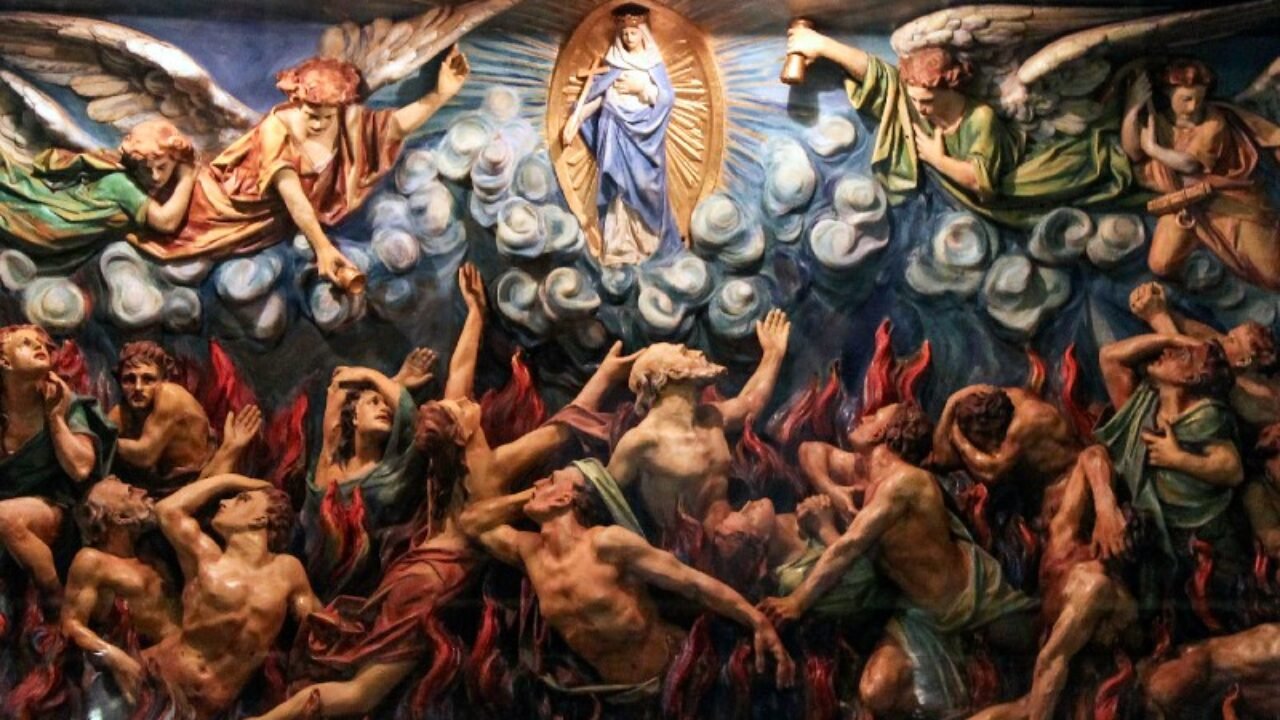
The Church teaches us that the souls of the just who have left this world with traces of venial sin remain for a time in a place of expiation, where they suffer whatever punishment may be due to their offenses. Even if pardon has been obtained for our sins, satisfaction must be made to God, our Creator, in this world or in the next; for His sanctity has been, as it were, insulted by the self-will of one of His ignoble creatures. The more noble the person offended, the more serious the offense, even according to human laws. It is a dogma of our faith that the suffering souls are relieved by the intercession of the Saints in heaven and by the prayers of the faithful upon earth. To pray for the dead is therefore an act of charity and of piety, certainly obligatory for a Christian who professes to have charity in his heart. We read in Holy Scripture: It is a holy and wholesome thought to pray for the dead, that they may be loosed from their sins. (II Maccabees 12:46)
When towards the close of the tenth century, Our Lord inspired Saint Odilon, Abbot of Cluny, to establish in his Benedictine Order a general commemoration of all the faithful departed, the practice was soon afterwards adopted by the entire Western Church and has been continued unceasingly to our day. Let us always bear in mind the departed who have died in the love of God, and offer up our prayers and sacrifices to help expiate for them. By showing this mercy to the suffering souls in purgatory, we gain for ourselves very devoted friends, who will in their turn pray for us. We shall then be entitled to be treated with mercy at our departure from this world, and to share more abundantly in the suffrages of the Church, continually offered for all who have fallen asleep in Christ.
Reflection: When we offer satisfaction to God in this life for our offenses, there is merit attached to our penances. There is no longer any merit in purgatory; others must provide. Let us reflect well that if we do not ourselves repair our sins and faults, we place our burden on others; is that what we want?
(Little Pictorial Lives of the Saints, a compilation based on Butler's Lives of the Saints and other sources by John Gilmary Shea, Benziger Brothers: New York, 1894)
LAST-MODIFIED:20221027T090409Z SEQUENCE:1165963 X-ACCESS:1 X-HITS:22 X-COLOR:f0b80e X-SHOW-END-TIME:1 END:VEVENT BEGIN:VEVENT DTSTART;VALUE=DATE:20221104 DTEND;VALUE=DATE:20221105 UID:D22CC25A-0D13-4665-8EED-18A48D997F8E SUMMARY:St Charles Borromeo, Bishop CREATED:20221013T211126Z DTSTAMP:20221013T211126Z URL:https://www.stpaulsweymouth.org/component/dpcalendar/event/155?calid=13 DESCRIPTION:St. Charles Borromeo, Bishop & Confessor\N\NSaint Charles Borromeo was born in 1538 in the castle of Arona on the borders of Lake Major, fourteen miles from Milan. He was the son of Count Gilbert Borromeo, a descendant of one of the most ancient families of Lombardy, very famous for its great men. The Count was known for his almsgiving and his rigorous fasts; it was his custom never to eat a meal without first giving alms. The Countess, Charles' mother, was also exceptionally virtuous. Their family was composed of two sons and four daughters, all of whom manifested in their lives the splendor of their Christian heritage. Their maternal uncle, John Angelus of Medici, became Pope Pius IV. Charles was clearly destined for the ecclesiastical vocation; all his preferences in study made it clear.\NWhen he was twelve years old, a paternal uncle willed to him an abbey in commendam; and the child constantly reminded his father that this revenue was the patrimony of the poor. His father wept for joy, seeing his son's solicitude for the just application of his trust.\NCount Gilbert died when Charles was twenty years old, and he was obliged to come home from Pavia where he had been studying law; he returned there, however, to complete his doctorate at the university after settling his affairs. One year later, when his maternal uncle became Pope Pius IV, he created Charles cardinal, and after another year nominated him Archbishop of Milan. The Pontiff detained him in Rome, however, seeing his extensive capacities and adding to these offices other administrative duties which ordinarily require the prudence of mature years. No one was disappointed in his services, despite the fact he was maintaining delicate papal relations with other nations, as protector of Portugal and the Low Countries, and was at the head of the Knights of Malta, the Orders of Carmel and Saint Francis, among other duties.\NWhen the Council of Trent (1545-1563) was nearing its conclusion, Saint Charles, who had participated with authority in many of its twenty-five sessions, desired to leave Rome to attend to his diocese of Milan, a duty which his vicar general had carried out until that time. The urgency of the situation there persuaded the Pope to consent regretfully to his departure. Saint Charles intended to put into execution the reforming decrees of the Council, create seminaries and schools and in general restore discipline in the Church of Milan.\NAs Archbishop of Milan he enforced the observance of the decrees, and thoroughly restored the discipline of his see. Criticism hounded him there, but left him unmoved; he kept with him in his episcopal household of about one hundred persons, a certain priest who delighted in finding fault with whatever he did; he treated him with great consideration, and in his will left him a pension for life. He was very severe with himself, eating only once a day, and limiting himself often to bread and water. When someone suggested he should have a garden at Milan to get some fresh air, he replied that the Holy Scriptures should be the garden of a bishop.\NThe sermons of Saint Charles produced great fruits among all ranks of the people. When young he had manifested a speech defect with a tendency to speak too fast, but he overcame these handicaps with many efforts. A man who admired him said that he always forgot the orator himself when he preached, so transported was he by the great truths he heard explained, and the longest sermons of Saint Charles seemed short to him. Everywhere the holy Archbishop established schools of Christian doctrine, numbering in all seven hundred and forty, in which over three thousand catechists were employed, presiding over forty thousand students.\NOnce Saint Charles heard a cardinal who was a bishop of a small diocese say that his diocese was too small to require his constant residence there, as canon law required; Saint Charles said to him with force that the price of one soul is such as to merit the residence and entire time of the greatest of men. He himself visited the most remote corners of his diocese, traveling in mountainous regions amid the greatest dangers, which he regarded as nothing unusual, and unworthy of mention.\NInflexible in maintaining discipline, to his flock he was a most tender father. He would sit by the roadside to teach a poor man the Pater and Ave.During the great plague which broke out in Milan, which he had foretold as a chastisement for the disorders of the Carnival, he refused to leave, asking those who remonstrated with him if it were not more perfect to remain with one's flock than to abandon them in need, and adding that a bishop is obliged to choose what is most perfect. He was ever at the side of the sick and dying. He stripped his palace of literally everything to aid those who had lost their support in their fathers and spouses, even giving away his straw mattress. As he lived, so he died, having governed his church for twenty-four years and eight months. To the heroic sanctity of this faithful copy of the Good Shepherd, many miracles came to testify, through his relics and his intercession. In 1610 he was canonized by Pope Paul V.\NThe Lives of the Fathers, Martyrs and Principal Saints, by Rev. Alban Butler (Metropolitan Press: Baltimore, 1845), Vol. IV, October-December; Little Pictorial Lives of the Saints, a compilation based on Butler's Lives of the Saints and other sources by John Gilmary Shea, Benziger Brothers: New York, 1894) X-ALT-DESC;FMTTYPE=text/html: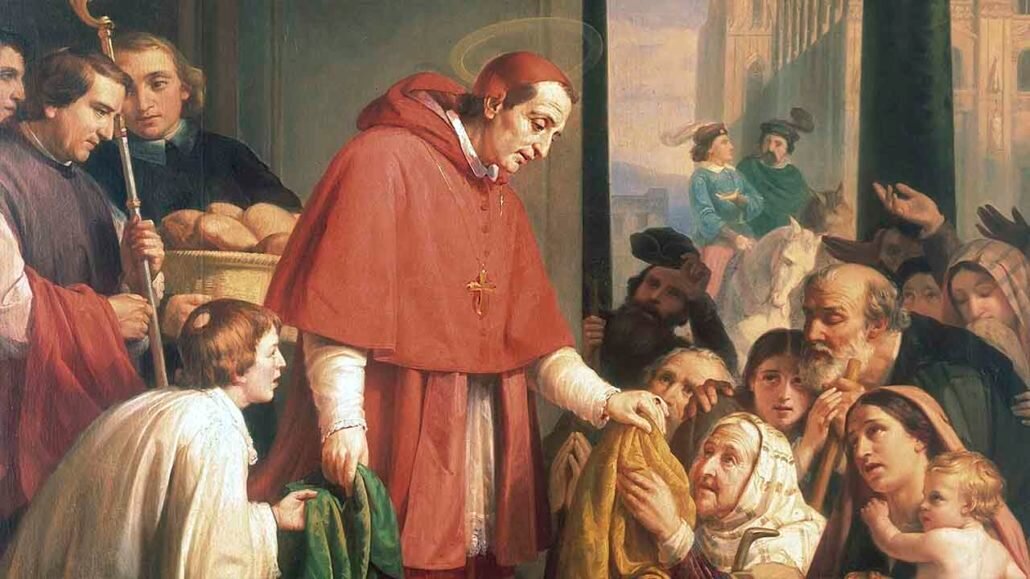
Saint Charles Borromeo was born in 1538 in the castle of Arona on the borders of Lake Major, fourteen miles from Milan. He was the son of Count Gilbert Borromeo, a descendant of one of the most ancient families of Lombardy, very famous for its great men. The Count was known for his almsgiving and his rigorous fasts; it was his custom never to eat a meal without first giving alms. The Countess, Charles' mother, was also exceptionally virtuous. Their family was composed of two sons and four daughters, all of whom manifested in their lives the splendor of their Christian heritage. Their maternal uncle, John Angelus of Medici, became Pope Pius IV. Charles was clearly destined for the ecclesiastical vocation; all his preferences in study made it clear.
When he was twelve years old, a paternal uncle willed to him an abbey in commendam; and the child constantly reminded his father that this revenue was the patrimony of the poor. His father wept for joy, seeing his son's solicitude for the just application of his trust.
Count Gilbert died when Charles was twenty years old, and he was obliged to come home from Pavia where he had been studying law; he returned there, however, to complete his doctorate at the university after settling his affairs. One year later, when his maternal uncle became Pope Pius IV, he created Charles cardinal, and after another year nominated him Archbishop of Milan. The Pontiff detained him in Rome, however, seeing his extensive capacities and adding to these offices other administrative duties which ordinarily require the prudence of mature years. No one was disappointed in his services, despite the fact he was maintaining delicate papal relations with other nations, as protector of Portugal and the Low Countries, and was at the head of the Knights of Malta, the Orders of Carmel and Saint Francis, among other duties.
When the Council of Trent (1545-1563) was nearing its conclusion, Saint Charles, who had participated with authority in many of its twenty-five sessions, desired to leave Rome to attend to his diocese of Milan, a duty which his vicar general had carried out until that time. The urgency of the situation there persuaded the Pope to consent regretfully to his departure. Saint Charles intended to put into execution the reforming decrees of the Council, create seminaries and schools and in general restore discipline in the Church of Milan.
As Archbishop of Milan he enforced the observance of the decrees, and thoroughly restored the discipline of his see. Criticism hounded him there, but left him unmoved; he kept with him in his episcopal household of about one hundred persons, a certain priest who delighted in finding fault with whatever he did; he treated him with great consideration, and in his will left him a pension for life. He was very severe with himself, eating only once a day, and limiting himself often to bread and water. When someone suggested he should have a garden at Milan to get some fresh air, he replied that the Holy Scriptures should be the garden of a bishop.
The sermons of Saint Charles produced great fruits among all ranks of the people. When young he had manifested a speech defect with a tendency to speak too fast, but he overcame these handicaps with many efforts. A man who admired him said that he always forgot the orator himself when he preached, so transported was he by the great truths he heard explained, and the longest sermons of Saint Charles seemed short to him. Everywhere the holy Archbishop established schools of Christian doctrine, numbering in all seven hundred and forty, in which over three thousand catechists were employed, presiding over forty thousand students.
Once Saint Charles heard a cardinal who was a bishop of a small diocese say that his diocese was too small to require his constant residence there, as canon law required; Saint Charles said to him with force that the price of one soul is such as to merit the residence and entire time of the greatest of men. He himself visited the most remote corners of his diocese, traveling in mountainous regions amid the greatest dangers, which he regarded as nothing unusual, and unworthy of mention.
Inflexible in maintaining discipline, to his flock he was a most tender father. He would sit by the roadside to teach a poor man the Pater and Ave.During the great plague which broke out in Milan, which he had foretold as a chastisement for the disorders of the Carnival, he refused to leave, asking those who remonstrated with him if it were not more perfect to remain with one's flock than to abandon them in need, and adding that a bishop is obliged to choose what is most perfect. He was ever at the side of the sick and dying. He stripped his palace of literally everything to aid those who had lost their support in their fathers and spouses, even giving away his straw mattress. As he lived, so he died, having governed his church for twenty-four years and eight months. To the heroic sanctity of this faithful copy of the Good Shepherd, many miracles came to testify, through his relics and his intercession. In 1610 he was canonized by Pope Paul V.
The Lives of the Fathers, Martyrs and Principal Saints, by Rev. Alban Butler (Metropolitan Press: Baltimore, 1845), Vol. IV, October-December; Little Pictorial Lives of the Saints, a compilation based on Butler's Lives of the Saints and other sources by John Gilmary Shea, Benziger Brothers: New York, 1894)
LAST-MODIFIED:20221027T090912Z SEQUENCE:1166266 X-ACCESS:1 X-HITS:38 X-COLOR:f0b80e X-SHOW-END-TIME:1 END:VEVENT BEGIN:VEVENT DTSTART;VALUE=DATE:20221108 DTEND;VALUE=DATE:20221109 UID:9D3D29E2-0AB5-4F27-9CB1-EA158BE62137 SUMMARY:Holy Four Crowned Martyrs CREATED:20221013T211126Z DTSTAMP:20221013T211126Z URL:https://www.stpaulsweymouth.org/component/dpcalendar/event/150?calid=13 DESCRIPTION:Holy Four Crowned Martyrs\N\NTwo separate groups who suffered for the faith, called Sancti Quatuor Coronati, "the Four Holy Crowned Ones." Castorius, Claudius, Nicostratus, and Symphorian were tortured and slain in Pannonia, having been carvers from Sirmium. They refused to carve a pagan statue and were martyred by retired co-Emperor Diocletian. They were scourged, placed in led coffins and submerged in a stream. A martyr named Simplicius died with them. The second group of Four Holy Crowned Ones died at Albano, Italy. They were Carpophorus, Secundius, Severian, and Victorinus. A basilica was erected in honour of these martyrs in Rome.\NSo the Four Crowned Martyrs or Four Holy Crowned Ones were actually nine individuals who are venerated as martyrs and saints of Early Christianity. According to the Golden Legend, the names of the members of the first group were not known at the time of their death "but were learned through the Lord’s revelation after many years had passed." They were called the "Four Crowned Martyrs" because their names were unknown ("crown" referring to the crown of martyrdom).\NAlmighty ever-living God, who adorned your pilgrim Church with the blood of the Four Holy Crowned Martyrs, a most fruitful seed of Christian witness and courage, grant that we may be defended by their help and profit from their example and intercession. Through our Lord Jesus Christ, your Son, who lives and reigns with you together in the unity of the Holy Spirit, one God, for ever and ever. Amen. X-ALT-DESC;FMTTYPE=text/html: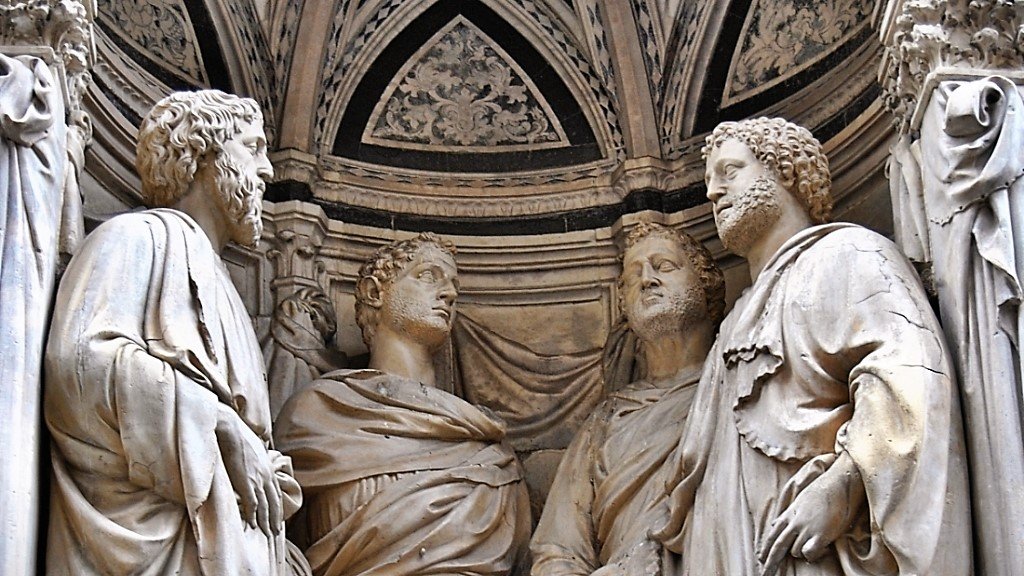
Two separate groups who suffered for the faith, called Sancti Quatuor Coronati, "the Four Holy Crowned Ones." Castorius, Claudius, Nicostratus, and Symphorian were tortured and slain in Pannonia, having been carvers from Sirmium. They refused to carve a pagan statue and were martyred by retired co-Emperor Diocletian. They were scourged, placed in led coffins and submerged in a stream. A martyr named Simplicius died with them. The second group of Four Holy Crowned Ones died at Albano, Italy. They were Carpophorus, Secundius, Severian, and Victorinus. A basilica was erected in honour of these martyrs in Rome.
So the Four Crowned Martyrs or Four Holy Crowned Ones were actually nine individuals who are venerated as martyrs and saints of Early Christianity. According to the Golden Legend, the names of the members of the first group were not known at the time of their death "but were learned through the Lord’s revelation after many years had passed." They were called the "Four Crowned Martyrs" because their names were unknown ("crown" referring to the crown of martyrdom).
Almighty ever-living God, who adorned your pilgrim Church with the blood of the Four Holy Crowned Martyrs, a most fruitful seed of Christian witness and courage, grant that we may be defended by their help and profit from their example and intercession. Through our Lord Jesus Christ, your Son, who lives and reigns with you together in the unity of the Holy Spirit, one God, for ever and ever. Amen.
LAST-MODIFIED:20221028T201518Z SEQUENCE:1292632 X-ACCESS:1 X-HITS:107 X-COLOR:f0b80e X-SHOW-END-TIME:1 END:VEVENT BEGIN:VEVENT DTSTART;VALUE=DATE:20221109 DTEND;VALUE=DATE:20221110 UID:1BBC6710-4DC1-4437-93D5-4CD53641C941 SUMMARY:Dedication of the Lateran Basilica CREATED:20221013T211126Z DTSTAMP:20221013T211126Z URL:https://www.stpaulsweymouth.org/component/dpcalendar/event/170?calid=13 DESCRIPTION:Dedication of the Lateran Basilica\N\NThe residence of the Popes which was named the Lateran Palace was built by Lateranus Palutius, whom Nero put to death to seize his goods. It was given in the year 313 by Constantine the Great to Saint Miltiades, Pope, and was inhabited by his successors until 1308, when they moved to Avignon. The Lateran Basilica built by Constantine near the palace of the same name, is the first Basilica of the West. Twelve councils, four of which were ecumenical, have assembled there, the first in 649, the last in 1512.\NIf for several centuries the Popes have no longer dwelt in the Palace, the primacy of the Basilica is not thereby altered; it remains the head of all churches. Saint Peter Damian wrote that just as the Saviour is the Head of the elect, the church which bears His name is the head of all the churches. Those of Saints Peter and Paul, to its left and its right, are the two arms by which this sovereign and universal Church embraces the entire earth, saving all who desire salvation, warming them, protecting them in its maternal womb.\NThe Divine Office narrates the dedication of the Church by the Pope of Peace, Saint Sylvester:\NIt was the Blessed Pope Sylvester who established the rites observed by the Roman Church for the consecration of churches and altars. From the time of the Apostles there had been certain places dedicated to God, which some called oratories, and others, churches. There, on the first day of the week, the assembly was held, and there the Christian people were accustomed to pray, to hear the Word of God, and to receive the Eucharist. But never had these places been consecrated so solemnly; nor had a fixed altar been placed there which, anointed with sacred chrism, was the symbol of Our Lord Jesus Christ, who for us is altar, victim and Pontiff. But when the Emperor Constantine through the sacrament of Baptism had obtained health of body and salvation of soul, a law was issued by him which for the first time permitted that everywhere in the world Christians might build churches. Not satisfied to establish this edict, the prince wanted to give an example and inaugurate the holy labors. Thus in his own Lateran palace, he dedicated a church to the Saviour, and founded the attached baptistry under the name of Saint John the Baptist, in the place where he himself, baptized by Saint Sylvester, had been cured of leprosy. It is this church which the Pontiff consecrated in the fifth of the ides of November; and we celebrate the commemoration on that day, when for the first time in Rome a church was thus publicly consecrated, and where a painting of the Saviour was visible on the wall before the eyes of the Roman people.\NWhen the Lateran Church was partially ruined by fires, enemy invasions, and earthquakes, it was always rebuilt with great zeal by the Sovereign Pontiffs. In 1726, after one such restoration, Pope Benedict XIII consecrated it anew and assigned the commemoration of that event to the present day. The church was afterwards enlarged and beautified by Popes Pius IX and Leo XIII.\NL'Année liturgique, by Dom Prosper Guéranger (Mame et Fils: Tours, 1919), The Time after Pentecost, VI, Vol. 15. Translation O.D.M. X-ALT-DESC;FMTTYPE=text/html: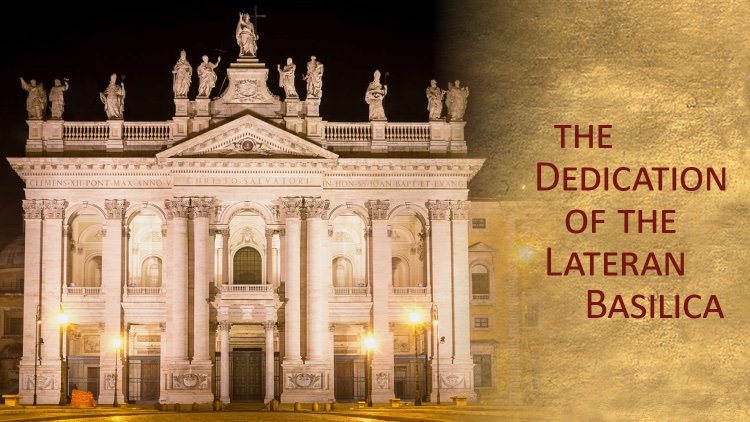
The residence of the Popes which was named the Lateran Palace was built by Lateranus Palutius, whom Nero put to death to seize his goods. It was given in the year 313 by Constantine the Great to Saint Miltiades, Pope, and was inhabited by his successors until 1308, when they moved to Avignon. The Lateran Basilica built by Constantine near the palace of the same name, is the first Basilica of the West. Twelve councils, four of which were ecumenical, have assembled there, the first in 649, the last in 1512.
If for several centuries the Popes have no longer dwelt in the Palace, the primacy of the Basilica is not thereby altered; it remains the head of all churches. Saint Peter Damian wrote that just as the Saviour is the Head of the elect, the church which bears His name is the head of all the churches. Those of Saints Peter and Paul, to its left and its right, are the two arms by which this sovereign and universal Church embraces the entire earth, saving all who desire salvation, warming them, protecting them in its maternal womb.
The Divine Office narrates the dedication of the Church by the Pope of Peace, Saint Sylvester:
It was the Blessed Pope Sylvester who established the rites observed by the Roman Church for the consecration of churches and altars. From the time of the Apostles there had been certain places dedicated to God, which some called oratories, and others, churches. There, on the first day of the week, the assembly was held, and there the Christian people were accustomed to pray, to hear the Word of God, and to receive the Eucharist. But never had these places been consecrated so solemnly; nor had a fixed altar been placed there which, anointed with sacred chrism, was the symbol of Our Lord Jesus Christ, who for us is altar, victim and Pontiff. But when the Emperor Constantine through the sacrament of Baptism had obtained health of body and salvation of soul, a law was issued by him which for the first time permitted that everywhere in the world Christians might build churches. Not satisfied to establish this edict, the prince wanted to give an example and inaugurate the holy labors. Thus in his own Lateran palace, he dedicated a church to the Saviour, and founded the attached baptistry under the name of Saint John the Baptist, in the place where he himself, baptized by Saint Sylvester, had been cured of leprosy. It is this church which the Pontiff consecrated in the fifth of the ides of November; and we celebrate the commemoration on that day, when for the first time in Rome a church was thus publicly consecrated, and where a painting of the Saviour was visible on the wall before the eyes of the Roman people.
When the Lateran Church was partially ruined by fires, enemy invasions, and earthquakes, it was always rebuilt with great zeal by the Sovereign Pontiffs. In 1726, after one such restoration, Pope Benedict XIII consecrated it anew and assigned the commemoration of that event to the present day. The church was afterwards enlarged and beautified by Popes Pius IX and Leo XIII.
L'Année liturgique, by Dom Prosper Guéranger (Mame et Fils: Tours, 1919), The Time after Pentecost, VI, Vol. 15. Translation O.D.M.
LAST-MODIFIED:20221028T203032Z SEQUENCE:1293546 X-ACCESS:1 X-HITS:15 X-COLOR:f0b80e X-SHOW-END-TIME:1 END:VEVENT BEGIN:VEVENT DTSTART;VALUE=DATE:20221110 DTEND;VALUE=DATE:20221111 UID:A4A5EAC9-AD6B-468C-9400-4F0382F80697 SUMMARY:St. Andrew Avellino CREATED:20221013T211126Z DTSTAMP:20221013T211126Z URL:https://www.stpaulsweymouth.org/component/dpcalendar/event/172?calid=13 DESCRIPTION:St. Andrew Avellino, Confessor\N\NAfter a holy youth devoted to serious studies of philosophy and the humanities in Venice, Lancelot Avellino was ordained priest by the bishop of Naples. He was assigned to the chaplaincy of a community of nuns, sadly in need of reform; his intrepid courage and perseverance finally overcame many difficulties, and regular observance was restored in the monastery. Certain irritated libertines, however, decided to do away with him and, waiting for him when he was about to leave a church, felled him with three sword thrusts. He lost much blood, but his wounds healed perfectly without leaving any trace. The viceroy of Naples was ready to employ all his authority to punish the authors of this sacrilege; the holy priest, not desiring the death of sinners but rather their conversion and their salvation, declined to pursue them. One of them, however, died soon afterwards, assassinated by a man who wished to avenge a dishonor to his house.\NHe was still practicing law, which he had studied in Naples; one day a slight untruth escaped him in the defense of a client, and he conceived such regret for his fault that he vowed to practice law no longer. In 1556, at the age of thirty-six, he entered the Theatine Order, taking the name of Andrew out of love for the cross. After a pilgrimage to Rome to the tombs of the Apostles, he returned to Naples and was named master of novices in his Community, a duty he fulfilled for ten years. He was also chosen to be Superior of the house there, and then was sent out to found two houses elsewhere, at Milan and Piacenza. At the latter city he again met the opposition of libertines; but the Duke of Parma, to whom letters accusing him were directed, was completely charmed when he met him, and regarded him thereafter as a Saint.\NHe then became Superior of the Milan foundation, where his friendship with Saint Charles Borromeo took root; the two Saints conversed together often. And Saint Andrew, with his admirable simplicity, confided to the Archbishop that he had seen Our Lord, and that since that time the impression of His divine beauty, remaining with him constantly, had rendered insipid all other so-called beauties of the earth. Petitions were presented to Pope Gregory XIV to make him a bishop, but he declined that honor with firmness, having always desired to remain obedient rather than to command. When his term as superior ended, he was successful in avoiding the government of another Theatine residence for only three years, then became superior at Saint Paul of Naples.\NOnce when Saint Andrew was taking the Viaticum to a dying person and a storm extinguished the lamps, a heavenly light surrounded him, guided his steps, and sheltered him from the rain. But he was far from exempt from sufferings. His horse threw him one day on a rough road, and since his feet were caught in the stirrups, dragged him for a long time along this road. He invoked Saint Dominic and Saint Thomas Aquinas, who came to him, wiped his face covered with blood, cured his wounds, and even helped him back onto the horse. He attributed such episodes to his unworthiness, believing he was among the reprobate, but Saint Thomas once again came to him, accompanied by Saint Augustine, and restored his confidence in the love and mercy of God.\NOn the last day of his life, November 10, 1608, Saint Andrew rose to say Mass. He was eighty-eight years old, and so weak he could scarcely reach the altar. He began the Judica me, Deus, the opening prayer, but fell forward, the victim of apoplexy. Laid on a straw mattress, his whole frame was convulsed in agony, while the ancient fiend, in visible form, advanced as though to seize his soul. Then, while the onlookers prayed and wept, he invoked Our Lady, and his Guardian Angel seized the monster and dragged it out of the room. A calm and holy smile settled on the features of the dying Saint and, as he gazed with a grateful countenance on the image of Mary, his holy soul winged its way to God.\NReflection: Saint Andrew, who suffered so terrible an agony, is invoked as special protector from an unprovided and sudden death. Ask this holy priest to be with you in your last hour, and bring Jesus and Mary to your aid.\NLes Petits Bollandistes: Vies des Saints, by Msgr. Paul Guérin (Bloud et Barral: Paris, 1882), Vol. 13; Little Pictorial Lives of the Saints, a compilation based on Butler's Lives of the Saints and other sources by John Gilmary Shea (Benziger Brothers: New York, 1894). X-ALT-DESC;FMTTYPE=text/html: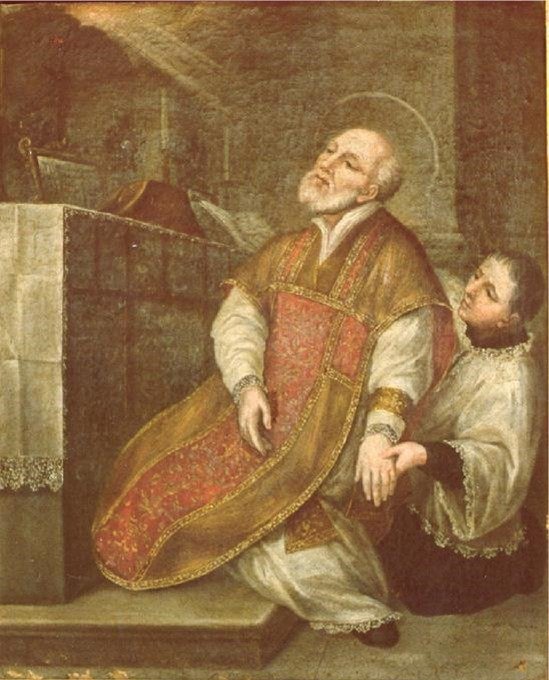
After a holy youth devoted to serious studies of philosophy and the humanities in Venice, Lancelot Avellino was ordained priest by the bishop of Naples. He was assigned to the chaplaincy of a community of nuns, sadly in need of reform; his intrepid courage and perseverance finally overcame many difficulties, and regular observance was restored in the monastery. Certain irritated libertines, however, decided to do away with him and, waiting for him when he was about to leave a church, felled him with three sword thrusts. He lost much blood, but his wounds healed perfectly without leaving any trace. The viceroy of Naples was ready to employ all his authority to punish the authors of this sacrilege; the holy priest, not desiring the death of sinners but rather their conversion and their salvation, declined to pursue them. One of them, however, died soon afterwards, assassinated by a man who wished to avenge a dishonor to his house.
He was still practicing law, which he had studied in Naples; one day a slight untruth escaped him in the defense of a client, and he conceived such regret for his fault that he vowed to practice law no longer. In 1556, at the age of thirty-six, he entered the Theatine Order, taking the name of Andrew out of love for the cross. After a pilgrimage to Rome to the tombs of the Apostles, he returned to Naples and was named master of novices in his Community, a duty he fulfilled for ten years. He was also chosen to be Superior of the house there, and then was sent out to found two houses elsewhere, at Milan and Piacenza. At the latter city he again met the opposition of libertines; but the Duke of Parma, to whom letters accusing him were directed, was completely charmed when he met him, and regarded him thereafter as a Saint.
He then became Superior of the Milan foundation, where his friendship with Saint Charles Borromeo took root; the two Saints conversed together often. And Saint Andrew, with his admirable simplicity, confided to the Archbishop that he had seen Our Lord, and that since that time the impression of His divine beauty, remaining with him constantly, had rendered insipid all other so-called beauties of the earth. Petitions were presented to Pope Gregory XIV to make him a bishop, but he declined that honor with firmness, having always desired to remain obedient rather than to command. When his term as superior ended, he was successful in avoiding the government of another Theatine residence for only three years, then became superior at Saint Paul of Naples.
Once when Saint Andrew was taking the Viaticum to a dying person and a storm extinguished the lamps, a heavenly light surrounded him, guided his steps, and sheltered him from the rain. But he was far from exempt from sufferings. His horse threw him one day on a rough road, and since his feet were caught in the stirrups, dragged him for a long time along this road. He invoked Saint Dominic and Saint Thomas Aquinas, who came to him, wiped his face covered with blood, cured his wounds, and even helped him back onto the horse. He attributed such episodes to his unworthiness, believing he was among the reprobate, but Saint Thomas once again came to him, accompanied by Saint Augustine, and restored his confidence in the love and mercy of God.
On the last day of his life, November 10, 1608, Saint Andrew rose to say Mass. He was eighty-eight years old, and so weak he could scarcely reach the altar. He began the Judica me, Deus, the opening prayer, but fell forward, the victim of apoplexy. Laid on a straw mattress, his whole frame was convulsed in agony, while the ancient fiend, in visible form, advanced as though to seize his soul. Then, while the onlookers prayed and wept, he invoked Our Lady, and his Guardian Angel seized the monster and dragged it out of the room. A calm and holy smile settled on the features of the dying Saint and, as he gazed with a grateful countenance on the image of Mary, his holy soul winged its way to God.
Reflection: Saint Andrew, who suffered so terrible an agony, is invoked as special protector from an unprovided and sudden death. Ask this holy priest to be with you in your last hour, and bring Jesus and Mary to your aid.
Les Petits Bollandistes: Vies des Saints, by Msgr. Paul Guérin (Bloud et Barral: Paris, 1882), Vol. 13; Little Pictorial Lives of the Saints, a compilation based on Butler's Lives of the Saints and other sources by John Gilmary Shea (Benziger Brothers: New York, 1894).
LAST-MODIFIED:20221028T203521Z SEQUENCE:1293835 X-ACCESS:1 X-HITS:121 X-COLOR:f0b80e X-SHOW-END-TIME:1 END:VEVENT BEGIN:VEVENT DTSTART;VALUE=DATE:20221111 DTEND;VALUE=DATE:20221112 UID:9A254C93-3538-4BBB-875C-4AC18F6FFDC8 SUMMARY:St. Martin of Tours CREATED:20221013T211126Z DTSTAMP:20221013T211126Z URL:https://www.stpaulsweymouth.org/component/dpcalendar/event/174?calid=13 DESCRIPTION:St. Martin of Tours, Bishop and Confessor\N\NSt. Martin was born in Hungary of pagan parents, but a secret instinct of his soul urged him from childhood to the acknowledgment of the only true God and to the acceptance of the Christian religion. In his tenth year he was placed among the catechumens, that is, those who were preparing to receive the holy Sacrament of Baptism. His pagan father sought to restrain him but in vain; he had him placed in a company of soldiers, but the fear of God kept him in this position not only free from the excesses common to it, but gave him opportunities to practice the love of his neighbor by distributing his pay among the poor. Once he was met at the gate of the city of Tours by a beggar without clothes, and having nothing else to give him, Martin with his sword cut his own cloak in two, and gave half to the beggar. The following night our Lord appeared to him with that part of the cloak wrapped around him, and said "With this mantle has Martin, the catechumen, clothed me." Moved by this consoling vision, Martin no longer delayed receiving baptism; he left the army and went to St. Hilary, Bishop of Poitiers, and under his direction made wonderful progress in Christian virtue. But however much he labored for his salvation, he did not forget to strive equally for the salvation of others especially of his parents and relations, for whose conversion he undertook a long and perilous journey back to his native country. On his return he built a monastery, in which he and a number of other monks led a very strict and virtuous life. His great faith and his ardent love made him equal to the apostles in the performance of miracles; his first was the raising to life of a catechumen who had died without baptism. The fame of his sanctity and of the miracles which he wrought, led to his election to the bishopric of Tours, in spite of his determined resistance to the acceptance of the position. This new dignity changed nothing in his manner of life, except that it increased his humility, his zeal for God's honor, and his love for his neighbor. Thus he took charge of his diocese for twenty-six years. When over eighty years old, he settled an insurrection which had broken out at Cande, but returning home his strength left him; he called his disciples together, and said: "My children, I am dying!" To which they responded: "Alas, father, wilt thou leave us? To whom wilt thou leave thy orphans?" Touched by this, the saint prayed: "Lord! If I am still necessary to Thy people, I refuse not the work." But he had toiled enough, his end was approaching; when the priests surrounding him, asked him to change his position in order that he might be easier, he replied: "Let me rather look towards heaven, my brethren, than turn again to earth, that my spirit which is already on its way to the Lord, may not be disturbed from the straight way to Him." He saw Satan near him and said: "What dost thou here, thou wild beast? Miserable fiend, thou canst not harm me! Abraham's bosom will receive me. With these words he yielded up his spirit, which the angels, singing hymns of praise, carried to heaven. O that we might learn from St Martin's life to love God and to care not only for our own salvation, but also for the spiritual and corporal welfare of others, then indeed would we, at the hour of death, have nothing to fear from the temptations of the evil one. PRAYER OF THE CHURCH. O God who seest, that of our own strength we can do nothing, graciously grant, that by the intercession of Thy holy bishop and confessor Martin, we may be protected from all adversities. Through Christ our Lord. Amen.PRAYER TO ST. MARTIN O blessed St Martin, so zealous for God's honour, that neither in word nor deed wouldst thou permit thyself to be overcome, whereat the angels so rejoiced, that they carried thy soul with hymns of praise to the throne of God, I implore thee to obtain for me by thy powerful intercession a compassionate heart for all sufferers, obtain true apostolic zeal for all pastors and for all on their death-bed the grace to enter like thee from this miserable life into the joy of the Lord, which thou, as a good and faithful servant, dost already possess. Through Christ our Lord. Amen. X-ALT-DESC;FMTTYPE=text/html: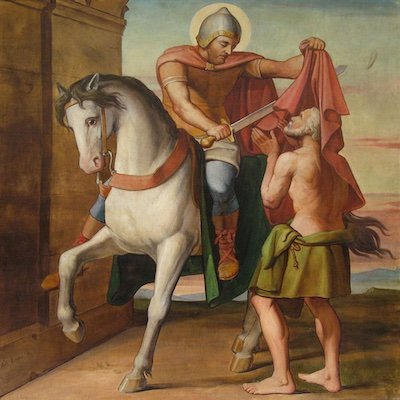
St. Martin was born in Hungary of pagan parents, but a secret instinct of his soul urged him from childhood to the acknowledgment of the only true God and to the acceptance of the Christian religion. In his tenth year he was placed among the catechumens, that is, those who were preparing to receive the holy Sacrament of Baptism. His pagan father sought to restrain him but in vain; he had him placed in a company of soldiers, but the fear of God kept him in this position not only free from the excesses common to it, but gave him opportunities to practice the love of his neighbor by distributing his pay among the poor. Once he was met at the gate of the city of Tours by a beggar without clothes, and having nothing else to give him, Martin with his sword cut his own cloak in two, and gave half to the beggar. The following night our Lord appeared to him with that part of the cloak wrapped around him, and said "With this mantle has Martin, the catechumen, clothed me." Moved by this consoling vision, Martin no longer delayed receiving baptism; he left the army and went to St. Hilary, Bishop of Poitiers, and under his direction made wonderful progress in Christian virtue. But however much he labored for his salvation, he did not forget to strive equally for the salvation of others especially of his parents and relations, for whose conversion he undertook a long and perilous journey back to his native country. On his return he built a monastery, in which he and a number of other monks led a very strict and virtuous life. His great faith and his ardent love made him equal to the apostles in the performance of miracles; his first was the raising to life of a catechumen who had died without baptism. The fame of his sanctity and of the miracles which he wrought, led to his election to the bishopric of Tours, in spite of his determined resistance to the acceptance of the position. This new dignity changed nothing in his manner of life, except that it increased his humility, his zeal for God's honor, and his love for his neighbor. Thus he took charge of his diocese for twenty-six years. When over eighty years old, he settled an insurrection which had broken out at Cande, but returning home his strength left him; he called his disciples together, and said: "My children, I am dying!" To which they responded: "Alas, father, wilt thou leave us? To whom wilt thou leave thy orphans?" Touched by this, the saint prayed: "Lord! If I am still necessary to Thy people, I refuse not the work." But he had toiled enough, his end was approaching; when the priests surrounding him, asked him to change his position in order that he might be easier, he replied: "Let me rather look towards heaven, my brethren, than turn again to earth, that my spirit which is already on its way to the Lord, may not be disturbed from the straight way to Him." He saw Satan near him and said: "What dost thou here, thou wild beast? Miserable fiend, thou canst not harm me! Abraham's bosom will receive me. With these words he yielded up his spirit, which the angels, singing hymns of praise, carried to heaven.
O that we might learn from St Martin's life to love God and to care not only for our own salvation, but also for the spiritual and corporal welfare of others, then indeed would we, at the hour of death, have nothing to fear from the temptations of the evil one.
PRAYER OF THE CHURCH.
O God who seest, that of our own strength we can do nothing, graciously grant, that by the intercession of Thy holy bishop and confessor Martin, we may be protected from all adversities. Through Christ our Lord. Amen.
PRAYER TO ST. MARTIN
O blessed St Martin, so zealous for God's honour, that neither in word nor deed wouldst thou permit thyself to be overcome, whereat the angels so rejoiced, that they carried thy soul with hymns of praise to the throne of God, I implore thee to obtain for me by thy powerful intercession a compassionate heart for all sufferers, obtain true apostolic zeal for all pastors and for all on their death-bed the grace to enter like thee from this miserable life into the joy of the Lord, which thou, as a good and faithful servant, dost already possess. Through Christ our Lord. Amen.
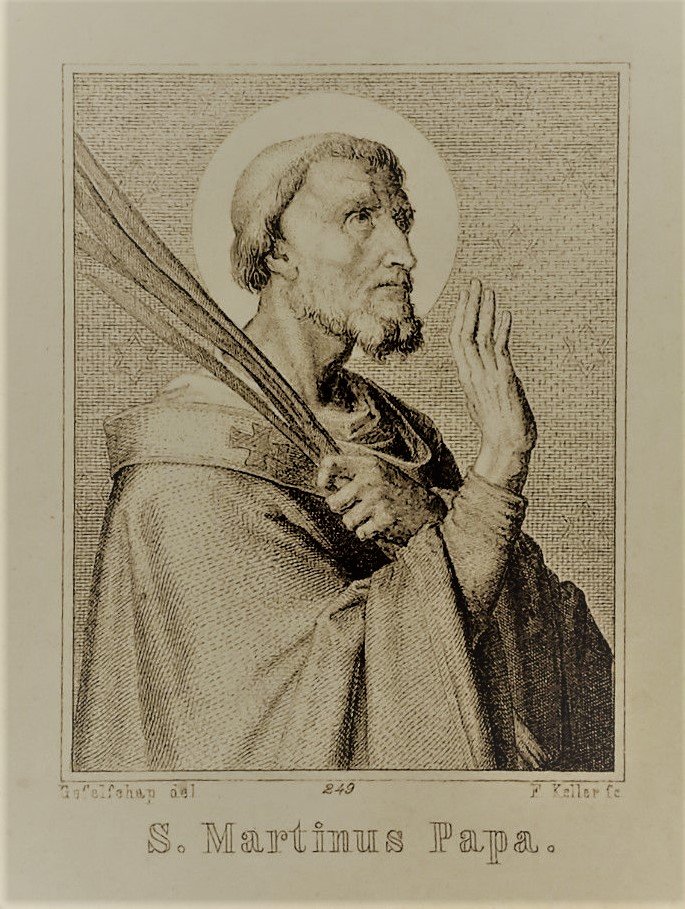
Saint Martin, who occupied the Roman See from 649 to 655, was a native of Toscany, and became celebrated amid the clergy of Rome for his learning and his sanctity. When he was elected Pope, Rome echoed with cries of joy; the clergy, the Senate and the people gave witness to their great satisfaction, and the emperor approved this happy choice. He did not disappoint the hopes of the Church; piety towards God and charity to the poor were his two rules of life. He repaired churches falling into ruin and restored peace between divergent factions, but his greatest concern was to maintain in the Church the precious heritage of the true faith.
For this purpose he assembled in the Lateran Church a Council of a hundred bishops, which condemned the principal heads of the eastern Monothelite heresy, again raising its head. Saint Martin himself sent out an encyclical letter to all prelates, showing that a spurious Credo circulating in the east was erroneous, and excommunicating all who followed it. He incurred the enmity of the Byzantine court and even of two patriarchs, by his energetic opposition to their errors, and the Exarch of Ravenna, representing the oriental Emperor Constant II in Italy, went so far as to endeavor to procure the assassination of the Pope while he stood at the altar in the Church of Saint Mary Major. The would-be murderer, a page of the Exarch, was miraculously struck blind, however, and his lord refused to have any further role in the matter. But the eastern Emperor's successor had no such scruples. After having the holy Pontiff accused of many fabricated misdeeds, he seized Saint Martin — who did not resist or permit resistance, for fear of bloodshed in Rome — then had him conveyed to Constantinople on board a vessel bound for that port. None of his clergy were permitted to accompany him; he was boarded at night in secret.
After a three month's voyage the ship anchored at the island of Naxos in the Aegean Sea, where the Pope was kept in confinement for a year, then finally brought in chains to the imperial city in 654, where he was imprisoned for three months. When he appeared before his judge he was unable to stand without support; but the pitiless magistrate heard his accusers and sentenced him to be chained and dragged through the streets of the city. He bade farewell to his companions in captivity before he left, banished to the present-day Crimea (the Chersonese in those days), saying to them when they wept: Rejoice with me that I have been found worthy to suffer for the name of Jesus Christ. There, where a famine prevailed, he lingered on for four months, abandoned to sickness and starvation but maintaining perfect serenity, until God released him by death from his tribulations on the 12th of November, 655. In a letter he sent from there, which has been conserved, the Pope wrote: For this miserable body, the Lord will have care; He is near. What is there to alarm me? I hope in His mercy, it will not be long before it terminates my career.
Reflection: There have been times in the history of Christianity when its truths have seemed on the verge of extinction. But there is a Church whose testimony has never failed — it is the Church of Saint Peter. Where Peter is, there also is the Church!
Little Pictorial Lives of the Saints, a compilation based on Butler's Lives of the Saints and other sources by John Gilmary Shea (Benziger Brothers: New York, 1894).
LAST-MODIFIED:20221028T205017Z SEQUENCE:1294731 X-ACCESS:1 X-HITS:1 X-COLOR:f0b80e X-SHOW-END-TIME:1 END:VEVENT BEGIN:VEVENT DTSTART;VALUE=DATE:20221114 DTEND;VALUE=DATE:20221115 UID:2DFD8751-F7CB-4A4D-8692-BC7076CB7457 SUMMARY:St Josaphat Bishop & Martyr CREATED:20221013T211126Z DTSTAMP:20221013T211126Z URL:https://www.stpaulsweymouth.org/component/dpcalendar/event/177?calid=13 DESCRIPTION:St. Josaphat Bishop & Martyr\N\NBorn in 1584 in Vladimir, a city of ancient Poland, Saint Josaphat was the son of Gabriel Kuncewicz. His was a family of honorable Christians of the Greco-Slavic rite, in use among the Russians. His mother took care to raise him in the fear of God, and in his tender heart formed the first longings for virtue. He was never in any way lightheaded, but separated willingly from the games of his companions to pray. He made excellent progress in his studies, always preferring the sacred branches to the profane, and for thirty years he recited each day, without ever failing even once to do so, a large section of the Divine Office which he learned by heart.\NAt twenty years of age Josaphat deplored the situation of religion in Poland. In 1596, the Ruthenian Church was divided into two contending parties — the Unionates and those who persevered in schism. He saw divisions growing in the Church, and that few were remaining faithful to the Holy See, to safeguard the true orthodoxy and their eastern rites. He studied philosophy and theology under two famous Jesuits, and decided to enter religious life. When his employer, who was childless and wished to keep him, offered him his commerce as his adopted son, he declined that offer without hesitating, and entered the Convent of the Trinity at Vilna, where Basilian religious submissive to the Holy See were residing. He received the religious habit and was professed in 1604.\NSaint Josaphat was ordained a priest and began to preach in various churches of the city, bringing back many dissidents to the Union. He was invited also to preach and govern in various regions of the land; he accepted to become head of a monastery at Bytene. He restored there celebrated sanctuaries, built a convent, and converted, among others, one of the most zealous of the dissidents. In 1614 Josaphat's friend Joseph Routski became Archbishop of the city of Vilna, and recalled his holy former companion to that city, confiding the monastery of the Trinity to him. Saint Josaphat never made harsh reproaches, but corrections warmed by a wholly paternal affection. The conversion of the separated brethren continued through the preaching of the one called by the Uniates The Scourge of the Schismatics, whereas the latter called him The Ravisher of Souls.\NHe became the Archbishop of Polotsk in 1617 at the age of thirty-eight, on the very day when, six years later, he would earn the consecration of blood, November 12th. He restored five major cathedrals and several lesser ones; he aided the poor, stripping himself often of the most necessary objects or funds. He maintained total frugality in his residence; he recovered certain properties retained unjustly by powerful lords of the region, through his mildness of language in the lawcourts, to which he had recourse for that purpose. But he was soon to acquire, in a certain Melece Smotritski, a formidable enemy, who had himself consecrated, in Russia, Archbishop of the same city as Josaphat, with other aspirants to like authority. Despite the opposition of King Sigismond of Poland, who forbade all his subjects to have any communication with the usurper, the latter won adherents. The people of the city of Vitebsk, a little like those of Jerusalem, who in one week's time changed their hosanna's into tolle's, turned toward the newcomers in large numbers, and in an uprising succeeded in giving eighteen wounds to the head of the Archdeacon of the church, and leaving for dead another official, bathed in his blood.\NWhen their Archbishop went there to calm the tumult in 1623, knowing well that his hour had come, in effect he was most cruelly assassinated and his body profaned; he was in his forty-fourth year. His mortal remains were recovered after five days from the waters of a river, and exposed for nine days, constantly emitting a fragrance of roses and lilies. A councillor of Polotsk, where the body was returned, abandoned the schism merely at the sight of the archbishop's beautiful countenance. Many of the parricides struck their breasts, and did likewise. The Archbishop had gone gladly to his death, offering his life that the schism might end; he had said as much beforehand. Four years after his death the author of the troubles, Smotritski, the false archbishop, after many combats made a decisive step and consecrated his life to penance, prayer and the defense of the Union. Such changes of heart are indeed the greatest of miracles, won by the sanctity of the true servants of God.\NAbout five years after Saint Josaphat's martyrdom his body was found intact, though the clothing had rotted away. Again in 1637 it was still white and supple. A beautiful silver reliquary was made for it, with a life-size image of the reclining Saint surmounting it. The body was again exposed intact in 1767. It was eventually taken to the Basilica of Saint Peter in Rome. Pope Leo XIII canonized Saint Josaphat in 1867.\NThe Incorruptibles, by Joan Carroll Cruz (Tan Books and Publishers: Rockford, 1977); Les Petits Bollandistes: Vies des Saints, by Msgr. Paul Guérin (Bloud et Barral: Paris, 1882), Vol. 13 X-ALT-DESC;FMTTYPE=text/html:
Born in 1584 in Vladimir, a city of ancient Poland, Saint Josaphat was the son of Gabriel Kuncewicz. His was a family of honorable Christians of the Greco-Slavic rite, in use among the Russians. His mother took care to raise him in the fear of God, and in his tender heart formed the first longings for virtue. He was never in any way lightheaded, but separated willingly from the games of his companions to pray. He made excellent progress in his studies, always preferring the sacred branches to the profane, and for thirty years he recited each day, without ever failing even once to do so, a large section of the Divine Office which he learned by heart.
At twenty years of age Josaphat deplored the situation of religion in Poland. In 1596, the Ruthenian Church was divided into two contending parties — the Unionates and those who persevered in schism. He saw divisions growing in the Church, and that few were remaining faithful to the Holy See, to safeguard the true orthodoxy and their eastern rites. He studied philosophy and theology under two famous Jesuits, and decided to enter religious life. When his employer, who was childless and wished to keep him, offered him his commerce as his adopted son, he declined that offer without hesitating, and entered the Convent of the Trinity at Vilna, where Basilian religious submissive to the Holy See were residing. He received the religious habit and was professed in 1604.
Saint Josaphat was ordained a priest and began to preach in various churches of the city, bringing back many dissidents to the Union. He was invited also to preach and govern in various regions of the land; he accepted to become head of a monastery at Bytene. He restored there celebrated sanctuaries, built a convent, and converted, among others, one of the most zealous of the dissidents. In 1614 Josaphat's friend Joseph Routski became Archbishop of the city of Vilna, and recalled his holy former companion to that city, confiding the monastery of the Trinity to him. Saint Josaphat never made harsh reproaches, but corrections warmed by a wholly paternal affection. The conversion of the separated brethren continued through the preaching of the one called by the Uniates The Scourge of the Schismatics, whereas the latter called him The Ravisher of Souls.
He became the Archbishop of Polotsk in 1617 at the age of thirty-eight, on the very day when, six years later, he would earn the consecration of blood, November 12th. He restored five major cathedrals and several lesser ones; he aided the poor, stripping himself often of the most necessary objects or funds. He maintained total frugality in his residence; he recovered certain properties retained unjustly by powerful lords of the region, through his mildness of language in the lawcourts, to which he had recourse for that purpose. But he was soon to acquire, in a certain Melece Smotritski, a formidable enemy, who had himself consecrated, in Russia, Archbishop of the same city as Josaphat, with other aspirants to like authority. Despite the opposition of King Sigismond of Poland, who forbade all his subjects to have any communication with the usurper, the latter won adherents. The people of the city of Vitebsk, a little like those of Jerusalem, who in one week's time changed their hosanna's into tolle's, turned toward the newcomers in large numbers, and in an uprising succeeded in giving eighteen wounds to the head of the Archdeacon of the church, and leaving for dead another official, bathed in his blood.
When their Archbishop went there to calm the tumult in 1623, knowing well that his hour had come, in effect he was most cruelly assassinated and his body profaned; he was in his forty-fourth year. His mortal remains were recovered after five days from the waters of a river, and exposed for nine days, constantly emitting a fragrance of roses and lilies. A councillor of Polotsk, where the body was returned, abandoned the schism merely at the sight of the archbishop's beautiful countenance. Many of the parricides struck their breasts, and did likewise. The Archbishop had gone gladly to his death, offering his life that the schism might end; he had said as much beforehand. Four years after his death the author of the troubles, Smotritski, the false archbishop, after many combats made a decisive step and consecrated his life to penance, prayer and the defense of the Union. Such changes of heart are indeed the greatest of miracles, won by the sanctity of the true servants of God.
About five years after Saint Josaphat's martyrdom his body was found intact, though the clothing had rotted away. Again in 1637 it was still white and supple. A beautiful silver reliquary was made for it, with a life-size image of the reclining Saint surmounting it. The body was again exposed intact in 1767. It was eventually taken to the Basilica of Saint Peter in Rome. Pope Leo XIII canonized Saint Josaphat in 1867.
The Incorruptibles, by Joan Carroll Cruz (Tan Books and Publishers: Rockford, 1977); Les Petits Bollandistes: Vies des Saints, by Msgr. Paul Guérin (Bloud et Barral: Paris, 1882), Vol. 13
LAST-MODIFIED:20221105T214836Z SEQUENCE:1989430 X-ACCESS:1 X-HITS:101 X-COLOR:f0b80e X-SHOW-END-TIME:1 END:VEVENT BEGIN:VEVENT DTSTART;VALUE=DATE:20221115 DTEND;VALUE=DATE:20221116 UID:E745D2F4-2748-432E-BFFA-7577193DB10E SUMMARY:St Albert the Great, Bishop CREATED:20221013T211126Z DTSTAMP:20221013T211126Z URL:https://www.stpaulsweymouth.org/component/dpcalendar/event/179?calid=13 DESCRIPTION:St. Albert the Great, Bishop, Confessor, Doctor of the Church\N\NSaint Albert the Great was born in the region of Ausgbourg, of parents rich in the goods of fortune. From the time he was a child, he manifested in his studies an unusual aptitude for the exact sciences. While he was still a boy, he had himself let down the side of a cliff to examine at close range an eagle's nest which interested him. At the age of fifteen he was already a student of the natural sciences and the humanities at Bologna; Saint Dominic had died in that city the preceding year, 1221, and was buried in the Dominican Convent. Their house, in a suburban area of Bologna, was closely associated with the activities at the University, and students in large numbers were requesting admission to the Order.\NBlessed Reginald of Orleans, Dominican, a former professor in Paris, came to preach there in the streets. The second Dominican General, Blessed Jordan of Saxony, a compatriot of Albert and a very eloquent preacher, was in Padua, and when the students of Bologna were transferred there Albert heard him at the Padua Dominican Church. He had already desired to enter the Order, but his uncle opposed to that plan a very vigorous opposition, and Albert was still very young. He dreamed one night that he had become a Dominican but left the Order soon afterwards. The same day he heard Master Jordan preach, and the Dominican General spoke of how the demon attempts to turn aside those who want to enter into religion, knowing that he will suffer great losses from their career in the Church; he persuades them in dreams that they will leave it, or else they see themselves on horseback, or clothed in purple, or as solitaries in the desert, or surrounded by cordial friends; thus he makes them fear entering because they would not be able to persevere. This was precisely Albert's great concern, faced as he was with his uncle's opposition. Afterwards the young student, amazed, went to Blessed Jordan, saying: Master, who revealed my heart to you? And he lost no time then in entering the Order at the age of sixteen, in 1223, having heard the same preacher remark to him personally that he should consider what a pity it would be if his excellent youthful qualities became the prey of eternal fires.\NWhen he had earned the title of Doctor in theology, he was sent to Cologne, where for a long time his reputation attracted many illustrious disciples. The humble Albert, filled with the love of God, taught also in Padua and Bologna, in Saxony, at Fribourg, Ratisbonne and Strasbourg, and when Blessed Jordan of Saxony died in 1237, he occupied his place and fulfilled his functions until 1238, when the election of his successor was held. He returned then to Cologne, where he would encounter a disciple who alone among all of them would suffice for his glory — Saint Thomas Aquinas. This young religious, already steeped in the highest theological studies, was silent among the others, to the point of being called by his fellow students the Mute Ox of Sicily. But Albert silenced them, saying, The bellowings of this ox will resound throughout the entire world.\NFrom Cologne, Saint Albert was called to the University of Paris, with his dear disciple. There his genius appeared in all its brilliance, and there he composed a large number of his writings. Later, obedience took him back to Germany as Provincial of his Order. Without a murmur, he said farewell to his cell, his books, and his numerous disciples, and as Provincial thereafter journeyed with no money, always on foot, visiting the numerous monasteries under his jurisdiction, throughout an immense territory in which were included Austria, Bavaria, Saxony, and other regions even to Holland.\NHe was no longer young when he had to submit to the formal order of the Pope and accept, in difficult circumstances, the episcopal see of Ratisbonne; there his indefatigable zeal was rewarded only by harsh trials, in the midst of which his virtue was perfected. When, in response to his persevering requests to be relieved of the responsibilities of a large see, Pope Urban IV restored to him the conventual peace of his Order, he was nonetheless obliged to take up his apostolic journeyings again. Finally he could enter into a definitive retreat, to prepare for death. One is astonished that amid so many labors, journeys and works of zeal, Albert could find the time to write on the natural sciences, on philosophy and theology, works which form from twenty-one to thirty-eight volumes, depending on the edition — and one may ask in which of his titles he most excelled, that of scholar, of Saint, or of Apostle.\NHe died, apparently of fatigue, at the age of seventy-three, on November 15, 1280, and his body was buried in Cologne in the Dominican church. He had to wait until December 16, 1931 for the honors of canonization and the extension of his cult to the universal Church. Proclaiming his holiness, Pope Pius XI added the glorious title, so well merited, of Doctor of the Church. From time immemorial, he has been known as Albert the Great.\NSaint Albert le Grand, textes et études, translated and with a preface by Albert Garreau (Éditions Montaigne: Paris, 1942); Vie des Saints pour tous les jours de l'année, by Abbé L. Jaud (Mame: Tours, 1950). X-ALT-DESC;FMTTYPE=text/html:
Saint Albert the Great was born in the region of Ausgbourg, of parents rich in the goods of fortune. From the time he was a child, he manifested in his studies an unusual aptitude for the exact sciences. While he was still a boy, he had himself let down the side of a cliff to examine at close range an eagle's nest which interested him. At the age of fifteen he was already a student of the natural sciences and the humanities at Bologna; Saint Dominic had died in that city the preceding year, 1221, and was buried in the Dominican Convent. Their house, in a suburban area of Bologna, was closely associated with the activities at the University, and students in large numbers were requesting admission to the Order.
Blessed Reginald of Orleans, Dominican, a former professor in Paris, came to preach there in the streets. The second Dominican General, Blessed Jordan of Saxony, a compatriot of Albert and a very eloquent preacher, was in Padua, and when the students of Bologna were transferred there Albert heard him at the Padua Dominican Church. He had already desired to enter the Order, but his uncle opposed to that plan a very vigorous opposition, and Albert was still very young. He dreamed one night that he had become a Dominican but left the Order soon afterwards. The same day he heard Master Jordan preach, and the Dominican General spoke of how the demon attempts to turn aside those who want to enter into religion, knowing that he will suffer great losses from their career in the Church; he persuades them in dreams that they will leave it, or else they see themselves on horseback, or clothed in purple, or as solitaries in the desert, or surrounded by cordial friends; thus he makes them fear entering because they would not be able to persevere. This was precisely Albert's great concern, faced as he was with his uncle's opposition. Afterwards the young student, amazed, went to Blessed Jordan, saying: Master, who revealed my heart to you? And he lost no time then in entering the Order at the age of sixteen, in 1223, having heard the same preacher remark to him personally that he should consider what a pity it would be if his excellent youthful qualities became the prey of eternal fires.
When he had earned the title of Doctor in theology, he was sent to Cologne, where for a long time his reputation attracted many illustrious disciples. The humble Albert, filled with the love of God, taught also in Padua and Bologna, in Saxony, at Fribourg, Ratisbonne and Strasbourg, and when Blessed Jordan of Saxony died in 1237, he occupied his place and fulfilled his functions until 1238, when the election of his successor was held. He returned then to Cologne, where he would encounter a disciple who alone among all of them would suffice for his glory — Saint Thomas Aquinas. This young religious, already steeped in the highest theological studies, was silent among the others, to the point of being called by his fellow students the Mute Ox of Sicily. But Albert silenced them, saying, The bellowings of this ox will resound throughout the entire world.
From Cologne, Saint Albert was called to the University of Paris, with his dear disciple. There his genius appeared in all its brilliance, and there he composed a large number of his writings. Later, obedience took him back to Germany as Provincial of his Order. Without a murmur, he said farewell to his cell, his books, and his numerous disciples, and as Provincial thereafter journeyed with no money, always on foot, visiting the numerous monasteries under his jurisdiction, throughout an immense territory in which were included Austria, Bavaria, Saxony, and other regions even to Holland.
He was no longer young when he had to submit to the formal order of the Pope and accept, in difficult circumstances, the episcopal see of Ratisbonne; there his indefatigable zeal was rewarded only by harsh trials, in the midst of which his virtue was perfected. When, in response to his persevering requests to be relieved of the responsibilities of a large see, Pope Urban IV restored to him the conventual peace of his Order, he was nonetheless obliged to take up his apostolic journeyings again. Finally he could enter into a definitive retreat, to prepare for death. One is astonished that amid so many labors, journeys and works of zeal, Albert could find the time to write on the natural sciences, on philosophy and theology, works which form from twenty-one to thirty-eight volumes, depending on the edition — and one may ask in which of his titles he most excelled, that of scholar, of Saint, or of Apostle.
He died, apparently of fatigue, at the age of seventy-three, on November 15, 1280, and his body was buried in Cologne in the Dominican church. He had to wait until December 16, 1931 for the honors of canonization and the extension of his cult to the universal Church. Proclaiming his holiness, Pope Pius XI added the glorious title, so well merited, of Doctor of the Church. From time immemorial, he has been known as Albert the Great.
Saint Albert le Grand, textes et études, translated and with a preface by Albert Garreau (Éditions Montaigne: Paris, 1942); Vie des Saints pour tous les jours de l'année, by Abbé L. Jaud (Mame: Tours, 1950).
LAST-MODIFIED:20221105T215154Z SEQUENCE:1989628 X-ACCESS:1 X-HITS:18 X-COLOR:f0b80e X-SHOW-END-TIME:1 END:VEVENT BEGIN:VEVENT DTSTART;VALUE=DATE:20221116 DTEND;VALUE=DATE:20221117 UID:ACD49145-28DB-4B9C-A2AF-2F3ADDD3DEEE SUMMARY:St Edmund of Abingdon, Bishop CREATED:20221013T211126Z DTSTAMP:20221013T211126Z URL:https://www.stpaulsweymouth.org/component/dpcalendar/event/181?calid=13 DESCRIPTION:St. Edmund of Abingdon, Bishop & Confessor\N\NSaint Edmund, Edmundus, or Edme, was born at Abingdon in England towards the end of the twelfth century, the son of very virtuous Christians. His father withdrew from the world before many years passed, and entered a monastery, where he later died; and his pious spouse raised her children in the love and fear of God, accustoming them to an austere life, and by means of little presents, encouraging them to practice mortification and penance.\NEdmund, the oldest, with his brother Robert, left his home at Abingdon as a boy of twelve to study in Paris. There he protected himself against many grievous temptations by a vow of chastity, and by consecrating himself to the Blessed Virgin Mary for life. While he was still a schoolboy there, he one day saw the Child Jesus, who told him He was always at his side in school, and accompanied him everywhere he went. He said he should inscribe His Name deeply in his heart, and at night print it on his forehead, and it would preserve him and all who would do likewise, from a sudden death.\NHis mother fell seriously ill while he was still studying in Paris; he returned home for her final benediction, and she recommended that he provide for his brother and his sisters. When the latter were all received by the Superior of a nearby convent, Edmund was able to return to Paris to complete his studies. He began to profess the liberal arts there and acquired an excellent reputation, striving also to teach virtue to his students and to aid them in all their difficulties. After six years, he was advised by his mother in a dream to abandon the teaching of secular disciplines, and devote himself to learning to know God better. He then became a Doctor of sacred learning, and many who heard him teach left their former occupations to embrace religious life. When ordained a priest, he was the treasurer of the Church of the diocese of Salisbury. There he manifested such charity to the poor that the dean said he was rather the treasure than the treasurer of their church.\NThe Pope, having heard of his sanctity and his zeal, charged him to preach the Crusade against the Saracens. He was raised in 1234 to the archiepiscopal see of Canterbury. There he fearlessly defended the rights of Church and State against the avarice and greed of Henry III. The complacent ecclesiastics and lords persecuted him in various ways, but could not alter his patience. Finding himself unable, however, to force the monarch to relinquish the benefices which he kept vacant on behalf of the royal coffers, Edmund retired into exile at the Cistercian monastery of Pontigny, rather than appear as an accomplice to so flagrant a wrong. After two years spent in solitude and prayer, he went to his reward. The miracles wrought at his tomb at Pontigny were so numerous that he was canonized in 1247, only a few years after his death. His body was found incorrupt in that year, when it was translated in the presence of Saint Louis IX and his court to Pontigny, from its former resting place in the church of Soisy.\NLes Petits Bollandistes: Vies des Saints, by Msgr. Paul Guérin (Bloud et Barral: Paris, 1882), Vol. 13 X-ALT-DESC;FMTTYPE=text/html: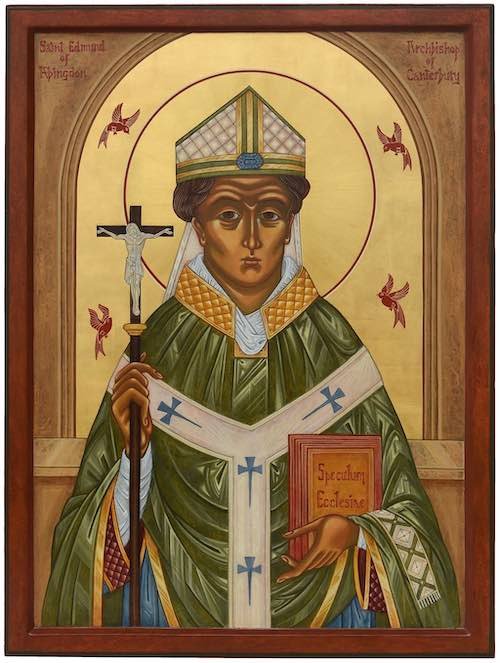
Saint Edmund, Edmundus, or Edme, was born at Abingdon in England towards the end of the twelfth century, the son of very virtuous Christians. His father withdrew from the world before many years passed, and entered a monastery, where he later died; and his pious spouse raised her children in the love and fear of God, accustoming them to an austere life, and by means of little presents, encouraging them to practice mortification and penance.
Edmund, the oldest, with his brother Robert, left his home at Abingdon as a boy of twelve to study in Paris. There he protected himself against many grievous temptations by a vow of chastity, and by consecrating himself to the Blessed Virgin Mary for life. While he was still a schoolboy there, he one day saw the Child Jesus, who told him He was always at his side in school, and accompanied him everywhere he went. He said he should inscribe His Name deeply in his heart, and at night print it on his forehead, and it would preserve him and all who would do likewise, from a sudden death.
His mother fell seriously ill while he was still studying in Paris; he returned home for her final benediction, and she recommended that he provide for his brother and his sisters. When the latter were all received by the Superior of a nearby convent, Edmund was able to return to Paris to complete his studies. He began to profess the liberal arts there and acquired an excellent reputation, striving also to teach virtue to his students and to aid them in all their difficulties. After six years, he was advised by his mother in a dream to abandon the teaching of secular disciplines, and devote himself to learning to know God better. He then became a Doctor of sacred learning, and many who heard him teach left their former occupations to embrace religious life. When ordained a priest, he was the treasurer of the Church of the diocese of Salisbury. There he manifested such charity to the poor that the dean said he was rather the treasure than the treasurer of their church.
The Pope, having heard of his sanctity and his zeal, charged him to preach the Crusade against the Saracens. He was raised in 1234 to the archiepiscopal see of Canterbury. There he fearlessly defended the rights of Church and State against the avarice and greed of Henry III. The complacent ecclesiastics and lords persecuted him in various ways, but could not alter his patience. Finding himself unable, however, to force the monarch to relinquish the benefices which he kept vacant on behalf of the royal coffers, Edmund retired into exile at the Cistercian monastery of Pontigny, rather than appear as an accomplice to so flagrant a wrong. After two years spent in solitude and prayer, he went to his reward. The miracles wrought at his tomb at Pontigny were so numerous that he was canonized in 1247, only a few years after his death. His body was found incorrupt in that year, when it was translated in the presence of Saint Louis IX and his court to Pontigny, from its former resting place in the church of Soisy.
Les Petits Bollandistes: Vies des Saints, by Msgr. Paul Guérin (Bloud et Barral: Paris, 1882), Vol. 13
LAST-MODIFIED:20221105T215552Z SEQUENCE:1989866 X-ACCESS:1 X-HITS:26 X-COLOR:f0b80e X-SHOW-END-TIME:1 END:VEVENT BEGIN:VEVENT DTSTART;VALUE=DATE:20221117 DTEND;VALUE=DATE:20221118 UID:C787E715-2B50-4A04-B1DF-6408A1ADFA7E SUMMARY:St Gertrude the Great CREATED:20221013T211126Z DTSTAMP:20221013T211126Z URL:https://www.stpaulsweymouth.org/component/dpcalendar/event/183?calid=13 DESCRIPTION:St. Gertrude the Great, Abbess & Virgin\N\NSaint Gertrude of Eisleben is the most celebrated of several Saints of the same name, and for this reason the ancient authors named her Gertrude the Great. She was born in the year 1264 of a noble Saxon family, and placed at the age of five for education with the Benedictines of Helfta. She dwelt there as a simple religious, very mistrustful of herself, under the direction of an Abbess having the same name as herself. The Abbess' sister was Saint Mechtilde of Hackeborn; and she was the mistress and friend of the young Saint Gertrude, who consulted her excellent teacher whenever she was tempted by vain and useless thoughts, or troubled by doubts suggested by the ancient enemy.\NSaint Gertrude learned Latin in her youth, as in those days was customary for persons of her sex who consecrated themselves to God, and she wrote Latin with unusual elegance and force. She also had an uncommon knowledge of Holy Scripture and of all the branches of learning having religion as their object; but one day Our Lord reproached her with having too great a taste for her studies. Afterwards she could find in them nothing but bitterness; but soon Our Lord came to instruct her Himself. For many years she never lost His amiable Presence, save for eleven days when He decided to test her fidelity. Prayer and contemplation were her principal exercise, and to those she consecrated the greater part of her time.\NZeal for the salvation of souls was ardent in the heart of Gertrude. Thinking of the souls of sinners, she would shed torrents of tears at the foot of the cross and before the Blessed Sacrament. She especially loved to meditate on the Passion and the Eucharist, and at those times, too, could not restrain the tears that flowed in abundance from her eyes. When she spoke of Jesus Christ and His mysteries, she ravished those who heard her. One day while in church the Sisters were singing, I have seen the Lord face to face, Saint Gertrude beheld what appeared to be the divine Face, brilliant in beauty; His eyes pierced her heart and filled her soul and flesh with inexpressible delights. Divine love, ever the unique principle of her affections and her actions, was the principle by which she was crucified to the world and all its vanities.\NShe was the object of a great number of extraordinary graces; Jesus Christ engraved His wounds in the heart of His holy spouse, placed rings on her fingers, presented Himself to her in the company of His Mother, and in her spirit acted as though He had exchanged hearts with her. All these astonishing graces only developed her love for suffering. It was impossible for her to live without some kind of pain; the time she spent without suffering seemed to her to be wasted.\NDuring the long illness of five months from which she would die, she gave not the slightest sign of impatience or sadness; her joy, on the contrary, increased with her pains. When the day of her death arrived in 1334, she saw the Most Blessed Virgin descend from heaven to assist her, and one of her Sisters perceived her soul going straight to the Heart of Jesus, which opened to receive it. Saint Gertrude is one of the great mystics of the Church; the book of her Revelations, recorded out of obedience, remains celebrated. In it she traces in words of indescribable beauty the intimate converse of her soul with Jesus and Mary. She was gentle to all, most gentle to sinners; filled with devotion to the Saints of God, to the souls in purgatory, and above all to the Passion of Our Lord and to His Sacred Heart.\NReflection: No preparation for death can be better than to offer and resign ourselves constantly to the Divine Will, humbly, lovingly, and with unbounded confidence in the infinite mercy and goodness of God.\NVie des Saints pour tous les jours de l'année, by Abbé L. Jaud (Mame: Tours, 1950); Little Pictorial Lives of the Saints, a compilation based on Butler's Lives of the Saints and other sources by John Gilmary Shea (Benziger Brothers: New York, 1894). X-ALT-DESC;FMTTYPE=text/html: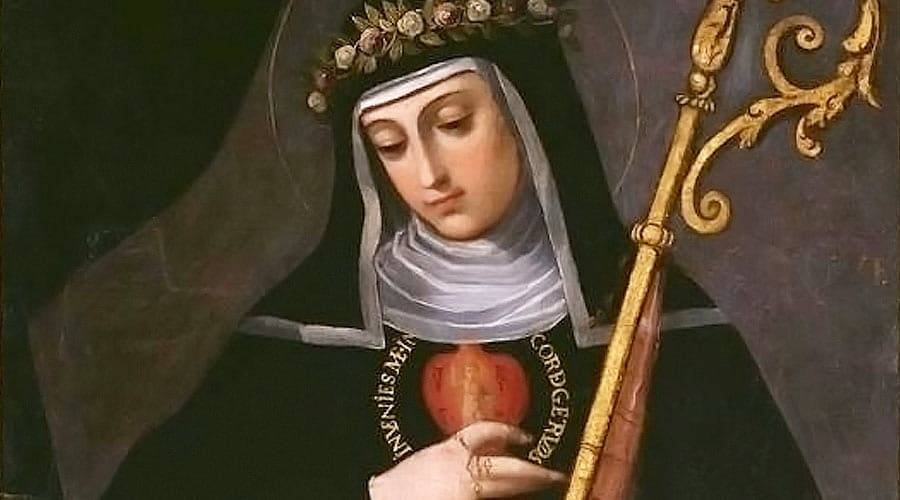
Saint Gertrude of Eisleben is the most celebrated of several Saints of the same name, and for this reason the ancient authors named her Gertrude the Great. She was born in the year 1264 of a noble Saxon family, and placed at the age of five for education with the Benedictines of Helfta. She dwelt there as a simple religious, very mistrustful of herself, under the direction of an Abbess having the same name as herself. The Abbess' sister was Saint Mechtilde of Hackeborn; and she was the mistress and friend of the young Saint Gertrude, who consulted her excellent teacher whenever she was tempted by vain and useless thoughts, or troubled by doubts suggested by the ancient enemy.
Saint Gertrude learned Latin in her youth, as in those days was customary for persons of her sex who consecrated themselves to God, and she wrote Latin with unusual elegance and force. She also had an uncommon knowledge of Holy Scripture and of all the branches of learning having religion as their object; but one day Our Lord reproached her with having too great a taste for her studies. Afterwards she could find in them nothing but bitterness; but soon Our Lord came to instruct her Himself. For many years she never lost His amiable Presence, save for eleven days when He decided to test her fidelity. Prayer and contemplation were her principal exercise, and to those she consecrated the greater part of her time.
Zeal for the salvation of souls was ardent in the heart of Gertrude. Thinking of the souls of sinners, she would shed torrents of tears at the foot of the cross and before the Blessed Sacrament. She especially loved to meditate on the Passion and the Eucharist, and at those times, too, could not restrain the tears that flowed in abundance from her eyes. When she spoke of Jesus Christ and His mysteries, she ravished those who heard her. One day while in church the Sisters were singing, I have seen the Lord face to face, Saint Gertrude beheld what appeared to be the divine Face, brilliant in beauty; His eyes pierced her heart and filled her soul and flesh with inexpressible delights. Divine love, ever the unique principle of her affections and her actions, was the principle by which she was crucified to the world and all its vanities.
She was the object of a great number of extraordinary graces; Jesus Christ engraved His wounds in the heart of His holy spouse, placed rings on her fingers, presented Himself to her in the company of His Mother, and in her spirit acted as though He had exchanged hearts with her. All these astonishing graces only developed her love for suffering. It was impossible for her to live without some kind of pain; the time she spent without suffering seemed to her to be wasted.
During the long illness of five months from which she would die, she gave not the slightest sign of impatience or sadness; her joy, on the contrary, increased with her pains. When the day of her death arrived in 1334, she saw the Most Blessed Virgin descend from heaven to assist her, and one of her Sisters perceived her soul going straight to the Heart of Jesus, which opened to receive it. Saint Gertrude is one of the great mystics of the Church; the book of her Revelations, recorded out of obedience, remains celebrated. In it she traces in words of indescribable beauty the intimate converse of her soul with Jesus and Mary. She was gentle to all, most gentle to sinners; filled with devotion to the Saints of God, to the souls in purgatory, and above all to the Passion of Our Lord and to His Sacred Heart.
Reflection: No preparation for death can be better than to offer and resign ourselves constantly to the Divine Will, humbly, lovingly, and with unbounded confidence in the infinite mercy and goodness of God.
Vie des Saints pour tous les jours de l'année, by Abbé L. Jaud (Mame: Tours, 1950); Little Pictorial Lives of the Saints, a compilation based on Butler's Lives of the Saints and other sources by John Gilmary Shea (Benziger Brothers: New York, 1894).
LAST-MODIFIED:20221105T220108Z SEQUENCE:1990182 X-ACCESS:1 X-HITS:35 X-COLOR:f0b80e X-SHOW-END-TIME:1 END:VEVENT BEGIN:VEVENT DTSTART;VALUE=DATE:20221118 DTEND;VALUE=DATE:20221119 UID:CF9E53A9-3CFB-452F-9959-4C05FF48835B SUMMARY:Dedication of the Basilicas of St. Peter and St. Paul CREATED:20221013T211126Z DTSTAMP:20221013T211126Z URL:https://www.stpaulsweymouth.org/component/dpcalendar/event/185?calid=13 DESCRIPTION:Dedication of the Basilicas of St. Peter and St. Paul\N\NThe ancient basilica of Saint Peter stood, like the present one, on the hill of Rome called in Latin Mons Vaticanus, at the northwestern extremity of the city, on the right bank of the Tiber. What we call the Vatican is a Roman palace, the ordinary dwelling of the Pope. Near the Lateran palace where the early Popes dwelt, which was itself built by Constantine the Great or Saint Liberius, Constantine built on the same hill, over the tomb of Saint Peter called the Confession, the Church of the first Vicar of Christ, where once a Roman circus had stood. This first Christian emperor placed there a plaque to honor Saint Peter, on which he had inscribed:\NBecause the world under your guidance has risen triumphant to the very heavens, Constantine, victorious, has built this temple to your glory.\NThe Divine Office for this day narrates its origins as follows:\NThe Emperor Constantine the Great, on the eighth day after his baptism, after deposing the diadem and prostrating himself, shed a great many tears; then taking up a pick and a shovel, he dug into the soil and drew out twelve loads of earth in honor of the twelve Apostles, thereby designating the site of the basilica he desired to build to honor their Prince. This basilica was dedicated by Pope Saint Sylvester on the fourteenth day of the calendes of December, just as on the fifth of the ides of November he had consecrated the Church of the Lateran, but here he did so by raising a stone altar which he anointed with sacred chrism... When the old Vatican basilica became decrepit, it was rebuilt, through the piety of several Pontiffs, on the same foundations but larger and more magnificent. And in the year 1626, on this same day, Urban VII solemnly consecrated it.\NAs during the earliest centuries, still today from all corners of the world Christians go to venerate the tomb of the Prince of the Apostles.\NThe tomb of Saint Paul is on the Ostian Way, at the southern extremity of the city. The characters indicating the Apostle buried there, which clearly date from the epoch of Constantine, are engraved in the marble which closes the sarcophagus: PAULO APOSTOLO ET MARTYRI.\NOn the same day, Saint Sylvester dedicated the Basilica of Saint Paul the Apostle which the emperor Constantine had also built with magnificence on the Ostian Way, enriching this one, too, with revenues, ornaments and valuable gifts. In the year 1823, a violent fire totally consumed this Basilica, but it was raised again, more beautiful than before, by the persevering zeal of four Pontiffs, who recovered it from its ruins. Pius IX chose for the time of its consecration the blessed occasion of the definition of the Immaculate Conception of the Blessed Virgin Mary, which he had just proclaimed, and which had drawn to Rome from the farthest places of the Catholic world, a number of Bishops and Cardinals. It was on the 10th day of December in 1854, that amid this beautiful crown of prelates and princes of the Church, he carried out the solemn dedication, and fixed its annual commemoration for the present day. (November 18)\NThus the city is laid out between the two pillars of the Church, the two Apostles who from Rome made the Word of God resound throughout the entire world.\NL'Année liturgique, by Dom Prosper Guéranger (Mame et Fils: Tours: 1919), The Time after Pentecost, VI, Vol. 15. Translation O.D.M. X-ALT-DESC;FMTTYPE=text/html: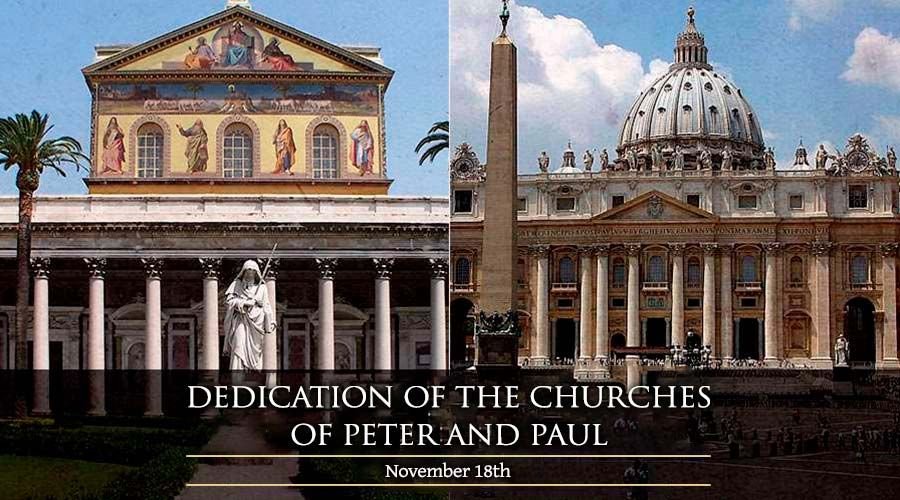
The ancient basilica of Saint Peter stood, like the present one, on the hill of Rome called in Latin Mons Vaticanus, at the northwestern extremity of the city, on the right bank of the Tiber. What we call the Vatican is a Roman palace, the ordinary dwelling of the Pope. Near the Lateran palace where the early Popes dwelt, which was itself built by Constantine the Great or Saint Liberius, Constantine built on the same hill, over the tomb of Saint Peter called the Confession, the Church of the first Vicar of Christ, where once a Roman circus had stood. This first Christian emperor placed there a plaque to honor Saint Peter, on which he had inscribed:
Because the world under your guidance has risen triumphant to the very heavens, Constantine, victorious, has built this temple to your glory.
The Divine Office for this day narrates its origins as follows:
The Emperor Constantine the Great, on the eighth day after his baptism, after deposing the diadem and prostrating himself, shed a great many tears; then taking up a pick and a shovel, he dug into the soil and drew out twelve loads of earth in honor of the twelve Apostles, thereby designating the site of the basilica he desired to build to honor their Prince. This basilica was dedicated by Pope Saint Sylvester on the fourteenth day of the calendes of December, just as on the fifth of the ides of November he had consecrated the Church of the Lateran, but here he did so by raising a stone altar which he anointed with sacred chrism... When the old Vatican basilica became decrepit, it was rebuilt, through the piety of several Pontiffs, on the same foundations but larger and more magnificent. And in the year 1626, on this same day, Urban VII solemnly consecrated it.
As during the earliest centuries, still today from all corners of the world Christians go to venerate the tomb of the Prince of the Apostles.
The tomb of Saint Paul is on the Ostian Way, at the southern extremity of the city. The characters indicating the Apostle buried there, which clearly date from the epoch of Constantine, are engraved in the marble which closes the sarcophagus: PAULO APOSTOLO ET MARTYRI.
On the same day, Saint Sylvester dedicated the Basilica of Saint Paul the Apostle which the emperor Constantine had also built with magnificence on the Ostian Way, enriching this one, too, with revenues, ornaments and valuable gifts. In the year 1823, a violent fire totally consumed this Basilica, but it was raised again, more beautiful than before, by the persevering zeal of four Pontiffs, who recovered it from its ruins. Pius IX chose for the time of its consecration the blessed occasion of the definition of the Immaculate Conception of the Blessed Virgin Mary, which he had just proclaimed, and which had drawn to Rome from the farthest places of the Catholic world, a number of Bishops and Cardinals. It was on the 10th day of December in 1854, that amid this beautiful crown of prelates and princes of the Church, he carried out the solemn dedication, and fixed its annual commemoration for the present day. (November 18)
Thus the city is laid out between the two pillars of the Church, the two Apostles who from Rome made the Word of God resound throughout the entire world.
L'Année liturgique, by Dom Prosper Guéranger (Mame et Fils: Tours: 1919), The Time after Pentecost, VI, Vol. 15. Translation O.D.M.
LAST-MODIFIED:20221105T220451Z SEQUENCE:1990405 X-ACCESS:1 X-HITS:73 X-COLOR:f0b80e X-SHOW-END-TIME:1 END:VEVENT BEGIN:VEVENT DTSTART;VALUE=DATE:20221119 DTEND;VALUE=DATE:20221120 UID:46CD7FB2-5EE8-4158-9238-2AA0887CED68 SUMMARY:St Elizabeth of Hungary CREATED:20221013T211126Z DTSTAMP:20221013T211126Z URL:https://www.stpaulsweymouth.org/component/dpcalendar/event/187?calid=13 DESCRIPTION:St. Elizabeth of Hungary, Widow\N\NElizabeth was the daughter of the just and pious Andrew II, king of Hungary, the niece of Saint Hedwig, and the sister of the virtuous Bela IV, king of Hungary, who became the father of Saint Cunegundes and of Saint Margaret of Hungary, a Dominican nun. Another of her brothers was Coloman, King of Galicia and prince of Russia, who led an angelic life amid the multiple affairs of the world and the troubles of war.\NShe was betrothed in infancy to Louis, Landgrave of Thuringia, and brought up from the age of four in his father's court. Never could she bear to adopt the ornaments of the court for her own usage, and she took pleasure only in prayer. She would remove her royal crown when she entered the church, saying she was in the presence of the Saviour who wore a crown of thorns. As she grew older, she employed the jewels offered her for the benefit of the poor. Not content with receiving numbers of them daily in her palace, and relieving all in distress, she built several hospitals, where she herself served the sick, bathing them, feeding them, dressing their wounds and ulcers. The relatives of her fiancé tried to prevent the marriage, saying she was fit only for a cloister; but the young prince said he would not accept gold in the quantity of a nearby mountain, if it were offered him to abandon his resolution to marry Elizabeth.\NOnce as she was carrying in the folds of her mantle some provisions for the poor, she met her husband returning from the hunt. Astonished to see her bending under the weight of her burden, he opened the mantle and found in it nothing but beautiful red and white roses, though it was not the season for flowers. He told her to continue on her way, and took one of the marvelous roses, which he conserved all his life. She never ceased to edify him in all of her works. One of her twelve excellent Christian maxims, by which she regulated all her conduct was, Often recall that you are the work of the hands of God and act accordingly, in such a way as to be eternally with Him.\NWhen her pious young husband died in Sicily on his way to a Crusade with the Emperor Frederick, she was cruelly driven from her palace by her brother-in-law. Those whom she had aided showed nothing but coldness for her; God was to purify His Saint by harsh tribulations. She was forced to wander through the streets with her little children, a prey to hunger and cold. The bishop of Bamberg, her maternal uncle, finally forced the cruel prince to ask pardon for his ill treatment of her, but she voluntarily renounced the grandeurs of the world, and went to live in a small house she had prepared in the city of Marburgh. There she practiced the greatest austerities. She welcomed all her sufferings, and continued to be the mother of the poor, distributing all of the heritage eventually conceded to her, and converting many by her holy life. She died in 1231, at the age of twenty-four.\NReflection: This young and delicate princess made herself the servant and nurse of the poor. Let her example teach us to disregard the opinions of the world and to overcome our natural hesitation, in order to serve Christ in the person of His poor.\NLes Petits Bollandistes: Vies des Saints, by Msgr. Paul Guérin (Bloud et Barral: Paris, 1882), Vol. 13; Little Pictorial Lives of the Saints, a compilation based on Butler's Lives of the Saints and other sources by John Gilmary Shea (Benziger Brothers: New York, 1894). X-ALT-DESC;FMTTYPE=text/html: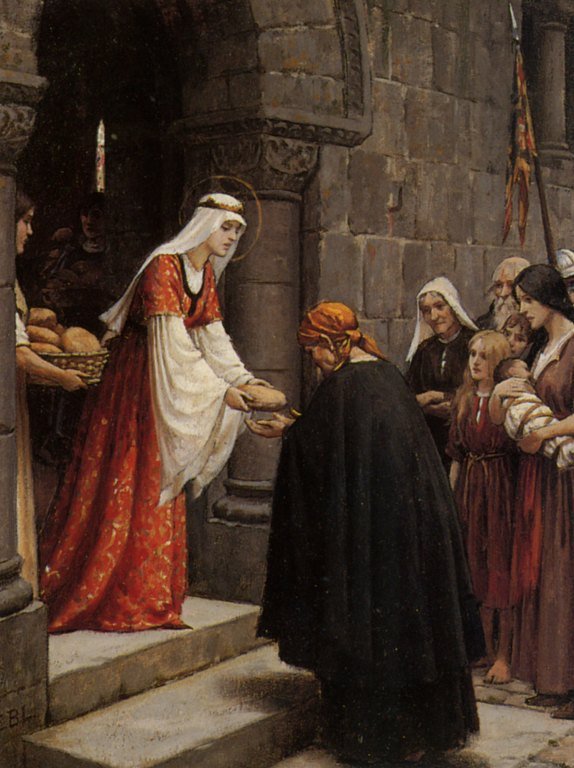
Elizabeth was the daughter of the just and pious Andrew II, king of Hungary, the niece of Saint Hedwig, and the sister of the virtuous Bela IV, king of Hungary, who became the father of Saint Cunegundes and of Saint Margaret of Hungary, a Dominican nun. Another of her brothers was Coloman, King of Galicia and prince of Russia, who led an angelic life amid the multiple affairs of the world and the troubles of war.
She was betrothed in infancy to Louis, Landgrave of Thuringia, and brought up from the age of four in his father's court. Never could she bear to adopt the ornaments of the court for her own usage, and she took pleasure only in prayer. She would remove her royal crown when she entered the church, saying she was in the presence of the Saviour who wore a crown of thorns. As she grew older, she employed the jewels offered her for the benefit of the poor. Not content with receiving numbers of them daily in her palace, and relieving all in distress, she built several hospitals, where she herself served the sick, bathing them, feeding them, dressing their wounds and ulcers. The relatives of her fiancé tried to prevent the marriage, saying she was fit only for a cloister; but the young prince said he would not accept gold in the quantity of a nearby mountain, if it were offered him to abandon his resolution to marry Elizabeth.
Once as she was carrying in the folds of her mantle some provisions for the poor, she met her husband returning from the hunt. Astonished to see her bending under the weight of her burden, he opened the mantle and found in it nothing but beautiful red and white roses, though it was not the season for flowers. He told her to continue on her way, and took one of the marvelous roses, which he conserved all his life. She never ceased to edify him in all of her works. One of her twelve excellent Christian maxims, by which she regulated all her conduct was, Often recall that you are the work of the hands of God and act accordingly, in such a way as to be eternally with Him.
When her pious young husband died in Sicily on his way to a Crusade with the Emperor Frederick, she was cruelly driven from her palace by her brother-in-law. Those whom she had aided showed nothing but coldness for her; God was to purify His Saint by harsh tribulations. She was forced to wander through the streets with her little children, a prey to hunger and cold. The bishop of Bamberg, her maternal uncle, finally forced the cruel prince to ask pardon for his ill treatment of her, but she voluntarily renounced the grandeurs of the world, and went to live in a small house she had prepared in the city of Marburgh. There she practiced the greatest austerities. She welcomed all her sufferings, and continued to be the mother of the poor, distributing all of the heritage eventually conceded to her, and converting many by her holy life. She died in 1231, at the age of twenty-four.
Reflection: This young and delicate princess made herself the servant and nurse of the poor. Let her example teach us to disregard the opinions of the world and to overcome our natural hesitation, in order to serve Christ in the person of His poor.
Les Petits Bollandistes: Vies des Saints, by Msgr. Paul Guérin (Bloud et Barral: Paris, 1882), Vol. 13; Little Pictorial Lives of the Saints, a compilation based on Butler's Lives of the Saints and other sources by John Gilmary Shea (Benziger Brothers: New York, 1894).
LAST-MODIFIED:20221105T220813Z SEQUENCE:1990607 X-ACCESS:1 X-HITS:61 X-COLOR:f0b80e X-SHOW-END-TIME:1 END:VEVENT BEGIN:VEVENT DTSTART;VALUE=DATE:20221121 DTEND;VALUE=DATE:20221122 UID:62F71F38-533A-420B-9417-13D92490ECF4 SUMMARY:Presentation of Our Lady CREATED:20221013T211126Z DTSTAMP:20221013T211126Z URL:https://www.stpaulsweymouth.org/component/dpcalendar/event/207?calid=13 DESCRIPTION:Presentation of the Blessed Virgin Mary in the Temple of Jerusalem\N\NReligious parents never fail by devout prayer to consecrate their children to God, His divine service and love, both before and after their birth. Some among the Jews, not content with this general consecration of their children, offered them to God in their infancy, by the hands of the priests in the Temple, to be brought up in quarters attached to the Temple, attending the priests and Levites in their sacred ministry. There were special divisions in these lodgings for the women and children dedicated to the divine service. (III Kings 6:5-9) We have examples of this special consecration of children in the person of Samuel, for example. Today the Church celebrates the feast of the Presentation of the Blessed Virgin Mary in the Temple of Jerusalem. It is very probable that the holy prophet Simeon and the prophetess Anna, who witnessed the Presentation of Jesus in the Temple, as we read in the second chapter of the Gospel of Saint Luke (verses 25 ff.) had known His Mother as a little girl in the Temple and observed her truly unique sanctity.\NIt is an ancient and very trustworthy tradition that the Blessed Virgin was thus solemnly offered in the Temple to God at the age of three by Her parents, Saint Anne and Saint Joachim. The Gospel tells us nothing of the childhood of Mary; Her title Mother of God, eclipses all the rest. Where, better than in the Temple, could Mary be prepared for Her mission? Twelve years of recollection and prayer, contemplation and sufferings, were the preparation of the chosen one of God. The tender soul of Mary was adorned with the most precious graces and became an object of astonishment and praise for the holy Angels, as well as of the highest complacency for the adorable Trinity. The Father looked upon Her as His beloved Daughter, the Son as One set apart and prepared to become His Mother, and the Holy Ghost as His undefiled Spouse.\NHere is how Mary's day in the Temple was apportioned, according to Saint Jerome. From dawn until nine in the morning, She prayed; from 9:00 until 3:00 She applied Herself to manual work; then She turned again to prayer. She was always the first to undertake night watches, the One most applied to study, the most fervent in the chanting of Psalms, the most zealous in works of charity, the purest among the virgins, Her companions, the most perfect in the practice of every virtue. On this day She appears as the standard-bearer for Christian virginity: after Her will come countless legions of virgins consecrated to the Lord, both in the shadow of the altars or engaged in the charitable occupations of the Church in the world. Mary will be their eternal Model, their dedicated Patroness, their sure guide on the paths of perfection.\NReflection: The consecration of Mary to God presented all the conditions of the most perfect sacrifice: it was prompt, generous, joyous, unregretted, without reservation. How agreeable it must have been to God! May our consecration of ourselves to God be made under Her patronage, assisted by Her powerful intercession and united with Her ineffable merits.\NVie des Saints pour tous les jours de l'année, by Abbé L. Jaud (Mame: Tours, 1950); Little Pictorial Lives of the Saints, a compilation based on Butler's Lives of the Saints and other sources by John Gilmary Shea (Benziger Brothers: New York, 1894). X-ALT-DESC;FMTTYPE=text/html: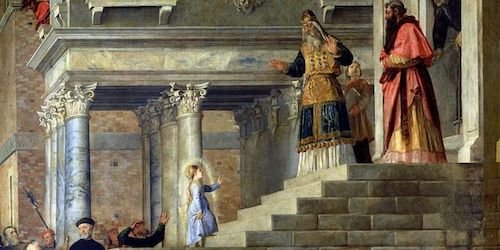
Religious parents never fail by devout prayer to consecrate their children to God, His divine service and love, both before and after their birth. Some among the Jews, not content with this general consecration of their children, offered them to God in their infancy, by the hands of the priests in the Temple, to be brought up in quarters attached to the Temple, attending the priests and Levites in their sacred ministry. There were special divisions in these lodgings for the women and children dedicated to the divine service. (III Kings 6:5-9) We have examples of this special consecration of children in the person of Samuel, for example. Today the Church celebrates the feast of the Presentation of the Blessed Virgin Mary in the Temple of Jerusalem. It is very probable that the holy prophet Simeon and the prophetess Anna, who witnessed the Presentation of Jesus in the Temple, as we read in the second chapter of the Gospel of Saint Luke (verses 25 ff.) had known His Mother as a little girl in the Temple and observed her truly unique sanctity.
It is an ancient and very trustworthy tradition that the Blessed Virgin was thus solemnly offered in the Temple to God at the age of three by Her parents, Saint Anne and Saint Joachim. The Gospel tells us nothing of the childhood of Mary; Her title Mother of God, eclipses all the rest. Where, better than in the Temple, could Mary be prepared for Her mission? Twelve years of recollection and prayer, contemplation and sufferings, were the preparation of the chosen one of God. The tender soul of Mary was adorned with the most precious graces and became an object of astonishment and praise for the holy Angels, as well as of the highest complacency for the adorable Trinity. The Father looked upon Her as His beloved Daughter, the Son as One set apart and prepared to become His Mother, and the Holy Ghost as His undefiled Spouse.
Here is how Mary's day in the Temple was apportioned, according to Saint Jerome. From dawn until nine in the morning, She prayed; from 9:00 until 3:00 She applied Herself to manual work; then She turned again to prayer. She was always the first to undertake night watches, the One most applied to study, the most fervent in the chanting of Psalms, the most zealous in works of charity, the purest among the virgins, Her companions, the most perfect in the practice of every virtue. On this day She appears as the standard-bearer for Christian virginity: after Her will come countless legions of virgins consecrated to the Lord, both in the shadow of the altars or engaged in the charitable occupations of the Church in the world. Mary will be their eternal Model, their dedicated Patroness, their sure guide on the paths of perfection.
Reflection: The consecration of Mary to God presented all the conditions of the most perfect sacrifice: it was prompt, generous, joyous, unregretted, without reservation. How agreeable it must have been to God! May our consecration of ourselves to God be made under Her patronage, assisted by Her powerful intercession and united with Her ineffable merits.
Vie des Saints pour tous les jours de l'année, by Abbé L. Jaud (Mame: Tours, 1950); Little Pictorial Lives of the Saints, a compilation based on Butler's Lives of the Saints and other sources by John Gilmary Shea (Benziger Brothers: New York, 1894).
LAST-MODIFIED:20221112T221754Z SEQUENCE:2595988 X-ACCESS:1 X-HITS:33 X-COLOR:f0b80e X-SHOW-END-TIME:1 END:VEVENT BEGIN:VEVENT DTSTART;VALUE=DATE:20221122 DTEND;VALUE=DATE:20221123 UID:4F15B6F4-16DE-412E-B41F-F1A789C40D7E SUMMARY:St. Cecilia CREATED:20221013T211126Z DTSTAMP:20221013T211126Z URL:https://www.stpaulsweymouth.org/component/dpcalendar/event/209?calid=13 DESCRIPTION:St. Cecilia, Virgin & Martyr\N\NIt is under the emperor Alexander Severus that this young Saint, one of the most fragrant flowers of Christian virginity and martyrdom, suffered for the Faith she had chosen; to choose it was at that moment as certain an end to earthly felicity as it is a guarantee, at every epoch, of the eternal felicity of those who remain faithful to it. Cecilia was the daughter of an illustrious patrician, and was the only Christian of her family; she was permitted to attend the reunions held in the catacombs by the Christians, either through her parents' condescension or out of indifference. She continually kept a copy of the holy Gospel hidden under her clothing over her heart. Her parents obliged her, however, despite her vow of virginity, which most probably they knew nothing of, to marry the young Valerian, whom she esteemed as noble and good, but who was still pagan.\NDuring the evening of the wedding day, with the music of the nuptial feast still in the air, Cecilia, this intelligent, beautiful, and noble Roman maiden, renewed her vow. When the new spouses found themselves alone, she gently said to Valerian, Dear friend, I have a secret to confide to you, but will you promise me to keep it? He promised her solemnly that nothing would ever make him reveal it, and she continued, Listen: an Angel of God watches over me, for I belong to God. If he sees that you would approach me under the influence of a sensual love, his anger will be inflamed, and you will succumb to the blows of his vengeance. But if you love me with a perfect love and conserve my virginity inviolable, he will love you as he loves me, and will lavish on you, too, his favors. Valerian replied that if he might see this Angel, he would certainly correspond to her wishes, and Cecilia answered, Valerian, if you consent to be purified in the fountain which wells up eternally; if you will believe in the unique, living and true God who reigns in heaven, you will be able to see the Angel. And to his questions concerning this water and who might bestow it, she directed him to a certain holy old man named Urban.\NThat holy Pontiff rejoiced exceedingly when Valerian came to him the same night, to be instructed and baptized; his long prayer touched the young man greatly, and he too rejoiced with an entirely new joy in his new-found and veritable faith, so far above the religion of the pagans. He returned to his house, and on entering the room where Cecilia had continued to pray for the remainder of the night, he saw the Angel waiting, with two crowns of roses and lilies, which he would place on the head of each of them. Cecilia understood at once that if the lilies symbolized their virginity, the roses foretold for them both the grace of martyrdom. Valerian was told he might ask any grace at all of God, who was very pleased with him; and he requested that his brother Tiburtius might also receive the grace he had obtained; and the conversion of Tiburtius soon afterwards became a reality.\NThe two brothers, who were very wealthy, began to aid the families which had lost their support through the martyrdom of the fathers, spouses, and sons; they saw to the burial of the Christians, and continually braved the same fate as these victims. In effect they were soon captured, and their testimony was such as to convert a young officer chosen to conduct them to the site of their martyrdom. He succeeded in delaying it for a day, and took them to his house, where before the day was ended he had decided to receive Baptism with his entire family and household. The two brothers offered their heads to the sword; and soon afterward the officer they had won for Christ followed them to the eternal divine kingdom. It was Cecilia who saw to the burial of all three martyrs. She then distributed to the poor all the valuable objects of her house, in order that the property of Valerian might not be confiscated according to current Roman law, and knowing that her own time was close at hand.\NShe was soon arrested and arraigned, but having asked a delay after her interrogation, she assembled those who had heard her with admiration and instructed them in the faith; the Pontiff Urban baptized a large number of them. The death appointed for her was suffocation by steam. Saint Cecilia remained unharmed and calm, for a day and a night, in the calderium, or place of hot baths, in her own palace, despite a fire heated to seven times its ordinary violence. Finally, an executioner was sent to dispatch her by the sword; he struck with trembling hand the three blows which the law allowed, and left her still alive. For two days and nights Cecilia would lie with her head half severed, on the pavement of her bath, fully sensible and joyfully awaiting her crown. When her neophytes came to bury her after the departure of the executioner, they found her alive and smiling. They surrounded her there, not daring to touch her, for three days, having collected the precious blood from her wounds. On the third day, after the holy Pontiff Urban had come to bless her, the agony ended, and in the year 177 the virgin Saint gave back her glorious soul to Christ. It was the Supreme Pontiff who presided at her funeral; she was placed in a coffin in the position in which she had lain, as we often see her pictured, and interred in the vault prepared by Saint Callixtus for the Church's pontiffs. The authentic acts of her life and martyrdom were prepared by Pope Anteros in the year 235. When the tomb was opened in 1599 her body was entirely intact still.\NLes Petits Bollandistes: Vie des Saints, by Msgr. Paul Guérin (Bloud et Barral; Paris, 1882). The account is based on a Histoire de Sainte Cécile, by Dom Guéranger, Abbot of Solemnes X-ALT-DESC;FMTTYPE=text/html: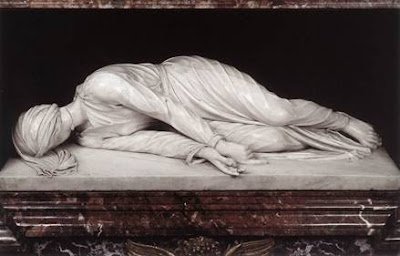
It is under the emperor Alexander Severus that this young Saint, one of the most fragrant flowers of Christian virginity and martyrdom, suffered for the Faith she had chosen; to choose it was at that moment as certain an end to earthly felicity as it is a guarantee, at every epoch, of the eternal felicity of those who remain faithful to it. Cecilia was the daughter of an illustrious patrician, and was the only Christian of her family; she was permitted to attend the reunions held in the catacombs by the Christians, either through her parents' condescension or out of indifference. She continually kept a copy of the holy Gospel hidden under her clothing over her heart. Her parents obliged her, however, despite her vow of virginity, which most probably they knew nothing of, to marry the young Valerian, whom she esteemed as noble and good, but who was still pagan.
During the evening of the wedding day, with the music of the nuptial feast still in the air, Cecilia, this intelligent, beautiful, and noble Roman maiden, renewed her vow. When the new spouses found themselves alone, she gently said to Valerian, Dear friend, I have a secret to confide to you, but will you promise me to keep it? He promised her solemnly that nothing would ever make him reveal it, and she continued, Listen: an Angel of God watches over me, for I belong to God. If he sees that you would approach me under the influence of a sensual love, his anger will be inflamed, and you will succumb to the blows of his vengeance. But if you love me with a perfect love and conserve my virginity inviolable, he will love you as he loves me, and will lavish on you, too, his favors. Valerian replied that if he might see this Angel, he would certainly correspond to her wishes, and Cecilia answered, Valerian, if you consent to be purified in the fountain which wells up eternally; if you will believe in the unique, living and true God who reigns in heaven, you will be able to see the Angel. And to his questions concerning this water and who might bestow it, she directed him to a certain holy old man named Urban.
That holy Pontiff rejoiced exceedingly when Valerian came to him the same night, to be instructed and baptized; his long prayer touched the young man greatly, and he too rejoiced with an entirely new joy in his new-found and veritable faith, so far above the religion of the pagans. He returned to his house, and on entering the room where Cecilia had continued to pray for the remainder of the night, he saw the Angel waiting, with two crowns of roses and lilies, which he would place on the head of each of them. Cecilia understood at once that if the lilies symbolized their virginity, the roses foretold for them both the grace of martyrdom. Valerian was told he might ask any grace at all of God, who was very pleased with him; and he requested that his brother Tiburtius might also receive the grace he had obtained; and the conversion of Tiburtius soon afterwards became a reality.
The two brothers, who were very wealthy, began to aid the families which had lost their support through the martyrdom of the fathers, spouses, and sons; they saw to the burial of the Christians, and continually braved the same fate as these victims. In effect they were soon captured, and their testimony was such as to convert a young officer chosen to conduct them to the site of their martyrdom. He succeeded in delaying it for a day, and took them to his house, where before the day was ended he had decided to receive Baptism with his entire family and household. The two brothers offered their heads to the sword; and soon afterward the officer they had won for Christ followed them to the eternal divine kingdom. It was Cecilia who saw to the burial of all three martyrs. She then distributed to the poor all the valuable objects of her house, in order that the property of Valerian might not be confiscated according to current Roman law, and knowing that her own time was close at hand.
She was soon arrested and arraigned, but having asked a delay after her interrogation, she assembled those who had heard her with admiration and instructed them in the faith; the Pontiff Urban baptized a large number of them. The death appointed for her was suffocation by steam. Saint Cecilia remained unharmed and calm, for a day and a night, in the calderium, or place of hot baths, in her own palace, despite a fire heated to seven times its ordinary violence. Finally, an executioner was sent to dispatch her by the sword; he struck with trembling hand the three blows which the law allowed, and left her still alive. For two days and nights Cecilia would lie with her head half severed, on the pavement of her bath, fully sensible and joyfully awaiting her crown. When her neophytes came to bury her after the departure of the executioner, they found her alive and smiling. They surrounded her there, not daring to touch her, for three days, having collected the precious blood from her wounds. On the third day, after the holy Pontiff Urban had come to bless her, the agony ended, and in the year 177 the virgin Saint gave back her glorious soul to Christ. It was the Supreme Pontiff who presided at her funeral; she was placed in a coffin in the position in which she had lain, as we often see her pictured, and interred in the vault prepared by Saint Callixtus for the Church's pontiffs. The authentic acts of her life and martyrdom were prepared by Pope Anteros in the year 235. When the tomb was opened in 1599 her body was entirely intact still.
Les Petits Bollandistes: Vie des Saints, by Msgr. Paul Guérin (Bloud et Barral; Paris, 1882). The account is based on a Histoire de Sainte Cécile, by Dom Guéranger, Abbot of Solemnes
LAST-MODIFIED:20221112T222216Z SEQUENCE:2596250 X-ACCESS:1 X-HITS:9 X-COLOR:f0b80e X-SHOW-END-TIME:1 END:VEVENT BEGIN:VEVENT DTSTART;VALUE=DATE:20221123 DTEND;VALUE=DATE:20221124 UID:C82D6409-47E6-42EF-85EE-F325F370E802 SUMMARY:St. Clement CREATED:20221013T211126Z DTSTAMP:20221013T211126Z URL:https://www.stpaulsweymouth.org/component/dpcalendar/event/211?calid=13 DESCRIPTION:St. Clement I, Pope & Martyr\N\NSaint Clement is a Roman of noble birth, the son of the Senator Faustinian. Saint Paul speaks of him in his Epistle to the Philippians, chapter 4, assuring that Clement had worked with him in the ministry of the Gospel, and that his name was written in the Book of Life. Later Saint Clement was consecrated bishop by Saint Peter himself. He succeeded in the supreme office to Saint Linus, the immediate successor to Saint Peter, and the Liber Pontificalis says that he reigned nine years, two months and ten days, from 67 to 76, ...until the reign of Vespasian and Titus.\NIt was, we may say, with the words of the Apostles still resounding in his ears that he began to rule the Church of God; he was among the first, as he was among the most illustrious, in the long line of those who have held the place and power of Peter. Living at the same time and in the same city with Domitian, persecutor of the Church, and having to face not only external foes but to contend with schism and rebellion from within, his days were not tranquil. The Corinthian Church was torn by intestine strife, and its members were defying the authority of their clergy. It was then that Saint Clement intervened in the plenitude of his apostolic authority, and sent his famous Epistle to the Corinthians. He reminded them of the duties of charity, and above all of submission to the clergy. He did not speak in vain; peace and order were restored. Saint Clement had done his work on earth, and shortly after sealed with his blood the Faith which he had learned from Peter and taught to the nations.\NLes Petits Bollandistes: Vies des Saints, by Msgr. Paul Guérin (Bloud et Barral: Paris, 1882), Vol. 13; Little Pictorial Lives of the Saints, a compilation based on Butler's Lives of the Saints and other sources by John Gilmary Shea (Benziger Brothers: New York, 1894). X-ALT-DESC;FMTTYPE=text/html: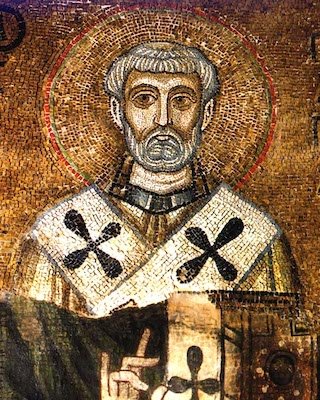
Saint Clement is a Roman of noble birth, the son of the Senator Faustinian. Saint Paul speaks of him in his Epistle to the Philippians, chapter 4, assuring that Clement had worked with him in the ministry of the Gospel, and that his name was written in the Book of Life. Later Saint Clement was consecrated bishop by Saint Peter himself. He succeeded in the supreme office to Saint Linus, the immediate successor to Saint Peter, and the Liber Pontificalis says that he reigned nine years, two months and ten days, from 67 to 76, ...until the reign of Vespasian and Titus.
It was, we may say, with the words of the Apostles still resounding in his ears that he began to rule the Church of God; he was among the first, as he was among the most illustrious, in the long line of those who have held the place and power of Peter. Living at the same time and in the same city with Domitian, persecutor of the Church, and having to face not only external foes but to contend with schism and rebellion from within, his days were not tranquil. The Corinthian Church was torn by intestine strife, and its members were defying the authority of their clergy. It was then that Saint Clement intervened in the plenitude of his apostolic authority, and sent his famous Epistle to the Corinthians. He reminded them of the duties of charity, and above all of submission to the clergy. He did not speak in vain; peace and order were restored. Saint Clement had done his work on earth, and shortly after sealed with his blood the Faith which he had learned from Peter and taught to the nations.
Les Petits Bollandistes: Vies des Saints, by Msgr. Paul Guérin (Bloud et Barral: Paris, 1882), Vol. 13; Little Pictorial Lives of the Saints, a compilation based on Butler's Lives of the Saints and other sources by John Gilmary Shea (Benziger Brothers: New York, 1894).
LAST-MODIFIED:20221112T222535Z SEQUENCE:2596449 X-ACCESS:1 X-HITS:90 X-COLOR:f0b80e X-SHOW-END-TIME:1 END:VEVENT BEGIN:VEVENT DTSTART;VALUE=DATE:20221124 DTEND;VALUE=DATE:20221125 UID:B65DBA7F-7B2B-40F4-BA60-1D903813F20D SUMMARY:St. John of the Cross CREATED:20221013T211126Z DTSTAMP:20221013T211126Z URL:https://www.stpaulsweymouth.org/component/dpcalendar/event/213?calid=13 DESCRIPTION:St. John of the Cross, Confessor & Doctor of the Church\N\NSaint John of the Cross was born near Avila in Spain. As a child, he was playing near a pond one day. He slid into the depths of the water, but came up unharmed and did not sink again. A tall and beautiful Lady came to offer him Her hand. No, said the child, You are too beautiful; my hand will dirty Yours. Then an elderly gentleman appeared on the shore and extended his staff to the child to bring him to shore. These two were Mary and Joseph. Another time he fell into a well, and it was expected he would be retrieved lifeless. But he was seated and waiting peacefully. A beautiful lady, he said, took me into Her cloak and sheltered me. Thus John grew up under the gaze of Mary.\NOne day he was praying Our Lord to make known his vocation to him, and an interior voice said to him: You will enter a religious Order, whose primitive fervor you will restore. He was twenty-one years old when he entered Carmel, and although he concealed his exceptional works, he outshone all his brethren. He dwelt in an obscure corner whose window opened upon the chapel, opposite the Most Blessed Sacrament. He wore around his waist an iron chain full of sharp points, and over it a tight vestment made of reeds joined by large knots. His disciplines were so cruel that his blood flowed in abundance. The priesthood only redoubled his desire for perfection. He thought of going to bury his existence in the Carthusian solitude, when Saint Teresa, whom God enlightened as to his merit, made him the confidant of her projects for the reform of Carmel and asked him to be her auxiliary.\NJohn retired alone to a poor and inadequate dwelling and began a new kind of life, conformed with the primitive Rules of the Order of Carmel. Shortly afterwards two companions came to join him; the reform was founded. It was not without storms that it developed, for hell seemed to rage and labor against it, and if the people venerated John as a Saint, he had to accept, from those who should have seconded him, incredible persecutions, insults, calumnies, and even prison. When Our Lord told him He was pleased with him, and asked him what reward he wished, the humble religious replied: To suffer and to be scorned for You. His reform, though approved by the General of the Order, was rejected by the older friars, who condemned the Saint as a fugitive and an apostate and cast him into prison, from which he only escaped, after nine months' suffering, with the help of Heaven and at the risk of his life. He took refuge with the Carmelite nuns for a time, saying his experience in prison had been an extraordinary grace for him. Twice again, before his death, he was shamefully persecuted by his brethren, and publicly disgraced.\NWhen he fell ill, he was given a choice of monasteries to which he might go; he chose the one governed by a religious whom he had once reprimanded and who could never pardon him for it. In effect, he was left untended most of the time, during his last illness. But at his death the room was filled with a marvelous light, and his unhappy Prior recognized his error, and that he had mistreated a Saint. After a first exhumation of his remains, they were found intact; many others followed, the last one in 1955. The body was at that time found to be entirely moist and flexible still.\NSaint John wrote spiritual books of sublime elevation. A book printed in 1923 which has now become famous, authored by a Dominican theologian*, justly attributed to Saint John and to Saint Thomas Aquinas, whom the Carmelite Saint followed, the indisputable foundations for exact ascetic and mystical theology. He was proclaimed a Doctor of the Church in 1926 by Pope Pius XI.\NVie des Saints pour tous les jours de l'année, by Abbé L. Jaud (Mame: Tours, 1950). X-ALT-DESC;FMTTYPE=text/html: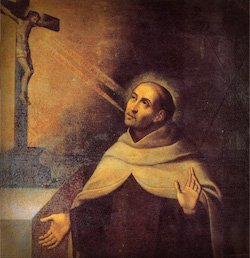
Saint John of the Cross was born near Avila in Spain. As a child, he was playing near a pond one day. He slid into the depths of the water, but came up unharmed and did not sink again. A tall and beautiful Lady came to offer him Her hand. No, said the child, You are too beautiful; my hand will dirty Yours. Then an elderly gentleman appeared on the shore and extended his staff to the child to bring him to shore. These two were Mary and Joseph. Another time he fell into a well, and it was expected he would be retrieved lifeless. But he was seated and waiting peacefully. A beautiful lady, he said, took me into Her cloak and sheltered me. Thus John grew up under the gaze of Mary.
One day he was praying Our Lord to make known his vocation to him, and an interior voice said to him: You will enter a religious Order, whose primitive fervor you will restore. He was twenty-one years old when he entered Carmel, and although he concealed his exceptional works, he outshone all his brethren. He dwelt in an obscure corner whose window opened upon the chapel, opposite the Most Blessed Sacrament. He wore around his waist an iron chain full of sharp points, and over it a tight vestment made of reeds joined by large knots. His disciplines were so cruel that his blood flowed in abundance. The priesthood only redoubled his desire for perfection. He thought of going to bury his existence in the Carthusian solitude, when Saint Teresa, whom God enlightened as to his merit, made him the confidant of her projects for the reform of Carmel and asked him to be her auxiliary.
John retired alone to a poor and inadequate dwelling and began a new kind of life, conformed with the primitive Rules of the Order of Carmel. Shortly afterwards two companions came to join him; the reform was founded. It was not without storms that it developed, for hell seemed to rage and labor against it, and if the people venerated John as a Saint, he had to accept, from those who should have seconded him, incredible persecutions, insults, calumnies, and even prison. When Our Lord told him He was pleased with him, and asked him what reward he wished, the humble religious replied: To suffer and to be scorned for You. His reform, though approved by the General of the Order, was rejected by the older friars, who condemned the Saint as a fugitive and an apostate and cast him into prison, from which he only escaped, after nine months' suffering, with the help of Heaven and at the risk of his life. He took refuge with the Carmelite nuns for a time, saying his experience in prison had been an extraordinary grace for him. Twice again, before his death, he was shamefully persecuted by his brethren, and publicly disgraced.
When he fell ill, he was given a choice of monasteries to which he might go; he chose the one governed by a religious whom he had once reprimanded and who could never pardon him for it. In effect, he was left untended most of the time, during his last illness. But at his death the room was filled with a marvelous light, and his unhappy Prior recognized his error, and that he had mistreated a Saint. After a first exhumation of his remains, they were found intact; many others followed, the last one in 1955. The body was at that time found to be entirely moist and flexible still.
Saint John wrote spiritual books of sublime elevation. A book printed in 1923 which has now become famous, authored by a Dominican theologian*, justly attributed to Saint John and to Saint Thomas Aquinas, whom the Carmelite Saint followed, the indisputable foundations for exact ascetic and mystical theology. He was proclaimed a Doctor of the Church in 1926 by Pope Pius XI.
Vie des Saints pour tous les jours de l'année, by Abbé L. Jaud (Mame: Tours, 1950).
LAST-MODIFIED:20221112T222859Z SEQUENCE:2596653 X-ACCESS:1 X-HITS:15 X-COLOR:f0b80e X-SHOW-END-TIME:1 END:VEVENT BEGIN:VEVENT DTSTART;VALUE=DATE:20221125 DTEND;VALUE=DATE:20221126 UID:B76F2D2D-0BFF-44E8-B118-4AB4C000A611 SUMMARY:S. Catherine of Alexandria CREATED:20221013T211126Z DTSTAMP:20221013T211126Z URL:https://www.stpaulsweymouth.org/component/dpcalendar/event/215?calid=13 DESCRIPTION:St. Catherine of Alexandria, Virgin & Martyr\N\NCatherine was a noble virgin of Alexandria, born in the fourth century. Before her Baptism, she saw in a dream the Blessed Virgin asking Her Son to receive her among His servants, but the Divine Infant turned away, saying she was not yet regenerated by the waters of Baptism. She made haste to receive that sacrament, and afterwards, when the dream was repeated, Catherine saw that the Saviour received her with great affection, and espoused her before the court of heaven, with a fine ring. She woke with it on her finger.\NShe had a very active intelligence, fit for all matters, and she undertook the study of philosophy and theology. At that time there were schools in Alexandria for the instruction of Christians, where excellent Christian scholars taught. She made great progress and became able to sustain the truths of our religion against even very subtle sophists. At that time Maximinus II was sharing the empire with Constantine the Great and Licinius, and had as his district Egypt; and this cruel Christian-hater ordinarily resided in Alexandria, capital of the province. He announced a gigantic pagan sacrifice, such that the very air would be darkened with the smoke of the bulls and sheep immolated on the altars of the gods. Catherine before this event strove to strengthen the Christians against the fatal lures, repeating that the oracles vaunted by the infidels were pure illusion, originating in the depths of the lower regions.\NShe foresaw that soon it would be the Christians' turn to be immolated, when they refused to participate in the ceremonies. She therefore went to the emperor himself, asking to speak with him, and her singular beauty and majestic air won an audience for her. She said to him that it was a strange thing that he should by his example attract so many peoples to such an abominable cult. By his high office he was obliged to turn them away from it, since reason itself shows us that there can be only one sovereign Being, the first principle of all else. She begged him to cease so great a disorder by giving the true God the honor due Him, lest he reap the wages of his indifference in this life already, as well as in the next. The consequences of her hardy act extended over a certain time; he decided to call in fifty sophists of his suite, to bring back this virgin from her errors. A large audience assembled to hear the debate; the emperor sat on his throne with his entire court, dissimulating his rage.\NCatherine began by saying she was surprised that he obliged her to face, alone, fifty individuals, but she asked the grace of him, that if the true God she adored rendered her victorious, he would adopt her religion and renounce the cult of the demons. He was not pleased and replied that it was not for her to lay down conditions for the discussion. The head of the sophists began the orations and reprimanded her for opposing the authority of poets, orators and philosophers, who unanimously had revered Jupiter, Juno, Neptune, Minerva and others. He cited their writings, and said she should consider that these persons were far anterior to this new religion she was following. She listened carefully before answering, then spoke, showing that the ridiculous fables which Homer, Orpheus and other poets had invented concerning their divinities, and the fact that many offered a cult to them, as well as the abominable crimes attributed to them, proved them to be gods only in the opinion of the untutored and credulous. And then she proved that the prophecies of the Hebrew Scriptures had clearly announced the time and the circumstances of the life of the future Saviour, and that these were now fulfilled. Prodigy; the head of the sophists avowed that she was entirely correct and renounced his errors; the others said they could not oppose their chief. Maximinus had them put to death by fire, but the fire did not consume their remains. Thus they died as Christians, receiving the Baptism of blood.\NThe story of Saint Catherine continues during the time of the emperor's efforts to persuade her to marry him; he put to death his converted wife and the captain of his guards who had received Baptism with two hundred of his soldiers. He delivered Catherine up to prison and then to tortures as a result of her firmness in refusing his overtures. The famous wheel of Saint Catherine — in reality several interacting wheels — which he invented to torment her, was furnished with sharp razor blades and sharp points of iron; all who saw it trembled. But as soon as it was set in movement it was miraculously disjointed and broken into pieces, and these pieces flew in all directions and wounded the spectators. The barbaric emperor finally commanded that she be decapitated; and she offered her neck to the executioner, after praying that her mortal remains would be respected.\NThe story of Saint Catherine continues with the discovery of the intact body of a young and beautiful girl on Mount Sinai in the ninth century, that is, four centuries later. The Church, in the Collect of her feast day, bears witness to the transport of her body. A number of proofs testified to the identity of her mortal remains found in the region of the famous monastery existing on that mountain since the fifth century. Her head is today conserved in Rome.\NReflection: The constancy displayed by the Saints in their glorious martyrdom cannot be isolated from their previous lives, but is their logical sequence. If we wish to emulate their perseverance, let us first imitate their fidelity to grace.\NLes Petits Bollandistes: Vies des Saints, by Msgr. Paul Guérin (Bloud et Barral: Paris, 1882), Vol. 13 X-ALT-DESC;FMTTYPE=text/html: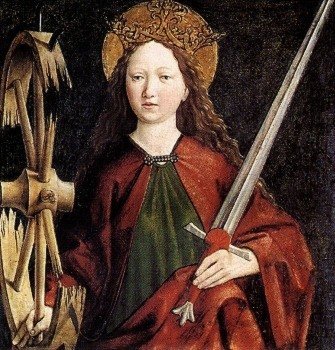
Catherine was a noble virgin of Alexandria, born in the fourth century. Before her Baptism, she saw in a dream the Blessed Virgin asking Her Son to receive her among His servants, but the Divine Infant turned away, saying she was not yet regenerated by the waters of Baptism. She made haste to receive that sacrament, and afterwards, when the dream was repeated, Catherine saw that the Saviour received her with great affection, and espoused her before the court of heaven, with a fine ring. She woke with it on her finger.
She had a very active intelligence, fit for all matters, and she undertook the study of philosophy and theology. At that time there were schools in Alexandria for the instruction of Christians, where excellent Christian scholars taught. She made great progress and became able to sustain the truths of our religion against even very subtle sophists. At that time Maximinus II was sharing the empire with Constantine the Great and Licinius, and had as his district Egypt; and this cruel Christian-hater ordinarily resided in Alexandria, capital of the province. He announced a gigantic pagan sacrifice, such that the very air would be darkened with the smoke of the bulls and sheep immolated on the altars of the gods. Catherine before this event strove to strengthen the Christians against the fatal lures, repeating that the oracles vaunted by the infidels were pure illusion, originating in the depths of the lower regions.
She foresaw that soon it would be the Christians' turn to be immolated, when they refused to participate in the ceremonies. She therefore went to the emperor himself, asking to speak with him, and her singular beauty and majestic air won an audience for her. She said to him that it was a strange thing that he should by his example attract so many peoples to such an abominable cult. By his high office he was obliged to turn them away from it, since reason itself shows us that there can be only one sovereign Being, the first principle of all else. She begged him to cease so great a disorder by giving the true God the honor due Him, lest he reap the wages of his indifference in this life already, as well as in the next. The consequences of her hardy act extended over a certain time; he decided to call in fifty sophists of his suite, to bring back this virgin from her errors. A large audience assembled to hear the debate; the emperor sat on his throne with his entire court, dissimulating his rage.
Catherine began by saying she was surprised that he obliged her to face, alone, fifty individuals, but she asked the grace of him, that if the true God she adored rendered her victorious, he would adopt her religion and renounce the cult of the demons. He was not pleased and replied that it was not for her to lay down conditions for the discussion. The head of the sophists began the orations and reprimanded her for opposing the authority of poets, orators and philosophers, who unanimously had revered Jupiter, Juno, Neptune, Minerva and others. He cited their writings, and said she should consider that these persons were far anterior to this new religion she was following. She listened carefully before answering, then spoke, showing that the ridiculous fables which Homer, Orpheus and other poets had invented concerning their divinities, and the fact that many offered a cult to them, as well as the abominable crimes attributed to them, proved them to be gods only in the opinion of the untutored and credulous. And then she proved that the prophecies of the Hebrew Scriptures had clearly announced the time and the circumstances of the life of the future Saviour, and that these were now fulfilled. Prodigy; the head of the sophists avowed that she was entirely correct and renounced his errors; the others said they could not oppose their chief. Maximinus had them put to death by fire, but the fire did not consume their remains. Thus they died as Christians, receiving the Baptism of blood.
The story of Saint Catherine continues during the time of the emperor's efforts to persuade her to marry him; he put to death his converted wife and the captain of his guards who had received Baptism with two hundred of his soldiers. He delivered Catherine up to prison and then to tortures as a result of her firmness in refusing his overtures. The famous wheel of Saint Catherine — in reality several interacting wheels — which he invented to torment her, was furnished with sharp razor blades and sharp points of iron; all who saw it trembled. But as soon as it was set in movement it was miraculously disjointed and broken into pieces, and these pieces flew in all directions and wounded the spectators. The barbaric emperor finally commanded that she be decapitated; and she offered her neck to the executioner, after praying that her mortal remains would be respected.
The story of Saint Catherine continues with the discovery of the intact body of a young and beautiful girl on Mount Sinai in the ninth century, that is, four centuries later. The Church, in the Collect of her feast day, bears witness to the transport of her body. A number of proofs testified to the identity of her mortal remains found in the region of the famous monastery existing on that mountain since the fifth century. Her head is today conserved in Rome.
Reflection: The constancy displayed by the Saints in their glorious martyrdom cannot be isolated from their previous lives, but is their logical sequence. If we wish to emulate their perseverance, let us first imitate their fidelity to grace.
Les Petits Bollandistes: Vies des Saints, by Msgr. Paul Guérin (Bloud et Barral: Paris, 1882), Vol. 13
LAST-MODIFIED:20221112T223206Z SEQUENCE:2596840 X-ACCESS:1 X-HITS:99 X-COLOR:f0b80e X-SHOW-END-TIME:1 END:VEVENT BEGIN:VEVENT DTSTART;VALUE=DATE:20221126 DTEND;VALUE=DATE:20221127 UID:8F6B0871-E145-4E8D-A6D8-CC9067DDD81F SUMMARY:St. Sylvester Abbot CREATED:20221013T211126Z DTSTAMP:20221013T211126Z URL:https://www.stpaulsweymouth.org/component/dpcalendar/event/217?calid=13 DESCRIPTION:St. Sylvester Abbot\N\NSylvester, of the noble Gozzolini family, was born in Italy in 1177. After making a distinguished record at the universities of Bologna and Padua, he was made a canon at Osimo, his native city. His inclination toward the contemplative life was strengthened by the sight of the dead body of a once handsome relative. "I am what he was," said Sylvester to himself, "and I will also be what he is." After the funeral services, the words of our Lord kept ringing in his ears, "If anyone wishes to come after Me, let him deny himself, and take up his cross and follow Me" (Matt. 16:24). At the age of 50 he resigned his post and became a hermit. Many disciples came to him, and these he organized under the rule of St. Benedict. After his death the order became known as the Sylvestrines, especially noted for their spirit of poverty. Their founder died at the age of 90.The members of his Order wear a Benedictine habit, Turkish blue in color. Today there remain seven Sylvestrine monasteries in Italy and several mission houses in Ceylon and in the United States. Dom Gueranger writes on the significance of St. Sylvester: "God often brings the world to those who flee from it, as Sylvester Gozzolini among others experienced. In the thirteenth century, the world, all in admiration at the sanctity and the eloquence of the new Orders, seemed to have forgotten the monks and the desert. God, who never forgets, led his elect silently into solitude, and the wilderness began again to rejoice and flourish like the lily; strength was restored to the weak hands and feeble knees of the sons of the cloister. The austerities of olden days and the fervor of prolonged prayer were revived at Monte Fano, and extended into sixty other monasteries; the new religious family of the Sylvestrians was approved by Innocent IV in 1247. Though originated seven centuries after St. Benedict, and distinguished from the elder families by its blue habit, it claims the Patriarch of Cassino for its legislator and father."Fr. Pius Parsch: The Church's Year of Grace\NTraditional Matins Reading:\N \N\NSylvester was born of a noble family at Osimo in the Marches of Ancona, and in his boyhood was remarkable for his love of study and his good conduct. As a youth he was sent by his father to Bologna to study jurisprudence, but was admonished by God to devote himself to sacred learning. This incited his father to anger, which Sylvester patiently endured for ten years. On account of his remarkable virtue, the Canons of Osimo elected him an honorary member of their chapter, in which position he benefited the people by his prayers, his example, and his sermons.\N \NWhile assisting at the funeral of a nobleman, his relative, who had been remarkably handsome, he looked into the open coffin, and seeing the corpse all deformed, said to himself: What this man was, I am now; what he is now, I shall be hereafter. As soon as the funeral was over, reading these words of our Lord: If any one will come after me, let him deny himself and take up his cross and follow me, he retired into solitude in order to attain greater perfection; there he gave himself up to watching, prayer and fasting, often eating nothing but raw herbs. The better to conceal himself from men he frequently changed his place of abode ; and at length settled at Monte Fano, which, though near to Fabriano, was at that time a desert. There he built a church in honour of the most holy father Benedict, and founded the Congregation of Sylvestrians, under the rule and habit shown him by St. Benedict in vision.\N \NSatan, roused to envy, strove in many ways to terrify his monks, making assaults by night at the monastery gates. But the man of God repressed the enemy's attack with such vigour, that the monks, recognizing their father's sanctity, were more and more confirmed in their holy purpose. Sylvester was remarkable for the spirit of prophecy and other gifts, which he guarded by deep humility. This so stirred up the devil's envy that he cast the saint headlong down the oratory stairs and well nigh killed him, but the blessed Virgin at once graciously restored him to health. In gratitude for this benefit, Sylvester showed her the tenderest unfailing piety to the end of his life. He died at the age of about ninety years, renowned for sanctity and miracles, on the sixth of the Kalends of December, in the year of salvation 1267. The Sovereign Pontiff Leo XIII. extended his Office and Mass to the universal Church.\N \NCollect:O Most merciful God, You gave the holy abbot Sylvester his vocation to be a hermit as he stood before an open grave, contemplating the vanity of this world; and then later made his hidden life brilliant with merit. May we imitate him in despising the pleasures of this life, so that we may enjoy Your presence for all eternity. Through our Lord . . .Source: 1962 Roman Catholic Daily Missal X-ALT-DESC;FMTTYPE=text/html: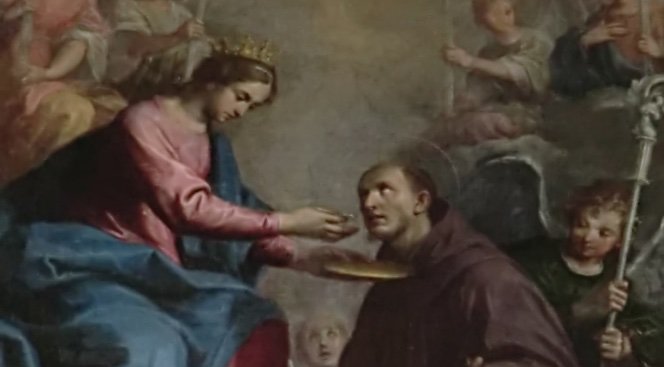
Sylvester, of the noble Gozzolini family, was born in Italy in 1177. After making a distinguished record at the universities of Bologna and Padua, he was made a canon at Osimo, his native city. His inclination toward the contemplative life was strengthened by the sight of the dead body of a once handsome relative. "I am what he was," said Sylvester to himself, "and I will also be what he is."
After the funeral services, the words of our Lord kept ringing in his ears, "If anyone wishes to come after Me, let him deny himself, and take up his cross and follow Me" (Matt. 16:24). At the age of 50 he resigned his post and became a hermit. Many disciples came to him, and these he organized under the rule of St. Benedict. After his death the order became known as the Sylvestrines, especially noted for their spirit of poverty. Their founder died at the age of 90.
The members of his Order wear a Benedictine habit, Turkish blue in color. Today there remain seven Sylvestrine monasteries in Italy and several mission houses in Ceylon and in the United States. Dom Gueranger writes on the significance of St. Sylvester: "God often brings the world to those who flee from it, as Sylvester Gozzolini among others experienced. In the thirteenth century, the world, all in admiration at the sanctity and the eloquence of the new Orders, seemed to have forgotten the monks and the desert. God, who never forgets, led his elect silently into solitude, and the wilderness began again to rejoice and flourish like the lily; strength was restored to the weak hands and feeble knees of the sons of the cloister. The austerities of olden days and the fervor of prolonged prayer were revived at Monte Fano, and extended into sixty other monasteries; the new religious family of the Sylvestrians was approved by Innocent IV in 1247. Though originated seven centuries after St. Benedict, and distinguished from the elder families by its blue habit, it claims the Patriarch of Cassino for its legislator and father."
Fr. Pius Parsch: The Church's Year of Grace
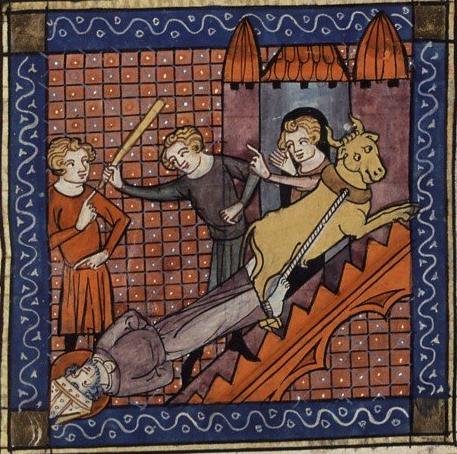
Saint Saturninus was a contemporary and a disciple of Our Lord Jesus Christ; he came to Palestine from Greece, attracted by the reputation of Saint John the Baptist, which had echoed even to the northern Mediterranean region. He then followed our Saviour, heard His teaching, and was a witness to many of His miracles. He was present in the Cenacle when the Holy Spirit descended at Pentecost upon the Mother of Christ, the Apostles and Disciples assembled in the number of 120. (Acts of the Apostles 1:15) He departed to teach Christianity under Saint Peter's authority, evangelizing the lands east of Palestine, and going as far as the region of the Persians and Medes and their neighboring provinces. He cured the sick, the lepers, and the paralytics and delivered souls from the demons; and before he left, he gave written instructions to the new Christians concerning what they should believe and practice.
When Saint Saturninus went with Saint Peter to Rome, the Apostle was inspired to send out a number of fervent evangelists to the West, to dissipate by the light of Christ the darkness in which those regions were still plunged. Saturninus was directed to go to what is now southern France, to Toulouse in particular. Saint Peter consecrated him a bishop, that he might form and ordain native priests for the future Christian churches of Gaul. He was given for his companion Papulus, later to become Saint Papulus the Martyr.
The two companions acquired at Nimes an ardent assistant in the person of Honestus. At Carcassonne, when the three announced Christ they were thrown into a prison, where they suffered from hunger; but an Angel was sent by the Lord to deliver them, and they continued on their way to Toulouse, preaching the doctrine and the name of Christ publicly. At this large and opulent city, where idolatry was entrenched, the idols became mute when the missionaries arrived. This caused great astonishment, and the cause of the silence was sought. Saint Saturninus in the meantime was working miracles which produced a strong impression on the witnesses; among them, the cure of a woman with advanced leprosy. The sign of the cross which he made over crowds often cured many sick persons at the same time, and he then baptized those who showed themselves ready for the sacrament. For a time he left his two disciples there and continued on elsewhere, preaching in the cities of what are now Auch and Eauze. A Spaniard heard of him and crossed the Pyrenees to hear him; this man, by the name of Paternus, advanced so rapidly on the paths of virtue that Saint Saturninus ordained him and then established him bishop of Eauze. He himself returned to Toulouse and sent Honestus to Spain to preach. When the latter returned to ask him to come with him to Spain, he left his disciple Papulus in charge for a time at Toulouse.
At Pampeluna his preaching brought thousands to the truth, delivering these former idolaters from the heavy yoke of the ancient enemy. While he continued his apostolic labors elsewhere, in Toulouse a persecution broke out against Papulus, and the faithful Christian obtained the crown of martyrdom by a violent death. At once Saint Saturnin returned to Toulouse, when he learned of it.
The idols again became mute. One day a great multitude was gathered near a pagan altar, where a bull stood ready for the sacrifice. A man in the crowd pointed out Saturninus, who was passing by, as the cause of the silence. There is the one who preaches everywhere that our temples must be torn down, and who dares to call our gods devils! It is his presence that imposes silence on our oracles! He was chained and dragged to the summit of the capitol, situated on a high hill, and commanded to offer sacrifice to the idols and cease to preach Jesus Christ. An Angel appeared to him to fortify him, and the terrible flagellation he endured could not alter his firmness. I know only one God, the only true one; to Him alone I will offer sacrifice on the altar of my heart... How can I fear gods who you yourselves say are afraid of me? He was tied by a rope to the bull, which was driven down the stairs leading to the capitol. His skull was broken, and the Saint entered into the beatitude of the unceasing vision of God. His body was taken up and buried by two devout young women. Tradition conserved the memory of the place of his burial, where later a church was built.
Reflection: When beset by the temptations of the devil, let us call upon the Saints, who reign with Christ. They were powerful during their lives against the devil and his angels. They are more powerful now that they have passed from the Church on earth to the Church triumphant.
Les Petits Bollandistes: Vies des Saints, by Msgr. Paul Guérin (Bloud et Barral: Paris, 1882), Vol. 13
LAST-MODIFIED:20221126T223054Z SEQUENCE:3806368 X-ACCESS:1 X-HITS:43 X-COLOR:f0b80e X-SHOW-END-TIME:1 END:VEVENT BEGIN:VEVENT DTSTART;VALUE=DATE:20221130 DTEND;VALUE=DATE:20221201 UID:72A85C4E-115E-4A69-ABF4-4161431AC475 SUMMARY:St. Andrew CREATED:20221013T211126Z DTSTAMP:20221013T211126Z URL:https://www.stpaulsweymouth.org/component/dpcalendar/event/221?calid=13 DESCRIPTION:St. Andrew Apostle\N\NSaint Andrew was one of the fishermen of Bethsaida, and was the brother of Saint Peter. He became a disciple of Saint John the Baptist. When called himself by Christ on the banks of the Jordan, his first thought was to go in search of his brother, and he said to Peter, We have found the Messiah! and brought him to Jesus.\NIt was Saint Andrew who, when Christ wished to feed the five thousand in the desert, pointed out a little lad with five loaves and a few fishes. After Pentecost, Saint Andrew went forth upon his mission to plant the Faith in Scythia and Greece and, at the end of years of toil, to win a martyr's crown at Patrae in Achaia. When Saint Andrew first caught sight of the gibbet on which he was to die, he greeted the precious wood with joy. O good cross! he cried, made beautiful by the limbs of Christ, so long desired, now so happily found! Receive me into thy arms and present me to my Master, that He who redeemed me through thee may now accept me from thee! After suffering a cruel scourging he was left, bound by cords, to die upon this diagonal cross. For two whole days the martyr remained hanging on it, alive, preaching with outstretched arms from this chair of truth, to all who came near, and entreating them not to hinder his passion.\NReflection: If we would do good to others, we must, like Saint Andrew, receive our cross with loving gratitude and not desire to be separated from it, until God so wills. To take up our cross is Jesus' command; are we perhaps dragging ours?\NLittle Pictorial Lives of the Saints, a compilation based on Butler's Lives of the Saints and other sources by John Gilmary Shea (Benziger Brothers: New York, 1894). X-ALT-DESC;FMTTYPE=text/html: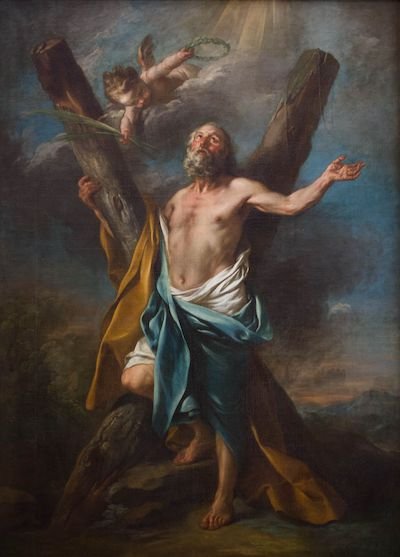
Saint Andrew was one of the fishermen of Bethsaida, and was the brother of Saint Peter. He became a disciple of Saint John the Baptist. When called himself by Christ on the banks of the Jordan, his first thought was to go in search of his brother, and he said to Peter, We have found the Messiah! and brought him to Jesus.
It was Saint Andrew who, when Christ wished to feed the five thousand in the desert, pointed out a little lad with five loaves and a few fishes. After Pentecost, Saint Andrew went forth upon his mission to plant the Faith in Scythia and Greece and, at the end of years of toil, to win a martyr's crown at Patrae in Achaia. When Saint Andrew first caught sight of the gibbet on which he was to die, he greeted the precious wood with joy. O good cross! he cried, made beautiful by the limbs of Christ, so long desired, now so happily found! Receive me into thy arms and present me to my Master, that He who redeemed me through thee may now accept me from thee! After suffering a cruel scourging he was left, bound by cords, to die upon this diagonal cross. For two whole days the martyr remained hanging on it, alive, preaching with outstretched arms from this chair of truth, to all who came near, and entreating them not to hinder his passion.
Reflection: If we would do good to others, we must, like Saint Andrew, receive our cross with loving gratitude and not desire to be separated from it, until God so wills. To take up our cross is Jesus' command; are we perhaps dragging ours?
Little Pictorial Lives of the Saints, a compilation based on Butler's Lives of the Saints and other sources by John Gilmary Shea (Benziger Brothers: New York, 1894).
LAST-MODIFIED:20221126T223418Z SEQUENCE:3806572 X-ACCESS:1 X-HITS:19 X-COLOR:f0b80e X-SHOW-END-TIME:1 END:VEVENT BEGIN:VEVENT DTSTART;VALUE=DATE:20221202 DTEND;VALUE=DATE:20221203 UID:59F3F073-76D2-4193-955C-49CB2C202CD9 SUMMARY:St. Bibiana CREATED:20221013T211126Z DTSTAMP:20221013T211126Z URL:https://www.stpaulsweymouth.org/component/dpcalendar/event/223?calid=13 DESCRIPTION:St. Bibiana, Virgin & Martyr\N\NSaint Bibiana was a native of Rome, born in the fourth century, the daughter and sister of martyrs. Flavian, her Christian father, was apprehended during the reign of Julian the Apostate, branded on the face as a slave, and banished to Toscany, where he died of his wounds a few days later. Her mother, Dafrosa, was beheaded two weeks later. Their two daughters, Bibiana and Demetria, after the death of their parents were stripped of all they had in the world, and then imprisoned with orders to give them no food. The Roman praetorian offered them rewards if they would abandon their faith, and threatened a cruel death if they would not conform, but they replied courageously that the goods and advantages of this world had no attraction for them, and that they would endure a thousand deaths rather than betray their faith and their Saviour. Demetria, after having pronounced this ardent defense, fell to the ground and expired at her sister's side; she is inscribed in the Roman martyrology on June 21st.\NThe officer gave orders that Bibiana be placed in the custody of a woman named Rufina, who was commanded to corrupt her or mistreat her. But the martyr made prayer her shield and remained invincible. Enraged at the courage and perseverance of the young virgin, the persecutor ordered her to be tied to a pillar and whipped until she expired, with scourges tipped with leaden plummets. The Saint underwent this punishment cheerfully, and died at the hands of the executioners. She was buried by a holy priest at a site where afterwards a chapel and then a church were built above her tomb. In 1628 the church was splendidly rebuilt by Pope Urban VIII, and in it he placed the relics of the two sisters and of Saint Dafrosa, their mother.\NReflection: Pray for fidelity and patience like Bibiana's under all trials, that neither convenience nor any worldly advantage may ever prevail upon you to transgress the laws of God.\NLittle Pictorial Lives of the Saints, a compilation based on Butler's Lives of the Saints and other sources, by John Gilmary Shea (Benziger Brothers: New York, 1894); Les Petits Bollandistes: Vies des Saints, by Msgr. Paul Guérin (Bloud et Barral: Paris, 1882), Vol. 14 X-ALT-DESC;FMTTYPE=text/html: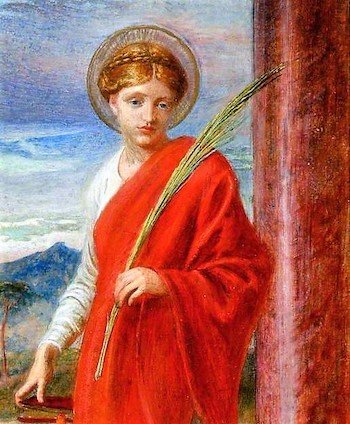
Saint Bibiana was a native of Rome, born in the fourth century, the daughter and sister of martyrs. Flavian, her Christian father, was apprehended during the reign of Julian the Apostate, branded on the face as a slave, and banished to Toscany, where he died of his wounds a few days later. Her mother, Dafrosa, was beheaded two weeks later. Their two daughters, Bibiana and Demetria, after the death of their parents were stripped of all they had in the world, and then imprisoned with orders to give them no food. The Roman praetorian offered them rewards if they would abandon their faith, and threatened a cruel death if they would not conform, but they replied courageously that the goods and advantages of this world had no attraction for them, and that they would endure a thousand deaths rather than betray their faith and their Saviour. Demetria, after having pronounced this ardent defense, fell to the ground and expired at her sister's side; she is inscribed in the Roman martyrology on June 21st.
The officer gave orders that Bibiana be placed in the custody of a woman named Rufina, who was commanded to corrupt her or mistreat her. But the martyr made prayer her shield and remained invincible. Enraged at the courage and perseverance of the young virgin, the persecutor ordered her to be tied to a pillar and whipped until she expired, with scourges tipped with leaden plummets. The Saint underwent this punishment cheerfully, and died at the hands of the executioners. She was buried by a holy priest at a site where afterwards a chapel and then a church were built above her tomb. In 1628 the church was splendidly rebuilt by Pope Urban VIII, and in it he placed the relics of the two sisters and of Saint Dafrosa, their mother.
Reflection: Pray for fidelity and patience like Bibiana's under all trials, that neither convenience nor any worldly advantage may ever prevail upon you to transgress the laws of God.
Little Pictorial Lives of the Saints, a compilation based on Butler's Lives of the Saints and other sources, by John Gilmary Shea (Benziger Brothers: New York, 1894); Les Petits Bollandistes: Vies des Saints, by Msgr. Paul Guérin (Bloud et Barral: Paris, 1882), Vol. 14
LAST-MODIFIED:20221126T223802Z SEQUENCE:3806796 X-ACCESS:1 X-HITS:178 X-COLOR:f0b80e X-SHOW-END-TIME:1 END:VEVENT BEGIN:VEVENT DTSTART;VALUE=DATE:20221203 DTEND;VALUE=DATE:20221204 UID:068303E4-2DA4-4C84-BECA-9E6D97B9C917 SUMMARY:St. Francis Xavier CREATED:20221013T211126Z DTSTAMP:20221013T211126Z URL:https://www.stpaulsweymouth.org/component/dpcalendar/event/225?calid=13 DESCRIPTION:St. Francis Xavier, Missionary & Confessor\N\N\NA young Spanish gentleman, in the dangerous days of the Reformation, was making a name for himself as a professor of philosophy at the University of Paris. He was aspiring, apparently, to a high dignity, until Saint Ignatius of Loyola decided to undertake the spiritual conquest of this ardent soul. What does it profit a man to gain the entire world, if he suffers the loss of his soul? Ignatius often repeated to the brilliant teacher. The words of Christ, joined to the example of Ignatius and his disciples, prevailed. It was not long before his gifted friend decided to labor for the glory of God, by adopting the evangelical life of an apostle, to which he was indeed called. He was among the first five members of the Society of Jesus, those who with Ignatius made their religious vows in the church of Montmartre in Paris, on the feast of the Assumption in 1534.\NOn his way to Rome with the others, handicapped by severe penances he had imposed on himself, he remained in Venice and exercised a brief apostolate by caring for the sick in the city hospital. The others waited for him to regain his ability to walk. These first fervent Jesuits were intending to embark for the Holy Land, but were prevented by a war. In Rome, Francis again went to a hospital to serve the sick; he also visited the prisons to encourage and console the poor inmates, while preparing for ordination with the others, according to the desire of the pope.\NSaint Ignatius having remained in Venice, the other five returned there afterwards. Francis was sent by Saint Ignatius to the Orient in 1534, where for twelve years he labored unceasingly to win souls, sleeping only three hours a night, eating very little, and bearing the Gospel to Hindustan, to Malacca, and as far as Japan. At all times thwarted by jealousy, covetousness, and the carelessness of those who should have helped and encouraged him, he did not slacken in his apostolic endeavors despite opposition and the difficulties of every sort which he encountered. The gift of tongues and miracles accompanied him everywhere; he resurrected several dead persons. And his inexhaustible kindness was not the least of his assets in winning thousands of pagans to the Faith. He baptized so many that his arm became virtually disabled, ten thousand in a single month in the kingdom of Trevancor, where in the same space of time he saw to the building of forty-five churches. At Meliapour, site of the martyrdom of Saint Thomas, he found the marble on which the Apostle was sacrificed, and which exuded blood the first time Mass was said upon it. Passing through various islands, cities and provinces of India, he strengthened his first conquests by additional preaching. He planted crosses in the public squares and overcame all obstacles.\NFrom India he went to Japan; Saint Francis is called Apostle of Japan as well as of India. There the pagan priests opposed and calumniated him, and tried without success to outwit him in debates. Humiliated, they used subtle means to instill dislike for him in the minds of the court authorities. But he won the love as well as the respect of those he evangelized, blessing them with such miracles as filling the hitherto sterile sea of Cangoxima with inexhaustible reserves of fish. The vast kingdom of China appealed to his charity, and he was resolved to risk his life to force an entry, when God took him to Himself. It was on December 2, 1552, that the Apostle of the Indies died on Sancian, an island facing the city of Canton in China, like Moses, in sight of the land of promise.\NReflection: Some are specially called to work for souls; but there is no one who cannot help greatly to win their salvation. Holy example, earnest intercession, the offerings of our sacrifices and works on their behalf, are within the reach of all. What is needed is the spirit which animated Saint Francis Xavier — the desire to make some return to God for His bounties, with much confidence in His paternal love.\NLittle Pictorial Lives of the Saints, a compilation based on Butler's Lives of the Saints and other sources, by John Gilmary Shea (Benziger Brothers: New York, 1894); Les Petits Bollandistes: Vies des Saints, by Msgr. Paul Guérin (Bloud et Barral: Paris, 1882), Vol. 14\N X-ALT-DESC;FMTTYPE=text/html: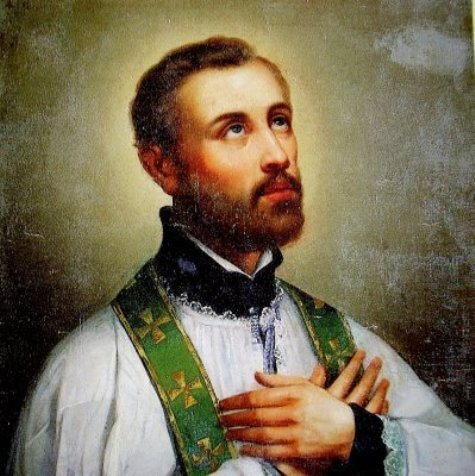
A young Spanish gentleman, in the dangerous days of the Reformation, was making a name for himself as a professor of philosophy at the University of Paris. He was aspiring, apparently, to a high dignity, until Saint Ignatius of Loyola decided to undertake the spiritual conquest of this ardent soul. What does it profit a man to gain the entire world, if he suffers the loss of his soul? Ignatius often repeated to the brilliant teacher. The words of Christ, joined to the example of Ignatius and his disciples, prevailed. It was not long before his gifted friend decided to labor for the glory of God, by adopting the evangelical life of an apostle, to which he was indeed called. He was among the first five members of the Society of Jesus, those who with Ignatius made their religious vows in the church of Montmartre in Paris, on the feast of the Assumption in 1534.
On his way to Rome with the others, handicapped by severe penances he had imposed on himself, he remained in Venice and exercised a brief apostolate by caring for the sick in the city hospital. The others waited for him to regain his ability to walk. These first fervent Jesuits were intending to embark for the Holy Land, but were prevented by a war. In Rome, Francis again went to a hospital to serve the sick; he also visited the prisons to encourage and console the poor inmates, while preparing for ordination with the others, according to the desire of the pope.
Saint Ignatius having remained in Venice, the other five returned there afterwards. Francis was sent by Saint Ignatius to the Orient in 1534, where for twelve years he labored unceasingly to win souls, sleeping only three hours a night, eating very little, and bearing the Gospel to Hindustan, to Malacca, and as far as Japan. At all times thwarted by jealousy, covetousness, and the carelessness of those who should have helped and encouraged him, he did not slacken in his apostolic endeavors despite opposition and the difficulties of every sort which he encountered. The gift of tongues and miracles accompanied him everywhere; he resurrected several dead persons. And his inexhaustible kindness was not the least of his assets in winning thousands of pagans to the Faith. He baptized so many that his arm became virtually disabled, ten thousand in a single month in the kingdom of Trevancor, where in the same space of time he saw to the building of forty-five churches. At Meliapour, site of the martyrdom of Saint Thomas, he found the marble on which the Apostle was sacrificed, and which exuded blood the first time Mass was said upon it. Passing through various islands, cities and provinces of India, he strengthened his first conquests by additional preaching. He planted crosses in the public squares and overcame all obstacles.
From India he went to Japan; Saint Francis is called Apostle of Japan as well as of India. There the pagan priests opposed and calumniated him, and tried without success to outwit him in debates. Humiliated, they used subtle means to instill dislike for him in the minds of the court authorities. But he won the love as well as the respect of those he evangelized, blessing them with such miracles as filling the hitherto sterile sea of Cangoxima with inexhaustible reserves of fish. The vast kingdom of China appealed to his charity, and he was resolved to risk his life to force an entry, when God took him to Himself. It was on December 2, 1552, that the Apostle of the Indies died on Sancian, an island facing the city of Canton in China, like Moses, in sight of the land of promise.
Reflection: Some are specially called to work for souls; but there is no one who cannot help greatly to win their salvation. Holy example, earnest intercession, the offerings of our sacrifices and works on their behalf, are within the reach of all. What is needed is the spirit which animated Saint Francis Xavier — the desire to make some return to God for His bounties, with much confidence in His paternal love.
Little Pictorial Lives of the Saints, a compilation based on Butler's Lives of the Saints and other sources, by John Gilmary Shea (Benziger Brothers: New York, 1894); Les Petits Bollandistes: Vies des Saints, by Msgr. Paul Guérin (Bloud et Barral: Paris, 1882), Vol. 14
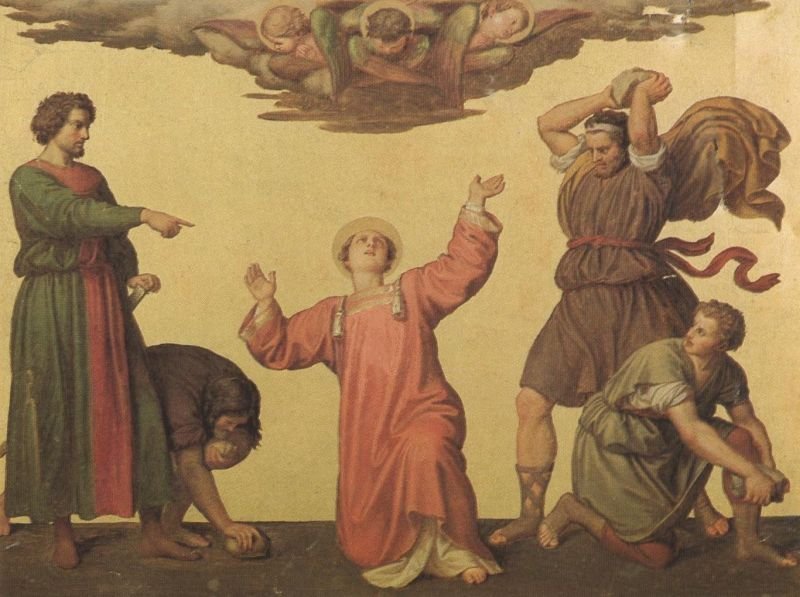
The Jewish origin of Saint Stephen is universally acknowledged; he is known and loved everywhere as the first follower of Christ to give to his martyred God love for love, blood for blood. It is not certain whether he was among the seventy-two disciples of Jesus; some believe he was of the Greek tongue and not a native of Palestine. He studied with Saint Paul and Saint Barnabas under the famous Doctor of the Law, Gamaliel, who, being a member of the Sanhedrin, attempted to stop the persecution of the Apostles. (Acts of the Apostles 5:34-40) What is certain, however, is that he distinguished himself among his brethren as an admirable Christian, replete with the gifts of the Holy Spirit. To his great beauty and angelic chastity were joined humility, patience, gentleness and charity, so perfect that they drew from all the faithful great admiration and esteem for him.
He was head of the seven disciples whom the Apostles named as deacons, to execute the works of charity which their mandate to preach did not permit them to carry out. Stephen manifested all the qualities one could wish for in a minister of charity and of the Gospel. He knew Scripture to perfection and was steeped in its divine spirit; he was endowed with invincible force because he feared nothing in the service of God. Everywhere in Jerusalem, he was proving Jesus of Nazareth to be the Messiah, and working great prodigies to confirm the truths he taught. Some believe he was the cousin of Saul, later Saint Paul; in any case, the latter, still a fire-breathing Pharisee, took offense at his boldness and presided at the scene of his martyrdom by stoning. The fervent deacon, insensible to his own fate, defended Christ before the Jerusalem tribunal with a perfection which enraged the proud authorities of Jerusalem, unwilling to recognize a humble carpenter of Nazareth for their Saviour. He boldly upbraided the chief priests with their hard-hearted resistance to the Holy Spirit. And when he accused them of putting to death, just as their forebears had treated the prophets who foretold Him, the long-awaited Just One announced by Moses, they stoned him without further delay. (Acts of the Apostles, chapter 7)
Saint Stephen died, beholding his Lord standing at the right hand of God. He imitated Him in death; crying out, Lord Jesus, receive my spirit! He concluded on his knees, Lord, do not impute to them this sin! And then he fell asleep, the narrative says.
His mortal remains were left outdoors to be devoured by beasts, but were protected by God; and Gamaliel, the Doctor of the Law, took the body of the martyr to his own country home, a few leagues from the city, where he buried him. His tomb was discovered miraculously in the fifth century, by the intervention of Gamaliel himself in a priest's dream. The greater part of his relics are still conserved in the Basilica of Saint Lawrence and Saint Stephen in Rome. His death was the signal for a great persecution of the Christians in Jerusalem, spurred on by Saul, who had approved his death. But Saint John Chrysostom remarks that because Stephen prayed, we have Saint Paul, whose conversion miraculously came about soon afterwards.
The New Testament: Acts of the Apostles; Les Petits Bollandistes: Vies des Saints, by Msgr. Paul Guérin (Bloud et Barral: Paris, 1882), Vol. 14
LAST-MODIFIED:20221224T205420Z SEQUENCE:6219774 X-ACCESS:1 X-HITS:104 X-COLOR:f0b80e X-SHOW-END-TIME:1 END:VEVENT BEGIN:VEVENT DTSTART;VALUE=DATE:20221227 DTEND;VALUE=DATE:20221228 UID:388AC4A8-259A-4D0C-9C49-CC7D73A1DB06 SUMMARY:St. John Apostle CREATED:20221013T211126Z DTSTAMP:20221013T211126Z URL:https://www.stpaulsweymouth.org/component/dpcalendar/event/244?calid=13 DESCRIPTION:St. John Apostle & Evangelist, The Beloved Disciple\N\NSaint John, brother of Saint James the Greater, the Apostle of Spain, is the beloved disciple. He was privileged, with his brother and Saint Peter, to behold the Saviour raise up a dead child to life, then saw Him transfigured on the mountaintop; he alone reposed his head on His breast at the Last Supper. After the crucifixion it is he who, with Saint Peter, hastened to the empty tomb on the morning of the Resurrection. Standing beside Mary at the Cross, he had heard his Master confide that Blessed Mother to him to be henceforth his Mother also. He took his precious treasure for refuge to Ephesus when the persecution of the Jerusalem Christians became too intense; and from there he went out to evangelize Asia Minor, of which he became the first Archbishop. He was later exiled to the Island of Patmos, where he wrote the Apocalypse, but afterwards returned to Ephesus.\NCompared with an eagle by his flights of elevated contemplation, Saint John is the supreme Doctor of the Divinity of Jesus of Nazareth. Endowed with an astounding memory, he was able even in his later years, to reproduce the discourses of Christ in such a way as to make the reader experience their power and impact on their audiences as if present to hear them. He is the author of five books of the New Testament, his Gospel, three Epistles, and the last canonical prophecy, the Apocalypse or Revelation of Saint John — all of which were composed after the ruin of Jerusalem in 70 A.D.\NIn his extreme old age he continued to visit the churches of Asia, and Saint Jerome relates that when age and weakness grew upon him so that he was no longer able to preach to the people, he would be carried to the assembly of the faithful by his disciples, with great difficulty; and every time said to his flock only these words: My dear children, love one another.\NSaint John died in peace at Ephesus in the third year of Trajan, that is, the hundredth of the Christian era, or the sixty-sixth from the crucifixion of Christ, Saint John then being about ninety-four years old, according to Saint Epiphanus.\NReflection: Saint John is a living proof of Our Lord's beatitude: Blessed are the pure of heart, for they shall see God. (Matthew 5:8)\NThe New Testament: Acts of the Apostles; Heavenly Friends, by Rosalie M. Levy (St. Paul: Boston, 1958). X-ALT-DESC;FMTTYPE=text/html: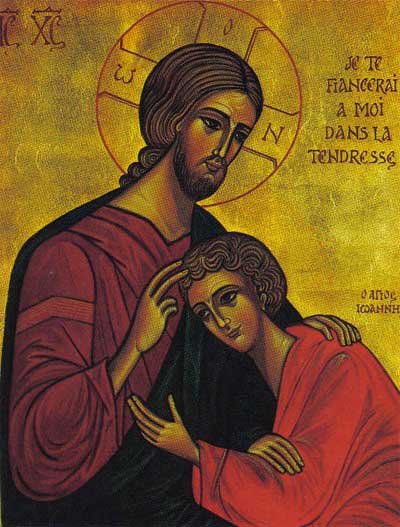
Saint John, brother of Saint James the Greater, the Apostle of Spain, is the beloved disciple. He was privileged, with his brother and Saint Peter, to behold the Saviour raise up a dead child to life, then saw Him transfigured on the mountaintop; he alone reposed his head on His breast at the Last Supper. After the crucifixion it is he who, with Saint Peter, hastened to the empty tomb on the morning of the Resurrection. Standing beside Mary at the Cross, he had heard his Master confide that Blessed Mother to him to be henceforth his Mother also. He took his precious treasure for refuge to Ephesus when the persecution of the Jerusalem Christians became too intense; and from there he went out to evangelize Asia Minor, of which he became the first Archbishop. He was later exiled to the Island of Patmos, where he wrote the Apocalypse, but afterwards returned to Ephesus.
Compared with an eagle by his flights of elevated contemplation, Saint John is the supreme Doctor of the Divinity of Jesus of Nazareth. Endowed with an astounding memory, he was able even in his later years, to reproduce the discourses of Christ in such a way as to make the reader experience their power and impact on their audiences as if present to hear them. He is the author of five books of the New Testament, his Gospel, three Epistles, and the last canonical prophecy, the Apocalypse or Revelation of Saint John — all of which were composed after the ruin of Jerusalem in 70 A.D.
In his extreme old age he continued to visit the churches of Asia, and Saint Jerome relates that when age and weakness grew upon him so that he was no longer able to preach to the people, he would be carried to the assembly of the faithful by his disciples, with great difficulty; and every time said to his flock only these words: My dear children, love one another.
Saint John died in peace at Ephesus in the third year of Trajan, that is, the hundredth of the Christian era, or the sixty-sixth from the crucifixion of Christ, Saint John then being about ninety-four years old, according to Saint Epiphanus.
Reflection: Saint John is a living proof of Our Lord's beatitude: Blessed are the pure of heart, for they shall see God. (Matthew 5:8)
The New Testament: Acts of the Apostles; Heavenly Friends, by Rosalie M. Levy (St. Paul: Boston, 1958).
LAST-MODIFIED:20221224T205835Z SEQUENCE:6220029 X-ACCESS:1 X-HITS:69 X-COLOR:f0b80e X-SHOW-END-TIME:1 END:VEVENT BEGIN:VEVENT DTSTART;VALUE=DATE:20221228 DTEND;VALUE=DATE:20221229 UID:CC41B75C-2582-4984-B897-196435FFA044 SUMMARY:Holy Innocents CREATED:20221013T211126Z DTSTAMP:20221013T211126Z URL:https://www.stpaulsweymouth.org/component/dpcalendar/event/246?calid=13 DESCRIPTION:Holy Innocents, Martyrs\N\NThe wily king Herod, who was reigning in Judea at the time of the birth of Our Saviour, learned from three Wise Men from the East that they had come to Jerusalem, advised by a star in the heavens, in search of the newborn King of the Jews. Herod's superstitious fear of losing his throne was awakened, and he grew troubled. He called together the chief priests, questioned them, and learned from them that the awaited Messiah was to be born in Bethlehem, the city of David. He said to the strangers: When you have found Him, bring me word, that I too may go and adore Him.\NThe star which had guided the Magi re-appeared over Bethlehem, and they found the Infant and adored Him, and offered Him their royal gifts of gold, frankincense and myrrh, recognizing by these His perfect Divinity, His royalty, and His prophesied sufferings. God warned them in a dream afterwards not to go back to Herod, and they returned to their lands, rejoicing, by a different route. Saint Joseph, too, was warned during his sleep by an Angel to take the Child and His Mother and flee into Egypt, for Herod will seek the life of the Infant.\NWhen Herod realized that the Wise Men would not return, he was furious, and in his rage ordered that every male child in Bethlehem and its vicinity, of the age of two years or less, be slain. These innocent victims were the flowers and first-fruits of the Saviour's legions of martyrs; they triumphed over the world without having ever known it or experienced its dangers.\NReflection: That the Holy Innocents may be invoked to be preserved from illusion is the Church's belief. Herod's illusion of threat from the newborn King cost their lives... How few, perhaps, of these innocent little ones, if they had lived, would have escaped the dangers of the world! From what snares, what sins, what miseries were they preserved! Surely they rejoice now in their fate. We often lament, as misfortunes, many accidents which in the designs of Heaven are the greatest mercies.\NThe New Testament: Acts of the Apostles; Little Pictorial Lives of the Saints, a compilation based on Butler's Lives of the Saints and other sources, by John Gilmary Shea (Benziger Brothers: New York, 1894). X-ALT-DESC;FMTTYPE=text/html: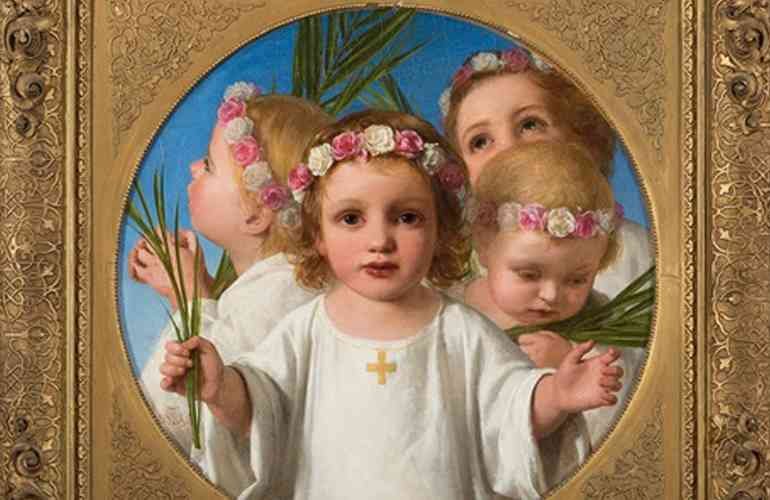
The wily king Herod, who was reigning in Judea at the time of the birth of Our Saviour, learned from three Wise Men from the East that they had come to Jerusalem, advised by a star in the heavens, in search of the newborn King of the Jews. Herod's superstitious fear of losing his throne was awakened, and he grew troubled. He called together the chief priests, questioned them, and learned from them that the awaited Messiah was to be born in Bethlehem, the city of David. He said to the strangers: When you have found Him, bring me word, that I too may go and adore Him.
The star which had guided the Magi re-appeared over Bethlehem, and they found the Infant and adored Him, and offered Him their royal gifts of gold, frankincense and myrrh, recognizing by these His perfect Divinity, His royalty, and His prophesied sufferings. God warned them in a dream afterwards not to go back to Herod, and they returned to their lands, rejoicing, by a different route. Saint Joseph, too, was warned during his sleep by an Angel to take the Child and His Mother and flee into Egypt, for Herod will seek the life of the Infant.
When Herod realized that the Wise Men would not return, he was furious, and in his rage ordered that every male child in Bethlehem and its vicinity, of the age of two years or less, be slain. These innocent victims were the flowers and first-fruits of the Saviour's legions of martyrs; they triumphed over the world without having ever known it or experienced its dangers.
Reflection: That the Holy Innocents may be invoked to be preserved from illusion is the Church's belief. Herod's illusion of threat from the newborn King cost their lives... How few, perhaps, of these innocent little ones, if they had lived, would have escaped the dangers of the world! From what snares, what sins, what miseries were they preserved! Surely they rejoice now in their fate. We often lament, as misfortunes, many accidents which in the designs of Heaven are the greatest mercies.
The New Testament: Acts of the Apostles; Little Pictorial Lives of the Saints, a compilation based on Butler's Lives of the Saints and other sources, by John Gilmary Shea (Benziger Brothers: New York, 1894).
LAST-MODIFIED:20221224T210147Z SEQUENCE:6220221 X-ACCESS:1 X-HITS:15 X-COLOR:f0b80e X-SHOW-END-TIME:1 END:VEVENT BEGIN:VEVENT DTSTART;VALUE=DATE:20221229 DTEND;VALUE=DATE:20221230 UID:025CAD5B-1817-416D-A8BB-C2A6CD336A50 SUMMARY:St. Thomas Becket, Bishop & Martyr CREATED:20221013T211126Z DTSTAMP:20221013T211126Z URL:https://www.stpaulsweymouth.org/component/dpcalendar/event/248?calid=13 DESCRIPTION:St. Thomas Becket, Archbishop of Canterbury, Martyr\N\NSaint Thomas, son of an English nobleman, Gilbert Becket, was born on the day consecrated to the memory of Saint Thomas the Apostle, December 21, 1117, in Southwark, England. He was endowed by both nature and grace with gifts recommending him to his fellow men; and his father, certain he would one day be a great servant of Christ, confided his education to a monastery. His first employment was in the government of the London police. There he was obliged to learn the various rights of the Church and of the secular arm, but already he saw so many injustices imposed upon the clergy that he preferred to leave that employment rather than to participate in iniquity. He was perfectly chaste and truthful, and no snares could cause to waver his hatred for any form of covert action.\NHe was employed then by the Archbishop of Canterbury, who sent him on missions to Rome and permitted him to study civil law at the University of Bologna (Italy) for an entire year. After a few years, witnessing his perfect service, he made him his Archdeacon and endowed him with several benefices. The young cleric's virtue and force soon recommended him also to the king, who made of him his Lord Chancellor. In that high office, while inflexible in the rendition of justice, he was generous and solicitous for the relief of misery. He was severe towards himself, spending the better part of every night in prayer. He often employed a discipline, to be less subject to the revolts of the flesh against the spirit. In a war with France he won the respect of his enemies, including that of the young king Louis VII. To Saint Thomas, his own sovereign, Henry II, confided the education of the crown prince. Of the formation of the future king and the young lords who composed his suite, the Chancellor took extreme care, knowing well that the strength of a State depends largely on the early impressions received by the elite of its youth.\NWhen Archbishop Theobald of Canterbury died, the king insisted on the consecration of Saint Thomas in his stead. Saint Thomas at first declined, warning the king that from that hour their friendship would be threatened by his own obligations to uphold the rights of the Church against infringement by the sovereign, whose tendencies were not different from those of his predecessors. In the end he was obliged by obedience to yield. The inevitable conflict was not long in coming. Saint Thomas resisted when the king's courtiers drew up a list of royal customs at Clarendon, where the parliament of the king was assembled, and Henry obliged all the bishops as well as the lords to sign a promise to uphold these without permitting any restrictions whatsoever. Many of these pretended customs violated the liberties of the Church, and some were even invented for the occasion. Saint Thomas, obliged in conscience to resist, was soon the object of persecution, not only from the irritated king but by all who had sworn loyalty to his nefarious doings.\NSaint Thomas took refuge in France under the protection of the generous Louis VII, who resisted successfully the repeated efforts of Henry to turn away his favor from the Archbishop. The Pope at that time was in France, and he, too, was besieged by Henry's emissaries, but knew well how to pacify minds and protect the defender of the Church. Thomas retired to a Benedictine monastery for two years, and when Henry wrote a threatening letter to its abbot, moved to another. After six years, his office restored as the Pope's apostolic legate, a title which Henry had wrested from him for a time, he returned to England, to preach again and enforce order in his see. He knew well that it was to martyrdom that he was destined; it is related that the Mother of God appeared to him in France to foretell it to him, and that She presented him for that intention with a red chasuble. By this time the persecuted Archbishop's case was known to all of Christian Europe, which sympathized with him and elicited from king Henry an appearance of conciliation.\NA few words which the capricious Henry spoke to certain courtiers who hated Thomas, sufficed for the latter to decide to do away with the prelate who contravened all their unchristian doings. They violated a monastic cloister and chapel to enter there while he was assisting at Vespers; the Saint himself prevented the monks from resisting the assassins at the door. Refusing to flee the church as the assassins summoned him to do, he was slain before the altar, by cruel and murderous repeated blows on the head. He died, saying: I die willingly, for the name of Jesus and for the defense of the Church.\NThe actions of the Pope in this conflict make clear what all of history teaches: the lives of the Church's Saints themselves comprise the history of the world. The humility of Thomas had prompted him, after a moment of weakness he had manifested in a difficult situation, to judge himself unfit for his office and offer his resignation as Archbishop. The Pope did not hesitate a moment in refusing his resignation. He judged with apostolic wisdom that if Thomas should be deprived of his rank for having opposed the unjust pretensions of the English royalty, no bishop would ever dare oppose the impingements of iniquity on the Church's rights, and the Spouse of Christ would be no longer sustained by marble columns, but by reeds bending in the wind.\NThe martyred Archbishop was canonized by Pope Alexander III on Ash Wednesday, 1173, not yet three years after his death on December 29, 1170, to the edification of the entire Church.\NLes Petits Bollandistes: Vies des Saints, by Msgr. Paul Guérin (Bloud et Barral: Paris, 1882), Vol. X-ALT-DESC;FMTTYPE=text/html: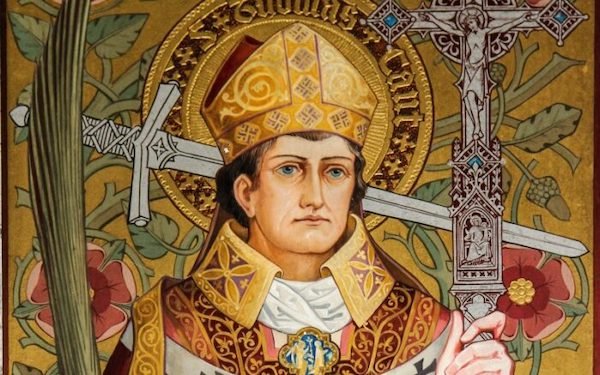
Saint Thomas, son of an English nobleman, Gilbert Becket, was born on the day consecrated to the memory of Saint Thomas the Apostle, December 21, 1117, in Southwark, England. He was endowed by both nature and grace with gifts recommending him to his fellow men; and his father, certain he would one day be a great servant of Christ, confided his education to a monastery. His first employment was in the government of the London police. There he was obliged to learn the various rights of the Church and of the secular arm, but already he saw so many injustices imposed upon the clergy that he preferred to leave that employment rather than to participate in iniquity. He was perfectly chaste and truthful, and no snares could cause to waver his hatred for any form of covert action.
He was employed then by the Archbishop of Canterbury, who sent him on missions to Rome and permitted him to study civil law at the University of Bologna (Italy) for an entire year. After a few years, witnessing his perfect service, he made him his Archdeacon and endowed him with several benefices. The young cleric's virtue and force soon recommended him also to the king, who made of him his Lord Chancellor. In that high office, while inflexible in the rendition of justice, he was generous and solicitous for the relief of misery. He was severe towards himself, spending the better part of every night in prayer. He often employed a discipline, to be less subject to the revolts of the flesh against the spirit. In a war with France he won the respect of his enemies, including that of the young king Louis VII. To Saint Thomas, his own sovereign, Henry II, confided the education of the crown prince. Of the formation of the future king and the young lords who composed his suite, the Chancellor took extreme care, knowing well that the strength of a State depends largely on the early impressions received by the elite of its youth.
When Archbishop Theobald of Canterbury died, the king insisted on the consecration of Saint Thomas in his stead. Saint Thomas at first declined, warning the king that from that hour their friendship would be threatened by his own obligations to uphold the rights of the Church against infringement by the sovereign, whose tendencies were not different from those of his predecessors. In the end he was obliged by obedience to yield. The inevitable conflict was not long in coming. Saint Thomas resisted when the king's courtiers drew up a list of royal customs at Clarendon, where the parliament of the king was assembled, and Henry obliged all the bishops as well as the lords to sign a promise to uphold these without permitting any restrictions whatsoever. Many of these pretended customs violated the liberties of the Church, and some were even invented for the occasion. Saint Thomas, obliged in conscience to resist, was soon the object of persecution, not only from the irritated king but by all who had sworn loyalty to his nefarious doings.
Saint Thomas took refuge in France under the protection of the generous Louis VII, who resisted successfully the repeated efforts of Henry to turn away his favor from the Archbishop. The Pope at that time was in France, and he, too, was besieged by Henry's emissaries, but knew well how to pacify minds and protect the defender of the Church. Thomas retired to a Benedictine monastery for two years, and when Henry wrote a threatening letter to its abbot, moved to another. After six years, his office restored as the Pope's apostolic legate, a title which Henry had wrested from him for a time, he returned to England, to preach again and enforce order in his see. He knew well that it was to martyrdom that he was destined; it is related that the Mother of God appeared to him in France to foretell it to him, and that She presented him for that intention with a red chasuble. By this time the persecuted Archbishop's case was known to all of Christian Europe, which sympathized with him and elicited from king Henry an appearance of conciliation.
A few words which the capricious Henry spoke to certain courtiers who hated Thomas, sufficed for the latter to decide to do away with the prelate who contravened all their unchristian doings. They violated a monastic cloister and chapel to enter there while he was assisting at Vespers; the Saint himself prevented the monks from resisting the assassins at the door. Refusing to flee the church as the assassins summoned him to do, he was slain before the altar, by cruel and murderous repeated blows on the head. He died, saying: I die willingly, for the name of Jesus and for the defense of the Church.
The actions of the Pope in this conflict make clear what all of history teaches: the lives of the Church's Saints themselves comprise the history of the world. The humility of Thomas had prompted him, after a moment of weakness he had manifested in a difficult situation, to judge himself unfit for his office and offer his resignation as Archbishop. The Pope did not hesitate a moment in refusing his resignation. He judged with apostolic wisdom that if Thomas should be deprived of his rank for having opposed the unjust pretensions of the English royalty, no bishop would ever dare oppose the impingements of iniquity on the Church's rights, and the Spouse of Christ would be no longer sustained by marble columns, but by reeds bending in the wind.
The martyred Archbishop was canonized by Pope Alexander III on Ash Wednesday, 1173, not yet three years after his death on December 29, 1170, to the edification of the entire Church.
Les Petits Bollandistes: Vies des Saints, by Msgr. Paul Guérin (Bloud et Barral: Paris, 1882), Vol.
LAST-MODIFIED:20221224T210536Z SEQUENCE:6220450 X-ACCESS:1 X-HITS:35 X-COLOR:f0b80e X-SHOW-END-TIME:1 END:VEVENT BEGIN:VEVENT DTSTART;VALUE=DATE:20221231 DTEND;VALUE=DATE:20230101 UID:AA23E386-4086-48E9-AA61-6282A5B7BC89 SUMMARY:St. Sylvester I Pope CREATED:20221013T211126Z DTSTAMP:20221013T211126Z URL:https://www.stpaulsweymouth.org/component/dpcalendar/event/250?calid=13 DESCRIPTION:St. Sylvester I Pope, Confessor\N\NSaint Sylvester was born in Rome. When he reached the age to dispose of his fortune, he took pleasure in giving hospitality to Christians passing through the city. He would take them with him, wash their feet, serve them at table, and in sum give them in the name of Christ, all the care that the most sincere charity inspired. One day Timothy of Antioch, an illustrious confessor of the Faith, arrived in Rome. No one dared receive him, but Sylvester considered it an honor. For a year Timothy, preaching Jesus Christ with unflagging zeal, received at Sylvester's dwelling the most generous hospitality. When this heroic man had won the palm of martyrdom, Sylvester took up his precious remains and buried them during the night. But he himself was soon denounced to the prefect and accused of having hidden the martyr's treasures. He replied, Timothy left to me only the heritage of his faith and courage. The governor threatened him with death and had him imprisoned, but Sylvester said to him, Senseless one, this very night it is you who will render an account to God. And the persecutor that evening swallowed a fish bone, and died in fact that night.\NFear of heavenly chastisements softened the guardians, and the brave young man was set at liberty. Sylvester's courageous acts became known to Saint Melchiad, Pope, who elevated him to the diaconate. He was a young priest when persecution of the Christians grew worse under the tyrant Diocletian. Idols were erected at the street corners, in the market-places, and over the public fountains, so that it was scarcely possible for a Christian to go abroad without being put to the test of offering sacrifice, with the alternative of apostasy or death. During this fiery trial, Sylvester strengthened the confessors and martyrs, and God preserved his life from many dangers. It was indeed he who was destined to succeed the Pope who had recognized his virtues.\NHis long pontificate of twenty-one years, famous for several reasons, is remembered in particular for the Council of Nicea, the Baptism of Constantine, and the triumph of the Church. Some authors would place Constantine's Baptism later, but there are numerous and serious testimonies which fix the emperor's reception into the Church under the reign of Saint Sylvester, and the Roman Breviary confirms that opinion. Constantine, while still pagan and little concerned for the Christians, whose doctrine was entirely unknown to him, was attacked by a kind of leprosy which soon covered his entire body. One night Saint Peter and Saint Paul, shining with light, appeared to him and commanded him to call for Pope Sylvester, who would cure him by giving him Baptism. In effect, the Pope instructed the royal neophyte and baptized him. Thus began the social reign of Jesus Christ: Constantine's conversion, culminating in the Edict of Milan in 313, had as its happy consequence that of the known world.\NReflection: Never forget to thank God daily for having made you a member of His indefectible Church, and grow daily in your attachment, devotion, and loyalty to the Vicar of Christ. Ubi Petrus, ibi ecclesia: Where Peter is, there the Church is.\NLes Petits Bollandistes: Vies des Saints, by Msgr. Paul Guérin (Bloud et Barral: Paris, 1882), Vol. 14; Little Pictorial Lives of the Saints, a compilation based on Butler's Lives of the Saints and other sources, by John Gilmary Shea (Benziger Brothers: New York, 1894) X-ALT-DESC;FMTTYPE=text/html: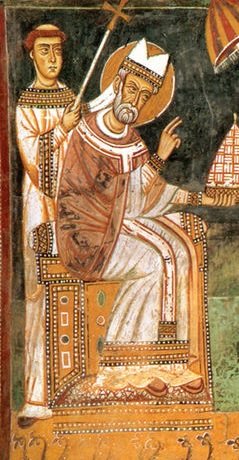
Saint Sylvester was born in Rome. When he reached the age to dispose of his fortune, he took pleasure in giving hospitality to Christians passing through the city. He would take them with him, wash their feet, serve them at table, and in sum give them in the name of Christ, all the care that the most sincere charity inspired. One day Timothy of Antioch, an illustrious confessor of the Faith, arrived in Rome. No one dared receive him, but Sylvester considered it an honor. For a year Timothy, preaching Jesus Christ with unflagging zeal, received at Sylvester's dwelling the most generous hospitality. When this heroic man had won the palm of martyrdom, Sylvester took up his precious remains and buried them during the night. But he himself was soon denounced to the prefect and accused of having hidden the martyr's treasures. He replied, Timothy left to me only the heritage of his faith and courage. The governor threatened him with death and had him imprisoned, but Sylvester said to him, Senseless one, this very night it is you who will render an account to God. And the persecutor that evening swallowed a fish bone, and died in fact that night.
Fear of heavenly chastisements softened the guardians, and the brave young man was set at liberty. Sylvester's courageous acts became known to Saint Melchiad, Pope, who elevated him to the diaconate. He was a young priest when persecution of the Christians grew worse under the tyrant Diocletian. Idols were erected at the street corners, in the market-places, and over the public fountains, so that it was scarcely possible for a Christian to go abroad without being put to the test of offering sacrifice, with the alternative of apostasy or death. During this fiery trial, Sylvester strengthened the confessors and martyrs, and God preserved his life from many dangers. It was indeed he who was destined to succeed the Pope who had recognized his virtues.
His long pontificate of twenty-one years, famous for several reasons, is remembered in particular for the Council of Nicea, the Baptism of Constantine, and the triumph of the Church. Some authors would place Constantine's Baptism later, but there are numerous and serious testimonies which fix the emperor's reception into the Church under the reign of Saint Sylvester, and the Roman Breviary confirms that opinion. Constantine, while still pagan and little concerned for the Christians, whose doctrine was entirely unknown to him, was attacked by a kind of leprosy which soon covered his entire body. One night Saint Peter and Saint Paul, shining with light, appeared to him and commanded him to call for Pope Sylvester, who would cure him by giving him Baptism. In effect, the Pope instructed the royal neophyte and baptized him. Thus began the social reign of Jesus Christ: Constantine's conversion, culminating in the Edict of Milan in 313, had as its happy consequence that of the known world.
Reflection: Never forget to thank God daily for having made you a member of His indefectible Church, and grow daily in your attachment, devotion, and loyalty to the Vicar of Christ. Ubi Petrus, ibi ecclesia: Where Peter is, there the Church is.
Les Petits Bollandistes: Vies des Saints, by Msgr. Paul Guérin (Bloud et Barral: Paris, 1882), Vol. 14; Little Pictorial Lives of the Saints, a compilation based on Butler's Lives of the Saints and other sources, by John Gilmary Shea (Benziger Brothers: New York, 1894)
LAST-MODIFIED:20221224T210848Z SEQUENCE:6220642 X-ACCESS:1 X-HITS:83 X-COLOR:f0b80e X-SHOW-END-TIME:1 END:VEVENT BEGIN:VEVENT DTSTART;VALUE=DATE:20231001 DTEND;VALUE=DATE:20231002 UID:C6FAACC2-FE89-4D92-B02A-475557321BEE SUMMARY:St. Remigius Bishop CREATED:20221013T211126Z DTSTAMP:20221013T211126Z URL:https://www.stpaulsweymouth.org/component/dpcalendar/event/853?calid=13 DESCRIPTION:St. Remigius, Bishop & Confessor\N\NSaint Remi or Remigius was born in the middle of the fifth century, of noble and pious parents. His mother, Saint Celine, had borne two other sons before him; the eldest, Saint Principius, became the twelfth bishop of Soissons, and the second was the father of Saint Lupus, thirteenth bishop of the same see. Saint Remi was given to his parents many years later, miraculously; a blind hermit named Montanus, afflicted by the state of religion in the churches of Gaul, was told three times, supernaturally, to advise his worthy parents that they would have a son who would be the light of the Francs, and would bring these new conquerors out of the idolatry in which they were plunged.\NThe child born to them in fulfillment of the prediction, was at the age of twenty-two years acclaimed Archbishop of Rheims, despite his humble doubts as to his competence. He was unusually tall, his countenance manifested a blend of majesty and serenity; his bearing was gentle, humble, and retiring. He was learned and eloquent, and his pity and charity were boundless. In his labors he knew no weariness. His body was the outward expression of a noble and holy soul, breathing the spirit of meekness and compunction. The archbishop received the gift of miracles. When a great fire was threatening the city of Rheims with total ruin, by his presence he arrested it; he faced it with a crucifix and made the sign of the cross, and the flames retired as he advanced. He resurrected a young woman, and his fame continued to increase.\NFor His predestined servant, God had a particular and great work in store. The south of France was in the hands of Arians, and in the last years of the 5th century the pagan Franks were wresting the north from the Romans. But Saint Remigius was loved by Clovis, the fifth of the Merovingian kings. The king was converted and baptized by him in 496, after winning the famous battle of Tolbiac, to fulfill a promise he had made to adopt the religion of his Christian wife if he repulsed the invading armies. A very large army of invaders, which had cast all of France into panic, fled in disarray when the small army of Clovis attacked, and their leader was slain.\NClovis had married the noble Christian maiden known to us as Saint Clotilda, and these three acting concertedly gained virtually the entire nation to the Christian religion. The army was baptized at the same time as Clovis, by Saint Remi and his assistants. The Saint threw down the altars of the idols, built churches, and appointed bishops. He silenced the Arians and presided at the Catholic First Council of Orleans. Eventually he converted so many that he left France a Catholic kingdom; its king was also the first crowned son of the Church, and at that time the only one. Ever since Saint Remi, Catholic France has rejoiced in its title of eldest daughter of the Church.\NAfter an episcopate of seventy-four years, the longest on record, Saint Remi died in 533, leaving to France his famous Testament, predicting God's graces of predilection for this blessed kingdom, as long as its Heads remained faithful to Him, with the most severe chastisements if the contrary ensued. The prophecy has already been fulfilled three times, as the nation's Catholic historians affirm, for the three royal dynasties.\NReflection: Few men have had such natural advantages and such gifts of grace as Saint Remi, and few have done so great a work. Learn from him to comport yourself amid the world's praise, as well in its scorn, with a lowly and chastened heart.\N(Les Petits Bollandistes: Vies des Saints, by Msgr. Paul Guérin (Bloud et Barral: Paris, 1882), Vol. 11; Little Pictorial Lives of the Saints, a compilation based on Butler's Lives of the Saints and other sources by John Gilmary Shea; Benziger Brothers: New York, 1894) X-ALT-DESC;FMTTYPE=text/html: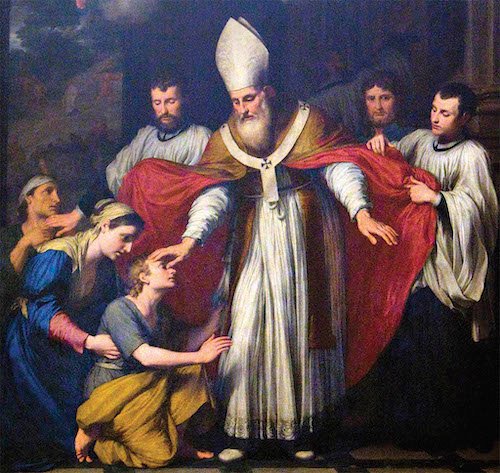
Saint Remi or Remigius was born in the middle of the fifth century, of noble and pious parents. His mother, Saint Celine, had borne two other sons before him; the eldest, Saint Principius, became the twelfth bishop of Soissons, and the second was the father of Saint Lupus, thirteenth bishop of the same see. Saint Remi was given to his parents many years later, miraculously; a blind hermit named Montanus, afflicted by the state of religion in the churches of Gaul, was told three times, supernaturally, to advise his worthy parents that they would have a son who would be the light of the Francs, and would bring these new conquerors out of the idolatry in which they were plunged.
The child born to them in fulfillment of the prediction, was at the age of twenty-two years acclaimed Archbishop of Rheims, despite his humble doubts as to his competence. He was unusually tall, his countenance manifested a blend of majesty and serenity; his bearing was gentle, humble, and retiring. He was learned and eloquent, and his pity and charity were boundless. In his labors he knew no weariness. His body was the outward expression of a noble and holy soul, breathing the spirit of meekness and compunction. The archbishop received the gift of miracles. When a great fire was threatening the city of Rheims with total ruin, by his presence he arrested it; he faced it with a crucifix and made the sign of the cross, and the flames retired as he advanced. He resurrected a young woman, and his fame continued to increase.
For His predestined servant, God had a particular and great work in store. The south of France was in the hands of Arians, and in the last years of the 5th century the pagan Franks were wresting the north from the Romans. But Saint Remigius was loved by Clovis, the fifth of the Merovingian kings. The king was converted and baptized by him in 496, after winning the famous battle of Tolbiac, to fulfill a promise he had made to adopt the religion of his Christian wife if he repulsed the invading armies. A very large army of invaders, which had cast all of France into panic, fled in disarray when the small army of Clovis attacked, and their leader was slain.
Clovis had married the noble Christian maiden known to us as Saint Clotilda, and these three acting concertedly gained virtually the entire nation to the Christian religion. The army was baptized at the same time as Clovis, by Saint Remi and his assistants. The Saint threw down the altars of the idols, built churches, and appointed bishops. He silenced the Arians and presided at the Catholic First Council of Orleans. Eventually he converted so many that he left France a Catholic kingdom; its king was also the first crowned son of the Church, and at that time the only one. Ever since Saint Remi, Catholic France has rejoiced in its title of eldest daughter of the Church.
After an episcopate of seventy-four years, the longest on record, Saint Remi died in 533, leaving to France his famous Testament, predicting God's graces of predilection for this blessed kingdom, as long as its Heads remained faithful to Him, with the most severe chastisements if the contrary ensued. The prophecy has already been fulfilled three times, as the nation's Catholic historians affirm, for the three royal dynasties.
Reflection: Few men have had such natural advantages and such gifts of grace as Saint Remi, and few have done so great a work. Learn from him to comport yourself amid the world's praise, as well in its scorn, with a lowly and chastened heart.
(Les Petits Bollandistes: Vies des Saints, by Msgr. Paul Guérin (Bloud et Barral: Paris, 1882), Vol. 11; Little Pictorial Lives of the Saints, a compilation based on Butler's Lives of the Saints and other sources by John Gilmary Shea; Benziger Brothers: New York, 1894)
LAST-MODIFIED:20230930T193848Z SEQUENCE:30407242 X-ACCESS:1 X-HITS:75 X-COLOR:f0b80e X-SHOW-END-TIME:1 END:VEVENT BEGIN:VEVENT DTSTART;VALUE=DATE:20231002 DTEND;VALUE=DATE:20231003 UID:B47CB7D4-F53B-4D71-A03B-295E088237B1 SUMMARY:Holy Guardian Angels CREATED:20221013T211126Z DTSTAMP:20221013T211126Z URL:https://www.stpaulsweymouth.org/component/dpcalendar/event/841?calid=13 DESCRIPTION:Holy Guardian Angels\N\NGod does not abandon to what we call chance, any of His creatures. By His essence and providence He is everywhere present; not a sparrow falls to the ground, nor a hair from our heads, without His consent. He is not content, however, with assisting His creation daily and at every moment, with sustaining His handiwork, which without His continuous support would return to dust. His divine and infinite Love, not only maintaining the existence which He gives and perpetuates in living beings, has charged His Holy Angels with the ministry of watching and safeguarding each one of His rational creatures.\NThe Angels, divided into nine hierarchies, have varied obligations. Their intelligence and prudence are penetrating like the beam of a lighthouse; so it appears even when we compare it to the best of human intelligences, which are like the light of a little candle in contrast. An Angel, visualizing an end to be attained, sees instantly the means necessary to achieve it, whereas we must pray, study, deliberate, inquire, and choose during many phases of effort, in order to reach our proposed ends.\NKingdoms have their Angels assigned to them; dignitaries of the Church and of the world have more than one Angel to guide them; and every child who enters into the world receives a Guardian Angel. Our Lord says in the Gospel: Beware lest you scandalize any of these little ones, for their Angels in heaven behold the face of My Father. Thus the existence of Guardian Angels is a dogma of the Christian faith, based on Holy Scripture itself.\NReflection: This being so, what should our respect be for that holy and sure intelligence, ever present at our side? And how great should our solicitude be, lest, by any act of ours, we offend those eyes which, without losing the divine vision, are ever turned upon poor creatures in all their ways!\N(Little Pictorial Lives of the Saints, a compilation based on Butler's Lives of the Saints and other sources by John Gilmary Shea; Benziger Brothers: New York, 1894) X-ALT-DESC;FMTTYPE=text/html: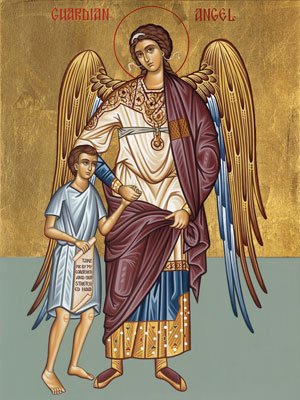
God does not abandon to what we call chance, any of His creatures. By His essence and providence He is everywhere present; not a sparrow falls to the ground, nor a hair from our heads, without His consent. He is not content, however, with assisting His creation daily and at every moment, with sustaining His handiwork, which without His continuous support would return to dust. His divine and infinite Love, not only maintaining the existence which He gives and perpetuates in living beings, has charged His Holy Angels with the ministry of watching and safeguarding each one of His rational creatures.
The Angels, divided into nine hierarchies, have varied obligations. Their intelligence and prudence are penetrating like the beam of a lighthouse; so it appears even when we compare it to the best of human intelligences, which are like the light of a little candle in contrast. An Angel, visualizing an end to be attained, sees instantly the means necessary to achieve it, whereas we must pray, study, deliberate, inquire, and choose during many phases of effort, in order to reach our proposed ends.
Kingdoms have their Angels assigned to them; dignitaries of the Church and of the world have more than one Angel to guide them; and every child who enters into the world receives a Guardian Angel. Our Lord says in the Gospel: Beware lest you scandalize any of these little ones, for their Angels in heaven behold the face of My Father. Thus the existence of Guardian Angels is a dogma of the Christian faith, based on Holy Scripture itself.
Reflection: This being so, what should our respect be for that holy and sure intelligence, ever present at our side? And how great should our solicitude be, lest, by any act of ours, we offend those eyes which, without losing the divine vision, are ever turned upon poor creatures in all their ways!
(Little Pictorial Lives of the Saints, a compilation based on Butler's Lives of the Saints and other sources by John Gilmary Shea; Benziger Brothers: New York, 1894)
LAST-MODIFIED:20230930T190506Z SEQUENCE:30405220 X-ACCESS:1 X-HITS:1 X-COLOR:f0b80e X-SHOW-END-TIME:1 END:VEVENT BEGIN:VEVENT DTSTART;VALUE=DATE:20231003 DTEND;VALUE=DATE:20231004 UID:7D1D9F37-D102-4881-8072-FC74BB22C60D SUMMARY:Saint Thérèse of the Child Jesus CREATED:20221013T211126Z DTSTAMP:20221013T211126Z URL:https://www.stpaulsweymouth.org/component/dpcalendar/event/843?calid=13 DESCRIPTION:St. Therese of the Child Jesus, Virgin & Doctor of the Church\N\NFew Saints have aroused so much admiration and enthusiasm immediately after their death; few have acquired a more astonishing popularity everywhere on earth; few have been so rapidly raised to the altars as was this holy young Carmelite. Marie Françoise Thérèse Martin, known as the Little Flower of Jesus, was born January 2, 1873 at Alençon in Normandy, France, of very Christian parents. The Martins, who lost four of their little ones in early infancy or childhood, regarded their children as gifts from heaven and offered them to God before their birth. Thérèse was the last flower of this blessed stem, which gave four Sisters to the Carmel of Lisieux, still another to the Visitation of Caen. The five sisters were left without their mother, a victim of cancer, when Thérèse was only four years old; but her two oldest sisters were of an age to take excellent care of the household and continue the Christian character formation of the younger ones, which their mother had initiated. Their saintly father was soon to see his little flock separated, however, when one after the other they left to enter religious life. He blessed each one and gave them all back to God, with humble gratitude to God for having chosen his daughters.\NFrom childhood Thérèse had manifested a tender piety which her naturally lively temperament could not alter. Her mother's death affected her profoundly, however, and at the age of nine she was visited with a severe trial in the form of an illness the doctors could not diagnose, and which seemed incurable. She was instantly restored to her ordinary good health by the Virgin Mary, in answer to her desolate sisters' prayers; Thérèse saw Her statue become animated, to smile at her with an ineffable tenderness as she lay on her bed of suffering.\NBefore the age of fifteen Thérèse already desired to enter the Carmel of Lisieux, where her two eldest sisters were already nuns; a trip to Rome and a petition at the knees of the Holy Father Leo XIII gave her the inalterable answer that her Superiors would regulate the matter. Many prayers finally obtained an affirmative reply to her ardent request, and four months after her fifteenth birthday she entered Carmel with an ineffable joy. She could say then, I no longer have any desire but to love Jesus even to folly.\NShe adopted the flowers as the symbol of her love for her Divine Spouse and offered all her little daily sacrifices and works as rose petals at the feet of Jesus. Divine Providence gave to the world the autobiography of this true Saint, whose little way of spiritual childhood was described in her own words in her Story of a Soul. She could not offer God the macerations of the great soldiers of God, only her desires to love Him as they had loved Him, and to serve Him in every way possible, not only as a cloistered nun, but as a missionary, a priest, a hero of the faith, a martyr. She chose all in spirit, for her beloved Lord. Later she would be named patroness of missions. Her spirituality does not imply only sweetness and light, however; this loving child of God passed by a tunnel of desolate spiritual darkness, yet never ceased to smile at Him, wanting to serve Him, if it were possible, without His even knowing it.\NWhen nine years had passed in the Carmel, the little flower was ready to be plucked for heaven; and in a slow agony of consumption, Thérèse made her final offering to God. She suffered so severely that she said she would never have believed it possible, and could only explain it by her desire to save souls for God. She died in 1897, was beatified in 1923 and canonized in 1925. And now, as she foretold, she is spending her heaven in doing good upon earth. Countless miracles have been attributed to her intercession.\NLives of the Saints for Every Day of the Year. (Reprint of the work of John Gilmary Shea, with Appendix including recently canonized Saints) (Benziger Brothers: New York, 1955. Third Edition: Tan Books and Publishers: Rockford, Ill., 1995); Vie des Saints pour tous les jours de l'année, by Abbé L. Jaud (Mame: Tours, 1950) X-ALT-DESC;FMTTYPE=text/html: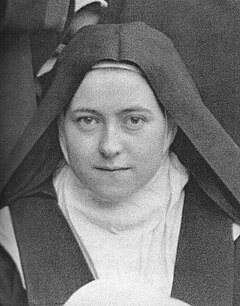
Few Saints have aroused so much admiration and enthusiasm immediately after their death; few have acquired a more astonishing popularity everywhere on earth; few have been so rapidly raised to the altars as was this holy young Carmelite. Marie Françoise Thérèse Martin, known as the Little Flower of Jesus, was born January 2, 1873 at Alençon in Normandy, France, of very Christian parents. The Martins, who lost four of their little ones in early infancy or childhood, regarded their children as gifts from heaven and offered them to God before their birth. Thérèse was the last flower of this blessed stem, which gave four Sisters to the Carmel of Lisieux, still another to the Visitation of Caen. The five sisters were left without their mother, a victim of cancer, when Thérèse was only four years old; but her two oldest sisters were of an age to take excellent care of the household and continue the Christian character formation of the younger ones, which their mother had initiated. Their saintly father was soon to see his little flock separated, however, when one after the other they left to enter religious life. He blessed each one and gave them all back to God, with humble gratitude to God for having chosen his daughters.
From childhood Thérèse had manifested a tender piety which her naturally lively temperament could not alter. Her mother's death affected her profoundly, however, and at the age of nine she was visited with a severe trial in the form of an illness the doctors could not diagnose, and which seemed incurable. She was instantly restored to her ordinary good health by the Virgin Mary, in answer to her desolate sisters' prayers; Thérèse saw Her statue become animated, to smile at her with an ineffable tenderness as she lay on her bed of suffering.
Before the age of fifteen Thérèse already desired to enter the Carmel of Lisieux, where her two eldest sisters were already nuns; a trip to Rome and a petition at the knees of the Holy Father Leo XIII gave her the inalterable answer that her Superiors would regulate the matter. Many prayers finally obtained an affirmative reply to her ardent request, and four months after her fifteenth birthday she entered Carmel with an ineffable joy. She could say then, I no longer have any desire but to love Jesus even to folly.
She adopted the flowers as the symbol of her love for her Divine Spouse and offered all her little daily sacrifices and works as rose petals at the feet of Jesus. Divine Providence gave to the world the autobiography of this true Saint, whose little way of spiritual childhood was described in her own words in her Story of a Soul. She could not offer God the macerations of the great soldiers of God, only her desires to love Him as they had loved Him, and to serve Him in every way possible, not only as a cloistered nun, but as a missionary, a priest, a hero of the faith, a martyr. She chose all in spirit, for her beloved Lord. Later she would be named patroness of missions. Her spirituality does not imply only sweetness and light, however; this loving child of God passed by a tunnel of desolate spiritual darkness, yet never ceased to smile at Him, wanting to serve Him, if it were possible, without His even knowing it.
When nine years had passed in the Carmel, the little flower was ready to be plucked for heaven; and in a slow agony of consumption, Thérèse made her final offering to God. She suffered so severely that she said she would never have believed it possible, and could only explain it by her desire to save souls for God. She died in 1897, was beatified in 1923 and canonized in 1925. And now, as she foretold, she is spending her heaven in doing good upon earth. Countless miracles have been attributed to her intercession.
Lives of the Saints for Every Day of the Year. (Reprint of the work of John Gilmary Shea, with Appendix including recently canonized Saints) (Benziger Brothers: New York, 1955. Third Edition: Tan Books and Publishers: Rockford, Ill., 1995); Vie des Saints pour tous les jours de l'année, by Abbé L. Jaud (Mame: Tours, 1950)
LAST-MODIFIED:20230930T192119Z SEQUENCE:30406193 X-ACCESS:1 X-HITS:151 X-COLOR:f0b80e X-SHOW-END-TIME:1 END:VEVENT BEGIN:VEVENT DTSTART;VALUE=DATE:20231004 DTEND;VALUE=DATE:20231005 UID:BBEC9B40-EA07-4AB8-A876-C1AFC76D81F6 SUMMARY:St. Francis of Assisi CREATED:20221013T211126Z DTSTAMP:20221013T211126Z URL:https://www.stpaulsweymouth.org/component/dpcalendar/event/845?calid=13 DESCRIPTION:St. Francis of Assisi, Confessor\N\NSaint Francis, the son of a merchant of Assisi, was born in the year 1182 in a poor stable, his birth already prophesying the Saint who would preach poverty to a world seduced by luxury. Though chosen by God to be for the world a living manifestation of Christ's poor and suffering life on earth, in his youth he was generous, always of equal humor, and much appreciated by his friends; he was fond of splendors, fine clothing, and good company, and easily won the affection of all who knew him. More than once various holy persons foretold for him a future of glory, but in veiled terms. Francis did not understand these predictions, and supposed he would become the leader of a large militia.\NThe military life he had adopted ended when Jesus told him he was destined to fight another kind of combat, one against the demon and sin; that the grandeurs predicted were spiritual, not temporal — and to return home. He became inspired with a great esteem for poverty and humiliation. The thought of the Man of Sorrows, who had nowhere to lay His head, filled him with holy envy of the poor, and constrained him to renounce the wealth and the worldly station which he had come to abhor. One day, while on horseback, he met a leper begging alms who inspired him with repugnance, and he took a path to avoid him. Then, repenting, he turned his horse around and returned to embrace him and give him a generous alms, as was his custom for all beggars. He continued on his way, but looked back, and nowhere on the plain could the stranger be seen, though there were no trees, no refuges anywhere. He was from that day a completely transformed person.\NHe decided to use his wealth to care for the poor and the sick, and dedicate himself in person to the same works. When he prayed one day in the little chapel to do only what God willed of him, the Saviour spoke again to him, repeating three times the mysterious words: Go, Francis, and repair My house which is falling into ruin. He then undertook to repair the old church of San Damiano where he had heard these words, retiring for refuge to a grotto. He was regarded as a fool by the people, when he returned to the city in the clothing of a poor beggar. This was indeed the folly of the Cross.\NFrancis renounced his heritage definitively, to beg thereafter his daily sustenance and what he needed for the repair of the church, and left the city singing the praises of God. He repaired two other churches. The love of God which was burning brightly in the poor man of Assisi began to give light and warmth to many others also, and it was not long before several came to join him. One of them was a very wealthy man of Assisi, the second a Canon of the Assisi cathedral, and the third the now Blessed Brother Gilles. They adopted the absolute poverty of Francis, and the foundations of the Franciscan Order were laid. They were first called the penitents of Assisi. No counsels could make Francis change his resolution to possess nothing at all. God revealed to him then that he was to found a religious Order.\NPope Innocent III, when Francis with his first twelve companions journeyed to Rome, after first rebuffing them, recognized him as the monk God showed him in a vision, supporting on his shoulders the Church of Saint John Latran, which was growing decrepit. He received the profession of Francis and his twelve companions, and in 1215 they were formally constituted as a religious Order, which then spread rapidly throughout Christendom.\NIn 1216, Saint Francis after assembling his religious, sent them out to preach in France, Spain, England and Germany, where they established monasteries, lasting proofs of the efficacy of their missions. A second general Chapter was held in 1219 on the feast of Pentecost, and the little Brothers gathered from all over the world at Saint Mary of the Angels, the church which Francis and his first twelve disciples had received only nine years earlier. Cabins of reeds and tents were put up all over the countryside. The Cardinal who visited them exclaimed, with tears in his eyes, O Brother, truly this is the camp of the Lord! They were more than 5,000 in number. Saint Francis exhorted his brethren: My Brothers, above all, let us love the Holy Church; let us pray for her exaltation, and never abandon poverty. Is it not written, Trust in the Lord, and He Himself will sustain you'?\NFrancis, after visiting the Orient in a vain quest for martyrdom, spent his life like his Divine Master — now in preaching to the multitudes, now amid the desert solitudes in fasting and contemplation. His constant prayer was My God and my All! During one of these retreats on Mount Alverno, he received on his hands, feet, and side the imprints of the five wounds of Jesus. With the cry, Welcome, sister Death! he passed to the glory of his God, October 4, 1226, at the age of 44 years.\NReflection: The prayer of Saint Francis, My God and my All! explains both his poverty and his wealth.\NLes Petits Bollandistes: Vies des Saints, by Msgr. Paul Guérin (Bloud et Barral: Paris, 1882), Vol. 12; Little Pictorial Lives of the Saints, a compilation based on Butler's Lives of the Saints and other sources by John Gilmary Shea (Benziger Brothers: New York, 1894). X-ALT-DESC;FMTTYPE=text/html: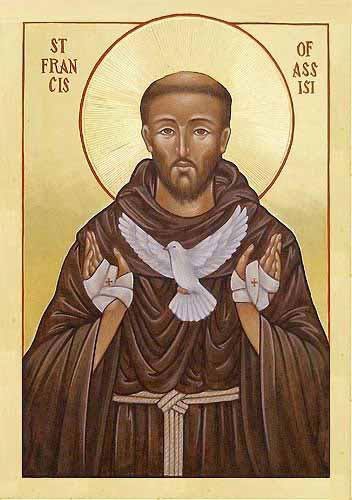
Saint Francis, the son of a merchant of Assisi, was born in the year 1182 in a poor stable, his birth already prophesying the Saint who would preach poverty to a world seduced by luxury. Though chosen by God to be for the world a living manifestation of Christ's poor and suffering life on earth, in his youth he was generous, always of equal humor, and much appreciated by his friends; he was fond of splendors, fine clothing, and good company, and easily won the affection of all who knew him. More than once various holy persons foretold for him a future of glory, but in veiled terms. Francis did not understand these predictions, and supposed he would become the leader of a large militia.
The military life he had adopted ended when Jesus told him he was destined to fight another kind of combat, one against the demon and sin; that the grandeurs predicted were spiritual, not temporal — and to return home. He became inspired with a great esteem for poverty and humiliation. The thought of the Man of Sorrows, who had nowhere to lay His head, filled him with holy envy of the poor, and constrained him to renounce the wealth and the worldly station which he had come to abhor. One day, while on horseback, he met a leper begging alms who inspired him with repugnance, and he took a path to avoid him. Then, repenting, he turned his horse around and returned to embrace him and give him a generous alms, as was his custom for all beggars. He continued on his way, but looked back, and nowhere on the plain could the stranger be seen, though there were no trees, no refuges anywhere. He was from that day a completely transformed person.
He decided to use his wealth to care for the poor and the sick, and dedicate himself in person to the same works. When he prayed one day in the little chapel to do only what God willed of him, the Saviour spoke again to him, repeating three times the mysterious words: Go, Francis, and repair My house which is falling into ruin. He then undertook to repair the old church of San Damiano where he had heard these words, retiring for refuge to a grotto. He was regarded as a fool by the people, when he returned to the city in the clothing of a poor beggar. This was indeed the folly of the Cross.
Francis renounced his heritage definitively, to beg thereafter his daily sustenance and what he needed for the repair of the church, and left the city singing the praises of God. He repaired two other churches. The love of God which was burning brightly in the poor man of Assisi began to give light and warmth to many others also, and it was not long before several came to join him. One of them was a very wealthy man of Assisi, the second a Canon of the Assisi cathedral, and the third the now Blessed Brother Gilles. They adopted the absolute poverty of Francis, and the foundations of the Franciscan Order were laid. They were first called the penitents of Assisi. No counsels could make Francis change his resolution to possess nothing at all. God revealed to him then that he was to found a religious Order.
Pope Innocent III, when Francis with his first twelve companions journeyed to Rome, after first rebuffing them, recognized him as the monk God showed him in a vision, supporting on his shoulders the Church of Saint John Latran, which was growing decrepit. He received the profession of Francis and his twelve companions, and in 1215 they were formally constituted as a religious Order, which then spread rapidly throughout Christendom.
In 1216, Saint Francis after assembling his religious, sent them out to preach in France, Spain, England and Germany, where they established monasteries, lasting proofs of the efficacy of their missions. A second general Chapter was held in 1219 on the feast of Pentecost, and the little Brothers gathered from all over the world at Saint Mary of the Angels, the church which Francis and his first twelve disciples had received only nine years earlier. Cabins of reeds and tents were put up all over the countryside. The Cardinal who visited them exclaimed, with tears in his eyes, O Brother, truly this is the camp of the Lord! They were more than 5,000 in number. Saint Francis exhorted his brethren: My Brothers, above all, let us love the Holy Church; let us pray for her exaltation, and never abandon poverty. Is it not written, Trust in the Lord, and He Himself will sustain you'?
Francis, after visiting the Orient in a vain quest for martyrdom, spent his life like his Divine Master — now in preaching to the multitudes, now amid the desert solitudes in fasting and contemplation. His constant prayer was My God and my All! During one of these retreats on Mount Alverno, he received on his hands, feet, and side the imprints of the five wounds of Jesus. With the cry, Welcome, sister Death! he passed to the glory of his God, October 4, 1226, at the age of 44 years.
Reflection: The prayer of Saint Francis, My God and my All! explains both his poverty and his wealth.
Les Petits Bollandistes: Vies des Saints, by Msgr. Paul Guérin (Bloud et Barral: Paris, 1882), Vol. 12; Little Pictorial Lives of the Saints, a compilation based on Butler's Lives of the Saints and other sources by John Gilmary Shea (Benziger Brothers: New York, 1894).
LAST-MODIFIED:20230930T192016Z SEQUENCE:30406130 X-ACCESS:1 X-HITS:37 X-COLOR:f0b80e X-SHOW-END-TIME:1 END:VEVENT BEGIN:VEVENT DTSTART;VALUE=DATE:20231005 DTEND;VALUE=DATE:20231006 UID:73FD3D08-ABDD-4413-802B-4BEA9829EDD8 SUMMARY:St. Placid & Companions CREATED:20221013T211126Z DTSTAMP:20221013T211126Z URL:https://www.stpaulsweymouth.org/component/dpcalendar/event/851?calid=13 DESCRIPTION:St. Placid & Companions, Martyrs\N\NSaint Placid was born in Rome, in the year 515, of a patrician family, and at seven years of age was taken by his father to the Benedictine monastery of Subiaco, recently founded, to be educated. At thirteen years of age he followed Saint Benedict to a new foundation at Monte Cassino, where he grew up in the practices of a wonderful austerity and innocence of life.\NHe had scarcely completed his twenty-first year when he was chosen to found a monastery at Messina, in Sicily, upon some estates which had been given by his father to Saint Benedict. He spent four years in building that monastery. There miracles made him known, and it was said that his humility was so perfect and had such charm, that it earned for him the affection of all. He could not see a poor man without hastening to aid him. One day he cured all the sick of the island at the same time, when they were brought and assembled before him for his benediction.\NThe fifth year spent by the monks in Messina had not yet ended when a band of Saracen pirates who had already killed a great many persons, burnt everything to the ground in 541. They then put to a lingering death not only Placid and thirty monks who had joined him, but also his two brothers, Eutychius and Victorinus, and his holy sister Flavia, who had come to visit him. The entire flotilla of the invaders perished when these barbarians left the island, amid a sudden storm; although they had a hundred ships and were 16,800 in number, not one ship or passenger survived. A religious who had escaped notice wrote to Saint Benedict an account of the massacre, after burying the martyrs. Saint Placid was the first Benedictine martyr, and the monastery of Messina, which was rebuilt not long afterwards, was henceforth known by his name.\NReflection: Adversity is the touchstone of the soul, because it makes manifest the degree of its virtue. One act of thanksgiving when matters go wrong, is worth a thousand thanks when all things please us.\N(Les Petits Bollandistes: Vies des Saints, by Msgr. Paul Guérin (Bloud et Barral: Paris, 1882), Vol. 12; Little Pictorial Lives of the Saints, a compilation based on Butler's Lives of the Saints and other sources by John Gilmary Shea; Benziger Brothers: New York, 1894) X-ALT-DESC;FMTTYPE=text/html: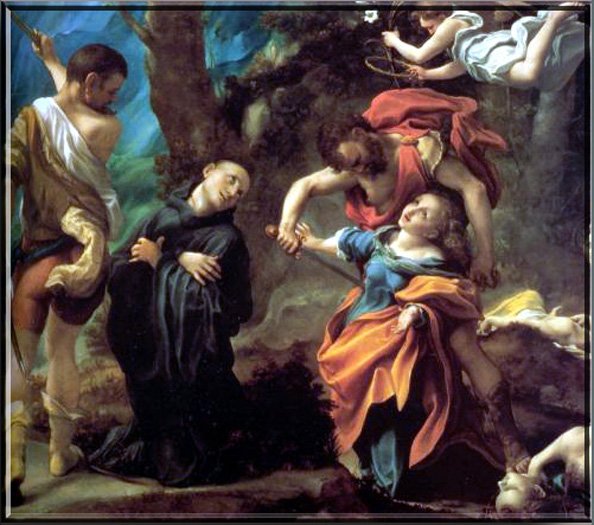
Saint Placid was born in Rome, in the year 515, of a patrician family, and at seven years of age was taken by his father to the Benedictine monastery of Subiaco, recently founded, to be educated. At thirteen years of age he followed Saint Benedict to a new foundation at Monte Cassino, where he grew up in the practices of a wonderful austerity and innocence of life.
He had scarcely completed his twenty-first year when he was chosen to found a monastery at Messina, in Sicily, upon some estates which had been given by his father to Saint Benedict. He spent four years in building that monastery. There miracles made him known, and it was said that his humility was so perfect and had such charm, that it earned for him the affection of all. He could not see a poor man without hastening to aid him. One day he cured all the sick of the island at the same time, when they were brought and assembled before him for his benediction.
The fifth year spent by the monks in Messina had not yet ended when a band of Saracen pirates who had already killed a great many persons, burnt everything to the ground in 541. They then put to a lingering death not only Placid and thirty monks who had joined him, but also his two brothers, Eutychius and Victorinus, and his holy sister Flavia, who had come to visit him. The entire flotilla of the invaders perished when these barbarians left the island, amid a sudden storm; although they had a hundred ships and were 16,800 in number, not one ship or passenger survived. A religious who had escaped notice wrote to Saint Benedict an account of the massacre, after burying the martyrs. Saint Placid was the first Benedictine martyr, and the monastery of Messina, which was rebuilt not long afterwards, was henceforth known by his name.
Reflection: Adversity is the touchstone of the soul, because it makes manifest the degree of its virtue. One act of thanksgiving when matters go wrong, is worth a thousand thanks when all things please us.
(Les Petits Bollandistes: Vies des Saints, by Msgr. Paul Guérin (Bloud et Barral: Paris, 1882), Vol. 12; Little Pictorial Lives of the Saints, a compilation based on Butler's Lives of the Saints and other sources by John Gilmary Shea; Benziger Brothers: New York, 1894)
LAST-MODIFIED:20230930T193353Z SEQUENCE:30406947 X-ACCESS:1 X-HITS:64 X-COLOR:f0b80e X-SHOW-END-TIME:1 END:VEVENT BEGIN:VEVENT DTSTART;VALUE=DATE:20231006 DTEND;VALUE=DATE:20231007 UID:98C91CE0-6B79-4A6C-9C47-10CE5DFD6EDB SUMMARY:St. Bruno CREATED:20221013T211126Z DTSTAMP:20221013T211126Z URL:https://www.stpaulsweymouth.org/component/dpcalendar/event/847?calid=13 DESCRIPTION:St. Bruno, Confessor, Founder of the Carthusian Order\N\NSaint Bruno was born in Cologne in about the year 1030, of an illustrious family. He was endowed with rare natural gifts, which soon shone with outstanding brilliance in Paris, though he was studying among other gifted young men. Ordained at Cologne, his native city, he became a Canon of its cathedral, and then was a Canon at Rheims, where the direction of studies in theology was entrusted to him. He already had a very strong distaste for honors, and a great desire for the life of contemplation.\NOn the death of the excellent Gervais, Archbishop of Rheims, the region fell for a time into evil hands, and Bruno, who had resisted the decay of religion, became the object of a persecution. He stood firm and called for a papal legate; a council was assembled at Autun, of which Bruno was the soul, and the intruder at Rheims was repulsed, to die later in total obscurity. Bruno was not yet forty years old, but all desired that he assume the charge of the see; yet he could not bring himself to accept this honor. He retired from Rheims, and resolved to forsake the world definitively, to live a life of retirement and penance. Others joined him in retreat, desiring the pursuit of perfection, according to the means Christ prescribed. If you will be perfect, go, sell all that you have and give it to the poor, and you shall have treasure in heaven; and come, follow Me. (Matthew 19:21) Saint Bruno aspired to a desert and, inspired by God, looked towards the Alps of the east.\NWith six companions, four priests and two laymen, Saint Bruno applied to Hugh, Bishop of Grenoble, who led them to a wild solitude called the Chartreuse. There they lived in poverty, self-denial, and silence, each apart in his own cell, meeting only for the worship of God, and employing themselves in copying books. From the name of the solitude the Order of Saint Bruno was called the Carthusian Order. Six years later, Urban II called Bruno to Rome, that he might benefit from his counsel. Bruno tried to live there as he had lived in the desert; but the echoes of the great city disturbed his solitude, and, after refusing high dignities, he finally obtained, by force of persuasion, the permission of the Pope to resume his monastic life, this time in Calabria, with only a few companions. There he lived, in humility and mortification and great peace, until his blessed death occurred, in the arms of his faithful monks, in 1101.\NReflection: O everlasting kingdom, said Saint Augustine; kingdom of endless ages, whereon rest untroubled light and the peace of God which surpasses all understanding, where the souls of the Saints are in rest, and everlasting joy crowns their heads, where sorrow and sighing have fled away! When shall I come and appear before God? X-ALT-DESC;FMTTYPE=text/html: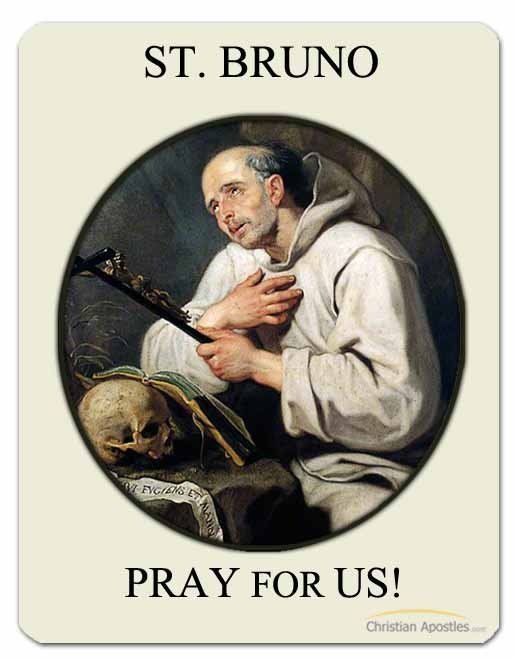
Saint Bruno was born in Cologne in about the year 1030, of an illustrious family. He was endowed with rare natural gifts, which soon shone with outstanding brilliance in Paris, though he was studying among other gifted young men. Ordained at Cologne, his native city, he became a Canon of its cathedral, and then was a Canon at Rheims, where the direction of studies in theology was entrusted to him. He already had a very strong distaste for honors, and a great desire for the life of contemplation.
On the death of the excellent Gervais, Archbishop of Rheims, the region fell for a time into evil hands, and Bruno, who had resisted the decay of religion, became the object of a persecution. He stood firm and called for a papal legate; a council was assembled at Autun, of which Bruno was the soul, and the intruder at Rheims was repulsed, to die later in total obscurity. Bruno was not yet forty years old, but all desired that he assume the charge of the see; yet he could not bring himself to accept this honor. He retired from Rheims, and resolved to forsake the world definitively, to live a life of retirement and penance. Others joined him in retreat, desiring the pursuit of perfection, according to the means Christ prescribed. If you will be perfect, go, sell all that you have and give it to the poor, and you shall have treasure in heaven; and come, follow Me. (Matthew 19:21) Saint Bruno aspired to a desert and, inspired by God, looked towards the Alps of the east.
With six companions, four priests and two laymen, Saint Bruno applied to Hugh, Bishop of Grenoble, who led them to a wild solitude called the Chartreuse. There they lived in poverty, self-denial, and silence, each apart in his own cell, meeting only for the worship of God, and employing themselves in copying books. From the name of the solitude the Order of Saint Bruno was called the Carthusian Order. Six years later, Urban II called Bruno to Rome, that he might benefit from his counsel. Bruno tried to live there as he had lived in the desert; but the echoes of the great city disturbed his solitude, and, after refusing high dignities, he finally obtained, by force of persuasion, the permission of the Pope to resume his monastic life, this time in Calabria, with only a few companions. There he lived, in humility and mortification and great peace, until his blessed death occurred, in the arms of his faithful monks, in 1101.
Reflection: O everlasting kingdom, said Saint Augustine; kingdom of endless ages, whereon rest untroubled light and the peace of God which surpasses all understanding, where the souls of the Saints are in rest, and everlasting joy crowns their heads, where sorrow and sighing have fled away! When shall I come and appear before God?
LAST-MODIFIED:20230930T192543Z SEQUENCE:30406457 X-ACCESS:1 X-HITS:69 X-COLOR:f0b80e X-SHOW-END-TIME:1 END:VEVENT BEGIN:VEVENT DTSTART;VALUE=DATE:20231007 DTEND;VALUE=DATE:20231008 UID:574562E3-2A2A-4EEA-AD3A-56602B7D311A SUMMARY:Our Lady of the Rosary CREATED:20221013T211126Z DTSTAMP:20221013T211126Z URL:https://www.stpaulsweymouth.org/component/dpcalendar/event/849?calid=13 DESCRIPTION:The Blessed Virgin Mary, Queen of the Most Holy Rosary\N\NIn thanksgiving for the victory of Lepanto, an ancient stronghold of Greece and a modern port of that nation, Saint Pius V in 1571 instituted an annual feast in honor of Our Lady of Victory. Two years later, Gregory XIII changed this title to Our Lady of the Rosary; in 1740, Clement XII extended the feast to the universal Church.\NWe have related in the life of Saint Pius V the victory of Lepanto; here we will speak of the Rosary itself, granted to Saint Dominic by Our Lady Herself in the thirteenth century, with promises of the greatest blessings for those who recite it well. The Rosary of fifteen decades affords a simple means of meditation on the principal mysteries of our holy Religion, and a means of drawing closer to the Saviour through the intercession of the One to whom He never refuses anything. One can also say the chaplet of five decades, since the fifteen are divided into three groups of five: The Joyful, the Sorrowful, and the Glorious Mysteries of the life of Christ.\NOn the crucifix, one recites the Credo or Apostles' Creed, which the Apostles themselves composed at the first Council of Jerusalem, before their definitive separation, thereby resolving the question of what exactly should be taught to the neophytes. By it we honor the Three Persons of the Holy Trinity and express our faith in the Church established by God; in the Communion of the faithful, whether living or deceased; in the pardon of sins, the general resurrection at the end of the world, and eternal life.\NBefore each decade, the Pater or Our Father, taught by our Saviour Himself when His Apostles asked how they should pray, includes three petitions for the glory of God in heaven: May His Name be sanctified, rendered holy in the sight of all nations; may His Kingdom come — the interior reign of God which renders Him the Sovereign governing every heart and mind by His love — this, while we await Christ's own final return as visible King of His Church and all creation; thirdly, may His Will be accomplished on earth, to perfection, as it is in heaven. There follow four petitions for ourselves and our salvation. We ask, under the general term of our daily bread, that God provide for all our needs, both spiritual and material; we beg His forgiveness for our sins, in the same measure we have forgiven our neighbor's offenses, real or imaginary. And we implore to be spared temptation or to be delivered from succumbing to it and all other evils that would separate us from God.\NIn the Ave Maria or Hail Mary, we repeat the words of the Angel Gabriel to Mary (Luke 1:18), repeated and augmented by Saint Elizabeth at the Visitation (Luke 1:42), adding the invocation of the Church for Her aid at the present moment and at the formidable hour of our death.\NAfter each decade, we add the Gloria Patri or Doxology, to honor the Three Persons of the Holy Trinity.\NThe Joyful Mysteries: The Annunciation, the Visitation, the Nativity of Jesus, the Presentation of Jesus in the Temple, the Finding of Jesus in the Temple.\NThe Sorrowful Mysteries: The Agony in the Garden of Gethsemane, the Scourging at the Pillar, the Crowning with Thorns, the Carrying of the Cross, the Crucifixion and Death of Jesus.\NThe Glorious Mysteries: The Resurrection, the Ascension, the Descent of the Holy Ghost upon the Apostles, the Assumption of Mary, the Crowning of the Blessed Virgin in Heaven.\NCan one imagine a more perfect prayer than the Holy Rosary of the Queen of Heaven, the Blessed Virgin and Mother Mary? It would require large volumes or even an entire library to narrate the graces and miracles that have been obtained by its humble recitation.\N(Les Petits Bollandistes: Vies des Saints, by Msgr. Paul Guérin (Bloud et Barral: Paris, 1882), Vol. 12; Little Pictorial Lives of the Saints, a compilation based on Butler's Lives of the Saints and other sources by John Gilmary Shea; Benziger Brothers: New York, 1894) X-ALT-DESC;FMTTYPE=text/html: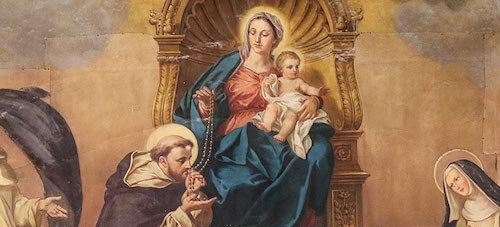
In thanksgiving for the victory of Lepanto, an ancient stronghold of Greece and a modern port of that nation, Saint Pius V in 1571 instituted an annual feast in honor of Our Lady of Victory. Two years later, Gregory XIII changed this title to Our Lady of the Rosary; in 1740, Clement XII extended the feast to the universal Church.
We have related in the life of Saint Pius V the victory of Lepanto; here we will speak of the Rosary itself, granted to Saint Dominic by Our Lady Herself in the thirteenth century, with promises of the greatest blessings for those who recite it well. The Rosary of fifteen decades affords a simple means of meditation on the principal mysteries of our holy Religion, and a means of drawing closer to the Saviour through the intercession of the One to whom He never refuses anything. One can also say the chaplet of five decades, since the fifteen are divided into three groups of five: The Joyful, the Sorrowful, and the Glorious Mysteries of the life of Christ.
On the crucifix, one recites the Credo or Apostles' Creed, which the Apostles themselves composed at the first Council of Jerusalem, before their definitive separation, thereby resolving the question of what exactly should be taught to the neophytes. By it we honor the Three Persons of the Holy Trinity and express our faith in the Church established by God; in the Communion of the faithful, whether living or deceased; in the pardon of sins, the general resurrection at the end of the world, and eternal life.
Before each decade, the Pater or Our Father, taught by our Saviour Himself when His Apostles asked how they should pray, includes three petitions for the glory of God in heaven: May His Name be sanctified, rendered holy in the sight of all nations; may His Kingdom come — the interior reign of God which renders Him the Sovereign governing every heart and mind by His love — this, while we await Christ's own final return as visible King of His Church and all creation; thirdly, may His Will be accomplished on earth, to perfection, as it is in heaven. There follow four petitions for ourselves and our salvation. We ask, under the general term of our daily bread, that God provide for all our needs, both spiritual and material; we beg His forgiveness for our sins, in the same measure we have forgiven our neighbor's offenses, real or imaginary. And we implore to be spared temptation or to be delivered from succumbing to it and all other evils that would separate us from God.
In the Ave Maria or Hail Mary, we repeat the words of the Angel Gabriel to Mary (Luke 1:18), repeated and augmented by Saint Elizabeth at the Visitation (Luke 1:42), adding the invocation of the Church for Her aid at the present moment and at the formidable hour of our death.
After each decade, we add the Gloria Patri or Doxology, to honor the Three Persons of the Holy Trinity.
The Joyful Mysteries: The Annunciation, the Visitation, the Nativity of Jesus, the Presentation of Jesus in the Temple, the Finding of Jesus in the Temple.
The Sorrowful Mysteries: The Agony in the Garden of Gethsemane, the Scourging at the Pillar, the Crowning with Thorns, the Carrying of the Cross, the Crucifixion and Death of Jesus.
The Glorious Mysteries: The Resurrection, the Ascension, the Descent of the Holy Ghost upon the Apostles, the Assumption of Mary, the Crowning of the Blessed Virgin in Heaven.
Can one imagine a more perfect prayer than the Holy Rosary of the Queen of Heaven, the Blessed Virgin and Mother Mary? It would require large volumes or even an entire library to narrate the graces and miracles that have been obtained by its humble recitation.
(Les Petits Bollandistes: Vies des Saints, by Msgr. Paul Guérin (Bloud et Barral: Paris, 1882), Vol. 12; Little Pictorial Lives of the Saints, a compilation based on Butler's Lives of the Saints and other sources by John Gilmary Shea; Benziger Brothers: New York, 1894)
LAST-MODIFIED:20230930T192924Z SEQUENCE:30406678 X-ACCESS:1 X-HITS:11 X-COLOR:f0b80e X-SHOW-END-TIME:1 END:VEVENT BEGIN:VEVENT DTSTART;VALUE=DATE:20231008 DTEND;VALUE=DATE:20231009 UID:FBC4BD2A-90A4-4FA1-9485-0A0DAB1A4405 SUMMARY:St. Bridget of Sweden CREATED:20221013T211126Z DTSTAMP:20221013T211126Z URL:https://www.stpaulsweymouth.org/component/dpcalendar/event/857?calid=13 DESCRIPTION:St. Bridget of Sweden, Widow\N\NSaint Bridget was born into the Swedish royal family in the year 1302, the daughter of very virtuous Christian parents. More than one prophetic episode attended the birth of Bridget, whose voice would be heard with admiration by the entire world, according to a bishop of her country. Curiously, for three years she said not a word, then began to speak with facility and clarity, like persons of mature years. At the age of seven, after her mother had died, she beheld the Mother of God, who presented her with a beautiful crown. She became sober, modest, candid, humble, and peaceful. At the age of ten she saw Our Lord as He was on the Cross, and she began to meditate constantly on the mysteries of the Passion, while occupying herself exteriorly with needlework.\NIn obedience to her father, she was married to Prince Ulpho of Sweden. Saint Bridget became the mother of eight children, four boys and four girls, one of whom, Saint Catherine of Sweden, is honored as a Saint. Their four sons died young, two during one of the crusades. After some years she and her husband separated by mutual consent; he entered the Cistercian Order, where he died thirty years before his holy spouse. After his death, her life became still more austere; for her guide she had a celebrated Doctor of Theology, a Canon of the cathedral of Linkoeping. Severe for herself, Saint Bridget remained gentle for the poor and nourished twelve persons every day, serving them herself; she established hospices for the sick and the convalescent. She founded the Order of the Holy Saviour for sixty nuns, at the Abbey of Wastein or Wadstena in Sweden.\NSaint Bridget received a series of sublime revelations, all of which she scrupulously submitted to the judgment of her confessor. During a famous pilgrimage which she made to Rome at the command of her Lord, He dictated to her the Fifteen Prayers of Saint Bridget, in honor of His Passion. Saint Bridget also went on pilgrimage to the Holy Land with her daughter, Saint Catherine, and amid the very scenes of the Passion was further instructed in the sacred mysteries. She died in Rome, after her return from this pilgrimage, in 1373.\NReflection: Saint Bridget appreciated in an extraordinary way the grace of the Sacrament of Penance. Is confession a matter of much time or expense? asks Saint John Chrysostom. Is it a difficult and painful remedy? Without cost or hurt, this medicine is ever ready to restore you to perfect health.\NLes Petits Bollandistes: Vies des Saints, by Msgr. Paul Guérin (Bloud et Barral: Paris, 1882), Vol. 12; Little Pictorial Lives of the Saints, a compilation based on Butler's Lives of the Saints and other sources by John Gilmary Shea (Benziger Brothers: New York, 1894). X-ALT-DESC;FMTTYPE=text/html: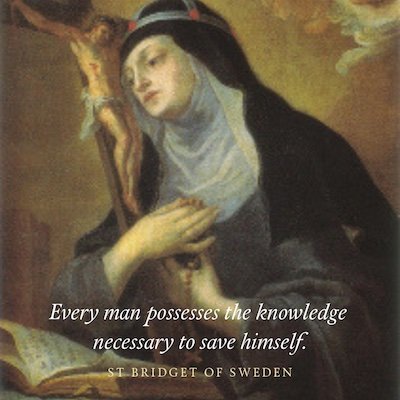
Saint Bridget was born into the Swedish royal family in the year 1302, the daughter of very virtuous Christian parents. More than one prophetic episode attended the birth of Bridget, whose voice would be heard with admiration by the entire world, according to a bishop of her country. Curiously, for three years she said not a word, then began to speak with facility and clarity, like persons of mature years. At the age of seven, after her mother had died, she beheld the Mother of God, who presented her with a beautiful crown. She became sober, modest, candid, humble, and peaceful. At the age of ten she saw Our Lord as He was on the Cross, and she began to meditate constantly on the mysteries of the Passion, while occupying herself exteriorly with needlework.
In obedience to her father, she was married to Prince Ulpho of Sweden. Saint Bridget became the mother of eight children, four boys and four girls, one of whom, Saint Catherine of Sweden, is honored as a Saint. Their four sons died young, two during one of the crusades. After some years she and her husband separated by mutual consent; he entered the Cistercian Order, where he died thirty years before his holy spouse. After his death, her life became still more austere; for her guide she had a celebrated Doctor of Theology, a Canon of the cathedral of Linkoeping. Severe for herself, Saint Bridget remained gentle for the poor and nourished twelve persons every day, serving them herself; she established hospices for the sick and the convalescent. She founded the Order of the Holy Saviour for sixty nuns, at the Abbey of Wastein or Wadstena in Sweden.
Saint Bridget received a series of sublime revelations, all of which she scrupulously submitted to the judgment of her confessor. During a famous pilgrimage which she made to Rome at the command of her Lord, He dictated to her the Fifteen Prayers of Saint Bridget, in honor of His Passion. Saint Bridget also went on pilgrimage to the Holy Land with her daughter, Saint Catherine, and amid the very scenes of the Passion was further instructed in the sacred mysteries. She died in Rome, after her return from this pilgrimage, in 1373.
Reflection: Saint Bridget appreciated in an extraordinary way the grace of the Sacrament of Penance. Is confession a matter of much time or expense? asks Saint John Chrysostom. Is it a difficult and painful remedy? Without cost or hurt, this medicine is ever ready to restore you to perfect health.
Les Petits Bollandistes: Vies des Saints, by Msgr. Paul Guérin (Bloud et Barral: Paris, 1882), Vol. 12; Little Pictorial Lives of the Saints, a compilation based on Butler's Lives of the Saints and other sources by John Gilmary Shea (Benziger Brothers: New York, 1894).
LAST-MODIFIED:20231007T211211Z SEQUENCE:31017645 X-ACCESS:1 X-HITS:83 X-COLOR:f0b80e X-SHOW-END-TIME:1 END:VEVENT BEGIN:VEVENT DTSTART;VALUE=DATE:20231009 DTEND;VALUE=DATE:20231010 UID:8BA83221-6AF8-4258-9FE6-CC96A66E7A40 SUMMARY:St. John Leonardi CREATED:20221013T211126Z DTSTAMP:20221013T211126Z URL:https://www.stpaulsweymouth.org/component/dpcalendar/event/867?calid=13 DESCRIPTION:St. John Leonardi, Confessor\N\N“I am only one person! Why should I do anything? What good would it do?” Today, as in any age, people seem plagued with the dilemma of getting involved. In his own way, John Leonardi answered these questions. He chose to become a priest. After his ordination, Fr. Leonardi became very active in the works of the ministry, especially in hospitals and prisons. The example and dedication of his work attracted several young laymen who began to assist him. They later became priests themselves.\NJohn lived after the Protestant Reformation and the Council of Trent. He and his followers projected a new congregation of diocesan priests. For some reason the plan, which was ultimately approved, provoked great political opposition. John was exiled from his home town of Lucca, Italy, for almost the entire remainder of his life. He received encouragement and help from Saint Philip Neri, who gave him his lodgings—along with the care of his cat!\NIn 1579, John formed the Confraternity of Christian Doctrine, and published a compendium of Christian doctrine that remained in use until the 19th century.\NFather Leonardi and his priests became a great power for good in Italy, and their congregation was confirmed by Pope Clement in 1595. John died at the age of 68 from a disease caught when tending those stricken by the plague. By the deliberate policy of the founder, the Clerks Regular of the Mother of God have never had more than 15 churches, and today form only a very small congregation. He is the patron saint of pharmacists.\NReflection: What can one person do? The answer is plenty! In the life of each saint, one thing stands clear: God and one person are a majority! What one individual, following God’s will and plan for his or her life, can do is more than our mind could ever hope for or imagine. Each of us, like John Leonardi, has a mission to fulfill in God’s plan for the world. Each one of us is unique and has been given talent to use for the service of our brothers and sisters for the building up of God’s kingdom.\Nfranciscanmedia.org X-ALT-DESC;FMTTYPE=text/html: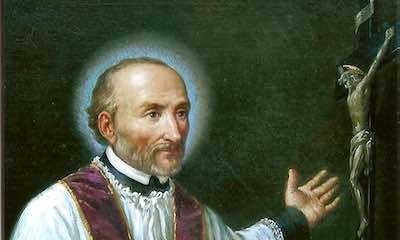
“I am only one person! Why should I do anything? What good would it do?” Today, as in any age, people seem plagued with the dilemma of getting involved. In his own way, John Leonardi answered these questions. He chose to become a priest. After his ordination, Fr. Leonardi became very active in the works of the ministry, especially in hospitals and prisons. The example and dedication of his work attracted several young laymen who began to assist him. They later became priests themselves.
John lived after the Protestant Reformation and the Council of Trent. He and his followers projected a new congregation of diocesan priests. For some reason the plan, which was ultimately approved, provoked great political opposition. John was exiled from his home town of Lucca, Italy, for almost the entire remainder of his life. He received encouragement and help from Saint Philip Neri, who gave him his lodgings—along with the care of his cat!
In 1579, John formed the Confraternity of Christian Doctrine, and published a compendium of Christian doctrine that remained in use until the 19th century.
Father Leonardi and his priests became a great power for good in Italy, and their congregation was confirmed by Pope Clement in 1595. John died at the age of 68 from a disease caught when tending those stricken by the plague. By the deliberate policy of the founder, the Clerks Regular of the Mother of God have never had more than 15 churches, and today form only a very small congregation. He is the patron saint of pharmacists.
Reflection: What can one person do? The answer is plenty! In the life of each saint, one thing stands clear: God and one person are a majority! What one individual, following God’s will and plan for his or her life, can do is more than our mind could ever hope for or imagine. Each of us, like John Leonardi, has a mission to fulfill in God’s plan for the world. Each one of us is unique and has been given talent to use for the service of our brothers and sisters for the building up of God’s kingdom.
franciscanmedia.org
LAST-MODIFIED:20231007T213433Z SEQUENCE:31018987 X-ACCESS:1 X-HITS:114 X-COLOR:f0b80e X-SHOW-END-TIME:1 END:VEVENT BEGIN:VEVENT DTSTART;VALUE=DATE:20231010 DTEND;VALUE=DATE:20231011 UID:C699F049-D472-45A7-8BA4-A7091F966AB7 SUMMARY:St. Francis Borgia CREATED:20221013T211126Z DTSTAMP:20221013T211126Z URL:https://www.stpaulsweymouth.org/component/dpcalendar/event/859?calid=13 DESCRIPTION:St. Francis Borgia, Confessor\N\NSaint Francis Borgia, named for Francis of Assisi at his birth in 1510, was placed under the tutelage of his uncle, Archbishop of Saragossa, after the death of his mother when he was ten years old. Soon he had to go to the court of Spain, as he was destined to be one of the great lords of that nation. There he remained Christian, modest and virtuous. His noble and beautiful appearance soon brought upon him snares which he succeeded in escaping, setting for himself regimes of prayer and study to escape from the dangers. He wore a hair shirt, and never would enter into any of those games of chance which cause the loss not only of money but of time, the spirit of devotion, and peace of soul. The Empress arranged for him to marry Eleanor de Castro of Portugal, who like himself was very pious. They were blessed with eight children, five sons and three daughters, who continued to practice the virtue of their parents.\NHaving become the Duke of Gandia after his father's death, he became one of the richest and most honored nobles in Spain. In 1539, there was laid upon him the sad duty of escorting the mortal remains of his once beautiful sovereign, the Empress Isabella, who had died still young, to the royal burial ground at Granada. The coffin had to be opened for him, that he might verify the body before it was placed in the tomb; and so unrecognizable, so astonishing a sight met his eyes that he vowed never again to serve any earthly sovereign, subject to so drastic and terrible a change.\NIt was many years before he could follow the call of his Lord; the emperor named him Captain-General of Catalonia, and sent him to bring to justice a group of bandits who had ravaged the countryside. The poor found in him strong protection against oppression. Vices were banished by his ordinances; he endowed poor girls and assisted families ruined by misery and reversals; he delivered debtors from prisons by paying what they owed. He was in effect the very Christian Viceroy of the Emperor. Saint Francis was relieved of this duty when he asked the Emperor, after the death of his father, to return and govern his subjects at Gandia. In Gandia he again did much public good; he built monasteries, founded hospitals, helped the poor in every possible way. But suddenly, his wife was taken from him. He was told by God that this loss was for both his and her own advantage, and amid his tears he offered his own life and that of his children, if that would please the Eternal Master.\NAfter making a retreat according to the Exercises of Saint Ignatius, under Blessed Peter Favre, he made the vows of a Jesuit privately until he could see to the establishment of his children. When he went to Rome with one of them, it was rumored he would be made a cardinal like two of his brothers. But he wished to avoid all dignities, and succeeded in doing so by leaving Rome as soon as possible. Saint Ignatius made him his Vicar General for Spain, Portugal, and the East Indies, and there was scarcely a city of Spain and Portugal where he did not establish colleges or houses of the Company of Jesus. At the death of Saint Ignatius two years later, the Order chose him to be its General. Then his journeys became countless; to narrate them all would be an impossibility.\NThe Turks were threatening Christendom, and Pope Saint Pius V commissioned two cardinal-legates to go and assemble the European Christian princes into a league for its defense. The holy Pope chose Francis to accompany one of the Cardinals and, worn out as he was, the Saint obeyed at once. The fatigues of the embassy exhausted what little life was left to him. Saint Francis died in the same year as Saint Pius V, happy to do so in the service of God and the Church, when he returned to Rome in October, 1572.\NReflection: Francis Borgia learned the value of earthly grandeurs at the funeral of Queen Isabella. Do the deaths of friends teach us anything about what awaits us also?\NLes Petits Bollandistes: Vies des Saints, by Msgr. Paul Guérin (Bloud et Barral: Paris, 1882), Vol. 12; Little Pictorial Lives of the Saints, a compilation based on Butler's Lives of the Saints and other sources by John Gilmary Shea (Benziger Brothers: New York, 1894). X-ALT-DESC;FMTTYPE=text/html: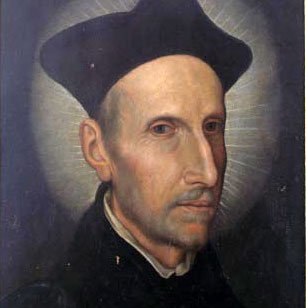
Saint Francis Borgia, named for Francis of Assisi at his birth in 1510, was placed under the tutelage of his uncle, Archbishop of Saragossa, after the death of his mother when he was ten years old. Soon he had to go to the court of Spain, as he was destined to be one of the great lords of that nation. There he remained Christian, modest and virtuous. His noble and beautiful appearance soon brought upon him snares which he succeeded in escaping, setting for himself regimes of prayer and study to escape from the dangers. He wore a hair shirt, and never would enter into any of those games of chance which cause the loss not only of money but of time, the spirit of devotion, and peace of soul. The Empress arranged for him to marry Eleanor de Castro of Portugal, who like himself was very pious. They were blessed with eight children, five sons and three daughters, who continued to practice the virtue of their parents.
Having become the Duke of Gandia after his father's death, he became one of the richest and most honored nobles in Spain. In 1539, there was laid upon him the sad duty of escorting the mortal remains of his once beautiful sovereign, the Empress Isabella, who had died still young, to the royal burial ground at Granada. The coffin had to be opened for him, that he might verify the body before it was placed in the tomb; and so unrecognizable, so astonishing a sight met his eyes that he vowed never again to serve any earthly sovereign, subject to so drastic and terrible a change.
It was many years before he could follow the call of his Lord; the emperor named him Captain-General of Catalonia, and sent him to bring to justice a group of bandits who had ravaged the countryside. The poor found in him strong protection against oppression. Vices were banished by his ordinances; he endowed poor girls and assisted families ruined by misery and reversals; he delivered debtors from prisons by paying what they owed. He was in effect the very Christian Viceroy of the Emperor. Saint Francis was relieved of this duty when he asked the Emperor, after the death of his father, to return and govern his subjects at Gandia. In Gandia he again did much public good; he built monasteries, founded hospitals, helped the poor in every possible way. But suddenly, his wife was taken from him. He was told by God that this loss was for both his and her own advantage, and amid his tears he offered his own life and that of his children, if that would please the Eternal Master.
After making a retreat according to the Exercises of Saint Ignatius, under Blessed Peter Favre, he made the vows of a Jesuit privately until he could see to the establishment of his children. When he went to Rome with one of them, it was rumored he would be made a cardinal like two of his brothers. But he wished to avoid all dignities, and succeeded in doing so by leaving Rome as soon as possible. Saint Ignatius made him his Vicar General for Spain, Portugal, and the East Indies, and there was scarcely a city of Spain and Portugal where he did not establish colleges or houses of the Company of Jesus. At the death of Saint Ignatius two years later, the Order chose him to be its General. Then his journeys became countless; to narrate them all would be an impossibility.
The Turks were threatening Christendom, and Pope Saint Pius V commissioned two cardinal-legates to go and assemble the European Christian princes into a league for its defense. The holy Pope chose Francis to accompany one of the Cardinals and, worn out as he was, the Saint obeyed at once. The fatigues of the embassy exhausted what little life was left to him. Saint Francis died in the same year as Saint Pius V, happy to do so in the service of God and the Church, when he returned to Rome in October, 1572.
Reflection: Francis Borgia learned the value of earthly grandeurs at the funeral of Queen Isabella. Do the deaths of friends teach us anything about what awaits us also?
Les Petits Bollandistes: Vies des Saints, by Msgr. Paul Guérin (Bloud et Barral: Paris, 1882), Vol. 12; Little Pictorial Lives of the Saints, a compilation based on Butler's Lives of the Saints and other sources by John Gilmary Shea (Benziger Brothers: New York, 1894).
LAST-MODIFIED:20231007T211654Z SEQUENCE:31017928 X-ACCESS:1 X-HITS:43 X-COLOR:f0b80e X-SHOW-END-TIME:1 END:VEVENT BEGIN:VEVENT DTSTART;VALUE=DATE:20231011 DTEND;VALUE=DATE:20231012 UID:7FA07B85-D316-433A-A5CD-FBD09BEA5A5C SUMMARY:The Divine Maternity of Mary CREATED:20221013T211126Z DTSTAMP:20221013T211126Z URL:https://www.stpaulsweymouth.org/component/dpcalendar/event/861?calid=13 DESCRIPTION:The Divine Maternity of the Blessed Virgin Mary\N\NWhen Mary of Nazareth conceived in Her womb the Word of God, that conception was the effect of the fullness of Her grace, and of an action of the Holy Spirit which occurred in Her soul first of all, thereby making of Her flesh a tabernacle and a sanctuary. The dignity of the Mother of God is Her great sanctity, it is the incomparable grace which raises Her above all the Angels, the grace in which She was predestined and created for this glorious purpose. By the acts of Her blessed Maternity, She bordered on divinity while remaining entirely human. In this way She seems to exhaust, as it were, the power of God — the fullness of the grace accorded Her cannot be surpassed. It is easier for us to conceive of the greatness of Mary, however, when we consider Her maternity of the Mystical Body, the Church, which like Herself is entirely human, and composed of persons who are very far indeed from being what our Saviour was, a Divine Person incarnate.\NWe understand better what Mary is for the Church by listening to Saint Louis Mary de Montfort, Apostle of the Cross and of the Rosary of Our Lady. As Mary was necessary for God in the Incarnation of the Word, so She is necessary for Him to sanctify souls and bring about their likeness to Christ, and She is much needed by us, in our great infirmity:\NThe Holy Ghost gives no heavenly gift to men which He does not have pass through Her virginal hands...; such is the sentiment of the Church and its holy Fathers. Mary, being altogether transformed into God by grace and by the glory which transforms all the Saints into Him, asks nothing, wishes nothing, does nothing contrary to the eternal and immutable Will of God. When we read then in the writings of Saints Bernard, Bernardine, Bonaventure and others, that in heaven and on earth everything, even God Himself, is subject to the Blessed Virgin, they mean that the authority which God has been well pleased to give Her is so great that it seems as if She had the same power as God; and that Her prayers and petitions are so powerful with God that they always pass for commandments with His Majesty, who never resists the prayer of His dear Mother, because She is always humble and conformed to His Will. If Moses, by the force of his prayer, stayed the anger of God against the Israelites in a manner so powerful that the most high and infinitely merciful Lord, being unable to resist him, told him to let Him alone that He might be angry with and punish that rebellious people, what must we not, with much greater reason, think of the prayer of the humble Mary, the worthy Mother of God, which is more powerful with His Majesty than the prayers and intercessions of all the Angels and Saints both in heaven and on earth?\NThe sin of our first father has spoiled us all, soured us, puffed us up and corrupted us... The actual sins which we have committed, whether mortal or venial, pardoned though they may be, have nevertheless increased our concupiscence, our weakness, our inconstancy and our corruption, and have left evil remains in our souls... We have nothing for our portion but pride and blindness of spirit, hardness of heart, weakness and inconstancy of soul, revolted passions, and sicknesses in the body... Let us say boldly with Saint Bernard that we have need of a mediator with the Mediator Himself, and that it is the divine Mary who is most capable of filling that charitable office. It was through Her that Jesus Christ came to us, and it is through Her that we must go to Him. If we fear to go directly to Jesus Christ, our God, whether because of His infinite greatness or because of our vileness, or because of our sins, let us boldly implore the aid and intercession of Mary, our Mother. She is good, She is tender, She has nothing in Her that is austere and forbidding, nothing too sublime and too brilliant... She is so charitable that She repels none of those who ask Her intercession, no matter how great sinners they have been; for, as the Saints say, never has it been heard, since the world was the world, that anyone has confidently and perseveringly had recourse to our Blessed Lady and yet been repelled.\NTrue Devotion to Mary, by Saint Louis Mary de Montfort(Montfort Publications: Bay Shore, 1960); Les Petits Bollandistes: Vies des Saints, by Msgr. Paul Guérin (Bloud et Barral: Paris, 1882), Vol. 12 X-ALT-DESC;FMTTYPE=text/html:
When Mary of Nazareth conceived in Her womb the Word of God, that conception was the effect of the fullness of Her grace, and of an action of the Holy Spirit which occurred in Her soul first of all, thereby making of Her flesh a tabernacle and a sanctuary. The dignity of the Mother of God is Her great sanctity, it is the incomparable grace which raises Her above all the Angels, the grace in which She was predestined and created for this glorious purpose. By the acts of Her blessed Maternity, She bordered on divinity while remaining entirely human. In this way She seems to exhaust, as it were, the power of God — the fullness of the grace accorded Her cannot be surpassed. It is easier for us to conceive of the greatness of Mary, however, when we consider Her maternity of the Mystical Body, the Church, which like Herself is entirely human, and composed of persons who are very far indeed from being what our Saviour was, a Divine Person incarnate.
We understand better what Mary is for the Church by listening to Saint Louis Mary de Montfort, Apostle of the Cross and of the Rosary of Our Lady. As Mary was necessary for God in the Incarnation of the Word, so She is necessary for Him to sanctify souls and bring about their likeness to Christ, and She is much needed by us, in our great infirmity:
The Holy Ghost gives no heavenly gift to men which He does not have pass through Her virginal hands...; such is the sentiment of the Church and its holy Fathers. Mary, being altogether transformed into God by grace and by the glory which transforms all the Saints into Him, asks nothing, wishes nothing, does nothing contrary to the eternal and immutable Will of God. When we read then in the writings of Saints Bernard, Bernardine, Bonaventure and others, that in heaven and on earth everything, even God Himself, is subject to the Blessed Virgin, they mean that the authority which God has been well pleased to give Her is so great that it seems as if She had the same power as God; and that Her prayers and petitions are so powerful with God that they always pass for commandments with His Majesty, who never resists the prayer of His dear Mother, because She is always humble and conformed to His Will. If Moses, by the force of his prayer, stayed the anger of God against the Israelites in a manner so powerful that the most high and infinitely merciful Lord, being unable to resist him, told him to let Him alone that He might be angry with and punish that rebellious people, what must we not, with much greater reason, think of the prayer of the humble Mary, the worthy Mother of God, which is more powerful with His Majesty than the prayers and intercessions of all the Angels and Saints both in heaven and on earth?
The sin of our first father has spoiled us all, soured us, puffed us up and corrupted us... The actual sins which we have committed, whether mortal or venial, pardoned though they may be, have nevertheless increased our concupiscence, our weakness, our inconstancy and our corruption, and have left evil remains in our souls... We have nothing for our portion but pride and blindness of spirit, hardness of heart, weakness and inconstancy of soul, revolted passions, and sicknesses in the body... Let us say boldly with Saint Bernard that we have need of a mediator with the Mediator Himself, and that it is the divine Mary who is most capable of filling that charitable office. It was through Her that Jesus Christ came to us, and it is through Her that we must go to Him. If we fear to go directly to Jesus Christ, our God, whether because of His infinite greatness or because of our vileness, or because of our sins, let us boldly implore the aid and intercession of Mary, our Mother. She is good, She is tender, She has nothing in Her that is austere and forbidding, nothing too sublime and too brilliant... She is so charitable that She repels none of those who ask Her intercession, no matter how great sinners they have been; for, as the Saints say, never has it been heard, since the world was the world, that anyone has confidently and perseveringly had recourse to our Blessed Lady and yet been repelled.
True Devotion to Mary, by Saint Louis Mary de Montfort(Montfort Publications: Bay Shore, 1960); Les Petits Bollandistes: Vies des Saints, by Msgr. Paul Guérin (Bloud et Barral: Paris, 1882), Vol. 12
LAST-MODIFIED:20231007T212037Z SEQUENCE:31018151 X-ACCESS:1 X-HITS:3 X-COLOR:f0b80e X-SHOW-END-TIME:1 END:VEVENT BEGIN:VEVENT DTSTART;VALUE=DATE:20231013 DTEND;VALUE=DATE:20231014 UID:1094075D-6A10-4DA6-92DB-9AC8BD6991E0 SUMMARY:St. Edward King CREATED:20221013T211126Z DTSTAMP:20221013T211126Z URL:https://www.stpaulsweymouth.org/component/dpcalendar/event/863?calid=13 DESCRIPTION:St. Edward King, Confessor\N\NSaint Edward, son of King Ethelred, whose kingdom of England fell to the Danish invaders, was unexpectedly raised to the throne of England in 1041, at the age of forty years. God had shown Edward to a pious bishop in a vision, as England's King, anointed by Saint Peter: Behold the one who will be King through My favor; he will be cherished by heaven, agreeable to men, terrible to his enemies, loving to his subjects, very useful to the Church of God. The English people, tired of being governed by a foreign domination, decided in 1041 to reinstate the surviving son of their legitimate sovereign, and under the leadership of three noblemen, succeeded in crowning Edward on Easter Sunday of the year 1042. Edward had spent twenty-seven years of his forty in exile in Normandy, in the palace of his maternal uncle.\NWhen he was raised to the throne, the virtues of his earlier years, simplicity, gentleness, humility and a tender charity, but above all his angelic purity, shone with new brightness. By a rare inspiration of God, though he married to content his nobles and people, he preserved perfect chastity in the wedded state. So little did he set his heart on riches, that three times when he saw a servant robbing his treasury, he let him escape, saying the poor man needed the gold more than he. He loved to stand at his palace-gate, speaking kindly to the poor beggars and lepers who crowded about him, and many of whom he healed of their diseases. The people rejoiced in having a Saint for their king.\NLong wars had brought the kingdom to a sad state, but Edward's zeal and sanctity soon wrought a great change. His reign of twenty-four years was one of almost unbroken peace. He undertook only one war, which was victorious, to reinstate Malcolm, legitimate king of Scotland. The country grew prosperous, the ruined churches rose again under his hand, the weak lived secure, and for ages afterwards men spoke with affection of the laws of good Saint Edward. The holy king delighted in building and enriching churches; Westminster Abbey was his last and noblest work.\NHe had a particular devotion to the holy Apostles Saint Peter and Saint John the Evangelist, and had made a promise never to refuse an alms asked in the name of the latter. One day when he had no money with him, a poor man reached out his hand in the name of the Apostle, and the king gave him a valuable ring he was wearing. Some time later, Saint John appeared to two pilgrims returning from the Holy Land. He gave them a ring and said: Take it to the king; he gave it to me one day when I asked for an alms in the habit of a pilgrim. Tell him that in six months I will visit him and take him with me, to follow the unblemished Lamb. The King received it from them after hearing their relation of this incident, and broke into tears. And Edward did indeed die six months later, on January 5, 1066. Many miracles occurred at his tomb. In 1102 his body was exhumed and found intact and flexible, with its habits perfectly preserved also, appearing to be new. He was canonized in 1161 by Pope Alexander III.\NLes Petits Bollandistes: Vies des Saints, by Msgr. Paul Guérin (Bloud et Barral: Paris, 1882), Vol. 12; Little Pictorial Lives of the Saints, a compilation based on Butler's Lives of the Saints and other sources by John Gilmary Shea (Benziger Brothers: New York, 1894). X-ALT-DESC;FMTTYPE=text/html: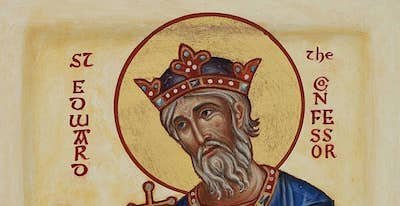
Saint Edward, son of King Ethelred, whose kingdom of England fell to the Danish invaders, was unexpectedly raised to the throne of England in 1041, at the age of forty years. God had shown Edward to a pious bishop in a vision, as England's King, anointed by Saint Peter: Behold the one who will be King through My favor; he will be cherished by heaven, agreeable to men, terrible to his enemies, loving to his subjects, very useful to the Church of God. The English people, tired of being governed by a foreign domination, decided in 1041 to reinstate the surviving son of their legitimate sovereign, and under the leadership of three noblemen, succeeded in crowning Edward on Easter Sunday of the year 1042. Edward had spent twenty-seven years of his forty in exile in Normandy, in the palace of his maternal uncle.
When he was raised to the throne, the virtues of his earlier years, simplicity, gentleness, humility and a tender charity, but above all his angelic purity, shone with new brightness. By a rare inspiration of God, though he married to content his nobles and people, he preserved perfect chastity in the wedded state. So little did he set his heart on riches, that three times when he saw a servant robbing his treasury, he let him escape, saying the poor man needed the gold more than he. He loved to stand at his palace-gate, speaking kindly to the poor beggars and lepers who crowded about him, and many of whom he healed of their diseases. The people rejoiced in having a Saint for their king.
Long wars had brought the kingdom to a sad state, but Edward's zeal and sanctity soon wrought a great change. His reign of twenty-four years was one of almost unbroken peace. He undertook only one war, which was victorious, to reinstate Malcolm, legitimate king of Scotland. The country grew prosperous, the ruined churches rose again under his hand, the weak lived secure, and for ages afterwards men spoke with affection of the laws of good Saint Edward. The holy king delighted in building and enriching churches; Westminster Abbey was his last and noblest work.
He had a particular devotion to the holy Apostles Saint Peter and Saint John the Evangelist, and had made a promise never to refuse an alms asked in the name of the latter. One day when he had no money with him, a poor man reached out his hand in the name of the Apostle, and the king gave him a valuable ring he was wearing. Some time later, Saint John appeared to two pilgrims returning from the Holy Land. He gave them a ring and said: Take it to the king; he gave it to me one day when I asked for an alms in the habit of a pilgrim. Tell him that in six months I will visit him and take him with me, to follow the unblemished Lamb. The King received it from them after hearing their relation of this incident, and broke into tears. And Edward did indeed die six months later, on January 5, 1066. Many miracles occurred at his tomb. In 1102 his body was exhumed and found intact and flexible, with its habits perfectly preserved also, appearing to be new. He was canonized in 1161 by Pope Alexander III.
Les Petits Bollandistes: Vies des Saints, by Msgr. Paul Guérin (Bloud et Barral: Paris, 1882), Vol. 12; Little Pictorial Lives of the Saints, a compilation based on Butler's Lives of the Saints and other sources by John Gilmary Shea (Benziger Brothers: New York, 1894).
LAST-MODIFIED:20231007T212431Z SEQUENCE:31018385 X-ACCESS:1 X-HITS:13 X-COLOR:f0b80e X-SHOW-END-TIME:1 END:VEVENT BEGIN:VEVENT DTSTART;VALUE=DATE:20231014 DTEND;VALUE=DATE:20231015 UID:1307DE32-7FE4-4BAA-8555-43FC62B0176B SUMMARY:St. Callistus CREATED:20221013T211126Z DTSTAMP:20221013T211126Z URL:https://www.stpaulsweymouth.org/component/dpcalendar/event/865?calid=13 DESCRIPTION:St. Callistus I Pope, Martyr\N\NEarly in the third century, it was to Callistus, then a deacon, that Pope Saint Zephyrinus confided the government of the clergy, as well as the creation and maintenance of the Christian cemeteries, which at that time were the catacombs of Rome. At the death of the Sovereign Pontiff, Callistus succeeded him as Head of the Church.\NIt is he who made obligatory for the entire Church, the fast of the Ember Days which the Apostles had instituted, to bring down blessings on each season of the year. During his time, the Christians began to build churches, which though destroyed during the various persecutions, were eventually rebuilt. Among the catacombs owed to his government, is the one on the Appian Way which bears his name. Many precious memories are conserved there; in it are found the tomb of Saint Cecilia, the crypts of several popes, and paintings which attest the perfect conformity of the primitive Faith with that of the present-day Church.\NDuring the pontificate of Saint Callistus, several very striking conversions occurred among the very officers of the persecuting emperor Alexander Severus. At one time an officer, his family and household, forty-two persons in all, were baptized by the Pope on the same day. Many others asked him for Baptism; among them a Senator and sixty-eight persons of his household, and a guardian of the saintly Pope, whose name was Privatus, after the prayers of the Holy Father had cured him of an ulcer. All these new Christians were martyred, and their heads were exposed at the various gates of Rome to discourage any who would propagate the Faith of Christ in that city. Despite the continuing pursuits and his constant solicitude for all the churches, Saint Callistus found the means to have a diligent search made by fishermen for the body of a priest of his clergy, which had been cast into the Tiber after his martyrdom. When it was found he was filled with joy, and buried it with hymns of praise.\NDuring the persecution Saint Callistus was obliged to take shelter in the poor and populous quarters of the city. The martyred priest, Calipodius, appeared to him soon afterwards, saying: Father, take courage; the hour of the reward is approaching; your crown will be proportionate to your sufferings. Soon afterwards he was discovered there, and the house was guarded by soldiers who received the order to allow no food to enter it for several days. And Saint Callistus was martyred in his turn. With a rock suspended from his neck, he was thrown from a window into a well on October 14, 223. The priest Asterius recovered and buried his body in the catacomb named for Calipodius. A week later Asterius too was arrested and thrown into the Tiber. The Christians interred this martyr also.\NReflection: In the mortal remains of a Christian, we see what has been the temple of the Holy Ghost, and which still is precious in the sight of God, who will watch over it and one day raise it up in glory to shine forever in His kingdom. May our actions bear witness to our belief in these truths.\NLes Petits Bollandistes: Vies des Saints, by Msgr. Paul Guérin (Bloud et Barral: Paris, 1882), Vol. 12; Little Pictorial Lives of the Saints, a compilation based on Butler's Lives of the Saints and other sources by John Gilmary Shea (Benziger Brothers: New York, 1894). X-ALT-DESC;FMTTYPE=text/html: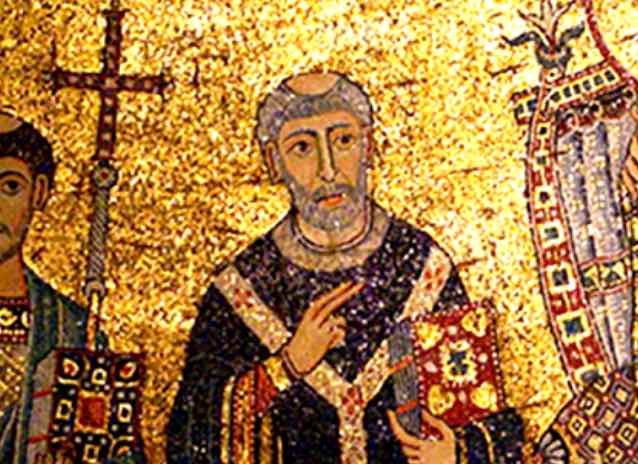
Early in the third century, it was to Callistus, then a deacon, that Pope Saint Zephyrinus confided the government of the clergy, as well as the creation and maintenance of the Christian cemeteries, which at that time were the catacombs of Rome. At the death of the Sovereign Pontiff, Callistus succeeded him as Head of the Church.
It is he who made obligatory for the entire Church, the fast of the Ember Days which the Apostles had instituted, to bring down blessings on each season of the year. During his time, the Christians began to build churches, which though destroyed during the various persecutions, were eventually rebuilt. Among the catacombs owed to his government, is the one on the Appian Way which bears his name. Many precious memories are conserved there; in it are found the tomb of Saint Cecilia, the crypts of several popes, and paintings which attest the perfect conformity of the primitive Faith with that of the present-day Church.
During the pontificate of Saint Callistus, several very striking conversions occurred among the very officers of the persecuting emperor Alexander Severus. At one time an officer, his family and household, forty-two persons in all, were baptized by the Pope on the same day. Many others asked him for Baptism; among them a Senator and sixty-eight persons of his household, and a guardian of the saintly Pope, whose name was Privatus, after the prayers of the Holy Father had cured him of an ulcer. All these new Christians were martyred, and their heads were exposed at the various gates of Rome to discourage any who would propagate the Faith of Christ in that city. Despite the continuing pursuits and his constant solicitude for all the churches, Saint Callistus found the means to have a diligent search made by fishermen for the body of a priest of his clergy, which had been cast into the Tiber after his martyrdom. When it was found he was filled with joy, and buried it with hymns of praise.
During the persecution Saint Callistus was obliged to take shelter in the poor and populous quarters of the city. The martyred priest, Calipodius, appeared to him soon afterwards, saying: Father, take courage; the hour of the reward is approaching; your crown will be proportionate to your sufferings. Soon afterwards he was discovered there, and the house was guarded by soldiers who received the order to allow no food to enter it for several days. And Saint Callistus was martyred in his turn. With a rock suspended from his neck, he was thrown from a window into a well on October 14, 223. The priest Asterius recovered and buried his body in the catacomb named for Calipodius. A week later Asterius too was arrested and thrown into the Tiber. The Christians interred this martyr also.
Reflection: In the mortal remains of a Christian, we see what has been the temple of the Holy Ghost, and which still is precious in the sight of God, who will watch over it and one day raise it up in glory to shine forever in His kingdom. May our actions bear witness to our belief in these truths.
Les Petits Bollandistes: Vies des Saints, by Msgr. Paul Guérin (Bloud et Barral: Paris, 1882), Vol. 12; Little Pictorial Lives of the Saints, a compilation based on Butler's Lives of the Saints and other sources by John Gilmary Shea (Benziger Brothers: New York, 1894).
LAST-MODIFIED:20231007T212825Z SEQUENCE:31018619 X-ACCESS:1 X-HITS:86 X-COLOR:f0b80e X-SHOW-END-TIME:1 END:VEVENT BEGIN:VEVENT DTSTART;VALUE=DATE:20231015 DTEND;VALUE=DATE:20231016 UID:273F6D7C-A427-4D42-BCD5-093879CBE6F9 SUMMARY:St. Teresa of Avila CREATED:20221013T211126Z DTSTAMP:20221013T211126Z URL:https://www.stpaulsweymouth.org/component/dpcalendar/event/869?calid=13 DESCRIPTION:St. Teresa of Avila, Virgin & Doctor of the Church\N\NBy their fruits you will know them, says Our Lord of those who claim to be His followers. The fruits which remain of the life, labors and prayer of Saint Teresa of Avila bear to her virtue a living and enduring testimony which none can refuse to admit. She herself wrote her life and many other celebrated spiritual works, and much more can still be said of this soul of predilection, whose writings and examples have led so many souls to high sanctity.\NBorn in 1515 in the kingdom of Castile in Spain, she was the youngest child of a virtuous nobleman. When she was seven years old, Teresa fled from her home with one of her young brothers, in the hope of going to Africa and receiving the palm of martyrdom. Brought back and asked the reason for her flight, she replied: I want to see God, and I must die before I can see Him. She then began, with her same brother, Rodriguez, to build a hermitage in the garden, and was often heard repeating: Forever, forever! She lost her mother at the age of twelve years, and was led by worldly companions into various frivolities. Her father decided to place her in a boarding convent, and she obeyed without any inclination for this kind of life. Grace came to her assistance with the good guidance of the Sisters, and she decided to enter religion in the Carmelite monastery of the Incarnation at Avila.\NFor a time frivolous conversations there, too, checked her progress toward perfection, but finally in her thirty-first year, she abandoned herself entirely to God. A vision showed her the very place in hell to which her apparently light faults would have led her, and she was told by Our Lord that all her conversation must be with heaven. Ever afterwards she lived in the deepest distrust of herself. When she was named Prioress against her will at the monastery of the Incarnation, she succeeded in conciliating even the most hostile hearts by placing a statue of Our Lady in the seat she would ordinarily have occupied, to preside over the Community.\NGod enlightened her to understand that He desired the reform of her Order, and her heart was pierced with divine love. The Superior General gave her full permission to found as many houses as might become feasible. She dreaded nothing so much as delusion in the decisions she would make in difficult situations; we can well understand this, knowing she founded seventeen convents for the Sisters, and that fifteen others for the Fathers of the Reform were established during her lifetime, with the aid of Saint John of the Cross. To the end of her life she acted only under obedience to her confessors, and this practice both made her strong and preserved her from error. Journeying in those days was far from comfortable and even perilous, but nothing could stop the Saint from accomplishing the holy Will of God. When the cart was overturned one day and she had a broken leg, her sense of humor became very evident by her remark: Dear Lord, if this is how You treat Your friends, it is no wonder You have so few! She died October 4, 1582, and was canonized in 1622.\NThe history of her mortal remains is as extraordinary as that of her life. After nine months in a wooden coffin, caved in from the excess weight above it, the body was perfectly conserved, though the clothing had rotted. A fine perfume it exuded spread throughout the entire monastery of the nuns, when they reclothed it. Parts of it were later removed as relics, including the heart showing the marks of the Transverberation, and her left arm. At the last exhumation in 1914, the body was found to remain in the same condition as when it was seen previously, still recognizable and very fragrant with the same intense perfume.\NReflection: The devotion of Saint Teresa of Avila to Saint Joseph, virginal father of Jesus, is proverbial. She said she had never asked anything of him without receiving what she requested. In the eighteenth century the Carmelite churches named for him numbered over one hundred and fifty. Let us imitate this holy Foundress and invoke Saint Joseph for our needs, both spiritual and temporal.\NLes Petits Bollandistes: Vies des Saints, by Msgr. Paul Guérin (Bloud et Barral: Paris, 1882), Vol. 12; Little Pictorial Lives of the Saints, a compilation based on Butler's Lives of the Saints and other sources by John Gilmary Shea (Benziger Brothers: New York, 1894). X-ALT-DESC;FMTTYPE=text/html: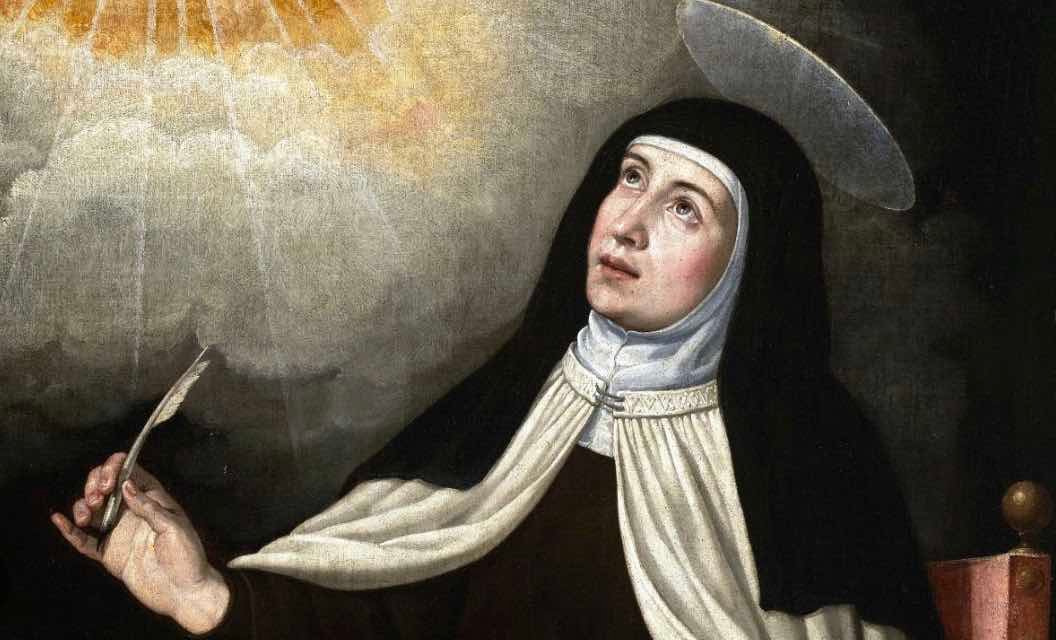
By their fruits you will know them, says Our Lord of those who claim to be His followers. The fruits which remain of the life, labors and prayer of Saint Teresa of Avila bear to her virtue a living and enduring testimony which none can refuse to admit. She herself wrote her life and many other celebrated spiritual works, and much more can still be said of this soul of predilection, whose writings and examples have led so many souls to high sanctity.
Born in 1515 in the kingdom of Castile in Spain, she was the youngest child of a virtuous nobleman. When she was seven years old, Teresa fled from her home with one of her young brothers, in the hope of going to Africa and receiving the palm of martyrdom. Brought back and asked the reason for her flight, she replied: I want to see God, and I must die before I can see Him. She then began, with her same brother, Rodriguez, to build a hermitage in the garden, and was often heard repeating: Forever, forever! She lost her mother at the age of twelve years, and was led by worldly companions into various frivolities. Her father decided to place her in a boarding convent, and she obeyed without any inclination for this kind of life. Grace came to her assistance with the good guidance of the Sisters, and she decided to enter religion in the Carmelite monastery of the Incarnation at Avila.
For a time frivolous conversations there, too, checked her progress toward perfection, but finally in her thirty-first year, she abandoned herself entirely to God. A vision showed her the very place in hell to which her apparently light faults would have led her, and she was told by Our Lord that all her conversation must be with heaven. Ever afterwards she lived in the deepest distrust of herself. When she was named Prioress against her will at the monastery of the Incarnation, she succeeded in conciliating even the most hostile hearts by placing a statue of Our Lady in the seat she would ordinarily have occupied, to preside over the Community.
God enlightened her to understand that He desired the reform of her Order, and her heart was pierced with divine love. The Superior General gave her full permission to found as many houses as might become feasible. She dreaded nothing so much as delusion in the decisions she would make in difficult situations; we can well understand this, knowing she founded seventeen convents for the Sisters, and that fifteen others for the Fathers of the Reform were established during her lifetime, with the aid of Saint John of the Cross. To the end of her life she acted only under obedience to her confessors, and this practice both made her strong and preserved her from error. Journeying in those days was far from comfortable and even perilous, but nothing could stop the Saint from accomplishing the holy Will of God. When the cart was overturned one day and she had a broken leg, her sense of humor became very evident by her remark: Dear Lord, if this is how You treat Your friends, it is no wonder You have so few! She died October 4, 1582, and was canonized in 1622.
The history of her mortal remains is as extraordinary as that of her life. After nine months in a wooden coffin, caved in from the excess weight above it, the body was perfectly conserved, though the clothing had rotted. A fine perfume it exuded spread throughout the entire monastery of the nuns, when they reclothed it. Parts of it were later removed as relics, including the heart showing the marks of the Transverberation, and her left arm. At the last exhumation in 1914, the body was found to remain in the same condition as when it was seen previously, still recognizable and very fragrant with the same intense perfume.
Reflection: The devotion of Saint Teresa of Avila to Saint Joseph, virginal father of Jesus, is proverbial. She said she had never asked anything of him without receiving what she requested. In the eighteenth century the Carmelite churches named for him numbered over one hundred and fifty. Let us imitate this holy Foundress and invoke Saint Joseph for our needs, both spiritual and temporal.
Les Petits Bollandistes: Vies des Saints, by Msgr. Paul Guérin (Bloud et Barral: Paris, 1882), Vol. 12; Little Pictorial Lives of the Saints, a compilation based on Butler's Lives of the Saints and other sources by John Gilmary Shea (Benziger Brothers: New York, 1894).
LAST-MODIFIED:20231014T102537Z SEQUENCE:31583651 X-ACCESS:1 X-HITS:58 X-COLOR:f0b80e X-SHOW-END-TIME:1 END:VEVENT BEGIN:VEVENT DTSTART;VALUE=DATE:20231016 DTEND;VALUE=DATE:20231017 UID:D3AB58F8-CD6D-4DD1-949E-02FD848455BF SUMMARY:St. Hedwig CREATED:20221013T211126Z DTSTAMP:20221013T211126Z URL:https://www.stpaulsweymouth.org/component/dpcalendar/event/871?calid=13 DESCRIPTION:St. Hedwig, Widow\N\NSaint Hedwig was the wife of Henry, Duke of Silesia and Poland, and the mother of six children. To one of her sisters, married to the King of Hungary, was born the future Saint Elizabeth of Hungary; another was the wife of Philip-Augustus of France, and the third, Abbess of a celebrated monastery at Lutzingen. Saint Hedwig led a humble, austere, and holy life amid all the pomp of her royal state. While still young, she and her spouse made a solemn vow of chastity, ratified by their bishop. Her house was a school of piety and good order; with Duke Henry she built the large monastery of Trebnitz, where she placed nuns of the Order of Citeaux.\NInspired by these holy examples, the Secretary of State of the Duke and Duchess left the court and dedicated all his wealth to the construction of a Cistercian monastery, which he then entered, to spend there the rest of his life.\NSaint Hedwig attended to the needs of all the monasteries and the hermits of the region, visiting them herself and taking them clothing, food and all she judged necessary. She visited prisoners and saw that they did not suffer from the cold or from lack of light. She cared for the poor and served them herself in her residence. On Holy Thursday she washed the feet of several lepers, remembering the lessons of Our Saviour. She fasted often and walked barefoot in the snow when she prayed; she slept on the ground.\NDevotion to the Blessed Sacrament was the keynote of her life. She considered it her very great privilege to supply the bread and wine for the Sacred Mysteries, and each morning would attend as many Masses as were celebrated. After the death of her husband in 1238, she retired to the Cistercian convent of Trebnitz, where she lived under obedience to her daughter Gertrude, abbess of that monastery, growing day by day in holiness, until God called her to Himself in the year 1243. She was canonized twenty-four years later, by Pope Clement IV. This Pontiff, during the ceremony of her canonization, asked God through her intercession to cure a girl who was blind, and the cure was immediately effected. Saint Hedwig is buried in the church of Trebnitz.\NLes Petits Bollandistes: Vies des Saints, by Msgr. Paul Guérin (Bloud et Barral: Paris, 1882), Vol. 12; Little Pictorial Lives of the Saints, a compilation based on Butler's Lives of the Saints and other sources by John Gilmary Shea (Benziger Brothers: New York, 1894). X-ALT-DESC;FMTTYPE=text/html: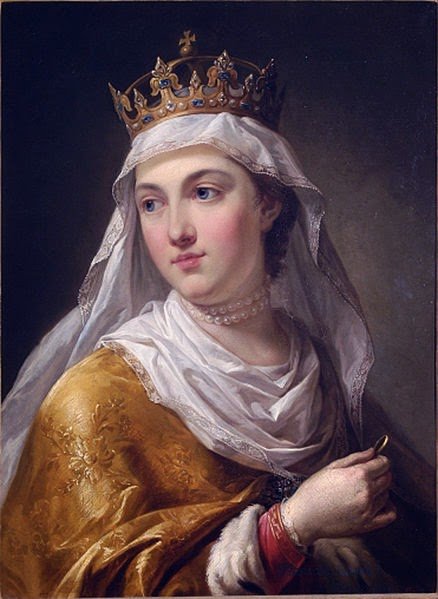
Saint Hedwig was the wife of Henry, Duke of Silesia and Poland, and the mother of six children. To one of her sisters, married to the King of Hungary, was born the future Saint Elizabeth of Hungary; another was the wife of Philip-Augustus of France, and the third, Abbess of a celebrated monastery at Lutzingen. Saint Hedwig led a humble, austere, and holy life amid all the pomp of her royal state. While still young, she and her spouse made a solemn vow of chastity, ratified by their bishop. Her house was a school of piety and good order; with Duke Henry she built the large monastery of Trebnitz, where she placed nuns of the Order of Citeaux.
Inspired by these holy examples, the Secretary of State of the Duke and Duchess left the court and dedicated all his wealth to the construction of a Cistercian monastery, which he then entered, to spend there the rest of his life.
Saint Hedwig attended to the needs of all the monasteries and the hermits of the region, visiting them herself and taking them clothing, food and all she judged necessary. She visited prisoners and saw that they did not suffer from the cold or from lack of light. She cared for the poor and served them herself in her residence. On Holy Thursday she washed the feet of several lepers, remembering the lessons of Our Saviour. She fasted often and walked barefoot in the snow when she prayed; she slept on the ground.
Devotion to the Blessed Sacrament was the keynote of her life. She considered it her very great privilege to supply the bread and wine for the Sacred Mysteries, and each morning would attend as many Masses as were celebrated. After the death of her husband in 1238, she retired to the Cistercian convent of Trebnitz, where she lived under obedience to her daughter Gertrude, abbess of that monastery, growing day by day in holiness, until God called her to Himself in the year 1243. She was canonized twenty-four years later, by Pope Clement IV. This Pontiff, during the ceremony of her canonization, asked God through her intercession to cure a girl who was blind, and the cure was immediately effected. Saint Hedwig is buried in the church of Trebnitz.
Les Petits Bollandistes: Vies des Saints, by Msgr. Paul Guérin (Bloud et Barral: Paris, 1882), Vol. 12; Little Pictorial Lives of the Saints, a compilation based on Butler's Lives of the Saints and other sources by John Gilmary Shea (Benziger Brothers: New York, 1894).
LAST-MODIFIED:20231014T102924Z SEQUENCE:31583878 X-ACCESS:1 X-HITS:58 X-COLOR:f0b80e X-SHOW-END-TIME:1 END:VEVENT BEGIN:VEVENT DTSTART;VALUE=DATE:20231017 DTEND;VALUE=DATE:20231018 UID:DC87F7B0-BB38-4B09-B004-A77053094404 SUMMARY:St. Margaret Mary Alacoque, Virgin CREATED:20221013T211126Z DTSTAMP:20221013T211126Z URL:https://www.stpaulsweymouth.org/component/dpcalendar/event/143?calid=13 DESCRIPTION:St. Margaret Mary Alacoque, Virgin\N\NSaint Margaret Mary, a soul of divine predilection, was born at Terreau in Burgundy, on July 22, 1647. During her infancy she showed a wonderfully sensitive revulsion to the very idea of sin, and while still a young child always recited the entire Rosary every day. She lost her father at the age of eight years, and her mother placed her with the Poor Clares. She was often sick and for four years was bedridden, losing almost entirely the use of her members. She made a vow to Our Lady to become one of Her daughters if She cured her, and was suddenly entirely well.She was of a happy temperament and her heart became easily attached to human affections. God began her purification when the charge of her mother's house was confided to persons who reduced the family to a sort of servitude. Margaret Mary turned to God for strength and consolation when she was accused of various crimes she had not committed. In short, the Saint of the Sacred Heart learned to suffer for Christ, with patience, what innocence can suffer in such situations.She desired to be a religious, but her mother could not bear to hear a word of that desire. Finally God came to her assistance through a Franciscan priest, who told her brother that he would answer to God for the vocation of his sister. In 1671 she entered the Order of the Visitation of Mary, at Paray-le-Monial, and was professed the following year. She followed all the practices of the monastery in perfect obedience, spending as much time as she could in the chapel with her Lord. After sanctifying her by many trials, Jesus appeared to her in numerous visions, displaying to her His Sacred Heart, sometimes burning as a furnace, and sometimes torn and bleeding on account of the coldness and sins of men. "Behold this Heart which has so loved men, and been so little loved by them in return!"In 1675, she was told by Our Lord that she, with the aid of Father Claude de la Colombiere of the Society of Jesus, was to be His instrument for instituting the feast of the Sacred Heart, and for spreading that devotion everywhere. This was not accomplished without great sufferings. The good Jesuit did all in his power to make known and loved the Heart of Jesus, but when it seemed all obstacles were about to disappear, his credit diminished, and his Superiors sent him to England. He returned to France exhausted and soon died.Saint Margaret Mary was for a time Mistress of Novices, and in this office exercised a true apostolate, working to win for the Heart of Jesus the hearts of the young girls who were aspiring to religious consecration. She was persecuted when she sent one of them home, not having seen in her the indications of a genuine vocation; the family attempted to have her deposed. She remained in the charge but was deprived of Holy Communion on the First Friday of the month. This practice was one of Our Lord's specific requests; for souls who communicate nine First Fridays in succession, He promised the most wonderful graces. The demons also persecuted her visibly; nonetheless her entire Community was finally won over to devotion to the Divine Heart.\N(Little Pictorial Lives of the Saints, 1894) X-ALT-DESC;FMTTYPE=text/html:
Saint Margaret Mary, a soul of divine predilection, was born at Terreau in Burgundy, on July 22, 1647. During her infancy she showed a wonderfully sensitive revulsion to the very idea of sin, and while still a young child always recited the entire Rosary every day. She lost her father at the age of eight years, and her mother placed her with the Poor Clares. She was often sick and for four years was bedridden, losing almost entirely the use of her members. She made a vow to Our Lady to become one of Her daughters if She cured her, and was suddenly entirely well.
She was of a happy temperament and her heart became easily attached to human affections. God began her purification when the charge of her mother's house was confided to persons who reduced the family to a sort of servitude. Margaret Mary turned to God for strength and consolation when she was accused of various crimes she had not committed. In short, the Saint of the Sacred Heart learned to suffer for Christ, with patience, what innocence can suffer in such situations.
She desired to be a religious, but her mother could not bear to hear a word of that desire. Finally God came to her assistance through a Franciscan priest, who told her brother that he would answer to God for the vocation of his sister. In 1671 she entered the Order of the Visitation of Mary, at Paray-le-Monial, and was professed the following year. She followed all the practices of the monastery in perfect obedience, spending as much time as she could in the chapel with her Lord. After sanctifying her by many trials, Jesus appeared to her in numerous visions, displaying to her His Sacred Heart, sometimes burning as a furnace, and sometimes torn and bleeding on account of the coldness and sins of men. "Behold this Heart which has so loved men, and been so little loved by them in return!"
In 1675, she was told by Our Lord that she, with the aid of Father Claude de la Colombiere of the Society of Jesus, was to be His instrument for instituting the feast of the Sacred Heart, and for spreading that devotion everywhere. This was not accomplished without great sufferings. The good Jesuit did all in his power to make known and loved the Heart of Jesus, but when it seemed all obstacles were about to disappear, his credit diminished, and his Superiors sent him to England. He returned to France exhausted and soon died.
Saint Margaret Mary was for a time Mistress of Novices, and in this office exercised a true apostolate, working to win for the Heart of Jesus the hearts of the young girls who were aspiring to religious consecration. She was persecuted when she sent one of them home, not having seen in her the indications of a genuine vocation; the family attempted to have her deposed. She remained in the charge but was deprived of Holy Communion on the First Friday of the month. This practice was one of Our Lord's specific requests; for souls who communicate nine First Fridays in succession, He promised the most wonderful graces. The demons also persecuted her visibly; nonetheless her entire Community was finally won over to devotion to the Divine Heart.
(Little Pictorial Lives of the Saints, 1894)
LAST-MODIFIED:20221027T090952Z SEQUENCE:1166306 X-ACCESS:1 X-HITS:1 X-COLOR:f0b80e X-SHOW-END-TIME:1 END:VEVENT BEGIN:VEVENT DTSTART;VALUE=DATE:20231018 DTEND;VALUE=DATE:20231019 UID:D8DB6F16-E17A-46D6-8A25-9215B9E2A521 SUMMARY:St. Luke CREATED:20221013T211126Z DTSTAMP:20221013T211126Z URL:https://www.stpaulsweymouth.org/component/dpcalendar/event/873?calid=13 DESCRIPTION:St. Luke Evangelist\N\NSaint Luke, a physician at Antioch and a painter, was also an excellent rhetorician in Greek, his native language. He became a disciple of Saint Paul, the Apostle's fellow-worker and his faithful friend during his two imprisonments, and is best known to us as the historian of the New Testament acts of both Christ and the Apostles. Though not an eye-witness of Our Lord's life, the meticulous Evangelist diligently gathered information from those who had followed or listened to Jesus of Nazareth, and wrote, as he tells us, all things in order. His command of Greek is much admired. Saint Clement of Alexandria, Saint Jerome and Saint Thomas Aquinas state that it is he who translated Saint Paul's famous Epistle to the Hebrews, written in the language of the Jerusalem Christians, into the admirable Greek which we presently possess as the only ancient version.\NThe Acts of the Apostles were written by the Evangelist as a sequel to his Gospel, bringing the history of the Church down to the first imprisonment of Saint Paul in Rome, in the year 64. The humble historian never names himself, but by his occasional use of we instead of he or they, we are able to detect his presence in the scenes of Saint Paul's life which he describes. We thus find that he sailed with Paul and Silas from Troas to Macedonia, where he remained behind, apparently, for seven years at Philippi. Finally, after remaining near Saint Paul during the time he was imprisoned in Palestine, he accompanied him, still a prisoner, when he was transported to Rome. Thus he shared the shipwreck and perils of that memorable voyage, narrated in Chapter 27 of Acts — which book no Christian should fail to read, along with the four Gospels. He then narrates the two years of Saint Paul's first imprisonment, ending in his liberation.\NThere his narrative ends, but from Saint Paul's Epistles we learn that Saint Luke was his faithful companion to the last. His paintings of Our Lady are still conserved with care in a number of places in Europe. Saint Luke certainly learned from the Mother of Christ Herself, the story of the Annunciation, the Visitation, and the Angelic mission to the shepherds of Bethlehem. After the martyrdom of the Apostle to the Gentiles, Saint Epiphanus says that Saint Luke preached in Italy, Gaul, Dalmatia and Macedonia. Others say he went to Egypt and preached in the Thebaid, the region of the Fathers of the desert. Saint Hippolyte says he was crucified in Greece. His mortal remains were transferred to the Church of the Apostles, built by Constantine the Great at Constantinople, with those of Saint Andrew and Saint Timothy. Some of his relics remain in the Greek monastery of Mount Athos.\NThe Holy Bible: Old and New Testaments; Little Pictorial Lives of the Saints, a compilation based on Butler's Lives of the Saints and other sources by John Gilmary Shea (Benziger Brothers: New York, 1894). X-ALT-DESC;FMTTYPE=text/html:
Saint Luke, a physician at Antioch and a painter, was also an excellent rhetorician in Greek, his native language. He became a disciple of Saint Paul, the Apostle's fellow-worker and his faithful friend during his two imprisonments, and is best known to us as the historian of the New Testament acts of both Christ and the Apostles. Though not an eye-witness of Our Lord's life, the meticulous Evangelist diligently gathered information from those who had followed or listened to Jesus of Nazareth, and wrote, as he tells us, all things in order. His command of Greek is much admired. Saint Clement of Alexandria, Saint Jerome and Saint Thomas Aquinas state that it is he who translated Saint Paul's famous Epistle to the Hebrews, written in the language of the Jerusalem Christians, into the admirable Greek which we presently possess as the only ancient version.
The Acts of the Apostles were written by the Evangelist as a sequel to his Gospel, bringing the history of the Church down to the first imprisonment of Saint Paul in Rome, in the year 64. The humble historian never names himself, but by his occasional use of we instead of he or they, we are able to detect his presence in the scenes of Saint Paul's life which he describes. We thus find that he sailed with Paul and Silas from Troas to Macedonia, where he remained behind, apparently, for seven years at Philippi. Finally, after remaining near Saint Paul during the time he was imprisoned in Palestine, he accompanied him, still a prisoner, when he was transported to Rome. Thus he shared the shipwreck and perils of that memorable voyage, narrated in Chapter 27 of Acts — which book no Christian should fail to read, along with the four Gospels. He then narrates the two years of Saint Paul's first imprisonment, ending in his liberation.
There his narrative ends, but from Saint Paul's Epistles we learn that Saint Luke was his faithful companion to the last. His paintings of Our Lady are still conserved with care in a number of places in Europe. Saint Luke certainly learned from the Mother of Christ Herself, the story of the Annunciation, the Visitation, and the Angelic mission to the shepherds of Bethlehem. After the martyrdom of the Apostle to the Gentiles, Saint Epiphanus says that Saint Luke preached in Italy, Gaul, Dalmatia and Macedonia. Others say he went to Egypt and preached in the Thebaid, the region of the Fathers of the desert. Saint Hippolyte says he was crucified in Greece. His mortal remains were transferred to the Church of the Apostles, built by Constantine the Great at Constantinople, with those of Saint Andrew and Saint Timothy. Some of his relics remain in the Greek monastery of Mount Athos.
The Holy Bible: Old and New Testaments; Little Pictorial Lives of the Saints, a compilation based on Butler's Lives of the Saints and other sources by John Gilmary Shea (Benziger Brothers: New York, 1894).
LAST-MODIFIED:20231014T103423Z SEQUENCE:31584177 X-ACCESS:1 X-HITS:50 X-COLOR:f0b80e X-SHOW-END-TIME:1 END:VEVENT BEGIN:VEVENT DTSTART;VALUE=DATE:20231019 DTEND;VALUE=DATE:20231020 UID:492EA35B-3845-405A-80A4-139D2A69E4E9 SUMMARY:St. Peter of Alcantara CREATED:20221013T211126Z DTSTAMP:20221013T211126Z URL:https://www.stpaulsweymouth.org/component/dpcalendar/event/876?calid=13 DESCRIPTION:St. Peter of Alcantara, Confessor\N\NSaint Peter was born in 1499 near the Portuguese border of Spain. While still a youth of sixteen, he left his home at Alcantara and entered a convent of Discalced Franciscans near Valencia. He rose quickly to high posts in the Order, as a guardian, a definitor, and then Superior of the Province of Saint Gabriel. But his thirst for penance was still unappeased, and in 1539, being then forty years old, he founded the Congregation of Saint Joseph of the Strict Observance, to conserve the letter of the Rule of Saint Francis. He suffered great tribulations to conserve that Rule in its integrity. Eventually Saint Peter himself, the year before his death, raised it to the status of a province under obedience to the Minister General of the entire Seraphic Order. The Reform he instituted has since been extended even to the farthest Orient and the Indies; it is believed God ordained that it repair the ravages to the faith of the sixteenth century.\NThe modesty of Saint Peter remains proverbial in the Franciscan Order; never did he raise his eyes to look at the non-essentials of his interior life with God. His fast was constant and severe; he lived perpetually on bread and water alone, even during his illnesses. He devised a sort of harness to keep him upright on his seat during the short hour and a half of sleep which he took every day, for forty years. He acknowledged to Saint Teresa of Avila that this mortification was the one which cost him the most. The cells of the friars of Saint Joseph resembled graves rather than dwelling-places. That of Saint Peter himself was four and a half feet in length, so that he could never lie down; his sackcloth habit and a cloak were his only garments; he never covered his head or feet. In the bitter winter he would open the door and window of his cell in order that, by closing them again, he might be grateful for the shelter of his cell. Among those whom he guided to perfection we may name Saint Teresa, who fully appreciated this remarkable director. He read her soul, approved her spirit of prayer, and strengthened her to carry out her reforms.\NEverywhere he could do so, he planted crosses, for the Passion of Our Lord was engraved in his heart. Wherever they were to be placed, even on mountains, and however heavy they might be, he went to the destined sites carrying them on his shoulders. From these heights he would then preach the mysteries of the Cross, afterwards remaining in prayer there. Shepherds saw him several times in the air, at the height of the highest trees of the forests. Never did he go anywhere except on foot, even in his old age. He was often seen prostrated before a large crucifix, shedding torrents of tears; and he was found in ecstasy once at the height of the traverse of a crucifix. Saint Peter died at the age of sixty-three, repeating with the Psalmist, I rejoiced when it was said unto me, let us go unto the house of the Lord! The date was October 18, 1562; he was kneeling in prayer.\NReflection: If men do not go about barefoot now, nor undergo sharp penances as Saint Peter did, there remain many ways of trampling on the spirit of the world; and Our Lord teaches them, when He finds in souls the necessary courage.\NLes Petits Bollandistes: Vies des Saints, by Msgr. Paul Guérin (Bloud et Barral: Paris, 1882), Vol. 12; Little Pictorial Lives of the Saints, a compilation based on Butler's Lives of the Saints and other sources by John Gilmary Shea (Benziger Brothers: New York, 1894). X-ALT-DESC;FMTTYPE=text/html:
Saint Peter was born in 1499 near the Portuguese border of Spain. While still a youth of sixteen, he left his home at Alcantara and entered a convent of Discalced Franciscans near Valencia. He rose quickly to high posts in the Order, as a guardian, a definitor, and then Superior of the Province of Saint Gabriel. But his thirst for penance was still unappeased, and in 1539, being then forty years old, he founded the Congregation of Saint Joseph of the Strict Observance, to conserve the letter of the Rule of Saint Francis. He suffered great tribulations to conserve that Rule in its integrity. Eventually Saint Peter himself, the year before his death, raised it to the status of a province under obedience to the Minister General of the entire Seraphic Order. The Reform he instituted has since been extended even to the farthest Orient and the Indies; it is believed God ordained that it repair the ravages to the faith of the sixteenth century.
The modesty of Saint Peter remains proverbial in the Franciscan Order; never did he raise his eyes to look at the non-essentials of his interior life with God. His fast was constant and severe; he lived perpetually on bread and water alone, even during his illnesses. He devised a sort of harness to keep him upright on his seat during the short hour and a half of sleep which he took every day, for forty years. He acknowledged to Saint Teresa of Avila that this mortification was the one which cost him the most. The cells of the friars of Saint Joseph resembled graves rather than dwelling-places. That of Saint Peter himself was four and a half feet in length, so that he could never lie down; his sackcloth habit and a cloak were his only garments; he never covered his head or feet. In the bitter winter he would open the door and window of his cell in order that, by closing them again, he might be grateful for the shelter of his cell. Among those whom he guided to perfection we may name Saint Teresa, who fully appreciated this remarkable director. He read her soul, approved her spirit of prayer, and strengthened her to carry out her reforms.
Everywhere he could do so, he planted crosses, for the Passion of Our Lord was engraved in his heart. Wherever they were to be placed, even on mountains, and however heavy they might be, he went to the destined sites carrying them on his shoulders. From these heights he would then preach the mysteries of the Cross, afterwards remaining in prayer there. Shepherds saw him several times in the air, at the height of the highest trees of the forests. Never did he go anywhere except on foot, even in his old age. He was often seen prostrated before a large crucifix, shedding torrents of tears; and he was found in ecstasy once at the height of the traverse of a crucifix. Saint Peter died at the age of sixty-three, repeating with the Psalmist, I rejoiced when it was said unto me, let us go unto the house of the Lord! The date was October 18, 1562; he was kneeling in prayer.
Reflection: If men do not go about barefoot now, nor undergo sharp penances as Saint Peter did, there remain many ways of trampling on the spirit of the world; and Our Lord teaches them, when He finds in souls the necessary courage.
Les Petits Bollandistes: Vies des Saints, by Msgr. Paul Guérin (Bloud et Barral: Paris, 1882), Vol. 12; Little Pictorial Lives of the Saints, a compilation based on Butler's Lives of the Saints and other sources by John Gilmary Shea (Benziger Brothers: New York, 1894).
LAST-MODIFIED:20231014T104005Z SEQUENCE:31584519 X-ACCESS:1 X-HITS:101 X-COLOR:f0b80e X-SHOW-END-TIME:1 END:VEVENT BEGIN:VEVENT DTSTART;VALUE=DATE:20231020 DTEND;VALUE=DATE:20231021 UID:43BEE790-D502-406A-A97D-33F77D4A74A5 SUMMARY:St. John Cantius CREATED:20221013T211126Z DTSTAMP:20221013T211126Z URL:https://www.stpaulsweymouth.org/component/dpcalendar/event/878?calid=13 DESCRIPTION:St. John Cantius, Confessor\N\NSaint John was born at Kenty in Poland in 1403. He studied philosophy and theology at the University of Cracow with great intelligence, industry, and success, while his modesty and virtue drew all hearts to him. After earning his degrees, he was appointed to the Chair of Theology at the university. He inflamed his hearers with the desire of every kind of piety, no less by his deeds than by his words. He was ordained a priest and was for a short time in charge of a parish, where he manifested great concern for the poor, at his own expense. At the University's request, he resumed the professor's Chair and taught there until his holy death.\NHe found a poor man on the snow one day, dying of hunger and cold; he clothed him in his own frock and took him to the rectory, to eat at his table. Afterwards, for many years, every professor of the College of Varsovie was obliged, once every year, to invite a poor man to dine with him.\NHe made a pilgrimage to Jerusalem, preaching along the way to the Turks, and hoping for the grace of martyrdom. He went four times to Rome to visit the tombs of the Apostles and pay honor to the Holy See, desiring thereby to be spared the pains of purgatory. He always traveled on foot, carrying his own effects. Robbed one day by bandits, he forgot he had a few gold pieces sewn into his cloak; he soon remembered and called them back to give them to his benefactors. They were so astonished they refused to accept the offering, and even returned to him what they had taken.\NSaint John Cantius wrote on the walls of his residence some verses which showed the horror he had for the vice of backbiting or detraction, talking without cause of our neighbor's faults. He slept very little and often spent entire nights praying before a crucifix. After his classes he went to pray before the Blessed Sacrament in a church. Before his death, he gave absolutely everything he still had to the poor. He died in 1473, at the age of seventy-six years. The purple robe which he had worn as a Doctor was religiously conserved and always given to the venerable Head of the School of Philosophy on the day of his reception; and a promise was required of the teachers there, to imitate the virtues of this beloved Saint. He is a patron of both Poland and Lithuania; Clement XIII canonized him in 1767.\NReflection: He who orders all his doings according to the Will of God may often be spoken of by the world as simple, even stupid; but in the end he wins the esteem and confidence even of the world itself.\NLes Petits Bollandistes: Vies des Saints, by Msgr. Paul Guérin (Bloud et Barral: Paris, 1882), Vol. 12 X-ALT-DESC;FMTTYPE=text/html: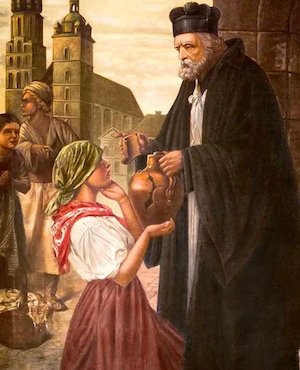
Saint John was born at Kenty in Poland in 1403. He studied philosophy and theology at the University of Cracow with great intelligence, industry, and success, while his modesty and virtue drew all hearts to him. After earning his degrees, he was appointed to the Chair of Theology at the university. He inflamed his hearers with the desire of every kind of piety, no less by his deeds than by his words. He was ordained a priest and was for a short time in charge of a parish, where he manifested great concern for the poor, at his own expense. At the University's request, he resumed the professor's Chair and taught there until his holy death.
He found a poor man on the snow one day, dying of hunger and cold; he clothed him in his own frock and took him to the rectory, to eat at his table. Afterwards, for many years, every professor of the College of Varsovie was obliged, once every year, to invite a poor man to dine with him.
He made a pilgrimage to Jerusalem, preaching along the way to the Turks, and hoping for the grace of martyrdom. He went four times to Rome to visit the tombs of the Apostles and pay honor to the Holy See, desiring thereby to be spared the pains of purgatory. He always traveled on foot, carrying his own effects. Robbed one day by bandits, he forgot he had a few gold pieces sewn into his cloak; he soon remembered and called them back to give them to his benefactors. They were so astonished they refused to accept the offering, and even returned to him what they had taken.
Saint John Cantius wrote on the walls of his residence some verses which showed the horror he had for the vice of backbiting or detraction, talking without cause of our neighbor's faults. He slept very little and often spent entire nights praying before a crucifix. After his classes he went to pray before the Blessed Sacrament in a church. Before his death, he gave absolutely everything he still had to the poor. He died in 1473, at the age of seventy-six years. The purple robe which he had worn as a Doctor was religiously conserved and always given to the venerable Head of the School of Philosophy on the day of his reception; and a promise was required of the teachers there, to imitate the virtues of this beloved Saint. He is a patron of both Poland and Lithuania; Clement XIII canonized him in 1767.
Reflection: He who orders all his doings according to the Will of God may often be spoken of by the world as simple, even stupid; but in the end he wins the esteem and confidence even of the world itself.
Les Petits Bollandistes: Vies des Saints, by Msgr. Paul Guérin (Bloud et Barral: Paris, 1882), Vol. 12
LAST-MODIFIED:20231014T104350Z SEQUENCE:31584744 X-ACCESS:1 X-HITS:73 X-COLOR:f0b80e X-SHOW-END-TIME:1 END:VEVENT BEGIN:VEVENT DTSTART;VALUE=DATE:20231021 DTEND;VALUE=DATE:20231022 UID:3E0A212E-954A-49F6-A448-0317FEC25B52 SUMMARY:Blessed Charles of Austria & Hungary CREATED:20221013T211126Z DTSTAMP:20221013T211126Z URL:https://www.stpaulsweymouth.org/component/dpcalendar/event/880?calid=13 DESCRIPTION:Blessed Charles, Emperor of Austria & Apostolic King of Hungary\N\NCharles of Austria was born August 17, 1887, in the Castle of Persenbeug in the region of Lower Austria. His parents were the Archduke Otto and Princess Maria Josephine of Saxony, daughter of the last King of Saxony. Emperor Francis Joseph I was Charles' Great Uncle.\NCharles was given an expressly Catholic education and the prayers of a group of persons accompanied him from childhood, since a stigmatic nun prophesied that he would undergo great suffering and attacks would be made against him. That is how the “League of prayer of the Emperor Charles for the peace of the peoples” originated after his death. In 1963 it became a prayer community ecclesiastically recognized.\NA deep devotion to the Holy Eucharist and to the Sacred Heart of Jesus began to grow in Charles. He turned to prayer before making any important decisions.\NOn the 21st of October, 1911, he married Princess Zita of Bourbon and Parma. The couple was blessed with eight children during the ten years of their happy and exemplary married life. Charles still declared to Zita on his deathbed: “I'll love you forever.”\NCharles became heir to the throne of the Austro‑Hungarian Empire on June 28, 1914, following the assassination of the Archduke Francis Ferdinand.\N World War I was underway and with the death of the Emperor Francis Joseph, on November 21, 1916 Charles became Emperor of Austria. On December 30th he was crowned apostolic King of Hungary.\NCharles envisaged this office also as a way to follow Christ: in the love and care of the peoples entrusted to him, and in dedicating his life to them.\NHe placed the most sacred duty of a king - a commitment to peace - at the center of his preoccupations during the course of the terrible war. He was the only one among political leaders to support Benedict XV's peace efforts.\NAs far as domestic politics are concerned, despite the extremely difficult times he initiated wide and exemplary social legislation, inspired by social Christian teaching.\NThanks to his conduct, the transition to a new order at the end of the conflict was made possible without a civil war. He was however banished from his country.\NThe Pope feared the rise of communist power in central Europe, and expressed the wish that Charles re‑establish the authority of his government in Hungary. But two attempts failed, since above all Charles wished to avoid the outbreak of a civil war.\NCharles was exiled to the island of Madeira. Since he considered his duty as a mandate from God, he could not abdicate his office.\NReduced to poverty, he lived with his family in a very humid house. He then fell fatally ill and accepted this as a sacrifice for the peace and unity of his peoples.\NCharles endured his suffering without complaining. He forgave all those who conspired against him and died April 1st 1922 with his eyes turned toward the Holy Sacrament. On his deathbed he repeated the motto of his life: "I strive always in all things to understand as clearly as possible and follow the will of God, and this in the most perfect way."\Nwww.vatican.va X-ALT-DESC;FMTTYPE=text/html: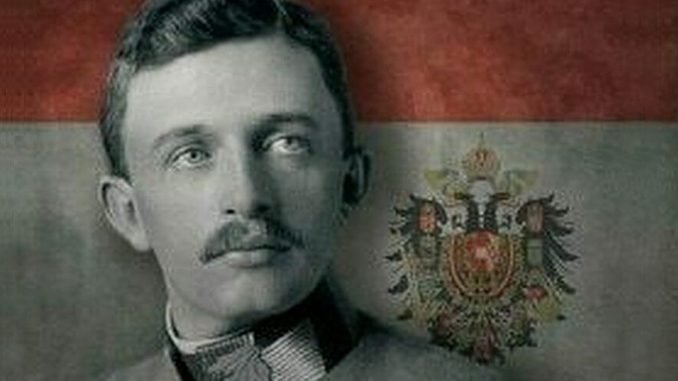
Charles of Austria was born August 17, 1887, in the Castle of Persenbeug in the region of Lower Austria. His parents were the Archduke Otto and Princess Maria Josephine of Saxony, daughter of the last King of Saxony. Emperor Francis Joseph I was Charles' Great Uncle.
Charles was given an expressly Catholic education and the prayers of a group of persons accompanied him from childhood, since a stigmatic nun prophesied that he would undergo great suffering and attacks would be made against him. That is how the “League of prayer of the Emperor Charles for the peace of the peoples” originated after his death. In 1963 it became a prayer community ecclesiastically recognized.
A deep devotion to the Holy Eucharist and to the Sacred Heart of Jesus began to grow in Charles. He turned to prayer before making any important decisions.
On the 21st of October, 1911, he married Princess Zita of Bourbon and Parma. The couple was blessed with eight children during the ten years of their happy and exemplary married life. Charles still declared to Zita on his deathbed: “I'll love you forever.”
Charles became heir to the throne of the Austro‑Hungarian Empire on June 28, 1914, following the assassination of the Archduke Francis Ferdinand.
World War I was underway and with the death of the Emperor Francis Joseph, on November 21, 1916 Charles became Emperor of Austria. On December 30th he was crowned apostolic King of Hungary.
Charles envisaged this office also as a way to follow Christ: in the love and care of the peoples entrusted to him, and in dedicating his life to them.
He placed the most sacred duty of a king - a commitment to peace - at the center of his preoccupations during the course of the terrible war. He was the only one among political leaders to support Benedict XV's peace efforts.
As far as domestic politics are concerned, despite the extremely difficult times he initiated wide and exemplary social legislation, inspired by social Christian teaching.
Thanks to his conduct, the transition to a new order at the end of the conflict was made possible without a civil war. He was however banished from his country.
The Pope feared the rise of communist power in central Europe, and expressed the wish that Charles re‑establish the authority of his government in Hungary. But two attempts failed, since above all Charles wished to avoid the outbreak of a civil war.
Charles was exiled to the island of Madeira. Since he considered his duty as a mandate from God, he could not abdicate his office.
Reduced to poverty, he lived with his family in a very humid house. He then fell fatally ill and accepted this as a sacrifice for the peace and unity of his peoples.
Charles endured his suffering without complaining. He forgave all those who conspired against him and died April 1st 1922 with his eyes turned toward the Holy Sacrament. On his deathbed he repeated the motto of his life: "I strive always in all things to understand as clearly as possible and follow the will of God, and this in the most perfect way."
www.vatican.va
LAST-MODIFIED:20231014T104916Z SEQUENCE:31585070 X-ACCESS:1 X-HITS:72 X-COLOR:f0b80e X-SHOW-END-TIME:1 END:VEVENT BEGIN:VEVENT DTSTART;VALUE=DATE:20231021 DTEND;VALUE=DATE:20231022 UID:CC42703A-FB32-4F17-8312-F61187B8B462 SUMMARY:St. Ursula CREATED:20221013T211126Z DTSTAMP:20221013T211126Z URL:https://www.stpaulsweymouth.org/component/dpcalendar/event/882?calid=13 DESCRIPTION:St. Ursula Virgin & Companions, Martyrs\N\NSaint Ursula was born in Great Britain of Christian parents; her father, Maurus, was king of Cornubia in Scotland. Ursula was sought in marriage by a young pagan prince, but had already vowed her life and her heart to Jesus Christ.\NIn the year 383 she was boarded onto a boat with a large number of young girls and Christian women whom a Roman conqueror wished to give as wives to his soldiers, after having endowed them with rich terrains. But during the crossing of the Channel a storm arose, and the ships, instead of reaching western Gaul, were driven towards the mouth of the Rhine. The Huns who at that time were ravaging Europe saw the ships, and were making ready to pillage them and inflict on these virgins and women a dishonor more dreaded by them than death. Commanded by Ursula, they resisted heroically and so well that suddenly the sentiments of the barbarians changed. They took up their arms to be rid of this peaceful army. Soon the victims fell under the blows of the executioners, and their souls winged their way to heaven.\NThe prince of the Huns, struck by Ursula's beauty, spared her at first; he tried to console her for the death of her companions and promised to marry her. When she did not assent he shot her with an arrow, and this consecrated virgin fell with the others. She was considered the leader of the eleven thousand brought by the Romans from Great Britain. Many churches have relics of this army of martyrs, but no region is more richly endowed than that of Cologne, since it is to that city that the Christians of the region devotedly carried the mortal remains of the martyrs.\NIn the seventh century a magnificent church rose over their tomb, whose walls itself served as reliquaries. This holy cemetery has been rendered illustrious by many miracles. Pilgrims and especially young girls have come from all over Europe, to beg protection for their virginity from Saint Ursula and her companions. The very arrow which pierced Saint Ursula is still conserved there. A religious, who had great devotion to these martyrs, had fallen dangerously ill; a virgin appeared to him and said: I am one of the virgins whom you honor. To reward you for the eleven thousand Our Father's you recited to honor us, you will have our assistance at the hour of death. And soon the glorious troop came to escort his soul. Saint Ursula is the patron of young teachers, and many congregations of nuns, dedicated to education, bear her name.\NReflection: In the estimation of the wise man, to teach the safeguard of virtue is the most important part of the education of youth: My son, conserve thy soul in meekness, and render to it the honor it deserves... Who will honor the one who dishonors it? The poor man finds his glory in his instruction and in his fear of God. (Eccl. 10:31-33)\NVie des Saints pour tous les jours de l'année, by Abbé L. Jaud (Mame: Tours, 1950). X-ALT-DESC;FMTTYPE=text/html: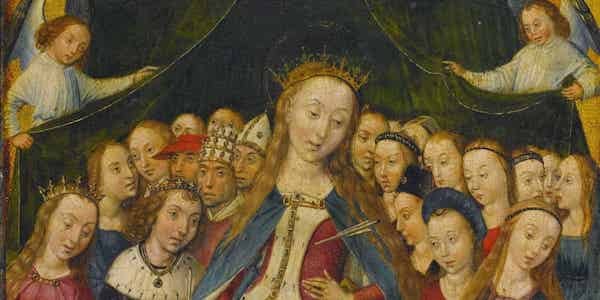
Saint Ursula was born in Great Britain of Christian parents; her father, Maurus, was king of Cornubia in Scotland. Ursula was sought in marriage by a young pagan prince, but had already vowed her life and her heart to Jesus Christ.
In the year 383 she was boarded onto a boat with a large number of young girls and Christian women whom a Roman conqueror wished to give as wives to his soldiers, after having endowed them with rich terrains. But during the crossing of the Channel a storm arose, and the ships, instead of reaching western Gaul, were driven towards the mouth of the Rhine. The Huns who at that time were ravaging Europe saw the ships, and were making ready to pillage them and inflict on these virgins and women a dishonor more dreaded by them than death. Commanded by Ursula, they resisted heroically and so well that suddenly the sentiments of the barbarians changed. They took up their arms to be rid of this peaceful army. Soon the victims fell under the blows of the executioners, and their souls winged their way to heaven.
The prince of the Huns, struck by Ursula's beauty, spared her at first; he tried to console her for the death of her companions and promised to marry her. When she did not assent he shot her with an arrow, and this consecrated virgin fell with the others. She was considered the leader of the eleven thousand brought by the Romans from Great Britain. Many churches have relics of this army of martyrs, but no region is more richly endowed than that of Cologne, since it is to that city that the Christians of the region devotedly carried the mortal remains of the martyrs.
In the seventh century a magnificent church rose over their tomb, whose walls itself served as reliquaries. This holy cemetery has been rendered illustrious by many miracles. Pilgrims and especially young girls have come from all over Europe, to beg protection for their virginity from Saint Ursula and her companions. The very arrow which pierced Saint Ursula is still conserved there. A religious, who had great devotion to these martyrs, had fallen dangerously ill; a virgin appeared to him and said: I am one of the virgins whom you honor. To reward you for the eleven thousand Our Father's you recited to honor us, you will have our assistance at the hour of death. And soon the glorious troop came to escort his soul. Saint Ursula is the patron of young teachers, and many congregations of nuns, dedicated to education, bear her name.
Reflection: In the estimation of the wise man, to teach the safeguard of virtue is the most important part of the education of youth: My son, conserve thy soul in meekness, and render to it the honor it deserves... Who will honor the one who dishonors it? The poor man finds his glory in his instruction and in his fear of God. (Eccl. 10:31-33)
Vie des Saints pour tous les jours de l'année, by Abbé L. Jaud (Mame: Tours, 1950).
LAST-MODIFIED:20231014T105240Z SEQUENCE:31585274 X-ACCESS:1 X-HITS:34 X-COLOR:f0b80e X-SHOW-END-TIME:1 END:VEVENT BEGIN:VEVENT DTSTART;VALUE=DATE:20231021 DTEND;VALUE=DATE:20231022 UID:6987D56F-09EB-4EED-B30C-2FD2D2190966 SUMMARY:St. Hilarion CREATED:20221013T211126Z DTSTAMP:20221013T211126Z URL:https://www.stpaulsweymouth.org/component/dpcalendar/event/884?calid=13 DESCRIPTION:St. Hilarion, Abbot\N\NSaint Hilarion was born of pagan parents near Gaza, and was converted while studying grammar in Alexandria. He renounced games, the theater and all the vain amusements of young people, to attend the reunions of his fellow Christians. He desired to see the great Saint Anthony in the desert and went to Egypt, where he remained near him for two months. He carefully observed everything in his life and conduct — his affability, his gentleness towards others and his severity towards himself, then returned to Palestine with a few solitaries to settle his affairs. His father and mother had both died, and he kept nothing of his heritage for himself. At this time he was only fifteen years old.\NDespite his youth and delicate health, he retired to a desert; he practiced severe mortification, tempted continually by the demons expending all their efforts to make him abandon this life of total renouncement. He redoubled his austerities, tilled the ground and, following the example of the Egyptian monks, made baskets of reeds and willow branches. He lived first in a cabin of reeds, then in one of clay, so low and narrow that it seemed more like a tomb than a lodging for a young man. He learned all of Holy Scripture by heart and repeated it with admirable devotion. When thieves approached him one day he told them he did not fear them, because he had nothing to lose, and death did not alarm him since he was ready to die. They were so touched by his answers they promised him to abandon their life of pillage.\NHe soon began to work miracles by his prayers, and visitors made their way to his former solitude. Several remained nearby to become his disciples, and thus gave rise to the monastic life in Palestine, of which Hilarion is regarded as the founder. Saint Anthony esteemed him highly, sometimes wrote him letters, and sent to him the sick persons who came to him from Syria, telling them they had no need to make so long a journey. Saint Hilarion was a master exorcist and healer of all illnesses, but he refused all remuneration for his assistance, saying to his visitors from the city that they were better placed than he to distribute in alms the money they were offering him. Frequently the scattered solitaries of Palestine came to him to listen to his instructions, and he also visited them. The pagans too gathered around him. His exhortations to abandon idolatry were so powerful that on one occasion a group of Saracens promised to convert, asking him to send them a priest to baptize them and establish a church. One day, accompanied by three thousand persons who were following him, he blessed the vine of a solitary who received him. The vine furnished a triple harvest and all in the crowd were well nourished.\NSaint Hilarion found his solitude transformed into a city, and decided at the age of sixty-five to go elsewhere. His Palestinian disciples attempted to change his mind without success, and taking with him only forty monks, he set out for Egypt on foot. Saint Anthony had recently died, and he wished to visit the places where he had dwelt. After spending some time in Egypt, he went with only two religious to a village a few days' distance from Babylon. He remained only a short time there also, afterwards going elsewhere, and everywhere assisting those who had recourse to his prayers. In Sicily he delivered a demoniac, and then a crowd came to surround him once again. In Dalmatia he worked still more miracles, and saved a city from being engulfed by tidal waves raised by an earthquake. These traditions are still alive in the regions where he passed. He tried many times to live unknown but never could succeed.\NSaint Hilarion died in 372 on the island of Cyprus, at the age of seventy years. His last words were: Go forth, my soul; why dost thou doubt? Nigh seventy years hast thou served God, and dost thou fear death? His body was found incorrupt some time afterwards, and was transported to Palestine to his original monastery. Saint Jerome was his original biographer.\NLes Petits Bollandistes: Vies des Saints, by Msgr. Paul Guérin (Bloud et Barral: Paris, 1882), Vol. 12 X-ALT-DESC;FMTTYPE=text/html: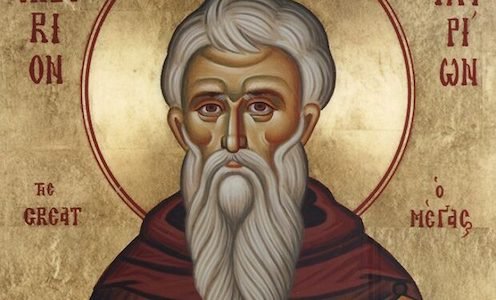
Saint Hilarion was born of pagan parents near Gaza, and was converted while studying grammar in Alexandria. He renounced games, the theater and all the vain amusements of young people, to attend the reunions of his fellow Christians. He desired to see the great Saint Anthony in the desert and went to Egypt, where he remained near him for two months. He carefully observed everything in his life and conduct — his affability, his gentleness towards others and his severity towards himself, then returned to Palestine with a few solitaries to settle his affairs. His father and mother had both died, and he kept nothing of his heritage for himself. At this time he was only fifteen years old.
Despite his youth and delicate health, he retired to a desert; he practiced severe mortification, tempted continually by the demons expending all their efforts to make him abandon this life of total renouncement. He redoubled his austerities, tilled the ground and, following the example of the Egyptian monks, made baskets of reeds and willow branches. He lived first in a cabin of reeds, then in one of clay, so low and narrow that it seemed more like a tomb than a lodging for a young man. He learned all of Holy Scripture by heart and repeated it with admirable devotion. When thieves approached him one day he told them he did not fear them, because he had nothing to lose, and death did not alarm him since he was ready to die. They were so touched by his answers they promised him to abandon their life of pillage.
He soon began to work miracles by his prayers, and visitors made their way to his former solitude. Several remained nearby to become his disciples, and thus gave rise to the monastic life in Palestine, of which Hilarion is regarded as the founder. Saint Anthony esteemed him highly, sometimes wrote him letters, and sent to him the sick persons who came to him from Syria, telling them they had no need to make so long a journey. Saint Hilarion was a master exorcist and healer of all illnesses, but he refused all remuneration for his assistance, saying to his visitors from the city that they were better placed than he to distribute in alms the money they were offering him. Frequently the scattered solitaries of Palestine came to him to listen to his instructions, and he also visited them. The pagans too gathered around him. His exhortations to abandon idolatry were so powerful that on one occasion a group of Saracens promised to convert, asking him to send them a priest to baptize them and establish a church. One day, accompanied by three thousand persons who were following him, he blessed the vine of a solitary who received him. The vine furnished a triple harvest and all in the crowd were well nourished.
Saint Hilarion found his solitude transformed into a city, and decided at the age of sixty-five to go elsewhere. His Palestinian disciples attempted to change his mind without success, and taking with him only forty monks, he set out for Egypt on foot. Saint Anthony had recently died, and he wished to visit the places where he had dwelt. After spending some time in Egypt, he went with only two religious to a village a few days' distance from Babylon. He remained only a short time there also, afterwards going elsewhere, and everywhere assisting those who had recourse to his prayers. In Sicily he delivered a demoniac, and then a crowd came to surround him once again. In Dalmatia he worked still more miracles, and saved a city from being engulfed by tidal waves raised by an earthquake. These traditions are still alive in the regions where he passed. He tried many times to live unknown but never could succeed.
Saint Hilarion died in 372 on the island of Cyprus, at the age of seventy years. His last words were: Go forth, my soul; why dost thou doubt? Nigh seventy years hast thou served God, and dost thou fear death? His body was found incorrupt some time afterwards, and was transported to Palestine to his original monastery. Saint Jerome was his original biographer.
Les Petits Bollandistes: Vies des Saints, by Msgr. Paul Guérin (Bloud et Barral: Paris, 1882), Vol. 12
LAST-MODIFIED:20231014T105608Z SEQUENCE:31585482 X-ACCESS:1 X-HITS:180 X-COLOR:f0b80e X-SHOW-END-TIME:1 END:VEVENT BEGIN:VEVENT DTSTART;VALUE=DATE:20231024 DTEND;VALUE=DATE:20231025 UID:1913AFBA-FEF4-449C-B20C-330D187FB322 SUMMARY:St. Raphael Archangel CREATED:20221013T211126Z DTSTAMP:20221013T211126Z URL:https://www.stpaulsweymouth.org/component/dpcalendar/event/145?calid=13 DESCRIPTION:St. Raphael, Archangel\N\NThis holy Archangel, sent by the Almighty to Tobias, himself explained who he was, in the following words: "I am the angel Raphael, one of the seven who stand before the Lord." Several authors maintain that he is one of those heavenly spirits who constitute the first and highest choir, and are called Seraphim. He is generally called an Archangel like St. Michael and St. Gabriel. Our knowledge of him is taken from the book of Tobias, the substance of which is as follows : Tobias, one of the captive Jews at Ninive, a good and faithful servant of God, when old and blind, remembered that he had lent a sum of money to a relative named Gabelus, living in the city of Rages, in Media, and wished to send his son, the young Tobias, to collect it. But unwilling to send him alone, he bade him go and seek a travelling companion to bring him safely to the place of his destination and back again. Hardly had the youth gone into the streets of Ninive, where he lived, to seek one, when he saw a beautiful young man standing girded as if ready to set out on a journey. This youth, as will be seen, was St. Raphael. Tobias asked him who he was and if he knew the road to Rages. Raphael answered that he was the son of the great Ananias, and knew well the way to Rages, and had made his abode with Gabelus, an inhabitant of that city. Tobias rejoiced and told it to his parents, who called the youth before them, and asked him whether he would conduct their son to Rages and back again for fair wages. Raphael consented, promising to do as they desired. The two youths then set out on their journey. After the first day's march, Tobias rested on the bank of the river Tigris, and when he went to wash his feet in this river, an immense fish came suddenly up to devour him. When he called to his companion for help, Raphael told him to seize the fish courageously and draw him to land. Tobias did so ; after which Raphael told him to open the fish, take out the entrails, and keep the heart, liver and gall, as useful medicines. They continued their journey, and took lodgings in the house of Raguel, who was of the same tribe as Tobias and who had an only daughter, named Sara, whom Raphael advised Tobias to take to wife. Tobias feared to do this, as he had heard that Sara had already been given in marriage to seven husbands, all of whom had been killed by the devil. Raphael, however, said: "Hear me, and I will tell thee who they are, over whom the devil can prevail. It is they who in such manner receive matrimony, as to shut out God from their heart and mind." Tobias exactly followed the directions of his holy companion, and remained unharmed. From how many evils would persons about to be married be saved if they had first received and followed suitable instructions from their pastors who, in regard to them, take the place of Raphael, advising them what they should do in order to enter the state of holy matrimony properly prepared. They should purify their heart by a good general confession and be married, not like heathens in the darkness of night, but at mass receiving the blessing of the priest at the altar. After marriage they should live as becomes the marriage state, faithfully fulfilling the admonition of St. Paul, sanctifying each other and taking care that their children shall become without delay children of God through baptism. Indeed how much displeased must be the guardian Angels of new-born children at seeing them, through the neglect of their parents to have them baptized in time, left in the power of the devil, in original sin and in danger of eternal perdition. While Tobias remained at the house of Raguel, his heavenly companion went to Rages, demanded and received without any hesitation, the borrowed money from Gabelus, returned to Raguel and having made a short stay there, accompanied Tobias back to his home at Ninive.Anna, Tobias' mother, had meanwhile, grieved very much at the long absence of her son. She daily went to a high mountain and looked into the distance, to see whether her son was coming; and when, on the day of his return, she saw him from afar, she ran to her husband and informed him of his son's coming. Being blind, Tobias gave his hand to a servant and went to meet his son, as also did Anna. Both fell on his neck, kissed him and wept for joy. Having all entered their house, they adored the Almighty and gave due thanks to Him for the happy issue of the journey. Tobias, the son, then took some of the gall of the fish, and anointed his father's eyes, as the Angel Raphael had told him to do before they had reached the house; and immediately the blind father recovered his sight. Indescribably great was the joy of the father, the mother, the whole household and neighbor hood. Having given humble thanks to God for this new grace, Tobias told his parents how many benefits he had received from his travelling companion. "He conducted me and brought me safe back again," said he; "he received the money from Gabelus, he caused me to obtain my wife, and he chased from her the evil spirits and gave joy to her parents. Myself he delivered from being devoured by the fish; thee also, father hath he made to see the light of heaven, and we are filled with all good things through him. What can we give him sufficient for all these?" Before his father could answer, he begged him to give so faithful a companion, as recompense, one-half of all the things they had brought. Tobias acceded to this proposal of his son without hesitation, and calling the Angel, they both begged him to accept one-half of all the things they had brought, as a recompense for his services. But the Angel said to them: "Bless ye the God of heaven; give glory to Him in the sight of all that live; because he hath showed mercy to you. For it is good to hide the secret of a king; but honorable to confess and reveal the works of God. Prayer is good with fasting and alms, more than to lay up treasures of gold; for alms delivereth from death, and the same is that which purgeth away sin and maketh us to find mercy and life everlasting. But they that commit sin and iniquity, are enemies to their own soul. When thou didst pray with tears, and didst bury the dead, and didst leave thy dinner, and hide the dead by day in thy house, and bury them by night, I offered thy prayers to the Lord. And because thou wast acceptable to God, it was necessary that temptation should prove thee. And now the Lord hath sent me to heal thee, and to deliver Sara thy son's wife from the devil. For I am the Angel Raphael, one of the seven who stand before the Lord." Having thus spoken, the holy Archangel was silent, but Tobias and his son were seized with fear, and fell trembling, with their faces to the ground. The Angel cheered them, with the words: "Peace be to you; fear not. For when I was with you, it was by the will of God: bless ye Him, and sing praises unto Him. It is time now that I return to him that sent me: but bless ye God, and publish all his wonderful works." Having said these words, he vanished from their sight. They, however, lay prostrate on the ground for three hours, partly from fear, partly in wonder at the great goodness of God who had sent so high a prince of heaven to protect, comfort and help them. At length, having overcome their fear, they repeated their thanks to God, and announced everywhere, the benefits He had bestowed on them. The beautiful hymn of praise which Tobias composed on that occasion is to be found in Holy Writ. From this event, as true as it is wonderful, several historians, not without reason, conclude that the intercession of St. Raphael ought to be invoked by those who are either troubled or tempted by the Evil One, who are blind, or otherwise infirm, or who go on a journey. The name, Raphael, means "the remedy, or the physician of God," and shows that this holy Angel assists particularly those who are sick, either in soul or body. The true Church teaches those who intend to undertake a journey to pray: "May the Angel Raphael be with us on our way!" from which we infer, that he is the especial patron of all travellers.\NPRACTICAL CONSIDERATIONS.\NFrom the instructions which St. Raphael gave to the old as well as to the young Tobias, learn, first, that we must give thanks to God and praise Him for all benefits received; and learn, secondly, how agreeable to the Almighty and how useful to men are prayer, fasting and alms. Whoever practises these, is more happy than he who gathers the greatest treasures of gold and silver; for gold and silver can save no one from eternal death, cleanse him from sin, or open heaven to him; while, according to the angel's words, alms and other good works cleanse and save man.\N \NLearn also that the good works done by men are offered by the holy Angels to the Almighty, and are not lost, though they are not immediately followed by a reward. Lastly, understand well why the pious Tobias was visited with blindness. "Because thou wast acceptable to God, it was necessary that temptation should prove thee," said St. Raphael. Hence, it is no sign that we are forsaken by God, or that we are not in favor with Him, when we have to suffer, although we lead a pious life. " The misfortunes which assail the pious, are a proof of virtue, and not a sign of divine anger," says St. Gregory.\N \N(by Father Francis Xavier Weninger, 1876) X-ALT-DESC;FMTTYPE=text/html:
PRACTICAL CONSIDERATIONS.
Saint Evaristus succeeded Saint Anacletus on the throne of Saint Peter, elected during the second general persecution, under the reign of Domitian. That emperor no doubt did not know that the Christian pontificate was being perpetuated in the shadows of the catacombs. The text of the Liber Pontificalis, says of the new pope:
Evaristus, born in Greece of a Jewish father named Juda, originally from the city of Bethlehem, reigned for thirteen years, six months and two days, under the reigns of Domitian, Nerva and Trajan, from the Consulate of Valens and Veter (96) until that of Gallus and Bradua (108). This pontiff divided among the priests the titles of the city of Rome. By a constitution he established seven deacons who were to assist the bishop and serve as authentic witnesses for him. During the three ordinations which he conducted in the month of December, he promoted six priests, two deacons and five bishops, destined for various churches. Evaristus received the crown of martyrdom. He was buried near the body of Blessed Peter in the Vatican, October 25, in 108.
It was at the same time as Saint Ignatius, the illustrious bishop of Antioch, that Pope Saint Evaristus gave his life by martyrdom. The acts of his martyrdom are lost, but we perceive that the same faith, heroism and devotion united the churches of the East and of the West. He is often represented with a sword because he was decapitated, or with a crib, because it is believed that he was born in Bethlehem, from which his father migrated.
Reflection: The disciples of the apostles, by assiduous meditation on heavenly things, were so rapt by foreshadowings of the life to come, that they seemed no longer to inhabit this world. If Christians esteem and set their hearts on earthly goods and lose sight of eternity, they are no longer animated by the spirit of the primitive Saints and have become children of this world, slaves to its vanities and to their own irregular passions. If we do not correct this disorder of our heart and conform our interior life, with its decisions and propensities, to the spirit of Christ, we cannot be heirs to His promises.
(Les Petits Bollandistes: Vies des Saints, by Msgr. Paul Guérin (Bloud et Barral: Paris, 1882), Vol. 12; Little Pictorial Lives of the Saints, a compilation based on Butler's Lives of the Saints and other sources by John Gilmary Shea, Benziger Brothers: New York, 1894)
LAST-MODIFIED:20221020T214207Z SEQUENCE:606641 X-ACCESS:1 X-HITS:91 X-COLOR:f0b80e X-SHOW-END-TIME:1 END:VEVENT BEGIN:VEVENT DTSTART;VALUE=DATE:20231028 DTEND;VALUE=DATE:20231029 UID:E31F4B2D-593A-433C-868C-F980238BC2C4 SUMMARY:Sts Simon & Jude Apostles CREATED:20221013T211126Z DTSTAMP:20221013T211126Z URL:https://www.stpaulsweymouth.org/component/dpcalendar/event/151?calid=13 DESCRIPTION:Sts. Simon & Jude, Apostles\N\NSimon was a simple Galilean, a brother of Jesus, as the ancients called one's close relatives — aunts, uncles, first cousins; he was one of the Saviour's four first cousins, with James the Less, Jude and Joseph, all sons of Mary, the wife of Alpheus, or Cleophas, either name being a derivative of the Aramaic Chalphai.The latter was the brother of Saint Joseph, according to tradition. All the sons of this family were raised at Nazareth near the Holy Family. (See the Gospel of Saint Matthew 13:53-58.) Simon, Jude and James were called by Our Lord to be Apostles, pillars of His Church, and Joseph the Just was His loyal disciple.\NSaint Simon the Zealot or the Zealous, was the name this Apostle bore among the twelve. He preached in Egypt, Mauritania (Spain), and Lybia, leaving behind him the fertile hills of Galilee, where he had been engaged in the healthful cultivation of the vineyards and olive gardens. He later rejoined his brother, Saint Jude, in Persia, where they labored and died together. At first they were respected by the king, for they had manifested power over two ferocious tigers who had terrorized the land. With the king, sixty thousand Persians became Christians, and churches rose over the ruins of the idolatrous temples.\NBut the ancient enemy, who never sleeps, rose up, and when the two went elsewhere the pagans commanded them to sacrifice to the sun. Both Apostles, just before that time, had seen Our Lord amid His Angels. Simon said to Jude, One of the Angels said to me, I will take you out of the temple and bring the building down upon their heads. I answered him, Let it not be so; perhaps some of them will be converted. They prayed for mercy for the people and offered their lives to God. Saint Simon told the crowd that their gods were only demons, and ordered them to come out of the statues, which they did, revealing themselves under hideous forms. But the idolaters fell on the Apostles and massacred them, while they blessed God and prayed for their murderers.\NSaint Jude has left us a short but powerful epistle, written after the death of his brother James, bishop of Jerusalem, and addressed to the new Christians being tempted by false brethren and heretics.\NReflection: Zeal is an ardent love which makes a man fearless in defense of God's honor, and earnest to make known the truth at all costs. If we desire to be children of the Saints, we must be zealous for the Faith.\N(Vie des Saints pour tous les jours de l'année, by Abbé L. Jaud, Mame: Tours, 1950) X-ALT-DESC;FMTTYPE=text/html:
Simon was a simple Galilean, a brother of Jesus, as the ancients called one's close relatives — aunts, uncles, first cousins; he was one of the Saviour's four first cousins, with James the Less, Jude and Joseph, all sons of Mary, the wife of Alpheus, or Cleophas, either name being a derivative of the Aramaic Chalphai.The latter was the brother of Saint Joseph, according to tradition. All the sons of this family were raised at Nazareth near the Holy Family. (See the Gospel of Saint Matthew 13:53-58.) Simon, Jude and James were called by Our Lord to be Apostles, pillars of His Church, and Joseph the Just was His loyal disciple.
Saint Simon the Zealot or the Zealous, was the name this Apostle bore among the twelve. He preached in Egypt, Mauritania (Spain), and Lybia, leaving behind him the fertile hills of Galilee, where he had been engaged in the healthful cultivation of the vineyards and olive gardens. He later rejoined his brother, Saint Jude, in Persia, where they labored and died together. At first they were respected by the king, for they had manifested power over two ferocious tigers who had terrorized the land. With the king, sixty thousand Persians became Christians, and churches rose over the ruins of the idolatrous temples.
But the ancient enemy, who never sleeps, rose up, and when the two went elsewhere the pagans commanded them to sacrifice to the sun. Both Apostles, just before that time, had seen Our Lord amid His Angels. Simon said to Jude, One of the Angels said to me, I will take you out of the temple and bring the building down upon their heads. I answered him, Let it not be so; perhaps some of them will be converted. They prayed for mercy for the people and offered their lives to God. Saint Simon told the crowd that their gods were only demons, and ordered them to come out of the statues, which they did, revealing themselves under hideous forms. But the idolaters fell on the Apostles and massacred them, while they blessed God and prayed for their murderers.
Saint Jude has left us a short but powerful epistle, written after the death of his brother James, bishop of Jerusalem, and addressed to the new Christians being tempted by false brethren and heretics.
Reflection: Zeal is an ardent love which makes a man fearless in defense of God's honor, and earnest to make known the truth at all costs. If we desire to be children of the Saints, we must be zealous for the Faith.
(Vie des Saints pour tous les jours de l'année, by Abbé L. Jaud, Mame: Tours, 1950)
LAST-MODIFIED:20221020T214943Z SEQUENCE:607097 X-ACCESS:1 X-HITS:117 X-COLOR:f0b80e X-SHOW-END-TIME:1 END:VEVENT BEGIN:VEVENT DTSTART;VALUE=DATE:20231101 DTEND;VALUE=DATE:20231102 UID:6AE37E8E-E241-4763-9799-5940609A4A65 SUMMARY:All Saints CREATED:20221013T211126Z DTSTAMP:20221013T211126Z URL:https://www.stpaulsweymouth.org/component/dpcalendar/event/157?calid=13 DESCRIPTION:Solemnity of All the Saints\N\NThe Church day by day gives special veneration to one or more of the holy men and women who have helped to establish it by their blood, develop it by their labors, or edify it by their virtues. But, in addition to those whom the Church honors by special designation or has inscribed in her calendar, how many martyrs are there whose names are not recorded! How many humble virgins and holy penitents! How many unknown anchorites and monks, Christian fathers and mothers, young children snatched away in their innocence! How many courageous Christians, whose merits are known only to God and His heavenly court!\NShould we forget those who remember us in their intercession? Are not some among them our ancestors? members of our immediate family? our friends and fellow-Christians, with whom we have lived in daily companionship? In fact, all of Heaven is but one family — Our Lord's, as He Himself said: Who is My mother and who are My brethren? And stretching forth His hand towards His disciples, He said, Behold My mother and My brethren! For whoever does the Will of My Father in heaven, is My brother and sister and mother. Today we have the opportunity to thank God, if at other times we forget, for their aid and their love. And today we adore Him with them, for the grace which raised them to their present joy. The Church requires this homage of us, by making this day a holy day of obligation for all. Our place, too, is awaiting us in this home of eternal light, peace and love, if we persevere to the end in the fulfillment of God's holy Will.\NReflection: Let us be solicitous to render ourselves worthy of that chaste generation, so beautiful amid the glory where it dwells. (Cf. Wisdom 4:1)\N(Little Pictorial Lives of the Saints, a compilation based on Butler's Lives of the Saints and other sources by John Gilmary Shea, Benziger Brothers: New York, 1894) X-ALT-DESC;FMTTYPE=text/html:
The Church day by day gives special veneration to one or more of the holy men and women who have helped to establish it by their blood, develop it by their labors, or edify it by their virtues. But, in addition to those whom the Church honors by special designation or has inscribed in her calendar, how many martyrs are there whose names are not recorded! How many humble virgins and holy penitents! How many unknown anchorites and monks, Christian fathers and mothers, young children snatched away in their innocence! How many courageous Christians, whose merits are known only to God and His heavenly court!
Should we forget those who remember us in their intercession? Are not some among them our ancestors? members of our immediate family? our friends and fellow-Christians, with whom we have lived in daily companionship? In fact, all of Heaven is but one family — Our Lord's, as He Himself said: Who is My mother and who are My brethren? And stretching forth His hand towards His disciples, He said, Behold My mother and My brethren! For whoever does the Will of My Father in heaven, is My brother and sister and mother. Today we have the opportunity to thank God, if at other times we forget, for their aid and their love. And today we adore Him with them, for the grace which raised them to their present joy. The Church requires this homage of us, by making this day a holy day of obligation for all. Our place, too, is awaiting us in this home of eternal light, peace and love, if we persevere to the end in the fulfillment of God's holy Will.
Reflection: Let us be solicitous to render ourselves worthy of that chaste generation, so beautiful amid the glory where it dwells. (Cf. Wisdom 4:1)
(Little Pictorial Lives of the Saints, a compilation based on Butler's Lives of the Saints and other sources by John Gilmary Shea, Benziger Brothers: New York, 1894)
LAST-MODIFIED:20221027T091159Z SEQUENCE:1166433 X-ACCESS:1 X-HITS:1 X-COLOR:f0b80e X-SHOW-END-TIME:1 END:VEVENT BEGIN:VEVENT DTSTART;VALUE=DATE:20231102 DTEND;VALUE=DATE:20231103 UID:86B3996B-A507-41DE-B8B4-CB8AC31CC230 SUMMARY:All Souls CREATED:20221013T211126Z DTSTAMP:20221013T211126Z URL:https://www.stpaulsweymouth.org/component/dpcalendar/event/158?calid=13 DESCRIPTION:All Souls - Commemoration of All the Faithful Departed\N\NThe Church teaches us that the souls of the just who have left this world with traces of venial sin remain for a time in a place of expiation, where they suffer whatever punishment may be due to their offenses. Even if pardon has been obtained for our sins, satisfaction must be made to God, our Creator, in this world or in the next; for His sanctity has been, as it were, insulted by the self-will of one of His ignoble creatures. The more noble the person offended, the more serious the offense, even according to human laws. It is a dogma of our faith that the suffering souls are relieved by the intercession of the Saints in heaven and by the prayers of the faithful upon earth. To pray for the dead is therefore an act of charity and of piety, certainly obligatory for a Christian who professes to have charity in his heart. We read in Holy Scripture: It is a holy and wholesome thought to pray for the dead, that they may be loosed from their sins. (II Maccabees 12:46)\NWhen towards the close of the tenth century, Our Lord inspired Saint Odilon, Abbot of Cluny, to establish in his Benedictine Order a general commemoration of all the faithful departed, the practice was soon afterwards adopted by the entire Western Church and has been continued unceasingly to our day. Let us always bear in mind the departed who have died in the love of God, and offer up our prayers and sacrifices to help expiate for them. By showing this mercy to the suffering souls in purgatory, we gain for ourselves very devoted friends, who will in their turn pray for us. We shall then be entitled to be treated with mercy at our departure from this world, and to share more abundantly in the suffrages of the Church, continually offered for all who have fallen asleep in Christ.\NReflection: When we offer satisfaction to God in this life for our offenses, there is merit attached to our penances. There is no longer any merit in purgatory; others must provide. Let us reflect well that if we do not ourselves repair our sins and faults, we place our burden on others; is that what we want?\N(Little Pictorial Lives of the Saints, a compilation based on Butler's Lives of the Saints and other sources by John Gilmary Shea, Benziger Brothers: New York, 1894) X-ALT-DESC;FMTTYPE=text/html:
The Church teaches us that the souls of the just who have left this world with traces of venial sin remain for a time in a place of expiation, where they suffer whatever punishment may be due to their offenses. Even if pardon has been obtained for our sins, satisfaction must be made to God, our Creator, in this world or in the next; for His sanctity has been, as it were, insulted by the self-will of one of His ignoble creatures. The more noble the person offended, the more serious the offense, even according to human laws. It is a dogma of our faith that the suffering souls are relieved by the intercession of the Saints in heaven and by the prayers of the faithful upon earth. To pray for the dead is therefore an act of charity and of piety, certainly obligatory for a Christian who professes to have charity in his heart. We read in Holy Scripture: It is a holy and wholesome thought to pray for the dead, that they may be loosed from their sins. (II Maccabees 12:46)
When towards the close of the tenth century, Our Lord inspired Saint Odilon, Abbot of Cluny, to establish in his Benedictine Order a general commemoration of all the faithful departed, the practice was soon afterwards adopted by the entire Western Church and has been continued unceasingly to our day. Let us always bear in mind the departed who have died in the love of God, and offer up our prayers and sacrifices to help expiate for them. By showing this mercy to the suffering souls in purgatory, we gain for ourselves very devoted friends, who will in their turn pray for us. We shall then be entitled to be treated with mercy at our departure from this world, and to share more abundantly in the suffrages of the Church, continually offered for all who have fallen asleep in Christ.
Reflection: When we offer satisfaction to God in this life for our offenses, there is merit attached to our penances. There is no longer any merit in purgatory; others must provide. Let us reflect well that if we do not ourselves repair our sins and faults, we place our burden on others; is that what we want?
(Little Pictorial Lives of the Saints, a compilation based on Butler's Lives of the Saints and other sources by John Gilmary Shea, Benziger Brothers: New York, 1894)
LAST-MODIFIED:20221027T091229Z SEQUENCE:1166463 X-ACCESS:1 X-HITS:16 X-COLOR:f0b80e X-SHOW-END-TIME:1 END:VEVENT BEGIN:VEVENT DTSTART;VALUE=DATE:20231104 DTEND;VALUE=DATE:20231105 UID:6D9D7C87-AA17-400C-938D-C61AA87B7506 SUMMARY:St Charles Borromeo, Bishop CREATED:20221013T211126Z DTSTAMP:20221013T211126Z URL:https://www.stpaulsweymouth.org/component/dpcalendar/event/159?calid=13 DESCRIPTION:St. Charles Borromeo, Bishop & Confessor\N\NSaint Charles Borromeo was born in 1538 in the castle of Arona on the borders of Lake Major, fourteen miles from Milan. He was the son of Count Gilbert Borromeo, a descendant of one of the most ancient families of Lombardy, very famous for its great men. The Count was known for his almsgiving and his rigorous fasts; it was his custom never to eat a meal without first giving alms. The Countess, Charles' mother, was also exceptionally virtuous. Their family was composed of two sons and four daughters, all of whom manifested in their lives the splendor of their Christian heritage. Their maternal uncle, John Angelus of Medici, became Pope Pius IV. Charles was clearly destined for the ecclesiastical vocation; all his preferences in study made it clear.\NWhen he was twelve years old, a paternal uncle willed to him an abbey in commendam; and the child constantly reminded his father that this revenue was the patrimony of the poor. His father wept for joy, seeing his son's solicitude for the just application of his trust.\NCount Gilbert died when Charles was twenty years old, and he was obliged to come home from Pavia where he had been studying law; he returned there, however, to complete his doctorate at the university after settling his affairs. One year later, when his maternal uncle became Pope Pius IV, he created Charles cardinal, and after another year nominated him Archbishop of Milan. The Pontiff detained him in Rome, however, seeing his extensive capacities and adding to these offices other administrative duties which ordinarily require the prudence of mature years. No one was disappointed in his services, despite the fact he was maintaining delicate papal relations with other nations, as protector of Portugal and the Low Countries, and was at the head of the Knights of Malta, the Orders of Carmel and Saint Francis, among other duties.\NWhen the Council of Trent (1545-1563) was nearing its conclusion, Saint Charles, who had participated with authority in many of its twenty-five sessions, desired to leave Rome to attend to his diocese of Milan, a duty which his vicar general had carried out until that time. The urgency of the situation there persuaded the Pope to consent regretfully to his departure. Saint Charles intended to put into execution the reforming decrees of the Council, create seminaries and schools and in general restore discipline in the Church of Milan.\NAs Archbishop of Milan he enforced the observance of the decrees, and thoroughly restored the discipline of his see. Criticism hounded him there, but left him unmoved; he kept with him in his episcopal household of about one hundred persons, a certain priest who delighted in finding fault with whatever he did; he treated him with great consideration, and in his will left him a pension for life. He was very severe with himself, eating only once a day, and limiting himself often to bread and water. When someone suggested he should have a garden at Milan to get some fresh air, he replied that the Holy Scriptures should be the garden of a bishop.\NThe sermons of Saint Charles produced great fruits among all ranks of the people. When young he had manifested a speech defect with a tendency to speak too fast, but he overcame these handicaps with many efforts. A man who admired him said that he always forgot the orator himself when he preached, so transported was he by the great truths he heard explained, and the longest sermons of Saint Charles seemed short to him. Everywhere the holy Archbishop established schools of Christian doctrine, numbering in all seven hundred and forty, in which over three thousand catechists were employed, presiding over forty thousand students.\NOnce Saint Charles heard a cardinal who was a bishop of a small diocese say that his diocese was too small to require his constant residence there, as canon law required; Saint Charles said to him with force that the price of one soul is such as to merit the residence and entire time of the greatest of men. He himself visited the most remote corners of his diocese, traveling in mountainous regions amid the greatest dangers, which he regarded as nothing unusual, and unworthy of mention.\NInflexible in maintaining discipline, to his flock he was a most tender father. He would sit by the roadside to teach a poor man the Pater and Ave.During the great plague which broke out in Milan, which he had foretold as a chastisement for the disorders of the Carnival, he refused to leave, asking those who remonstrated with him if it were not more perfect to remain with one's flock than to abandon them in need, and adding that a bishop is obliged to choose what is most perfect. He was ever at the side of the sick and dying. He stripped his palace of literally everything to aid those who had lost their support in their fathers and spouses, even giving away his straw mattress. As he lived, so he died, having governed his church for twenty-four years and eight months. To the heroic sanctity of this faithful copy of the Good Shepherd, many miracles came to testify, through his relics and his intercession. In 1610 he was canonized by Pope Paul V.\NThe Lives of the Fathers, Martyrs and Principal Saints, by Rev. Alban Butler (Metropolitan Press: Baltimore, 1845), Vol. IV, October-December; Little Pictorial Lives of the Saints, a compilation based on Butler's Lives of the Saints and other sources by John Gilmary Shea, Benziger Brothers: New York, 1894) X-ALT-DESC;FMTTYPE=text/html:
Saint Charles Borromeo was born in 1538 in the castle of Arona on the borders of Lake Major, fourteen miles from Milan. He was the son of Count Gilbert Borromeo, a descendant of one of the most ancient families of Lombardy, very famous for its great men. The Count was known for his almsgiving and his rigorous fasts; it was his custom never to eat a meal without first giving alms. The Countess, Charles' mother, was also exceptionally virtuous. Their family was composed of two sons and four daughters, all of whom manifested in their lives the splendor of their Christian heritage. Their maternal uncle, John Angelus of Medici, became Pope Pius IV. Charles was clearly destined for the ecclesiastical vocation; all his preferences in study made it clear.
When he was twelve years old, a paternal uncle willed to him an abbey in commendam; and the child constantly reminded his father that this revenue was the patrimony of the poor. His father wept for joy, seeing his son's solicitude for the just application of his trust.
Count Gilbert died when Charles was twenty years old, and he was obliged to come home from Pavia where he had been studying law; he returned there, however, to complete his doctorate at the university after settling his affairs. One year later, when his maternal uncle became Pope Pius IV, he created Charles cardinal, and after another year nominated him Archbishop of Milan. The Pontiff detained him in Rome, however, seeing his extensive capacities and adding to these offices other administrative duties which ordinarily require the prudence of mature years. No one was disappointed in his services, despite the fact he was maintaining delicate papal relations with other nations, as protector of Portugal and the Low Countries, and was at the head of the Knights of Malta, the Orders of Carmel and Saint Francis, among other duties.
When the Council of Trent (1545-1563) was nearing its conclusion, Saint Charles, who had participated with authority in many of its twenty-five sessions, desired to leave Rome to attend to his diocese of Milan, a duty which his vicar general had carried out until that time. The urgency of the situation there persuaded the Pope to consent regretfully to his departure. Saint Charles intended to put into execution the reforming decrees of the Council, create seminaries and schools and in general restore discipline in the Church of Milan.
As Archbishop of Milan he enforced the observance of the decrees, and thoroughly restored the discipline of his see. Criticism hounded him there, but left him unmoved; he kept with him in his episcopal household of about one hundred persons, a certain priest who delighted in finding fault with whatever he did; he treated him with great consideration, and in his will left him a pension for life. He was very severe with himself, eating only once a day, and limiting himself often to bread and water. When someone suggested he should have a garden at Milan to get some fresh air, he replied that the Holy Scriptures should be the garden of a bishop.
The sermons of Saint Charles produced great fruits among all ranks of the people. When young he had manifested a speech defect with a tendency to speak too fast, but he overcame these handicaps with many efforts. A man who admired him said that he always forgot the orator himself when he preached, so transported was he by the great truths he heard explained, and the longest sermons of Saint Charles seemed short to him. Everywhere the holy Archbishop established schools of Christian doctrine, numbering in all seven hundred and forty, in which over three thousand catechists were employed, presiding over forty thousand students.
Once Saint Charles heard a cardinal who was a bishop of a small diocese say that his diocese was too small to require his constant residence there, as canon law required; Saint Charles said to him with force that the price of one soul is such as to merit the residence and entire time of the greatest of men. He himself visited the most remote corners of his diocese, traveling in mountainous regions amid the greatest dangers, which he regarded as nothing unusual, and unworthy of mention.
Inflexible in maintaining discipline, to his flock he was a most tender father. He would sit by the roadside to teach a poor man the Pater and Ave.During the great plague which broke out in Milan, which he had foretold as a chastisement for the disorders of the Carnival, he refused to leave, asking those who remonstrated with him if it were not more perfect to remain with one's flock than to abandon them in need, and adding that a bishop is obliged to choose what is most perfect. He was ever at the side of the sick and dying. He stripped his palace of literally everything to aid those who had lost their support in their fathers and spouses, even giving away his straw mattress. As he lived, so he died, having governed his church for twenty-four years and eight months. To the heroic sanctity of this faithful copy of the Good Shepherd, many miracles came to testify, through his relics and his intercession. In 1610 he was canonized by Pope Paul V.
The Lives of the Fathers, Martyrs and Principal Saints, by Rev. Alban Butler (Metropolitan Press: Baltimore, 1845), Vol. IV, October-December; Little Pictorial Lives of the Saints, a compilation based on Butler's Lives of the Saints and other sources by John Gilmary Shea, Benziger Brothers: New York, 1894)
LAST-MODIFIED:20221027T091249Z SEQUENCE:1166483 X-ACCESS:1 X-HITS:15 X-COLOR:f0b80e X-SHOW-END-TIME:1 END:VEVENT BEGIN:VEVENT DTSTART;VALUE=DATE:20231104 DTEND;VALUE=DATE:20231105 UID:5251357F-47E3-4E37-A9F3-4DFE2F50A79D SUMMARY:Sts Vitalis & Agricola, Martyrs CREATED:20221013T211126Z DTSTAMP:20221013T211126Z URL:https://www.stpaulsweymouth.org/component/dpcalendar/event/956?calid=13 DESCRIPTION:Sts Vitalis & Agricola, Martyrs\N\NSaint Agricola was a gentleman of the city of Bologna at the time of the persecution of Diocletian. He led a very pious life; by his universal kindness he conciliated to himself the esteem and affections of all, even the pagans. He had in his service a very holy man, called Vitalis, who served him with great fidelity. As they both ardently loved Jesus Christ, they assisted each other in the practice of virtue, and encouraged each other to shed their blood for the faith, when God should so ordain it. But it was the lot of Vitalis to obtain the crown first to go before, as Saint Ambrose says, and prepare a place for his master in heaven.\N \NThe enemies of the faith having seized him, tortured him so cruelly that his entire body was one wound; but Vitalis remained firm to the death. As the termination of his struggle approached, the Lord Jesus sent an angel to show him, in a vision, the crown which was being prepared for him in heaven. Whereupon Vitalis, with his dying breath, pronounced this prayer " Jesus, my Saviour, and my God! command my longing soul to come to Thee, to receive the crown which has been shown me by Thy angel." Having uttered these words, he expired.\N \NThe persecutors vainly hoped that by the torments and death of Vitalis they would induce his master, Agricola, to abjure the faith. They, however, soon discovered that all their arguments to induce him to obey the imperial edicts, by sacrificing to the idols, were vain; for Agricola, far from being dismayed by the cruelties practised upon his servant, derived from them greater courage, and a still more ardent desire to be made worthy of the crown that awaits those who lay down their lives for Jesus Christ. He had the happiness of dying, like his Saviour, nailed to a cross.\N \NThe bodies of these two martyrs, together with the instruments of their martyrdom, were buried in a cemetery, where they lay unknown until it pleased God to manifest the place of their burial to Saint Ambrose. This holy bishop, when passing through Bologna, in the year 393, found the depository of these precious relics, and transferred them, with becoming solemnity, to a neigh boring church. He took a portion of the blood of the martyrs, and of the cross of Saint Agricola, which he had found in the sepulchre, and carried them to Florence, and placed them under the altar of a church which he afterwards consecrated in that city.\N \NSaint Ambrose preached upon the occasion, and from his sermon these facts have been extracted. They are to be found also in Ruinart.\N \NMartyrs of the First Ages – Saint Agricola and Saint Vitalis of Bologna, by Saint Alphonsus de Liguori X-ALT-DESC;FMTTYPE=text/html: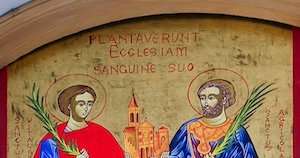
Two separate groups who suffered for the faith, called Sancti Quatuor Coronati, "the Four Holy Crowned Ones." Castorius, Claudius, Nicostratus, and Symphorian were tortured and slain in Pannonia, having been carvers from Sirmium. They refused to carve a pagan statue and were martyred by retired co-Emperor Diocletian. They were scourged, placed in led coffins and submerged in a stream. A martyr named Simplicius died with them. The second group of Four Holy Crowned Ones died at Albano, Italy. They were Carpophorus, Secundius, Severian, and Victorinus. A basilica was erected in honour of these martyrs in Rome.
So the Four Crowned Martyrs or Four Holy Crowned Ones were actually nine individuals who are venerated as martyrs and saints of Early Christianity. According to the Golden Legend, the names of the members of the first group were not known at the time of their death "but were learned through the Lord’s revelation after many years had passed." They were called the "Four Crowned Martyrs" because their names were unknown ("crown" referring to the crown of martyrdom).
Almighty ever-living God, who adorned your pilgrim Church with the blood of the Four Holy Crowned Martyrs, a most fruitful seed of Christian witness and courage, grant that we may be defended by their help and profit from their example and intercession. Through our Lord Jesus Christ, your Son, who lives and reigns with you together in the unity of the Holy Spirit, one God, for ever and ever. Amen.
LAST-MODIFIED:20221028T201538Z SEQUENCE:1292652 X-ACCESS:1 X-HITS:96 X-COLOR:f0b80e X-SHOW-END-TIME:1 END:VEVENT BEGIN:VEVENT DTSTART;VALUE=DATE:20231109 DTEND;VALUE=DATE:20231110 UID:218F7A98-C4C6-4DF9-BEC3-553C5CAF0CFD SUMMARY:Dedication of the Lateran Basilica CREATED:20221013T211126Z DTSTAMP:20221013T211126Z URL:https://www.stpaulsweymouth.org/component/dpcalendar/event/171?calid=13 DESCRIPTION:Dedication of the Lateran Basilica\N\NThe residence of the Popes which was named the Lateran Palace was built by Lateranus Palutius, whom Nero put to death to seize his goods. It was given in the year 313 by Constantine the Great to Saint Miltiades, Pope, and was inhabited by his successors until 1308, when they moved to Avignon. The Lateran Basilica built by Constantine near the palace of the same name, is the first Basilica of the West. Twelve councils, four of which were ecumenical, have assembled there, the first in 649, the last in 1512.\NIf for several centuries the Popes have no longer dwelt in the Palace, the primacy of the Basilica is not thereby altered; it remains the head of all churches. Saint Peter Damian wrote that just as the Saviour is the Head of the elect, the church which bears His name is the head of all the churches. Those of Saints Peter and Paul, to its left and its right, are the two arms by which this sovereign and universal Church embraces the entire earth, saving all who desire salvation, warming them, protecting them in its maternal womb.\NThe Divine Office narrates the dedication of the Church by the Pope of Peace, Saint Sylvester:\NIt was the Blessed Pope Sylvester who established the rites observed by the Roman Church for the consecration of churches and altars. From the time of the Apostles there had been certain places dedicated to God, which some called oratories, and others, churches. There, on the first day of the week, the assembly was held, and there the Christian people were accustomed to pray, to hear the Word of God, and to receive the Eucharist. But never had these places been consecrated so solemnly; nor had a fixed altar been placed there which, anointed with sacred chrism, was the symbol of Our Lord Jesus Christ, who for us is altar, victim and Pontiff. But when the Emperor Constantine through the sacrament of Baptism had obtained health of body and salvation of soul, a law was issued by him which for the first time permitted that everywhere in the world Christians might build churches. Not satisfied to establish this edict, the prince wanted to give an example and inaugurate the holy labors. Thus in his own Lateran palace, he dedicated a church to the Saviour, and founded the attached baptistry under the name of Saint John the Baptist, in the place where he himself, baptized by Saint Sylvester, had been cured of leprosy. It is this church which the Pontiff consecrated in the fifth of the ides of November; and we celebrate the commemoration on that day, when for the first time in Rome a church was thus publicly consecrated, and where a painting of the Saviour was visible on the wall before the eyes of the Roman people.\NWhen the Lateran Church was partially ruined by fires, enemy invasions, and earthquakes, it was always rebuilt with great zeal by the Sovereign Pontiffs. In 1726, after one such restoration, Pope Benedict XIII consecrated it anew and assigned the commemoration of that event to the present day. The church was afterwards enlarged and beautified by Popes Pius IX and Leo XIII.\NL'Année liturgique, by Dom Prosper Guéranger (Mame et Fils: Tours, 1919), The Time after Pentecost, VI, Vol. 15. Translation O.D.M. X-ALT-DESC;FMTTYPE=text/html:
The residence of the Popes which was named the Lateran Palace was built by Lateranus Palutius, whom Nero put to death to seize his goods. It was given in the year 313 by Constantine the Great to Saint Miltiades, Pope, and was inhabited by his successors until 1308, when they moved to Avignon. The Lateran Basilica built by Constantine near the palace of the same name, is the first Basilica of the West. Twelve councils, four of which were ecumenical, have assembled there, the first in 649, the last in 1512.
If for several centuries the Popes have no longer dwelt in the Palace, the primacy of the Basilica is not thereby altered; it remains the head of all churches. Saint Peter Damian wrote that just as the Saviour is the Head of the elect, the church which bears His name is the head of all the churches. Those of Saints Peter and Paul, to its left and its right, are the two arms by which this sovereign and universal Church embraces the entire earth, saving all who desire salvation, warming them, protecting them in its maternal womb.
The Divine Office narrates the dedication of the Church by the Pope of Peace, Saint Sylvester:
It was the Blessed Pope Sylvester who established the rites observed by the Roman Church for the consecration of churches and altars. From the time of the Apostles there had been certain places dedicated to God, which some called oratories, and others, churches. There, on the first day of the week, the assembly was held, and there the Christian people were accustomed to pray, to hear the Word of God, and to receive the Eucharist. But never had these places been consecrated so solemnly; nor had a fixed altar been placed there which, anointed with sacred chrism, was the symbol of Our Lord Jesus Christ, who for us is altar, victim and Pontiff. But when the Emperor Constantine through the sacrament of Baptism had obtained health of body and salvation of soul, a law was issued by him which for the first time permitted that everywhere in the world Christians might build churches. Not satisfied to establish this edict, the prince wanted to give an example and inaugurate the holy labors. Thus in his own Lateran palace, he dedicated a church to the Saviour, and founded the attached baptistry under the name of Saint John the Baptist, in the place where he himself, baptized by Saint Sylvester, had been cured of leprosy. It is this church which the Pontiff consecrated in the fifth of the ides of November; and we celebrate the commemoration on that day, when for the first time in Rome a church was thus publicly consecrated, and where a painting of the Saviour was visible on the wall before the eyes of the Roman people.
When the Lateran Church was partially ruined by fires, enemy invasions, and earthquakes, it was always rebuilt with great zeal by the Sovereign Pontiffs. In 1726, after one such restoration, Pope Benedict XIII consecrated it anew and assigned the commemoration of that event to the present day. The church was afterwards enlarged and beautified by Popes Pius IX and Leo XIII.
L'Année liturgique, by Dom Prosper Guéranger (Mame et Fils: Tours, 1919), The Time after Pentecost, VI, Vol. 15. Translation O.D.M.
LAST-MODIFIED:20221028T203046Z SEQUENCE:1293560 X-ACCESS:1 X-HITS:1 X-COLOR:f0b80e X-SHOW-END-TIME:1 END:VEVENT BEGIN:VEVENT DTSTART;VALUE=DATE:20231110 DTEND;VALUE=DATE:20231111 UID:48F34684-733E-4FEB-8E73-6661F9F4B279 SUMMARY:St. Andrew Avellino CREATED:20221013T211126Z DTSTAMP:20221013T211126Z URL:https://www.stpaulsweymouth.org/component/dpcalendar/event/173?calid=13 DESCRIPTION:St. Andrew Avellino, Confessor\N\NAfter a holy youth devoted to serious studies of philosophy and the humanities in Venice, Lancelot Avellino was ordained priest by the bishop of Naples. He was assigned to the chaplaincy of a community of nuns, sadly in need of reform; his intrepid courage and perseverance finally overcame many difficulties, and regular observance was restored in the monastery. Certain irritated libertines, however, decided to do away with him and, waiting for him when he was about to leave a church, felled him with three sword thrusts. He lost much blood, but his wounds healed perfectly without leaving any trace. The viceroy of Naples was ready to employ all his authority to punish the authors of this sacrilege; the holy priest, not desiring the death of sinners but rather their conversion and their salvation, declined to pursue them. One of them, however, died soon afterwards, assassinated by a man who wished to avenge a dishonor to his house.\NHe was still practicing law, which he had studied in Naples; one day a slight untruth escaped him in the defense of a client, and he conceived such regret for his fault that he vowed to practice law no longer. In 1556, at the age of thirty-six, he entered the Theatine Order, taking the name of Andrew out of love for the cross. After a pilgrimage to Rome to the tombs of the Apostles, he returned to Naples and was named master of novices in his Community, a duty he fulfilled for ten years. He was also chosen to be Superior of the house there, and then was sent out to found two houses elsewhere, at Milan and Piacenza. At the latter city he again met the opposition of libertines; but the Duke of Parma, to whom letters accusing him were directed, was completely charmed when he met him, and regarded him thereafter as a Saint.\NHe then became Superior of the Milan foundation, where his friendship with Saint Charles Borromeo took root; the two Saints conversed together often. And Saint Andrew, with his admirable simplicity, confided to the Archbishop that he had seen Our Lord, and that since that time the impression of His divine beauty, remaining with him constantly, had rendered insipid all other so-called beauties of the earth. Petitions were presented to Pope Gregory XIV to make him a bishop, but he declined that honor with firmness, having always desired to remain obedient rather than to command. When his term as superior ended, he was successful in avoiding the government of another Theatine residence for only three years, then became superior at Saint Paul of Naples.\NOnce when Saint Andrew was taking the Viaticum to a dying person and a storm extinguished the lamps, a heavenly light surrounded him, guided his steps, and sheltered him from the rain. But he was far from exempt from sufferings. His horse threw him one day on a rough road, and since his feet were caught in the stirrups, dragged him for a long time along this road. He invoked Saint Dominic and Saint Thomas Aquinas, who came to him, wiped his face covered with blood, cured his wounds, and even helped him back onto the horse. He attributed such episodes to his unworthiness, believing he was among the reprobate, but Saint Thomas once again came to him, accompanied by Saint Augustine, and restored his confidence in the love and mercy of God.\NOn the last day of his life, November 10, 1608, Saint Andrew rose to say Mass. He was eighty-eight years old, and so weak he could scarcely reach the altar. He began the Judica me, Deus, the opening prayer, but fell forward, the victim of apoplexy. Laid on a straw mattress, his whole frame was convulsed in agony, while the ancient fiend, in visible form, advanced as though to seize his soul. Then, while the onlookers prayed and wept, he invoked Our Lady, and his Guardian Angel seized the monster and dragged it out of the room. A calm and holy smile settled on the features of the dying Saint and, as he gazed with a grateful countenance on the image of Mary, his holy soul winged its way to God.\NReflection: Saint Andrew, who suffered so terrible an agony, is invoked as special protector from an unprovided and sudden death. Ask this holy priest to be with you in your last hour, and bring Jesus and Mary to your aid.\NLes Petits Bollandistes: Vies des Saints, by Msgr. Paul Guérin (Bloud et Barral: Paris, 1882), Vol. 13; Little Pictorial Lives of the Saints, a compilation based on Butler's Lives of the Saints and other sources by John Gilmary Shea (Benziger Brothers: New York, 1894). X-ALT-DESC;FMTTYPE=text/html:
After a holy youth devoted to serious studies of philosophy and the humanities in Venice, Lancelot Avellino was ordained priest by the bishop of Naples. He was assigned to the chaplaincy of a community of nuns, sadly in need of reform; his intrepid courage and perseverance finally overcame many difficulties, and regular observance was restored in the monastery. Certain irritated libertines, however, decided to do away with him and, waiting for him when he was about to leave a church, felled him with three sword thrusts. He lost much blood, but his wounds healed perfectly without leaving any trace. The viceroy of Naples was ready to employ all his authority to punish the authors of this sacrilege; the holy priest, not desiring the death of sinners but rather their conversion and their salvation, declined to pursue them. One of them, however, died soon afterwards, assassinated by a man who wished to avenge a dishonor to his house.
He was still practicing law, which he had studied in Naples; one day a slight untruth escaped him in the defense of a client, and he conceived such regret for his fault that he vowed to practice law no longer. In 1556, at the age of thirty-six, he entered the Theatine Order, taking the name of Andrew out of love for the cross. After a pilgrimage to Rome to the tombs of the Apostles, he returned to Naples and was named master of novices in his Community, a duty he fulfilled for ten years. He was also chosen to be Superior of the house there, and then was sent out to found two houses elsewhere, at Milan and Piacenza. At the latter city he again met the opposition of libertines; but the Duke of Parma, to whom letters accusing him were directed, was completely charmed when he met him, and regarded him thereafter as a Saint.
He then became Superior of the Milan foundation, where his friendship with Saint Charles Borromeo took root; the two Saints conversed together often. And Saint Andrew, with his admirable simplicity, confided to the Archbishop that he had seen Our Lord, and that since that time the impression of His divine beauty, remaining with him constantly, had rendered insipid all other so-called beauties of the earth. Petitions were presented to Pope Gregory XIV to make him a bishop, but he declined that honor with firmness, having always desired to remain obedient rather than to command. When his term as superior ended, he was successful in avoiding the government of another Theatine residence for only three years, then became superior at Saint Paul of Naples.
Once when Saint Andrew was taking the Viaticum to a dying person and a storm extinguished the lamps, a heavenly light surrounded him, guided his steps, and sheltered him from the rain. But he was far from exempt from sufferings. His horse threw him one day on a rough road, and since his feet were caught in the stirrups, dragged him for a long time along this road. He invoked Saint Dominic and Saint Thomas Aquinas, who came to him, wiped his face covered with blood, cured his wounds, and even helped him back onto the horse. He attributed such episodes to his unworthiness, believing he was among the reprobate, but Saint Thomas once again came to him, accompanied by Saint Augustine, and restored his confidence in the love and mercy of God.
On the last day of his life, November 10, 1608, Saint Andrew rose to say Mass. He was eighty-eight years old, and so weak he could scarcely reach the altar. He began the Judica me, Deus, the opening prayer, but fell forward, the victim of apoplexy. Laid on a straw mattress, his whole frame was convulsed in agony, while the ancient fiend, in visible form, advanced as though to seize his soul. Then, while the onlookers prayed and wept, he invoked Our Lady, and his Guardian Angel seized the monster and dragged it out of the room. A calm and holy smile settled on the features of the dying Saint and, as he gazed with a grateful countenance on the image of Mary, his holy soul winged its way to God.
Reflection: Saint Andrew, who suffered so terrible an agony, is invoked as special protector from an unprovided and sudden death. Ask this holy priest to be with you in your last hour, and bring Jesus and Mary to your aid.
Les Petits Bollandistes: Vies des Saints, by Msgr. Paul Guérin (Bloud et Barral: Paris, 1882), Vol. 13; Little Pictorial Lives of the Saints, a compilation based on Butler's Lives of the Saints and other sources by John Gilmary Shea (Benziger Brothers: New York, 1894).
LAST-MODIFIED:20221028T203532Z SEQUENCE:1293846 X-ACCESS:1 X-HITS:171 X-COLOR:f0b80e X-SHOW-END-TIME:1 END:VEVENT BEGIN:VEVENT DTSTART;VALUE=DATE:20231110 DTEND;VALUE=DATE:20231111 UID:1F9B7FF8-91D5-4994-8598-E96FC2883F40 SUMMARY:Sts Tryphon & Companions, Martyrs CREATED:20221013T211126Z DTSTAMP:20221013T211126Z URL:https://www.stpaulsweymouth.org/component/dpcalendar/event/958?calid=13 DESCRIPTION:Sts Tryphon & Companions, Martyrs\N\NMartyr popular in the early Greek Church, also called Trypho, was a 3rd-century Christian saint. He was supposedly a gooseherder near Apamea (modern Syria) who was executed at Nicea (modem Turkey) under Emperor Trajanus Decius. Attached to his feast day since the eleventh century have been two other saints, Respicius and Nympha, of whom nothing is known.\NSaint Tryphon is born at Kampsada in Phrygia (now Turkey), and as a boy took care of geese. His name is derived from the Greek τρυφή (tryphe) meaning "softness, delicacy". He acquired fame as a healer, especially of animals, and is considered one of the Holy Unmercenaries, particularly invoked on farms. During the Decian persecution he was taken to Nicaea about the year 250 and was tortured in a horrible manner. He was beheaded with a sword after he had converted the heathen prefect Licius.\NHe is greatly venerated in the Eastern Orthodox Church, in which he is also the patron saint of gardeners and winegrowers. In Serbia, North Macedonia and Bulgaria, St Tryphon is celebrated by vine growers. In Russia, Tryphon is venerated as a patron of birds. In Russian icons of the saint, he is often shown holding a falcon, a reference to a miracle attributed to his intercessions. Prayers attributed to him are used against infestations of rodents and locusts; one such prayer appears in the Great Euchologion. Saint Trifon is often depicted with a merlin on hand as he was traditionally venerated by Moscow hunters.\N\N\N\N\NMany churches were dedicated to him, and the Eastern Emperor, Leo VI the Wise (d. 912), delivered a eulogy in Tryphon's honour. He is the protector saint of the town of Kotor in Montenegro, and one of the patron saints of Moscow. The Cathedral of Saint Tryphon in Kotor is dedicated to him. His relics were first buried in his native Kampsada. Later, they were translated to Constantinople, and then to Rome. His head is kept in the Kotor Cathedral.\NRespicius and Nympha - Nympha was a virgin martyr from Palermo who was put to death for the faith at the beginning of the fourth century.\N\N\N\N X-ALT-DESC;FMTTYPE=text/html: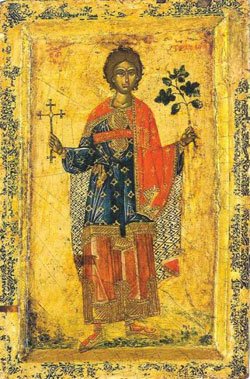
Martyr popular in the early Greek Church, also called Trypho, was a 3rd-century Christian saint. He was supposedly a gooseherder near Apamea (modern Syria) who was executed at Nicea (modem Turkey) under Emperor Trajanus Decius. Attached to his feast day since the eleventh century have been two other saints, Respicius and Nympha, of whom nothing is known.
Saint Tryphon is born at Kampsada in Phrygia (now Turkey), and as a boy took care of geese. His name is derived from the Greek τρυφή (tryphe) meaning "softness, delicacy". He acquired fame as a healer, especially of animals, and is considered one of the Holy Unmercenaries, particularly invoked on farms. During the Decian persecution he was taken to Nicaea about the year 250 and was tortured in a horrible manner. He was beheaded with a sword after he had converted the heathen prefect Licius.
He is greatly venerated in the Eastern Orthodox Church, in which he is also the patron saint of gardeners and winegrowers. In Serbia, North Macedonia and Bulgaria, St Tryphon is celebrated by vine growers. In Russia, Tryphon is venerated as a patron of birds. In Russian icons of the saint, he is often shown holding a falcon, a reference to a miracle attributed to his intercessions. Prayers attributed to him are used against infestations of rodents and locusts; one such prayer appears in the Great Euchologion. Saint Trifon is often depicted with a merlin on hand as he was traditionally venerated by Moscow hunters.
Many churches were dedicated to him, and the Eastern Emperor, Leo VI the Wise (d. 912), delivered a eulogy in Tryphon's honour. He is the protector saint of the town of Kotor in Montenegro, and one of the patron saints of Moscow. The Cathedral of Saint Tryphon in Kotor is dedicated to him. His relics were first buried in his native Kampsada. Later, they were translated to Constantinople, and then to Rome. His head is kept in the Kotor Cathedral.
Respicius and Nympha - Nympha was a virgin martyr from Palermo who was put to death for the faith at the beginning of the fourth century.
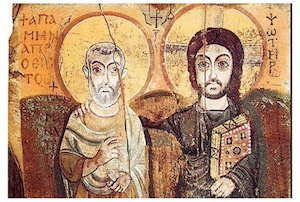
Menas, martyred in 295, a Christian and an Egyptian by birth, served in the Roman army under the tribune Firmilian. When the army came to Cotyaeus in Phrygia, Menas hearing of the impious edicts issued against the Christians by the Emperors Diocletian and Maximian left the army, retired to a solitude in the mountains and served God by fasting vigils and prayer. During the celebration of a great festival Menas appeared in the midst of the populace in the circus, and fearlessly professed his faith. He was led before the prefect Pyrrhus, cruelly scourged, put to torture and finally beheaded. His body was brought to Egypt and the martyr was soon invoked in many needs and afflictions. The fame of the miracles wrought, spread far and wide and thousands of pilgrims came to the grave in the desert of Mareotis between Alexandria and the valley of Natron. For centuries Bumma (Karm-Abum-Abu Mina) was a national sanctuary and grew into a large city with costly temples a holy well, and baths. A beautiful basilica was erected by the Emperor Arcadius. The cult was spread into other countries, perhaps by travelling merchants who honoured him as their patron.
As a result of various vicissitudes the doctrinal disputes and the conquest of Egypt by the Arabians under Omar in 641 the sanctuary was neglected and ultimately forgotten. During 1905 Mgr C.M. Kaufmann of Frankfort led an expedition into Egypt which made excavations at Bumma. He found in a vast field of ruins, the grave, the well and thermae, the basilica, the monastery, numerous inscriptions on the walls imploring aid through the intercession of the saint, and thousands of little water pitchers and oil lamps. The rich finds are partly in the Museum of Alexandria and Cairo, and partly in Frankfort and Berlin. The monsignor published an official report of his expedition in 1908, "La découverte des Sanctuaires de Menas dans le désert de Mareotis".
Catholic Encyclopaedia
LAST-MODIFIED:20231105T085907Z SEQUENCE:33479261 X-ACCESS:1 X-HITS:57 X-COLOR:f0b80e X-SHOW-END-TIME:1 END:VEVENT BEGIN:VEVENT DTSTART;VALUE=DATE:20231111 DTEND;VALUE=DATE:20231112 UID:B11654AF-D077-4ABD-A2C3-C25998479290 SUMMARY:St. Martin Bishop CREATED:20221013T211126Z DTSTAMP:20221013T211126Z URL:https://www.stpaulsweymouth.org/component/dpcalendar/event/960?calid=13 DESCRIPTION:St. Martin of Tours, Bishop & Confessor\N\NSaint Martin, born in Pannonia (Hungary), followed his father, a military tribune in the service of Rome, to Italy. Although he was raised in paganism, he felt nothing but contempt for its cult, and as though he were Christian by nature, he took pleasure only in the assemblies of the faithful, which he attended despite his family's opposition. When he was fifteen years old, he was forcibly enrolled in the Roman armies and went to serve in Gaul, the land he was predestined to evangelize one day. What would become of this young boy, when exposed to the libertinage of the camps? Would his faith not be obliterated? No, for God was watching over His vessel of election.\NThe most famous episode of this period in his life is his meeting with a poor man almost naked in the dead of winter, and trembling with cold. Martin did not have a penny to give him, but he remembered the text of the Gospel: I was naked, and you clothed Me. My friend, he said, I have nothing but my weapons and my garments. And taking up his sword, he divided his cloak into two parts and gave one to the beggar. The following night he saw Jesus Christ in a dream, clothed with this half-cloak and saying to His Angels: It is Martin, still a catechumen, who covered Me. Soon afterwards he received Baptism.\NDisinterested charity, purity, and bravery distinguished the life of the young soldier. He obtained his discharge at the age of about twenty. Martin succeeded in converting his mother, but was driven from his home by the Arians. He took refuge with Saint Hilary, Bishop of Poitiers. After having given striking proofs of his attachment to the faith of Nicea, he founded near Poitiers the celebrated monastery of Ligugé, the first in Gaul. The brilliance of his sanctity and his miracles raised him in 372 to the episcopal throne of Tours, despite his lively resistance. His life thereafter was but a continual succession of prodigies and apostolic labors. His flock, though Christian in name, was still pagan at heart. Unarmed and attended only by his monks, Martin destroyed the heathen temples and groves, and completed by his preaching and miracles the conversion of the people. His power over demons was extraordinary. Idolatry never recovered from the blows given it by Saint Martin.\NAfter having visited and renewed his diocese, the servant of God felt pressed to extend his journeyings and labors beyond its confines. Clothed in a poor tunic and a rude cloak, and seated on an ass, accompanied only by a few religious, he left like a poor missionary to evangelize the countryside. He passed through virtually all the provinces of Gaul, and neither mountains, nor rivers, nor dangers of any description stopped him. Everywhere his undertakings were victorious, and he more than earned his title of the Light and the Apostle of Gaul.\NVie des Saints pour tous les jours de l'année, by Abbé L. Jaud (Mame: Tours, 1950) X-ALT-DESC;FMTTYPE=text/html: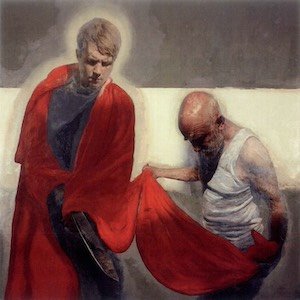
Saint Martin, born in Pannonia (Hungary), followed his father, a military tribune in the service of Rome, to Italy. Although he was raised in paganism, he felt nothing but contempt for its cult, and as though he were Christian by nature, he took pleasure only in the assemblies of the faithful, which he attended despite his family's opposition. When he was fifteen years old, he was forcibly enrolled in the Roman armies and went to serve in Gaul, the land he was predestined to evangelize one day. What would become of this young boy, when exposed to the libertinage of the camps? Would his faith not be obliterated? No, for God was watching over His vessel of election.
The most famous episode of this period in his life is his meeting with a poor man almost naked in the dead of winter, and trembling with cold. Martin did not have a penny to give him, but he remembered the text of the Gospel: I was naked, and you clothed Me. My friend, he said, I have nothing but my weapons and my garments. And taking up his sword, he divided his cloak into two parts and gave one to the beggar. The following night he saw Jesus Christ in a dream, clothed with this half-cloak and saying to His Angels: It is Martin, still a catechumen, who covered Me. Soon afterwards he received Baptism.
Disinterested charity, purity, and bravery distinguished the life of the young soldier. He obtained his discharge at the age of about twenty. Martin succeeded in converting his mother, but was driven from his home by the Arians. He took refuge with Saint Hilary, Bishop of Poitiers. After having given striking proofs of his attachment to the faith of Nicea, he founded near Poitiers the celebrated monastery of Ligugé, the first in Gaul. The brilliance of his sanctity and his miracles raised him in 372 to the episcopal throne of Tours, despite his lively resistance. His life thereafter was but a continual succession of prodigies and apostolic labors. His flock, though Christian in name, was still pagan at heart. Unarmed and attended only by his monks, Martin destroyed the heathen temples and groves, and completed by his preaching and miracles the conversion of the people. His power over demons was extraordinary. Idolatry never recovered from the blows given it by Saint Martin.
After having visited and renewed his diocese, the servant of God felt pressed to extend his journeyings and labors beyond its confines. Clothed in a poor tunic and a rude cloak, and seated on an ass, accompanied only by a few religious, he left like a poor missionary to evangelize the countryside. He passed through virtually all the provinces of Gaul, and neither mountains, nor rivers, nor dangers of any description stopped him. Everywhere his undertakings were victorious, and he more than earned his title of the Light and the Apostle of Gaul.
Vie des Saints pour tous les jours de l'année, by Abbé L. Jaud (Mame: Tours, 1950)
LAST-MODIFIED:20231105T085420Z SEQUENCE:33478974 X-ACCESS:1 X-HITS:105 X-COLOR:f0b80e X-SHOW-END-TIME:1 END:VEVENT BEGIN:VEVENT DTSTART;VALUE=DATE:20231112 DTEND;VALUE=DATE:20231113 UID:D150AE75-4A8A-45D3-AFBE-4E4B36F9FA89 SUMMARY:St. Martin Pope CREATED:20221013T211126Z DTSTAMP:20221013T211126Z URL:https://www.stpaulsweymouth.org/component/dpcalendar/event/175?calid=13 DESCRIPTION:St. Martin I Pope, Martyr\N\NSaint Martin, who occupied the Roman See from 649 to 655, was a native of Toscany, and became celebrated amid the clergy of Rome for his learning and his sanctity. When he was elected Pope, Rome echoed with cries of joy; the clergy, the Senate and the people gave witness to their great satisfaction, and the emperor approved this happy choice. He did not disappoint the hopes of the Church; piety towards God and charity to the poor were his two rules of life. He repaired churches falling into ruin and restored peace between divergent factions, but his greatest concern was to maintain in the Church the precious heritage of the true faith.\NFor this purpose he assembled in the Lateran Church a Council of a hundred bishops, which condemned the principal heads of the eastern Monothelite heresy, again raising its head. Saint Martin himself sent out an encyclical letter to all prelates, showing that a spurious Credo circulating in the east was erroneous, and excommunicating all who followed it. He incurred the enmity of the Byzantine court and even of two patriarchs, by his energetic opposition to their errors, and the Exarch of Ravenna, representing the oriental Emperor Constant II in Italy, went so far as to endeavor to procure the assassination of the Pope while he stood at the altar in the Church of Saint Mary Major. The would-be murderer, a page of the Exarch, was miraculously struck blind, however, and his lord refused to have any further role in the matter. But the eastern Emperor's successor had no such scruples. After having the holy Pontiff accused of many fabricated misdeeds, he seized Saint Martin — who did not resist or permit resistance, for fear of bloodshed in Rome — then had him conveyed to Constantinople on board a vessel bound for that port. None of his clergy were permitted to accompany him; he was boarded at night in secret.\NAfter a three month's voyage the ship anchored at the island of Naxos in the Aegean Sea, where the Pope was kept in confinement for a year, then finally brought in chains to the imperial city in 654, where he was imprisoned for three months. When he appeared before his judge he was unable to stand without support; but the pitiless magistrate heard his accusers and sentenced him to be chained and dragged through the streets of the city. He bade farewell to his companions in captivity before he left, banished to the present-day Crimea (the Chersonese in those days), saying to them when they wept: Rejoice with me that I have been found worthy to suffer for the name of Jesus Christ. There, where a famine prevailed, he lingered on for four months, abandoned to sickness and starvation but maintaining perfect serenity, until God released him by death from his tribulations on the 12th of November, 655. In a letter he sent from there, which has been conserved, the Pope wrote: For this miserable body, the Lord will have care; He is near. What is there to alarm me? I hope in His mercy, it will not be long before it terminates my career.\NReflection: There have been times in the history of Christianity when its truths have seemed on the verge of extinction. But there is a Church whose testimony has never failed — it is the Church of Saint Peter. Where Peter is, there also is the Church!\NLittle Pictorial Lives of the Saints, a compilation based on Butler's Lives of the Saints and other sources by John Gilmary Shea (Benziger Brothers: New York, 1894). X-ALT-DESC;FMTTYPE=text/html:
Saint Martin, who occupied the Roman See from 649 to 655, was a native of Toscany, and became celebrated amid the clergy of Rome for his learning and his sanctity. When he was elected Pope, Rome echoed with cries of joy; the clergy, the Senate and the people gave witness to their great satisfaction, and the emperor approved this happy choice. He did not disappoint the hopes of the Church; piety towards God and charity to the poor were his two rules of life. He repaired churches falling into ruin and restored peace between divergent factions, but his greatest concern was to maintain in the Church the precious heritage of the true faith.
For this purpose he assembled in the Lateran Church a Council of a hundred bishops, which condemned the principal heads of the eastern Monothelite heresy, again raising its head. Saint Martin himself sent out an encyclical letter to all prelates, showing that a spurious Credo circulating in the east was erroneous, and excommunicating all who followed it. He incurred the enmity of the Byzantine court and even of two patriarchs, by his energetic opposition to their errors, and the Exarch of Ravenna, representing the oriental Emperor Constant II in Italy, went so far as to endeavor to procure the assassination of the Pope while he stood at the altar in the Church of Saint Mary Major. The would-be murderer, a page of the Exarch, was miraculously struck blind, however, and his lord refused to have any further role in the matter. But the eastern Emperor's successor had no such scruples. After having the holy Pontiff accused of many fabricated misdeeds, he seized Saint Martin — who did not resist or permit resistance, for fear of bloodshed in Rome — then had him conveyed to Constantinople on board a vessel bound for that port. None of his clergy were permitted to accompany him; he was boarded at night in secret.
After a three month's voyage the ship anchored at the island of Naxos in the Aegean Sea, where the Pope was kept in confinement for a year, then finally brought in chains to the imperial city in 654, where he was imprisoned for three months. When he appeared before his judge he was unable to stand without support; but the pitiless magistrate heard his accusers and sentenced him to be chained and dragged through the streets of the city. He bade farewell to his companions in captivity before he left, banished to the present-day Crimea (the Chersonese in those days), saying to them when they wept: Rejoice with me that I have been found worthy to suffer for the name of Jesus Christ. There, where a famine prevailed, he lingered on for four months, abandoned to sickness and starvation but maintaining perfect serenity, until God released him by death from his tribulations on the 12th of November, 655. In a letter he sent from there, which has been conserved, the Pope wrote: For this miserable body, the Lord will have care; He is near. What is there to alarm me? I hope in His mercy, it will not be long before it terminates my career.
Reflection: There have been times in the history of Christianity when its truths have seemed on the verge of extinction. But there is a Church whose testimony has never failed — it is the Church of Saint Peter. Where Peter is, there also is the Church!
Little Pictorial Lives of the Saints, a compilation based on Butler's Lives of the Saints and other sources by John Gilmary Shea (Benziger Brothers: New York, 1894).
LAST-MODIFIED:20221028T205007Z SEQUENCE:1294721 X-ACCESS:1 X-HITS:50 X-COLOR:f0b80e X-SHOW-END-TIME:1 END:VEVENT BEGIN:VEVENT DTSTART;VALUE=DATE:20231113 DTEND;VALUE=DATE:20231114 UID:08CE3B64-B987-4CDF-9EED-8D133998D904 SUMMARY:St. Didacus CREATED:20221013T211126Z DTSTAMP:20221013T211126Z URL:https://www.stpaulsweymouth.org/component/dpcalendar/event/964?calid=13 DESCRIPTION:St. Didacus (Diego), Confessor\N\NSaint Didacus was born in Andalusia in Spain, towards the beginning of the fifteenth century. He was remarkable from childhood for his love of solitude, and for conversations concerning holy things. When still young he retired to live with a hermit not far from his village, where he spent several years in vigils, fasting, and manual work. Like the Fathers of the desert, he made baskets and other objects with willow branches and gave them to those who brought alms to the two hermits.\NGod inspired him to enter into the Order of the seraphic Saint Francis; he did so at the convent of Arrizafa, not far from Cordova. He did not aspire to ecclesiastical honors, but to the perfection and inviolable observance of his Rule — an admirable ideal, the practice of which, according to Saint Thomas Aquinas, is equivalent to martyrdom in merit. He made himself the servant of all his brethren. Any occupation was his choice. All his possessions were a tunic, a crucifix, a rosary, a prayer book and a book of meditations; and these he did not consider as his own and wanted them to be the most worn of all that were in the house. He found ways to nourish the poor who came to the convent, depriving himself of bread and other food given him, and if unable to do so consoled them with such gentle words that they left with profit nonetheless.\NAt one time he was sent by his superiors to the Canary Islands, and went there joyfully, hoping to win the crown of martyrdom. Such, however, was not God's Will. After making many conversions by his example and holy words, he was recalled to Spain. He was assigned to the care of the sick and when he went to Rome for the Jubilee year of 1450, with 3,800 other religious of his Order, most of whom fell ill there, he undertook to care for them, succeeding in procuring for them all they needed even in that time of scarcity.\NSaint Didacus one day heard a poor woman lamenting, and learned that she had not known that her seven-year-old son had gone to sleep in her large oven; she had lighted a fire, and lost her senses when she heard his cries. He sent her to the altar of the Blessed Virgin to pray and went with a large group of persons to the oven; although all the wood was burnt, the child was taken from it without so much as a trace of burns. The miracle was so evident that the neighbors took the child in triumph to the church where his mother was praying, and the Canons of the Church dressed him in white in honor of the Blessed Virgin. Since then, many afflicted persons have invoked the Mother of Heaven there.\NAfter a long and painful illness, Saint Didacus ended his days in 1463, embracing the cross which he had so dearly loved during his entire life. He died having on his lips the words of the hymn, Dulce lignum [Sweet wood - a chant of Good Friday]. His body remained incorrupt for several months, exposed to the devotion of the faithful, ever exhaling a marvelous fragrance. He was canonized in 1588; Philip II, king of Spain, had labored to obtain that grace after his own son was miraculously cured in 1562 by the relics of the Saint, when he had fallen from a ladder and incurred a mortal wound on his head.\NReflection: If God be in your heart, He will be also on your lips; for Christ has said, Out of the abundance of the heart the mouth speaketh.\NLes Petits Bollandistes: Vies des Saints, by Msgr. Paul Guérin (Bloud et Barral: Paris, 1882), Vol. 13; Little Pictorial Lives of the Saints, a compilation based on Butler's Lives of the Saints and other sources by John Gilmary Shea (Benziger Brothers: New York, 1894) X-ALT-DESC;FMTTYPE=text/html: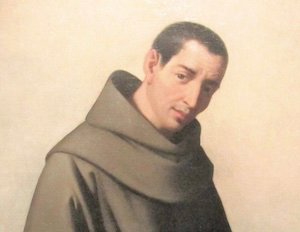
Saint Didacus was born in Andalusia in Spain, towards the beginning of the fifteenth century. He was remarkable from childhood for his love of solitude, and for conversations concerning holy things. When still young he retired to live with a hermit not far from his village, where he spent several years in vigils, fasting, and manual work. Like the Fathers of the desert, he made baskets and other objects with willow branches and gave them to those who brought alms to the two hermits.
God inspired him to enter into the Order of the seraphic Saint Francis; he did so at the convent of Arrizafa, not far from Cordova. He did not aspire to ecclesiastical honors, but to the perfection and inviolable observance of his Rule — an admirable ideal, the practice of which, according to Saint Thomas Aquinas, is equivalent to martyrdom in merit. He made himself the servant of all his brethren. Any occupation was his choice. All his possessions were a tunic, a crucifix, a rosary, a prayer book and a book of meditations; and these he did not consider as his own and wanted them to be the most worn of all that were in the house. He found ways to nourish the poor who came to the convent, depriving himself of bread and other food given him, and if unable to do so consoled them with such gentle words that they left with profit nonetheless.
At one time he was sent by his superiors to the Canary Islands, and went there joyfully, hoping to win the crown of martyrdom. Such, however, was not God's Will. After making many conversions by his example and holy words, he was recalled to Spain. He was assigned to the care of the sick and when he went to Rome for the Jubilee year of 1450, with 3,800 other religious of his Order, most of whom fell ill there, he undertook to care for them, succeeding in procuring for them all they needed even in that time of scarcity.
Saint Didacus one day heard a poor woman lamenting, and learned that she had not known that her seven-year-old son had gone to sleep in her large oven; she had lighted a fire, and lost her senses when she heard his cries. He sent her to the altar of the Blessed Virgin to pray and went with a large group of persons to the oven; although all the wood was burnt, the child was taken from it without so much as a trace of burns. The miracle was so evident that the neighbors took the child in triumph to the church where his mother was praying, and the Canons of the Church dressed him in white in honor of the Blessed Virgin. Since then, many afflicted persons have invoked the Mother of Heaven there.
After a long and painful illness, Saint Didacus ended his days in 1463, embracing the cross which he had so dearly loved during his entire life. He died having on his lips the words of the hymn, Dulce lignum [Sweet wood - a chant of Good Friday]. His body remained incorrupt for several months, exposed to the devotion of the faithful, ever exhaling a marvelous fragrance. He was canonized in 1588; Philip II, king of Spain, had labored to obtain that grace after his own son was miraculously cured in 1562 by the relics of the Saint, when he had fallen from a ladder and incurred a mortal wound on his head.
Reflection: If God be in your heart, He will be also on your lips; for Christ has said, Out of the abundance of the heart the mouth speaketh.
Les Petits Bollandistes: Vies des Saints, by Msgr. Paul Guérin (Bloud et Barral: Paris, 1882), Vol. 13; Little Pictorial Lives of the Saints, a compilation based on Butler's Lives of the Saints and other sources by John Gilmary Shea (Benziger Brothers: New York, 1894)
LAST-MODIFIED:20231111T181415Z SEQUENCE:34030969 X-ACCESS:1 X-HITS:1 X-COLOR:f0b80e X-SHOW-END-TIME:1 END:VEVENT BEGIN:VEVENT DTSTART;VALUE=DATE:20231117 DTEND;VALUE=DATE:20231118 UID:C08A214B-19D5-4A16-B24D-210E1CBED3AA SUMMARY:St. Gregory Thaumaturgus, Bishop CREATED:20221013T211126Z DTSTAMP:20221013T211126Z URL:https://www.stpaulsweymouth.org/component/dpcalendar/event/966?calid=13 DESCRIPTION:St. Gregory Thaumaturgus, Bishop, Confessor, and Doctor of the Church\N\NSaint Gregory was born in the Pont, of distinguished parents who were still engaged in the superstitions of paganism. He lost his father at the age of fourteen, and began to reflect on the folly of idolatry's fables. He recognized the unity of God and was becoming disposed to accept the truths of Christianity. His father had destined him for the legal profession, in which the art of oratory is very necessary, and in this pursuit he was succeeding very well, having learned Latin. He was counseled to apply himself to Roman law.\NGregory and his brother Athenodorus, later to be a bishop like himself, had a sister living in Palestine at Caesarea. Not far from that city was a school of law, and in Caesarea itself, another which the famous Origen had opened in the year 231 and in which he was teaching philosophy. The two brothers heard Origen there, and that master discovered in them a remarkable capacity for knowledge, and more important still, rare dispositions for virtue. He strove to inspire love for truth in them and an ardent desire to attain greater knowledge and the possession of the Supreme Good; and the two brothers soon put aside their intentions to study law. Gregory studied also in Alexandria for three years, after a persecution drove his master, Origen, from Palestine, but returned there with the famous exegete in 238. He was then baptized, and in the presence of a large audience delivered a speech in which he testified to his gratitude towards his teacher, praising his methods, and thanking God for so excellent a professor.\NWhen he returned to his native city of Neocaesarea in the Pont, his friends urged him to seek high positions, but Gregory desired to retire into solitude and devote himself to prayer. For a time he did so, often changing his habitation, because the archbishop of the region desired to make him Bishop of Neocaesarea. Eventually he was obliged to consent. That city was very prosperous, and the inhabitants were corrupted by paganism. Saint Gregory, with Christian zeal and charity, and with the aid of the gift of miracles which he had received, began to attempt every means to bring them to the light of Christ. As he lay awake one night an elderly man entered his room, and pointed to a Lady of superhuman beauty who accompanied him, radiant with heavenly light. This elderly man was Saint John the Evangelist, and the Lady of Light was the Mother of God. She told Saint John to give Gregory the instruction he desired; thereupon he gave Saint Gregory a creed which contained in all its plenitude the doctrine of the Trinity. Saint Gregory consigned it to writing, directed all his preaching by it, and handed it down to his successors. This creed later preserved his flock from the Arian heresy.\NHe converted a pagan priest one day, when the latter requested a miracle, and a very large rock moved to another location at his command. The pagan priest abandoned all things to follow Christ afterwards. One day the bishop planted his staff beside the river which passed alongside the city and often ravaged it by floods. He commanded it never again to pass the limit marked by his staff, and in the time of Saint Gregory of Nyssa, who wrote of his miracles nearly a hundred years later, it had never done so. The bishop settled a conflict which was about to cause bloodshed between two brothers, when he prayed all night beside the lake whose possession they were disputing. It dried up and the miracle ended the difficulty.\NWhen the persecution of Decius began in 250, the bishop counseled his faithful to depart and not expose themselves to trials perhaps too severe for their faith; and none fell into apostasy. He himself retired to a desert, and when he was pursued was not seen by the soldiers. On a second attempt they found him praying with his companion, the converted pagan priest, now a deacon; they had mistaken them the first time for trees. The captain of the soldiers was convinced this had been a miracle, and became a Christian to join him. Some of his Christians were captured, among them Saint Troadus the martyr, who merited the grace of dying for the Faith. The persecution ended at the death of the emperor in 251.\NIt is believed that Saint Gregory died in the year 270, on the 17th of November. Before his death he asked how many pagans still remained in the city, and was told there were only seventeen. He thanked God for the graces He had bestowed on the population, for when he arrived, there had been only seventeen Christians.\NReflection: Devotion to the blessed Mother of God is the sure guarantee of faith in Her Divine Son. Every time we invoke Her, we renew our faith in the Incarnate God, we reverse the sin and unbelief of our first parents, and we establish communion with the One who was blessed because She believed.\NLes Petits Bollandistes: Vies des Saints, by Msgr. Paul Guérin (Bloud et Barral: Paris, 1882), Vol. 13 X-ALT-DESC;FMTTYPE=text/html: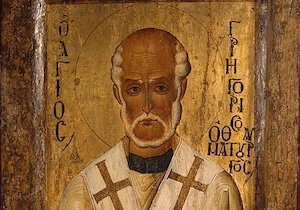
Saint Gregory was born in the Pont, of distinguished parents who were still engaged in the superstitions of paganism. He lost his father at the age of fourteen, and began to reflect on the folly of idolatry's fables. He recognized the unity of God and was becoming disposed to accept the truths of Christianity. His father had destined him for the legal profession, in which the art of oratory is very necessary, and in this pursuit he was succeeding very well, having learned Latin. He was counseled to apply himself to Roman law.
Gregory and his brother Athenodorus, later to be a bishop like himself, had a sister living in Palestine at Caesarea. Not far from that city was a school of law, and in Caesarea itself, another which the famous Origen had opened in the year 231 and in which he was teaching philosophy. The two brothers heard Origen there, and that master discovered in them a remarkable capacity for knowledge, and more important still, rare dispositions for virtue. He strove to inspire love for truth in them and an ardent desire to attain greater knowledge and the possession of the Supreme Good; and the two brothers soon put aside their intentions to study law. Gregory studied also in Alexandria for three years, after a persecution drove his master, Origen, from Palestine, but returned there with the famous exegete in 238. He was then baptized, and in the presence of a large audience delivered a speech in which he testified to his gratitude towards his teacher, praising his methods, and thanking God for so excellent a professor.
When he returned to his native city of Neocaesarea in the Pont, his friends urged him to seek high positions, but Gregory desired to retire into solitude and devote himself to prayer. For a time he did so, often changing his habitation, because the archbishop of the region desired to make him Bishop of Neocaesarea. Eventually he was obliged to consent. That city was very prosperous, and the inhabitants were corrupted by paganism. Saint Gregory, with Christian zeal and charity, and with the aid of the gift of miracles which he had received, began to attempt every means to bring them to the light of Christ. As he lay awake one night an elderly man entered his room, and pointed to a Lady of superhuman beauty who accompanied him, radiant with heavenly light. This elderly man was Saint John the Evangelist, and the Lady of Light was the Mother of God. She told Saint John to give Gregory the instruction he desired; thereupon he gave Saint Gregory a creed which contained in all its plenitude the doctrine of the Trinity. Saint Gregory consigned it to writing, directed all his preaching by it, and handed it down to his successors. This creed later preserved his flock from the Arian heresy.
He converted a pagan priest one day, when the latter requested a miracle, and a very large rock moved to another location at his command. The pagan priest abandoned all things to follow Christ afterwards. One day the bishop planted his staff beside the river which passed alongside the city and often ravaged it by floods. He commanded it never again to pass the limit marked by his staff, and in the time of Saint Gregory of Nyssa, who wrote of his miracles nearly a hundred years later, it had never done so. The bishop settled a conflict which was about to cause bloodshed between two brothers, when he prayed all night beside the lake whose possession they were disputing. It dried up and the miracle ended the difficulty.
When the persecution of Decius began in 250, the bishop counseled his faithful to depart and not expose themselves to trials perhaps too severe for their faith; and none fell into apostasy. He himself retired to a desert, and when he was pursued was not seen by the soldiers. On a second attempt they found him praying with his companion, the converted pagan priest, now a deacon; they had mistaken them the first time for trees. The captain of the soldiers was convinced this had been a miracle, and became a Christian to join him. Some of his Christians were captured, among them Saint Troadus the martyr, who merited the grace of dying for the Faith. The persecution ended at the death of the emperor in 251.
It is believed that Saint Gregory died in the year 270, on the 17th of November. Before his death he asked how many pagans still remained in the city, and was told there were only seventeen. He thanked God for the graces He had bestowed on the population, for when he arrived, there had been only seventeen Christians.
Reflection: Devotion to the blessed Mother of God is the sure guarantee of faith in Her Divine Son. Every time we invoke Her, we renew our faith in the Incarnate God, we reverse the sin and unbelief of our first parents, and we establish communion with the One who was blessed because She believed.
Les Petits Bollandistes: Vies des Saints, by Msgr. Paul Guérin (Bloud et Barral: Paris, 1882), Vol. 13
LAST-MODIFIED:20231111T181917Z SEQUENCE:34031271 X-ACCESS:1 X-HITS:157 X-COLOR:f0b80e X-SHOW-END-TIME:1 END:VEVENT BEGIN:VEVENT DTSTART;VALUE=DATE:20231119 DTEND;VALUE=DATE:20231120 UID:0B147447-0406-4D4B-84BC-CF15C397DE7A SUMMARY:St. Pontian Pope, Martyr CREATED:20221013T211126Z DTSTAMP:20221013T211126Z URL:https://www.stpaulsweymouth.org/component/dpcalendar/event/968?calid=13 DESCRIPTION:St. Pontian Pope, Martyr\N\NPope Pontian was the 18th pope and the ruler of the Church for more than five years. After being exiled from Rome, he abdicated the throne to make the process of choosing the next pope easier for the bishops. You can use this article to learn about his exile and papacy.\NEarly Life - Pontianus was born in Rome, Italy circa 175 AD. An early biography of the popes claims that he was born to Calpurnius and an unnamed mother. He lived in Rome for most of his life and was a citizen of the city. The future pope likely worked with an under other popes, including Urban I and Callixtus I.\NPapacy - Pope Pontian did not face the permission and opposition that his predecessors did. Emperor Severus Alexander was a tolerant man who saw no reason to persecute Christians. The pope called a synod to discuss the expulsion of Origen not long after beginning his papacy. Origen was a Christian scholar who saw his father martyred at a young age. He worked with the Bishop of Alexandria and asked for help becoming a priest. The bishop instead sent him on a trip where Origen found someone willing to ordain him. Demetrius, the bishop who sent him on the trip, was upset and condemned him. During the synod, the pope listed to the bishop and sided with him, agreeing that Origen should be condemned.\NExile and Banishment - After Emperor Alexander died, Maximinus rejected the policies of his predecessor and decided to once again oppose Christians. To seal his decision, he sent soldiers to arrest Pontian and had him exiled to Sardinia. The emperor also ordered the arrest and banishment of Hippolytus of Rome who was the antipope from 217 to 235. Both men were sentenced to work in the mines, which most regarded as an execution because the men were older and could not handle the hard work. Pope Pontian was 60 at the time.\NDeath and Burial - Knowing what awaited him, Pontian decided to abdicate the papal throne. The Liberian Catalogue lists the official dates for the beginning and end of his papacy, making him the first pope in history to have those specific dates known. Pontian hoped that his abdication would make it easier for the Church to elect a new pope. According to The Oxford Dictionary of Popes, he died on orders from the pope and was beaten by soldiers with large sticks.\NPope Fabian would later order the return of his and Hippolytus’s bodies and had the former pope buried in the Catacomb of Calixtus. Archaeologists found the slab that covered his tomb in 1909 and discovered that someone added the word martyr to the tomb in later years. Pope Pontian is a saint in both the Eastern Orthodox Church and the Catholic Church with feast days held on August 13 and November 19.\NInteresting Facts About Pontian\N*The Liberian Catalogue is a manuscript from around 354 that details the history of the Christian Church. This record lists an official death date for Pope Pontian and is the earliest exact known date of any pope in history.*Pope Pontian was the first pope in history to abdicate the throne. All other popes were either martyred or died during their reins.*There are rumors that Hippolytus of Rome and Pope Pontian came together and reconciled their issues before they died. Some believe that they became close while working in the mines, but others believe that it probably happened when they were arrested in Rome before being sent to the mines.*Pope Pontian is one of only five popes who abdicated before the 21st century. One of those was Celestine V who abdicated and spent his remaining days living alone as a hermit. Celestine V was also the first pope to make it canon that a pope could step down from the position.*Pontian ruled for 1,864 days, but his successor was the pope for only 43 days.\NFrom popehistory.com X-ALT-DESC;FMTTYPE=text/html:
Pope Pontian was the 18th pope and the ruler of the Church for more than five years. After being exiled from Rome, he abdicated the throne to make the process of choosing the next pope easier for the bishops. You can use this article to learn about his exile and papacy.
Early Life - Pontianus was born in Rome, Italy circa 175 AD. An early biography of the popes claims that he was born to Calpurnius and an unnamed mother. He lived in Rome for most of his life and was a citizen of the city. The future pope likely worked with an under other popes, including Urban I and Callixtus I.
Papacy - Pope Pontian did not face the permission and opposition that his predecessors did. Emperor Severus Alexander was a tolerant man who saw no reason to persecute Christians. The pope called a synod to discuss the expulsion of Origen not long after beginning his papacy. Origen was a Christian scholar who saw his father martyred at a young age. He worked with the Bishop of Alexandria and asked for help becoming a priest. The bishop instead sent him on a trip where Origen found someone willing to ordain him. Demetrius, the bishop who sent him on the trip, was upset and condemned him. During the synod, the pope listed to the bishop and sided with him, agreeing that Origen should be condemned.
Exile and Banishment - After Emperor Alexander died, Maximinus rejected the policies of his predecessor and decided to once again oppose Christians. To seal his decision, he sent soldiers to arrest Pontian and had him exiled to Sardinia. The emperor also ordered the arrest and banishment of Hippolytus of Rome who was the antipope from 217 to 235. Both men were sentenced to work in the mines, which most regarded as an execution because the men were older and could not handle the hard work. Pope Pontian was 60 at the time.
Death and Burial - Knowing what awaited him, Pontian decided to abdicate the papal throne. The Liberian Catalogue lists the official dates for the beginning and end of his papacy, making him the first pope in history to have those specific dates known. Pontian hoped that his abdication would make it easier for the Church to elect a new pope. According to The Oxford Dictionary of Popes, he died on orders from the pope and was beaten by soldiers with large sticks.
Pope Fabian would later order the return of his and Hippolytus’s bodies and had the former pope buried in the Catacomb of Calixtus. Archaeologists found the slab that covered his tomb in 1909 and discovered that someone added the word martyr to the tomb in later years. Pope Pontian is a saint in both the Eastern Orthodox Church and the Catholic Church with feast days held on August 13 and November 19.
Interesting Facts About Pontian
*The Liberian Catalogue is a manuscript from around 354 that details the history of the Christian Church. This record lists an official death date for Pope Pontian and is the earliest exact known date of any pope in history.
*Pope Pontian was the first pope in history to abdicate the throne. All other popes were either martyred or died during their reins.
*There are rumors that Hippolytus of Rome and Pope Pontian came together and reconciled their issues before they died. Some believe that they became close while working in the mines, but others believe that it probably happened when they were arrested in Rome before being sent to the mines.
*Pope Pontian is one of only five popes who abdicated before the 21st century. One of those was Celestine V who abdicated and spent his remaining days living alone as a hermit. Celestine V was also the first pope to make it canon that a pope could step down from the position.
*Pontian ruled for 1,864 days, but his successor was the pope for only 43 days.
From popehistory.com
LAST-MODIFIED:20231118T181317Z SEQUENCE:34635711 X-ACCESS:1 X-HITS:88 X-COLOR:f0b80e X-SHOW-END-TIME:1 END:VEVENT BEGIN:VEVENT DTSTART;VALUE=DATE:20231120 DTEND;VALUE=DATE:20231121 UID:42F57F4F-2209-44EF-AD41-8338973F8C4D SUMMARY:St. Edmund King, Martyr CREATED:20221013T211126Z DTSTAMP:20221013T211126Z URL:https://www.stpaulsweymouth.org/component/dpcalendar/event/970?calid=13 DESCRIPTION:St. Edmund King, Martyr\N\N It is commonly known that St. George is the Patron Saint of England. We celebrate St George’s Day on April 23rd when the red cross of St George flies proudly from the flag pole. But should we instead be raising the White Dragon flag on November 20th? It is surprising to learn that St George was not the first patron saint of England. That honour was originally held by St Edmund, or Edmund the Martyr, King of East Anglia in the 9th century. Here are 10 + 1 quick facts and curiosities about St. Edmund:\N1. Edmund was crowned King of East Anglia at Bures in Essex on Christmas Day 855.\N2. He died on 20 November 869, now marked as St Edmund’s Day. He refused to give up his Christian faith and so was tied to a tree and shot full of arrows before being beheaded. According to a legend his decapitated head is said to have been reunited with its body with the help of a talking wolf who protected the head and then called out “Hic, Hic, Hic” (“Here, Here, Here”) to alert Edmund’s followers.\N3. Edmund is the patron of Kings, pandemics, the Roman Catholic diocese of East Anglia, Douai Abbey, wolves, torture victims, and protection from the plague.\N4. It is still a mystery where Edmund was killed. In 1101 Haegelisdun (or Hellesden) is mentioned as being the spot where Edmund was martyred. For many years Hoxne claimed this honour. Another theory is that it is Bradfield St Clare, south of Bury St Edmunds.\N5. One miracle attributed to Saint Edmund tells the story of a blind man with a boy who sheltered overnight in the chapel who left in the morning with his eyesight restored.\N6. By 1014, the formidable Danish warrior Sweyn Forkbeard, had seized most of England and proclaimed himself King. According to legend, the people’s prayers to St. Edmund were answered when Sweyn cried out in agony early one morning ‘I am struck by St Edmund’ and died.\N7. St Edmund’s shrine at the Abbey of St Edmund in Bury St Edmunds became one of the most famous and wealthy pilgrimage locations in England. For centuries the shrine was visited by various kings of England, many of whom gave generously to the abbey.\N8. The Abbey of St Edmund was destroyed during the dissolution of the monasteries in 1539. Edmund’s bejewelled shrine was plundered but his remains were removed to France where they remained until 1911. Today they are kept in the chapel in Arundel Castle.\N9. St. Edmund’s influence began to fade when, during the Third Crusade in 1199, King Richard I visited the tomb of St. George in Lydda on the eve of battle. The next day he won a great victory. Following this triumph, Richard adopted St. George as his personal patron and protector of the army. Although the banner of St. Edmund was still carried into battle by the English army, by the time of Edward I it had been joined by the flag of St. George. In 1348, Edward III founded a new order of chivalry, the Knights of the Garter. Edward made St. George the patron of the Order and also declared him Patron Saint of England.\N10. An attempt was made in 2006 to have St. Edmund reinstated as patron saint of England. A petition was handed into Parliament but it was rejected by the government. In 2013 another campaign was launched to reinstate St. Edmund as patron saint. This was the ‘St. Edmund for England’ e-petition, backed by the Bury St Edmunds based brewery, Greene King. This tongue-in-cheek yet serious campaign questioned whether St. George, patron saint of 16 other countries, ever even visited England. It suggested he should be replaced by an Englishman, and who better than the Anglo-Saxon martyr-king, St. Edmund.\N+1. Between 1233 and 1258, Franciscan friars attempted to establish themselves in the town of Bury St Edmunds, which was jealously guarded by the Benedictine monks of St. Edmunds abbey. In the ensuing conflict (which sometimes spilled over into acts of violence), the monks invoked St. Edmund as the protector of the abbey. The monks eventually managed to eject the friars from the town in 1263. By calling on the saints, both sides elevated the clash between new and old religious orders to the heavenly plane, but the popularity of the new saint, Francis, complicated the monks’ efforts…\N(++1… As it was more difficult and more expensive to find a statue of St. Edmund King than to purchase a statue of a much more popular Saint, in a Norfolk church there is a St. Sebastian statue venerated as St. Edmund. They simply removed St. Sebastian’s name from it and put a crown on his head. As St. Sebastian was also tied to a tree and shot full of arrows, the “trick” was not noticed by anyone…) X-ALT-DESC;FMTTYPE=text/html: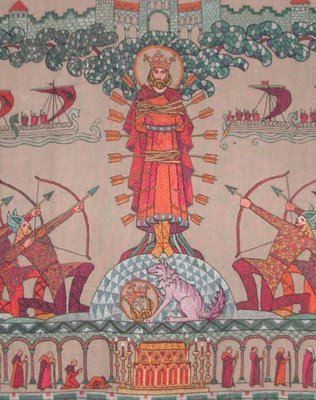
It is commonly known that St. George is the Patron Saint of England. We celebrate St George’s Day on April 23rd when the red cross of St George flies proudly from the flag pole. But should we instead be raising the White Dragon flag on November 20th? It is surprising to learn that St George was not the first patron saint of England. That honour was originally held by St Edmund, or Edmund the Martyr, King of East Anglia in the 9th century. Here are 10 + 1 quick facts and curiosities about St. Edmund:
1. Edmund was crowned King of East Anglia at Bures in Essex on Christmas Day 855.
2. He died on 20 November 869, now marked as St Edmund’s Day. He refused to give up his Christian faith and so was tied to a tree and shot full of arrows before being beheaded. According to a legend his decapitated head is said to have been reunited with its body with the help of a talking wolf who protected the head and then called out “Hic, Hic, Hic” (“Here, Here, Here”) to alert Edmund’s followers.
3. Edmund is the patron of Kings, pandemics, the Roman Catholic diocese of East Anglia, Douai Abbey, wolves, torture victims, and protection from the plague.
4. It is still a mystery where Edmund was killed. In 1101 Haegelisdun (or Hellesden) is mentioned as being the spot where Edmund was martyred. For many years Hoxne claimed this honour. Another theory is that it is Bradfield St Clare, south of Bury St Edmunds.
5. One miracle attributed to Saint Edmund tells the story of a blind man with a boy who sheltered overnight in the chapel who left in the morning with his eyesight restored.
6. By 1014, the formidable Danish warrior Sweyn Forkbeard, had seized most of England and proclaimed himself King. According to legend, the people’s prayers to St. Edmund were answered when Sweyn cried out in agony early one morning ‘I am struck by St Edmund’ and died.
7. St Edmund’s shrine at the Abbey of St Edmund in Bury St Edmunds became one of the most famous and wealthy pilgrimage locations in England. For centuries the shrine was visited by various kings of England, many of whom gave generously to the abbey.
8. The Abbey of St Edmund was destroyed during the dissolution of the monasteries in 1539. Edmund’s bejewelled shrine was plundered but his remains were removed to France where they remained until 1911. Today they are kept in the chapel in Arundel Castle.
9. St. Edmund’s influence began to fade when, during the Third Crusade in 1199, King Richard I visited the tomb of St. George in Lydda on the eve of battle. The next day he won a great victory. Following this triumph, Richard adopted St. George as his personal patron and protector of the army. Although the banner of St. Edmund was still carried into battle by the English army, by the time of Edward I it had been joined by the flag of St. George. In 1348, Edward III founded a new order of chivalry, the Knights of the Garter. Edward made St. George the patron of the Order and also declared him Patron Saint of England.
10. An attempt was made in 2006 to have St. Edmund reinstated as patron saint of England. A petition was handed into Parliament but it was rejected by the government. In 2013 another campaign was launched to reinstate St. Edmund as patron saint. This was the ‘St. Edmund for England’ e-petition, backed by the Bury St Edmunds based brewery, Greene King. This tongue-in-cheek yet serious campaign questioned whether St. George, patron saint of 16 other countries, ever even visited England. It suggested he should be replaced by an Englishman, and who better than the Anglo-Saxon martyr-king, St. Edmund.
+1. Between 1233 and 1258, Franciscan friars attempted to establish themselves in the town of Bury St Edmunds, which was jealously guarded by the Benedictine monks of St. Edmunds abbey. In the ensuing conflict (which sometimes spilled over into acts of violence), the monks invoked St. Edmund as the protector of the abbey. The monks eventually managed to eject the friars from the town in 1263. By calling on the saints, both sides elevated the clash between new and old religious orders to the heavenly plane, but the popularity of the new saint, Francis, complicated the monks’ efforts…
(++1… As it was more difficult and more expensive to find a statue of St. Edmund King than to purchase a statue of a much more popular Saint, in a Norfolk church there is a St. Sebastian statue venerated as St. Edmund. They simply removed St. Sebastian’s name from it and put a crown on his head. As St. Sebastian was also tied to a tree and shot full of arrows, the “trick” was not noticed by anyone…)
LAST-MODIFIED:20231118T181714Z SEQUENCE:34635948 X-ACCESS:1 X-HITS:100 X-COLOR:f0b80e X-SHOW-END-TIME:1 END:VEVENT BEGIN:VEVENT DTSTART;VALUE=DATE:20231120 DTEND;VALUE=DATE:20231121 UID:04B9E9B6-9A90-431B-82D1-B6C6FB7489F4 SUMMARY:St. Felix of Valois CREATED:20221013T211126Z DTSTAMP:20221013T211126Z URL:https://www.stpaulsweymouth.org/component/dpcalendar/event/972?calid=13 DESCRIPTION:St. Felix of Valois, Confessor\N\NSaint Felix was the son of the Count of Valois. His mother carried him to Saint Bernard at his monastery of Clairvaux, to offer him there to God, when he was three years old; she kept him, however, under her own care and took particular care of him, permitting him, still young, to distribute the alms she was pleased to give to the poor. When the exiled Pope Innocent II sought refuge in France, the Count of Valois, father of Felix, offered his castle of Crepy to the Pontiff, who often blessed the young child whom he saw being trained in virtue. One day when Felix gave away his own habits to a poor beggar, he found them that evening neatly laid on his bed; and he thanked God for this sign of His divine goodness, proving that one loses nothing when one gives to the poor.\NWhen he was ten years old he obtained grace for a prisoner condemned to death, by means of his prayer and his pleadings with his uncle, a lord of whom the man was the subject. Felix had a presentiment that this man would become a saint; and in fact, he retired into a deep solitude where he undertook severe penance and died the death of the just.\NThe unfortunate divorce of the parents of Felix, and the excommunication of his father, who had remarried and whose condemnation raised serious troubles on his domains, caused to mature in the young man a long-formed resolution to leave the world. Confiding his mother to her pious brother, Thibault, Count of Champagne, Felix took the Cistercian habit at Clairvaux. His rare virtues drew on him an admiration such that, with Saint Bernard's consent, he fled from it to Italy, where he began to live an austere life with an aged hermit in the Alps. For this purpose he had departed secretly, and the servants his uncle sent believed him dead, being unable to trace him; they published the rumor of his death. About this time the old hermit procured the ordination of his disciple as a priest.\NAfter his elderly counselor died in his arms, Saint Felix returned to France. He built a cell in the diocese of Meaux in an uninhabited forest; this place was later named Cerfroid. Amid savage beasts he led an angelic life of perpetual fasting. Here God inspired him with the desire of founding an Order for the redemption of Christian captives. The Lord also moved Saint John of Matha, a young nobleman of Provence, to seek out the hermit and join him. The two applied themselves to the practice of all virtues. It was John who overtly proposed to Saint Felix the project of an Order for the redemption of captives, when his preceptor was already seventy years old. The latter gladly offered himself to God for that purpose, and after praying for three days the two solitaries made a pilgrimage to Rome in the middle of winter. They were kindly received by the Pope, after he read the recommendation which the Bishop of Paris had given them. He too prayed and became convinced that the two Saints were inspired by the Holy Spirit, and he gave his approbation to the Trinitarian Order\NWithin forty years the Order would have six hundred monasteries. Saint John, who was Superior General, left to Saint Felix the direction of the convents in France, exercised from the monastery which the founders had built at Cerfroid. There Saint Felix died in November of 1212, at the age of eighty-five, only about six weeks before his younger co-founder. It is a constant tradition in the Trinitarian Order that Saint Felix and Saint John were canonized by Urban IV in 1260, though no bull has ever been found. In 1219 already the feast of Saint Felix was kept in the entire diocese of Meaux. In 1666 Alexander VI declared that veneration of the servant of God was immemorial.\NThe Lives of the Fathers, Martyrs and Principal Saints, by Rev. Alban Butler (Metropolitan Press: Baltimore, 1845), Vol. IV, October-December; Les Petits Bollandistes: Vies des Saints, by Msgr. Paul Guérin (Bloud et Barral: Paris, 1882), Vol. 13 X-ALT-DESC;FMTTYPE=text/html: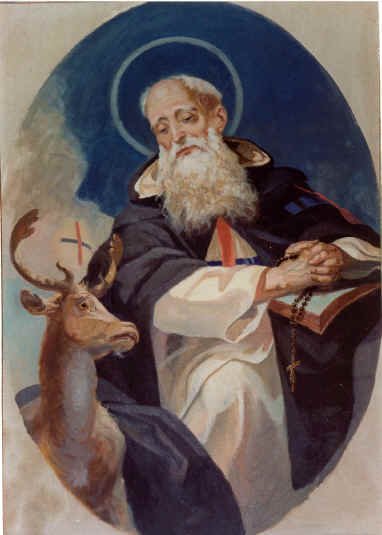
Saint Felix was the son of the Count of Valois. His mother carried him to Saint Bernard at his monastery of Clairvaux, to offer him there to God, when he was three years old; she kept him, however, under her own care and took particular care of him, permitting him, still young, to distribute the alms she was pleased to give to the poor. When the exiled Pope Innocent II sought refuge in France, the Count of Valois, father of Felix, offered his castle of Crepy to the Pontiff, who often blessed the young child whom he saw being trained in virtue. One day when Felix gave away his own habits to a poor beggar, he found them that evening neatly laid on his bed; and he thanked God for this sign of His divine goodness, proving that one loses nothing when one gives to the poor.
When he was ten years old he obtained grace for a prisoner condemned to death, by means of his prayer and his pleadings with his uncle, a lord of whom the man was the subject. Felix had a presentiment that this man would become a saint; and in fact, he retired into a deep solitude where he undertook severe penance and died the death of the just.
The unfortunate divorce of the parents of Felix, and the excommunication of his father, who had remarried and whose condemnation raised serious troubles on his domains, caused to mature in the young man a long-formed resolution to leave the world. Confiding his mother to her pious brother, Thibault, Count of Champagne, Felix took the Cistercian habit at Clairvaux. His rare virtues drew on him an admiration such that, with Saint Bernard's consent, he fled from it to Italy, where he began to live an austere life with an aged hermit in the Alps. For this purpose he had departed secretly, and the servants his uncle sent believed him dead, being unable to trace him; they published the rumor of his death. About this time the old hermit procured the ordination of his disciple as a priest.
After his elderly counselor died in his arms, Saint Felix returned to France. He built a cell in the diocese of Meaux in an uninhabited forest; this place was later named Cerfroid. Amid savage beasts he led an angelic life of perpetual fasting. Here God inspired him with the desire of founding an Order for the redemption of Christian captives. The Lord also moved Saint John of Matha, a young nobleman of Provence, to seek out the hermit and join him. The two applied themselves to the practice of all virtues. It was John who overtly proposed to Saint Felix the project of an Order for the redemption of captives, when his preceptor was already seventy years old. The latter gladly offered himself to God for that purpose, and after praying for three days the two solitaries made a pilgrimage to Rome in the middle of winter. They were kindly received by the Pope, after he read the recommendation which the Bishop of Paris had given them. He too prayed and became convinced that the two Saints were inspired by the Holy Spirit, and he gave his approbation to the Trinitarian Order
Within forty years the Order would have six hundred monasteries. Saint John, who was Superior General, left to Saint Felix the direction of the convents in France, exercised from the monastery which the founders had built at Cerfroid. There Saint Felix died in November of 1212, at the age of eighty-five, only about six weeks before his younger co-founder. It is a constant tradition in the Trinitarian Order that Saint Felix and Saint John were canonized by Urban IV in 1260, though no bull has ever been found. In 1219 already the feast of Saint Felix was kept in the entire diocese of Meaux. In 1666 Alexander VI declared that veneration of the servant of God was immemorial.
The Lives of the Fathers, Martyrs and Principal Saints, by Rev. Alban Butler (Metropolitan Press: Baltimore, 1845), Vol. IV, October-December; Les Petits Bollandistes: Vies des Saints, by Msgr. Paul Guérin (Bloud et Barral: Paris, 1882), Vol. 13
LAST-MODIFIED:20231118T182041Z SEQUENCE:34636155 X-ACCESS:1 X-HITS:118 X-COLOR:f0b80e X-SHOW-END-TIME:1 END:VEVENT BEGIN:VEVENT DTSTART;VALUE=DATE:20231123 DTEND;VALUE=DATE:20231124 UID:1719527F-A7F1-44EF-B6E5-79AA4F493815 SUMMARY:St. Felicitas, Martyr CREATED:20221013T211126Z DTSTAMP:20221013T211126Z URL:https://www.stpaulsweymouth.org/component/dpcalendar/event/974?calid=13 DESCRIPTION:St. Felicitas, Martyr\N\NSaint Felicitas was born into a wealthy Roman family under the emperor Antoninus Pius (138-161). Having given birth to seven sons (Januarius, Felix, Philip, Silvanus, Alexander, Vitalius and Martial) and become a widow, she devoted her life to the proper raising of her children and the service of God. By her public and edifying example, many idolaters were moved to renounce the worship of their false gods. For this Felicitas and her seven sons were turned over to the Prefect Publius to be examined and compelled to sacrifice to the idols.\NPublius tried to persuade her to renounce her faith in Christ, with such words as: “Take pity on your children, Felicitas; they are in the bloom of youth, and may aspire to the greatest honors and preferments.” The holy mother answered: “Your pity is really impiety, and the compassion to which you exhort me would make me the most cruel of mothers.” Then turning herself towards her children, she said to them: “My sons, look up to heaven where Jesus Christ with his saints expects you. Be faithful in his love, and fight courageously for your souls.”\NSeeing her steadfast in her faith, Publius ordered for Felicitas to be beaten. Then one by one, the children were questioned by the prefect. All likewise, by the good example of their mother, boldly confessed their faith and would not be persuaded to worship the idols, despite being threatened. They were all therefore imprisoned, showing not a fear of death, but rather feared eternal punishment if they should deny their beloved Christ.\NAntoninus having read the interrogatory, gave an order that they should be sent to different judges, and be condemned to different deaths. Januarius was scourged to death with whips loaded with plummets of lead. The two next, Felix and Philip, were beaten with clubs till they expired. Silvanus, the fourth, was thrown headlong down a steep precipice. The three youngest, Alexander, Vitalius, and Martial, were beheaded, and the same sentence was executed upon the mother four months after.\NHer body was laid to rest in the catacomb of Maximus on the Via Salaria; in that cemetery all Roman itineraries, or guides to the burial-places of martyrs, locate her burial-place, specifying that her tomb was in a church above this catacomb. The crypt where Saint Felicitas was laid to rest was later enlarged into a subterranean chapel, and was rediscovered in 1885. In the early Middle Ages there was a chapel in honor of Saint Felicitas in an ancient Roman edifice near the ruins of the Baths of Titus. Some of her relics are in the Capuchin church at Montefiascone, Tuscany. Others are in the church of Santa Susanna in Rome. Her sons were buried in four different Roman cemeteries:\N- Saints Alexander, Vitalis, and Martial (Cemetery of the Jordani, on the Via Salaria)\N- Saint Januarius (Cemetery of Praetextatus, on the Via Appia)\N- Saints Felix and Philip (Cemetery of Priscilla, on the Via Salaria)\N- Saint Silvanus (Cemetery of Maximus, on the Via Salaria)\NSaint Gregory the Dialogist, Pope of Rome, delivered his third homily on the Gospel of Saint Matthew (Mt. 12:47), on the festival of Saint Felicitas, in the church built over her tomb on the Salarian road. In this discourse he says, that this Saint “having seven children was as much afraid of leaving them behind her on earth, as other mothers are of surviving theirs. She was more than a martyr, for seeing her seven dear children martyred before her eyes, she was in some sort a martyr in each of them. She was the eighth in the order of time, but was from the first to the last in pain, and began her martyrdom in the eldest, which she only finished in her own death. She received a crown not only for herself, but likewise for all her children. Seeing them in torments she remained constant, feeling their pains by nature as their mother, but rejoicing for them in her heart by hope.”\NThe same father takes notice how weak faith is in us: in her it was victorious over flesh and blood; but in us is not able to check the sallies of our passions, or wean our hearts from a wicked and deceitful world. “Let us be covered with shame and confusion,” says he, “that we should fall so far short of the virtue of this martyr, and should suffer our passions still to triumph over faith in our hearts. Often one word spoken against us disturbs our minds; at the least blast of contradiction we are discouraged or provoked; but neither torments nor death were able to shake her courageous soul. We weep without ceasing when God requires of us the children he hath lent us; and she bewailed her children when they did not die for Christ, and rejoiced when she saw them die.”\Nfrom johnsanidopoulos.com X-ALT-DESC;FMTTYPE=text/html: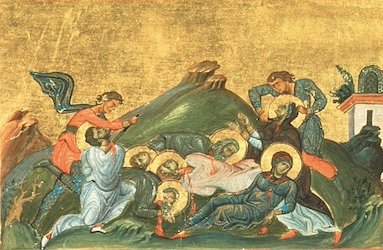
Saint Felicitas was born into a wealthy Roman family under the emperor Antoninus Pius (138-161). Having given birth to seven sons (Januarius, Felix, Philip, Silvanus, Alexander, Vitalius and Martial) and become a widow, she devoted her life to the proper raising of her children and the service of God. By her public and edifying example, many idolaters were moved to renounce the worship of their false gods. For this Felicitas and her seven sons were turned over to the Prefect Publius to be examined and compelled to sacrifice to the idols.
Publius tried to persuade her to renounce her faith in Christ, with such words as: “Take pity on your children, Felicitas; they are in the bloom of youth, and may aspire to the greatest honors and preferments.” The holy mother answered: “Your pity is really impiety, and the compassion to which you exhort me would make me the most cruel of mothers.” Then turning herself towards her children, she said to them: “My sons, look up to heaven where Jesus Christ with his saints expects you. Be faithful in his love, and fight courageously for your souls.”
Seeing her steadfast in her faith, Publius ordered for Felicitas to be beaten. Then one by one, the children were questioned by the prefect. All likewise, by the good example of their mother, boldly confessed their faith and would not be persuaded to worship the idols, despite being threatened. They were all therefore imprisoned, showing not a fear of death, but rather feared eternal punishment if they should deny their beloved Christ.
Antoninus having read the interrogatory, gave an order that they should be sent to different judges, and be condemned to different deaths. Januarius was scourged to death with whips loaded with plummets of lead. The two next, Felix and Philip, were beaten with clubs till they expired. Silvanus, the fourth, was thrown headlong down a steep precipice. The three youngest, Alexander, Vitalius, and Martial, were beheaded, and the same sentence was executed upon the mother four months after.
- Saints Alexander, Vitalis, and Martial (Cemetery of the Jordani, on the Via Salaria)
- Saint Januarius (Cemetery of Praetextatus, on the Via Appia)
- Saints Felix and Philip (Cemetery of Priscilla, on the Via Salaria)
- Saint Silvanus (Cemetery of Maximus, on the Via Salaria)
Saint Gregory the Dialogist, Pope of Rome, delivered his third homily on the Gospel of Saint Matthew (Mt. 12:47), on the festival of Saint Felicitas, in the church built over her tomb on the Salarian road. In this discourse he says, that this Saint “having seven children was as much afraid of leaving them behind her on earth, as other mothers are of surviving theirs. She was more than a martyr, for seeing her seven dear children martyred before her eyes, she was in some sort a martyr in each of them. She was the eighth in the order of time, but was from the first to the last in pain, and began her martyrdom in the eldest, which she only finished in her own death. She received a crown not only for herself, but likewise for all her children. Seeing them in torments she remained constant, feeling their pains by nature as their mother, but rejoicing for them in her heart by hope.”
The same father takes notice how weak faith is in us: in her it was victorious over flesh and blood; but in us is not able to check the sallies of our passions, or wean our hearts from a wicked and deceitful world. “Let us be covered with shame and confusion,” says he, “that we should fall so far short of the virtue of this martyr, and should suffer our passions still to triumph over faith in our hearts. Often one word spoken against us disturbs our minds; at the least blast of contradiction we are discouraged or provoked; but neither torments nor death were able to shake her courageous soul. We weep without ceasing when God requires of us the children he hath lent us; and she bewailed her children when they did not die for Christ, and rejoiced when she saw them die.”
from johnsanidopoulos.com
LAST-MODIFIED:20231118T182742Z SEQUENCE:34636576 X-ACCESS:1 X-HITS:128 X-COLOR:f0b80e X-SHOW-END-TIME:1 END:VEVENT BEGIN:VEVENT DTSTART;VALUE=DATE:20231124 DTEND;VALUE=DATE:20231125 UID:0CB79CC9-6E16-4DE4-8F5A-E1B20DD14988 SUMMARY:St. Chrysogonus Martyr CREATED:20221013T211126Z DTSTAMP:20221013T211126Z URL:https://www.stpaulsweymouth.org/component/dpcalendar/event/976?calid=13 DESCRIPTION:St. Chrysogonus Martyr\N\NSt. Chrysogonus, a Greek Christian, was martyred under Emperor Diocletian at Aquileia at the beginning of the fourth century. He is one of the saints mentioned in the Roman Canon of the Mass: "...Linus, Cletus, Clement, Sixtus, Cornelius, Cyprian, Lawrence, Chrysogonus, John and Paul, Cosmas and Damian..."\NWho was St. Chrysogonus? The Catholic Encyclopedia summarizes:\N\N"According to this legend, Chrysogonus, at first a functionary of the vicarius Urbis, was the Christian teacher of Anastasia, the daughter of the noble Roman Praetextatus. Being thrown into prison during the persecution of Diocletian, he comforted by his letters the severely afflicted Anastasia. By order of Diocletian, Chrysogonus was brought before the emperor at Aquileia, condemned to death, and beheaded. His corpse, thrown into the sea, was washed ashore and buried by the aged priest, Zoilus. In the legend the death of the saint is placed on the 23rd of November. In the actual Roman martyrology his feast is celebrated on 24 November; by the Greeks on 16 April."\N\NCollect: O Lord, hear our humble prayers. May the intercession of Your blessed martyr Chrysogonus free us from the guilt of sin which troubles us. Through Christ our Lord. Amen.\N X-ALT-DESC;FMTTYPE=text/html: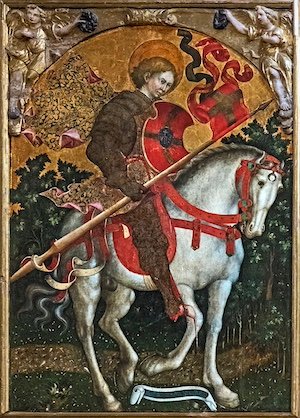
St. Chrysogonus, a Greek Christian, was martyred under Emperor Diocletian at Aquileia at the beginning of the fourth century. He is one of the saints mentioned in the Roman Canon of the Mass: "...Linus, Cletus, Clement, Sixtus, Cornelius, Cyprian, Lawrence, Chrysogonus, John and Paul, Cosmas and Damian..."
Who was St. Chrysogonus? The Catholic Encyclopedia summarizes:
"According to this legend, Chrysogonus, at first a functionary of the vicarius Urbis, was the Christian teacher of Anastasia, the daughter of the noble Roman Praetextatus. Being thrown into prison during the persecution of Diocletian, he comforted by his letters the severely afflicted Anastasia. By order of Diocletian, Chrysogonus was brought before the emperor at Aquileia, condemned to death, and beheaded. His corpse, thrown into the sea, was washed ashore and buried by the aged priest, Zoilus. In the legend the death of the saint is placed on the 23rd of November. In the actual Roman martyrology his feast is celebrated on 24 November; by the Greeks on 16 April."
Collect: O Lord, hear our humble prayers. May the intercession of Your blessed martyr Chrysogonus free us from the guilt of sin which troubles us. Through Christ our Lord. Amen.
LAST-MODIFIED:20231118T183235Z SEQUENCE:34636869 X-ACCESS:1 X-HITS:1 X-COLOR:f0b80e X-SHOW-END-TIME:1 END:VEVENT BEGIN:VEVENT DTSTART;VALUE=DATE:20231126 DTEND;VALUE=DATE:20231127 UID:73188B02-810F-498B-A382-E5CF56CE0D9D SUMMARY:St. Peter, Martyr CREATED:20221013T211126Z DTSTAMP:20221013T211126Z URL:https://www.stpaulsweymouth.org/component/dpcalendar/event/978?calid=13 DESCRIPTION:St. Peter of Alexandria, Bishop & Martyr\N\NThe Church of Alexandria, founded by the Evangelist Saint Mark in the name of the Apostle Saint Peter, was the head of the churches of Egypt and of several other provinces; it had lost its Metropolitan when Saint Thomas of Alexandria died at the end of the third century. Saint Peter, a priest of that city, replaced him, and soon was governing the church amid the terrors of the persecution by Diocletian and Maximian. Two bishops and more than six hundred Christians were in irons and on the verge of torture; he sent to them pastoral letters to animate them to fervor and perseverance, and rejoiced to learn that a number of them had won the grace of martyrdom.\NMany, however, had preferred apostasy to a cruel death. Saint Peter was obliged to instigate penances in order for them to return to the communion of the faithful. When he deposed a bishop who had incensed an idol during the persecution, his act of justice acquired for him the hostility of a certain Arius, the bishop's favorite, who became thereafter the author of a schism and an instrument of the cruel emperor Maximian who persecuted the Christians. He in fact animated this tyrant against Saint Peter. The sentence of excommunication which Saint Peter was the first to pronounce against the two schismatics, Arius and Melitius, and which he strenuously upheld despite the united efforts of powerful members of their parties, is proof that he possessed firmness as well as sagacity and zeal.\NThe Patriarch was soon seized and thrown into prison. There he encouraged the confessors imprisoned with him to sing the praises of God and pray to their Saviour in their hearts, without ceasing. Saint Peter never ceased repeating to the faithful that, in order not to fear death, it is necessary to begin by dying to oneself, renouncing our self-will and detaching ourselves from all things. He was soon to give proof of his own perfect detachment in his glorious martyrdom.\NWhile in prison he was advised in an apparition as to his successors in the Alexandrian church, and he recognized that the day of his eternal liberation was at hand. He informed these two faithful sons that his martyrdom was imminent. In effect, the emperor passed sentence of death on him, despite the fact that a crowd of persons had come to the prison with the intention of preventing by force the martyrdom of their patriarch; they remained all night for fear he might be executed in secret. But Saint Peter delivered himself up to his executioners, and died by the sword on November 26, 310. His appearance on the scaffold was so majestic that none of them dared to touch him; it was necessary to pay one of them in gold to strike the fatal blow.\NLes Petits Bollandistes: Vies des Saints, by Msgr. Paul Guérin (Bloud et Barral: Paris, 1882), Vol. 13; Little Pictorial Lives of the Saints, a compilation based on Butler's Lives of the Saints and other sources by John Gilmary Shea (Benziger Brothers: New York, 1894). X-ALT-DESC;FMTTYPE=text/html:
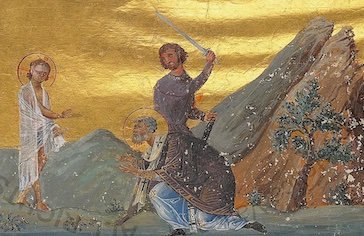
The Church of Alexandria, founded by the Evangelist Saint Mark in the name of the Apostle Saint Peter, was the head of the churches of Egypt and of several other provinces; it had lost its Metropolitan when Saint Thomas of Alexandria died at the end of the third century. Saint Peter, a priest of that city, replaced him, and soon was governing the church amid the terrors of the persecution by Diocletian and Maximian. Two bishops and more than six hundred Christians were in irons and on the verge of torture; he sent to them pastoral letters to animate them to fervor and perseverance, and rejoiced to learn that a number of them had won the grace of martyrdom.
Many, however, had preferred apostasy to a cruel death. Saint Peter was obliged to instigate penances in order for them to return to the communion of the faithful. When he deposed a bishop who had incensed an idol during the persecution, his act of justice acquired for him the hostility of a certain Arius, the bishop's favorite, who became thereafter the author of a schism and an instrument of the cruel emperor Maximian who persecuted the Christians. He in fact animated this tyrant against Saint Peter. The sentence of excommunication which Saint Peter was the first to pronounce against the two schismatics, Arius and Melitius, and which he strenuously upheld despite the united efforts of powerful members of their parties, is proof that he possessed firmness as well as sagacity and zeal.
The Patriarch was soon seized and thrown into prison. There he encouraged the confessors imprisoned with him to sing the praises of God and pray to their Saviour in their hearts, without ceasing. Saint Peter never ceased repeating to the faithful that, in order not to fear death, it is necessary to begin by dying to oneself, renouncing our self-will and detaching ourselves from all things. He was soon to give proof of his own perfect detachment in his glorious martyrdom.
While in prison he was advised in an apparition as to his successors in the Alexandrian church, and he recognized that the day of his eternal liberation was at hand. He informed these two faithful sons that his martyrdom was imminent. In effect, the emperor passed sentence of death on him, despite the fact that a crowd of persons had come to the prison with the intention of preventing by force the martyrdom of their patriarch; they remained all night for fear he might be executed in secret. But Saint Peter delivered himself up to his executioners, and died by the sword on November 26, 310. His appearance on the scaffold was so majestic that none of them dared to touch him; it was necessary to pay one of them in gold to strike the fatal blow.
Les Petits Bollandistes: Vies des Saints, by Msgr. Paul Guérin (Bloud et Barral: Paris, 1882), Vol. 13; Little Pictorial Lives of the Saints, a compilation based on Butler's Lives of the Saints and other sources by John Gilmary Shea (Benziger Brothers: New York, 1894).
LAST-MODIFIED:20231125T215132Z SEQUENCE:35253606 X-ACCESS:1 X-HITS:130 X-COLOR:f0b80e X-SHOW-END-TIME:1 END:VEVENT BEGIN:VEVENT DTSTART;VALUE=DATE:20231201 DTEND;VALUE=DATE:20231202 UID:64842701-8281-4EAE-AF32-69D12CA69705 SUMMARY:St. Edmund Campion & Companions, Martyrs CREATED:20221013T211126Z DTSTAMP:20221013T211126Z URL:https://www.stpaulsweymouth.org/component/dpcalendar/event/980?calid=13 DESCRIPTION:St. Edmund Campion & His Companions, Martyrs\N\NThe most famous of the English martyrs, Edmund Campion (1540-1581) gave up a promising career at Oxford and an invitation to enter Queen Elizabeth's service in order to become a Catholic priest and minister to the abandoned Catholics who greatly desired the sacraments.\NCampion was born in London of Catholic parents who later became Protestant. He attended St. John's College, Oxford, where he gained renown as a lecturer and a following of students who called themselves "Campionites." When he was 26 years old, he gave a speech of welcome in Latin to Queen Elizabeth on her visit to Oxford; he made such an impression on the queen that she and Lords Cecil and Leicester tried to recruit him for her service. He probably took the Oath of Supremacy, and was ordained a deacon for the Established Church. The more he studied to be a priest, the more convinced he became that the Catholic Church had the true faith. He moved to Dublin in 1569 in an effort to find a place to live as a Catholic, but the Irish capital showed an anti-Catholic feeling that drove him back to London. In June 1571 he left England for Douai, Belgium where the recently founded English College trained seminarians for England.\NCampion finished his degree in 1573 and set out soon after for Rome with the intention of becoming a Jesuit. Within a month of his arrival in Rome, he was accepted into the Society. At that time there was neither an English province nor an English mission, so he was assigned to the Austrian province and went to Prague and Brno to make his novitiate. He remained in Prague after he took vows and was ordained there, expecting to spend the rest of his life teaching in that city. He wrote and directed plays for his students and won renown as an orator.\NThe English Jesuit's life changed course suddenly when the Superior General in Rome decided to open a mission in England. Father Campion was one of the first to be assigned to it. He stopped in Rome on his way back to England and joined Father Rober Persons and Brother Ralph Emerson. They turned north and joined other recruits for the new mission at Saint Omer in Flanders. English spies in Flanders learned of their impending departure and informed the English ports of entry, who awaited their arrival. Campion and Emerson left the Continent on the evening of June 24. Campion disguised himself as a "Mr. Edmonds," a jewelry merchant. Port authorities were suspicious, but Campion answered their questions adequately and they let the merchant enter.\NIt had been eight years since Campion had left England. He briefly remained in London where he wrote a manifesto of the mission which has become known as "Campion's Brag." Its point was that the mission was religious, not political; so well-written and powerful was it, that copies were made and widely distributed to confirm Catholics in their faith. Campion himself moved on to Berkshire, Oxfordshire, Lancashire and Yorkshire. He would stay at a Catholic house for one or two nights or visit households where Catholics were employed. His pattern was to arrive during the day, preach and hear confessions during the evening, and then celebrate Mass in the morning before moving on to the next location. He continued to write and composed a book addressed to the academic world; entitled Rationes decem ("Ten Reasons"), the book gave arguments to prove the truth of Catholicism and the falsity of Protestantism. It was printed by the end of June 1581. Many of the 400 copies printed were left on the benches of Oxford's University Church of St. Mary. Campion was still well-enough known that the book was eagerly read.\NCampion's freedom to minister to Catholics soon ended. In July he left London and stopped at the Yate family in Berkshire. The family's Catholic neighbors learned that the Jesuit priest had been there and pressed the Yates to invite him back. Mrs. Yate sent word to Campion who returned, unfortunately at a time when a professional priest-hunter was in the congregation pretending to be Catholic. After Mass the hunter slipped away to notify the authorities who quickly returned to the house but could not find any priests. The guards remained on the grounds, listening for sounds of unusual activity. They alertly heard a group of people leaving a meeting that Campion had addressed. The guards searched the house again, this time finding Campion and two other priests.\NThe three were taken to the Tower of London on July 22, where Campion was put in a cell so small he could neither stand upright nor lie down. After three days there he was brought to Leicester house, where he met Queen Elizabeth for a second time. She offered him the opportunity to renounce his Catholic faith and become a Protestant minister, with the offer of great advancement. He refused and was returned to his cell; five days later he was tortured on the rack. He had four conferences with Anglican divines, something he himself had requested in the book rationes decem, but the disputations were inconclusive, partly because the first one was held shortly after he had been tortured. The government determined that he should be executed, but they needed a stronger charge than the fact that he was a Catholic priest. On Nov. 14, the priests were led to Westminster Hall where charges were raised against them that they had formed a conspiracy against the life of the queen, had exhorted foreigners to invade the country and had entered England with the intent of fomenting rebellion to support the invaders. At his trial six days later, Campion was asked to raise his right hand and take an oath; he was unable to do so because of recent torture, so another one of the priests had to lift his arm for him. Campion attempted to defend all the priests by pointing out their motives were religious, not political; but they were found guilty of high treason and condemned to be hanged, drawn and quartered. The priests joined in singing the Te Deum when they heard the verdict.\NCampion remained in chains for another 11 days, and then was dragged through the muddy streets of London to Tyburn. With him were Briant, and Father Ralph Sherwin, a diocesan priest. As Campion forgave those who had condemned him, the cart he was standing on was driven from under him and he was left hanging. The executioner then cut him down and tore out his heart and intestines before cutting his body into pieces. Briant had been tried a day after Campion, but was executed soon after the other Jesuit. He was cut down while still alive after being hung so that he could be disemboweled and his body cut into quarters. He was only 25 years old.\N(source: jesuits.global) X-ALT-DESC;FMTTYPE=text/html: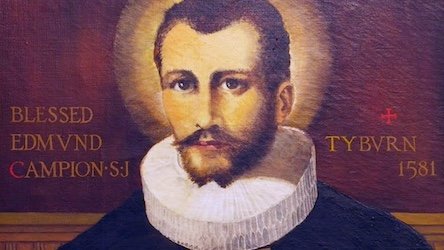
The most famous of the English martyrs, Edmund Campion (1540-1581) gave up a promising career at Oxford and an invitation to enter Queen Elizabeth's service in order to become a Catholic priest and minister to the abandoned Catholics who greatly desired the sacraments.
Campion was born in London of Catholic parents who later became Protestant. He attended St. John's College, Oxford, where he gained renown as a lecturer and a following of students who called themselves "Campionites." When he was 26 years old, he gave a speech of welcome in Latin to Queen Elizabeth on her visit to Oxford; he made such an impression on the queen that she and Lords Cecil and Leicester tried to recruit him for her service. He probably took the Oath of Supremacy, and was ordained a deacon for the Established Church. The more he studied to be a priest, the more convinced he became that the Catholic Church had the true faith. He moved to Dublin in 1569 in an effort to find a place to live as a Catholic, but the Irish capital showed an anti-Catholic feeling that drove him back to London. In June 1571 he left England for Douai, Belgium where the recently founded English College trained seminarians for England.
Campion finished his degree in 1573 and set out soon after for Rome with the intention of becoming a Jesuit. Within a month of his arrival in Rome, he was accepted into the Society. At that time there was neither an English province nor an English mission, so he was assigned to the Austrian province and went to Prague and Brno to make his novitiate. He remained in Prague after he took vows and was ordained there, expecting to spend the rest of his life teaching in that city. He wrote and directed plays for his students and won renown as an orator.
The English Jesuit's life changed course suddenly when the Superior General in Rome decided to open a mission in England. Father Campion was one of the first to be assigned to it. He stopped in Rome on his way back to England and joined Father Rober Persons and Brother Ralph Emerson. They turned north and joined other recruits for the new mission at Saint Omer in Flanders. English spies in Flanders learned of their impending departure and informed the English ports of entry, who awaited their arrival. Campion and Emerson left the Continent on the evening of June 24. Campion disguised himself as a "Mr. Edmonds," a jewelry merchant. Port authorities were suspicious, but Campion answered their questions adequately and they let the merchant enter.
It had been eight years since Campion had left England. He briefly remained in London where he wrote a manifesto of the mission which has become known as "Campion's Brag." Its point was that the mission was religious, not political; so well-written and powerful was it, that copies were made and widely distributed to confirm Catholics in their faith. Campion himself moved on to Berkshire, Oxfordshire, Lancashire and Yorkshire. He would stay at a Catholic house for one or two nights or visit households where Catholics were employed. His pattern was to arrive during the day, preach and hear confessions during the evening, and then celebrate Mass in the morning before moving on to the next location. He continued to write and composed a book addressed to the academic world; entitled Rationes decem ("Ten Reasons"), the book gave arguments to prove the truth of Catholicism and the falsity of Protestantism. It was printed by the end of June 1581. Many of the 400 copies printed were left on the benches of Oxford's University Church of St. Mary. Campion was still well-enough known that the book was eagerly read.
Campion's freedom to minister to Catholics soon ended. In July he left London and stopped at the Yate family in Berkshire. The family's Catholic neighbors learned that the Jesuit priest had been there and pressed the Yates to invite him back. Mrs. Yate sent word to Campion who returned, unfortunately at a time when a professional priest-hunter was in the congregation pretending to be Catholic. After Mass the hunter slipped away to notify the authorities who quickly returned to the house but could not find any priests. The guards remained on the grounds, listening for sounds of unusual activity. They alertly heard a group of people leaving a meeting that Campion had addressed. The guards searched the house again, this time finding Campion and two other priests.
The three were taken to the Tower of London on July 22, where Campion was put in a cell so small he could neither stand upright nor lie down. After three days there he was brought to Leicester house, where he met Queen Elizabeth for a second time. She offered him the opportunity to renounce his Catholic faith and become a Protestant minister, with the offer of great advancement. He refused and was returned to his cell; five days later he was tortured on the rack. He had four conferences with Anglican divines, something he himself had requested in the book rationes decem, but the disputations were inconclusive, partly because the first one was held shortly after he had been tortured. The government determined that he should be executed, but they needed a stronger charge than the fact that he was a Catholic priest. On Nov. 14, the priests were led to Westminster Hall where charges were raised against them that they had formed a conspiracy against the life of the queen, had exhorted foreigners to invade the country and had entered England with the intent of fomenting rebellion to support the invaders. At his trial six days later, Campion was asked to raise his right hand and take an oath; he was unable to do so because of recent torture, so another one of the priests had to lift his arm for him. Campion attempted to defend all the priests by pointing out their motives were religious, not political; but they were found guilty of high treason and condemned to be hanged, drawn and quartered. The priests joined in singing the Te Deum when they heard the verdict.
Campion remained in chains for another 11 days, and then was dragged through the muddy streets of London to Tyburn. With him were Briant, and Father Ralph Sherwin, a diocesan priest. As Campion forgave those who had condemned him, the cart he was standing on was driven from under him and he was left hanging. The executioner then cut him down and tore out his heart and intestines before cutting his body into pieces. Briant had been tried a day after Campion, but was executed soon after the other Jesuit. He was cut down while still alive after being hung so that he could be disemboweled and his body cut into quarters. He was only 25 years old.
(source: jesuits.global)
LAST-MODIFIED:20231202T210033Z SEQUENCE:35855347 X-ACCESS:1 X-HITS:57 X-COLOR:f0b80e X-SHOW-END-TIME:1 END:VEVENT BEGIN:VEVENT DTSTART;VALUE=DATE:20231204 DTEND;VALUE=DATE:20231205 UID:330BC660-0D0E-4627-B0B1-C23AB02DCCE3 SUMMARY:St. Osmund CREATED:20221013T211126Z DTSTAMP:20221013T211126Z URL:https://www.stpaulsweymouth.org/component/dpcalendar/event/982?calid=13 DESCRIPTION:St. Osmund Bishop, Confessor\N\NBishop of Salisbury who helped compile the Domesday Book. A member of the Norman nobility, he was the son of Count Henry of Seez and Isabella, half-sister of King William the Conqueror of England. He took part in the Norman Conquest and served Williamas his chancellor. In 1078, he was appointed bishop of Salisbury, completing the cathedral there and founding a cathedral chapter of canons regular and school for clerics. Osmund also assisted the king in assembling the massive census which became the Domesday Book. In the dispute over investiture between King William II and St. Anselm of Canterbury, Osmund initially sided with the king, but later he admitted he had made a mistake, and he begged Anselm's forgiveness. Osmund also collected manuscripts for the cathedral library, was a copier and binder of books, authored a life of St. Aldhelm, and was thought to be responsible for drawing up the books governing the liturgical matters for the diocese such as the Mass and Divine Office, the so called Sarum Use.\NOn July 23, 1457, his remains were translated from Old Sarum to the Lady Chapel in Salisbury. Canonized in 1457 by Pope Callistus III, he was the last English person to be declared a saint until the canonization of Sts. Thomas More and John Fisher in 1935. X-ALT-DESC;FMTTYPE=text/html: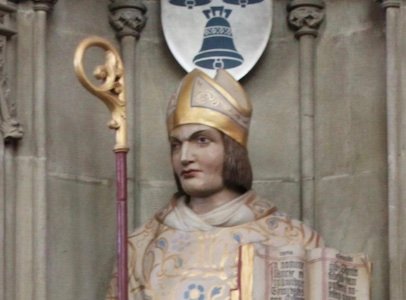
Bishop of Salisbury who helped compile the Domesday Book. A member of the Norman nobility, he was the son of Count Henry of Seez and Isabella, half-sister of King William the Conqueror of England. He took part in the Norman Conquest and served Williamas his chancellor. In 1078, he was appointed bishop of Salisbury, completing the cathedral there and founding a cathedral chapter of canons regular and school for clerics. Osmund also assisted the king in assembling the massive census which became the Domesday Book. In the dispute over investiture between King William II and St. Anselm of Canterbury, Osmund initially sided with the king, but later he admitted he had made a mistake, and he begged Anselm's forgiveness. Osmund also collected manuscripts for the cathedral library, was a copier and binder of books, authored a life of St. Aldhelm, and was thought to be responsible for drawing up the books governing the liturgical matters for the diocese such as the Mass and Divine Office, the so called Sarum Use.
On July 23, 1457, his remains were translated from Old Sarum to the Lady Chapel in Salisbury. Canonized in 1457 by Pope Callistus III, he was the last English person to be declared a saint until the canonization of Sts. Thomas More and John Fisher in 1935.
LAST-MODIFIED:20231202T210731Z SEQUENCE:35855765 X-ACCESS:1 X-HITS:22 X-COLOR:f0b80e X-SHOW-END-TIME:1 END:VEVENT BEGIN:VEVENT DTSTART;VALUE=DATE:20231204 DTEND;VALUE=DATE:20231205 UID:87FC5362-74EA-497D-BBF9-C8E7544F278E SUMMARY:St. Barbara CREATED:20221013T211126Z DTSTAMP:20221013T211126Z URL:https://www.stpaulsweymouth.org/component/dpcalendar/event/984?calid=13 DESCRIPTION:St. Barbara, Virgin and Martyr\N\NSaint Barbara was brought up by a pagan father, Dioscorus. With the intention of protecting her beauty, he kept her jealously secluded in a lonely but very luxurious tower which he built for that purpose; for in his own way he loved her. In her forced solitude, this very gifted young girl undertook to study religion, and soon saw clearly all the vices and absurdities of paganism; her clear mind realized that there could be only one supreme Creator-God, and that He is entitled to the worship of His reasonable creatures. Divine Providence by its wonderful ways contrived to obtain for her the means to send a message to Origen, the famous exegete, asking for knowledge of the Christian faith. That teacher of Alexandria immediately sent to her, at Nicomedia, a disciple named Valentinian. Soon she was baptized, and Our Lord appeared to her, as He would appear to others such as Saint Catherine of Alexandria and Saint Teresa of Avila, to tell her He had chosen her to be His spouse. Saint Barbara, rejoicing, hoped to be able to communicate her precious new faith to her father, but would soon discover that hope was vain.\NWhen she was of an age to marry, many requests for her hand came to her wealthy father. She was his only heiress, and he rejected her expressed wish not to accept any such offer, although she said she wished to remain his consolation for his declining years. When she continued to refuse every suitor's demands, and when Dioscorus returned from a journey to find all the idols he had placed in her tower broken in pieces and scattered about, he was furious. Discovering his daughter's conversion, he was beside himself with rage. She escaped and dwelt for a time in a cavern, where she was concealed by the vegetation growing at the entrance. But finally her father's threats of chastisement, which he made known during his searches, for anyone who might be concealing her, caused some local shepherds who knew of her whereabouts, to reveal her retreat.\NHer father denounced her to the civil tribunal, and Barbara was horribly tortured twice, and finally beheaded. Her own father, merciless to the last, asked to deal her the fatal blow himself. God, however, speedily punished her persecutors. While her soul was being borne by the Angels to Paradise, a flash of lightning struck Dioscorus and Marcian, the civil prefect, and both were summoned in haste to the judgment-seat of God.\NSaint Barbara is beloved of the Spanish-speaking peoples. She is the special protectress of the region of Metz in France, where a magnificent church, later destroyed, was built in her honor in the 1500's. She is invoked against sudden and unprovided death, and invariably answers all requests for the favor of receiving the Last Sacraments. A famous instance of her intervention on behalf of a Saint who was on the verge of death, can be read in the life of Saint Stanislaus Kostka.\NReflection: Pray often to be protected from a sudden and unprovided death; and, above all, that you may be strengthened by the Holy Viaticum against the dangers of your final hour.\NLes Petits Bollandistes: Vies des Saints, by Msgr. Paul Guérin (Bloud et Barral: Paris, 1882), Vol. 14; Little Pictorial Lives of the Saints, a compilation based on Butler's Lives of the Saints and other sources, by John Gilmary Shea (Benziger Brothers: New York, 1894) X-ALT-DESC;FMTTYPE=text/html: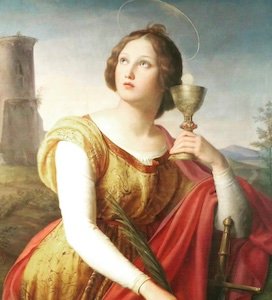
Saint Barbara was brought up by a pagan father, Dioscorus. With the intention of protecting her beauty, he kept her jealously secluded in a lonely but very luxurious tower which he built for that purpose; for in his own way he loved her. In her forced solitude, this very gifted young girl undertook to study religion, and soon saw clearly all the vices and absurdities of paganism; her clear mind realized that there could be only one supreme Creator-God, and that He is entitled to the worship of His reasonable creatures. Divine Providence by its wonderful ways contrived to obtain for her the means to send a message to Origen, the famous exegete, asking for knowledge of the Christian faith. That teacher of Alexandria immediately sent to her, at Nicomedia, a disciple named Valentinian. Soon she was baptized, and Our Lord appeared to her, as He would appear to others such as Saint Catherine of Alexandria and Saint Teresa of Avila, to tell her He had chosen her to be His spouse. Saint Barbara, rejoicing, hoped to be able to communicate her precious new faith to her father, but would soon discover that hope was vain.
When she was of an age to marry, many requests for her hand came to her wealthy father. She was his only heiress, and he rejected her expressed wish not to accept any such offer, although she said she wished to remain his consolation for his declining years. When she continued to refuse every suitor's demands, and when Dioscorus returned from a journey to find all the idols he had placed in her tower broken in pieces and scattered about, he was furious. Discovering his daughter's conversion, he was beside himself with rage. She escaped and dwelt for a time in a cavern, where she was concealed by the vegetation growing at the entrance. But finally her father's threats of chastisement, which he made known during his searches, for anyone who might be concealing her, caused some local shepherds who knew of her whereabouts, to reveal her retreat.
Her father denounced her to the civil tribunal, and Barbara was horribly tortured twice, and finally beheaded. Her own father, merciless to the last, asked to deal her the fatal blow himself. God, however, speedily punished her persecutors. While her soul was being borne by the Angels to Paradise, a flash of lightning struck Dioscorus and Marcian, the civil prefect, and both were summoned in haste to the judgment-seat of God.
Saint Barbara is beloved of the Spanish-speaking peoples. She is the special protectress of the region of Metz in France, where a magnificent church, later destroyed, was built in her honor in the 1500's. She is invoked against sudden and unprovided death, and invariably answers all requests for the favor of receiving the Last Sacraments. A famous instance of her intervention on behalf of a Saint who was on the verge of death, can be read in the life of Saint Stanislaus Kostka.
Reflection: Pray often to be protected from a sudden and unprovided death; and, above all, that you may be strengthened by the Holy Viaticum against the dangers of your final hour.
Les Petits Bollandistes: Vies des Saints, by Msgr. Paul Guérin (Bloud et Barral: Paris, 1882), Vol. 14; Little Pictorial Lives of the Saints, a compilation based on Butler's Lives of the Saints and other sources, by John Gilmary Shea (Benziger Brothers: New York, 1894)
LAST-MODIFIED:20231202T211118Z SEQUENCE:35855992 X-ACCESS:1 X-HITS:21 X-COLOR:f0b80e X-SHOW-END-TIME:1 END:VEVENT BEGIN:VEVENT DTSTART;VALUE=DATE:20231204 DTEND;VALUE=DATE:20231205 UID:463C3702-0756-462E-BA1D-86BDDFA1F0C0 SUMMARY:St. Peter Chrysologus CREATED:20221013T211126Z DTSTAMP:20221013T211126Z URL:https://www.stpaulsweymouth.org/component/dpcalendar/event/986?calid=13 DESCRIPTION:St. Peter Chrysologus Bishop, Confessor and Doctor of the Church\N\NA man who vigorously pursues a goal may produce results far beyond his expectations and his intentions. Thus it was with Peter “of the Golden Words,” as he was called, who as a young man became bishop of Ravenna, the capital of the empire in the West.\NAt the time there were abuses and vestiges of paganism evident in his diocese, and these Peter was determined to battle and overcome. His principal weapon was the short sermon, and many of them have come down to us. They do not contain great originality of thought. They are, however, full of moral applications, sound in doctrine, and historically significant in that they reveal Christian life in fifth-century Ravenna. So authentic were the contents of his sermons that some 13 centuries later, he was declared a doctor of the Church by Pope Benedict XIII. He who had earnestly sought to teach and motivate his own flock was recognized as a teacher of the universal Church.\NIn addition to his zeal in the exercise of his office, Peter Chrysologus was distinguished by a fierce loyalty to the Church, not only in its teaching, but in its authority as well. He looked upon learning not as a mere opportunity but as an obligation for all, both as a development of God-given faculties and as a solid support for the worship of God.\NSome time before his death around A.D. 450, Peter returned to his birthplace of Imola, in northern Italy. His liturgical feast is celebrated on July 30.\NReflection\NQuite likely, it was Saint Peter Chrysologus’ attitude toward learning that gave substance to his exhortations. Next to virtue, learning, in his view, was the greatest improvement to the human mind and the support of true religion. Ignorance is not a virtue, nor is anti-intellectualism. Knowledge is neither more nor less a source of pride than physical, administrative, or financial prowess. To be fully human is to expand our knowledge—whether sacred or secular—according to our talent and opportunity.\N(source: franciscan media) X-ALT-DESC;FMTTYPE=text/html: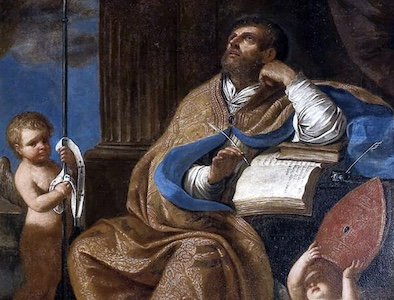
A man who vigorously pursues a goal may produce results far beyond his expectations and his intentions. Thus it was with Peter “of the Golden Words,” as he was called, who as a young man became bishop of Ravenna, the capital of the empire in the West.
At the time there were abuses and vestiges of paganism evident in his diocese, and these Peter was determined to battle and overcome. His principal weapon was the short sermon, and many of them have come down to us. They do not contain great originality of thought. They are, however, full of moral applications, sound in doctrine, and historically significant in that they reveal Christian life in fifth-century Ravenna. So authentic were the contents of his sermons that some 13 centuries later, he was declared a doctor of the Church by Pope Benedict XIII. He who had earnestly sought to teach and motivate his own flock was recognized as a teacher of the universal Church.
In addition to his zeal in the exercise of his office, Peter Chrysologus was distinguished by a fierce loyalty to the Church, not only in its teaching, but in its authority as well. He looked upon learning not as a mere opportunity but as an obligation for all, both as a development of God-given faculties and as a solid support for the worship of God.
Some time before his death around A.D. 450, Peter returned to his birthplace of Imola, in northern Italy. His liturgical feast is celebrated on July 30.
Reflection
Quite likely, it was Saint Peter Chrysologus’ attitude toward learning that gave substance to his exhortations. Next to virtue, learning, in his view, was the greatest improvement to the human mind and the support of true religion. Ignorance is not a virtue, nor is anti-intellectualism. Knowledge is neither more nor less a source of pride than physical, administrative, or financial prowess. To be fully human is to expand our knowledge—whether sacred or secular—according to our talent and opportunity.
(source: franciscan media)
LAST-MODIFIED:20231202T211527Z SEQUENCE:35856241 X-ACCESS:1 X-HITS:76 X-COLOR:f0b80e X-SHOW-END-TIME:1 END:VEVENT BEGIN:VEVENT DTSTART;VALUE=DATE:20231205 DTEND;VALUE=DATE:20231206 UID:4D732906-D18E-4465-87DF-E568448D6E0A SUMMARY:St. Sabbas CREATED:20221013T211126Z DTSTAMP:20221013T211126Z URL:https://www.stpaulsweymouth.org/component/dpcalendar/event/988?calid=13 DESCRIPTION:St. Sabbas Abbot\N\NSaint Sabas, one of the most renowned patriarchs of the monks of Palestine, was born in the year 439, near Caesarea. At the age of fifteen, in the absence of his parents, he suffered under the conduct of an uncle, and weary of the world's problems decided to forsake the world and enter a monastery not far from his family home. After he had spent ten years in religious life, his two uncles and his parents attempted to persuade him to leave the monastery to which he had migrated in Palestine. He replied: Do you want me to be a deserter, leaving God after placing myself in His service? If those who abandon the militia of earthly kings are severely punished, what chastisement would I not deserve if I abandoned that of the King of heaven?\NWhen he was thirty years old, desiring greater solitude, he began to live an angelic life so far above nature that he seemed no longer to have a body. The young sage, as he was called by Saint Euthymius, Abbot of a nearby monastery, dwelt in a cavern on a mountain near Jerusalem, where he prayed, sang Psalms and wove baskets of palm branches. He was forty-five years old when he began to direct those who came to live as hermits, as he did, and he gave each of them a place to build a cell; soon this was the largest monastery of Palestine. He left the region when certain agitators complained of him, for he considered himself incapable of maintaining good discipline. The Patriarch of Jerusalem, Sallustus, did not easily credit the complaints, and instead ordained Sabas a priest, that he might say Mass for his disciples — for they had been displeased by his lack of desire for that honor. He was at that time fifty-three years old. The Patriarch presented him to them as their father, whom they should obey and honor, and made him Superior of all the Palestine monasteries. But several monks remained obstinate, and Saint Sabas again went elsewhere, to a cavern near Scythopolis.\NAs the years passed, he was in charge of seven monasteries; but his influence was not limited to Palestine. The heresies afflicting religion were being sustained by the emperor of Constantinople, who had exiled the Catholic Patriarch of that city, Elias. Saint Sabas converted the one who had replaced Elias, and wrote to the emperor that he should cease to persecute the Church of Jerusalem, and to impose taxes on the cities of Palestine which they were unable to pay. In effect, the people were reduced to extreme misery. The emperor died soon afterwards, and the pious Justin replaced him. Justin restored the true faith by an edict and recalled the exiles, re-establishing the exiled prelates in their sees.\NWhen Saint Sabas was ninety-one years old, he made the long journey to Constantinople to ask Justinian, successor to Justin, not to act with severity against the province of Palestine, where a revolt had occurred by the non-submission of a group of Samaritans. The emperor honored him highly and wished to endow his monasteries with wealth, but the holy Patriarch asked him to use the riches he was offering to build a hospice for pilgrims in Jerusalem, to decorate the unfinished Church of the Blessed Virgin, to build a fortress where the monks could take refuge when barbarians invaded the land, and finally, to re-establish preaching of the true Faith, by edicts proscribing the various errors being propagated. The holy Abbot lived to be ninety-two years old, and died in 531, in the arms of the monks of his first monastery.\NLes Petits Bollandistes: Vies des Saints, by Msgr. Paul Guérin (Bloud et Barral: Paris, 1882), Vol. 14 X-ALT-DESC;FMTTYPE=text/html: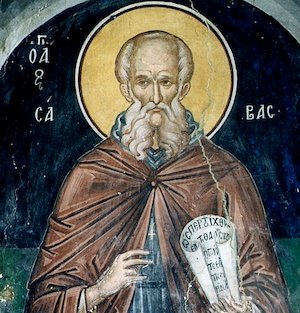
Saint Sabas, one of the most renowned patriarchs of the monks of Palestine, was born in the year 439, near Caesarea. At the age of fifteen, in the absence of his parents, he suffered under the conduct of an uncle, and weary of the world's problems decided to forsake the world and enter a monastery not far from his family home. After he had spent ten years in religious life, his two uncles and his parents attempted to persuade him to leave the monastery to which he had migrated in Palestine. He replied: Do you want me to be a deserter, leaving God after placing myself in His service? If those who abandon the militia of earthly kings are severely punished, what chastisement would I not deserve if I abandoned that of the King of heaven?
When he was thirty years old, desiring greater solitude, he began to live an angelic life so far above nature that he seemed no longer to have a body. The young sage, as he was called by Saint Euthymius, Abbot of a nearby monastery, dwelt in a cavern on a mountain near Jerusalem, where he prayed, sang Psalms and wove baskets of palm branches. He was forty-five years old when he began to direct those who came to live as hermits, as he did, and he gave each of them a place to build a cell; soon this was the largest monastery of Palestine. He left the region when certain agitators complained of him, for he considered himself incapable of maintaining good discipline. The Patriarch of Jerusalem, Sallustus, did not easily credit the complaints, and instead ordained Sabas a priest, that he might say Mass for his disciples — for they had been displeased by his lack of desire for that honor. He was at that time fifty-three years old. The Patriarch presented him to them as their father, whom they should obey and honor, and made him Superior of all the Palestine monasteries. But several monks remained obstinate, and Saint Sabas again went elsewhere, to a cavern near Scythopolis.
As the years passed, he was in charge of seven monasteries; but his influence was not limited to Palestine. The heresies afflicting religion were being sustained by the emperor of Constantinople, who had exiled the Catholic Patriarch of that city, Elias. Saint Sabas converted the one who had replaced Elias, and wrote to the emperor that he should cease to persecute the Church of Jerusalem, and to impose taxes on the cities of Palestine which they were unable to pay. In effect, the people were reduced to extreme misery. The emperor died soon afterwards, and the pious Justin replaced him. Justin restored the true faith by an edict and recalled the exiles, re-establishing the exiled prelates in their sees.
When Saint Sabas was ninety-one years old, he made the long journey to Constantinople to ask Justinian, successor to Justin, not to act with severity against the province of Palestine, where a revolt had occurred by the non-submission of a group of Samaritans. The emperor honored him highly and wished to endow his monasteries with wealth, but the holy Patriarch asked him to use the riches he was offering to build a hospice for pilgrims in Jerusalem, to decorate the unfinished Church of the Blessed Virgin, to build a fortress where the monks could take refuge when barbarians invaded the land, and finally, to re-establish preaching of the true Faith, by edicts proscribing the various errors being propagated. The holy Abbot lived to be ninety-two years old, and died in 531, in the arms of the monks of his first monastery.
Les Petits Bollandistes: Vies des Saints, by Msgr. Paul Guérin (Bloud et Barral: Paris, 1882), Vol. 14
LAST-MODIFIED:20231202T211801Z SEQUENCE:35856395 X-ACCESS:1 X-HITS:48 X-COLOR:f0b80e X-SHOW-END-TIME:1 END:VEVENT BEGIN:VEVENT DTSTART;VALUE=DATE:20231206 DTEND;VALUE=DATE:20231207 UID:4497973D-4245-4780-869A-4065208BEEEC SUMMARY:St. Nicholas CREATED:20221013T211126Z DTSTAMP:20221013T211126Z URL:https://www.stpaulsweymouth.org/component/dpcalendar/event/990?calid=13 DESCRIPTION:St. Nicholas Bishop, Confessor\N\NSaint Nicholas, the patron Saint of Russia, has won the warmest of praises from other Saints such as Saint John Chrysostom and Saint Peter Damian, who called him the glory of young men, the honor of the elderly, the splendor of priests and the light of Pontiffs. All the world was filled with his praises, Saint Peter added. The universal Church, in the Collect of his office, claims that God made known his nobility by an infinite number of miracles.\NHe was born during the third century, nephew of the Archbishop of Myra. He had lost his parents while still very young, and he desired not to conserve his rich heritage. Gradually he gave away everything of which he could dispose, establishing dowries for poor maidens and seeking out the needy wherever they could be found. The Archbishop, his uncle, already aware of his vocation to sanctity, ordained Saint Nicholas priest and appointed him Abbot of the monastery of Holy Sion near Myra. He undertook a pilgrimage to the Holy Land, resurrecting a sailor who fell from a mast during the voyage; he prayed for the frightened passengers in a near-fatal tempest and calmed it. He visited Saint Anthony of the Desert and healed many sick persons in Alexandria during a stopover in Egypt.\NOn the death of the Archbishop of Myra, he was elected to the vacant see. Immediately after the pontifical Mass, he resurrected an infant who had fallen into a fire.\NA persecution broke out under the emperor Licinius; Saint Nicholas was banished and kept in chains. He suffered from severe mistreatment but returned to his church when Constantine the Great defeated Licinius, and in 313 then put a definitive end to the persecutions. Saint Nicholas labored in his domains to stop the worship of false gods, still practiced there as elsewhere. With his own hands he cut down a huge tree, site of a sacrilegious cult of the goddess Diana. During a famine his prayers multiplied the provisions of wheat which he had ordered for the port of Myra, to such an extent that what would have sufficed for his people for only a few days, was found to be sufficient for more than two years. He rescued from death, just before they were hanged, three innocents condemned by a judge who had been corrupted by money, reprehended the latter for his crime and sent these liberated ones home, entirely exonerated.\NThroughout his life he retained the bright and simple manners of his early years; no one could converse with him without finding himself spiritually renewed. Saint Nicholas was the special protector of the innocent and the wronged. He is usually represented at the side of a container in which a cruel butcher had concealed the bodies of three young persons, whom he had killed and was intending to use in his commerce, but who were restored to life by the Saint. This miracle was reported by Saint Bonaventure in a sermon.\NSaint Nicholas rejoiced when God made known to him that the end of his pilgrimage was near. He retired to his Monastery of Holy Sion, and after a short but intense episode of fever, died in the year 342. He is the patron of schoolchildren, sailors, travelers and pilgrims, prisoners and many others. His relics were translated in 1087 to Bari, Italy, where a church was built in their honor. And there, after fifteen centuries, the manna of Saint Nicholasstill flows from his bones and heals all kinds of illnesses.\NReflection: Those who would enter heaven must become like little children, whose greatest glory is their innocence. Two duties impose themselves on Christians: first, either to preserve our innocence by sage precautions or regain it by penance; secondly, to love and shield it in others.\NLittle Pictorial Lives of the Saints, a compilation based on Butler's Lives of the Saints and other sources, by John Gilmary Shea (Benziger Brothers: New York, 1894); Les Petits Bollandistes: Vies des Saints, by Msgr. Paul Guérin (Bloud et Barral: Paris, 1882), Vol. 14 X-ALT-DESC;FMTTYPE=text/html: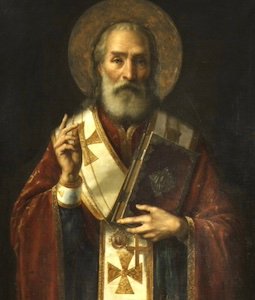
Saint Nicholas, the patron Saint of Russia, has won the warmest of praises from other Saints such as Saint John Chrysostom and Saint Peter Damian, who called him the glory of young men, the honor of the elderly, the splendor of priests and the light of Pontiffs. All the world was filled with his praises, Saint Peter added. The universal Church, in the Collect of his office, claims that God made known his nobility by an infinite number of miracles.
He was born during the third century, nephew of the Archbishop of Myra. He had lost his parents while still very young, and he desired not to conserve his rich heritage. Gradually he gave away everything of which he could dispose, establishing dowries for poor maidens and seeking out the needy wherever they could be found. The Archbishop, his uncle, already aware of his vocation to sanctity, ordained Saint Nicholas priest and appointed him Abbot of the monastery of Holy Sion near Myra. He undertook a pilgrimage to the Holy Land, resurrecting a sailor who fell from a mast during the voyage; he prayed for the frightened passengers in a near-fatal tempest and calmed it. He visited Saint Anthony of the Desert and healed many sick persons in Alexandria during a stopover in Egypt.
On the death of the Archbishop of Myra, he was elected to the vacant see. Immediately after the pontifical Mass, he resurrected an infant who had fallen into a fire.
A persecution broke out under the emperor Licinius; Saint Nicholas was banished and kept in chains. He suffered from severe mistreatment but returned to his church when Constantine the Great defeated Licinius, and in 313 then put a definitive end to the persecutions. Saint Nicholas labored in his domains to stop the worship of false gods, still practiced there as elsewhere. With his own hands he cut down a huge tree, site of a sacrilegious cult of the goddess Diana. During a famine his prayers multiplied the provisions of wheat which he had ordered for the port of Myra, to such an extent that what would have sufficed for his people for only a few days, was found to be sufficient for more than two years. He rescued from death, just before they were hanged, three innocents condemned by a judge who had been corrupted by money, reprehended the latter for his crime and sent these liberated ones home, entirely exonerated.
Throughout his life he retained the bright and simple manners of his early years; no one could converse with him without finding himself spiritually renewed. Saint Nicholas was the special protector of the innocent and the wronged. He is usually represented at the side of a container in which a cruel butcher had concealed the bodies of three young persons, whom he had killed and was intending to use in his commerce, but who were restored to life by the Saint. This miracle was reported by Saint Bonaventure in a sermon.
Saint Nicholas rejoiced when God made known to him that the end of his pilgrimage was near. He retired to his Monastery of Holy Sion, and after a short but intense episode of fever, died in the year 342. He is the patron of schoolchildren, sailors, travelers and pilgrims, prisoners and many others. His relics were translated in 1087 to Bari, Italy, where a church was built in their honor. And there, after fifteen centuries, the manna of Saint Nicholasstill flows from his bones and heals all kinds of illnesses.
Reflection: Those who would enter heaven must become like little children, whose greatest glory is their innocence. Two duties impose themselves on Christians: first, either to preserve our innocence by sage precautions or regain it by penance; secondly, to love and shield it in others.
Little Pictorial Lives of the Saints, a compilation based on Butler's Lives of the Saints and other sources, by John Gilmary Shea (Benziger Brothers: New York, 1894); Les Petits Bollandistes: Vies des Saints, by Msgr. Paul Guérin (Bloud et Barral: Paris, 1882), Vol. 14
LAST-MODIFIED:20231202T212114Z SEQUENCE:35856588 X-ACCESS:1 X-HITS:75 X-COLOR:f0b80e X-SHOW-END-TIME:1 END:VEVENT BEGIN:VEVENT DTSTART;VALUE=DATE:20231207 DTEND;VALUE=DATE:20231208 UID:85855534-6148-4A37-9635-8A1D9068DC7E SUMMARY:St. Ambrose CREATED:20221013T211126Z DTSTAMP:20221013T211126Z URL:https://www.stpaulsweymouth.org/component/dpcalendar/event/992?calid=13 DESCRIPTION:St. Ambrose Bishop, Confessor and Doctor of the Church\N\NWhen in the year 369 Saint Ambrose, the young son of a Roman Senator, was sent by Probus, the Prefect of Italy, to the large province of Liguria Emilia in Italy, the officer said to him, Go and act not as a judge, but as a bishop. Ambrose, though not Christian, had already resisted by his probity the corrupting influence of the Roman youth of his day. In Liguria he showed himself to be clement as directed, and his great erudition also became well known to the inhabitants of the region. In the year 374 he was already governor of the province, at the moment when at Milan, in this same region, a bishop was needed for that great see. Since the heretics in Milan were many and fierce, he went to preserve order during the election of the new prelate. Though he was still only a catechumen, it was the Will of God that the provincial governor be chosen by acclamation. Despite his protestations and his subsequent flight from Milan when they were not accepted, he was found, baptized and consecrated for the archiepiscopal see.\NUnwearied then in every pastoral duty, full of sympathy and charity, gentle and condescending in matters of indifference, he was inflexible in questions of principle. He manifested his fearless zeal when it was necessary to brave the anger of the Empress Justina, by resisting and foiling her impious attempt to give one of the churches of Milan to the Arians. He distributed all that he had of gold and silver to the poor, and confided all financial administration of his archdiocese to his brother, Saint Satyrus, who came to reside with him in Milan. To master theology, he studied the Sacred Scriptures and the Fathers of the Church, and conferred with learned Christians concerning the rules of ecclesiastical discipline. He was very active, and took such great care of the catechumens' instruction that no one could surpass him in that duty.\NHis zeal in rebuking and bringing to penance the great Emperor Theodosius, who in a moment of irritation had cruelly punished a sedition by the inhabitants of Thessalonica, is a well known fact of history. The Saint met him at the door of the cathedral to prevent his entering, and said to him that if he had imitated David in his crime, he must now imitate him in his penance. Later the chastened and humble Emperor said that in his life he had known but one true bishop — Ambrose.\NSaint Ambrose was the friend and consoler of Saint Monica in all her sorrows, and in 387 had the joy of admitting to the Church Saint Augustine, her son. He died in 397, full of years and of honors, and is revered by the Church of God as one of her greatest Doctors.\NReflection: Whence came to Saint Ambrose his grandeur of mind, his clearness of insight, his intrepidity in maintaining the faith and discipline of the Church? Whence, if not from his contempt of the world and his fear of God alone?\NLittle Pictorial Lives of the Saints, a compilation based on Butler's Lives of the Saints and other sources, by John Gilmary Shea (Benziger Brothers: New York, 1894); Les Petits Bollandistes: Vies des Saints, by Msgr. Paul Guérin (Bloud et Barral: Paris, 1882), Vol. 14 X-ALT-DESC;FMTTYPE=text/html: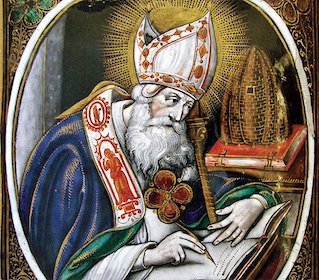
When in the year 369 Saint Ambrose, the young son of a Roman Senator, was sent by Probus, the Prefect of Italy, to the large province of Liguria Emilia in Italy, the officer said to him, Go and act not as a judge, but as a bishop. Ambrose, though not Christian, had already resisted by his probity the corrupting influence of the Roman youth of his day. In Liguria he showed himself to be clement as directed, and his great erudition also became well known to the inhabitants of the region. In the year 374 he was already governor of the province, at the moment when at Milan, in this same region, a bishop was needed for that great see. Since the heretics in Milan were many and fierce, he went to preserve order during the election of the new prelate. Though he was still only a catechumen, it was the Will of God that the provincial governor be chosen by acclamation. Despite his protestations and his subsequent flight from Milan when they were not accepted, he was found, baptized and consecrated for the archiepiscopal see.
Unwearied then in every pastoral duty, full of sympathy and charity, gentle and condescending in matters of indifference, he was inflexible in questions of principle. He manifested his fearless zeal when it was necessary to brave the anger of the Empress Justina, by resisting and foiling her impious attempt to give one of the churches of Milan to the Arians. He distributed all that he had of gold and silver to the poor, and confided all financial administration of his archdiocese to his brother, Saint Satyrus, who came to reside with him in Milan. To master theology, he studied the Sacred Scriptures and the Fathers of the Church, and conferred with learned Christians concerning the rules of ecclesiastical discipline. He was very active, and took such great care of the catechumens' instruction that no one could surpass him in that duty.
His zeal in rebuking and bringing to penance the great Emperor Theodosius, who in a moment of irritation had cruelly punished a sedition by the inhabitants of Thessalonica, is a well known fact of history. The Saint met him at the door of the cathedral to prevent his entering, and said to him that if he had imitated David in his crime, he must now imitate him in his penance. Later the chastened and humble Emperor said that in his life he had known but one true bishop — Ambrose.
Saint Ambrose was the friend and consoler of Saint Monica in all her sorrows, and in 387 had the joy of admitting to the Church Saint Augustine, her son. He died in 397, full of years and of honors, and is revered by the Church of God as one of her greatest Doctors.
Reflection: Whence came to Saint Ambrose his grandeur of mind, his clearness of insight, his intrepidity in maintaining the faith and discipline of the Church? Whence, if not from his contempt of the world and his fear of God alone?
Little Pictorial Lives of the Saints, a compilation based on Butler's Lives of the Saints and other sources, by John Gilmary Shea (Benziger Brothers: New York, 1894); Les Petits Bollandistes: Vies des Saints, by Msgr. Paul Guérin (Bloud et Barral: Paris, 1882), Vol. 14
LAST-MODIFIED:20231202T212341Z SEQUENCE:35856735 X-ACCESS:1 X-HITS:32 X-COLOR:f0b80e X-SHOW-END-TIME:1 END:VEVENT BEGIN:VEVENT DTSTART;VALUE=DATE:20231208 DTEND;VALUE=DATE:20231209 UID:42648378-01A0-42B5-A29B-7FDE41E37DD9 SUMMARY:Immaculate Conception CREATED:20221013T211126Z DTSTAMP:20221013T211126Z URL:https://www.stpaulsweymouth.org/component/dpcalendar/event/994?calid=13 DESCRIPTION:Immaculate Conception of the Blessed Virgin Mary\N\NOn this day, so dear to every Christian-Catholic heart, we celebrate first of all the moment when Almighty God, in a vision telescoping the ages, showed Mary both to our first parents and to the demon, as the Virgin Mother of the future divine Redeemer, the Woman destined to crush the proud head of the serpent. This episode is narrated in the first book of Scripture, Genesischapter 3. We find Her again in the last canonical prophecy of the Bible, the Apocalypse or Revelation of Saint John the Apostle, as the Woman clothed with the sun, having on Her head a crown of twelve stars. In this beautiful vision She is also identified with the persecuted Apostolic Church, obliged to flee into the desert, and as the Mother of a great Head of that Church, destined to govern the flock of the latter times in the final combat, who like that flock is Her own Child. (chapter 12) Mary, like Her Son, is at the beginning and the end of all God's intentions, an integral part of His designs for the Redemption of the human race.\NSince by eternal decree She was exempted from all stain of original sin from the first moment of Her Creation, and was endowed with the richest treasures of grace and sanctity, it is fitting that we honor Her glorious prerogatives by this special feast of the Immaculate Conception. We should join in spirit with the Blessed in heaven and rejoice with our dear Mother, not only for Her own sake, but for ours, Her children, for we are partakers of Her glory and happiness. The treasures of the mother are the heritage of the children, said Saint Thérèse of the Child Jesus.\NWe celebrate at the same time the ever-memorable day, the 8th of December of 1854, which raised the Immaculate Conception of Our Blessed Lady from a pious belief to the dignity of a dogma of the infallible Church, causing a great and universal joy among the faithful. The Holy See had already permitted the feast day from the time of Sixtus IV, by his papal bull Cum Praecelsa (1477), formally allowing its celebration for all dioceses desiring it. In 1854, the ancient faith of the people in their Mother exulted.\NReflection: Let us repeat frequently these words applied by the Church to the Blessed Virgin: Thou art all fair, O Mary! and there is no stain in Thee (Cant. 4:7).\NThe Holy Bible: Old and New Testaments; Little Pictorial Lives of the Saints, a compilation based on Butler's Lives of the Saints and other sources, by John Gilmary Shea (Benziger Brothers: New York, 1894). X-ALT-DESC;FMTTYPE=text/html: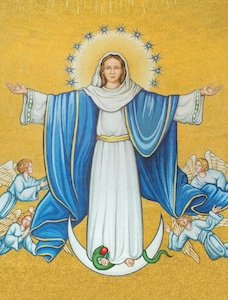
On this day, so dear to every Christian-Catholic heart, we celebrate first of all the moment when Almighty God, in a vision telescoping the ages, showed Mary both to our first parents and to the demon, as the Virgin Mother of the future divine Redeemer, the Woman destined to crush the proud head of the serpent. This episode is narrated in the first book of Scripture, Genesischapter 3. We find Her again in the last canonical prophecy of the Bible, the Apocalypse or Revelation of Saint John the Apostle, as the Woman clothed with the sun, having on Her head a crown of twelve stars. In this beautiful vision She is also identified with the persecuted Apostolic Church, obliged to flee into the desert, and as the Mother of a great Head of that Church, destined to govern the flock of the latter times in the final combat, who like that flock is Her own Child. (chapter 12) Mary, like Her Son, is at the beginning and the end of all God's intentions, an integral part of His designs for the Redemption of the human race.
Since by eternal decree She was exempted from all stain of original sin from the first moment of Her Creation, and was endowed with the richest treasures of grace and sanctity, it is fitting that we honor Her glorious prerogatives by this special feast of the Immaculate Conception. We should join in spirit with the Blessed in heaven and rejoice with our dear Mother, not only for Her own sake, but for ours, Her children, for we are partakers of Her glory and happiness. The treasures of the mother are the heritage of the children, said Saint Thérèse of the Child Jesus.
We celebrate at the same time the ever-memorable day, the 8th of December of 1854, which raised the Immaculate Conception of Our Blessed Lady from a pious belief to the dignity of a dogma of the infallible Church, causing a great and universal joy among the faithful. The Holy See had already permitted the feast day from the time of Sixtus IV, by his papal bull Cum Praecelsa (1477), formally allowing its celebration for all dioceses desiring it. In 1854, the ancient faith of the people in their Mother exulted.
Reflection: Let us repeat frequently these words applied by the Church to the Blessed Virgin: Thou art all fair, O Mary! and there is no stain in Thee (Cant. 4:7).
The Holy Bible: Old and New Testaments; Little Pictorial Lives of the Saints, a compilation based on Butler's Lives of the Saints and other sources, by John Gilmary Shea (Benziger Brothers: New York, 1894).
LAST-MODIFIED:20231202T212856Z SEQUENCE:35857050 X-ACCESS:1 X-HITS:3 X-COLOR:f0b80e X-SHOW-END-TIME:1 END:VEVENT BEGIN:VEVENT DTSTART;VALUE=DATE:20231210 DTEND;VALUE=DATE:20231211 UID:70649C98-C51B-4561-BA87-44DB8CDEE4A3 SUMMARY:St. Militades CREATED:20221013T211126Z DTSTAMP:20221013T211126Z URL:https://www.stpaulsweymouth.org/component/dpcalendar/event/1042?calid=13 DESCRIPTION:St. Miltiades (Maelchiades) Pope, Martyr\N\NPope St. Miltiades was the head of the Western Church and bishop of Rome during the years 311 A.D. through 314 A.D. when he died. It was during the papacy of this Melchiades the African that the Roman Emperor Constantine (“the Great”) proclaimed his history changing Edict of Milan in 313 A.D. providing long-persecuted Christianity with its first legal status in the empire. Pope Miltiades is also remembered for accepting the gift of the Empress Fausta Palace where the church would later build the Lateran Palace the pontiff’s residence and seat of administration.\NHistory does not record the exact year of birth for Pope Miltiades although it does remember that his citizenship was Roman, his ancestry was North African and he was of Berber descent (per the Liber Pontificalis). Miltiades and the Pope Sylvester I who succeeded him were both from the clergy group of the apostate Pope Marcellinus.\NFollowing the election of Pope St. Miltiades, property belonging to the church that had been seized under the notorious Diocletian Persecution became restored by Roman leader Maxentius. Several customs have become associated with Pope Miltiades per the Liber Pontificalis. These included the idea of not practicing fasting on either Sundays or Thursdays and the distributing of consecrated bread to all churches near Rome as an expression of unity.\NIn October of 312 A.D., Constantine vanquished Maxentius at the critical Battle of the Milovian Bridge, ascending to the role of undisputed Western Roman Emperor in the process. After accepting Christianity, Constantine gave the Empress Fausta Palace to Pope Miltiades. This would become the site of the Lateran Palace the stronghold and seat of power for the Catholic Church administration and the official residence of the popes.\NPope St. Miltiades is remembered for being the pontiff who experienced the peace of the church granted by Constantine. Thanks to an arrangement between Western Emperor Constantine and Eastern Emperor Licinius in February of 313 A.D., this peace expanded to all parts of the Roman Empire. Christians could now worship freely and also received back their confiscated churches and other property.\NThe church in Carthage, North Africa suffered from a schism surrounding Bishop Caecilianus’ election under the pontificate of Pope Miltiades. Donatus opposed the bishop on the basis that any heretics and schismatics should have to be baptized and ordained a second time before regaining their former offices. Donatus’ supporters appealed directly to Constantine and asked for judges out of the province of Gaul (modern day France) to hear the case.\NConstantine appointed Pope Miltiades and three bishops from Gaul to judge the argument in what became the first instance of a Roman emperor getting involved in affairs of the church. Pope Miltiades was torn between his relationship with Constantine and a church council that might provide an outcome less than certain so he converted the hearing into a traditional church synod and named another 15 Italian bishops to the adjudication panel.\NThe Donatists did not like these Lateran Council arrangements which now centered on Roman civil proceedings and required arguments backed by evidence. They departed the council permitting Pope Miltiades to rule against them and to declare their teachings as heresy. This did not prevent Donatism from spreading throughout North Africa. Meanwhile they appealed again directly to Emperor Constantine who convened a church Council of Arles that also ruled against the teachings of the Donatists in 314 A.D.\NThe innocence of Pope St. Miltiades was argued vehemently by near-contemporary and legendary church historian and writer St. Augustine of Hippo. X-ALT-DESC;FMTTYPE=text/html: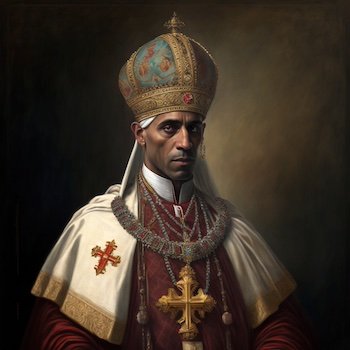
Pope St. Miltiades was the head of the Western Church and bishop of Rome during the years 311 A.D. through 314 A.D. when he died. It was during the papacy of this Melchiades the African that the Roman Emperor Constantine (“the Great”) proclaimed his history changing Edict of Milan in 313 A.D. providing long-persecuted Christianity with its first legal status in the empire. Pope Miltiades is also remembered for accepting the gift of the Empress Fausta Palace where the church would later build the Lateran Palace the pontiff’s residence and seat of administration.
History does not record the exact year of birth for Pope Miltiades although it does remember that his citizenship was Roman, his ancestry was North African and he was of Berber descent (per the Liber Pontificalis). Miltiades and the Pope Sylvester I who succeeded him were both from the clergy group of the apostate Pope Marcellinus.
Following the election of Pope St. Miltiades, property belonging to the church that had been seized under the notorious Diocletian Persecution became restored by Roman leader Maxentius. Several customs have become associated with Pope Miltiades per the Liber Pontificalis. These included the idea of not practicing fasting on either Sundays or Thursdays and the distributing of consecrated bread to all churches near Rome as an expression of unity.
In October of 312 A.D., Constantine vanquished Maxentius at the critical Battle of the Milovian Bridge, ascending to the role of undisputed Western Roman Emperor in the process. After accepting Christianity, Constantine gave the Empress Fausta Palace to Pope Miltiades. This would become the site of the Lateran Palace the stronghold and seat of power for the Catholic Church administration and the official residence of the popes.
Pope St. Miltiades is remembered for being the pontiff who experienced the peace of the church granted by Constantine. Thanks to an arrangement between Western Emperor Constantine and Eastern Emperor Licinius in February of 313 A.D., this peace expanded to all parts of the Roman Empire. Christians could now worship freely and also received back their confiscated churches and other property.
The church in Carthage, North Africa suffered from a schism surrounding Bishop Caecilianus’ election under the pontificate of Pope Miltiades. Donatus opposed the bishop on the basis that any heretics and schismatics should have to be baptized and ordained a second time before regaining their former offices. Donatus’ supporters appealed directly to Constantine and asked for judges out of the province of Gaul (modern day France) to hear the case.
Constantine appointed Pope Miltiades and three bishops from Gaul to judge the argument in what became the first instance of a Roman emperor getting involved in affairs of the church. Pope Miltiades was torn between his relationship with Constantine and a church council that might provide an outcome less than certain so he converted the hearing into a traditional church synod and named another 15 Italian bishops to the adjudication panel.
The Donatists did not like these Lateran Council arrangements which now centered on Roman civil proceedings and required arguments backed by evidence. They departed the council permitting Pope Miltiades to rule against them and to declare their teachings as heresy. This did not prevent Donatism from spreading throughout North Africa. Meanwhile they appealed again directly to Emperor Constantine who convened a church Council of Arles that also ruled against the teachings of the Donatists in 314 A.D.
The innocence of Pope St. Miltiades was argued vehemently by near-contemporary and legendary church historian and writer St. Augustine of Hippo.
LAST-MODIFIED:20231209T122942Z SEQUENCE:36429496 X-ACCESS:1 X-HITS:96 X-COLOR:f0b80e X-SHOW-END-TIME:1 END:VEVENT BEGIN:VEVENT DTSTART;VALUE=DATE:20231211 DTEND;VALUE=DATE:20231212 UID:86197F3A-051C-4AC6-8667-818E1662A6AB SUMMARY:St. Damasus CREATED:20221013T211126Z DTSTAMP:20221013T211126Z URL:https://www.stpaulsweymouth.org/component/dpcalendar/event/1034?calid=13 DESCRIPTION:St. Damasus I Pope, Confessor\N\NSaint Damasus was born in Rome at the beginning of the fourth century. His father, a widower, had received Holy Orders there and served as parish priest in the church of St. Laurence. Damasus was archdeacon of the Roman Church in 355, when the Pope, Saint Liberius, was banished to Berda; he followed him into exile, but afterwards returned to Rome. On the death of Saint Liberius in 366, our Saint was chosen to succeed him, at the age of sixty-two. A certain Ursinus, jealous of his election and desiring for himself that high office, had himself proclaimed pope by his followers, inciting a revolt against Damasus in Rome, in which 137 persons died. The holy Pope did not choose to resort to armed defense, but the Emperor Valentinian, to defend him, drove the usurper from Rome for a time. Later he returned, and finding accomplices for his evil intentions, accused the holy Pontiff of adultery. Saint Damasus took only such action as was becoming to the common father of the faithful; he assembled a synod of forty-four bishops, in which he justified himself so well that the calumniators were excommunicated and banished.\NHaving freed the Church of this new schism, Saint Damasus turned his attention to the extirpation of Arianism in the West and of Apollinarianism in the East, and for this purpose convened several councils. He sent Saint Zenobius, later bishop of Florence, to Constantinople in 381 to console the faithful, cruelly persecuted by the Emperor Valens. He commanded Saint Jerome to prepare a correct Latin version of the Bible, since known as the Vulgate; he ordered the Psalms to be sung accordingly. He rebuilt and adorned the Church of Saint Laurence, still called Saint Laurence in Damaso. He caused to be drained all the springs of the Vatican, which were inundating the tombs of the holy persons buried there, and he decorated the sepulchres of a great number of martyrs in the cemeteries, adorning them with epitaphs in verse. Before his death, he consecrated sixty-two bishops.\NSaint Damasus is praised by Theodoret as head of the famous doctors of divine grace of the Latin church; the General Council of Chalcedon calls him the honor and glory of Rome. Having reigned for eighteen years and two months, he died on the 10th of December in 384, when he was nearly eighty years old. In the eighth century, his relics were definitively placed in the church of Saint Laurence in Damaso, except for his head, conserved in the Basilica of Saint Peter.\NLes Petits Bollandistes: Vies des Saints, by Msgr. Paul Guérin (Bloud et Barral: Paris, 1882), Vol. 14; The Lives of the Fathers, Martyrs and Principal Saints, by Rev. Alban Butler (Metropolitan Press: Baltimore, 1845), October-December, Vol. IV X-ALT-DESC;FMTTYPE=text/html: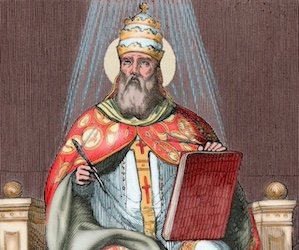
Saint Damasus was born in Rome at the beginning of the fourth century. His father, a widower, had received Holy Orders there and served as parish priest in the church of St. Laurence. Damasus was archdeacon of the Roman Church in 355, when the Pope, Saint Liberius, was banished to Berda; he followed him into exile, but afterwards returned to Rome. On the death of Saint Liberius in 366, our Saint was chosen to succeed him, at the age of sixty-two. A certain Ursinus, jealous of his election and desiring for himself that high office, had himself proclaimed pope by his followers, inciting a revolt against Damasus in Rome, in which 137 persons died. The holy Pope did not choose to resort to armed defense, but the Emperor Valentinian, to defend him, drove the usurper from Rome for a time. Later he returned, and finding accomplices for his evil intentions, accused the holy Pontiff of adultery. Saint Damasus took only such action as was becoming to the common father of the faithful; he assembled a synod of forty-four bishops, in which he justified himself so well that the calumniators were excommunicated and banished.
Having freed the Church of this new schism, Saint Damasus turned his attention to the extirpation of Arianism in the West and of Apollinarianism in the East, and for this purpose convened several councils. He sent Saint Zenobius, later bishop of Florence, to Constantinople in 381 to console the faithful, cruelly persecuted by the Emperor Valens. He commanded Saint Jerome to prepare a correct Latin version of the Bible, since known as the Vulgate; he ordered the Psalms to be sung accordingly. He rebuilt and adorned the Church of Saint Laurence, still called Saint Laurence in Damaso. He caused to be drained all the springs of the Vatican, which were inundating the tombs of the holy persons buried there, and he decorated the sepulchres of a great number of martyrs in the cemeteries, adorning them with epitaphs in verse. Before his death, he consecrated sixty-two bishops.
Saint Damasus is praised by Theodoret as head of the famous doctors of divine grace of the Latin church; the General Council of Chalcedon calls him the honor and glory of Rome. Having reigned for eighteen years and two months, he died on the 10th of December in 384, when he was nearly eighty years old. In the eighth century, his relics were definitively placed in the church of Saint Laurence in Damaso, except for his head, conserved in the Basilica of Saint Peter.
Les Petits Bollandistes: Vies des Saints, by Msgr. Paul Guérin (Bloud et Barral: Paris, 1882), Vol. 14; The Lives of the Fathers, Martyrs and Principal Saints, by Rev. Alban Butler (Metropolitan Press: Baltimore, 1845), October-December, Vol. IV
LAST-MODIFIED:20231209T121409Z SEQUENCE:36428563 X-ACCESS:1 X-HITS:49 X-COLOR:f0b80e X-SHOW-END-TIME:1 END:VEVENT BEGIN:VEVENT DTSTART;VALUE=DATE:20231213 DTEND;VALUE=DATE:20231214 UID:EF7BB7BC-7AB1-46B1-821F-72AD72897C40 SUMMARY:St. Lucy CREATED:20221013T211126Z DTSTAMP:20221013T211126Z URL:https://www.stpaulsweymouth.org/component/dpcalendar/event/1035?calid=13 DESCRIPTION:St. Lucy, Virgin & Martyr\N\NSaint Lucy was a young Christian maiden of Syracuse in Sicily. She had already offered her virginity to God and refused to marry, when her mother pressed her to accept the offer of a young pagan. The mother was afflicted afterwards for several years by an issue of blood, and all human remedies were ineffectual. Lucy reminded her mother that a woman in the Gospel, suffering from the same disorder, had been healed by the divine power. They determined to make a journey to Catania, a port of Sicily, where the tomb of Saint Agatha, martyred in 251, was already a site of pilgrimage. Saint Agatha, Lucy said, stands ever in the sight of Him for whom she died. Only touch her sepulchre with faith, and you will be healed. The Saint of Catania had already saved that city, when Mount Etna had erupted the year after her martyrdom: some frightened pagans, seeing a course of lava descending directly toward the city, had uncovered her tomb, and at once it had stopped.\NSaint Lucy and her mother spent an entire night praying by the tomb, until, overcome by weariness, both fell asleep. Saint Agatha appeared in vision to Saint Lucy, and addressing her sister in the faith, foretold her mother's recovery and Lucy's future martyrdom: You will soon be the glory of Syracuse, as I am of Catania. At that instant the cure was effected; and in her gratitude the mother allowed her daughter to distribute her wealth among the poor, and to conserve her virginity.\NThe young man who had sought her hand in marriage denounced her as a Christian during the persecution of Diocletian, but Our Lord, by a special miracle, saved from outrage this virgin He had chosen for His own. The executioners who would have taken her to a house of ill fame were unable to move her. The exasperated prefect gave orders to attach her by cords to harnessed bulls, but the bulls, too, did not succeed, and he accused her of being a magician. How can you, a feeble woman, triumph over a thousand men? She replied, Bring ten thousand, and they will not be able to combat against God! A fire kindled around her did her no harm, though she was covered with resin and oil. When a sword was plunged into her heart, the promise made at the tomb of Saint Agatha was fulfilled. Saint Lucy died, predicting peace for the Church.\NReflection: The Saints had to bear sufferings and temptations greater far than any of ours. How did they overcome them? By the love of Christ. Nourish this pure love by meditating on the mysteries of Christ's life; and, above all, by devotion to the Holy Eucharist, which is the antidote against sin and the pledge of eternal life.\NLes Petits Bollandistes: Vies des Saints, by Msgr. Paul Guérin (Bloud et Barral: Paris, 1882), Vol. 14; Vie des Saints pour tous les jours de l'année, by Abbé L. Jaud (Mame: Tours, 1950). X-ALT-DESC;FMTTYPE=text/html: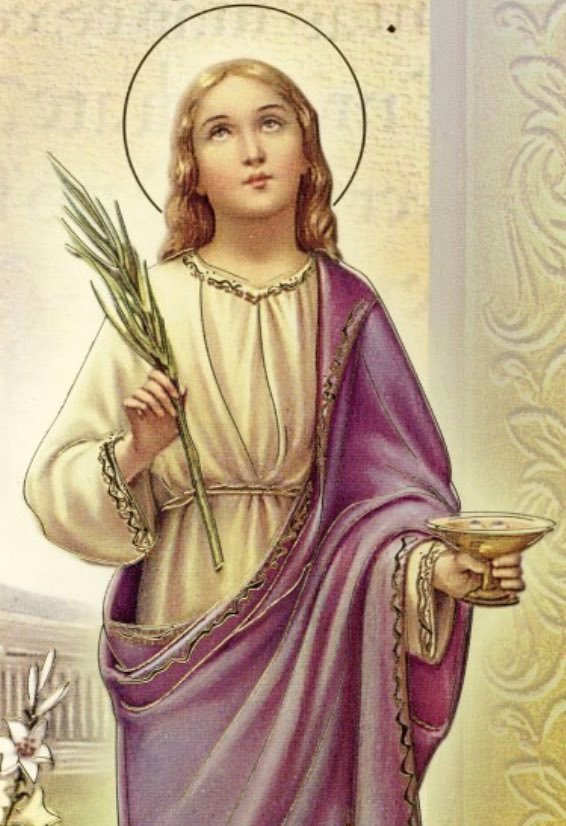
Saint Lucy was a young Christian maiden of Syracuse in Sicily. She had already offered her virginity to God and refused to marry, when her mother pressed her to accept the offer of a young pagan. The mother was afflicted afterwards for several years by an issue of blood, and all human remedies were ineffectual. Lucy reminded her mother that a woman in the Gospel, suffering from the same disorder, had been healed by the divine power. They determined to make a journey to Catania, a port of Sicily, where the tomb of Saint Agatha, martyred in 251, was already a site of pilgrimage. Saint Agatha, Lucy said, stands ever in the sight of Him for whom she died. Only touch her sepulchre with faith, and you will be healed. The Saint of Catania had already saved that city, when Mount Etna had erupted the year after her martyrdom: some frightened pagans, seeing a course of lava descending directly toward the city, had uncovered her tomb, and at once it had stopped.
Saint Lucy and her mother spent an entire night praying by the tomb, until, overcome by weariness, both fell asleep. Saint Agatha appeared in vision to Saint Lucy, and addressing her sister in the faith, foretold her mother's recovery and Lucy's future martyrdom: You will soon be the glory of Syracuse, as I am of Catania. At that instant the cure was effected; and in her gratitude the mother allowed her daughter to distribute her wealth among the poor, and to conserve her virginity.
The young man who had sought her hand in marriage denounced her as a Christian during the persecution of Diocletian, but Our Lord, by a special miracle, saved from outrage this virgin He had chosen for His own. The executioners who would have taken her to a house of ill fame were unable to move her. The exasperated prefect gave orders to attach her by cords to harnessed bulls, but the bulls, too, did not succeed, and he accused her of being a magician. How can you, a feeble woman, triumph over a thousand men? She replied, Bring ten thousand, and they will not be able to combat against God! A fire kindled around her did her no harm, though she was covered with resin and oil. When a sword was plunged into her heart, the promise made at the tomb of Saint Agatha was fulfilled. Saint Lucy died, predicting peace for the Church.
Reflection: The Saints had to bear sufferings and temptations greater far than any of ours. How did they overcome them? By the love of Christ. Nourish this pure love by meditating on the mysteries of Christ's life; and, above all, by devotion to the Holy Eucharist, which is the antidote against sin and the pledge of eternal life.
Les Petits Bollandistes: Vies des Saints, by Msgr. Paul Guérin (Bloud et Barral: Paris, 1882), Vol. 14; Vie des Saints pour tous les jours de l'année, by Abbé L. Jaud (Mame: Tours, 1950).
LAST-MODIFIED:20231209T121753Z SEQUENCE:36428787 X-ACCESS:1 X-HITS:34 X-COLOR:f0b80e X-SHOW-END-TIME:1 END:VEVENT BEGIN:VEVENT DTSTART;VALUE=DATE:20231216 DTEND;VALUE=DATE:20231217 UID:67C55D75-3FB5-439A-8EEB-45E23DADA7C4 SUMMARY:St. Eusebius CREATED:20221013T211126Z DTSTAMP:20221013T211126Z URL:https://www.stpaulsweymouth.org/component/dpcalendar/event/1038?calid=13 DESCRIPTION:St. Eusebius of Vercelli, Bishop & Martyr\N\NSaint Eusebius was born of a noble family on the island of Sardinia, where his father is said to have died in prison for the Faith. He was brought up in Rome in the practice of piety, and studied in Vercelli, a city of Piedmont. Eusebius was ordained a priest there, and served the Church of Vercelli with such zeal that when the episcopal chair became vacant he was unanimously chosen, by both clergy and people, to fill it.\NThe holy bishop saw that the best and principal means to labor effectually for the edification and sanctification of his people was to have a zealous clergy. Saint Ambrose assures us that he was the first bishop who in the West united the monastic life with the clerical, living and having his clergy live almost like the monks of the East in the deserts. They shared a common life of prayer and penance, in a single residence, that of the bishop, as did the clergy of Saint Augustine in his African see. Saint Eusebius was very careful to instruct his flock in the maxims of the Gospel. The force of the truth which he preached, together with his example, brought many sinners to a change of life.\NWhen a Council was held in Italy, under the influence of the Emperor Constans and the Arian heretics, with the intention of condemning Saint Athanasius, bishop of Alexandria, Saint Eusebius courageously resisted the heretics. He attempted to have all present sign the Nicene Creed, but the paper was torn out of his hands and his pen was broken. With Saint Dionysus of Milan, he refused to sign the condemnation of the bishop of Alexandria. The Emperor therefore had him banished to Scythopolis in Palestine with Saint Dionysus of Milan, then to Cappadocia, where Saint Dionysus died; and finally he was taken to the Upper Thebaid in Egypt, where he suffered grievously. The Arians of these places loaded him with outrages and treated him cruelly, and Saint Eusebius confounded them wherever they were.\NAt the death of Constans in 361, he was permitted to return to his diocese, where he continued to combat Arianism, concertedly with Saint Hilarion of Poitiers. He has been called a martyr in two panegyrics appended to the works of Saint Ambrose. Two of his letters, written from his dungeons, are still extant, the only ones of his writings which have survived. One is addressed to his church, the other to the bishop of Elvira to encourage him to oppose a fallen heretic and not fear the power of princes. He died in about the year 370. His relics are in a shrine in the Cathedral of Vercelli.\NLittle Pictorial Lives of the Saints, a compilation based on Butler's Lives of the Saints and other sources, by John Gilmary Shea (Benziger Brothers: New York, 1894); Les Petits Bollandistes: Vies des Saints, by Msgr. Paul Guérin (Bloud et Barral: Paris, 1882), Vol. 14 X-ALT-DESC;FMTTYPE=text/html:
Saint Eusebius was born of a noble family on the island of Sardinia, where his father is said to have died in prison for the Faith. He was brought up in Rome in the practice of piety, and studied in Vercelli, a city of Piedmont. Eusebius was ordained a priest there, and served the Church of Vercelli with such zeal that when the episcopal chair became vacant he was unanimously chosen, by both clergy and people, to fill it.
The holy bishop saw that the best and principal means to labor effectually for the edification and sanctification of his people was to have a zealous clergy. Saint Ambrose assures us that he was the first bishop who in the West united the monastic life with the clerical, living and having his clergy live almost like the monks of the East in the deserts. They shared a common life of prayer and penance, in a single residence, that of the bishop, as did the clergy of Saint Augustine in his African see. Saint Eusebius was very careful to instruct his flock in the maxims of the Gospel. The force of the truth which he preached, together with his example, brought many sinners to a change of life.
When a Council was held in Italy, under the influence of the Emperor Constans and the Arian heretics, with the intention of condemning Saint Athanasius, bishop of Alexandria, Saint Eusebius courageously resisted the heretics. He attempted to have all present sign the Nicene Creed, but the paper was torn out of his hands and his pen was broken. With Saint Dionysus of Milan, he refused to sign the condemnation of the bishop of Alexandria. The Emperor therefore had him banished to Scythopolis in Palestine with Saint Dionysus of Milan, then to Cappadocia, where Saint Dionysus died; and finally he was taken to the Upper Thebaid in Egypt, where he suffered grievously. The Arians of these places loaded him with outrages and treated him cruelly, and Saint Eusebius confounded them wherever they were.
At the death of Constans in 361, he was permitted to return to his diocese, where he continued to combat Arianism, concertedly with Saint Hilarion of Poitiers. He has been called a martyr in two panegyrics appended to the works of Saint Ambrose. Two of his letters, written from his dungeons, are still extant, the only ones of his writings which have survived. One is addressed to his church, the other to the bishop of Elvira to encourage him to oppose a fallen heretic and not fear the power of princes. He died in about the year 370. His relics are in a shrine in the Cathedral of Vercelli.
Little Pictorial Lives of the Saints, a compilation based on Butler's Lives of the Saints and other sources, by John Gilmary Shea (Benziger Brothers: New York, 1894); Les Petits Bollandistes: Vies des Saints, by Msgr. Paul Guérin (Bloud et Barral: Paris, 1882), Vol. 14
LAST-MODIFIED:20231209T122035Z SEQUENCE:36428949 X-ACCESS:1 X-HITS:99 X-COLOR:f0b80e X-SHOW-END-TIME:1 END:VEVENT BEGIN:VEVENT DTSTART;VALUE=DATE:20231221 DTEND;VALUE=DATE:20231222 UID:40D118AE-42E6-4DBC-80BE-93F6DC586639 SUMMARY:St. Thomas CREATED:20221013T211126Z DTSTAMP:20221013T211126Z URL:https://www.stpaulsweymouth.org/component/dpcalendar/event/1040?calid=13 DESCRIPTION:St. Thomas Apostle\N\NSaint Thomas was one of the fisherman on the Lake of Galilee whom Our Lord called to be His Apostles. By nature slow to believe, too apt to see difficulties and to look at the dark side of things, he had nonetheless a very sympathetic, loving, and courageous heart.\NWhen Jesus spoke to His apostles of His forthcoming departure, and told His faithful disciples that they already knew the Way to follow Him, Saint Thomas, in his simplicity, asked: Lord, we know not whither Thou goest, and how can we know the way?\NWhen the Master during a journey turned back to go toward Bethany, near Jerusalem, to the grave of Lazarus, the apostle Thomas, knowing of the malevolent intentions of the Jerusalem religious authorities, at once feared the worst for his beloved Lord. Yet he cried out bravely: Let us go then and die with Him!\NAfter the Resurrection his doubts prevailed, and while the wounds of the crucifixion remained vividly imprinted in his affectionate memory, he could not credit the report that Christ had risen. But at the actual sight of the pierced hands and side, and the gentle rebuke of his Saviour, his unbelief vanished forever. His faith and ours have always triumphed in his joyous utterance: My Lord and my God!\NThat Saint Thomas, after the dispersion of the Apostles, went to India, where he labored and died at Meliapour, is a certain fact of history. The Roman Breviary states that he preached in Ethiopia and Abyssinia, as well as in Persia and Media. Surely his was a remarkable history, reserved for the inhabitants of Christ's glory to see in its fullness some day.\NBefore he died in Meliapour, he erected a very large cross and predicted to the people that when the sea would advance to the very foot of that cross, God would send them, from a far-distant land, white men who would preach to them the same doctrine he had taught them. This prophecy was verified when the Portuguese arrived in the region, and found that the ocean had advanced so far as to be truly at the foot of the cross. At the foot of this cross was a rock where Saint Thomas, while praying fervently, suffered his martyrdom by a blow from the lance of a pagan priest. This happened, according to the Roman Breviary, at Calamine, which is in fact Meliapour, for in the language of the people the word Calurmine means on the rock (mina). The name was given the site in memory of the Apostle's martyrdom.\NReflection: Cast away all disquieting doubts, and learn to triumph over outlived weaknesses as Saint Thomas did, who by his ignorance has instructed the ignorant, and by his incredulity has served the faith of all ages.\NLittle Pictorial Lives of the Saints, a compilation based on Butler's Lives of the Saints and other sources, by John Gilmary Shea (Benziger Brothers: New York, 1894); Les Petits Bollandistes: Vies des Saints, by Msgr. Paul Guérin (Bloud et Barral: Paris, 1882), Vol. 14 X-ALT-DESC;FMTTYPE=text/html: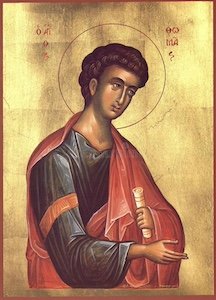
Saint Thomas was one of the fisherman on the Lake of Galilee whom Our Lord called to be His Apostles. By nature slow to believe, too apt to see difficulties and to look at the dark side of things, he had nonetheless a very sympathetic, loving, and courageous heart.
When Jesus spoke to His apostles of His forthcoming departure, and told His faithful disciples that they already knew the Way to follow Him, Saint Thomas, in his simplicity, asked: Lord, we know not whither Thou goest, and how can we know the way?
When the Master during a journey turned back to go toward Bethany, near Jerusalem, to the grave of Lazarus, the apostle Thomas, knowing of the malevolent intentions of the Jerusalem religious authorities, at once feared the worst for his beloved Lord. Yet he cried out bravely: Let us go then and die with Him!
After the Resurrection his doubts prevailed, and while the wounds of the crucifixion remained vividly imprinted in his affectionate memory, he could not credit the report that Christ had risen. But at the actual sight of the pierced hands and side, and the gentle rebuke of his Saviour, his unbelief vanished forever. His faith and ours have always triumphed in his joyous utterance: My Lord and my God!
That Saint Thomas, after the dispersion of the Apostles, went to India, where he labored and died at Meliapour, is a certain fact of history. The Roman Breviary states that he preached in Ethiopia and Abyssinia, as well as in Persia and Media. Surely his was a remarkable history, reserved for the inhabitants of Christ's glory to see in its fullness some day.
Before he died in Meliapour, he erected a very large cross and predicted to the people that when the sea would advance to the very foot of that cross, God would send them, from a far-distant land, white men who would preach to them the same doctrine he had taught them. This prophecy was verified when the Portuguese arrived in the region, and found that the ocean had advanced so far as to be truly at the foot of the cross. At the foot of this cross was a rock where Saint Thomas, while praying fervently, suffered his martyrdom by a blow from the lance of a pagan priest. This happened, according to the Roman Breviary, at Calamine, which is in fact Meliapour, for in the language of the people the word Calurmine means on the rock (mina). The name was given the site in memory of the Apostle's martyrdom.
Reflection: Cast away all disquieting doubts, and learn to triumph over outlived weaknesses as Saint Thomas did, who by his ignorance has instructed the ignorant, and by his incredulity has served the faith of all ages.
Little Pictorial Lives of the Saints, a compilation based on Butler's Lives of the Saints and other sources, by John Gilmary Shea (Benziger Brothers: New York, 1894); Les Petits Bollandistes: Vies des Saints, by Msgr. Paul Guérin (Bloud et Barral: Paris, 1882), Vol. 14
LAST-MODIFIED:20231209T122351Z SEQUENCE:36429145 X-ACCESS:1 X-HITS:2 X-COLOR:f0b80e X-SHOW-END-TIME:1 END:VEVENT BEGIN:VEVENT DTSTART;VALUE=DATE:20240101 DTEND;VALUE=DATE:20240102 UID:B12A8E5F-2D44-49FF-B081-E3C51EDD1DD5 SUMMARY:Circumcision CREATED:20221013T211126Z DTSTAMP:20221013T211126Z URL:https://www.stpaulsweymouth.org/component/dpcalendar/event/1110?calid=13 DESCRIPTION:Circumcision of Our Lord Jesus Christ\N\NCircumcision was a sacrament of the Old Law, and the first legal observance required of the descendants of Abraham by Almighty God. It was a sacrament of initiation in the service of God, and a promise, an engagement, to believe and act as He had revealed and directed. The law of circumcision continued in force until the death of Christ. Our Saviour having thus been born under the law, it became Him who came to teach mankind obedience to the law of God,to fulfill all justice, and to submit to it. He was circumcised that He might redeem those who were under the law, by freeing them from the servitude of it, and that those who were formerly in the condition of servants might be set at liberty and receive the adoption of sons in Baptism, which, by Christ's institution, succeeded to circumcision. (Cf. Gal. 4:5)\NOn the day when the divine Infant was circumcised, He received the name of JESUS, which was assigned to Him by the Angel before He was conceived, and which signifies SAVIOUR. That name, so beautiful, so glorious, the divine Child does not wish to bear for one moment without fulfilling its meaning. Even at the moment of His circumcision He showed Himself a SAVIOUR by shedding for us that blood of which a single drop is more than sufficient for the ransom and salvation of the whole world.\NReflection. Let us profit by the circumstance of the New Year, and of the wonderful renewal wrought in the world by the great mystery of this day, to renew in our hearts an increase of fervor and of generosity in the service of God. May this year be one of fervor and of progress! It will go by rapidly, like the one which has just ended. If God permits us to see its end, how happy we shall be to have passed it in a holy manner!\NLittle Pictorial Lives of the Saints, a compilation based on Butler's Lives of the Saints and other sources by John Gilmary Shea (Benziger Brothers: New York, 1894) X-ALT-DESC;FMTTYPE=text/html: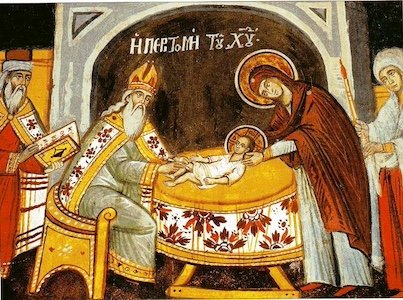
Circumcision was a sacrament of the Old Law, and the first legal observance required of the descendants of Abraham by Almighty God. It was a sacrament of initiation in the service of God, and a promise, an engagement, to believe and act as He had revealed and directed. The law of circumcision continued in force until the death of Christ. Our Saviour having thus been born under the law, it became Him who came to teach mankind obedience to the law of God,to fulfill all justice, and to submit to it. He was circumcised that He might redeem those who were under the law, by freeing them from the servitude of it, and that those who were formerly in the condition of servants might be set at liberty and receive the adoption of sons in Baptism, which, by Christ's institution, succeeded to circumcision. (Cf. Gal. 4:5)
On the day when the divine Infant was circumcised, He received the name of JESUS, which was assigned to Him by the Angel before He was conceived, and which signifies SAVIOUR. That name, so beautiful, so glorious, the divine Child does not wish to bear for one moment without fulfilling its meaning. Even at the moment of His circumcision He showed Himself a SAVIOUR by shedding for us that blood of which a single drop is more than sufficient for the ransom and salvation of the whole world.
Reflection. Let us profit by the circumstance of the New Year, and of the wonderful renewal wrought in the world by the great mystery of this day, to renew in our hearts an increase of fervor and of generosity in the service of God. May this year be one of fervor and of progress! It will go by rapidly, like the one which has just ended. If God permits us to see its end, how happy we shall be to have passed it in a holy manner!
Little Pictorial Lives of the Saints, a compilation based on Butler's Lives of the Saints and other sources by John Gilmary Shea (Benziger Brothers: New York, 1894)
LAST-MODIFIED:20231230T144604Z SEQUENCE:38252078 X-ACCESS:1 X-HITS:21 X-COLOR:f0b80e X-SHOW-END-TIME:1 END:VEVENT BEGIN:VEVENT DTSTART;VALUE=DATE:20240102 DTEND;VALUE=DATE:20240103 UID:DB599E7B-F220-4CD3-AA76-41FF97B885CD SUMMARY:The Most Holy Name of Jesus CREATED:20221013T211126Z DTSTAMP:20221013T211126Z URL:https://www.stpaulsweymouth.org/component/dpcalendar/event/1112?calid=13 DESCRIPTION:The Most Holy Name of Jesus\N\N“At that time, after eight days were accomplished that the Child should be circumcised, His name was called JESUS, which was called by the Angel before He was conceived in the womb.” (S. Luke 2, 21)\NWhy was He named Jesus? Because Jesus means Redeemer and Savior, and He had come to redeem and save the world. (St. Matthew 1:21) This is the holiest, most venerable, and most powerful name by which we can be saved.\NThis name has the greatest power, for it repels all attacks of the evil spirit, as Jesus Himself says. (St. Mark 16:17) And so great is the efficacy of this most holy name that even those who are not righteous, can by it expel devils. (St. Matth. 7:22) It has power to cure physical pains and evils, as when used by the Apostles (Acts 3:3-7) and Christ promised that the faithful by using it could do the same. (St. Mark 16:17)\NSt. Bernard calls the name of Jesus a “Medicine” and St. Chrysostom says, “This name cures all ills; it gives succor in all the ailments of the soul, in temptations, in faint-heartedness, in sorrow, and in all evil desires, etc.” “Let him who cannot excite contrition in his heart for the sins he has committed, think of the loving, meek, and suffering Jesus, invoke His holy name with fervor and confidence, and he will feel his heart touched and made better,” says St. Lawrence Justinian. It overcomes and dispels the temptations of the enemy: “When we fight against Satan in the name of Jesus,” says the martyr St. Justin, “Jesus fights for us, in us, and with us, and the enemies must flee as soon as they hear the name of Jesus.”\NIt secures us help and blessings in all corporal and spiritual necessities, because nothing is impossible to him who asks in the name of Jesus, whatever tends to his salvation will be given him. (St. John 14:13) Therefore it is useful above all things, to invoke this holy name in all dangers of body and soul, in doubts, in temptations, especially in temptations against holy chastity, and still more so when one has fallen into sin, from which he desires to be delivered; for this name is like oil (Cant. 1:2) which cures, nourishes, and illumines.\NTo experience its power, this holy name must be pronounced with lively faith, with steadfast, unshaken confidence, with deepest reverence and devotion, for in the name of Jesus every knee should bow, of those that are in Heaven, on earth, and under the earth. (Philipp. 2:10)\NWhat wickedness, then, is theirs who habitually pronounce this name carelessly and irreverently, upon every occasion! Such a habit is certainly diabolical; for the damned and the devils constantly abuse God and His holy name.\NWhy does this name so seldom manifest its power in our days? Because Christian faith is daily becoming weaker, and confidence less, while perfect submission to the will of God is wanting. When faith grows stronger among people, and confidence greater, then will the power of this most sacred name manifest itself in more wonderful and consoling aspects.\NPrayer to Jesus in difficulties\NO Jesus! Consolation of the afflicted! Thy name is indeed poured out like oil; for Thou dost illumine those who sit in darkness and in the shadow of death; Thou dost disperse the blindness of the soul and dost cure its ills; Thou givest food and drink to those who hunger and thirst after justice. Be also, O Jesus! My Savior, the physician of my soul, the healer of its wounds. O Jesus! Succor of those who are in need, be my protector in temptations! O Jesus! Father of the poor, do Thou nourish me! O Jesus! Joy of the Angels, do Thou comfort me! O Jesus! my only hope and refuge , be my helper in the hour of death, for there is given us no other name beneath the sun by which we may be saved, but Thy most blessed name Jesus!\NExhortation: St. Paul says: “All whatsoever you do in word or in work, all things do ye in the name of the Lord Jesus Christ.” (Coloss. 3:17) We should, therefore, follow the example of the Saints, and continually say, at least in our hearts: “For love of Thee, O Jesus, I rise; for love of Thee I lie down; for love of Thee I eat, drink, and enjoy myself; for love of Thee I work, speak, or am silent.” Thus we will accustom ourselves to do all in the name of Jesus, by which everything is easily or at least meritoriously accomplished.\NRev. Leonard Goffine, Explanation of the Epistles and Gospels, (Fr. Pustet & Co.: New York, 1880) X-ALT-DESC;FMTTYPE=text/html:
“At that time, after eight days were accomplished that the Child should be circumcised, His name was called JESUS, which was called by the Angel before He was conceived in the womb.” (S. Luke 2, 21)
Why was He named Jesus? Because Jesus means Redeemer and Savior, and He had come to redeem and save the world. (St. Matthew 1:21) This is the holiest, most venerable, and most powerful name by which we can be saved.
This name has the greatest power, for it repels all attacks of the evil spirit, as Jesus Himself says. (St. Mark 16:17) And so great is the efficacy of this most holy name that even those who are not righteous, can by it expel devils. (St. Matth. 7:22) It has power to cure physical pains and evils, as when used by the Apostles (Acts 3:3-7) and Christ promised that the faithful by using it could do the same. (St. Mark 16:17)
St. Bernard calls the name of Jesus a “Medicine” and St. Chrysostom says, “This name cures all ills; it gives succor in all the ailments of the soul, in temptations, in faint-heartedness, in sorrow, and in all evil desires, etc.” “Let him who cannot excite contrition in his heart for the sins he has committed, think of the loving, meek, and suffering Jesus, invoke His holy name with fervor and confidence, and he will feel his heart touched and made better,” says St. Lawrence Justinian. It overcomes and dispels the temptations of the enemy: “When we fight against Satan in the name of Jesus,” says the martyr St. Justin, “Jesus fights for us, in us, and with us, and the enemies must flee as soon as they hear the name of Jesus.”
It secures us help and blessings in all corporal and spiritual necessities, because nothing is impossible to him who asks in the name of Jesus, whatever tends to his salvation will be given him. (St. John 14:13) Therefore it is useful above all things, to invoke this holy name in all dangers of body and soul, in doubts, in temptations, especially in temptations against holy chastity, and still more so when one has fallen into sin, from which he desires to be delivered; for this name is like oil (Cant. 1:2) which cures, nourishes, and illumines.
To experience its power, this holy name must be pronounced with lively faith, with steadfast, unshaken confidence, with deepest reverence and devotion, for in the name of Jesus every knee should bow, of those that are in Heaven, on earth, and under the earth. (Philipp. 2:10)
What wickedness, then, is theirs who habitually pronounce this name carelessly and irreverently, upon every occasion! Such a habit is certainly diabolical; for the damned and the devils constantly abuse God and His holy name.
Why does this name so seldom manifest its power in our days? Because Christian faith is daily becoming weaker, and confidence less, while perfect submission to the will of God is wanting. When faith grows stronger among people, and confidence greater, then will the power of this most sacred name manifest itself in more wonderful and consoling aspects.
Prayer to Jesus in difficulties
O Jesus! Consolation of the afflicted! Thy name is indeed poured out like oil; for Thou dost illumine those who sit in darkness and in the shadow of death; Thou dost disperse the blindness of the soul and dost cure its ills; Thou givest food and drink to those who hunger and thirst after justice. Be also, O Jesus! My Savior, the physician of my soul, the healer of its wounds. O Jesus! Succor of those who are in need, be my protector in temptations! O Jesus! Father of the poor, do Thou nourish me! O Jesus! Joy of the Angels, do Thou comfort me! O Jesus! my only hope and refuge , be my helper in the hour of death, for there is given us no other name beneath the sun by which we may be saved, but Thy most blessed name Jesus!
Exhortation: St. Paul says: “All whatsoever you do in word or in work, all things do ye in the name of the Lord Jesus Christ.” (Coloss. 3:17) We should, therefore, follow the example of the Saints, and continually say, at least in our hearts: “For love of Thee, O Jesus, I rise; for love of Thee I lie down; for love of Thee I eat, drink, and enjoy myself; for love of Thee I work, speak, or am silent.” Thus we will accustom ourselves to do all in the name of Jesus, by which everything is easily or at least meritoriously accomplished.
Rev. Leonard Goffine, Explanation of the Epistles and Gospels, (Fr. Pustet & Co.: New York, 1880)
LAST-MODIFIED:20231230T145152Z SEQUENCE:38252426 X-ACCESS:1 X-HITS:133 X-COLOR:f0b80e X-SHOW-END-TIME:1 END:VEVENT BEGIN:VEVENT DTSTART;VALUE=DATE:20240105 DTEND;VALUE=DATE:20240106 UID:D2311C65-DDB6-48DE-8386-5A7A80FF7F81 SUMMARY:Vigil CREATED:20221013T211126Z DTSTAMP:20221013T211126Z URL:https://www.stpaulsweymouth.org/component/dpcalendar/event/1119?calid=13 DESCRIPTION:Vigil of Epiphany\N\NThe Feast of Christmas is over and we are on the Eve of the Solemnity of our Lord's Epiphany. We must spend this fifth of January in preparing ourselves for the Manifestation which Jesus, the Angel of the Great Counsel, is about to make to us of His glory. A few more hours, and the Star will stand still in the heavens, and the Magi will be seeking for admission into the stable at Bethlehem.This Vigil is not like that of Christmas, a day of penance. The Child, whose coming we were then awaiting, in the fervour of our humble desires, is now among us, preparing to bestow fresh favours upon us. This eve of tomorrow's Solemnity is a day of joy, like those that have preceded it; and therefore, we do not fast, nor does the Church put on the vestments of mourning. If the Office of the Vigil be the one of today, the colour used is White.This is the Twelfth day since the Birth of our Emmanuel. Let us, therefore, celebrate this Vigil in great joy of heart, and prepare our souls for tomorrow's graces.The last words of our Advent were those of the Spouse, recorded in the prophecy of the Beloved Disciple: Come, Lord Jesus, come! We will close this first part of our Christmas with those words of the Prophet Isaias, which the Church has so often spoken to us: unto us a Child is born! The heavens have dropped down their Dew, the clouds have rained down the Just One, the earth has yielded its Savior, The Word Is Made Flesh, the Virgin has brought forth her sweet Fruit--our Emmanuel, that is, God with us. The Sun of Justice now shines upon us; darkness has fled; in heaven there is Glory to God; on earth, there is Peace to men. All these blessings have been brought to us by the humble yet glorious Birth of this Child. Let us adore Him in His Crib; let us love Him for all His love of us; and let us prepare the gifts we intend to present to Him, with the Magi, on tomorrow's Feast. The joy of the Church is as great as ever; the Angels are adoring in their wondering admiration; all nature thrills with delight:--Unto us is born a little Child! X-ALT-DESC;FMTTYPE=text/html:
The Feast of Christmas is over and we are on the Eve of the Solemnity of our Lord's Epiphany. We must spend this fifth of January in preparing ourselves for the Manifestation which Jesus, the Angel of the Great Counsel, is about to make to us of His glory. A few more hours, and the Star will stand still in the heavens, and the Magi will be seeking for admission into the stable at Bethlehem.
This Vigil is not like that of Christmas, a day of penance. The Child, whose coming we were then awaiting, in the fervour of our humble desires, is now among us, preparing to bestow fresh favours upon us. This eve of tomorrow's Solemnity is a day of joy, like those that have preceded it; and therefore, we do not fast, nor does the Church put on the vestments of mourning. If the Office of the Vigil be the one of today, the colour used is White.
This is the Twelfth day since the Birth of our Emmanuel. Let us, therefore, celebrate this Vigil in great joy of heart, and prepare our souls for tomorrow's graces.
The last words of our Advent were those of the Spouse, recorded in the prophecy of the Beloved Disciple: Come, Lord Jesus, come! We will close this first part of our Christmas with those words of the Prophet Isaias, which the Church has so often spoken to us: unto us a Child is born! The heavens have dropped down their Dew, the clouds have rained down the Just One, the earth has yielded its Savior, The Word Is Made Flesh, the Virgin has brought forth her sweet Fruit--our Emmanuel, that is, God with us. The Sun of Justice now shines upon us; darkness has fled; in heaven there is Glory to God; on earth, there is Peace to men. All these blessings have been brought to us by the humble yet glorious Birth of this Child. Let us adore Him in His Crib; let us love Him for all His love of us; and let us prepare the gifts we intend to present to Him, with the Magi, on tomorrow's Feast. The joy of the Church is as great as ever; the Angels are adoring in their wondering admiration; all nature thrills with delight:--Unto us is born a little Child!
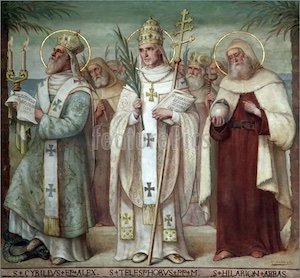
Historians today recognize Telesphorus as both Italian and Greek. Though he was born in the small town of Terra Nova, this town is close to Calabria and near several Greek regions. He was given the name Telesphorus at birth, which translates to accomplishing a goal in English. The future pope served as a bishop for several years and worked under multiple emperors.
Hermit
Many early books and records referred to Telesphorus as a hermit. Unlike the popes who came before him who lived in Rome for years, he preferred the company of nature and liked being on his own. Legend says that Telesphorus moved to a small home outside of Terra Nova near Mount Carmel and remained there until he felt a calling to the church. The time he spent in seclusion would shape his papacy as he often preferred being on his own to spending time with bishops and other religious leaders. Telesphorus also believed that his time in seclusion would help him assist others.
Fighting with Heretics
Once Telesphorus became pope, he found himself feuding with heretics in Rome. At that time, Rome was home to several groups that splintered off from the Christian Church. Some of those groups did not believe in the story of the Virgin Mother, and others claimed that Jesus was an ordinary man and not the Son of God. Telesphorus was forced to accept some of the changes that other religious leaders made to claim and keep his throne, including the creation of Easter and worshiping on Sundays.
Later Years
During the late second century, Irenæus sent a letter to Pope Victor where he wrote about Telesphorus. A fragment of this letter still exists. It states that previous popes and bishops often celebrated Easter on different days based on what dates corresponded to the Jewish calendar. Telesphorus decided to celebrate the date with a mass held on Sunday. Eusebius saved that letter for posterity. To force parishioners to follow their beliefs, bishops at the time often refused to give communion to those who worshiped or celebrated Easter on a different day. Telesphorus disagreed with this practice and granted communion to anyone.
Martyrdom
Not much is known about the martyrdom of Pope Telesphorus. Irenaeus testified that Telesphorus was a “glorious martyr” long before he appeared as a martyr in Liber Pontificalis. Church records often list his death and martyrdom date as January 5, 136, which is the same date listed as the elevation of Hyginus as the next pope. Telesphorus ruled as pope for 3,929 days in total.
Interesting Facts About Telesphorus
*Two of the more common movements attributed to Telesphorus include Midnight Mass and the addition of Gloria. Some believe that he was the first pope in history to celebrate Mass at midnight on Christmas and that he had parishioners sing that song. Other stories claim that he was the one who decided Lent would last for seven weeks.
*Though the Church considers other popes and individuals who lived during the second century as martyrs, Telesphorus is the only one who has written records to show he was a martyr. Most of the others are assumed martyrs due to legends and stories passed down through future generations.
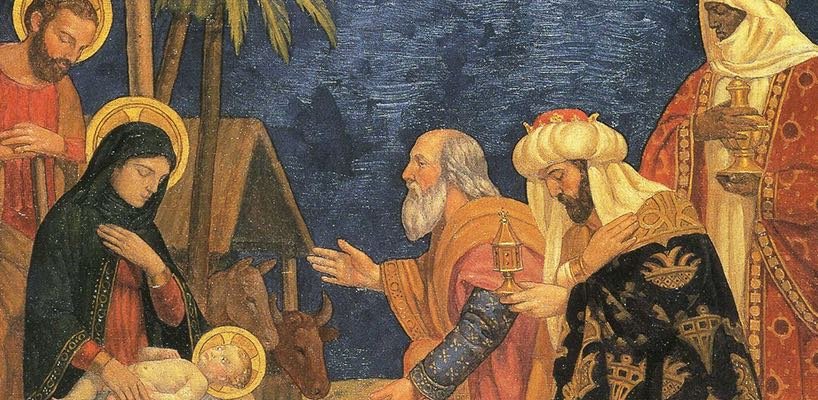
The word Epiphany means manifestation, and it has passed into general acceptance throughout the universal Church, from the fact that Jesus Christ manifested to the eyes of men His divine mission on this day first of all, when a miraculous star revealed His birth to the kings of the East. Thus was fulfilled the prophecy that a star would arise from Jacob. (Numbers 24:17) It was understood by these Wise Men that this star was announcing the Saviour-King, destined to be born of the Jews. And they, in spite of the difficulties and dangers of a long and tedious journey through deserts and mountains almost impassable, hastened at once to Bethlehem to adore Him. And there they offered Him mystical presents, as to the King of kings, to the God of heaven and earth, and to a Man whose human nature made Him mortal and subject to sufferings.
The second manifestation commemorated by this feast day occurred when He came forth from the waters of the Jordan after having received Baptism from the hands of Saint John, and the Holy Ghost descended on Him in the visible form of a dove. A voice from heaven was heard, saying, This is My beloved Son, in whom I am well pleased.
The third manifestation which the Church's liturgy recalls to us is that of the divine power of Jesus when, at the marriage-feast of Cana, by the first of His miracles He changed water into wine. And at the sight of this prodigy His disciples believed in His Divinity. These three great events, concurring to the same end, the Church has wished to celebrate in one and the same festival.
Reflection. Admire the almighty power of this little Child, who from His cradle makes known His coming to the shepherds and magi — to the shepherds by means of His Angel, to the magi by a star in the East. Admire the docility of these kings. Jesus is born: behold them at His feet! Let us be little, let us efface ourselves, and the divine strength will be granted to us. Let us be docile and quick in following divine inspirations, and we shall then become wise by the wisdom of God, powerful by His almighty power.
Little Pictorial Lives of the Saints, a compilation based on Butler's Lives of the Saints and other sources by John Gilmary Shea (Benziger Brothers: New York, 1894)
LAST-MODIFIED:20231230T145717Z SEQUENCE:38252751 X-ACCESS:1 X-HITS:15 X-COLOR:f0b80e X-SHOW-END-TIME:1 END:VEVENT BEGIN:VEVENT DTSTART;VALUE=DATE:20240111 DTEND;VALUE=DATE:20240112 UID:FD17E51D-C5FA-4D84-AAA2-FF548B324EEB SUMMARY:St. Hyginus CREATED:20221013T211126Z DTSTAMP:20221013T211126Z URL:https://www.stpaulsweymouth.org/component/dpcalendar/event/1121?calid=13 DESCRIPTION:St. Hyginus Pope, Martyr\N\NHe was placed in the chair of Saint Peter after the martyrdom of Saint Telesphorus in the year 139. Eusebius informs us that he sat for four years. The church then enjoyed some calm under the mild reign of the emperor Antoninus Pius. Unfortunately, however, several martyrs suffered in his time by the fury of the populace or the cruelty of certain magistrates. The emperor himself never consented to such proceedings. On the contrary, when informed of them by the governors of Asia, Athens, Thessalonica, and Larissa, he wrote to them in favor of the Christians, as is recorded by Saint Justin and Eusebius.\NBut the devil had recourse to other arts to disturb the peace of God’s church. Cerdo, a wolf in sheep’s clothing, in the year 140, came from Syria to Rome and began to teach the false principles, which Marcion adopted afterward with more success. He impiously affirmed that there were two Gods; the one rigorous and severe, the author of the Old Testament; the other merciful and good, the author of the New, and the father of Christ, sent by him to redeem man from the tyranny of the former; and that Christ was not really born of the Virgin Mary or true man, but such in shadow only and appearance. Our holy pope, by his pastoral vigilance, detected that monster and cut him off from the communion of the church. The heresiarch(1), imposing upon him by a false repentance, was again received, but the zealous pastor, having discovered that he secretly preached his old opinions, excommunicated him a second time.\NAnother minister of Satan was Valentine, who was a Platonic philosopher, puffed up with the vein opinion of his learning. So full of resentment for another is being preferred to him in an election to a certain bishopric in Egypt, as Tertullian relates, revived the errors of Simon Magus(2), and added to them many other absurd fictions, as of thirty eons or ages, a kind of inferior deities, with whimsical histories of their several pedigrees. Having broached these opinions at Alexandria, he left Egypt for Rome. At first, he dissembled his heresies, but his extravagant doctrines became known by degree. Hyginus, being the mildest of men, endeavored to reclaim him without proceeding to extremities; so that Valentine was not excommunicated before the first year of Saint Pius, his immediate successor.\NSaint Hyginus did not sit for quite four years, dying in 142. We do not find that he ended his life by martyrdom, yet he is styled a martyr in some ancient calendars, as well as in the present Roman Martyrology; undoubtedly on account of the various persecutions which he suffered and to which his high station in the church exposed him in those difficult times.\NButler, Alban. The Lives of the Fathers, Martyrs, and Other Principal Saints. Compiled from Original Monuments and Authentic Records, vol. 1. Dublin: James Duffy, 1866. X-ALT-DESC;FMTTYPE=text/html:
He was placed in the chair of Saint Peter after the martyrdom of Saint Telesphorus in the year 139. Eusebius informs us that he sat for four years. The church then enjoyed some calm under the mild reign of the emperor Antoninus Pius. Unfortunately, however, several martyrs suffered in his time by the fury of the populace or the cruelty of certain magistrates. The emperor himself never consented to such proceedings. On the contrary, when informed of them by the governors of Asia, Athens, Thessalonica, and Larissa, he wrote to them in favor of the Christians, as is recorded by Saint Justin and Eusebius.
But the devil had recourse to other arts to disturb the peace of God’s church. Cerdo, a wolf in sheep’s clothing, in the year 140, came from Syria to Rome and began to teach the false principles, which Marcion adopted afterward with more success. He impiously affirmed that there were two Gods; the one rigorous and severe, the author of the Old Testament; the other merciful and good, the author of the New, and the father of Christ, sent by him to redeem man from the tyranny of the former; and that Christ was not really born of the Virgin Mary or true man, but such in shadow only and appearance. Our holy pope, by his pastoral vigilance, detected that monster and cut him off from the communion of the church. The heresiarch(1), imposing upon him by a false repentance, was again received, but the zealous pastor, having discovered that he secretly preached his old opinions, excommunicated him a second time.
Another minister of Satan was Valentine, who was a Platonic philosopher, puffed up with the vein opinion of his learning. So full of resentment for another is being preferred to him in an election to a certain bishopric in Egypt, as Tertullian relates, revived the errors of Simon Magus(2), and added to them many other absurd fictions, as of thirty eons or ages, a kind of inferior deities, with whimsical histories of their several pedigrees. Having broached these opinions at Alexandria, he left Egypt for Rome. At first, he dissembled his heresies, but his extravagant doctrines became known by degree. Hyginus, being the mildest of men, endeavored to reclaim him without proceeding to extremities; so that Valentine was not excommunicated before the first year of Saint Pius, his immediate successor.
Saint Hyginus did not sit for quite four years, dying in 142. We do not find that he ended his life by martyrdom, yet he is styled a martyr in some ancient calendars, as well as in the present Roman Martyrology; undoubtedly on account of the various persecutions which he suffered and to which his high station in the church exposed him in those difficult times.
Butler, Alban. The Lives of the Fathers, Martyrs, and Other Principal Saints. Compiled from Original Monuments and Authentic Records, vol. 1. Dublin: James Duffy, 1866.
LAST-MODIFIED:20240113T144111Z SEQUENCE:39461385 X-ACCESS:1 X-HITS:39 X-COLOR:f0b80e X-SHOW-END-TIME:1 END:VEVENT BEGIN:VEVENT DTSTART;VALUE=DATE:20240113 DTEND;VALUE=DATE:20240114 UID:FEA1C6D5-0C21-4B6A-82A0-59ABCF895D94 SUMMARY:The Baptism of Christ CREATED:20221013T211126Z DTSTAMP:20221013T211126Z URL:https://www.stpaulsweymouth.org/component/dpcalendar/event/1123?calid=13 DESCRIPTION:The Baptism of Our Lord Jesus Christ\N\NIn the life of Christ, His baptism in the Jordan is an event of the highest importance, because it represents a significant phase in the work of redemption. We know that the liturgy of the ecclesiastical year commemorates all the phases of Christ's redemptive work; and recently, during the season of the Nativity, we have reflected on His coming into the world, poor and solitary in a grotto at Bethlehem, and on His circumcision. Now His baptism in the Jordan marks the divinely inaugurated beginning of Our Lord's public life. Indeed, Saint Peter states that at His baptism, in fulfillment of the prophecy of Daniel, He was anointed by the Holy Spirit as the Christ, the Messiah, which means the Anointed One: God anointed Jesus of Nazareth with the Holy Spirit and with power, and He went about doing good and healing all who were in the power of the devil, for God was with Him. (Acts 10:38) An anointing has always been the symbolic, visible representation of an intimately established union, a specific, defined alliance or covenant between God and one of His servants. God the Father speaks at this moment, to make clear who this Person is. The foretold Saviour is His Divine Son, begotten from all eternity: This is My Beloved Son, in whom I am well pleased.\NIn the symbolism of His baptism, Christ, Himself immaculate, assumes the sins of the world, descends into the purifying waters, and raises mankind to divine sonship. His baptism was vicarious in nature; He stands in the Jordan in our stead. Consequently, this act must find its complement in our personal redemption. Our lives are profoundly altered through Christ's redemptive sacrifice, on at least three such occasions: our Baptism, our attendance at Holy Mass, and our death in Christ.\NAt our Baptism we were immersed with Jesus, with Him we died and were buried. Then we emerged, and for the first time heaven opened to us, as the Holy Spirit made His advent into our soul, and our Father in heaven looked down upon us, now His sons, His children.\NIn each Holy Mass, Christ's baptismal offering is again operative. Through the Holy Sacrifice we are immersed in His sacrificial death; heaven then opens and the Holy Spirit descends through Holy Communion. Through the pledge of the sacrificial Banquet the Father assures us of renewed and enriched sonship in Christ.\NThe baptism of Christ is accomplished within us a third time at our death, if we are united with Him, for death is indeed a sort of baptism. Death is like immersion into the dark depths, but when we receive the Last Sacraments, on emerging, it is to a different life — it is our hope and our confidence, if we have been faithful to God's grace, that it will be the life of glory, the beatific vision. Then we will see the Blessed Trinity, no longer through the darkened sun-glass of faith, but in immediate vision, face to face.\NTo sum up, today's liturgy helps us to understand more clearly the basic structure of spiritual life, the redemptive acts of Christ. Upon that foundation the edifice rises through the Sacraments of Baptism and the Eucharist, while the Lord's return, at our death, brings completion to the work. X-ALT-DESC;FMTTYPE=text/html: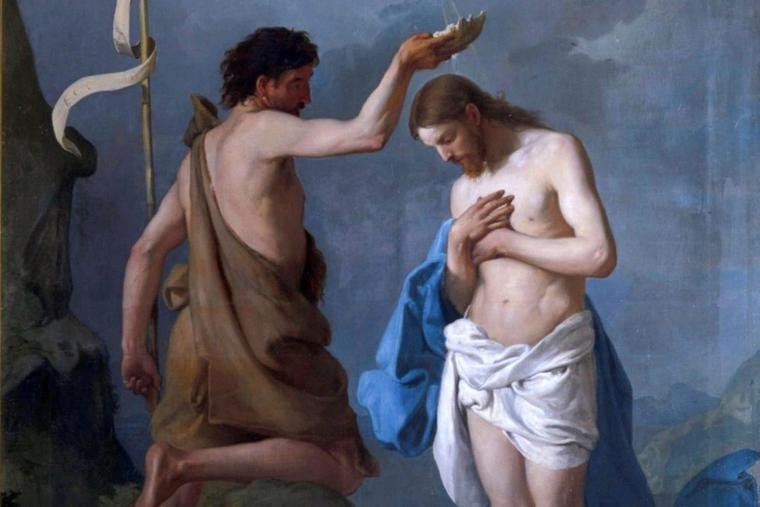
In the life of Christ, His baptism in the Jordan is an event of the highest importance, because it represents a significant phase in the work of redemption. We know that the liturgy of the ecclesiastical year commemorates all the phases of Christ's redemptive work; and recently, during the season of the Nativity, we have reflected on His coming into the world, poor and solitary in a grotto at Bethlehem, and on His circumcision. Now His baptism in the Jordan marks the divinely inaugurated beginning of Our Lord's public life. Indeed, Saint Peter states that at His baptism, in fulfillment of the prophecy of Daniel, He was anointed by the Holy Spirit as the Christ, the Messiah, which means the Anointed One: God anointed Jesus of Nazareth with the Holy Spirit and with power, and He went about doing good and healing all who were in the power of the devil, for God was with Him. (Acts 10:38) An anointing has always been the symbolic, visible representation of an intimately established union, a specific, defined alliance or covenant between God and one of His servants. God the Father speaks at this moment, to make clear who this Person is. The foretold Saviour is His Divine Son, begotten from all eternity: This is My Beloved Son, in whom I am well pleased.
In the symbolism of His baptism, Christ, Himself immaculate, assumes the sins of the world, descends into the purifying waters, and raises mankind to divine sonship. His baptism was vicarious in nature; He stands in the Jordan in our stead. Consequently, this act must find its complement in our personal redemption. Our lives are profoundly altered through Christ's redemptive sacrifice, on at least three such occasions: our Baptism, our attendance at Holy Mass, and our death in Christ.
At our Baptism we were immersed with Jesus, with Him we died and were buried. Then we emerged, and for the first time heaven opened to us, as the Holy Spirit made His advent into our soul, and our Father in heaven looked down upon us, now His sons, His children.
In each Holy Mass, Christ's baptismal offering is again operative. Through the Holy Sacrifice we are immersed in His sacrificial death; heaven then opens and the Holy Spirit descends through Holy Communion. Through the pledge of the sacrificial Banquet the Father assures us of renewed and enriched sonship in Christ.
The baptism of Christ is accomplished within us a third time at our death, if we are united with Him, for death is indeed a sort of baptism. Death is like immersion into the dark depths, but when we receive the Last Sacraments, on emerging, it is to a different life — it is our hope and our confidence, if we have been faithful to God's grace, that it will be the life of glory, the beatific vision. Then we will see the Blessed Trinity, no longer through the darkened sun-glass of faith, but in immediate vision, face to face.
To sum up, today's liturgy helps us to understand more clearly the basic structure of spiritual life, the redemptive acts of Christ. Upon that foundation the edifice rises through the Sacraments of Baptism and the Eucharist, while the Lord's return, at our death, brings completion to the work.
LAST-MODIFIED:20240113T144434Z SEQUENCE:39461588 X-ACCESS:1 X-HITS:3 X-COLOR:f0b80e X-SHOW-END-TIME:1 END:VEVENT BEGIN:VEVENT DTSTART;VALUE=DATE:20240114 DTEND;VALUE=DATE:20240115 UID:CFFAD2C0-6237-42C3-83E8-01EFCE4EA0A8 SUMMARY:St. Hilary CREATED:20221013T211126Z DTSTAMP:20221013T211126Z URL:https://www.stpaulsweymouth.org/component/dpcalendar/event/1125?calid=13 DESCRIPTION:St. Hilary of Poitiers, Bishop, Confessor, and Doctor of the Church\N\NSaint Hilary was a native of Poitiers in Aquitaine. Born and educated a pagan, it was not until near middle age that he embraced Christianity, moved to that step primarily by the idea of God presented to him in the Holy Scriptures. He soon converted his wife and daughter, and separated himself rigidly from all non-Catholic company, fearing the influence of error, rampant in a number of false philosophies and heresies, for himself and his family.\NHe entered Holy Orders with the consent of his very virtuous wife, and separated from his family as was required of the clergy. He later wrote a very famous letter to his dearly-loved daughter, encouraging her to adopt a consecrated life. She followed this counsel and died, still young, a holy death.\NIn 353 Saint Hilary was chosen bishop of his native city. Arianism, under the protection of the Emperor Constantius, was then at the heights of its exaltation, and Saint Hilary found himself called upon to support the orthodox cause in several Gallic councils, in which Arian bishops formed an overwhelming majority. He was in consequence accused to the emperor, who banished him to Phrygia. He spent his more than three years of exile in composing his great works on the Trinity.\NIn 359 he attended the Council of Seleucia, in which Arians, semi-Arians, and Catholics contended for the mastery. He never ceased his combat against the errors of the enemies of the Divinity of Christ. With the deputies of the council he went to Constantinople, and there so dismayed the heads of the Arian party that they prevailed upon the emperor to let him return to Gaul. He traversed Gaul, Italy and Illyria, preaching wherever he went, disconcerting the heretics and procuring the triumph of orthodoxy. He wrote a famous treatise on the Synods. After some eight years of missionary travel he returned to Poitiers, where he died in peace in 368.\NReflection. Like Saint Hilary, nearly every Christian has always lived amid unbelievers and heretics. We are called to a lifelong contest, and shall succeed in the measure we combine abhorrence of error with compassion for its victims.\NLittle Pictorial Lives of the Saints, a compilation based on Butler's Lives of the Saints and other sources by John Gilmary Shea (Benziger Brothers: New York, 1894). X-ALT-DESC;FMTTYPE=text/html:
Saint Hilary was a native of Poitiers in Aquitaine. Born and educated a pagan, it was not until near middle age that he embraced Christianity, moved to that step primarily by the idea of God presented to him in the Holy Scriptures. He soon converted his wife and daughter, and separated himself rigidly from all non-Catholic company, fearing the influence of error, rampant in a number of false philosophies and heresies, for himself and his family.
He entered Holy Orders with the consent of his very virtuous wife, and separated from his family as was required of the clergy. He later wrote a very famous letter to his dearly-loved daughter, encouraging her to adopt a consecrated life. She followed this counsel and died, still young, a holy death.
In 353 Saint Hilary was chosen bishop of his native city. Arianism, under the protection of the Emperor Constantius, was then at the heights of its exaltation, and Saint Hilary found himself called upon to support the orthodox cause in several Gallic councils, in which Arian bishops formed an overwhelming majority. He was in consequence accused to the emperor, who banished him to Phrygia. He spent his more than three years of exile in composing his great works on the Trinity.
In 359 he attended the Council of Seleucia, in which Arians, semi-Arians, and Catholics contended for the mastery. He never ceased his combat against the errors of the enemies of the Divinity of Christ. With the deputies of the council he went to Constantinople, and there so dismayed the heads of the Arian party that they prevailed upon the emperor to let him return to Gaul. He traversed Gaul, Italy and Illyria, preaching wherever he went, disconcerting the heretics and procuring the triumph of orthodoxy. He wrote a famous treatise on the Synods. After some eight years of missionary travel he returned to Poitiers, where he died in peace in 368.
Reflection. Like Saint Hilary, nearly every Christian has always lived amid unbelievers and heretics. We are called to a lifelong contest, and shall succeed in the measure we combine abhorrence of error with compassion for its victims.
Little Pictorial Lives of the Saints, a compilation based on Butler's Lives of the Saints and other sources by John Gilmary Shea (Benziger Brothers: New York, 1894).
LAST-MODIFIED:20240113T144933Z SEQUENCE:39461887 X-ACCESS:1 X-HITS:138 X-COLOR:f0b80e X-SHOW-END-TIME:1 END:VEVENT BEGIN:VEVENT DTSTART;VALUE=DATE:20240114 DTEND;VALUE=DATE:20240115 UID:C026D55A-A3EC-4BE4-ACDF-7D718B1D9C6A SUMMARY:St. Felix CREATED:20221013T211126Z DTSTAMP:20221013T211126Z URL:https://www.stpaulsweymouth.org/component/dpcalendar/event/1127?calid=13 DESCRIPTION:St. Felix of Nola, Priest and Martyr\N\N(St. Felix was arrested and tortured for his Christian faith during the persecution of Roman Emperor Decius (r. 249–251). He was believed to have died a martyr's death during the persecution of Decius or Valerian (c. 253) but is now listed in the General Roman Calendar as a confessor of the faith, who survived his tortures.)\NSaint Felix was a native of Nola, a Roman colony in Campania, fourteen miles from Naples, where his father Hermias, who was by birth a Syrian and had served in the army, had purchased an estate and settled himself. He had two sons, Felix and Hermias, to whom he left his inheritance at his death. The younger sought advancement in the world among the lovers of vanity by following the profession of arms, which was the surest road to riches and honors at that time. But, to become what his name in Latin imported, that is happy, Felix resolved to follow no other standard than that of the King of kings, Jesus Christ. For this purpose, despising all earthly things, lest the love of them might entangle his soul, he distributed the better part of his substance among the poor and was ordained Reader Exorcist and, lastly, a priest by Maximus, the holy bishop of Nola; who, charmed with his sanctity and prudence, made him his principal support in those times of trouble, and designed him for his successor.\NIn the year 250, the emperor Decius(1) raised a bloody persecution against the church. Maximus, seeing himself principally aimed at, retired into the desert, not through the fear of death, which he desired, but rather not to tempt God by seeking it and to preserve himself for the service of his flock. The persecutors, not finding him, seized on Felix, who, in his absence, was very vigilant in discharging all his pastoral duties. The governor caused him to be scourged; then loaded with bolts and chains about his neck, hands, and legs and cast into a dungeon, in which, as Saint Prudentius informs us, the floor was spread all over with potsherds and pieces of broken glass, so that there was no place free from them, on which the saint could either stand or lie. One night an angel appeared in great glory, filled the prison with a bright light, and bade Saint Felix go and assist his bishop, who was in great distress. The confessor seeing his chains fall off and the doors open, followed his guide and was conducted by heaven to the place where Maximus lay, almost perished with hunger and cold, speechless, and without sense: for, through anxiety for his flock, and the hardships of his solitary retreat, he had suffered more than martyrdom. Not being able to bring him to himself, Felix had recourse to prayer; discovering a bunch of grapes within reach, he squeezed some of the juice into his mouth, which had the desired effect. The good bishop no sooner beheld his friend Felix, but he embraced him and begged to be conveyed back to his church. The saint taking him on his shoulders, carried him to his episcopal house in the city before day appeared, where a pious ancient woman took care of him.\NWith the blessing of his pastor, Felix repaired secretly to his lodgings and there kept himself concealed, praying for the church without ceasing, till peace was restored to it by the death of Decius in the year 251. He no sooner appeared again in public, but his zeal so exasperated the pagans that they came armed to apprehend him; but though they met him, they knew him not; they even asked him where Felix was, a question he did not think proper to give a direct answer! The persecutors going a little further perceived their mistake and returned, but in the meantime, the saint had stepped a little out of the way and crept through a hole in a ruinous old wall, instantly closed by spider webs. His enemies, never imagining anything could have lately passed where they saw so close a spiders’ web after a fruitless search elsewhere, returned in the evening without their prey. Felix found among the ruins, between two houses, an old well half dry, hid in it for six months; and received money to exist through a devout Christian woman. Peace was restored to the church by the emperor’s death, the saint quitted his retreat, and was received in the city as an angel sent from heaven.\NSoon after, with Saint Maximus dying, all were unanimous on electing Felix as bishop. Still, he persuaded the people to choose Quintus because the older priest of the two had been ordained seven days before him. Quintus, when bishop, always respected Saint Felix as his father and followed his every advice. The remainder of the saint’s estate having been confiscated in the persecution, he was advised to lay claim to it, as others had done, who thereby recovered what had been taken from them. He answered that he should be more secure in possessing Christ in poverty. He could not even be prevailed upon to accept what the rich offered him. He rented a little spot of barren land, not exceeding three acres, which he tilled with his own hands in such manner as to receive his subsistence from it and to have something left for alms. Whatever was bestowed on him, he gave immediately to the poor. If he had two coats, he was sure to provide them with the better; and often exchanged his only one for the rags of some beggar. He died in a good old age on the fourteenth of January, on which day the Martyrology, under the name of Saint Jerome, and all others of later date mention him. Five churches have been built at or near where he was first interred, without the precincts of the city of Nola. His precious remains are kept in the cathedral, but certain portions are in Rome, Benevento, and other places. Pope Damasus, in a pilgrimage which he made from Rome to Nola, to the shrine of this saint, professes, in a short poem which he composed in acknowledgment, that he was miraculously cured of a distemper through his intercession. X-ALT-DESC;FMTTYPE=text/html: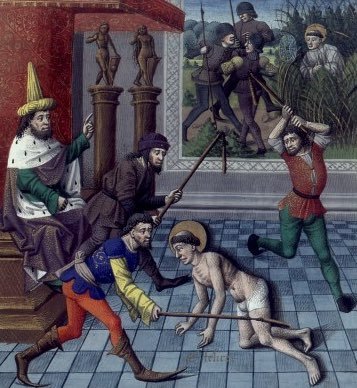
(St. Felix was arrested and tortured for his Christian faith during the persecution of Roman Emperor Decius (r. 249–251). He was believed to have died a martyr's death during the persecution of Decius or Valerian (c. 253) but is now listed in the General Roman Calendar as a confessor of the faith, who survived his tortures.)
Saint Felix was a native of Nola, a Roman colony in Campania, fourteen miles from Naples, where his father Hermias, who was by birth a Syrian and had served in the army, had purchased an estate and settled himself. He had two sons, Felix and Hermias, to whom he left his inheritance at his death. The younger sought advancement in the world among the lovers of vanity by following the profession of arms, which was the surest road to riches and honors at that time. But, to become what his name in Latin imported, that is happy, Felix resolved to follow no other standard than that of the King of kings, Jesus Christ. For this purpose, despising all earthly things, lest the love of them might entangle his soul, he distributed the better part of his substance among the poor and was ordained Reader Exorcist and, lastly, a priest by Maximus, the holy bishop of Nola; who, charmed with his sanctity and prudence, made him his principal support in those times of trouble, and designed him for his successor.
In the year 250, the emperor Decius(1) raised a bloody persecution against the church. Maximus, seeing himself principally aimed at, retired into the desert, not through the fear of death, which he desired, but rather not to tempt God by seeking it and to preserve himself for the service of his flock. The persecutors, not finding him, seized on Felix, who, in his absence, was very vigilant in discharging all his pastoral duties. The governor caused him to be scourged; then loaded with bolts and chains about his neck, hands, and legs and cast into a dungeon, in which, as Saint Prudentius informs us, the floor was spread all over with potsherds and pieces of broken glass, so that there was no place free from them, on which the saint could either stand or lie. One night an angel appeared in great glory, filled the prison with a bright light, and bade Saint Felix go and assist his bishop, who was in great distress. The confessor seeing his chains fall off and the doors open, followed his guide and was conducted by heaven to the place where Maximus lay, almost perished with hunger and cold, speechless, and without sense: for, through anxiety for his flock, and the hardships of his solitary retreat, he had suffered more than martyrdom. Not being able to bring him to himself, Felix had recourse to prayer; discovering a bunch of grapes within reach, he squeezed some of the juice into his mouth, which had the desired effect. The good bishop no sooner beheld his friend Felix, but he embraced him and begged to be conveyed back to his church. The saint taking him on his shoulders, carried him to his episcopal house in the city before day appeared, where a pious ancient woman took care of him.
With the blessing of his pastor, Felix repaired secretly to his lodgings and there kept himself concealed, praying for the church without ceasing, till peace was restored to it by the death of Decius in the year 251. He no sooner appeared again in public, but his zeal so exasperated the pagans that they came armed to apprehend him; but though they met him, they knew him not; they even asked him where Felix was, a question he did not think proper to give a direct answer! The persecutors going a little further perceived their mistake and returned, but in the meantime, the saint had stepped a little out of the way and crept through a hole in a ruinous old wall, instantly closed by spider webs. His enemies, never imagining anything could have lately passed where they saw so close a spiders’ web after a fruitless search elsewhere, returned in the evening without their prey. Felix found among the ruins, between two houses, an old well half dry, hid in it for six months; and received money to exist through a devout Christian woman. Peace was restored to the church by the emperor’s death, the saint quitted his retreat, and was received in the city as an angel sent from heaven.
Soon after, with Saint Maximus dying, all were unanimous on electing Felix as bishop. Still, he persuaded the people to choose Quintus because the older priest of the two had been ordained seven days before him. Quintus, when bishop, always respected Saint Felix as his father and followed his every advice. The remainder of the saint’s estate having been confiscated in the persecution, he was advised to lay claim to it, as others had done, who thereby recovered what had been taken from them. He answered that he should be more secure in possessing Christ in poverty. He could not even be prevailed upon to accept what the rich offered him. He rented a little spot of barren land, not exceeding three acres, which he tilled with his own hands in such manner as to receive his subsistence from it and to have something left for alms. Whatever was bestowed on him, he gave immediately to the poor. If he had two coats, he was sure to provide them with the better; and often exchanged his only one for the rags of some beggar. He died in a good old age on the fourteenth of January, on which day the Martyrology, under the name of Saint Jerome, and all others of later date mention him. Five churches have been built at or near where he was first interred, without the precincts of the city of Nola. His precious remains are kept in the cathedral, but certain portions are in Rome, Benevento, and other places. Pope Damasus, in a pilgrimage which he made from Rome to Nola, to the shrine of this saint, professes, in a short poem which he composed in acknowledgment, that he was miraculously cured of a distemper through his intercession.
LAST-MODIFIED:20240113T145751Z SEQUENCE:39462385 X-ACCESS:1 X-HITS:16 X-COLOR:f0b80e X-SHOW-END-TIME:1 END:VEVENT BEGIN:VEVENT DTSTART;VALUE=DATE:20240115 DTEND;VALUE=DATE:20240116 UID:B19258A7-9C79-4CB5-B8F2-C0086E93D2E1 SUMMARY:St. Paul Hermit CREATED:20221013T211126Z DTSTAMP:20221013T211126Z URL:https://www.stpaulsweymouth.org/component/dpcalendar/event/1129?calid=13 DESCRIPTION:St. Paul the First Hermit, Confessor\N\NSaint Paul was born in Upper Egypt in about the year 229, and became an orphan at the age of fifteen. He was very rich and highly educated. Fearing lest the tortures of a terrible persecution might endanger his Christian perseverance, he retired into a remote village. But his pagan brother-in-law denounced him, and Saint Paul, rather than remain where his faith was in danger, entered the barren desert, trusting that God would supply his wants. And his confidence was rewarded; for on the spot to which Providence led him he found the fruit of a palm-tree for food, its leaves for clothing, and the water of a spring for drink.\NHis first plan was to return to the world when the persecution was over; but tasting great delights in prayer and penance, he remained for the rest of his life, ninety years, in penance, prayer and contemplation.\NGod revealed his existence to Saint Anthony, who sought him for three days. Seeing a thirsty she-wolf run through an opening in the rocks, Anthony followed her to look for water and found Paul. They knew each other at once, and praised God together. While Saint Anthony was visiting him, a raven brought them a loaf of bread, and Saint Paul said, See how good God is! For sixty years this bird has brought me half a loaf each day; now at your coming, Christ has doubled the provision for His servants.\NThe two religious passed the night in prayer, then at dawn Paul told Anthony that he was about to die, and asked to be buried in the cloak given to Anthony by Saint Athanasius. He asked him this to show that he was dying in communion with Saint Athanasius, the invincible defender of the Faith against the Arian heresy. Anthony hastened back to fetch it, and when he was returning to Paul he saw his co-hermit rising to heaven in glory. He found his dead body kneeling as in prayer, and saw two lions come and dig his grave. Saint Paul, The Patriarch of Hermits, died in his one hundred and thirteenth year.\NReflection. Never shall we trust in ourselves without being deceived, but we shall never repent of having trusted in God, for He cannot fail those who depend upon Him.\NLittle Pictorial Lives of the Saints, a compilation based on Butler's Lives of the Saints and other sources by John Gilmary Shea (Benziger Brothers: New York, 1894); Lives of the Desert Fathers, their Spiritual Doctrine and Monastic Discipline, by Fr. Michel-Ange Marin (Magnificat: St. Jovite, 1991) X-ALT-DESC;FMTTYPE=text/html: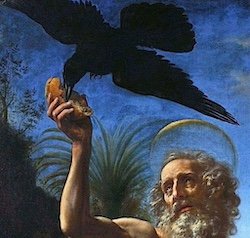
Saint Paul was born in Upper Egypt in about the year 229, and became an orphan at the age of fifteen. He was very rich and highly educated. Fearing lest the tortures of a terrible persecution might endanger his Christian perseverance, he retired into a remote village. But his pagan brother-in-law denounced him, and Saint Paul, rather than remain where his faith was in danger, entered the barren desert, trusting that God would supply his wants. And his confidence was rewarded; for on the spot to which Providence led him he found the fruit of a palm-tree for food, its leaves for clothing, and the water of a spring for drink.
His first plan was to return to the world when the persecution was over; but tasting great delights in prayer and penance, he remained for the rest of his life, ninety years, in penance, prayer and contemplation.
God revealed his existence to Saint Anthony, who sought him for three days. Seeing a thirsty she-wolf run through an opening in the rocks, Anthony followed her to look for water and found Paul. They knew each other at once, and praised God together. While Saint Anthony was visiting him, a raven brought them a loaf of bread, and Saint Paul said, See how good God is! For sixty years this bird has brought me half a loaf each day; now at your coming, Christ has doubled the provision for His servants.
The two religious passed the night in prayer, then at dawn Paul told Anthony that he was about to die, and asked to be buried in the cloak given to Anthony by Saint Athanasius. He asked him this to show that he was dying in communion with Saint Athanasius, the invincible defender of the Faith against the Arian heresy. Anthony hastened back to fetch it, and when he was returning to Paul he saw his co-hermit rising to heaven in glory. He found his dead body kneeling as in prayer, and saw two lions come and dig his grave. Saint Paul, The Patriarch of Hermits, died in his one hundred and thirteenth year.
Reflection. Never shall we trust in ourselves without being deceived, but we shall never repent of having trusted in God, for He cannot fail those who depend upon Him.
Little Pictorial Lives of the Saints, a compilation based on Butler's Lives of the Saints and other sources by John Gilmary Shea (Benziger Brothers: New York, 1894); Lives of the Desert Fathers, their Spiritual Doctrine and Monastic Discipline, by Fr. Michel-Ange Marin (Magnificat: St. Jovite, 1991)
LAST-MODIFIED:20240113T150345Z SEQUENCE:39462739 X-ACCESS:1 X-HITS:4 X-COLOR:f0b80e X-SHOW-END-TIME:1 END:VEVENT BEGIN:VEVENT DTSTART;VALUE=DATE:20240115 DTEND;VALUE=DATE:20240116 UID:BFF5B645-3C71-4003-9EA9-AD9C5D889550 SUMMARY:St. Maurus CREATED:20221013T211126Z DTSTAMP:20221013T211126Z URL:https://www.stpaulsweymouth.org/component/dpcalendar/event/1131?calid=13 DESCRIPTION:St. Maurus Abbot\N\NSaint Maurus Benedictine Abbot and Deacon, miracle-worker. Maurus was the son of Equitius, a nobleman of Rome, and was born about the year 510 and died in 584. When he was about twelve years old, his father placed him under the care of St Benedict at Subiaco, to be educated in piety and learning. When he had grown up, St Benedict chose him as his co-adjutor in the government of the Monastery. He was a model of perfection to all his brethren but especially in the virtue of obedience.\NSt Placidus, one of his fellow disciples, the son of the Senator Tertullus, going one day to draw water, fell into the lake and was at once carried away by the current. St Benedict saw this in spirit in his cell and bade Maurus run and draw him out. Having asked and received the holy Father’s blessing, Maurus hastened down to the lake, walked upon the waters, thinking he was on dry land and dragged Placid out by the hair, without sinking in the least himself. He attributed the miracle to the command and prayers of St Benedict but the holy Abbot, to the obedience of the disciple.\NSt Maurus was sent to France in 543 to propagate the order of St Benedict in that country. He founded the famous Abbey of Glanfeuil, over which he ruled as Abbot for thirty-eight years. In 581 he resigned the Abbacy, built for himself a small cell near the Church of St Martin, so that, in solitude and prayer, he might prepare himself for his passage into eternity. After two years he fell sick of a fever, he received the Sacraments of the Church, lying on sackcloth before the Altar of St Martin and in that posture expired on 15 January 584.\NSt Maurus was favoured by God with the gift of miracles and restored to health those who were stricken with a grievous affliction. \NHe would bless the sick with the Relic of the Holy Cross, and then say: “O God, the Creator of all things, you ordained that Your only Son should take flesh of the Virgin Mary by the power of the Holy Spirit, for the restoration of your people and You deigned to heal the wounds and infirmities of our souls, by the redemption accomplished upon the sacred and glorious wood of the life-giving Cross, do you also vouchsafe through this powerful Sign, to restore health to your servant.” X-ALT-DESC;FMTTYPE=text/html: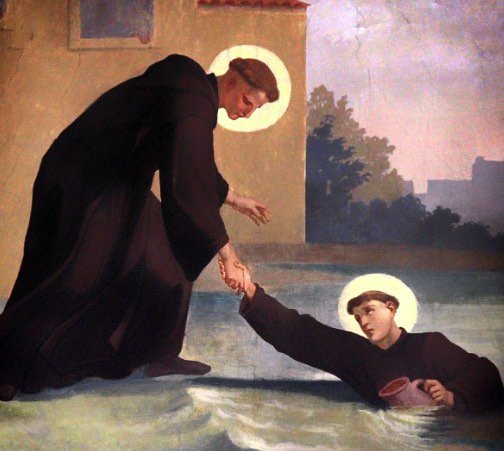
Saint Maurus Benedictine Abbot and Deacon, miracle-worker. Maurus was the son of Equitius, a nobleman of Rome, and was born about the year 510 and died in 584. When he was about twelve years old, his father placed him under the care of St Benedict at Subiaco, to be educated in piety and learning. When he had grown up, St Benedict chose him as his co-adjutor in the government of the Monastery. He was a model of perfection to all his brethren but especially in the virtue of obedience.
St Placidus, one of his fellow disciples, the son of the Senator Tertullus, going one day to draw water, fell into the lake and was at once carried away by the current. St Benedict saw this in spirit in his cell and bade Maurus run and draw him out. Having asked and received the holy Father’s blessing, Maurus hastened down to the lake, walked upon the waters, thinking he was on dry land and dragged Placid out by the hair, without sinking in the least himself. He attributed the miracle to the command and prayers of St Benedict but the holy Abbot, to the obedience of the disciple.
St Maurus was sent to France in 543 to propagate the order of St Benedict in that country. He founded the famous Abbey of Glanfeuil, over which he ruled as Abbot for thirty-eight years. In 581 he resigned the Abbacy, built for himself a small cell near the Church of St Martin, so that, in solitude and prayer, he might prepare himself for his passage into eternity. After two years he fell sick of a fever, he received the Sacraments of the Church, lying on sackcloth before the Altar of St Martin and in that posture expired on 15 January 584.
St Maurus was favoured by God with the gift of miracles and restored to health those who were stricken with a grievous affliction.
He would bless the sick with the Relic of the Holy Cross, and then say: “O God, the Creator of all things, you ordained that Your only Son should take flesh of the Virgin Mary by the power of the Holy Spirit, for the restoration of your people and You deigned to heal the wounds and infirmities of our souls, by the redemption accomplished upon the sacred and glorious wood of the life-giving Cross, do you also vouchsafe through this powerful Sign, to restore health to your servant.”
LAST-MODIFIED:20240113T151607Z SEQUENCE:39463481 X-ACCESS:1 X-HITS:7 X-COLOR:f0b80e X-SHOW-END-TIME:1 END:VEVENT BEGIN:VEVENT DTSTART;VALUE=DATE:20240116 DTEND;VALUE=DATE:20240117 UID:FEB31E13-30E0-4196-894C-96FD7E628F4E SUMMARY:St. Marcellus CREATED:20221013T211126Z DTSTAMP:20221013T211126Z URL:https://www.stpaulsweymouth.org/component/dpcalendar/event/1133?calid=13 DESCRIPTION:St. Marcellus I Pope, Martyr\N\NDuring the third century paganism and Christianity vied for supremacy in the Roman Empire. Hoping to stifle the Church completely, the emperor Diocletian in 303 began the last and fiercest of the persecutions. In time, Christian charity conquered pagan brutality, and as the Church attracted more and more members, the Roman government would be compelled to recognize its existence, but it was only after almost three hundred years, during which persecutions had forced Christian worship underground, that the Church would finally come out into the open after the Edict of Nantes in 313. It was still young and disorganized, vulnerable to heresy and apostasy, and needed a strong leader to settle questions of doctrine and discipline.\NSuch a leader came to the Chair of Peter in 304, when Saint Marcellus was elected pope. Saint Marcellinus, his predecessor, while being taken to torture, had exhorted him not to cede to the decrees of Diocletian, and it became evident that Marcellus did not intend to temporize. He established new catacombs and saw to it that the divine mysteries were continually celebrated there. Then three years of relative peace were given the church when Maxentius became emperor in 307, for he was too occupied with other difficulties to persecute the Christians.\NAfter assessing the problems facing the Church, Saint Marcellus planned a strong program of reorganization. Rome then as now was the seat of Catholicism, and his program was initiated there. He divided the territorial administration of the Church into twenty-five districts or parishes, placing a priest over each one, thus restoring an earlier division which the turmoil of the persecutions had disrupted. This arrangement permitted more efficient care in instructing the faithful, in preparing candidates for baptism and penitents for reconciliation. With these measures in force, Church government took on a definite form.\NMarcellus' biggest problem was dealing with the Christians who had apostatized during the persecution. Many of these were determined to be reconciled to the Church without performing the necessary penances. The Christians who had remained faithful demanded that the customary penitential discipline be maintained and enforced. Marcellus approached this problem with uncompromising justice; the apostates were in the wrong, and regardless of the consequences, were obliged to do penance. It was not long before the discord between the faithful and the apostates led to violence in the very streets of Rome.\NAn account of Marcellus' death, dating from the fifth century, relates that Maxentius, judging the pope responsible for the trouble between the Christian factions, condemned him to work as a slave on the public highway. After nine months of this hard labor, he was rescued by the clergy and taken to the home of a widow named Lucina; this woman welcomed him with every sign of respect and offered him her home for a church. When the emperor learned that Christian rites were being celebrated there, he profaned the church by turning it into a stable and forced the Holy Father to care for the animals quartered there. In these sad surroundings, Marcellus died on January 16, 310. He was buried in the catacombs of Priscilla, but later his remains were placed beneath the altar of the church in Rome which still bears his name.\NLes Petits Bollandistes: Vies des Saints, by Msgr. Paul Guérin (Bloud et Barral: Paris, 1882), Vol. 1 X-ALT-DESC;FMTTYPE=text/html: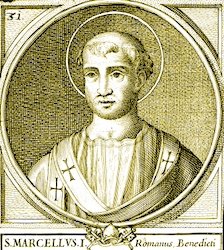
During the third century paganism and Christianity vied for supremacy in the Roman Empire. Hoping to stifle the Church completely, the emperor Diocletian in 303 began the last and fiercest of the persecutions. In time, Christian charity conquered pagan brutality, and as the Church attracted more and more members, the Roman government would be compelled to recognize its existence, but it was only after almost three hundred years, during which persecutions had forced Christian worship underground, that the Church would finally come out into the open after the Edict of Nantes in 313. It was still young and disorganized, vulnerable to heresy and apostasy, and needed a strong leader to settle questions of doctrine and discipline.
Such a leader came to the Chair of Peter in 304, when Saint Marcellus was elected pope. Saint Marcellinus, his predecessor, while being taken to torture, had exhorted him not to cede to the decrees of Diocletian, and it became evident that Marcellus did not intend to temporize. He established new catacombs and saw to it that the divine mysteries were continually celebrated there. Then three years of relative peace were given the church when Maxentius became emperor in 307, for he was too occupied with other difficulties to persecute the Christians.
After assessing the problems facing the Church, Saint Marcellus planned a strong program of reorganization. Rome then as now was the seat of Catholicism, and his program was initiated there. He divided the territorial administration of the Church into twenty-five districts or parishes, placing a priest over each one, thus restoring an earlier division which the turmoil of the persecutions had disrupted. This arrangement permitted more efficient care in instructing the faithful, in preparing candidates for baptism and penitents for reconciliation. With these measures in force, Church government took on a definite form.
Marcellus' biggest problem was dealing with the Christians who had apostatized during the persecution. Many of these were determined to be reconciled to the Church without performing the necessary penances. The Christians who had remained faithful demanded that the customary penitential discipline be maintained and enforced. Marcellus approached this problem with uncompromising justice; the apostates were in the wrong, and regardless of the consequences, were obliged to do penance. It was not long before the discord between the faithful and the apostates led to violence in the very streets of Rome.
An account of Marcellus' death, dating from the fifth century, relates that Maxentius, judging the pope responsible for the trouble between the Christian factions, condemned him to work as a slave on the public highway. After nine months of this hard labor, he was rescued by the clergy and taken to the home of a widow named Lucina; this woman welcomed him with every sign of respect and offered him her home for a church. When the emperor learned that Christian rites were being celebrated there, he profaned the church by turning it into a stable and forced the Holy Father to care for the animals quartered there. In these sad surroundings, Marcellus died on January 16, 310. He was buried in the catacombs of Priscilla, but later his remains were placed beneath the altar of the church in Rome which still bears his name.
Les Petits Bollandistes: Vies des Saints, by Msgr. Paul Guérin (Bloud et Barral: Paris, 1882), Vol. 1
LAST-MODIFIED:20240113T151838Z SEQUENCE:39463632 X-ACCESS:1 X-HITS:186 X-COLOR:f0b80e X-SHOW-END-TIME:1 END:VEVENT BEGIN:VEVENT DTSTART;VALUE=DATE:20240117 DTEND;VALUE=DATE:20240118 UID:EA0082EC-05DE-4D5D-B2F2-5F800A0F10A5 SUMMARY:St. Anthony CREATED:20221013T211126Z DTSTAMP:20221013T211126Z URL:https://www.stpaulsweymouth.org/component/dpcalendar/event/1135?calid=13 DESCRIPTION:St. Anthony of the Desert, Abbot\N\NSaint Anthony was born in the year 251, in Upper Egypt. Hearing at Mass the words, If you would be perfect, go, sell what you have and give to the poor, he gave away all his vast possessions — staying only to see that his sister's education was completed — and retired into the desert. He then begged an aged hermit to teach him the spiritual life, and he also visited various solitaries, undertaking to copy the principal virtue of each.\NTo serve God more perfectly, Anthony immured himself in a ruin, building up the door so that none could enter. Here the devils assaulted him furiously, appearing as various monsters, and even wounding him severely; but his courage never failed, and he overcame them all by confidence in God and by the sign of the cross. One night, while Anthony was in his solitude, many devils scourged him so terribly that he lay as if dead. A friend found him in this condition, and believing him dead carried him home. But when Anthony came to himself he persuaded his friend to take him back, in spite of his wounds, to his solitude. Here, prostrate from weakness, he defied the devils, saying, I fear you not; you cannot separate me from the love of Christ. After more vain assaults the devils fled, and Christ appeared to Anthony in His glory.\NSaint Anthony's only food was bread and water, which he never tasted before sunset, and sometimes only once in two, three, or four days. He wore sackcloth and sheepskin, and he often knelt in prayer from sunset to sunrise.\NHis admirers became so many and so insistent that he was eventually persuaded to found two monasteries for them and to give them a rule of life. These were the first monasteries ever to be founded, and Saint Anthony is, therefore, the father of cenobites of monks. In 311 he went to Alexandria to take part in the Arian controversy and to comfort those who were being persecuted by Maximinus. This visit lasted for a few days only, after which he retired into a solitude even more remote so that he might cut himself off completely from his admirers. When he was over ninety, he was commanded by God in a vision to search the desert for Saint Paul the Hermit. He is said to have survived until the age of a hundred and five, when he died peacefully in a cave on Mount Kolzim near the Red Sea. Saint Athanasius, his biographer, says that the mere knowledge of how Saint Anthony lived is a good guide to virtue.\NReflection. The more violent the assaults of temptation suffered by Saint Anthony, the more firmly did he grasp his weapons, namely, mortification and prayer. Let us imitate him in this, if we wish to obtain victories like his.\NLittle Pictorial Lives of the Saints, a compilation based on Butler's Lives of the Saints and other sources by John Gilmary Shea (Benziger Brothers: New York, 1894); Les Petits Bollandistes: Vies des Saints, by Msgr. Paul Guérin (Bloud et Barral: Paris, 1882), Vol. 1; The Saints, a Concise Biographical Dictionary, edited by John Coulson (Hawthorn Books, Inc.: New York, 1957). X-ALT-DESC;FMTTYPE=text/html: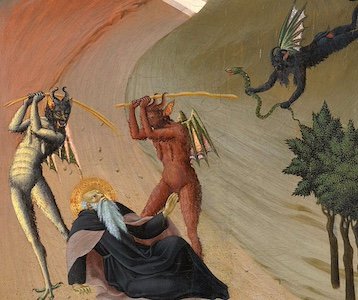
Saint Anthony was born in the year 251, in Upper Egypt. Hearing at Mass the words, If you would be perfect, go, sell what you have and give to the poor, he gave away all his vast possessions — staying only to see that his sister's education was completed — and retired into the desert. He then begged an aged hermit to teach him the spiritual life, and he also visited various solitaries, undertaking to copy the principal virtue of each.
To serve God more perfectly, Anthony immured himself in a ruin, building up the door so that none could enter. Here the devils assaulted him furiously, appearing as various monsters, and even wounding him severely; but his courage never failed, and he overcame them all by confidence in God and by the sign of the cross. One night, while Anthony was in his solitude, many devils scourged him so terribly that he lay as if dead. A friend found him in this condition, and believing him dead carried him home. But when Anthony came to himself he persuaded his friend to take him back, in spite of his wounds, to his solitude. Here, prostrate from weakness, he defied the devils, saying, I fear you not; you cannot separate me from the love of Christ. After more vain assaults the devils fled, and Christ appeared to Anthony in His glory.
Saint Anthony's only food was bread and water, which he never tasted before sunset, and sometimes only once in two, three, or four days. He wore sackcloth and sheepskin, and he often knelt in prayer from sunset to sunrise.
His admirers became so many and so insistent that he was eventually persuaded to found two monasteries for them and to give them a rule of life. These were the first monasteries ever to be founded, and Saint Anthony is, therefore, the father of cenobites of monks. In 311 he went to Alexandria to take part in the Arian controversy and to comfort those who were being persecuted by Maximinus. This visit lasted for a few days only, after which he retired into a solitude even more remote so that he might cut himself off completely from his admirers. When he was over ninety, he was commanded by God in a vision to search the desert for Saint Paul the Hermit. He is said to have survived until the age of a hundred and five, when he died peacefully in a cave on Mount Kolzim near the Red Sea. Saint Athanasius, his biographer, says that the mere knowledge of how Saint Anthony lived is a good guide to virtue.
Reflection. The more violent the assaults of temptation suffered by Saint Anthony, the more firmly did he grasp his weapons, namely, mortification and prayer. Let us imitate him in this, if we wish to obtain victories like his.
Little Pictorial Lives of the Saints, a compilation based on Butler's Lives of the Saints and other sources by John Gilmary Shea (Benziger Brothers: New York, 1894); Les Petits Bollandistes: Vies des Saints, by Msgr. Paul Guérin (Bloud et Barral: Paris, 1882), Vol. 1; The Saints, a Concise Biographical Dictionary, edited by John Coulson (Hawthorn Books, Inc.: New York, 1957).
LAST-MODIFIED:20240113T152634Z SEQUENCE:39464108 X-ACCESS:1 X-HITS:105 X-COLOR:f0b80e X-SHOW-END-TIME:1 END:VEVENT BEGIN:VEVENT DTSTART;VALUE=DATE:20240118 DTEND;VALUE=DATE:20240119 UID:EC5A5CDB-1028-419B-93A7-CC978C88C491 SUMMARY:St. Prisca CREATED:20221013T211126Z DTSTAMP:20221013T211126Z URL:https://www.stpaulsweymouth.org/component/dpcalendar/event/1137?calid=13 DESCRIPTION:St. Prisca, Virgin and Martyr\N\NAlso known as St. Priscilla; St. Prisca was a child martyr of the early Roman Church. Born to Christian parents of a noble family, Prisca was raised during the reign of Roman Emperor Claudius. While Claudius did not persecute those who believed in Christ with the same fervor as other Roman emperors, Christians still did not practice their faith openly. In fact, Prisca’s parents went to great lengths to conceal their faith, and thus they were not suspected of being Christians.\NPrisca, however, did not feel the need to take precautions. The young girl openly professed her dedication to Christ, and eventually, she was reported to the emperor. Claudius had her arrested, and commanded that she make sacrifice to idols. Prisca refused, and was tortured. Suddenly, a bright, yellow light shone about her, and she appeared to be a star.\NClaudius ordered that Prisca be imprisoned, in the hopes that she would denounce Christ. When all efforts to change her mind failed, she was taken to the coliseum and made to face a ferocious lion. Prisca stood before the lion without fear. The lion approached her and began to gently lick her feet.\NPrisca received a martyr’s crown when the emperor ordered that she be beheaded with the sword.\NShe is known to be patron of Good Marriages. X-ALT-DESC;FMTTYPE=text/html: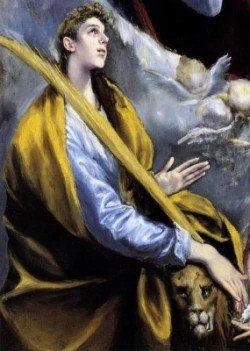
Also known as St. Priscilla; St. Prisca was a child martyr of the early Roman Church. Born to Christian parents of a noble family, Prisca was raised during the reign of Roman Emperor Claudius. While Claudius did not persecute those who believed in Christ with the same fervor as other Roman emperors, Christians still did not practice their faith openly. In fact, Prisca’s parents went to great lengths to conceal their faith, and thus they were not suspected of being Christians.
Prisca, however, did not feel the need to take precautions. The young girl openly professed her dedication to Christ, and eventually, she was reported to the emperor. Claudius had her arrested, and commanded that she make sacrifice to idols. Prisca refused, and was tortured. Suddenly, a bright, yellow light shone about her, and she appeared to be a star.
Claudius ordered that Prisca be imprisoned, in the hopes that she would denounce Christ. When all efforts to change her mind failed, she was taken to the coliseum and made to face a ferocious lion. Prisca stood before the lion without fear. The lion approached her and began to gently lick her feet.
Prisca received a martyr’s crown when the emperor ordered that she be beheaded with the sword.
She is known to be patron of Good Marriages.
LAST-MODIFIED:20240113T153124Z SEQUENCE:39464398 X-ACCESS:1 X-HITS:114 X-COLOR:f0b80e X-SHOW-END-TIME:1 END:VEVENT BEGIN:VEVENT DTSTART;VALUE=DATE:20240119 DTEND;VALUE=DATE:20240120 UID:4DB5E5AE-9819-4209-9C1E-85738C28DCF1 SUMMARY:Sts. Marius, Martha, Audifax, and Abachum CREATED:20221013T211126Z DTSTAMP:20221013T211126Z URL:https://www.stpaulsweymouth.org/component/dpcalendar/event/1141?calid=13 DESCRIPTION:Sts. Marius, Martha, Audifax, and Abachum, Martyrs\N\NMarius, a Persian nobleman, his wife Martha, and his sons Audifax and Abachum came to believe in Christ and became Christians. In imitation of the early Christians of Jerusalem, they gladly gave away their fortune to the poor.Then the family traveled to Rome to venerate the tombs of the Apostles and lend their aid to the persecuted Christians. Among other things, they gathered the ashes of the Martyrs and buried them with respect.In time, the Saints were arrested and tortured. Marius and his sons were beheaded and Martha was drowned thirteen miles from Rome in a place known as Santa Ninfa. The Roman Martyrology says this happened about the 4th century. Theses Saints are mentioned in all the western martyrologies.PRAYER: Lord, we devoutly recall the sufferings of Sts. Marius, Martha, Audifax, and Abachum. Give success to our joyful prayers and grant us also constancy in our Faith. Amen. X-ALT-DESC;FMTTYPE=text/html: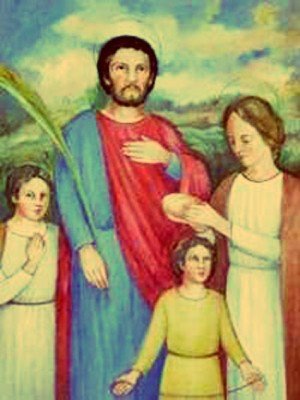
Marius, a Persian nobleman, his wife Martha, and his sons Audifax and Abachum came to believe in Christ and became Christians. In imitation of the early Christians of Jerusalem, they gladly gave away their fortune to the poor.
Then the family traveled to Rome to venerate the tombs of the Apostles and lend their aid to the persecuted Christians. Among other things, they gathered the ashes of the Martyrs and buried them with respect.
In time, the Saints were arrested and tortured. Marius and his sons were beheaded and Martha was drowned thirteen miles from Rome in a place known as Santa Ninfa. The Roman Martyrology says this happened about the 4th century. Theses Saints are mentioned in all the western martyrologies.
PRAYER: Lord, we devoutly recall the sufferings of Sts. Marius, Martha, Audifax, and Abachum. Give success to our joyful prayers and grant us also constancy in our Faith. Amen.
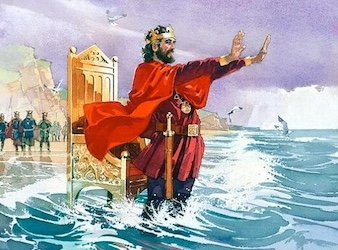
Saint Canutus, King of Denmark, was endowed with excellent qualities of both mind and body. As a young prince, he cleared the seas of pirates and subdued several neighboring provinces which were harassing Denmark by their incursions. His courage rivaled in excellence with his ability in the conduct and skills of war, but his singular piety, in a time when few of his land were Christian, eclipsed all his other endowments.
Saint Canutus succeeded his elder brother Harold on the throne of Denmark in the year 1080. He began his reign by a successful war against the troublesome, barbarous enemies of the state, and by planting the faith in the conquered provinces. Amid the glory of his victories he humbly prostrated himself at the foot of the crucifix, laying there his diadem, and offering himself and his kingdom to the King of kings. After having provided for the peace and safety of his country, he married Eltha, daughter of Robert, Earl of Flanders, who proved herself a spouse worthy of him. They are the parents of Blessed Charles, Count of Amiens and Flanders, a martyr for his faith, brutally slain like his father, while in prayer.
The justice of Saint Canutus as sovereign became evident when he condemned to death a Danish lord whose vessel, to sustain the owner's luxury, had pillaged the ship of a neighboring country and massacred the crew. He applied himself to the reform of all internal abuses. For this purpose he enacted severe but necessary laws for the strict administration of justice, the repression of violence and tyranny by the powerful, without respect to persons. He favored and honored holy men, and granted many privileges and immunities to the clergy. His charity and tenderness towards his subjects made him study all possible ways to make them a happy people. He showed a royal munificence in building and adorning churches, and gave the crown which he wore, of very great value, to a church in his capital and place of residence, where the kings of Denmark are still buried.
To the virtues which constitute a great king, Canutus added those which prove the great Saint. A rebellion having sprung up in his kingdom, the king was surprised at church by the rebels. Perceiving his danger, he confessed his sins at the foot of the altar and received Holy Communion. Stretching out his arms before the altar, the Saint fervently recommended his soul to his Creator; in this posture he was struck down on his knees by the enemies of his Christian reign.
Reflection. The soul of a man is endowed with many noble powers, and feels a keen joy in their exercise; but the keenest joy we are capable of knowing consists in prostrating all our powers of mind and heart in humble adoration before the majesty of God.
Little Pictorial Lives of the Saints, a compilation based on Butler's Lives of the Saints and other sources by John Gilmary Shea (Benziger Brothers: New York, 1894); Les Petits Bollandistes: Vies des Saints, by Msgr. Paul Guérin (Bloud et Barral: Paris, 1882), Vol. 1
LAST-MODIFIED:20240113T153630Z SEQUENCE:39464704 X-ACCESS:1 X-HITS:52 X-COLOR:f0b80e X-SHOW-END-TIME:1 END:VEVENT BEGIN:VEVENT DTSTART;VALUE=DATE:20240120 DTEND;VALUE=DATE:20240121 UID:57FF1668-FBEB-40F9-87E1-822F30A7E05D SUMMARY:Sts. Fabian and Sebastian CREATED:20221013T211126Z DTSTAMP:20221013T211126Z URL:https://www.stpaulsweymouth.org/component/dpcalendar/event/1143?calid=13 DESCRIPTION:Sts. Fabian Pope and Sebastian, Martyrs\N\NSt. Fabian succeeded Saint Anterus in the pontificate in the year 236. Eusebius’ relates that in an assembly of the people and clergy, held for the election of a pastor in his room, a dove, unexpectedly appearing, settled, to the great surprise of all present, on the head of Saint Fabian, and that this miraculous sign united the votes of the clergy and people in promoting him, though not thought of before, as being a layman and a stranger.\NHe governed the church sixteen years, sent Saint Dionysius and other preachers into Gaul, and condemned Privatus, a broacher of a new heresy in Africa, as appears from Saint Cyprian. Saint Fabian died a glorious martyr in the persecution of Decius, in 250, as Saint Cyprian and Saint Jerome witness. The former, writing to his successor, Saint Cornelius, calls him an incomparable man, and says that the glory of his death had answered the purity and holiness of his life.\NThe Saints made God, and the accomplishment of his holy will, the great object of all their petitions in their prayers, and their only aim in all their actions. “God,” says Saint Austin, “in His promises to hear our prayers, is desirous to bestow Himself upon us; if you find any thing better than Him, ask it, but if you ask any thing beneath Him, you put an affront upon Him, and hurt yourself by preferring to Him a creature which He framed: pray in the spirit and sentiment of love, in which the royal prophet said to him, ‘Thou, O Lord, art my portion.’ Let others choose to themselves portions among creatures; for my part, Thou are my portion, Thee alone I have chosen for my whole inheritance.”\NRev. Alban Butler, The Lives of the Fathers, Martyrs and other principal Saints, Vol. I, (Virtue & Company, Limited.: London and Dublin, 1959).\N \NSaint Sebastian was an officer in the Roman army, esteemed even by the pagans as a good soldier, and honored by the Church ever since as a champion of Jesus Christ. Born at Narbonne, Sebastian came to Rome about the year 284 and entered the lists against the powers of evil. He found the twin brothers Marcus and Marcellinus in prison for the faith, and when they were close to yielding to the entreaties of their relatives, encouraged them to despise flesh and blood, and to die for Christ. God confirmed his words by miracles: light shone around him while he spoke; he cured the sick by his prayers; and in this divine strength he led multitudes to the faith, among them the Prefect of Rome, with his son Tiburtius.\NHe saw his disciples die before him, and one of them came back from heaven to tell him that his own end was near. It was in a contest of fervor and charity that Saint Sebastian found the occasion of martyrdom. The Governor-Prefect of Rome was converted to the faith and afterwards retired to his estates in Campania, taking with him a great number of his fellow-converts to this place of safety. It was a question whether Polycarp the priest or Saint Sebastian should accompany the neophytes. Each was eager to stay and face the danger at Rome; finally the Pope decided that the Roman church could not spare the services of Sebastian, who therefore remained amid the perils in the city.\NHe continued to labor at his post of danger until he was betrayed by a false disciple. He was led before Diocletian and, at the emperor's command, pierced with arrows and left for dead. God raised him up again, cured, and of his own accord he went before the emperor and conjured him to halt the persecution of the Church. Again sentenced, he was beaten to death by clubs, and crowned his labors by the merit of a double martyrdom.\NReflection. Your ordinary occupations will give you opportunities of laboring for the faith. Ask help from Saint Sebastian, both wise and prudent.\NLittle Pictorial Lives of the Saints, a compilation based on Butler's Lives of the Saints and other sources by John Gilmary Shea (Benziger Brothers: New York, 1894) X-ALT-DESC;FMTTYPE=text/html: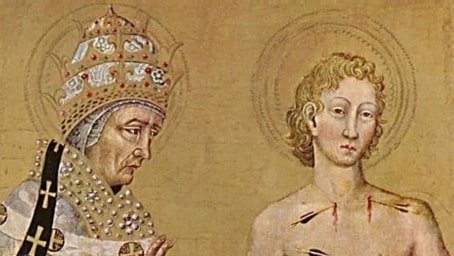
St. Fabian succeeded Saint Anterus in the pontificate in the year 236. Eusebius’ relates that in an assembly of the people and clergy, held for the election of a pastor in his room, a dove, unexpectedly appearing, settled, to the great surprise of all present, on the head of Saint Fabian, and that this miraculous sign united the votes of the clergy and people in promoting him, though not thought of before, as being a layman and a stranger.
He governed the church sixteen years, sent Saint Dionysius and other preachers into Gaul, and condemned Privatus, a broacher of a new heresy in Africa, as appears from Saint Cyprian. Saint Fabian died a glorious martyr in the persecution of Decius, in 250, as Saint Cyprian and Saint Jerome witness. The former, writing to his successor, Saint Cornelius, calls him an incomparable man, and says that the glory of his death had answered the purity and holiness of his life.
The Saints made God, and the accomplishment of his holy will, the great object of all their petitions in their prayers, and their only aim in all their actions. “God,” says Saint Austin, “in His promises to hear our prayers, is desirous to bestow Himself upon us; if you find any thing better than Him, ask it, but if you ask any thing beneath Him, you put an affront upon Him, and hurt yourself by preferring to Him a creature which He framed: pray in the spirit and sentiment of love, in which the royal prophet said to him, ‘Thou, O Lord, art my portion.’ Let others choose to themselves portions among creatures; for my part, Thou are my portion, Thee alone I have chosen for my whole inheritance.”
Rev. Alban Butler, The Lives of the Fathers, Martyrs and other principal Saints, Vol. I, (Virtue & Company, Limited.: London and Dublin, 1959).
Saint Sebastian was an officer in the Roman army, esteemed even by the pagans as a good soldier, and honored by the Church ever since as a champion of Jesus Christ. Born at Narbonne, Sebastian came to Rome about the year 284 and entered the lists against the powers of evil. He found the twin brothers Marcus and Marcellinus in prison for the faith, and when they were close to yielding to the entreaties of their relatives, encouraged them to despise flesh and blood, and to die for Christ. God confirmed his words by miracles: light shone around him while he spoke; he cured the sick by his prayers; and in this divine strength he led multitudes to the faith, among them the Prefect of Rome, with his son Tiburtius.
He saw his disciples die before him, and one of them came back from heaven to tell him that his own end was near. It was in a contest of fervor and charity that Saint Sebastian found the occasion of martyrdom. The Governor-Prefect of Rome was converted to the faith and afterwards retired to his estates in Campania, taking with him a great number of his fellow-converts to this place of safety. It was a question whether Polycarp the priest or Saint Sebastian should accompany the neophytes. Each was eager to stay and face the danger at Rome; finally the Pope decided that the Roman church could not spare the services of Sebastian, who therefore remained amid the perils in the city.
He continued to labor at his post of danger until he was betrayed by a false disciple. He was led before Diocletian and, at the emperor's command, pierced with arrows and left for dead. God raised him up again, cured, and of his own accord he went before the emperor and conjured him to halt the persecution of the Church. Again sentenced, he was beaten to death by clubs, and crowned his labors by the merit of a double martyrdom.
Reflection. Your ordinary occupations will give you opportunities of laboring for the faith. Ask help from Saint Sebastian, both wise and prudent.
Little Pictorial Lives of the Saints, a compilation based on Butler's Lives of the Saints and other sources by John Gilmary Shea (Benziger Brothers: New York, 1894)
LAST-MODIFIED:20240113T154444Z SEQUENCE:39465198 X-ACCESS:1 X-HITS:123 X-COLOR:f0b80e X-SHOW-END-TIME:1 END:VEVENT BEGIN:VEVENT DTSTART;VALUE=DATE:20240121 DTEND;VALUE=DATE:20240122 UID:6541954E-95C2-4B01-B720-A6713F80FF36 SUMMARY:St. Agnes CREATED:20221013T211126Z DTSTAMP:20221013T211126Z URL:https://www.stpaulsweymouth.org/component/dpcalendar/event/1145?calid=13 DESCRIPTION:St. Agnes, Virgin and Martyr\N\NSaint Agnes was twelve years old when she was led to the altar of Minerva at Rome and commanded to obey the persecuting laws of Diocletian by offering incense. In the midst of the idolatrous rites she raised her hands to Christ, her Spouse, and made the sign of the life-giving cross. She did not shrink when she was bound hand and foot, though the manacles slipped from her young hands, and the heathens who stood around were moved to tears. Bonds were not needed for her; she hastened gladly to the place of her torture.\NWhen the judge saw that pain had no terrors for her, he inflicted a sentence comporting an insult worse than death: she was condemned to be taken to a house of infamy and her clothes stripped off. I have an Angel with me, she said, and he will guard me. Christ, whom you do not know, surrounds me like a wall which cannot be forced. And so it occurred. The Spouse of Virgins revealed, by a miracle, His custody of the pure in heart: her hair grew miraculously to such a length that she was entirely covered by it. The place to which she was taken was illuminated by a brilliant, inexplicable light; and there she knelt down to pray. At that site a Church has been built in honor of this young maiden's victory over impurity. Only an impudent suitor, the cause of her arraignment as a Christian, dared approach her, and her Angel struck him dead at her feet. His father prayed Agnes to raise him up again by her magic arts; she answered that magic was not responsible for his death, but only the young pagan's lack of respect for God. She said she would pray to Him that her Lord's glory might be manifested by the miracle his father requested, and it was granted to her prayer.\NAt length the sentence of death by the sword was passed upon her by a subordinate judge. For a moment she stood erect in prayer, then bowed her neck to the sword, rejoicing that the time of her liberation had arrived. The Angels bore her pure soul to Paradise. A week after her death, Saint Agnes appeared to her parents as they were praying at her tomb; she was amid a choir of virgins clothed in golden robes and crowned with garlands. She begged them not to weep for her as for one dead, telling them rather to rejoice with her in her happiness.\NReflection. Her innocence endeared Saint Agnes to Christ, as it has endeared her to His Church ever since. Even as penitents we may imitate her innocence in our own sphere. Let us strictly guard our eyes, and Christ, when He sees that we desire to keep our hearts pure for love of Him, will fortify our resolution and bless it.\NLittle Pictorial Lives of the Saints, a compilation based on Butler's Lives of the Saints and other sources by John Gilmary Shea (Benziger Brothers: New York, 1894); Les Petits Bollandistes: Vies des Saints, by Msgr. Paul Guérin (Bloud et Barral: Paris, 1882), Vol. 1 X-ALT-DESC;FMTTYPE=text/html: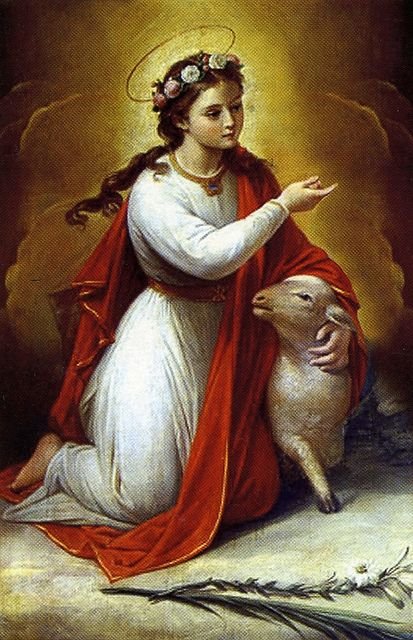
Saint Agnes was twelve years old when she was led to the altar of Minerva at Rome and commanded to obey the persecuting laws of Diocletian by offering incense. In the midst of the idolatrous rites she raised her hands to Christ, her Spouse, and made the sign of the life-giving cross. She did not shrink when she was bound hand and foot, though the manacles slipped from her young hands, and the heathens who stood around were moved to tears. Bonds were not needed for her; she hastened gladly to the place of her torture.
When the judge saw that pain had no terrors for her, he inflicted a sentence comporting an insult worse than death: she was condemned to be taken to a house of infamy and her clothes stripped off. I have an Angel with me, she said, and he will guard me. Christ, whom you do not know, surrounds me like a wall which cannot be forced. And so it occurred. The Spouse of Virgins revealed, by a miracle, His custody of the pure in heart: her hair grew miraculously to such a length that she was entirely covered by it. The place to which she was taken was illuminated by a brilliant, inexplicable light; and there she knelt down to pray. At that site a Church has been built in honor of this young maiden's victory over impurity. Only an impudent suitor, the cause of her arraignment as a Christian, dared approach her, and her Angel struck him dead at her feet. His father prayed Agnes to raise him up again by her magic arts; she answered that magic was not responsible for his death, but only the young pagan's lack of respect for God. She said she would pray to Him that her Lord's glory might be manifested by the miracle his father requested, and it was granted to her prayer.
At length the sentence of death by the sword was passed upon her by a subordinate judge. For a moment she stood erect in prayer, then bowed her neck to the sword, rejoicing that the time of her liberation had arrived. The Angels bore her pure soul to Paradise. A week after her death, Saint Agnes appeared to her parents as they were praying at her tomb; she was amid a choir of virgins clothed in golden robes and crowned with garlands. She begged them not to weep for her as for one dead, telling them rather to rejoice with her in her happiness.
Reflection. Her innocence endeared Saint Agnes to Christ, as it has endeared her to His Church ever since. Even as penitents we may imitate her innocence in our own sphere. Let us strictly guard our eyes, and Christ, when He sees that we desire to keep our hearts pure for love of Him, will fortify our resolution and bless it.
Little Pictorial Lives of the Saints, a compilation based on Butler's Lives of the Saints and other sources by John Gilmary Shea (Benziger Brothers: New York, 1894); Les Petits Bollandistes: Vies des Saints, by Msgr. Paul Guérin (Bloud et Barral: Paris, 1882), Vol. 1
LAST-MODIFIED:20240113T154719Z SEQUENCE:39465353 X-ACCESS:1 X-HITS:55 X-COLOR:f0b80e X-SHOW-END-TIME:1 END:VEVENT BEGIN:VEVENT DTSTART;VALUE=DATE:20240122 DTEND;VALUE=DATE:20240123 UID:417BDF37-3BCE-4FC9-B306-E1465DBDE761 SUMMARY:Sts. Vincent and Anastasius CREATED:20221013T211126Z DTSTAMP:20221013T211126Z URL:https://www.stpaulsweymouth.org/component/dpcalendar/event/1147?calid=13 DESCRIPTION:Sts. Vincent Deacon and Anastasius, Martyrs\N\NSaint Vincent was archdeacon of the church at Saragossa, Spain. Valerian, the bishop, was prevented from preaching by a speech impediment, and named Vincent to preach in his stead. He answered in the bishop's name when, during the persecution of Diocletian, both were brought before Dacian, the presiding officer. When the bishop was sent into banishment, Vincent was retained, to suffer and to die.\NFirst he was stretched on the rack; and when he was almost torn asunder, Dacian asked him in mockery how he fared now. Vincent answered, with joy on his countenance, that he had always prayed to be as he was then. It was in vain that Dacian struck the executioners and goaded them on in their savage work. The martyr's flesh was torn with hooks; he was bound to a chair of red-hot iron; lard and salt were rubbed into his wounds; and amid all this he kept his eyes raised to heaven, and remained unmoved.\NThe holy martyr was cast into a solitary dungeon, his feet placed in the stocks; but the Angels of Christ illuminated the darkness, and assured Vincent that he was near his triumph. His wounds were now ordered to be tended, to prepare him for fresh torments, and the faithful were permitted to gaze on his mangled body. They came in troops, kissed his wounds and carried away as relics, cloths colored with his blood. Before the tortures could resume, Saint Vincent's hour came, and he breathed forth his soul in peace.\NEven the dead bodies of the Saints are precious in the sight of God, and the hand of iniquity cannot touch them. A raven guarded the body of Vincent where it lay flung upon the earth. When it was sunk out at sea, the waves cast it ashore; and his relics are preserved to this day in the Augustinian monastery at Lisbon, for the consolation of the Church of Christ.\NReflection. Do you wish to be at peace amid suffering and temptation? Then make it your principal endeavor to grow in habits of prayer and in union with Christ. Have confidence in Him. He will make you victorious over your spiritual enemies and over yourself. He will enlighten your darkness and sweeten your sufferings, and in your solitude and desolation He will draw near to you with His holy Angels.\NLittle Pictorial Lives of the Saints, a compilation based on Butler's Lives of the Saints and other sources by John Gilmary Shea (Benziger Brothers: New York, 1894).\N \NSt. Anastasius was born in the City of Ray. He was the son of a Magian named Bau. He had a brother whose name is unknown. He was a cavalryman in the army of Khosrow II (590–628) and participated in the capture of the True Cross in Jerusalem which was carried to the Sasanian capital. The occasion prompted him to ask for information about the Christian religion. He then experienced a conversion of faith, left the army, became a Christian and then a Monk at the Monastery of Saint Savvas (Mar Saba) in Jerusalem. Anastasius was baptised by St Modestus, the Bishop of Jerusalem, receiving the Christian name Anastasius to honour the Resurrection of Jesus Christ (anástasis” in Greek meaning resurrection).\NAfter seven years of the monastic observance, he was moved by the Holy Ghost to go in quest of Martyrdom and went to Caesarea, then subject to the Sasanians. There he interrupted and ridiculed the pagan priests for their religion and was, as a result, arrested by the local governor, taken prisoner, cruelly tortured to make him deny Christ and finally carried down near the Euphrates river, where his tortures was continued, while at the same time, the highest honours in the service of King Khosrow II, as a Magi, were promised him, if he would renounce Christianity.\NFinally, after refusing to renounce Christ, with seventy others, he was strangled to death and decapitated on 22 January 628. His body, which was thrown to the dogs but was left untouched by them, was carried from there to Palestine, then to Constantinople and finally, to Rome, where the relics were venerated at the Tre Fontane Abbey. X-ALT-DESC;FMTTYPE=text/html: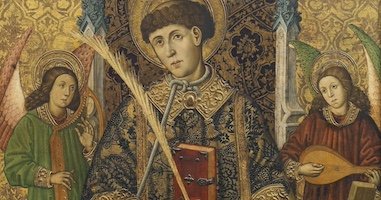
Saint Vincent was archdeacon of the church at Saragossa, Spain. Valerian, the bishop, was prevented from preaching by a speech impediment, and named Vincent to preach in his stead. He answered in the bishop's name when, during the persecution of Diocletian, both were brought before Dacian, the presiding officer. When the bishop was sent into banishment, Vincent was retained, to suffer and to die.
First he was stretched on the rack; and when he was almost torn asunder, Dacian asked him in mockery how he fared now. Vincent answered, with joy on his countenance, that he had always prayed to be as he was then. It was in vain that Dacian struck the executioners and goaded them on in their savage work. The martyr's flesh was torn with hooks; he was bound to a chair of red-hot iron; lard and salt were rubbed into his wounds; and amid all this he kept his eyes raised to heaven, and remained unmoved.
The holy martyr was cast into a solitary dungeon, his feet placed in the stocks; but the Angels of Christ illuminated the darkness, and assured Vincent that he was near his triumph. His wounds were now ordered to be tended, to prepare him for fresh torments, and the faithful were permitted to gaze on his mangled body. They came in troops, kissed his wounds and carried away as relics, cloths colored with his blood. Before the tortures could resume, Saint Vincent's hour came, and he breathed forth his soul in peace.
Even the dead bodies of the Saints are precious in the sight of God, and the hand of iniquity cannot touch them. A raven guarded the body of Vincent where it lay flung upon the earth. When it was sunk out at sea, the waves cast it ashore; and his relics are preserved to this day in the Augustinian monastery at Lisbon, for the consolation of the Church of Christ.
Reflection. Do you wish to be at peace amid suffering and temptation? Then make it your principal endeavor to grow in habits of prayer and in union with Christ. Have confidence in Him. He will make you victorious over your spiritual enemies and over yourself. He will enlighten your darkness and sweeten your sufferings, and in your solitude and desolation He will draw near to you with His holy Angels.
Little Pictorial Lives of the Saints, a compilation based on Butler's Lives of the Saints and other sources by John Gilmary Shea (Benziger Brothers: New York, 1894).
St. Anastasius was born in the City of Ray. He was the son of a Magian named Bau. He had a brother whose name is unknown. He was a cavalryman in the army of Khosrow II (590–628) and participated in the capture of the True Cross in Jerusalem which was carried to the Sasanian capital. The occasion prompted him to ask for information about the Christian religion. He then experienced a conversion of faith, left the army, became a Christian and then a Monk at the Monastery of Saint Savvas (Mar Saba) in Jerusalem. Anastasius was baptised by St Modestus, the Bishop of Jerusalem, receiving the Christian name Anastasius to honour the Resurrection of Jesus Christ (anástasis” in Greek meaning resurrection).
After seven years of the monastic observance, he was moved by the Holy Ghost to go in quest of Martyrdom and went to Caesarea, then subject to the Sasanians. There he interrupted and ridiculed the pagan priests for their religion and was, as a result, arrested by the local governor, taken prisoner, cruelly tortured to make him deny Christ and finally carried down near the Euphrates river, where his tortures was continued, while at the same time, the highest honours in the service of King Khosrow II, as a Magi, were promised him, if he would renounce Christianity.
Finally, after refusing to renounce Christ, with seventy others, he was strangled to death and decapitated on 22 January 628. His body, which was thrown to the dogs but was left untouched by them, was carried from there to Palestine, then to Constantinople and finally, to Rome, where the relics were venerated at the Tre Fontane Abbey.
LAST-MODIFIED:20240113T155433Z SEQUENCE:39465787 X-ACCESS:1 X-HITS:61 X-COLOR:f0b80e X-SHOW-END-TIME:1 END:VEVENT BEGIN:VEVENT DTSTART;VALUE=DATE:20240123 DTEND;VALUE=DATE:20240124 UID:8C4968CF-E2ED-4F0E-8C5E-32239FFA6E32 SUMMARY:St. Emerentiana CREATED:20221013T211126Z DTSTAMP:20221013T211126Z URL:https://www.stpaulsweymouth.org/component/dpcalendar/event/1116?calid=13 DESCRIPTION:St. Emerentiana, Virgin and Martyr\N\NMartyr of Rome, in some traditions the foster sister of St. Agnes, stoned to death when discovered praying at Agnes' grave. Emerentiana was possibly martyred elsewhere. \NAccording to the legend of Agnes of Rome (feast day: 21 January), Emerentiana was her foster sister. Emerentiana's mother was the wet nurse and nanny of Agnes.\NA few days after Agnes' death, Emerentiana, who was a catechumen still learning about Christianity before being officially baptised, went to the tomb to pray and was suddenly attacked by the pagans. Having professed her faith and acknowledged her relationship to Agnes, she was stoned to death by the crowd. In this way, she can be considered to have undergone a baptism of desire, or a baptism of blood. X-ALT-DESC;FMTTYPE=text/html: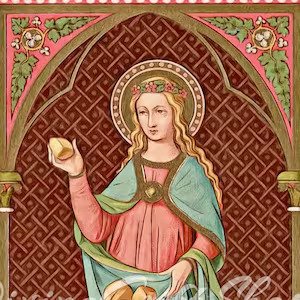
Martyr of Rome, in some traditions the foster sister of St. Agnes, stoned to death when discovered praying at Agnes' grave. Emerentiana was possibly martyred elsewhere.
According to the legend of Agnes of Rome (feast day: 21 January), Emerentiana was her foster sister. Emerentiana's mother was the wet nurse and nanny of Agnes.
A few days after Agnes' death, Emerentiana, who was a catechumen still learning about Christianity before being officially baptised, went to the tomb to pray and was suddenly attacked by the pagans. Having professed her faith and acknowledged her relationship to Agnes, she was stoned to death by the crowd. In this way, she can be considered to have undergone a baptism of desire, or a baptism of blood.
LAST-MODIFIED:20240113T160537Z SEQUENCE:39466451 X-ACCESS:1 X-HITS:6 X-COLOR:f0b80e X-SHOW-END-TIME:1 END:VEVENT BEGIN:VEVENT DTSTART;VALUE=DATE:20240123 DTEND;VALUE=DATE:20240124 UID:661C5A54-88BE-4810-A0EA-162EFE6CA32A SUMMARY:St. Raymond CREATED:20221013T211126Z DTSTAMP:20221013T211126Z URL:https://www.stpaulsweymouth.org/component/dpcalendar/event/1149?calid=13 DESCRIPTION:St. Raymond of Penafort, Confessor\N\NBorn in 1175 of a noble Spanish family, Raymond, at the age of twenty, taught philosophy in Barcelona with marvelous success. Ten years later his rare abilities won for him the degree of Doctor in the University of Bologna, accompanied by many high dignities. A tender devotion to our Blessed Lady, which had increased within him from childhood, determined him in his mature years to renounce all his honors and to enter Her Order of Saint Dominic.\NThere a vision of the Mother of Mercy instructed him to cooperate with his penitent Saint Peter Nolasco, and with James, King of Aragon, in founding the Order of Our Lady of Ransom for the redemption of captives. He began this great work by preaching a crusade against the Moors, and by rousing to penance the Christians enslaved in both soul and body by the infidels. The king of Aragon, a man of great qualities but governed by a ruling passion, often took Saint Raymond with him on his voyages. On one such occasion, when they were visiting the island of Majorca, he was told by the Saint he must put away at once the cause of his sin. When he delayed, Raymond asked for leave to depart, since he could not live in company with sin. The king refused and under pain of death, forbade his conveyance by any ship. The Saint replied to the sailors, If a mortal king has given such a command, we will see that the Eternal King has disposed otherwise. Full of faith, he went out on a rock extending into the sea, and spread his cloak upon the waters. Tying one end of it to his staff as a sail, he made the sign of the cross and fearlessly stepped upon it. In six hours he was borne to Barcelona where, gathering up his cloak, which was dry, he made his way to his monastery.\NThe king, vanquished by this miracle, to which many were witness, became a sincere penitent and the disciple of the Saint until his death. In 1230, Gregory IX summoned Raymond to Rome, made him his confessor and grand penitentiary, and directed him to compile The Decretals, a collection of the scattered decisions of the Popes and Councils. Having refused the archbishopric of Tarragon, Raymond was in 1238 chosen to be the third General of his Order, which post he again succeeded in resigning, pleading his advanced age. His first act when set free was to resume his labors among the infidels, and in 1256 Raymond, then eighty-one, was able to report that ten thousand Saracens had received Baptism. He died at the age of one hundred years, in 1275.\NReflection. Ask Saint Raymond to protect you from the fearful servitude, worse than any bodily slavery, which even one sinful habit tends to form.\NLittle Pictorial Lives of the Saints, a compilation based on Butler's Lives of the Saints and other sources by John Gilmary Shea (Benziger Brothers: New York, 1894); Les Petits Bollandistes: Vies des Saints, by Msgr. Paul Guérin (Bloud et Barral: Paris, 1882), Vol. 1 X-ALT-DESC;FMTTYPE=text/html: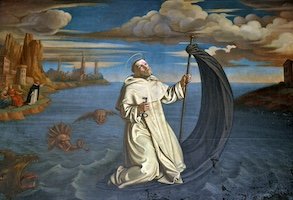
Born in 1175 of a noble Spanish family, Raymond, at the age of twenty, taught philosophy in Barcelona with marvelous success. Ten years later his rare abilities won for him the degree of Doctor in the University of Bologna, accompanied by many high dignities. A tender devotion to our Blessed Lady, which had increased within him from childhood, determined him in his mature years to renounce all his honors and to enter Her Order of Saint Dominic.
There a vision of the Mother of Mercy instructed him to cooperate with his penitent Saint Peter Nolasco, and with James, King of Aragon, in founding the Order of Our Lady of Ransom for the redemption of captives. He began this great work by preaching a crusade against the Moors, and by rousing to penance the Christians enslaved in both soul and body by the infidels. The king of Aragon, a man of great qualities but governed by a ruling passion, often took Saint Raymond with him on his voyages. On one such occasion, when they were visiting the island of Majorca, he was told by the Saint he must put away at once the cause of his sin. When he delayed, Raymond asked for leave to depart, since he could not live in company with sin. The king refused and under pain of death, forbade his conveyance by any ship. The Saint replied to the sailors, If a mortal king has given such a command, we will see that the Eternal King has disposed otherwise. Full of faith, he went out on a rock extending into the sea, and spread his cloak upon the waters. Tying one end of it to his staff as a sail, he made the sign of the cross and fearlessly stepped upon it. In six hours he was borne to Barcelona where, gathering up his cloak, which was dry, he made his way to his monastery.
The king, vanquished by this miracle, to which many were witness, became a sincere penitent and the disciple of the Saint until his death. In 1230, Gregory IX summoned Raymond to Rome, made him his confessor and grand penitentiary, and directed him to compile The Decretals, a collection of the scattered decisions of the Popes and Councils. Having refused the archbishopric of Tarragon, Raymond was in 1238 chosen to be the third General of his Order, which post he again succeeded in resigning, pleading his advanced age. His first act when set free was to resume his labors among the infidels, and in 1256 Raymond, then eighty-one, was able to report that ten thousand Saracens had received Baptism. He died at the age of one hundred years, in 1275.
Reflection. Ask Saint Raymond to protect you from the fearful servitude, worse than any bodily slavery, which even one sinful habit tends to form.
Little Pictorial Lives of the Saints, a compilation based on Butler's Lives of the Saints and other sources by John Gilmary Shea (Benziger Brothers: New York, 1894); Les Petits Bollandistes: Vies des Saints, by Msgr. Paul Guérin (Bloud et Barral: Paris, 1882), Vol. 1
LAST-MODIFIED:20240113T155921Z SEQUENCE:39466075 X-ACCESS:1 X-HITS:52 X-COLOR:f0b80e X-SHOW-END-TIME:1 END:VEVENT BEGIN:VEVENT DTSTART;VALUE=DATE:20240124 DTEND;VALUE=DATE:20240125 UID:AFBD6AC0-AB37-4BFA-8C6E-A7A85C4AEFD3 SUMMARY:St. Timothy CREATED:20221013T211126Z DTSTAMP:20221013T211126Z URL:https://www.stpaulsweymouth.org/component/dpcalendar/event/1153?calid=13 DESCRIPTION:St. Timothy Bishop, Martyr\N\NSaint Timothy was a convert of Saint Paul, born at Lystra in Asia Minor. His mother was a daughter of Israel, but his father was a pagan, and though Timothy had read the Scriptures from his childhood, he had never been circumcised. On the arrival of Saint Paul at Lystra the youthful Timothy, with his mother and grandmother, eagerly embraced the faith. Seven years later, when the Apostle again visited the country, the boy had grown into manhood. His good heart, his austerities and zeal had won the esteem of all around him, and holy men were prophesying great things of the fervent youth. Saint Paul at once saw his fitness for the work of an evangelist, and Timothy was ordained a priest. From that time on he was the constant and much-beloved fellow-worker of the Apostle.\NIn company with Saint Paul he visited the cities of Asia Minor and Greece, once hastening on ahead as a trusted messenger, at another time lingering behind to confirm in the faith a recently founded church. Eventually he was made the first Bishop of Ephesus; and there he received the two epistles of his master which bear his name, the first written from Macedonia and the second from Rome, where Saint Paul from his prison expresses his longing desire to see his dearly beloved son, once more, if possible, before his death. It is not certain whether Saint Timothy arrived in Rome in time, but devotion to Saint Timothy has always been strong in Rome, which seems to argue for his presence at the martyrdom of his spiritual father.\NSaint Timothy was of a tender and affectionate disposition, and certainly found his role in the idolatrous city of Ephesus difficult to sustain. Saint Paul, when he writes to Timothy, then a tested servant of God and a bishop advancing in years, addresses him as he would his own child, and seems most anxious about his forcefulness in his demanding role. His disciple's health was fragile, and Saint Paul counsels him to take a little wine for his digestion. Saint Timothy is the Angel of the Church of Ephesus of the Apocalypse, its bishop whom Our Lord, too, exhorted to remember his original faith and piety.\NNot many years after the death of Saint Paul, Timothy, who had surely profited from these counsels, won a martyr's crown at Ephesus, when on a feast day of the goddess Diana, whose temple stood in that city, he entered into the ungovernable crowd to calm it, exhorting these souls, deprived of the light of truth, to renounce vain worship and embrace Christianity. Wild with idolatrous passion, a pagan struck down the bishop of the Christians, thus freeing him to join his beloved spiritual father in the realm of the Blessed.\NReflection. All Christians can profit, like Saint Paul's disciple, from Our Lord's admonition and the great Apostle's letters. It is remarkable what great stress Saint Paul lays on the avoidance of idle talk, and on application to holy reading. These are his chief topics. He exhorts his son Timothy to avoid tattlers and busybodies; to give no heed to novelties; to shun profane and vain chatter, but hold to sound teaching; to be an example in words and conversation; to attend to reading, to exhortation, and to doctrine. Let us faithfully follow these excellent counsels.\NLittle Pictorial Lives of the Saints, a compilation based on Butler's Lives of the Saints and other sources by John Gilmary Shea (Benziger Brothers: New York, 1894); The Holy Bible: Old and New Testaments. X-ALT-DESC;FMTTYPE=text/html: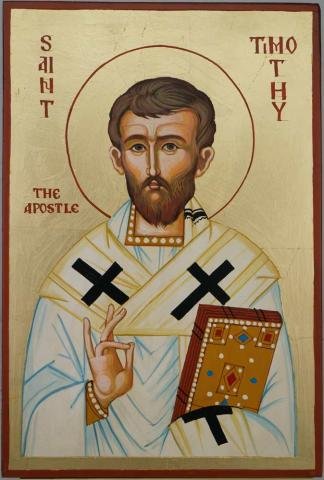
Saint Timothy was a convert of Saint Paul, born at Lystra in Asia Minor. His mother was a daughter of Israel, but his father was a pagan, and though Timothy had read the Scriptures from his childhood, he had never been circumcised. On the arrival of Saint Paul at Lystra the youthful Timothy, with his mother and grandmother, eagerly embraced the faith. Seven years later, when the Apostle again visited the country, the boy had grown into manhood. His good heart, his austerities and zeal had won the esteem of all around him, and holy men were prophesying great things of the fervent youth. Saint Paul at once saw his fitness for the work of an evangelist, and Timothy was ordained a priest. From that time on he was the constant and much-beloved fellow-worker of the Apostle.
In company with Saint Paul he visited the cities of Asia Minor and Greece, once hastening on ahead as a trusted messenger, at another time lingering behind to confirm in the faith a recently founded church. Eventually he was made the first Bishop of Ephesus; and there he received the two epistles of his master which bear his name, the first written from Macedonia and the second from Rome, where Saint Paul from his prison expresses his longing desire to see his dearly beloved son, once more, if possible, before his death. It is not certain whether Saint Timothy arrived in Rome in time, but devotion to Saint Timothy has always been strong in Rome, which seems to argue for his presence at the martyrdom of his spiritual father.
Saint Timothy was of a tender and affectionate disposition, and certainly found his role in the idolatrous city of Ephesus difficult to sustain. Saint Paul, when he writes to Timothy, then a tested servant of God and a bishop advancing in years, addresses him as he would his own child, and seems most anxious about his forcefulness in his demanding role. His disciple's health was fragile, and Saint Paul counsels him to take a little wine for his digestion. Saint Timothy is the Angel of the Church of Ephesus of the Apocalypse, its bishop whom Our Lord, too, exhorted to remember his original faith and piety.
Not many years after the death of Saint Paul, Timothy, who had surely profited from these counsels, won a martyr's crown at Ephesus, when on a feast day of the goddess Diana, whose temple stood in that city, he entered into the ungovernable crowd to calm it, exhorting these souls, deprived of the light of truth, to renounce vain worship and embrace Christianity. Wild with idolatrous passion, a pagan struck down the bishop of the Christians, thus freeing him to join his beloved spiritual father in the realm of the Blessed.
Reflection. All Christians can profit, like Saint Paul's disciple, from Our Lord's admonition and the great Apostle's letters. It is remarkable what great stress Saint Paul lays on the avoidance of idle talk, and on application to holy reading. These are his chief topics. He exhorts his son Timothy to avoid tattlers and busybodies; to give no heed to novelties; to shun profane and vain chatter, but hold to sound teaching; to be an example in words and conversation; to attend to reading, to exhortation, and to doctrine. Let us faithfully follow these excellent counsels.
Little Pictorial Lives of the Saints, a compilation based on Butler's Lives of the Saints and other sources by John Gilmary Shea (Benziger Brothers: New York, 1894); The Holy Bible: Old and New Testaments.
LAST-MODIFIED:20240113T161007Z SEQUENCE:39466721 X-ACCESS:1 X-HITS:1 X-COLOR:f0b80e X-SHOW-END-TIME:1 END:VEVENT BEGIN:VEVENT DTSTART;VALUE=DATE:20240125 DTEND;VALUE=DATE:20240126 UID:850C2D67-ECFC-47BF-8C21-F33EB45B72EB SUMMARY:Conversion of St. Paul CREATED:20221013T211126Z DTSTAMP:20221013T211126Z URL:https://www.stpaulsweymouth.org/component/dpcalendar/event/1155?calid=13 DESCRIPTION:Conversion of St. Paul Apostle\N\NThe great Apostle Paul, named Saul at his circumcision, was born in Tarsus, the capital of Cilicia, and was by that privilege a Roman citizen, to which quality a great distinction and several exemptions were granted by the laws of the Empire. He was early instructed in the strict observance of the Mosaic law, and lived up to it in the most scrupulous manner. In his zeal for the Jewish law, which he believed to be the divine Cause of God, he became a violent persecutor of the Christians. He was one of those who combined to murder Saint Stephen, and then he presided in the violent persecution of the faithful which followed the holy deacon's martyrdom. By virtue of the power he had received from the high priest, he dragged the Christians out of their houses, loaded them with chains, and thrust them into prison. In the fury of his zeal he applied for a commission to seize in Damascus all Jews who confessed Jesus Christ, and to bring them in bonds to Jerusalem, that they might serve as examples for the others.\NBut God was pleased to manifest in him His patience and mercy. While Saul was journeying to Damascus, he and his party were surrounded by a light from heaven, brighter than the sun, and suddenly the chief was struck to the ground. And then a voice was heard saying, Saul, Saul, why do you persecute Me? And Saul answered, Who art Thou, Lord? and the voice replied, I am Jesus, whom you persecute. This mild admonition of Our Redeemer, accompanied with a powerful interior grace, cured Saul's pride, assuaged his rage, and wrought at once a total change in him. Therefore, trembling and astonished, he cried out, Lord, what wilt Thou have me do? Our Lord ordered him to proceed on his way to the city of Damascus, where he would be informed of what was expected of him. Saul, arising from the ground, found that although his eyes were open, he saw nothing.\NHe was led into the city, where he was lodged in the house of a Christian named Judas. To this house came by divine appointment a holy man named Ananias, who, laying his hands on Saul, said, Brother Saul, the Lord Jesus, who appeared to you on your journey, has sent me that you may receive your sight and be filled with the Holy Ghost. Immediately something like scales fell from Saul's eyes, and he recovered his sight; then he arose and was baptized. He stayed a few days with the disciples at Damascus, and began immediately to preach in the synagogues that Jesus was the Son of God. Thus a blasphemer and a persecutor was made an Apostle, and chosen as one of God's principal instruments in the conversion of the world.\NReflection. Listen to the words of The Imitation of Christ, and let them sink into your heart: He who would keep the grace of God, let him be grateful for grace when it is given, and patient when it is taken away. Let him pray that it may be given back to him, and be careful and humble, lest he lose it.\NLittle Pictorial Lives of the Saints, a compilation based on Butler's Lives of the Saints and other sources by John Gilmary Shea (Benziger Brothers: New York, 1894); The Holy Bible: Old and New Testaments X-ALT-DESC;FMTTYPE=text/html: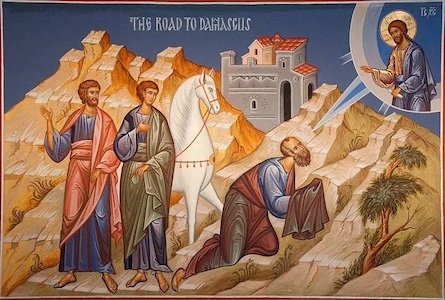
The great Apostle Paul, named Saul at his circumcision, was born in Tarsus, the capital of Cilicia, and was by that privilege a Roman citizen, to which quality a great distinction and several exemptions were granted by the laws of the Empire. He was early instructed in the strict observance of the Mosaic law, and lived up to it in the most scrupulous manner. In his zeal for the Jewish law, which he believed to be the divine Cause of God, he became a violent persecutor of the Christians. He was one of those who combined to murder Saint Stephen, and then he presided in the violent persecution of the faithful which followed the holy deacon's martyrdom. By virtue of the power he had received from the high priest, he dragged the Christians out of their houses, loaded them with chains, and thrust them into prison. In the fury of his zeal he applied for a commission to seize in Damascus all Jews who confessed Jesus Christ, and to bring them in bonds to Jerusalem, that they might serve as examples for the others.
But God was pleased to manifest in him His patience and mercy. While Saul was journeying to Damascus, he and his party were surrounded by a light from heaven, brighter than the sun, and suddenly the chief was struck to the ground. And then a voice was heard saying, Saul, Saul, why do you persecute Me? And Saul answered, Who art Thou, Lord? and the voice replied, I am Jesus, whom you persecute. This mild admonition of Our Redeemer, accompanied with a powerful interior grace, cured Saul's pride, assuaged his rage, and wrought at once a total change in him. Therefore, trembling and astonished, he cried out, Lord, what wilt Thou have me do? Our Lord ordered him to proceed on his way to the city of Damascus, where he would be informed of what was expected of him. Saul, arising from the ground, found that although his eyes were open, he saw nothing.
He was led into the city, where he was lodged in the house of a Christian named Judas. To this house came by divine appointment a holy man named Ananias, who, laying his hands on Saul, said, Brother Saul, the Lord Jesus, who appeared to you on your journey, has sent me that you may receive your sight and be filled with the Holy Ghost. Immediately something like scales fell from Saul's eyes, and he recovered his sight; then he arose and was baptized. He stayed a few days with the disciples at Damascus, and began immediately to preach in the synagogues that Jesus was the Son of God. Thus a blasphemer and a persecutor was made an Apostle, and chosen as one of God's principal instruments in the conversion of the world.
Reflection. Listen to the words of The Imitation of Christ, and let them sink into your heart: He who would keep the grace of God, let him be grateful for grace when it is given, and patient when it is taken away. Let him pray that it may be given back to him, and be careful and humble, lest he lose it.
Little Pictorial Lives of the Saints, a compilation based on Butler's Lives of the Saints and other sources by John Gilmary Shea (Benziger Brothers: New York, 1894); The Holy Bible: Old and New Testaments
LAST-MODIFIED:20240113T161254Z SEQUENCE:39466888 X-ACCESS:1 X-HITS:6 X-COLOR:f0b80e X-SHOW-END-TIME:1 END:VEVENT BEGIN:VEVENT DTSTART;VALUE=DATE:20240126 DTEND;VALUE=DATE:20240127 UID:E6E3F5EA-7DC8-4E60-B69B-AEF4136E31EE SUMMARY:St. Polycarp CREATED:20221013T211126Z DTSTAMP:20221013T211126Z URL:https://www.stpaulsweymouth.org/component/dpcalendar/event/1157?calid=13 DESCRIPTION:St. Polycarp of Smyrna, Bishop and Martyr\N\NSaint Polycarp, Bishop of Smyrna, was a disciple of Saint John. He wrote to the Philippians, exhorting them to mutual love and to hatred of heresy. When the apostate Marcion met Saint Polycarp at Rome, he asked the aged Saint if he knew him. Yes, Saint Polycarp answered, I know you for the first-born of Satan. These were the words of a Saint, most loving and most charitable, and specially noted for his compassion to sinners. He abhorred heresy, because he loved God and man so well.\NIn 167 persecution broke out in Smyrna. When Polycarp heard that his pursuers were at the door, he said, The Will of God be done; and meeting them, he begged to be left alone for a little time, which he spent in prayer for the Catholic Church throughout the world. He was brought to Smyrna early on Holy Saturday; and as he entered, a voice was heard from heaven, Polycarp, be strong. When the proconsul urged him to curse Christ and go free, Polycarp answered, Eighty-six years I have served Him, and He never did me wrong; how can I blaspheme my King and Saviour? When he threatened him with fire, Polycarp told him this fire of his lasted but a short time, while the fire prepared for the wicked lasted forever.\NAt the stake he thanked God aloud for letting him drink of Christ's chalice. The fire was lighted, but it did him no harm; therefore he was stabbed to the heart, and his dead body was burnt. Then, say the writers of his acts, we took up the bones, more precious than the richest jewels or gold, and deposited them in a fitting place, at which may God grant us to assemble with joy, to celebrate the birthday of the martyr to his life in heaven!\NReflection. If we love Jesus Christ, we shall love the Church and hate heresy, which divides His Mystical Body and destroys the souls for whom He died. Like Saint Polycarp, we shall maintain our constancy in the faith by love of Jesus Christ, who is the Church's Founder and its last end.\NLittle Pictorial Lives of the Saints, a compilation based on Butler's Lives of the Saints and other sources by John Gilmary Shea (Benziger Brothers: New York, 1894). X-ALT-DESC;FMTTYPE=text/html:
Saint Polycarp, Bishop of Smyrna, was a disciple of Saint John. He wrote to the Philippians, exhorting them to mutual love and to hatred of heresy. When the apostate Marcion met Saint Polycarp at Rome, he asked the aged Saint if he knew him. Yes, Saint Polycarp answered, I know you for the first-born of Satan. These were the words of a Saint, most loving and most charitable, and specially noted for his compassion to sinners. He abhorred heresy, because he loved God and man so well.
In 167 persecution broke out in Smyrna. When Polycarp heard that his pursuers were at the door, he said, The Will of God be done; and meeting them, he begged to be left alone for a little time, which he spent in prayer for the Catholic Church throughout the world. He was brought to Smyrna early on Holy Saturday; and as he entered, a voice was heard from heaven, Polycarp, be strong. When the proconsul urged him to curse Christ and go free, Polycarp answered, Eighty-six years I have served Him, and He never did me wrong; how can I blaspheme my King and Saviour? When he threatened him with fire, Polycarp told him this fire of his lasted but a short time, while the fire prepared for the wicked lasted forever.
At the stake he thanked God aloud for letting him drink of Christ's chalice. The fire was lighted, but it did him no harm; therefore he was stabbed to the heart, and his dead body was burnt. Then, say the writers of his acts, we took up the bones, more precious than the richest jewels or gold, and deposited them in a fitting place, at which may God grant us to assemble with joy, to celebrate the birthday of the martyr to his life in heaven!
Reflection. If we love Jesus Christ, we shall love the Church and hate heresy, which divides His Mystical Body and destroys the souls for whom He died. Like Saint Polycarp, we shall maintain our constancy in the faith by love of Jesus Christ, who is the Church's Founder and its last end.
Little Pictorial Lives of the Saints, a compilation based on Butler's Lives of the Saints and other sources by John Gilmary Shea (Benziger Brothers: New York, 1894).
LAST-MODIFIED:20240113T161546Z SEQUENCE:39467060 X-ACCESS:1 X-HITS:136 X-COLOR:f0b80e X-SHOW-END-TIME:1 END:VEVENT BEGIN:VEVENT DTSTART;VALUE=DATE:20240127 DTEND;VALUE=DATE:20240128 UID:B3384216-FEF9-458B-8B82-E9FABD6EE95A SUMMARY:St. John Chrysostome CREATED:20221013T211126Z DTSTAMP:20221013T211126Z URL:https://www.stpaulsweymouth.org/component/dpcalendar/event/1159?calid=13 DESCRIPTION:St. John Chrysostome, Bishop, Confessor, and Doctor of the Church\N\NSaint John Chrysostom, born in Antioch in 344, was endowed with a superior genius strengthened by a brilliant education. In order to break with a world which admired and courted him, in 374 he retired for six years to a neighboring mountain, having found Christ through his friendship with Saint Basil. After acquiring the art of Christian silence, he returned to Antioch and there labored as a priest under the direction of its bishop. His eloquence was such that the entire city, up to a hundred thousand listeners, came to hear him, a young man not yet thirty years old. He fled this popularity and adopted the monastic life for fourteen years, until he was taken forcibly to Constantinople, to be consecrated Patriarch of the imperial city in 398.\NThe effect of his sermons was everywhere marvelous. He converted a large number of pagans and heretics by his eloquence, then in its most brilliant luster, and constantly exhorted his Catholic people to frequent the Holy Sacrifice. In order to remove all excuse for absence he abbreviated the long liturgy then in use. Saint Nilus relates that Saint John Chrysostom, when the priest began the Holy Sacrifice, very often saw many of the Blessed coming down from heaven in shining garments, eyes intent, and bowed heads, in utter stillness and silence, assisting at the consummation of the tremendous mystery.\NBeloved as he was in Constantinople, his denunciations of vice made him numerous enemies. In 403 these procured his banishment; and although he was almost immediately recalled, it was not more than a reprieve. In 404 he was banished to Cucusus in the deserts of the Taurus mountains. His reply to the hostile empress was: Chrysostom fears only one thing — not exile, prison, poverty or death — but sin.\NIn 407, at sixty-three years old his strength was waning, but his enemies were impatient and transported him to Pytius on the Euxine, a rough journey of nearly 400 miles. He was assiduously exposed to every hardship — cold, wet clothing, and semi-starvation, but nothing could overcome his cheerfulness and his consideration for others. On the journey his sickness increased, and he was warned that his end was near. Thereupon, exchanging his travel-stained clothes for white garments, he received Viaticum, and with his customary words, Glory be to God for all things. Amen, passed to Christ. He does not have the title of martyrdom, but possesses all its merit and all its glory. He is the author of the famous words characterizing Saint Paul, object of his admiration and love: The heart of Paul was the Heart of Christ.\NLittle Pictorial Lives of the Saints, a compilation based on Butler's Lives of the Saints and other sources by John Gilmary Shea (Benziger Brothers: New York, 1894); Les Petits Bollandistes: Vies des Saints, by Msgr. Paul Guérin (Bloud et Barral: Paris, 1882), Vol. 2 X-ALT-DESC;FMTTYPE=text/html: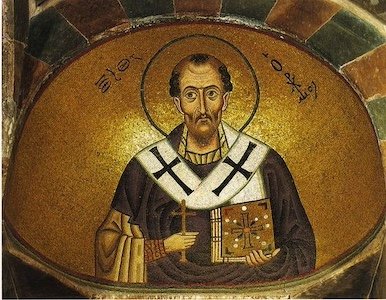
Saint John Chrysostom, born in Antioch in 344, was endowed with a superior genius strengthened by a brilliant education. In order to break with a world which admired and courted him, in 374 he retired for six years to a neighboring mountain, having found Christ through his friendship with Saint Basil. After acquiring the art of Christian silence, he returned to Antioch and there labored as a priest under the direction of its bishop. His eloquence was such that the entire city, up to a hundred thousand listeners, came to hear him, a young man not yet thirty years old. He fled this popularity and adopted the monastic life for fourteen years, until he was taken forcibly to Constantinople, to be consecrated Patriarch of the imperial city in 398.
The effect of his sermons was everywhere marvelous. He converted a large number of pagans and heretics by his eloquence, then in its most brilliant luster, and constantly exhorted his Catholic people to frequent the Holy Sacrifice. In order to remove all excuse for absence he abbreviated the long liturgy then in use. Saint Nilus relates that Saint John Chrysostom, when the priest began the Holy Sacrifice, very often saw many of the Blessed coming down from heaven in shining garments, eyes intent, and bowed heads, in utter stillness and silence, assisting at the consummation of the tremendous mystery.
Beloved as he was in Constantinople, his denunciations of vice made him numerous enemies. In 403 these procured his banishment; and although he was almost immediately recalled, it was not more than a reprieve. In 404 he was banished to Cucusus in the deserts of the Taurus mountains. His reply to the hostile empress was: Chrysostom fears only one thing — not exile, prison, poverty or death — but sin.
In 407, at sixty-three years old his strength was waning, but his enemies were impatient and transported him to Pytius on the Euxine, a rough journey of nearly 400 miles. He was assiduously exposed to every hardship — cold, wet clothing, and semi-starvation, but nothing could overcome his cheerfulness and his consideration for others. On the journey his sickness increased, and he was warned that his end was near. Thereupon, exchanging his travel-stained clothes for white garments, he received Viaticum, and with his customary words, Glory be to God for all things. Amen, passed to Christ. He does not have the title of martyrdom, but possesses all its merit and all its glory. He is the author of the famous words characterizing Saint Paul, object of his admiration and love: The heart of Paul was the Heart of Christ.
Little Pictorial Lives of the Saints, a compilation based on Butler's Lives of the Saints and other sources by John Gilmary Shea (Benziger Brothers: New York, 1894); Les Petits Bollandistes: Vies des Saints, by Msgr. Paul Guérin (Bloud et Barral: Paris, 1882), Vol. 2
LAST-MODIFIED:20240113T162007Z SEQUENCE:39467321 X-ACCESS:1 X-HITS:45 X-COLOR:f0b80e X-SHOW-END-TIME:1 END:VEVENT BEGIN:VEVENT DTSTART;VALUE=DATE:20240128 DTEND;VALUE=DATE:20240129 UID:9CA190F2-2119-4CB7-B345-95A514E37750 SUMMARY:St. Peter Nolasco CREATED:20221013T211126Z DTSTAMP:20221013T211126Z URL:https://www.stpaulsweymouth.org/component/dpcalendar/event/1161?calid=13 DESCRIPTION:St. Peter Nolasco, Confessor\N\NIn the early thirteenth century the Moors still held much of Spain, and in sudden raids from the sea they carried off thousands of Christians, holding them as slaves in Granada and in their citadels along the African coast. A hero of these unfortunates was Saint Peter Nolasco, born about the year 1189 near Carcassonne in France. When he went to Barcelona to escape the heresy then rampant in southern France, he consecrated the fortune he had inherited to the redemption of the captives taken on the seas by the Saracens. He was obsessed with the thought of their suffering, and desired to sell his own person to deliver his brethren and take their chains upon himself. God made it known to him how agreeable that desire was to Him.\NBecause of these large sums of money he expended, Peter became penniless. He was without resources and powerless, when the Blessed Virgin appeared to him and said to him: Find for Me other men like yourself, an army of brave, generous, unselfish men, and send them into the lands where the children of the Faith are suffering. Peter went at once to Saint Raymond of Pennafort, his confessor, who had had a similar revelation and used his influence with King James I of Aragon and with Berengarius, Archbishop of Barcelona, to obtain approbation and support for the new community. On August 10, 1218, Peter and two companions were received as the first members of the Order of Our Lady of Ransom, dedicated to the recovery of Christian captives. To the three traditional vows of religion, its members joined a fourth, that of delivering their own persons to the overlords, if necessary, to ransom Christians.\NThe Order spread rapidly. Peter and his comrades traveled throughout Christian Spain, recruiting new members and collecting funds to purchase the captives. Then they began negotiations with the slave-owners. They penetrated Andalusia, crossed the sea to Tunis and Morocco, and brought home cargo after cargo of Christians. Although Peter, as General of the Order, was occupied with its organization and administration, he made two trips to Africa where, besides liberating captives, he converted many Moors. He died after a long illness on Christmas night of 1256; he was canonized by Pope Urban VIII in 1628. His Order continues its religious services, now devoted to preaching and hospital service.\NLittle Pictorial Lives of the Saints, a compilation based on Butler's Lives of the Saints and other sources by John Gilmary Shea (Benziger Brothers: New York, 1894); Les Petits Bollandistes: Vies des Saints, by Msgr. Paul Guérin (Bloud et Barral: Paris, 1882), Vol. 2 X-ALT-DESC;FMTTYPE=text/html: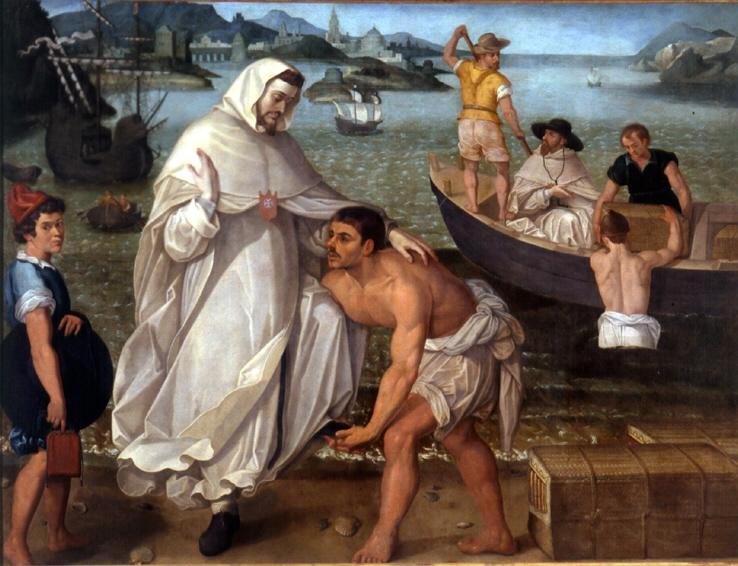
In the early thirteenth century the Moors still held much of Spain, and in sudden raids from the sea they carried off thousands of Christians, holding them as slaves in Granada and in their citadels along the African coast. A hero of these unfortunates was Saint Peter Nolasco, born about the year 1189 near Carcassonne in France. When he went to Barcelona to escape the heresy then rampant in southern France, he consecrated the fortune he had inherited to the redemption of the captives taken on the seas by the Saracens. He was obsessed with the thought of their suffering, and desired to sell his own person to deliver his brethren and take their chains upon himself. God made it known to him how agreeable that desire was to Him.
Because of these large sums of money he expended, Peter became penniless. He was without resources and powerless, when the Blessed Virgin appeared to him and said to him: Find for Me other men like yourself, an army of brave, generous, unselfish men, and send them into the lands where the children of the Faith are suffering. Peter went at once to Saint Raymond of Pennafort, his confessor, who had had a similar revelation and used his influence with King James I of Aragon and with Berengarius, Archbishop of Barcelona, to obtain approbation and support for the new community. On August 10, 1218, Peter and two companions were received as the first members of the Order of Our Lady of Ransom, dedicated to the recovery of Christian captives. To the three traditional vows of religion, its members joined a fourth, that of delivering their own persons to the overlords, if necessary, to ransom Christians.
The Order spread rapidly. Peter and his comrades traveled throughout Christian Spain, recruiting new members and collecting funds to purchase the captives. Then they began negotiations with the slave-owners. They penetrated Andalusia, crossed the sea to Tunis and Morocco, and brought home cargo after cargo of Christians. Although Peter, as General of the Order, was occupied with its organization and administration, he made two trips to Africa where, besides liberating captives, he converted many Moors. He died after a long illness on Christmas night of 1256; he was canonized by Pope Urban VIII in 1628. His Order continues its religious services, now devoted to preaching and hospital service.
Little Pictorial Lives of the Saints, a compilation based on Butler's Lives of the Saints and other sources by John Gilmary Shea (Benziger Brothers: New York, 1894); Les Petits Bollandistes: Vies des Saints, by Msgr. Paul Guérin (Bloud et Barral: Paris, 1882), Vol. 2
LAST-MODIFIED:20240127T182222Z SEQUENCE:40684256 X-ACCESS:1 X-HITS:84 X-COLOR:f0b80e X-SHOW-END-TIME:1 END:VEVENT BEGIN:VEVENT DTSTART;VALUE=DATE:20240129 DTEND;VALUE=DATE:20240130 UID:860B2093-B518-4B72-BCE2-E9D566A0991C SUMMARY:St. Francis of Sales CREATED:20221013T211126Z DTSTAMP:20221013T211126Z URL:https://www.stpaulsweymouth.org/component/dpcalendar/event/1163?calid=13 DESCRIPTION:St. Francis of Dales, Bishop, Confessor, and Doctor of the Church\N\NSaint Francis de Sales was born in 1567 near Annecy, of noble and pious parents, and studied with brilliant success at Paris and Padua. On his return from Italy he gave up the grand career which his father had destined for him in the service of the state, and became a priest.\NWhen the duke of Savoy resolved to restore the shattered Church in the Chablais, Francis offered himself for the work and set out on foot with his Bible and breviary, accompanied by one companion, his cousin Louis of Sales. It was a work of toil, privation and danger. Every door and every heart was closed against him. He was rejected with insult and threatened with death, but nothing could daunt him or resist him indefinitely. And before long the Church blossomed into a second spring. It is said that he converted 72,000 Calvinists.\NHe was compelled by the Pope to become Coadjutor Bishop of Geneva, and succeeded to that see in 1602. Saint Vincent de Paul said of him, in praise of his gentleness, How good God must be, since the bishop of Geneva, His minister, is so good! At times the great meekness with which he received heretics and sinners almost scandalized his friends, and they protested when he received insults in silence. One of them said to him, Francis of Sales will go to Paradise, of course; but I am not so sure about the Bishop of Geneva: I am almost afraid his gentleness will play him a shrewd turn! Ah, said the Saint, you would have me lose in one instant all the meekness I have been able to acquire by twenty years of efforts? I would rather account to God for too great gentleness than for too great severity. God the Father is the Father of mercy; God the Son is a Lamb; God the Holy Ghost is a Dove; are you wiser than God? When a hostile visitor said to him one day, If I were to strike you on the cheek, what would you do? Saint Francis answered, with his customary humility, Ah! I know what I should do, but I cannot be sure of what I would do.\NWith Saint Jane Frances of Chantal, Saint Francis founded at Annecy the Order of the Visitation nuns, which soon spread over Europe. Though poor, he refused provisions and dignities, and even the great see of Paris. He died at Avignon in 1622.\NReflection. You will catch more flies, Saint Francis used to say, with a spoonful of honey than with a hundred barrels of vinegar. If there were anything better or more beautiful on earth than gentleness, Jesus Christ would have taught it to us; and yet He has given us only two lessons to learn of Him — meekness and humility of heart.\NLittle Pictorial Lives of the Saints, a compilation based on Butler's Lives of the Saints and other sources by John Gilmary Shea (Benziger Brothers: New York, 1894); Les Petits Bollandistes: Vies des Saints, by Msgr. Paul Guérin (Bloud et Barral: Paris, 1882), Vol. 2 X-ALT-DESC;FMTTYPE=text/html:
Saint Francis de Sales was born in 1567 near Annecy, of noble and pious parents, and studied with brilliant success at Paris and Padua. On his return from Italy he gave up the grand career which his father had destined for him in the service of the state, and became a priest.
When the duke of Savoy resolved to restore the shattered Church in the Chablais, Francis offered himself for the work and set out on foot with his Bible and breviary, accompanied by one companion, his cousin Louis of Sales. It was a work of toil, privation and danger. Every door and every heart was closed against him. He was rejected with insult and threatened with death, but nothing could daunt him or resist him indefinitely. And before long the Church blossomed into a second spring. It is said that he converted 72,000 Calvinists.
He was compelled by the Pope to become Coadjutor Bishop of Geneva, and succeeded to that see in 1602. Saint Vincent de Paul said of him, in praise of his gentleness, How good God must be, since the bishop of Geneva, His minister, is so good! At times the great meekness with which he received heretics and sinners almost scandalized his friends, and they protested when he received insults in silence. One of them said to him, Francis of Sales will go to Paradise, of course; but I am not so sure about the Bishop of Geneva: I am almost afraid his gentleness will play him a shrewd turn! Ah, said the Saint, you would have me lose in one instant all the meekness I have been able to acquire by twenty years of efforts? I would rather account to God for too great gentleness than for too great severity. God the Father is the Father of mercy; God the Son is a Lamb; God the Holy Ghost is a Dove; are you wiser than God? When a hostile visitor said to him one day, If I were to strike you on the cheek, what would you do? Saint Francis answered, with his customary humility, Ah! I know what I should do, but I cannot be sure of what I would do.
With Saint Jane Frances of Chantal, Saint Francis founded at Annecy the Order of the Visitation nuns, which soon spread over Europe. Though poor, he refused provisions and dignities, and even the great see of Paris. He died at Avignon in 1622.
Reflection. You will catch more flies, Saint Francis used to say, with a spoonful of honey than with a hundred barrels of vinegar. If there were anything better or more beautiful on earth than gentleness, Jesus Christ would have taught it to us; and yet He has given us only two lessons to learn of Him — meekness and humility of heart.
Little Pictorial Lives of the Saints, a compilation based on Butler's Lives of the Saints and other sources by John Gilmary Shea (Benziger Brothers: New York, 1894); Les Petits Bollandistes: Vies des Saints, by Msgr. Paul Guérin (Bloud et Barral: Paris, 1882), Vol. 2
LAST-MODIFIED:20240127T182554Z SEQUENCE:40684468 X-ACCESS:1 X-HITS:47 X-COLOR:f0b80e X-SHOW-END-TIME:1 END:VEVENT BEGIN:VEVENT DTSTART;VALUE=DATE:20240130 DTEND;VALUE=DATE:20240131 UID:C698329E-37C4-49B9-9961-B483AE08E7A7 SUMMARY:King Charles CREATED:20221013T211126Z DTSTAMP:20221013T211126Z URL:https://www.stpaulsweymouth.org/component/dpcalendar/event/1167?calid=13 DESCRIPTION:King Charles the Martyr\N\NHe is honoured as a martyr because he died for the Church. He was offered his life if he would abandon episcopacy but he refused, for this would have taken the Church of England away from being part of ‘the one Holy Catholic and Apostolic Church’ and change Her into a sect. So we venerate him for his sacrifice and see in it inspiration for us today. S. Charles is a martyr for the doctrine of episcopacy and the apostolic succession. In the words of Dr. Mandell Creighton, Bishop of London 1897- 1901 and a noted ecclesiastical historian: ‘Had Charles been willing to abandon the Church and give up episcopacy, he might have saved his throne and his life. But on this point Charles stood firm: for this he died, and by dying saved it for the future.’\NImmediately upon the Restoration of Church and monarchy on 19th May, 1660, the Convocation of Canterbury and York, now being free to assemble and act, canonised King Charles and added his name to the Kalendar of Saints at the revision of The Prayer Book. It came into use with the authority of Church and State in 1662 and since that time parish churches and chapels have been dedicated under the title of St. Charles (often under the title of King Charles the Martyr).\NSt. Charles is also honoured for his strong personal piety and for his protection and patronage of the Church. His reign saw the beginning of a revival of the Religious Life in the Church of England and the first attempt at Community Life (after the Dissolution of the Monasteries under Henry VIII), which began at Little Gidding and was encouraged by St. Charles. The King visited the community and commissioned work.\NHe oversaw many schemes for the Church: the restoration and adornment of churches and cathedrals, the founding and advancement of charities, the improvement of the liturgy and the re-introduction of the episcopacy in Scotland. His reign witnessed, albeit briefly, a Golden Age for Anglicanism especially in spiritual and devotional writing that is still much appreciated today. X-ALT-DESC;FMTTYPE=text/html:
He is honoured as a martyr because he died for the Church. He was offered his life if he would abandon episcopacy but he refused, for this would have taken the Church of England away from being part of ‘the one Holy Catholic and Apostolic Church’ and change Her into a sect. So we venerate him for his sacrifice and see in it inspiration for us today. S. Charles is a martyr for the doctrine of episcopacy and the apostolic succession. In the words of Dr. Mandell Creighton, Bishop of London 1897- 1901 and a noted ecclesiastical historian: ‘Had Charles been willing to abandon the Church and give up episcopacy, he might have saved his throne and his life. But on this point Charles stood firm: for this he died, and by dying saved it for the future.’
Immediately upon the Restoration of Church and monarchy on 19th May, 1660, the Convocation of Canterbury and York, now being free to assemble and act, canonised King Charles and added his name to the Kalendar of Saints at the revision of The Prayer Book. It came into use with the authority of Church and State in 1662 and since that time parish churches and chapels have been dedicated under the title of St. Charles (often under the title of King Charles the Martyr).
St. Charles is also honoured for his strong personal piety and for his protection and patronage of the Church. His reign saw the beginning of a revival of the Religious Life in the Church of England and the first attempt at Community Life (after the Dissolution of the Monasteries under Henry VIII), which began at Little Gidding and was encouraged by St. Charles. The King visited the community and commissioned work.
He oversaw many schemes for the Church: the restoration and adornment of churches and cathedrals, the founding and advancement of charities, the improvement of the liturgy and the re-introduction of the episcopacy in Scotland. His reign witnessed, albeit briefly, a Golden Age for Anglicanism especially in spiritual and devotional writing that is still much appreciated today.
LAST-MODIFIED:20240127T183415Z SEQUENCE:40684969 X-ACCESS:1 X-HITS:25 X-COLOR:f0b80e X-SHOW-END-TIME:1 END:VEVENT BEGIN:VEVENT DTSTART;VALUE=DATE:20240130 DTEND;VALUE=DATE:20240131 UID:14EDA64C-A0A8-4DAD-9F80-86814C9CC9B9 SUMMARY:St. Martina CREATED:20221013T211126Z DTSTAMP:20221013T211126Z URL:https://www.stpaulsweymouth.org/component/dpcalendar/event/1165?calid=13 DESCRIPTION:St. Martina, Virgin and Martyr\N\NSaint Martina, a Roman virgin, was the child of a noble Christian consul, of whom it was said that he was extremely merciful towards the poor, and very zealous for faith in the Most Holy Trinity. His daughter lost both her parents while she was still very young, and for love of Christ she distributed all she inherited to the poor, that she might be more free to hasten towards martyrdom, during the persecution which had recently begun.\NUnder the emperor Alexander Severus she was discovered in a church one day by three officers of a search party, and commanded to follow them to a temple of Apollo. She cheerfully agreed, saying she would do so after praying for a short time and taking leave of her bishop. The officers reported their important capture to the emperor, believing she would readily renounce her faith. But when he ordered her to speak, she replied that she would sacrifice to none other than the true God, and never to idols, the handiwork of men. She was tortured by iron hooks, but her executioners were thrown to the ground amid a great light as she prayed, and arose converted, like Saint Paul, to the Christian faith.\NShe was tormented again the following day before the emperor, cruelly scourged while attached by her hands and feet to posts. When, one day later, she was taken to a temple of Diana, the demon left amid horrible screams. Fire from heaven fell and burnt the idol, which in tumbling crushed many of its priests and pagan worshipers. Saint Martina, after suffering other tortures and being spared by an enraged lion and a fiery furnace, was finally beheaded. Her death occurred on January 1st during the fourth year of Alexander Severus.\NHer relics were found in 1634, during the papacy of Urban VIII, near the Mamertine Prison, with those of several other martyrs. All were placed in a beautiful church dedicated to Saint Martina in the Roman Forum. Urban VIII spared no efforts in promoting her veneration; and through his solicitude the Office was enhanced with hymns for Matins and Lauds. In these we read that her soul rose to heaven, where she was seen afterwards upon a royal throne, while the Blessed sang praises to God.\NReflection. God calls His Saints to Him at every age; little children turn to Him with faith and love, strong men in their mature years, white-haired grandparents and servants of God in their golden age. And we find martyrs ready for every torment, at all epochs of life. What is important is to be ready and to desire the most important day of our life — that of our death.\NLes Petits Bollandistes: Vies des Saints, by Msgr. Paul Guérin (Bloud et Barral: Paris, 1882), Vol. 2. X-ALT-DESC;FMTTYPE=text/html:
Saint Martina, a Roman virgin, was the child of a noble Christian consul, of whom it was said that he was extremely merciful towards the poor, and very zealous for faith in the Most Holy Trinity. His daughter lost both her parents while she was still very young, and for love of Christ she distributed all she inherited to the poor, that she might be more free to hasten towards martyrdom, during the persecution which had recently begun.
Under the emperor Alexander Severus she was discovered in a church one day by three officers of a search party, and commanded to follow them to a temple of Apollo. She cheerfully agreed, saying she would do so after praying for a short time and taking leave of her bishop. The officers reported their important capture to the emperor, believing she would readily renounce her faith. But when he ordered her to speak, she replied that she would sacrifice to none other than the true God, and never to idols, the handiwork of men. She was tortured by iron hooks, but her executioners were thrown to the ground amid a great light as she prayed, and arose converted, like Saint Paul, to the Christian faith.
She was tormented again the following day before the emperor, cruelly scourged while attached by her hands and feet to posts. When, one day later, she was taken to a temple of Diana, the demon left amid horrible screams. Fire from heaven fell and burnt the idol, which in tumbling crushed many of its priests and pagan worshipers. Saint Martina, after suffering other tortures and being spared by an enraged lion and a fiery furnace, was finally beheaded. Her death occurred on January 1st during the fourth year of Alexander Severus.
Her relics were found in 1634, during the papacy of Urban VIII, near the Mamertine Prison, with those of several other martyrs. All were placed in a beautiful church dedicated to Saint Martina in the Roman Forum. Urban VIII spared no efforts in promoting her veneration; and through his solicitude the Office was enhanced with hymns for Matins and Lauds. In these we read that her soul rose to heaven, where she was seen afterwards upon a royal throne, while the Blessed sang praises to God.
Reflection. God calls His Saints to Him at every age; little children turn to Him with faith and love, strong men in their mature years, white-haired grandparents and servants of God in their golden age. And we find martyrs ready for every torment, at all epochs of life. What is important is to be ready and to desire the most important day of our life — that of our death.
Les Petits Bollandistes: Vies des Saints, by Msgr. Paul Guérin (Bloud et Barral: Paris, 1882), Vol. 2.
LAST-MODIFIED:20240127T182840Z SEQUENCE:40684634 X-ACCESS:1 X-HITS:78 X-COLOR:f0b80e X-SHOW-END-TIME:1 END:VEVENT BEGIN:VEVENT DTSTART;VALUE=DATE:20240131 DTEND;VALUE=DATE:20240201 UID:6A3EBF3F-F5FF-4CED-826F-87A5D7AC03C9 SUMMARY:St. John Bosco CREATED:20221013T211126Z DTSTAMP:20221013T211126Z URL:https://www.stpaulsweymouth.org/component/dpcalendar/event/1169?calid=13 DESCRIPTION:St. John Bosco, Confessor\N\NSaint John Bosco accomplished what many people considered an impossibility; he walked through the streets of Turin, Italy, looking for the dirtiest, roughest urchins he could find, then made good men of them. His extraordinary success can be summed up in the words of his patron Saint, Francis de Sales: The measure of his love was that he loved without measure.\NJohn's knowledge of poverty was firsthand. He was born in 1815 in the village of Becchi in the Piedmont district of northern Italy, and reared on his parents' small farm. When his father died, Margaret Bosco and her three sons found it harder than ever to support themselves, and while John was still a small boy he had to join his brothers in the farm work. Although his life was hard, he was a happy, imaginative child. Even as a boy, John found innocent fun compatible with religion. To amuse his friends he learned how to juggle and walk a tightrope; but he would entertain them only on condition that each performance begin and end with a prayer.\NAs he grew older, John began to think of becoming a priest, but poverty and lack of education made this seem impossible. A kindly priest recognized his intelligence, however, and gave him his first encouragement, teaching him to read and write. By taking odd jobs in the village, and through the help of his mother and some charitable neighbors, John managed to get through school and find admittance to the diocesan seminary of nearby Turin. As a seminarian he devoted his spare time to looking after the ragamuffins who roamed the slums of the city. Every Sunday he taught them catechism, supervised their games and entertained them with stories and tricks; before long his kindness had won their confidence, and his Sunday School became a ritual with them.\NAfter his ordination in 1841, he became assistant to the chaplain of an orphanage at Valocco, on the outskirts of Turin. This position was short-lived, for when he insisted that his Sunday-school boys be allowed to play on the orphanage grounds, they were turned away, and he resigned. He began looking for a permanent home for them, but no decent neighborhood would accept the noisy crowd. At last, in a rather tumbledown section of the city, where no one was likely to protest, the first oratory was established and named for Saint Francis de Sales. At first the boys attended school elsewhere, but as more teachers volunteered their time, classes were held at the house. Enrollment increased so rapidly that by 1849 there were three oratories in various places in the city.\NFor a long time Don Bosco had considered founding an Order to carry on his work, and this idea was supported by a notoriously anticlerical cabinet minister named Rattazzi. Rattazzi had seen the results of his work, and although an Italian law forbade the founding of religious communities at that time, he promised government support. The founder-priest went to Rome in 1858 and, at the suggestion of Pope Pius IX, drew up a Rule for his community, the Society of Saint Francis de Sales (Salesians). Four years later he founded an Order for women, theDaughters of Mary, Help of Christians, to care for abandoned girls. Finally, to supplement the work of both congregations, he organized an association of lay people interested in aiding their work.\NExhausted from touring Europe to raise funds for a new church in Rome, Don Bosco died on January 31, 1888. He was canonized in 1934 by Pope Pius XI. The work of John Bosco continues today in over a thousand Salesian oratories throughout the world. No modern Saint has captured the heart of the world more rapidly than this smiling peasant-priest from Turin, who believed that to give complete trust and love is the most effective way to nourish virtue in others.\NLives of the Saints for Every Day of the Year. (Reprint of the work of John Gilmary Shea, with Appendix including recently canonized Saints) (Benziger Brothers: New York, 1955. Third Edition: Tan Books and Publishers: Rockford, Ill., 1995). X-ALT-DESC;FMTTYPE=text/html: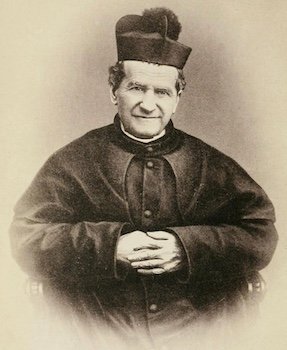
Saint John Bosco accomplished what many people considered an impossibility; he walked through the streets of Turin, Italy, looking for the dirtiest, roughest urchins he could find, then made good men of them. His extraordinary success can be summed up in the words of his patron Saint, Francis de Sales: The measure of his love was that he loved without measure.
John's knowledge of poverty was firsthand. He was born in 1815 in the village of Becchi in the Piedmont district of northern Italy, and reared on his parents' small farm. When his father died, Margaret Bosco and her three sons found it harder than ever to support themselves, and while John was still a small boy he had to join his brothers in the farm work. Although his life was hard, he was a happy, imaginative child. Even as a boy, John found innocent fun compatible with religion. To amuse his friends he learned how to juggle and walk a tightrope; but he would entertain them only on condition that each performance begin and end with a prayer.
As he grew older, John began to think of becoming a priest, but poverty and lack of education made this seem impossible. A kindly priest recognized his intelligence, however, and gave him his first encouragement, teaching him to read and write. By taking odd jobs in the village, and through the help of his mother and some charitable neighbors, John managed to get through school and find admittance to the diocesan seminary of nearby Turin. As a seminarian he devoted his spare time to looking after the ragamuffins who roamed the slums of the city. Every Sunday he taught them catechism, supervised their games and entertained them with stories and tricks; before long his kindness had won their confidence, and his Sunday School became a ritual with them.
After his ordination in 1841, he became assistant to the chaplain of an orphanage at Valocco, on the outskirts of Turin. This position was short-lived, for when he insisted that his Sunday-school boys be allowed to play on the orphanage grounds, they were turned away, and he resigned. He began looking for a permanent home for them, but no decent neighborhood would accept the noisy crowd. At last, in a rather tumbledown section of the city, where no one was likely to protest, the first oratory was established and named for Saint Francis de Sales. At first the boys attended school elsewhere, but as more teachers volunteered their time, classes were held at the house. Enrollment increased so rapidly that by 1849 there were three oratories in various places in the city.
For a long time Don Bosco had considered founding an Order to carry on his work, and this idea was supported by a notoriously anticlerical cabinet minister named Rattazzi. Rattazzi had seen the results of his work, and although an Italian law forbade the founding of religious communities at that time, he promised government support. The founder-priest went to Rome in 1858 and, at the suggestion of Pope Pius IX, drew up a Rule for his community, the Society of Saint Francis de Sales (Salesians). Four years later he founded an Order for women, theDaughters of Mary, Help of Christians, to care for abandoned girls. Finally, to supplement the work of both congregations, he organized an association of lay people interested in aiding their work.
Exhausted from touring Europe to raise funds for a new church in Rome, Don Bosco died on January 31, 1888. He was canonized in 1934 by Pope Pius XI. The work of John Bosco continues today in over a thousand Salesian oratories throughout the world. No modern Saint has captured the heart of the world more rapidly than this smiling peasant-priest from Turin, who believed that to give complete trust and love is the most effective way to nourish virtue in others.
Lives of the Saints for Every Day of the Year. (Reprint of the work of John Gilmary Shea, with Appendix including recently canonized Saints) (Benziger Brothers: New York, 1955. Third Edition: Tan Books and Publishers: Rockford, Ill., 1995).
LAST-MODIFIED:20240127T183742Z SEQUENCE:40685176 X-ACCESS:1 X-HITS:60 X-COLOR:f0b80e X-SHOW-END-TIME:1 END:VEVENT BEGIN:VEVENT DTSTART;VALUE=DATE:20240201 DTEND;VALUE=DATE:20240202 UID:2A6C1B59-DA95-467D-B843-47974E5525F7 SUMMARY:St. Ignatius of Antioch CREATED:20221013T211126Z DTSTAMP:20221013T211126Z URL:https://www.stpaulsweymouth.org/component/dpcalendar/event/1175?calid=13 DESCRIPTION:St. Ignatius of Antioch, Bishop and Martyr\N\NSaint Ignatius, Bishop of Antioch, was the disciple of Saint John the Evangelist. Believing that the Church on earth should resemble that of the heavenly Jerusalem of which Saint John wrote in his Apocalypse, he established singing in choirs in his church at Antioch, after a vision of the celestial choirs who sang in that manner. When the emperor Domitian persecuted the Church, Saint Ignatius obtained peace for his own flock by fasting and prayer, although for his own part he desired to suffer with Christ, and to prove himself a perfect disciple.\NThe Roman emperors often visited Antioch, one of the cities of first importance of the empire. In 107, the eighth year of the reign of the emperor Trajan, he came to Antioch and forced the Christians to choose between apostasy and death. Saint Ignatius, who had already governed that church for forty years, continued to fortify it against apostasy, and did not flee. Arrested and brought before the emperor, the latter addressed him: Who are you, poor devil, to set our commands at naught? Call not poor devil, Ignatius answered, one who bears God within him. And when the emperor asked him what he meant by that, Ignatius explained that he bore in his heart Christ, crucified for his sake. Change your ideas, and I will make you a priest of the great Jupiter, and you will be called father' by the Senate. What could such honors matter to me, a priest of Christ, who offer Him every day a sacrifice of praise, and am ready to offer myself to Him also? To whom? To that Jesus who was crucified by Pontius Pilate? Yes, and with whom sin was crucified, and the devil, its author, vanquished.\NThe questions and the courageous replies continued for a time that day and also on the following one. Saint Ignatius said, I will not sacrifice; I fear neither torments nor death, because I desire to go quickly to God. Thereupon the emperor condemned him to be torn to pieces by wild beasts in Rome. Saint Ignatius blessed God, who had so honored him, binding him in the same chains as Paul, His apostle. When his people wept, he told them to place their hope in the sovereign Pastor, who never abandons His flock. On passing through the city of Smyrna, he exhorted the faithful, who were grieved at his fate, to remain true to Christ until death, and he gave some of them who were going to Rome a letter for the Christians of the capital of the Christian world. This letter is still extant. He writes: I fear your charity, I fear you have an affection too human for me. You might prevent me from dying, but by so doing, you would oppose my happiness. Suffer me to be immolated while the altar is ready; give thanks to God... If when I arrive among you I should have the weakness to seem to have other sentiments, do not believe me; believe only what I am writing to you now. This letter of Saint Ignatius has encouraged all generations of Christians in their combats.\NHe journeyed to Rome, guarded by soldiers, and with no fear but of losing the martyr's crown. Three of his disciples, who accompanied him and were eyewitnesses of the spectacle, wrote the acts of his martyrdom: His face shining with joy, he reassured them as the lions were released, saying: I am the wheat of Christ, I will be ground by the teeth of the beasts and made into flour to be a good bread for my Lord Jesus Christ! He was devoured by lions in the Roman amphitheater. The wild beasts left nothing of his body except a few bones, which were reverently treasured at Antioch until their removal in the year 637 to the Church of Saint Clement in Rome. After the martyr's death, several Christians saw him in vision, in prayer to Christ, and interceding for them.\NReflection. Ask Saint Ignatius to obtain for you the grace of profiting by all you have to suffer, and rejoicing in it as a means of likeness to your crucified Redeemer.\NLes Petits Bollandistes: Vies des Saints, by Msgr. Paul Guérin (Bloud et Barral: Paris, 1882), Vol. 2; Little Pictorial Lives of the Saints, a compilation based on Butler's Lives of the Saints and other sources by John Gilmary Shea (Benziger Brothers: New York, 1894) X-ALT-DESC;FMTTYPE=text/html: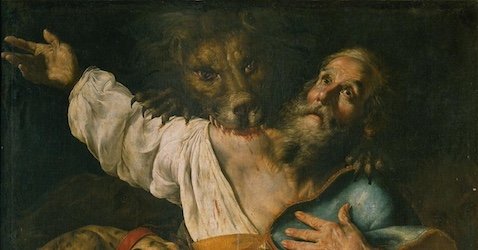
Saint Ignatius, Bishop of Antioch, was the disciple of Saint John the Evangelist. Believing that the Church on earth should resemble that of the heavenly Jerusalem of which Saint John wrote in his Apocalypse, he established singing in choirs in his church at Antioch, after a vision of the celestial choirs who sang in that manner. When the emperor Domitian persecuted the Church, Saint Ignatius obtained peace for his own flock by fasting and prayer, although for his own part he desired to suffer with Christ, and to prove himself a perfect disciple.
The Roman emperors often visited Antioch, one of the cities of first importance of the empire. In 107, the eighth year of the reign of the emperor Trajan, he came to Antioch and forced the Christians to choose between apostasy and death. Saint Ignatius, who had already governed that church for forty years, continued to fortify it against apostasy, and did not flee. Arrested and brought before the emperor, the latter addressed him: Who are you, poor devil, to set our commands at naught? Call not poor devil, Ignatius answered, one who bears God within him. And when the emperor asked him what he meant by that, Ignatius explained that he bore in his heart Christ, crucified for his sake. Change your ideas, and I will make you a priest of the great Jupiter, and you will be called father' by the Senate. What could such honors matter to me, a priest of Christ, who offer Him every day a sacrifice of praise, and am ready to offer myself to Him also? To whom? To that Jesus who was crucified by Pontius Pilate? Yes, and with whom sin was crucified, and the devil, its author, vanquished.
The questions and the courageous replies continued for a time that day and also on the following one. Saint Ignatius said, I will not sacrifice; I fear neither torments nor death, because I desire to go quickly to God. Thereupon the emperor condemned him to be torn to pieces by wild beasts in Rome. Saint Ignatius blessed God, who had so honored him, binding him in the same chains as Paul, His apostle. When his people wept, he told them to place their hope in the sovereign Pastor, who never abandons His flock. On passing through the city of Smyrna, he exhorted the faithful, who were grieved at his fate, to remain true to Christ until death, and he gave some of them who were going to Rome a letter for the Christians of the capital of the Christian world. This letter is still extant. He writes: I fear your charity, I fear you have an affection too human for me. You might prevent me from dying, but by so doing, you would oppose my happiness. Suffer me to be immolated while the altar is ready; give thanks to God... If when I arrive among you I should have the weakness to seem to have other sentiments, do not believe me; believe only what I am writing to you now. This letter of Saint Ignatius has encouraged all generations of Christians in their combats.
He journeyed to Rome, guarded by soldiers, and with no fear but of losing the martyr's crown. Three of his disciples, who accompanied him and were eyewitnesses of the spectacle, wrote the acts of his martyrdom: His face shining with joy, he reassured them as the lions were released, saying: I am the wheat of Christ, I will be ground by the teeth of the beasts and made into flour to be a good bread for my Lord Jesus Christ! He was devoured by lions in the Roman amphitheater. The wild beasts left nothing of his body except a few bones, which were reverently treasured at Antioch until their removal in the year 637 to the Church of Saint Clement in Rome. After the martyr's death, several Christians saw him in vision, in prayer to Christ, and interceding for them.
Reflection. Ask Saint Ignatius to obtain for you the grace of profiting by all you have to suffer, and rejoicing in it as a means of likeness to your crucified Redeemer.
Les Petits Bollandistes: Vies des Saints, by Msgr. Paul Guérin (Bloud et Barral: Paris, 1882), Vol. 2; Little Pictorial Lives of the Saints, a compilation based on Butler's Lives of the Saints and other sources by John Gilmary Shea (Benziger Brothers: New York, 1894)
LAST-MODIFIED:20240127T184721Z SEQUENCE:40685755 X-ACCESS:1 X-HITS:143 X-COLOR:f0b80e X-SHOW-END-TIME:1 END:VEVENT BEGIN:VEVENT DTSTART;VALUE=DATE:20240201 DTEND;VALUE=DATE:20240202 UID:3331226B-6D40-46A9-AE36-C62B39565B09 SUMMARY:St. Brigid CREATED:20221013T211126Z DTSTAMP:20221013T211126Z URL:https://www.stpaulsweymouth.org/component/dpcalendar/event/1177?calid=13 DESCRIPTION:St. Brigid of Kilgore, Abbess, Virgin and Martyr\N\NNext to the glorious Saint Patrick, Saint Bridgid, whom we may regard as his spiritual daughter in Christ, has ever been held in singular veneration in Ireland. She was born about the year 453, at Fochard in Ulster. During her infancy, her pious father saw in a vision men clothed in white garments pouring a sacred unguent on her head, thus prefiguring her future sanctity. While still very young, Bridgid consecrated her life to God, bestowed everything at her disposal on the poor, and was the edification of all who knew her.\NSaint Bridgid was very beautiful, and fearing that efforts might be made to induce her to break the vow by which she had bound herself to God, she prayed that she might become ugly and deformed. Her prayer was heard, for her eye became swollen, and her whole countenance so changed that she was allowed to follow her vocation in peace, and marriage with her was no more thought of. When about twenty years old, our Saint made known to the nephew and disciple of Saint Patrick, Saint Mel, her intention to live only for Jesus Christ, and he consented to receive her sacred vows. On the appointed day, the solemn ceremony of her profession was performed according to the manner introduced by Saint Patrick, the bishop offering up many prayers, and investing Bridgid with a snow-white habit, and a cloak of the same color. While she bowed her head on this occasion to receive the veil, a miracle of a singularly striking and impressive nature occurred: The section of the wooden platform adjoining the altar on which she knelt, recovered its original vitality and put on all its former verdure, retaining it for a long time afterwards. At the same moment Bridgid's eye was healed, and she became beautiful once again.\NEncouraged by her example, several other young persons made vows, and in compliance with the wish of the parents of her new associates, the Saint agreed to found a religious residence for all of them in the vicinity. When a site was chosen by the bishop, a convent, the first in Ireland, was erected upon it; and in obedience to the prelate Bridgid assumed the superiority. Her reputation for sanctity became greater every day; and in proportion as it was diffused throughout the country, the candidates for admission into the new monastery increased in number. The bishops of Ireland, soon perceiving the important advantages which their own dioceses would derive from such foundations, persuaded the young and saintly abbess to visit different parts of the kingdom, and, when an opportunity was offered, they introduced branches of her institute everywhere.\NWhile she was in the province of Connaught, a deputation arrived from Leinster to solicit the Saint to take up her residence in that territory; the prospect of the many spiritual advantages which would result induced her to accede to their wishes. Taking with her a number of her spiritual daughters, she journeyed to Leinster, where they were received with many demonstrations of respect and joy. At the site on which Kildare now stands, Saint Bridgid and her companions took up residence. Bridgid contrived out of their small means to relieve the poor of the vicinity very considerably; and when the wants of these indigent persons surpassed her slender finances, she did not hesitate to sacrifice for them the movables of the convent. On one occasion, imitating the burning charity of Saint Ambrose and other great servants of God, she sold some of the sacred vestments in order to procure the means of relieving their necessities. The renown of Bridgid's unbounded charity drew multitudes of the poor to Kildare; the fame of her piety attracted to the region many persons anxious to solicit her prayers or to profit by her holy example.\NIn time the number of her followers and admirers increased so greatly that it became necessary to provide accommodation for them in the neighborhood of the new monastery, and thus were laid the foundations of the town of Kildare. There an episcopal see was erected, which eventually became the ecclesiastical metropolis of the province to which it belonged.\NSaint Bridgid died after seventy years devoted to the practice of the most sublime virtues, during which her holy institute had become widely diffused throughout the Green Isle, and had greatly advanced the cause of religion in the various districts where it was established. Like a river of peace, its progress was steady and silent; it fertilized all the regions fortunate enough to receive its waters, and caused them to put forth spiritual flowers and fruits with all the sweet perfume of evangelical fragrance.\NThe day on which the holy nun was to terminate her course, February 1, 523, having arrived, she received from the hands of a saintly priest the blessed Body and Blood of her Lord in the divine Eucharist, and passed to the eternal vision of the God she had always adored. Her body was interred in the church adjoining her convent, but later was exhumed and deposited in a splendid shrine near the high altar, afterwards to be moved again and placed in the same grave with the relics of the glorious Saint Patrick. Their holy remains, together with those of Saint Columba, were translated afterwards to the cathedral church of Kildare.\NLittle Pictorial Lives of the Saints, a compilation based on Butler's Lives of the Saints and other sources by John Gilmary Shea (Benziger Brothers: New York, 1894). X-ALT-DESC;FMTTYPE=text/html: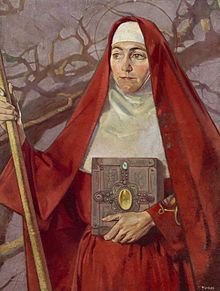
Next to the glorious Saint Patrick, Saint Bridgid, whom we may regard as his spiritual daughter in Christ, has ever been held in singular veneration in Ireland. She was born about the year 453, at Fochard in Ulster. During her infancy, her pious father saw in a vision men clothed in white garments pouring a sacred unguent on her head, thus prefiguring her future sanctity. While still very young, Bridgid consecrated her life to God, bestowed everything at her disposal on the poor, and was the edification of all who knew her.
Saint Bridgid was very beautiful, and fearing that efforts might be made to induce her to break the vow by which she had bound herself to God, she prayed that she might become ugly and deformed. Her prayer was heard, for her eye became swollen, and her whole countenance so changed that she was allowed to follow her vocation in peace, and marriage with her was no more thought of. When about twenty years old, our Saint made known to the nephew and disciple of Saint Patrick, Saint Mel, her intention to live only for Jesus Christ, and he consented to receive her sacred vows. On the appointed day, the solemn ceremony of her profession was performed according to the manner introduced by Saint Patrick, the bishop offering up many prayers, and investing Bridgid with a snow-white habit, and a cloak of the same color. While she bowed her head on this occasion to receive the veil, a miracle of a singularly striking and impressive nature occurred: The section of the wooden platform adjoining the altar on which she knelt, recovered its original vitality and put on all its former verdure, retaining it for a long time afterwards. At the same moment Bridgid's eye was healed, and she became beautiful once again.
Encouraged by her example, several other young persons made vows, and in compliance with the wish of the parents of her new associates, the Saint agreed to found a religious residence for all of them in the vicinity. When a site was chosen by the bishop, a convent, the first in Ireland, was erected upon it; and in obedience to the prelate Bridgid assumed the superiority. Her reputation for sanctity became greater every day; and in proportion as it was diffused throughout the country, the candidates for admission into the new monastery increased in number. The bishops of Ireland, soon perceiving the important advantages which their own dioceses would derive from such foundations, persuaded the young and saintly abbess to visit different parts of the kingdom, and, when an opportunity was offered, they introduced branches of her institute everywhere.
While she was in the province of Connaught, a deputation arrived from Leinster to solicit the Saint to take up her residence in that territory; the prospect of the many spiritual advantages which would result induced her to accede to their wishes. Taking with her a number of her spiritual daughters, she journeyed to Leinster, where they were received with many demonstrations of respect and joy. At the site on which Kildare now stands, Saint Bridgid and her companions took up residence. Bridgid contrived out of their small means to relieve the poor of the vicinity very considerably; and when the wants of these indigent persons surpassed her slender finances, she did not hesitate to sacrifice for them the movables of the convent. On one occasion, imitating the burning charity of Saint Ambrose and other great servants of God, she sold some of the sacred vestments in order to procure the means of relieving their necessities. The renown of Bridgid's unbounded charity drew multitudes of the poor to Kildare; the fame of her piety attracted to the region many persons anxious to solicit her prayers or to profit by her holy example.
In time the number of her followers and admirers increased so greatly that it became necessary to provide accommodation for them in the neighborhood of the new monastery, and thus were laid the foundations of the town of Kildare. There an episcopal see was erected, which eventually became the ecclesiastical metropolis of the province to which it belonged.
Saint Bridgid died after seventy years devoted to the practice of the most sublime virtues, during which her holy institute had become widely diffused throughout the Green Isle, and had greatly advanced the cause of religion in the various districts where it was established. Like a river of peace, its progress was steady and silent; it fertilized all the regions fortunate enough to receive its waters, and caused them to put forth spiritual flowers and fruits with all the sweet perfume of evangelical fragrance.
The day on which the holy nun was to terminate her course, February 1, 523, having arrived, she received from the hands of a saintly priest the blessed Body and Blood of her Lord in the divine Eucharist, and passed to the eternal vision of the God she had always adored. Her body was interred in the church adjoining her convent, but later was exhumed and deposited in a splendid shrine near the high altar, afterwards to be moved again and placed in the same grave with the relics of the glorious Saint Patrick. Their holy remains, together with those of Saint Columba, were translated afterwards to the cathedral church of Kildare.
Little Pictorial Lives of the Saints, a compilation based on Butler's Lives of the Saints and other sources by John Gilmary Shea (Benziger Brothers: New York, 1894).
LAST-MODIFIED:20240127T185007Z SEQUENCE:40685921 X-ACCESS:1 X-HITS:162 X-COLOR:f0b80e X-SHOW-END-TIME:1 END:VEVENT BEGIN:VEVENT DTSTART;VALUE=DATE:20240202 DTEND;VALUE=DATE:20240203 UID:1D2E8609-8F87-44FD-9214-3C1AAD193073 SUMMARY:Candlemas CREATED:20221013T211126Z DTSTAMP:20221013T211126Z URL:https://www.stpaulsweymouth.org/component/dpcalendar/event/1173?calid=13 DESCRIPTION:Candlemas - Purification of the Blessed Virgin Mary - Presentation of the Child Jesus in the Temple\N\NThe law of God, given by Moses to the Jews, ordained that after childbirth a woman should continue for a certain time in a state which that law calls unclean, during which time she was not to appear in public. This term was of forty days following the birth of a son, and double that time for a daughter. When the term expired, the mother was to bring to the Temple a lamb and a young pigeon or turtle-dove, as an offering to God. These being sacrificed to Almighty God by the priest, she was cleansed of the legal impurity and reinstated in her former privileges. A dove was required of all as a sin-offering, whether rich or poor; but as the expense of a lamb might be too great for the poor, these were allowed to substitute for it a second dove. Such was the case, Scripture tells us, for the Holy Family. (Luke 2:24)\NOur Saviour having been conceived by the Holy Ghost, and His Blessed Mother remaining always a spotless virgin, it is evident that She was not subject to the law of purification, but devotion and zeal to honor God by every observance prescribed by His law, prompted Mary to perform this act of religion.\NBesides the law which obliged the mother to purify herself, there was another which required that the first-born son be offered to God, and that after his presentation the child be ransomed with a certain sum of money, and specific sacrifices offered on the occasion. Mary complied exactly with all these ordinances. She obeyed not only in the essential points of the law, but had strict regard to all the circumstances. On the day of Her purification She walked several miles to Jerusalem, with the world's Redeemer in Her arms. She waited for the priest at the gate of the Temple, made Her offerings of thanksgiving and expiation, and with the most profound humility, adoration and thanksgiving, presented Her divine Son, by the hands of the priest, to His Eternal Father. She then redeemed Him with five shekels, as the law appoints, and received Him back again as a sacred charge committed to Her special care, until the Father would again demand Him for the full accomplishment of man's redemption.\NThe ceremony of this day closed in a third mystery — the meeting in the Temple of the holy prophets Simeon and Anne with the Divine Infant and His parents. Saint Simeon, on that occasion, received into his arms the object of all his desires and sighs, and praised God for the happiness of beholding the much-longed-for Messiah. He foretold to Mary Her martyrdom of sorrow, and that Jesus would bring redemption to those who would accept it on the terms it was offered, but a heavy judgment on all who would obstinately reject it. Mary, hearing this terrible prediction, courageously and sweetly committed all to God's holy Will. Simeon, having beheld Our Saviour, exclaimed: Now Thou canst dismiss Thy servant, O Lord, in peace, according to Thy word, because mine eyes have seen Thy salvation. The aged prophetess Anne, who had served God with great fervor during her long widowhood, also had the happiness of recognizing and adoring the Redeemer of the world. This feast is called Candlemas, because the Church blesses the candles to be borne in the procession of the day.\NReflection. Let us strive to imitate the humility of the ever-blessed Mother of God, remembering that humility is the path which leads to lasting peace and brings us closer to God, who gives His grace to the humble.\NLittle Pictorial Lives of the Saints, a compilation based on Butler's Lives of the Saints and other sources by John Gilmary Shea (Benziger Brothers: New York, 1894); The Holy Bible: Old and New Testaments. X-ALT-DESC;FMTTYPE=text/html: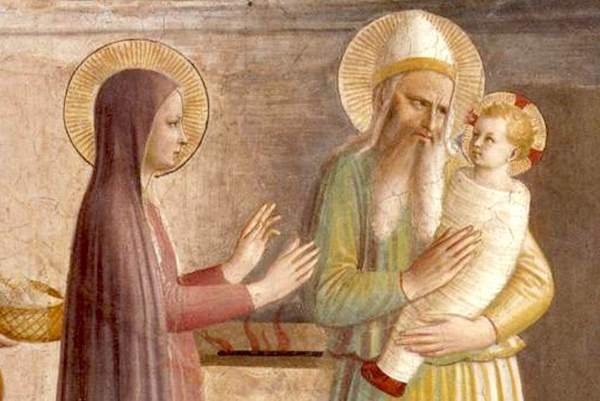
The law of God, given by Moses to the Jews, ordained that after childbirth a woman should continue for a certain time in a state which that law calls unclean, during which time she was not to appear in public. This term was of forty days following the birth of a son, and double that time for a daughter. When the term expired, the mother was to bring to the Temple a lamb and a young pigeon or turtle-dove, as an offering to God. These being sacrificed to Almighty God by the priest, she was cleansed of the legal impurity and reinstated in her former privileges. A dove was required of all as a sin-offering, whether rich or poor; but as the expense of a lamb might be too great for the poor, these were allowed to substitute for it a second dove. Such was the case, Scripture tells us, for the Holy Family. (Luke 2:24)
Our Saviour having been conceived by the Holy Ghost, and His Blessed Mother remaining always a spotless virgin, it is evident that She was not subject to the law of purification, but devotion and zeal to honor God by every observance prescribed by His law, prompted Mary to perform this act of religion.
Besides the law which obliged the mother to purify herself, there was another which required that the first-born son be offered to God, and that after his presentation the child be ransomed with a certain sum of money, and specific sacrifices offered on the occasion. Mary complied exactly with all these ordinances. She obeyed not only in the essential points of the law, but had strict regard to all the circumstances. On the day of Her purification She walked several miles to Jerusalem, with the world's Redeemer in Her arms. She waited for the priest at the gate of the Temple, made Her offerings of thanksgiving and expiation, and with the most profound humility, adoration and thanksgiving, presented Her divine Son, by the hands of the priest, to His Eternal Father. She then redeemed Him with five shekels, as the law appoints, and received Him back again as a sacred charge committed to Her special care, until the Father would again demand Him for the full accomplishment of man's redemption.
The ceremony of this day closed in a third mystery — the meeting in the Temple of the holy prophets Simeon and Anne with the Divine Infant and His parents. Saint Simeon, on that occasion, received into his arms the object of all his desires and sighs, and praised God for the happiness of beholding the much-longed-for Messiah. He foretold to Mary Her martyrdom of sorrow, and that Jesus would bring redemption to those who would accept it on the terms it was offered, but a heavy judgment on all who would obstinately reject it. Mary, hearing this terrible prediction, courageously and sweetly committed all to God's holy Will. Simeon, having beheld Our Saviour, exclaimed: Now Thou canst dismiss Thy servant, O Lord, in peace, according to Thy word, because mine eyes have seen Thy salvation. The aged prophetess Anne, who had served God with great fervor during her long widowhood, also had the happiness of recognizing and adoring the Redeemer of the world. This feast is called Candlemas, because the Church blesses the candles to be borne in the procession of the day.
Reflection. Let us strive to imitate the humility of the ever-blessed Mother of God, remembering that humility is the path which leads to lasting peace and brings us closer to God, who gives His grace to the humble.
Little Pictorial Lives of the Saints, a compilation based on Butler's Lives of the Saints and other sources by John Gilmary Shea (Benziger Brothers: New York, 1894); The Holy Bible: Old and New Testaments.
LAST-MODIFIED:20240127T184406Z SEQUENCE:40685560 X-ACCESS:1 X-HITS:17 X-COLOR:f0b80e X-SHOW-END-TIME:1 END:VEVENT BEGIN:VEVENT DTSTART;VALUE=DATE:20240203 DTEND;VALUE=DATE:20240204 UID:C9B427F3-6CCB-441E-8A2A-92D52704877E SUMMARY:St. Blaise CREATED:20221013T211126Z DTSTAMP:20221013T211126Z URL:https://www.stpaulsweymouth.org/component/dpcalendar/event/1171?calid=13 DESCRIPTION:St. Blaise Bishop, Martyr\N\NSaint Blaise devoted the earlier years of his life to the study of philosophy, and afterwards became a physician. In the practice of his profession he saw so much of the miseries of life and the hollowness of worldly pleasures, that he resolved to spend the rest of his days in the service of God. From being a healer of bodily ailments, he became a physician of souls, then retired for a time, by divine inspiration, to a cavern where he remained in prayer.\NWhen the bishop of Sebaste in Armenia died, Blaise, much to the gratification of the inhabitants of that city, was chosen to succeed him. Saint Blaise at once began to instruct his people, as much by his example as by his words, and the great virtues and sanctity of the servant of God were attested by many miracles. From all parts, the people came flocking to him for the cure of bodily and spiritual ills.\NWhen the governor of Cappadocia and Lesser Armenia, Agricolaus, began a persecution by order of the Emperor Licinius, Saint Blaise was seized. After interrogation and a severe scourging, he was hurried off to prison. While he was under custody, a distraught mother, whose only child was dying of a throat disease, threw herself at his feet and implored his intercession. Touched at her grief, he offered up his prayers, and the child was cured.\NThe prisoner was brought before Agricolaus again for further questioning, and again was whipped while tied to a pillar. He was spared from drowning when thrown into a lake; the governor ordered then that he be beheaded. At the execution site he prayed aloud to God for his persecutors, and asked that in the future those who would invoke him might be aided, as he had been permitted to assist them during his lifetime. Our Lord appeared to him and said in a voice which all bystanders heard, that He granted his prayer. Since that time his intercession has often been effectually solicited, especially in cases of all kinds of throat problems.\NReflection. There is no sacrifice which, by the aid of grace, human nature is not capable of accomplishing. When Saint Paul complained to God of the violence of temptation, God answered, My grace is sufficient for thee, for strength is made perfect in infirmity.\NLittle Pictorial Lives of the Saints, a compilation based on Butler's Lives of the Saints and other sources by John Gilmary Shea (Benziger Brothers: New York, 1894); Les Petits Bollandistes: Vies des Saints, by Msgr. Paul Guérin (Bloud et Barral: Paris, 1882), Vol. 2 X-ALT-DESC;FMTTYPE=text/html: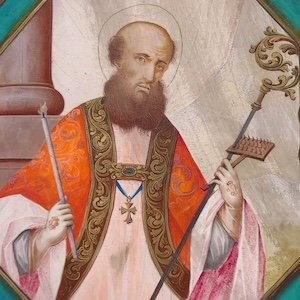
Saint Blaise devoted the earlier years of his life to the study of philosophy, and afterwards became a physician. In the practice of his profession he saw so much of the miseries of life and the hollowness of worldly pleasures, that he resolved to spend the rest of his days in the service of God. From being a healer of bodily ailments, he became a physician of souls, then retired for a time, by divine inspiration, to a cavern where he remained in prayer.
When the bishop of Sebaste in Armenia died, Blaise, much to the gratification of the inhabitants of that city, was chosen to succeed him. Saint Blaise at once began to instruct his people, as much by his example as by his words, and the great virtues and sanctity of the servant of God were attested by many miracles. From all parts, the people came flocking to him for the cure of bodily and spiritual ills.
When the governor of Cappadocia and Lesser Armenia, Agricolaus, began a persecution by order of the Emperor Licinius, Saint Blaise was seized. After interrogation and a severe scourging, he was hurried off to prison. While he was under custody, a distraught mother, whose only child was dying of a throat disease, threw herself at his feet and implored his intercession. Touched at her grief, he offered up his prayers, and the child was cured.
The prisoner was brought before Agricolaus again for further questioning, and again was whipped while tied to a pillar. He was spared from drowning when thrown into a lake; the governor ordered then that he be beheaded. At the execution site he prayed aloud to God for his persecutors, and asked that in the future those who would invoke him might be aided, as he had been permitted to assist them during his lifetime. Our Lord appeared to him and said in a voice which all bystanders heard, that He granted his prayer. Since that time his intercession has often been effectually solicited, especially in cases of all kinds of throat problems.
Reflection. There is no sacrifice which, by the aid of grace, human nature is not capable of accomplishing. When Saint Paul complained to God of the violence of temptation, God answered, My grace is sufficient for thee, for strength is made perfect in infirmity.
Little Pictorial Lives of the Saints, a compilation based on Butler's Lives of the Saints and other sources by John Gilmary Shea (Benziger Brothers: New York, 1894); Les Petits Bollandistes: Vies des Saints, by Msgr. Paul Guérin (Bloud et Barral: Paris, 1882), Vol. 2
LAST-MODIFIED:20240127T184041Z SEQUENCE:40685355 X-ACCESS:1 X-HITS:3 X-COLOR:f0b80e X-SHOW-END-TIME:1 END:VEVENT BEGIN:VEVENT DTSTART;VALUE=DATE:20240204 DTEND;VALUE=DATE:20240205 UID:2621D2E2-29E2-41D0-B2A2-FAD64E43642A SUMMARY:St. Andrew Corsini CREATED:20221013T211126Z DTSTAMP:20221013T211126Z URL:https://www.stpaulsweymouth.org/component/dpcalendar/event/1251?calid=13 DESCRIPTION:St. Andrew Corsini Bishop, Confessor\N\NSaint Andrew was born in Florence in 1301 of the illustrious Corsini family. A short time before the birth of Saint Andrew, his mother experienced a strange dream, in which she had given birth to a wolf which became a lamb upon entering a Carmelite church. After a dissolute youthful life Andrew repented, when one day in 1318 his desolate mother told him of her dream. He rose and went to the altar in the church where his parents had offered to God the child they hoped to obtain from His mercy; there he prayed to the Blessed Virgin with tears, then went to beg his admission to the Carmelite Order.\NHe began a life of great mortification. Ordained a priest in 1328, he studied in Paris and Avignon, and on his return became the Apostle of Florence, and Prior of his convent there. In 1360 he was consecrated Bishop of Fiesole, near Florence, and gained a great reputation as a peacemaker between rival political factions and for his love of the poor. He was also named papal nuncio to Bologna, where he pacified dissenting factions and won the hearts of the nobility with whom he was associating. He wrought many miracles of healing and conversion during his lifetime.\NAt the age of 71, while he was celebrating the midnight Mass of Christmas, the Blessed Virgin appeared to him and told him he would leave this world on the feast of the Epiphany, to meet the beloved Master he had served so faithfully. In effect, he died on that day in 1373, in the thirteenth year of his episcopacy. Miracles were so multiplied thereafter that Pope Eugenius IV permitted a public cult immediately. The city of Florence has always invoked him with confidence and happy results. He was canonized in 1629.\NHe is often represented holding his crosier, with a wolf and a lamb at his feet, or hovering over a battlefield on a cloud or a white steed — this in memory of his miraculous intervention in a battle the Florentine people won by his assistance.\NLes Petits Bollandistes: Vies des Saints, by Msgr. Paul Guérin (Bloud et Barral: Paris, 1882), Vol. 2; Little Pictorial Lives of the Saints, a compilation based on Butler's Lives of the Saints and other sources by John Gilmary Shea (Benziger Brothers: New York, 1894). X-ALT-DESC;FMTTYPE=text/html: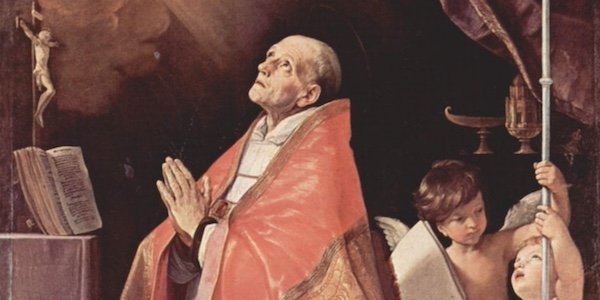
Saint Andrew was born in Florence in 1301 of the illustrious Corsini family. A short time before the birth of Saint Andrew, his mother experienced a strange dream, in which she had given birth to a wolf which became a lamb upon entering a Carmelite church. After a dissolute youthful life Andrew repented, when one day in 1318 his desolate mother told him of her dream. He rose and went to the altar in the church where his parents had offered to God the child they hoped to obtain from His mercy; there he prayed to the Blessed Virgin with tears, then went to beg his admission to the Carmelite Order.
He began a life of great mortification. Ordained a priest in 1328, he studied in Paris and Avignon, and on his return became the Apostle of Florence, and Prior of his convent there. In 1360 he was consecrated Bishop of Fiesole, near Florence, and gained a great reputation as a peacemaker between rival political factions and for his love of the poor. He was also named papal nuncio to Bologna, where he pacified dissenting factions and won the hearts of the nobility with whom he was associating. He wrought many miracles of healing and conversion during his lifetime.
At the age of 71, while he was celebrating the midnight Mass of Christmas, the Blessed Virgin appeared to him and told him he would leave this world on the feast of the Epiphany, to meet the beloved Master he had served so faithfully. In effect, he died on that day in 1373, in the thirteenth year of his episcopacy. Miracles were so multiplied thereafter that Pope Eugenius IV permitted a public cult immediately. The city of Florence has always invoked him with confidence and happy results. He was canonized in 1629.
He is often represented holding his crosier, with a wolf and a lamb at his feet, or hovering over a battlefield on a cloud or a white steed — this in memory of his miraculous intervention in a battle the Florentine people won by his assistance.
Les Petits Bollandistes: Vies des Saints, by Msgr. Paul Guérin (Bloud et Barral: Paris, 1882), Vol. 2; Little Pictorial Lives of the Saints, a compilation based on Butler's Lives of the Saints and other sources by John Gilmary Shea (Benziger Brothers: New York, 1894).
LAST-MODIFIED:20240210T152112Z SEQUENCE:41882986 X-ACCESS:1 X-HITS:23 X-COLOR:f0b80e X-SHOW-END-TIME:1 END:VEVENT BEGIN:VEVENT DTSTART;VALUE=DATE:20240205 DTEND;VALUE=DATE:20240206 UID:C8D52185-C84A-4D21-A852-2ED365B077A5 SUMMARY:St. Agatha CREATED:20221013T211126Z DTSTAMP:20221013T211126Z URL:https://www.stpaulsweymouth.org/component/dpcalendar/event/1253?calid=13 DESCRIPTION:St. Agatha, Virgin & Martyr\N\NSaint Agatha was born in Sicily of rich and noble parents, a child of benediction from the first, for she was promised to her parents before her birth, and consecrated from her earliest infancy to God. In the midst of dangers and temptations she served Christ in purity of body and soul, and she died for love of chastity. Quintanus, who governed Sicily under the Emperor Decius, had heard the rumor of her beauty and wealth, and he made the laws against the Christians a pretext for summoning her from Palermo to Catania, where he was at the time. O Jesus Christ! she cried, as she set out on this dreaded journey, all that I am is Thine; preserve me against the tyrant.\NAnd Our Lord did indeed preserve one who had given herself so utterly to Him. He kept her pure and undefiled while she was imprisoned for a whole month under charge of an evil woman. He gave her strength to reply to the offer of her life and safety, if she would but consent to sacrifice to the gods, Christ alone is my salvation! When Quintanus turned from passion to cruelty, and cut off her breasts, Our Lord sent the Prince of the Apostles to heal her. She told the elderly gentleman who appeared to her that she was Christian and desired no treatment, for her Lord could cure her by a single word. He smiled, identified himself as Saint Peter, and said: It is in His name that you will be healed. And when he disappeared, she saw that her wounds were healed and her flesh made whole. But when she was rolled naked upon potsherds, she asked that her torments might be ended. Her Lord heard her prayer and took her to Himself.\NSaint Agatha gave herself without reserve to Jesus Christ; she followed Him in virginal purity, and then depended upon Him for protection. And to this day Christ has shown His tender regard for the very body of Saint Agatha. Again and again, during the eruptions of Mount Etna, the people of Catania have exposed her veil for public veneration, and found safety by this means. In modern times, on opening the tomb in which her body lies waiting for the resurrection, they beheld the skin still entire, and experienced the sweet fragrance which issued from this temple of the Holy Ghost.\NReflection. Purity is a gift of God: we can gain it and preserve it only by care and diligence in avoiding all that may prove an incentive to sin.\NLes Petits Bollandistes: Vies des Saints, by Msgr. Paul Guérin (Bloud et Barral: Paris, 1882), Vol. 2; Little Pictorial Lives of the Saints, a compilation based on Butler's Lives of the Saints and other sources by John Gilmary Shea (Benziger Brothers: New York, 1894). X-ALT-DESC;FMTTYPE=text/html:
Saint Agatha was born in Sicily of rich and noble parents, a child of benediction from the first, for she was promised to her parents before her birth, and consecrated from her earliest infancy to God. In the midst of dangers and temptations she served Christ in purity of body and soul, and she died for love of chastity. Quintanus, who governed Sicily under the Emperor Decius, had heard the rumor of her beauty and wealth, and he made the laws against the Christians a pretext for summoning her from Palermo to Catania, where he was at the time. O Jesus Christ! she cried, as she set out on this dreaded journey, all that I am is Thine; preserve me against the tyrant.
And Our Lord did indeed preserve one who had given herself so utterly to Him. He kept her pure and undefiled while she was imprisoned for a whole month under charge of an evil woman. He gave her strength to reply to the offer of her life and safety, if she would but consent to sacrifice to the gods, Christ alone is my salvation! When Quintanus turned from passion to cruelty, and cut off her breasts, Our Lord sent the Prince of the Apostles to heal her. She told the elderly gentleman who appeared to her that she was Christian and desired no treatment, for her Lord could cure her by a single word. He smiled, identified himself as Saint Peter, and said: It is in His name that you will be healed. And when he disappeared, she saw that her wounds were healed and her flesh made whole. But when she was rolled naked upon potsherds, she asked that her torments might be ended. Her Lord heard her prayer and took her to Himself.
Saint Agatha gave herself without reserve to Jesus Christ; she followed Him in virginal purity, and then depended upon Him for protection. And to this day Christ has shown His tender regard for the very body of Saint Agatha. Again and again, during the eruptions of Mount Etna, the people of Catania have exposed her veil for public veneration, and found safety by this means. In modern times, on opening the tomb in which her body lies waiting for the resurrection, they beheld the skin still entire, and experienced the sweet fragrance which issued from this temple of the Holy Ghost.
Reflection. Purity is a gift of God: we can gain it and preserve it only by care and diligence in avoiding all that may prove an incentive to sin.
Les Petits Bollandistes: Vies des Saints, by Msgr. Paul Guérin (Bloud et Barral: Paris, 1882), Vol. 2; Little Pictorial Lives of the Saints, a compilation based on Butler's Lives of the Saints and other sources by John Gilmary Shea (Benziger Brothers: New York, 1894).
LAST-MODIFIED:20240210T152446Z SEQUENCE:41883200 X-ACCESS:1 X-HITS:14 X-COLOR:f0b80e X-SHOW-END-TIME:1 END:VEVENT BEGIN:VEVENT DTSTART;VALUE=DATE:20240206 DTEND;VALUE=DATE:20240207 UID:DDDCDDC6-FD97-43E3-868E-C5F32C4D18A1 SUMMARY:St. Titus CREATED:20221013T211126Z DTSTAMP:20221013T211126Z URL:https://www.stpaulsweymouth.org/component/dpcalendar/event/1255?calid=13 DESCRIPTION:St. Titus Bishop, Confessor\N\NSaint Titus was a Greek-speaking convert from paganism and a disciple of Saint Paul, one of the chosen companions of the Apostle on his journey to the Council of Jerusalem. He became his fellow-laborer in many apostolic missions. From the Second Epistle which Saint Paul sent by the hand of Titus to the Corinthians, we gain an insight into the disciple's character as a peacemaker and an administrator, and understand the strong affection which his master bore him.\NTitus had been commissioned to carry out a twofold office needing much firmness, discretion, and charity. He was to be the bearer of a severe rebuke to the Corinthians, who were harboring a scandal and were wavering in their faith; and at the same time he was directed to put their charity to the test by calling upon them for abundant alms for the church at Jerusalem. Saint Paul at Troas was anxiously awaiting the result. He writes, I had no peace of mind at Troas, because I did not find there Titus, my brother. (II Cor. 2:13) And he set sail for Macedonia. Here at last Titus brought the good news; his success had been complete. He reported the sorrow, the zeal, the generosity of the Corinthians, and the Apostle was filled with joy, and sent his faithful messenger back to them with the letter of comfort from which we have quoted.\NTitus was finally left as a bishop on the Island of Crete, where Saint Paul addressed to him the epistle which bears his name. We see from Saint Paul's Epistle to Titus that this cherished disciple had organized the Christian community, and was engaged in correcting abuses and establishing a clergy. We do not know the history of the final years of Saint Titus from Scripture, only that he was in Dalmatia a short time before the martyrdom of Saint Paul. (Epistle to Timothy 4:10) Writers on Church history state that he died on Crete. His relics are conserved at Venice in the cathedral church of Saint Mark.\NThe mission of Titus to Corinth shows us how well the disciple had learned the spirit of his master. He knew how to be firm and to inspire respect. The Corinthians, we are told, received him with fear and trembling. He was patient and painstaking. Saint Paul gave thanks to God, who had put such solicitude for them in the heart of Titus. And these gifts were enhanced by a quickness to detect and elicit all the good in others, and by a joyousness which overflowed upon the spirit of Saint Paul himself, who abundantly rejoiced in the joy of Titus. (II Cor. 2:13)\NLes Petits Bollandistes: Vies des Saints, by Msgr. Paul Guérin (Bloud et Barral: Paris, 1882), Vol. 1; Little Pictorial Lives of the Saints, a compilation based on Butler's Lives of the Saints and other sources by John Gilmary Shea (Benziger Brothers: New York, 1894). X-ALT-DESC;FMTTYPE=text/html:
Saint Titus was a Greek-speaking convert from paganism and a disciple of Saint Paul, one of the chosen companions of the Apostle on his journey to the Council of Jerusalem. He became his fellow-laborer in many apostolic missions. From the Second Epistle which Saint Paul sent by the hand of Titus to the Corinthians, we gain an insight into the disciple's character as a peacemaker and an administrator, and understand the strong affection which his master bore him.
Titus had been commissioned to carry out a twofold office needing much firmness, discretion, and charity. He was to be the bearer of a severe rebuke to the Corinthians, who were harboring a scandal and were wavering in their faith; and at the same time he was directed to put their charity to the test by calling upon them for abundant alms for the church at Jerusalem. Saint Paul at Troas was anxiously awaiting the result. He writes, I had no peace of mind at Troas, because I did not find there Titus, my brother. (II Cor. 2:13) And he set sail for Macedonia. Here at last Titus brought the good news; his success had been complete. He reported the sorrow, the zeal, the generosity of the Corinthians, and the Apostle was filled with joy, and sent his faithful messenger back to them with the letter of comfort from which we have quoted.
Titus was finally left as a bishop on the Island of Crete, where Saint Paul addressed to him the epistle which bears his name. We see from Saint Paul's Epistle to Titus that this cherished disciple had organized the Christian community, and was engaged in correcting abuses and establishing a clergy. We do not know the history of the final years of Saint Titus from Scripture, only that he was in Dalmatia a short time before the martyrdom of Saint Paul. (Epistle to Timothy 4:10) Writers on Church history state that he died on Crete. His relics are conserved at Venice in the cathedral church of Saint Mark.
The mission of Titus to Corinth shows us how well the disciple had learned the spirit of his master. He knew how to be firm and to inspire respect. The Corinthians, we are told, received him with fear and trembling. He was patient and painstaking. Saint Paul gave thanks to God, who had put such solicitude for them in the heart of Titus. And these gifts were enhanced by a quickness to detect and elicit all the good in others, and by a joyousness which overflowed upon the spirit of Saint Paul himself, who abundantly rejoiced in the joy of Titus. (II Cor. 2:13)
Les Petits Bollandistes: Vies des Saints, by Msgr. Paul Guérin (Bloud et Barral: Paris, 1882), Vol. 1; Little Pictorial Lives of the Saints, a compilation based on Butler's Lives of the Saints and other sources by John Gilmary Shea (Benziger Brothers: New York, 1894).
LAST-MODIFIED:20240210T152747Z SEQUENCE:41883381 X-ACCESS:1 X-HITS:70 X-COLOR:f0b80e X-SHOW-END-TIME:1 END:VEVENT BEGIN:VEVENT DTSTART;VALUE=DATE:20240206 DTEND;VALUE=DATE:20240207 UID:C0EED620-0608-465F-80F0-EDD1886ECAAB SUMMARY:St. Dorothy CREATED:20221013T211126Z DTSTAMP:20221013T211126Z URL:https://www.stpaulsweymouth.org/component/dpcalendar/event/1257?calid=13 DESCRIPTION:St. Dorothy, Virgin and Martyr\N\NSaint Dorothy was a young virgin celebrated already in Caesarea of Cappadocia, where she lived, for her angelic virtue. Her parents are believed to have been martyred before her in the Diocletian persecution; thus, when the Governor Sapricius came to Caesarea and called her to appear before him, he sent this child of martyrs to the eternal home where they were waiting for her.\NShe explained that the God she adored was majestic — above all emperors, who were mortal, and their gods, none of whom created either heaven or earth. She was stretched upon the rack, and offered honors if she would consent to sacrifice, or death if she refused. And they waited. She asked why they delayed to torture her; they were expecting she might cede out of fright. She said to them, Do what you have to do, that I may see the One for whose love I fear neither death nor torments, Jesus Christ. She was asked, Where is this Christ? and she replied: As Almighty He is everywhere, but for weak human reason we say that the Son of God has ascended into heaven, to be seated at the right hand of the Almighty Father. It is He who invites us to the garden of His delights, where at all times the trees are covered with fruits, the lilies are perpetually white, the roses ever in their freshness. If you believe me, you too will search for the true liberty, and will labor to earn entry into the garden of God's delights. She was then placed in the custody of two women who had fallen away from the faith, in the hope that they might pervert her; but the fire of her own heart rekindled the flame in theirs, and led them back to Christ.\NWhen she was set once more on the rack, Sapricius himself was amazed at the heavenly expression on her face, and asked her the cause of her joy. Because, she said, I have brought back two souls to Christ, and because I shall soon be in heaven rejoicing with the Angels. Her joy grew as she was buffeted in the face and her sides were burned with plates of red-hot iron. Blessed art Thou, she cried, when she was sentenced to be beheaded, Blessed art Thou, O Lover of souls, who call me to paradise, and invite me to Thy nuptial chamber!\NSaint Dorothy suffered in mid-winter, and on the road to her execution a lawyer called Theophilus, who had grown accustomed to calumniating and persecuting the Christians, asked her, in mockery, to send him apples or roses from the garden of her Spouse. The Saint promised to grant his request. Just before she died, a little child stood by her side bearing three apples and three roses. She told him to take them to Theophilus, and to tell him it was the present he sought from the garden of her Spouse. Saint Dorothy had gone to heaven, and Theophilus was still making merry over his challenge to her, when the child entered his room. He recognized that the fruit and flowers were of no earthly growth, and that the child was an Angel in disguise. He was converted to the faith, and then shared in the martyrdom of Saint Dorothy.\NReflection. Do you wish to be safe amid the pleasures and happy despite the troubles of this world? Pray for heavenly desires, and say with the Saints, Paradise, paradise!\NLittle Pictorial Lives of the Saints, a compilation based on Butler's Lives of the Saints and other sources by John Gilmary Shea (Benziger Brothers: New York, 1894); Les Petits Bollandistes: Vies des Saints, by Msgr. Paul Guérin (Bloud et Barral: Paris, 1882), Vol. 2 X-ALT-DESC;FMTTYPE=text/html: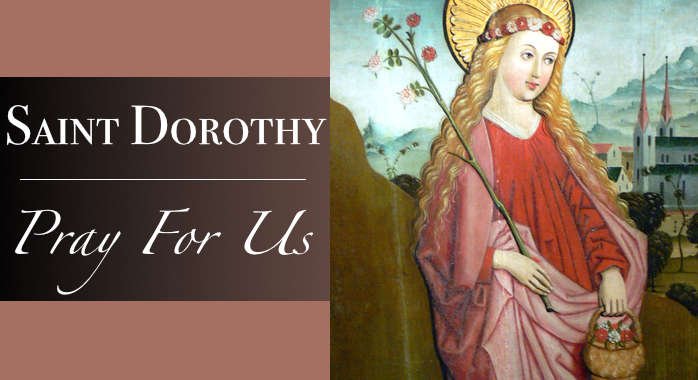
Saint Dorothy was a young virgin celebrated already in Caesarea of Cappadocia, where she lived, for her angelic virtue. Her parents are believed to have been martyred before her in the Diocletian persecution; thus, when the Governor Sapricius came to Caesarea and called her to appear before him, he sent this child of martyrs to the eternal home where they were waiting for her.
She explained that the God she adored was majestic — above all emperors, who were mortal, and their gods, none of whom created either heaven or earth. She was stretched upon the rack, and offered honors if she would consent to sacrifice, or death if she refused. And they waited. She asked why they delayed to torture her; they were expecting she might cede out of fright. She said to them, Do what you have to do, that I may see the One for whose love I fear neither death nor torments, Jesus Christ. She was asked, Where is this Christ? and she replied: As Almighty He is everywhere, but for weak human reason we say that the Son of God has ascended into heaven, to be seated at the right hand of the Almighty Father. It is He who invites us to the garden of His delights, where at all times the trees are covered with fruits, the lilies are perpetually white, the roses ever in their freshness. If you believe me, you too will search for the true liberty, and will labor to earn entry into the garden of God's delights. She was then placed in the custody of two women who had fallen away from the faith, in the hope that they might pervert her; but the fire of her own heart rekindled the flame in theirs, and led them back to Christ.
When she was set once more on the rack, Sapricius himself was amazed at the heavenly expression on her face, and asked her the cause of her joy. Because, she said, I have brought back two souls to Christ, and because I shall soon be in heaven rejoicing with the Angels. Her joy grew as she was buffeted in the face and her sides were burned with plates of red-hot iron. Blessed art Thou, she cried, when she was sentenced to be beheaded, Blessed art Thou, O Lover of souls, who call me to paradise, and invite me to Thy nuptial chamber!
Saint Dorothy suffered in mid-winter, and on the road to her execution a lawyer called Theophilus, who had grown accustomed to calumniating and persecuting the Christians, asked her, in mockery, to send him apples or roses from the garden of her Spouse. The Saint promised to grant his request. Just before she died, a little child stood by her side bearing three apples and three roses. She told him to take them to Theophilus, and to tell him it was the present he sought from the garden of her Spouse. Saint Dorothy had gone to heaven, and Theophilus was still making merry over his challenge to her, when the child entered his room. He recognized that the fruit and flowers were of no earthly growth, and that the child was an Angel in disguise. He was converted to the faith, and then shared in the martyrdom of Saint Dorothy.
Reflection. Do you wish to be safe amid the pleasures and happy despite the troubles of this world? Pray for heavenly desires, and say with the Saints, Paradise, paradise!
Little Pictorial Lives of the Saints, a compilation based on Butler's Lives of the Saints and other sources by John Gilmary Shea (Benziger Brothers: New York, 1894); Les Petits Bollandistes: Vies des Saints, by Msgr. Paul Guérin (Bloud et Barral: Paris, 1882), Vol. 2
LAST-MODIFIED:20240210T153032Z SEQUENCE:41883546 X-ACCESS:1 X-HITS:140 X-COLOR:f0b80e X-SHOW-END-TIME:1 END:VEVENT BEGIN:VEVENT DTSTART;VALUE=DATE:20240207 DTEND;VALUE=DATE:20240208 UID:7FDC92C3-3115-44B0-A04A-EDBB0ED58EB5 SUMMARY:St. Romuald CREATED:20221013T211126Z DTSTAMP:20221013T211126Z URL:https://www.stpaulsweymouth.org/component/dpcalendar/event/1259?calid=13 DESCRIPTION:St. Romuald Abbot\N\NIn the tenth century Sergius, a nobleman of Ravenna, quarreled with a relative over an estate and, in a duel to which his son Romuald was witness, slew him. The young man of twenty years was horrified at his father's crime, and entered a Benedictine monastery at Classe to do a forty days' penance for him. This penance led to his entry into religion as a Benedictine monk.\NAfter seven years at Classe, Romuald went to live as a hermit near Venice, under the guidance of a holy man who had him recite the Psalter from memory every day. When he stumbled, the hermit struck his left ear with a rod. Romuald suffered with patience, but one day, noting that he was losing his hearing in that ear, asked the old man to strike him on his right ear. This episode supposes great progress in virtue. The two religious were joined by Peter Urseolus, Duke of Venice, who desired to do penance also, and together they led a most austere life in the midst of assaults from the evil spirits.\NSaint Romuald, whose aim was to restore the primitive rule to the Order of Saint Benedict, succeeded in founding some hundred monasteries in both Italy and France, and he filled the solitudes with hermitages. The principal monastery was that at Camaldoli, a wild, deserted region, where he built a church, surrounded by a number of separate cells for the solitaries who lived under his rule; his disciples were thus called Camaldolese. For five years the fervent founder was tormented by furious attacks by the demon. He repulsed him, saying, O enemy! Driven out of heaven, you come to the desert? Depart, ugly serpent, already you have what is due you. And the shamed adversary would leave him. Saint Romuald's father, Sergius, was moved by the examples of his son, and entered religion near Ravenna; there he, too, was attacked by hell and thought of abandoning his design. Romuald went to visit him; he showed him the error of the devil's ruses, and his father died in the monastery, in the odor of sanctity.\NAmong his first disciples were Saints Adalbert and Boniface, apostles of Russia, and Saints John and Benedict of Poland, martyrs for the faith. He was an intimate friend of the Emperor Saint Henry, and was reverenced and consulted by many great men of his time. He once passed seven years in solitude and total silence. He died, as he had foretold twenty years in advance, alone in his monastery of Val Castro, on the 19th of June, 1027, in an advanced and abundantly fruitful old age.\NBy the life of Saint Romuald, we see how God brings good out of evil. In his youth Saint Romuald was much troubled by temptations of the flesh; to escape them he had recourse to hunting, and it was in the woods that he first conceived his love for solitude. His father's sin prompted him to undertake a forty days' penance in the monastery, which he then made his permanent home. Some bad examples of his fellow-monks induced him to leave them and adopt the solitary mode of life; the repentance of a Venetian Duke brought him his first disciple. The temptations of the devil compelled him to lead his severe life of expiation; and finally, the persecutions of others were the occasion of his settlement at Camaldoli, mother house of his Order.\NReflection. If we follow the impulses of the Holy Spirit, like Saint Romuald we shall bring Him into situations which seem without hope. Our own sins, the sins of others, their ill will against us, our own mistakes and misfortunes, if we react with the help of God, are capable of bringing our own souls and others to the throne of God's mercy and love.\NLittle Pictorial Lives of the Saints, a compilation based on Butler's Lives of the Saints and other sources by John Gilmary Shea (Benziger Brothers: New York, 1894); Les Petits Bollandistes: Vies des Saints, by Msgr. Paul Guérin (Bloud et Barral: Paris, 1882), Vol. 2 X-ALT-DESC;FMTTYPE=text/html:
In the tenth century Sergius, a nobleman of Ravenna, quarreled with a relative over an estate and, in a duel to which his son Romuald was witness, slew him. The young man of twenty years was horrified at his father's crime, and entered a Benedictine monastery at Classe to do a forty days' penance for him. This penance led to his entry into religion as a Benedictine monk.
After seven years at Classe, Romuald went to live as a hermit near Venice, under the guidance of a holy man who had him recite the Psalter from memory every day. When he stumbled, the hermit struck his left ear with a rod. Romuald suffered with patience, but one day, noting that he was losing his hearing in that ear, asked the old man to strike him on his right ear. This episode supposes great progress in virtue. The two religious were joined by Peter Urseolus, Duke of Venice, who desired to do penance also, and together they led a most austere life in the midst of assaults from the evil spirits.
Saint Romuald, whose aim was to restore the primitive rule to the Order of Saint Benedict, succeeded in founding some hundred monasteries in both Italy and France, and he filled the solitudes with hermitages. The principal monastery was that at Camaldoli, a wild, deserted region, where he built a church, surrounded by a number of separate cells for the solitaries who lived under his rule; his disciples were thus called Camaldolese. For five years the fervent founder was tormented by furious attacks by the demon. He repulsed him, saying, O enemy! Driven out of heaven, you come to the desert? Depart, ugly serpent, already you have what is due you. And the shamed adversary would leave him. Saint Romuald's father, Sergius, was moved by the examples of his son, and entered religion near Ravenna; there he, too, was attacked by hell and thought of abandoning his design. Romuald went to visit him; he showed him the error of the devil's ruses, and his father died in the monastery, in the odor of sanctity.
Among his first disciples were Saints Adalbert and Boniface, apostles of Russia, and Saints John and Benedict of Poland, martyrs for the faith. He was an intimate friend of the Emperor Saint Henry, and was reverenced and consulted by many great men of his time. He once passed seven years in solitude and total silence. He died, as he had foretold twenty years in advance, alone in his monastery of Val Castro, on the 19th of June, 1027, in an advanced and abundantly fruitful old age.
By the life of Saint Romuald, we see how God brings good out of evil. In his youth Saint Romuald was much troubled by temptations of the flesh; to escape them he had recourse to hunting, and it was in the woods that he first conceived his love for solitude. His father's sin prompted him to undertake a forty days' penance in the monastery, which he then made his permanent home. Some bad examples of his fellow-monks induced him to leave them and adopt the solitary mode of life; the repentance of a Venetian Duke brought him his first disciple. The temptations of the devil compelled him to lead his severe life of expiation; and finally, the persecutions of others were the occasion of his settlement at Camaldoli, mother house of his Order.
Reflection. If we follow the impulses of the Holy Spirit, like Saint Romuald we shall bring Him into situations which seem without hope. Our own sins, the sins of others, their ill will against us, our own mistakes and misfortunes, if we react with the help of God, are capable of bringing our own souls and others to the throne of God's mercy and love.
Little Pictorial Lives of the Saints, a compilation based on Butler's Lives of the Saints and other sources by John Gilmary Shea (Benziger Brothers: New York, 1894); Les Petits Bollandistes: Vies des Saints, by Msgr. Paul Guérin (Bloud et Barral: Paris, 1882), Vol. 2
LAST-MODIFIED:20240210T153320Z SEQUENCE:41883714 X-ACCESS:1 X-HITS:4 X-COLOR:f0b80e X-SHOW-END-TIME:1 END:VEVENT BEGIN:VEVENT DTSTART;VALUE=DATE:20240208 DTEND;VALUE=DATE:20240209 UID:372C2893-9312-4389-BDDB-FB9953A2D2B3 SUMMARY:St. John of Matha CREATED:20221013T211126Z DTSTAMP:20221013T211126Z URL:https://www.stpaulsweymouth.org/component/dpcalendar/event/1261?calid=13 DESCRIPTION:St. John of Matha, Confessor\N\NThe life of Saint John of Matha, born in southern France of an illustrious family, was consecrated to God by a vow at his birth. His life from his youth was exemplary, by his self-sacrifice for the glory of God and the good of his neighbor. As a child, his chief pleasure was serving the poor; and he would say to them that he had come into the world for no other end but to care for them. He served every Friday in a hospital, and obtained for the sick whatever they needed. Later he studied in Paris with such distinction that his professors advised him to become a priest, in order that his talents might render greater service to others. For this purpose John gladly sacrificed his high rank and other worldly advantages.\NAt his first Mass an Angel appeared, clad in white, with a red and blue cross on his breast, and his hands reposed on the heads of a Christian and a Moorish captive. To comprehend what this vision might signify, John went to Saint Felix of Valois, a holy hermit living near Meaux, under whose direction he led a life of extreme penance. Another sign was given the two hermits, by a stag they saw with a red and blue cross amid its antlers. The two Christians then set out together for Rome, to learn the Will of God from the lips of the Sovereign Pontiff. Pope Innocent III consulted the Sacred College and had a Mass offered in the Lateran basilica to understand what God was asking. At the moment of the Elevation, the Pope saw the same Angel in the same vision as had been given Saint John. He told the two servants of God to devote themselves to the redemption of captives, and for this purpose they founded the Order of the Holy Trinity, whose habit was first worn by the Angel.\NThe members of the Order fasted every day, and after preaching throughout Europe, winning associates for their Order and gathering alms to buy back captives, went to northern Africa to redeem the Christian slaves taken prisoner during the Crusades or while traveling on the seas. They devoted themselves also to the many sick, aged, and infirm captives whom they found in both northern Africa and Spain, and who were unable to travel and thus to return home. Saint John on one occasion was assaulted in Morocco and left, in his blood, for dead. He was preserved by a miracle, and took up his charitable services again.\NThe charity of Saint John of Matha in devoting his life to the redemption of captives was visibly blessed by God: the Pope approved the Constitution of the Order, and in 1198 it was canonically instituted with an establishment in Rome, where the liberated captives were taken from Ostia to give thanks to God and rest for a time.\NOn his second return from Tunis he brought back one hundred and twenty liberated slaves. But when he was about to undertake another voyage, the Moors attacked the ship and disabled it before it could sail, removing the rudder and sails. Saint John told the passengers to take the oars and set out just the same, then he prayed on his knees to the Star of the Sea, prayers which the sailors and passengers repeated after him. He tied his cloak to the mast, saying, Let God arise, and let His enemies be scattered! O Lord, Thou wilt save the humble, and wilt bring down the eyes of the proud. Suddenly wind filled the small sail, and a few days later brought the ship safely to Ostia, the port of Rome, three hundred leagues from Tunis.\NWorn out by his heroic labors, John died in 1213, at the age of fifty-three.\NReflection. Let us never forget that our blessed Lord bade us love our neighbor not only as ourselves, but as He loved us, who afterwards sacrificed Himself totally for us.\NLes Petits Bollandistes: Vies des Saints, by Msgr. Paul Guérin (Bloud et Barral: Paris, 1882), Vol. 2; Little Pictorial Lives of the Saints, a compilation based on Butler's Lives of the Saints and other sources by John Gilmary Shea (Benziger Brothers: New York, 1894). X-ALT-DESC;FMTTYPE=text/html:
The life of Saint John of Matha, born in southern France of an illustrious family, was consecrated to God by a vow at his birth. His life from his youth was exemplary, by his self-sacrifice for the glory of God and the good of his neighbor. As a child, his chief pleasure was serving the poor; and he would say to them that he had come into the world for no other end but to care for them. He served every Friday in a hospital, and obtained for the sick whatever they needed. Later he studied in Paris with such distinction that his professors advised him to become a priest, in order that his talents might render greater service to others. For this purpose John gladly sacrificed his high rank and other worldly advantages.
At his first Mass an Angel appeared, clad in white, with a red and blue cross on his breast, and his hands reposed on the heads of a Christian and a Moorish captive. To comprehend what this vision might signify, John went to Saint Felix of Valois, a holy hermit living near Meaux, under whose direction he led a life of extreme penance. Another sign was given the two hermits, by a stag they saw with a red and blue cross amid its antlers. The two Christians then set out together for Rome, to learn the Will of God from the lips of the Sovereign Pontiff. Pope Innocent III consulted the Sacred College and had a Mass offered in the Lateran basilica to understand what God was asking. At the moment of the Elevation, the Pope saw the same Angel in the same vision as had been given Saint John. He told the two servants of God to devote themselves to the redemption of captives, and for this purpose they founded the Order of the Holy Trinity, whose habit was first worn by the Angel.
The members of the Order fasted every day, and after preaching throughout Europe, winning associates for their Order and gathering alms to buy back captives, went to northern Africa to redeem the Christian slaves taken prisoner during the Crusades or while traveling on the seas. They devoted themselves also to the many sick, aged, and infirm captives whom they found in both northern Africa and Spain, and who were unable to travel and thus to return home. Saint John on one occasion was assaulted in Morocco and left, in his blood, for dead. He was preserved by a miracle, and took up his charitable services again.
The charity of Saint John of Matha in devoting his life to the redemption of captives was visibly blessed by God: the Pope approved the Constitution of the Order, and in 1198 it was canonically instituted with an establishment in Rome, where the liberated captives were taken from Ostia to give thanks to God and rest for a time.
On his second return from Tunis he brought back one hundred and twenty liberated slaves. But when he was about to undertake another voyage, the Moors attacked the ship and disabled it before it could sail, removing the rudder and sails. Saint John told the passengers to take the oars and set out just the same, then he prayed on his knees to the Star of the Sea, prayers which the sailors and passengers repeated after him. He tied his cloak to the mast, saying, Let God arise, and let His enemies be scattered! O Lord, Thou wilt save the humble, and wilt bring down the eyes of the proud. Suddenly wind filled the small sail, and a few days later brought the ship safely to Ostia, the port of Rome, three hundred leagues from Tunis.
Worn out by his heroic labors, John died in 1213, at the age of fifty-three.
Reflection. Let us never forget that our blessed Lord bade us love our neighbor not only as ourselves, but as He loved us, who afterwards sacrificed Himself totally for us.
Les Petits Bollandistes: Vies des Saints, by Msgr. Paul Guérin (Bloud et Barral: Paris, 1882), Vol. 2; Little Pictorial Lives of the Saints, a compilation based on Butler's Lives of the Saints and other sources by John Gilmary Shea (Benziger Brothers: New York, 1894).
LAST-MODIFIED:20240210T153704Z SEQUENCE:41883938 X-ACCESS:1 X-HITS:53 X-COLOR:f0b80e X-SHOW-END-TIME:1 END:VEVENT BEGIN:VEVENT DTSTART;VALUE=DATE:20240209 DTEND;VALUE=DATE:20240210 UID:B8F988D2-3564-42DF-A2C4-2CD6AE77E8FF SUMMARY:St. Cyril of Alexandria CREATED:20221013T211126Z DTSTAMP:20221013T211126Z URL:https://www.stpaulsweymouth.org/component/dpcalendar/event/1263?calid=13 DESCRIPTION:St. Cyril of Alexandria, Bishop, Confessor, and Doctor of the Church\N\NBorn at Alexandria, Egypt, and nephew of the patriach of that city, Theophilus, Cyril received a classical and theological education at Alexandria and was ordained by his uncle. He accompanied Theophilus to Constantinople in 403 and was present at the "Synod of the Oak" that deposed John Chrysostom, whom he believed guilty of the charges against him.\NHe succeeded his uncle Theophilus as patriarch of Alexandria on Theophilus' death in 412, but only after a riot between Cyril's supporters and the followers of his rival Timotheus. Cyril at once began a series of attacks against the Novatians, whose churches he closed; the Jews, whom he drove from the city; and Governor Orestes, with whom he disagreed about some of his actions.\NIn 430 Cyril became embroiled with Nestorius, patriarch of Constantinople, who was preaching that Mary was not the Mother of God since Christ was divine and not human, and consequently She should not have the word Theotokos (God-bearer) applied to Her. He persuaded Pope Celestine I to convoke a synod at Rome, which condemned Nestorius, and then did the same at his own synod in Alexandria. Celestine directed Cyril to depose Nestorius, and in 431 Cyril presided over the third General Council at Ephesus, attended by some two hundred bishops, which condemned all the tenets of Nestorius and his followers before the arrival of Archbishop John of Antioch and forty-two followers who believed Nestorius was innocent; when they found what had been done, they held a council of their own and deposed Cyril. Emperor Theodosius II arrested both Cyril and Nestorius but released Cyril on the arrival of papal legates who confirmed the council's actions against Nestorius and declared Cyril innocent of all charges. Two years later Archbishop John, representing the moderate Antiochene bishops, and Cyril reached an agreement and joined in the condemnation, and Nestorius was forced into exile.\NDuring the rest of his life Cyril wrote treatises that clarified the doctrines of the Trinity and the Incarnation and that helped prevent Nestorianism and Pelagianism from taking long-term deep root in the Christian community. He was the most brilliant theologian of the Alexendrian tradition. His writings are characterized by accurate thinking, precise exposition, and great reasoning skill. Among his writings are commentaries on Saint John, Saint Luke, and the Pentateuch, treatises on dogmatic theology, an Apologia against Julian the Apostate, and letters and sermons. He was declared a Doctor of the Church by Pope Leo XIII in 1882.\NDictionary of Saints, by John J. Delaney (Doubleday & Co.: Garden City, 1980) X-ALT-DESC;FMTTYPE=text/html:
Born at Alexandria, Egypt, and nephew of the patriach of that city, Theophilus, Cyril received a classical and theological education at Alexandria and was ordained by his uncle. He accompanied Theophilus to Constantinople in 403 and was present at the "Synod of the Oak" that deposed John Chrysostom, whom he believed guilty of the charges against him.
He succeeded his uncle Theophilus as patriarch of Alexandria on Theophilus' death in 412, but only after a riot between Cyril's supporters and the followers of his rival Timotheus. Cyril at once began a series of attacks against the Novatians, whose churches he closed; the Jews, whom he drove from the city; and Governor Orestes, with whom he disagreed about some of his actions.
In 430 Cyril became embroiled with Nestorius, patriarch of Constantinople, who was preaching that Mary was not the Mother of God since Christ was divine and not human, and consequently She should not have the word Theotokos (God-bearer) applied to Her. He persuaded Pope Celestine I to convoke a synod at Rome, which condemned Nestorius, and then did the same at his own synod in Alexandria. Celestine directed Cyril to depose Nestorius, and in 431 Cyril presided over the third General Council at Ephesus, attended by some two hundred bishops, which condemned all the tenets of Nestorius and his followers before the arrival of Archbishop John of Antioch and forty-two followers who believed Nestorius was innocent; when they found what had been done, they held a council of their own and deposed Cyril. Emperor Theodosius II arrested both Cyril and Nestorius but released Cyril on the arrival of papal legates who confirmed the council's actions against Nestorius and declared Cyril innocent of all charges. Two years later Archbishop John, representing the moderate Antiochene bishops, and Cyril reached an agreement and joined in the condemnation, and Nestorius was forced into exile.
During the rest of his life Cyril wrote treatises that clarified the doctrines of the Trinity and the Incarnation and that helped prevent Nestorianism and Pelagianism from taking long-term deep root in the Christian community. He was the most brilliant theologian of the Alexendrian tradition. His writings are characterized by accurate thinking, precise exposition, and great reasoning skill. Among his writings are commentaries on Saint John, Saint Luke, and the Pentateuch, treatises on dogmatic theology, an Apologia against Julian the Apostate, and letters and sermons. He was declared a Doctor of the Church by Pope Leo XIII in 1882.
Dictionary of Saints, by John J. Delaney (Doubleday & Co.: Garden City, 1980)
LAST-MODIFIED:20240210T153946Z SEQUENCE:41884100 X-ACCESS:1 X-HITS:179 X-COLOR:f0b80e X-SHOW-END-TIME:1 END:VEVENT BEGIN:VEVENT DTSTART;VALUE=DATE:20240209 DTEND;VALUE=DATE:20240210 UID:29647B22-9E47-4135-AAA4-0BC1799C5CBE SUMMARY:St. Apollonia CREATED:20221013T211126Z DTSTAMP:20221013T211126Z URL:https://www.stpaulsweymouth.org/component/dpcalendar/event/1265?calid=13 DESCRIPTION:St. Apollonia, Virgin and Martyr\N\NAt Alexandria, in 249, a mob rose in savage fury against the Christians, during a persecution which the pagans of Alexandria instigated at the urging of a magician of that city. Metras, an old man, perished first. His eyes were pierced with reeds, and he was stoned to death. A woman named Quinta was the next victim. She was led to a heathen temple and told to worship; she replied by cursing the false god many times, and she too was stoned to death. After this the houses of the Christians were sacked and plundered; and they accepted the despoiling of their possessions with joy.\NSaint Apollonia, an aged virgin, was the most famous among the martyrs, honored for her virtue and modesty. Her teeth were beaten out, and she was led outside the city, where a huge fire was kindled. She was told she must deny Christ, or else be burned alive. She was silent for a moment, and then, moved by a special inspiration of the Holy Ghost, she walked into the fire and died in its flames.\NThe same courage showed itself the next year, when Decius became emperor, and the persecution grew until it seemed as if the very elect must fall away. The story of the witness to Christianity given by a fifteen-year-old boy named Dioscorus illustrates both the courage of the Alexandrian Christians, and the esteem they had for the grace of martyrdom. To the arguments of the judge this young man returned wise answers, and then proved invincible under torture. His older companions were executed, but Dioscorus was spared on account of his tender years. The Christians could not suppose that he had been deprived of the martyr's crown, unless to receive it afterwards more gloriously. Dioscorus, writes Dionysius, Bishop of Alexandria at this time, still is with us, reserved for some longer and greater combat.\NThere were indeed many Christians who came, pale and trembling, to offer the heathen sacrifices. But the judges themselves were struck with amazement at the multitudes who came spontaneously to receive the crown of martyrdom. Women triumphed over torture, until finally the judges were glad to execute them at once, and put an end to the ignominy of their own defeat.\NReflection. Many Saints who were not martyrs have longed to shed their blood for Christ. We, too, may pray to share some portion of their spirit. The slightest suffering for the faith, borne with humility and courage, is proof that Christ has heard our prayer.\NLittle Pictorial Lives of the Saints, a compilation based on Butler's Lives of the Saints and other sources by John Gilmary Shea (Benziger Brothers: New York, 1894). X-ALT-DESC;FMTTYPE=text/html: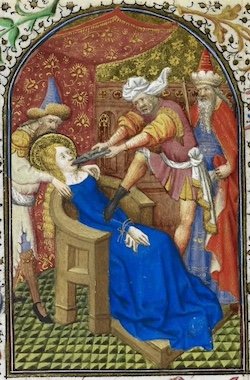
At Alexandria, in 249, a mob rose in savage fury against the Christians, during a persecution which the pagans of Alexandria instigated at the urging of a magician of that city. Metras, an old man, perished first. His eyes were pierced with reeds, and he was stoned to death. A woman named Quinta was the next victim. She was led to a heathen temple and told to worship; she replied by cursing the false god many times, and she too was stoned to death. After this the houses of the Christians were sacked and plundered; and they accepted the despoiling of their possessions with joy.
Saint Apollonia, an aged virgin, was the most famous among the martyrs, honored for her virtue and modesty. Her teeth were beaten out, and she was led outside the city, where a huge fire was kindled. She was told she must deny Christ, or else be burned alive. She was silent for a moment, and then, moved by a special inspiration of the Holy Ghost, she walked into the fire and died in its flames.
The same courage showed itself the next year, when Decius became emperor, and the persecution grew until it seemed as if the very elect must fall away. The story of the witness to Christianity given by a fifteen-year-old boy named Dioscorus illustrates both the courage of the Alexandrian Christians, and the esteem they had for the grace of martyrdom. To the arguments of the judge this young man returned wise answers, and then proved invincible under torture. His older companions were executed, but Dioscorus was spared on account of his tender years. The Christians could not suppose that he had been deprived of the martyr's crown, unless to receive it afterwards more gloriously. Dioscorus, writes Dionysius, Bishop of Alexandria at this time, still is with us, reserved for some longer and greater combat.
There were indeed many Christians who came, pale and trembling, to offer the heathen sacrifices. But the judges themselves were struck with amazement at the multitudes who came spontaneously to receive the crown of martyrdom. Women triumphed over torture, until finally the judges were glad to execute them at once, and put an end to the ignominy of their own defeat.
Reflection. Many Saints who were not martyrs have longed to shed their blood for Christ. We, too, may pray to share some portion of their spirit. The slightest suffering for the faith, borne with humility and courage, is proof that Christ has heard our prayer.
Little Pictorial Lives of the Saints, a compilation based on Butler's Lives of the Saints and other sources by John Gilmary Shea (Benziger Brothers: New York, 1894).
LAST-MODIFIED:20240210T154309Z SEQUENCE:41884303 X-ACCESS:1 X-HITS:31 X-COLOR:f0b80e X-SHOW-END-TIME:1 END:VEVENT BEGIN:VEVENT DTSTART;VALUE=DATE:20240210 DTEND;VALUE=DATE:20240211 UID:686B69D5-1D28-48C3-9485-8EC212D5921C SUMMARY:St. Scholastica CREATED:20221013T211126Z DTSTAMP:20221013T211126Z URL:https://www.stpaulsweymouth.org/component/dpcalendar/event/1267?calid=13 DESCRIPTION:St. Scholastica Virgin\N\NOf this Saint but little is known on earth, save that she was the very pious younger sister of the great patriarch Saint Benedict, and that, under his direction, she founded and governed a numerous community near Monte Casino. Saint Gregory sums up her life by saying that she devoted herself to God from her childhood, and that her pure soul rose to God in the likeness of a dove, as if to show that her life had been enriched with the fullest gifts of the Holy Spirit.\NHer brother was accustomed to visit her once every year, before Lent, and she could not be sated or wearied with the words of grace which flowed from his lips. On his last visit, after a day passed in spiritual conversation, the Saint, knowing that her end was near, said, My brother, leave me not, I pray you, this night, but discourse with me till dawn on the bliss of those who see God in heaven. Saint Benedict would not break his rule for the sake of natural affection, but his sister bowed her head and prayed, and there arose a storm so violent that Saint Benedict could not return to his monastery, and they passed the night as she had prayed, in heavenly conversation.\NThree days later Saint Benedict saw in a vision the soul of Saint Scholastica going up in the likeness of a dove into heaven. Then he gave thanks to God for the graces He had given her and the glory which had crowned them. When she died, Saint Benedict as well as her spiritual daughters, and the monks sent by their patriarch to her conventual church, mingled their tears and prayed, Alas! alas! dearest mother, to whom dost thou leave us now? Pray for us to Jesus, to whom thou art gone. They then devoutly celebrated holy Mass, commending her soul to God; and her body was borne to Monte Casino, where her brother lay her in the tomb he had prepared for himself. It was written that they all mourned her many days. Finally Saint Benedict said, Weep not, my sisters and brothers; for assuredly Jesus has taken her, before us, to be our aid and defense against all our enemies, that we may remain standing on the evil day and be perfect in all things. Her death occurred in about the year 543.\NReflection. Our relatives must be loved in and for God; otherwise the purest affection becomes inordinate and is ill directed, because taken from Him.\NLittle Pictorial Lives of the Saints, a compilation based on Butler's Lives of the Saints and other sources by John Gilmary Shea (Benziger Brothers: New York, 1894); Les Petits Bollandistes: Vies des Saints, by Msgr. Paul Guérin (Bloud et Barral: Paris, 1882), Vol. 2. X-ALT-DESC;FMTTYPE=text/html: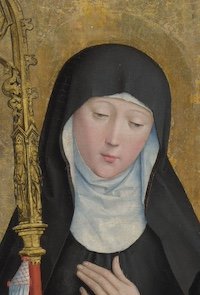
Of this Saint but little is known on earth, save that she was the very pious younger sister of the great patriarch Saint Benedict, and that, under his direction, she founded and governed a numerous community near Monte Casino. Saint Gregory sums up her life by saying that she devoted herself to God from her childhood, and that her pure soul rose to God in the likeness of a dove, as if to show that her life had been enriched with the fullest gifts of the Holy Spirit.
Her brother was accustomed to visit her once every year, before Lent, and she could not be sated or wearied with the words of grace which flowed from his lips. On his last visit, after a day passed in spiritual conversation, the Saint, knowing that her end was near, said, My brother, leave me not, I pray you, this night, but discourse with me till dawn on the bliss of those who see God in heaven. Saint Benedict would not break his rule for the sake of natural affection, but his sister bowed her head and prayed, and there arose a storm so violent that Saint Benedict could not return to his monastery, and they passed the night as she had prayed, in heavenly conversation.
Three days later Saint Benedict saw in a vision the soul of Saint Scholastica going up in the likeness of a dove into heaven. Then he gave thanks to God for the graces He had given her and the glory which had crowned them. When she died, Saint Benedict as well as her spiritual daughters, and the monks sent by their patriarch to her conventual church, mingled their tears and prayed, Alas! alas! dearest mother, to whom dost thou leave us now? Pray for us to Jesus, to whom thou art gone. They then devoutly celebrated holy Mass, commending her soul to God; and her body was borne to Monte Casino, where her brother lay her in the tomb he had prepared for himself. It was written that they all mourned her many days. Finally Saint Benedict said, Weep not, my sisters and brothers; for assuredly Jesus has taken her, before us, to be our aid and defense against all our enemies, that we may remain standing on the evil day and be perfect in all things. Her death occurred in about the year 543.
Reflection. Our relatives must be loved in and for God; otherwise the purest affection becomes inordinate and is ill directed, because taken from Him.
Little Pictorial Lives of the Saints, a compilation based on Butler's Lives of the Saints and other sources by John Gilmary Shea (Benziger Brothers: New York, 1894); Les Petits Bollandistes: Vies des Saints, by Msgr. Paul Guérin (Bloud et Barral: Paris, 1882), Vol. 2.
LAST-MODIFIED:20240210T154539Z SEQUENCE:41884453 X-ACCESS:1 X-HITS:21 X-COLOR:f0b80e X-SHOW-END-TIME:1 END:VEVENT BEGIN:VEVENT DTSTART;VALUE=DATE:20240211 DTEND;VALUE=DATE:20240212 UID:873F6023-46A8-4AE2-B97B-680B156F36CF SUMMARY:Apparition of Lourdes CREATED:20221013T211126Z DTSTAMP:20221013T211126Z URL:https://www.stpaulsweymouth.org/component/dpcalendar/event/1269?calid=13 DESCRIPTION:Apparition of the Blessed Virgin Mary in Lourdes\N\NThe first of the eighteen apparitions of the Blessed Virgin Mary to the humble Bernadette Soubirous took place at Lourdes on February 11, 1858. On March 25th, when Bernadette asked the beautiful Lady Her name, She replied: I am the Immaculate Conception. The Church for long centuries had believed in Her Immaculate Conception, Her exemption from every trace of the original sin which through Adam, our first and common father, separated man from his God. It was never proclaimed a dogma, however, until 1854. Mary Herself, in 1830, had asked of a Vincentian Sister at the Rue du Bac in Paris, that a medal be struck bearing Her likeness and the inscription: O Mary, conceived without sin, pray for us who have recourse to Thee.\NOur Lady by Her apparitions at Lourdes in 1858 seems to convey Her appreciation for the formal proclamation of Her great privilege, by Pius IX, in 1854. Countless and magnificent miracles of healing have occurred at Lourdes, confirmed by physicians and recorded in the Lourdes shrine Book of Life. To name but one: a doctor wrote a book describing the great miracle he had witnessed for a dying girl, whom he had observed on the train that was carrying handicapped persons from Paris to Lourdes. He had not expected her to survive and return home from the sanctuary.\NThrough the Lourdes Apparitions, the devotion of persons in all parts of the world to the Immaculate Mother of God has been wonderfully spread, and countless miracles have been wrought everywhere through Her intercession. The Virgin Mother of God is truly the chosen Messenger of God to these latter times, which are entrusted to Her, the chosen vessel of the unique privilege of exemption from original sin. Only with Her assistance will the dangers of the present world situation be averted. As She has done since 1858 in many places, at Lourdes, too, She gave us Her peace plan for the world, through Saint Bernadette: Prayer and Penance, to save souls.\NLittle Pictorial Lives of the Saints, a compilation based on Butler's Lives of the Saints and other sources by John Gilmary Shea (Benziger Brothers: New York, 1894). X-ALT-DESC;FMTTYPE=text/html: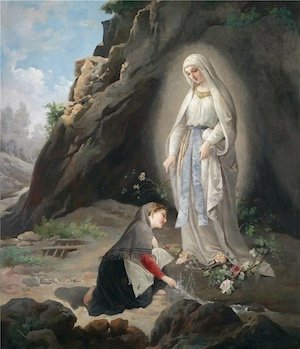
The first of the eighteen apparitions of the Blessed Virgin Mary to the humble Bernadette Soubirous took place at Lourdes on February 11, 1858. On March 25th, when Bernadette asked the beautiful Lady Her name, She replied: I am the Immaculate Conception. The Church for long centuries had believed in Her Immaculate Conception, Her exemption from every trace of the original sin which through Adam, our first and common father, separated man from his God. It was never proclaimed a dogma, however, until 1854. Mary Herself, in 1830, had asked of a Vincentian Sister at the Rue du Bac in Paris, that a medal be struck bearing Her likeness and the inscription: O Mary, conceived without sin, pray for us who have recourse to Thee.
Our Lady by Her apparitions at Lourdes in 1858 seems to convey Her appreciation for the formal proclamation of Her great privilege, by Pius IX, in 1854. Countless and magnificent miracles of healing have occurred at Lourdes, confirmed by physicians and recorded in the Lourdes shrine Book of Life. To name but one: a doctor wrote a book describing the great miracle he had witnessed for a dying girl, whom he had observed on the train that was carrying handicapped persons from Paris to Lourdes. He had not expected her to survive and return home from the sanctuary.
Through the Lourdes Apparitions, the devotion of persons in all parts of the world to the Immaculate Mother of God has been wonderfully spread, and countless miracles have been wrought everywhere through Her intercession. The Virgin Mother of God is truly the chosen Messenger of God to these latter times, which are entrusted to Her, the chosen vessel of the unique privilege of exemption from original sin. Only with Her assistance will the dangers of the present world situation be averted. As She has done since 1858 in many places, at Lourdes, too, She gave us Her peace plan for the world, through Saint Bernadette: Prayer and Penance, to save souls.
Little Pictorial Lives of the Saints, a compilation based on Butler's Lives of the Saints and other sources by John Gilmary Shea (Benziger Brothers: New York, 1894).
LAST-MODIFIED:20240210T155700Z SEQUENCE:41885134 X-ACCESS:1 X-HITS:37 X-COLOR:f0b80e X-SHOW-END-TIME:1 END:VEVENT BEGIN:VEVENT DTSTART;VALUE=DATE:20240212 DTEND;VALUE=DATE:20240213 UID:4E52C173-7253-4075-9A89-C1A42D1C00F6 SUMMARY:The Seven Holy Founders CREATED:20221013T211126Z DTSTAMP:20221013T211126Z URL:https://www.stpaulsweymouth.org/component/dpcalendar/event/1271?calid=13 DESCRIPTION:The Seven Holy Founders of the Servites, Confessors\N\NCan you imagine seven prominent men of any large modern city banding together, leaving their homes and profession, and going into solitude for a life directly given to God? That is what happened in the cultured and prosperous city of Florence in the middle of the 13th century. At this time, the city was torn with political strife as well as by the heresy of the Cathari; morals were low and religion neglected.\NOn the feast of the Assumption in 1233, seven of the members of a Florentine Confraternity devoted to the Holy Mother of God were gathered in prayer under the presidency of Alessio Falconieri. The Blessed Virgin appeared to the young men and exhorted them to devote themselves to Her service, in retirement from the world. It was in 1240 that they decided to withdraw together from the city to a solitary place for prayer and the service of God. The eldest was Buonfiglio Monaldo, who became their leader. The others were Alexis Falconieri, Benedict dell'Antella, Bartholomew Amidei, Ricovero Uguccione, Gerardino Sostegni, and John Buonagiunta. Their aim was to lead a life of penance and prayer, but they soon found themselves disturbed by increasing numbers of visitors. They next retired to the deserted slopes of Monte Senario near Florence, where the Blessed Virgin appeared to them again. There the nucleus of a new Order was formed, called Servants of Mary, or Servites, in recognition of their special manner of venerating the Seven Sorrows of Our Lady.\NIn 1244, under the direction of Saint Peter of Verona, O.P., this small group adopted a religious habit similar to the Dominican habit, choosing to live under the rule of Saint Augustine. The new Order took a form resembling more the mendicant friars than the older monastic Orders. One of the most remarkable features of the new foundation was its wonderful growth. Even in the fourteenth century, the Order had more than one hundred convents in several nations of Europe, as well as in India and on the Island of Crete. The Rosary of the Seven Sorrows is one of their regular devotions, as is also the Via Matris, or Way of the Cross of Mary.\NSaint of the Day: The 173 Saints of the new Missal. Edited by Leonard Foley, O.F.M., Vol. I (Saint Anthony Messenger Press: Cincinnati, 1974); The Catholic Encyclopedia, edited by C. G. Herbermann with numerous collaborators (Appleton Company: New York, 1908). X-ALT-DESC;FMTTYPE=text/html: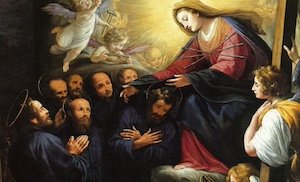
Can you imagine seven prominent men of any large modern city banding together, leaving their homes and profession, and going into solitude for a life directly given to God? That is what happened in the cultured and prosperous city of Florence in the middle of the 13th century. At this time, the city was torn with political strife as well as by the heresy of the Cathari; morals were low and religion neglected.
On the feast of the Assumption in 1233, seven of the members of a Florentine Confraternity devoted to the Holy Mother of God were gathered in prayer under the presidency of Alessio Falconieri. The Blessed Virgin appeared to the young men and exhorted them to devote themselves to Her service, in retirement from the world. It was in 1240 that they decided to withdraw together from the city to a solitary place for prayer and the service of God. The eldest was Buonfiglio Monaldo, who became their leader. The others were Alexis Falconieri, Benedict dell'Antella, Bartholomew Amidei, Ricovero Uguccione, Gerardino Sostegni, and John Buonagiunta. Their aim was to lead a life of penance and prayer, but they soon found themselves disturbed by increasing numbers of visitors. They next retired to the deserted slopes of Monte Senario near Florence, where the Blessed Virgin appeared to them again. There the nucleus of a new Order was formed, called Servants of Mary, or Servites, in recognition of their special manner of venerating the Seven Sorrows of Our Lady.
In 1244, under the direction of Saint Peter of Verona, O.P., this small group adopted a religious habit similar to the Dominican habit, choosing to live under the rule of Saint Augustine. The new Order took a form resembling more the mendicant friars than the older monastic Orders. One of the most remarkable features of the new foundation was its wonderful growth. Even in the fourteenth century, the Order had more than one hundred convents in several nations of Europe, as well as in India and on the Island of Crete. The Rosary of the Seven Sorrows is one of their regular devotions, as is also the Via Matris, or Way of the Cross of Mary.
Saint of the Day: The 173 Saints of the new Missal. Edited by Leonard Foley, O.F.M., Vol. I (Saint Anthony Messenger Press: Cincinnati, 1974); The Catholic Encyclopedia, edited by C. G. Herbermann with numerous collaborators (Appleton Company: New York, 1908).
LAST-MODIFIED:20240210T160348Z SEQUENCE:41885542 X-ACCESS:1 X-HITS:124 X-COLOR:f0b80e X-SHOW-END-TIME:1 END:VEVENT BEGIN:VEVENT DTSTART;VALUE=DATE:20240214 DTEND;VALUE=DATE:20240215 UID:DFDC7F3F-FA9C-4B14-9B94-35D7537494ED SUMMARY:St. Valentine CREATED:20221013T211126Z DTSTAMP:20221013T211126Z URL:https://www.stpaulsweymouth.org/component/dpcalendar/event/1273?calid=13 DESCRIPTION:St. Valentine Priest, Martyr\N\NValentine was a holy priest in Rome, who assisted the martyrs during the persecution under Claudius II. His great virtue and influence became known, and he was apprehended and brought before the emperor's tribunal. Why, Valentine, do you want to be the friend of our enemies and reject our friendship? The Christian priest replied, My Lord, if you knew the gift of God, you would be happy, and your empire with you; you would reject the cult of your idols and would adore the true God and His Son Jesus Christ. One of the judges interrupted, asking the martyr what he thought of Jupiter and Mercury. That they were miserable, and spent all their lives in debauchery and crime! The judge, furious, cried, He has blasphemed against the gods and against the empire! The emperor nonetheless continued his questioning with curiosity, pleased to have this opportunity to know what Christians thought. Valentine had the courage to exhort him to do penance for the blood of Christians which he had shed. Believe in Jesus Christ, be baptized and you will be saved, and already in this life you will insure your empire's glory and the triumph of your arms. Claudius began to be convinced, and said to those in attendance, Hear the beautiful doctrine this man is teaching us! But the prefect of Rome, dissatisfied, cried out, See how this Christian is seducing our prince! Claudius, weakening, abandoned the holy priest to another judge.\NThis man, named Asterius, had a little girl who had been blind for two years. Hearing of Jesus Christ, the Light of the world, he asked Valentine if he could convey that light to his child. Saint Valentine placed his hand on her eyes and prayed: Lord Jesus Christ, true Light, illuminate this blind child! The child saw, and the Judge with all his family confessed Christ and received Baptism. The emperor, hearing of this, would have turned his gaze away from these conversions, but fear caused him to betray his sense of justice. With several other Christians Saint Valentine was tortured and martyred in the year 268.\NThis illustrious martyr has always been held in great honor in Rome, where there still exists a catacomb named for him.\NReflection. In the cause of justice and truth, human prudence should not be consulted; in that case, it is mere human respect. Saint Paul says: The wisdom of this world is foolishness with God. (I Cor. 3:19)\NLittle Pictorial Lives of the Saints, a compilation based on Butler's Lives of the Saints and other sources by John Gilmary Shea (Benziger Brothers: New York, 1894). X-ALT-DESC;FMTTYPE=text/html: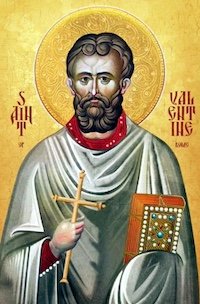
Valentine was a holy priest in Rome, who assisted the martyrs during the persecution under Claudius II. His great virtue and influence became known, and he was apprehended and brought before the emperor's tribunal. Why, Valentine, do you want to be the friend of our enemies and reject our friendship? The Christian priest replied, My Lord, if you knew the gift of God, you would be happy, and your empire with you; you would reject the cult of your idols and would adore the true God and His Son Jesus Christ. One of the judges interrupted, asking the martyr what he thought of Jupiter and Mercury. That they were miserable, and spent all their lives in debauchery and crime! The judge, furious, cried, He has blasphemed against the gods and against the empire! The emperor nonetheless continued his questioning with curiosity, pleased to have this opportunity to know what Christians thought. Valentine had the courage to exhort him to do penance for the blood of Christians which he had shed. Believe in Jesus Christ, be baptized and you will be saved, and already in this life you will insure your empire's glory and the triumph of your arms. Claudius began to be convinced, and said to those in attendance, Hear the beautiful doctrine this man is teaching us! But the prefect of Rome, dissatisfied, cried out, See how this Christian is seducing our prince! Claudius, weakening, abandoned the holy priest to another judge.
This man, named Asterius, had a little girl who had been blind for two years. Hearing of Jesus Christ, the Light of the world, he asked Valentine if he could convey that light to his child. Saint Valentine placed his hand on her eyes and prayed: Lord Jesus Christ, true Light, illuminate this blind child! The child saw, and the Judge with all his family confessed Christ and received Baptism. The emperor, hearing of this, would have turned his gaze away from these conversions, but fear caused him to betray his sense of justice. With several other Christians Saint Valentine was tortured and martyred in the year 268.
This illustrious martyr has always been held in great honor in Rome, where there still exists a catacomb named for him.
Reflection. In the cause of justice and truth, human prudence should not be consulted; in that case, it is mere human respect. Saint Paul says: The wisdom of this world is foolishness with God. (I Cor. 3:19)
Little Pictorial Lives of the Saints, a compilation based on Butler's Lives of the Saints and other sources by John Gilmary Shea (Benziger Brothers: New York, 1894).
LAST-MODIFIED:20240210T161352Z SEQUENCE:41886146 X-ACCESS:1 X-HITS:4 X-COLOR:f0b80e X-SHOW-END-TIME:1 END:VEVENT BEGIN:VEVENT DTSTART;VALUE=DATE:20240215 DTEND;VALUE=DATE:20240216 UID:5097AA98-4E41-42CC-98BA-1F37AEB4B8B7 SUMMARY:Sts. Faustinus and Jovita CREATED:20221013T211126Z DTSTAMP:20221013T211126Z URL:https://www.stpaulsweymouth.org/component/dpcalendar/event/1275?calid=13 DESCRIPTION:Sts. Faustinus and Jovita, Martyrs\N\NFaustinus and Jovita were brothers, nobly born, and were zealous professors of the Christian religion, which they preached without fear in their city of Brescia in Lombardy, during the persecution of Adrian. Their remarkable zeal excited the fury of the heathens against them, and procured them a glorious death for their faith.\NFaustinus, a priest, and Jovita, a deacon, were preaching the Gospel fearlessly in the region when Julian, a pagan officer, apprehended them. They were commanded to adore the sun, but replied that they adored the living God who created the sun to give light to the world. The statue before which they were standing was brilliant and surrounded with golden rays. Saint Jovita, looking at it, cried out: Yes, we adore the God reigning in heaven, who created the sun. And you, vain statue, turn black, to the shame of those who adore you! At his word, it turned black. The Emperor commanded that it be cleaned, but the pagan priests had hardly begun to touch it when it fell into ashes.\NThe two brothers were sent to the amphitheater to be devoured by lions, but four of those came out and lay down at their feet. They were left without food in a dark jail cell, but Angels brought them strength and joy for new combats. The flames of a huge fire respected them, and a large number of spectators were converted at the sight. Finally sentenced to decapitation, they knelt down and received the death blow. The city of Brescia honors them as its chief patrons and possesses their relics, and a very ancient church in that city bears their names.\NReflection. The spirit of Christ is ever a spirit of martyrdom. It is always the spirit of the cross. The more we share in the suffering life of Christ, the greater share we inherit of His Spirit, and of the fruits of His death. To souls mortified in their senses and disengaged from earthly things, God gives frequent foretastes of the sweetness of eternal life, and ardent desires of possessing Him in His glory. This is the spirit of martyrdom, which entitles a Christian to a happy resurrection and to the bliss of the life to come.\NLittle Pictorial Lives of the Saints, a compilation based on Butler's Lives of the Saints and other sources by John Gilmary Shea (Benziger Brothers: New York, 1894); Lives of the Saints for Every Day of the Year, edited by Rev. Hugo Hoever, S.O. Cist., Ph.D. (Catholic Book Publishing Co.: New York, 1951-1955). X-ALT-DESC;FMTTYPE=text/html:Sts. Faustinus and Jovita, Martyrs
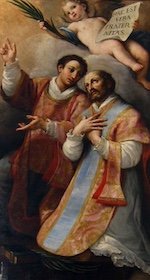
Faustinus and Jovita were brothers, nobly born, and were zealous professors of the Christian religion, which they preached without fear in their city of Brescia in Lombardy, during the persecution of Adrian. Their remarkable zeal excited the fury of the heathens against them, and procured them a glorious death for their faith.
Faustinus, a priest, and Jovita, a deacon, were preaching the Gospel fearlessly in the region when Julian, a pagan officer, apprehended them. They were commanded to adore the sun, but replied that they adored the living God who created the sun to give light to the world. The statue before which they were standing was brilliant and surrounded with golden rays. Saint Jovita, looking at it, cried out: Yes, we adore the God reigning in heaven, who created the sun. And you, vain statue, turn black, to the shame of those who adore you! At his word, it turned black. The Emperor commanded that it be cleaned, but the pagan priests had hardly begun to touch it when it fell into ashes.
The two brothers were sent to the amphitheater to be devoured by lions, but four of those came out and lay down at their feet. They were left without food in a dark jail cell, but Angels brought them strength and joy for new combats. The flames of a huge fire respected them, and a large number of spectators were converted at the sight. Finally sentenced to decapitation, they knelt down and received the death blow. The city of Brescia honors them as its chief patrons and possesses their relics, and a very ancient church in that city bears their names.
Reflection. The spirit of Christ is ever a spirit of martyrdom. It is always the spirit of the cross. The more we share in the suffering life of Christ, the greater share we inherit of His Spirit, and of the fruits of His death. To souls mortified in their senses and disengaged from earthly things, God gives frequent foretastes of the sweetness of eternal life, and ardent desires of possessing Him in His glory. This is the spirit of martyrdom, which entitles a Christian to a happy resurrection and to the bliss of the life to come.
Little Pictorial Lives of the Saints, a compilation based on Butler's Lives of the Saints and other sources by John Gilmary Shea (Benziger Brothers: New York, 1894); Lives of the Saints for Every Day of the Year, edited by Rev. Hugo Hoever, S.O. Cist., Ph.D. (Catholic Book Publishing Co.: New York, 1951-1955).
LAST-MODIFIED:20240225T105126Z SEQUENCE:43162800 X-ACCESS:1 X-HITS:4 X-COLOR:f0b80e X-SHOW-END-TIME:1 END:VEVENT BEGIN:VEVENT DTSTART;VALUE=DATE:20240218 DTEND;VALUE=DATE:20240219 UID:66437E1D-1AB3-451E-853F-7F457D5BC37A SUMMARY:St. Simeon CREATED:20221013T211126Z DTSTAMP:20221013T211126Z URL:https://www.stpaulsweymouth.org/component/dpcalendar/event/1323?calid=13 DESCRIPTION:St. Simeon of Jerusalem, Bishop and Martyrs\N\NSaint Simeon was the son of Cleophas, otherwise called Alpheus, who was father also of Saint James the Lesser, the first bishop of Jerusalem, of Saint Jude the Apostle, and of another son named Joseph. Alpheus, according to tradition, was Saint Joseph's brother; thus Saint Simeon was the nephew of Saint Joseph and the cousin of our Saviour.\NWe cannot doubt but that he was an early follower of Christ; tradition assigns the family's residence to Nazareth. He certainly received the Holy Ghost on the day of Pentecost, with the Blessed Virgin and the Apostles. When the Jews massacred Saint James the Lesser, his brother Simeon reproached them for their atrocious cruelty. After this first bishop of Jerusalem had been put to death in the year 62, that is, twenty-nine years after Our Saviour's Resurrection, the Apostles and disciples met at Jerusalem to appoint a successor, and unanimously chose Saint Simeon, who had probably already assisted his brother in the government of that Church.\NIn the year 66 or 67, during which Saints Peter and Paul suffered martyrdom at Rome, civil war broke out in Judea as a result of the hostility of the Jews against the Romans and their seditions. The Christians of Jerusalem were warned by God of the impending destruction of that city. With Saint Simeon at their head, they therefore left it in that year and retired beyond the Jordan to a small city called Pella, before Vespasian, Nero's General, later Roman Emperor, entered Judea. After the taking and burning of Jerusalem they returned there once more, still under the leadership of Saint Simeon, and settled amid its ruins.\NThe Jerusalem church flourished again for a few years until razed by Adrian, and multitudes of Jews were converted by the great number of prodigies and miracles wrought in its midst. The emperors Vespasian and Domitian had commanded all to be put to death who were of the race of David; but Saint Simeon escaped their searches. When Trajan renewed the same decree, however, certain heretics and Jews accused the Saint before the Roman governor in Palestine, as being both of the race of David and a Christian.\NThe holy bishop was condemned to be crucified. He died in the year 107, after having undergone during several days the usual tortures, though he was one hundred and twenty years old. He suffered these torments with so much patience that he won universal admiration. He had governed the Church of Jerusalem for about forty-three years.\NReflection. We bear the name of Christians, but are full of the spirit of worldlings, and our actions are infected with the poison of the world. We secretly seek ourselves, even when we flatter ourselves that God is our only aim, and while hoping to convert the world, we suffer it to pervert us. When shall we begin to study to crucify our passions and die to ourselves, that we may lay a solid foundation of true virtue and establish its reign in our hearts?\NLittle Pictorial Lives of the Saints, a compilation based on Butler's Lives of the Saints and other sources by John Gilmary Shea (Benziger Brothers: New York, 1894); Les Petits Bollandistes: Vies des Saints, by Msgr. Paul Guérin (Bloud et Barral: Paris, 1882), Vol. 2. X-ALT-DESC;FMTTYPE=text/html:St. Simeon of Jerusalem, Bishop and Martyrs
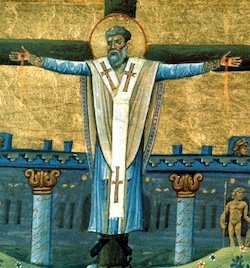
Saint Simeon was the son of Cleophas, otherwise called Alpheus, who was father also of Saint James the Lesser, the first bishop of Jerusalem, of Saint Jude the Apostle, and of another son named Joseph. Alpheus, according to tradition, was Saint Joseph's brother; thus Saint Simeon was the nephew of Saint Joseph and the cousin of our Saviour.
We cannot doubt but that he was an early follower of Christ; tradition assigns the family's residence to Nazareth. He certainly received the Holy Ghost on the day of Pentecost, with the Blessed Virgin and the Apostles. When the Jews massacred Saint James the Lesser, his brother Simeon reproached them for their atrocious cruelty. After this first bishop of Jerusalem had been put to death in the year 62, that is, twenty-nine years after Our Saviour's Resurrection, the Apostles and disciples met at Jerusalem to appoint a successor, and unanimously chose Saint Simeon, who had probably already assisted his brother in the government of that Church.
In the year 66 or 67, during which Saints Peter and Paul suffered martyrdom at Rome, civil war broke out in Judea as a result of the hostility of the Jews against the Romans and their seditions. The Christians of Jerusalem were warned by God of the impending destruction of that city. With Saint Simeon at their head, they therefore left it in that year and retired beyond the Jordan to a small city called Pella, before Vespasian, Nero's General, later Roman Emperor, entered Judea. After the taking and burning of Jerusalem they returned there once more, still under the leadership of Saint Simeon, and settled amid its ruins.
The Jerusalem church flourished again for a few years until razed by Adrian, and multitudes of Jews were converted by the great number of prodigies and miracles wrought in its midst. The emperors Vespasian and Domitian had commanded all to be put to death who were of the race of David; but Saint Simeon escaped their searches. When Trajan renewed the same decree, however, certain heretics and Jews accused the Saint before the Roman governor in Palestine, as being both of the race of David and a Christian.
The holy bishop was condemned to be crucified. He died in the year 107, after having undergone during several days the usual tortures, though he was one hundred and twenty years old. He suffered these torments with so much patience that he won universal admiration. He had governed the Church of Jerusalem for about forty-three years.
Reflection. We bear the name of Christians, but are full of the spirit of worldlings, and our actions are infected with the poison of the world. We secretly seek ourselves, even when we flatter ourselves that God is our only aim, and while hoping to convert the world, we suffer it to pervert us. When shall we begin to study to crucify our passions and die to ourselves, that we may lay a solid foundation of true virtue and establish its reign in our hearts?
Little Pictorial Lives of the Saints, a compilation based on Butler's Lives of the Saints and other sources by John Gilmary Shea (Benziger Brothers: New York, 1894); Les Petits Bollandistes: Vies des Saints, by Msgr. Paul Guérin (Bloud et Barral: Paris, 1882), Vol. 2.
LAST-MODIFIED:20240225T104520Z SEQUENCE:43162434 X-ACCESS:1 X-HITS:1 X-COLOR:f0b80e X-SHOW-END-TIME:1 END:VEVENT BEGIN:VEVENT DTSTART;VALUE=DATE:20240222 DTEND;VALUE=DATE:20240223 UID:3AC0F1D6-D4F4-4904-88B7-2B9942A6D3E6 SUMMARY:St. Peter's Chair CREATED:20221013T211126Z DTSTAMP:20221013T211126Z URL:https://www.stpaulsweymouth.org/component/dpcalendar/event/1325?calid=13 DESCRIPTION:St. Peter's Chair in Antioch and in Rome\N\NThat Saint Peter, before he went to Rome, founded the see of Antioch is attested by many Saints of the earliest times, including Saint Ignatius of Antioch and Saint Clement, Pope. It was just that the Prince of the Apostles should take under his particular care and surveillance this city, which was then the capital of the East, and where the faith so early took such deep roots as to give birth there to the name of Christians. There his voice could be heard by representatives of the three largest nations of antiquity — the Hebrews, the Greeks and the Latins. Saint Chrysostom says that Saint Peter was there for a long period; Saint Gregory the Great, that he was seven years Bishop of Antioch. He did not reside there at all times, but governed its apostolic activity with the wisdom his mandate assured.\NIf as tradition affirms, he was twenty-five years in Rome, the date of his establishment at Antioch must be within three years after Our Saviour's Ascension, for he would have gone to Rome in the second year of Claudius. He no doubt left Jerusalem when the persecution which followed Saint Steven's martyrdom broke out (Acts 8:1), and remained in Antioch until he escaped miraculously from prison and from the hands of Herod Agrippa, while in Jerusalem in 43 at the time of the Passover. (Acts 12) Knowing he would be pursued to Antioch, his well-known center of activity, he went to Rome.\NIn the first ages it was customary, especially in the East, for every Christian to observe the anniversary of his Baptism. On that day each one renewed his baptismal vows and gave thanks to God for his heavenly adoption. That memorable day they regarded as their spiritual birthday. The bishops similarly kept the anniversary of their consecration, as appears from four sermons of Saint Leo the Great on the anniversary of his accession to the pontifical dignity. These commemorations were frequently continued by the people after their bishops' decease, out of respect for their memory. The feast of the Chair of Saint Peter was instituted from very early times. Saint Leo says we should celebrate the Chair of Saint Peter with no less joy than the day of his martyrdom, for as in the latter he was exalted to a throne of glory in heaven, by the former he was installed Head of the Church on earth.\NReflection: On this festival we are especially bound to adore and thank the divine Goodness for the establishment and propagation of His Church, and to pray earnestly that in His mercy He will preserve it and extend its dominion, so that His name may be glorified by all nations and all hearts even to the boundaries of the earth.\NLittle Pictorial Lives of the Saints, a compilation based on Butler's Lives of the Saints and other sources by John Gilmary Shea (Benziger Brothers: New York, 1894); Les Petits Bollandistes: Vies des Saints, by Msgr. Paul Guérin (Bloud et Barral: Paris, 1882), Vol. 2. X-ALT-DESC;FMTTYPE=text/html:St. Peter's Chair in Antioch and in Rome
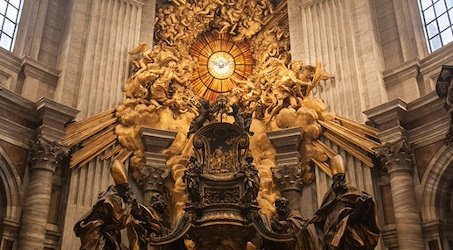
That Saint Peter, before he went to Rome, founded the see of Antioch is attested by many Saints of the earliest times, including Saint Ignatius of Antioch and Saint Clement, Pope. It was just that the Prince of the Apostles should take under his particular care and surveillance this city, which was then the capital of the East, and where the faith so early took such deep roots as to give birth there to the name of Christians. There his voice could be heard by representatives of the three largest nations of antiquity — the Hebrews, the Greeks and the Latins. Saint Chrysostom says that Saint Peter was there for a long period; Saint Gregory the Great, that he was seven years Bishop of Antioch. He did not reside there at all times, but governed its apostolic activity with the wisdom his mandate assured.
If as tradition affirms, he was twenty-five years in Rome, the date of his establishment at Antioch must be within three years after Our Saviour's Ascension, for he would have gone to Rome in the second year of Claudius. He no doubt left Jerusalem when the persecution which followed Saint Steven's martyrdom broke out (Acts 8:1), and remained in Antioch until he escaped miraculously from prison and from the hands of Herod Agrippa, while in Jerusalem in 43 at the time of the Passover. (Acts 12) Knowing he would be pursued to Antioch, his well-known center of activity, he went to Rome.
In the first ages it was customary, especially in the East, for every Christian to observe the anniversary of his Baptism. On that day each one renewed his baptismal vows and gave thanks to God for his heavenly adoption. That memorable day they regarded as their spiritual birthday. The bishops similarly kept the anniversary of their consecration, as appears from four sermons of Saint Leo the Great on the anniversary of his accession to the pontifical dignity. These commemorations were frequently continued by the people after their bishops' decease, out of respect for their memory. The feast of the Chair of Saint Peter was instituted from very early times. Saint Leo says we should celebrate the Chair of Saint Peter with no less joy than the day of his martyrdom, for as in the latter he was exalted to a throne of glory in heaven, by the former he was installed Head of the Church on earth.
Reflection: On this festival we are especially bound to adore and thank the divine Goodness for the establishment and propagation of His Church, and to pray earnestly that in His mercy He will preserve it and extend its dominion, so that His name may be glorified by all nations and all hearts even to the boundaries of the earth.
Little Pictorial Lives of the Saints, a compilation based on Butler's Lives of the Saints and other sources by John Gilmary Shea (Benziger Brothers: New York, 1894); Les Petits Bollandistes: Vies des Saints, by Msgr. Paul Guérin (Bloud et Barral: Paris, 1882), Vol. 2.
LAST-MODIFIED:20240225T104718Z SEQUENCE:43162552 X-ACCESS:1 X-HITS:51 X-COLOR:f0b80e X-SHOW-END-TIME:1 END:VEVENT BEGIN:VEVENT DTSTART;VALUE=DATE:20240223 DTEND;VALUE=DATE:20240224 UID:0BFC2BCD-8355-4F6F-932D-C0D2F4E22D06 SUMMARY:St. Peter Damian CREATED:20221013T211126Z DTSTAMP:20221013T211126Z URL:https://www.stpaulsweymouth.org/component/dpcalendar/event/1327?calid=13 DESCRIPTION:St. Peter Damian Bishop, Confessor and Doctor of the Church\N\NSaint Peter Damian, born in 988, lost both his parents at an early age. His eldest brother, to whose hands he was left, treated him so cruelly that another brother, a priest, moved by his piteous state, sent him to the University of Parma, where he acquired great distinction. His studies were sanctified by vigils, fasts, and prayers, until at last, thinking that all this was only serving God halfway, he resolved to leave the world. He joined the monks of Fonte Avellano, then in the greatest repute, and by his wisdom and sanctity rose to be Superior.\NSaint Peter was called upon for the most delicate and difficult missions, among others the reform of ecclesiastical communities, which his zeal accomplished. Seven Popes in succession made him their constant adviser, and he was finally created Cardinal Bishop of Ostia. He withstood Henry IV of Germany, and labored in defense of Pope Alexander II against an antipope, whom he forced to yield and seek pardon. He was charged, as papal legate, with the repression of simony and correction of scandals; again, was commissioned to settle discords amongst various bishops; and finally, in 1072, to adjust the affairs of the Church at Ravenna. He had never paid attention to his health, which was at best fragile, and after enduring violent onslaughts of fever during the night, would rise to hear confessions, preach, or sing solemn Masses, always ready to sacrifice his well-being and life for the salvation of the souls entrusted to him.\NAfter succeeding in this final mission as he ordinarily did, on his journey back to Ostia he was laid low by fever; he died at Faenza in a monastery of his Order, on the eighth day of his sickness, while the monks chanted Matins around him.\NLes Petits Bollandistes: Vies des Saints, by Msgr. Paul Guérin (Bloud et Barral: Paris, 1882), Vol. 2; Little Pictorial Lives of the Saints, a compilation based on Butler's Lives of the Saints and other sources by John Gilmary Shea (Benziger Brothers: New York, 1894).\N X-ALT-DESC;FMTTYPE=text/html:St. Peter Damian Bishop, Confessor and Doctor of the Church
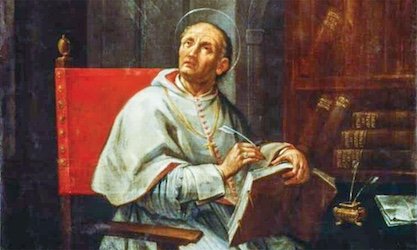
Saint Peter Damian, born in 988, lost both his parents at an early age. His eldest brother, to whose hands he was left, treated him so cruelly that another brother, a priest, moved by his piteous state, sent him to the University of Parma, where he acquired great distinction. His studies were sanctified by vigils, fasts, and prayers, until at last, thinking that all this was only serving God halfway, he resolved to leave the world. He joined the monks of Fonte Avellano, then in the greatest repute, and by his wisdom and sanctity rose to be Superior.
Saint Peter was called upon for the most delicate and difficult missions, among others the reform of ecclesiastical communities, which his zeal accomplished. Seven Popes in succession made him their constant adviser, and he was finally created Cardinal Bishop of Ostia. He withstood Henry IV of Germany, and labored in defense of Pope Alexander II against an antipope, whom he forced to yield and seek pardon. He was charged, as papal legate, with the repression of simony and correction of scandals; again, was commissioned to settle discords amongst various bishops; and finally, in 1072, to adjust the affairs of the Church at Ravenna. He had never paid attention to his health, which was at best fragile, and after enduring violent onslaughts of fever during the night, would rise to hear confessions, preach, or sing solemn Masses, always ready to sacrifice his well-being and life for the salvation of the souls entrusted to him.
After succeeding in this final mission as he ordinarily did, on his journey back to Ostia he was laid low by fever; he died at Faenza in a monastery of his Order, on the eighth day of his sickness, while the monks chanted Matins around him.
Les Petits Bollandistes: Vies des Saints, by Msgr. Paul Guérin (Bloud et Barral: Paris, 1882), Vol. 2; Little Pictorial Lives of the Saints, a compilation based on Butler's Lives of the Saints and other sources by John Gilmary Shea (Benziger Brothers: New York, 1894).
LAST-MODIFIED:20240225T105039Z SEQUENCE:43162753 X-ACCESS:1 X-HITS:106 X-COLOR:f0b80e X-SHOW-END-TIME:1 END:VEVENT BEGIN:VEVENT DTSTART;VALUE=DATE:20240225 DTEND;VALUE=DATE:20240226 UID:080A383A-F2B9-4C54-A886-534A12429302 SUMMARY:St. Matthias CREATED:20221013T211126Z DTSTAMP:20221013T211126Z URL:https://www.stpaulsweymouth.org/component/dpcalendar/event/1329?calid=13 DESCRIPTION:St. Matthias Apostle\N\NAfter our Blessed Lord's Ascension His disciples came together, with Mary His mother and the eleven Apostles, in an upper room at Jerusalem. The little company numbered no more than one hundred and twenty souls. They were waiting for the promised coming of the Holy Ghost, and they persevered in prayer. Meanwhile there was a solemn act to be performed on the part of the Church, which could not be postponed. The place of the fallen Judas had to be filled, that the number of the Apostles might be complete. Saint Peter, therefore, as Vicar of Christ, arose to announce the divine decree. What the Holy Ghost had spoken by the mouth of David concerning Judas, he said, must be fulfilled. Of him it had been written, His bishopric let another take. A choice, therefore, was needed of one among those who had been their companions from the beginning, who could bear witness to the Resurrection of Jesus.\NTwo were named of equal merit, Joseph called Barsabas, and Matthias. After praying to God, who knows the hearts of all men, to show which of these He had chosen, they cast lots, and the lot fell upon Matthias, who was thereby numbered with the Apostles. It is recorded of the Saint, wonderfully elected to so high a vocation, that he was remarkable for his mortification of the flesh. It was thus that he made his election sure.\NHe preached in Judea where he was persecuted by both Jews and Gentiles, and died by stoning, a victim of their pursuits, in the year 63. His body was taken to Rome by Saint Helena, mother of Constantine, some 250 years later. A church there bears his name.\NReflection. Our ignorance of many points in Saint Matthias's life serves to fix the attention all the more firmly upon these two — the occasion of his call to the apostolate, and the fact of his perseverance. We then naturally turn in thought to our own vocation and our own end: may it be like his, a holy death in reward for our fidelity.\NLittle Pictorial Lives of the Saints, a compilation based on Butler's Lives of the Saints and other sources by John Gilmary Shea (Benziger Brothers: New York, 1894). X-ALT-DESC;FMTTYPE=text/html:
St. Matthias Apostle
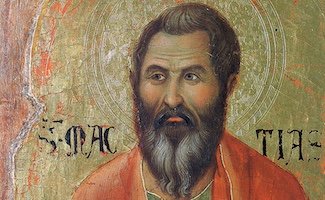
After our Blessed Lord's Ascension His disciples came together, with Mary His mother and the eleven Apostles, in an upper room at Jerusalem. The little company numbered no more than one hundred and twenty souls. They were waiting for the promised coming of the Holy Ghost, and they persevered in prayer. Meanwhile there was a solemn act to be performed on the part of the Church, which could not be postponed. The place of the fallen Judas had to be filled, that the number of the Apostles might be complete. Saint Peter, therefore, as Vicar of Christ, arose to announce the divine decree. What the Holy Ghost had spoken by the mouth of David concerning Judas, he said, must be fulfilled. Of him it had been written, His bishopric let another take. A choice, therefore, was needed of one among those who had been their companions from the beginning, who could bear witness to the Resurrection of Jesus.
Two were named of equal merit, Joseph called Barsabas, and Matthias. After praying to God, who knows the hearts of all men, to show which of these He had chosen, they cast lots, and the lot fell upon Matthias, who was thereby numbered with the Apostles. It is recorded of the Saint, wonderfully elected to so high a vocation, that he was remarkable for his mortification of the flesh. It was thus that he made his election sure.
He preached in Judea where he was persecuted by both Jews and Gentiles, and died by stoning, a victim of their pursuits, in the year 63. His body was taken to Rome by Saint Helena, mother of Constantine, some 250 years later. A church there bears his name.
Reflection. Our ignorance of many points in Saint Matthias's life serves to fix the attention all the more firmly upon these two — the occasion of his call to the apostolate, and the fact of his perseverance. We then naturally turn in thought to our own vocation and our own end: may it be like his, a holy death in reward for our fidelity.
Little Pictorial Lives of the Saints, a compilation based on Butler's Lives of the Saints and other sources by John Gilmary Shea (Benziger Brothers: New York, 1894).
LAST-MODIFIED:20240225T105444Z SEQUENCE:43162998 X-ACCESS:1 X-HITS:48 X-COLOR:f0b80e X-SHOW-END-TIME:1 END:VEVENT BEGIN:VEVENT DTSTART;VALUE=DATE:20240225 DTEND;VALUE=DATE:20240226 UID:A7FAC0E5-B5D3-42AD-B7C4-17AC1A2C47E1 SUMMARY:St. Walburga CREATED:20221013T211126Z DTSTAMP:20221013T211126Z URL:https://www.stpaulsweymouth.org/component/dpcalendar/event/1335?calid=13 DESCRIPTION:St. Walburga Virgin, Abbess and Missionary\N\NWalpurga was born in Dumnonia, roughly corresponding to modern Devon, during the period it was becoming incorporated into Anglo Saxon England. She was the daughter of Richard the Pilgrim, a likely Britonnic underking of the West Saxons, and of Wuna of Wessex, and had two brothers, Willibald and Winibald. In 721 Richard set out on a pilgrimage to Rome with his two sons. Before leaving he entrusted Walburga, then 11 years old, to the abbess of the double monastery at Wimborne Abbey in Dorset. She had been there but a year, when she received word that her father had died at Lucca. After seeing to their father's burial in the Basilica of San Frediano, her brothers completed the pilgrimage to Rome, where they both became seriously ill. (Hygeburg, who wrote the Vita S. Willibaldi, says they contracted the Black Death; Francis Mershman suggests malaria).\NAfter recovering, Winibald, who was not of a particularly strong constitution, remained at Rome to pursue further studies, while Willibald set out for the Holy Land. After about seven years of travelling, Willibald returned to Italy and became a monk at Monte Cassino. In 730, Winibald returned to England and engaged a third brother and several amongst his kindred and acquaintance to accompany him in his journey back to Rome to begin a monastic life there. During this time Walpurga remained at Wimborne where she was educated; and in the course of time became a nun. The nuns of Wimborne were skilled at copying and ornamenting manuscripts; and celebrated for Opus Anglicanum, a fine needlework utilising gold and silver threads on rich velvet or linen, often decorated with jewels and pearls. Such English embroidery was in great demand across Europe. She spent 26 years as a member of the community.\NIn 737, Walpurga's uncle (her mother's brother), Boniface, was in Rome and recruited his nephews to assist him in his religious work in Germany. Winnebald arrived in Thuringia on 30 November, 740, and after being ordained a priest, was placed in charge of seven churches. Willibald, upon arriving at Eichstätt, was ordained by Boniface on 22 July, 741 and began missionary work in the area. Walpurga then travelled with her brothers, Willibald and Winibald, to Francia (now Württemberg and Franconia) to assist Boniface in evangelizing the still-pagan Germans. Because of her rigorous training, she was able to write her brother Winibald's vita and an account in Latin of his travels in Palestine. As a result, she is often called the first female author of both England and Germany. Walpurga became a nun in the double monastery of Heidenheim am Hahnenkamm, which was founded by Willibald. He appointed her as his successor and following his death in 751, Walpurga became the abbess of the monastery. Upon Winibald's death in 760 she also succeeded him as superintendent of the Heidenheim monastery.\NWalpurga died on 25 February 777 or 779 (the records are unclear) and was buried at Heidenheim; the day carries her name in the Catholic church calendar. In 870, Walpurga's remains were transferred to Eichstätt. In Finland, Sweden, and Bavaria, her feast day commemorates the transfer of her relics on 1 May.\NVeneration - Walpurga's feast day is 25 February, but the day of her canonization, 1 May (possibly 870), was also celebrated during the high medieval period, especially in the 11th century under Anno II, Archbishop of Cologne, so that Walpurgis Night is the eve of May Day, celebrated in continental folklore with dancing. At Eichstätt, her bones were placed in a rocky niche, which allegedly began to exude a miraculously therapeutic oil, which drew pilgrims to her shrine.\NThe two earliest miracle narratives of Walpurga are the Miracula S. Walburgae Manheimensis by Wolfhard von Herrieden, datable to 895 or 896, and the late 10th-century Vita secunda linked with the name of Aselbod, bishop of Utrecht. In the 14th-century Vita S. Walburgaeby Phillipp von Rathsamhaüsen, bishop of Eichstätt (1306–22), the miracle of the tempest-tossed boat is introduced, which Peter Paul Rubens painted in 1610 for the altarpiece for the church of St. Walpurgis, Antwerp. In addition, the 19th-century Cardinal Newmandeclared the exuded oil to be a credible miracle. X-ALT-DESC;FMTTYPE=text/html:St. Walburga Virgin, Abbess and Missionary
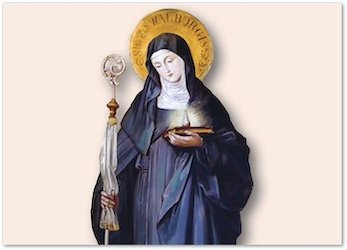
Walpurga was born in Dumnonia, roughly corresponding to modern Devon, during the period it was becoming incorporated into Anglo Saxon England. She was the daughter of Richard the Pilgrim, a likely Britonnic underking of the West Saxons, and of Wuna of Wessex, and had two brothers, Willibald and Winibald. In 721 Richard set out on a pilgrimage to Rome with his two sons. Before leaving he entrusted Walburga, then 11 years old, to the abbess of the double monastery at Wimborne Abbey in Dorset. She had been there but a year, when she received word that her father had died at Lucca. After seeing to their father's burial in the Basilica of San Frediano, her brothers completed the pilgrimage to Rome, where they both became seriously ill. (Hygeburg, who wrote the Vita S. Willibaldi, says they contracted the Black Death; Francis Mershman suggests malaria).
After recovering, Winibald, who was not of a particularly strong constitution, remained at Rome to pursue further studies, while Willibald set out for the Holy Land. After about seven years of travelling, Willibald returned to Italy and became a monk at Monte Cassino. In 730, Winibald returned to England and engaged a third brother and several amongst his kindred and acquaintance to accompany him in his journey back to Rome to begin a monastic life there. During this time Walpurga remained at Wimborne where she was educated; and in the course of time became a nun. The nuns of Wimborne were skilled at copying and ornamenting manuscripts; and celebrated for Opus Anglicanum, a fine needlework utilising gold and silver threads on rich velvet or linen, often decorated with jewels and pearls. Such English embroidery was in great demand across Europe. She spent 26 years as a member of the community.
In 737, Walpurga's uncle (her mother's brother), Boniface, was in Rome and recruited his nephews to assist him in his religious work in Germany. Winnebald arrived in Thuringia on 30 November, 740, and after being ordained a priest, was placed in charge of seven churches. Willibald, upon arriving at Eichstätt, was ordained by Boniface on 22 July, 741 and began missionary work in the area. Walpurga then travelled with her brothers, Willibald and Winibald, to Francia (now Württemberg and Franconia) to assist Boniface in evangelizing the still-pagan Germans. Because of her rigorous training, she was able to write her brother Winibald's vita and an account in Latin of his travels in Palestine. As a result, she is often called the first female author of both England and Germany. Walpurga became a nun in the double monastery of Heidenheim am Hahnenkamm, which was founded by Willibald. He appointed her as his successor and following his death in 751, Walpurga became the abbess of the monastery. Upon Winibald's death in 760 she also succeeded him as superintendent of the Heidenheim monastery.
Walpurga died on 25 February 777 or 779 (the records are unclear) and was buried at Heidenheim; the day carries her name in the Catholic church calendar. In 870, Walpurga's remains were transferred to Eichstätt. In Finland, Sweden, and Bavaria, her feast day commemorates the transfer of her relics on 1 May.
Veneration - Walpurga's feast day is 25 February, but the day of her canonization, 1 May (possibly 870), was also celebrated during the high medieval period, especially in the 11th century under Anno II, Archbishop of Cologne, so that Walpurgis Night is the eve of May Day, celebrated in continental folklore with dancing. At Eichstätt, her bones were placed in a rocky niche, which allegedly began to exude a miraculously therapeutic oil, which drew pilgrims to her shrine.
The two earliest miracle narratives of Walpurga are the Miracula S. Walburgae Manheimensis by Wolfhard von Herrieden, datable to 895 or 896, and the late 10th-century Vita secunda linked with the name of Aselbod, bishop of Utrecht. In the 14th-century Vita S. Walburgaeby Phillipp von Rathsamhaüsen, bishop of Eichstätt (1306–22), the miracle of the tempest-tossed boat is introduced, which Peter Paul Rubens painted in 1610 for the altarpiece for the church of St. Walpurgis, Antwerp. In addition, the 19th-century Cardinal Newmandeclared the exuded oil to be a credible miracle.
LAST-MODIFIED:20240225T111433Z SEQUENCE:43164187 X-ACCESS:1 X-HITS:129 X-COLOR:f0b80e X-SHOW-END-TIME:1 END:VEVENT BEGIN:VEVENT DTSTART;VALUE=DATE:20240228 DTEND;VALUE=DATE:20240229 UID:522164BB-A4E1-4A05-81D4-8B4DA6632EB3 SUMMARY:St. Gabriel CREATED:20221013T211126Z DTSTAMP:20221013T211126Z URL:https://www.stpaulsweymouth.org/component/dpcalendar/event/1331?calid=13 DESCRIPTION:St. Gabriel of Our Lady of Sorrows, Confessor\N\NSaint Gabriel was born at Assisi in 1838. He was guided by Our Lady into the Passionist Order founded by Saint Paul of the Cross, and became a veritable Apostle of Her Sorrows. He was a very great and truly contemplative soul, whose only preoccupation was to unite himself to God at all times. He allowed no distractions to enter his spirit, and even though Italy, his country, was in a state of ferment when he entered religion, he wanted to know nothing of it.\NThe way to attain union with our Saviour and our God was, for Saint Gabriel, as for Saint Louis de Montfort, his Heavenly Mother. He wrote home to his father, from the first month of his noviciate, Believe your son, whose heart is speaking by his lips; no, I would not exchange one single quarter of an hour spent near the Most Blessed Virgin Mary, our consolatrix, our protectress and our hope, for a year or several years spent in the diversions and spectacles of the earth. Among his resolutions was that of visiting Jesus in the Most Blessed Sacrament each day, and praying for the gift of a tender and efficacious devotion to His Most Holy Mother. He wrote a beautiful Credo, worthy to be printed in letters of gold, expressing all that he believed of the Mother of God.\NAt twenty-four years of age Saint Gabriel died of tuberculosis, having already attained heroic sanctity by a life of self-denial and great devotion to our Lord's Passion and the Compassion of His Mother.\NAlthough his life was without any miraculous event, after his death in 1862 many miracles occurred at his tomb in Isola di Gran Sasso, Italy. He was canonized by Pope Benedict XV in 1920, and his feast was extended to the entire church by Pope Pius XI in 1932. He is the patron of youth, and especially of young religious.\NLives of the Saints for Every Day of the Year, edited by Rev. Hugo Hoever, S.O. Cist., Ph.D. (Catholic Book Publishing Co.: New York, 1951-1955) X-ALT-DESC;FMTTYPE=text/html:St. Gabriel of Our Lady of Sorrows, Confessor
Saint Gabriel was born at Assisi in 1838. He was guided by Our Lady into the Passionist Order founded by Saint Paul of the Cross, and became a veritable Apostle of Her Sorrows. He was a very great and truly contemplative soul, whose only preoccupation was to unite himself to God at all times. He allowed no distractions to enter his spirit, and even though Italy, his country, was in a state of ferment when he entered religion, he wanted to know nothing of it.
The way to attain union with our Saviour and our God was, for Saint Gabriel, as for Saint Louis de Montfort, his Heavenly Mother. He wrote home to his father, from the first month of his noviciate, Believe your son, whose heart is speaking by his lips; no, I would not exchange one single quarter of an hour spent near the Most Blessed Virgin Mary, our consolatrix, our protectress and our hope, for a year or several years spent in the diversions and spectacles of the earth. Among his resolutions was that of visiting Jesus in the Most Blessed Sacrament each day, and praying for the gift of a tender and efficacious devotion to His Most Holy Mother. He wrote a beautiful Credo, worthy to be printed in letters of gold, expressing all that he believed of the Mother of God.
At twenty-four years of age Saint Gabriel died of tuberculosis, having already attained heroic sanctity by a life of self-denial and great devotion to our Lord's Passion and the Compassion of His Mother.
Although his life was without any miraculous event, after his death in 1862 many miracles occurred at his tomb in Isola di Gran Sasso, Italy. He was canonized by Pope Benedict XV in 1920, and his feast was extended to the entire church by Pope Pius XI in 1932. He is the patron of youth, and especially of young religious.
Lives of the Saints for Every Day of the Year, edited by Rev. Hugo Hoever, S.O. Cist., Ph.D. (Catholic Book Publishing Co.: New York, 1951-1955)
LAST-MODIFIED:20240225T105909Z SEQUENCE:43163263 X-ACCESS:1 X-HITS:5 X-COLOR:f0b80e X-SHOW-END-TIME:1 END:VEVENT BEGIN:VEVENT DTSTART;VALUE=DATE:20240301 DTEND;VALUE=DATE:20240302 UID:8E6BA5ED-891E-4DF2-B870-7D031FCDAA44 SUMMARY:St. David CREATED:20221013T211126Z DTSTAMP:20221013T211126Z URL:https://www.stpaulsweymouth.org/component/dpcalendar/event/1333?calid=13 DESCRIPTION:St. David Bishop, Confessor, Patron Saint of Wales\N\NSaint David, son of the Prince of Cardigan and Non in Wales, was born in that land in the later fifth century, and from his earliest years gave himself wholly to the service of God. He began his religious life on the island of Wight, under Saint Paulinus, a disciple of Saint Germanus, Bishop of Auxerre, sent to Britain by Pope Saint Celestine to arrest the ravages of the heresy of a certain abbot named Pelagius, in the same region. When his virtue had grown strong by practice, he went to preach on the mainland; he built a chapel at Glastonbury and founded twelve monasteries, the principal one in the valley of Ross.\NWhen heresy began to reappear in the early years of the sixth century, the bishops of the region assembled at Cardiganshire and sent for Saint David, already known to the people through his virtues and miracles, to come from his cell and preach to them. The Saint obeyed, and it is related that as he preached, the ground beneath his feet rose and became a hill, so that he was heard by a vast crowd. The heresy retreated and fell under the sword of the Spirit.\NSaint David was elected Bishop of Caerleon. He could not resist the common will, but obtained that his see be transferred to a more retired location, today called Saint David, a lone and desert spot, where he would be able, with his monks, to serve God away from the tumults of the world.\NWhen he was about eighty years of age, he recognized that his hour had come. As his agony closed, Our Lord stood before him in a vision, and the Saint cried out, Take me up with Thee! and so breathed forth his soul. The date was March 1, 561. Many Saints of Ireland and Great Britain, who revered him as their spiritual father, were formed in his monasteries, whose strict rule of prayer and work nourished their virtue and recommended them to both God and men.\NReflection. With whatever virtues a man may be endowed, he will discover, if he considers himself attentively, a sufficient depth of misery to afford cause for deep humility. But Jesus Christ says, He who humbles himself shall be exalted. (Luke 14:11)\NLes Petits Bollandistes: Vies des Saints, by Msgr. Paul Guérin (Bloud et Barral: Paris, 1882), Vol. 3; Little Pictorial Lives of the Saints, a compilation based on Butler's Lives of the Saints and other sources by John Gilmary Shea (Benziger Brothers: New York, 1894) X-ALT-DESC;FMTTYPE=text/html:St. David Bishop, Confessor, Patron Saint of Wales
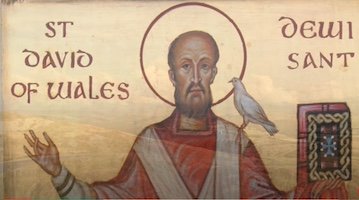
Saint David, son of the Prince of Cardigan and Non in Wales, was born in that land in the later fifth century, and from his earliest years gave himself wholly to the service of God. He began his religious life on the island of Wight, under Saint Paulinus, a disciple of Saint Germanus, Bishop of Auxerre, sent to Britain by Pope Saint Celestine to arrest the ravages of the heresy of a certain abbot named Pelagius, in the same region. When his virtue had grown strong by practice, he went to preach on the mainland; he built a chapel at Glastonbury and founded twelve monasteries, the principal one in the valley of Ross.
When heresy began to reappear in the early years of the sixth century, the bishops of the region assembled at Cardiganshire and sent for Saint David, already known to the people through his virtues and miracles, to come from his cell and preach to them. The Saint obeyed, and it is related that as he preached, the ground beneath his feet rose and became a hill, so that he was heard by a vast crowd. The heresy retreated and fell under the sword of the Spirit.
Saint David was elected Bishop of Caerleon. He could not resist the common will, but obtained that his see be transferred to a more retired location, today called Saint David, a lone and desert spot, where he would be able, with his monks, to serve God away from the tumults of the world.
When he was about eighty years of age, he recognized that his hour had come. As his agony closed, Our Lord stood before him in a vision, and the Saint cried out, Take me up with Thee! and so breathed forth his soul. The date was March 1, 561. Many Saints of Ireland and Great Britain, who revered him as their spiritual father, were formed in his monasteries, whose strict rule of prayer and work nourished their virtue and recommended them to both God and men.
Reflection. With whatever virtues a man may be endowed, he will discover, if he considers himself attentively, a sufficient depth of misery to afford cause for deep humility. But Jesus Christ says, He who humbles himself shall be exalted. (Luke 14:11)
Les Petits Bollandistes: Vies des Saints, by Msgr. Paul Guérin (Bloud et Barral: Paris, 1882), Vol. 3; Little Pictorial Lives of the Saints, a compilation based on Butler's Lives of the Saints and other sources by John Gilmary Shea (Benziger Brothers: New York, 1894)
LAST-MODIFIED:20240225T110254Z SEQUENCE:43163488 X-ACCESS:1 X-HITS:4 X-COLOR:f0b80e X-SHOW-END-TIME:1 END:VEVENT BEGIN:VEVENT DTSTART;VALUE=DATE:20240304 DTEND;VALUE=DATE:20240305 UID:E37ED0FF-4B30-4B19-AE5C-55888B793560 SUMMARY:St. Casimir CREATED:20221013T211126Z DTSTAMP:20221013T211126Z URL:https://www.stpaulsweymouth.org/component/dpcalendar/event/1343?calid=13 DESCRIPTION:St. Casimir, Confessor\N\NCasimir, the second son of Casimir III, King of Poland, was born in 1458. From the custody of a very virtuous mother, Elizabeth of Austria, he passed to the guardianship of a devoted master, the learned and pious John Dugloss. Thus animated from his earliest years by precept and example, his innocence and piety soon ripened into the practice of heroic virtue.\NIn an atmosphere of luxury and magnificence the young prince fasted, wore a hair shirt, slept upon the bare earth, prayed by night, and watched for the opening of the church doors at dawn. He became so tenderly devoted to the Passion of Our Lord that at Mass he seemed quite rapt out of himself; his charity to the poor and afflicted knew no bounds. His love for our Blessed Lady he expressed in a long and beautiful hymn, familiar to us in English as Daily, Daily, Sing to Mary. At the age of twenty-five, sick with a long illness, he foretold the hour of his death, and chose to die a virgin rather than accept the life and health which the physicians held out to him in the married state.\NThe miracles wrought by his body after death fill an entire volume. The blind saw, the lame walked, the sick were healed, a dead girl was raised to life. At one time the Saint in glory, seen in the air by his army, led his Catholic countrymen to battle and delivered them by a wondrous victory from the schismatic Russian hosts.\NOne hundred and twenty-two years after his death Saint Casimir's tomb in the cathedral church of Vilna was opened, that the holy remains might be transferred to the rich marble chapel where it now lies. The place was damp, and the very vault crumbled away in the hands of the workmen; yet the Saint's body, wrapped in robes of silk, still intact, was found whole and incorrupt, and emitting a sweet fragrance which filled the church and refreshed all who were present. Under his head was found his hymn to Our Lady, which he had had buried with him.\NReflection. May the meditation of Saint Casimir's life make us increase in devotion to the most pure Mother of God — a sure means of preserving holy purity in our own soul.\NLittle Pictorial Lives of the Saints, a compilation based on Butler's Lives of the Saints and other sources by John Gilmary Shea (Benziger Brothers: New York, 1894). X-ALT-DESC;FMTTYPE=text/html:St. Casimir, Confessor
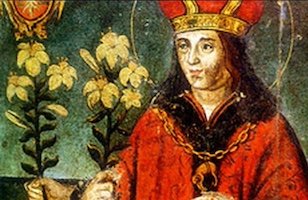
Casimir, the second son of Casimir III, King of Poland, was born in 1458. From the custody of a very virtuous mother, Elizabeth of Austria, he passed to the guardianship of a devoted master, the learned and pious John Dugloss. Thus animated from his earliest years by precept and example, his innocence and piety soon ripened into the practice of heroic virtue.
In an atmosphere of luxury and magnificence the young prince fasted, wore a hair shirt, slept upon the bare earth, prayed by night, and watched for the opening of the church doors at dawn. He became so tenderly devoted to the Passion of Our Lord that at Mass he seemed quite rapt out of himself; his charity to the poor and afflicted knew no bounds. His love for our Blessed Lady he expressed in a long and beautiful hymn, familiar to us in English as Daily, Daily, Sing to Mary. At the age of twenty-five, sick with a long illness, he foretold the hour of his death, and chose to die a virgin rather than accept the life and health which the physicians held out to him in the married state.
The miracles wrought by his body after death fill an entire volume. The blind saw, the lame walked, the sick were healed, a dead girl was raised to life. At one time the Saint in glory, seen in the air by his army, led his Catholic countrymen to battle and delivered them by a wondrous victory from the schismatic Russian hosts.
One hundred and twenty-two years after his death Saint Casimir's tomb in the cathedral church of Vilna was opened, that the holy remains might be transferred to the rich marble chapel where it now lies. The place was damp, and the very vault crumbled away in the hands of the workmen; yet the Saint's body, wrapped in robes of silk, still intact, was found whole and incorrupt, and emitting a sweet fragrance which filled the church and refreshed all who were present. Under his head was found his hymn to Our Lady, which he had had buried with him.
Reflection. May the meditation of Saint Casimir's life make us increase in devotion to the most pure Mother of God — a sure means of preserving holy purity in our own soul.
Little Pictorial Lives of the Saints, a compilation based on Butler's Lives of the Saints and other sources by John Gilmary Shea (Benziger Brothers: New York, 1894).
LAST-MODIFIED:20240302T161238Z SEQUENCE:43700472 X-ACCESS:1 X-HITS:68 X-COLOR:f0b80e X-SHOW-END-TIME:1 END:VEVENT BEGIN:VEVENT DTSTART;VALUE=DATE:20240304 DTEND;VALUE=DATE:20240305 UID:48776597-AB37-4317-AD35-4BB6FA5197FE SUMMARY:St. Lucius CREATED:20221013T211126Z DTSTAMP:20221013T211126Z URL:https://www.stpaulsweymouth.org/component/dpcalendar/event/1345?calid=13 DESCRIPTION:St. Lucius I Pope, Martyr\N\NEarly Life -- Unlike popes who chose their papal names based on who they admired, Lucius used his birth name as pope. Born circa 205 AD, he was Roman by birth and spent nearly his entire life in this Italian city. He grew up with an unnamed mother and a father by the name of Porphyrianus. The future pope also worked as a member of the Church’s clergy and served under both Pope Fabian and Pope Cornelius. Pope Cornelius was banished from Rome and spent his last days writing letters and facing severe hardship. When Pope Cornelius was martyred, the Church quickly looked for his successor and decided on Lucius.\NBanishment -- Not long after becoming pope in June of 253, Lucius was banished from Rome. This was a common practice of the emperor at the time because he believed that Christians would fail without a leader. He also viewed banishment as a type of punishment. Lucius was a unique case in that he received permission to return to the city a short time later. He would spend his last days in Rome and serving the Church.\NPapacy -- As he was pope for such a short period, not much is known about his papacy. He faced issues relating to Novatianism and after Novatian named himself the true pope and Holy See. Novatian made this statement after the election of Pope Cornelius in March of 251 and held the position for around seven years. Historians and the Church now consider him an antipope. Cyprian, the Bishop of Carthage, left behind several letters in which he praised the pope for speaking out against the antipope and his followers.\NDeath and Relics -- Pope Lucius I passed away less than one year after claiming the papacy and likely only ruled for a few months. As was the custom at the time, the body of Lucius was placed in the Catacomb of Callixtus. If you visit the cemetery today, you can still see his original tomb though he’s no longer buried there. Santa Cecilia received his relics and stored them with the relics of Saint Cecilia. Saint Ansgar’s Cathedral built a reliquary where they stored the supposed head of the pope. Legend claims that demons arrived in a Danish city and that his skull was the only thing that scared them. Once they placed the skull in the reliquary, the demons disappeared. X-ALT-DESC;FMTTYPE=text/html:St. Lucius I Pope, Martyr
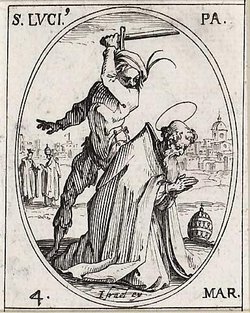
Early Life -- Unlike popes who chose their papal names based on who they admired, Lucius used his birth name as pope. Born circa 205 AD, he was Roman by birth and spent nearly his entire life in this Italian city. He grew up with an unnamed mother and a father by the name of Porphyrianus. The future pope also worked as a member of the Church’s clergy and served under both Pope Fabian and Pope Cornelius. Pope Cornelius was banished from Rome and spent his last days writing letters and facing severe hardship. When Pope Cornelius was martyred, the Church quickly looked for his successor and decided on Lucius.
Banishment -- Not long after becoming pope in June of 253, Lucius was banished from Rome. This was a common practice of the emperor at the time because he believed that Christians would fail without a leader. He also viewed banishment as a type of punishment. Lucius was a unique case in that he received permission to return to the city a short time later. He would spend his last days in Rome and serving the Church.
Papacy -- As he was pope for such a short period, not much is known about his papacy. He faced issues relating to Novatianism and after Novatian named himself the true pope and Holy See. Novatian made this statement after the election of Pope Cornelius in March of 251 and held the position for around seven years. Historians and the Church now consider him an antipope. Cyprian, the Bishop of Carthage, left behind several letters in which he praised the pope for speaking out against the antipope and his followers.
Death and Relics -- Pope Lucius I passed away less than one year after claiming the papacy and likely only ruled for a few months. As was the custom at the time, the body of Lucius was placed in the Catacomb of Callixtus. If you visit the cemetery today, you can still see his original tomb though he’s no longer buried there. Santa Cecilia received his relics and stored them with the relics of Saint Cecilia. Saint Ansgar’s Cathedral built a reliquary where they stored the supposed head of the pope. Legend claims that demons arrived in a Danish city and that his skull was the only thing that scared them. Once they placed the skull in the reliquary, the demons disappeared.
LAST-MODIFIED:20240302T161805Z SEQUENCE:43700799 X-ACCESS:1 X-HITS:50 X-COLOR:f0b80e X-SHOW-END-TIME:1 END:VEVENT BEGIN:VEVENT DTSTART;VALUE=DATE:20240306 DTEND;VALUE=DATE:20240307 UID:FD36C452-BEA7-4188-BA82-ACF446A0DEE0 SUMMARY:Sts. Perpetua & Felicity CREATED:20221013T211126Z DTSTAMP:20221013T211126Z URL:https://www.stpaulsweymouth.org/component/dpcalendar/event/1347?calid=13 DESCRIPTION:Sts. Perpetua & Felicity, Martyrs\N\NFelicitas (or Felicity) and Perpetua are two of the saints commemorated in the Canon of the Mass. Their feast, which actually falls on the seventh of March, is often celebrated on the sixth to avoid conflict with the feast of Saint Thomas Aquinas. The story of these martyrs and their companions is found in a kind of diary kept by Perpetua while she was in prison awaiting execution, and this was later augmented by an unknown eye-witness to the martyrdom.\NThe martyrs in this story lived in the North African city of Carthage, at a time when it was part of the Roman Empire; they had come under an edict issued by the emperor Severus in the year 202, declaring death to be the penalty for being a Christian. There were six of them: Perpetua, a young noblewoman recently married, with her baby boy; Felicitas, a slave girl expecting a child; and four men – Revocatus, a slave, and Secundulus, Saturninus and Saturus.\NPerpetua begins her diary at the time when she had decided to be baptized and was forced to withstand the arguments of her father against this step. She endured his pleading as long as she could, and then spoke: Father, I said, Do you see this vessel lying here – waterpot or whatever it may be? I see it, he said. And I said to him, Can it be called by any other name that what it is? And he answered, No. So also I cannot call myself anything else than what I am, a Christian. Here, Perpetua's basic decision, the one that caused her martyrdom, had already been made; she had realized that to be a follower of Christ was more important to her than anything else, life included, and that she must be baptized regardless of the consequences.\NShe was arrested with the others a few days after their baptism. In her diary she described her first day in prison: I was in great fear, because I had never known such darkness. What a day of horror! Terrible heat, thanks to the crowds! Rough handling by the soldiers! To crown all I was tormented there by anxiety for my baby. Her concern for her baby, whom she was still nursing, was her hardest trial, and when she finally obtained permission to keep him with her in prison she wrote: My prison suddenly became a palace to me, and I would rather have been there than anywhere else.\NWhile awaiting trial with her companions, Perpetua experienced the first of several visions that continued throughout her imprisonment: she found herself ascending a brazen ladder, to the sides of which were fastened sharp instruments – daggers, swords, lances, hooks – that tear the flesh of the unwary. When she reached the top, she found herself in a vast expanse of garden where a tall man with white hair, in the dress of a shepherd, was milking sheep. He told her, You have well come, my child, and gave her some of the milk. Perpetua writes that by this dream she and her companions understood that we must suffer, and henceforward began to have no hope in this world.\NThe next events in the diary are two examinations of the Christians by the Roman authorities; the second was the decisive one and took place in the market square, where a vast crowd gathered. This is Perpetua's description of it: We went up onto the platform, The others on being questioned confessed their faith. So it came to my turn. And there was my father, with my child, and he drew me down from the step beseeching me: Have pity on your baby. And the procurator Hilarion... said to me: Spare your father's white hairs; spare the tender years of your child. Offer a sacrifice for the safety of the emperors. And I answered: No. Are you a Christian? asked Hilarion. And I answered: I am... Then he passed sentence on all of us, and condemned us to the beasts; and in great joy we went down into the prison.\NThe martyrs were forced to wait now; they were being saved for the holiday that would be held on the birthday of the emperor's son when, in the amphitheater, the Christians were to be given to the wild animals. During this time, Perpetua experienced more visions, in the last of which she went to the amphitheater, was transformed into a man, and engaged in combat with an Egyptian, foul of look (the devil). She overcame the Egyptian and understood this to mean that she would undergo martyrdom successfully. Her account ends after the description of this vision with the words, Such were my doing up to the day before the games. Of what was done in the games themselves, let him write who will.\NThe unknown contributor continued the story from here, first describing some other events of the last days in prison. He writes that Felicitas was in great sorrow for fear lest, because of her pregnancy, her martyrdom should be delayed, since it is against the law for women with child to be exposed for punishment. She and the others prayed that her child might come, even though it was not yet due, and two days before the games Felicitas gave birth to a girl. But the children were taken from their mothers as the final day, March 7, 203, arrived.\NThe day of the victory dawned, and they proceeded from their prison to the amphitheater, as if they were on their way to heaven, with gay and gracious looks; trembling, if at all, not with fear but joy. Perpetua followed with shining steps as the true spouse of Christ, as the darling of God, abashing with the high spirit in her eyes the gaze of all. The officials tried to force the Christians to put on the costumes of pagan gods before entering the arena, as the custom was at such times, but Perpetua resisted steadfastly... For she said: Therefore we came to this issue of our own free will, that our liberty might not be violated; therefore we pledged our lives, that we might do no such thing: this was our pact with you. Injustice acknowledged justice; the commanding officer gave permission that they should enter the arena in their ordinary dress.\NThey proceeded into the amphitheater, and the ordeal began. Saturninus was mauled to death by a leopard and a bear, and Saturus was killed by the leopard. The two women were exposed to a mad heifer: Perpetua was tossed first, and fell on her back. Sitting down she drew back her torn tunic from her side to cover her thighs, more mindful of her modesty than of her suffering? Then she rose, and seeing that Felicitas was bruised, approached, gave a hand to her, and lifted her up. And the two stood side by side, and the cruelty of the people being now appeased, they were recalled to the Gate of Life. This was an entrance to the arena where those who were victorious in combat were allowed to leave; the mob was fickle, however, as mobs always are, and it was soon shouting for blood again. When the martyrs heard this they rose unbidden and made their way whither the people willed, after first kissing one another... The rest, without a movement, in silence received the sword... Perpetua, however, that she might taste something of the pain, was struck (by mistake) on the side and cried out, and herself guided to her throat the wavering hand of the young, untried gladiator.\NThis is all that is written; yet, what more can be said? The story of courage and faith speaks for itself.\NThe Catholic Press, The Lives of the Saints for every day of the year X-ALT-DESC;FMTTYPE=text/html:Sts. Perpetua & Felicity, Martyrs
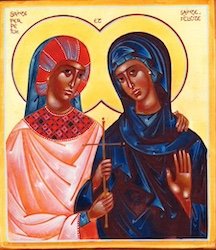
Felicitas (or Felicity) and Perpetua are two of the saints commemorated in the Canon of the Mass. Their feast, which actually falls on the seventh of March, is often celebrated on the sixth to avoid conflict with the feast of Saint Thomas Aquinas. The story of these martyrs and their companions is found in a kind of diary kept by Perpetua while she was in prison awaiting execution, and this was later augmented by an unknown eye-witness to the martyrdom.
The martyrs in this story lived in the North African city of Carthage, at a time when it was part of the Roman Empire; they had come under an edict issued by the emperor Severus in the year 202, declaring death to be the penalty for being a Christian. There were six of them: Perpetua, a young noblewoman recently married, with her baby boy; Felicitas, a slave girl expecting a child; and four men – Revocatus, a slave, and Secundulus, Saturninus and Saturus.
Perpetua begins her diary at the time when she had decided to be baptized and was forced to withstand the arguments of her father against this step. She endured his pleading as long as she could, and then spoke: Father, I said, Do you see this vessel lying here – waterpot or whatever it may be? I see it, he said. And I said to him, Can it be called by any other name that what it is? And he answered, No. So also I cannot call myself anything else than what I am, a Christian. Here, Perpetua's basic decision, the one that caused her martyrdom, had already been made; she had realized that to be a follower of Christ was more important to her than anything else, life included, and that she must be baptized regardless of the consequences.
She was arrested with the others a few days after their baptism. In her diary she described her first day in prison: I was in great fear, because I had never known such darkness. What a day of horror! Terrible heat, thanks to the crowds! Rough handling by the soldiers! To crown all I was tormented there by anxiety for my baby. Her concern for her baby, whom she was still nursing, was her hardest trial, and when she finally obtained permission to keep him with her in prison she wrote: My prison suddenly became a palace to me, and I would rather have been there than anywhere else.
While awaiting trial with her companions, Perpetua experienced the first of several visions that continued throughout her imprisonment: she found herself ascending a brazen ladder, to the sides of which were fastened sharp instruments – daggers, swords, lances, hooks – that tear the flesh of the unwary. When she reached the top, she found herself in a vast expanse of garden where a tall man with white hair, in the dress of a shepherd, was milking sheep. He told her, You have well come, my child, and gave her some of the milk. Perpetua writes that by this dream she and her companions understood that we must suffer, and henceforward began to have no hope in this world.
The next events in the diary are two examinations of the Christians by the Roman authorities; the second was the decisive one and took place in the market square, where a vast crowd gathered. This is Perpetua's description of it: We went up onto the platform, The others on being questioned confessed their faith. So it came to my turn. And there was my father, with my child, and he drew me down from the step beseeching me: Have pity on your baby. And the procurator Hilarion... said to me: Spare your father's white hairs; spare the tender years of your child. Offer a sacrifice for the safety of the emperors. And I answered: No. Are you a Christian? asked Hilarion. And I answered: I am... Then he passed sentence on all of us, and condemned us to the beasts; and in great joy we went down into the prison.
The martyrs were forced to wait now; they were being saved for the holiday that would be held on the birthday of the emperor's son when, in the amphitheater, the Christians were to be given to the wild animals. During this time, Perpetua experienced more visions, in the last of which she went to the amphitheater, was transformed into a man, and engaged in combat with an Egyptian, foul of look (the devil). She overcame the Egyptian and understood this to mean that she would undergo martyrdom successfully. Her account ends after the description of this vision with the words, Such were my doing up to the day before the games. Of what was done in the games themselves, let him write who will.
The unknown contributor continued the story from here, first describing some other events of the last days in prison. He writes that Felicitas was in great sorrow for fear lest, because of her pregnancy, her martyrdom should be delayed, since it is against the law for women with child to be exposed for punishment. She and the others prayed that her child might come, even though it was not yet due, and two days before the games Felicitas gave birth to a girl. But the children were taken from their mothers as the final day, March 7, 203, arrived.
The day of the victory dawned, and they proceeded from their prison to the amphitheater, as if they were on their way to heaven, with gay and gracious looks; trembling, if at all, not with fear but joy. Perpetua followed with shining steps as the true spouse of Christ, as the darling of God, abashing with the high spirit in her eyes the gaze of all. The officials tried to force the Christians to put on the costumes of pagan gods before entering the arena, as the custom was at such times, but Perpetua resisted steadfastly... For she said: Therefore we came to this issue of our own free will, that our liberty might not be violated; therefore we pledged our lives, that we might do no such thing: this was our pact with you. Injustice acknowledged justice; the commanding officer gave permission that they should enter the arena in their ordinary dress.
They proceeded into the amphitheater, and the ordeal began. Saturninus was mauled to death by a leopard and a bear, and Saturus was killed by the leopard. The two women were exposed to a mad heifer: Perpetua was tossed first, and fell on her back. Sitting down she drew back her torn tunic from her side to cover her thighs, more mindful of her modesty than of her suffering? Then she rose, and seeing that Felicitas was bruised, approached, gave a hand to her, and lifted her up. And the two stood side by side, and the cruelty of the people being now appeased, they were recalled to the Gate of Life. This was an entrance to the arena where those who were victorious in combat were allowed to leave; the mob was fickle, however, as mobs always are, and it was soon shouting for blood again. When the martyrs heard this they rose unbidden and made their way whither the people willed, after first kissing one another... The rest, without a movement, in silence received the sword... Perpetua, however, that she might taste something of the pain, was struck (by mistake) on the side and cried out, and herself guided to her throat the wavering hand of the young, untried gladiator.
This is all that is written; yet, what more can be said? The story of courage and faith speaks for itself.
The Catholic Press, The Lives of the Saints for every day of the year
LAST-MODIFIED:20240302T162115Z SEQUENCE:43700989 X-ACCESS:1 X-HITS:127 X-COLOR:f0b80e X-SHOW-END-TIME:1 END:VEVENT BEGIN:VEVENT DTSTART;VALUE=DATE:20240307 DTEND;VALUE=DATE:20240308 UID:7B6C2D8D-AB1F-4E54-86B3-5C74DE6F5FB2 SUMMARY:St. Thomas Aquinas CREATED:20221013T211126Z DTSTAMP:20221013T211126Z URL:https://www.stpaulsweymouth.org/component/dpcalendar/event/1349?calid=13 DESCRIPTION:St. Thomas Aquinas, Confessor and Doctor of the Church\N\NThe great Saint Thomas was born of noble parents at Aquino near Naples in Italy, in 1225; his century was replete with great names and Christian works, yet he dominates it by the power of his thought and the perfection of his works. In his childhood he was the provider for the poor of the neighborhood during a famine; his father, meeting him in a corridor with the food he had succeeded in taking from the kitchen, asked him what he had under his cloak; he opened it and fresh roses fell on the ground. The nobleman embraced his son and amid his tears, gave him permission to follow thereafter all inspirations of his charity.\NThe young student, like the holy man Job, made a pact with his eyes and forbade them to see anything which might favor in his heart any desires for a life of ease. At the University of Naples he led a retired life of study and prayer, and continued his charities, giving all he had which was superfluous. He was recognized already by his professors as a genius, but it was Saint Albert the Great who later said of his disciple whom some called the mute ox, that some day the lowing of this ox will resound throughout the entire world.\NAt the age of seventeen he received the Dominican habit at Naples. His family opposed this choice, and he was set upon by his brothers on his way to Paris. They attempted in vain to remove his holy habit, but he was taken in custody and obliged to suffer a two years' captivity in their castle of Rocca Secca. Neither the caresses of his mother and sisters, nor the threats and stratagems of his brothers, could shake him in his vocation. His older sister was won over by him and renounced a brilliant marriage to embrace religious life; later she was Abbess of her convent in Capua.\NWhile Saint Thomas was in confinement at Rocca Secca, his brothers endeavored to entrap him into sin, but the attempt only ended in the triumph of his purity. Snatching from the hearth a burning coal, the Saint drove from his chamber the courtesan whom they had concealed there. Then marking a cross upon the wall, he knelt down to pray. Immediately, while he was rapt in ecstasy, an Angel girded him with a cord, in token of the gift of perpetual chastity which God had given him. The pain caused by the girdle was so sharp that Saint Thomas uttered a piercing cry, which brought his guards into the room. But he never related this grace to anyone save Father Raynald, his confessor, a short time before his death. Thus originated the Confraternity of the Angelic Warfare, for the preservation of the virtue of chastity.\NHaving at length escaped, Saint Thomas went to Cologne to study under Blessed Albert the Great, and afterwards was sent with him to Paris, where for several years he taught philosophy and theology. The Church has ever venerated his numerous writings as a treasure of sacred doctrine; in naming him the Angelic Doctor she has indicated that his science is more divine than human. The rarest gifts of intellect were combined in him with the most tender piety. Prayer, he said, had taught him more than study. His singular devotion to the Blessed Sacrament shines forth in the Office and hymns which he composed for the feast of Corpus Christi. To the words miraculously uttered by a crucifix at Naples, Well hast thou written concerning Me, Thomas. What shall I give thee as a reward? he replied, Naught save Thyself, O Lord. Saint Thomas was loved for his unfailing gentleness and his readiness to lend his services or great lights to all who sought them. He died at Fossa Nuova in 1274, on his way to the General Council of Lyons, to which Pope Gregory X had summoned him.\NReflection. The knowledge of God is for all, but hidden treasures are reserved for those who have ever followed the Lamb.\NLittle Pictorial Lives of the Saints, a compilation based on Butler's Lives of the Saints and other sources by John Gilmary Shea (Benziger Brothers: New York, 1894). X-ALT-DESC;FMTTYPE=text/html:St. Thomas Aquinas, Confessor and Doctor of the Church
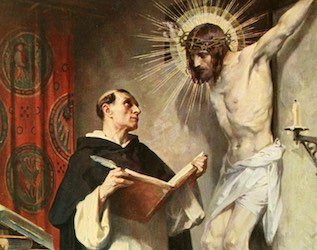
The great Saint Thomas was born of noble parents at Aquino near Naples in Italy, in 1225; his century was replete with great names and Christian works, yet he dominates it by the power of his thought and the perfection of his works. In his childhood he was the provider for the poor of the neighborhood during a famine; his father, meeting him in a corridor with the food he had succeeded in taking from the kitchen, asked him what he had under his cloak; he opened it and fresh roses fell on the ground. The nobleman embraced his son and amid his tears, gave him permission to follow thereafter all inspirations of his charity.
The young student, like the holy man Job, made a pact with his eyes and forbade them to see anything which might favor in his heart any desires for a life of ease. At the University of Naples he led a retired life of study and prayer, and continued his charities, giving all he had which was superfluous. He was recognized already by his professors as a genius, but it was Saint Albert the Great who later said of his disciple whom some called the mute ox, that some day the lowing of this ox will resound throughout the entire world.
At the age of seventeen he received the Dominican habit at Naples. His family opposed this choice, and he was set upon by his brothers on his way to Paris. They attempted in vain to remove his holy habit, but he was taken in custody and obliged to suffer a two years' captivity in their castle of Rocca Secca. Neither the caresses of his mother and sisters, nor the threats and stratagems of his brothers, could shake him in his vocation. His older sister was won over by him and renounced a brilliant marriage to embrace religious life; later she was Abbess of her convent in Capua.
While Saint Thomas was in confinement at Rocca Secca, his brothers endeavored to entrap him into sin, but the attempt only ended in the triumph of his purity. Snatching from the hearth a burning coal, the Saint drove from his chamber the courtesan whom they had concealed there. Then marking a cross upon the wall, he knelt down to pray. Immediately, while he was rapt in ecstasy, an Angel girded him with a cord, in token of the gift of perpetual chastity which God had given him. The pain caused by the girdle was so sharp that Saint Thomas uttered a piercing cry, which brought his guards into the room. But he never related this grace to anyone save Father Raynald, his confessor, a short time before his death. Thus originated the Confraternity of the Angelic Warfare, for the preservation of the virtue of chastity.
Having at length escaped, Saint Thomas went to Cologne to study under Blessed Albert the Great, and afterwards was sent with him to Paris, where for several years he taught philosophy and theology. The Church has ever venerated his numerous writings as a treasure of sacred doctrine; in naming him the Angelic Doctor she has indicated that his science is more divine than human. The rarest gifts of intellect were combined in him with the most tender piety. Prayer, he said, had taught him more than study. His singular devotion to the Blessed Sacrament shines forth in the Office and hymns which he composed for the feast of Corpus Christi. To the words miraculously uttered by a crucifix at Naples, Well hast thou written concerning Me, Thomas. What shall I give thee as a reward? he replied, Naught save Thyself, O Lord. Saint Thomas was loved for his unfailing gentleness and his readiness to lend his services or great lights to all who sought them. He died at Fossa Nuova in 1274, on his way to the General Council of Lyons, to which Pope Gregory X had summoned him.
Reflection. The knowledge of God is for all, but hidden treasures are reserved for those who have ever followed the Lamb.
Little Pictorial Lives of the Saints, a compilation based on Butler's Lives of the Saints and other sources by John Gilmary Shea (Benziger Brothers: New York, 1894).
LAST-MODIFIED:20240302T162702Z SEQUENCE:43701336 X-ACCESS:1 X-HITS:20 X-COLOR:f0b80e X-SHOW-END-TIME:1 END:VEVENT BEGIN:VEVENT DTSTART;VALUE=DATE:20240308 DTEND;VALUE=DATE:20240309 UID:200149EC-E740-4D6A-9668-2DB78415FB24 SUMMARY:St. John of God CREATED:20221013T211126Z DTSTAMP:20221013T211126Z URL:https://www.stpaulsweymouth.org/component/dpcalendar/event/1351?calid=13 DESCRIPTION:St. John of God, Confessor\N\NNothing in the early life of John Ciudad, born of a poor couple in a town of Portugal, foreshadowed his future sanctity. Following a traveler whose description of Madrid had captivated his imagination, this only son of his parents ran away from his home. Soon regret and misery overtook him, but he was ashamed to return to his abandoned parents. In effect his mother, struck with a fever, but advised by an Angel that John would have to undergo long trials which would strengthen his virtue, departed this life only a few days after his adventure began.\NFor several years the renegade was engaged in tending sheep and cattle in Spain; his employer eventually offered him his only daughter in marriage and thereby a rich heritage, but John was interiorly advised that such was not his vocation. He left in secret the next day, joined the army of Spain against the French, later against the Turks. When he was about forty years of age, feeling profound remorse for his life which lacked order and purpose, he returned to his home village, only to learn of the death of both his parents. I am not worthy to see the light of day! exclaimed the grief-stricken voyager. He visited the cemetery, suffocated by his sobs, and cried out, Pardon, pardon! O mother! Eternal penance!\NHe resolved to devote himself to the ransom of Christian slaves in Africa, and on his way served the sick in a hospital. Meeting an aged nobleman at Gibralter, unjustly exiled and on his way to Africa, John offered to go there as his servant, to remain with him and his family and support them by his labor. Count DaSilva fell ill in the new climate and soon died, thanking John for his unfailing aid, and predicting he would some day be one of Spain's greatest apostles. His family received amnesty and returned to Spain.\NJohn, too, returned there by the advice of his confessor, and sought to do good by selling holy pictures and books at low prices. Finally the hour of grace struck. At Granada a sermon by the celebrated John of Avila shook his soul to its depths, and his expressions of self-abhorrence were so extraordinary that he was taken to the asylum as one insane. For a time he acted this role purposely, in order to be whipped daily as a remedial measure. His confessor was John of Avila, who when he learned of this told him to cease his pretense and do something useful. Thereafter he employed himself in ministering to the sick.\NHe began to collect homeless poor, and to support them by his work and by begging. One night Saint John found in the streets a poor man who seemed near death, and, as was his wont, he carried him to the hospital, laid him on a bed, and went to fetch water to wash his feet. When he had washed them, he knelt to kiss them, but was awestruck: the feet were pierced, and the print of the nails shone with an unearthly radiance. He raised his eyes, and heard the words, John, it is to Me that you do all that you do for the poor in My name. It is I who reach forth My hand for the alms you give; you clothe Me; Mine are the feet that you wash. And then the gracious vision disappeared, leaving Saint John filled at once with confusion and consolation.\NThe bishop became the Saint's patron and gave him the name of John of God. When his hospital was on fire, John was seen rushing about uninjured amid the flames until he had rescued all his poor. After ten years spent in the service of the suffering, the Saint's life was fitly closed when he plunged into a river to save a drowning boy, and died in 1550 of an illness brought on by the attempt. He was fifty-five years old.\NReflection. God often rewards men for works that are pleasing in His sight, by giving them grace and opportunity to do other works higher still. Saint John of God often attributed his conversion, and the graces which enabled him to do his works of love, to his self-denying charity in Africa.\NLittle Pictorial Lives of the Saints, a compilation based on Butler's Lives of the Saints and other sources by John Gilmary Shea (Benziger Brothers: New York, 1894); Les Petits Bollandistes: Vies des Saints, by Msgr. Paul Guérin (Bloud et Barral: Paris, 1882), Vol. 3. X-ALT-DESC;FMTTYPE=text/html:St. John of God, Confessor
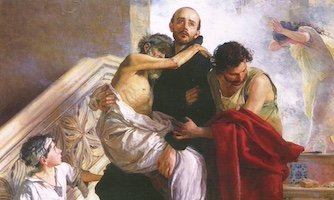
Nothing in the early life of John Ciudad, born of a poor couple in a town of Portugal, foreshadowed his future sanctity. Following a traveler whose description of Madrid had captivated his imagination, this only son of his parents ran away from his home. Soon regret and misery overtook him, but he was ashamed to return to his abandoned parents. In effect his mother, struck with a fever, but advised by an Angel that John would have to undergo long trials which would strengthen his virtue, departed this life only a few days after his adventure began.
For several years the renegade was engaged in tending sheep and cattle in Spain; his employer eventually offered him his only daughter in marriage and thereby a rich heritage, but John was interiorly advised that such was not his vocation. He left in secret the next day, joined the army of Spain against the French, later against the Turks. When he was about forty years of age, feeling profound remorse for his life which lacked order and purpose, he returned to his home village, only to learn of the death of both his parents. I am not worthy to see the light of day! exclaimed the grief-stricken voyager. He visited the cemetery, suffocated by his sobs, and cried out, Pardon, pardon! O mother! Eternal penance!
He resolved to devote himself to the ransom of Christian slaves in Africa, and on his way served the sick in a hospital. Meeting an aged nobleman at Gibralter, unjustly exiled and on his way to Africa, John offered to go there as his servant, to remain with him and his family and support them by his labor. Count DaSilva fell ill in the new climate and soon died, thanking John for his unfailing aid, and predicting he would some day be one of Spain's greatest apostles. His family received amnesty and returned to Spain.
John, too, returned there by the advice of his confessor, and sought to do good by selling holy pictures and books at low prices. Finally the hour of grace struck. At Granada a sermon by the celebrated John of Avila shook his soul to its depths, and his expressions of self-abhorrence were so extraordinary that he was taken to the asylum as one insane. For a time he acted this role purposely, in order to be whipped daily as a remedial measure. His confessor was John of Avila, who when he learned of this told him to cease his pretense and do something useful. Thereafter he employed himself in ministering to the sick.
He began to collect homeless poor, and to support them by his work and by begging. One night Saint John found in the streets a poor man who seemed near death, and, as was his wont, he carried him to the hospital, laid him on a bed, and went to fetch water to wash his feet. When he had washed them, he knelt to kiss them, but was awestruck: the feet were pierced, and the print of the nails shone with an unearthly radiance. He raised his eyes, and heard the words, John, it is to Me that you do all that you do for the poor in My name. It is I who reach forth My hand for the alms you give; you clothe Me; Mine are the feet that you wash. And then the gracious vision disappeared, leaving Saint John filled at once with confusion and consolation.
The bishop became the Saint's patron and gave him the name of John of God. When his hospital was on fire, John was seen rushing about uninjured amid the flames until he had rescued all his poor. After ten years spent in the service of the suffering, the Saint's life was fitly closed when he plunged into a river to save a drowning boy, and died in 1550 of an illness brought on by the attempt. He was fifty-five years old.
Reflection. God often rewards men for works that are pleasing in His sight, by giving them grace and opportunity to do other works higher still. Saint John of God often attributed his conversion, and the graces which enabled him to do his works of love, to his self-denying charity in Africa.
Little Pictorial Lives of the Saints, a compilation based on Butler's Lives of the Saints and other sources by John Gilmary Shea (Benziger Brothers: New York, 1894); Les Petits Bollandistes: Vies des Saints, by Msgr. Paul Guérin (Bloud et Barral: Paris, 1882), Vol. 3.
LAST-MODIFIED:20240302T163447Z SEQUENCE:43701801 X-ACCESS:1 X-HITS:55 X-COLOR:f0b80e X-SHOW-END-TIME:1 END:VEVENT BEGIN:VEVENT DTSTART;VALUE=DATE:20240309 DTEND;VALUE=DATE:20240310 UID:BCA108DF-86D8-49A1-913A-B002B646551D SUMMARY:St. Frances CREATED:20221013T211126Z DTSTAMP:20221013T211126Z URL:https://www.stpaulsweymouth.org/component/dpcalendar/event/1353?calid=13 DESCRIPTION:St. Frances of Rome, Widow\N\NFrances was born in Rome in 1384. Her parents, of high rank, overruled her desire to become a nun, and when she reached the age of twelve, married her to Lorenzo Ponziano, a Roman noble. During the forty years of their married life they never had a disagreement. While spending her days in retirement and prayer, Saint Frances attended promptly to every household duty, saying, A married woman must leave God at the altar to find Him in her domestic cares. She once found the verse of a psalm, at which she had been four times thus interrupted, completed for her in letters of gold. Her ordinary food was dry bread, and secretly she would exchange with beggars good food for their hard crusts.\NTwo of her children died young. Her son was nine years old when he foretold his father's death wound and his own coming departure for heaven; and then he returned a year later with an Angel whom she saw clearly. He said he had come for his little five year-old sister, that she might be placed among the Angels with him. He left the Angel with her in exchange, to remain always.\NDuring the invasion of Rome in 1413, Lorenzo was banished, his estates confiscated, his house destroyed, and his eldest son taken as a hostage. Frances saw in these losses only the hand of God, and blessed His holy Name. When peace was restored Ponziano recovered his estates, and after her husband's death, Saint Frances founded a Community of Benedictine Oblate nuns. At the age of forty-three, barefoot and with a cord about her neck she asked admission to the community, and was soon elected Superior.\NShe lived at all times in the presence of God, and among many visions was given constant sight of her Angel, who shed such a brightness around him that the Saint could read her midnight Office by this light alone. He shielded her in time of temptation, and directed her in every good act. But when she fell into some fault, he faded from her sight, and whenever any unsuitable words were spoken before her, he covered his face in shame. Saint Frances died on the day she foretold, March 9, 1440.\NReflection. God has appointed for each one of us, to protect us from all evils, a Guardian Angel whose warnings we are bound to heed. Let us listen to his voice here below, and we shall see him hereafter when he leads us before the throne of God.\NLittle Pictorial Lives of the Saints, a compilation based on Butler's Lives of the Saints and other sources by John Gilmary Shea (Benziger Brothers: New York, 1894). X-ALT-DESC;FMTTYPE=text/html:St. Frances of Rome, Widow
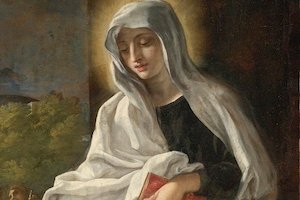
Frances was born in Rome in 1384. Her parents, of high rank, overruled her desire to become a nun, and when she reached the age of twelve, married her to Lorenzo Ponziano, a Roman noble. During the forty years of their married life they never had a disagreement. While spending her days in retirement and prayer, Saint Frances attended promptly to every household duty, saying, A married woman must leave God at the altar to find Him in her domestic cares. She once found the verse of a psalm, at which she had been four times thus interrupted, completed for her in letters of gold. Her ordinary food was dry bread, and secretly she would exchange with beggars good food for their hard crusts.
Two of her children died young. Her son was nine years old when he foretold his father's death wound and his own coming departure for heaven; and then he returned a year later with an Angel whom she saw clearly. He said he had come for his little five year-old sister, that she might be placed among the Angels with him. He left the Angel with her in exchange, to remain always.
During the invasion of Rome in 1413, Lorenzo was banished, his estates confiscated, his house destroyed, and his eldest son taken as a hostage. Frances saw in these losses only the hand of God, and blessed His holy Name. When peace was restored Ponziano recovered his estates, and after her husband's death, Saint Frances founded a Community of Benedictine Oblate nuns. At the age of forty-three, barefoot and with a cord about her neck she asked admission to the community, and was soon elected Superior.
She lived at all times in the presence of God, and among many visions was given constant sight of her Angel, who shed such a brightness around him that the Saint could read her midnight Office by this light alone. He shielded her in time of temptation, and directed her in every good act. But when she fell into some fault, he faded from her sight, and whenever any unsuitable words were spoken before her, he covered his face in shame. Saint Frances died on the day she foretold, March 9, 1440.
Reflection. God has appointed for each one of us, to protect us from all evils, a Guardian Angel whose warnings we are bound to heed. Let us listen to his voice here below, and we shall see him hereafter when he leads us before the throne of God.
Little Pictorial Lives of the Saints, a compilation based on Butler's Lives of the Saints and other sources by John Gilmary Shea (Benziger Brothers: New York, 1894).
LAST-MODIFIED:20240302T163816Z SEQUENCE:43702010 X-ACCESS:1 X-HITS:4 X-COLOR:f0b80e X-SHOW-END-TIME:1 END:VEVENT BEGIN:VEVENT DTSTART;VALUE=DATE:20240310 DTEND;VALUE=DATE:20240311 UID:DE532BB2-1022-4765-A526-E53C3C57D177 SUMMARY:The Forty Martyrs CREATED:20221013T211126Z DTSTAMP:20221013T211126Z URL:https://www.stpaulsweymouth.org/component/dpcalendar/event/1355?calid=13 DESCRIPTION:The Forty Holy Martyrs of Sebaste\N\NThe Forty Martyrs were soldiers quartered at Sebaste in Armenia, about the year 320. When their legion was ordered to offer sacrifice to idols, they refused to betray the faith of their baptism, and replied to all persuasive efforts, We are Christians! When neither cajolings or threats could change them, after several days of imprisonment they were chained together and taken to the site of execution. It was a cruel winter, and they were condemned to lie without clothing on the icy surface of a pond in the open air until they froze to death.\NThe forty, not merely undismayed but filled with joy at the prospect of suffering for Jesus Christ, said: No doubt it is difficult to support so acute a cold, but it will be agreeable to go to paradise by this route; the torment is of short duration, and the glory will be eternal. This cruel night will win for us an eternity of delights. Lord, forty of us are entering combat; grant that we may be forty to receive the crown!\NThere were warm baths close by, ready for any among them who would deny Christ. One of the confessors lost heart, renounced his faith, and went to cast himself into the basin of warm water prepared for that intention. But the sudden change in temperature suffocated him and he expired, losing at once both temporal and eternal life. The still living martyrs were fortified in their resolution, beholding this scene.\NThen the ice was suddenly flooded with a bright light; one of the soldiers guarding the men, nearly blinded by the light, raised his eyes and saw Angels descend with forty crowns which they held in the air over the martyrs' heads; but the fortieth one remained without a destination. The sentry was inspired to confess Christ, saying: That crown will be for me! Abandoning his coat and clothing, he went to replace the unfortunate apostate on the ice, crying out: I am a Christian! And the number of forty was again complete. They remained steadfast while their limbs grew stiff and frozen, and died one by one.\NAmong the forty there was a young soldier named Meliton who held out longest against the cold, and when the officers came to cart away the dead bodies they found him still breathing. They were moved with pity, and wanted to leave him alive, hoping he would still change his mind. But his mother stood by, and this valiant woman could not bear to see her son separated from the band of martyrs. She exhorted him to persevere, and lifted his frozen body into the cart. He was just able to make a sign of recognition, and was borne away, to be thrown into the flames with the dead bodies of his brethren. Their bones were cast into the river, but they floated and were gathered up by the faithful.\NReflection. All who live the life of grace are one in Christ. But besides this there are many special ties, resulting from community life, or at least of prayer in common and pious works. Thank God if He has bound you to others by these spiritual ties; pray that the bond which unites you here may last for eternity.\NLittle Pictorial Lives of the Saints, a compilation based on Butler's Lives of the Saints and other sources by John Gilmary Shea (Benziger Brothers: New York, 1894); Vie des Saints pour tous les jours de l'année, by Abbé L. Jaud (Mame: Tours, 1950). X-ALT-DESC;FMTTYPE=text/html:The Forty Holy Martyrs of Sebaste
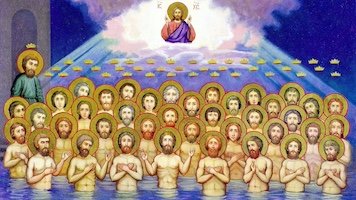
The Forty Martyrs were soldiers quartered at Sebaste in Armenia, about the year 320. When their legion was ordered to offer sacrifice to idols, they refused to betray the faith of their baptism, and replied to all persuasive efforts, We are Christians! When neither cajolings or threats could change them, after several days of imprisonment they were chained together and taken to the site of execution. It was a cruel winter, and they were condemned to lie without clothing on the icy surface of a pond in the open air until they froze to death.
The forty, not merely undismayed but filled with joy at the prospect of suffering for Jesus Christ, said: No doubt it is difficult to support so acute a cold, but it will be agreeable to go to paradise by this route; the torment is of short duration, and the glory will be eternal. This cruel night will win for us an eternity of delights. Lord, forty of us are entering combat; grant that we may be forty to receive the crown!
There were warm baths close by, ready for any among them who would deny Christ. One of the confessors lost heart, renounced his faith, and went to cast himself into the basin of warm water prepared for that intention. But the sudden change in temperature suffocated him and he expired, losing at once both temporal and eternal life. The still living martyrs were fortified in their resolution, beholding this scene.
Then the ice was suddenly flooded with a bright light; one of the soldiers guarding the men, nearly blinded by the light, raised his eyes and saw Angels descend with forty crowns which they held in the air over the martyrs' heads; but the fortieth one remained without a destination. The sentry was inspired to confess Christ, saying: That crown will be for me! Abandoning his coat and clothing, he went to replace the unfortunate apostate on the ice, crying out: I am a Christian! And the number of forty was again complete. They remained steadfast while their limbs grew stiff and frozen, and died one by one.
Among the forty there was a young soldier named Meliton who held out longest against the cold, and when the officers came to cart away the dead bodies they found him still breathing. They were moved with pity, and wanted to leave him alive, hoping he would still change his mind. But his mother stood by, and this valiant woman could not bear to see her son separated from the band of martyrs. She exhorted him to persevere, and lifted his frozen body into the cart. He was just able to make a sign of recognition, and was borne away, to be thrown into the flames with the dead bodies of his brethren. Their bones were cast into the river, but they floated and were gathered up by the faithful.
Reflection. All who live the life of grace are one in Christ. But besides this there are many special ties, resulting from community life, or at least of prayer in common and pious works. Thank God if He has bound you to others by these spiritual ties; pray that the bond which unites you here may last for eternity.
Little Pictorial Lives of the Saints, a compilation based on Butler's Lives of the Saints and other sources by John Gilmary Shea (Benziger Brothers: New York, 1894); Vie des Saints pour tous les jours de l'année, by Abbé L. Jaud (Mame: Tours, 1950).
LAST-MODIFIED:20240302T164117Z SEQUENCE:43702191 X-ACCESS:1 X-HITS:119 X-COLOR:f0b80e X-SHOW-END-TIME:1 END:VEVENT BEGIN:VEVENT DTSTART;VALUE=DATE:20240312 DTEND;VALUE=DATE:20240313 UID:621B8DBD-856B-4FEF-A820-CA25D284EBAA SUMMARY:St. Gregory CREATED:20221013T211126Z DTSTAMP:20221013T211126Z URL:https://www.stpaulsweymouth.org/component/dpcalendar/event/1357?calid=13 DESCRIPTION:St. Gregory I (The Great) Pope, Confessor and Doctor of the Church\N\NSaint Gregory the Great was a Roman of noble Christian birth, the son of a canonized Saint, his mother, Saint Silva; and he was the nephew of two others, Saints Tarsilla and Emiliana. At thirty years of age he became the Prefect of Rome, the highest civil dignity of that city. On his father's death in 574 he gave his great wealth to the poor, turned his house on the Caelian Hill into the monastery which now bears his name, and for several years lived as a perfect monk. His famous exposition of the Book of Job dates from his monastic years.\NThe Pope drew him from his seclusion in 578 to make him one of the seven deacons of Rome; and for seven years he rendered great service to the Church as what we now call Papal Nuncio to the imperial court at Constantinople. He had been sent there to obtain assistance against the Lombard invasions, but returned with a conviction which was a foundation of his later activity, that no help could any longer be obtained from that court. When he was recalled to Rome he became Abbot of his Monastery, then known by the name of Saint Andrew's.\NWhile still a monk the Saint was struck by the sight of some fair-complexioned boys who were exposed for sale in Rome, and heard with sorrow that they were pagans. And of what race are they? he asked. They are Angles. Worthy indeed to be Angels of God, said he. He at once obtained permission from the Pope to set out to evangelize the English. With several companion monks he had already made a three-days' journey when the Pope, ceding to the regrets of the Roman people, sent out messengers to overtake and recall them. Still the Angles were not forgotten, and one of the Saint's first cares as Pope was to send, from his own monastery, Saint Augustine and forty more monks to England.\NOn the death of Pope Pelagius II, Saint Gregory was compelled to take upon himself the government of the Church, and for fourteen years his pontificate was a perfect model of ecclesiastical rule. He healed schisms, revived discipline, and saved Italy by converting the wild Arian Lombards who were laying it waste; he aided in the conversion of the Spanish and French Goths, who also were Arians, and kindled anew in Britain the light of the Faith, which the Anglo-Saxons had extinguished in blood. He set in order the Church's prayers and chant, guided and consoled her pastors with innumerable letters, and preached incessantly, most effectively by his own example. Many of his sermons are still extant and are famous for their constant use of Holy Scripture. His writings are numerous and include fourteen books of his letters.\NSaint Gregory I died in 604, worn out by austerities and toils. The Church includes him among her four great Latin doctors, and reveres him as Saint Gregory the Great.\NReflection. The champions of faith prove the truth of their teaching no less by the holiness of their lives than by the force of their arguments. Never forget that to bring others to God you must first see to your own soul.\NLittle Pictorial Lives of the Saints, a compilation based on Butler's Lives of the Saints and other sources by John Gilmary Shea (Benziger Brothers: New York, 1894). X-ALT-DESC;FMTTYPE=text/html:St. Gregory I (The Great) Pope, Confessor and Doctor of the Church
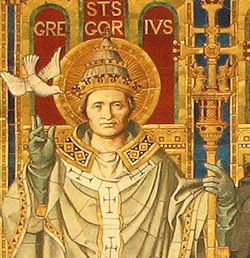
Saint Gregory the Great was a Roman of noble Christian birth, the son of a canonized Saint, his mother, Saint Silva; and he was the nephew of two others, Saints Tarsilla and Emiliana. At thirty years of age he became the Prefect of Rome, the highest civil dignity of that city. On his father's death in 574 he gave his great wealth to the poor, turned his house on the Caelian Hill into the monastery which now bears his name, and for several years lived as a perfect monk. His famous exposition of the Book of Job dates from his monastic years.
The Pope drew him from his seclusion in 578 to make him one of the seven deacons of Rome; and for seven years he rendered great service to the Church as what we now call Papal Nuncio to the imperial court at Constantinople. He had been sent there to obtain assistance against the Lombard invasions, but returned with a conviction which was a foundation of his later activity, that no help could any longer be obtained from that court. When he was recalled to Rome he became Abbot of his Monastery, then known by the name of Saint Andrew's.
While still a monk the Saint was struck by the sight of some fair-complexioned boys who were exposed for sale in Rome, and heard with sorrow that they were pagans. And of what race are they? he asked. They are Angles. Worthy indeed to be Angels of God, said he. He at once obtained permission from the Pope to set out to evangelize the English. With several companion monks he had already made a three-days' journey when the Pope, ceding to the regrets of the Roman people, sent out messengers to overtake and recall them. Still the Angles were not forgotten, and one of the Saint's first cares as Pope was to send, from his own monastery, Saint Augustine and forty more monks to England.
On the death of Pope Pelagius II, Saint Gregory was compelled to take upon himself the government of the Church, and for fourteen years his pontificate was a perfect model of ecclesiastical rule. He healed schisms, revived discipline, and saved Italy by converting the wild Arian Lombards who were laying it waste; he aided in the conversion of the Spanish and French Goths, who also were Arians, and kindled anew in Britain the light of the Faith, which the Anglo-Saxons had extinguished in blood. He set in order the Church's prayers and chant, guided and consoled her pastors with innumerable letters, and preached incessantly, most effectively by his own example. Many of his sermons are still extant and are famous for their constant use of Holy Scripture. His writings are numerous and include fourteen books of his letters.
Saint Gregory I died in 604, worn out by austerities and toils. The Church includes him among her four great Latin doctors, and reveres him as Saint Gregory the Great.
Reflection. The champions of faith prove the truth of their teaching no less by the holiness of their lives than by the force of their arguments. Never forget that to bring others to God you must first see to your own soul.
Little Pictorial Lives of the Saints, a compilation based on Butler's Lives of the Saints and other sources by John Gilmary Shea (Benziger Brothers: New York, 1894).
LAST-MODIFIED:20240302T164405Z SEQUENCE:43702359 X-ACCESS:1 X-HITS:54 X-COLOR:f0b80e X-SHOW-END-TIME:1 END:VEVENT BEGIN:VEVENT DTSTART;VALUE=DATE:20240317 DTEND;VALUE=DATE:20240318 UID:BACA45C4-9F66-477A-8343-6352A8079FEF SUMMARY:St. Patrick CREATED:20221013T211126Z DTSTAMP:20221013T211126Z URL:https://www.stpaulsweymouth.org/component/dpcalendar/event/1359?calid=13 DESCRIPTION:St. Patrick Bishop, Confessor, Patron Saint of Ireland\N\NIf the virtue of children reflects honor on their parents, much more justly is the name of Saint Patrick rendered illustrious by the innumerable lights of sanctity which shone in the Church of Ireland during many ages, and by the colonies of Saints with which it peopled many foreign countries. The Apostle of Ireland was born in Scotland towards the close of the fourth century, in a village which seems to be the present-day Scotch town of Kilpatrick, between Dumbarton and Glasgow. He calls himself both a Briton and a Roman, that is, of mixed extraction, and says his father was of a good family named Calphurnius. Some writers call his mother Conchessa, and say she was the niece of Saint Martin of Tours.\NIn his sixteenth year he was carried into captivity in Ireland by barbarians. There he was obliged to shepherd cattle on the mountains and in the forests, in hunger and nakedness, amid snow, rain, and ice. The young man had recourse to God with his whole heart, in fervent prayer and fasting, and from that time faith and the love of God acquired a constantly renewed strength in his tender soul. After six months spent in slavery, Saint Patrick was admonished by God in a dream to return to his own country, and was informed that a ship was then ready to sail there. He went at once to the seacoast, though at a great distance, and found the vessel, but he could not obtain his passage — probably for want of money. Patrick was returning to his hut, praying as he went, when the sailors, though pagans, called him back and took him on board.\NSome years afterwards he was again taken captive, but recovered his liberty after two months. While he was at home with his parents, God manifested to him, by divers visions, that He destined him for the great work of the conversion of Ireland. His biographers say that after his second captivity he traveled into Gaul and Italy, and saw Saint Martin, Saint Germanus of Auxerre, and Pope Saint Celestine, and that he received his mission and the apostolical benediction from this Pope, who died in 432. It is certain that he spent many years in preparing himself for his sacred calling. Great opposition was raised to his episcopal consecration and mission, both by his own relatives and by the clergy. They made him great offers in order to detain him among them, and endeavored to affright him by exaggerating the dangers to which he exposed himself amid the enemies of the Romans and Britons, who did not know God. All these temptations cast the Saint into great perplexity; but the Lord, whose Will he consulted by earnest prayer, supported him and he persevered in his resolution.\NHe therefore left his family, sold his birthright and dignity, and consecrated his soul to God, to serve strangers and carry His name to the ends of the earth. In this disposition he passed into Ireland, to preach the Gospel where the worship of idols still generally reigned. He traveled over the island, penetrating into the remotest corners, and such was the fruit of his preaching and sufferings that he baptized an infinite number of persons. Everywhere he ordained clergymen, induced women to live in holy widowhood and continence, consecrated virgins to Christ, and founded monasteries, not without many persecutions.\NSaint Patrick held several councils to regulate the discipline of the Church he had planted. Saint Bernard and the tradition of the country testify that he fixed his metropolitan see at Armagh. He established other bishops, as appears by the acts of a council and various other documents. He not only converted the whole country by his preaching and wonderful miracles, but also cultivated this vineyard with so fruitful a benediction from heaven as to render Ireland a flourishing garden in the Church of God, and a land of Saints. He converted and baptized the kings of Dublin and Munster and the seven sons of the king of Connaught, with the majority of their subjects, and before his death almost the whole island. He founded three monasteries and filled the countryside with churches and schools of piety and learning. He died and was buried at Down in Ulster. His body was found there in a church of his name in 1185, and moved to another part of the same church.\NReflection. By the instrumentality of Saint Patrick the Faith remained for long centuries as fresh in Ireland as when it was first planted. Ask him to obtain for you the special grace his children receive: to prefer the loss of every earthly good to the least compromise in matters of faith.\NLittle Pictorial Lives of the Saints, a compilation based on Butler's Lives of the Saints and other sources by John Gilmary Shea (Benziger Brothers: New York, 1894). X-ALT-DESC;FMTTYPE=text/html:St. Patrick Bishop, Confessor, Patron Saint of Ireland
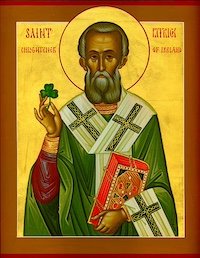
If the virtue of children reflects honor on their parents, much more justly is the name of Saint Patrick rendered illustrious by the innumerable lights of sanctity which shone in the Church of Ireland during many ages, and by the colonies of Saints with which it peopled many foreign countries. The Apostle of Ireland was born in Scotland towards the close of the fourth century, in a village which seems to be the present-day Scotch town of Kilpatrick, between Dumbarton and Glasgow. He calls himself both a Briton and a Roman, that is, of mixed extraction, and says his father was of a good family named Calphurnius. Some writers call his mother Conchessa, and say she was the niece of Saint Martin of Tours.
In his sixteenth year he was carried into captivity in Ireland by barbarians. There he was obliged to shepherd cattle on the mountains and in the forests, in hunger and nakedness, amid snow, rain, and ice. The young man had recourse to God with his whole heart, in fervent prayer and fasting, and from that time faith and the love of God acquired a constantly renewed strength in his tender soul. After six months spent in slavery, Saint Patrick was admonished by God in a dream to return to his own country, and was informed that a ship was then ready to sail there. He went at once to the seacoast, though at a great distance, and found the vessel, but he could not obtain his passage — probably for want of money. Patrick was returning to his hut, praying as he went, when the sailors, though pagans, called him back and took him on board.
Some years afterwards he was again taken captive, but recovered his liberty after two months. While he was at home with his parents, God manifested to him, by divers visions, that He destined him for the great work of the conversion of Ireland. His biographers say that after his second captivity he traveled into Gaul and Italy, and saw Saint Martin, Saint Germanus of Auxerre, and Pope Saint Celestine, and that he received his mission and the apostolical benediction from this Pope, who died in 432. It is certain that he spent many years in preparing himself for his sacred calling. Great opposition was raised to his episcopal consecration and mission, both by his own relatives and by the clergy. They made him great offers in order to detain him among them, and endeavored to affright him by exaggerating the dangers to which he exposed himself amid the enemies of the Romans and Britons, who did not know God. All these temptations cast the Saint into great perplexity; but the Lord, whose Will he consulted by earnest prayer, supported him and he persevered in his resolution.
He therefore left his family, sold his birthright and dignity, and consecrated his soul to God, to serve strangers and carry His name to the ends of the earth. In this disposition he passed into Ireland, to preach the Gospel where the worship of idols still generally reigned. He traveled over the island, penetrating into the remotest corners, and such was the fruit of his preaching and sufferings that he baptized an infinite number of persons. Everywhere he ordained clergymen, induced women to live in holy widowhood and continence, consecrated virgins to Christ, and founded monasteries, not without many persecutions.
Saint Patrick held several councils to regulate the discipline of the Church he had planted. Saint Bernard and the tradition of the country testify that he fixed his metropolitan see at Armagh. He established other bishops, as appears by the acts of a council and various other documents. He not only converted the whole country by his preaching and wonderful miracles, but also cultivated this vineyard with so fruitful a benediction from heaven as to render Ireland a flourishing garden in the Church of God, and a land of Saints. He converted and baptized the kings of Dublin and Munster and the seven sons of the king of Connaught, with the majority of their subjects, and before his death almost the whole island. He founded three monasteries and filled the countryside with churches and schools of piety and learning. He died and was buried at Down in Ulster. His body was found there in a church of his name in 1185, and moved to another part of the same church.
Reflection. By the instrumentality of Saint Patrick the Faith remained for long centuries as fresh in Ireland as when it was first planted. Ask him to obtain for you the special grace his children receive: to prefer the loss of every earthly good to the least compromise in matters of faith.
Little Pictorial Lives of the Saints, a compilation based on Butler's Lives of the Saints and other sources by John Gilmary Shea (Benziger Brothers: New York, 1894).
LAST-MODIFIED:20240302T164705Z SEQUENCE:43702539 X-ACCESS:1 X-HITS:131 X-COLOR:f0b80e X-SHOW-END-TIME:1 END:VEVENT BEGIN:VEVENT DTSTART;VALUE=DATE:20240318 DTEND;VALUE=DATE:20240319 UID:F8290D70-153D-4FC7-BEB4-635FE567E205 SUMMARY:St. Cyril CREATED:20221013T211126Z DTSTAMP:20221013T211126Z URL:https://www.stpaulsweymouth.org/component/dpcalendar/event/1361?calid=13 DESCRIPTION:St. Cyril of Jerusalem, Bishop, Confessor, and Doctor of the Church\N\NSaint Cyril was born at or near the city of Jerusalem, about the year 315. He was ordained a priest by Saint Maximus, who gave him the important charge of instructing and preparing the candidates for Baptism. This office he held for several years, and today we still have one series of his instructions, given in the year 347 or 348. They are of singular interest as being the earliest record of the systematic teaching of the Church on the Creed and Sacraments, and as having been given in the church built by Constantine on Mount Calvary. They are solid, simple, profound, precise, and saturated with Holy Scripture, and, as a witness and exposition of the Catholic faith, invaluable.\NOn the death of Saint Maximus, Cyril was chosen Bishop of Jerusalem. At the beginning of his episcopate a cross was seen in the sky, reaching from Mount Calvary to Mount Olivet, and so bright that it shone at noonday. Saint Cyril gave an account of it to the emperor, and the faithful regarded it as a presage of victory over the Arian heretics.\NWhile Saint Cyril was Bishop of Jerusalem, the apostate emperor Julian resolved to defy the words of Our Lord (Luke 21:6) by rebuilding the ancient temple of Jerusalem. He employed the power and resources of a Roman emperor; the Jews thronged enthusiastically to him and gave munificently. But Cyril was unmoved. The word of God abides, he said; one stone shall not be laid on another. When the attempt was made, a pagan writer tells us that horrible flames came forth from the earth, rendering the place inaccessible to the scorched and frightened workmen. The attempt was made again and again, and then abandoned in despair. Soon after, the emperor perished miserably in a war against the Persians, and the Church had rest.\NLike the other great bishops of his time, Cyril was persecuted, and was driven twice from his see; but on the death of the Arian emperor Valens, he returned to Jerusalem. He was present at the Second General Council of Constantinople, and died in peace A.D. 386, after a troubled episcopate of thirty-five years.\NReflection. As a stout staff, says Saint John Chrysostom, supports the trembling limbs of a feeble old man, so does faith sustain our vacillating mind, lest it be tossed about by sinful hesitation and perplexity.\NLittle Pictorial Lives of the Saints, a compilation based on Butler's Lives of the Saints and other sources by John Gilmary Shea (Benziger Brothers: New York, 1894). X-ALT-DESC;FMTTYPE=text/html:St. Cyril of Jerusalem, Bishop, Confessor, and Doctor of the Church
Saint Cyril was born at or near the city of Jerusalem, about the year 315. He was ordained a priest by Saint Maximus, who gave him the important charge of instructing and preparing the candidates for Baptism. This office he held for several years, and today we still have one series of his instructions, given in the year 347 or 348. They are of singular interest as being the earliest record of the systematic teaching of the Church on the Creed and Sacraments, and as having been given in the church built by Constantine on Mount Calvary. They are solid, simple, profound, precise, and saturated with Holy Scripture, and, as a witness and exposition of the Catholic faith, invaluable.
On the death of Saint Maximus, Cyril was chosen Bishop of Jerusalem. At the beginning of his episcopate a cross was seen in the sky, reaching from Mount Calvary to Mount Olivet, and so bright that it shone at noonday. Saint Cyril gave an account of it to the emperor, and the faithful regarded it as a presage of victory over the Arian heretics.
While Saint Cyril was Bishop of Jerusalem, the apostate emperor Julian resolved to defy the words of Our Lord (Luke 21:6) by rebuilding the ancient temple of Jerusalem. He employed the power and resources of a Roman emperor; the Jews thronged enthusiastically to him and gave munificently. But Cyril was unmoved. The word of God abides, he said; one stone shall not be laid on another. When the attempt was made, a pagan writer tells us that horrible flames came forth from the earth, rendering the place inaccessible to the scorched and frightened workmen. The attempt was made again and again, and then abandoned in despair. Soon after, the emperor perished miserably in a war against the Persians, and the Church had rest.
Like the other great bishops of his time, Cyril was persecuted, and was driven twice from his see; but on the death of the Arian emperor Valens, he returned to Jerusalem. He was present at the Second General Council of Constantinople, and died in peace A.D. 386, after a troubled episcopate of thirty-five years.
Reflection. As a stout staff, says Saint John Chrysostom, supports the trembling limbs of a feeble old man, so does faith sustain our vacillating mind, lest it be tossed about by sinful hesitation and perplexity.
Little Pictorial Lives of the Saints, a compilation based on Butler's Lives of the Saints and other sources by John Gilmary Shea (Benziger Brothers: New York, 1894).
LAST-MODIFIED:20240309T160941Z SEQUENCE:44305095 X-ACCESS:1 X-HITS:31 X-COLOR:f0b80e X-SHOW-END-TIME:1 END:VEVENT BEGIN:VEVENT DTSTART;VALUE=DATE:20240318 DTEND;VALUE=DATE:20240319 UID:424B6199-291E-46AE-B257-003993699658 SUMMARY:St. Edward CREATED:20221013T211126Z DTSTAMP:20221013T211126Z URL:https://www.stpaulsweymouth.org/component/dpcalendar/event/1367?calid=13 DESCRIPTION:St. Edward King, Martyr\N\NBorn about 962, Edward was the son of King Edgar and his first wife Æthelflaed. Edward’s succession to the throne had been disputed, but he was chosen by the witan in 975 under the influence of Dunstan, archbishop of Canterbury. The writer Theodoric Paulus writes of Edward, that he was “a young man of great devotion and excellent conduct. He was wholly catholic, good and of holy life; moreoever, in all things he loved god and the Church. He was generous to the poor, a haven to the good, a champion of the Faith of Christ, a vessel full of every virtuous grace.” He was a supporter of monasticism in England, as Edgar had been before him. Edward’s violent death at the hand of an assassin at Corfe in Dorset was connected with a struggle for power among the magnates, the anti-monastic party in Mercia wanting as king his half-brother Æthelred, who was younger even than Edward. The Anglo-Saxon Chronicle describes Edward’s death:\N“King Edward was slain at eventide at Corfe gate and was buried at Wareham without any kingly honors.”\NBut miracles were soon attributed to him, and his body was translated to Shaftesbury with great ceremony by Dunstan in 980. In a charter of Æthelred of 1001 he was called saint and martyr, and in 1008 the laws of Æthelred ordered the observance of his feast all over England. Evidence from calendars and litanies reveals widespread veneration of Edward from the early eleventh century. Five ancient churches in England are dedicated to him.\NEdward is commemorated as a saint not only by Anglicans, but by the Orthodox, who venerate him as a Passion-bearer; viz., one who accepts death out of love for Christ. In the 1662 Book of Common Prayer, Edward is commemorated on March 18, the date of his martyrdom, and on June 20, the date of the translation of his relics by Dunstan.\Nprepared from The Oxford Dictionary of Saints and other sources\NThe Collect\NAlmighty God, by your Holy Spirit you have made us one with your saints in heaven and on earth: Grant that in our earthly pilgrimage we may always be supported by this fellowship of love and prayer, and know ourselves to be surrounded by their witness to your power and mercy. We ask this for the sake of Jesus Christ, in whom all our intercessions are acceptable through the Spirit, and who lives and reigns for ever and ever. Amen. X-ALT-DESC;FMTTYPE=text/html:St. Edward King, Martyr
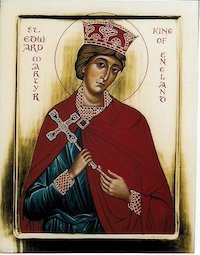
Born about 962, Edward was the son of King Edgar and his first wife Æthelflaed. Edward’s succession to the throne had been disputed, but he was chosen by the witan in 975 under the influence of Dunstan, archbishop of Canterbury. The writer Theodoric Paulus writes of Edward, that he was “a young man of great devotion and excellent conduct. He was wholly catholic, good and of holy life; moreoever, in all things he loved god and the Church. He was generous to the poor, a haven to the good, a champion of the Faith of Christ, a vessel full of every virtuous grace.” He was a supporter of monasticism in England, as Edgar had been before him. Edward’s violent death at the hand of an assassin at Corfe in Dorset was connected with a struggle for power among the magnates, the anti-monastic party in Mercia wanting as king his half-brother Æthelred, who was younger even than Edward. The Anglo-Saxon Chronicle describes Edward’s death:
“King Edward was slain at eventide at Corfe gate and was buried at Wareham without any kingly honors.”
But miracles were soon attributed to him, and his body was translated to Shaftesbury with great ceremony by Dunstan in 980. In a charter of Æthelred of 1001 he was called saint and martyr, and in 1008 the laws of Æthelred ordered the observance of his feast all over England. Evidence from calendars and litanies reveals widespread veneration of Edward from the early eleventh century. Five ancient churches in England are dedicated to him.
Edward is commemorated as a saint not only by Anglicans, but by the Orthodox, who venerate him as a Passion-bearer; viz., one who accepts death out of love for Christ. In the 1662 Book of Common Prayer, Edward is commemorated on March 18, the date of his martyrdom, and on June 20, the date of the translation of his relics by Dunstan.
prepared from The Oxford Dictionary of Saints and other sources
The Collect
Almighty God, by your Holy Spirit you have made us one with your saints in heaven and on earth: Grant that in our earthly pilgrimage we may always be supported by this fellowship of love and prayer, and know ourselves to be surrounded by their witness to your power and mercy. We ask this for the sake of Jesus Christ, in whom all our intercessions are acceptable through the Spirit, and who lives and reigns for ever and ever. Amen.
LAST-MODIFIED:20240309T161914Z SEQUENCE:44305668 X-ACCESS:1 X-HITS:87 X-COLOR:f0b80e X-SHOW-END-TIME:1 END:VEVENT BEGIN:VEVENT DTSTART;VALUE=DATE:20240319 DTEND;VALUE=DATE:20240320 UID:39EBCB57-1C03-4D34-B10C-1A6BB7043FA0 SUMMARY:St. Joseph CREATED:20221013T211126Z DTSTAMP:20221013T211126Z URL:https://www.stpaulsweymouth.org/component/dpcalendar/event/1363?calid=13 DESCRIPTION:St. Jospeh, Foster Father of the Lord Jesus and the most chaste Spouse of the Blessed Virgin Mary\N\NSaint Joseph was by birth of the royal family of David, but was living in humble obscurity as a carpenter, until God raised him to the highest office ever accorded a mortal man, by choosing him to be the spouse of the Virgin Mother, the virginal father and guardian of the Incarnate Word. Joseph, says Holy Scripture, was a just man. He was innocent and pure, as became the husband of Mary; he was gentle and tender, as one worthy to be named the father of Jesus; he was prudent and a lover of silence, as became the master of the holy house; above all, he was faithful and obedient to divine calls.\NHis conversation was with Angels rather than with men. When he learned that Mary bore within Her womb the Lord of heaven, he feared to take Her as his wife; but an Angel bade him put his fear aside, and all doubts vanished. When Herod sought the life of the divine Infant, an Angel told Joseph in a dream to fly with the Child and His Mother into Egypt. Joseph at once arose and obeyed. This sudden and unexpected flight must have exposed both him and his little Family to many inconveniences and sufferings; the journey with a newborn infant and a tender virgin was long, and the greater part of the way led through deserts and among strangers. Yet Saint Joseph alleges no excuses, nor inquires at what time they were to return.\NSaint Chrysostom observes that God treats in this way all His servants, sending them frequent trials to clear their hearts from the rust of self-love, but intermixing with afflictions, seasons of consolation. It is the opinion of the Fathers that when the Holy Family entered Egypt, at the presence of the Child Jesus all the oracles of that superstitious country were struck dumb, and the statues of their gods trembled, and in many places fell to the ground. The Fathers also attribute to this holy visit the spiritual benediction poured on that country, which made it for many ages fruitful in Saints.\NAfter the death of King Herod, of which Saint Joseph was informed in another vision, God ordered him to return with the Child and His Mother into the land of Israel, which our Saint readily accomplished. But when he arrived in Judea, hearing that Archelaus had succeeded Herod in that part of the land, and apprehensive that the son might be infected with his father's vices, he feared to settle there, as he would otherwise probably have done, for the education of the Child. Therefore, directed by God through still another angelic visit, he retired into the dominions of Herod Antipas in Galilee, and to his former habitation in Nazareth.\NSaint Joseph, a strict observer of the Mosaic law, journeyed each year at the time of the Passover to Jerusalem. Our Saviour, in the twelfth year of His age, accompanied His parents. Having participated in the usual ceremonies of the feast, the parents were returning with many of their neighbors and acquaintances towards Galilee, and never doubted that Jesus was with some of the company. They traveled on for a whole day's journey before they discovered that He was not with them. But when night came on and they could find no trace of Him among their kindred and acquaintances, they, in the deepest affliction, returned with the utmost haste to Jerusalem. We are left to imagine their tears and their efforts to find Him. After an anxious search of three days they discovered Him in the Temple, discoursing with the learned doctors of the law, and asking them such questions as aroused the admiration of all who heard Him. His Mother told Him with what grief and earnestness they had sought Him and asked, Son, why have You dealt with us in this way? Behold, Your Father and I have searched for You in great affliction of mind. The young Saviour answered, How is it that You sought Me? Did You not know that I must be about My Father's business? In this way Jesus encourages all young persons who are called to serve God to persevere in that high vocation, whatever the cost. But we are told that although He had remained in the Temple unknown to His parents, in all other things He was obedient to them, returning with them to Nazareth, and living there in all dutiful subjection to them.\NAs no further mention is made of Saint Joseph, he must have died before the marriage feast of Cana and the beginning of our divine Saviour's ministry. We cannot doubt that he had the happiness of the presence of Jesus and Mary at his death, praying beside him, assisting and comforting him in his last moments; therefore he is invoked for the great grace of a happy death and the spiritual presence of Jesus in that hour.\NReflection. The words of the Pharaoh to those who applied to him for aid, Go to Joseph are fitting for the second great Joseph of sacred history. Saint Teresa of Avila said she never had recourse to him in vain. Saint Joseph, vicar of the Eternal Father upon earth, protector of Jesus in His home at Nazareth, and affectionate lover of all children for the sake of the Holy Child, should be the chosen guardian and model of every true Christian family.\NLes Petits Bollandistes: Vies des Saints, by Msgr. Paul Guérin (Bloud et Barral: Paris, 1882), Vol. 3; The Holy Bible: Old and New Testaments X-ALT-DESC;FMTTYPE=text/html:St. Jospeh, Foster Father of the Lord Jesus and the most chaste Spouse of the Blessed Virgin Mary
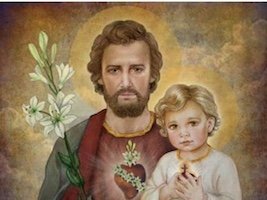
Saint Joseph was by birth of the royal family of David, but was living in humble obscurity as a carpenter, until God raised him to the highest office ever accorded a mortal man, by choosing him to be the spouse of the Virgin Mother, the virginal father and guardian of the Incarnate Word. Joseph, says Holy Scripture, was a just man. He was innocent and pure, as became the husband of Mary; he was gentle and tender, as one worthy to be named the father of Jesus; he was prudent and a lover of silence, as became the master of the holy house; above all, he was faithful and obedient to divine calls.
His conversation was with Angels rather than with men. When he learned that Mary bore within Her womb the Lord of heaven, he feared to take Her as his wife; but an Angel bade him put his fear aside, and all doubts vanished. When Herod sought the life of the divine Infant, an Angel told Joseph in a dream to fly with the Child and His Mother into Egypt. Joseph at once arose and obeyed. This sudden and unexpected flight must have exposed both him and his little Family to many inconveniences and sufferings; the journey with a newborn infant and a tender virgin was long, and the greater part of the way led through deserts and among strangers. Yet Saint Joseph alleges no excuses, nor inquires at what time they were to return.
Saint Chrysostom observes that God treats in this way all His servants, sending them frequent trials to clear their hearts from the rust of self-love, but intermixing with afflictions, seasons of consolation. It is the opinion of the Fathers that when the Holy Family entered Egypt, at the presence of the Child Jesus all the oracles of that superstitious country were struck dumb, and the statues of their gods trembled, and in many places fell to the ground. The Fathers also attribute to this holy visit the spiritual benediction poured on that country, which made it for many ages fruitful in Saints.
After the death of King Herod, of which Saint Joseph was informed in another vision, God ordered him to return with the Child and His Mother into the land of Israel, which our Saint readily accomplished. But when he arrived in Judea, hearing that Archelaus had succeeded Herod in that part of the land, and apprehensive that the son might be infected with his father's vices, he feared to settle there, as he would otherwise probably have done, for the education of the Child. Therefore, directed by God through still another angelic visit, he retired into the dominions of Herod Antipas in Galilee, and to his former habitation in Nazareth.
Saint Joseph, a strict observer of the Mosaic law, journeyed each year at the time of the Passover to Jerusalem. Our Saviour, in the twelfth year of His age, accompanied His parents. Having participated in the usual ceremonies of the feast, the parents were returning with many of their neighbors and acquaintances towards Galilee, and never doubted that Jesus was with some of the company. They traveled on for a whole day's journey before they discovered that He was not with them. But when night came on and they could find no trace of Him among their kindred and acquaintances, they, in the deepest affliction, returned with the utmost haste to Jerusalem. We are left to imagine their tears and their efforts to find Him. After an anxious search of three days they discovered Him in the Temple, discoursing with the learned doctors of the law, and asking them such questions as aroused the admiration of all who heard Him. His Mother told Him with what grief and earnestness they had sought Him and asked, Son, why have You dealt with us in this way? Behold, Your Father and I have searched for You in great affliction of mind. The young Saviour answered, How is it that You sought Me? Did You not know that I must be about My Father's business? In this way Jesus encourages all young persons who are called to serve God to persevere in that high vocation, whatever the cost. But we are told that although He had remained in the Temple unknown to His parents, in all other things He was obedient to them, returning with them to Nazareth, and living there in all dutiful subjection to them.
As no further mention is made of Saint Joseph, he must have died before the marriage feast of Cana and the beginning of our divine Saviour's ministry. We cannot doubt that he had the happiness of the presence of Jesus and Mary at his death, praying beside him, assisting and comforting him in his last moments; therefore he is invoked for the great grace of a happy death and the spiritual presence of Jesus in that hour.
Reflection. The words of the Pharaoh to those who applied to him for aid, Go to Joseph are fitting for the second great Joseph of sacred history. Saint Teresa of Avila said she never had recourse to him in vain. Saint Joseph, vicar of the Eternal Father upon earth, protector of Jesus in His home at Nazareth, and affectionate lover of all children for the sake of the Holy Child, should be the chosen guardian and model of every true Christian family.
Les Petits Bollandistes: Vies des Saints, by Msgr. Paul Guérin (Bloud et Barral: Paris, 1882), Vol. 3; The Holy Bible: Old and New Testaments
LAST-MODIFIED:20240309T161317Z SEQUENCE:44305311 X-ACCESS:1 X-HITS:111 X-COLOR:f0b80e X-SHOW-END-TIME:1 END:VEVENT BEGIN:VEVENT DTSTART;VALUE=DATE:20240321 DTEND;VALUE=DATE:20240322 UID:5A71CF44-4DBF-4EA4-9617-968ED6B5F267 SUMMARY:St. Benedict CREATED:20221013T211126Z DTSTAMP:20221013T211126Z URL:https://www.stpaulsweymouth.org/component/dpcalendar/event/1365?calid=13 DESCRIPTION:St. Benedict Abbot, Patron Saint of Europe\N\NSaint Benedict, blessed by grace as his prophetic name seemed to foretell, was born of a noble Italian family in Umbria, in the year 480. As a boy he showed great inclination for virtue, and maturity in his actions. He was sent to Rome at the age of seven, to be placed in the public schools. At the age of fourteen, alarmed by the licentiousness of the Roman youth, he fled to the desert mountains of Subiaco, forty miles from Rome, and was directed by the Holy Spirit into a deep, craggy, and almost inaccessible cave, since known as the Holy Grotto. He lived there for three years, unknown to anyone save a holy monk named Romanus, who clothed him with the monastic habit and brought him food.\NHe was eventually discovered, when, one Easter day, God advised a priest who lived about four miles from there, to take food to His servant, who was starving. The priest searched in the hills and finally found the solitary, and they took their meal together. Some shepherds also knew of his retreat, and soon the fame of this hermit's sanctity began to spread. The demon persecuted him, but to no avail; when a temptation of the flesh assailed him, he rolled in a clump of thorns and nettles, and came out of it covered with blood but sound in spirit.\NDisciples came to him, and under his direction, numerous monasteries were founded. The rigor of the rule he drew up, however, brought upon him the hatred of some of the monks, and one of them mixed poison with the Abbot's drink. When the Saint made the sign of the cross on the poisoned bowl, it broke and fell in pieces to the ground.\NSaint Benedict resurrected a boy whose father pleaded for that miracle, saying Give me back my son! He replied, Such miracles are not for us to work, but for the blessed apostles! Why will you lay upon me a burden which my weakness cannot bear? But finally, moved by compassion, he prostrated himself upon the body of the child, and prayed: Behold not, O Lord, my sins, but the faith of this man, and restore the soul which Thou hast taken away! And the child rose up, and walked to the waiting arms of his father. When a monk lost the iron head of his axe in a river, the Abbot told him to throw the handle in after it, and it rose from the river bed to resume its former place.\NSix days before his death, Saint Benedict ordered his grave to be prepared, then fell ill of a fever. On the sixth day he asked to be carried to the chapel, and, having received the sacred Body and Blood of Christ, with hands uplifted and leaning on one of his disciples, he calmly expired in prayer, on the 21st of March, 543.\NReflection. The Saints never feared to undertake any work for God, however arduous, because distrusting self they relied for assistance and support wholly upon prayer.\NLittle Pictorial Lives of the Saints, a compilation based on Butler's Lives of the Saints and other sources by John Gilmary Shea (Benziger Brothers: New York, 1894); Les Petits Bollandistes: Vies des Saints, by Msgr. Paul Guérin (Bloud et Barral: Paris, 1882), Vol. 3 X-ALT-DESC;FMTTYPE=text/html:St. Benedict Abbot, Patron Saint of Europe
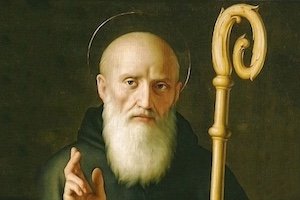
Saint Benedict, blessed by grace as his prophetic name seemed to foretell, was born of a noble Italian family in Umbria, in the year 480. As a boy he showed great inclination for virtue, and maturity in his actions. He was sent to Rome at the age of seven, to be placed in the public schools. At the age of fourteen, alarmed by the licentiousness of the Roman youth, he fled to the desert mountains of Subiaco, forty miles from Rome, and was directed by the Holy Spirit into a deep, craggy, and almost inaccessible cave, since known as the Holy Grotto. He lived there for three years, unknown to anyone save a holy monk named Romanus, who clothed him with the monastic habit and brought him food.
He was eventually discovered, when, one Easter day, God advised a priest who lived about four miles from there, to take food to His servant, who was starving. The priest searched in the hills and finally found the solitary, and they took their meal together. Some shepherds also knew of his retreat, and soon the fame of this hermit's sanctity began to spread. The demon persecuted him, but to no avail; when a temptation of the flesh assailed him, he rolled in a clump of thorns and nettles, and came out of it covered with blood but sound in spirit.
Disciples came to him, and under his direction, numerous monasteries were founded. The rigor of the rule he drew up, however, brought upon him the hatred of some of the monks, and one of them mixed poison with the Abbot's drink. When the Saint made the sign of the cross on the poisoned bowl, it broke and fell in pieces to the ground.
Saint Benedict resurrected a boy whose father pleaded for that miracle, saying Give me back my son! He replied, Such miracles are not for us to work, but for the blessed apostles! Why will you lay upon me a burden which my weakness cannot bear? But finally, moved by compassion, he prostrated himself upon the body of the child, and prayed: Behold not, O Lord, my sins, but the faith of this man, and restore the soul which Thou hast taken away! And the child rose up, and walked to the waiting arms of his father. When a monk lost the iron head of his axe in a river, the Abbot told him to throw the handle in after it, and it rose from the river bed to resume its former place.
Six days before his death, Saint Benedict ordered his grave to be prepared, then fell ill of a fever. On the sixth day he asked to be carried to the chapel, and, having received the sacred Body and Blood of Christ, with hands uplifted and leaning on one of his disciples, he calmly expired in prayer, on the 21st of March, 543.
Reflection. The Saints never feared to undertake any work for God, however arduous, because distrusting self they relied for assistance and support wholly upon prayer.
Little Pictorial Lives of the Saints, a compilation based on Butler's Lives of the Saints and other sources by John Gilmary Shea (Benziger Brothers: New York, 1894); Les Petits Bollandistes: Vies des Saints, by Msgr. Paul Guérin (Bloud et Barral: Paris, 1882), Vol. 3
LAST-MODIFIED:20240309T161520Z SEQUENCE:44305434 X-ACCESS:1 X-HITS:45 X-COLOR:f0b80e X-SHOW-END-TIME:1 END:VEVENT BEGIN:VEVENT DTSTART;VALUE=DATE:20240324 DTEND;VALUE=DATE:20240325 UID:CEE25953-93AD-4AFE-ABF5-0ECB07C04A74 SUMMARY:St. Gabriel CREATED:20221013T211126Z DTSTAMP:20221013T211126Z URL:https://www.stpaulsweymouth.org/component/dpcalendar/event/1369?calid=13 DESCRIPTION:St. Gabriel Archangel\N\NThe day before the great feast of the Annunciation, the Church celebrates the feast of the Archangel who brought to earth the glad tidings that Mary was chosen to be the Mother of the Incarnate God.\NThis angelic Messenger appears several times in the history of God's chosen people. He came to Daniel the prophet after he had a vision of the future Persian and Greek empires, to explain the vision to him, as Daniel narrates in the eighth chapter of his book. So great was the Archangel's majesty that the prophet fell on his face trembling.\NThe Angel of the Incarnation again appeared to the prophet to answer his prayer at the end of the exile, and advise him of the exact date of the future Redemption by the long-awaited Messiah.\NWhen the fullness of time had come, Gabriel was sent several times as the harbinger of the Incarnation of the Most High God. First, to the Temple of Jerusalem, while Zachary stood at the altar of incense, to tell him that his wife Elizabeth would bring forth a son to be called John, who would prepare the way of the Lord. (Luke 1:17) Six months later the great Archangel again appeared, bearing the greatest message God ever sent to earth. Standing before the Blessed Virgin Mary, this great Archangel of God trembled with reverence as he offered Her the ineffable honor of becoming Mother of the Eternal Word. Upon Her consent, the Word was made flesh and dwelt among us. It was he, we can readily believe, who also fortified Saint Joseph for his mission as virginal father of the Saviour.\NGabriel rightly bears the beautiful name, the strength of God, manifesting in every apparition the power and glory of the Eternal. According to some of the Fathers of the Church, it was Saint Gabriel, Angel of the Incarnation, who invited the shepherds of Bethlehem to come to the Crib to adore the newborn God. He was with Jesus in His Agony, no less ready to be the strength of God in the Garden than at Nazareth and Bethlehem. Throughout Christian tradition he is the Angel of the Incarnation, the Angel of consolation, the Angel of mercy.\NLives of the Saints for Every Day of the Year, edited by Rev. Hugo Hoever, S.O. Cist., Ph.D. Catholic Book Publishing Co. (New York: 1951-1955); La Sainte Bible commentée, Ed. Abbé L.-Cl. Fillion (Letouzey et Ané: Paris, 1903), Vol. VI, pp. 298-303 X-ALT-DESC;FMTTYPE=text/html:St. Gabriel Archangel
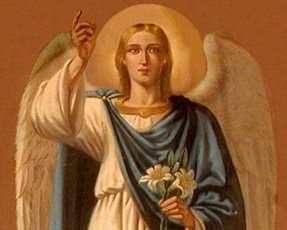
The day before the great feast of the Annunciation, the Church celebrates the feast of the Archangel who brought to earth the glad tidings that Mary was chosen to be the Mother of the Incarnate God.
This angelic Messenger appears several times in the history of God's chosen people. He came to Daniel the prophet after he had a vision of the future Persian and Greek empires, to explain the vision to him, as Daniel narrates in the eighth chapter of his book. So great was the Archangel's majesty that the prophet fell on his face trembling.
The Angel of the Incarnation again appeared to the prophet to answer his prayer at the end of the exile, and advise him of the exact date of the future Redemption by the long-awaited Messiah.
When the fullness of time had come, Gabriel was sent several times as the harbinger of the Incarnation of the Most High God. First, to the Temple of Jerusalem, while Zachary stood at the altar of incense, to tell him that his wife Elizabeth would bring forth a son to be called John, who would prepare the way of the Lord. (Luke 1:17) Six months later the great Archangel again appeared, bearing the greatest message God ever sent to earth. Standing before the Blessed Virgin Mary, this great Archangel of God trembled with reverence as he offered Her the ineffable honor of becoming Mother of the Eternal Word. Upon Her consent, the Word was made flesh and dwelt among us. It was he, we can readily believe, who also fortified Saint Joseph for his mission as virginal father of the Saviour.
Gabriel rightly bears the beautiful name, the strength of God, manifesting in every apparition the power and glory of the Eternal. According to some of the Fathers of the Church, it was Saint Gabriel, Angel of the Incarnation, who invited the shepherds of Bethlehem to come to the Crib to adore the newborn God. He was with Jesus in His Agony, no less ready to be the strength of God in the Garden than at Nazareth and Bethlehem. Throughout Christian tradition he is the Angel of the Incarnation, the Angel of consolation, the Angel of mercy.
Lives of the Saints for Every Day of the Year, edited by Rev. Hugo Hoever, S.O. Cist., Ph.D. Catholic Book Publishing Co. (New York: 1951-1955); La Sainte Bible commentée, Ed. Abbé L.-Cl. Fillion (Letouzey et Ané: Paris, 1903), Vol. VI, pp. 298-303
LAST-MODIFIED:20240323T193220Z SEQUENCE:45526854 X-ACCESS:1 X-HITS:176 X-COLOR:f0b80e X-SHOW-END-TIME:1 END:VEVENT BEGIN:VEVENT DTSTART;VALUE=DATE:20240327 DTEND;VALUE=DATE:20240328 UID:012415F9-6F17-4C3B-9A3F-6242217C0B14 SUMMARY:St. John CREATED:20221013T211126Z DTSTAMP:20221013T211126Z URL:https://www.stpaulsweymouth.org/component/dpcalendar/event/1373?calid=13 DESCRIPTION:St. John Damascene, Confessor and Doctor of the Church\N\NSaint John was born in the late 7th century, and is the most remarkable of the Greek writers of the 8th century. His father was a civil authority who was Christian amid the Saracens of Damascus, whose caliph made him his minister. This enlightened man found in the public square one day, amid a group of sad Christian captives, a priest of Italian origin who had been condemned to slavery; he ransomed him and assigned him to his young son to be his tutor. Young John made extraordinary progress in grammar, dialectic, mathematics, music, poetry, astronomy, but above all in theology, the discipline imparting knowledge of God. John became famous for his encyclopedic knowledge and theological method, later a source of inspiration to Saint Thomas Aquinas.\NWhen his father died, the caliph made of him his principal counselor, his Grand Vizier. Thus it was through Saint John Damascene that the advanced sciences made their apparition among the Arab Moslems, who had burnt the library of Alexandria in Egypt; it was not the Moslems who instructed the Christians, as was believed for some time in Europe. Saint John vigorously opposed the ferocious Iconoclast persecution instigated by the Emperor of Constantinople, Leo the Isaurian. He distinguished himself, with Saint Germain, Patriarch of Constantinople, in the defense of the veneration of sacred images.\NThe Emperor, irritated, himself conjured up a plot against him. A letter was forged, signed with Saint John's name, and addressed to himself, the Emperor of Constantinople, offering to deliver up the city of Damascus to him. That letter was then transmitted by the Emperor to the Caliph of Damascus, advising him as a good neighbor should do, that he had a traitor for minister. Although Saint John vigorously defended himself against the charge, he was condemned by the Caliph to have his right hand cut off. The severed hand, by order of the Caliph, was attached to a post in a public square. But Saint John obtained the hand afterwards, and invoked the Blessed Virgin in a prayer which has been preserved; he prayed to be able to continue to write the praises of Her Son and Herself. The next morning when he awoke, he found his hand joined again to the arm, leaving no trace of pain, but only a fine red line like a bracelet, marking the site of the miracle.\NThe Saint was reinstated afterwards to the favor of the local prince, but he believed that heaven had made it clear he was destined to serve the Church by his writings. He therefore distributed his property and retired soon thereafter to the monastery of Saint Sabas near Jerusalem, where he spent most of his remaining years in apologetic writings and prayer. Occasionally he left to console the Christians of Syria and Palestine and strengthen them, even going to Constantinople in the hope of obtaining martyrdom there. However, he was able to return to his monastery. There he died in peace at the age of 104, and was buried near the door of the monastery church, in the year 780.\NLes Petits Bollandistes: Vies des Saints, by Msgr. Paul Guérin (Bloud et Barral: Paris, 1882), Vol. 5; The Catholic Encyclopedia, edited by C. G. Herbermann with numerous collaborators (Appleton Company: New York, 1908). X-ALT-DESC;FMTTYPE=text/html:St. John Damascene, Confessor and Doctor of the Church
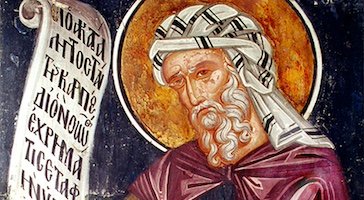
Saint John was born in the late 7th century, and is the most remarkable of the Greek writers of the 8th century. His father was a civil authority who was Christian amid the Saracens of Damascus, whose caliph made him his minister. This enlightened man found in the public square one day, amid a group of sad Christian captives, a priest of Italian origin who had been condemned to slavery; he ransomed him and assigned him to his young son to be his tutor. Young John made extraordinary progress in grammar, dialectic, mathematics, music, poetry, astronomy, but above all in theology, the discipline imparting knowledge of God. John became famous for his encyclopedic knowledge and theological method, later a source of inspiration to Saint Thomas Aquinas.
When his father died, the caliph made of him his principal counselor, his Grand Vizier. Thus it was through Saint John Damascene that the advanced sciences made their apparition among the Arab Moslems, who had burnt the library of Alexandria in Egypt; it was not the Moslems who instructed the Christians, as was believed for some time in Europe. Saint John vigorously opposed the ferocious Iconoclast persecution instigated by the Emperor of Constantinople, Leo the Isaurian. He distinguished himself, with Saint Germain, Patriarch of Constantinople, in the defense of the veneration of sacred images.
The Emperor, irritated, himself conjured up a plot against him. A letter was forged, signed with Saint John's name, and addressed to himself, the Emperor of Constantinople, offering to deliver up the city of Damascus to him. That letter was then transmitted by the Emperor to the Caliph of Damascus, advising him as a good neighbor should do, that he had a traitor for minister. Although Saint John vigorously defended himself against the charge, he was condemned by the Caliph to have his right hand cut off. The severed hand, by order of the Caliph, was attached to a post in a public square. But Saint John obtained the hand afterwards, and invoked the Blessed Virgin in a prayer which has been preserved; he prayed to be able to continue to write the praises of Her Son and Herself. The next morning when he awoke, he found his hand joined again to the arm, leaving no trace of pain, but only a fine red line like a bracelet, marking the site of the miracle.
The Saint was reinstated afterwards to the favor of the local prince, but he believed that heaven had made it clear he was destined to serve the Church by his writings. He therefore distributed his property and retired soon thereafter to the monastery of Saint Sabas near Jerusalem, where he spent most of his remaining years in apologetic writings and prayer. Occasionally he left to console the Christians of Syria and Palestine and strengthen them, even going to Constantinople in the hope of obtaining martyrdom there. However, he was able to return to his monastery. There he died in peace at the age of 104, and was buried near the door of the monastery church, in the year 780.
Les Petits Bollandistes: Vies des Saints, by Msgr. Paul Guérin (Bloud et Barral: Paris, 1882), Vol. 5; The Catholic Encyclopedia, edited by C. G. Herbermann with numerous collaborators (Appleton Company: New York, 1908).
LAST-MODIFIED:20240323T193814Z SEQUENCE:45527208 X-ACCESS:1 X-HITS:53 X-COLOR:f0b80e X-SHOW-END-TIME:1 END:VEVENT BEGIN:VEVENT DTSTART;VALUE=DATE:20240328 DTEND;VALUE=DATE:20240329 UID:B3AABAA1-25DF-45FA-AEE6-C16F78846E4F SUMMARY:St. John CREATED:20221013T211126Z DTSTAMP:20221013T211126Z URL:https://www.stpaulsweymouth.org/component/dpcalendar/event/1375?calid=13 DESCRIPTION:St. John Capistran, Confessor\N\NSaint John was born at Capistrano, near Naples in Italy, in 1385. Having studied both secular and canon law, he became so skilled in it that his reputation spread over all of Italy. He was imprisoned during a war and abandoned by his protector for some time, during which his young wife died. He resolved while still in prison to serve in the future no other interests but those of God. His property was sold at his command, his ransom paid, and from his prison he entered a monastery near Peruse where the Rule of Saint Francis was observed in its purity.\NThe superiors, fearing this vocation to be a passing fancy, tested him severely, even sending him away twice; but he remained day and night at the door, suffering joyfully all trials. His heroic perseverance disarmed their fears and severity, and he was admitted to religious profession.\NFor seven years he practiced great austerities, cared for the sick in the hospitals, and preached on all sides the word of God. In this, say his biographers, he succeeded so admirably that few preachers in the course of all the centuries can be compared with him. He became a disciple of Saint Bernardine of Siena, assisting him in public conferences and discussions. Like many great servants of God he was calumniated, as though he had taught errors; he went to Rome to justify his teachings in the presence of the Pope and a group of cardinals, which he did admirably well, and they recognized the obvious innocence of the accused Saint.\NAfterwards he preached all over Italy, and everywhere brought about the reform of lives. Five Popes in succession gave commissions to this remarkable Franciscan to represent them in important affairs, and he traveled to France, Austria, Poland and Germany. Everywhere his negotiations were crowned with success. But none of the Popes succeeded in raising him to the episcopal dignity; their efforts met an absolute resistance in his humility.\NHis extraordinary qualities proved to be of great assistance to the Holy See in another circumstance. When Mohammed II was threatening Vienna and Rome, Saint John Capistran, at the bidding of Pope Callixtus III, enrolled for a crusade 70,000 Christians. In a vision he was assured of victory in the Name of Jesus and by the Cross he bore. Marching at the head of the crusaders, he entered Belgrade at the head of the army. This General of the Friars Minor won a remarkable victory in that year of 1455, when 40,000 of the enemies of the Christians perished, but virtually none among the latter. He himself died the following year at the age of 71. He is regarded as a martyr, for enemies of the faith twice succeeded in giving him poison, which was ineffectual; he died only from the immense fatigue he had suffered in the defense of the city of Belgrade. An infinity of miracles followed his death. He was canonized in 1690.\NLes Petits Bollandistes: Vies des Saints, by Msgr. Paul Guérin (Bloud et Barral: Paris, 1882), Vol. 11 X-ALT-DESC;FMTTYPE=text/html:St. John Capistran, Confessor
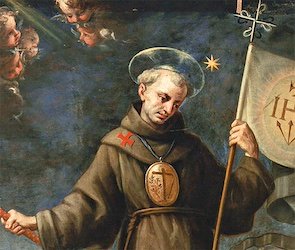
Saint John was born at Capistrano, near Naples in Italy, in 1385. Having studied both secular and canon law, he became so skilled in it that his reputation spread over all of Italy. He was imprisoned during a war and abandoned by his protector for some time, during which his young wife died. He resolved while still in prison to serve in the future no other interests but those of God. His property was sold at his command, his ransom paid, and from his prison he entered a monastery near Peruse where the Rule of Saint Francis was observed in its purity.
The superiors, fearing this vocation to be a passing fancy, tested him severely, even sending him away twice; but he remained day and night at the door, suffering joyfully all trials. His heroic perseverance disarmed their fears and severity, and he was admitted to religious profession.
For seven years he practiced great austerities, cared for the sick in the hospitals, and preached on all sides the word of God. In this, say his biographers, he succeeded so admirably that few preachers in the course of all the centuries can be compared with him. He became a disciple of Saint Bernardine of Siena, assisting him in public conferences and discussions. Like many great servants of God he was calumniated, as though he had taught errors; he went to Rome to justify his teachings in the presence of the Pope and a group of cardinals, which he did admirably well, and they recognized the obvious innocence of the accused Saint.
Afterwards he preached all over Italy, and everywhere brought about the reform of lives. Five Popes in succession gave commissions to this remarkable Franciscan to represent them in important affairs, and he traveled to France, Austria, Poland and Germany. Everywhere his negotiations were crowned with success. But none of the Popes succeeded in raising him to the episcopal dignity; their efforts met an absolute resistance in his humility.
His extraordinary qualities proved to be of great assistance to the Holy See in another circumstance. When Mohammed II was threatening Vienna and Rome, Saint John Capistran, at the bidding of Pope Callixtus III, enrolled for a crusade 70,000 Christians. In a vision he was assured of victory in the Name of Jesus and by the Cross he bore. Marching at the head of the crusaders, he entered Belgrade at the head of the army. This General of the Friars Minor won a remarkable victory in that year of 1455, when 40,000 of the enemies of the Christians perished, but virtually none among the latter. He himself died the following year at the age of 71. He is regarded as a martyr, for enemies of the faith twice succeeded in giving him poison, which was ineffectual; he died only from the immense fatigue he had suffered in the defense of the city of Belgrade. An infinity of miracles followed his death. He was canonized in 1690.
Les Petits Bollandistes: Vies des Saints, by Msgr. Paul Guérin (Bloud et Barral: Paris, 1882), Vol. 11
LAST-MODIFIED:20240323T194121Z SEQUENCE:45527395 X-ACCESS:1 X-HITS:31 X-COLOR:f0b80e X-SHOW-END-TIME:1 END:VEVENT BEGIN:VEVENT DTSTART;VALUE=DATE:20240328 DTEND;VALUE=DATE:20240329 UID:B5D693A4-46C2-43B7-83F7-29A1549A3B29 SUMMARY:St. Stephen CREATED:20221013T211126Z DTSTAMP:20221013T211126Z URL:https://www.stpaulsweymouth.org/component/dpcalendar/event/1377?calid=13 DESCRIPTION:\N \NThe third Abbot of Cîteaux, was born at Sherborne in Dorsetshire, England, about the middle of the eleventh century; died 28 March, 1134. He received his early education in the monastery of Sherborne and afterwards studied in Paris and Rome. On returning from the latter city he stopped at the monastery of Molesme and, being much impressed by the holiness of St. Robert, the abbot, joined that community. Here he practised great austerities, became one of St. Robert's chief supporters and was one of the band of twenty-one monks who, by authority of Hugh, Archbishop of Lyons, retired to Cïteaux to institute a reform in the new foundation there. When St. Robert was recalled to Molesme (1099), Stephen became prior of Cïteaux under Alberic, the new abbot. On Alberic's death (1110) Stephen, who was absent from the monastery at the time, was elected abbot. The number of monks was now very reduced, as no new members had come to fill the places of those who had died. Stephen, however, insisted on retaining the strict observance originally instituted and, having offended the Duke of Burgundy, Cïteaux's great patron, by forbidding him or his family to enter the cloister, was even forced to beg alms from door to door. It seemed as if the foundation were doomed to die out when (1112) St. Bernard with thirty companions joined the community. This proved the beginning of extraordinary prosperity. The next year Stephen founded his first colony at La Ferté, and before is death he had established thirteen monasteries in all. His powers as an organizer were exceptional, he instituted the system of general chapters and regular visitations and, to ensure uniformity in all his foundations, drew up the famous "Charter of Charity" or collection of statutes for the government of all monasteries united to Cïteaux, which was approved by Pope Callistus II in 1119 (see CISTERCIANS). In 1133 Stephen, being now old, infirm, and almost blind, resigned the post of abbot, designating as his successor Robert de Monte, who was accordingly elected by the monks. The saint's choice, however, proved unfortunate and the new abbot only held office for two years. X-ALT-DESC;FMTTYPE=text/html: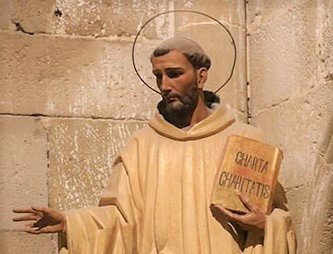
The third Abbot of Cîteaux, was born at Sherborne in Dorsetshire, England, about the middle of the eleventh century; died 28 March, 1134. He received his early education in the monastery of Sherborne and afterwards studied in Paris and Rome. On returning from the latter city he stopped at the monastery of Molesme and, being much impressed by the holiness of St. Robert, the abbot, joined that community. Here he practised great austerities, became one of St. Robert's chief supporters and was one of the band of twenty-one monks who, by authority of Hugh, Archbishop of Lyons, retired to Cïteaux to institute a reform in the new foundation there. When St. Robert was recalled to Molesme (1099), Stephen became prior of Cïteaux under Alberic, the new abbot. On Alberic's death (1110) Stephen, who was absent from the monastery at the time, was elected abbot. The number of monks was now very reduced, as no new members had come to fill the places of those who had died. Stephen, however, insisted on retaining the strict observance originally instituted and, having offended the Duke of Burgundy, Cïteaux's great patron, by forbidding him or his family to enter the cloister, was even forced to beg alms from door to door. It seemed as if the foundation were doomed to die out when (1112) St. Bernard with thirty companions joined the community. This proved the beginning of extraordinary prosperity. The next year Stephen founded his first colony at La Ferté, and before is death he had established thirteen monasteries in all. His powers as an organizer were exceptional, he instituted the system of general chapters and regular visitations and, to ensure uniformity in all his foundations, drew up the famous "Charter of Charity" or collection of statutes for the government of all monasteries united to Cïteaux, which was approved by Pope Callistus II in 1119 (see CISTERCIANS). In 1133 Stephen, being now old, infirm, and almost blind, resigned the post of abbot, designating as his successor Robert de Monte, who was accordingly elected by the monks. The saint's choice, however, proved unfortunate and the new abbot only held office for two years.
LAST-MODIFIED:20240323T194539Z SEQUENCE:45527653 X-ACCESS:1 X-HITS:13 X-COLOR:f0b80e X-SHOW-END-TIME:1 END:VEVENT BEGIN:VEVENT DTSTART;VALUE=DATE:20240402 DTEND;VALUE=DATE:20240403 UID:6CF5AFA8-7381-47AA-9092-553CC46D184E SUMMARY:St. Francis CREATED:20221013T211126Z DTSTAMP:20221013T211126Z URL:https://www.stpaulsweymouth.org/component/dpcalendar/event/1435?calid=13 DESCRIPTION:St. Francis of Paula, Confessor\N\NAt the age of fifteen, Saint Francis left his poor home at Paula in Calabria, Italy, to live as a hermit in a cave on the seacoast. In time disciples gathered around him, and with them, in 1436, he founded the Order of the Minims. He chose this name that they might always consider themselves the least of monastic Orders. They observed a perpetual Lent, never touching meat, fish, eggs, or milk. Francis himself made the rock his bed; his best garment was a hair shirt, and boiled herbs were his only fare. His first consideration in all things was Caritas, charity.\NSaint Francis was a thaumaturge, which denomination indicates a miracle-worker known for his virtually unceasing wonders. The Church recognizes that God, as a rule, does not raise up more than one every century. He cured the sick, raised the dead, averted plagues, expelled evil spirits, and brought sinners to penance. But opposition arose; a famous preacher, misled by a few misguided monks, set to work to preach against Saint Francis and his miracles. The Saint took no notice of it, and the preacher, finding that he made no way with his hearers, determined to go to see this poor hermit whom he did not know, and confound him in person. The Saint received him kindly, gave him a seat by the fire, and listened to a long exposition of his own frauds. He then quietly took some glowing embers from the fire, and closing his hands upon them unhurt, said, Come, Father Anthony, warm yourself, for you are shivering for want of a little charity. Father Anthony, falling at the Saint's feet, asked for pardon, and then, having received his embrace, left him, to become his panegyrist and himself attain great perfection.\NWhen the avaricious King Ferdinand of Naples offered him a gift of money for his convent, Francis told him to give it back to his oppressed subjects, and softened his heart by causing blood to flow from the ill-gotten coin.\NKing Louis XI of France, trembling at the approach of death, sent for the poor hermit to come and ward off the foe whose advance neither his fortresses nor his guards could check. Francis went at the Pope's command, leaving his country and his foundations there, which he foretold he would not see again; and he prepared the king for a pious death. He set the court to marveling when a delicately seasoned fish, which the king had ordered prepared for his guest's dinner, swam away after Saint Francis cast it into the pool from which it had been taken. And the successors of King Louis showered favors on their remarkable guest, desiring him to remain in France. It was God's will that retained him there.\NHis Rule for the Order of Minims was adopted also by women religious, and spread throughout Europe; a less rigorous Rule was adapted for the Third Order Secular for those who desired a life of penance in their state. His name was reverenced everywhere in the Christian world; his prophecies were, during his lifetime, and are still today, held in great veneration. He died at the age of ninety-one, on Good Friday, 1507, with the crucifix in his hand and the last words of Jesus on his lips: Into Thy hands, O Lord, I commend my spirit.\NReflection. Rely in all difficulties upon God. The faith and love which enabled Saint Francis to work miracles will do wonders for yourself, by giving you strength and consolation in proportion to your confidence and your efforts.\NLittle Pictorial Lives of the Saints, a compilation based on Butler's Lives of the Saints and other sources by John Gilmary Shea (Benziger Brothers: New York, 1894). X-ALT-DESC;FMTTYPE=text/html:St. Francis of Paula, Confessor
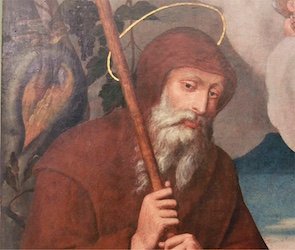
At the age of fifteen, Saint Francis left his poor home at Paula in Calabria, Italy, to live as a hermit in a cave on the seacoast. In time disciples gathered around him, and with them, in 1436, he founded the Order of the Minims. He chose this name that they might always consider themselves the least of monastic Orders. They observed a perpetual Lent, never touching meat, fish, eggs, or milk. Francis himself made the rock his bed; his best garment was a hair shirt, and boiled herbs were his only fare. His first consideration in all things was Caritas, charity.
Saint Francis was a thaumaturge, which denomination indicates a miracle-worker known for his virtually unceasing wonders. The Church recognizes that God, as a rule, does not raise up more than one every century. He cured the sick, raised the dead, averted plagues, expelled evil spirits, and brought sinners to penance. But opposition arose; a famous preacher, misled by a few misguided monks, set to work to preach against Saint Francis and his miracles. The Saint took no notice of it, and the preacher, finding that he made no way with his hearers, determined to go to see this poor hermit whom he did not know, and confound him in person. The Saint received him kindly, gave him a seat by the fire, and listened to a long exposition of his own frauds. He then quietly took some glowing embers from the fire, and closing his hands upon them unhurt, said, Come, Father Anthony, warm yourself, for you are shivering for want of a little charity. Father Anthony, falling at the Saint's feet, asked for pardon, and then, having received his embrace, left him, to become his panegyrist and himself attain great perfection.
When the avaricious King Ferdinand of Naples offered him a gift of money for his convent, Francis told him to give it back to his oppressed subjects, and softened his heart by causing blood to flow from the ill-gotten coin.
King Louis XI of France, trembling at the approach of death, sent for the poor hermit to come and ward off the foe whose advance neither his fortresses nor his guards could check. Francis went at the Pope's command, leaving his country and his foundations there, which he foretold he would not see again; and he prepared the king for a pious death. He set the court to marveling when a delicately seasoned fish, which the king had ordered prepared for his guest's dinner, swam away after Saint Francis cast it into the pool from which it had been taken. And the successors of King Louis showered favors on their remarkable guest, desiring him to remain in France. It was God's will that retained him there.
His Rule for the Order of Minims was adopted also by women religious, and spread throughout Europe; a less rigorous Rule was adapted for the Third Order Secular for those who desired a life of penance in their state. His name was reverenced everywhere in the Christian world; his prophecies were, during his lifetime, and are still today, held in great veneration. He died at the age of ninety-one, on Good Friday, 1507, with the crucifix in his hand and the last words of Jesus on his lips: Into Thy hands, O Lord, I commend my spirit.
Reflection. Rely in all difficulties upon God. The faith and love which enabled Saint Francis to work miracles will do wonders for yourself, by giving you strength and consolation in proportion to your confidence and your efforts.
Little Pictorial Lives of the Saints, a compilation based on Butler's Lives of the Saints and other sources by John Gilmary Shea (Benziger Brothers: New York, 1894).
LAST-MODIFIED:20240406T160604Z SEQUENCE:46724078 X-ACCESS:1 X-HITS:22 X-COLOR:f0b80e X-SHOW-END-TIME:1 END:VEVENT BEGIN:VEVENT DTSTART;VALUE=DATE:20240404 DTEND;VALUE=DATE:20240405 UID:DE109E16-90B2-484C-92EF-D075803A800E SUMMARY:St. Isidor CREATED:20221013T211126Z DTSTAMP:20221013T211126Z URL:https://www.stpaulsweymouth.org/component/dpcalendar/event/1437?calid=13 DESCRIPTION:St. Isidor Bishop, Confessor, and Doctor of the Church\N\NSaint Isidore was born of a ducal family, at Carthagena in Spain. His two brothers, Leander, Archbishop of Seville, Fulgentius, Bishop of Ecija, and his sister Florentina, are all recognized by the Church as Saints. As a boy Isidore despaired over his poor success in study, and ran away from school. Resting in his flight at a roadside spring, he observed a stone, which had been hollowed out by the slow but constant dripping of water. This lesson decided him to return, and then, by determined application, he succeeded.\NHe went back to his master and with the help of God became, even as a youth, one of the most learned men of the time. He assisted in converting Prince Recared, the leader of the Arian party; and with his aid, though at the constant peril of his own life, expelled that heresy from Spain. Then, following a call from God, he turned a deaf ear to the entreaties of his friends, and embraced a hermit's life. Prince Recared and many of the nobles and clergy of Seville went to persuade him to come back, representing the needs of the times and the good he could do, and had already done, among the people. He refused, and, as far as we can judge, his retreat gave him the necessary opportunity of acquiring the virtue and power which afterwards made him an illustrious Bishop and Doctor of the Church.\NOn the death of his brother Leander, he was called to fill the vacant see. As a teacher, ruler, founder, and reformer, he labored not only in his own diocese, but throughout Spain, and his influence attained foreign countries. He died in Seville on April 4, 639, and within sixteen years of his death was declared a Doctor of the Catholic Church.\NReflection. The strength of temptation usually lies in the fact that its object is something flattering to our pride, soothing to our sloth, or in some way attractive to the baser passions. Saint Isidore teaches us to listen neither to the promptings of nature nor the plausible advice of friends, when they contradict the voice of God.\NLittle Pictorial Lives of the Saints, a compilation based on Butler's Lives of the Saints and other sources by John Gilmary Shea (Benziger Brothers: New York, 1894). X-ALT-DESC;FMTTYPE=text/html:St. Isidor Bishop, Confessor, and Doctor of the Church
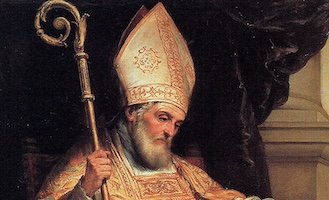
Saint Isidore was born of a ducal family, at Carthagena in Spain. His two brothers, Leander, Archbishop of Seville, Fulgentius, Bishop of Ecija, and his sister Florentina, are all recognized by the Church as Saints. As a boy Isidore despaired over his poor success in study, and ran away from school. Resting in his flight at a roadside spring, he observed a stone, which had been hollowed out by the slow but constant dripping of water. This lesson decided him to return, and then, by determined application, he succeeded.
He went back to his master and with the help of God became, even as a youth, one of the most learned men of the time. He assisted in converting Prince Recared, the leader of the Arian party; and with his aid, though at the constant peril of his own life, expelled that heresy from Spain. Then, following a call from God, he turned a deaf ear to the entreaties of his friends, and embraced a hermit's life. Prince Recared and many of the nobles and clergy of Seville went to persuade him to come back, representing the needs of the times and the good he could do, and had already done, among the people. He refused, and, as far as we can judge, his retreat gave him the necessary opportunity of acquiring the virtue and power which afterwards made him an illustrious Bishop and Doctor of the Church.
On the death of his brother Leander, he was called to fill the vacant see. As a teacher, ruler, founder, and reformer, he labored not only in his own diocese, but throughout Spain, and his influence attained foreign countries. He died in Seville on April 4, 639, and within sixteen years of his death was declared a Doctor of the Catholic Church.
Reflection. The strength of temptation usually lies in the fact that its object is something flattering to our pride, soothing to our sloth, or in some way attractive to the baser passions. Saint Isidore teaches us to listen neither to the promptings of nature nor the plausible advice of friends, when they contradict the voice of God.
Little Pictorial Lives of the Saints, a compilation based on Butler's Lives of the Saints and other sources by John Gilmary Shea (Benziger Brothers: New York, 1894).
LAST-MODIFIED:20240406T160858Z SEQUENCE:46724252 X-ACCESS:1 X-HITS:131 X-COLOR:f0b80e X-SHOW-END-TIME:1 END:VEVENT BEGIN:VEVENT DTSTART;VALUE=DATE:20240405 DTEND;VALUE=DATE:20240406 UID:944828B9-1226-4CF5-97BE-D872F35A86E8 SUMMARY:St. Vincent CREATED:20221013T211126Z DTSTAMP:20221013T211126Z URL:https://www.stpaulsweymouth.org/component/dpcalendar/event/1439?calid=13 DESCRIPTION:St. Vincent Ferrer, Confessor\N\NThis wonderful apostle, the Angel of the Judgment, was born at Valencia in Spain in 1357. At the age of eighteen, he was professed in the Order of Saint Dominic. After a brilliant course of study he became Master of Sacred Theology, and began to preach. For three years he read only the Sacred Scriptures, and came to know the entire Bible by heart. He brought the light of Christ to the Jews of Valencia, and their synagogue became a church.\NGrief at the great schism then afflicting the Church reduced him to the point of death at the age of forty, but Our Lord Himself whom he saw in glory, healed him and bade him go forth to convert sinners, for My judgment is near. In the language of Scripture, a judgment is a time of trial during which the good become better by prayer and abandonment to God's Providence, and the impious blaspheme. The judgment which was to fall upon Europe, the rending of the robe of Christ through the still greater fragmentation of the Church, would follow soon after Saint Vincent's time; his passage preserved large numbers of souls from its fatal dangers.\NThis virtually miraculous apostolate lasted twenty-one years. He preached throughout western Europe, in the towns and villages of Spain, Switzerland, France, Italy, England, Ireland, Scotland. Everywhere tens of thousands of sinners were reformed. Infidels, heretics, Jews were enlightened and warmed by the Sun of Justice. Stupendous miracles enforced his words. Twice each day the miracle bell summoned the sick, the blind, the lame to be cured, and the most obdurate sinners became Saints. Speaking only his native Spanish, he was understood in all tongues. Processions of ten thousand penitents followed him in perfect order. Convents, orphanages, hospitals, arose where he passed.\NAmid all the honors which came to him, his humility remained profound, his prayer constant. He always made prayer his principal preparation for preaching. Once, however, when a person of high rank was to be present at his sermon, he neglected prayer for study. The nobleman was not particularly struck by the discourse which had been thus carefully laid out. But he came again to hear the Saint, and the second sermon, for which Saint Vincent's supplications before the Crucifix were the preparation, made a deep impression on his soul. When Saint Vincent heard of his reaction, he remarked that in the first sermon it was Vincent who had preached, but in the second, Jesus Christ.\NSaint Vincent fell ill at Vannes in Brittany, and received the crown of everlasting glory in 1419.\NReflection. Whatever you do, said Saint Vincent, think not of yourself, but of God. In this spirit he preached, and God spoke by him; in this spirit, if we listen, we shall hear the voice of God.\NLittle Pictorial Lives of the Saints, a compilation based on Butler's Lives of the Saints and other sources by John Gilmary Shea (Benziger Brothers: New York, 1894). X-ALT-DESC;FMTTYPE=text/html:St. Vincent Ferrer, Confessor
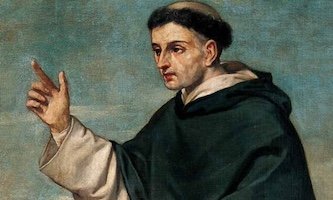
This wonderful apostle, the Angel of the Judgment, was born at Valencia in Spain in 1357. At the age of eighteen, he was professed in the Order of Saint Dominic. After a brilliant course of study he became Master of Sacred Theology, and began to preach. For three years he read only the Sacred Scriptures, and came to know the entire Bible by heart. He brought the light of Christ to the Jews of Valencia, and their synagogue became a church.
Grief at the great schism then afflicting the Church reduced him to the point of death at the age of forty, but Our Lord Himself whom he saw in glory, healed him and bade him go forth to convert sinners, for My judgment is near. In the language of Scripture, a judgment is a time of trial during which the good become better by prayer and abandonment to God's Providence, and the impious blaspheme. The judgment which was to fall upon Europe, the rending of the robe of Christ through the still greater fragmentation of the Church, would follow soon after Saint Vincent's time; his passage preserved large numbers of souls from its fatal dangers.
This virtually miraculous apostolate lasted twenty-one years. He preached throughout western Europe, in the towns and villages of Spain, Switzerland, France, Italy, England, Ireland, Scotland. Everywhere tens of thousands of sinners were reformed. Infidels, heretics, Jews were enlightened and warmed by the Sun of Justice. Stupendous miracles enforced his words. Twice each day the miracle bell summoned the sick, the blind, the lame to be cured, and the most obdurate sinners became Saints. Speaking only his native Spanish, he was understood in all tongues. Processions of ten thousand penitents followed him in perfect order. Convents, orphanages, hospitals, arose where he passed.
Amid all the honors which came to him, his humility remained profound, his prayer constant. He always made prayer his principal preparation for preaching. Once, however, when a person of high rank was to be present at his sermon, he neglected prayer for study. The nobleman was not particularly struck by the discourse which had been thus carefully laid out. But he came again to hear the Saint, and the second sermon, for which Saint Vincent's supplications before the Crucifix were the preparation, made a deep impression on his soul. When Saint Vincent heard of his reaction, he remarked that in the first sermon it was Vincent who had preached, but in the second, Jesus Christ.
Saint Vincent fell ill at Vannes in Brittany, and received the crown of everlasting glory in 1419.
Reflection. Whatever you do, said Saint Vincent, think not of yourself, but of God. In this spirit he preached, and God spoke by him; in this spirit, if we listen, we shall hear the voice of God.
Little Pictorial Lives of the Saints, a compilation based on Butler's Lives of the Saints and other sources by John Gilmary Shea (Benziger Brothers: New York, 1894).
LAST-MODIFIED:20240406T161154Z SEQUENCE:46724428 X-ACCESS:1 X-HITS:4 X-COLOR:f0b80e X-SHOW-END-TIME:1 END:VEVENT BEGIN:VEVENT DTSTART;VALUE=DATE:20240408 DTEND;VALUE=DATE:20240409 UID:B4830570-2BBE-4AC0-938D-FA671E7AE098 SUMMARY:Annunciation CREATED:20221013T211126Z DTSTAMP:20221013T211126Z URL:https://www.stpaulsweymouth.org/component/dpcalendar/event/1372?calid=13 DESCRIPTION:Annunciation of the Blessed Virgin Mary\N\NThis great festival takes its name from the happy tidings brought by the Archangel Gabriel to the Blessed Virgin, announcing the Incarnation of the Son of God. It commemorates the most important embassy that was ever known, an embassy sent by the King of kings, and performed by one of the chief princes of His heavenly court, and directed, not to the great ones of this earth, but to a poor, unknown virgin who, being endowed with angelic purity of soul and body, and perfect humility and submission to God, was greater in His eyes than the mightiest monarch in the world.\NWhen the Son of God became man, He could have taken our nature without the cooperation of any creature; but He was pleased to be born of a woman, the One announced in the third chapter of Genesis. In choosing Her whom He raised to this most sublime of all dignities, He was turning to the one maiden who, by the riches of His grace and virtues, was of all others the most holy and the most perfect. The purpose of this embassy of the Archangel was to give a Saviour to the world, a victim of propitiation to the sinner, a model to the just, a son to this Virgin who would remain a virgin, and a new nature to the Son of God — the nature of man, capable of suffering pain and anguish in order to satisfy God's justice for our transgressions.\NWhen the Angel appeared to Mary and addressed Her, the Blessed Virgin was troubled; not at his coming, says Saint Ambrose, for heavenly visions and conversation with the blessed spirits had been familiar to Her, but what alarmed Her, he says, was the Angel's appearing in human form, in the shape of a young man. What added to her alarm on this occasion was his words of praise. Mary, guarded by her modesty, was in confusion before expressions of this sort, and dreaded even the shadow of deluding flattery. Such high commendations made her cautious, until in silence She had more fully considered the matter: She deliberated in her mind, says Saint Luke, what manner of salutation this could be.\NThe Angel, to calm her, said: Fear not, Mary, for Thou hast found favor before God. He then informed Her that She was to conceive a Son whose name would be Jesus, who would be great and the Son of the Most High, and possessed of the throne of David, Her illustrious ancestor. Mary, out of a just concern to know how she may comply with the will of God without prejudice to Her vow of virginity, inquired, How shall this be? Nor did She give Her consent until the heavenly messenger informed Her that it was to be a work of the Holy Spirit, who, in making Her fruitful, would not alter in the slightest Her virginal purity. In submission to God's will, without any further inquiries, She expressed Her assent in these humble but powerful words: Behold the handmaid of the Lord; be it done unto Me according to thy word. What faith and confidence Her answer expressed! What profound humility and perfect obedience!\NReflection. Humility is the foundation of a spiritual life. By it Mary was prepared for the extraordinary graces and virtues which would ever enrich Her, and for the eminent dignity of Mother of God.\NLittle Pictorial Lives of the Saints, a compilation based on Butler's Lives of the Saints and other sources by John Gilmary Shea (Benziger Brothers: New York, 1894). X-ALT-DESC;FMTTYPE=text/html:Annunciation of the Blessed Virgin Mary
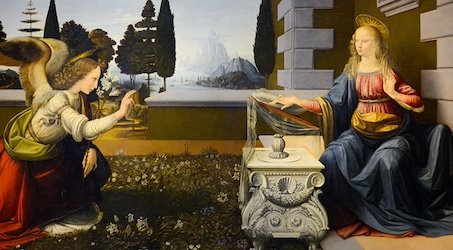
This great festival takes its name from the happy tidings brought by the Archangel Gabriel to the Blessed Virgin, announcing the Incarnation of the Son of God. It commemorates the most important embassy that was ever known, an embassy sent by the King of kings, and performed by one of the chief princes of His heavenly court, and directed, not to the great ones of this earth, but to a poor, unknown virgin who, being endowed with angelic purity of soul and body, and perfect humility and submission to God, was greater in His eyes than the mightiest monarch in the world.
When the Son of God became man, He could have taken our nature without the cooperation of any creature; but He was pleased to be born of a woman, the One announced in the third chapter of Genesis. In choosing Her whom He raised to this most sublime of all dignities, He was turning to the one maiden who, by the riches of His grace and virtues, was of all others the most holy and the most perfect. The purpose of this embassy of the Archangel was to give a Saviour to the world, a victim of propitiation to the sinner, a model to the just, a son to this Virgin who would remain a virgin, and a new nature to the Son of God — the nature of man, capable of suffering pain and anguish in order to satisfy God's justice for our transgressions.
When the Angel appeared to Mary and addressed Her, the Blessed Virgin was troubled; not at his coming, says Saint Ambrose, for heavenly visions and conversation with the blessed spirits had been familiar to Her, but what alarmed Her, he says, was the Angel's appearing in human form, in the shape of a young man. What added to her alarm on this occasion was his words of praise. Mary, guarded by her modesty, was in confusion before expressions of this sort, and dreaded even the shadow of deluding flattery. Such high commendations made her cautious, until in silence She had more fully considered the matter: She deliberated in her mind, says Saint Luke, what manner of salutation this could be.
The Angel, to calm her, said: Fear not, Mary, for Thou hast found favor before God. He then informed Her that She was to conceive a Son whose name would be Jesus, who would be great and the Son of the Most High, and possessed of the throne of David, Her illustrious ancestor. Mary, out of a just concern to know how she may comply with the will of God without prejudice to Her vow of virginity, inquired, How shall this be? Nor did She give Her consent until the heavenly messenger informed Her that it was to be a work of the Holy Spirit, who, in making Her fruitful, would not alter in the slightest Her virginal purity. In submission to God's will, without any further inquiries, She expressed Her assent in these humble but powerful words: Behold the handmaid of the Lord; be it done unto Me according to thy word. What faith and confidence Her answer expressed! What profound humility and perfect obedience!
Reflection. Humility is the foundation of a spiritual life. By it Mary was prepared for the extraordinary graces and virtues which would ever enrich Her, and for the eminent dignity of Mother of God.
Little Pictorial Lives of the Saints, a compilation based on Butler's Lives of the Saints and other sources by John Gilmary Shea (Benziger Brothers: New York, 1894).
LAST-MODIFIED:20240323T193542Z SEQUENCE:45527056 X-ACCESS:1 X-HITS:28 X-COLOR:f0b80e X-SHOW-END-TIME:1 END:VEVENT BEGIN:VEVENT DTSTART;VALUE=DATE:20240411 DTEND;VALUE=DATE:20240412 UID:A4C1B69D-1599-4CB4-B8F3-02F2474881A5 SUMMARY:St. Leo CREATED:20221013T211126Z DTSTAMP:20221013T211126Z URL:https://www.stpaulsweymouth.org/component/dpcalendar/event/1441?calid=13 DESCRIPTION:St. Leo I Pope, Confessor, and Doctor of the Church\N\NSaint Leo was born in Rome. He embraced the sacred ministry, was made Archdeacon of the Roman Church by Pope Saint Celestine, and under the same Vicar of Christ and Saint Sixtus III, had a large share in governing the Church. On the death of Sixtus, Leo was chosen Pope, and consecrated on Saint Michael's day, 440, amid great joy.\NIt was the time of terrible trial which preceded by thirty years the definitive fall of the Roman Empire. Vandals and Huns were wasting the provinces of the empire, and Nestorians, Pelagians, and other heretics wrought still more grievous havoc in souls. While Leo's zeal was making headway against these perils, there arose the new heresy of Eutyches, who confounded the two natures of Christ. At once the vigilant pastor proclaimed the true doctrine of the Incarnation in his famous tome; but fostered by the Byzantine court, the heresy gained a strong hold upon the Eastern monks and bishops. After three years of unceasing toil, Saint Leo brought about its solemn condemnation by the Council of Chalcedon, the Fathers all signing his tome, and exclaiming, Peter has spoken by Leo.\NSoon after, Attila with his Huns broke into Italy, and marched through its razed cities upon Rome. Leo went out boldly to meet him, and prevailed on him to turn back. His chieftains were astonished to see the terrible Attila, the Scourge of God, fresh from the sack of Aquileia, Milan and Pavia and with the rich prize of Rome within his grasp, turn his great host back to the Danube at the Saint's word. They asked him why he had acted so strangely. He told them he had seen two venerable personages — who are generally supposed to be Saints Peter and Paul — standing behind Saint Leo; and impressed by this vision, he withdrew. Two years later the city fell a prey to the Vandals, but Leo saved it again from total destruction. He died in 461 after having ruled the Church for a little over twenty years.\NReflection. Saint Leo loved to ascribe all the fruits of his unsparing labors to the glorious Head of the Apostles, who, he often declared, lives and governs in his successors. If the perils of the Church are as great now as in Saint Leo's day, Saint Peter's solicitude is not less.\NLittle Pictorial Lives of the Saints, a compilation based on Butler's Lives of the Saints and other sources by John Gilmary Shea (Benziger Brothers: New York, 1894). X-ALT-DESC;FMTTYPE=text/html:St. Leo I Pope, Confessor, and Doctor of the Church
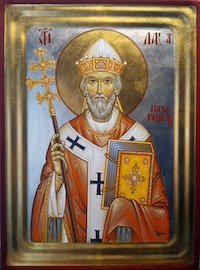
Saint Leo was born in Rome. He embraced the sacred ministry, was made Archdeacon of the Roman Church by Pope Saint Celestine, and under the same Vicar of Christ and Saint Sixtus III, had a large share in governing the Church. On the death of Sixtus, Leo was chosen Pope, and consecrated on Saint Michael's day, 440, amid great joy.
It was the time of terrible trial which preceded by thirty years the definitive fall of the Roman Empire. Vandals and Huns were wasting the provinces of the empire, and Nestorians, Pelagians, and other heretics wrought still more grievous havoc in souls. While Leo's zeal was making headway against these perils, there arose the new heresy of Eutyches, who confounded the two natures of Christ. At once the vigilant pastor proclaimed the true doctrine of the Incarnation in his famous tome; but fostered by the Byzantine court, the heresy gained a strong hold upon the Eastern monks and bishops. After three years of unceasing toil, Saint Leo brought about its solemn condemnation by the Council of Chalcedon, the Fathers all signing his tome, and exclaiming, Peter has spoken by Leo.
Soon after, Attila with his Huns broke into Italy, and marched through its razed cities upon Rome. Leo went out boldly to meet him, and prevailed on him to turn back. His chieftains were astonished to see the terrible Attila, the Scourge of God, fresh from the sack of Aquileia, Milan and Pavia and with the rich prize of Rome within his grasp, turn his great host back to the Danube at the Saint's word. They asked him why he had acted so strangely. He told them he had seen two venerable personages — who are generally supposed to be Saints Peter and Paul — standing behind Saint Leo; and impressed by this vision, he withdrew. Two years later the city fell a prey to the Vandals, but Leo saved it again from total destruction. He died in 461 after having ruled the Church for a little over twenty years.
Reflection. Saint Leo loved to ascribe all the fruits of his unsparing labors to the glorious Head of the Apostles, who, he often declared, lives and governs in his successors. If the perils of the Church are as great now as in Saint Leo's day, Saint Peter's solicitude is not less.
Little Pictorial Lives of the Saints, a compilation based on Butler's Lives of the Saints and other sources by John Gilmary Shea (Benziger Brothers: New York, 1894).
LAST-MODIFIED:20240406T161503Z SEQUENCE:46724617 X-ACCESS:1 X-HITS:35 X-COLOR:f0b80e X-SHOW-END-TIME:1 END:VEVENT BEGIN:VEVENT DTSTART;VALUE=DATE:20240413 DTEND;VALUE=DATE:20240414 UID:44B3A03C-25D6-4B5D-AB7D-D4C7DC606787 SUMMARY:St. Hermenegild CREATED:20221013T211126Z DTSTAMP:20221013T211126Z URL:https://www.stpaulsweymouth.org/component/dpcalendar/event/1443?calid=13 DESCRIPTION:St. Hermenegild Martyr\N\NLeovigild, Arian King of the Visigoths, had two sons, Hermenegild and Recared, who were reigning conjointly with him. All were Arians, but Hermenegild married a zealous Catholic, the daughter of Sigebert, King of France, and by her holy example was converted to the faith. His father, on hearing the news, denounced him as a traitor, and marched to seize his person. Hermenegild tried to rally the Catholics of Spain in his defense, but they were too weak to make any stand; and after a two years' fruitless struggle, Hermenegild surrendered on the assurance of a free pardon. Once he was safely in the royal camp, the king had him loaded with fetters and cast into a foul dungeon at Seville.\NTortures and bribes were in turn employed to shake his faith, but Hermenegild wrote to his father that he regarded the crown as nothing, and preferred to lose scepter and life rather than betray the truth of God. At length, on Easter night, an Arian bishop entered his cell, and promised him his father's pardon if he would receive Communion from his hands. Hermenegild indignantly rejected the offer, and knelt with joy for his death-stroke, praying for his persecutors. The same night a light streaming from his cell told the Christians keeping vigil nearby that the martyr had won his crown and was celebrating the Resurrection of the Lord with the Saints in glory.\NKing Leovigild, on his death-bed, was changed interiorly. He had been witness to the miracles that had occurred after his son's cruel death, and he told his son and successor Recared to seek out Saint Leander, whom he himself had persecuted. Recared should follow Hermenegild's example, said the king, and be received by the bishop into the Church. Recared did so; and although his father himself had not had the courage to renounce the false faith publicly, after his father's death the new king labored so earnestly for the extirpation of Arianism that he brought over the whole nation of the Visigoths to the Church. Nor is it to be wondered, says Saint Gregory, that he came thus to be a preacher of the true faith, since he was the brother of a martyr, whose merits helped him to bring so many into the haven of God's Church.\NReflection. The victory of Saint Hermenegild teaches us that constancy and sacrifice are the best arguments for the faith, and the surest way to win souls to God.\NLittle Pictorial Lives of the Saints, a compilation based on Butler's Lives of the Saints and other sources by John Gilmary Shea (Benziger Brothers: New York, 1894). X-ALT-DESC;FMTTYPE=text/html:St. Hermenegild Martyr
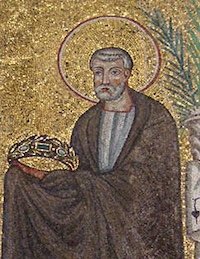
Leovigild, Arian King of the Visigoths, had two sons, Hermenegild and Recared, who were reigning conjointly with him. All were Arians, but Hermenegild married a zealous Catholic, the daughter of Sigebert, King of France, and by her holy example was converted to the faith. His father, on hearing the news, denounced him as a traitor, and marched to seize his person. Hermenegild tried to rally the Catholics of Spain in his defense, but they were too weak to make any stand; and after a two years' fruitless struggle, Hermenegild surrendered on the assurance of a free pardon. Once he was safely in the royal camp, the king had him loaded with fetters and cast into a foul dungeon at Seville.
Tortures and bribes were in turn employed to shake his faith, but Hermenegild wrote to his father that he regarded the crown as nothing, and preferred to lose scepter and life rather than betray the truth of God. At length, on Easter night, an Arian bishop entered his cell, and promised him his father's pardon if he would receive Communion from his hands. Hermenegild indignantly rejected the offer, and knelt with joy for his death-stroke, praying for his persecutors. The same night a light streaming from his cell told the Christians keeping vigil nearby that the martyr had won his crown and was celebrating the Resurrection of the Lord with the Saints in glory.
King Leovigild, on his death-bed, was changed interiorly. He had been witness to the miracles that had occurred after his son's cruel death, and he told his son and successor Recared to seek out Saint Leander, whom he himself had persecuted. Recared should follow Hermenegild's example, said the king, and be received by the bishop into the Church. Recared did so; and although his father himself had not had the courage to renounce the false faith publicly, after his father's death the new king labored so earnestly for the extirpation of Arianism that he brought over the whole nation of the Visigoths to the Church. Nor is it to be wondered, says Saint Gregory, that he came thus to be a preacher of the true faith, since he was the brother of a martyr, whose merits helped him to bring so many into the haven of God's Church.
Reflection. The victory of Saint Hermenegild teaches us that constancy and sacrifice are the best arguments for the faith, and the surest way to win souls to God.
Little Pictorial Lives of the Saints, a compilation based on Butler's Lives of the Saints and other sources by John Gilmary Shea (Benziger Brothers: New York, 1894).
LAST-MODIFIED:20240406T161856Z SEQUENCE:46724850 X-ACCESS:1 X-HITS:118 X-COLOR:f0b80e X-SHOW-END-TIME:1 END:VEVENT BEGIN:VEVENT DTSTART;VALUE=DATE:20240414 DTEND;VALUE=DATE:20240415 UID:272601DF-1524-41D8-9D37-26AED640F75F SUMMARY:St. Justin CREATED:20221013T211126Z DTSTAMP:20221013T211126Z URL:https://www.stpaulsweymouth.org/component/dpcalendar/event/1445?calid=13 DESCRIPTION:St. Justin Martyr\N\NJustin never ended his quest for religious truth even when he converted to Christianity after years of studying various pagan philosophies.\NAs a young man, he was principally attracted to the school of Plato. However, he found that the Christian religion answered the great questions about life and existence better than the philosophers.\NUpon his conversion he continued to wear the philosopher’s mantle, and became the first Christian philosopher. He combined the Christian religion with the best elements in Greek philosophy. In his view, philosophy was a pedagogue of Christ, an educator that was to lead one to Christ.\NJustin is known as an apologist, one who defends in writing the Christian religion against the attacks and misunderstandings of the pagans. Two of his so-called apologies have come down to us; they are addressed to the Roman emperor and to the Senate.\NFor his staunch adherence to the Christian religion, Justin was beheaded in Rome in 165.\NReflection\NAs patron of philosophers, Justin may inspire us to use our natural powers—especially our power to know and understand—in the service of Christ, and to build up the Christian life within us. Since we are prone to error, especially in reference to the deep questions concerning life and existence, we should also be willing to correct and check our natural thinking in light of religious truth. Thus we will be able to say with the learned saints of the Church: I believe in order to understand, and I understand in order to believe.\NFrom: Franciscan Media X-ALT-DESC;FMTTYPE=text/html:St. Justin Martyr
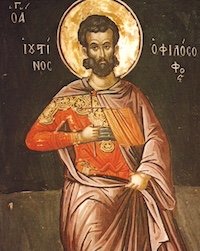
Justin never ended his quest for religious truth even when he converted to Christianity after years of studying various pagan philosophies.
As a young man, he was principally attracted to the school of Plato. However, he found that the Christian religion answered the great questions about life and existence better than the philosophers.
Upon his conversion he continued to wear the philosopher’s mantle, and became the first Christian philosopher. He combined the Christian religion with the best elements in Greek philosophy. In his view, philosophy was a pedagogue of Christ, an educator that was to lead one to Christ.
Justin is known as an apologist, one who defends in writing the Christian religion against the attacks and misunderstandings of the pagans. Two of his so-called apologies have come down to us; they are addressed to the Roman emperor and to the Senate.
For his staunch adherence to the Christian religion, Justin was beheaded in Rome in 165.
Reflection
As patron of philosophers, Justin may inspire us to use our natural powers—especially our power to know and understand—in the service of Christ, and to build up the Christian life within us. Since we are prone to error, especially in reference to the deep questions concerning life and existence, we should also be willing to correct and check our natural thinking in light of religious truth. Thus we will be able to say with the learned saints of the Church: I believe in order to understand, and I understand in order to believe.
From: Franciscan Media
LAST-MODIFIED:20240406T162333Z SEQUENCE:46725127 X-ACCESS:1 X-HITS:60 X-COLOR:f0b80e X-SHOW-END-TIME:1 END:VEVENT BEGIN:VEVENT DTSTART;VALUE=DATE:20240414 DTEND;VALUE=DATE:20240415 UID:7CAD2FAC-5A6F-4739-A341-2518D32DFD1E SUMMARY:SS. Tiburtius, Valerian, and Maximus CREATED:20221013T211126Z DTSTAMP:20221013T211126Z URL:https://www.stpaulsweymouth.org/component/dpcalendar/event/1447?calid=13 DESCRIPTION:SS. Tiburtius, Valerian, and Maximus, Martyrs\N\NTHESE holy martyrs have always been held in singular veneration in the church, as appears from the ancient calendar of Fronto, the sacramentary of St. Gregory, St. Jerome’s Martyrology, that of Thomasius. Valerian was espoused to St. Cecily, and converted by her to the faith; and with her he became the instrument of the conversion of his brother Tiburtius. Maximus, the officer appointed to attend their execution, was brought to the faith by the example of their piety, and received with them the crown of martyrdom, in the year 229. The theatre of their triumph seems to have been Rome, though some have imagined they suffered in Sicily. They were interred in the burying place of Prætextatus, which, from them, took the name of Tiburtius.\NThese martyrs were all connected with that mysterious and endearing figure of Saint Cecilia. She was a Roman noblewoman, young and much sought after for her beauty and graciousness. She also happened to be a Christian, in an age when Christians lived under the shadow of violent persecution. As a girl she had vowed her virginity to Christ, so deeply did she love him. But her parents, who were not Christians, it seems, insisted on arranging a marriage for her. Thus she was espoused to Valerian, one of the most promising and handsome of noble Roman youths (though not a Christian).\NOn their wedding night, Cecilia explained her vow to Valerian, and warned him that God had sent her an angel to protect her virginity. She told him about Jesus and encouraged him to become a believer, make his own vow of virginity to the Lord, and live with her in perfect continence. He wanted to see the angel (understandable). She told him he would if he were baptized. He agreed to be baptized, and afterwards he did indeed see the glorious angel, who gave each of them a crown signifying the victory their faith won them.\NThis holy couple became a source of other conversions. First among them was Valerian’s brother, Tiburtius. But soon their spreading fame exposed them to the merciless Roman law against Christianity. As Valerian and Tiburtius refused to worship the pagan gods (the supposed protectors of Rome´s earthly glory and wealth), they were executed. Their courage and composure in the face of death was so remarkable that it converted their guard, Maximus, who ended up joining them on the chopping block. Cecilia followed a few days later, incompetently executed in her house – severed incompletely at the neck so that she slowly bled to death over the course of forty-eight hours.\NINTROIT Psalm 63:3\NThou hast protected me from the assembly of the malignant, alleluia; from the multitude of the workers of iniquity, alleluia, alleluia. Ps. 63:2 Hear, O God, my prayer, when I make supplication to thee: deliver my soul from the fear of the enemy. V. Glory be to the Father, and to the Son, and to the Holy Ghost. R. As it was in the beginning, is now, and ever shall be, world without end. Amen. Thou hast protected me from the assembly of the malignant, alleluia; from the multitude of the workers of iniquity, alleluia, alleluia.\NCOLLECT\NAlmighty God, for Whom holy Tiburtius, Valerian, and Maximus uplifted their testimony, grant, we beseech Thee, unto all whosoever call the same to solemn memory, grace to imitate the example of their godly courage. Through Jesus Christ, thy Son our Lord, Who liveth and reigneth with thee, in the unity of the Holy Ghost, ever one God, world without end. R. Amen.\NFrom: The Brighton Oratory X-ALT-DESC;FMTTYPE=text/html:SS. Tiburtius, Valerian, and Maximus, Martyrs
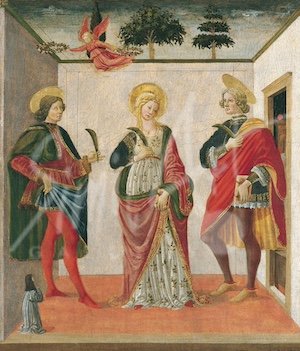
THESE holy martyrs have always been held in singular veneration in the church, as appears from the ancient calendar of Fronto, the sacramentary of St. Gregory, St. Jerome’s Martyrology, that of Thomasius. Valerian was espoused to St. Cecily, and converted by her to the faith; and with her he became the instrument of the conversion of his brother Tiburtius. Maximus, the officer appointed to attend their execution, was brought to the faith by the example of their piety, and received with them the crown of martyrdom, in the year 229. The theatre of their triumph seems to have been Rome, though some have imagined they suffered in Sicily. They were interred in the burying place of Prætextatus, which, from them, took the name of Tiburtius.
These martyrs were all connected with that mysterious and endearing figure of Saint Cecilia. She was a Roman noblewoman, young and much sought after for her beauty and graciousness. She also happened to be a Christian, in an age when Christians lived under the shadow of violent persecution. As a girl she had vowed her virginity to Christ, so deeply did she love him. But her parents, who were not Christians, it seems, insisted on arranging a marriage for her. Thus she was espoused to Valerian, one of the most promising and handsome of noble Roman youths (though not a Christian).
On their wedding night, Cecilia explained her vow to Valerian, and warned him that God had sent her an angel to protect her virginity. She told him about Jesus and encouraged him to become a believer, make his own vow of virginity to the Lord, and live with her in perfect continence. He wanted to see the angel (understandable). She told him he would if he were baptized. He agreed to be baptized, and afterwards he did indeed see the glorious angel, who gave each of them a crown signifying the victory their faith won them.
This holy couple became a source of other conversions. First among them was Valerian’s brother, Tiburtius. But soon their spreading fame exposed them to the merciless Roman law against Christianity. As Valerian and Tiburtius refused to worship the pagan gods (the supposed protectors of Rome´s earthly glory and wealth), they were executed. Their courage and composure in the face of death was so remarkable that it converted their guard, Maximus, who ended up joining them on the chopping block. Cecilia followed a few days later, incompetently executed in her house – severed incompletely at the neck so that she slowly bled to death over the course of forty-eight hours.
INTROIT Psalm 63:3
Thou hast protected me from the assembly of the malignant, alleluia; from the multitude of the workers of iniquity, alleluia, alleluia. Ps. 63:2 Hear, O God, my prayer, when I make supplication to thee: deliver my soul from the fear of the enemy. V. Glory be to the Father, and to the Son, and to the Holy Ghost. R. As it was in the beginning, is now, and ever shall be, world without end. Amen. Thou hast protected me from the assembly of the malignant, alleluia; from the multitude of the workers of iniquity, alleluia, alleluia.
COLLECT
Almighty God, for Whom holy Tiburtius, Valerian, and Maximus uplifted their testimony, grant, we beseech Thee, unto all whosoever call the same to solemn memory, grace to imitate the example of their godly courage. Through Jesus Christ, thy Son our Lord, Who liveth and reigneth with thee, in the unity of the Holy Ghost, ever one God, world without end. R. Amen.
From: The Brighton Oratory
LAST-MODIFIED:20240406T162933Z SEQUENCE:46725487 X-ACCESS:1 X-HITS:8 X-COLOR:f0b80e X-SHOW-END-TIME:1 END:VEVENT BEGIN:VEVENT DTSTART;VALUE=DATE:20240417 DTEND;VALUE=DATE:20240418 UID:9A57778B-BCEF-4B8B-80FB-F5EA07B147FC SUMMARY:St. Anicetus CREATED:20221013T211126Z DTSTAMP:20221013T211126Z URL:https://www.stpaulsweymouth.org/component/dpcalendar/event/1449?calid=13 DESCRIPTION:St. Anicetus Pope, Martyr\N\NSaint Anicetus, the eleventh successor of Saint Peter, succeeded to Saint Pius I and reigned for eleven years. During that time he had to combat in particular the dangerous errors of gnosticism, Christ's ancient enemy, already rampant in the days when Saint John the Apostle wrote his letters to the churches of Asia. Saint Anicetus was visited in Rome by Saint Polycarp, bishop of Smyrna, who desired to consult with him, and whom he in turn asked to celebrate the feast of Easter in the Church of Rome, as Saint Ireneus, Polycarp's disciple, relates. They had not been able to find a solution to the question of a difference in the date of Easter in the Orient and the Occident, which Pope Saint Victor would later settle, but remained close friends. Saint Anicetus' vigilance protected his flock from the wiles of the false preachers Valentine and Marcion, who were attempting to corrupt the faith in the capital of the empire.\NSaint Anicetus established the tonsure for the clergy as a practice of ecclesiastical discipline; a letter to this purpose, which he wrote to the bishops of the churches of Gaul, is still extant.\NThe Roman Breviary tells us that he received the palm of martyrdom for the Christian faith, one month after the death of the Emperor Antoninus the Pious. Of the first fifty-four bishops of Rome, as they are seen portrayed in the Basilica of Saint Paul in Rome, fifty-three are honored among the Saints; and of two hundred and forty-eight popes, from Saint Peter to Clement XII (?1740), seventy-eight are named in the Roman martyrology. In the primitive ages the spirit of fervor and perfect sanctity was conspicuous in most of the faithful, and especially in their pastors. The whole tenor of their lives breathed it, in such wise as to render them living miracles, angels on earth, breathing copies of their Divine Redeemer, the odor of whose virtues and holy law and religion they spread on every side.\NReflection. We find an example of true friendship in the fashion Saint Anicet honored Saint Polycarp, in the absence of a complete understanding. Let us judge by this rule whether our love and our friendship for God is sovereign. Does inconstancy, manifested in our words or acts, never betray the insincerity of our heart? If, after making protestations of inviolable friendship and affection for a fellow-creature, we ceased to honor him when our reason and his did not perfectly concur, would not the whole world justly call our pretended friendship a mockery?\NLes Petits Bollandistes: Vies des Saints, by Msgr. Paul Guérin (Bloud et Barral: Paris, 1882), Vol. 4; Little Pictorial Lives of the Saints, a compilation based on Butler's Lives of the Saints and other sources by John Gilmary Shea (Benziger Brothers: New York, 1894). X-ALT-DESC;FMTTYPE=text/html:St. Anicetus Pope, Martyr
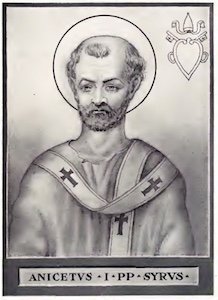
Saint Anicetus, the eleventh successor of Saint Peter, succeeded to Saint Pius I and reigned for eleven years. During that time he had to combat in particular the dangerous errors of gnosticism, Christ's ancient enemy, already rampant in the days when Saint John the Apostle wrote his letters to the churches of Asia. Saint Anicetus was visited in Rome by Saint Polycarp, bishop of Smyrna, who desired to consult with him, and whom he in turn asked to celebrate the feast of Easter in the Church of Rome, as Saint Ireneus, Polycarp's disciple, relates. They had not been able to find a solution to the question of a difference in the date of Easter in the Orient and the Occident, which Pope Saint Victor would later settle, but remained close friends. Saint Anicetus' vigilance protected his flock from the wiles of the false preachers Valentine and Marcion, who were attempting to corrupt the faith in the capital of the empire.
Saint Anicetus established the tonsure for the clergy as a practice of ecclesiastical discipline; a letter to this purpose, which he wrote to the bishops of the churches of Gaul, is still extant.
The Roman Breviary tells us that he received the palm of martyrdom for the Christian faith, one month after the death of the Emperor Antoninus the Pious. Of the first fifty-four bishops of Rome, as they are seen portrayed in the Basilica of Saint Paul in Rome, fifty-three are honored among the Saints; and of two hundred and forty-eight popes, from Saint Peter to Clement XII (?1740), seventy-eight are named in the Roman martyrology. In the primitive ages the spirit of fervor and perfect sanctity was conspicuous in most of the faithful, and especially in their pastors. The whole tenor of their lives breathed it, in such wise as to render them living miracles, angels on earth, breathing copies of their Divine Redeemer, the odor of whose virtues and holy law and religion they spread on every side.
Reflection. We find an example of true friendship in the fashion Saint Anicet honored Saint Polycarp, in the absence of a complete understanding. Let us judge by this rule whether our love and our friendship for God is sovereign. Does inconstancy, manifested in our words or acts, never betray the insincerity of our heart? If, after making protestations of inviolable friendship and affection for a fellow-creature, we ceased to honor him when our reason and his did not perfectly concur, would not the whole world justly call our pretended friendship a mockery?
Les Petits Bollandistes: Vies des Saints, by Msgr. Paul Guérin (Bloud et Barral: Paris, 1882), Vol. 4; Little Pictorial Lives of the Saints, a compilation based on Butler's Lives of the Saints and other sources by John Gilmary Shea (Benziger Brothers: New York, 1894).
LAST-MODIFIED:20240413T152723Z SEQUENCE:47326557 X-ACCESS:1 X-HITS:58 X-COLOR:f0b80e X-SHOW-END-TIME:1 END:VEVENT BEGIN:VEVENT DTSTART;VALUE=DATE:20240417 DTEND;VALUE=DATE:20240418 UID:DD994B5E-C4CD-4AE6-9CFB-A266FD3F067F SUMMARY:St. Joseph CREATED:20221013T211126Z DTSTAMP:20221013T211126Z URL:https://www.stpaulsweymouth.org/component/dpcalendar/event/1459?calid=13 DESCRIPTION:St. Joseph, Patron of the Universal Church\N\NRegarding the various graces conferred upon a rational creature, it is the general rule that whenever the divine grace chooses someone for a particular grace, or for a particular exalted state, it also endows that person with all the gifts of grace which are necessary for the person so chosen, and for the duty (to which he is called), and does so in abundance. This is most especially verified in the case of Saint Joseph, the putative father of our Lord Jesus Christ, and true spouse of the Queen of the world, and Lady of Angels. He was chosen by the Eternal Father as the faithful protector and guardian of His chief treasures, namely, His Son, and Joseph’s own Wife. This duty Joseph discharged most faithfully, wherefore the Lord hath said to him: Good and faithful servant, enter thou into the joy of thy Lord.\NRemember us, therefore, o blessed Joseph, and by the support of thy prayers, intercede for us with thy supposed Son! And also make gracious to us thy Virgin Spouse, the Mother of Him Who with the Father and the Holy Spirit, liveth and reigneth though all ages. Amen.\NPius IX, Decree Quemadmodum Deus, December 8, 1870\NAs almighty God appointed Joseph, son of the patriarch Jacob, over all the land of Egypt to save grain for the people, so when the fullness of time was come and He was about to send to earth His only-begotten Son, the Savior of the world, He chose another Joseph, of whom the first had been the type, and He made him the lord and chief of His household and possessions, the guardian of His choicest treasures. Indeed, he had as his spouse the Immaculate Virgin Mary, of whom was born by the Holy Spirit, Jesus Christ our Lord, who deigned to be reputed in the sight of men as the son of Joseph, and was subject to him.\NHim whom countless kings and prophets had desired to see, Joseph not only saw but conversed with, and embraced in paternal affection, and kissed. He most diligently reared Him whom the faithful were to receive as the bread that came down from heaven whereby they might obtain eternal life.\NBecause of this sublime dignity which God conferred on his most faithful servant, the Church has always most highly honored and praised blessed Joseph next to his spouse, the Virgin Mother of God, and has besought his intercession in times of trouble. And now therefore, when in these most troublesome times the Church is beset by enemies on every side and is weighed down by calamities so heavy that ungodly men assert that the gates of hell have at length prevailed against her, the venerable prelates of the whole Catholic world have presented to the Sovereign Pontiff their own petitions and those of the faithful committed to their charge, praying that he would deign to constitute St. Joseph Patron of the universal Church.\NAnd this time their prayer and desire was renewed by them even more earnestly at the Sacred Ecumenical Council of the Vatican. Accordingly, it has now pleased our Most Holy Sovereign, Pope Pius IX, in order to entrust himself and all the faithful to the Patriarch St. Joseph’s most powerful patronage, has chosen to comply with the prelates’ desire.\NFor this reason, he solemnly declares Saint Joseph patron of the Catholic Church on this day dedicated to the Immaculate Virgin, Mother of God, spouse of the most chaste Joseph.\NLeo XIII, Encyclical Quamquam Pluries, August 15, 1889\NThe special motives for which St. Joseph has been proclaimed Patron of the Church, and from which the Church looks for singular benefit from his patronage and protection, are that Joseph was the spouse of Mary and that he was reputed the Father of Jesus Christ.\NBut as Joseph has been united to the Blessed Virgin by the ties of marriage, it may not be doubted that he approached nearer than any to the eminent dignity by which the Mother of God surpasses so nobly all created natures.\NAnd Joseph shines among all mankind by the most august dignity, since by divine will, he was the guardian of the Son of God and reputed as His father among men. Joseph became the guardian, the administrator, and the legal defender of the divine house whose chief he was.\NNow, the divine house which Joseph ruled with the authority of a father contained within its limits the scarce-born Church.\NAnd for such reasons the blessed Patriarch looks upon the multitude of Christians who make up the Church as confided specially to his trust – this limitless family spread over the earth, over which, because he is the spouse of Mary and the Father of Jesus Christ, he holds, as it were, a paternal authority. X-ALT-DESC;FMTTYPE=text/html:St. Joseph, Patron of the Universal Church
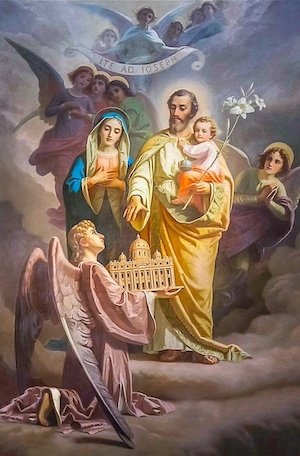
Regarding the various graces conferred upon a rational creature, it is the general rule that whenever the divine grace chooses someone for a particular grace, or for a particular exalted state, it also endows that person with all the gifts of grace which are necessary for the person so chosen, and for the duty (to which he is called), and does so in abundance. This is most especially verified in the case of Saint Joseph, the putative father of our Lord Jesus Christ, and true spouse of the Queen of the world, and Lady of Angels. He was chosen by the Eternal Father as the faithful protector and guardian of His chief treasures, namely, His Son, and Joseph’s own Wife. This duty Joseph discharged most faithfully, wherefore the Lord hath said to him: Good and faithful servant, enter thou into the joy of thy Lord.
Remember us, therefore, o blessed Joseph, and by the support of thy prayers, intercede for us with thy supposed Son! And also make gracious to us thy Virgin Spouse, the Mother of Him Who with the Father and the Holy Spirit, liveth and reigneth though all ages. Amen.
Pius IX, Decree Quemadmodum Deus, December 8, 1870
As almighty God appointed Joseph, son of the patriarch Jacob, over all the land of Egypt to save grain for the people, so when the fullness of time was come and He was about to send to earth His only-begotten Son, the Savior of the world, He chose another Joseph, of whom the first had been the type, and He made him the lord and chief of His household and possessions, the guardian of His choicest treasures. Indeed, he had as his spouse the Immaculate Virgin Mary, of whom was born by the Holy Spirit, Jesus Christ our Lord, who deigned to be reputed in the sight of men as the son of Joseph, and was subject to him.
Him whom countless kings and prophets had desired to see, Joseph not only saw but conversed with, and embraced in paternal affection, and kissed. He most diligently reared Him whom the faithful were to receive as the bread that came down from heaven whereby they might obtain eternal life.
Because of this sublime dignity which God conferred on his most faithful servant, the Church has always most highly honored and praised blessed Joseph next to his spouse, the Virgin Mother of God, and has besought his intercession in times of trouble. And now therefore, when in these most troublesome times the Church is beset by enemies on every side and is weighed down by calamities so heavy that ungodly men assert that the gates of hell have at length prevailed against her, the venerable prelates of the whole Catholic world have presented to the Sovereign Pontiff their own petitions and those of the faithful committed to their charge, praying that he would deign to constitute St. Joseph Patron of the universal Church.
And this time their prayer and desire was renewed by them even more earnestly at the Sacred Ecumenical Council of the Vatican. Accordingly, it has now pleased our Most Holy Sovereign, Pope Pius IX, in order to entrust himself and all the faithful to the Patriarch St. Joseph’s most powerful patronage, has chosen to comply with the prelates’ desire.
For this reason, he solemnly declares Saint Joseph patron of the Catholic Church on this day dedicated to the Immaculate Virgin, Mother of God, spouse of the most chaste Joseph.
Leo XIII, Encyclical Quamquam Pluries, August 15, 1889
The special motives for which St. Joseph has been proclaimed Patron of the Church, and from which the Church looks for singular benefit from his patronage and protection, are that Joseph was the spouse of Mary and that he was reputed the Father of Jesus Christ.
But as Joseph has been united to the Blessed Virgin by the ties of marriage, it may not be doubted that he approached nearer than any to the eminent dignity by which the Mother of God surpasses so nobly all created natures.
And Joseph shines among all mankind by the most august dignity, since by divine will, he was the guardian of the Son of God and reputed as His father among men. Joseph became the guardian, the administrator, and the legal defender of the divine house whose chief he was.
Now, the divine house which Joseph ruled with the authority of a father contained within its limits the scarce-born Church.
And for such reasons the blessed Patriarch looks upon the multitude of Christians who make up the Church as confided specially to his trust – this limitless family spread over the earth, over which, because he is the spouse of Mary and the Father of Jesus Christ, he holds, as it were, a paternal authority.
LAST-MODIFIED:20240413T154946Z SEQUENCE:47327900 X-ACCESS:1 X-HITS:131 X-COLOR:f0b80e X-SHOW-END-TIME:1 END:VEVENT BEGIN:VEVENT DTSTART;VALUE=DATE:20240421 DTEND;VALUE=DATE:20240422 UID:7C2BEB82-311D-487B-A9EE-9FFB8FB28658 SUMMARY:St. Anselm CREATED:20221013T211126Z DTSTAMP:20221013T211126Z URL:https://www.stpaulsweymouth.org/component/dpcalendar/event/1451?calid=13 DESCRIPTION:St. Anselm Bishop, Confessor and Doctor of the Church\N\NSaint Anselm was a native of Piedmont. When as a boy of fifteen he was forbidden to enter religion after the death of his good Christian mother, for a time he lost the fervor she had imparted to him. He left home and went to study in various schools in France; at length his vocation revived, and he became a monk at Bec in Normandy, where he had been studying under the renowned Abbot Lanfranc.\NThe fame of his sanctity in this cloister led King William Rufus of England, when dangerously ill, to take him for his confessor and afterwards to name him to the vacant see of Canterbury to replace his own former master, Lanfranc, who had been appointed there before him. He was consecrated in December, 1093. Then began the strife which characterized Saint Anselm's episcopate. The king, when restored to health, lapsed into his former sins, continued to plunder the Church lands, scorned the archbishop's rebukes, and forbade him to go to Rome for the pallium.\NFinally the king sent envoys to Rome for the pallium; a legate returned with them to England, bearing it. The Archbishop received the pallium not from the king's hand, as William would have required, but from that of the papal legate. For Saint Anselm's defense of the Pope's supremacy in a Council at Rockingham, called in March of 1095, the worldly prelates did not scruple to call him a traitor. The Saint rose, and with calm dignity exclaimed, If any man pretends that I violate my faith to my king because I will not reject the authority of the Holy See of Rome, let him stand, and in the name of God I will answer him as I ought. No one took up the challenge; and to the disappointment of the king, the barons sided with the Saint, for they respected his courage and saw that his cause was their own. During a time he spent in Rome and France, canons were passed in Rome against the practice of lay investiture, and a decree of excommunication was issued against offenders.\NWhen William Rufus died, another strife began with William's successor, Henry I. This sovereign claimed the right of investing prelates with the ring and crozier, symbols of the spiritual jurisdiction which belongs to the Church alone. Rather than yield, the archbishop went into exile, until at last the king was obliged to submit to the aging but inflexible prelate.\NIn the midst of his harassing cares, Saint Anselm found time for writings which have made him celebrated as the father of scholastic theology, while in metaphysics and in science he had few equals. He is yet more famous for his devotion to our Blessed Mother, whose Feast of the Immaculate Conception he was the first to establish in the West. He died in 1109.\NLittle Pictorial Lives of the Saints, a compilation based on Butler's Lives of the Saints and other sources by John Gilmary Shea (Benziger Brothers: New York, 1894). X-ALT-DESC;FMTTYPE=text/html:St. Anselm Bishop, Confessor and Doctor of the Church
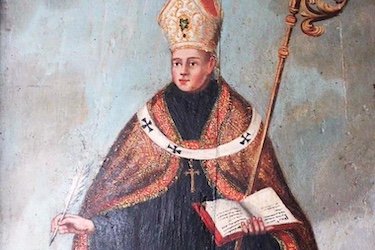
Saint Anselm was a native of Piedmont. When as a boy of fifteen he was forbidden to enter religion after the death of his good Christian mother, for a time he lost the fervor she had imparted to him. He left home and went to study in various schools in France; at length his vocation revived, and he became a monk at Bec in Normandy, where he had been studying under the renowned Abbot Lanfranc.
The fame of his sanctity in this cloister led King William Rufus of England, when dangerously ill, to take him for his confessor and afterwards to name him to the vacant see of Canterbury to replace his own former master, Lanfranc, who had been appointed there before him. He was consecrated in December, 1093. Then began the strife which characterized Saint Anselm's episcopate. The king, when restored to health, lapsed into his former sins, continued to plunder the Church lands, scorned the archbishop's rebukes, and forbade him to go to Rome for the pallium.
Finally the king sent envoys to Rome for the pallium; a legate returned with them to England, bearing it. The Archbishop received the pallium not from the king's hand, as William would have required, but from that of the papal legate. For Saint Anselm's defense of the Pope's supremacy in a Council at Rockingham, called in March of 1095, the worldly prelates did not scruple to call him a traitor. The Saint rose, and with calm dignity exclaimed, If any man pretends that I violate my faith to my king because I will not reject the authority of the Holy See of Rome, let him stand, and in the name of God I will answer him as I ought. No one took up the challenge; and to the disappointment of the king, the barons sided with the Saint, for they respected his courage and saw that his cause was their own. During a time he spent in Rome and France, canons were passed in Rome against the practice of lay investiture, and a decree of excommunication was issued against offenders.
When William Rufus died, another strife began with William's successor, Henry I. This sovereign claimed the right of investing prelates with the ring and crozier, symbols of the spiritual jurisdiction which belongs to the Church alone. Rather than yield, the archbishop went into exile, until at last the king was obliged to submit to the aging but inflexible prelate.
In the midst of his harassing cares, Saint Anselm found time for writings which have made him celebrated as the father of scholastic theology, while in metaphysics and in science he had few equals. He is yet more famous for his devotion to our Blessed Mother, whose Feast of the Immaculate Conception he was the first to establish in the West. He died in 1109.
Little Pictorial Lives of the Saints, a compilation based on Butler's Lives of the Saints and other sources by John Gilmary Shea (Benziger Brothers: New York, 1894).
LAST-MODIFIED:20240413T153059Z SEQUENCE:47326773 X-ACCESS:1 X-HITS:178 X-COLOR:f0b80e X-SHOW-END-TIME:1 END:VEVENT BEGIN:VEVENT DTSTART;VALUE=DATE:20240422 DTEND;VALUE=DATE:20240423 UID:5F9582AF-BE67-42F3-80E5-BC8EDA8FE1E7 SUMMARY:Sts. Soter & Caius CREATED:20221013T211126Z DTSTAMP:20221013T211126Z URL:https://www.stpaulsweymouth.org/component/dpcalendar/event/1453?calid=13 DESCRIPTION:Sts. Soter & Caius Popes, Martyrs\N\NSaint Soter was raised to the papacy upon the death of Saint Anicetus in 161. By the sweetness of his discourses he comforted all afflicted persons with the tenderness of a father, and assisted the indigent with liberal alms, especially those who suffered for the Faith. He liberally extended his charities, according to the custom of his predecessors, to remote churches. He aided in particular that of Corinth, to which he addressed an excellent letter. Saint Dionysius of Corinth in his letter of thanks to Saint Soter, adds that the Pontifical letter together with the letter of Saint Clement, Pope, was read for the edification of the faithful on Sundays, during their assemblies to celebrate the divine mysteries.\NOne of Saint Soter's ordinances required all Christians except those in public penance to receive Communion on Holy Thursday. Saint Soter vigorously opposed the heresy of Montanus, and governed the Church up to the year 175. He was martyred on April 22, 175, under the emperor Marcus Aurelius, and buried on the Appian Way in the cemetery of Callixtus.\NPope Saint Caius, born in Dalmatia, was a relative of the emperor Diocletian. The cruel emperor did not for that reason spare him or his family during the bloody persecution of the years 283 to 296, during which the Christians of Rome were obliged to conceal themselves in caverns and cemeteries.\NSaint Caius counseled a patrician named Chromatius to receive the tracked disciples of Christ in his country residence. He himself went to visit them on a Sunday, and said to the faithful assembled there that Our Lord Jesus Christ, knowing the fragility of human nature, established two degrees in the practice of Christianity, confession and martyrdom. Our Saviour did so, he said, so that those who do not believe they could stand up under torment, may nonetheless conserve the grace of the faith by their confession. Our Lord had indeed specified, When you are persecuted in one city, flee to another... Then he said, Those who wish to stay in the house of Chromatius, remain with Tiburtius, while those who prefer to return with me to the city, come. Several followed him back to Rome; among them are the martyrs of the same persecution, the brothers Saints Marcus and Marcellinus, and Saint Sebastian.\NSaint Caius himself received the crown of martyrdom in the final year of the persecution, 296, and was buried in the cemetery of Callixtus, where his body was found in 1622, with an inscription identifying him as Vicar of Christ.\NLittle Pictorial Lives of the Saints, a compilation based on Butler's Lives of the Saints and other sources by John Gilmary Shea (Benziger Brothers: New York, 1894); Les Petits Bollandistes: Vies des Saints, by Msgr. Paul Guérin (Bloud et Barral: Paris, 1882), Vol. 4 X-ALT-DESC;FMTTYPE=text/html:Sts. Soter & Caius Popes, Martyrs
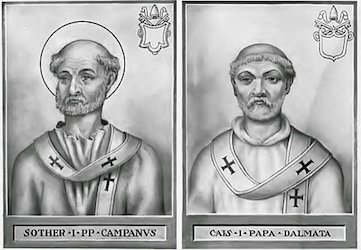
Saint Soter was raised to the papacy upon the death of Saint Anicetus in 161. By the sweetness of his discourses he comforted all afflicted persons with the tenderness of a father, and assisted the indigent with liberal alms, especially those who suffered for the Faith. He liberally extended his charities, according to the custom of his predecessors, to remote churches. He aided in particular that of Corinth, to which he addressed an excellent letter. Saint Dionysius of Corinth in his letter of thanks to Saint Soter, adds that the Pontifical letter together with the letter of Saint Clement, Pope, was read for the edification of the faithful on Sundays, during their assemblies to celebrate the divine mysteries.
One of Saint Soter's ordinances required all Christians except those in public penance to receive Communion on Holy Thursday. Saint Soter vigorously opposed the heresy of Montanus, and governed the Church up to the year 175. He was martyred on April 22, 175, under the emperor Marcus Aurelius, and buried on the Appian Way in the cemetery of Callixtus.
Pope Saint Caius, born in Dalmatia, was a relative of the emperor Diocletian. The cruel emperor did not for that reason spare him or his family during the bloody persecution of the years 283 to 296, during which the Christians of Rome were obliged to conceal themselves in caverns and cemeteries.
Saint Caius counseled a patrician named Chromatius to receive the tracked disciples of Christ in his country residence. He himself went to visit them on a Sunday, and said to the faithful assembled there that Our Lord Jesus Christ, knowing the fragility of human nature, established two degrees in the practice of Christianity, confession and martyrdom. Our Saviour did so, he said, so that those who do not believe they could stand up under torment, may nonetheless conserve the grace of the faith by their confession. Our Lord had indeed specified, When you are persecuted in one city, flee to another... Then he said, Those who wish to stay in the house of Chromatius, remain with Tiburtius, while those who prefer to return with me to the city, come. Several followed him back to Rome; among them are the martyrs of the same persecution, the brothers Saints Marcus and Marcellinus, and Saint Sebastian.
Saint Caius himself received the crown of martyrdom in the final year of the persecution, 296, and was buried in the cemetery of Callixtus, where his body was found in 1622, with an inscription identifying him as Vicar of Christ.
Little Pictorial Lives of the Saints, a compilation based on Butler's Lives of the Saints and other sources by John Gilmary Shea (Benziger Brothers: New York, 1894); Les Petits Bollandistes: Vies des Saints, by Msgr. Paul Guérin (Bloud et Barral: Paris, 1882), Vol. 4
LAST-MODIFIED:20240413T153609Z SEQUENCE:47327083 X-ACCESS:1 X-HITS:3 X-COLOR:f0b80e X-SHOW-END-TIME:1 END:VEVENT BEGIN:VEVENT DTSTART;VALUE=DATE:20240423 DTEND;VALUE=DATE:20240424 UID:3641133B-47FE-47C9-8F3B-ACFDA08C40FB SUMMARY:St. George CREATED:20221013T211126Z DTSTAMP:20221013T211126Z URL:https://www.stpaulsweymouth.org/component/dpcalendar/event/1455?calid=13 DESCRIPTION:St. George Martyr, Patron of England\N\NSaint George was born in Palestine of Christian parents, towards the close of the third century. In early youth he chose a soldier's life, and soon obtained the favor of Diocletian, who advanced him to the grade of tribune. But when the emperor began to persecute the Christians, George rebuked him at once for his cruelty, sternly and openly, and announced his resignation. Having foreseen that the words he would say might bring about his death, he had first distributed his wealth and clothing to the poor.\NYoung man, Diocletian said to him, think of your future! I am a Christian, George replied, and nothing in this world is the object either of my ambition or my regret. Nothing can shake my faith. He was subjected to a long series of torments, and finally beheaded.\NThere was something so heartening in the defiant cheerfulness of the young soldier, that every Christian felt a personal share in this triumph of Christian fortitude. Devotion to Saint George is very ancient and widespread in the Church. A fourth-century church dedicated to him at Constantinople is believed to have been built by Constantine, and his name is invoked in the most ancient liturgies. In Europe, Malta, Barcelona, Valencia, Aragon, Genoa, and England have chosen him as their patron. Even beyond the circle of Christendom he was held in honor, and invading Saracens learned to exempt from desecration the image of the one they hailed as the White-horsed Knight.\NReflection. Saint Bruno wrote: What shall I say of fortitude, without which neither wisdom nor justice is of any value? Fortitude is not of the body, but is a constancy of soul; with it we are conquerors in righteousness, patiently bearing all adversities, and in prosperity are not puffed up. Fortitude is never conquered, or if conquered, is not fortitude.\NLittle Pictorial Lives of the Saints, a compilation based on Butler's Lives of the Saints and other sources by John Gilmary Shea (Benziger Brothers: New York, 1894); Les Petits Bollandistes: Vies des Saints, by Msgr. Paul Guérin (Bloud et Barral: Paris, 1882), Vol. 4 X-ALT-DESC;FMTTYPE=text/html:St. George Martyr, Patron of England
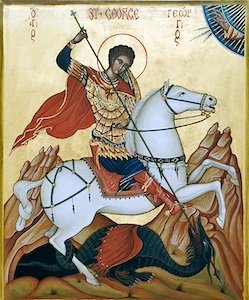
Saint George was born in Palestine of Christian parents, towards the close of the third century. In early youth he chose a soldier's life, and soon obtained the favor of Diocletian, who advanced him to the grade of tribune. But when the emperor began to persecute the Christians, George rebuked him at once for his cruelty, sternly and openly, and announced his resignation. Having foreseen that the words he would say might bring about his death, he had first distributed his wealth and clothing to the poor.
Young man, Diocletian said to him, think of your future! I am a Christian, George replied, and nothing in this world is the object either of my ambition or my regret. Nothing can shake my faith. He was subjected to a long series of torments, and finally beheaded.
There was something so heartening in the defiant cheerfulness of the young soldier, that every Christian felt a personal share in this triumph of Christian fortitude. Devotion to Saint George is very ancient and widespread in the Church. A fourth-century church dedicated to him at Constantinople is believed to have been built by Constantine, and his name is invoked in the most ancient liturgies. In Europe, Malta, Barcelona, Valencia, Aragon, Genoa, and England have chosen him as their patron. Even beyond the circle of Christendom he was held in honor, and invading Saracens learned to exempt from desecration the image of the one they hailed as the White-horsed Knight.
Reflection. Saint Bruno wrote: What shall I say of fortitude, without which neither wisdom nor justice is of any value? Fortitude is not of the body, but is a constancy of soul; with it we are conquerors in righteousness, patiently bearing all adversities, and in prosperity are not puffed up. Fortitude is never conquered, or if conquered, is not fortitude.
Little Pictorial Lives of the Saints, a compilation based on Butler's Lives of the Saints and other sources by John Gilmary Shea (Benziger Brothers: New York, 1894); Les Petits Bollandistes: Vies des Saints, by Msgr. Paul Guérin (Bloud et Barral: Paris, 1882), Vol. 4
LAST-MODIFIED:20240413T153901Z SEQUENCE:47327255 X-ACCESS:1 X-HITS:2 X-COLOR:f0b80e X-SHOW-END-TIME:1 END:VEVENT BEGIN:VEVENT DTSTART;VALUE=DATE:20240424 DTEND;VALUE=DATE:20240425 UID:F003D3F9-1326-4AFA-ADA8-D4134A9AE7C9 SUMMARY:St. Fidelis CREATED:20221013T211126Z DTSTAMP:20221013T211126Z URL:https://www.stpaulsweymouth.org/component/dpcalendar/event/1457?calid=13 DESCRIPTION:St. Fidelis of Sigmaringen, Martyr\N\NSaint Fidelis was born of noble parents at Sigmaringen in what is now Prussia, in 1577. In his youth he frequently approached the Sacraments, visited the sick and the poor, and spent many hours before the altar. For a time he followed the legal profession and was remarkable for his advocacy of the poor and his respectful language towards his opponents.\NFinding it difficult to be both a rich lawyer and a good Christian, Fidelis entered the Capuchin Order and embraced a life of austerity and prayer. Hair shirts, iron-pointed girdles, and disciplines were penances too light for his fervor. At Weltkirchen, where he was Superior of the convent during an outbreak of the plague, he devoted himself indefatigably to the care of the sick soldiers and citizens. Animated by a desire for martyrdom, he rejoiced at being sent with several fellow Capuchins on a mission to Switzerland, which the newly-founded Congregation of the Propaganda named him to preside. There he braved every peril to rescue souls from the errors of Calvin.\NWhen preaching one day at Sevis he was fired at by a Calvinist, but fear of death could not deter him from proclaiming divine truth. After his sermon, when leaving the city he was waylaid by a body of his enemies, who attacked him and tried to force him to embrace their so-called reform. But he said, I came to refute your errors, not to embrace them; I will never renounce Catholic doctrine, which is the truth of all ages, and I fear not death. On this they fell upon him with their daggers; and the first martyr of the Propaganda, losing his life for Christ, went to find in heaven the veritable life his Master promised to all who are losers for His sake.\NReflection. We delight in decorating the altars of God with flowers, lights, and jewels, and it is right to do so; but if we wish to offer to God gifts of higher value, let us, in imitation of Saint Fidelis, labor to save souls who would be lost; that is to offer Him the ornaments of paradise which He so ardently longs to acquire.\NLes Petits Bollandistes: Vies des Saints, by Msgr. Paul Guérin (Bloud et Barral: Paris, 1882), Vol. 5 X-ALT-DESC;FMTTYPE=text/html:St. Fidelis of Sigmaringen, Martyr
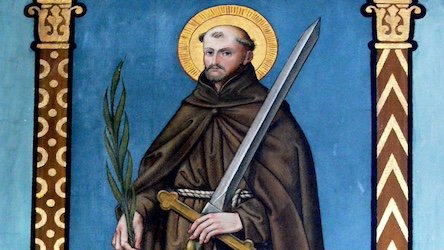
Saint Fidelis was born of noble parents at Sigmaringen in what is now Prussia, in 1577. In his youth he frequently approached the Sacraments, visited the sick and the poor, and spent many hours before the altar. For a time he followed the legal profession and was remarkable for his advocacy of the poor and his respectful language towards his opponents.
Finding it difficult to be both a rich lawyer and a good Christian, Fidelis entered the Capuchin Order and embraced a life of austerity and prayer. Hair shirts, iron-pointed girdles, and disciplines were penances too light for his fervor. At Weltkirchen, where he was Superior of the convent during an outbreak of the plague, he devoted himself indefatigably to the care of the sick soldiers and citizens. Animated by a desire for martyrdom, he rejoiced at being sent with several fellow Capuchins on a mission to Switzerland, which the newly-founded Congregation of the Propaganda named him to preside. There he braved every peril to rescue souls from the errors of Calvin.
When preaching one day at Sevis he was fired at by a Calvinist, but fear of death could not deter him from proclaiming divine truth. After his sermon, when leaving the city he was waylaid by a body of his enemies, who attacked him and tried to force him to embrace their so-called reform. But he said, I came to refute your errors, not to embrace them; I will never renounce Catholic doctrine, which is the truth of all ages, and I fear not death. On this they fell upon him with their daggers; and the first martyr of the Propaganda, losing his life for Christ, went to find in heaven the veritable life his Master promised to all who are losers for His sake.
Reflection. We delight in decorating the altars of God with flowers, lights, and jewels, and it is right to do so; but if we wish to offer to God gifts of higher value, let us, in imitation of Saint Fidelis, labor to save souls who would be lost; that is to offer Him the ornaments of paradise which He so ardently longs to acquire.
Les Petits Bollandistes: Vies des Saints, by Msgr. Paul Guérin (Bloud et Barral: Paris, 1882), Vol. 5
LAST-MODIFIED:20240413T154155Z SEQUENCE:47327429 X-ACCESS:1 X-HITS:13 X-COLOR:f0b80e X-SHOW-END-TIME:1 END:VEVENT BEGIN:VEVENT DTSTART;VALUE=DATE:20240425 DTEND;VALUE=DATE:20240426 UID:F63835D2-9269-4325-B7DD-4E7D3820B684 SUMMARY:St. Mark CREATED:20221013T211126Z DTSTAMP:20221013T211126Z URL:https://www.stpaulsweymouth.org/component/dpcalendar/event/1461?calid=13 DESCRIPTION:St. Mark Evangelist\N\NSaint Mark was converted to the Faith by the Prince of the Apostles, whom he later accompanied to Rome, acting there as his secretary or interpreter. When Saint Peter wrote his First Epistle to the churches of Asia, he affectionately joined to his own salutation that of his faithful companion, whom he calls my son Mark. The Roman people entreated Saint Mark to put in writing for them the substance of Saint Peter's frequent discourses on Our Lord's life. This the Evangelist did under the eye and with the express sanction of the Apostle, and every page of his brief but graphic Gospel so bore the impress of Saint Peter's character, that the Fathers used to name it Peter's Gospel.\NSaint Mark was then sent to Egypt to found the Church of Alexandria. There his disciples became the wonder of the world for their piety and asceticism; Saint Jerome speaks of Saint Mark as the father of the anchorites who at a later time thronged the Egyptian deserts. There, too, he set up the first Christian school, the fruitful mother of many illustrious doctors and bishops.\NAfter governing his see for many years, Saint Mark was seized one day by the heathen, dragged by ropes over stones, and thrown into prison. On the morrow the torture was repeated, and after receiving the consolation of the sight of Angels and the voice of Jesus, Saint Mark went to his reward.\NIt is to Saint Mark that we owe the many pictorial touches which often give such vivid color to the Gospel scenes, and help us to visualize the very gestures and appearance of our Blessed Lord. It is he alone who notes that in the temptation Jesus was with the beasts; that He slept in the boat on a pillow; that He embraced the little children. He alone preserves for us the command, Peace, be still! by which the storm was quelled, and even the very Aramaic words He spoke, the Ephpheta and the Talitha, cumi! by which the dumb were made to speak and the dead to rise.\NReflection. Learn from Saint Mark's Gospel to keep the image of the Son of man ever before your mind, and to ponder every syllable which fell from His lips.\NLittle Pictorial Lives of the Saints, a compilation based on Butler's Lives of the Saints and other sources by John Gilmary Shea (Benziger Brothers: New York, 1894) X-ALT-DESC;FMTTYPE=text/html:St. Mark Evangelist
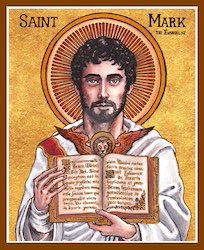
Saint Mark was converted to the Faith by the Prince of the Apostles, whom he later accompanied to Rome, acting there as his secretary or interpreter. When Saint Peter wrote his First Epistle to the churches of Asia, he affectionately joined to his own salutation that of his faithful companion, whom he calls my son Mark. The Roman people entreated Saint Mark to put in writing for them the substance of Saint Peter's frequent discourses on Our Lord's life. This the Evangelist did under the eye and with the express sanction of the Apostle, and every page of his brief but graphic Gospel so bore the impress of Saint Peter's character, that the Fathers used to name it Peter's Gospel.
Saint Mark was then sent to Egypt to found the Church of Alexandria. There his disciples became the wonder of the world for their piety and asceticism; Saint Jerome speaks of Saint Mark as the father of the anchorites who at a later time thronged the Egyptian deserts. There, too, he set up the first Christian school, the fruitful mother of many illustrious doctors and bishops.
After governing his see for many years, Saint Mark was seized one day by the heathen, dragged by ropes over stones, and thrown into prison. On the morrow the torture was repeated, and after receiving the consolation of the sight of Angels and the voice of Jesus, Saint Mark went to his reward.
It is to Saint Mark that we owe the many pictorial touches which often give such vivid color to the Gospel scenes, and help us to visualize the very gestures and appearance of our Blessed Lord. It is he alone who notes that in the temptation Jesus was with the beasts; that He slept in the boat on a pillow; that He embraced the little children. He alone preserves for us the command, Peace, be still! by which the storm was quelled, and even the very Aramaic words He spoke, the Ephpheta and the Talitha, cumi! by which the dumb were made to speak and the dead to rise.
Reflection. Learn from Saint Mark's Gospel to keep the image of the Son of man ever before your mind, and to ponder every syllable which fell from His lips.
Little Pictorial Lives of the Saints, a compilation based on Butler's Lives of the Saints and other sources by John Gilmary Shea (Benziger Brothers: New York, 1894)
LAST-MODIFIED:20240420T173356Z SEQUENCE:47938950 X-ACCESS:1 X-HITS:72 X-COLOR:f0b80e X-SHOW-END-TIME:1 END:VEVENT BEGIN:VEVENT DTSTART;VALUE=DATE:20240426 DTEND;VALUE=DATE:20240427 UID:D085A18D-E999-4B7D-8762-3E64542E07AB SUMMARY:Sts. Cletus & Marcellinus CREATED:20221013T211126Z DTSTAMP:20221013T211126Z URL:https://www.stpaulsweymouth.org/component/dpcalendar/event/1463?calid=13 DESCRIPTION:Sts. Cletus & Marcellinus Popes, Martyrs\N\NSaint Cletus was the third Bishop of Rome, succeeding to Saint Linus, which circumstance alone commends his eminent virtue among the first disciples of Saint Peter in the West. A church and a hospital founded by him, though ruined and rebuilt several times, survived until the 18th century, and the memory of his charity was so well conserved by the Romans, that the Crucifers who then were still serving in his hospice, considered him their founder.\NSaint Cletus was martyred after the peaceful reign of the Emperor Titus, when Domitian replaced him; the date was April 26th of the year 89. He was buried near Saint Peter in the Vatican, where his relics are still.\NSaint Marcellinus, who was of Roman origin, succeeded Saint Caius as bishop of Rome in 296, about the time that Diocletian set himself up for a deity, impiously claiming divine honors. In those stormy times of persecution, seventeen thousand Christians of all ages and both sexes were put to death in the various provinces, churches were destroyed, and heaven was populated with martyrs.\NSaint Marcellinus was beheaded with three others, and their bodies remained without burial in the forum for thirty-six days, to strike fear into the hearts of their fellows. It was on the 26th of April in the year 304 that a priest named Marcel came at night, with other priests and deacons of Rome, to gather up their relics, which they laid to rest in the Priscilla catacomb.\NReflection. It is a fundamental maxim of Christian morality, and a truth which Christ has established in the clearest terms by innumerable passages of the Gospel, that the cross, sufferings and mortification are the road to eternal happiness. Our Lord Himself, our model and our Head, walked on that path, and His great Apostle reminds us that He entered into bliss only by His blood and His Cross. (Heb. 9:12)\NLittle Pictorial Lives of the Saints, a compilation based on Butler's Lives of the Saints and other sources by John Gilmary Shea (Benziger Brothers: New York, 1894); Les Petits Bollandistes: Vies des Saints, by Msgr. Paul Guérin (Bloud et Barral: Paris, 1882), Vol. 5 X-ALT-DESC;FMTTYPE=text/html:Sts. Cletus & Marcellinus Popes, Martyrs
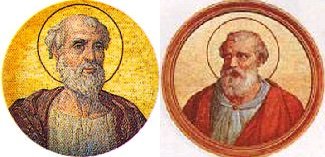
Saint Cletus was the third Bishop of Rome, succeeding to Saint Linus, which circumstance alone commends his eminent virtue among the first disciples of Saint Peter in the West. A church and a hospital founded by him, though ruined and rebuilt several times, survived until the 18th century, and the memory of his charity was so well conserved by the Romans, that the Crucifers who then were still serving in his hospice, considered him their founder.
Saint Cletus was martyred after the peaceful reign of the Emperor Titus, when Domitian replaced him; the date was April 26th of the year 89. He was buried near Saint Peter in the Vatican, where his relics are still.
Saint Marcellinus, who was of Roman origin, succeeded Saint Caius as bishop of Rome in 296, about the time that Diocletian set himself up for a deity, impiously claiming divine honors. In those stormy times of persecution, seventeen thousand Christians of all ages and both sexes were put to death in the various provinces, churches were destroyed, and heaven was populated with martyrs.
Saint Marcellinus was beheaded with three others, and their bodies remained without burial in the forum for thirty-six days, to strike fear into the hearts of their fellows. It was on the 26th of April in the year 304 that a priest named Marcel came at night, with other priests and deacons of Rome, to gather up their relics, which they laid to rest in the Priscilla catacomb.
Reflection. It is a fundamental maxim of Christian morality, and a truth which Christ has established in the clearest terms by innumerable passages of the Gospel, that the cross, sufferings and mortification are the road to eternal happiness. Our Lord Himself, our model and our Head, walked on that path, and His great Apostle reminds us that He entered into bliss only by His blood and His Cross. (Heb. 9:12)
Little Pictorial Lives of the Saints, a compilation based on Butler's Lives of the Saints and other sources by John Gilmary Shea (Benziger Brothers: New York, 1894); Les Petits Bollandistes: Vies des Saints, by Msgr. Paul Guérin (Bloud et Barral: Paris, 1882), Vol. 5
LAST-MODIFIED:20240420T174630Z SEQUENCE:47939704 X-ACCESS:1 X-HITS:227 X-COLOR:f0b80e X-SHOW-END-TIME:1 END:VEVENT BEGIN:VEVENT DTSTART;VALUE=DATE:20240427 DTEND;VALUE=DATE:20240428 UID:1D398533-B190-4F4B-AA69-8712F4A8266B SUMMARY:St. Peter Canisius CREATED:20221013T211126Z DTSTAMP:20221013T211126Z URL:https://www.stpaulsweymouth.org/component/dpcalendar/event/1465?calid=13 DESCRIPTION:St. Peter Canisius, Confessor & Doctor of the Church\N\NBorn in 1521 of a distinguished family of Holland, Saint Peter Canisius studied in Cologne and received his license as doctor of civil law; he then went to Louvain (Belgium) to learn canon law. These studies followed close upon the days when Luther had burnt the papal bulls at Wittenberg, Germany. Soon Saint Peter, become a Jesuit, was teaching at the University of Cologne; he was there when the unfortunate archbishop of that city fell into the new heresy. The Catholics who desired to depose him needed a deputy to the emperor to present their request, and Saint Peter was chosen.\NHis mission, seconded by the Holy Spirit, succeeded; and the deputy was remarked by a Cardinal, who desired to send him to the Council of Trent as his representative and theologian. Saint Peter's superior, Saint Ignatius of Loyola himself, approved this choice, and the young Jesuit took his place among the Fathers of the Council. He was commissioned to draft a memoir on the exact nature of the errors being propagated in the lands of the reform, in consort with the Pope's theologian, another Jesuit named Jacques Laynez. Their work was admired; the Council was dissolved soon afterwards, however, and Saint Peter was recalled to Rome by Saint Ignatius, to consult with him concerning the formation of the religious and the future of their Order.\NAfterwards Saint Peter and two other Jesuits founded a college at Ingolstadt, going there with only two books in their baggage, the Spiritual Exercises of Saint Ignatius and the famous Ratio Studiorum, or Plan of Studies of their Order. Saint Peter was named Rector of the University by that institution.\NHe was in demand everywhere; King Ferdinand of Rome obtained his presence for Vienna. A pestilence broke out there, and he was most often found at the bedside of the dying, caring for the bodies and regenerating the souls of the unfortunate citizens. He opened a boarding school for boys, and Vienna soon found itself reborn in the faith: the famous Catechism of Saint Peter Canisius had much to do with the renovation. During his lifetime it appeared in more than 200 editions, in at least twelve languages. It remains a monument of the triumph of the Church over error in the time of Luther.\NIts author had tried to keep his name a secret but did not succeed, and then several nations disputed the honor of his presence. But Saint Peter was Provincial of Germany, named by Saint Ignatius, and he concerned himself above all with the colleges at Prague, Ingolstadt and Munich. Until his death in 1597 the Apostle of Germany continued the valiant and perpetual combat of the Church against error. For a long time forgotten, Saint Peter was canonized and declared a Doctor of the Church by Pope Pius XI in 1927.\NLes Petits Bollandistes: Vies des Saints, by Msgr. Paul Guérin (Bloud et Barral: Paris, 1882), Vol. 14; The Catholic Encyclopedia, edited by C. G. Herbermann with numerous collaborators (Appleton Company: New York, 1908). X-ALT-DESC;FMTTYPE=text/html:St. Peter Canisius, Confessor & Doctor of the Church
Born in 1521 of a distinguished family of Holland, Saint Peter Canisius studied in Cologne and received his license as doctor of civil law; he then went to Louvain (Belgium) to learn canon law. These studies followed close upon the days when Luther had burnt the papal bulls at Wittenberg, Germany. Soon Saint Peter, become a Jesuit, was teaching at the University of Cologne; he was there when the unfortunate archbishop of that city fell into the new heresy. The Catholics who desired to depose him needed a deputy to the emperor to present their request, and Saint Peter was chosen.
His mission, seconded by the Holy Spirit, succeeded; and the deputy was remarked by a Cardinal, who desired to send him to the Council of Trent as his representative and theologian. Saint Peter's superior, Saint Ignatius of Loyola himself, approved this choice, and the young Jesuit took his place among the Fathers of the Council. He was commissioned to draft a memoir on the exact nature of the errors being propagated in the lands of the reform, in consort with the Pope's theologian, another Jesuit named Jacques Laynez. Their work was admired; the Council was dissolved soon afterwards, however, and Saint Peter was recalled to Rome by Saint Ignatius, to consult with him concerning the formation of the religious and the future of their Order.
Afterwards Saint Peter and two other Jesuits founded a college at Ingolstadt, going there with only two books in their baggage, the Spiritual Exercises of Saint Ignatius and the famous Ratio Studiorum, or Plan of Studies of their Order. Saint Peter was named Rector of the University by that institution.
He was in demand everywhere; King Ferdinand of Rome obtained his presence for Vienna. A pestilence broke out there, and he was most often found at the bedside of the dying, caring for the bodies and regenerating the souls of the unfortunate citizens. He opened a boarding school for boys, and Vienna soon found itself reborn in the faith: the famous Catechism of Saint Peter Canisius had much to do with the renovation. During his lifetime it appeared in more than 200 editions, in at least twelve languages. It remains a monument of the triumph of the Church over error in the time of Luther.
Its author had tried to keep his name a secret but did not succeed, and then several nations disputed the honor of his presence. But Saint Peter was Provincial of Germany, named by Saint Ignatius, and he concerned himself above all with the colleges at Prague, Ingolstadt and Munich. Until his death in 1597 the Apostle of Germany continued the valiant and perpetual combat of the Church against error. For a long time forgotten, Saint Peter was canonized and declared a Doctor of the Church by Pope Pius XI in 1927.
Les Petits Bollandistes: Vies des Saints, by Msgr. Paul Guérin (Bloud et Barral: Paris, 1882), Vol. 14; The Catholic Encyclopedia, edited by C. G. Herbermann with numerous collaborators (Appleton Company: New York, 1908).
LAST-MODIFIED:20240420T174951Z SEQUENCE:47939905 X-ACCESS:1 X-HITS:84 X-COLOR:f0b80e X-SHOW-END-TIME:1 END:VEVENT BEGIN:VEVENT DTSTART;VALUE=DATE:20240428 DTEND;VALUE=DATE:20240429 UID:35BA7B93-CE21-4380-85BF-3923F92E1EF9 SUMMARY:St. Paul CREATED:20221013T211126Z DTSTAMP:20221013T211126Z URL:https://www.stpaulsweymouth.org/component/dpcalendar/event/1467?calid=13 DESCRIPTION:St. Paul of the Cross, Confessor\N\NThe eighty-one years of this Saint's life were modeled on the Passion of Jesus Christ. In his childhood, when praying in church, a heavy bench fell on his foot, but the boy paid no attention to the bleeding wound, and spoke of it as a rose sent from God. As a young man, he wished to be a religious, but his confessor, who had determined to humiliate him, commanded him to go to a dance. As he stepped out onto the floor out of obedience, the strings of the musicians' instruments broke, and the event ended.\NAbout this time, the vision of a scourge with love written on its lashes made him understand that God wanted to scourge my soul, but out of love. His thirst for penance would indeed be satisfied. In the hope of dying for the Faith, he enlisted in a crusade against the Turks; but a voice from the Tabernacle told him to return home, because another war, a spiritual one, was awaiting him there.\NAt the command of his bishop, he began while a layman to preach the Passion, and a series of crosses tested the reality of his vocation. He made a retreat of forty days in a damp outbuilding near the church of Castellazzo, and there he wrote in five days the Rule for a Congregation which he knew he had to found. A penitential trip across the Apennines in winter, without coat, hat or sandals, and with virtually no food, made under obedience to consult a bishop, was only the first of his long journeys. The bishop could not give approbation to his intentions. Having been jeered at on the road, he said, These scoffings were of great benefit to my soul.\NIn the hermitage where he dwelt on his return to Castellazzo, several companions came to join him, but all of them save his faithful younger brother, John Baptist, deserted him. He taught catechism to the children, and when he preached before adults he held them spellbound for two hours. The Passion's full sanctifying power was bearing fruit through him. Nonetheless, when he went to Rome the Sovereign Pontiff refused him an audience; it was only after a delay of seventeen years that papal approbation was obtained and the first house of the Passionists opened on Monte Argentaro, which was the site Our Lady had pointed out.\NSaint Paul of the Cross established for his Order, on the breast of their black habit, a badge he had seen in a vision, having on it the Holy Name of Jesus and a cross surmounting a heart with three nails, in memory of the sufferings of Jesus. But he invented another more secret and durable sign for himself. Moved by the same holy impulse as Blessed Henry Suso, Saint Jane Frances de Chantal and other Saints, he branded on his chest the Holy Name; it was still found there after his death. His heart beat with a supernatural palpitation which was especially vehement on Fridays, and the heat at times was so intense as to scorch his shirt in the region of his heart.\NSaint Paul of the Cross suffered for forty-five years from spiritual desolation, an expiatory suffering which he bore with perfect patience. Despite fifty years of incessant bodily pain and all his trials, he read the love of Jesus in all things, though demons were tormenting him constantly. At one time his sciatica prevented him from sleeping for forty days; he prayed for the grace of an hour's sleep, but to this Passionist's prayer, heaven saw fit to remain deaf. Such was the life of one of the greatest disciples of Christ's Passion. He died while the Passion was being read to him, and so passed like his Lord from the cross to eternal glory.\NMagnificat magazine, Vol. 10, No. 12, December 1975. (Magnificat: St. Jovite). X-ALT-DESC;FMTTYPE=text/html:St. Paul of the Cross, Confessor
The eighty-one years of this Saint's life were modeled on the Passion of Jesus Christ. In his childhood, when praying in church, a heavy bench fell on his foot, but the boy paid no attention to the bleeding wound, and spoke of it as a rose sent from God. As a young man, he wished to be a religious, but his confessor, who had determined to humiliate him, commanded him to go to a dance. As he stepped out onto the floor out of obedience, the strings of the musicians' instruments broke, and the event ended.
About this time, the vision of a scourge with love written on its lashes made him understand that God wanted to scourge my soul, but out of love. His thirst for penance would indeed be satisfied. In the hope of dying for the Faith, he enlisted in a crusade against the Turks; but a voice from the Tabernacle told him to return home, because another war, a spiritual one, was awaiting him there.
At the command of his bishop, he began while a layman to preach the Passion, and a series of crosses tested the reality of his vocation. He made a retreat of forty days in a damp outbuilding near the church of Castellazzo, and there he wrote in five days the Rule for a Congregation which he knew he had to found. A penitential trip across the Apennines in winter, without coat, hat or sandals, and with virtually no food, made under obedience to consult a bishop, was only the first of his long journeys. The bishop could not give approbation to his intentions. Having been jeered at on the road, he said, These scoffings were of great benefit to my soul.
In the hermitage where he dwelt on his return to Castellazzo, several companions came to join him, but all of them save his faithful younger brother, John Baptist, deserted him. He taught catechism to the children, and when he preached before adults he held them spellbound for two hours. The Passion's full sanctifying power was bearing fruit through him. Nonetheless, when he went to Rome the Sovereign Pontiff refused him an audience; it was only after a delay of seventeen years that papal approbation was obtained and the first house of the Passionists opened on Monte Argentaro, which was the site Our Lady had pointed out.
Saint Paul of the Cross established for his Order, on the breast of their black habit, a badge he had seen in a vision, having on it the Holy Name of Jesus and a cross surmounting a heart with three nails, in memory of the sufferings of Jesus. But he invented another more secret and durable sign for himself. Moved by the same holy impulse as Blessed Henry Suso, Saint Jane Frances de Chantal and other Saints, he branded on his chest the Holy Name; it was still found there after his death. His heart beat with a supernatural palpitation which was especially vehement on Fridays, and the heat at times was so intense as to scorch his shirt in the region of his heart.
Saint Paul of the Cross suffered for forty-five years from spiritual desolation, an expiatory suffering which he bore with perfect patience. Despite fifty years of incessant bodily pain and all his trials, he read the love of Jesus in all things, though demons were tormenting him constantly. At one time his sciatica prevented him from sleeping for forty days; he prayed for the grace of an hour's sleep, but to this Passionist's prayer, heaven saw fit to remain deaf. Such was the life of one of the greatest disciples of Christ's Passion. He died while the Passion was being read to him, and so passed like his Lord from the cross to eternal glory.
Magnificat magazine, Vol. 10, No. 12, December 1975. (Magnificat: St. Jovite).
LAST-MODIFIED:20240420T175259Z SEQUENCE:47940093 X-ACCESS:1 X-HITS:21 X-COLOR:f0b80e X-SHOW-END-TIME:1 END:VEVENT BEGIN:VEVENT DTSTART;VALUE=DATE:20240429 DTEND;VALUE=DATE:20240430 UID:C4B3A960-B0D7-4273-B6ED-23C275D34355 SUMMARY:St. Peter CREATED:20221013T211126Z DTSTAMP:20221013T211126Z URL:https://www.stpaulsweymouth.org/component/dpcalendar/event/1469?calid=13 DESCRIPTION:St. Peter of Verona, Martyr\N\NIn 1205 the glorious martyr Peter was born at Verona of Manichean parents; there he nonetheless attended a Catholic school. One day his Manichean uncle asked what he learnt there. The Creed, answered Peter: I believe in God, Creator of heaven and earth. No arguments could shake his faith, and at the age of sixteen he received the habit from Saint Dominic himself at Bologna.\NAfter his ordination, he preached to the heretics of Lombardy and converted multitudes. Saint Peter was constantly obliged to dispute with heretics, and although he was able to confound them, still the devil took occasion thereby to tempt him one day against faith. Instantly he had recourse to prayer before an image of Our Lady, and heard a voice saying to him the words of Jesus Christ in the Gospel, I have prayed for thee, Peter, that thy faith may not fail; and thou shalt confirm thy brethren in it. (Luke22:32)\NHe often conversed with the Saints, and one day the martyred virgins Catherine, Agnes and Cecilia appeared to him and conferred with him. A passing religious, hearing their feminine voices, accused him to their Superior, who without hesitation or questions, exiled him to a convent where no preaching was being done. Saint Peter submitted humbly, but complained in prayer to Jesus crucified that He was abandoning him to his bad reputation. The crucifix spoke: And I, Peter, was I too not innocent? Learn from Me to suffer the greatest sorrows with joy. Eventually his innocence was brought to light; for his part, he had learned in his solitude to love humiliation and confusion.\NAgain engaged in preaching, miracles accompanied his exhortations. He traveled all over Italy and became famous. Once when preaching to a vast crowd under the burning sun, the heretics defied him to procure shade. He prayed, and a cloud overshadowed the audience.\NEvery day at the elevation of the Mass he prayed, Grant, Lord, that I may die for Thee, who for me didst die. His prayer was answered. His enemies, confounded by him, sought his life. Two of them attacked him in 1252 on the road to Milan and struck his head with an axe. Saint Peter fell, commended himself to God, dipped his finger in his own blood, and wrote on the ground, I believe in God, Creator of heaven and earth. He was then stabbed to death. The brother religious accompanying him also suffered death. The details of the crime were made known by Saint Peter's murderer, named Carino, who after fleeing from justice confessed his crime, asking for a penance from the Dominican Fathers. He took the habit, and according to their testimony lived the life of a saint and persevered to the end. Miracles at Saint Peter's tomb and elsewhere converted a great many heretics.\NReflection. From his boyhood Saint Peter boldly professed his faith among heretics. He spent his life in preaching the Faith to them and received the glorious and long-desired crown of martyrdom at their hands. Are we, too, courageous, firm, zealous, full of prayer for their conversion, and unflinching in our profession of faith?\NLittle Pictorial Lives of the Saints, a compilation based on Butler's Lives of the Saints and other sources by John Gilmary Shea (Benziger Brothers: New York, 1894); Les Petits Bollandistes: Vies des Saints, by Msgr. Paul Guérin (Bloud et Barral: Paris, 1882), Vol. 5 X-ALT-DESC;FMTTYPE=text/html:St. Peter of Verona, Martyr
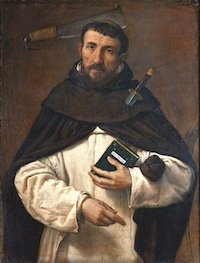
In 1205 the glorious martyr Peter was born at Verona of Manichean parents; there he nonetheless attended a Catholic school. One day his Manichean uncle asked what he learnt there. The Creed, answered Peter: I believe in God, Creator of heaven and earth. No arguments could shake his faith, and at the age of sixteen he received the habit from Saint Dominic himself at Bologna.
After his ordination, he preached to the heretics of Lombardy and converted multitudes. Saint Peter was constantly obliged to dispute with heretics, and although he was able to confound them, still the devil took occasion thereby to tempt him one day against faith. Instantly he had recourse to prayer before an image of Our Lady, and heard a voice saying to him the words of Jesus Christ in the Gospel, I have prayed for thee, Peter, that thy faith may not fail; and thou shalt confirm thy brethren in it. (Luke22:32)
He often conversed with the Saints, and one day the martyred virgins Catherine, Agnes and Cecilia appeared to him and conferred with him. A passing religious, hearing their feminine voices, accused him to their Superior, who without hesitation or questions, exiled him to a convent where no preaching was being done. Saint Peter submitted humbly, but complained in prayer to Jesus crucified that He was abandoning him to his bad reputation. The crucifix spoke: And I, Peter, was I too not innocent? Learn from Me to suffer the greatest sorrows with joy. Eventually his innocence was brought to light; for his part, he had learned in his solitude to love humiliation and confusion.
Again engaged in preaching, miracles accompanied his exhortations. He traveled all over Italy and became famous. Once when preaching to a vast crowd under the burning sun, the heretics defied him to procure shade. He prayed, and a cloud overshadowed the audience.
Every day at the elevation of the Mass he prayed, Grant, Lord, that I may die for Thee, who for me didst die. His prayer was answered. His enemies, confounded by him, sought his life. Two of them attacked him in 1252 on the road to Milan and struck his head with an axe. Saint Peter fell, commended himself to God, dipped his finger in his own blood, and wrote on the ground, I believe in God, Creator of heaven and earth. He was then stabbed to death. The brother religious accompanying him also suffered death. The details of the crime were made known by Saint Peter's murderer, named Carino, who after fleeing from justice confessed his crime, asking for a penance from the Dominican Fathers. He took the habit, and according to their testimony lived the life of a saint and persevered to the end. Miracles at Saint Peter's tomb and elsewhere converted a great many heretics.
Reflection. From his boyhood Saint Peter boldly professed his faith among heretics. He spent his life in preaching the Faith to them and received the glorious and long-desired crown of martyrdom at their hands. Are we, too, courageous, firm, zealous, full of prayer for their conversion, and unflinching in our profession of faith?
Little Pictorial Lives of the Saints, a compilation based on Butler's Lives of the Saints and other sources by John Gilmary Shea (Benziger Brothers: New York, 1894); Les Petits Bollandistes: Vies des Saints, by Msgr. Paul Guérin (Bloud et Barral: Paris, 1882), Vol. 5
LAST-MODIFIED:20240420T175628Z SEQUENCE:47940302 X-ACCESS:1 X-HITS:135 X-COLOR:f0b80e X-SHOW-END-TIME:1 END:VEVENT BEGIN:VEVENT DTSTART;VALUE=DATE:20240430 DTEND;VALUE=DATE:20240501 UID:846EEA0A-EC5E-42AA-918C-DF1D847C123F SUMMARY:St. Catherine CREATED:20221013T211126Z DTSTAMP:20221013T211126Z URL:https://www.stpaulsweymouth.org/component/dpcalendar/event/1471?calid=13 DESCRIPTION:St. Catherine of Siena, Virgin & Doctor of the Church\N\NCatherine, the daughter of a humble Christian tradesman, was raised up to be the guide and guardian of the Church in one of the darkest periods of its history, the fourteenth century. As a child, prayer was her delight. She would say the Hail Mary on each step as she mounted the stairs, and was granted in reward a vision of Christ in glory. And He revealed to her the secrets of Christian perfection. When only seven years old she made a vow of virginity, afterwards enduring bitter persecution for refusing to marry.\NHer parents persisted long in their refusal to allow her to enter religious life, her only ambition; but she made a kind of spiritual and penitential convent cell in her heart's depths, and there she found her Beloved and conversed with Him each day. At the age of fifteen she was permitted to enter the Third Order of Saint Dominic, but continued to reside in her father's house, where she united a life of active charity to the prayer of a contemplative Saint. Our Lord bestowed on her His Heart in exchange for her own, gave her Communion with His own hands, and imprinted on her body the marks of His wounds.\NFrom this obscure home the seraphic virgin was taken by Providence to defend the Church's cause. Her life became a continuing miracle. Armed with Papal authority and accompanied by three confessors, she traveled through Italy, reducing rebellious cities to the obedience of the Holy See, and winning hardened souls to God. In the sight of virtually the whole world she sought out Gregory XI at Avignon, brought him back to Rome, and by her letters to the kings and queens of Europe made good the Papal cause. She was the counselor of Urban VI, and sternly rebuked the disloyal cardinals who took part in electing an antipope.\NLong had the holy virgin foretold the terrible schism which began before she died. Day and night she wept and prayed for unity and peace. But in spirit she saw the entire city of Rome full of demons, who were tempting the people to revolt and even to slay the Vicar of Christ. With intense earnestness Saint Catherine begged Our Lord to prevent this enormous crime. Their seditious temper was subdued by her prayers, but they vented their rage by scourging the Saint herself, who gladly endured all for God and His Church. She died in Rome in 1380, at the age of thirty-three.\NReflection. The seraphic Saint Catherine willingly sacrificed the delights of contemplation to labor for the Church and the Apostolic See. How deeply do the troubles of the Church and the consequent loss of souls afflict us? How often do we pray for the Church and the Pope?\NLittle Pictorial Lives of the Saints, a compilation based on Butler's Lives of the Saints and other sources by John Gilmary Shea (Benziger Brothers: New York, 1894); Les Petits Bollandistes: Vies des Saints, by Msgr. Paul Guérin (Bloud et Barral: Paris, 1882), Vol. 5 X-ALT-DESC;FMTTYPE=text/html:St. Catherine of Siena, Virgin & Doctor of the Church
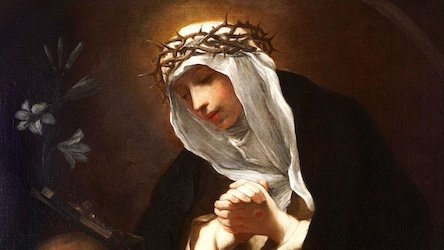
Catherine, the daughter of a humble Christian tradesman, was raised up to be the guide and guardian of the Church in one of the darkest periods of its history, the fourteenth century. As a child, prayer was her delight. She would say the Hail Mary on each step as she mounted the stairs, and was granted in reward a vision of Christ in glory. And He revealed to her the secrets of Christian perfection. When only seven years old she made a vow of virginity, afterwards enduring bitter persecution for refusing to marry.
Her parents persisted long in their refusal to allow her to enter religious life, her only ambition; but she made a kind of spiritual and penitential convent cell in her heart's depths, and there she found her Beloved and conversed with Him each day. At the age of fifteen she was permitted to enter the Third Order of Saint Dominic, but continued to reside in her father's house, where she united a life of active charity to the prayer of a contemplative Saint. Our Lord bestowed on her His Heart in exchange for her own, gave her Communion with His own hands, and imprinted on her body the marks of His wounds.
From this obscure home the seraphic virgin was taken by Providence to defend the Church's cause. Her life became a continuing miracle. Armed with Papal authority and accompanied by three confessors, she traveled through Italy, reducing rebellious cities to the obedience of the Holy See, and winning hardened souls to God. In the sight of virtually the whole world she sought out Gregory XI at Avignon, brought him back to Rome, and by her letters to the kings and queens of Europe made good the Papal cause. She was the counselor of Urban VI, and sternly rebuked the disloyal cardinals who took part in electing an antipope.
Long had the holy virgin foretold the terrible schism which began before she died. Day and night she wept and prayed for unity and peace. But in spirit she saw the entire city of Rome full of demons, who were tempting the people to revolt and even to slay the Vicar of Christ. With intense earnestness Saint Catherine begged Our Lord to prevent this enormous crime. Their seditious temper was subdued by her prayers, but they vented their rage by scourging the Saint herself, who gladly endured all for God and His Church. She died in Rome in 1380, at the age of thirty-three.
Reflection. The seraphic Saint Catherine willingly sacrificed the delights of contemplation to labor for the Church and the Apostolic See. How deeply do the troubles of the Church and the consequent loss of souls afflict us? How often do we pray for the Church and the Pope?
Little Pictorial Lives of the Saints, a compilation based on Butler's Lives of the Saints and other sources by John Gilmary Shea (Benziger Brothers: New York, 1894); Les Petits Bollandistes: Vies des Saints, by Msgr. Paul Guérin (Bloud et Barral: Paris, 1882), Vol. 5
LAST-MODIFIED:20240420T180020Z SEQUENCE:47940534 X-ACCESS:1 X-HITS:26 X-COLOR:f0b80e X-SHOW-END-TIME:1 END:VEVENT BEGIN:VEVENT DTSTART;VALUE=DATE:20240501 DTEND;VALUE=DATE:20240502 UID:F43D00BA-D190-4A4C-9AF3-2033ACFA9C09 SUMMARY:Sts. Philip & James CREATED:20221013T211126Z DTSTAMP:20221013T211126Z URL:https://www.stpaulsweymouth.org/component/dpcalendar/event/1525?calid=13 DESCRIPTION:Sts. Philip & James Apostles\N\NPhilip was one of the first chosen disciples of Christ. On the way from Judea to Galilee Our Lord found Philip, and said, Follow Me. Philip straightway obeyed; and then in his zeal and charity sought to win Nathaniel also, saying, We have found Him of whom Moses and the prophets wrote, Jesus of Nazareth. And when Nathaniel in wonder asked, Can any good come out of Nazareth? Philip simply answered, Come and see, and brought him to Jesus.\NAnother saying of this Apostle is preserved for us by Saint John. Christ in His last discourse had spoken of His Father; and Philip exclaimed, in the fervor of his thirst for God, Lord, show us the Father, and it is enough! The tradition of the ancients has established that he died a martyr at Hierapolis in Phyrgia. There the remains of a church known to be dedicated to him have been identified, north of the entrance to the great necropolis. His relics were later transported to Rome, to the church of the Holy Apostles.\NSaint James the Less (the Younger), author of the canonical Epistle, was the son of Alpheus, the brother of Saint Jude and a cousin of Our Lord, whom he is said to have resembled. Saint Paul tells us that he was favored by a special apparition of Christ after the Resurrection. (I Corinthians 15:7) On the dispersion of the Apostles among the nations, Saint James remained as Bishop of Jerusalem, where the Jews held in such high veneration his purity, mortification, and prayer, that they named him the Just. He governed that church for 30 years before his martyrdom.\NHegesippus, the earliest of the Church's historians, has handed down many traditions of Saint James's sanctity. Saint James was a celibate Nazarite consecrated to God; he drank no wine and wore no sandals. He prostrated himself so long and so often in prayer that the skin of his knees was hardened like a camel's hoof. It is said that the Jews, out of respect, used to touch the hem of his garment. He was indeed a living proof of his own words, The wisdom that is from above is first of all chaste, then peaceable, modest, ready to listen, full of mercy and good fruits. (James 3:17) He sat beside Saint Peter and Saint Paul at the Council of Jerusalem. When Saint Paul at a later time escaped the fury of the Jews by appealing to Caesar, the people took vengeance on James, and crying out, The just one has erred! stoned him to death. During his martyrdom he prayed for his persecutors in the same words pronounced by Jesus: Heavenly Father, forgive them, they know not what they do.\NLittle Pictorial Lives of the Saints, a compilation based on Butler's Lives of the Saints and other sources by John Gilmary Shea (Benziger Brothers: New York, 1894); Dictionnaire de la Bible, F. Vigouroux (Letouzey et Ané: Paris, 1912), Vol. 5, Philippe, Apôtre; Jacques le Mineur, Apôtre. Vol. 1: (1895), Bartholomew, Apôtre. X-ALT-DESC;FMTTYPE=text/html:Sts. Philip & James Apostles
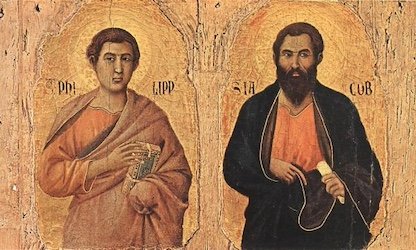
Philip was one of the first chosen disciples of Christ. On the way from Judea to Galilee Our Lord found Philip, and said, Follow Me. Philip straightway obeyed; and then in his zeal and charity sought to win Nathaniel also, saying, We have found Him of whom Moses and the prophets wrote, Jesus of Nazareth. And when Nathaniel in wonder asked, Can any good come out of Nazareth? Philip simply answered, Come and see, and brought him to Jesus.
Another saying of this Apostle is preserved for us by Saint John. Christ in His last discourse had spoken of His Father; and Philip exclaimed, in the fervor of his thirst for God, Lord, show us the Father, and it is enough! The tradition of the ancients has established that he died a martyr at Hierapolis in Phyrgia. There the remains of a church known to be dedicated to him have been identified, north of the entrance to the great necropolis. His relics were later transported to Rome, to the church of the Holy Apostles.
Saint James the Less (the Younger), author of the canonical Epistle, was the son of Alpheus, the brother of Saint Jude and a cousin of Our Lord, whom he is said to have resembled. Saint Paul tells us that he was favored by a special apparition of Christ after the Resurrection. (I Corinthians 15:7) On the dispersion of the Apostles among the nations, Saint James remained as Bishop of Jerusalem, where the Jews held in such high veneration his purity, mortification, and prayer, that they named him the Just. He governed that church for 30 years before his martyrdom.
Hegesippus, the earliest of the Church's historians, has handed down many traditions of Saint James's sanctity. Saint James was a celibate Nazarite consecrated to God; he drank no wine and wore no sandals. He prostrated himself so long and so often in prayer that the skin of his knees was hardened like a camel's hoof. It is said that the Jews, out of respect, used to touch the hem of his garment. He was indeed a living proof of his own words, The wisdom that is from above is first of all chaste, then peaceable, modest, ready to listen, full of mercy and good fruits. (James 3:17) He sat beside Saint Peter and Saint Paul at the Council of Jerusalem. When Saint Paul at a later time escaped the fury of the Jews by appealing to Caesar, the people took vengeance on James, and crying out, The just one has erred! stoned him to death. During his martyrdom he prayed for his persecutors in the same words pronounced by Jesus: Heavenly Father, forgive them, they know not what they do.
Little Pictorial Lives of the Saints, a compilation based on Butler's Lives of the Saints and other sources by John Gilmary Shea (Benziger Brothers: New York, 1894); Dictionnaire de la Bible, F. Vigouroux (Letouzey et Ané: Paris, 1912), Vol. 5, Philippe, Apôtre; Jacques le Mineur, Apôtre. Vol. 1: (1895), Bartholomew, Apôtre.
LAST-MODIFIED:20240427T154115Z SEQUENCE:48536989 X-ACCESS:1 X-HITS:206 X-COLOR:f0b80e X-SHOW-END-TIME:1 END:VEVENT BEGIN:VEVENT DTSTART;VALUE=DATE:20240502 DTEND;VALUE=DATE:20240503 UID:0040F077-3E5D-4916-8293-19AE7F95BB14 SUMMARY:St. Athanasius CREATED:20221013T211126Z DTSTAMP:20221013T211126Z URL:https://www.stpaulsweymouth.org/component/dpcalendar/event/1527?calid=13 DESCRIPTION:St. Athanasius Bishop, Confessor, & Doctor of the Church\N\NSaint Athanasius was born in Alexandria, Egypt, towards the end of the third century, and from his youth was pious, learned, and deeply versed in the sacred writings. He left the paternal home to be raised by the bishop of Alexandria like a new Samuel in the Lord's temple, as befitted one whom God had chosen to be the champion and defender of His Church against the Arian heresy, which denied the Divinity of Christ.\NWhile still a deacon, he was chosen by Saint Alexander, his bishop, to go with him to the Council of Nicea, A.D. 325. There he attracted the attention of all the prelates by the learning and ability with which he defended the Faith. Five months later, as Saint Alexander was dying, he recommended Athanasius for his successor as Patriarch of Alexandria, and in that office for forty-six years the new Patriarch bore the whole brunt of the Arian assault, often virtually alone and undefended.\NWhen the invincible Athanasius refused to restore Arius to Catholic communion, he was exiled to Treves in France, and the Emperor ordered the Catholic Patriarch of Constantinople to receive the heresiarch. The end of that man of error is very instructive. He took an oath that he had always believed as the Church believes, though he taught that there was a time when the Word of God WAS NOT. Thereupon the Catholic Patriarch of Constantinople, with Saint James of Nisibe, who was in Constantinople at that time, Saint Athanasius in France and the Catholics everywhere, had recourse to fasting and prayer, that God would avert from the Church the frightful sacrilege. The day came for the solemn entrance of Arius into the great church of Saint Sophia. The heresiarch and his party set out, elated, in triumph. But before he reached the church, death smote him in an exemplary, swift and terrible way, and the dreaded sacrilege was averted.\NSaint Athanasius stood unmoved against four Roman emperors, was banished five times, was the butt of every insult, calumny and wrong the Arians could devise, and lived in constant peril of death. Though strong as diamond in defense of the Faith, he was meek and humble, pleasant and winning in conversation, beloved by his flock, unwearied in labors, prayer and mortifications, eloquent in speech, and unsurpassed in zeal for souls. From his places of exile he wrote many great works for the instruction and strengthening of his flock, writings rich in thought and learning, clear, keen and stately in expression. He is honored as one of the greatest of the Doctors of the Church.\NHis admirers told the story of his response to a search party pursuing him downstream, as he retreated by boat. Knowing of their approach, he ordered the captain to change direction and return. When he crossed the search party on the river, they hailed him and asked whether he had seen the bishop of Alexandria pass by. He replied, Continue; he is not far from here. Restored to his see by the emperor Valens for fear of a popular uprising, the stormy life of the Saint closed in peace on May 2nd of the year 373.\NReflection. The Catholic Faith, says Saint Augustine, is far more precious than all the riches and treasures of earth; more glorious and greater than all its honors, all its possessions. This it is which saves sinners, gives light to the blind, restores penitents, perfects the just, and is the crown of martyrs.\NLittle Pictorial Lives of the Saints, a compilation based on Butler's Lives of the Saints and other sources by John Gilmary Shea (Benziger Brothers: New York, 1894); Vie des Saints pour tous les jours de l'année, by Abbé L. Jaud (Mame: Tours, 1950). X-ALT-DESC;FMTTYPE=text/html:St. Athanasius Bishop, Confessor, & Doctor of the Church
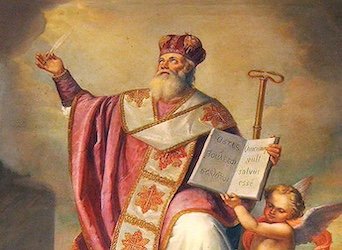
Saint Athanasius was born in Alexandria, Egypt, towards the end of the third century, and from his youth was pious, learned, and deeply versed in the sacred writings. He left the paternal home to be raised by the bishop of Alexandria like a new Samuel in the Lord's temple, as befitted one whom God had chosen to be the champion and defender of His Church against the Arian heresy, which denied the Divinity of Christ.
While still a deacon, he was chosen by Saint Alexander, his bishop, to go with him to the Council of Nicea, A.D. 325. There he attracted the attention of all the prelates by the learning and ability with which he defended the Faith. Five months later, as Saint Alexander was dying, he recommended Athanasius for his successor as Patriarch of Alexandria, and in that office for forty-six years the new Patriarch bore the whole brunt of the Arian assault, often virtually alone and undefended.
When the invincible Athanasius refused to restore Arius to Catholic communion, he was exiled to Treves in France, and the Emperor ordered the Catholic Patriarch of Constantinople to receive the heresiarch. The end of that man of error is very instructive. He took an oath that he had always believed as the Church believes, though he taught that there was a time when the Word of God WAS NOT. Thereupon the Catholic Patriarch of Constantinople, with Saint James of Nisibe, who was in Constantinople at that time, Saint Athanasius in France and the Catholics everywhere, had recourse to fasting and prayer, that God would avert from the Church the frightful sacrilege. The day came for the solemn entrance of Arius into the great church of Saint Sophia. The heresiarch and his party set out, elated, in triumph. But before he reached the church, death smote him in an exemplary, swift and terrible way, and the dreaded sacrilege was averted.
Saint Athanasius stood unmoved against four Roman emperors, was banished five times, was the butt of every insult, calumny and wrong the Arians could devise, and lived in constant peril of death. Though strong as diamond in defense of the Faith, he was meek and humble, pleasant and winning in conversation, beloved by his flock, unwearied in labors, prayer and mortifications, eloquent in speech, and unsurpassed in zeal for souls. From his places of exile he wrote many great works for the instruction and strengthening of his flock, writings rich in thought and learning, clear, keen and stately in expression. He is honored as one of the greatest of the Doctors of the Church.
His admirers told the story of his response to a search party pursuing him downstream, as he retreated by boat. Knowing of their approach, he ordered the captain to change direction and return. When he crossed the search party on the river, they hailed him and asked whether he had seen the bishop of Alexandria pass by. He replied, Continue; he is not far from here. Restored to his see by the emperor Valens for fear of a popular uprising, the stormy life of the Saint closed in peace on May 2nd of the year 373.
Reflection. The Catholic Faith, says Saint Augustine, is far more precious than all the riches and treasures of earth; more glorious and greater than all its honors, all its possessions. This it is which saves sinners, gives light to the blind, restores penitents, perfects the just, and is the crown of martyrs.
Little Pictorial Lives of the Saints, a compilation based on Butler's Lives of the Saints and other sources by John Gilmary Shea (Benziger Brothers: New York, 1894); Vie des Saints pour tous les jours de l'année, by Abbé L. Jaud (Mame: Tours, 1950).
LAST-MODIFIED:20240427T154342Z SEQUENCE:48537136 X-ACCESS:1 X-HITS:88 X-COLOR:f0b80e X-SHOW-END-TIME:1 END:VEVENT BEGIN:VEVENT DTSTART;VALUE=DATE:20240503 DTEND;VALUE=DATE:20240504 UID:6AAFFA93-E86E-4B1A-83DC-BE9D8595622A SUMMARY:St. Alexander & Companions CREATED:20221013T211126Z DTSTAMP:20221013T211126Z URL:https://www.stpaulsweymouth.org/component/dpcalendar/event/1535?calid=13 DESCRIPTION:Sts. Alexander I Pope, Eventius and Theodulus, Martyrs\N\NOn the same day as the invention of the Holy Cross, the Catholic Church celebrates the martyrdom of Saint Alexander, pope, and martyr, who was born in Rome, and the son of a citizen there, called by the same name. He succeeded in Saint Peter’s Chair Saint Evaristus, pope and martyr, and was the seventh pope after Saint Peter if we include Saints Linus and Cletus. They immediately succeeded the Apostle one after the other. Saint Alexander was admirable for his sanctity and most eminent for his faith and constancy in his martyrdom.\NHe was thirty years old when he was promoted to the government of the Church, but his life and doctrine did abundantly supply his want of years. Through his preaching and heavenly conversation, he converted many senators and a significant part of the Roman nobility to our holy faith, and among them, a principal magistrate named Hermes, with all his family who was twelve hundred and fifty persons, for which very reason he was apprehended by the governor of the city, Aurelianus, and cast into prison, where he wrought many miracles, of which this one was very great and most remarkable.\NFor being loaded with iron bolts, there came one night to him a child with a lighted taper in his hand that said to him, “Alexander, follow me.” The saint made his prayers first to God and then, understanding him to be an angel of our Lord, followed him, and neither walls, doors, nor guards could stop or hinder him. The child led him to the house of Quirinus(1)tribune, where Hermes was in the hold, who had a great desire to speak with Saint Alexander, and the saint had promised him, notwithstanding his imprisonment, would come to him. When they met, they embraced each other. They shed tears of joy and devotion and animated themselves to suffer courageously for our Lord Jesus Christ. This did much astonish Quirinus, the tribune, after discussing with Hermes, who told him the manner of his conversion to the holy faith. When he also saw his daughter Balbina, much afflicted with the king’s evil, cured by Saint Alexander, with only touching her with his chains, he became a Christian, with his daughter and all those he kept as prisoners. And Saint Alexander commanded Saint Eventius and Saint Theodulus, priests from the eastern parts of Rome, to baptize them all.\NWhen this was told to Aurelianus, he was exceedingly furious and angry and first tormented Quirinus and put him to death, then cut off the head of Hermes and commanded all those that had been baptized in prison, together with Balbina, Quirinus’ daughter, to be drowned in the sea. Then he sent for Alexander with the two priests, Eventius and Theodulus. Then, when they had interchanged some discourse for a while, Aurelianus said, “Let us leave off wording it, and fall to works,” and commanded the hangman to strip Saint Alexander naked, and stretch him on the [rack], and with iron hooks to tear off his flesh, and to burn his sides with lighted torches.\NIn this torment, the saint was most quiet and still and spoke not a word. When Aurelianus wondered and asked him, “Why he held his peace and complained not,” he answered, “When a Christian prays, he speaks to God.” Eventius and Theodulus were put to the same torments, and Eventius was eighty-one years old, had been baptized at eleven, and received holy orders at twenty. The greatness and sharpness of the sufferings served only to make the holy martyrs firmer and more constant in the faith and love of our Lord Jesus Christ.\NAnd Aurelianus, unable to make them relent, and condescend to his will, commanded an oven to be heated and Alexander and Eventius to be cast into it. Still, Theodulus was made to stand at the mouth of it, seeing them consumed with the burning flames and fearing the like punishments, he might move to sacrifice to the gods. But, Theodulus, not only with undaunted courage, beheld his companions in the fire but also inflamed with a tremendous fire of divine love, leaped in among them because they called him and told him that they felt no pain but instead found great ease and refreshment. And so it was, the flames did not hurt them, and they came all three out of the oven bright and shining and the same color as gold that had been refined in the crucible.\NThe hardened and rebellious heart of the tyrant was nothing softened by the miracle, for he commanded Eventius and Theodulus to be beheaded. And, as for Alexander, that he might die a crueler death, all members and parts of his body were priced and stabbed by keen and sharp-pointed awls of steel. In which torment he gave up his most blessed soul to God (though the Book of Roman Bishops records he was also beheaded after he had been so horribly misused) on the third day of May, in the year of our Lord 132, according to Cardinal Baronius, in the reign of Emperor Hadrian(2), who Trajan has adopted(3), called himself Trajan Hadrian. Where arises the mistake of some authors who write Saint Alexander suffered under Trajan.\NAurelianus was overjoyed for putting these holy martyrs to death as if he got some famous victory. Still, his joy was soon turned to lamentations, for he heard a voice that said, “Aurelian, for those whom thou has deprived of life, the gates of heaven are opened, and the gates of hell are for the.” This voice put Aurelianus beside himself, and falling to the ground, he ate his own tongue and, so dying, yielded his wicked soul to be eternally tormented in the flames of hell.\NThe bodies of Saint Alexander and his companions were buried out of the city on the Via Nomentana(4), seven miles from Rome, and afterward translated to the church of Saint Sabina in the city, which is a convent of the Dominican Friars. Baronius said According to Baronius, Saint Alexander was a pope for ten years, five months, and twenty days. Yet Eusebius only gives him ten years, but the Book of Roman Bishops adds to the ten years, seven months, and two days. Saint Alexander was most zealous for his divine service. He ordained that at Holy Mass, priests should consecrate unleavened bread to signify the purity of the Blessed Sacrament and to imitate our blessed Savior, who, instituting this sacred mystery, did the same at the Last Supper. He also decreed that in the consecration of the chalice, they should mingle a little water with the wine, thereby signifying the union of Christ with His Church and representing the blood and water that issued forth of His precious side. But when we say that Saint Alexander did institute these holy ceremonies, it is not to be understood or inferred that he was the first to form them, for the Apostles used them before. What they learned of Christ and taught the Church, this holy bishop did approve and establish by his holy Canons.\NThe holy Church commemorates Saint Juvenal, Bishop of Narni, a city in Umbria, forty miles from Rome, joining him with the Holy Martyrs, Saint Alexander, and His Companions. The Roman Breviary and the martyrologies of Bede, Ado, and Usuardus say of him, “That he was a man of a most holy life, and renowned for his miracles, and that he converted almost the entire city of Narni to the faith of Christ.” Saint Gregory also spoke of another Juvenal, buried in Narni and died a martyr, mentioned in the Roman Martyrology on the seventh of May.\NRibadeneyra, Pedro de. “The Lives of St. Alexander Pope, St. Eventius and St. Theodulus Priests, and Martyrs; and also of St. Juvenal Bishop, and Confessor.” The Lives of Saints, With Other Feasts of the Year, according to the Roman Calendar. Written in Spanish by the Reverend Father Peter Ribadeneyra, Priest of the Society of Jesus. Translated Into English by W.P. (William Petre) Esq; The Second Edition Corrected and Amended, vol. 1, pp. 322–323. London. Printed by B.S., 1730. X-ALT-DESC;FMTTYPE=text/html:Sts. Alexander I Pope, Eventius and Theodulus, Martyrs
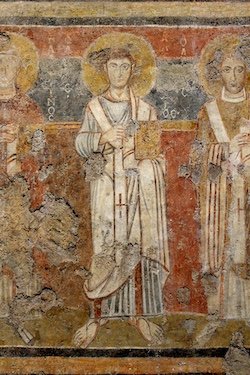
On the same day as the invention of the Holy Cross, the Catholic Church celebrates the martyrdom of Saint Alexander, pope, and martyr, who was born in Rome, and the son of a citizen there, called by the same name. He succeeded in Saint Peter’s Chair Saint Evaristus, pope and martyr, and was the seventh pope after Saint Peter if we include Saints Linus and Cletus. They immediately succeeded the Apostle one after the other. Saint Alexander was admirable for his sanctity and most eminent for his faith and constancy in his martyrdom.
He was thirty years old when he was promoted to the government of the Church, but his life and doctrine did abundantly supply his want of years. Through his preaching and heavenly conversation, he converted many senators and a significant part of the Roman nobility to our holy faith, and among them, a principal magistrate named Hermes, with all his family who was twelve hundred and fifty persons, for which very reason he was apprehended by the governor of the city, Aurelianus, and cast into prison, where he wrought many miracles, of which this one was very great and most remarkable.
For being loaded with iron bolts, there came one night to him a child with a lighted taper in his hand that said to him, “Alexander, follow me.” The saint made his prayers first to God and then, understanding him to be an angel of our Lord, followed him, and neither walls, doors, nor guards could stop or hinder him. The child led him to the house of Quirinus(1)tribune, where Hermes was in the hold, who had a great desire to speak with Saint Alexander, and the saint had promised him, notwithstanding his imprisonment, would come to him. When they met, they embraced each other. They shed tears of joy and devotion and animated themselves to suffer courageously for our Lord Jesus Christ. This did much astonish Quirinus, the tribune, after discussing with Hermes, who told him the manner of his conversion to the holy faith. When he also saw his daughter Balbina, much afflicted with the king’s evil, cured by Saint Alexander, with only touching her with his chains, he became a Christian, with his daughter and all those he kept as prisoners. And Saint Alexander commanded Saint Eventius and Saint Theodulus, priests from the eastern parts of Rome, to baptize them all.
When this was told to Aurelianus, he was exceedingly furious and angry and first tormented Quirinus and put him to death, then cut off the head of Hermes and commanded all those that had been baptized in prison, together with Balbina, Quirinus’ daughter, to be drowned in the sea. Then he sent for Alexander with the two priests, Eventius and Theodulus. Then, when they had interchanged some discourse for a while, Aurelianus said, “Let us leave off wording it, and fall to works,” and commanded the hangman to strip Saint Alexander naked, and stretch him on the [rack], and with iron hooks to tear off his flesh, and to burn his sides with lighted torches.
In this torment, the saint was most quiet and still and spoke not a word. When Aurelianus wondered and asked him, “Why he held his peace and complained not,” he answered, “When a Christian prays, he speaks to God.” Eventius and Theodulus were put to the same torments, and Eventius was eighty-one years old, had been baptized at eleven, and received holy orders at twenty. The greatness and sharpness of the sufferings served only to make the holy martyrs firmer and more constant in the faith and love of our Lord Jesus Christ.
And Aurelianus, unable to make them relent, and condescend to his will, commanded an oven to be heated and Alexander and Eventius to be cast into it. Still, Theodulus was made to stand at the mouth of it, seeing them consumed with the burning flames and fearing the like punishments, he might move to sacrifice to the gods. But, Theodulus, not only with undaunted courage, beheld his companions in the fire but also inflamed with a tremendous fire of divine love, leaped in among them because they called him and told him that they felt no pain but instead found great ease and refreshment. And so it was, the flames did not hurt them, and they came all three out of the oven bright and shining and the same color as gold that had been refined in the crucible.
The hardened and rebellious heart of the tyrant was nothing softened by the miracle, for he commanded Eventius and Theodulus to be beheaded. And, as for Alexander, that he might die a crueler death, all members and parts of his body were priced and stabbed by keen and sharp-pointed awls of steel. In which torment he gave up his most blessed soul to God (though the Book of Roman Bishops records he was also beheaded after he had been so horribly misused) on the third day of May, in the year of our Lord 132, according to Cardinal Baronius, in the reign of Emperor Hadrian(2), who Trajan has adopted(3), called himself Trajan Hadrian. Where arises the mistake of some authors who write Saint Alexander suffered under Trajan.
Aurelianus was overjoyed for putting these holy martyrs to death as if he got some famous victory. Still, his joy was soon turned to lamentations, for he heard a voice that said, “Aurelian, for those whom thou has deprived of life, the gates of heaven are opened, and the gates of hell are for the.” This voice put Aurelianus beside himself, and falling to the ground, he ate his own tongue and, so dying, yielded his wicked soul to be eternally tormented in the flames of hell.
The bodies of Saint Alexander and his companions were buried out of the city on the Via Nomentana(4), seven miles from Rome, and afterward translated to the church of Saint Sabina in the city, which is a convent of the Dominican Friars. Baronius said According to Baronius, Saint Alexander was a pope for ten years, five months, and twenty days. Yet Eusebius only gives him ten years, but the Book of Roman Bishops adds to the ten years, seven months, and two days. Saint Alexander was most zealous for his divine service. He ordained that at Holy Mass, priests should consecrate unleavened bread to signify the purity of the Blessed Sacrament and to imitate our blessed Savior, who, instituting this sacred mystery, did the same at the Last Supper. He also decreed that in the consecration of the chalice, they should mingle a little water with the wine, thereby signifying the union of Christ with His Church and representing the blood and water that issued forth of His precious side. But when we say that Saint Alexander did institute these holy ceremonies, it is not to be understood or inferred that he was the first to form them, for the Apostles used them before. What they learned of Christ and taught the Church, this holy bishop did approve and establish by his holy Canons.
The holy Church commemorates Saint Juvenal, Bishop of Narni, a city in Umbria, forty miles from Rome, joining him with the Holy Martyrs, Saint Alexander, and His Companions. The Roman Breviary and the martyrologies of Bede, Ado, and Usuardus say of him, “That he was a man of a most holy life, and renowned for his miracles, and that he converted almost the entire city of Narni to the faith of Christ.” Saint Gregory also spoke of another Juvenal, buried in Narni and died a martyr, mentioned in the Roman Martyrology on the seventh of May.
Ribadeneyra, Pedro de. “The Lives of St. Alexander Pope, St. Eventius and St. Theodulus Priests, and Martyrs; and also of St. Juvenal Bishop, and Confessor.” The Lives of Saints, With Other Feasts of the Year, according to the Roman Calendar. Written in Spanish by the Reverend Father Peter Ribadeneyra, Priest of the Society of Jesus. Translated Into English by W.P. (William Petre) Esq; The Second Edition Corrected and Amended, vol. 1, pp. 322–323. London. Printed by B.S., 1730.
LAST-MODIFIED:20240427T155921Z SEQUENCE:48538075 X-ACCESS:1 X-HITS:60 X-COLOR:f0b80e X-SHOW-END-TIME:1 END:VEVENT BEGIN:VEVENT DTSTART;VALUE=DATE:20240503 DTEND;VALUE=DATE:20240504 UID:9FE572ED-7F1D-4CF2-B4A2-CDF34BA5F588 SUMMARY:St. Juvenal CREATED:20221013T211126Z DTSTAMP:20221013T211126Z URL:https://www.stpaulsweymouth.org/component/dpcalendar/event/1537?calid=13 DESCRIPTION:St. Juvenal Bishop, Confessor\N\NSaint Juvenal (d. May 3, 369 or 377) (Italian: San Giovenale di Narni) is venerated as the first Bishop of Narni in Umbria. Historical details regarding Juvenal's life are limited. A biography of Juvenal of little historical value, written after the seventh century, states that Juvenal was born in Africa, was ordained by Pope Damasus I, was the first bishop of Narni, and was buried in the Porta Superiore on the Via Flaminia on August 7, though his feast day was celebrated on May 3. This Vita does not call him a martyr but calls him a confessor. The martyrologies of Florus of Lyon and Ado describe Juvenal as a bishop and confessor rather than as a martyr.\NSaint Gregory the Great, in his Dialogues (IV, 12) and Homiliae in Evangelium, speaks of a bishop of Narni named Juvenal, and describes him as a martyr. The title of martyr, though, was sometimes given to bishops who did not necessarily die for their faith. Gregory also mentions a sepulcher associated with Juvenal at Narni.\NThe Gelasian Sacramentary has a prayer in honour of the saint under May 3. The Codex Bernense of the Martyrologium Hieronymianumrecords his name under May 3 with those of three martyrs of the Via Nomentana: Eventius, Alexander I, and Theodulus.\NSaint Juvenal appears, not as a martyr, but as a bishop and confessor, in the Tridentine calendar, which allots him a commemorationshared with these three martyrs within the feast of the Finding of the Cross on May 3. \NHis legend suggests that he saved Narni from both Ligurian and Sarmatian invaders by calling down a divine thunderstorm.\NThe construction of Juvenal's sepulcher in Narni is attributed to his successor, St. Maximus (d. 416 AD). The author of the Life of Pope Vigilius (sixth century) in the Liber Pontificalis states that a monastery founded by Belisarius near Orte was dedicated to Juvenal. In 878, Juvenal's relics were taken to the Basilica di San Frediano in Lucca with those of Saints Cassius and Cassius' wife Fausta by Adalbert, Margrave of Tuscany, but all of the relics were returned to Narni two years later. The relics of Saint Cassius were built in a restored shrine later known as the Sacello di San Cassio. Juvenal's relics are said to have been hidden.\N X-ALT-DESC;FMTTYPE=text/html:St. Juvenal Bishop, Confessor
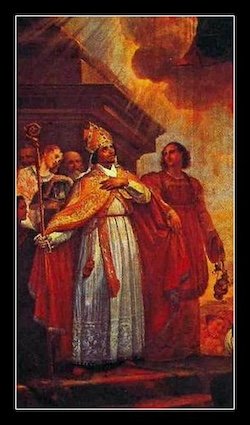
Saint Juvenal (d. May 3, 369 or 377) (Italian: San Giovenale di Narni) is venerated as the first Bishop of Narni in Umbria. Historical details regarding Juvenal's life are limited. A biography of Juvenal of little historical value, written after the seventh century, states that Juvenal was born in Africa, was ordained by Pope Damasus I, was the first bishop of Narni, and was buried in the Porta Superiore on the Via Flaminia on August 7, though his feast day was celebrated on May 3. This Vita does not call him a martyr but calls him a confessor. The martyrologies of Florus of Lyon and Ado describe Juvenal as a bishop and confessor rather than as a martyr.
Saint Gregory the Great, in his Dialogues (IV, 12) and Homiliae in Evangelium, speaks of a bishop of Narni named Juvenal, and describes him as a martyr. The title of martyr, though, was sometimes given to bishops who did not necessarily die for their faith. Gregory also mentions a sepulcher associated with Juvenal at Narni.
The Gelasian Sacramentary has a prayer in honour of the saint under May 3. The Codex Bernense of the Martyrologium Hieronymianumrecords his name under May 3 with those of three martyrs of the Via Nomentana: Eventius, Alexander I, and Theodulus.
Saint Juvenal appears, not as a martyr, but as a bishop and confessor, in the Tridentine calendar, which allots him a commemorationshared with these three martyrs within the feast of the Finding of the Cross on May 3.
His legend suggests that he saved Narni from both Ligurian and Sarmatian invaders by calling down a divine thunderstorm.
The construction of Juvenal's sepulcher in Narni is attributed to his successor, St. Maximus (d. 416 AD). The author of the Life of Pope Vigilius (sixth century) in the Liber Pontificalis states that a monastery founded by Belisarius near Orte was dedicated to Juvenal. In 878, Juvenal's relics were taken to the Basilica di San Frediano in Lucca with those of Saints Cassius and Cassius' wife Fausta by Adalbert, Margrave of Tuscany, but all of the relics were returned to Narni two years later. The relics of Saint Cassius were built in a restored shrine later known as the Sacello di San Cassio. Juvenal's relics are said to have been hidden.
LAST-MODIFIED:20240427T160840Z SEQUENCE:48538634 X-ACCESS:1 X-HITS:29 X-COLOR:f0b80e X-SHOW-END-TIME:1 END:VEVENT BEGIN:VEVENT DTSTART;VALUE=DATE:20240503 DTEND;VALUE=DATE:20240504 UID:10800B1C-E2DE-4D49-9B89-8F47E656F646 SUMMARY:The Finding of the Holy Cross CREATED:20221013T211126Z DTSTAMP:20221013T211126Z URL:https://www.stpaulsweymouth.org/component/dpcalendar/event/1539?calid=13 DESCRIPTION:The Finding of the Holy Cross\N\NWhen God restored peace to His Church by exalting Constantine the Great to the imperial throne, that pious prince, who had triumphed over his enemies by the miraculous power of the Cross of Christ, was very desirous of expressing his veneration for the holy places which had been honored and sanctified by the presence and sufferings of our blessed Redeemer on earth. He accordingly resolved to build a magnificent church in the city of Jerusalem.\NSaint Helen, the Emperor's mother, desiring to visit the holy places there, made a journey into Palestine in 326, though she was at that time near eighty years of age. On her arrival at Jerusalem she was inspired with a great desire to find the identical cross on which Christ had suffered for our sins, in order to build the proposed church on the site of Calvary. But there was no mark or tradition, even among the Christians, to show where it might lie. Saint Helen consulted everyone in Jerusalem and the surrounding areas, whom she thought likely to assist her in discovering the cross. She was credibly informed that, if she could find the holy sepulchre, she would also find the instruments of the punishment, since it was the custom among the Jews to dig a pit near the place where the body of a criminal was buried, and to throw into it whatever had contributed to his execution.\NThe Roman pagans who were dominated by an aversion to Christianity had done what they could to conceal the place where our Saviour was buried by heaping on it a great quantity of stone and rubbish, and building there a temple to Venus. They had also erected a statue of Jupiter in the place where Our Lord rose from the dead. The pious Empress therefore ordered the profane buildings to be pulled down, the statue broken in pieces, and the rubbish removed. And then, upon digging to a great depth, the holy sepulchre was uncovered.\NNear it were found three crosses and the nails which had pierced Our Saviour's body, with the title which had been fixed to His cross. By this discovery they knew that one of those three crosses was the one they sought, and that the others belonged to the two criminals between whom Our Saviour had been crucified. But because the title was found separate from the cross, it was difficult to distinguish which of the three crosses was the one on which our Redeemer consummated His sacrifice for the salvation of the world. In this perplexity the holy Bishop of Jerusalem Macarius, knowing that one of the principal ladies of the city lay ill and at the point of death, suggested to the Empress to have the three crosses carried to the sick person, not doubting that God would reveal which one was the cross they sought. Saint Macarius prayed that God would have regard to their faith, and then he applied the crosses, one after another, to the patient. She was immediately and perfectly cured by the touch of the True Cross, after the others had been tried without effect.\NSaint Helen, full of joy at having found the treasure which she had so earnestly sought and so highly esteemed, built a church on the site and placed the cross there with great veneration, after providing for it an extraordinarily rich silver reliquary. She afterwards carried part of it to her son Constantine at Constantinople, who received it with great veneration; and another part she took to Rome, to be placed in the church which she built there, called Church of the Holy Cross of Jerusalem, where it remains to this day.\NThe title was sent by Saint Helen to that church in Rome, and placed on the top of an arch, where it was found in a case of lead in 1492. The inscription in Hebrew, Greek, and Latin is in red letters, and the wood was whitened. So it was in 1492; but these colors have since faded, and the words Jesus and Judaeorum are eaten away. The board is nine inches long, but is considered to have measured about twelve originally.\NThe reliquary of Jerusalem was committed to the care of Saint Macarius and kept with singular care and respect in the magnificent church which Saint Helen and her son built there. Saint Paulinus relates that, though chips were almost daily cut off from it and given to devout persons, yet the sacred wood suffered thereby no diminution. It is affirmed by Saint Cyril of Jerusalem, twenty-five years after the discovery, that pieces of the cross were spread all over the earth; he compares this wonder to the miraculous feeding of five thousand men, as recorded in the Gospel. The discovery of the cross would have happened in the spring, after navigation began on the Mediterranean Sea, for Saint Helen went the same year to Constantinople and from there to Rome, where she died in the arms of her son on the 18thof August of the same year, 326.\NReflection. In all pious undertakings, above all in the sanctification of the soul, the mere beginning does not suffice. Whoever perseveres to the end, he shall be saved. (Matt. 24:13)\NLes Petits Bollandistes: Vies des Saints, by Msgr. Paul Guérin (Bloud et Barral: Paris, 1882), Vol. 5; Little Pictorial Lives of the Saints, a compilation based on Butler's Lives of the Saints and other sources by John Gilmary Shea (Benziger Brothers: New York, 1894) X-ALT-DESC;FMTTYPE=text/html:
The Finding of the Holy Cross
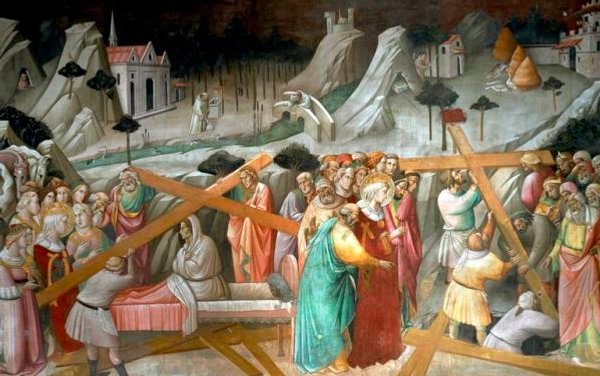
When God restored peace to His Church by exalting Constantine the Great to the imperial throne, that pious prince, who had triumphed over his enemies by the miraculous power of the Cross of Christ, was very desirous of expressing his veneration for the holy places which had been honored and sanctified by the presence and sufferings of our blessed Redeemer on earth. He accordingly resolved to build a magnificent church in the city of Jerusalem.
Saint Helen, the Emperor's mother, desiring to visit the holy places there, made a journey into Palestine in 326, though she was at that time near eighty years of age. On her arrival at Jerusalem she was inspired with a great desire to find the identical cross on which Christ had suffered for our sins, in order to build the proposed church on the site of Calvary. But there was no mark or tradition, even among the Christians, to show where it might lie. Saint Helen consulted everyone in Jerusalem and the surrounding areas, whom she thought likely to assist her in discovering the cross. She was credibly informed that, if she could find the holy sepulchre, she would also find the instruments of the punishment, since it was the custom among the Jews to dig a pit near the place where the body of a criminal was buried, and to throw into it whatever had contributed to his execution.
The Roman pagans who were dominated by an aversion to Christianity had done what they could to conceal the place where our Saviour was buried by heaping on it a great quantity of stone and rubbish, and building there a temple to Venus. They had also erected a statue of Jupiter in the place where Our Lord rose from the dead. The pious Empress therefore ordered the profane buildings to be pulled down, the statue broken in pieces, and the rubbish removed. And then, upon digging to a great depth, the holy sepulchre was uncovered.
Near it were found three crosses and the nails which had pierced Our Saviour's body, with the title which had been fixed to His cross. By this discovery they knew that one of those three crosses was the one they sought, and that the others belonged to the two criminals between whom Our Saviour had been crucified. But because the title was found separate from the cross, it was difficult to distinguish which of the three crosses was the one on which our Redeemer consummated His sacrifice for the salvation of the world. In this perplexity the holy Bishop of Jerusalem Macarius, knowing that one of the principal ladies of the city lay ill and at the point of death, suggested to the Empress to have the three crosses carried to the sick person, not doubting that God would reveal which one was the cross they sought. Saint Macarius prayed that God would have regard to their faith, and then he applied the crosses, one after another, to the patient. She was immediately and perfectly cured by the touch of the True Cross, after the others had been tried without effect.
Saint Helen, full of joy at having found the treasure which she had so earnestly sought and so highly esteemed, built a church on the site and placed the cross there with great veneration, after providing for it an extraordinarily rich silver reliquary. She afterwards carried part of it to her son Constantine at Constantinople, who received it with great veneration; and another part she took to Rome, to be placed in the church which she built there, called Church of the Holy Cross of Jerusalem, where it remains to this day.
The title was sent by Saint Helen to that church in Rome, and placed on the top of an arch, where it was found in a case of lead in 1492. The inscription in Hebrew, Greek, and Latin is in red letters, and the wood was whitened. So it was in 1492; but these colors have since faded, and the words Jesus and Judaeorum are eaten away. The board is nine inches long, but is considered to have measured about twelve originally.
The reliquary of Jerusalem was committed to the care of Saint Macarius and kept with singular care and respect in the magnificent church which Saint Helen and her son built there. Saint Paulinus relates that, though chips were almost daily cut off from it and given to devout persons, yet the sacred wood suffered thereby no diminution. It is affirmed by Saint Cyril of Jerusalem, twenty-five years after the discovery, that pieces of the cross were spread all over the earth; he compares this wonder to the miraculous feeding of five thousand men, as recorded in the Gospel. The discovery of the cross would have happened in the spring, after navigation began on the Mediterranean Sea, for Saint Helen went the same year to Constantinople and from there to Rome, where she died in the arms of her son on the 18thof August of the same year, 326.
Reflection. In all pious undertakings, above all in the sanctification of the soul, the mere beginning does not suffice. Whoever perseveres to the end, he shall be saved. (Matt. 24:13)
Les Petits Bollandistes: Vies des Saints, by Msgr. Paul Guérin (Bloud et Barral: Paris, 1882), Vol. 5; Little Pictorial Lives of the Saints, a compilation based on Butler's Lives of the Saints and other sources by John Gilmary Shea (Benziger Brothers: New York, 1894)
LAST-MODIFIED:20240427T161228Z SEQUENCE:48538862 X-ACCESS:1 X-HITS:116 X-COLOR:f0b80e X-SHOW-END-TIME:1 END:VEVENT BEGIN:VEVENT DTSTART;VALUE=DATE:20240504 DTEND;VALUE=DATE:20240505 UID:8342BD36-27F3-4E3E-BF3A-D13906D4B74E SUMMARY:The Holy Martyrs of England and Wales CREATED:20221013T211126Z DTSTAMP:20221013T211126Z URL:https://www.stpaulsweymouth.org/component/dpcalendar/event/1533?calid=13 DESCRIPTION:The Holy Martyrs of England and Wales\N\NThe forty Martyrs are among the best known of the many Catholics who gave their lives in England and Wales during the 16th and 17th centuries owing to the fact that their religious convictions clashed with the laws of the State at that time.\NAs is known, King Henry VIII had proclaimed himself supreme head of the Church in England and Wales, claiming for himself and his successors power over his subjects also in spiritual questions. According to our Catholic faith, this spiritual supremacy is due only to the Vicar of Christ, the Roman Pontiff. The Blessed Martyrs, and with them many other Catholics, though they wished to be, and actually were, loyal subjects of the Crown in everything belonging to it legitimately according to the ideas of that time, refused for reasons of conscience to recognize the "spiritual supremacy" of the King and to obey the laws issued by the political power on purely spiritual questions such as Holy Mass, Eucharistic Communion and similar matters. This was what led many people to face and meet death courageously rather than act against their conscience and deny their Catholic faith as regards the spiritual Primacy of the Vicar of Christ and the dogma of the Blessed Sacrament. From the ecumenical point of view, it is extremely important to realize the fact, proved historical, that the Martyrs were not put to death as a result of internal struggles between Catholics and Anglicans, but precisely because they were not willing to submit to a claim of the State which is commonly recognized today as being illegitimate and unacceptable.\NIf—as has always been clearly recognized in the case of St. Thomas More—it would be a serious error to consider him a leading figure in the opposition between Catholics and Anglicans, whereas he must be considered a person who rose in defence of the rights of conscience against State usurpation, the same can be said of the 40 Martyrs, who died for exactly the same reasons.\NAnd this is just what the Church intends to stress with their Canonization. It was and is her intention to hold up to the admiration not only of Catholics, but of all men, the example of persons unconditionally loyal to Christ and to their conscience to the extent of being ready to shed their blood for that reason. Owing to their living faith in Christ, their personal attachment to Him, their deep sharing of His life and principles, these persons gave a clear demonstration of their authentically Christian charity for men, also when—on the scaffold—they prayed not only for those who shared their religious convictions, but also for all their fellow-countrymen it; and in particular for the Head of the State and even for their executioners.\NThis firm attitude in defence of their own freedom of conscience and of their faith in the truth of the Primacy of Christ and of the Holy Eucharist is identical in all the 40 Martyrs. In every other respect, however, they are different as for example in their state in life, social position, education, culture, age, character and temperament, and in fact in everything that makes up the most typically personal qualities of such a large group of men and women. The group is composed, in fact, of 13 priests of the secular clergy, 3 Benedictines, 3 Carthusians, 1 Brigittine, 2 Franciscans, 1 Augustinian, 10 Jesuits and 7 members of the laity, including 3 mothers.\NThe history of their martyrdom makes varied and stimulating reading as the different characters are revealed, not without a touch of typically English humour.\NThe torments they underwent give an idea of their fortitude. The priests—for example—were hanged, and shortly after the noose had tightened round their neck they were drawn and quartered. In most cases the second operation took place when they were still alive, for they were not left hanging long enough to bring about their death, sometimes only for a very few seconds.\NFor the others—that is, those who were not priests—death by hanging was the normal procedure. But before their execution the Martyrs were usually cruelly tortured, to make them reveal the names of any accomplices in their "crime", which was having celebrated Holy Mass, having attended it or having given shelter to priests. In the course of the trial, and during the tortures, they were offered their life and freedom on condition they recognized the king (or the queen, according to the period), as head of the Church of England.\NAnd here are some particular features that drive home to us the spirituality of these Martyrs and how they faced death.\NCuthbert Mayne, a secular priest, replied to a gaoler who came to tell him he would be executed three days later: "I wish I had something valuable to give you, for the good news you bring me...". Edmund Campion, a Jesuit, was so pleased when taken to the place of execution that the people said about him and his companions: "But they're laughing! He doesn't care at all about dying...'.\NRalph Sherwin, the first of the martyrs from the English College in Rome had heavy chains round his ankles that rattled at every step he took. "I have on my feet—he wrote wittily to a friend of his—some bells that remind me, when I walk, who I am and to whom I belong. I have never heard sweeter music than this..." He was executed immediately after Campion; he piously kissed the executioner's hands, still stained with the blood of his fellow martyr.\NAlexander Briant—the diocesan priest who entered the Society of Jesus shortly before his death—had made himself a little wooden cross during his imprisonment, and held it clasped tightly between his hands all the time, even during the trial. It was then, however that they snatched it away from him But he replied to the judge: "You can take it out of my hands, but not out of my heart". The cross was later bought by some Catholics and is now in the English College in Rome.\NJohn Paine (a secular priest, whose death was long mourned in the whole of Chelmsford) kissed the gallows before dying; and Richard Gwyn, a layman helped the hangman, overcome with emotion, to put the rope round his neck Some strange and extremely revealing episodes are told about Gwyn. Once for example, when he was in prison he was taken in chains to a chapel and obliged to stand right under the pulpit where an Anglican preacher was giving a sermon. The prisoner then began to rattle his chains, making such a din that no one could hear a word of what was being said. Taken back again to his cell, he was approached by various Protestant ministers. One of them, who had a purple nose, wanted to dispute about the keys of the Kingdom of Heaven and asserted that God had given them also to him, not just to St. Peter. "There is a difference", Richard Gwyn retorted "St. Peter was entrusted with the keys of the Kingdom of Heaven, while the keys entrusted to you are obviously those of the beer cellar".\NCultured Elizabethan society has its representatives among the martyrs Swithun Wells was one of them. He had travelled a great deal; he had also been in Rome, and knew Italian well. He was a sportsman, particularly fond of hunting. On his way to the gallows, he caught sight of an old friend among the crowd and said to him: 'Farewell, my dear! And farewell too, to our fine hunting-parties. Now I've something far better to do...". It was December 10th, 1591, and bitterly cold. When they stripped him, he turned to his main persecutor, Topcliffe, and said in a joking tone: "Hurry up, please Mr. Topcliffe. Are you not ashamed to make a poor old man suffer in his shirt in this cold?"\NCatholic priests managed to exercise the ministry thanks to the precious collaboration of the faithful. who welcomed them and kept them hidden in their homes and facilitated the celebration of Holy Mass. As can well be understood, now and again some one would betray them. The Jesuit laybrother, Nicholas Owen, was famous for the many hiding-places he built in numerous houses all over England. Arrested and imprisoned in the Tower of London, he died while being brutally tortured.\NOf the forty Martyrs, the one who underwent the most torture was Henry Walpole, a Jesuit priest. His exceptional physique resisted the most atrocious forms of torture for as many as 14 times, until the gallows put an end to his sufferings.\NThe following inscription can still be read in the Tower of London, in one of the cells in which the Martyrs were detained: "Quanto plus afflictionis pro Christo in hoc saeculo, tanto plus gloriae in futuro" (the more suffering for Christ in this life, the more glory in heaven). The words were carved by Philip Howard, Earl of Arundell. He was the queen's favourite when he made his appearance at court, at the age of 18, leading a dissolute life. At the age of 24, he happened to be present at a discussion between Campion and some Protestant ministers. The holy Jesuit's words made a deep impression on him; as a result he was converted to Catholicism. As he was about to flee to the continent. he was captured and thrown into prison. He spent eleven long years there, reading, praying and meditating. He was condemned to death, but the sentence was postponed by the Queen's intervention. He fell seriously ill and died in prison.\NA curious fact happened to the Franciscan John Jones. At the time of his execution, the hangman found he had forgotten the rope. The martyr took advantage of the hour's wait to speak to the crowd and to pray.\NWhat is most striking is the serenity with which they all met death. Some of them even made witty, humorous remarks.\NThus, for example the Benedictine; John Roberts, seeing that a fire was being lit to burn his entrails—after hanging and quartering—made the sally: "I see you are preparing us a hot breakfast!".\NWhen someone shouted at the Jesuit Edmund Arrowsmith: "You've got to die, do you realize?", he replied calmly: "So have you, so have you, my good man...". It is testified that Alban Roe a Benedictine religious, was a very entertaining fellow. In spite of the torture that was inflicted on him in prison he found the courage to invite the wardens to play cards with him, telling funny stories. He gave all the money he had to the executioner to drink to his health, warning him not to get drunk, however.\NPhilip Evans, having found a particularly kind judge, was treated somewhat indulgently in prison, so much so that he could even play tennis. Well, it was just during a game that the news of his condemnation to death arrived. He continued to play, as if nothing had happened. Then he picked up his harp and began to play.\NJohn Kemple, a secular priest, was the only one who always refused to go into biding. "I'm too old now—he would say—and it is better for me to spend the rest of my life suffering for my religion". Of course he was caught and arrested. Before he was hanged, he asked to be allowed to smoke his inseparable pipe. The executioner, who happened to be an old friend of his, was overcome with emotion when the moment came to carry out his task and showed his hesitation. Then it was the martyr who urged him on, saying: "My good Anthony, do what you have to do. I forgive you with all my heart...".\NThe martyrdom of Margaret Clitherow is particularly moving. She was accused "of having sheltered the Jesuits and priests of the secular clergy, traitors to Her Majesty the Queen"; but she retorted: "I have only helped the Queen's friends". Margaret knew that the court had decided to condemn her to death and, not wanting to make the jury accomplices in her condemnation, she refused the trial. The alternative was to be crushed to death. When the terrible sentence was passed, Margaret said: "I will accept willingly everything that God wills".\NOn Friday March 25th, 1588, at eight o'clock in the morning, Margaret, just thirty-three years old, left Ouse Bridge prison, barefooted, bound for Toll Booth, accompanied by two police superintendents, four executioners and four women friends; she carried on her arm a white linen garment. When she arrived at the dungeon, she knelt in front of the officials, begging that she should not be stripped, but her prayer was not granted. While the men looked away, the four pious women gathered round her and before Margaret lay down on the ground they spread over her body the white garment that the prisoner had brought with her for that purpose. Then her martyrdom began.\NHer arms were stretched out in the shape of a cross, and her hands tightly bound to two stakes in the ground. The executioners put a sharp stone the size of a fist under her back and placed on her body a large slab onto which weights were gradually loaded up to over 800 pounds. Margaret whispered: "Jesus, have mercy on me". Her death agony lasted for fifteen minutes, then the moaning ceased, and all was quiet.\NThese brief remarks on some outstanding episodes of the martyrdom of the 40 Martyrs, and the quoting of some of the words they uttered at the gallows, are sufficient to show what was the ultimate reasons for their death and, at the same time, the sublimely Christian state of mind of these heroes of the faith.\NSource: EWTN X-ALT-DESC;FMTTYPE=text/html:The Holy Martyrs of England and Wales
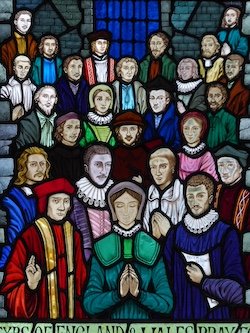
The forty Martyrs are among the best known of the many Catholics who gave their lives in England and Wales during the 16th and 17th centuries owing to the fact that their religious convictions clashed with the laws of the State at that time.
As is known, King Henry VIII had proclaimed himself supreme head of the Church in England and Wales, claiming for himself and his successors power over his subjects also in spiritual questions. According to our Catholic faith, this spiritual supremacy is due only to the Vicar of Christ, the Roman Pontiff. The Blessed Martyrs, and with them many other Catholics, though they wished to be, and actually were, loyal subjects of the Crown in everything belonging to it legitimately according to the ideas of that time, refused for reasons of conscience to recognize the "spiritual supremacy" of the King and to obey the laws issued by the political power on purely spiritual questions such as Holy Mass, Eucharistic Communion and similar matters. This was what led many people to face and meet death courageously rather than act against their conscience and deny their Catholic faith as regards the spiritual Primacy of the Vicar of Christ and the dogma of the Blessed Sacrament. From the ecumenical point of view, it is extremely important to realize the fact, proved historical, that the Martyrs were not put to death as a result of internal struggles between Catholics and Anglicans, but precisely because they were not willing to submit to a claim of the State which is commonly recognized today as being illegitimate and unacceptable.
If—as has always been clearly recognized in the case of St. Thomas More—it would be a serious error to consider him a leading figure in the opposition between Catholics and Anglicans, whereas he must be considered a person who rose in defence of the rights of conscience against State usurpation, the same can be said of the 40 Martyrs, who died for exactly the same reasons.
And this is just what the Church intends to stress with their Canonization. It was and is her intention to hold up to the admiration not only of Catholics, but of all men, the example of persons unconditionally loyal to Christ and to their conscience to the extent of being ready to shed their blood for that reason. Owing to their living faith in Christ, their personal attachment to Him, their deep sharing of His life and principles, these persons gave a clear demonstration of their authentically Christian charity for men, also when—on the scaffold—they prayed not only for those who shared their religious convictions, but also for all their fellow-countrymen it; and in particular for the Head of the State and even for their executioners.
This firm attitude in defence of their own freedom of conscience and of their faith in the truth of the Primacy of Christ and of the Holy Eucharist is identical in all the 40 Martyrs. In every other respect, however, they are different as for example in their state in life, social position, education, culture, age, character and temperament, and in fact in everything that makes up the most typically personal qualities of such a large group of men and women. The group is composed, in fact, of 13 priests of the secular clergy, 3 Benedictines, 3 Carthusians, 1 Brigittine, 2 Franciscans, 1 Augustinian, 10 Jesuits and 7 members of the laity, including 3 mothers.
The history of their martyrdom makes varied and stimulating reading as the different characters are revealed, not without a touch of typically English humour.
The torments they underwent give an idea of their fortitude. The priests—for example—were hanged, and shortly after the noose had tightened round their neck they were drawn and quartered. In most cases the second operation took place when they were still alive, for they were not left hanging long enough to bring about their death, sometimes only for a very few seconds.
For the others—that is, those who were not priests—death by hanging was the normal procedure. But before their execution the Martyrs were usually cruelly tortured, to make them reveal the names of any accomplices in their "crime", which was having celebrated Holy Mass, having attended it or having given shelter to priests. In the course of the trial, and during the tortures, they were offered their life and freedom on condition they recognized the king (or the queen, according to the period), as head of the Church of England.
And here are some particular features that drive home to us the spirituality of these Martyrs and how they faced death.
Cuthbert Mayne, a secular priest, replied to a gaoler who came to tell him he would be executed three days later: "I wish I had something valuable to give you, for the good news you bring me...". Edmund Campion, a Jesuit, was so pleased when taken to the place of execution that the people said about him and his companions: "But they're laughing! He doesn't care at all about dying...'.
Ralph Sherwin, the first of the martyrs from the English College in Rome had heavy chains round his ankles that rattled at every step he took. "I have on my feet—he wrote wittily to a friend of his—some bells that remind me, when I walk, who I am and to whom I belong. I have never heard sweeter music than this..." He was executed immediately after Campion; he piously kissed the executioner's hands, still stained with the blood of his fellow martyr.
Alexander Briant—the diocesan priest who entered the Society of Jesus shortly before his death—had made himself a little wooden cross during his imprisonment, and held it clasped tightly between his hands all the time, even during the trial. It was then, however that they snatched it away from him But he replied to the judge: "You can take it out of my hands, but not out of my heart". The cross was later bought by some Catholics and is now in the English College in Rome.
John Paine (a secular priest, whose death was long mourned in the whole of Chelmsford) kissed the gallows before dying; and Richard Gwyn, a layman helped the hangman, overcome with emotion, to put the rope round his neck Some strange and extremely revealing episodes are told about Gwyn. Once for example, when he was in prison he was taken in chains to a chapel and obliged to stand right under the pulpit where an Anglican preacher was giving a sermon. The prisoner then began to rattle his chains, making such a din that no one could hear a word of what was being said. Taken back again to his cell, he was approached by various Protestant ministers. One of them, who had a purple nose, wanted to dispute about the keys of the Kingdom of Heaven and asserted that God had given them also to him, not just to St. Peter. "There is a difference", Richard Gwyn retorted "St. Peter was entrusted with the keys of the Kingdom of Heaven, while the keys entrusted to you are obviously those of the beer cellar".
Cultured Elizabethan society has its representatives among the martyrs Swithun Wells was one of them. He had travelled a great deal; he had also been in Rome, and knew Italian well. He was a sportsman, particularly fond of hunting. On his way to the gallows, he caught sight of an old friend among the crowd and said to him: 'Farewell, my dear! And farewell too, to our fine hunting-parties. Now I've something far better to do...". It was December 10th, 1591, and bitterly cold. When they stripped him, he turned to his main persecutor, Topcliffe, and said in a joking tone: "Hurry up, please Mr. Topcliffe. Are you not ashamed to make a poor old man suffer in his shirt in this cold?"
Catholic priests managed to exercise the ministry thanks to the precious collaboration of the faithful. who welcomed them and kept them hidden in their homes and facilitated the celebration of Holy Mass. As can well be understood, now and again some one would betray them. The Jesuit laybrother, Nicholas Owen, was famous for the many hiding-places he built in numerous houses all over England. Arrested and imprisoned in the Tower of London, he died while being brutally tortured.
Of the forty Martyrs, the one who underwent the most torture was Henry Walpole, a Jesuit priest. His exceptional physique resisted the most atrocious forms of torture for as many as 14 times, until the gallows put an end to his sufferings.
The following inscription can still be read in the Tower of London, in one of the cells in which the Martyrs were detained: "Quanto plus afflictionis pro Christo in hoc saeculo, tanto plus gloriae in futuro" (the more suffering for Christ in this life, the more glory in heaven). The words were carved by Philip Howard, Earl of Arundell. He was the queen's favourite when he made his appearance at court, at the age of 18, leading a dissolute life. At the age of 24, he happened to be present at a discussion between Campion and some Protestant ministers. The holy Jesuit's words made a deep impression on him; as a result he was converted to Catholicism. As he was about to flee to the continent. he was captured and thrown into prison. He spent eleven long years there, reading, praying and meditating. He was condemned to death, but the sentence was postponed by the Queen's intervention. He fell seriously ill and died in prison.
A curious fact happened to the Franciscan John Jones. At the time of his execution, the hangman found he had forgotten the rope. The martyr took advantage of the hour's wait to speak to the crowd and to pray.
What is most striking is the serenity with which they all met death. Some of them even made witty, humorous remarks.
Thus, for example the Benedictine; John Roberts, seeing that a fire was being lit to burn his entrails—after hanging and quartering—made the sally: "I see you are preparing us a hot breakfast!".
When someone shouted at the Jesuit Edmund Arrowsmith: "You've got to die, do you realize?", he replied calmly: "So have you, so have you, my good man...". It is testified that Alban Roe a Benedictine religious, was a very entertaining fellow. In spite of the torture that was inflicted on him in prison he found the courage to invite the wardens to play cards with him, telling funny stories. He gave all the money he had to the executioner to drink to his health, warning him not to get drunk, however.
Philip Evans, having found a particularly kind judge, was treated somewhat indulgently in prison, so much so that he could even play tennis. Well, it was just during a game that the news of his condemnation to death arrived. He continued to play, as if nothing had happened. Then he picked up his harp and began to play.
John Kemple, a secular priest, was the only one who always refused to go into biding. "I'm too old now—he would say—and it is better for me to spend the rest of my life suffering for my religion". Of course he was caught and arrested. Before he was hanged, he asked to be allowed to smoke his inseparable pipe. The executioner, who happened to be an old friend of his, was overcome with emotion when the moment came to carry out his task and showed his hesitation. Then it was the martyr who urged him on, saying: "My good Anthony, do what you have to do. I forgive you with all my heart...".
The martyrdom of Margaret Clitherow is particularly moving. She was accused "of having sheltered the Jesuits and priests of the secular clergy, traitors to Her Majesty the Queen"; but she retorted: "I have only helped the Queen's friends". Margaret knew that the court had decided to condemn her to death and, not wanting to make the jury accomplices in her condemnation, she refused the trial. The alternative was to be crushed to death. When the terrible sentence was passed, Margaret said: "I will accept willingly everything that God wills".
On Friday March 25th, 1588, at eight o'clock in the morning, Margaret, just thirty-three years old, left Ouse Bridge prison, barefooted, bound for Toll Booth, accompanied by two police superintendents, four executioners and four women friends; she carried on her arm a white linen garment. When she arrived at the dungeon, she knelt in front of the officials, begging that she should not be stripped, but her prayer was not granted. While the men looked away, the four pious women gathered round her and before Margaret lay down on the ground they spread over her body the white garment that the prisoner had brought with her for that purpose. Then her martyrdom began.
Her arms were stretched out in the shape of a cross, and her hands tightly bound to two stakes in the ground. The executioners put a sharp stone the size of a fist under her back and placed on her body a large slab onto which weights were gradually loaded up to over 800 pounds. Margaret whispered: "Jesus, have mercy on me". Her death agony lasted for fifteen minutes, then the moaning ceased, and all was quiet.
These brief remarks on some outstanding episodes of the martyrdom of the 40 Martyrs, and the quoting of some of the words they uttered at the gallows, are sufficient to show what was the ultimate reasons for their death and, at the same time, the sublimely Christian state of mind of these heroes of the faith.
Source: EWTN
LAST-MODIFIED:20240427T155449Z SEQUENCE:48537803 X-ACCESS:1 X-HITS:85 X-COLOR:f0b80e X-SHOW-END-TIME:1 END:VEVENT BEGIN:VEVENT DTSTART;VALUE=DATE:20240504 DTEND;VALUE=DATE:20240505 UID:1B8FE40A-686F-4597-A0F2-10E27CD709F9 SUMMARY:St. Monica CREATED:20221013T211126Z DTSTAMP:20221013T211126Z URL:https://www.stpaulsweymouth.org/component/dpcalendar/event/1558?calid=13 DESCRIPTION:St. Monica, Widow\N\NSaint Monica, the mother of Saint Augustine, was born in 332 of a Christian family of the ancient city of Tagasta in northern Africa. After a girlhood of singular innocence and piety, she was given in marriage to Patricius, a pagan. She at once devoted herself to his conversion, praying for him always and winning his reverence and love by the holiness of her life and her affectionate forbearance. She was rewarded by seeing him baptized a year before his death.\NWhen her son Augustine went astray in faith and habits, her prayers and tears were incessant. She once begged a learned bishop that he would talk to her son, in order to bring him to a better disposition, but he declined, despairing of success with a young man at once so gifted and so headstrong. At the sight of her prayers and tears, he nonetheless bade her be of good courage, for it could not happen that the child of those tears should perish.\NAugustine, by going to Italy, was able for a time to free himself from his mother's importunities, but he could not escape from her prayers, which encompassed him like the providence of God. She followed him to Italy; and there, by his marvelous conversion, her sorrow was turned into joy.\NAt Ostia, shortly before they were to re-embark for Africa, Augustine and his mother sat at a window conversing on the life of the blessed. She turned to him and said, My son, there is nothing now I care for in this life. What I shall now do, or why I remain on this earth, I know not. The one reason I had for wishing to linger in this life a little longer was that I might see you a Catholic Christian before I died. This grace God has granted me superabundantly, seeing you reject earthly happiness to become His servant. A few days afterwards she had an attack of fever and died at the age of fifty-six, in the year 388.\NReflection. It is impossible to set any bounds to what persevering prayer may do. It gives man a share in the Divine Omnipotence. Saint Augustine's soul lay bound in the chains of heresy and an illegitimate union, both of which had by long habit grown inveterate. They were broken by his mother's prayers.\NLes Petits Bollandistes: Vies des Saints, by Msgr. Paul Guérin (Bloud et Barral: Paris, 1882), Vol. 5; Little Pictorial Lives of the Saints, a compilation based on Butler's Lives of the Saints and other sources by John Gilmary Shea (Benziger Brothers: New York, 1894) X-ALT-DESC;FMTTYPE=text/html:St. Monica, Widow
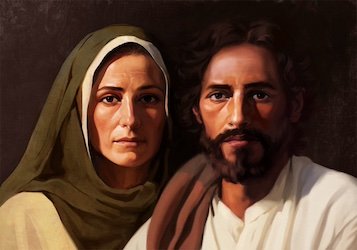
Saint Monica, the mother of Saint Augustine, was born in 332 of a Christian family of the ancient city of Tagasta in northern Africa. After a girlhood of singular innocence and piety, she was given in marriage to Patricius, a pagan. She at once devoted herself to his conversion, praying for him always and winning his reverence and love by the holiness of her life and her affectionate forbearance. She was rewarded by seeing him baptized a year before his death.
When her son Augustine went astray in faith and habits, her prayers and tears were incessant. She once begged a learned bishop that he would talk to her son, in order to bring him to a better disposition, but he declined, despairing of success with a young man at once so gifted and so headstrong. At the sight of her prayers and tears, he nonetheless bade her be of good courage, for it could not happen that the child of those tears should perish.
Augustine, by going to Italy, was able for a time to free himself from his mother's importunities, but he could not escape from her prayers, which encompassed him like the providence of God. She followed him to Italy; and there, by his marvelous conversion, her sorrow was turned into joy.
At Ostia, shortly before they were to re-embark for Africa, Augustine and his mother sat at a window conversing on the life of the blessed. She turned to him and said, My son, there is nothing now I care for in this life. What I shall now do, or why I remain on this earth, I know not. The one reason I had for wishing to linger in this life a little longer was that I might see you a Catholic Christian before I died. This grace God has granted me superabundantly, seeing you reject earthly happiness to become His servant. A few days afterwards she had an attack of fever and died at the age of fifty-six, in the year 388.
Reflection. It is impossible to set any bounds to what persevering prayer may do. It gives man a share in the Divine Omnipotence. Saint Augustine's soul lay bound in the chains of heresy and an illegitimate union, both of which had by long habit grown inveterate. They were broken by his mother's prayers.
Les Petits Bollandistes: Vies des Saints, by Msgr. Paul Guérin (Bloud et Barral: Paris, 1882), Vol. 5; Little Pictorial Lives of the Saints, a compilation based on Butler's Lives of the Saints and other sources by John Gilmary Shea (Benziger Brothers: New York, 1894)
LAST-MODIFIED:20240504T141913Z SEQUENCE:49136867 X-ACCESS:1 X-HITS:5 X-COLOR:f0b80e X-SHOW-END-TIME:1 END:VEVENT BEGIN:VEVENT DTSTART;VALUE=DATE:20240505 DTEND;VALUE=DATE:20240506 UID:AFBC68F6-053C-4EC1-BC85-260D32DDC4E9 SUMMARY:St. Pius CREATED:20221013T211126Z DTSTAMP:20221013T211126Z URL:https://www.stpaulsweymouth.org/component/dpcalendar/event/1529?calid=13 DESCRIPTION:St. Pius V Pope, Confessor\N\NMichael Ghislieri, a Dominican friar from his fifteenth year, a teacher of religion at twenty, as a simple religious, as inquisitor, bishop, and cardinal, was famous both for the spotless purity of his own life and for his intrepid defense of the Church's faith and discipline. Surrounded in his time by great men and great Saints, in apostolic virtue he was surpassed by none.\NAs Pope, his first concern was to reform the Roman court and the capital city by the strict example of his own household and the punishment of offenders. He next endeavored to obtain from the Catholic powers recognition of the decrees of the Council of Trent, two of which he strictly enforced: the obligatory residence of bishops in their sees, and the establishment of diocesan seminaries. He revised the Missal and Breviary, and reformed ecclesiastical music.\NHe was not less active in protecting the Church outside Italy. We see him at the same time supporting the Catholic King of France against the Huguenot rebels, and encouraging Mary, Queen of Scots in the bitterness of her captivity. It is he who excommunicated her rival, the usurper Elizabeth, when the best blood of England flowed upon the scaffold and the measure of her crimes was full. The intrepidity of this Vicar of Christ found enemies. The holy Pope was accustomed to kiss the feet of the crucifix on leaving or entering his room. One day the feet moved away from his lips. Sorrow filled his heart, and he made acts of contrition, fearing that he must have committed some secret offense, yet he still could not kiss the feet. It was afterwards discovered that they had been poisoned by an enemy.\NIt was in the Lepanto victory that the Saint's power was most plainly manifest. There, in October of 1571, by the holy league which he had formed but still more by the prayers of the aging Pontiff to the great Mother of God, the defeat of the advancing Ottoman forces was obtained and Christendom was saved from the Turk. Six months later Saint Pius V died, having reigned only six years.\NReflection. Thy cross, O Lord, is the source of all blessings, the cause of all graces; by it the faithful find strength in weakness, glory in humiliation, life in death. (Saint Leo)\NLittle Pictorial Lives of the Saints, a compilation based on Butler's Lives of the Saints and other sources by John Gilmary Shea (Benziger Brothers: New York, 1894); Vie des Saints pour tous les jours de l'année, by Abbé L. Jaud (Mame: Tours, 1950). X-ALT-DESC;FMTTYPE=text/html:St. Pius V Pope, Confessor
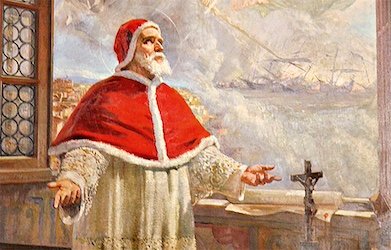
Michael Ghislieri, a Dominican friar from his fifteenth year, a teacher of religion at twenty, as a simple religious, as inquisitor, bishop, and cardinal, was famous both for the spotless purity of his own life and for his intrepid defense of the Church's faith and discipline. Surrounded in his time by great men and great Saints, in apostolic virtue he was surpassed by none.
As Pope, his first concern was to reform the Roman court and the capital city by the strict example of his own household and the punishment of offenders. He next endeavored to obtain from the Catholic powers recognition of the decrees of the Council of Trent, two of which he strictly enforced: the obligatory residence of bishops in their sees, and the establishment of diocesan seminaries. He revised the Missal and Breviary, and reformed ecclesiastical music.
He was not less active in protecting the Church outside Italy. We see him at the same time supporting the Catholic King of France against the Huguenot rebels, and encouraging Mary, Queen of Scots in the bitterness of her captivity. It is he who excommunicated her rival, the usurper Elizabeth, when the best blood of England flowed upon the scaffold and the measure of her crimes was full. The intrepidity of this Vicar of Christ found enemies. The holy Pope was accustomed to kiss the feet of the crucifix on leaving or entering his room. One day the feet moved away from his lips. Sorrow filled his heart, and he made acts of contrition, fearing that he must have committed some secret offense, yet he still could not kiss the feet. It was afterwards discovered that they had been poisoned by an enemy.
It was in the Lepanto victory that the Saint's power was most plainly manifest. There, in October of 1571, by the holy league which he had formed but still more by the prayers of the aging Pontiff to the great Mother of God, the defeat of the advancing Ottoman forces was obtained and Christendom was saved from the Turk. Six months later Saint Pius V died, having reigned only six years.
Reflection. Thy cross, O Lord, is the source of all blessings, the cause of all graces; by it the faithful find strength in weakness, glory in humiliation, life in death. (Saint Leo)
Little Pictorial Lives of the Saints, a compilation based on Butler's Lives of the Saints and other sources by John Gilmary Shea (Benziger Brothers: New York, 1894); Vie des Saints pour tous les jours de l'année, by Abbé L. Jaud (Mame: Tours, 1950).
LAST-MODIFIED:20240427T154630Z SEQUENCE:48537304 X-ACCESS:1 X-HITS:54 X-COLOR:f0b80e X-SHOW-END-TIME:1 END:VEVENT BEGIN:VEVENT DTSTART;VALUE=DATE:20240506 DTEND;VALUE=DATE:20240507 UID:C6F0D3DF-99BA-48AE-B7C7-8535A4548F95 SUMMARY:St. Dominic Savio CREATED:20221013T211126Z DTSTAMP:20221013T211126Z URL:https://www.stpaulsweymouth.org/component/dpcalendar/event/1548?calid=13 DESCRIPTION:St. Dominic Savio, Confessor\N\NSaint Dominic Savio was born in Riva di Chieri, Italy, on April 2, 1842. He looked so frail and weak on the morning of his birth that his father rushed him that same evening to the parish church for Baptism. But Dominic survived and began serving Mass when he was five years old, one of his greatest joys. He was often seen at five o'clock in the morning in front of the church on his knees in rain or snow, waiting for the doors to be opened. On the occasion of his First Holy Communion he made the resolution to die rather than sin, as he had frequently expressed his determination and ambition to become a Saint.\NThe village pastor at Mondonio, recognizing in Dominic a soul of predilection, arranged to have him enter Don Bosco's Oratory at Turin. Don Bosco soon noted Dominic's consuming quest for sanctity, and pointed out to the boy that the path to holiness is not necessarily among hair shirts and tortures of the flesh, but in the cheerful bearing and offering of each day's small crosses. Steering the lad away from artificial practices, his loved master showed him that for a soul avid of penance, there is a superabundance to be had for the taking, through acceptance of the monotony and tribulations inseparable from the perfect fulfillment of the duties of one's state of life.\NAfter a few months of life in the environment of the Oratory and under the saintly care of Saint John Bosco, Dominic's soul was fired with the zeal of his master, whose rule of life, Give me souls, Lord; You take the rest, the boy adopted for his own. Following the example of Don Bosco, who in season and out of season sought those souls wherever they were to be found, Dominic also went after them in his own little world. In the Oratory he founded and directed the Immaculate Conception Sodality, a group of boys who by prayer, word and example carried on an apostolate among their classmates and proved to be of valuable assistance to Don Bosco in his work.\NOn one occasion Dominic broke up a vicious duel with stones. Standing between the boy-duelists with dramatic suddenness, he flashed a crucifix and said: This is Friday. Today Christ died for love of us. Can you look at Him and still hate each other?\NWhen Dominic's health began to fail he was forced to leave the Oratory. Don Bosco and the boys were very sorry to see him leave; he had been a good friend to all. Don Bosco said of him: His cheerful character and lively disposition made him extremely popular even among those boys who were no great lovers of their faith. His death at his home on March 9, 1857, was sweet and peaceful. Pope Pius XII canonized him in June, 1954.\NReflection. Death rather than sin! That cry from the soul of Dominic is now, thanks to Don Bosco, resounding across the rude battlefields of teen-age purity, seeking echoes in young and generous hearts.\NLives of the Saints for Every Day of the Year (Reprint of the work of John Gilmary Shea, with Appendix including recently canonized Saints) (Benziger Brothers: New York, 1955. Third Edition: Tan Books and Publishers: Rockford, Ill., 1995). X-ALT-DESC;FMTTYPE=text/html:St. Dominic Savio, Confessor
Saint Dominic Savio was born in Riva di Chieri, Italy, on April 2, 1842. He looked so frail and weak on the morning of his birth that his father rushed him that same evening to the parish church for Baptism. But Dominic survived and began serving Mass when he was five years old, one of his greatest joys. He was often seen at five o'clock in the morning in front of the church on his knees in rain or snow, waiting for the doors to be opened. On the occasion of his First Holy Communion he made the resolution to die rather than sin, as he had frequently expressed his determination and ambition to become a Saint.
The village pastor at Mondonio, recognizing in Dominic a soul of predilection, arranged to have him enter Don Bosco's Oratory at Turin. Don Bosco soon noted Dominic's consuming quest for sanctity, and pointed out to the boy that the path to holiness is not necessarily among hair shirts and tortures of the flesh, but in the cheerful bearing and offering of each day's small crosses. Steering the lad away from artificial practices, his loved master showed him that for a soul avid of penance, there is a superabundance to be had for the taking, through acceptance of the monotony and tribulations inseparable from the perfect fulfillment of the duties of one's state of life.
After a few months of life in the environment of the Oratory and under the saintly care of Saint John Bosco, Dominic's soul was fired with the zeal of his master, whose rule of life, Give me souls, Lord; You take the rest, the boy adopted for his own. Following the example of Don Bosco, who in season and out of season sought those souls wherever they were to be found, Dominic also went after them in his own little world. In the Oratory he founded and directed the Immaculate Conception Sodality, a group of boys who by prayer, word and example carried on an apostolate among their classmates and proved to be of valuable assistance to Don Bosco in his work.
On one occasion Dominic broke up a vicious duel with stones. Standing between the boy-duelists with dramatic suddenness, he flashed a crucifix and said: This is Friday. Today Christ died for love of us. Can you look at Him and still hate each other?
When Dominic's health began to fail he was forced to leave the Oratory. Don Bosco and the boys were very sorry to see him leave; he had been a good friend to all. Don Bosco said of him: His cheerful character and lively disposition made him extremely popular even among those boys who were no great lovers of their faith. His death at his home on March 9, 1857, was sweet and peaceful. Pope Pius XII canonized him in June, 1954.
Reflection. Death rather than sin! That cry from the soul of Dominic is now, thanks to Don Bosco, resounding across the rude battlefields of teen-age purity, seeking echoes in young and generous hearts.
Lives of the Saints for Every Day of the Year (Reprint of the work of John Gilmary Shea, with Appendix including recently canonized Saints) (Benziger Brothers: New York, 1955. Third Edition: Tan Books and Publishers: Rockford, Ill., 1995).
LAST-MODIFIED:20240504T140803Z SEQUENCE:49136197 X-ACCESS:1 X-HITS:110 X-COLOR:f0b80e X-SHOW-END-TIME:1 END:VEVENT BEGIN:VEVENT DTSTART;VALUE=DATE:20240507 DTEND;VALUE=DATE:20240508 UID:11A6368D-006D-4350-B7BE-775C43CCDB80 SUMMARY:St. Stanislaus CREATED:20221013T211126Z DTSTAMP:20221013T211126Z URL:https://www.stpaulsweymouth.org/component/dpcalendar/event/1550?calid=13 DESCRIPTION:St. Stanislaus Bishop, Martyr\N\NSaint Stanislaus was born in answer to prayer, when his parents were advanced in age. Out of gratitude they educated him for the Church. When his parents died, he sold their vast properties and gave the price to the poor. He was ordained, and being a holy priest, soon afterwards became a Canon of the Cracow cathedral.\NIt was necessary to have recourse to the Pope to have him accept the see of Cracow when it became vacant. But the bishop of Cracow's virtues increased with his dignity and obligations; Saint Stanislaus donned a hair shirt, which he wore until he died. He had a list drawn up of every poor person of the city, and gave orders to his servants never to refuse anything to anyone.\NBoleslaus II was at that time King of Poland; he was a prince of good disposition, but spoilt by a long series of victories and successes. After many acts of lust and cruelty, he outraged the whole kingdom by carrying off the wife of one of his nobles. Against this public scandal the chaste and gentle bishop alone raised his voice. Having commended the matter to God, he went to the palace and openly rebuked the king for his crime against God and his subjects, and threatened to excommunicate him if he persisted in his sin. Boleslaus, with the intention of irrevocably ruining the bishop's good reputation, suborned the nephews of a man named Paul who had recently died, to swear that their uncle had never been paid for land which the bishop had bought for the Church. Saint Stanislaus stood fearlessly before the king's tribunal, though all his frightened witnesses forsook him, and guaranteed to bring the dead man to witness in his favor within three days.\NOn the third day, after many prayers and tears, he raised the dead man to life and led him in his grave-clothes before the king, where Paul testified that the bishop had reimbursed him fully for the terrain he had sold. He was then taken back to the grave, where he lay down and again relapsed into his former state, before a large number of witnesses.\NBoleslaus for a while made a show of a better life. Soon, however, he returned to the most scandalous excesses, and the bishop, finding all remonstrance useless, pronounced the sentence of excommunication. In defiance of the censure, on May 8, 1079, the king went to a chapel where Saint Stanislaus was saying Mass and commanded three groups of soldiers in succession to slay him at the altar. Each in turn came out, saying he had been alarmed by a light from heaven. At this the king himself rushed in and slew with his own hand the Saint at the altar during the Holy Sacrifice.\NThe Pope placed the kingdom of Poland under interdict, excommunicated the king and declared his royalty null and void. Boleslaus repented, took refuge in another country for a time, then set out dressed as a pilgrim for Rome. On the way he knocked on a monastery door to ask for an alms, then decided to enter there anonymously, and was received. He spent seven years there as a Benedictine lay brother, rendering every humble service to the monks, patiently bearing rude treatment. Only on his deathbed did he identify himself, taking out his royal ring which he had concealed until then. He had spent hours praying before a statue of Our Lady in the chapel, by which we may conclude that the Mother of God had obtained for him the grace of conversion and a happy death. His body remains in the church of the same monastery of Ossiach.\NSaint Stanislaus was canonized by Pope Innocent IV in 1253.\NReflection. The safest correction of vice is the Christian's blameless life. Yet there are times when silence would make us answerable for the sins of others. At such times let us, in the name of God, rebuke the offender without fear.\NLes Petits Bollandistes: Vies des Saints, by Msgr. Paul Guérin (Bloud et Barral: Paris, 1882), Vol. 5; Little Pictorial Lives of the Saints, a compilation based on Butler's Lives of the Saints and other sources by John Gilmary Shea (Benziger Brothers: New York, 1894). X-ALT-DESC;FMTTYPE=text/html:St. Stanislaus Bishop, Martyr
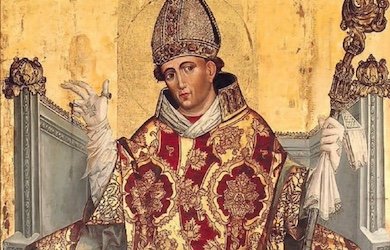
Saint Stanislaus was born in answer to prayer, when his parents were advanced in age. Out of gratitude they educated him for the Church. When his parents died, he sold their vast properties and gave the price to the poor. He was ordained, and being a holy priest, soon afterwards became a Canon of the Cracow cathedral.
It was necessary to have recourse to the Pope to have him accept the see of Cracow when it became vacant. But the bishop of Cracow's virtues increased with his dignity and obligations; Saint Stanislaus donned a hair shirt, which he wore until he died. He had a list drawn up of every poor person of the city, and gave orders to his servants never to refuse anything to anyone.
Boleslaus II was at that time King of Poland; he was a prince of good disposition, but spoilt by a long series of victories and successes. After many acts of lust and cruelty, he outraged the whole kingdom by carrying off the wife of one of his nobles. Against this public scandal the chaste and gentle bishop alone raised his voice. Having commended the matter to God, he went to the palace and openly rebuked the king for his crime against God and his subjects, and threatened to excommunicate him if he persisted in his sin. Boleslaus, with the intention of irrevocably ruining the bishop's good reputation, suborned the nephews of a man named Paul who had recently died, to swear that their uncle had never been paid for land which the bishop had bought for the Church. Saint Stanislaus stood fearlessly before the king's tribunal, though all his frightened witnesses forsook him, and guaranteed to bring the dead man to witness in his favor within three days.
On the third day, after many prayers and tears, he raised the dead man to life and led him in his grave-clothes before the king, where Paul testified that the bishop had reimbursed him fully for the terrain he had sold. He was then taken back to the grave, where he lay down and again relapsed into his former state, before a large number of witnesses.
Boleslaus for a while made a show of a better life. Soon, however, he returned to the most scandalous excesses, and the bishop, finding all remonstrance useless, pronounced the sentence of excommunication. In defiance of the censure, on May 8, 1079, the king went to a chapel where Saint Stanislaus was saying Mass and commanded three groups of soldiers in succession to slay him at the altar. Each in turn came out, saying he had been alarmed by a light from heaven. At this the king himself rushed in and slew with his own hand the Saint at the altar during the Holy Sacrifice.
The Pope placed the kingdom of Poland under interdict, excommunicated the king and declared his royalty null and void. Boleslaus repented, took refuge in another country for a time, then set out dressed as a pilgrim for Rome. On the way he knocked on a monastery door to ask for an alms, then decided to enter there anonymously, and was received. He spent seven years there as a Benedictine lay brother, rendering every humble service to the monks, patiently bearing rude treatment. Only on his deathbed did he identify himself, taking out his royal ring which he had concealed until then. He had spent hours praying before a statue of Our Lady in the chapel, by which we may conclude that the Mother of God had obtained for him the grace of conversion and a happy death. His body remains in the church of the same monastery of Ossiach.
Saint Stanislaus was canonized by Pope Innocent IV in 1253.
Reflection. The safest correction of vice is the Christian's blameless life. Yet there are times when silence would make us answerable for the sins of others. At such times let us, in the name of God, rebuke the offender without fear.
Les Petits Bollandistes: Vies des Saints, by Msgr. Paul Guérin (Bloud et Barral: Paris, 1882), Vol. 5; Little Pictorial Lives of the Saints, a compilation based on Butler's Lives of the Saints and other sources by John Gilmary Shea (Benziger Brothers: New York, 1894).
LAST-MODIFIED:20240504T141031Z SEQUENCE:49136345 X-ACCESS:1 X-HITS:8 X-COLOR:f0b80e X-SHOW-END-TIME:1 END:VEVENT BEGIN:VEVENT DTSTART;VALUE=DATE:20240509 DTEND;VALUE=DATE:20240510 UID:4061B5C5-C4C1-4C83-853F-061163DDDA9E SUMMARY:St. Gregory CREATED:20221013T211126Z DTSTAMP:20221013T211126Z URL:https://www.stpaulsweymouth.org/component/dpcalendar/event/1552?calid=13 DESCRIPTION:St. Gregory Nazienzen Bishop, Confessor, and Doctor of the Church\N\NSaint Gregory was born in 312 near Caesarea of Cappadocia, of parents who are both honored as Saints, and the infant was immediately consecrated to God. After learning all that he could in his native land, he journeyed to Caesarea in Palestine to study at the famous school founded by Origen, then went to Alexandria in Egypt to rejoin his brother there. After some time he embarked for Athens, the metropolis of the sciences and the humanities. During the voyage, a storm of twenty days' duration nearly caused the loss of the ship and all passengers; their safe arrival in Athens was attributed to Saint Gregory's prayers, and all aboard adopted Christianity.\NIn Athens he met and became the close friend of Saint Basil, and these noble souls turned away together from the most attractive worldly prospects. For some years they lived in seclusion, self-discipline, and studious labor, knowing only two roads, Gregory wrote, one to church, the other to school. Only after thirty years of studies and good works in Athens did they leave that city and separate. They would meet again in the year 358, to live in solitude for a time in the Province of Pont.\NSaint Gregory was raised to the priesthood almost by force, preaching his first sermon, after a ten-weeks' retreat, on the dangers and responsibilities of the priesthood. In 372, when he was sixty years old, he was consecrated a bishop by his dear friend Saint Basil, who had become Archbishop of Caesarea in Cappadocia. All their lives they would correspond; many of Saint Gregory's noble and eloquent letters to Saint Basil can still be read among the 212 pieces of his correspondence which are still conserved.\NSaint Gregory's rare gifts and conciliatory disposition had become well known. In the year 379, when he was sixty-seven years old, he was chosen to be Patriarch of Constantinople. That city was distracted and laid waste in those times by Arian and other heretics. After a reception which was at best lukewarm, the new Patriarch labored there successfully, from his base in a small church named the Anastasia (Resurrection), where he gave instructions and saw the number of his listeners increase daily.\NThe Arians were so irritated at the decay of their heresy that they pursued the Saint with outrage, calumny and violence, and at length resolved to take his life. For this purpose they chose an intrepid youth who was willing to undertake the sacrilegious commission. But God did not allow him to carry it out; he was touched with remorse and cast himself at the Saint's feet, avowing his sinful intent. Saint Gregory forgave him at once, treated him with all kindness and received him among his friends, to the wonder and edification of the whole city and to the confusion of the heretics, whose crime had served only as a mirror to the virtue of the Saint.\NSaint Jerome states that he himself learned at the feet of this master, who was his catechist in Holy Scripture. But Saint Gregory's humility, his austerities, the humble appearance of his aging and worn person, and above all his very success in Constantinople, did not cease to draw down upon him the hatred of every enemy of the Faith. He was persecuted by the magistrates, stoned by the rabble, and thwarted and deserted even by his brother bishops. During the second General Council, hoping to restore peace to his tormented city, the eloquent bishop, whom the Church calls Saint Gregory the Theologian, resigned his see and retired to his native town, where he died in the year 390.\NReflection. We must overcome our enemies, said Saint Gregory, by gentleness, and win them over by forbearance. Let them be punished by their own conscience, not by our wrath. Let us not at once fell the fig tree, from which a more skillful gardener may yet entice fruit.\NLittle Pictorial Lives of the Saints, a compilation based on Butler's Lives of the Saints and other sources by John Gilmary Shea (Benziger Brothers: New York, 1894); Les Petits Bollandistes: Vies des Saints, by Msgr. Paul Guérin (Bloud et Barral: Paris, 1882), Vol. 5 X-ALT-DESC;FMTTYPE=text/html:St. Gregory Nazienzen Bishop, Confessor, and Doctor of the Church
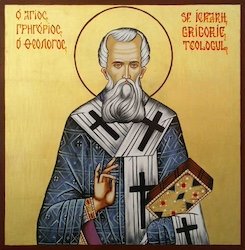
Saint Gregory was born in 312 near Caesarea of Cappadocia, of parents who are both honored as Saints, and the infant was immediately consecrated to God. After learning all that he could in his native land, he journeyed to Caesarea in Palestine to study at the famous school founded by Origen, then went to Alexandria in Egypt to rejoin his brother there. After some time he embarked for Athens, the metropolis of the sciences and the humanities. During the voyage, a storm of twenty days' duration nearly caused the loss of the ship and all passengers; their safe arrival in Athens was attributed to Saint Gregory's prayers, and all aboard adopted Christianity.
In Athens he met and became the close friend of Saint Basil, and these noble souls turned away together from the most attractive worldly prospects. For some years they lived in seclusion, self-discipline, and studious labor, knowing only two roads, Gregory wrote, one to church, the other to school. Only after thirty years of studies and good works in Athens did they leave that city and separate. They would meet again in the year 358, to live in solitude for a time in the Province of Pont.
Saint Gregory was raised to the priesthood almost by force, preaching his first sermon, after a ten-weeks' retreat, on the dangers and responsibilities of the priesthood. In 372, when he was sixty years old, he was consecrated a bishop by his dear friend Saint Basil, who had become Archbishop of Caesarea in Cappadocia. All their lives they would correspond; many of Saint Gregory's noble and eloquent letters to Saint Basil can still be read among the 212 pieces of his correspondence which are still conserved.
Saint Gregory's rare gifts and conciliatory disposition had become well known. In the year 379, when he was sixty-seven years old, he was chosen to be Patriarch of Constantinople. That city was distracted and laid waste in those times by Arian and other heretics. After a reception which was at best lukewarm, the new Patriarch labored there successfully, from his base in a small church named the Anastasia (Resurrection), where he gave instructions and saw the number of his listeners increase daily.
The Arians were so irritated at the decay of their heresy that they pursued the Saint with outrage, calumny and violence, and at length resolved to take his life. For this purpose they chose an intrepid youth who was willing to undertake the sacrilegious commission. But God did not allow him to carry it out; he was touched with remorse and cast himself at the Saint's feet, avowing his sinful intent. Saint Gregory forgave him at once, treated him with all kindness and received him among his friends, to the wonder and edification of the whole city and to the confusion of the heretics, whose crime had served only as a mirror to the virtue of the Saint.
Saint Jerome states that he himself learned at the feet of this master, who was his catechist in Holy Scripture. But Saint Gregory's humility, his austerities, the humble appearance of his aging and worn person, and above all his very success in Constantinople, did not cease to draw down upon him the hatred of every enemy of the Faith. He was persecuted by the magistrates, stoned by the rabble, and thwarted and deserted even by his brother bishops. During the second General Council, hoping to restore peace to his tormented city, the eloquent bishop, whom the Church calls Saint Gregory the Theologian, resigned his see and retired to his native town, where he died in the year 390.
Reflection. We must overcome our enemies, said Saint Gregory, by gentleness, and win them over by forbearance. Let them be punished by their own conscience, not by our wrath. Let us not at once fell the fig tree, from which a more skillful gardener may yet entice fruit.
Little Pictorial Lives of the Saints, a compilation based on Butler's Lives of the Saints and other sources by John Gilmary Shea (Benziger Brothers: New York, 1894); Les Petits Bollandistes: Vies des Saints, by Msgr. Paul Guérin (Bloud et Barral: Paris, 1882), Vol. 5
LAST-MODIFIED:20240504T141350Z SEQUENCE:49136544 X-ACCESS:1 X-HITS:51 X-COLOR:f0b80e X-SHOW-END-TIME:1 END:VEVENT BEGIN:VEVENT DTSTART;VALUE=DATE:20240510 DTEND;VALUE=DATE:20240511 UID:5B5FB831-C8E5-45FD-8F88-593B91949987 SUMMARY:Sts. Gordian & Epimachus CREATED:20221013T211126Z DTSTAMP:20221013T211126Z URL:https://www.stpaulsweymouth.org/component/dpcalendar/event/1556?calid=13 DESCRIPTION:Sts. Gordian & Epimachus, Martyrs\N\NTHESE two holy martyrs are named in all calendars of the western church since the sixth age. St. Epimachus suffered at Alexandria under Decius, in the year 250, with one Alexander. They had been long detained in a hideous dungeon, were beaten with clubs, their sides were torn with iron-hooks; lastly, they were both burnt in lime. This is related by St. Dionysius of Alexandria, quoted by Eusebius (b. vi. c. 41.) 1\NSt. Gordian was beheaded at Rome for the faith, under Julian the Apostate, in the year 362. His name occurs in the ancient Martyrologies. His body was laid in a cave, in which was deposited that of St. Epimachus, which was brought from Alexandria to Rome a little before St. Gordian’s martyrdom. The relics of both these martyrs are now possessed by the great Benedictine abbey of Kempten, in the diocese of Augsburg.\Nsource: Brighton Oratory X-ALT-DESC;FMTTYPE=text/html:Sts. Gordian & Epimachus, Martyrs
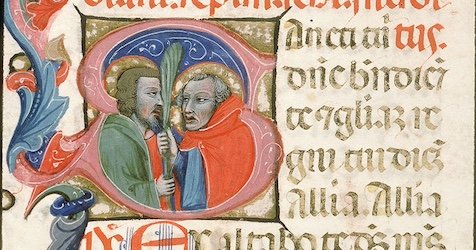
THESE two holy martyrs are named in all calendars of the western church since the sixth age. St. Epimachus suffered at Alexandria under Decius, in the year 250, with one Alexander. They had been long detained in a hideous dungeon, were beaten with clubs, their sides were torn with iron-hooks; lastly, they were both burnt in lime. This is related by St. Dionysius of Alexandria, quoted by Eusebius (b. vi. c. 41.) 1
St. Gordian was beheaded at Rome for the faith, under Julian the Apostate, in the year 362. His name occurs in the ancient Martyrologies. His body was laid in a cave, in which was deposited that of St. Epimachus, which was brought from Alexandria to Rome a little before St. Gordian’s martyrdom. The relics of both these martyrs are now possessed by the great Benedictine abbey of Kempten, in the diocese of Augsburg.
source: Brighton Oratory
LAST-MODIFIED:20240504T142406Z SEQUENCE:49137160 X-ACCESS:1 X-HITS:22 X-COLOR:f0b80e X-SHOW-END-TIME:1 END:VEVENT BEGIN:VEVENT DTSTART;VALUE=DATE:20240510 DTEND;VALUE=DATE:20240511 UID:A67FD71E-9399-4D98-A006-5728981ECAF4 SUMMARY:St. Antoninus CREATED:20221013T211126Z DTSTAMP:20221013T211126Z URL:https://www.stpaulsweymouth.org/component/dpcalendar/event/1554?calid=13 DESCRIPTION:St. Antoninus Bishop, Confessor\N\NSaint Antoninus, or Little Antony, as he was called from his small stature, was born at Florence in 1389. After a childhood of singular holiness, he begged to be admitted very young into the Dominican house at Fiesole; but the Superior, to test his sincerity and perseverance, told him he must first learn by heart the book of the Decretals, or Canon Law, containing several hundred pages. This apparently impossible task was accomplished within twelve months; and Antoninus received the coveted habit in his sixteenth year.\NWhile still young, he filled several important posts of his Order and was consulted on questions of difficulty by the most learned men of his day, being known because of his wonderful prudence, as the Counselor. He wrote several works on theology and history and served as Papal Theologian at the Council of Florence. In 1446 he was compelled to accept the archbishopric of that city. In this dignity he earned for himself the title of the Father of the Poor, for all he had was at their disposal. Saint Antoninus never refused an alms which was asked in the name of God. When he had no money, he gave his clothes, shoes, or furniture.\NOne day, being sent by the Florentines to the Pope, as he approached Rome a beggar came up to him almost naked, and asked him for an alms for Christ's sake. Outdoing Saint Martin, Antoninus gave him his whole cloak. When he entered the city, another one was given him; by whom, he knew not. His household consisted of only six persons; his palace contained no plate or costly furniture, and was often nearly destitute of the necessities of life. His one mule was frequently sold for the relief of the poor, but was ordinarily bought back for him again by some wealthy citizen.\NSaint Antoninus died on May 2, 1459, kissing the crucifix, and repeating the words, To serve God is to reign.\NReflection. Alms-deeds include every kind of service rendered to our neighbor in need. He who supports a lame man bestows an alms on him with his feet; he who guides a blind man does him a charity with his eyes; he who carries an invalid or an old man upon his shoulders imparts to him an alms from his strength. Hence none are so poor but they may bestow an alms on the wealthiest man in the world. (St. Augustine)\NLittle Pictorial Lives of the Saints, a compilation based on Butler's Lives of the Saints and other sources by John Gilmary Shea (Benziger Brothers: New York, 1894). X-ALT-DESC;FMTTYPE=text/html:St. Antoninus Bishop, Confessor
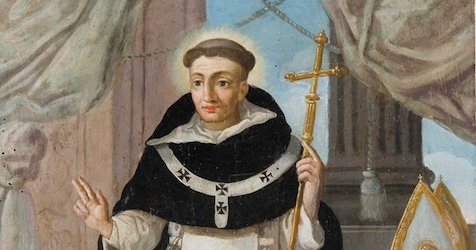
Saint Antoninus, or Little Antony, as he was called from his small stature, was born at Florence in 1389. After a childhood of singular holiness, he begged to be admitted very young into the Dominican house at Fiesole; but the Superior, to test his sincerity and perseverance, told him he must first learn by heart the book of the Decretals, or Canon Law, containing several hundred pages. This apparently impossible task was accomplished within twelve months; and Antoninus received the coveted habit in his sixteenth year.
While still young, he filled several important posts of his Order and was consulted on questions of difficulty by the most learned men of his day, being known because of his wonderful prudence, as the Counselor. He wrote several works on theology and history and served as Papal Theologian at the Council of Florence. In 1446 he was compelled to accept the archbishopric of that city. In this dignity he earned for himself the title of the Father of the Poor, for all he had was at their disposal. Saint Antoninus never refused an alms which was asked in the name of God. When he had no money, he gave his clothes, shoes, or furniture.
One day, being sent by the Florentines to the Pope, as he approached Rome a beggar came up to him almost naked, and asked him for an alms for Christ's sake. Outdoing Saint Martin, Antoninus gave him his whole cloak. When he entered the city, another one was given him; by whom, he knew not. His household consisted of only six persons; his palace contained no plate or costly furniture, and was often nearly destitute of the necessities of life. His one mule was frequently sold for the relief of the poor, but was ordinarily bought back for him again by some wealthy citizen.
Saint Antoninus died on May 2, 1459, kissing the crucifix, and repeating the words, To serve God is to reign.
Reflection. Alms-deeds include every kind of service rendered to our neighbor in need. He who supports a lame man bestows an alms on him with his feet; he who guides a blind man does him a charity with his eyes; he who carries an invalid or an old man upon his shoulders imparts to him an alms from his strength. Hence none are so poor but they may bestow an alms on the wealthiest man in the world. (St. Augustine)
Little Pictorial Lives of the Saints, a compilation based on Butler's Lives of the Saints and other sources by John Gilmary Shea (Benziger Brothers: New York, 1894).
LAST-MODIFIED:20240504T141712Z SEQUENCE:49136746 X-ACCESS:1 X-HITS:146 X-COLOR:f0b80e X-SHOW-END-TIME:1 END:VEVENT BEGIN:VEVENT DTSTART;VALUE=DATE:20240512 DTEND;VALUE=DATE:20240513 UID:FC9DD6A0-64CF-4D47-9A56-103E627B2145 SUMMARY:Sts. Nereus, Achilleus, Domitilla Virgin, Pancras, Martyrs CREATED:20221013T211126Z DTSTAMP:20221013T211126Z URL:https://www.stpaulsweymouth.org/component/dpcalendar/event/1560?calid=13 DESCRIPTION:Sts. Nereus, Achilleus, Domitilla Virgin, Pancras, Martyrs\N\NIt was under the persecution of Domitian, during which John the Evangelist was condemned to be burned alive in the cauldron of boiling oil, that Flavia Domitilla was honored with banishment and death for the sake of our Redeemer, whom she had chosen for her Spouse. She was of the imperial family, being a niece of Flavius Clemens, who adorned the consular dignity by martyrdom. She was one of the Christians belonging to the court of the Emperor Domitian, who show us how rapidly the religion of the poor and humble made its way to the highest classes of Roman life. A few years previous to this, St Paul sent to the Christians of Philippi the greetings of the Christians of Nero’s palace. There is still extant, not far from Rome, on the Ardeatine Way, the magnificent subterranean cemetery which Flavia Domitilla ordered to be dug on her praedium, and in which were buried the two martyrs, Nereus and Achilleus, whom the Church honors today together with the noble virgin who owes her crown to them. Nereus and Achilleus were in Domitilla’s service. Hearing them one day speaking of the merit of virginity, she there and then bade farewell to all worldly pleasures, and aspired to the honor of being the Spouse of Christ. She received the veil of consecrated virgins from the hands of Pope St Clement: Nereus and Achilleus had been baptized by St Peter himself.\NThe bodies of these three Saints reposed, for several centuries, in the Basilica, called the Fasciola, on the Appian Way; and we have a Homily which St Gregory the Great preached in this Church on their feast. The holy Pontiff dwelt on the vanity of the earth’s goods; he encouraged his audience to despise them by the example of the three martyrs whose relics lay under the very altar around which they were that day assembled. “These Saints,” said he, “before whose tomb we are now standing, trampled with contempt of soul on the world and its flowers. Life was then long, health was uninterrupted, riches were abundant, parents were blessed with many children; and yet, though the world was so flourishing in itself, it had long been a withered thing in their hearts.”\N— Excerpted from The Liturgical Year, Abbot Gueranger O.S.B.\NPancratius was the descendant of a noble Phrygian family. As a youth of fourteen, he came to Rome while Diocletian and Maximian were in power (about 304). He was baptized by the Pope and given instructions in the Christian religion. Arrested for his action, he steadfastly refused to sacrifice to the pagan gods and was condemned to death. With manly courage, he bared his neck for the sword and received the martyr’s crown. During the night his body was removed by the pious matron Octavilla, anointed with sweet smelling balsam and interred on the Via Aurelia.\NPancratius is the patron saint of fidelity to oaths. The basilica that Pope Symmachus erected over his remains about the year 500 later became a station church (since 1798 his relics have been lost). On the first Sunday after Easter the saint exhorted the catechumens gathered at his station church to remain loyal to their baptismal vows. The saint warns us to proceed slowly and prudently before taking an oath or vow. But once our word is given we must remain true to our pledge, true unto death itself, whether it concerns baptismal vows, ordination vows, profession vows, or marriage vows.\N— Excerpted from The Church’s Year of Grace, Pius Parsch. X-ALT-DESC;FMTTYPE=text/html:Sts. Nereus, Achilleus, Domitilla Virgin, Pancras, Martyrs
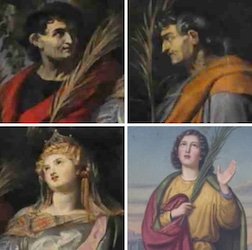
It was under the persecution of Domitian, during which John the Evangelist was condemned to be burned alive in the cauldron of boiling oil, that Flavia Domitilla was honored with banishment and death for the sake of our Redeemer, whom she had chosen for her Spouse. She was of the imperial family, being a niece of Flavius Clemens, who adorned the consular dignity by martyrdom. She was one of the Christians belonging to the court of the Emperor Domitian, who show us how rapidly the religion of the poor and humble made its way to the highest classes of Roman life. A few years previous to this, St Paul sent to the Christians of Philippi the greetings of the Christians of Nero’s palace. There is still extant, not far from Rome, on the Ardeatine Way, the magnificent subterranean cemetery which Flavia Domitilla ordered to be dug on her praedium, and in which were buried the two martyrs, Nereus and Achilleus, whom the Church honors today together with the noble virgin who owes her crown to them. Nereus and Achilleus were in Domitilla’s service. Hearing them one day speaking of the merit of virginity, she there and then bade farewell to all worldly pleasures, and aspired to the honor of being the Spouse of Christ. She received the veil of consecrated virgins from the hands of Pope St Clement: Nereus and Achilleus had been baptized by St Peter himself.
The bodies of these three Saints reposed, for several centuries, in the Basilica, called the Fasciola, on the Appian Way; and we have a Homily which St Gregory the Great preached in this Church on their feast. The holy Pontiff dwelt on the vanity of the earth’s goods; he encouraged his audience to despise them by the example of the three martyrs whose relics lay under the very altar around which they were that day assembled. “These Saints,” said he, “before whose tomb we are now standing, trampled with contempt of soul on the world and its flowers. Life was then long, health was uninterrupted, riches were abundant, parents were blessed with many children; and yet, though the world was so flourishing in itself, it had long been a withered thing in their hearts.”
— Excerpted from The Liturgical Year, Abbot Gueranger O.S.B.
Pancratius was the descendant of a noble Phrygian family. As a youth of fourteen, he came to Rome while Diocletian and Maximian were in power (about 304). He was baptized by the Pope and given instructions in the Christian religion. Arrested for his action, he steadfastly refused to sacrifice to the pagan gods and was condemned to death. With manly courage, he bared his neck for the sword and received the martyr’s crown. During the night his body was removed by the pious matron Octavilla, anointed with sweet smelling balsam and interred on the Via Aurelia.
Pancratius is the patron saint of fidelity to oaths. The basilica that Pope Symmachus erected over his remains about the year 500 later became a station church (since 1798 his relics have been lost). On the first Sunday after Easter the saint exhorted the catechumens gathered at his station church to remain loyal to their baptismal vows. The saint warns us to proceed slowly and prudently before taking an oath or vow. But once our word is given we must remain true to our pledge, true unto death itself, whether it concerns baptismal vows, ordination vows, profession vows, or marriage vows.
— Excerpted from The Church’s Year of Grace, Pius Parsch.
LAST-MODIFIED:20240504T143138Z SEQUENCE:49137612 X-ACCESS:1 X-HITS:48 X-COLOR:f0b80e X-SHOW-END-TIME:1 END:VEVENT BEGIN:VEVENT DTSTART;VALUE=DATE:20240513 DTEND;VALUE=DATE:20240514 UID:6C36E09E-981E-4740-96DC-314A7D98B06B SUMMARY:St. Robert CREATED:20221013T211126Z DTSTAMP:20221013T211126Z URL:https://www.stpaulsweymouth.org/component/dpcalendar/event/1561?calid=13 DESCRIPTION:St. Robert Bellarmine Bishop, Confessor, and Doctor of the Church\N\NSaint Robert Bellarmine was born at Montepulciano, Italy in 1542, the third of ten children. After being educated by the Jesuits, he joined the Society of Jesus in 1560, and as a young man taught Greek, Hebrew and theology. While at Louvain University he became famous as a controversialist, and never afterwards did he cease to defend Catholic doctrine against its adversaries. He has enriched the Church with a large number of learned and valuable writings, among which are his Course of Controversy, his famous Commentary on the Psalms, and a treatise on The Seven Last Words of Jesus Christ.\NIn 1598 Saint Robert was made a Cardinal and in 1602 was raised to the archbishopric of Capua. In 1605 he was recalled to Rome and appointed head of the Vatican Library. He served as theologian and counselor to five Popes: Sixtus V, Innocent IX, Clement VIII, Paul V, and Gregory XV. He died in October of 1621, greatly mourned by the people of Rome as well as by the hierarchy, and was canonized by Pope Pius XI in 1930. The following year the same Vicar of Christ declared him a Doctor of the Church. His tomb is in the Jesuit Church, the Gesù, in Rome.\NHeavenly Friends: a Saint for each Day, by Rosalie Marie Levy (Saint Paul Editions: Boston, 1958); Les Petits Bollandistes: Vies des Saints, by Msgr. Paul Guérin (Bloud et Barral: Paris, 1882), Vol. 11 X-ALT-DESC;FMTTYPE=text/html:St. Robert Bellarmine Bishop, Confessor, and Doctor of the Church
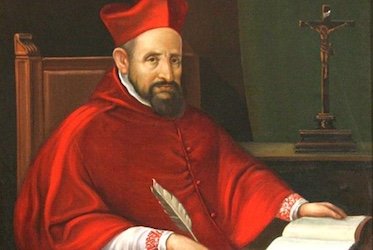
Saint Robert Bellarmine was born at Montepulciano, Italy in 1542, the third of ten children. After being educated by the Jesuits, he joined the Society of Jesus in 1560, and as a young man taught Greek, Hebrew and theology. While at Louvain University he became famous as a controversialist, and never afterwards did he cease to defend Catholic doctrine against its adversaries. He has enriched the Church with a large number of learned and valuable writings, among which are his Course of Controversy, his famous Commentary on the Psalms, and a treatise on The Seven Last Words of Jesus Christ.
In 1598 Saint Robert was made a Cardinal and in 1602 was raised to the archbishopric of Capua. In 1605 he was recalled to Rome and appointed head of the Vatican Library. He served as theologian and counselor to five Popes: Sixtus V, Innocent IX, Clement VIII, Paul V, and Gregory XV. He died in October of 1621, greatly mourned by the people of Rome as well as by the hierarchy, and was canonized by Pope Pius XI in 1930. The following year the same Vicar of Christ declared him a Doctor of the Church. His tomb is in the Jesuit Church, the Gesù, in Rome.
Heavenly Friends: a Saint for each Day, by Rosalie Marie Levy (Saint Paul Editions: Boston, 1958); Les Petits Bollandistes: Vies des Saints, by Msgr. Paul Guérin (Bloud et Barral: Paris, 1882), Vol. 11
LAST-MODIFIED:20240511T162209Z SEQUENCE:49749043 X-ACCESS:1 X-HITS:169 X-COLOR:f0b80e X-SHOW-END-TIME:1 END:VEVENT BEGIN:VEVENT DTSTART;VALUE=DATE:20240514 DTEND;VALUE=DATE:20240515 UID:60CB686A-FC4E-4F80-86C6-066D7C1621E2 SUMMARY:St. Boniface CREATED:20221013T211126Z DTSTAMP:20221013T211126Z URL:https://www.stpaulsweymouth.org/component/dpcalendar/event/1563?calid=13 DESCRIPTION:St. Boniface, Martyr\N\NBorn a pagan in the 3rd century, St. Boniface of Tarsus was one of Aglaida's slaves. Both were pagans and lived in debauchery together and some legends say they were lovers.Yet by the grace of God, they tired of their sinful way of life and both discovered Christianity as a meaningful way. Aglaida decided to send him on an errand to collect holy relics. Finding upon arrival at Tarsus that the authorities were torturing Christians, he openly declared himself to be a Christian. For this, he was executed with savage cruelty in 307 AD. Providentially, his own body constituted the relics that were brought back to Aglaida, who in turn became a Christian.\N \NHe should not be confused with the more commonly venerated St. Boniface of Germany.The Traditional Reading at Matins:Boniface was a citizen of Rome, and had held criminal intercourse with a rich lady, by name Aglae. He was filled with such shame on account of this immoral conduct, that by way of penance he devoted himself to searching out and burying the bodies of martyrs. In one of his travels he left his companions; and finding, on arriving at Tarsus, that many were being put to divers tortures for the Christian faith, he approached them, kissed their chains and did all in his power to urge them to bear patiently the short labour of sufferings which were to be followed by eternal rest. For this he was seized, and his flesh was torn by iron hooks. Sharp reeds were also thrust up his finger-nails, and melted lead was poured into his mouth. His only exclamation, in the midst of these tortures, was: ' I give thee thanks, Lord Jesus Christ, the Son of God!' He was then put, head foremost, into a cauldron of boiling pitch; and when he was taken out, and found to be unhurt, the judge, in a fit of anger, ordered him to be beheaded. During his execution a great earthquake was felt; whereupon many of the pagans were converted to the faith of Christ our Lord. On the day following, his companions, who were in search of him, were told that he had suffered martyrdom. They bought his body for five hundred pieces of silver; and having embalmed and shrouded it, they had it taken to Rome. All this was made known by an angel to Aglae, who had also devoted herself to penance and good works. She, therefore, went to meet the martyr's relics. She built a church, which was named after the Saint, and in which he was buried on the Nones of June (June 5). The martyr’s soul passed into heaven on the day before the Ides of May (May 14) at Tarsus, a city of Cilicia, under the Emperors Diocletian and Maximian.\N \Nsource: A Catholic Life X-ALT-DESC;FMTTYPE=text/html:St. Boniface, Martyr
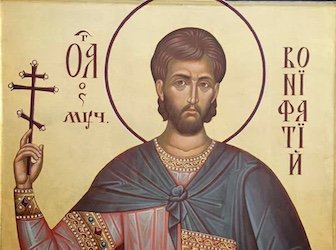
Born a pagan in the 3rd century, St. Boniface of Tarsus was one of Aglaida's slaves. Both were pagans and lived in debauchery together and some legends say they were lovers.
Yet by the grace of God, they tired of their sinful way of life and both discovered Christianity as a meaningful way. Aglaida decided to send him on an errand to collect holy relics. Finding upon arrival at Tarsus that the authorities were torturing Christians, he openly declared himself to be a Christian. For this, he was executed with savage cruelty in 307 AD. Providentially, his own body constituted the relics that were brought back to Aglaida, who in turn became a Christian.
St. John Baptist de la Salle, Confessor
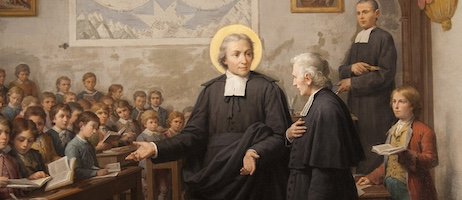
Complete dedication to what he saw as God's will for him, dominates the life of John Baptist de LaSalle. Founder of the Brothers of the Christian Schools, or Christian Brothers, he was canonized in 1900. In 1950 Pope Pius XII named him patron of schoolteachers.
Saint John Baptist was born of the nobility of Rheims in 1651, and after a very pious youth was ordained a priest at the age of 27, becoming at once a Canon of the Cathedral there. It was said that to see him at the altar was sufficient to give an unbeliever faith in the Real Presence of Our Lord. The people would wait for him to come from the church to consult him. His life was marked by a rule he set for himself, to maintain perfect regularity in all his duties.
He became interested in the creation of gratuitous schools for poor and abandoned children. He himself was invited to help in their education; and after directing the teachers for four years, decided to join them. In this he was opposed by most of the city, for whom such a life was very humiliating for a Canon of the Cathedral. His spiritual director, a virtuous Franciscan Minim priest, encouraged him, saying that for teachers, whose vocation is to aid the poor to walk in the footsteps of Jesus, the only suitable inheritance is the poverty of the Saviour.
Saint John Baptist divested himself of the patrimonial wealth he still controlled, then took religious vows with his co-workers. His tender and paternal charity soon sanctified the house and the labors; peace reigned, and the members of the new society loved one another sincerely. The Institute developed and spread amid a thousand difficulties and persecutions; these, by humiliating its members, brought down graces on them and made the Providence of the Lord more evident.
The blessed Founder died in 1719; a religious superior said of him that his humility was universal; he never acted without taking counsel, and the opinion of others always seemed better to him than his own. He listened to others in conversation, and was never heard to say any word tending to his own advantage... Indeed it is God who elevates those who take the last place for themselves, to place them among the first.
Les Petits Bollandistes: Vies des Saints, by Msgr. Paul Guérin (Bloud et Barral: Paris, 1882), Vol. 15; Saint of the Day, edited by Leonard Foley, O.F.M. (Saint Anthony Messenger Press: Cincinnati, 1974), Vol. I
LAST-MODIFIED:20240511T163027Z SEQUENCE:49749541 X-ACCESS:1 X-HITS:24 X-COLOR:f0b80e X-SHOW-END-TIME:1 END:VEVENT BEGIN:VEVENT DTSTART;VALUE=DATE:20240516 DTEND;VALUE=DATE:20240517 UID:600D4D32-55DB-48FE-984A-A16AB0C3A72A SUMMARY:St. Ubald CREATED:20221013T211126Z DTSTAMP:20221013T211126Z URL:https://www.stpaulsweymouth.org/component/dpcalendar/event/1567?calid=13 DESCRIPTION:St. Ubald Bishop, Confessor\N\NSt. Ubaldo Baldassini, born circa 1085 at Gubbio, near Ancona, Umbria, Italy, came from nobility. Our saint, related to St. Sperandia (died in 1276; feast day = September 11), an abbess and a mystic, was a son of Rovaldo Baldassini. Rovaldo died when St. Ubaldo was young. Our saint’s mother was, unfortunately, an invalid afflicted with a neurological disorder, so an uncle raised him.\NSt. Ubaldo, educated at the cathedral school at Gubbio, turned to the Church. He, a monk at the Monastery of St. Secondo, Gubbio, became a priest in 1115. Later he became the dean of the cathedral. Our saint began to serve as the Bishop of Gubbio in 1128. St. Ubaldo, a friend of St. Francis of Assisi, had a reputation for being patient and kind. Our saint also delivered the city from the wrath of Holy Roman Emperor Frederick I Barbarossa (reigned 1152-1190), whom he bribed not to sack Gubbio. St. Ubaldo died of natural causes at Gubbio on May 16, 1160. He was about 75 years old.\NPope Celestine III canonized our saint in 1192.\NSt. Ubaldo is the patron saint of autistic people, possessed persons, sick children, obsessive compulsives, and Gubbio and Montovi, Italy.\Nsource: Sundry Thoughts X-ALT-DESC;FMTTYPE=text/html:St. Ubald Bishop, Confessor
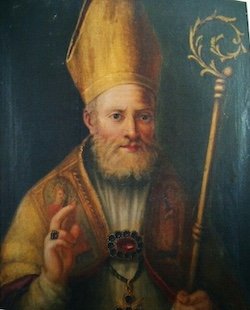
St. Ubaldo Baldassini, born circa 1085 at Gubbio, near Ancona, Umbria, Italy, came from nobility. Our saint, related to St. Sperandia (died in 1276; feast day = September 11), an abbess and a mystic, was a son of Rovaldo Baldassini. Rovaldo died when St. Ubaldo was young. Our saint’s mother was, unfortunately, an invalid afflicted with a neurological disorder, so an uncle raised him.
St. Ubaldo, educated at the cathedral school at Gubbio, turned to the Church. He, a monk at the Monastery of St. Secondo, Gubbio, became a priest in 1115. Later he became the dean of the cathedral. Our saint began to serve as the Bishop of Gubbio in 1128. St. Ubaldo, a friend of St. Francis of Assisi, had a reputation for being patient and kind. Our saint also delivered the city from the wrath of Holy Roman Emperor Frederick I Barbarossa (reigned 1152-1190), whom he bribed not to sack Gubbio. St. Ubaldo died of natural causes at Gubbio on May 16, 1160. He was about 75 years old.
Pope Celestine III canonized our saint in 1192.
St. Ubaldo is the patron saint of autistic people, possessed persons, sick children, obsessive compulsives, and Gubbio and Montovi, Italy.
source: Sundry Thoughts
LAST-MODIFIED:20240511T163418Z SEQUENCE:49749772 X-ACCESS:1 X-HITS:644 X-COLOR:f0b80e X-SHOW-END-TIME:1 END:VEVENT BEGIN:VEVENT DTSTART;VALUE=DATE:20240517 DTEND;VALUE=DATE:20240518 UID:8CEA5D17-78E4-43BF-A3D5-AA18F5E8760D SUMMARY:St. Pascal CREATED:20221013T211126Z DTSTAMP:20221013T211126Z URL:https://www.stpaulsweymouth.org/component/dpcalendar/event/1569?calid=13 DESCRIPTION:St. Pascal Baylon, Confessor\N\NFrom his childhood Saint Paschal seems to have been marked out for the service of God. Amid his daily labors as a shepherd, he found time to instruct and evangelize the rude herdsmen who kept their flocks on the hills of Aragon. At the age of twenty-four he entered the reformed Franciscan Order near the town of Monfort, Spain, where he remained, out of humility, a simple lay brother, occupying himself by preference with the roughest and most servile tasks.\NHe was distinguished by his ardent devotion and love for the Blessed Sacrament. He would spend hours on his knees before the tabernacle, often being raised from the ground in the fervor of his prayer. And there, from the authentic and eternal Truth, he drew such stores of wisdom that, unlettered as he was, he was considered by all a master in theology and spiritual science.\NShortly after his profession he was sent to Paris on business connected with his Order. The journey was full of perils, owing to the hostility of the Huguenots, who were numerous at the time in the south of France; and on four separate occasions Paschal was in imminent danger of death at their hands. Twice he was taken for a spy; but it was not God's will that His servant should obtain the crown of martyrdom which he so earnestly desired, though he regarded himself as unworthy of it. He returned in safety to his convent, where he would later die in the odor of sanctity in 1592.\NMultitudes witnessed the miracles which took place during the three days his body was exposed for veneration. He was canonized in 1690, and in 1897 declared patron of all Eucharistic congresses and confraternities.\NReflection. One day, as young Paschal was watching his sheep on the mountainside, he heard the consecration bell ring out from a church in the valley below, where the villagers were assembled for Mass. The Saint fell on his knees, when suddenly there stood before him an Angel of God, bearing in his hands the Sacred Host, offering it for his adoration. How pleasing to Jesus Christ are those who honor Him in this great mystery of His love; to them especially this promise is fulfilled: I will not leave you orphans, I will come to you. (John 14:18)\NLittle Pictorial Lives of the Saints, a compilation based on Butler's Lives of the Saints and other sources by John Gilmary Shea (Benziger Brothers: New York, 1894); Heavenly Friends: a Saint for each Day, by Rosalie Marie Levy (Saint Paul Editions: Boston, 1958). X-ALT-DESC;FMTTYPE=text/html:St. Pascal Baylon, Confessor
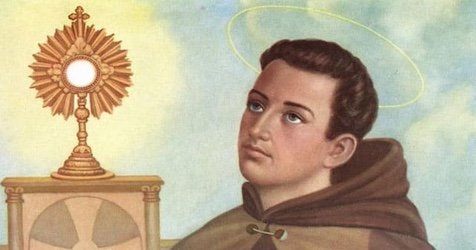
From his childhood Saint Paschal seems to have been marked out for the service of God. Amid his daily labors as a shepherd, he found time to instruct and evangelize the rude herdsmen who kept their flocks on the hills of Aragon. At the age of twenty-four he entered the reformed Franciscan Order near the town of Monfort, Spain, where he remained, out of humility, a simple lay brother, occupying himself by preference with the roughest and most servile tasks.
He was distinguished by his ardent devotion and love for the Blessed Sacrament. He would spend hours on his knees before the tabernacle, often being raised from the ground in the fervor of his prayer. And there, from the authentic and eternal Truth, he drew such stores of wisdom that, unlettered as he was, he was considered by all a master in theology and spiritual science.
Shortly after his profession he was sent to Paris on business connected with his Order. The journey was full of perils, owing to the hostility of the Huguenots, who were numerous at the time in the south of France; and on four separate occasions Paschal was in imminent danger of death at their hands. Twice he was taken for a spy; but it was not God's will that His servant should obtain the crown of martyrdom which he so earnestly desired, though he regarded himself as unworthy of it. He returned in safety to his convent, where he would later die in the odor of sanctity in 1592.
Multitudes witnessed the miracles which took place during the three days his body was exposed for veneration. He was canonized in 1690, and in 1897 declared patron of all Eucharistic congresses and confraternities.
Reflection. One day, as young Paschal was watching his sheep on the mountainside, he heard the consecration bell ring out from a church in the valley below, where the villagers were assembled for Mass. The Saint fell on his knees, when suddenly there stood before him an Angel of God, bearing in his hands the Sacred Host, offering it for his adoration. How pleasing to Jesus Christ are those who honor Him in this great mystery of His love; to them especially this promise is fulfilled: I will not leave you orphans, I will come to you. (John 14:18)
Little Pictorial Lives of the Saints, a compilation based on Butler's Lives of the Saints and other sources by John Gilmary Shea (Benziger Brothers: New York, 1894); Heavenly Friends: a Saint for each Day, by Rosalie Marie Levy (Saint Paul Editions: Boston, 1958).
LAST-MODIFIED:20240511T163704Z SEQUENCE:49749938 X-ACCESS:1 X-HITS:194 X-COLOR:f0b80e X-SHOW-END-TIME:1 END:VEVENT BEGIN:VEVENT DTSTART;VALUE=DATE:20240518 DTEND;VALUE=DATE:20240519 UID:C527A26F-DDD1-44ED-9003-B723838B8C29 SUMMARY:St. Venantius CREATED:20221013T211126Z DTSTAMP:20221013T211126Z URL:https://www.stpaulsweymouth.org/component/dpcalendar/event/1572?calid=13 DESCRIPTION:St. Venantius, Martyr\N\NSaint Venantius, born at Camerino in Italy, during the persecution of Decius was taken into custody at the age of fifteen years as a Christian who was preaching Christ to others. His history is one of the most miraculous in the annals of the early martyrs.\NHaving learned that he was about to be arrested, he presented himself to the governor of Camerino, Antiochus, at the city gates, and said to him that the lives of the gods were filled with every kind of crime, that there was only one God, whose unique Son had become a man to deliver his fellow humans from the tyranny of sin. When it was found impossible to shake his constancy either by threats or promises, he was condemned to be scourged, but was miraculously saved by an Angel. He was then burnt with torches and suspended over a low fire that he might be suffocated by the smoke. The judge's secretary, while admiring the steadfastness of the Saint, saw an Angel robed in white, who stamped out the fire and again set free the youthful martyr. This man proclaimed his faith in Christ and was baptized with his whole family. Shortly afterwards he won the martyr's crown.\NVenantius was summoned to appear before Antiochus. Unable to make him renounce his faith, the governor cast him into prison with an apostate soldier, who strove in vain to tempt him. Antiochus, furious, then ordered his teeth and jaws to be broken and had him thrown into a furnace, from which the Angel once more delivered him. The Saint was sent to a city magistrate to be condemned, but this judge after hearing his defense of Christianity, fell headlong from his seat and expired, saying, The God of Venantius is the true God; let us destroy our idols.\NWhen this circumstance was told to Antiochus, he ordered Venantius to be thrown to the lions. These brutes, however, forgetting their natural ferocity, crouched at the feet of the Saint. Then, by order of the tyrant, the young martyr was dragged through a heap of brambles and thorns and retired half-dead, but the next day he was cured; God had manifested the glory of His servant once more. On behalf of soldiers who had dragged him outside the city over stones and rocks, and were suffering from thirst, the Saint knelt on a rock and signed it with a cross; immediately a jet of clear, cool water welled up from the spot. This miracle converted many of those who beheld it. The rock remained imprinted by his knees and was placed in a church in Camerino, where it still remains.\NThe governor finally had Venantius and his converts beheaded on the same day, in the year 250. The bodies of these martyrs are kept in the same church at Camerino. The Acts of Saint Venantius' martyrdom have been carefully studied and declared authentic by the Church.\NReflection. Love of suffering marks the most perfect degree in the love of God. Our Lord Himself was consumed with the desire to suffer, because He burnt with the love of God. We must begin with patience and detachment, and eventually we shall learn to love the sufferings which conform us to the Passion of our Redeemer.\NLes Petits Bollandistes: Vies des Saints, by Msgr. Paul Guérin (Bloud et Barral: Paris, 1882), Vol. 5; Little Pictorial Lives of the Saints, a compilation based on Butler's Lives of the Saints and other sources by John Gilmary Shea (Benziger Brothers: New York, 1894). X-ALT-DESC;FMTTYPE=text/html:St. Venantius, Martyr
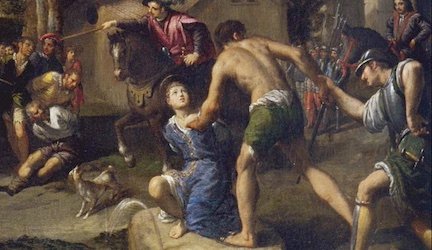
Saint Venantius, born at Camerino in Italy, during the persecution of Decius was taken into custody at the age of fifteen years as a Christian who was preaching Christ to others. His history is one of the most miraculous in the annals of the early martyrs.
Having learned that he was about to be arrested, he presented himself to the governor of Camerino, Antiochus, at the city gates, and said to him that the lives of the gods were filled with every kind of crime, that there was only one God, whose unique Son had become a man to deliver his fellow humans from the tyranny of sin. When it was found impossible to shake his constancy either by threats or promises, he was condemned to be scourged, but was miraculously saved by an Angel. He was then burnt with torches and suspended over a low fire that he might be suffocated by the smoke. The judge's secretary, while admiring the steadfastness of the Saint, saw an Angel robed in white, who stamped out the fire and again set free the youthful martyr. This man proclaimed his faith in Christ and was baptized with his whole family. Shortly afterwards he won the martyr's crown.
Venantius was summoned to appear before Antiochus. Unable to make him renounce his faith, the governor cast him into prison with an apostate soldier, who strove in vain to tempt him. Antiochus, furious, then ordered his teeth and jaws to be broken and had him thrown into a furnace, from which the Angel once more delivered him. The Saint was sent to a city magistrate to be condemned, but this judge after hearing his defense of Christianity, fell headlong from his seat and expired, saying, The God of Venantius is the true God; let us destroy our idols.
When this circumstance was told to Antiochus, he ordered Venantius to be thrown to the lions. These brutes, however, forgetting their natural ferocity, crouched at the feet of the Saint. Then, by order of the tyrant, the young martyr was dragged through a heap of brambles and thorns and retired half-dead, but the next day he was cured; God had manifested the glory of His servant once more. On behalf of soldiers who had dragged him outside the city over stones and rocks, and were suffering from thirst, the Saint knelt on a rock and signed it with a cross; immediately a jet of clear, cool water welled up from the spot. This miracle converted many of those who beheld it. The rock remained imprinted by his knees and was placed in a church in Camerino, where it still remains.
The governor finally had Venantius and his converts beheaded on the same day, in the year 250. The bodies of these martyrs are kept in the same church at Camerino. The Acts of Saint Venantius' martyrdom have been carefully studied and declared authentic by the Church.
Reflection. Love of suffering marks the most perfect degree in the love of God. Our Lord Himself was consumed with the desire to suffer, because He burnt with the love of God. We must begin with patience and detachment, and eventually we shall learn to love the sufferings which conform us to the Passion of our Redeemer.
Les Petits Bollandistes: Vies des Saints, by Msgr. Paul Guérin (Bloud et Barral: Paris, 1882), Vol. 5; Little Pictorial Lives of the Saints, a compilation based on Butler's Lives of the Saints and other sources by John Gilmary Shea (Benziger Brothers: New York, 1894).
LAST-MODIFIED:20240511T164403Z SEQUENCE:49750357 X-ACCESS:1 X-HITS:91 X-COLOR:f0b80e X-SHOW-END-TIME:1 END:VEVENT BEGIN:VEVENT DTSTART;VALUE=DATE:20240519 DTEND;VALUE=DATE:20240520 UID:A2722E2C-EEDD-4E40-A05D-F123D36E96BA SUMMARY:St. Peter Celestine CREATED:20221013T211126Z DTSTAMP:20221013T211126Z URL:https://www.stpaulsweymouth.org/component/dpcalendar/event/1578?calid=13 DESCRIPTION:St. Peter Celestine Pope, Confessor\N\NSaint Peter Celestine was the eleventh of the twelve children of a poor Italian farmer. As a child, Peter had visions of our Blessed Lady, Angels and Saints. His heavenly visitors encouraged him in his prayers and chided him when he fell into any fault. His mother, though only a poor widow, sent him to school, feeling sure that he would one day be a Saint.\NAt the age of twenty, he left his home in Apulia to live in a mountain solitude. Here he passed three years, assaulted by the evil spirits and beset with temptations of the flesh, but consoled by the visits of Angels. After this his seclusion was invaded by disciples who refused to be sent away; and the rule of life which he gave them formed the foundation of the Celestines, a branch of the Order of Saint Benedict. Angels assisted in the church which Peter built; unseen bells rang peals of surpassing sweetness, and heavenly music filled the sanctuary when he offered the Holy Sacrifice; he had consented to be ordained, to find in the Holy Eucharist assistance against temptation.\NSuddenly the poor anchorite found himself torn from his loved solitude, having been named by acclamation to the Papal throne, which had remained vacant for twenty-seven months. Resistance was of no avail. He took the name of Celestine, to remind him of the heaven he was leaving and for which he sighed. He was seventy-two years old. After a reign of five months, Peter judged himself unfit for the office, and summoning the cardinals to his presence, he solemnly resigned his trust.\NDuring the remaining three years of his life he worked many and great miracles. On the day after his abdication, his blessing after Mass healed a lame man. Saint Peter left the palace, desiring seclusion, but was brought back by the papal guards, for his successor feared a schism; crowds had followed Saint Peter. Lest he be prevailed upon to take back his office, he was put under surveillance at Anagni. Content, he remarked: I desired nothing but a cell, and a cell they have given me. And there he enjoyed his former loving intimacy with the Saints and Angels, and sang the Divine praises almost continually.\NAt length, on Pentecost Sunday he told his guards he would die within the week, and immediately fell ill. He received the Last Sacraments, and the following Saturday, as he finished the concluding verse of Lauds, Let every spirit bless the Lord! he closed his eyes to this world and opened them to the vision of God.\NReflection. To the one who withdraws himself from acquaintances and friends, says the Imitation of Christ, God will draw near with His holy Angels.\NLes Petits Bollandistes: Vies des Saints, by Msgr. Paul Guérin (Bloud et Barral: Paris, 1882), Vol. 6; Little Pictorial Lives of the Saints, a compilation based on Butler's Lives of the Saints and other sources by John Gilmary Shea (Benziger Brothers: New York, 1894); Vie des Saints pour tous les jours de l'année, by Abbé L. Jaud (Mame: Tours, 1950). X-ALT-DESC;FMTTYPE=text/html:St. Peter Celestine Pope, Confessor
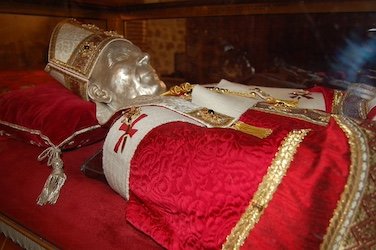
Saint Peter Celestine was the eleventh of the twelve children of a poor Italian farmer. As a child, Peter had visions of our Blessed Lady, Angels and Saints. His heavenly visitors encouraged him in his prayers and chided him when he fell into any fault. His mother, though only a poor widow, sent him to school, feeling sure that he would one day be a Saint.
At the age of twenty, he left his home in Apulia to live in a mountain solitude. Here he passed three years, assaulted by the evil spirits and beset with temptations of the flesh, but consoled by the visits of Angels. After this his seclusion was invaded by disciples who refused to be sent away; and the rule of life which he gave them formed the foundation of the Celestines, a branch of the Order of Saint Benedict. Angels assisted in the church which Peter built; unseen bells rang peals of surpassing sweetness, and heavenly music filled the sanctuary when he offered the Holy Sacrifice; he had consented to be ordained, to find in the Holy Eucharist assistance against temptation.
Suddenly the poor anchorite found himself torn from his loved solitude, having been named by acclamation to the Papal throne, which had remained vacant for twenty-seven months. Resistance was of no avail. He took the name of Celestine, to remind him of the heaven he was leaving and for which he sighed. He was seventy-two years old. After a reign of five months, Peter judged himself unfit for the office, and summoning the cardinals to his presence, he solemnly resigned his trust.
During the remaining three years of his life he worked many and great miracles. On the day after his abdication, his blessing after Mass healed a lame man. Saint Peter left the palace, desiring seclusion, but was brought back by the papal guards, for his successor feared a schism; crowds had followed Saint Peter. Lest he be prevailed upon to take back his office, he was put under surveillance at Anagni. Content, he remarked: I desired nothing but a cell, and a cell they have given me. And there he enjoyed his former loving intimacy with the Saints and Angels, and sang the Divine praises almost continually.
At length, on Pentecost Sunday he told his guards he would die within the week, and immediately fell ill. He received the Last Sacraments, and the following Saturday, as he finished the concluding verse of Lauds, Let every spirit bless the Lord! he closed his eyes to this world and opened them to the vision of God.
Reflection. To the one who withdraws himself from acquaintances and friends, says the Imitation of Christ, God will draw near with His holy Angels.
Les Petits Bollandistes: Vies des Saints, by Msgr. Paul Guérin (Bloud et Barral: Paris, 1882), Vol. 6; Little Pictorial Lives of the Saints, a compilation based on Butler's Lives of the Saints and other sources by John Gilmary Shea (Benziger Brothers: New York, 1894); Vie des Saints pour tous les jours de l'année, by Abbé L. Jaud (Mame: Tours, 1950).
LAST-MODIFIED:20240518T112703Z SEQUENCE:50336137 X-ACCESS:1 X-HITS:112 X-COLOR:f0b80e X-SHOW-END-TIME:1 END:VEVENT BEGIN:VEVENT DTSTART;VALUE=DATE:20240519 DTEND;VALUE=DATE:20240520 UID:E95E66AB-3027-4F31-8A9D-7ACFC316BBE7 SUMMARY:St. Pudentiana CREATED:20221013T211126Z DTSTAMP:20221013T211126Z URL:https://www.stpaulsweymouth.org/component/dpcalendar/event/1580?calid=13 DESCRIPTION:St. Pudentiana Virgin\N\NThis same nineteenth of May has another glory attached to it; it is the day on which died the noble virgin Pudentiana. That name carries us back to the very first Age of the Christian Church. She was a daughter of a wealthy Roman, called Pudens, who was a kinsman of the Pudens spoken of by St. Paul, in his second Epistle to Timothy (II. Tim. iv. 21). She and her sister Praxedes had the honour of being numbered among the earliest members of the Church, and both of them consecrated their virginity to Jesus Christ. Upon their father's death, the two sisters distributed their fortune to the poor, and devoted their whole time to good works. It was the eve of the Persecution under Antoninus. Pudentiana, though scarcely sixteen years of age, was ripe for heaven, and winged her flight to her Divine Spouse, when the storm was at its height. Her sister survived her many years: we shall commemorate her saintly memory on the 21st of July.Pudentiana's house, which, in her grandfather's time, had been honoured by St. Peter's presence, was made over, by the holy virgin herself, to Pope Pius the First, and the divine mysteries were celebrated in it. It is now one of the most venerable Churches of Rome, and is the Station for the Tuesday of the third week of Lent.Pudentiana is a tender floweret offered to our Risen Jesus by the Roman Church. Time has diminished naught of the fair lily's fragrance; and pure as her very name, her memory will live in the hearts of the Christian people, even to the end of the world. The eulogy passed upon her by the holy Liturgy is but a commemoration; and yet it says so much, and will say it each year, as long as time itself shall last.The virgin Pudentiana was daughter of the Roman (Senator) Pudens. Having lost her parents, and being most exemplary in her practice of the Christian Religion, she sold, with her sister Praxedes' consent, her possessions, gave the money to the poor, and devoted herself to fasting and prayer. It was through her influence, that her whole household, which consisted of ninety-six persons, was baptised by Pope Pius. In consequence of the decree issued by the emperor Antoninus, which forbade the Christians to offer sacrifice publicly, Pope Pius celebrated the holy mysteries in Pudentiana's house, and the Christians assembled there to assist at the celebration. She received them with much charity, and provided them with all the necessaries of life. She died in the practice of these Christian and pious duties, and, on the fourteenth, of the Calends of June (May 19), was buried in her father's tomb, in the Priscilla Cemetery, which is on the Salarian Road.\NPrayer: Like the dove of Noe's Ark, that found not where to rest her feet on the guilty earth, thou tookest thy flight, O Pudentiana, and restedst in the bosom of Jesus, thy Spouse. Thus will it be at the end of the world, when the souls of the Elect shall have been reunited to their bodies: they will fly, like eagles to their King, and will cluster around him, as the object of all their desires (St. Matth. xxiv. 28). They will flee from this sinful earth, as thou didst from the abominations of Pagan-Rome, that was drunk with the blood of the Martyrs (Apoc. xvii. 6). We celebrate thy departure, dear youthful Saint, with a feeling of hope for our own future deliverance; we honour thy reaching thy Jesus, and we long to be there, together with thee. Oh! get us detachment from all transitory things, intenser love of the New Life which came to us with Easter, and indifference as to what concerns that other lower life, which is not that of our Risen Lord. Thou wast a daughter of the holy Church of Rome; pray, then, for thy mother. She is suffering now, in the days of Pius the Ninth, as she did during the pontificate of Pius the First. After having reigned over Christian nations for centuries, she is now abandoned and disowned by the very people that owe all they have to her, and yet are now turning her own blessings against her. Use thine influence, O Pudentiana! assist and protect thine and our dearest mother.\N(Dom Prosper Gueranger) X-ALT-DESC;FMTTYPE=text/html:St. Pudentiana Virgin
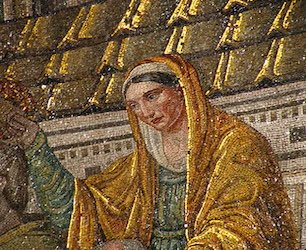
Prayer: Like the dove of Noe's Ark, that found not where to rest her feet on the guilty earth, thou tookest thy flight, O Pudentiana, and restedst in the bosom of Jesus, thy Spouse. Thus will it be at the end of the world, when the souls of the Elect shall have been reunited to their bodies: they will fly, like eagles to their King, and will cluster around him, as the object of all their desires (St. Matth. xxiv. 28). They will flee from this sinful earth, as thou didst from the abominations of Pagan-Rome, that was drunk with the blood of the Martyrs (Apoc. xvii. 6). We celebrate thy departure, dear youthful Saint, with a feeling of hope for our own future deliverance; we honour thy reaching thy Jesus, and we long to be there, together with thee. Oh! get us detachment from all transitory things, intenser love of the New Life which came to us with Easter, and indifference as to what concerns that other lower life, which is not that of our Risen Lord. Thou wast a daughter of the holy Church of Rome; pray, then, for thy mother. She is suffering now, in the days of Pius the Ninth, as she did during the pontificate of Pius the First. After having reigned over Christian nations for centuries, she is now abandoned and disowned by the very people that owe all they have to her, and yet are now turning her own blessings against her. Use thine influence, O Pudentiana! assist and protect thine and our dearest mother.
(Dom Prosper Gueranger)
LAST-MODIFIED:20240518T113136Z SEQUENCE:50336410 X-ACCESS:1 X-HITS:10 X-COLOR:f0b80e X-SHOW-END-TIME:1 END:VEVENT BEGIN:VEVENT DTSTART;VALUE=DATE:20240520 DTEND;VALUE=DATE:20240521 UID:6572D81B-1C08-45A9-9ACF-34FB736667EA SUMMARY:St. Bernardine CREATED:20221013T211126Z DTSTAMP:20221013T211126Z URL:https://www.stpaulsweymouth.org/component/dpcalendar/event/1582?calid=13 DESCRIPTION:St. Bernardine of Siena, Confessor\N\NOne day in the year 1408 the great apostle Saint Vincent Ferrer suddenly interrupted his sermon, to declare that there was among his hearers a young Franciscan who would be one day a greater preacher than himself, and who would be placed in honor by the Church before himself. This unknown friar, who would be canonized only six years after his death, was Bernardine, then 28 years old. Of noble birth, he had spent his youth in works of mercy, caring for the sick before he entered religion at the age of 24.\NOwing to a speech defect, Bernardine's success as a preacher at first seemed doubtful, but by the prayers of Our Lady, this obstacle was miraculously removed in 1417, and the Franciscan friar began an apostolate which lasted until he died. One day, preaching in praise of the Blessed Virgin, he applied to Her the verse of the Apocalypse: A great sign appeared in heaven, a Woman clothed with the sun... At once a brilliant star appeared over his head. He was understood, when he spoke in Italian, by listeners of the Greek language who knew only their maternal tongue. He obtained miraculous conversions and reformed the greater part of Italy by his burning words and by the power of the Holy Name of Jesus. He preached that devotion, displaying at the end of his sermons, the Holy Name written on a tablet. He was also a zealous apostle of the cult of Saint Joseph. It is said that during sixteen years, and some say eighteen, he did not pass a single day without preaching.\NBut his success had to be purified by the cross. The Saint was denounced as a heretic, and his devotion as idolatrous. After many trials he lived to see his innocence proved. In 1427 he refused the bishopric of Siena, and a few years later two others, in order to continue his preaching. He miraculously cured lepers and other sick persons, and raised to life several deceased persons. The Feast of the Holy Name of Jesus, established in 1530, was extended to the entire Church in 1721 by Pope Innocent XIII.\NSaint Bernardine was appointed Vicar General of his Order in 1438, which office he held for five years, then preached again for a time until his last illness forced his retreat in 1444. He died on Ascension Eve of that year, while his brethren were chanting the antiphon, Father, I have manifested Thy Name to men. Already in 1450, a Jubilee year, he was canonized.\NReflection. Let us learn from the life of Saint Bernardine the power of the Holy Name in life and death.\NLittle Pictorial Lives of the Saints, a compilation based on Butler's Lives of the Saints and other sources by John Gilmary Shea (Benziger Brothers: New York, 1894); Heavenly Friends: a Saint for each Day, by Rosalie Marie Levy (Saint Paul Editions: Boston, 1958). X-ALT-DESC;FMTTYPE=text/html:St. Bernardine of Siena, Confessor
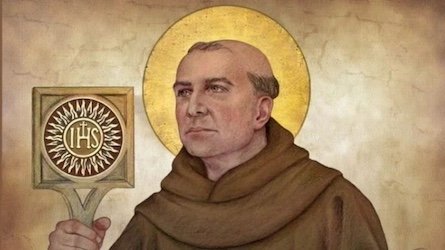
One day in the year 1408 the great apostle Saint Vincent Ferrer suddenly interrupted his sermon, to declare that there was among his hearers a young Franciscan who would be one day a greater preacher than himself, and who would be placed in honor by the Church before himself. This unknown friar, who would be canonized only six years after his death, was Bernardine, then 28 years old. Of noble birth, he had spent his youth in works of mercy, caring for the sick before he entered religion at the age of 24.
Owing to a speech defect, Bernardine's success as a preacher at first seemed doubtful, but by the prayers of Our Lady, this obstacle was miraculously removed in 1417, and the Franciscan friar began an apostolate which lasted until he died. One day, preaching in praise of the Blessed Virgin, he applied to Her the verse of the Apocalypse: A great sign appeared in heaven, a Woman clothed with the sun... At once a brilliant star appeared over his head. He was understood, when he spoke in Italian, by listeners of the Greek language who knew only their maternal tongue. He obtained miraculous conversions and reformed the greater part of Italy by his burning words and by the power of the Holy Name of Jesus. He preached that devotion, displaying at the end of his sermons, the Holy Name written on a tablet. He was also a zealous apostle of the cult of Saint Joseph. It is said that during sixteen years, and some say eighteen, he did not pass a single day without preaching.
But his success had to be purified by the cross. The Saint was denounced as a heretic, and his devotion as idolatrous. After many trials he lived to see his innocence proved. In 1427 he refused the bishopric of Siena, and a few years later two others, in order to continue his preaching. He miraculously cured lepers and other sick persons, and raised to life several deceased persons. The Feast of the Holy Name of Jesus, established in 1530, was extended to the entire Church in 1721 by Pope Innocent XIII.
Saint Bernardine was appointed Vicar General of his Order in 1438, which office he held for five years, then preached again for a time until his last illness forced his retreat in 1444. He died on Ascension Eve of that year, while his brethren were chanting the antiphon, Father, I have manifested Thy Name to men. Already in 1450, a Jubilee year, he was canonized.
Reflection. Let us learn from the life of Saint Bernardine the power of the Holy Name in life and death.
Little Pictorial Lives of the Saints, a compilation based on Butler's Lives of the Saints and other sources by John Gilmary Shea (Benziger Brothers: New York, 1894); Heavenly Friends: a Saint for each Day, by Rosalie Marie Levy (Saint Paul Editions: Boston, 1958).
LAST-MODIFIED:20240518T113420Z SEQUENCE:50336574 X-ACCESS:1 X-HITS:84 X-COLOR:f0b80e X-SHOW-END-TIME:1 END:VEVENT BEGIN:VEVENT DTSTART;VALUE=DATE:20240525 DTEND;VALUE=DATE:20240526 UID:B5F840CB-2799-43DB-B92A-24AB738E30F3 SUMMARY:St. Gregory CREATED:20221013T211126Z DTSTAMP:20221013T211126Z URL:https://www.stpaulsweymouth.org/component/dpcalendar/event/1585?calid=13 DESCRIPTION:St. Gregory VII Pope, Confessor\N\NGregory VII, one of the greatest of the Roman Pontiffs and one of the most remarkable men of all times, was known as Hildebrand before he became Pope. Born in Tuscany in 1020, he was sent to Rome to be educated under his uncle, who was Abbot of Saint Mary's monastery on the Aventine Hill. It was a time of great danger for the Church, when the Emperors of Germany were claiming it was their role to elect the successors of Saint Peter, the Vicars of Jesus Christ. They sold ecclesiastic dignities at auction or gave them to unworthy favorites, and many sees were occupied by persons who had obtained them with gold. It was this humble monk who had embraced the Benedictine Rule at the famous monastery of Cluny in France, who was chosen to bring a remedy to the current evils. The three great abuses, simony, concubinage, and the custom of receiving investiture from lay hands, seemed to threaten the very foundations of the Church. This great servant of God would never cease to oppose those corruptions of the reign of Christ.\NHildebrand was admired by the bishops of France when for a time he was at the Court of the Emperor Henry III. He returned to Rome with the bishop of Toul, who had been chosen Pope by the Emperor Henry III, and who invited him to accompany him. The young monk reproached him for having received from his relative a favor which should be granted only by the clergy and people of Rome; but when the bishop ceded to his arguments, he said he would accompany him if he would have his election ratified there. This was carried out, and Hildebrand became the right arm of the good Pope Leo IX. He was made a cardinal and named Superior of the Roman monastery of Saint Paul-Outside-the-Walls, which lay almost in ruins because the major part of its revenues had been usurped by powerful laymen. Hildebrand succeeded in recovering its lands and restored the monastery to its ancient splendor.\NWhen Leo IX died, the clergy and people of Rome sent Hildebrand at the head of a delegation to the Emperor, with full power to elect a Sovereign Pontiff. It was he who chose Pope Victor II, against the Emperor's wishes, and again he became the right arm of the Pope in the combat against abuses. Pope Victor II sent him as legate to France, to stop the practice of simony in the collation of ecclesiastical benefices. He served as Archdeacon under three more Popes, Stephen II, Nicholas II and Alexander II. Upon the death of the last-named in 1073, he was compelled to fill the vacancy.\NPope Gregory VII immediately called upon the clergy throughout the world to lay down their lives rather than betray the laws of God to the will of princes. Rome was in rebellion due to the ambition of the Cenci, a family of Rome whose history is a series of acts of violence and crimes. Pope Gregory excommunicated them. As a consequence they laid hands on him during the Christmas midnight Mass, wounded him and cast him into prison; the following day the people rescued him. He then was forced to face Henry IV, Emperor of Germany, who openly relapsed into simony and claimed to depose the Pope. The Emperor too was excommunicated. The people turned against Henry and he sought absolution of Gregory at Canossa, but he regrettably did not persevere; he set up an antipope and besieged Gregory in the castle of Saint Angelo in Rome. The aged Pontiff was obliged to flee.\NOpinion is unanimous that no Pontiff since the time of the Apostles undertook more labors for the Church or fought more courageously for her independence. While he was saying Mass, a dove was seen to come down on him; the Holy Spirit thus bore witness to the supernatural views which guided him in the government of the Church. Forced to leave Rome, he withdrew to Monte Cassino, and later to the castle of Salerno, where he died in 1085.\NLes Petits Bollandistes: Vies des Saints, by Msgr. Paul Guérin (Bloud et Barral: Paris, 1882), Vol. 5; Heavenly Friends: a Saint for each Day, by Rosalie Marie Levy (Saint Paul Editions: Boston, 1958). X-ALT-DESC;FMTTYPE=text/html:St. Gregory VII Pope, Confessor
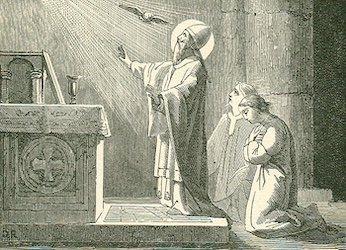
Gregory VII, one of the greatest of the Roman Pontiffs and one of the most remarkable men of all times, was known as Hildebrand before he became Pope. Born in Tuscany in 1020, he was sent to Rome to be educated under his uncle, who was Abbot of Saint Mary's monastery on the Aventine Hill. It was a time of great danger for the Church, when the Emperors of Germany were claiming it was their role to elect the successors of Saint Peter, the Vicars of Jesus Christ. They sold ecclesiastic dignities at auction or gave them to unworthy favorites, and many sees were occupied by persons who had obtained them with gold. It was this humble monk who had embraced the Benedictine Rule at the famous monastery of Cluny in France, who was chosen to bring a remedy to the current evils. The three great abuses, simony, concubinage, and the custom of receiving investiture from lay hands, seemed to threaten the very foundations of the Church. This great servant of God would never cease to oppose those corruptions of the reign of Christ.
Hildebrand was admired by the bishops of France when for a time he was at the Court of the Emperor Henry III. He returned to Rome with the bishop of Toul, who had been chosen Pope by the Emperor Henry III, and who invited him to accompany him. The young monk reproached him for having received from his relative a favor which should be granted only by the clergy and people of Rome; but when the bishop ceded to his arguments, he said he would accompany him if he would have his election ratified there. This was carried out, and Hildebrand became the right arm of the good Pope Leo IX. He was made a cardinal and named Superior of the Roman monastery of Saint Paul-Outside-the-Walls, which lay almost in ruins because the major part of its revenues had been usurped by powerful laymen. Hildebrand succeeded in recovering its lands and restored the monastery to its ancient splendor.
When Leo IX died, the clergy and people of Rome sent Hildebrand at the head of a delegation to the Emperor, with full power to elect a Sovereign Pontiff. It was he who chose Pope Victor II, against the Emperor's wishes, and again he became the right arm of the Pope in the combat against abuses. Pope Victor II sent him as legate to France, to stop the practice of simony in the collation of ecclesiastical benefices. He served as Archdeacon under three more Popes, Stephen II, Nicholas II and Alexander II. Upon the death of the last-named in 1073, he was compelled to fill the vacancy.
Pope Gregory VII immediately called upon the clergy throughout the world to lay down their lives rather than betray the laws of God to the will of princes. Rome was in rebellion due to the ambition of the Cenci, a family of Rome whose history is a series of acts of violence and crimes. Pope Gregory excommunicated them. As a consequence they laid hands on him during the Christmas midnight Mass, wounded him and cast him into prison; the following day the people rescued him. He then was forced to face Henry IV, Emperor of Germany, who openly relapsed into simony and claimed to depose the Pope. The Emperor too was excommunicated. The people turned against Henry and he sought absolution of Gregory at Canossa, but he regrettably did not persevere; he set up an antipope and besieged Gregory in the castle of Saint Angelo in Rome. The aged Pontiff was obliged to flee.
Opinion is unanimous that no Pontiff since the time of the Apostles undertook more labors for the Church or fought more courageously for her independence. While he was saying Mass, a dove was seen to come down on him; the Holy Spirit thus bore witness to the supernatural views which guided him in the government of the Church. Forced to leave Rome, he withdrew to Monte Cassino, and later to the castle of Salerno, where he died in 1085.
Les Petits Bollandistes: Vies des Saints, by Msgr. Paul Guérin (Bloud et Barral: Paris, 1882), Vol. 5; Heavenly Friends: a Saint for each Day, by Rosalie Marie Levy (Saint Paul Editions: Boston, 1958).
LAST-MODIFIED:20240518T114129Z SEQUENCE:50337003 X-ACCESS:1 X-HITS:51 X-COLOR:f0b80e X-SHOW-END-TIME:1 END:VEVENT BEGIN:VEVENT DTSTART;VALUE=DATE:20240525 DTEND;VALUE=DATE:20240526 UID:BA96DAA9-8CB3-4A25-A213-372D4208F408 SUMMARY:St. Urban CREATED:20221013T211126Z DTSTAMP:20221013T211126Z URL:https://www.stpaulsweymouth.org/component/dpcalendar/event/1587?calid=13 DESCRIPTION:St Urban I Pope, Martyr\N\NPope Saint Urban I was one of the earliest popes of the Catholic Church, serving in the third century. He is often regarded as one of the first popes whose leadership can be dated. Even still, Pope Saint Urban’s papacy is still shrouded in mystery. Saint Urban left no personal writings. Thus, not much is known about his early life. It is believed that Urban was born around the year 175 in Rome. His father’s name was Pontianus. Unlike future leaders of the Catholic Church, Urban did not change his name upon election. He is the original Pope Urban. Many future popes adopted the name in his legacy.\NPope Saint Urban was elected to serve as Pope in 222 after the death of Callixtus I. His reign is a noted time of relative peace for Christians. He served in this position when the Roman Emperor was Alexander Severus. Unlike Rome’s previous leader, Alexander Severus did not persecute Christianity. For this reason, the Church grew in numbers. Saint Urban was considered to be a successful converter. Stories of his ability to get people to turn to Christianity are still told to this day. Some of his most notable converts include the husband and brother-in-law of Saint Cecilia.\NWhile the Church was able to flourish during Pope Saint Urban’s papacy, there was still some dissension in the Roman Church. Hippolytus opposed the previous pope, Callixtus I. Once Saint Urban took over, much of that disdain with Hippolytus and his followers continued. Pope Saint Urban dealt with the schism the same way, which didn’t help to ease tensions. Additional factions in the Church, such as Gnosticism and Novatianism, also existed during his reign. They continued to challenge the Church.\NSaint Urban was imprisoned by a provost of Rome called Almachius. Almachius beheaded Saint Cecilia and accused Saint Urban of conspiring with her to convert 5,000 people. He was then imprisoned, where he converted and baptized the keepers of the prison. Almachius then tried to force Saint Urban to pray to a Roman idol. However, he stayed true to his faith and prayed to God. The idol then fell, killing 22 pagan priests. Even though he was tortured, Saint Urban refused to pray to the Roman Idol. Eventually, Almachius sentenced him to death and had him beheaded. X-ALT-DESC;FMTTYPE=text/html:St Urban I Pope, Martyr
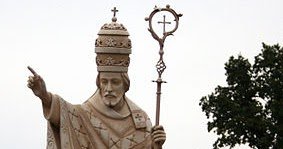
Pope Saint Urban I was one of the earliest popes of the Catholic Church, serving in the third century. He is often regarded as one of the first popes whose leadership can be dated. Even still, Pope Saint Urban’s papacy is still shrouded in mystery. Saint Urban left no personal writings. Thus, not much is known about his early life. It is believed that Urban was born around the year 175 in Rome. His father’s name was Pontianus. Unlike future leaders of the Catholic Church, Urban did not change his name upon election. He is the original Pope Urban. Many future popes adopted the name in his legacy.
Pope Saint Urban was elected to serve as Pope in 222 after the death of Callixtus I. His reign is a noted time of relative peace for Christians. He served in this position when the Roman Emperor was Alexander Severus. Unlike Rome’s previous leader, Alexander Severus did not persecute Christianity. For this reason, the Church grew in numbers. Saint Urban was considered to be a successful converter. Stories of his ability to get people to turn to Christianity are still told to this day. Some of his most notable converts include the husband and brother-in-law of Saint Cecilia.
While the Church was able to flourish during Pope Saint Urban’s papacy, there was still some dissension in the Roman Church. Hippolytus opposed the previous pope, Callixtus I. Once Saint Urban took over, much of that disdain with Hippolytus and his followers continued. Pope Saint Urban dealt with the schism the same way, which didn’t help to ease tensions. Additional factions in the Church, such as Gnosticism and Novatianism, also existed during his reign. They continued to challenge the Church.
Saint Urban was imprisoned by a provost of Rome called Almachius. Almachius beheaded Saint Cecilia and accused Saint Urban of conspiring with her to convert 5,000 people. He was then imprisoned, where he converted and baptized the keepers of the prison. Almachius then tried to force Saint Urban to pray to a Roman idol. However, he stayed true to his faith and prayed to God. The idol then fell, killing 22 pagan priests. Even though he was tortured, Saint Urban refused to pray to the Roman Idol. Eventually, Almachius sentenced him to death and had him beheaded.
LAST-MODIFIED:20240518T114645Z SEQUENCE:50337319 X-ACCESS:1 X-HITS:226 X-COLOR:f0b80e X-SHOW-END-TIME:1 END:VEVENT BEGIN:VEVENT DTSTART;VALUE=DATE:20240525 DTEND;VALUE=DATE:20240526 UID:BFEEA751-F2DB-4AC8-9F35-8D30104F6942 SUMMARY:St. Aldhelm CREATED:20221013T211126Z DTSTAMP:20221013T211126Z URL:https://www.stpaulsweymouth.org/component/dpcalendar/event/1589?calid=13 DESCRIPTION:St. Aldhelm Bishop, Confessor\N\NSt. Aldhelm (Ealdhelm) was born about the year 639. He is said to have been the son of Kenten, of the royal house of Wessex. He received his education from the Irish monk-scholar Maeldubha, after whom Malmesbury is named. Aldhelm was one of the disciples of Abbot Adrian of Canterbury. His studies included Roman law, astronomy, mathematics, and difficulties of the calendar. He learned Greek and Hebrew. Ill health compelled him to leave Canterbury, and the Saint returned to Malmesbury Abbey, where he was a monk under Maeldubha for 14 years. When Maeldubha reposed, Aldhelm was appointed in 675 to be first abbot of Malmesbury.Aldhelm introduced the Benedictine rule, and secured the right of the election of the abbot to the monks. The community increased, and Aldhelm was able to found two other monasteries: Frome, Somerset and Bradford on Avon, Wiltshire. The little church of St Laurence at Bradford on Avo dates back to his time, and is probably his. At Malmesbury he built a new church and obtained grants of land for the monastery.\NHis fame as a scholar spread to other countries. Artwil, the son of an Irish king, submitted his writings for Aldhelm's approval, and Cellanus, an Irish monk from Peronne in Gaul, was one of his correspondents. Aldhelm was the first Anglo-Saxon, so far as we know, to write in Latin verse, and his letter to Acircius (Aldfrith or Eadfrith, king of Northumbria) is a treatise on Latin prosody for the use of his countrymen. In this work he included his most famous productions, 101 riddles in Latin hexameters. Each of them is a complete picture, and one of them runs to 83 lines.His fame as a scholar reached Italy, and at the request of Pope Sergius I, abbot Aldhelm paid a visit to Rome. He was deputed by a synod of the church in Wessex to remonstrate with the Britons of Dumnonia (Devon and Cornwall) on the Easter controversy. British Christians followed a unique system of calculation for the date of Easter and also bore a distinctive tonsure; these customs are generally associated with the practice known as Celtic Christianity. Aldhelm wrote a long and rather acrimonious letter to king Geraint of Dumnonia (Geruntius) achieving ultimate agreement with the Patriarchate (Rome). In 705, or perhaps earlier, Hedda, bishop of Winchester, reposed, and the diocese was divided into two parts. Sherborne was the new see, of which Aldhelm reluctantly became the first bishop in 705. He wished to resign the abbey of Malmesbury which he had governed for 30 years, but he yielded to the remonstrances of the monks and continued directing it until his death. Though he was now an old man, St. Aldhelm was very active as a Bishop. He built a cathedral church at Sherborne, described by William of Malmesbury. St. Aldhelm was known for singing hymns and passages from the gospels, interspersed with entertaining tales, in public places so that he might draw attention from the crowds and then preach to them. For this, he is known as the Apostle of Wessex. St. Aldhelm fell asleep in the Lord in the church of Doulting on 25 May 709. His holy and venerable body was taken to Malmesbury, and crosses were set up by his friend, St. Egwin, Bishop of Worcester, at the various stopping-places. The Saint was buried in the church of St. Michael at Malmesbury Abbey. His biographers relate miracles worked during his lifetime and at his shrine. He was revered as a saint after his death, and his feast on May 25 is found in the Sarum Missal. \NHoly Father Aldhelm, pray to God for us!\Nsource: oodegr X-ALT-DESC;FMTTYPE=text/html:St. Aldhelm Bishop, Confessor
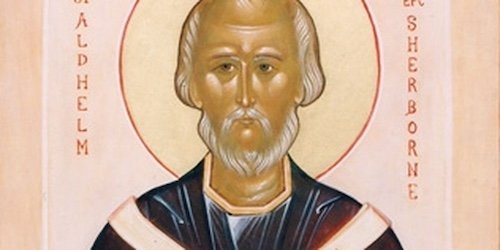
St. Aldhelm (Ealdhelm) was born about the year 639. He is said to have been the son of Kenten, of the royal house of Wessex. He received his education from the Irish monk-scholar Maeldubha, after whom Malmesbury is named. Aldhelm was one of the disciples of Abbot Adrian of Canterbury. His studies included Roman law, astronomy, mathematics, and difficulties of the calendar. He learned Greek and Hebrew. Ill health compelled him to leave Canterbury, and the Saint returned to Malmesbury Abbey, where he was a monk under Maeldubha for 14 years. When Maeldubha reposed, Aldhelm was appointed in 675 to be first abbot of Malmesbury.
Aldhelm introduced the Benedictine rule, and secured the right of the election of the abbot to the monks. The community increased, and Aldhelm was able to found two other monasteries: Frome, Somerset and Bradford on Avon, Wiltshire. The little church of St Laurence at Bradford on Avo dates back to his time, and is probably his. At Malmesbury he built a new church and obtained grants of land for the monastery.
His fame as a scholar spread to other countries. Artwil, the son of an Irish king, submitted his writings for Aldhelm's approval, and Cellanus, an Irish monk from Peronne in Gaul, was one of his correspondents. Aldhelm was the first Anglo-Saxon, so far as we know, to write in Latin verse, and his letter to Acircius (Aldfrith or Eadfrith, king of Northumbria) is a treatise on Latin prosody for the use of his countrymen. In this work he included his most famous productions, 101 riddles in Latin hexameters. Each of them is a complete picture, and one of them runs to 83 lines.
His fame as a scholar reached Italy, and at the request of Pope Sergius I, abbot Aldhelm paid a visit to Rome. He was deputed by a synod of the church in Wessex to remonstrate with the Britons of Dumnonia (Devon and Cornwall) on the Easter controversy. British Christians followed a unique system of calculation for the date of Easter and also bore a distinctive tonsure; these customs are generally associated with the practice known as Celtic Christianity. Aldhelm wrote a long and rather acrimonious letter to king Geraint of Dumnonia (Geruntius) achieving ultimate agreement with the Patriarchate (Rome).
In 705, or perhaps earlier, Hedda, bishop of Winchester, reposed, and the diocese was divided into two parts. Sherborne was the new see, of which Aldhelm reluctantly became the first bishop in 705. He wished to resign the abbey of Malmesbury which he had governed for 30 years, but he yielded to the remonstrances of the monks and continued directing it until his death. Though he was now an old man, St. Aldhelm was very active as a Bishop. He built a cathedral church at Sherborne, described by William of Malmesbury. St. Aldhelm was known for singing hymns and passages from the gospels, interspersed with entertaining tales, in public places so that he might draw attention from the crowds and then preach to them. For this, he is known as the Apostle of Wessex.
St. Aldhelm fell asleep in the Lord in the church of Doulting on 25 May 709. His holy and venerable body was taken to Malmesbury, and crosses were set up by his friend, St. Egwin, Bishop of Worcester, at the various stopping-places. The Saint was buried in the church of St. Michael at Malmesbury Abbey. His biographers relate miracles worked during his lifetime and at his shrine. He was revered as a saint after his death, and his feast on May 25 is found in the Sarum Missal.
Holy Father Aldhelm, pray to God for us!
source: oodegr
LAST-MODIFIED:20240518T115244Z SEQUENCE:50337678 X-ACCESS:1 X-HITS:281 X-COLOR:f0b80e X-SHOW-END-TIME:1 END:VEVENT BEGIN:VEVENT DTSTART;VALUE=DATE:20240526 DTEND;VALUE=DATE:20240527 UID:5950BB3E-262A-4EB1-8EFE-A3460817D35B SUMMARY:St. Eleutherius CREATED:20221013T211126Z DTSTAMP:20221013T211126Z URL:https://www.stpaulsweymouth.org/component/dpcalendar/event/1640?calid=13 DESCRIPTION:St. Eleutherius Pope, Martyr\N\NPope Eleutherius was the 13th Pope of the Church. His papacy is notable for its length, extending over 15 years, making him one of the longest-serving popes of his era. The Church venerates him as a saint and as a martyr.\NEleutherius was born in the small town of Nicopolis sometime around 130 AD. His parents gave him the name Eleutherius at birth, and he decided to use his official name when he became pope. After deciding to help the Church, he became a deacon and worked with bishops in the Church of Rome, including Soter and Anicetus, both of whom would later serve as popes within that Church. Pope Saint Soter died just a few weeks before Eleutherius became pope.\NThe papacy of Eleutherius was marked by his stance against the Montanist movement. Started by a man named Montanus, this movement differed from the Church’s official stance. Montanus traveled through the region with two women and often claimed that the trio was the human embodiment of the Holy Spirit. Pope Eleutherius was forced to speak out against the movement and was attached to several letters about them.\NOne of the only papal decrees attributed to Eleutherius is one that involves food. It stated that Christians should not turn down food offered to them or food that was available to them as it came from God. \NHistorians today also believe that Pope Eleutherius was involved in missions to Britain. Lucius, who was the King of Britan, wrote a letter to the pope in which he claimed that he wanted to convert.\NEleutherius died in 199 AD as a martyr, with problems brought on by the suffering he experienced at the hands of his opponents. He was buried on Vatican Hill close to some of the other early popes and not far away from Saint Peter. His body was later moved to two different spots in Rome. X-ALT-DESC;FMTTYPE=text/html:St. Eleutherius Pope, Martyr
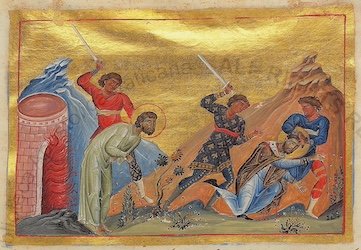
Pope Eleutherius was the 13th Pope of the Church. His papacy is notable for its length, extending over 15 years, making him one of the longest-serving popes of his era. The Church venerates him as a saint and as a martyr.
Eleutherius was born in the small town of Nicopolis sometime around 130 AD. His parents gave him the name Eleutherius at birth, and he decided to use his official name when he became pope. After deciding to help the Church, he became a deacon and worked with bishops in the Church of Rome, including Soter and Anicetus, both of whom would later serve as popes within that Church. Pope Saint Soter died just a few weeks before Eleutherius became pope.
The papacy of Eleutherius was marked by his stance against the Montanist movement. Started by a man named Montanus, this movement differed from the Church’s official stance. Montanus traveled through the region with two women and often claimed that the trio was the human embodiment of the Holy Spirit. Pope Eleutherius was forced to speak out against the movement and was attached to several letters about them.
One of the only papal decrees attributed to Eleutherius is one that involves food. It stated that Christians should not turn down food offered to them or food that was available to them as it came from God.
Historians today also believe that Pope Eleutherius was involved in missions to Britain. Lucius, who was the King of Britan, wrote a letter to the pope in which he claimed that he wanted to convert.
Eleutherius died in 199 AD as a martyr, with problems brought on by the suffering he experienced at the hands of his opponents. He was buried on Vatican Hill close to some of the other early popes and not far away from Saint Peter. His body was later moved to two different spots in Rome.
LAST-MODIFIED:20240525T180731Z SEQUENCE:50964965 X-ACCESS:1 X-HITS:232 X-COLOR:f0b80e X-SHOW-END-TIME:1 END:VEVENT BEGIN:VEVENT DTSTART;VALUE=DATE:20240526 DTEND;VALUE=DATE:20240527 UID:BA141BE4-8FE8-4029-ACF7-718DE3ADA491 SUMMARY:St. Philip CREATED:20221013T211126Z DTSTAMP:20221013T211126Z URL:https://www.stpaulsweymouth.org/component/dpcalendar/event/1636?calid=13 DESCRIPTION:St. Philip Neri, Confessor\N\NSaint Philip, one of the glories of Florence, was born of an illustrious Christian family in that city of Tuscany, in 1515. His parents lived in the fear of God and the observance of His commandments, and raised their son to be obedient and respectful. Already when he was five years old, he was called good little Philip. He lost his mother while still very young, and it seemed he should have died himself when he was about eight or nine years old. He fell, along with a horse, onto a pavement from a certain height. Though the horse landed on top of him, he was entirely uninjured. He attributed his preservation to a special intervention of God, destined to permit him to dedicate his life to the service of God.\NHe fled from a prospective inheritance to Rome, where he desired to study, and there undertook to tutor the two sons of a nobleman who offered him refuge. He led so edifying a life that word of it reached Florence, and his sister commented that she had never doubted he would become a great Saint. He studied philosophy and theology, and after a short time seemed to need to study no longer, so clear were the truths of God in his mind. He always kept the Summa Theologica of Saint Thomas Aquinas near him for consultation; this and the Holy Bible were his only books.\NSaint Philip seemed surrounded by a celestial splendor, the effect of his angelic purity, which he never lost in spite of the many dangers that surrounded him; he came victorious from every combat, through prayer, tears and confidence in God. He often visited the hospitals to serve the sick and assist the poor. At night he would go to the cemetery of Saint Callixtus, where he prayed near the tombs of the martyrs.\NHe attracted a number of companions who desired to perform these devotions with him. He loved young boys most of all; he wanted to warn them against the world's seductions and conserve their virtue in all its freshness. He would wait for them and talk to them after their classes; and many whom his examples impressed consecrated themselves to God. Assisted by his excellent confessor, he founded a Confraternity of the Most Holy Trinity for the relief of the poor, convalescents, and pilgrims who had no place of refuge. He gave lodging to many in the great jubilee year of 1550, even receiving several complete families in the houses he had obtained.\NAt the age of 36 he was not yet a priest, and his confessor commanded him under obedience to receive Holy Orders, which he did in the same year of 1551. He joined a society of priests and heard many confessions. Saint Ignatius of Loyola called him Philip the Bell, saying he was like a parish church bell, calling everyone to church, but remaining in his tower — this because he determined so many souls to enter into religion, without doing so himself. He himself was about to follow Saint Francis Xavier's renowned examples, by going to India with twenty young companions, but was advised by an interior voice to consult a saintly priest. He was then told that the will of God was that he live in the city of Rome as in a desert.\NThe famous Society of Saint Philip, called The Oratory, began when a group of good priests joined him in giving instructions and conferences and presiding prayers; for them he drew up some rules which were soon approved. He became renowned all over Italy for the instances of bilocation which were duly verified during his lifetime. Many holy servants of God were formed in the Oratory, a society of studious priests, made ready by ten years of preparation in the common life for a service founded on sacerdotal perfection. Saint Philip died peacefully in 1595 on the Feast of Corpus Christi at the age of 80, having been ill for only one day. He bears the noble titles of Patron of Works of Youth, and Apostle of Rome.\NReflection. Philip wished his spiritual children to serve God, like the first Christians, in gladness of heart. He said such was the true filial spirit, expanding the soul, giving it liberty and perfection in action, power over temptations, and aid towards its final perseverance.\NLes Petits Bollandistes: Vies des Saints, by Msgr. Paul Guérin (Bloud et Barral: Paris, 1882), Vol. 5 X-ALT-DESC;FMTTYPE=text/html:St. Philip Neri, Confessor
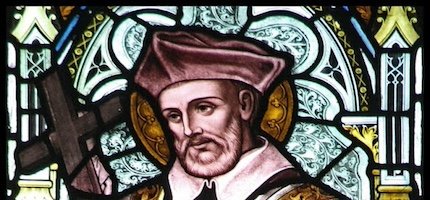
Saint Philip, one of the glories of Florence, was born of an illustrious Christian family in that city of Tuscany, in 1515. His parents lived in the fear of God and the observance of His commandments, and raised their son to be obedient and respectful. Already when he was five years old, he was called good little Philip. He lost his mother while still very young, and it seemed he should have died himself when he was about eight or nine years old. He fell, along with a horse, onto a pavement from a certain height. Though the horse landed on top of him, he was entirely uninjured. He attributed his preservation to a special intervention of God, destined to permit him to dedicate his life to the service of God.
He fled from a prospective inheritance to Rome, where he desired to study, and there undertook to tutor the two sons of a nobleman who offered him refuge. He led so edifying a life that word of it reached Florence, and his sister commented that she had never doubted he would become a great Saint. He studied philosophy and theology, and after a short time seemed to need to study no longer, so clear were the truths of God in his mind. He always kept the Summa Theologica of Saint Thomas Aquinas near him for consultation; this and the Holy Bible were his only books.
Saint Philip seemed surrounded by a celestial splendor, the effect of his angelic purity, which he never lost in spite of the many dangers that surrounded him; he came victorious from every combat, through prayer, tears and confidence in God. He often visited the hospitals to serve the sick and assist the poor. At night he would go to the cemetery of Saint Callixtus, where he prayed near the tombs of the martyrs.
He attracted a number of companions who desired to perform these devotions with him. He loved young boys most of all; he wanted to warn them against the world's seductions and conserve their virtue in all its freshness. He would wait for them and talk to them after their classes; and many whom his examples impressed consecrated themselves to God. Assisted by his excellent confessor, he founded a Confraternity of the Most Holy Trinity for the relief of the poor, convalescents, and pilgrims who had no place of refuge. He gave lodging to many in the great jubilee year of 1550, even receiving several complete families in the houses he had obtained.
At the age of 36 he was not yet a priest, and his confessor commanded him under obedience to receive Holy Orders, which he did in the same year of 1551. He joined a society of priests and heard many confessions. Saint Ignatius of Loyola called him Philip the Bell, saying he was like a parish church bell, calling everyone to church, but remaining in his tower — this because he determined so many souls to enter into religion, without doing so himself. He himself was about to follow Saint Francis Xavier's renowned examples, by going to India with twenty young companions, but was advised by an interior voice to consult a saintly priest. He was then told that the will of God was that he live in the city of Rome as in a desert.
The famous Society of Saint Philip, called The Oratory, began when a group of good priests joined him in giving instructions and conferences and presiding prayers; for them he drew up some rules which were soon approved. He became renowned all over Italy for the instances of bilocation which were duly verified during his lifetime. Many holy servants of God were formed in the Oratory, a society of studious priests, made ready by ten years of preparation in the common life for a service founded on sacerdotal perfection. Saint Philip died peacefully in 1595 on the Feast of Corpus Christi at the age of 80, having been ill for only one day. He bears the noble titles of Patron of Works of Youth, and Apostle of Rome.
Reflection. Philip wished his spiritual children to serve God, like the first Christians, in gladness of heart. He said such was the true filial spirit, expanding the soul, giving it liberty and perfection in action, power over temptations, and aid towards its final perseverance.
Les Petits Bollandistes: Vies des Saints, by Msgr. Paul Guérin (Bloud et Barral: Paris, 1882), Vol. 5
LAST-MODIFIED:20240525T175704Z SEQUENCE:50964338 X-ACCESS:1 X-HITS:60 X-COLOR:f0b80e X-SHOW-END-TIME:1 END:VEVENT BEGIN:VEVENT DTSTART;VALUE=DATE:20240526 DTEND;VALUE=DATE:20240527 UID:C684F4EC-E10A-4DB7-8387-8A9AD0EA85D7 SUMMARY:St. Augustine CREATED:20221013T211126Z DTSTAMP:20221013T211126Z URL:https://www.stpaulsweymouth.org/component/dpcalendar/event/1638?calid=13 DESCRIPTION:St. Augustine Bishop, Confessor, Apostle to the English\N\NSaint Augustine was prior of the monastery of Saint Andrew on Mount Coelius in Rome, when he was appointed by Saint Gregory the Great as Superior of the forty missionaries he was sending to England. The Christian faith of England, more than that of any other nation of Europe, was the fruit of the labors and spiritual conquests of the ministry of monks. Its deepest Christian roots are more ancient than Saint Augustine and his companions, and date from the era of the Apostles. England, in the first century, furnished its contingent of martyrs during the persecution of Diocletian. England sent its bishops to the first Councils held after the religion of Christ became that of the Empire in 313. But in the time of Saint Augustine, the Anglo-Saxon conquest had cut down almost all the branches of the tree.\NWhen Saint Augustine arrived, ruined churches, scarcely a Christian to be found to narrate a tradition, attested to the sacrilegious and incendiary hand of paganism, despite the labors of Saint Palladius and Saint Germain d'Auxerre in the fifth century. The last Christian Britons had taken refuge in the mountains of Wales. And England, the land of the Angles, had become a land of infamous slave-traders for the continent, including Rome; its merchants did not spare their own people when profit was at stake. In this way did Saint Gregory the Great come to purchase the English boys he saw marketed at the Roman Forum, and raise them in his house, which he had transformed into a monastery. Thus the definitive conversion of England began, in his compassionate heart, when in the sixth year of his pontificate he chose the prior of his own monastery for the mission to England.\NSaint Augustine and his companions during their journey heard many reports of the barbarism and ferocity of the pagan English. They were alarmed and wished to turn back. But Saint Gregory sent word to them saying, Go on, in God's name! The greater your hardships, the greater your crown. May the grace of Almighty God protect you, and permit me to see the fruit of your labor in the heavenly country! If I cannot share your toil, I shall yet share the harvest, for God knows that it is not good-will which is wanting. The band of missionaries went on in obedience, after halting briefly to deliver letters of Saint Gregory at the Abbey of Lerins, and to the bishops of Aix, Tours, Marseille, Vienna, Autun, and Arles, as well as to obtain translators for the mission of the monks.\NLanding at Ebbsfleet, they sent ahead of them their translator-emissaries, to say to the king of those lands that they had come from Rome, to announce to him not merely good news, but the Good News of all ages, with its promises of heavenly joy and an eternal reign in the company of the living and true God. They met with the Saxon King Ethelbert who had been reigning for thirty-six years, and with his barons under a great oak tree at Minster in the present county of Kent, and announced to him the Gospel of Jesus Christ. He was predisposed to listen to the missionaries; his Christian wife, Bertha, was a great-granddaughter of Saint Clothilda and Clovis. He wished to deliberate for a few days nonetheless, and when they returned in procession, chanting and preceded by the Cross, he promised only to give them liberty to practice their faith unmolested. He gave them a residence in Canterbury and provided for their needs. Their good example brought many to them for instruction and then Baptism, and at Pentecost 597, the Anglo-Saxon king, too, entered into the unity of the Church of Christ. His example was followed by the greater number of his nobles and people.\NBy degrees the Faith spread far and wide, and Augustine, as papal legate, set out on a visitation of Britain. He failed in his attempt to enlist the Christian Britons of the west in the work of his apostolate, but his success was otherwise triumphant from south to north. He died after eight years of evangelical labors, but his monks continued them and perpetuated them. The Anglo-Saxon Church which Saint Augustine founded is still famous for its learning, zeal, and devotion to the Holy See, while its calendar commemorates no fewer than 300 Saints, half of whom were of royal birth.\NReflection. The work of an apostle is the work of the right hand of God. He often chooses weak instruments for His mightiest purposes. The most sure augury of lasting success in missionary labor is obedience to superiors and mistrust of self.\NLes Petits Bollandistes: Vies des Saints, by Msgr. Paul Guérin (Bloud et Barral: Paris, 1882), Vol. 6 X-ALT-DESC;FMTTYPE=text/html:St. Augustine Bishop, Confessor, Apostle to the English
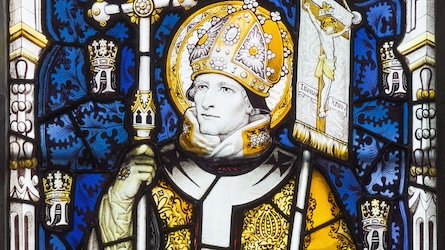
Saint Augustine was prior of the monastery of Saint Andrew on Mount Coelius in Rome, when he was appointed by Saint Gregory the Great as Superior of the forty missionaries he was sending to England. The Christian faith of England, more than that of any other nation of Europe, was the fruit of the labors and spiritual conquests of the ministry of monks. Its deepest Christian roots are more ancient than Saint Augustine and his companions, and date from the era of the Apostles. England, in the first century, furnished its contingent of martyrs during the persecution of Diocletian. England sent its bishops to the first Councils held after the religion of Christ became that of the Empire in 313. But in the time of Saint Augustine, the Anglo-Saxon conquest had cut down almost all the branches of the tree.
When Saint Augustine arrived, ruined churches, scarcely a Christian to be found to narrate a tradition, attested to the sacrilegious and incendiary hand of paganism, despite the labors of Saint Palladius and Saint Germain d'Auxerre in the fifth century. The last Christian Britons had taken refuge in the mountains of Wales. And England, the land of the Angles, had become a land of infamous slave-traders for the continent, including Rome; its merchants did not spare their own people when profit was at stake. In this way did Saint Gregory the Great come to purchase the English boys he saw marketed at the Roman Forum, and raise them in his house, which he had transformed into a monastery. Thus the definitive conversion of England began, in his compassionate heart, when in the sixth year of his pontificate he chose the prior of his own monastery for the mission to England.
Saint Augustine and his companions during their journey heard many reports of the barbarism and ferocity of the pagan English. They were alarmed and wished to turn back. But Saint Gregory sent word to them saying, Go on, in God's name! The greater your hardships, the greater your crown. May the grace of Almighty God protect you, and permit me to see the fruit of your labor in the heavenly country! If I cannot share your toil, I shall yet share the harvest, for God knows that it is not good-will which is wanting. The band of missionaries went on in obedience, after halting briefly to deliver letters of Saint Gregory at the Abbey of Lerins, and to the bishops of Aix, Tours, Marseille, Vienna, Autun, and Arles, as well as to obtain translators for the mission of the monks.
Landing at Ebbsfleet, they sent ahead of them their translator-emissaries, to say to the king of those lands that they had come from Rome, to announce to him not merely good news, but the Good News of all ages, with its promises of heavenly joy and an eternal reign in the company of the living and true God. They met with the Saxon King Ethelbert who had been reigning for thirty-six years, and with his barons under a great oak tree at Minster in the present county of Kent, and announced to him the Gospel of Jesus Christ. He was predisposed to listen to the missionaries; his Christian wife, Bertha, was a great-granddaughter of Saint Clothilda and Clovis. He wished to deliberate for a few days nonetheless, and when they returned in procession, chanting and preceded by the Cross, he promised only to give them liberty to practice their faith unmolested. He gave them a residence in Canterbury and provided for their needs. Their good example brought many to them for instruction and then Baptism, and at Pentecost 597, the Anglo-Saxon king, too, entered into the unity of the Church of Christ. His example was followed by the greater number of his nobles and people.
By degrees the Faith spread far and wide, and Augustine, as papal legate, set out on a visitation of Britain. He failed in his attempt to enlist the Christian Britons of the west in the work of his apostolate, but his success was otherwise triumphant from south to north. He died after eight years of evangelical labors, but his monks continued them and perpetuated them. The Anglo-Saxon Church which Saint Augustine founded is still famous for its learning, zeal, and devotion to the Holy See, while its calendar commemorates no fewer than 300 Saints, half of whom were of royal birth.
Reflection. The work of an apostle is the work of the right hand of God. He often chooses weak instruments for His mightiest purposes. The most sure augury of lasting success in missionary labor is obedience to superiors and mistrust of self.
Les Petits Bollandistes: Vies des Saints, by Msgr. Paul Guérin (Bloud et Barral: Paris, 1882), Vol. 6
LAST-MODIFIED:20240525T180047Z SEQUENCE:50964561 X-ACCESS:1 X-HITS:158 X-COLOR:f0b80e X-SHOW-END-TIME:1 END:VEVENT BEGIN:VEVENT DTSTART;VALUE=DATE:20240527 DTEND;VALUE=DATE:20240528 UID:0B5ACED7-AAA6-4DCD-9D91-A0D14E8DCEAB SUMMARY:St Bede the Venerable CREATED:20221013T211126Z DTSTAMP:20221013T211126Z URL:https://www.stpaulsweymouth.org/component/dpcalendar/event/156?calid=13 DESCRIPTION:St. Bede the Venerable, Confessor - Father of the Church\N\NSaint Bede, the illustrious ornament of the Anglo-Saxon Church and its first English historian, was consecrated to God in 680 at the age of seven, and entrusted to the care of Saint Benedict Biscop at Weremouth. He became a monk in the sister-house of Jarrow, which he would never leave, and there he trained no fewer than six hundred scholars, whom his piety, learning, and sweet disposition had gathered around him.\NHe was ordained a priest in 702. To the toils of teaching and the exact observance of his Rule he added long hours of private prayer, with the study of every branch of science and literature then known. He was familiar with Latin, Greek, and Hebrew. In a treatise which he compiled for his scholars, still extant, he assembled all that the world had then conserved of history, chronology, physics, music, philosophy, poetry, arithmetic, and medicine. In his Ecclesiastical History he has left us beautiful lives of Anglo-Saxon Saints and holy Fathers, while his commentaries on the Sacred Scriptures are still in use by the Church.\NIt was to the study of the Divine Word that he devoted the whole energy of his soul, and at times his compunction was so overpowering that his voice would break with weeping, while the tears of his scholars mingled with his own. Once he was accused of heresy by certain jealous ones, but this scholar who had always made a great effort not to depart from tradition, wrote a letter which vindicated him and stopped the bad reports. He had little aid from others, and during his later years suffered from constant illness; yet he worked and prayed up to his last hour. It has been said of him that it is easier to admire him in thought than to do him justice in expression.\NThe Saint was employed in translating the Gospel of Saint John from the Greek, even to the hour of his death, which took place on the eve of the Ascension in the year 735. He spent that day joyfully, writes one of his scholars. In the middle of the afternoon he said: It is time that I return to the One who gave me being, creating me out of nothing... The moment of my liberty is approaching; I desire to be freed from the bonds of the body and to join Jesus Christ. Yes, my soul longs to see Jesus Christ its king, in the splendor of His glory. In the evening a scribe attending him said, Dear master, there is yet one chapter unwritten; would you be disturbed if we asked you additional questions? He answered, No; take your pen, and write quickly, which the disciple did. He prayed then until his last breath.\NReflection. The Imitation of Christ says: The more a man is at peace within himself and interiorly simple, the more and deeper things does he understand without labor; for he receives the light of understanding from on high.\N(Little Pictorial Lives of the Saints, a compilation based on Butler's Lives of the Saints and other sources by John Gilmary Shea (Benziger Brothers: New York, 1894); Les Petits Bollandistes: Vies des Saints, by Msgr. Paul Guérin (Bloud et Barral: Paris, 1882), Vol. 6) X-ALT-DESC;FMTTYPE=text/html:
Saint Bede, the illustrious ornament of the Anglo-Saxon Church and its first English historian, was consecrated to God in 680 at the age of seven, and entrusted to the care of Saint Benedict Biscop at Weremouth. He became a monk in the sister-house of Jarrow, which he would never leave, and there he trained no fewer than six hundred scholars, whom his piety, learning, and sweet disposition had gathered around him.
He was ordained a priest in 702. To the toils of teaching and the exact observance of his Rule he added long hours of private prayer, with the study of every branch of science and literature then known. He was familiar with Latin, Greek, and Hebrew. In a treatise which he compiled for his scholars, still extant, he assembled all that the world had then conserved of history, chronology, physics, music, philosophy, poetry, arithmetic, and medicine. In his Ecclesiastical History he has left us beautiful lives of Anglo-Saxon Saints and holy Fathers, while his commentaries on the Sacred Scriptures are still in use by the Church.
It was to the study of the Divine Word that he devoted the whole energy of his soul, and at times his compunction was so overpowering that his voice would break with weeping, while the tears of his scholars mingled with his own. Once he was accused of heresy by certain jealous ones, but this scholar who had always made a great effort not to depart from tradition, wrote a letter which vindicated him and stopped the bad reports. He had little aid from others, and during his later years suffered from constant illness; yet he worked and prayed up to his last hour. It has been said of him that it is easier to admire him in thought than to do him justice in expression.
The Saint was employed in translating the Gospel of Saint John from the Greek, even to the hour of his death, which took place on the eve of the Ascension in the year 735. He spent that day joyfully, writes one of his scholars. In the middle of the afternoon he said: It is time that I return to the One who gave me being, creating me out of nothing... The moment of my liberty is approaching; I desire to be freed from the bonds of the body and to join Jesus Christ. Yes, my soul longs to see Jesus Christ its king, in the splendor of His glory. In the evening a scribe attending him said, Dear master, there is yet one chapter unwritten; would you be disturbed if we asked you additional questions? He answered, No; take your pen, and write quickly, which the disciple did. He prayed then until his last breath.
Reflection. The Imitation of Christ says: The more a man is at peace within himself and interiorly simple, the more and deeper things does he understand without labor; for he receives the light of understanding from on high.
(Little Pictorial Lives of the Saints, a compilation based on Butler's Lives of the Saints and other sources by John Gilmary Shea (Benziger Brothers: New York, 1894); Les Petits Bollandistes: Vies des Saints, by Msgr. Paul Guérin (Bloud et Barral: Paris, 1882), Vol. 6)
LAST-MODIFIED:20231202T205243Z SEQUENCE:35854877 X-ACCESS:1 X-HITS:221 X-COLOR:f0b80e X-SHOW-END-TIME:1 END:VEVENT BEGIN:VEVENT DTSTART;VALUE=DATE:20240527 DTEND;VALUE=DATE:20240528 UID:08D4EEF9-081C-4D0A-A45C-2321F4D7E865 SUMMARY:St. John CREATED:20221013T211126Z DTSTAMP:20221013T211126Z URL:https://www.stpaulsweymouth.org/component/dpcalendar/event/1642?calid=13 DESCRIPTION:St. John I Pope, Martyr\N\NSaint John I was a martyr for the faith, imprisoned and starved to death by a heretical Germanic king during the sixth century.\NHe was a friend of the renowned Christian philosopher Boethius, who died in a similar manner.\NEastern Catholics and Eastern Orthodox Christians also honor Pope St. John I, on the same date as the Roman Catholic Church.\NThe future Pope John I was born in Tuscany, and served as an archdeacon in the Church for several years. He was chosen to become the Bishop of Rome in 523, succeeding Pope St. Hormisdas.\NDuring his papal reign Italy was ruled by the Ostrogothic King Theodoric. Like many of his fellow tribesmen, the king adhered to the Arian heresy, holding that Christ was a created being rather than the Second Person of the Holy Trinity.\NArianism had originated in the Eastern half of the Roman Empire during the fourth century, and subsequently spread among the Western Goths. By the sixth century the heresy was weak in the East, but not dead.\NIn 523, the Byzantine Emperor Justin I ordered Arian clergy to surrender their churches into orthodox Catholic hands. In the West, meanwhile, Theodoric was angered by the emperor’s move, and responded by trying to use the Pope’s authority for his own ends.\NPope John was thus placed in an extremely awkward position. Despite the Pope’s own solid orthodoxy, the Arian king seems to have expected him to intercede with the Eastern emperor on behalf of the heretics. John’s refusal to satisfy King Theodoric would eventually lead to his martyrdom.\NJohn did travel to Constantinople, where he was honored as St. Peter’s successor by the people, the Byzantine Emperor, and the Church’s legitimate Eastern patriarchs. (The Church of Alexandria had already separated by this point.) The Pope crowned the emperor, and celebrated the Easter liturgy at the Hagia Sophia Church in April of 526.\NBut while John could urge Justin to treat the Arians somewhat more mercifully, he could not make the kind of demands on their behalf that Theodoric expected.\NThe gothic king, who had recently killed John’s intellectually accomplished friend Boethius (honored by the Church as St. Severinus Boethius, on Oct. 23), was furious with the Pope when he learned of his refusal to support the Arians in Constantinople.\NAlready exhausted by his travels, the Pope was imprisoned in Ravenna and deprived of food. The death of St. John I came on or around May 18. X-ALT-DESC;FMTTYPE=text/html:St. John I Pope, Martyr
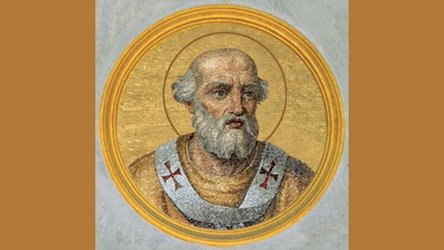
Saint John I was a martyr for the faith, imprisoned and starved to death by a heretical Germanic king during the sixth century.
He was a friend of the renowned Christian philosopher Boethius, who died in a similar manner.
Eastern Catholics and Eastern Orthodox Christians also honor Pope St. John I, on the same date as the Roman Catholic Church.
The future Pope John I was born in Tuscany, and served as an archdeacon in the Church for several years. He was chosen to become the Bishop of Rome in 523, succeeding Pope St. Hormisdas.
During his papal reign Italy was ruled by the Ostrogothic King Theodoric. Like many of his fellow tribesmen, the king adhered to the Arian heresy, holding that Christ was a created being rather than the Second Person of the Holy Trinity.
Arianism had originated in the Eastern half of the Roman Empire during the fourth century, and subsequently spread among the Western Goths. By the sixth century the heresy was weak in the East, but not dead.
In 523, the Byzantine Emperor Justin I ordered Arian clergy to surrender their churches into orthodox Catholic hands. In the West, meanwhile, Theodoric was angered by the emperor’s move, and responded by trying to use the Pope’s authority for his own ends.
Pope John was thus placed in an extremely awkward position. Despite the Pope’s own solid orthodoxy, the Arian king seems to have expected him to intercede with the Eastern emperor on behalf of the heretics. John’s refusal to satisfy King Theodoric would eventually lead to his martyrdom.
John did travel to Constantinople, where he was honored as St. Peter’s successor by the people, the Byzantine Emperor, and the Church’s legitimate Eastern patriarchs. (The Church of Alexandria had already separated by this point.) The Pope crowned the emperor, and celebrated the Easter liturgy at the Hagia Sophia Church in April of 526.
But while John could urge Justin to treat the Arians somewhat more mercifully, he could not make the kind of demands on their behalf that Theodoric expected.
The gothic king, who had recently killed John’s intellectually accomplished friend Boethius (honored by the Church as St. Severinus Boethius, on Oct. 23), was furious with the Pope when he learned of his refusal to support the Arians in Constantinople.
Already exhausted by his travels, the Pope was imprisoned in Ravenna and deprived of food. The death of St. John I came on or around May 18.
LAST-MODIFIED:20240525T181218Z SEQUENCE:50965252 X-ACCESS:1 X-HITS:5 X-COLOR:f0b80e X-SHOW-END-TIME:1 END:VEVENT BEGIN:VEVENT DTSTART;VALUE=DATE:20240529 DTEND;VALUE=DATE:20240530 UID:B4E54298-EBF5-47AB-B9DE-13CE8A554586 SUMMARY:St. Mary Magdalen CREATED:20221013T211126Z DTSTAMP:20221013T211126Z URL:https://www.stpaulsweymouth.org/component/dpcalendar/event/1644?calid=13 DESCRIPTION:St. Mary Magdalen de Pazzi, Virgin\N\NSaint Mary Magdalene of Pazzi was the only daughter of the illustrious Camille de Pazzi, related to the Medicis of Florence. She was born in the year 1566, and was baptized with the name of Catherine. As a child she loved to go into solitary places to enter into prayer with God, who revealed Himself to her from her tender years without the aid of teachers, as her Creator, Redeemer and Sanctifier. She made a crown of thorns one day, and wore it for an entire night, enduring great pain. She received her First Communion at ten years of age; at twelve years, she made a vow of virginity and took great pleasure in teaching Christian doctrine to poor children.\NHer father, not knowing of her vow, wished to give her in marriage, but she persuaded him to allow her to become a religious, and chose the Carmelites, because there the nuns received Communion frequently. She entered in the year of the death of Saint Teresa of Avila, 1582, at the age of sixteen. It had been more difficult to obtain her mother's consent; while she was a novice, her mother sent a portrait artist to the convent, with instructions that her daughter be portrayed in lay clothing. The Sisters complied with her request, and the portrait can still be seen in the Convent. She became professed at eighteen years of age in the Carmelite monastery of Santa Maria degli Angeli in Florence, May 17, 1584, Feast of the Holy Trinity. She changed her name of Catherine to that of Mary Magdalene on becoming a nun, and took as her motto, Either suffer or die.\NHer life thereafter was one of penance for sins not her own, and of love for Our Lord, who tried her in ways fearful and strange. She was obedient, observant of the Rule, humble and mortified, and had great reverence for the religious life. One day, when she seemed to be at the last hour of her life, she rose from her sickbed and hastened everywhere throughout the convent, saying during her ecstasy, O Love! O Love! No one knows You, no one knows You, no one loves You! For five years she was tormented by demons with fearful temptations of pride, sensuality, gluttony, despair, blasphemy; they became so violent that she said, I do not know whether I am a reasonable creature or one without reason; I see nothing in myself but a little good will never to offend the divine Majesty.\NGod raised her to elevated states of prayer and gave her rare gifts, enabling her to read the thoughts of her novices, and filling her with wisdom to direct them. She was twice chosen mistress of novices, and then made Superior. On her deathbed she asked her Sisters to love only Our Lord Jesus Christ, to place all hope in Him, and be perpetually ardent with desire to suffer for love of Him. God took her to Himself on May 15, 1607. Her body remains incorrupt.\NReflection. Saint Mary Magdalene of Pazzi was so filled with the love of God that her Sisters saw it in her love for them, and called her Mother of Charity, and the Charity of the Monastery.\NLittle Pictorial Lives of the Saints, a compilation based on Butler's Lives of the Saints and other sources by John Gilmary Shea (Benziger Brothers: New York, 1894). X-ALT-DESC;FMTTYPE=text/html:St. Mary Magdalen de Pazzi, Virgin
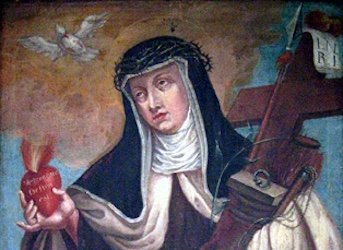
Saint Mary Magdalene of Pazzi was the only daughter of the illustrious Camille de Pazzi, related to the Medicis of Florence. She was born in the year 1566, and was baptized with the name of Catherine. As a child she loved to go into solitary places to enter into prayer with God, who revealed Himself to her from her tender years without the aid of teachers, as her Creator, Redeemer and Sanctifier. She made a crown of thorns one day, and wore it for an entire night, enduring great pain. She received her First Communion at ten years of age; at twelve years, she made a vow of virginity and took great pleasure in teaching Christian doctrine to poor children.
Her father, not knowing of her vow, wished to give her in marriage, but she persuaded him to allow her to become a religious, and chose the Carmelites, because there the nuns received Communion frequently. She entered in the year of the death of Saint Teresa of Avila, 1582, at the age of sixteen. It had been more difficult to obtain her mother's consent; while she was a novice, her mother sent a portrait artist to the convent, with instructions that her daughter be portrayed in lay clothing. The Sisters complied with her request, and the portrait can still be seen in the Convent. She became professed at eighteen years of age in the Carmelite monastery of Santa Maria degli Angeli in Florence, May 17, 1584, Feast of the Holy Trinity. She changed her name of Catherine to that of Mary Magdalene on becoming a nun, and took as her motto, Either suffer or die.
Her life thereafter was one of penance for sins not her own, and of love for Our Lord, who tried her in ways fearful and strange. She was obedient, observant of the Rule, humble and mortified, and had great reverence for the religious life. One day, when she seemed to be at the last hour of her life, she rose from her sickbed and hastened everywhere throughout the convent, saying during her ecstasy, O Love! O Love! No one knows You, no one knows You, no one loves You! For five years she was tormented by demons with fearful temptations of pride, sensuality, gluttony, despair, blasphemy; they became so violent that she said, I do not know whether I am a reasonable creature or one without reason; I see nothing in myself but a little good will never to offend the divine Majesty.
God raised her to elevated states of prayer and gave her rare gifts, enabling her to read the thoughts of her novices, and filling her with wisdom to direct them. She was twice chosen mistress of novices, and then made Superior. On her deathbed she asked her Sisters to love only Our Lord Jesus Christ, to place all hope in Him, and be perpetually ardent with desire to suffer for love of Him. God took her to Himself on May 15, 1607. Her body remains incorrupt.
Reflection. Saint Mary Magdalene of Pazzi was so filled with the love of God that her Sisters saw it in her love for them, and called her Mother of Charity, and the Charity of the Monastery.
Little Pictorial Lives of the Saints, a compilation based on Butler's Lives of the Saints and other sources by John Gilmary Shea (Benziger Brothers: New York, 1894).
LAST-MODIFIED:20240525T181658Z SEQUENCE:50965532 X-ACCESS:1 X-HITS:29 X-COLOR:f0b80e X-SHOW-END-TIME:1 END:VEVENT BEGIN:VEVENT DTSTART;VALUE=DATE:20240530 DTEND;VALUE=DATE:20240531 UID:F8FD864C-2732-4851-9633-34A3C8A18179 SUMMARY:St. Felix CREATED:20221013T211126Z DTSTAMP:20221013T211126Z URL:https://www.stpaulsweymouth.org/component/dpcalendar/event/1646?calid=13 DESCRIPTION:St. Felix Pope, Martyr\N\NSaint Felix was a Roman by birth and the son of the emperor Constance. He was elected Pope after the martyrdom of his predecessor, Saint Dionysius or Denis, on the last day of the year 269.\NFour of his letters are still extant, though one is only a fragment; in the first two he regulates the procedures of justice in the case of accused ecclesiastics and warns against detractors and calumniators. In the third he refutes those who maintain errors still rampant in our day — that Jesus did not behold His Father by the beatific vision and was less than His Father. In the fragmentary fourth letter, the Pope foresees and rejects in advance the heresies of Nestorius and Eutyches, teaching that the Eternal Word is not another Person than Jesus Christ, who is both perfect God and perfect Man.\NSaint Felix also wrote against the errors of Sabellius, Paul of Samosate and Manes, head of the Manicheans. He issued many ordinances of great advantage to the Church, such as that the relics of Saints should be enclosed in the altars where the Holy Sacrifice is offered. His life ended in the year 274 under the emperor Aurelian. Although that prince had shown a certain benevolence toward Christians at the beginning of his reign, in that year he ordered a furious persecution which enveloped Saint Felix and was the occasion for his winning a glorious crown of martyrdom. His body was interred in his own cemetery on the Aurelian Way, where he had also built a church. Saint Felix reigned for five years, ten months and 25 days.\NReflection. The example of our Saviour and of all His Saints ought to encourage us under all trials to suffer with patience and even with joy. We shall soon begin to feel that it is sweet to tread in the steps of the God-Man, and shall find that if we courageously take up our crosses, He will make them light by sharing the burden with us.\NLes Petits Bollandistes: Vies des Saints, by Msgr. Paul Guérin (Bloud et Barral: Paris, 1882), Vol. 6 X-ALT-DESC;FMTTYPE=text/html:St. Felix Pope, Martyr
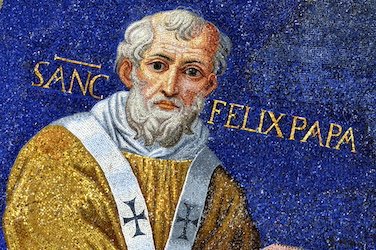
Saint Felix was a Roman by birth and the son of the emperor Constance. He was elected Pope after the martyrdom of his predecessor, Saint Dionysius or Denis, on the last day of the year 269.
Four of his letters are still extant, though one is only a fragment; in the first two he regulates the procedures of justice in the case of accused ecclesiastics and warns against detractors and calumniators. In the third he refutes those who maintain errors still rampant in our day — that Jesus did not behold His Father by the beatific vision and was less than His Father. In the fragmentary fourth letter, the Pope foresees and rejects in advance the heresies of Nestorius and Eutyches, teaching that the Eternal Word is not another Person than Jesus Christ, who is both perfect God and perfect Man.
Saint Felix also wrote against the errors of Sabellius, Paul of Samosate and Manes, head of the Manicheans. He issued many ordinances of great advantage to the Church, such as that the relics of Saints should be enclosed in the altars where the Holy Sacrifice is offered. His life ended in the year 274 under the emperor Aurelian. Although that prince had shown a certain benevolence toward Christians at the beginning of his reign, in that year he ordered a furious persecution which enveloped Saint Felix and was the occasion for his winning a glorious crown of martyrdom. His body was interred in his own cemetery on the Aurelian Way, where he had also built a church. Saint Felix reigned for five years, ten months and 25 days.
Reflection. The example of our Saviour and of all His Saints ought to encourage us under all trials to suffer with patience and even with joy. We shall soon begin to feel that it is sweet to tread in the steps of the God-Man, and shall find that if we courageously take up our crosses, He will make them light by sharing the burden with us.
Les Petits Bollandistes: Vies des Saints, by Msgr. Paul Guérin (Bloud et Barral: Paris, 1882), Vol. 6
LAST-MODIFIED:20240525T182008Z SEQUENCE:50965722 X-ACCESS:1 X-HITS:94 X-COLOR:f0b80e X-SHOW-END-TIME:1 END:VEVENT BEGIN:VEVENT DTSTART;VALUE=DATE:20240531 DTEND;VALUE=DATE:20240601 UID:93E204F7-FC23-4E21-8003-EF82A47CA0FC SUMMARY:St. Petronilla CREATED:20221013T211126Z DTSTAMP:20221013T211126Z URL:https://www.stpaulsweymouth.org/component/dpcalendar/event/1648?calid=13 DESCRIPTION:St. Petronilla, Virgin\N\NAmong the disciples of the Apostles, in the primitive age of Saints, this holy virgin shone like a bright star in the Church. She lived when Christians were more solicitous to live well than to write much; they knew how to die for Christ, but they did not compile long books in which vanity often has a greater share than charity, and thus no particular account of her actions has been handed down to us. But how eminent her sanctity was we may judge from the luster by which it was remarked amid Apostles, prophets, and martyrs.\NSaint Petronilla is the daughter of the Apostle Saint Peter. We know from the Gospel that Saint Peter was married before his call from Christ, and Saint Clement of Alexandria assures us that his wife, Saint Perpetua, attained to the glory of martyrdom. On that occasion, Peter himself encouraged her, bidding her to remember Our Lord.\NAlthough some authors are not certain whether Saint Petronilla was more than the spiritual daughter of that Apostle, the Bollandists assure us that she was indeed the child of the two holy Saints and martyrs. She dwelt in Rome also, and vowed her virginity to Christ. When suitors presented themselves, she begged her Lord to take her from this world, and her request was granted. She was buried on the road to Ardea, where in ancient times a cemetery and a church bore her name. Her relics have been since 1606 in a chapel dedicated to her in the Basilica of Saint Peter.\NReflection. With the Saints, the great end for which they lived was always present to their minds, and they thought every moment lost in which they did not make some advances toward eternal bliss. How will their example condemn, at the last day, the trifling frivolities and the greater part of the conversation and employments of the world which aim at nothing but present amusement, and forget the only important affair — that of eternity!\NLes Petits Bollandistes: Vies des Saints, by Msgr. Paul Guérin (Bloud et Barral: Paris, 1882), Vol. 6; Little Pictorial Lives of the Saints, a compilation based on Butler's Lives of the Saints and other sources by John Gilmary Shea (Benziger Brothers: New York, 1894). X-ALT-DESC;FMTTYPE=text/html:St. Petronilla, Virgin
Among the disciples of the Apostles, in the primitive age of Saints, this holy virgin shone like a bright star in the Church. She lived when Christians were more solicitous to live well than to write much; they knew how to die for Christ, but they did not compile long books in which vanity often has a greater share than charity, and thus no particular account of her actions has been handed down to us. But how eminent her sanctity was we may judge from the luster by which it was remarked amid Apostles, prophets, and martyrs.
Saint Petronilla is the daughter of the Apostle Saint Peter. We know from the Gospel that Saint Peter was married before his call from Christ, and Saint Clement of Alexandria assures us that his wife, Saint Perpetua, attained to the glory of martyrdom. On that occasion, Peter himself encouraged her, bidding her to remember Our Lord.
Although some authors are not certain whether Saint Petronilla was more than the spiritual daughter of that Apostle, the Bollandists assure us that she was indeed the child of the two holy Saints and martyrs. She dwelt in Rome also, and vowed her virginity to Christ. When suitors presented themselves, she begged her Lord to take her from this world, and her request was granted. She was buried on the road to Ardea, where in ancient times a cemetery and a church bore her name. Her relics have been since 1606 in a chapel dedicated to her in the Basilica of Saint Peter.
Reflection. With the Saints, the great end for which they lived was always present to their minds, and they thought every moment lost in which they did not make some advances toward eternal bliss. How will their example condemn, at the last day, the trifling frivolities and the greater part of the conversation and employments of the world which aim at nothing but present amusement, and forget the only important affair — that of eternity!
Les Petits Bollandistes: Vies des Saints, by Msgr. Paul Guérin (Bloud et Barral: Paris, 1882), Vol. 6; Little Pictorial Lives of the Saints, a compilation based on Butler's Lives of the Saints and other sources by John Gilmary Shea (Benziger Brothers: New York, 1894).
LAST-MODIFIED:20240525T182304Z SEQUENCE:50965898 X-ACCESS:1 X-HITS:60 X-COLOR:f0b80e X-SHOW-END-TIME:1 END:VEVENT BEGIN:VEVENT DTSTART;VALUE=DATE:20240531 DTEND;VALUE=DATE:20240601 UID:313F683C-28E7-401C-8B04-04BF3830F2C3 SUMMARY:Mary, Queen of the world CREATED:20221013T211126Z DTSTAMP:20221013T211126Z URL:https://www.stpaulsweymouth.org/component/dpcalendar/event/1650?calid=13 DESCRIPTION:The Queenship of the Blessed Virgin Mary\N\NFrom the earliest centuries of the Catholic Church, Christians have addressed suppliant prayers and hymns of praise to the Blessed Virgin Mary, and the hope they have placed in the Mother of the Saviour has never been disappointed. They have looked upon Her as Queen of Angels, Queen of Patriarchs, Queen of Prophets, Queen of Apostles, Queen of Martyrs, Queen of Virgins. Because of Her eminence, She is indeed entitled to the highest honors that can be bestowed upon any creature. Saint Gregory Nazianzen called Her Mother of the King of the entire universe, and the Virgin Mother who brought forth the King of the entire world.\NHis Holiness Pope Pius XII, in his Encyclical Letter of October 11, 1954, On the Royal Dignity of the Blessed Virgin Mary and the Institution of Her Feast, ordaining its celebration throughout the world every year on May 31st, reminds us of what Pope Pius IX had said of Mary: Constituted by the Lord as Queen of Heaven and earth, and exalted above all the choirs of Angels and the ranks of the Saints in heaven, standing at the right hand of Her only-begotten Son, Our Lord Jesus Christ, She petitions most powerfully with Her maternal prayers, and obtains what She seeks.\NPope Pius XII adds another ordinance: We ask that on the feast day be renewed the consecration of the human race to the Immaculate Heart of the Blessed Virgin Mary. Upon this is founded a great hope that there may arise an era of happiness which will rejoice in the triumph of religion and Christian peace. Therefore let all approach, with greater confidence than ever before, to the throne of mercy and grace of our Queen and Mother, to beg help in difficulty, light in darkness and solace in trouble and sorrow. In asking this, the Holy Father was responding to the request of the Virgin Herself at Fatima in 1917, that the world and each soul individually be consecrated to Her Immaculate Heart. She promised that it will be then that a time of peace will be given to the world. Do not Mary's rights as Queen require respect? And will we deny to Her maternal Heart the love it merits, for twenty centuries of uninterrupted intercession on behalf of Her children?\NHeavenly Friends: a Saint for each Day, by Rosalie Marie Levy (Saint Paul Editions: Boston, 1958).\N\NThe glorious Virgin has been raised to the dignity of Mother of the King of kings, and therefore the Holy Church is entitled to honor Her, and to ask that all honor Her with the glorious title of Queen. Salve Regina!\N“If the Son is King, says St. Athanasius, the Mother has the right to be held as Queen and to bear the name.” – “Yes, adds St. Bernardine of Siena, when Mary consented to be the Mother of the eternal Word, at that very moment and by that consent, She merited and was granted the principality of the earth, the domain of the world, the scepter and the quality of Queen of all creatures.” And as Arnould de Chartres observes, if by the flesh Mary is so intimately united to Jesus, how could this divine Mother be separated from Her Son with regard to sovereign power?\NNow, if Jesus is King of the universe, it is of the universe that Mary is Queen: “Queen of Heaven, says Abbot Rupert, She rightly commands the whole kingdom of Her Son.” Hence this consequence expressed by St. Bernardine of Siena: “As many creatures are subject to the glorious Virgin as there are to the adorable Trinity Herself, for all created beings, whatever rank they hold among the works of God, whether they be pure spirits like the Angels, beings endowed with reason like men, purely material bodies like the celestial bodies and the elements; all that exists in Heaven and on earth, both the damned and the Blessed, all that is subject to the divine power is likewise subject to Mary, and recognizes Her authority; for the Son of God, who is at the same time the Son of the Blessed Virgin, wishing to equal the empire of His Mother with that of His heavenly Father, made Himself the servant of His divine Mother on earth and was subject to Her. Hence it may be said in all truth: Everything obeys the divine power, even the Virgin; everything obeys the power of the Virgin, even God.”\NIn Heaven, the Angels and Saints render, with what joy, the homage of their submission, their respect, their praises to their beloved Queen.\NOn this earth, Mary’s servants bow with love under Her scepter of goodness and mercy.\NAs for inanimate things, they cannot praise Mary nor recognize Her dominion. But the Saints, especially the Fathers and Doctors, have been pleased to attribute to Mary, in their praises, all that is most precious, most pure, most fruitful, most beautiful, most fragrant, most delicious in nature, to symbolize the attributes of this divine Virgin. Mary is the star of the sea, the dawn announcing the sun, the moon with its soft light, the limpid diamond, the precious pearl, the immaculate lily, the sparkling snow, the innocent dove, the ewe giving the spotless Lamb, the fruitful vine yielding the wine that produces virgins, the fertile earth giving the divine Ear, the heavenly garden, the fountain of living waters, the thornless rose, the humble violet, the sweet-smelling incense, the exquisite honey, the tasty milk…\NThus, all creatures serve in their own way the Queen of Heaven and the world. “Continue, therefore, O Mary, continue to reign in all security; dispose of Your Son’s treasures as You please; since You are the Mother and Spouse of the King of the universe, You are Queen and are entitled to empire and dominion over all creatures.”\NWorks of the Lord, bless and praise Mary your Sovereign forever!\NSun and moon, stars of the sky, rain and dew, wind, fire and heat, cold, frost, ice and chill, night and day, light and darkness, lightning and clouds, praise Mary, your Sovereign!\NEarth, mountains and hills, plants, fountains of waters, seas and rivers, monsters, fish and birds, wild beasts, give blessings to Mary!\NChildren of men, servants of the Lord, praise Mary!\NAngels of the Lord, praise and give thanks to Mary!\NPraise Her according to the immensity of Her greatness!\NLet all creatures praise the most worthy Mother of God, Queen of heaven and earth! Hallelujah!\NBrother Mutien-Marie de Ciney, f.é.c., (1895-1940), Pour aimer et faire aimer Marie (To Love Mary and make Her loved) X-ALT-DESC;FMTTYPE=text/html:The Queenship of the Blessed Virgin Mary
From the earliest centuries of the Catholic Church, Christians have addressed suppliant prayers and hymns of praise to the Blessed Virgin Mary, and the hope they have placed in the Mother of the Saviour has never been disappointed. They have looked upon Her as Queen of Angels, Queen of Patriarchs, Queen of Prophets, Queen of Apostles, Queen of Martyrs, Queen of Virgins. Because of Her eminence, She is indeed entitled to the highest honors that can be bestowed upon any creature. Saint Gregory Nazianzen called Her Mother of the King of the entire universe, and the Virgin Mother who brought forth the King of the entire world.
His Holiness Pope Pius XII, in his Encyclical Letter of October 11, 1954, On the Royal Dignity of the Blessed Virgin Mary and the Institution of Her Feast, ordaining its celebration throughout the world every year on May 31st, reminds us of what Pope Pius IX had said of Mary: Constituted by the Lord as Queen of Heaven and earth, and exalted above all the choirs of Angels and the ranks of the Saints in heaven, standing at the right hand of Her only-begotten Son, Our Lord Jesus Christ, She petitions most powerfully with Her maternal prayers, and obtains what She seeks.
Pope Pius XII adds another ordinance: We ask that on the feast day be renewed the consecration of the human race to the Immaculate Heart of the Blessed Virgin Mary. Upon this is founded a great hope that there may arise an era of happiness which will rejoice in the triumph of religion and Christian peace. Therefore let all approach, with greater confidence than ever before, to the throne of mercy and grace of our Queen and Mother, to beg help in difficulty, light in darkness and solace in trouble and sorrow. In asking this, the Holy Father was responding to the request of the Virgin Herself at Fatima in 1917, that the world and each soul individually be consecrated to Her Immaculate Heart. She promised that it will be then that a time of peace will be given to the world. Do not Mary's rights as Queen require respect? And will we deny to Her maternal Heart the love it merits, for twenty centuries of uninterrupted intercession on behalf of Her children?
Heavenly Friends: a Saint for each Day, by Rosalie Marie Levy (Saint Paul Editions: Boston, 1958).
The glorious Virgin has been raised to the dignity of Mother of the King of kings, and therefore the Holy Church is entitled to honor Her, and to ask that all honor Her with the glorious title of Queen. Salve Regina!
“If the Son is King, says St. Athanasius, the Mother has the right to be held as Queen and to bear the name.” – “Yes, adds St. Bernardine of Siena, when Mary consented to be the Mother of the eternal Word, at that very moment and by that consent, She merited and was granted the principality of the earth, the domain of the world, the scepter and the quality of Queen of all creatures.” And as Arnould de Chartres observes, if by the flesh Mary is so intimately united to Jesus, how could this divine Mother be separated from Her Son with regard to sovereign power?
Now, if Jesus is King of the universe, it is of the universe that Mary is Queen: “Queen of Heaven, says Abbot Rupert, She rightly commands the whole kingdom of Her Son.” Hence this consequence expressed by St. Bernardine of Siena: “As many creatures are subject to the glorious Virgin as there are to the adorable Trinity Herself, for all created beings, whatever rank they hold among the works of God, whether they be pure spirits like the Angels, beings endowed with reason like men, purely material bodies like the celestial bodies and the elements; all that exists in Heaven and on earth, both the damned and the Blessed, all that is subject to the divine power is likewise subject to Mary, and recognizes Her authority; for the Son of God, who is at the same time the Son of the Blessed Virgin, wishing to equal the empire of His Mother with that of His heavenly Father, made Himself the servant of His divine Mother on earth and was subject to Her. Hence it may be said in all truth: Everything obeys the divine power, even the Virgin; everything obeys the power of the Virgin, even God.”
In Heaven, the Angels and Saints render, with what joy, the homage of their submission, their respect, their praises to their beloved Queen.
On this earth, Mary’s servants bow with love under Her scepter of goodness and mercy.
As for inanimate things, they cannot praise Mary nor recognize Her dominion. But the Saints, especially the Fathers and Doctors, have been pleased to attribute to Mary, in their praises, all that is most precious, most pure, most fruitful, most beautiful, most fragrant, most delicious in nature, to symbolize the attributes of this divine Virgin. Mary is the star of the sea, the dawn announcing the sun, the moon with its soft light, the limpid diamond, the precious pearl, the immaculate lily, the sparkling snow, the innocent dove, the ewe giving the spotless Lamb, the fruitful vine yielding the wine that produces virgins, the fertile earth giving the divine Ear, the heavenly garden, the fountain of living waters, the thornless rose, the humble violet, the sweet-smelling incense, the exquisite honey, the tasty milk…
Thus, all creatures serve in their own way the Queen of Heaven and the world. “Continue, therefore, O Mary, continue to reign in all security; dispose of Your Son’s treasures as You please; since You are the Mother and Spouse of the King of the universe, You are Queen and are entitled to empire and dominion over all creatures.”
Works of the Lord, bless and praise Mary your Sovereign forever!
Sun and moon, stars of the sky, rain and dew, wind, fire and heat, cold, frost, ice and chill, night and day, light and darkness, lightning and clouds, praise Mary, your Sovereign!
Earth, mountains and hills, plants, fountains of waters, seas and rivers, monsters, fish and birds, wild beasts, give blessings to Mary!
Children of men, servants of the Lord, praise Mary!
Angels of the Lord, praise and give thanks to Mary!
Praise Her according to the immensity of Her greatness!
Let all creatures praise the most worthy Mother of God, Queen of heaven and earth! Hallelujah!
Brother Mutien-Marie de Ciney, f.é.c., (1895-1940), Pour aimer et faire aimer Marie (To Love Mary and make Her loved)
LAST-MODIFIED:20240525T182640Z SEQUENCE:50966114 X-ACCESS:1 X-HITS:163 X-COLOR:f0b80e X-SHOW-END-TIME:1 END:VEVENT BEGIN:VEVENT DTSTART;VALUE=DATE:20240601 DTEND;VALUE=DATE:20240602 UID:15C93822-D95F-47FF-B345-EAE7FCD1FE7A SUMMARY:St. Angela CREATED:20221013T211126Z DTSTAMP:20221013T211126Z URL:https://www.stpaulsweymouth.org/component/dpcalendar/event/1652?calid=13 DESCRIPTION:St. Angela Merici, Virgin\N\NSaint Angela was the youngest of her virtuous parents' five children; she was born in Italy, near Brescia, in 1474. The grace which filled her soul made her beauty a trial for her, and as a young girl she already rejected all vanities. Every evening at home the parents read to the children from the lives of the Saints, and Angela wished to imitate them. She and her sister made an oratory in their room and retired there every day to pray and sing. She added to this service of God harsh austerities, sleeping on the floor while her sister slept profoundly. We are the children of the Saints, she would say to her, and we must turn all our affection towards the One who dwells in heaven. Oh! what torments, what disgrace and privations the solitaries and virgins have endured, to win the crown of immortality! We must suffer and die to ourselves.\NSaint Angela made a vow of virginity before she was ten years old and persuaded her older sister to do the same. The children soon afterwards lost both their parents. A wealthy uncle took the two little girls into his home, but soon the sister of Angela followed her parents by a sudden death. At the age of thirteen Angela still had not received Holy Communion, according to the regrettable delays of those days. She begged to be admitted to the Holy Table, and as soon as her request was granted, resolved to take this heavenly nourishment often. For that purpose she entered the Third Order of Saint Francis, and then, with her director's permission, was able to receive her Eucharistic Lord every day.\NIn 1496 at the age of 22, Angela returned, after the death of her good uncle, to the paternal residence in her native village. There several others began to imitate her pious life. She was persuaded that the ills of society resulted from the scarcity of Christian mothers, and that this in turn was the effect of a lack of good education for young girls. She prayed that God would help her remedy this deficiency, and a heavenly vision assured her that before she died she would establish a Congregation of virgins. She and her companions began to assemble the little girls of the area and teach them Christian doctrine. And with them they visited the poor and the sick, and distributed most of the alms by which they themselves lived. Angela became an angel of consolation for all in the region, and though she had not studied, her mind was so clear that preachers and theologians came to consult her.\NIt was not until 1535 that Saint Angela was able to establish her Community; she was then 61 years old. During the intervening years, she made pilgrimages to the Holy Land and to Rome. Her devotion to the Passion of our Saviour was always increasing, and her piety inspired that of many others. One night in a vision, however, she saw a severe figure, a lash in His hand, look threateningly at her; it was Jesus, who reproached her for her delay in founding an Order which was destined to do a much-needed good. She asked pardon and immediately began to draw up plans and inform her companions of them. These co-workers were still living each in her own house, but all promised to follow the rules. They visited prisons and hospitals, instructed the poor and assisted them, and all of them brought together young girls in their various houses, for instruction. At first this was a simple association, but soon Angela gave her companions the name of Ursulines, in honor of the virgin martyr of chastity and her companions. Saint Angela encouraged her Ursulines to make a voluntary vow of chastity only. She died in January of 1540. It was in France some sixty years later that the group became a regularized Community under Madame Frances de Bermond; thereafter the Institute spread widely. The Foundress was canonized in 1807 by Pope Pius VII.\NLes Petits Bollandistes: Vies des Saints, by Msgr. Paul Guérin (Bloud et Barral: Paris, 1882), Vol. 6 X-ALT-DESC;FMTTYPE=text/html:St. Angela Merici, Virgin
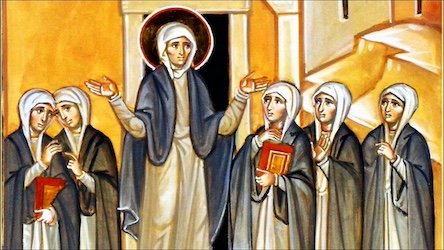
Saint Angela was the youngest of her virtuous parents' five children; she was born in Italy, near Brescia, in 1474. The grace which filled her soul made her beauty a trial for her, and as a young girl she already rejected all vanities. Every evening at home the parents read to the children from the lives of the Saints, and Angela wished to imitate them. She and her sister made an oratory in their room and retired there every day to pray and sing. She added to this service of God harsh austerities, sleeping on the floor while her sister slept profoundly. We are the children of the Saints, she would say to her, and we must turn all our affection towards the One who dwells in heaven. Oh! what torments, what disgrace and privations the solitaries and virgins have endured, to win the crown of immortality! We must suffer and die to ourselves.
Saint Angela made a vow of virginity before she was ten years old and persuaded her older sister to do the same. The children soon afterwards lost both their parents. A wealthy uncle took the two little girls into his home, but soon the sister of Angela followed her parents by a sudden death. At the age of thirteen Angela still had not received Holy Communion, according to the regrettable delays of those days. She begged to be admitted to the Holy Table, and as soon as her request was granted, resolved to take this heavenly nourishment often. For that purpose she entered the Third Order of Saint Francis, and then, with her director's permission, was able to receive her Eucharistic Lord every day.
In 1496 at the age of 22, Angela returned, after the death of her good uncle, to the paternal residence in her native village. There several others began to imitate her pious life. She was persuaded that the ills of society resulted from the scarcity of Christian mothers, and that this in turn was the effect of a lack of good education for young girls. She prayed that God would help her remedy this deficiency, and a heavenly vision assured her that before she died she would establish a Congregation of virgins. She and her companions began to assemble the little girls of the area and teach them Christian doctrine. And with them they visited the poor and the sick, and distributed most of the alms by which they themselves lived. Angela became an angel of consolation for all in the region, and though she had not studied, her mind was so clear that preachers and theologians came to consult her.
It was not until 1535 that Saint Angela was able to establish her Community; she was then 61 years old. During the intervening years, she made pilgrimages to the Holy Land and to Rome. Her devotion to the Passion of our Saviour was always increasing, and her piety inspired that of many others. One night in a vision, however, she saw a severe figure, a lash in His hand, look threateningly at her; it was Jesus, who reproached her for her delay in founding an Order which was destined to do a much-needed good. She asked pardon and immediately began to draw up plans and inform her companions of them. These co-workers were still living each in her own house, but all promised to follow the rules. They visited prisons and hospitals, instructed the poor and assisted them, and all of them brought together young girls in their various houses, for instruction. At first this was a simple association, but soon Angela gave her companions the name of Ursulines, in honor of the virgin martyr of chastity and her companions. Saint Angela encouraged her Ursulines to make a voluntary vow of chastity only. She died in January of 1540. It was in France some sixty years later that the group became a regularized Community under Madame Frances de Bermond; thereafter the Institute spread widely. The Foundress was canonized in 1807 by Pope Pius VII.
Les Petits Bollandistes: Vies des Saints, by Msgr. Paul Guérin (Bloud et Barral: Paris, 1882), Vol. 6
LAST-MODIFIED:20240525T182948Z SEQUENCE:50966302 X-ACCESS:1 X-HITS:91 X-COLOR:f0b80e X-SHOW-END-TIME:1 END:VEVENT BEGIN:VEVENT DTSTART;VALUE=DATE:20240604 DTEND;VALUE=DATE:20240605 UID:B92CFA61-B671-4C43-8FFD-5BDB2198AAB7 SUMMARY:St. Francis CREATED:20221013T211126Z DTSTAMP:20221013T211126Z URL:https://www.stpaulsweymouth.org/component/dpcalendar/event/1716?calid=13 DESCRIPTION:St. Francis Caracciolo, Confessor\N\NSaint Francis was born in the kingdom of Naples in 1563, of the princely family of Caracciolo. In childhood he shunned all amusements, recited the Rosary regularly, and loved to visit the Blessed Sacrament and to distribute his food to the poor. To avoid idleness, however, he engaged in hunting, which pastime was not pleasing to God; and Our Lord, to detach him from the world, sent him a terrible trial. When he was 22 years old, he developed leprosy and soon was on the brink of death. Seeing his body in this deplorable condition taught him contempt for the vanity of the world and of youth's physical strength, and he promised God to serve Him alone if he were cured. The illness disappeared almost at once. He therefore left his parents, sold his portion of the inheritance for the benefit of the poor, and went to study for the priesthood at Naples. He dedicated himself in particular to visiting prisoners and galley-slaves and preparing criminals for death; he spent his leisure hours visiting the Blessed Sacrament in unfrequented churches.\NGod called him, when only twenty-five, to found the Order of Regular Minor Clerics, with two other priests who had similar aspirations. The Rule they drew up prescribed that each day one of the members fast on bread and water, another take the discipline, a third wear a hair shirt, and each succeed another for perpetual adoration before the Blessed Sacrament. Thus they hoped to appease the anger of God unceasingly, and draw down His blessings by their penance. They took the usual vows, adding a fourth — not to accept dignities unless required to do so by their sovereign.\NThese very humble priests resolved to arrive in total poverty in Rome to seek approbation for their Order, and they mingled with the poor who were asking for alms at the door of the Capuchin Fathers. When recognized by relatives, they asked no favor except that of being taken to the presence of the Holy Father, Sixtus V. The Pope approved the new Congregation and gave them a church in Naples, which became the first center of the Order.\NTo establish the new Order, Francis, with John Augustine Adorno, his co-founder, undertook journeys throughout Italy and Spain, on foot and without money, content with the shelter and crusts given out of charity. A saintly pilgrim exiled from England predicted to Francis that he would be the new Order's first General; and a Dominican in Spain, before he had heard them talk of their intentions, received the two of them and gave them food, saying: You are the founders of a new Order which will soon spread, for the glory of God and the salvation of souls, and will be especially flourishing in this kingdom. Asked when that would occur, he replied, Not for three years. In Spain still, Adorno again heard the same prophecy from Saint Louis Bertrand, who insisted on kissing his feet.\NThe prediction was realized. When Saint Francis returned to Valencia, he found that the twelve religious who had remained there had multiplied in number to the point that the house could no longer contain them. In 1591 he was elected the first General of his Order, while still a prey to the sorrow recently caused by the premature death of Adorno at the age of forty. He redoubled his austerities, and devoted seven hours daily to meditation on the Passion, besides passing most of the night praying before the Blessed Sacrament. He was commonly called the Preacher of Divine Love, and in Spain the Order did indeed flourish.\NIt was always before the Blessed Sacrament that his ardent devotion was most clearly visible. In the presence of his divine Lord his face emitted brilliant rays of light, and he often bathed the ground with his tears as he prayed, according to his custom, prostrate before the tabernacle, constantly repeating with the royal psalmist, The zeal of Thy house has consumed me! It was at Ancona in Italy, where he had gone to prepare another foundation, that his holy soul, on the eve of Corpus Christi 1608, went to join his Saviour in Heaven. He was forty-four years old when he fell ill with a severe fever. He died exclaiming, Let us go, let us go to heaven! When his body was opened after death, his heart was found seemingly burnt, with these words imprinted around it: Zelus domus tuae comedit me — The zeal of Thy house has consumed me.\NReflection. It is for men, and not for Angels, that our Blessed Lord resides upon the altar. Yet Angels throng our churches to worship Him, while men desert Him. Learn from Saint Francis to avoid such ingratitude, and to spend time as he did, in adoration before the Most Holy Sacrament.\NLes Petits Bollandistes: Vies des Saints, by Msgr. Paul Guérin (Bloud et Barral: Paris, 1882), Vol. 6; Little Pictorial Lives of the Saints, a compilation based on Butler's Lives of the Saints, and other sources by John Gilmary Shea (Benziger Brothers: New York, 1894). X-ALT-DESC;FMTTYPE=text/html:St. Francis Caracciolo, Confessor
Saint Francis was born in the kingdom of Naples in 1563, of the princely family of Caracciolo. In childhood he shunned all amusements, recited the Rosary regularly, and loved to visit the Blessed Sacrament and to distribute his food to the poor. To avoid idleness, however, he engaged in hunting, which pastime was not pleasing to God; and Our Lord, to detach him from the world, sent him a terrible trial. When he was 22 years old, he developed leprosy and soon was on the brink of death. Seeing his body in this deplorable condition taught him contempt for the vanity of the world and of youth's physical strength, and he promised God to serve Him alone if he were cured. The illness disappeared almost at once. He therefore left his parents, sold his portion of the inheritance for the benefit of the poor, and went to study for the priesthood at Naples. He dedicated himself in particular to visiting prisoners and galley-slaves and preparing criminals for death; he spent his leisure hours visiting the Blessed Sacrament in unfrequented churches.
God called him, when only twenty-five, to found the Order of Regular Minor Clerics, with two other priests who had similar aspirations. The Rule they drew up prescribed that each day one of the members fast on bread and water, another take the discipline, a third wear a hair shirt, and each succeed another for perpetual adoration before the Blessed Sacrament. Thus they hoped to appease the anger of God unceasingly, and draw down His blessings by their penance. They took the usual vows, adding a fourth — not to accept dignities unless required to do so by their sovereign.
These very humble priests resolved to arrive in total poverty in Rome to seek approbation for their Order, and they mingled with the poor who were asking for alms at the door of the Capuchin Fathers. When recognized by relatives, they asked no favor except that of being taken to the presence of the Holy Father, Sixtus V. The Pope approved the new Congregation and gave them a church in Naples, which became the first center of the Order.
To establish the new Order, Francis, with John Augustine Adorno, his co-founder, undertook journeys throughout Italy and Spain, on foot and without money, content with the shelter and crusts given out of charity. A saintly pilgrim exiled from England predicted to Francis that he would be the new Order's first General; and a Dominican in Spain, before he had heard them talk of their intentions, received the two of them and gave them food, saying: You are the founders of a new Order which will soon spread, for the glory of God and the salvation of souls, and will be especially flourishing in this kingdom. Asked when that would occur, he replied, Not for three years. In Spain still, Adorno again heard the same prophecy from Saint Louis Bertrand, who insisted on kissing his feet.
The prediction was realized. When Saint Francis returned to Valencia, he found that the twelve religious who had remained there had multiplied in number to the point that the house could no longer contain them. In 1591 he was elected the first General of his Order, while still a prey to the sorrow recently caused by the premature death of Adorno at the age of forty. He redoubled his austerities, and devoted seven hours daily to meditation on the Passion, besides passing most of the night praying before the Blessed Sacrament. He was commonly called the Preacher of Divine Love, and in Spain the Order did indeed flourish.
It was always before the Blessed Sacrament that his ardent devotion was most clearly visible. In the presence of his divine Lord his face emitted brilliant rays of light, and he often bathed the ground with his tears as he prayed, according to his custom, prostrate before the tabernacle, constantly repeating with the royal psalmist, The zeal of Thy house has consumed me! It was at Ancona in Italy, where he had gone to prepare another foundation, that his holy soul, on the eve of Corpus Christi 1608, went to join his Saviour in Heaven. He was forty-four years old when he fell ill with a severe fever. He died exclaiming, Let us go, let us go to heaven! When his body was opened after death, his heart was found seemingly burnt, with these words imprinted around it: Zelus domus tuae comedit me — The zeal of Thy house has consumed me.
Reflection. It is for men, and not for Angels, that our Blessed Lord resides upon the altar. Yet Angels throng our churches to worship Him, while men desert Him. Learn from Saint Francis to avoid such ingratitude, and to spend time as he did, in adoration before the Most Holy Sacrament.
Les Petits Bollandistes: Vies des Saints, by Msgr. Paul Guérin (Bloud et Barral: Paris, 1882), Vol. 6; Little Pictorial Lives of the Saints, a compilation based on Butler's Lives of the Saints, and other sources by John Gilmary Shea (Benziger Brothers: New York, 1894).
LAST-MODIFIED:20240622T144829Z SEQUENCE:53372223 X-ACCESS:1 X-HITS:6 X-COLOR:f0b80e X-SHOW-END-TIME:1 END:VEVENT BEGIN:VEVENT DTSTART;VALUE=DATE:20240605 DTEND;VALUE=DATE:20240606 UID:429ABD78-CC49-4DC6-AC53-5BDA08391A45 SUMMARY:St. Boniface CREATED:20221013T211126Z DTSTAMP:20221013T211126Z URL:https://www.stpaulsweymouth.org/component/dpcalendar/event/1718?calid=13 DESCRIPTION:St. Boniface Bishop, Martyr\N\NSaint Boniface was born in Devonshire, England, in the year 680. Some missionaries staying at his father's house spoke to him of heavenly things and inspired in him a desire to devote himself, as they did, to God. He entered the monastery of Exminster and was trained there for his apostolic labors. His first attempt to convert pagans in Holland having failed, he went to Rome to obtain the Pope's blessing on his mission, and returned with the authority to preach to the German tribes.\NIt was a slow and dangerous task; his life was in constant peril, while his flock was often reduced to abject poverty by wandering bands of robbers. Yet his courage never flagged. He began with Bavaria and Thuringia, next visited Friesland, then passed on to Hesse and Saxony, everywhere destroying the idol temples and raising churches in their place. He endeavored to make every object of idolatry contribute in some way to the glory of God. On one occasion, having cut down an immense oak honored in the name of Jupiter, he used the tree in building a church which he dedicated to the Prince of the Apostles.\NAfter being recalled to Rome and consecrated bishop by the Pope, he returned to extend and organize the rising German Church. With diligent care he reformed abuses among the existing clergy, while establishing religious houses throughout the land. At length, feeling his infirmities increase, and fearful of losing his martyr's crown, Saint Boniface appointed a Superior for his monastery and set out anew to convert a pagan tribe.\NWhile he was about to administer Confirmation to some newly baptized Christians, a troop of pagans arrived, armed with swords and spears. His attendants would have opposed them, but the Saint said to his followers: My children, cease your resistance; the long expected day has come at last. Scripture forbids us to resist evil. Let us put our hope in God; He will save our souls. Scarcely had he stopped speaking, when the barbarians fell upon him and slew him, with all his attendants, fifty-two in number.\NReflection. Saint Boniface teaches us how the love of Christ changes all things. It was for Christ's sake that he toiled for souls, preferring poverty to riches, labor to rest, suffering to pleasure, and death to life, that by dying he might live with Christ.\NLittle Pictorial Lives of the Saints, a compilation based on Butler's Lives of the Saints, and other sources by John Gilmary Shea (Benziger Brothers: New York, 1894). X-ALT-DESC;FMTTYPE=text/html:St. Boniface Bishop, Martyr
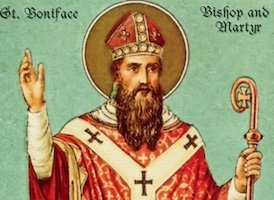
Saint Boniface was born in Devonshire, England, in the year 680. Some missionaries staying at his father's house spoke to him of heavenly things and inspired in him a desire to devote himself, as they did, to God. He entered the monastery of Exminster and was trained there for his apostolic labors. His first attempt to convert pagans in Holland having failed, he went to Rome to obtain the Pope's blessing on his mission, and returned with the authority to preach to the German tribes.
It was a slow and dangerous task; his life was in constant peril, while his flock was often reduced to abject poverty by wandering bands of robbers. Yet his courage never flagged. He began with Bavaria and Thuringia, next visited Friesland, then passed on to Hesse and Saxony, everywhere destroying the idol temples and raising churches in their place. He endeavored to make every object of idolatry contribute in some way to the glory of God. On one occasion, having cut down an immense oak honored in the name of Jupiter, he used the tree in building a church which he dedicated to the Prince of the Apostles.
After being recalled to Rome and consecrated bishop by the Pope, he returned to extend and organize the rising German Church. With diligent care he reformed abuses among the existing clergy, while establishing religious houses throughout the land. At length, feeling his infirmities increase, and fearful of losing his martyr's crown, Saint Boniface appointed a Superior for his monastery and set out anew to convert a pagan tribe.
While he was about to administer Confirmation to some newly baptized Christians, a troop of pagans arrived, armed with swords and spears. His attendants would have opposed them, but the Saint said to his followers: My children, cease your resistance; the long expected day has come at last. Scripture forbids us to resist evil. Let us put our hope in God; He will save our souls. Scarcely had he stopped speaking, when the barbarians fell upon him and slew him, with all his attendants, fifty-two in number.
Reflection. Saint Boniface teaches us how the love of Christ changes all things. It was for Christ's sake that he toiled for souls, preferring poverty to riches, labor to rest, suffering to pleasure, and death to life, that by dying he might live with Christ.
Little Pictorial Lives of the Saints, a compilation based on Butler's Lives of the Saints, and other sources by John Gilmary Shea (Benziger Brothers: New York, 1894).
LAST-MODIFIED:20240622T145259Z SEQUENCE:53372493 X-ACCESS:1 X-HITS:43 X-COLOR:f0b80e X-SHOW-END-TIME:1 END:VEVENT BEGIN:VEVENT DTSTART;VALUE=DATE:20240606 DTEND;VALUE=DATE:20240607 UID:28F98FBC-290A-4836-91E8-DEC2F206669B SUMMARY:St. Norbert CREATED:20221013T211126Z DTSTAMP:20221013T211126Z URL:https://www.stpaulsweymouth.org/component/dpcalendar/event/1720?calid=13 DESCRIPTION:St. Norbert Bishop, Confessor\N\NBorn near Cologne in 1080, Saint Norbert, of noble rank and rare talents, passed a frivolous youth, abandoning himself to the pleasures and vanities of the world. Though he was a canon of the church, he refused to receive ecclesiastical Orders so as to continue to live in his caprices. He went to the court of the Archbishop of Cologne, then to that of the Emperor Henry IV, the famous adversary of Pope Saint Gregory VII, known also as Hildebrand. His conduct then became a scandal to his sacred calling, since at the court of the Emperor, like many clerics of those times, he was leading a life of dissipation and luxury.\NOne day, when he was thirty-three years of age, he was thrown from his horse in the midst of a terrible storm, and on recovering his senses a half hour later, he resolved upon a new life. After a severe and searching preparation, he went to the Archbishop of Cologne and humbly asked to receive Holy Orders. He was ordained a priest and began to preach against all the abuses and vices of his time. He encountered enemies and was silenced at first by a local council; however, he obtained the Pope's sanction and preached penance to listening crowds in France and the Netherlands. His example spoke still more eloquently than his words; he walked barefoot in the snows and wore a tunic which was a hair shirt, fasting all year long. He was compared to John the Baptist by his austerity and by the fervor of his preaching.\NA chaplain of the bishop of Cambrai, impressed by the extraordinary changes in the former nobleman of the Emperor's court, asked to join him; this good priest, by the name of Hugh, later would succeed him in the government of the new religious Order which he was soon to found. In every place where Saint Norbert preached, those in attendance saw sinners converted, enemies reconciled and usurers return extorted wealth.\NThe bishop of Cambrai desired that he found a monastery and a new Order in his diocese, and the holy monk recognized at once, in a wild vale later called Premontre, the place he should choose. There he was favored, during a night of prayer, with a vision of many white-robed monks in procession with crucifixes and candles; the Blessed Virgin also appeared to him and showed him the habit he should give his religious. It was in 1120 that he gave to some trained disciples the rule of Saint Augustine, with the white habit he had been shown, denoting the angelic purity proper to the priesthood. The Canons Regular, or Premonstratensians, as they were called, were to unite the active work of the country clergy with the obligations of the monastic life. The foundations multiplied, and the fervor of these religious priests renewed the spirit of the priesthood, quickened the faith of the people, and overcame heresy.\NIn the time of Saint Norbert a pernicious heretic named Tankelin appeared at Antwerp, denying the reality of the priesthood, and above all blaspheming the Holy Eucharist. The Saint was sent for, to quench the error and its source, since three thousand persons had followed this man, who was allowing every vice to pass for legitimate. By Saint Norbert's burning words he exposed the impostor, corrected the erring, and rekindled faith in the Blessed Sacrament. Many of the apostates had proved their contempt for the Blessed Sacrament by burying it in walls and damp places; Norbert bade the converted ones search for the Sacred Hosts. They found them entire and uninjured, and the Saint bore them back in triumph to the tabernacle. Hence he is generally portrayed with the monstrance in his hand.\NIn 1126, Norbert was appointed Bishop of Magdeburg; and there, at the risk of his life, he zealously carried on his work of reform until he died, worn out with toil, at the age of fifty-three.\NReflection. Reparation for profanations and outrages to the Blessed Sacrament was the aim of Saint Norbert's great work of reform in himself, in the clergy, and in the faithful. How much do our present habits of worship repair for our own past irreverences and for the outrages offered by others to the Blessed Eucharist?\NLes Petits Bollandistes: Vies des Saints, by Msgr. Paul Guérin (Bloud et Barral: Paris, 1882), Vol. 6; Little Pictorial Lives of the Saints, a compilation based on Butler's Lives of the Saints, and other sources by John Gilmary Shea (Benziger Brothers: New York, 1894). X-ALT-DESC;FMTTYPE=text/html:St. Norbert Bishop, Confessor
Born near Cologne in 1080, Saint Norbert, of noble rank and rare talents, passed a frivolous youth, abandoning himself to the pleasures and vanities of the world. Though he was a canon of the church, he refused to receive ecclesiastical Orders so as to continue to live in his caprices. He went to the court of the Archbishop of Cologne, then to that of the Emperor Henry IV, the famous adversary of Pope Saint Gregory VII, known also as Hildebrand. His conduct then became a scandal to his sacred calling, since at the court of the Emperor, like many clerics of those times, he was leading a life of dissipation and luxury.
One day, when he was thirty-three years of age, he was thrown from his horse in the midst of a terrible storm, and on recovering his senses a half hour later, he resolved upon a new life. After a severe and searching preparation, he went to the Archbishop of Cologne and humbly asked to receive Holy Orders. He was ordained a priest and began to preach against all the abuses and vices of his time. He encountered enemies and was silenced at first by a local council; however, he obtained the Pope's sanction and preached penance to listening crowds in France and the Netherlands. His example spoke still more eloquently than his words; he walked barefoot in the snows and wore a tunic which was a hair shirt, fasting all year long. He was compared to John the Baptist by his austerity and by the fervor of his preaching.
A chaplain of the bishop of Cambrai, impressed by the extraordinary changes in the former nobleman of the Emperor's court, asked to join him; this good priest, by the name of Hugh, later would succeed him in the government of the new religious Order which he was soon to found. In every place where Saint Norbert preached, those in attendance saw sinners converted, enemies reconciled and usurers return extorted wealth.
The bishop of Cambrai desired that he found a monastery and a new Order in his diocese, and the holy monk recognized at once, in a wild vale later called Premontre, the place he should choose. There he was favored, during a night of prayer, with a vision of many white-robed monks in procession with crucifixes and candles; the Blessed Virgin also appeared to him and showed him the habit he should give his religious. It was in 1120 that he gave to some trained disciples the rule of Saint Augustine, with the white habit he had been shown, denoting the angelic purity proper to the priesthood. The Canons Regular, or Premonstratensians, as they were called, were to unite the active work of the country clergy with the obligations of the monastic life. The foundations multiplied, and the fervor of these religious priests renewed the spirit of the priesthood, quickened the faith of the people, and overcame heresy.
In the time of Saint Norbert a pernicious heretic named Tankelin appeared at Antwerp, denying the reality of the priesthood, and above all blaspheming the Holy Eucharist. The Saint was sent for, to quench the error and its source, since three thousand persons had followed this man, who was allowing every vice to pass for legitimate. By Saint Norbert's burning words he exposed the impostor, corrected the erring, and rekindled faith in the Blessed Sacrament. Many of the apostates had proved their contempt for the Blessed Sacrament by burying it in walls and damp places; Norbert bade the converted ones search for the Sacred Hosts. They found them entire and uninjured, and the Saint bore them back in triumph to the tabernacle. Hence he is generally portrayed with the monstrance in his hand.
In 1126, Norbert was appointed Bishop of Magdeburg; and there, at the risk of his life, he zealously carried on his work of reform until he died, worn out with toil, at the age of fifty-three.
Reflection. Reparation for profanations and outrages to the Blessed Sacrament was the aim of Saint Norbert's great work of reform in himself, in the clergy, and in the faithful. How much do our present habits of worship repair for our own past irreverences and for the outrages offered by others to the Blessed Eucharist?
Les Petits Bollandistes: Vies des Saints, by Msgr. Paul Guérin (Bloud et Barral: Paris, 1882), Vol. 6; Little Pictorial Lives of the Saints, a compilation based on Butler's Lives of the Saints, and other sources by John Gilmary Shea (Benziger Brothers: New York, 1894).
LAST-MODIFIED:20240622T145812Z SEQUENCE:53372806 X-ACCESS:1 X-HITS:174 X-COLOR:f0b80e X-SHOW-END-TIME:1 END:VEVENT BEGIN:VEVENT DTSTART;VALUE=DATE:20240624 DTEND;VALUE=DATE:20240625 UID:0C32D8EB-150B-4D55-B4E7-815697474893 SUMMARY:St. John the Baptist CREATED:20221013T211126Z DTSTAMP:20221013T211126Z URL:https://www.stpaulsweymouth.org/component/dpcalendar/event/1736?calid=13 DESCRIPTION:Nativity of St. John the Baptist\N\NThe birth of Saint John was foretold by Saint Gabriel, Archangel of the Lord, to his father, Zachary, who was offering incense in the Temple. The son of Zachary was to be the prophesied Messenger, Zachary was told, whose mission would prepare the way for Christ. Before he was born into the world John had already begun to live for the Incarnate God; even in the womb he recognized the presence of Jesus and of Mary, and leaped with joy at the glad coming of the Son of man. Before Christ's public life began, a divine impulse sent Saint John into the desert; there, with locusts for his food and wearing haircloth, in silence and in prayer, he chastened his soul. In his youth he remained hidden, because He for whom he waited was also hidden.\NThen, as crowds broke in upon his solitude, he warned them to flee from the wrath to come, and gave them the baptism of penance, while they confessed their sins. At last there stood in the crowd One whom Saint John did not know, until a voice within told him that it was his Lord. He affirmed: I did not know Him, but He who sent me to baptize with water said to me, He upon whom thou wilt see the Spirit descending and abiding, He it is who baptizes with the Holy Spirit.' With the baptism of Saint John, Christ began His voluntary abasement for the sins of His people; and Saint John indeed saw the Holy Ghost descend, under the visible form of a dove, indicating in the humble Jesus of Nazareth the divine Perfection of the peaceable Eternal King and High Priest. Then the Saint's work was done. He had but to point his own disciples to the Lamb, he had only to decrease as Christ increased. He saw all men leave him and go after Christ. I told you, he said, that I am not the Christ. The friend of the Bridegroom rejoices hearing the Bridegroom's voice. This, my joy, is fulfilled.\NSaint John was cast into the fortress of Herod on the east coast of the Dead Sea by the tyrant whose crimes he had rebuked; he would remain there until beheaded at the will of a girl and her cruel mother. During this time of imprisonment, some of his disciples visited him. Saint John did not speak to them of himself, but sent them to Christ, that they might witness His miracles and hear His doctrine, proofs of His mission. After Saint John's death, the Eternal Truth pronounced the panegyric of the Saint who had lived and breathed for Him alone: Verily I say unto you, among those born of women there has not risen a greater than John the Baptist.\NReflection. Saint John was great before God because in complete forgetfulness of himself he lived only for Jesus Christ, who is the source of all greatness. Sacrifice every day some of your natural inclinations to the Sacred Heart of Our Lord, and learn little by little to lose yourself in Him.\NLittle Pictorial Lives of the Saints, a compilation based on Butler's Lives of the Saints, and other sources by John Gilmary Shea (Benziger Brothers: New York, 1894). X-ALT-DESC;FMTTYPE=text/html:Nativity of St. John the Baptist
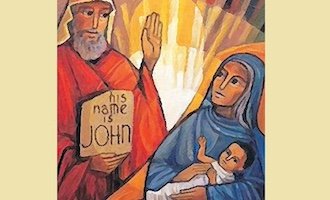
The birth of Saint John was foretold by Saint Gabriel, Archangel of the Lord, to his father, Zachary, who was offering incense in the Temple. The son of Zachary was to be the prophesied Messenger, Zachary was told, whose mission would prepare the way for Christ. Before he was born into the world John had already begun to live for the Incarnate God; even in the womb he recognized the presence of Jesus and of Mary, and leaped with joy at the glad coming of the Son of man. Before Christ's public life began, a divine impulse sent Saint John into the desert; there, with locusts for his food and wearing haircloth, in silence and in prayer, he chastened his soul. In his youth he remained hidden, because He for whom he waited was also hidden.
Then, as crowds broke in upon his solitude, he warned them to flee from the wrath to come, and gave them the baptism of penance, while they confessed their sins. At last there stood in the crowd One whom Saint John did not know, until a voice within told him that it was his Lord. He affirmed: I did not know Him, but He who sent me to baptize with water said to me, He upon whom thou wilt see the Spirit descending and abiding, He it is who baptizes with the Holy Spirit.' With the baptism of Saint John, Christ began His voluntary abasement for the sins of His people; and Saint John indeed saw the Holy Ghost descend, under the visible form of a dove, indicating in the humble Jesus of Nazareth the divine Perfection of the peaceable Eternal King and High Priest. Then the Saint's work was done. He had but to point his own disciples to the Lamb, he had only to decrease as Christ increased. He saw all men leave him and go after Christ. I told you, he said, that I am not the Christ. The friend of the Bridegroom rejoices hearing the Bridegroom's voice. This, my joy, is fulfilled.
Saint John was cast into the fortress of Herod on the east coast of the Dead Sea by the tyrant whose crimes he had rebuked; he would remain there until beheaded at the will of a girl and her cruel mother. During this time of imprisonment, some of his disciples visited him. Saint John did not speak to them of himself, but sent them to Christ, that they might witness His miracles and hear His doctrine, proofs of His mission. After Saint John's death, the Eternal Truth pronounced the panegyric of the Saint who had lived and breathed for Him alone: Verily I say unto you, among those born of women there has not risen a greater than John the Baptist.
Reflection. Saint John was great before God because in complete forgetfulness of himself he lived only for Jesus Christ, who is the source of all greatness. Sacrifice every day some of your natural inclinations to the Sacred Heart of Our Lord, and learn little by little to lose yourself in Him.
Little Pictorial Lives of the Saints, a compilation based on Butler's Lives of the Saints, and other sources by John Gilmary Shea (Benziger Brothers: New York, 1894).
LAST-MODIFIED:20240622T152452Z SEQUENCE:53374406 X-ACCESS:1 X-HITS:19 X-COLOR:f0b80e X-SHOW-END-TIME:1 END:VEVENT BEGIN:VEVENT DTSTART;VALUE=DATE:20240625 DTEND;VALUE=DATE:20240626 UID:D517D015-1080-40A1-81D9-AA313B82769F SUMMARY:St. William CREATED:20221013T211126Z DTSTAMP:20221013T211126Z URL:https://www.stpaulsweymouth.org/component/dpcalendar/event/1734?calid=13 DESCRIPTION:St. William Abbot\N\NSaint William of Monte Vergine, born in Vercelli, a city of Lombardy, lost his father and mother in his infancy and was brought up by a relative in great sentiments of piety. At fifteen years of age, having an earnest desire to lead a penitential life, he left his native region and made a long and austere pilgrimage to the shrine of the Virgin founded by Saint James at Saragossa. He would have made the pilgrimage to Jerusalem, but God made known to him that he was calling him to a solitary life, and he retired into the kingdom of Naples. There he chose for his abode an uninhabited mountain, and lived in perpetual contemplation and the exercises of rigorous penitential austerities.\NAfter a miracle of healing wrought by his prayers, he was discovered and his contemplation interrupted, so he decided to move to another mountain, where he built a very beautiful church in honor of Our Lady. With several former secular priests who joined him there, in 1119 he began the establishment of the Congregation of Monte Vergine, or Mount of the Virgin. This site is between Nola and Benevento in the same kingdom of Naples. These sons of Our Lady lived in great austerity. Seeing the progress in holiness of the good religious being formed there, the devil sowed division and criticism; but God drew good from the evil when Saint William went elsewhere and founded several more monasteries, both for men and women, in various places in the kingdom of Naples. He assisted the king of Naples, who greatly venerated him, to practice all the Christian virtues of a worthy sovereign, and the king in gratitude had a house of the Order built at Salerno opposite his palace, to have him near him more often.\NWhen Saint William died on the 25th of June, 1142, he had not yet written a Rule for his religious; his second successor, Robert, fearing the dissolution of a community without constitutions, placed them under that of Saint Benedict, and is regarded as the first abbot of the Benedictine Congregation of Monte-Vergine. A portrait of the Virgin venerated there has been an unfailing source of holy compunction; pilgrims continue to visit it.\NLes Petits Bollandistes: Vies des Saints, by Msgr. Paul Guérin (Bloud et Barral: Paris, 1882), Vol. 7; Little Pictorial Lives of the Saints, a compilation based on Butler's Lives of the Saints, and other sources by John Gilmary Shea (Benziger Brothers: New York, 1894). X-ALT-DESC;FMTTYPE=text/html:St. William Abbot
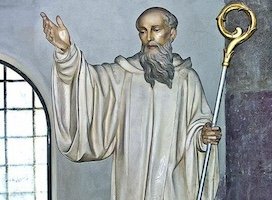
Saint William of Monte Vergine, born in Vercelli, a city of Lombardy, lost his father and mother in his infancy and was brought up by a relative in great sentiments of piety. At fifteen years of age, having an earnest desire to lead a penitential life, he left his native region and made a long and austere pilgrimage to the shrine of the Virgin founded by Saint James at Saragossa. He would have made the pilgrimage to Jerusalem, but God made known to him that he was calling him to a solitary life, and he retired into the kingdom of Naples. There he chose for his abode an uninhabited mountain, and lived in perpetual contemplation and the exercises of rigorous penitential austerities.
After a miracle of healing wrought by his prayers, he was discovered and his contemplation interrupted, so he decided to move to another mountain, where he built a very beautiful church in honor of Our Lady. With several former secular priests who joined him there, in 1119 he began the establishment of the Congregation of Monte Vergine, or Mount of the Virgin. This site is between Nola and Benevento in the same kingdom of Naples. These sons of Our Lady lived in great austerity. Seeing the progress in holiness of the good religious being formed there, the devil sowed division and criticism; but God drew good from the evil when Saint William went elsewhere and founded several more monasteries, both for men and women, in various places in the kingdom of Naples. He assisted the king of Naples, who greatly venerated him, to practice all the Christian virtues of a worthy sovereign, and the king in gratitude had a house of the Order built at Salerno opposite his palace, to have him near him more often.
When Saint William died on the 25th of June, 1142, he had not yet written a Rule for his religious; his second successor, Robert, fearing the dissolution of a community without constitutions, placed them under that of Saint Benedict, and is regarded as the first abbot of the Benedictine Congregation of Monte-Vergine. A portrait of the Virgin venerated there has been an unfailing source of holy compunction; pilgrims continue to visit it.
Les Petits Bollandistes: Vies des Saints, by Msgr. Paul Guérin (Bloud et Barral: Paris, 1882), Vol. 7; Little Pictorial Lives of the Saints, a compilation based on Butler's Lives of the Saints, and other sources by John Gilmary Shea (Benziger Brothers: New York, 1894).
LAST-MODIFIED:20240622T152144Z SEQUENCE:53374218 X-ACCESS:1 X-HITS:198 X-COLOR:f0b80e X-SHOW-END-TIME:1 END:VEVENT BEGIN:VEVENT DTSTART;VALUE=DATE:20240626 DTEND;VALUE=DATE:20240627 UID:5EF057E3-1C73-40EF-9ACB-A337032E0078 SUMMARY:Sts. John and Paul CREATED:20221013T211126Z DTSTAMP:20221013T211126Z URL:https://www.stpaulsweymouth.org/component/dpcalendar/event/1732?calid=13 DESCRIPTION:Sts. John and Paul, Martyrs\N\NThese two Saints were brothers and were officers of the Roman army in the days of Constantine the Great. They served in the house of Constance, daughter of Constantine, who was consecrated to God; their virtues and services to her father rendered them very dear to her. They would soon glorify God by a great moral victory; after despising the honors of the world, they triumphed by their martyrdom over its threats and torments.\NWith the aid of the liberality of the Christian princess, they were practicing many works of charity and mercy, until the deaths of both Constantine and Constance. Then, at the accession of Julian the Apostate to the imperial throne, they resigned their position in the palace. Julian had returned to the cult of idols and was attempting to re-establish it in the empire. The Christian brothers saw many wicked men prosper in their impiety, but were not dazzled by their example. They considered that worldly prosperity accompanied by impunity in sin is the most dreadful of all judgments, indicating reprobation. And history reveals how false and short-lived was the glittering prosperity of Julian.\NWhile still in power the apostate attempted to win back these influential officers into active service. When he was refused, he gave them ten days to reconsider. The officer Terentianus, who at the end of that time brought to their house a little idol of Jupiter for their adoration, found them in prayer. In the middle of that night they were decapitated secretly in their own garden, since the emperor feared their execution might cause a sedition in Rome. He instigated a rumor that they had been exiled, but the demons took hold of possessed persons in Rome, and published the fact of their martyrdom everywhere.\NThe son of the officer who had slain them also became possessed, and it was only after their father, Terentianus, had prayed at the tomb of the martyrs that the child was liberated. This so impressed him that he became a Christian, with all his family, and wrote the history we have reported.\NThe martyrs, by their renouncement of favors and their heroic resistance, purchased an immense weight of never-fading glory, and were a spectacle worthy of God. Their house became a magnificent Christian basilica already at the end of the fourth century.\NReflection. The Saints always consider that they have done nothing for Christ as long as they have not resisted unto blood and completed their sacrifice, even to pouring forth its last drop if God asks it. We must always bear in mind that we owe to God all that we are, and that after all our efforts, we remain unprofitable servants, doing only what we are bound to do.\NLittle Pictorial Lives of the Saints, a compilation based on Butler's Lives of the Saints, and other sources by John Gilmary Shea (Benziger Brothers: New York, 1894); Les Petits Bollandistes: Vies des Saints, by Msgr. Paul Guérin (Bloud et Barral: Paris, 1882), Vol. 7 X-ALT-DESC;FMTTYPE=text/html:Sts. John and Paul, Martyrs
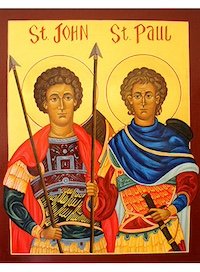
These two Saints were brothers and were officers of the Roman army in the days of Constantine the Great. They served in the house of Constance, daughter of Constantine, who was consecrated to God; their virtues and services to her father rendered them very dear to her. They would soon glorify God by a great moral victory; after despising the honors of the world, they triumphed by their martyrdom over its threats and torments.
With the aid of the liberality of the Christian princess, they were practicing many works of charity and mercy, until the deaths of both Constantine and Constance. Then, at the accession of Julian the Apostate to the imperial throne, they resigned their position in the palace. Julian had returned to the cult of idols and was attempting to re-establish it in the empire. The Christian brothers saw many wicked men prosper in their impiety, but were not dazzled by their example. They considered that worldly prosperity accompanied by impunity in sin is the most dreadful of all judgments, indicating reprobation. And history reveals how false and short-lived was the glittering prosperity of Julian.
While still in power the apostate attempted to win back these influential officers into active service. When he was refused, he gave them ten days to reconsider. The officer Terentianus, who at the end of that time brought to their house a little idol of Jupiter for their adoration, found them in prayer. In the middle of that night they were decapitated secretly in their own garden, since the emperor feared their execution might cause a sedition in Rome. He instigated a rumor that they had been exiled, but the demons took hold of possessed persons in Rome, and published the fact of their martyrdom everywhere.
The son of the officer who had slain them also became possessed, and it was only after their father, Terentianus, had prayed at the tomb of the martyrs that the child was liberated. This so impressed him that he became a Christian, with all his family, and wrote the history we have reported.
The martyrs, by their renouncement of favors and their heroic resistance, purchased an immense weight of never-fading glory, and were a spectacle worthy of God. Their house became a magnificent Christian basilica already at the end of the fourth century.
Reflection. The Saints always consider that they have done nothing for Christ as long as they have not resisted unto blood and completed their sacrifice, even to pouring forth its last drop if God asks it. We must always bear in mind that we owe to God all that we are, and that after all our efforts, we remain unprofitable servants, doing only what we are bound to do.
Little Pictorial Lives of the Saints, a compilation based on Butler's Lives of the Saints, and other sources by John Gilmary Shea (Benziger Brothers: New York, 1894); Les Petits Bollandistes: Vies des Saints, by Msgr. Paul Guérin (Bloud et Barral: Paris, 1882), Vol. 7
LAST-MODIFIED:20240622T151722Z SEQUENCE:53373956 X-ACCESS:1 X-HITS:4 X-COLOR:f0b80e X-SHOW-END-TIME:1 END:VEVENT BEGIN:VEVENT DTSTART;VALUE=DATE:20240629 DTEND;VALUE=DATE:20240630 UID:8913E5B2-B74F-4407-8363-3D7886B02BA7 SUMMARY:Sts. Peter and Paul CREATED:20221013T211126Z DTSTAMP:20221013T211126Z URL:https://www.stpaulsweymouth.org/component/dpcalendar/event/1730?calid=13 DESCRIPTION:Sts. Peter and Paul, Apostles\N\NThis feast day commemorates the martyrdom of the two great Apostles, assigned by tradition to the same day of June in the year 67. They had been imprisoned in the famous Mamertine Prison of Rome and both had foreseen their approaching death. Saint Peter was crucified; Saint Paul, a Roman citizen, was slain by the sword. Tomorrow the Church commemorates the Apostle of the Gentiles; today is dedicated primarily to Saint Peter.\NThe Chief of the Apostles was a native of Galilee like Our Lord. As he was fishing on its large lake he was called by Our Lord to be one of His apostles. Peter was poor and unlearned, but candid, eager, and loving. In his heart, first of all, his conviction grew, and then from his lips came the spontaneous confession: Thou art the Christ, the Son of the living God! Our Lord chose him and prepared him to be the Rock on which He would build His Church, His Vicar on earth, the Head and Prince of His Apostles, the center and indispensable bond of the Church's unity, the unique channel of all spiritual powers, the guardian and unerring teacher of His truth.\NAll Scripture is alive with Saint Peter; his name appears no fewer than 160 times in the New Testament. But it is after Pentecost that he stands out in the full grandeur of his office. He sees to the replacement of the fallen disciple; he admits the Jews by thousands into the fold and in the person of Cornelius, opens it to the Gentiles; he founds and for a time rules the Church at Antioch.\NTen years after the Ascension Saint Peter transferred his apostolic capital to Rome, going in person to the center of the majestic Roman Empire, where were gathered the glories and riches of the earth, along with all the powers of evil. From there he sent Saint Mark, his valued secretary, to establish the Church of Alexandria in Egypt. In Rome Saint Peter's Chair was placed; there for twenty-five years he labored at building up the great Roman Church. He was crucified by order of Nero and buried on the Vatican Hill, where now the Basilica stands which bears his name.\NReflection. Saint Peter is the author of two profoundly doctrinal epistles. He still lives on in his successors who maintain the same holy and immutable doctrine; he still rules and feeds the flock committed to him. The reality of our devotion to him is the surest test of the purity of our faith.\NLes Petits Bollandistes: Vies des Saints, by Msgr. Paul Guérin (Bloud et Barral: Paris, 1882), Vol. 7; Little Pictorial Lives of the Saints, a compilation based on Butler's Lives of the Saints, and other sources by John Gilmary Shea (Benziger Brothers: New York, 1894). X-ALT-DESC;FMTTYPE=text/html:Sts. Peter and Paul, Apostles
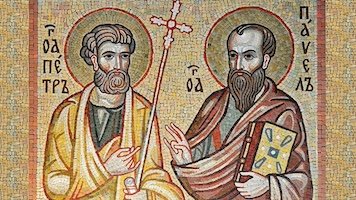
This feast day commemorates the martyrdom of the two great Apostles, assigned by tradition to the same day of June in the year 67. They had been imprisoned in the famous Mamertine Prison of Rome and both had foreseen their approaching death. Saint Peter was crucified; Saint Paul, a Roman citizen, was slain by the sword. Tomorrow the Church commemorates the Apostle of the Gentiles; today is dedicated primarily to Saint Peter.
The Chief of the Apostles was a native of Galilee like Our Lord. As he was fishing on its large lake he was called by Our Lord to be one of His apostles. Peter was poor and unlearned, but candid, eager, and loving. In his heart, first of all, his conviction grew, and then from his lips came the spontaneous confession: Thou art the Christ, the Son of the living God! Our Lord chose him and prepared him to be the Rock on which He would build His Church, His Vicar on earth, the Head and Prince of His Apostles, the center and indispensable bond of the Church's unity, the unique channel of all spiritual powers, the guardian and unerring teacher of His truth.
All Scripture is alive with Saint Peter; his name appears no fewer than 160 times in the New Testament. But it is after Pentecost that he stands out in the full grandeur of his office. He sees to the replacement of the fallen disciple; he admits the Jews by thousands into the fold and in the person of Cornelius, opens it to the Gentiles; he founds and for a time rules the Church at Antioch.
Ten years after the Ascension Saint Peter transferred his apostolic capital to Rome, going in person to the center of the majestic Roman Empire, where were gathered the glories and riches of the earth, along with all the powers of evil. From there he sent Saint Mark, his valued secretary, to establish the Church of Alexandria in Egypt. In Rome Saint Peter's Chair was placed; there for twenty-five years he labored at building up the great Roman Church. He was crucified by order of Nero and buried on the Vatican Hill, where now the Basilica stands which bears his name.
Reflection. Saint Peter is the author of two profoundly doctrinal epistles. He still lives on in his successors who maintain the same holy and immutable doctrine; he still rules and feeds the flock committed to him. The reality of our devotion to him is the surest test of the purity of our faith.
Les Petits Bollandistes: Vies des Saints, by Msgr. Paul Guérin (Bloud et Barral: Paris, 1882), Vol. 7; Little Pictorial Lives of the Saints, a compilation based on Butler's Lives of the Saints, and other sources by John Gilmary Shea (Benziger Brothers: New York, 1894).
LAST-MODIFIED:20240622T151508Z SEQUENCE:53373822 X-ACCESS:1 X-HITS:119 X-COLOR:f0b80e X-SHOW-END-TIME:1 END:VEVENT BEGIN:VEVENT DTSTART;VALUE=DATE:20240630 DTEND;VALUE=DATE:20240701 UID:8D881255-1280-4E0A-84D4-05F3E212C89B SUMMARY:St. Paul CREATED:20221013T211126Z DTSTAMP:20221013T211126Z URL:https://www.stpaulsweymouth.org/component/dpcalendar/event/1728?calid=13 DESCRIPTION:Commemoration of St. Paul Apostle\N\NSaint Paul was originally Saul of Tarsus, born in that city of Cilicia of Jewish parents, two or three years after the Saviour was born in Bethlehem of Judea. He studied in Jerusalem at the feet of the famous teacher Gamaliel, who later would be converted and listed among the Saints.\NWhile still a young man, Saul was present to oversee, as commanding officer, the stoning of the proto-martyr Stephen. In his restless zeal he pressed on to Damascus, breathing threats and slaughter against the disciples of Christ, intending to drag them from their houses and imprison them. But on the road a light from heaven struck him to the earth. He heard a voice which said, Saul, Saul, why do you persecute Me? It is hard for you to kick against the goad. He asked who was speaking, and astonished on hearing His Name, inquired what Jesus wanted of him. And then, struck blind, for three days he saw nothing more. But he had been told what to do. He was led by the hand to Damascus, where he remained in the house of a Christian until, three days later, he rose for his baptism by a Christian leader of that city. Then he saw the light of day again, and the brilliance of the full truth for the first time, as another man, a new creature in Jesus Christ.\NHe left Damascus for a long retreat in Arabia, before he set out at the call of God, and carried the Gospel to the uttermost limits of the known western world, for years living and laboring with no thought but that of Christ crucified, no desire but to dispense himself for Him. He became the Apostle to the Gentiles, whom he had been taught to hate. But he would gladly have been anathema if he could thereby have saved his own countrymen from condemnation, though they sought his life. Perils by land and sea could not dampen his courage, nor sufferings and age dull the tenderness of his heart.\NWhen finally he knew that his hour had come to be dissolved and to be with Christ, as he had long desired, he wrote during his second imprisonment to his spiritual son Timothy, that he had fought the good fight, finished his course, kept the faith", and that there remained for him to receive the crown of justice which His Lord was preparing for him on the final day. With Saint Peter in his final year he consecrated Rome, the new holy city, by his martyrdom.\NSaint Paul has left to the Church fourteen Epistles, which have been a fountainhead of doctrine, elucidating the most basic truths taught by Christ, and constituting the consolation and delight of her greatest Saints. His interior life, insofar as words can express it, lies open before us in these divine writings; it is the life of one who has died forever to himself, and risen again in Christ Jesus. Saint John Chrysostom, his imitator, wrote: The heart of Paul is the Heart of Christ! Nor will his labor cease while the race of man continues. Even now, like a chivalrous knight, he stands alive in our midst, and captivates each of his readers to the obedience of Christ.\NLittle Pictorial Lives of the Saints, a compilation based on Butler's Lives of the Saints, and other sources by John Gilmary Shea (Benziger Brothers: New York, 1894). X-ALT-DESC;FMTTYPE=text/html:Commemoration of St. Paul Apostle
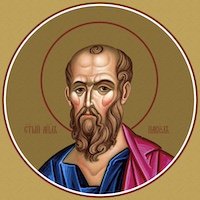
Saint Paul was originally Saul of Tarsus, born in that city of Cilicia of Jewish parents, two or three years after the Saviour was born in Bethlehem of Judea. He studied in Jerusalem at the feet of the famous teacher Gamaliel, who later would be converted and listed among the Saints.
While still a young man, Saul was present to oversee, as commanding officer, the stoning of the proto-martyr Stephen. In his restless zeal he pressed on to Damascus, breathing threats and slaughter against the disciples of Christ, intending to drag them from their houses and imprison them. But on the road a light from heaven struck him to the earth. He heard a voice which said, Saul, Saul, why do you persecute Me? It is hard for you to kick against the goad. He asked who was speaking, and astonished on hearing His Name, inquired what Jesus wanted of him. And then, struck blind, for three days he saw nothing more. But he had been told what to do. He was led by the hand to Damascus, where he remained in the house of a Christian until, three days later, he rose for his baptism by a Christian leader of that city. Then he saw the light of day again, and the brilliance of the full truth for the first time, as another man, a new creature in Jesus Christ.
He left Damascus for a long retreat in Arabia, before he set out at the call of God, and carried the Gospel to the uttermost limits of the known western world, for years living and laboring with no thought but that of Christ crucified, no desire but to dispense himself for Him. He became the Apostle to the Gentiles, whom he had been taught to hate. But he would gladly have been anathema if he could thereby have saved his own countrymen from condemnation, though they sought his life. Perils by land and sea could not dampen his courage, nor sufferings and age dull the tenderness of his heart.
When finally he knew that his hour had come to be dissolved and to be with Christ, as he had long desired, he wrote during his second imprisonment to his spiritual son Timothy, that he had fought the good fight, finished his course, kept the faith", and that there remained for him to receive the crown of justice which His Lord was preparing for him on the final day. With Saint Peter in his final year he consecrated Rome, the new holy city, by his martyrdom.
Saint Paul has left to the Church fourteen Epistles, which have been a fountainhead of doctrine, elucidating the most basic truths taught by Christ, and constituting the consolation and delight of her greatest Saints. His interior life, insofar as words can express it, lies open before us in these divine writings; it is the life of one who has died forever to himself, and risen again in Christ Jesus. Saint John Chrysostom, his imitator, wrote: The heart of Paul is the Heart of Christ! Nor will his labor cease while the race of man continues. Even now, like a chivalrous knight, he stands alive in our midst, and captivates each of his readers to the obedience of Christ.
Little Pictorial Lives of the Saints, a compilation based on Butler's Lives of the Saints, and other sources by John Gilmary Shea (Benziger Brothers: New York, 1894).
LAST-MODIFIED:20240622T151305Z SEQUENCE:53373699 X-ACCESS:1 X-HITS:43 X-COLOR:f0b80e X-SHOW-END-TIME:1 END:VEVENT BEGIN:VEVENT DTSTART;VALUE=DATE:20240701 DTEND;VALUE=DATE:20240702 UID:868F1E03-BF7E-4BC9-B560-9A7B8E700634 SUMMARY:The Most Precious Blood CREATED:20221013T211126Z DTSTAMP:20221013T211126Z URL:https://www.stpaulsweymouth.org/component/dpcalendar/event/1739?calid=13 DESCRIPTION:The Most Precious Blood of Our Lord Jesus Christ\N\NThe month of July is dedicated to the Most Precious Blood of the Redeemer. Supreme homage is given to the Sacred Blood. As we adore the Sacred Heart, because it is the Heart of Jesus, who is God, so we adore the Most Precious Blood.\NThe Blood of Jesus is the fountain of salvation. Each drop that flowed from the wounds of the Saviour is a pledge of man's eternal salvation. All races of the earth have been ransomed, and all individuals, who will allow the saving power of the Sacred Blood to be applied to their soul, are heirs of heaven. St. John Chrysostom calls the Precious Blood the saviour of souls; St. Thomas Aquinas, the key to heaven's treasures; St. Ambrose, pure gold of ineffable worth; St. Mary Magdalene de Pazzi, a magnet of souls and pledge of eternal life. The sins of mankind, in their number, in their offense to the Supreme Being, in the effects on transgressors, are immense; yet, the Precious Blood of Jesus is not frightened by numbers, it has in Itself the power to appease an angered God and to heal wounded creatures.\NThe Precious Blood is a cleansing bath. Unlike all other blood, which stains, the Blood of Jesus washes clean and white. According to the words of St. John, in the Apocalypse, the Angels wonder, and the question is asked: These that are clothed in white robes, who are they? The Lord answers: These are they that have washed their robes, and have made them white in the Blood of the Lamb. For no other reason did the Precious Blood flow but to regain for the souls of men the beautiful dress of innocence, and , once regained, to preserve it throughout life and into eternity.\NThe Blood of the Saviour is a well of consolation for troubled hearts. Can anyone, confidingly, look at the Sacred Blood trickling down from the Cross without taking courage to carry on, in spite of the difficulties which are the common lot of all? One glance at the Cross must be able to drive away fear. And, another, must be able to instill trust in Him who did not rest until the last drop, mingled with water, flowed out of an opened Heart. He, who was willing to do so much for men, must be willing to overlook and forget the frailties which they deeply regret; He must be willing to come to their assistance when harassed, to defend them when tempted, to comfort them when afflicted. The Blood of Jesus must be for Christians what the north-star is to sailors.\NWould that men on earth honored the Precious Blood in the manner in which they who are in heaven give honor and praise and thanksgiving! They proclaim that It purchased the glory which they enjoy. Without It, they would have remained slaves of Satan and outcasts from the eternal mansions of God. Let us profess that we owe to the Sacred Blood of Jesus all that we have in this life, and that to It we shall owe all that we shall enjoy in a better and eternal life!\NHeavenly Friends, by Rosalie Marie Levy (St. Paul Editions: Boston, 1984) X-ALT-DESC;FMTTYPE=text/html:The Most Precious Blood of Our Lord Jesus Christ
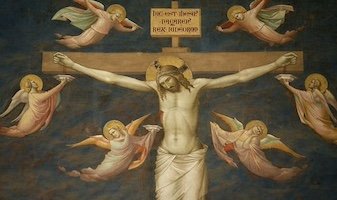
The month of July is dedicated to the Most Precious Blood of the Redeemer. Supreme homage is given to the Sacred Blood. As we adore the Sacred Heart, because it is the Heart of Jesus, who is God, so we adore the Most Precious Blood.
The Blood of Jesus is the fountain of salvation. Each drop that flowed from the wounds of the Saviour is a pledge of man's eternal salvation. All races of the earth have been ransomed, and all individuals, who will allow the saving power of the Sacred Blood to be applied to their soul, are heirs of heaven. St. John Chrysostom calls the Precious Blood the saviour of souls; St. Thomas Aquinas, the key to heaven's treasures; St. Ambrose, pure gold of ineffable worth; St. Mary Magdalene de Pazzi, a magnet of souls and pledge of eternal life. The sins of mankind, in their number, in their offense to the Supreme Being, in the effects on transgressors, are immense; yet, the Precious Blood of Jesus is not frightened by numbers, it has in Itself the power to appease an angered God and to heal wounded creatures.
The Precious Blood is a cleansing bath. Unlike all other blood, which stains, the Blood of Jesus washes clean and white. According to the words of St. John, in the Apocalypse, the Angels wonder, and the question is asked: These that are clothed in white robes, who are they? The Lord answers: These are they that have washed their robes, and have made them white in the Blood of the Lamb. For no other reason did the Precious Blood flow but to regain for the souls of men the beautiful dress of innocence, and , once regained, to preserve it throughout life and into eternity.
The Blood of the Saviour is a well of consolation for troubled hearts. Can anyone, confidingly, look at the Sacred Blood trickling down from the Cross without taking courage to carry on, in spite of the difficulties which are the common lot of all? One glance at the Cross must be able to drive away fear. And, another, must be able to instill trust in Him who did not rest until the last drop, mingled with water, flowed out of an opened Heart. He, who was willing to do so much for men, must be willing to overlook and forget the frailties which they deeply regret; He must be willing to come to their assistance when harassed, to defend them when tempted, to comfort them when afflicted. The Blood of Jesus must be for Christians what the north-star is to sailors.
Would that men on earth honored the Precious Blood in the manner in which they who are in heaven give honor and praise and thanksgiving! They proclaim that It purchased the glory which they enjoy. Without It, they would have remained slaves of Satan and outcasts from the eternal mansions of God. Let us profess that we owe to the Sacred Blood of Jesus all that we have in this life, and that to It we shall owe all that we shall enjoy in a better and eternal life!
Heavenly Friends, by Rosalie Marie Levy (St. Paul Editions: Boston, 1984)
LAST-MODIFIED:20240706T171659Z SEQUENCE:54590733 X-ACCESS:1 X-HITS:19 X-COLOR:f0b80e X-SHOW-END-TIME:1 END:VEVENT BEGIN:VEVENT DTSTART;VALUE=DATE:20240702 DTEND;VALUE=DATE:20240703 UID:83862FA4-AC4E-4239-955B-AEE631D934B1 SUMMARY:Sts. Processus & Martinian CREATED:20221013T211126Z DTSTAMP:20221013T211126Z URL:https://www.stpaulsweymouth.org/component/dpcalendar/event/1743?calid=13 DESCRIPTION:Sts. Processus & Martinian, Martyrs\N\NThe Holy Martyrs Processus and Martinian were pagans and they served as guards at the Mamertine prison in Rome.\NState criminals were held in this prison, among them some Christians. Watching the Christian prisoners and listening to their preaching, Processus and Martinian gradually came to the knowledge of the Savior. When the holy Apostle Peter was locked up at the Mamertine prison, Processus and Martinian came to believe in Christ. They accepted holy Baptism from the apostle and released him from prison.\NThe jailer Paulinus learned about this, and he demanded that Saints Processus and Martinian renounce Christ. But they fearlessly confessed Christ, and they spat at the golden statue of Jupiter. Paulinus ordered that they be slapped on the face, and then seeing the resolute stance of the holy martyrs, he subjected them to torture. The martyrs were beaten with iron rods, scorched with fire, and finally, thrown into prison.\NA certain illustrious and pious woman by the name of Lucina visited them in prison and gave them help and encouragement. The torturer Paulinus was soon punished by God. He fell blind and died three days later. The son of Paulinus went to the city ruler demanding that the martyrs be put to death. Saints Processus and Martinian were beheaded by the sword (+ ca. 67).\NLucina buried the bodies of the martyrs. Today their tomb is in the south transept of Saint Peter’s Basilica in Rome. X-ALT-DESC;FMTTYPE=text/html:Sts. Processus & Martinian, Martyrs
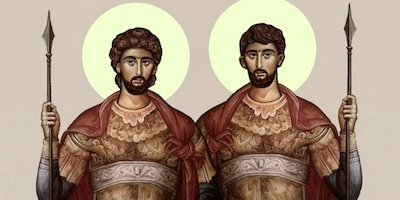
The Holy Martyrs Processus and Martinian were pagans and they served as guards at the Mamertine prison in Rome.
State criminals were held in this prison, among them some Christians. Watching the Christian prisoners and listening to their preaching, Processus and Martinian gradually came to the knowledge of the Savior. When the holy Apostle Peter was locked up at the Mamertine prison, Processus and Martinian came to believe in Christ. They accepted holy Baptism from the apostle and released him from prison.
The jailer Paulinus learned about this, and he demanded that Saints Processus and Martinian renounce Christ. But they fearlessly confessed Christ, and they spat at the golden statue of Jupiter. Paulinus ordered that they be slapped on the face, and then seeing the resolute stance of the holy martyrs, he subjected them to torture. The martyrs were beaten with iron rods, scorched with fire, and finally, thrown into prison.
A certain illustrious and pious woman by the name of Lucina visited them in prison and gave them help and encouragement. The torturer Paulinus was soon punished by God. He fell blind and died three days later. The son of Paulinus went to the city ruler demanding that the martyrs be put to death. Saints Processus and Martinian were beheaded by the sword (+ ca. 67).
Lucina buried the bodies of the martyrs. Today their tomb is in the south transept of Saint Peter’s Basilica in Rome.
LAST-MODIFIED:20240706T172418Z SEQUENCE:54591172 X-ACCESS:1 X-HITS:13 X-COLOR:f0b80e X-SHOW-END-TIME:1 END:VEVENT BEGIN:VEVENT DTSTART;VALUE=DATE:20240702 DTEND;VALUE=DATE:20240703 UID:E5C0BCBA-CBA9-4A93-ABC0-82315784A5BD SUMMARY:The Visitation CREATED:20221013T211126Z DTSTAMP:20221013T211126Z URL:https://www.stpaulsweymouth.org/component/dpcalendar/event/1741?calid=13 DESCRIPTION:The Visitation of the Blessed Virgin Mary\N\NThe Archangel Gabriel, at the time of the Annunciation, informed the Mother of God that Her cousin Elizabeth had miraculously conceived and was soon to be the mother of a son, the destined precursor of the Messiah. The Blessed Virgin in Her humility concealed the wonderful dignity to which She Herself was raised, through the Incarnation of the Son of God in Her womb, but in the transport of Her holy joy and gratitude, determined to go to congratulate and assist the mother of the Baptist. “Mary therefore arose” Saint Luke says, “and with haste went into the hill country into a city of Judea, and entering into the house of Zachary, greeted Elizabeth.”\NWhat a blessing did the presence of the God-Man bring to this house, the first which He in His humanity honored with His visit! But it is Mary who is the instrument and means by which He imparts His divine blessing. He intends to show us that She is the channel through which He delights to communicate to us His graces, and encourages us to ask them of Him through Her intercession.\NAt the voice of the Mother of God, by the power and grace of Her divine Son in Her womb, Elizabeth was filled with the Holy Spirit; and the infant in her womb, sanctified at that moment, conceived so great a joy as to leap and exult. By the infused light of the Spirit of God Elizabeth understood the great mystery of the Incarnation which God had wrought in Mary, whose humility prevented Her from disclosing it, even to a Saint and an intimate friend. In raptures of astonishment Elizabeth pronounced Mary blessed above all other women, and cried out, “How is it that the mother of my Lord should come to me?” The Virgin, hearing Her own praise, sank yet lower in the abyss of Her nothingness, and melting in an ecstasy of love and gratitude to God, She burst into Her admirable canticle, the Magnificat: “My soul magnifies the Lord, and My spirit rejoices in God, My Saviour.” What marvels of grace and light God reveals to us in the souls of His Saints! Mary stayed with Her cousin almost three months, after which She returned to Nazareth.\NReflection: While with the Church we praise God for the mercies and wonders which He wrought in this mystery, we must apply ourselves to imitating the virtues of which Mary sets us a perfect example. Let us pay particular attention to our visits and conversation, acts which are to many Christians the sources of innumerable dangers and sins. Let us meditate on the holy conversations of the cousins, and the services Mary rendered to Elizabeth, and think how we may imitate Her prudent charity.\NSource: Little Pictorial Lives of the Saints, a compilation based on Butler’s Lives of the Saints,and other sources by John Gilmary Shea (Benziger Brothers: New York, 1894). X-ALT-DESC;FMTTYPE=text/html:The Visitation of the Blessed Virgin Mary
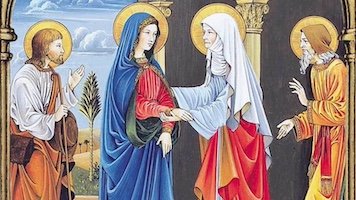
The Archangel Gabriel, at the time of the Annunciation, informed the Mother of God that Her cousin Elizabeth had miraculously conceived and was soon to be the mother of a son, the destined precursor of the Messiah. The Blessed Virgin in Her humility concealed the wonderful dignity to which She Herself was raised, through the Incarnation of the Son of God in Her womb, but in the transport of Her holy joy and gratitude, determined to go to congratulate and assist the mother of the Baptist. “Mary therefore arose” Saint Luke says, “and with haste went into the hill country into a city of Judea, and entering into the house of Zachary, greeted Elizabeth.”
What a blessing did the presence of the God-Man bring to this house, the first which He in His humanity honored with His visit! But it is Mary who is the instrument and means by which He imparts His divine blessing. He intends to show us that She is the channel through which He delights to communicate to us His graces, and encourages us to ask them of Him through Her intercession.
At the voice of the Mother of God, by the power and grace of Her divine Son in Her womb, Elizabeth was filled with the Holy Spirit; and the infant in her womb, sanctified at that moment, conceived so great a joy as to leap and exult. By the infused light of the Spirit of God Elizabeth understood the great mystery of the Incarnation which God had wrought in Mary, whose humility prevented Her from disclosing it, even to a Saint and an intimate friend. In raptures of astonishment Elizabeth pronounced Mary blessed above all other women, and cried out, “How is it that the mother of my Lord should come to me?” The Virgin, hearing Her own praise, sank yet lower in the abyss of Her nothingness, and melting in an ecstasy of love and gratitude to God, She burst into Her admirable canticle, the Magnificat: “My soul magnifies the Lord, and My spirit rejoices in God, My Saviour.” What marvels of grace and light God reveals to us in the souls of His Saints! Mary stayed with Her cousin almost three months, after which She returned to Nazareth.
Reflection: While with the Church we praise God for the mercies and wonders which He wrought in this mystery, we must apply ourselves to imitating the virtues of which Mary sets us a perfect example. Let us pay particular attention to our visits and conversation, acts which are to many Christians the sources of innumerable dangers and sins. Let us meditate on the holy conversations of the cousins, and the services Mary rendered to Elizabeth, and think how we may imitate Her prudent charity.
Source: Little Pictorial Lives of the Saints, a compilation based on Butler’s Lives of the Saints,and other sources by John Gilmary Shea (Benziger Brothers: New York, 1894).
LAST-MODIFIED:20240706T171959Z SEQUENCE:54590913 X-ACCESS:1 X-HITS:89 X-COLOR:f0b80e X-SHOW-END-TIME:1 END:VEVENT BEGIN:VEVENT DTSTART;VALUE=DATE:20240703 DTEND;VALUE=DATE:20240704 UID:9DFFD46A-04C4-462D-8A21-7E2BEBC049A5 SUMMARY:St. Irenaeus CREATED:20221013T211126Z DTSTAMP:20221013T211126Z URL:https://www.stpaulsweymouth.org/component/dpcalendar/event/1745?calid=13 DESCRIPTION:St. Irenaeus Bishop, Martyr\N\NSaint Irenaeus was born in the year 120; he was of the Greek tongue, and probably a native of Asia Minor. His parents, who were Christians, placed him while still young under the care of the great Saint Polycarp, Bishop of Smyrna. It was in this holy school that he learned the sacred science which later made him a great ornament of the Church and the terror of her enemies. Saint Polycarp cultivated his rising genius and formed his mind to piety by his precepts and example, and the zealous young scholar was careful to reap all advantages offered him by the solicitude of such a master. Such was his veneration for his tutor's sanctity that he observed all the acts and virtues he saw in that holy man, the better to copy his example and learn his spirit. He listened to his instructions with an insatiable ardor, and so deeply did he engrave them in his heart that the impressions remained vivid even in his old age. In order to confound the heresies of his age, this Doctor of the Church acquainted himself with the conceits of the pagan philosophers, and thereby became qualified to trace every error to its sources and set it in its full light. By his writings he was already known to Tertullian, Theodoret and Saint Epiphanus, who speak of him as a luminous torch of truth in the darkness of those times.\NAfter Irenaeus had spent a number of years in combat against the eastern gnostics and philosophers of error, Saint Polycarp determined to send him to Gaul, where many of the heretics of Asia Minor had already migrated to pursue the Catholic religion, which was beginning to find roots there. With a company of about forty Christians, the valiant soldier of Christ ascended the Rhone to Lyons to rejoin and aid Saint Pothinus, its bishop. Saint Pothinus was already advanced in age, and his church's neophytes could not always distinguish truth from the gnostic aberrations. Saint Pothinus received the apostles with joy and soon ordained Saint Irenaeus.\NA hundred times he exposed himself to martyrdom by his zeal, acting as the right arm of the aging bishop, but God was reserving that crown for him twenty-five years later. When Saint Pothinus had glorified God by his splendid martyr's death in the year 177, Ireneus was chosen to be the second bishop of Lyons. The persecutors imagined that Christianity had been stifled in Lyons, and they ceased their pursuits for a time.\NThis great Doctor of the Church wrote many important works, of which the most famous is his Adversus Haereses, Against the Heresies, in explanation of the Faith. By his preaching, Saint Irenaeus in a short time converted almost the whole country to the Faith; the Christians of Lyons became models by their candor, their estrangement from all ambition, their poverty, chastity and temperance, and in this way confounded many adversaries of their religion. Saint Irenaeus continued to imitate what he had seen done by his beloved master, Saint Polycarp, himself the disciple and imitator of Saint John the Apostle. One can readily imagine the excellence of the administration and the breadth of charity reigning in the Church of Lyons.\NFinally he suffered martyrdom there, with many others, in the year 202, under the Emperor Septimus Severus, after eighty years spent in the service of the Lord. The imperial decrees renewing the persecutions arrived at Lyons at the time of the celebration of Severus' tenth year of reign; the pagans found amid the celebrations an opportunity to take vengeance on the Christians, who refused to participate in the debaucheries which accompanied these feastings. Assassins armed with daggers, stones and knives filled the city with blood, and thousands of Christians won, with their bishop, the crown they had always admired as the greatest glory God could grant His servants.\NLittle Pictorial Lives of the Saints, a compilation based on Butler's Lives of the Saints, and other sources by John Gilmary Shea (Benziger Brothers: New York, 1894); Les Petits Bollandistes: Vies des Saints, by Msgr. Paul Guérin (Bloud et Barral: Paris, 1882), Vol. 7 X-ALT-DESC;FMTTYPE=text/html:St. Irenaeus Bishop, Martyr
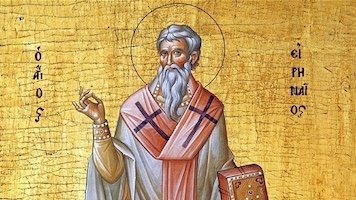
Saint Irenaeus was born in the year 120; he was of the Greek tongue, and probably a native of Asia Minor. His parents, who were Christians, placed him while still young under the care of the great Saint Polycarp, Bishop of Smyrna. It was in this holy school that he learned the sacred science which later made him a great ornament of the Church and the terror of her enemies. Saint Polycarp cultivated his rising genius and formed his mind to piety by his precepts and example, and the zealous young scholar was careful to reap all advantages offered him by the solicitude of such a master. Such was his veneration for his tutor's sanctity that he observed all the acts and virtues he saw in that holy man, the better to copy his example and learn his spirit. He listened to his instructions with an insatiable ardor, and so deeply did he engrave them in his heart that the impressions remained vivid even in his old age. In order to confound the heresies of his age, this Doctor of the Church acquainted himself with the conceits of the pagan philosophers, and thereby became qualified to trace every error to its sources and set it in its full light. By his writings he was already known to Tertullian, Theodoret and Saint Epiphanus, who speak of him as a luminous torch of truth in the darkness of those times.
After Irenaeus had spent a number of years in combat against the eastern gnostics and philosophers of error, Saint Polycarp determined to send him to Gaul, where many of the heretics of Asia Minor had already migrated to pursue the Catholic religion, which was beginning to find roots there. With a company of about forty Christians, the valiant soldier of Christ ascended the Rhone to Lyons to rejoin and aid Saint Pothinus, its bishop. Saint Pothinus was already advanced in age, and his church's neophytes could not always distinguish truth from the gnostic aberrations. Saint Pothinus received the apostles with joy and soon ordained Saint Irenaeus.
A hundred times he exposed himself to martyrdom by his zeal, acting as the right arm of the aging bishop, but God was reserving that crown for him twenty-five years later. When Saint Pothinus had glorified God by his splendid martyr's death in the year 177, Ireneus was chosen to be the second bishop of Lyons. The persecutors imagined that Christianity had been stifled in Lyons, and they ceased their pursuits for a time.
This great Doctor of the Church wrote many important works, of which the most famous is his Adversus Haereses, Against the Heresies, in explanation of the Faith. By his preaching, Saint Irenaeus in a short time converted almost the whole country to the Faith; the Christians of Lyons became models by their candor, their estrangement from all ambition, their poverty, chastity and temperance, and in this way confounded many adversaries of their religion. Saint Irenaeus continued to imitate what he had seen done by his beloved master, Saint Polycarp, himself the disciple and imitator of Saint John the Apostle. One can readily imagine the excellence of the administration and the breadth of charity reigning in the Church of Lyons.
Finally he suffered martyrdom there, with many others, in the year 202, under the Emperor Septimus Severus, after eighty years spent in the service of the Lord. The imperial decrees renewing the persecutions arrived at Lyons at the time of the celebration of Severus' tenth year of reign; the pagans found amid the celebrations an opportunity to take vengeance on the Christians, who refused to participate in the debaucheries which accompanied these feastings. Assassins armed with daggers, stones and knives filled the city with blood, and thousands of Christians won, with their bishop, the crown they had always admired as the greatest glory God could grant His servants.
Little Pictorial Lives of the Saints, a compilation based on Butler's Lives of the Saints, and other sources by John Gilmary Shea (Benziger Brothers: New York, 1894); Les Petits Bollandistes: Vies des Saints, by Msgr. Paul Guérin (Bloud et Barral: Paris, 1882), Vol. 7
LAST-MODIFIED:20240706T172714Z SEQUENCE:54591348 X-ACCESS:1 X-HITS:213 X-COLOR:f0b80e X-SHOW-END-TIME:1 END:VEVENT BEGIN:VEVENT DTSTART;VALUE=DATE:20240704 DTEND;VALUE=DATE:20240705 UID:A870319D-9841-49F6-96FA-18087A2A0B36 SUMMARY:Bl. John Cornelius & Companions, Bl. Hugh Green CREATED:20221013T211126Z DTSTAMP:20221013T211126Z URL:https://www.stpaulsweymouth.org/component/dpcalendar/event/1747?calid=13 DESCRIPTION:Blessed John Cornelius & Companions, Blessed Hugh Green, Martyrs\N\NJohn Cornelius (called also Mohun) was born of Irish parents at Bodmin, in Cornwall, on the estate of Sir John Arundell, of Lanherne, in 1557; martyred at Dorchester, 4 July, 1594. Sir John Arundell took an interest in the talented boy and sent him to Oxford. Not satisfied with the new religion taught there, John Cornelius went to the great "seminary of martyrs", then at Reims, and a little later, on 1 April, 1580, entered the English College, Rome, to pursue his theological studies. After his ordination he was sent as a missionary to England and laboured there for nearly ten years. He practised mortification, was devoted to meditation, and showed much zeal in the ministry. While acting as chaplain to Lady Arundell, he was arrested on 24 April, 1594, at Chideock Castle, by the sheriff of Dorsetshire. He was met on the way by Thomas Bosgrave, a relative of the Arundell family, who offered him his own hat, as he had been dragged out bareheaded. Thereupon Bosgrave was arrested. Two servants of the castle, John (or Terence) Carey and Patrick Salmon, natives of Dublin, shared the same fate. When they reached the sheriff's house a number of Protestant clergymen heaped abuse upon the Catholic religion, but were so well answered that the sheriff stopped the disputation. The missionary was sent to London and brought before the Lord Treasurer, the Archbishop of Canterbury, and others, who, by words and torture, tried in vain to obtain the names of such as had given him shelter or assistance. He was brought back to Dorchester and with his three companions condemned to death, 2 July, 1594. He was accused of high treason, because he was a priest and had returned to England; the others were charged with felony, for having rendered assistance to one whom they knew to be a priest; but all were assured that their lives would be spared if they embraced Protestantism.\NWhile in prison, John Cornelius was admitted to membership in the Society of Jesus. On the way to execution none of the confessors showed signs of fear. The first to ascend the scaffold was John Carey; he kissed the rope, exclaiming "O precious collar", made a solemn profession of faith and died a valiant death. Before his execution Patrick Salmon, a man much admired for his virtues, exhorted the spectators to embrace the Faith, for which he and his companions were giving their lives. Then followed Thomas Bosgrave, a man of education, who delivered a stirring address on the truth of his belief. The last to suffer was John Cornelius, who kissed the gallows with the words of St. Andrew, "O Cross, long desired", etc. On the ladder he tried to speak to the multitude, but was prevented. After praying for his executioners and for the welfare of the queen, John Cornelius also was executed. The body was taken down and quartered, his head was nailed to the gibbet, but soon removed. The bodies were buried by the Catholics.\NHugh Green (c. 1584 – 19 August 1642 in Dorchester) was an English Catholic priest who was beatified by the Catholic Church in 1929. He was also known as Ferdinand Brooks or Ferdinand Brown.\NGreen's parents were members of the Church of England and sent him to Peterhouse, Cambridge, where he took his degree in 1605. Afterward, he converted to the Roman Catholic Church and in 1610 entered Douai College, a center for Catholic studies in the north of France. He was ordained to priesthood on 14 June 1612, and then returned to England to take up the post of a chaplain at Chideock Castle, Dorset.\NOn 8 March 1641, King Charles I, to placate the Puritan Parliament of England, issued a proclamation banishing all priests. Green was arrested, tried, and condemned to death in August.\NCatholic sources report that in prison his constancy so affected his fellow-captives that two or three women sentenced to die with him sent him word that they would ask his absolution before death. They did so after confessing their sins to the people, and were absolved by the martyr. His executioner was quite unskilled and could not find Green's heart; the butchery, with appalling cruelty, was prolonged for nearly half an hour. After his execution, the mob played football with his head. X-ALT-DESC;FMTTYPE=text/html:Blessed John Cornelius & Companions, Blessed Hugh Green, Martyrs
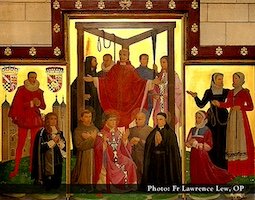
John Cornelius (called also Mohun) was born of Irish parents at Bodmin, in Cornwall, on the estate of Sir John Arundell, of Lanherne, in 1557; martyred at Dorchester, 4 July, 1594. Sir John Arundell took an interest in the talented boy and sent him to Oxford. Not satisfied with the new religion taught there, John Cornelius went to the great "seminary of martyrs", then at Reims, and a little later, on 1 April, 1580, entered the English College, Rome, to pursue his theological studies. After his ordination he was sent as a missionary to England and laboured there for nearly ten years. He practised mortification, was devoted to meditation, and showed much zeal in the ministry. While acting as chaplain to Lady Arundell, he was arrested on 24 April, 1594, at Chideock Castle, by the sheriff of Dorsetshire. He was met on the way by Thomas Bosgrave, a relative of the Arundell family, who offered him his own hat, as he had been dragged out bareheaded. Thereupon Bosgrave was arrested. Two servants of the castle, John (or Terence) Carey and Patrick Salmon, natives of Dublin, shared the same fate. When they reached the sheriff's house a number of Protestant clergymen heaped abuse upon the Catholic religion, but were so well answered that the sheriff stopped the disputation. The missionary was sent to London and brought before the Lord Treasurer, the Archbishop of Canterbury, and others, who, by words and torture, tried in vain to obtain the names of such as had given him shelter or assistance. He was brought back to Dorchester and with his three companions condemned to death, 2 July, 1594. He was accused of high treason, because he was a priest and had returned to England; the others were charged with felony, for having rendered assistance to one whom they knew to be a priest; but all were assured that their lives would be spared if they embraced Protestantism.
While in prison, John Cornelius was admitted to membership in the Society of Jesus. On the way to execution none of the confessors showed signs of fear. The first to ascend the scaffold was John Carey; he kissed the rope, exclaiming "O precious collar", made a solemn profession of faith and died a valiant death. Before his execution Patrick Salmon, a man much admired for his virtues, exhorted the spectators to embrace the Faith, for which he and his companions were giving their lives. Then followed Thomas Bosgrave, a man of education, who delivered a stirring address on the truth of his belief. The last to suffer was John Cornelius, who kissed the gallows with the words of St. Andrew, "O Cross, long desired", etc. On the ladder he tried to speak to the multitude, but was prevented. After praying for his executioners and for the welfare of the queen, John Cornelius also was executed. The body was taken down and quartered, his head was nailed to the gibbet, but soon removed. The bodies were buried by the Catholics.
Hugh Green (c. 1584 – 19 August 1642 in Dorchester) was an English Catholic priest who was beatified by the Catholic Church in 1929. He was also known as Ferdinand Brooks or Ferdinand Brown.
Green's parents were members of the Church of England and sent him to Peterhouse, Cambridge, where he took his degree in 1605. Afterward, he converted to the Roman Catholic Church and in 1610 entered Douai College, a center for Catholic studies in the north of France. He was ordained to priesthood on 14 June 1612, and then returned to England to take up the post of a chaplain at Chideock Castle, Dorset.
On 8 March 1641, King Charles I, to placate the Puritan Parliament of England, issued a proclamation banishing all priests. Green was arrested, tried, and condemned to death in August.
Catholic sources report that in prison his constancy so affected his fellow-captives that two or three women sentenced to die with him sent him word that they would ask his absolution before death. They did so after confessing their sins to the people, and were absolved by the martyr. His executioner was quite unskilled and could not find Green's heart; the butchery, with appalling cruelty, was prolonged for nearly half an hour. After his execution, the mob played football with his head.
LAST-MODIFIED:20240706T173353Z SEQUENCE:54591747 X-ACCESS:1 X-HITS:224 X-COLOR:f0b80e X-SHOW-END-TIME:1 END:VEVENT BEGIN:VEVENT DTSTART;VALUE=DATE:20240705 DTEND;VALUE=DATE:20240706 UID:4638C378-1ACF-4370-ACAF-DF6655D86370 SUMMARY:St. Anthony Mary CREATED:20221013T211126Z DTSTAMP:20221013T211126Z URL:https://www.stpaulsweymouth.org/component/dpcalendar/event/1749?calid=13 DESCRIPTION:St. Anthony Mary Zaccaria, Priest, Confessor\N\NSaint Anthony Maria Zaccaria was born at Cremona, Italy, in 1502, of noble parents. His father died when very young, and his eighteen-year-old mother was left to bring up her only son in the love of God and tenderness for the poor. As a child he gave his coat to a poor beggar who was shivering with cold. He studied philosophy and medicine at the Universities of Pavia and Padua and became a licensed physician in 1524, but was striving more earnestly to care for souls than to heal their material envelope. Sometimes when he was traveling as a doctor and found abandoned children, he assembled them to teach them their Christian duties. He desired a more perfect life and wider possibilities for the apostolate of a Christian. He therefore studied theology, and was twenty-six years old when ordained in 1528.\NThose present at the first Mass of Saint Anthony Maria saw him surrounded with an extraordinary light and a crown of Angels. He himself seemed to be an Angel on earth. By his preaching and example, Cremona was renewed, and then the young apostle went to Milan. To remedy disorders of every kind resulting from the war, he founded there the Order of Regular Clerics of Saint Paul, since called Barnabites because they were entrusted with the church of Saint Barnabas. He had a great devotion to Saint Paul and desired that his religious imitate the glorious Apostle. He also established a community of Sisters, called the Angelicals, and a confraternity for fathers of families. He animated all of his followers with his great love for God.\NDespite opposition of various kinds, in 1532 the Constitutions of his two communities were approved by Pope Clement VII. Their founder defended his religious with persevering gentleness in all the difficulties they encountered, and recommended to them to spend their free moments in conversation with Jesus crucified. God favored him with exceptional gifts; he read in hearts and saw the future. He died when only 36 years old, in 1539, and was canonized by Pope Leo XIII in 1897.\NLe Calendrier catholique, by Calvet and Martin X-ALT-DESC;FMTTYPE=text/html:St. Anthony Mary Zaccaria, Priest, Confessor
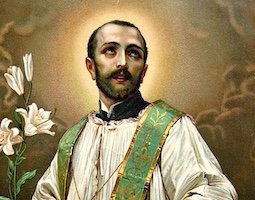
Saint Anthony Maria Zaccaria was born at Cremona, Italy, in 1502, of noble parents. His father died when very young, and his eighteen-year-old mother was left to bring up her only son in the love of God and tenderness for the poor. As a child he gave his coat to a poor beggar who was shivering with cold. He studied philosophy and medicine at the Universities of Pavia and Padua and became a licensed physician in 1524, but was striving more earnestly to care for souls than to heal their material envelope. Sometimes when he was traveling as a doctor and found abandoned children, he assembled them to teach them their Christian duties. He desired a more perfect life and wider possibilities for the apostolate of a Christian. He therefore studied theology, and was twenty-six years old when ordained in 1528.
Those present at the first Mass of Saint Anthony Maria saw him surrounded with an extraordinary light and a crown of Angels. He himself seemed to be an Angel on earth. By his preaching and example, Cremona was renewed, and then the young apostle went to Milan. To remedy disorders of every kind resulting from the war, he founded there the Order of Regular Clerics of Saint Paul, since called Barnabites because they were entrusted with the church of Saint Barnabas. He had a great devotion to Saint Paul and desired that his religious imitate the glorious Apostle. He also established a community of Sisters, called the Angelicals, and a confraternity for fathers of families. He animated all of his followers with his great love for God.
Despite opposition of various kinds, in 1532 the Constitutions of his two communities were approved by Pope Clement VII. Their founder defended his religious with persevering gentleness in all the difficulties they encountered, and recommended to them to spend their free moments in conversation with Jesus crucified. God favored him with exceptional gifts; he read in hearts and saw the future. He died when only 36 years old, in 1539, and was canonized by Pope Leo XIII in 1897.
Le Calendrier catholique, by Calvet and Martin
LAST-MODIFIED:20240706T173659Z SEQUENCE:54591933 X-ACCESS:1 X-HITS:33 X-COLOR:f0b80e X-SHOW-END-TIME:1 END:VEVENT BEGIN:VEVENT DTSTART;VALUE=DATE:20240706 DTEND;VALUE=DATE:20240707 UID:1DCD41D8-682D-46F2-9A61-FA08C21E0CE1 SUMMARY:St. Maria Goretti CREATED:20221013T211126Z DTSTAMP:20221013T211126Z URL:https://www.stpaulsweymouth.org/component/dpcalendar/event/1751?calid=13 DESCRIPTION:St. Maria Goretti, Virgin & Martyr\N\NThis little Italian girl, who before reaching the age of twelve was slain for having preferred death to sin, was beatified and canonized before fifty years had passed. Saint Maria Goretti, born in October, 1890 in the small hilltop village of Corinaldo near Ancône, was the second of the six living children of a very pious poor family. Her mother consecrated the infant to the Blessed Virgin on the day of her baptism. Her courageous parents labored under the sign of Christian poverty to support the children, but by 1896 their little plot of land proved insufficient to feed the growing family. The father decided they would move down to the plains of Rome, where it was said that fertile farm land could be rented at low cost. The move to Ferriere di Conca, near Nettuno, proved fatal to the good Luigi, who after only four years, exhausted by the unhealthy climate, the heavy heat and his hard labor, died a Christian death.\NHis courageous widow could not follow his dying admonition to return to Corinaldo, since their contract obliged her to pay what she owed to their employer. Maria, nine years old and deeply affected by her father's death, seconded her mother's labor in the fields by taking over the care of her four younger brothers and sisters. She was an angelic child whose piety was observed by all who knew her. Her fervor won her the grace to make her First Communion, as she begged to do, with the other children. When she asked that permission, her mother told her she did not know how to read or write, and they did not have the means to buy the shoes, robe, and veil she would need. Maria replied that in the town a lady who knew how to read would teach her, and on Sundays she could go to a village where the priest taught catechism to all the children, and she was sure that God in His providence would care for her material needs. She was right; she passed the questioning session by the Archpriest of Nettuno with honors, and kind benefactors gave what she needed.\NLiving conditions for the little family of orphans were very difficult; they shared a kitchen with another family. This other one was motherless: the mother had died in an asylum, and the father was a drunkard. His son, 19 years old, began to pay much attention to Maria, and the little girl, who wished to remain pure for her beloved Jesus, begged her mother never to leave her alone. But one day in the torrid heat of summer, while Maria watched her baby sister and prepared the meal, Alessandro left the field where everyone was working and went to the house with evil intentions. No one heard Maria's cries for help; it was only an hour or so later that a younger brother of Alessandro entered and found her bathed in her blood on the floor. Her love of purity had cost her fourteen grievous wounds, nine of which were very profound. She lived long enough to tell the priest who came to her in the hospital that she forgave her assassin and wanted him to be with her in Paradise. She received the Last Sacraments in peace and joy, dying on July 6, 1902.\NThe story did not end there. Alessandro was condemned to thirty years of prison. Gruff and totally impenitent, he was mistrusted by the guardians. But the bishop of the diocese, Monsignor Blandini, wanted to save his soul, and went to the prison, asking to talk with him. My son, he said, your bishop wants to greet you and comfort you. I didn't ask for your visit, and I don't need comfort or your sermons, was the reply. But when the prelate told Alessandro how, during her last minutes, Marietta had forgiven him and wished to have him near her in heaven, the nonchalant young man was overcome. That is not possible! he exclaimed. Before the bishop left, Alessandro had fallen into his arms, weeping; and in the hours of solitude which followed, he began to pray. Three years before the end of his term, for his good behavior he was set free, and in 1937, at the age of 55, he went to see the mother of the little victim. When he fell on his knees and begged her pardon, like her little daughter she gladly forgave him. They went to Communion in the little village church at Christmas; and there was no inhabitant who did not rejoice with a Christian joy in this new proof of the sanctity of Maria, to whom they all attributed his wondrous conversion. Pope Pius XII beatified the new Saint Agnes in April 1947, and in June of 1950, she was inscribed among the Saints.\NSainte Marie Goretti, Vierge et Martyre, by Fr. M.-Ludovic Bastyns, Marist (Éditions Marie-Médiatrice: Chateau-Richer, Québec, 1964). X-ALT-DESC;FMTTYPE=text/html:St. Maria Goretti, Virgin & Martyr
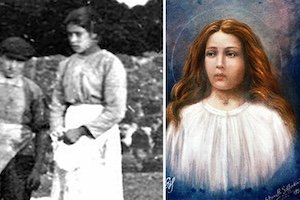
This little Italian girl, who before reaching the age of twelve was slain for having preferred death to sin, was beatified and canonized before fifty years had passed. Saint Maria Goretti, born in October, 1890 in the small hilltop village of Corinaldo near Ancône, was the second of the six living children of a very pious poor family. Her mother consecrated the infant to the Blessed Virgin on the day of her baptism. Her courageous parents labored under the sign of Christian poverty to support the children, but by 1896 their little plot of land proved insufficient to feed the growing family. The father decided they would move down to the plains of Rome, where it was said that fertile farm land could be rented at low cost. The move to Ferriere di Conca, near Nettuno, proved fatal to the good Luigi, who after only four years, exhausted by the unhealthy climate, the heavy heat and his hard labor, died a Christian death.
His courageous widow could not follow his dying admonition to return to Corinaldo, since their contract obliged her to pay what she owed to their employer. Maria, nine years old and deeply affected by her father's death, seconded her mother's labor in the fields by taking over the care of her four younger brothers and sisters. She was an angelic child whose piety was observed by all who knew her. Her fervor won her the grace to make her First Communion, as she begged to do, with the other children. When she asked that permission, her mother told her she did not know how to read or write, and they did not have the means to buy the shoes, robe, and veil she would need. Maria replied that in the town a lady who knew how to read would teach her, and on Sundays she could go to a village where the priest taught catechism to all the children, and she was sure that God in His providence would care for her material needs. She was right; she passed the questioning session by the Archpriest of Nettuno with honors, and kind benefactors gave what she needed.
Living conditions for the little family of orphans were very difficult; they shared a kitchen with another family. This other one was motherless: the mother had died in an asylum, and the father was a drunkard. His son, 19 years old, began to pay much attention to Maria, and the little girl, who wished to remain pure for her beloved Jesus, begged her mother never to leave her alone. But one day in the torrid heat of summer, while Maria watched her baby sister and prepared the meal, Alessandro left the field where everyone was working and went to the house with evil intentions. No one heard Maria's cries for help; it was only an hour or so later that a younger brother of Alessandro entered and found her bathed in her blood on the floor. Her love of purity had cost her fourteen grievous wounds, nine of which were very profound. She lived long enough to tell the priest who came to her in the hospital that she forgave her assassin and wanted him to be with her in Paradise. She received the Last Sacraments in peace and joy, dying on July 6, 1902.
The story did not end there. Alessandro was condemned to thirty years of prison. Gruff and totally impenitent, he was mistrusted by the guardians. But the bishop of the diocese, Monsignor Blandini, wanted to save his soul, and went to the prison, asking to talk with him. My son, he said, your bishop wants to greet you and comfort you. I didn't ask for your visit, and I don't need comfort or your sermons, was the reply. But when the prelate told Alessandro how, during her last minutes, Marietta had forgiven him and wished to have him near her in heaven, the nonchalant young man was overcome. That is not possible! he exclaimed. Before the bishop left, Alessandro had fallen into his arms, weeping; and in the hours of solitude which followed, he began to pray. Three years before the end of his term, for his good behavior he was set free, and in 1937, at the age of 55, he went to see the mother of the little victim. When he fell on his knees and begged her pardon, like her little daughter she gladly forgave him. They went to Communion in the little village church at Christmas; and there was no inhabitant who did not rejoice with a Christian joy in this new proof of the sanctity of Maria, to whom they all attributed his wondrous conversion. Pope Pius XII beatified the new Saint Agnes in April 1947, and in June of 1950, she was inscribed among the Saints.
Sainte Marie Goretti, Vierge et Martyre, by Fr. M.-Ludovic Bastyns, Marist (Éditions Marie-Médiatrice: Chateau-Richer, Québec, 1964).
LAST-MODIFIED:20240706T174052Z SEQUENCE:54592166 X-ACCESS:1 X-HITS:164 X-COLOR:f0b80e X-SHOW-END-TIME:1 END:VEVENT BEGIN:VEVENT DTSTART;VALUE=DATE:20240707 DTEND;VALUE=DATE:20240708 UID:2C619370-6719-4330-A53F-0D3FCCBDCF66 SUMMARY:Sts. Cyril & Methodius CREATED:20221013T211126Z DTSTAMP:20221013T211126Z URL:https://www.stpaulsweymouth.org/component/dpcalendar/event/1753?calid=13 DESCRIPTION:Sts. Cyril & Methodius Bishops, Confessors\N\NThese two brothers were born in Thessalonica of a senatorial family. Saint Cyril was sent to Constantinople to study, where he became known as the Philosopher; but it was the Holy Church that he desired to serve, and he was ordained a priest. While Cyril was still young, the Patriarch of Constantinople recommended in the year 848 to the reigning Emperor to place him at the head of a mission which was to be sent to the Khazars of the eastern Danube region. Their king desired to learn of Christianity and had requested missionaries. Cyril asked for the time to learn the Turkish language which this people spoke, and after only a short while was ready to preach. The prince of the Khazars received Baptism and the entire nation soon followed his example. Cyril founded churches and furnished them with excellent ministers, then returned to Constantinople, refusing all presents offered him by his converts.\NHe was next missioned to Bulgaria with his younger brother Methodius, who was a monk of eminent sanctity. This nation, which had migrated like the Khazars from the east, had settled in the Moldavian region and a part of Hungary; they had been exposed to Christianity by some Greek prisoners, and the sister of their king had become a Christian by the good offices of the empress Theodora. When Saint Methodius, an excellent artist, was delegated to paint in the palace for the king, as he requested, a scene which could frighten the beholders, he chose for subject the Last Judgment. The king was so impressed that after being instructed he was baptized, in 865, with forty-eight of his followers. The nation followed their leaders after a brief revolt had been promptly quieted.\NThe two brothers preached also in Moravia, invited there by the pious king of that nation, whom they baptized with most of his subjects. It was there that Saint Cyril invented a Slavonic alphabet, translating the Bible and other writings from Greek and Latin into the language of the Slavic peoples. In 867 the missionaries went to Rome, where Saint Cyril, who was ill, died soon afterwards.\NSaint Methodius was named bishop of Moravia and Pannonia or Hungary. Difficulties were not lacking, but he remained there until 880, when he returned to Rome to justify his conduct, which certain enemies had accused to the Pope. The Pope cleared him before the adversaries, and settled some questions regarding the language to be used in worship. He permitted the Mass to be said in the Slavic language, not to the exclusion, however, of Latin. Saint Methodius also baptized the king of the Bohemians, and again many of the king's subjects followed his example. The Saint lived for about 20 years after his brother's decease; the exact date of his death is unknown.\NLes Petits Bollandistes: Vies des Saints, by Msgr. Paul Guérin (Bloud et Barral: Paris, 1882), Vol. 3 X-ALT-DESC;FMTTYPE=text/html:Sts. Cyril & Methodius Bishops, Confessors
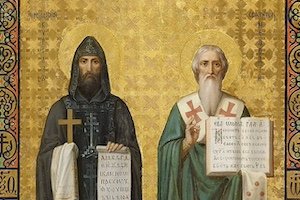
These two brothers were born in Thessalonica of a senatorial family. Saint Cyril was sent to Constantinople to study, where he became known as the Philosopher; but it was the Holy Church that he desired to serve, and he was ordained a priest. While Cyril was still young, the Patriarch of Constantinople recommended in the year 848 to the reigning Emperor to place him at the head of a mission which was to be sent to the Khazars of the eastern Danube region. Their king desired to learn of Christianity and had requested missionaries. Cyril asked for the time to learn the Turkish language which this people spoke, and after only a short while was ready to preach. The prince of the Khazars received Baptism and the entire nation soon followed his example. Cyril founded churches and furnished them with excellent ministers, then returned to Constantinople, refusing all presents offered him by his converts.
He was next missioned to Bulgaria with his younger brother Methodius, who was a monk of eminent sanctity. This nation, which had migrated like the Khazars from the east, had settled in the Moldavian region and a part of Hungary; they had been exposed to Christianity by some Greek prisoners, and the sister of their king had become a Christian by the good offices of the empress Theodora. When Saint Methodius, an excellent artist, was delegated to paint in the palace for the king, as he requested, a scene which could frighten the beholders, he chose for subject the Last Judgment. The king was so impressed that after being instructed he was baptized, in 865, with forty-eight of his followers. The nation followed their leaders after a brief revolt had been promptly quieted.
The two brothers preached also in Moravia, invited there by the pious king of that nation, whom they baptized with most of his subjects. It was there that Saint Cyril invented a Slavonic alphabet, translating the Bible and other writings from Greek and Latin into the language of the Slavic peoples. In 867 the missionaries went to Rome, where Saint Cyril, who was ill, died soon afterwards.
Saint Methodius was named bishop of Moravia and Pannonia or Hungary. Difficulties were not lacking, but he remained there until 880, when he returned to Rome to justify his conduct, which certain enemies had accused to the Pope. The Pope cleared him before the adversaries, and settled some questions regarding the language to be used in worship. He permitted the Mass to be said in the Slavic language, not to the exclusion, however, of Latin. Saint Methodius also baptized the king of the Bohemians, and again many of the king's subjects followed his example. The Saint lived for about 20 years after his brother's decease; the exact date of his death is unknown.
Les Petits Bollandistes: Vies des Saints, by Msgr. Paul Guérin (Bloud et Barral: Paris, 1882), Vol. 3
LAST-MODIFIED:20240706T175155Z SEQUENCE:54592829 X-ACCESS:1 X-HITS:167 X-COLOR:f0b80e X-SHOW-END-TIME:1 END:VEVENT BEGIN:VEVENT DTSTART;VALUE=DATE:20240708 DTEND;VALUE=DATE:20240709 UID:43BC4DC9-5798-41DD-9A7D-FDB9DA80BB9D SUMMARY:St. Elizabeth CREATED:20221013T211126Z DTSTAMP:20221013T211126Z URL:https://www.stpaulsweymouth.org/component/dpcalendar/event/1755?calid=13 DESCRIPTION:St. Elizabeth Queen, Widow\N\NSaint Elizabeth was born in 1271. She was the daughter of Pedro III of Aragon, and named for her aunt, Saint Elizabeth of Hungary. As a child she was holy, and when she was given in marriage to Dennis, King of Portugal, she became a saintly wife. She heard Mass and recited the Divine Office daily, but her devotions were arranged with such prudence that they interfered with none of her duties of state. She prepared for her frequent Communions by works of charity, austerities and fasts, and by her Communions for these heroic works of charity. Elizabeth herself cared for the sick whom she visited, and never did a poor beggar leave her palace without having received what he needed.\NSeveral times Saint Elizabeth was called on to make peace between her husband and her son Alphonso, who had taken up arms against him. Her royal spouse, by his infidelities and his unfounded jealousy, was an occasion for her to practice increasing patience and virtue. A famous incident resulting from his credulity in the face of calumny, illustrates once again the lesson that the sinner will fall into the traps created by his own aberrations. A slander affecting Elizabeth and one of her pages made the king determine to slay the youth. He told a worker who burnt lime to cast into his kiln the first page who would arrive with a royal message. On the appointed day the suspected page was sent; but the young man, who was in the habit of hearing Mass daily, stopped on his way to do so. The king, impatient for news of the affair, sent a second page, the very originator of the calumny; and he, arriving first at the kiln, was at once cast into the furnace and burned. Soon afterwards the first page arrived from church, and took back to the king the lime-burner's reply that his orders had been fulfilled. This incident, by which the innocent life was saved and the guilty one paid for a grave sin, also caused the king to open his eyes to the queen's innocence.\NThe patience of Saint Elizabeth and the wonderful sweetness with which she cherished the children even of her rivals, eventually won over the king, and he became a devoted husband and a Christian king. She founded many charitable institutions and religious houses, among others a convent of Poor Clares. After her husband's death, she wished to enter their Order; but her people, who could not do without her, dissuaded her, and she took instead the habit of the Third Order of Saint Francis. She spent the rest of her days in redoubled austerities and almsgiving. She died in 1336 at the age of sixty-five, amid endeavors to make peace between her children. The Blessed Virgin appeared to her, accompanied by Saint Clare of Assisi and several other holy women.\NLittle Pictorial Lives of the Saints, a compilation based on Butler's Lives of the Saints, and other sources by John Gilmary Shea (Benziger Brothers: New York, 1894). X-ALT-DESC;FMTTYPE=text/html:St. Elizabeth Queen, Widow
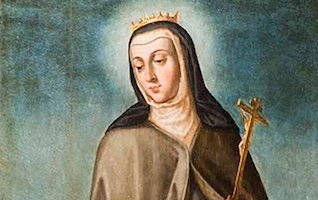
Saint Elizabeth was born in 1271. She was the daughter of Pedro III of Aragon, and named for her aunt, Saint Elizabeth of Hungary. As a child she was holy, and when she was given in marriage to Dennis, King of Portugal, she became a saintly wife. She heard Mass and recited the Divine Office daily, but her devotions were arranged with such prudence that they interfered with none of her duties of state. She prepared for her frequent Communions by works of charity, austerities and fasts, and by her Communions for these heroic works of charity. Elizabeth herself cared for the sick whom she visited, and never did a poor beggar leave her palace without having received what he needed.
Several times Saint Elizabeth was called on to make peace between her husband and her son Alphonso, who had taken up arms against him. Her royal spouse, by his infidelities and his unfounded jealousy, was an occasion for her to practice increasing patience and virtue. A famous incident resulting from his credulity in the face of calumny, illustrates once again the lesson that the sinner will fall into the traps created by his own aberrations. A slander affecting Elizabeth and one of her pages made the king determine to slay the youth. He told a worker who burnt lime to cast into his kiln the first page who would arrive with a royal message. On the appointed day the suspected page was sent; but the young man, who was in the habit of hearing Mass daily, stopped on his way to do so. The king, impatient for news of the affair, sent a second page, the very originator of the calumny; and he, arriving first at the kiln, was at once cast into the furnace and burned. Soon afterwards the first page arrived from church, and took back to the king the lime-burner's reply that his orders had been fulfilled. This incident, by which the innocent life was saved and the guilty one paid for a grave sin, also caused the king to open his eyes to the queen's innocence.
The patience of Saint Elizabeth and the wonderful sweetness with which she cherished the children even of her rivals, eventually won over the king, and he became a devoted husband and a Christian king. She founded many charitable institutions and religious houses, among others a convent of Poor Clares. After her husband's death, she wished to enter their Order; but her people, who could not do without her, dissuaded her, and she took instead the habit of the Third Order of Saint Francis. She spent the rest of her days in redoubled austerities and almsgiving. She died in 1336 at the age of sixty-five, amid endeavors to make peace between her children. The Blessed Virgin appeared to her, accompanied by Saint Clare of Assisi and several other holy women.
Little Pictorial Lives of the Saints, a compilation based on Butler's Lives of the Saints, and other sources by John Gilmary Shea (Benziger Brothers: New York, 1894).
LAST-MODIFIED:20240706T175450Z SEQUENCE:54593004 X-ACCESS:1 X-HITS:60 X-COLOR:f0b80e X-SHOW-END-TIME:1 END:VEVENT BEGIN:VEVENT DTSTART;VALUE=DATE:20240709 DTEND;VALUE=DATE:20240710 UID:6259B7A9-6936-48F9-AEB2-381EAB2103D3 SUMMARY:Sts. John Fisher Bishop & Thomas More CREATED:20221013T211126Z DTSTAMP:20221013T211126Z URL:https://www.stpaulsweymouth.org/component/dpcalendar/event/1757?calid=13 DESCRIPTION:Sts. John Fisher Bishop & Thomas More, Martyrs\N\NThese most famous of the Reformation martyrs were also the first to be canonised, being raised to the altars by Pope Pius XI in 1935; St Thomas More was proclaimed Patron of Statesmen on 5 November 2000, during the celebration of the Great Jubilee.\NSt John Fisher\NSt John Fisher was born at Beverley, the son of a draper, and educated at Cambridge university from the age of fourteen. At Cambridge he flourished as a renowned scholar, being elected as a Fellow of Michaelhouse (now Trinity College) and ordained priest in 1491. As his reputation grew, he held a series of increasingly important appointments both within his college and within the university, being appointed Chancellor of the university in 1504, the same year he was consecrated as Bishop of Rochester. Some years earlier, in 1502, he became chaplain to Lady Margaret Beaufort, the King’s mother, also becoming in that year the first Lady Margaret Professor of Divinity at Cambridge. Between them, they refounded the university both financially and academically. Fisher introduced Greek and Hebrew into the curriculum and invited the famous scholar Erasmus to lecture.\NZealous Defender of the Church\NAs Bishop of Rochester, England’s smallest see, Fisher was ardent in his pastoral care and particularly noted for the power of his preaching. He complemented his scholarship with his devout life and was thus well equipped zealously to defend the Church and its Sacraments against Luther’s attacks. Even Henry VIII boasted that no other realm could claim such a distinguished prelate. During this time Fisher had been appointed chaplain to Henry VIII’s wife, Catherine of Aragon.\NAs one of the king’s most admired bishops, John Fisher had no escape from clearly declaring his mind with regards to the validity of King Henry’s marriage. To do so made him a marked man. The matter first arose regarding the nullity suit of 1529, but it was not until 1534 that all public officials were required to swear to a form that the marriage of Henry and Catherine was illegal and invalid. Bishop Fisher, alone among the English bishops, was unable to do this, although he declared that he would be willing to swear allegiance to the succession of the children of Anne Boleyn. For this he was condemned to imprisonment in the Tower of London. In the intervening years between 1529 and 1534, he had protested against the title ‘Head of the Church of England’ for Henry VIII and had qualified it with the words ‘so far as the law of God allows’. Earlier in 1534, before he was presented with the Oath of Succession, he had been threatened with imprisonment for the alleged encouragement of Elizabeth Barton, a young nun of Kent, who claimed to have been granted visions which prophesied divine retribution for King Henry if he divorced Catherine and married Anne Boleyn.\NRed Robes and Spilling Blood\NImprisoned in the Tower, Fisher was deprived of the university Chancellorship and the See of Rochester. For a bishop of genuine asceticism, his letter to Thomas Cromwell, the Secretary of Henry VIII, makes poignant reading, so utterly deprived had the bishop been of clothes and food. But most cruel of all was his deprivation from receiving the sacraments and any priestly visitation.\NThe final days of his earthly life were marked by the newly elected Pope Paul III creating Fisher a cardinal. To many this has seemed a politically inept move – Henry responded by vowing that Fisher’s head would be off before the Cardinal’s hat would be on – but if the scarlet cardinalatial robes are supposed to remind the wearer of his promise to defend the Church to the spilling of his blood, then the honour bestowed on Fisher was indeed a timely one. Fisher was ready for this self-sacrifice.\NDeath\NOn 22 June 1535, John Fisher was taken from the Tower to the scaffold on Tower Hill. Pardoning his executioner and clearly announcing that he was dying for the faith of the Catholic Church, he asked those nearby to pray for him. Praying the Te Deum and a psalm, he rested his head on the block and, with a single blow of the axe, he died.\NFisher’s body was buried in the churchyard of All Hallows at Barking, but was soon exhumed and taken to be buried with the body of Thomas More in the chapel of the Tower in order to deter people from regarding his grave as the shrine of a saint. For a fortnight his head was displayed on London Bridge before being thrown into the Thames.\NSt Thomas More\NBeing held in the Tower at the same time as John Fisher was Sir Thomas More, also a former man of state whom Henry VIII raised up only to throw down again.\NThomas More was son of Sir John More, one of the Justices of the King’s Bench. He was born in 1478 in London. At the age of thirteen he was taken into the household of John Morton, the Archbishop of Canterbury (from 1486 to 1500) from whence he was sent to Canterbury College, Oxford (now incorporated into Christ Church). After returning to London to read Law at Lincoln’s Inn, he was called to the Bar in 1501. Three years later More entered Parliament.\NWidowed\NBefore marrying Jane Colt in 1505, More had seriously considered whether or not he was called to the religious life. During this time he lived for four years at the London Charterhouse. Although he decided that his was not a vocation to a religious order, for the rest of his life More embraced many pious practices such as wearing a hairshirt and reciting the Little Office.\NJane More died in 1511, leaving Thomas with three daughters and one son. He remarried only a few weeks later, taking for his second wife Alice Middleton, who had herself lost her first spouse. The family life of the More household is legendary, immortalised by the famous painting by Hans Holbein. Thomas was as good a father as he was a lawyer, known for his strong commitment to the responsibilities of the former, as he was renowned for his integrity with regards to the duties of the latter. But it was his professional qualities that quickly came to the attention of the newly crowned Henry VIII, and thus Thomas rose swiftly in public office until in 1529 he succeeded the ill-fated Cardinal Wolsey as Lord Chancellor of England.\NThe King’s Good Servant\NThroughout this time, More’s reputation as a man of letters increased around Europe. Most notably his book Utopia was translated from the original Latin into the principal European languages. His wit and wisdom, however, was completely full of common sense, and if anyone was fooled by King Henry’s munificence, More was not. ‘If my head would win him a castle in France’, he said, ‘it should not fail to go.’\NIt was for no castle, however, that More’s demise was to come about, but for the same reasons, with much the same chronology, that John Fisher (whom More greatly admired) came to his earthly end. Having resigned the Lord Chancellorship, More was impounded in the Tower on 13 April 1534, his lands confiscated and his family impoverished. Fifteen months later, on 1 July, he emerged from the Tower, a shadow of his former self, to be tried at Westminster Hall. He gave a robust defence, but was sentenced to death, a sentence executed on Tower Hill, on 6 July 1535, by beheading. To his beloved daughter, Meg, he wrote, ‘Farewell my dear child, and pray for me, and I shall for you and all your friends, that we may merrily meet in heaven.’ As he mounted the scaffold his last words were that he died for the faith of the Holy Catholic Church and was ‘the king’s good servant, but God’s first’.\NPlaces to Visit\NThe Tower of London, where both were imprisoned, and nearby Tower Hill where the executions took place. The seminary of Allen Hall is built upon the site of the More family home, and the nearby church where the saint worshipped preserves a monument of him. Rochester Cathedral was the Episcopal See of St John Fisher.\NQuotes of St Thomas More and St John Fisher\NI die the king’s good servant, but God’s first.\NThe last words of St Thomas More\NI am come here to die for Christ’s Catholic Church. And I thank God…\NThe words of St John Fisher from the scaffold X-ALT-DESC;FMTTYPE=text/html:Sts. John Fisher Bishop & Thomas More, Martyrs
These most famous of the Reformation martyrs were also the first to be canonised, being raised to the altars by Pope Pius XI in 1935; St Thomas More was proclaimed Patron of Statesmen on 5 November 2000, during the celebration of the Great Jubilee.
St John Fisher was born at Beverley, the son of a draper, and educated at Cambridge university from the age of fourteen. At Cambridge he flourished as a renowned scholar, being elected as a Fellow of Michaelhouse (now Trinity College) and ordained priest in 1491. As his reputation grew, he held a series of increasingly important appointments both within his college and within the university, being appointed Chancellor of the university in 1504, the same year he was consecrated as Bishop of Rochester. Some years earlier, in 1502, he became chaplain to Lady Margaret Beaufort, the King’s mother, also becoming in that year the first Lady Margaret Professor of Divinity at Cambridge. Between them, they refounded the university both financially and academically. Fisher introduced Greek and Hebrew into the curriculum and invited the famous scholar Erasmus to lecture.
As Bishop of Rochester, England’s smallest see, Fisher was ardent in his pastoral care and particularly noted for the power of his preaching. He complemented his scholarship with his devout life and was thus well equipped zealously to defend the Church and its Sacraments against Luther’s attacks. Even Henry VIII boasted that no other realm could claim such a distinguished prelate. During this time Fisher had been appointed chaplain to Henry VIII’s wife, Catherine of Aragon.
As one of the king’s most admired bishops, John Fisher had no escape from clearly declaring his mind with regards to the validity of King Henry’s marriage. To do so made him a marked man. The matter first arose regarding the nullity suit of 1529, but it was not until 1534 that all public officials were required to swear to a form that the marriage of Henry and Catherine was illegal and invalid. Bishop Fisher, alone among the English bishops, was unable to do this, although he declared that he would be willing to swear allegiance to the succession of the children of Anne Boleyn. For this he was condemned to imprisonment in the Tower of London. In the intervening years between 1529 and 1534, he had protested against the title ‘Head of the Church of England’ for Henry VIII and had qualified it with the words ‘so far as the law of God allows’. Earlier in 1534, before he was presented with the Oath of Succession, he had been threatened with imprisonment for the alleged encouragement of Elizabeth Barton, a young nun of Kent, who claimed to have been granted visions which prophesied divine retribution for King Henry if he divorced Catherine and married Anne Boleyn.
Imprisoned in the Tower, Fisher was deprived of the university Chancellorship and the See of Rochester. For a bishop of genuine asceticism, his letter to Thomas Cromwell, the Secretary of Henry VIII, makes poignant reading, so utterly deprived had the bishop been of clothes and food. But most cruel of all was his deprivation from receiving the sacraments and any priestly visitation.
The final days of his earthly life were marked by the newly elected Pope Paul III creating Fisher a cardinal. To many this has seemed a politically inept move – Henry responded by vowing that Fisher’s head would be off before the Cardinal’s hat would be on – but if the scarlet cardinalatial robes are supposed to remind the wearer of his promise to defend the Church to the spilling of his blood, then the honour bestowed on Fisher was indeed a timely one. Fisher was ready for this self-sacrifice.
On 22 June 1535, John Fisher was taken from the Tower to the scaffold on Tower Hill. Pardoning his executioner and clearly announcing that he was dying for the faith of the Catholic Church, he asked those nearby to pray for him. Praying the Te Deum and a psalm, he rested his head on the block and, with a single blow of the axe, he died.
Fisher’s body was buried in the churchyard of All Hallows at Barking, but was soon exhumed and taken to be buried with the body of Thomas More in the chapel of the Tower in order to deter people from regarding his grave as the shrine of a saint. For a fortnight his head was displayed on London Bridge before being thrown into the Thames.
Being held in the Tower at the same time as John Fisher was Sir Thomas More, also a former man of state whom Henry VIII raised up only to throw down again.
Thomas More was son of Sir John More, one of the Justices of the King’s Bench. He was born in 1478 in London. At the age of thirteen he was taken into the household of John Morton, the Archbishop of Canterbury (from 1486 to 1500) from whence he was sent to Canterbury College, Oxford (now incorporated into Christ Church). After returning to London to read Law at Lincoln’s Inn, he was called to the Bar in 1501. Three years later More entered Parliament.
Before marrying Jane Colt in 1505, More had seriously considered whether or not he was called to the religious life. During this time he lived for four years at the London Charterhouse. Although he decided that his was not a vocation to a religious order, for the rest of his life More embraced many pious practices such as wearing a hairshirt and reciting the Little Office.
Jane More died in 1511, leaving Thomas with three daughters and one son. He remarried only a few weeks later, taking for his second wife Alice Middleton, who had herself lost her first spouse. The family life of the More household is legendary, immortalised by the famous painting by Hans Holbein. Thomas was as good a father as he was a lawyer, known for his strong commitment to the responsibilities of the former, as he was renowned for his integrity with regards to the duties of the latter. But it was his professional qualities that quickly came to the attention of the newly crowned Henry VIII, and thus Thomas rose swiftly in public office until in 1529 he succeeded the ill-fated Cardinal Wolsey as Lord Chancellor of England.
Throughout this time, More’s reputation as a man of letters increased around Europe. Most notably his book Utopia was translated from the original Latin into the principal European languages. His wit and wisdom, however, was completely full of common sense, and if anyone was fooled by King Henry’s munificence, More was not. ‘If my head would win him a castle in France’, he said, ‘it should not fail to go.’
It was for no castle, however, that More’s demise was to come about, but for the same reasons, with much the same chronology, that John Fisher (whom More greatly admired) came to his earthly end. Having resigned the Lord Chancellorship, More was impounded in the Tower on 13 April 1534, his lands confiscated and his family impoverished. Fifteen months later, on 1 July, he emerged from the Tower, a shadow of his former self, to be tried at Westminster Hall. He gave a robust defence, but was sentenced to death, a sentence executed on Tower Hill, on 6 July 1535, by beheading. To his beloved daughter, Meg, he wrote, ‘Farewell my dear child, and pray for me, and I shall for you and all your friends, that we may merrily meet in heaven.’ As he mounted the scaffold his last words were that he died for the faith of the Holy Catholic Church and was ‘the king’s good servant, but God’s first’.
The Tower of London, where both were imprisoned, and nearby Tower Hill where the executions took place. The seminary of Allen Hall is built upon the site of the More family home, and the nearby church where the saint worshipped preserves a monument of him. Rochester Cathedral was the Episcopal See of St John Fisher.
I die the king’s good servant, but God’s first.
The last words of St Thomas More
I am come here to die for Christ’s Catholic Church. And I thank God…
The words of St John Fisher from the scaffold
LAST-MODIFIED:20240706T175917Z SEQUENCE:54593271 X-ACCESS:1 X-HITS:164 X-COLOR:f0b80e X-SHOW-END-TIME:1 END:VEVENT BEGIN:VEVENT DTSTART;VALUE=DATE:20240710 DTEND;VALUE=DATE:20240711 UID:30C77E39-47BA-4B14-B097-123A508E09C7 SUMMARY:Sts. Rufina & Secunda CREATED:20221013T211126Z DTSTAMP:20221013T211126Z URL:https://www.stpaulsweymouth.org/component/dpcalendar/event/1761?calid=13 DESCRIPTION:Sts. Rufina & Secunda, Virgins & Martyrs\N\NAccording to their "acts", these were sisters, daughters of Asterius, a man of senatorial rank in Rome. They were engaged to be married, the one to Armentarius, the other to Verinus, who were also Christians. But when the persecution of the Emperor Valerian fell upon the Church, these two men apostatized. The two girls refused to follow their example and fled secretly from Rome. Their flight being soon discovered, they were overtaken not far from the city and haled before the perfect, Junius Donatus. He imprisoned them with the object of making them apostatize, and when he found that they were unmoved either by arguments or threats, he ordered Rufina to be scourged; whereupon Secunda cried out, "Why do you judge my sister to honour and me to dishonour? Be pleased to beat us both together, for we declare that Christ is God." After they both had been tortured in divers ways, they were put to death by beheading. A pagan lady named Plautilla gave their bodies burial at a spot eleven miles from Rome on the Aurelian Way, and herself became a Christian from their example. The place where they lay was at that time called Silva Nigra, the Black Forest, but from these martyrs that name was changed to Silva Candida, the White Forest. A church was built over their tomb and a town grew up around it, which also was called Silva Candida, or Santa Rufina; it was made an episcopal see and became appurtenant to the cardinalate in after years. The relics of the martyrs were translated in 1154 to the Lateran basilica, near the baptistery of Constantine. The church dedicated in honour of SS. Rufina and Secunda in the City purports to be built over the site of their dwelling-house. Except their existence, their martyrdom and their early cultus nothing is certainly known of these maidens.\NButler's Lives of The Saints, Herbert J. Thurston, S.J. and Donald Attwater X-ALT-DESC;FMTTYPE=text/html:Sts. Rufina & Secunda, Virgins & Martyrs
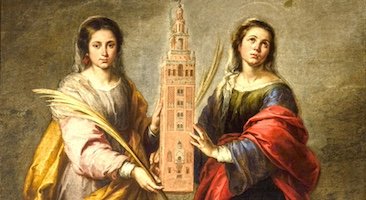
According to their "acts", these were sisters, daughters of Asterius, a man of senatorial rank in Rome. They were engaged to be married, the one to Armentarius, the other to Verinus, who were also Christians. But when the persecution of the Emperor Valerian fell upon the Church, these two men apostatized. The two girls refused to follow their example and fled secretly from Rome. Their flight being soon discovered, they were overtaken not far from the city and haled before the perfect, Junius Donatus. He imprisoned them with the object of making them apostatize, and when he found that they were unmoved either by arguments or threats, he ordered Rufina to be scourged; whereupon Secunda cried out, "Why do you judge my sister to honour and me to dishonour? Be pleased to beat us both together, for we declare that Christ is God." After they both had been tortured in divers ways, they were put to death by beheading. A pagan lady named Plautilla gave their bodies burial at a spot eleven miles from Rome on the Aurelian Way, and herself became a Christian from their example. The place where they lay was at that time called Silva Nigra, the Black Forest, but from these martyrs that name was changed to Silva Candida, the White Forest. A church was built over their tomb and a town grew up around it, which also was called Silva Candida, or Santa Rufina; it was made an episcopal see and became appurtenant to the cardinalate in after years. The relics of the martyrs were translated in 1154 to the Lateran basilica, near the baptistery of Constantine. The church dedicated in honour of SS. Rufina and Secunda in the City purports to be built over the site of their dwelling-house. Except their existence, their martyrdom and their early cultus nothing is certainly known of these maidens.
Butler's Lives of The Saints, Herbert J. Thurston, S.J. and Donald Attwater
LAST-MODIFIED:20240706T180657Z SEQUENCE:54593731 X-ACCESS:1 X-HITS:76 X-COLOR:f0b80e X-SHOW-END-TIME:1 END:VEVENT BEGIN:VEVENT DTSTART;VALUE=DATE:20240710 DTEND;VALUE=DATE:20240711 UID:DA1F1C46-51CD-402E-980E-6027DA216BB5 SUMMARY:St. Felicity & her seven sons CREATED:20221013T211126Z DTSTAMP:20221013T211126Z URL:https://www.stpaulsweymouth.org/component/dpcalendar/event/1759?calid=13 DESCRIPTION:St. Felicity and her seven sons, Martyrs\N\NSaint Felicity was a noble Roman matron, distinguished above all for her virtue. This mother of seven children raised her sons in the fear of the Lord, and after the death of her husband, served God in continence, concerning herself only with good works. Her good examples and those of her children brought a number of pagans to renounce their superstitions, and also encouraged the Christians to show themselves worthy of their vocation. The pagan priests, furious at seeing their gods abandoned, denounced her. She appeared with her pious sons before the prefect of Rome, who exhorted her to sacrifice to idols, but in reply heard a generous confession of faith.\NWretched woman, he said to her, how can you be so barbarous as to expose your children to torments and death? Have pity on these tender creatures, who are in the flower of their age and can aspire to the highest positions in the Empire! Felicity replied, My children will live eternally with Jesus Christ, if they are faithful; they will have only eternal torments to await, if they sacrifice to idols. Your apparent pity is but a cruel impiety. Then, turning to her children, she said: Look towards heaven, where Jesus Christ is waiting for you with His Saints! Be faithful in His love, and fight courageously for your souls.\NThe Judge, taking the children one by one, tried to overcome their constancy. He began with Januarius, but received for his answer: What you advise me to do is contrary to reason; Jesus, the Saviour, will preserve me, I hope, from such impiety. Felix, the second, was then brought in. When they urged him to sacrifice, he answered: There is only one God, and it is to Him that we must offer the sacrifice of our hearts. Use all artifices, every refinement of cruelty, you will not make us betray our faith! The other brothers, when questioned, answered with the same firmness. Martial, the youngest, who spoke last, said: All those who do not confess that Jesus Christ is the true God, will be cast into a fire which will never be extinguished.\NWhen the interrogation was finished, the Saints underwent the penalty of the lash and then were taken to prison. Soon they completed their sacrifice in various ways: Januarius was beaten until he died by leather straps capped with lead; Felix and Philip were killed with bludgeons; Sylvanus was thrown headfirst from a cliff; Alexander, Vitalis and Martial were beheaded. Felicity, the mother of these new Maccabees, was the last to suffer martyrdom.\NLives of the Saints for Every Day of the Year. (Reprint of the work of John Gilmary Shea, with Appendix including recently canonized Saints) (Benziger Brothers: New York, 1955. Third Edition: Tan Books and Publishers: Rockford, Ill., 1995); Little Pictorial Lives of the Saints, a compilation based on Butler's Lives of the Saints, and other sources by John Gilmary Shea (Benziger Brothers: New York, 1894). X-ALT-DESC;FMTTYPE=text/html:St. Felicity and her seven sons, Martyrs
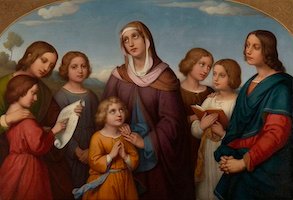
Saint Felicity was a noble Roman matron, distinguished above all for her virtue. This mother of seven children raised her sons in the fear of the Lord, and after the death of her husband, served God in continence, concerning herself only with good works. Her good examples and those of her children brought a number of pagans to renounce their superstitions, and also encouraged the Christians to show themselves worthy of their vocation. The pagan priests, furious at seeing their gods abandoned, denounced her. She appeared with her pious sons before the prefect of Rome, who exhorted her to sacrifice to idols, but in reply heard a generous confession of faith.
Wretched woman, he said to her, how can you be so barbarous as to expose your children to torments and death? Have pity on these tender creatures, who are in the flower of their age and can aspire to the highest positions in the Empire! Felicity replied, My children will live eternally with Jesus Christ, if they are faithful; they will have only eternal torments to await, if they sacrifice to idols. Your apparent pity is but a cruel impiety. Then, turning to her children, she said: Look towards heaven, where Jesus Christ is waiting for you with His Saints! Be faithful in His love, and fight courageously for your souls.
The Judge, taking the children one by one, tried to overcome their constancy. He began with Januarius, but received for his answer: What you advise me to do is contrary to reason; Jesus, the Saviour, will preserve me, I hope, from such impiety. Felix, the second, was then brought in. When they urged him to sacrifice, he answered: There is only one God, and it is to Him that we must offer the sacrifice of our hearts. Use all artifices, every refinement of cruelty, you will not make us betray our faith! The other brothers, when questioned, answered with the same firmness. Martial, the youngest, who spoke last, said: All those who do not confess that Jesus Christ is the true God, will be cast into a fire which will never be extinguished.
When the interrogation was finished, the Saints underwent the penalty of the lash and then were taken to prison. Soon they completed their sacrifice in various ways: Januarius was beaten until he died by leather straps capped with lead; Felix and Philip were killed with bludgeons; Sylvanus was thrown headfirst from a cliff; Alexander, Vitalis and Martial were beheaded. Felicity, the mother of these new Maccabees, was the last to suffer martyrdom.
Lives of the Saints for Every Day of the Year. (Reprint of the work of John Gilmary Shea, with Appendix including recently canonized Saints) (Benziger Brothers: New York, 1955. Third Edition: Tan Books and Publishers: Rockford, Ill., 1995); Little Pictorial Lives of the Saints, a compilation based on Butler's Lives of the Saints, and other sources by John Gilmary Shea (Benziger Brothers: New York, 1894).
LAST-MODIFIED:20240706T180223Z SEQUENCE:54593457 X-ACCESS:1 X-HITS:22 X-COLOR:f0b80e X-SHOW-END-TIME:1 END:VEVENT BEGIN:VEVENT DTSTART;VALUE=DATE:20240711 DTEND;VALUE=DATE:20240712 UID:817750D1-0C0C-4C4A-AD2F-8434A1B49D27 SUMMARY:St. Pius I CREATED:20221013T211126Z DTSTAMP:20221013T211126Z URL:https://www.stpaulsweymouth.org/component/dpcalendar/event/1763?calid=13 DESCRIPTION:St. Pius I Pope, Martyr\N\NSaint Pius I, born in the State of Venice, succeeded Saint Hygin in the year 142 as the ninth successor to Saint Peter, during the reign of the emperor Antoninus the Pious. Throughout his pontificate he took great care to make the religion of Christ flourish, and published many beautiful ordinances for the utility of the universal Church. In his decrees he was severe towards blasphemers and with the clergy who showed negligence for the divine Mysteries of the altar. Saint Pius ordained that Easter be celebrated on a Sunday; in this way the custom which the Apostles had already observed became an inviolable law of the Church.\NHis pontificate was marked by the efforts of various heretics in Rome, among them the gnostics Valentinian, Cerdon, and Marcion, to sow their errors in the Church's center. The last-named, when excluded from communion by Saint Pius, founded the heretical group which bears his name. Saint Justin and other Catholic teachers assisted the Pontiff in defending Christian doctrine and preserving it from corruption. After having governed the Church for fifteen years Saint Pius I obtained the crown of martyrdom by the sword, in the year of Our Lord 150.\NLes Petits Bollandistes: Vies des Saints, by Msgr. Paul Guérin (Bloud et Barral: Paris, 1882), Vol. 8 X-ALT-DESC;FMTTYPE=text/html:St. Pius I Pope, Martyr
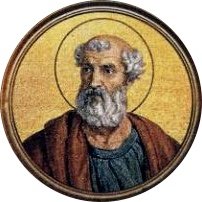
Saint Pius I, born in the State of Venice, succeeded Saint Hygin in the year 142 as the ninth successor to Saint Peter, during the reign of the emperor Antoninus the Pious. Throughout his pontificate he took great care to make the religion of Christ flourish, and published many beautiful ordinances for the utility of the universal Church. In his decrees he was severe towards blasphemers and with the clergy who showed negligence for the divine Mysteries of the altar. Saint Pius ordained that Easter be celebrated on a Sunday; in this way the custom which the Apostles had already observed became an inviolable law of the Church.
His pontificate was marked by the efforts of various heretics in Rome, among them the gnostics Valentinian, Cerdon, and Marcion, to sow their errors in the Church's center. The last-named, when excluded from communion by Saint Pius, founded the heretical group which bears his name. Saint Justin and other Catholic teachers assisted the Pontiff in defending Christian doctrine and preserving it from corruption. After having governed the Church for fifteen years Saint Pius I obtained the crown of martyrdom by the sword, in the year of Our Lord 150.
Les Petits Bollandistes: Vies des Saints, by Msgr. Paul Guérin (Bloud et Barral: Paris, 1882), Vol. 8
LAST-MODIFIED:20240706T180951Z SEQUENCE:54593905 X-ACCESS:1 X-HITS:85 X-COLOR:f0b80e X-SHOW-END-TIME:1 END:VEVENT BEGIN:VEVENT DTSTART;VALUE=DATE:20240712 DTEND;VALUE=DATE:20240713 UID:4EAF35F8-9628-4188-B412-68339BB34E7C SUMMARY:St. John Gualbert CREATED:20221013T211126Z DTSTAMP:20221013T211126Z URL:https://www.stpaulsweymouth.org/component/dpcalendar/event/1765?calid=13 DESCRIPTION:St. John Gualbert Abbot\N\NSaint John Gualbert was born in Florence in the year 999. He was raised with care in piety and the study of the humanities, but no sooner had he entered adult life than he acquired a taste for pleasures. God, desiring to save and sanctify him, found a means to open his eyes. He was following the profession of arms at that troubled period, when on Good Friday, as he was riding into Florence accompanied by armed men, he encountered his brother's murderer in a place where neither could avoid the other. John would have slain him, according to the customary vengeance of those times; but his adversary, who was totally unprepared to fight, fell upon his knees with his arms outstretched in the form of a cross, and implored him, for the sake of Our Lord's holy Passion, to spare his life. Saint John said to his enemy, I cannot refuse what you ask in Christ's name. I grant you not only your life, but my friendship. Pray that God may forgive me my sin! They embraced and parted; grace had triumphed.\NA humble and changed man, he went to a nearby abbatial church, and while he prayed with fervor for forgiveness, the figure of our crucified Lord, before which he was kneeling, bowed its head toward him, as if to confirm His pardon and manifest His gratitude for the generous pardon John himself had granted. Abandoning the world then, Saint John devoted himself to prayer and penance in the Benedictine Order. His virtue and austerity were so great that when his abbot died, he was unanimously chosen to replace him; but he could not be prevailed upon to accept that honor. He retired to Vallombrosa, which became the cradle of a new Order which followed the Rule of Saint Benedict in all its austerity. It was from this shady valley, a few miles from Florence, that the Order spread over Italy.\NOnce during a time of famine, he went to the nearly empty storeroom, and at his prayer the provisions multiplied to the point that he could distribute grain to all his houses and to all the poor who presented themselves. On an occasion when he found one of the monasteries too rich, he prayed a stream flowing past it to take on the violence of a torrent and overturn the building. This was done without delay. Another time, the enemies of the Saint came to his convent of Saint Salvi, plundered it and set fire to it and, after treating the monks with ignominy, beat them and injured them. Saint John rejoiced. Now, he said, you are true monks. Oh, how I envy your lot!\NSaint John Gualbert fought vigorously against simony, and in many ways promoted the interests of the Faith in Italy. After a life of great austerity, he died while Angels were singing near his bed, on July 12, 1073.\NReflection: The heroic act which merited for Saint John Gualbert his conversion was the forgiveness of his enemy. Let us imitate him in this virtue, resolving never to revenge ourselves in thought, in word, or in deed.\NVie des Saints pour tous les jours de l'année, by Abbé L. Jaud (Mame: Tours, 1950); Little Pictorial Lives of the Saints, a compilation based on Butler's Lives of the Saints, and other sources by John Gilmary Shea (Benziger Brothers: New York, 1894). X-ALT-DESC;FMTTYPE=text/html:St. John Gualbert Abbot
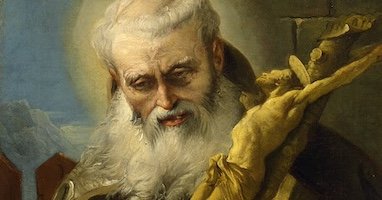
Saint John Gualbert was born in Florence in the year 999. He was raised with care in piety and the study of the humanities, but no sooner had he entered adult life than he acquired a taste for pleasures. God, desiring to save and sanctify him, found a means to open his eyes. He was following the profession of arms at that troubled period, when on Good Friday, as he was riding into Florence accompanied by armed men, he encountered his brother's murderer in a place where neither could avoid the other. John would have slain him, according to the customary vengeance of those times; but his adversary, who was totally unprepared to fight, fell upon his knees with his arms outstretched in the form of a cross, and implored him, for the sake of Our Lord's holy Passion, to spare his life. Saint John said to his enemy, I cannot refuse what you ask in Christ's name. I grant you not only your life, but my friendship. Pray that God may forgive me my sin! They embraced and parted; grace had triumphed.
A humble and changed man, he went to a nearby abbatial church, and while he prayed with fervor for forgiveness, the figure of our crucified Lord, before which he was kneeling, bowed its head toward him, as if to confirm His pardon and manifest His gratitude for the generous pardon John himself had granted. Abandoning the world then, Saint John devoted himself to prayer and penance in the Benedictine Order. His virtue and austerity were so great that when his abbot died, he was unanimously chosen to replace him; but he could not be prevailed upon to accept that honor. He retired to Vallombrosa, which became the cradle of a new Order which followed the Rule of Saint Benedict in all its austerity. It was from this shady valley, a few miles from Florence, that the Order spread over Italy.
Once during a time of famine, he went to the nearly empty storeroom, and at his prayer the provisions multiplied to the point that he could distribute grain to all his houses and to all the poor who presented themselves. On an occasion when he found one of the monasteries too rich, he prayed a stream flowing past it to take on the violence of a torrent and overturn the building. This was done without delay. Another time, the enemies of the Saint came to his convent of Saint Salvi, plundered it and set fire to it and, after treating the monks with ignominy, beat them and injured them. Saint John rejoiced. Now, he said, you are true monks. Oh, how I envy your lot!
Saint John Gualbert fought vigorously against simony, and in many ways promoted the interests of the Faith in Italy. After a life of great austerity, he died while Angels were singing near his bed, on July 12, 1073.
Reflection: The heroic act which merited for Saint John Gualbert his conversion was the forgiveness of his enemy. Let us imitate him in this virtue, resolving never to revenge ourselves in thought, in word, or in deed.
Vie des Saints pour tous les jours de l'année, by Abbé L. Jaud (Mame: Tours, 1950); Little Pictorial Lives of the Saints, a compilation based on Butler's Lives of the Saints, and other sources by John Gilmary Shea (Benziger Brothers: New York, 1894).
LAST-MODIFIED:20240706T181250Z SEQUENCE:54594084 X-ACCESS:1 X-HITS:169 X-COLOR:f0b80e X-SHOW-END-TIME:1 END:VEVENT BEGIN:VEVENT DTSTART;VALUE=DATE:20240712 DTEND;VALUE=DATE:20240713 UID:5F4F4C37-9B10-4A3C-BFE6-D7B3E15A5E1F SUMMARY:Sts. Nabor & Felix CREATED:20221013T211126Z DTSTAMP:20221013T211126Z URL:https://www.stpaulsweymouth.org/component/dpcalendar/event/1767?calid=13 DESCRIPTION:Sts. Nabor & Felix, Martyrs\N\NSaints Nabor and Felix (†303) were two Berber soldiers who embraced the Christian faith after their arrival in Italy and suffered martyrdom under Diocletian. Saint Ambrose (340-397) extolled their virtues in the hymn Victor, Nabor, Felix pii, also dedicated to Saint Victor, their comrade-in-arms commemorated on 8 May. Other information on the two martyrs celebrated today can be found in a Passio dating to after the time of the holy bishop of Milan.\NNabor and Felix, like Victor, also came from the Roman province of Mauretania (not to be confused with the present state of Mauritania), in North Africa. Their conversion to Christianity had taken place in Milan, where Maximian, the Western Augustus and a friend of Diocletian, had established his capital. The two emperors, at the beginning of the Great Persecution (303-305), commanded the purge of the army. Then Nabor, Felix and Victor - not wanting to deny the true God they had recently discovered and by whom they had been intimately renewed - deserted. All three were captured and sentenced to beheading.\NNabor and Felix were executed at Laus Pompeia, today's Lodi Vecchio,where there was a large Christian community. Their bodies were recovered by Saint Savina, who then secretly moved them to Milan. Here Saint Maternus provided to bury them with dignity. When the persecutions ended and the beautiful early Christian basilicas began to be built, the relics of the two martyrs were placed inside the basilica called “Naboriana”. In front of the gates of this church, thanks to an excavation ordered by Saint Ambrose, on 17June 386 the bodies of Saints Gervasius and Protasius were found and were moved the next day to the Basilica Martyrum (today the Basilica of Saint Ambrose). X-ALT-DESC;FMTTYPE=text/html:Sts. Nabor & Felix, Martyrs
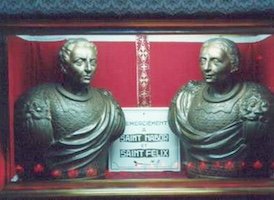
Saints Nabor and Felix (†303) were two Berber soldiers who embraced the Christian faith after their arrival in Italy and suffered martyrdom under Diocletian. Saint Ambrose (340-397) extolled their virtues in the hymn Victor, Nabor, Felix pii, also dedicated to Saint Victor, their comrade-in-arms commemorated on 8 May. Other information on the two martyrs celebrated today can be found in a Passio dating to after the time of the holy bishop of Milan.
Nabor and Felix, like Victor, also came from the Roman province of Mauretania (not to be confused with the present state of Mauritania), in North Africa. Their conversion to Christianity had taken place in Milan, where Maximian, the Western Augustus and a friend of Diocletian, had established his capital. The two emperors, at the beginning of the Great Persecution (303-305), commanded the purge of the army. Then Nabor, Felix and Victor - not wanting to deny the true God they had recently discovered and by whom they had been intimately renewed - deserted. All three were captured and sentenced to beheading.
Nabor and Felix were executed at Laus Pompeia, today's Lodi Vecchio,where there was a large Christian community. Their bodies were recovered by Saint Savina, who then secretly moved them to Milan. Here Saint Maternus provided to bury them with dignity. When the persecutions ended and the beautiful early Christian basilicas began to be built, the relics of the two martyrs were placed inside the basilica called “Naboriana”. In front of the gates of this church, thanks to an excavation ordered by Saint Ambrose, on 17June 386 the bodies of Saints Gervasius and Protasius were found and were moved the next day to the Basilica Martyrum (today the Basilica of Saint Ambrose).
LAST-MODIFIED:20240706T181656Z SEQUENCE:54594330 X-ACCESS:1 X-HITS:265 X-COLOR:f0b80e X-SHOW-END-TIME:1 END:VEVENT BEGIN:VEVENT DTSTART;VALUE=DATE:20240714 DTEND;VALUE=DATE:20240715 UID:C462D5DF-EDF1-4A17-AF0B-68CCF7933393 SUMMARY:St. Bonaventure CREATED:20221013T211126Z DTSTAMP:20221013T211126Z URL:https://www.stpaulsweymouth.org/component/dpcalendar/event/1769?calid=13 DESCRIPTION:St. Bonaventure Bishop, Confessor and Doctor of the Church\N\NBorn in Tuscany in 1225, this frail child was given the name of John at his baptism. He soon fell so ill that his cure was despaired of, and his sorrowing mother had recourse to Saint Francis, recognized everywhere in Italy as a Saint. She promised God she would endeavor to have the child take the habit of the Franciscan Order, if he were cured. Her prayer was granted, the child was cured, and Saint Francis himself gave him his new name. In reference to the miraculous cure, he prophetically exclaimed of the infant, O buona ventura!— O good fortune! Saint Francis died a few months later, not without foreseeing the future of this little one, destined to be a seraph of love like himself. Saint Bonaventure is titled the Seraphic Doctor, from the fervor of divine love which breathes in his writings.\NSanctity and learning raised Bonaventure to the Church's highest honors, yet at heart he was ever the poor Franciscan friar, who practiced and taught humility and mortification. He was the friend of Saint Thomas Aquinas; they received the Doctor's cap together in Paris. Saint Thomas asked him one day from what source he drew his great learning; he replied by pointing to his crucifix. Another time Saint Thomas found him in ecstasy while writing the life of Saint Francis. The Angelic Doctor said, while retiring quietly, Let us leave a Saint in peace, to write of a Saint!\NAt the age of thirty-six Saint Bonaventure was made General of his Order. In 1265 he only escaped another dignity, the Archbishopric of York, by dint of tears and entreaties to the Holy Father Clement IV. When he learned of Pope Gregory X's resolve to create him a Cardinal, he quietly made his escape from Italy, and in France began to compose a book. But Gregory sent him a summons to return to Rome. On his way, he stopped to rest at a convent of his Order near Florence; and there two Papal messengers, sent to meet him with the Cardinal's hat, found him washing the dishes. The Saint asked them to hang the hat on a nearby bush, and take a walk in the garden until he had finished what he had begun. Then taking up the hat with unfeigned sorrow, he joined the messengers, and paid them the respect due to their character.\NHe was the guest and adviser of Saint Louis, and the director of Saint Isabella, the king's sister. He sat at the right hand of Pope Gregory X and presided all sessions at the Council of Lyons, assembled to provide for the reform of morals and the needs of the Holy Land, and to cement the union of the Greeks with the Roman Church. The piety and eloquence of Saint Bonaventure won over the Greeks to Catholic union, but his strength failed suddenly, the day after its closure. He died on the 15th of July, 1274, and was buried by the assembly of the Council members, still in Lyons; he was mourned by the entire Christian world.\NReflection: Saint Bonaventure prescribed humility to his brothers in these terms: Let Ministers always receive the religious with gentleness and charity, so that each one can approach them and express his sentiments... The Ministers must be the servants of all the Brothers. This is the mandate of Christ: Let the one who would be first among you be your slave.\NLes Petits Bollandistes: Vies des Saints, by Msgr. Paul Guérin (Bloud et Barral: Paris, 1882), Vol. 8; Little Pictorial Lives of the Saints, a compilation based on Butler's Lives of the Saints, and other sources by John Gilmary Shea (Benziger Brothers: New York, 1894). X-ALT-DESC;FMTTYPE=text/html:St. Bonaventure Bishop, Confessor and Doctor of the Church
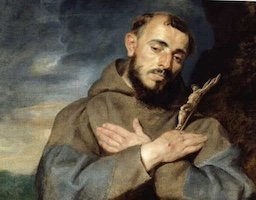
Born in Tuscany in 1225, this frail child was given the name of John at his baptism. He soon fell so ill that his cure was despaired of, and his sorrowing mother had recourse to Saint Francis, recognized everywhere in Italy as a Saint. She promised God she would endeavor to have the child take the habit of the Franciscan Order, if he were cured. Her prayer was granted, the child was cured, and Saint Francis himself gave him his new name. In reference to the miraculous cure, he prophetically exclaimed of the infant, O buona ventura!— O good fortune! Saint Francis died a few months later, not without foreseeing the future of this little one, destined to be a seraph of love like himself. Saint Bonaventure is titled the Seraphic Doctor, from the fervor of divine love which breathes in his writings.
Sanctity and learning raised Bonaventure to the Church's highest honors, yet at heart he was ever the poor Franciscan friar, who practiced and taught humility and mortification. He was the friend of Saint Thomas Aquinas; they received the Doctor's cap together in Paris. Saint Thomas asked him one day from what source he drew his great learning; he replied by pointing to his crucifix. Another time Saint Thomas found him in ecstasy while writing the life of Saint Francis. The Angelic Doctor said, while retiring quietly, Let us leave a Saint in peace, to write of a Saint!
At the age of thirty-six Saint Bonaventure was made General of his Order. In 1265 he only escaped another dignity, the Archbishopric of York, by dint of tears and entreaties to the Holy Father Clement IV. When he learned of Pope Gregory X's resolve to create him a Cardinal, he quietly made his escape from Italy, and in France began to compose a book. But Gregory sent him a summons to return to Rome. On his way, he stopped to rest at a convent of his Order near Florence; and there two Papal messengers, sent to meet him with the Cardinal's hat, found him washing the dishes. The Saint asked them to hang the hat on a nearby bush, and take a walk in the garden until he had finished what he had begun. Then taking up the hat with unfeigned sorrow, he joined the messengers, and paid them the respect due to their character.
He was the guest and adviser of Saint Louis, and the director of Saint Isabella, the king's sister. He sat at the right hand of Pope Gregory X and presided all sessions at the Council of Lyons, assembled to provide for the reform of morals and the needs of the Holy Land, and to cement the union of the Greeks with the Roman Church. The piety and eloquence of Saint Bonaventure won over the Greeks to Catholic union, but his strength failed suddenly, the day after its closure. He died on the 15th of July, 1274, and was buried by the assembly of the Council members, still in Lyons; he was mourned by the entire Christian world.
Reflection: Saint Bonaventure prescribed humility to his brothers in these terms: Let Ministers always receive the religious with gentleness and charity, so that each one can approach them and express his sentiments... The Ministers must be the servants of all the Brothers. This is the mandate of Christ: Let the one who would be first among you be your slave.
Les Petits Bollandistes: Vies des Saints, by Msgr. Paul Guérin (Bloud et Barral: Paris, 1882), Vol. 8; Little Pictorial Lives of the Saints, a compilation based on Butler's Lives of the Saints, and other sources by John Gilmary Shea (Benziger Brothers: New York, 1894).
LAST-MODIFIED:20240713T202108Z SEQUENCE:55206582 X-ACCESS:1 X-HITS:118 X-COLOR:f0b80e X-SHOW-END-TIME:1 END:VEVENT BEGIN:VEVENT DTSTART;VALUE=DATE:20240715 DTEND;VALUE=DATE:20240716 UID:A0D5BAE0-EB7F-485B-A37E-5FF7D2A9EE6A SUMMARY:St. Henry CREATED:20221013T211126Z DTSTAMP:20221013T211126Z URL:https://www.stpaulsweymouth.org/component/dpcalendar/event/1771?calid=13 DESCRIPTION:St. Henry II Emperor, Confessor\N\NHenry the Pious or the Lame, Duke of Bavaria, was born in 972, and bore his father's name. Saint Wolfgang, bishop of Ratisbonne, baptized him and afterward raised him in the practices of virtue fitting for a great sovereign. His father died when his son was 23 years old, and Saint Henry assumed the paternal title of Duke of Bavaria. It was at this time that he married Cunegundes, the holy spouse whom God gave him, and who like himself is today a canonized Saint. They observed perfect chastity all their lives, and rivaled one another in their zeal and love for their subjects.\NOne night Saint Henry had a dream and saw his very dear deceased master, Saint Wolfgang, who told him to read the words written on a wall: After six. He supposed this meant he would die in six months, and then, after that did not occur, in six years, and he prepared himself for that eventuality by giving generous alms and initiating other good works. At the end of the sixth year, he found the prediction verified in an unexpected way, by his election as emperor and king of Germany on the first day of the year 1002. It was an archbishop who consecrated him emperor on July 8th of that same year. Trained in the fear of God, he ascended the throne with only one thought — that of reigning for God's greater glory. By his happy combination of Christian, royal and military virtues, he proved that a good king is a true gift of heaven. He prayed often, meditated the law of God constantly, and to be armed against pride practiced humility in all circumstances, and never let himself be fascinated by human glory.\NThe pagan Slavs were then despoiling the empire. He provided for the reparation of the episcopal churches of six dioceses, which had been almost entirely destroyed by the invaders. Menaced by an army of one of these, he prayed to the patron of the ruined church of Merseburg, saying, Great Saint Lawrence, illustrious martyr of Jesus Christ, if by your assistance I can submit these barbaric nations to the Christian religion, I will with the help of God re-establish in its original dignity, this church consecrated to your honor. He prayed again before the battle, invoking three martyrs, and then attacked the invaders with a small force; but an Angel and the three holy martyrs were seen leading his troops, and the heathen simply fled in despair. Poland and Bohemia, Moravia and Burgundy, were in turn annexed to his kingdom, and Pannonia and Hungary won for the Church.\NWhen the Faith was secure in Germany, Henry passed into Italy, drove out an antipope and brought Benedict VIII back to Rome. He was crowned in Saint Peter's Basilica by that Pontiff, in 1014. It was Henry's custom, on arriving in any town, to spend his first night in prayer, in some church dedicated to our Blessed Lady. As he was praying in Saint Mary Major's, during the first night of his arrival in Rome, he saw the Sovereign and Eternal Priest-Child Jesus enter to say Mass. Saints Lawrence and Vincent assisted, as deacon and sub-deacon. Countless Saints filled the church, and Angels sang in the choir. After the Gospel, an Angel was sent by Our Lady to give Henry the sacred book to kiss. Touching him lightly on the thigh, he said, Accept this sign of God's love for your chastity and your justice, and from that time on, the emperor always limped.\NSaint Henry employed the fruits of his conquests in the service of the temple, imitating in this the royal prophet-king. The forests and mines of the empire, all the best resources which his treasury could provide, were consecrated to the sanctuary. Stately cathedrals, noble monasteries, innumerable churches enlightened and sanctified the once heathen lands. In 1024 Henry lay on his deathbed; he then gave back to her parents his wife, Saint Cunegundes, a virgin still, as a virgin he had received her from Christ, and at the age of 52 years surrendered his own pure soul to God.\NLes Petits Bollandistes: Vies des Saints, by Msgr. Paul Guérin (Bloud et Barral: Paris, 1882), Vol. 8; Little Pictorial Lives of the Saints, a compilation based on Butler's Lives of the Saints, and other sources by John Gilmary Shea (Benziger Brothers: New York, 1894). X-ALT-DESC;FMTTYPE=text/html:St. Henry II Emperor, Confessor
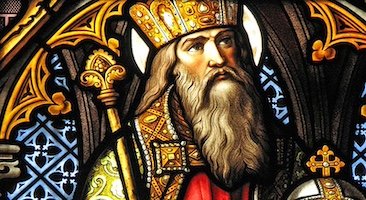
Henry the Pious or the Lame, Duke of Bavaria, was born in 972, and bore his father's name. Saint Wolfgang, bishop of Ratisbonne, baptized him and afterward raised him in the practices of virtue fitting for a great sovereign. His father died when his son was 23 years old, and Saint Henry assumed the paternal title of Duke of Bavaria. It was at this time that he married Cunegundes, the holy spouse whom God gave him, and who like himself is today a canonized Saint. They observed perfect chastity all their lives, and rivaled one another in their zeal and love for their subjects.
One night Saint Henry had a dream and saw his very dear deceased master, Saint Wolfgang, who told him to read the words written on a wall: After six. He supposed this meant he would die in six months, and then, after that did not occur, in six years, and he prepared himself for that eventuality by giving generous alms and initiating other good works. At the end of the sixth year, he found the prediction verified in an unexpected way, by his election as emperor and king of Germany on the first day of the year 1002. It was an archbishop who consecrated him emperor on July 8th of that same year. Trained in the fear of God, he ascended the throne with only one thought — that of reigning for God's greater glory. By his happy combination of Christian, royal and military virtues, he proved that a good king is a true gift of heaven. He prayed often, meditated the law of God constantly, and to be armed against pride practiced humility in all circumstances, and never let himself be fascinated by human glory.
The pagan Slavs were then despoiling the empire. He provided for the reparation of the episcopal churches of six dioceses, which had been almost entirely destroyed by the invaders. Menaced by an army of one of these, he prayed to the patron of the ruined church of Merseburg, saying, Great Saint Lawrence, illustrious martyr of Jesus Christ, if by your assistance I can submit these barbaric nations to the Christian religion, I will with the help of God re-establish in its original dignity, this church consecrated to your honor. He prayed again before the battle, invoking three martyrs, and then attacked the invaders with a small force; but an Angel and the three holy martyrs were seen leading his troops, and the heathen simply fled in despair. Poland and Bohemia, Moravia and Burgundy, were in turn annexed to his kingdom, and Pannonia and Hungary won for the Church.
When the Faith was secure in Germany, Henry passed into Italy, drove out an antipope and brought Benedict VIII back to Rome. He was crowned in Saint Peter's Basilica by that Pontiff, in 1014. It was Henry's custom, on arriving in any town, to spend his first night in prayer, in some church dedicated to our Blessed Lady. As he was praying in Saint Mary Major's, during the first night of his arrival in Rome, he saw the Sovereign and Eternal Priest-Child Jesus enter to say Mass. Saints Lawrence and Vincent assisted, as deacon and sub-deacon. Countless Saints filled the church, and Angels sang in the choir. After the Gospel, an Angel was sent by Our Lady to give Henry the sacred book to kiss. Touching him lightly on the thigh, he said, Accept this sign of God's love for your chastity and your justice, and from that time on, the emperor always limped.
Saint Henry employed the fruits of his conquests in the service of the temple, imitating in this the royal prophet-king. The forests and mines of the empire, all the best resources which his treasury could provide, were consecrated to the sanctuary. Stately cathedrals, noble monasteries, innumerable churches enlightened and sanctified the once heathen lands. In 1024 Henry lay on his deathbed; he then gave back to her parents his wife, Saint Cunegundes, a virgin still, as a virgin he had received her from Christ, and at the age of 52 years surrendered his own pure soul to God.
Les Petits Bollandistes: Vies des Saints, by Msgr. Paul Guérin (Bloud et Barral: Paris, 1882), Vol. 8; Little Pictorial Lives of the Saints, a compilation based on Butler's Lives of the Saints, and other sources by John Gilmary Shea (Benziger Brothers: New York, 1894).
LAST-MODIFIED:20240713T202401Z SEQUENCE:55206755 X-ACCESS:1 X-HITS:224 X-COLOR:f0b80e X-SHOW-END-TIME:1 END:VEVENT BEGIN:VEVENT DTSTART;VALUE=DATE:20240716 DTEND;VALUE=DATE:20240717 UID:CEA6BE14-DCCF-4738-BB83-4BA772BF6B30 SUMMARY:Our Blessed Lady of Mount Carmel CREATED:20221013T211126Z DTSTAMP:20221013T211126Z URL:https://www.stpaulsweymouth.org/component/dpcalendar/event/1773?calid=13 DESCRIPTION:Our Blessed Lady of Mount Carmel\N\NAccording to the most ancient Carmelite chronicles, the Order has its origins with the disciples of the prophets Elias and Eliseus. They lived in caves on Mount Carmel. They honored the Queen of Heaven as the Virgin who is to give birth to the Saviour. When the reality replaced the symbol, the pious ascetics of Carmel were converted to the Christian Faith. In the 12thcentury, many pilgrims from Europe who had followed the Crusaders came to join the solitaries. A rule was established and the Order began to spread to Europe.\NAmid the many persecutions raised against the Order of Mount Carmel, newly arrived in Europe, Saint Simon Stock, General of the Order, turned with filial confidence to the Blessed Mother of God. As he knelt in prayer on July 16, 1251, in the White Friars' convent at Cambridge, She appeared before him and presented him with the well-known brown scapular, a loose sleeveless garment destined for the Order of Carmel, reaching from the shoulders to the knees. It was given as an assurance, for all who died wearing it, of Her heavenly protection from eternal death. An extraordinary promise indeed, but one requiring a life of prayer and sacrifice.\NDevotion to the blessed habit spread quickly throughout the Christian world. Pope after Pope enriched it with indulgences, and innumerable miracles put their seal upon its efficacy. The first of them was worked at Winchester on a man dying in despair, who when the scapular was laid upon him by Saint Simon Stock at once asked for the Sacraments.\NIn the year 1636, a certain gentleman, member of a cavalry regiment, was mortally wounded at the battle of Tehin, a bullet having lodged near his heart. He was then in a state of grievous sin, but he had time to make his confession. Afterwards a surgeon probed his wound, and the bullet was found to have driven his scapular into his heart. When it had been withdrawn he soon expired, making profound acts of gratitude to the Blessed Virgin who had prolonged his life miraculously, thereby preserving him from the irremediable death of his soul.\NAt Lourdes in 1858, the Virgin chose to make Her last apparition on July 16th, feast of Our Lady of Mount Carmel, the day the Church commemorates Her apparition to Saint Simon Stock. And at Fatima on October 13, 1917, it is as Our Lady of Mount Carmel that Mary appeared when She said farewell to the three children. Throughout the ages, the Queen of Carmel has always kept a faithful watch over the destinies of Her cherished children on earth.\NLes Petits Bollandistes: Vies des Saints, by Msgr. Paul Guérin (Bloud et Barral: Paris, 1882), Vol. 8 X-ALT-DESC;FMTTYPE=text/html:Our Blessed Lady of Mount Carmel
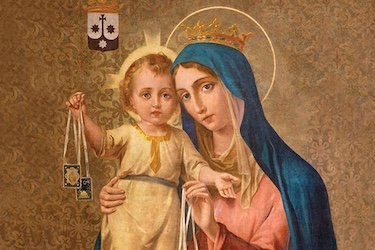
According to the most ancient Carmelite chronicles, the Order has its origins with the disciples of the prophets Elias and Eliseus. They lived in caves on Mount Carmel. They honored the Queen of Heaven as the Virgin who is to give birth to the Saviour. When the reality replaced the symbol, the pious ascetics of Carmel were converted to the Christian Faith. In the 12thcentury, many pilgrims from Europe who had followed the Crusaders came to join the solitaries. A rule was established and the Order began to spread to Europe.
Amid the many persecutions raised against the Order of Mount Carmel, newly arrived in Europe, Saint Simon Stock, General of the Order, turned with filial confidence to the Blessed Mother of God. As he knelt in prayer on July 16, 1251, in the White Friars' convent at Cambridge, She appeared before him and presented him with the well-known brown scapular, a loose sleeveless garment destined for the Order of Carmel, reaching from the shoulders to the knees. It was given as an assurance, for all who died wearing it, of Her heavenly protection from eternal death. An extraordinary promise indeed, but one requiring a life of prayer and sacrifice.
Devotion to the blessed habit spread quickly throughout the Christian world. Pope after Pope enriched it with indulgences, and innumerable miracles put their seal upon its efficacy. The first of them was worked at Winchester on a man dying in despair, who when the scapular was laid upon him by Saint Simon Stock at once asked for the Sacraments.
In the year 1636, a certain gentleman, member of a cavalry regiment, was mortally wounded at the battle of Tehin, a bullet having lodged near his heart. He was then in a state of grievous sin, but he had time to make his confession. Afterwards a surgeon probed his wound, and the bullet was found to have driven his scapular into his heart. When it had been withdrawn he soon expired, making profound acts of gratitude to the Blessed Virgin who had prolonged his life miraculously, thereby preserving him from the irremediable death of his soul.
At Lourdes in 1858, the Virgin chose to make Her last apparition on July 16th, feast of Our Lady of Mount Carmel, the day the Church commemorates Her apparition to Saint Simon Stock. And at Fatima on October 13, 1917, it is as Our Lady of Mount Carmel that Mary appeared when She said farewell to the three children. Throughout the ages, the Queen of Carmel has always kept a faithful watch over the destinies of Her cherished children on earth.
Les Petits Bollandistes: Vies des Saints, by Msgr. Paul Guérin (Bloud et Barral: Paris, 1882), Vol. 8
LAST-MODIFIED:20240713T202607Z SEQUENCE:55206881 X-ACCESS:1 X-HITS:53 X-COLOR:f0b80e X-SHOW-END-TIME:1 END:VEVENT BEGIN:VEVENT DTSTART;VALUE=DATE:20240717 DTEND;VALUE=DATE:20240718 UID:D342A8A2-0A33-4AB4-9812-242F9B6856E7 SUMMARY:St. Alexis CREATED:20221013T211126Z DTSTAMP:20221013T211126Z URL:https://www.stpaulsweymouth.org/component/dpcalendar/event/1775?calid=13 DESCRIPTION:St. Alexis, Confessor\N\NSaint Alexius (or Alexis), born in Rome in the fourth century, was the only son of parents pre-eminent among the Roman nobles for both their virtue and their great wealth. They were particularly noted for their almsgiving; three tables were prepared every day for all who came for assistance — pilgrims, the poor and the sick. Their son, fruit of their prayers, was married with splendid feasting to a noble young lady of the imperial family, but on his wedding night, by God's special inspiration, he secretly left Rome, longing for a solitude where he could serve God alone. He went to Edessa in the far East, gave away all that he had brought with him, content thereafter to live by alms at the gate of Our Lady's church in that city. His family, in the deepest grief, could not fathom the mystery of his disappearance, and would have been consoled if God had taken him instead through death.\NIt came to pass that the servants of Saint Alexius, whom his father had sent in search of him, arrived in Edessa, and seeing him among the poor at the gate of Our Lady's church, gave him an alms, not recognizing him. Whereupon the man of God, rejoicing, said, I thank You, Lord, who have called me and granted that I should receive for Your Name's name's sake an alms from my own slaves. Deign to fulfill in me the work You have begun.\NAfter seventeen years spent at the portico of the church, when his sanctity was miraculously confirmed by the Blessed Virgin, speaking through Her image to an officer of the church, Saint Alexius once more sought obscurity by flight. On his way to Tarsus contrary winds drove his ship to Rome. There no one recognized, in this pale and tattered mendicant, the heir of Rome's noblest house, not even his sorrowing parents, who had vainly sent throughout the world in search of him. From his own father's charity Saint Alexius begged a miserable shelter in his palace, under a staircase, with the leavings of his table as food. There he spent another seventeen years, bearing patiently the mockery and ill usage of his own servants, and witnessing daily the still inconsolable grief of his spouse and parents.\NAt last, when death had ended this cruel martyrdom, they learned too late, in the year 404, who it was that they had unknowingly sheltered. A voice was heard by all in attendance at the Pope's Mass, saying: Seek the man of God, he will pray for Rome, and the Lord will be favorable to it; he will die Friday. All the city undertook in vain to find this unknown Saint. But God had commanded Alexius himself to write down his life story and sign it, in this way He Himself confirmed His servant's sanctity, when he was found lifeless in his retreat, holding that document in his hand. The Pope read aloud what was written on the parchment of the Saint, and everywhere in Rome there was a single cry of admiration, impossible to describe. The house of Alexius' father Euphemian was later transformed into a church dedicated to Saint Alexius.\NReflection: We must always be ready to sacrifice our dearest and best natural affections in obedience to the call of our heavenly Father. Call none your father upon earth, for one is your Father in heaven. (Matt. 23:9) Our Lord has taught us this not by words only, but by His own example and that of His Saints.\NLittle Pictorial Lives of the Saints, a compilation based on Butler's Lives of the Saints, and other sources by John Gilmary Shea (Benziger Brothers: New York, 1894); Les Petits Bollandistes: Vies des Saints, by Msgr. Paul Guérin (Bloud et Barral: Paris, 1882), Vol. 8 X-ALT-DESC;FMTTYPE=text/html:St. Alexis, Confessor
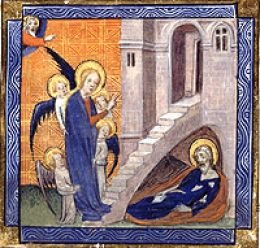
Saint Alexius (or Alexis), born in Rome in the fourth century, was the only son of parents pre-eminent among the Roman nobles for both their virtue and their great wealth. They were particularly noted for their almsgiving; three tables were prepared every day for all who came for assistance — pilgrims, the poor and the sick. Their son, fruit of their prayers, was married with splendid feasting to a noble young lady of the imperial family, but on his wedding night, by God's special inspiration, he secretly left Rome, longing for a solitude where he could serve God alone. He went to Edessa in the far East, gave away all that he had brought with him, content thereafter to live by alms at the gate of Our Lady's church in that city. His family, in the deepest grief, could not fathom the mystery of his disappearance, and would have been consoled if God had taken him instead through death.
It came to pass that the servants of Saint Alexius, whom his father had sent in search of him, arrived in Edessa, and seeing him among the poor at the gate of Our Lady's church, gave him an alms, not recognizing him. Whereupon the man of God, rejoicing, said, I thank You, Lord, who have called me and granted that I should receive for Your Name's name's sake an alms from my own slaves. Deign to fulfill in me the work You have begun.
After seventeen years spent at the portico of the church, when his sanctity was miraculously confirmed by the Blessed Virgin, speaking through Her image to an officer of the church, Saint Alexius once more sought obscurity by flight. On his way to Tarsus contrary winds drove his ship to Rome. There no one recognized, in this pale and tattered mendicant, the heir of Rome's noblest house, not even his sorrowing parents, who had vainly sent throughout the world in search of him. From his own father's charity Saint Alexius begged a miserable shelter in his palace, under a staircase, with the leavings of his table as food. There he spent another seventeen years, bearing patiently the mockery and ill usage of his own servants, and witnessing daily the still inconsolable grief of his spouse and parents.
At last, when death had ended this cruel martyrdom, they learned too late, in the year 404, who it was that they had unknowingly sheltered. A voice was heard by all in attendance at the Pope's Mass, saying: Seek the man of God, he will pray for Rome, and the Lord will be favorable to it; he will die Friday. All the city undertook in vain to find this unknown Saint. But God had commanded Alexius himself to write down his life story and sign it, in this way He Himself confirmed His servant's sanctity, when he was found lifeless in his retreat, holding that document in his hand. The Pope read aloud what was written on the parchment of the Saint, and everywhere in Rome there was a single cry of admiration, impossible to describe. The house of Alexius' father Euphemian was later transformed into a church dedicated to Saint Alexius.
Reflection: We must always be ready to sacrifice our dearest and best natural affections in obedience to the call of our heavenly Father. Call none your father upon earth, for one is your Father in heaven. (Matt. 23:9) Our Lord has taught us this not by words only, but by His own example and that of His Saints.
Little Pictorial Lives of the Saints, a compilation based on Butler's Lives of the Saints, and other sources by John Gilmary Shea (Benziger Brothers: New York, 1894); Les Petits Bollandistes: Vies des Saints, by Msgr. Paul Guérin (Bloud et Barral: Paris, 1882), Vol. 8
LAST-MODIFIED:20240713T202907Z SEQUENCE:55207061 X-ACCESS:1 X-HITS:156 X-COLOR:f0b80e X-SHOW-END-TIME:1 END:VEVENT BEGIN:VEVENT DTSTART;VALUE=DATE:20240718 DTEND;VALUE=DATE:20240719 UID:CFFD8AC2-807A-4B4A-A362-4BFFCDEC5FAF SUMMARY:St. Camille CREATED:20221013T211126Z DTSTAMP:20221013T211126Z URL:https://www.stpaulsweymouth.org/component/dpcalendar/event/1777?calid=13 DESCRIPTION:St. Camille of Lellis, Confessor\N\NSaint Camillus was born in the kingdom of Naples in the year 1549. His early years gave no indication of his future sanctity. At the age of nineteen he entered into military service with his father, an Italian noble, against the Turks. After four years of hard campaigning he found himself, through his violent temper, reckless habits, and inveterate passion for gambling, a discharged soldier in bad health, and in such straitened circumstances that he was obliged to beg in the streets. Finally he found work as a laborer for a Capuchin convent which was being built. A few words from a Capuchin Friar brought about his conversion; the following day he cast himself on his knees, seeing himself clearly by a divine illumination. He prayed, Forgive, Lord, this wretched sinner! and give him time to do penance! And he resolved to become a religious.\NHe served the Capuchin Fathers, working in the garden, sweeping the convent, washing the dishes, until he could be received as an aspirant. Thrice he begin his novitiate with them, but each time an obstinate ulcer on his leg forced him to leave. God had other designs for him. He went to Rome for medical treatment, and there took Saint Philip Neri as his confessor. He entered, as a servant, the hospital of San Giacomo. The carelessness of the paid personnel and nurses towards the suffering patients inspired him with the thought of founding a Congregation of voluntary servants of the sick, to minister to their wants without thought of remuneration. He recalled the Cross of Our Lord, thinking, If they wore it on their breast, the sight of it would sustain them, encourage them, reward them. He spoke of this intention to the most pious ones among his companions, who joined him with enthusiasm. They set up an oratory in a little room where they retired to read and pray. They met great obstacles; their oratory was closed when they were suspected of wanting to control the hospital. But eventually Saint Camillus was ordained priest in 1584 and founded his Congregation with only two co-workers, at the chapel of Our Lady of Miracles. They continued to serve in the large Holy Spirit Hospital, and in 1586 his community, the Servants of the Sick, was confirmed by the Pope.\NIts usefulness was soon felt, not only in hospitals, but in private houses. Summoned at every hour of the day and night, the devotion of Camillus never grew cold. With an inexhaustible tenderness he attended to the needs of his patients. He wept with them, consoled them, and prayed with them. During a famine in 1590, the poor were reduced to eating dead animals and often raw herbs; about sixty thousand died during that winter, which was exceptionally cold. Saint Camillus procured bread and clothing and went out to distribute them in Rome to all who needed them. Never did he refuse what was asked, giving away his cloak more than once, and the last sack of flour in the storeroom. But God always provided for the Brothers when they had nothing more to give.\NSaint Camillus knew miraculously the state of the souls of his patients; and Saint Philip saw Angels whispering to two Servants of the Sick who were consoling a dying person. One day a sick man said to the Saint, Father, may I beg you to make up my bed? it is very hard. Camillus replied, God forgive you, brother! You beg me? Don't you know yet that you should command me, for I am your servant and slave! The Saint founded houses of what had become his Order in several cities — Milan, Bologna, Genoa, Florence, Ferrare and others, and sent out his religious when a pestilence afflicted Hungary and surrounding regions. Several of his religious died on that occasion.\NIn his hospital he was heard to say, Would to God that in the hour of my death one sigh or one blessing of these poor sick creatures might fall upon me! His prayer was answered. He was granted the same consolations in his last hour, which he had so often procured for others. It was in the year 1614, and on the feast of Saint Bonaventure, to whom he had a great devotion, that he died as he had foretold, having the full use of his faculties, as the priest was reciting the words of the ritual, May Jesus Christ appear to thee with a mild and joyful countenance!\NReflection: Saint Camillus venerated the sick as living images of Christ, and by ministering to them in this spirit did penance for the sins of his youth. He led a life precious in merit, and from a violent and quarrelsome soldier became a gentle and tender Saint.\NLes Petits Bollandistes: Vies des Saints, by Msgr. Paul Guérin (Bloud et Barral: Paris, 1882), Vol. 8; Little Pictorial Lives of the Saints, a compilation based on Butler's Lives of the Saints, and other sources by John Gilmary Shea (Benziger Brothers: New York, 1894) X-ALT-DESC;FMTTYPE=text/html:St. Camille of Lellis, Confessor
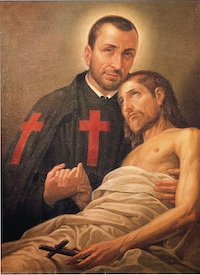
Saint Camillus was born in the kingdom of Naples in the year 1549. His early years gave no indication of his future sanctity. At the age of nineteen he entered into military service with his father, an Italian noble, against the Turks. After four years of hard campaigning he found himself, through his violent temper, reckless habits, and inveterate passion for gambling, a discharged soldier in bad health, and in such straitened circumstances that he was obliged to beg in the streets. Finally he found work as a laborer for a Capuchin convent which was being built. A few words from a Capuchin Friar brought about his conversion; the following day he cast himself on his knees, seeing himself clearly by a divine illumination. He prayed, Forgive, Lord, this wretched sinner! and give him time to do penance! And he resolved to become a religious.
He served the Capuchin Fathers, working in the garden, sweeping the convent, washing the dishes, until he could be received as an aspirant. Thrice he begin his novitiate with them, but each time an obstinate ulcer on his leg forced him to leave. God had other designs for him. He went to Rome for medical treatment, and there took Saint Philip Neri as his confessor. He entered, as a servant, the hospital of San Giacomo. The carelessness of the paid personnel and nurses towards the suffering patients inspired him with the thought of founding a Congregation of voluntary servants of the sick, to minister to their wants without thought of remuneration. He recalled the Cross of Our Lord, thinking, If they wore it on their breast, the sight of it would sustain them, encourage them, reward them. He spoke of this intention to the most pious ones among his companions, who joined him with enthusiasm. They set up an oratory in a little room where they retired to read and pray. They met great obstacles; their oratory was closed when they were suspected of wanting to control the hospital. But eventually Saint Camillus was ordained priest in 1584 and founded his Congregation with only two co-workers, at the chapel of Our Lady of Miracles. They continued to serve in the large Holy Spirit Hospital, and in 1586 his community, the Servants of the Sick, was confirmed by the Pope.
Its usefulness was soon felt, not only in hospitals, but in private houses. Summoned at every hour of the day and night, the devotion of Camillus never grew cold. With an inexhaustible tenderness he attended to the needs of his patients. He wept with them, consoled them, and prayed with them. During a famine in 1590, the poor were reduced to eating dead animals and often raw herbs; about sixty thousand died during that winter, which was exceptionally cold. Saint Camillus procured bread and clothing and went out to distribute them in Rome to all who needed them. Never did he refuse what was asked, giving away his cloak more than once, and the last sack of flour in the storeroom. But God always provided for the Brothers when they had nothing more to give.
Saint Camillus knew miraculously the state of the souls of his patients; and Saint Philip saw Angels whispering to two Servants of the Sick who were consoling a dying person. One day a sick man said to the Saint, Father, may I beg you to make up my bed? it is very hard. Camillus replied, God forgive you, brother! You beg me? Don't you know yet that you should command me, for I am your servant and slave! The Saint founded houses of what had become his Order in several cities — Milan, Bologna, Genoa, Florence, Ferrare and others, and sent out his religious when a pestilence afflicted Hungary and surrounding regions. Several of his religious died on that occasion.
In his hospital he was heard to say, Would to God that in the hour of my death one sigh or one blessing of these poor sick creatures might fall upon me! His prayer was answered. He was granted the same consolations in his last hour, which he had so often procured for others. It was in the year 1614, and on the feast of Saint Bonaventure, to whom he had a great devotion, that he died as he had foretold, having the full use of his faculties, as the priest was reciting the words of the ritual, May Jesus Christ appear to thee with a mild and joyful countenance!
Reflection: Saint Camillus venerated the sick as living images of Christ, and by ministering to them in this spirit did penance for the sins of his youth. He led a life precious in merit, and from a violent and quarrelsome soldier became a gentle and tender Saint.
Les Petits Bollandistes: Vies des Saints, by Msgr. Paul Guérin (Bloud et Barral: Paris, 1882), Vol. 8; Little Pictorial Lives of the Saints, a compilation based on Butler's Lives of the Saints, and other sources by John Gilmary Shea (Benziger Brothers: New York, 1894)
LAST-MODIFIED:20240713T203241Z SEQUENCE:55207275 X-ACCESS:1 X-HITS:146 X-COLOR:f0b80e X-SHOW-END-TIME:1 END:VEVENT BEGIN:VEVENT DTSTART;VALUE=DATE:20240718 DTEND;VALUE=DATE:20240719 UID:5A9563E2-56F0-4347-A195-885615E5AA14 SUMMARY:St. Symphorosa and her Sons CREATED:20221013T211126Z DTSTAMP:20221013T211126Z URL:https://www.stpaulsweymouth.org/component/dpcalendar/event/1779?calid=13 DESCRIPTION:St. Symphorosa and her Seven Sons, Martyrs\N\NThe Church presents to us today, as she did on the 10th of this Month, seven Christian heroes, who in their youth, manifested more than manly firmness in the confession of the true faith. Their names were, Crescentius, Julianus, Nemesius, Primitivus, Justinus, Stacteus, and Eugenius. Symphorosa, their holy and not less heroic mother, was a native of Rome, and wife of Getulius, a Roman general. When in the reign of the Emperor Adrian, a cruel persecution of the Christians arose, she went with Getulius and Amantius, her brother-in-law, and her seven sons, to Tivoli, to strengthen the Christians in the true faith, and to prepare herself for the approaching struggle. The Emperor, informed of this, despatched Cerealis, one of his officers, to Tivoli, to take Getulius and Amantius, and bring them prisoners to Rome. Cerealis, still a heathen, came to execute the imperial command; but convinced by Getulius and Amantius of the truth of the Christian faith, he embraced it; and hence, all three were beheaded by command of the enraged Emperor, after having suffered a long imprisonment, and many cruel tortures.\NSt. Symphorosa had every reason to believe that she and her children would not long remain unmolested; and as she feared that one or more of her children, owing to their tender age, might be induced to abandon their faith for fear of the tortures, she left Tivoli, and concealed herself for a time in an unfrequented place, in order to gain time to inspire her children with Christian fortitude. She represented to them the priceless grace of dying for Christ’s sake, and the glory which awaits martyrs in heaven. The shortness of the pains of martyrdom, and the never-ending rewards of heaven were the chief points which she almost hourly presented to their consideration, while, at the same time, she exhorted them to follow the example of their uncle and their father, and remain faithful to the true faith. One day, she asked Eugenius, the youngest, what he would do in case he were forced either to sacrifice to the gods, or to be whipped and torn with scourges. The innocent little child answered manfully: “Dear mother, I would rather be torn in pieces than sacrifice to the devils.” “But,” said his mother, addressing all the children, “would you not be frightened if the executioner would seize you, threatening to kill you all most cruelly? Would you not shrink, if they were to place before your eyes fire, swords, the rack, and other instruments of torture? Oh! I fear, my beloved children, I fear that you would lose courage and forsake Christ.” “No, no, dear mother,” said Crescentius, “fear not; I, and all my brothers promise to thee that there shall be nothing dreadful enough to conquer us and cause us to become faithless to Jesus Christ.” Greatly comforted, the pious mother admonished them to pray that God might give them the strength they needed to suffer for Him; a prayer which she herself ceaselessly sent up to the throne of the Most High. Not long after, her anticipations were realized.\NAdrian had her and her children apprehended and brought before him, and commanded them immediately to sacrifice to the gods, or to prepare themselves for a most cruel death. The fearless heroine replied: “There is no need of further preparations, of further consideration. My resolution is taken; I will not sacrifice to idols, and I have only one wish, to give my life for Him who has given His for me.” The tyrant, who had not expected this answer, was doubly enraged, and commanded her to be taken to the temple of the idols, and to be hung up by the hair of the head, after having been most cruelly buffeted. This command was immediately executed. Symphorosa, during this torture, courageously said to her children: ” Be not terrified, my children, at my sufferings; I bear it joyfully; joyfully do I give my life for Christ’s sake. Remain steadfast. Fight bravely. Remember the example your father gave you; look at me, your mother, and follow in our footsteps. This suffering is short, but the glory prepared for us will be everlasting.” With such words, the Christian mother fortified her children who were willing to conduct themselves according to her precepts. The tyrant who would no longer listen to Symphorosa’s exhortations, ordered her to be cast into the river, with a great stone fastened around her neck. In this manner ended her glorious martyrdom, in the 138th year of the Christian Era.\NOn the following day, her seven sons were brought before the Emperor, who represented to them that, as they had neither father nor mother, he would adopt them as his own children and provide for them most bountifully, if they would obey him and sacrifice to the gods. Should they, however, prove as obstinate as their parents had been, they had nothing to expect but torments and death. “This is what we desire,” answered Crescentius,” that we, like our parents, may die for the sake of Christ. Neither promises, nor threats, nor torments can make us faithless to Christ.” The Emperor, being unwilling to put his menaces immediately into execution, still endeavored to win over the children, alternately by promises and threats; but finding all unavailing, he ordered seven stakes to be raised in the idolatrous temple, to which the seven valiant confessors of Christ were tied, and tormented in all possible ways. Their limbs were stretched until they were dislocated, and the witnesses of these awful scenes were filled with compassion. The pain must have been most dreadful; but there was not one of these young heroes who did not praise God, and rejoice in his suffering. The tyrant, ashamed of being conquered by children, ordered an end to be made of their torments, which was accordingly done in various ways. Crescentius had his throat cut with a dagger; Julianus was stabbed in the breast with a sword; Nemesius was pierced through the heart, and Primitivus through the lower part of his body. Justinus was cut in pieces; Stacteus shot with arrows, and Eugenius, the youngest, was cut in two.\NThus gloriously died the seven sons of St. Symphorosa, reminding us of the illustrious martyrdom of the several Machabees, in the reign of the wicked King Antiochus. X-ALT-DESC;FMTTYPE=text/html:St. Symphorosa and her Seven Sons, Martyrs
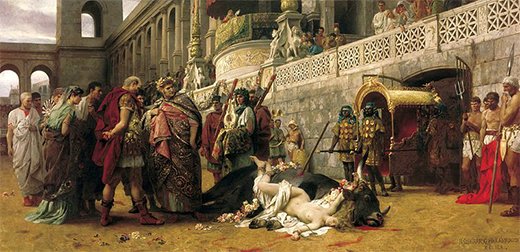
The Church presents to us today, as she did on the 10th of this Month, seven Christian heroes, who in their youth, manifested more than manly firmness in the confession of the true faith. Their names were, Crescentius, Julianus, Nemesius, Primitivus, Justinus, Stacteus, and Eugenius. Symphorosa, their holy and not less heroic mother, was a native of Rome, and wife of Getulius, a Roman general. When in the reign of the Emperor Adrian, a cruel persecution of the Christians arose, she went with Getulius and Amantius, her brother-in-law, and her seven sons, to Tivoli, to strengthen the Christians in the true faith, and to prepare herself for the approaching struggle. The Emperor, informed of this, despatched Cerealis, one of his officers, to Tivoli, to take Getulius and Amantius, and bring them prisoners to Rome. Cerealis, still a heathen, came to execute the imperial command; but convinced by Getulius and Amantius of the truth of the Christian faith, he embraced it; and hence, all three were beheaded by command of the enraged Emperor, after having suffered a long imprisonment, and many cruel tortures.
St. Symphorosa had every reason to believe that she and her children would not long remain unmolested; and as she feared that one or more of her children, owing to their tender age, might be induced to abandon their faith for fear of the tortures, she left Tivoli, and concealed herself for a time in an unfrequented place, in order to gain time to inspire her children with Christian fortitude. She represented to them the priceless grace of dying for Christ’s sake, and the glory which awaits martyrs in heaven. The shortness of the pains of martyrdom, and the never-ending rewards of heaven were the chief points which she almost hourly presented to their consideration, while, at the same time, she exhorted them to follow the example of their uncle and their father, and remain faithful to the true faith. One day, she asked Eugenius, the youngest, what he would do in case he were forced either to sacrifice to the gods, or to be whipped and torn with scourges. The innocent little child answered manfully: “Dear mother, I would rather be torn in pieces than sacrifice to the devils.” “But,” said his mother, addressing all the children, “would you not be frightened if the executioner would seize you, threatening to kill you all most cruelly? Would you not shrink, if they were to place before your eyes fire, swords, the rack, and other instruments of torture? Oh! I fear, my beloved children, I fear that you would lose courage and forsake Christ.” “No, no, dear mother,” said Crescentius, “fear not; I, and all my brothers promise to thee that there shall be nothing dreadful enough to conquer us and cause us to become faithless to Jesus Christ.” Greatly comforted, the pious mother admonished them to pray that God might give them the strength they needed to suffer for Him; a prayer which she herself ceaselessly sent up to the throne of the Most High. Not long after, her anticipations were realized.
Adrian had her and her children apprehended and brought before him, and commanded them immediately to sacrifice to the gods, or to prepare themselves for a most cruel death. The fearless heroine replied: “There is no need of further preparations, of further consideration. My resolution is taken; I will not sacrifice to idols, and I have only one wish, to give my life for Him who has given His for me.” The tyrant, who had not expected this answer, was doubly enraged, and commanded her to be taken to the temple of the idols, and to be hung up by the hair of the head, after having been most cruelly buffeted. This command was immediately executed. Symphorosa, during this torture, courageously said to her children: ” Be not terrified, my children, at my sufferings; I bear it joyfully; joyfully do I give my life for Christ’s sake. Remain steadfast. Fight bravely. Remember the example your father gave you; look at me, your mother, and follow in our footsteps. This suffering is short, but the glory prepared for us will be everlasting.” With such words, the Christian mother fortified her children who were willing to conduct themselves according to her precepts. The tyrant who would no longer listen to Symphorosa’s exhortations, ordered her to be cast into the river, with a great stone fastened around her neck. In this manner ended her glorious martyrdom, in the 138th year of the Christian Era.
On the following day, her seven sons were brought before the Emperor, who represented to them that, as they had neither father nor mother, he would adopt them as his own children and provide for them most bountifully, if they would obey him and sacrifice to the gods. Should they, however, prove as obstinate as their parents had been, they had nothing to expect but torments and death. “This is what we desire,” answered Crescentius,” that we, like our parents, may die for the sake of Christ. Neither promises, nor threats, nor torments can make us faithless to Christ.” The Emperor, being unwilling to put his menaces immediately into execution, still endeavored to win over the children, alternately by promises and threats; but finding all unavailing, he ordered seven stakes to be raised in the idolatrous temple, to which the seven valiant confessors of Christ were tied, and tormented in all possible ways. Their limbs were stretched until they were dislocated, and the witnesses of these awful scenes were filled with compassion. The pain must have been most dreadful; but there was not one of these young heroes who did not praise God, and rejoice in his suffering. The tyrant, ashamed of being conquered by children, ordered an end to be made of their torments, which was accordingly done in various ways. Crescentius had his throat cut with a dagger; Julianus was stabbed in the breast with a sword; Nemesius was pierced through the heart, and Primitivus through the lower part of his body. Justinus was cut in pieces; Stacteus shot with arrows, and Eugenius, the youngest, was cut in two.
Thus gloriously died the seven sons of St. Symphorosa, reminding us of the illustrious martyrdom of the several Machabees, in the reign of the wicked King Antiochus.
LAST-MODIFIED:20240713T203552Z SEQUENCE:55207466 X-ACCESS:1 X-HITS:190 X-COLOR:f0b80e X-SHOW-END-TIME:1 END:VEVENT BEGIN:VEVENT DTSTART;VALUE=DATE:20240719 DTEND;VALUE=DATE:20240720 UID:2B93976D-A6F0-4212-ABB5-4E5DF5B4018D SUMMARY:St. Vincent CREATED:20221013T211126Z DTSTAMP:20221013T211126Z URL:https://www.stpaulsweymouth.org/component/dpcalendar/event/1781?calid=13 DESCRIPTION:St. Vincent de Paul, Confessor\N\NSaint Vincent was born in 1576 near Dax, south of Bordeaux, of a poor family which survived by means of their labor. It seemed that mercy was born with him. When sent by his father to the mill to procure flour, if he met a poor man coming home, he would open the sack and give him handfuls of flour when he had nothing else. His Christian father was not angry; seeing his good dispositions, he was sure his son should become a priest, and placed him as a boarding student with a group of religious priests in Dax. Vincent made rapid progress, and after seven years of studying theology at Toulouse and in Saragossa, Spain, was ordained a priest in 1600. He always concealed his learning and followed the counsel of Saint Paul who said, I have wanted to know nothing in your midst but Jesus Christ, and Jesus Christ crucified.\NSoon after his ordination, he was captured by corsairs and sold as a slave in Tunisia. He converted his renegade master, and escaped with him to France. Then, after a time of study in Rome, he returned to Paris and took for his spiritual director Abbé de Berulle, a famous director of souls. This servant of God saw in him a priest called to render outstanding service to the Church, and to found a community of priests who would labor for its benefit. He told Saint Vincent this, that he might prepare himself insofar as was humanly possible. When Saint Vincent was appointed chaplain-general of the galleys of France, his tender charity brought hope into those prisons where hitherto despair had reigned. When a mother mourned her imprisoned son, Vincent put on his chains and took his place at the oar, and gave him to his mother.\NHis charity embraced the poor, the young and the aged, the provinces desolated by civil war, Christians enslaved by the infidels. The poor man, ignorant and degraded, was to him the image of Him who became as a leper and no man. Turn the medal, he said, and you will see Jesus Christ. He went through the streets of Paris at night, seeking the infants and children left there to die — three or four hundred every year. Once robbers rushed upon him, thinking he carried a treasure, but when he opened his cloak, they recognized him and his burden, an abandoned infant, and fell at his feet. Not only was Saint Vincent the providence of the poor, but also of the rich, for he taught them to undertake works of mercy. When in 1648 the work of the foundlings was in danger of failure for want of funds, he assembled the ladies of the Association of Charity, and said, Compassion and charity have made you adopt these little creatures as your children. You have been their mothers according to grace, when their own mothers abandoned them. Will you now cease to be their mothers? Their life and death are in your hands. I shall take your votes; it is time to pronounce sentence. The tears of the assembly were his only answer, and the work was continued.\NThe Priests of the Mission or Lazarists, as they are called, and thousands of the Daughters of Charity still comfort the afflicted with the charity of their holy Founder. It has been said of him that no one has ever verified more perfectly than Saint Vincent, the words of Our Lord: He who humbles himself shall be exalted... The more he strove to abase himself in the eyes of all, the more God took pleasure in elevating him and bestowing His blessings on him and on all his works. He died in 1660, in an old age made truly golden by his unceasing good works.\NReflection: Most people who profess piety ask advice of directors about their prayers and spiritual exercises. Few inquire whether they are not in danger of damnation from neglect of works of charity. Let us never forget the terrible foretold words of the Final Judge: Depart from me, workers of iniquity; I was hungry, and you did not feed Me; I was without shelter, you did not take Me in...; I was sick, and in prison, and you did not visit Me, etc. (Cf. Matt. 26:31-46)\NLes Petits Bollandistes: Vies des Saints, by Msgr. Paul Guérin (Bloud et Barral: Paris, 1882), Vol. 8; Little Pictorial Lives of the Saints, a compilation based on Butler's Lives of the Saints, and other sources by John Gilmary Shea (Benziger Brothers: New York, 1894) X-ALT-DESC;FMTTYPE=text/html:St. Vincent de Paul, Confessor
Saint Vincent was born in 1576 near Dax, south of Bordeaux, of a poor family which survived by means of their labor. It seemed that mercy was born with him. When sent by his father to the mill to procure flour, if he met a poor man coming home, he would open the sack and give him handfuls of flour when he had nothing else. His Christian father was not angry; seeing his good dispositions, he was sure his son should become a priest, and placed him as a boarding student with a group of religious priests in Dax. Vincent made rapid progress, and after seven years of studying theology at Toulouse and in Saragossa, Spain, was ordained a priest in 1600. He always concealed his learning and followed the counsel of Saint Paul who said, I have wanted to know nothing in your midst but Jesus Christ, and Jesus Christ crucified.
Soon after his ordination, he was captured by corsairs and sold as a slave in Tunisia. He converted his renegade master, and escaped with him to France. Then, after a time of study in Rome, he returned to Paris and took for his spiritual director Abbé de Berulle, a famous director of souls. This servant of God saw in him a priest called to render outstanding service to the Church, and to found a community of priests who would labor for its benefit. He told Saint Vincent this, that he might prepare himself insofar as was humanly possible. When Saint Vincent was appointed chaplain-general of the galleys of France, his tender charity brought hope into those prisons where hitherto despair had reigned. When a mother mourned her imprisoned son, Vincent put on his chains and took his place at the oar, and gave him to his mother.
His charity embraced the poor, the young and the aged, the provinces desolated by civil war, Christians enslaved by the infidels. The poor man, ignorant and degraded, was to him the image of Him who became as a leper and no man. Turn the medal, he said, and you will see Jesus Christ. He went through the streets of Paris at night, seeking the infants and children left there to die — three or four hundred every year. Once robbers rushed upon him, thinking he carried a treasure, but when he opened his cloak, they recognized him and his burden, an abandoned infant, and fell at his feet. Not only was Saint Vincent the providence of the poor, but also of the rich, for he taught them to undertake works of mercy. When in 1648 the work of the foundlings was in danger of failure for want of funds, he assembled the ladies of the Association of Charity, and said, Compassion and charity have made you adopt these little creatures as your children. You have been their mothers according to grace, when their own mothers abandoned them. Will you now cease to be their mothers? Their life and death are in your hands. I shall take your votes; it is time to pronounce sentence. The tears of the assembly were his only answer, and the work was continued.
The Priests of the Mission or Lazarists, as they are called, and thousands of the Daughters of Charity still comfort the afflicted with the charity of their holy Founder. It has been said of him that no one has ever verified more perfectly than Saint Vincent, the words of Our Lord: He who humbles himself shall be exalted... The more he strove to abase himself in the eyes of all, the more God took pleasure in elevating him and bestowing His blessings on him and on all his works. He died in 1660, in an old age made truly golden by his unceasing good works.
Reflection: Most people who profess piety ask advice of directors about their prayers and spiritual exercises. Few inquire whether they are not in danger of damnation from neglect of works of charity. Let us never forget the terrible foretold words of the Final Judge: Depart from me, workers of iniquity; I was hungry, and you did not feed Me; I was without shelter, you did not take Me in...; I was sick, and in prison, and you did not visit Me, etc. (Cf. Matt. 26:31-46)
Les Petits Bollandistes: Vies des Saints, by Msgr. Paul Guérin (Bloud et Barral: Paris, 1882), Vol. 8; Little Pictorial Lives of the Saints, a compilation based on Butler's Lives of the Saints, and other sources by John Gilmary Shea (Benziger Brothers: New York, 1894)
LAST-MODIFIED:20240713T203822Z SEQUENCE:55207616 X-ACCESS:1 X-HITS:102 X-COLOR:f0b80e X-SHOW-END-TIME:1 END:VEVENT BEGIN:VEVENT DTSTART;VALUE=DATE:20240720 DTEND;VALUE=DATE:20240721 UID:F6E67BC8-60A6-47C7-9915-F36195165A87 SUMMARY:St. Jerome CREATED:20221013T211126Z DTSTAMP:20221013T211126Z URL:https://www.stpaulsweymouth.org/component/dpcalendar/event/1783?calid=13 DESCRIPTION:St. Jerome Aemilian, Confessor\N\NSaint Jerome Emiliani, born in 1481, was a member of one of the Christian patrician families of Venice, and in early life a soldier. Showing in his youth much inclination to virtue, he studied the humanities with success until the age of fifteen, when the clash of arms interrupted his peaceful pursuits and his practice of virtue. And then, only his ambition for honors placed limits to his disorders; it was necessary to live honorably in order to receive promotions. He was appointed governor of a fortress in the mountains of Treviso, and while defending his post with outstanding bravery, was made prisoner by the enemy. In the misery of his dungeon he invoked amid tears the great Mother of God, recognizing that his chastisement was just. He promised, nonetheless, if She would set him free, to lead a new and better life, more worthy of his Christian heritage, and to make known Her benefits in every possible way. Our Lady appeared to him at once, gave him the keys he needed, and commanded him to fulfill faithfully what he had promised. She led him out through the ranks of his enemies to the gate of the city. He went to Her church at Treviso and dedicated himself to the service of the One who had delivered him, proclaiming Her mercies to all listeners. He consigned to writing, and had notarized, an account of his deliverance.\NOn reaching his home in Venice he undertook a life of active charity, causing admiration in all who had known him as a worldling. His special love was for the deserted orphan children whom he found wandering in the streets during a famine and an epidemic in 1528. Already he had converted his house into a hospital, selling even its furnishings to clothe and feed the poor folk who came in great numbers to him, when they heard he had procured wheat from other regions. He acquired a house for the children, and after recovering miraculously from the illness which he had contracted during the epidemic, he himself taught them the Christian truths. Soon the accounts of his pious orphanage brought visitors, and financial aid sufficient to sustain the enterprise. He was then entrusted with the Venitian Hospital for the Incurables. When he needed some particular grace, he had four orphans under eight years of age pray with him, and the grace never failed to arrive. In Venice he was aided in his Hospital by his friends, Saint Cajetan of Thienna and Saint Peter Caraffa of Naples.\NHe founded a hospital in Verona and an orphanage in Padua. At Bergamo, which had been struck by a pestilence and famine, he went out with the reapers he could assemble, and cut wheat in the hottest season of the Italian summer. At their head, he sang Christian hymns in his rich voice, engaging the others to follow his example. There he founded two orphanages and succeeded in closing a number of houses of ill repute; he gave their inhabitants whom he converted a rule of life and procured a residence for them. The bishop was aiding him constantly; and he sent him out to other villages and hamlets to teach the children Christian doctrine. Multiple conversions resulted in all directions. Two holy priests joined him in Bergamo, soon followed by other noble gentlemen. This was the origin of the Congregation of Regular Clerics, called the Somascans because of their residence at Somasca, situated between Milan and Bergamo. The Congregation was approved in 1540 by Pope Paul III, and the Order spread in Italy. Saint Jerome died in 1537 at the age of 56, from the illness he contracted while caring for the sick during an epidemic in the region of Bergamo.\NReflection: Let us learn from Saint Jerome to exert ourselves in behalf of the many hundreds of children whose souls are perishing around us, for want of someone to show them the way to heaven.\NLes Petits Bollandistes: Vies des Saints, by Msgr. Paul Guérin (Bloud et Barral: Paris, 1882), Vol. 8 X-ALT-DESC;FMTTYPE=text/html:St. Jerome Aemilian, Confessor
Saint Jerome Emiliani, born in 1481, was a member of one of the Christian patrician families of Venice, and in early life a soldier. Showing in his youth much inclination to virtue, he studied the humanities with success until the age of fifteen, when the clash of arms interrupted his peaceful pursuits and his practice of virtue. And then, only his ambition for honors placed limits to his disorders; it was necessary to live honorably in order to receive promotions. He was appointed governor of a fortress in the mountains of Treviso, and while defending his post with outstanding bravery, was made prisoner by the enemy. In the misery of his dungeon he invoked amid tears the great Mother of God, recognizing that his chastisement was just. He promised, nonetheless, if She would set him free, to lead a new and better life, more worthy of his Christian heritage, and to make known Her benefits in every possible way. Our Lady appeared to him at once, gave him the keys he needed, and commanded him to fulfill faithfully what he had promised. She led him out through the ranks of his enemies to the gate of the city. He went to Her church at Treviso and dedicated himself to the service of the One who had delivered him, proclaiming Her mercies to all listeners. He consigned to writing, and had notarized, an account of his deliverance.
On reaching his home in Venice he undertook a life of active charity, causing admiration in all who had known him as a worldling. His special love was for the deserted orphan children whom he found wandering in the streets during a famine and an epidemic in 1528. Already he had converted his house into a hospital, selling even its furnishings to clothe and feed the poor folk who came in great numbers to him, when they heard he had procured wheat from other regions. He acquired a house for the children, and after recovering miraculously from the illness which he had contracted during the epidemic, he himself taught them the Christian truths. Soon the accounts of his pious orphanage brought visitors, and financial aid sufficient to sustain the enterprise. He was then entrusted with the Venitian Hospital for the Incurables. When he needed some particular grace, he had four orphans under eight years of age pray with him, and the grace never failed to arrive. In Venice he was aided in his Hospital by his friends, Saint Cajetan of Thienna and Saint Peter Caraffa of Naples.
He founded a hospital in Verona and an orphanage in Padua. At Bergamo, which had been struck by a pestilence and famine, he went out with the reapers he could assemble, and cut wheat in the hottest season of the Italian summer. At their head, he sang Christian hymns in his rich voice, engaging the others to follow his example. There he founded two orphanages and succeeded in closing a number of houses of ill repute; he gave their inhabitants whom he converted a rule of life and procured a residence for them. The bishop was aiding him constantly; and he sent him out to other villages and hamlets to teach the children Christian doctrine. Multiple conversions resulted in all directions. Two holy priests joined him in Bergamo, soon followed by other noble gentlemen. This was the origin of the Congregation of Regular Clerics, called the Somascans because of their residence at Somasca, situated between Milan and Bergamo. The Congregation was approved in 1540 by Pope Paul III, and the Order spread in Italy. Saint Jerome died in 1537 at the age of 56, from the illness he contracted while caring for the sick during an epidemic in the region of Bergamo.
Reflection: Let us learn from Saint Jerome to exert ourselves in behalf of the many hundreds of children whose souls are perishing around us, for want of someone to show them the way to heaven.
Les Petits Bollandistes: Vies des Saints, by Msgr. Paul Guérin (Bloud et Barral: Paris, 1882), Vol. 8
LAST-MODIFIED:20240713T204352Z SEQUENCE:55207946 X-ACCESS:1 X-HITS:22 X-COLOR:f0b80e X-SHOW-END-TIME:1 END:VEVENT BEGIN:VEVENT DTSTART;VALUE=DATE:20240720 DTEND;VALUE=DATE:20240721 UID:8B63448F-B594-4B02-8D24-F62AE86CF36D SUMMARY:St. Margaret CREATED:20221013T211126Z DTSTAMP:20221013T211126Z URL:https://www.stpaulsweymouth.org/component/dpcalendar/event/1785?calid=13 DESCRIPTION:St. Margaret of Antioch, Virgin and Martyr\N\NSaint Margaret was born in the third century at Antioch of Pisidia in southern Asia Minor. Her mother died while she was an infant, and she was instructed in the Christian faith by a virtuous nurse. When her father, a pagan priest named Aedesius, learned she was a Christian, he drove her out of the house. She became a shepherdess to earn her living.\NWhen a Roman prefect arrived in the region to persecute the Christians, Margaret was imprisoned. The prefect, fascinated by her beauty, desired to save her life and add her to the already considerable number of his wives and concubines. He decided to attempt to overcome her resistance by questioning her before an assembly consisting of virtually the entire city. Her reply to his ultimatum, offering her a choice between joy and torments, was recorded and became renowned. She said: The true life and true joy, thanks be to God, I have already found, and have placed them in the stronghold of my heart that they may never be removed. I mean that I adore and glorify the Lord Jesus Christ, that I venerate Him with confidence and will never cease to honor Him with my whole soul. Know that no human power, no torture will be able to extract from my heart so great a treasure. When the prefect replied that someone had certainly put such ideas into her very young and inexperienced head, a long dialogue ensued, Margaret striving to make him understand the reason for her confidence, and that God Himself gives replies to those who believe in Him when they are questioned, according to His own promise.\NHearing her say that her Lord was not merely a man, but very genuinely God and Man at one same time, whose power was far above that of emperors, he became furious and sent her to be scourged, suspended in the air by her hands. Many spectators wept and begged her to have pity on herself. She replied: Illustrious gentlemen and noble ladies, do not weaken my courage, for as the Apostle said, bad conversation corrupts good habits. But I forgive you, because you act this way out of sympathy, and do not possess the true light... Cast into prison still alive, she was visited by a demon whom she put to flight by a sign of the cross; there followed a vision of the cross of salvation, accompanied by a voice exhorting her to persevere. When on the following day she was subjected to the torment of burning torches, she felt no pain. She continued under other ineffectual torments to exhort the spectators to understand who it was she adored, and finally was beheaded with a large number of those whom her words had caused to believe as she did.\NLes Petits Bollandistes: Vies des Saints, by Msgr. Paul Guérin (Bloud et Barral: Paris, 1882), Vol. 8 X-ALT-DESC;FMTTYPE=text/html:St. Margaret of Antioch, Virgin and Martyr
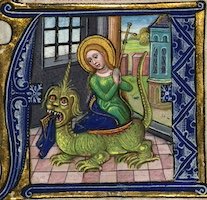
Saint Margaret was born in the third century at Antioch of Pisidia in southern Asia Minor. Her mother died while she was an infant, and she was instructed in the Christian faith by a virtuous nurse. When her father, a pagan priest named Aedesius, learned she was a Christian, he drove her out of the house. She became a shepherdess to earn her living.
When a Roman prefect arrived in the region to persecute the Christians, Margaret was imprisoned. The prefect, fascinated by her beauty, desired to save her life and add her to the already considerable number of his wives and concubines. He decided to attempt to overcome her resistance by questioning her before an assembly consisting of virtually the entire city. Her reply to his ultimatum, offering her a choice between joy and torments, was recorded and became renowned. She said: The true life and true joy, thanks be to God, I have already found, and have placed them in the stronghold of my heart that they may never be removed. I mean that I adore and glorify the Lord Jesus Christ, that I venerate Him with confidence and will never cease to honor Him with my whole soul. Know that no human power, no torture will be able to extract from my heart so great a treasure. When the prefect replied that someone had certainly put such ideas into her very young and inexperienced head, a long dialogue ensued, Margaret striving to make him understand the reason for her confidence, and that God Himself gives replies to those who believe in Him when they are questioned, according to His own promise.
Hearing her say that her Lord was not merely a man, but very genuinely God and Man at one same time, whose power was far above that of emperors, he became furious and sent her to be scourged, suspended in the air by her hands. Many spectators wept and begged her to have pity on herself. She replied: Illustrious gentlemen and noble ladies, do not weaken my courage, for as the Apostle said, bad conversation corrupts good habits. But I forgive you, because you act this way out of sympathy, and do not possess the true light... Cast into prison still alive, she was visited by a demon whom she put to flight by a sign of the cross; there followed a vision of the cross of salvation, accompanied by a voice exhorting her to persevere. When on the following day she was subjected to the torment of burning torches, she felt no pain. She continued under other ineffectual torments to exhort the spectators to understand who it was she adored, and finally was beheaded with a large number of those whom her words had caused to believe as she did.
Les Petits Bollandistes: Vies des Saints, by Msgr. Paul Guérin (Bloud et Barral: Paris, 1882), Vol. 8
LAST-MODIFIED:20240713T205507Z SEQUENCE:55208621 X-ACCESS:1 X-HITS:27 X-COLOR:f0b80e X-SHOW-END-TIME:1 END:VEVENT BEGIN:VEVENT DTSTART;VALUE=DATE:20240721 DTEND;VALUE=DATE:20240722 UID:EB75EA07-CA1C-4099-8B7B-2F6DD20D1735 SUMMARY:St. Praxedes CREATED:20221013T211126Z DTSTAMP:20221013T211126Z URL:https://www.stpaulsweymouth.org/component/dpcalendar/event/1787?calid=13 DESCRIPTION:St. Praxedes, Virgin and Martyr\N\NThe holy virgin Praxedes was a Roman, daughter of Pudens, a senator, and sister of Novatus, Timothy, and Pudentiana, who are all honored as saints in the Church. The life of Saint Praxedes was a continual occupation and exercise in prayer, fasting, watching, and penance. She spent much of her means and revenues, wherewith she was most richly stored, in succoring and relieving the poor and needy, particularly in serving and comforting those who suffered and were afflicted for the faith of Jesus Christ, of whom there was an infinite multitude. For she provided for their necessities, visited, and comforted them in prison, dressed their wounds, urged them to be patient in their pains, gathered up their blood, buried their bodies, commended herself most earnestly and affectionately to their prayers, rejoiced for their conquests and victories, and desired exceedingly to imitate their sufferings and death for our Lord Jesus Christ, that she might take part with them in their rewards and crowns.\NShe harbored the saints in her house, entertained and cherished them with all love and kindness. And they used to meet and assemble in her home as in a secure harbor and place of refuge, to pray together, to hear Mass, and to receive the most precious body of our Lord. But as the persecution of Emperor Marcus Aurelius1 endured a long while, and an infinite quantity of Christian blood was daily spilled, the virgin’s tender heart was wonderfully wounded with compassion. After which she prayed to our Lord that if it were according to His holy will and pleasure, he would vouchsafe to deliver and take her away from the miseries of the present life and bring her to a place where she might forever enjoy his holy presence and where the tears would be dried up and washed away, where the cruel and heartless murdering of such an infinity of his servants was continually drawing from her eyes. Our merciful Lord heard her devout prayer and took her out of this world on the twenty-first of July in 164, in Marcus Aurelius’s and Lucius Verus’s reign. Her body was buried with her father and those of her family by a priest named Pastor, who wrote her Life. All Martyrologies make mention of her.\NRibadeneyra, Pedro de. “The Life of St. Praxedes, Virgin.” The Lives of Saints, With Other Feasts of the Year, according to the Roman Calendar. Written in Spanish by the Reverend Father Peter Ribadeneyra, Priest of the Society of Jesus. Translated Into English by W.P. (William Petre) Esq; The Second Edition Corrected and Amended, vol. 2, pp. 41–42. London. Printed by B.S., 1730. X-ALT-DESC;FMTTYPE=text/html:St. Praxedes, Virgin and Martyr
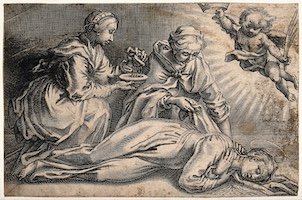
The holy virgin Praxedes was a Roman, daughter of Pudens, a senator, and sister of Novatus, Timothy, and Pudentiana, who are all honored as saints in the Church. The life of Saint Praxedes was a continual occupation and exercise in prayer, fasting, watching, and penance. She spent much of her means and revenues, wherewith she was most richly stored, in succoring and relieving the poor and needy, particularly in serving and comforting those who suffered and were afflicted for the faith of Jesus Christ, of whom there was an infinite multitude. For she provided for their necessities, visited, and comforted them in prison, dressed their wounds, urged them to be patient in their pains, gathered up their blood, buried their bodies, commended herself most earnestly and affectionately to their prayers, rejoiced for their conquests and victories, and desired exceedingly to imitate their sufferings and death for our Lord Jesus Christ, that she might take part with them in their rewards and crowns.
She harbored the saints in her house, entertained and cherished them with all love and kindness. And they used to meet and assemble in her home as in a secure harbor and place of refuge, to pray together, to hear Mass, and to receive the most precious body of our Lord. But as the persecution of Emperor Marcus Aurelius1 endured a long while, and an infinite quantity of Christian blood was daily spilled, the virgin’s tender heart was wonderfully wounded with compassion. After which she prayed to our Lord that if it were according to His holy will and pleasure, he would vouchsafe to deliver and take her away from the miseries of the present life and bring her to a place where she might forever enjoy his holy presence and where the tears would be dried up and washed away, where the cruel and heartless murdering of such an infinity of his servants was continually drawing from her eyes. Our merciful Lord heard her devout prayer and took her out of this world on the twenty-first of July in 164, in Marcus Aurelius’s and Lucius Verus’s reign. Her body was buried with her father and those of her family by a priest named Pastor, who wrote her Life. All Martyrologies make mention of her.
Ribadeneyra, Pedro de. “The Life of St. Praxedes, Virgin.” The Lives of Saints, With Other Feasts of the Year, according to the Roman Calendar. Written in Spanish by the Reverend Father Peter Ribadeneyra, Priest of the Society of Jesus. Translated Into English by W.P. (William Petre) Esq; The Second Edition Corrected and Amended, vol. 2, pp. 41–42. London. Printed by B.S., 1730.
LAST-MODIFIED:20240720T223141Z SEQUENCE:55819215 X-ACCESS:1 X-HITS:100 X-COLOR:f0b80e X-SHOW-END-TIME:1 END:VEVENT BEGIN:VEVENT DTSTART;VALUE=DATE:20240721 DTEND;VALUE=DATE:20240722 UID:298F3A24-9741-4C61-B6E3-72D21AFCCE4D SUMMARY:St. Lawrence CREATED:20221013T211126Z DTSTAMP:20221013T211126Z URL:https://www.stpaulsweymouth.org/component/dpcalendar/event/1789?calid=13 DESCRIPTION:St. Lawrence of Brindisi, Confessor & Doctor of the Church\N\NAt first glance, perhaps the most remarkable quality of Lawrence of Brindisi is his outstanding gift of languages. In addition to a thorough knowledge of his native Italian, he had complete reading and speaking ability in Latin, Hebrew, Greek, German, Bohemian, Spanish, and French.\NLawrence was born on July 22, 1559, and died exactly 60 years later on his birthday in 1619. His parents William and Elizabeth Russo gave him the name of Julius Caesar, Caesare in Italian. After the early death of his parents, he was educated by his uncle at the College of St. Mark in Venice.\NWhen he was just 16, he entered the Capuchin Franciscan Order in Venice and received the name of Lawrence. He completed his studies of philosophy and theology at the University of Padua and was ordained a priest at 23.\NWith his facility for languages Lawrence was able to study the Bible in its original texts. At the request of Pope Clement VIII, he spent much time preaching to the Jews in Italy. So excellent was his knowledge of Hebrew, the rabbis felt sure he was a Jew who had become a Christian.\NLawrence’s sensitivity to the needs of people—a character trait perhaps unexpected in such a talented scholar—began to surface. He was elected major superior of the Capuchin Franciscan province of Tuscany at the age of 31. He had the combination of brilliance, human compassion, and administrative skill needed to carry out his duties. In rapid succession he was promoted by his fellow Capuchins and was elected minister general of the Capuchins in 1602. In this position he was responsible for great growth and geographical expansion of the Order.\NLawrence was appointed papal emissary and peacemaker, a job which took him to a number of foreign countries. An effort to achieve peace in his native kingdom of Naples took him on a journey to Lisbon to visit the king of Spain. Serious illness in Lisbon took his life in 1619.\NIn 1956, the Capuchins completed a 15-volume edition of Lawrence’s writings. Eleven of these 15 contain his sermons, each of which relies chiefly on scriptural quotations to illustrate his teaching.\NReflection\NHis constant devotion to Scripture, coupled with great sensitivity to the needs of people, present a lifestyle which appeals to Christians today. Lawrence had a balance in his life that blended self-discipline with a keen appreciation for the needs of those whom he was called to serve. X-ALT-DESC;FMTTYPE=text/html:St. Lawrence of Brindisi, Confessor & Doctor of the Church
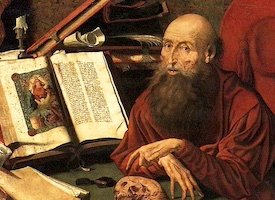
At first glance, perhaps the most remarkable quality of Lawrence of Brindisi is his outstanding gift of languages. In addition to a thorough knowledge of his native Italian, he had complete reading and speaking ability in Latin, Hebrew, Greek, German, Bohemian, Spanish, and French.
Lawrence was born on July 22, 1559, and died exactly 60 years later on his birthday in 1619. His parents William and Elizabeth Russo gave him the name of Julius Caesar, Caesare in Italian. After the early death of his parents, he was educated by his uncle at the College of St. Mark in Venice.
When he was just 16, he entered the Capuchin Franciscan Order in Venice and received the name of Lawrence. He completed his studies of philosophy and theology at the University of Padua and was ordained a priest at 23.
With his facility for languages Lawrence was able to study the Bible in its original texts. At the request of Pope Clement VIII, he spent much time preaching to the Jews in Italy. So excellent was his knowledge of Hebrew, the rabbis felt sure he was a Jew who had become a Christian.
Lawrence’s sensitivity to the needs of people—a character trait perhaps unexpected in such a talented scholar—began to surface. He was elected major superior of the Capuchin Franciscan province of Tuscany at the age of 31. He had the combination of brilliance, human compassion, and administrative skill needed to carry out his duties. In rapid succession he was promoted by his fellow Capuchins and was elected minister general of the Capuchins in 1602. In this position he was responsible for great growth and geographical expansion of the Order.
Lawrence was appointed papal emissary and peacemaker, a job which took him to a number of foreign countries. An effort to achieve peace in his native kingdom of Naples took him on a journey to Lisbon to visit the king of Spain. Serious illness in Lisbon took his life in 1619.
In 1956, the Capuchins completed a 15-volume edition of Lawrence’s writings. Eleven of these 15 contain his sermons, each of which relies chiefly on scriptural quotations to illustrate his teaching.
Reflection
His constant devotion to Scripture, coupled with great sensitivity to the needs of people, present a lifestyle which appeals to Christians today. Lawrence had a balance in his life that blended self-discipline with a keen appreciation for the needs of those whom he was called to serve.
LAST-MODIFIED:20240720T223438Z SEQUENCE:55819392 X-ACCESS:1 X-HITS:116 X-COLOR:f0b80e X-SHOW-END-TIME:1 END:VEVENT BEGIN:VEVENT DTSTART;VALUE=DATE:20240722 DTEND;VALUE=DATE:20240723 UID:BB4D3102-549B-4C07-8876-136B34FC84CB SUMMARY:St. Mary Magdalen CREATED:20221013T211126Z DTSTAMP:20221013T211126Z URL:https://www.stpaulsweymouth.org/component/dpcalendar/event/1791?calid=13 DESCRIPTION:St. Mary Magdalen, Penitent\N\NOf the earlier life of Saint Mary Magdalen we know only that she was a woman who was a sinner. From the depth of her degradation she raised her eyes to Jesus with sorrow, hope, and love. Covered with shame, she came to where Jesus was at table, and knelt behind Him. She said not a word, but bathed His feet with her tears, wiped them with the hair of her head and kissed them with humility. Then she poured on them costly ointment. The divine lips of her Saviour removed her reproach, spoke her absolution, and bade her go in peace. From that time on, she ministered to Jesus, sat at His feet, and listened to His words. She was one of the family of Bethany whom Jesus so loved that He raised her brother Lazarus from the dead.\NIt happened that once again, on the eve of His Passion, she brought precious ointment, and this time, as His purified and beloved follower, poured it on His head; and we may say that the entire House of God is still filled with the fragrance of her anointing. Mary Magdalen stood with Our Lady and Saint John at the foot of the cross, representative of the many who have loved much because much has been forgiven them.\NTo her, the first after His blessed Mother, and through her to His Apostles, Our Lord gave the certainty of His resurrection. When the faithful were scattered by persecution, the family of Bethany found refuge in the south of France. The cave in which Saint Mary Magdalen lived for thirty years is still seen, with a chapel on the mountaintop, in which she was caught up daily, like Saint Paul, to visions and revelations of the Lord. When her end drew near she was borne to a place still marked by a monument, where the holy Bishop Maximin awaited her; and when she had received her Lord, she peacefully fell asleep in death.\NReflection: Compunction of heart, says Saint Bernard, is a treasure infinitely to be desired, and an unspeakable gladness to the heart. It is healing to the soul; it is remission of sins; it brings back the Holy Spirit into the humble and loving heart.\NLittle Pictorial Lives of the Saints, a compilation based on Butler's Lives of the Saints, and other sources by John Gilmary Shea (Benziger Brothers: New York, 1894). X-ALT-DESC;FMTTYPE=text/html:St. Mary Magdalen, Penitent
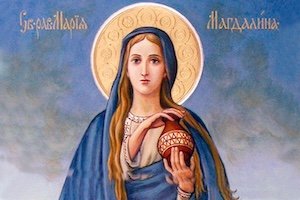
Of the earlier life of Saint Mary Magdalen we know only that she was a woman who was a sinner. From the depth of her degradation she raised her eyes to Jesus with sorrow, hope, and love. Covered with shame, she came to where Jesus was at table, and knelt behind Him. She said not a word, but bathed His feet with her tears, wiped them with the hair of her head and kissed them with humility. Then she poured on them costly ointment. The divine lips of her Saviour removed her reproach, spoke her absolution, and bade her go in peace. From that time on, she ministered to Jesus, sat at His feet, and listened to His words. She was one of the family of Bethany whom Jesus so loved that He raised her brother Lazarus from the dead.
It happened that once again, on the eve of His Passion, she brought precious ointment, and this time, as His purified and beloved follower, poured it on His head; and we may say that the entire House of God is still filled with the fragrance of her anointing. Mary Magdalen stood with Our Lady and Saint John at the foot of the cross, representative of the many who have loved much because much has been forgiven them.
To her, the first after His blessed Mother, and through her to His Apostles, Our Lord gave the certainty of His resurrection. When the faithful were scattered by persecution, the family of Bethany found refuge in the south of France. The cave in which Saint Mary Magdalen lived for thirty years is still seen, with a chapel on the mountaintop, in which she was caught up daily, like Saint Paul, to visions and revelations of the Lord. When her end drew near she was borne to a place still marked by a monument, where the holy Bishop Maximin awaited her; and when she had received her Lord, she peacefully fell asleep in death.
Reflection: Compunction of heart, says Saint Bernard, is a treasure infinitely to be desired, and an unspeakable gladness to the heart. It is healing to the soul; it is remission of sins; it brings back the Holy Spirit into the humble and loving heart.
Little Pictorial Lives of the Saints, a compilation based on Butler's Lives of the Saints, and other sources by John Gilmary Shea (Benziger Brothers: New York, 1894).
LAST-MODIFIED:20240720T223707Z SEQUENCE:55819541 X-ACCESS:1 X-HITS:45 X-COLOR:f0b80e X-SHOW-END-TIME:1 END:VEVENT BEGIN:VEVENT DTSTART;VALUE=DATE:20240723 DTEND;VALUE=DATE:20240724 UID:6C5B1A9F-B508-4E63-87FD-F15C27E468A4 SUMMARY:St. Apollinaris CREATED:20221013T211126Z DTSTAMP:20221013T211126Z URL:https://www.stpaulsweymouth.org/component/dpcalendar/event/1854?calid=13 DESCRIPTION:St. Apollinaris Bishop, Martyr\N\NWhen Saint Peter, setting out for Rome, left Antioch after seven years as its spiritual Head, he took with him several of the faithful of that city, among them Apollinaris, a disciple of Jesus Christ. He consecrated him bishop a few years later and sent him to Ravenna as its first bishop.\NHis first miracle was on behalf of the blind son of a soldier who gave him hospitality when he first arrived in the city of Ravenna. When the apostle told him of the God he had come to preach and invited him to abandon the cult of idols, the soldier replied: Stranger, if the God you preach is as powerful as you say, beg Him to give sight to my son, and I will believe in Him. The Saint had the child brought and made the sign of the cross on his eyes as he prayed. The miracle was instantaneous, to the great amazement of all, and news of it spread rapidly. A day or so later, a military tribune sent for him to cure his wife from a long illness, which again he did. The house of the tribune became a center of apostolic action, and several persons sent their children to the Saint to instruct them there. Little by little a flourishing Christian assembly was formed, and priests and deacons were ordained. The Saint lived in community with the two priests and two deacons.\NThe idolatrous priests aroused the people against him, as we see the enemies of Saint Paul do in the Acts of the Apostles. He was left half-dead on the seashore, after being severely beaten, but was cared for by the Christians and recovered rapidly. A young girl whom he cured after having her father promise to allow her full liberty to follow Christ, consecrated her virginity to God. It was after this that, in the time of Vespasian, he was arrested and interrogated and again flogged, stretched on the rack and plunged into boiling oil. Alive still, he was exiled to Illyria, east of the Adriatic Sea.\NHe remained three years in that country, having survived a shipwreck with only a few persons whom he converted. Then he evangelized the various districts, with the aid of his converts. When an idol ceased to speak during his sojourn in one of these regions, the pagans again beat him and threw him and his companions on a ship which took them back to Italy. Soon imprisoned, he escaped but was seized again and for the last time subjected to a flogging. He died on July 23rd of the year 79. His body lay first at Classis, four miles from Ravenna, and a church was built over his tomb; later the relics were returned to Ravenna. Pope Honorius had a church built to honor the name of Apollinaris in Rome, about the year 630. From the beginning the Church has held his memory in high veneration.\NLes Petits Bollandistes: Vies des Saints, by Msgr. Paul Guérin (Bloud et Barral: Paris, 1882), Vol. 8\N X-ALT-DESC;FMTTYPE=text/html:St. Apollinaris Bishop, Martyr
When Saint Peter, setting out for Rome, left Antioch after seven years as its spiritual Head, he took with him several of the faithful of that city, among them Apollinaris, a disciple of Jesus Christ. He consecrated him bishop a few years later and sent him to Ravenna as its first bishop.
His first miracle was on behalf of the blind son of a soldier who gave him hospitality when he first arrived in the city of Ravenna. When the apostle told him of the God he had come to preach and invited him to abandon the cult of idols, the soldier replied: Stranger, if the God you preach is as powerful as you say, beg Him to give sight to my son, and I will believe in Him. The Saint had the child brought and made the sign of the cross on his eyes as he prayed. The miracle was instantaneous, to the great amazement of all, and news of it spread rapidly. A day or so later, a military tribune sent for him to cure his wife from a long illness, which again he did. The house of the tribune became a center of apostolic action, and several persons sent their children to the Saint to instruct them there. Little by little a flourishing Christian assembly was formed, and priests and deacons were ordained. The Saint lived in community with the two priests and two deacons.
The idolatrous priests aroused the people against him, as we see the enemies of Saint Paul do in the Acts of the Apostles. He was left half-dead on the seashore, after being severely beaten, but was cared for by the Christians and recovered rapidly. A young girl whom he cured after having her father promise to allow her full liberty to follow Christ, consecrated her virginity to God. It was after this that, in the time of Vespasian, he was arrested and interrogated and again flogged, stretched on the rack and plunged into boiling oil. Alive still, he was exiled to Illyria, east of the Adriatic Sea.
He remained three years in that country, having survived a shipwreck with only a few persons whom he converted. Then he evangelized the various districts, with the aid of his converts. When an idol ceased to speak during his sojourn in one of these regions, the pagans again beat him and threw him and his companions on a ship which took them back to Italy. Soon imprisoned, he escaped but was seized again and for the last time subjected to a flogging. He died on July 23rd of the year 79. His body lay first at Classis, four miles from Ravenna, and a church was built over his tomb; later the relics were returned to Ravenna. Pope Honorius had a church built to honor the name of Apollinaris in Rome, about the year 630. From the beginning the Church has held his memory in high veneration.
Les Petits Bollandistes: Vies des Saints, by Msgr. Paul Guérin (Bloud et Barral: Paris, 1882), Vol. 8
LAST-MODIFIED:20240730T182640Z SEQUENCE:56668514 X-ACCESS:1 X-HITS:26 X-COLOR:f0b80e X-SHOW-END-TIME:1 END:VEVENT BEGIN:VEVENT DTSTART;VALUE=DATE:20240723 DTEND;VALUE=DATE:20240724 UID:E2A36D6A-3F33-4E0F-B383-8BB0BFF5BE40 SUMMARY:St. Liborius CREATED:20221013T211126Z DTSTAMP:20221013T211126Z URL:https://www.stpaulsweymouth.org/component/dpcalendar/event/1856?calid=13 DESCRIPTION:St. Liborius Bishop, Confessor\N\NSt. Liborius was born of an illustrious family of Gaul (a region in the Roman Empire which extended to the area on the west bank of the Rhine river of the present day Germany), and became Bishop of Le Mans, France. He was a trusty companion to St. Marinus (Martin of Tours). They were both bishops, neighbours in office. St. Liborius was bishop for about 49 years and ordained 217 priests, 186 deacons and 93 sub deacons and other churchmen. He is said to have died on July 23, 397 A.D. with Bishop Martin at his side. He was buried in the Apostle Basilica of Le Mans, beside his predecessor, Julian, the founder of the bishopric. Much of the ministerial life of Bishop Liborius covered the second half of the 4th century. By this time, the Roman Empire ended its persecution of Christianity with Emperor Constantine the Great’s Edict of Milan in the year 313. Freed from persecution, the Christian faith was now free to grow. However, during this time, foreign tribes roamed the land. There was chaos and misery. Bishop Liborius’ Episcopal area had been Christian for some time but heathen Druids were still active and through their mysterious pagan rites were able to influence the people. So, Bishop Liborius built many churches and celebrated the Eucharist with piety and dignity. The well-trained priests in his diocese finally triumphed over the Druids. Nowadays, we would call the works of Bishop Liborius and his clergy at the time as primary evangelisation. He is said to have healed sufferers from “gravel and allied complaints” and for this reason his feast was introduced by Pope Clement XI, himself a victim who was cured by the saint’s intercession. Miracles occurred at his tomb. In 835 Bishop Aldrich placed some relics of his body into an altar in the cathedral, and in the following year, on the instructions of Emperor Louis the Pious, sent the body to Bishop Badurad of Paderborn, a diocese founded in 799 by Pope Leo III and Emperor Charlemagne that had no saint of its own. In the year, 836 A.D., (9th century), the relics of Saint Liborius were brought from Le Mans, France, to Paderborn, Germany. At this time, relics of the saints were well guarded and venerated in churches and dioceses which had them. The willingness of the diocese of Le Mans to handover the relics of St. Liborius to the diocese of Paderborn was a true act of charity. The event forged a long lasting friendship between the sister cities of Le Mans and Paderborn; it has existed for over 1,000 years to this day. From this arose a "love bond of lasting brotherhood" that has survived all the hostilities of the succeeding centuries and is considered to be the oldest contract still in force. Both churches bound themselves to help each other by prayer and material assistance, as they have in fact done on more than one occasion. X-ALT-DESC;FMTTYPE=text/html:
St. Liborius Bishop, Confessor
St. Liborius was born of an illustrious family of Gaul (a region in the Roman Empire which extended to the area on the west bank of the Rhine river of the present day Germany), and became Bishop of Le Mans, France. He was a trusty companion to St. Marinus (Martin of Tours). They were both bishops, neighbours in office. St. Liborius was bishop for about 49 years and ordained 217 priests, 186 deacons and 93 sub deacons and other churchmen. He is said to have died on July 23, 397 A.D. with Bishop Martin at his side. He was buried in the Apostle Basilica of Le Mans, beside his predecessor, Julian, the founder of the bishopric.
Much of the ministerial life of Bishop Liborius covered the second half of the 4th century. By this time, the Roman Empire ended its persecution of Christianity with Emperor Constantine the Great’s Edict of Milan in the year 313. Freed from persecution, the Christian faith was now free to grow. However, during this time, foreign tribes roamed the land. There was chaos and misery. Bishop Liborius’ Episcopal area had been Christian for some time but heathen Druids were still active and through their mysterious pagan rites were able to influence the people. So, Bishop Liborius built many churches and celebrated the Eucharist with piety and dignity. The well-trained priests in his diocese finally triumphed over the Druids. Nowadays, we would call the works of Bishop Liborius and his clergy at the time as primary evangelisation.
He is said to have healed sufferers from “gravel and allied complaints” and for this reason his feast was introduced by Pope Clement XI, himself a victim who was cured by the saint’s intercession.
Miracles occurred at his tomb. In 835 Bishop Aldrich placed some relics of his body into an altar in the cathedral, and in the following year, on the instructions of Emperor Louis the Pious, sent the body to Bishop Badurad of Paderborn, a diocese founded in 799 by Pope Leo III and Emperor Charlemagne that had no saint of its own.
In the year, 836 A.D., (9th century), the relics of Saint Liborius were brought from Le Mans, France, to Paderborn, Germany. At this time, relics of the saints were well guarded and venerated in churches and dioceses which had them. The willingness of the diocese of Le Mans to handover the relics of St. Liborius to the diocese of Paderborn was a true act of charity. The event forged a long lasting friendship between the sister cities of Le Mans and Paderborn; it has existed for over 1,000 years to this day.
From this arose a "love bond of lasting brotherhood" that has survived all the hostilities of the succeeding centuries and is considered to be the oldest contract still in force. Both churches bound themselves to help each other by prayer and material assistance, as they have in fact done on more than one occasion.
St. Christina, Virgin & Martyr
Saint Christina was the daughter of a rich and powerful magistrate named Urban. Her father, who was deep in the practices of paganism, had a number of golden idols. His young daughter broke them, then distributed the pieces among the poor. Infuriated by this act, Urban became the persecutor of his own daughter. He had her whipped with rods and thrown into a dungeon. Christina remained unshaken in her faith. Her tormentor brought her forth to have her body torn by iron hooks, then fastened to a rack beneath which a fire was kindled. But God watched over His servant and turned the flames back toward the onlookers, several of whom perished.
The torments to which this young girl was subjected would seem as difficult to devise as to imagine; but God was beside her at all times. After a heavy stone was attached to her neck, Saint Christina was thrown into the lake of Bolsena, but was rescued by an Angel and seen wearing a stole and walking on the water, accompanied by several Angels. Her father, hearing she was still alive, died suddenly amid atrocious sufferings. A new judge succeeded him, a cruel pagan experienced in persecuting the Christians. He tried to win her by reminding her of her nobility, suggesting she was in serious error. Her reply infuriated him: Christ, whom you despise, will tear me out of your hands! Then Saint Christina suffered the most inhuman torments. The second judge also was struck down by divine justice. A third one named Julian, succeeded him. Magician! he cried, adore the gods, or I will put you to death! She survived a raging furnace, after remaining in it for five days. Serpents and vipers thrown into her prison did not touch her, but killed the magician who had brought them there. She sent them away in the name of Christ, after restoring the unfortunate magician to life; he was converted and thanked the God of Christina and the Saint. Then her tongue was cut out.
The Saint prayed to be allowed to finish her course. When she was pierced with arrows, she gained the martyr's crown at Tyro, a city which formerly stood on an island in the lake of Bolsena in Italy, but has since been swallowed up by the waters. Her relics are now at Palermo in Sicily. Her tomb was discovered in the 19th century at Bolsena, marked with an inscription dating from the 10th century.
Les Petits Bollandistes: Vies des Saints, by Msgr. Paul Guérin (Bloud et Barral: Paris, 1882), Vol. 9
LAST-MODIFIED:20240730T183412Z SEQUENCE:56668966 X-ACCESS:1 X-HITS:10 X-COLOR:f0b80e X-SHOW-END-TIME:1 END:VEVENT BEGIN:VEVENT DTSTART;VALUE=DATE:20240725 DTEND;VALUE=DATE:20240726 UID:C03845C2-3715-452C-BEB9-10DF7BA76B6B SUMMARY:St. James CREATED:20221013T211126Z DTSTAMP:20221013T211126Z URL:https://www.stpaulsweymouth.org/component/dpcalendar/event/1860?calid=13 DESCRIPTION:St. James the Greater, Apostle\N\NAmong the twelve Apostles, three were chosen to be the close companions of our Blessed Lord, and of these James was one. He, with Peter and John, was admitted to the house of Jairus when his dead child was raised to life (Luke 8:40 ff.); only these three were taken up to the high mountain of Thabor and beheld the face of Jesus shining as the sun, and His garments white as snow (Mark 9:2-7). These three alone witnessed the fearful agony in Gethsemane. (Luke 22:39-45)\NWhat was it that won James a place among the favorite three? Faith, burning, impetuous and outspoken, the straightforwardness of the true Israelite, were visible in him; but these qualities needed purifying before the Son of Thunder could proclaim the Gospel of peace. It was James who suggested fire from heaven to consume the inhospitable Samaritans, and who sought a place of honor beside Christ in His kingdom. Yet Our Lord, in rebuking his presumption, prophesied his faithfulness unto death. (Mark10:38-40) He went to Spain after the death of Our Lord, and remained there for nine years, according to tradition. The famous Basilica of Saint James of Compostello, one of the most frequented pilgrimage sites of Europe, the site also of countless miracles, commemorates the memory of the nation's beloved Apostle.\NIn the year 44 Saint James, who was at that time in Jerusalem, was brought before King Herod Agrippa. The Apostle had been preaching fearlessly there, curing the sick and the blind, and delivering possessed persons. Two magicians were sent by the authorities to stop his doings by their charms, but both were converted. His enemies were not defeated by that, however, and paid two Roman captains to incite a sedition during the Apostle's preaching, then seize him as its author. A certain Josias, a scribe among the Pharisees, put a cord around his neck and took him before the third Herod, grandson of the first, murderer of the Innocents, and nephew of the second, who had the Baptist decapitated. This new sycophant of the Roman Emperors, desiring to conciliate the Jews and make them forget his non-Jewish origins, decided to do so by persecuting the Christians. Without delay he condemned Saint James to die by the sword. The Apostle's fearless confession of Jesus crucified so moved the scribe Josias, that he too confessed Christ and begged pardon of the Saint. He was taken with the Apostle to the place of execution, where Saint James and his convert died together.\NThe Apostle won the three crowns of heroism: he is a Doctor par excellence of the Faith, he was the first Apostle to be martyred, and according to Saint Epiphanus and other historians, he always conserved his virginity. He is the patron of Spain. A Spanish author by the name of Tamayo reports fifteen different apparitions of Saint James to the kings and princes of Spain, followed each time by some specific assistance for the benefit of the land.\NReflection: We must all desire a place in the kingdom of our Father; but can we drink the chalice which He holds out to each one of us? Possumus,we must say with Saint James — We can! — but only in the strength of Him who drank it first for us.\NLittle Pictorial Lives of the Saints, a compilation based on Butler's Lives of the Saints, and other sources by John Gilmary Shea (Benziger Brothers: New York, 1894); Les Petits Bollandistes: Vies des Saints, by Msgr. Paul Guérin (Bloud et Barral: Paris, 1882), Vol. 9 X-ALT-DESC;FMTTYPE=text/html:St. James the Greater, Apostle
Among the twelve Apostles, three were chosen to be the close companions of our Blessed Lord, and of these James was one. He, with Peter and John, was admitted to the house of Jairus when his dead child was raised to life (Luke 8:40 ff.); only these three were taken up to the high mountain of Thabor and beheld the face of Jesus shining as the sun, and His garments white as snow (Mark 9:2-7). These three alone witnessed the fearful agony in Gethsemane. (Luke 22:39-45)
What was it that won James a place among the favorite three? Faith, burning, impetuous and outspoken, the straightforwardness of the true Israelite, were visible in him; but these qualities needed purifying before the Son of Thunder could proclaim the Gospel of peace. It was James who suggested fire from heaven to consume the inhospitable Samaritans, and who sought a place of honor beside Christ in His kingdom. Yet Our Lord, in rebuking his presumption, prophesied his faithfulness unto death. (Mark10:38-40) He went to Spain after the death of Our Lord, and remained there for nine years, according to tradition. The famous Basilica of Saint James of Compostello, one of the most frequented pilgrimage sites of Europe, the site also of countless miracles, commemorates the memory of the nation's beloved Apostle.
In the year 44 Saint James, who was at that time in Jerusalem, was brought before King Herod Agrippa. The Apostle had been preaching fearlessly there, curing the sick and the blind, and delivering possessed persons. Two magicians were sent by the authorities to stop his doings by their charms, but both were converted. His enemies were not defeated by that, however, and paid two Roman captains to incite a sedition during the Apostle's preaching, then seize him as its author. A certain Josias, a scribe among the Pharisees, put a cord around his neck and took him before the third Herod, grandson of the first, murderer of the Innocents, and nephew of the second, who had the Baptist decapitated. This new sycophant of the Roman Emperors, desiring to conciliate the Jews and make them forget his non-Jewish origins, decided to do so by persecuting the Christians. Without delay he condemned Saint James to die by the sword. The Apostle's fearless confession of Jesus crucified so moved the scribe Josias, that he too confessed Christ and begged pardon of the Saint. He was taken with the Apostle to the place of execution, where Saint James and his convert died together.
The Apostle won the three crowns of heroism: he is a Doctor par excellence of the Faith, he was the first Apostle to be martyred, and according to Saint Epiphanus and other historians, he always conserved his virginity. He is the patron of Spain. A Spanish author by the name of Tamayo reports fifteen different apparitions of Saint James to the kings and princes of Spain, followed each time by some specific assistance for the benefit of the land.
Reflection: We must all desire a place in the kingdom of our Father; but can we drink the chalice which He holds out to each one of us? Possumus,we must say with Saint James — We can! — but only in the strength of Him who drank it first for us.
Little Pictorial Lives of the Saints, a compilation based on Butler's Lives of the Saints, and other sources by John Gilmary Shea (Benziger Brothers: New York, 1894); Les Petits Bollandistes: Vies des Saints, by Msgr. Paul Guérin (Bloud et Barral: Paris, 1882), Vol. 9
LAST-MODIFIED:20240730T183703Z SEQUENCE:56669137 X-ACCESS:1 X-HITS:93 X-COLOR:f0b80e X-SHOW-END-TIME:1 END:VEVENT BEGIN:VEVENT DTSTART;VALUE=DATE:20240725 DTEND;VALUE=DATE:20240726 UID:AAE2C104-39B2-4565-97B7-2BF7B4224FA3 SUMMARY:St. Christopher CREATED:20221013T211126Z DTSTAMP:20221013T211126Z URL:https://www.stpaulsweymouth.org/component/dpcalendar/event/1862?calid=13 DESCRIPTION:St. Christopher, Martyr\N\NThe valiant and glorious martyr, Saint Christopher, was by nation a Cananean; being moved by a particular inspiration of God, he came into the province of Lycia to preach and announce the name of Christ to those who were ignorant of him. But first, he armed himself with continual prayer against all encounters and difficulties he was to meet in this holy enterprise. He was a proper and big man, comely, and of an excellent disposition. Whereby he drew his eyes upon him and gained all men’s affections. He carried a wand in his hand; upon a time, he pitched in the ground; it suddenly became green and budded. Which miracle caused the conversion of divers to the holy faith of Christ. And as well as Saint Christopher’s prayers, his preaching, and beautiful signs that our Lord wrought by him, Christian religion in a short time was wonderfully propagated, and the church made the most prosperous progress until Decius came to the empire, Saint Christopher was taken in Samos, which is a city of the province of Lycia.\NThe judge, who exceedingly desired to draw him to his superstition, and persuade him to worship his idols, left nothing un-attempted which he thought might be of power to work upon his mind. But, on the contrary, he spoke to him fair and promised him great rewards if he would yield. Then again threatened him with all manner of torments if he refused to do what he was urged to do. But finding his courage to be of steel, and that it was to speak to a rock, to go about to entice or intimidate him, he found out a diabolical device and sent two lewd and wanton women to him, to solicit him to sin; thinking that if he could bereave him of virtue, it would be no complicated matter to dispossess him of the faith and love of Jesus Christ, whom Saint Christopher defended and maintained to be God. So these impudent creatures entered the prison where the saint was but presently were seized upon by so dreadful a fear and horror that they were made to acknowledge and detest their wickedness and to cast themselves at Saint Christopher’s feet; whom they besought with many tears to obtain the pardon and mercy for them of Almighty God. And he did well to instruct and confirm them in the faith of our Lord Jesus Christ, that they came soon to lay down their lives for the same, together with others, whom the holy man had gained and converted by his preaching. And besides these, diverse others, that were people of good quality, did with great zeal suffer death and shed their blood for our Lord’s sake.\NBut the most inhuman and barbaric judge, despairing ever to conquer the invincible courage and constancy of Saint Christopher, resolved at least to satisfy his rage and cruelty in revenging himself upon him. And to make him die by some unusual and exquisite torments, he would first have him be most unmercifully whipped. Then he puts on an extremely hot iron helmet that it seemed like fiery coal, glowing and sparking upon his head. Afterward, having commanded a form or bench of iron to be made, in length and breadth proportional to his body, he stretches him upon it, kindles under it a fire, and continually pours upon him seething oil to consume him with a flow fire, and most painful; yet withal long and lingering death.\NBut the noble martyr was so favored and assisted by the Almighty God that he said to the judge, with a pleasant and smiling countenance, Through the power of Jesus Christ, I feel not thy torments. And so, without being hurt or singed, he rose from that fiery bed. At this point, many of those present believed in Christ.\NThe judge made him be tied to a post and stand on a mark for all the soldiers to shoot at. But not an arrow could hit him. But, on the contrary, one of the shafts recoiling back fastened itself in the eye of an officer and put it out. But he, taking up some of the sacred blood which had fallen from the martyr while he was scourged and applying it to his eye, recovered sight both of body and soul.\NIn fine, this glorious saint had his head cut off. But when he was under the sword of the executioner, before the final blow was given, he made a humble prayer to Almighty God and begged of Him, That neither hail, nor fire, nor storm, nor famine, nor plague might annoy the place where his body should be buried. Then, after prayer, he rendered his soul into the hands of his Creator, who had made him victorious over death and torment.\NSaint Christopher converted to God by his preaching to 48,000 persons. Saint Ambrose speaks of this glorious saint and martyr, and in the Preface of the Mass, which he puts for his feast, has these words, for they are as it were an abridgment of his life. Lord, sayeth he, thou didst so furnish and adorn Saint Christopher with virtue, grace, and science, that by his divine doctrine and miracles be converted 48,000 persons, dispersing the darkness of gentility and discovering to them the light of faith. He reduced to the glory of chastity Niceta and Aquilina, lewd courtesans that had long weltered in the ordure of sin, teaching them to confess their faith, die for it, and receive the crown of martyrdom. Moreover, when he lay in the fire upon an iron bed, he feared not the raging heat; he could not be pierced by a million arrows, which the soldiers were shooting at him for a whole day. One of the arrows struck out the eye of an executioner, but the blood of the blessed martyr soaked into the ground restored his vision and cured his corporal blindness, giving him sight to his soul. He obtained pardon for sinners and grace that diseases and infirmities might be cured at his intercession. Thus writes Saint Ambrose.\NThe martyrdom of Saint Christopher was on that day, in which the holy Church celebrates it, to wit, the 25th of July, in the year of our Lord 254, in the reign of Decius emperor, according to the Roman Martyrology and Cardinal Baronius. Saint Christopher is usually pictured with the infant Jesus on his shoulders, passing over a river. No other ground than that Saint Christopher passed through many waters of afflictions, pains, and torments, with strength and virtue which our Lord Jesus gave him. His picture is ordinarily put in some high place because of the grace God gave him to defend us from storms and tempests, according to what he begged God.\NRibadeneyra, Pedro de. “The Life of Saint Christopher, Martyr.” The Lives of Saints, With Other Feasts of the Year, according to the Roman Calendar. Written in Spanish by the Reverend Father Peter Ribadeneyra, Priest of the Society of Jesus. Translated Into English by W.P. (William Petre) Esq; The Second Edition Corrected and Amended, vol. 2. London. Printed by B.S., 1730, pp. 57–58. X-ALT-DESC;FMTTYPE=text/html:St. Christopher, Martyr
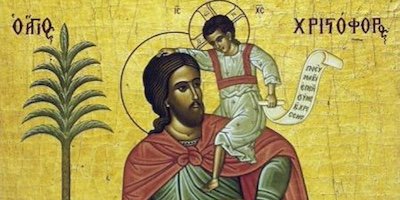
The valiant and glorious martyr, Saint Christopher, was by nation a Cananean; being moved by a particular inspiration of God, he came into the province of Lycia to preach and announce the name of Christ to those who were ignorant of him. But first, he armed himself with continual prayer against all encounters and difficulties he was to meet in this holy enterprise. He was a proper and big man, comely, and of an excellent disposition. Whereby he drew his eyes upon him and gained all men’s affections. He carried a wand in his hand; upon a time, he pitched in the ground; it suddenly became green and budded. Which miracle caused the conversion of divers to the holy faith of Christ. And as well as Saint Christopher’s prayers, his preaching, and beautiful signs that our Lord wrought by him, Christian religion in a short time was wonderfully propagated, and the church made the most prosperous progress until Decius came to the empire, Saint Christopher was taken in Samos, which is a city of the province of Lycia.
The judge, who exceedingly desired to draw him to his superstition, and persuade him to worship his idols, left nothing un-attempted which he thought might be of power to work upon his mind. But, on the contrary, he spoke to him fair and promised him great rewards if he would yield. Then again threatened him with all manner of torments if he refused to do what he was urged to do. But finding his courage to be of steel, and that it was to speak to a rock, to go about to entice or intimidate him, he found out a diabolical device and sent two lewd and wanton women to him, to solicit him to sin; thinking that if he could bereave him of virtue, it would be no complicated matter to dispossess him of the faith and love of Jesus Christ, whom Saint Christopher defended and maintained to be God. So these impudent creatures entered the prison where the saint was but presently were seized upon by so dreadful a fear and horror that they were made to acknowledge and detest their wickedness and to cast themselves at Saint Christopher’s feet; whom they besought with many tears to obtain the pardon and mercy for them of Almighty God. And he did well to instruct and confirm them in the faith of our Lord Jesus Christ, that they came soon to lay down their lives for the same, together with others, whom the holy man had gained and converted by his preaching. And besides these, diverse others, that were people of good quality, did with great zeal suffer death and shed their blood for our Lord’s sake.
But the most inhuman and barbaric judge, despairing ever to conquer the invincible courage and constancy of Saint Christopher, resolved at least to satisfy his rage and cruelty in revenging himself upon him. And to make him die by some unusual and exquisite torments, he would first have him be most unmercifully whipped. Then he puts on an extremely hot iron helmet that it seemed like fiery coal, glowing and sparking upon his head. Afterward, having commanded a form or bench of iron to be made, in length and breadth proportional to his body, he stretches him upon it, kindles under it a fire, and continually pours upon him seething oil to consume him with a flow fire, and most painful; yet withal long and lingering death.
But the noble martyr was so favored and assisted by the Almighty God that he said to the judge, with a pleasant and smiling countenance, Through the power of Jesus Christ, I feel not thy torments. And so, without being hurt or singed, he rose from that fiery bed. At this point, many of those present believed in Christ.
The judge made him be tied to a post and stand on a mark for all the soldiers to shoot at. But not an arrow could hit him. But, on the contrary, one of the shafts recoiling back fastened itself in the eye of an officer and put it out. But he, taking up some of the sacred blood which had fallen from the martyr while he was scourged and applying it to his eye, recovered sight both of body and soul.
In fine, this glorious saint had his head cut off. But when he was under the sword of the executioner, before the final blow was given, he made a humble prayer to Almighty God and begged of Him, That neither hail, nor fire, nor storm, nor famine, nor plague might annoy the place where his body should be buried. Then, after prayer, he rendered his soul into the hands of his Creator, who had made him victorious over death and torment.
Saint Christopher converted to God by his preaching to 48,000 persons. Saint Ambrose speaks of this glorious saint and martyr, and in the Preface of the Mass, which he puts for his feast, has these words, for they are as it were an abridgment of his life. Lord, sayeth he, thou didst so furnish and adorn Saint Christopher with virtue, grace, and science, that by his divine doctrine and miracles be converted 48,000 persons, dispersing the darkness of gentility and discovering to them the light of faith. He reduced to the glory of chastity Niceta and Aquilina, lewd courtesans that had long weltered in the ordure of sin, teaching them to confess their faith, die for it, and receive the crown of martyrdom. Moreover, when he lay in the fire upon an iron bed, he feared not the raging heat; he could not be pierced by a million arrows, which the soldiers were shooting at him for a whole day. One of the arrows struck out the eye of an executioner, but the blood of the blessed martyr soaked into the ground restored his vision and cured his corporal blindness, giving him sight to his soul. He obtained pardon for sinners and grace that diseases and infirmities might be cured at his intercession. Thus writes Saint Ambrose.
The martyrdom of Saint Christopher was on that day, in which the holy Church celebrates it, to wit, the 25th of July, in the year of our Lord 254, in the reign of Decius emperor, according to the Roman Martyrology and Cardinal Baronius. Saint Christopher is usually pictured with the infant Jesus on his shoulders, passing over a river. No other ground than that Saint Christopher passed through many waters of afflictions, pains, and torments, with strength and virtue which our Lord Jesus gave him. His picture is ordinarily put in some high place because of the grace God gave him to defend us from storms and tempests, according to what he begged God.
Ribadeneyra, Pedro de. “The Life of Saint Christopher, Martyr.” The Lives of Saints, With Other Feasts of the Year, according to the Roman Calendar. Written in Spanish by the Reverend Father Peter Ribadeneyra, Priest of the Society of Jesus. Translated Into English by W.P. (William Petre) Esq; The Second Edition Corrected and Amended, vol. 2. London. Printed by B.S., 1730, pp. 57–58.
LAST-MODIFIED:20240730T184001Z SEQUENCE:56669315 X-ACCESS:1 X-HITS:406 X-COLOR:f0b80e X-SHOW-END-TIME:1 END:VEVENT BEGIN:VEVENT DTSTART;VALUE=DATE:20240726 DTEND;VALUE=DATE:20240727 UID:155DA3C8-E3C3-4DD8-9C5B-9058330F60B6 SUMMARY:St. Anne CREATED:20221013T211126Z DTSTAMP:20221013T211126Z URL:https://www.stpaulsweymouth.org/component/dpcalendar/event/1864?calid=13 DESCRIPTION:St. Anne, Mother of the Blessed Virgin Mary\N\NSaint Anne, chosen by God to be the mother of Mary, His own Blessed Mother on earth, was the spouse of Saint Joachim. Ancestor of the Eternal King and High Priest, Joachim was of the royal house of David, while Anne was of Levitical descent. Their lives were wholly occupied with prayer and good works. One thing only was wanting to their union — they were childless, and this was held as a bitter misfortune among the Jews. At length, when Anne was well advanced in age, Mary was born, the fruit rather of grace than of nature, and the child more of God than of man.\NWith the birth of Mary the holy matron began a new life; she watched Her every movement with reverent tenderness, and, aware of the little one's destiny, felt herself hourly sanctified by the presence of her Immaculate Child. But she had vowed her daughter to God; to God the child Mary had already consecrated Herself, and to Him Anne gave Her back. Mary was three years old when Anne and Joachim led Her to the Temple steps, saw Her pass by Herself into the inner sanctuary, and then saw Her no more. Thus was Anne left childless in her old age, and deprived of her purest earthly joy. The holiest parents on earth could not, in the plan of God, raise this Child as was needed: Mary had to suffer from Her earliest years. Saint Anne and Saint Joachim humbly adored the Divine Will, and continued to watch and pray, until God called them to unending rest.\NFrance and Canada possess the principal sanctuaries of Saint Anne: in France, at Apt in Provence, and at Auray in Britanny; in Canada at Sainte-Anne-de-Beaupré in the Province of Quebec. At Apt the discovery in 792 of Saint Anne's relics, brought by Lazarus and his two sisters to France, was wholly miraculous, authenticated by the presence of Charlemagne during the discovery, and the signature of Pope Adrian I on the written account of the facts.\NReflection: Saint Anne is glorious among the Saints, not only as the mother of Mary, but because she gave Mary to God. Learn from her to reverence a religious vocation as the highest privilege, and to sacrifice every natural bond, however holy, at the call of God.\NLittle Pictorial Lives of the Saints, a compilation based on Butler's Lives of the Saints, and other sources by John Gilmary Shea (Benziger Brothers: New York, 1894). X-ALT-DESC;FMTTYPE=text/html:St. Anne, Mother of the Blessed Virgin Mary
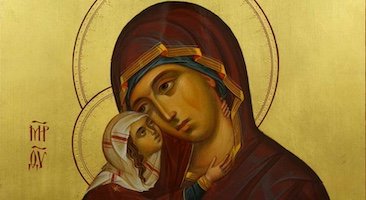
Saint Anne, chosen by God to be the mother of Mary, His own Blessed Mother on earth, was the spouse of Saint Joachim. Ancestor of the Eternal King and High Priest, Joachim was of the royal house of David, while Anne was of Levitical descent. Their lives were wholly occupied with prayer and good works. One thing only was wanting to their union — they were childless, and this was held as a bitter misfortune among the Jews. At length, when Anne was well advanced in age, Mary was born, the fruit rather of grace than of nature, and the child more of God than of man.
With the birth of Mary the holy matron began a new life; she watched Her every movement with reverent tenderness, and, aware of the little one's destiny, felt herself hourly sanctified by the presence of her Immaculate Child. But she had vowed her daughter to God; to God the child Mary had already consecrated Herself, and to Him Anne gave Her back. Mary was three years old when Anne and Joachim led Her to the Temple steps, saw Her pass by Herself into the inner sanctuary, and then saw Her no more. Thus was Anne left childless in her old age, and deprived of her purest earthly joy. The holiest parents on earth could not, in the plan of God, raise this Child as was needed: Mary had to suffer from Her earliest years. Saint Anne and Saint Joachim humbly adored the Divine Will, and continued to watch and pray, until God called them to unending rest.
France and Canada possess the principal sanctuaries of Saint Anne: in France, at Apt in Provence, and at Auray in Britanny; in Canada at Sainte-Anne-de-Beaupré in the Province of Quebec. At Apt the discovery in 792 of Saint Anne's relics, brought by Lazarus and his two sisters to France, was wholly miraculous, authenticated by the presence of Charlemagne during the discovery, and the signature of Pope Adrian I on the written account of the facts.
Reflection: Saint Anne is glorious among the Saints, not only as the mother of Mary, but because she gave Mary to God. Learn from her to reverence a religious vocation as the highest privilege, and to sacrifice every natural bond, however holy, at the call of God.
Little Pictorial Lives of the Saints, a compilation based on Butler's Lives of the Saints, and other sources by John Gilmary Shea (Benziger Brothers: New York, 1894).
LAST-MODIFIED:20240730T184352Z SEQUENCE:56669546 X-ACCESS:1 X-HITS:102 X-COLOR:f0b80e X-SHOW-END-TIME:1 END:VEVENT BEGIN:VEVENT DTSTART;VALUE=DATE:20240727 DTEND;VALUE=DATE:20240728 UID:8488DF72-426F-4962-B84A-69B6B81E21A7 SUMMARY:St. Pantaleon CREATED:20221013T211126Z DTSTAMP:20221013T211126Z URL:https://www.stpaulsweymouth.org/component/dpcalendar/event/1866?calid=13 DESCRIPTION:St. Pantaleon, Martyr\N\NSaint Pantaleon was born in Nicomedia of a pagan father and a Christian mother, who died while her son was still a child. He was among the court physicians of the Emperor Galerius Maximianus. Deceived by hearing the false maxims of the world applauded, he was without religion when God decided to rescue his soul from its unhappy darkness. A zealous and prudent Christian named Hermolaus took special notice of him and awakened his conscience, telling him that although the famous physicians of ancient times had possessed the science which cures bodies, Jesus Christ was a far more excellent Physician, able to cure not only bodies, but souls, by His divine doctrine. Hermolaus succeeded in bringing him into the fold of the Church.\NThe young Christian strove to procure for his father the same grace he himself had received, and his words had already begun to separate his father from his idols, when one day a blind man, led by friends, came to the door and begged Pantaleon to cure him. His father was present and heard the promise his son made to this man to do so, if he would give to the poor the money he was offering him. The father was amazed and feared that the promise could not be fulfilled. But the young Saint prayed and touched the eyes of the blind man, invoking the name of Jesus Christ, and his eyes were opened. Pantaleon's father and the blind man were both baptized as a result of this miracle. When Eustorgus, his father, died, Saint Pantaleon liberated all his slaves and, having sold most of his possessions, gave to the liberated ones and others the assistance their poverty required. He cured other illnesses and soon became renowned in Nicomedia.\NSaint Pantaleon, being a very sincere penitent, ardently wished to expiate his former idolatry by the martyrdom he could foresee. When a bloody persecution broke out at Nicomedia in 303, the blind man he had cured was beheaded upon refusing to admit that it was the gods who had cured him. Saint Pantaleon, to prepare himself for the imminent combat, distributed all he had left among the poor. Not long after this act of charity he was arrested and subjected to various tortures, during which he was preserved from death. Three other Christians, of whom one was Hermolaus, were apprehended. After suffering many torments, the four confessors were all sentenced to be beheaded.\NThe relics of Saint Pantaleon were translated to Constantinople, and there received great honor. His blood, conserved in a small vial, is said to liquefy on his feast day and become oxygenated. Charlemagne brought a part of his relics into France, where they are presently divided again, a portion being in the abbey of Saint Denys near Paris, and the head at Lyons. Saint Pantaleon, whose name means the all-compassionate one, is the patron of physicians.\NLes Petits Bollandistes: Vies des Saints, by Msgr. Paul Guérin (Bloud et Barral: Paris, 1882), Vol. 9 X-ALT-DESC;FMTTYPE=text/html:St. Pantaleon, Martyr

Saint Pantaleon was born in Nicomedia of a pagan father and a Christian mother, who died while her son was still a child. He was among the court physicians of the Emperor Galerius Maximianus. Deceived by hearing the false maxims of the world applauded, he was without religion when God decided to rescue his soul from its unhappy darkness. A zealous and prudent Christian named Hermolaus took special notice of him and awakened his conscience, telling him that although the famous physicians of ancient times had possessed the science which cures bodies, Jesus Christ was a far more excellent Physician, able to cure not only bodies, but souls, by His divine doctrine. Hermolaus succeeded in bringing him into the fold of the Church.
The young Christian strove to procure for his father the same grace he himself had received, and his words had already begun to separate his father from his idols, when one day a blind man, led by friends, came to the door and begged Pantaleon to cure him. His father was present and heard the promise his son made to this man to do so, if he would give to the poor the money he was offering him. The father was amazed and feared that the promise could not be fulfilled. But the young Saint prayed and touched the eyes of the blind man, invoking the name of Jesus Christ, and his eyes were opened. Pantaleon's father and the blind man were both baptized as a result of this miracle. When Eustorgus, his father, died, Saint Pantaleon liberated all his slaves and, having sold most of his possessions, gave to the liberated ones and others the assistance their poverty required. He cured other illnesses and soon became renowned in Nicomedia.
Saint Pantaleon, being a very sincere penitent, ardently wished to expiate his former idolatry by the martyrdom he could foresee. When a bloody persecution broke out at Nicomedia in 303, the blind man he had cured was beheaded upon refusing to admit that it was the gods who had cured him. Saint Pantaleon, to prepare himself for the imminent combat, distributed all he had left among the poor. Not long after this act of charity he was arrested and subjected to various tortures, during which he was preserved from death. Three other Christians, of whom one was Hermolaus, were apprehended. After suffering many torments, the four confessors were all sentenced to be beheaded.
The relics of Saint Pantaleon were translated to Constantinople, and there received great honor. His blood, conserved in a small vial, is said to liquefy on his feast day and become oxygenated. Charlemagne brought a part of his relics into France, where they are presently divided again, a portion being in the abbey of Saint Denys near Paris, and the head at Lyons. Saint Pantaleon, whose name means the all-compassionate one, is the patron of physicians.
Les Petits Bollandistes: Vies des Saints, by Msgr. Paul Guérin (Bloud et Barral: Paris, 1882), Vol. 9
LAST-MODIFIED:20240730T184709Z SEQUENCE:56669743 X-ACCESS:1 X-HITS:562 X-COLOR:f0b80e X-SHOW-END-TIME:1 END:VEVENT BEGIN:VEVENT DTSTART;VALUE=DATE:20240728 DTEND;VALUE=DATE:20240729 UID:D5050454-044E-4875-956B-7A8EEAEBAC54 SUMMARY:Sts. Nazarius, Celsus, Pope Victor, Pope Innocent CREATED:20221013T211126Z DTSTAMP:20221013T211126Z URL:https://www.stpaulsweymouth.org/component/dpcalendar/event/1868?calid=13 DESCRIPTION:Sts. Nazarius & Celsus, St. Victor Pope, Martyrs\NSt. Innocent Pope, Confessor\N\NSaint Nazarius, born in Rome, was the son of a pagan military man who held an important post in the Roman army. His mother, honored by the Church as Saint Perpetua, was a zealous Christian, instructed by Saint Peter or his disciples in the most perfect maxims of Christianity. Nazarius at the age of nine embraced the Faith with so much ardor that he copied in his own young life all the great virtues he saw in his teachers. He was baptized by Saint Linus, who would later become Pope. His pagan father was touched by his son's virtue and seconded his project to go elsewhere to preach the Gospel. Out of zeal for the salvation of others, Nazarius therefore left Rome, his native city, and preached the Faith in many places with a fervor and disinterestedness fitting for a disciple of the Apostles.\NTen years later he is known to have been in Milan. He was driven from the city by the prefect after being whipped, and he left Italy to go to eastern Gaul or France. There a young boy by the name of Celsus was brought to him; his mother asked him to teach and baptize her son, and to take him for his disciple. The child was docile, and Nazarius did so; and they were never separated. When conversions multiplied, the local governor was alarmed and the apostle was again arrested, beaten and tortured. The wife of this governor was a Christian, however, and succeeded in obtaining liberty for the two young innocents. They were freed on condition they would not preach at this place any longer.\NThe two fervent Christians went to the Alpine villages where only a few solitary settlers braved the rigors of the climate and the altitude. They were not rebuffed and went as far as Embrun. There they built a chapel to the true God, and then continued on to Geneva, and to Treves where Saint Nazarius was arrested and imprisoned. Celsus followed him in tears, longing to share his captivity. When after a few days the prefect ordered them brought before him, they were treated cruelly but appeared before the magistrate, their faces shining with glory. The prodigies which followed caused fear in the pagans, and they were released and told to leave the region.\NThey returned to Milan, but were soon arrested there also. When they would not sacrifice to the gods of the empire, after several tortures in which God again preserved them, they were sentenced to be beheaded. They embraced one another in transports of joy and praise to God for this grace. It was during the reign of Nero, in about the year 56, that these generous Martyrs added their blood to the treasure of the Christians.\NTheir bodies were buried separately in a garden outside the city, where they were discovered and taken up by Saint Ambrose in 395. In the tomb of Saint Nazarius, whose decapitated body and head were perfectly conserved, a vial of the Saint's blood was found as fresh and red as if it had been spilt that same day. Saint Ambrose conveyed the bodies of the two martyrs into the new church of the Apostles which he had just built. A woman was delivered of an evil spirit in their presence. Saint Ambrose sent some of these relics to Saint Paulinus of Nola, who received them with great respect as a most valuable gift, as he himself testifies, and placed them in honor at Nola.\NReflection: The martyrs died as the outcasts of the world, but are crowned by God with immortal honor. The glory of the world is false and transitory, an empty bubble or shadow, but that of virtue is true, solid, and permanent, even in the eyes of men.\N---\NThe date of birth of St. victor is unknown, but we do know that he was Pope from 189 to 199.\NVictor was a native African, and his father's name was Felix. He is known for having obtained the release of many Christians who had been deported to the mines of Sardinia, and for being the first Pope to celebrate the liturgy and write Church documents in Latin rather than Greek.\NHe is most famous, however, for decreeing that Easter be universally celebrated on a Sunday, a practice already common in the West, but not so in the East.\NHe died in 199, possibly from martyrdom.\N---\NInnocent the I was the 40th Pope and reigned from 401 A.D. until March 12, 417 A.D. The exact date of his birth is unknown, but most scholars believe he was around age 41 at the time he took office. He rose to the papacy after being a deacon in Rome and raised among the Roman clergy. He is remembered as a strong defender of orthodoxy and insisted on the primacy of the bishop of Rome as the administrative leader of the Catholic Church.\NHe is most remembered for defending St. John Crysosdom after he was deposed as patriarch of Constantinople, participating in the failed attempt to negotiate a peaceful settlement with Visigoth King Alaric and his letters to St. Jerome. X-ALT-DESC;FMTTYPE=text/html:Sts. Nazarius & Celsus, St. Victor Pope, Martyrs
St. Innocent Pope, Confessor
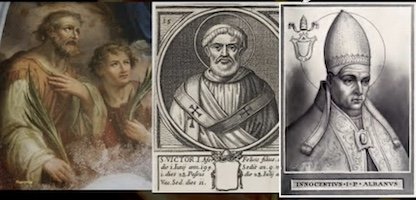
Saint Nazarius, born in Rome, was the son of a pagan military man who held an important post in the Roman army. His mother, honored by the Church as Saint Perpetua, was a zealous Christian, instructed by Saint Peter or his disciples in the most perfect maxims of Christianity. Nazarius at the age of nine embraced the Faith with so much ardor that he copied in his own young life all the great virtues he saw in his teachers. He was baptized by Saint Linus, who would later become Pope. His pagan father was touched by his son's virtue and seconded his project to go elsewhere to preach the Gospel. Out of zeal for the salvation of others, Nazarius therefore left Rome, his native city, and preached the Faith in many places with a fervor and disinterestedness fitting for a disciple of the Apostles.
Ten years later he is known to have been in Milan. He was driven from the city by the prefect after being whipped, and he left Italy to go to eastern Gaul or France. There a young boy by the name of Celsus was brought to him; his mother asked him to teach and baptize her son, and to take him for his disciple. The child was docile, and Nazarius did so; and they were never separated. When conversions multiplied, the local governor was alarmed and the apostle was again arrested, beaten and tortured. The wife of this governor was a Christian, however, and succeeded in obtaining liberty for the two young innocents. They were freed on condition they would not preach at this place any longer.
The two fervent Christians went to the Alpine villages where only a few solitary settlers braved the rigors of the climate and the altitude. They were not rebuffed and went as far as Embrun. There they built a chapel to the true God, and then continued on to Geneva, and to Treves where Saint Nazarius was arrested and imprisoned. Celsus followed him in tears, longing to share his captivity. When after a few days the prefect ordered them brought before him, they were treated cruelly but appeared before the magistrate, their faces shining with glory. The prodigies which followed caused fear in the pagans, and they were released and told to leave the region.
They returned to Milan, but were soon arrested there also. When they would not sacrifice to the gods of the empire, after several tortures in which God again preserved them, they were sentenced to be beheaded. They embraced one another in transports of joy and praise to God for this grace. It was during the reign of Nero, in about the year 56, that these generous Martyrs added their blood to the treasure of the Christians.
Their bodies were buried separately in a garden outside the city, where they were discovered and taken up by Saint Ambrose in 395. In the tomb of Saint Nazarius, whose decapitated body and head were perfectly conserved, a vial of the Saint's blood was found as fresh and red as if it had been spilt that same day. Saint Ambrose conveyed the bodies of the two martyrs into the new church of the Apostles which he had just built. A woman was delivered of an evil spirit in their presence. Saint Ambrose sent some of these relics to Saint Paulinus of Nola, who received them with great respect as a most valuable gift, as he himself testifies, and placed them in honor at Nola.
Reflection: The martyrs died as the outcasts of the world, but are crowned by God with immortal honor. The glory of the world is false and transitory, an empty bubble or shadow, but that of virtue is true, solid, and permanent, even in the eyes of men.
---
The date of birth of St. victor is unknown, but we do know that he was Pope from 189 to 199.
Victor was a native African, and his father's name was Felix. He is known for having obtained the release of many Christians who had been deported to the mines of Sardinia, and for being the first Pope to celebrate the liturgy and write Church documents in Latin rather than Greek.
He is most famous, however, for decreeing that Easter be universally celebrated on a Sunday, a practice already common in the West, but not so in the East.
He died in 199, possibly from martyrdom.
---
Innocent the I was the 40th Pope and reigned from 401 A.D. until March 12, 417 A.D. The exact date of his birth is unknown, but most scholars believe he was around age 41 at the time he took office. He rose to the papacy after being a deacon in Rome and raised among the Roman clergy. He is remembered as a strong defender of orthodoxy and insisted on the primacy of the bishop of Rome as the administrative leader of the Catholic Church.
He is most remembered for defending St. John Crysosdom after he was deposed as patriarch of Constantinople, participating in the failed attempt to negotiate a peaceful settlement with Visigoth King Alaric and his letters to St. Jerome.
LAST-MODIFIED:20240730T185351Z SEQUENCE:56670145 X-ACCESS:1 X-HITS:266 X-COLOR:f0b80e X-SHOW-END-TIME:1 END:VEVENT BEGIN:VEVENT DTSTART;VALUE=DATE:20240729 DTEND;VALUE=DATE:20240730 UID:5EE6C7D0-B5A9-4FE1-82BA-3F021C8D5974 SUMMARY:St. Martha CREATED:20221013T211126Z DTSTAMP:20221013T211126Z URL:https://www.stpaulsweymouth.org/component/dpcalendar/event/1870?calid=13 DESCRIPTION:St. Martha, Virgin\N\NSaint John tells us that Jesus loved Martha and Mary and Lazarus (John11:5), but only a few glimpses are vouchsafed us of them in the Gospels. First, the sisters are set before us: Martha received Jesus into her house, and was busy in outward, loving, lavish service, while Mary sat in silence at the feet she had bathed with her tears. Then we learn that their brother is ill when they send word to Jesus concerning their brother Lazarus, Lord, he whom Thou lovest is sick. (John 11:3) In His own time the Lord came, and they went out to meet Him; then follows that scene of unutterable tenderness and of sublimity unsurpassed: the silent mourning of Mary; Martha strong in faith, but realizing so vividly, with her practical turn of mind, the fact of death, and hesitating: Lord, by this time he is already decayed! He has been dead four days.\NAnd then once again, on the eve of His Passion, we see Jesus at Bethany, with His resurrected disciple. Martha, true to her character, is serving; Mary, as at first, pours the precious ointment, in adoration and love, on His divine head, as a preliminary to His burial. (John 12:1-4) We do not hear of the beloved family again in the Scriptures, but tradition tells us that when the storm of persecution came, the family of Bethany, with a few companions, were put into a boat without oars or sail, and borne miraculously to the coast of France. Martha assembled a holy company of women, with whom she lived in great austerity of life and admirable sanctity at Tarascon where her tomb is venerated. Saint Mary's tomb is at La Sainte-Baume; Saint Lazarus is venerated as the founder of the Church of Marseilles. It is this family which brought to France the relics of Saint Anne.\NLittle Pictorial Lives of the Saints, a compilation based on Butler's Lives of the Saints, and other sources by John Gilmary Shea (Benziger Brothers: New York, 1894); Les Petits Bollandistes: Vies des Saints, by Msgr. Paul Guérin (Bloud et Barral: Paris, 1882), Vol. 9 X-ALT-DESC;FMTTYPE=text/html:St. Martha, Virgin
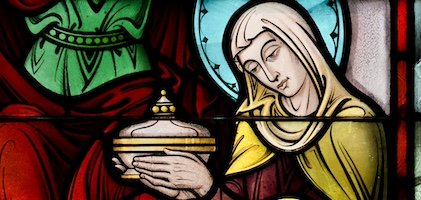
Saint John tells us that Jesus loved Martha and Mary and Lazarus (John11:5), but only a few glimpses are vouchsafed us of them in the Gospels. First, the sisters are set before us: Martha received Jesus into her house, and was busy in outward, loving, lavish service, while Mary sat in silence at the feet she had bathed with her tears. Then we learn that their brother is ill when they send word to Jesus concerning their brother Lazarus, Lord, he whom Thou lovest is sick. (John 11:3) In His own time the Lord came, and they went out to meet Him; then follows that scene of unutterable tenderness and of sublimity unsurpassed: the silent mourning of Mary; Martha strong in faith, but realizing so vividly, with her practical turn of mind, the fact of death, and hesitating: Lord, by this time he is already decayed! He has been dead four days.
And then once again, on the eve of His Passion, we see Jesus at Bethany, with His resurrected disciple. Martha, true to her character, is serving; Mary, as at first, pours the precious ointment, in adoration and love, on His divine head, as a preliminary to His burial. (John 12:1-4) We do not hear of the beloved family again in the Scriptures, but tradition tells us that when the storm of persecution came, the family of Bethany, with a few companions, were put into a boat without oars or sail, and borne miraculously to the coast of France. Martha assembled a holy company of women, with whom she lived in great austerity of life and admirable sanctity at Tarascon where her tomb is venerated. Saint Mary's tomb is at La Sainte-Baume; Saint Lazarus is venerated as the founder of the Church of Marseilles. It is this family which brought to France the relics of Saint Anne.
Little Pictorial Lives of the Saints, a compilation based on Butler's Lives of the Saints, and other sources by John Gilmary Shea (Benziger Brothers: New York, 1894); Les Petits Bollandistes: Vies des Saints, by Msgr. Paul Guérin (Bloud et Barral: Paris, 1882), Vol. 9
LAST-MODIFIED:20240730T185609Z SEQUENCE:56670283 X-ACCESS:1 X-HITS:5 X-COLOR:f0b80e X-SHOW-END-TIME:1 END:VEVENT BEGIN:VEVENT DTSTART;VALUE=DATE:20240730 DTEND;VALUE=DATE:20240731 UID:2F403B2F-DAA5-4473-ABA9-F22C020F90DC SUMMARY:Sts. Abdon and Sennen CREATED:20221013T211126Z DTSTAMP:20221013T211126Z URL:https://www.stpaulsweymouth.org/component/dpcalendar/event/1872?calid=13 DESCRIPTION:Sts. Abdon and Sennen, Martyrs\N\NThe emperor Decius, enemy of Christians, had defeated the king of Persia and become master of several countries over which he reigned. He had already condemned to torture and death Saint Polychrome, with five members of his clergy. Saint Abdon and Saint Sennen, illustrious Persian dignitaries of the third century whom the king of Persia had highly honored, were secretly Christian; it was they who had taken up the body of the martyred bishop, which had been cast contemptuously before a temple of Saturn, to bury it at night, with honor. The two royal officials, now fallen under the domination of Rome, were grieved to witness the emperor's cruelty towards the faithful, and believed it their duty to make known their love for Jesus Christ; thus, without fear of their new sovereign, they undertook by all possible means to spread and fortify the faith, to encourage the confessors and bury the martyrs.\NDecius, learning of their dedication, was extremely irritated. He sent for the two brothers to appear before his tribunal, and attempted to win them over to sacrifice to the gods, by appealing to his recent victory as a sign of their favor. The Saints replied, however, that this victory was not at all a proof of such power, since the unique true God, Creator of heaven and earth with His Son, Jesus Christ, gives victory to some and defeat to others, for reasons hidden in the designs of His providence. They said they could never adore any but Him, and Decius imprisoned them. Soon afterwards, when he learned of the death of the viceroy he had left to govern in his place at Rome, he returned to Rome and took his two captives with him to serve as splendid trophies of his Persian victory. In effect, these magistrates were wearing jewels and rich fabrics under their chains.\NHe arraigned them before the Senate, in whose presence they again testified to the divinity of Christ, saying they could adore no other. The next day they were flogged in the amphitheater; then two lions and four bears were released to devour them. But the beasts lay down at their feet and became their guardians, and no one dared approach for a time. Finally the prefect sent out gladiators to slay them with the sword, which with the permission of God was done. Their bodies remained three days without burial, but a subdeacon, who afterwards wrote their history, took them up and buried them on his own terrain.\NUnder Constantine the Great, their tombs were discovered by divine revelation and their relics reburied in the Pontian cemetery, which afterwards was called by their names. We see them in a picture of the catacombs, crowned by Our Lord Himself. Their glorious martyrdom occurred in the year 254.\NLes Petits Bollandistes: Vies des Saints, by Msgr. Paul Guérin (Bloud et Barral: Paris, 1882), Vol. 9 X-ALT-DESC;FMTTYPE=text/html:Sts. Abdon and Sennen, Martyrs
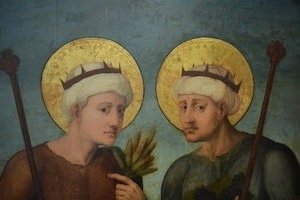
The emperor Decius, enemy of Christians, had defeated the king of Persia and become master of several countries over which he reigned. He had already condemned to torture and death Saint Polychrome, with five members of his clergy. Saint Abdon and Saint Sennen, illustrious Persian dignitaries of the third century whom the king of Persia had highly honored, were secretly Christian; it was they who had taken up the body of the martyred bishop, which had been cast contemptuously before a temple of Saturn, to bury it at night, with honor. The two royal officials, now fallen under the domination of Rome, were grieved to witness the emperor's cruelty towards the faithful, and believed it their duty to make known their love for Jesus Christ; thus, without fear of their new sovereign, they undertook by all possible means to spread and fortify the faith, to encourage the confessors and bury the martyrs.
Decius, learning of their dedication, was extremely irritated. He sent for the two brothers to appear before his tribunal, and attempted to win them over to sacrifice to the gods, by appealing to his recent victory as a sign of their favor. The Saints replied, however, that this victory was not at all a proof of such power, since the unique true God, Creator of heaven and earth with His Son, Jesus Christ, gives victory to some and defeat to others, for reasons hidden in the designs of His providence. They said they could never adore any but Him, and Decius imprisoned them. Soon afterwards, when he learned of the death of the viceroy he had left to govern in his place at Rome, he returned to Rome and took his two captives with him to serve as splendid trophies of his Persian victory. In effect, these magistrates were wearing jewels and rich fabrics under their chains.
He arraigned them before the Senate, in whose presence they again testified to the divinity of Christ, saying they could adore no other. The next day they were flogged in the amphitheater; then two lions and four bears were released to devour them. But the beasts lay down at their feet and became their guardians, and no one dared approach for a time. Finally the prefect sent out gladiators to slay them with the sword, which with the permission of God was done. Their bodies remained three days without burial, but a subdeacon, who afterwards wrote their history, took them up and buried them on his own terrain.
Under Constantine the Great, their tombs were discovered by divine revelation and their relics reburied in the Pontian cemetery, which afterwards was called by their names. We see them in a picture of the catacombs, crowned by Our Lord Himself. Their glorious martyrdom occurred in the year 254.
Les Petits Bollandistes: Vies des Saints, by Msgr. Paul Guérin (Bloud et Barral: Paris, 1882), Vol. 9
LAST-MODIFIED:20240730T185848Z SEQUENCE:56670442 X-ACCESS:1 X-HITS:507 X-COLOR:f0b80e X-SHOW-END-TIME:1 END:VEVENT BEGIN:VEVENT DTSTART;VALUE=DATE:20240731 DTEND;VALUE=DATE:20240801 UID:6A2CC335-DBC8-48AC-A559-E95D2FB1E507 SUMMARY:St. Ignatius CREATED:20221013T211126Z DTSTAMP:20221013T211126Z URL:https://www.stpaulsweymouth.org/component/dpcalendar/event/1874?calid=13 DESCRIPTION:St. Ignatius of Loyola, Confessor\N\NSaint Ignatius was born at Loyola in Spain, in the year 1491. He served his king as a courtier and a soldier until his thirtieth year. At that time a cannon ball broke the right leg of the young officer, who in a few days had reached the brink of death and received the Last Sacraments. It was the eve of the feast day of Saint Peter and Saint Paul; he fell asleep afterwards and believed he saw Saint Peter in a dream, restoring him to health by touching his wound. When he woke, his high fever was gone and he was out of danger, although lame. To pass the time of his convalescence after three operations, he asked for books; the Life of Christ and lives of the Saints were brought to him. He read them distractedly at first, then with profound emotion. He underwent a violent combat, but finally grace won out.\NHe began to treat his body with the utmost rigor and rose every night to weep over his sins. One night, he consecrated himself to the Saviour through the intercession of Our Lady, Refuge of Sinners, swearing inviolable fidelity to the Son and His Mother. Not long afterwards, to fortify him in his good resolutions, Mary appeared to him surrounded by light, holding in Her arms the Child Jesus. His heart purified by this vision, Ignatius made a general confession and a pilgrimage to Montserrat, to venerate a miraculous image of the Mother of God and implore Her protection, then bought a rude long habit for the pilgrimage he was planning to make to Jerusalem. He set out on foot, wearing only one sandal for his lame leg.\NHe spent some time at Manreza caring for the sick and undertaking a life of austerity equaled only by the most celebrated anchorites. Living by alms, fasting on bread and water, wearing a hair shirt, he remained kneeling every day for six or seven hours in prayer. The devil made vain efforts to discourage him. He fell ill, however, and was carried to the hospital from the cavern where he was staying. It was only out of obedience to his director at Montserrat that he ceased his extreme penance, and found again, through his obedience, the peace of soul he had lost. At Manreza he composed his famous Spiritual Exercises for retreatants, which ever since have brought to grace and fervor great numbers of souls.\NAfter a journey to Rome and other points of pilgrimage in Italy, he embarked for the Holy Land. He wished to remain there to work for the conversion of souls, but was commanded by the enlightened Provincial of the Franciscans, under obedience, to return to Europe. He was then thirty-three years old.\NIgnatius had already won certain Spanish compatriots to join him in the service of God; it was for them that he had composed the Exercises. With them he undertook studies for several years, and at the end of that time had four companions. He taught catechism while at Alcala, and virtually reformed the entire youth of that city.\NIn 1528, when he was already 37 years old, he went to Paris to study in the greatest poverty, eating his meals at a hospital with the poor. He was persecuted when he converted a number of young persons. It was in Paris, with six young companions, that at Montmartre the Society of Jesus was founded. They made a vow to go to Jerusalem in absolute poverty, or if this proved impossible, which it did, to go to Rome to the Vicar of Christ, and place themselves at his disposition for the service of the Church and the salvation of souls. Our Lord promised Saint Ignatius that the precious heritage of His Passion would never be lacking to his Society. By this term, heritage, the Saviour referred to the contradictions and persecutions the just must always face. Founded to combat error, the Company of Jesus has always had to bear the fury of those who favor it.\NWhen Saint Ignatius was cast into prison at Salamanca on suspicion of heresy, he said to a friend who expressed his sympathy, It is a sign that you have little love of Christ in your heart, or you would not deem it so hard a fate to be in chains for His sake. All Salamanca does not contain as many fetters, manacles, and chains as I would gladly wear for love of Jesus Christ. Saint Ignatius went to receive his crown on July 31, 1556.\NReflection: Ask Saint Ignatius to obtain for you the grace to desire ardently the greater glory of God, even though it may cost you much suffering and humiliation.\NLittle Pictorial Lives of the Saints, a compilation based on Butler's Lives of the Saints, and other sources by John Gilmary Shea (Benziger Brothers: New York, 1894); Les Petits Bollandistes: Vies des Saints, by Msgr. Paul Guérin (Bloud et Barral: Paris, 1882), Vol. 9; Vie des Saints pour tous les jours de l'année, by Abbé L. Jaud (Mame: Tours, 1950). X-ALT-DESC;FMTTYPE=text/html:St. Ignatius of Loyola, Confessor
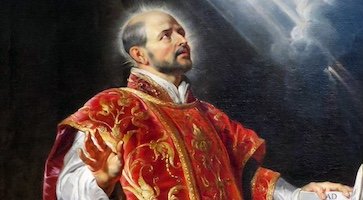
Saint Ignatius was born at Loyola in Spain, in the year 1491. He served his king as a courtier and a soldier until his thirtieth year. At that time a cannon ball broke the right leg of the young officer, who in a few days had reached the brink of death and received the Last Sacraments. It was the eve of the feast day of Saint Peter and Saint Paul; he fell asleep afterwards and believed he saw Saint Peter in a dream, restoring him to health by touching his wound. When he woke, his high fever was gone and he was out of danger, although lame. To pass the time of his convalescence after three operations, he asked for books; the Life of Christ and lives of the Saints were brought to him. He read them distractedly at first, then with profound emotion. He underwent a violent combat, but finally grace won out.
He began to treat his body with the utmost rigor and rose every night to weep over his sins. One night, he consecrated himself to the Saviour through the intercession of Our Lady, Refuge of Sinners, swearing inviolable fidelity to the Son and His Mother. Not long afterwards, to fortify him in his good resolutions, Mary appeared to him surrounded by light, holding in Her arms the Child Jesus. His heart purified by this vision, Ignatius made a general confession and a pilgrimage to Montserrat, to venerate a miraculous image of the Mother of God and implore Her protection, then bought a rude long habit for the pilgrimage he was planning to make to Jerusalem. He set out on foot, wearing only one sandal for his lame leg.
He spent some time at Manreza caring for the sick and undertaking a life of austerity equaled only by the most celebrated anchorites. Living by alms, fasting on bread and water, wearing a hair shirt, he remained kneeling every day for six or seven hours in prayer. The devil made vain efforts to discourage him. He fell ill, however, and was carried to the hospital from the cavern where he was staying. It was only out of obedience to his director at Montserrat that he ceased his extreme penance, and found again, through his obedience, the peace of soul he had lost. At Manreza he composed his famous Spiritual Exercises for retreatants, which ever since have brought to grace and fervor great numbers of souls.
After a journey to Rome and other points of pilgrimage in Italy, he embarked for the Holy Land. He wished to remain there to work for the conversion of souls, but was commanded by the enlightened Provincial of the Franciscans, under obedience, to return to Europe. He was then thirty-three years old.
Ignatius had already won certain Spanish compatriots to join him in the service of God; it was for them that he had composed the Exercises. With them he undertook studies for several years, and at the end of that time had four companions. He taught catechism while at Alcala, and virtually reformed the entire youth of that city.
In 1528, when he was already 37 years old, he went to Paris to study in the greatest poverty, eating his meals at a hospital with the poor. He was persecuted when he converted a number of young persons. It was in Paris, with six young companions, that at Montmartre the Society of Jesus was founded. They made a vow to go to Jerusalem in absolute poverty, or if this proved impossible, which it did, to go to Rome to the Vicar of Christ, and place themselves at his disposition for the service of the Church and the salvation of souls. Our Lord promised Saint Ignatius that the precious heritage of His Passion would never be lacking to his Society. By this term, heritage, the Saviour referred to the contradictions and persecutions the just must always face. Founded to combat error, the Company of Jesus has always had to bear the fury of those who favor it.
When Saint Ignatius was cast into prison at Salamanca on suspicion of heresy, he said to a friend who expressed his sympathy, It is a sign that you have little love of Christ in your heart, or you would not deem it so hard a fate to be in chains for His sake. All Salamanca does not contain as many fetters, manacles, and chains as I would gladly wear for love of Jesus Christ. Saint Ignatius went to receive his crown on July 31, 1556.
Reflection: Ask Saint Ignatius to obtain for you the grace to desire ardently the greater glory of God, even though it may cost you much suffering and humiliation.
Little Pictorial Lives of the Saints, a compilation based on Butler's Lives of the Saints, and other sources by John Gilmary Shea (Benziger Brothers: New York, 1894); Les Petits Bollandistes: Vies des Saints, by Msgr. Paul Guérin (Bloud et Barral: Paris, 1882), Vol. 9; Vie des Saints pour tous les jours de l'année, by Abbé L. Jaud (Mame: Tours, 1950).
LAST-MODIFIED:20240730T190135Z SEQUENCE:56670609 X-ACCESS:1 X-HITS:150 X-COLOR:f0b80e X-SHOW-END-TIME:1 END:VEVENT BEGIN:VEVENT DTSTART;VALUE=DATE:20240801 DTEND;VALUE=DATE:20240802 UID:7CE3A619-4990-4E79-B924-65239CB3C713 SUMMARY:St. Peter's Chains CREATED:20221013T211126Z DTSTAMP:20221013T211126Z URL:https://www.stpaulsweymouth.org/component/dpcalendar/event/1882?calid=13 DESCRIPTION:St. Peter's Chains\N\NIn the year 44 King Herod Agrippa, after putting to death Saint James, son of Zebedee, was still avid for popular approval by the Jews. He had Saint Peter cast into prison, intending to put him to death publicly after the Passover; but the entire Church of Jerusalem was offering up prayers to God without ceasing (Acts 12:5) for the deliverance of the Chief Pastor of His flock, and God heard them favorably.\NThe king had taken all possible precautions to prevent the escape of his prisoner. He was guarded day and night by sixteen soldiers, four of whom kept sentry duty in turn — two in the same dungeon with him, and two at the gate. Saint Peter was fastened to the ground by two chains, and a soldier watched on either side of him. He lay fast asleep on the very night before the day fixed for his execution, when it pleased God to deliver him out of the hands of his enemies. In the middle of the night, a bright light shone in the prison, and an Angel appeared beside him. He woke him from his sleep and bade him instantly rise, fasten his cincture, put on his sandals and cloak, and follow him. The Apostle did so, for the chains had fallen off his wrists. Following his heavenly guide, he passed after him through the first and second watches, and when they arrived at the iron gate which led into the city, that gate opened before them of its own accord. The Angel conducted him through one street, then, suddenly disappearing, left him to seek refuge.\NThe Apostle went directly to the house of Mary, mother of John Mark, where several disciples were assembled and sending up their prayers to heaven for his deliverance. As he stood knocking, a young woman who had been sent to the door, hearing Peter's voice, ran back in joy and informed the group that their Pastor was at the door. They paid no attention to her, saying she was beside herself, or that it was probably his Guardian Angel. But the knocking continued until they opened the door, and Saint Peter, entering, told them of his miraculous escape. Having enjoined them to notify the rest of the brethren, he departed to regions of greater security, carrying wherever he went the divine blessing and life.\NReflection: This miracle clearly confirms the divine promise, If two of you consent upon earth about anything at all for which they ask, it shall be done for them by My Father in heaven. (Matt. 18:19)\NNew Testament, Acts of the Apostles, Chapter 12; Little Pictorial Lives of the Saints, a compilation based on Butler's Lives of the Saints and other sources by John Gilmary Shea (Benziger Brothers: New York, 1894). X-ALT-DESC;FMTTYPE=text/html:St. Peter's Chains
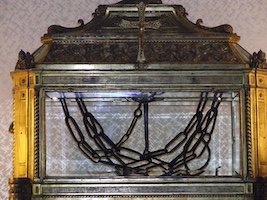
In the year 44 King Herod Agrippa, after putting to death Saint James, son of Zebedee, was still avid for popular approval by the Jews. He had Saint Peter cast into prison, intending to put him to death publicly after the Passover; but the entire Church of Jerusalem was offering up prayers to God without ceasing (Acts 12:5) for the deliverance of the Chief Pastor of His flock, and God heard them favorably.
The king had taken all possible precautions to prevent the escape of his prisoner. He was guarded day and night by sixteen soldiers, four of whom kept sentry duty in turn — two in the same dungeon with him, and two at the gate. Saint Peter was fastened to the ground by two chains, and a soldier watched on either side of him. He lay fast asleep on the very night before the day fixed for his execution, when it pleased God to deliver him out of the hands of his enemies. In the middle of the night, a bright light shone in the prison, and an Angel appeared beside him. He woke him from his sleep and bade him instantly rise, fasten his cincture, put on his sandals and cloak, and follow him. The Apostle did so, for the chains had fallen off his wrists. Following his heavenly guide, he passed after him through the first and second watches, and when they arrived at the iron gate which led into the city, that gate opened before them of its own accord. The Angel conducted him through one street, then, suddenly disappearing, left him to seek refuge.
The Apostle went directly to the house of Mary, mother of John Mark, where several disciples were assembled and sending up their prayers to heaven for his deliverance. As he stood knocking, a young woman who had been sent to the door, hearing Peter's voice, ran back in joy and informed the group that their Pastor was at the door. They paid no attention to her, saying she was beside herself, or that it was probably his Guardian Angel. But the knocking continued until they opened the door, and Saint Peter, entering, told them of his miraculous escape. Having enjoined them to notify the rest of the brethren, he departed to regions of greater security, carrying wherever he went the divine blessing and life.
Reflection: This miracle clearly confirms the divine promise, If two of you consent upon earth about anything at all for which they ask, it shall be done for them by My Father in heaven. (Matt. 18:19)
New Testament, Acts of the Apostles, Chapter 12; Little Pictorial Lives of the Saints, a compilation based on Butler's Lives of the Saints and other sources by John Gilmary Shea (Benziger Brothers: New York, 1894).
LAST-MODIFIED:20240803T131348Z SEQUENCE:56995342 X-ACCESS:1 X-HITS:156 X-COLOR:f0b80e X-SHOW-END-TIME:1 END:VEVENT BEGIN:VEVENT DTSTART;VALUE=DATE:20240801 DTEND;VALUE=DATE:20240802 UID:57CF41B3-83C5-4F59-B5E9-C6DC16A9B1E0 SUMMARY:The Holy Maccabees CREATED:20221013T211126Z DTSTAMP:20221013T211126Z URL:https://www.stpaulsweymouth.org/component/dpcalendar/event/1884?calid=13 DESCRIPTION:The Holy Maccabees, Martyrs\N\NThe seven holy Maccabee martyrs Abim, Antonius, Gurias, Eleazar, Eusebonus, Alimus and Marcellus, their mother Solomonia and their teacher Eleazar suffered in the year 166 before Christ under the impious Syrian king Antiochus IV Epiphanes. This foolish ruler loved pagan and Hellenistic customs, and held Jewish customs in contempt. He did everything possible to turn people from the Law of Moses and from their covenant with God. He desecrated the Temple of the Lord, placed a statue of the pagan god Zeus there, and forced the Jews to worship it. Many people abandoned the God of Abraham, Isaac, and Jacob, but there were also those who continued to believe that the Savior would come.\NA ninety-year-old elder, the scribe and teacher Eleazar, was brought to trial for his faithfulness to the Mosaic Law. He suffered tortures and died at Jerusalem.\NThe disciples of Saint Eleazar, the seven Maccabee brothers and their mother Solomonia, also displayed great courage. They were brought to trial in Antioch by King Antiochus Epiphanes. They fearlessly acknowledged themselves as followers of the True God, and refused to eat pig’s flesh, which was forbidden by the Law.\NThe eldest brother acted as spokesman for the rest, saying that they preferred to die rather than break the Law. He was subjected to fierce tortures in sight of his brothers and their mother. His tongue was cut out, he was scalped, and his hands and feet were cut off. Then a cauldron and a large frying pan were heated, and the first brother was thrown into the frying pan, and he died.\NThe next five brothers were tortured one after the other. The seventh and youngest brother was the last one left alive. Antiochus suggested to Saint Solomonia to persuade the boy to obey him, so that her last son at least would be spared. Instead, the brave mother told him to imitate the courage of his brothers.\NThe child upbraided the king and was tortured even more cruelly than his brothers had been. After all her seven children had died, Saint Solomonia, stood over their bodies, raised up her hands in prayer to God and died.\NThe martyric death of the Maccabee brothers inspired Judas Maccabeus, and he led a revolt against Antiochus Epiphanes. With God’s help, he gained the victory, and then purified the Temple at Jerusalem. He also threw down the altars which the pagans had set up in the streets. All these events are related in the Second Book of Maccabees (Ch. 8-10).\NVarious Fathers of the Church preached sermons on the seven Maccabees, including Saint Cyprian of Carthage, Saint Ambrose of Milan, Saint Gregory Nazianzus and Saint John Chrysostom. X-ALT-DESC;FMTTYPE=text/html:The Holy Maccabees, Martyrs
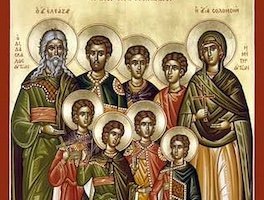
The seven holy Maccabee martyrs Abim, Antonius, Gurias, Eleazar, Eusebonus, Alimus and Marcellus, their mother Solomonia and their teacher Eleazar suffered in the year 166 before Christ under the impious Syrian king Antiochus IV Epiphanes. This foolish ruler loved pagan and Hellenistic customs, and held Jewish customs in contempt. He did everything possible to turn people from the Law of Moses and from their covenant with God. He desecrated the Temple of the Lord, placed a statue of the pagan god Zeus there, and forced the Jews to worship it. Many people abandoned the God of Abraham, Isaac, and Jacob, but there were also those who continued to believe that the Savior would come.
A ninety-year-old elder, the scribe and teacher Eleazar, was brought to trial for his faithfulness to the Mosaic Law. He suffered tortures and died at Jerusalem.
The disciples of Saint Eleazar, the seven Maccabee brothers and their mother Solomonia, also displayed great courage. They were brought to trial in Antioch by King Antiochus Epiphanes. They fearlessly acknowledged themselves as followers of the True God, and refused to eat pig’s flesh, which was forbidden by the Law.
The eldest brother acted as spokesman for the rest, saying that they preferred to die rather than break the Law. He was subjected to fierce tortures in sight of his brothers and their mother. His tongue was cut out, he was scalped, and his hands and feet were cut off. Then a cauldron and a large frying pan were heated, and the first brother was thrown into the frying pan, and he died.
The next five brothers were tortured one after the other. The seventh and youngest brother was the last one left alive. Antiochus suggested to Saint Solomonia to persuade the boy to obey him, so that her last son at least would be spared. Instead, the brave mother told him to imitate the courage of his brothers.
The child upbraided the king and was tortured even more cruelly than his brothers had been. After all her seven children had died, Saint Solomonia, stood over their bodies, raised up her hands in prayer to God and died.
The martyric death of the Maccabee brothers inspired Judas Maccabeus, and he led a revolt against Antiochus Epiphanes. With God’s help, he gained the victory, and then purified the Temple at Jerusalem. He also threw down the altars which the pagans had set up in the streets. All these events are related in the Second Book of Maccabees (Ch. 8-10).
Various Fathers of the Church preached sermons on the seven Maccabees, including Saint Cyprian of Carthage, Saint Ambrose of Milan, Saint Gregory Nazianzus and Saint John Chrysostom.
LAST-MODIFIED:20240803T131644Z SEQUENCE:56995518 X-ACCESS:1 X-HITS:5 X-COLOR:f0b80e X-SHOW-END-TIME:1 END:VEVENT BEGIN:VEVENT DTSTART;VALUE=DATE:20240802 DTEND;VALUE=DATE:20240803 UID:4D2C996E-7B23-495F-B00A-75D393943F36 SUMMARY:St. Alphonsus CREATED:20221013T211126Z DTSTAMP:20221013T211126Z URL:https://www.stpaulsweymouth.org/component/dpcalendar/event/1886?calid=13 DESCRIPTION:St. Alphonsus Mary de Liguori Bishop, Confessor and Doctor of the Church\N\NSaint Alphonsus was born of noble parents near Naples, in 1696. His spiritual formation was entrusted to the Oratorian Fathers of that city, and from his boyhood Alphonsus was known as a very devout little Brother of the Minor Oratory. At the early age of sixteen he became a doctor in civil law; and entering this career with ardor, he met great success and renown. A mistake, however, by which he lost an important case, showed him the vanity of human fame and glory. He decided to abandon the legal profession at the age of twenty-seven, to labor for the glory of God alone. Alphonsus' father long opposed his decision, but as a man of virtue consented at last.\NSaint Alphonsus was ordained a priest in 1726, and he soon became as renowned a preacher as he had been a lawyer. His father stopped in a church to pray one day, and amazed, heard his son preaching; he suddenly saw clearly how God had marvelously elevated his son, and was filled with joy, saying: My son has made God known to me! As for Alphonsus, he loved and devoted himself to the most neglected souls in the region of Naples. He was a very perfect confessor, and wrote a manual which has been used ever since for the instruction of those who administer the sacrament of Penance. A musician of the first rank, Saint Alphonsus gave up his instruments to devote himself more perfectly to his apostolic labors; he nonetheless composed joyous religious hymns for the poor folk he heard singing in the streets, that they might glorify God and not waste their voices and efforts in vain and worldly songs.\NTo extend and continue his work, he later founded the missionary Congregation of the Most Holy Redeemer, for the evangelization of the poor. At the age of sixty-six he became Bishop of Saint Agatha, a suffragan diocese of Naples, and undertook the reform of his diocese with the zeal of a Saint. He made a vow never to waste a moment of time, and, though his life was spent in prayer and work, he also composed a vast number of books. These volumes were filled with such great science, unction, and wisdom that in 1871 he was declared by Pius IX a Doctor of the Church. Saint Alphonsus wrote his first book at the age of forty-nine, and in his eighty-third year had published about sixty volumes; at that time his director forbade him to continue writing. The best known of his books is his volume entitled The Glories of Mary, by which he exalts the graces and narrates the wondrous deeds of mercy of the Mother of God for those who invoke Her.\NVery many of these books were written in the half hours snatched from his labors as a missionary, as a religious Superior, and finally as a Bishop, often in the midst of unrelenting bodily and mental sufferings. With his left hand he would hold a piece of marble against his aching head, while his right hand wrote. Yet he counted no time lost which was spent in charity. He did not refuse to maintain a long correspondence with a simple soldier who asked for his advice, or to play the harpsichord in his declining years, while he taught his novices to sing spiritual canticles. He lived in times of religious laxity, and met with many persecutions and disappointments. During his last seven years he was prevented by constant sickness from offering the adorable Sacrifice, but he received Holy Communion daily, and his love for Jesus Christ and his trust in Mary's prayers sustained him to the end. He died in 1787, in his ninety-first year.\NReflection: Let us do with all our heart and attention the duty of each day, leaving to God the result as well as the care of the future.\NLittle Pictorial Lives of the Saints, a compilation based on Butler's Lives of the Saints and other sources by John Gilmary Shea (Benziger Brothers: New York, 1894). X-ALT-DESC;FMTTYPE=text/html:St. Alphonsus Mary de Liguori Bishop, Confessor and Doctor of the Church
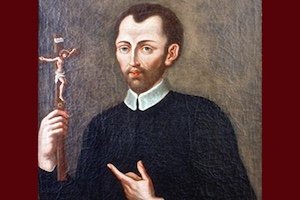
Saint Alphonsus was born of noble parents near Naples, in 1696. His spiritual formation was entrusted to the Oratorian Fathers of that city, and from his boyhood Alphonsus was known as a very devout little Brother of the Minor Oratory. At the early age of sixteen he became a doctor in civil law; and entering this career with ardor, he met great success and renown. A mistake, however, by which he lost an important case, showed him the vanity of human fame and glory. He decided to abandon the legal profession at the age of twenty-seven, to labor for the glory of God alone. Alphonsus' father long opposed his decision, but as a man of virtue consented at last.
Saint Alphonsus was ordained a priest in 1726, and he soon became as renowned a preacher as he had been a lawyer. His father stopped in a church to pray one day, and amazed, heard his son preaching; he suddenly saw clearly how God had marvelously elevated his son, and was filled with joy, saying: My son has made God known to me! As for Alphonsus, he loved and devoted himself to the most neglected souls in the region of Naples. He was a very perfect confessor, and wrote a manual which has been used ever since for the instruction of those who administer the sacrament of Penance. A musician of the first rank, Saint Alphonsus gave up his instruments to devote himself more perfectly to his apostolic labors; he nonetheless composed joyous religious hymns for the poor folk he heard singing in the streets, that they might glorify God and not waste their voices and efforts in vain and worldly songs.
To extend and continue his work, he later founded the missionary Congregation of the Most Holy Redeemer, for the evangelization of the poor. At the age of sixty-six he became Bishop of Saint Agatha, a suffragan diocese of Naples, and undertook the reform of his diocese with the zeal of a Saint. He made a vow never to waste a moment of time, and, though his life was spent in prayer and work, he also composed a vast number of books. These volumes were filled with such great science, unction, and wisdom that in 1871 he was declared by Pius IX a Doctor of the Church. Saint Alphonsus wrote his first book at the age of forty-nine, and in his eighty-third year had published about sixty volumes; at that time his director forbade him to continue writing. The best known of his books is his volume entitled The Glories of Mary, by which he exalts the graces and narrates the wondrous deeds of mercy of the Mother of God for those who invoke Her.
Very many of these books were written in the half hours snatched from his labors as a missionary, as a religious Superior, and finally as a Bishop, often in the midst of unrelenting bodily and mental sufferings. With his left hand he would hold a piece of marble against his aching head, while his right hand wrote. Yet he counted no time lost which was spent in charity. He did not refuse to maintain a long correspondence with a simple soldier who asked for his advice, or to play the harpsichord in his declining years, while he taught his novices to sing spiritual canticles. He lived in times of religious laxity, and met with many persecutions and disappointments. During his last seven years he was prevented by constant sickness from offering the adorable Sacrifice, but he received Holy Communion daily, and his love for Jesus Christ and his trust in Mary's prayers sustained him to the end. He died in 1787, in his ninety-first year.
Reflection: Let us do with all our heart and attention the duty of each day, leaving to God the result as well as the care of the future.
Little Pictorial Lives of the Saints, a compilation based on Butler's Lives of the Saints and other sources by John Gilmary Shea (Benziger Brothers: New York, 1894).
LAST-MODIFIED:20240803T131922Z SEQUENCE:56995676 X-ACCESS:1 X-HITS:214 X-COLOR:f0b80e X-SHOW-END-TIME:1 END:VEVENT BEGIN:VEVENT DTSTART;VALUE=DATE:20240802 DTEND;VALUE=DATE:20240803 UID:0174F1A6-3741-48D5-B3E9-02284F9FE2AC SUMMARY:St. Stephen CREATED:20221013T211126Z DTSTAMP:20221013T211126Z URL:https://www.stpaulsweymouth.org/component/dpcalendar/event/1888?calid=13 DESCRIPTION:St. Stephen I Pope, Martyr\N\NSaint Stephen was by birth a Roman. After being promoted to Holy Orders, he was made Archdeacon of Rome under the holy Popes Saint Cornelius and Saint Lucius. When these had both suffered martyrdom, Saint Stephen was elected Head of the Church in the year 254.\NControversy concerning the rebaptizing of heretics gave Saint Stephen much trouble. The heretics themselves were rebaptizing Catholics who left the orthodox faith to join them; certain oriental bishops decided then to rebaptize those who returned to it from their errors, and some African bishops joined them in this practice. It is the teaching of the Catholic Church, however, that baptism given with natural water and in the name of the Three Persons of the Blessed Trinity is valid, even if conferred by those in error. Saint Stephen suffered patiently when accused of favoring heresy by ratifying such baptisms; he did not doubt that the great men in whom a mistaken zeal seemed to obscure the truth would, when the heat of the dispute had subsided, calmly open their eyes to the truth. Thus by his zeal he preserved the integrity of the Faith, and by his toleration and forbearance saved many souls.\NWhen the persecutions grew violent, he assembled the faithful in the underground tombs of the martyrs, going from one catacomb to another to baptize neophytes, celebrate Mass and exhort them to remain true to Christ. After twelve members of his clergy were martyred, he himself was arrested; but he was set free when a violent storm so frightened the soldiers and executioners sent to put him to death, that they fled. Nonetheless, he was followed to a catacomb by the emperor's satellites, and on August 2, 257, while seated in his pontifical chair, he was beheaded. The chair, stained with his blood, was placed with his relics in the Church which he had built and is still shown in the same church, today Saint Sylvester in capite.\NLes Petits Bollandistes: Vies des Saints, by Msgr. Paul Guérin (Bloud et Barral: Paris, 1882), Vol. 9; Little Pictorial Lives of the Saints, a compilation based on Butler's Lives of the Saints and other sources by John Gilmary Shea (Benziger Brothers: New York, 1894). X-ALT-DESC;FMTTYPE=text/html:St. Stephen I Pope, Martyr
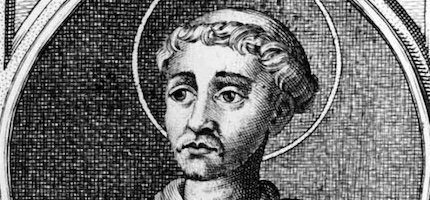
Saint Stephen was by birth a Roman. After being promoted to Holy Orders, he was made Archdeacon of Rome under the holy Popes Saint Cornelius and Saint Lucius. When these had both suffered martyrdom, Saint Stephen was elected Head of the Church in the year 254.
Controversy concerning the rebaptizing of heretics gave Saint Stephen much trouble. The heretics themselves were rebaptizing Catholics who left the orthodox faith to join them; certain oriental bishops decided then to rebaptize those who returned to it from their errors, and some African bishops joined them in this practice. It is the teaching of the Catholic Church, however, that baptism given with natural water and in the name of the Three Persons of the Blessed Trinity is valid, even if conferred by those in error. Saint Stephen suffered patiently when accused of favoring heresy by ratifying such baptisms; he did not doubt that the great men in whom a mistaken zeal seemed to obscure the truth would, when the heat of the dispute had subsided, calmly open their eyes to the truth. Thus by his zeal he preserved the integrity of the Faith, and by his toleration and forbearance saved many souls.
When the persecutions grew violent, he assembled the faithful in the underground tombs of the martyrs, going from one catacomb to another to baptize neophytes, celebrate Mass and exhort them to remain true to Christ. After twelve members of his clergy were martyred, he himself was arrested; but he was set free when a violent storm so frightened the soldiers and executioners sent to put him to death, that they fled. Nonetheless, he was followed to a catacomb by the emperor's satellites, and on August 2, 257, while seated in his pontifical chair, he was beheaded. The chair, stained with his blood, was placed with his relics in the Church which he had built and is still shown in the same church, today Saint Sylvester in capite.
Les Petits Bollandistes: Vies des Saints, by Msgr. Paul Guérin (Bloud et Barral: Paris, 1882), Vol. 9; Little Pictorial Lives of the Saints, a compilation based on Butler's Lives of the Saints and other sources by John Gilmary Shea (Benziger Brothers: New York, 1894).
LAST-MODIFIED:20240803T132217Z SEQUENCE:56995851 X-ACCESS:1 X-HITS:20 X-COLOR:f0b80e X-SHOW-END-TIME:1 END:VEVENT BEGIN:VEVENT DTSTART;VALUE=DATE:20240804 DTEND;VALUE=DATE:20240805 UID:B11EC467-13C1-4112-AA23-D1E4986FD901 SUMMARY:St. Dominic CREATED:20221013T211126Z DTSTAMP:20221013T211126Z URL:https://www.stpaulsweymouth.org/component/dpcalendar/event/1890?calid=13 DESCRIPTION:St. Dominic, Confessor\N\NSaint Dominic de Guzman was born in Spain in 1170. As a student, he sold his books to feed the poor during a famine, and offered himself to ransom a slave. At the age of twenty-five, after taking the religious habit he became acting Superior of the Canons Regular of Saint Augustine in Osma, and was soon offered an episcopal chair at Compostella. He answered as afterward he also answered many times: God has not sent me to be a bishop, but to preach. He accompanied his prelate to southern France on a commission for the king of Castille. There his heart was well-nigh broken by the ravages of the Albigensian heresy, a variant of ancient Manicheanism, and the source of devastating wars in southern France. His life from that time on was devoted to the conversion of heretics and the defense of the Faith.\NIn the year 1199, while he was still a Canon Regular of Saint Augustine and was preaching near the Spanish coasts, he was taken captive, with all his audience and a Brother in religion, by a band of pirates. They placed the prisoners in their galleys at the oars. When a furious storm broke, the young Saint exhorted the disciples of Mohammed to think seriously of their souls, to open their eyes to the truth of Christianity, and above all, to invoke the Mother of God. They did not listen until his third exhortation, at a moment when it was clear the ship and passengers could not be saved. They swore to him then that if the God of Christians preserved them by the intercession of His Holy Mother, they would dedicate themselves to their service. Immediately the storm ceased, and the pirates kept their word.\NWhen in his 46th year, and with six companions, he began the great Order of Preaching Friars, this Order with that of the Friars Minor, founded by his contemporary friend Saint Francis of Assisi, was the chief means God employed to renew Christian fervor during the Middle Ages. In addition, Saint Dominic founded his Second Order for nuns for the education of Catholic girls, and his Third Order, or Tertiaries, for persons of both sexes living in the world. God abundantly blessed the new Order, and France, Italy, Spain, and England welcomed the Preaching Friars. Our Lady took them under Her special protection. During a debate with the heretics, a book by the Saint, defending Her Immaculate Conception, was thrown into the flames along with one by the heretics, to see whether one might be spared. Saint Dominic's was not injured, and many heretics were converted.\NIt was in 1208, while Saint Dominic knelt in the little chapel of Notre Dame de La Prouille, and implored the great Mother of God to save the Church, that Our Lady appeared to him and gave him the Rosary, bidding him to go forth and preach it. During the famous battles in southern France against the Albigensians, with his rosary in hand he revived the courage of the Catholic armies, led them to victory against overwhelming numbers, and finally subdued the heresy. His nights were spent in prayer; and, though all beheld him as an Angel of purity, before morning broke he would scourge himself to blood. His words rescued countless souls, and three times raised the dead to life. At length, on August 6, 1221, at the age of fifty-one, he gave up his soul to God.\NReflection: God has never refused me what I have asked, said Saint Dominic. How could God refuse to respond to the single intention of His Saints, which is His own — the salvation and sanctification of souls? Saint Dominic has left us the Rosary that we may learn, with Mary's help, to ask what pleases God, and then to pray easily and simply with the same trust.\NLes plus illustres captifs, by Rev. Fr. Calixte de la Providence, Trinitarian (Delhomme et Briguet: Lyons, 1892), Vol. I; Little Pictorial Lives of the Saints, a compilation based on Butler's Lives of the Saints and other sources by John Gilmary Shea (Benziger Brothers: New York, 1894). X-ALT-DESC;FMTTYPE=text/html:St. Dominic, Confessor
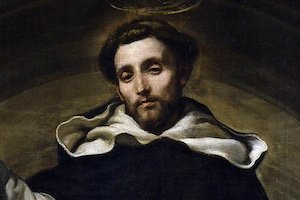
Saint Dominic de Guzman was born in Spain in 1170. As a student, he sold his books to feed the poor during a famine, and offered himself to ransom a slave. At the age of twenty-five, after taking the religious habit he became acting Superior of the Canons Regular of Saint Augustine in Osma, and was soon offered an episcopal chair at Compostella. He answered as afterward he also answered many times: God has not sent me to be a bishop, but to preach. He accompanied his prelate to southern France on a commission for the king of Castille. There his heart was well-nigh broken by the ravages of the Albigensian heresy, a variant of ancient Manicheanism, and the source of devastating wars in southern France. His life from that time on was devoted to the conversion of heretics and the defense of the Faith.
In the year 1199, while he was still a Canon Regular of Saint Augustine and was preaching near the Spanish coasts, he was taken captive, with all his audience and a Brother in religion, by a band of pirates. They placed the prisoners in their galleys at the oars. When a furious storm broke, the young Saint exhorted the disciples of Mohammed to think seriously of their souls, to open their eyes to the truth of Christianity, and above all, to invoke the Mother of God. They did not listen until his third exhortation, at a moment when it was clear the ship and passengers could not be saved. They swore to him then that if the God of Christians preserved them by the intercession of His Holy Mother, they would dedicate themselves to their service. Immediately the storm ceased, and the pirates kept their word.
When in his 46th year, and with six companions, he began the great Order of Preaching Friars, this Order with that of the Friars Minor, founded by his contemporary friend Saint Francis of Assisi, was the chief means God employed to renew Christian fervor during the Middle Ages. In addition, Saint Dominic founded his Second Order for nuns for the education of Catholic girls, and his Third Order, or Tertiaries, for persons of both sexes living in the world. God abundantly blessed the new Order, and France, Italy, Spain, and England welcomed the Preaching Friars. Our Lady took them under Her special protection. During a debate with the heretics, a book by the Saint, defending Her Immaculate Conception, was thrown into the flames along with one by the heretics, to see whether one might be spared. Saint Dominic's was not injured, and many heretics were converted.
It was in 1208, while Saint Dominic knelt in the little chapel of Notre Dame de La Prouille, and implored the great Mother of God to save the Church, that Our Lady appeared to him and gave him the Rosary, bidding him to go forth and preach it. During the famous battles in southern France against the Albigensians, with his rosary in hand he revived the courage of the Catholic armies, led them to victory against overwhelming numbers, and finally subdued the heresy. His nights were spent in prayer; and, though all beheld him as an Angel of purity, before morning broke he would scourge himself to blood. His words rescued countless souls, and three times raised the dead to life. At length, on August 6, 1221, at the age of fifty-one, he gave up his soul to God.
Reflection: God has never refused me what I have asked, said Saint Dominic. How could God refuse to respond to the single intention of His Saints, which is His own — the salvation and sanctification of souls? Saint Dominic has left us the Rosary that we may learn, with Mary's help, to ask what pleases God, and then to pray easily and simply with the same trust.
Les plus illustres captifs, by Rev. Fr. Calixte de la Providence, Trinitarian (Delhomme et Briguet: Lyons, 1892), Vol. I; Little Pictorial Lives of the Saints, a compilation based on Butler's Lives of the Saints and other sources by John Gilmary Shea (Benziger Brothers: New York, 1894).
LAST-MODIFIED:20240803T132444Z SEQUENCE:56995998 X-ACCESS:1 X-HITS:115 X-COLOR:f0b80e X-SHOW-END-TIME:1 END:VEVENT BEGIN:VEVENT DTSTART;VALUE=DATE:20240805 DTEND;VALUE=DATE:20240806 UID:B204742C-9949-4E51-AEA7-B3D346DDAAB9 SUMMARY:Dedication of Our Lady of the Snows CREATED:20221013T211126Z DTSTAMP:20221013T211126Z URL:https://www.stpaulsweymouth.org/component/dpcalendar/event/1892?calid=13 DESCRIPTION:Dedication of Our Lady of the Snows\N\NThere are in Rome three patriarchal churches in which, on different feast days, the Pope officiates. These are the Basilicas of Saint Peter on the Vatican Hill, Saint John Lateran, and Saint Mary Major on the Esquiline Hill. The last-named, the Liberian Basilica, was founded in the time of Pope Liberius, in the fourth century; it was consecrated to the Virgin Mary by Sixtus III in the year 435, under the title of Saint Mary ad Nives, or at the snow, because the Mother of God Herself chose, and indicated by a miracle, its site to be that of Her first church in Rome.\NIn the fourth century a patrician by the name of John and his pious spouse had no children; already advanced in age and without heirs, they resolved to consecrate their wealth to the Most Blessed Virgin. They prayed in order to know how the Queen of Heaven would like them to use their fortune. On August 5, 366, She appeared to each of them in a dream and told them that Her Divine Son's and Her own will was that their wealth be employed in the construction of a church on Mount Esquiline, at a place which in the morning they would find covered with snow. They consulted together when the dawn broke, and went to the Pope at once to tell him what God had made known to them. He himself had had a similar dream and could not doubt that this was a celestial prodigy. He assembled the clergy and people, and all went in procession towards the indicated place, to verify the reality of the marvel. When they arrived on the hilltop, they saw an area covered with snow, extending over a space sufficient to build a vast church. It was built at the expense of the noble couple with great magnificence, and given the name of Saint Mary of the Snows.\NThe same Basilica is sometimes entitled Saint Mary ad Praesepe, of the Manger, from the holy crib or manger of Bethlehem, in which the Infant Jesus was laid at His birth. It was transported to Rome and kept in a sumptuous subterranean chapel of the church. Today this Basilica bears the name of Saint Mary Major, because it is, both by its beauty and its antiquity, the first of the numerous Roman churches dedicated to Mary.\NLittle Pictorial Lives of the Saints, a compilation based on Butler's Lives of the Saints and other sources by John Gilmary Shea (Benziger Brothers: New York, 1894); Lives of the Saints for Every Day of the Year (Reprint of the work of John Gilmary Shea, with Appendix including recently canonized Saints) (Benziger Brothers: New York, 1955). X-ALT-DESC;FMTTYPE=text/html:Dedication of Our Lady of the Snows
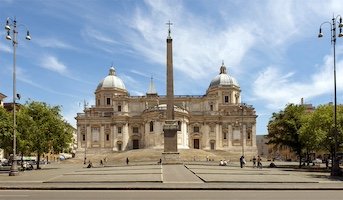
There are in Rome three patriarchal churches in which, on different feast days, the Pope officiates. These are the Basilicas of Saint Peter on the Vatican Hill, Saint John Lateran, and Saint Mary Major on the Esquiline Hill. The last-named, the Liberian Basilica, was founded in the time of Pope Liberius, in the fourth century; it was consecrated to the Virgin Mary by Sixtus III in the year 435, under the title of Saint Mary ad Nives, or at the snow, because the Mother of God Herself chose, and indicated by a miracle, its site to be that of Her first church in Rome.
In the fourth century a patrician by the name of John and his pious spouse had no children; already advanced in age and without heirs, they resolved to consecrate their wealth to the Most Blessed Virgin. They prayed in order to know how the Queen of Heaven would like them to use their fortune. On August 5, 366, She appeared to each of them in a dream and told them that Her Divine Son's and Her own will was that their wealth be employed in the construction of a church on Mount Esquiline, at a place which in the morning they would find covered with snow. They consulted together when the dawn broke, and went to the Pope at once to tell him what God had made known to them. He himself had had a similar dream and could not doubt that this was a celestial prodigy. He assembled the clergy and people, and all went in procession towards the indicated place, to verify the reality of the marvel. When they arrived on the hilltop, they saw an area covered with snow, extending over a space sufficient to build a vast church. It was built at the expense of the noble couple with great magnificence, and given the name of Saint Mary of the Snows.
The same Basilica is sometimes entitled Saint Mary ad Praesepe, of the Manger, from the holy crib or manger of Bethlehem, in which the Infant Jesus was laid at His birth. It was transported to Rome and kept in a sumptuous subterranean chapel of the church. Today this Basilica bears the name of Saint Mary Major, because it is, both by its beauty and its antiquity, the first of the numerous Roman churches dedicated to Mary.
Little Pictorial Lives of the Saints, a compilation based on Butler's Lives of the Saints and other sources by John Gilmary Shea (Benziger Brothers: New York, 1894); Lives of the Saints for Every Day of the Year (Reprint of the work of John Gilmary Shea, with Appendix including recently canonized Saints) (Benziger Brothers: New York, 1955).
LAST-MODIFIED:20240803T132709Z SEQUENCE:56996143 X-ACCESS:1 X-HITS:64 X-COLOR:f0b80e X-SHOW-END-TIME:1 END:VEVENT BEGIN:VEVENT DTSTART;VALUE=DATE:20240806 DTEND;VALUE=DATE:20240807 UID:62A0432C-995D-4266-BDD2-66C56361EC29 SUMMARY:Transfiguration CREATED:20221013T211126Z DTSTAMP:20221013T211126Z URL:https://www.stpaulsweymouth.org/component/dpcalendar/event/1894?calid=13 DESCRIPTION:Transfiguration of Our Lord Jesus Christ\N\NOur divine Redeemer, being in Galilee the summer before His sacred Passion, took with Him Saint Peter and the two sons of Zebedee, Saint James and Saint John, and led them to the heights of a solitary mountain. Tradition assures us that this was Mount Tabor, which is exceedingly high and beautiful, and in those days was covered with green trees and shrubs. It rises alone in the midst of a vast plain of Galilee.\NIt is here that the God-Man appeared in His glory. While Jesus prayed, He permitted the glory which was always due to His sacred humanity — and of which for our sake, not to alarm us, He deprived it — to diffuse its brilliance over His whole body. His face was transfigured and shone as the sun, and His garments became white as snow. Moses and Elias were seen in His company by the three apostles on this occasion, and were heard discoursing with Him of the death which He was to suffer in Jerusalem. The three were wondrously delighted with this glorious vision, and Saint Peter cried out to Christ, Lord, it is good for us to be here! Let us make three tents, one for Thee, one for Moses, and one for Elias.\NWhile Saint Peter was speaking, suddenly there came a bright cloud from heaven, emblem of the presence of God's majesty, and from out of this cloud was heard a voice which said, This is My beloved Son, in whom I am well pleased; hear Him. By these words, God made known that in Christ they must recognize the One He had foretold to Moses, saying: I will raise up from among them a Prophet like you; I will put My words in His mouth, and He will tell them all I command Him. If anyone does not want to hear the words that this Prophet will speak in My Name, it is to Me that he will have to answer for it. (Deut. 18:18-19) When the Jews asked John the Baptist if he was the Prophet, this was the Expected One they referred to. The apostles understood perfectly now what these words meant; the prophecy was known to all who listened to the Scriptures read each week in their synagogues. Hearing this voice, they were nonetheless seized with a sudden fear, and fell upon the ground; but Jesus, going to them, touched them, and bade them rise. They immediately did so, and saw no one but Jesus standing there in His ordinary state. This vision happened during the night. As they went down the mountain early the next morning, Jesus forbade them to tell anyone what they had seen, before He had risen from the dead.\NReflection: From the contemplation of this glorious mystery we ought to conceive a true idea of future happiness. If this idea enters our souls, we will think nothing of the difficulties or labors we meet with here, but will regard with great indifference all the goods and evils of this life, provided we obtain our portion in the kingdom of God's glory.\NLittle Pictorial Lives of the Saints, a compilation based on Butler's Lives of the Saints and other sources by John Gilmary Shea (Benziger Brothers: New York, 1894). X-ALT-DESC;FMTTYPE=text/html:Transfiguration of Our Lord Jesus Christ
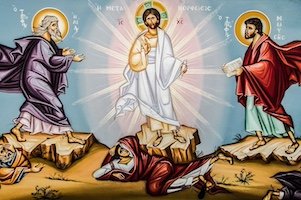
Our divine Redeemer, being in Galilee the summer before His sacred Passion, took with Him Saint Peter and the two sons of Zebedee, Saint James and Saint John, and led them to the heights of a solitary mountain. Tradition assures us that this was Mount Tabor, which is exceedingly high and beautiful, and in those days was covered with green trees and shrubs. It rises alone in the midst of a vast plain of Galilee.
It is here that the God-Man appeared in His glory. While Jesus prayed, He permitted the glory which was always due to His sacred humanity — and of which for our sake, not to alarm us, He deprived it — to diffuse its brilliance over His whole body. His face was transfigured and shone as the sun, and His garments became white as snow. Moses and Elias were seen in His company by the three apostles on this occasion, and were heard discoursing with Him of the death which He was to suffer in Jerusalem. The three were wondrously delighted with this glorious vision, and Saint Peter cried out to Christ, Lord, it is good for us to be here! Let us make three tents, one for Thee, one for Moses, and one for Elias.
While Saint Peter was speaking, suddenly there came a bright cloud from heaven, emblem of the presence of God's majesty, and from out of this cloud was heard a voice which said, This is My beloved Son, in whom I am well pleased; hear Him. By these words, God made known that in Christ they must recognize the One He had foretold to Moses, saying: I will raise up from among them a Prophet like you; I will put My words in His mouth, and He will tell them all I command Him. If anyone does not want to hear the words that this Prophet will speak in My Name, it is to Me that he will have to answer for it. (Deut. 18:18-19) When the Jews asked John the Baptist if he was the Prophet, this was the Expected One they referred to. The apostles understood perfectly now what these words meant; the prophecy was known to all who listened to the Scriptures read each week in their synagogues. Hearing this voice, they were nonetheless seized with a sudden fear, and fell upon the ground; but Jesus, going to them, touched them, and bade them rise. They immediately did so, and saw no one but Jesus standing there in His ordinary state. This vision happened during the night. As they went down the mountain early the next morning, Jesus forbade them to tell anyone what they had seen, before He had risen from the dead.
Reflection: From the contemplation of this glorious mystery we ought to conceive a true idea of future happiness. If this idea enters our souls, we will think nothing of the difficulties or labors we meet with here, but will regard with great indifference all the goods and evils of this life, provided we obtain our portion in the kingdom of God's glory.
Little Pictorial Lives of the Saints, a compilation based on Butler's Lives of the Saints and other sources by John Gilmary Shea (Benziger Brothers: New York, 1894).
LAST-MODIFIED:20240803T132918Z SEQUENCE:56996272 X-ACCESS:1 X-HITS:14 X-COLOR:f0b80e X-SHOW-END-TIME:1 END:VEVENT BEGIN:VEVENT DTSTART;VALUE=DATE:20240806 DTEND;VALUE=DATE:20240807 UID:C136B129-B72D-4862-B4C9-673AE9FE7682 SUMMARY:Sts. Sixtus, Felicissimus and Agapitus CREATED:20221013T211126Z DTSTAMP:20221013T211126Z URL:https://www.stpaulsweymouth.org/component/dpcalendar/event/1896?calid=13 DESCRIPTION:SS. Sixtus II Pope, Felicissimus and Agapitus, Martyrs\N\N“Know that Sixtus has been beheaded in the cemetery on the 8th of the Ides of August.” (Cyprian, Epist. lxxxii) These words of St. Cyprian mark the opening of a glorious period both for the cycle and for history. From this day to the feast of St. Cyprian himself, taking in that of the deacon Laurence, how many holocausts in a few weeks does the earth offer to the Most High God! One would think that the Church, on the feast of our Lord’s Transfiguration, was impatient to join her testimony as Bride to that of the Prophets, of the Apostles, and of God himself. Heaven proclaims him well-beloved, the earth also declares its love for him: the testimony of blood and of every sort of heroism is the sublime echo wakened by the Father’s voice through all the valleys of our lowly earth, to be prolonged throughout all ages.\NLet us, then, today salute this noble Pontiff, the first to go down into the arena opened wide by Valerian to all the soldiers of Christ. Among the brave leaders who, from Peter down to Melchiades, have headed the struggle whereby Rome was both vanquished and saved, none is more illustrious as a martyr. He was seized in the Catacomb lying to the left of the Appian Way, in the very chair wherein, in spite of the recent edicts, he was presiding over the assembly of the brethren; and after the sentence had been pronounced by the judge, he was brought back to the sacred crypt. There in that same chair, in the midst of the martyrs sleeping in the surrounding tombs their sleep of peace, the good and peaceful Pontiff (Pontius Diac. De vita et passione S. Cypriani, xiv.) received the stroke of death. Of the seven deacons of the Roman Church, six died with him; (Liber Pontific. in Sixt. II) Laurence alone was left, inconsolable at having this time missed the palm, but trusting in the invitation given him to be at the heavenly altar in three days’ time.\NTwo of the Pontiff’s deacons were buried in the cemetery of Pretextatus, where the sublime scene had taken place. Sixtus and his blood-stained chair were carried to the other side of the Appian Way into the crypt of the Popes, where they remained for long centuries an object of veneration to pilgrims. When Damasus, in the days of peace, adorned the tombs of the saints with his beautiful inscriptions, the entire cemetery of Callixtus, which includes the burial place of the Popes, received the title “of Cecelia and of Sixtus,” two glorious names inscribed by Rome upon the venerable diptychs of the Mass. Twice over on this day did the Holy Sacrifice summon the Christian to honor, at each side of the principal Way to the eternal City, the triumphant victims of the 8th of the Ides of August. (Sacramentaria Leon. et Gregor.)\NSixtus II, an Athenian, was first a philosopher, and then a disciple of Christ. In the persecution of Valerian, he was accused of publicly preaching the faith of Christ; and was seized and dragged to the temple of Mars, where he was given his choice between death and offering sacrifice to the idols. As he firmly refused to commit such an impiety, he was led away to martyrdom. As he went, St. Laurence met him, and with great sorrow, spoke to him in this manner: “Whither goest thou, Father, without thy son? Whither art thou hastening, O holy Priest, without thy deacon?” Sixtus answered: “I am not forsaking thee, my son, a greater combat for the faith of Christ awaiteth thee. In three days thou shalt follow me, the Deacon shall follow his Priest. In the meanwhile distribute amongst the poor whatever thou hast in the treasury.” He was put to death that same day, the 8th of the Ides of August, together with the Deacons Filicissimus and Agapitus, and the Subdeacons Januarius, Magnus, Vincent, and Stephen. The Pope was buried in the cemetery of Callixtus, but the other martyrs in the cemetery of Pretextatus. He sat eleven months and twelve days; during which time he held an ordination in the month of December, and made four priests, seven deacons, and two bishops.\NThe following Preface from the Leonian Sacramentary breathes the freshness of the Church’s triumph over persecution:\NIt is truly just to return thanks to thee, O Lord. For we know the effects of thy loving kindness, whereby thou wouldst not suffer us to omit the ever honorable solemnity of thy glorious Pontiff and Martyr, Sixtus, during the past tribulations of the world, and dost enable us to celebrate it now that liberty is restored. X-ALT-DESC;FMTTYPE=text/html:SS. Sixtus II Pope, Felicissimus and Agapitus, Martyrs
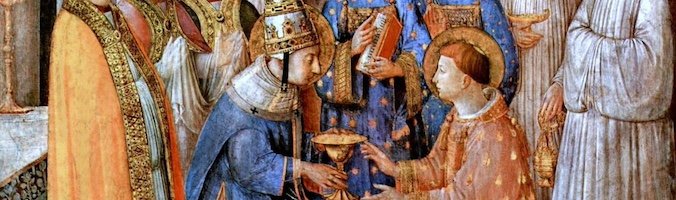
“Know that Sixtus has been beheaded in the cemetery on the 8th of the Ides of August.” (Cyprian, Epist. lxxxii) These words of St. Cyprian mark the opening of a glorious period both for the cycle and for history. From this day to the feast of St. Cyprian himself, taking in that of the deacon Laurence, how many holocausts in a few weeks does the earth offer to the Most High God! One would think that the Church, on the feast of our Lord’s Transfiguration, was impatient to join her testimony as Bride to that of the Prophets, of the Apostles, and of God himself. Heaven proclaims him well-beloved, the earth also declares its love for him: the testimony of blood and of every sort of heroism is the sublime echo wakened by the Father’s voice through all the valleys of our lowly earth, to be prolonged throughout all ages.
Let us, then, today salute this noble Pontiff, the first to go down into the arena opened wide by Valerian to all the soldiers of Christ. Among the brave leaders who, from Peter down to Melchiades, have headed the struggle whereby Rome was both vanquished and saved, none is more illustrious as a martyr. He was seized in the Catacomb lying to the left of the Appian Way, in the very chair wherein, in spite of the recent edicts, he was presiding over the assembly of the brethren; and after the sentence had been pronounced by the judge, he was brought back to the sacred crypt. There in that same chair, in the midst of the martyrs sleeping in the surrounding tombs their sleep of peace, the good and peaceful Pontiff (Pontius Diac. De vita et passione S. Cypriani, xiv.) received the stroke of death. Of the seven deacons of the Roman Church, six died with him; (Liber Pontific. in Sixt. II) Laurence alone was left, inconsolable at having this time missed the palm, but trusting in the invitation given him to be at the heavenly altar in three days’ time.
Two of the Pontiff’s deacons were buried in the cemetery of Pretextatus, where the sublime scene had taken place. Sixtus and his blood-stained chair were carried to the other side of the Appian Way into the crypt of the Popes, where they remained for long centuries an object of veneration to pilgrims. When Damasus, in the days of peace, adorned the tombs of the saints with his beautiful inscriptions, the entire cemetery of Callixtus, which includes the burial place of the Popes, received the title “of Cecelia and of Sixtus,” two glorious names inscribed by Rome upon the venerable diptychs of the Mass. Twice over on this day did the Holy Sacrifice summon the Christian to honor, at each side of the principal Way to the eternal City, the triumphant victims of the 8th of the Ides of August. (Sacramentaria Leon. et Gregor.)
Sixtus II, an Athenian, was first a philosopher, and then a disciple of Christ. In the persecution of Valerian, he was accused of publicly preaching the faith of Christ; and was seized and dragged to the temple of Mars, where he was given his choice between death and offering sacrifice to the idols. As he firmly refused to commit such an impiety, he was led away to martyrdom. As he went, St. Laurence met him, and with great sorrow, spoke to him in this manner: “Whither goest thou, Father, without thy son? Whither art thou hastening, O holy Priest, without thy deacon?” Sixtus answered: “I am not forsaking thee, my son, a greater combat for the faith of Christ awaiteth thee. In three days thou shalt follow me, the Deacon shall follow his Priest. In the meanwhile distribute amongst the poor whatever thou hast in the treasury.” He was put to death that same day, the 8th of the Ides of August, together with the Deacons Filicissimus and Agapitus, and the Subdeacons Januarius, Magnus, Vincent, and Stephen. The Pope was buried in the cemetery of Callixtus, but the other martyrs in the cemetery of Pretextatus. He sat eleven months and twelve days; during which time he held an ordination in the month of December, and made four priests, seven deacons, and two bishops.
The following Preface from the Leonian Sacramentary breathes the freshness of the Church’s triumph over persecution:
It is truly just to return thanks to thee, O Lord. For we know the effects of thy loving kindness, whereby thou wouldst not suffer us to omit the ever honorable solemnity of thy glorious Pontiff and Martyr, Sixtus, during the past tribulations of the world, and dost enable us to celebrate it now that liberty is restored.
LAST-MODIFIED:20240803T133343Z SEQUENCE:56996537 X-ACCESS:1 X-HITS:136 X-COLOR:f0b80e X-SHOW-END-TIME:1 END:VEVENT BEGIN:VEVENT DTSTART;VALUE=DATE:20240807 DTEND;VALUE=DATE:20240808 UID:A2BB63DD-F159-44AD-ADC7-7AEF2CAC98F5 SUMMARY:St. Donatus CREATED:20221013T211126Z DTSTAMP:20221013T211126Z URL:https://www.stpaulsweymouth.org/component/dpcalendar/event/1900?calid=13 DESCRIPTION:St. Donatus Bishop, Martyr\N\NBEING illustrious for sanctity and miracles, as St. Gregory the Great as sures us, he was apprehended by Quadratianus, the Augustalis, or imperial prefect of Tuscany, in the reign of Julian the Apostate. Refusing to adore the idols, he suffered many torments with invincible constancy, and at length finished his martyrdom by the sword in 361. His relics are enshrined in the cathedral of Arezzo. At the same time and place St. Hilarinus, a monk, received the like crown, being beaten to death with clubs. His relics were afterward translated to Ostia. X-ALT-DESC;FMTTYPE=text/html:St. Donatus Bishop, Martyr
BEING illustrious for sanctity and miracles, as St. Gregory the Great as sures us, he was apprehended by Quadratianus, the Augustalis, or imperial prefect of Tuscany, in the reign of Julian the Apostate. Refusing to adore the idols, he suffered many torments with invincible constancy, and at length finished his martyrdom by the sword in 361. His relics are enshrined in the cathedral of Arezzo. At the same time and place St. Hilarinus, a monk, received the like crown, being beaten to death with clubs. His relics were afterward translated to Ostia.
LAST-MODIFIED:20240803T133930Z SEQUENCE:56996884 X-ACCESS:1 X-HITS:36 X-COLOR:f0b80e X-SHOW-END-TIME:1 END:VEVENT BEGIN:VEVENT DTSTART;VALUE=DATE:20240807 DTEND;VALUE=DATE:20240808 UID:470252FE-93B3-475F-A34A-C1B52214382F SUMMARY:St. Cajetan CREATED:20221013T211126Z DTSTAMP:20221013T211126Z URL:https://www.stpaulsweymouth.org/component/dpcalendar/event/1898?calid=13 DESCRIPTION:St. Cajetan, Confessor\N\NSaint Cajetan was born in 1480 at Vicenza near Venice in Italy, of the pious and noble family by the name of Thiena. His great-uncle, who bore the same name as himself and was a Canon of Padua, was considered to be the prince of the theologians of his century; and several prelates and cardinals, as well as governors of Milan and Naples, were of the same line. His parents dedicated Cajetan to our Blessed Lady. From childhood he was remarked for his obedience, his temperance, and his charity towards the poor.\NA distinguished student, a veritable model for all his peers, he desired a higher perfection and left his native town, where he was in honor, to seek obscurity in Rome. There, however, Pope Julius II, perceiving his merit, named him an apostolic protonotary, a high office. He joined a certain Congregation or Confraternity known as that of Divine Love and, working with its members, introduced frequent Communion in their midst, and elsewhere through their influence. The Pope saw to his ordination, and he then offered many fervent Masses. About that time, on Christmas Eve at the Church of Saint Mary Major, when he entered the church he saw the Holy Mother; She came to him and placed Her divine Infant in his arms. It was also Saint Cajetan who later would introduce the Forty Hours' Adoration of the Blessed Sacrament, as an antidote to the heresy of Calvin.\NHe returned to Vicenza when his mother died, and began to seek out the sick poor and transport them to the Hospital of the Incurables or of Mercy, with which he had united the Congregation of Divine Love, established in that city also. He served the sick in the hospital himself. He placed himself under the direction of a holy Dominican priest, Father John Baptist de Crema, who not long afterwards told him he should go to Venice. His obedience was perfect in this sacrifice, which cost not only himself but those in his hospital many tears. At Venice too, he was needed in a hospital; and the Venetians in those days of luxury and licence, soon reformed what was not correct in their conduct to follow his holy examples.\NTo renew the lives of the clergy, in 1524, with Paul Caraffa, then Bishop of Theata or Chieti in the kingdom of Naples, who later would become Pope Paul IV, and with two other fervent Christians, Saint Cajetan founded the first group of Regular Clerics, since known as Theatines. All had deeply regretted the state of the Church at that time, and with ardor they devoted themselves to preaching, to the administration of the sacraments and the careful execution of the Church's rites and ceremonies.\NWhen the Germans, under Constable Bourbon, sacked Rome, Saint Cajetan was barbarously scourged to extort from him imaginary riches; his only wealth was his good works, which he had long since securely stored in heaven. When the Saint was on his deathbed, resigned to the Will of God, happy to suffer to satisfy his love, and eager for death to attain to life, he again beheld the Mother of God, radiant with splendor and surrounded by ministering seraphim. Turning Her countenance full of majesty and sweetness upon him, She said, Cajetan, My Son calls you. Let us go in peace. Worn out with toil and sickness, he went to his reward in 1547.\NReflection: Imitate Saint Cajetan's devotion to our Blessed Lady, by invoking Her aid before every work.\NLes Petits Bollandistes: Vies des Saints, by Msgr. Paul Guérin (Bloud et Barral: Paris, 1882), Vol. 9; Little Pictorial Lives of the Saints, a compilation based on Butler's Lives of the Saints and other sources by John Gilmary Shea (Benziger Brothers: New York, 1894). X-ALT-DESC;FMTTYPE=text/html:St. Cajetan, Confessor
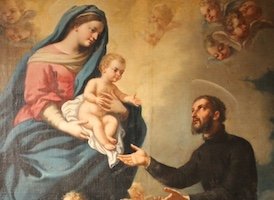
Saint Cajetan was born in 1480 at Vicenza near Venice in Italy, of the pious and noble family by the name of Thiena. His great-uncle, who bore the same name as himself and was a Canon of Padua, was considered to be the prince of the theologians of his century; and several prelates and cardinals, as well as governors of Milan and Naples, were of the same line. His parents dedicated Cajetan to our Blessed Lady. From childhood he was remarked for his obedience, his temperance, and his charity towards the poor.
A distinguished student, a veritable model for all his peers, he desired a higher perfection and left his native town, where he was in honor, to seek obscurity in Rome. There, however, Pope Julius II, perceiving his merit, named him an apostolic protonotary, a high office. He joined a certain Congregation or Confraternity known as that of Divine Love and, working with its members, introduced frequent Communion in their midst, and elsewhere through their influence. The Pope saw to his ordination, and he then offered many fervent Masses. About that time, on Christmas Eve at the Church of Saint Mary Major, when he entered the church he saw the Holy Mother; She came to him and placed Her divine Infant in his arms. It was also Saint Cajetan who later would introduce the Forty Hours' Adoration of the Blessed Sacrament, as an antidote to the heresy of Calvin.
He returned to Vicenza when his mother died, and began to seek out the sick poor and transport them to the Hospital of the Incurables or of Mercy, with which he had united the Congregation of Divine Love, established in that city also. He served the sick in the hospital himself. He placed himself under the direction of a holy Dominican priest, Father John Baptist de Crema, who not long afterwards told him he should go to Venice. His obedience was perfect in this sacrifice, which cost not only himself but those in his hospital many tears. At Venice too, he was needed in a hospital; and the Venetians in those days of luxury and licence, soon reformed what was not correct in their conduct to follow his holy examples.
To renew the lives of the clergy, in 1524, with Paul Caraffa, then Bishop of Theata or Chieti in the kingdom of Naples, who later would become Pope Paul IV, and with two other fervent Christians, Saint Cajetan founded the first group of Regular Clerics, since known as Theatines. All had deeply regretted the state of the Church at that time, and with ardor they devoted themselves to preaching, to the administration of the sacraments and the careful execution of the Church's rites and ceremonies.
When the Germans, under Constable Bourbon, sacked Rome, Saint Cajetan was barbarously scourged to extort from him imaginary riches; his only wealth was his good works, which he had long since securely stored in heaven. When the Saint was on his deathbed, resigned to the Will of God, happy to suffer to satisfy his love, and eager for death to attain to life, he again beheld the Mother of God, radiant with splendor and surrounded by ministering seraphim. Turning Her countenance full of majesty and sweetness upon him, She said, Cajetan, My Son calls you. Let us go in peace. Worn out with toil and sickness, he went to his reward in 1547.
Reflection: Imitate Saint Cajetan's devotion to our Blessed Lady, by invoking Her aid before every work.
Les Petits Bollandistes: Vies des Saints, by Msgr. Paul Guérin (Bloud et Barral: Paris, 1882), Vol. 9; Little Pictorial Lives of the Saints, a compilation based on Butler's Lives of the Saints and other sources by John Gilmary Shea (Benziger Brothers: New York, 1894).
LAST-MODIFIED:20240803T133602Z SEQUENCE:56996676 X-ACCESS:1 X-HITS:218 X-COLOR:f0b80e X-SHOW-END-TIME:1 END:VEVENT BEGIN:VEVENT DTSTART;VALUE=DATE:20240808 DTEND;VALUE=DATE:20240809 UID:5F090930-EF04-428E-9B9D-C3D1EE7DB9C8 SUMMARY:St. John Vianney CREATED:20221013T211126Z DTSTAMP:20221013T211126Z URL:https://www.stpaulsweymouth.org/component/dpcalendar/event/1902?calid=13 DESCRIPTION:St. John Mary Vianney, Confessor\N\NIt has been said of more than one person, of more than one Saint, that they were the prodigies of their century. This is perhaps true of no one more than of the Curé of Ars. This man, who was so remarkably humble, for about thirty years saw the whole world, as it were, attentive to his virtues, the entire Christian world at his feet. He is certainly a marvel of the pastoral apostolate and sanctity.\NBorn three years before the French Revolution into a humble and profoundly Christian family, at Dardilly near Lyons, he was at first a little shepherd, occupied also with the cultivation of the land. From his earliest years he was noted for his candor, piety, love for the Blessed Virgin, and charity for the poor. He desired to become a priest and reached the altar through his piety rather than through his talents. Lack of schooling during the Revolution had made Latin grammar virtually inaccessible to his best efforts. The bishop asked, however, whether he was pious; and when he heard that he said his Rosary like an Angel, ordained him.\NAfter a few years of parish work as an Assistant Pastor, in 1817 he was placed in charge of the parish of Ars, a small village considered backward and scarcely half-Christian. On his way there, solitary and in poverty, when he saw in the distance the steeple of the church, he knelt and prayed God to bless his ministry. His first concern was to visit his parishioners, and he soon won them over by his far-from-ordinary virtue. To their indifference to religion, then, a profoundly Christian spirit succeeded, and one saw the Lord's day observed to perfection; under the influence of a Saint, the parish of Ars became like a religious community. Word of this transformation passed from one person to another and soon, from many surrounding regions people came to hear him, enter humbly into the confessional, and obtain miracles. These he attributed to Saint Philomena, whose tomb had recently been discovered, and whom he called his dear little Saint. He was very attentive to the beauty of the sanctuary, to the preparation of his sermons, and to the orphanage which he founded; no application was excessive where these were concerned. For himself he was unsparing, sleeping in a damp basement and persecuted there incessantly by the devil. The villagers themselves became aware of his terrible combats with the one he called the grappin — literally a sharp-pronged anchor — the fitting name he gave the ancient enemy.\NTen years later, the reputation of this humble country priest had spread over Europe, and from everywhere there came impious scoffers, unbelievers, and libertines, as well as fervent Christians and those in sorrow; the former were converted by the thousands, the latter consoled and strengthened for their combats. He spent ordinarily from sixteen to eighteen hours daily in the confessional, in winter with his feet on an unheated stone floor; and the rest of his time in preaching, prayer, and teaching catechism in the church. He died at the advanced age of 84, despite his unrelenting penance and long-standing rheumatism, and loved by the whole world.\NReflection: Let us pray for holy priests to bring the world on its knees to its Saviour. No intention is more important than this one. The Curé of Ars will pray with us, if we ask him to do so, and protect the sacerdotal race from the unending, unrelenting dangers which threaten it everywhere.\NVie des Saints pour tous les jours de l'année, by Abbé L. Jaud (Mame: Tours, 1950); Life of the Curé of Ars, by Msgr. Francis Trochu (translated from the French). X-ALT-DESC;FMTTYPE=text/html:St. John Mary Vianney, Confessor
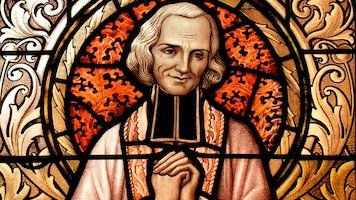
It has been said of more than one person, of more than one Saint, that they were the prodigies of their century. This is perhaps true of no one more than of the Curé of Ars. This man, who was so remarkably humble, for about thirty years saw the whole world, as it were, attentive to his virtues, the entire Christian world at his feet. He is certainly a marvel of the pastoral apostolate and sanctity.
Born three years before the French Revolution into a humble and profoundly Christian family, at Dardilly near Lyons, he was at first a little shepherd, occupied also with the cultivation of the land. From his earliest years he was noted for his candor, piety, love for the Blessed Virgin, and charity for the poor. He desired to become a priest and reached the altar through his piety rather than through his talents. Lack of schooling during the Revolution had made Latin grammar virtually inaccessible to his best efforts. The bishop asked, however, whether he was pious; and when he heard that he said his Rosary like an Angel, ordained him.
After a few years of parish work as an Assistant Pastor, in 1817 he was placed in charge of the parish of Ars, a small village considered backward and scarcely half-Christian. On his way there, solitary and in poverty, when he saw in the distance the steeple of the church, he knelt and prayed God to bless his ministry. His first concern was to visit his parishioners, and he soon won them over by his far-from-ordinary virtue. To their indifference to religion, then, a profoundly Christian spirit succeeded, and one saw the Lord's day observed to perfection; under the influence of a Saint, the parish of Ars became like a religious community. Word of this transformation passed from one person to another and soon, from many surrounding regions people came to hear him, enter humbly into the confessional, and obtain miracles. These he attributed to Saint Philomena, whose tomb had recently been discovered, and whom he called his dear little Saint. He was very attentive to the beauty of the sanctuary, to the preparation of his sermons, and to the orphanage which he founded; no application was excessive where these were concerned. For himself he was unsparing, sleeping in a damp basement and persecuted there incessantly by the devil. The villagers themselves became aware of his terrible combats with the one he called the grappin — literally a sharp-pronged anchor — the fitting name he gave the ancient enemy.
Ten years later, the reputation of this humble country priest had spread over Europe, and from everywhere there came impious scoffers, unbelievers, and libertines, as well as fervent Christians and those in sorrow; the former were converted by the thousands, the latter consoled and strengthened for their combats. He spent ordinarily from sixteen to eighteen hours daily in the confessional, in winter with his feet on an unheated stone floor; and the rest of his time in preaching, prayer, and teaching catechism in the church. He died at the advanced age of 84, despite his unrelenting penance and long-standing rheumatism, and loved by the whole world.
Reflection: Let us pray for holy priests to bring the world on its knees to its Saviour. No intention is more important than this one. The Curé of Ars will pray with us, if we ask him to do so, and protect the sacerdotal race from the unending, unrelenting dangers which threaten it everywhere.
Vie des Saints pour tous les jours de l'année, by Abbé L. Jaud (Mame: Tours, 1950); Life of the Curé of Ars, by Msgr. Francis Trochu (translated from the French).
LAST-MODIFIED:20240803T134143Z SEQUENCE:56997017 X-ACCESS:1 X-HITS:114 X-COLOR:f0b80e X-SHOW-END-TIME:1 END:VEVENT BEGIN:VEVENT DTSTART;VALUE=DATE:20240808 DTEND;VALUE=DATE:20240809 UID:8774F007-D61F-487C-917C-743B62FA9CAB SUMMARY:Sts. Cyriacus, Largus and Smaragdus CREATED:20221013T211126Z DTSTAMP:20221013T211126Z URL:https://www.stpaulsweymouth.org/component/dpcalendar/event/1904?calid=13 DESCRIPTION:Sts. Cyriacus, Largus and Smaragdus, Martyrs\N\NSaint Cyriacus, born of a noble patrician family, embraced the Christian religion and gave all his wealth to the poor. He was ordained a deacon at Rome, under Pope Marcellinus. Diocletian was emperor at that time, assisted by Maximian, his favorite. The latter decided to build a beautiful palace for the emperor, with magnificent baths, and to make the Christians work at the construction. Among the new slaves were elderly gentlemen and persons of the highest rank, clerics and priests. The labor was hard and the food scanty. A Roman nobleman desired to relieve the sufferings of these laborers and sent four Christians with alms and encouragements; these were Saint Cyriacus, Saint Sisinius, Saint Largus and Saint Smaragdus. They pursued their charities at the risk of their lives, and they worked vigorously alongside those who were growing very weak. When Maximian heard of it, he had Saint Sisinius and an old gentleman whom he had helped, decapitated.\NSaint Cyriacus was well known to Diocletian, who was fond of him. Suddenly Diocletian's daughter became possessed by a furious demon, and she announced that only Cyriacus could deliver her. Diocletian sent for him, and he cured her. She became a Christian like her mother, who is today Saint Serena. A short time later the daughter of the king of Persia also became possessed, and cried out like Diocletian's daughter that she could be delivered only by Cyriacus, who was in Rome. A message was sent to Diocletian, who asked his wife to persuade the deacon to go to Persia for this purpose. He did so with his two remaining Christian companions, and again cast out the demon, thus bringing about the conversion of the king, his family and four hundred persons, whom he baptized. The three confessors returned to Rome, having refused all compensation for their services, saying that they had received the gifts of God gratuitously and wished to share them gratuitously, not deriving profit from them. The barbarous Maximian, hearing of their return in 303, had them seized, imprisoned and tortured, and finally decapitated with twenty other courageous Christians. Their bodies were first buried near the place of their execution on the Salarian Way, but were later removed to the city. An abbey in France, at Altorf in Alsace, possesses relics of Saint Cyriacus and bears his name.\NReflection: To honor the martyrs and duly celebrate their feasts, we must learn their spirit and study to imitate them according to our state of life. We must, like them, resist evil, subdue our passions, suffer afflictions with patience, and bear with others without murmuring or complaining. The cross is the ladder by which we must ascend to heaven.\NLes Petits Bollandistes: Vies des Saints, by Msgr. Paul Guérin (Bloud et Barral: Paris, 1882), Vol. 9; Little Pictorial Lives of the Saints, a compilation based on Butler's Lives of the Saints and other sources by John Gilmary Shea (Benziger Brothers: New York, 1894) X-ALT-DESC;FMTTYPE=text/html:Sts. Cyriacus, Largus and Smaragdus, Martyrs
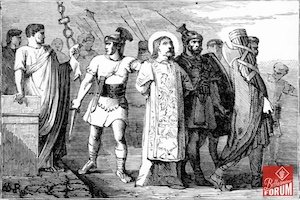
Saint Cyriacus, born of a noble patrician family, embraced the Christian religion and gave all his wealth to the poor. He was ordained a deacon at Rome, under Pope Marcellinus. Diocletian was emperor at that time, assisted by Maximian, his favorite. The latter decided to build a beautiful palace for the emperor, with magnificent baths, and to make the Christians work at the construction. Among the new slaves were elderly gentlemen and persons of the highest rank, clerics and priests. The labor was hard and the food scanty. A Roman nobleman desired to relieve the sufferings of these laborers and sent four Christians with alms and encouragements; these were Saint Cyriacus, Saint Sisinius, Saint Largus and Saint Smaragdus. They pursued their charities at the risk of their lives, and they worked vigorously alongside those who were growing very weak. When Maximian heard of it, he had Saint Sisinius and an old gentleman whom he had helped, decapitated.
Saint Cyriacus was well known to Diocletian, who was fond of him. Suddenly Diocletian's daughter became possessed by a furious demon, and she announced that only Cyriacus could deliver her. Diocletian sent for him, and he cured her. She became a Christian like her mother, who is today Saint Serena. A short time later the daughter of the king of Persia also became possessed, and cried out like Diocletian's daughter that she could be delivered only by Cyriacus, who was in Rome. A message was sent to Diocletian, who asked his wife to persuade the deacon to go to Persia for this purpose. He did so with his two remaining Christian companions, and again cast out the demon, thus bringing about the conversion of the king, his family and four hundred persons, whom he baptized. The three confessors returned to Rome, having refused all compensation for their services, saying that they had received the gifts of God gratuitously and wished to share them gratuitously, not deriving profit from them. The barbarous Maximian, hearing of their return in 303, had them seized, imprisoned and tortured, and finally decapitated with twenty other courageous Christians. Their bodies were first buried near the place of their execution on the Salarian Way, but were later removed to the city. An abbey in France, at Altorf in Alsace, possesses relics of Saint Cyriacus and bears his name.
Reflection: To honor the martyrs and duly celebrate their feasts, we must learn their spirit and study to imitate them according to our state of life. We must, like them, resist evil, subdue our passions, suffer afflictions with patience, and bear with others without murmuring or complaining. The cross is the ladder by which we must ascend to heaven.
Les Petits Bollandistes: Vies des Saints, by Msgr. Paul Guérin (Bloud et Barral: Paris, 1882), Vol. 9; Little Pictorial Lives of the Saints, a compilation based on Butler's Lives of the Saints and other sources by John Gilmary Shea (Benziger Brothers: New York, 1894)
LAST-MODIFIED:20240803T134547Z SEQUENCE:56997261 X-ACCESS:1 X-HITS:184 X-COLOR:f0b80e X-SHOW-END-TIME:1 END:VEVENT BEGIN:VEVENT DTSTART;VALUE=DATE:20240809 DTEND;VALUE=DATE:20240810 UID:1E712FE7-E7AD-420C-9937-11AE2A565D32 SUMMARY:St. Romanus CREATED:20221013T211126Z DTSTAMP:20221013T211126Z URL:https://www.stpaulsweymouth.org/component/dpcalendar/event/1906?calid=13 DESCRIPTION:St. Romanus, Martyr\N\NSaint Romanus was a soldier in the legion of emperor Valerian in Rome, at the time of the arraignment and interrogation of Saint Lawrence. Seeing the joy and constancy and the absolute silence of that holy martyr during his first torments, he could not understand how a creature of flesh and blood could be thus tormented without opening his mouth to complain. He was moved to embrace the Faith, and at that very moment, he beheld beside the Saint a young man of incomparable grace and beauty, who was wiping away the perspiration of the martyr's face and the blood of his wounds. Addressing himself to Saint Lawrence, still on the rack, he asked to become a Christian. The Saint was untied and imprisoned, and later was able to respond to the pressing request of the soldier, who brought him in prison the water for his baptism.\NSaint Romanus was summoned before the tribunal, for everyone soon learned of his conversion. He said fearlessly and joyfully, there as he had said elsewhere, I am a Christian! He was condemned and beheaded immediately, the day before the martyrdom of Saint Lawrence, on August 9, 258. The body of Saint Romanus was buried by a priest in a cavern on the road to Tibur, but his remains were translated to Lucca, where they are kept under the high altar of a beautiful church which bears his name.\NReflection: We are bound to glorify God by our lives, and Christ commands that our good works shine before men. It was the usual saying of the apostle Saint Matthias, The faithful sins if his neighbor sins. Each one of us should have zeal to instruct and edify his neighbor, by example first of all, and by words when fitting.\NLes Petits Bollandistes: Vies des Saints, by Msgr. Paul Guérin (Bloud et Barral: Paris, 1882), Vol. 9; Little Pictorial Lives of the Saints, a compilation based on Butler's Lives of the Saints and other sources by John Gilmary Shea (Benziger Brothers: New York, 1894). X-ALT-DESC;FMTTYPE=text/html:St. Romanus, Martyr
Saint Romanus was a soldier in the legion of emperor Valerian in Rome, at the time of the arraignment and interrogation of Saint Lawrence. Seeing the joy and constancy and the absolute silence of that holy martyr during his first torments, he could not understand how a creature of flesh and blood could be thus tormented without opening his mouth to complain. He was moved to embrace the Faith, and at that very moment, he beheld beside the Saint a young man of incomparable grace and beauty, who was wiping away the perspiration of the martyr's face and the blood of his wounds. Addressing himself to Saint Lawrence, still on the rack, he asked to become a Christian. The Saint was untied and imprisoned, and later was able to respond to the pressing request of the soldier, who brought him in prison the water for his baptism.
Saint Romanus was summoned before the tribunal, for everyone soon learned of his conversion. He said fearlessly and joyfully, there as he had said elsewhere, I am a Christian! He was condemned and beheaded immediately, the day before the martyrdom of Saint Lawrence, on August 9, 258. The body of Saint Romanus was buried by a priest in a cavern on the road to Tibur, but his remains were translated to Lucca, where they are kept under the high altar of a beautiful church which bears his name.
Reflection: We are bound to glorify God by our lives, and Christ commands that our good works shine before men. It was the usual saying of the apostle Saint Matthias, The faithful sins if his neighbor sins. Each one of us should have zeal to instruct and edify his neighbor, by example first of all, and by words when fitting.
Les Petits Bollandistes: Vies des Saints, by Msgr. Paul Guérin (Bloud et Barral: Paris, 1882), Vol. 9; Little Pictorial Lives of the Saints, a compilation based on Butler's Lives of the Saints and other sources by John Gilmary Shea (Benziger Brothers: New York, 1894).
LAST-MODIFIED:20240803T134756Z SEQUENCE:56997390 X-ACCESS:1 X-HITS:66 X-COLOR:f0b80e X-SHOW-END-TIME:1 END:VEVENT BEGIN:VEVENT DTSTART;VALUE=DATE:20240809 DTEND;VALUE=DATE:20240810 UID:EB53B951-7C07-49B4-B88F-9285A153E0FE SUMMARY:St. Oswald CREATED:20221013T211126Z DTSTAMP:20221013T211126Z URL:https://www.stpaulsweymouth.org/component/dpcalendar/event/1908?calid=13 DESCRIPTION:St. Oswald King, Martyr\N\NBeginning in the year 449, the pagan Germanic peoples known as the Angles, the Saxons, and the Jutes invaded Britain and drove the native Britons, a Christian Celtic people, north and west into Wales, Scotland, Ireland, and Cornwall. They established seven principal kingdoms (the Heptarchy) in England: The Saxon kingdoms of Essex, Wessex and Sussex (East Saxons, West Saxons, and South Saxons), the Angle kingdoms of East Anglia, Mercia, and Northumbria, and the Jute kingdom of Kent (in southeast England, the London area). To this day, there are seven principal dialects of English spoken in England, and the seven areas in which they are spoken are substantially the same as the areas of the seven ancient Anglo-Saxon kingdoms.\NIn 597, Augustine, a missionary from Rome, established a mission in Kent, where he was favorably received, and became the first Archbishop of Canterbury. (He is remembered on 26 May.) However, his influence was initially confined to the southeast of England.\NIn Northumbria (the region north of the Humber River), in the north of England, in 616, Edwin seized the throne (replacing his sister's husband, Æthelfrith the Ravager), and Oswald, son of Aethelfrith, fled into Scotland, to the monastic settlement on the island of Iona (off the west coast of southern Scotland). Here Oswald encountered the Christian faith and was converted and baptised. Edwin married Ethelburgha, a princess of Kent, who brought with her the missionary Paulinus, who became first Archbishop of York. Edwin and many of his court accepted baptism in 627. In 632, King Cadwallon of Wales and the pagan king Penda of Mercia invaded Northumbria and killed Edwin in battle. The queen and the archbishop fled south, and Christianity was temporarily suppressed in the North.\NThe following year, Oswald returned from exile to claim the throne. He met Cadwallon (or Cadwalla) in battle near Hexham. The night before the battle, vastly outnumbered, with a small army of whom not more than a dozen were Christians, he set up a wooden cross, and asked his soldiers to join him in prayer. They did so, and promised to be baptised if they won the battle. The battle was accordingly joined, and Oswald won a victory "as complete as it was unlikely," defeating and slaying Cadwallon (the victor, as the Welsh bards tell us, of forty battles and sixty single combats). The battle site was thereafter known as Heavensfield. Northumbria, now united, became the most powerful of the Seven Kingdoms, and Oswald was recognized as paramount king of the Heptarchy.\NHis concern was for the conversion of his people to Christianity, and he sent messengers to Iona, where he had himself received the Gospel, asking for a Christian preacher. The first man sent was tactless and a failure, but his replacement, Aidan, was an outstanding success. (We remember Aidan on 31 August.) Since he did not at first speak the Anglo-Saxon language, Oswald, who was fully bilingual, stood beside him as he preached and interpreted the sermon. Aidan was soon joined by other missionaries, and the Church flourished in Northumbria. Oswald went to Wessex (the second most powerful of the Seven Kingdoms, and later to be the most powerful, and the nucleus of a united England) in order to seek a bride. Wessex was at that time largely pagan, but his bride, Kineburga, agreed to become a Christian, and so did her father, the King of Wessex. Thus a door was opened for the Gospel in southwestern England.\NHowever, Penda, the pagan king of Mercia, yet lived, and in 640 war between Mercia and Northumbria was renewed, with the former followers of Cadwallon allied once more with Mercia. In 642 Penda killed Oswald in a great battle near Maserfeld (Salop), on the border between their kingdoms. As he fell dying, Oswald prayed aloud for the souls of his bodyguards, who died with him, and for the salvation of the people of Northumbria, and for his pagan enemies. Penda ordered the corpse of Oswald to be dismembered and its parts set up on stakes as a sacrifice to Odin. The head was reclaimed by Christians and sent to Lindisfarne, and is now thought to rest in a tomb in Durham Cathedral (but it should be noted that because of invasions and tumults it has been moved several times, making its present location uncertain).\NPRAYER\NLord God our King, who by the hand of thy servant Oswald didst Lift up the standard of the cross in the land of Northumbria, that thy Gospel might be preached in that land: Plant, we beseech thee, the standard of the cross in our hearts, and let thy grace shine forth in our lives, that thereby many may be drawn to the knowledge and love of thee; through Jesus Christ our Lord, who liveth and reigneth with thee and the Holy Ghost, one God, now and ever. X-ALT-DESC;FMTTYPE=text/html:St. Oswald King, Martyr
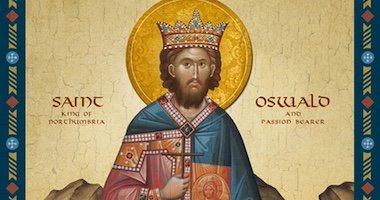
Beginning in the year 449, the pagan Germanic peoples known as the Angles, the Saxons, and the Jutes invaded Britain and drove the native Britons, a Christian Celtic people, north and west into Wales, Scotland, Ireland, and Cornwall. They established seven principal kingdoms (the Heptarchy) in England: The Saxon kingdoms of Essex, Wessex and Sussex (East Saxons, West Saxons, and South Saxons), the Angle kingdoms of East Anglia, Mercia, and Northumbria, and the Jute kingdom of Kent (in southeast England, the London area). To this day, there are seven principal dialects of English spoken in England, and the seven areas in which they are spoken are substantially the same as the areas of the seven ancient Anglo-Saxon kingdoms.
In 597, Augustine, a missionary from Rome, established a mission in Kent, where he was favorably received, and became the first Archbishop of Canterbury. (He is remembered on 26 May.) However, his influence was initially confined to the southeast of England.
In Northumbria (the region north of the Humber River), in the north of England, in 616, Edwin seized the throne (replacing his sister's husband, Æthelfrith the Ravager), and Oswald, son of Aethelfrith, fled into Scotland, to the monastic settlement on the island of Iona (off the west coast of southern Scotland). Here Oswald encountered the Christian faith and was converted and baptised. Edwin married Ethelburgha, a princess of Kent, who brought with her the missionary Paulinus, who became first Archbishop of York. Edwin and many of his court accepted baptism in 627. In 632, King Cadwallon of Wales and the pagan king Penda of Mercia invaded Northumbria and killed Edwin in battle. The queen and the archbishop fled south, and Christianity was temporarily suppressed in the North.
The following year, Oswald returned from exile to claim the throne. He met Cadwallon (or Cadwalla) in battle near Hexham. The night before the battle, vastly outnumbered, with a small army of whom not more than a dozen were Christians, he set up a wooden cross, and asked his soldiers to join him in prayer. They did so, and promised to be baptised if they won the battle. The battle was accordingly joined, and Oswald won a victory "as complete as it was unlikely," defeating and slaying Cadwallon (the victor, as the Welsh bards tell us, of forty battles and sixty single combats). The battle site was thereafter known as Heavensfield. Northumbria, now united, became the most powerful of the Seven Kingdoms, and Oswald was recognized as paramount king of the Heptarchy.
His concern was for the conversion of his people to Christianity, and he sent messengers to Iona, where he had himself received the Gospel, asking for a Christian preacher. The first man sent was tactless and a failure, but his replacement, Aidan, was an outstanding success. (We remember Aidan on 31 August.) Since he did not at first speak the Anglo-Saxon language, Oswald, who was fully bilingual, stood beside him as he preached and interpreted the sermon. Aidan was soon joined by other missionaries, and the Church flourished in Northumbria. Oswald went to Wessex (the second most powerful of the Seven Kingdoms, and later to be the most powerful, and the nucleus of a united England) in order to seek a bride. Wessex was at that time largely pagan, but his bride, Kineburga, agreed to become a Christian, and so did her father, the King of Wessex. Thus a door was opened for the Gospel in southwestern England.
However, Penda, the pagan king of Mercia, yet lived, and in 640 war between Mercia and Northumbria was renewed, with the former followers of Cadwallon allied once more with Mercia. In 642 Penda killed Oswald in a great battle near Maserfeld (Salop), on the border between their kingdoms. As he fell dying, Oswald prayed aloud for the souls of his bodyguards, who died with him, and for the salvation of the people of Northumbria, and for his pagan enemies. Penda ordered the corpse of Oswald to be dismembered and its parts set up on stakes as a sacrifice to Odin. The head was reclaimed by Christians and sent to Lindisfarne, and is now thought to rest in a tomb in Durham Cathedral (but it should be noted that because of invasions and tumults it has been moved several times, making its present location uncertain).
Lord God our King, who by the hand of thy servant Oswald didst Lift up the standard of the cross in the land of Northumbria, that thy Gospel might be preached in that land: Plant, we beseech thee, the standard of the cross in our hearts, and let thy grace shine forth in our lives, that thereby many may be drawn to the knowledge and love of thee; through Jesus Christ our Lord, who liveth and reigneth with thee and the Holy Ghost, one God, now and ever.LAST-MODIFIED:20240803T135110Z SEQUENCE:56997584 X-ACCESS:1 X-HITS:105 X-COLOR:f0b80e X-SHOW-END-TIME:1 END:VEVENT BEGIN:VEVENT DTSTART;VALUE=DATE:20240810 DTEND;VALUE=DATE:20240811 UID:C1A95C62-1FB5-49F9-8750-AEEB0FBE87D0 SUMMARY:St. Lawrence CREATED:20221013T211126Z DTSTAMP:20221013T211126Z URL:https://www.stpaulsweymouth.org/component/dpcalendar/event/1910?calid=13 DESCRIPTION:St. Lawrence Deacon, Martyr\N\NSaint Lawrence was Chief of the seven deacons of Rome. In the year 258 Pope Sixtus was led out to die, and Saint Lawrence followed beside him, weeping because unable to share his fate. Where are you going, my father, without your son? Where are you going, holy pontiff, without your deacon? Never did you offer a sacrifice without my serving you at the altar. In what way have I displeased you? The holy Pope comforted him with the words, I am not abandoning you, my son; a more difficult trial and a more glorious victory are reserved for you; in three days you will follow me.\NThis prophecy was fulfilled. After the Pope's martyrdom the prefect of the city, knowing the rich offerings which the Christians put into the hands of the clergy, demanded the treasures of the Roman Church from Lawrence, their guardian. The Saint promised to show him, at the end of three days, riches exceeding all the wealth of the empire. He was granted the time of delay. The Archdeacon of Rome went about assembling the poor, the infirm, and the religious who lived by the alms of the faithful, and he brought them to the prefect on the appointed day. Behold the treasures I promised you; I add pearls and precious stones — these virgins and widows consecrated to God; the Church has no other riches. The prefect replied: How dare you play games with me, miserable one? Is this how you show your contempt for the imperial power?\NChrist, whom Lawrence had served in His poor, gave him strength in the conflict which ensued. After being placed on the rack, he was stretched on a grill over a slow fire. He joked about his pains. I am roasted enough on this side, he said, perhaps you should turn me over. Soon, his gaze towards heaven, he gave up his soul to God. He was buried in the catacomb near the Tiburtine Way, called the Verano Field, a little over a mile from the city walls. The faithful watched there for three days to mourn their holy Archdeacon who had been so good to them. God, by the glory of this holy martyr, demonstrates the value He sets upon love for the poor. Innumerable prayers were offered at his tomb. Saint Lawrence continued from his throne in heaven his charity to those in need, granting them, as Saint Augustine says, the smaller graces which they sought, and leading them to the desire of better gifts.\NReflection: Our Lord appears before us in the persons of the poor. Charity to them is a great sign of predestination. It is almost impossible, the holy Fathers assure us, for any one who is charitable to the poor, above all for Christ's sake, to perish.\NLes Petits Bollandistes: Vies des Saints, by Msgr. Paul Guérin (Bloud et Barral: Paris, 1882), Vol. 9; Little Pictorial Lives of the Saints, a compilation based on Butler's Lives of the Saints and other sources by John Gilmary Shea (Benziger Brothers: New York, 1894). X-ALT-DESC;FMTTYPE=text/html:
St. Lawrence Deacon, Martyr
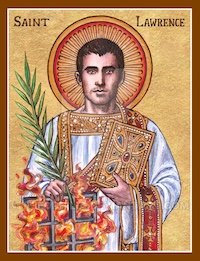
Saint Lawrence was Chief of the seven deacons of Rome. In the year 258 Pope Sixtus was led out to die, and Saint Lawrence followed beside him, weeping because unable to share his fate. Where are you going, my father, without your son? Where are you going, holy pontiff, without your deacon? Never did you offer a sacrifice without my serving you at the altar. In what way have I displeased you? The holy Pope comforted him with the words, I am not abandoning you, my son; a more difficult trial and a more glorious victory are reserved for you; in three days you will follow me.
This prophecy was fulfilled. After the Pope's martyrdom the prefect of the city, knowing the rich offerings which the Christians put into the hands of the clergy, demanded the treasures of the Roman Church from Lawrence, their guardian. The Saint promised to show him, at the end of three days, riches exceeding all the wealth of the empire. He was granted the time of delay. The Archdeacon of Rome went about assembling the poor, the infirm, and the religious who lived by the alms of the faithful, and he brought them to the prefect on the appointed day. Behold the treasures I promised you; I add pearls and precious stones — these virgins and widows consecrated to God; the Church has no other riches. The prefect replied: How dare you play games with me, miserable one? Is this how you show your contempt for the imperial power?
Christ, whom Lawrence had served in His poor, gave him strength in the conflict which ensued. After being placed on the rack, he was stretched on a grill over a slow fire. He joked about his pains. I am roasted enough on this side, he said, perhaps you should turn me over. Soon, his gaze towards heaven, he gave up his soul to God. He was buried in the catacomb near the Tiburtine Way, called the Verano Field, a little over a mile from the city walls. The faithful watched there for three days to mourn their holy Archdeacon who had been so good to them. God, by the glory of this holy martyr, demonstrates the value He sets upon love for the poor. Innumerable prayers were offered at his tomb. Saint Lawrence continued from his throne in heaven his charity to those in need, granting them, as Saint Augustine says, the smaller graces which they sought, and leading them to the desire of better gifts.
Reflection: Our Lord appears before us in the persons of the poor. Charity to them is a great sign of predestination. It is almost impossible, the holy Fathers assure us, for any one who is charitable to the poor, above all for Christ's sake, to perish.
Les Petits Bollandistes: Vies des Saints, by Msgr. Paul Guérin (Bloud et Barral: Paris, 1882), Vol. 9; Little Pictorial Lives of the Saints, a compilation based on Butler's Lives of the Saints and other sources by John Gilmary Shea (Benziger Brothers: New York, 1894).
LAST-MODIFIED:20240803T135410Z SEQUENCE:56997764 X-ACCESS:1 X-HITS:12 X-COLOR:f0b80e X-SHOW-END-TIME:1 END:VEVENT BEGIN:VEVENT DTSTART;VALUE=DATE:20240811 DTEND;VALUE=DATE:20240812 UID:54D94B76-4379-47F8-B249-0445287A5472 SUMMARY:Sts. Tiburtius and Susanna CREATED:20221013T211126Z DTSTAMP:20221013T211126Z URL:https://www.stpaulsweymouth.org/component/dpcalendar/event/1912?calid=13 DESCRIPTION:Sts. Tiburtius and Susanna Virgin, Martyrs\N\NSt. Tiburtius - A certain pagan prefect of Rome, by the name of Agrestius Chromatius, saw arrive before his tribunal a holy man named Tranquillinus. The prefect had already condemned a number of Christians to martyrdom, among them the twin brothers, Marcus and Marcellianus; but when Saint Tranquillinus, who was their father, told him how he had recovered from the gout through his baptism, Chromatius listened to him. He himself had the same malady. He sent for a priest, and he too was freed from his infirmity when baptized. He then liberated 400 slaves and retired to a country home, where he sheltered many Christians who feared they could not resist tortures during the persecutions.\NSaint Tiburtius, whom the Church honors today, was the son of Chromatius, and was baptized with him. He was later ordained a subdeacon, and one day raised to life a man whom he found on the ground, his body broken by a fall from the upper story of a residence. Under Diocletian, Tiburtius was betrayed to the persecutors by an unfaithful Christian. He courageously confessed his ardent faith, saying, I sacrifice only to one God, the Creator of the world, who reigns over heaven and earth, and my greatest desire is to be immolated and sacrificed myself for this confession. After being condemned to walk on hot coals, which he did without suffering any pain, he was beheaded at a site three miles from Rome. A church was afterward built at this site and named for him.\NSaint Susanna - was nobly born in Rome, the daughter of a certain Gabinius, who after his conversion became a priest; she was also the niece of Pope Saint Caius, her father's brother. This family was also related to the emperor Diocletian. Susanna's father had raised her with great care in the fear of God and love of Jesus Christ, and she had made a private vow of virginity. Diocletian, wishing to obtain the consent of this very beautiful maiden to marry his favorite, Maximian, sent a certain Claudius, another member of her family, to propose the espousals. She refused to consent, making known to her father and Saint Caius her vow, and saying that even if she had not resolved to conserve her chastity, she would not wish to marry a man responsible for the massacre of an infinite number of Christians. The Emperor's messenger was converted by her confession of faith, and became a fervent penitent.\NWhen Diocletian received no answer from his messenger concerning the results of the commission, and then learned of the conversion of Claudius, he was very irritated; then with Claudius he arrested Suzanne, Gabinius her father, and several other Christians. He had Suzanne beaten in her residence, then decapitated secretly. The emperor's wife, Prisca, who was also a Christian in secret, buried her body clandestinely and prayed to her as a holy martyr. Later the house of Gabinius was transformed by Pope Saint Caius into a church; it eventually became a convent for Cistercian nuns. Saint Susanna suffered towards the beginning of Diocletian's reign, about the year 295.\NReflection: Sufferings were to the martyrs extraordinary graces, and sources of the greatest crowns and glory. All afflictions which God sends are His greatest mercies and blessings. They are precious talents which we must make fruitful, to increase our love and affection for God. They are exercises for the most heroic virtues of self-denial, patience, humility, resignation, and penance.\NLes Petits Bollandistes: Vies des Saints, by Msgr. Paul Guérin (Bloud et Barral: Paris, 1882), Vol. 9; Little Pictorial Lives of the Saints, a compilation based on Butler's Lives of the Saints and other sources by John Gilmary Shea (Benziger Brothers: New York, 1894). X-ALT-DESC;FMTTYPE=text/html:Sts. Tiburtius and Susanna Virgin, Martyrs

St. Tiburtius - A certain pagan prefect of Rome, by the name of Agrestius Chromatius, saw arrive before his tribunal a holy man named Tranquillinus. The prefect had already condemned a number of Christians to martyrdom, among them the twin brothers, Marcus and Marcellianus; but when Saint Tranquillinus, who was their father, told him how he had recovered from the gout through his baptism, Chromatius listened to him. He himself had the same malady. He sent for a priest, and he too was freed from his infirmity when baptized. He then liberated 400 slaves and retired to a country home, where he sheltered many Christians who feared they could not resist tortures during the persecutions.
Saint Tiburtius, whom the Church honors today, was the son of Chromatius, and was baptized with him. He was later ordained a subdeacon, and one day raised to life a man whom he found on the ground, his body broken by a fall from the upper story of a residence. Under Diocletian, Tiburtius was betrayed to the persecutors by an unfaithful Christian. He courageously confessed his ardent faith, saying, I sacrifice only to one God, the Creator of the world, who reigns over heaven and earth, and my greatest desire is to be immolated and sacrificed myself for this confession. After being condemned to walk on hot coals, which he did without suffering any pain, he was beheaded at a site three miles from Rome. A church was afterward built at this site and named for him.
Saint Susanna - was nobly born in Rome, the daughter of a certain Gabinius, who after his conversion became a priest; she was also the niece of Pope Saint Caius, her father's brother. This family was also related to the emperor Diocletian. Susanna's father had raised her with great care in the fear of God and love of Jesus Christ, and she had made a private vow of virginity. Diocletian, wishing to obtain the consent of this very beautiful maiden to marry his favorite, Maximian, sent a certain Claudius, another member of her family, to propose the espousals. She refused to consent, making known to her father and Saint Caius her vow, and saying that even if she had not resolved to conserve her chastity, she would not wish to marry a man responsible for the massacre of an infinite number of Christians. The Emperor's messenger was converted by her confession of faith, and became a fervent penitent.
When Diocletian received no answer from his messenger concerning the results of the commission, and then learned of the conversion of Claudius, he was very irritated; then with Claudius he arrested Suzanne, Gabinius her father, and several other Christians. He had Suzanne beaten in her residence, then decapitated secretly. The emperor's wife, Prisca, who was also a Christian in secret, buried her body clandestinely and prayed to her as a holy martyr. Later the house of Gabinius was transformed by Pope Saint Caius into a church; it eventually became a convent for Cistercian nuns. Saint Susanna suffered towards the beginning of Diocletian's reign, about the year 295.
Reflection: Sufferings were to the martyrs extraordinary graces, and sources of the greatest crowns and glory. All afflictions which God sends are His greatest mercies and blessings. They are precious talents which we must make fruitful, to increase our love and affection for God. They are exercises for the most heroic virtues of self-denial, patience, humility, resignation, and penance.
Les Petits Bollandistes: Vies des Saints, by Msgr. Paul Guérin (Bloud et Barral: Paris, 1882), Vol. 9; Little Pictorial Lives of the Saints, a compilation based on Butler's Lives of the Saints and other sources by John Gilmary Shea (Benziger Brothers: New York, 1894).
LAST-MODIFIED:20240809T144110Z SEQUENCE:57518984 X-ACCESS:1 X-HITS:266 X-COLOR:f0b80e X-SHOW-END-TIME:1 END:VEVENT BEGIN:VEVENT DTSTART;VALUE=DATE:20240812 DTEND;VALUE=DATE:20240813 UID:10AB8A48-EF3F-4970-A3C6-D3509371DDA4 SUMMARY:St. Clare CREATED:20221013T211126Z DTSTAMP:20221013T211126Z URL:https://www.stpaulsweymouth.org/component/dpcalendar/event/1914?calid=13 DESCRIPTION:St. Clare of Assisi, Virgin\N\NOn Palm Sunday, March 19, 1212, a maiden eighteen years of age left her rich and noble family to retire for her reception as a religious to the little church of the Portiuncula. This maiden was Saint Clare. Already she had learned from Saint Francis to scorn the world, and was secretly resolved to live for God alone. There she was met by Saint Francis and his brethren, and at the altar of Our Lady, Saint Francis cut off her hair, clothed her in the habit of penance, a piece of sackcloth, with a cord as a cincture. Thus was she espoused to Christ. Saint Francis placed her for the moment in a Benedictine convent.\NIt was in a tiny house outside Assisi that she founded her Order. Two weeks after Clare's consecration, her sister Agnes left home secretly to go to join her, at the age of fourteen years. Agnes succeeded in her intention, despite their father's strong opposition and a convoy of twelve men who attempted to take her back home by force. While Clare prayed in the convent, Agnes became so heavy they were unable to move her. Later their mother and other noble ladies joined them. They went barefoot, observed perpetual abstinence, constant silence, and perfect poverty.\NSaint Clare is celebrated for a miracle which occurred when the Saracen army of Frederick II was ravaging the valley of Spoleto. A legion of infidels advanced to assault the convent outside Assisi. The Saint, who was ill in the infirmary, rose and went, supported by her religious, to the door of the convent; there she had the Blessed Sacrament placed in a monstrance above the gate of the monastery facing the enemy. She knelt before it and prayed, Deliver not to beasts, O Lord, the souls of those who confess Your Name! A voice from the Host replied, My protection will never fail you. A sudden panic seized the infidel army, which took flight; and the Saint's convent was spared.\NAlthough Saint Clare herself never left her monastery of Saint Damian, her Order spread in many places not only in Europe but elsewhere, and some four thousand convents, divided into several branches, shelter her disciples. Many Saints have come from these, especially from the groups which have maintained the original absolute poverty of her Constitutions. The Sisters of the original Order live by charity, and their convents possess nothing. Saint Clare died in 1253, as the Passion was being read, and Our Lady and the Angels conducted her to glory.\NLes Petits Bollandistes: Vies des Saints, by Msgr. Paul Guérin (Bloud et Barral: Paris, 1882), Vol. 9; Little Pictorial Lives of the Saints, a compilation based on Butler's Lives of the Saints and other sources by John Gilmary Shea (Benziger Brothers: New York, 1894). X-ALT-DESC;FMTTYPE=text/html:St. Clare of Assisi, Virgin
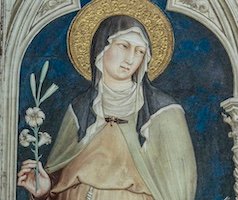
On Palm Sunday, March 19, 1212, a maiden eighteen years of age left her rich and noble family to retire for her reception as a religious to the little church of the Portiuncula. This maiden was Saint Clare. Already she had learned from Saint Francis to scorn the world, and was secretly resolved to live for God alone. There she was met by Saint Francis and his brethren, and at the altar of Our Lady, Saint Francis cut off her hair, clothed her in the habit of penance, a piece of sackcloth, with a cord as a cincture. Thus was she espoused to Christ. Saint Francis placed her for the moment in a Benedictine convent.
It was in a tiny house outside Assisi that she founded her Order. Two weeks after Clare's consecration, her sister Agnes left home secretly to go to join her, at the age of fourteen years. Agnes succeeded in her intention, despite their father's strong opposition and a convoy of twelve men who attempted to take her back home by force. While Clare prayed in the convent, Agnes became so heavy they were unable to move her. Later their mother and other noble ladies joined them. They went barefoot, observed perpetual abstinence, constant silence, and perfect poverty.
Saint Clare is celebrated for a miracle which occurred when the Saracen army of Frederick II was ravaging the valley of Spoleto. A legion of infidels advanced to assault the convent outside Assisi. The Saint, who was ill in the infirmary, rose and went, supported by her religious, to the door of the convent; there she had the Blessed Sacrament placed in a monstrance above the gate of the monastery facing the enemy. She knelt before it and prayed, Deliver not to beasts, O Lord, the souls of those who confess Your Name! A voice from the Host replied, My protection will never fail you. A sudden panic seized the infidel army, which took flight; and the Saint's convent was spared.
Although Saint Clare herself never left her monastery of Saint Damian, her Order spread in many places not only in Europe but elsewhere, and some four thousand convents, divided into several branches, shelter her disciples. Many Saints have come from these, especially from the groups which have maintained the original absolute poverty of her Constitutions. The Sisters of the original Order live by charity, and their convents possess nothing. Saint Clare died in 1253, as the Passion was being read, and Our Lady and the Angels conducted her to glory.
Les Petits Bollandistes: Vies des Saints, by Msgr. Paul Guérin (Bloud et Barral: Paris, 1882), Vol. 9; Little Pictorial Lives of the Saints, a compilation based on Butler's Lives of the Saints and other sources by John Gilmary Shea (Benziger Brothers: New York, 1894).
LAST-MODIFIED:20240809T144310Z SEQUENCE:57519104 X-ACCESS:1 X-HITS:75 X-COLOR:f0b80e X-SHOW-END-TIME:1 END:VEVENT BEGIN:VEVENT DTSTART;VALUE=DATE:20240813 DTEND;VALUE=DATE:20240814 UID:32A8F7EB-67AC-4C13-BAE4-5BB61DA041D4 SUMMARY:Sts. Hippolytus and Cassian CREATED:20221013T211126Z DTSTAMP:20221013T211126Z URL:https://www.stpaulsweymouth.org/component/dpcalendar/event/1924?calid=13 DESCRIPTION:Sts. Hippolytus and Cassian, Martyrs\N\NSt. Hippolytus, an officer of the body-guard of the emperor Decius, had been born in the darkness of idolatry, but he had become a Christian, with all his household, in consequence of witnessing the many miracles which St. Lawrence performed while in the prison under his charge. He had also been present when the saint, lying on the red-hot gridiron, endured the most terrible tortures. At the sight of the heroism of St. Lawrence, he was filled with the desire to denounce himself a Christian, but he was prevented by St. Lawrence. But when this martyr had gloriously ended his combat, Hippolytus, with the assistance of a priest, named Justinus, buried the sacred remains with great devotion and veneration. The emperor on being informed of it, had Hippolytus seized and brought before him. He asked him if it was true that he had become a Christian? Hippolytus answered firmly: "Yes, I am a Christian, and moreover resolved to die such." The emperor, who had always highly esteemed him, endeavored, first by promises and then by menaces, to induce him to forsake Christ. As, however, all was unavailing, he caused him to be tortured.\NHe was accordingly stretched on the ground, whipped with scourges, and beaten with clubs so fearfully, that it was believed he could not survive. But God, by a visible miracle, prolonged his life. Keeping his eyes fixed upon Heaven, he frequently repeated: "I am a Christian, I suffer for Christ's sake." After having been tormented for a long time, he was cast into prison, and the prefect received the order to behead him. Before executing this order, however, he went to the house of Hippolytus to secure his property. Finding the entire household had become Christians, he took them beyond the gates of the city and had them beheaded. Concordia, an old and holy matron, who had been Hippolytus' nurse, was scourged until she expired, because she encouraged the others to remain firm in their faith. At last, Hippolytus was taken out of prison and fastened to the tails of two horses, and dragged by them until he was torn to pieces, and his heroic soul was in the presence of Him Whom he had so fearlessly confessed. \NOn the same day, though at another place, St. Cassian suffered a martyrdom of unprecedented cruelty. This saint, was bishop of Brescia, but had been banished from his See on account of his faith. He intended to go to Rome and offer the Pope his services for the salvation of souls in some other place. On his way, he changed his mind, and taking up his residence at Imola, a town in Italy, he resolved to teach children to read and write, hoping that occasion would not be wanting to do good. In this apparently humble position, he was no less zealous than he had been in the administration of his diocese. He taught the children with love and gentleness, and endeavored to inspire them with respect for the Christian faith, fear and horror of sin, and love of virtue and piety. He continued in this occupation with great zeal for some years, to the great benefit of young and old, when suddenly a terrible persecution of the Christians arose.\NHe was one of the first who were taken prisoners. The tyrant commanded him to sacrifice to the gods. The holy bishop and teacher refused, as might have been expected, and tried to convince the judge of his fearful blindness in worshipping dumb idols or making gods of godless men. The tyrant, furious at his arguments, ordered the executioners to strip him of his clothes and tie his hands behind his back, and leave him exposed to the mercy of the children whom he had taken such pains to teach. The children, who had been taught that Cassian was a magician and consequently must die a most painful death, took their sharp iron pencils with which, in those days, they wrote upon their wax tablets, and pierced him with them till the blood ran profusely from his veins. This torture lasted long and was extremely painful. The saint, however, never complained of the ingratitude of his pupils, nor gave a sign of impatience, but praised and thanked the Lord until his soul went to Heaven to receive the crown of martyrdom.\N(by Father Francis Xavier Weninger, 1876) X-ALT-DESC;FMTTYPE=text/html:Sts. Hippolytus and Cassian, Martyrs
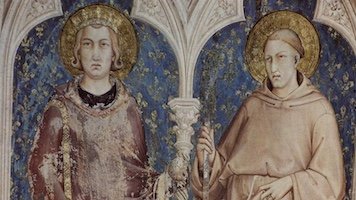
St. Hippolytus, an officer of the body-guard of the emperor Decius, had been born in the darkness of idolatry, but he had become a Christian, with all his household, in consequence of witnessing the many miracles which St. Lawrence performed while in the prison under his charge. He had also been present when the saint, lying on the red-hot gridiron, endured the most terrible tortures. At the sight of the heroism of St. Lawrence, he was filled with the desire to denounce himself a Christian, but he was prevented by St. Lawrence. But when this martyr had gloriously ended his combat, Hippolytus, with the assistance of a priest, named Justinus, buried the sacred remains with great devotion and veneration. The emperor on being informed of it, had Hippolytus seized and brought before him. He asked him if it was true that he had become a Christian? Hippolytus answered firmly: "Yes, I am a Christian, and moreover resolved to die such." The emperor, who had always highly esteemed him, endeavored, first by promises and then by menaces, to induce him to forsake Christ. As, however, all was unavailing, he caused him to be tortured.
He was accordingly stretched on the ground, whipped with scourges, and beaten with clubs so fearfully, that it was believed he could not survive. But God, by a visible miracle, prolonged his life. Keeping his eyes fixed upon Heaven, he frequently repeated: "I am a Christian, I suffer for Christ's sake." After having been tormented for a long time, he was cast into prison, and the prefect received the order to behead him. Before executing this order, however, he went to the house of Hippolytus to secure his property. Finding the entire household had become Christians, he took them beyond the gates of the city and had them beheaded. Concordia, an old and holy matron, who had been Hippolytus' nurse, was scourged until she expired, because she encouraged the others to remain firm in their faith. At last, Hippolytus was taken out of prison and fastened to the tails of two horses, and dragged by them until he was torn to pieces, and his heroic soul was in the presence of Him Whom he had so fearlessly confessed.
On the same day, though at another place, St. Cassian suffered a martyrdom of unprecedented cruelty. This saint, was bishop of Brescia, but had been banished from his See on account of his faith. He intended to go to Rome and offer the Pope his services for the salvation of souls in some other place. On his way, he changed his mind, and taking up his residence at Imola, a town in Italy, he resolved to teach children to read and write, hoping that occasion would not be wanting to do good. In this apparently humble position, he was no less zealous than he had been in the administration of his diocese. He taught the children with love and gentleness, and endeavored to inspire them with respect for the Christian faith, fear and horror of sin, and love of virtue and piety. He continued in this occupation with great zeal for some years, to the great benefit of young and old, when suddenly a terrible persecution of the Christians arose.
He was one of the first who were taken prisoners. The tyrant commanded him to sacrifice to the gods. The holy bishop and teacher refused, as might have been expected, and tried to convince the judge of his fearful blindness in worshipping dumb idols or making gods of godless men. The tyrant, furious at his arguments, ordered the executioners to strip him of his clothes and tie his hands behind his back, and leave him exposed to the mercy of the children whom he had taken such pains to teach. The children, who had been taught that Cassian was a magician and consequently must die a most painful death, took their sharp iron pencils with which, in those days, they wrote upon their wax tablets, and pierced him with them till the blood ran profusely from his veins. This torture lasted long and was extremely painful. The saint, however, never complained of the ingratitude of his pupils, nor gave a sign of impatience, but praised and thanked the Lord until his soul went to Heaven to receive the crown of martyrdom.
(by Father Francis Xavier Weninger, 1876)
LAST-MODIFIED:20240809T145911Z SEQUENCE:57520065 X-ACCESS:1 X-HITS:293 X-COLOR:f0b80e X-SHOW-END-TIME:1 END:VEVENT BEGIN:VEVENT DTSTART;VALUE=DATE:20240814 DTEND;VALUE=DATE:20240815 UID:108E40CC-EB84-41C0-9FCD-3D576DB54760 SUMMARY:St. Eusebius CREATED:20221013T211126Z DTSTAMP:20221013T211126Z URL:https://www.stpaulsweymouth.org/component/dpcalendar/event/1916?calid=13 DESCRIPTION:St. Eusebius of Rome, priest, Martyr\N\NThe Church celebrates on this day the memory of Saint Eusebius, who among the Christians of his time distinguished himself by his spirit of prayer and his apostolic virtues. When he was arraigned, Maxentius, the governor of the Province, interrogated him and was furious at the Saint's constancy while he was placed on the rack and his sides were torn with iron hooks. He sentenced him to die by fire at the stake; but his unusual serenity when going to the place of execution caused him to be summoned back to the tribunal, obviously by a particular disposition of Providence.\NThe Emperor himself being in the region, the governor went to him and told him the prisoner asked to be taken before him. The reason for this request was that there had not been any recent edicts published against the Christians. Saint Eusebius was advanced in age, and the emperor Maximian said, after questioning him, What harm is there that this man should adore the God he talks of as superior to all the others? But the brutal Maxentius would not listen, and, like Pilate facing Christ, the Emperor told the persecutors of the accused man to judge the affair themselves. Maxentius therefore sentenced him to be decapitated. Eusebius, hearing the sentence, said aloud, I thank Your goodness and praise Your power, O Lord Jesus Christ, because in calling me to prove my fidelity, You have treated me as one of Yours. His martyrdom occurred towards the end of the third century.\NReflection: Let us learn, from the example of the Saints, courage in the service of God. He calls upon us to endure suffering of body and of mind, if it is necessary, to prove our fidelity to Him; and He promises to support us by His strength, His light, and His heavenly consolation.\NLittle Pictorial Lives of the Saints, a compilation based on Butler's Lives of the Saints and other sources by John Gilmary Shea (Benziger Brothers: New York, 1894); Les Petits Bollandistes: Vies des Saints, by Msgr. Paul Guérin (Bloud et Barral: Paris, 1882), Vol. 9 X-ALT-DESC;FMTTYPE=text/html:St. Eusebius of Rome, priest, Martyr
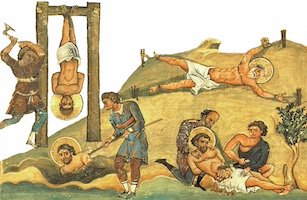
The Church celebrates on this day the memory of Saint Eusebius, who among the Christians of his time distinguished himself by his spirit of prayer and his apostolic virtues. When he was arraigned, Maxentius, the governor of the Province, interrogated him and was furious at the Saint's constancy while he was placed on the rack and his sides were torn with iron hooks. He sentenced him to die by fire at the stake; but his unusual serenity when going to the place of execution caused him to be summoned back to the tribunal, obviously by a particular disposition of Providence.
The Emperor himself being in the region, the governor went to him and told him the prisoner asked to be taken before him. The reason for this request was that there had not been any recent edicts published against the Christians. Saint Eusebius was advanced in age, and the emperor Maximian said, after questioning him, What harm is there that this man should adore the God he talks of as superior to all the others? But the brutal Maxentius would not listen, and, like Pilate facing Christ, the Emperor told the persecutors of the accused man to judge the affair themselves. Maxentius therefore sentenced him to be decapitated. Eusebius, hearing the sentence, said aloud, I thank Your goodness and praise Your power, O Lord Jesus Christ, because in calling me to prove my fidelity, You have treated me as one of Yours. His martyrdom occurred towards the end of the third century.
Reflection: Let us learn, from the example of the Saints, courage in the service of God. He calls upon us to endure suffering of body and of mind, if it is necessary, to prove our fidelity to Him; and He promises to support us by His strength, His light, and His heavenly consolation.
Little Pictorial Lives of the Saints, a compilation based on Butler's Lives of the Saints and other sources by John Gilmary Shea (Benziger Brothers: New York, 1894); Les Petits Bollandistes: Vies des Saints, by Msgr. Paul Guérin (Bloud et Barral: Paris, 1882), Vol. 9
LAST-MODIFIED:20240809T144602Z SEQUENCE:57519276 X-ACCESS:1 X-HITS:34 X-COLOR:f0b80e X-SHOW-END-TIME:1 END:VEVENT BEGIN:VEVENT DTSTART;VALUE=DATE:20240815 DTEND;VALUE=DATE:20240816 UID:6C7253E7-A297-4F7D-8DE4-80C25961D139 SUMMARY:Assumption CREATED:20221013T211126Z DTSTAMP:20221013T211126Z URL:https://www.stpaulsweymouth.org/component/dpcalendar/event/1918?calid=13 DESCRIPTION:The Assumption of the Blessed Virgin Mary\N\NOn this great feast day the Church commemorates the happy departure from mortal life of the Blessed Virgin Mary, and Her translation into the kingdom of Her Son, where He crowned Her with immortal glory and enthroned Her above all the other Saints and heavenly spirits.\NAfter the triumphant Conqueror of hell and death ascended into heaven, His blessed Mother had remained at Jerusalem, persevering in prayer with the disciples, until She received with them the Holy Ghost. She desired to assist the Church in its beginnings, and Her prayer was granted. It is generally believed that She lived for a good many years, until the age of 72 or 73. This supposition is based on the fact that Saint Dennis the Areopagite, who was converted by Saint Paul in the year 54, visited Her not long afterward, according to his own narration. That account is judged authentic by reliable authorities, among them Saint Thomas Aquinas. Finally She paid voluntarily the debt of fallen human nature to God, although like Adam at his creation, She was entirely innocent and exempt from the penalty of the painful separation of soul and body incurred by death. She might have been transported alive to Heaven, but chose instead to die, as Her Son also had chosen to die. If the death of the Saints is called a sweet sleep, how much more does the Dormition of the Queen of Saints, exempt from all sin, merit that name?\NIt is a traditional belief of the Holy Church that the body of the Blessed Virgin was raised up by God on the third day, and introduced at once into glory by a singular privilege. The Assumption of the Blessed Virgin Mary is the consummation of the other great mysteries by which Her life was supremely admirable; it is Her true birthday and the crowning of all Her incomparable virtues which we admire singly in Her other festivals.\NReflection: While we contemplate in profound sentiments of veneration, astonishment, and praise, the glory to which Mary is raised by Her triumph on this day, we ought, for our own advantage, to consider by what means She arrived at this sublime degree of honor and happiness, that we may walk in Her footsteps as God intends. For Mary is imitable in Her daily life. The same path which conducted Her to glory will lead us there; we shall be sharers of Her reward if we imitate Her virtues. Let us ask ourselves in all situations what She might have done, and act accordingly.\NLittle Pictorial Lives of the Saints, a compilation based on Butler's Lives of the Saints and other sources by John Gilmary Shea (Benziger Brothers: New York, 1894) X-ALT-DESC;FMTTYPE=text/html:The Assumption of the Blessed Virgin Mary
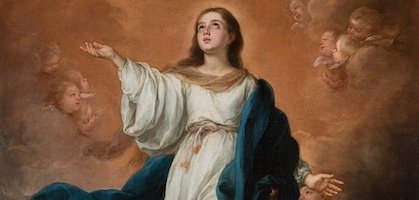
On this great feast day the Church commemorates the happy departure from mortal life of the Blessed Virgin Mary, and Her translation into the kingdom of Her Son, where He crowned Her with immortal glory and enthroned Her above all the other Saints and heavenly spirits.
After the triumphant Conqueror of hell and death ascended into heaven, His blessed Mother had remained at Jerusalem, persevering in prayer with the disciples, until She received with them the Holy Ghost. She desired to assist the Church in its beginnings, and Her prayer was granted. It is generally believed that She lived for a good many years, until the age of 72 or 73. This supposition is based on the fact that Saint Dennis the Areopagite, who was converted by Saint Paul in the year 54, visited Her not long afterward, according to his own narration. That account is judged authentic by reliable authorities, among them Saint Thomas Aquinas. Finally She paid voluntarily the debt of fallen human nature to God, although like Adam at his creation, She was entirely innocent and exempt from the penalty of the painful separation of soul and body incurred by death. She might have been transported alive to Heaven, but chose instead to die, as Her Son also had chosen to die. If the death of the Saints is called a sweet sleep, how much more does the Dormition of the Queen of Saints, exempt from all sin, merit that name?
It is a traditional belief of the Holy Church that the body of the Blessed Virgin was raised up by God on the third day, and introduced at once into glory by a singular privilege. The Assumption of the Blessed Virgin Mary is the consummation of the other great mysteries by which Her life was supremely admirable; it is Her true birthday and the crowning of all Her incomparable virtues which we admire singly in Her other festivals.
Reflection: While we contemplate in profound sentiments of veneration, astonishment, and praise, the glory to which Mary is raised by Her triumph on this day, we ought, for our own advantage, to consider by what means She arrived at this sublime degree of honor and happiness, that we may walk in Her footsteps as God intends. For Mary is imitable in Her daily life. The same path which conducted Her to glory will lead us there; we shall be sharers of Her reward if we imitate Her virtues. Let us ask ourselves in all situations what She might have done, and act accordingly.
Little Pictorial Lives of the Saints, a compilation based on Butler's Lives of the Saints and other sources by John Gilmary Shea (Benziger Brothers: New York, 1894)
LAST-MODIFIED:20240809T144759Z SEQUENCE:57519393 X-ACCESS:1 X-HITS:27 X-COLOR:f0b80e X-SHOW-END-TIME:1 END:VEVENT BEGIN:VEVENT DTSTART;VALUE=DATE:20240816 DTEND;VALUE=DATE:20240817 UID:315CFAC3-6929-4F27-A815-4F906363C1AD SUMMARY:St. Joachim CREATED:20221013T211126Z DTSTAMP:20221013T211126Z URL:https://www.stpaulsweymouth.org/component/dpcalendar/event/1920?calid=13 DESCRIPTION:St. Joachim, Father of the Blessed Virgin Mary, Confessor\N\NJoachim, of the tribe of Juda and the family of David, was a shepherd of Nazareth. Stolanus, father of Saint Anne, gave him his pious daughter in marriage. The two spouses lived in the fear of the Lord and the practice of good works. They divided all their wealth into three parts: the first was regularly given to the temple, for its support and that of the ministers of religion; they gave the second part to the poor, while the last and least excellent served for the needs of the family. Nonetheless, happiness had not come to this home — the spouse of Joachim was sterile.\NFor twenty years already they had prayed to God to deliver them from this opprobrium. The holy couple invariably went, according to custom at the Feast of Tabernacles, to the Holy City. There the high priest was immolating the victims when Joachim presented himself in his turn, bearing a lamb; Anne followed him. The high priest had only words of contempt and reproach for them, and in the presence of the people he rejected their offering.\NJoachim did not have the heart to return to Nazareth; his grief prompted him to seek solitude and prayer. Anne returned alone to their residence, and he retired to a region near Jerusalem, where shepherds were pasturing their sheep. The silent calm of pastoral life, brought some relief to the wound of his heart. Who has not known how solitude brings one closer to God?\NOne day when he was alone in the fields, the Angel Gabriel came and stood before him. Joachim prostrated himself, trembling with fear. Do not fear, said the heavenly messenger. I am the Angel of the Lord, and it is God Himself who sends me. He has heard your prayers; your alms have come before His presence. Anne, your spouse, will bear a daughter whose happiness will be above that of other women; She will be blessed, and named the Mother of eternal blessing. You will name the Child Mary and consecrate Her to God when the time comes. The Holy Spirit, from the time She is in the womb of Her mother, will dwell in Her soul, and He will accomplish in Her great things. With those words, the Angel disappeared.\NThe Archangel's announcement and the Lord's promise were fulfilled. Joachim in his turn was faithful to the commands of the Lord. His daughter received the name of Mary, and when She was three years old, he and Saint Anne entrusted Her to the pious women who in the temple of Jerusalem brought up young girls consecrated to the Lord. Mary had lived there under the gaze of God for eight years, when Joachim died, laden with merits and virtues. Anne, his spouse, had him buried in the Valley of Josaphat, not far from the Garden of Gethsemane, and one year later rejoined him there.\NLa vie des Saints pour tous les jours de l'année, by Abbé Pradier; Les Petits Bollandistes: Vies des Saints, by Msgr. Paul Guérin (Bloud et Barral: Paris, 1882), Vol. 9 X-ALT-DESC;FMTTYPE=text/html:St. Joachim, Father of the Blessed Virgin Mary, Confessor
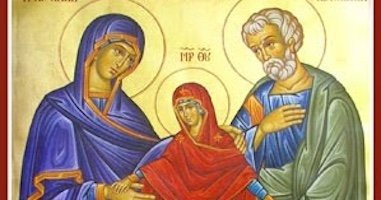
Joachim, of the tribe of Juda and the family of David, was a shepherd of Nazareth. Stolanus, father of Saint Anne, gave him his pious daughter in marriage. The two spouses lived in the fear of the Lord and the practice of good works. They divided all their wealth into three parts: the first was regularly given to the temple, for its support and that of the ministers of religion; they gave the second part to the poor, while the last and least excellent served for the needs of the family. Nonetheless, happiness had not come to this home — the spouse of Joachim was sterile.
For twenty years already they had prayed to God to deliver them from this opprobrium. The holy couple invariably went, according to custom at the Feast of Tabernacles, to the Holy City. There the high priest was immolating the victims when Joachim presented himself in his turn, bearing a lamb; Anne followed him. The high priest had only words of contempt and reproach for them, and in the presence of the people he rejected their offering.
Joachim did not have the heart to return to Nazareth; his grief prompted him to seek solitude and prayer. Anne returned alone to their residence, and he retired to a region near Jerusalem, where shepherds were pasturing their sheep. The silent calm of pastoral life, brought some relief to the wound of his heart. Who has not known how solitude brings one closer to God?
One day when he was alone in the fields, the Angel Gabriel came and stood before him. Joachim prostrated himself, trembling with fear. Do not fear, said the heavenly messenger. I am the Angel of the Lord, and it is God Himself who sends me. He has heard your prayers; your alms have come before His presence. Anne, your spouse, will bear a daughter whose happiness will be above that of other women; She will be blessed, and named the Mother of eternal blessing. You will name the Child Mary and consecrate Her to God when the time comes. The Holy Spirit, from the time She is in the womb of Her mother, will dwell in Her soul, and He will accomplish in Her great things. With those words, the Angel disappeared.
The Archangel's announcement and the Lord's promise were fulfilled. Joachim in his turn was faithful to the commands of the Lord. His daughter received the name of Mary, and when She was three years old, he and Saint Anne entrusted Her to the pious women who in the temple of Jerusalem brought up young girls consecrated to the Lord. Mary had lived there under the gaze of God for eight years, when Joachim died, laden with merits and virtues. Anne, his spouse, had him buried in the Valley of Josaphat, not far from the Garden of Gethsemane, and one year later rejoined him there.
La vie des Saints pour tous les jours de l'année, by Abbé Pradier; Les Petits Bollandistes: Vies des Saints, by Msgr. Paul Guérin (Bloud et Barral: Paris, 1882), Vol. 9
LAST-MODIFIED:20240809T145056Z SEQUENCE:57519570 X-ACCESS:1 X-HITS:167 X-COLOR:f0b80e X-SHOW-END-TIME:1 END:VEVENT BEGIN:VEVENT DTSTART;VALUE=DATE:20240817 DTEND;VALUE=DATE:20240818 UID:A9ED2B93-6F3C-4432-930D-B9BE66501C57 SUMMARY:St. Hyacinth CREATED:20221013T211126Z DTSTAMP:20221013T211126Z URL:https://www.stpaulsweymouth.org/component/dpcalendar/event/1937?calid=13 DESCRIPTION:St. Hyacinth, Confessor\N\NSaint Hyacinth, named the glorious Apostle of the North, was born of noble parents in Poland, about the year 1185. In 1218, as a Canon of Cracow he accompanied the bishop of that region to Rome. There he met Saint Dominic and soon afterward was one of the first to receive the habit of the Friar Preachers, in a group clothed by the patriarch himself. He became a living copy of his dear master. The church was his only chamber, and the ground his only bed. So wonderful was his progress in virtue that within a year Dominic sent him with a small group to preach and plant the Order in Poland, where he founded two houses.\NHis apostolic journeys extended over numerous and vast regions. Austria, Bohemia, Livonia, the shores of the Black Sea, Tartary, Northern China in the east, Sweden, Norway and Denmark to the west, were evangelized by him, and he is said to have visited Scotland. Everywhere he traveled unarmed, without a horse, with no money, no interpreters, no furs in the severe winters, and often without a guide, abandoning to Divine Providence his mission in its entirety. Everywhere multitudes were converted, churches and convents were built; one hundred and twenty thousand pagans and infidels were baptized by his hands. He worked many miracles; at Cracow he raised a dead youth to life. He had inherited from Saint Dominic a perfect filial confidence in the Mother of God; to Her he ascribed his success, and to Her aid he looked for his own salvation. It was at the request of this indefatigable missionary that Saint Thomas Aquinas wrote his famous philosophical Summa contra Gentiles, proving the reasonableness of the Faith on behalf of those unfamiliar with doctrine.\NWhile Saint Hyacinth was at Kiev the Tartars sacked the town, but it was only as he finished Mass that the Saint heard of the danger. Without waiting to unvest, he took the ciborium in his hands, and was leaving the church. Then occurred the most famous of his countless prodigies. As he passed by a statue of Mary a voice said: Hyacinth, My son, why do you leave Me behind? Take Me with you... The statue was of heavy alabaster, but when Hyacinth took it in his arms it was light as a reed. With the Blessed Sacrament and the statue he walked to the Dnieper river, and crossed dry-shod over the surface of the waters to the far bank.\NOn the eve of the Assumption, 1257, he was advised of his coming death. In spite of an unrelenting fever, he celebrated Mass on the feast day and communicated as a dying man. He was anointed at the foot of altar, and died on the great Feast of Our Lady.\NReflection: Saint Hyacinth teaches us to spare no effort in the service of God, but to rely for success not on our industry but on the assistance and prayer of His Immaculate Mother.\NLittle Pictorial Lives of the Saints, a compilation based on Butler's Lives of the Saints and other sources by John Gilmary Shea (Benziger Brothers: New York, 1894)\N. X-ALT-DESC;FMTTYPE=text/html:St. Hyacinth, Confessor
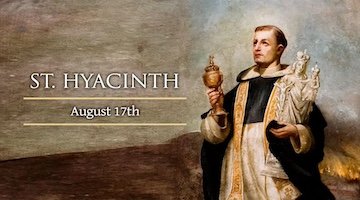
Saint Hyacinth, named the glorious Apostle of the North, was born of noble parents in Poland, about the year 1185. In 1218, as a Canon of Cracow he accompanied the bishop of that region to Rome. There he met Saint Dominic and soon afterward was one of the first to receive the habit of the Friar Preachers, in a group clothed by the patriarch himself. He became a living copy of his dear master. The church was his only chamber, and the ground his only bed. So wonderful was his progress in virtue that within a year Dominic sent him with a small group to preach and plant the Order in Poland, where he founded two houses.
His apostolic journeys extended over numerous and vast regions. Austria, Bohemia, Livonia, the shores of the Black Sea, Tartary, Northern China in the east, Sweden, Norway and Denmark to the west, were evangelized by him, and he is said to have visited Scotland. Everywhere he traveled unarmed, without a horse, with no money, no interpreters, no furs in the severe winters, and often without a guide, abandoning to Divine Providence his mission in its entirety. Everywhere multitudes were converted, churches and convents were built; one hundred and twenty thousand pagans and infidels were baptized by his hands. He worked many miracles; at Cracow he raised a dead youth to life. He had inherited from Saint Dominic a perfect filial confidence in the Mother of God; to Her he ascribed his success, and to Her aid he looked for his own salvation. It was at the request of this indefatigable missionary that Saint Thomas Aquinas wrote his famous philosophical Summa contra Gentiles, proving the reasonableness of the Faith on behalf of those unfamiliar with doctrine.
While Saint Hyacinth was at Kiev the Tartars sacked the town, but it was only as he finished Mass that the Saint heard of the danger. Without waiting to unvest, he took the ciborium in his hands, and was leaving the church. Then occurred the most famous of his countless prodigies. As he passed by a statue of Mary a voice said: Hyacinth, My son, why do you leave Me behind? Take Me with you... The statue was of heavy alabaster, but when Hyacinth took it in his arms it was light as a reed. With the Blessed Sacrament and the statue he walked to the Dnieper river, and crossed dry-shod over the surface of the waters to the far bank.
On the eve of the Assumption, 1257, he was advised of his coming death. In spite of an unrelenting fever, he celebrated Mass on the feast day and communicated as a dying man. He was anointed at the foot of altar, and died on the great Feast of Our Lady.
Reflection: Saint Hyacinth teaches us to spare no effort in the service of God, but to rely for success not on our industry but on the assistance and prayer of His Immaculate Mother.
Little Pictorial Lives of the Saints, a compilation based on Butler's Lives of the Saints and other sources by John Gilmary Shea (Benziger Brothers: New York, 1894)
.
LAST-MODIFIED:20240817T154607Z SEQUENCE:58214081 X-ACCESS:1 X-HITS:195 X-COLOR:f0b80e X-SHOW-END-TIME:1 END:VEVENT BEGIN:VEVENT DTSTART;VALUE=DATE:20240818 DTEND;VALUE=DATE:20240819 UID:BEBE3A63-4636-4ABE-AE0C-0231ECA98362 SUMMARY:St. Agapitus CREATED:20221013T211126Z DTSTAMP:20221013T211126Z URL:https://www.stpaulsweymouth.org/component/dpcalendar/event/1926?calid=13 DESCRIPTION:St. Agapitus Martyr\N\NSaint Agapetus (or Agapitus) suffered in his youth a cruel martyrdom at Praeneste, now called Palestrina, twenty-four miles from Rome. He had dared to reproach for his cruelty towards the Christians, one of the Emperor Aurelian's favorites, who immediately gave the order to arrest him. He was flogged with leaden-tipped straps and scorpions; his constancy and his prayer under torture converted five hundred pagans, who declared themselves Christians and were executed at once. The young martyr was thrown into a horrible prison where a celestial vision fortified him. After a second questioning, he was again scourged, then laid upon the rack that his body might be torn with iron nails.\NHe still lived and was again ordered to sacrifice to Apollo; his refusals won for him still more torments: live coals on his head, suspension by his feet, boiling water poured over him. His courage was superhuman, his answers admirable. Wild beasts in the arena spared him and lay down at his feet, and still more pagans were converted. He was finally beheaded, and his body buried by the Christians, in a field where they found a new tomb prepared as though for his sepulchre. Two churches in Palestrina and others in various places are dedicated to God under his name.\NLes Petits Bollandistes: Vies des Saints, by Msgr. Paul Guérin (Bloud et Barral: Paris, 1882), Vol. 10\N. X-ALT-DESC;FMTTYPE=text/html:St. Agapitus Martyr
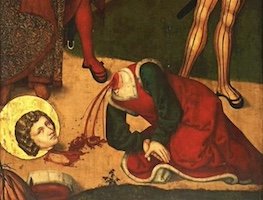
Saint Agapetus (or Agapitus) suffered in his youth a cruel martyrdom at Praeneste, now called Palestrina, twenty-four miles from Rome. He had dared to reproach for his cruelty towards the Christians, one of the Emperor Aurelian's favorites, who immediately gave the order to arrest him. He was flogged with leaden-tipped straps and scorpions; his constancy and his prayer under torture converted five hundred pagans, who declared themselves Christians and were executed at once. The young martyr was thrown into a horrible prison where a celestial vision fortified him. After a second questioning, he was again scourged, then laid upon the rack that his body might be torn with iron nails.
He still lived and was again ordered to sacrifice to Apollo; his refusals won for him still more torments: live coals on his head, suspension by his feet, boiling water poured over him. His courage was superhuman, his answers admirable. Wild beasts in the arena spared him and lay down at his feet, and still more pagans were converted. He was finally beheaded, and his body buried by the Christians, in a field where they found a new tomb prepared as though for his sepulchre. Two churches in Palestrina and others in various places are dedicated to God under his name.
Les Petits Bollandistes: Vies des Saints, by Msgr. Paul Guérin (Bloud et Barral: Paris, 1882), Vol. 10
.
LAST-MODIFIED:20240817T152932Z SEQUENCE:58213086 X-ACCESS:1 X-HITS:161 X-COLOR:f0b80e X-SHOW-END-TIME:1 END:VEVENT BEGIN:VEVENT DTSTART;VALUE=DATE:20240819 DTEND;VALUE=DATE:20240820 UID:0B84B5CA-F875-49D9-91D1-5C0F7B1F4958 SUMMARY:St. John Eudes CREATED:20221013T211126Z DTSTAMP:20221013T211126Z URL:https://www.stpaulsweymouth.org/component/dpcalendar/event/1928?calid=13 DESCRIPTION:St. John Eudes, Confessor\N\NSaint John Eudes, forerunner of devotion both to the Sacred Heart and the Immaculate Heart of Mary, was born in 1601, some time after France had been torn apart by the revolt of the Huguenots. The rebels were calmed but relegated to western France by King Henry IV, after he himself returned to the Catholic faith. It was in that region that this young Saint spent his childhood, at Argentan in Normandy, and was educated with the Jesuits of Caen. The father of this firstborn of a family of solid and profound virtue, had himself desired the sacerdotal life, and he did not long oppose John's desire to consecrate himself to God as a priest. At eighteen years of age Saint John had already composed a treatise on voluntary abnegation, which his confessor obliged him to publish. He was ordained in Paris as a member of the recently founded French Oratory of Saint Philip Neri; his teachers there were Fathers de Berulle and de Condren, two unsurpassed spiritual directors. The governing theme of his meditation, his preaching and his writings was the importance of the redemptive Incarnation of the Son of God, through the intermediary of His Immaculate Mother. Controversy was not lacking in those days, when the Mother of God had been relegated to a very secondary if not insignificant role by the reformers, and Saint John did not fear controversy. He chose to study both theology and what we would call debate, as essential preparations for his calling. In those days seminaries were scarce; aspiring future priests themselves sought out the instruction they needed.\NAt Caen a pestilence broke out and soon decimated the populace, often deprived of spiritual assistance. John Eudes offered to care for them in person, and while the scourge lasted slept outdoors in a field, in an old barrel, to protect his brothers in religion from contagion. In 1639 he was named Superior of the Oratory of Caen by Father de Condren, although the Superior General feared that office could interfere with his missions, from which they hoped for great renovation in western France. Nonetheless, from 1638 until 1642, Saint John, with his brethren in religion, was engaged in preaching missions in the dioceses of Bayeux and Lisieux, where the bishops encouraged him and soon were praising him highly. The fruits of these missions were rich and long-lived. Father Eudes was a follower of Saint Vincent de Paul in his ardent desire to evangelize the poor folk, so long neglected, and it was to the people that the preaching of the Oratorian missionaries was addressed. Their missions lasted for several weeks. Otherwise, said Saint John, we put a bandage on the wound, but do not heal it. Processions, hymns, little religious plays, special conferences for specific groups, organization of leagues against duels and blasphemy, and visits to the sick occupied the missionaries' very full days.\NSaint John Eudes left the Oratory, a Society of priests which he loved sincerely, like other founders who have been in a similar position, because he was called by God to break new ground in establishing a group of priests without religious vows, destined to occupy posts in the new seminaries of France. The Council of Trent had commanded these establishments everywhere, ordaining that priests be formed to head parishes and to establish in each of them a school. Already in 1658 Saint John himself had founded four seminaries in Normandy — at Caen, Coutances, Lisieux and Rouen. Before the Revolution in France, the Eudists had accepted the responsibility for sixteen seminaries or minor seminaries. This required a foundation in depth in theology and all pastoral duties. Some of his former brethren turned against him when he left them, and he met obstacles also when founding in Caen a Congregation of women to raise up poor girls led astray by ignorance or need. The Sisters of Our Lady of Charity founded by Saint John, parent body of the Good Shepherd nuns, have done an immense good in many countries. The Congregation of Jesus and Mary has sent missionary priests to several countries, all over the world. Saint John Eudes, who died in 1680, was beatified in 1909 by Saint Pius X, and canonized by Pope Pius XI in 1925.\NLe Vénérable Père Eudes, by Henri Joly (V. Lecoffre: Paris, 1907); Saint Jean Eudes, by Paul Milcent, in Vie Eudiste, quarterly review, No. 8, 1973\N. X-ALT-DESC;FMTTYPE=text/html:St. John Eudes, Confessor
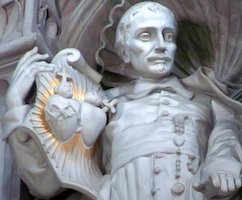
Saint John Eudes, forerunner of devotion both to the Sacred Heart and the Immaculate Heart of Mary, was born in 1601, some time after France had been torn apart by the revolt of the Huguenots. The rebels were calmed but relegated to western France by King Henry IV, after he himself returned to the Catholic faith. It was in that region that this young Saint spent his childhood, at Argentan in Normandy, and was educated with the Jesuits of Caen. The father of this firstborn of a family of solid and profound virtue, had himself desired the sacerdotal life, and he did not long oppose John's desire to consecrate himself to God as a priest. At eighteen years of age Saint John had already composed a treatise on voluntary abnegation, which his confessor obliged him to publish. He was ordained in Paris as a member of the recently founded French Oratory of Saint Philip Neri; his teachers there were Fathers de Berulle and de Condren, two unsurpassed spiritual directors. The governing theme of his meditation, his preaching and his writings was the importance of the redemptive Incarnation of the Son of God, through the intermediary of His Immaculate Mother. Controversy was not lacking in those days, when the Mother of God had been relegated to a very secondary if not insignificant role by the reformers, and Saint John did not fear controversy. He chose to study both theology and what we would call debate, as essential preparations for his calling. In those days seminaries were scarce; aspiring future priests themselves sought out the instruction they needed.
At Caen a pestilence broke out and soon decimated the populace, often deprived of spiritual assistance. John Eudes offered to care for them in person, and while the scourge lasted slept outdoors in a field, in an old barrel, to protect his brothers in religion from contagion. In 1639 he was named Superior of the Oratory of Caen by Father de Condren, although the Superior General feared that office could interfere with his missions, from which they hoped for great renovation in western France. Nonetheless, from 1638 until 1642, Saint John, with his brethren in religion, was engaged in preaching missions in the dioceses of Bayeux and Lisieux, where the bishops encouraged him and soon were praising him highly. The fruits of these missions were rich and long-lived. Father Eudes was a follower of Saint Vincent de Paul in his ardent desire to evangelize the poor folk, so long neglected, and it was to the people that the preaching of the Oratorian missionaries was addressed. Their missions lasted for several weeks. Otherwise, said Saint John, we put a bandage on the wound, but do not heal it. Processions, hymns, little religious plays, special conferences for specific groups, organization of leagues against duels and blasphemy, and visits to the sick occupied the missionaries' very full days.
Saint John Eudes left the Oratory, a Society of priests which he loved sincerely, like other founders who have been in a similar position, because he was called by God to break new ground in establishing a group of priests without religious vows, destined to occupy posts in the new seminaries of France. The Council of Trent had commanded these establishments everywhere, ordaining that priests be formed to head parishes and to establish in each of them a school. Already in 1658 Saint John himself had founded four seminaries in Normandy — at Caen, Coutances, Lisieux and Rouen. Before the Revolution in France, the Eudists had accepted the responsibility for sixteen seminaries or minor seminaries. This required a foundation in depth in theology and all pastoral duties. Some of his former brethren turned against him when he left them, and he met obstacles also when founding in Caen a Congregation of women to raise up poor girls led astray by ignorance or need. The Sisters of Our Lady of Charity founded by Saint John, parent body of the Good Shepherd nuns, have done an immense good in many countries. The Congregation of Jesus and Mary has sent missionary priests to several countries, all over the world. Saint John Eudes, who died in 1680, was beatified in 1909 by Saint Pius X, and canonized by Pope Pius XI in 1925.
Le Vénérable Père Eudes, by Henri Joly (V. Lecoffre: Paris, 1907); Saint Jean Eudes, by Paul Milcent, in Vie Eudiste, quarterly review, No. 8, 1973
.
LAST-MODIFIED:20240817T153202Z SEQUENCE:58213236 X-ACCESS:1 X-HITS:210 X-COLOR:f0b80e X-SHOW-END-TIME:1 END:VEVENT BEGIN:VEVENT DTSTART;VALUE=DATE:20240820 DTEND;VALUE=DATE:20240821 UID:B3C8FB91-72D8-4E24-9E49-98801D25A8F8 SUMMARY:St. Bernard CREATED:20221013T211126Z DTSTAMP:20221013T211126Z URL:https://www.stpaulsweymouth.org/component/dpcalendar/event/1930?calid=13 DESCRIPTION:St. Bernard of Clairvaux, Abbot, Confessor, and Doctor of the Church\N\NBernard was born at the castle of Fontaines, in Burgundy near Dijon, in 1090. The grace of his person and the vigor of his intellect filled his parents with the highest hopes, and the world lay bright and smiling before him. But Bernard renounced it forever to join the monks of Citeaux, a few miles distant. Four of his brothers and a group of friends, thirty young Christians in all, went when he did to Citeaux, leaving the youngest brother, Nivard, to be the mainstay of his father in his old age. You will now be heir to everything, they said to him as they departed. Yes, said the boy; you leave me the earth, and keep heaven for yourselves; do you consider that fair? And he too left the world. At length their aged father came also, exchanging wealth and honor for the poverty of a monk in the monastery of Clairvaux, which Bernard with a band of monks founded in the diocese of Langres in 1115. One sister alone remained behind; she was married, and loved the world and its pleasures. Splendidly clothed, one day she came to visit Bernard, and he refused to see her. He finally consented to do so, not as her brother but as the minister of Christ. The words he then spoke moved her so deeply that two years later she retired to a convent with her husband's consent, dying later in the reputation of sanctity.\NBernard's holy example attracted so many novices that many other monasteries had to be built. Unsparing for himself, he at first expected too much of his monks, who were disheartened by his severity. Soon perceiving his error, he led them forward to wonderful perfection by the sweetness of his correction and the mildness of his government.\NIn spite of his desire to remain secluded, the fame of his sanctity spread far and wide, and many dioceses asked for him as their bishop. Through the help of Pope Eugenius III, his former subject, he escaped this dignity. Nonetheless, his retirement was continually invaded. The poor and the weak sought his protection; bishops, kings, and popes applied to him for advice; and at length Pope Eugenius himself ordered him to preach the crusade. By his fervor, eloquence, and miracles Bernard kindled the enthusiasm of Christendom, and two large armies were organized. Their defeat was only due, said the Saint, to their sins, but many had saved their souls by their dedication to the glory of God. Bernard died in 1153. His very precious writings have earned for him the title of the last Father of the Holy Church and one of its most famous Doctors.\NReflection: Saint Bernard used to say to those who applied for admission to the monastery, If you desire to enter here, leave at the threshold the body you have brought with you from the world; here there is room only for your soul. Every day he asked himself the question: Why have you come here, Bernard?\NLittle Pictorial Lives of the Saints, a compilation based on Butler's Lives of the Saints and other sources by John Gilmary Shea (Benziger Brothers: New York, 1894). X-ALT-DESC;FMTTYPE=text/html:St. Bernard of Clairvaux, Abbot, Confessor, and Doctor of the Church
Bernard was born at the castle of Fontaines, in Burgundy near Dijon, in 1090. The grace of his person and the vigor of his intellect filled his parents with the highest hopes, and the world lay bright and smiling before him. But Bernard renounced it forever to join the monks of Citeaux, a few miles distant. Four of his brothers and a group of friends, thirty young Christians in all, went when he did to Citeaux, leaving the youngest brother, Nivard, to be the mainstay of his father in his old age. You will now be heir to everything, they said to him as they departed. Yes, said the boy; you leave me the earth, and keep heaven for yourselves; do you consider that fair? And he too left the world. At length their aged father came also, exchanging wealth and honor for the poverty of a monk in the monastery of Clairvaux, which Bernard with a band of monks founded in the diocese of Langres in 1115. One sister alone remained behind; she was married, and loved the world and its pleasures. Splendidly clothed, one day she came to visit Bernard, and he refused to see her. He finally consented to do so, not as her brother but as the minister of Christ. The words he then spoke moved her so deeply that two years later she retired to a convent with her husband's consent, dying later in the reputation of sanctity.
Bernard's holy example attracted so many novices that many other monasteries had to be built. Unsparing for himself, he at first expected too much of his monks, who were disheartened by his severity. Soon perceiving his error, he led them forward to wonderful perfection by the sweetness of his correction and the mildness of his government.
In spite of his desire to remain secluded, the fame of his sanctity spread far and wide, and many dioceses asked for him as their bishop. Through the help of Pope Eugenius III, his former subject, he escaped this dignity. Nonetheless, his retirement was continually invaded. The poor and the weak sought his protection; bishops, kings, and popes applied to him for advice; and at length Pope Eugenius himself ordered him to preach the crusade. By his fervor, eloquence, and miracles Bernard kindled the enthusiasm of Christendom, and two large armies were organized. Their defeat was only due, said the Saint, to their sins, but many had saved their souls by their dedication to the glory of God. Bernard died in 1153. His very precious writings have earned for him the title of the last Father of the Holy Church and one of its most famous Doctors.
Reflection: Saint Bernard used to say to those who applied for admission to the monastery, If you desire to enter here, leave at the threshold the body you have brought with you from the world; here there is room only for your soul. Every day he asked himself the question: Why have you come here, Bernard?
Little Pictorial Lives of the Saints, a compilation based on Butler's Lives of the Saints and other sources by John Gilmary Shea (Benziger Brothers: New York, 1894).
LAST-MODIFIED:20240817T153441Z SEQUENCE:58213395 X-ACCESS:1 X-HITS:129 X-COLOR:f0b80e X-SHOW-END-TIME:1 END:VEVENT BEGIN:VEVENT DTSTART;VALUE=DATE:20240821 DTEND;VALUE=DATE:20240822 UID:42F9EBE9-D7F4-49E1-9C9D-2AC67519F0E6 SUMMARY:St. Jane CREATED:20221013T211126Z DTSTAMP:20221013T211126Z URL:https://www.stpaulsweymouth.org/component/dpcalendar/event/1932?calid=13 DESCRIPTION:St. Jane Frances Fremiot de Chantal, Widow\N\NAt the age of sixteen, Jane Frances de Fremyot, already a motherless child, was placed under the care of a worldly-minded governess. In this crisis she offered herself to the Mother of God, and secured Mary's protection for life. When a Protestant sought her hand in marriage, she steadily refused to marry an enemy of God and His Church. Later, as the loving and beloved wife of the noble Baron de Chantal, she made her house the pattern of a Christian home. But God had marked her for something higher than domestic sanctity. Two children and a dearly beloved sister died, and then, in the full tide of their prosperity, her husband's life was ended by an accident, through the innocent hand of a friend, when a small group went hunting in the forest.\NFor seven years the sorrows of her widowhood were increased by ill usage from servants and inferiors, and the cruel importunities of those who urged her to marry again. Harassed almost to despair by their entreaties, she branded on her heart the name of Jesus, and in the end left her beloved home and children, to live for God alone. It was on the 19th of March, 1609, that Madame de Chantal bade farewell to her family and relatives. Pale and with tears in her eyes, she passed around the large room, sweetly and humbly taking leave of each one. Her son, a boy of fifteen, used every entreaty, every endearment, to induce his mother not to leave them, and finally flung himself passionately across the doorsill of the room. In an agony of distress, she passed over the body of her son to the embrace of her aged and disconsolate father. The anguish of that parting reached its height when, kneeling at the feet of the venerable old man, she sought and obtained his last blessing, promising to repay his sacrifice in her new life by her prayers.\NWell might Saint Francis de Sales call her the valiant woman. She founded under his direction and patronage the great Order of the Visitation. Sickness, opposition and want beset her, and the deaths of children, friends, and of Saint Francis himself followed, while eighty-seven houses of the Visitation rose under her hand. Nine long years of interior desolation completed the work of God's grace in her soul. The Congregation of the Visitation, whose purpose was to admit widows and persons of fragile health, not accepted elsewhere, was canonically established at Annecy on Trinity Sunday of 1610. The Order counted thirteen houses already in 1622, when Saint Francis de Sales died; and when the Foundress died in her seventieth year, there were eighty-six. Saint Vincent de Paul saw her soul rise up, like a ball of fire, to heaven. At her canonization in 1767, the Sisters in 164 houses of the Visitation rejoiced.\NReflection: Profit by the successive trials of life to gain the strength and courage of Saint Jane Frances, and difficulties will become stepping stones from earth to heaven.\NLittle Pictorial Lives of the Saints, a compilation based on Butler's Lives of the Saints and other sources by John Gilmary Shea (Benziger Brothers: New York, 1894); The Catholic Encyclopedia, edited by C. G. Herbermann with numerous collaborators (Appleton Company: New York, 1908).\N. X-ALT-DESC;FMTTYPE=text/html:St. Jane Frances Fremiot de Chantal, Widow
At the age of sixteen, Jane Frances de Fremyot, already a motherless child, was placed under the care of a worldly-minded governess. In this crisis she offered herself to the Mother of God, and secured Mary's protection for life. When a Protestant sought her hand in marriage, she steadily refused to marry an enemy of God and His Church. Later, as the loving and beloved wife of the noble Baron de Chantal, she made her house the pattern of a Christian home. But God had marked her for something higher than domestic sanctity. Two children and a dearly beloved sister died, and then, in the full tide of their prosperity, her husband's life was ended by an accident, through the innocent hand of a friend, when a small group went hunting in the forest.
For seven years the sorrows of her widowhood were increased by ill usage from servants and inferiors, and the cruel importunities of those who urged her to marry again. Harassed almost to despair by their entreaties, she branded on her heart the name of Jesus, and in the end left her beloved home and children, to live for God alone. It was on the 19th of March, 1609, that Madame de Chantal bade farewell to her family and relatives. Pale and with tears in her eyes, she passed around the large room, sweetly and humbly taking leave of each one. Her son, a boy of fifteen, used every entreaty, every endearment, to induce his mother not to leave them, and finally flung himself passionately across the doorsill of the room. In an agony of distress, she passed over the body of her son to the embrace of her aged and disconsolate father. The anguish of that parting reached its height when, kneeling at the feet of the venerable old man, she sought and obtained his last blessing, promising to repay his sacrifice in her new life by her prayers.
Well might Saint Francis de Sales call her the valiant woman. She founded under his direction and patronage the great Order of the Visitation. Sickness, opposition and want beset her, and the deaths of children, friends, and of Saint Francis himself followed, while eighty-seven houses of the Visitation rose under her hand. Nine long years of interior desolation completed the work of God's grace in her soul. The Congregation of the Visitation, whose purpose was to admit widows and persons of fragile health, not accepted elsewhere, was canonically established at Annecy on Trinity Sunday of 1610. The Order counted thirteen houses already in 1622, when Saint Francis de Sales died; and when the Foundress died in her seventieth year, there were eighty-six. Saint Vincent de Paul saw her soul rise up, like a ball of fire, to heaven. At her canonization in 1767, the Sisters in 164 houses of the Visitation rejoiced.
Reflection: Profit by the successive trials of life to gain the strength and courage of Saint Jane Frances, and difficulties will become stepping stones from earth to heaven.
Little Pictorial Lives of the Saints, a compilation based on Butler's Lives of the Saints and other sources by John Gilmary Shea (Benziger Brothers: New York, 1894); The Catholic Encyclopedia, edited by C. G. Herbermann with numerous collaborators (Appleton Company: New York, 1908).
.
LAST-MODIFIED:20240817T153719Z SEQUENCE:58213553 X-ACCESS:1 X-HITS:68 X-COLOR:f0b80e X-SHOW-END-TIME:1 END:VEVENT BEGIN:VEVENT DTSTART;VALUE=DATE:20240822 DTEND;VALUE=DATE:20240823 UID:7486368D-F80C-4DBC-A79F-2561FDD9B850 SUMMARY:St. Timothy & Companions CREATED:20221013T211126Z DTSTAMP:20221013T211126Z URL:https://www.stpaulsweymouth.org/component/dpcalendar/event/1922?calid=13 DESCRIPTION:Sts. Timothy & Companions, Martyrs\N\NSaint Timothy was a bishop who was imprisoned by Julian the Apostate (331-363) together with his fellow bishop Theodore; the priests Timothy, Peter, John, Sergius, Theodore, Nikēphóros; the deacons Basil and Thomas; the monks Hierotheus, Daniel, Chariton, Socrates, Comasius; and Etymasius. They all suffered martyrdom in Tiberiopolis in 361. X-ALT-DESC;FMTTYPE=text/html:Sts. Timothy & Companions, Martyrs
Saint Timothy was a bishop who was imprisoned by Julian the Apostate (331-363) together with his fellow bishop Theodore; the priests Timothy, Peter, John, Sergius, Theodore, Nikēphóros; the deacons Basil and Thomas; the monks Hierotheus, Daniel, Chariton, Socrates, Comasius; and Etymasius. They all suffered martyrdom in Tiberiopolis in 361.
LAST-MODIFIED:20240817T154457Z SEQUENCE:58214011 X-ACCESS:1 X-HITS:15 X-COLOR:f0b80e X-SHOW-END-TIME:1 END:VEVENT BEGIN:VEVENT DTSTART;VALUE=DATE:20240822 DTEND;VALUE=DATE:20240823 UID:492E970F-71A8-47B1-8E5A-F08F57B26C52 SUMMARY:The Immaculate Heart of Mary CREATED:20221013T211126Z DTSTAMP:20221013T211126Z URL:https://www.stpaulsweymouth.org/component/dpcalendar/event/1934?calid=13 DESCRIPTION:Feast of the Immaculate Heart of the Blessed Virgin Mary\N\NIn 1917 the Mother of God appeared six times at Fatima in Portugal. After showing the three children a vision of hell, She informed Lucy of Fatima, the oldest of the visionaries: You have seen hell, where the souls of poor sinners will go. To save them, the Lord desires to establish devotion to My Immaculate Heart in the world. The Saviour Himself, when He appeared to Lucy again on December 10, 1925 with His Mother, indicating with His hand the Heart of His Mother, said: Have pity on this gentle Heart, continually martyred by the ingratitude of men.\NChristians have long known that at the very origin of the world God threatened the ancient enemy, disguised under the form of a serpent, that the Woman he had seen in vision with Her Son, the Son of God, would eventually crush his head. I Myself, God told him, will place an irreducible enmity between Her race and your race. Thus Satan was informed at that moment, after he had just seduced the first human couple, that in the end, it would be this other Woman and Her Son, who would vanquish him. He had refused to honor the incarnate Son of God in His future human nature, inferior to his own angelic nature; his pride would not permit him to abase himself to serve God in that form. Christian hope has been nourished ever since by the prospect of this victory; nonetheless, the Mother of God wanted the twentieth century from its early years to understand that the time was drawing near when Her Immaculate Heart would triumph, as She explicitly said at Fatima, but that it was only through Her, uniquely by Her maternal aid, that this victory could be attained.\NMary is indispensable to the sanctification of each soul. This is the great truth which in the Latter Times must be better understood. For that purpose, consecration to Her Immaculate Heart was given us at Fatima, as the means She Herself desired, with the daily Rosary. Devotion to Her Heart is not new in the Church; Saint John Eudes, Saint Louis Mary de Montfort, how many others, in truth all the Saints have loved the Heart of their Mother in Heaven. But to know Her well, each one must individually establish the relationship of a child with its loving Mother. For this purpose She asks for our personal and effective consecration to Her Immaculate Heart. The child of Mary turns to Her constantly for counsel, force and courage, gentleness and humility in the affairs of daily life. Many prayers of consecration to Mary exist, in particular that of Montfort; but one may use any simple formula such as the following: Blessed and beloved Mother, I am Your child and I wish to belong to You; I give and consecrate myself forever to Your Immaculate Heart, renewing in Your hands my baptismal promises, and I ask You to ratify my filial homage to Your Immaculate Heart — that of my person and my activities, my temporal and spiritual goods, my resolution to have frequent recourse to Your maternal and merciful intercession. And, insofar as it is within my scope to do so, I offer You also my family, my homeland and all of humanity.\NPourquoi me consacrer au Coeur Immaculée de Marie? brochure by H. Desmullier, Montfort Father (Bonne Presse: Paris, 1955) X-ALT-DESC;FMTTYPE=text/html:Feast of the Immaculate Heart of the Blessed Virgin Mary
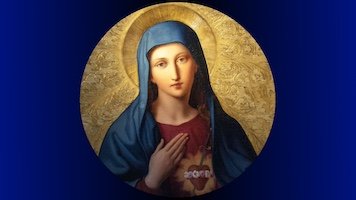
In 1917 the Mother of God appeared six times at Fatima in Portugal. After showing the three children a vision of hell, She informed Lucy of Fatima, the oldest of the visionaries: You have seen hell, where the souls of poor sinners will go. To save them, the Lord desires to establish devotion to My Immaculate Heart in the world. The Saviour Himself, when He appeared to Lucy again on December 10, 1925 with His Mother, indicating with His hand the Heart of His Mother, said: Have pity on this gentle Heart, continually martyred by the ingratitude of men.
Christians have long known that at the very origin of the world God threatened the ancient enemy, disguised under the form of a serpent, that the Woman he had seen in vision with Her Son, the Son of God, would eventually crush his head. I Myself, God told him, will place an irreducible enmity between Her race and your race. Thus Satan was informed at that moment, after he had just seduced the first human couple, that in the end, it would be this other Woman and Her Son, who would vanquish him. He had refused to honor the incarnate Son of God in His future human nature, inferior to his own angelic nature; his pride would not permit him to abase himself to serve God in that form. Christian hope has been nourished ever since by the prospect of this victory; nonetheless, the Mother of God wanted the twentieth century from its early years to understand that the time was drawing near when Her Immaculate Heart would triumph, as She explicitly said at Fatima, but that it was only through Her, uniquely by Her maternal aid, that this victory could be attained.
Mary is indispensable to the sanctification of each soul. This is the great truth which in the Latter Times must be better understood. For that purpose, consecration to Her Immaculate Heart was given us at Fatima, as the means She Herself desired, with the daily Rosary. Devotion to Her Heart is not new in the Church; Saint John Eudes, Saint Louis Mary de Montfort, how many others, in truth all the Saints have loved the Heart of their Mother in Heaven. But to know Her well, each one must individually establish the relationship of a child with its loving Mother. For this purpose She asks for our personal and effective consecration to Her Immaculate Heart. The child of Mary turns to Her constantly for counsel, force and courage, gentleness and humility in the affairs of daily life. Many prayers of consecration to Mary exist, in particular that of Montfort; but one may use any simple formula such as the following: Blessed and beloved Mother, I am Your child and I wish to belong to You; I give and consecrate myself forever to Your Immaculate Heart, renewing in Your hands my baptismal promises, and I ask You to ratify my filial homage to Your Immaculate Heart — that of my person and my activities, my temporal and spiritual goods, my resolution to have frequent recourse to Your maternal and merciful intercession. And, insofar as it is within my scope to do so, I offer You also my family, my homeland and all of humanity.
Pourquoi me consacrer au Coeur Immaculée de Marie? brochure by H. Desmullier, Montfort Father (Bonne Presse: Paris, 1955)
LAST-MODIFIED:20240817T154208Z SEQUENCE:58213842 X-ACCESS:1 X-HITS:84 X-COLOR:f0b80e X-SHOW-END-TIME:1 END:VEVENT BEGIN:VEVENT DTSTART;VALUE=DATE:20240823 DTEND;VALUE=DATE:20240824 UID:E6D7A828-96CD-405B-A4BF-D6CD4998B5E5 SUMMARY:St. Philip CREATED:20221013T211126Z DTSTAMP:20221013T211126Z URL:https://www.stpaulsweymouth.org/component/dpcalendar/event/1938?calid=13 DESCRIPTION:St. Philip Benizi, Confessor\N\NSaint Philip Benizi was born in Florence on the Feast of the Assumption, 1233. That same day the Order of Servites was founded by the Mother of God. As an infant one year old, Philip spoke when in the presence of these new religious, and announced the Servants of the Virgin. Amid all the temptations of his youth, he longed to become a Servant of Mary, and it was only the fear of his own unworthiness which made him yield to his father's wish and begin to study medicine. He received the bonnet of a doctor of medicine at Padua.\NAfter long and weary waiting, his doubts were solved one day by Our Lady Herself, who in a vision during a Mass in Florence offered in the Servite Chapel, bade him enter Her Order. Still Philip dared only offer himself as a lay brother; and saying nothing of his studies, in this humble state he strove to do penance for his sins. Two Dominican Fathers traveling with him one day recognized the great talents, wisdom and knowledge which he had succeeded in concealing. They talked to his Superiors, and he was told to prepare for the priesthood. As a priest he did immense good. He pacified many dissensions, common among the city-states of those days. One day he met a leper, almost naked, and having no money gave him his tunic. When the leper put it on, he was instantly cured.\NThereafter honors were accorded him in rapid succession; he became General of the Order and only by flight did he escape elevation to the Papal throne; he retired to a grotto in the mountains until the conclave had ended. His preaching restored peace to Italy, wasted by civil wars. He was sent not only to various cities of that country but to the Netherlands and Germany, where he converted many, not without opposition and even a flogging by rebels. At the Council of Lyons, he spoke to the assembled prelates with the gift of tongues. Amid all these favors Philip lived in extreme penitence, constantly examining his soul before God, and condemning himself as only fit for hell.\NSaint Philip, though he was free from every stain of mortal sin, was never weary of beseeching God's mercy. From the time he was ten years old he daily prayed the Penitential Psalms. On his deathbed he recited verses of the Miserere, his cheeks streaming with tears; during his agony he went through a terrible contest to overcome the fear of damnation. But a few minutes before he died, all his doubts disappeared and were succeeded by a holy trust. He uttered the responses to the final prayers in a low but audible voice; and when at last the Mother of God appeared before him, he lifted up his arms with joy and breathed a gentle sigh, as if placing his soul in Her hands. He died on the Octave of the Assumption, 1285.\NReflection: Endeavor so to act as you would wish to have acted when you stand before the Judge of your eternity. This is the rule of the Saints, and the only safe rule for all.\NLittle Pictorial Lives of the Saints, a compilation based on Butler's Lives of the Saints and other sources by John Gilmary Shea (Benziger Brothers: New York, 1894). X-ALT-DESC;FMTTYPE=text/html:St. Philip Benizi, Confessor
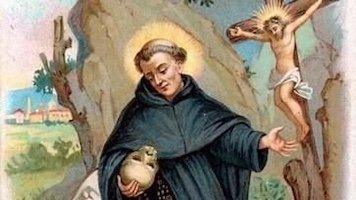
Saint Philip Benizi was born in Florence on the Feast of the Assumption, 1233. That same day the Order of Servites was founded by the Mother of God. As an infant one year old, Philip spoke when in the presence of these new religious, and announced the Servants of the Virgin. Amid all the temptations of his youth, he longed to become a Servant of Mary, and it was only the fear of his own unworthiness which made him yield to his father's wish and begin to study medicine. He received the bonnet of a doctor of medicine at Padua.
After long and weary waiting, his doubts were solved one day by Our Lady Herself, who in a vision during a Mass in Florence offered in the Servite Chapel, bade him enter Her Order. Still Philip dared only offer himself as a lay brother; and saying nothing of his studies, in this humble state he strove to do penance for his sins. Two Dominican Fathers traveling with him one day recognized the great talents, wisdom and knowledge which he had succeeded in concealing. They talked to his Superiors, and he was told to prepare for the priesthood. As a priest he did immense good. He pacified many dissensions, common among the city-states of those days. One day he met a leper, almost naked, and having no money gave him his tunic. When the leper put it on, he was instantly cured.
Thereafter honors were accorded him in rapid succession; he became General of the Order and only by flight did he escape elevation to the Papal throne; he retired to a grotto in the mountains until the conclave had ended. His preaching restored peace to Italy, wasted by civil wars. He was sent not only to various cities of that country but to the Netherlands and Germany, where he converted many, not without opposition and even a flogging by rebels. At the Council of Lyons, he spoke to the assembled prelates with the gift of tongues. Amid all these favors Philip lived in extreme penitence, constantly examining his soul before God, and condemning himself as only fit for hell.
Saint Philip, though he was free from every stain of mortal sin, was never weary of beseeching God's mercy. From the time he was ten years old he daily prayed the Penitential Psalms. On his deathbed he recited verses of the Miserere, his cheeks streaming with tears; during his agony he went through a terrible contest to overcome the fear of damnation. But a few minutes before he died, all his doubts disappeared and were succeeded by a holy trust. He uttered the responses to the final prayers in a low but audible voice; and when at last the Mother of God appeared before him, he lifted up his arms with joy and breathed a gentle sigh, as if placing his soul in Her hands. He died on the Octave of the Assumption, 1285.
Reflection: Endeavor so to act as you would wish to have acted when you stand before the Judge of your eternity. This is the rule of the Saints, and the only safe rule for all.
Little Pictorial Lives of the Saints, a compilation based on Butler's Lives of the Saints and other sources by John Gilmary Shea (Benziger Brothers: New York, 1894).
LAST-MODIFIED:20240817T154831Z SEQUENCE:58214225 X-ACCESS:1 X-HITS:13 X-COLOR:f0b80e X-SHOW-END-TIME:1 END:VEVENT BEGIN:VEVENT DTSTART;VALUE=DATE:20240824 DTEND;VALUE=DATE:20240825 UID:EEDC6701-E56E-4DB8-8D27-4543A57538EB SUMMARY:St. Bartholomew CREATED:20221013T211126Z DTSTAMP:20221013T211126Z URL:https://www.stpaulsweymouth.org/component/dpcalendar/event/1940?calid=13 DESCRIPTION:St. Bartholomew Apostle\N\NSaint Bartholomew, Bar-Tolmai or son of Tolmai, was one of the twelve Apostles called to the apostolate by our Blessed Lord Himself. His name is more adequately rendered by his given name, Nathanael. If one wonders why the synoptic Gospels always call him Bartholomew, it would be because the name Nathanael in Hebrew is equivalent to that of Matthew, since both in Hebrew signify gift of God; in this way the Evangelists avoided all confusion between the two Apostles. He was a native of Cana in Galilee, a doctor of the Jewish law, and a friend of Philip.\NPhilip, advised by Peter and Andrew, hastened to communicate to his friend the good news of his discovery of Christ: We have found Him whom Moses in the Law, and the Prophets, wrote! Come and see. Jesus saw Nathanael coming to Him, and said of him, Behold a true Israelite, in whom there is no guile. (Cf. John 1:45-49) His innocence and simplicity of heart deserved to be celebrated with this high praise in the divine mouth of Our Redeemer. And Nathanael, when Jesus told him He had already seen him in a certain place, confessed his faith at once: Rabbi, Thou art the Son of God, Thou art the King of Israel!\NBeing eminently qualified by divine grace to discharge the functions of an Apostle, he carried the Gospel through the most barbarous countries of the East, penetrating into the remoter Indies, baptizing neophytes and casting out demons. A copy of the Gospel of Saint Matthew was found in India by Saint Pantænus in the third century, taken there, according to local tradition, by Saint Bartholomew. Saint John Chrysostom said the Apostle also preached in Asia Minor and, with Saint Philip, suffered there, though not mortally, for the faith. Saint Bartholomew's last mission was in Greater Armenia, where, preaching in a place obstinately addicted to the worship of idols, he was crowned with a glorious martyrdom. The modern Greek historians say that he was condemned by the governor of Albanopolis to be crucified. Others affirm that he was flayed alive, which treatment might well have accompanied his crucifixion, this double punishment being in use not only in Egypt, but also among the Persians.\NReflection: The characteristic virtue of the Holy Apostles was zeal for the divine glory. A soldier is always ready to defend the honor of his prince, and a son that of his father; can a Christian say he loves God if he is indifferent to His honor?\NDictionnaire de la Bible, Ed. F. Vigouroux (Letouzey et Ané: Paris, 1912), Vol. 5, Philippe, Apôtre; Little Pictorial Lives of the Saints, a compilation based on Butler's Lives of the Saints and other sources by John Gilmary Shea (Benziger Brothers: New York, 1894). X-ALT-DESC;FMTTYPE=text/html:St. Bartholomew Apostle
Saint Bartholomew, Bar-Tolmai or son of Tolmai, was one of the twelve Apostles called to the apostolate by our Blessed Lord Himself. His name is more adequately rendered by his given name, Nathanael. If one wonders why the synoptic Gospels always call him Bartholomew, it would be because the name Nathanael in Hebrew is equivalent to that of Matthew, since both in Hebrew signify gift of God; in this way the Evangelists avoided all confusion between the two Apostles. He was a native of Cana in Galilee, a doctor of the Jewish law, and a friend of Philip.
Philip, advised by Peter and Andrew, hastened to communicate to his friend the good news of his discovery of Christ: We have found Him whom Moses in the Law, and the Prophets, wrote! Come and see. Jesus saw Nathanael coming to Him, and said of him, Behold a true Israelite, in whom there is no guile. (Cf. John 1:45-49) His innocence and simplicity of heart deserved to be celebrated with this high praise in the divine mouth of Our Redeemer. And Nathanael, when Jesus told him He had already seen him in a certain place, confessed his faith at once: Rabbi, Thou art the Son of God, Thou art the King of Israel!
Being eminently qualified by divine grace to discharge the functions of an Apostle, he carried the Gospel through the most barbarous countries of the East, penetrating into the remoter Indies, baptizing neophytes and casting out demons. A copy of the Gospel of Saint Matthew was found in India by Saint Pantænus in the third century, taken there, according to local tradition, by Saint Bartholomew. Saint John Chrysostom said the Apostle also preached in Asia Minor and, with Saint Philip, suffered there, though not mortally, for the faith. Saint Bartholomew's last mission was in Greater Armenia, where, preaching in a place obstinately addicted to the worship of idols, he was crowned with a glorious martyrdom. The modern Greek historians say that he was condemned by the governor of Albanopolis to be crucified. Others affirm that he was flayed alive, which treatment might well have accompanied his crucifixion, this double punishment being in use not only in Egypt, but also among the Persians.
Reflection: The characteristic virtue of the Holy Apostles was zeal for the divine glory. A soldier is always ready to defend the honor of his prince, and a son that of his father; can a Christian say he loves God if he is indifferent to His honor?
Dictionnaire de la Bible, Ed. F. Vigouroux (Letouzey et Ané: Paris, 1912), Vol. 5, Philippe, Apôtre; Little Pictorial Lives of the Saints, a compilation based on Butler's Lives of the Saints and other sources by John Gilmary Shea (Benziger Brothers: New York, 1894).
LAST-MODIFIED:20240817T155213Z SEQUENCE:58214447 X-ACCESS:1 X-HITS:48 X-COLOR:f0b80e X-SHOW-END-TIME:1 END:VEVENT BEGIN:VEVENT DTSTART;VALUE=DATE:20240825 DTEND;VALUE=DATE:20240826 UID:D080A8C8-EDF1-4A8B-AE62-3B1D625435AE SUMMARY:St. Louis CREATED:20221013T211126Z DTSTAMP:20221013T211126Z URL:https://www.stpaulsweymouth.org/component/dpcalendar/event/1942?calid=13 DESCRIPTION:St. Louis King, Confessor\N\NThe mother of the incomparable Saint Louis IX of France, Blanche of Castille, told him when he was still a child that she would rather see him dead in a coffin than stained by a single mortal sin. He never forgot her words. Raised to the throne and anointed in the Rheims Cathedral at the age of twelve, while still remaining under his mother's regency for several years, he made the defense of God's honor the aim of his life.\NBefore one year of their mutual sovereignty had ended, the Catholic armies of France, by a particular blessing, had crushed the Albigensians of the south who had risen up under a heretical prince, and forced them by stringent penalties to respect the Catholic faith. Amid the cares of government, the young prince daily recited the Divine Office and heard two Masses. The most glorious churches in France are still memorials to his piety, among them the beautiful Sainte Chapelle of Notre Dame Cathedral in Paris, where the Crown of Thorns, the great relic which he brought back from the Holy Land, is enshrined. When his courtiers remonstrated with Louis for his law that blasphemers must be branded on the lips, he replied, I would willingly have my own lips branded if I could thereby root out blasphemy from my kingdom. A fearless protector of the weak and the oppressed, a monarch whose justice was universally recognized, he was chosen to arbitrate in all the great feuds of his age.\NIn 1248, to rescue the land where Christ had walked, he gathered round him the chivalry of France, and embarked for the East. He visited the holy places; approaching Nazareth he dismounted, knelt down to pray, then entered on foot. He visited the Holy House of Nazareth and on its wall a fresco was afterwards painted, still visible when the House was translated to Loreto, depicting him offering his manacles to the Mother of God. Wherever he was: at home with his many children, facing the infidel armies, in victory or in defeat, on a bed of sickness or as a captive in chains, King Louis showed himself ever the same — the first, the best, and the bravest of Christian knights.\NWhen he was a captive at Damietta, an Emir rushed into his tent brandishing a dagger red with the blood of the Sultan, and threatened to stab him also unless he would make him a knight. Louis calmly replied that no unbeliever could perform the duties of a Christian knight. In the same captivity he was offered his liberty on terms lawful in themselves, but enforced by an oath which implied a blasphemy, and although the infidels held their swords' points at his throat and threatened a massacre of the Christians, Louis inflexibly refused.\NThe death of his mother recalled him to France in 1252; but when order was re-established he again set out for a second crusade. In August of 1270 his army landed at Tunis, won a victory over the enemy, then was laid low by a malignant fever. Saint Louis was one of the victims. He received the Viaticum kneeling by his camp bed, and gave up his life with the same joy in which he had given all else for the honor of God.\NReflection: Saint Louis wrote to his oldest son Philip, heir to the crown: I recommend to you before all else to apply yourself with all your heart to love God.\NLittle Pictorial Lives of the Saints, a compilation based on Butler's Lives of the Saints and other sources by John Gilmary Shea (Benziger Brothers: New York, 1894). X-ALT-DESC;FMTTYPE=text/html:St. Louis King, Confessor
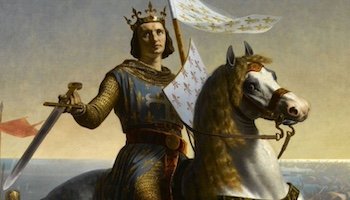
The mother of the incomparable Saint Louis IX of France, Blanche of Castille, told him when he was still a child that she would rather see him dead in a coffin than stained by a single mortal sin. He never forgot her words. Raised to the throne and anointed in the Rheims Cathedral at the age of twelve, while still remaining under his mother's regency for several years, he made the defense of God's honor the aim of his life.
Before one year of their mutual sovereignty had ended, the Catholic armies of France, by a particular blessing, had crushed the Albigensians of the south who had risen up under a heretical prince, and forced them by stringent penalties to respect the Catholic faith. Amid the cares of government, the young prince daily recited the Divine Office and heard two Masses. The most glorious churches in France are still memorials to his piety, among them the beautiful Sainte Chapelle of Notre Dame Cathedral in Paris, where the Crown of Thorns, the great relic which he brought back from the Holy Land, is enshrined. When his courtiers remonstrated with Louis for his law that blasphemers must be branded on the lips, he replied, I would willingly have my own lips branded if I could thereby root out blasphemy from my kingdom. A fearless protector of the weak and the oppressed, a monarch whose justice was universally recognized, he was chosen to arbitrate in all the great feuds of his age.
In 1248, to rescue the land where Christ had walked, he gathered round him the chivalry of France, and embarked for the East. He visited the holy places; approaching Nazareth he dismounted, knelt down to pray, then entered on foot. He visited the Holy House of Nazareth and on its wall a fresco was afterwards painted, still visible when the House was translated to Loreto, depicting him offering his manacles to the Mother of God. Wherever he was: at home with his many children, facing the infidel armies, in victory or in defeat, on a bed of sickness or as a captive in chains, King Louis showed himself ever the same — the first, the best, and the bravest of Christian knights.
When he was a captive at Damietta, an Emir rushed into his tent brandishing a dagger red with the blood of the Sultan, and threatened to stab him also unless he would make him a knight. Louis calmly replied that no unbeliever could perform the duties of a Christian knight. In the same captivity he was offered his liberty on terms lawful in themselves, but enforced by an oath which implied a blasphemy, and although the infidels held their swords' points at his throat and threatened a massacre of the Christians, Louis inflexibly refused.
The death of his mother recalled him to France in 1252; but when order was re-established he again set out for a second crusade. In August of 1270 his army landed at Tunis, won a victory over the enemy, then was laid low by a malignant fever. Saint Louis was one of the victims. He received the Viaticum kneeling by his camp bed, and gave up his life with the same joy in which he had given all else for the honor of God.
Reflection: Saint Louis wrote to his oldest son Philip, heir to the crown: I recommend to you before all else to apply yourself with all your heart to love God.
Little Pictorial Lives of the Saints, a compilation based on Butler's Lives of the Saints and other sources by John Gilmary Shea (Benziger Brothers: New York, 1894).
LAST-MODIFIED:20240817T155423Z SEQUENCE:58214577 X-ACCESS:1 X-HITS:27 X-COLOR:f0b80e X-SHOW-END-TIME:1 END:VEVENT BEGIN:VEVENT DTSTART;VALUE=DATE:20240826 DTEND;VALUE=DATE:20240827 UID:F24789C6-EAA1-4E5F-B190-0913BCEB8397 SUMMARY:St. Zephyrinus CREATED:20221013T211126Z DTSTAMP:20221013T211126Z URL:https://www.stpaulsweymouth.org/component/dpcalendar/event/1944?calid=13 DESCRIPTION:St. Zephyrinus Pope, Martyr\N\NSaint Zephyrinus, a native of Rome, succeeded Victor I in the pontificate in the year 198. In 202 Septimus Severus, a military despot, raised the fifth and most bloody persecution against the Church, which continued for nine years until the death of the emperor in 211. Until this furious storm ended, the holy pastor remained concealed for the sake of his flock, supporting and comforting the distressed disciples of Christ. He suffered by charity and compassion what every confessor underwent. The triumphs of the martyrs were indeed his joy, but his heart received many deep wounds from the fall of apostates and heretics. Nor did this latter affliction cease when peace was restored to the Church. The holy Pope had the affliction of witnessing the fall of Tertullian. He saw to his joy, however, the conversion of Natalis, who had become a heretical bishop when he lapsed into the Theodotian heresy. God, wishing to bring him back to the Church, sent him a solid correction which opened his eyes, and he came to kneel at the feet of the Vicar of Christ, wearing a hair shirt and humbly asking pardon for his revolt.\NEusebius tells us that this holy Pope exerted his zeal so strenuously against the blasphemies of the heretics, that they treated him with the utmost contempt. To his glory, however, they also called him the principal defender of Christ's divinity. Saint Zephyrinus governed the Church for nineteen years, dying in 217 as a martyr under Antoninus Caracalla. He was buried in his own cemetery on the 26th of August.\NReflection: God has always raised up holy pastors zealous to maintain inviolable the faith of His Church, and to watch over the purity of its morals and the sanctity of its discipline. We enjoy the greatest advantages of divine grace through their labors, and owe to God a tribute of perpetual thanksgiving and immortal praise for all the mercies He has accorded His Church.\NLes Petits Bollandistes: Vies des Saints, by Msgr. Paul Guérin (Bloud et Barral: Paris, 1882), Vol. 10; Little Pictorial Lives of the Saints, a compilation based on Butler's Lives of the Saints and other sources by John Gilmary Shea (Benziger Brothers: New York, 1894). X-ALT-DESC;FMTTYPE=text/html:St. Zephyrinus Pope, Martyr
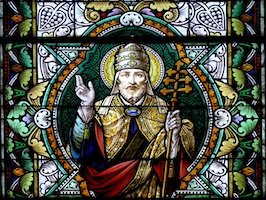
Saint Zephyrinus, a native of Rome, succeeded Victor I in the pontificate in the year 198. In 202 Septimus Severus, a military despot, raised the fifth and most bloody persecution against the Church, which continued for nine years until the death of the emperor in 211. Until this furious storm ended, the holy pastor remained concealed for the sake of his flock, supporting and comforting the distressed disciples of Christ. He suffered by charity and compassion what every confessor underwent. The triumphs of the martyrs were indeed his joy, but his heart received many deep wounds from the fall of apostates and heretics. Nor did this latter affliction cease when peace was restored to the Church. The holy Pope had the affliction of witnessing the fall of Tertullian. He saw to his joy, however, the conversion of Natalis, who had become a heretical bishop when he lapsed into the Theodotian heresy. God, wishing to bring him back to the Church, sent him a solid correction which opened his eyes, and he came to kneel at the feet of the Vicar of Christ, wearing a hair shirt and humbly asking pardon for his revolt.
Eusebius tells us that this holy Pope exerted his zeal so strenuously against the blasphemies of the heretics, that they treated him with the utmost contempt. To his glory, however, they also called him the principal defender of Christ's divinity. Saint Zephyrinus governed the Church for nineteen years, dying in 217 as a martyr under Antoninus Caracalla. He was buried in his own cemetery on the 26th of August.
Reflection: God has always raised up holy pastors zealous to maintain inviolable the faith of His Church, and to watch over the purity of its morals and the sanctity of its discipline. We enjoy the greatest advantages of divine grace through their labors, and owe to God a tribute of perpetual thanksgiving and immortal praise for all the mercies He has accorded His Church.
Les Petits Bollandistes: Vies des Saints, by Msgr. Paul Guérin (Bloud et Barral: Paris, 1882), Vol. 10; Little Pictorial Lives of the Saints, a compilation based on Butler's Lives of the Saints and other sources by John Gilmary Shea (Benziger Brothers: New York, 1894).
LAST-MODIFIED:20240817T155646Z SEQUENCE:58214720 X-ACCESS:1 X-HITS:73 X-COLOR:f0b80e X-SHOW-END-TIME:1 END:VEVENT BEGIN:VEVENT DTSTART;VALUE=DATE:20240827 DTEND;VALUE=DATE:20240828 UID:A6D79BCA-18EB-4092-876B-3A135391D97C SUMMARY:St. Joseph Calasanctius CREATED:20221013T211126Z DTSTAMP:20221013T211126Z URL:https://www.stpaulsweymouth.org/component/dpcalendar/event/1946?calid=13 DESCRIPTION:St. Joseph Calasanctius, Confessor\N\NSaint Joseph Calasanctius was born in Aragon in 1556 of a noble family, who gave him a very Christian education. When only five years old, he led a troop of children through the streets to find the devil and slay him. He became a priest, and was engaged in various reforms when he heard a voice saying, Go to Rome, Joseph and had a vision of many children who were being taught by him and by a company of Angels. When he reached the Holy City, his heart was moved by the vice and ignorance of the children of the poor, and he saw clearly that ignorance was the mother of vice and misery. Sunday catechism lessons were insufficient to remedy the situation. When he could find no collaboration under the existing frameworks, the children's need mastered his profound humility, and he undertook to found personally the Order of Clerks Regular of the Pious Schools, or the Piarists.\NThe parish priest of Saint Dorothy's Church in Trastevere, placed two rooms at his disposition and assisted him in all things. Two other good priests joined the founders, and the school soon had several hundred children. He taught the children catechism, reading, writing and arithmetic, and he himself provided all that was necessary for the program of instruction, receiving nothing in payment. Other schools were organized elsewhere in Rome, and the holy priest had scholars of every rank under his care. Each lesson began with prayer. Every half-hour, piety was renewed by acts of faith, hope, and charity. At the end of the day the children were escorted home by the masters, so as to escape all harm on the way. An annual retreat was given them during the Easter season. Clement XIII approved the new Congregation, which became an Order with the ordinary three vows, and in addition a definitive commitment to the instruction of the indigent.\NEnemies arose against Saint Joseph, however, from among his own subjects, thus imposing on the Founder the most sorrowful of all crosses, resembling that of the Lord Himself. They accused him to the Holy Office, and at the age of eighty-six he was led through the streets to prison. The Order was reduced to a simple Congregation under local episcopal authority and was not restored to its former privileges until after the Saint's death. Yet he died full of hope. My work, he said, was done solely for the love of God. Saint Joseph is the first to have given gratuitous instruction to the children of the people. Religion can claim for its own the instruction of the poor, both by birthright and by right of conquest. The body of Saint Joseph Calasanctius reposes in the church of Saint Pantaleon in Rome. He was canonized by Clement XIII in 1767.\NReflection: My children, said the Curé of Ars, I often think that most of the Christians who are lost are lost for want of instruction; they do not know their religion well.\NLes Petits Bollandistes: Vies des Saints, by Msgr. Paul Guérin (Bloud et Barral: Paris, 1882), Vol. 10; Little Pictorial Lives of the Saints, a compilation based on Butler's Lives of the Saints and other sources by John Gilmary Shea (Benziger Brothers: New York, 1894). X-ALT-DESC;FMTTYPE=text/html:St. Joseph Calasanctius, Confessor
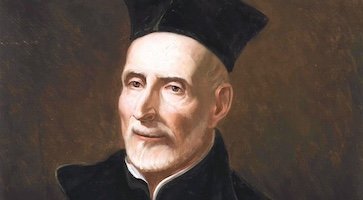
Saint Joseph Calasanctius was born in Aragon in 1556 of a noble family, who gave him a very Christian education. When only five years old, he led a troop of children through the streets to find the devil and slay him. He became a priest, and was engaged in various reforms when he heard a voice saying, Go to Rome, Joseph and had a vision of many children who were being taught by him and by a company of Angels. When he reached the Holy City, his heart was moved by the vice and ignorance of the children of the poor, and he saw clearly that ignorance was the mother of vice and misery. Sunday catechism lessons were insufficient to remedy the situation. When he could find no collaboration under the existing frameworks, the children's need mastered his profound humility, and he undertook to found personally the Order of Clerks Regular of the Pious Schools, or the Piarists.
The parish priest of Saint Dorothy's Church in Trastevere, placed two rooms at his disposition and assisted him in all things. Two other good priests joined the founders, and the school soon had several hundred children. He taught the children catechism, reading, writing and arithmetic, and he himself provided all that was necessary for the program of instruction, receiving nothing in payment. Other schools were organized elsewhere in Rome, and the holy priest had scholars of every rank under his care. Each lesson began with prayer. Every half-hour, piety was renewed by acts of faith, hope, and charity. At the end of the day the children were escorted home by the masters, so as to escape all harm on the way. An annual retreat was given them during the Easter season. Clement XIII approved the new Congregation, which became an Order with the ordinary three vows, and in addition a definitive commitment to the instruction of the indigent.
Enemies arose against Saint Joseph, however, from among his own subjects, thus imposing on the Founder the most sorrowful of all crosses, resembling that of the Lord Himself. They accused him to the Holy Office, and at the age of eighty-six he was led through the streets to prison. The Order was reduced to a simple Congregation under local episcopal authority and was not restored to its former privileges until after the Saint's death. Yet he died full of hope. My work, he said, was done solely for the love of God. Saint Joseph is the first to have given gratuitous instruction to the children of the people. Religion can claim for its own the instruction of the poor, both by birthright and by right of conquest. The body of Saint Joseph Calasanctius reposes in the church of Saint Pantaleon in Rome. He was canonized by Clement XIII in 1767.
Reflection: My children, said the Curé of Ars, I often think that most of the Christians who are lost are lost for want of instruction; they do not know their religion well.
Les Petits Bollandistes: Vies des Saints, by Msgr. Paul Guérin (Bloud et Barral: Paris, 1882), Vol. 10; Little Pictorial Lives of the Saints, a compilation based on Butler's Lives of the Saints and other sources by John Gilmary Shea (Benziger Brothers: New York, 1894).
LAST-MODIFIED:20240817T155915Z SEQUENCE:58214869 X-ACCESS:1 X-HITS:103 X-COLOR:f0b80e X-SHOW-END-TIME:1 END:VEVENT BEGIN:VEVENT DTSTART;VALUE=DATE:20240828 DTEND;VALUE=DATE:20240829 UID:E1D0DEBC-90A2-4318-BA12-00DD5A9E02E3 SUMMARY:St. Hermes CREATED:20221013T211126Z DTSTAMP:20221013T211126Z URL:https://www.stpaulsweymouth.org/component/dpcalendar/event/1958?calid=13 DESCRIPTION:St. Hermes, Martyr\N\NSt. Hermes was a martyr with companions in Rome, who all suffered at the hands of a judge named Aurelian. They are mentioned in the Acts of Pope St. Alexander I . Butler's Lives of the Saints writes of him: "He suffered at Rome in the persecution of the emperor Adrian about the year 132. His tomb on the Salarian Way was ornamented by Pope Pelagius II. and his name is famous in the ancient western Martyrologies." Let us invoke his patronage today.Collect:O God, it was Your strength that kept the blessed martyr Hermes unfaltering under suffering. May we follow his example in spurning earthly riches for love of You and in fearing no worldly harm. Through Christ our Lord. Amen. X-ALT-DESC;FMTTYPE=text/html:St. Hermes, Martyr
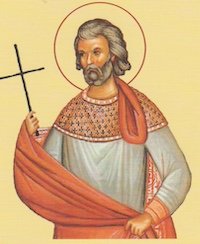
St. Hermes was a martyr with companions in Rome, who all suffered at the hands of a judge named Aurelian. They are mentioned in the Acts of Pope St. Alexander I . Butler's Lives of the Saints writes of him: "He suffered at Rome in the persecution of the emperor Adrian about the year 132. His tomb on the Salarian Way was ornamented by Pope Pelagius II. and his name is famous in the ancient western Martyrologies." Let us invoke his patronage today.
Collect:
O God, it was Your strength that kept the blessed martyr Hermes unfaltering under suffering. May we follow his example in spurning earthly riches for love of You and in fearing no worldly harm. Through Christ our Lord. Amen.
St. Augustine of Hippo, Bishop, Confessor, and Doctor of the Church
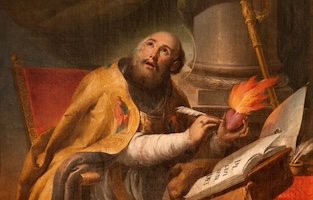
Saint Augustine was born in 354 at Tagaste in Africa. He was brought up in the Christian faith but did not receive baptism, result of the practice, common in the first centuries, of deferring it until adulthood. An ambitious schoolboy of brilliant talents and violent passions, he early lost both his faith and his innocence. He pursued with ardor the study of philosophy. He taught grammar, rhetoric and literature for nine years in his native town of Tagaste, and in Carthage. He persisted in his irregular life and doctrinal errors until he was thirty-two. Then one day, stung to the heart by the account of some sudden conversions, he cried out, The unlearned rise and storm heaven, and we, with all our learning, for lack of courage lie inert! The great heart of this future bishop was already evident.
When as a genial student of rhetoric, he was at Milan, where Saint Ambrose was bishop, Augustine tells us later in his autobiography, the Catholic faith of his childhood regained possession of his intellect, but he could not as yet resolve to break the chains of bad habit. His mother helped him to separate from the mother of his son, Adeodatus, who had died as a young man; and she, after this painful separation, retired for life to a convent, regretting that she had long enchained this soul of predilection. Augustine's mother, Saint Monica, died soon afterwards.
Urged also by a friend who had decided to adopt a celibate life, Saint Augustine took up a book of the Holy Scriptures, and read the Epistles of Saint Paul in a new light. A long and terrible conflict ensued, but with the help of grace the battle was won; he went to consult a priest and received baptism, returned to Africa and gave all he had to the poor. At Hippo, where he settled, he was consecrated bishop in 395. For thirty-five years he was the center of ecclesiastical life in Africa, and the Church's strongest champion against heresy. His writings, which compose many volumes, have been everywhere accepted as a major source of both Christian spirituality and theological speculation. The great Doctor died, deeply regretted by the entire Christian world, in 430.
Reflection: Read the lives of the Saints, and you will find yourself living amid company to whose standards you will be forced to raise, at least in some measure, your own in your daily life.
Les Petits Bollandistes: Vies des Saints, by Msgr. Paul Guérin (Bloud et Barral: Paris, 1882), Vol. 10; Little Pictorial Lives of the Saints, a compilation based on Butler's Lives of the Saints and other sources by John Gilmary Shea (Benziger Brothers: New York, 1894)
LAST-MODIFIED:20240824T114554Z SEQUENCE:58804468 X-ACCESS:1 X-HITS:44 X-COLOR:f0b80e X-SHOW-END-TIME:1 END:VEVENT BEGIN:VEVENT DTSTART;VALUE=DATE:20240829 DTEND;VALUE=DATE:20240830 UID:AE4729A9-EBA9-433C-B017-612911986A68 SUMMARY:St. Sabina CREATED:20221013T211126Z DTSTAMP:20221013T211126Z URL:https://www.stpaulsweymouth.org/component/dpcalendar/event/1962?calid=13 DESCRIPTION:St. Sabina, Martyr\N\NSt. Sabina (d. 126 A.D.) was a wealthy Roman noblewoman, a widow and the daughter of Herod Metallarius. She was converted to Christianity by her virtuous female slave, St. Serapia, a devout Christian from Antioch who entered into voluntary slavery with Sabina after forsaking marriage and consecrating herself to Christ. Following her conversion, St. Sabina’s home became a secret meeting place for Christians where the sacraments were celebrated. St. Serapia was discovered to be a Christian and was burned alive and beheaded. St. Sabina recovered Serapia’s body and buried it in a tomb. Within the same year St. Sabina was also killed for her faith and buried alongside Serapia. After Christianity was legalized in the 5th century, a basilica was built over St. Sabina’s home on Aventine Hill. Originally dedicated to both saints, it is known today as Santa Sabina, one of Rome’s most ancient churches.\NSt. Sabina of Rome, pray for us! X-ALT-DESC;FMTTYPE=text/html:St. Sabina, Martyr
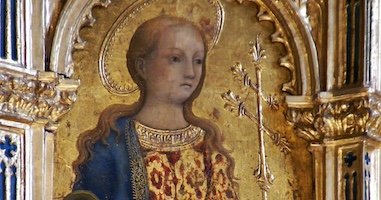
St. Sabina (d. 126 A.D.) was a wealthy Roman noblewoman, a widow and the daughter of Herod Metallarius. She was converted to Christianity by her virtuous female slave, St. Serapia, a devout Christian from Antioch who entered into voluntary slavery with Sabina after forsaking marriage and consecrating herself to Christ. Following her conversion, St. Sabina’s home became a secret meeting place for Christians where the sacraments were celebrated. St. Serapia was discovered to be a Christian and was burned alive and beheaded. St. Sabina recovered Serapia’s body and buried it in a tomb. Within the same year St. Sabina was also killed for her faith and buried alongside Serapia. After Christianity was legalized in the 5th century, a basilica was built over St. Sabina’s home on Aventine Hill. Originally dedicated to both saints, it is known today as Santa Sabina, one of Rome’s most ancient churches.
St. Sabina of Rome, pray for us!
LAST-MODIFIED:20240824T114834Z SEQUENCE:58804628 X-ACCESS:1 X-HITS:158 X-COLOR:f0b80e X-SHOW-END-TIME:1 END:VEVENT BEGIN:VEVENT DTSTART;VALUE=DATE:20240829 DTEND;VALUE=DATE:20240830 UID:22C2B5C3-6A09-44CF-A9FF-82B0EE9E10B7 SUMMARY:The Beheading of St. John the Baptist CREATED:20221013T211126Z DTSTAMP:20221013T211126Z URL:https://www.stpaulsweymouth.org/component/dpcalendar/event/1964?calid=13 DESCRIPTION:The Beheading of St. John the Baptist, Martyr\N\NSaint John the Baptist was called by God to be the precursor of His divine Son. In order to preserve his innocence spotless, and to improve upon the extraordinary graces which he had received in his earliest infancy, he was directed by the Holy Spirit to lead an austere and contemplative life in the wilderness. There he devoted himself to the continuous exercise of devout prayer and penance.\NWhen Saint John was thirty years old, the faithful minister of the Lord began to discharge his mission. Clothed with the garments of penance, he announced to all men the obligation weighing upon them of washing away their iniquities with the tears of sincere compunction. He proclaimed the Messiah, who was of his own age but whom he had never seen, when one day Jesus came to be baptized by him in the Jordan. Saint John was received by the poor folk as the true herald of the Most High God, and his voice was, as it were, a trumpet sounding from heaven to summon all men to avert the divine judgments. Souls were exhorted by him to prepare themselves to reap the benefit of the mercy offered them.\NWhen the tetrarch Herod Antipas, in defiance of all laws divine and human, married Herodias, the wife of his brother Philip who was yet living, Saint John the Baptist boldly reprimanded the tetrarch and his accomplice for so scandalous an adultery. Herod, motivated by his lust and his anger, cast the Saint into prison. About a year after Saint John had been made a prisoner, Herod gave a splendid entertainment to the official world of Galilee. Salome, a daughter of Herodias by her lawful husband, pleased Herod by her dancing, to the point that he made her the foolish promise of granting whatever she might ask. Salome consulted with her mother as to what to ask, and that immoral woman instructed her daughter to demand the death of John the Baptist, and that the head of the prisoner should be immediately brought to her on a platter. This barbaric request startled the tyrant himself; but governed by human respect he assented and sent a soldier of his guard to behead the Saint in prison. Thus died the great forerunner of our blessed Saviour, some two years after his entrance upon his public ministry, and a year before the death of the One he announced.\NReflection: All the signal graces with which Saint John was favored sprang from his humility; in that virtue all his other virtues were founded. If we desire to form ourselves to solid virtue, we must, above all things, labor to lay the same deep foundation.\NLittle Pictorial Lives of the Saints, a compilation based on Butler's Lives of the Saints and other sources by John Gilmary Shea (Benziger Brothers: New York, 1894) X-ALT-DESC;FMTTYPE=text/html:The Beheading of St. John the Baptist, Martyr
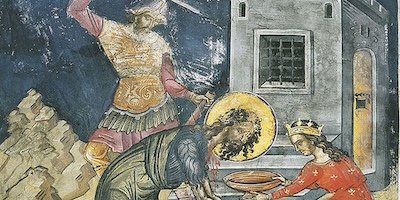
Saint John the Baptist was called by God to be the precursor of His divine Son. In order to preserve his innocence spotless, and to improve upon the extraordinary graces which he had received in his earliest infancy, he was directed by the Holy Spirit to lead an austere and contemplative life in the wilderness. There he devoted himself to the continuous exercise of devout prayer and penance.
When Saint John was thirty years old, the faithful minister of the Lord began to discharge his mission. Clothed with the garments of penance, he announced to all men the obligation weighing upon them of washing away their iniquities with the tears of sincere compunction. He proclaimed the Messiah, who was of his own age but whom he had never seen, when one day Jesus came to be baptized by him in the Jordan. Saint John was received by the poor folk as the true herald of the Most High God, and his voice was, as it were, a trumpet sounding from heaven to summon all men to avert the divine judgments. Souls were exhorted by him to prepare themselves to reap the benefit of the mercy offered them.
When the tetrarch Herod Antipas, in defiance of all laws divine and human, married Herodias, the wife of his brother Philip who was yet living, Saint John the Baptist boldly reprimanded the tetrarch and his accomplice for so scandalous an adultery. Herod, motivated by his lust and his anger, cast the Saint into prison. About a year after Saint John had been made a prisoner, Herod gave a splendid entertainment to the official world of Galilee. Salome, a daughter of Herodias by her lawful husband, pleased Herod by her dancing, to the point that he made her the foolish promise of granting whatever she might ask. Salome consulted with her mother as to what to ask, and that immoral woman instructed her daughter to demand the death of John the Baptist, and that the head of the prisoner should be immediately brought to her on a platter. This barbaric request startled the tyrant himself; but governed by human respect he assented and sent a soldier of his guard to behead the Saint in prison. Thus died the great forerunner of our blessed Saviour, some two years after his entrance upon his public ministry, and a year before the death of the One he announced.
Reflection: All the signal graces with which Saint John was favored sprang from his humility; in that virtue all his other virtues were founded. If we desire to form ourselves to solid virtue, we must, above all things, labor to lay the same deep foundation.
Little Pictorial Lives of the Saints, a compilation based on Butler's Lives of the Saints and other sources by John Gilmary Shea (Benziger Brothers: New York, 1894)
LAST-MODIFIED:20240824T115111Z SEQUENCE:58804785 X-ACCESS:1 X-HITS:169 X-COLOR:f0b80e X-SHOW-END-TIME:1 END:VEVENT BEGIN:VEVENT DTSTART;VALUE=DATE:20240830 DTEND;VALUE=DATE:20240831 UID:6B8132B4-BF7A-44C8-BC95-96E7649AB824 SUMMARY:Sts. Felix priest and Adauctus, Martyrs CREATED:20221013T211126Z DTSTAMP:20221013T211126Z URL:https://www.stpaulsweymouth.org/component/dpcalendar/event/1966?calid=13 DESCRIPTION:Sts. Felix priest and Adauctus, Martyrs\N\NSaints Felix Priest and Martyr and Saint Adauctus – both dying in c. 303 by beheading in Rome. Patronages – of Montecalvo Irpino, Italy and Felice del Benaco, Italy.\NThe Roman Martyrology reads today: “At Rome on the Ostian Way the Martyrdom of the blessed Priest, Felix, under the Emperor Diocletian and Maximian. After being racked, he was sentenced to death and as they led him to execution, he met a man who spontaneously declared himself a Christian and was, forthwith, beheaded with the holy Felix. The Christians, not knowing his name, called him Adauctus – the Latin word meaning “added to” because he was added to St Felix and shared his Crown.”\NThe Priest Felix, meaning the “happy one,” was apprehended in Rome at the beginning of the Diocletian persecution and underwent cruel tortures with admirable constancy. Eventually he was condemned to beheading. En route to his place of execution, his coming martyrdom so excited a stranger that, the bystander was unable to contain himself. He cried out, “I too follow and believe the same commandments which this man professes; I too confess the same Jesus Christ and, it is my desire to also lay down my life in this cause.” The magistrates seized him when they heard this and the two were decapitated side by side.\NBoth were reverently buried in the Cemetery of Commodilla on the Ostian Way. Later Pope Saint Damasus had their Tomb restored and added the inscription below. Pope Saint Siricius added another Epitaph. These Martyrs are commemorated in the Sacramentary of Saint Gregory the Great and many ancient calendars, including the Deposito Martyrum (354). Their Church in Rome, built over their graves, in the Catacomb of Commodilla, near the Basilica of Saint Paul Outside the Walls and restored by Pope Leo III, was discovered about three hundred years ago and again unearthed in 1905\N“Felix, truly and rightly named, for you were happy to have confessed Christ and looked for the Kingdom of Heaven, despising the prince of this world and departing with your faith unimpaired. Adauctus, too, another conqueror, reveals, my brothers, the most precious faith which hastened his journey to Heaven.” – The Inscription on the Tomb of Saints Felix and Adauctus. X-ALT-DESC;FMTTYPE=text/html:Sts. Felix priest and Adauctus, Martyrs
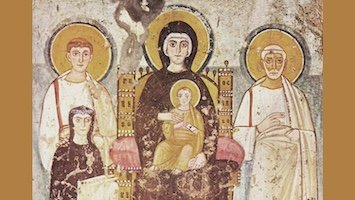
Saints Felix Priest and Martyr and Saint Adauctus – both dying in c. 303 by beheading in Rome. Patronages – of Montecalvo Irpino, Italy and Felice del Benaco, Italy.
The Roman Martyrology reads today: “At Rome on the Ostian Way the Martyrdom of the blessed Priest, Felix, under the Emperor Diocletian and Maximian. After being racked, he was sentenced to death and as they led him to execution, he met a man who spontaneously declared himself a Christian and was, forthwith, beheaded with the holy Felix. The Christians, not knowing his name, called him Adauctus – the Latin word meaning “added to” because he was added to St Felix and shared his Crown.”
The Priest Felix, meaning the “happy one,” was apprehended in Rome at the beginning of the Diocletian persecution and underwent cruel tortures with admirable constancy. Eventually he was condemned to beheading. En route to his place of execution, his coming martyrdom so excited a stranger that, the bystander was unable to contain himself. He cried out, “I too follow and believe the same commandments which this man professes; I too confess the same Jesus Christ and, it is my desire to also lay down my life in this cause.” The magistrates seized him when they heard this and the two were decapitated side by side.
Both were reverently buried in the Cemetery of Commodilla on the Ostian Way. Later Pope Saint Damasus had their Tomb restored and added the inscription below. Pope Saint Siricius added another Epitaph. These Martyrs are commemorated in the Sacramentary of Saint Gregory the Great and many ancient calendars, including the Deposito Martyrum (354). Their Church in Rome, built over their graves, in the Catacomb of Commodilla, near the Basilica of Saint Paul Outside the Walls and restored by Pope Leo III, was discovered about three hundred years ago and again unearthed in 1905
“Felix, truly and rightly named, for you were happy to have confessed Christ and looked for the Kingdom of Heaven, despising the prince of this world and departing with your faith unimpaired. Adauctus, too, another conqueror, reveals, my brothers, the most precious faith which hastened his journey to Heaven.” – The Inscription on the Tomb of Saints Felix and Adauctus.
LAST-MODIFIED:20240824T115845Z SEQUENCE:58805239 X-ACCESS:1 X-HITS:29 X-COLOR:f0b80e X-SHOW-END-TIME:1 END:VEVENT BEGIN:VEVENT DTSTART;VALUE=DATE:20240830 DTEND;VALUE=DATE:20240831 UID:7661A7AE-D32E-49AF-99F9-BB133C358927 SUMMARY:St. Rose CREATED:20221013T211126Z DTSTAMP:20221013T211126Z URL:https://www.stpaulsweymouth.org/component/dpcalendar/event/1968?calid=13 DESCRIPTION:St. Rose of Lima, Virgin\N\NSaint Rose was beatified in 1667 by Pope Clement IX, and declared saint in 1671 by Pope Clement X. She was the first person born in the Americas to be declared a saint by the Church.\NShe must be rather busy in heaven as she is the patron saint of embroiderers, gardeners, florists, people who are harassed for their piety, and those suffering family problems. She is also the patroness of the Americas, the indigenous people of the Americas, and of Peru, India, and the Philippines.\NRosa was born to parents of Spanish descent in Lima, Peru, at a time when South America was only in its first century of evangelization. Christian faith was not yet deeply rooted in most people’s hearts and souls. When her parents fell into financial trouble, she worked in the garden all day and sewed at night.\NOne characteristic St. Rosa shares with every other saints is the suffering of opposition. Ten years of struggle against her parents began when they tried to make Rose marry. Her mother refused to allow her daughter to pursue her greatest desire and call: religious life. Out of obedience, she stayed at home but she lived as she would have in a convent. Her father provided her with a room to herself, where she spent hours in prayer and was said to sleep only two hours a night so as to have more time for prayer. Rosa’s life became characterised by solitude, prayer, and penance. She chose St. Catherine of Siena as a model — indeed, just as St. Catherine, Rosa, too, joined the Third Order of Saint Dominic — for which she was ruthlessly ridiculed by her family and friends.\NRosa’s beauty was very often noted and she had quite a few suitors, all of them encouraged by her mother. To deter them, Rosa cut off her hair and rubbed her face with hot pepper to produce disfiguring blotches.\NThe other characteristic St. Rosa shared with the saints was mortification — to an extent which we would find extreme today. We have already mentioned how she disfigured her skin and face with hot peppers. Later, she wore a chain of spikes around her waist and a thick circlet of silver on her head, studded on the inside, like a crown of thorns. She also performed other secret and often painful penances, slept on a hard floor, fasted multiple times weekly, and permanently abstained from eating meat.\NThe centre of her spiritual life was the Eucharist. St. Rose attended Mass daily just as she spent time adoring the Blessed Sacrament every day.\NThe saints have so great a love of God that what seems bizarre to us, and is indeed sometimes imprudent or excessive, for them is simply a logical carrying out of a conviction that anything that might endanger a loving relationship with God must be rooted out. For St. Rose it was her beauty, so often admired by others.\NWe might be puzzled by such excessive mortification but we must remember the greatest thing about St. Rose: a love of God so ardent that it withstood ridicule from without, violent temptation from within, and lengthy periods of sickness, like asthma and arthritis. Even when she had to pass lengthy periods of spiritual dryness, she persevered most faithfully in prayer.\NAlso, it is so very easy to dismiss excessive penances of the saints as the expression of a certain culture or temperament. But a woman wearing a crown of thorns may at least prod our consciences. We enjoy the most comfort-oriented life in human history. We eat too much, drink too much, use a million gadgets, fill our eyes and ears with everything imaginable. Commerce thrives on creating useless needs on which to spend our money. In pursuing some false idea of freedom, we have become slaves of so many things and ideologies, and of our own passions and desires. Are we still willing to discipline ourselves to root out temptation and sin? Are we heaven-orientated? Do we have our priorities right? Is God at the centre of our lives and hearts and are we ready/willing to fight to keep him there?\NFinally, another characteristic Rose shared with God’s saints was charity. In her room she cared for homeless children, the elderly, and the sick. She was taught to make herbal medicines and took great delight in distributing these remedies to long lines of the sick poor of Lima. This was the beginning of social services in Peru.\NPerhaps the most spectacular of Rose’s miracles occurred when Dutch pirates invaded Lima’s harbour. They intended not only to loot the city but also to desecrate the churches. In the church of Santo Domingo, Rose stirred all those who were there, seeking refuge, to prayer. As pirates burst into the church, they were confronted with the terrifying spectacle of a young girl ablaze with light, holding a monstrance with the Blessed Sacrament. They turned away and fled to their ships, which sailed away.\NSt. Rose died of a terrible fever and paralysis in 1617, at the age of 31. It is said that at the moment of her death, the city of Lima smelled of roses and later, at her funeral, rose petals fell from the sky.\NHer funeral was a major event, the whole city turning out and the most prominent citizens taking turns carrying her coffin. X-ALT-DESC;FMTTYPE=text/html:St. Rose of Lima, Virgin
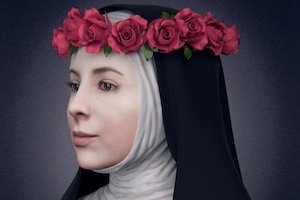
Saint Rose was beatified in 1667 by Pope Clement IX, and declared saint in 1671 by Pope Clement X. She was the first person born in the Americas to be declared a saint by the Church.
She must be rather busy in heaven as she is the patron saint of embroiderers, gardeners, florists, people who are harassed for their piety, and those suffering family problems. She is also the patroness of the Americas, the indigenous people of the Americas, and of Peru, India, and the Philippines.
Rosa was born to parents of Spanish descent in Lima, Peru, at a time when South America was only in its first century of evangelization. Christian faith was not yet deeply rooted in most people’s hearts and souls. When her parents fell into financial trouble, she worked in the garden all day and sewed at night.
One characteristic St. Rosa shares with every other saints is the suffering of opposition. Ten years of struggle against her parents began when they tried to make Rose marry. Her mother refused to allow her daughter to pursue her greatest desire and call: religious life. Out of obedience, she stayed at home but she lived as she would have in a convent. Her father provided her with a room to herself, where she spent hours in prayer and was said to sleep only two hours a night so as to have more time for prayer. Rosa’s life became characterised by solitude, prayer, and penance. She chose St. Catherine of Siena as a model — indeed, just as St. Catherine, Rosa, too, joined the Third Order of Saint Dominic — for which she was ruthlessly ridiculed by her family and friends.
Rosa’s beauty was very often noted and she had quite a few suitors, all of them encouraged by her mother. To deter them, Rosa cut off her hair and rubbed her face with hot pepper to produce disfiguring blotches.
The other characteristic St. Rosa shared with the saints was mortification — to an extent which we would find extreme today. We have already mentioned how she disfigured her skin and face with hot peppers. Later, she wore a chain of spikes around her waist and a thick circlet of silver on her head, studded on the inside, like a crown of thorns. She also performed other secret and often painful penances, slept on a hard floor, fasted multiple times weekly, and permanently abstained from eating meat.
The centre of her spiritual life was the Eucharist. St. Rose attended Mass daily just as she spent time adoring the Blessed Sacrament every day.
The saints have so great a love of God that what seems bizarre to us, and is indeed sometimes imprudent or excessive, for them is simply a logical carrying out of a conviction that anything that might endanger a loving relationship with God must be rooted out. For St. Rose it was her beauty, so often admired by others.
We might be puzzled by such excessive mortification but we must remember the greatest thing about St. Rose: a love of God so ardent that it withstood ridicule from without, violent temptation from within, and lengthy periods of sickness, like asthma and arthritis. Even when she had to pass lengthy periods of spiritual dryness, she persevered most faithfully in prayer.
Also, it is so very easy to dismiss excessive penances of the saints as the expression of a certain culture or temperament. But a woman wearing a crown of thorns may at least prod our consciences. We enjoy the most comfort-oriented life in human history. We eat too much, drink too much, use a million gadgets, fill our eyes and ears with everything imaginable. Commerce thrives on creating useless needs on which to spend our money. In pursuing some false idea of freedom, we have become slaves of so many things and ideologies, and of our own passions and desires. Are we still willing to discipline ourselves to root out temptation and sin? Are we heaven-orientated? Do we have our priorities right? Is God at the centre of our lives and hearts and are we ready/willing to fight to keep him there?
Finally, another characteristic Rose shared with God’s saints was charity. In her room she cared for homeless children, the elderly, and the sick. She was taught to make herbal medicines and took great delight in distributing these remedies to long lines of the sick poor of Lima. This was the beginning of social services in Peru.
Perhaps the most spectacular of Rose’s miracles occurred when Dutch pirates invaded Lima’s harbour. They intended not only to loot the city but also to desecrate the churches. In the church of Santo Domingo, Rose stirred all those who were there, seeking refuge, to prayer. As pirates burst into the church, they were confronted with the terrifying spectacle of a young girl ablaze with light, holding a monstrance with the Blessed Sacrament. They turned away and fled to their ships, which sailed away.
St. Rose died of a terrible fever and paralysis in 1617, at the age of 31. It is said that at the moment of her death, the city of Lima smelled of roses and later, at her funeral, rose petals fell from the sky.
Her funeral was a major event, the whole city turning out and the most prominent citizens taking turns carrying her coffin.
LAST-MODIFIED:20240824T120127Z SEQUENCE:58805401 X-ACCESS:1 X-HITS:113 X-COLOR:f0b80e X-SHOW-END-TIME:1 END:VEVENT BEGIN:VEVENT DTSTART;VALUE=DATE:20240831 DTEND;VALUE=DATE:20240901 UID:E5D66F9A-3277-4260-B31F-282D4935E092 SUMMARY:St. Raymund CREATED:20221013T211126Z DTSTAMP:20221013T211126Z URL:https://www.stpaulsweymouth.org/component/dpcalendar/event/1970?calid=13 DESCRIPTION:St. Raymund Nonnatus, Confessor\N\NSaint Raymund Nonnatus was born in Catalonia, Spain, in the year 1204. Motherless from infancy, in his childhood he seemed to find pleasure only in his devotions and serious duties. He chose the Blessed Virgin for his mother, almost as soon as the light of reason made this choice available to him. His father, perceiving in him an inclination to the religious state and unwilling to give up his son, took him from school and sent him to take care of a farm which he owned in the country. Raymund readily obeyed, and, in order to enjoy holy solitude, kept the sheep himself and spent his time in the mountains and forests in holy meditation and prayer. He found there an ancient hermitage containing a portrait of his Blessed Mother, and made this his asylum. There the devil found him and, assuming the disguise of a shepherd, attempted to turn him away from his devotions; but Raymund turned his back on his visitor and called Mary to his assistance. The sole name of the Mother of God caused the demon to disappear, and the hermit prostrated himself and blessed Her for Her assistance.\NSome time afterward, he joined the new Order of Our Lady of Mercy for the redemption of captives, and was admitted to profession at Barcelona by the holy founder, Saint Peter Nolasco. Within two or three years after his profession, he was sent into Barbary with a considerable sum of money; in Algiers he purchased the liberty of a great number of slaves. When all his treasure was exhausted, he gave himself up as a hostage for the ransom of others, according to the Rule of his Order. This magnanimous sacrifice served only to exasperate the Moslems, who treated him with uncommon barbarity, until they began to fear that if he died in their hands, they would lose the ransom which had been asked for his deliverance. A crier announced in the streets that anyone who mistreated him would answer for it, if he died.\NTherefore he was permitted to go abroad in the streets, which liberty he utilized to comfort and encourage the Christians in chains, and to convert and baptize certain Moslems. Learning of this, their pasha, furious, condemned him to be impaled, but his barbarous sentence was commuted at the insistence of those who had an interest in the ransom payments for the slaves he was replacing. He underwent instead a cruel bastinade, but that torment did not daunt his courage. So long as he saw souls in danger of perishing eternally, he thought he had yet done nothing.\NSaint Raymund had no more money to employ in releasing poor captives; and to converse with those of the local beliefs on the subject of religion meant death. He enjoyed sufficient liberty nonetheless to continue the same endeavors, and he did so, hoping either for success or martyrdom. The governor, enraged, ordered our Saint to have his lips pierced and padlocked, then to be imprisoned until his ransom would be brought by members of his Order. He remained in jail for eight months before his brethren arrived with the required sum, sent by Saint Peter Nolasco.\NUpon his return to Spain, he was nominated Cardinal by Pope Gregory IX, and the Pope called him to Rome. The Saint was on his way, but had gone no farther than Cardona when he was seized with a violent fever. He died on August 31, 1240, in his thirty-seventh year. His face in death became beautiful and radiant like that of Moses when he descended from the mountaintop, where he had spoken with God. A heavenly fragrance surrounded his body, and cures were effected on behalf of those who came and touched him.\NReflection: This magnanimous Saint gave not only his substance but his liberty, and exposed himself to the most cruel torments and death for the redemption of captives and the salvation of souls. But we, alas! do we not, merely to gratify our prodigality, vanity, or avarice, refuse to give even the superfluity of our possessions to the poor, who for want of it are perishing with cold and hunger? Let us not forget the terrible Judgment of the Last Day, awaiting those who neglect their brethren in need. (Cf. Matt. 25:31-46) X-ALT-DESC;FMTTYPE=text/html:St. Raymund Nonnatus, Confessor
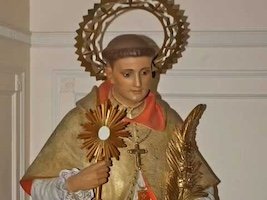
Saint Raymund Nonnatus was born in Catalonia, Spain, in the year 1204. Motherless from infancy, in his childhood he seemed to find pleasure only in his devotions and serious duties. He chose the Blessed Virgin for his mother, almost as soon as the light of reason made this choice available to him. His father, perceiving in him an inclination to the religious state and unwilling to give up his son, took him from school and sent him to take care of a farm which he owned in the country. Raymund readily obeyed, and, in order to enjoy holy solitude, kept the sheep himself and spent his time in the mountains and forests in holy meditation and prayer. He found there an ancient hermitage containing a portrait of his Blessed Mother, and made this his asylum. There the devil found him and, assuming the disguise of a shepherd, attempted to turn him away from his devotions; but Raymund turned his back on his visitor and called Mary to his assistance. The sole name of the Mother of God caused the demon to disappear, and the hermit prostrated himself and blessed Her for Her assistance.
Some time afterward, he joined the new Order of Our Lady of Mercy for the redemption of captives, and was admitted to profession at Barcelona by the holy founder, Saint Peter Nolasco. Within two or three years after his profession, he was sent into Barbary with a considerable sum of money; in Algiers he purchased the liberty of a great number of slaves. When all his treasure was exhausted, he gave himself up as a hostage for the ransom of others, according to the Rule of his Order. This magnanimous sacrifice served only to exasperate the Moslems, who treated him with uncommon barbarity, until they began to fear that if he died in their hands, they would lose the ransom which had been asked for his deliverance. A crier announced in the streets that anyone who mistreated him would answer for it, if he died.
Therefore he was permitted to go abroad in the streets, which liberty he utilized to comfort and encourage the Christians in chains, and to convert and baptize certain Moslems. Learning of this, their pasha, furious, condemned him to be impaled, but his barbarous sentence was commuted at the insistence of those who had an interest in the ransom payments for the slaves he was replacing. He underwent instead a cruel bastinade, but that torment did not daunt his courage. So long as he saw souls in danger of perishing eternally, he thought he had yet done nothing.
Saint Raymund had no more money to employ in releasing poor captives; and to converse with those of the local beliefs on the subject of religion meant death. He enjoyed sufficient liberty nonetheless to continue the same endeavors, and he did so, hoping either for success or martyrdom. The governor, enraged, ordered our Saint to have his lips pierced and padlocked, then to be imprisoned until his ransom would be brought by members of his Order. He remained in jail for eight months before his brethren arrived with the required sum, sent by Saint Peter Nolasco.
Upon his return to Spain, he was nominated Cardinal by Pope Gregory IX, and the Pope called him to Rome. The Saint was on his way, but had gone no farther than Cardona when he was seized with a violent fever. He died on August 31, 1240, in his thirty-seventh year. His face in death became beautiful and radiant like that of Moses when he descended from the mountaintop, where he had spoken with God. A heavenly fragrance surrounded his body, and cures were effected on behalf of those who came and touched him.
Reflection: This magnanimous Saint gave not only his substance but his liberty, and exposed himself to the most cruel torments and death for the redemption of captives and the salvation of souls. But we, alas! do we not, merely to gratify our prodigality, vanity, or avarice, refuse to give even the superfluity of our possessions to the poor, who for want of it are perishing with cold and hunger? Let us not forget the terrible Judgment of the Last Day, awaiting those who neglect their brethren in need. (Cf. Matt. 25:31-46)
LAST-MODIFIED:20240824T120430Z SEQUENCE:58805584 X-ACCESS:1 X-HITS:9 X-COLOR:f0b80e X-SHOW-END-TIME:1 END:VEVENT BEGIN:VEVENT DTSTART;VALUE=DATE:20240831 DTEND;VALUE=DATE:20240901 UID:8E3301C1-1F0D-4385-A68F-1D3749C1C15B SUMMARY:St. Cuthburga CREATED:20221013T211126Z DTSTAMP:20221013T211126Z URL:https://www.stpaulsweymouth.org/component/dpcalendar/event/1972?calid=13 DESCRIPTION:St. Cuthburga Abbess, Virgin\N\NSt. Cuthburga was the daughter of Prince Coenred, a second-cousin of Caedwalla, King of Wessex. Her brothers were St. Ine, King of Wessex and Ingild, great-great-grandfather of Egbert, the first King of the English, and direct ancestor of Alfred the Great. Her sisters were St. Cwenburga, Edburga and Tata. Caedwalla became a Christian, in AD 688, and went to Rome to be baptised, resigning the throne to Ine. Cuthburga married Aldfrith, King of Northumbria. He was the illegitimate son of Oswiu, King of Northumbria, and was educated among the monks of Iona. He was learned in the Scriptures and was a great friend of SS. Adomnan and Benedict Biscop. They were the parents of Osred, King of Northumbria, and probably of St. Osanna.\NAldfrith and Cuthburga eventually separated for religious motives. Cuthburga took the veil with her sister, St. Cwenburga, at Barking. This nunnery was famous for the zeal of the nuns in the study of sacred and classic literature; and together they became pupils of St. Hildelith, the second abbess. Ine, now King of Wessex, saw that his sisters had devoted themselves to the service of God and was impressed. Desiring to build a church for the good of his soul and the advantage of his people, he had a double monastery erected, between AD 700 and 705, for Cuthburga, at Wimborne in Dorset, near his own residence. Cuthburga was its first abbess. Cwenburga was a nun there with her.\NThe divided enclosure at Wimborne was rigorously enforced by Cuthburga and not even prelates were allowed into the nuns’ quarters. The saintly lady communicated with them through a little hatch. She was kindly to the brethren and sisters under her care, but austere to herself and assiduous in fasting and prayer. Her nunnery soon became the dominant of the two communities and was even more famous than Barking as a training-school for learned and active women. It was from here, in the next generation, that SS. Lioba, Walburga and others, at the call of St. Boniface, joined the great English apostle of Germany and helped in his grand mission. The abbey of Wimborne was destroyed by the Danes about the year AD 900 and, when afterwards restored, it was dedicated anew in the name of St. Cuthburga and given over to secular canons. St. Cuthburga’s chest, hollowed from a single piece of oak, was supposed to have survived the devastation and it is still pointed out in the North Aisle of the Minster. Her burial-place is said to be under the wall of the chancel.\NCOLLECT\NO God, Who didst teach blessed Cuthburga to leave the pomp of the world for the humble following of Thy cross, grant that, through her merits and intercession, we may learn to trample under foot the perishable delights of the world and in the embrace of Thy cross to overcome all things that oppose us. Who livest and reignest, with God the Father, in the unity of the Holy Ghost, God, Forever and ever. Amen X-ALT-DESC;FMTTYPE=text/html:St. Cuthburga Abbess, Virgin
St. Cuthburga was the daughter of Prince Coenred, a second-cousin of Caedwalla, King of Wessex. Her brothers were St. Ine, King of Wessex and Ingild, great-great-grandfather of Egbert, the first King of the English, and direct ancestor of Alfred the Great. Her sisters were St. Cwenburga, Edburga and Tata. Caedwalla became a Christian, in AD 688, and went to Rome to be baptised, resigning the throne to Ine. Cuthburga married Aldfrith, King of Northumbria. He was the illegitimate son of Oswiu, King of Northumbria, and was educated among the monks of Iona. He was learned in the Scriptures and was a great friend of SS. Adomnan and Benedict Biscop. They were the parents of Osred, King of Northumbria, and probably of St. Osanna.
Aldfrith and Cuthburga eventually separated for religious motives. Cuthburga took the veil with her sister, St. Cwenburga, at Barking. This nunnery was famous for the zeal of the nuns in the study of sacred and classic literature; and together they became pupils of St. Hildelith, the second abbess. Ine, now King of Wessex, saw that his sisters had devoted themselves to the service of God and was impressed. Desiring to build a church for the good of his soul and the advantage of his people, he had a double monastery erected, between AD 700 and 705, for Cuthburga, at Wimborne in Dorset, near his own residence. Cuthburga was its first abbess. Cwenburga was a nun there with her.
The divided enclosure at Wimborne was rigorously enforced by Cuthburga and not even prelates were allowed into the nuns’ quarters. The saintly lady communicated with them through a little hatch. She was kindly to the brethren and sisters under her care, but austere to herself and assiduous in fasting and prayer. Her nunnery soon became the dominant of the two communities and was even more famous than Barking as a training-school for learned and active women. It was from here, in the next generation, that SS. Lioba, Walburga and others, at the call of St. Boniface, joined the great English apostle of Germany and helped in his grand mission. The abbey of Wimborne was destroyed by the Danes about the year AD 900 and, when afterwards restored, it was dedicated anew in the name of St. Cuthburga and given over to secular canons. St. Cuthburga’s chest, hollowed from a single piece of oak, was supposed to have survived the devastation and it is still pointed out in the North Aisle of the Minster. Her burial-place is said to be under the wall of the chancel.
COLLECT
O God, Who didst teach blessed Cuthburga to leave the pomp of the world for the humble following of Thy cross, grant that, through her merits and intercession, we may learn to trample under foot the perishable delights of the world and in the embrace of Thy cross to overcome all things that oppose us. Who livest and reignest, with God the Father, in the unity of the Holy Ghost, God, Forever and ever. Amen
LAST-MODIFIED:20240824T120745Z SEQUENCE:58805779 X-ACCESS:1 X-HITS:72 X-COLOR:f0b80e X-SHOW-END-TIME:1 END:VEVENT BEGIN:VEVENT DTSTART;VALUE=DATE:20240831 DTEND;VALUE=DATE:20240901 UID:17E3B9A5-A749-4A54-B3B7-43BAD5317C7E SUMMARY:St. Aidan CREATED:20221013T211126Z DTSTAMP:20221013T211126Z URL:https://www.stpaulsweymouth.org/component/dpcalendar/event/1974?calid=13 DESCRIPTION:St. Aidan Bishop, Confessor\N\NAidan was an Irish monk from the monastery St.Columba had founded on the island of Iona. The Britons had been Christian before the Irish, since Britain, though not Ireland, was part of the Roman Empire. Some of the missionaries who first took the faith to Ireland were British: St.Patrick (the patron saint of Ireland) was the most famous but not the only one. But when the power of Rome declined the English (from North Germany) began to infiltrate into Britain and gradually turned it into England. These incoming English were pagans. Up here in the north the kingdom of Northumbria was largely created by the English warrior-leader Aethelfrith but when he was killed in battle (616AD) his children fled into exile and some of these children found their way to what is now South-West Scotland. Here they met the Irish monks of Iona and accepted the the Christian faith. Oswald, the second son of Aethelfrith, grew up determined to re-gain the throne of Northumbria and to let the pagans among his people hear about Christianity. In 633 he fought a successful battle and established himself as king, choosing Bamburgh, a natural outcrop of rock on the North-East coast, as his main fortress. He then invited the monks of Iona to send a mission and eventually Aidan arrived with 12 other monks and chose to settle on the island the English had renamed Lindisfarne.\NHere Aidan established an Irish-type monastery of wooden buildings: a small church, small, circular dwelling huts, perhaps one larger building for communal purposes and in time, workshops etc as needed. Here the monks lived a life of prayer, study and austerity (although in this Aidan was said to be moderate – by Irish standards!). From here they went out on mission. First they needed to learn the English language and their English king, Oswald, who had learnt Irish in his boyhood in exile, helped them. Then they went out, using Aidan’s only method as a missionary, which was to walk the lanes, talk to all the people he met and interest them in the faith if he could. His monks visited and revisited the villages where he sowed the seeds and in time local Christian communities were formed. One story tells that the king, worried that bishop Aidan would walk like a peasant, gave him a horse but Aidan gave it away to a beggar. He wanted to walk, to be on the same level as the people he met and no doubt to vary his approach when he discovered something of their background and attitudes.\NAidan had to ensure that his efforts did not die with himself and his Ionian monks. What was needed was an English leadership of the English church. He had to educate the next generation of leaders. Irish monks were very keen on Christian education, which required the new skills of book-learning, reading and writing and Latin – the language in which all the books they could obtain were written. Once the essentials of literacy had been grasped the expansion of mental horizons must have been amazing. Books could bridge the natural restrictions of time and space! They began with the 150 psalms (in Latin) and then went on to the four gospels (in Latin). These were the essentials; then they could master as much as their library offered and their minds could hold. Such education at this time could be obtained only in monastic schools. Aidan began with 12 boys, who of course would learn the practical work of being monks, priests and missionaries by observing and working with the older monks. It seems to have been a good system.\NThe monastery on the Island was for men and boys only. This was not true everywhere. As the Christian faith spread in England double monasteries became popular; under the rule of an Abbess monks and nuns, girls and boys, lived and worked in the same establishment, though not necessarily in close contact! But Lindisfarne was different in that it had been founded specifically to be the centre for mission. It would not have been appropriateto have nuns here, since they could not do the same work: public opinion at the time would not have understood or permitted women to walk the lanes and speak to people they did not know. Yet many of the nuns became very learned and their contribution to the success of the mission was great, for everywhere that Christianity spread books were required and many of these were copied by the nuns in their monasteries. Aidan himself had made sure that it was possible in Northumbria for women to become nuns if they so wished. He had “discovered” the woman who was to become the most famous Abbess of her day, Hild, who was to be in turn the Abbess of Hartlepool and Whitby. Her contribution to the church was great: at least five of her (male) students became bishops.\NAfter 16 years as bishop Aidan died at Bamburgh in 651AD. We do not know his age. What he had achieved may not have been clear to him at death but subsequent history showed the strong foundations and lasting success of his mission. The missionaries trained in his school went out and worked for the conversion of much of Anglo-Saxon England and beyond.\NCOLLECT\NGRANT, we beseech thee, Almighty God: that the devout observance of this festival of blessed Aidan, thy Confessor and Bishop, may be profitable unto us for our advancement in all godliness, and for the attainment of everlasting salvation. Through Jesus Christ, thy Son our Lord, Who liveth and reigneth with thee, in the unity of the Holy Ghost, ever one God, world without end. R. Amen. X-ALT-DESC;FMTTYPE=text/html:St. Aidan Bishop, Confessor
Aidan was an Irish monk from the monastery St.Columba had founded on the island of Iona. The Britons had been Christian before the Irish, since Britain, though not Ireland, was part of the Roman Empire. Some of the missionaries who first took the faith to Ireland were British: St.Patrick (the patron saint of Ireland) was the most famous but not the only one. But when the power of Rome declined the English (from North Germany) began to infiltrate into Britain and gradually turned it into England. These incoming English were pagans. Up here in the north the kingdom of Northumbria was largely created by the English warrior-leader Aethelfrith but when he was killed in battle (616AD) his children fled into exile and some of these children found their way to what is now South-West Scotland. Here they met the Irish monks of Iona and accepted the the Christian faith. Oswald, the second son of Aethelfrith, grew up determined to re-gain the throne of Northumbria and to let the pagans among his people hear about Christianity. In 633 he fought a successful battle and established himself as king, choosing Bamburgh, a natural outcrop of rock on the North-East coast, as his main fortress. He then invited the monks of Iona to send a mission and eventually Aidan arrived with 12 other monks and chose to settle on the island the English had renamed Lindisfarne.
Here Aidan established an Irish-type monastery of wooden buildings: a small church, small, circular dwelling huts, perhaps one larger building for communal purposes and in time, workshops etc as needed. Here the monks lived a life of prayer, study and austerity (although in this Aidan was said to be moderate – by Irish standards!). From here they went out on mission. First they needed to learn the English language and their English king, Oswald, who had learnt Irish in his boyhood in exile, helped them. Then they went out, using Aidan’s only method as a missionary, which was to walk the lanes, talk to all the people he met and interest them in the faith if he could. His monks visited and revisited the villages where he sowed the seeds and in time local Christian communities were formed. One story tells that the king, worried that bishop Aidan would walk like a peasant, gave him a horse but Aidan gave it away to a beggar. He wanted to walk, to be on the same level as the people he met and no doubt to vary his approach when he discovered something of their background and attitudes.
Aidan had to ensure that his efforts did not die with himself and his Ionian monks. What was needed was an English leadership of the English church. He had to educate the next generation of leaders. Irish monks were very keen on Christian education, which required the new skills of book-learning, reading and writing and Latin – the language in which all the books they could obtain were written. Once the essentials of literacy had been grasped the expansion of mental horizons must have been amazing. Books could bridge the natural restrictions of time and space! They began with the 150 psalms (in Latin) and then went on to the four gospels (in Latin). These were the essentials; then they could master as much as their library offered and their minds could hold. Such education at this time could be obtained only in monastic schools. Aidan began with 12 boys, who of course would learn the practical work of being monks, priests and missionaries by observing and working with the older monks. It seems to have been a good system.
The monastery on the Island was for men and boys only. This was not true everywhere. As the Christian faith spread in England double monasteries became popular; under the rule of an Abbess monks and nuns, girls and boys, lived and worked in the same establishment, though not necessarily in close contact! But Lindisfarne was different in that it had been founded specifically to be the centre for mission. It would not have been appropriateto have nuns here, since they could not do the same work: public opinion at the time would not have understood or permitted women to walk the lanes and speak to people they did not know. Yet many of the nuns became very learned and their contribution to the success of the mission was great, for everywhere that Christianity spread books were required and many of these were copied by the nuns in their monasteries. Aidan himself had made sure that it was possible in Northumbria for women to become nuns if they so wished. He had “discovered” the woman who was to become the most famous Abbess of her day, Hild, who was to be in turn the Abbess of Hartlepool and Whitby. Her contribution to the church was great: at least five of her (male) students became bishops.
After 16 years as bishop Aidan died at Bamburgh in 651AD. We do not know his age. What he had achieved may not have been clear to him at death but subsequent history showed the strong foundations and lasting success of his mission. The missionaries trained in his school went out and worked for the conversion of much of Anglo-Saxon England and beyond.
COLLECT
GRANT, we beseech thee, Almighty God: that the devout observance of this festival of blessed Aidan, thy Confessor and Bishop, may be profitable unto us for our advancement in all godliness, and for the attainment of everlasting salvation. Through Jesus Christ, thy Son our Lord, Who liveth and reigneth with thee, in the unity of the Holy Ghost, ever one God, world without end. R. Amen.
LAST-MODIFIED:20240824T121145Z SEQUENCE:58806019 X-ACCESS:1 X-HITS:68 X-COLOR:f0b80e X-SHOW-END-TIME:1 END:VEVENT BEGIN:VEVENT DTSTART;VALUE=DATE:20240901 DTEND;VALUE=DATE:20240902 UID:B4E6AE8C-C134-4C33-9B69-8E339F897B20 SUMMARY:Twelve Holy Brothers CREATED:20221013T211126Z DTSTAMP:20221013T211126Z URL:https://www.stpaulsweymouth.org/component/dpcalendar/event/1978?calid=13 DESCRIPTION:Twelve Holy Brothers, Martyrs\N\NAfricans by birth, these saints were martyred in various places in the third century under the Emperors Diocletian and Maximian. Four were beheaded in Potenza, Italy on August 27. Three were beheaded at Vanossa on August 28. The others were beheaded at Sentiana on September 1. They were brought together and enshrined at Benevento in 760. “Donatus, Felix, Arontius, Honoratus, Fortunatus, Sabinian, Septimius, Januarius, another Felix, Vitalis, Sator, and Repositus.” X-ALT-DESC;FMTTYPE=text/html:Twelve Holy Brothers, Martyrs
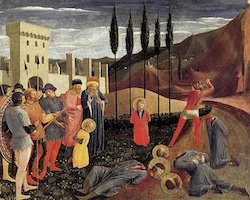
Africans by birth, these saints were martyred in various places in the third century under the Emperors Diocletian and Maximian. Four were beheaded in Potenza, Italy on August 27. Three were beheaded at Vanossa on August 28. The others were beheaded at Sentiana on September 1. They were brought together and enshrined at Benevento in 760. “Donatus, Felix, Arontius, Honoratus, Fortunatus, Sabinian, Septimius, Januarius, another Felix, Vitalis, Sator, and Repositus.”
LAST-MODIFIED:20240831T211622Z SEQUENCE:59443496 X-ACCESS:1 X-HITS:380 X-COLOR:f0b80e X-SHOW-END-TIME:1 END:VEVENT BEGIN:VEVENT DTSTART;VALUE=DATE:20240901 DTEND;VALUE=DATE:20240902 UID:F51F60F0-C4EE-4529-A15A-417E3678D97F SUMMARY:St. Giles CREATED:20221013T211126Z DTSTAMP:20221013T211126Z URL:https://www.stpaulsweymouth.org/component/dpcalendar/event/1976?calid=13 DESCRIPTION:St. Giles Abbot\N\NSaint Giles, whose name has been held in great veneration for many centuries in France and England, was born in the year 640 in Athens, and was of noble extraction. Certain remarkable works of medicine and poetry are attributed to him, but his knowledge was primarily that of the Saints.\NWhen as a young man he met a poor beggar who was sick and half-naked, he was moved with compassion and gave him his splendid tunic; the moment the beggar put it on, he found himself in perfect health. By this miracle, Giles understood how pleasing almsgiving is to God, and shortly afterwards, he distributed all his goods to the poor and entered upon a life of poverty, suffering and humility. But Jesus Christ did not let Himself be outdone in generosity, and soon miracles multiplied so greatly in his wake, that the admiration of the world surrounded him. It became impossible for him to profit in his own country from obscurity and retirement, which he desired above all else. He therefore went to France and chose for his hermitage the open spaces of the south, near the mouth of the Rhone.\NSoon he was known there, too, by the miracles his kindness brought down from heaven. He moved again, and this time Providence brought him near Saint Veredemus, a hermit of Greek origin like himself; then the two rejoiced in a common life of the love of God. For two years they remained together, until the invasion of their solitude caused Giles to migrate to a deep forest of southeastern France, in the diocese of Nimes.\NHe passed many years in this intense solitude, living on wild herbs or roots and clear water, and conversing only with God. He was nourished there by a doe of the forest. One day, being pursued by Visigoths hunting in the forests, she fled for refuge to the Saint and lay down at his feet. Moved to tears, he prayed God to spare the life of the innocent animal. An arrow the hunters had sent in her direction came and lodged in his hand, making a wound which would never heal. When the hunters found the animal there and saw the bleeding wound of the gentle hermit, they begged his pardon on their knees, and the chase was ended. The Visigoth king, hearing of this, came to visit this holy hermit, accompanied by the bishop, who afterwards ordained Giles a priest.\NThe reputation of the sanctity of Saint Giles increased constantly by his many miracles, which rendered his name famous throughout France. He was highly esteemed by the pious king, but could not be prevailed upon to leave his solitude. He accepted several disciples, however, and established excellent discipline in the monastery which the king built for them. Destroyed during the invasions of the Moslems who had entered Spain, it was rebuilt during the lifetime of the founder and his disciples, when they returned after the torment. In succeeding ages, it became a flourishing abbey of the Benedictine Order, which bore his name.\NLittle Pictorial Lives of the Saints, a compilation based on Butler's Lives of the Saints and other sources by John Gilmary Shea (Benziger Brothers: New York, 1894); Vie des Saints pour tous les jours de l'année, by Abbé L. Jaud (Mame: Tours, 1950); Les Petits Bollandistes: Vies des Saints, by Msgr. Paul Guérin (Bloud et Barral: Paris, 1882), Vol. 10 X-ALT-DESC;FMTTYPE=text/html:St. Giles Abbot
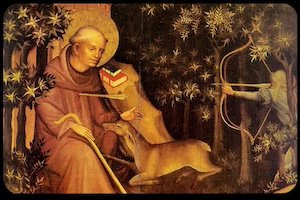
Saint Giles, whose name has been held in great veneration for many centuries in France and England, was born in the year 640 in Athens, and was of noble extraction. Certain remarkable works of medicine and poetry are attributed to him, but his knowledge was primarily that of the Saints.
When as a young man he met a poor beggar who was sick and half-naked, he was moved with compassion and gave him his splendid tunic; the moment the beggar put it on, he found himself in perfect health. By this miracle, Giles understood how pleasing almsgiving is to God, and shortly afterwards, he distributed all his goods to the poor and entered upon a life of poverty, suffering and humility. But Jesus Christ did not let Himself be outdone in generosity, and soon miracles multiplied so greatly in his wake, that the admiration of the world surrounded him. It became impossible for him to profit in his own country from obscurity and retirement, which he desired above all else. He therefore went to France and chose for his hermitage the open spaces of the south, near the mouth of the Rhone.
Soon he was known there, too, by the miracles his kindness brought down from heaven. He moved again, and this time Providence brought him near Saint Veredemus, a hermit of Greek origin like himself; then the two rejoiced in a common life of the love of God. For two years they remained together, until the invasion of their solitude caused Giles to migrate to a deep forest of southeastern France, in the diocese of Nimes.
He passed many years in this intense solitude, living on wild herbs or roots and clear water, and conversing only with God. He was nourished there by a doe of the forest. One day, being pursued by Visigoths hunting in the forests, she fled for refuge to the Saint and lay down at his feet. Moved to tears, he prayed God to spare the life of the innocent animal. An arrow the hunters had sent in her direction came and lodged in his hand, making a wound which would never heal. When the hunters found the animal there and saw the bleeding wound of the gentle hermit, they begged his pardon on their knees, and the chase was ended. The Visigoth king, hearing of this, came to visit this holy hermit, accompanied by the bishop, who afterwards ordained Giles a priest.
The reputation of the sanctity of Saint Giles increased constantly by his many miracles, which rendered his name famous throughout France. He was highly esteemed by the pious king, but could not be prevailed upon to leave his solitude. He accepted several disciples, however, and established excellent discipline in the monastery which the king built for them. Destroyed during the invasions of the Moslems who had entered Spain, it was rebuilt during the lifetime of the founder and his disciples, when they returned after the torment. In succeeding ages, it became a flourishing abbey of the Benedictine Order, which bore his name.
Little Pictorial Lives of the Saints, a compilation based on Butler's Lives of the Saints and other sources by John Gilmary Shea (Benziger Brothers: New York, 1894); Vie des Saints pour tous les jours de l'année, by Abbé L. Jaud (Mame: Tours, 1950); Les Petits Bollandistes: Vies des Saints, by Msgr. Paul Guérin (Bloud et Barral: Paris, 1882), Vol. 10
LAST-MODIFIED:20240831T211218Z SEQUENCE:59443252 X-ACCESS:1 X-HITS:39 X-COLOR:f0b80e X-SHOW-END-TIME:1 END:VEVENT BEGIN:VEVENT DTSTART;VALUE=DATE:20240902 DTEND;VALUE=DATE:20240903 UID:D2F210A0-2308-4B7C-BD7B-DCE4BF9BD67B SUMMARY:St. Stephen CREATED:20221013T211126Z DTSTAMP:20221013T211126Z URL:https://www.stpaulsweymouth.org/component/dpcalendar/event/1980?calid=13 DESCRIPTION:St. Stephen, Apostolic King of Hungary, Confessor\N\NThe fourth Duke of the Huns of Hungary, by the name of Geysa, was converted to the Faith and baptized with his wife and several ministers. With the Christian missionaries, he labored to convince his pagan subjects of the divinity of this religion. His wife saw in a vision the protomartyr Saint Stephen, who told her they would have a son who would perfect the work already begun. This son, born in the year 977, was given the name of Stephen.\NThe little prince was baptized by Saint Adalbert, bishop of Prague, who preached to the Hungarians for a time, and was educated under the care of that bishop and a pious count of Italy.\NWhen he was fifteen years old, his father gave him the commandment of his armies, seeing his virtue and Christian ardor. Already Stephen was beginning to root out idolatry and transform the pagan customs still existing among the people. At twenty years of age, he succeeded his good father, who died in 997. He suppressed a rebellion of his pagan subjects, and founded monasteries and churches all over the land. He sent to Pope Sylvester, begging him to appoint bishops to the eleven sees he had endowed, and to bestow on him, for the greater success of his work, the title of king. The Pope granted his requests, and sent him a cross to be borne before him, saying that he regarded him as the true apostle of his people.\NSaint Stephen's devotion was fervent. He placed his realms under the protection of our Blessed Lady, and kept the feast of Her Assumption with great affection. He established good laws, and saw to their execution. Throughout his life, we are told, he had Christ on his lips, Christ in his heart, and Christ in all he did. His only wars were wars of defense, and in them he was always successful. He married the sister of the Emperor Saint Henry, who was a worthy companion for him. God sent him many grievous trials amid his successes; one by one his children died.\NHe often went out in disguise to exercise his charities; and one day a troop of beggars, not satisfied with the alms they received, threw him down, tore out handfuls of his hair and beard, and took his purse. He prayed to the Lord and thanked Him for an insult he would not have suffered from enemies, but accepted gladly from the poor who, he said to Him, are called Your own, and for whom I can have only indulgence and tenderness. He bore all reversals with perfect submission to the Will of God.\NWhen Saint Stephen was about to die, he summoned the bishops and nobles, and told them to choose his successor. He urged them to nurture and cherish the Catholic Church, which was still a tender plant in Hungary, to follow justice, humility, and charity, to be obedient to the laws, and to show at all times a reverent submission to the Holy See. Then, raising his eyes towards heaven, he said: O Queen of Heaven, August Restorer of a prostrate world, to Thy care I commend the Holy Church, my people, and my realm, and my own departing soul. It was on his favorite feast day, the Assumption, that he died in peace, in the year 1038.\NLittle Pictorial Lives of the Saints, a compilation based on Butler's Lives of the Saints and other sources by John Gilmary Shea (Benziger Brothers: New York, 1894); Les Petits Bollandistes: Vies des Saints, by Msgr. Paul Guérin (Bloud et Barral: Paris, 1882), Vol. 10 X-ALT-DESC;FMTTYPE=text/html:St. Stephen, Apostolic King of Hungary, Confessor
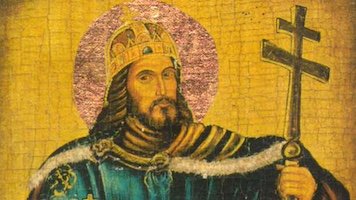
The fourth Duke of the Huns of Hungary, by the name of Geysa, was converted to the Faith and baptized with his wife and several ministers. With the Christian missionaries, he labored to convince his pagan subjects of the divinity of this religion. His wife saw in a vision the protomartyr Saint Stephen, who told her they would have a son who would perfect the work already begun. This son, born in the year 977, was given the name of Stephen.
The little prince was baptized by Saint Adalbert, bishop of Prague, who preached to the Hungarians for a time, and was educated under the care of that bishop and a pious count of Italy.
When he was fifteen years old, his father gave him the commandment of his armies, seeing his virtue and Christian ardor. Already Stephen was beginning to root out idolatry and transform the pagan customs still existing among the people. At twenty years of age, he succeeded his good father, who died in 997. He suppressed a rebellion of his pagan subjects, and founded monasteries and churches all over the land. He sent to Pope Sylvester, begging him to appoint bishops to the eleven sees he had endowed, and to bestow on him, for the greater success of his work, the title of king. The Pope granted his requests, and sent him a cross to be borne before him, saying that he regarded him as the true apostle of his people.
Saint Stephen's devotion was fervent. He placed his realms under the protection of our Blessed Lady, and kept the feast of Her Assumption with great affection. He established good laws, and saw to their execution. Throughout his life, we are told, he had Christ on his lips, Christ in his heart, and Christ in all he did. His only wars were wars of defense, and in them he was always successful. He married the sister of the Emperor Saint Henry, who was a worthy companion for him. God sent him many grievous trials amid his successes; one by one his children died.
He often went out in disguise to exercise his charities; and one day a troop of beggars, not satisfied with the alms they received, threw him down, tore out handfuls of his hair and beard, and took his purse. He prayed to the Lord and thanked Him for an insult he would not have suffered from enemies, but accepted gladly from the poor who, he said to Him, are called Your own, and for whom I can have only indulgence and tenderness. He bore all reversals with perfect submission to the Will of God.
When Saint Stephen was about to die, he summoned the bishops and nobles, and told them to choose his successor. He urged them to nurture and cherish the Catholic Church, which was still a tender plant in Hungary, to follow justice, humility, and charity, to be obedient to the laws, and to show at all times a reverent submission to the Holy See. Then, raising his eyes towards heaven, he said: O Queen of Heaven, August Restorer of a prostrate world, to Thy care I commend the Holy Church, my people, and my realm, and my own departing soul. It was on his favorite feast day, the Assumption, that he died in peace, in the year 1038.
Little Pictorial Lives of the Saints, a compilation based on Butler's Lives of the Saints and other sources by John Gilmary Shea (Benziger Brothers: New York, 1894); Les Petits Bollandistes: Vies des Saints, by Msgr. Paul Guérin (Bloud et Barral: Paris, 1882), Vol. 10
LAST-MODIFIED:20240831T211940Z SEQUENCE:59443694 X-ACCESS:1 X-HITS:60 X-COLOR:f0b80e X-SHOW-END-TIME:1 END:VEVENT BEGIN:VEVENT DTSTART;VALUE=DATE:20240903 DTEND;VALUE=DATE:20240904 UID:7E7ADB4D-80B0-4C52-8876-5F5702B95A94 SUMMARY:St. Pius CREATED:20221013T211126Z DTSTAMP:20221013T211126Z URL:https://www.stpaulsweymouth.org/component/dpcalendar/event/1982?calid=13 DESCRIPTION:St. Pius X Pope, Confessor\N\NThis canonized holy Pope of the twentieth century remains beloved by all as the Pope of Frequent Communion. This is indeed a beautiful and fitting title, but we would like to stress here what is less known of his pontifical works — his battle to conserve the faith against those mining it from within.\NJoseph Sarto, born in 1836 into a family poor in earthly goods but very rich in virtue, was the first living son of eight children, including six sisters. He soon found himself orphaned of his profoundly Christian father; Joseph had already announced his desire to become a priest, and his parents had approved. When his widowed mother continued to desire like himself this unique ambition of her son, their parish priest found financial aid for him.\NHe became an assistant priest in 1858, and in 1867 was named in charge of the large parish church of Salzano. His three unmarried sisters followed him, as they would do even to the Vatican. He was immediately appreciated by his parishioners, then seen as heroic when an epidemic of cholera broke out. An ecclesiastic who witnessed his activity wrote that he was everywhere present. He buried the dead and confessed the sick; he saw to the needs of the various houses, he gave remedies if necessary, at all hours of the day and night. He did not permit his vicars to expose themselves to a danger associated with a duty which was first of all that of the parish priest. He inspired courage in all. His sisters tried in vain to moderate his zeal, but the Padre did not contract the disease, and continued to need only four hours of sleep all the time of his pastoral life. In 1875 he was named a Canon of the cathedral of Trevise, where he fulfilled the administrative and pastoral duties of that charge with a success that edified all concerned.\NIn Trevise Father Sarto learned of his nomination in 1884 as bishop of Mantua. He asked not to be received at Mantua by a brilliant reception, but that his diocesans come to the cathedral to pray with him and receive Communion. As bishop he taught catechism to the children and continued to visit the sick like a parish priest; and it seemed to them that it was his passage among them which cured them. He manifested a remarkable compassion for the working people. He defended a man who had calumniated him and who soon afterwards was ruined financially, and sent money anonymously to his wife.\NIn 1891 he became Patriarch of Venice, and never was there one more appreciated than Monsignor Sarto after his arrival. Twelve years there confirmed the inhabitants' profound affection and respect for him, until in 1903 his final promotion came about at the death of Leo XIII. He was chosen to replace him in the Vatican in that year, as Vicar of Christ.\NHe saw with perfect perspicacity that the Church was falling ever more deeply into the disastrous errors of modernism, that crossroads of every heresy. The teachings of his predecessors had entered into deaf ears; everywhere defenders of the Catholic heritage in all domains were becoming sparse. Nonetheless there remained a group of them to second their Head, and strive with him to arrest the rising tide. Saint Pius X absolutely supported all that the great encyclicals of Popes Leo XIII and Pius IX had proclaimed or enjoined upon the authorities of the Church. He brought about the resignation of a considerable number who resisted that authority and who in ambiguous language continued to promulgate the subtle errors propagated by the manifold isms, the false doctrines of the modern world separated from Christ.\NHe will always be known as the Pope of the Eucharist. For he was determined that the faithful should imitate the example of the earliest Christians. In consequence, he urged the reception of frequent and even daily Holy Communion for all in the state of sanctifying grace and of right intention. He insisted that children be allowed to the Spiritual Banquet prepared by Jesus at an earliest age, and declared that they were bound to fulfill the precept of the Easter Communion as soon as they reach the age of discretion.\NSaint Pius labored until the very last days of his life. His Will and Testament contained the words: I was born poor, I have lived poor, and I wish to die poor. He died in 1914 at the age of 78 years, at the onset of the First World War, which he had foreseen. He was canonized by Pope Pius XII forty years later, on May 29, 1954, and recognized universally as a Saint for his charity, his piety, his zeal.\NReflection: Our duty, says Father Newman, is to follow the Vicar of Christ wherever he goes and never to desert him, whatever the cost, but to defend him from all hazards and against all comers, as a son would a father, knowing that his cause is always the cause of God.\NPie X, by René Bazin (Flammarion: Paris, 1928); Les jours et les travaux du bienheureux Pie X,photo album with commentaries (Rome, 1951); Heavenly Friends, by Rosalie Marie Levy (St. Paul Editions: Boston, 1984). X-ALT-DESC;FMTTYPE=text/html:St. Pius X Pope, Confessor
This canonized holy Pope of the twentieth century remains beloved by all as the Pope of Frequent Communion. This is indeed a beautiful and fitting title, but we would like to stress here what is less known of his pontifical works — his battle to conserve the faith against those mining it from within.
Joseph Sarto, born in 1836 into a family poor in earthly goods but very rich in virtue, was the first living son of eight children, including six sisters. He soon found himself orphaned of his profoundly Christian father; Joseph had already announced his desire to become a priest, and his parents had approved. When his widowed mother continued to desire like himself this unique ambition of her son, their parish priest found financial aid for him.
He became an assistant priest in 1858, and in 1867 was named in charge of the large parish church of Salzano. His three unmarried sisters followed him, as they would do even to the Vatican. He was immediately appreciated by his parishioners, then seen as heroic when an epidemic of cholera broke out. An ecclesiastic who witnessed his activity wrote that he was everywhere present. He buried the dead and confessed the sick; he saw to the needs of the various houses, he gave remedies if necessary, at all hours of the day and night. He did not permit his vicars to expose themselves to a danger associated with a duty which was first of all that of the parish priest. He inspired courage in all. His sisters tried in vain to moderate his zeal, but the Padre did not contract the disease, and continued to need only four hours of sleep all the time of his pastoral life. In 1875 he was named a Canon of the cathedral of Trevise, where he fulfilled the administrative and pastoral duties of that charge with a success that edified all concerned.
In Trevise Father Sarto learned of his nomination in 1884 as bishop of Mantua. He asked not to be received at Mantua by a brilliant reception, but that his diocesans come to the cathedral to pray with him and receive Communion. As bishop he taught catechism to the children and continued to visit the sick like a parish priest; and it seemed to them that it was his passage among them which cured them. He manifested a remarkable compassion for the working people. He defended a man who had calumniated him and who soon afterwards was ruined financially, and sent money anonymously to his wife.
In 1891 he became Patriarch of Venice, and never was there one more appreciated than Monsignor Sarto after his arrival. Twelve years there confirmed the inhabitants' profound affection and respect for him, until in 1903 his final promotion came about at the death of Leo XIII. He was chosen to replace him in the Vatican in that year, as Vicar of Christ.
He saw with perfect perspicacity that the Church was falling ever more deeply into the disastrous errors of modernism, that crossroads of every heresy. The teachings of his predecessors had entered into deaf ears; everywhere defenders of the Catholic heritage in all domains were becoming sparse. Nonetheless there remained a group of them to second their Head, and strive with him to arrest the rising tide. Saint Pius X absolutely supported all that the great encyclicals of Popes Leo XIII and Pius IX had proclaimed or enjoined upon the authorities of the Church. He brought about the resignation of a considerable number who resisted that authority and who in ambiguous language continued to promulgate the subtle errors propagated by the manifold isms, the false doctrines of the modern world separated from Christ.
He will always be known as the Pope of the Eucharist. For he was determined that the faithful should imitate the example of the earliest Christians. In consequence, he urged the reception of frequent and even daily Holy Communion for all in the state of sanctifying grace and of right intention. He insisted that children be allowed to the Spiritual Banquet prepared by Jesus at an earliest age, and declared that they were bound to fulfill the precept of the Easter Communion as soon as they reach the age of discretion.
Saint Pius labored until the very last days of his life. His Will and Testament contained the words: I was born poor, I have lived poor, and I wish to die poor. He died in 1914 at the age of 78 years, at the onset of the First World War, which he had foreseen. He was canonized by Pope Pius XII forty years later, on May 29, 1954, and recognized universally as a Saint for his charity, his piety, his zeal.
Reflection: Our duty, says Father Newman, is to follow the Vicar of Christ wherever he goes and never to desert him, whatever the cost, but to defend him from all hazards and against all comers, as a son would a father, knowing that his cause is always the cause of God.
Pie X, by René Bazin (Flammarion: Paris, 1928); Les jours et les travaux du bienheureux Pie X,photo album with commentaries (Rome, 1951); Heavenly Friends, by Rosalie Marie Levy (St. Paul Editions: Boston, 1984).
LAST-MODIFIED:20240831T212214Z SEQUENCE:59443848 X-ACCESS:1 X-HITS:8 X-COLOR:f0b80e X-SHOW-END-TIME:1 END:VEVENT BEGIN:VEVENT DTSTART;VALUE=DATE:20240905 DTEND;VALUE=DATE:20240906 UID:DD28C759-5AAF-4DA9-B32E-9221D8511BE9 SUMMARY:St. Lawrence Justinian CREATED:20221013T211126Z DTSTAMP:20221013T211126Z URL:https://www.stpaulsweymouth.org/component/dpcalendar/event/1984?calid=13 DESCRIPTION:St. Lawrence Justinian Bishop, Confessor\N\NLawrence (also spelled Laurence), born in 1381, from his childhood longed to be a Saint, and when he was nineteen years of age he was given a vision of the Eternal Wisdom, in the form of a beautiful and noble Lady who told him to seek the only repose he would ever know in Her, the Eternal Wisdom of God. All earthly things paled in his eyes before the ineffable beauty of this sight, and as it faded away a void was left in his heart which none but God could fill. Refusing the offer of a brilliant marriage, at the age of nineteen he fled from his home in Venice and joined the Canons Regular of Saint George in their monastery, situated on a little island about a mile from Venice, where his uncle was a priest.\NWhen Lawrence first entered religion, a nobleman went to dissuade him from the folly of thus sacrificing every earthly prospect. The young monk listened patiently to his friend's affectionate appeal, which soon changed into scorn and violent abuse. Calmly and kindly he then replied. He pointed out the shortness of life, the uncertainty of earthly happiness, and the incomparable superiority of the prize he sought, to any pleasures his friend had named. The latter could make no answer; he felt in truth that Lawrence was wise, and he himself was the fool. And he too left the world, became a fellow-novice with the Saint, and eventually died a holy death.\NAs a monk, the mortification of Saint Lawrence was exemplary; he never drank outside of meals, and when urged to do so replied: If we cannot endure a little heat on earth, how will we bear that of Purgatory? He underwent two painful operations without saying any word except the holy name of Jesus. Before the second intervention, when the surgeon's hand trembled, he said, Cut with vigor; your instrument cannot match the iron hooks used to tear the sides of the martyrs.\NOrdained a priest, then elected Superior and General of his Order, Saint Lawrence strengthened his brethren. Humility keeps silent and does not become inflated in prosperity, whereas in adversity it is elevated, magnanimous, full of joy and an invincible courage. Few know what this virtue is; it is possessed only by those to whom God has given it by infusion, as a reward for their persevering efforts and their spirit of prayer. He encouraged frequent Communion, saying that the person who does not strive to become united with Him as frequently as possible has very little love for Jesus Christ. When he was consecrated bishop of his diocese in 1433, in the face of slander and insult he thoroughly reformed his see. He founded fifteen monasteries and many churches, and his cathedral became a model for all of Christendom. His door was never closed to the poor, but he himself lived like a poor monk.\NHis zeal led to his being appointed the first Patriarch of Venice, but he remained in heart and soul a humble priest, thirsting for the vision reserved for heaven. He had just finished writing his last work, The Degrees of Perfection, when finally the eternal day began to dawn. Are you preparing a bed of feathers for me? he said. No, my Lord was stretched on a hard and painful tree. Laid upon straw, he exclaimed in rapture, Good Jesus, behold, I come. He died in 1455, at the age of seventy-four.\NReflection: Ask Saint Lawrence Justinian to obtain for you such a sense of the perfections of God, that you too may have recourse to Him in all your needs and be at rest.\NLes Petits Bollandistes: Vies des Saints, by Msgr. Paul Guérin (Bloud et Barral: Paris, 1882), Vol. 10; Little Pictorial Lives of the Saints, a compilation based on Butler's Lives of the Saints and other sources by John Gilmary Shea (Benziger Brothers: New York, 1894). X-ALT-DESC;FMTTYPE=text/html:St. Lawrence Justinian Bishop, Confessor
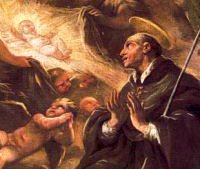
Lawrence (also spelled Laurence), born in 1381, from his childhood longed to be a Saint, and when he was nineteen years of age he was given a vision of the Eternal Wisdom, in the form of a beautiful and noble Lady who told him to seek the only repose he would ever know in Her, the Eternal Wisdom of God. All earthly things paled in his eyes before the ineffable beauty of this sight, and as it faded away a void was left in his heart which none but God could fill. Refusing the offer of a brilliant marriage, at the age of nineteen he fled from his home in Venice and joined the Canons Regular of Saint George in their monastery, situated on a little island about a mile from Venice, where his uncle was a priest.
When Lawrence first entered religion, a nobleman went to dissuade him from the folly of thus sacrificing every earthly prospect. The young monk listened patiently to his friend's affectionate appeal, which soon changed into scorn and violent abuse. Calmly and kindly he then replied. He pointed out the shortness of life, the uncertainty of earthly happiness, and the incomparable superiority of the prize he sought, to any pleasures his friend had named. The latter could make no answer; he felt in truth that Lawrence was wise, and he himself was the fool. And he too left the world, became a fellow-novice with the Saint, and eventually died a holy death.
As a monk, the mortification of Saint Lawrence was exemplary; he never drank outside of meals, and when urged to do so replied: If we cannot endure a little heat on earth, how will we bear that of Purgatory? He underwent two painful operations without saying any word except the holy name of Jesus. Before the second intervention, when the surgeon's hand trembled, he said, Cut with vigor; your instrument cannot match the iron hooks used to tear the sides of the martyrs.
Ordained a priest, then elected Superior and General of his Order, Saint Lawrence strengthened his brethren. Humility keeps silent and does not become inflated in prosperity, whereas in adversity it is elevated, magnanimous, full of joy and an invincible courage. Few know what this virtue is; it is possessed only by those to whom God has given it by infusion, as a reward for their persevering efforts and their spirit of prayer. He encouraged frequent Communion, saying that the person who does not strive to become united with Him as frequently as possible has very little love for Jesus Christ. When he was consecrated bishop of his diocese in 1433, in the face of slander and insult he thoroughly reformed his see. He founded fifteen monasteries and many churches, and his cathedral became a model for all of Christendom. His door was never closed to the poor, but he himself lived like a poor monk.
His zeal led to his being appointed the first Patriarch of Venice, but he remained in heart and soul a humble priest, thirsting for the vision reserved for heaven. He had just finished writing his last work, The Degrees of Perfection, when finally the eternal day began to dawn. Are you preparing a bed of feathers for me? he said. No, my Lord was stretched on a hard and painful tree. Laid upon straw, he exclaimed in rapture, Good Jesus, behold, I come. He died in 1455, at the age of seventy-four.
Reflection: Ask Saint Lawrence Justinian to obtain for you such a sense of the perfections of God, that you too may have recourse to Him in all your needs and be at rest.
Les Petits Bollandistes: Vies des Saints, by Msgr. Paul Guérin (Bloud et Barral: Paris, 1882), Vol. 10; Little Pictorial Lives of the Saints, a compilation based on Butler's Lives of the Saints and other sources by John Gilmary Shea (Benziger Brothers: New York, 1894).
LAST-MODIFIED:20240831T212534Z SEQUENCE:59444048 X-ACCESS:1 X-HITS:177 X-COLOR:f0b80e X-SHOW-END-TIME:1 END:VEVENT BEGIN:VEVENT DTSTART;VALUE=DATE:20240929 DTEND;VALUE=DATE:20240930 UID:82420C95-600B-4F34-81BB-DD012FCB0E96 SUMMARY:St. Michael CREATED:20221013T211126Z DTSTAMP:20221013T211126Z URL:https://www.stpaulsweymouth.org/component/dpcalendar/event/1986?calid=13 DESCRIPTION:Dedication of St. Michael the Archangel\N\NMI-CA-EL, or Who is like unto God? was the cry of the great Archangel when he smote the rebel Lucifer in the conflict of the heavenly hosts. From that hour he has been known as Michael, Captain of the armies of God, the archetype of divine fortitude, the champion of every faithful soul in strife with the powers of evil. What is more, we see him in Holy Scripture as the special guardian of the children of Israel, their comfort and protector in times of sorrow or conflict. It is he who prepares their return from the Persian captivity, when the prophet Daniel prays for that favor (Daniel10:12-13); who leads the valiant Maccabees to victory in battle, after the prayer of Judas Maccabeus (I Mac. 7:41-44).\NEver since its foundation by Jesus Christ, the Church has venerated Saint Michael as her special patron and protector. She invokes him by name in her Confiteor, when accusing her faults; she summons him to the side of her children in the agony of death, and chooses him as their escort from the chastening flames of purgatory to the realms of holy light. Lastly, when Antichrist shall have set up his kingdom on earth, it is Michael who will unfurl once more the standard of the Cross. This we know from a prophecy of Scripture which states clearly that in those days the great prince Michael will rise up to protect the children of God. (Daniel 12:1-4)\NDuring the plague in Rome in the 6th century, Pope Gregory the Great saw Saint Michael in a vision sheathing his flaming sword to show that he would put an end to the scourge which was ravaging the city. In 608 a church was erected in thanksgiving to Saint Michael for the help he gave.\NReflection: Saint Bernard wrote: Whenever any grievous temptation or vehement sorrow oppresses you, invoke your Guardian, your Leader. Cry out to him and say, Lord, save us, lest we perish!\NLittle Pictorial Lives of the Saints, a compilation based on Butler's Lives of the Saints and other sources by John Gilmary Shea (Benziger Brothers: New York, 1894). X-ALT-DESC;FMTTYPE=text/html: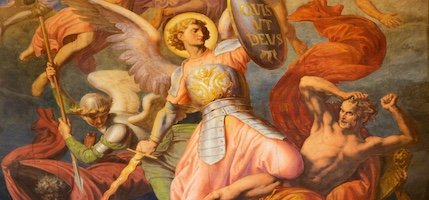
MI-CA-EL, or Who is like unto God? was the cry of the great Archangel when he smote the rebel Lucifer in the conflict of the heavenly hosts. From that hour he has been known as Michael, Captain of the armies of God, the archetype of divine fortitude, the champion of every faithful soul in strife with the powers of evil. What is more, we see him in Holy Scripture as the special guardian of the children of Israel, their comfort and protector in times of sorrow or conflict. It is he who prepares their return from the Persian captivity, when the prophet Daniel prays for that favor (Daniel10:12-13); who leads the valiant Maccabees to victory in battle, after the prayer of Judas Maccabeus (I Mac. 7:41-44).
Ever since its foundation by Jesus Christ, the Church has venerated Saint Michael as her special patron and protector. She invokes him by name in her Confiteor, when accusing her faults; she summons him to the side of her children in the agony of death, and chooses him as their escort from the chastening flames of purgatory to the realms of holy light. Lastly, when Antichrist shall have set up his kingdom on earth, it is Michael who will unfurl once more the standard of the Cross. This we know from a prophecy of Scripture which states clearly that in those days the great prince Michael will rise up to protect the children of God. (Daniel 12:1-4)
During the plague in Rome in the 6th century, Pope Gregory the Great saw Saint Michael in a vision sheathing his flaming sword to show that he would put an end to the scourge which was ravaging the city. In 608 a church was erected in thanksgiving to Saint Michael for the help he gave.
Reflection: Saint Bernard wrote: Whenever any grievous temptation or vehement sorrow oppresses you, invoke your Guardian, your Leader. Cry out to him and say, Lord, save us, lest we perish!
Little Pictorial Lives of the Saints, a compilation based on Butler's Lives of the Saints and other sources by John Gilmary Shea (Benziger Brothers: New York, 1894).
LAST-MODIFIED:20240928T185900Z SEQUENCE:61854454 X-ACCESS:1 X-HITS:18 X-COLOR:f0b80e X-SHOW-END-TIME:1 END:VEVENT BEGIN:VEVENT DTSTART;VALUE=DATE:20240930 DTEND;VALUE=DATE:20241001 UID:08AB51CF-4A32-44C0-8EF6-31606ADE1BD1 SUMMARY:St. Jerome CREATED:20221013T211126Z DTSTAMP:20221013T211126Z URL:https://www.stpaulsweymouth.org/component/dpcalendar/event/1988?calid=13 DESCRIPTION:St. Jerome priest, Confessor and Doctor of the Church\N\NSaint Jerome, born in Dalmatia in 329, was sent to school in Rome. His boyhood was not free from faults; his thirst for knowledge was excessive, and his love of books, a passion. He had studied under the best masters, visited foreign cities, and devoted himself to the pursuit of learning. But Christ had need of his strong will and active intellect for the service of His Church. He told him in a supernatural experience he never forgot that he was not a Christian, but a Ciceronian: Your heart is where your treasure is, said the Lord to him — that is, in the eloquent writings of antique times. Saint Jerome obeyed the divine call, making a vow never again to read profane works, and another of celibacy. In Rome he had already assisted a number of holy women to organize houses of retirement where they consecrated themselves to God by vow. Calumnies, arising from jealousy, made a certain headway against the scholar whose competence was beginning to attract honors.\NHe fled from Rome to the wild Syrian desert, and there for four years learned in solitude, intense sufferings and persecution from the demons, new lessons in humility, penance and prayer, and divine wisdom. I was very foolish to want to sing the hymns of the Lord on foreign soil, and to abandon the mountain of Sinai to beg help from Egypt, he declared.\NPope Damasus summoned him back to Rome, and there assigned to the famous scholar, already expert in Hebrew and other ancient languages, the task of revising the Latin Bible. Saint Jerome obeyed his earthly Head as he had obeyed his Lord. Retiring once more in 386 to Bethlehem, the eloquent hermit sent forth from his solitary cell not only a solidly accurate version of the Scriptures, but during thirty years' time, a veritable stream of luminous writings for the Christian world. He combated with unfailing efficacy several heresies being subtly introduced by various personages in his own region and elsewhere.\NFor fourteen years the hand of the great scholar could no longer write; but Saint Jerome could still dictate to six secretaries at a time, to each on a different subject, in those final years. He died in his beloved Bethlehem in 420, when over 80 years old. His tomb is still in a subterranean chapel of its ancient basilica, but his relics were transported to Saint Mary Major Basilica of Rome, where the crib of Bethlehem is conserved.\NLittle Pictorial Lives of the Saints, a compilation based on Butler's Lives of the Saints and other sources by John Gilmary Shea (Benziger Brothers: New York, 1894); Les Petits Bollandistes: Vies des Saints, by Msgr. Paul Guérin (Bloud et Barral: Paris, 1882), Vol. 11 X-ALT-DESC;FMTTYPE=text/html: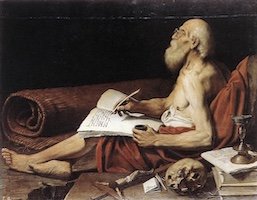
Saint Jerome, born in Dalmatia in 329, was sent to school in Rome. His boyhood was not free from faults; his thirst for knowledge was excessive, and his love of books, a passion. He had studied under the best masters, visited foreign cities, and devoted himself to the pursuit of learning. But Christ had need of his strong will and active intellect for the service of His Church. He told him in a supernatural experience he never forgot that he was not a Christian, but a Ciceronian: Your heart is where your treasure is, said the Lord to him — that is, in the eloquent writings of antique times. Saint Jerome obeyed the divine call, making a vow never again to read profane works, and another of celibacy. In Rome he had already assisted a number of holy women to organize houses of retirement where they consecrated themselves to God by vow. Calumnies, arising from jealousy, made a certain headway against the scholar whose competence was beginning to attract honors.
He fled from Rome to the wild Syrian desert, and there for four years learned in solitude, intense sufferings and persecution from the demons, new lessons in humility, penance and prayer, and divine wisdom. I was very foolish to want to sing the hymns of the Lord on foreign soil, and to abandon the mountain of Sinai to beg help from Egypt, he declared.
Pope Damasus summoned him back to Rome, and there assigned to the famous scholar, already expert in Hebrew and other ancient languages, the task of revising the Latin Bible. Saint Jerome obeyed his earthly Head as he had obeyed his Lord. Retiring once more in 386 to Bethlehem, the eloquent hermit sent forth from his solitary cell not only a solidly accurate version of the Scriptures, but during thirty years' time, a veritable stream of luminous writings for the Christian world. He combated with unfailing efficacy several heresies being subtly introduced by various personages in his own region and elsewhere.
For fourteen years the hand of the great scholar could no longer write; but Saint Jerome could still dictate to six secretaries at a time, to each on a different subject, in those final years. He died in his beloved Bethlehem in 420, when over 80 years old. His tomb is still in a subterranean chapel of its ancient basilica, but his relics were transported to Saint Mary Major Basilica of Rome, where the crib of Bethlehem is conserved.
Little Pictorial Lives of the Saints, a compilation based on Butler's Lives of the Saints and other sources by John Gilmary Shea (Benziger Brothers: New York, 1894); Les Petits Bollandistes: Vies des Saints, by Msgr. Paul Guérin (Bloud et Barral: Paris, 1882), Vol. 11
LAST-MODIFIED:20240928T190146Z SEQUENCE:61854620 X-ACCESS:1 X-HITS:34 X-COLOR:f0b80e X-SHOW-END-TIME:1 END:VEVENT BEGIN:VEVENT DTSTART;VALUE=DATE:20241008 DTEND;VALUE=DATE:20241009 UID:A0D92AE8-F382-4AFF-A040-961106145DD4 SUMMARY:Sts. Sergius, Bacchus, Marcellus, and Apuleius CREATED:20221013T211126Z DTSTAMP:20221013T211126Z URL:https://www.stpaulsweymouth.org/component/dpcalendar/event/2062?calid=13 DESCRIPTION:Sts. Sergius, Bacchus, Marcellus, and Apuleius, Martyrs\N\NIn the Roman Martyrology we read:\N\N"In lower Syria, the holy Martyrs Sergius and Bacchus, noble Romans, who lived under the Emperor Maximian. Bacchus was scourged with thongs that tore his flesh; he died in his torments confessing the name of Jesus. Sergius, forced to wear shoes with nails piercing his feet, remained firm in the faith and was beheaded. At Rome the holy Martyrs Marcellus and Apuleius abandoned Simon the Magician, whose disciples they had been, to follow the teaching of St. Peter. After the martyrdom of the apostles they themselves obtained the same crown under the ex-consul Aurelian and were buried near Rome."\N\NThe Catholic Encyclopedia also bears witness to their lives and mentions how these saints, whose names are surely forgotten by nearly all today, were honored since ancient times:\N\N"Their martyrdom is well authenticated by the earliest martyrologies and by the early veneration paid them, as well as by such historians as Theodoret. They were officers of troops on the frontier, Sergius being primicerius, and Bacchus secundarius. According to the legend, there were high in esteem of the Caesar Maximianus on account of their bravery, but this favour was turned into hate when they acknowledged their Christian faith. When examined under torture they were beaten so severely with thongs that Bacchus died under the blows. Sergius, though, had much more suffering to endure; among other tortures, as the legend relates, he had to run eighteen miles in shoes which were covered on the soles with sharp-pointed nails that pierced through the foot. He was finally beheaded. The burial-place of Sergius and Bacchus was pointed out in the city of Resaph; in honour of Sergius the Emperor Justinian also built churches in honour of Sergius at Constantinople and Acre; the one at Constantinople, now a mosque, is a great work of Byzantine art. In the East, Sergius and Bacchus were universally honoured. Since the seventh century they have a celebrated church in Rome. Christian art represents the two saints as soldiers in military garb with branches of palm in their hands. Their feast is observed on 7 October. The Church calendar gives the two saints Marcellus and Apuleius on the same day as Sergius and Bacchus. They are said to have been converted to Christianity by the miracles of St. Peter. According to the "Martyrologium Romanum" they suffered martyrdom soon after the deaths of Sts. Peter and Paul and were buried near Rome. Their existing Acts are not genuine and agree to a great extent with those of Sts. Nereus and Achilleus. The veneration of the two saints is very old. A mass is assigned to them in the "Sacramentarium" of Pope Gelasius.:\N\NCollect:\NMay the blessed deeds of Thy holy martyrs Sergius, Bacchus, Marcellus, and Apuleius plead for us, O Lord, and may they make us ever burn with love for Thee. X-ALT-DESC;FMTTYPE=text/html: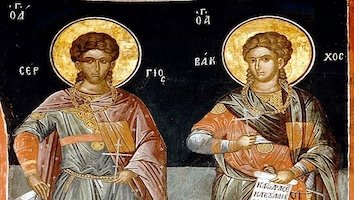
In the Roman Martyrology we read:
"In lower Syria, the holy Martyrs Sergius and Bacchus, noble Romans, who lived under the Emperor Maximian. Bacchus was scourged with thongs that tore his flesh; he died in his torments confessing the name of Jesus. Sergius, forced to wear shoes with nails piercing his feet, remained firm in the faith and was beheaded. At Rome the holy Martyrs Marcellus and Apuleius abandoned Simon the Magician, whose disciples they had been, to follow the teaching of St. Peter. After the martyrdom of the apostles they themselves obtained the same crown under the ex-consul Aurelian and were buried near Rome."
The Catholic Encyclopedia also bears witness to their lives and mentions how these saints, whose names are surely forgotten by nearly all today, were honored since ancient times:
"Their martyrdom is well authenticated by the earliest martyrologies and by the early veneration paid them, as well as by such historians as Theodoret. They were officers of troops on the frontier, Sergius being primicerius, and Bacchus secundarius. According to the legend, there were high in esteem of the Caesar Maximianus on account of their bravery, but this favour was turned into hate when they acknowledged their Christian faith. When examined under torture they were beaten so severely with thongs that Bacchus died under the blows. Sergius, though, had much more suffering to endure; among other tortures, as the legend relates, he had to run eighteen miles in shoes which were covered on the soles with sharp-pointed nails that pierced through the foot. He was finally beheaded. The burial-place of Sergius and Bacchus was pointed out in the city of Resaph; in honour of Sergius the Emperor Justinian also built churches in honour of Sergius at Constantinople and Acre; the one at Constantinople, now a mosque, is a great work of Byzantine art. In the East, Sergius and Bacchus were universally honoured. Since the seventh century they have a celebrated church in Rome. Christian art represents the two saints as soldiers in military garb with branches of palm in their hands. Their feast is observed on 7 October. The Church calendar gives the two saints Marcellus and Apuleius on the same day as Sergius and Bacchus. They are said to have been converted to Christianity by the miracles of St. Peter. According to the "Martyrologium Romanum" they suffered martyrdom soon after the deaths of Sts. Peter and Paul and were buried near Rome. Their existing Acts are not genuine and agree to a great extent with those of Sts. Nereus and Achilleus. The veneration of the two saints is very old. A mass is assigned to them in the "Sacramentarium" of Pope Gelasius.:
Collect:
May the blessed deeds of Thy holy martyrs Sergius, Bacchus, Marcellus, and Apuleius plead for us, O Lord, and may they make us ever burn with love for Thee.
LAST-MODIFIED:20241005T112456Z SEQUENCE:62432010 X-ACCESS:1 X-HITS:31 X-COLOR:f0b80e X-SHOW-END-TIME:1 END:VEVENT BEGIN:VEVENT DTSTART;VALUE=DATE:20241009 DTEND;VALUE=DATE:20241010 UID:82E3460D-21F4-452D-B722-F4D5EF4ADFBA SUMMARY:Sts. Dionysius, Rusticus, and Eleutherius CREATED:20221013T211126Z DTSTAMP:20221013T211126Z URL:https://www.stpaulsweymouth.org/component/dpcalendar/event/2064?calid=13 DESCRIPTION:St. Dionysius Bishop, Rusticus priest, and Eleutherius, Martyrs\N\NOf all the Roman missionaries sent into Gaul, Saint Dionysius or Denys the Areopagite, converted by Saint Paul in Athens, carried the Faith farthest into the west, fixing his see at Paris. France claims him as one of her greatest glories.\NHe was a highly educated philosopher of Greece, and one of the nine archontes or leaders of the city of Athens, a counselor, as some say, if not the Head of the Athenian senate. He was born in the year 9 of the Christian era, and had traveled to Heliopolis in Egypt to learn mathematics and astrology. There he saw for himself, in his early twenties, the eclipse of the sun contrary to all the laws of nature, which occurred at the death of the Son of God. His teachers could not explain it to him otherwise than as a sign of changes in divine matters. In his letters to Saint Polycarp he says himself that the astrologer he questioned had answered him rather by divine inspiration than by any natural knowledge. And he himself had cried out: Either the God of nature is suffering, or the entire mechanism of the world is going to be destroyed to return to its ancient state of chaos! Already he was being prepared for his conversion twenty years later, which is related by Saint Luke in the Acts of the Apostles, chapter seven.\NThrough Saint Paul, the see of Athens was established with Saint Denys as its first bishop, and this flock, which he extended through the entire region, became one of the most considerable of Greece. He made a number of journeys outside Greece and was present when the Apostles were assembled at the Dormition and glorious Assumption of the Mother of God. He wrote of Her, and he became a friend of Saint John, Her guardian. He corresponded with Saint Timothy, Saint Titus, Saint Polycarp and others of the Apostles' successors. It appears that it was after a conversation with Saint John the Apostle that Saint Denys, already in his late sixties, determined to go to the Occident to preach to the idolaters of that region. He left Saint Publius as his successor in Athens, and departed for Rome with Eleutherius and Rusticus. Pope Saint Clement of Rome confirmed this enterprise, and added to the group at least ten more priests, all of whom are now listed among the Saints. The authors of the oriental church are steadfast in asserting, with Roman tradition, that it was Saint Denys the Areopagite, converted by Saint Paul, who was sent to Gaul. Others have thought Saint Denys was a fourth century missionary, but this theory cannot be credited, as the Bollandists explain at length. (Vol. 14)\NThrough him and his disciples, whom he sent to evangelize various districts, the sees of Rouen, Chartres, Evreux, Verdun, and Beauvais were established. With his two original companions, Eleutherius and Rusticus, Saint Denis went to Paris, where he built four oratories. The first baptized Christian, who received them into his house, was decapitated, denounced to a Roman official by his own pagan wife, as an accomplice of their three guests. The three missionaries were imprisoned and chained in such a way as to suffer torture, then flogged while they blessed God. Other torments were devised, but God preserved the bishop, at this time nearly 100 years old. They were finally beheaded on Montmartre; a large group of Christians, who wept on this occasion, as well as others of the city and the entire region, were also massacred. The wife of the first Parisian Christian and martyr was converted and died with the others. Their joint martyrdom occurred about the year 117.\NLes Petits Bollandistes: Vies des Saints, by Msgr. Paul Guérin (Bloud et Barral: Paris, 1882), Vol. 12 X-ALT-DESC;FMTTYPE=text/html:St. Dionysius Bishop, Rusticus priest, and Eleutherius, Martyrs
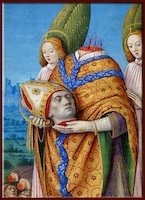
Of all the Roman missionaries sent into Gaul, Saint Dionysius or Denys the Areopagite, converted by Saint Paul in Athens, carried the Faith farthest into the west, fixing his see at Paris. France claims him as one of her greatest glories.
He was a highly educated philosopher of Greece, and one of the nine archontes or leaders of the city of Athens, a counselor, as some say, if not the Head of the Athenian senate. He was born in the year 9 of the Christian era, and had traveled to Heliopolis in Egypt to learn mathematics and astrology. There he saw for himself, in his early twenties, the eclipse of the sun contrary to all the laws of nature, which occurred at the death of the Son of God. His teachers could not explain it to him otherwise than as a sign of changes in divine matters. In his letters to Saint Polycarp he says himself that the astrologer he questioned had answered him rather by divine inspiration than by any natural knowledge. And he himself had cried out: Either the God of nature is suffering, or the entire mechanism of the world is going to be destroyed to return to its ancient state of chaos! Already he was being prepared for his conversion twenty years later, which is related by Saint Luke in the Acts of the Apostles, chapter seven.
Through Saint Paul, the see of Athens was established with Saint Denys as its first bishop, and this flock, which he extended through the entire region, became one of the most considerable of Greece. He made a number of journeys outside Greece and was present when the Apostles were assembled at the Dormition and glorious Assumption of the Mother of God. He wrote of Her, and he became a friend of Saint John, Her guardian. He corresponded with Saint Timothy, Saint Titus, Saint Polycarp and others of the Apostles' successors. It appears that it was after a conversation with Saint John the Apostle that Saint Denys, already in his late sixties, determined to go to the Occident to preach to the idolaters of that region. He left Saint Publius as his successor in Athens, and departed for Rome with Eleutherius and Rusticus. Pope Saint Clement of Rome confirmed this enterprise, and added to the group at least ten more priests, all of whom are now listed among the Saints. The authors of the oriental church are steadfast in asserting, with Roman tradition, that it was Saint Denys the Areopagite, converted by Saint Paul, who was sent to Gaul. Others have thought Saint Denys was a fourth century missionary, but this theory cannot be credited, as the Bollandists explain at length. (Vol. 14)
Through him and his disciples, whom he sent to evangelize various districts, the sees of Rouen, Chartres, Evreux, Verdun, and Beauvais were established. With his two original companions, Eleutherius and Rusticus, Saint Denis went to Paris, where he built four oratories. The first baptized Christian, who received them into his house, was decapitated, denounced to a Roman official by his own pagan wife, as an accomplice of their three guests. The three missionaries were imprisoned and chained in such a way as to suffer torture, then flogged while they blessed God. Other torments were devised, but God preserved the bishop, at this time nearly 100 years old. They were finally beheaded on Montmartre; a large group of Christians, who wept on this occasion, as well as others of the city and the entire region, were also massacred. The wife of the first Parisian Christian and martyr was converted and died with the others. Their joint martyrdom occurred about the year 117.
Les Petits Bollandistes: Vies des Saints, by Msgr. Paul Guérin (Bloud et Barral: Paris, 1882), Vol. 12
LAST-MODIFIED:20241005T112817Z SEQUENCE:62432211 X-ACCESS:1 X-HITS:134 X-COLOR:f0b80e X-SHOW-END-TIME:1 END:VEVENT BEGIN:VEVENT DTSTART;VALUE=DATE:20241012 DTEND;VALUE=DATE:20241013 UID:AD52E2FF-ED6D-4B37-AEDA-FAF08D2ED79B SUMMARY:St. Wilfrid CREATED:20221013T211126Z DTSTAMP:20221013T211126Z URL:https://www.stpaulsweymouth.org/component/dpcalendar/event/2066?calid=13 DESCRIPTION:St. Wilfrid Bishop, Confessor\N\NIt was the glory of the great Saint Wilfrid to fasten securely the happy links which bound England to Rome. He was born about the year 634 of an excellent Christian family; at that time a brightly burning torch was seen over the house of his father, shedding light all along the street where the house was, without doing any damage. This was regarded as a presage that the newborn babe would one day be a brilliant light in the Church.\NWilfrid was brought up by the Celtic monks at Lindisfarne in the rites and usages of the British Church. Yet even as a boy Wilfrid longed for perfect conformity with the Holy See in discipline as well as in doctrine, and at the first opportunity he set out for Rome. When his devotion and his desire for instruction in the difficulties of the liturgy were satisfied, he was ready to return to England. On his way he visited the archbishop of Lyons, Saint Chamond, who had very kindly received him on his route to Rome. Before re-embarking for England, Wilfrid received the tonsure and remained with him for three years, until his death. At home once more, he built a monastery at Stamford, and made of another one at Ripon a strictly Roman monastery under the rule of Saint Benedict. There he was ordained a priest, and after having governed it as Abbot for five years, he was consecrated a bishop in France. He again remained for a time across the Channel, and then found, when he returned to England, that another had replaced him in his newly assigned see of York. That bishop, whose position was more than doubtful, was persuaded to retire when the Archbishop of Canterbury visited Northumbria; Wilfrid was thereby reinstated in 669. He enforced the Roman obedience in his see and founded many monasteries of the Benedictine Order.\NAs Bishop of York he had to combat the passions of wicked kings, the cowardice of worldly prelates, the errors of holy men. He was twice exiled and once imprisoned; finally the difficulties were settled with the aid of Roman authority. In 686 he was called back to his diocese of York, where eventually he swept away the abuses of many years and a too national system, and substituted instead a vigorous Catholic discipline, modeled and dependent on Rome. When the large see of York was definitively divided and suffragan dioceses established, Saint Wilfrid was given two smaller sees but not York. He decided to accept the settlement reached with other British ecclesiastics, since the principle of Roman authority had been vindicated. He died October 12, 709, amid the monks of Ripon and was buried in this monastery. A monk of the monastery of Ripon who had worked with Saint Wilfrid for forty years wrote the first biography of the former Abbot and Archbishop. The greater part of his relics were transferred to the cathedral of Canterbury in the year 959.\NLes Petits Bollandistes: Vies des Saints, by Msgr. Paul Guérin (Bloud et Barral: Paris, 1882), Vol. 12; Little Pictorial Lives of the Saints, a compilation based on Butler's Lives of the Saints and other sources by John Gilmary Shea (Benziger Brothers: New York, 1894); The Catholic Encyclopedia, edited by C. G. Herbermann with numerous collaborators (Appleton Company: New York, 1908) X-ALT-DESC;FMTTYPE=text/html: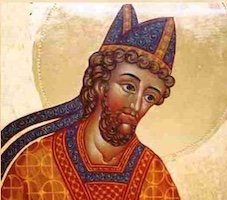
It was the glory of the great Saint Wilfrid to fasten securely the happy links which bound England to Rome. He was born about the year 634 of an excellent Christian family; at that time a brightly burning torch was seen over the house of his father, shedding light all along the street where the house was, without doing any damage. This was regarded as a presage that the newborn babe would one day be a brilliant light in the Church.
Wilfrid was brought up by the Celtic monks at Lindisfarne in the rites and usages of the British Church. Yet even as a boy Wilfrid longed for perfect conformity with the Holy See in discipline as well as in doctrine, and at the first opportunity he set out for Rome. When his devotion and his desire for instruction in the difficulties of the liturgy were satisfied, he was ready to return to England. On his way he visited the archbishop of Lyons, Saint Chamond, who had very kindly received him on his route to Rome. Before re-embarking for England, Wilfrid received the tonsure and remained with him for three years, until his death. At home once more, he built a monastery at Stamford, and made of another one at Ripon a strictly Roman monastery under the rule of Saint Benedict. There he was ordained a priest, and after having governed it as Abbot for five years, he was consecrated a bishop in France. He again remained for a time across the Channel, and then found, when he returned to England, that another had replaced him in his newly assigned see of York. That bishop, whose position was more than doubtful, was persuaded to retire when the Archbishop of Canterbury visited Northumbria; Wilfrid was thereby reinstated in 669. He enforced the Roman obedience in his see and founded many monasteries of the Benedictine Order.
As Bishop of York he had to combat the passions of wicked kings, the cowardice of worldly prelates, the errors of holy men. He was twice exiled and once imprisoned; finally the difficulties were settled with the aid of Roman authority. In 686 he was called back to his diocese of York, where eventually he swept away the abuses of many years and a too national system, and substituted instead a vigorous Catholic discipline, modeled and dependent on Rome. When the large see of York was definitively divided and suffragan dioceses established, Saint Wilfrid was given two smaller sees but not York. He decided to accept the settlement reached with other British ecclesiastics, since the principle of Roman authority had been vindicated. He died October 12, 709, amid the monks of Ripon and was buried in this monastery. A monk of the monastery of Ripon who had worked with Saint Wilfrid for forty years wrote the first biography of the former Abbot and Archbishop. The greater part of his relics were transferred to the cathedral of Canterbury in the year 959.
Les Petits Bollandistes: Vies des Saints, by Msgr. Paul Guérin (Bloud et Barral: Paris, 1882), Vol. 12; Little Pictorial Lives of the Saints, a compilation based on Butler's Lives of the Saints and other sources by John Gilmary Shea (Benziger Brothers: New York, 1894); The Catholic Encyclopedia, edited by C. G. Herbermann with numerous collaborators (Appleton Company: New York, 1908)
LAST-MODIFIED:20241005T113148Z SEQUENCE:62432422 X-ACCESS:1 X-HITS:46 X-COLOR:f0b80e X-SHOW-END-TIME:1 END:VEVENT BEGIN:VEVENT DTSTART;VALUE=DATE:20241023 DTEND;VALUE=DATE:20241024 UID:C4778B45-9E26-47D8-AE97-21B78B59E5D4 SUMMARY:St. Anthony Mary CREATED:20221013T211126Z DTSTAMP:20221013T211126Z URL:https://www.stpaulsweymouth.org/component/dpcalendar/event/2068?calid=13 DESCRIPTION:St. Anthony Mary Claret, Bishop & Confessor\N\NSaint Anthony Mary Claret is the Founder of the Claretian Fathers, or the Congregation of the Sons of the Immaculate Heart of Mary. Born in 1807 in Spain, he was a very pious child. He later wrote that, already at the age of five, my little heart trembled at the thought of hell, and I said to myself: Will those who fall into hell never stop suffering? No, never. Will they always suffer? Yes, always. This thought remained profoundly engraved in my mind, and I can say that it is ever present to me. That is what has animated me to work for the conversion of sinners. Why? Because I received [from God] so tender a heart that I cannot see a misfortune without assisting it. The young Anthony practiced his father's trade, the weaving of fabrics, in which he excelled, until one day in church, All the efforts I made not to voluntarily entertain thoughts of my trade were in vain; I was like a wheel turning with great speed, which cannot be stopped all at once... There were more machines running in my head than there are Saints on the altars. He entered the local seminary in the same year, 1829.\NAs a young priest he went to Rome to place himself at the disposition of the Congregation of the Propaganda; there the director of a retreat counseled him to enter the Society of Jesus. He did so but was obliged to leave it soon afterwards because of poor health. He returned to Spain, and for nine years preached everywhere the word of God and promoted the Catholic Press. In 1848 he founded a publishing house at Barcelona, and soon afterwards established his Claretian congregation of priests. The six priests of this Congregation had just received the formal approbation of the bishop of Vich, and completed a retreat at the Seminary in July of 1848, with the Exercises of Saint Ignatius; on August 11th, while their new Superior was preaching a mission to the clergy of the diocese, he received a royal decree nominating him Archbishop of Santiago, in Cuba. He was inclined to refuse it categorically and attempted to do so, but was not heard; he asked his five companions to pray for light for several days, then to advise him as to their reply — should he or not accept the nomination? They were unanimous in saying they believed he should accept, and he did.\NFor six years he dedicated himself to the organization and evangelization of his diocese. In Cuba he founded another new congregation, the Sisters of Mary Immaculate, dedicated to the instruction of the young. A School of Arts and Trades was opened there, and Latin America saw established its first common funds resources. Abuses vanished under his strict and persevering disciplinary measures. In Cuba an attempt was made on his life; he received a severe wound of the head which limited his preaching capacity for a time, and he was recalled to Spain, summoned by Queen Isabella II to replace her deceased confessor. He continued to travel to various places on the peninsula, preaching everywhere in Andalusia and elsewhere. In 1862, from September 12th until October 29th, during one royal visitation, one of the Queen's servants counted the sermons he had given — two hundred and five: 16 to the clergy, nine to the seminarians; 95 to the various groups of Sisters; thirty-five to the poor in the various houses of charity; and twenty-two others to the people in general in the churches. He created the Academy of Saint Michael for the Catholic intellectuals, called to sustain the influence of the Church; he founded popular libraries and saw to the diffusion of good literature; he accompanied the exiled Queen to Rome and took part in the First Vatican Council, 1869. Finally he settled in France, where he died in 1870.\NHe was commanded to write his life by his spiritual director; this he did, beginning in 1861. We are fortunate to possess this autobiography of an extraordinary soul, both contemplative and active in the love and service of God. It serves for the formation of missionaries, since his director told him it should be conceived with that purpose. In this book he wrote a paragraph which has become classic, to describe what an apostle of the Gospel should be. In it the paths he followed himself are made articulate:\NA son of the Immaculate Heart of Mary is a man who is consumed with love and who sets on fire everything in his path. He is a man who unceasingly expends himself to light the fire of divine love in the world. Nothing stops him; he places his joy in privations, he undertakes all works for the glory of God; he embraces willingly every sacrifice, he is happy in the midst of calumnies; he exults in torments. He can think of but one thing — working, suffering, and seeking at all times the greater glory of God and the salvation of souls, to imitate Our Lord Jesus Christ.\NSaint Antoine-Marie Claret: Autobiography. Translation from the Spanish by Rev. Léonor-Alban, F.S.C. Preface by Jean-Marie Lozano, C.M.F. (Les Éditions du soleil levant: Namur, 1961). Available in English with a biography, and a book narrating his miracles (Tan Books and Publishers: Rockford, 1985). X-ALT-DESC;FMTTYPE=text/html: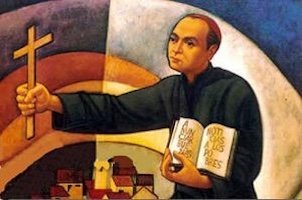
Saint Anthony Mary Claret is the Founder of the Claretian Fathers, or the Congregation of the Sons of the Immaculate Heart of Mary. Born in 1807 in Spain, he was a very pious child. He later wrote that, already at the age of five, my little heart trembled at the thought of hell, and I said to myself: Will those who fall into hell never stop suffering? No, never. Will they always suffer? Yes, always. This thought remained profoundly engraved in my mind, and I can say that it is ever present to me. That is what has animated me to work for the conversion of sinners. Why? Because I received [from God] so tender a heart that I cannot see a misfortune without assisting it. The young Anthony practiced his father's trade, the weaving of fabrics, in which he excelled, until one day in church, All the efforts I made not to voluntarily entertain thoughts of my trade were in vain; I was like a wheel turning with great speed, which cannot be stopped all at once... There were more machines running in my head than there are Saints on the altars. He entered the local seminary in the same year, 1829.
As a young priest he went to Rome to place himself at the disposition of the Congregation of the Propaganda; there the director of a retreat counseled him to enter the Society of Jesus. He did so but was obliged to leave it soon afterwards because of poor health. He returned to Spain, and for nine years preached everywhere the word of God and promoted the Catholic Press. In 1848 he founded a publishing house at Barcelona, and soon afterwards established his Claretian congregation of priests. The six priests of this Congregation had just received the formal approbation of the bishop of Vich, and completed a retreat at the Seminary in July of 1848, with the Exercises of Saint Ignatius; on August 11th, while their new Superior was preaching a mission to the clergy of the diocese, he received a royal decree nominating him Archbishop of Santiago, in Cuba. He was inclined to refuse it categorically and attempted to do so, but was not heard; he asked his five companions to pray for light for several days, then to advise him as to their reply — should he or not accept the nomination? They were unanimous in saying they believed he should accept, and he did.
For six years he dedicated himself to the organization and evangelization of his diocese. In Cuba he founded another new congregation, the Sisters of Mary Immaculate, dedicated to the instruction of the young. A School of Arts and Trades was opened there, and Latin America saw established its first common funds resources. Abuses vanished under his strict and persevering disciplinary measures. In Cuba an attempt was made on his life; he received a severe wound of the head which limited his preaching capacity for a time, and he was recalled to Spain, summoned by Queen Isabella II to replace her deceased confessor. He continued to travel to various places on the peninsula, preaching everywhere in Andalusia and elsewhere. In 1862, from September 12th until October 29th, during one royal visitation, one of the Queen's servants counted the sermons he had given — two hundred and five: 16 to the clergy, nine to the seminarians; 95 to the various groups of Sisters; thirty-five to the poor in the various houses of charity; and twenty-two others to the people in general in the churches. He created the Academy of Saint Michael for the Catholic intellectuals, called to sustain the influence of the Church; he founded popular libraries and saw to the diffusion of good literature; he accompanied the exiled Queen to Rome and took part in the First Vatican Council, 1869. Finally he settled in France, where he died in 1870.
He was commanded to write his life by his spiritual director; this he did, beginning in 1861. We are fortunate to possess this autobiography of an extraordinary soul, both contemplative and active in the love and service of God. It serves for the formation of missionaries, since his director told him it should be conceived with that purpose. In this book he wrote a paragraph which has become classic, to describe what an apostle of the Gospel should be. In it the paths he followed himself are made articulate:
A son of the Immaculate Heart of Mary is a man who is consumed with love and who sets on fire everything in his path. He is a man who unceasingly expends himself to light the fire of divine love in the world. Nothing stops him; he places his joy in privations, he undertakes all works for the glory of God; he embraces willingly every sacrifice, he is happy in the midst of calumnies; he exults in torments. He can think of but one thing — working, suffering, and seeking at all times the greater glory of God and the salvation of souls, to imitate Our Lord Jesus Christ.
Saint Antoine-Marie Claret: Autobiography. Translation from the Spanish by Rev. Léonor-Alban, F.S.C. Preface by Jean-Marie Lozano, C.M.F. (Les Éditions du soleil levant: Namur, 1961). Available in English with a biography, and a book narrating his miracles (Tan Books and Publishers: Rockford, 1985).
LAST-MODIFIED:20241019T145026Z SEQUENCE:63653940 X-ACCESS:1 X-HITS:34 X-COLOR:f0b80e X-SHOW-END-TIME:1 END:VEVENT BEGIN:VEVENT DTSTART;VALUE=DATE:20241024 DTEND;VALUE=DATE:20241025 UID:36EC4BAC-9A64-4001-96A9-DD702C899AED SUMMARY:St. Raphael CREATED:20221013T211126Z DTSTAMP:20221013T211126Z URL:https://www.stpaulsweymouth.org/component/dpcalendar/event/2070?calid=13 DESCRIPTION:St. Raphael Archangel\N\NThis holy Archangel identified himself to the exiled Jew Tobias as one of the Seven who stand before God (Tob. 12:15). His name means the healing of God, and he is thought to be the Angel who came down and agitated the water of the pool of Bethsaida in Jerusalem. The sick, who always lay around the pool, strove to be the first to enter the water afterwards, because that fortunate one was always cured. We read of this in the story of the paralytic cured by Jesus, who had waited patiently for thirty-eight years, unable to move when the occasion presented itself. (Cf. John 5:1-9)\NSaint Raphael is best known through the beautiful history of the two Tobias, father and son, exiled to Persia in the days of the Assyrian conquest in the eighth century before Christ. In their story, the Archangel plays the major role.\NThe father Tobias was a faithful son of Jacob and was old and worn out by his manifold good works; for many years he had assisted his fellow exiles in every possible way, even burying the slain of Israel during a persecution by Sennacherib, and continuing this practice despite the wrath that king manifested towards him. Having been stripped of all his possessions, he desired to have his son recover a substantial sum of money he had once lent to a member of his family in a distant city. He needed a companion for the young Tobias. God provided that guide in the Archangel Raphael, whom the son met providentially one day, in the person of a stranger from the very area where he was to go, in the country of the Medes. Raphael to all appearances was a young man like himself, who said his name was Azarias (Assistance of God). Everything went well, as proposed; the young Tobias recovered the sum and then was married, during their stay in Media, to the virtuous daughter of another relative, whom Providence had reserved for him.\NAll aspects of this journey had been thorny with difficulties, but the wise guide had found a way to overcome all of them. When a huge fish threatened to devour Tobias, camped on the shores of the Tigris, the guide told him how to remove it from the water, and the fish expired at his feet; then remedies and provisions were derived from this creature by the directives of Azarias. When the Angel led Tobias for lodging in the city of Rages, to the house of his kinsman Raguel, father of the beautiful Sara, the young man learned that seven proposed husbands had died on the very day of the planned marriage. How would Tobias fare? The Angel reassured him that this would not be his own fate, and told him to pray with his future spouse for three nights, that they might be blessed with a holy posterity. Sara was an only daughter, as Tobias was an only son, and she was endowed with a large heritage.\NDuring the absence of the young Tobias, his father had become blind when the droppings of a pigeon had fallen into his eyes. When the two travelers returned after an extended absence, which had cost his mother many tears, the young Tobias was deeply grieved to find his father unable to see him and his new daughter-in-law. But Raphael told the son how to cure his father's blindness by means of the gall of the fish; and after the remedy had proved efficacious, all of them rejoiced time in their blessings.\NWhen Tobias the son narrated his story and told his father that all their benefits had come to them through this stranger, both father and son wished to give Azarias half of the inheritance. Raphael declined and revealed his identity, saying he was sent to assist the family of the man who had never failed to obey and honor the blessed God of Israel. Raphael, before he disappeared, said to the family: It is honorable to reveal and confess the works of God. Prayer is good, with fasting and alms, more than to lay up treasures, for alms deliver from death and purge away sins, and cause the giver to find mercy and life everlasting... When thou didst pray with tears and didst bury the dead, and didst leave thy dinner to hide the dead by day in thy house, and bury them by night, I offered thy prayer to the Lord. And because thou wast acceptable to God, it was necessary that trials prove thee... I am the Angel Raphael, one of the seven who stand before the Lord. X-ALT-DESC;FMTTYPE=text/html: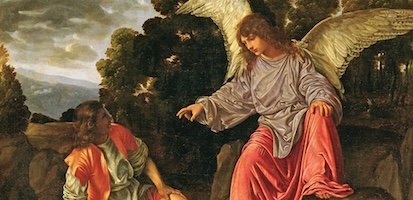
This holy Archangel identified himself to the exiled Jew Tobias as one of the Seven who stand before God (Tob. 12:15). His name means the healing of God, and he is thought to be the Angel who came down and agitated the water of the pool of Bethsaida in Jerusalem. The sick, who always lay around the pool, strove to be the first to enter the water afterwards, because that fortunate one was always cured. We read of this in the story of the paralytic cured by Jesus, who had waited patiently for thirty-eight years, unable to move when the occasion presented itself. (Cf. John 5:1-9)
Saint Raphael is best known through the beautiful history of the two Tobias, father and son, exiled to Persia in the days of the Assyrian conquest in the eighth century before Christ. In their story, the Archangel plays the major role.
The father Tobias was a faithful son of Jacob and was old and worn out by his manifold good works; for many years he had assisted his fellow exiles in every possible way, even burying the slain of Israel during a persecution by Sennacherib, and continuing this practice despite the wrath that king manifested towards him. Having been stripped of all his possessions, he desired to have his son recover a substantial sum of money he had once lent to a member of his family in a distant city. He needed a companion for the young Tobias. God provided that guide in the Archangel Raphael, whom the son met providentially one day, in the person of a stranger from the very area where he was to go, in the country of the Medes. Raphael to all appearances was a young man like himself, who said his name was Azarias (Assistance of God). Everything went well, as proposed; the young Tobias recovered the sum and then was married, during their stay in Media, to the virtuous daughter of another relative, whom Providence had reserved for him.
All aspects of this journey had been thorny with difficulties, but the wise guide had found a way to overcome all of them. When a huge fish threatened to devour Tobias, camped on the shores of the Tigris, the guide told him how to remove it from the water, and the fish expired at his feet; then remedies and provisions were derived from this creature by the directives of Azarias. When the Angel led Tobias for lodging in the city of Rages, to the house of his kinsman Raguel, father of the beautiful Sara, the young man learned that seven proposed husbands had died on the very day of the planned marriage. How would Tobias fare? The Angel reassured him that this would not be his own fate, and told him to pray with his future spouse for three nights, that they might be blessed with a holy posterity. Sara was an only daughter, as Tobias was an only son, and she was endowed with a large heritage.
During the absence of the young Tobias, his father had become blind when the droppings of a pigeon had fallen into his eyes. When the two travelers returned after an extended absence, which had cost his mother many tears, the young Tobias was deeply grieved to find his father unable to see him and his new daughter-in-law. But Raphael told the son how to cure his father's blindness by means of the gall of the fish; and after the remedy had proved efficacious, all of them rejoiced time in their blessings.
When Tobias the son narrated his story and told his father that all their benefits had come to them through this stranger, both father and son wished to give Azarias half of the inheritance. Raphael declined and revealed his identity, saying he was sent to assist the family of the man who had never failed to obey and honor the blessed God of Israel. Raphael, before he disappeared, said to the family: It is honorable to reveal and confess the works of God. Prayer is good, with fasting and alms, more than to lay up treasures, for alms deliver from death and purge away sins, and cause the giver to find mercy and life everlasting... When thou didst pray with tears and didst bury the dead, and didst leave thy dinner to hide the dead by day in thy house, and bury them by night, I offered thy prayer to the Lord. And because thou wast acceptable to God, it was necessary that trials prove thee... I am the Angel Raphael, one of the seven who stand before the Lord.
LAST-MODIFIED:20241019T145323Z SEQUENCE:63654117 X-ACCESS:1 X-HITS:44 X-COLOR:f0b80e X-SHOW-END-TIME:1 END:VEVENT BEGIN:VEVENT DTSTART;VALUE=DATE:20241025 DTEND;VALUE=DATE:20241026 UID:F4A5745B-DF2E-4DAC-8657-28EB3A12ED94 SUMMARY:Sts/ Chrysanthus & Daria CREATED:20221013T211126Z DTSTAMP:20221013T211126Z URL:https://www.stpaulsweymouth.org/component/dpcalendar/event/2072?calid=13 DESCRIPTION:Sts. Chrysanthus & Daria, Martyrs\N\NChrysanthus was the son of a Roman senator, born in Egypt. While still young he went with his father to Rome, where his superior intelligence was quickly appreciated. Convinced of the vanity of idol-worship, he undertook every means at his disposition to learn the truth and deliver his soul from the doubts afflicting him. An elderly gentlemen was pointed out to him as a sage, and Chrysanthus went to him with his questions. The old man, who was a Christian, had no difficulty in opening the eyes of the young neophyte; Chrysanthus instantly embraced the truth with ardor and became an apostle.\NHis father, at first astonished, became irritated and decided to bring his son back from what he called his superstitions and errors. No means were effectual for this purpose. Thus, influenced by his associates, the father locked him in his palace and sent a courtesan to seduce his purity.\NWhen the first one did not succeed, others were commissioned for the infamous task, and finally a vestal virgin, priestess of an idol regarded as the empire's bulwark, attempted every artifice to corrupt the young Christian. Instead, she herself became the conquest of grace. The two Christians saw themselves united by the bonds of faith, hope and charity, and determined to add to these holy chains those of a virginal marriage. This decision brought about liberty for Chrysanthus and gave him the means to continue his preaching of Christ. Many conversions among the officers of the Roman society with which he was already familiar, were the fruit of the apostolate of the young spouses, including that of the tribune Claudius, with his household and seventy soldiers.\NBut complaints began to be addressed to the prefect of Rome, who arrested the young couple. After enduring torments, Chrysanthus was shut up in the Mamertine prison, and Daria was sent to a house of ill fame. But the Lord watched over both of them as He had done over many others, and they surmounted their trials, intact and pure. To be done with them, the irritated emperor had them buried alive. It appears this torment was chosen in order to inflict on Daria the death reserved for unfaithful vestals. The principal relics of Chrysanthus and Daria are in the Abbey of Saint Avold in the diocese of Metz.\NLes Petits Bollandistes: Vies des Saints, by Msgr. Paul Guérin (Bloud et Barral: Paris, 1882), Vol. 12 X-ALT-DESC;FMTTYPE=text/html: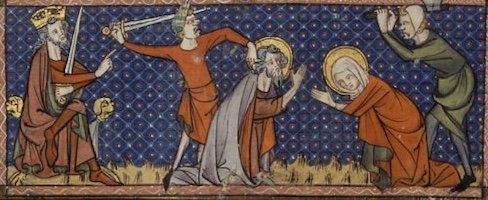
Chrysanthus was the son of a Roman senator, born in Egypt. While still young he went with his father to Rome, where his superior intelligence was quickly appreciated. Convinced of the vanity of idol-worship, he undertook every means at his disposition to learn the truth and deliver his soul from the doubts afflicting him. An elderly gentlemen was pointed out to him as a sage, and Chrysanthus went to him with his questions. The old man, who was a Christian, had no difficulty in opening the eyes of the young neophyte; Chrysanthus instantly embraced the truth with ardor and became an apostle.
His father, at first astonished, became irritated and decided to bring his son back from what he called his superstitions and errors. No means were effectual for this purpose. Thus, influenced by his associates, the father locked him in his palace and sent a courtesan to seduce his purity.
When the first one did not succeed, others were commissioned for the infamous task, and finally a vestal virgin, priestess of an idol regarded as the empire's bulwark, attempted every artifice to corrupt the young Christian. Instead, she herself became the conquest of grace. The two Christians saw themselves united by the bonds of faith, hope and charity, and determined to add to these holy chains those of a virginal marriage. This decision brought about liberty for Chrysanthus and gave him the means to continue his preaching of Christ. Many conversions among the officers of the Roman society with which he was already familiar, were the fruit of the apostolate of the young spouses, including that of the tribune Claudius, with his household and seventy soldiers.
But complaints began to be addressed to the prefect of Rome, who arrested the young couple. After enduring torments, Chrysanthus was shut up in the Mamertine prison, and Daria was sent to a house of ill fame. But the Lord watched over both of them as He had done over many others, and they surmounted their trials, intact and pure. To be done with them, the irritated emperor had them buried alive. It appears this torment was chosen in order to inflict on Daria the death reserved for unfaithful vestals. The principal relics of Chrysanthus and Daria are in the Abbey of Saint Avold in the diocese of Metz.
Les Petits Bollandistes: Vies des Saints, by Msgr. Paul Guérin (Bloud et Barral: Paris, 1882), Vol. 12
LAST-MODIFIED:20241019T145608Z SEQUENCE:63654282 X-ACCESS:1 X-HITS:19 X-COLOR:f0b80e X-SHOW-END-TIME:1 END:VEVENT BEGIN:VEVENT DTSTART;VALUE=DATE:20241026 DTEND;VALUE=DATE:20241027 UID:91177320-5A27-45BA-9D8A-232F1C5DA966 SUMMARY:St. Evaristus CREATED:20221013T211126Z DTSTAMP:20221013T211126Z URL:https://www.stpaulsweymouth.org/component/dpcalendar/event/2074?calid=13 DESCRIPTION:St. Evaristus Pope, Martyr\N\NSaint Evaristus succeeded Saint Anacletus on the throne of Saint Peter, elected during the second general persecution, under the reign of Domitian. That emperor no doubt did not know that the Christian pontificate was being perpetuated in the shadows of the catacombs. The text of the Liber Pontificalis, says of the new pope:\NEvaristus, born in Greece of a Jewish father named Juda, originally from the city of Bethlehem, reigned for thirteen years, six months and two days, under the reigns of Domitian, Nerva and Trajan, from the Consulate of Valens and Veter (96) until that of Gallus and Bradua (108). This pontiff divided among the priests the titles of the city of Rome. By a constitution he established seven deacons who were to assist the bishop and serve as authentic witnesses for him. During the three ordinations which he conducted in the month of December, he promoted six priests, two deacons and five bishops, destined for various churches. Evaristus received the crown of martyrdom. He was buried near the body of Blessed Peter in the Vatican, on the sixth day of the Calends of November (October 25, 108). The episcopal throne remained vacant for nineteen days.\NThe Bollandists explain two passages of this text as follows: Saint Anacletus had ordained twenty-five priests for the city of Rome; Saint Evaristus completed this institution by settling the boundaries of each of these titles, and filling the vacancies which probably occurred during the persecution of Diocletian. As for the decree by which he ordains that seven deacons make up the cortege of the bishop, we find in the first epistle of Saint Anacletus a text which helps us to grasp and better perceive the discipline of the early Church. There existed amid the diverse elements which composed it in its first years, proud minds, envious souls, ambitious hearts which could not bear the yoke of obedience, and who by their revolts and incessant detraction fatigued the patience of the Apostles. The deacons were to be the Pope's guards against their ill-intentioned projects.\NIt was at the same time as Saint Ignatius, the illustrious bishop of Antioch, that Pope Saint Evaristus gave his life by martyrdom. The acts of his martyrdom are lost, but we perceive that the same faith, heroism and devotion united the churches of the East and of the West. He is often represented with a sword because he was decapitated, or with a crib, because it is believed that he was born in Bethlehem, from which his father migrated.\NReflection: The disciples of the apostles, by assiduous meditation on heavenly things, were so rapt by foreshadowings of the life to come, that they seemed no longer to inhabit this world. If Christians esteem and set their hearts on earthly goods and lose sight of eternity, they are no longer animated by the spirit of the primitive Saints and have become children of this world, slaves to its vanities and to their own irregular passions. If we do not correct this disorder of our heart and conform our interior life, with its decisions and propensities, to the spirit of Christ, we cannot be heirs to His promises.\NLes Petits Bollandistes: Vies des Saints, by Msgr. Paul Guérin (Bloud et Barral: Paris, 1882), Vol. 12; Little Pictorial Lives of the Saints, a compilation based on Butler's Lives of the Saints and other sources by John Gilmary Shea (Benziger Brothers: New York, 1894) X-ALT-DESC;FMTTYPE=text/html:
Saint Evaristus succeeded Saint Anacletus on the throne of Saint Peter, elected during the second general persecution, under the reign of Domitian. That emperor no doubt did not know that the Christian pontificate was being perpetuated in the shadows of the catacombs. The text of the Liber Pontificalis, says of the new pope:
Evaristus, born in Greece of a Jewish father named Juda, originally from the city of Bethlehem, reigned for thirteen years, six months and two days, under the reigns of Domitian, Nerva and Trajan, from the Consulate of Valens and Veter (96) until that of Gallus and Bradua (108). This pontiff divided among the priests the titles of the city of Rome. By a constitution he established seven deacons who were to assist the bishop and serve as authentic witnesses for him. During the three ordinations which he conducted in the month of December, he promoted six priests, two deacons and five bishops, destined for various churches. Evaristus received the crown of martyrdom. He was buried near the body of Blessed Peter in the Vatican, on the sixth day of the Calends of November (October 25, 108). The episcopal throne remained vacant for nineteen days.
The Bollandists explain two passages of this text as follows: Saint Anacletus had ordained twenty-five priests for the city of Rome; Saint Evaristus completed this institution by settling the boundaries of each of these titles, and filling the vacancies which probably occurred during the persecution of Diocletian. As for the decree by which he ordains that seven deacons make up the cortege of the bishop, we find in the first epistle of Saint Anacletus a text which helps us to grasp and better perceive the discipline of the early Church. There existed amid the diverse elements which composed it in its first years, proud minds, envious souls, ambitious hearts which could not bear the yoke of obedience, and who by their revolts and incessant detraction fatigued the patience of the Apostles. The deacons were to be the Pope's guards against their ill-intentioned projects.
It was at the same time as Saint Ignatius, the illustrious bishop of Antioch, that Pope Saint Evaristus gave his life by martyrdom. The acts of his martyrdom are lost, but we perceive that the same faith, heroism and devotion united the churches of the East and of the West. He is often represented with a sword because he was decapitated, or with a crib, because it is believed that he was born in Bethlehem, from which his father migrated.
Reflection: The disciples of the apostles, by assiduous meditation on heavenly things, were so rapt by foreshadowings of the life to come, that they seemed no longer to inhabit this world. If Christians esteem and set their hearts on earthly goods and lose sight of eternity, they are no longer animated by the spirit of the primitive Saints and have become children of this world, slaves to its vanities and to their own irregular passions. If we do not correct this disorder of our heart and conform our interior life, with its decisions and propensities, to the spirit of Christ, we cannot be heirs to His promises.
Les Petits Bollandistes: Vies des Saints, by Msgr. Paul Guérin (Bloud et Barral: Paris, 1882), Vol. 12; Little Pictorial Lives of the Saints, a compilation based on Butler's Lives of the Saints and other sources by John Gilmary Shea (Benziger Brothers: New York, 1894)
LAST-MODIFIED:20241019T145919Z SEQUENCE:63654473 X-ACCESS:1 X-HITS:181 X-COLOR:f0b80e X-SHOW-END-TIME:1 END:VEVENT BEGIN:VEVENT DTSTART;VALUE=DATE:20241028 DTEND;VALUE=DATE:20241029 UID:532DFD2B-875D-4CED-A3A9-8826B773C40A SUMMARY:Sts. Simon & Jude CREATED:20221013T211126Z DTSTAMP:20221013T211126Z URL:https://www.stpaulsweymouth.org/component/dpcalendar/event/2076?calid=13 DESCRIPTION:Sts. Simon & Jude Apostles\N\NSimon was a simple Galilean, a brother of Jesus, as the ancients called one's close relatives — aunts, uncles, first cousins; he was one of the Saviour's four first cousins, with James the Less, Jude and Joseph, all sons of Mary, the wife of Alpheus, or Cleophas, either name being a derivative of the Aramaic Chalphai. The latter was the brother of Saint Joseph, according to tradition. All the sons of this family were raised at Nazareth near the Holy Family. (See the Gospel of Saint Matthew 13:53-58.) Simon, Jude and James were called by Our Lord to be Apostles, pillars of His Church, and Joseph the Just was His loyal disciple.\NSaint Simon the Zealot or the Zealous, was the name this Apostle bore among the twelve. He preached in Egypt, Mauritania (Spain), and Lybia, leaving behind him the fertile hills of Galilee, where he had been engaged in the healthful cultivation of the vineyards and olive gardens. He later rejoined his brother, Saint Jude, in Persia, where they labored and died together. At first they were respected by the king, for they had manifested power over two ferocious tigers who had terrorized the land. With the king, sixty thousand Persians became Christians, and churches rose over the ruins of the idolatrous temples.\NBut the ancient enemy, who never sleeps, rose up, and when the two went elsewhere the pagans commanded them to sacrifice to the sun. Both Apostles, just before that time, had seen Our Lord amid His Angels. Simon said to Jude, One of the Angels said to me, I will take you out of the temple and bring the building down upon their heads. I answered him, Let it not be so; perhaps some of them will be converted. They prayed for mercy for the people and offered their lives to God. Saint Simon told the crowd that their gods were only demons, and ordered them to come out of the statues, which they did, revealing themselves under hideous forms. But the idolaters fell on the Apostles and massacred them, while they blessed God and prayed for their murderers.\NSaint Jude has left us a short but powerful epistle, written after the death of his brother James, bishop of Jerusalem, and addressed to the new Christians being tempted by false brethren and heretics.\NReflection: Zeal is an ardent love which makes a man fearless in defense of God's honor, and earnest to make known the truth at all costs. If we desire to be children of the Saints, we must be zealous for the Faith.\NVie des Saints pour tous les jours de l'année, by Abbé L. Jaud (Mame: Tours, 1950). X-ALT-DESC;FMTTYPE=text/html:
Simon was a simple Galilean, a brother of Jesus, as the ancients called one's close relatives — aunts, uncles, first cousins; he was one of the Saviour's four first cousins, with James the Less, Jude and Joseph, all sons of Mary, the wife of Alpheus, or Cleophas, either name being a derivative of the Aramaic Chalphai. The latter was the brother of Saint Joseph, according to tradition. All the sons of this family were raised at Nazareth near the Holy Family. (See the Gospel of Saint Matthew 13:53-58.) Simon, Jude and James were called by Our Lord to be Apostles, pillars of His Church, and Joseph the Just was His loyal disciple.
Saint Simon the Zealot or the Zealous, was the name this Apostle bore among the twelve. He preached in Egypt, Mauritania (Spain), and Lybia, leaving behind him the fertile hills of Galilee, where he had been engaged in the healthful cultivation of the vineyards and olive gardens. He later rejoined his brother, Saint Jude, in Persia, where they labored and died together. At first they were respected by the king, for they had manifested power over two ferocious tigers who had terrorized the land. With the king, sixty thousand Persians became Christians, and churches rose over the ruins of the idolatrous temples.
But the ancient enemy, who never sleeps, rose up, and when the two went elsewhere the pagans commanded them to sacrifice to the sun. Both Apostles, just before that time, had seen Our Lord amid His Angels. Simon said to Jude, One of the Angels said to me, I will take you out of the temple and bring the building down upon their heads. I answered him, Let it not be so; perhaps some of them will be converted. They prayed for mercy for the people and offered their lives to God. Saint Simon told the crowd that their gods were only demons, and ordered them to come out of the statues, which they did, revealing themselves under hideous forms. But the idolaters fell on the Apostles and massacred them, while they blessed God and prayed for their murderers.
Saint Jude has left us a short but powerful epistle, written after the death of his brother James, bishop of Jerusalem, and addressed to the new Christians being tempted by false brethren and heretics.
Reflection: Zeal is an ardent love which makes a man fearless in defense of God's honor, and earnest to make known the truth at all costs. If we desire to be children of the Saints, we must be zealous for the Faith.
Vie des Saints pour tous les jours de l'année, by Abbé L. Jaud (Mame: Tours, 1950).
LAST-MODIFIED:20241019T150225Z SEQUENCE:63654659 X-ACCESS:1 X-HITS:14 X-COLOR:f0b80e X-SHOW-END-TIME:1 END:VEVENT BEGIN:VEVENT DTSTART;VALUE=DATE:20250609 DTEND;VALUE=DATE:20250610 UID:4E45CDD2-1553-4989-92AE-8E53CA5656BC SUMMARY:Sts. Primus and Felician CREATED:20221013T211126Z DTSTAMP:20221013T211126Z URL:https://www.stpaulsweymouth.org/component/dpcalendar/event/1723?calid=13 DESCRIPTION:Sts. Primus and Felician, Martyrs\N\NThese two martyrs were brothers who lived in Rome, heirs of a family of great wealth, toward the latter part of the third century. It was through the assiduous love of Pope Felix I that they had the happiness, in their mature years, of being converted to the Christian faith; afterwards they encouraged each other for many years in the practice of all good works. They seemed to possess nothing but for the poor, and often, during the persecutions, they spent both nights and days with the confessors in their dungeons, or at the places of their torments and execution. Some they exhorted to persevere; others who had fallen, they raised again. They made themselves the servants of all in Christ, that all might attain to salvation through Him.\NThough their zeal was very remarkable, they had escaped the dangers of many bloody persecutions; they had grown old in the heroic exercises of their virtue, when it pleased God to crown their labors with a glorious martyrdom. Primus was about 90 years old, when the pagans raised so great an outcry against the brothers that they were apprehended and put in chains. They were inhumanly scourged and tortured, and then sent to a town twelve miles from Rome to be chastised again, as avowed enemies to the gods, by a prefect who detested the Christians. There they were cruelly tortured to make them renounce their faith, both together and then separately, but the grace of God strengthened each of them. Felicianus was nailed by his hands and feet to a post and left without food or water for three days; Primus was beaten with clubs and burnt with torches. God spared them amidst these tortures, and wild beasts in an arena imitated their God's mercy. Finally, they were beheaded on June 9, 286.\NReflection. A soul which truly loves God regards all things of this world as nothing. The loss of goods, the disgrace of the world, torments, sickness, and other afflictions are bitter to the senses, but appear light to the one who loves God. If we cannot bear our trials with patience and silence, it is because we love Him only in words. One who is slothful and lukewarm complains of everything, and calls the lightest precepts hard, says Thomas a Kempis.\NLittle Pictorial Lives of the Saints, a compilation based on Butler's Lives of the Saints, and other sources by John Gilmary Shea (Benziger Brothers: New York, 1894). X-ALT-DESC;FMTTYPE=text/html:Sts. Primus and Felician, Martyrs
These two martyrs were brothers who lived in Rome, heirs of a family of great wealth, toward the latter part of the third century. It was through the assiduous love of Pope Felix I that they had the happiness, in their mature years, of being converted to the Christian faith; afterwards they encouraged each other for many years in the practice of all good works. They seemed to possess nothing but for the poor, and often, during the persecutions, they spent both nights and days with the confessors in their dungeons, or at the places of their torments and execution. Some they exhorted to persevere; others who had fallen, they raised again. They made themselves the servants of all in Christ, that all might attain to salvation through Him.
Though their zeal was very remarkable, they had escaped the dangers of many bloody persecutions; they had grown old in the heroic exercises of their virtue, when it pleased God to crown their labors with a glorious martyrdom. Primus was about 90 years old, when the pagans raised so great an outcry against the brothers that they were apprehended and put in chains. They were inhumanly scourged and tortured, and then sent to a town twelve miles from Rome to be chastised again, as avowed enemies to the gods, by a prefect who detested the Christians. There they were cruelly tortured to make them renounce their faith, both together and then separately, but the grace of God strengthened each of them. Felicianus was nailed by his hands and feet to a post and left without food or water for three days; Primus was beaten with clubs and burnt with torches. God spared them amidst these tortures, and wild beasts in an arena imitated their God's mercy. Finally, they were beheaded on June 9, 286.
Reflection. A soul which truly loves God regards all things of this world as nothing. The loss of goods, the disgrace of the world, torments, sickness, and other afflictions are bitter to the senses, but appear light to the one who loves God. If we cannot bear our trials with patience and silence, it is because we love Him only in words. One who is slothful and lukewarm complains of everything, and calls the lightest precepts hard, says Thomas a Kempis.
Little Pictorial Lives of the Saints, a compilation based on Butler's Lives of the Saints, and other sources by John Gilmary Shea (Benziger Brothers: New York, 1894).
LAST-MODIFIED:20240622T150131Z SEQUENCE:53373005 X-ACCESS:1 X-HITS:76 X-COLOR:f0b80e X-SHOW-END-TIME:1 END:VEVENT BEGIN:VEVENT DTSTART;VALUE=DATE:20250610 DTEND;VALUE=DATE:20250611 UID:F34B3335-EAE3-4251-9707-493777EA9E12 SUMMARY:St. Margaret CREATED:20221013T211126Z DTSTAMP:20221013T211126Z URL:https://www.stpaulsweymouth.org/component/dpcalendar/event/1725?calid=13 DESCRIPTION:St. Margaret, Queen of Scotland, Widow\N\NSaint Margaret's name signifies pearl, a fitting name, says Theodoric, her confessor and her first biographer, for one such as she. Her soul was like a precious pearl; a life spent amidst the luxury of a royal court never dimmed its luster or estranged it from Him who had bought it with His blood. She was the granddaughter of an English king; in 1070 she became the bride of Malcolm of Scotland, thereafter reigning as Queen until her death in 1093.\NHow did she become a Saint in a position where sanctity is so difficult? First, she burned with zeal for the house of God. She built churches and monasteries; she occupied herself by making vestments; she could not rest until she saw the laws of God and His Church observed throughout her realm. Next, amid a thousand cares, she found time to converse with God, ordering her piety with such sweetness and discretion that she won her husband to sanctity like her own. He would rise at night to pray with her; he loved to kiss the holy books she used, and sometimes would take them away with him, bringing them back later to his wife covered with jewels. Lastly, despite Saint Margaret's great virtue, she wept constantly over her sins and begged her confessor to correct her faults.\NSaint Margaret did not neglect her duties in the world even if she was not of the world. God blessed this marriage with eight children, six princes and two princesses who did not fail to respond to their mother's teaching and examples. Never was there a better mother; she spared no pains in their education, and their sanctity was the fruit of her prudence and her zeal. And never was there a better queen. She was the most trusted counselor of her husband, who always found her counsels of great utility, and she labored with him for the spiritual and material improvement of the land. Malcolm, after having pacified his domains for several years, saw to the building of the cathedral of Durham and founded a monastery at Dumfermlin.\NLiving in the midst of all the world's pleasures, Saint Margaret sighed for the true homeland and viewed death as a release. On her deathbed she learned that her husband and their eldest son had been slain in battle. She thanked God for sending this last affliction as a penance for her sins. After receiving Holy Viaticum, she repeated the prayer from the Missal, O Lord Jesus Christ, who by Thy death didst give life to the world, deliver me. And at the words deliver me, says her biographer, her soul took flight to Christ, in 1093, in her forty-seventh year.\NReflection. All perfection consists in keeping a guard upon the heart. Wherever we are, we can make a solitude in our hearts, detach ourselves from the world, and converse familiarly with God, as Saint Margaret did.\NLes Petits Bollandistes: Vies des Saints, by Msgr. Paul Guérin (Bloud et Barral: Paris, 1882), Vol. 6; Little Pictorial Lives of the Saints, a compilation based on Butler's Lives of the Saints, and other sources by John Gilmary Shea (Benziger Brothers: New York, 1894). X-ALT-DESC;FMTTYPE=text/html:St. Margaret, Queen of Scotland, Widow
Saint Margaret's name signifies pearl, a fitting name, says Theodoric, her confessor and her first biographer, for one such as she. Her soul was like a precious pearl; a life spent amidst the luxury of a royal court never dimmed its luster or estranged it from Him who had bought it with His blood. She was the granddaughter of an English king; in 1070 she became the bride of Malcolm of Scotland, thereafter reigning as Queen until her death in 1093.
How did she become a Saint in a position where sanctity is so difficult? First, she burned with zeal for the house of God. She built churches and monasteries; she occupied herself by making vestments; she could not rest until she saw the laws of God and His Church observed throughout her realm. Next, amid a thousand cares, she found time to converse with God, ordering her piety with such sweetness and discretion that she won her husband to sanctity like her own. He would rise at night to pray with her; he loved to kiss the holy books she used, and sometimes would take them away with him, bringing them back later to his wife covered with jewels. Lastly, despite Saint Margaret's great virtue, she wept constantly over her sins and begged her confessor to correct her faults.
Saint Margaret did not neglect her duties in the world even if she was not of the world. God blessed this marriage with eight children, six princes and two princesses who did not fail to respond to their mother's teaching and examples. Never was there a better mother; she spared no pains in their education, and their sanctity was the fruit of her prudence and her zeal. And never was there a better queen. She was the most trusted counselor of her husband, who always found her counsels of great utility, and she labored with him for the spiritual and material improvement of the land. Malcolm, after having pacified his domains for several years, saw to the building of the cathedral of Durham and founded a monastery at Dumfermlin.
Living in the midst of all the world's pleasures, Saint Margaret sighed for the true homeland and viewed death as a release. On her deathbed she learned that her husband and their eldest son had been slain in battle. She thanked God for sending this last affliction as a penance for her sins. After receiving Holy Viaticum, she repeated the prayer from the Missal, O Lord Jesus Christ, who by Thy death didst give life to the world, deliver me. And at the words deliver me, says her biographer, her soul took flight to Christ, in 1093, in her forty-seventh year.
Reflection. All perfection consists in keeping a guard upon the heart. Wherever we are, we can make a solitude in our hearts, detach ourselves from the world, and converse familiarly with God, as Saint Margaret did.
Les Petits Bollandistes: Vies des Saints, by Msgr. Paul Guérin (Bloud et Barral: Paris, 1882), Vol. 6; Little Pictorial Lives of the Saints, a compilation based on Butler's Lives of the Saints, and other sources by John Gilmary Shea (Benziger Brothers: New York, 1894).
LAST-MODIFIED:20240622T150354Z SEQUENCE:53373148 X-ACCESS:1 X-HITS:53 X-COLOR:f0b80e X-SHOW-END-TIME:1 END:VEVENT BEGIN:VEVENT DTSTART;VALUE=DATE:20250612 DTEND;VALUE=DATE:20250613 UID:50899AF4-7C0F-4FDE-AD3F-A1CE246C4306 SUMMARY:St. John of Sahagun CREATED:20221013T211126Z DTSTAMP:20221013T211126Z URL:https://www.stpaulsweymouth.org/component/dpcalendar/event/2660?calid=13 DESCRIPTION:St. John of Sahagun (or of San Fagundo), Confessor\N\NSaint John, one of the greatest preachers Spain has ever known, was born at St. Fagondez, and from his early youth gave signs of his future sanctity. He was the fruit of the ardent prayers of his parents after sixteen years of sterility; God blessed them afterwards with several children. He was entrusted to the Benedictines of the monastery of St. Fagondez for his education. He distributed to the poor virtually all the wealth accruing to him from several benefices, while he himself lived in great poverty; but soon he renounced all of these and obtained from his bishop permission to study theology in Salamanca. As a young priest he was already regarded as a Saint, so ardent was his devotion at Holy Mass. He entered the Order of Saint Augustine soon after he had bestowed on a poor man half of his clothing, and the following night experienced so great an increase in the love of God, that he referred to this as his conversion.\NHe was a model religious, and soon was entrusted with important offices in his Order — master of novices, definitor for the province, and prior of the convent of the city of Salamanca. He commanded well because he knew so well how to obey. When he observed in himself a slight defect in his obedience, he repaired it with extraordinary penances. Often while offering the adorable Sacrifice with tender piety, he enjoyed the sight of Jesus in glory, and held sweet colloquies with Him. The ineffable bliss of these moments caused him to spend much more time than the other priests in celebrating Holy Mass; and everyone was complaining. It was only when his Superior forbid him to delay in this way that he was obliged to acknowledge the favors he enjoyed.\NThe power of his personal holiness was seen in his preaching, which produced a complete reformation of morals in Salamanca. He had a special gift for reconciling differences, and was able to put an end to the quarrels and feuds among noblemen, at that period very common and fatal. The boldness shown by Saint John in reproving vice endangered his life. A powerful nobleman, having been corrected by the Saint for oppressing his vassals, sent two assassins to slay him; but the remarkable holiness of the Saint's aspect, result of the peace constantly reigning in his soul, struck such awe into their minds that they could not execute their purpose, and humbly begged his forgiveness. The nobleman himself, falling sick, was brought to repentance, and recovered his health by the prayers of the Saint whom he had endeavored to murder.\NSaint John was also very zealous in denouncing the vices of impurity, and it was in defense of holy purity that he met his death. A lady of noble birth but evil life, whose companion in sin he had converted, contrived to administer a fatal poison to the Saint. After several months of terrible suffering, borne with unvarying patience, Saint John went to his reward on June 11, 1479. This painful death and the cause for which he suffered it, have caused several of his historians and panegyrists to say that he won a martyr's crown. A great many striking miracles followed at his tomb and elsewhere, even by the simple invocation of his name. He was canonized in 1690 by Pope Alexander VIII.\NReflection. All men desire peace, but only those enjoy it who, like Saint John, are completely dead to themselves, and bear all things with love for Christ.\NLes Petits Bollandistes: Vies des Saints, by Msgr. Paul Guérin (Bloud et Barral: Paris, 1882), Vol. 6; Little Pictorial Lives of the Saints, a compilation based on Butler's Lives of the Saints, and other sources by John Gilmary Shea (Benziger Brothers: New York, 1894). X-ALT-DESC;FMTTYPE=text/html:St. John of Sahagun (or of San Fagundo), Confessor
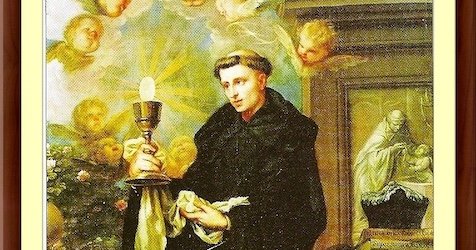
Saint John, one of the greatest preachers Spain has ever known, was born at St. Fagondez, and from his early youth gave signs of his future sanctity. He was the fruit of the ardent prayers of his parents after sixteen years of sterility; God blessed them afterwards with several children. He was entrusted to the Benedictines of the monastery of St. Fagondez for his education. He distributed to the poor virtually all the wealth accruing to him from several benefices, while he himself lived in great poverty; but soon he renounced all of these and obtained from his bishop permission to study theology in Salamanca. As a young priest he was already regarded as a Saint, so ardent was his devotion at Holy Mass. He entered the Order of Saint Augustine soon after he had bestowed on a poor man half of his clothing, and the following night experienced so great an increase in the love of God, that he referred to this as his conversion.
He was a model religious, and soon was entrusted with important offices in his Order — master of novices, definitor for the province, and prior of the convent of the city of Salamanca. He commanded well because he knew so well how to obey. When he observed in himself a slight defect in his obedience, he repaired it with extraordinary penances. Often while offering the adorable Sacrifice with tender piety, he enjoyed the sight of Jesus in glory, and held sweet colloquies with Him. The ineffable bliss of these moments caused him to spend much more time than the other priests in celebrating Holy Mass; and everyone was complaining. It was only when his Superior forbid him to delay in this way that he was obliged to acknowledge the favors he enjoyed.
The power of his personal holiness was seen in his preaching, which produced a complete reformation of morals in Salamanca. He had a special gift for reconciling differences, and was able to put an end to the quarrels and feuds among noblemen, at that period very common and fatal. The boldness shown by Saint John in reproving vice endangered his life. A powerful nobleman, having been corrected by the Saint for oppressing his vassals, sent two assassins to slay him; but the remarkable holiness of the Saint's aspect, result of the peace constantly reigning in his soul, struck such awe into their minds that they could not execute their purpose, and humbly begged his forgiveness. The nobleman himself, falling sick, was brought to repentance, and recovered his health by the prayers of the Saint whom he had endeavored to murder.
Saint John was also very zealous in denouncing the vices of impurity, and it was in defense of holy purity that he met his death. A lady of noble birth but evil life, whose companion in sin he had converted, contrived to administer a fatal poison to the Saint. After several months of terrible suffering, borne with unvarying patience, Saint John went to his reward on June 11, 1479. This painful death and the cause for which he suffered it, have caused several of his historians and panegyrists to say that he won a martyr's crown. A great many striking miracles followed at his tomb and elsewhere, even by the simple invocation of his name. He was canonized in 1690 by Pope Alexander VIII.
Reflection. All men desire peace, but only those enjoy it who, like Saint John, are completely dead to themselves, and bear all things with love for Christ.
Les Petits Bollandistes: Vies des Saints, by Msgr. Paul Guérin (Bloud et Barral: Paris, 1882), Vol. 6; Little Pictorial Lives of the Saints, a compilation based on Butler's Lives of the Saints, and other sources by John Gilmary Shea (Benziger Brothers: New York, 1894).
LAST-MODIFIED:20250531T174100Z SEQUENCE:83017774 X-ACCESS:1 X-HITS:28 X-COLOR:f0b80e X-SHOW-END-TIME:1 END:VEVENT BEGIN:VEVENT DTSTART;VALUE=DATE:20250612 DTEND;VALUE=DATE:20250613 UID:2FA7EB46-8669-4BDB-B885-AF52EC783F11 SUMMARY:Sts. Basilides, Cyrinus, Nabor & Nazarius CREATED:20221013T211126Z DTSTAMP:20221013T211126Z URL:https://www.stpaulsweymouth.org/component/dpcalendar/event/2662?calid=13 DESCRIPTION:Sts. Basilides, Cyrinus, Nabor & Nazarius, Martyrs\N\NThese saints are yet another example to us of the life we are called to live as Christians. Namely, we are called to devote our entire lives to God and His Church. While many of us will never suffer death for the Faith, we must be willing to endure all things so long as we keep the Faith and reach Heaven. These saints, like so many others, help us put that into perspective in our lives in this modern world.Liturgia Latina summarizes their lives:\NThese saints, Roman soldiers, noble by birth and illustrious by their virtues, became Christians under Diocletian. Arrested and cast into prison, they were condemned to death and beheaded. Their bodies were thrown to the wild beasts who respected them; they were buried with honour by the Christians.\NThe Traditional Reading at Matins shows the courage of these martyrs:\NBasilides, Cyrinus, Nabor, and Nazarius were Roman soldiers of illustrious birth and valour. Having embraced the Christian religion, and being found publishing that Christ is the Son of God, they were arrested by Aurelius, prefect of Rome, under Diocletian. As they despised his orders to sacrifice to the gods, they were committed to prison. While they were at prayer there, a brilliant light broke forth before the eyes of all present and shone in all the prison. Marcellus, the gaoler, and many others were moved by this heavenly glory to believe in the Lord Christ. Having gone forth from the prison, they were afterwards thrown in again, by the emperor Maximian, who caused them, first of all, to be beaten with scorpions, for having, despite his orders, continued to have ever in their mouth that there is but one Christ, one God, one Lord, and so they were laden with chains. Thence, on the seventh day, they were brought out, and set before the emperor, and there still persisting in mocking at the vain idols, and declaring Jesus Christ to be God, they were condemned to death and beheaded. Their bodies were given to wild beasts to be devoured, but as these refused to touch them, the Christians took them and buried them honourably.\NThey suffered and died for the faith around the year 303 AD.Collect:O Lord, may the keeping of this festival of the heavenly birthday of Thy holy martyrs, Basilides, Cyrinus, Nabor and Nazarius, shed brightness on our lives; and may the eternal glory granted them, be increased by the devout service we pay Thee. X-ALT-DESC;FMTTYPE=text/html:Sts. Basilides, Cyrinus, Nabor & Nazarius, Martyrs
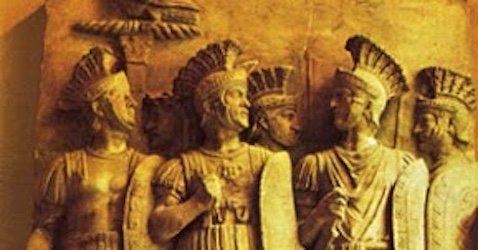
These saints are yet another example to us of the life we are called to live as Christians. Namely, we are called to devote our entire lives to God and His Church. While many of us will never suffer death for the Faith, we must be willing to endure all things so long as we keep the Faith and reach Heaven. These saints, like so many others, help us put that into perspective in our lives in this modern world.
Liturgia Latina summarizes their lives:
These saints, Roman soldiers, noble by birth and illustrious by their virtues, became Christians under Diocletian. Arrested and cast into prison, they were condemned to death and beheaded. Their bodies were thrown to the wild beasts who respected them; they were buried with honour by the Christians.
The Traditional Reading at Matins shows the courage of these martyrs:
Basilides, Cyrinus, Nabor, and Nazarius were Roman soldiers of illustrious birth and valour. Having embraced the Christian religion, and being found publishing that Christ is the Son of God, they were arrested by Aurelius, prefect of Rome, under Diocletian. As they despised his orders to sacrifice to the gods, they were committed to prison. While they were at prayer there, a brilliant light broke forth before the eyes of all present and shone in all the prison. Marcellus, the gaoler, and many others were moved by this heavenly glory to believe in the Lord Christ. Having gone forth from the prison, they were afterwards thrown in again, by the emperor Maximian, who caused them, first of all, to be beaten with scorpions, for having, despite his orders, continued to have ever in their mouth that there is but one Christ, one God, one Lord, and so they were laden with chains. Thence, on the seventh day, they were brought out, and set before the emperor, and there still persisting in mocking at the vain idols, and declaring Jesus Christ to be God, they were condemned to death and beheaded. Their bodies were given to wild beasts to be devoured, but as these refused to touch them, the Christians took them and buried them honourably.
They suffered and died for the faith around the year 303 AD.
Collect:
O Lord, may the keeping of this festival of the heavenly birthday of Thy holy martyrs, Basilides, Cyrinus, Nabor and Nazarius, shed brightness on our lives; and may the eternal glory granted them, be increased by the devout service we pay Thee.
St. Anthony of Padua, Confessor
Born in Lisbon, Portugal, in 1195, Fernando de Bouillon was of a noble family related to the famous Godefroy de Bouillon, founder and first sovereign of the Latin Kingdom of Jerusalem, who at the close of the Crusade of 1099 had refused to wear a crown, there where Christ had worn one of thorns.
Favored by nature and grace, Fernand resolved at the age of fifteen to leave the world and consecrate himself to God in the Order of Canons Regular of Saint Augustine. No flattery, threat or caress of his relatives could persuade him to leave that holy refuge. He asked to be transferred to another convent to avoid the family's solicitations, and was sent to Coimbra. Still young, his sanctity became evident through miracles; he cured a poor religious whom the devil was obsessing, by covering him with his cloak.
When this young monk decided, after witnessing the return of the martyred remains of five Franciscans who had gone to Africa, to join that Order so favored with the graces of martyrdom, the Augustinians were desolate but could not prevent his departure, for Saint Francis himself appeared to him in a vision in July 1220, and commanded him to leave. He was then sent by the Franciscans to Africa, but two years later was obliged to return to Italy because of sickness; thus he was deprived of the martyr's crown he would have been happy to receive.
In 1222 Anthony, as he was now called, went with other Brothers and some Dominican friars to be ordained at Forli. There Fra Antonio rose under obedience to preach for the first time to the religious, and took for his theme the text of Saint Paul: Christ chose for our sake to become obedient unto death. As the discourse proceeded, the Hammer of Heretics, the Ark of the Testament, the eldest son of Saint Francis, stood revealed in all his sanctity, learning, and eloquence before his rapt and astonished brethren. He had been serving in the humblest offices of his community; now he was summoned to emerge from this obscurity. And then for nine years France, Italy, and Sicily heard his voice and saw his miracles, whose numbers can scarcely be counted. A crowd to which he was preaching outdoors one day, when the church was too small to hold all who came to hear him, amidst thunder and lightning felt not one drop of water fall upon them, while all around them the rain poured down. And men's hearts turned to God.
We may wonder why we always see Saint Anthony with the Child Jesus in his arms. The account of this heavenly visitation was told only after his death, at the official process concerning his virtues and miracles. It was narrated by the man who witnessed the marvel in question; the Saint himself had never spoken of it. Saint Anthony was in the region of Limoges in France, and was offered hospitality, rest and silence by this businessman of the region, in his country manor. He was given a room apart, to permit him to pray in peace; but during the night his host looked toward his lighted window and saw in the brilliance a little Infant of marvelous beauty in the arms of the Saint, with His own around the Friar's neck. The witness trembled at the sight, and in the morning Saint Anthony, to whom it had been revealed that his host had seen the visitation, called him and enjoined him not to tell it as long as he was alive. The town near Limoges where this occurred remains unknown; the original account of the inquiry does not name it, but says that the man in question narrated it, with tears, after Saint Anthony's death.
After a number of years of teaching of theology, unceasing preaching and writing, Saint Anthony, whose health was never strong, was spending a short time of retreat in a hermitage near Padua. He was overcome one day with a sudden weakness, which prevented him from walking. It progressed so rapidly that it was evident his last days had arrived. He died at the age of thirty-six, after ten years with the Canons Regular and eleven with the Friars Minor, on June 13, 1231. The voices of children were heard crying in the streets of Padua, Our father, Saint Anthony, is dead. The following year, the church bells of Lisbon rang without ringers, while in Rome one of its sons was inscribed among the Saints of God.
Reflection. Let us love to pray and labor unseen, and cherish in the secret of our hearts the graces of God and the growth of our immortal souls. Like Saint Anthony, let us attend to this first of all and leave the rest to God.
Les Petits Bollandistes: Vies des Saints, by Msgr. Paul Guérin (Bloud et Barral: Paris, 1882), Vol. 6; Little Pictorial Lives of the Saints, a compilation based on Butler's Lives of the Saints, and other sources by John Gilmary Shea (Benziger Brothers: New York, 1894).
LAST-MODIFIED:20250531T174627Z SEQUENCE:83018101 X-ACCESS:1 X-HITS:24 X-COLOR:f0b80e X-SHOW-END-TIME:1 END:VEVENT BEGIN:VEVENT DTSTART;VALUE=DATE:20250614 DTEND;VALUE=DATE:20250615 UID:88E17AA0-9D69-4D69-8759-5C20B84E8541 SUMMARY:St. Basil CREATED:20221013T211126Z DTSTAMP:20221013T211126Z URL:https://www.stpaulsweymouth.org/component/dpcalendar/event/2666?calid=13 DESCRIPTION:St. Basil the Great, Bishop, Confessor, and Doctor of the Church\N\NSaint Basil was born in Asia Minor. Two of his brothers became bishops, and with his mother and his sister, are honored as Saints. He studied with great success in Athens, where he formed a tender and perpetual friendship with Saint Gregory Nazianzen. He then taught oratory. The study of philosophy had already raised him above all worldly ambition, and dreading the honors of the world, he gave up all things to become the father of monastic life in the East. His older sister, Saint Macrina, encouraged him when he abandoned the greater part of his inheritance.\NHe retired into Pontus, where his sister was Superior of a convent, into which his mother also had entered; there he founded a monastery on the opposite side of the river from the convent, and governed it for four years, from 358 to 362. He founded several other religious houses in the same region, both for men and for women. It was for them that he composed his ascetic works, including his famous Rule, still followed by the monks of the Orient.\NHe then resigned, leaving his office to his brother, Saint Peter of Sebastus, to retire in prayer. Saint Gregory came to join his friend for a time, in response to his invitation. Ever afterwards, Basil would recall with regret the peace and happiness they had enjoyed, singing Psalms, studying Scripture, keeping vigil in prayer, and disciplining their flesh by manual work. It was only in 363 that this holy hermit was ordained a priest by Eusebius of Caesarea in Cappadocia.\NThe Arian heretics, supported by the court, were then persecuting the Church, and Basil was summoned from his retirement by his bishop to give aid against them. His energy and zeal soon mitigated the disorders of the Church, and his solid and eloquent words silenced the heretics. On the death of Eusebius, he was chosen Bishop of Caesarea. His commanding character, his firmness and energy, his learning and eloquence, seconded by his humility and the great austerity of his life, made him a model for bishops. He founded in Caesarea a vast hospital, which Saint Gregory called a new city and which remained in existence for long decades. He went there often to console the suffering, and help them to make good use of their pains.\NWhen Saint Basil was summoned by the emperor Valentius to admit the Arians to Communion, the prefect in charge, finding that soft words had no effect, said to him, Are you mad, that you resist the will before which the whole world bows? Do you not dread the wrath of the emperor, nor exile, nor death? No, said Basil calmly; he who has nothing to lose need not dread loss of goods; you cannot exile me, for the whole earth is my home; as for death, it would be the greatest kindness you could bestow upon me; torments cannot harm me; one blow would end both my frail life and my sufferings. The prefect answered, Never has anyone dared to address me thus. Perhaps, suggested Basil, you never before measured your strength with a Christian bishop. The emperor desisted from his commands.\NSaint Basil's entire life was one of suffering, both physical and moral; he lived amidst jealousies, misunderstandings and seeming disappointments. But he sowed the seed which bore good fruit in the future generations. He was God's instrument to resist the Arian and other heretics in the East, and to restore the spirit of discipline and fervor in the Church. He died peacefully in 379 at the age of fifty-one, and is venerated as a Doctor of the Church.\NReflection. Fear God, says the Imitation of Christ, and thou shalt not need to fear any man.\NLes Petits Bollandistes: Vies des Saints, by Msgr. Paul Guérin (Bloud et Barral: Paris, 1882), Vol. 7; Little Pictorial Lives of the Saints, a compilation based on Butler's Lives of the Saints, and other sources by John Gilmary Shea (Benziger Brothers: New York, 1894). X-ALT-DESC;FMTTYPE=text/html:St. Basil the Great, Bishop, Confessor, and Doctor of the Church
Saint Basil was born in Asia Minor. Two of his brothers became bishops, and with his mother and his sister, are honored as Saints. He studied with great success in Athens, where he formed a tender and perpetual friendship with Saint Gregory Nazianzen. He then taught oratory. The study of philosophy had already raised him above all worldly ambition, and dreading the honors of the world, he gave up all things to become the father of monastic life in the East. His older sister, Saint Macrina, encouraged him when he abandoned the greater part of his inheritance.
He retired into Pontus, where his sister was Superior of a convent, into which his mother also had entered; there he founded a monastery on the opposite side of the river from the convent, and governed it for four years, from 358 to 362. He founded several other religious houses in the same region, both for men and for women. It was for them that he composed his ascetic works, including his famous Rule, still followed by the monks of the Orient.
He then resigned, leaving his office to his brother, Saint Peter of Sebastus, to retire in prayer. Saint Gregory came to join his friend for a time, in response to his invitation. Ever afterwards, Basil would recall with regret the peace and happiness they had enjoyed, singing Psalms, studying Scripture, keeping vigil in prayer, and disciplining their flesh by manual work. It was only in 363 that this holy hermit was ordained a priest by Eusebius of Caesarea in Cappadocia.
The Arian heretics, supported by the court, were then persecuting the Church, and Basil was summoned from his retirement by his bishop to give aid against them. His energy and zeal soon mitigated the disorders of the Church, and his solid and eloquent words silenced the heretics. On the death of Eusebius, he was chosen Bishop of Caesarea. His commanding character, his firmness and energy, his learning and eloquence, seconded by his humility and the great austerity of his life, made him a model for bishops. He founded in Caesarea a vast hospital, which Saint Gregory called a new city and which remained in existence for long decades. He went there often to console the suffering, and help them to make good use of their pains.
When Saint Basil was summoned by the emperor Valentius to admit the Arians to Communion, the prefect in charge, finding that soft words had no effect, said to him, Are you mad, that you resist the will before which the whole world bows? Do you not dread the wrath of the emperor, nor exile, nor death? No, said Basil calmly; he who has nothing to lose need not dread loss of goods; you cannot exile me, for the whole earth is my home; as for death, it would be the greatest kindness you could bestow upon me; torments cannot harm me; one blow would end both my frail life and my sufferings. The prefect answered, Never has anyone dared to address me thus. Perhaps, suggested Basil, you never before measured your strength with a Christian bishop. The emperor desisted from his commands.
Saint Basil's entire life was one of suffering, both physical and moral; he lived amidst jealousies, misunderstandings and seeming disappointments. But he sowed the seed which bore good fruit in the future generations. He was God's instrument to resist the Arian and other heretics in the East, and to restore the spirit of discipline and fervor in the Church. He died peacefully in 379 at the age of fifty-one, and is venerated as a Doctor of the Church.
Reflection. Fear God, says the Imitation of Christ, and thou shalt not need to fear any man.
Les Petits Bollandistes: Vies des Saints, by Msgr. Paul Guérin (Bloud et Barral: Paris, 1882), Vol. 7; Little Pictorial Lives of the Saints, a compilation based on Butler's Lives of the Saints, and other sources by John Gilmary Shea (Benziger Brothers: New York, 1894).
LAST-MODIFIED:20250531T175321Z SEQUENCE:83018515 X-ACCESS:1 X-HITS:25 X-COLOR:f0b80e X-SHOW-END-TIME:1 END:VEVENT BEGIN:VEVENT DTSTART;VALUE=DATE:20250615 DTEND;VALUE=DATE:20250616 UID:BAC9DB75-3522-4527-8418-D675841A3924 SUMMARY:St. Vitus (Guy), Modestus and Crescentia CREATED:20221013T211126Z DTSTAMP:20221013T211126Z URL:https://www.stpaulsweymouth.org/component/dpcalendar/event/2668?calid=13 DESCRIPTION:St. Vitus (Guy), Modestus and Crescentia, Martyrs\N\NSaint Vitus, sometimes called Guy, was a child nobly born, who had the happiness to be instructed in the Faith under the tutelage of his Christian nurse, Crescentia, and Modestus, his preceptor. His father was not aware of his baptism. The boy received the gift of miracles. Before he reached the age of twelve, Valerian came to Sicily representing Diocletian, less to be governor of that island than persecutor of Christians. Vitus was denounced to him as one of them, and Valerian sent for his father, telling him to use his paternal authority to bring his son into line, and have him practice the religion of the empire. Hylas promised to do so.\NFinding Vitus unmoved by his tears and embraces, his warnings of what he would lose if he did not acquiesce to the emperor's wishes, and every persuasion based on the grief his son would cause him by continuing to adore a man who died on an ignominious cross, Hylas delivered Vitus up to Valerian. The governor in turn could not change this child's mind; when Valerian asked him why he resisted his father's will and did not submit to the emperor's laws, Vitus answered, I only disobey the emperors and my father to obey God, my sovereign Lord and first Father. He did not fear chastisement, he said, or death, and would gladly endure all things rather than adore demons, the sworn enemies of men.\NValerian ordered that he be scourged; but the arms of the executioners grew limp, and even the hand of Valerian, which he had raised to give the command, withered. They accused him of being a magician, but Saint Vitus cured them, to show them that the spirit of Jesus Christ is one of gentleness, and that His true disciples have only love for all their enemies. Hylas, his father, furious at his son's refusal to comply with all efforts to change him, resolved to put him to death. But Modestus, his tutor, was told by an Angel to flee with him and his nurse, Crescentia, to Italy.\NThere all three would win the crown of martyrdom. Diocletian himself, hearing of the miracles of Saint Vitus, sent for him but then imprisoned him, after Vitus had delivered the emperor's son from a demon, but had refused to deny Jesus Christ. A furious lion would not harm the young Christian, but lay down at his feet and licked them. When he and his two Christian preceptors were attached to racks and tortured, their protecting Angel released them, but not until after lightning had struck the idol temples and caused them to fall, amidst a terrible storm. Many idolater among the spectators were converted on this occasion. They were set free after this incident, but Saint Vitus prayed that their souls might finally be released also, and his prayer was answered. They were buried at the place to which they had first come in Italy, in the kingdom of Naples.\NLes Petits Bollandistes: Vies des Saints, by Msgr. Paul Guérin (Bloud et Barral: Paris, 1882), Vol. 7 X-ALT-DESC;FMTTYPE=text/html:St. Vitus (Guy), Modestus and Crescentia, Martyrs
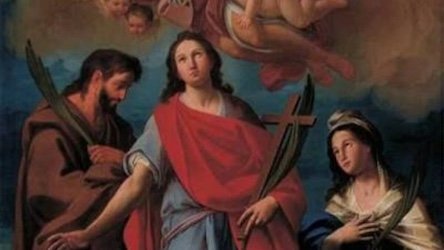
Saint Vitus, sometimes called Guy, was a child nobly born, who had the happiness to be instructed in the Faith under the tutelage of his Christian nurse, Crescentia, and Modestus, his preceptor. His father was not aware of his baptism. The boy received the gift of miracles. Before he reached the age of twelve, Valerian came to Sicily representing Diocletian, less to be governor of that island than persecutor of Christians. Vitus was denounced to him as one of them, and Valerian sent for his father, telling him to use his paternal authority to bring his son into line, and have him practice the religion of the empire. Hylas promised to do so.
Finding Vitus unmoved by his tears and embraces, his warnings of what he would lose if he did not acquiesce to the emperor's wishes, and every persuasion based on the grief his son would cause him by continuing to adore a man who died on an ignominious cross, Hylas delivered Vitus up to Valerian. The governor in turn could not change this child's mind; when Valerian asked him why he resisted his father's will and did not submit to the emperor's laws, Vitus answered, I only disobey the emperors and my father to obey God, my sovereign Lord and first Father. He did not fear chastisement, he said, or death, and would gladly endure all things rather than adore demons, the sworn enemies of men.
Valerian ordered that he be scourged; but the arms of the executioners grew limp, and even the hand of Valerian, which he had raised to give the command, withered. They accused him of being a magician, but Saint Vitus cured them, to show them that the spirit of Jesus Christ is one of gentleness, and that His true disciples have only love for all their enemies. Hylas, his father, furious at his son's refusal to comply with all efforts to change him, resolved to put him to death. But Modestus, his tutor, was told by an Angel to flee with him and his nurse, Crescentia, to Italy.
There all three would win the crown of martyrdom. Diocletian himself, hearing of the miracles of Saint Vitus, sent for him but then imprisoned him, after Vitus had delivered the emperor's son from a demon, but had refused to deny Jesus Christ. A furious lion would not harm the young Christian, but lay down at his feet and licked them. When he and his two Christian preceptors were attached to racks and tortured, their protecting Angel released them, but not until after lightning had struck the idol temples and caused them to fall, amidst a terrible storm. Many idolater among the spectators were converted on this occasion. They were set free after this incident, but Saint Vitus prayed that their souls might finally be released also, and his prayer was answered. They were buried at the place to which they had first come in Italy, in the kingdom of Naples.
Les Petits Bollandistes: Vies des Saints, by Msgr. Paul Guérin (Bloud et Barral: Paris, 1882), Vol. 7
LAST-MODIFIED:20250531T175232Z SEQUENCE:83018466 X-ACCESS:1 X-HITS:183 X-COLOR:f0b80e X-SHOW-END-TIME:1 END:VEVENT BEGIN:VEVENT DTSTART;VALUE=DATE:20250617 DTEND;VALUE=DATE:20250618 UID:5C54F1BC-9608-4F53-B34F-B2BF6F74C1B5 SUMMARY:St. Gregory CREATED:20221013T211126Z DTSTAMP:20221013T211126Z URL:https://www.stpaulsweymouth.org/component/dpcalendar/event/2670?calid=13 DESCRIPTION:St. Gregory Barbarigo, Bishop, Confessor\N\NGregory was born in 1625 to a Venetian noble family which had two doges and several senators in its history, his father among the latter, and would give the Church three other cardinals. He received a typical education in mathematics, philosophy, and the classical languages, and while still quite young, served as secretary to a Venetian ambassador named Aloise Contarini. While accompanying the ambassador to Münster for the negotiations that led to the signing of the Peace of Westphalia, which ended the Thirty Years’ War in the Holy Roman Empire, he became friends with one of the papal nuncios, Archbishop Fabio Chigi. In 1652, Chigi was made a cardinal; the following year, Gregory came to visit him in Rome, and received his encouragement to embark on a career in the Church.\NAfter obtaining the prestigious laurea utriusque (a degree in both civil and canon law), Barbarigo was ordained to the priesthood in his native city, but soon called to Rome by Chigi, who had been elected Pope with the name Alexander VII in 1655. After two years of distinguished service to the papacy, noteworthy especially for his charity to the poor and distressed, he was appointed bishop of Bergamo in Lombardy, which was then a territory of the Republic of Venice. There also he distinguished himself in his office, personally visiting all of the nearly 280 parishes in his diocese. In 1660, he was elevated to the cardinalate, and four years later, transferred to the diocese of Padua, far closer to his native place. Continuing as a model bishop, he visited all 320 of his parishes, and exercised the same pastoral charity for the poor that he had in Rome, even, on one occasion, selling his own bed. For these reason, he was routinely referred to a second St Charles Borromeo.\NPopular devotion to the holy bishop led to a process for his canonization, which was formally introduced at Rome almost exactly 25 years after his death. In 1725, his remains were exhumed, and found to be in a remarkably good state of preservation, though not miraculously so. He was beatified in 1751 by one of the great experts on the subject of canonizations, Pope Benedict XIV, after which his cause stalled for over a century and a half.\NAngelo Roncalli, the future Pope St John XXIII, was ordained a priest in 1904 for St Gregory’s first diocese, Bergamo. Both as priest and bishop, he had a great admiration for and devotion to the holy cardinal, and in 1911, he signed a petition to Pope St Pius X (an alumnus of the diocesan seminary of Padua, and former patriarch of Venice), asking that Barbarigo’s cause be renewed. A decree to that effect was issued the following year, and the cause resumed. Roncalli himself became patriarch of Venice in 1953, from which see he was elected to the papacy in 1958; as Pope, he would bring the cause to completion by canonizing St Gregory in May of 1960. X-ALT-DESC;FMTTYPE=text/html:St. Gregory Barbarigo, Bishop, Confessor
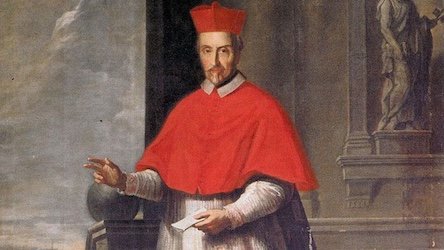
Gregory was born in 1625 to a Venetian noble family which had two doges and several senators in its history, his father among the latter, and would give the Church three other cardinals. He received a typical education in mathematics, philosophy, and the classical languages, and while still quite young, served as secretary to a Venetian ambassador named Aloise Contarini. While accompanying the ambassador to Münster for the negotiations that led to the signing of the Peace of Westphalia, which ended the Thirty Years’ War in the Holy Roman Empire, he became friends with one of the papal nuncios, Archbishop Fabio Chigi. In 1652, Chigi was made a cardinal; the following year, Gregory came to visit him in Rome, and received his encouragement to embark on a career in the Church.
After obtaining the prestigious laurea utriusque (a degree in both civil and canon law), Barbarigo was ordained to the priesthood in his native city, but soon called to Rome by Chigi, who had been elected Pope with the name Alexander VII in 1655. After two years of distinguished service to the papacy, noteworthy especially for his charity to the poor and distressed, he was appointed bishop of Bergamo in Lombardy, which was then a territory of the Republic of Venice. There also he distinguished himself in his office, personally visiting all of the nearly 280 parishes in his diocese. In 1660, he was elevated to the cardinalate, and four years later, transferred to the diocese of Padua, far closer to his native place. Continuing as a model bishop, he visited all 320 of his parishes, and exercised the same pastoral charity for the poor that he had in Rome, even, on one occasion, selling his own bed. For these reason, he was routinely referred to a second St Charles Borromeo.
Popular devotion to the holy bishop led to a process for his canonization, which was formally introduced at Rome almost exactly 25 years after his death. In 1725, his remains were exhumed, and found to be in a remarkably good state of preservation, though not miraculously so. He was beatified in 1751 by one of the great experts on the subject of canonizations, Pope Benedict XIV, after which his cause stalled for over a century and a half.
Angelo Roncalli, the future Pope St John XXIII, was ordained a priest in 1904 for St Gregory’s first diocese, Bergamo. Both as priest and bishop, he had a great admiration for and devotion to the holy cardinal, and in 1911, he signed a petition to Pope St Pius X (an alumnus of the diocesan seminary of Padua, and former patriarch of Venice), asking that Barbarigo’s cause be renewed. A decree to that effect was issued the following year, and the cause resumed. Roncalli himself became patriarch of Venice in 1953, from which see he was elected to the papacy in 1958; as Pope, he would bring the cause to completion by canonizing St Gregory in May of 1960.
LAST-MODIFIED:20250531T175944Z SEQUENCE:83018898 X-ACCESS:1 X-HITS:42 X-COLOR:f0b80e X-SHOW-END-TIME:1 END:VEVENT BEGIN:VEVENT DTSTART;VALUE=DATE:20250618 DTEND;VALUE=DATE:20250619 UID:586A22F1-364C-4263-9A71-6E594E2B5887 SUMMARY:St. Ephrem CREATED:20221013T211126Z DTSTAMP:20221013T211126Z URL:https://www.stpaulsweymouth.org/component/dpcalendar/event/2672?calid=13 DESCRIPTION:St. Ephrem Deacon, Confessor and Doctor of the Church\N\NMany wonderful lessons can be derived from the life of this Saint, known in particular for his unfailing and remarkable humility. Born at Nisibe in Syria, his forebears were poor folk, and he as a child tended the herds in the fields. Saint Ephrem would be baptized only as a young adult.\NOne day, while still an adolescent, he pursued the only cow of a neighbor, throwing stones at the poor beast to see it run, until it fell exhausted and died. To add to his fault, he denied having seen the animal when its owner came to look for it. All his life he wept over this double prevarication, and later he related to the religious who were his followers how he was punished for it: About a month later, he was with a shepherd who drank too much one evening, and through neglect lost the sheep of the owner's flock when wolves entered into the fold. Ephrem was taken to prison with the shepherd and confined there. From the stories his companions there narrated, he realized that they too were detained for crimes not committed, but that they had committed others which had remained unpunished. Recognizing in these facts the effects of Divine Justice, he was warned to do penance by a severe Angel who appeared to him several times, helping him also to accept his chastisement. He was released after two months, but never forgot the lessons in humility he had received.\NNever did Saint Ephrem think himself anything other than a great sinner; we can read in his various writings his self-accusations and his confessions. He had the gift of tears and for years he wept, literally without ceasing, according to the testimony of Saint Gregory of Nyssa, who wrote: At times he was weeping over the sins of men, and again over his own. His sighs succeeded his tears, and then brought them forth again. It was also said that the tears he shed so profusely, instead of disfiguring his face, seemed to augment its serenity and grace; all who had seen or heard Saint Ephrem were inspired to venerate his holiness.\NThe death of Saint James of Nisibe and of another Saint who had lived in a cell near his own solitary dwelling, decided him to make a pilgrimage to Edessa, a very Christian city, to honor the relics of the Apostle Saint Thomas, venerated there. While in Edessa he was ordained a deacon and attached permanently to the church of Edessa, then obliged under obedience to preach. The ministry of preaching is not usually that of deacons, but his virtue and capacities were recognized at once. He had not studied and knew only his own language, but he had absorbed Holy Scripture and profited from his intelligence of it. It is he who wrote: You do not understand all that you read there? If you were traveling and, being thirsty, came upon a spring of fresh water, would you be incensed because you could not drink all of it? No, you would be happy that, on another journey, the spring would still be there to quench your thirst.\NSaint Gregory of Nyssa remarked of the preaching of Saint Ephrem: Although his tongue was prompt and the words flowed from his mouth like a torrent, these were too slow to express his thoughts. For this reason he prayed God: Hold back, Lord, the waves of Your grace!' The sea of understanding which was seeking an outlet through his tongue bore heavily upon him, because the organs of speech did not suffice for what his mind presented to him, for the benefit of others. In the Syrian Liturgy, Saint Ephrem still is called the Harp of the Holy Spirit.\NAfter many years of good works, preaching and writing, for he also had great gifts of poetry and written discourse, he died a holy death in the year 378. This occurred one month after the death of Saint Basil, whom he had visited in Caesarea, wanting to profit from the renowned bishop's conversation and sermons. They had found great consolation in one another's company. Saint Ephrem was declared a Doctor of the Church by Pope Benedict XV in October of 1920.\NLes Petits Bollandistes: Vies des Saints, by Msgr. Paul Guérin (Bloud et Barral: Paris, 1882), Vol. 2 X-ALT-DESC;FMTTYPE=text/html:St. Ephrem Deacon, Confessor and Doctor of the Church
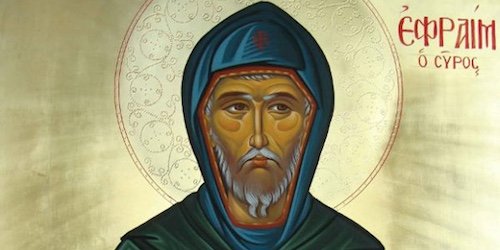
Many wonderful lessons can be derived from the life of this Saint, known in particular for his unfailing and remarkable humility. Born at Nisibe in Syria, his forebears were poor folk, and he as a child tended the herds in the fields. Saint Ephrem would be baptized only as a young adult.
One day, while still an adolescent, he pursued the only cow of a neighbor, throwing stones at the poor beast to see it run, until it fell exhausted and died. To add to his fault, he denied having seen the animal when its owner came to look for it. All his life he wept over this double prevarication, and later he related to the religious who were his followers how he was punished for it: About a month later, he was with a shepherd who drank too much one evening, and through neglect lost the sheep of the owner's flock when wolves entered into the fold. Ephrem was taken to prison with the shepherd and confined there. From the stories his companions there narrated, he realized that they too were detained for crimes not committed, but that they had committed others which had remained unpunished. Recognizing in these facts the effects of Divine Justice, he was warned to do penance by a severe Angel who appeared to him several times, helping him also to accept his chastisement. He was released after two months, but never forgot the lessons in humility he had received.
Never did Saint Ephrem think himself anything other than a great sinner; we can read in his various writings his self-accusations and his confessions. He had the gift of tears and for years he wept, literally without ceasing, according to the testimony of Saint Gregory of Nyssa, who wrote: At times he was weeping over the sins of men, and again over his own. His sighs succeeded his tears, and then brought them forth again. It was also said that the tears he shed so profusely, instead of disfiguring his face, seemed to augment its serenity and grace; all who had seen or heard Saint Ephrem were inspired to venerate his holiness.
The death of Saint James of Nisibe and of another Saint who had lived in a cell near his own solitary dwelling, decided him to make a pilgrimage to Edessa, a very Christian city, to honor the relics of the Apostle Saint Thomas, venerated there. While in Edessa he was ordained a deacon and attached permanently to the church of Edessa, then obliged under obedience to preach. The ministry of preaching is not usually that of deacons, but his virtue and capacities were recognized at once. He had not studied and knew only his own language, but he had absorbed Holy Scripture and profited from his intelligence of it. It is he who wrote: You do not understand all that you read there? If you were traveling and, being thirsty, came upon a spring of fresh water, would you be incensed because you could not drink all of it? No, you would be happy that, on another journey, the spring would still be there to quench your thirst.
Saint Gregory of Nyssa remarked of the preaching of Saint Ephrem: Although his tongue was prompt and the words flowed from his mouth like a torrent, these were too slow to express his thoughts. For this reason he prayed God: Hold back, Lord, the waves of Your grace!' The sea of understanding which was seeking an outlet through his tongue bore heavily upon him, because the organs of speech did not suffice for what his mind presented to him, for the benefit of others. In the Syrian Liturgy, Saint Ephrem still is called the Harp of the Holy Spirit.
After many years of good works, preaching and writing, for he also had great gifts of poetry and written discourse, he died a holy death in the year 378. This occurred one month after the death of Saint Basil, whom he had visited in Caesarea, wanting to profit from the renowned bishop's conversation and sermons. They had found great consolation in one another's company. Saint Ephrem was declared a Doctor of the Church by Pope Benedict XV in October of 1920.
Les Petits Bollandistes: Vies des Saints, by Msgr. Paul Guérin (Bloud et Barral: Paris, 1882), Vol. 2
LAST-MODIFIED:20250531T180218Z SEQUENCE:83019052 X-ACCESS:1 X-HITS:21 X-COLOR:f0b80e X-SHOW-END-TIME:1 END:VEVENT BEGIN:VEVENT DTSTART;VALUE=DATE:20250618 DTEND;VALUE=DATE:20250619 UID:2FA91E2A-2D00-4530-BB95-2B0C3F52236B SUMMARY:St. Mark and Marcellian CREATED:20221013T211126Z DTSTAMP:20221013T211126Z URL:https://www.stpaulsweymouth.org/component/dpcalendar/event/2674?calid=13 DESCRIPTION:St. Mark and Marcellian, Martyrs\N\NSaint Marcus and Saint Marcellianus were twin brothers of an illustrious family in Rome, who had been converted to the Faith in their youth and were honorably married.\NWhen Diocletian ascended the imperial throne in 284, the pagans raised persecutions; the brothers were then thrown into prison and condemned to be beheaded. Their friends obtained a delay of the execution for thirty days, that they might prevail on them to worship the false gods. Tranquillinus and Martia, their afflicted pagan parents, accompanied by their sons' wives and their little babes, endeavored to move them by the most tender entreaties and tears. But Saint Sebastian, an officer of the emperor's household, arriving in Rome soon after their confinement, daily visited and encouraged them.\NThe issue of the conferences was the happy conversion of the father, mother, and wives, also of Nicostratus, the public stenographer, and soon afterwards of Chromatius, the judge, who set the Saints at liberty and abdicating the magistracy, retired into the country. Marcus and Marcellianus were concealed by a Christian officer of the imperial household, in his apartments in the palace, but they were betrayed by an apostate and reimprisoned. Fabian, a judge who had succeeded Chromatius, condemned them to be bound to two pillars, their feet nailed to them. In this posture they remained a day and a night, and on the following day were stabbed with lances. Their martyrdom occurred in the year 286. Their tomb and that of their father, Saint Tranquillinus, was found in Rome, in 1782, in the church of Saint Cosmas and Saint Damian, adjoining that of the martyred pope, Saint Felix II. They are honored particularly in Spain, where the city of Badajoz escaped destruction by their intercession.\NReflection. We know not what we are until we have been tried; that love alone is sincere which has stood the proof. It costs nothing to say we love God above all things, but persecution shows who is a hireling, and who a true pastor, says Saint Bernard.\NLittle Pictorial Lives of the Saints, a compilation based on Butler's Lives of the Saints, and other sources by John Gilmary Shea (Benziger Brothers: New York, 1894). X-ALT-DESC;FMTTYPE=text/html:St. Mark and Marcellian, Martyrs
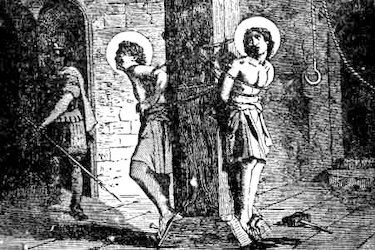
Saint Marcus and Saint Marcellianus were twin brothers of an illustrious family in Rome, who had been converted to the Faith in their youth and were honorably married.
When Diocletian ascended the imperial throne in 284, the pagans raised persecutions; the brothers were then thrown into prison and condemned to be beheaded. Their friends obtained a delay of the execution for thirty days, that they might prevail on them to worship the false gods. Tranquillinus and Martia, their afflicted pagan parents, accompanied by their sons' wives and their little babes, endeavored to move them by the most tender entreaties and tears. But Saint Sebastian, an officer of the emperor's household, arriving in Rome soon after their confinement, daily visited and encouraged them.
The issue of the conferences was the happy conversion of the father, mother, and wives, also of Nicostratus, the public stenographer, and soon afterwards of Chromatius, the judge, who set the Saints at liberty and abdicating the magistracy, retired into the country. Marcus and Marcellianus were concealed by a Christian officer of the imperial household, in his apartments in the palace, but they were betrayed by an apostate and reimprisoned. Fabian, a judge who had succeeded Chromatius, condemned them to be bound to two pillars, their feet nailed to them. In this posture they remained a day and a night, and on the following day were stabbed with lances. Their martyrdom occurred in the year 286. Their tomb and that of their father, Saint Tranquillinus, was found in Rome, in 1782, in the church of Saint Cosmas and Saint Damian, adjoining that of the martyred pope, Saint Felix II. They are honored particularly in Spain, where the city of Badajoz escaped destruction by their intercession.
Reflection. We know not what we are until we have been tried; that love alone is sincere which has stood the proof. It costs nothing to say we love God above all things, but persecution shows who is a hireling, and who a true pastor, says Saint Bernard.
Little Pictorial Lives of the Saints, a compilation based on Butler's Lives of the Saints, and other sources by John Gilmary Shea (Benziger Brothers: New York, 1894).
LAST-MODIFIED:20250531T180557Z SEQUENCE:83019271 X-ACCESS:1 X-HITS:29 X-COLOR:f0b80e X-SHOW-END-TIME:1 END:VEVENT BEGIN:VEVENT DTSTART;VALUE=DATE:20250619 DTEND;VALUE=DATE:20250620 UID:1E1ECF10-4D82-4726-B990-4BB97ADD54CE SUMMARY:Sts. Gervase & Protase CREATED:20221013T211126Z DTSTAMP:20221013T211126Z URL:https://www.stpaulsweymouth.org/component/dpcalendar/event/2678?calid=13 DESCRIPTION:Sts. Gervase & Protase, Martyrs\N\NThe Roman Martyrology states of them today: “In Milan, Saints Gervase and Protase. The Judge Astasius ordered that Gervase be beaten to death with leaded scourges and Protase beaten with sticks and beheaded. By divine revelation blessed Ambrose discovered their bodies, flecked with blood and incorrupt as if they had just died that day. During the translation of their bodies, a blind man gained his sight by touching the bier and many were set free who had been possessed by demons.”\NGervase and Protase were the twin sons of Martyrs. Their Father, Saint Vitalis of Milan, a man of consular dignity, suffered Martyrdom at Ravenna, possibly under Nero. Their Mother, Saint Valeria, died for her faith at Milan. When their parents died, the two brothers sold the family assets, distributed the proceeds to the poor and retired to a small house where they spent ten years in prayer and meditation. Denounced as Christians in Astasio, they were imprisoned and refusing to sacrifice to pagan gods, they were, therefore, sentenced to death. Gervase died under the blows of the scourges, Protase was instead beheaded.\N X-ALT-DESC;FMTTYPE=text/html:Sts. Gervase & Protase, Martyrs
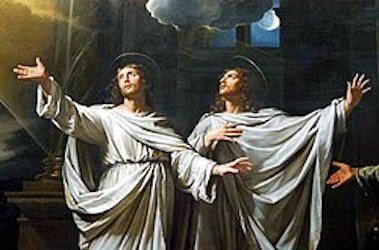
The Roman Martyrology states of them today: “In Milan, Saints Gervase and Protase. The Judge Astasius ordered that Gervase be beaten to death with leaded scourges and Protase beaten with sticks and beheaded. By divine revelation blessed Ambrose discovered their bodies, flecked with blood and incorrupt as if they had just died that day. During the translation of their bodies, a blind man gained his sight by touching the bier and many were set free who had been possessed by demons.”
Gervase and Protase were the twin sons of Martyrs. Their Father, Saint Vitalis of Milan, a man of consular dignity, suffered Martyrdom at Ravenna, possibly under Nero. Their Mother, Saint Valeria, died for her faith at Milan. When their parents died, the two brothers sold the family assets, distributed the proceeds to the poor and retired to a small house where they spent ten years in prayer and meditation. Denounced as Christians in Astasio, they were imprisoned and refusing to sacrifice to pagan gods, they were, therefore, sentenced to death. Gervase died under the blows of the scourges, Protase was instead beheaded.
LAST-MODIFIED:20250531T181220Z SEQUENCE:83019654 X-ACCESS:1 X-HITS:73 X-COLOR:f0b80e X-SHOW-END-TIME:1 END:VEVENT BEGIN:VEVENT DTSTART;VALUE=DATE:20250619 DTEND;VALUE=DATE:20250620 UID:C4B9268D-7097-482F-B4F4-200E9D7AF217 SUMMARY:St. Juliana CREATED:20221013T211126Z DTSTAMP:20221013T211126Z URL:https://www.stpaulsweymouth.org/component/dpcalendar/event/2676?calid=13 DESCRIPTION:St. Juliana Falconieri, Virgin\N\NSaint Juliana Falconieri was born in 1270, in answer to prayer. Her father was the builder of the splendid church of the Annunziata in Florence, while her uncle, Saint Alexis Falconieri, became one of the seven Founders of the Servite Order. Under his surveillance Juliana grew up more like an angel than a human being, as he said. Her great modesty was remarkable; never during her entire lifetime did she look at her reflection in a mirror. The mere mention of sin made her shudder and tremble, and once, on hearing of a scandal, she fainted.\NHer devotion to the sorrows of Our Lady drew her to the Servants of Mary or Servite Order, and at the age of fourteen, after refusing an offer of marriage, she received the habit from Saint Philip Benizi, General of the Order. Her sanctity attracted many novices, for whose direction she was bidden to draw up a rule, and thus she became foundress of the Mantellate.\NShe was the servant of her Sisters rather than their mistress, while outside her convent she led a life of apostolic charity, converting sinners, reconciling enemies, and healing the sick. She was sometimes rapt for whole days in ecstasy, and her prayers saved the Servite Order when it was in danger of being suppressed.\NSaint Juliana in her old age suffered various painful illnesses. She was wasting away through a disease of the stomach which prevented her taking food, and bore her silent agony with constant cheerfulness, grieving only for the privation of Holy Communion. At last, when in her seventieth year she was at the point of death, she begged to be allowed once more to see and adore the Blessed Sacrament. It was brought to her cell and reverently laid on a corporal, which was placed over her heart. At this moment she expired, and the Sacred Host disappeared. After her death the form of the Host was found stamped upon her heart, at the exact spot over which the Blessed Sacrament had been placed. Saint Juliana died in her convent in Florence in 1340. Miracles have been frequently effected through her intercession.\NReflection. Meditate often, says Saint Paul of the Cross, on the sorrows of the Blessed Mother, sorrows inseparable from those of Her beloved Son. If you seek the Cross, there you will find the Mother; and where the Mother is, there also is the Son.\NLittle Pictorial Lives of the Saints, a compilation based on Butler's Lives of the Saints, and other sources by John Gilmary Shea (Benziger Brothers: New York, 1894). X-ALT-DESC;FMTTYPE=text/html:
St. Juliana Falconieri, Virgin
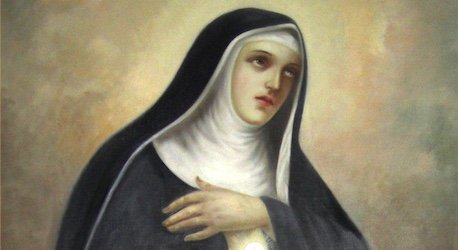
Saint Juliana Falconieri was born in 1270, in answer to prayer. Her father was the builder of the splendid church of the Annunziata in Florence, while her uncle, Saint Alexis Falconieri, became one of the seven Founders of the Servite Order. Under his surveillance Juliana grew up more like an angel than a human being, as he said. Her great modesty was remarkable; never during her entire lifetime did she look at her reflection in a mirror. The mere mention of sin made her shudder and tremble, and once, on hearing of a scandal, she fainted.
Her devotion to the sorrows of Our Lady drew her to the Servants of Mary or Servite Order, and at the age of fourteen, after refusing an offer of marriage, she received the habit from Saint Philip Benizi, General of the Order. Her sanctity attracted many novices, for whose direction she was bidden to draw up a rule, and thus she became foundress of the Mantellate.
She was the servant of her Sisters rather than their mistress, while outside her convent she led a life of apostolic charity, converting sinners, reconciling enemies, and healing the sick. She was sometimes rapt for whole days in ecstasy, and her prayers saved the Servite Order when it was in danger of being suppressed.
Saint Juliana in her old age suffered various painful illnesses. She was wasting away through a disease of the stomach which prevented her taking food, and bore her silent agony with constant cheerfulness, grieving only for the privation of Holy Communion. At last, when in her seventieth year she was at the point of death, she begged to be allowed once more to see and adore the Blessed Sacrament. It was brought to her cell and reverently laid on a corporal, which was placed over her heart. At this moment she expired, and the Sacred Host disappeared. After her death the form of the Host was found stamped upon her heart, at the exact spot over which the Blessed Sacrament had been placed. Saint Juliana died in her convent in Florence in 1340. Miracles have been frequently effected through her intercession.
Reflection. Meditate often, says Saint Paul of the Cross, on the sorrows of the Blessed Mother, sorrows inseparable from those of Her beloved Son. If you seek the Cross, there you will find the Mother; and where the Mother is, there also is the Son.
Little Pictorial Lives of the Saints, a compilation based on Butler's Lives of the Saints, and other sources by John Gilmary Shea (Benziger Brothers: New York, 1894).
LAST-MODIFIED:20250531T180834Z SEQUENCE:83019428 X-ACCESS:1 X-HITS:365 X-COLOR:f0b80e X-SHOW-END-TIME:1 END:VEVENT BEGIN:VEVENT DTSTART;VALUE=DATE:20250620 DTEND;VALUE=DATE:20250621 UID:2471F2AE-6F23-470F-A56D-B676F46C53D3 SUMMARY:St. Silverius CREATED:20221013T211126Z DTSTAMP:20221013T211126Z URL:https://www.stpaulsweymouth.org/component/dpcalendar/event/2658?calid=13 DESCRIPTION:St. Silverius Pope, Martyr\N\NSilverius was son of Pope Hormisdas, who had been married before he entered the ministry. Upon the death of Saint Agapetas, and after a vacancy of forty-seven days, Silverius, then subdeacon, was elected Pope and consecrated on the 8th of June, 536, despite maneuvers on the part of heretics opposed to the Council of Chalcedon.\NThe heretical empress Theodora, resolved to win Silverius over to her interests, wrote to him, ordering that he should either acknowledge as lawful bishop the Eutychian heretic Anthimus, who had been deposed as patriarch of Constantinople, or come in person to Constantinople and reexamine his cause. Without the least hesitation or delay, Silverius returned her a short answer, by which he gave her to understand that he neither could nor would obey her unjust demands, which would be to countermand his predecessor's decision and betray the cause of the Catholic faith.\NThe empress, finding that she could expect nothing from him, resolved to have him deposed. Vigilius, archdeacon of the Roman Church, a man of diplomacy, was then at Constantinople. To this ambitious ecclesiastic the empress exposed her wishes, and promised to make him pope and to bestow on him seven hundred pieces of gold, if he would engage himself to condemn the Council of Chalcedon and receive into Communion the three deposed Eutychian patriarchs. Vigilius assented to these conditions, and the empress sent him to Rome, charged with a letter to the Roman general Belisarius, commanding him to drive out Silverius and contrive the election of Vigilius to the pontificate.\NVigilius urged the general to execute this project. In order to implement it, the Pope was accused of corresponding with the enemy, and a forged letter was produced, supposedly written by him to the king of the Goths, inviting him to the city and promising to open the gates to him. These dealings succeeded; Vigilius was made Pope, and Silverius was banished to Patara in Lycia.\NThe bishop of Patara received the illustrious exile with all possible marks of honor and respect, and thinking himself bound to undertake his defense, journeyed to Constantinople and spoke boldly to the emperor Justinian. He terrified him with threats of divine judgments for the expulsion of a bishop of so great a see, telling him, There are many kings in the world, but there is only one Pope over the Church of the whole world. Justinian appeared startled at the atrocity of the proceedings and gave orders that Silverius be sent back to Rome. The enemies of the Pope contrived to prevent this, however, and he was intercepted on his road toward Rome and transported to the deserted island of Palmeria, where he died of hunger a year later, on the 20th of June, 538 and was buried.\NIt was perhaps in response to the martyred pope's prayers that after his death the usurper of the pontifical throne, Vigilius, though he had wished to step down, was forced to remain in function and then transformed, like Saul of Tarsus, into another man. He exercised the pastoral duties with as much courage, piety, zeal and faith, as he formerly had used violence, avarice and cruelty during his predecessor's lifetime. The traitor Belisarius was accused of conspiracy against the emperor, stripped of all he had, and his eyes put out; he was obliged to beg for alms in Constantinople. But he too repented and built a church with an inscription over the door which was a public reparation for his fault.\NLes Petits Bollandistes: Vies des Saints, by Msgr. Paul Guérin (Bloud et Barral: Paris, 1882), Vol. 7; Little Pictorial Lives of the Saints, a compilation based on Butler's Lives of the Saints, and other sources by John Gilmary Shea (Benziger Brothers: New York, 1894). X-ALT-DESC;FMTTYPE=text/html:St. Silverius Pope, Martyr
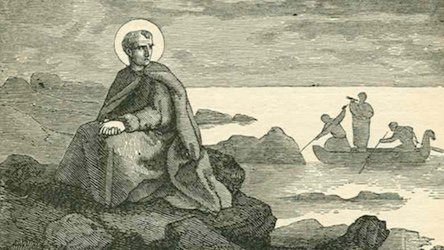
Silverius was son of Pope Hormisdas, who had been married before he entered the ministry. Upon the death of Saint Agapetas, and after a vacancy of forty-seven days, Silverius, then subdeacon, was elected Pope and consecrated on the 8th of June, 536, despite maneuvers on the part of heretics opposed to the Council of Chalcedon.
The heretical empress Theodora, resolved to win Silverius over to her interests, wrote to him, ordering that he should either acknowledge as lawful bishop the Eutychian heretic Anthimus, who had been deposed as patriarch of Constantinople, or come in person to Constantinople and reexamine his cause. Without the least hesitation or delay, Silverius returned her a short answer, by which he gave her to understand that he neither could nor would obey her unjust demands, which would be to countermand his predecessor's decision and betray the cause of the Catholic faith.
The empress, finding that she could expect nothing from him, resolved to have him deposed. Vigilius, archdeacon of the Roman Church, a man of diplomacy, was then at Constantinople. To this ambitious ecclesiastic the empress exposed her wishes, and promised to make him pope and to bestow on him seven hundred pieces of gold, if he would engage himself to condemn the Council of Chalcedon and receive into Communion the three deposed Eutychian patriarchs. Vigilius assented to these conditions, and the empress sent him to Rome, charged with a letter to the Roman general Belisarius, commanding him to drive out Silverius and contrive the election of Vigilius to the pontificate.
Vigilius urged the general to execute this project. In order to implement it, the Pope was accused of corresponding with the enemy, and a forged letter was produced, supposedly written by him to the king of the Goths, inviting him to the city and promising to open the gates to him. These dealings succeeded; Vigilius was made Pope, and Silverius was banished to Patara in Lycia.
The bishop of Patara received the illustrious exile with all possible marks of honor and respect, and thinking himself bound to undertake his defense, journeyed to Constantinople and spoke boldly to the emperor Justinian. He terrified him with threats of divine judgments for the expulsion of a bishop of so great a see, telling him, There are many kings in the world, but there is only one Pope over the Church of the whole world. Justinian appeared startled at the atrocity of the proceedings and gave orders that Silverius be sent back to Rome. The enemies of the Pope contrived to prevent this, however, and he was intercepted on his road toward Rome and transported to the deserted island of Palmeria, where he died of hunger a year later, on the 20th of June, 538 and was buried.
It was perhaps in response to the martyred pope's prayers that after his death the usurper of the pontifical throne, Vigilius, though he had wished to step down, was forced to remain in function and then transformed, like Saul of Tarsus, into another man. He exercised the pastoral duties with as much courage, piety, zeal and faith, as he formerly had used violence, avarice and cruelty during his predecessor's lifetime. The traitor Belisarius was accused of conspiracy against the emperor, stripped of all he had, and his eyes put out; he was obliged to beg for alms in Constantinople. But he too repented and built a church with an inscription over the door which was a public reparation for his fault.
Les Petits Bollandistes: Vies des Saints, by Msgr. Paul Guérin (Bloud et Barral: Paris, 1882), Vol. 7; Little Pictorial Lives of the Saints, a compilation based on Butler's Lives of the Saints, and other sources by John Gilmary Shea (Benziger Brothers: New York, 1894).
LAST-MODIFIED:20250531T173618Z SEQUENCE:83017492 X-ACCESS:1 X-HITS:44 X-COLOR:f0b80e X-SHOW-END-TIME:1 END:VEVENT BEGIN:VEVENT DTSTART;VALUE=DATE:20250621 DTEND;VALUE=DATE:20250622 UID:29C9C4A7-C341-4BAA-9516-9D93129E0183 SUMMARY:St. Aloysius CREATED:20221013T211126Z DTSTAMP:20221013T211126Z URL:https://www.stpaulsweymouth.org/component/dpcalendar/event/2656?calid=13 DESCRIPTION:St. Aloysius Gonzaga, Confessor\N\NSaint Aloysius, the eldest son of Ferdinand Gonzaga, Marquis of Castiglione, was born on the 9th of March, 1568. The first words he pronounced were the holy names of Jesus and Mary. When he was nine years of age he made a vow of perpetual virginity, and by a special grace was always exempted from temptations against purity. He received his first Communion at the hands of Saint Charles Borromeo. At an early age he resolved to leave the world, and in a vision was directed by our Blessed Lady to join the Society of Jesus. The Saint's mother rejoiced on learning his determination to become a religious, but his father for three years refused his consent. At length Saint Aloysius obtained permission to enter the novitiate on November 25, 1585.\NHe pronounced his vows after two years, and studied, as was customary, philosophy and theology. A fervent penitent at all times, he was accustomed to say that he doubted whether without penance grace could continue to make headway against nature, which, when not afflicted and chastised, tends gradually to relapse into its unredeemed state, and thereby loses the habit of suffering. I am a crooked piece of iron, he said, and have come into religion to be made straight by the hammer of mortification and penance.\NDuring his last year of theology a malignant fever broke out in Rome. The Saint offered himself for the service of the sick, and was accepted for the dangerous duty. Several of the religious contracted the fever, and Aloysius was among them. He was at the point of death but recovered, only to relapse a little later into a slow fever, which after three months his fragile health could no longer resist. He died at the age of twenty-three, repeating the Holy Name, a little after midnight between the 20th and 21st of June, on the octave day of Corpus Christi.\NReflection. Saint Robert Bellarmine, the Saint's confessor, testified that Saint Aloysius had never mortally offended God. Pray that, supposing you have not maintained his innocence, you may yet imitate his penance.\NLittle Pictorial Lives of the Saints, a compilation based on Butler's Lives of the Saints, and other sources by John Gilmary Shea (Benziger Brothers: New York, 1894). X-ALT-DESC;FMTTYPE=text/html:St. Aloysius Gonzaga, Confessor
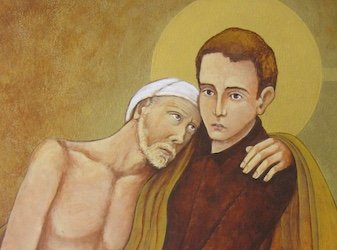
Saint Aloysius, the eldest son of Ferdinand Gonzaga, Marquis of Castiglione, was born on the 9th of March, 1568. The first words he pronounced were the holy names of Jesus and Mary. When he was nine years of age he made a vow of perpetual virginity, and by a special grace was always exempted from temptations against purity. He received his first Communion at the hands of Saint Charles Borromeo. At an early age he resolved to leave the world, and in a vision was directed by our Blessed Lady to join the Society of Jesus. The Saint's mother rejoiced on learning his determination to become a religious, but his father for three years refused his consent. At length Saint Aloysius obtained permission to enter the novitiate on November 25, 1585.
He pronounced his vows after two years, and studied, as was customary, philosophy and theology. A fervent penitent at all times, he was accustomed to say that he doubted whether without penance grace could continue to make headway against nature, which, when not afflicted and chastised, tends gradually to relapse into its unredeemed state, and thereby loses the habit of suffering. I am a crooked piece of iron, he said, and have come into religion to be made straight by the hammer of mortification and penance.
During his last year of theology a malignant fever broke out in Rome. The Saint offered himself for the service of the sick, and was accepted for the dangerous duty. Several of the religious contracted the fever, and Aloysius was among them. He was at the point of death but recovered, only to relapse a little later into a slow fever, which after three months his fragile health could no longer resist. He died at the age of twenty-three, repeating the Holy Name, a little after midnight between the 20th and 21st of June, on the octave day of Corpus Christi.
Reflection. Saint Robert Bellarmine, the Saint's confessor, testified that Saint Aloysius had never mortally offended God. Pray that, supposing you have not maintained his innocence, you may yet imitate his penance.
Little Pictorial Lives of the Saints, a compilation based on Butler's Lives of the Saints, and other sources by John Gilmary Shea (Benziger Brothers: New York, 1894).
LAST-MODIFIED:20250531T173406Z SEQUENCE:83017360 X-ACCESS:1 X-HITS:51 X-COLOR:f0b80e X-SHOW-END-TIME:1 END:VEVENT BEGIN:VEVENT DTSTART;VALUE=DATE:20250622 DTEND;VALUE=DATE:20250623 UID:EC280368-A6A8-4543-8280-2ABE63EFAB59 SUMMARY:St. Alban CREATED:20221013T211126Z DTSTAMP:20221013T211126Z URL:https://www.stpaulsweymouth.org/component/dpcalendar/event/1727?calid=13 DESCRIPTION:St. Alban, Martyr\N\NSt Albans Cathedral is the oldest site of continual Christian worship in these Isles; from small pilgrim church to huge Abbey and Monastery, to parish church and Cathedral. We have an inheritance of faith that has stood firm through Reformation, Civil War, Plagues, and Pandemics, and our faith reflects that of St Alban, Britain’s first Martyr, who was killed for confessing ‘I worship and adore the one true and living God’.\NBack to the beginning -- The story of Alban is a remarkable one. It not only takes us back to the beginning of the Christian faith in Britain and to a time when religious freedom was forbidden, but it is also an astonishing account of standing up for what you believe in.\NInspired -- Alban lived in the early third century in the Roman city of Verulamium, just down the hill from where the Cathedral stands today. One day he gave shelter to a stranger fleeing from persecution. This stranger was a Christian priest, now known as Amphibalus. While sheltering the priest, Alban was inspired by how important faith was to the priest and asked to be taught more about Christianity.\NCaptured -- It was not long until the Roman authorities caught up with Amphibalus. However, Alban’s new-found faith would not allow him to let the authorities arrest the priest. Instead, Alban exchanged clothes with Amphibalus and was arrested, allowing the priest to escape. Alban refused to renounce his beliefs ("I am called Alban and I worship and adore the true and living God!") and the magistrate ordered that he should receive the punishment intended for the escaped priest. Upon this ruling, Alban was led out of Verulamium and up the hillside where he was beheaded.\NContinued -- Alban is honoured as Britain’s first saint, and his grave on this hillside quickly became a place of pilgrimage. This story of an ordinary man, doing an extraordinary thing has endured and continues to inspire to this day. X-ALT-DESC;FMTTYPE=text/html:St. Alban, Martyr
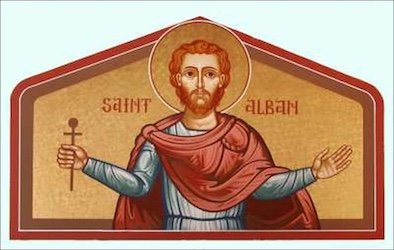
St Albans Cathedral is the oldest site of continual Christian worship in these Isles; from small pilgrim church to huge Abbey and Monastery, to parish church and Cathedral. We have an inheritance of faith that has stood firm through Reformation, Civil War, Plagues, and Pandemics, and our faith reflects that of St Alban, Britain’s first Martyr, who was killed for confessing ‘I worship and adore the one true and living God’.
Back to the beginning -- The story of Alban is a remarkable one. It not only takes us back to the beginning of the Christian faith in Britain and to a time when religious freedom was forbidden, but it is also an astonishing account of standing up for what you believe in.
Inspired -- Alban lived in the early third century in the Roman city of Verulamium, just down the hill from where the Cathedral stands today. One day he gave shelter to a stranger fleeing from persecution. This stranger was a Christian priest, now known as Amphibalus. While sheltering the priest, Alban was inspired by how important faith was to the priest and asked to be taught more about Christianity.
Captured -- It was not long until the Roman authorities caught up with Amphibalus. However, Alban’s new-found faith would not allow him to let the authorities arrest the priest. Instead, Alban exchanged clothes with Amphibalus and was arrested, allowing the priest to escape. Alban refused to renounce his beliefs ("I am called Alban and I worship and adore the true and living God!") and the magistrate ordered that he should receive the punishment intended for the escaped priest. Upon this ruling, Alban was led out of Verulamium and up the hillside where he was beheaded.
Continued -- Alban is honoured as Britain’s first saint, and his grave on this hillside quickly became a place of pilgrimage. This story of an ordinary man, doing an extraordinary thing has endured and continues to inspire to this day.
LAST-MODIFIED:20250531T172806Z SEQUENCE:83017000 X-ACCESS:1 X-HITS:46 X-COLOR:f0b80e X-SHOW-END-TIME:1 END:VEVENT BEGIN:VEVENT DTSTART;VALUE=DATE:20250622 DTEND;VALUE=DATE:20250623 UID:F9D3CE89-2006-4E84-9A93-C18A96B63761 SUMMARY:St. Paulinus CREATED:20221013T211126Z DTSTAMP:20221013T211126Z URL:https://www.stpaulsweymouth.org/component/dpcalendar/event/2654?calid=13 DESCRIPTION:St. Paulinus of Nola, Bishop, Confessor\N\NPaulinus was of a family which boasted a long line of senators, prefects and consuls of Rome, and he was educated with great care. His genius and eloquence in oratory, prose and verse were the admiration of all the brilliant Christian minds of his time, including Saint Gregory the Great, Saint Ambrose, Saint Jerome, Saint Augustine, and Saint Martin of Tours. It is believed that Saint Ambrose would have chosen him to replace him as bishop of Milan, but Saint Paulinus was far from Milan when Saint Ambrose died. He said of him that Christians should follow and imitate Saint Paulinus, and that the greatest good fortune of the century in which they were living was to be witness to the life of so rare and admirable a man.\NSaint Paulinus, at first Roman Consul and then Prefect or Governor of Rome, had more than doubled his wealth by his marriage with a virtuous Spanish noblewoman; he was one of the wealthiest and most honored men of his time, possessing domains in several nations of Europe. Though he was the chosen friend of Saints, he was still only a catechumen, and trying to serve two masters. But God drew him to Himself along the way of sorrows and trials. The first and only child of Paulinus and Theresia died shortly after birth. Saint Paulinus received baptism soon afterwards, at the age of thirty-eight, from the bishop of Bordeaux, Saint Delphin; then he withdrew into Spain to be at liberty to pray in solitude.\NHe was ordained a priest in Barcelona, and afterwards retired to Nola in Campania. And then, in consort with his holy wife, he liberated all his slaves, sold all his vast estates in various parts of the empire, distributing their proceeds so widely and generously that Saint Jerome says both East and West were filled with his alms. In Nola he built the magnificent Church of Saint Felix and served it night and day, living a life of extreme abstinence and toil. He and his wife agreed to live as brother and sister; they exchanged their silver utensils for those of wood and pottery, and wore robes of rude cloth, practicing from that time on a genuine poverty. Certain highly-placed worldly persons were very much offended by this abrupt change in the way of life of these persons of such great dignity.\NNonetheless, in 409 Saint Paulinus was chosen Bishop of Nola, and for more than thirty years so ruled as to be conspicuous, in an age blessed with many great and wise bishops. Saint Gregory the Great tells us that when the Vandals of Africa made a descent on Campania, Paulinus spent all he had in relieving the distress of his people and redeeming them from slavery. Finally, when all had been disposed of, there came to him a poor widow, whose only son had been taken away by the son-in-law of the Vandal king. What I have I give you, said the Saint to her; we will go to Africa and you will offer me to the prince, saying I am one of your slaves, in exchange for the prisoner. Her resistance once overcome, they went, and Paulinus was accepted in place of the widow's son and employed as gardener. After a time the king discovered, by divine interposition, that this valuable slave of his son-in-law was the renowned Bishop of Nola. He at once set him free, granting him also the freedom of all the townsmen of Nola who were in slavery.\NOne who knew Saint Paulinus well says he was meek as Moses, as priestly as Aaron, innocent as Samuel, tender as David, wise as Solomon, apostolic as Peter, loving as John, cautious as Thomas, brilliant as Stephen, fervent as Apollos. Saint Paulinus died in 431. His holy remains were transferred several times but restored to the cathedral of Nola in 1908.\NReflection. Go to Campania, writes Saint Augustine; there study Paulinus, that choice servant of God. With what generosity, with what even greater humility, has he flung from him the burden of the world's grandeurs to take on the yoke of Christ!\NLes Petits Bollandistes: Vies des Saints, by Msgr. Paul Guérin (Bloud et Barral: Paris, 1882), Vol. 7; Little Pictorial Lives of the Saints, a compilation based on Butler's Lives of the Saints, and other sources by John Gilmary Shea (Benziger Brothers: New York, 1894). X-ALT-DESC;FMTTYPE=text/html:St. Paulinus of Nola, Bishop, Confessor
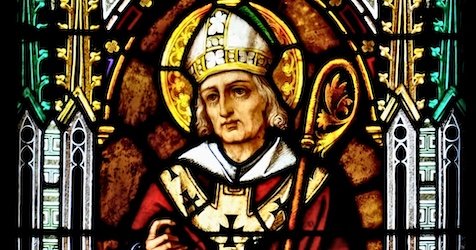
Paulinus was of a family which boasted a long line of senators, prefects and consuls of Rome, and he was educated with great care. His genius and eloquence in oratory, prose and verse were the admiration of all the brilliant Christian minds of his time, including Saint Gregory the Great, Saint Ambrose, Saint Jerome, Saint Augustine, and Saint Martin of Tours. It is believed that Saint Ambrose would have chosen him to replace him as bishop of Milan, but Saint Paulinus was far from Milan when Saint Ambrose died. He said of him that Christians should follow and imitate Saint Paulinus, and that the greatest good fortune of the century in which they were living was to be witness to the life of so rare and admirable a man.
Saint Paulinus, at first Roman Consul and then Prefect or Governor of Rome, had more than doubled his wealth by his marriage with a virtuous Spanish noblewoman; he was one of the wealthiest and most honored men of his time, possessing domains in several nations of Europe. Though he was the chosen friend of Saints, he was still only a catechumen, and trying to serve two masters. But God drew him to Himself along the way of sorrows and trials. The first and only child of Paulinus and Theresia died shortly after birth. Saint Paulinus received baptism soon afterwards, at the age of thirty-eight, from the bishop of Bordeaux, Saint Delphin; then he withdrew into Spain to be at liberty to pray in solitude.
He was ordained a priest in Barcelona, and afterwards retired to Nola in Campania. And then, in consort with his holy wife, he liberated all his slaves, sold all his vast estates in various parts of the empire, distributing their proceeds so widely and generously that Saint Jerome says both East and West were filled with his alms. In Nola he built the magnificent Church of Saint Felix and served it night and day, living a life of extreme abstinence and toil. He and his wife agreed to live as brother and sister; they exchanged their silver utensils for those of wood and pottery, and wore robes of rude cloth, practicing from that time on a genuine poverty. Certain highly-placed worldly persons were very much offended by this abrupt change in the way of life of these persons of such great dignity.
Nonetheless, in 409 Saint Paulinus was chosen Bishop of Nola, and for more than thirty years so ruled as to be conspicuous, in an age blessed with many great and wise bishops. Saint Gregory the Great tells us that when the Vandals of Africa made a descent on Campania, Paulinus spent all he had in relieving the distress of his people and redeeming them from slavery. Finally, when all had been disposed of, there came to him a poor widow, whose only son had been taken away by the son-in-law of the Vandal king. What I have I give you, said the Saint to her; we will go to Africa and you will offer me to the prince, saying I am one of your slaves, in exchange for the prisoner. Her resistance once overcome, they went, and Paulinus was accepted in place of the widow's son and employed as gardener. After a time the king discovered, by divine interposition, that this valuable slave of his son-in-law was the renowned Bishop of Nola. He at once set him free, granting him also the freedom of all the townsmen of Nola who were in slavery.
One who knew Saint Paulinus well says he was meek as Moses, as priestly as Aaron, innocent as Samuel, tender as David, wise as Solomon, apostolic as Peter, loving as John, cautious as Thomas, brilliant as Stephen, fervent as Apollos. Saint Paulinus died in 431. His holy remains were transferred several times but restored to the cathedral of Nola in 1908.
Reflection. Go to Campania, writes Saint Augustine; there study Paulinus, that choice servant of God. With what generosity, with what even greater humility, has he flung from him the burden of the world's grandeurs to take on the yoke of Christ!
Les Petits Bollandistes: Vies des Saints, by Msgr. Paul Guérin (Bloud et Barral: Paris, 1882), Vol. 7; Little Pictorial Lives of the Saints, a compilation based on Butler's Lives of the Saints, and other sources by John Gilmary Shea (Benziger Brothers: New York, 1894).
LAST-MODIFIED:20250531T173137Z SEQUENCE:83017211 X-ACCESS:1 X-HITS:7 X-COLOR:f0b80e X-SHOW-END-TIME:1 END:VEVENT BEGIN:VEVENT DTSTART;VALUE=DATE:20250908 DTEND;VALUE=DATE:20250909 UID:D5DB1FD4-2827-4A89-A0A5-D1AEFD98D8F5 SUMMARY:St. Hadrian CREATED:20221013T211126Z DTSTAMP:20221013T211126Z URL:https://www.stpaulsweymouth.org/component/dpcalendar/event/2736?calid=13 DESCRIPTION:St. Hadrian, Martyr\N\NSt Adrian or Hadrian (+306) Confessor, Lay Martyr, Royal Court Guard in Roman Imperial Court at Nicomedia in Asia-Minor during the time of Emperor Maximian in the early 4th Century. Patronages – against the plague/epidemics, against epilepsy, arms dealers, butchers, guards, soldiers. The Roman Martyrology reads this day: “At Nicomedia, St Adrian, with twenty three other Martyrs, who ended their Martyrdom on the 4th day of March by having their limbs crushed, after enduring many torments, under the Emperors Diocletian and Maximian. Their remains were carried to Byzantium by the Christians and buried with due honours. Afterwards, the body of St Adrian was taken to Rome on this day, on which his festival is celebrated.”\NAdrian was a paganGuard at the Imperial Court of Nicomedia. Impressed by the courage of a group of Christians who were being tortured, he declared himself a Christian and was imprisoned with them and suffered excruciating tortures before he was put to death.\NAfter his execution, the executioners wanted to burn the bodies of the dead but a storm arose and quenched the fire. His young wife, Natalia, who was present at his death, comforted him in his agony, recovered one of his severed hands and took it to Argyropolis near Constantinople, where she fled to escape the importunities of an Imperial Official of Nicomedia, who wanted to marry her. She died there peacefully on 1 December in the same year as her husband.\NSaint Adrian/Hadrian was the chief military Saint of Northern Europe for many Centuries second only to Saint George and is much revered in Belgium, Germany and the north of France. He is usually represented armed, with an anvil in his hands or at his feet. X-ALT-DESC;FMTTYPE=text/html:St. Hadrian, Martyr
St Adrian or Hadrian (+306) Confessor, Lay Martyr, Royal Court Guard in Roman Imperial Court at Nicomedia in Asia-Minor during the time of Emperor Maximian in the early 4th Century. Patronages – against the plague/epidemics, against epilepsy, arms dealers, butchers, guards, soldiers. The Roman Martyrology reads this day: “At Nicomedia, St Adrian, with twenty three other Martyrs, who ended their Martyrdom on the 4th day of March by having their limbs crushed, after enduring many torments, under the Emperors Diocletian and Maximian. Their remains were carried to Byzantium by the Christians and buried with due honours. Afterwards, the body of St Adrian was taken to Rome on this day, on which his festival is celebrated.”
Adrian was a paganGuard at the Imperial Court of Nicomedia. Impressed by the courage of a group of Christians who were being tortured, he declared himself a Christian and was imprisoned with them and suffered excruciating tortures before he was put to death.
After his execution, the executioners wanted to burn the bodies of the dead but a storm arose and quenched the fire. His young wife, Natalia, who was present at his death, comforted him in his agony, recovered one of his severed hands and took it to Argyropolis near Constantinople, where she fled to escape the importunities of an Imperial Official of Nicomedia, who wanted to marry her. She died there peacefully on 1 December in the same year as her husband.
Saint Adrian/Hadrian was the chief military Saint of Northern Europe for many Centuries second only to Saint George and is much revered in Belgium, Germany and the north of France. He is usually represented armed, with an anvil in his hands or at his feet.
LAST-MODIFIED:20250830T151158Z SEQUENCE:90871232 X-ACCESS:1 X-HITS:7 X-COLOR:f0b80e X-SHOW-END-TIME:1 END:VEVENT BEGIN:VEVENT DTSTART;VALUE=DATE:20250908 DTEND;VALUE=DATE:20250909 UID:C2AAD682-CB6E-4549-B2C8-B0F394D52894 SUMMARY:Nativity of Our Lady CREATED:20221013T211126Z DTSTAMP:20221013T211126Z URL:https://www.stpaulsweymouth.org/component/dpcalendar/event/2734?calid=13 DESCRIPTION:Nativity of the Blessed Virgin Mary\N\NThe birth of the Blessed Virgin Mary announced joy and the approaching salvation of a lost world. Mary was brought into the world not like other children of Adam, infected with the contagion of sin, but pure, holy, beautiful, and glorious, adorned with all the most precious graces fitting for the One predestined to be the Mother of the Saviour. Never did She have the slightest inclination towards anything other than the absolute and immediate Will of God. She appeared indeed in the weak condition of all mortals, but in the eyes of Heaven She already transcended the highest seraphim in purity, humility, charity, and the richest ornaments of grace. God had created Her in the original grace, as in the beginning Adam and Eve had enjoyed that ineffable privilege; after original sin, it was lost for all Adam's posterity, until the time of the Redemption dawned in Mary. (Cf. I Cor. 15:21-23)\NThe nations celebrate, often too noisily, the birthdays of the great ones of this earth... How then ought we, Christians, to rejoice in that of the Virgin Mary, Mother of our Salvation, and to present publicly to God the homage of our best praises and thanksgiving for the great mercies He has shown in Her, imploring Her mediation with Her Divine Son! Jesus of Nazareth will not reject the supplications of His most holy Mother, through whom He chose to descend from Heaven; She, the Spouse of the Canticle, is all beautiful and is the One He was pleased to obey while on earth. Her love, care, and tenderness for Him, the title and qualities which She bears, the charity and graces with which She is adorned, and the crown of glory with which She is honored, incline Him readily to receive Her recommendations and petitions.\NReflection: The Angelical Salutation is the prayer which most pleases Mary; but when time is short we can invoke Her constantly by short ejaculatory prayers, such as the one She entrusted to Catherine Labouré in 1830 with the Miraculous Medal: O Mary conceived without sin, pray for us who have recourse to Thee! or, shorter yet: My Mother, my confidence!\NLittle Pictorial Lives of the Saints, a compilation based on Butler's Lives of the Saints and other sources by John Gilmary Shea (Benziger Brothers: New York, 1894). X-ALT-DESC;FMTTYPE=text/html:Nativity of the Blessed Virgin Mary
The birth of the Blessed Virgin Mary announced joy and the approaching salvation of a lost world. Mary was brought into the world not like other children of Adam, infected with the contagion of sin, but pure, holy, beautiful, and glorious, adorned with all the most precious graces fitting for the One predestined to be the Mother of the Saviour. Never did She have the slightest inclination towards anything other than the absolute and immediate Will of God. She appeared indeed in the weak condition of all mortals, but in the eyes of Heaven She already transcended the highest seraphim in purity, humility, charity, and the richest ornaments of grace. God had created Her in the original grace, as in the beginning Adam and Eve had enjoyed that ineffable privilege; after original sin, it was lost for all Adam's posterity, until the time of the Redemption dawned in Mary. (Cf. I Cor. 15:21-23)
The nations celebrate, often too noisily, the birthdays of the great ones of this earth... How then ought we, Christians, to rejoice in that of the Virgin Mary, Mother of our Salvation, and to present publicly to God the homage of our best praises and thanksgiving for the great mercies He has shown in Her, imploring Her mediation with Her Divine Son! Jesus of Nazareth will not reject the supplications of His most holy Mother, through whom He chose to descend from Heaven; She, the Spouse of the Canticle, is all beautiful and is the One He was pleased to obey while on earth. Her love, care, and tenderness for Him, the title and qualities which She bears, the charity and graces with which She is adorned, and the crown of glory with which She is honored, incline Him readily to receive Her recommendations and petitions.
Reflection: The Angelical Salutation is the prayer which most pleases Mary; but when time is short we can invoke Her constantly by short ejaculatory prayers, such as the one She entrusted to Catherine Labouré in 1830 with the Miraculous Medal: O Mary conceived without sin, pray for us who have recourse to Thee! or, shorter yet: My Mother, my confidence!
Little Pictorial Lives of the Saints, a compilation based on Butler's Lives of the Saints and other sources by John Gilmary Shea (Benziger Brothers: New York, 1894).
LAST-MODIFIED:20250830T150748Z SEQUENCE:90870982 X-ACCESS:1 X-HITS:9 X-COLOR:f0b80e X-SHOW-END-TIME:1 END:VEVENT BEGIN:VEVENT DTSTART;VALUE=DATE:20250909 DTEND;VALUE=DATE:20250910 UID:85C8AE89-E9A6-4A2C-A722-4D3787AEE971 SUMMARY:St. Gorgonius CREATED:20221013T211126Z DTSTAMP:20221013T211126Z URL:https://www.stpaulsweymouth.org/component/dpcalendar/event/2738?calid=13 DESCRIPTION:St. Gorgonius, Martyr\N\NSt Gorgonius of Nicomedia (+ 303) Confessor, Martyr, Soldier, Imperial Court Official and companions, St Dorotheus. After many horrific tortures these two were finally strangled to death in 303 in Nicomedia, Bithynia (modern Izmit, Turkey).\NThe Roman Martyrology reads today: “At Nicomedia, the holy Martyrs, Gorgontius, Dorotheus and others. The greatest honours had been conferred on them by the Emperor Diocletian but, as they detested the cruelty which he exercised against the Christians, they were, by his orders, suspended in his presence and lacerated with whips; then their skin being torn from their bodies and vinegar and salt poured over them, they were burned on a gridiron and finally, strangled. After some time, the body of the blessed Gorgonius was brought to Rome and deposited on the Latin Way. Thence, it was transferred to the Basilica of St Peter and later some Relics went to France.”\N \NGorgonius held a high position in the household of the Emperor and had often been entrusted with matters of the greatest importance.\NAt the onset of the persecution, he was consequently, among the first to be charged and, remaining constant in the profession of the Faith, was with his companions, Dorotheus, Peter and several others, subjected to the most frightful torments and finally strangled.\NDiocletian, determined that their bodies should not receive the extraordinary honours which the early Christians were wont to pay the Relics of the Martyrs (honours so great as to occasion the charge of idolatry!) ordered them to be thrown into the sea.\NThe Christians, nevertheless, obtained possession of them and later, the body of Gorgonius was carried to Rome, whence, in the 8th Century, it was translated by St Chrodegang, Bishop of Metz and enshrined in the Monastery of Gorze. Many French Churches obtained portions of the Saint’s body from Gorze,but in the general pillage of the French Revolution, most of these relics were lost.\NOur chief sources of information regarding these Martyrs are Lactantius and Eusebius. Our Saint today and his companions are celebrated today, 9 September. There are many magnificent Churches names for our Saint in Europe, especially in France, Belgium and Germany. X-ALT-DESC;FMTTYPE=text/html:St. Gorgonius, Martyr
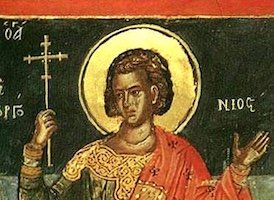
St Gorgonius of Nicomedia (+ 303) Confessor, Martyr, Soldier, Imperial Court Official and companions, St Dorotheus. After many horrific tortures these two were finally strangled to death in 303 in Nicomedia, Bithynia (modern Izmit, Turkey).
The Roman Martyrology reads today: “At Nicomedia, the holy Martyrs, Gorgontius, Dorotheus and others. The greatest honours had been conferred on them by the Emperor Diocletian but, as they detested the cruelty which he exercised against the Christians, they were, by his orders, suspended in his presence and lacerated with whips; then their skin being torn from their bodies and vinegar and salt poured over them, they were burned on a gridiron and finally, strangled. After some time, the body of the blessed Gorgonius was brought to Rome and deposited on the Latin Way. Thence, it was transferred to the Basilica of St Peter and later some Relics went to France.”
Gorgonius held a high position in the household of the Emperor and had often been entrusted with matters of the greatest importance.
At the onset of the persecution, he was consequently, among the first to be charged and, remaining constant in the profession of the Faith, was with his companions, Dorotheus, Peter and several others, subjected to the most frightful torments and finally strangled.
Diocletian, determined that their bodies should not receive the extraordinary honours which the early Christians were wont to pay the Relics of the Martyrs (honours so great as to occasion the charge of idolatry!) ordered them to be thrown into the sea.
The Christians, nevertheless, obtained possession of them and later, the body of Gorgonius was carried to Rome, whence, in the 8th Century, it was translated by St Chrodegang, Bishop of Metz and enshrined in the Monastery of Gorze. Many French Churches obtained portions of the Saint’s body from Gorze,but in the general pillage of the French Revolution, most of these relics were lost.
Our chief sources of information regarding these Martyrs are Lactantius and Eusebius. Our Saint today and his companions are celebrated today, 9 September. There are many magnificent Churches names for our Saint in Europe, especially in France, Belgium and Germany.
LAST-MODIFIED:20250830T151649Z SEQUENCE:90871523 X-ACCESS:1 X-HITS:22 X-COLOR:f0b80e X-SHOW-END-TIME:1 END:VEVENT BEGIN:VEVENT DTSTART;VALUE=DATE:20250910 DTEND;VALUE=DATE:20250911 UID:E1B1F4A9-141C-4855-852A-5357BE247274 SUMMARY:St. Nicholas CREATED:20221013T211126Z DTSTAMP:20221013T211126Z URL:https://www.stpaulsweymouth.org/component/dpcalendar/event/2740?calid=13 DESCRIPTION:St. Nicholas of Tolentino, Confessor\N\NThis Patron of the Universal Church was born in 1245, in answer to the prayer of a holy mother, and was vowed before his birth to the service of God. His parents had made a pilgrimage across Italy to visit the shrine of Saint Nicholas of Myre and ask his intercession to obtain a child; the infant granted them was given the same name in his honor.\NSaint Nicholas of Tolentino never lost his baptismal innocence. His austerities as a very young religious were conspicuous even in the austere Order to which he belonged, the Hermits of Saint Augustine. To the remonstrances of his superiors he only replied, How can I be said to fast, while every morning at the altar I receive my God? The demons undertook a war against his spirit of prayer, going so far as to beat him and leave him inert on the floor, but they could not separate his soul from his Lord. He did, however, remain lame for life. He conceived an ardent charity for the holy souls of purgatory, so near and yet so far from their Saviour. Often, after his Mass, it was revealed to him that the souls for whom he had offered the Holy Sacrifice had been admitted to the presence of God.\NSaint Nicholas frequently went out of his monastery to beg for aid to the poor. He visited prisoners and the dying to administer the Last Sacraments. And this great Saint resurrected over one hundred children, on one occasion bringing back to life several who had been under water for several days.\NDuring an illness, he was ordered to eat meat by a physician, which he had made a vow never to do. A plate containing well-prepared fowl was brought to him. In the presence of several witnesses, he made the sign of the cross over it, and the bird flew away out the window.\NDuring the year preceding his death, a star always appeared over the altar where he said his Mass; afterwards it would conduct him to his cell, or lead him back again, later, to the altar. Amid his loving labors for God and man, he was haunted by thoughts of his own unworthiness. The heavens, said he, are not pure in the sight of Him whom I serve; how then shall I, a sinful man, stand before Him? One day, as he pondered on the greatness of God and his own nothingness, Mary, Queen of all Saints, appeared before him. Fear not, Nicholas, She said, all is well with you: My Son bears you in His Heart, and I am your protection. Then his soul was at rest.\NAt the hour of his death, which occurred on September 10, 1310, he heard, it is said, the songs which the Angels sing in the presence of their Lord. He died and was buried in the chapel where he was accustomed to offer Holy Mass and say his prayers. He was canonized in 1446 by Pope Eugene IV. Three hundred and one miracles were recognized during the process. His tomb has become renowned by many more, despite the fact that his relics have been lost, save for two arms from which blood still exudes when the Church is menaced by a great danger. This occurred, for example, when the island of Cyprus was taken over by infidels in 1570. The religious of Saint Augustine continue to maintain the service of the large basilica of Saint Nicholas in Tolentino. Saint Nicholas of Tolentino, like Saint Joseph, virginal father of Jesus, has been declared a Patron of the Universal Church.\NReflection: Would you die the death of the just? There is a certain way and only one, to secure the fulfillment of your wish — live the life of the just. It is impossible that one who has been faithful to God in life should have a bad or an unhappy end.\NLittle Pictorial Lives of the Saints, a compilation based on Butler's Lives of the Saints and other sources by John Gilmary Shea (Benziger Brothers: New York, 1894). X-ALT-DESC;FMTTYPE=text/html:St. Nicholas of Tolentino, Confessor
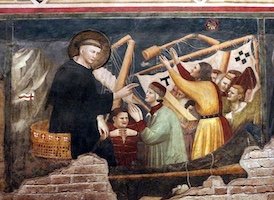
This Patron of the Universal Church was born in 1245, in answer to the prayer of a holy mother, and was vowed before his birth to the service of God. His parents had made a pilgrimage across Italy to visit the shrine of Saint Nicholas of Myre and ask his intercession to obtain a child; the infant granted them was given the same name in his honor.
Saint Nicholas of Tolentino never lost his baptismal innocence. His austerities as a very young religious were conspicuous even in the austere Order to which he belonged, the Hermits of Saint Augustine. To the remonstrances of his superiors he only replied, How can I be said to fast, while every morning at the altar I receive my God? The demons undertook a war against his spirit of prayer, going so far as to beat him and leave him inert on the floor, but they could not separate his soul from his Lord. He did, however, remain lame for life. He conceived an ardent charity for the holy souls of purgatory, so near and yet so far from their Saviour. Often, after his Mass, it was revealed to him that the souls for whom he had offered the Holy Sacrifice had been admitted to the presence of God.
Saint Nicholas frequently went out of his monastery to beg for aid to the poor. He visited prisoners and the dying to administer the Last Sacraments. And this great Saint resurrected over one hundred children, on one occasion bringing back to life several who had been under water for several days.
During an illness, he was ordered to eat meat by a physician, which he had made a vow never to do. A plate containing well-prepared fowl was brought to him. In the presence of several witnesses, he made the sign of the cross over it, and the bird flew away out the window.
During the year preceding his death, a star always appeared over the altar where he said his Mass; afterwards it would conduct him to his cell, or lead him back again, later, to the altar. Amid his loving labors for God and man, he was haunted by thoughts of his own unworthiness. The heavens, said he, are not pure in the sight of Him whom I serve; how then shall I, a sinful man, stand before Him? One day, as he pondered on the greatness of God and his own nothingness, Mary, Queen of all Saints, appeared before him. Fear not, Nicholas, She said, all is well with you: My Son bears you in His Heart, and I am your protection. Then his soul was at rest.
At the hour of his death, which occurred on September 10, 1310, he heard, it is said, the songs which the Angels sing in the presence of their Lord. He died and was buried in the chapel where he was accustomed to offer Holy Mass and say his prayers. He was canonized in 1446 by Pope Eugene IV. Three hundred and one miracles were recognized during the process. His tomb has become renowned by many more, despite the fact that his relics have been lost, save for two arms from which blood still exudes when the Church is menaced by a great danger. This occurred, for example, when the island of Cyprus was taken over by infidels in 1570. The religious of Saint Augustine continue to maintain the service of the large basilica of Saint Nicholas in Tolentino. Saint Nicholas of Tolentino, like Saint Joseph, virginal father of Jesus, has been declared a Patron of the Universal Church.
Reflection: Would you die the death of the just? There is a certain way and only one, to secure the fulfillment of your wish — live the life of the just. It is impossible that one who has been faithful to God in life should have a bad or an unhappy end.
Little Pictorial Lives of the Saints, a compilation based on Butler's Lives of the Saints and other sources by John Gilmary Shea (Benziger Brothers: New York, 1894).
LAST-MODIFIED:20250830T151900Z SEQUENCE:90871654 X-ACCESS:1 X-HITS:24 X-COLOR:f0b80e X-SHOW-END-TIME:1 END:VEVENT BEGIN:VEVENT DTSTART;VALUE=DATE:20250911 DTEND;VALUE=DATE:20250912 UID:C3957F6C-998C-4EF8-BC86-963D52297FC2 SUMMARY:Sts. Protus & Hyacinth CREATED:20221013T211126Z DTSTAMP:20221013T211126Z URL:https://www.stpaulsweymouth.org/component/dpcalendar/event/2742?calid=13 DESCRIPTION:Sts. Protus & Hyacinth, Martyrs\N\NSaint/s of the Day – 11 September – St Protus and St Hyacinth (Died c257) Brother Martyrs during the persecution of Emperor Valerian (257–259), they served as household Officials to St Eugenia. Protus is also known as – Protatius, Proteus, Prothus, Prote and Proto. His name was corrupted in England as Saint Pratt. Hyacinth is sometimes called by his Latin name Hyacinthus (in French: Hyacinthe, Spanish: Jacinto and Italian: Giacinto).\NThe Roman Martyrology states today: “At Rome, in the Cemetery of Basilla, on the old Salarian Way, the birthday of the Holy Martyrs, Protus and Hyacinth, brothers and eunuchs in the service of the blessed Eugenia, who were arrested in the time of the Emperor Gallienus, on the charge of being Christians and urged to offer sacrifice to the gods. But as they refused, both were most severely scourged and finally, beheaded.”\NTradition holds that Protus and Hyacinth were brothers. They served as Chamberlains to Saint Eugenia, a holy Christian Virgin and Martyr and were Baptised along with her by Helenus, Bishop of Heliopolis.\NDevoting themselves zealously to the study of Sacred Scripture, they lived with the hermits of Egypt and later accompanied Eugenia to Rome. There, they were arrested for their Christian Faith by Emperor Gallienus (260–268). Refusing to deny their faith, they were first scourged and then beheaded on 11 September.\NIn 1845, Father Marchi discovered the still undisturbed grave of St Hyacinth in a Crypt of the above-mentioned Catacomb. It was a small square niche in which lay the ashes and pieces of burned bone, wrapped in the remains of costly materials. Evidently the Saint had been burnt, a fate which many Martyrs had suffered, either dying by fire or being burnt after death. The niche was closed by a marble slab similar to that used to close a loculus (or tomb) and bearing the original Latin inscription which confirms the date in the old Roman Martyrology, mentioned above.\NThe day of Protus and Hyacinth’s annual commemoration is mentioned in the “Depositio Martyrum” on 11 September, in the Chronographia for the year 354.\NThe Chronographia also mentions their graves, in the Coemeterium of Basilla on the Via Salaria, later the Catacomb of St Hermes. The “Itineraries” and other early authorities, likewise give this as their place of burial. X-ALT-DESC;FMTTYPE=text/html:Sts. Protus & Hyacinth, Martyrs
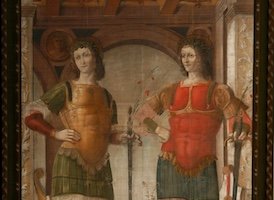
Saint/s of the Day – 11 September – St Protus and St Hyacinth (Died c257) Brother Martyrs during the persecution of Emperor Valerian (257–259), they served as household Officials to St Eugenia. Protus is also known as – Protatius, Proteus, Prothus, Prote and Proto. His name was corrupted in England as Saint Pratt. Hyacinth is sometimes called by his Latin name Hyacinthus (in French: Hyacinthe, Spanish: Jacinto and Italian: Giacinto).
The Roman Martyrology states today: “At Rome, in the Cemetery of Basilla, on the old Salarian Way, the birthday of the Holy Martyrs, Protus and Hyacinth, brothers and eunuchs in the service of the blessed Eugenia, who were arrested in the time of the Emperor Gallienus, on the charge of being Christians and urged to offer sacrifice to the gods. But as they refused, both were most severely scourged and finally, beheaded.”
Tradition holds that Protus and Hyacinth were brothers. They served as Chamberlains to Saint Eugenia, a holy Christian Virgin and Martyr and were Baptised along with her by Helenus, Bishop of Heliopolis.
Devoting themselves zealously to the study of Sacred Scripture, they lived with the hermits of Egypt and later accompanied Eugenia to Rome. There, they were arrested for their Christian Faith by Emperor Gallienus (260–268). Refusing to deny their faith, they were first scourged and then beheaded on 11 September.
In 1845, Father Marchi discovered the still undisturbed grave of St Hyacinth in a Crypt of the above-mentioned Catacomb. It was a small square niche in which lay the ashes and pieces of burned bone, wrapped in the remains of costly materials. Evidently the Saint had been burnt, a fate which many Martyrs had suffered, either dying by fire or being burnt after death. The niche was closed by a marble slab similar to that used to close a loculus (or tomb) and bearing the original Latin inscription which confirms the date in the old Roman Martyrology, mentioned above.
The day of Protus and Hyacinth’s annual commemoration is mentioned in the “Depositio Martyrum” on 11 September, in the Chronographia for the year 354.
The Chronographia also mentions their graves, in the Coemeterium of Basilla on the Via Salaria, later the Catacomb of St Hermes. The “Itineraries” and other early authorities, likewise give this as their place of burial.
LAST-MODIFIED:20250830T152243Z SEQUENCE:90871877 X-ACCESS:1 X-HITS:32 X-COLOR:f0b80e X-SHOW-END-TIME:1 END:VEVENT BEGIN:VEVENT DTSTART;VALUE=DATE:20250912 DTEND;VALUE=DATE:20250913 UID:6B738F8D-0F93-4E08-9167-0C7ADB1A3FC8 SUMMARY:The Most Holy Name of Mary CREATED:20221013T211126Z DTSTAMP:20221013T211126Z URL:https://www.stpaulsweymouth.org/component/dpcalendar/event/2744?calid=13 DESCRIPTION:The Most Holy Name of Mary\N\NThis feast was established by Pope Innocent XI in 1683, that the faithful may in a particular manner recommend to God on this day, through the intercession of the Blessed Virgin, the necessities of His Church, and return Him thanks for His gracious protection and numberless mercies.\NWhat gave occasion to the institution of this feast was the desire of all Christendom for a solemn thanksgiving which would commemorate the deliverance of Vienna, obtained through the intercession of Our Lady, when the city was besieged by the Turks in 1683. An army of 550,000 invaders had reached the city walls and was threatening all of Europe. John Sobieski, King of Poland, came with a much smaller army to assist the besieged city during the octave of the Nativity of the Blessed Virgin, and made ready for a great battle. This religious prince began by having a Mass celebrated, which he himself desired to serve, his arms in a cross. After receiving Communion with fervor, he rose at the close of the sacrifice and cried out: Let us march with confidence under the protection of Heaven and with the aid of the Most Holy Virgin! His hope was not disappointed; the Turks were struck with a sudden panic and fled in disorder. From that time the feast day has been celebrated during the octave of the Nativity of Our Lady.\NReflection: If we, like the Christians of Europe in the 17th century, desire to appease by our prayers the divine anger which our sins have justly provoked, we must join the tears of sincere compunction to a perfect conversion of our habits. The first grace we should beg of God is that He will dispose us to maintain at all times a spirit of worthy penance. And to the invocation of Jesus it is a pious and wholesome practice to join our recourse to the Blessed Virgin, that, through Her intercession, we may more readily obtain the effects of our petitions. For this reason devout souls, with great affection and confidence, honor the Holy Hearts and invoke the Holy Names of Jesus and Mary.\NVie des Saints pour tous les jours de l'année, by Abbé L. Jaud (Mame: Tours, 1950); Little Pictorial Lives of the Saints, a compilation based on Butler's Lives of the Saints and other sources by John Gilmary Shea (Benziger Brothers: New York, 1894). X-ALT-DESC;FMTTYPE=text/html:The Most Holy Name of Mary
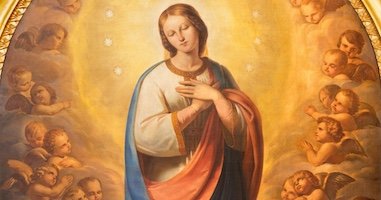
This feast was established by Pope Innocent XI in 1683, that the faithful may in a particular manner recommend to God on this day, through the intercession of the Blessed Virgin, the necessities of His Church, and return Him thanks for His gracious protection and numberless mercies.
What gave occasion to the institution of this feast was the desire of all Christendom for a solemn thanksgiving which would commemorate the deliverance of Vienna, obtained through the intercession of Our Lady, when the city was besieged by the Turks in 1683. An army of 550,000 invaders had reached the city walls and was threatening all of Europe. John Sobieski, King of Poland, came with a much smaller army to assist the besieged city during the octave of the Nativity of the Blessed Virgin, and made ready for a great battle. This religious prince began by having a Mass celebrated, which he himself desired to serve, his arms in a cross. After receiving Communion with fervor, he rose at the close of the sacrifice and cried out: Let us march with confidence under the protection of Heaven and with the aid of the Most Holy Virgin! His hope was not disappointed; the Turks were struck with a sudden panic and fled in disorder. From that time the feast day has been celebrated during the octave of the Nativity of Our Lady.
Reflection: If we, like the Christians of Europe in the 17th century, desire to appease by our prayers the divine anger which our sins have justly provoked, we must join the tears of sincere compunction to a perfect conversion of our habits. The first grace we should beg of God is that He will dispose us to maintain at all times a spirit of worthy penance. And to the invocation of Jesus it is a pious and wholesome practice to join our recourse to the Blessed Virgin, that, through Her intercession, we may more readily obtain the effects of our petitions. For this reason devout souls, with great affection and confidence, honor the Holy Hearts and invoke the Holy Names of Jesus and Mary.
Vie des Saints pour tous les jours de l'année, by Abbé L. Jaud (Mame: Tours, 1950); Little Pictorial Lives of the Saints, a compilation based on Butler's Lives of the Saints and other sources by John Gilmary Shea (Benziger Brothers: New York, 1894).
LAST-MODIFIED:20250830T152452Z SEQUENCE:90872006 X-ACCESS:1 X-HITS:20 X-COLOR:f0b80e X-SHOW-END-TIME:1 END:VEVENT BEGIN:VEVENT DTSTART;VALUE=DATE:20250913 DTEND;VALUE=DATE:20250914 UID:8B63BAA3-EE32-4366-92E4-5B8BF887C96D SUMMARY:St. John Chrysostom CREATED:20221013T211126Z DTSTAMP:20221013T211126Z URL:https://www.stpaulsweymouth.org/component/dpcalendar/event/2746?calid=13 DESCRIPTION:St. John Chrysostom, Bishop, Confessor & Doctor of the Church\N\NSaint John Chrysostom, born in Antioch in 344, was endowed with a superior genius strengthened by a brilliant education. In order to break with a world which admired and courted him, in 374 he retired for six years to a neighboring mountain, having found Christ through his friendship with Saint Basil. After acquiring the art of Christian silence, he returned to Antioch and there labored as a priest under the direction of its bishop. His eloquence was such that the entire city, up to a hundred thousand listeners, came to hear him, a young man not yet thirty years old. He fled this popularity and adopted the monastic life for fourteen years, until he was taken forcibly to Constantinople, to be consecrated Patriarch of the imperial city in 398.\NThe effect of his sermons was everywhere marvelous. He converted a large number of pagans and heretics by his eloquence, then in its most brilliant luster, and constantly exhorted his Catholic people to frequent the Holy Sacrifice. In order to remove all excuse for absence he abbreviated the long liturgy then in use. Saint Nilus relates that Saint John Chrysostom, when the priest began the Holy Sacrifice, very often saw many of the Blessed coming down from heaven in shining garments, eyes intent, and bowed heads, in utter stillness and silence, assisting at the consummation of the tremendous mystery.\NBeloved as he was in Constantinople, his denunciations of vice made him numerous enemies. In 403 these procured his banishment; and although he was almost immediately recalled, it was not more than a reprieve. In 404 he was banished to Cucusus in the deserts of the Taurus mountains. His reply to the hostile empress was: Chrysostom fears only one thing — not exile, prison, poverty or death — but sin.\NIn 407, at sixty-three years old his strength was waning, but his enemies were impatient and transported him to Pytius on the Euxine, a rough journey of nearly 400 miles. He was assiduously exposed to every hardship — cold, wet clothing, and semi-starvation, but nothing could overcome his cheerfulness and his consideration for others. On the journey his sickness increased, and he was warned that his end was near. Thereupon, exchanging his travel-stained clothes for white garments, he received Viaticum, and with his customary words, Glory be to God for all things. Amen, passed to Christ. He does not have the title of martyrdom, but possesses all its merit and all its glory. He is the author of the famous words characterizing Saint Paul, object of his admiration and love: The heart of Paul was the Heart of Christ.\NLittle Pictorial Lives of the Saints, a compilation based on Butler's Lives of the Saints and other sources by John Gilmary Shea (Benziger Brothers: New York, 1894); Les Petits Bollandistes: Vies des Saints, by Msgr. Paul Guérin (Bloud et Barral: Paris, 1882), Vol. 2 X-ALT-DESC;FMTTYPE=text/html:St. John Chrysostom, Bishop, Confessor & Doctor of the Church
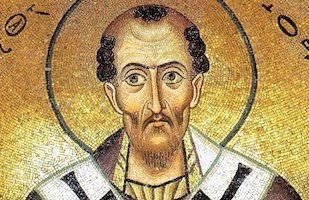
Saint John Chrysostom, born in Antioch in 344, was endowed with a superior genius strengthened by a brilliant education. In order to break with a world which admired and courted him, in 374 he retired for six years to a neighboring mountain, having found Christ through his friendship with Saint Basil. After acquiring the art of Christian silence, he returned to Antioch and there labored as a priest under the direction of its bishop. His eloquence was such that the entire city, up to a hundred thousand listeners, came to hear him, a young man not yet thirty years old. He fled this popularity and adopted the monastic life for fourteen years, until he was taken forcibly to Constantinople, to be consecrated Patriarch of the imperial city in 398.
The effect of his sermons was everywhere marvelous. He converted a large number of pagans and heretics by his eloquence, then in its most brilliant luster, and constantly exhorted his Catholic people to frequent the Holy Sacrifice. In order to remove all excuse for absence he abbreviated the long liturgy then in use. Saint Nilus relates that Saint John Chrysostom, when the priest began the Holy Sacrifice, very often saw many of the Blessed coming down from heaven in shining garments, eyes intent, and bowed heads, in utter stillness and silence, assisting at the consummation of the tremendous mystery.
Beloved as he was in Constantinople, his denunciations of vice made him numerous enemies. In 403 these procured his banishment; and although he was almost immediately recalled, it was not more than a reprieve. In 404 he was banished to Cucusus in the deserts of the Taurus mountains. His reply to the hostile empress was: Chrysostom fears only one thing — not exile, prison, poverty or death — but sin.
In 407, at sixty-three years old his strength was waning, but his enemies were impatient and transported him to Pytius on the Euxine, a rough journey of nearly 400 miles. He was assiduously exposed to every hardship — cold, wet clothing, and semi-starvation, but nothing could overcome his cheerfulness and his consideration for others. On the journey his sickness increased, and he was warned that his end was near. Thereupon, exchanging his travel-stained clothes for white garments, he received Viaticum, and with his customary words, Glory be to God for all things. Amen, passed to Christ. He does not have the title of martyrdom, but possesses all its merit and all its glory. He is the author of the famous words characterizing Saint Paul, object of his admiration and love: The heart of Paul was the Heart of Christ.
Little Pictorial Lives of the Saints, a compilation based on Butler's Lives of the Saints and other sources by John Gilmary Shea (Benziger Brothers: New York, 1894); Les Petits Bollandistes: Vies des Saints, by Msgr. Paul Guérin (Bloud et Barral: Paris, 1882), Vol. 2
LAST-MODIFIED:20250830T152802Z SEQUENCE:90872196 X-ACCESS:1 X-HITS:45 X-COLOR:f0b80e X-SHOW-END-TIME:1 END:VEVENT BEGIN:VEVENT DTSTART;VALUE=DATE:20250914 DTEND;VALUE=DATE:20250915 UID:651C8731-3763-424B-95B5-4E57532B7952 SUMMARY:Exaltation of the Holy Cross CREATED:20221013T211126Z DTSTAMP:20221013T211126Z URL:https://www.stpaulsweymouth.org/component/dpcalendar/event/2748?calid=13 DESCRIPTION:Exaltation of the Holy Cross of Our Lord Jesus Christ\N\NIn the year 627, during the reign of the emperor Heraclius I of Constantinople, the Persians conquered the city of Jerusalem and removed from its venerable Sanctuary the major part of the true Cross of Our Lord, which Saint Helen, mother of the emperor Constantine, had left there after discovering it on Calvary. The emperor resolved to win back by combat this precious object, the new Ark of the Covenant for the new people of God. Before he left Constantinople with his army, Heraclius went to the church wearing black in the spirit of penance; he prostrated himself before the altar and begged God to sustain his courage. And on leaving he took with him a miraculous image of the Saviour, determined to combat with it even unto death.\NHeaven visibly assisted the valiant emperor, for his army won victory after victory. One of the conditions of the peace treaty was the return of the Cross of Our Lord, in the same condition as when it was removed. Heraclius on his return was received in Constantinople by the acclamations of the people; with olive branches and torches, they went out to meet him. And the true Cross was honored, on this occasion, in a magnificent triumph.\NThe emperor wished to give thanks to God by going in person to Jerusalem to return this sacred wood, which had been in the power of the pagans for fourteen years. When he reached the Holy City, he placed the precious relic on his shoulders, but when he came to the gate leading out to Calvary, it became impossible for him to go forward. He was greatly astonished, and those in attendance were stupefied. Take care, O Emperor! said the Patriarch Zachary to him. Certainly the imperial clothing you are wearing does not sufficiently resemble the poor and humiliated condition of Jesus carrying His cross. Heraclius was touched on hearing this; he removed his shoes and his imperial robes, adorned with gold and jewels. Wearing a poor man's tunic, he was able to go up to Calvary and depose there his glorious burden. To give greater brilliance to this triumphant march, God permitted several miracles to occur by the power of the Cross of Christ. A dead man returned to life, four paralytics were cured; ten lepers recovered their health and fifteen blind persons their sight; many possessed persons were delivered from the evil spirit, and a large number of sick persons were completely cured.\NIn those days the greatest power of the Catholic world was the Empire of the East, and that bulwark against the eastern pagans was verging toward its ruin, before God put forth His hand to save it in this way. The re-establishment of the Cross at Jerusalem, by means of the emperor's Christian valor, was a sure pledge of its protection. It was after these events that the feast of the Exaltation of the Holy Cross was instituted, to perpetuate their memory in the Church.\NReflection: It is not necessary to make a pilgrimage to Jerusalem to venerate and exalt the Holy Cross: we can do so by meditating upon it daily and exalting it in our own lives.\NVie des Saints pour tous les jours de l'année, by Abbé L. Jaud (Mame: Tours, 1950); Les Petits Bollandistes: Vies des Saints, by Msgr. Paul Guérin (Bloud et Barral: Paris, 1882), Vol. 11 X-ALT-DESC;FMTTYPE=text/html:Exaltation of the Holy Cross of Our Lord Jesus Christ
In the year 627, during the reign of the emperor Heraclius I of Constantinople, the Persians conquered the city of Jerusalem and removed from its venerable Sanctuary the major part of the true Cross of Our Lord, which Saint Helen, mother of the emperor Constantine, had left there after discovering it on Calvary. The emperor resolved to win back by combat this precious object, the new Ark of the Covenant for the new people of God. Before he left Constantinople with his army, Heraclius went to the church wearing black in the spirit of penance; he prostrated himself before the altar and begged God to sustain his courage. And on leaving he took with him a miraculous image of the Saviour, determined to combat with it even unto death.
Heaven visibly assisted the valiant emperor, for his army won victory after victory. One of the conditions of the peace treaty was the return of the Cross of Our Lord, in the same condition as when it was removed. Heraclius on his return was received in Constantinople by the acclamations of the people; with olive branches and torches, they went out to meet him. And the true Cross was honored, on this occasion, in a magnificent triumph.
The emperor wished to give thanks to God by going in person to Jerusalem to return this sacred wood, which had been in the power of the pagans for fourteen years. When he reached the Holy City, he placed the precious relic on his shoulders, but when he came to the gate leading out to Calvary, it became impossible for him to go forward. He was greatly astonished, and those in attendance were stupefied. Take care, O Emperor! said the Patriarch Zachary to him. Certainly the imperial clothing you are wearing does not sufficiently resemble the poor and humiliated condition of Jesus carrying His cross. Heraclius was touched on hearing this; he removed his shoes and his imperial robes, adorned with gold and jewels. Wearing a poor man's tunic, he was able to go up to Calvary and depose there his glorious burden. To give greater brilliance to this triumphant march, God permitted several miracles to occur by the power of the Cross of Christ. A dead man returned to life, four paralytics were cured; ten lepers recovered their health and fifteen blind persons their sight; many possessed persons were delivered from the evil spirit, and a large number of sick persons were completely cured.
In those days the greatest power of the Catholic world was the Empire of the East, and that bulwark against the eastern pagans was verging toward its ruin, before God put forth His hand to save it in this way. The re-establishment of the Cross at Jerusalem, by means of the emperor's Christian valor, was a sure pledge of its protection. It was after these events that the feast of the Exaltation of the Holy Cross was instituted, to perpetuate their memory in the Church.
Reflection: It is not necessary to make a pilgrimage to Jerusalem to venerate and exalt the Holy Cross: we can do so by meditating upon it daily and exalting it in our own lives.
Vie des Saints pour tous les jours de l'année, by Abbé L. Jaud (Mame: Tours, 1950); Les Petits Bollandistes: Vies des Saints, by Msgr. Paul Guérin (Bloud et Barral: Paris, 1882), Vol. 11
LAST-MODIFIED:20250830T153031Z SEQUENCE:90872345 X-ACCESS:1 X-HITS:17 X-COLOR:f0b80e X-SHOW-END-TIME:1 END:VEVENT BEGIN:VEVENT DTSTART;VALUE=DATE:20250915 DTEND;VALUE=DATE:20250916 UID:04B14603-6941-49A2-AE7C-FF1EBCC9D83F SUMMARY:St. Nicomedes CREATED:20221013T211126Z DTSTAMP:20221013T211126Z URL:https://www.stpaulsweymouth.org/component/dpcalendar/event/2761?calid=13 DESCRIPTION:St. Nicomedes, Martyr\N\NSt Nicomedes (Died c. 71) Priest and Martyr. Died in Rome by being beaten to death wiuth clubs. The Roman Martyrology reads today: “In Rome, on the Nomentan Way, the birthday of the blessed Nicomedes, Priest and Martyr. As he said to those who would compel him to sacrifice: 'I sacrifice only to the Omnipotent God, who reigns in Heaven.' He was scourged, for a very long time with leaded whips and thus, went to our Lord.”\NLittle is known of the early life of this heroic Christian Martyr. What we do know for sure, is derived from the historical texts of Holy Mother Church He is spoken of in the legendary ‘Passio’ of the Saints Nereus and Achilleus composed in the 5th-6th Century, whose Author states that Nicomedes was a Priest. He was discovered while burying the body of the Martyr Felicola and arrested by a certain Flaccus, Since he refused to sacrifice to the gods, he was subjected to a cruel flagellation, during which he died. His body was thrown into the Tiber but one of his fellow-clerics ,named Giusto, recovered it and buried it in a small garden along the Via Nomentan. The Author of the ‘Passio’ does not mention the day of his death but from the context, it can be deduced that he died, at the time of the Emperor Domitian (51-96). Subsequent studies and research have hypothesised 15 September as the day of his death, while another ‘Passio’ of the 7th Century places his death on 1 June under Maximian (240-310).\NIn any case, the existence and cult of this Martyr Nicomedes are attested by documents worthy of faith, although the biographical information is uncertain. Moreover, he is mentioned in at least eight historical ‘Martyrologies.’ In the ‘Roman’ one, his feast day remained on 15 September. Already in the 7th Century, it is known that pilgrims venerated the tomb of the Martyr on the Via Nomentan, on which Pope Boniface V (619-625) had a Basilica built which was later restored by Pope Hadrian I (d. 795). X-ALT-DESC;FMTTYPE=text/html:St. Nicomedes, Martyr
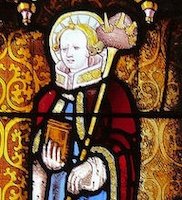
St Nicomedes (Died c. 71) Priest and Martyr. Died in Rome by being beaten to death wiuth clubs. The Roman Martyrology reads today: “In Rome, on the Nomentan Way, the birthday of the blessed Nicomedes, Priest and Martyr. As he said to those who would compel him to sacrifice: 'I sacrifice only to the Omnipotent God, who reigns in Heaven.' He was scourged, for a very long time with leaded whips and thus, went to our Lord.”
Little is known of the early life of this heroic Christian Martyr. What we do know for sure, is derived from the historical texts of Holy Mother Church He is spoken of in the legendary ‘Passio’ of the Saints Nereus and Achilleus composed in the 5th-6th Century, whose Author states that Nicomedes was a Priest. He was discovered while burying the body of the Martyr Felicola and arrested by a certain Flaccus, Since he refused to sacrifice to the gods, he was subjected to a cruel flagellation, during which he died. His body was thrown into the Tiber but one of his fellow-clerics ,named Giusto, recovered it and buried it in a small garden along the Via Nomentan. The Author of the ‘Passio’ does not mention the day of his death but from the context, it can be deduced that he died, at the time of the Emperor Domitian (51-96). Subsequent studies and research have hypothesised 15 September as the day of his death, while another ‘Passio’ of the 7th Century places his death on 1 June under Maximian (240-310).
In any case, the existence and cult of this Martyr Nicomedes are attested by documents worthy of faith, although the biographical information is uncertain. Moreover, he is mentioned in at least eight historical ‘Martyrologies.’ In the ‘Roman’ one, his feast day remained on 15 September. Already in the 7th Century, it is known that pilgrims venerated the tomb of the Martyr on the Via Nomentan, on which Pope Boniface V (619-625) had a Basilica built which was later restored by Pope Hadrian I (d. 795).
LAST-MODIFIED:20250906T160739Z SEQUENCE:91479373 X-ACCESS:1 X-HITS:4 X-COLOR:f0b80e X-SHOW-END-TIME:1 END:VEVENT BEGIN:VEVENT DTSTART;VALUE=DATE:20250915 DTEND;VALUE=DATE:20250916 UID:77F3B52A-BE53-4218-9ACF-AA5474B1E3EA SUMMARY:Our Lady of Sorrows CREATED:20221013T211126Z DTSTAMP:20221013T211126Z URL:https://www.stpaulsweymouth.org/component/dpcalendar/event/2759?calid=13 DESCRIPTION:The Seven Sorrows of the Blessed Virgin Mary\N\NThe Church twice commemorates the sorrows of its heavenly Mother. The Friday of Passion week, since the 15th century, has also been dedicated by the universal Church to Her Compassion. Why is this so? To understand this double liturgy, we must know that Mary is also the Mother of the Mystical Body. The present feast was instituted by Pius VII after his return from his captivity and exile, which lasted from 1809 to 1814. Christ no longer suffers, and for Our Lady also, all suffering as we understand it has ceased. Nonetheless, the prophet Jeremias in his Lamentations, asks: To whom shall You be compared, O Virgin? Your affliction is like the ocean. A mother who is happy in her home weeps just the same over the sorrows of her children. The statues and pictures of Mary all over Europe wept before the Revolution in France, and Her statues weep again today, in many places. The Passion of Christ continues in His elect, in particular in His Vicar on earth, from whom He does not separate Himself, and against whom the force of hell is deployed unceasingly. The mysterious compassion of the Mother is forever acquired for the Mystical Body of Her Son, which must reproduce the divine death in its human nature, elevated above its natural condition by the superhuman power of grace.\NMary's great sorrows began at the prediction of Simeon that a sword would transpierce Her heart. Soon afterwards, She was obliged to flee with the newborn Infant, already object of a fatal search. She lost Him in the temple for three inexpressibly painful days; She met Him on the road to Calvary, and the sight indeed pierced Her heart. She saw Him die, heard His final cry, and witnessed the opening of His side with the effusion of His last drops of blood, mingled with water; She received in Her arms the inert body of the most beautiful of the sons of men. Finally, She was obliged to depose Him in a tomb, leave Him there and return with Her adopted son, John, to a deicidal Jerusalem.\NThe Queen of Martyrs has never ceased to encourage Her children on earth to bear their own crosses, which complement the Passion of Christ. He suffered first the ordinary contradictions of life; for three years He was taunted and regarded as a menace by those who should have recognized Him and His mission. He knew hunger, cold and fatigue; He slept so heavily in a boat amid a tempest, that we can only suppose He was exhausted. He knew what it was to be abandoned in need and to lose, to the empire of various passions, followers He had called His. Christ is our forerunner in all human sorrows and difficulties. Mary, as His Mother, offered to God with Him all the afflictions of His earthly life, and She continues to offer those of the Church, for its sanctification, for the souls in Purgatory and the salvation of souls.\NL'année liturgique, by Dom Guéranger (Mame et Fils: Tours,1919), La Passion, La Semaine Sainte, Vol. 6, translation. O.D.M. X-ALT-DESC;FMTTYPE=text/html:The Seven Sorrows of the Blessed Virgin Mary
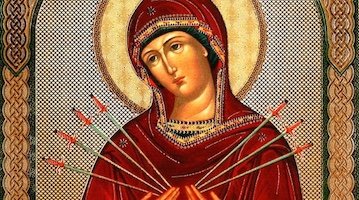
The Church twice commemorates the sorrows of its heavenly Mother. The Friday of Passion week, since the 15th century, has also been dedicated by the universal Church to Her Compassion. Why is this so? To understand this double liturgy, we must know that Mary is also the Mother of the Mystical Body. The present feast was instituted by Pius VII after his return from his captivity and exile, which lasted from 1809 to 1814. Christ no longer suffers, and for Our Lady also, all suffering as we understand it has ceased. Nonetheless, the prophet Jeremias in his Lamentations, asks: To whom shall You be compared, O Virgin? Your affliction is like the ocean. A mother who is happy in her home weeps just the same over the sorrows of her children. The statues and pictures of Mary all over Europe wept before the Revolution in France, and Her statues weep again today, in many places. The Passion of Christ continues in His elect, in particular in His Vicar on earth, from whom He does not separate Himself, and against whom the force of hell is deployed unceasingly. The mysterious compassion of the Mother is forever acquired for the Mystical Body of Her Son, which must reproduce the divine death in its human nature, elevated above its natural condition by the superhuman power of grace.
Mary's great sorrows began at the prediction of Simeon that a sword would transpierce Her heart. Soon afterwards, She was obliged to flee with the newborn Infant, already object of a fatal search. She lost Him in the temple for three inexpressibly painful days; She met Him on the road to Calvary, and the sight indeed pierced Her heart. She saw Him die, heard His final cry, and witnessed the opening of His side with the effusion of His last drops of blood, mingled with water; She received in Her arms the inert body of the most beautiful of the sons of men. Finally, She was obliged to depose Him in a tomb, leave Him there and return with Her adopted son, John, to a deicidal Jerusalem.
The Queen of Martyrs has never ceased to encourage Her children on earth to bear their own crosses, which complement the Passion of Christ. He suffered first the ordinary contradictions of life; for three years He was taunted and regarded as a menace by those who should have recognized Him and His mission. He knew hunger, cold and fatigue; He slept so heavily in a boat amid a tempest, that we can only suppose He was exhausted. He knew what it was to be abandoned in need and to lose, to the empire of various passions, followers He had called His. Christ is our forerunner in all human sorrows and difficulties. Mary, as His Mother, offered to God with Him all the afflictions of His earthly life, and She continues to offer those of the Church, for its sanctification, for the souls in Purgatory and the salvation of souls.
L'année liturgique, by Dom Guéranger (Mame et Fils: Tours,1919), La Passion, La Semaine Sainte, Vol. 6, translation. O.D.M.
LAST-MODIFIED:20250906T160254Z SEQUENCE:91479088 X-ACCESS:1 X-HITS:4 X-COLOR:f0b80e X-SHOW-END-TIME:1 END:VEVENT BEGIN:VEVENT DTSTART;VALUE=DATE:20250916 DTEND;VALUE=DATE:20250917 UID:631E4CAE-0CF5-4732-98EA-9B67C83585C6 SUMMARY:Sts. Cornelius & Cyprian CREATED:20221013T211126Z DTSTAMP:20221013T211126Z URL:https://www.stpaulsweymouth.org/component/dpcalendar/event/2763?calid=13 DESCRIPTION:St. Cornelius Pope & St. Cyprian Bishop, Martyrs\N\NSaint Cornelius was elected Pope in 251 during the persecutions of the Emperor Decius. His first challenge, besides the ever present threat of the Roman authorities, was to bring an end to the schism brought on by his rival, the first anti-pope Novatian. He convened a synod of bishops to confirm him as the rightful successor of Peter. The great controversy that arose as a result of the Decian persecution was whether or not the Church could pardon and receive back into the Church those who had apostacized in the face of martyrdom. Against both the bishops who argued that the Church could not welcome back apostates, and those who argued that they should be welcomed back but did not demand a heavy penance of the penitent, Cornelius decreed that they must be welcomed back and insisted that they perform an adequate penance. In 253 Cornelius was exiled by the emperor Gallus and died of the hardships he endured in exile. He is venerated as a martyr.\NSaint Cyprian of Carthage is second in importance only to the great Saint Augustine as a figure and Father of the African church. He was a close friend of Pope Cornelius, and supported him both against the anti-pope Novatian and in his views concerning the re-admittance of apostates into the Church. Saint Cyprian was born to wealthy pagans around the year 190, and was educated in the classics and in rhetoric. He converted at the age of 56, was ordained a priest a year later, and made bishop two years after that. His writings are of great importance, especially his treatise on The Unity of the Catholic Church, in which he argues that unity is grounded in the authority of the bishop, and among the bishops, in the primacy of the See of Rome. In, "The Unity of the Catholic Church," St. Cyprian writes, "You cannot have God for your Father if you do not have the Church for your mother.... God is one and Christ is one, and his Church is one; one is the faith, and one is the people cemented together by harmony into the strong unity of a body.... If we are the heirs of Christ, let us abide in the peace of Christ; if we are the sons of God, let us be lovers of peace." During the Decian persecutions Cyprian considered it wiser to go into hiding and guide his flock covertly rather than seek the glorious crown of martyrdom, a decision that his enemies attacked him for. On September 14, 258, however, he was martyred during the persecutions of the emperor Valerian. X-ALT-DESC;FMTTYPE=text/html:St. Cornelius Pope & St. Cyprian Bishop, Martyrs
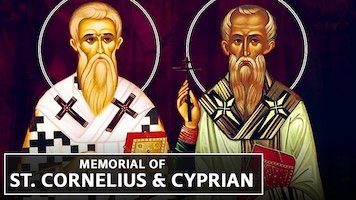
Saint Cornelius was elected Pope in 251 during the persecutions of the Emperor Decius. His first challenge, besides the ever present threat of the Roman authorities, was to bring an end to the schism brought on by his rival, the first anti-pope Novatian. He convened a synod of bishops to confirm him as the rightful successor of Peter. The great controversy that arose as a result of the Decian persecution was whether or not the Church could pardon and receive back into the Church those who had apostacized in the face of martyrdom. Against both the bishops who argued that the Church could not welcome back apostates, and those who argued that they should be welcomed back but did not demand a heavy penance of the penitent, Cornelius decreed that they must be welcomed back and insisted that they perform an adequate penance. In 253 Cornelius was exiled by the emperor Gallus and died of the hardships he endured in exile. He is venerated as a martyr.
Saint Cyprian of Carthage is second in importance only to the great Saint Augustine as a figure and Father of the African church. He was a close friend of Pope Cornelius, and supported him both against the anti-pope Novatian and in his views concerning the re-admittance of apostates into the Church. Saint Cyprian was born to wealthy pagans around the year 190, and was educated in the classics and in rhetoric. He converted at the age of 56, was ordained a priest a year later, and made bishop two years after that. His writings are of great importance, especially his treatise on The Unity of the Catholic Church, in which he argues that unity is grounded in the authority of the bishop, and among the bishops, in the primacy of the See of Rome. In, "The Unity of the Catholic Church," St. Cyprian writes, "You cannot have God for your Father if you do not have the Church for your mother.... God is one and Christ is one, and his Church is one; one is the faith, and one is the people cemented together by harmony into the strong unity of a body.... If we are the heirs of Christ, let us abide in the peace of Christ; if we are the sons of God, let us be lovers of peace." During the Decian persecutions Cyprian considered it wiser to go into hiding and guide his flock covertly rather than seek the glorious crown of martyrdom, a decision that his enemies attacked him for. On September 14, 258, however, he was martyred during the persecutions of the emperor Valerian.
LAST-MODIFIED:20250906T161539Z SEQUENCE:91479853 X-ACCESS:1 X-HITS:12 X-COLOR:f0b80e X-SHOW-END-TIME:1 END:VEVENT BEGIN:VEVENT DTSTART;VALUE=DATE:20250917 DTEND;VALUE=DATE:20250918 UID:ABDA44B5-EFCD-4967-A7B0-34EC1820B8F2 SUMMARY:The Stigmata of St. Francis CREATED:20221013T211126Z DTSTAMP:20221013T211126Z URL:https://www.stpaulsweymouth.org/component/dpcalendar/event/2767?calid=13 DESCRIPTION:The Impression of the Stigmata of St. Francis of Assisi, Confessor\N\NSaint Bonaventure, biographer of Saint Francis of Assisi, wrote that two years before his holy death he had been praying on Mount Alverno in a solitary retreat, where he had gone to fast for forty days in honor of the Archangel Michael. No one ever meditated more than Francis on the Passion of his Lord. During his retreat he beheld in vision a six-winged Seraph attached to a cross, and received at the same time a painful wound of the heart, which seemed to transpierce it. When the vision ended his own hands and feet bore the marks of the angelic crucifixion which he had seen in the vision. He understood by his vision that the soul must come to resemble Christ by the ardors of its interior fire, rather than by any physical, exterior means. We reproduce here a meditation of the saintly 19thcentury Abbot, Dom Guéranger of Solemnes in France:\NThe Feast of the Stigmata of Saint Francis, whom we will soon honor again on his feast of October 4th, is not only to glorify a Saint; it commemorates and signifies something which goes beyond the life of any single man, even one of the greatest of the Church. The God-Man never ceases to live on in His Church, and the reproduction of His own mysteries in this Spouse whom He wants to be similar to Himself, is the explanation of history.\NIn the thirteenth century it seemed that charity, whose divine precept many no longer heeded, concentrated in a few souls the fires which had once sufficed to inflame multitudes. Sanctity shone as brilliantly as ever, but the hour for the cooling of the brazier had struck for the peoples. The Church itself says so today in its liturgy, at the Collect: Lord Jesus Christ, when the world was growing cold, You reproduced the sacred marks of Your passion in the body of the most blessed Francis, in order that Your love might also set our hearts afire.' The Spouse of Christ had already begun to experience the long series of social defections among the nations, with their denials, treasons, derision, slaps, spittings in the very praetorium, all of which conclude in the legalized separation of society from its Author. The era of the Passion is advanced; the exaltation of the Holy Cross, which for centuries was triumphant in the eyes of the nations, acquires in the sight of heaven, as the Angels look down upon it, the aspect of an ever closer resemblance with the Spouse to the sufferings of her crucified Beloved.\NSaint Francis, loved today by all who know of him — and few there are who do not — was like precious marble placed before an expert sculptor. The Holy Spirit chose the flesh of the seraph of Assisi to express His divine thought, thus manifesting to the world the very specific direction He intends to give to souls thereafter. This stigmatization offers a first example, a complete image, of the new labor the divine Spirit is meditating — total union, on the very Cross of Christ itself, of the mystical Body with the divine Head. Francis is the one honored by this primacy of choice; but after him the sacred sign will be received by others, who also personify the Church. From this time on, the Stigmata of the Lord Jesus will be at all times visible, here and there on this earth.\NL'Année liturgique, by Dom Prosper Guéranger (Mame et Fils: Tours, 1919), The Time after Pentecost V, Vol. 14, translation O.D.M. X-ALT-DESC;FMTTYPE=text/html:The Impression of the Stigmata of St. Francis of Assisi, Confessor
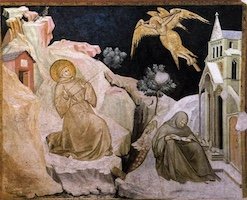
Saint Bonaventure, biographer of Saint Francis of Assisi, wrote that two years before his holy death he had been praying on Mount Alverno in a solitary retreat, where he had gone to fast for forty days in honor of the Archangel Michael. No one ever meditated more than Francis on the Passion of his Lord. During his retreat he beheld in vision a six-winged Seraph attached to a cross, and received at the same time a painful wound of the heart, which seemed to transpierce it. When the vision ended his own hands and feet bore the marks of the angelic crucifixion which he had seen in the vision. He understood by his vision that the soul must come to resemble Christ by the ardors of its interior fire, rather than by any physical, exterior means. We reproduce here a meditation of the saintly 19thcentury Abbot, Dom Guéranger of Solemnes in France:
The Feast of the Stigmata of Saint Francis, whom we will soon honor again on his feast of October 4th, is not only to glorify a Saint; it commemorates and signifies something which goes beyond the life of any single man, even one of the greatest of the Church. The God-Man never ceases to live on in His Church, and the reproduction of His own mysteries in this Spouse whom He wants to be similar to Himself, is the explanation of history.
In the thirteenth century it seemed that charity, whose divine precept many no longer heeded, concentrated in a few souls the fires which had once sufficed to inflame multitudes. Sanctity shone as brilliantly as ever, but the hour for the cooling of the brazier had struck for the peoples. The Church itself says so today in its liturgy, at the Collect: Lord Jesus Christ, when the world was growing cold, You reproduced the sacred marks of Your passion in the body of the most blessed Francis, in order that Your love might also set our hearts afire.' The Spouse of Christ had already begun to experience the long series of social defections among the nations, with their denials, treasons, derision, slaps, spittings in the very praetorium, all of which conclude in the legalized separation of society from its Author. The era of the Passion is advanced; the exaltation of the Holy Cross, which for centuries was triumphant in the eyes of the nations, acquires in the sight of heaven, as the Angels look down upon it, the aspect of an ever closer resemblance with the Spouse to the sufferings of her crucified Beloved.
Saint Francis, loved today by all who know of him — and few there are who do not — was like precious marble placed before an expert sculptor. The Holy Spirit chose the flesh of the seraph of Assisi to express His divine thought, thus manifesting to the world the very specific direction He intends to give to souls thereafter. This stigmatization offers a first example, a complete image, of the new labor the divine Spirit is meditating — total union, on the very Cross of Christ itself, of the mystical Body with the divine Head. Francis is the one honored by this primacy of choice; but after him the sacred sign will be received by others, who also personify the Church. From this time on, the Stigmata of the Lord Jesus will be at all times visible, here and there on this earth.
L'Année liturgique, by Dom Prosper Guéranger (Mame et Fils: Tours, 1919), The Time after Pentecost V, Vol. 14, translation O.D.M.
LAST-MODIFIED:20250906T163653Z SEQUENCE:91481127 X-ACCESS:1 X-HITS:5 X-COLOR:f0b80e X-SHOW-END-TIME:1 END:VEVENT BEGIN:VEVENT DTSTART;VALUE=DATE:20250918 DTEND;VALUE=DATE:20250919 UID:A2EAD8EB-CC16-488A-8B45-4DC712FA6293 SUMMARY:St. Joseph of Cupertino CREATED:20221013T211126Z DTSTAMP:20221013T211126Z URL:https://www.stpaulsweymouth.org/component/dpcalendar/event/2769?calid=13 DESCRIPTION:St. Joseph of Cupertino, Confessor\N\NJoseph Desa was born in the little city of Cupertino, near the Gulf of Tarento, in 1600. It is said in the acts of the process of his canonization that at the age of five he already showed such signs of sanctity that if he had been an adult, he would have been venerated as a perfect man. Already in his youth he was ravished in ecstasies which literally tore him away from the earth; it has been calculated that perhaps half of his life for some sixty years was spent literally above the ground. But much remains to be said of Saint Joseph, apart from his visible divine favors.\NHe almost died at the age of seven from an interior abscess, which only his prayer to Our Lady cured. He learned to be a shoemaker to earn his living, but was often absent in spirit from his work. He treated his flesh with singular rigor. The Cardinal de Lauria, who knew him well for long years, said he wore a very rude hair shirt and never ate meat, contenting himself with fruits and bread. He seasoned his soup, if he accepted any, with a dry and very bitter powder of wormwood. At the age of seventeen he desired to become a conventual Franciscan, but was refused because he had not studied. He entered the Capuchins as a lay brother, but the divine favors he received seemed everywhere to bring down contempt upon him. He was in continuous contemplation and dropped plates and cauldrons. He would often stop and kneel down, and his long halts in places of discomfort brought on a tumor of the knee which was very painful. It was decided that he lacked both aptitude and health, and he was sent home. He was then regarded everywhere as a vagabond and a fool, and his mother in particular was harsh, as had been her custom for long years. She did, however, obtain permission for him to take charge of the stable for the conventual Franciscans, wearing the habit of the Third Order.\NSaint Joseph proved himself many times to be perfectly obedient. His humility was heroic, and his mortification most exceptional. His words bore fruit and wakened the indifferent, warned against vice and in general were seen to come from a man who was very kind and very virtuous. He was finally granted the habit. He read with difficulty and wrote with still more difficulty, but the Mother of God was watching over him. When by the intervention of the bishop he had been admitted to minor Orders, he desired to be a priest but knew well only one text of the Gospel. By a special Providence of God, that was the text he was asked to expound during the canonical examination for the diaconate. The bishop who was in charge of hearing candidates for the priesthood found that the first ones answered exceptionally well, and he decided to ordain them all without any further hearings, thus passing Joseph with the others. He was ordained in 1628.\NHe retired to a hermitage where he was apparently in nearly continuous ecstasy, or at least contemplation. He kept nothing for himself save the tunic he wore. Rejoicing to be totally poor, he felt entirely free also. He obeyed his Superiors and went wherever he was sent, wearing sandals and an old tunic which often came back with pieces missing; the people had begun to venerate him as a Saint, and had cut them off. When he did not notice what was happening, he was reproached as failing in poverty. The humble Brother wanted to pass for a sinner; he asked for the lowest employments, and transported the building materials for a church on his shoulders. He begged for the community. At the church he was a priest; elsewhere, a poor Brother.\NToward the end of his life all divine consolations were denied the Saint, including his ecstasies. He fell victim to an aridity which was unceasing, and he could find no savor in any holy reading. Then the infernal spirits inspired terrible visions and dreams. He shed tears amid this darkness and prayed his Saviour to help him, but received no answer. When the General of the Order heard of this, he called him to Rome, and there he recovered from the fearful trial, and all his joy returned.\NHe still had combats with the enemy of God to bear just the same, when the demons took human form to attempt to injure him physically. Other afflictions were not spared him, but his soul overcame all barriers between himself and God. He died on September 18, 1663, at the age of 63, in the Franciscan convent of Osino. He had celebrated Holy Mass up to and including the day before his death, as he had foretold he would do.\NLes Petits Bollandistes: Vies des Saints, by Msgr. Paul Guérin (Bloud et Barral: Paris, 1882), Vol. 11 X-ALT-DESC;FMTTYPE=text/html:St. Joseph of Cupertino, Confessor
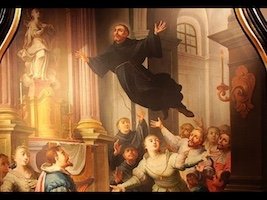
Joseph Desa was born in the little city of Cupertino, near the Gulf of Tarento, in 1600. It is said in the acts of the process of his canonization that at the age of five he already showed such signs of sanctity that if he had been an adult, he would have been venerated as a perfect man. Already in his youth he was ravished in ecstasies which literally tore him away from the earth; it has been calculated that perhaps half of his life for some sixty years was spent literally above the ground. But much remains to be said of Saint Joseph, apart from his visible divine favors.
He almost died at the age of seven from an interior abscess, which only his prayer to Our Lady cured. He learned to be a shoemaker to earn his living, but was often absent in spirit from his work. He treated his flesh with singular rigor. The Cardinal de Lauria, who knew him well for long years, said he wore a very rude hair shirt and never ate meat, contenting himself with fruits and bread. He seasoned his soup, if he accepted any, with a dry and very bitter powder of wormwood. At the age of seventeen he desired to become a conventual Franciscan, but was refused because he had not studied. He entered the Capuchins as a lay brother, but the divine favors he received seemed everywhere to bring down contempt upon him. He was in continuous contemplation and dropped plates and cauldrons. He would often stop and kneel down, and his long halts in places of discomfort brought on a tumor of the knee which was very painful. It was decided that he lacked both aptitude and health, and he was sent home. He was then regarded everywhere as a vagabond and a fool, and his mother in particular was harsh, as had been her custom for long years. She did, however, obtain permission for him to take charge of the stable for the conventual Franciscans, wearing the habit of the Third Order.
Saint Joseph proved himself many times to be perfectly obedient. His humility was heroic, and his mortification most exceptional. His words bore fruit and wakened the indifferent, warned against vice and in general were seen to come from a man who was very kind and very virtuous. He was finally granted the habit. He read with difficulty and wrote with still more difficulty, but the Mother of God was watching over him. When by the intervention of the bishop he had been admitted to minor Orders, he desired to be a priest but knew well only one text of the Gospel. By a special Providence of God, that was the text he was asked to expound during the canonical examination for the diaconate. The bishop who was in charge of hearing candidates for the priesthood found that the first ones answered exceptionally well, and he decided to ordain them all without any further hearings, thus passing Joseph with the others. He was ordained in 1628.
He retired to a hermitage where he was apparently in nearly continuous ecstasy, or at least contemplation. He kept nothing for himself save the tunic he wore. Rejoicing to be totally poor, he felt entirely free also. He obeyed his Superiors and went wherever he was sent, wearing sandals and an old tunic which often came back with pieces missing; the people had begun to venerate him as a Saint, and had cut them off. When he did not notice what was happening, he was reproached as failing in poverty. The humble Brother wanted to pass for a sinner; he asked for the lowest employments, and transported the building materials for a church on his shoulders. He begged for the community. At the church he was a priest; elsewhere, a poor Brother.
Toward the end of his life all divine consolations were denied the Saint, including his ecstasies. He fell victim to an aridity which was unceasing, and he could find no savor in any holy reading. Then the infernal spirits inspired terrible visions and dreams. He shed tears amid this darkness and prayed his Saviour to help him, but received no answer. When the General of the Order heard of this, he called him to Rome, and there he recovered from the fearful trial, and all his joy returned.
He still had combats with the enemy of God to bear just the same, when the demons took human form to attempt to injure him physically. Other afflictions were not spared him, but his soul overcame all barriers between himself and God. He died on September 18, 1663, at the age of 63, in the Franciscan convent of Osino. He had celebrated Holy Mass up to and including the day before his death, as he had foretold he would do.
Les Petits Bollandistes: Vies des Saints, by Msgr. Paul Guérin (Bloud et Barral: Paris, 1882), Vol. 11
LAST-MODIFIED:20250906T163958Z SEQUENCE:91481312 X-ACCESS:1 X-HITS:4 X-COLOR:f0b80e X-SHOW-END-TIME:1 END:VEVENT BEGIN:VEVENT DTSTART;VALUE=DATE:20250919 DTEND;VALUE=DATE:20250920 UID:10261AEC-9917-4D3E-9048-F4AAC4A0EEE0 SUMMARY:St. Januarius & Companions CREATED:20221013T211126Z DTSTAMP:20221013T211126Z URL:https://www.stpaulsweymouth.org/component/dpcalendar/event/2771?calid=13 DESCRIPTION:St. Januarius & Companions, Martyrs\N\NMany centuries ago, Saint Januarius died for the Faith during the persecution of Diocletian. God, through the blood which His servant shed for Him, some of which is conserved in Naples, continues to strengthen the faith of the Church, and to work there a regular miracle by its means.\NThis beloved Saint of the late third century was the bishop of Beneventum, and had a friend, a deacon named Sosius, who like himself was occupied with fortifying the Christians faced with martyrdom. When the prefect of Pouzzoles, where Sosius had been imprisoned, heard that Januarius was coming to visit him and three other fervent Christians being held there, he had him arrested. He urged him to cease his exhortations, forbidden by the imperial edicts, and to offer incense to the idols, if he wanted to avoid torture. The holy bishop replied that he could not do so. He was submitted to torments, the first one of which left him miraculously uninjured. The judge attributed the miracle to magic, as was often said of the Christians whom God chose to spare. He ordered another torture which left the bishop lame, before he was sent to the same prison as the others.\NWhen two ecclesiastics of Benevent came to visit the confessors, they were arrested and condemned to die with the other five in an amphitheater, by the teeth of wild beasts. The animals, furious when released into the space where the seven Confessors stood, came and quietly lay down at their feet, renewing a miracle seen more than once in the history of the first centuries. By this prodigy and other miracles which preceded their execution, five thousand persons were converted. The bishop and his companions were decapitated on September 19, 305. A church was built on a nearby mountain to honor the memory of Saint Januarius.\NLittle did the heathen governor think, when he condemned them, that he would be the instrument in God's hand for ushering in a long succession of miracles which commemorate the faith and attest the sanctity of Januarius. His relics repose in the cathedral of Naples, and it is there that the liquefaction of his blood occurs. The blood is congealed in two glass vials, but when it is brought near the martyr's head, it melts and flows like the blood of a living man. This ordinarily occurs on his feast day celebrated on September 17th in Naples, and on anniversaries of miracles attributed to him, which have preserved the city from eruptions of Mount Vesuvius or the plague. Some have tried to explain this miracle by natural causes, but none have ever contested the reality of the facts.\NLes Petits Bollandistes: Vies des Saints, by Msgr. Paul Guérin (Bloud et Barral: Paris, 1882), Vol. 11; Little Pictorial Lives of the Saints, a compilation based on Butler's Lives of the Saints and other sources by John Gilmary Shea (Benziger Brothers: New York, 1894). X-ALT-DESC;FMTTYPE=text/html:St. Januarius & Companions, Martyrs
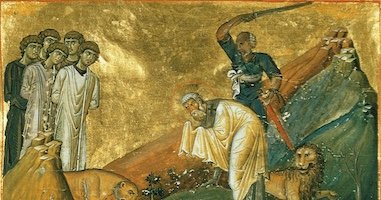
Many centuries ago, Saint Januarius died for the Faith during the persecution of Diocletian. God, through the blood which His servant shed for Him, some of which is conserved in Naples, continues to strengthen the faith of the Church, and to work there a regular miracle by its means.
This beloved Saint of the late third century was the bishop of Beneventum, and had a friend, a deacon named Sosius, who like himself was occupied with fortifying the Christians faced with martyrdom. When the prefect of Pouzzoles, where Sosius had been imprisoned, heard that Januarius was coming to visit him and three other fervent Christians being held there, he had him arrested. He urged him to cease his exhortations, forbidden by the imperial edicts, and to offer incense to the idols, if he wanted to avoid torture. The holy bishop replied that he could not do so. He was submitted to torments, the first one of which left him miraculously uninjured. The judge attributed the miracle to magic, as was often said of the Christians whom God chose to spare. He ordered another torture which left the bishop lame, before he was sent to the same prison as the others.
When two ecclesiastics of Benevent came to visit the confessors, they were arrested and condemned to die with the other five in an amphitheater, by the teeth of wild beasts. The animals, furious when released into the space where the seven Confessors stood, came and quietly lay down at their feet, renewing a miracle seen more than once in the history of the first centuries. By this prodigy and other miracles which preceded their execution, five thousand persons were converted. The bishop and his companions were decapitated on September 19, 305. A church was built on a nearby mountain to honor the memory of Saint Januarius.
Little did the heathen governor think, when he condemned them, that he would be the instrument in God's hand for ushering in a long succession of miracles which commemorate the faith and attest the sanctity of Januarius. His relics repose in the cathedral of Naples, and it is there that the liquefaction of his blood occurs. The blood is congealed in two glass vials, but when it is brought near the martyr's head, it melts and flows like the blood of a living man. This ordinarily occurs on his feast day celebrated on September 17th in Naples, and on anniversaries of miracles attributed to him, which have preserved the city from eruptions of Mount Vesuvius or the plague. Some have tried to explain this miracle by natural causes, but none have ever contested the reality of the facts.
Les Petits Bollandistes: Vies des Saints, by Msgr. Paul Guérin (Bloud et Barral: Paris, 1882), Vol. 11; Little Pictorial Lives of the Saints, a compilation based on Butler's Lives of the Saints and other sources by John Gilmary Shea (Benziger Brothers: New York, 1894).
LAST-MODIFIED:20250906T164307Z SEQUENCE:91481501 X-ACCESS:1 X-HITS:44 X-COLOR:f0b80e X-SHOW-END-TIME:1 END:VEVENT BEGIN:VEVENT DTSTART;VALUE=DATE:20250920 DTEND;VALUE=DATE:20250921 UID:B65FC29E-18A1-4790-95AB-ED6A03517001 SUMMARY:St. Eustachius & his Family CREATED:20221013T211126Z DTSTAMP:20221013T211126Z URL:https://www.stpaulsweymouth.org/component/dpcalendar/event/2773?calid=13 DESCRIPTION:St. Eustachius & his Family, Martyrs\N\NThe remarkable story of Saint Eustachius (or Eustace), named Placidus before his conversion, is a lesson given by God Himself on the marvels of His Divine Providence. He was a distinguished and very wealthy officer of the Roman army under the Emperor Trajan, in the beginning of the second century. He practiced generous charity to the poor, although he had not yet perceived the errors of idolatry.\NOne day, while this distinguished officer was vainly pursuing a deer, the animal suddenly stood immobile before him in the light of a hilltop, and he perceived between its horns a luminous cross. On the cross was the image of the crucified Saviour, and a voice said to him, I am the Christ whom you honor without knowing it; the alms you give to the poor have reached Me. Like Saint Paul, he fell from his horse and remained inert for a time. Coming to himself, he said interiorly, What is this voice I have heard? You who speak to me, who are you, that I may believe in you? And the Lord told him interiorly that He was the Creator of the light, of the seasons, of man and all things visible, that he had suffered to save the human race, died and been buried, but had risen the third day.\NThis was sufficient, and the officer went home to fulfill the prescription he had received to be baptized with his wife and two young sons. His spouse had received a similar revelation at the same time as himself, and they all went to the Christian authority of the region in secret, to be baptized the same night.\NIn a short time he lost all his possessions through natural catastrophes and robbers. But he had been advised beforehand that the Lord wanted to make of him another Job, that already the ancient enemy had plotted against him, and that he was not to allow any thought of blasphemy to arise in his heart amid the sufferings that were awaiting him. He prayed for strength, and retired from the region after the calamities, with his wife and children. When by unforeseeable and extraordinary accidents, his wife and children were also taken from him, and he believed the children dead, he was close to despair and wished his life might end; but the warning of the Lord returned to his mind, and he entered into the service of a land-owner of a village called Badyssus, to tend the fields. He remained for fifteen years in this occupation. During this time his loved ones were well and safe, all spared in the perilous circumstances which had removed them from his sight, but separated, each one like himself, from the three others.\NIn those days the empire was suffering greatly from the ravages of barbarians, and was sinking under the assaults. The emperor Trajan had Eustachius sought out, and when he was found, had him clothed in splendid garments to give him command over the troops he intended to send against the invaders. During the celebration that accompanied his return, he related to the emperor all that had occurred to him. When the troops were being assembled, his own sons were conscripted. Seeing them, he noticed them as young men taller than most and of great nobility of bearing and countenance, and kept them near him without yet recognizing them. One of the two, while on bivouac near the very house of his own mother, who like Eustachius had taken employment in the garden of a landowner, related the confused memories of his childhood to his companion. Suddenly, the two brothers recognized one another and embraced in an effusion of joy.\NTheir mother, by a delicate attention of Providence, had chanced to overhear them, and reflecting on what she heard, became certain they were her own sons. She went to the captain of the campaign to inquire about them, and immediately recognized him. Not wishing to startle him, she began to relate her story, identifying herself as the wife of a certain Placidus, and saying she believed she was now in the presence of her two sons from whom she had been separated, and whom she had not seen for long years. One must imagine the sentiments of the captain on hearing this narration, the reunion which followed, and the prayers of thanksgiving sent up to God by the family and also the troops, who joined them in their joy and prayers.\NReturning to Rome victorious, Eustachius was received in triumph and greatly honored, but when commanded to sacrifice during the celebration to the false gods, refused. The infuriated emperor Adrian — for Trajan had died — ordered him with his wife and children to be exposed to a starved lion. But instead of harming these servants of God, the beast came up to them, lowered its head as if in homage, and left the arena. The emperor, more furious still, caused the martyrs to be shut up inside a brazen bull, under which a fire was to be kindled, that they might be roasted to death. Saint Eustachius prayed aloud and thanked God, asking Him who had reunited them to cause that their lives end at the same time, so they might be received together by Him into the happiness of His presence. They expired, but neither their bodies nor even their hair was injured. They were found entire the next day, and at first it was believed they were still alive. Many believed in Christ through this final miracle, which to us today seems perhaps less miraculous than the story of their existence while alive. A church in honor of the martyrs still exists in Rome: Saint-Eustachius in Thermis.\NLes Petits Bollandistes: Vies des Saints, by Msgr. Paul Guérin (Bloud et Barral: Paris, 1882), Vol. 11 X-ALT-DESC;FMTTYPE=text/html:St. Eustachius & his Family, Martyrs
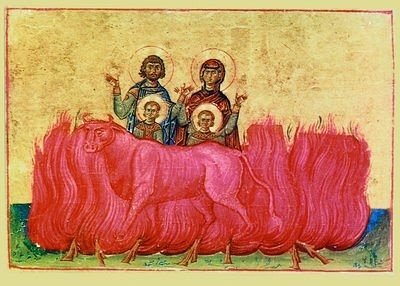
The remarkable story of Saint Eustachius (or Eustace), named Placidus before his conversion, is a lesson given by God Himself on the marvels of His Divine Providence. He was a distinguished and very wealthy officer of the Roman army under the Emperor Trajan, in the beginning of the second century. He practiced generous charity to the poor, although he had not yet perceived the errors of idolatry.
One day, while this distinguished officer was vainly pursuing a deer, the animal suddenly stood immobile before him in the light of a hilltop, and he perceived between its horns a luminous cross. On the cross was the image of the crucified Saviour, and a voice said to him, I am the Christ whom you honor without knowing it; the alms you give to the poor have reached Me. Like Saint Paul, he fell from his horse and remained inert for a time. Coming to himself, he said interiorly, What is this voice I have heard? You who speak to me, who are you, that I may believe in you? And the Lord told him interiorly that He was the Creator of the light, of the seasons, of man and all things visible, that he had suffered to save the human race, died and been buried, but had risen the third day.
This was sufficient, and the officer went home to fulfill the prescription he had received to be baptized with his wife and two young sons. His spouse had received a similar revelation at the same time as himself, and they all went to the Christian authority of the region in secret, to be baptized the same night.
In a short time he lost all his possessions through natural catastrophes and robbers. But he had been advised beforehand that the Lord wanted to make of him another Job, that already the ancient enemy had plotted against him, and that he was not to allow any thought of blasphemy to arise in his heart amid the sufferings that were awaiting him. He prayed for strength, and retired from the region after the calamities, with his wife and children. When by unforeseeable and extraordinary accidents, his wife and children were also taken from him, and he believed the children dead, he was close to despair and wished his life might end; but the warning of the Lord returned to his mind, and he entered into the service of a land-owner of a village called Badyssus, to tend the fields. He remained for fifteen years in this occupation. During this time his loved ones were well and safe, all spared in the perilous circumstances which had removed them from his sight, but separated, each one like himself, from the three others.
In those days the empire was suffering greatly from the ravages of barbarians, and was sinking under the assaults. The emperor Trajan had Eustachius sought out, and when he was found, had him clothed in splendid garments to give him command over the troops he intended to send against the invaders. During the celebration that accompanied his return, he related to the emperor all that had occurred to him. When the troops were being assembled, his own sons were conscripted. Seeing them, he noticed them as young men taller than most and of great nobility of bearing and countenance, and kept them near him without yet recognizing them. One of the two, while on bivouac near the very house of his own mother, who like Eustachius had taken employment in the garden of a landowner, related the confused memories of his childhood to his companion. Suddenly, the two brothers recognized one another and embraced in an effusion of joy.
Their mother, by a delicate attention of Providence, had chanced to overhear them, and reflecting on what she heard, became certain they were her own sons. She went to the captain of the campaign to inquire about them, and immediately recognized him. Not wishing to startle him, she began to relate her story, identifying herself as the wife of a certain Placidus, and saying she believed she was now in the presence of her two sons from whom she had been separated, and whom she had not seen for long years. One must imagine the sentiments of the captain on hearing this narration, the reunion which followed, and the prayers of thanksgiving sent up to God by the family and also the troops, who joined them in their joy and prayers.
Returning to Rome victorious, Eustachius was received in triumph and greatly honored, but when commanded to sacrifice during the celebration to the false gods, refused. The infuriated emperor Adrian — for Trajan had died — ordered him with his wife and children to be exposed to a starved lion. But instead of harming these servants of God, the beast came up to them, lowered its head as if in homage, and left the arena. The emperor, more furious still, caused the martyrs to be shut up inside a brazen bull, under which a fire was to be kindled, that they might be roasted to death. Saint Eustachius prayed aloud and thanked God, asking Him who had reunited them to cause that their lives end at the same time, so they might be received together by Him into the happiness of His presence. They expired, but neither their bodies nor even their hair was injured. They were found entire the next day, and at first it was believed they were still alive. Many believed in Christ through this final miracle, which to us today seems perhaps less miraculous than the story of their existence while alive. A church in honor of the martyrs still exists in Rome: Saint-Eustachius in Thermis.
Les Petits Bollandistes: Vies des Saints, by Msgr. Paul Guérin (Bloud et Barral: Paris, 1882), Vol. 11
LAST-MODIFIED:20250906T164624Z SEQUENCE:91481698 X-ACCESS:1 X-HITS:51 X-COLOR:f0b80e X-SHOW-END-TIME:1 END:VEVENT BEGIN:VEVENT DTSTART;VALUE=DATE:20250921 DTEND;VALUE=DATE:20250922 UID:5E2D3829-7C87-4D36-99A4-E05227C71436 SUMMARY:St. Matthew CREATED:20221013T211126Z DTSTAMP:20221013T211126Z URL:https://www.stpaulsweymouth.org/component/dpcalendar/event/2775?calid=13 DESCRIPTION:St. Matthew, Apostle & Evangelist\N\NOne day, as Our Lord was walking by the Sea of Galilee, He saw, seated in his customs bureau, Levi the publican, whose business it was to collect the taxes from the people for their Roman masters. Jesus said to him: Follow Me. Leaving all behind, Matthew arose and did so, thereby giving us all an example of the way in which we should respond to grace. The humble Matthew, as he was thereafter called, tells us himself in his Gospel that he was Levi, one of those publicans abhorred by the Jews as enemies of their country, outcasts and notorious sinners, who enriched themselves by extortion and fraud. No Pharisee would sit with one at table; Our Saviour alone had compassion for them.\NSaint Matthew prepared a great feast, to which he invited Jesus and His disciples, with a number of these publicans, who thereupon began to listen to Him with attention and joy. It was there, in answer to the murmurs of the Pharisees saying that this pretended prophet ate with publicans and sinners, that Jesus said, They that are in good health have no need of a physician. I have not come to call the just, but sinners to penance.\NAfter the Ascension, Saint Matthew remained for over ten years in Judea, writing his Gospel there in about the year 44, to teach his countrymen that the kingdom of heaven had already been instigated, for Jesus was their true Lord and the King foretold by the prophets. He departed then to preach the Faith in Egypt and especially in Ethiopia, where he remained for twenty-three years. When he resurrected the son of the Ethiopian king who had received him, the miracle brought about the conversion of the royal house and with them the entire province.\NThe king's daughter consecrated herself to God with several other maidens. When a young man wished to marry the beautiful Iphigenia, Saint Matthew invited him to come and listen to a discourse he was to make to that community of virgins, to hear what he would say to them. When the Apostle extolled the state of virginity, the suitor became enraged and arranged to have him slain as he came from the altar. Saint Hippolyte calls Saint Matthew the victim and martyr of holy virginity.\NIt is said in the Constitutions of Pope Saint Clement that Saint Matthew instituted holy water, for protection of soul and body; the prayer he used for the purpose is reported in that document. The relics of Saint Matthew were for many years in the city of Naddaver in Ethiopia, where he suffered his martyrdom, but were transferred to Salerno in the year 954, where they remained concealed in a cave, for protection, for over a hundred years.\NReflection: Obey all inspirations of Our Lord as promptly as Saint Matthew, who, at a single word, Saint Bridget says, laid down the heavy burden of the world, to take the light and sweet yoke of Christ.\NLittle Pictorial Lives of the Saints, a compilation based on Butler's Lives of the Saints and other sources by John Gilmary Shea (Benziger Brothers: New York, 1894); Les Petits Bollandistes: Vies des Saints, by Msgr. Paul Guérin (Bloud et Barral: Paris, 1882), Vol. 11 X-ALT-DESC;FMTTYPE=text/html:St. Matthew, Apostle & Evangelist
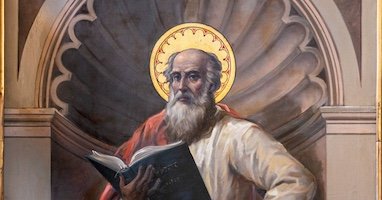
One day, as Our Lord was walking by the Sea of Galilee, He saw, seated in his customs bureau, Levi the publican, whose business it was to collect the taxes from the people for their Roman masters. Jesus said to him: Follow Me. Leaving all behind, Matthew arose and did so, thereby giving us all an example of the way in which we should respond to grace. The humble Matthew, as he was thereafter called, tells us himself in his Gospel that he was Levi, one of those publicans abhorred by the Jews as enemies of their country, outcasts and notorious sinners, who enriched themselves by extortion and fraud. No Pharisee would sit with one at table; Our Saviour alone had compassion for them.
Saint Matthew prepared a great feast, to which he invited Jesus and His disciples, with a number of these publicans, who thereupon began to listen to Him with attention and joy. It was there, in answer to the murmurs of the Pharisees saying that this pretended prophet ate with publicans and sinners, that Jesus said, They that are in good health have no need of a physician. I have not come to call the just, but sinners to penance.
After the Ascension, Saint Matthew remained for over ten years in Judea, writing his Gospel there in about the year 44, to teach his countrymen that the kingdom of heaven had already been instigated, for Jesus was their true Lord and the King foretold by the prophets. He departed then to preach the Faith in Egypt and especially in Ethiopia, where he remained for twenty-three years. When he resurrected the son of the Ethiopian king who had received him, the miracle brought about the conversion of the royal house and with them the entire province.
The king's daughter consecrated herself to God with several other maidens. When a young man wished to marry the beautiful Iphigenia, Saint Matthew invited him to come and listen to a discourse he was to make to that community of virgins, to hear what he would say to them. When the Apostle extolled the state of virginity, the suitor became enraged and arranged to have him slain as he came from the altar. Saint Hippolyte calls Saint Matthew the victim and martyr of holy virginity.
It is said in the Constitutions of Pope Saint Clement that Saint Matthew instituted holy water, for protection of soul and body; the prayer he used for the purpose is reported in that document. The relics of Saint Matthew were for many years in the city of Naddaver in Ethiopia, where he suffered his martyrdom, but were transferred to Salerno in the year 954, where they remained concealed in a cave, for protection, for over a hundred years.
Reflection: Obey all inspirations of Our Lord as promptly as Saint Matthew, who, at a single word, Saint Bridget says, laid down the heavy burden of the world, to take the light and sweet yoke of Christ.
Little Pictorial Lives of the Saints, a compilation based on Butler's Lives of the Saints and other sources by John Gilmary Shea (Benziger Brothers: New York, 1894); Les Petits Bollandistes: Vies des Saints, by Msgr. Paul Guérin (Bloud et Barral: Paris, 1882), Vol. 11
LAST-MODIFIED:20250906T164830Z SEQUENCE:91481824 X-ACCESS:1 X-HITS:5 X-COLOR:f0b80e X-SHOW-END-TIME:1 END:VEVENT BEGIN:VEVENT DTSTART;VALUE=DATE:20250922 DTEND;VALUE=DATE:20250923 UID:39570789-DD22-4CA0-AC36-4C3C427673C3 SUMMARY:St. Thomas of Villanova CREATED:20221013T211126Z DTSTAMP:20221013T211126Z URL:https://www.stpaulsweymouth.org/component/dpcalendar/event/2785?calid=13 DESCRIPTION:St. Thomas of Villanova, Bishop & Confessor\N\NSaint Thomas, the glory of the Spanish Church in the sixteenth century, was born in the diocese of Toledo in 1488. His mother was a Christian of extraordinary tenderness for the poor. God worked a miracle for her one day, when her servants had given away absolutely all the flour in their storeroom. When another beggar came to the door, she told them to go back once more and look again, and they found the storeroom filled with flour. Her little son followed his mother's example, and one day gave away, to six poor persons in succession, the six young chicks which had been following the hen around in the yard. When his mother asked where they were, he said, You didn't leave any bread in the house, Mama, so I gave them the chicks! I would have given the hen if another beggar had come.\NAt the age of fifteen years he began his studies and succeeded so well he was judged fit to teach philosophy and theology in a college of Alcala, and then at Salamanca. When his father died he returned to Villanova to dispose of his patrimony. He made his house into a hospital, keeping only what was needed for his mother, and gave the rest to the poor. At the age of twenty-eight he entered the Order of the Hermits of Saint Augustine at Salamanca, becoming professed in 1517.\NWhen ordained a priest three years later, he continued his teaching of theology, but also began to preach so remarkably well that he was compared with Saint Paul and the prophet Elias. The city was reformed, and after the Emperor Charles V heard him once, he returned and often mingled with the crowd to listen, finally making Saint Thomas his official preacher.\NHe became Prior of his Order in three cities, then three times a Provincial Superior. His sanctity continued to increase, and he was nominated archbishop of Valencia in 1544; he had refused a similar offer sixteen years earlier, but this time was obliged to accept. After a long drought, rain fell on the day he assumed his new office. He arrived as a pilgrim accompanied by one fellow monk, and was not recognized in the convent of his Order when the two travelers came asking for shelter during the rain. He was obliged to reveal his identity when the Prior, who wondered where the awaited archbishop might be, asked him if perchance it was he.\NThe new Archbishop was so poor that he was given money for furnishings, but he took it to the hospital for the indigent. On being led to his throne in church, he pushed the silken cushions aside, and with tears kissed the ground. His first visit was to the prison. Two-thirds of his episcopal revenues were annually spent in alms. He daily fed five hundred needy persons, made himself responsible for the bringing up of the city's orphans, and sheltered neglected foundlings with a mother's care. During his eleven years' episcopate, not one poor maiden was married without an alms from the archbishop. Spurred by his example, the rich and the selfish became liberal and generous. And when, on the Nativity of Our Lady, 1555, after one week of illness, Saint Thomas was about to breathe his last, he gave his bed to a poor man and asked to be placed on the floor. It has been said that at his death he was probably the only poor man in his see.\NReflection: When a refractory priest had not heeded his bishop's remonstrances, Saint Thomas took him into a room apart, uncovered his shoulders and knelt before his crucifix, saying: My brother, my sins are the reason you have not changed your life and listened to my warnings. It is just for me to bear the penalty of my fault. And he scourged himself cruelly. This frequent practice brought many to tears and reform of their lives. In this way a perfect Pastor inspired his entire flock with truly Christian sentiments.\NLes Petits Bollandistes: Vies des Saints, by Msgr. Paul Guérin (Bloud et Barral: Paris, 1882), Vol. 11 X-ALT-DESC;FMTTYPE=text/html:St. Thomas of Villanova, Bishop & Confessor
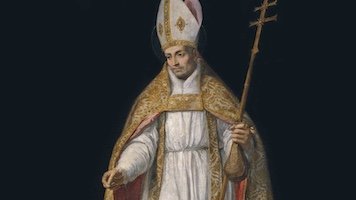
Saint Thomas, the glory of the Spanish Church in the sixteenth century, was born in the diocese of Toledo in 1488. His mother was a Christian of extraordinary tenderness for the poor. God worked a miracle for her one day, when her servants had given away absolutely all the flour in their storeroom. When another beggar came to the door, she told them to go back once more and look again, and they found the storeroom filled with flour. Her little son followed his mother's example, and one day gave away, to six poor persons in succession, the six young chicks which had been following the hen around in the yard. When his mother asked where they were, he said, You didn't leave any bread in the house, Mama, so I gave them the chicks! I would have given the hen if another beggar had come.
At the age of fifteen years he began his studies and succeeded so well he was judged fit to teach philosophy and theology in a college of Alcala, and then at Salamanca. When his father died he returned to Villanova to dispose of his patrimony. He made his house into a hospital, keeping only what was needed for his mother, and gave the rest to the poor. At the age of twenty-eight he entered the Order of the Hermits of Saint Augustine at Salamanca, becoming professed in 1517.
When ordained a priest three years later, he continued his teaching of theology, but also began to preach so remarkably well that he was compared with Saint Paul and the prophet Elias. The city was reformed, and after the Emperor Charles V heard him once, he returned and often mingled with the crowd to listen, finally making Saint Thomas his official preacher.
He became Prior of his Order in three cities, then three times a Provincial Superior. His sanctity continued to increase, and he was nominated archbishop of Valencia in 1544; he had refused a similar offer sixteen years earlier, but this time was obliged to accept. After a long drought, rain fell on the day he assumed his new office. He arrived as a pilgrim accompanied by one fellow monk, and was not recognized in the convent of his Order when the two travelers came asking for shelter during the rain. He was obliged to reveal his identity when the Prior, who wondered where the awaited archbishop might be, asked him if perchance it was he.
The new Archbishop was so poor that he was given money for furnishings, but he took it to the hospital for the indigent. On being led to his throne in church, he pushed the silken cushions aside, and with tears kissed the ground. His first visit was to the prison. Two-thirds of his episcopal revenues were annually spent in alms. He daily fed five hundred needy persons, made himself responsible for the bringing up of the city's orphans, and sheltered neglected foundlings with a mother's care. During his eleven years' episcopate, not one poor maiden was married without an alms from the archbishop. Spurred by his example, the rich and the selfish became liberal and generous. And when, on the Nativity of Our Lady, 1555, after one week of illness, Saint Thomas was about to breathe his last, he gave his bed to a poor man and asked to be placed on the floor. It has been said that at his death he was probably the only poor man in his see.
Reflection: When a refractory priest had not heeded his bishop's remonstrances, Saint Thomas took him into a room apart, uncovered his shoulders and knelt before his crucifix, saying: My brother, my sins are the reason you have not changed your life and listened to my warnings. It is just for me to bear the penalty of my fault. And he scourged himself cruelly. This frequent practice brought many to tears and reform of their lives. In this way a perfect Pastor inspired his entire flock with truly Christian sentiments.
Les Petits Bollandistes: Vies des Saints, by Msgr. Paul Guérin (Bloud et Barral: Paris, 1882), Vol. 11
LAST-MODIFIED:20250906T170226Z SEQUENCE:91482660 X-ACCESS:1 X-HITS:5 X-COLOR:f0b80e X-SHOW-END-TIME:1 END:VEVENT BEGIN:VEVENT DTSTART;VALUE=DATE:20250922 DTEND;VALUE=DATE:20250923 UID:B5745FFC-233F-4AB0-90D9-FABCE7DEEAC5 SUMMARY:St. Maurice & Companions CREATED:20221013T211126Z DTSTAMP:20221013T211126Z URL:https://www.stpaulsweymouth.org/component/dpcalendar/event/2787?calid=13 DESCRIPTION:St. Maurice & Companions, Martyrs\N\NThe Roman legion of Christians, called the Theban Legion, under the presidency of their General, Maurice, numbered more than six thousand men. They marched from the East into Gaul, which was in revolt. They were camped near the Lake of Geneva, when they received orders to join with the others in a solemn sacrifice to the gods. They retired a little farther away, to a site today called Saint Maurice d'Augaune, in order to abstain, but were told to return and join in the festival with the others. They found themselves in the sad necessity of disobeying the command. It was not an act of felony for these brave soldiers, who had already fought many battles, but of heroic loyalty. Nonetheless, the barbaric prince gave the order to decimate the Legion. It would seem the emperor's messengers might have feared a forced resistance, but the disciples of Jesus Christ hoped for nothing but a peaceful victory over the world and the demon, with all his false gods.\NThe names of the soldiers were written on papers and placed in the caps of the centurions, for 600 were destined to perish as examples. These embraced their comrades, who encouraged them and even envied their fate. The plain soon flowed with the blood of the martyrs. The survivors persisted in declaring themselves Christians, and the butchery began again; the blood of another 600 reddened the waters of the Rhone. The others all persevered in their faith, and Saint Maurice sent to the tyrant an admirable letter, saying: Emperor, we are your soldiers; we are ready to combat the enemies of the empire, but we are also Christians, and we owe fidelity to the true God. We are not rebels, but we prefer to die, innocent, rather than to live, guilty. The Emperor, seeing himself defeated, ordered them all to be massacred. As the massacre began, these generous soldiers deposed their weapons, offered their necks to the sword, and suffered themselves to be butchered in silence.\NReflection: Thank God for every slight or insult you have to bear. An injury borne in meekness and silence is a true victory. It is the proof that we are good soldiers of Jesus Christ, disciples of that heavenly wisdom which is both pure and peaceable.\NVie des Saints pour tous les jours de l'année, by Abbé L. Jaud (Mame: Tours, 1950). X-ALT-DESC;FMTTYPE=text/html:St. Maurice & Companions, Martyrs
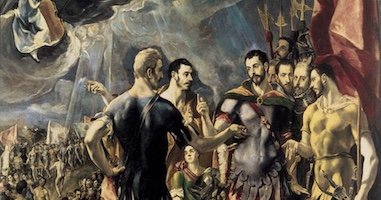
The Roman legion of Christians, called the Theban Legion, under the presidency of their General, Maurice, numbered more than six thousand men. They marched from the East into Gaul, which was in revolt. They were camped near the Lake of Geneva, when they received orders to join with the others in a solemn sacrifice to the gods. They retired a little farther away, to a site today called Saint Maurice d'Augaune, in order to abstain, but were told to return and join in the festival with the others. They found themselves in the sad necessity of disobeying the command. It was not an act of felony for these brave soldiers, who had already fought many battles, but of heroic loyalty. Nonetheless, the barbaric prince gave the order to decimate the Legion. It would seem the emperor's messengers might have feared a forced resistance, but the disciples of Jesus Christ hoped for nothing but a peaceful victory over the world and the demon, with all his false gods.
The names of the soldiers were written on papers and placed in the caps of the centurions, for 600 were destined to perish as examples. These embraced their comrades, who encouraged them and even envied their fate. The plain soon flowed with the blood of the martyrs. The survivors persisted in declaring themselves Christians, and the butchery began again; the blood of another 600 reddened the waters of the Rhone. The others all persevered in their faith, and Saint Maurice sent to the tyrant an admirable letter, saying: Emperor, we are your soldiers; we are ready to combat the enemies of the empire, but we are also Christians, and we owe fidelity to the true God. We are not rebels, but we prefer to die, innocent, rather than to live, guilty. The Emperor, seeing himself defeated, ordered them all to be massacred. As the massacre began, these generous soldiers deposed their weapons, offered their necks to the sword, and suffered themselves to be butchered in silence.
Reflection: Thank God for every slight or insult you have to bear. An injury borne in meekness and silence is a true victory. It is the proof that we are good soldiers of Jesus Christ, disciples of that heavenly wisdom which is both pure and peaceable.
Vie des Saints pour tous les jours de l'année, by Abbé L. Jaud (Mame: Tours, 1950).
LAST-MODIFIED:20250906T170446Z SEQUENCE:91482800 X-ACCESS:1 X-HITS:11 X-COLOR:f0b80e X-SHOW-END-TIME:1 END:VEVENT BEGIN:VEVENT DTSTART;VALUE=DATE:20250923 DTEND;VALUE=DATE:20250924 UID:6B7F8449-AA5F-4957-A506-D19CB6849415 SUMMARY:St. Thecla CREATED:20221013T211126Z DTSTAMP:20221013T211126Z URL:https://www.stpaulsweymouth.org/component/dpcalendar/event/2791?calid=13 DESCRIPTION:St. Thecla, Virgin & Martyr\N\NSaint Thecla is one of the most ancient, as she is one of the most illustrious Saints in the calendar of the Church. It was at Iconium that Saint Thecla heard the preaching of Saint Paul, who kindled the love of virginity in her heart. She had been promised in marriage to a young man who was rich and generous, but after hearing the discourses of the Apostle's word she died to all thought of earthly espousals. She forgot her beauty; she was deaf to her parent's threats, and at the first opportunity fled from a luxurious home and followed the Apostle.\NThe rage of her parents and of her suitor followed hard after her, and the Roman power did its worst against the virgin whom Christ had chosen for Himself. She was stripped and placed in the public theater, but her innocence shrouded her like a garment. Then the lions were let loose against her; they fell crouching at her feet and licked them like a house pet. Even fire could not harm her. Torment after torment was inflicted upon her without effect, until finally the divine Spouse of virgins spoke the word of deliverance and called her to Himself, with the double crown of martyrdom and virginity upon her head.\NReflection: It is purity in soul and body which will make you strong in pain, in temptation, and in the hour of death. I can do all in the One who fortifies me, said Saint Paul. Imitate the purity of this glorious virgin, and take her for your special patroness in your last agony.\NLittle Pictorial Lives of the Saints, a compilation based on Butler's Lives of the Saints and other sources by John Gilmary Shea (Benziger Brothers: New York, 1894). X-ALT-DESC;FMTTYPE=text/html:St. Thecla, Virgin & Martyr
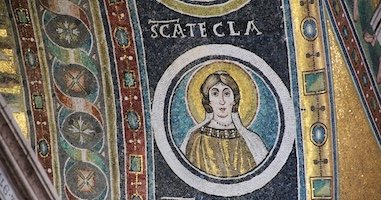
Saint Thecla is one of the most ancient, as she is one of the most illustrious Saints in the calendar of the Church. It was at Iconium that Saint Thecla heard the preaching of Saint Paul, who kindled the love of virginity in her heart. She had been promised in marriage to a young man who was rich and generous, but after hearing the discourses of the Apostle's word she died to all thought of earthly espousals. She forgot her beauty; she was deaf to her parent's threats, and at the first opportunity fled from a luxurious home and followed the Apostle.
The rage of her parents and of her suitor followed hard after her, and the Roman power did its worst against the virgin whom Christ had chosen for Himself. She was stripped and placed in the public theater, but her innocence shrouded her like a garment. Then the lions were let loose against her; they fell crouching at her feet and licked them like a house pet. Even fire could not harm her. Torment after torment was inflicted upon her without effect, until finally the divine Spouse of virgins spoke the word of deliverance and called her to Himself, with the double crown of martyrdom and virginity upon her head.
Reflection: It is purity in soul and body which will make you strong in pain, in temptation, and in the hour of death. I can do all in the One who fortifies me, said Saint Paul. Imitate the purity of this glorious virgin, and take her for your special patroness in your last agony.
Little Pictorial Lives of the Saints, a compilation based on Butler's Lives of the Saints and other sources by John Gilmary Shea (Benziger Brothers: New York, 1894).
LAST-MODIFIED:20250906T171010Z SEQUENCE:91483124 X-ACCESS:1 X-HITS:9 X-COLOR:f0b80e X-SHOW-END-TIME:1 END:VEVENT BEGIN:VEVENT DTSTART;VALUE=DATE:20250923 DTEND;VALUE=DATE:20250924 UID:03BBC1C3-7FF2-413E-A622-1455420E9CE6 SUMMARY:St. Linus CREATED:20221013T211126Z DTSTAMP:20221013T211126Z URL:https://www.stpaulsweymouth.org/component/dpcalendar/event/2789?calid=13 DESCRIPTION:St. Linus Pope, Martyr\N\NSaint Linus was converted in Rome in the days when Saint Peter was preaching the Gospel there. This nobleman, originally from the city of Volterra in Tuscany, left his father and renounced his heritage, to practice with greater perfection the doctrine of Our Lord Jesus Christ. He soon gave admirable proofs of his zeal, learning and prudence, and the first Vicar of Christ employed him in preaching and the administration of the Sacraments.\NHe crossed into Gaul, and became the bishop of the city of Besançon. The number of the faithful increased daily by the conversion of many idolaters. The Saint one day attempted to turn some of those away from the celebration of a festival in honor of their gods, telling them that these idols were but statues without breath or sentiment, and represented only human beings whose vices were public knowledge. He exhorted them to turn to the unique God, Creator of the heavens and the earth, to whom alone man owes the homage of sacrifice. A prodigy followed his words; a column of their temple crumbled and caused the fall of an idol, which broke into a thousand pieces. The worshipers, unmoved by this, drove the Saint out of the city of Besançon, as the city's tradition still attests.\NHe returned to Rome and was there when the prince of the Apostles was martyred. He wrote an account of the double martyrdom of Saints Peter and Paul, and was himself judged worthy to replace the first Vicar of Christ. The register of his reign records the creation of fifteen bishops and eighteen priests. The Roman breviary says that the faith and sanctity of this blessed Pope were so great that he drove the demons from many possessed persons. He had governed the Church for scarcely a year before he, too, shed his blood for his Saviour. His body was buried in the Vatican near that of Saint Peter. It was only in the 17th century that his tomb reappeared, marked Linus, when Pope Urban VIII had the work on the Confession of Saint Petercompleted in the Basilica bearing his name.\NLes Petits Bollandistes: Vies des Saints, by Msgr. Paul Guérin (Bloud et Barral: Paris, 1882), Vol. 11 X-ALT-DESC;FMTTYPE=text/html:St. Linus Pope, Martyr
Saint Linus was converted in Rome in the days when Saint Peter was preaching the Gospel there. This nobleman, originally from the city of Volterra in Tuscany, left his father and renounced his heritage, to practice with greater perfection the doctrine of Our Lord Jesus Christ. He soon gave admirable proofs of his zeal, learning and prudence, and the first Vicar of Christ employed him in preaching and the administration of the Sacraments.
He crossed into Gaul, and became the bishop of the city of Besançon. The number of the faithful increased daily by the conversion of many idolaters. The Saint one day attempted to turn some of those away from the celebration of a festival in honor of their gods, telling them that these idols were but statues without breath or sentiment, and represented only human beings whose vices were public knowledge. He exhorted them to turn to the unique God, Creator of the heavens and the earth, to whom alone man owes the homage of sacrifice. A prodigy followed his words; a column of their temple crumbled and caused the fall of an idol, which broke into a thousand pieces. The worshipers, unmoved by this, drove the Saint out of the city of Besançon, as the city's tradition still attests.
He returned to Rome and was there when the prince of the Apostles was martyred. He wrote an account of the double martyrdom of Saints Peter and Paul, and was himself judged worthy to replace the first Vicar of Christ. The register of his reign records the creation of fifteen bishops and eighteen priests. The Roman breviary says that the faith and sanctity of this blessed Pope were so great that he drove the demons from many possessed persons. He had governed the Church for scarcely a year before he, too, shed his blood for his Saviour. His body was buried in the Vatican near that of Saint Peter. It was only in the 17th century that his tomb reappeared, marked Linus, when Pope Urban VIII had the work on the Confession of Saint Petercompleted in the Basilica bearing his name.
Les Petits Bollandistes: Vies des Saints, by Msgr. Paul Guérin (Bloud et Barral: Paris, 1882), Vol. 11
LAST-MODIFIED:20250906T170726Z SEQUENCE:91482960 X-ACCESS:1 X-HITS:6 X-COLOR:f0b80e X-SHOW-END-TIME:1 END:VEVENT BEGIN:VEVENT DTSTART;VALUE=DATE:20250923 DTEND;VALUE=DATE:20250924 UID:A346E530-88F0-4AAD-AD8E-63BB0118DAD2 SUMMARY:Padre Pio CREATED:20221013T211126Z DTSTAMP:20221013T211126Z URL:https://www.stpaulsweymouth.org/component/dpcalendar/event/2793?calid=13 DESCRIPTION:St. (Padre) Pio of Pietralcina, Confessor\N\NSt. Padre Pio was an Italian priest who was known for his piety and charity, as well as the gift of the stigmata, which has never been explained.\NSt. Padre Pio was born Francesco Forgione, on May 25, 1887, in Pietrelcina, Italy. His parents were peasant farmers. He had an older brother and three younger sisters, as well as two other siblings who died in infancy. As a child, he was very religious and by the age of five he reportedly made the decision to dedicate his life to God.\NFortunately, his parents were also very religious and they supported his Catholic development. His family attended daily Mass. Francisco served as an altar boy at his local parish. Francisco was known for taking on penances and his mother once scolded him for sleeping on a stone floor.\NFrancisco's community was also supportive. Saint's days were popular celebrations and commonly celebrated in his town.\NFrom his tender age, Francisco had a peculiar ability. He could see guardian angels, spoke with Jesus and the Virgin Mary. This was not something taught to him, but occurred so naturally that he assumed other people could see them too.\NAlthough Francisco and his family was very religious, they were also very poor, which required that he work. He spent many years as a child tending to a small flock of sheep owned by his family. Unfortunately, the work meant he was unable to attend school regularly, so he quickly fell behind other kids his age.\NFrancisco was sickly as a child. He suffered an attack of gastroenteritis at age six and when he was ten, he had typhoid fever.\NIn 1897, after three years of schooling, Francisco expressed to his parents that he wanted to become a friar. His parents traveled to a nearby community of monks and asked if Francesco could join them. He was evaluated, despite his young age, and was told that he needed more education before he could join.\NTo prepare Francesco, his parents decided to hire a private tutor. To pay the cost of the tutor, Francesco's father traveled to America to find work, and sent the money home.\NAt the age of 15, Francisco was finally ready and he entered the novitiate of the Capuchin friars at Morcone. He took the name of "Pio" in honor of Pope Pius I, whose relic he often saw at his local chapel.\NAt the age of 17, Brother Pio became extremely ill and could only digest milk and cheese. He was sent to the mountain for better air, and when this did not work, he was sent home to his family. Amid all this, he continued to study for the priesthood.\NOn one occasion during prayer, a fellow monk astonishingly reported he saw Pio levitate during an episode of ecstasy.\NBrother Pio became a priest in 1910, but was permitted to remain at home because of his poor health.\NIn 1915, with World War I afflicting the world, Padre Pio was summoned for military service. He was compelled to leave a tiny community of monks, with whom he was then housed, and drafted into medical service. However, he was so sickly that he was often sent home, only to then be recalled for service. In March 1916, he was finally dismissed because of his poor health.\NOn September 20, Padre Pio was hearing confessions when he felt pain in his hands and feet. He noticed the stigmata, the wounds of Christ, appearing on his hands and feet. The experience was painful. Bleeding occurred. The wounds smelled of roses, and although they continued to weep, they never became infected. Doctors who later examined the stigmata were amazed at their perfectly round shape.\NBy 1919, word began to spread about Padre Pio's stigmata and people came from far away to examine him.\NPadre Pio became popular with the people he encountered and soon began to attribute supernatural occurrences to him. For example, he was said to levitate, and able to perform miracles.\NHis popularity became a source of concern for the Church and the Vatican began to restrict his activities to minimize public interaction. Padre Pio himself was uncomfortable with his newfound popularity and the attention he received because of his stigmata. A Church investigation into his stigmata concluded that his condition was not faked.\NBy 1934, the Vatican began to change its attitude towards Padre Pio and he was again allowed to perform public duties. He could preach, despite never being officially licensed by the Church to do so. Pope Pius XI encouraged people to visit him.\NIn 1947, Fr. Karol Wojtyla visited Padre Pio who prophetically told him he would rise to the highest post in the Church." Fr. Karol Wojtyla became Pope John Paul II in 1978.\NPadre Pio used his newfound popularity to open a hospital in San Giovanni Rotondo. The facility opened in 1956.\NPope Paul VI reviewed the controversies surrounding Padre Pio and dismissed any concerns over his conduct and the authenticity of his stigmata.\NPadre Pio became internationally famous. He was known for his piety, charity and the quality of his preaching. He famously advised, "Pray, hope and don't worry."\NHe had other illnesses, as well, including cancer which was miraculously healed after just two treatments. Other problems, such as arthritis, which plagued him in his later years, never went away.\NPadre Pio died on September 23, 1968. His funeral was attended by over 100,000 people.\NPope John Paul II recognized Padre Pio as a saint on June 16, 2002. His feast day is September 23. He is the patron of civil defense volunteers, adolescents, and the village of Pietrelcina. X-ALT-DESC;FMTTYPE=text/html:St. (Padre) Pio of Pietralcina, Confessor
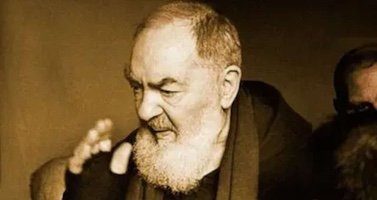
St. Padre Pio was an Italian priest who was known for his piety and charity, as well as the gift of the stigmata, which has never been explained.
St. Padre Pio was born Francesco Forgione, on May 25, 1887, in Pietrelcina, Italy. His parents were peasant farmers. He had an older brother and three younger sisters, as well as two other siblings who died in infancy. As a child, he was very religious and by the age of five he reportedly made the decision to dedicate his life to God.
Fortunately, his parents were also very religious and they supported his Catholic development. His family attended daily Mass. Francisco served as an altar boy at his local parish. Francisco was known for taking on penances and his mother once scolded him for sleeping on a stone floor.
Francisco's community was also supportive. Saint's days were popular celebrations and commonly celebrated in his town.
From his tender age, Francisco had a peculiar ability. He could see guardian angels, spoke with Jesus and the Virgin Mary. This was not something taught to him, but occurred so naturally that he assumed other people could see them too.
Although Francisco and his family was very religious, they were also very poor, which required that he work. He spent many years as a child tending to a small flock of sheep owned by his family. Unfortunately, the work meant he was unable to attend school regularly, so he quickly fell behind other kids his age.
Francisco was sickly as a child. He suffered an attack of gastroenteritis at age six and when he was ten, he had typhoid fever.
In 1897, after three years of schooling, Francisco expressed to his parents that he wanted to become a friar. His parents traveled to a nearby community of monks and asked if Francesco could join them. He was evaluated, despite his young age, and was told that he needed more education before he could join.
To prepare Francesco, his parents decided to hire a private tutor. To pay the cost of the tutor, Francesco's father traveled to America to find work, and sent the money home.
At the age of 15, Francisco was finally ready and he entered the novitiate of the Capuchin friars at Morcone. He took the name of "Pio" in honor of Pope Pius I, whose relic he often saw at his local chapel.
At the age of 17, Brother Pio became extremely ill and could only digest milk and cheese. He was sent to the mountain for better air, and when this did not work, he was sent home to his family. Amid all this, he continued to study for the priesthood.
On one occasion during prayer, a fellow monk astonishingly reported he saw Pio levitate during an episode of ecstasy.
Brother Pio became a priest in 1910, but was permitted to remain at home because of his poor health.
In 1915, with World War I afflicting the world, Padre Pio was summoned for military service. He was compelled to leave a tiny community of monks, with whom he was then housed, and drafted into medical service. However, he was so sickly that he was often sent home, only to then be recalled for service. In March 1916, he was finally dismissed because of his poor health.
On September 20, Padre Pio was hearing confessions when he felt pain in his hands and feet. He noticed the stigmata, the wounds of Christ, appearing on his hands and feet. The experience was painful. Bleeding occurred. The wounds smelled of roses, and although they continued to weep, they never became infected. Doctors who later examined the stigmata were amazed at their perfectly round shape.
By 1919, word began to spread about Padre Pio's stigmata and people came from far away to examine him.
Padre Pio became popular with the people he encountered and soon began to attribute supernatural occurrences to him. For example, he was said to levitate, and able to perform miracles.
His popularity became a source of concern for the Church and the Vatican began to restrict his activities to minimize public interaction. Padre Pio himself was uncomfortable with his newfound popularity and the attention he received because of his stigmata. A Church investigation into his stigmata concluded that his condition was not faked.
By 1934, the Vatican began to change its attitude towards Padre Pio and he was again allowed to perform public duties. He could preach, despite never being officially licensed by the Church to do so. Pope Pius XI encouraged people to visit him.
In 1947, Fr. Karol Wojtyla visited Padre Pio who prophetically told him he would rise to the highest post in the Church." Fr. Karol Wojtyla became Pope John Paul II in 1978.
Padre Pio used his newfound popularity to open a hospital in San Giovanni Rotondo. The facility opened in 1956.
Pope Paul VI reviewed the controversies surrounding Padre Pio and dismissed any concerns over his conduct and the authenticity of his stigmata.
Padre Pio became internationally famous. He was known for his piety, charity and the quality of his preaching. He famously advised, "Pray, hope and don't worry."
He had other illnesses, as well, including cancer which was miraculously healed after just two treatments. Other problems, such as arthritis, which plagued him in his later years, never went away.
Padre Pio died on September 23, 1968. His funeral was attended by over 100,000 people.
Pope John Paul II recognized Padre Pio as a saint on June 16, 2002. His feast day is September 23. He is the patron of civil defense volunteers, adolescents, and the village of Pietrelcina.
LAST-MODIFIED:20250906T171419Z SEQUENCE:91483373 X-ACCESS:1 X-HITS:29 X-COLOR:f0b80e X-SHOW-END-TIME:1 END:VEVENT BEGIN:VEVENT DTSTART;VALUE=DATE:20250924 DTEND;VALUE=DATE:20250925 UID:ADB6CB27-197C-4F57-9C2F-1D61CBD5D0D2 SUMMARY:Our Lady of Ransom CREATED:20221013T211126Z DTSTAMP:20221013T211126Z URL:https://www.stpaulsweymouth.org/component/dpcalendar/event/2783?calid=13 DESCRIPTION:Our Lady of Ransom (or of Mercy)\N\NThe story of Our Lady of Ransom is, at its outset, that of Saint Peter Nolasco, born in Languedoc about 1189. At the age of twenty-five he took a vow of chastity and made over his vast estates to the Church. After making a pilgrimage to Our Lady of Montserrat, he went to Barcelona where he began to practice various works of charity. He conceived the idea of establishing an Order for the redemption of captives seized by the Moors on the seas and in Spain itself; they were being cruelly tormented in their African prisons to make them deny their faith. He spoke of it to the king of Aragon, James I, who knew him well and already respected him as a Saint; for the king had already asked for his prayers when he sent out his armies to combat the Moors, and he attributed his victories to those prayers.\NIn effect all the Christians of Europe, and above all of Spain, were praying a great deal to obtain from God the remedy for the great evil that had befallen them. The divine Will was soon manifested. On the same night, August 1, 1218, the Blessed Virgin appeared to Saint Peter, to his confessor, Raymond of Pennafort, and to the king, and through these three servants of God established a work of the most perfect charity, the redemption of captives.\NOn that night, while the Church was celebrating the feast of Saint Peter in Chains, the Virgin Mary came from heaven and appeared first to Saint Peter, saying that She indeed desired the establishment of a religious Order bearing the name of Her mercy. Its members would undertake to deliver Christian captives and offer themselves, if necessary, as a gage. Word of the miracle soon spread over the entire kingdom; and on August 10th the king went to the cathedral for a Mass celebrated by the bishop of Barcelona. Saint Raymond went up into the pulpit and narrated his vision, with admirable eloquence and fervor. The king besought the blessing of the bishop for the heaven-sent plan, and the bishop bestowed the habit on Saint Peter, who emitted the solemn vow to give himself as a hostage if necessary.\NThe Order, thus solemnly established in Spain, was approved by Gregory IX under the name of Our Lady of Mercy. By the grace of God and under the protection of His Virgin Mother, the Order spread rapidly. Its growth was increased as the charity and piety of its members was observed; they very often followed Her directive to give themselves up to voluntary slavery when necessary, to aid the good work. It was to return thanks to God and the Blessed Virgin that a feast day was instituted and observed on September 24th, first in this Order of Our Lady, then everywhere in Spain and France. It was finally extended to the entire Church by Innocent XII.\NReflection: Saint Peter Nolasco and his knights were not priests, and yet they considered that the salvation of their neighbor was entrusted to them. We, too, can by good counsel and by prayer, but above all by holy example, assist the salvation of our brethren, and thereby secure our own.\NLes Petits Bollandistes: Vies des Saints, by Msgr. Paul Guérin (Bloud et Barral: Paris, 1882), Vol. 11; Little Pictorial Lives of the Saints, a compilation based on Butler's Lives of the Saints and other sources by John Gilmary Shea (Benziger Brothers: New York, 1894). X-ALT-DESC;FMTTYPE=text/html:Our Lady of Ransom (or of Mercy)
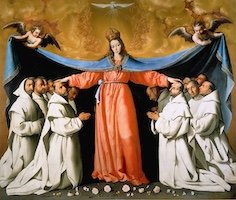
The story of Our Lady of Ransom is, at its outset, that of Saint Peter Nolasco, born in Languedoc about 1189. At the age of twenty-five he took a vow of chastity and made over his vast estates to the Church. After making a pilgrimage to Our Lady of Montserrat, he went to Barcelona where he began to practice various works of charity. He conceived the idea of establishing an Order for the redemption of captives seized by the Moors on the seas and in Spain itself; they were being cruelly tormented in their African prisons to make them deny their faith. He spoke of it to the king of Aragon, James I, who knew him well and already respected him as a Saint; for the king had already asked for his prayers when he sent out his armies to combat the Moors, and he attributed his victories to those prayers.
In effect all the Christians of Europe, and above all of Spain, were praying a great deal to obtain from God the remedy for the great evil that had befallen them. The divine Will was soon manifested. On the same night, August 1, 1218, the Blessed Virgin appeared to Saint Peter, to his confessor, Raymond of Pennafort, and to the king, and through these three servants of God established a work of the most perfect charity, the redemption of captives.
On that night, while the Church was celebrating the feast of Saint Peter in Chains, the Virgin Mary came from heaven and appeared first to Saint Peter, saying that She indeed desired the establishment of a religious Order bearing the name of Her mercy. Its members would undertake to deliver Christian captives and offer themselves, if necessary, as a gage. Word of the miracle soon spread over the entire kingdom; and on August 10th the king went to the cathedral for a Mass celebrated by the bishop of Barcelona. Saint Raymond went up into the pulpit and narrated his vision, with admirable eloquence and fervor. The king besought the blessing of the bishop for the heaven-sent plan, and the bishop bestowed the habit on Saint Peter, who emitted the solemn vow to give himself as a hostage if necessary.
The Order, thus solemnly established in Spain, was approved by Gregory IX under the name of Our Lady of Mercy. By the grace of God and under the protection of His Virgin Mother, the Order spread rapidly. Its growth was increased as the charity and piety of its members was observed; they very often followed Her directive to give themselves up to voluntary slavery when necessary, to aid the good work. It was to return thanks to God and the Blessed Virgin that a feast day was instituted and observed on September 24th, first in this Order of Our Lady, then everywhere in Spain and France. It was finally extended to the entire Church by Innocent XII.
Reflection: Saint Peter Nolasco and his knights were not priests, and yet they considered that the salvation of their neighbor was entrusted to them. We, too, can by good counsel and by prayer, but above all by holy example, assist the salvation of our brethren, and thereby secure our own.
Les Petits Bollandistes: Vies des Saints, by Msgr. Paul Guérin (Bloud et Barral: Paris, 1882), Vol. 11; Little Pictorial Lives of the Saints, a compilation based on Butler's Lives of the Saints and other sources by John Gilmary Shea (Benziger Brothers: New York, 1894).
LAST-MODIFIED:20250906T165933Z SEQUENCE:91482487 X-ACCESS:1 X-HITS:9 X-COLOR:f0b80e X-SHOW-END-TIME:1 END:VEVENT BEGIN:VEVENT DTSTART;VALUE=DATE:20250926 DTEND;VALUE=DATE:20250927 UID:D0D0E04A-B2B6-4341-BFDD-9F0E7BB43F47 SUMMARY:Sts. Cyprian & Justina CREATED:20221013T211126Z DTSTAMP:20221013T211126Z URL:https://www.stpaulsweymouth.org/component/dpcalendar/event/2781?calid=13 DESCRIPTION:Sts. Cyprian & Justina, Martyrs\N\NThe detestable superstitions of Saint Cyprian's idolatrous parents delivered him, from his infancy, to the devil, and he was brought up in all the impious mysteries of idolatry, astrology, and black magic. Cyprian, having learned all the extravagances of these schools of error and delusion, hesitated at no crime, blasphemed Christ and committed secret murders.\NIn the time of the emperor Diocletian, there lived at Antioch a young Christian called Justina, of high birth and great beauty. A pagan nobleman fell in love with her, and finding her modesty inaccessible and her resolution to evade him invincible, he applied to Cyprian for assistance. Cyprian tried every secret with which he was acquainted to overcome her resolution. Justina, perceiving herself vigorously attacked, armed herself by prayer, watchfulness, and mortification against all his demonic artifices and the power of his spells. Cyprian, realizing he was being bested by a superior power, began to recognize the weakness of the infernal spirits, and resolved to quit their service and become a Christian himself. Agladius, the suitor of the holy virgin, was likewise converted and baptized.\NWhen the persecution of Diocletian broke out, Cyprian and Justina were seized and presented to the same judge. She was inhumanly scourged, and Cyprian was torn with iron hooks. After this they were sent in chains to Diocletian, who commanded their heads to be struck off. This sentence was executed at Nicomedia, in the year 304.\NReflection: If the errors and disorders of Saint Cyprian show the degeneracy of human nature corrupted by sin and enslaved to vice, his conversion displays the power of grace and virtue to repair it. Let us beg of God to send grace to those who are still slaves of error today, and be confident that He will not be deaf to our charitable prayer.\NLittle Pictorial Lives of the Saints, a compilation based on Butler's Lives of the Saints and other sources by John Gilmary Shea (Benziger Brothers: New York, 1894). X-ALT-DESC;FMTTYPE=text/html:Sts. Cyprian & Justina, Martyrs
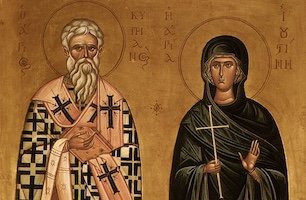
The detestable superstitions of Saint Cyprian's idolatrous parents delivered him, from his infancy, to the devil, and he was brought up in all the impious mysteries of idolatry, astrology, and black magic. Cyprian, having learned all the extravagances of these schools of error and delusion, hesitated at no crime, blasphemed Christ and committed secret murders.
In the time of the emperor Diocletian, there lived at Antioch a young Christian called Justina, of high birth and great beauty. A pagan nobleman fell in love with her, and finding her modesty inaccessible and her resolution to evade him invincible, he applied to Cyprian for assistance. Cyprian tried every secret with which he was acquainted to overcome her resolution. Justina, perceiving herself vigorously attacked, armed herself by prayer, watchfulness, and mortification against all his demonic artifices and the power of his spells. Cyprian, realizing he was being bested by a superior power, began to recognize the weakness of the infernal spirits, and resolved to quit their service and become a Christian himself. Agladius, the suitor of the holy virgin, was likewise converted and baptized.
When the persecution of Diocletian broke out, Cyprian and Justina were seized and presented to the same judge. She was inhumanly scourged, and Cyprian was torn with iron hooks. After this they were sent in chains to Diocletian, who commanded their heads to be struck off. This sentence was executed at Nicomedia, in the year 304.
Reflection: If the errors and disorders of Saint Cyprian show the degeneracy of human nature corrupted by sin and enslaved to vice, his conversion displays the power of grace and virtue to repair it. Let us beg of God to send grace to those who are still slaves of error today, and be confident that He will not be deaf to our charitable prayer.
Little Pictorial Lives of the Saints, a compilation based on Butler's Lives of the Saints and other sources by John Gilmary Shea (Benziger Brothers: New York, 1894).
LAST-MODIFIED:20250906T165600Z SEQUENCE:91482274 X-ACCESS:1 X-HITS:18 X-COLOR:f0b80e X-SHOW-END-TIME:1 END:VEVENT BEGIN:VEVENT DTSTART;VALUE=DATE:20250927 DTEND;VALUE=DATE:20250928 UID:E7DA7F9A-AEB0-48E8-952F-8178AB75DBA3 SUMMARY:Sts. Cosmas & Damian CREATED:20221013T211126Z DTSTAMP:20221013T211126Z URL:https://www.stpaulsweymouth.org/component/dpcalendar/event/2779?calid=13 DESCRIPTION:Sts. Cosmas & Damian, Martyrs\N\NSaints Cosmas and Damian were brothers, born in Arabia in the third century, of noble and virtuous parents. Saint Gregory of Tours wrote that they were twins. They studied the sciences in Syria, and became eminent for their skill in medicine. Being Christians and filled with the charity which characterizes our holy religion, they practiced their profession with great application and wonderful success, but never accepted any fee. They were loved and respected by the people for their good offices and their zeal for the Christian faith, which they took every opportunity to propagate.\NWhen the persecution of Diocletian began to rage, it was impossible for persons of such distinction to remain concealed. They were denounced to the governor of Cilicia, named Lysias, as Christians who cured various illnesses and delivered possessed persons in the name of the one called Christ; they do not permit others to go to the temple to honor the gods by sacrifices. The two brothers were apprehended by the order of the governor, and after various preliminary torments were sentenced to be bound hand and foot and thrown into the sea. Their prayer has been conserved: We rejoice, Lord, to follow the path of Your commandments, as in the midst of immense riches; and even though we walk through the valley of the shadow of death, we fear no evil. And they recited the 23rdPsalm. The sentence was accomplished, but an Angel untied their bonds and drew them out of the sea. The witnesses of this fact returned to announce to the governor what had happened. They were brought back to Lysias as magicians, and he decided to imprison them until he could decide upon their fate.\NHe condemned them to be burnt alive, but they prayed to God to manifest His power, lest His name be blasphemed, and an earthquake moved the fire into the midst of the pagans and spared the martyrs. When the rack also left them unharmed, the prefect swore by his gods he would continue to torture them until they became the food of birds of prey. They were crucified and stoned by the people, but this and still other tortures were ineffectual. They were finally beheaded with three Christian companions.\NLes Petits Bollandistes: Vies des Saints, by Msgr. Paul Guérin (Bloud et Barral: Paris, 1882), Vol. 11 X-ALT-DESC;FMTTYPE=text/html:Sts. Cosmas & Damian, Martyrs
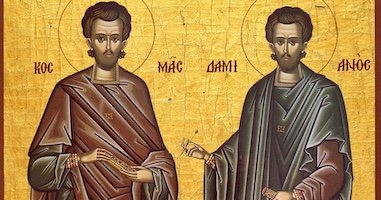
Saints Cosmas and Damian were brothers, born in Arabia in the third century, of noble and virtuous parents. Saint Gregory of Tours wrote that they were twins. They studied the sciences in Syria, and became eminent for their skill in medicine. Being Christians and filled with the charity which characterizes our holy religion, they practiced their profession with great application and wonderful success, but never accepted any fee. They were loved and respected by the people for their good offices and their zeal for the Christian faith, which they took every opportunity to propagate.
When the persecution of Diocletian began to rage, it was impossible for persons of such distinction to remain concealed. They were denounced to the governor of Cilicia, named Lysias, as Christians who cured various illnesses and delivered possessed persons in the name of the one called Christ; they do not permit others to go to the temple to honor the gods by sacrifices. The two brothers were apprehended by the order of the governor, and after various preliminary torments were sentenced to be bound hand and foot and thrown into the sea. Their prayer has been conserved: We rejoice, Lord, to follow the path of Your commandments, as in the midst of immense riches; and even though we walk through the valley of the shadow of death, we fear no evil. And they recited the 23rdPsalm. The sentence was accomplished, but an Angel untied their bonds and drew them out of the sea. The witnesses of this fact returned to announce to the governor what had happened. They were brought back to Lysias as magicians, and he decided to imprison them until he could decide upon their fate.
He condemned them to be burnt alive, but they prayed to God to manifest His power, lest His name be blasphemed, and an earthquake moved the fire into the midst of the pagans and spared the martyrs. When the rack also left them unharmed, the prefect swore by his gods he would continue to torture them until they became the food of birds of prey. They were crucified and stoned by the people, but this and still other tortures were ineffectual. They were finally beheaded with three Christian companions.
Les Petits Bollandistes: Vies des Saints, by Msgr. Paul Guérin (Bloud et Barral: Paris, 1882), Vol. 11
LAST-MODIFIED:20250906T165338Z SEQUENCE:91482132 X-ACCESS:1 X-HITS:5 X-COLOR:f0b80e X-SHOW-END-TIME:1 END:VEVENT BEGIN:VEVENT DTSTART;VALUE=DATE:20250928 DTEND;VALUE=DATE:20250929 UID:3F7BAC0A-01DD-4EBA-B7F7-45BFC190D3C4 SUMMARY:St. Wenceslaus CREATED:20221013T211126Z DTSTAMP:20221013T211126Z URL:https://www.stpaulsweymouth.org/component/dpcalendar/event/2777?calid=13 DESCRIPTION:St. Wenceslaus duke, Martyr\N\NWenceslaus, born towards the end of the ninth century, was the son of a Christian Duke of Bohemia, but his mother was a harsh and cruel pagan. His holy grandmother, Ludmilla, seeing the danger to the future king, asked to bring him up. Wenceslas was educated by her good offices in the true faith, and under her tutelage acquired an exceptional devotion to the Blessed Sacrament. At the death of his father, however, he was still a minor, and his mother assumed the government and passed a series of persecuting laws. In the interests of the Faith, Wenceslas, encouraged by his grandmother, claimed and obtained through the support of the people, a large portion of the country as his own kingdom. Soon afterwards his grandmother was martyred, out of hatred of her faith and services to her country, while making her thanksgiving after Holy Communion.\NHis mother secured the apostasy and alliance of her second son, Boleslas, who became henceforth her ally against the Christians. Wenceslaus in the meantime ruled as the brave and pious king of Bohemia. When his kingdom was attacked, the prince of the invading army, which had been called in by certain seditious individuals, was approaching with a lance to slay him. This prince, named Radislas, saw two celestial spirits beside him; he had already seen him make the sign of the cross and then heard a voice saying not to strike him. These marvels so astonished him that he descended from his horse, knelt at the feet of Wenceslas and asked his pardon. Peace was then reestablished in the land.\NIn the service of God Saint Wenceslaus was constant, planting with his own hands the wheat and pressing the grapes for Holy Mass, at which he never failed to assist each day. He provided for the poor and himself took what they needed to them at night, to spare them the shame they might incur if their poverty became public knowledge. He desired to introduce the Benedictine Order into his kingdom, but was struck down by a violent death before he could do so and himself enter a monastery, as he wished to do.\NHis piety provided the occasion for his death. After a banquet at his brother's palace, to which he had been treacherously invited and where he manifested great gentleness towards his brother and mother, he went to pray at night before the tabernacle, as he was accustomed to do. There, at midnight on the feast of the Angels in the year 938, he received the crown of martyrdom by the sword, at the hand of his own brother.\NReflection: Saint Wenceslaus teaches us that the safest retreat amid the trials of life, or to prepare for the stroke of death, is the sanctuary of Jesus in the Blessed Sacrament.\NLittle Pictorial Lives of the Saints, a compilation based on Butler's Lives of the Saints and other sources, by John Gilmary Shea (Benziger Brothers: New York, 1894); Les Petits Bollandistes: Vies des Saints, by Msgr. Paul Guérin (Bloud et Barral: Paris, 1882), Vol. 11 X-ALT-DESC;FMTTYPE=text/html:St. Wenceslaus duke, Martyr
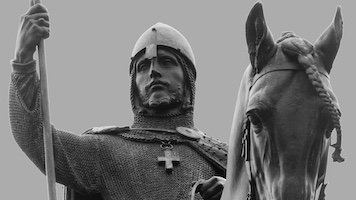
Wenceslaus, born towards the end of the ninth century, was the son of a Christian Duke of Bohemia, but his mother was a harsh and cruel pagan. His holy grandmother, Ludmilla, seeing the danger to the future king, asked to bring him up. Wenceslas was educated by her good offices in the true faith, and under her tutelage acquired an exceptional devotion to the Blessed Sacrament. At the death of his father, however, he was still a minor, and his mother assumed the government and passed a series of persecuting laws. In the interests of the Faith, Wenceslas, encouraged by his grandmother, claimed and obtained through the support of the people, a large portion of the country as his own kingdom. Soon afterwards his grandmother was martyred, out of hatred of her faith and services to her country, while making her thanksgiving after Holy Communion.
His mother secured the apostasy and alliance of her second son, Boleslas, who became henceforth her ally against the Christians. Wenceslaus in the meantime ruled as the brave and pious king of Bohemia. When his kingdom was attacked, the prince of the invading army, which had been called in by certain seditious individuals, was approaching with a lance to slay him. This prince, named Radislas, saw two celestial spirits beside him; he had already seen him make the sign of the cross and then heard a voice saying not to strike him. These marvels so astonished him that he descended from his horse, knelt at the feet of Wenceslas and asked his pardon. Peace was then reestablished in the land.
In the service of God Saint Wenceslaus was constant, planting with his own hands the wheat and pressing the grapes for Holy Mass, at which he never failed to assist each day. He provided for the poor and himself took what they needed to them at night, to spare them the shame they might incur if their poverty became public knowledge. He desired to introduce the Benedictine Order into his kingdom, but was struck down by a violent death before he could do so and himself enter a monastery, as he wished to do.
His piety provided the occasion for his death. After a banquet at his brother's palace, to which he had been treacherously invited and where he manifested great gentleness towards his brother and mother, he went to pray at night before the tabernacle, as he was accustomed to do. There, at midnight on the feast of the Angels in the year 938, he received the crown of martyrdom by the sword, at the hand of his own brother.
Reflection: Saint Wenceslaus teaches us that the safest retreat amid the trials of life, or to prepare for the stroke of death, is the sanctuary of Jesus in the Blessed Sacrament.
Little Pictorial Lives of the Saints, a compilation based on Butler's Lives of the Saints and other sources, by John Gilmary Shea (Benziger Brothers: New York, 1894); Les Petits Bollandistes: Vies des Saints, by Msgr. Paul Guérin (Bloud et Barral: Paris, 1882), Vol. 11
LAST-MODIFIED:20250906T165136Z SEQUENCE:91482010 X-ACCESS:1 X-HITS:10 X-COLOR:f0b80e X-SHOW-END-TIME:1 END:VEVENT BEGIN:VEVENT DTSTART;VALUE=DATE:20260101 DTEND;VALUE=DATE:20260102 UID:A3338A08-E98B-4F36-8B7D-10DB5E68B131 SUMMARY:Circumcision CREATED:20221013T211126Z DTSTAMP:20221013T211126Z URL:https://www.stpaulsweymouth.org/component/dpcalendar/event/1111?calid=13 DESCRIPTION:Circumcision of Our Lord Jesus Christ\N\NCircumcision was a sacrament of the Old Law, and the first legal observance required of the descendants of Abraham by Almighty God. It was a sacrament of initiation in the service of God, and a promise, an engagement, to believe and act as He had revealed and directed. The law of circumcision continued in force until the death of Christ. Our Saviour having thus been born under the law, it became Him who came to teach mankind obedience to the law of God,to fulfill all justice, and to submit to it. He was circumcised that He might redeem those who were under the law, by freeing them from the servitude of it, and that those who were formerly in the condition of servants might be set at liberty and receive the adoption of sons in Baptism, which, by Christ's institution, succeeded to circumcision. (Cf. Gal. 4:5)\NOn the day when the divine Infant was circumcised, He received the name of JESUS, which was assigned to Him by the Angel before He was conceived, and which signifies SAVIOUR. That name, so beautiful, so glorious, the divine Child does not wish to bear for one moment without fulfilling its meaning. Even at the moment of His circumcision He showed Himself a SAVIOUR by shedding for us that blood of which a single drop is more than sufficient for the ransom and salvation of the whole world.\NReflection. Let us profit by the circumstance of the New Year, and of the wonderful renewal wrought in the world by the great mystery of this day, to renew in our hearts an increase of fervor and of generosity in the service of God. May this year be one of fervor and of progress! It will go by rapidly, like the one which has just ended. If God permits us to see its end, how happy we shall be to have passed it in a holy manner!\NLittle Pictorial Lives of the Saints, a compilation based on Butler's Lives of the Saints and other sources by John Gilmary Shea (Benziger Brothers: New York, 1894) X-ALT-DESC;FMTTYPE=text/html:
Circumcision was a sacrament of the Old Law, and the first legal observance required of the descendants of Abraham by Almighty God. It was a sacrament of initiation in the service of God, and a promise, an engagement, to believe and act as He had revealed and directed. The law of circumcision continued in force until the death of Christ. Our Saviour having thus been born under the law, it became Him who came to teach mankind obedience to the law of God,to fulfill all justice, and to submit to it. He was circumcised that He might redeem those who were under the law, by freeing them from the servitude of it, and that those who were formerly in the condition of servants might be set at liberty and receive the adoption of sons in Baptism, which, by Christ's institution, succeeded to circumcision. (Cf. Gal. 4:5)
On the day when the divine Infant was circumcised, He received the name of JESUS, which was assigned to Him by the Angel before He was conceived, and which signifies SAVIOUR. That name, so beautiful, so glorious, the divine Child does not wish to bear for one moment without fulfilling its meaning. Even at the moment of His circumcision He showed Himself a SAVIOUR by shedding for us that blood of which a single drop is more than sufficient for the ransom and salvation of the whole world.
Reflection. Let us profit by the circumstance of the New Year, and of the wonderful renewal wrought in the world by the great mystery of this day, to renew in our hearts an increase of fervor and of generosity in the service of God. May this year be one of fervor and of progress! It will go by rapidly, like the one which has just ended. If God permits us to see its end, how happy we shall be to have passed it in a holy manner!
Little Pictorial Lives of the Saints, a compilation based on Butler's Lives of the Saints and other sources by John Gilmary Shea (Benziger Brothers: New York, 1894)
LAST-MODIFIED:20251227T160705Z SEQUENCE:101156139 X-ACCESS:1 X-HITS:33 X-COLOR:f0b80e X-SHOW-END-TIME:1 END:VEVENT BEGIN:VEVENT DTSTART;VALUE=DATE:20260104 DTEND;VALUE=DATE:20260105 UID:ED752AE3-E6D7-4906-B0CF-309B92435FFD SUMMARY:The Most Holy Name of Jesus CREATED:20221013T211126Z DTSTAMP:20221013T211126Z URL:https://www.stpaulsweymouth.org/component/dpcalendar/event/1113?calid=13 DESCRIPTION:The Most Holy Name of Jesus\N\N“At that time, after eight days were accomplished that the Child should be circumcised, His name was called JESUS, which was called by the Angel before He was conceived in the womb.” (S. Luke 2, 21)\NWhy was He named Jesus? Because Jesus means Redeemer and Savior, and He had come to redeem and save the world. (St. Matthew 1:21) This is the holiest, most venerable, and most powerful name by which we can be saved.\NThis name has the greatest power, for it repels all attacks of the evil spirit, as Jesus Himself says. (St. Mark 16:17) And so great is the efficacy of this most holy name that even those who are not righteous, can by it expel devils. (St. Matth. 7:22) It has power to cure physical pains and evils, as when used by the Apostles (Acts 3:3-7) and Christ promised that the faithful by using it could do the same. (St. Mark 16:17)\NSt. Bernard calls the name of Jesus a “Medicine” and St. Chrysostom says, “This name cures all ills; it gives succor in all the ailments of the soul, in temptations, in faint-heartedness, in sorrow, and in all evil desires, etc.” “Let him who cannot excite contrition in his heart for the sins he has committed, think of the loving, meek, and suffering Jesus, invoke His holy name with fervor and confidence, and he will feel his heart touched and made better,” says St. Lawrence Justinian. It overcomes and dispels the temptations of the enemy: “When we fight against Satan in the name of Jesus,” says the martyr St. Justin, “Jesus fights for us, in us, and with us, and the enemies must flee as soon as they hear the name of Jesus.”\NIt secures us help and blessings in all corporal and spiritual necessities, because nothing is impossible to him who asks in the name of Jesus, whatever tends to his salvation will be given him. (St. John 14:13) Therefore it is useful above all things, to invoke this holy name in all dangers of body and soul, in doubts, in temptations, especially in temptations against holy chastity, and still more so when one has fallen into sin, from which he desires to be delivered; for this name is like oil (Cant. 1:2) which cures, nourishes, and illumines.\NTo experience its power, this holy name must be pronounced with lively faith, with steadfast, unshaken confidence, with deepest reverence and devotion, for in the name of Jesus every knee should bow, of those that are in Heaven, on earth, and under the earth. (Philipp. 2:10)\NWhat wickedness, then, is theirs who habitually pronounce this name carelessly and irreverently, upon every occasion! Such a habit is certainly diabolical; for the damned and the devils constantly abuse God and His holy name.\NWhy does this name so seldom manifest its power in our days? Because Christian faith is daily becoming weaker, and confidence less, while perfect submission to the will of God is wanting. When faith grows stronger among people, and confidence greater, then will the power of this most sacred name manifest itself in more wonderful and consoling aspects.\NPrayer to Jesus in difficulties\NO Jesus! Consolation of the afflicted! Thy name is indeed poured out like oil; for Thou dost illumine those who sit in darkness and in the shadow of death; Thou dost disperse the blindness of the soul and dost cure its ills; Thou givest food and drink to those who hunger and thirst after justice. Be also, O Jesus! My Savior, the physician of my soul, the healer of its wounds. O Jesus! Succor of those who are in need, be my protector in temptations! O Jesus! Father of the poor, do Thou nourish me! O Jesus! Joy of the Angels, do Thou comfort me! O Jesus! my only hope and refuge , be my helper in the hour of death, for there is given us no other name beneath the sun by which we may be saved, but Thy most blessed name Jesus!\NExhortation: St. Paul says: “All whatsoever you do in word or in work, all things do ye in the name of the Lord Jesus Christ.” (Coloss. 3:17) We should, therefore, follow the example of the Saints, and continually say, at least in our hearts: “For love of Thee, O Jesus, I rise; for love of Thee I lie down; for love of Thee I eat, drink, and enjoy myself; for love of Thee I work, speak, or am silent.” Thus we will accustom ourselves to do all in the name of Jesus, by which everything is easily or at least meritoriously accomplished.\NRev. Leonard Goffine, Explanation of the Epistles and Gospels, (Fr. Pustet & Co.: New York, 1880) X-ALT-DESC;FMTTYPE=text/html:
“At that time, after eight days were accomplished that the Child should be circumcised, His name was called JESUS, which was called by the Angel before He was conceived in the womb.” (S. Luke 2, 21)
Why was He named Jesus? Because Jesus means Redeemer and Savior, and He had come to redeem and save the world. (St. Matthew 1:21) This is the holiest, most venerable, and most powerful name by which we can be saved.
This name has the greatest power, for it repels all attacks of the evil spirit, as Jesus Himself says. (St. Mark 16:17) And so great is the efficacy of this most holy name that even those who are not righteous, can by it expel devils. (St. Matth. 7:22) It has power to cure physical pains and evils, as when used by the Apostles (Acts 3:3-7) and Christ promised that the faithful by using it could do the same. (St. Mark 16:17)
St. Bernard calls the name of Jesus a “Medicine” and St. Chrysostom says, “This name cures all ills; it gives succor in all the ailments of the soul, in temptations, in faint-heartedness, in sorrow, and in all evil desires, etc.” “Let him who cannot excite contrition in his heart for the sins he has committed, think of the loving, meek, and suffering Jesus, invoke His holy name with fervor and confidence, and he will feel his heart touched and made better,” says St. Lawrence Justinian. It overcomes and dispels the temptations of the enemy: “When we fight against Satan in the name of Jesus,” says the martyr St. Justin, “Jesus fights for us, in us, and with us, and the enemies must flee as soon as they hear the name of Jesus.”
It secures us help and blessings in all corporal and spiritual necessities, because nothing is impossible to him who asks in the name of Jesus, whatever tends to his salvation will be given him. (St. John 14:13) Therefore it is useful above all things, to invoke this holy name in all dangers of body and soul, in doubts, in temptations, especially in temptations against holy chastity, and still more so when one has fallen into sin, from which he desires to be delivered; for this name is like oil (Cant. 1:2) which cures, nourishes, and illumines.
To experience its power, this holy name must be pronounced with lively faith, with steadfast, unshaken confidence, with deepest reverence and devotion, for in the name of Jesus every knee should bow, of those that are in Heaven, on earth, and under the earth. (Philipp. 2:10)
What wickedness, then, is theirs who habitually pronounce this name carelessly and irreverently, upon every occasion! Such a habit is certainly diabolical; for the damned and the devils constantly abuse God and His holy name.
Why does this name so seldom manifest its power in our days? Because Christian faith is daily becoming weaker, and confidence less, while perfect submission to the will of God is wanting. When faith grows stronger among people, and confidence greater, then will the power of this most sacred name manifest itself in more wonderful and consoling aspects.
Prayer to Jesus in difficulties
O Jesus! Consolation of the afflicted! Thy name is indeed poured out like oil; for Thou dost illumine those who sit in darkness and in the shadow of death; Thou dost disperse the blindness of the soul and dost cure its ills; Thou givest food and drink to those who hunger and thirst after justice. Be also, O Jesus! My Savior, the physician of my soul, the healer of its wounds. O Jesus! Succor of those who are in need, be my protector in temptations! O Jesus! Father of the poor, do Thou nourish me! O Jesus! Joy of the Angels, do Thou comfort me! O Jesus! my only hope and refuge , be my helper in the hour of death, for there is given us no other name beneath the sun by which we may be saved, but Thy most blessed name Jesus!
Exhortation: St. Paul says: “All whatsoever you do in word or in work, all things do ye in the name of the Lord Jesus Christ.” (Coloss. 3:17) We should, therefore, follow the example of the Saints, and continually say, at least in our hearts: “For love of Thee, O Jesus, I rise; for love of Thee I lie down; for love of Thee I eat, drink, and enjoy myself; for love of Thee I work, speak, or am silent.” Thus we will accustom ourselves to do all in the name of Jesus, by which everything is easily or at least meritoriously accomplished.
Rev. Leonard Goffine, Explanation of the Epistles and Gospels, (Fr. Pustet & Co.: New York, 1880)
LAST-MODIFIED:20251227T160715Z SEQUENCE:101156149 X-ACCESS:1 X-HITS:201 X-COLOR:f0b80e X-SHOW-END-TIME:1 END:VEVENT BEGIN:VEVENT DTSTART;VALUE=DATE:20260105 DTEND;VALUE=DATE:20260106 UID:8B511667-53C1-41A2-85F5-4CC360ED8101 SUMMARY:St. Telesphorus CREATED:20221013T211126Z DTSTAMP:20221013T211126Z URL:https://www.stpaulsweymouth.org/component/dpcalendar/event/1117?calid=13 DESCRIPTION:St. Telesphorus Pope, Martyr\N\NEarly Life\NHistorians today recognize Telesphorus as both Italian and Greek. Though he was born in the small town of Terra Nova, this town is close to Calabria and near several Greek regions. He was given the name Telesphorus at birth, which translates to accomplishing a goal in English. The future pope served as a bishop for several years and worked under multiple emperors.\NHermit\NMany early books and records referred to Telesphorus as a hermit. Unlike the popes who came before him who lived in Rome for years, he preferred the company of nature and liked being on his own. Legend says that Telesphorus moved to a small home outside of Terra Nova near Mount Carmel and remained there until he felt a calling to the church. The time he spent in seclusion would shape his papacy as he often preferred being on his own to spending time with bishops and other religious leaders. Telesphorus also believed that his time in seclusion would help him assist others.\NFighting with Heretics\NOnce Telesphorus became pope, he found himself feuding with heretics in Rome. At that time, Rome was home to several groups that splintered off from the Christian Church. Some of those groups did not believe in the story of the Virgin Mother, and others claimed that Jesus was an ordinary man and not the Son of God. Telesphorus was forced to accept some of the changes that other religious leaders made to claim and keep his throne, including the creation of Easter and worshiping on Sundays.\NLater Years\NDuring the late second century, Irenæus sent a letter to Pope Victor where he wrote about Telesphorus. A fragment of this letter still exists. It states that previous popes and bishops often celebrated Easter on different days based on what dates corresponded to the Jewish calendar. Telesphorus decided to celebrate the date with a mass held on Sunday. Eusebius saved that letter for posterity. To force parishioners to follow their beliefs, bishops at the time often refused to give communion to those who worshiped or celebrated Easter on a different day. Telesphorus disagreed with this practice and granted communion to anyone.\NMartyrdom\NNot much is known about the martyrdom of Pope Telesphorus. Irenaeus testified that Telesphorus was a “glorious martyr” long before he appeared as a martyr in Liber Pontificalis. Church records often list his death and martyrdom date as January 5, 136, which is the same date listed as the elevation of Hyginus as the next pope. Telesphorus ruled as pope for 3,929 days in total.\NInteresting Facts About Telesphorus\N*Two of the more common movements attributed to Telesphorus include Midnight Mass and the addition of Gloria. Some believe that he was the first pope in history to celebrate Mass at midnight on Christmas and that he had parishioners sing that song. Other stories claim that he was the one who decided Lent would last for seven weeks.*Though the Church considers other popes and individuals who lived during the second century as martyrs, Telesphorus is the only one who has written records to show he was a martyr. Most of the others are assumed martyrs due to legends and stories passed down through future generations. X-ALT-DESC;FMTTYPE=text/html:Historians today recognize Telesphorus as both Italian and Greek. Though he was born in the small town of Terra Nova, this town is close to Calabria and near several Greek regions. He was given the name Telesphorus at birth, which translates to accomplishing a goal in English. The future pope served as a bishop for several years and worked under multiple emperors.
Hermit
Many early books and records referred to Telesphorus as a hermit. Unlike the popes who came before him who lived in Rome for years, he preferred the company of nature and liked being on his own. Legend says that Telesphorus moved to a small home outside of Terra Nova near Mount Carmel and remained there until he felt a calling to the church. The time he spent in seclusion would shape his papacy as he often preferred being on his own to spending time with bishops and other religious leaders. Telesphorus also believed that his time in seclusion would help him assist others.
Fighting with Heretics
Once Telesphorus became pope, he found himself feuding with heretics in Rome. At that time, Rome was home to several groups that splintered off from the Christian Church. Some of those groups did not believe in the story of the Virgin Mother, and others claimed that Jesus was an ordinary man and not the Son of God. Telesphorus was forced to accept some of the changes that other religious leaders made to claim and keep his throne, including the creation of Easter and worshiping on Sundays.
Later Years
During the late second century, Irenæus sent a letter to Pope Victor where he wrote about Telesphorus. A fragment of this letter still exists. It states that previous popes and bishops often celebrated Easter on different days based on what dates corresponded to the Jewish calendar. Telesphorus decided to celebrate the date with a mass held on Sunday. Eusebius saved that letter for posterity. To force parishioners to follow their beliefs, bishops at the time often refused to give communion to those who worshiped or celebrated Easter on a different day. Telesphorus disagreed with this practice and granted communion to anyone.
Martyrdom
Not much is known about the martyrdom of Pope Telesphorus. Irenaeus testified that Telesphorus was a “glorious martyr” long before he appeared as a martyr in Liber Pontificalis. Church records often list his death and martyrdom date as January 5, 136, which is the same date listed as the elevation of Hyginus as the next pope. Telesphorus ruled as pope for 3,929 days in total.
Interesting Facts About Telesphorus
*Two of the more common movements attributed to Telesphorus include Midnight Mass and the addition of Gloria. Some believe that he was the first pope in history to celebrate Mass at midnight on Christmas and that he had parishioners sing that song. Other stories claim that he was the one who decided Lent would last for seven weeks.
*Though the Church considers other popes and individuals who lived during the second century as martyrs, Telesphorus is the only one who has written records to show he was a martyr. Most of the others are assumed martyrs due to legends and stories passed down through future generations.
The Feast of Christmas is over and we are on the Eve of the Solemnity of our Lord's Epiphany. We must spend this fifth of January in preparing ourselves for the Manifestation which Jesus, the Angel of the Great Counsel, is about to make to us of His glory. A few more hours, and the Star will stand still in the heavens, and the Magi will be seeking for admission into the stable at Bethlehem.
This Vigil is not like that of Christmas, a day of penance. The Child, whose coming we were then awaiting, in the fervour of our humble desires, is now among us, preparing to bestow fresh favours upon us. This eve of tomorrow's Solemnity is a day of joy, like those that have preceded it; and therefore, we do not fast, nor does the Church put on the vestments of mourning. If the Office of the Vigil be the one of today, the colour used is White.
This is the Twelfth day since the Birth of our Emmanuel. Let us, therefore, celebrate this Vigil in great joy of heart, and prepare our souls for tomorrow's graces.
The last words of our Advent were those of the Spouse, recorded in the prophecy of the Beloved Disciple: Come, Lord Jesus, come! We will close this first part of our Christmas with those words of the Prophet Isaias, which the Church has so often spoken to us: unto us a Child is born! The heavens have dropped down their Dew, the clouds have rained down the Just One, the earth has yielded its Savior, The Word Is Made Flesh, the Virgin has brought forth her sweet Fruit--our Emmanuel, that is, God with us. The Sun of Justice now shines upon us; darkness has fled; in heaven there is Glory to God; on earth, there is Peace to men. All these blessings have been brought to us by the humble yet glorious Birth of this Child. Let us adore Him in His Crib; let us love Him for all His love of us; and let us prepare the gifts we intend to present to Him, with the Magi, on tomorrow's Feast. The joy of the Church is as great as ever; the Angels are adoring in their wondering admiration; all nature thrills with delight:--Unto us is born a little Child!
The word Epiphany means manifestation, and it has passed into general acceptance throughout the universal Church, from the fact that Jesus Christ manifested to the eyes of men His divine mission on this day first of all, when a miraculous star revealed His birth to the kings of the East. Thus was fulfilled the prophecy that a star would arise from Jacob. (Numbers 24:17) It was understood by these Wise Men that this star was announcing the Saviour-King, destined to be born of the Jews. And they, in spite of the difficulties and dangers of a long and tedious journey through deserts and mountains almost impassable, hastened at once to Bethlehem to adore Him. And there they offered Him mystical presents, as to the King of kings, to the God of heaven and earth, and to a Man whose human nature made Him mortal and subject to sufferings.
The second manifestation commemorated by this feast day occurred when He came forth from the waters of the Jordan after having received Baptism from the hands of Saint John, and the Holy Ghost descended on Him in the visible form of a dove. A voice from heaven was heard, saying, This is My beloved Son, in whom I am well pleased.
The third manifestation which the Church's liturgy recalls to us is that of the divine power of Jesus when, at the marriage-feast of Cana, by the first of His miracles He changed water into wine. And at the sight of this prodigy His disciples believed in His Divinity. These three great events, concurring to the same end, the Church has wished to celebrate in one and the same festival.
Reflection. Admire the almighty power of this little Child, who from His cradle makes known His coming to the shepherds and magi — to the shepherds by means of His Angel, to the magi by a star in the East. Admire the docility of these kings. Jesus is born: behold them at His feet! Let us be little, let us efface ourselves, and the divine strength will be granted to us. Let us be docile and quick in following divine inspirations, and we shall then become wise by the wisdom of God, powerful by His almighty power.
Little Pictorial Lives of the Saints, a compilation based on Butler's Lives of the Saints and other sources by John Gilmary Shea (Benziger Brothers: New York, 1894)
LAST-MODIFIED:20251227T160922Z SEQUENCE:101156276 X-ACCESS:1 X-HITS:21 X-COLOR:f0b80e X-SHOW-END-TIME:1 END:VEVENT BEGIN:VEVENT DTSTART;VALUE=DATE:20260111 DTEND;VALUE=DATE:20260112 UID:E975ECD8-E82F-4110-8B7C-543F85A2DFBA SUMMARY:The Holy Family CREATED:20221013T211126Z DTSTAMP:20221013T211126Z URL:https://www.stpaulsweymouth.org/component/dpcalendar/event/1118?calid=13 DESCRIPTION:The Most Holy Family of Jesus, Mary, and Joseph\N\N"How I would like to return to my childhood and attend the simple yet profound school that is Nazareth! How wonderful to be close to Mary, learning again the lesson of the true meaning of life, learning again God’s truths…First, we learn from its silence…The silence of Nazareth should teach us how to meditate in peace and quiet, to reflect on the deeply spiritual, and to be open to the voice of God’s inner wisdom and the counsel of his true teachers…Second, we learn about family life…May it show us the family’s holy and enduring character and exemplify its basic function in society: a community of love and sharing, beautiful for the problems it poses and the rewards it brings, in sum, the perfect setting for rearing children—and for this there is no substitute." ~Pope Paul VI, Address from Nazareth\NReflection: It is amazing that God chose to enter our fallen human condition by becoming Incarnate in the womb of the Blessed Virgin Mary. He was born of her, raised by her and Saint Joseph, acquired human knowledge through their teaching, worked with His hands, experienced the fullness of human society, and did so within the context of an earthly family. Jesus, Mary, and Joseph made up a sacred family, the Holy Family. Today’s feast continues our Christmas Day celebration. This feast falls within the octave of Christmas that culminates January 1 with the Solemnity of the Mother of God.\NThough the earthly life shared by Jesus, Mary, and Joseph has always been a source of prayer and inspiration, the feast we celebrate today is relatively new. In 1890, Pope Leo XIII issued his encyclical Sapientiae Christianae (On Christians as Citizens) in which he emphasized the duties of Christians as citizens in a changing world. At that time, the holy father was concerned about the negative impact that the Industrial Revolution, secularism, and new political ideologies—such as communism—were having upon Christian citizens and the family in particular. He feared that the desire for economic advancement and the communistic separation of God from the political structures would result in the breakdown of the family, the fundamental building block of society. In that encyclical, the Holy Father stated:\N\NThis is a suitable moment for us to exhort especially heads of families to govern their households according to these precepts, and to be solicitous without failing for the right training of their children. The family may be regarded as the cradle of civil society, and it is in great measure within the circle of family life that the destiny of the States Is fostered. Whence it is that they who would break away from Christian Discipline are working to corrupt family life, and to destroy it utterly, root and branch.\N\NIn 1892, Pope Leo XIII issued an apostolic letter, Breve Neminem Fugit, in which he highlighted the importance of the Holy Family for the world as a model for every virtue necessary for human growth.\N\NTo all fathers of families, Joseph is verily the best model of paternal vigilance and care. In the most holy Virgin Mother of God, mothers may find an excellent example of love, modesty, resignation of spirit, and the perfecting of faith. And in Jesus, who was subject to his parents, the children of the family have a divine pattern of obedience which they can admire, reverence, and imitate.\N\NIn 1893, Pope Leo XIII instituted the Feast of the Holy Family as a liturgical celebration to be celebrated in any diocese that requested it. The feast continued to spread, bringing about a renewed appreciation for the sacredness of family life. In 1921, three years after the end of World War I, Pope Benedict XV, sharing the concerns of his predecessor Pope Leo XIII, added the Feast of the Holy Family to the universal Church calendar. \NIn 1964, while making an apostolic visit to the Holy Land, Pope Paul VI gave a beautiful speech in Nazareth on the Holy Family. This speech is now included in the Office of Readings for the Feast of the Holy Family. He begins by saying, “Nazareth is a kind of school where we may begin to discover what Christ’s life was like and even to understand his Gospel. Here we can observe and ponder the simple appeal of the way God’s Son came to be known, profound yet full of hidden meaning.” In that speech, the Holy Father wanted to help make Jesus’ family life, culture, and daily interactions as a child tangible and relatable to all so that His childhood, along with the role of His parents, would be a source of reflection for the strengthening of the family.\NIn 1981, Pope John Paul II, in his apostolic exhortation Familiaris Consortio (The Role of the Christian Family in the Modern World), reinforced the concept of the family as the “domestic church” with its role in fostering prayer, teaching the faith, and nurturing Christian virtues. He highlighted that in the family, the Christian faith is first proclaimed to children, making the family vital to the mission of the Church, and the most fundamental institution in the world.\NAs we honor the Holy Family, one of the best ways to do so is to prayerfully ponder the daily life that the Holy Family shared. Because Scripture does not record many of their family interactions in Nazareth, much is left to our prayerful imagination. What we do know is that human familial virtue within the Holy Family, especially between mother and Son, was at a level of perfection. The kindness, respect, obedience, unity, charity, and every other Christian virtue that they lived must become the model for Christian living and for family life.\NThe Holy Family began with apparent scandal when Mary became pregnant while betrothed to Joseph. Mary and Joseph suffered through the gossip and misunderstandings this miraculous pregnancy brought with it. Though Joseph learned of this conception from an angel in a dream, it was his faith and righteousness that empowered him to remain faithful to Mary and love her with a pure heart. Their family began in Bethlehem, in poverty and rejection. They then fled to Egypt to protect their Child from the paranoia and cruelty of Herod. They later returned to Nazareth and lived faithfully with family and friends. Jesus learned the trade of woodworking from Joseph, grew in wisdom and knowledge, spoke with the elders in the Temple at the age of twelve, and remained obedient to his earthly parents. Saint Thomas Aquinas teaches us that Jesus had direct knowledge of the Beatific Vision from the moment of His conception and had the fullness of infused knowledge. But He also grew in acquired knowledge, learning with a human mind through sensory experience and conceptual understanding. Mary and Joseph watched this growth, participated in it, grew from it themselves, and Mary “pondered all these things in her heart” (Luke 2:51).\NAs you ponder their inner family dynamics, relationships, and charity, use them as a model of how best to relate to your own family. Some families more fully imitate those sacred virtues; others fall gravely short. Look into your own heart and ask the Holy Family to teach you how to show greater love to those in your family. Though you will never arrive at perfection, you can receive inspiration from their lives, leading to greater growth and unity, making your own family a greater source of strength for your Christian living.\NPrayer: Most Holy Family of Nazareth, you were a true school of love in which the perfection of family love grew strong. Please bestow upon me, my family, and families everywhere the grace needed to more fully imitate the love you shared, so that families everywhere will continue to be the fundamental building block of the world. Holy Family of Jesus, Mary, and Joseph, pray for us and have mercy on all. Jesus, I trust in You.\N(Source: My Catholic Life!) X-ALT-DESC;FMTTYPE=text/html: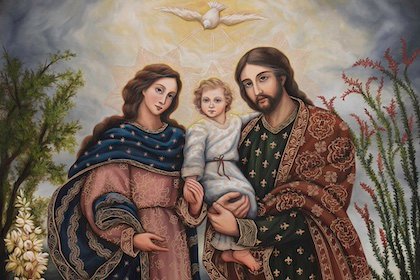
"How I would like to return to my childhood and attend the simple yet profound school that is Nazareth! How wonderful to be close to Mary, learning again the lesson of the true meaning of life, learning again God’s truths…First, we learn from its silence…The silence of Nazareth should teach us how to meditate in peace and quiet, to reflect on the deeply spiritual, and to be open to the voice of God’s inner wisdom and the counsel of his true teachers…Second, we learn about family life…May it show us the family’s holy and enduring character and exemplify its basic function in society: a community of love and sharing, beautiful for the problems it poses and the rewards it brings, in sum, the perfect setting for rearing children—and for this there is no substitute." ~Pope Paul VI, Address from Nazareth
Reflection: It is amazing that God chose to enter our fallen human condition by becoming Incarnate in the womb of the Blessed Virgin Mary. He was born of her, raised by her and Saint Joseph, acquired human knowledge through their teaching, worked with His hands, experienced the fullness of human society, and did so within the context of an earthly family. Jesus, Mary, and Joseph made up a sacred family, the Holy Family. Today’s feast continues our Christmas Day celebration. This feast falls within the octave of Christmas that culminates January 1 with the Solemnity of the Mother of God.
Though the earthly life shared by Jesus, Mary, and Joseph has always been a source of prayer and inspiration, the feast we celebrate today is relatively new. In 1890, Pope Leo XIII issued his encyclical Sapientiae Christianae (On Christians as Citizens) in which he emphasized the duties of Christians as citizens in a changing world. At that time, the holy father was concerned about the negative impact that the Industrial Revolution, secularism, and new political ideologies—such as communism—were having upon Christian citizens and the family in particular. He feared that the desire for economic advancement and the communistic separation of God from the political structures would result in the breakdown of the family, the fundamental building block of society. In that encyclical, the Holy Father stated:
This is a suitable moment for us to exhort especially heads of families to govern their households according to these precepts, and to be solicitous without failing for the right training of their children. The family may be regarded as the cradle of civil society, and it is in great measure within the circle of family life that the destiny of the States Is fostered. Whence it is that they who would break away from Christian Discipline are working to corrupt family life, and to destroy it utterly, root and branch.
In 1892, Pope Leo XIII issued an apostolic letter, Breve Neminem Fugit, in which he highlighted the importance of the Holy Family for the world as a model for every virtue necessary for human growth.
To all fathers of families, Joseph is verily the best model of paternal vigilance and care. In the most holy Virgin Mother of God, mothers may find an excellent example of love, modesty, resignation of spirit, and the perfecting of faith. And in Jesus, who was subject to his parents, the children of the family have a divine pattern of obedience which they can admire, reverence, and imitate.
In 1893, Pope Leo XIII instituted the Feast of the Holy Family as a liturgical celebration to be celebrated in any diocese that requested it. The feast continued to spread, bringing about a renewed appreciation for the sacredness of family life. In 1921, three years after the end of World War I, Pope Benedict XV, sharing the concerns of his predecessor Pope Leo XIII, added the Feast of the Holy Family to the universal Church calendar.
In 1964, while making an apostolic visit to the Holy Land, Pope Paul VI gave a beautiful speech in Nazareth on the Holy Family. This speech is now included in the Office of Readings for the Feast of the Holy Family. He begins by saying, “Nazareth is a kind of school where we may begin to discover what Christ’s life was like and even to understand his Gospel. Here we can observe and ponder the simple appeal of the way God’s Son came to be known, profound yet full of hidden meaning.” In that speech, the Holy Father wanted to help make Jesus’ family life, culture, and daily interactions as a child tangible and relatable to all so that His childhood, along with the role of His parents, would be a source of reflection for the strengthening of the family.
In 1981, Pope John Paul II, in his apostolic exhortation Familiaris Consortio (The Role of the Christian Family in the Modern World), reinforced the concept of the family as the “domestic church” with its role in fostering prayer, teaching the faith, and nurturing Christian virtues. He highlighted that in the family, the Christian faith is first proclaimed to children, making the family vital to the mission of the Church, and the most fundamental institution in the world.
As we honor the Holy Family, one of the best ways to do so is to prayerfully ponder the daily life that the Holy Family shared. Because Scripture does not record many of their family interactions in Nazareth, much is left to our prayerful imagination. What we do know is that human familial virtue within the Holy Family, especially between mother and Son, was at a level of perfection. The kindness, respect, obedience, unity, charity, and every other Christian virtue that they lived must become the model for Christian living and for family life.
The Holy Family began with apparent scandal when Mary became pregnant while betrothed to Joseph. Mary and Joseph suffered through the gossip and misunderstandings this miraculous pregnancy brought with it. Though Joseph learned of this conception from an angel in a dream, it was his faith and righteousness that empowered him to remain faithful to Mary and love her with a pure heart. Their family began in Bethlehem, in poverty and rejection. They then fled to Egypt to protect their Child from the paranoia and cruelty of Herod. They later returned to Nazareth and lived faithfully with family and friends. Jesus learned the trade of woodworking from Joseph, grew in wisdom and knowledge, spoke with the elders in the Temple at the age of twelve, and remained obedient to his earthly parents. Saint Thomas Aquinas teaches us that Jesus had direct knowledge of the Beatific Vision from the moment of His conception and had the fullness of infused knowledge. But He also grew in acquired knowledge, learning with a human mind through sensory experience and conceptual understanding. Mary and Joseph watched this growth, participated in it, grew from it themselves, and Mary “pondered all these things in her heart” (Luke 2:51).
As you ponder their inner family dynamics, relationships, and charity, use them as a model of how best to relate to your own family. Some families more fully imitate those sacred virtues; others fall gravely short. Look into your own heart and ask the Holy Family to teach you how to show greater love to those in your family. Though you will never arrive at perfection, you can receive inspiration from their lives, leading to greater growth and unity, making your own family a greater source of strength for your Christian living.
Prayer: Most Holy Family of Nazareth, you were a true school of love in which the perfection of family love grew strong. Please bestow upon me, my family, and families everywhere the grace needed to more fully imitate the love you shared, so that families everywhere will continue to be the fundamental building block of the world. Holy Family of Jesus, Mary, and Joseph, pray for us and have mercy on all. Jesus, I trust in You.
(Source: My Catholic Life!)
LAST-MODIFIED:20251227T160948Z SEQUENCE:101156302 X-ACCESS:1 X-HITS:44 X-COLOR:f0b80e X-SHOW-END-TIME:1 END:VEVENT BEGIN:VEVENT DTSTART;VALUE=DATE:20260111 DTEND;VALUE=DATE:20260112 UID:0B4D6CD4-0E49-4D4F-BC63-653F99805446 SUMMARY:St. Hyginus CREATED:20221013T211126Z DTSTAMP:20221013T211126Z URL:https://www.stpaulsweymouth.org/component/dpcalendar/event/1122?calid=13 DESCRIPTION:St. Hyginus Pope, Martyr\N\NHe was placed in the chair of Saint Peter after the martyrdom of Saint Telesphorus in the year 139. Eusebius informs us that he sat for four years. The church then enjoyed some calm under the mild reign of the emperor Antoninus Pius. Unfortunately, however, several martyrs suffered in his time by the fury of the populace or the cruelty of certain magistrates. The emperor himself never consented to such proceedings. On the contrary, when informed of them by the governors of Asia, Athens, Thessalonica, and Larissa, he wrote to them in favor of the Christians, as is recorded by Saint Justin and Eusebius.\NBut the devil had recourse to other arts to disturb the peace of God’s church. Cerdo, a wolf in sheep’s clothing, in the year 140, came from Syria to Rome and began to teach the false principles, which Marcion adopted afterward with more success. He impiously affirmed that there were two Gods; the one rigorous and severe, the author of the Old Testament; the other merciful and good, the author of the New, and the father of Christ, sent by him to redeem man from the tyranny of the former; and that Christ was not really born of the Virgin Mary or true man, but such in shadow only and appearance. Our holy pope, by his pastoral vigilance, detected that monster and cut him off from the communion of the church. The heresiarch(1), imposing upon him by a false repentance, was again received, but the zealous pastor, having discovered that he secretly preached his old opinions, excommunicated him a second time.\NAnother minister of Satan was Valentine, who was a Platonic philosopher, puffed up with the vein opinion of his learning. So full of resentment for another is being preferred to him in an election to a certain bishopric in Egypt, as Tertullian relates, revived the errors of Simon Magus(2), and added to them many other absurd fictions, as of thirty eons or ages, a kind of inferior deities, with whimsical histories of their several pedigrees. Having broached these opinions at Alexandria, he left Egypt for Rome. At first, he dissembled his heresies, but his extravagant doctrines became known by degree. Hyginus, being the mildest of men, endeavored to reclaim him without proceeding to extremities; so that Valentine was not excommunicated before the first year of Saint Pius, his immediate successor.\NSaint Hyginus did not sit for quite four years, dying in 142. We do not find that he ended his life by martyrdom, yet he is styled a martyr in some ancient calendars, as well as in the present Roman Martyrology; undoubtedly on account of the various persecutions which he suffered and to which his high station in the church exposed him in those difficult times.\NButler, Alban. The Lives of the Fathers, Martyrs, and Other Principal Saints. Compiled from Original Monuments and Authentic Records, vol. 1. Dublin: James Duffy, 1866. X-ALT-DESC;FMTTYPE=text/html:
He was placed in the chair of Saint Peter after the martyrdom of Saint Telesphorus in the year 139. Eusebius informs us that he sat for four years. The church then enjoyed some calm under the mild reign of the emperor Antoninus Pius. Unfortunately, however, several martyrs suffered in his time by the fury of the populace or the cruelty of certain magistrates. The emperor himself never consented to such proceedings. On the contrary, when informed of them by the governors of Asia, Athens, Thessalonica, and Larissa, he wrote to them in favor of the Christians, as is recorded by Saint Justin and Eusebius.
But the devil had recourse to other arts to disturb the peace of God’s church. Cerdo, a wolf in sheep’s clothing, in the year 140, came from Syria to Rome and began to teach the false principles, which Marcion adopted afterward with more success. He impiously affirmed that there were two Gods; the one rigorous and severe, the author of the Old Testament; the other merciful and good, the author of the New, and the father of Christ, sent by him to redeem man from the tyranny of the former; and that Christ was not really born of the Virgin Mary or true man, but such in shadow only and appearance. Our holy pope, by his pastoral vigilance, detected that monster and cut him off from the communion of the church. The heresiarch(1), imposing upon him by a false repentance, was again received, but the zealous pastor, having discovered that he secretly preached his old opinions, excommunicated him a second time.
Another minister of Satan was Valentine, who was a Platonic philosopher, puffed up with the vein opinion of his learning. So full of resentment for another is being preferred to him in an election to a certain bishopric in Egypt, as Tertullian relates, revived the errors of Simon Magus(2), and added to them many other absurd fictions, as of thirty eons or ages, a kind of inferior deities, with whimsical histories of their several pedigrees. Having broached these opinions at Alexandria, he left Egypt for Rome. At first, he dissembled his heresies, but his extravagant doctrines became known by degree. Hyginus, being the mildest of men, endeavored to reclaim him without proceeding to extremities; so that Valentine was not excommunicated before the first year of Saint Pius, his immediate successor.
Saint Hyginus did not sit for quite four years, dying in 142. We do not find that he ended his life by martyrdom, yet he is styled a martyr in some ancient calendars, as well as in the present Roman Martyrology; undoubtedly on account of the various persecutions which he suffered and to which his high station in the church exposed him in those difficult times.
Butler, Alban. The Lives of the Fathers, Martyrs, and Other Principal Saints. Compiled from Original Monuments and Authentic Records, vol. 1. Dublin: James Duffy, 1866.
LAST-MODIFIED:20251227T160928Z SEQUENCE:101156282 X-ACCESS:1 X-HITS:49 X-COLOR:f0b80e X-SHOW-END-TIME:1 END:VEVENT BEGIN:VEVENT DTSTART;VALUE=DATE:20260113 DTEND;VALUE=DATE:20260114 UID:D9B8ECFB-A768-4D73-9998-9A678DFDC53D SUMMARY:The Baptism of Christ CREATED:20221013T211126Z DTSTAMP:20221013T211126Z URL:https://www.stpaulsweymouth.org/component/dpcalendar/event/1124?calid=13 DESCRIPTION:The Baptism of Our Lord Jesus Christ\N\NIn the life of Christ, His baptism in the Jordan is an event of the highest importance, because it represents a significant phase in the work of redemption. We know that the liturgy of the ecclesiastical year commemorates all the phases of Christ's redemptive work; and recently, during the season of the Nativity, we have reflected on His coming into the world, poor and solitary in a grotto at Bethlehem, and on His circumcision. Now His baptism in the Jordan marks the divinely inaugurated beginning of Our Lord's public life. Indeed, Saint Peter states that at His baptism, in fulfillment of the prophecy of Daniel, He was anointed by the Holy Spirit as the Christ, the Messiah, which means the Anointed One: God anointed Jesus of Nazareth with the Holy Spirit and with power, and He went about doing good and healing all who were in the power of the devil, for God was with Him. (Acts 10:38) An anointing has always been the symbolic, visible representation of an intimately established union, a specific, defined alliance or covenant between God and one of His servants. God the Father speaks at this moment, to make clear who this Person is. The foretold Saviour is His Divine Son, begotten from all eternity: This is My Beloved Son, in whom I am well pleased.\NIn the symbolism of His baptism, Christ, Himself immaculate, assumes the sins of the world, descends into the purifying waters, and raises mankind to divine sonship. His baptism was vicarious in nature; He stands in the Jordan in our stead. Consequently, this act must find its complement in our personal redemption. Our lives are profoundly altered through Christ's redemptive sacrifice, on at least three such occasions: our Baptism, our attendance at Holy Mass, and our death in Christ.\NAt our Baptism we were immersed with Jesus, with Him we died and were buried. Then we emerged, and for the first time heaven opened to us, as the Holy Spirit made His advent into our soul, and our Father in heaven looked down upon us, now His sons, His children.\NIn each Holy Mass, Christ's baptismal offering is again operative. Through the Holy Sacrifice we are immersed in His sacrificial death; heaven then opens and the Holy Spirit descends through Holy Communion. Through the pledge of the sacrificial Banquet the Father assures us of renewed and enriched sonship in Christ.\NThe baptism of Christ is accomplished within us a third time at our death, if we are united with Him, for death is indeed a sort of baptism. Death is like immersion into the dark depths, but when we receive the Last Sacraments, on emerging, it is to a different life — it is our hope and our confidence, if we have been faithful to God's grace, that it will be the life of glory, the beatific vision. Then we will see the Blessed Trinity, no longer through the darkened sun-glass of faith, but in immediate vision, face to face.\NTo sum up, today's liturgy helps us to understand more clearly the basic structure of spiritual life, the redemptive acts of Christ. Upon that foundation the edifice rises through the Sacraments of Baptism and the Eucharist, while the Lord's return, at our death, brings completion to the work. X-ALT-DESC;FMTTYPE=text/html:
In the life of Christ, His baptism in the Jordan is an event of the highest importance, because it represents a significant phase in the work of redemption. We know that the liturgy of the ecclesiastical year commemorates all the phases of Christ's redemptive work; and recently, during the season of the Nativity, we have reflected on His coming into the world, poor and solitary in a grotto at Bethlehem, and on His circumcision. Now His baptism in the Jordan marks the divinely inaugurated beginning of Our Lord's public life. Indeed, Saint Peter states that at His baptism, in fulfillment of the prophecy of Daniel, He was anointed by the Holy Spirit as the Christ, the Messiah, which means the Anointed One: God anointed Jesus of Nazareth with the Holy Spirit and with power, and He went about doing good and healing all who were in the power of the devil, for God was with Him. (Acts 10:38) An anointing has always been the symbolic, visible representation of an intimately established union, a specific, defined alliance or covenant between God and one of His servants. God the Father speaks at this moment, to make clear who this Person is. The foretold Saviour is His Divine Son, begotten from all eternity: This is My Beloved Son, in whom I am well pleased.
In the symbolism of His baptism, Christ, Himself immaculate, assumes the sins of the world, descends into the purifying waters, and raises mankind to divine sonship. His baptism was vicarious in nature; He stands in the Jordan in our stead. Consequently, this act must find its complement in our personal redemption. Our lives are profoundly altered through Christ's redemptive sacrifice, on at least three such occasions: our Baptism, our attendance at Holy Mass, and our death in Christ.
At our Baptism we were immersed with Jesus, with Him we died and were buried. Then we emerged, and for the first time heaven opened to us, as the Holy Spirit made His advent into our soul, and our Father in heaven looked down upon us, now His sons, His children.
In each Holy Mass, Christ's baptismal offering is again operative. Through the Holy Sacrifice we are immersed in His sacrificial death; heaven then opens and the Holy Spirit descends through Holy Communion. Through the pledge of the sacrificial Banquet the Father assures us of renewed and enriched sonship in Christ.
The baptism of Christ is accomplished within us a third time at our death, if we are united with Him, for death is indeed a sort of baptism. Death is like immersion into the dark depths, but when we receive the Last Sacraments, on emerging, it is to a different life — it is our hope and our confidence, if we have been faithful to God's grace, that it will be the life of glory, the beatific vision. Then we will see the Blessed Trinity, no longer through the darkened sun-glass of faith, but in immediate vision, face to face.
To sum up, today's liturgy helps us to understand more clearly the basic structure of spiritual life, the redemptive acts of Christ. Upon that foundation the edifice rises through the Sacraments of Baptism and the Eucharist, while the Lord's return, at our death, brings completion to the work.
LAST-MODIFIED:20251227T160934Z SEQUENCE:101156288 X-ACCESS:1 X-HITS:46 X-COLOR:f0b80e X-SHOW-END-TIME:1 END:VEVENT BEGIN:VEVENT DTSTART;VALUE=DATE:20260114 DTEND;VALUE=DATE:20260115 UID:4FC5901E-379C-4F2A-8DCA-85B4D32C404E SUMMARY:St. Hilary CREATED:20221013T211126Z DTSTAMP:20221013T211126Z URL:https://www.stpaulsweymouth.org/component/dpcalendar/event/1126?calid=13 DESCRIPTION:St. Hilary of Poitiers, Bishop, Confessor, and Doctor of the Church\N\NSaint Hilary was a native of Poitiers in Aquitaine. Born and educated a pagan, it was not until near middle age that he embraced Christianity, moved to that step primarily by the idea of God presented to him in the Holy Scriptures. He soon converted his wife and daughter, and separated himself rigidly from all non-Catholic company, fearing the influence of error, rampant in a number of false philosophies and heresies, for himself and his family.\NHe entered Holy Orders with the consent of his very virtuous wife, and separated from his family as was required of the clergy. He later wrote a very famous letter to his dearly-loved daughter, encouraging her to adopt a consecrated life. She followed this counsel and died, still young, a holy death.\NIn 353 Saint Hilary was chosen bishop of his native city. Arianism, under the protection of the Emperor Constantius, was then at the heights of its exaltation, and Saint Hilary found himself called upon to support the orthodox cause in several Gallic councils, in which Arian bishops formed an overwhelming majority. He was in consequence accused to the emperor, who banished him to Phrygia. He spent his more than three years of exile in composing his great works on the Trinity.\NIn 359 he attended the Council of Seleucia, in which Arians, semi-Arians, and Catholics contended for the mastery. He never ceased his combat against the errors of the enemies of the Divinity of Christ. With the deputies of the council he went to Constantinople, and there so dismayed the heads of the Arian party that they prevailed upon the emperor to let him return to Gaul. He traversed Gaul, Italy and Illyria, preaching wherever he went, disconcerting the heretics and procuring the triumph of orthodoxy. He wrote a famous treatise on the Synods. After some eight years of missionary travel he returned to Poitiers, where he died in peace in 368.\NReflection. Like Saint Hilary, nearly every Christian has always lived amid unbelievers and heretics. We are called to a lifelong contest, and shall succeed in the measure we combine abhorrence of error with compassion for its victims.\NLittle Pictorial Lives of the Saints, a compilation based on Butler's Lives of the Saints and other sources by John Gilmary Shea (Benziger Brothers: New York, 1894). X-ALT-DESC;FMTTYPE=text/html:
Saint Hilary was a native of Poitiers in Aquitaine. Born and educated a pagan, it was not until near middle age that he embraced Christianity, moved to that step primarily by the idea of God presented to him in the Holy Scriptures. He soon converted his wife and daughter, and separated himself rigidly from all non-Catholic company, fearing the influence of error, rampant in a number of false philosophies and heresies, for himself and his family.
He entered Holy Orders with the consent of his very virtuous wife, and separated from his family as was required of the clergy. He later wrote a very famous letter to his dearly-loved daughter, encouraging her to adopt a consecrated life. She followed this counsel and died, still young, a holy death.
In 353 Saint Hilary was chosen bishop of his native city. Arianism, under the protection of the Emperor Constantius, was then at the heights of its exaltation, and Saint Hilary found himself called upon to support the orthodox cause in several Gallic councils, in which Arian bishops formed an overwhelming majority. He was in consequence accused to the emperor, who banished him to Phrygia. He spent his more than three years of exile in composing his great works on the Trinity.
In 359 he attended the Council of Seleucia, in which Arians, semi-Arians, and Catholics contended for the mastery. He never ceased his combat against the errors of the enemies of the Divinity of Christ. With the deputies of the council he went to Constantinople, and there so dismayed the heads of the Arian party that they prevailed upon the emperor to let him return to Gaul. He traversed Gaul, Italy and Illyria, preaching wherever he went, disconcerting the heretics and procuring the triumph of orthodoxy. He wrote a famous treatise on the Synods. After some eight years of missionary travel he returned to Poitiers, where he died in peace in 368.
Reflection. Like Saint Hilary, nearly every Christian has always lived amid unbelievers and heretics. We are called to a lifelong contest, and shall succeed in the measure we combine abhorrence of error with compassion for its victims.
Little Pictorial Lives of the Saints, a compilation based on Butler's Lives of the Saints and other sources by John Gilmary Shea (Benziger Brothers: New York, 1894).
LAST-MODIFIED:20251227T161021Z SEQUENCE:101156335 X-ACCESS:1 X-HITS:93 X-COLOR:f0b80e X-SHOW-END-TIME:1 END:VEVENT BEGIN:VEVENT DTSTART;VALUE=DATE:20260114 DTEND;VALUE=DATE:20260115 UID:12324F5D-2242-42DB-B074-3C0C75E09BBD SUMMARY:St. Felix CREATED:20221013T211126Z DTSTAMP:20221013T211126Z URL:https://www.stpaulsweymouth.org/component/dpcalendar/event/1128?calid=13 DESCRIPTION:St. Felix of Nola, Priest and Martyr\N\N(St. Felix was arrested and tortured for his Christian faith during the persecution of Roman Emperor Decius (r. 249–251). He was believed to have died a martyr's death during the persecution of Decius or Valerian (c. 253) but is now listed in the General Roman Calendar as a confessor of the faith, who survived his tortures.)\NSaint Felix was a native of Nola, a Roman colony in Campania, fourteen miles from Naples, where his father Hermias, who was by birth a Syrian and had served in the army, had purchased an estate and settled himself. He had two sons, Felix and Hermias, to whom he left his inheritance at his death. The younger sought advancement in the world among the lovers of vanity by following the profession of arms, which was the surest road to riches and honors at that time. But, to become what his name in Latin imported, that is happy, Felix resolved to follow no other standard than that of the King of kings, Jesus Christ. For this purpose, despising all earthly things, lest the love of them might entangle his soul, he distributed the better part of his substance among the poor and was ordained Reader Exorcist and, lastly, a priest by Maximus, the holy bishop of Nola; who, charmed with his sanctity and prudence, made him his principal support in those times of trouble, and designed him for his successor.\NIn the year 250, the emperor Decius(1) raised a bloody persecution against the church. Maximus, seeing himself principally aimed at, retired into the desert, not through the fear of death, which he desired, but rather not to tempt God by seeking it and to preserve himself for the service of his flock. The persecutors, not finding him, seized on Felix, who, in his absence, was very vigilant in discharging all his pastoral duties. The governor caused him to be scourged; then loaded with bolts and chains about his neck, hands, and legs and cast into a dungeon, in which, as Saint Prudentius informs us, the floor was spread all over with potsherds and pieces of broken glass, so that there was no place free from them, on which the saint could either stand or lie. One night an angel appeared in great glory, filled the prison with a bright light, and bade Saint Felix go and assist his bishop, who was in great distress. The confessor seeing his chains fall off and the doors open, followed his guide and was conducted by heaven to the place where Maximus lay, almost perished with hunger and cold, speechless, and without sense: for, through anxiety for his flock, and the hardships of his solitary retreat, he had suffered more than martyrdom. Not being able to bring him to himself, Felix had recourse to prayer; discovering a bunch of grapes within reach, he squeezed some of the juice into his mouth, which had the desired effect. The good bishop no sooner beheld his friend Felix, but he embraced him and begged to be conveyed back to his church. The saint taking him on his shoulders, carried him to his episcopal house in the city before day appeared, where a pious ancient woman took care of him.\NWith the blessing of his pastor, Felix repaired secretly to his lodgings and there kept himself concealed, praying for the church without ceasing, till peace was restored to it by the death of Decius in the year 251. He no sooner appeared again in public, but his zeal so exasperated the pagans that they came armed to apprehend him; but though they met him, they knew him not; they even asked him where Felix was, a question he did not think proper to give a direct answer! The persecutors going a little further perceived their mistake and returned, but in the meantime, the saint had stepped a little out of the way and crept through a hole in a ruinous old wall, instantly closed by spider webs. His enemies, never imagining anything could have lately passed where they saw so close a spiders’ web after a fruitless search elsewhere, returned in the evening without their prey. Felix found among the ruins, between two houses, an old well half dry, hid in it for six months; and received money to exist through a devout Christian woman. Peace was restored to the church by the emperor’s death, the saint quitted his retreat, and was received in the city as an angel sent from heaven.\NSoon after, with Saint Maximus dying, all were unanimous on electing Felix as bishop. Still, he persuaded the people to choose Quintus because the older priest of the two had been ordained seven days before him. Quintus, when bishop, always respected Saint Felix as his father and followed his every advice. The remainder of the saint’s estate having been confiscated in the persecution, he was advised to lay claim to it, as others had done, who thereby recovered what had been taken from them. He answered that he should be more secure in possessing Christ in poverty. He could not even be prevailed upon to accept what the rich offered him. He rented a little spot of barren land, not exceeding three acres, which he tilled with his own hands in such manner as to receive his subsistence from it and to have something left for alms. Whatever was bestowed on him, he gave immediately to the poor. If he had two coats, he was sure to provide them with the better; and often exchanged his only one for the rags of some beggar. He died in a good old age on the fourteenth of January, on which day the Martyrology, under the name of Saint Jerome, and all others of later date mention him. Five churches have been built at or near where he was first interred, without the precincts of the city of Nola. His precious remains are kept in the cathedral, but certain portions are in Rome, Benevento, and other places. Pope Damasus, in a pilgrimage which he made from Rome to Nola, to the shrine of this saint, professes, in a short poem which he composed in acknowledgment, that he was miraculously cured of a distemper through his intercession. X-ALT-DESC;FMTTYPE=text/html:
(St. Felix was arrested and tortured for his Christian faith during the persecution of Roman Emperor Decius (r. 249–251). He was believed to have died a martyr's death during the persecution of Decius or Valerian (c. 253) but is now listed in the General Roman Calendar as a confessor of the faith, who survived his tortures.)
Saint Felix was a native of Nola, a Roman colony in Campania, fourteen miles from Naples, where his father Hermias, who was by birth a Syrian and had served in the army, had purchased an estate and settled himself. He had two sons, Felix and Hermias, to whom he left his inheritance at his death. The younger sought advancement in the world among the lovers of vanity by following the profession of arms, which was the surest road to riches and honors at that time. But, to become what his name in Latin imported, that is happy, Felix resolved to follow no other standard than that of the King of kings, Jesus Christ. For this purpose, despising all earthly things, lest the love of them might entangle his soul, he distributed the better part of his substance among the poor and was ordained Reader Exorcist and, lastly, a priest by Maximus, the holy bishop of Nola; who, charmed with his sanctity and prudence, made him his principal support in those times of trouble, and designed him for his successor.
In the year 250, the emperor Decius(1) raised a bloody persecution against the church. Maximus, seeing himself principally aimed at, retired into the desert, not through the fear of death, which he desired, but rather not to tempt God by seeking it and to preserve himself for the service of his flock. The persecutors, not finding him, seized on Felix, who, in his absence, was very vigilant in discharging all his pastoral duties. The governor caused him to be scourged; then loaded with bolts and chains about his neck, hands, and legs and cast into a dungeon, in which, as Saint Prudentius informs us, the floor was spread all over with potsherds and pieces of broken glass, so that there was no place free from them, on which the saint could either stand or lie. One night an angel appeared in great glory, filled the prison with a bright light, and bade Saint Felix go and assist his bishop, who was in great distress. The confessor seeing his chains fall off and the doors open, followed his guide and was conducted by heaven to the place where Maximus lay, almost perished with hunger and cold, speechless, and without sense: for, through anxiety for his flock, and the hardships of his solitary retreat, he had suffered more than martyrdom. Not being able to bring him to himself, Felix had recourse to prayer; discovering a bunch of grapes within reach, he squeezed some of the juice into his mouth, which had the desired effect. The good bishop no sooner beheld his friend Felix, but he embraced him and begged to be conveyed back to his church. The saint taking him on his shoulders, carried him to his episcopal house in the city before day appeared, where a pious ancient woman took care of him.
With the blessing of his pastor, Felix repaired secretly to his lodgings and there kept himself concealed, praying for the church without ceasing, till peace was restored to it by the death of Decius in the year 251. He no sooner appeared again in public, but his zeal so exasperated the pagans that they came armed to apprehend him; but though they met him, they knew him not; they even asked him where Felix was, a question he did not think proper to give a direct answer! The persecutors going a little further perceived their mistake and returned, but in the meantime, the saint had stepped a little out of the way and crept through a hole in a ruinous old wall, instantly closed by spider webs. His enemies, never imagining anything could have lately passed where they saw so close a spiders’ web after a fruitless search elsewhere, returned in the evening without their prey. Felix found among the ruins, between two houses, an old well half dry, hid in it for six months; and received money to exist through a devout Christian woman. Peace was restored to the church by the emperor’s death, the saint quitted his retreat, and was received in the city as an angel sent from heaven.
Soon after, with Saint Maximus dying, all were unanimous on electing Felix as bishop. Still, he persuaded the people to choose Quintus because the older priest of the two had been ordained seven days before him. Quintus, when bishop, always respected Saint Felix as his father and followed his every advice. The remainder of the saint’s estate having been confiscated in the persecution, he was advised to lay claim to it, as others had done, who thereby recovered what had been taken from them. He answered that he should be more secure in possessing Christ in poverty. He could not even be prevailed upon to accept what the rich offered him. He rented a little spot of barren land, not exceeding three acres, which he tilled with his own hands in such manner as to receive his subsistence from it and to have something left for alms. Whatever was bestowed on him, he gave immediately to the poor. If he had two coats, he was sure to provide them with the better; and often exchanged his only one for the rags of some beggar. He died in a good old age on the fourteenth of January, on which day the Martyrology, under the name of Saint Jerome, and all others of later date mention him. Five churches have been built at or near where he was first interred, without the precincts of the city of Nola. His precious remains are kept in the cathedral, but certain portions are in Rome, Benevento, and other places. Pope Damasus, in a pilgrimage which he made from Rome to Nola, to the shrine of this saint, professes, in a short poem which he composed in acknowledgment, that he was miraculously cured of a distemper through his intercession.
LAST-MODIFIED:20251227T161026Z SEQUENCE:101156340 X-ACCESS:1 X-HITS:134 X-COLOR:f0b80e X-SHOW-END-TIME:1 END:VEVENT BEGIN:VEVENT DTSTART;VALUE=DATE:20260115 DTEND;VALUE=DATE:20260116 UID:8581AAC0-0901-48EF-B0DD-9DD1E01DEC2E SUMMARY:St. Paul Hermit CREATED:20221013T211126Z DTSTAMP:20221013T211126Z URL:https://www.stpaulsweymouth.org/component/dpcalendar/event/1130?calid=13 DESCRIPTION:St. Paul the First Hermit, Confessor\N\NSaint Paul was born in Upper Egypt in about the year 229, and became an orphan at the age of fifteen. He was very rich and highly educated. Fearing lest the tortures of a terrible persecution might endanger his Christian perseverance, he retired into a remote village. But his pagan brother-in-law denounced him, and Saint Paul, rather than remain where his faith was in danger, entered the barren desert, trusting that God would supply his wants. And his confidence was rewarded; for on the spot to which Providence led him he found the fruit of a palm-tree for food, its leaves for clothing, and the water of a spring for drink.\NHis first plan was to return to the world when the persecution was over; but tasting great delights in prayer and penance, he remained for the rest of his life, ninety years, in penance, prayer and contemplation.\NGod revealed his existence to Saint Anthony, who sought him for three days. Seeing a thirsty she-wolf run through an opening in the rocks, Anthony followed her to look for water and found Paul. They knew each other at once, and praised God together. While Saint Anthony was visiting him, a raven brought them a loaf of bread, and Saint Paul said, See how good God is! For sixty years this bird has brought me half a loaf each day; now at your coming, Christ has doubled the provision for His servants.\NThe two religious passed the night in prayer, then at dawn Paul told Anthony that he was about to die, and asked to be buried in the cloak given to Anthony by Saint Athanasius. He asked him this to show that he was dying in communion with Saint Athanasius, the invincible defender of the Faith against the Arian heresy. Anthony hastened back to fetch it, and when he was returning to Paul he saw his co-hermit rising to heaven in glory. He found his dead body kneeling as in prayer, and saw two lions come and dig his grave. Saint Paul, The Patriarch of Hermits, died in his one hundred and thirteenth year.\NReflection. Never shall we trust in ourselves without being deceived, but we shall never repent of having trusted in God, for He cannot fail those who depend upon Him.\NLittle Pictorial Lives of the Saints, a compilation based on Butler's Lives of the Saints and other sources by John Gilmary Shea (Benziger Brothers: New York, 1894); Lives of the Desert Fathers, their Spiritual Doctrine and Monastic Discipline, by Fr. Michel-Ange Marin (Magnificat: St. Jovite, 1991) X-ALT-DESC;FMTTYPE=text/html:Saint Paul was born in Upper Egypt in about the year 229, and became an orphan at the age of fifteen. He was very rich and highly educated. Fearing lest the tortures of a terrible persecution might endanger his Christian perseverance, he retired into a remote village. But his pagan brother-in-law denounced him, and Saint Paul, rather than remain where his faith was in danger, entered the barren desert, trusting that God would supply his wants. And his confidence was rewarded; for on the spot to which Providence led him he found the fruit of a palm-tree for food, its leaves for clothing, and the water of a spring for drink.
His first plan was to return to the world when the persecution was over; but tasting great delights in prayer and penance, he remained for the rest of his life, ninety years, in penance, prayer and contemplation.
God revealed his existence to Saint Anthony, who sought him for three days. Seeing a thirsty she-wolf run through an opening in the rocks, Anthony followed her to look for water and found Paul. They knew each other at once, and praised God together. While Saint Anthony was visiting him, a raven brought them a loaf of bread, and Saint Paul said, See how good God is! For sixty years this bird has brought me half a loaf each day; now at your coming, Christ has doubled the provision for His servants.
The two religious passed the night in prayer, then at dawn Paul told Anthony that he was about to die, and asked to be buried in the cloak given to Anthony by Saint Athanasius. He asked him this to show that he was dying in communion with Saint Athanasius, the invincible defender of the Faith against the Arian heresy. Anthony hastened back to fetch it, and when he was returning to Paul he saw his co-hermit rising to heaven in glory. He found his dead body kneeling as in prayer, and saw two lions come and dig his grave. Saint Paul, The Patriarch of Hermits, died in his one hundred and thirteenth year.
Reflection. Never shall we trust in ourselves without being deceived, but we shall never repent of having trusted in God, for He cannot fail those who depend upon Him.
Little Pictorial Lives of the Saints, a compilation based on Butler's Lives of the Saints and other sources by John Gilmary Shea (Benziger Brothers: New York, 1894); Lives of the Desert Fathers, their Spiritual Doctrine and Monastic Discipline, by Fr. Michel-Ange Marin (Magnificat: St. Jovite, 1991)
LAST-MODIFIED:20251227T161032Z SEQUENCE:101156346 X-ACCESS:1 X-HITS:121 X-COLOR:f0b80e X-SHOW-END-TIME:1 END:VEVENT BEGIN:VEVENT DTSTART;VALUE=DATE:20260115 DTEND;VALUE=DATE:20260116 UID:654AC374-9F88-4A34-92B2-32F0448BD0C1 SUMMARY:St. Maurus CREATED:20221013T211126Z DTSTAMP:20221013T211126Z URL:https://www.stpaulsweymouth.org/component/dpcalendar/event/1132?calid=13 DESCRIPTION:St. Maurus Abbot\N\NSaint Maurus Benedictine Abbot and Deacon, miracle-worker. Maurus was the son of Equitius, a nobleman of Rome, and was born about the year 510 and died in 584. When he was about twelve years old, his father placed him under the care of St Benedict at Subiaco, to be educated in piety and learning. When he had grown up, St Benedict chose him as his co-adjutor in the government of the Monastery. He was a model of perfection to all his brethren but especially in the virtue of obedience.\NSt Placidus, one of his fellow disciples, the son of the Senator Tertullus, going one day to draw water, fell into the lake and was at once carried away by the current. St Benedict saw this in spirit in his cell and bade Maurus run and draw him out. Having asked and received the holy Father’s blessing, Maurus hastened down to the lake, walked upon the waters, thinking he was on dry land and dragged Placid out by the hair, without sinking in the least himself. He attributed the miracle to the command and prayers of St Benedict but the holy Abbot, to the obedience of the disciple.\NSt Maurus was sent to France in 543 to propagate the order of St Benedict in that country. He founded the famous Abbey of Glanfeuil, over which he ruled as Abbot for thirty-eight years. In 581 he resigned the Abbacy, built for himself a small cell near the Church of St Martin, so that, in solitude and prayer, he might prepare himself for his passage into eternity. After two years he fell sick of a fever, he received the Sacraments of the Church, lying on sackcloth before the Altar of St Martin and in that posture expired on 15 January 584.\NSt Maurus was favoured by God with the gift of miracles and restored to health those who were stricken with a grievous affliction. \NHe would bless the sick with the Relic of the Holy Cross, and then say: “O God, the Creator of all things, you ordained that Your only Son should take flesh of the Virgin Mary by the power of the Holy Spirit, for the restoration of your people and You deigned to heal the wounds and infirmities of our souls, by the redemption accomplished upon the sacred and glorious wood of the life-giving Cross, do you also vouchsafe through this powerful Sign, to restore health to your servant.” X-ALT-DESC;FMTTYPE=text/html:Saint Maurus Benedictine Abbot and Deacon, miracle-worker. Maurus was the son of Equitius, a nobleman of Rome, and was born about the year 510 and died in 584. When he was about twelve years old, his father placed him under the care of St Benedict at Subiaco, to be educated in piety and learning. When he had grown up, St Benedict chose him as his co-adjutor in the government of the Monastery. He was a model of perfection to all his brethren but especially in the virtue of obedience.
St Placidus, one of his fellow disciples, the son of the Senator Tertullus, going one day to draw water, fell into the lake and was at once carried away by the current. St Benedict saw this in spirit in his cell and bade Maurus run and draw him out. Having asked and received the holy Father’s blessing, Maurus hastened down to the lake, walked upon the waters, thinking he was on dry land and dragged Placid out by the hair, without sinking in the least himself. He attributed the miracle to the command and prayers of St Benedict but the holy Abbot, to the obedience of the disciple.
St Maurus was sent to France in 543 to propagate the order of St Benedict in that country. He founded the famous Abbey of Glanfeuil, over which he ruled as Abbot for thirty-eight years. In 581 he resigned the Abbacy, built for himself a small cell near the Church of St Martin, so that, in solitude and prayer, he might prepare himself for his passage into eternity. After two years he fell sick of a fever, he received the Sacraments of the Church, lying on sackcloth before the Altar of St Martin and in that posture expired on 15 January 584.
St Maurus was favoured by God with the gift of miracles and restored to health those who were stricken with a grievous affliction.
He would bless the sick with the Relic of the Holy Cross, and then say: “O God, the Creator of all things, you ordained that Your only Son should take flesh of the Virgin Mary by the power of the Holy Spirit, for the restoration of your people and You deigned to heal the wounds and infirmities of our souls, by the redemption accomplished upon the sacred and glorious wood of the life-giving Cross, do you also vouchsafe through this powerful Sign, to restore health to your servant.”
LAST-MODIFIED:20251227T161037Z SEQUENCE:101156351 X-ACCESS:1 X-HITS:82 X-COLOR:f0b80e X-SHOW-END-TIME:1 END:VEVENT BEGIN:VEVENT DTSTART;VALUE=DATE:20260116 DTEND;VALUE=DATE:20260117 UID:D187536A-F864-4335-B715-C2956F005FF0 SUMMARY:St. Marcellus CREATED:20221013T211126Z DTSTAMP:20221013T211126Z URL:https://www.stpaulsweymouth.org/component/dpcalendar/event/1134?calid=13 DESCRIPTION:St. Marcellus I Pope, Martyr\N\NDuring the third century paganism and Christianity vied for supremacy in the Roman Empire. Hoping to stifle the Church completely, the emperor Diocletian in 303 began the last and fiercest of the persecutions. In time, Christian charity conquered pagan brutality, and as the Church attracted more and more members, the Roman government would be compelled to recognize its existence, but it was only after almost three hundred years, during which persecutions had forced Christian worship underground, that the Church would finally come out into the open after the Edict of Nantes in 313. It was still young and disorganized, vulnerable to heresy and apostasy, and needed a strong leader to settle questions of doctrine and discipline.\NSuch a leader came to the Chair of Peter in 304, when Saint Marcellus was elected pope. Saint Marcellinus, his predecessor, while being taken to torture, had exhorted him not to cede to the decrees of Diocletian, and it became evident that Marcellus did not intend to temporize. He established new catacombs and saw to it that the divine mysteries were continually celebrated there. Then three years of relative peace were given the church when Maxentius became emperor in 307, for he was too occupied with other difficulties to persecute the Christians.\NAfter assessing the problems facing the Church, Saint Marcellus planned a strong program of reorganization. Rome then as now was the seat of Catholicism, and his program was initiated there. He divided the territorial administration of the Church into twenty-five districts or parishes, placing a priest over each one, thus restoring an earlier division which the turmoil of the persecutions had disrupted. This arrangement permitted more efficient care in instructing the faithful, in preparing candidates for baptism and penitents for reconciliation. With these measures in force, Church government took on a definite form.\NMarcellus' biggest problem was dealing with the Christians who had apostatized during the persecution. Many of these were determined to be reconciled to the Church without performing the necessary penances. The Christians who had remained faithful demanded that the customary penitential discipline be maintained and enforced. Marcellus approached this problem with uncompromising justice; the apostates were in the wrong, and regardless of the consequences, were obliged to do penance. It was not long before the discord between the faithful and the apostates led to violence in the very streets of Rome.\NAn account of Marcellus' death, dating from the fifth century, relates that Maxentius, judging the pope responsible for the trouble between the Christian factions, condemned him to work as a slave on the public highway. After nine months of this hard labor, he was rescued by the clergy and taken to the home of a widow named Lucina; this woman welcomed him with every sign of respect and offered him her home for a church. When the emperor learned that Christian rites were being celebrated there, he profaned the church by turning it into a stable and forced the Holy Father to care for the animals quartered there. In these sad surroundings, Marcellus died on January 16, 310. He was buried in the catacombs of Priscilla, but later his remains were placed beneath the altar of the church in Rome which still bears his name.\NLes Petits Bollandistes: Vies des Saints, by Msgr. Paul Guérin (Bloud et Barral: Paris, 1882), Vol. 1 X-ALT-DESC;FMTTYPE=text/html:During the third century paganism and Christianity vied for supremacy in the Roman Empire. Hoping to stifle the Church completely, the emperor Diocletian in 303 began the last and fiercest of the persecutions. In time, Christian charity conquered pagan brutality, and as the Church attracted more and more members, the Roman government would be compelled to recognize its existence, but it was only after almost three hundred years, during which persecutions had forced Christian worship underground, that the Church would finally come out into the open after the Edict of Nantes in 313. It was still young and disorganized, vulnerable to heresy and apostasy, and needed a strong leader to settle questions of doctrine and discipline.
Such a leader came to the Chair of Peter in 304, when Saint Marcellus was elected pope. Saint Marcellinus, his predecessor, while being taken to torture, had exhorted him not to cede to the decrees of Diocletian, and it became evident that Marcellus did not intend to temporize. He established new catacombs and saw to it that the divine mysteries were continually celebrated there. Then three years of relative peace were given the church when Maxentius became emperor in 307, for he was too occupied with other difficulties to persecute the Christians.
After assessing the problems facing the Church, Saint Marcellus planned a strong program of reorganization. Rome then as now was the seat of Catholicism, and his program was initiated there. He divided the territorial administration of the Church into twenty-five districts or parishes, placing a priest over each one, thus restoring an earlier division which the turmoil of the persecutions had disrupted. This arrangement permitted more efficient care in instructing the faithful, in preparing candidates for baptism and penitents for reconciliation. With these measures in force, Church government took on a definite form.
Marcellus' biggest problem was dealing with the Christians who had apostatized during the persecution. Many of these were determined to be reconciled to the Church without performing the necessary penances. The Christians who had remained faithful demanded that the customary penitential discipline be maintained and enforced. Marcellus approached this problem with uncompromising justice; the apostates were in the wrong, and regardless of the consequences, were obliged to do penance. It was not long before the discord between the faithful and the apostates led to violence in the very streets of Rome.
An account of Marcellus' death, dating from the fifth century, relates that Maxentius, judging the pope responsible for the trouble between the Christian factions, condemned him to work as a slave on the public highway. After nine months of this hard labor, he was rescued by the clergy and taken to the home of a widow named Lucina; this woman welcomed him with every sign of respect and offered him her home for a church. When the emperor learned that Christian rites were being celebrated there, he profaned the church by turning it into a stable and forced the Holy Father to care for the animals quartered there. In these sad surroundings, Marcellus died on January 16, 310. He was buried in the catacombs of Priscilla, but later his remains were placed beneath the altar of the church in Rome which still bears his name.
Les Petits Bollandistes: Vies des Saints, by Msgr. Paul Guérin (Bloud et Barral: Paris, 1882), Vol. 1
LAST-MODIFIED:20251227T161043Z SEQUENCE:101156357 X-ACCESS:1 X-HITS:176 X-COLOR:f0b80e X-SHOW-END-TIME:1 END:VEVENT BEGIN:VEVENT DTSTART;VALUE=DATE:20260117 DTEND;VALUE=DATE:20260118 UID:7D70FC4D-5FCB-4CAA-9A1C-90436C3D0516 SUMMARY:St. Anthony CREATED:20221013T211126Z DTSTAMP:20221013T211126Z URL:https://www.stpaulsweymouth.org/component/dpcalendar/event/1136?calid=13 DESCRIPTION:St. Anthony of the Desert, Abbot\N\NSaint Anthony was born in the year 251, in Upper Egypt. Hearing at Mass the words, If you would be perfect, go, sell what you have and give to the poor, he gave away all his vast possessions — staying only to see that his sister's education was completed — and retired into the desert. He then begged an aged hermit to teach him the spiritual life, and he also visited various solitaries, undertaking to copy the principal virtue of each.\NTo serve God more perfectly, Anthony immured himself in a ruin, building up the door so that none could enter. Here the devils assaulted him furiously, appearing as various monsters, and even wounding him severely; but his courage never failed, and he overcame them all by confidence in God and by the sign of the cross. One night, while Anthony was in his solitude, many devils scourged him so terribly that he lay as if dead. A friend found him in this condition, and believing him dead carried him home. But when Anthony came to himself he persuaded his friend to take him back, in spite of his wounds, to his solitude. Here, prostrate from weakness, he defied the devils, saying, I fear you not; you cannot separate me from the love of Christ. After more vain assaults the devils fled, and Christ appeared to Anthony in His glory.\NSaint Anthony's only food was bread and water, which he never tasted before sunset, and sometimes only once in two, three, or four days. He wore sackcloth and sheepskin, and he often knelt in prayer from sunset to sunrise.\NHis admirers became so many and so insistent that he was eventually persuaded to found two monasteries for them and to give them a rule of life. These were the first monasteries ever to be founded, and Saint Anthony is, therefore, the father of cenobites of monks. In 311 he went to Alexandria to take part in the Arian controversy and to comfort those who were being persecuted by Maximinus. This visit lasted for a few days only, after which he retired into a solitude even more remote so that he might cut himself off completely from his admirers. When he was over ninety, he was commanded by God in a vision to search the desert for Saint Paul the Hermit. He is said to have survived until the age of a hundred and five, when he died peacefully in a cave on Mount Kolzim near the Red Sea. Saint Athanasius, his biographer, says that the mere knowledge of how Saint Anthony lived is a good guide to virtue.\NReflection. The more violent the assaults of temptation suffered by Saint Anthony, the more firmly did he grasp his weapons, namely, mortification and prayer. Let us imitate him in this, if we wish to obtain victories like his.\NLittle Pictorial Lives of the Saints, a compilation based on Butler's Lives of the Saints and other sources by John Gilmary Shea (Benziger Brothers: New York, 1894); Les Petits Bollandistes: Vies des Saints, by Msgr. Paul Guérin (Bloud et Barral: Paris, 1882), Vol. 1; The Saints, a Concise Biographical Dictionary, edited by John Coulson (Hawthorn Books, Inc.: New York, 1957). X-ALT-DESC;FMTTYPE=text/html:Saint Anthony was born in the year 251, in Upper Egypt. Hearing at Mass the words, If you would be perfect, go, sell what you have and give to the poor, he gave away all his vast possessions — staying only to see that his sister's education was completed — and retired into the desert. He then begged an aged hermit to teach him the spiritual life, and he also visited various solitaries, undertaking to copy the principal virtue of each.
To serve God more perfectly, Anthony immured himself in a ruin, building up the door so that none could enter. Here the devils assaulted him furiously, appearing as various monsters, and even wounding him severely; but his courage never failed, and he overcame them all by confidence in God and by the sign of the cross. One night, while Anthony was in his solitude, many devils scourged him so terribly that he lay as if dead. A friend found him in this condition, and believing him dead carried him home. But when Anthony came to himself he persuaded his friend to take him back, in spite of his wounds, to his solitude. Here, prostrate from weakness, he defied the devils, saying, I fear you not; you cannot separate me from the love of Christ. After more vain assaults the devils fled, and Christ appeared to Anthony in His glory.
Saint Anthony's only food was bread and water, which he never tasted before sunset, and sometimes only once in two, three, or four days. He wore sackcloth and sheepskin, and he often knelt in prayer from sunset to sunrise.
His admirers became so many and so insistent that he was eventually persuaded to found two monasteries for them and to give them a rule of life. These were the first monasteries ever to be founded, and Saint Anthony is, therefore, the father of cenobites of monks. In 311 he went to Alexandria to take part in the Arian controversy and to comfort those who were being persecuted by Maximinus. This visit lasted for a few days only, after which he retired into a solitude even more remote so that he might cut himself off completely from his admirers. When he was over ninety, he was commanded by God in a vision to search the desert for Saint Paul the Hermit. He is said to have survived until the age of a hundred and five, when he died peacefully in a cave on Mount Kolzim near the Red Sea. Saint Athanasius, his biographer, says that the mere knowledge of how Saint Anthony lived is a good guide to virtue.
Reflection. The more violent the assaults of temptation suffered by Saint Anthony, the more firmly did he grasp his weapons, namely, mortification and prayer. Let us imitate him in this, if we wish to obtain victories like his.
Little Pictorial Lives of the Saints, a compilation based on Butler's Lives of the Saints and other sources by John Gilmary Shea (Benziger Brothers: New York, 1894); Les Petits Bollandistes: Vies des Saints, by Msgr. Paul Guérin (Bloud et Barral: Paris, 1882), Vol. 1; The Saints, a Concise Biographical Dictionary, edited by John Coulson (Hawthorn Books, Inc.: New York, 1957).
LAST-MODIFIED:20251227T161049Z SEQUENCE:101156363 X-ACCESS:1 X-HITS:31 X-COLOR:f0b80e X-SHOW-END-TIME:1 END:VEVENT BEGIN:VEVENT DTSTART;VALUE=DATE:20260118 DTEND;VALUE=DATE:20260119 UID:4C546189-D7C0-4704-92C5-7A5B9F5A94CB SUMMARY:St. Prisca CREATED:20221013T211126Z DTSTAMP:20221013T211126Z URL:https://www.stpaulsweymouth.org/component/dpcalendar/event/1138?calid=13 DESCRIPTION:St. Prisca, Virgin and Martyr\N\NAlso known as St. Priscilla; St. Prisca was a child martyr of the early Roman Church. Born to Christian parents of a noble family, Prisca was raised during the reign of Roman Emperor Claudius. While Claudius did not persecute those who believed in Christ with the same fervor as other Roman emperors, Christians still did not practice their faith openly. In fact, Prisca’s parents went to great lengths to conceal their faith, and thus they were not suspected of being Christians.\NPrisca, however, did not feel the need to take precautions. The young girl openly professed her dedication to Christ, and eventually, she was reported to the emperor. Claudius had her arrested, and commanded that she make sacrifice to idols. Prisca refused, and was tortured. Suddenly, a bright, yellow light shone about her, and she appeared to be a star.\NClaudius ordered that Prisca be imprisoned, in the hopes that she would denounce Christ. When all efforts to change her mind failed, she was taken to the coliseum and made to face a ferocious lion. Prisca stood before the lion without fear. The lion approached her and began to gently lick her feet.\NPrisca received a martyr’s crown when the emperor ordered that she be beheaded with the sword.\NShe is known to be patron of Good Marriages. X-ALT-DESC;FMTTYPE=text/html:
Also known as St. Priscilla; St. Prisca was a child martyr of the early Roman Church. Born to Christian parents of a noble family, Prisca was raised during the reign of Roman Emperor Claudius. While Claudius did not persecute those who believed in Christ with the same fervor as other Roman emperors, Christians still did not practice their faith openly. In fact, Prisca’s parents went to great lengths to conceal their faith, and thus they were not suspected of being Christians.
Prisca, however, did not feel the need to take precautions. The young girl openly professed her dedication to Christ, and eventually, she was reported to the emperor. Claudius had her arrested, and commanded that she make sacrifice to idols. Prisca refused, and was tortured. Suddenly, a bright, yellow light shone about her, and she appeared to be a star.
Claudius ordered that Prisca be imprisoned, in the hopes that she would denounce Christ. When all efforts to change her mind failed, she was taken to the coliseum and made to face a ferocious lion. Prisca stood before the lion without fear. The lion approached her and began to gently lick her feet.
Prisca received a martyr’s crown when the emperor ordered that she be beheaded with the sword.
She is known to be patron of Good Marriages.
LAST-MODIFIED:20251227T161054Z SEQUENCE:101156368 X-ACCESS:1 X-HITS:87 X-COLOR:f0b80e X-SHOW-END-TIME:1 END:VEVENT BEGIN:VEVENT DTSTART;VALUE=DATE:20260119 DTEND;VALUE=DATE:20260120 UID:7A0D0A4D-C357-4B30-9FFF-9DFB38B2FD49 SUMMARY:Sts. Marius, Martha, Audifax, and Abachum CREATED:20221013T211126Z DTSTAMP:20221013T211126Z URL:https://www.stpaulsweymouth.org/component/dpcalendar/event/1142?calid=13 DESCRIPTION:Sts. Marius, Martha, Audifax, and Abachum, Martyrs\N\NMarius, a Persian nobleman, his wife Martha, and his sons Audifax and Abachum came to believe in Christ and became Christians. In imitation of the early Christians of Jerusalem, they gladly gave away their fortune to the poor.Then the family traveled to Rome to venerate the tombs of the Apostles and lend their aid to the persecuted Christians. Among other things, they gathered the ashes of the Martyrs and buried them with respect.In time, the Saints were arrested and tortured. Marius and his sons were beheaded and Martha was drowned thirteen miles from Rome in a place known as Santa Ninfa. The Roman Martyrology says this happened about the 4th century. Theses Saints are mentioned in all the western martyrologies.PRAYER: Lord, we devoutly recall the sufferings of Sts. Marius, Martha, Audifax, and Abachum. Give success to our joyful prayers and grant us also constancy in our Faith. Amen. X-ALT-DESC;FMTTYPE=text/html:Marius, a Persian nobleman, his wife Martha, and his sons Audifax and Abachum came to believe in Christ and became Christians. In imitation of the early Christians of Jerusalem, they gladly gave away their fortune to the poor.
Then the family traveled to Rome to venerate the tombs of the Apostles and lend their aid to the persecuted Christians. Among other things, they gathered the ashes of the Martyrs and buried them with respect.
In time, the Saints were arrested and tortured. Marius and his sons were beheaded and Martha was drowned thirteen miles from Rome in a place known as Santa Ninfa. The Roman Martyrology says this happened about the 4th century. Theses Saints are mentioned in all the western martyrologies.
PRAYER: Lord, we devoutly recall the sufferings of Sts. Marius, Martha, Audifax, and Abachum. Give success to our joyful prayers and grant us also constancy in our Faith. Amen.
Saint Canutus, King of Denmark, was endowed with excellent qualities of both mind and body. As a young prince, he cleared the seas of pirates and subdued several neighboring provinces which were harassing Denmark by their incursions. His courage rivaled in excellence with his ability in the conduct and skills of war, but his singular piety, in a time when few of his land were Christian, eclipsed all his other endowments.
Saint Canutus succeeded his elder brother Harold on the throne of Denmark in the year 1080. He began his reign by a successful war against the troublesome, barbarous enemies of the state, and by planting the faith in the conquered provinces. Amid the glory of his victories he humbly prostrated himself at the foot of the crucifix, laying there his diadem, and offering himself and his kingdom to the King of kings. After having provided for the peace and safety of his country, he married Eltha, daughter of Robert, Earl of Flanders, who proved herself a spouse worthy of him. They are the parents of Blessed Charles, Count of Amiens and Flanders, a martyr for his faith, brutally slain like his father, while in prayer.
The justice of Saint Canutus as sovereign became evident when he condemned to death a Danish lord whose vessel, to sustain the owner's luxury, had pillaged the ship of a neighboring country and massacred the crew. He applied himself to the reform of all internal abuses. For this purpose he enacted severe but necessary laws for the strict administration of justice, the repression of violence and tyranny by the powerful, without respect to persons. He favored and honored holy men, and granted many privileges and immunities to the clergy. His charity and tenderness towards his subjects made him study all possible ways to make them a happy people. He showed a royal munificence in building and adorning churches, and gave the crown which he wore, of very great value, to a church in his capital and place of residence, where the kings of Denmark are still buried.
To the virtues which constitute a great king, Canutus added those which prove the great Saint. A rebellion having sprung up in his kingdom, the king was surprised at church by the rebels. Perceiving his danger, he confessed his sins at the foot of the altar and received Holy Communion. Stretching out his arms before the altar, the Saint fervently recommended his soul to his Creator; in this posture he was struck down on his knees by the enemies of his Christian reign.
Reflection. The soul of a man is endowed with many noble powers, and feels a keen joy in their exercise; but the keenest joy we are capable of knowing consists in prostrating all our powers of mind and heart in humble adoration before the majesty of God.
Little Pictorial Lives of the Saints, a compilation based on Butler's Lives of the Saints and other sources by John Gilmary Shea (Benziger Brothers: New York, 1894); Les Petits Bollandistes: Vies des Saints, by Msgr. Paul Guérin (Bloud et Barral: Paris, 1882), Vol. 1
LAST-MODIFIED:20251227T161105Z SEQUENCE:101156379 X-ACCESS:1 X-HITS:107 X-COLOR:f0b80e X-SHOW-END-TIME:1 END:VEVENT BEGIN:VEVENT DTSTART;VALUE=DATE:20260120 DTEND;VALUE=DATE:20260121 UID:B17AC395-6B87-40A1-A12F-40640D91419B SUMMARY:Sts. Fabian and Sebastian CREATED:20221013T211126Z DTSTAMP:20221013T211126Z URL:https://www.stpaulsweymouth.org/component/dpcalendar/event/1144?calid=13 DESCRIPTION:Sts. Fabian Pope and Sebastian, Martyrs\N\NSt. Fabian succeeded Saint Anterus in the pontificate in the year 236. Eusebius’ relates that in an assembly of the people and clergy, held for the election of a pastor in his room, a dove, unexpectedly appearing, settled, to the great surprise of all present, on the head of Saint Fabian, and that this miraculous sign united the votes of the clergy and people in promoting him, though not thought of before, as being a layman and a stranger.\NHe governed the church sixteen years, sent Saint Dionysius and other preachers into Gaul, and condemned Privatus, a broacher of a new heresy in Africa, as appears from Saint Cyprian. Saint Fabian died a glorious martyr in the persecution of Decius, in 250, as Saint Cyprian and Saint Jerome witness. The former, writing to his successor, Saint Cornelius, calls him an incomparable man, and says that the glory of his death had answered the purity and holiness of his life.\NThe Saints made God, and the accomplishment of his holy will, the great object of all their petitions in their prayers, and their only aim in all their actions. “God,” says Saint Austin, “in His promises to hear our prayers, is desirous to bestow Himself upon us; if you find any thing better than Him, ask it, but if you ask any thing beneath Him, you put an affront upon Him, and hurt yourself by preferring to Him a creature which He framed: pray in the spirit and sentiment of love, in which the royal prophet said to him, ‘Thou, O Lord, art my portion.’ Let others choose to themselves portions among creatures; for my part, Thou are my portion, Thee alone I have chosen for my whole inheritance.”\NRev. Alban Butler, The Lives of the Fathers, Martyrs and other principal Saints, Vol. I, (Virtue & Company, Limited.: London and Dublin, 1959).\N \NSaint Sebastian was an officer in the Roman army, esteemed even by the pagans as a good soldier, and honored by the Church ever since as a champion of Jesus Christ. Born at Narbonne, Sebastian came to Rome about the year 284 and entered the lists against the powers of evil. He found the twin brothers Marcus and Marcellinus in prison for the faith, and when they were close to yielding to the entreaties of their relatives, encouraged them to despise flesh and blood, and to die for Christ. God confirmed his words by miracles: light shone around him while he spoke; he cured the sick by his prayers; and in this divine strength he led multitudes to the faith, among them the Prefect of Rome, with his son Tiburtius.\NHe saw his disciples die before him, and one of them came back from heaven to tell him that his own end was near. It was in a contest of fervor and charity that Saint Sebastian found the occasion of martyrdom. The Governor-Prefect of Rome was converted to the faith and afterwards retired to his estates in Campania, taking with him a great number of his fellow-converts to this place of safety. It was a question whether Polycarp the priest or Saint Sebastian should accompany the neophytes. Each was eager to stay and face the danger at Rome; finally the Pope decided that the Roman church could not spare the services of Sebastian, who therefore remained amid the perils in the city.\NHe continued to labor at his post of danger until he was betrayed by a false disciple. He was led before Diocletian and, at the emperor's command, pierced with arrows and left for dead. God raised him up again, cured, and of his own accord he went before the emperor and conjured him to halt the persecution of the Church. Again sentenced, he was beaten to death by clubs, and crowned his labors by the merit of a double martyrdom.\NReflection. Your ordinary occupations will give you opportunities of laboring for the faith. Ask help from Saint Sebastian, both wise and prudent.\NLittle Pictorial Lives of the Saints, a compilation based on Butler's Lives of the Saints and other sources by John Gilmary Shea (Benziger Brothers: New York, 1894) X-ALT-DESC;FMTTYPE=text/html:St. Fabian succeeded Saint Anterus in the pontificate in the year 236. Eusebius’ relates that in an assembly of the people and clergy, held for the election of a pastor in his room, a dove, unexpectedly appearing, settled, to the great surprise of all present, on the head of Saint Fabian, and that this miraculous sign united the votes of the clergy and people in promoting him, though not thought of before, as being a layman and a stranger.
He governed the church sixteen years, sent Saint Dionysius and other preachers into Gaul, and condemned Privatus, a broacher of a new heresy in Africa, as appears from Saint Cyprian. Saint Fabian died a glorious martyr in the persecution of Decius, in 250, as Saint Cyprian and Saint Jerome witness. The former, writing to his successor, Saint Cornelius, calls him an incomparable man, and says that the glory of his death had answered the purity and holiness of his life.
The Saints made God, and the accomplishment of his holy will, the great object of all their petitions in their prayers, and their only aim in all their actions. “God,” says Saint Austin, “in His promises to hear our prayers, is desirous to bestow Himself upon us; if you find any thing better than Him, ask it, but if you ask any thing beneath Him, you put an affront upon Him, and hurt yourself by preferring to Him a creature which He framed: pray in the spirit and sentiment of love, in which the royal prophet said to him, ‘Thou, O Lord, art my portion.’ Let others choose to themselves portions among creatures; for my part, Thou are my portion, Thee alone I have chosen for my whole inheritance.”
Rev. Alban Butler, The Lives of the Fathers, Martyrs and other principal Saints, Vol. I, (Virtue & Company, Limited.: London and Dublin, 1959).
Saint Sebastian was an officer in the Roman army, esteemed even by the pagans as a good soldier, and honored by the Church ever since as a champion of Jesus Christ. Born at Narbonne, Sebastian came to Rome about the year 284 and entered the lists against the powers of evil. He found the twin brothers Marcus and Marcellinus in prison for the faith, and when they were close to yielding to the entreaties of their relatives, encouraged them to despise flesh and blood, and to die for Christ. God confirmed his words by miracles: light shone around him while he spoke; he cured the sick by his prayers; and in this divine strength he led multitudes to the faith, among them the Prefect of Rome, with his son Tiburtius.
He saw his disciples die before him, and one of them came back from heaven to tell him that his own end was near. It was in a contest of fervor and charity that Saint Sebastian found the occasion of martyrdom. The Governor-Prefect of Rome was converted to the faith and afterwards retired to his estates in Campania, taking with him a great number of his fellow-converts to this place of safety. It was a question whether Polycarp the priest or Saint Sebastian should accompany the neophytes. Each was eager to stay and face the danger at Rome; finally the Pope decided that the Roman church could not spare the services of Sebastian, who therefore remained amid the perils in the city.
He continued to labor at his post of danger until he was betrayed by a false disciple. He was led before Diocletian and, at the emperor's command, pierced with arrows and left for dead. God raised him up again, cured, and of his own accord he went before the emperor and conjured him to halt the persecution of the Church. Again sentenced, he was beaten to death by clubs, and crowned his labors by the merit of a double martyrdom.
Reflection. Your ordinary occupations will give you opportunities of laboring for the faith. Ask help from Saint Sebastian, both wise and prudent.
Little Pictorial Lives of the Saints, a compilation based on Butler's Lives of the Saints and other sources by John Gilmary Shea (Benziger Brothers: New York, 1894)
LAST-MODIFIED:20251227T161113Z SEQUENCE:101156387 X-ACCESS:1 X-HITS:61 X-COLOR:f0b80e X-SHOW-END-TIME:1 END:VEVENT BEGIN:VEVENT DTSTART;VALUE=DATE:20260121 DTEND;VALUE=DATE:20260122 UID:8669F2E8-4946-48AB-9D96-7E290E425006 SUMMARY:St. Agnes CREATED:20221013T211126Z DTSTAMP:20221013T211126Z URL:https://www.stpaulsweymouth.org/component/dpcalendar/event/1146?calid=13 DESCRIPTION:St. Agnes, Virgin and Martyr\N\NSaint Agnes was twelve years old when she was led to the altar of Minerva at Rome and commanded to obey the persecuting laws of Diocletian by offering incense. In the midst of the idolatrous rites she raised her hands to Christ, her Spouse, and made the sign of the life-giving cross. She did not shrink when she was bound hand and foot, though the manacles slipped from her young hands, and the heathens who stood around were moved to tears. Bonds were not needed for her; she hastened gladly to the place of her torture.\NWhen the judge saw that pain had no terrors for her, he inflicted a sentence comporting an insult worse than death: she was condemned to be taken to a house of infamy and her clothes stripped off. I have an Angel with me, she said, and he will guard me. Christ, whom you do not know, surrounds me like a wall which cannot be forced. And so it occurred. The Spouse of Virgins revealed, by a miracle, His custody of the pure in heart: her hair grew miraculously to such a length that she was entirely covered by it. The place to which she was taken was illuminated by a brilliant, inexplicable light; and there she knelt down to pray. At that site a Church has been built in honor of this young maiden's victory over impurity. Only an impudent suitor, the cause of her arraignment as a Christian, dared approach her, and her Angel struck him dead at her feet. His father prayed Agnes to raise him up again by her magic arts; she answered that magic was not responsible for his death, but only the young pagan's lack of respect for God. She said she would pray to Him that her Lord's glory might be manifested by the miracle his father requested, and it was granted to her prayer.\NAt length the sentence of death by the sword was passed upon her by a subordinate judge. For a moment she stood erect in prayer, then bowed her neck to the sword, rejoicing that the time of her liberation had arrived. The Angels bore her pure soul to Paradise. A week after her death, Saint Agnes appeared to her parents as they were praying at her tomb; she was amid a choir of virgins clothed in golden robes and crowned with garlands. She begged them not to weep for her as for one dead, telling them rather to rejoice with her in her happiness.\NReflection. Her innocence endeared Saint Agnes to Christ, as it has endeared her to His Church ever since. Even as penitents we may imitate her innocence in our own sphere. Let us strictly guard our eyes, and Christ, when He sees that we desire to keep our hearts pure for love of Him, will fortify our resolution and bless it.\NLittle Pictorial Lives of the Saints, a compilation based on Butler's Lives of the Saints and other sources by John Gilmary Shea (Benziger Brothers: New York, 1894); Les Petits Bollandistes: Vies des Saints, by Msgr. Paul Guérin (Bloud et Barral: Paris, 1882), Vol. 1 X-ALT-DESC;FMTTYPE=text/html:Saint Agnes was twelve years old when she was led to the altar of Minerva at Rome and commanded to obey the persecuting laws of Diocletian by offering incense. In the midst of the idolatrous rites she raised her hands to Christ, her Spouse, and made the sign of the life-giving cross. She did not shrink when she was bound hand and foot, though the manacles slipped from her young hands, and the heathens who stood around were moved to tears. Bonds were not needed for her; she hastened gladly to the place of her torture.
When the judge saw that pain had no terrors for her, he inflicted a sentence comporting an insult worse than death: she was condemned to be taken to a house of infamy and her clothes stripped off. I have an Angel with me, she said, and he will guard me. Christ, whom you do not know, surrounds me like a wall which cannot be forced. And so it occurred. The Spouse of Virgins revealed, by a miracle, His custody of the pure in heart: her hair grew miraculously to such a length that she was entirely covered by it. The place to which she was taken was illuminated by a brilliant, inexplicable light; and there she knelt down to pray. At that site a Church has been built in honor of this young maiden's victory over impurity. Only an impudent suitor, the cause of her arraignment as a Christian, dared approach her, and her Angel struck him dead at her feet. His father prayed Agnes to raise him up again by her magic arts; she answered that magic was not responsible for his death, but only the young pagan's lack of respect for God. She said she would pray to Him that her Lord's glory might be manifested by the miracle his father requested, and it was granted to her prayer.
At length the sentence of death by the sword was passed upon her by a subordinate judge. For a moment she stood erect in prayer, then bowed her neck to the sword, rejoicing that the time of her liberation had arrived. The Angels bore her pure soul to Paradise. A week after her death, Saint Agnes appeared to her parents as they were praying at her tomb; she was amid a choir of virgins clothed in golden robes and crowned with garlands. She begged them not to weep for her as for one dead, telling them rather to rejoice with her in her happiness.
Reflection. Her innocence endeared Saint Agnes to Christ, as it has endeared her to His Church ever since. Even as penitents we may imitate her innocence in our own sphere. Let us strictly guard our eyes, and Christ, when He sees that we desire to keep our hearts pure for love of Him, will fortify our resolution and bless it.
Little Pictorial Lives of the Saints, a compilation based on Butler's Lives of the Saints and other sources by John Gilmary Shea (Benziger Brothers: New York, 1894); Les Petits Bollandistes: Vies des Saints, by Msgr. Paul Guérin (Bloud et Barral: Paris, 1882), Vol. 1
LAST-MODIFIED:20251227T161119Z SEQUENCE:101156393 X-ACCESS:1 X-HITS:65 X-COLOR:f0b80e X-SHOW-END-TIME:1 END:VEVENT BEGIN:VEVENT DTSTART;VALUE=DATE:20260122 DTEND;VALUE=DATE:20260123 UID:06229B93-CF6B-4656-A9DC-D9FC2C320E0A SUMMARY:Sts. Vincent and Anastasius CREATED:20221013T211126Z DTSTAMP:20221013T211126Z URL:https://www.stpaulsweymouth.org/component/dpcalendar/event/1148?calid=13 DESCRIPTION:Sts. Vincent Deacon and Anastasius, Martyrs\N\NSaint Vincent was archdeacon of the church at Saragossa, Spain. Valerian, the bishop, was prevented from preaching by a speech impediment, and named Vincent to preach in his stead. He answered in the bishop's name when, during the persecution of Diocletian, both were brought before Dacian, the presiding officer. When the bishop was sent into banishment, Vincent was retained, to suffer and to die.\NFirst he was stretched on the rack; and when he was almost torn asunder, Dacian asked him in mockery how he fared now. Vincent answered, with joy on his countenance, that he had always prayed to be as he was then. It was in vain that Dacian struck the executioners and goaded them on in their savage work. The martyr's flesh was torn with hooks; he was bound to a chair of red-hot iron; lard and salt were rubbed into his wounds; and amid all this he kept his eyes raised to heaven, and remained unmoved.\NThe holy martyr was cast into a solitary dungeon, his feet placed in the stocks; but the Angels of Christ illuminated the darkness, and assured Vincent that he was near his triumph. His wounds were now ordered to be tended, to prepare him for fresh torments, and the faithful were permitted to gaze on his mangled body. They came in troops, kissed his wounds and carried away as relics, cloths colored with his blood. Before the tortures could resume, Saint Vincent's hour came, and he breathed forth his soul in peace.\NEven the dead bodies of the Saints are precious in the sight of God, and the hand of iniquity cannot touch them. A raven guarded the body of Vincent where it lay flung upon the earth. When it was sunk out at sea, the waves cast it ashore; and his relics are preserved to this day in the Augustinian monastery at Lisbon, for the consolation of the Church of Christ.\NReflection. Do you wish to be at peace amid suffering and temptation? Then make it your principal endeavor to grow in habits of prayer and in union with Christ. Have confidence in Him. He will make you victorious over your spiritual enemies and over yourself. He will enlighten your darkness and sweeten your sufferings, and in your solitude and desolation He will draw near to you with His holy Angels.\NLittle Pictorial Lives of the Saints, a compilation based on Butler's Lives of the Saints and other sources by John Gilmary Shea (Benziger Brothers: New York, 1894).\N \NSt. Anastasius was born in the City of Ray. He was the son of a Magian named Bau. He had a brother whose name is unknown. He was a cavalryman in the army of Khosrow II (590–628) and participated in the capture of the True Cross in Jerusalem which was carried to the Sasanian capital. The occasion prompted him to ask for information about the Christian religion. He then experienced a conversion of faith, left the army, became a Christian and then a Monk at the Monastery of Saint Savvas (Mar Saba) in Jerusalem. Anastasius was baptised by St Modestus, the Bishop of Jerusalem, receiving the Christian name Anastasius to honour the Resurrection of Jesus Christ (anástasis” in Greek meaning resurrection).\NAfter seven years of the monastic observance, he was moved by the Holy Ghost to go in quest of Martyrdom and went to Caesarea, then subject to the Sasanians. There he interrupted and ridiculed the pagan priests for their religion and was, as a result, arrested by the local governor, taken prisoner, cruelly tortured to make him deny Christ and finally carried down near the Euphrates river, where his tortures was continued, while at the same time, the highest honours in the service of King Khosrow II, as a Magi, were promised him, if he would renounce Christianity.\NFinally, after refusing to renounce Christ, with seventy others, he was strangled to death and decapitated on 22 January 628. His body, which was thrown to the dogs but was left untouched by them, was carried from there to Palestine, then to Constantinople and finally, to Rome, where the relics were venerated at the Tre Fontane Abbey. X-ALT-DESC;FMTTYPE=text/html:
Saint Vincent was archdeacon of the church at Saragossa, Spain. Valerian, the bishop, was prevented from preaching by a speech impediment, and named Vincent to preach in his stead. He answered in the bishop's name when, during the persecution of Diocletian, both were brought before Dacian, the presiding officer. When the bishop was sent into banishment, Vincent was retained, to suffer and to die.
First he was stretched on the rack; and when he was almost torn asunder, Dacian asked him in mockery how he fared now. Vincent answered, with joy on his countenance, that he had always prayed to be as he was then. It was in vain that Dacian struck the executioners and goaded them on in their savage work. The martyr's flesh was torn with hooks; he was bound to a chair of red-hot iron; lard and salt were rubbed into his wounds; and amid all this he kept his eyes raised to heaven, and remained unmoved.
The holy martyr was cast into a solitary dungeon, his feet placed in the stocks; but the Angels of Christ illuminated the darkness, and assured Vincent that he was near his triumph. His wounds were now ordered to be tended, to prepare him for fresh torments, and the faithful were permitted to gaze on his mangled body. They came in troops, kissed his wounds and carried away as relics, cloths colored with his blood. Before the tortures could resume, Saint Vincent's hour came, and he breathed forth his soul in peace.
Even the dead bodies of the Saints are precious in the sight of God, and the hand of iniquity cannot touch them. A raven guarded the body of Vincent where it lay flung upon the earth. When it was sunk out at sea, the waves cast it ashore; and his relics are preserved to this day in the Augustinian monastery at Lisbon, for the consolation of the Church of Christ.
Reflection. Do you wish to be at peace amid suffering and temptation? Then make it your principal endeavor to grow in habits of prayer and in union with Christ. Have confidence in Him. He will make you victorious over your spiritual enemies and over yourself. He will enlighten your darkness and sweeten your sufferings, and in your solitude and desolation He will draw near to you with His holy Angels.
Little Pictorial Lives of the Saints, a compilation based on Butler's Lives of the Saints and other sources by John Gilmary Shea (Benziger Brothers: New York, 1894).
St. Anastasius was born in the City of Ray. He was the son of a Magian named Bau. He had a brother whose name is unknown. He was a cavalryman in the army of Khosrow II (590–628) and participated in the capture of the True Cross in Jerusalem which was carried to the Sasanian capital. The occasion prompted him to ask for information about the Christian religion. He then experienced a conversion of faith, left the army, became a Christian and then a Monk at the Monastery of Saint Savvas (Mar Saba) in Jerusalem. Anastasius was baptised by St Modestus, the Bishop of Jerusalem, receiving the Christian name Anastasius to honour the Resurrection of Jesus Christ (anástasis” in Greek meaning resurrection).
After seven years of the monastic observance, he was moved by the Holy Ghost to go in quest of Martyrdom and went to Caesarea, then subject to the Sasanians. There he interrupted and ridiculed the pagan priests for their religion and was, as a result, arrested by the local governor, taken prisoner, cruelly tortured to make him deny Christ and finally carried down near the Euphrates river, where his tortures was continued, while at the same time, the highest honours in the service of King Khosrow II, as a Magi, were promised him, if he would renounce Christianity.
Finally, after refusing to renounce Christ, with seventy others, he was strangled to death and decapitated on 22 January 628. His body, which was thrown to the dogs but was left untouched by them, was carried from there to Palestine, then to Constantinople and finally, to Rome, where the relics were venerated at the Tre Fontane Abbey.
LAST-MODIFIED:20251227T161125Z SEQUENCE:101156399 X-ACCESS:1 X-HITS:56 X-COLOR:f0b80e X-SHOW-END-TIME:1 END:VEVENT BEGIN:VEVENT DTSTART;VALUE=DATE:20260123 DTEND;VALUE=DATE:20260124 UID:D2026D3E-8CE5-47F2-B31C-585DEF30AEE4 SUMMARY:St. Emerentiana CREATED:20221013T211126Z DTSTAMP:20221013T211126Z URL:https://www.stpaulsweymouth.org/component/dpcalendar/event/1151?calid=13 DESCRIPTION:St. Emerentiana, Virgin and Martyr\N\NMartyr of Rome, in some traditions the foster sister of St. Agnes, stoned to death when discovered praying at Agnes' grave. Emerentiana was possibly martyred elsewhere. \NAccording to the legend of Agnes of Rome (feast day: 21 January), Emerentiana was her foster sister. Emerentiana's mother was the wet nurse and nanny of Agnes.\NA few days after Agnes' death, Emerentiana, who was a catechumen still learning about Christianity before being officially baptised, went to the tomb to pray and was suddenly attacked by the pagans. Having professed her faith and acknowledged her relationship to Agnes, she was stoned to death by the crowd. In this way, she can be considered to have undergone a baptism of desire, or a baptism of blood. X-ALT-DESC;FMTTYPE=text/html:Martyr of Rome, in some traditions the foster sister of St. Agnes, stoned to death when discovered praying at Agnes' grave. Emerentiana was possibly martyred elsewhere.
According to the legend of Agnes of Rome (feast day: 21 January), Emerentiana was her foster sister. Emerentiana's mother was the wet nurse and nanny of Agnes.
A few days after Agnes' death, Emerentiana, who was a catechumen still learning about Christianity before being officially baptised, went to the tomb to pray and was suddenly attacked by the pagans. Having professed her faith and acknowledged her relationship to Agnes, she was stoned to death by the crowd. In this way, she can be considered to have undergone a baptism of desire, or a baptism of blood.
LAST-MODIFIED:20251227T161131Z SEQUENCE:101156405 X-ACCESS:1 X-HITS:12 X-COLOR:f0b80e X-SHOW-END-TIME:1 END:VEVENT BEGIN:VEVENT DTSTART;VALUE=DATE:20260123 DTEND;VALUE=DATE:20260124 UID:053782FD-CCE1-481B-B34A-2C789751D5AB SUMMARY:St. Raymond CREATED:20221013T211126Z DTSTAMP:20221013T211126Z URL:https://www.stpaulsweymouth.org/component/dpcalendar/event/1150?calid=13 DESCRIPTION:St. Raymond of Penafort, Confessor\N\NBorn in 1175 of a noble Spanish family, Raymond, at the age of twenty, taught philosophy in Barcelona with marvelous success. Ten years later his rare abilities won for him the degree of Doctor in the University of Bologna, accompanied by many high dignities. A tender devotion to our Blessed Lady, which had increased within him from childhood, determined him in his mature years to renounce all his honors and to enter Her Order of Saint Dominic.\NThere a vision of the Mother of Mercy instructed him to cooperate with his penitent Saint Peter Nolasco, and with James, King of Aragon, in founding the Order of Our Lady of Ransom for the redemption of captives. He began this great work by preaching a crusade against the Moors, and by rousing to penance the Christians enslaved in both soul and body by the infidels. The king of Aragon, a man of great qualities but governed by a ruling passion, often took Saint Raymond with him on his voyages. On one such occasion, when they were visiting the island of Majorca, he was told by the Saint he must put away at once the cause of his sin. When he delayed, Raymond asked for leave to depart, since he could not live in company with sin. The king refused and under pain of death, forbade his conveyance by any ship. The Saint replied to the sailors, If a mortal king has given such a command, we will see that the Eternal King has disposed otherwise. Full of faith, he went out on a rock extending into the sea, and spread his cloak upon the waters. Tying one end of it to his staff as a sail, he made the sign of the cross and fearlessly stepped upon it. In six hours he was borne to Barcelona where, gathering up his cloak, which was dry, he made his way to his monastery.\NThe king, vanquished by this miracle, to which many were witness, became a sincere penitent and the disciple of the Saint until his death. In 1230, Gregory IX summoned Raymond to Rome, made him his confessor and grand penitentiary, and directed him to compile The Decretals, a collection of the scattered decisions of the Popes and Councils. Having refused the archbishopric of Tarragon, Raymond was in 1238 chosen to be the third General of his Order, which post he again succeeded in resigning, pleading his advanced age. His first act when set free was to resume his labors among the infidels, and in 1256 Raymond, then eighty-one, was able to report that ten thousand Saracens had received Baptism. He died at the age of one hundred years, in 1275.\NReflection. Ask Saint Raymond to protect you from the fearful servitude, worse than any bodily slavery, which even one sinful habit tends to form.\NLittle Pictorial Lives of the Saints, a compilation based on Butler's Lives of the Saints and other sources by John Gilmary Shea (Benziger Brothers: New York, 1894); Les Petits Bollandistes: Vies des Saints, by Msgr. Paul Guérin (Bloud et Barral: Paris, 1882), Vol. 1 X-ALT-DESC;FMTTYPE=text/html:Born in 1175 of a noble Spanish family, Raymond, at the age of twenty, taught philosophy in Barcelona with marvelous success. Ten years later his rare abilities won for him the degree of Doctor in the University of Bologna, accompanied by many high dignities. A tender devotion to our Blessed Lady, which had increased within him from childhood, determined him in his mature years to renounce all his honors and to enter Her Order of Saint Dominic.
There a vision of the Mother of Mercy instructed him to cooperate with his penitent Saint Peter Nolasco, and with James, King of Aragon, in founding the Order of Our Lady of Ransom for the redemption of captives. He began this great work by preaching a crusade against the Moors, and by rousing to penance the Christians enslaved in both soul and body by the infidels. The king of Aragon, a man of great qualities but governed by a ruling passion, often took Saint Raymond with him on his voyages. On one such occasion, when they were visiting the island of Majorca, he was told by the Saint he must put away at once the cause of his sin. When he delayed, Raymond asked for leave to depart, since he could not live in company with sin. The king refused and under pain of death, forbade his conveyance by any ship. The Saint replied to the sailors, If a mortal king has given such a command, we will see that the Eternal King has disposed otherwise. Full of faith, he went out on a rock extending into the sea, and spread his cloak upon the waters. Tying one end of it to his staff as a sail, he made the sign of the cross and fearlessly stepped upon it. In six hours he was borne to Barcelona where, gathering up his cloak, which was dry, he made his way to his monastery.
The king, vanquished by this miracle, to which many were witness, became a sincere penitent and the disciple of the Saint until his death. In 1230, Gregory IX summoned Raymond to Rome, made him his confessor and grand penitentiary, and directed him to compile The Decretals, a collection of the scattered decisions of the Popes and Councils. Having refused the archbishopric of Tarragon, Raymond was in 1238 chosen to be the third General of his Order, which post he again succeeded in resigning, pleading his advanced age. His first act when set free was to resume his labors among the infidels, and in 1256 Raymond, then eighty-one, was able to report that ten thousand Saracens had received Baptism. He died at the age of one hundred years, in 1275.
Reflection. Ask Saint Raymond to protect you from the fearful servitude, worse than any bodily slavery, which even one sinful habit tends to form.
Little Pictorial Lives of the Saints, a compilation based on Butler's Lives of the Saints and other sources by John Gilmary Shea (Benziger Brothers: New York, 1894); Les Petits Bollandistes: Vies des Saints, by Msgr. Paul Guérin (Bloud et Barral: Paris, 1882), Vol. 1
LAST-MODIFIED:20251227T161136Z SEQUENCE:101156410 X-ACCESS:1 X-HITS:25 X-COLOR:f0b80e X-SHOW-END-TIME:1 END:VEVENT BEGIN:VEVENT DTSTART;VALUE=DATE:20260124 DTEND;VALUE=DATE:20260125 UID:71170702-6B34-47BD-B686-49372C1040FA SUMMARY:St. Timothy CREATED:20221013T211126Z DTSTAMP:20221013T211126Z URL:https://www.stpaulsweymouth.org/component/dpcalendar/event/1154?calid=13 DESCRIPTION:St. Timothy Bishop, Martyr\N\NSaint Timothy was a convert of Saint Paul, born at Lystra in Asia Minor. His mother was a daughter of Israel, but his father was a pagan, and though Timothy had read the Scriptures from his childhood, he had never been circumcised. On the arrival of Saint Paul at Lystra the youthful Timothy, with his mother and grandmother, eagerly embraced the faith. Seven years later, when the Apostle again visited the country, the boy had grown into manhood. His good heart, his austerities and zeal had won the esteem of all around him, and holy men were prophesying great things of the fervent youth. Saint Paul at once saw his fitness for the work of an evangelist, and Timothy was ordained a priest. From that time on he was the constant and much-beloved fellow-worker of the Apostle.\NIn company with Saint Paul he visited the cities of Asia Minor and Greece, once hastening on ahead as a trusted messenger, at another time lingering behind to confirm in the faith a recently founded church. Eventually he was made the first Bishop of Ephesus; and there he received the two epistles of his master which bear his name, the first written from Macedonia and the second from Rome, where Saint Paul from his prison expresses his longing desire to see his dearly beloved son, once more, if possible, before his death. It is not certain whether Saint Timothy arrived in Rome in time, but devotion to Saint Timothy has always been strong in Rome, which seems to argue for his presence at the martyrdom of his spiritual father.\NSaint Timothy was of a tender and affectionate disposition, and certainly found his role in the idolatrous city of Ephesus difficult to sustain. Saint Paul, when he writes to Timothy, then a tested servant of God and a bishop advancing in years, addresses him as he would his own child, and seems most anxious about his forcefulness in his demanding role. His disciple's health was fragile, and Saint Paul counsels him to take a little wine for his digestion. Saint Timothy is the Angel of the Church of Ephesus of the Apocalypse, its bishop whom Our Lord, too, exhorted to remember his original faith and piety.\NNot many years after the death of Saint Paul, Timothy, who had surely profited from these counsels, won a martyr's crown at Ephesus, when on a feast day of the goddess Diana, whose temple stood in that city, he entered into the ungovernable crowd to calm it, exhorting these souls, deprived of the light of truth, to renounce vain worship and embrace Christianity. Wild with idolatrous passion, a pagan struck down the bishop of the Christians, thus freeing him to join his beloved spiritual father in the realm of the Blessed.\NReflection. All Christians can profit, like Saint Paul's disciple, from Our Lord's admonition and the great Apostle's letters. It is remarkable what great stress Saint Paul lays on the avoidance of idle talk, and on application to holy reading. These are his chief topics. He exhorts his son Timothy to avoid tattlers and busybodies; to give no heed to novelties; to shun profane and vain chatter, but hold to sound teaching; to be an example in words and conversation; to attend to reading, to exhortation, and to doctrine. Let us faithfully follow these excellent counsels.\NLittle Pictorial Lives of the Saints, a compilation based on Butler's Lives of the Saints and other sources by John Gilmary Shea (Benziger Brothers: New York, 1894); The Holy Bible: Old and New Testaments. X-ALT-DESC;FMTTYPE=text/html:Saint Timothy was a convert of Saint Paul, born at Lystra in Asia Minor. His mother was a daughter of Israel, but his father was a pagan, and though Timothy had read the Scriptures from his childhood, he had never been circumcised. On the arrival of Saint Paul at Lystra the youthful Timothy, with his mother and grandmother, eagerly embraced the faith. Seven years later, when the Apostle again visited the country, the boy had grown into manhood. His good heart, his austerities and zeal had won the esteem of all around him, and holy men were prophesying great things of the fervent youth. Saint Paul at once saw his fitness for the work of an evangelist, and Timothy was ordained a priest. From that time on he was the constant and much-beloved fellow-worker of the Apostle.
In company with Saint Paul he visited the cities of Asia Minor and Greece, once hastening on ahead as a trusted messenger, at another time lingering behind to confirm in the faith a recently founded church. Eventually he was made the first Bishop of Ephesus; and there he received the two epistles of his master which bear his name, the first written from Macedonia and the second from Rome, where Saint Paul from his prison expresses his longing desire to see his dearly beloved son, once more, if possible, before his death. It is not certain whether Saint Timothy arrived in Rome in time, but devotion to Saint Timothy has always been strong in Rome, which seems to argue for his presence at the martyrdom of his spiritual father.
Saint Timothy was of a tender and affectionate disposition, and certainly found his role in the idolatrous city of Ephesus difficult to sustain. Saint Paul, when he writes to Timothy, then a tested servant of God and a bishop advancing in years, addresses him as he would his own child, and seems most anxious about his forcefulness in his demanding role. His disciple's health was fragile, and Saint Paul counsels him to take a little wine for his digestion. Saint Timothy is the Angel of the Church of Ephesus of the Apocalypse, its bishop whom Our Lord, too, exhorted to remember his original faith and piety.
Not many years after the death of Saint Paul, Timothy, who had surely profited from these counsels, won a martyr's crown at Ephesus, when on a feast day of the goddess Diana, whose temple stood in that city, he entered into the ungovernable crowd to calm it, exhorting these souls, deprived of the light of truth, to renounce vain worship and embrace Christianity. Wild with idolatrous passion, a pagan struck down the bishop of the Christians, thus freeing him to join his beloved spiritual father in the realm of the Blessed.
Reflection. All Christians can profit, like Saint Paul's disciple, from Our Lord's admonition and the great Apostle's letters. It is remarkable what great stress Saint Paul lays on the avoidance of idle talk, and on application to holy reading. These are his chief topics. He exhorts his son Timothy to avoid tattlers and busybodies; to give no heed to novelties; to shun profane and vain chatter, but hold to sound teaching; to be an example in words and conversation; to attend to reading, to exhortation, and to doctrine. Let us faithfully follow these excellent counsels.
Little Pictorial Lives of the Saints, a compilation based on Butler's Lives of the Saints and other sources by John Gilmary Shea (Benziger Brothers: New York, 1894); The Holy Bible: Old and New Testaments.
LAST-MODIFIED:20251227T161212Z SEQUENCE:101156446 X-ACCESS:1 X-HITS:50 X-COLOR:f0b80e X-SHOW-END-TIME:1 END:VEVENT BEGIN:VEVENT DTSTART;VALUE=DATE:20260125 DTEND;VALUE=DATE:20260126 UID:CE9B5BB5-DF8E-4A8A-8629-3F3241E87721 SUMMARY:Conversion of St. Paul CREATED:20221013T211126Z DTSTAMP:20221013T211126Z URL:https://www.stpaulsweymouth.org/component/dpcalendar/event/1156?calid=13 DESCRIPTION:Conversion of St. Paul Apostle\N\NThe great Apostle Paul, named Saul at his circumcision, was born in Tarsus, the capital of Cilicia, and was by that privilege a Roman citizen, to which quality a great distinction and several exemptions were granted by the laws of the Empire. He was early instructed in the strict observance of the Mosaic law, and lived up to it in the most scrupulous manner. In his zeal for the Jewish law, which he believed to be the divine Cause of God, he became a violent persecutor of the Christians. He was one of those who combined to murder Saint Stephen, and then he presided in the violent persecution of the faithful which followed the holy deacon's martyrdom. By virtue of the power he had received from the high priest, he dragged the Christians out of their houses, loaded them with chains, and thrust them into prison. In the fury of his zeal he applied for a commission to seize in Damascus all Jews who confessed Jesus Christ, and to bring them in bonds to Jerusalem, that they might serve as examples for the others.\NBut God was pleased to manifest in him His patience and mercy. While Saul was journeying to Damascus, he and his party were surrounded by a light from heaven, brighter than the sun, and suddenly the chief was struck to the ground. And then a voice was heard saying, Saul, Saul, why do you persecute Me? And Saul answered, Who art Thou, Lord? and the voice replied, I am Jesus, whom you persecute. This mild admonition of Our Redeemer, accompanied with a powerful interior grace, cured Saul's pride, assuaged his rage, and wrought at once a total change in him. Therefore, trembling and astonished, he cried out, Lord, what wilt Thou have me do? Our Lord ordered him to proceed on his way to the city of Damascus, where he would be informed of what was expected of him. Saul, arising from the ground, found that although his eyes were open, he saw nothing.\NHe was led into the city, where he was lodged in the house of a Christian named Judas. To this house came by divine appointment a holy man named Ananias, who, laying his hands on Saul, said, Brother Saul, the Lord Jesus, who appeared to you on your journey, has sent me that you may receive your sight and be filled with the Holy Ghost. Immediately something like scales fell from Saul's eyes, and he recovered his sight; then he arose and was baptized. He stayed a few days with the disciples at Damascus, and began immediately to preach in the synagogues that Jesus was the Son of God. Thus a blasphemer and a persecutor was made an Apostle, and chosen as one of God's principal instruments in the conversion of the world.\NReflection. Listen to the words of The Imitation of Christ, and let them sink into your heart: He who would keep the grace of God, let him be grateful for grace when it is given, and patient when it is taken away. Let him pray that it may be given back to him, and be careful and humble, lest he lose it.\NLittle Pictorial Lives of the Saints, a compilation based on Butler's Lives of the Saints and other sources by John Gilmary Shea (Benziger Brothers: New York, 1894); The Holy Bible: Old and New Testaments X-ALT-DESC;FMTTYPE=text/html:The great Apostle Paul, named Saul at his circumcision, was born in Tarsus, the capital of Cilicia, and was by that privilege a Roman citizen, to which quality a great distinction and several exemptions were granted by the laws of the Empire. He was early instructed in the strict observance of the Mosaic law, and lived up to it in the most scrupulous manner. In his zeal for the Jewish law, which he believed to be the divine Cause of God, he became a violent persecutor of the Christians. He was one of those who combined to murder Saint Stephen, and then he presided in the violent persecution of the faithful which followed the holy deacon's martyrdom. By virtue of the power he had received from the high priest, he dragged the Christians out of their houses, loaded them with chains, and thrust them into prison. In the fury of his zeal he applied for a commission to seize in Damascus all Jews who confessed Jesus Christ, and to bring them in bonds to Jerusalem, that they might serve as examples for the others.
But God was pleased to manifest in him His patience and mercy. While Saul was journeying to Damascus, he and his party were surrounded by a light from heaven, brighter than the sun, and suddenly the chief was struck to the ground. And then a voice was heard saying, Saul, Saul, why do you persecute Me? And Saul answered, Who art Thou, Lord? and the voice replied, I am Jesus, whom you persecute. This mild admonition of Our Redeemer, accompanied with a powerful interior grace, cured Saul's pride, assuaged his rage, and wrought at once a total change in him. Therefore, trembling and astonished, he cried out, Lord, what wilt Thou have me do? Our Lord ordered him to proceed on his way to the city of Damascus, where he would be informed of what was expected of him. Saul, arising from the ground, found that although his eyes were open, he saw nothing.
He was led into the city, where he was lodged in the house of a Christian named Judas. To this house came by divine appointment a holy man named Ananias, who, laying his hands on Saul, said, Brother Saul, the Lord Jesus, who appeared to you on your journey, has sent me that you may receive your sight and be filled with the Holy Ghost. Immediately something like scales fell from Saul's eyes, and he recovered his sight; then he arose and was baptized. He stayed a few days with the disciples at Damascus, and began immediately to preach in the synagogues that Jesus was the Son of God. Thus a blasphemer and a persecutor was made an Apostle, and chosen as one of God's principal instruments in the conversion of the world.
Reflection. Listen to the words of The Imitation of Christ, and let them sink into your heart: He who would keep the grace of God, let him be grateful for grace when it is given, and patient when it is taken away. Let him pray that it may be given back to him, and be careful and humble, lest he lose it.
Little Pictorial Lives of the Saints, a compilation based on Butler's Lives of the Saints and other sources by John Gilmary Shea (Benziger Brothers: New York, 1894); The Holy Bible: Old and New Testaments
LAST-MODIFIED:20251227T161217Z SEQUENCE:101156451 X-ACCESS:1 X-HITS:78 X-COLOR:f0b80e X-SHOW-END-TIME:1 END:VEVENT BEGIN:VEVENT DTSTART;VALUE=DATE:20260126 DTEND;VALUE=DATE:20260127 UID:E0D83D41-593E-4A57-9D3B-F001D64412E5 SUMMARY:St. Polycarp CREATED:20221013T211126Z DTSTAMP:20221013T211126Z URL:https://www.stpaulsweymouth.org/component/dpcalendar/event/1158?calid=13 DESCRIPTION:St. Polycarp of Smyrna, Bishop and Martyr\N\NSaint Polycarp, Bishop of Smyrna, was a disciple of Saint John. He wrote to the Philippians, exhorting them to mutual love and to hatred of heresy. When the apostate Marcion met Saint Polycarp at Rome, he asked the aged Saint if he knew him. Yes, Saint Polycarp answered, I know you for the first-born of Satan. These were the words of a Saint, most loving and most charitable, and specially noted for his compassion to sinners. He abhorred heresy, because he loved God and man so well.\NIn 167 persecution broke out in Smyrna. When Polycarp heard that his pursuers were at the door, he said, The Will of God be done; and meeting them, he begged to be left alone for a little time, which he spent in prayer for the Catholic Church throughout the world. He was brought to Smyrna early on Holy Saturday; and as he entered, a voice was heard from heaven, Polycarp, be strong. When the proconsul urged him to curse Christ and go free, Polycarp answered, Eighty-six years I have served Him, and He never did me wrong; how can I blaspheme my King and Saviour? When he threatened him with fire, Polycarp told him this fire of his lasted but a short time, while the fire prepared for the wicked lasted forever.\NAt the stake he thanked God aloud for letting him drink of Christ's chalice. The fire was lighted, but it did him no harm; therefore he was stabbed to the heart, and his dead body was burnt. Then, say the writers of his acts, we took up the bones, more precious than the richest jewels or gold, and deposited them in a fitting place, at which may God grant us to assemble with joy, to celebrate the birthday of the martyr to his life in heaven!\NReflection. If we love Jesus Christ, we shall love the Church and hate heresy, which divides His Mystical Body and destroys the souls for whom He died. Like Saint Polycarp, we shall maintain our constancy in the faith by love of Jesus Christ, who is the Church's Founder and its last end.\NLittle Pictorial Lives of the Saints, a compilation based on Butler's Lives of the Saints and other sources by John Gilmary Shea (Benziger Brothers: New York, 1894). X-ALT-DESC;FMTTYPE=text/html:Saint Polycarp, Bishop of Smyrna, was a disciple of Saint John. He wrote to the Philippians, exhorting them to mutual love and to hatred of heresy. When the apostate Marcion met Saint Polycarp at Rome, he asked the aged Saint if he knew him. Yes, Saint Polycarp answered, I know you for the first-born of Satan. These were the words of a Saint, most loving and most charitable, and specially noted for his compassion to sinners. He abhorred heresy, because he loved God and man so well.
In 167 persecution broke out in Smyrna. When Polycarp heard that his pursuers were at the door, he said, The Will of God be done; and meeting them, he begged to be left alone for a little time, which he spent in prayer for the Catholic Church throughout the world. He was brought to Smyrna early on Holy Saturday; and as he entered, a voice was heard from heaven, Polycarp, be strong. When the proconsul urged him to curse Christ and go free, Polycarp answered, Eighty-six years I have served Him, and He never did me wrong; how can I blaspheme my King and Saviour? When he threatened him with fire, Polycarp told him this fire of his lasted but a short time, while the fire prepared for the wicked lasted forever.
At the stake he thanked God aloud for letting him drink of Christ's chalice. The fire was lighted, but it did him no harm; therefore he was stabbed to the heart, and his dead body was burnt. Then, say the writers of his acts, we took up the bones, more precious than the richest jewels or gold, and deposited them in a fitting place, at which may God grant us to assemble with joy, to celebrate the birthday of the martyr to his life in heaven!
Reflection. If we love Jesus Christ, we shall love the Church and hate heresy, which divides His Mystical Body and destroys the souls for whom He died. Like Saint Polycarp, we shall maintain our constancy in the faith by love of Jesus Christ, who is the Church's Founder and its last end.
Little Pictorial Lives of the Saints, a compilation based on Butler's Lives of the Saints and other sources by John Gilmary Shea (Benziger Brothers: New York, 1894).
LAST-MODIFIED:20251227T161222Z SEQUENCE:101156456 X-ACCESS:1 X-HITS:122 X-COLOR:f0b80e X-SHOW-END-TIME:1 END:VEVENT BEGIN:VEVENT DTSTART;VALUE=DATE:20260127 DTEND;VALUE=DATE:20260128 UID:29591EE1-063F-4E5E-8BB8-834107C72B58 SUMMARY:St. John Chrysostome CREATED:20221013T211126Z DTSTAMP:20221013T211126Z URL:https://www.stpaulsweymouth.org/component/dpcalendar/event/1160?calid=13 DESCRIPTION:St. John Chrysostome, Bishop, Confessor, and Doctor of the Church\N\NSaint John Chrysostom, born in Antioch in 344, was endowed with a superior genius strengthened by a brilliant education. In order to break with a world which admired and courted him, in 374 he retired for six years to a neighboring mountain, having found Christ through his friendship with Saint Basil. After acquiring the art of Christian silence, he returned to Antioch and there labored as a priest under the direction of its bishop. His eloquence was such that the entire city, up to a hundred thousand listeners, came to hear him, a young man not yet thirty years old. He fled this popularity and adopted the monastic life for fourteen years, until he was taken forcibly to Constantinople, to be consecrated Patriarch of the imperial city in 398.\NThe effect of his sermons was everywhere marvelous. He converted a large number of pagans and heretics by his eloquence, then in its most brilliant luster, and constantly exhorted his Catholic people to frequent the Holy Sacrifice. In order to remove all excuse for absence he abbreviated the long liturgy then in use. Saint Nilus relates that Saint John Chrysostom, when the priest began the Holy Sacrifice, very often saw many of the Blessed coming down from heaven in shining garments, eyes intent, and bowed heads, in utter stillness and silence, assisting at the consummation of the tremendous mystery.\NBeloved as he was in Constantinople, his denunciations of vice made him numerous enemies. In 403 these procured his banishment; and although he was almost immediately recalled, it was not more than a reprieve. In 404 he was banished to Cucusus in the deserts of the Taurus mountains. His reply to the hostile empress was: Chrysostom fears only one thing — not exile, prison, poverty or death — but sin.\NIn 407, at sixty-three years old his strength was waning, but his enemies were impatient and transported him to Pytius on the Euxine, a rough journey of nearly 400 miles. He was assiduously exposed to every hardship — cold, wet clothing, and semi-starvation, but nothing could overcome his cheerfulness and his consideration for others. On the journey his sickness increased, and he was warned that his end was near. Thereupon, exchanging his travel-stained clothes for white garments, he received Viaticum, and with his customary words, Glory be to God for all things. Amen, passed to Christ. He does not have the title of martyrdom, but possesses all its merit and all its glory. He is the author of the famous words characterizing Saint Paul, object of his admiration and love: The heart of Paul was the Heart of Christ.\NLittle Pictorial Lives of the Saints, a compilation based on Butler's Lives of the Saints and other sources by John Gilmary Shea (Benziger Brothers: New York, 1894); Les Petits Bollandistes: Vies des Saints, by Msgr. Paul Guérin (Bloud et Barral: Paris, 1882), Vol. 2 X-ALT-DESC;FMTTYPE=text/html:Saint John Chrysostom, born in Antioch in 344, was endowed with a superior genius strengthened by a brilliant education. In order to break with a world which admired and courted him, in 374 he retired for six years to a neighboring mountain, having found Christ through his friendship with Saint Basil. After acquiring the art of Christian silence, he returned to Antioch and there labored as a priest under the direction of its bishop. His eloquence was such that the entire city, up to a hundred thousand listeners, came to hear him, a young man not yet thirty years old. He fled this popularity and adopted the monastic life for fourteen years, until he was taken forcibly to Constantinople, to be consecrated Patriarch of the imperial city in 398.
The effect of his sermons was everywhere marvelous. He converted a large number of pagans and heretics by his eloquence, then in its most brilliant luster, and constantly exhorted his Catholic people to frequent the Holy Sacrifice. In order to remove all excuse for absence he abbreviated the long liturgy then in use. Saint Nilus relates that Saint John Chrysostom, when the priest began the Holy Sacrifice, very often saw many of the Blessed coming down from heaven in shining garments, eyes intent, and bowed heads, in utter stillness and silence, assisting at the consummation of the tremendous mystery.
Beloved as he was in Constantinople, his denunciations of vice made him numerous enemies. In 403 these procured his banishment; and although he was almost immediately recalled, it was not more than a reprieve. In 404 he was banished to Cucusus in the deserts of the Taurus mountains. His reply to the hostile empress was: Chrysostom fears only one thing — not exile, prison, poverty or death — but sin.
In 407, at sixty-three years old his strength was waning, but his enemies were impatient and transported him to Pytius on the Euxine, a rough journey of nearly 400 miles. He was assiduously exposed to every hardship — cold, wet clothing, and semi-starvation, but nothing could overcome his cheerfulness and his consideration for others. On the journey his sickness increased, and he was warned that his end was near. Thereupon, exchanging his travel-stained clothes for white garments, he received Viaticum, and with his customary words, Glory be to God for all things. Amen, passed to Christ. He does not have the title of martyrdom, but possesses all its merit and all its glory. He is the author of the famous words characterizing Saint Paul, object of his admiration and love: The heart of Paul was the Heart of Christ.
Little Pictorial Lives of the Saints, a compilation based on Butler's Lives of the Saints and other sources by John Gilmary Shea (Benziger Brothers: New York, 1894); Les Petits Bollandistes: Vies des Saints, by Msgr. Paul Guérin (Bloud et Barral: Paris, 1882), Vol. 2
LAST-MODIFIED:20251227T161228Z SEQUENCE:101156462 X-ACCESS:1 X-HITS:59 X-COLOR:f0b80e X-SHOW-END-TIME:1 END:VEVENT BEGIN:VEVENT DTSTART;VALUE=DATE:20260128 DTEND;VALUE=DATE:20260129 UID:97EA6DEB-4B7A-472B-BBDB-4EB9F8CE1D3B SUMMARY:St. Peter Nolasco CREATED:20221013T211126Z DTSTAMP:20221013T211126Z URL:https://www.stpaulsweymouth.org/component/dpcalendar/event/1162?calid=13 DESCRIPTION:St. Peter Nolasco, Confessor\N\NIn the early thirteenth century the Moors still held much of Spain, and in sudden raids from the sea they carried off thousands of Christians, holding them as slaves in Granada and in their citadels along the African coast. A hero of these unfortunates was Saint Peter Nolasco, born about the year 1189 near Carcassonne in France. When he went to Barcelona to escape the heresy then rampant in southern France, he consecrated the fortune he had inherited to the redemption of the captives taken on the seas by the Saracens. He was obsessed with the thought of their suffering, and desired to sell his own person to deliver his brethren and take their chains upon himself. God made it known to him how agreeable that desire was to Him.\NBecause of these large sums of money he expended, Peter became penniless. He was without resources and powerless, when the Blessed Virgin appeared to him and said to him: Find for Me other men like yourself, an army of brave, generous, unselfish men, and send them into the lands where the children of the Faith are suffering. Peter went at once to Saint Raymond of Pennafort, his confessor, who had had a similar revelation and used his influence with King James I of Aragon and with Berengarius, Archbishop of Barcelona, to obtain approbation and support for the new community. On August 10, 1218, Peter and two companions were received as the first members of the Order of Our Lady of Ransom, dedicated to the recovery of Christian captives. To the three traditional vows of religion, its members joined a fourth, that of delivering their own persons to the overlords, if necessary, to ransom Christians.\NThe Order spread rapidly. Peter and his comrades traveled throughout Christian Spain, recruiting new members and collecting funds to purchase the captives. Then they began negotiations with the slave-owners. They penetrated Andalusia, crossed the sea to Tunis and Morocco, and brought home cargo after cargo of Christians. Although Peter, as General of the Order, was occupied with its organization and administration, he made two trips to Africa where, besides liberating captives, he converted many Moors. He died after a long illness on Christmas night of 1256; he was canonized by Pope Urban VIII in 1628. His Order continues its religious services, now devoted to preaching and hospital service.\NLittle Pictorial Lives of the Saints, a compilation based on Butler's Lives of the Saints and other sources by John Gilmary Shea (Benziger Brothers: New York, 1894); Les Petits Bollandistes: Vies des Saints, by Msgr. Paul Guérin (Bloud et Barral: Paris, 1882), Vol. 2 X-ALT-DESC;FMTTYPE=text/html:In the early thirteenth century the Moors still held much of Spain, and in sudden raids from the sea they carried off thousands of Christians, holding them as slaves in Granada and in their citadels along the African coast. A hero of these unfortunates was Saint Peter Nolasco, born about the year 1189 near Carcassonne in France. When he went to Barcelona to escape the heresy then rampant in southern France, he consecrated the fortune he had inherited to the redemption of the captives taken on the seas by the Saracens. He was obsessed with the thought of their suffering, and desired to sell his own person to deliver his brethren and take their chains upon himself. God made it known to him how agreeable that desire was to Him.
Because of these large sums of money he expended, Peter became penniless. He was without resources and powerless, when the Blessed Virgin appeared to him and said to him: Find for Me other men like yourself, an army of brave, generous, unselfish men, and send them into the lands where the children of the Faith are suffering. Peter went at once to Saint Raymond of Pennafort, his confessor, who had had a similar revelation and used his influence with King James I of Aragon and with Berengarius, Archbishop of Barcelona, to obtain approbation and support for the new community. On August 10, 1218, Peter and two companions were received as the first members of the Order of Our Lady of Ransom, dedicated to the recovery of Christian captives. To the three traditional vows of religion, its members joined a fourth, that of delivering their own persons to the overlords, if necessary, to ransom Christians.
The Order spread rapidly. Peter and his comrades traveled throughout Christian Spain, recruiting new members and collecting funds to purchase the captives. Then they began negotiations with the slave-owners. They penetrated Andalusia, crossed the sea to Tunis and Morocco, and brought home cargo after cargo of Christians. Although Peter, as General of the Order, was occupied with its organization and administration, he made two trips to Africa where, besides liberating captives, he converted many Moors. He died after a long illness on Christmas night of 1256; he was canonized by Pope Urban VIII in 1628. His Order continues its religious services, now devoted to preaching and hospital service.
Little Pictorial Lives of the Saints, a compilation based on Butler's Lives of the Saints and other sources by John Gilmary Shea (Benziger Brothers: New York, 1894); Les Petits Bollandistes: Vies des Saints, by Msgr. Paul Guérin (Bloud et Barral: Paris, 1882), Vol. 2
LAST-MODIFIED:20251227T161233Z SEQUENCE:101156467 X-ACCESS:1 X-HITS:73 X-COLOR:f0b80e X-SHOW-END-TIME:1 END:VEVENT BEGIN:VEVENT DTSTART;VALUE=DATE:20260129 DTEND;VALUE=DATE:20260130 UID:BFEA71B6-7935-44A0-BCCD-517D6523A3EE SUMMARY:St. Francis of Sales CREATED:20221013T211126Z DTSTAMP:20221013T211126Z URL:https://www.stpaulsweymouth.org/component/dpcalendar/event/1164?calid=13 DESCRIPTION:St. Francis of Sales, Bishop, Confessor, and Doctor of the Church\N\NSaint Francis de Sales was born in 1567 near Annecy, of noble and pious parents, and studied with brilliant success at Paris and Padua. On his return from Italy he gave up the grand career which his father had destined for him in the service of the state, and became a priest.\NWhen the duke of Savoy resolved to restore the shattered Church in the Chablais, Francis offered himself for the work and set out on foot with his Bible and breviary, accompanied by one companion, his cousin Louis of Sales. It was a work of toil, privation and danger. Every door and every heart was closed against him. He was rejected with insult and threatened with death, but nothing could daunt him or resist him indefinitely. And before long the Church blossomed into a second spring. It is said that he converted 72,000 Calvinists.\NHe was compelled by the Pope to become Coadjutor Bishop of Geneva, and succeeded to that see in 1602. Saint Vincent de Paul said of him, in praise of his gentleness, How good God must be, since the bishop of Geneva, His minister, is so good! At times the great meekness with which he received heretics and sinners almost scandalized his friends, and they protested when he received insults in silence. One of them said to him, Francis of Sales will go to Paradise, of course; but I am not so sure about the Bishop of Geneva: I am almost afraid his gentleness will play him a shrewd turn! Ah, said the Saint, you would have me lose in one instant all the meekness I have been able to acquire by twenty years of efforts? I would rather account to God for too great gentleness than for too great severity. God the Father is the Father of mercy; God the Son is a Lamb; God the Holy Ghost is a Dove; are you wiser than God? When a hostile visitor said to him one day, If I were to strike you on the cheek, what would you do? Saint Francis answered, with his customary humility, Ah! I know what I should do, but I cannot be sure of what I would do.\NWith Saint Jane Frances of Chantal, Saint Francis founded at Annecy the Order of the Visitation nuns, which soon spread over Europe. Though poor, he refused provisions and dignities, and even the great see of Paris. He died at Avignon in 1622.\NReflection. You will catch more flies, Saint Francis used to say, with a spoonful of honey than with a hundred barrels of vinegar. If there were anything better or more beautiful on earth than gentleness, Jesus Christ would have taught it to us; and yet He has given us only two lessons to learn of Him — meekness and humility of heart.\NLittle Pictorial Lives of the Saints, a compilation based on Butler's Lives of the Saints and other sources by John Gilmary Shea (Benziger Brothers: New York, 1894); Les Petits Bollandistes: Vies des Saints, by Msgr. Paul Guérin (Bloud et Barral: Paris, 1882), Vol. 2 X-ALT-DESC;FMTTYPE=text/html:Saint Francis de Sales was born in 1567 near Annecy, of noble and pious parents, and studied with brilliant success at Paris and Padua. On his return from Italy he gave up the grand career which his father had destined for him in the service of the state, and became a priest.
When the duke of Savoy resolved to restore the shattered Church in the Chablais, Francis offered himself for the work and set out on foot with his Bible and breviary, accompanied by one companion, his cousin Louis of Sales. It was a work of toil, privation and danger. Every door and every heart was closed against him. He was rejected with insult and threatened with death, but nothing could daunt him or resist him indefinitely. And before long the Church blossomed into a second spring. It is said that he converted 72,000 Calvinists.
He was compelled by the Pope to become Coadjutor Bishop of Geneva, and succeeded to that see in 1602. Saint Vincent de Paul said of him, in praise of his gentleness, How good God must be, since the bishop of Geneva, His minister, is so good! At times the great meekness with which he received heretics and sinners almost scandalized his friends, and they protested when he received insults in silence. One of them said to him, Francis of Sales will go to Paradise, of course; but I am not so sure about the Bishop of Geneva: I am almost afraid his gentleness will play him a shrewd turn! Ah, said the Saint, you would have me lose in one instant all the meekness I have been able to acquire by twenty years of efforts? I would rather account to God for too great gentleness than for too great severity. God the Father is the Father of mercy; God the Son is a Lamb; God the Holy Ghost is a Dove; are you wiser than God? When a hostile visitor said to him one day, If I were to strike you on the cheek, what would you do? Saint Francis answered, with his customary humility, Ah! I know what I should do, but I cannot be sure of what I would do.
With Saint Jane Frances of Chantal, Saint Francis founded at Annecy the Order of the Visitation nuns, which soon spread over Europe. Though poor, he refused provisions and dignities, and even the great see of Paris. He died at Avignon in 1622.
Reflection. You will catch more flies, Saint Francis used to say, with a spoonful of honey than with a hundred barrels of vinegar. If there were anything better or more beautiful on earth than gentleness, Jesus Christ would have taught it to us; and yet He has given us only two lessons to learn of Him — meekness and humility of heart.
Little Pictorial Lives of the Saints, a compilation based on Butler's Lives of the Saints and other sources by John Gilmary Shea (Benziger Brothers: New York, 1894); Les Petits Bollandistes: Vies des Saints, by Msgr. Paul Guérin (Bloud et Barral: Paris, 1882), Vol. 2
LAST-MODIFIED:20251227T161239Z SEQUENCE:101156473 X-ACCESS:1 X-HITS:8 X-COLOR:f0b80e X-SHOW-END-TIME:1 END:VEVENT BEGIN:VEVENT DTSTART;VALUE=DATE:20260130 DTEND;VALUE=DATE:20260131 UID:2ED90F16-8877-4668-9D7C-02E4FAD65310 SUMMARY:King Charles CREATED:20221013T211126Z DTSTAMP:20221013T211126Z URL:https://www.stpaulsweymouth.org/component/dpcalendar/event/1168?calid=13 DESCRIPTION:King Charles the Martyr\N\NHe is honoured as a martyr because he died for the Church. He was offered his life if he would abandon episcopacy but he refused, for this would have taken the Church of England away from being part of ‘the one Holy Catholic and Apostolic Church’ and change Her into a sect. So we venerate him for his sacrifice and see in it inspiration for us today. S. Charles is a martyr for the doctrine of episcopacy and the apostolic succession. In the words of Dr. Mandell Creighton, Bishop of London 1897- 1901 and a noted ecclesiastical historian: ‘Had Charles been willing to abandon the Church and give up episcopacy, he might have saved his throne and his life. But on this point Charles stood firm: for this he died, and by dying saved it for the future.’\NImmediately upon the Restoration of Church and monarchy on 19th May, 1660, the Convocation of Canterbury and York, now being free to assemble and act, canonised King Charles and added his name to the Kalendar of Saints at the revision of The Prayer Book. It came into use with the authority of Church and State in 1662 and since that time parish churches and chapels have been dedicated under the title of St. Charles (often under the title of King Charles the Martyr).\NSt. Charles is also honoured for his strong personal piety and for his protection and patronage of the Church. His reign saw the beginning of a revival of the Religious Life in the Church of England and the first attempt at Community Life (after the Dissolution of the Monasteries under Henry VIII), which began at Little Gidding and was encouraged by St. Charles. The King visited the community and commissioned work.\NHe oversaw many schemes for the Church: the restoration and adornment of churches and cathedrals, the founding and advancement of charities, the improvement of the liturgy and the re-introduction of the episcopacy in Scotland. His reign witnessed, albeit briefly, a Golden Age for Anglicanism especially in spiritual and devotional writing that is still much appreciated today. X-ALT-DESC;FMTTYPE=text/html:He is honoured as a martyr because he died for the Church. He was offered his life if he would abandon episcopacy but he refused, for this would have taken the Church of England away from being part of ‘the one Holy Catholic and Apostolic Church’ and change Her into a sect. So we venerate him for his sacrifice and see in it inspiration for us today. S. Charles is a martyr for the doctrine of episcopacy and the apostolic succession. In the words of Dr. Mandell Creighton, Bishop of London 1897- 1901 and a noted ecclesiastical historian: ‘Had Charles been willing to abandon the Church and give up episcopacy, he might have saved his throne and his life. But on this point Charles stood firm: for this he died, and by dying saved it for the future.’
Immediately upon the Restoration of Church and monarchy on 19th May, 1660, the Convocation of Canterbury and York, now being free to assemble and act, canonised King Charles and added his name to the Kalendar of Saints at the revision of The Prayer Book. It came into use with the authority of Church and State in 1662 and since that time parish churches and chapels have been dedicated under the title of St. Charles (often under the title of King Charles the Martyr).
St. Charles is also honoured for his strong personal piety and for his protection and patronage of the Church. His reign saw the beginning of a revival of the Religious Life in the Church of England and the first attempt at Community Life (after the Dissolution of the Monasteries under Henry VIII), which began at Little Gidding and was encouraged by St. Charles. The King visited the community and commissioned work.
He oversaw many schemes for the Church: the restoration and adornment of churches and cathedrals, the founding and advancement of charities, the improvement of the liturgy and the re-introduction of the episcopacy in Scotland. His reign witnessed, albeit briefly, a Golden Age for Anglicanism especially in spiritual and devotional writing that is still much appreciated today.
LAST-MODIFIED:20251227T161250Z SEQUENCE:101156484 X-ACCESS:1 X-HITS:32 X-COLOR:f0b80e X-SHOW-END-TIME:1 END:VEVENT BEGIN:VEVENT DTSTART;VALUE=DATE:20260130 DTEND;VALUE=DATE:20260131 UID:BAC64A70-BD5E-4721-89C1-ACE577EC7B61 SUMMARY:St. Martina CREATED:20221013T211126Z DTSTAMP:20221013T211126Z URL:https://www.stpaulsweymouth.org/component/dpcalendar/event/1166?calid=13 DESCRIPTION:St. Martina, Virgin and Martyr\N\NSaint Martina, a Roman virgin, was the child of a noble Christian consul, of whom it was said that he was extremely merciful towards the poor, and very zealous for faith in the Most Holy Trinity. His daughter lost both her parents while she was still very young, and for love of Christ she distributed all she inherited to the poor, that she might be more free to hasten towards martyrdom, during the persecution which had recently begun.\NUnder the emperor Alexander Severus she was discovered in a church one day by three officers of a search party, and commanded to follow them to a temple of Apollo. She cheerfully agreed, saying she would do so after praying for a short time and taking leave of her bishop. The officers reported their important capture to the emperor, believing she would readily renounce her faith. But when he ordered her to speak, she replied that she would sacrifice to none other than the true God, and never to idols, the handiwork of men. She was tortured by iron hooks, but her executioners were thrown to the ground amid a great light as she prayed, and arose converted, like Saint Paul, to the Christian faith.\NShe was tormented again the following day before the emperor, cruelly scourged while attached by her hands and feet to posts. When, one day later, she was taken to a temple of Diana, the demon left amid horrible screams. Fire from heaven fell and burnt the idol, which in tumbling crushed many of its priests and pagan worshipers. Saint Martina, after suffering other tortures and being spared by an enraged lion and a fiery furnace, was finally beheaded. Her death occurred on January 1st during the fourth year of Alexander Severus.\NHer relics were found in 1634, during the papacy of Urban VIII, near the Mamertine Prison, with those of several other martyrs. All were placed in a beautiful church dedicated to Saint Martina in the Roman Forum. Urban VIII spared no efforts in promoting her veneration; and through his solicitude the Office was enhanced with hymns for Matins and Lauds. In these we read that her soul rose to heaven, where she was seen afterwards upon a royal throne, while the Blessed sang praises to God.\NReflection. God calls His Saints to Him at every age; little children turn to Him with faith and love, strong men in their mature years, white-haired grandparents and servants of God in their golden age. And we find martyrs ready for every torment, at all epochs of life. What is important is to be ready and to desire the most important day of our life — that of our death.\NLes Petits Bollandistes: Vies des Saints, by Msgr. Paul Guérin (Bloud et Barral: Paris, 1882), Vol. 2. X-ALT-DESC;FMTTYPE=text/html:Saint Martina, a Roman virgin, was the child of a noble Christian consul, of whom it was said that he was extremely merciful towards the poor, and very zealous for faith in the Most Holy Trinity. His daughter lost both her parents while she was still very young, and for love of Christ she distributed all she inherited to the poor, that she might be more free to hasten towards martyrdom, during the persecution which had recently begun.
Under the emperor Alexander Severus she was discovered in a church one day by three officers of a search party, and commanded to follow them to a temple of Apollo. She cheerfully agreed, saying she would do so after praying for a short time and taking leave of her bishop. The officers reported their important capture to the emperor, believing she would readily renounce her faith. But when he ordered her to speak, she replied that she would sacrifice to none other than the true God, and never to idols, the handiwork of men. She was tortured by iron hooks, but her executioners were thrown to the ground amid a great light as she prayed, and arose converted, like Saint Paul, to the Christian faith.
She was tormented again the following day before the emperor, cruelly scourged while attached by her hands and feet to posts. When, one day later, she was taken to a temple of Diana, the demon left amid horrible screams. Fire from heaven fell and burnt the idol, which in tumbling crushed many of its priests and pagan worshipers. Saint Martina, after suffering other tortures and being spared by an enraged lion and a fiery furnace, was finally beheaded. Her death occurred on January 1st during the fourth year of Alexander Severus.
Her relics were found in 1634, during the papacy of Urban VIII, near the Mamertine Prison, with those of several other martyrs. All were placed in a beautiful church dedicated to Saint Martina in the Roman Forum. Urban VIII spared no efforts in promoting her veneration; and through his solicitude the Office was enhanced with hymns for Matins and Lauds. In these we read that her soul rose to heaven, where she was seen afterwards upon a royal throne, while the Blessed sang praises to God.
Reflection. God calls His Saints to Him at every age; little children turn to Him with faith and love, strong men in their mature years, white-haired grandparents and servants of God in their golden age. And we find martyrs ready for every torment, at all epochs of life. What is important is to be ready and to desire the most important day of our life — that of our death.
Les Petits Bollandistes: Vies des Saints, by Msgr. Paul Guérin (Bloud et Barral: Paris, 1882), Vol. 2.
LAST-MODIFIED:20251227T161244Z SEQUENCE:101156478 X-ACCESS:1 X-HITS:113 X-COLOR:f0b80e X-SHOW-END-TIME:1 END:VEVENT BEGIN:VEVENT DTSTART;VALUE=DATE:20260131 DTEND;VALUE=DATE:20260201 UID:BE709682-FAD8-436B-BA13-2C6E54A81CF6 SUMMARY:St. John Bosco CREATED:20221013T211126Z DTSTAMP:20221013T211126Z URL:https://www.stpaulsweymouth.org/component/dpcalendar/event/1170?calid=13 DESCRIPTION:St. John Bosco, Confessor\N\NSaint John Bosco accomplished what many people considered an impossibility; he walked through the streets of Turin, Italy, looking for the dirtiest, roughest urchins he could find, then made good men of them. His extraordinary success can be summed up in the words of his patron Saint, Francis de Sales: The measure of his love was that he loved without measure.\NJohn's knowledge of poverty was firsthand. He was born in 1815 in the village of Becchi in the Piedmont district of northern Italy, and reared on his parents' small farm. When his father died, Margaret Bosco and her three sons found it harder than ever to support themselves, and while John was still a small boy he had to join his brothers in the farm work. Although his life was hard, he was a happy, imaginative child. Even as a boy, John found innocent fun compatible with religion. To amuse his friends he learned how to juggle and walk a tightrope; but he would entertain them only on condition that each performance begin and end with a prayer.\NAs he grew older, John began to think of becoming a priest, but poverty and lack of education made this seem impossible. A kindly priest recognized his intelligence, however, and gave him his first encouragement, teaching him to read and write. By taking odd jobs in the village, and through the help of his mother and some charitable neighbors, John managed to get through school and find admittance to the diocesan seminary of nearby Turin. As a seminarian he devoted his spare time to looking after the ragamuffins who roamed the slums of the city. Every Sunday he taught them catechism, supervised their games and entertained them with stories and tricks; before long his kindness had won their confidence, and his Sunday School became a ritual with them.\NAfter his ordination in 1841, he became assistant to the chaplain of an orphanage at Valocco, on the outskirts of Turin. This position was short-lived, for when he insisted that his Sunday-school boys be allowed to play on the orphanage grounds, they were turned away, and he resigned. He began looking for a permanent home for them, but no decent neighborhood would accept the noisy crowd. At last, in a rather tumbledown section of the city, where no one was likely to protest, the first oratory was established and named for Saint Francis de Sales. At first the boys attended school elsewhere, but as more teachers volunteered their time, classes were held at the house. Enrollment increased so rapidly that by 1849 there were three oratories in various places in the city.\NFor a long time Don Bosco had considered founding an Order to carry on his work, and this idea was supported by a notoriously anticlerical cabinet minister named Rattazzi. Rattazzi had seen the results of his work, and although an Italian law forbade the founding of religious communities at that time, he promised government support. The founder-priest went to Rome in 1858 and, at the suggestion of Pope Pius IX, drew up a Rule for his community, the Society of Saint Francis de Sales (Salesians). Four years later he founded an Order for women, theDaughters of Mary, Help of Christians, to care for abandoned girls. Finally, to supplement the work of both congregations, he organized an association of lay people interested in aiding their work.\NExhausted from touring Europe to raise funds for a new church in Rome, Don Bosco died on January 31, 1888. He was canonized in 1934 by Pope Pius XI. The work of John Bosco continues today in over a thousand Salesian oratories throughout the world. No modern Saint has captured the heart of the world more rapidly than this smiling peasant-priest from Turin, who believed that to give complete trust and love is the most effective way to nourish virtue in others.\NLives of the Saints for Every Day of the Year. (Reprint of the work of John Gilmary Shea, with Appendix including recently canonized Saints) (Benziger Brothers: New York, 1955. Third Edition: Tan Books and Publishers: Rockford, Ill., 1995). X-ALT-DESC;FMTTYPE=text/html:Saint John Bosco accomplished what many people considered an impossibility; he walked through the streets of Turin, Italy, looking for the dirtiest, roughest urchins he could find, then made good men of them. His extraordinary success can be summed up in the words of his patron Saint, Francis de Sales: The measure of his love was that he loved without measure.
John's knowledge of poverty was firsthand. He was born in 1815 in the village of Becchi in the Piedmont district of northern Italy, and reared on his parents' small farm. When his father died, Margaret Bosco and her three sons found it harder than ever to support themselves, and while John was still a small boy he had to join his brothers in the farm work. Although his life was hard, he was a happy, imaginative child. Even as a boy, John found innocent fun compatible with religion. To amuse his friends he learned how to juggle and walk a tightrope; but he would entertain them only on condition that each performance begin and end with a prayer.
As he grew older, John began to think of becoming a priest, but poverty and lack of education made this seem impossible. A kindly priest recognized his intelligence, however, and gave him his first encouragement, teaching him to read and write. By taking odd jobs in the village, and through the help of his mother and some charitable neighbors, John managed to get through school and find admittance to the diocesan seminary of nearby Turin. As a seminarian he devoted his spare time to looking after the ragamuffins who roamed the slums of the city. Every Sunday he taught them catechism, supervised their games and entertained them with stories and tricks; before long his kindness had won their confidence, and his Sunday School became a ritual with them.
After his ordination in 1841, he became assistant to the chaplain of an orphanage at Valocco, on the outskirts of Turin. This position was short-lived, for when he insisted that his Sunday-school boys be allowed to play on the orphanage grounds, they were turned away, and he resigned. He began looking for a permanent home for them, but no decent neighborhood would accept the noisy crowd. At last, in a rather tumbledown section of the city, where no one was likely to protest, the first oratory was established and named for Saint Francis de Sales. At first the boys attended school elsewhere, but as more teachers volunteered their time, classes were held at the house. Enrollment increased so rapidly that by 1849 there were three oratories in various places in the city.
For a long time Don Bosco had considered founding an Order to carry on his work, and this idea was supported by a notoriously anticlerical cabinet minister named Rattazzi. Rattazzi had seen the results of his work, and although an Italian law forbade the founding of religious communities at that time, he promised government support. The founder-priest went to Rome in 1858 and, at the suggestion of Pope Pius IX, drew up a Rule for his community, the Society of Saint Francis de Sales (Salesians). Four years later he founded an Order for women, theDaughters of Mary, Help of Christians, to care for abandoned girls. Finally, to supplement the work of both congregations, he organized an association of lay people interested in aiding their work.
Exhausted from touring Europe to raise funds for a new church in Rome, Don Bosco died on January 31, 1888. He was canonized in 1934 by Pope Pius XI. The work of John Bosco continues today in over a thousand Salesian oratories throughout the world. No modern Saint has captured the heart of the world more rapidly than this smiling peasant-priest from Turin, who believed that to give complete trust and love is the most effective way to nourish virtue in others.
Lives of the Saints for Every Day of the Year. (Reprint of the work of John Gilmary Shea, with Appendix including recently canonized Saints) (Benziger Brothers: New York, 1955. Third Edition: Tan Books and Publishers: Rockford, Ill., 1995).
LAST-MODIFIED:20251227T161257Z SEQUENCE:101156491 X-ACCESS:1 X-HITS:80 X-COLOR:f0b80e X-SHOW-END-TIME:1 END:VEVENT BEGIN:VEVENT DTSTART;VALUE=DATE:20260201 DTEND;VALUE=DATE:20260202 UID:1A31183A-C146-41F6-8CC0-4F0E3AA3C94F SUMMARY:St. Ignatius of Antioch CREATED:20221013T211126Z DTSTAMP:20221013T211126Z URL:https://www.stpaulsweymouth.org/component/dpcalendar/event/1176?calid=13 DESCRIPTION:St. Ignatius of Antioch, Bishop and Martyr\N\NSaint Ignatius, Bishop of Antioch, was the disciple of Saint John the Evangelist. Believing that the Church on earth should resemble that of the heavenly Jerusalem of which Saint John wrote in his Apocalypse, he established singing in choirs in his church at Antioch, after a vision of the celestial choirs who sang in that manner. When the emperor Domitian persecuted the Church, Saint Ignatius obtained peace for his own flock by fasting and prayer, although for his own part he desired to suffer with Christ, and to prove himself a perfect disciple.\NThe Roman emperors often visited Antioch, one of the cities of first importance of the empire. In 107, the eighth year of the reign of the emperor Trajan, he came to Antioch and forced the Christians to choose between apostasy and death. Saint Ignatius, who had already governed that church for forty years, continued to fortify it against apostasy, and did not flee. Arrested and brought before the emperor, the latter addressed him: Who are you, poor devil, to set our commands at naught? Call not poor devil, Ignatius answered, one who bears God within him. And when the emperor asked him what he meant by that, Ignatius explained that he bore in his heart Christ, crucified for his sake. Change your ideas, and I will make you a priest of the great Jupiter, and you will be called father' by the Senate. What could such honors matter to me, a priest of Christ, who offer Him every day a sacrifice of praise, and am ready to offer myself to Him also? To whom? To that Jesus who was crucified by Pontius Pilate? Yes, and with whom sin was crucified, and the devil, its author, vanquished.\NThe questions and the courageous replies continued for a time that day and also on the following one. Saint Ignatius said, I will not sacrifice; I fear neither torments nor death, because I desire to go quickly to God. Thereupon the emperor condemned him to be torn to pieces by wild beasts in Rome. Saint Ignatius blessed God, who had so honored him, binding him in the same chains as Paul, His apostle. When his people wept, he told them to place their hope in the sovereign Pastor, who never abandons His flock. On passing through the city of Smyrna, he exhorted the faithful, who were grieved at his fate, to remain true to Christ until death, and he gave some of them who were going to Rome a letter for the Christians of the capital of the Christian world. This letter is still extant. He writes: I fear your charity, I fear you have an affection too human for me. You might prevent me from dying, but by so doing, you would oppose my happiness. Suffer me to be immolated while the altar is ready; give thanks to God... If when I arrive among you I should have the weakness to seem to have other sentiments, do not believe me; believe only what I am writing to you now. This letter of Saint Ignatius has encouraged all generations of Christians in their combats.\NHe journeyed to Rome, guarded by soldiers, and with no fear but of losing the martyr's crown. Three of his disciples, who accompanied him and were eyewitnesses of the spectacle, wrote the acts of his martyrdom: His face shining with joy, he reassured them as the lions were released, saying: I am the wheat of Christ, I will be ground by the teeth of the beasts and made into flour to be a good bread for my Lord Jesus Christ! He was devoured by lions in the Roman amphitheater. The wild beasts left nothing of his body except a few bones, which were reverently treasured at Antioch until their removal in the year 637 to the Church of Saint Clement in Rome. After the martyr's death, several Christians saw him in vision, in prayer to Christ, and interceding for them.\NReflection. Ask Saint Ignatius to obtain for you the grace of profiting by all you have to suffer, and rejoicing in it as a means of likeness to your crucified Redeemer.\NLes Petits Bollandistes: Vies des Saints, by Msgr. Paul Guérin (Bloud et Barral: Paris, 1882), Vol. 2; Little Pictorial Lives of the Saints, a compilation based on Butler's Lives of the Saints and other sources by John Gilmary Shea (Benziger Brothers: New York, 1894) X-ALT-DESC;FMTTYPE=text/html:
Saint Ignatius, Bishop of Antioch, was the disciple of Saint John the Evangelist. Believing that the Church on earth should resemble that of the heavenly Jerusalem of which Saint John wrote in his Apocalypse, he established singing in choirs in his church at Antioch, after a vision of the celestial choirs who sang in that manner. When the emperor Domitian persecuted the Church, Saint Ignatius obtained peace for his own flock by fasting and prayer, although for his own part he desired to suffer with Christ, and to prove himself a perfect disciple.
The Roman emperors often visited Antioch, one of the cities of first importance of the empire. In 107, the eighth year of the reign of the emperor Trajan, he came to Antioch and forced the Christians to choose between apostasy and death. Saint Ignatius, who had already governed that church for forty years, continued to fortify it against apostasy, and did not flee. Arrested and brought before the emperor, the latter addressed him: Who are you, poor devil, to set our commands at naught? Call not poor devil, Ignatius answered, one who bears God within him. And when the emperor asked him what he meant by that, Ignatius explained that he bore in his heart Christ, crucified for his sake. Change your ideas, and I will make you a priest of the great Jupiter, and you will be called father' by the Senate. What could such honors matter to me, a priest of Christ, who offer Him every day a sacrifice of praise, and am ready to offer myself to Him also? To whom? To that Jesus who was crucified by Pontius Pilate? Yes, and with whom sin was crucified, and the devil, its author, vanquished.
The questions and the courageous replies continued for a time that day and also on the following one. Saint Ignatius said, I will not sacrifice; I fear neither torments nor death, because I desire to go quickly to God. Thereupon the emperor condemned him to be torn to pieces by wild beasts in Rome. Saint Ignatius blessed God, who had so honored him, binding him in the same chains as Paul, His apostle. When his people wept, he told them to place their hope in the sovereign Pastor, who never abandons His flock. On passing through the city of Smyrna, he exhorted the faithful, who were grieved at his fate, to remain true to Christ until death, and he gave some of them who were going to Rome a letter for the Christians of the capital of the Christian world. This letter is still extant. He writes: I fear your charity, I fear you have an affection too human for me. You might prevent me from dying, but by so doing, you would oppose my happiness. Suffer me to be immolated while the altar is ready; give thanks to God... If when I arrive among you I should have the weakness to seem to have other sentiments, do not believe me; believe only what I am writing to you now. This letter of Saint Ignatius has encouraged all generations of Christians in their combats.
He journeyed to Rome, guarded by soldiers, and with no fear but of losing the martyr's crown. Three of his disciples, who accompanied him and were eyewitnesses of the spectacle, wrote the acts of his martyrdom: His face shining with joy, he reassured them as the lions were released, saying: I am the wheat of Christ, I will be ground by the teeth of the beasts and made into flour to be a good bread for my Lord Jesus Christ! He was devoured by lions in the Roman amphitheater. The wild beasts left nothing of his body except a few bones, which were reverently treasured at Antioch until their removal in the year 637 to the Church of Saint Clement in Rome. After the martyr's death, several Christians saw him in vision, in prayer to Christ, and interceding for them.
Reflection. Ask Saint Ignatius to obtain for you the grace of profiting by all you have to suffer, and rejoicing in it as a means of likeness to your crucified Redeemer.
Les Petits Bollandistes: Vies des Saints, by Msgr. Paul Guérin (Bloud et Barral: Paris, 1882), Vol. 2; Little Pictorial Lives of the Saints, a compilation based on Butler's Lives of the Saints and other sources by John Gilmary Shea (Benziger Brothers: New York, 1894)
LAST-MODIFIED:20251227T161306Z SEQUENCE:101156500 X-ACCESS:1 X-HITS:69 X-COLOR:f0b80e X-SHOW-END-TIME:1 END:VEVENT BEGIN:VEVENT DTSTART;VALUE=DATE:20260201 DTEND;VALUE=DATE:20260202 UID:3A6EDEFC-8DAB-4329-8A79-1E9EA79BE03B SUMMARY:St. Brigid CREATED:20221013T211126Z DTSTAMP:20221013T211126Z URL:https://www.stpaulsweymouth.org/component/dpcalendar/event/1178?calid=13 DESCRIPTION:St. Brigid of Kilgore, Abbess\N\NNext to the glorious Saint Patrick, Saint Bridgid, whom we may regard as his spiritual daughter in Christ, has ever been held in singular veneration in Ireland. She was born about the year 453, at Fochard in Ulster. During her infancy, her pious father saw in a vision men clothed in white garments pouring a sacred unguent on her head, thus prefiguring her future sanctity. While still very young, Bridgid consecrated her life to God, bestowed everything at her disposal on the poor, and was the edification of all who knew her.\NSaint Bridgid was very beautiful, and fearing that efforts might be made to induce her to break the vow by which she had bound herself to God, she prayed that she might become ugly and deformed. Her prayer was heard, for her eye became swollen, and her whole countenance so changed that she was allowed to follow her vocation in peace, and marriage with her was no more thought of. When about twenty years old, our Saint made known to the nephew and disciple of Saint Patrick, Saint Mel, her intention to live only for Jesus Christ, and he consented to receive her sacred vows. On the appointed day, the solemn ceremony of her profession was performed according to the manner introduced by Saint Patrick, the bishop offering up many prayers, and investing Bridgid with a snow-white habit, and a cloak of the same color. While she bowed her head on this occasion to receive the veil, a miracle of a singularly striking and impressive nature occurred: The section of the wooden platform adjoining the altar on which she knelt, recovered its original vitality and put on all its former verdure, retaining it for a long time afterwards. At the same moment Bridgid's eye was healed, and she became beautiful once again.\NEncouraged by her example, several other young persons made vows, and in compliance with the wish of the parents of her new associates, the Saint agreed to found a religious residence for all of them in the vicinity. When a site was chosen by the bishop, a convent, the first in Ireland, was erected upon it; and in obedience to the prelate Bridgid assumed the superiority. Her reputation for sanctity became greater every day; and in proportion as it was diffused throughout the country, the candidates for admission into the new monastery increased in number. The bishops of Ireland, soon perceiving the important advantages which their own dioceses would derive from such foundations, persuaded the young and saintly abbess to visit different parts of the kingdom, and, when an opportunity was offered, they introduced branches of her institute everywhere.\NWhile she was in the province of Connaught, a deputation arrived from Leinster to solicit the Saint to take up her residence in that territory; the prospect of the many spiritual advantages which would result induced her to accede to their wishes. Taking with her a number of her spiritual daughters, she journeyed to Leinster, where they were received with many demonstrations of respect and joy. At the site on which Kildare now stands, Saint Bridgid and her companions took up residence. Bridgid contrived out of their small means to relieve the poor of the vicinity very considerably; and when the wants of these indigent persons surpassed her slender finances, she did not hesitate to sacrifice for them the movables of the convent. On one occasion, imitating the burning charity of Saint Ambrose and other great servants of God, she sold some of the sacred vestments in order to procure the means of relieving their necessities. The renown of Bridgid's unbounded charity drew multitudes of the poor to Kildare; the fame of her piety attracted to the region many persons anxious to solicit her prayers or to profit by her holy example.\NIn time the number of her followers and admirers increased so greatly that it became necessary to provide accommodation for them in the neighborhood of the new monastery, and thus were laid the foundations of the town of Kildare. There an episcopal see was erected, which eventually became the ecclesiastical metropolis of the province to which it belonged.\NSaint Bridgid died after seventy years devoted to the practice of the most sublime virtues, during which her holy institute had become widely diffused throughout the Green Isle, and had greatly advanced the cause of religion in the various districts where it was established. Like a river of peace, its progress was steady and silent; it fertilized all the regions fortunate enough to receive its waters, and caused them to put forth spiritual flowers and fruits with all the sweet perfume of evangelical fragrance.\NThe day on which the holy nun was to terminate her course, February 1, 523, having arrived, she received from the hands of a saintly priest the blessed Body and Blood of her Lord in the divine Eucharist, and passed to the eternal vision of the God she had always adored. Her body was interred in the church adjoining her convent, but later was exhumed and deposited in a splendid shrine near the high altar, afterwards to be moved again and placed in the same grave with the relics of the glorious Saint Patrick. Their holy remains, together with those of Saint Columba, were translated afterwards to the cathedral church of Kildare.\NLittle Pictorial Lives of the Saints, a compilation based on Butler's Lives of the Saints and other sources by John Gilmary Shea (Benziger Brothers: New York, 1894). X-ALT-DESC;FMTTYPE=text/html:Next to the glorious Saint Patrick, Saint Bridgid, whom we may regard as his spiritual daughter in Christ, has ever been held in singular veneration in Ireland. She was born about the year 453, at Fochard in Ulster. During her infancy, her pious father saw in a vision men clothed in white garments pouring a sacred unguent on her head, thus prefiguring her future sanctity. While still very young, Bridgid consecrated her life to God, bestowed everything at her disposal on the poor, and was the edification of all who knew her.
Saint Bridgid was very beautiful, and fearing that efforts might be made to induce her to break the vow by which she had bound herself to God, she prayed that she might become ugly and deformed. Her prayer was heard, for her eye became swollen, and her whole countenance so changed that she was allowed to follow her vocation in peace, and marriage with her was no more thought of. When about twenty years old, our Saint made known to the nephew and disciple of Saint Patrick, Saint Mel, her intention to live only for Jesus Christ, and he consented to receive her sacred vows. On the appointed day, the solemn ceremony of her profession was performed according to the manner introduced by Saint Patrick, the bishop offering up many prayers, and investing Bridgid with a snow-white habit, and a cloak of the same color. While she bowed her head on this occasion to receive the veil, a miracle of a singularly striking and impressive nature occurred: The section of the wooden platform adjoining the altar on which she knelt, recovered its original vitality and put on all its former verdure, retaining it for a long time afterwards. At the same moment Bridgid's eye was healed, and she became beautiful once again.
Encouraged by her example, several other young persons made vows, and in compliance with the wish of the parents of her new associates, the Saint agreed to found a religious residence for all of them in the vicinity. When a site was chosen by the bishop, a convent, the first in Ireland, was erected upon it; and in obedience to the prelate Bridgid assumed the superiority. Her reputation for sanctity became greater every day; and in proportion as it was diffused throughout the country, the candidates for admission into the new monastery increased in number. The bishops of Ireland, soon perceiving the important advantages which their own dioceses would derive from such foundations, persuaded the young and saintly abbess to visit different parts of the kingdom, and, when an opportunity was offered, they introduced branches of her institute everywhere.
While she was in the province of Connaught, a deputation arrived from Leinster to solicit the Saint to take up her residence in that territory; the prospect of the many spiritual advantages which would result induced her to accede to their wishes. Taking with her a number of her spiritual daughters, she journeyed to Leinster, where they were received with many demonstrations of respect and joy. At the site on which Kildare now stands, Saint Bridgid and her companions took up residence. Bridgid contrived out of their small means to relieve the poor of the vicinity very considerably; and when the wants of these indigent persons surpassed her slender finances, she did not hesitate to sacrifice for them the movables of the convent. On one occasion, imitating the burning charity of Saint Ambrose and other great servants of God, she sold some of the sacred vestments in order to procure the means of relieving their necessities. The renown of Bridgid's unbounded charity drew multitudes of the poor to Kildare; the fame of her piety attracted to the region many persons anxious to solicit her prayers or to profit by her holy example.
In time the number of her followers and admirers increased so greatly that it became necessary to provide accommodation for them in the neighborhood of the new monastery, and thus were laid the foundations of the town of Kildare. There an episcopal see was erected, which eventually became the ecclesiastical metropolis of the province to which it belonged.
Saint Bridgid died after seventy years devoted to the practice of the most sublime virtues, during which her holy institute had become widely diffused throughout the Green Isle, and had greatly advanced the cause of religion in the various districts where it was established. Like a river of peace, its progress was steady and silent; it fertilized all the regions fortunate enough to receive its waters, and caused them to put forth spiritual flowers and fruits with all the sweet perfume of evangelical fragrance.
The day on which the holy nun was to terminate her course, February 1, 523, having arrived, she received from the hands of a saintly priest the blessed Body and Blood of her Lord in the divine Eucharist, and passed to the eternal vision of the God she had always adored. Her body was interred in the church adjoining her convent, but later was exhumed and deposited in a splendid shrine near the high altar, afterwards to be moved again and placed in the same grave with the relics of the glorious Saint Patrick. Their holy remains, together with those of Saint Columba, were translated afterwards to the cathedral church of Kildare.
Little Pictorial Lives of the Saints, a compilation based on Butler's Lives of the Saints and other sources by John Gilmary Shea (Benziger Brothers: New York, 1894).
LAST-MODIFIED:20251227T161314Z SEQUENCE:101156508 X-ACCESS:1 X-HITS:9 X-COLOR:f0b80e X-SHOW-END-TIME:1 END:VEVENT BEGIN:VEVENT DTSTART;VALUE=DATE:20260202 DTEND;VALUE=DATE:20260203 UID:4CF79648-D639-4D91-8D80-461302BCA617 SUMMARY:Candlemas CREATED:20221013T211126Z DTSTAMP:20221013T211126Z URL:https://www.stpaulsweymouth.org/component/dpcalendar/event/1174?calid=13 DESCRIPTION:Candlemas - Purification of the Blessed Virgin Mary - Presentation of the Child Jesus in the Temple\N\NThe law of God, given by Moses to the Jews, ordained that after childbirth a woman should continue for a certain time in a state which that law calls unclean, during which time she was not to appear in public. This term was of forty days following the birth of a son, and double that time for a daughter. When the term expired, the mother was to bring to the Temple a lamb and a young pigeon or turtle-dove, as an offering to God. These being sacrificed to Almighty God by the priest, she was cleansed of the legal impurity and reinstated in her former privileges. A dove was required of all as a sin-offering, whether rich or poor; but as the expense of a lamb might be too great for the poor, these were allowed to substitute for it a second dove. Such was the case, Scripture tells us, for the Holy Family. (Luke 2:24)\NOur Saviour having been conceived by the Holy Ghost, and His Blessed Mother remaining always a spotless virgin, it is evident that She was not subject to the law of purification, but devotion and zeal to honor God by every observance prescribed by His law, prompted Mary to perform this act of religion.\NBesides the law which obliged the mother to purify herself, there was another which required that the first-born son be offered to God, and that after his presentation the child be ransomed with a certain sum of money, and specific sacrifices offered on the occasion. Mary complied exactly with all these ordinances. She obeyed not only in the essential points of the law, but had strict regard to all the circumstances. On the day of Her purification She walked several miles to Jerusalem, with the world's Redeemer in Her arms. She waited for the priest at the gate of the Temple, made Her offerings of thanksgiving and expiation, and with the most profound humility, adoration and thanksgiving, presented Her divine Son, by the hands of the priest, to His Eternal Father. She then redeemed Him with five shekels, as the law appoints, and received Him back again as a sacred charge committed to Her special care, until the Father would again demand Him for the full accomplishment of man's redemption.\NThe ceremony of this day closed in a third mystery — the meeting in the Temple of the holy prophets Simeon and Anne with the Divine Infant and His parents. Saint Simeon, on that occasion, received into his arms the object of all his desires and sighs, and praised God for the happiness of beholding the much-longed-for Messiah. He foretold to Mary Her martyrdom of sorrow, and that Jesus would bring redemption to those who would accept it on the terms it was offered, but a heavy judgment on all who would obstinately reject it. Mary, hearing this terrible prediction, courageously and sweetly committed all to God's holy Will. Simeon, having beheld Our Saviour, exclaimed: Now Thou canst dismiss Thy servant, O Lord, in peace, according to Thy word, because mine eyes have seen Thy salvation. The aged prophetess Anne, who had served God with great fervor during her long widowhood, also had the happiness of recognizing and adoring the Redeemer of the world. This feast is called Candlemas, because the Church blesses the candles to be borne in the procession of the day.\NReflection. Let us strive to imitate the humility of the ever-blessed Mother of God, remembering that humility is the path which leads to lasting peace and brings us closer to God, who gives His grace to the humble.\NLittle Pictorial Lives of the Saints, a compilation based on Butler's Lives of the Saints and other sources by John Gilmary Shea (Benziger Brothers: New York, 1894); The Holy Bible: Old and New Testaments. X-ALT-DESC;FMTTYPE=text/html:The law of God, given by Moses to the Jews, ordained that after childbirth a woman should continue for a certain time in a state which that law calls unclean, during which time she was not to appear in public. This term was of forty days following the birth of a son, and double that time for a daughter. When the term expired, the mother was to bring to the Temple a lamb and a young pigeon or turtle-dove, as an offering to God. These being sacrificed to Almighty God by the priest, she was cleansed of the legal impurity and reinstated in her former privileges. A dove was required of all as a sin-offering, whether rich or poor; but as the expense of a lamb might be too great for the poor, these were allowed to substitute for it a second dove. Such was the case, Scripture tells us, for the Holy Family. (Luke 2:24)
Our Saviour having been conceived by the Holy Ghost, and His Blessed Mother remaining always a spotless virgin, it is evident that She was not subject to the law of purification, but devotion and zeal to honor God by every observance prescribed by His law, prompted Mary to perform this act of religion.
Besides the law which obliged the mother to purify herself, there was another which required that the first-born son be offered to God, and that after his presentation the child be ransomed with a certain sum of money, and specific sacrifices offered on the occasion. Mary complied exactly with all these ordinances. She obeyed not only in the essential points of the law, but had strict regard to all the circumstances. On the day of Her purification She walked several miles to Jerusalem, with the world's Redeemer in Her arms. She waited for the priest at the gate of the Temple, made Her offerings of thanksgiving and expiation, and with the most profound humility, adoration and thanksgiving, presented Her divine Son, by the hands of the priest, to His Eternal Father. She then redeemed Him with five shekels, as the law appoints, and received Him back again as a sacred charge committed to Her special care, until the Father would again demand Him for the full accomplishment of man's redemption.
The ceremony of this day closed in a third mystery — the meeting in the Temple of the holy prophets Simeon and Anne with the Divine Infant and His parents. Saint Simeon, on that occasion, received into his arms the object of all his desires and sighs, and praised God for the happiness of beholding the much-longed-for Messiah. He foretold to Mary Her martyrdom of sorrow, and that Jesus would bring redemption to those who would accept it on the terms it was offered, but a heavy judgment on all who would obstinately reject it. Mary, hearing this terrible prediction, courageously and sweetly committed all to God's holy Will. Simeon, having beheld Our Saviour, exclaimed: Now Thou canst dismiss Thy servant, O Lord, in peace, according to Thy word, because mine eyes have seen Thy salvation. The aged prophetess Anne, who had served God with great fervor during her long widowhood, also had the happiness of recognizing and adoring the Redeemer of the world. This feast is called Candlemas, because the Church blesses the candles to be borne in the procession of the day.
Reflection. Let us strive to imitate the humility of the ever-blessed Mother of God, remembering that humility is the path which leads to lasting peace and brings us closer to God, who gives His grace to the humble.
Little Pictorial Lives of the Saints, a compilation based on Butler's Lives of the Saints and other sources by John Gilmary Shea (Benziger Brothers: New York, 1894); The Holy Bible: Old and New Testaments.
LAST-MODIFIED:20251227T161320Z SEQUENCE:101156514 X-ACCESS:1 X-HITS:5 X-COLOR:f0b80e X-SHOW-END-TIME:1 END:VEVENT BEGIN:VEVENT DTSTART;VALUE=DATE:20260203 DTEND;VALUE=DATE:20260204 UID:01A2A706-08E6-486C-AE3E-5B7E716735E0 SUMMARY:St. Blaise CREATED:20221013T211126Z DTSTAMP:20221013T211126Z URL:https://www.stpaulsweymouth.org/component/dpcalendar/event/1172?calid=13 DESCRIPTION:St. Blaise Bishop, Martyr\N\NSaint Blaise devoted the earlier years of his life to the study of philosophy, and afterwards became a physician. In the practice of his profession he saw so much of the miseries of life and the hollowness of worldly pleasures, that he resolved to spend the rest of his days in the service of God. From being a healer of bodily ailments, he became a physician of souls, then retired for a time, by divine inspiration, to a cavern where he remained in prayer.\NWhen the bishop of Sebaste in Armenia died, Blaise, much to the gratification of the inhabitants of that city, was chosen to succeed him. Saint Blaise at once began to instruct his people, as much by his example as by his words, and the great virtues and sanctity of the servant of God were attested by many miracles. From all parts, the people came flocking to him for the cure of bodily and spiritual ills.\NWhen the governor of Cappadocia and Lesser Armenia, Agricolaus, began a persecution by order of the Emperor Licinius, Saint Blaise was seized. After interrogation and a severe scourging, he was hurried off to prison. While he was under custody, a distraught mother, whose only child was dying of a throat disease, threw herself at his feet and implored his intercession. Touched at her grief, he offered up his prayers, and the child was cured.\NThe prisoner was brought before Agricolaus again for further questioning, and again was whipped while tied to a pillar. He was spared from drowning when thrown into a lake; the governor ordered then that he be beheaded. At the execution site he prayed aloud to God for his persecutors, and asked that in the future those who would invoke him might be aided, as he had been permitted to assist them during his lifetime. Our Lord appeared to him and said in a voice which all bystanders heard, that He granted his prayer. Since that time his intercession has often been effectually solicited, especially in cases of all kinds of throat problems.\NReflection. There is no sacrifice which, by the aid of grace, human nature is not capable of accomplishing. When Saint Paul complained to God of the violence of temptation, God answered, My grace is sufficient for thee, for strength is made perfect in infirmity.\NLittle Pictorial Lives of the Saints, a compilation based on Butler's Lives of the Saints and other sources by John Gilmary Shea (Benziger Brothers: New York, 1894); Les Petits Bollandistes: Vies des Saints, by Msgr. Paul Guérin (Bloud et Barral: Paris, 1882), Vol. 2 X-ALT-DESC;FMTTYPE=text/html:Saint Blaise devoted the earlier years of his life to the study of philosophy, and afterwards became a physician. In the practice of his profession he saw so much of the miseries of life and the hollowness of worldly pleasures, that he resolved to spend the rest of his days in the service of God. From being a healer of bodily ailments, he became a physician of souls, then retired for a time, by divine inspiration, to a cavern where he remained in prayer.
When the bishop of Sebaste in Armenia died, Blaise, much to the gratification of the inhabitants of that city, was chosen to succeed him. Saint Blaise at once began to instruct his people, as much by his example as by his words, and the great virtues and sanctity of the servant of God were attested by many miracles. From all parts, the people came flocking to him for the cure of bodily and spiritual ills.
When the governor of Cappadocia and Lesser Armenia, Agricolaus, began a persecution by order of the Emperor Licinius, Saint Blaise was seized. After interrogation and a severe scourging, he was hurried off to prison. While he was under custody, a distraught mother, whose only child was dying of a throat disease, threw herself at his feet and implored his intercession. Touched at her grief, he offered up his prayers, and the child was cured.
The prisoner was brought before Agricolaus again for further questioning, and again was whipped while tied to a pillar. He was spared from drowning when thrown into a lake; the governor ordered then that he be beheaded. At the execution site he prayed aloud to God for his persecutors, and asked that in the future those who would invoke him might be aided, as he had been permitted to assist them during his lifetime. Our Lord appeared to him and said in a voice which all bystanders heard, that He granted his prayer. Since that time his intercession has often been effectually solicited, especially in cases of all kinds of throat problems.
Reflection. There is no sacrifice which, by the aid of grace, human nature is not capable of accomplishing. When Saint Paul complained to God of the violence of temptation, God answered, My grace is sufficient for thee, for strength is made perfect in infirmity.
Little Pictorial Lives of the Saints, a compilation based on Butler's Lives of the Saints and other sources by John Gilmary Shea (Benziger Brothers: New York, 1894); Les Petits Bollandistes: Vies des Saints, by Msgr. Paul Guérin (Bloud et Barral: Paris, 1882), Vol. 2
LAST-MODIFIED:20251227T161326Z SEQUENCE:101156520 X-ACCESS:1 X-HITS:149 X-COLOR:f0b80e X-SHOW-END-TIME:1 END:VEVENT BEGIN:VEVENT DTSTART;VALUE=DATE:20260204 DTEND;VALUE=DATE:20260205 UID:A8184CD5-908F-4228-A265-A4E16B99318A SUMMARY:St. Andrew Corsini CREATED:20221013T211126Z DTSTAMP:20221013T211126Z URL:https://www.stpaulsweymouth.org/component/dpcalendar/event/1252?calid=13 DESCRIPTION:St. Andrew Corsini Bishop, Confessor\N\NSaint Andrew was born in Florence in 1301 of the illustrious Corsini family. A short time before the birth of Saint Andrew, his mother experienced a strange dream, in which she had given birth to a wolf which became a lamb upon entering a Carmelite church. After a dissolute youthful life Andrew repented, when one day in 1318 his desolate mother told him of her dream. He rose and went to the altar in the church where his parents had offered to God the child they hoped to obtain from His mercy; there he prayed to the Blessed Virgin with tears, then went to beg his admission to the Carmelite Order.\NHe began a life of great mortification. Ordained a priest in 1328, he studied in Paris and Avignon, and on his return became the Apostle of Florence, and Prior of his convent there. In 1360 he was consecrated Bishop of Fiesole, near Florence, and gained a great reputation as a peacemaker between rival political factions and for his love of the poor. He was also named papal nuncio to Bologna, where he pacified dissenting factions and won the hearts of the nobility with whom he was associating. He wrought many miracles of healing and conversion during his lifetime.\NAt the age of 71, while he was celebrating the midnight Mass of Christmas, the Blessed Virgin appeared to him and told him he would leave this world on the feast of the Epiphany, to meet the beloved Master he had served so faithfully. In effect, he died on that day in 1373, in the thirteenth year of his episcopacy. Miracles were so multiplied thereafter that Pope Eugenius IV permitted a public cult immediately. The city of Florence has always invoked him with confidence and happy results. He was canonized in 1629.\NHe is often represented holding his crosier, with a wolf and a lamb at his feet, or hovering over a battlefield on a cloud or a white steed — this in memory of his miraculous intervention in a battle the Florentine people won by his assistance.\NLes Petits Bollandistes: Vies des Saints, by Msgr. Paul Guérin (Bloud et Barral: Paris, 1882), Vol. 2; Little Pictorial Lives of the Saints, a compilation based on Butler's Lives of the Saints and other sources by John Gilmary Shea (Benziger Brothers: New York, 1894). X-ALT-DESC;FMTTYPE=text/html:
Saint Andrew was born in Florence in 1301 of the illustrious Corsini family. A short time before the birth of Saint Andrew, his mother experienced a strange dream, in which she had given birth to a wolf which became a lamb upon entering a Carmelite church. After a dissolute youthful life Andrew repented, when one day in 1318 his desolate mother told him of her dream. He rose and went to the altar in the church where his parents had offered to God the child they hoped to obtain from His mercy; there he prayed to the Blessed Virgin with tears, then went to beg his admission to the Carmelite Order.
He began a life of great mortification. Ordained a priest in 1328, he studied in Paris and Avignon, and on his return became the Apostle of Florence, and Prior of his convent there. In 1360 he was consecrated Bishop of Fiesole, near Florence, and gained a great reputation as a peacemaker between rival political factions and for his love of the poor. He was also named papal nuncio to Bologna, where he pacified dissenting factions and won the hearts of the nobility with whom he was associating. He wrought many miracles of healing and conversion during his lifetime.
At the age of 71, while he was celebrating the midnight Mass of Christmas, the Blessed Virgin appeared to him and told him he would leave this world on the feast of the Epiphany, to meet the beloved Master he had served so faithfully. In effect, he died on that day in 1373, in the thirteenth year of his episcopacy. Miracles were so multiplied thereafter that Pope Eugenius IV permitted a public cult immediately. The city of Florence has always invoked him with confidence and happy results. He was canonized in 1629.
He is often represented holding his crosier, with a wolf and a lamb at his feet, or hovering over a battlefield on a cloud or a white steed — this in memory of his miraculous intervention in a battle the Florentine people won by his assistance.
Les Petits Bollandistes: Vies des Saints, by Msgr. Paul Guérin (Bloud et Barral: Paris, 1882), Vol. 2; Little Pictorial Lives of the Saints, a compilation based on Butler's Lives of the Saints and other sources by John Gilmary Shea (Benziger Brothers: New York, 1894).
LAST-MODIFIED:20251227T161332Z SEQUENCE:101156526 X-ACCESS:1 X-HITS:48 X-COLOR:f0b80e X-SHOW-END-TIME:1 END:VEVENT BEGIN:VEVENT DTSTART;VALUE=DATE:20260205 DTEND;VALUE=DATE:20260206 UID:80ADFEA1-1E94-4519-8647-F53DBCEFF60E SUMMARY:St. Agatha CREATED:20221013T211126Z DTSTAMP:20221013T211126Z URL:https://www.stpaulsweymouth.org/component/dpcalendar/event/1254?calid=13 DESCRIPTION:St. Agatha, Virgin & Martyr\N\NSaint Agatha was born in Sicily of rich and noble parents, a child of benediction from the first, for she was promised to her parents before her birth, and consecrated from her earliest infancy to God. In the midst of dangers and temptations she served Christ in purity of body and soul, and she died for love of chastity. Quintanus, who governed Sicily under the Emperor Decius, had heard the rumor of her beauty and wealth, and he made the laws against the Christians a pretext for summoning her from Palermo to Catania, where he was at the time. O Jesus Christ! she cried, as she set out on this dreaded journey, all that I am is Thine; preserve me against the tyrant.\NAnd Our Lord did indeed preserve one who had given herself so utterly to Him. He kept her pure and undefiled while she was imprisoned for a whole month under charge of an evil woman. He gave her strength to reply to the offer of her life and safety, if she would but consent to sacrifice to the gods, Christ alone is my salvation! When Quintanus turned from passion to cruelty, and cut off her breasts, Our Lord sent the Prince of the Apostles to heal her. She told the elderly gentleman who appeared to her that she was Christian and desired no treatment, for her Lord could cure her by a single word. He smiled, identified himself as Saint Peter, and said: It is in His name that you will be healed. And when he disappeared, she saw that her wounds were healed and her flesh made whole. But when she was rolled naked upon potsherds, she asked that her torments might be ended. Her Lord heard her prayer and took her to Himself.\NSaint Agatha gave herself without reserve to Jesus Christ; she followed Him in virginal purity, and then depended upon Him for protection. And to this day Christ has shown His tender regard for the very body of Saint Agatha. Again and again, during the eruptions of Mount Etna, the people of Catania have exposed her veil for public veneration, and found safety by this means. In modern times, on opening the tomb in which her body lies waiting for the resurrection, they beheld the skin still entire, and experienced the sweet fragrance which issued from this temple of the Holy Ghost.\NReflection. Purity is a gift of God: we can gain it and preserve it only by care and diligence in avoiding all that may prove an incentive to sin.\NLes Petits Bollandistes: Vies des Saints, by Msgr. Paul Guérin (Bloud et Barral: Paris, 1882), Vol. 2; Little Pictorial Lives of the Saints, a compilation based on Butler's Lives of the Saints and other sources by John Gilmary Shea (Benziger Brothers: New York, 1894). X-ALT-DESC;FMTTYPE=text/html:
Saint Agatha was born in Sicily of rich and noble parents, a child of benediction from the first, for she was promised to her parents before her birth, and consecrated from her earliest infancy to God. In the midst of dangers and temptations she served Christ in purity of body and soul, and she died for love of chastity. Quintanus, who governed Sicily under the Emperor Decius, had heard the rumor of her beauty and wealth, and he made the laws against the Christians a pretext for summoning her from Palermo to Catania, where he was at the time. O Jesus Christ! she cried, as she set out on this dreaded journey, all that I am is Thine; preserve me against the tyrant.
And Our Lord did indeed preserve one who had given herself so utterly to Him. He kept her pure and undefiled while she was imprisoned for a whole month under charge of an evil woman. He gave her strength to reply to the offer of her life and safety, if she would but consent to sacrifice to the gods, Christ alone is my salvation! When Quintanus turned from passion to cruelty, and cut off her breasts, Our Lord sent the Prince of the Apostles to heal her. She told the elderly gentleman who appeared to her that she was Christian and desired no treatment, for her Lord could cure her by a single word. He smiled, identified himself as Saint Peter, and said: It is in His name that you will be healed. And when he disappeared, she saw that her wounds were healed and her flesh made whole. But when she was rolled naked upon potsherds, she asked that her torments might be ended. Her Lord heard her prayer and took her to Himself.
Saint Agatha gave herself without reserve to Jesus Christ; she followed Him in virginal purity, and then depended upon Him for protection. And to this day Christ has shown His tender regard for the very body of Saint Agatha. Again and again, during the eruptions of Mount Etna, the people of Catania have exposed her veil for public veneration, and found safety by this means. In modern times, on opening the tomb in which her body lies waiting for the resurrection, they beheld the skin still entire, and experienced the sweet fragrance which issued from this temple of the Holy Ghost.
Reflection. Purity is a gift of God: we can gain it and preserve it only by care and diligence in avoiding all that may prove an incentive to sin.
Les Petits Bollandistes: Vies des Saints, by Msgr. Paul Guérin (Bloud et Barral: Paris, 1882), Vol. 2; Little Pictorial Lives of the Saints, a compilation based on Butler's Lives of the Saints and other sources by John Gilmary Shea (Benziger Brothers: New York, 1894).
LAST-MODIFIED:20260117T154136Z SEQUENCE:102969010 X-ACCESS:1 X-HITS:72 X-COLOR:f0b80e X-SHOW-END-TIME:1 END:VEVENT BEGIN:VEVENT DTSTART;VALUE=DATE:20260206 DTEND;VALUE=DATE:20260207 UID:5EBF966A-AF39-4D8B-9BE0-6549BADB2C09 SUMMARY:St. Titus CREATED:20221013T211126Z DTSTAMP:20221013T211126Z URL:https://www.stpaulsweymouth.org/component/dpcalendar/event/1256?calid=13 DESCRIPTION:St. Titus Bishop, Confessor\N\NSaint Titus was a Greek-speaking convert from paganism and a disciple of Saint Paul, one of the chosen companions of the Apostle on his journey to the Council of Jerusalem. He became his fellow-laborer in many apostolic missions. From the Second Epistle which Saint Paul sent by the hand of Titus to the Corinthians, we gain an insight into the disciple's character as a peacemaker and an administrator, and understand the strong affection which his master bore him.\NTitus had been commissioned to carry out a twofold office needing much firmness, discretion, and charity. He was to be the bearer of a severe rebuke to the Corinthians, who were harboring a scandal and were wavering in their faith; and at the same time he was directed to put their charity to the test by calling upon them for abundant alms for the church at Jerusalem. Saint Paul at Troas was anxiously awaiting the result. He writes, I had no peace of mind at Troas, because I did not find there Titus, my brother. (II Cor. 2:13) And he set sail for Macedonia. Here at last Titus brought the good news; his success had been complete. He reported the sorrow, the zeal, the generosity of the Corinthians, and the Apostle was filled with joy, and sent his faithful messenger back to them with the letter of comfort from which we have quoted.\NTitus was finally left as a bishop on the Island of Crete, where Saint Paul addressed to him the epistle which bears his name. We see from Saint Paul's Epistle to Titus that this cherished disciple had organized the Christian community, and was engaged in correcting abuses and establishing a clergy. We do not know the history of the final years of Saint Titus from Scripture, only that he was in Dalmatia a short time before the martyrdom of Saint Paul. (Epistle to Timothy 4:10) Writers on Church history state that he died on Crete. His relics are conserved at Venice in the cathedral church of Saint Mark.\NThe mission of Titus to Corinth shows us how well the disciple had learned the spirit of his master. He knew how to be firm and to inspire respect. The Corinthians, we are told, received him with fear and trembling. He was patient and painstaking. Saint Paul gave thanks to God, who had put such solicitude for them in the heart of Titus. And these gifts were enhanced by a quickness to detect and elicit all the good in others, and by a joyousness which overflowed upon the spirit of Saint Paul himself, who abundantly rejoiced in the joy of Titus. (II Cor. 2:13)\NLes Petits Bollandistes: Vies des Saints, by Msgr. Paul Guérin (Bloud et Barral: Paris, 1882), Vol. 1; Little Pictorial Lives of the Saints, a compilation based on Butler's Lives of the Saints and other sources by John Gilmary Shea (Benziger Brothers: New York, 1894). X-ALT-DESC;FMTTYPE=text/html:
Saint Titus was a Greek-speaking convert from paganism and a disciple of Saint Paul, one of the chosen companions of the Apostle on his journey to the Council of Jerusalem. He became his fellow-laborer in many apostolic missions. From the Second Epistle which Saint Paul sent by the hand of Titus to the Corinthians, we gain an insight into the disciple's character as a peacemaker and an administrator, and understand the strong affection which his master bore him.
Titus had been commissioned to carry out a twofold office needing much firmness, discretion, and charity. He was to be the bearer of a severe rebuke to the Corinthians, who were harboring a scandal and were wavering in their faith; and at the same time he was directed to put their charity to the test by calling upon them for abundant alms for the church at Jerusalem. Saint Paul at Troas was anxiously awaiting the result. He writes, I had no peace of mind at Troas, because I did not find there Titus, my brother. (II Cor. 2:13) And he set sail for Macedonia. Here at last Titus brought the good news; his success had been complete. He reported the sorrow, the zeal, the generosity of the Corinthians, and the Apostle was filled with joy, and sent his faithful messenger back to them with the letter of comfort from which we have quoted.
Titus was finally left as a bishop on the Island of Crete, where Saint Paul addressed to him the epistle which bears his name. We see from Saint Paul's Epistle to Titus that this cherished disciple had organized the Christian community, and was engaged in correcting abuses and establishing a clergy. We do not know the history of the final years of Saint Titus from Scripture, only that he was in Dalmatia a short time before the martyrdom of Saint Paul. (Epistle to Timothy 4:10) Writers on Church history state that he died on Crete. His relics are conserved at Venice in the cathedral church of Saint Mark.
The mission of Titus to Corinth shows us how well the disciple had learned the spirit of his master. He knew how to be firm and to inspire respect. The Corinthians, we are told, received him with fear and trembling. He was patient and painstaking. Saint Paul gave thanks to God, who had put such solicitude for them in the heart of Titus. And these gifts were enhanced by a quickness to detect and elicit all the good in others, and by a joyousness which overflowed upon the spirit of Saint Paul himself, who abundantly rejoiced in the joy of Titus. (II Cor. 2:13)
Les Petits Bollandistes: Vies des Saints, by Msgr. Paul Guérin (Bloud et Barral: Paris, 1882), Vol. 1; Little Pictorial Lives of the Saints, a compilation based on Butler's Lives of the Saints and other sources by John Gilmary Shea (Benziger Brothers: New York, 1894).
LAST-MODIFIED:20260117T154143Z SEQUENCE:102969017 X-ACCESS:1 X-HITS:107 X-COLOR:f0b80e X-SHOW-END-TIME:1 END:VEVENT BEGIN:VEVENT DTSTART;VALUE=DATE:20260206 DTEND;VALUE=DATE:20260207 UID:931835D1-3EB7-4ECA-BB6B-DB164F004D19 SUMMARY:St. Dorothy CREATED:20221013T211126Z DTSTAMP:20221013T211126Z URL:https://www.stpaulsweymouth.org/component/dpcalendar/event/1258?calid=13 DESCRIPTION:St. Dorothy, Virgin and Martyr\N\NSaint Dorothy was a young virgin celebrated already in Caesarea of Cappadocia, where she lived, for her angelic virtue. Her parents are believed to have been martyred before her in the Diocletian persecution; thus, when the Governor Sapricius came to Caesarea and called her to appear before him, he sent this child of martyrs to the eternal home where they were waiting for her.\NShe explained that the God she adored was majestic — above all emperors, who were mortal, and their gods, none of whom created either heaven or earth. She was stretched upon the rack, and offered honors if she would consent to sacrifice, or death if she refused. And they waited. She asked why they delayed to torture her; they were expecting she might cede out of fright. She said to them, Do what you have to do, that I may see the One for whose love I fear neither death nor torments, Jesus Christ. She was asked, Where is this Christ? and she replied: As Almighty He is everywhere, but for weak human reason we say that the Son of God has ascended into heaven, to be seated at the right hand of the Almighty Father. It is He who invites us to the garden of His delights, where at all times the trees are covered with fruits, the lilies are perpetually white, the roses ever in their freshness. If you believe me, you too will search for the true liberty, and will labor to earn entry into the garden of God's delights. She was then placed in the custody of two women who had fallen away from the faith, in the hope that they might pervert her; but the fire of her own heart rekindled the flame in theirs, and led them back to Christ.\NWhen she was set once more on the rack, Sapricius himself was amazed at the heavenly expression on her face, and asked her the cause of her joy. Because, she said, I have brought back two souls to Christ, and because I shall soon be in heaven rejoicing with the Angels. Her joy grew as she was buffeted in the face and her sides were burned with plates of red-hot iron. Blessed art Thou, she cried, when she was sentenced to be beheaded, Blessed art Thou, O Lover of souls, who call me to paradise, and invite me to Thy nuptial chamber!\NSaint Dorothy suffered in mid-winter, and on the road to her execution a lawyer called Theophilus, who had grown accustomed to calumniating and persecuting the Christians, asked her, in mockery, to send him apples or roses from the garden of her Spouse. The Saint promised to grant his request. Just before she died, a little child stood by her side bearing three apples and three roses. She told him to take them to Theophilus, and to tell him it was the present he sought from the garden of her Spouse. Saint Dorothy had gone to heaven, and Theophilus was still making merry over his challenge to her, when the child entered his room. He recognized that the fruit and flowers were of no earthly growth, and that the child was an Angel in disguise. He was converted to the faith, and then shared in the martyrdom of Saint Dorothy.\NReflection. Do you wish to be safe amid the pleasures and happy despite the troubles of this world? Pray for heavenly desires, and say with the Saints, Paradise, paradise!\NLittle Pictorial Lives of the Saints, a compilation based on Butler's Lives of the Saints and other sources by John Gilmary Shea (Benziger Brothers: New York, 1894); Les Petits Bollandistes: Vies des Saints, by Msgr. Paul Guérin (Bloud et Barral: Paris, 1882), Vol. 2 X-ALT-DESC;FMTTYPE=text/html:
Saint Dorothy was a young virgin celebrated already in Caesarea of Cappadocia, where she lived, for her angelic virtue. Her parents are believed to have been martyred before her in the Diocletian persecution; thus, when the Governor Sapricius came to Caesarea and called her to appear before him, he sent this child of martyrs to the eternal home where they were waiting for her.
She explained that the God she adored was majestic — above all emperors, who were mortal, and their gods, none of whom created either heaven or earth. She was stretched upon the rack, and offered honors if she would consent to sacrifice, or death if she refused. And they waited. She asked why they delayed to torture her; they were expecting she might cede out of fright. She said to them, Do what you have to do, that I may see the One for whose love I fear neither death nor torments, Jesus Christ. She was asked, Where is this Christ? and she replied: As Almighty He is everywhere, but for weak human reason we say that the Son of God has ascended into heaven, to be seated at the right hand of the Almighty Father. It is He who invites us to the garden of His delights, where at all times the trees are covered with fruits, the lilies are perpetually white, the roses ever in their freshness. If you believe me, you too will search for the true liberty, and will labor to earn entry into the garden of God's delights. She was then placed in the custody of two women who had fallen away from the faith, in the hope that they might pervert her; but the fire of her own heart rekindled the flame in theirs, and led them back to Christ.
When she was set once more on the rack, Sapricius himself was amazed at the heavenly expression on her face, and asked her the cause of her joy. Because, she said, I have brought back two souls to Christ, and because I shall soon be in heaven rejoicing with the Angels. Her joy grew as she was buffeted in the face and her sides were burned with plates of red-hot iron. Blessed art Thou, she cried, when she was sentenced to be beheaded, Blessed art Thou, O Lover of souls, who call me to paradise, and invite me to Thy nuptial chamber!
Saint Dorothy suffered in mid-winter, and on the road to her execution a lawyer called Theophilus, who had grown accustomed to calumniating and persecuting the Christians, asked her, in mockery, to send him apples or roses from the garden of her Spouse. The Saint promised to grant his request. Just before she died, a little child stood by her side bearing three apples and three roses. She told him to take them to Theophilus, and to tell him it was the present he sought from the garden of her Spouse. Saint Dorothy had gone to heaven, and Theophilus was still making merry over his challenge to her, when the child entered his room. He recognized that the fruit and flowers were of no earthly growth, and that the child was an Angel in disguise. He was converted to the faith, and then shared in the martyrdom of Saint Dorothy.
Reflection. Do you wish to be safe amid the pleasures and happy despite the troubles of this world? Pray for heavenly desires, and say with the Saints, Paradise, paradise!
Little Pictorial Lives of the Saints, a compilation based on Butler's Lives of the Saints and other sources by John Gilmary Shea (Benziger Brothers: New York, 1894); Les Petits Bollandistes: Vies des Saints, by Msgr. Paul Guérin (Bloud et Barral: Paris, 1882), Vol. 2
LAST-MODIFIED:20260117T154148Z SEQUENCE:102969022 X-ACCESS:1 X-HITS:99 X-COLOR:f0b80e X-SHOW-END-TIME:1 END:VEVENT BEGIN:VEVENT DTSTART;VALUE=DATE:20260207 DTEND;VALUE=DATE:20260208 UID:593CF3A0-E329-43E1-88AA-3A070135459A SUMMARY:St. Romuald CREATED:20221013T211126Z DTSTAMP:20221013T211126Z URL:https://www.stpaulsweymouth.org/component/dpcalendar/event/1260?calid=13 DESCRIPTION:St. Romuald Abbot\N\NIn the tenth century Sergius, a nobleman of Ravenna, quarreled with a relative over an estate and, in a duel to which his son Romuald was witness, slew him. The young man of twenty years was horrified at his father's crime, and entered a Benedictine monastery at Classe to do a forty days' penance for him. This penance led to his entry into religion as a Benedictine monk.\NAfter seven years at Classe, Romuald went to live as a hermit near Venice, under the guidance of a holy man who had him recite the Psalter from memory every day. When he stumbled, the hermit struck his left ear with a rod. Romuald suffered with patience, but one day, noting that he was losing his hearing in that ear, asked the old man to strike him on his right ear. This episode supposes great progress in virtue. The two religious were joined by Peter Urseolus, Duke of Venice, who desired to do penance also, and together they led a most austere life in the midst of assaults from the evil spirits.\NSaint Romuald, whose aim was to restore the primitive rule to the Order of Saint Benedict, succeeded in founding some hundred monasteries in both Italy and France, and he filled the solitudes with hermitages. The principal monastery was that at Camaldoli, a wild, deserted region, where he built a church, surrounded by a number of separate cells for the solitaries who lived under his rule; his disciples were thus called Camaldolese. For five years the fervent founder was tormented by furious attacks by the demon. He repulsed him, saying, O enemy! Driven out of heaven, you come to the desert? Depart, ugly serpent, already you have what is due you. And the shamed adversary would leave him. Saint Romuald's father, Sergius, was moved by the examples of his son, and entered religion near Ravenna; there he, too, was attacked by hell and thought of abandoning his design. Romuald went to visit him; he showed him the error of the devil's ruses, and his father died in the monastery, in the odor of sanctity.\NAmong his first disciples were Saints Adalbert and Boniface, apostles of Russia, and Saints John and Benedict of Poland, martyrs for the faith. He was an intimate friend of the Emperor Saint Henry, and was reverenced and consulted by many great men of his time. He once passed seven years in solitude and total silence. He died, as he had foretold twenty years in advance, alone in his monastery of Val Castro, on the 19th of June, 1027, in an advanced and abundantly fruitful old age.\NBy the life of Saint Romuald, we see how God brings good out of evil. In his youth Saint Romuald was much troubled by temptations of the flesh; to escape them he had recourse to hunting, and it was in the woods that he first conceived his love for solitude. His father's sin prompted him to undertake a forty days' penance in the monastery, which he then made his permanent home. Some bad examples of his fellow-monks induced him to leave them and adopt the solitary mode of life; the repentance of a Venetian Duke brought him his first disciple. The temptations of the devil compelled him to lead his severe life of expiation; and finally, the persecutions of others were the occasion of his settlement at Camaldoli, mother house of his Order.\NReflection. If we follow the impulses of the Holy Spirit, like Saint Romuald we shall bring Him into situations which seem without hope. Our own sins, the sins of others, their ill will against us, our own mistakes and misfortunes, if we react with the help of God, are capable of bringing our own souls and others to the throne of God's mercy and love.\NLittle Pictorial Lives of the Saints, a compilation based on Butler's Lives of the Saints and other sources by John Gilmary Shea (Benziger Brothers: New York, 1894); Les Petits Bollandistes: Vies des Saints, by Msgr. Paul Guérin (Bloud et Barral: Paris, 1882), Vol. 2 X-ALT-DESC;FMTTYPE=text/html:
In the tenth century Sergius, a nobleman of Ravenna, quarreled with a relative over an estate and, in a duel to which his son Romuald was witness, slew him. The young man of twenty years was horrified at his father's crime, and entered a Benedictine monastery at Classe to do a forty days' penance for him. This penance led to his entry into religion as a Benedictine monk.
After seven years at Classe, Romuald went to live as a hermit near Venice, under the guidance of a holy man who had him recite the Psalter from memory every day. When he stumbled, the hermit struck his left ear with a rod. Romuald suffered with patience, but one day, noting that he was losing his hearing in that ear, asked the old man to strike him on his right ear. This episode supposes great progress in virtue. The two religious were joined by Peter Urseolus, Duke of Venice, who desired to do penance also, and together they led a most austere life in the midst of assaults from the evil spirits.
Saint Romuald, whose aim was to restore the primitive rule to the Order of Saint Benedict, succeeded in founding some hundred monasteries in both Italy and France, and he filled the solitudes with hermitages. The principal monastery was that at Camaldoli, a wild, deserted region, where he built a church, surrounded by a number of separate cells for the solitaries who lived under his rule; his disciples were thus called Camaldolese. For five years the fervent founder was tormented by furious attacks by the demon. He repulsed him, saying, O enemy! Driven out of heaven, you come to the desert? Depart, ugly serpent, already you have what is due you. And the shamed adversary would leave him. Saint Romuald's father, Sergius, was moved by the examples of his son, and entered religion near Ravenna; there he, too, was attacked by hell and thought of abandoning his design. Romuald went to visit him; he showed him the error of the devil's ruses, and his father died in the monastery, in the odor of sanctity.
Among his first disciples were Saints Adalbert and Boniface, apostles of Russia, and Saints John and Benedict of Poland, martyrs for the faith. He was an intimate friend of the Emperor Saint Henry, and was reverenced and consulted by many great men of his time. He once passed seven years in solitude and total silence. He died, as he had foretold twenty years in advance, alone in his monastery of Val Castro, on the 19th of June, 1027, in an advanced and abundantly fruitful old age.
By the life of Saint Romuald, we see how God brings good out of evil. In his youth Saint Romuald was much troubled by temptations of the flesh; to escape them he had recourse to hunting, and it was in the woods that he first conceived his love for solitude. His father's sin prompted him to undertake a forty days' penance in the monastery, which he then made his permanent home. Some bad examples of his fellow-monks induced him to leave them and adopt the solitary mode of life; the repentance of a Venetian Duke brought him his first disciple. The temptations of the devil compelled him to lead his severe life of expiation; and finally, the persecutions of others were the occasion of his settlement at Camaldoli, mother house of his Order.
Reflection. If we follow the impulses of the Holy Spirit, like Saint Romuald we shall bring Him into situations which seem without hope. Our own sins, the sins of others, their ill will against us, our own mistakes and misfortunes, if we react with the help of God, are capable of bringing our own souls and others to the throne of God's mercy and love.
Little Pictorial Lives of the Saints, a compilation based on Butler's Lives of the Saints and other sources by John Gilmary Shea (Benziger Brothers: New York, 1894); Les Petits Bollandistes: Vies des Saints, by Msgr. Paul Guérin (Bloud et Barral: Paris, 1882), Vol. 2
LAST-MODIFIED:20260117T154154Z SEQUENCE:102969028 X-ACCESS:1 X-HITS:152 X-COLOR:f0b80e X-SHOW-END-TIME:1 END:VEVENT BEGIN:VEVENT DTSTART;VALUE=DATE:20260208 DTEND;VALUE=DATE:20260209 UID:659C2C48-4FDF-4E71-B5C4-871A1E610AFB SUMMARY:St. John of Matha CREATED:20221013T211126Z DTSTAMP:20221013T211126Z URL:https://www.stpaulsweymouth.org/component/dpcalendar/event/1262?calid=13 DESCRIPTION:St. John of Matha, Confessor\N\NThe life of Saint John of Matha, born in southern France of an illustrious family, was consecrated to God by a vow at his birth. His life from his youth was exemplary, by his self-sacrifice for the glory of God and the good of his neighbor. As a child, his chief pleasure was serving the poor; and he would say to them that he had come into the world for no other end but to care for them. He served every Friday in a hospital, and obtained for the sick whatever they needed. Later he studied in Paris with such distinction that his professors advised him to become a priest, in order that his talents might render greater service to others. For this purpose John gladly sacrificed his high rank and other worldly advantages.\NAt his first Mass an Angel appeared, clad in white, with a red and blue cross on his breast, and his hands reposed on the heads of a Christian and a Moorish captive. To comprehend what this vision might signify, John went to Saint Felix of Valois, a holy hermit living near Meaux, under whose direction he led a life of extreme penance. Another sign was given the two hermits, by a stag they saw with a red and blue cross amid its antlers. The two Christians then set out together for Rome, to learn the Will of God from the lips of the Sovereign Pontiff. Pope Innocent III consulted the Sacred College and had a Mass offered in the Lateran basilica to understand what God was asking. At the moment of the Elevation, the Pope saw the same Angel in the same vision as had been given Saint John. He told the two servants of God to devote themselves to the redemption of captives, and for this purpose they founded the Order of the Holy Trinity, whose habit was first worn by the Angel.\NThe members of the Order fasted every day, and after preaching throughout Europe, winning associates for their Order and gathering alms to buy back captives, went to northern Africa to redeem the Christian slaves taken prisoner during the Crusades or while traveling on the seas. They devoted themselves also to the many sick, aged, and infirm captives whom they found in both northern Africa and Spain, and who were unable to travel and thus to return home. Saint John on one occasion was assaulted in Morocco and left, in his blood, for dead. He was preserved by a miracle, and took up his charitable services again.\NThe charity of Saint John of Matha in devoting his life to the redemption of captives was visibly blessed by God: the Pope approved the Constitution of the Order, and in 1198 it was canonically instituted with an establishment in Rome, where the liberated captives were taken from Ostia to give thanks to God and rest for a time.\NOn his second return from Tunis he brought back one hundred and twenty liberated slaves. But when he was about to undertake another voyage, the Moors attacked the ship and disabled it before it could sail, removing the rudder and sails. Saint John told the passengers to take the oars and set out just the same, then he prayed on his knees to the Star of the Sea, prayers which the sailors and passengers repeated after him. He tied his cloak to the mast, saying, Let God arise, and let His enemies be scattered! O Lord, Thou wilt save the humble, and wilt bring down the eyes of the proud. Suddenly wind filled the small sail, and a few days later brought the ship safely to Ostia, the port of Rome, three hundred leagues from Tunis.\NWorn out by his heroic labors, John died in 1213, at the age of fifty-three.\NReflection. Let us never forget that our blessed Lord bade us love our neighbor not only as ourselves, but as He loved us, who afterwards sacrificed Himself totally for us.\NLes Petits Bollandistes: Vies des Saints, by Msgr. Paul Guérin (Bloud et Barral: Paris, 1882), Vol. 2; Little Pictorial Lives of the Saints, a compilation based on Butler's Lives of the Saints and other sources by John Gilmary Shea (Benziger Brothers: New York, 1894). X-ALT-DESC;FMTTYPE=text/html:
The life of Saint John of Matha, born in southern France of an illustrious family, was consecrated to God by a vow at his birth. His life from his youth was exemplary, by his self-sacrifice for the glory of God and the good of his neighbor. As a child, his chief pleasure was serving the poor; and he would say to them that he had come into the world for no other end but to care for them. He served every Friday in a hospital, and obtained for the sick whatever they needed. Later he studied in Paris with such distinction that his professors advised him to become a priest, in order that his talents might render greater service to others. For this purpose John gladly sacrificed his high rank and other worldly advantages.
At his first Mass an Angel appeared, clad in white, with a red and blue cross on his breast, and his hands reposed on the heads of a Christian and a Moorish captive. To comprehend what this vision might signify, John went to Saint Felix of Valois, a holy hermit living near Meaux, under whose direction he led a life of extreme penance. Another sign was given the two hermits, by a stag they saw with a red and blue cross amid its antlers. The two Christians then set out together for Rome, to learn the Will of God from the lips of the Sovereign Pontiff. Pope Innocent III consulted the Sacred College and had a Mass offered in the Lateran basilica to understand what God was asking. At the moment of the Elevation, the Pope saw the same Angel in the same vision as had been given Saint John. He told the two servants of God to devote themselves to the redemption of captives, and for this purpose they founded the Order of the Holy Trinity, whose habit was first worn by the Angel.
The members of the Order fasted every day, and after preaching throughout Europe, winning associates for their Order and gathering alms to buy back captives, went to northern Africa to redeem the Christian slaves taken prisoner during the Crusades or while traveling on the seas. They devoted themselves also to the many sick, aged, and infirm captives whom they found in both northern Africa and Spain, and who were unable to travel and thus to return home. Saint John on one occasion was assaulted in Morocco and left, in his blood, for dead. He was preserved by a miracle, and took up his charitable services again.
The charity of Saint John of Matha in devoting his life to the redemption of captives was visibly blessed by God: the Pope approved the Constitution of the Order, and in 1198 it was canonically instituted with an establishment in Rome, where the liberated captives were taken from Ostia to give thanks to God and rest for a time.
On his second return from Tunis he brought back one hundred and twenty liberated slaves. But when he was about to undertake another voyage, the Moors attacked the ship and disabled it before it could sail, removing the rudder and sails. Saint John told the passengers to take the oars and set out just the same, then he prayed on his knees to the Star of the Sea, prayers which the sailors and passengers repeated after him. He tied his cloak to the mast, saying, Let God arise, and let His enemies be scattered! O Lord, Thou wilt save the humble, and wilt bring down the eyes of the proud. Suddenly wind filled the small sail, and a few days later brought the ship safely to Ostia, the port of Rome, three hundred leagues from Tunis.
Worn out by his heroic labors, John died in 1213, at the age of fifty-three.
Reflection. Let us never forget that our blessed Lord bade us love our neighbor not only as ourselves, but as He loved us, who afterwards sacrificed Himself totally for us.
Les Petits Bollandistes: Vies des Saints, by Msgr. Paul Guérin (Bloud et Barral: Paris, 1882), Vol. 2; Little Pictorial Lives of the Saints, a compilation based on Butler's Lives of the Saints and other sources by John Gilmary Shea (Benziger Brothers: New York, 1894).
LAST-MODIFIED:20260117T154200Z SEQUENCE:102969034 X-ACCESS:1 X-HITS:56 X-COLOR:f0b80e X-SHOW-END-TIME:1 END:VEVENT BEGIN:VEVENT DTSTART;VALUE=DATE:20260209 DTEND;VALUE=DATE:20260210 UID:18814D68-3469-49DB-93F9-42EA3A1D3859 SUMMARY:St. Cyril of Alexandria CREATED:20221013T211126Z DTSTAMP:20221013T211126Z URL:https://www.stpaulsweymouth.org/component/dpcalendar/event/1264?calid=13 DESCRIPTION:St. Cyril of Alexandria, Bishop, Confessor, and Doctor of the Church\N\NBorn at Alexandria, Egypt, and nephew of the patriach of that city, Theophilus, Cyril received a classical and theological education at Alexandria and was ordained by his uncle. He accompanied Theophilus to Constantinople in 403 and was present at the "Synod of the Oak" that deposed John Chrysostom, whom he believed guilty of the charges against him.\NHe succeeded his uncle Theophilus as patriarch of Alexandria on Theophilus' death in 412, but only after a riot between Cyril's supporters and the followers of his rival Timotheus. Cyril at once began a series of attacks against the Novatians, whose churches he closed; the Jews, whom he drove from the city; and Governor Orestes, with whom he disagreed about some of his actions.\NIn 430 Cyril became embroiled with Nestorius, patriarch of Constantinople, who was preaching that Mary was not the Mother of God since Christ was divine and not human, and consequently She should not have the word Theotokos (God-bearer) applied to Her. He persuaded Pope Celestine I to convoke a synod at Rome, which condemned Nestorius, and then did the same at his own synod in Alexandria. Celestine directed Cyril to depose Nestorius, and in 431 Cyril presided over the third General Council at Ephesus, attended by some two hundred bishops, which condemned all the tenets of Nestorius and his followers before the arrival of Archbishop John of Antioch and forty-two followers who believed Nestorius was innocent; when they found what had been done, they held a council of their own and deposed Cyril. Emperor Theodosius II arrested both Cyril and Nestorius but released Cyril on the arrival of papal legates who confirmed the council's actions against Nestorius and declared Cyril innocent of all charges. Two years later Archbishop John, representing the moderate Antiochene bishops, and Cyril reached an agreement and joined in the condemnation, and Nestorius was forced into exile.\NDuring the rest of his life Cyril wrote treatises that clarified the doctrines of the Trinity and the Incarnation and that helped prevent Nestorianism and Pelagianism from taking long-term deep root in the Christian community. He was the most brilliant theologian of the Alexendrian tradition. His writings are characterized by accurate thinking, precise exposition, and great reasoning skill. Among his writings are commentaries on Saint John, Saint Luke, and the Pentateuch, treatises on dogmatic theology, an Apologia against Julian the Apostate, and letters and sermons. He was declared a Doctor of the Church by Pope Leo XIII in 1882.\NDictionary of Saints, by John J. Delaney (Doubleday & Co.: Garden City, 1980) X-ALT-DESC;FMTTYPE=text/html:
Born at Alexandria, Egypt, and nephew of the patriach of that city, Theophilus, Cyril received a classical and theological education at Alexandria and was ordained by his uncle. He accompanied Theophilus to Constantinople in 403 and was present at the "Synod of the Oak" that deposed John Chrysostom, whom he believed guilty of the charges against him.
He succeeded his uncle Theophilus as patriarch of Alexandria on Theophilus' death in 412, but only after a riot between Cyril's supporters and the followers of his rival Timotheus. Cyril at once began a series of attacks against the Novatians, whose churches he closed; the Jews, whom he drove from the city; and Governor Orestes, with whom he disagreed about some of his actions.
In 430 Cyril became embroiled with Nestorius, patriarch of Constantinople, who was preaching that Mary was not the Mother of God since Christ was divine and not human, and consequently She should not have the word Theotokos (God-bearer) applied to Her. He persuaded Pope Celestine I to convoke a synod at Rome, which condemned Nestorius, and then did the same at his own synod in Alexandria. Celestine directed Cyril to depose Nestorius, and in 431 Cyril presided over the third General Council at Ephesus, attended by some two hundred bishops, which condemned all the tenets of Nestorius and his followers before the arrival of Archbishop John of Antioch and forty-two followers who believed Nestorius was innocent; when they found what had been done, they held a council of their own and deposed Cyril. Emperor Theodosius II arrested both Cyril and Nestorius but released Cyril on the arrival of papal legates who confirmed the council's actions against Nestorius and declared Cyril innocent of all charges. Two years later Archbishop John, representing the moderate Antiochene bishops, and Cyril reached an agreement and joined in the condemnation, and Nestorius was forced into exile.
During the rest of his life Cyril wrote treatises that clarified the doctrines of the Trinity and the Incarnation and that helped prevent Nestorianism and Pelagianism from taking long-term deep root in the Christian community. He was the most brilliant theologian of the Alexendrian tradition. His writings are characterized by accurate thinking, precise exposition, and great reasoning skill. Among his writings are commentaries on Saint John, Saint Luke, and the Pentateuch, treatises on dogmatic theology, an Apologia against Julian the Apostate, and letters and sermons. He was declared a Doctor of the Church by Pope Leo XIII in 1882.
Dictionary of Saints, by John J. Delaney (Doubleday & Co.: Garden City, 1980)
LAST-MODIFIED:20260117T154205Z SEQUENCE:102969039 X-ACCESS:1 X-HITS:8 X-COLOR:f0b80e X-SHOW-END-TIME:1 END:VEVENT BEGIN:VEVENT DTSTART;VALUE=DATE:20260209 DTEND;VALUE=DATE:20260210 UID:81C9D312-51F1-4A40-9395-608563893A95 SUMMARY:St. Apollonia CREATED:20221013T211126Z DTSTAMP:20221013T211126Z URL:https://www.stpaulsweymouth.org/component/dpcalendar/event/1266?calid=13 DESCRIPTION:St. Apollonia, Virgin and Martyr\N\NAt Alexandria, in 249, a mob rose in savage fury against the Christians, during a persecution which the pagans of Alexandria instigated at the urging of a magician of that city. Metras, an old man, perished first. His eyes were pierced with reeds, and he was stoned to death. A woman named Quinta was the next victim. She was led to a heathen temple and told to worship; she replied by cursing the false god many times, and she too was stoned to death. After this the houses of the Christians were sacked and plundered; and they accepted the despoiling of their possessions with joy.\NSaint Apollonia, an aged virgin, was the most famous among the martyrs, honored for her virtue and modesty. Her teeth were beaten out, and she was led outside the city, where a huge fire was kindled. She was told she must deny Christ, or else be burned alive. She was silent for a moment, and then, moved by a special inspiration of the Holy Ghost, she walked into the fire and died in its flames.\NThe same courage showed itself the next year, when Decius became emperor, and the persecution grew until it seemed as if the very elect must fall away. The story of the witness to Christianity given by a fifteen-year-old boy named Dioscorus illustrates both the courage of the Alexandrian Christians, and the esteem they had for the grace of martyrdom. To the arguments of the judge this young man returned wise answers, and then proved invincible under torture. His older companions were executed, but Dioscorus was spared on account of his tender years. The Christians could not suppose that he had been deprived of the martyr's crown, unless to receive it afterwards more gloriously. Dioscorus, writes Dionysius, Bishop of Alexandria at this time, still is with us, reserved for some longer and greater combat.\NThere were indeed many Christians who came, pale and trembling, to offer the heathen sacrifices. But the judges themselves were struck with amazement at the multitudes who came spontaneously to receive the crown of martyrdom. Women triumphed over torture, until finally the judges were glad to execute them at once, and put an end to the ignominy of their own defeat.\NReflection. Many Saints who were not martyrs have longed to shed their blood for Christ. We, too, may pray to share some portion of their spirit. The slightest suffering for the faith, borne with humility and courage, is proof that Christ has heard our prayer.\NLittle Pictorial Lives of the Saints, a compilation based on Butler's Lives of the Saints and other sources by John Gilmary Shea (Benziger Brothers: New York, 1894). X-ALT-DESC;FMTTYPE=text/html:
At Alexandria, in 249, a mob rose in savage fury against the Christians, during a persecution which the pagans of Alexandria instigated at the urging of a magician of that city. Metras, an old man, perished first. His eyes were pierced with reeds, and he was stoned to death. A woman named Quinta was the next victim. She was led to a heathen temple and told to worship; she replied by cursing the false god many times, and she too was stoned to death. After this the houses of the Christians were sacked and plundered; and they accepted the despoiling of their possessions with joy.
Saint Apollonia, an aged virgin, was the most famous among the martyrs, honored for her virtue and modesty. Her teeth were beaten out, and she was led outside the city, where a huge fire was kindled. She was told she must deny Christ, or else be burned alive. She was silent for a moment, and then, moved by a special inspiration of the Holy Ghost, she walked into the fire and died in its flames.
The same courage showed itself the next year, when Decius became emperor, and the persecution grew until it seemed as if the very elect must fall away. The story of the witness to Christianity given by a fifteen-year-old boy named Dioscorus illustrates both the courage of the Alexandrian Christians, and the esteem they had for the grace of martyrdom. To the arguments of the judge this young man returned wise answers, and then proved invincible under torture. His older companions were executed, but Dioscorus was spared on account of his tender years. The Christians could not suppose that he had been deprived of the martyr's crown, unless to receive it afterwards more gloriously. Dioscorus, writes Dionysius, Bishop of Alexandria at this time, still is with us, reserved for some longer and greater combat.
There were indeed many Christians who came, pale and trembling, to offer the heathen sacrifices. But the judges themselves were struck with amazement at the multitudes who came spontaneously to receive the crown of martyrdom. Women triumphed over torture, until finally the judges were glad to execute them at once, and put an end to the ignominy of their own defeat.
Reflection. Many Saints who were not martyrs have longed to shed their blood for Christ. We, too, may pray to share some portion of their spirit. The slightest suffering for the faith, borne with humility and courage, is proof that Christ has heard our prayer.
Little Pictorial Lives of the Saints, a compilation based on Butler's Lives of the Saints and other sources by John Gilmary Shea (Benziger Brothers: New York, 1894).
LAST-MODIFIED:20260117T154211Z SEQUENCE:102969045 X-ACCESS:1 X-HITS:106 X-COLOR:f0b80e X-SHOW-END-TIME:1 END:VEVENT BEGIN:VEVENT DTSTART;VALUE=DATE:20260210 DTEND;VALUE=DATE:20260211 UID:4977CAA3-1D2F-4DED-9C47-194F55962083 SUMMARY:St. Scholastica CREATED:20221013T211126Z DTSTAMP:20221013T211126Z URL:https://www.stpaulsweymouth.org/component/dpcalendar/event/1268?calid=13 DESCRIPTION:St. Scholastica Virgin\N\NOf this Saint but little is known on earth, save that she was the very pious younger sister of the great patriarch Saint Benedict, and that, under his direction, she founded and governed a numerous community near Monte Casino. Saint Gregory sums up her life by saying that she devoted herself to God from her childhood, and that her pure soul rose to God in the likeness of a dove, as if to show that her life had been enriched with the fullest gifts of the Holy Spirit.\NHer brother was accustomed to visit her once every year, before Lent, and she could not be sated or wearied with the words of grace which flowed from his lips. On his last visit, after a day passed in spiritual conversation, the Saint, knowing that her end was near, said, My brother, leave me not, I pray you, this night, but discourse with me till dawn on the bliss of those who see God in heaven. Saint Benedict would not break his rule for the sake of natural affection, but his sister bowed her head and prayed, and there arose a storm so violent that Saint Benedict could not return to his monastery, and they passed the night as she had prayed, in heavenly conversation.\NThree days later Saint Benedict saw in a vision the soul of Saint Scholastica going up in the likeness of a dove into heaven. Then he gave thanks to God for the graces He had given her and the glory which had crowned them. When she died, Saint Benedict as well as her spiritual daughters, and the monks sent by their patriarch to her conventual church, mingled their tears and prayed, Alas! alas! dearest mother, to whom dost thou leave us now? Pray for us to Jesus, to whom thou art gone. They then devoutly celebrated holy Mass, commending her soul to God; and her body was borne to Monte Casino, where her brother lay her in the tomb he had prepared for himself. It was written that they all mourned her many days. Finally Saint Benedict said, Weep not, my sisters and brothers; for assuredly Jesus has taken her, before us, to be our aid and defense against all our enemies, that we may remain standing on the evil day and be perfect in all things. Her death occurred in about the year 543.\NReflection. Our relatives must be loved in and for God; otherwise the purest affection becomes inordinate and is ill directed, because taken from Him.\NLittle Pictorial Lives of the Saints, a compilation based on Butler's Lives of the Saints and other sources by John Gilmary Shea (Benziger Brothers: New York, 1894); Les Petits Bollandistes: Vies des Saints, by Msgr. Paul Guérin (Bloud et Barral: Paris, 1882), Vol. 2. X-ALT-DESC;FMTTYPE=text/html:
Of this Saint but little is known on earth, save that she was the very pious younger sister of the great patriarch Saint Benedict, and that, under his direction, she founded and governed a numerous community near Monte Casino. Saint Gregory sums up her life by saying that she devoted herself to God from her childhood, and that her pure soul rose to God in the likeness of a dove, as if to show that her life had been enriched with the fullest gifts of the Holy Spirit.
Her brother was accustomed to visit her once every year, before Lent, and she could not be sated or wearied with the words of grace which flowed from his lips. On his last visit, after a day passed in spiritual conversation, the Saint, knowing that her end was near, said, My brother, leave me not, I pray you, this night, but discourse with me till dawn on the bliss of those who see God in heaven. Saint Benedict would not break his rule for the sake of natural affection, but his sister bowed her head and prayed, and there arose a storm so violent that Saint Benedict could not return to his monastery, and they passed the night as she had prayed, in heavenly conversation.
Three days later Saint Benedict saw in a vision the soul of Saint Scholastica going up in the likeness of a dove into heaven. Then he gave thanks to God for the graces He had given her and the glory which had crowned them. When she died, Saint Benedict as well as her spiritual daughters, and the monks sent by their patriarch to her conventual church, mingled their tears and prayed, Alas! alas! dearest mother, to whom dost thou leave us now? Pray for us to Jesus, to whom thou art gone. They then devoutly celebrated holy Mass, commending her soul to God; and her body was borne to Monte Casino, where her brother lay her in the tomb he had prepared for himself. It was written that they all mourned her many days. Finally Saint Benedict said, Weep not, my sisters and brothers; for assuredly Jesus has taken her, before us, to be our aid and defense against all our enemies, that we may remain standing on the evil day and be perfect in all things. Her death occurred in about the year 543.
Reflection. Our relatives must be loved in and for God; otherwise the purest affection becomes inordinate and is ill directed, because taken from Him.
Little Pictorial Lives of the Saints, a compilation based on Butler's Lives of the Saints and other sources by John Gilmary Shea (Benziger Brothers: New York, 1894); Les Petits Bollandistes: Vies des Saints, by Msgr. Paul Guérin (Bloud et Barral: Paris, 1882), Vol. 2.
LAST-MODIFIED:20260117T154217Z SEQUENCE:102969051 X-ACCESS:1 X-HITS:44 X-COLOR:f0b80e X-SHOW-END-TIME:1 END:VEVENT BEGIN:VEVENT DTSTART;VALUE=DATE:20260211 DTEND;VALUE=DATE:20260212 UID:9AECC0E1-56BD-4765-81FA-03E0B0CE56B4 SUMMARY:Apparition of Lourdes CREATED:20221013T211126Z DTSTAMP:20221013T211126Z URL:https://www.stpaulsweymouth.org/component/dpcalendar/event/1270?calid=13 DESCRIPTION:Apparition of the Blessed Virgin Mary in Lourdes\N\NThe first of the eighteen apparitions of the Blessed Virgin Mary to the humble Bernadette Soubirous took place at Lourdes on February 11, 1858. On March 25th, when Bernadette asked the beautiful Lady Her name, She replied: I am the Immaculate Conception. The Church for long centuries had believed in Her Immaculate Conception, Her exemption from every trace of the original sin which through Adam, our first and common father, separated man from his God. It was never proclaimed a dogma, however, until 1854. Mary Herself, in 1830, had asked of a Vincentian Sister at the Rue du Bac in Paris, that a medal be struck bearing Her likeness and the inscription: O Mary, conceived without sin, pray for us who have recourse to Thee.\NOur Lady by Her apparitions at Lourdes in 1858 seems to convey Her appreciation for the formal proclamation of Her great privilege, by Pius IX, in 1854. Countless and magnificent miracles of healing have occurred at Lourdes, confirmed by physicians and recorded in the Lourdes shrine Book of Life. To name but one: a doctor wrote a book describing the great miracle he had witnessed for a dying girl, whom he had observed on the train that was carrying handicapped persons from Paris to Lourdes. He had not expected her to survive and return home from the sanctuary.\NThrough the Lourdes Apparitions, the devotion of persons in all parts of the world to the Immaculate Mother of God has been wonderfully spread, and countless miracles have been wrought everywhere through Her intercession. The Virgin Mother of God is truly the chosen Messenger of God to these latter times, which are entrusted to Her, the chosen vessel of the unique privilege of exemption from original sin. Only with Her assistance will the dangers of the present world situation be averted. As She has done since 1858 in many places, at Lourdes, too, She gave us Her peace plan for the world, through Saint Bernadette: Prayer and Penance, to save souls.\NLittle Pictorial Lives of the Saints, a compilation based on Butler's Lives of the Saints and other sources by John Gilmary Shea (Benziger Brothers: New York, 1894). X-ALT-DESC;FMTTYPE=text/html:
The first of the eighteen apparitions of the Blessed Virgin Mary to the humble Bernadette Soubirous took place at Lourdes on February 11, 1858. On March 25th, when Bernadette asked the beautiful Lady Her name, She replied: I am the Immaculate Conception. The Church for long centuries had believed in Her Immaculate Conception, Her exemption from every trace of the original sin which through Adam, our first and common father, separated man from his God. It was never proclaimed a dogma, however, until 1854. Mary Herself, in 1830, had asked of a Vincentian Sister at the Rue du Bac in Paris, that a medal be struck bearing Her likeness and the inscription: O Mary, conceived without sin, pray for us who have recourse to Thee.
Our Lady by Her apparitions at Lourdes in 1858 seems to convey Her appreciation for the formal proclamation of Her great privilege, by Pius IX, in 1854. Countless and magnificent miracles of healing have occurred at Lourdes, confirmed by physicians and recorded in the Lourdes shrine Book of Life. To name but one: a doctor wrote a book describing the great miracle he had witnessed for a dying girl, whom he had observed on the train that was carrying handicapped persons from Paris to Lourdes. He had not expected her to survive and return home from the sanctuary.
Through the Lourdes Apparitions, the devotion of persons in all parts of the world to the Immaculate Mother of God has been wonderfully spread, and countless miracles have been wrought everywhere through Her intercession. The Virgin Mother of God is truly the chosen Messenger of God to these latter times, which are entrusted to Her, the chosen vessel of the unique privilege of exemption from original sin. Only with Her assistance will the dangers of the present world situation be averted. As She has done since 1858 in many places, at Lourdes, too, She gave us Her peace plan for the world, through Saint Bernadette: Prayer and Penance, to save souls.
Little Pictorial Lives of the Saints, a compilation based on Butler's Lives of the Saints and other sources by John Gilmary Shea (Benziger Brothers: New York, 1894).
LAST-MODIFIED:20260117T154223Z SEQUENCE:102969057 X-ACCESS:1 X-HITS:15 X-COLOR:f0b80e X-SHOW-END-TIME:1 END:VEVENT BEGIN:VEVENT DTSTART;VALUE=DATE:20260212 DTEND;VALUE=DATE:20260213 UID:35D66893-A147-4EEE-80AA-AEAFA4832F37 SUMMARY:The Seven Holy Founders CREATED:20221013T211126Z DTSTAMP:20221013T211126Z URL:https://www.stpaulsweymouth.org/component/dpcalendar/event/1272?calid=13 DESCRIPTION:The Seven Holy Founders of the Servites, Confessors\N\NCan you imagine seven prominent men of any large modern city banding together, leaving their homes and profession, and going into solitude for a life directly given to God? That is what happened in the cultured and prosperous city of Florence in the middle of the 13th century. At this time, the city was torn with political strife as well as by the heresy of the Cathari; morals were low and religion neglected.\NOn the feast of the Assumption in 1233, seven of the members of a Florentine Confraternity devoted to the Holy Mother of God were gathered in prayer under the presidency of Alessio Falconieri. The Blessed Virgin appeared to the young men and exhorted them to devote themselves to Her service, in retirement from the world. It was in 1240 that they decided to withdraw together from the city to a solitary place for prayer and the service of God. The eldest was Buonfiglio Monaldo, who became their leader. The others were Alexis Falconieri, Benedict dell'Antella, Bartholomew Amidei, Ricovero Uguccione, Gerardino Sostegni, and John Buonagiunta. Their aim was to lead a life of penance and prayer, but they soon found themselves disturbed by increasing numbers of visitors. They next retired to the deserted slopes of Monte Senario near Florence, where the Blessed Virgin appeared to them again. There the nucleus of a new Order was formed, called Servants of Mary, or Servites, in recognition of their special manner of venerating the Seven Sorrows of Our Lady.\NIn 1244, under the direction of Saint Peter of Verona, O.P., this small group adopted a religious habit similar to the Dominican habit, choosing to live under the rule of Saint Augustine. The new Order took a form resembling more the mendicant friars than the older monastic Orders. One of the most remarkable features of the new foundation was its wonderful growth. Even in the fourteenth century, the Order had more than one hundred convents in several nations of Europe, as well as in India and on the Island of Crete. The Rosary of the Seven Sorrows is one of their regular devotions, as is also the Via Matris, or Way of the Cross of Mary.\NSaint of the Day: The 173 Saints of the new Missal. Edited by Leonard Foley, O.F.M., Vol. I (Saint Anthony Messenger Press: Cincinnati, 1974); The Catholic Encyclopedia, edited by C. G. Herbermann with numerous collaborators (Appleton Company: New York, 1908). X-ALT-DESC;FMTTYPE=text/html:
Can you imagine seven prominent men of any large modern city banding together, leaving their homes and profession, and going into solitude for a life directly given to God? That is what happened in the cultured and prosperous city of Florence in the middle of the 13th century. At this time, the city was torn with political strife as well as by the heresy of the Cathari; morals were low and religion neglected.
On the feast of the Assumption in 1233, seven of the members of a Florentine Confraternity devoted to the Holy Mother of God were gathered in prayer under the presidency of Alessio Falconieri. The Blessed Virgin appeared to the young men and exhorted them to devote themselves to Her service, in retirement from the world. It was in 1240 that they decided to withdraw together from the city to a solitary place for prayer and the service of God. The eldest was Buonfiglio Monaldo, who became their leader. The others were Alexis Falconieri, Benedict dell'Antella, Bartholomew Amidei, Ricovero Uguccione, Gerardino Sostegni, and John Buonagiunta. Their aim was to lead a life of penance and prayer, but they soon found themselves disturbed by increasing numbers of visitors. They next retired to the deserted slopes of Monte Senario near Florence, where the Blessed Virgin appeared to them again. There the nucleus of a new Order was formed, called Servants of Mary, or Servites, in recognition of their special manner of venerating the Seven Sorrows of Our Lady.
In 1244, under the direction of Saint Peter of Verona, O.P., this small group adopted a religious habit similar to the Dominican habit, choosing to live under the rule of Saint Augustine. The new Order took a form resembling more the mendicant friars than the older monastic Orders. One of the most remarkable features of the new foundation was its wonderful growth. Even in the fourteenth century, the Order had more than one hundred convents in several nations of Europe, as well as in India and on the Island of Crete. The Rosary of the Seven Sorrows is one of their regular devotions, as is also the Via Matris, or Way of the Cross of Mary.
Saint of the Day: The 173 Saints of the new Missal. Edited by Leonard Foley, O.F.M., Vol. I (Saint Anthony Messenger Press: Cincinnati, 1974); The Catholic Encyclopedia, edited by C. G. Herbermann with numerous collaborators (Appleton Company: New York, 1908).
LAST-MODIFIED:20260117T154228Z SEQUENCE:102969062 X-ACCESS:1 X-HITS:153 X-COLOR:f0b80e X-SHOW-END-TIME:1 END:VEVENT BEGIN:VEVENT DTSTART;VALUE=DATE:20260214 DTEND;VALUE=DATE:20260215 UID:99C7520D-194A-45D3-8084-4A1D5753CD02 SUMMARY:St. Valentine CREATED:20221013T211126Z DTSTAMP:20221013T211126Z URL:https://www.stpaulsweymouth.org/component/dpcalendar/event/1274?calid=13 DESCRIPTION:St. Valentine Priest, Martyr\N\NValentine was a holy priest in Rome, who assisted the martyrs during the persecution under Claudius II. His great virtue and influence became known, and he was apprehended and brought before the emperor's tribunal. Why, Valentine, do you want to be the friend of our enemies and reject our friendship? The Christian priest replied, My Lord, if you knew the gift of God, you would be happy, and your empire with you; you would reject the cult of your idols and would adore the true God and His Son Jesus Christ. One of the judges interrupted, asking the martyr what he thought of Jupiter and Mercury. That they were miserable, and spent all their lives in debauchery and crime! The judge, furious, cried, He has blasphemed against the gods and against the empire! The emperor nonetheless continued his questioning with curiosity, pleased to have this opportunity to know what Christians thought. Valentine had the courage to exhort him to do penance for the blood of Christians which he had shed. Believe in Jesus Christ, be baptized and you will be saved, and already in this life you will insure your empire's glory and the triumph of your arms. Claudius began to be convinced, and said to those in attendance, Hear the beautiful doctrine this man is teaching us! But the prefect of Rome, dissatisfied, cried out, See how this Christian is seducing our prince! Claudius, weakening, abandoned the holy priest to another judge.\NThis man, named Asterius, had a little girl who had been blind for two years. Hearing of Jesus Christ, the Light of the world, he asked Valentine if he could convey that light to his child. Saint Valentine placed his hand on her eyes and prayed: Lord Jesus Christ, true Light, illuminate this blind child! The child saw, and the Judge with all his family confessed Christ and received Baptism. The emperor, hearing of this, would have turned his gaze away from these conversions, but fear caused him to betray his sense of justice. With several other Christians Saint Valentine was tortured and martyred in the year 268.\NThis illustrious martyr has always been held in great honor in Rome, where there still exists a catacomb named for him.\NReflection. In the cause of justice and truth, human prudence should not be consulted; in that case, it is mere human respect. Saint Paul says: The wisdom of this world is foolishness with God. (I Cor. 3:19)\NLittle Pictorial Lives of the Saints, a compilation based on Butler's Lives of the Saints and other sources by John Gilmary Shea (Benziger Brothers: New York, 1894). X-ALT-DESC;FMTTYPE=text/html:
Valentine was a holy priest in Rome, who assisted the martyrs during the persecution under Claudius II. His great virtue and influence became known, and he was apprehended and brought before the emperor's tribunal. Why, Valentine, do you want to be the friend of our enemies and reject our friendship? The Christian priest replied, My Lord, if you knew the gift of God, you would be happy, and your empire with you; you would reject the cult of your idols and would adore the true God and His Son Jesus Christ. One of the judges interrupted, asking the martyr what he thought of Jupiter and Mercury. That they were miserable, and spent all their lives in debauchery and crime! The judge, furious, cried, He has blasphemed against the gods and against the empire! The emperor nonetheless continued his questioning with curiosity, pleased to have this opportunity to know what Christians thought. Valentine had the courage to exhort him to do penance for the blood of Christians which he had shed. Believe in Jesus Christ, be baptized and you will be saved, and already in this life you will insure your empire's glory and the triumph of your arms. Claudius began to be convinced, and said to those in attendance, Hear the beautiful doctrine this man is teaching us! But the prefect of Rome, dissatisfied, cried out, See how this Christian is seducing our prince! Claudius, weakening, abandoned the holy priest to another judge.
This man, named Asterius, had a little girl who had been blind for two years. Hearing of Jesus Christ, the Light of the world, he asked Valentine if he could convey that light to his child. Saint Valentine placed his hand on her eyes and prayed: Lord Jesus Christ, true Light, illuminate this blind child! The child saw, and the Judge with all his family confessed Christ and received Baptism. The emperor, hearing of this, would have turned his gaze away from these conversions, but fear caused him to betray his sense of justice. With several other Christians Saint Valentine was tortured and martyred in the year 268.
This illustrious martyr has always been held in great honor in Rome, where there still exists a catacomb named for him.
Reflection. In the cause of justice and truth, human prudence should not be consulted; in that case, it is mere human respect. Saint Paul says: The wisdom of this world is foolishness with God. (I Cor. 3:19)
Little Pictorial Lives of the Saints, a compilation based on Butler's Lives of the Saints and other sources by John Gilmary Shea (Benziger Brothers: New York, 1894).
LAST-MODIFIED:20260117T154234Z SEQUENCE:102969068 X-ACCESS:1 X-HITS:50 X-COLOR:f0b80e X-SHOW-END-TIME:1 END:VEVENT BEGIN:VEVENT DTSTART;VALUE=DATE:20260215 DTEND;VALUE=DATE:20260216 UID:1169F642-F8F7-4905-9ADE-A4ADF4326FF9 SUMMARY:Sts. Faustinus and Jovita CREATED:20221013T211126Z DTSTAMP:20221013T211126Z URL:https://www.stpaulsweymouth.org/component/dpcalendar/event/1276?calid=13 DESCRIPTION:Sts. Faustinus and Jovita, Martyrs\N\NFaustinus and Jovita were brothers, nobly born, and were zealous professors of the Christian religion, which they preached without fear in their city of Brescia in Lombardy, during the persecution of Adrian. Their remarkable zeal excited the fury of the heathens against them, and procured them a glorious death for their faith.\NFaustinus, a priest, and Jovita, a deacon, were preaching the Gospel fearlessly in the region when Julian, a pagan officer, apprehended them. They were commanded to adore the sun, but replied that they adored the living God who created the sun to give light to the world. The statue before which they were standing was brilliant and surrounded with golden rays. Saint Jovita, looking at it, cried out: Yes, we adore the God reigning in heaven, who created the sun. And you, vain statue, turn black, to the shame of those who adore you! At his word, it turned black. The Emperor commanded that it be cleaned, but the pagan priests had hardly begun to touch it when it fell into ashes.\NThe two brothers were sent to the amphitheater to be devoured by lions, but four of those came out and lay down at their feet. They were left without food in a dark jail cell, but Angels brought them strength and joy for new combats. The flames of a huge fire respected them, and a large number of spectators were converted at the sight. Finally sentenced to decapitation, they knelt down and received the death blow. The city of Brescia honors them as its chief patrons and possesses their relics, and a very ancient church in that city bears their names.\NReflection. The spirit of Christ is ever a spirit of martyrdom. It is always the spirit of the cross. The more we share in the suffering life of Christ, the greater share we inherit of His Spirit, and of the fruits of His death. To souls mortified in their senses and disengaged from earthly things, God gives frequent foretastes of the sweetness of eternal life, and ardent desires of possessing Him in His glory. This is the spirit of martyrdom, which entitles a Christian to a happy resurrection and to the bliss of the life to come.\NLittle Pictorial Lives of the Saints, a compilation based on Butler's Lives of the Saints and other sources by John Gilmary Shea (Benziger Brothers: New York, 1894); Lives of the Saints for Every Day of the Year, edited by Rev. Hugo Hoever, S.O. Cist., Ph.D. (Catholic Book Publishing Co.: New York, 1951-1955). X-ALT-DESC;FMTTYPE=text/html:Sts. Faustinus and Jovita, Martyrs
Faustinus and Jovita were brothers, nobly born, and were zealous professors of the Christian religion, which they preached without fear in their city of Brescia in Lombardy, during the persecution of Adrian. Their remarkable zeal excited the fury of the heathens against them, and procured them a glorious death for their faith.
Faustinus, a priest, and Jovita, a deacon, were preaching the Gospel fearlessly in the region when Julian, a pagan officer, apprehended them. They were commanded to adore the sun, but replied that they adored the living God who created the sun to give light to the world. The statue before which they were standing was brilliant and surrounded with golden rays. Saint Jovita, looking at it, cried out: Yes, we adore the God reigning in heaven, who created the sun. And you, vain statue, turn black, to the shame of those who adore you! At his word, it turned black. The Emperor commanded that it be cleaned, but the pagan priests had hardly begun to touch it when it fell into ashes.
The two brothers were sent to the amphitheater to be devoured by lions, but four of those came out and lay down at their feet. They were left without food in a dark jail cell, but Angels brought them strength and joy for new combats. The flames of a huge fire respected them, and a large number of spectators were converted at the sight. Finally sentenced to decapitation, they knelt down and received the death blow. The city of Brescia honors them as its chief patrons and possesses their relics, and a very ancient church in that city bears their names.
Reflection. The spirit of Christ is ever a spirit of martyrdom. It is always the spirit of the cross. The more we share in the suffering life of Christ, the greater share we inherit of His Spirit, and of the fruits of His death. To souls mortified in their senses and disengaged from earthly things, God gives frequent foretastes of the sweetness of eternal life, and ardent desires of possessing Him in His glory. This is the spirit of martyrdom, which entitles a Christian to a happy resurrection and to the bliss of the life to come.
Little Pictorial Lives of the Saints, a compilation based on Butler's Lives of the Saints and other sources by John Gilmary Shea (Benziger Brothers: New York, 1894); Lives of the Saints for Every Day of the Year, edited by Rev. Hugo Hoever, S.O. Cist., Ph.D. (Catholic Book Publishing Co.: New York, 1951-1955).
LAST-MODIFIED:20260117T154239Z SEQUENCE:102969073 X-ACCESS:1 X-HITS:8 X-COLOR:f0b80e X-SHOW-END-TIME:1 END:VEVENT BEGIN:VEVENT DTSTART;VALUE=DATE:20260218 DTEND;VALUE=DATE:20260219 UID:251468CC-79D6-4EAD-ABCE-63F9C655A6C5 SUMMARY:St. Simeon CREATED:20221013T211126Z DTSTAMP:20221013T211126Z URL:https://www.stpaulsweymouth.org/component/dpcalendar/event/1324?calid=13 DESCRIPTION:St. Simeon of Jerusalem, Bishop and Martyrs\N\NSaint Simeon was the son of Cleophas, otherwise called Alpheus, who was father also of Saint James the Lesser, the first bishop of Jerusalem, of Saint Jude the Apostle, and of another son named Joseph. Alpheus, according to tradition, was Saint Joseph's brother; thus Saint Simeon was the nephew of Saint Joseph and the cousin of our Saviour.\NWe cannot doubt but that he was an early follower of Christ; tradition assigns the family's residence to Nazareth. He certainly received the Holy Ghost on the day of Pentecost, with the Blessed Virgin and the Apostles. When the Jews massacred Saint James the Lesser, his brother Simeon reproached them for their atrocious cruelty. After this first bishop of Jerusalem had been put to death in the year 62, that is, twenty-nine years after Our Saviour's Resurrection, the Apostles and disciples met at Jerusalem to appoint a successor, and unanimously chose Saint Simeon, who had probably already assisted his brother in the government of that Church.\NIn the year 66 or 67, during which Saints Peter and Paul suffered martyrdom at Rome, civil war broke out in Judea as a result of the hostility of the Jews against the Romans and their seditions. The Christians of Jerusalem were warned by God of the impending destruction of that city. With Saint Simeon at their head, they therefore left it in that year and retired beyond the Jordan to a small city called Pella, before Vespasian, Nero's General, later Roman Emperor, entered Judea. After the taking and burning of Jerusalem they returned there once more, still under the leadership of Saint Simeon, and settled amid its ruins.\NThe Jerusalem church flourished again for a few years until razed by Adrian, and multitudes of Jews were converted by the great number of prodigies and miracles wrought in its midst. The emperors Vespasian and Domitian had commanded all to be put to death who were of the race of David; but Saint Simeon escaped their searches. When Trajan renewed the same decree, however, certain heretics and Jews accused the Saint before the Roman governor in Palestine, as being both of the race of David and a Christian.\NThe holy bishop was condemned to be crucified. He died in the year 107, after having undergone during several days the usual tortures, though he was one hundred and twenty years old. He suffered these torments with so much patience that he won universal admiration. He had governed the Church of Jerusalem for about forty-three years.\NReflection. We bear the name of Christians, but are full of the spirit of worldlings, and our actions are infected with the poison of the world. We secretly seek ourselves, even when we flatter ourselves that God is our only aim, and while hoping to convert the world, we suffer it to pervert us. When shall we begin to study to crucify our passions and die to ourselves, that we may lay a solid foundation of true virtue and establish its reign in our hearts?\NLittle Pictorial Lives of the Saints, a compilation based on Butler's Lives of the Saints and other sources by John Gilmary Shea (Benziger Brothers: New York, 1894); Les Petits Bollandistes: Vies des Saints, by Msgr. Paul Guérin (Bloud et Barral: Paris, 1882), Vol. 2. X-ALT-DESC;FMTTYPE=text/html:St. Simeon of Jerusalem, Bishop and Martyrs
Saint Simeon was the son of Cleophas, otherwise called Alpheus, who was father also of Saint James the Lesser, the first bishop of Jerusalem, of Saint Jude the Apostle, and of another son named Joseph. Alpheus, according to tradition, was Saint Joseph's brother; thus Saint Simeon was the nephew of Saint Joseph and the cousin of our Saviour.
We cannot doubt but that he was an early follower of Christ; tradition assigns the family's residence to Nazareth. He certainly received the Holy Ghost on the day of Pentecost, with the Blessed Virgin and the Apostles. When the Jews massacred Saint James the Lesser, his brother Simeon reproached them for their atrocious cruelty. After this first bishop of Jerusalem had been put to death in the year 62, that is, twenty-nine years after Our Saviour's Resurrection, the Apostles and disciples met at Jerusalem to appoint a successor, and unanimously chose Saint Simeon, who had probably already assisted his brother in the government of that Church.
In the year 66 or 67, during which Saints Peter and Paul suffered martyrdom at Rome, civil war broke out in Judea as a result of the hostility of the Jews against the Romans and their seditions. The Christians of Jerusalem were warned by God of the impending destruction of that city. With Saint Simeon at their head, they therefore left it in that year and retired beyond the Jordan to a small city called Pella, before Vespasian, Nero's General, later Roman Emperor, entered Judea. After the taking and burning of Jerusalem they returned there once more, still under the leadership of Saint Simeon, and settled amid its ruins.
The Jerusalem church flourished again for a few years until razed by Adrian, and multitudes of Jews were converted by the great number of prodigies and miracles wrought in its midst. The emperors Vespasian and Domitian had commanded all to be put to death who were of the race of David; but Saint Simeon escaped their searches. When Trajan renewed the same decree, however, certain heretics and Jews accused the Saint before the Roman governor in Palestine, as being both of the race of David and a Christian.
The holy bishop was condemned to be crucified. He died in the year 107, after having undergone during several days the usual tortures, though he was one hundred and twenty years old. He suffered these torments with so much patience that he won universal admiration. He had governed the Church of Jerusalem for about forty-three years.
Reflection. We bear the name of Christians, but are full of the spirit of worldlings, and our actions are infected with the poison of the world. We secretly seek ourselves, even when we flatter ourselves that God is our only aim, and while hoping to convert the world, we suffer it to pervert us. When shall we begin to study to crucify our passions and die to ourselves, that we may lay a solid foundation of true virtue and establish its reign in our hearts?
Little Pictorial Lives of the Saints, a compilation based on Butler's Lives of the Saints and other sources by John Gilmary Shea (Benziger Brothers: New York, 1894); Les Petits Bollandistes: Vies des Saints, by Msgr. Paul Guérin (Bloud et Barral: Paris, 1882), Vol. 2.
LAST-MODIFIED:20260117T154244Z SEQUENCE:102969078 X-ACCESS:1 X-HITS:183 X-COLOR:f0b80e X-SHOW-END-TIME:1 END:VEVENT BEGIN:VEVENT DTSTART;VALUE=DATE:20260222 DTEND;VALUE=DATE:20260223 UID:D65EB019-C38E-4D4B-B026-6CD3FC354023 SUMMARY:St. Peter's Chair CREATED:20221013T211126Z DTSTAMP:20221013T211126Z URL:https://www.stpaulsweymouth.org/component/dpcalendar/event/1326?calid=13 DESCRIPTION:St. Peter's Chair in Antioch and in Rome\N\NThat Saint Peter, before he went to Rome, founded the see of Antioch is attested by many Saints of the earliest times, including Saint Ignatius of Antioch and Saint Clement, Pope. It was just that the Prince of the Apostles should take under his particular care and surveillance this city, which was then the capital of the East, and where the faith so early took such deep roots as to give birth there to the name of Christians. There his voice could be heard by representatives of the three largest nations of antiquity — the Hebrews, the Greeks and the Latins. Saint Chrysostom says that Saint Peter was there for a long period; Saint Gregory the Great, that he was seven years Bishop of Antioch. He did not reside there at all times, but governed its apostolic activity with the wisdom his mandate assured.\NIf as tradition affirms, he was twenty-five years in Rome, the date of his establishment at Antioch must be within three years after Our Saviour's Ascension, for he would have gone to Rome in the second year of Claudius. He no doubt left Jerusalem when the persecution which followed Saint Steven's martyrdom broke out (Acts 8:1), and remained in Antioch until he escaped miraculously from prison and from the hands of Herod Agrippa, while in Jerusalem in 43 at the time of the Passover. (Acts 12) Knowing he would be pursued to Antioch, his well-known center of activity, he went to Rome.\NIn the first ages it was customary, especially in the East, for every Christian to observe the anniversary of his Baptism. On that day each one renewed his baptismal vows and gave thanks to God for his heavenly adoption. That memorable day they regarded as their spiritual birthday. The bishops similarly kept the anniversary of their consecration, as appears from four sermons of Saint Leo the Great on the anniversary of his accession to the pontifical dignity. These commemorations were frequently continued by the people after their bishops' decease, out of respect for their memory. The feast of the Chair of Saint Peter was instituted from very early times. Saint Leo says we should celebrate the Chair of Saint Peter with no less joy than the day of his martyrdom, for as in the latter he was exalted to a throne of glory in heaven, by the former he was installed Head of the Church on earth.\NReflection: On this festival we are especially bound to adore and thank the divine Goodness for the establishment and propagation of His Church, and to pray earnestly that in His mercy He will preserve it and extend its dominion, so that His name may be glorified by all nations and all hearts even to the boundaries of the earth.\NLittle Pictorial Lives of the Saints, a compilation based on Butler's Lives of the Saints and other sources by John Gilmary Shea (Benziger Brothers: New York, 1894); Les Petits Bollandistes: Vies des Saints, by Msgr. Paul Guérin (Bloud et Barral: Paris, 1882), Vol. 2. X-ALT-DESC;FMTTYPE=text/html:St. Peter's Chair in Antioch and in Rome
That Saint Peter, before he went to Rome, founded the see of Antioch is attested by many Saints of the earliest times, including Saint Ignatius of Antioch and Saint Clement, Pope. It was just that the Prince of the Apostles should take under his particular care and surveillance this city, which was then the capital of the East, and where the faith so early took such deep roots as to give birth there to the name of Christians. There his voice could be heard by representatives of the three largest nations of antiquity — the Hebrews, the Greeks and the Latins. Saint Chrysostom says that Saint Peter was there for a long period; Saint Gregory the Great, that he was seven years Bishop of Antioch. He did not reside there at all times, but governed its apostolic activity with the wisdom his mandate assured.
If as tradition affirms, he was twenty-five years in Rome, the date of his establishment at Antioch must be within three years after Our Saviour's Ascension, for he would have gone to Rome in the second year of Claudius. He no doubt left Jerusalem when the persecution which followed Saint Steven's martyrdom broke out (Acts 8:1), and remained in Antioch until he escaped miraculously from prison and from the hands of Herod Agrippa, while in Jerusalem in 43 at the time of the Passover. (Acts 12) Knowing he would be pursued to Antioch, his well-known center of activity, he went to Rome.
In the first ages it was customary, especially in the East, for every Christian to observe the anniversary of his Baptism. On that day each one renewed his baptismal vows and gave thanks to God for his heavenly adoption. That memorable day they regarded as their spiritual birthday. The bishops similarly kept the anniversary of their consecration, as appears from four sermons of Saint Leo the Great on the anniversary of his accession to the pontifical dignity. These commemorations were frequently continued by the people after their bishops' decease, out of respect for their memory. The feast of the Chair of Saint Peter was instituted from very early times. Saint Leo says we should celebrate the Chair of Saint Peter with no less joy than the day of his martyrdom, for as in the latter he was exalted to a throne of glory in heaven, by the former he was installed Head of the Church on earth.
Reflection: On this festival we are especially bound to adore and thank the divine Goodness for the establishment and propagation of His Church, and to pray earnestly that in His mercy He will preserve it and extend its dominion, so that His name may be glorified by all nations and all hearts even to the boundaries of the earth.
Little Pictorial Lives of the Saints, a compilation based on Butler's Lives of the Saints and other sources by John Gilmary Shea (Benziger Brothers: New York, 1894); Les Petits Bollandistes: Vies des Saints, by Msgr. Paul Guérin (Bloud et Barral: Paris, 1882), Vol. 2.
LAST-MODIFIED:20260117T154249Z SEQUENCE:102969083 X-ACCESS:1 X-HITS:38 X-COLOR:f0b80e X-SHOW-END-TIME:1 END:VEVENT BEGIN:VEVENT DTSTART;VALUE=DATE:20260223 DTEND;VALUE=DATE:20260224 UID:08CAB663-2DCD-4722-AFC5-C1F4616ACF2E SUMMARY:St. Peter Damian CREATED:20221013T211126Z DTSTAMP:20221013T211126Z URL:https://www.stpaulsweymouth.org/component/dpcalendar/event/1328?calid=13 DESCRIPTION:St. Peter Damian Bishop, Confessor and Doctor of the Church\N\NSaint Peter Damian, born in 988, lost both his parents at an early age. His eldest brother, to whose hands he was left, treated him so cruelly that another brother, a priest, moved by his piteous state, sent him to the University of Parma, where he acquired great distinction. His studies were sanctified by vigils, fasts, and prayers, until at last, thinking that all this was only serving God halfway, he resolved to leave the world. He joined the monks of Fonte Avellano, then in the greatest repute, and by his wisdom and sanctity rose to be Superior.\NSaint Peter was called upon for the most delicate and difficult missions, among others the reform of ecclesiastical communities, which his zeal accomplished. Seven Popes in succession made him their constant adviser, and he was finally created Cardinal Bishop of Ostia. He withstood Henry IV of Germany, and labored in defense of Pope Alexander II against an antipope, whom he forced to yield and seek pardon. He was charged, as papal legate, with the repression of simony and correction of scandals; again, was commissioned to settle discords amongst various bishops; and finally, in 1072, to adjust the affairs of the Church at Ravenna. He had never paid attention to his health, which was at best fragile, and after enduring violent onslaughts of fever during the night, would rise to hear confessions, preach, or sing solemn Masses, always ready to sacrifice his well-being and life for the salvation of the souls entrusted to him.\NAfter succeeding in this final mission as he ordinarily did, on his journey back to Ostia he was laid low by fever; he died at Faenza in a monastery of his Order, on the eighth day of his sickness, while the monks chanted Matins around him.\NLes Petits Bollandistes: Vies des Saints, by Msgr. Paul Guérin (Bloud et Barral: Paris, 1882), Vol. 2; Little Pictorial Lives of the Saints, a compilation based on Butler's Lives of the Saints and other sources by John Gilmary Shea (Benziger Brothers: New York, 1894).\N X-ALT-DESC;FMTTYPE=text/html:St. Peter Damian Bishop, Confessor and Doctor of the Church
Saint Peter Damian, born in 988, lost both his parents at an early age. His eldest brother, to whose hands he was left, treated him so cruelly that another brother, a priest, moved by his piteous state, sent him to the University of Parma, where he acquired great distinction. His studies were sanctified by vigils, fasts, and prayers, until at last, thinking that all this was only serving God halfway, he resolved to leave the world. He joined the monks of Fonte Avellano, then in the greatest repute, and by his wisdom and sanctity rose to be Superior.
Saint Peter was called upon for the most delicate and difficult missions, among others the reform of ecclesiastical communities, which his zeal accomplished. Seven Popes in succession made him their constant adviser, and he was finally created Cardinal Bishop of Ostia. He withstood Henry IV of Germany, and labored in defense of Pope Alexander II against an antipope, whom he forced to yield and seek pardon. He was charged, as papal legate, with the repression of simony and correction of scandals; again, was commissioned to settle discords amongst various bishops; and finally, in 1072, to adjust the affairs of the Church at Ravenna. He had never paid attention to his health, which was at best fragile, and after enduring violent onslaughts of fever during the night, would rise to hear confessions, preach, or sing solemn Masses, always ready to sacrifice his well-being and life for the salvation of the souls entrusted to him.
After succeeding in this final mission as he ordinarily did, on his journey back to Ostia he was laid low by fever; he died at Faenza in a monastery of his Order, on the eighth day of his sickness, while the monks chanted Matins around him.
Les Petits Bollandistes: Vies des Saints, by Msgr. Paul Guérin (Bloud et Barral: Paris, 1882), Vol. 2; Little Pictorial Lives of the Saints, a compilation based on Butler's Lives of the Saints and other sources by John Gilmary Shea (Benziger Brothers: New York, 1894).
LAST-MODIFIED:20260117T154255Z SEQUENCE:102969089 X-ACCESS:1 X-HITS:77 X-COLOR:f0b80e X-SHOW-END-TIME:1 END:VEVENT BEGIN:VEVENT DTSTART;VALUE=DATE:20260224 DTEND;VALUE=DATE:20260225 UID:A32823F4-FEDD-46A3-B933-279F3F96375F SUMMARY:St. Matthias CREATED:20221013T211126Z DTSTAMP:20221013T211126Z URL:https://www.stpaulsweymouth.org/component/dpcalendar/event/1330?calid=13 DESCRIPTION:St. Matthias Apostle\N\NAfter our Blessed Lord's Ascension His disciples came together, with Mary His mother and the eleven Apostles, in an upper room at Jerusalem. The little company numbered no more than one hundred and twenty souls. They were waiting for the promised coming of the Holy Ghost, and they persevered in prayer. Meanwhile there was a solemn act to be performed on the part of the Church, which could not be postponed. The place of the fallen Judas had to be filled, that the number of the Apostles might be complete. Saint Peter, therefore, as Vicar of Christ, arose to announce the divine decree. What the Holy Ghost had spoken by the mouth of David concerning Judas, he said, must be fulfilled. Of him it had been written, His bishopric let another take. A choice, therefore, was needed of one among those who had been their companions from the beginning, who could bear witness to the Resurrection of Jesus.\NTwo were named of equal merit, Joseph called Barsabas, and Matthias. After praying to God, who knows the hearts of all men, to show which of these He had chosen, they cast lots, and the lot fell upon Matthias, who was thereby numbered with the Apostles. It is recorded of the Saint, wonderfully elected to so high a vocation, that he was remarkable for his mortification of the flesh. It was thus that he made his election sure.\NHe preached in Judea where he was persecuted by both Jews and Gentiles, and died by stoning, a victim of their pursuits, in the year 63. His body was taken to Rome by Saint Helena, mother of Constantine, some 250 years later. A church there bears his name.\NReflection. Our ignorance of many points in Saint Matthias's life serves to fix the attention all the more firmly upon these two — the occasion of his call to the apostolate, and the fact of his perseverance. We then naturally turn in thought to our own vocation and our own end: may it be like his, a holy death in reward for our fidelity.\NLittle Pictorial Lives of the Saints, a compilation based on Butler's Lives of the Saints and other sources by John Gilmary Shea (Benziger Brothers: New York, 1894). X-ALT-DESC;FMTTYPE=text/html:
St. Matthias Apostle
After our Blessed Lord's Ascension His disciples came together, with Mary His mother and the eleven Apostles, in an upper room at Jerusalem. The little company numbered no more than one hundred and twenty souls. They were waiting for the promised coming of the Holy Ghost, and they persevered in prayer. Meanwhile there was a solemn act to be performed on the part of the Church, which could not be postponed. The place of the fallen Judas had to be filled, that the number of the Apostles might be complete. Saint Peter, therefore, as Vicar of Christ, arose to announce the divine decree. What the Holy Ghost had spoken by the mouth of David concerning Judas, he said, must be fulfilled. Of him it had been written, His bishopric let another take. A choice, therefore, was needed of one among those who had been their companions from the beginning, who could bear witness to the Resurrection of Jesus.
Two were named of equal merit, Joseph called Barsabas, and Matthias. After praying to God, who knows the hearts of all men, to show which of these He had chosen, they cast lots, and the lot fell upon Matthias, who was thereby numbered with the Apostles. It is recorded of the Saint, wonderfully elected to so high a vocation, that he was remarkable for his mortification of the flesh. It was thus that he made his election sure.
He preached in Judea where he was persecuted by both Jews and Gentiles, and died by stoning, a victim of their pursuits, in the year 63. His body was taken to Rome by Saint Helena, mother of Constantine, some 250 years later. A church there bears his name.
Reflection. Our ignorance of many points in Saint Matthias's life serves to fix the attention all the more firmly upon these two — the occasion of his call to the apostolate, and the fact of his perseverance. We then naturally turn in thought to our own vocation and our own end: may it be like his, a holy death in reward for our fidelity.
Little Pictorial Lives of the Saints, a compilation based on Butler's Lives of the Saints and other sources by John Gilmary Shea (Benziger Brothers: New York, 1894).
LAST-MODIFIED:20260117T154301Z SEQUENCE:102969095 X-ACCESS:1 X-HITS:15 X-COLOR:f0b80e X-SHOW-END-TIME:1 END:VEVENT BEGIN:VEVENT DTSTART;VALUE=DATE:20260225 DTEND;VALUE=DATE:20260226 UID:70B4CF8B-50A8-41BD-BC8F-18A976F03E47 SUMMARY:St. Walburga CREATED:20221013T211126Z DTSTAMP:20221013T211126Z URL:https://www.stpaulsweymouth.org/component/dpcalendar/event/1336?calid=13 DESCRIPTION:St. Walburga Virgin, Abbess and Missionary\N\NWalpurga was born in Dumnonia, roughly corresponding to modern Devon, during the period it was becoming incorporated into Anglo Saxon England. She was the daughter of Richard the Pilgrim, a likely Britonnic underking of the West Saxons, and of Wuna of Wessex, and had two brothers, Willibald and Winibald. In 721 Richard set out on a pilgrimage to Rome with his two sons. Before leaving he entrusted Walburga, then 11 years old, to the abbess of the double monastery at Wimborne Abbey in Dorset. She had been there but a year, when she received word that her father had died at Lucca. After seeing to their father's burial in the Basilica of San Frediano, her brothers completed the pilgrimage to Rome, where they both became seriously ill. (Hygeburg, who wrote the Vita S. Willibaldi, says they contracted the Black Death; Francis Mershman suggests malaria).\NAfter recovering, Winibald, who was not of a particularly strong constitution, remained at Rome to pursue further studies, while Willibald set out for the Holy Land. After about seven years of travelling, Willibald returned to Italy and became a monk at Monte Cassino. In 730, Winibald returned to England and engaged a third brother and several amongst his kindred and acquaintance to accompany him in his journey back to Rome to begin a monastic life there. During this time Walpurga remained at Wimborne where she was educated; and in the course of time became a nun. The nuns of Wimborne were skilled at copying and ornamenting manuscripts; and celebrated for Opus Anglicanum, a fine needlework utilising gold and silver threads on rich velvet or linen, often decorated with jewels and pearls. Such English embroidery was in great demand across Europe. She spent 26 years as a member of the community.\NIn 737, Walpurga's uncle (her mother's brother), Boniface, was in Rome and recruited his nephews to assist him in his religious work in Germany. Winnebald arrived in Thuringia on 30 November, 740, and after being ordained a priest, was placed in charge of seven churches. Willibald, upon arriving at Eichstätt, was ordained by Boniface on 22 July, 741 and began missionary work in the area. Walpurga then travelled with her brothers, Willibald and Winibald, to Francia (now Württemberg and Franconia) to assist Boniface in evangelizing the still-pagan Germans. Because of her rigorous training, she was able to write her brother Winibald's vita and an account in Latin of his travels in Palestine. As a result, she is often called the first female author of both England and Germany. Walpurga became a nun in the double monastery of Heidenheim am Hahnenkamm, which was founded by Willibald. He appointed her as his successor and following his death in 751, Walpurga became the abbess of the monastery. Upon Winibald's death in 760 she also succeeded him as superintendent of the Heidenheim monastery.\NWalpurga died on 25 February 777 or 779 (the records are unclear) and was buried at Heidenheim; the day carries her name in the Catholic church calendar. In 870, Walpurga's remains were transferred to Eichstätt. In Finland, Sweden, and Bavaria, her feast day commemorates the transfer of her relics on 1 May.\NVeneration - Walpurga's feast day is 25 February, but the day of her canonization, 1 May (possibly 870), was also celebrated during the high medieval period, especially in the 11th century under Anno II, Archbishop of Cologne, so that Walpurgis Night is the eve of May Day, celebrated in continental folklore with dancing. At Eichstätt, her bones were placed in a rocky niche, which allegedly began to exude a miraculously therapeutic oil, which drew pilgrims to her shrine.\NThe two earliest miracle narratives of Walpurga are the Miracula S. Walburgae Manheimensis by Wolfhard von Herrieden, datable to 895 or 896, and the late 10th-century Vita secunda linked with the name of Aselbod, bishop of Utrecht. In the 14th-century Vita S. Walburgaeby Phillipp von Rathsamhaüsen, bishop of Eichstätt (1306–22), the miracle of the tempest-tossed boat is introduced, which Peter Paul Rubens painted in 1610 for the altarpiece for the church of St. Walpurgis, Antwerp. In addition, the 19th-century Cardinal Newmandeclared the exuded oil to be a credible miracle. X-ALT-DESC;FMTTYPE=text/html:St. Walburga Virgin, Abbess and Missionary
Walpurga was born in Dumnonia, roughly corresponding to modern Devon, during the period it was becoming incorporated into Anglo Saxon England. She was the daughter of Richard the Pilgrim, a likely Britonnic underking of the West Saxons, and of Wuna of Wessex, and had two brothers, Willibald and Winibald. In 721 Richard set out on a pilgrimage to Rome with his two sons. Before leaving he entrusted Walburga, then 11 years old, to the abbess of the double monastery at Wimborne Abbey in Dorset. She had been there but a year, when she received word that her father had died at Lucca. After seeing to their father's burial in the Basilica of San Frediano, her brothers completed the pilgrimage to Rome, where they both became seriously ill. (Hygeburg, who wrote the Vita S. Willibaldi, says they contracted the Black Death; Francis Mershman suggests malaria).
After recovering, Winibald, who was not of a particularly strong constitution, remained at Rome to pursue further studies, while Willibald set out for the Holy Land. After about seven years of travelling, Willibald returned to Italy and became a monk at Monte Cassino. In 730, Winibald returned to England and engaged a third brother and several amongst his kindred and acquaintance to accompany him in his journey back to Rome to begin a monastic life there. During this time Walpurga remained at Wimborne where she was educated; and in the course of time became a nun. The nuns of Wimborne were skilled at copying and ornamenting manuscripts; and celebrated for Opus Anglicanum, a fine needlework utilising gold and silver threads on rich velvet or linen, often decorated with jewels and pearls. Such English embroidery was in great demand across Europe. She spent 26 years as a member of the community.
In 737, Walpurga's uncle (her mother's brother), Boniface, was in Rome and recruited his nephews to assist him in his religious work in Germany. Winnebald arrived in Thuringia on 30 November, 740, and after being ordained a priest, was placed in charge of seven churches. Willibald, upon arriving at Eichstätt, was ordained by Boniface on 22 July, 741 and began missionary work in the area. Walpurga then travelled with her brothers, Willibald and Winibald, to Francia (now Württemberg and Franconia) to assist Boniface in evangelizing the still-pagan Germans. Because of her rigorous training, she was able to write her brother Winibald's vita and an account in Latin of his travels in Palestine. As a result, she is often called the first female author of both England and Germany. Walpurga became a nun in the double monastery of Heidenheim am Hahnenkamm, which was founded by Willibald. He appointed her as his successor and following his death in 751, Walpurga became the abbess of the monastery. Upon Winibald's death in 760 she also succeeded him as superintendent of the Heidenheim monastery.
Walpurga died on 25 February 777 or 779 (the records are unclear) and was buried at Heidenheim; the day carries her name in the Catholic church calendar. In 870, Walpurga's remains were transferred to Eichstätt. In Finland, Sweden, and Bavaria, her feast day commemorates the transfer of her relics on 1 May.
Veneration - Walpurga's feast day is 25 February, but the day of her canonization, 1 May (possibly 870), was also celebrated during the high medieval period, especially in the 11th century under Anno II, Archbishop of Cologne, so that Walpurgis Night is the eve of May Day, celebrated in continental folklore with dancing. At Eichstätt, her bones were placed in a rocky niche, which allegedly began to exude a miraculously therapeutic oil, which drew pilgrims to her shrine.
The two earliest miracle narratives of Walpurga are the Miracula S. Walburgae Manheimensis by Wolfhard von Herrieden, datable to 895 or 896, and the late 10th-century Vita secunda linked with the name of Aselbod, bishop of Utrecht. In the 14th-century Vita S. Walburgaeby Phillipp von Rathsamhaüsen, bishop of Eichstätt (1306–22), the miracle of the tempest-tossed boat is introduced, which Peter Paul Rubens painted in 1610 for the altarpiece for the church of St. Walpurgis, Antwerp. In addition, the 19th-century Cardinal Newmandeclared the exuded oil to be a credible miracle.
LAST-MODIFIED:20260117T154306Z SEQUENCE:102969100 X-ACCESS:1 X-HITS:131 X-COLOR:f0b80e X-SHOW-END-TIME:1 END:VEVENT BEGIN:VEVENT DTSTART;VALUE=DATE:20260227 DTEND;VALUE=DATE:20260228 UID:F0537674-F9BC-430D-958E-056D81A811F5 SUMMARY:St. Gabriel CREATED:20221013T211126Z DTSTAMP:20221013T211126Z URL:https://www.stpaulsweymouth.org/component/dpcalendar/event/1332?calid=13 DESCRIPTION:St. Gabriel of Our Lady of Sorrows, Confessor\N\NSaint Gabriel was born at Assisi in 1838. He was guided by Our Lady into the Passionist Order founded by Saint Paul of the Cross, and became a veritable Apostle of Her Sorrows. He was a very great and truly contemplative soul, whose only preoccupation was to unite himself to God at all times. He allowed no distractions to enter his spirit, and even though Italy, his country, was in a state of ferment when he entered religion, he wanted to know nothing of it.\NThe way to attain union with our Saviour and our God was, for Saint Gabriel, as for Saint Louis de Montfort, his Heavenly Mother. He wrote home to his father, from the first month of his noviciate, Believe your son, whose heart is speaking by his lips; no, I would not exchange one single quarter of an hour spent near the Most Blessed Virgin Mary, our consolatrix, our protectress and our hope, for a year or several years spent in the diversions and spectacles of the earth. Among his resolutions was that of visiting Jesus in the Most Blessed Sacrament each day, and praying for the gift of a tender and efficacious devotion to His Most Holy Mother. He wrote a beautiful Credo, worthy to be printed in letters of gold, expressing all that he believed of the Mother of God.\NAt twenty-four years of age Saint Gabriel died of tuberculosis, having already attained heroic sanctity by a life of self-denial and great devotion to our Lord's Passion and the Compassion of His Mother.\NAlthough his life was without any miraculous event, after his death in 1862 many miracles occurred at his tomb in Isola di Gran Sasso, Italy. He was canonized by Pope Benedict XV in 1920, and his feast was extended to the entire church by Pope Pius XI in 1932. He is the patron of youth, and especially of young religious.\NLives of the Saints for Every Day of the Year, edited by Rev. Hugo Hoever, S.O. Cist., Ph.D. (Catholic Book Publishing Co.: New York, 1951-1955) X-ALT-DESC;FMTTYPE=text/html:St. Gabriel of Our Lady of Sorrows, Confessor
Saint Gabriel was born at Assisi in 1838. He was guided by Our Lady into the Passionist Order founded by Saint Paul of the Cross, and became a veritable Apostle of Her Sorrows. He was a very great and truly contemplative soul, whose only preoccupation was to unite himself to God at all times. He allowed no distractions to enter his spirit, and even though Italy, his country, was in a state of ferment when he entered religion, he wanted to know nothing of it.
The way to attain union with our Saviour and our God was, for Saint Gabriel, as for Saint Louis de Montfort, his Heavenly Mother. He wrote home to his father, from the first month of his noviciate, Believe your son, whose heart is speaking by his lips; no, I would not exchange one single quarter of an hour spent near the Most Blessed Virgin Mary, our consolatrix, our protectress and our hope, for a year or several years spent in the diversions and spectacles of the earth. Among his resolutions was that of visiting Jesus in the Most Blessed Sacrament each day, and praying for the gift of a tender and efficacious devotion to His Most Holy Mother. He wrote a beautiful Credo, worthy to be printed in letters of gold, expressing all that he believed of the Mother of God.
At twenty-four years of age Saint Gabriel died of tuberculosis, having already attained heroic sanctity by a life of self-denial and great devotion to our Lord's Passion and the Compassion of His Mother.
Although his life was without any miraculous event, after his death in 1862 many miracles occurred at his tomb in Isola di Gran Sasso, Italy. He was canonized by Pope Benedict XV in 1920, and his feast was extended to the entire church by Pope Pius XI in 1932. He is the patron of youth, and especially of young religious.
Lives of the Saints for Every Day of the Year, edited by Rev. Hugo Hoever, S.O. Cist., Ph.D. (Catholic Book Publishing Co.: New York, 1951-1955)
LAST-MODIFIED:20260117T154311Z SEQUENCE:102969105 X-ACCESS:1 X-HITS:14 X-COLOR:f0b80e X-SHOW-END-TIME:1 END:VEVENT BEGIN:VEVENT DTSTART;VALUE=DATE:20260301 DTEND;VALUE=DATE:20260302 UID:3814297F-7F4F-45F4-8B48-C2D0B2CA5A90 SUMMARY:St. David CREATED:20221013T211126Z DTSTAMP:20221013T211126Z URL:https://www.stpaulsweymouth.org/component/dpcalendar/event/1334?calid=13 DESCRIPTION:St. David Bishop, Confessor, Patron Saint of Wales\N\NSaint David, son of the Prince of Cardigan and Non in Wales, was born in that land in the later fifth century, and from his earliest years gave himself wholly to the service of God. He began his religious life on the island of Wight, under Saint Paulinus, a disciple of Saint Germanus, Bishop of Auxerre, sent to Britain by Pope Saint Celestine to arrest the ravages of the heresy of a certain abbot named Pelagius, in the same region. When his virtue had grown strong by practice, he went to preach on the mainland; he built a chapel at Glastonbury and founded twelve monasteries, the principal one in the valley of Ross.\NWhen heresy began to reappear in the early years of the sixth century, the bishops of the region assembled at Cardiganshire and sent for Saint David, already known to the people through his virtues and miracles, to come from his cell and preach to them. The Saint obeyed, and it is related that as he preached, the ground beneath his feet rose and became a hill, so that he was heard by a vast crowd. The heresy retreated and fell under the sword of the Spirit.\NSaint David was elected Bishop of Caerleon. He could not resist the common will, but obtained that his see be transferred to a more retired location, today called Saint David, a lone and desert spot, where he would be able, with his monks, to serve God away from the tumults of the world.\NWhen he was about eighty years of age, he recognized that his hour had come. As his agony closed, Our Lord stood before him in a vision, and the Saint cried out, Take me up with Thee! and so breathed forth his soul. The date was March 1, 561. Many Saints of Ireland and Great Britain, who revered him as their spiritual father, were formed in his monasteries, whose strict rule of prayer and work nourished their virtue and recommended them to both God and men.\NReflection. With whatever virtues a man may be endowed, he will discover, if he considers himself attentively, a sufficient depth of misery to afford cause for deep humility. But Jesus Christ says, He who humbles himself shall be exalted. (Luke 14:11)\NLes Petits Bollandistes: Vies des Saints, by Msgr. Paul Guérin (Bloud et Barral: Paris, 1882), Vol. 3; Little Pictorial Lives of the Saints, a compilation based on Butler's Lives of the Saints and other sources by John Gilmary Shea (Benziger Brothers: New York, 1894) X-ALT-DESC;FMTTYPE=text/html:St. David Bishop, Confessor, Patron Saint of Wales
Saint David, son of the Prince of Cardigan and Non in Wales, was born in that land in the later fifth century, and from his earliest years gave himself wholly to the service of God. He began his religious life on the island of Wight, under Saint Paulinus, a disciple of Saint Germanus, Bishop of Auxerre, sent to Britain by Pope Saint Celestine to arrest the ravages of the heresy of a certain abbot named Pelagius, in the same region. When his virtue had grown strong by practice, he went to preach on the mainland; he built a chapel at Glastonbury and founded twelve monasteries, the principal one in the valley of Ross.
When heresy began to reappear in the early years of the sixth century, the bishops of the region assembled at Cardiganshire and sent for Saint David, already known to the people through his virtues and miracles, to come from his cell and preach to them. The Saint obeyed, and it is related that as he preached, the ground beneath his feet rose and became a hill, so that he was heard by a vast crowd. The heresy retreated and fell under the sword of the Spirit.
Saint David was elected Bishop of Caerleon. He could not resist the common will, but obtained that his see be transferred to a more retired location, today called Saint David, a lone and desert spot, where he would be able, with his monks, to serve God away from the tumults of the world.
When he was about eighty years of age, he recognized that his hour had come. As his agony closed, Our Lord stood before him in a vision, and the Saint cried out, Take me up with Thee! and so breathed forth his soul. The date was March 1, 561. Many Saints of Ireland and Great Britain, who revered him as their spiritual father, were formed in his monasteries, whose strict rule of prayer and work nourished their virtue and recommended them to both God and men.
Reflection. With whatever virtues a man may be endowed, he will discover, if he considers himself attentively, a sufficient depth of misery to afford cause for deep humility. But Jesus Christ says, He who humbles himself shall be exalted. (Luke 14:11)
Les Petits Bollandistes: Vies des Saints, by Msgr. Paul Guérin (Bloud et Barral: Paris, 1882), Vol. 3; Little Pictorial Lives of the Saints, a compilation based on Butler's Lives of the Saints and other sources by John Gilmary Shea (Benziger Brothers: New York, 1894)
LAST-MODIFIED:20260117T154316Z SEQUENCE:102969110 X-ACCESS:1 X-HITS:57 X-COLOR:f0b80e X-SHOW-END-TIME:1 END:VEVENT BEGIN:VEVENT DTSTART;VALUE=DATE:20260304 DTEND;VALUE=DATE:20260305 UID:BD96E4E2-4785-41D0-B504-0CE318552757 SUMMARY:St. Casimir CREATED:20221013T211126Z DTSTAMP:20221013T211126Z URL:https://www.stpaulsweymouth.org/component/dpcalendar/event/1344?calid=13 DESCRIPTION:St. Casimir, Confessor\N\NCasimir, the second son of Casimir III, King of Poland, was born in 1458. From the custody of a very virtuous mother, Elizabeth of Austria, he passed to the guardianship of a devoted master, the learned and pious John Dugloss. Thus animated from his earliest years by precept and example, his innocence and piety soon ripened into the practice of heroic virtue.\NIn an atmosphere of luxury and magnificence the young prince fasted, wore a hair shirt, slept upon the bare earth, prayed by night, and watched for the opening of the church doors at dawn. He became so tenderly devoted to the Passion of Our Lord that at Mass he seemed quite rapt out of himself; his charity to the poor and afflicted knew no bounds. His love for our Blessed Lady he expressed in a long and beautiful hymn, familiar to us in English as Daily, Daily, Sing to Mary. At the age of twenty-five, sick with a long illness, he foretold the hour of his death, and chose to die a virgin rather than accept the life and health which the physicians held out to him in the married state.\NThe miracles wrought by his body after death fill an entire volume. The blind saw, the lame walked, the sick were healed, a dead girl was raised to life. At one time the Saint in glory, seen in the air by his army, led his Catholic countrymen to battle and delivered them by a wondrous victory from the schismatic Russian hosts.\NOne hundred and twenty-two years after his death Saint Casimir's tomb in the cathedral church of Vilna was opened, that the holy remains might be transferred to the rich marble chapel where it now lies. The place was damp, and the very vault crumbled away in the hands of the workmen; yet the Saint's body, wrapped in robes of silk, still intact, was found whole and incorrupt, and emitting a sweet fragrance which filled the church and refreshed all who were present. Under his head was found his hymn to Our Lady, which he had had buried with him.\NReflection. May the meditation of Saint Casimir's life make us increase in devotion to the most pure Mother of God — a sure means of preserving holy purity in our own soul.\NLittle Pictorial Lives of the Saints, a compilation based on Butler's Lives of the Saints and other sources by John Gilmary Shea (Benziger Brothers: New York, 1894). X-ALT-DESC;FMTTYPE=text/html:St. Casimir, Confessor
Casimir, the second son of Casimir III, King of Poland, was born in 1458. From the custody of a very virtuous mother, Elizabeth of Austria, he passed to the guardianship of a devoted master, the learned and pious John Dugloss. Thus animated from his earliest years by precept and example, his innocence and piety soon ripened into the practice of heroic virtue.
In an atmosphere of luxury and magnificence the young prince fasted, wore a hair shirt, slept upon the bare earth, prayed by night, and watched for the opening of the church doors at dawn. He became so tenderly devoted to the Passion of Our Lord that at Mass he seemed quite rapt out of himself; his charity to the poor and afflicted knew no bounds. His love for our Blessed Lady he expressed in a long and beautiful hymn, familiar to us in English as Daily, Daily, Sing to Mary. At the age of twenty-five, sick with a long illness, he foretold the hour of his death, and chose to die a virgin rather than accept the life and health which the physicians held out to him in the married state.
The miracles wrought by his body after death fill an entire volume. The blind saw, the lame walked, the sick were healed, a dead girl was raised to life. At one time the Saint in glory, seen in the air by his army, led his Catholic countrymen to battle and delivered them by a wondrous victory from the schismatic Russian hosts.
One hundred and twenty-two years after his death Saint Casimir's tomb in the cathedral church of Vilna was opened, that the holy remains might be transferred to the rich marble chapel where it now lies. The place was damp, and the very vault crumbled away in the hands of the workmen; yet the Saint's body, wrapped in robes of silk, still intact, was found whole and incorrupt, and emitting a sweet fragrance which filled the church and refreshed all who were present. Under his head was found his hymn to Our Lady, which he had had buried with him.
Reflection. May the meditation of Saint Casimir's life make us increase in devotion to the most pure Mother of God — a sure means of preserving holy purity in our own soul.
Little Pictorial Lives of the Saints, a compilation based on Butler's Lives of the Saints and other sources by John Gilmary Shea (Benziger Brothers: New York, 1894).
LAST-MODIFIED:20260117T154321Z SEQUENCE:102969115 X-ACCESS:1 X-HITS:9 X-COLOR:f0b80e X-SHOW-END-TIME:1 END:VEVENT BEGIN:VEVENT DTSTART;VALUE=DATE:20260304 DTEND;VALUE=DATE:20260305 UID:04F0CF86-F090-400C-838E-1DB4281E440A SUMMARY:St. Lucius CREATED:20221013T211126Z DTSTAMP:20221013T211126Z URL:https://www.stpaulsweymouth.org/component/dpcalendar/event/1346?calid=13 DESCRIPTION:St. Lucius I Pope, Martyr\N\NEarly Life -- Unlike popes who chose their papal names based on who they admired, Lucius used his birth name as pope. Born circa 205 AD, he was Roman by birth and spent nearly his entire life in this Italian city. He grew up with an unnamed mother and a father by the name of Porphyrianus. The future pope also worked as a member of the Church’s clergy and served under both Pope Fabian and Pope Cornelius. Pope Cornelius was banished from Rome and spent his last days writing letters and facing severe hardship. When Pope Cornelius was martyred, the Church quickly looked for his successor and decided on Lucius.\NBanishment -- Not long after becoming pope in June of 253, Lucius was banished from Rome. This was a common practice of the emperor at the time because he believed that Christians would fail without a leader. He also viewed banishment as a type of punishment. Lucius was a unique case in that he received permission to return to the city a short time later. He would spend his last days in Rome and serving the Church.\NPapacy -- As he was pope for such a short period, not much is known about his papacy. He faced issues relating to Novatianism and after Novatian named himself the true pope and Holy See. Novatian made this statement after the election of Pope Cornelius in March of 251 and held the position for around seven years. Historians and the Church now consider him an antipope. Cyprian, the Bishop of Carthage, left behind several letters in which he praised the pope for speaking out against the antipope and his followers.\NDeath and Relics -- Pope Lucius I passed away less than one year after claiming the papacy and likely only ruled for a few months. As was the custom at the time, the body of Lucius was placed in the Catacomb of Callixtus. If you visit the cemetery today, you can still see his original tomb though he’s no longer buried there. Santa Cecilia received his relics and stored them with the relics of Saint Cecilia. Saint Ansgar’s Cathedral built a reliquary where they stored the supposed head of the pope. Legend claims that demons arrived in a Danish city and that his skull was the only thing that scared them. Once they placed the skull in the reliquary, the demons disappeared. X-ALT-DESC;FMTTYPE=text/html:St. Lucius I Pope, Martyr
Early Life -- Unlike popes who chose their papal names based on who they admired, Lucius used his birth name as pope. Born circa 205 AD, he was Roman by birth and spent nearly his entire life in this Italian city. He grew up with an unnamed mother and a father by the name of Porphyrianus. The future pope also worked as a member of the Church’s clergy and served under both Pope Fabian and Pope Cornelius. Pope Cornelius was banished from Rome and spent his last days writing letters and facing severe hardship. When Pope Cornelius was martyred, the Church quickly looked for his successor and decided on Lucius.
Banishment -- Not long after becoming pope in June of 253, Lucius was banished from Rome. This was a common practice of the emperor at the time because he believed that Christians would fail without a leader. He also viewed banishment as a type of punishment. Lucius was a unique case in that he received permission to return to the city a short time later. He would spend his last days in Rome and serving the Church.
Papacy -- As he was pope for such a short period, not much is known about his papacy. He faced issues relating to Novatianism and after Novatian named himself the true pope and Holy See. Novatian made this statement after the election of Pope Cornelius in March of 251 and held the position for around seven years. Historians and the Church now consider him an antipope. Cyprian, the Bishop of Carthage, left behind several letters in which he praised the pope for speaking out against the antipope and his followers.
Death and Relics -- Pope Lucius I passed away less than one year after claiming the papacy and likely only ruled for a few months. As was the custom at the time, the body of Lucius was placed in the Catacomb of Callixtus. If you visit the cemetery today, you can still see his original tomb though he’s no longer buried there. Santa Cecilia received his relics and stored them with the relics of Saint Cecilia. Saint Ansgar’s Cathedral built a reliquary where they stored the supposed head of the pope. Legend claims that demons arrived in a Danish city and that his skull was the only thing that scared them. Once they placed the skull in the reliquary, the demons disappeared.
LAST-MODIFIED:20260117T154327Z SEQUENCE:102969121 X-ACCESS:1 X-HITS:83 X-COLOR:f0b80e X-SHOW-END-TIME:1 END:VEVENT BEGIN:VEVENT DTSTART;VALUE=DATE:20260306 DTEND;VALUE=DATE:20260307 UID:9F0E2E2B-E220-43F7-8E40-E21C2B122881 SUMMARY:Sts. Perpetua & Felicity CREATED:20221013T211126Z DTSTAMP:20221013T211126Z URL:https://www.stpaulsweymouth.org/component/dpcalendar/event/1348?calid=13 DESCRIPTION:Sts. Perpetua & Felicity, Martyrs\N\NFelicitas (or Felicity) and Perpetua are two of the saints commemorated in the Canon of the Mass. Their feast, which actually falls on the seventh of March, is often celebrated on the sixth to avoid conflict with the feast of Saint Thomas Aquinas. The story of these martyrs and their companions is found in a kind of diary kept by Perpetua while she was in prison awaiting execution, and this was later augmented by an unknown eye-witness to the martyrdom.\NThe martyrs in this story lived in the North African city of Carthage, at a time when it was part of the Roman Empire; they had come under an edict issued by the emperor Severus in the year 202, declaring death to be the penalty for being a Christian. There were six of them: Perpetua, a young noblewoman recently married, with her baby boy; Felicitas, a slave girl expecting a child; and four men – Revocatus, a slave, and Secundulus, Saturninus and Saturus.\NPerpetua begins her diary at the time when she had decided to be baptized and was forced to withstand the arguments of her father against this step. She endured his pleading as long as she could, and then spoke: Father, I said, Do you see this vessel lying here – waterpot or whatever it may be? I see it, he said. And I said to him, Can it be called by any other name that what it is? And he answered, No. So also I cannot call myself anything else than what I am, a Christian. Here, Perpetua's basic decision, the one that caused her martyrdom, had already been made; she had realized that to be a follower of Christ was more important to her than anything else, life included, and that she must be baptized regardless of the consequences.\NShe was arrested with the others a few days after their baptism. In her diary she described her first day in prison: I was in great fear, because I had never known such darkness. What a day of horror! Terrible heat, thanks to the crowds! Rough handling by the soldiers! To crown all I was tormented there by anxiety for my baby. Her concern for her baby, whom she was still nursing, was her hardest trial, and when she finally obtained permission to keep him with her in prison she wrote: My prison suddenly became a palace to me, and I would rather have been there than anywhere else.\NWhile awaiting trial with her companions, Perpetua experienced the first of several visions that continued throughout her imprisonment: she found herself ascending a brazen ladder, to the sides of which were fastened sharp instruments – daggers, swords, lances, hooks – that tear the flesh of the unwary. When she reached the top, she found herself in a vast expanse of garden where a tall man with white hair, in the dress of a shepherd, was milking sheep. He told her, You have well come, my child, and gave her some of the milk. Perpetua writes that by this dream she and her companions understood that we must suffer, and henceforward began to have no hope in this world.\NThe next events in the diary are two examinations of the Christians by the Roman authorities; the second was the decisive one and took place in the market square, where a vast crowd gathered. This is Perpetua's description of it: We went up onto the platform, The others on being questioned confessed their faith. So it came to my turn. And there was my father, with my child, and he drew me down from the step beseeching me: Have pity on your baby. And the procurator Hilarion... said to me: Spare your father's white hairs; spare the tender years of your child. Offer a sacrifice for the safety of the emperors. And I answered: No. Are you a Christian? asked Hilarion. And I answered: I am... Then he passed sentence on all of us, and condemned us to the beasts; and in great joy we went down into the prison.\NThe martyrs were forced to wait now; they were being saved for the holiday that would be held on the birthday of the emperor's son when, in the amphitheater, the Christians were to be given to the wild animals. During this time, Perpetua experienced more visions, in the last of which she went to the amphitheater, was transformed into a man, and engaged in combat with an Egyptian, foul of look (the devil). She overcame the Egyptian and understood this to mean that she would undergo martyrdom successfully. Her account ends after the description of this vision with the words, Such were my doing up to the day before the games. Of what was done in the games themselves, let him write who will.\NThe unknown contributor continued the story from here, first describing some other events of the last days in prison. He writes that Felicitas was in great sorrow for fear lest, because of her pregnancy, her martyrdom should be delayed, since it is against the law for women with child to be exposed for punishment. She and the others prayed that her child might come, even though it was not yet due, and two days before the games Felicitas gave birth to a girl. But the children were taken from their mothers as the final day, March 7, 203, arrived.\NThe day of the victory dawned, and they proceeded from their prison to the amphitheater, as if they were on their way to heaven, with gay and gracious looks; trembling, if at all, not with fear but joy. Perpetua followed with shining steps as the true spouse of Christ, as the darling of God, abashing with the high spirit in her eyes the gaze of all. The officials tried to force the Christians to put on the costumes of pagan gods before entering the arena, as the custom was at such times, but Perpetua resisted steadfastly... For she said: Therefore we came to this issue of our own free will, that our liberty might not be violated; therefore we pledged our lives, that we might do no such thing: this was our pact with you. Injustice acknowledged justice; the commanding officer gave permission that they should enter the arena in their ordinary dress.\NThey proceeded into the amphitheater, and the ordeal began. Saturninus was mauled to death by a leopard and a bear, and Saturus was killed by the leopard. The two women were exposed to a mad heifer: Perpetua was tossed first, and fell on her back. Sitting down she drew back her torn tunic from her side to cover her thighs, more mindful of her modesty than of her suffering? Then she rose, and seeing that Felicitas was bruised, approached, gave a hand to her, and lifted her up. And the two stood side by side, and the cruelty of the people being now appeased, they were recalled to the Gate of Life. This was an entrance to the arena where those who were victorious in combat were allowed to leave; the mob was fickle, however, as mobs always are, and it was soon shouting for blood again. When the martyrs heard this they rose unbidden and made their way whither the people willed, after first kissing one another... The rest, without a movement, in silence received the sword... Perpetua, however, that she might taste something of the pain, was struck (by mistake) on the side and cried out, and herself guided to her throat the wavering hand of the young, untried gladiator.\NThis is all that is written; yet, what more can be said? The story of courage and faith speaks for itself.\NThe Catholic Press, The Lives of the Saints for every day of the year X-ALT-DESC;FMTTYPE=text/html:Sts. Perpetua & Felicity, Martyrs
Felicitas (or Felicity) and Perpetua are two of the saints commemorated in the Canon of the Mass. Their feast, which actually falls on the seventh of March, is often celebrated on the sixth to avoid conflict with the feast of Saint Thomas Aquinas. The story of these martyrs and their companions is found in a kind of diary kept by Perpetua while she was in prison awaiting execution, and this was later augmented by an unknown eye-witness to the martyrdom.
The martyrs in this story lived in the North African city of Carthage, at a time when it was part of the Roman Empire; they had come under an edict issued by the emperor Severus in the year 202, declaring death to be the penalty for being a Christian. There were six of them: Perpetua, a young noblewoman recently married, with her baby boy; Felicitas, a slave girl expecting a child; and four men – Revocatus, a slave, and Secundulus, Saturninus and Saturus.
Perpetua begins her diary at the time when she had decided to be baptized and was forced to withstand the arguments of her father against this step. She endured his pleading as long as she could, and then spoke: Father, I said, Do you see this vessel lying here – waterpot or whatever it may be? I see it, he said. And I said to him, Can it be called by any other name that what it is? And he answered, No. So also I cannot call myself anything else than what I am, a Christian. Here, Perpetua's basic decision, the one that caused her martyrdom, had already been made; she had realized that to be a follower of Christ was more important to her than anything else, life included, and that she must be baptized regardless of the consequences.
She was arrested with the others a few days after their baptism. In her diary she described her first day in prison: I was in great fear, because I had never known such darkness. What a day of horror! Terrible heat, thanks to the crowds! Rough handling by the soldiers! To crown all I was tormented there by anxiety for my baby. Her concern for her baby, whom she was still nursing, was her hardest trial, and when she finally obtained permission to keep him with her in prison she wrote: My prison suddenly became a palace to me, and I would rather have been there than anywhere else.
While awaiting trial with her companions, Perpetua experienced the first of several visions that continued throughout her imprisonment: she found herself ascending a brazen ladder, to the sides of which were fastened sharp instruments – daggers, swords, lances, hooks – that tear the flesh of the unwary. When she reached the top, she found herself in a vast expanse of garden where a tall man with white hair, in the dress of a shepherd, was milking sheep. He told her, You have well come, my child, and gave her some of the milk. Perpetua writes that by this dream she and her companions understood that we must suffer, and henceforward began to have no hope in this world.
The next events in the diary are two examinations of the Christians by the Roman authorities; the second was the decisive one and took place in the market square, where a vast crowd gathered. This is Perpetua's description of it: We went up onto the platform, The others on being questioned confessed their faith. So it came to my turn. And there was my father, with my child, and he drew me down from the step beseeching me: Have pity on your baby. And the procurator Hilarion... said to me: Spare your father's white hairs; spare the tender years of your child. Offer a sacrifice for the safety of the emperors. And I answered: No. Are you a Christian? asked Hilarion. And I answered: I am... Then he passed sentence on all of us, and condemned us to the beasts; and in great joy we went down into the prison.
The martyrs were forced to wait now; they were being saved for the holiday that would be held on the birthday of the emperor's son when, in the amphitheater, the Christians were to be given to the wild animals. During this time, Perpetua experienced more visions, in the last of which she went to the amphitheater, was transformed into a man, and engaged in combat with an Egyptian, foul of look (the devil). She overcame the Egyptian and understood this to mean that she would undergo martyrdom successfully. Her account ends after the description of this vision with the words, Such were my doing up to the day before the games. Of what was done in the games themselves, let him write who will.
The unknown contributor continued the story from here, first describing some other events of the last days in prison. He writes that Felicitas was in great sorrow for fear lest, because of her pregnancy, her martyrdom should be delayed, since it is against the law for women with child to be exposed for punishment. She and the others prayed that her child might come, even though it was not yet due, and two days before the games Felicitas gave birth to a girl. But the children were taken from their mothers as the final day, March 7, 203, arrived.
The day of the victory dawned, and they proceeded from their prison to the amphitheater, as if they were on their way to heaven, with gay and gracious looks; trembling, if at all, not with fear but joy. Perpetua followed with shining steps as the true spouse of Christ, as the darling of God, abashing with the high spirit in her eyes the gaze of all. The officials tried to force the Christians to put on the costumes of pagan gods before entering the arena, as the custom was at such times, but Perpetua resisted steadfastly... For she said: Therefore we came to this issue of our own free will, that our liberty might not be violated; therefore we pledged our lives, that we might do no such thing: this was our pact with you. Injustice acknowledged justice; the commanding officer gave permission that they should enter the arena in their ordinary dress.
They proceeded into the amphitheater, and the ordeal began. Saturninus was mauled to death by a leopard and a bear, and Saturus was killed by the leopard. The two women were exposed to a mad heifer: Perpetua was tossed first, and fell on her back. Sitting down she drew back her torn tunic from her side to cover her thighs, more mindful of her modesty than of her suffering? Then she rose, and seeing that Felicitas was bruised, approached, gave a hand to her, and lifted her up. And the two stood side by side, and the cruelty of the people being now appeased, they were recalled to the Gate of Life. This was an entrance to the arena where those who were victorious in combat were allowed to leave; the mob was fickle, however, as mobs always are, and it was soon shouting for blood again. When the martyrs heard this they rose unbidden and made their way whither the people willed, after first kissing one another... The rest, without a movement, in silence received the sword... Perpetua, however, that she might taste something of the pain, was struck (by mistake) on the side and cried out, and herself guided to her throat the wavering hand of the young, untried gladiator.
This is all that is written; yet, what more can be said? The story of courage and faith speaks for itself.
The Catholic Press, The Lives of the Saints for every day of the year
LAST-MODIFIED:20260117T154332Z SEQUENCE:102969126 X-ACCESS:1 X-HITS:144 X-COLOR:f0b80e X-SHOW-END-TIME:1 END:VEVENT BEGIN:VEVENT DTSTART;VALUE=DATE:20260307 DTEND;VALUE=DATE:20260308 UID:080CC181-2785-4613-AF19-08D2DC86DC59 SUMMARY:St. Thomas Aquinas CREATED:20221013T211126Z DTSTAMP:20221013T211126Z URL:https://www.stpaulsweymouth.org/component/dpcalendar/event/1350?calid=13 DESCRIPTION:St. Thomas Aquinas, Confessor and Doctor of the Church\N\NThe great Saint Thomas was born of noble parents at Aquino near Naples in Italy, in 1225; his century was replete with great names and Christian works, yet he dominates it by the power of his thought and the perfection of his works. In his childhood he was the provider for the poor of the neighborhood during a famine; his father, meeting him in a corridor with the food he had succeeded in taking from the kitchen, asked him what he had under his cloak; he opened it and fresh roses fell on the ground. The nobleman embraced his son and amid his tears, gave him permission to follow thereafter all inspirations of his charity.\NThe young student, like the holy man Job, made a pact with his eyes and forbade them to see anything which might favor in his heart any desires for a life of ease. At the University of Naples he led a retired life of study and prayer, and continued his charities, giving all he had which was superfluous. He was recognized already by his professors as a genius, but it was Saint Albert the Great who later said of his disciple whom some called the mute ox, that some day the lowing of this ox will resound throughout the entire world.\NAt the age of seventeen he received the Dominican habit at Naples. His family opposed this choice, and he was set upon by his brothers on his way to Paris. They attempted in vain to remove his holy habit, but he was taken in custody and obliged to suffer a two years' captivity in their castle of Rocca Secca. Neither the caresses of his mother and sisters, nor the threats and stratagems of his brothers, could shake him in his vocation. His older sister was won over by him and renounced a brilliant marriage to embrace religious life; later she was Abbess of her convent in Capua.\NWhile Saint Thomas was in confinement at Rocca Secca, his brothers endeavored to entrap him into sin, but the attempt only ended in the triumph of his purity. Snatching from the hearth a burning coal, the Saint drove from his chamber the courtesan whom they had concealed there. Then marking a cross upon the wall, he knelt down to pray. Immediately, while he was rapt in ecstasy, an Angel girded him with a cord, in token of the gift of perpetual chastity which God had given him. The pain caused by the girdle was so sharp that Saint Thomas uttered a piercing cry, which brought his guards into the room. But he never related this grace to anyone save Father Raynald, his confessor, a short time before his death. Thus originated the Confraternity of the Angelic Warfare, for the preservation of the virtue of chastity.\NHaving at length escaped, Saint Thomas went to Cologne to study under Blessed Albert the Great, and afterwards was sent with him to Paris, where for several years he taught philosophy and theology. The Church has ever venerated his numerous writings as a treasure of sacred doctrine; in naming him the Angelic Doctor she has indicated that his science is more divine than human. The rarest gifts of intellect were combined in him with the most tender piety. Prayer, he said, had taught him more than study. His singular devotion to the Blessed Sacrament shines forth in the Office and hymns which he composed for the feast of Corpus Christi. To the words miraculously uttered by a crucifix at Naples, Well hast thou written concerning Me, Thomas. What shall I give thee as a reward? he replied, Naught save Thyself, O Lord. Saint Thomas was loved for his unfailing gentleness and his readiness to lend his services or great lights to all who sought them. He died at Fossa Nuova in 1274, on his way to the General Council of Lyons, to which Pope Gregory X had summoned him.\NReflection. The knowledge of God is for all, but hidden treasures are reserved for those who have ever followed the Lamb.\NLittle Pictorial Lives of the Saints, a compilation based on Butler's Lives of the Saints and other sources by John Gilmary Shea (Benziger Brothers: New York, 1894). X-ALT-DESC;FMTTYPE=text/html:St. Thomas Aquinas, Confessor and Doctor of the Church
The great Saint Thomas was born of noble parents at Aquino near Naples in Italy, in 1225; his century was replete with great names and Christian works, yet he dominates it by the power of his thought and the perfection of his works. In his childhood he was the provider for the poor of the neighborhood during a famine; his father, meeting him in a corridor with the food he had succeeded in taking from the kitchen, asked him what he had under his cloak; he opened it and fresh roses fell on the ground. The nobleman embraced his son and amid his tears, gave him permission to follow thereafter all inspirations of his charity.
The young student, like the holy man Job, made a pact with his eyes and forbade them to see anything which might favor in his heart any desires for a life of ease. At the University of Naples he led a retired life of study and prayer, and continued his charities, giving all he had which was superfluous. He was recognized already by his professors as a genius, but it was Saint Albert the Great who later said of his disciple whom some called the mute ox, that some day the lowing of this ox will resound throughout the entire world.
At the age of seventeen he received the Dominican habit at Naples. His family opposed this choice, and he was set upon by his brothers on his way to Paris. They attempted in vain to remove his holy habit, but he was taken in custody and obliged to suffer a two years' captivity in their castle of Rocca Secca. Neither the caresses of his mother and sisters, nor the threats and stratagems of his brothers, could shake him in his vocation. His older sister was won over by him and renounced a brilliant marriage to embrace religious life; later she was Abbess of her convent in Capua.
While Saint Thomas was in confinement at Rocca Secca, his brothers endeavored to entrap him into sin, but the attempt only ended in the triumph of his purity. Snatching from the hearth a burning coal, the Saint drove from his chamber the courtesan whom they had concealed there. Then marking a cross upon the wall, he knelt down to pray. Immediately, while he was rapt in ecstasy, an Angel girded him with a cord, in token of the gift of perpetual chastity which God had given him. The pain caused by the girdle was so sharp that Saint Thomas uttered a piercing cry, which brought his guards into the room. But he never related this grace to anyone save Father Raynald, his confessor, a short time before his death. Thus originated the Confraternity of the Angelic Warfare, for the preservation of the virtue of chastity.
Having at length escaped, Saint Thomas went to Cologne to study under Blessed Albert the Great, and afterwards was sent with him to Paris, where for several years he taught philosophy and theology. The Church has ever venerated his numerous writings as a treasure of sacred doctrine; in naming him the Angelic Doctor she has indicated that his science is more divine than human. The rarest gifts of intellect were combined in him with the most tender piety. Prayer, he said, had taught him more than study. His singular devotion to the Blessed Sacrament shines forth in the Office and hymns which he composed for the feast of Corpus Christi. To the words miraculously uttered by a crucifix at Naples, Well hast thou written concerning Me, Thomas. What shall I give thee as a reward? he replied, Naught save Thyself, O Lord. Saint Thomas was loved for his unfailing gentleness and his readiness to lend his services or great lights to all who sought them. He died at Fossa Nuova in 1274, on his way to the General Council of Lyons, to which Pope Gregory X had summoned him.
Reflection. The knowledge of God is for all, but hidden treasures are reserved for those who have ever followed the Lamb.
Little Pictorial Lives of the Saints, a compilation based on Butler's Lives of the Saints and other sources by John Gilmary Shea (Benziger Brothers: New York, 1894).
LAST-MODIFIED:20260117T154338Z SEQUENCE:102969132 X-ACCESS:1 X-HITS:33 X-COLOR:f0b80e X-SHOW-END-TIME:1 END:VEVENT BEGIN:VEVENT DTSTART;VALUE=DATE:20260308 DTEND;VALUE=DATE:20260309 UID:D7B42761-804F-469A-9237-1251B8DE4614 SUMMARY:St. John of God CREATED:20221013T211126Z DTSTAMP:20221013T211126Z URL:https://www.stpaulsweymouth.org/component/dpcalendar/event/1352?calid=13 DESCRIPTION:St. John of God, Confessor\N\NNothing in the early life of John Ciudad, born of a poor couple in a town of Portugal, foreshadowed his future sanctity. Following a traveler whose description of Madrid had captivated his imagination, this only son of his parents ran away from his home. Soon regret and misery overtook him, but he was ashamed to return to his abandoned parents. In effect his mother, struck with a fever, but advised by an Angel that John would have to undergo long trials which would strengthen his virtue, departed this life only a few days after his adventure began.\NFor several years the renegade was engaged in tending sheep and cattle in Spain; his employer eventually offered him his only daughter in marriage and thereby a rich heritage, but John was interiorly advised that such was not his vocation. He left in secret the next day, joined the army of Spain against the French, later against the Turks. When he was about forty years of age, feeling profound remorse for his life which lacked order and purpose, he returned to his home village, only to learn of the death of both his parents. I am not worthy to see the light of day! exclaimed the grief-stricken voyager. He visited the cemetery, suffocated by his sobs, and cried out, Pardon, pardon! O mother! Eternal penance!\NHe resolved to devote himself to the ransom of Christian slaves in Africa, and on his way served the sick in a hospital. Meeting an aged nobleman at Gibralter, unjustly exiled and on his way to Africa, John offered to go there as his servant, to remain with him and his family and support them by his labor. Count DaSilva fell ill in the new climate and soon died, thanking John for his unfailing aid, and predicting he would some day be one of Spain's greatest apostles. His family received amnesty and returned to Spain.\NJohn, too, returned there by the advice of his confessor, and sought to do good by selling holy pictures and books at low prices. Finally the hour of grace struck. At Granada a sermon by the celebrated John of Avila shook his soul to its depths, and his expressions of self-abhorrence were so extraordinary that he was taken to the asylum as one insane. For a time he acted this role purposely, in order to be whipped daily as a remedial measure. His confessor was John of Avila, who when he learned of this told him to cease his pretense and do something useful. Thereafter he employed himself in ministering to the sick.\NHe began to collect homeless poor, and to support them by his work and by begging. One night Saint John found in the streets a poor man who seemed near death, and, as was his wont, he carried him to the hospital, laid him on a bed, and went to fetch water to wash his feet. When he had washed them, he knelt to kiss them, but was awestruck: the feet were pierced, and the print of the nails shone with an unearthly radiance. He raised his eyes, and heard the words, John, it is to Me that you do all that you do for the poor in My name. It is I who reach forth My hand for the alms you give; you clothe Me; Mine are the feet that you wash. And then the gracious vision disappeared, leaving Saint John filled at once with confusion and consolation.\NThe bishop became the Saint's patron and gave him the name of John of God. When his hospital was on fire, John was seen rushing about uninjured amid the flames until he had rescued all his poor. After ten years spent in the service of the suffering, the Saint's life was fitly closed when he plunged into a river to save a drowning boy, and died in 1550 of an illness brought on by the attempt. He was fifty-five years old.\NReflection. God often rewards men for works that are pleasing in His sight, by giving them grace and opportunity to do other works higher still. Saint John of God often attributed his conversion, and the graces which enabled him to do his works of love, to his self-denying charity in Africa.\NLittle Pictorial Lives of the Saints, a compilation based on Butler's Lives of the Saints and other sources by John Gilmary Shea (Benziger Brothers: New York, 1894); Les Petits Bollandistes: Vies des Saints, by Msgr. Paul Guérin (Bloud et Barral: Paris, 1882), Vol. 3. X-ALT-DESC;FMTTYPE=text/html:St. John of God, Confessor
Nothing in the early life of John Ciudad, born of a poor couple in a town of Portugal, foreshadowed his future sanctity. Following a traveler whose description of Madrid had captivated his imagination, this only son of his parents ran away from his home. Soon regret and misery overtook him, but he was ashamed to return to his abandoned parents. In effect his mother, struck with a fever, but advised by an Angel that John would have to undergo long trials which would strengthen his virtue, departed this life only a few days after his adventure began.
For several years the renegade was engaged in tending sheep and cattle in Spain; his employer eventually offered him his only daughter in marriage and thereby a rich heritage, but John was interiorly advised that such was not his vocation. He left in secret the next day, joined the army of Spain against the French, later against the Turks. When he was about forty years of age, feeling profound remorse for his life which lacked order and purpose, he returned to his home village, only to learn of the death of both his parents. I am not worthy to see the light of day! exclaimed the grief-stricken voyager. He visited the cemetery, suffocated by his sobs, and cried out, Pardon, pardon! O mother! Eternal penance!
He resolved to devote himself to the ransom of Christian slaves in Africa, and on his way served the sick in a hospital. Meeting an aged nobleman at Gibralter, unjustly exiled and on his way to Africa, John offered to go there as his servant, to remain with him and his family and support them by his labor. Count DaSilva fell ill in the new climate and soon died, thanking John for his unfailing aid, and predicting he would some day be one of Spain's greatest apostles. His family received amnesty and returned to Spain.
John, too, returned there by the advice of his confessor, and sought to do good by selling holy pictures and books at low prices. Finally the hour of grace struck. At Granada a sermon by the celebrated John of Avila shook his soul to its depths, and his expressions of self-abhorrence were so extraordinary that he was taken to the asylum as one insane. For a time he acted this role purposely, in order to be whipped daily as a remedial measure. His confessor was John of Avila, who when he learned of this told him to cease his pretense and do something useful. Thereafter he employed himself in ministering to the sick.
He began to collect homeless poor, and to support them by his work and by begging. One night Saint John found in the streets a poor man who seemed near death, and, as was his wont, he carried him to the hospital, laid him on a bed, and went to fetch water to wash his feet. When he had washed them, he knelt to kiss them, but was awestruck: the feet were pierced, and the print of the nails shone with an unearthly radiance. He raised his eyes, and heard the words, John, it is to Me that you do all that you do for the poor in My name. It is I who reach forth My hand for the alms you give; you clothe Me; Mine are the feet that you wash. And then the gracious vision disappeared, leaving Saint John filled at once with confusion and consolation.
The bishop became the Saint's patron and gave him the name of John of God. When his hospital was on fire, John was seen rushing about uninjured amid the flames until he had rescued all his poor. After ten years spent in the service of the suffering, the Saint's life was fitly closed when he plunged into a river to save a drowning boy, and died in 1550 of an illness brought on by the attempt. He was fifty-five years old.
Reflection. God often rewards men for works that are pleasing in His sight, by giving them grace and opportunity to do other works higher still. Saint John of God often attributed his conversion, and the graces which enabled him to do his works of love, to his self-denying charity in Africa.
Little Pictorial Lives of the Saints, a compilation based on Butler's Lives of the Saints and other sources by John Gilmary Shea (Benziger Brothers: New York, 1894); Les Petits Bollandistes: Vies des Saints, by Msgr. Paul Guérin (Bloud et Barral: Paris, 1882), Vol. 3.
LAST-MODIFIED:20260221T202349Z SEQUENCE:106009943 X-ACCESS:1 X-HITS:44 X-COLOR:f0b80e X-SHOW-END-TIME:1 END:VEVENT BEGIN:VEVENT DTSTART;VALUE=DATE:20260309 DTEND;VALUE=DATE:20260310 UID:8565BDC4-E298-4735-82C2-0383BD4C3691 SUMMARY:St. Frances CREATED:20221013T211126Z DTSTAMP:20221013T211126Z URL:https://www.stpaulsweymouth.org/component/dpcalendar/event/1354?calid=13 DESCRIPTION:St. Frances of Rome, Widow\N\NFrances was born in Rome in 1384. Her parents, of high rank, overruled her desire to become a nun, and when she reached the age of twelve, married her to Lorenzo Ponziano, a Roman noble. During the forty years of their married life they never had a disagreement. While spending her days in retirement and prayer, Saint Frances attended promptly to every household duty, saying, A married woman must leave God at the altar to find Him in her domestic cares. She once found the verse of a psalm, at which she had been four times thus interrupted, completed for her in letters of gold. Her ordinary food was dry bread, and secretly she would exchange with beggars good food for their hard crusts.\NTwo of her children died young. Her son was nine years old when he foretold his father's death wound and his own coming departure for heaven; and then he returned a year later with an Angel whom she saw clearly. He said he had come for his little five year-old sister, that she might be placed among the Angels with him. He left the Angel with her in exchange, to remain always.\NDuring the invasion of Rome in 1413, Lorenzo was banished, his estates confiscated, his house destroyed, and his eldest son taken as a hostage. Frances saw in these losses only the hand of God, and blessed His holy Name. When peace was restored Ponziano recovered his estates, and after her husband's death, Saint Frances founded a Community of Benedictine Oblate nuns. At the age of forty-three, barefoot and with a cord about her neck she asked admission to the community, and was soon elected Superior.\NShe lived at all times in the presence of God, and among many visions was given constant sight of her Angel, who shed such a brightness around him that the Saint could read her midnight Office by this light alone. He shielded her in time of temptation, and directed her in every good act. But when she fell into some fault, he faded from her sight, and whenever any unsuitable words were spoken before her, he covered his face in shame. Saint Frances died on the day she foretold, March 9, 1440.\NReflection. God has appointed for each one of us, to protect us from all evils, a Guardian Angel whose warnings we are bound to heed. Let us listen to his voice here below, and we shall see him hereafter when he leads us before the throne of God.\NLittle Pictorial Lives of the Saints, a compilation based on Butler's Lives of the Saints and other sources by John Gilmary Shea (Benziger Brothers: New York, 1894). X-ALT-DESC;FMTTYPE=text/html:St. Frances of Rome, Widow
Frances was born in Rome in 1384. Her parents, of high rank, overruled her desire to become a nun, and when she reached the age of twelve, married her to Lorenzo Ponziano, a Roman noble. During the forty years of their married life they never had a disagreement. While spending her days in retirement and prayer, Saint Frances attended promptly to every household duty, saying, A married woman must leave God at the altar to find Him in her domestic cares. She once found the verse of a psalm, at which she had been four times thus interrupted, completed for her in letters of gold. Her ordinary food was dry bread, and secretly she would exchange with beggars good food for their hard crusts.
Two of her children died young. Her son was nine years old when he foretold his father's death wound and his own coming departure for heaven; and then he returned a year later with an Angel whom she saw clearly. He said he had come for his little five year-old sister, that she might be placed among the Angels with him. He left the Angel with her in exchange, to remain always.
During the invasion of Rome in 1413, Lorenzo was banished, his estates confiscated, his house destroyed, and his eldest son taken as a hostage. Frances saw in these losses only the hand of God, and blessed His holy Name. When peace was restored Ponziano recovered his estates, and after her husband's death, Saint Frances founded a Community of Benedictine Oblate nuns. At the age of forty-three, barefoot and with a cord about her neck she asked admission to the community, and was soon elected Superior.
She lived at all times in the presence of God, and among many visions was given constant sight of her Angel, who shed such a brightness around him that the Saint could read her midnight Office by this light alone. He shielded her in time of temptation, and directed her in every good act. But when she fell into some fault, he faded from her sight, and whenever any unsuitable words were spoken before her, he covered his face in shame. Saint Frances died on the day she foretold, March 9, 1440.
Reflection. God has appointed for each one of us, to protect us from all evils, a Guardian Angel whose warnings we are bound to heed. Let us listen to his voice here below, and we shall see him hereafter when he leads us before the throne of God.
Little Pictorial Lives of the Saints, a compilation based on Butler's Lives of the Saints and other sources by John Gilmary Shea (Benziger Brothers: New York, 1894).
LAST-MODIFIED:20260221T202354Z SEQUENCE:106009948 X-ACCESS:1 X-HITS:19 X-COLOR:f0b80e X-SHOW-END-TIME:1 END:VEVENT BEGIN:VEVENT DTSTART;VALUE=DATE:20260310 DTEND;VALUE=DATE:20260311 UID:47E1BF26-8F2B-475C-8276-ECCA183F3C0C SUMMARY:The Forty Martyrs CREATED:20221013T211126Z DTSTAMP:20221013T211126Z URL:https://www.stpaulsweymouth.org/component/dpcalendar/event/1356?calid=13 DESCRIPTION:The Forty Holy Martyrs of Sebaste\N\NThe Forty Martyrs were soldiers quartered at Sebaste in Armenia, about the year 320. When their legion was ordered to offer sacrifice to idols, they refused to betray the faith of their baptism, and replied to all persuasive efforts, We are Christians! When neither cajolings or threats could change them, after several days of imprisonment they were chained together and taken to the site of execution. It was a cruel winter, and they were condemned to lie without clothing on the icy surface of a pond in the open air until they froze to death.\NThe forty, not merely undismayed but filled with joy at the prospect of suffering for Jesus Christ, said: No doubt it is difficult to support so acute a cold, but it will be agreeable to go to paradise by this route; the torment is of short duration, and the glory will be eternal. This cruel night will win for us an eternity of delights. Lord, forty of us are entering combat; grant that we may be forty to receive the crown!\NThere were warm baths close by, ready for any among them who would deny Christ. One of the confessors lost heart, renounced his faith, and went to cast himself into the basin of warm water prepared for that intention. But the sudden change in temperature suffocated him and he expired, losing at once both temporal and eternal life. The still living martyrs were fortified in their resolution, beholding this scene.\NThen the ice was suddenly flooded with a bright light; one of the soldiers guarding the men, nearly blinded by the light, raised his eyes and saw Angels descend with forty crowns which they held in the air over the martyrs' heads; but the fortieth one remained without a destination. The sentry was inspired to confess Christ, saying: That crown will be for me! Abandoning his coat and clothing, he went to replace the unfortunate apostate on the ice, crying out: I am a Christian! And the number of forty was again complete. They remained steadfast while their limbs grew stiff and frozen, and died one by one.\NAmong the forty there was a young soldier named Meliton who held out longest against the cold, and when the officers came to cart away the dead bodies they found him still breathing. They were moved with pity, and wanted to leave him alive, hoping he would still change his mind. But his mother stood by, and this valiant woman could not bear to see her son separated from the band of martyrs. She exhorted him to persevere, and lifted his frozen body into the cart. He was just able to make a sign of recognition, and was borne away, to be thrown into the flames with the dead bodies of his brethren. Their bones were cast into the river, but they floated and were gathered up by the faithful.\NReflection. All who live the life of grace are one in Christ. But besides this there are many special ties, resulting from community life, or at least of prayer in common and pious works. Thank God if He has bound you to others by these spiritual ties; pray that the bond which unites you here may last for eternity.\NLittle Pictorial Lives of the Saints, a compilation based on Butler's Lives of the Saints and other sources by John Gilmary Shea (Benziger Brothers: New York, 1894); Vie des Saints pour tous les jours de l'année, by Abbé L. Jaud (Mame: Tours, 1950). X-ALT-DESC;FMTTYPE=text/html:The Forty Holy Martyrs of Sebaste
The Forty Martyrs were soldiers quartered at Sebaste in Armenia, about the year 320. When their legion was ordered to offer sacrifice to idols, they refused to betray the faith of their baptism, and replied to all persuasive efforts, We are Christians! When neither cajolings or threats could change them, after several days of imprisonment they were chained together and taken to the site of execution. It was a cruel winter, and they were condemned to lie without clothing on the icy surface of a pond in the open air until they froze to death.
The forty, not merely undismayed but filled with joy at the prospect of suffering for Jesus Christ, said: No doubt it is difficult to support so acute a cold, but it will be agreeable to go to paradise by this route; the torment is of short duration, and the glory will be eternal. This cruel night will win for us an eternity of delights. Lord, forty of us are entering combat; grant that we may be forty to receive the crown!
There were warm baths close by, ready for any among them who would deny Christ. One of the confessors lost heart, renounced his faith, and went to cast himself into the basin of warm water prepared for that intention. But the sudden change in temperature suffocated him and he expired, losing at once both temporal and eternal life. The still living martyrs were fortified in their resolution, beholding this scene.
Then the ice was suddenly flooded with a bright light; one of the soldiers guarding the men, nearly blinded by the light, raised his eyes and saw Angels descend with forty crowns which they held in the air over the martyrs' heads; but the fortieth one remained without a destination. The sentry was inspired to confess Christ, saying: That crown will be for me! Abandoning his coat and clothing, he went to replace the unfortunate apostate on the ice, crying out: I am a Christian! And the number of forty was again complete. They remained steadfast while their limbs grew stiff and frozen, and died one by one.
Among the forty there was a young soldier named Meliton who held out longest against the cold, and when the officers came to cart away the dead bodies they found him still breathing. They were moved with pity, and wanted to leave him alive, hoping he would still change his mind. But his mother stood by, and this valiant woman could not bear to see her son separated from the band of martyrs. She exhorted him to persevere, and lifted his frozen body into the cart. He was just able to make a sign of recognition, and was borne away, to be thrown into the flames with the dead bodies of his brethren. Their bones were cast into the river, but they floated and were gathered up by the faithful.
Reflection. All who live the life of grace are one in Christ. But besides this there are many special ties, resulting from community life, or at least of prayer in common and pious works. Thank God if He has bound you to others by these spiritual ties; pray that the bond which unites you here may last for eternity.
Little Pictorial Lives of the Saints, a compilation based on Butler's Lives of the Saints and other sources by John Gilmary Shea (Benziger Brothers: New York, 1894); Vie des Saints pour tous les jours de l'année, by Abbé L. Jaud (Mame: Tours, 1950).
LAST-MODIFIED:20260221T202401Z SEQUENCE:106009955 X-ACCESS:1 X-HITS:129 X-COLOR:f0b80e X-SHOW-END-TIME:1 END:VEVENT BEGIN:VEVENT DTSTART;VALUE=DATE:20260312 DTEND;VALUE=DATE:20260313 UID:8161E617-D80F-4C96-9869-53FDCB131230 SUMMARY:St. Gregory CREATED:20221013T211126Z DTSTAMP:20221013T211126Z URL:https://www.stpaulsweymouth.org/component/dpcalendar/event/1358?calid=13 DESCRIPTION:St. Gregory I (The Great) Pope, Confessor and Doctor of the Church\N\NSaint Gregory the Great was a Roman of noble Christian birth, the son of a canonized Saint, his mother, Saint Silva; and he was the nephew of two others, Saints Tarsilla and Emiliana. At thirty years of age he became the Prefect of Rome, the highest civil dignity of that city. On his father's death in 574 he gave his great wealth to the poor, turned his house on the Caelian Hill into the monastery which now bears his name, and for several years lived as a perfect monk. His famous exposition of the Book of Job dates from his monastic years.\NThe Pope drew him from his seclusion in 578 to make him one of the seven deacons of Rome; and for seven years he rendered great service to the Church as what we now call Papal Nuncio to the imperial court at Constantinople. He had been sent there to obtain assistance against the Lombard invasions, but returned with a conviction which was a foundation of his later activity, that no help could any longer be obtained from that court. When he was recalled to Rome he became Abbot of his Monastery, then known by the name of Saint Andrew's.\NWhile still a monk the Saint was struck by the sight of some fair-complexioned boys who were exposed for sale in Rome, and heard with sorrow that they were pagans. And of what race are they? he asked. They are Angles. Worthy indeed to be Angels of God, said he. He at once obtained permission from the Pope to set out to evangelize the English. With several companion monks he had already made a three-days' journey when the Pope, ceding to the regrets of the Roman people, sent out messengers to overtake and recall them. Still the Angles were not forgotten, and one of the Saint's first cares as Pope was to send, from his own monastery, Saint Augustine and forty more monks to England.\NOn the death of Pope Pelagius II, Saint Gregory was compelled to take upon himself the government of the Church, and for fourteen years his pontificate was a perfect model of ecclesiastical rule. He healed schisms, revived discipline, and saved Italy by converting the wild Arian Lombards who were laying it waste; he aided in the conversion of the Spanish and French Goths, who also were Arians, and kindled anew in Britain the light of the Faith, which the Anglo-Saxons had extinguished in blood. He set in order the Church's prayers and chant, guided and consoled her pastors with innumerable letters, and preached incessantly, most effectively by his own example. Many of his sermons are still extant and are famous for their constant use of Holy Scripture. His writings are numerous and include fourteen books of his letters.\NSaint Gregory I died in 604, worn out by austerities and toils. The Church includes him among her four great Latin doctors, and reveres him as Saint Gregory the Great.\NReflection. The champions of faith prove the truth of their teaching no less by the holiness of their lives than by the force of their arguments. Never forget that to bring others to God you must first see to your own soul.\NLittle Pictorial Lives of the Saints, a compilation based on Butler's Lives of the Saints and other sources by John Gilmary Shea (Benziger Brothers: New York, 1894). X-ALT-DESC;FMTTYPE=text/html:St. Gregory I (The Great) Pope, Confessor and Doctor of the Church
Saint Gregory the Great was a Roman of noble Christian birth, the son of a canonized Saint, his mother, Saint Silva; and he was the nephew of two others, Saints Tarsilla and Emiliana. At thirty years of age he became the Prefect of Rome, the highest civil dignity of that city. On his father's death in 574 he gave his great wealth to the poor, turned his house on the Caelian Hill into the monastery which now bears his name, and for several years lived as a perfect monk. His famous exposition of the Book of Job dates from his monastic years.
The Pope drew him from his seclusion in 578 to make him one of the seven deacons of Rome; and for seven years he rendered great service to the Church as what we now call Papal Nuncio to the imperial court at Constantinople. He had been sent there to obtain assistance against the Lombard invasions, but returned with a conviction which was a foundation of his later activity, that no help could any longer be obtained from that court. When he was recalled to Rome he became Abbot of his Monastery, then known by the name of Saint Andrew's.
While still a monk the Saint was struck by the sight of some fair-complexioned boys who were exposed for sale in Rome, and heard with sorrow that they were pagans. And of what race are they? he asked. They are Angles. Worthy indeed to be Angels of God, said he. He at once obtained permission from the Pope to set out to evangelize the English. With several companion monks he had already made a three-days' journey when the Pope, ceding to the regrets of the Roman people, sent out messengers to overtake and recall them. Still the Angles were not forgotten, and one of the Saint's first cares as Pope was to send, from his own monastery, Saint Augustine and forty more monks to England.
On the death of Pope Pelagius II, Saint Gregory was compelled to take upon himself the government of the Church, and for fourteen years his pontificate was a perfect model of ecclesiastical rule. He healed schisms, revived discipline, and saved Italy by converting the wild Arian Lombards who were laying it waste; he aided in the conversion of the Spanish and French Goths, who also were Arians, and kindled anew in Britain the light of the Faith, which the Anglo-Saxons had extinguished in blood. He set in order the Church's prayers and chant, guided and consoled her pastors with innumerable letters, and preached incessantly, most effectively by his own example. Many of his sermons are still extant and are famous for their constant use of Holy Scripture. His writings are numerous and include fourteen books of his letters.
Saint Gregory I died in 604, worn out by austerities and toils. The Church includes him among her four great Latin doctors, and reveres him as Saint Gregory the Great.
Reflection. The champions of faith prove the truth of their teaching no less by the holiness of their lives than by the force of their arguments. Never forget that to bring others to God you must first see to your own soul.
Little Pictorial Lives of the Saints, a compilation based on Butler's Lives of the Saints and other sources by John Gilmary Shea (Benziger Brothers: New York, 1894).
LAST-MODIFIED:20260221T202428Z SEQUENCE:106009982 X-ACCESS:1 X-HITS:51 X-COLOR:f0b80e X-SHOW-END-TIME:1 END:VEVENT BEGIN:VEVENT DTSTART;VALUE=DATE:20260317 DTEND;VALUE=DATE:20260318 UID:4F77F374-7376-4040-A6BC-C7231BE82AD9 SUMMARY:St. Patrick CREATED:20221013T211126Z DTSTAMP:20221013T211126Z URL:https://www.stpaulsweymouth.org/component/dpcalendar/event/1360?calid=13 DESCRIPTION:St. Patrick Bishop, Confessor, Patron Saint of Ireland\N\NIf the virtue of children reflects honor on their parents, much more justly is the name of Saint Patrick rendered illustrious by the innumerable lights of sanctity which shone in the Church of Ireland during many ages, and by the colonies of Saints with which it peopled many foreign countries. The Apostle of Ireland was born in Scotland towards the close of the fourth century, in a village which seems to be the present-day Scotch town of Kilpatrick, between Dumbarton and Glasgow. He calls himself both a Briton and a Roman, that is, of mixed extraction, and says his father was of a good family named Calphurnius. Some writers call his mother Conchessa, and say she was the niece of Saint Martin of Tours.\NIn his sixteenth year he was carried into captivity in Ireland by barbarians. There he was obliged to shepherd cattle on the mountains and in the forests, in hunger and nakedness, amid snow, rain, and ice. The young man had recourse to God with his whole heart, in fervent prayer and fasting, and from that time faith and the love of God acquired a constantly renewed strength in his tender soul. After six months spent in slavery, Saint Patrick was admonished by God in a dream to return to his own country, and was informed that a ship was then ready to sail there. He went at once to the seacoast, though at a great distance, and found the vessel, but he could not obtain his passage — probably for want of money. Patrick was returning to his hut, praying as he went, when the sailors, though pagans, called him back and took him on board.\NSome years afterwards he was again taken captive, but recovered his liberty after two months. While he was at home with his parents, God manifested to him, by divers visions, that He destined him for the great work of the conversion of Ireland. His biographers say that after his second captivity he traveled into Gaul and Italy, and saw Saint Martin, Saint Germanus of Auxerre, and Pope Saint Celestine, and that he received his mission and the apostolical benediction from this Pope, who died in 432. It is certain that he spent many years in preparing himself for his sacred calling. Great opposition was raised to his episcopal consecration and mission, both by his own relatives and by the clergy. They made him great offers in order to detain him among them, and endeavored to affright him by exaggerating the dangers to which he exposed himself amid the enemies of the Romans and Britons, who did not know God. All these temptations cast the Saint into great perplexity; but the Lord, whose Will he consulted by earnest prayer, supported him and he persevered in his resolution.\NHe therefore left his family, sold his birthright and dignity, and consecrated his soul to God, to serve strangers and carry His name to the ends of the earth. In this disposition he passed into Ireland, to preach the Gospel where the worship of idols still generally reigned. He traveled over the island, penetrating into the remotest corners, and such was the fruit of his preaching and sufferings that he baptized an infinite number of persons. Everywhere he ordained clergymen, induced women to live in holy widowhood and continence, consecrated virgins to Christ, and founded monasteries, not without many persecutions.\NSaint Patrick held several councils to regulate the discipline of the Church he had planted. Saint Bernard and the tradition of the country testify that he fixed his metropolitan see at Armagh. He established other bishops, as appears by the acts of a council and various other documents. He not only converted the whole country by his preaching and wonderful miracles, but also cultivated this vineyard with so fruitful a benediction from heaven as to render Ireland a flourishing garden in the Church of God, and a land of Saints. He converted and baptized the kings of Dublin and Munster and the seven sons of the king of Connaught, with the majority of their subjects, and before his death almost the whole island. He founded three monasteries and filled the countryside with churches and schools of piety and learning. He died and was buried at Down in Ulster. His body was found there in a church of his name in 1185, and moved to another part of the same church.\NReflection. By the instrumentality of Saint Patrick the Faith remained for long centuries as fresh in Ireland as when it was first planted. Ask him to obtain for you the special grace his children receive: to prefer the loss of every earthly good to the least compromise in matters of faith.\NLittle Pictorial Lives of the Saints, a compilation based on Butler's Lives of the Saints and other sources by John Gilmary Shea (Benziger Brothers: New York, 1894). X-ALT-DESC;FMTTYPE=text/html:St. Patrick Bishop, Confessor, Patron Saint of Ireland
If the virtue of children reflects honor on their parents, much more justly is the name of Saint Patrick rendered illustrious by the innumerable lights of sanctity which shone in the Church of Ireland during many ages, and by the colonies of Saints with which it peopled many foreign countries. The Apostle of Ireland was born in Scotland towards the close of the fourth century, in a village which seems to be the present-day Scotch town of Kilpatrick, between Dumbarton and Glasgow. He calls himself both a Briton and a Roman, that is, of mixed extraction, and says his father was of a good family named Calphurnius. Some writers call his mother Conchessa, and say she was the niece of Saint Martin of Tours.
In his sixteenth year he was carried into captivity in Ireland by barbarians. There he was obliged to shepherd cattle on the mountains and in the forests, in hunger and nakedness, amid snow, rain, and ice. The young man had recourse to God with his whole heart, in fervent prayer and fasting, and from that time faith and the love of God acquired a constantly renewed strength in his tender soul. After six months spent in slavery, Saint Patrick was admonished by God in a dream to return to his own country, and was informed that a ship was then ready to sail there. He went at once to the seacoast, though at a great distance, and found the vessel, but he could not obtain his passage — probably for want of money. Patrick was returning to his hut, praying as he went, when the sailors, though pagans, called him back and took him on board.
Some years afterwards he was again taken captive, but recovered his liberty after two months. While he was at home with his parents, God manifested to him, by divers visions, that He destined him for the great work of the conversion of Ireland. His biographers say that after his second captivity he traveled into Gaul and Italy, and saw Saint Martin, Saint Germanus of Auxerre, and Pope Saint Celestine, and that he received his mission and the apostolical benediction from this Pope, who died in 432. It is certain that he spent many years in preparing himself for his sacred calling. Great opposition was raised to his episcopal consecration and mission, both by his own relatives and by the clergy. They made him great offers in order to detain him among them, and endeavored to affright him by exaggerating the dangers to which he exposed himself amid the enemies of the Romans and Britons, who did not know God. All these temptations cast the Saint into great perplexity; but the Lord, whose Will he consulted by earnest prayer, supported him and he persevered in his resolution.
He therefore left his family, sold his birthright and dignity, and consecrated his soul to God, to serve strangers and carry His name to the ends of the earth. In this disposition he passed into Ireland, to preach the Gospel where the worship of idols still generally reigned. He traveled over the island, penetrating into the remotest corners, and such was the fruit of his preaching and sufferings that he baptized an infinite number of persons. Everywhere he ordained clergymen, induced women to live in holy widowhood and continence, consecrated virgins to Christ, and founded monasteries, not without many persecutions.
Saint Patrick held several councils to regulate the discipline of the Church he had planted. Saint Bernard and the tradition of the country testify that he fixed his metropolitan see at Armagh. He established other bishops, as appears by the acts of a council and various other documents. He not only converted the whole country by his preaching and wonderful miracles, but also cultivated this vineyard with so fruitful a benediction from heaven as to render Ireland a flourishing garden in the Church of God, and a land of Saints. He converted and baptized the kings of Dublin and Munster and the seven sons of the king of Connaught, with the majority of their subjects, and before his death almost the whole island. He founded three monasteries and filled the countryside with churches and schools of piety and learning. He died and was buried at Down in Ulster. His body was found there in a church of his name in 1185, and moved to another part of the same church.
Reflection. By the instrumentality of Saint Patrick the Faith remained for long centuries as fresh in Ireland as when it was first planted. Ask him to obtain for you the special grace his children receive: to prefer the loss of every earthly good to the least compromise in matters of faith.
Little Pictorial Lives of the Saints, a compilation based on Butler's Lives of the Saints and other sources by John Gilmary Shea (Benziger Brothers: New York, 1894).
LAST-MODIFIED:20260221T202433Z SEQUENCE:106009987 X-ACCESS:1 X-HITS:44 X-COLOR:f0b80e X-SHOW-END-TIME:1 END:VEVENT BEGIN:VEVENT DTSTART;VALUE=DATE:20260318 DTEND;VALUE=DATE:20260319 UID:090A04B7-D23F-45E8-9C1F-2E017AF9604F SUMMARY:St. Cyril CREATED:20221013T211126Z DTSTAMP:20221013T211126Z URL:https://www.stpaulsweymouth.org/component/dpcalendar/event/1362?calid=13 DESCRIPTION:St. Cyril of Jerusalem, Bishop, Confessor, and Doctor of the Church\N\NSaint Cyril was born at or near the city of Jerusalem, about the year 315. He was ordained a priest by Saint Maximus, who gave him the important charge of instructing and preparing the candidates for Baptism. This office he held for several years, and today we still have one series of his instructions, given in the year 347 or 348. They are of singular interest as being the earliest record of the systematic teaching of the Church on the Creed and Sacraments, and as having been given in the church built by Constantine on Mount Calvary. They are solid, simple, profound, precise, and saturated with Holy Scripture, and, as a witness and exposition of the Catholic faith, invaluable.\NOn the death of Saint Maximus, Cyril was chosen Bishop of Jerusalem. At the beginning of his episcopate a cross was seen in the sky, reaching from Mount Calvary to Mount Olivet, and so bright that it shone at noonday. Saint Cyril gave an account of it to the emperor, and the faithful regarded it as a presage of victory over the Arian heretics.\NWhile Saint Cyril was Bishop of Jerusalem, the apostate emperor Julian resolved to defy the words of Our Lord (Luke 21:6) by rebuilding the ancient temple of Jerusalem. He employed the power and resources of a Roman emperor; the Jews thronged enthusiastically to him and gave munificently. But Cyril was unmoved. The word of God abides, he said; one stone shall not be laid on another. When the attempt was made, a pagan writer tells us that horrible flames came forth from the earth, rendering the place inaccessible to the scorched and frightened workmen. The attempt was made again and again, and then abandoned in despair. Soon after, the emperor perished miserably in a war against the Persians, and the Church had rest.\NLike the other great bishops of his time, Cyril was persecuted, and was driven twice from his see; but on the death of the Arian emperor Valens, he returned to Jerusalem. He was present at the Second General Council of Constantinople, and died in peace A.D. 386, after a troubled episcopate of thirty-five years.\NReflection. As a stout staff, says Saint John Chrysostom, supports the trembling limbs of a feeble old man, so does faith sustain our vacillating mind, lest it be tossed about by sinful hesitation and perplexity.\NLittle Pictorial Lives of the Saints, a compilation based on Butler's Lives of the Saints and other sources by John Gilmary Shea (Benziger Brothers: New York, 1894). X-ALT-DESC;FMTTYPE=text/html:St. Cyril of Jerusalem, Bishop, Confessor, and Doctor of the Church
Saint Cyril was born at or near the city of Jerusalem, about the year 315. He was ordained a priest by Saint Maximus, who gave him the important charge of instructing and preparing the candidates for Baptism. This office he held for several years, and today we still have one series of his instructions, given in the year 347 or 348. They are of singular interest as being the earliest record of the systematic teaching of the Church on the Creed and Sacraments, and as having been given in the church built by Constantine on Mount Calvary. They are solid, simple, profound, precise, and saturated with Holy Scripture, and, as a witness and exposition of the Catholic faith, invaluable.
On the death of Saint Maximus, Cyril was chosen Bishop of Jerusalem. At the beginning of his episcopate a cross was seen in the sky, reaching from Mount Calvary to Mount Olivet, and so bright that it shone at noonday. Saint Cyril gave an account of it to the emperor, and the faithful regarded it as a presage of victory over the Arian heretics.
While Saint Cyril was Bishop of Jerusalem, the apostate emperor Julian resolved to defy the words of Our Lord (Luke 21:6) by rebuilding the ancient temple of Jerusalem. He employed the power and resources of a Roman emperor; the Jews thronged enthusiastically to him and gave munificently. But Cyril was unmoved. The word of God abides, he said; one stone shall not be laid on another. When the attempt was made, a pagan writer tells us that horrible flames came forth from the earth, rendering the place inaccessible to the scorched and frightened workmen. The attempt was made again and again, and then abandoned in despair. Soon after, the emperor perished miserably in a war against the Persians, and the Church had rest.
Like the other great bishops of his time, Cyril was persecuted, and was driven twice from his see; but on the death of the Arian emperor Valens, he returned to Jerusalem. He was present at the Second General Council of Constantinople, and died in peace A.D. 386, after a troubled episcopate of thirty-five years.
Reflection. As a stout staff, says Saint John Chrysostom, supports the trembling limbs of a feeble old man, so does faith sustain our vacillating mind, lest it be tossed about by sinful hesitation and perplexity.
Little Pictorial Lives of the Saints, a compilation based on Butler's Lives of the Saints and other sources by John Gilmary Shea (Benziger Brothers: New York, 1894).
LAST-MODIFIED:20260221T202446Z SEQUENCE:106010000 X-ACCESS:1 X-HITS:23 X-COLOR:f0b80e X-SHOW-END-TIME:1 END:VEVENT BEGIN:VEVENT DTSTART;VALUE=DATE:20260318 DTEND;VALUE=DATE:20260319 UID:22AD0AD8-045D-44FD-B2BA-C1B0DA8B9FBE SUMMARY:St. Edward CREATED:20221013T211126Z DTSTAMP:20221013T211126Z URL:https://www.stpaulsweymouth.org/component/dpcalendar/event/1368?calid=13 DESCRIPTION:St. Edward King, Martyr\N\NBorn about 962, Edward was the son of King Edgar and his first wife Æthelflaed. Edward’s succession to the throne had been disputed, but he was chosen by the witan in 975 under the influence of Dunstan, archbishop of Canterbury. The writer Theodoric Paulus writes of Edward, that he was “a young man of great devotion and excellent conduct. He was wholly catholic, good and of holy life; moreoever, in all things he loved god and the Church. He was generous to the poor, a haven to the good, a champion of the Faith of Christ, a vessel full of every virtuous grace.” He was a supporter of monasticism in England, as Edgar had been before him. Edward’s violent death at the hand of an assassin at Corfe in Dorset was connected with a struggle for power among the magnates, the anti-monastic party in Mercia wanting as king his half-brother Æthelred, who was younger even than Edward. The Anglo-Saxon Chronicle describes Edward’s death:\N“King Edward was slain at eventide at Corfe gate and was buried at Wareham without any kingly honors.”\NBut miracles were soon attributed to him, and his body was translated to Shaftesbury with great ceremony by Dunstan in 980. In a charter of Æthelred of 1001 he was called saint and martyr, and in 1008 the laws of Æthelred ordered the observance of his feast all over England. Evidence from calendars and litanies reveals widespread veneration of Edward from the early eleventh century. Five ancient churches in England are dedicated to him.\NEdward is commemorated as a saint not only by Anglicans, but by the Orthodox, who venerate him as a Passion-bearer; viz., one who accepts death out of love for Christ. In the 1662 Book of Common Prayer, Edward is commemorated on March 18, the date of his martyrdom, and on June 20, the date of the translation of his relics by Dunstan.\Nprepared from The Oxford Dictionary of Saints and other sources\NThe Collect\NAlmighty God, by your Holy Spirit you have made us one with your saints in heaven and on earth: Grant that in our earthly pilgrimage we may always be supported by this fellowship of love and prayer, and know ourselves to be surrounded by their witness to your power and mercy. We ask this for the sake of Jesus Christ, in whom all our intercessions are acceptable through the Spirit, and who lives and reigns for ever and ever. Amen. X-ALT-DESC;FMTTYPE=text/html:St. Edward King, Martyr
Born about 962, Edward was the son of King Edgar and his first wife Æthelflaed. Edward’s succession to the throne had been disputed, but he was chosen by the witan in 975 under the influence of Dunstan, archbishop of Canterbury. The writer Theodoric Paulus writes of Edward, that he was “a young man of great devotion and excellent conduct. He was wholly catholic, good and of holy life; moreoever, in all things he loved god and the Church. He was generous to the poor, a haven to the good, a champion of the Faith of Christ, a vessel full of every virtuous grace.” He was a supporter of monasticism in England, as Edgar had been before him. Edward’s violent death at the hand of an assassin at Corfe in Dorset was connected with a struggle for power among the magnates, the anti-monastic party in Mercia wanting as king his half-brother Æthelred, who was younger even than Edward. The Anglo-Saxon Chronicle describes Edward’s death:
“King Edward was slain at eventide at Corfe gate and was buried at Wareham without any kingly honors.”
But miracles were soon attributed to him, and his body was translated to Shaftesbury with great ceremony by Dunstan in 980. In a charter of Æthelred of 1001 he was called saint and martyr, and in 1008 the laws of Æthelred ordered the observance of his feast all over England. Evidence from calendars and litanies reveals widespread veneration of Edward from the early eleventh century. Five ancient churches in England are dedicated to him.
Edward is commemorated as a saint not only by Anglicans, but by the Orthodox, who venerate him as a Passion-bearer; viz., one who accepts death out of love for Christ. In the 1662 Book of Common Prayer, Edward is commemorated on March 18, the date of his martyrdom, and on June 20, the date of the translation of his relics by Dunstan.
prepared from The Oxford Dictionary of Saints and other sources
The Collect
Almighty God, by your Holy Spirit you have made us one with your saints in heaven and on earth: Grant that in our earthly pilgrimage we may always be supported by this fellowship of love and prayer, and know ourselves to be surrounded by their witness to your power and mercy. We ask this for the sake of Jesus Christ, in whom all our intercessions are acceptable through the Spirit, and who lives and reigns for ever and ever. Amen.
LAST-MODIFIED:20260221T202451Z SEQUENCE:106010005 X-ACCESS:1 X-HITS:54 X-COLOR:f0b80e X-SHOW-END-TIME:1 END:VEVENT BEGIN:VEVENT DTSTART;VALUE=DATE:20260319 DTEND;VALUE=DATE:20260320 UID:E751E2B9-39EF-475A-95FF-37F4D2F4D6C5 SUMMARY:St. Joseph CREATED:20221013T211126Z DTSTAMP:20221013T211126Z URL:https://www.stpaulsweymouth.org/component/dpcalendar/event/1364?calid=13 DESCRIPTION:St. Jospeh, Foster Father of the Lord Jesus and the most chaste Spouse of the Blessed Virgin Mary\N\NSaint Joseph was by birth of the royal family of David, but was living in humble obscurity as a carpenter, until God raised him to the highest office ever accorded a mortal man, by choosing him to be the spouse of the Virgin Mother, the virginal father and guardian of the Incarnate Word. Joseph, says Holy Scripture, was a just man. He was innocent and pure, as became the husband of Mary; he was gentle and tender, as one worthy to be named the father of Jesus; he was prudent and a lover of silence, as became the master of the holy house; above all, he was faithful and obedient to divine calls.\NHis conversation was with Angels rather than with men. When he learned that Mary bore within Her womb the Lord of heaven, he feared to take Her as his wife; but an Angel bade him put his fear aside, and all doubts vanished. When Herod sought the life of the divine Infant, an Angel told Joseph in a dream to fly with the Child and His Mother into Egypt. Joseph at once arose and obeyed. This sudden and unexpected flight must have exposed both him and his little Family to many inconveniences and sufferings; the journey with a newborn infant and a tender virgin was long, and the greater part of the way led through deserts and among strangers. Yet Saint Joseph alleges no excuses, nor inquires at what time they were to return.\NSaint Chrysostom observes that God treats in this way all His servants, sending them frequent trials to clear their hearts from the rust of self-love, but intermixing with afflictions, seasons of consolation. It is the opinion of the Fathers that when the Holy Family entered Egypt, at the presence of the Child Jesus all the oracles of that superstitious country were struck dumb, and the statues of their gods trembled, and in many places fell to the ground. The Fathers also attribute to this holy visit the spiritual benediction poured on that country, which made it for many ages fruitful in Saints.\NAfter the death of King Herod, of which Saint Joseph was informed in another vision, God ordered him to return with the Child and His Mother into the land of Israel, which our Saint readily accomplished. But when he arrived in Judea, hearing that Archelaus had succeeded Herod in that part of the land, and apprehensive that the son might be infected with his father's vices, he feared to settle there, as he would otherwise probably have done, for the education of the Child. Therefore, directed by God through still another angelic visit, he retired into the dominions of Herod Antipas in Galilee, and to his former habitation in Nazareth.\NSaint Joseph, a strict observer of the Mosaic law, journeyed each year at the time of the Passover to Jerusalem. Our Saviour, in the twelfth year of His age, accompanied His parents. Having participated in the usual ceremonies of the feast, the parents were returning with many of their neighbors and acquaintances towards Galilee, and never doubted that Jesus was with some of the company. They traveled on for a whole day's journey before they discovered that He was not with them. But when night came on and they could find no trace of Him among their kindred and acquaintances, they, in the deepest affliction, returned with the utmost haste to Jerusalem. We are left to imagine their tears and their efforts to find Him. After an anxious search of three days they discovered Him in the Temple, discoursing with the learned doctors of the law, and asking them such questions as aroused the admiration of all who heard Him. His Mother told Him with what grief and earnestness they had sought Him and asked, Son, why have You dealt with us in this way? Behold, Your Father and I have searched for You in great affliction of mind. The young Saviour answered, How is it that You sought Me? Did You not know that I must be about My Father's business? In this way Jesus encourages all young persons who are called to serve God to persevere in that high vocation, whatever the cost. But we are told that although He had remained in the Temple unknown to His parents, in all other things He was obedient to them, returning with them to Nazareth, and living there in all dutiful subjection to them.\NAs no further mention is made of Saint Joseph, he must have died before the marriage feast of Cana and the beginning of our divine Saviour's ministry. We cannot doubt that he had the happiness of the presence of Jesus and Mary at his death, praying beside him, assisting and comforting him in his last moments; therefore he is invoked for the great grace of a happy death and the spiritual presence of Jesus in that hour.\NReflection. The words of the Pharaoh to those who applied to him for aid, Go to Joseph are fitting for the second great Joseph of sacred history. Saint Teresa of Avila said she never had recourse to him in vain. Saint Joseph, vicar of the Eternal Father upon earth, protector of Jesus in His home at Nazareth, and affectionate lover of all children for the sake of the Holy Child, should be the chosen guardian and model of every true Christian family.\NLes Petits Bollandistes: Vies des Saints, by Msgr. Paul Guérin (Bloud et Barral: Paris, 1882), Vol. 3; The Holy Bible: Old and New Testaments X-ALT-DESC;FMTTYPE=text/html:St. Jospeh, Foster Father of the Lord Jesus and the most chaste Spouse of the Blessed Virgin Mary
Saint Joseph was by birth of the royal family of David, but was living in humble obscurity as a carpenter, until God raised him to the highest office ever accorded a mortal man, by choosing him to be the spouse of the Virgin Mother, the virginal father and guardian of the Incarnate Word. Joseph, says Holy Scripture, was a just man. He was innocent and pure, as became the husband of Mary; he was gentle and tender, as one worthy to be named the father of Jesus; he was prudent and a lover of silence, as became the master of the holy house; above all, he was faithful and obedient to divine calls.
His conversation was with Angels rather than with men. When he learned that Mary bore within Her womb the Lord of heaven, he feared to take Her as his wife; but an Angel bade him put his fear aside, and all doubts vanished. When Herod sought the life of the divine Infant, an Angel told Joseph in a dream to fly with the Child and His Mother into Egypt. Joseph at once arose and obeyed. This sudden and unexpected flight must have exposed both him and his little Family to many inconveniences and sufferings; the journey with a newborn infant and a tender virgin was long, and the greater part of the way led through deserts and among strangers. Yet Saint Joseph alleges no excuses, nor inquires at what time they were to return.
Saint Chrysostom observes that God treats in this way all His servants, sending them frequent trials to clear their hearts from the rust of self-love, but intermixing with afflictions, seasons of consolation. It is the opinion of the Fathers that when the Holy Family entered Egypt, at the presence of the Child Jesus all the oracles of that superstitious country were struck dumb, and the statues of their gods trembled, and in many places fell to the ground. The Fathers also attribute to this holy visit the spiritual benediction poured on that country, which made it for many ages fruitful in Saints.
After the death of King Herod, of which Saint Joseph was informed in another vision, God ordered him to return with the Child and His Mother into the land of Israel, which our Saint readily accomplished. But when he arrived in Judea, hearing that Archelaus had succeeded Herod in that part of the land, and apprehensive that the son might be infected with his father's vices, he feared to settle there, as he would otherwise probably have done, for the education of the Child. Therefore, directed by God through still another angelic visit, he retired into the dominions of Herod Antipas in Galilee, and to his former habitation in Nazareth.
Saint Joseph, a strict observer of the Mosaic law, journeyed each year at the time of the Passover to Jerusalem. Our Saviour, in the twelfth year of His age, accompanied His parents. Having participated in the usual ceremonies of the feast, the parents were returning with many of their neighbors and acquaintances towards Galilee, and never doubted that Jesus was with some of the company. They traveled on for a whole day's journey before they discovered that He was not with them. But when night came on and they could find no trace of Him among their kindred and acquaintances, they, in the deepest affliction, returned with the utmost haste to Jerusalem. We are left to imagine their tears and their efforts to find Him. After an anxious search of three days they discovered Him in the Temple, discoursing with the learned doctors of the law, and asking them such questions as aroused the admiration of all who heard Him. His Mother told Him with what grief and earnestness they had sought Him and asked, Son, why have You dealt with us in this way? Behold, Your Father and I have searched for You in great affliction of mind. The young Saviour answered, How is it that You sought Me? Did You not know that I must be about My Father's business? In this way Jesus encourages all young persons who are called to serve God to persevere in that high vocation, whatever the cost. But we are told that although He had remained in the Temple unknown to His parents, in all other things He was obedient to them, returning with them to Nazareth, and living there in all dutiful subjection to them.
As no further mention is made of Saint Joseph, he must have died before the marriage feast of Cana and the beginning of our divine Saviour's ministry. We cannot doubt that he had the happiness of the presence of Jesus and Mary at his death, praying beside him, assisting and comforting him in his last moments; therefore he is invoked for the great grace of a happy death and the spiritual presence of Jesus in that hour.
Reflection. The words of the Pharaoh to those who applied to him for aid, Go to Joseph are fitting for the second great Joseph of sacred history. Saint Teresa of Avila said she never had recourse to him in vain. Saint Joseph, vicar of the Eternal Father upon earth, protector of Jesus in His home at Nazareth, and affectionate lover of all children for the sake of the Holy Child, should be the chosen guardian and model of every true Christian family.
Les Petits Bollandistes: Vies des Saints, by Msgr. Paul Guérin (Bloud et Barral: Paris, 1882), Vol. 3; The Holy Bible: Old and New Testaments
LAST-MODIFIED:20260221T202456Z SEQUENCE:106010010 X-ACCESS:1 X-HITS:107 X-COLOR:f0b80e X-SHOW-END-TIME:1 END:VEVENT BEGIN:VEVENT DTSTART;VALUE=DATE:20260321 DTEND;VALUE=DATE:20260322 UID:46E6FBDE-DB75-4ADC-A4B4-C8617763365C SUMMARY:St. Benedict CREATED:20221013T211126Z DTSTAMP:20221013T211126Z URL:https://www.stpaulsweymouth.org/component/dpcalendar/event/1366?calid=13 DESCRIPTION:St. Benedict Abbot, Patron Saint of Europe\N\NSaint Benedict, blessed by grace as his prophetic name seemed to foretell, was born of a noble Italian family in Umbria, in the year 480. As a boy he showed great inclination for virtue, and maturity in his actions. He was sent to Rome at the age of seven, to be placed in the public schools. At the age of fourteen, alarmed by the licentiousness of the Roman youth, he fled to the desert mountains of Subiaco, forty miles from Rome, and was directed by the Holy Spirit into a deep, craggy, and almost inaccessible cave, since known as the Holy Grotto. He lived there for three years, unknown to anyone save a holy monk named Romanus, who clothed him with the monastic habit and brought him food.\NHe was eventually discovered, when, one Easter day, God advised a priest who lived about four miles from there, to take food to His servant, who was starving. The priest searched in the hills and finally found the solitary, and they took their meal together. Some shepherds also knew of his retreat, and soon the fame of this hermit's sanctity began to spread. The demon persecuted him, but to no avail; when a temptation of the flesh assailed him, he rolled in a clump of thorns and nettles, and came out of it covered with blood but sound in spirit.\NDisciples came to him, and under his direction, numerous monasteries were founded. The rigor of the rule he drew up, however, brought upon him the hatred of some of the monks, and one of them mixed poison with the Abbot's drink. When the Saint made the sign of the cross on the poisoned bowl, it broke and fell in pieces to the ground.\NSaint Benedict resurrected a boy whose father pleaded for that miracle, saying Give me back my son! He replied, Such miracles are not for us to work, but for the blessed apostles! Why will you lay upon me a burden which my weakness cannot bear? But finally, moved by compassion, he prostrated himself upon the body of the child, and prayed: Behold not, O Lord, my sins, but the faith of this man, and restore the soul which Thou hast taken away! And the child rose up, and walked to the waiting arms of his father. When a monk lost the iron head of his axe in a river, the Abbot told him to throw the handle in after it, and it rose from the river bed to resume its former place.\NSix days before his death, Saint Benedict ordered his grave to be prepared, then fell ill of a fever. On the sixth day he asked to be carried to the chapel, and, having received the sacred Body and Blood of Christ, with hands uplifted and leaning on one of his disciples, he calmly expired in prayer, on the 21st of March, 543.\NReflection. The Saints never feared to undertake any work for God, however arduous, because distrusting self they relied for assistance and support wholly upon prayer.\NLittle Pictorial Lives of the Saints, a compilation based on Butler's Lives of the Saints and other sources by John Gilmary Shea (Benziger Brothers: New York, 1894); Les Petits Bollandistes: Vies des Saints, by Msgr. Paul Guérin (Bloud et Barral: Paris, 1882), Vol. 3 X-ALT-DESC;FMTTYPE=text/html:St. Benedict Abbot, Patron Saint of Europe
Saint Benedict, blessed by grace as his prophetic name seemed to foretell, was born of a noble Italian family in Umbria, in the year 480. As a boy he showed great inclination for virtue, and maturity in his actions. He was sent to Rome at the age of seven, to be placed in the public schools. At the age of fourteen, alarmed by the licentiousness of the Roman youth, he fled to the desert mountains of Subiaco, forty miles from Rome, and was directed by the Holy Spirit into a deep, craggy, and almost inaccessible cave, since known as the Holy Grotto. He lived there for three years, unknown to anyone save a holy monk named Romanus, who clothed him with the monastic habit and brought him food.
He was eventually discovered, when, one Easter day, God advised a priest who lived about four miles from there, to take food to His servant, who was starving. The priest searched in the hills and finally found the solitary, and they took their meal together. Some shepherds also knew of his retreat, and soon the fame of this hermit's sanctity began to spread. The demon persecuted him, but to no avail; when a temptation of the flesh assailed him, he rolled in a clump of thorns and nettles, and came out of it covered with blood but sound in spirit.
Disciples came to him, and under his direction, numerous monasteries were founded. The rigor of the rule he drew up, however, brought upon him the hatred of some of the monks, and one of them mixed poison with the Abbot's drink. When the Saint made the sign of the cross on the poisoned bowl, it broke and fell in pieces to the ground.
Saint Benedict resurrected a boy whose father pleaded for that miracle, saying Give me back my son! He replied, Such miracles are not for us to work, but for the blessed apostles! Why will you lay upon me a burden which my weakness cannot bear? But finally, moved by compassion, he prostrated himself upon the body of the child, and prayed: Behold not, O Lord, my sins, but the faith of this man, and restore the soul which Thou hast taken away! And the child rose up, and walked to the waiting arms of his father. When a monk lost the iron head of his axe in a river, the Abbot told him to throw the handle in after it, and it rose from the river bed to resume its former place.
Six days before his death, Saint Benedict ordered his grave to be prepared, then fell ill of a fever. On the sixth day he asked to be carried to the chapel, and, having received the sacred Body and Blood of Christ, with hands uplifted and leaning on one of his disciples, he calmly expired in prayer, on the 21st of March, 543.
Reflection. The Saints never feared to undertake any work for God, however arduous, because distrusting self they relied for assistance and support wholly upon prayer.
Little Pictorial Lives of the Saints, a compilation based on Butler's Lives of the Saints and other sources by John Gilmary Shea (Benziger Brothers: New York, 1894); Les Petits Bollandistes: Vies des Saints, by Msgr. Paul Guérin (Bloud et Barral: Paris, 1882), Vol. 3
LAST-MODIFIED:20260221T202501Z SEQUENCE:106010015 X-ACCESS:1 X-HITS:114 X-COLOR:f0b80e X-SHOW-END-TIME:1 END:VEVENT BEGIN:VEVENT DTSTART;VALUE=DATE:20260324 DTEND;VALUE=DATE:20260325 UID:A810F104-320F-490E-B4EE-C1FDB719F849 SUMMARY:St. Gabriel CREATED:20221013T211126Z DTSTAMP:20221013T211126Z URL:https://www.stpaulsweymouth.org/component/dpcalendar/event/1370?calid=13 DESCRIPTION:St. Gabriel Archangel\N\NThe day before the great feast of the Annunciation, the Church celebrates the feast of the Archangel who brought to earth the glad tidings that Mary was chosen to be the Mother of the Incarnate God.\NThis angelic Messenger appears several times in the history of God's chosen people. He came to Daniel the prophet after he had a vision of the future Persian and Greek empires, to explain the vision to him, as Daniel narrates in the eighth chapter of his book. So great was the Archangel's majesty that the prophet fell on his face trembling.\NThe Angel of the Incarnation again appeared to the prophet to answer his prayer at the end of the exile, and advise him of the exact date of the future Redemption by the long-awaited Messiah.\NWhen the fullness of time had come, Gabriel was sent several times as the harbinger of the Incarnation of the Most High God. First, to the Temple of Jerusalem, while Zachary stood at the altar of incense, to tell him that his wife Elizabeth would bring forth a son to be called John, who would prepare the way of the Lord. (Luke 1:17) Six months later the great Archangel again appeared, bearing the greatest message God ever sent to earth. Standing before the Blessed Virgin Mary, this great Archangel of God trembled with reverence as he offered Her the ineffable honor of becoming Mother of the Eternal Word. Upon Her consent, the Word was made flesh and dwelt among us. It was he, we can readily believe, who also fortified Saint Joseph for his mission as virginal father of the Saviour.\NGabriel rightly bears the beautiful name, the strength of God, manifesting in every apparition the power and glory of the Eternal. According to some of the Fathers of the Church, it was Saint Gabriel, Angel of the Incarnation, who invited the shepherds of Bethlehem to come to the Crib to adore the newborn God. He was with Jesus in His Agony, no less ready to be the strength of God in the Garden than at Nazareth and Bethlehem. Throughout Christian tradition he is the Angel of the Incarnation, the Angel of consolation, the Angel of mercy.\NLives of the Saints for Every Day of the Year, edited by Rev. Hugo Hoever, S.O. Cist., Ph.D. Catholic Book Publishing Co. (New York: 1951-1955); La Sainte Bible commentée, Ed. Abbé L.-Cl. Fillion (Letouzey et Ané: Paris, 1903), Vol. VI, pp. 298-303 X-ALT-DESC;FMTTYPE=text/html:St. Gabriel Archangel
The day before the great feast of the Annunciation, the Church celebrates the feast of the Archangel who brought to earth the glad tidings that Mary was chosen to be the Mother of the Incarnate God.
This angelic Messenger appears several times in the history of God's chosen people. He came to Daniel the prophet after he had a vision of the future Persian and Greek empires, to explain the vision to him, as Daniel narrates in the eighth chapter of his book. So great was the Archangel's majesty that the prophet fell on his face trembling.
The Angel of the Incarnation again appeared to the prophet to answer his prayer at the end of the exile, and advise him of the exact date of the future Redemption by the long-awaited Messiah.
When the fullness of time had come, Gabriel was sent several times as the harbinger of the Incarnation of the Most High God. First, to the Temple of Jerusalem, while Zachary stood at the altar of incense, to tell him that his wife Elizabeth would bring forth a son to be called John, who would prepare the way of the Lord. (Luke 1:17) Six months later the great Archangel again appeared, bearing the greatest message God ever sent to earth. Standing before the Blessed Virgin Mary, this great Archangel of God trembled with reverence as he offered Her the ineffable honor of becoming Mother of the Eternal Word. Upon Her consent, the Word was made flesh and dwelt among us. It was he, we can readily believe, who also fortified Saint Joseph for his mission as virginal father of the Saviour.
Gabriel rightly bears the beautiful name, the strength of God, manifesting in every apparition the power and glory of the Eternal. According to some of the Fathers of the Church, it was Saint Gabriel, Angel of the Incarnation, who invited the shepherds of Bethlehem to come to the Crib to adore the newborn God. He was with Jesus in His Agony, no less ready to be the strength of God in the Garden than at Nazareth and Bethlehem. Throughout Christian tradition he is the Angel of the Incarnation, the Angel of consolation, the Angel of mercy.
Lives of the Saints for Every Day of the Year, edited by Rev. Hugo Hoever, S.O. Cist., Ph.D. Catholic Book Publishing Co. (New York: 1951-1955); La Sainte Bible commentée, Ed. Abbé L.-Cl. Fillion (Letouzey et Ané: Paris, 1903), Vol. VI, pp. 298-303
LAST-MODIFIED:20260221T202513Z SEQUENCE:106010027 X-ACCESS:1 X-HITS:10 X-COLOR:f0b80e X-SHOW-END-TIME:1 END:VEVENT BEGIN:VEVENT DTSTART;VALUE=DATE:20260325 DTEND;VALUE=DATE:20260326 UID:30F6FD8B-2B3F-4EEA-9266-5C1D38B869E6 SUMMARY:Annunciation CREATED:20221013T211126Z DTSTAMP:20221013T211126Z URL:https://www.stpaulsweymouth.org/component/dpcalendar/event/1371?calid=13 DESCRIPTION:Annunciation of the Blessed Virgin Mary\N\NThis great festival takes its name from the happy tidings brought by the Archangel Gabriel to the Blessed Virgin, announcing the Incarnation of the Son of God. It commemorates the most important embassy that was ever known, an embassy sent by the King of kings, and performed by one of the chief princes of His heavenly court, and directed, not to the great ones of this earth, but to a poor, unknown virgin who, being endowed with angelic purity of soul and body, and perfect humility and submission to God, was greater in His eyes than the mightiest monarch in the world.\NWhen the Son of God became man, He could have taken our nature without the cooperation of any creature; but He was pleased to be born of a woman, the One announced in the third chapter of Genesis. In choosing Her whom He raised to this most sublime of all dignities, He was turning to the one maiden who, by the riches of His grace and virtues, was of all others the most holy and the most perfect. The purpose of this embassy of the Archangel was to give a Saviour to the world, a victim of propitiation to the sinner, a model to the just, a son to this Virgin who would remain a virgin, and a new nature to the Son of God — the nature of man, capable of suffering pain and anguish in order to satisfy God's justice for our transgressions.\NWhen the Angel appeared to Mary and addressed Her, the Blessed Virgin was troubled; not at his coming, says Saint Ambrose, for heavenly visions and conversation with the blessed spirits had been familiar to Her, but what alarmed Her, he says, was the Angel's appearing in human form, in the shape of a young man. What added to her alarm on this occasion was his words of praise. Mary, guarded by her modesty, was in confusion before expressions of this sort, and dreaded even the shadow of deluding flattery. Such high commendations made her cautious, until in silence She had more fully considered the matter: She deliberated in her mind, says Saint Luke, what manner of salutation this could be.\NThe Angel, to calm her, said: Fear not, Mary, for Thou hast found favor before God. He then informed Her that She was to conceive a Son whose name would be Jesus, who would be great and the Son of the Most High, and possessed of the throne of David, Her illustrious ancestor. Mary, out of a just concern to know how she may comply with the will of God without prejudice to Her vow of virginity, inquired, How shall this be? Nor did She give Her consent until the heavenly messenger informed Her that it was to be a work of the Holy Spirit, who, in making Her fruitful, would not alter in the slightest Her virginal purity. In submission to God's will, without any further inquiries, She expressed Her assent in these humble but powerful words: Behold the handmaid of the Lord; be it done unto Me according to thy word. What faith and confidence Her answer expressed! What profound humility and perfect obedience!\NReflection. Humility is the foundation of a spiritual life. By it Mary was prepared for the extraordinary graces and virtues which would ever enrich Her, and for the eminent dignity of Mother of God.\NLittle Pictorial Lives of the Saints, a compilation based on Butler's Lives of the Saints and other sources by John Gilmary Shea (Benziger Brothers: New York, 1894). X-ALT-DESC;FMTTYPE=text/html:Annunciation of the Blessed Virgin Mary
This great festival takes its name from the happy tidings brought by the Archangel Gabriel to the Blessed Virgin, announcing the Incarnation of the Son of God. It commemorates the most important embassy that was ever known, an embassy sent by the King of kings, and performed by one of the chief princes of His heavenly court, and directed, not to the great ones of this earth, but to a poor, unknown virgin who, being endowed with angelic purity of soul and body, and perfect humility and submission to God, was greater in His eyes than the mightiest monarch in the world.
When the Son of God became man, He could have taken our nature without the cooperation of any creature; but He was pleased to be born of a woman, the One announced in the third chapter of Genesis. In choosing Her whom He raised to this most sublime of all dignities, He was turning to the one maiden who, by the riches of His grace and virtues, was of all others the most holy and the most perfect. The purpose of this embassy of the Archangel was to give a Saviour to the world, a victim of propitiation to the sinner, a model to the just, a son to this Virgin who would remain a virgin, and a new nature to the Son of God — the nature of man, capable of suffering pain and anguish in order to satisfy God's justice for our transgressions.
When the Angel appeared to Mary and addressed Her, the Blessed Virgin was troubled; not at his coming, says Saint Ambrose, for heavenly visions and conversation with the blessed spirits had been familiar to Her, but what alarmed Her, he says, was the Angel's appearing in human form, in the shape of a young man. What added to her alarm on this occasion was his words of praise. Mary, guarded by her modesty, was in confusion before expressions of this sort, and dreaded even the shadow of deluding flattery. Such high commendations made her cautious, until in silence She had more fully considered the matter: She deliberated in her mind, says Saint Luke, what manner of salutation this could be.
The Angel, to calm her, said: Fear not, Mary, for Thou hast found favor before God. He then informed Her that She was to conceive a Son whose name would be Jesus, who would be great and the Son of the Most High, and possessed of the throne of David, Her illustrious ancestor. Mary, out of a just concern to know how she may comply with the will of God without prejudice to Her vow of virginity, inquired, How shall this be? Nor did She give Her consent until the heavenly messenger informed Her that it was to be a work of the Holy Spirit, who, in making Her fruitful, would not alter in the slightest Her virginal purity. In submission to God's will, without any further inquiries, She expressed Her assent in these humble but powerful words: Behold the handmaid of the Lord; be it done unto Me according to thy word. What faith and confidence Her answer expressed! What profound humility and perfect obedience!
Reflection. Humility is the foundation of a spiritual life. By it Mary was prepared for the extraordinary graces and virtues which would ever enrich Her, and for the eminent dignity of Mother of God.
Little Pictorial Lives of the Saints, a compilation based on Butler's Lives of the Saints and other sources by John Gilmary Shea (Benziger Brothers: New York, 1894).
LAST-MODIFIED:20260221T202518Z SEQUENCE:106010032 X-ACCESS:1 X-HITS:39 X-COLOR:f0b80e X-SHOW-END-TIME:1 END:VEVENT BEGIN:VEVENT DTSTART;VALUE=DATE:20260327 DTEND;VALUE=DATE:20260328 UID:50C67635-5D44-427C-B987-D1E898D09C70 SUMMARY:St. John CREATED:20221013T211126Z DTSTAMP:20221013T211126Z URL:https://www.stpaulsweymouth.org/component/dpcalendar/event/1374?calid=13 DESCRIPTION:St. John Damascene, Confessor and Doctor of the Church\N\NSaint John was born in the late 7th century, and is the most remarkable of the Greek writers of the 8th century. His father was a civil authority who was Christian amid the Saracens of Damascus, whose caliph made him his minister. This enlightened man found in the public square one day, amid a group of sad Christian captives, a priest of Italian origin who had been condemned to slavery; he ransomed him and assigned him to his young son to be his tutor. Young John made extraordinary progress in grammar, dialectic, mathematics, music, poetry, astronomy, but above all in theology, the discipline imparting knowledge of God. John became famous for his encyclopedic knowledge and theological method, later a source of inspiration to Saint Thomas Aquinas.\NWhen his father died, the caliph made of him his principal counselor, his Grand Vizier. Thus it was through Saint John Damascene that the advanced sciences made their apparition among the Arab Moslems, who had burnt the library of Alexandria in Egypt; it was not the Moslems who instructed the Christians, as was believed for some time in Europe. Saint John vigorously opposed the ferocious Iconoclast persecution instigated by the Emperor of Constantinople, Leo the Isaurian. He distinguished himself, with Saint Germain, Patriarch of Constantinople, in the defense of the veneration of sacred images.\NThe Emperor, irritated, himself conjured up a plot against him. A letter was forged, signed with Saint John's name, and addressed to himself, the Emperor of Constantinople, offering to deliver up the city of Damascus to him. That letter was then transmitted by the Emperor to the Caliph of Damascus, advising him as a good neighbor should do, that he had a traitor for minister. Although Saint John vigorously defended himself against the charge, he was condemned by the Caliph to have his right hand cut off. The severed hand, by order of the Caliph, was attached to a post in a public square. But Saint John obtained the hand afterwards, and invoked the Blessed Virgin in a prayer which has been preserved; he prayed to be able to continue to write the praises of Her Son and Herself. The next morning when he awoke, he found his hand joined again to the arm, leaving no trace of pain, but only a fine red line like a bracelet, marking the site of the miracle.\NThe Saint was reinstated afterwards to the favor of the local prince, but he believed that heaven had made it clear he was destined to serve the Church by his writings. He therefore distributed his property and retired soon thereafter to the monastery of Saint Sabas near Jerusalem, where he spent most of his remaining years in apologetic writings and prayer. Occasionally he left to console the Christians of Syria and Palestine and strengthen them, even going to Constantinople in the hope of obtaining martyrdom there. However, he was able to return to his monastery. There he died in peace at the age of 104, and was buried near the door of the monastery church, in the year 780.\NLes Petits Bollandistes: Vies des Saints, by Msgr. Paul Guérin (Bloud et Barral: Paris, 1882), Vol. 5; The Catholic Encyclopedia, edited by C. G. Herbermann with numerous collaborators (Appleton Company: New York, 1908). X-ALT-DESC;FMTTYPE=text/html:St. John Damascene, Confessor and Doctor of the Church
Saint John was born in the late 7th century, and is the most remarkable of the Greek writers of the 8th century. His father was a civil authority who was Christian amid the Saracens of Damascus, whose caliph made him his minister. This enlightened man found in the public square one day, amid a group of sad Christian captives, a priest of Italian origin who had been condemned to slavery; he ransomed him and assigned him to his young son to be his tutor. Young John made extraordinary progress in grammar, dialectic, mathematics, music, poetry, astronomy, but above all in theology, the discipline imparting knowledge of God. John became famous for his encyclopedic knowledge and theological method, later a source of inspiration to Saint Thomas Aquinas.
When his father died, the caliph made of him his principal counselor, his Grand Vizier. Thus it was through Saint John Damascene that the advanced sciences made their apparition among the Arab Moslems, who had burnt the library of Alexandria in Egypt; it was not the Moslems who instructed the Christians, as was believed for some time in Europe. Saint John vigorously opposed the ferocious Iconoclast persecution instigated by the Emperor of Constantinople, Leo the Isaurian. He distinguished himself, with Saint Germain, Patriarch of Constantinople, in the defense of the veneration of sacred images.
The Emperor, irritated, himself conjured up a plot against him. A letter was forged, signed with Saint John's name, and addressed to himself, the Emperor of Constantinople, offering to deliver up the city of Damascus to him. That letter was then transmitted by the Emperor to the Caliph of Damascus, advising him as a good neighbor should do, that he had a traitor for minister. Although Saint John vigorously defended himself against the charge, he was condemned by the Caliph to have his right hand cut off. The severed hand, by order of the Caliph, was attached to a post in a public square. But Saint John obtained the hand afterwards, and invoked the Blessed Virgin in a prayer which has been preserved; he prayed to be able to continue to write the praises of Her Son and Herself. The next morning when he awoke, he found his hand joined again to the arm, leaving no trace of pain, but only a fine red line like a bracelet, marking the site of the miracle.
The Saint was reinstated afterwards to the favor of the local prince, but he believed that heaven had made it clear he was destined to serve the Church by his writings. He therefore distributed his property and retired soon thereafter to the monastery of Saint Sabas near Jerusalem, where he spent most of his remaining years in apologetic writings and prayer. Occasionally he left to console the Christians of Syria and Palestine and strengthen them, even going to Constantinople in the hope of obtaining martyrdom there. However, he was able to return to his monastery. There he died in peace at the age of 104, and was buried near the door of the monastery church, in the year 780.
Les Petits Bollandistes: Vies des Saints, by Msgr. Paul Guérin (Bloud et Barral: Paris, 1882), Vol. 5; The Catholic Encyclopedia, edited by C. G. Herbermann with numerous collaborators (Appleton Company: New York, 1908).
LAST-MODIFIED:20260221T202532Z SEQUENCE:106010046 X-ACCESS:1 X-HITS:10 X-COLOR:f0b80e X-SHOW-END-TIME:1 END:VEVENT BEGIN:VEVENT DTSTART;VALUE=DATE:20260328 DTEND;VALUE=DATE:20260329 UID:8C5AFA4D-D13B-420D-8933-5CE1E0799DDB SUMMARY:St. John CREATED:20221013T211126Z DTSTAMP:20221013T211126Z URL:https://www.stpaulsweymouth.org/component/dpcalendar/event/1376?calid=13 DESCRIPTION:St. John Capistran, Confessor\N\NSaint John was born at Capistrano, near Naples in Italy, in 1385. Having studied both secular and canon law, he became so skilled in it that his reputation spread over all of Italy. He was imprisoned during a war and abandoned by his protector for some time, during which his young wife died. He resolved while still in prison to serve in the future no other interests but those of God. His property was sold at his command, his ransom paid, and from his prison he entered a monastery near Peruse where the Rule of Saint Francis was observed in its purity.\NThe superiors, fearing this vocation to be a passing fancy, tested him severely, even sending him away twice; but he remained day and night at the door, suffering joyfully all trials. His heroic perseverance disarmed their fears and severity, and he was admitted to religious profession.\NFor seven years he practiced great austerities, cared for the sick in the hospitals, and preached on all sides the word of God. In this, say his biographers, he succeeded so admirably that few preachers in the course of all the centuries can be compared with him. He became a disciple of Saint Bernardine of Siena, assisting him in public conferences and discussions. Like many great servants of God he was calumniated, as though he had taught errors; he went to Rome to justify his teachings in the presence of the Pope and a group of cardinals, which he did admirably well, and they recognized the obvious innocence of the accused Saint.\NAfterwards he preached all over Italy, and everywhere brought about the reform of lives. Five Popes in succession gave commissions to this remarkable Franciscan to represent them in important affairs, and he traveled to France, Austria, Poland and Germany. Everywhere his negotiations were crowned with success. But none of the Popes succeeded in raising him to the episcopal dignity; their efforts met an absolute resistance in his humility.\NHis extraordinary qualities proved to be of great assistance to the Holy See in another circumstance. When Mohammed II was threatening Vienna and Rome, Saint John Capistran, at the bidding of Pope Callixtus III, enrolled for a crusade 70,000 Christians. In a vision he was assured of victory in the Name of Jesus and by the Cross he bore. Marching at the head of the crusaders, he entered Belgrade at the head of the army. This General of the Friars Minor won a remarkable victory in that year of 1455, when 40,000 of the enemies of the Christians perished, but virtually none among the latter. He himself died the following year at the age of 71. He is regarded as a martyr, for enemies of the faith twice succeeded in giving him poison, which was ineffectual; he died only from the immense fatigue he had suffered in the defense of the city of Belgrade. An infinity of miracles followed his death. He was canonized in 1690.\NLes Petits Bollandistes: Vies des Saints, by Msgr. Paul Guérin (Bloud et Barral: Paris, 1882), Vol. 11 X-ALT-DESC;FMTTYPE=text/html:St. John Capistran, Confessor
Saint John was born at Capistrano, near Naples in Italy, in 1385. Having studied both secular and canon law, he became so skilled in it that his reputation spread over all of Italy. He was imprisoned during a war and abandoned by his protector for some time, during which his young wife died. He resolved while still in prison to serve in the future no other interests but those of God. His property was sold at his command, his ransom paid, and from his prison he entered a monastery near Peruse where the Rule of Saint Francis was observed in its purity.
The superiors, fearing this vocation to be a passing fancy, tested him severely, even sending him away twice; but he remained day and night at the door, suffering joyfully all trials. His heroic perseverance disarmed their fears and severity, and he was admitted to religious profession.
For seven years he practiced great austerities, cared for the sick in the hospitals, and preached on all sides the word of God. In this, say his biographers, he succeeded so admirably that few preachers in the course of all the centuries can be compared with him. He became a disciple of Saint Bernardine of Siena, assisting him in public conferences and discussions. Like many great servants of God he was calumniated, as though he had taught errors; he went to Rome to justify his teachings in the presence of the Pope and a group of cardinals, which he did admirably well, and they recognized the obvious innocence of the accused Saint.
Afterwards he preached all over Italy, and everywhere brought about the reform of lives. Five Popes in succession gave commissions to this remarkable Franciscan to represent them in important affairs, and he traveled to France, Austria, Poland and Germany. Everywhere his negotiations were crowned with success. But none of the Popes succeeded in raising him to the episcopal dignity; their efforts met an absolute resistance in his humility.
His extraordinary qualities proved to be of great assistance to the Holy See in another circumstance. When Mohammed II was threatening Vienna and Rome, Saint John Capistran, at the bidding of Pope Callixtus III, enrolled for a crusade 70,000 Christians. In a vision he was assured of victory in the Name of Jesus and by the Cross he bore. Marching at the head of the crusaders, he entered Belgrade at the head of the army. This General of the Friars Minor won a remarkable victory in that year of 1455, when 40,000 of the enemies of the Christians perished, but virtually none among the latter. He himself died the following year at the age of 71. He is regarded as a martyr, for enemies of the faith twice succeeded in giving him poison, which was ineffectual; he died only from the immense fatigue he had suffered in the defense of the city of Belgrade. An infinity of miracles followed his death. He was canonized in 1690.
Les Petits Bollandistes: Vies des Saints, by Msgr. Paul Guérin (Bloud et Barral: Paris, 1882), Vol. 11
LAST-MODIFIED:20260221T202538Z SEQUENCE:106010052 X-ACCESS:1 X-HITS:69 X-COLOR:f0b80e X-SHOW-END-TIME:1 END:VEVENT BEGIN:VEVENT DTSTART;VALUE=DATE:20260328 DTEND;VALUE=DATE:20260329 UID:C5E3AA4D-FB50-4612-8E76-D20DFEA25F48 SUMMARY:St. Stephen CREATED:20221013T211126Z DTSTAMP:20221013T211126Z URL:https://www.stpaulsweymouth.org/component/dpcalendar/event/1378?calid=13 DESCRIPTION:\N \NThe third Abbot of Cîteaux, was born at Sherborne in Dorsetshire, England, about the middle of the eleventh century; died 28 March, 1134. He received his early education in the monastery of Sherborne and afterwards studied in Paris and Rome. On returning from the latter city he stopped at the monastery of Molesme and, being much impressed by the holiness of St. Robert, the abbot, joined that community. Here he practised great austerities, became one of St. Robert's chief supporters and was one of the band of twenty-one monks who, by authority of Hugh, Archbishop of Lyons, retired to Cïteaux to institute a reform in the new foundation there. When St. Robert was recalled to Molesme (1099), Stephen became prior of Cïteaux under Alberic, the new abbot. On Alberic's death (1110) Stephen, who was absent from the monastery at the time, was elected abbot. The number of monks was now very reduced, as no new members had come to fill the places of those who had died. Stephen, however, insisted on retaining the strict observance originally instituted and, having offended the Duke of Burgundy, Cïteaux's great patron, by forbidding him or his family to enter the cloister, was even forced to beg alms from door to door. It seemed as if the foundation were doomed to die out when (1112) St. Bernard with thirty companions joined the community. This proved the beginning of extraordinary prosperity. The next year Stephen founded his first colony at La Ferté, and before is death he had established thirteen monasteries in all. His powers as an organizer were exceptional, he instituted the system of general chapters and regular visitations and, to ensure uniformity in all his foundations, drew up the famous "Charter of Charity" or collection of statutes for the government of all monasteries united to Cïteaux, which was approved by Pope Callistus II in 1119 (see CISTERCIANS). In 1133 Stephen, being now old, infirm, and almost blind, resigned the post of abbot, designating as his successor Robert de Monte, who was accordingly elected by the monks. The saint's choice, however, proved unfortunate and the new abbot only held office for two years. X-ALT-DESC;FMTTYPE=text/html:
The third Abbot of Cîteaux, was born at Sherborne in Dorsetshire, England, about the middle of the eleventh century; died 28 March, 1134. He received his early education in the monastery of Sherborne and afterwards studied in Paris and Rome. On returning from the latter city he stopped at the monastery of Molesme and, being much impressed by the holiness of St. Robert, the abbot, joined that community. Here he practised great austerities, became one of St. Robert's chief supporters and was one of the band of twenty-one monks who, by authority of Hugh, Archbishop of Lyons, retired to Cïteaux to institute a reform in the new foundation there. When St. Robert was recalled to Molesme (1099), Stephen became prior of Cïteaux under Alberic, the new abbot. On Alberic's death (1110) Stephen, who was absent from the monastery at the time, was elected abbot. The number of monks was now very reduced, as no new members had come to fill the places of those who had died. Stephen, however, insisted on retaining the strict observance originally instituted and, having offended the Duke of Burgundy, Cïteaux's great patron, by forbidding him or his family to enter the cloister, was even forced to beg alms from door to door. It seemed as if the foundation were doomed to die out when (1112) St. Bernard with thirty companions joined the community. This proved the beginning of extraordinary prosperity. The next year Stephen founded his first colony at La Ferté, and before is death he had established thirteen monasteries in all. His powers as an organizer were exceptional, he instituted the system of general chapters and regular visitations and, to ensure uniformity in all his foundations, drew up the famous "Charter of Charity" or collection of statutes for the government of all monasteries united to Cïteaux, which was approved by Pope Callistus II in 1119 (see CISTERCIANS). In 1133 Stephen, being now old, infirm, and almost blind, resigned the post of abbot, designating as his successor Robert de Monte, who was accordingly elected by the monks. The saint's choice, however, proved unfortunate and the new abbot only held office for two years.
LAST-MODIFIED:20260221T202544Z SEQUENCE:106010058 X-ACCESS:1 X-HITS:29 X-COLOR:f0b80e X-SHOW-END-TIME:1 END:VEVENT BEGIN:VEVENT DTSTART;VALUE=DATE:20260402 DTEND;VALUE=DATE:20260403 UID:6FA2DD15-AD0B-47C9-AE8E-0CF810EE5F00 SUMMARY:St. Francis CREATED:20221013T211126Z DTSTAMP:20221013T211126Z URL:https://www.stpaulsweymouth.org/component/dpcalendar/event/1436?calid=13 DESCRIPTION:St. Francis of Paula, Confessor\N\NAt the age of fifteen, Saint Francis left his poor home at Paula in Calabria, Italy, to live as a hermit in a cave on the seacoast. In time disciples gathered around him, and with them, in 1436, he founded the Order of the Minims. He chose this name that they might always consider themselves the least of monastic Orders. They observed a perpetual Lent, never touching meat, fish, eggs, or milk. Francis himself made the rock his bed; his best garment was a hair shirt, and boiled herbs were his only fare. His first consideration in all things was Caritas, charity.\NSaint Francis was a thaumaturge, which denomination indicates a miracle-worker known for his virtually unceasing wonders. The Church recognizes that God, as a rule, does not raise up more than one every century. He cured the sick, raised the dead, averted plagues, expelled evil spirits, and brought sinners to penance. But opposition arose; a famous preacher, misled by a few misguided monks, set to work to preach against Saint Francis and his miracles. The Saint took no notice of it, and the preacher, finding that he made no way with his hearers, determined to go to see this poor hermit whom he did not know, and confound him in person. The Saint received him kindly, gave him a seat by the fire, and listened to a long exposition of his own frauds. He then quietly took some glowing embers from the fire, and closing his hands upon them unhurt, said, Come, Father Anthony, warm yourself, for you are shivering for want of a little charity. Father Anthony, falling at the Saint's feet, asked for pardon, and then, having received his embrace, left him, to become his panegyrist and himself attain great perfection.\NWhen the avaricious King Ferdinand of Naples offered him a gift of money for his convent, Francis told him to give it back to his oppressed subjects, and softened his heart by causing blood to flow from the ill-gotten coin.\NKing Louis XI of France, trembling at the approach of death, sent for the poor hermit to come and ward off the foe whose advance neither his fortresses nor his guards could check. Francis went at the Pope's command, leaving his country and his foundations there, which he foretold he would not see again; and he prepared the king for a pious death. He set the court to marveling when a delicately seasoned fish, which the king had ordered prepared for his guest's dinner, swam away after Saint Francis cast it into the pool from which it had been taken. And the successors of King Louis showered favors on their remarkable guest, desiring him to remain in France. It was God's will that retained him there.\NHis Rule for the Order of Minims was adopted also by women religious, and spread throughout Europe; a less rigorous Rule was adapted for the Third Order Secular for those who desired a life of penance in their state. His name was reverenced everywhere in the Christian world; his prophecies were, during his lifetime, and are still today, held in great veneration. He died at the age of ninety-one, on Good Friday, 1507, with the crucifix in his hand and the last words of Jesus on his lips: Into Thy hands, O Lord, I commend my spirit.\NReflection. Rely in all difficulties upon God. The faith and love which enabled Saint Francis to work miracles will do wonders for yourself, by giving you strength and consolation in proportion to your confidence and your efforts.\NLittle Pictorial Lives of the Saints, a compilation based on Butler's Lives of the Saints and other sources by John Gilmary Shea (Benziger Brothers: New York, 1894). X-ALT-DESC;FMTTYPE=text/html:St. Francis of Paula, Confessor
At the age of fifteen, Saint Francis left his poor home at Paula in Calabria, Italy, to live as a hermit in a cave on the seacoast. In time disciples gathered around him, and with them, in 1436, he founded the Order of the Minims. He chose this name that they might always consider themselves the least of monastic Orders. They observed a perpetual Lent, never touching meat, fish, eggs, or milk. Francis himself made the rock his bed; his best garment was a hair shirt, and boiled herbs were his only fare. His first consideration in all things was Caritas, charity.
Saint Francis was a thaumaturge, which denomination indicates a miracle-worker known for his virtually unceasing wonders. The Church recognizes that God, as a rule, does not raise up more than one every century. He cured the sick, raised the dead, averted plagues, expelled evil spirits, and brought sinners to penance. But opposition arose; a famous preacher, misled by a few misguided monks, set to work to preach against Saint Francis and his miracles. The Saint took no notice of it, and the preacher, finding that he made no way with his hearers, determined to go to see this poor hermit whom he did not know, and confound him in person. The Saint received him kindly, gave him a seat by the fire, and listened to a long exposition of his own frauds. He then quietly took some glowing embers from the fire, and closing his hands upon them unhurt, said, Come, Father Anthony, warm yourself, for you are shivering for want of a little charity. Father Anthony, falling at the Saint's feet, asked for pardon, and then, having received his embrace, left him, to become his panegyrist and himself attain great perfection.
When the avaricious King Ferdinand of Naples offered him a gift of money for his convent, Francis told him to give it back to his oppressed subjects, and softened his heart by causing blood to flow from the ill-gotten coin.
King Louis XI of France, trembling at the approach of death, sent for the poor hermit to come and ward off the foe whose advance neither his fortresses nor his guards could check. Francis went at the Pope's command, leaving his country and his foundations there, which he foretold he would not see again; and he prepared the king for a pious death. He set the court to marveling when a delicately seasoned fish, which the king had ordered prepared for his guest's dinner, swam away after Saint Francis cast it into the pool from which it had been taken. And the successors of King Louis showered favors on their remarkable guest, desiring him to remain in France. It was God's will that retained him there.
His Rule for the Order of Minims was adopted also by women religious, and spread throughout Europe; a less rigorous Rule was adapted for the Third Order Secular for those who desired a life of penance in their state. His name was reverenced everywhere in the Christian world; his prophecies were, during his lifetime, and are still today, held in great veneration. He died at the age of ninety-one, on Good Friday, 1507, with the crucifix in his hand and the last words of Jesus on his lips: Into Thy hands, O Lord, I commend my spirit.
Reflection. Rely in all difficulties upon God. The faith and love which enabled Saint Francis to work miracles will do wonders for yourself, by giving you strength and consolation in proportion to your confidence and your efforts.
Little Pictorial Lives of the Saints, a compilation based on Butler's Lives of the Saints and other sources by John Gilmary Shea (Benziger Brothers: New York, 1894).
LAST-MODIFIED:20260221T202613Z SEQUENCE:106010087 X-ACCESS:1 X-HITS:47 X-COLOR:f0b80e X-SHOW-END-TIME:1 END:VEVENT BEGIN:VEVENT DTSTART;VALUE=DATE:20260404 DTEND;VALUE=DATE:20260405 UID:56515836-7910-4F15-9662-E243A076DC60 SUMMARY:St. Isidor CREATED:20221013T211126Z DTSTAMP:20221013T211126Z URL:https://www.stpaulsweymouth.org/component/dpcalendar/event/1438?calid=13 DESCRIPTION:St. Isidor Bishop, Confessor, and Doctor of the Church\N\NSaint Isidore was born of a ducal family, at Carthagena in Spain. His two brothers, Leander, Archbishop of Seville, Fulgentius, Bishop of Ecija, and his sister Florentina, are all recognized by the Church as Saints. As a boy Isidore despaired over his poor success in study, and ran away from school. Resting in his flight at a roadside spring, he observed a stone, which had been hollowed out by the slow but constant dripping of water. This lesson decided him to return, and then, by determined application, he succeeded.\NHe went back to his master and with the help of God became, even as a youth, one of the most learned men of the time. He assisted in converting Prince Recared, the leader of the Arian party; and with his aid, though at the constant peril of his own life, expelled that heresy from Spain. Then, following a call from God, he turned a deaf ear to the entreaties of his friends, and embraced a hermit's life. Prince Recared and many of the nobles and clergy of Seville went to persuade him to come back, representing the needs of the times and the good he could do, and had already done, among the people. He refused, and, as far as we can judge, his retreat gave him the necessary opportunity of acquiring the virtue and power which afterwards made him an illustrious Bishop and Doctor of the Church.\NOn the death of his brother Leander, he was called to fill the vacant see. As a teacher, ruler, founder, and reformer, he labored not only in his own diocese, but throughout Spain, and his influence attained foreign countries. He died in Seville on April 4, 639, and within sixteen years of his death was declared a Doctor of the Catholic Church.\NReflection. The strength of temptation usually lies in the fact that its object is something flattering to our pride, soothing to our sloth, or in some way attractive to the baser passions. Saint Isidore teaches us to listen neither to the promptings of nature nor the plausible advice of friends, when they contradict the voice of God.\NLittle Pictorial Lives of the Saints, a compilation based on Butler's Lives of the Saints and other sources by John Gilmary Shea (Benziger Brothers: New York, 1894). X-ALT-DESC;FMTTYPE=text/html:St. Isidor Bishop, Confessor, and Doctor of the Church
Saint Isidore was born of a ducal family, at Carthagena in Spain. His two brothers, Leander, Archbishop of Seville, Fulgentius, Bishop of Ecija, and his sister Florentina, are all recognized by the Church as Saints. As a boy Isidore despaired over his poor success in study, and ran away from school. Resting in his flight at a roadside spring, he observed a stone, which had been hollowed out by the slow but constant dripping of water. This lesson decided him to return, and then, by determined application, he succeeded.
He went back to his master and with the help of God became, even as a youth, one of the most learned men of the time. He assisted in converting Prince Recared, the leader of the Arian party; and with his aid, though at the constant peril of his own life, expelled that heresy from Spain. Then, following a call from God, he turned a deaf ear to the entreaties of his friends, and embraced a hermit's life. Prince Recared and many of the nobles and clergy of Seville went to persuade him to come back, representing the needs of the times and the good he could do, and had already done, among the people. He refused, and, as far as we can judge, his retreat gave him the necessary opportunity of acquiring the virtue and power which afterwards made him an illustrious Bishop and Doctor of the Church.
On the death of his brother Leander, he was called to fill the vacant see. As a teacher, ruler, founder, and reformer, he labored not only in his own diocese, but throughout Spain, and his influence attained foreign countries. He died in Seville on April 4, 639, and within sixteen years of his death was declared a Doctor of the Catholic Church.
Reflection. The strength of temptation usually lies in the fact that its object is something flattering to our pride, soothing to our sloth, or in some way attractive to the baser passions. Saint Isidore teaches us to listen neither to the promptings of nature nor the plausible advice of friends, when they contradict the voice of God.
Little Pictorial Lives of the Saints, a compilation based on Butler's Lives of the Saints and other sources by John Gilmary Shea (Benziger Brothers: New York, 1894).
LAST-MODIFIED:20260221T202618Z SEQUENCE:106010092 X-ACCESS:1 X-HITS:42 X-COLOR:f0b80e X-SHOW-END-TIME:1 END:VEVENT BEGIN:VEVENT DTSTART;VALUE=DATE:20260405 DTEND;VALUE=DATE:20260406 UID:13DCB299-098F-468D-A655-FD7D7E5DE75F SUMMARY:St. Vincent CREATED:20221013T211126Z DTSTAMP:20221013T211126Z URL:https://www.stpaulsweymouth.org/component/dpcalendar/event/1440?calid=13 DESCRIPTION:St. Vincent Ferrer, Confessor\N\NThis wonderful apostle, the Angel of the Judgment, was born at Valencia in Spain in 1357. At the age of eighteen, he was professed in the Order of Saint Dominic. After a brilliant course of study he became Master of Sacred Theology, and began to preach. For three years he read only the Sacred Scriptures, and came to know the entire Bible by heart. He brought the light of Christ to the Jews of Valencia, and their synagogue became a church.\NGrief at the great schism then afflicting the Church reduced him to the point of death at the age of forty, but Our Lord Himself whom he saw in glory, healed him and bade him go forth to convert sinners, for My judgment is near. In the language of Scripture, a judgment is a time of trial during which the good become better by prayer and abandonment to God's Providence, and the impious blaspheme. The judgment which was to fall upon Europe, the rending of the robe of Christ through the still greater fragmentation of the Church, would follow soon after Saint Vincent's time; his passage preserved large numbers of souls from its fatal dangers.\NThis virtually miraculous apostolate lasted twenty-one years. He preached throughout western Europe, in the towns and villages of Spain, Switzerland, France, Italy, England, Ireland, Scotland. Everywhere tens of thousands of sinners were reformed. Infidels, heretics, Jews were enlightened and warmed by the Sun of Justice. Stupendous miracles enforced his words. Twice each day the miracle bell summoned the sick, the blind, the lame to be cured, and the most obdurate sinners became Saints. Speaking only his native Spanish, he was understood in all tongues. Processions of ten thousand penitents followed him in perfect order. Convents, orphanages, hospitals, arose where he passed.\NAmid all the honors which came to him, his humility remained profound, his prayer constant. He always made prayer his principal preparation for preaching. Once, however, when a person of high rank was to be present at his sermon, he neglected prayer for study. The nobleman was not particularly struck by the discourse which had been thus carefully laid out. But he came again to hear the Saint, and the second sermon, for which Saint Vincent's supplications before the Crucifix were the preparation, made a deep impression on his soul. When Saint Vincent heard of his reaction, he remarked that in the first sermon it was Vincent who had preached, but in the second, Jesus Christ.\NSaint Vincent fell ill at Vannes in Brittany, and received the crown of everlasting glory in 1419.\NReflection. Whatever you do, said Saint Vincent, think not of yourself, but of God. In this spirit he preached, and God spoke by him; in this spirit, if we listen, we shall hear the voice of God.\NLittle Pictorial Lives of the Saints, a compilation based on Butler's Lives of the Saints and other sources by John Gilmary Shea (Benziger Brothers: New York, 1894). X-ALT-DESC;FMTTYPE=text/html:St. Vincent Ferrer, Confessor
This wonderful apostle, the Angel of the Judgment, was born at Valencia in Spain in 1357. At the age of eighteen, he was professed in the Order of Saint Dominic. After a brilliant course of study he became Master of Sacred Theology, and began to preach. For three years he read only the Sacred Scriptures, and came to know the entire Bible by heart. He brought the light of Christ to the Jews of Valencia, and their synagogue became a church.
Grief at the great schism then afflicting the Church reduced him to the point of death at the age of forty, but Our Lord Himself whom he saw in glory, healed him and bade him go forth to convert sinners, for My judgment is near. In the language of Scripture, a judgment is a time of trial during which the good become better by prayer and abandonment to God's Providence, and the impious blaspheme. The judgment which was to fall upon Europe, the rending of the robe of Christ through the still greater fragmentation of the Church, would follow soon after Saint Vincent's time; his passage preserved large numbers of souls from its fatal dangers.
This virtually miraculous apostolate lasted twenty-one years. He preached throughout western Europe, in the towns and villages of Spain, Switzerland, France, Italy, England, Ireland, Scotland. Everywhere tens of thousands of sinners were reformed. Infidels, heretics, Jews were enlightened and warmed by the Sun of Justice. Stupendous miracles enforced his words. Twice each day the miracle bell summoned the sick, the blind, the lame to be cured, and the most obdurate sinners became Saints. Speaking only his native Spanish, he was understood in all tongues. Processions of ten thousand penitents followed him in perfect order. Convents, orphanages, hospitals, arose where he passed.
Amid all the honors which came to him, his humility remained profound, his prayer constant. He always made prayer his principal preparation for preaching. Once, however, when a person of high rank was to be present at his sermon, he neglected prayer for study. The nobleman was not particularly struck by the discourse which had been thus carefully laid out. But he came again to hear the Saint, and the second sermon, for which Saint Vincent's supplications before the Crucifix were the preparation, made a deep impression on his soul. When Saint Vincent heard of his reaction, he remarked that in the first sermon it was Vincent who had preached, but in the second, Jesus Christ.
Saint Vincent fell ill at Vannes in Brittany, and received the crown of everlasting glory in 1419.
Reflection. Whatever you do, said Saint Vincent, think not of yourself, but of God. In this spirit he preached, and God spoke by him; in this spirit, if we listen, we shall hear the voice of God.
Little Pictorial Lives of the Saints, a compilation based on Butler's Lives of the Saints and other sources by John Gilmary Shea (Benziger Brothers: New York, 1894).
LAST-MODIFIED:20260221T202625Z SEQUENCE:106010099 X-ACCESS:1 X-HITS:26 X-COLOR:f0b80e X-SHOW-END-TIME:1 END:VEVENT BEGIN:VEVENT DTSTART;VALUE=DATE:20260411 DTEND;VALUE=DATE:20260412 UID:843153F2-D048-4858-95B0-C4803FFD2734 SUMMARY:St. Leo CREATED:20221013T211126Z DTSTAMP:20221013T211126Z URL:https://www.stpaulsweymouth.org/component/dpcalendar/event/1442?calid=13 DESCRIPTION:St. Leo I Pope, Confessor, and Doctor of the Church\N\NSaint Leo was born in Rome. He embraced the sacred ministry, was made Archdeacon of the Roman Church by Pope Saint Celestine, and under the same Vicar of Christ and Saint Sixtus III, had a large share in governing the Church. On the death of Sixtus, Leo was chosen Pope, and consecrated on Saint Michael's day, 440, amid great joy.\NIt was the time of terrible trial which preceded by thirty years the definitive fall of the Roman Empire. Vandals and Huns were wasting the provinces of the empire, and Nestorians, Pelagians, and other heretics wrought still more grievous havoc in souls. While Leo's zeal was making headway against these perils, there arose the new heresy of Eutyches, who confounded the two natures of Christ. At once the vigilant pastor proclaimed the true doctrine of the Incarnation in his famous tome; but fostered by the Byzantine court, the heresy gained a strong hold upon the Eastern monks and bishops. After three years of unceasing toil, Saint Leo brought about its solemn condemnation by the Council of Chalcedon, the Fathers all signing his tome, and exclaiming, Peter has spoken by Leo.\NSoon after, Attila with his Huns broke into Italy, and marched through its razed cities upon Rome. Leo went out boldly to meet him, and prevailed on him to turn back. His chieftains were astonished to see the terrible Attila, the Scourge of God, fresh from the sack of Aquileia, Milan and Pavia and with the rich prize of Rome within his grasp, turn his great host back to the Danube at the Saint's word. They asked him why he had acted so strangely. He told them he had seen two venerable personages — who are generally supposed to be Saints Peter and Paul — standing behind Saint Leo; and impressed by this vision, he withdrew. Two years later the city fell a prey to the Vandals, but Leo saved it again from total destruction. He died in 461 after having ruled the Church for a little over twenty years.\NReflection. Saint Leo loved to ascribe all the fruits of his unsparing labors to the glorious Head of the Apostles, who, he often declared, lives and governs in his successors. If the perils of the Church are as great now as in Saint Leo's day, Saint Peter's solicitude is not less.\NLittle Pictorial Lives of the Saints, a compilation based on Butler's Lives of the Saints and other sources by John Gilmary Shea (Benziger Brothers: New York, 1894). X-ALT-DESC;FMTTYPE=text/html:St. Leo I Pope, Confessor, and Doctor of the Church
Saint Leo was born in Rome. He embraced the sacred ministry, was made Archdeacon of the Roman Church by Pope Saint Celestine, and under the same Vicar of Christ and Saint Sixtus III, had a large share in governing the Church. On the death of Sixtus, Leo was chosen Pope, and consecrated on Saint Michael's day, 440, amid great joy.
It was the time of terrible trial which preceded by thirty years the definitive fall of the Roman Empire. Vandals and Huns were wasting the provinces of the empire, and Nestorians, Pelagians, and other heretics wrought still more grievous havoc in souls. While Leo's zeal was making headway against these perils, there arose the new heresy of Eutyches, who confounded the two natures of Christ. At once the vigilant pastor proclaimed the true doctrine of the Incarnation in his famous tome; but fostered by the Byzantine court, the heresy gained a strong hold upon the Eastern monks and bishops. After three years of unceasing toil, Saint Leo brought about its solemn condemnation by the Council of Chalcedon, the Fathers all signing his tome, and exclaiming, Peter has spoken by Leo.
Soon after, Attila with his Huns broke into Italy, and marched through its razed cities upon Rome. Leo went out boldly to meet him, and prevailed on him to turn back. His chieftains were astonished to see the terrible Attila, the Scourge of God, fresh from the sack of Aquileia, Milan and Pavia and with the rich prize of Rome within his grasp, turn his great host back to the Danube at the Saint's word. They asked him why he had acted so strangely. He told them he had seen two venerable personages — who are generally supposed to be Saints Peter and Paul — standing behind Saint Leo; and impressed by this vision, he withdrew. Two years later the city fell a prey to the Vandals, but Leo saved it again from total destruction. He died in 461 after having ruled the Church for a little over twenty years.
Reflection. Saint Leo loved to ascribe all the fruits of his unsparing labors to the glorious Head of the Apostles, who, he often declared, lives and governs in his successors. If the perils of the Church are as great now as in Saint Leo's day, Saint Peter's solicitude is not less.
Little Pictorial Lives of the Saints, a compilation based on Butler's Lives of the Saints and other sources by John Gilmary Shea (Benziger Brothers: New York, 1894).
LAST-MODIFIED:20260306T224826Z SEQUENCE:107141820 X-ACCESS:1 X-HITS:9 X-COLOR:f0b80e X-SHOW-END-TIME:1 END:VEVENT BEGIN:VEVENT DTSTART;VALUE=DATE:20260413 DTEND;VALUE=DATE:20260414 UID:0303C8BD-B98E-4086-B4DC-0206DDC517C7 SUMMARY:St. Hermenegild CREATED:20221013T211126Z DTSTAMP:20221013T211126Z URL:https://www.stpaulsweymouth.org/component/dpcalendar/event/1444?calid=13 DESCRIPTION:St. Hermenegild Martyr\N\NLeovigild, Arian King of the Visigoths, had two sons, Hermenegild and Recared, who were reigning conjointly with him. All were Arians, but Hermenegild married a zealous Catholic, the daughter of Sigebert, King of France, and by her holy example was converted to the faith. His father, on hearing the news, denounced him as a traitor, and marched to seize his person. Hermenegild tried to rally the Catholics of Spain in his defense, but they were too weak to make any stand; and after a two years' fruitless struggle, Hermenegild surrendered on the assurance of a free pardon. Once he was safely in the royal camp, the king had him loaded with fetters and cast into a foul dungeon at Seville.\NTortures and bribes were in turn employed to shake his faith, but Hermenegild wrote to his father that he regarded the crown as nothing, and preferred to lose scepter and life rather than betray the truth of God. At length, on Easter night, an Arian bishop entered his cell, and promised him his father's pardon if he would receive Communion from his hands. Hermenegild indignantly rejected the offer, and knelt with joy for his death-stroke, praying for his persecutors. The same night a light streaming from his cell told the Christians keeping vigil nearby that the martyr had won his crown and was celebrating the Resurrection of the Lord with the Saints in glory.\NKing Leovigild, on his death-bed, was changed interiorly. He had been witness to the miracles that had occurred after his son's cruel death, and he told his son and successor Recared to seek out Saint Leander, whom he himself had persecuted. Recared should follow Hermenegild's example, said the king, and be received by the bishop into the Church. Recared did so; and although his father himself had not had the courage to renounce the false faith publicly, after his father's death the new king labored so earnestly for the extirpation of Arianism that he brought over the whole nation of the Visigoths to the Church. Nor is it to be wondered, says Saint Gregory, that he came thus to be a preacher of the true faith, since he was the brother of a martyr, whose merits helped him to bring so many into the haven of God's Church.\NReflection. The victory of Saint Hermenegild teaches us that constancy and sacrifice are the best arguments for the faith, and the surest way to win souls to God.\NLittle Pictorial Lives of the Saints, a compilation based on Butler's Lives of the Saints and other sources by John Gilmary Shea (Benziger Brothers: New York, 1894). X-ALT-DESC;FMTTYPE=text/html:St. Hermenegild Martyr
Leovigild, Arian King of the Visigoths, had two sons, Hermenegild and Recared, who were reigning conjointly with him. All were Arians, but Hermenegild married a zealous Catholic, the daughter of Sigebert, King of France, and by her holy example was converted to the faith. His father, on hearing the news, denounced him as a traitor, and marched to seize his person. Hermenegild tried to rally the Catholics of Spain in his defense, but they were too weak to make any stand; and after a two years' fruitless struggle, Hermenegild surrendered on the assurance of a free pardon. Once he was safely in the royal camp, the king had him loaded with fetters and cast into a foul dungeon at Seville.
Tortures and bribes were in turn employed to shake his faith, but Hermenegild wrote to his father that he regarded the crown as nothing, and preferred to lose scepter and life rather than betray the truth of God. At length, on Easter night, an Arian bishop entered his cell, and promised him his father's pardon if he would receive Communion from his hands. Hermenegild indignantly rejected the offer, and knelt with joy for his death-stroke, praying for his persecutors. The same night a light streaming from his cell told the Christians keeping vigil nearby that the martyr had won his crown and was celebrating the Resurrection of the Lord with the Saints in glory.
King Leovigild, on his death-bed, was changed interiorly. He had been witness to the miracles that had occurred after his son's cruel death, and he told his son and successor Recared to seek out Saint Leander, whom he himself had persecuted. Recared should follow Hermenegild's example, said the king, and be received by the bishop into the Church. Recared did so; and although his father himself had not had the courage to renounce the false faith publicly, after his father's death the new king labored so earnestly for the extirpation of Arianism that he brought over the whole nation of the Visigoths to the Church. Nor is it to be wondered, says Saint Gregory, that he came thus to be a preacher of the true faith, since he was the brother of a martyr, whose merits helped him to bring so many into the haven of God's Church.
Reflection. The victory of Saint Hermenegild teaches us that constancy and sacrifice are the best arguments for the faith, and the surest way to win souls to God.
Little Pictorial Lives of the Saints, a compilation based on Butler's Lives of the Saints and other sources by John Gilmary Shea (Benziger Brothers: New York, 1894).
LAST-MODIFIED:20260306T224832Z SEQUENCE:107141826 X-ACCESS:1 X-HITS:76 X-COLOR:f0b80e X-SHOW-END-TIME:1 END:VEVENT BEGIN:VEVENT DTSTART;VALUE=DATE:20260414 DTEND;VALUE=DATE:20260415 UID:095D1610-010B-472F-963F-92CA2131EB53 SUMMARY:St. Justin CREATED:20221013T211126Z DTSTAMP:20221013T211126Z URL:https://www.stpaulsweymouth.org/component/dpcalendar/event/1446?calid=13 DESCRIPTION:St. Justin Martyr\N\NJustin never ended his quest for religious truth even when he converted to Christianity after years of studying various pagan philosophies.\NAs a young man, he was principally attracted to the school of Plato. However, he found that the Christian religion answered the great questions about life and existence better than the philosophers.\NUpon his conversion he continued to wear the philosopher’s mantle, and became the first Christian philosopher. He combined the Christian religion with the best elements in Greek philosophy. In his view, philosophy was a pedagogue of Christ, an educator that was to lead one to Christ.\NJustin is known as an apologist, one who defends in writing the Christian religion against the attacks and misunderstandings of the pagans. Two of his so-called apologies have come down to us; they are addressed to the Roman emperor and to the Senate.\NFor his staunch adherence to the Christian religion, Justin was beheaded in Rome in 165.\NReflection\NAs patron of philosophers, Justin may inspire us to use our natural powers—especially our power to know and understand—in the service of Christ, and to build up the Christian life within us. Since we are prone to error, especially in reference to the deep questions concerning life and existence, we should also be willing to correct and check our natural thinking in light of religious truth. Thus we will be able to say with the learned saints of the Church: I believe in order to understand, and I understand in order to believe.\NFrom: Franciscan Media X-ALT-DESC;FMTTYPE=text/html:St. Justin Martyr
Justin never ended his quest for religious truth even when he converted to Christianity after years of studying various pagan philosophies.
As a young man, he was principally attracted to the school of Plato. However, he found that the Christian religion answered the great questions about life and existence better than the philosophers.
Upon his conversion he continued to wear the philosopher’s mantle, and became the first Christian philosopher. He combined the Christian religion with the best elements in Greek philosophy. In his view, philosophy was a pedagogue of Christ, an educator that was to lead one to Christ.
Justin is known as an apologist, one who defends in writing the Christian religion against the attacks and misunderstandings of the pagans. Two of his so-called apologies have come down to us; they are addressed to the Roman emperor and to the Senate.
For his staunch adherence to the Christian religion, Justin was beheaded in Rome in 165.
Reflection
As patron of philosophers, Justin may inspire us to use our natural powers—especially our power to know and understand—in the service of Christ, and to build up the Christian life within us. Since we are prone to error, especially in reference to the deep questions concerning life and existence, we should also be willing to correct and check our natural thinking in light of religious truth. Thus we will be able to say with the learned saints of the Church: I believe in order to understand, and I understand in order to believe.
From: Franciscan Media
LAST-MODIFIED:20260306T224837Z SEQUENCE:107141831 X-ACCESS:1 X-HITS:93 X-COLOR:f0b80e X-SHOW-END-TIME:1 END:VEVENT BEGIN:VEVENT DTSTART;VALUE=DATE:20260414 DTEND;VALUE=DATE:20260415 UID:F07C85EA-EABB-434A-909E-E8C6949AA14C SUMMARY:SS. Tiburtius, Valerian, and Maximus CREATED:20221013T211126Z DTSTAMP:20221013T211126Z URL:https://www.stpaulsweymouth.org/component/dpcalendar/event/1448?calid=13 DESCRIPTION:SS. Tiburtius, Valerian, and Maximus, Martyrs\N\NTHESE holy martyrs have always been held in singular veneration in the church, as appears from the ancient calendar of Fronto, the sacramentary of St. Gregory, St. Jerome’s Martyrology, that of Thomasius. Valerian was espoused to St. Cecily, and converted by her to the faith; and with her he became the instrument of the conversion of his brother Tiburtius. Maximus, the officer appointed to attend their execution, was brought to the faith by the example of their piety, and received with them the crown of martyrdom, in the year 229. The theatre of their triumph seems to have been Rome, though some have imagined they suffered in Sicily. They were interred in the burying place of Prætextatus, which, from them, took the name of Tiburtius.\NThese martyrs were all connected with that mysterious and endearing figure of Saint Cecilia. She was a Roman noblewoman, young and much sought after for her beauty and graciousness. She also happened to be a Christian, in an age when Christians lived under the shadow of violent persecution. As a girl she had vowed her virginity to Christ, so deeply did she love him. But her parents, who were not Christians, it seems, insisted on arranging a marriage for her. Thus she was espoused to Valerian, one of the most promising and handsome of noble Roman youths (though not a Christian).\NOn their wedding night, Cecilia explained her vow to Valerian, and warned him that God had sent her an angel to protect her virginity. She told him about Jesus and encouraged him to become a believer, make his own vow of virginity to the Lord, and live with her in perfect continence. He wanted to see the angel (understandable). She told him he would if he were baptized. He agreed to be baptized, and afterwards he did indeed see the glorious angel, who gave each of them a crown signifying the victory their faith won them.\NThis holy couple became a source of other conversions. First among them was Valerian’s brother, Tiburtius. But soon their spreading fame exposed them to the merciless Roman law against Christianity. As Valerian and Tiburtius refused to worship the pagan gods (the supposed protectors of Rome´s earthly glory and wealth), they were executed. Their courage and composure in the face of death was so remarkable that it converted their guard, Maximus, who ended up joining them on the chopping block. Cecilia followed a few days later, incompetently executed in her house – severed incompletely at the neck so that she slowly bled to death over the course of forty-eight hours.\NINTROIT Psalm 63:3\NThou hast protected me from the assembly of the malignant, alleluia; from the multitude of the workers of iniquity, alleluia, alleluia. Ps. 63:2 Hear, O God, my prayer, when I make supplication to thee: deliver my soul from the fear of the enemy. V. Glory be to the Father, and to the Son, and to the Holy Ghost. R. As it was in the beginning, is now, and ever shall be, world without end. Amen. Thou hast protected me from the assembly of the malignant, alleluia; from the multitude of the workers of iniquity, alleluia, alleluia.\NCOLLECT\NAlmighty God, for Whom holy Tiburtius, Valerian, and Maximus uplifted their testimony, grant, we beseech Thee, unto all whosoever call the same to solemn memory, grace to imitate the example of their godly courage. Through Jesus Christ, thy Son our Lord, Who liveth and reigneth with thee, in the unity of the Holy Ghost, ever one God, world without end. R. Amen.\NFrom: The Brighton Oratory X-ALT-DESC;FMTTYPE=text/html:SS. Tiburtius, Valerian, and Maximus, Martyrs
THESE holy martyrs have always been held in singular veneration in the church, as appears from the ancient calendar of Fronto, the sacramentary of St. Gregory, St. Jerome’s Martyrology, that of Thomasius. Valerian was espoused to St. Cecily, and converted by her to the faith; and with her he became the instrument of the conversion of his brother Tiburtius. Maximus, the officer appointed to attend their execution, was brought to the faith by the example of their piety, and received with them the crown of martyrdom, in the year 229. The theatre of their triumph seems to have been Rome, though some have imagined they suffered in Sicily. They were interred in the burying place of Prætextatus, which, from them, took the name of Tiburtius.
These martyrs were all connected with that mysterious and endearing figure of Saint Cecilia. She was a Roman noblewoman, young and much sought after for her beauty and graciousness. She also happened to be a Christian, in an age when Christians lived under the shadow of violent persecution. As a girl she had vowed her virginity to Christ, so deeply did she love him. But her parents, who were not Christians, it seems, insisted on arranging a marriage for her. Thus she was espoused to Valerian, one of the most promising and handsome of noble Roman youths (though not a Christian).
On their wedding night, Cecilia explained her vow to Valerian, and warned him that God had sent her an angel to protect her virginity. She told him about Jesus and encouraged him to become a believer, make his own vow of virginity to the Lord, and live with her in perfect continence. He wanted to see the angel (understandable). She told him he would if he were baptized. He agreed to be baptized, and afterwards he did indeed see the glorious angel, who gave each of them a crown signifying the victory their faith won them.
This holy couple became a source of other conversions. First among them was Valerian’s brother, Tiburtius. But soon their spreading fame exposed them to the merciless Roman law against Christianity. As Valerian and Tiburtius refused to worship the pagan gods (the supposed protectors of Rome´s earthly glory and wealth), they were executed. Their courage and composure in the face of death was so remarkable that it converted their guard, Maximus, who ended up joining them on the chopping block. Cecilia followed a few days later, incompetently executed in her house – severed incompletely at the neck so that she slowly bled to death over the course of forty-eight hours.
INTROIT Psalm 63:3
Thou hast protected me from the assembly of the malignant, alleluia; from the multitude of the workers of iniquity, alleluia, alleluia. Ps. 63:2 Hear, O God, my prayer, when I make supplication to thee: deliver my soul from the fear of the enemy. V. Glory be to the Father, and to the Son, and to the Holy Ghost. R. As it was in the beginning, is now, and ever shall be, world without end. Amen. Thou hast protected me from the assembly of the malignant, alleluia; from the multitude of the workers of iniquity, alleluia, alleluia.
COLLECT
Almighty God, for Whom holy Tiburtius, Valerian, and Maximus uplifted their testimony, grant, we beseech Thee, unto all whosoever call the same to solemn memory, grace to imitate the example of their godly courage. Through Jesus Christ, thy Son our Lord, Who liveth and reigneth with thee, in the unity of the Holy Ghost, ever one God, world without end. R. Amen.
From: The Brighton Oratory
LAST-MODIFIED:20260306T224842Z SEQUENCE:107141836 X-ACCESS:1 X-HITS:76 X-COLOR:f0b80e X-SHOW-END-TIME:1 END:VEVENT BEGIN:VEVENT DTSTART;VALUE=DATE:20260417 DTEND;VALUE=DATE:20260418 UID:A7E30BE9-2A69-4D6B-A3D6-DED781A673FE SUMMARY:St. Anicetus CREATED:20221013T211126Z DTSTAMP:20221013T211126Z URL:https://www.stpaulsweymouth.org/component/dpcalendar/event/1450?calid=13 DESCRIPTION:St. Anicetus Pope, Martyr\N\NSaint Anicetus, the eleventh successor of Saint Peter, succeeded to Saint Pius I and reigned for eleven years. During that time he had to combat in particular the dangerous errors of gnosticism, Christ's ancient enemy, already rampant in the days when Saint John the Apostle wrote his letters to the churches of Asia. Saint Anicetus was visited in Rome by Saint Polycarp, bishop of Smyrna, who desired to consult with him, and whom he in turn asked to celebrate the feast of Easter in the Church of Rome, as Saint Ireneus, Polycarp's disciple, relates. They had not been able to find a solution to the question of a difference in the date of Easter in the Orient and the Occident, which Pope Saint Victor would later settle, but remained close friends. Saint Anicetus' vigilance protected his flock from the wiles of the false preachers Valentine and Marcion, who were attempting to corrupt the faith in the capital of the empire.\NSaint Anicetus established the tonsure for the clergy as a practice of ecclesiastical discipline; a letter to this purpose, which he wrote to the bishops of the churches of Gaul, is still extant.\NThe Roman Breviary tells us that he received the palm of martyrdom for the Christian faith, one month after the death of the Emperor Antoninus the Pious. Of the first fifty-four bishops of Rome, as they are seen portrayed in the Basilica of Saint Paul in Rome, fifty-three are honored among the Saints; and of two hundred and forty-eight popes, from Saint Peter to Clement XII (?1740), seventy-eight are named in the Roman martyrology. In the primitive ages the spirit of fervor and perfect sanctity was conspicuous in most of the faithful, and especially in their pastors. The whole tenor of their lives breathed it, in such wise as to render them living miracles, angels on earth, breathing copies of their Divine Redeemer, the odor of whose virtues and holy law and religion they spread on every side.\NReflection. We find an example of true friendship in the fashion Saint Anicet honored Saint Polycarp, in the absence of a complete understanding. Let us judge by this rule whether our love and our friendship for God is sovereign. Does inconstancy, manifested in our words or acts, never betray the insincerity of our heart? If, after making protestations of inviolable friendship and affection for a fellow-creature, we ceased to honor him when our reason and his did not perfectly concur, would not the whole world justly call our pretended friendship a mockery?\NLes Petits Bollandistes: Vies des Saints, by Msgr. Paul Guérin (Bloud et Barral: Paris, 1882), Vol. 4; Little Pictorial Lives of the Saints, a compilation based on Butler's Lives of the Saints and other sources by John Gilmary Shea (Benziger Brothers: New York, 1894). X-ALT-DESC;FMTTYPE=text/html:St. Anicetus Pope, Martyr
Saint Anicetus, the eleventh successor of Saint Peter, succeeded to Saint Pius I and reigned for eleven years. During that time he had to combat in particular the dangerous errors of gnosticism, Christ's ancient enemy, already rampant in the days when Saint John the Apostle wrote his letters to the churches of Asia. Saint Anicetus was visited in Rome by Saint Polycarp, bishop of Smyrna, who desired to consult with him, and whom he in turn asked to celebrate the feast of Easter in the Church of Rome, as Saint Ireneus, Polycarp's disciple, relates. They had not been able to find a solution to the question of a difference in the date of Easter in the Orient and the Occident, which Pope Saint Victor would later settle, but remained close friends. Saint Anicetus' vigilance protected his flock from the wiles of the false preachers Valentine and Marcion, who were attempting to corrupt the faith in the capital of the empire.
Saint Anicetus established the tonsure for the clergy as a practice of ecclesiastical discipline; a letter to this purpose, which he wrote to the bishops of the churches of Gaul, is still extant.
The Roman Breviary tells us that he received the palm of martyrdom for the Christian faith, one month after the death of the Emperor Antoninus the Pious. Of the first fifty-four bishops of Rome, as they are seen portrayed in the Basilica of Saint Paul in Rome, fifty-three are honored among the Saints; and of two hundred and forty-eight popes, from Saint Peter to Clement XII (?1740), seventy-eight are named in the Roman martyrology. In the primitive ages the spirit of fervor and perfect sanctity was conspicuous in most of the faithful, and especially in their pastors. The whole tenor of their lives breathed it, in such wise as to render them living miracles, angels on earth, breathing copies of their Divine Redeemer, the odor of whose virtues and holy law and religion they spread on every side.
Reflection. We find an example of true friendship in the fashion Saint Anicet honored Saint Polycarp, in the absence of a complete understanding. Let us judge by this rule whether our love and our friendship for God is sovereign. Does inconstancy, manifested in our words or acts, never betray the insincerity of our heart? If, after making protestations of inviolable friendship and affection for a fellow-creature, we ceased to honor him when our reason and his did not perfectly concur, would not the whole world justly call our pretended friendship a mockery?
Les Petits Bollandistes: Vies des Saints, by Msgr. Paul Guérin (Bloud et Barral: Paris, 1882), Vol. 4; Little Pictorial Lives of the Saints, a compilation based on Butler's Lives of the Saints and other sources by John Gilmary Shea (Benziger Brothers: New York, 1894).
LAST-MODIFIED:20260306T224847Z SEQUENCE:107141841 X-ACCESS:1 X-HITS:90 X-COLOR:f0b80e X-SHOW-END-TIME:1 END:VEVENT BEGIN:VEVENT DTSTART;VALUE=DATE:20260421 DTEND;VALUE=DATE:20260422 UID:BB046431-F245-4AFE-A13C-2472E03215BC SUMMARY:St. Anselm CREATED:20221013T211126Z DTSTAMP:20221013T211126Z URL:https://www.stpaulsweymouth.org/component/dpcalendar/event/1452?calid=13 DESCRIPTION:St. Anselm Bishop, Confessor and Doctor of the Church\N\NSaint Anselm was a native of Piedmont. When as a boy of fifteen he was forbidden to enter religion after the death of his good Christian mother, for a time he lost the fervor she had imparted to him. He left home and went to study in various schools in France; at length his vocation revived, and he became a monk at Bec in Normandy, where he had been studying under the renowned Abbot Lanfranc.\NThe fame of his sanctity in this cloister led King William Rufus of England, when dangerously ill, to take him for his confessor and afterwards to name him to the vacant see of Canterbury to replace his own former master, Lanfranc, who had been appointed there before him. He was consecrated in December, 1093. Then began the strife which characterized Saint Anselm's episcopate. The king, when restored to health, lapsed into his former sins, continued to plunder the Church lands, scorned the archbishop's rebukes, and forbade him to go to Rome for the pallium.\NFinally the king sent envoys to Rome for the pallium; a legate returned with them to England, bearing it. The Archbishop received the pallium not from the king's hand, as William would have required, but from that of the papal legate. For Saint Anselm's defense of the Pope's supremacy in a Council at Rockingham, called in March of 1095, the worldly prelates did not scruple to call him a traitor. The Saint rose, and with calm dignity exclaimed, If any man pretends that I violate my faith to my king because I will not reject the authority of the Holy See of Rome, let him stand, and in the name of God I will answer him as I ought. No one took up the challenge; and to the disappointment of the king, the barons sided with the Saint, for they respected his courage and saw that his cause was their own. During a time he spent in Rome and France, canons were passed in Rome against the practice of lay investiture, and a decree of excommunication was issued against offenders.\NWhen William Rufus died, another strife began with William's successor, Henry I. This sovereign claimed the right of investing prelates with the ring and crozier, symbols of the spiritual jurisdiction which belongs to the Church alone. Rather than yield, the archbishop went into exile, until at last the king was obliged to submit to the aging but inflexible prelate.\NIn the midst of his harassing cares, Saint Anselm found time for writings which have made him celebrated as the father of scholastic theology, while in metaphysics and in science he had few equals. He is yet more famous for his devotion to our Blessed Mother, whose Feast of the Immaculate Conception he was the first to establish in the West. He died in 1109.\NLittle Pictorial Lives of the Saints, a compilation based on Butler's Lives of the Saints and other sources by John Gilmary Shea (Benziger Brothers: New York, 1894). X-ALT-DESC;FMTTYPE=text/html:St. Anselm Bishop, Confessor and Doctor of the Church
Saint Anselm was a native of Piedmont. When as a boy of fifteen he was forbidden to enter religion after the death of his good Christian mother, for a time he lost the fervor she had imparted to him. He left home and went to study in various schools in France; at length his vocation revived, and he became a monk at Bec in Normandy, where he had been studying under the renowned Abbot Lanfranc.
The fame of his sanctity in this cloister led King William Rufus of England, when dangerously ill, to take him for his confessor and afterwards to name him to the vacant see of Canterbury to replace his own former master, Lanfranc, who had been appointed there before him. He was consecrated in December, 1093. Then began the strife which characterized Saint Anselm's episcopate. The king, when restored to health, lapsed into his former sins, continued to plunder the Church lands, scorned the archbishop's rebukes, and forbade him to go to Rome for the pallium.
Finally the king sent envoys to Rome for the pallium; a legate returned with them to England, bearing it. The Archbishop received the pallium not from the king's hand, as William would have required, but from that of the papal legate. For Saint Anselm's defense of the Pope's supremacy in a Council at Rockingham, called in March of 1095, the worldly prelates did not scruple to call him a traitor. The Saint rose, and with calm dignity exclaimed, If any man pretends that I violate my faith to my king because I will not reject the authority of the Holy See of Rome, let him stand, and in the name of God I will answer him as I ought. No one took up the challenge; and to the disappointment of the king, the barons sided with the Saint, for they respected his courage and saw that his cause was their own. During a time he spent in Rome and France, canons were passed in Rome against the practice of lay investiture, and a decree of excommunication was issued against offenders.
When William Rufus died, another strife began with William's successor, Henry I. This sovereign claimed the right of investing prelates with the ring and crozier, symbols of the spiritual jurisdiction which belongs to the Church alone. Rather than yield, the archbishop went into exile, until at last the king was obliged to submit to the aging but inflexible prelate.
In the midst of his harassing cares, Saint Anselm found time for writings which have made him celebrated as the father of scholastic theology, while in metaphysics and in science he had few equals. He is yet more famous for his devotion to our Blessed Mother, whose Feast of the Immaculate Conception he was the first to establish in the West. He died in 1109.
Little Pictorial Lives of the Saints, a compilation based on Butler's Lives of the Saints and other sources by John Gilmary Shea (Benziger Brothers: New York, 1894).
LAST-MODIFIED:20260306T224852Z SEQUENCE:107141846 X-ACCESS:1 X-HITS:107 X-COLOR:f0b80e X-SHOW-END-TIME:1 END:VEVENT BEGIN:VEVENT DTSTART;VALUE=DATE:20260422 DTEND;VALUE=DATE:20260423 UID:33E27D02-52DD-4448-8EDF-0A6E8BE17927 SUMMARY:Sts. Soter & Caius CREATED:20221013T211126Z DTSTAMP:20221013T211126Z URL:https://www.stpaulsweymouth.org/component/dpcalendar/event/1454?calid=13 DESCRIPTION:Sts. Soter & Caius Popes, Martyrs\N\NSaint Soter was raised to the papacy upon the death of Saint Anicetus in 161. By the sweetness of his discourses he comforted all afflicted persons with the tenderness of a father, and assisted the indigent with liberal alms, especially those who suffered for the Faith. He liberally extended his charities, according to the custom of his predecessors, to remote churches. He aided in particular that of Corinth, to which he addressed an excellent letter. Saint Dionysius of Corinth in his letter of thanks to Saint Soter, adds that the Pontifical letter together with the letter of Saint Clement, Pope, was read for the edification of the faithful on Sundays, during their assemblies to celebrate the divine mysteries.\NOne of Saint Soter's ordinances required all Christians except those in public penance to receive Communion on Holy Thursday. Saint Soter vigorously opposed the heresy of Montanus, and governed the Church up to the year 175. He was martyred on April 22, 175, under the emperor Marcus Aurelius, and buried on the Appian Way in the cemetery of Callixtus.\NPope Saint Caius, born in Dalmatia, was a relative of the emperor Diocletian. The cruel emperor did not for that reason spare him or his family during the bloody persecution of the years 283 to 296, during which the Christians of Rome were obliged to conceal themselves in caverns and cemeteries.\NSaint Caius counseled a patrician named Chromatius to receive the tracked disciples of Christ in his country residence. He himself went to visit them on a Sunday, and said to the faithful assembled there that Our Lord Jesus Christ, knowing the fragility of human nature, established two degrees in the practice of Christianity, confession and martyrdom. Our Saviour did so, he said, so that those who do not believe they could stand up under torment, may nonetheless conserve the grace of the faith by their confession. Our Lord had indeed specified, When you are persecuted in one city, flee to another... Then he said, Those who wish to stay in the house of Chromatius, remain with Tiburtius, while those who prefer to return with me to the city, come. Several followed him back to Rome; among them are the martyrs of the same persecution, the brothers Saints Marcus and Marcellinus, and Saint Sebastian.\NSaint Caius himself received the crown of martyrdom in the final year of the persecution, 296, and was buried in the cemetery of Callixtus, where his body was found in 1622, with an inscription identifying him as Vicar of Christ.\NLittle Pictorial Lives of the Saints, a compilation based on Butler's Lives of the Saints and other sources by John Gilmary Shea (Benziger Brothers: New York, 1894); Les Petits Bollandistes: Vies des Saints, by Msgr. Paul Guérin (Bloud et Barral: Paris, 1882), Vol. 4 X-ALT-DESC;FMTTYPE=text/html:Sts. Soter & Caius Popes, Martyrs
Saint Soter was raised to the papacy upon the death of Saint Anicetus in 161. By the sweetness of his discourses he comforted all afflicted persons with the tenderness of a father, and assisted the indigent with liberal alms, especially those who suffered for the Faith. He liberally extended his charities, according to the custom of his predecessors, to remote churches. He aided in particular that of Corinth, to which he addressed an excellent letter. Saint Dionysius of Corinth in his letter of thanks to Saint Soter, adds that the Pontifical letter together with the letter of Saint Clement, Pope, was read for the edification of the faithful on Sundays, during their assemblies to celebrate the divine mysteries.
One of Saint Soter's ordinances required all Christians except those in public penance to receive Communion on Holy Thursday. Saint Soter vigorously opposed the heresy of Montanus, and governed the Church up to the year 175. He was martyred on April 22, 175, under the emperor Marcus Aurelius, and buried on the Appian Way in the cemetery of Callixtus.
Pope Saint Caius, born in Dalmatia, was a relative of the emperor Diocletian. The cruel emperor did not for that reason spare him or his family during the bloody persecution of the years 283 to 296, during which the Christians of Rome were obliged to conceal themselves in caverns and cemeteries.
Saint Caius counseled a patrician named Chromatius to receive the tracked disciples of Christ in his country residence. He himself went to visit them on a Sunday, and said to the faithful assembled there that Our Lord Jesus Christ, knowing the fragility of human nature, established two degrees in the practice of Christianity, confession and martyrdom. Our Saviour did so, he said, so that those who do not believe they could stand up under torment, may nonetheless conserve the grace of the faith by their confession. Our Lord had indeed specified, When you are persecuted in one city, flee to another... Then he said, Those who wish to stay in the house of Chromatius, remain with Tiburtius, while those who prefer to return with me to the city, come. Several followed him back to Rome; among them are the martyrs of the same persecution, the brothers Saints Marcus and Marcellinus, and Saint Sebastian.
Saint Caius himself received the crown of martyrdom in the final year of the persecution, 296, and was buried in the cemetery of Callixtus, where his body was found in 1622, with an inscription identifying him as Vicar of Christ.
Little Pictorial Lives of the Saints, a compilation based on Butler's Lives of the Saints and other sources by John Gilmary Shea (Benziger Brothers: New York, 1894); Les Petits Bollandistes: Vies des Saints, by Msgr. Paul Guérin (Bloud et Barral: Paris, 1882), Vol. 4
LAST-MODIFIED:20260306T224857Z SEQUENCE:107141851 X-ACCESS:1 X-HITS:36 X-COLOR:f0b80e X-SHOW-END-TIME:1 END:VEVENT BEGIN:VEVENT DTSTART;VALUE=DATE:20260423 DTEND;VALUE=DATE:20260424 UID:CFB33806-7B64-4306-BAD0-58E1EDB82B50 SUMMARY:St. George CREATED:20221013T211126Z DTSTAMP:20221013T211126Z URL:https://www.stpaulsweymouth.org/component/dpcalendar/event/1456?calid=13 DESCRIPTION:St. George Martyr, Patron of England\N\NSaint George was born in Palestine of Christian parents, towards the close of the third century. In early youth he chose a soldier's life, and soon obtained the favor of Diocletian, who advanced him to the grade of tribune. But when the emperor began to persecute the Christians, George rebuked him at once for his cruelty, sternly and openly, and announced his resignation. Having foreseen that the words he would say might bring about his death, he had first distributed his wealth and clothing to the poor.\NYoung man, Diocletian said to him, think of your future! I am a Christian, George replied, and nothing in this world is the object either of my ambition or my regret. Nothing can shake my faith. He was subjected to a long series of torments, and finally beheaded.\NThere was something so heartening in the defiant cheerfulness of the young soldier, that every Christian felt a personal share in this triumph of Christian fortitude. Devotion to Saint George is very ancient and widespread in the Church. A fourth-century church dedicated to him at Constantinople is believed to have been built by Constantine, and his name is invoked in the most ancient liturgies. In Europe, Malta, Barcelona, Valencia, Aragon, Genoa, and England have chosen him as their patron. Even beyond the circle of Christendom he was held in honor, and invading Saracens learned to exempt from desecration the image of the one they hailed as the White-horsed Knight.\NReflection. Saint Bruno wrote: What shall I say of fortitude, without which neither wisdom nor justice is of any value? Fortitude is not of the body, but is a constancy of soul; with it we are conquerors in righteousness, patiently bearing all adversities, and in prosperity are not puffed up. Fortitude is never conquered, or if conquered, is not fortitude.\NLittle Pictorial Lives of the Saints, a compilation based on Butler's Lives of the Saints and other sources by John Gilmary Shea (Benziger Brothers: New York, 1894); Les Petits Bollandistes: Vies des Saints, by Msgr. Paul Guérin (Bloud et Barral: Paris, 1882), Vol. 4 X-ALT-DESC;FMTTYPE=text/html:St. George Martyr, Patron of England
Saint George was born in Palestine of Christian parents, towards the close of the third century. In early youth he chose a soldier's life, and soon obtained the favor of Diocletian, who advanced him to the grade of tribune. But when the emperor began to persecute the Christians, George rebuked him at once for his cruelty, sternly and openly, and announced his resignation. Having foreseen that the words he would say might bring about his death, he had first distributed his wealth and clothing to the poor.
Young man, Diocletian said to him, think of your future! I am a Christian, George replied, and nothing in this world is the object either of my ambition or my regret. Nothing can shake my faith. He was subjected to a long series of torments, and finally beheaded.
There was something so heartening in the defiant cheerfulness of the young soldier, that every Christian felt a personal share in this triumph of Christian fortitude. Devotion to Saint George is very ancient and widespread in the Church. A fourth-century church dedicated to him at Constantinople is believed to have been built by Constantine, and his name is invoked in the most ancient liturgies. In Europe, Malta, Barcelona, Valencia, Aragon, Genoa, and England have chosen him as their patron. Even beyond the circle of Christendom he was held in honor, and invading Saracens learned to exempt from desecration the image of the one they hailed as the White-horsed Knight.
Reflection. Saint Bruno wrote: What shall I say of fortitude, without which neither wisdom nor justice is of any value? Fortitude is not of the body, but is a constancy of soul; with it we are conquerors in righteousness, patiently bearing all adversities, and in prosperity are not puffed up. Fortitude is never conquered, or if conquered, is not fortitude.
Little Pictorial Lives of the Saints, a compilation based on Butler's Lives of the Saints and other sources by John Gilmary Shea (Benziger Brothers: New York, 1894); Les Petits Bollandistes: Vies des Saints, by Msgr. Paul Guérin (Bloud et Barral: Paris, 1882), Vol. 4
LAST-MODIFIED:20260306T224930Z SEQUENCE:107141884 X-ACCESS:1 X-HITS:58 X-COLOR:f0b80e X-SHOW-END-TIME:1 END:VEVENT BEGIN:VEVENT DTSTART;VALUE=DATE:20260424 DTEND;VALUE=DATE:20260425 UID:9502BFF2-BEF6-48D4-8FF2-ABE3BF662DDB SUMMARY:St. Fidelis CREATED:20221013T211126Z DTSTAMP:20221013T211126Z URL:https://www.stpaulsweymouth.org/component/dpcalendar/event/1458?calid=13 DESCRIPTION:St. Fidelis of Sigmaringen, Martyr\N\NSaint Fidelis was born of noble parents at Sigmaringen in what is now Prussia, in 1577. In his youth he frequently approached the Sacraments, visited the sick and the poor, and spent many hours before the altar. For a time he followed the legal profession and was remarkable for his advocacy of the poor and his respectful language towards his opponents.\NFinding it difficult to be both a rich lawyer and a good Christian, Fidelis entered the Capuchin Order and embraced a life of austerity and prayer. Hair shirts, iron-pointed girdles, and disciplines were penances too light for his fervor. At Weltkirchen, where he was Superior of the convent during an outbreak of the plague, he devoted himself indefatigably to the care of the sick soldiers and citizens. Animated by a desire for martyrdom, he rejoiced at being sent with several fellow Capuchins on a mission to Switzerland, which the newly-founded Congregation of the Propaganda named him to preside. There he braved every peril to rescue souls from the errors of Calvin.\NWhen preaching one day at Sevis he was fired at by a Calvinist, but fear of death could not deter him from proclaiming divine truth. After his sermon, when leaving the city he was waylaid by a body of his enemies, who attacked him and tried to force him to embrace their so-called reform. But he said, I came to refute your errors, not to embrace them; I will never renounce Catholic doctrine, which is the truth of all ages, and I fear not death. On this they fell upon him with their daggers; and the first martyr of the Propaganda, losing his life for Christ, went to find in heaven the veritable life his Master promised to all who are losers for His sake.\NReflection. We delight in decorating the altars of God with flowers, lights, and jewels, and it is right to do so; but if we wish to offer to God gifts of higher value, let us, in imitation of Saint Fidelis, labor to save souls who would be lost; that is to offer Him the ornaments of paradise which He so ardently longs to acquire.\NLes Petits Bollandistes: Vies des Saints, by Msgr. Paul Guérin (Bloud et Barral: Paris, 1882), Vol. 5 X-ALT-DESC;FMTTYPE=text/html:St. Fidelis of Sigmaringen, Martyr
Saint Fidelis was born of noble parents at Sigmaringen in what is now Prussia, in 1577. In his youth he frequently approached the Sacraments, visited the sick and the poor, and spent many hours before the altar. For a time he followed the legal profession and was remarkable for his advocacy of the poor and his respectful language towards his opponents.
Finding it difficult to be both a rich lawyer and a good Christian, Fidelis entered the Capuchin Order and embraced a life of austerity and prayer. Hair shirts, iron-pointed girdles, and disciplines were penances too light for his fervor. At Weltkirchen, where he was Superior of the convent during an outbreak of the plague, he devoted himself indefatigably to the care of the sick soldiers and citizens. Animated by a desire for martyrdom, he rejoiced at being sent with several fellow Capuchins on a mission to Switzerland, which the newly-founded Congregation of the Propaganda named him to preside. There he braved every peril to rescue souls from the errors of Calvin.
When preaching one day at Sevis he was fired at by a Calvinist, but fear of death could not deter him from proclaiming divine truth. After his sermon, when leaving the city he was waylaid by a body of his enemies, who attacked him and tried to force him to embrace their so-called reform. But he said, I came to refute your errors, not to embrace them; I will never renounce Catholic doctrine, which is the truth of all ages, and I fear not death. On this they fell upon him with their daggers; and the first martyr of the Propaganda, losing his life for Christ, went to find in heaven the veritable life his Master promised to all who are losers for His sake.
Reflection. We delight in decorating the altars of God with flowers, lights, and jewels, and it is right to do so; but if we wish to offer to God gifts of higher value, let us, in imitation of Saint Fidelis, labor to save souls who would be lost; that is to offer Him the ornaments of paradise which He so ardently longs to acquire.
Les Petits Bollandistes: Vies des Saints, by Msgr. Paul Guérin (Bloud et Barral: Paris, 1882), Vol. 5
LAST-MODIFIED:20260306T224902Z SEQUENCE:107141856 X-ACCESS:1 X-HITS:51 X-COLOR:f0b80e X-SHOW-END-TIME:1 END:VEVENT BEGIN:VEVENT DTSTART;VALUE=DATE:20260425 DTEND;VALUE=DATE:20260426 UID:F3CB5C5A-5CFC-42E1-9882-AAB77D1E16F2 SUMMARY:St. Mark CREATED:20221013T211126Z DTSTAMP:20221013T211126Z URL:https://www.stpaulsweymouth.org/component/dpcalendar/event/1462?calid=13 DESCRIPTION:St. Mark Evangelist\N\NSaint Mark was converted to the Faith by the Prince of the Apostles, whom he later accompanied to Rome, acting there as his secretary or interpreter. When Saint Peter wrote his First Epistle to the churches of Asia, he affectionately joined to his own salutation that of his faithful companion, whom he calls my son Mark. The Roman people entreated Saint Mark to put in writing for them the substance of Saint Peter's frequent discourses on Our Lord's life. This the Evangelist did under the eye and with the express sanction of the Apostle, and every page of his brief but graphic Gospel so bore the impress of Saint Peter's character, that the Fathers used to name it Peter's Gospel.\NSaint Mark was then sent to Egypt to found the Church of Alexandria. There his disciples became the wonder of the world for their piety and asceticism; Saint Jerome speaks of Saint Mark as the father of the anchorites who at a later time thronged the Egyptian deserts. There, too, he set up the first Christian school, the fruitful mother of many illustrious doctors and bishops.\NAfter governing his see for many years, Saint Mark was seized one day by the heathen, dragged by ropes over stones, and thrown into prison. On the morrow the torture was repeated, and after receiving the consolation of the sight of Angels and the voice of Jesus, Saint Mark went to his reward.\NIt is to Saint Mark that we owe the many pictorial touches which often give such vivid color to the Gospel scenes, and help us to visualize the very gestures and appearance of our Blessed Lord. It is he alone who notes that in the temptation Jesus was with the beasts; that He slept in the boat on a pillow; that He embraced the little children. He alone preserves for us the command, Peace, be still! by which the storm was quelled, and even the very Aramaic words He spoke, the Ephpheta and the Talitha, cumi! by which the dumb were made to speak and the dead to rise.\NReflection. Learn from Saint Mark's Gospel to keep the image of the Son of man ever before your mind, and to ponder every syllable which fell from His lips.\NLittle Pictorial Lives of the Saints, a compilation based on Butler's Lives of the Saints and other sources by John Gilmary Shea (Benziger Brothers: New York, 1894) X-ALT-DESC;FMTTYPE=text/html:St. Mark Evangelist
Saint Mark was converted to the Faith by the Prince of the Apostles, whom he later accompanied to Rome, acting there as his secretary or interpreter. When Saint Peter wrote his First Epistle to the churches of Asia, he affectionately joined to his own salutation that of his faithful companion, whom he calls my son Mark. The Roman people entreated Saint Mark to put in writing for them the substance of Saint Peter's frequent discourses on Our Lord's life. This the Evangelist did under the eye and with the express sanction of the Apostle, and every page of his brief but graphic Gospel so bore the impress of Saint Peter's character, that the Fathers used to name it Peter's Gospel.
Saint Mark was then sent to Egypt to found the Church of Alexandria. There his disciples became the wonder of the world for their piety and asceticism; Saint Jerome speaks of Saint Mark as the father of the anchorites who at a later time thronged the Egyptian deserts. There, too, he set up the first Christian school, the fruitful mother of many illustrious doctors and bishops.
After governing his see for many years, Saint Mark was seized one day by the heathen, dragged by ropes over stones, and thrown into prison. On the morrow the torture was repeated, and after receiving the consolation of the sight of Angels and the voice of Jesus, Saint Mark went to his reward.
It is to Saint Mark that we owe the many pictorial touches which often give such vivid color to the Gospel scenes, and help us to visualize the very gestures and appearance of our Blessed Lord. It is he alone who notes that in the temptation Jesus was with the beasts; that He slept in the boat on a pillow; that He embraced the little children. He alone preserves for us the command, Peace, be still! by which the storm was quelled, and even the very Aramaic words He spoke, the Ephpheta and the Talitha, cumi! by which the dumb were made to speak and the dead to rise.
Reflection. Learn from Saint Mark's Gospel to keep the image of the Son of man ever before your mind, and to ponder every syllable which fell from His lips.
Little Pictorial Lives of the Saints, a compilation based on Butler's Lives of the Saints and other sources by John Gilmary Shea (Benziger Brothers: New York, 1894)
LAST-MODIFIED:20260306T224906Z SEQUENCE:107141860 X-ACCESS:1 X-HITS:80 X-COLOR:f0b80e X-SHOW-END-TIME:1 END:VEVENT BEGIN:VEVENT DTSTART;VALUE=DATE:20260426 DTEND;VALUE=DATE:20260427 UID:5F990C95-ABC6-43B4-BAAD-F121FA3DB0E3 SUMMARY:Sts. Cletus & Marcellinus CREATED:20221013T211126Z DTSTAMP:20221013T211126Z URL:https://www.stpaulsweymouth.org/component/dpcalendar/event/1464?calid=13 DESCRIPTION:Sts. Cletus & Marcellinus Popes, Martyrs\N\NSaint Cletus was the third Bishop of Rome, succeeding to Saint Linus, which circumstance alone commends his eminent virtue among the first disciples of Saint Peter in the West. A church and a hospital founded by him, though ruined and rebuilt several times, survived until the 18th century, and the memory of his charity was so well conserved by the Romans, that the Crucifers who then were still serving in his hospice, considered him their founder.\NSaint Cletus was martyred after the peaceful reign of the Emperor Titus, when Domitian replaced him; the date was April 26th of the year 89. He was buried near Saint Peter in the Vatican, where his relics are still.\NSaint Marcellinus, who was of Roman origin, succeeded Saint Caius as bishop of Rome in 296, about the time that Diocletian set himself up for a deity, impiously claiming divine honors. In those stormy times of persecution, seventeen thousand Christians of all ages and both sexes were put to death in the various provinces, churches were destroyed, and heaven was populated with martyrs.\NSaint Marcellinus was beheaded with three others, and their bodies remained without burial in the forum for thirty-six days, to strike fear into the hearts of their fellows. It was on the 26th of April in the year 304 that a priest named Marcel came at night, with other priests and deacons of Rome, to gather up their relics, which they laid to rest in the Priscilla catacomb.\NReflection. It is a fundamental maxim of Christian morality, and a truth which Christ has established in the clearest terms by innumerable passages of the Gospel, that the cross, sufferings and mortification are the road to eternal happiness. Our Lord Himself, our model and our Head, walked on that path, and His great Apostle reminds us that He entered into bliss only by His blood and His Cross. (Heb. 9:12)\NLittle Pictorial Lives of the Saints, a compilation based on Butler's Lives of the Saints and other sources by John Gilmary Shea (Benziger Brothers: New York, 1894); Les Petits Bollandistes: Vies des Saints, by Msgr. Paul Guérin (Bloud et Barral: Paris, 1882), Vol. 5 X-ALT-DESC;FMTTYPE=text/html:Sts. Cletus & Marcellinus Popes, Martyrs
Saint Cletus was the third Bishop of Rome, succeeding to Saint Linus, which circumstance alone commends his eminent virtue among the first disciples of Saint Peter in the West. A church and a hospital founded by him, though ruined and rebuilt several times, survived until the 18th century, and the memory of his charity was so well conserved by the Romans, that the Crucifers who then were still serving in his hospice, considered him their founder.
Saint Cletus was martyred after the peaceful reign of the Emperor Titus, when Domitian replaced him; the date was April 26th of the year 89. He was buried near Saint Peter in the Vatican, where his relics are still.
Saint Marcellinus, who was of Roman origin, succeeded Saint Caius as bishop of Rome in 296, about the time that Diocletian set himself up for a deity, impiously claiming divine honors. In those stormy times of persecution, seventeen thousand Christians of all ages and both sexes were put to death in the various provinces, churches were destroyed, and heaven was populated with martyrs.
Saint Marcellinus was beheaded with three others, and their bodies remained without burial in the forum for thirty-six days, to strike fear into the hearts of their fellows. It was on the 26th of April in the year 304 that a priest named Marcel came at night, with other priests and deacons of Rome, to gather up their relics, which they laid to rest in the Priscilla catacomb.
Reflection. It is a fundamental maxim of Christian morality, and a truth which Christ has established in the clearest terms by innumerable passages of the Gospel, that the cross, sufferings and mortification are the road to eternal happiness. Our Lord Himself, our model and our Head, walked on that path, and His great Apostle reminds us that He entered into bliss only by His blood and His Cross. (Heb. 9:12)
Little Pictorial Lives of the Saints, a compilation based on Butler's Lives of the Saints and other sources by John Gilmary Shea (Benziger Brothers: New York, 1894); Les Petits Bollandistes: Vies des Saints, by Msgr. Paul Guérin (Bloud et Barral: Paris, 1882), Vol. 5
LAST-MODIFIED:20260306T224911Z SEQUENCE:107141865 X-ACCESS:1 X-HITS:232 X-COLOR:f0b80e X-SHOW-END-TIME:1 END:VEVENT BEGIN:VEVENT DTSTART;VALUE=DATE:20260427 DTEND;VALUE=DATE:20260428 UID:7460C55F-92DF-463E-A579-468C98930234 SUMMARY:St. Peter Canisius CREATED:20221013T211126Z DTSTAMP:20221013T211126Z URL:https://www.stpaulsweymouth.org/component/dpcalendar/event/1466?calid=13 DESCRIPTION:St. Peter Canisius, Confessor & Doctor of the Church\N\NBorn in 1521 of a distinguished family of Holland, Saint Peter Canisius studied in Cologne and received his license as doctor of civil law; he then went to Louvain (Belgium) to learn canon law. These studies followed close upon the days when Luther had burnt the papal bulls at Wittenberg, Germany. Soon Saint Peter, become a Jesuit, was teaching at the University of Cologne; he was there when the unfortunate archbishop of that city fell into the new heresy. The Catholics who desired to depose him needed a deputy to the emperor to present their request, and Saint Peter was chosen.\NHis mission, seconded by the Holy Spirit, succeeded; and the deputy was remarked by a Cardinal, who desired to send him to the Council of Trent as his representative and theologian. Saint Peter's superior, Saint Ignatius of Loyola himself, approved this choice, and the young Jesuit took his place among the Fathers of the Council. He was commissioned to draft a memoir on the exact nature of the errors being propagated in the lands of the reform, in consort with the Pope's theologian, another Jesuit named Jacques Laynez. Their work was admired; the Council was dissolved soon afterwards, however, and Saint Peter was recalled to Rome by Saint Ignatius, to consult with him concerning the formation of the religious and the future of their Order.\NAfterwards Saint Peter and two other Jesuits founded a college at Ingolstadt, going there with only two books in their baggage, the Spiritual Exercises of Saint Ignatius and the famous Ratio Studiorum, or Plan of Studies of their Order. Saint Peter was named Rector of the University by that institution.\NHe was in demand everywhere; King Ferdinand of Rome obtained his presence for Vienna. A pestilence broke out there, and he was most often found at the bedside of the dying, caring for the bodies and regenerating the souls of the unfortunate citizens. He opened a boarding school for boys, and Vienna soon found itself reborn in the faith: the famous Catechism of Saint Peter Canisius had much to do with the renovation. During his lifetime it appeared in more than 200 editions, in at least twelve languages. It remains a monument of the triumph of the Church over error in the time of Luther.\NIts author had tried to keep his name a secret but did not succeed, and then several nations disputed the honor of his presence. But Saint Peter was Provincial of Germany, named by Saint Ignatius, and he concerned himself above all with the colleges at Prague, Ingolstadt and Munich. Until his death in 1597 the Apostle of Germany continued the valiant and perpetual combat of the Church against error. For a long time forgotten, Saint Peter was canonized and declared a Doctor of the Church by Pope Pius XI in 1927.\NLes Petits Bollandistes: Vies des Saints, by Msgr. Paul Guérin (Bloud et Barral: Paris, 1882), Vol. 14; The Catholic Encyclopedia, edited by C. G. Herbermann with numerous collaborators (Appleton Company: New York, 1908). X-ALT-DESC;FMTTYPE=text/html:St. Peter Canisius, Confessor & Doctor of the Church
Born in 1521 of a distinguished family of Holland, Saint Peter Canisius studied in Cologne and received his license as doctor of civil law; he then went to Louvain (Belgium) to learn canon law. These studies followed close upon the days when Luther had burnt the papal bulls at Wittenberg, Germany. Soon Saint Peter, become a Jesuit, was teaching at the University of Cologne; he was there when the unfortunate archbishop of that city fell into the new heresy. The Catholics who desired to depose him needed a deputy to the emperor to present their request, and Saint Peter was chosen.
His mission, seconded by the Holy Spirit, succeeded; and the deputy was remarked by a Cardinal, who desired to send him to the Council of Trent as his representative and theologian. Saint Peter's superior, Saint Ignatius of Loyola himself, approved this choice, and the young Jesuit took his place among the Fathers of the Council. He was commissioned to draft a memoir on the exact nature of the errors being propagated in the lands of the reform, in consort with the Pope's theologian, another Jesuit named Jacques Laynez. Their work was admired; the Council was dissolved soon afterwards, however, and Saint Peter was recalled to Rome by Saint Ignatius, to consult with him concerning the formation of the religious and the future of their Order.
Afterwards Saint Peter and two other Jesuits founded a college at Ingolstadt, going there with only two books in their baggage, the Spiritual Exercises of Saint Ignatius and the famous Ratio Studiorum, or Plan of Studies of their Order. Saint Peter was named Rector of the University by that institution.
He was in demand everywhere; King Ferdinand of Rome obtained his presence for Vienna. A pestilence broke out there, and he was most often found at the bedside of the dying, caring for the bodies and regenerating the souls of the unfortunate citizens. He opened a boarding school for boys, and Vienna soon found itself reborn in the faith: the famous Catechism of Saint Peter Canisius had much to do with the renovation. During his lifetime it appeared in more than 200 editions, in at least twelve languages. It remains a monument of the triumph of the Church over error in the time of Luther.
Its author had tried to keep his name a secret but did not succeed, and then several nations disputed the honor of his presence. But Saint Peter was Provincial of Germany, named by Saint Ignatius, and he concerned himself above all with the colleges at Prague, Ingolstadt and Munich. Until his death in 1597 the Apostle of Germany continued the valiant and perpetual combat of the Church against error. For a long time forgotten, Saint Peter was canonized and declared a Doctor of the Church by Pope Pius XI in 1927.
Les Petits Bollandistes: Vies des Saints, by Msgr. Paul Guérin (Bloud et Barral: Paris, 1882), Vol. 14; The Catholic Encyclopedia, edited by C. G. Herbermann with numerous collaborators (Appleton Company: New York, 1908).
LAST-MODIFIED:20260306T224916Z SEQUENCE:107141870 X-ACCESS:1 X-HITS:97 X-COLOR:f0b80e X-SHOW-END-TIME:1 END:VEVENT BEGIN:VEVENT DTSTART;VALUE=DATE:20260428 DTEND;VALUE=DATE:20260429 UID:1FB0E929-E7FC-42C8-B795-48525531872A SUMMARY:St. Paul CREATED:20221013T211126Z DTSTAMP:20221013T211126Z URL:https://www.stpaulsweymouth.org/component/dpcalendar/event/1468?calid=13 DESCRIPTION:St. Paul of the Cross, Confessor\N\NThe eighty-one years of this Saint's life were modeled on the Passion of Jesus Christ. In his childhood, when praying in church, a heavy bench fell on his foot, but the boy paid no attention to the bleeding wound, and spoke of it as a rose sent from God. As a young man, he wished to be a religious, but his confessor, who had determined to humiliate him, commanded him to go to a dance. As he stepped out onto the floor out of obedience, the strings of the musicians' instruments broke, and the event ended.\NAbout this time, the vision of a scourge with love written on its lashes made him understand that God wanted to scourge my soul, but out of love. His thirst for penance would indeed be satisfied. In the hope of dying for the Faith, he enlisted in a crusade against the Turks; but a voice from the Tabernacle told him to return home, because another war, a spiritual one, was awaiting him there.\NAt the command of his bishop, he began while a layman to preach the Passion, and a series of crosses tested the reality of his vocation. He made a retreat of forty days in a damp outbuilding near the church of Castellazzo, and there he wrote in five days the Rule for a Congregation which he knew he had to found. A penitential trip across the Apennines in winter, without coat, hat or sandals, and with virtually no food, made under obedience to consult a bishop, was only the first of his long journeys. The bishop could not give approbation to his intentions. Having been jeered at on the road, he said, These scoffings were of great benefit to my soul.\NIn the hermitage where he dwelt on his return to Castellazzo, several companions came to join him, but all of them save his faithful younger brother, John Baptist, deserted him. He taught catechism to the children, and when he preached before adults he held them spellbound for two hours. The Passion's full sanctifying power was bearing fruit through him. Nonetheless, when he went to Rome the Sovereign Pontiff refused him an audience; it was only after a delay of seventeen years that papal approbation was obtained and the first house of the Passionists opened on Monte Argentaro, which was the site Our Lady had pointed out.\NSaint Paul of the Cross established for his Order, on the breast of their black habit, a badge he had seen in a vision, having on it the Holy Name of Jesus and a cross surmounting a heart with three nails, in memory of the sufferings of Jesus. But he invented another more secret and durable sign for himself. Moved by the same holy impulse as Blessed Henry Suso, Saint Jane Frances de Chantal and other Saints, he branded on his chest the Holy Name; it was still found there after his death. His heart beat with a supernatural palpitation which was especially vehement on Fridays, and the heat at times was so intense as to scorch his shirt in the region of his heart.\NSaint Paul of the Cross suffered for forty-five years from spiritual desolation, an expiatory suffering which he bore with perfect patience. Despite fifty years of incessant bodily pain and all his trials, he read the love of Jesus in all things, though demons were tormenting him constantly. At one time his sciatica prevented him from sleeping for forty days; he prayed for the grace of an hour's sleep, but to this Passionist's prayer, heaven saw fit to remain deaf. Such was the life of one of the greatest disciples of Christ's Passion. He died while the Passion was being read to him, and so passed like his Lord from the cross to eternal glory.\NMagnificat magazine, Vol. 10, No. 12, December 1975. (Magnificat: St. Jovite). X-ALT-DESC;FMTTYPE=text/html:St. Paul of the Cross, Confessor
The eighty-one years of this Saint's life were modeled on the Passion of Jesus Christ. In his childhood, when praying in church, a heavy bench fell on his foot, but the boy paid no attention to the bleeding wound, and spoke of it as a rose sent from God. As a young man, he wished to be a religious, but his confessor, who had determined to humiliate him, commanded him to go to a dance. As he stepped out onto the floor out of obedience, the strings of the musicians' instruments broke, and the event ended.
About this time, the vision of a scourge with love written on its lashes made him understand that God wanted to scourge my soul, but out of love. His thirst for penance would indeed be satisfied. In the hope of dying for the Faith, he enlisted in a crusade against the Turks; but a voice from the Tabernacle told him to return home, because another war, a spiritual one, was awaiting him there.
At the command of his bishop, he began while a layman to preach the Passion, and a series of crosses tested the reality of his vocation. He made a retreat of forty days in a damp outbuilding near the church of Castellazzo, and there he wrote in five days the Rule for a Congregation which he knew he had to found. A penitential trip across the Apennines in winter, without coat, hat or sandals, and with virtually no food, made under obedience to consult a bishop, was only the first of his long journeys. The bishop could not give approbation to his intentions. Having been jeered at on the road, he said, These scoffings were of great benefit to my soul.
In the hermitage where he dwelt on his return to Castellazzo, several companions came to join him, but all of them save his faithful younger brother, John Baptist, deserted him. He taught catechism to the children, and when he preached before adults he held them spellbound for two hours. The Passion's full sanctifying power was bearing fruit through him. Nonetheless, when he went to Rome the Sovereign Pontiff refused him an audience; it was only after a delay of seventeen years that papal approbation was obtained and the first house of the Passionists opened on Monte Argentaro, which was the site Our Lady had pointed out.
Saint Paul of the Cross established for his Order, on the breast of their black habit, a badge he had seen in a vision, having on it the Holy Name of Jesus and a cross surmounting a heart with three nails, in memory of the sufferings of Jesus. But he invented another more secret and durable sign for himself. Moved by the same holy impulse as Blessed Henry Suso, Saint Jane Frances de Chantal and other Saints, he branded on his chest the Holy Name; it was still found there after his death. His heart beat with a supernatural palpitation which was especially vehement on Fridays, and the heat at times was so intense as to scorch his shirt in the region of his heart.
Saint Paul of the Cross suffered for forty-five years from spiritual desolation, an expiatory suffering which he bore with perfect patience. Despite fifty years of incessant bodily pain and all his trials, he read the love of Jesus in all things, though demons were tormenting him constantly. At one time his sciatica prevented him from sleeping for forty days; he prayed for the grace of an hour's sleep, but to this Passionist's prayer, heaven saw fit to remain deaf. Such was the life of one of the greatest disciples of Christ's Passion. He died while the Passion was being read to him, and so passed like his Lord from the cross to eternal glory.
Magnificat magazine, Vol. 10, No. 12, December 1975. (Magnificat: St. Jovite).
LAST-MODIFIED:20260306T224936Z SEQUENCE:107141890 X-ACCESS:1 X-HITS:43 X-COLOR:f0b80e X-SHOW-END-TIME:1 END:VEVENT BEGIN:VEVENT DTSTART;VALUE=DATE:20260429 DTEND;VALUE=DATE:20260430 UID:215A07CD-7D60-4960-95F2-92B5AB9AFE5A SUMMARY:St. Joseph CREATED:20221013T211126Z DTSTAMP:20221013T211126Z URL:https://www.stpaulsweymouth.org/component/dpcalendar/event/1460?calid=13 DESCRIPTION:St. Joseph, Patron of the Universal Church\N\NRegarding the various graces conferred upon a rational creature, it is the general rule that whenever the divine grace chooses someone for a particular grace, or for a particular exalted state, it also endows that person with all the gifts of grace which are necessary for the person so chosen, and for the duty (to which he is called), and does so in abundance. This is most especially verified in the case of Saint Joseph, the putative father of our Lord Jesus Christ, and true spouse of the Queen of the world, and Lady of Angels. He was chosen by the Eternal Father as the faithful protector and guardian of His chief treasures, namely, His Son, and Joseph’s own Wife. This duty Joseph discharged most faithfully, wherefore the Lord hath said to him: Good and faithful servant, enter thou into the joy of thy Lord.\NRemember us, therefore, o blessed Joseph, and by the support of thy prayers, intercede for us with thy supposed Son! And also make gracious to us thy Virgin Spouse, the Mother of Him Who with the Father and the Holy Spirit, liveth and reigneth though all ages. Amen.\NPius IX, Decree Quemadmodum Deus, December 8, 1870\NAs almighty God appointed Joseph, son of the patriarch Jacob, over all the land of Egypt to save grain for the people, so when the fullness of time was come and He was about to send to earth His only-begotten Son, the Savior of the world, He chose another Joseph, of whom the first had been the type, and He made him the lord and chief of His household and possessions, the guardian of His choicest treasures. Indeed, he had as his spouse the Immaculate Virgin Mary, of whom was born by the Holy Spirit, Jesus Christ our Lord, who deigned to be reputed in the sight of men as the son of Joseph, and was subject to him.\NHim whom countless kings and prophets had desired to see, Joseph not only saw but conversed with, and embraced in paternal affection, and kissed. He most diligently reared Him whom the faithful were to receive as the bread that came down from heaven whereby they might obtain eternal life.\NBecause of this sublime dignity which God conferred on his most faithful servant, the Church has always most highly honored and praised blessed Joseph next to his spouse, the Virgin Mother of God, and has besought his intercession in times of trouble. And now therefore, when in these most troublesome times the Church is beset by enemies on every side and is weighed down by calamities so heavy that ungodly men assert that the gates of hell have at length prevailed against her, the venerable prelates of the whole Catholic world have presented to the Sovereign Pontiff their own petitions and those of the faithful committed to their charge, praying that he would deign to constitute St. Joseph Patron of the universal Church.\NAnd this time their prayer and desire was renewed by them even more earnestly at the Sacred Ecumenical Council of the Vatican. Accordingly, it has now pleased our Most Holy Sovereign, Pope Pius IX, in order to entrust himself and all the faithful to the Patriarch St. Joseph’s most powerful patronage, has chosen to comply with the prelates’ desire.\NFor this reason, he solemnly declares Saint Joseph patron of the Catholic Church on this day dedicated to the Immaculate Virgin, Mother of God, spouse of the most chaste Joseph.\NLeo XIII, Encyclical Quamquam Pluries, August 15, 1889\NThe special motives for which St. Joseph has been proclaimed Patron of the Church, and from which the Church looks for singular benefit from his patronage and protection, are that Joseph was the spouse of Mary and that he was reputed the Father of Jesus Christ.\NBut as Joseph has been united to the Blessed Virgin by the ties of marriage, it may not be doubted that he approached nearer than any to the eminent dignity by which the Mother of God surpasses so nobly all created natures.\NAnd Joseph shines among all mankind by the most august dignity, since by divine will, he was the guardian of the Son of God and reputed as His father among men. Joseph became the guardian, the administrator, and the legal defender of the divine house whose chief he was.\NNow, the divine house which Joseph ruled with the authority of a father contained within its limits the scarce-born Church.\NAnd for such reasons the blessed Patriarch looks upon the multitude of Christians who make up the Church as confided specially to his trust – this limitless family spread over the earth, over which, because he is the spouse of Mary and the Father of Jesus Christ, he holds, as it were, a paternal authority. X-ALT-DESC;FMTTYPE=text/html:St. Joseph, Patron of the Universal Church
Regarding the various graces conferred upon a rational creature, it is the general rule that whenever the divine grace chooses someone for a particular grace, or for a particular exalted state, it also endows that person with all the gifts of grace which are necessary for the person so chosen, and for the duty (to which he is called), and does so in abundance. This is most especially verified in the case of Saint Joseph, the putative father of our Lord Jesus Christ, and true spouse of the Queen of the world, and Lady of Angels. He was chosen by the Eternal Father as the faithful protector and guardian of His chief treasures, namely, His Son, and Joseph’s own Wife. This duty Joseph discharged most faithfully, wherefore the Lord hath said to him: Good and faithful servant, enter thou into the joy of thy Lord.
Remember us, therefore, o blessed Joseph, and by the support of thy prayers, intercede for us with thy supposed Son! And also make gracious to us thy Virgin Spouse, the Mother of Him Who with the Father and the Holy Spirit, liveth and reigneth though all ages. Amen.
Pius IX, Decree Quemadmodum Deus, December 8, 1870
As almighty God appointed Joseph, son of the patriarch Jacob, over all the land of Egypt to save grain for the people, so when the fullness of time was come and He was about to send to earth His only-begotten Son, the Savior of the world, He chose another Joseph, of whom the first had been the type, and He made him the lord and chief of His household and possessions, the guardian of His choicest treasures. Indeed, he had as his spouse the Immaculate Virgin Mary, of whom was born by the Holy Spirit, Jesus Christ our Lord, who deigned to be reputed in the sight of men as the son of Joseph, and was subject to him.
Him whom countless kings and prophets had desired to see, Joseph not only saw but conversed with, and embraced in paternal affection, and kissed. He most diligently reared Him whom the faithful were to receive as the bread that came down from heaven whereby they might obtain eternal life.
Because of this sublime dignity which God conferred on his most faithful servant, the Church has always most highly honored and praised blessed Joseph next to his spouse, the Virgin Mother of God, and has besought his intercession in times of trouble. And now therefore, when in these most troublesome times the Church is beset by enemies on every side and is weighed down by calamities so heavy that ungodly men assert that the gates of hell have at length prevailed against her, the venerable prelates of the whole Catholic world have presented to the Sovereign Pontiff their own petitions and those of the faithful committed to their charge, praying that he would deign to constitute St. Joseph Patron of the universal Church.
And this time their prayer and desire was renewed by them even more earnestly at the Sacred Ecumenical Council of the Vatican. Accordingly, it has now pleased our Most Holy Sovereign, Pope Pius IX, in order to entrust himself and all the faithful to the Patriarch St. Joseph’s most powerful patronage, has chosen to comply with the prelates’ desire.
For this reason, he solemnly declares Saint Joseph patron of the Catholic Church on this day dedicated to the Immaculate Virgin, Mother of God, spouse of the most chaste Joseph.
Leo XIII, Encyclical Quamquam Pluries, August 15, 1889
The special motives for which St. Joseph has been proclaimed Patron of the Church, and from which the Church looks for singular benefit from his patronage and protection, are that Joseph was the spouse of Mary and that he was reputed the Father of Jesus Christ.
But as Joseph has been united to the Blessed Virgin by the ties of marriage, it may not be doubted that he approached nearer than any to the eminent dignity by which the Mother of God surpasses so nobly all created natures.
And Joseph shines among all mankind by the most august dignity, since by divine will, he was the guardian of the Son of God and reputed as His father among men. Joseph became the guardian, the administrator, and the legal defender of the divine house whose chief he was.
Now, the divine house which Joseph ruled with the authority of a father contained within its limits the scarce-born Church.
And for such reasons the blessed Patriarch looks upon the multitude of Christians who make up the Church as confided specially to his trust – this limitless family spread over the earth, over which, because he is the spouse of Mary and the Father of Jesus Christ, he holds, as it were, a paternal authority.
LAST-MODIFIED:20260425T144537Z SEQUENCE:111432851 X-ACCESS:1 X-HITS:45 X-COLOR:f0b80e X-SHOW-END-TIME:1 END:VEVENT BEGIN:VEVENT DTSTART;VALUE=DATE:20260429 DTEND;VALUE=DATE:20260430 UID:C529378E-787D-458B-B851-7028E16C9425 SUMMARY:St. Peter CREATED:20221013T211126Z DTSTAMP:20221013T211126Z URL:https://www.stpaulsweymouth.org/component/dpcalendar/event/1470?calid=13 DESCRIPTION:St. Peter of Verona, Martyr\N\NIn 1205 the glorious martyr Peter was born at Verona of Manichean parents; there he nonetheless attended a Catholic school. One day his Manichean uncle asked what he learnt there. The Creed, answered Peter: I believe in God, Creator of heaven and earth. No arguments could shake his faith, and at the age of sixteen he received the habit from Saint Dominic himself at Bologna.\NAfter his ordination, he preached to the heretics of Lombardy and converted multitudes. Saint Peter was constantly obliged to dispute with heretics, and although he was able to confound them, still the devil took occasion thereby to tempt him one day against faith. Instantly he had recourse to prayer before an image of Our Lady, and heard a voice saying to him the words of Jesus Christ in the Gospel, I have prayed for thee, Peter, that thy faith may not fail; and thou shalt confirm thy brethren in it. (Luke22:32)\NHe often conversed with the Saints, and one day the martyred virgins Catherine, Agnes and Cecilia appeared to him and conferred with him. A passing religious, hearing their feminine voices, accused him to their Superior, who without hesitation or questions, exiled him to a convent where no preaching was being done. Saint Peter submitted humbly, but complained in prayer to Jesus crucified that He was abandoning him to his bad reputation. The crucifix spoke: And I, Peter, was I too not innocent? Learn from Me to suffer the greatest sorrows with joy. Eventually his innocence was brought to light; for his part, he had learned in his solitude to love humiliation and confusion.\NAgain engaged in preaching, miracles accompanied his exhortations. He traveled all over Italy and became famous. Once when preaching to a vast crowd under the burning sun, the heretics defied him to procure shade. He prayed, and a cloud overshadowed the audience.\NEvery day at the elevation of the Mass he prayed, Grant, Lord, that I may die for Thee, who for me didst die. His prayer was answered. His enemies, confounded by him, sought his life. Two of them attacked him in 1252 on the road to Milan and struck his head with an axe. Saint Peter fell, commended himself to God, dipped his finger in his own blood, and wrote on the ground, I believe in God, Creator of heaven and earth. He was then stabbed to death. The brother religious accompanying him also suffered death. The details of the crime were made known by Saint Peter's murderer, named Carino, who after fleeing from justice confessed his crime, asking for a penance from the Dominican Fathers. He took the habit, and according to their testimony lived the life of a saint and persevered to the end. Miracles at Saint Peter's tomb and elsewhere converted a great many heretics.\NReflection. From his boyhood Saint Peter boldly professed his faith among heretics. He spent his life in preaching the Faith to them and received the glorious and long-desired crown of martyrdom at their hands. Are we, too, courageous, firm, zealous, full of prayer for their conversion, and unflinching in our profession of faith?\NLittle Pictorial Lives of the Saints, a compilation based on Butler's Lives of the Saints and other sources by John Gilmary Shea (Benziger Brothers: New York, 1894); Les Petits Bollandistes: Vies des Saints, by Msgr. Paul Guérin (Bloud et Barral: Paris, 1882), Vol. 5 X-ALT-DESC;FMTTYPE=text/html:St. Peter of Verona, Martyr
In 1205 the glorious martyr Peter was born at Verona of Manichean parents; there he nonetheless attended a Catholic school. One day his Manichean uncle asked what he learnt there. The Creed, answered Peter: I believe in God, Creator of heaven and earth. No arguments could shake his faith, and at the age of sixteen he received the habit from Saint Dominic himself at Bologna.
After his ordination, he preached to the heretics of Lombardy and converted multitudes. Saint Peter was constantly obliged to dispute with heretics, and although he was able to confound them, still the devil took occasion thereby to tempt him one day against faith. Instantly he had recourse to prayer before an image of Our Lady, and heard a voice saying to him the words of Jesus Christ in the Gospel, I have prayed for thee, Peter, that thy faith may not fail; and thou shalt confirm thy brethren in it. (Luke22:32)
He often conversed with the Saints, and one day the martyred virgins Catherine, Agnes and Cecilia appeared to him and conferred with him. A passing religious, hearing their feminine voices, accused him to their Superior, who without hesitation or questions, exiled him to a convent where no preaching was being done. Saint Peter submitted humbly, but complained in prayer to Jesus crucified that He was abandoning him to his bad reputation. The crucifix spoke: And I, Peter, was I too not innocent? Learn from Me to suffer the greatest sorrows with joy. Eventually his innocence was brought to light; for his part, he had learned in his solitude to love humiliation and confusion.
Again engaged in preaching, miracles accompanied his exhortations. He traveled all over Italy and became famous. Once when preaching to a vast crowd under the burning sun, the heretics defied him to procure shade. He prayed, and a cloud overshadowed the audience.
Every day at the elevation of the Mass he prayed, Grant, Lord, that I may die for Thee, who for me didst die. His prayer was answered. His enemies, confounded by him, sought his life. Two of them attacked him in 1252 on the road to Milan and struck his head with an axe. Saint Peter fell, commended himself to God, dipped his finger in his own blood, and wrote on the ground, I believe in God, Creator of heaven and earth. He was then stabbed to death. The brother religious accompanying him also suffered death. The details of the crime were made known by Saint Peter's murderer, named Carino, who after fleeing from justice confessed his crime, asking for a penance from the Dominican Fathers. He took the habit, and according to their testimony lived the life of a saint and persevered to the end. Miracles at Saint Peter's tomb and elsewhere converted a great many heretics.
Reflection. From his boyhood Saint Peter boldly professed his faith among heretics. He spent his life in preaching the Faith to them and received the glorious and long-desired crown of martyrdom at their hands. Are we, too, courageous, firm, zealous, full of prayer for their conversion, and unflinching in our profession of faith?
Little Pictorial Lives of the Saints, a compilation based on Butler's Lives of the Saints and other sources by John Gilmary Shea (Benziger Brothers: New York, 1894); Les Petits Bollandistes: Vies des Saints, by Msgr. Paul Guérin (Bloud et Barral: Paris, 1882), Vol. 5
LAST-MODIFIED:20260306T224944Z SEQUENCE:107141898 X-ACCESS:1 X-HITS:84 X-COLOR:f0b80e X-SHOW-END-TIME:1 END:VEVENT BEGIN:VEVENT DTSTART;VALUE=DATE:20260430 DTEND;VALUE=DATE:20260501 UID:AB1A8DA9-98DC-4735-A962-FF49EEBD4272 SUMMARY:St. Catherine CREATED:20221013T211126Z DTSTAMP:20221013T211126Z URL:https://www.stpaulsweymouth.org/component/dpcalendar/event/1472?calid=13 DESCRIPTION:St. Catherine of Siena, Virgin & Doctor of the Church\N\NCatherine, the daughter of a humble Christian tradesman, was raised up to be the guide and guardian of the Church in one of the darkest periods of its history, the fourteenth century. As a child, prayer was her delight. She would say the Hail Mary on each step as she mounted the stairs, and was granted in reward a vision of Christ in glory. And He revealed to her the secrets of Christian perfection. When only seven years old she made a vow of virginity, afterwards enduring bitter persecution for refusing to marry.\NHer parents persisted long in their refusal to allow her to enter religious life, her only ambition; but she made a kind of spiritual and penitential convent cell in her heart's depths, and there she found her Beloved and conversed with Him each day. At the age of fifteen she was permitted to enter the Third Order of Saint Dominic, but continued to reside in her father's house, where she united a life of active charity to the prayer of a contemplative Saint. Our Lord bestowed on her His Heart in exchange for her own, gave her Communion with His own hands, and imprinted on her body the marks of His wounds.\NFrom this obscure home the seraphic virgin was taken by Providence to defend the Church's cause. Her life became a continuing miracle. Armed with Papal authority and accompanied by three confessors, she traveled through Italy, reducing rebellious cities to the obedience of the Holy See, and winning hardened souls to God. In the sight of virtually the whole world she sought out Gregory XI at Avignon, brought him back to Rome, and by her letters to the kings and queens of Europe made good the Papal cause. She was the counselor of Urban VI, and sternly rebuked the disloyal cardinals who took part in electing an antipope.\NLong had the holy virgin foretold the terrible schism which began before she died. Day and night she wept and prayed for unity and peace. But in spirit she saw the entire city of Rome full of demons, who were tempting the people to revolt and even to slay the Vicar of Christ. With intense earnestness Saint Catherine begged Our Lord to prevent this enormous crime. Their seditious temper was subdued by her prayers, but they vented their rage by scourging the Saint herself, who gladly endured all for God and His Church. She died in Rome in 1380, at the age of thirty-three.\NReflection. The seraphic Saint Catherine willingly sacrificed the delights of contemplation to labor for the Church and the Apostolic See. How deeply do the troubles of the Church and the consequent loss of souls afflict us? How often do we pray for the Church and the Pope?\NLittle Pictorial Lives of the Saints, a compilation based on Butler's Lives of the Saints and other sources by John Gilmary Shea (Benziger Brothers: New York, 1894); Les Petits Bollandistes: Vies des Saints, by Msgr. Paul Guérin (Bloud et Barral: Paris, 1882), Vol. 5 X-ALT-DESC;FMTTYPE=text/html:St. Catherine of Siena, Virgin & Doctor of the Church
Catherine, the daughter of a humble Christian tradesman, was raised up to be the guide and guardian of the Church in one of the darkest periods of its history, the fourteenth century. As a child, prayer was her delight. She would say the Hail Mary on each step as she mounted the stairs, and was granted in reward a vision of Christ in glory. And He revealed to her the secrets of Christian perfection. When only seven years old she made a vow of virginity, afterwards enduring bitter persecution for refusing to marry.
Her parents persisted long in their refusal to allow her to enter religious life, her only ambition; but she made a kind of spiritual and penitential convent cell in her heart's depths, and there she found her Beloved and conversed with Him each day. At the age of fifteen she was permitted to enter the Third Order of Saint Dominic, but continued to reside in her father's house, where she united a life of active charity to the prayer of a contemplative Saint. Our Lord bestowed on her His Heart in exchange for her own, gave her Communion with His own hands, and imprinted on her body the marks of His wounds.
From this obscure home the seraphic virgin was taken by Providence to defend the Church's cause. Her life became a continuing miracle. Armed with Papal authority and accompanied by three confessors, she traveled through Italy, reducing rebellious cities to the obedience of the Holy See, and winning hardened souls to God. In the sight of virtually the whole world she sought out Gregory XI at Avignon, brought him back to Rome, and by her letters to the kings and queens of Europe made good the Papal cause. She was the counselor of Urban VI, and sternly rebuked the disloyal cardinals who took part in electing an antipope.
Long had the holy virgin foretold the terrible schism which began before she died. Day and night she wept and prayed for unity and peace. But in spirit she saw the entire city of Rome full of demons, who were tempting the people to revolt and even to slay the Vicar of Christ. With intense earnestness Saint Catherine begged Our Lord to prevent this enormous crime. Their seditious temper was subdued by her prayers, but they vented their rage by scourging the Saint herself, who gladly endured all for God and His Church. She died in Rome in 1380, at the age of thirty-three.
Reflection. The seraphic Saint Catherine willingly sacrificed the delights of contemplation to labor for the Church and the Apostolic See. How deeply do the troubles of the Church and the consequent loss of souls afflict us? How often do we pray for the Church and the Pope?
Little Pictorial Lives of the Saints, a compilation based on Butler's Lives of the Saints and other sources by John Gilmary Shea (Benziger Brothers: New York, 1894); Les Petits Bollandistes: Vies des Saints, by Msgr. Paul Guérin (Bloud et Barral: Paris, 1882), Vol. 5
LAST-MODIFIED:20260306T224948Z SEQUENCE:107141902 X-ACCESS:1 X-HITS:14 X-COLOR:f0b80e X-SHOW-END-TIME:1 END:VEVENT BEGIN:VEVENT DTSTART;VALUE=DATE:20260501 DTEND;VALUE=DATE:20260502 UID:2F876E0E-A708-46C9-9429-14098ACD727C SUMMARY:Sts. Philip & James CREATED:20221013T211126Z DTSTAMP:20221013T211126Z URL:https://www.stpaulsweymouth.org/component/dpcalendar/event/1526?calid=13 DESCRIPTION:Sts. Philip & James Apostles\N\NPhilip was one of the first chosen disciples of Christ. On the way from Judea to Galilee Our Lord found Philip, and said, Follow Me. Philip straightway obeyed; and then in his zeal and charity sought to win Nathaniel also, saying, We have found Him of whom Moses and the prophets wrote, Jesus of Nazareth. And when Nathaniel in wonder asked, Can any good come out of Nazareth? Philip simply answered, Come and see, and brought him to Jesus.\NAnother saying of this Apostle is preserved for us by Saint John. Christ in His last discourse had spoken of His Father; and Philip exclaimed, in the fervor of his thirst for God, Lord, show us the Father, and it is enough! The tradition of the ancients has established that he died a martyr at Hierapolis in Phyrgia. There the remains of a church known to be dedicated to him have been identified, north of the entrance to the great necropolis. His relics were later transported to Rome, to the church of the Holy Apostles.\NSaint James the Less (the Younger), author of the canonical Epistle, was the son of Alpheus, the brother of Saint Jude and a cousin of Our Lord, whom he is said to have resembled. Saint Paul tells us that he was favored by a special apparition of Christ after the Resurrection. (I Corinthians 15:7) On the dispersion of the Apostles among the nations, Saint James remained as Bishop of Jerusalem, where the Jews held in such high veneration his purity, mortification, and prayer, that they named him the Just. He governed that church for 30 years before his martyrdom.\NHegesippus, the earliest of the Church's historians, has handed down many traditions of Saint James's sanctity. Saint James was a celibate Nazarite consecrated to God; he drank no wine and wore no sandals. He prostrated himself so long and so often in prayer that the skin of his knees was hardened like a camel's hoof. It is said that the Jews, out of respect, used to touch the hem of his garment. He was indeed a living proof of his own words, The wisdom that is from above is first of all chaste, then peaceable, modest, ready to listen, full of mercy and good fruits. (James 3:17) He sat beside Saint Peter and Saint Paul at the Council of Jerusalem. When Saint Paul at a later time escaped the fury of the Jews by appealing to Caesar, the people took vengeance on James, and crying out, The just one has erred! stoned him to death. During his martyrdom he prayed for his persecutors in the same words pronounced by Jesus: Heavenly Father, forgive them, they know not what they do.\NLittle Pictorial Lives of the Saints, a compilation based on Butler's Lives of the Saints and other sources by John Gilmary Shea (Benziger Brothers: New York, 1894); Dictionnaire de la Bible, F. Vigouroux (Letouzey et Ané: Paris, 1912), Vol. 5, Philippe, Apôtre; Jacques le Mineur, Apôtre. Vol. 1: (1895), Bartholomew, Apôtre. X-ALT-DESC;FMTTYPE=text/html:Sts. Philip & James Apostles
Philip was one of the first chosen disciples of Christ. On the way from Judea to Galilee Our Lord found Philip, and said, Follow Me. Philip straightway obeyed; and then in his zeal and charity sought to win Nathaniel also, saying, We have found Him of whom Moses and the prophets wrote, Jesus of Nazareth. And when Nathaniel in wonder asked, Can any good come out of Nazareth? Philip simply answered, Come and see, and brought him to Jesus.
Another saying of this Apostle is preserved for us by Saint John. Christ in His last discourse had spoken of His Father; and Philip exclaimed, in the fervor of his thirst for God, Lord, show us the Father, and it is enough! The tradition of the ancients has established that he died a martyr at Hierapolis in Phyrgia. There the remains of a church known to be dedicated to him have been identified, north of the entrance to the great necropolis. His relics were later transported to Rome, to the church of the Holy Apostles.
Saint James the Less (the Younger), author of the canonical Epistle, was the son of Alpheus, the brother of Saint Jude and a cousin of Our Lord, whom he is said to have resembled. Saint Paul tells us that he was favored by a special apparition of Christ after the Resurrection. (I Corinthians 15:7) On the dispersion of the Apostles among the nations, Saint James remained as Bishop of Jerusalem, where the Jews held in such high veneration his purity, mortification, and prayer, that they named him the Just. He governed that church for 30 years before his martyrdom.
Hegesippus, the earliest of the Church's historians, has handed down many traditions of Saint James's sanctity. Saint James was a celibate Nazarite consecrated to God; he drank no wine and wore no sandals. He prostrated himself so long and so often in prayer that the skin of his knees was hardened like a camel's hoof. It is said that the Jews, out of respect, used to touch the hem of his garment. He was indeed a living proof of his own words, The wisdom that is from above is first of all chaste, then peaceable, modest, ready to listen, full of mercy and good fruits. (James 3:17) He sat beside Saint Peter and Saint Paul at the Council of Jerusalem. When Saint Paul at a later time escaped the fury of the Jews by appealing to Caesar, the people took vengeance on James, and crying out, The just one has erred! stoned him to death. During his martyrdom he prayed for his persecutors in the same words pronounced by Jesus: Heavenly Father, forgive them, they know not what they do.
Little Pictorial Lives of the Saints, a compilation based on Butler's Lives of the Saints and other sources by John Gilmary Shea (Benziger Brothers: New York, 1894); Dictionnaire de la Bible, F. Vigouroux (Letouzey et Ané: Paris, 1912), Vol. 5, Philippe, Apôtre; Jacques le Mineur, Apôtre. Vol. 1: (1895), Bartholomew, Apôtre.
LAST-MODIFIED:20260306T224953Z SEQUENCE:107141907 X-ACCESS:1 X-HITS:144 X-COLOR:f0b80e X-SHOW-END-TIME:1 END:VEVENT BEGIN:VEVENT DTSTART;VALUE=DATE:20260502 DTEND;VALUE=DATE:20260503 UID:81E1F80B-A6FC-4B2C-97BE-834C75A70A9B SUMMARY:St. Athanasius CREATED:20221013T211126Z DTSTAMP:20221013T211126Z URL:https://www.stpaulsweymouth.org/component/dpcalendar/event/1528?calid=13 DESCRIPTION:St. Athanasius Bishop, Confessor, & Doctor of the Church\N\NSaint Athanasius was born in Alexandria, Egypt, towards the end of the third century, and from his youth was pious, learned, and deeply versed in the sacred writings. He left the paternal home to be raised by the bishop of Alexandria like a new Samuel in the Lord's temple, as befitted one whom God had chosen to be the champion and defender of His Church against the Arian heresy, which denied the Divinity of Christ.\NWhile still a deacon, he was chosen by Saint Alexander, his bishop, to go with him to the Council of Nicea, A.D. 325. There he attracted the attention of all the prelates by the learning and ability with which he defended the Faith. Five months later, as Saint Alexander was dying, he recommended Athanasius for his successor as Patriarch of Alexandria, and in that office for forty-six years the new Patriarch bore the whole brunt of the Arian assault, often virtually alone and undefended.\NWhen the invincible Athanasius refused to restore Arius to Catholic communion, he was exiled to Treves in France, and the Emperor ordered the Catholic Patriarch of Constantinople to receive the heresiarch. The end of that man of error is very instructive. He took an oath that he had always believed as the Church believes, though he taught that there was a time when the Word of God WAS NOT. Thereupon the Catholic Patriarch of Constantinople, with Saint James of Nisibe, who was in Constantinople at that time, Saint Athanasius in France and the Catholics everywhere, had recourse to fasting and prayer, that God would avert from the Church the frightful sacrilege. The day came for the solemn entrance of Arius into the great church of Saint Sophia. The heresiarch and his party set out, elated, in triumph. But before he reached the church, death smote him in an exemplary, swift and terrible way, and the dreaded sacrilege was averted.\NSaint Athanasius stood unmoved against four Roman emperors, was banished five times, was the butt of every insult, calumny and wrong the Arians could devise, and lived in constant peril of death. Though strong as diamond in defense of the Faith, he was meek and humble, pleasant and winning in conversation, beloved by his flock, unwearied in labors, prayer and mortifications, eloquent in speech, and unsurpassed in zeal for souls. From his places of exile he wrote many great works for the instruction and strengthening of his flock, writings rich in thought and learning, clear, keen and stately in expression. He is honored as one of the greatest of the Doctors of the Church.\NHis admirers told the story of his response to a search party pursuing him downstream, as he retreated by boat. Knowing of their approach, he ordered the captain to change direction and return. When he crossed the search party on the river, they hailed him and asked whether he had seen the bishop of Alexandria pass by. He replied, Continue; he is not far from here. Restored to his see by the emperor Valens for fear of a popular uprising, the stormy life of the Saint closed in peace on May 2nd of the year 373.\NReflection. The Catholic Faith, says Saint Augustine, is far more precious than all the riches and treasures of earth; more glorious and greater than all its honors, all its possessions. This it is which saves sinners, gives light to the blind, restores penitents, perfects the just, and is the crown of martyrs.\NLittle Pictorial Lives of the Saints, a compilation based on Butler's Lives of the Saints and other sources by John Gilmary Shea (Benziger Brothers: New York, 1894); Vie des Saints pour tous les jours de l'année, by Abbé L. Jaud (Mame: Tours, 1950). X-ALT-DESC;FMTTYPE=text/html:St. Athanasius Bishop, Confessor, & Doctor of the Church
Saint Athanasius was born in Alexandria, Egypt, towards the end of the third century, and from his youth was pious, learned, and deeply versed in the sacred writings. He left the paternal home to be raised by the bishop of Alexandria like a new Samuel in the Lord's temple, as befitted one whom God had chosen to be the champion and defender of His Church against the Arian heresy, which denied the Divinity of Christ.
While still a deacon, he was chosen by Saint Alexander, his bishop, to go with him to the Council of Nicea, A.D. 325. There he attracted the attention of all the prelates by the learning and ability with which he defended the Faith. Five months later, as Saint Alexander was dying, he recommended Athanasius for his successor as Patriarch of Alexandria, and in that office for forty-six years the new Patriarch bore the whole brunt of the Arian assault, often virtually alone and undefended.
When the invincible Athanasius refused to restore Arius to Catholic communion, he was exiled to Treves in France, and the Emperor ordered the Catholic Patriarch of Constantinople to receive the heresiarch. The end of that man of error is very instructive. He took an oath that he had always believed as the Church believes, though he taught that there was a time when the Word of God WAS NOT. Thereupon the Catholic Patriarch of Constantinople, with Saint James of Nisibe, who was in Constantinople at that time, Saint Athanasius in France and the Catholics everywhere, had recourse to fasting and prayer, that God would avert from the Church the frightful sacrilege. The day came for the solemn entrance of Arius into the great church of Saint Sophia. The heresiarch and his party set out, elated, in triumph. But before he reached the church, death smote him in an exemplary, swift and terrible way, and the dreaded sacrilege was averted.
Saint Athanasius stood unmoved against four Roman emperors, was banished five times, was the butt of every insult, calumny and wrong the Arians could devise, and lived in constant peril of death. Though strong as diamond in defense of the Faith, he was meek and humble, pleasant and winning in conversation, beloved by his flock, unwearied in labors, prayer and mortifications, eloquent in speech, and unsurpassed in zeal for souls. From his places of exile he wrote many great works for the instruction and strengthening of his flock, writings rich in thought and learning, clear, keen and stately in expression. He is honored as one of the greatest of the Doctors of the Church.
His admirers told the story of his response to a search party pursuing him downstream, as he retreated by boat. Knowing of their approach, he ordered the captain to change direction and return. When he crossed the search party on the river, they hailed him and asked whether he had seen the bishop of Alexandria pass by. He replied, Continue; he is not far from here. Restored to his see by the emperor Valens for fear of a popular uprising, the stormy life of the Saint closed in peace on May 2nd of the year 373.
Reflection. The Catholic Faith, says Saint Augustine, is far more precious than all the riches and treasures of earth; more glorious and greater than all its honors, all its possessions. This it is which saves sinners, gives light to the blind, restores penitents, perfects the just, and is the crown of martyrs.
Little Pictorial Lives of the Saints, a compilation based on Butler's Lives of the Saints and other sources by John Gilmary Shea (Benziger Brothers: New York, 1894); Vie des Saints pour tous les jours de l'année, by Abbé L. Jaud (Mame: Tours, 1950).
LAST-MODIFIED:20260306T224957Z SEQUENCE:107141911 X-ACCESS:1 X-HITS:73 X-COLOR:f0b80e X-SHOW-END-TIME:1 END:VEVENT BEGIN:VEVENT DTSTART;VALUE=DATE:20260503 DTEND;VALUE=DATE:20260504 UID:C1F6247A-857E-491D-9BA9-488C2CD3CAFE SUMMARY:St. Alexander & Companions CREATED:20221013T211126Z DTSTAMP:20221013T211126Z URL:https://www.stpaulsweymouth.org/component/dpcalendar/event/1536?calid=13 DESCRIPTION:Sts. Alexander I Pope, Eventius and Theodulus, Martyrs\N\NOn the same day as the invention of the Holy Cross, the Catholic Church celebrates the martyrdom of Saint Alexander, pope, and martyr, who was born in Rome, and the son of a citizen there, called by the same name. He succeeded in Saint Peter’s Chair Saint Evaristus, pope and martyr, and was the seventh pope after Saint Peter if we include Saints Linus and Cletus. They immediately succeeded the Apostle one after the other. Saint Alexander was admirable for his sanctity and most eminent for his faith and constancy in his martyrdom.\NHe was thirty years old when he was promoted to the government of the Church, but his life and doctrine did abundantly supply his want of years. Through his preaching and heavenly conversation, he converted many senators and a significant part of the Roman nobility to our holy faith, and among them, a principal magistrate named Hermes, with all his family who was twelve hundred and fifty persons, for which very reason he was apprehended by the governor of the city, Aurelianus, and cast into prison, where he wrought many miracles, of which this one was very great and most remarkable.\NFor being loaded with iron bolts, there came one night to him a child with a lighted taper in his hand that said to him, “Alexander, follow me.” The saint made his prayers first to God and then, understanding him to be an angel of our Lord, followed him, and neither walls, doors, nor guards could stop or hinder him. The child led him to the house of Quirinus(1)tribune, where Hermes was in the hold, who had a great desire to speak with Saint Alexander, and the saint had promised him, notwithstanding his imprisonment, would come to him. When they met, they embraced each other. They shed tears of joy and devotion and animated themselves to suffer courageously for our Lord Jesus Christ. This did much astonish Quirinus, the tribune, after discussing with Hermes, who told him the manner of his conversion to the holy faith. When he also saw his daughter Balbina, much afflicted with the king’s evil, cured by Saint Alexander, with only touching her with his chains, he became a Christian, with his daughter and all those he kept as prisoners. And Saint Alexander commanded Saint Eventius and Saint Theodulus, priests from the eastern parts of Rome, to baptize them all.\NWhen this was told to Aurelianus, he was exceedingly furious and angry and first tormented Quirinus and put him to death, then cut off the head of Hermes and commanded all those that had been baptized in prison, together with Balbina, Quirinus’ daughter, to be drowned in the sea. Then he sent for Alexander with the two priests, Eventius and Theodulus. Then, when they had interchanged some discourse for a while, Aurelianus said, “Let us leave off wording it, and fall to works,” and commanded the hangman to strip Saint Alexander naked, and stretch him on the [rack], and with iron hooks to tear off his flesh, and to burn his sides with lighted torches.\NIn this torment, the saint was most quiet and still and spoke not a word. When Aurelianus wondered and asked him, “Why he held his peace and complained not,” he answered, “When a Christian prays, he speaks to God.” Eventius and Theodulus were put to the same torments, and Eventius was eighty-one years old, had been baptized at eleven, and received holy orders at twenty. The greatness and sharpness of the sufferings served only to make the holy martyrs firmer and more constant in the faith and love of our Lord Jesus Christ.\NAnd Aurelianus, unable to make them relent, and condescend to his will, commanded an oven to be heated and Alexander and Eventius to be cast into it. Still, Theodulus was made to stand at the mouth of it, seeing them consumed with the burning flames and fearing the like punishments, he might move to sacrifice to the gods. But, Theodulus, not only with undaunted courage, beheld his companions in the fire but also inflamed with a tremendous fire of divine love, leaped in among them because they called him and told him that they felt no pain but instead found great ease and refreshment. And so it was, the flames did not hurt them, and they came all three out of the oven bright and shining and the same color as gold that had been refined in the crucible.\NThe hardened and rebellious heart of the tyrant was nothing softened by the miracle, for he commanded Eventius and Theodulus to be beheaded. And, as for Alexander, that he might die a crueler death, all members and parts of his body were priced and stabbed by keen and sharp-pointed awls of steel. In which torment he gave up his most blessed soul to God (though the Book of Roman Bishops records he was also beheaded after he had been so horribly misused) on the third day of May, in the year of our Lord 132, according to Cardinal Baronius, in the reign of Emperor Hadrian(2), who Trajan has adopted(3), called himself Trajan Hadrian. Where arises the mistake of some authors who write Saint Alexander suffered under Trajan.\NAurelianus was overjoyed for putting these holy martyrs to death as if he got some famous victory. Still, his joy was soon turned to lamentations, for he heard a voice that said, “Aurelian, for those whom thou has deprived of life, the gates of heaven are opened, and the gates of hell are for the.” This voice put Aurelianus beside himself, and falling to the ground, he ate his own tongue and, so dying, yielded his wicked soul to be eternally tormented in the flames of hell.\NThe bodies of Saint Alexander and his companions were buried out of the city on the Via Nomentana(4), seven miles from Rome, and afterward translated to the church of Saint Sabina in the city, which is a convent of the Dominican Friars. Baronius said According to Baronius, Saint Alexander was a pope for ten years, five months, and twenty days. Yet Eusebius only gives him ten years, but the Book of Roman Bishops adds to the ten years, seven months, and two days. Saint Alexander was most zealous for his divine service. He ordained that at Holy Mass, priests should consecrate unleavened bread to signify the purity of the Blessed Sacrament and to imitate our blessed Savior, who, instituting this sacred mystery, did the same at the Last Supper. He also decreed that in the consecration of the chalice, they should mingle a little water with the wine, thereby signifying the union of Christ with His Church and representing the blood and water that issued forth of His precious side. But when we say that Saint Alexander did institute these holy ceremonies, it is not to be understood or inferred that he was the first to form them, for the Apostles used them before. What they learned of Christ and taught the Church, this holy bishop did approve and establish by his holy Canons.\NThe holy Church commemorates Saint Juvenal, Bishop of Narni, a city in Umbria, forty miles from Rome, joining him with the Holy Martyrs, Saint Alexander, and His Companions. The Roman Breviary and the martyrologies of Bede, Ado, and Usuardus say of him, “That he was a man of a most holy life, and renowned for his miracles, and that he converted almost the entire city of Narni to the faith of Christ.” Saint Gregory also spoke of another Juvenal, buried in Narni and died a martyr, mentioned in the Roman Martyrology on the seventh of May.\NRibadeneyra, Pedro de. “The Lives of St. Alexander Pope, St. Eventius and St. Theodulus Priests, and Martyrs; and also of St. Juvenal Bishop, and Confessor.” The Lives of Saints, With Other Feasts of the Year, according to the Roman Calendar. Written in Spanish by the Reverend Father Peter Ribadeneyra, Priest of the Society of Jesus. Translated Into English by W.P. (William Petre) Esq; The Second Edition Corrected and Amended, vol. 1, pp. 322–323. London. Printed by B.S., 1730. X-ALT-DESC;FMTTYPE=text/html:Sts. Alexander I Pope, Eventius and Theodulus, Martyrs
On the same day as the invention of the Holy Cross, the Catholic Church celebrates the martyrdom of Saint Alexander, pope, and martyr, who was born in Rome, and the son of a citizen there, called by the same name. He succeeded in Saint Peter’s Chair Saint Evaristus, pope and martyr, and was the seventh pope after Saint Peter if we include Saints Linus and Cletus. They immediately succeeded the Apostle one after the other. Saint Alexander was admirable for his sanctity and most eminent for his faith and constancy in his martyrdom.
He was thirty years old when he was promoted to the government of the Church, but his life and doctrine did abundantly supply his want of years. Through his preaching and heavenly conversation, he converted many senators and a significant part of the Roman nobility to our holy faith, and among them, a principal magistrate named Hermes, with all his family who was twelve hundred and fifty persons, for which very reason he was apprehended by the governor of the city, Aurelianus, and cast into prison, where he wrought many miracles, of which this one was very great and most remarkable.
For being loaded with iron bolts, there came one night to him a child with a lighted taper in his hand that said to him, “Alexander, follow me.” The saint made his prayers first to God and then, understanding him to be an angel of our Lord, followed him, and neither walls, doors, nor guards could stop or hinder him. The child led him to the house of Quirinus(1)tribune, where Hermes was in the hold, who had a great desire to speak with Saint Alexander, and the saint had promised him, notwithstanding his imprisonment, would come to him. When they met, they embraced each other. They shed tears of joy and devotion and animated themselves to suffer courageously for our Lord Jesus Christ. This did much astonish Quirinus, the tribune, after discussing with Hermes, who told him the manner of his conversion to the holy faith. When he also saw his daughter Balbina, much afflicted with the king’s evil, cured by Saint Alexander, with only touching her with his chains, he became a Christian, with his daughter and all those he kept as prisoners. And Saint Alexander commanded Saint Eventius and Saint Theodulus, priests from the eastern parts of Rome, to baptize them all.
When this was told to Aurelianus, he was exceedingly furious and angry and first tormented Quirinus and put him to death, then cut off the head of Hermes and commanded all those that had been baptized in prison, together with Balbina, Quirinus’ daughter, to be drowned in the sea. Then he sent for Alexander with the two priests, Eventius and Theodulus. Then, when they had interchanged some discourse for a while, Aurelianus said, “Let us leave off wording it, and fall to works,” and commanded the hangman to strip Saint Alexander naked, and stretch him on the [rack], and with iron hooks to tear off his flesh, and to burn his sides with lighted torches.
In this torment, the saint was most quiet and still and spoke not a word. When Aurelianus wondered and asked him, “Why he held his peace and complained not,” he answered, “When a Christian prays, he speaks to God.” Eventius and Theodulus were put to the same torments, and Eventius was eighty-one years old, had been baptized at eleven, and received holy orders at twenty. The greatness and sharpness of the sufferings served only to make the holy martyrs firmer and more constant in the faith and love of our Lord Jesus Christ.
And Aurelianus, unable to make them relent, and condescend to his will, commanded an oven to be heated and Alexander and Eventius to be cast into it. Still, Theodulus was made to stand at the mouth of it, seeing them consumed with the burning flames and fearing the like punishments, he might move to sacrifice to the gods. But, Theodulus, not only with undaunted courage, beheld his companions in the fire but also inflamed with a tremendous fire of divine love, leaped in among them because they called him and told him that they felt no pain but instead found great ease and refreshment. And so it was, the flames did not hurt them, and they came all three out of the oven bright and shining and the same color as gold that had been refined in the crucible.
The hardened and rebellious heart of the tyrant was nothing softened by the miracle, for he commanded Eventius and Theodulus to be beheaded. And, as for Alexander, that he might die a crueler death, all members and parts of his body were priced and stabbed by keen and sharp-pointed awls of steel. In which torment he gave up his most blessed soul to God (though the Book of Roman Bishops records he was also beheaded after he had been so horribly misused) on the third day of May, in the year of our Lord 132, according to Cardinal Baronius, in the reign of Emperor Hadrian(2), who Trajan has adopted(3), called himself Trajan Hadrian. Where arises the mistake of some authors who write Saint Alexander suffered under Trajan.
Aurelianus was overjoyed for putting these holy martyrs to death as if he got some famous victory. Still, his joy was soon turned to lamentations, for he heard a voice that said, “Aurelian, for those whom thou has deprived of life, the gates of heaven are opened, and the gates of hell are for the.” This voice put Aurelianus beside himself, and falling to the ground, he ate his own tongue and, so dying, yielded his wicked soul to be eternally tormented in the flames of hell.
The bodies of Saint Alexander and his companions were buried out of the city on the Via Nomentana(4), seven miles from Rome, and afterward translated to the church of Saint Sabina in the city, which is a convent of the Dominican Friars. Baronius said According to Baronius, Saint Alexander was a pope for ten years, five months, and twenty days. Yet Eusebius only gives him ten years, but the Book of Roman Bishops adds to the ten years, seven months, and two days. Saint Alexander was most zealous for his divine service. He ordained that at Holy Mass, priests should consecrate unleavened bread to signify the purity of the Blessed Sacrament and to imitate our blessed Savior, who, instituting this sacred mystery, did the same at the Last Supper. He also decreed that in the consecration of the chalice, they should mingle a little water with the wine, thereby signifying the union of Christ with His Church and representing the blood and water that issued forth of His precious side. But when we say that Saint Alexander did institute these holy ceremonies, it is not to be understood or inferred that he was the first to form them, for the Apostles used them before. What they learned of Christ and taught the Church, this holy bishop did approve and establish by his holy Canons.
The holy Church commemorates Saint Juvenal, Bishop of Narni, a city in Umbria, forty miles from Rome, joining him with the Holy Martyrs, Saint Alexander, and His Companions. The Roman Breviary and the martyrologies of Bede, Ado, and Usuardus say of him, “That he was a man of a most holy life, and renowned for his miracles, and that he converted almost the entire city of Narni to the faith of Christ.” Saint Gregory also spoke of another Juvenal, buried in Narni and died a martyr, mentioned in the Roman Martyrology on the seventh of May.
Ribadeneyra, Pedro de. “The Lives of St. Alexander Pope, St. Eventius and St. Theodulus Priests, and Martyrs; and also of St. Juvenal Bishop, and Confessor.” The Lives of Saints, With Other Feasts of the Year, according to the Roman Calendar. Written in Spanish by the Reverend Father Peter Ribadeneyra, Priest of the Society of Jesus. Translated Into English by W.P. (William Petre) Esq; The Second Edition Corrected and Amended, vol. 1, pp. 322–323. London. Printed by B.S., 1730.
LAST-MODIFIED:20260306T225002Z SEQUENCE:107141916 X-ACCESS:1 X-HITS:127 X-COLOR:f0b80e X-SHOW-END-TIME:1 END:VEVENT BEGIN:VEVENT DTSTART;VALUE=DATE:20260503 DTEND;VALUE=DATE:20260504 UID:24F7E7AD-E43A-4C93-934D-CDF865597D0B SUMMARY:St. Juvenal CREATED:20221013T211126Z DTSTAMP:20221013T211126Z URL:https://www.stpaulsweymouth.org/component/dpcalendar/event/1538?calid=13 DESCRIPTION:St. Juvenal Bishop, Confessor\N\NSaint Juvenal (d. May 3, 369 or 377) (Italian: San Giovenale di Narni) is venerated as the first Bishop of Narni in Umbria. Historical details regarding Juvenal's life are limited. A biography of Juvenal of little historical value, written after the seventh century, states that Juvenal was born in Africa, was ordained by Pope Damasus I, was the first bishop of Narni, and was buried in the Porta Superiore on the Via Flaminia on August 7, though his feast day was celebrated on May 3. This Vita does not call him a martyr but calls him a confessor. The martyrologies of Florus of Lyon and Ado describe Juvenal as a bishop and confessor rather than as a martyr.\NSaint Gregory the Great, in his Dialogues (IV, 12) and Homiliae in Evangelium, speaks of a bishop of Narni named Juvenal, and describes him as a martyr. The title of martyr, though, was sometimes given to bishops who did not necessarily die for their faith. Gregory also mentions a sepulcher associated with Juvenal at Narni.\NThe Gelasian Sacramentary has a prayer in honour of the saint under May 3. The Codex Bernense of the Martyrologium Hieronymianumrecords his name under May 3 with those of three martyrs of the Via Nomentana: Eventius, Alexander I, and Theodulus.\NSaint Juvenal appears, not as a martyr, but as a bishop and confessor, in the Tridentine calendar, which allots him a commemorationshared with these three martyrs within the feast of the Finding of the Cross on May 3. \NHis legend suggests that he saved Narni from both Ligurian and Sarmatian invaders by calling down a divine thunderstorm.\NThe construction of Juvenal's sepulcher in Narni is attributed to his successor, St. Maximus (d. 416 AD). The author of the Life of Pope Vigilius (sixth century) in the Liber Pontificalis states that a monastery founded by Belisarius near Orte was dedicated to Juvenal. In 878, Juvenal's relics were taken to the Basilica di San Frediano in Lucca with those of Saints Cassius and Cassius' wife Fausta by Adalbert, Margrave of Tuscany, but all of the relics were returned to Narni two years later. The relics of Saint Cassius were built in a restored shrine later known as the Sacello di San Cassio. Juvenal's relics are said to have been hidden.\N X-ALT-DESC;FMTTYPE=text/html:St. Juvenal Bishop, Confessor
Saint Juvenal (d. May 3, 369 or 377) (Italian: San Giovenale di Narni) is venerated as the first Bishop of Narni in Umbria. Historical details regarding Juvenal's life are limited. A biography of Juvenal of little historical value, written after the seventh century, states that Juvenal was born in Africa, was ordained by Pope Damasus I, was the first bishop of Narni, and was buried in the Porta Superiore on the Via Flaminia on August 7, though his feast day was celebrated on May 3. This Vita does not call him a martyr but calls him a confessor. The martyrologies of Florus of Lyon and Ado describe Juvenal as a bishop and confessor rather than as a martyr.
Saint Gregory the Great, in his Dialogues (IV, 12) and Homiliae in Evangelium, speaks of a bishop of Narni named Juvenal, and describes him as a martyr. The title of martyr, though, was sometimes given to bishops who did not necessarily die for their faith. Gregory also mentions a sepulcher associated with Juvenal at Narni.
The Gelasian Sacramentary has a prayer in honour of the saint under May 3. The Codex Bernense of the Martyrologium Hieronymianumrecords his name under May 3 with those of three martyrs of the Via Nomentana: Eventius, Alexander I, and Theodulus.
Saint Juvenal appears, not as a martyr, but as a bishop and confessor, in the Tridentine calendar, which allots him a commemorationshared with these three martyrs within the feast of the Finding of the Cross on May 3.
His legend suggests that he saved Narni from both Ligurian and Sarmatian invaders by calling down a divine thunderstorm.
The construction of Juvenal's sepulcher in Narni is attributed to his successor, St. Maximus (d. 416 AD). The author of the Life of Pope Vigilius (sixth century) in the Liber Pontificalis states that a monastery founded by Belisarius near Orte was dedicated to Juvenal. In 878, Juvenal's relics were taken to the Basilica di San Frediano in Lucca with those of Saints Cassius and Cassius' wife Fausta by Adalbert, Margrave of Tuscany, but all of the relics were returned to Narni two years later. The relics of Saint Cassius were built in a restored shrine later known as the Sacello di San Cassio. Juvenal's relics are said to have been hidden.
LAST-MODIFIED:20260306T225012Z SEQUENCE:107141926 X-ACCESS:1 X-HITS:112 X-COLOR:f0b80e X-SHOW-END-TIME:1 END:VEVENT BEGIN:VEVENT DTSTART;VALUE=DATE:20260503 DTEND;VALUE=DATE:20260504 UID:EB6F248B-D9F7-4AC9-8008-E5C5E0C65BD8 SUMMARY:The Finding of the Holy Cross CREATED:20221013T211126Z DTSTAMP:20221013T211126Z URL:https://www.stpaulsweymouth.org/component/dpcalendar/event/1541?calid=13 DESCRIPTION:The Finding of the Holy Cross\N\NWhen God restored peace to His Church by exalting Constantine the Great to the imperial throne, that pious prince, who had triumphed over his enemies by the miraculous power of the Cross of Christ, was very desirous of expressing his veneration for the holy places which had been honored and sanctified by the presence and sufferings of our blessed Redeemer on earth. He accordingly resolved to build a magnificent church in the city of Jerusalem.\NSaint Helen, the Emperor's mother, desiring to visit the holy places there, made a journey into Palestine in 326, though she was at that time near eighty years of age. On her arrival at Jerusalem she was inspired with a great desire to find the identical cross on which Christ had suffered for our sins, in order to build the proposed church on the site of Calvary. But there was no mark or tradition, even among the Christians, to show where it might lie. Saint Helen consulted everyone in Jerusalem and the surrounding areas, whom she thought likely to assist her in discovering the cross. She was credibly informed that, if she could find the holy sepulchre, she would also find the instruments of the punishment, since it was the custom among the Jews to dig a pit near the place where the body of a criminal was buried, and to throw into it whatever had contributed to his execution.\NThe Roman pagans who were dominated by an aversion to Christianity had done what they could to conceal the place where our Saviour was buried by heaping on it a great quantity of stone and rubbish, and building there a temple to Venus. They had also erected a statue of Jupiter in the place where Our Lord rose from the dead. The pious Empress therefore ordered the profane buildings to be pulled down, the statue broken in pieces, and the rubbish removed. And then, upon digging to a great depth, the holy sepulchre was uncovered.\NNear it were found three crosses and the nails which had pierced Our Saviour's body, with the title which had been fixed to His cross. By this discovery they knew that one of those three crosses was the one they sought, and that the others belonged to the two criminals between whom Our Saviour had been crucified. But because the title was found separate from the cross, it was difficult to distinguish which of the three crosses was the one on which our Redeemer consummated His sacrifice for the salvation of the world. In this perplexity the holy Bishop of Jerusalem Macarius, knowing that one of the principal ladies of the city lay ill and at the point of death, suggested to the Empress to have the three crosses carried to the sick person, not doubting that God would reveal which one was the cross they sought. Saint Macarius prayed that God would have regard to their faith, and then he applied the crosses, one after another, to the patient. She was immediately and perfectly cured by the touch of the True Cross, after the others had been tried without effect.\NSaint Helen, full of joy at having found the treasure which she had so earnestly sought and so highly esteemed, built a church on the site and placed the cross there with great veneration, after providing for it an extraordinarily rich silver reliquary. She afterwards carried part of it to her son Constantine at Constantinople, who received it with great veneration; and another part she took to Rome, to be placed in the church which she built there, called Church of the Holy Cross of Jerusalem, where it remains to this day.\NThe title was sent by Saint Helen to that church in Rome, and placed on the top of an arch, where it was found in a case of lead in 1492. The inscription in Hebrew, Greek, and Latin is in red letters, and the wood was whitened. So it was in 1492; but these colors have since faded, and the words Jesus and Judaeorum are eaten away. The board is nine inches long, but is considered to have measured about twelve originally.\NThe reliquary of Jerusalem was committed to the care of Saint Macarius and kept with singular care and respect in the magnificent church which Saint Helen and her son built there. Saint Paulinus relates that, though chips were almost daily cut off from it and given to devout persons, yet the sacred wood suffered thereby no diminution. It is affirmed by Saint Cyril of Jerusalem, twenty-five years after the discovery, that pieces of the cross were spread all over the earth; he compares this wonder to the miraculous feeding of five thousand men, as recorded in the Gospel. The discovery of the cross would have happened in the spring, after navigation began on the Mediterranean Sea, for Saint Helen went the same year to Constantinople and from there to Rome, where she died in the arms of her son on the 18thof August of the same year, 326.\NReflection. In all pious undertakings, above all in the sanctification of the soul, the mere beginning does not suffice. Whoever perseveres to the end, he shall be saved. (Matt. 24:13)\NLes Petits Bollandistes: Vies des Saints, by Msgr. Paul Guérin (Bloud et Barral: Paris, 1882), Vol. 5; Little Pictorial Lives of the Saints, a compilation based on Butler's Lives of the Saints and other sources by John Gilmary Shea (Benziger Brothers: New York, 1894) X-ALT-DESC;FMTTYPE=text/html:
The Finding of the Holy Cross
When God restored peace to His Church by exalting Constantine the Great to the imperial throne, that pious prince, who had triumphed over his enemies by the miraculous power of the Cross of Christ, was very desirous of expressing his veneration for the holy places which had been honored and sanctified by the presence and sufferings of our blessed Redeemer on earth. He accordingly resolved to build a magnificent church in the city of Jerusalem.
Saint Helen, the Emperor's mother, desiring to visit the holy places there, made a journey into Palestine in 326, though she was at that time near eighty years of age. On her arrival at Jerusalem she was inspired with a great desire to find the identical cross on which Christ had suffered for our sins, in order to build the proposed church on the site of Calvary. But there was no mark or tradition, even among the Christians, to show where it might lie. Saint Helen consulted everyone in Jerusalem and the surrounding areas, whom she thought likely to assist her in discovering the cross. She was credibly informed that, if she could find the holy sepulchre, she would also find the instruments of the punishment, since it was the custom among the Jews to dig a pit near the place where the body of a criminal was buried, and to throw into it whatever had contributed to his execution.
The Roman pagans who were dominated by an aversion to Christianity had done what they could to conceal the place where our Saviour was buried by heaping on it a great quantity of stone and rubbish, and building there a temple to Venus. They had also erected a statue of Jupiter in the place where Our Lord rose from the dead. The pious Empress therefore ordered the profane buildings to be pulled down, the statue broken in pieces, and the rubbish removed. And then, upon digging to a great depth, the holy sepulchre was uncovered.
Near it were found three crosses and the nails which had pierced Our Saviour's body, with the title which had been fixed to His cross. By this discovery they knew that one of those three crosses was the one they sought, and that the others belonged to the two criminals between whom Our Saviour had been crucified. But because the title was found separate from the cross, it was difficult to distinguish which of the three crosses was the one on which our Redeemer consummated His sacrifice for the salvation of the world. In this perplexity the holy Bishop of Jerusalem Macarius, knowing that one of the principal ladies of the city lay ill and at the point of death, suggested to the Empress to have the three crosses carried to the sick person, not doubting that God would reveal which one was the cross they sought. Saint Macarius prayed that God would have regard to their faith, and then he applied the crosses, one after another, to the patient. She was immediately and perfectly cured by the touch of the True Cross, after the others had been tried without effect.
Saint Helen, full of joy at having found the treasure which she had so earnestly sought and so highly esteemed, built a church on the site and placed the cross there with great veneration, after providing for it an extraordinarily rich silver reliquary. She afterwards carried part of it to her son Constantine at Constantinople, who received it with great veneration; and another part she took to Rome, to be placed in the church which she built there, called Church of the Holy Cross of Jerusalem, where it remains to this day.
The title was sent by Saint Helen to that church in Rome, and placed on the top of an arch, where it was found in a case of lead in 1492. The inscription in Hebrew, Greek, and Latin is in red letters, and the wood was whitened. So it was in 1492; but these colors have since faded, and the words Jesus and Judaeorum are eaten away. The board is nine inches long, but is considered to have measured about twelve originally.
The reliquary of Jerusalem was committed to the care of Saint Macarius and kept with singular care and respect in the magnificent church which Saint Helen and her son built there. Saint Paulinus relates that, though chips were almost daily cut off from it and given to devout persons, yet the sacred wood suffered thereby no diminution. It is affirmed by Saint Cyril of Jerusalem, twenty-five years after the discovery, that pieces of the cross were spread all over the earth; he compares this wonder to the miraculous feeding of five thousand men, as recorded in the Gospel. The discovery of the cross would have happened in the spring, after navigation began on the Mediterranean Sea, for Saint Helen went the same year to Constantinople and from there to Rome, where she died in the arms of her son on the 18thof August of the same year, 326.
Reflection. In all pious undertakings, above all in the sanctification of the soul, the mere beginning does not suffice. Whoever perseveres to the end, he shall be saved. (Matt. 24:13)
Les Petits Bollandistes: Vies des Saints, by Msgr. Paul Guérin (Bloud et Barral: Paris, 1882), Vol. 5; Little Pictorial Lives of the Saints, a compilation based on Butler's Lives of the Saints and other sources by John Gilmary Shea (Benziger Brothers: New York, 1894)
LAST-MODIFIED:20260306T225016Z SEQUENCE:107141930 X-ACCESS:1 X-HITS:19 X-COLOR:f0b80e X-SHOW-END-TIME:1 END:VEVENT BEGIN:VEVENT DTSTART;VALUE=DATE:20260504 DTEND;VALUE=DATE:20260505 UID:3A0369A5-16E7-4EC7-90F4-03288C39EB8F SUMMARY:The Holy Martyrs of England and Wales CREATED:20221013T211126Z DTSTAMP:20221013T211126Z URL:https://www.stpaulsweymouth.org/component/dpcalendar/event/1534?calid=13 DESCRIPTION:The Holy Martyrs of England and Wales\N\NThe forty Martyrs are among the best known of the many Catholics who gave their lives in England and Wales during the 16th and 17th centuries owing to the fact that their religious convictions clashed with the laws of the State at that time.\NAs is known, King Henry VIII had proclaimed himself supreme head of the Church in England and Wales, claiming for himself and his successors power over his subjects also in spiritual questions. According to our Catholic faith, this spiritual supremacy is due only to the Vicar of Christ, the Roman Pontiff. The Blessed Martyrs, and with them many other Catholics, though they wished to be, and actually were, loyal subjects of the Crown in everything belonging to it legitimately according to the ideas of that time, refused for reasons of conscience to recognize the "spiritual supremacy" of the King and to obey the laws issued by the political power on purely spiritual questions such as Holy Mass, Eucharistic Communion and similar matters. This was what led many people to face and meet death courageously rather than act against their conscience and deny their Catholic faith as regards the spiritual Primacy of the Vicar of Christ and the dogma of the Blessed Sacrament. From the ecumenical point of view, it is extremely important to realize the fact, proved historical, that the Martyrs were not put to death as a result of internal struggles between Catholics and Anglicans, but precisely because they were not willing to submit to a claim of the State which is commonly recognized today as being illegitimate and unacceptable.\NIf—as has always been clearly recognized in the case of St. Thomas More—it would be a serious error to consider him a leading figure in the opposition between Catholics and Anglicans, whereas he must be considered a person who rose in defence of the rights of conscience against State usurpation, the same can be said of the 40 Martyrs, who died for exactly the same reasons.\NAnd this is just what the Church intends to stress with their Canonization. It was and is her intention to hold up to the admiration not only of Catholics, but of all men, the example of persons unconditionally loyal to Christ and to their conscience to the extent of being ready to shed their blood for that reason. Owing to their living faith in Christ, their personal attachment to Him, their deep sharing of His life and principles, these persons gave a clear demonstration of their authentically Christian charity for men, also when—on the scaffold—they prayed not only for those who shared their religious convictions, but also for all their fellow-countrymen it; and in particular for the Head of the State and even for their executioners.\NThis firm attitude in defence of their own freedom of conscience and of their faith in the truth of the Primacy of Christ and of the Holy Eucharist is identical in all the 40 Martyrs. In every other respect, however, they are different as for example in their state in life, social position, education, culture, age, character and temperament, and in fact in everything that makes up the most typically personal qualities of such a large group of men and women. The group is composed, in fact, of 13 priests of the secular clergy, 3 Benedictines, 3 Carthusians, 1 Brigittine, 2 Franciscans, 1 Augustinian, 10 Jesuits and 7 members of the laity, including 3 mothers.\NThe history of their martyrdom makes varied and stimulating reading as the different characters are revealed, not without a touch of typically English humour.\NThe torments they underwent give an idea of their fortitude. The priests—for example—were hanged, and shortly after the noose had tightened round their neck they were drawn and quartered. In most cases the second operation took place when they were still alive, for they were not left hanging long enough to bring about their death, sometimes only for a very few seconds.\NFor the others—that is, those who were not priests—death by hanging was the normal procedure. But before their execution the Martyrs were usually cruelly tortured, to make them reveal the names of any accomplices in their "crime", which was having celebrated Holy Mass, having attended it or having given shelter to priests. In the course of the trial, and during the tortures, they were offered their life and freedom on condition they recognized the king (or the queen, according to the period), as head of the Church of England.\NAnd here are some particular features that drive home to us the spirituality of these Martyrs and how they faced death.\NCuthbert Mayne, a secular priest, replied to a gaoler who came to tell him he would be executed three days later: "I wish I had something valuable to give you, for the good news you bring me...". Edmund Campion, a Jesuit, was so pleased when taken to the place of execution that the people said about him and his companions: "But they're laughing! He doesn't care at all about dying...'.\NRalph Sherwin, the first of the martyrs from the English College in Rome had heavy chains round his ankles that rattled at every step he took. "I have on my feet—he wrote wittily to a friend of his—some bells that remind me, when I walk, who I am and to whom I belong. I have never heard sweeter music than this..." He was executed immediately after Campion; he piously kissed the executioner's hands, still stained with the blood of his fellow martyr.\NAlexander Briant—the diocesan priest who entered the Society of Jesus shortly before his death—had made himself a little wooden cross during his imprisonment, and held it clasped tightly between his hands all the time, even during the trial. It was then, however that they snatched it away from him But he replied to the judge: "You can take it out of my hands, but not out of my heart". The cross was later bought by some Catholics and is now in the English College in Rome.\NJohn Paine (a secular priest, whose death was long mourned in the whole of Chelmsford) kissed the gallows before dying; and Richard Gwyn, a layman helped the hangman, overcome with emotion, to put the rope round his neck Some strange and extremely revealing episodes are told about Gwyn. Once for example, when he was in prison he was taken in chains to a chapel and obliged to stand right under the pulpit where an Anglican preacher was giving a sermon. The prisoner then began to rattle his chains, making such a din that no one could hear a word of what was being said. Taken back again to his cell, he was approached by various Protestant ministers. One of them, who had a purple nose, wanted to dispute about the keys of the Kingdom of Heaven and asserted that God had given them also to him, not just to St. Peter. "There is a difference", Richard Gwyn retorted "St. Peter was entrusted with the keys of the Kingdom of Heaven, while the keys entrusted to you are obviously those of the beer cellar".\NCultured Elizabethan society has its representatives among the martyrs Swithun Wells was one of them. He had travelled a great deal; he had also been in Rome, and knew Italian well. He was a sportsman, particularly fond of hunting. On his way to the gallows, he caught sight of an old friend among the crowd and said to him: 'Farewell, my dear! And farewell too, to our fine hunting-parties. Now I've something far better to do...". It was December 10th, 1591, and bitterly cold. When they stripped him, he turned to his main persecutor, Topcliffe, and said in a joking tone: "Hurry up, please Mr. Topcliffe. Are you not ashamed to make a poor old man suffer in his shirt in this cold?"\NCatholic priests managed to exercise the ministry thanks to the precious collaboration of the faithful. who welcomed them and kept them hidden in their homes and facilitated the celebration of Holy Mass. As can well be understood, now and again some one would betray them. The Jesuit laybrother, Nicholas Owen, was famous for the many hiding-places he built in numerous houses all over England. Arrested and imprisoned in the Tower of London, he died while being brutally tortured.\NOf the forty Martyrs, the one who underwent the most torture was Henry Walpole, a Jesuit priest. His exceptional physique resisted the most atrocious forms of torture for as many as 14 times, until the gallows put an end to his sufferings.\NThe following inscription can still be read in the Tower of London, in one of the cells in which the Martyrs were detained: "Quanto plus afflictionis pro Christo in hoc saeculo, tanto plus gloriae in futuro" (the more suffering for Christ in this life, the more glory in heaven). The words were carved by Philip Howard, Earl of Arundell. He was the queen's favourite when he made his appearance at court, at the age of 18, leading a dissolute life. At the age of 24, he happened to be present at a discussion between Campion and some Protestant ministers. The holy Jesuit's words made a deep impression on him; as a result he was converted to Catholicism. As he was about to flee to the continent. he was captured and thrown into prison. He spent eleven long years there, reading, praying and meditating. He was condemned to death, but the sentence was postponed by the Queen's intervention. He fell seriously ill and died in prison.\NA curious fact happened to the Franciscan John Jones. At the time of his execution, the hangman found he had forgotten the rope. The martyr took advantage of the hour's wait to speak to the crowd and to pray.\NWhat is most striking is the serenity with which they all met death. Some of them even made witty, humorous remarks.\NThus, for example the Benedictine; John Roberts, seeing that a fire was being lit to burn his entrails—after hanging and quartering—made the sally: "I see you are preparing us a hot breakfast!".\NWhen someone shouted at the Jesuit Edmund Arrowsmith: "You've got to die, do you realize?", he replied calmly: "So have you, so have you, my good man...". It is testified that Alban Roe a Benedictine religious, was a very entertaining fellow. In spite of the torture that was inflicted on him in prison he found the courage to invite the wardens to play cards with him, telling funny stories. He gave all the money he had to the executioner to drink to his health, warning him not to get drunk, however.\NPhilip Evans, having found a particularly kind judge, was treated somewhat indulgently in prison, so much so that he could even play tennis. Well, it was just during a game that the news of his condemnation to death arrived. He continued to play, as if nothing had happened. Then he picked up his harp and began to play.\NJohn Kemple, a secular priest, was the only one who always refused to go into biding. "I'm too old now—he would say—and it is better for me to spend the rest of my life suffering for my religion". Of course he was caught and arrested. Before he was hanged, he asked to be allowed to smoke his inseparable pipe. The executioner, who happened to be an old friend of his, was overcome with emotion when the moment came to carry out his task and showed his hesitation. Then it was the martyr who urged him on, saying: "My good Anthony, do what you have to do. I forgive you with all my heart...".\NThe martyrdom of Margaret Clitherow is particularly moving. She was accused "of having sheltered the Jesuits and priests of the secular clergy, traitors to Her Majesty the Queen"; but she retorted: "I have only helped the Queen's friends". Margaret knew that the court had decided to condemn her to death and, not wanting to make the jury accomplices in her condemnation, she refused the trial. The alternative was to be crushed to death. When the terrible sentence was passed, Margaret said: "I will accept willingly everything that God wills".\NOn Friday March 25th, 1588, at eight o'clock in the morning, Margaret, just thirty-three years old, left Ouse Bridge prison, barefooted, bound for Toll Booth, accompanied by two police superintendents, four executioners and four women friends; she carried on her arm a white linen garment. When she arrived at the dungeon, she knelt in front of the officials, begging that she should not be stripped, but her prayer was not granted. While the men looked away, the four pious women gathered round her and before Margaret lay down on the ground they spread over her body the white garment that the prisoner had brought with her for that purpose. Then her martyrdom began.\NHer arms were stretched out in the shape of a cross, and her hands tightly bound to two stakes in the ground. The executioners put a sharp stone the size of a fist under her back and placed on her body a large slab onto which weights were gradually loaded up to over 800 pounds. Margaret whispered: "Jesus, have mercy on me". Her death agony lasted for fifteen minutes, then the moaning ceased, and all was quiet.\NThese brief remarks on some outstanding episodes of the martyrdom of the 40 Martyrs, and the quoting of some of the words they uttered at the gallows, are sufficient to show what was the ultimate reasons for their death and, at the same time, the sublimely Christian state of mind of these heroes of the faith.\NSource: EWTN X-ALT-DESC;FMTTYPE=text/html:The Holy Martyrs of England and Wales
The forty Martyrs are among the best known of the many Catholics who gave their lives in England and Wales during the 16th and 17th centuries owing to the fact that their religious convictions clashed with the laws of the State at that time.
As is known, King Henry VIII had proclaimed himself supreme head of the Church in England and Wales, claiming for himself and his successors power over his subjects also in spiritual questions. According to our Catholic faith, this spiritual supremacy is due only to the Vicar of Christ, the Roman Pontiff. The Blessed Martyrs, and with them many other Catholics, though they wished to be, and actually were, loyal subjects of the Crown in everything belonging to it legitimately according to the ideas of that time, refused for reasons of conscience to recognize the "spiritual supremacy" of the King and to obey the laws issued by the political power on purely spiritual questions such as Holy Mass, Eucharistic Communion and similar matters. This was what led many people to face and meet death courageously rather than act against their conscience and deny their Catholic faith as regards the spiritual Primacy of the Vicar of Christ and the dogma of the Blessed Sacrament. From the ecumenical point of view, it is extremely important to realize the fact, proved historical, that the Martyrs were not put to death as a result of internal struggles between Catholics and Anglicans, but precisely because they were not willing to submit to a claim of the State which is commonly recognized today as being illegitimate and unacceptable.
If—as has always been clearly recognized in the case of St. Thomas More—it would be a serious error to consider him a leading figure in the opposition between Catholics and Anglicans, whereas he must be considered a person who rose in defence of the rights of conscience against State usurpation, the same can be said of the 40 Martyrs, who died for exactly the same reasons.
And this is just what the Church intends to stress with their Canonization. It was and is her intention to hold up to the admiration not only of Catholics, but of all men, the example of persons unconditionally loyal to Christ and to their conscience to the extent of being ready to shed their blood for that reason. Owing to their living faith in Christ, their personal attachment to Him, their deep sharing of His life and principles, these persons gave a clear demonstration of their authentically Christian charity for men, also when—on the scaffold—they prayed not only for those who shared their religious convictions, but also for all their fellow-countrymen it; and in particular for the Head of the State and even for their executioners.
This firm attitude in defence of their own freedom of conscience and of their faith in the truth of the Primacy of Christ and of the Holy Eucharist is identical in all the 40 Martyrs. In every other respect, however, they are different as for example in their state in life, social position, education, culture, age, character and temperament, and in fact in everything that makes up the most typically personal qualities of such a large group of men and women. The group is composed, in fact, of 13 priests of the secular clergy, 3 Benedictines, 3 Carthusians, 1 Brigittine, 2 Franciscans, 1 Augustinian, 10 Jesuits and 7 members of the laity, including 3 mothers.
The history of their martyrdom makes varied and stimulating reading as the different characters are revealed, not without a touch of typically English humour.
The torments they underwent give an idea of their fortitude. The priests—for example—were hanged, and shortly after the noose had tightened round their neck they were drawn and quartered. In most cases the second operation took place when they were still alive, for they were not left hanging long enough to bring about their death, sometimes only for a very few seconds.
For the others—that is, those who were not priests—death by hanging was the normal procedure. But before their execution the Martyrs were usually cruelly tortured, to make them reveal the names of any accomplices in their "crime", which was having celebrated Holy Mass, having attended it or having given shelter to priests. In the course of the trial, and during the tortures, they were offered their life and freedom on condition they recognized the king (or the queen, according to the period), as head of the Church of England.
And here are some particular features that drive home to us the spirituality of these Martyrs and how they faced death.
Cuthbert Mayne, a secular priest, replied to a gaoler who came to tell him he would be executed three days later: "I wish I had something valuable to give you, for the good news you bring me...". Edmund Campion, a Jesuit, was so pleased when taken to the place of execution that the people said about him and his companions: "But they're laughing! He doesn't care at all about dying...'.
Ralph Sherwin, the first of the martyrs from the English College in Rome had heavy chains round his ankles that rattled at every step he took. "I have on my feet—he wrote wittily to a friend of his—some bells that remind me, when I walk, who I am and to whom I belong. I have never heard sweeter music than this..." He was executed immediately after Campion; he piously kissed the executioner's hands, still stained with the blood of his fellow martyr.
Alexander Briant—the diocesan priest who entered the Society of Jesus shortly before his death—had made himself a little wooden cross during his imprisonment, and held it clasped tightly between his hands all the time, even during the trial. It was then, however that they snatched it away from him But he replied to the judge: "You can take it out of my hands, but not out of my heart". The cross was later bought by some Catholics and is now in the English College in Rome.
John Paine (a secular priest, whose death was long mourned in the whole of Chelmsford) kissed the gallows before dying; and Richard Gwyn, a layman helped the hangman, overcome with emotion, to put the rope round his neck Some strange and extremely revealing episodes are told about Gwyn. Once for example, when he was in prison he was taken in chains to a chapel and obliged to stand right under the pulpit where an Anglican preacher was giving a sermon. The prisoner then began to rattle his chains, making such a din that no one could hear a word of what was being said. Taken back again to his cell, he was approached by various Protestant ministers. One of them, who had a purple nose, wanted to dispute about the keys of the Kingdom of Heaven and asserted that God had given them also to him, not just to St. Peter. "There is a difference", Richard Gwyn retorted "St. Peter was entrusted with the keys of the Kingdom of Heaven, while the keys entrusted to you are obviously those of the beer cellar".
Cultured Elizabethan society has its representatives among the martyrs Swithun Wells was one of them. He had travelled a great deal; he had also been in Rome, and knew Italian well. He was a sportsman, particularly fond of hunting. On his way to the gallows, he caught sight of an old friend among the crowd and said to him: 'Farewell, my dear! And farewell too, to our fine hunting-parties. Now I've something far better to do...". It was December 10th, 1591, and bitterly cold. When they stripped him, he turned to his main persecutor, Topcliffe, and said in a joking tone: "Hurry up, please Mr. Topcliffe. Are you not ashamed to make a poor old man suffer in his shirt in this cold?"
Catholic priests managed to exercise the ministry thanks to the precious collaboration of the faithful. who welcomed them and kept them hidden in their homes and facilitated the celebration of Holy Mass. As can well be understood, now and again some one would betray them. The Jesuit laybrother, Nicholas Owen, was famous for the many hiding-places he built in numerous houses all over England. Arrested and imprisoned in the Tower of London, he died while being brutally tortured.
Of the forty Martyrs, the one who underwent the most torture was Henry Walpole, a Jesuit priest. His exceptional physique resisted the most atrocious forms of torture for as many as 14 times, until the gallows put an end to his sufferings.
The following inscription can still be read in the Tower of London, in one of the cells in which the Martyrs were detained: "Quanto plus afflictionis pro Christo in hoc saeculo, tanto plus gloriae in futuro" (the more suffering for Christ in this life, the more glory in heaven). The words were carved by Philip Howard, Earl of Arundell. He was the queen's favourite when he made his appearance at court, at the age of 18, leading a dissolute life. At the age of 24, he happened to be present at a discussion between Campion and some Protestant ministers. The holy Jesuit's words made a deep impression on him; as a result he was converted to Catholicism. As he was about to flee to the continent. he was captured and thrown into prison. He spent eleven long years there, reading, praying and meditating. He was condemned to death, but the sentence was postponed by the Queen's intervention. He fell seriously ill and died in prison.
A curious fact happened to the Franciscan John Jones. At the time of his execution, the hangman found he had forgotten the rope. The martyr took advantage of the hour's wait to speak to the crowd and to pray.
What is most striking is the serenity with which they all met death. Some of them even made witty, humorous remarks.
Thus, for example the Benedictine; John Roberts, seeing that a fire was being lit to burn his entrails—after hanging and quartering—made the sally: "I see you are preparing us a hot breakfast!".
When someone shouted at the Jesuit Edmund Arrowsmith: "You've got to die, do you realize?", he replied calmly: "So have you, so have you, my good man...". It is testified that Alban Roe a Benedictine religious, was a very entertaining fellow. In spite of the torture that was inflicted on him in prison he found the courage to invite the wardens to play cards with him, telling funny stories. He gave all the money he had to the executioner to drink to his health, warning him not to get drunk, however.
Philip Evans, having found a particularly kind judge, was treated somewhat indulgently in prison, so much so that he could even play tennis. Well, it was just during a game that the news of his condemnation to death arrived. He continued to play, as if nothing had happened. Then he picked up his harp and began to play.
John Kemple, a secular priest, was the only one who always refused to go into biding. "I'm too old now—he would say—and it is better for me to spend the rest of my life suffering for my religion". Of course he was caught and arrested. Before he was hanged, he asked to be allowed to smoke his inseparable pipe. The executioner, who happened to be an old friend of his, was overcome with emotion when the moment came to carry out his task and showed his hesitation. Then it was the martyr who urged him on, saying: "My good Anthony, do what you have to do. I forgive you with all my heart...".
The martyrdom of Margaret Clitherow is particularly moving. She was accused "of having sheltered the Jesuits and priests of the secular clergy, traitors to Her Majesty the Queen"; but she retorted: "I have only helped the Queen's friends". Margaret knew that the court had decided to condemn her to death and, not wanting to make the jury accomplices in her condemnation, she refused the trial. The alternative was to be crushed to death. When the terrible sentence was passed, Margaret said: "I will accept willingly everything that God wills".
On Friday March 25th, 1588, at eight o'clock in the morning, Margaret, just thirty-three years old, left Ouse Bridge prison, barefooted, bound for Toll Booth, accompanied by two police superintendents, four executioners and four women friends; she carried on her arm a white linen garment. When she arrived at the dungeon, she knelt in front of the officials, begging that she should not be stripped, but her prayer was not granted. While the men looked away, the four pious women gathered round her and before Margaret lay down on the ground they spread over her body the white garment that the prisoner had brought with her for that purpose. Then her martyrdom began.
Her arms were stretched out in the shape of a cross, and her hands tightly bound to two stakes in the ground. The executioners put a sharp stone the size of a fist under her back and placed on her body a large slab onto which weights were gradually loaded up to over 800 pounds. Margaret whispered: "Jesus, have mercy on me". Her death agony lasted for fifteen minutes, then the moaning ceased, and all was quiet.
These brief remarks on some outstanding episodes of the martyrdom of the 40 Martyrs, and the quoting of some of the words they uttered at the gallows, are sufficient to show what was the ultimate reasons for their death and, at the same time, the sublimely Christian state of mind of these heroes of the faith.
Source: EWTN
LAST-MODIFIED:20260306T225040Z SEQUENCE:107141954 X-ACCESS:1 X-HITS:203 X-COLOR:f0b80e X-SHOW-END-TIME:1 END:VEVENT BEGIN:VEVENT DTSTART;VALUE=DATE:20260504 DTEND;VALUE=DATE:20260505 UID:725A281C-8A2F-4711-B6C6-73BE0F62CA70 SUMMARY:St. Monica CREATED:20221013T211126Z DTSTAMP:20221013T211126Z URL:https://www.stpaulsweymouth.org/component/dpcalendar/event/1532?calid=13 DESCRIPTION:St. Monica, Widow\N\NSaint Monica, the mother of Saint Augustine, was born in 332 of a Christian family of the ancient city of Tagasta in northern Africa. After a girlhood of singular innocence and piety, she was given in marriage to Patricius, a pagan. She at once devoted herself to his conversion, praying for him always and winning his reverence and love by the holiness of her life and her affectionate forbearance. She was rewarded by seeing him baptized a year before his death.\NWhen her son Augustine went astray in faith and habits, her prayers and tears were incessant. She once begged a learned bishop that he would talk to her son, in order to bring him to a better disposition, but he declined, despairing of success with a young man at once so gifted and so headstrong. At the sight of her prayers and tears, he nonetheless bade her be of good courage, for it could not happen that the child of those tears should perish.\NAugustine, by going to Italy, was able for a time to free himself from his mother's importunities, but he could not escape from her prayers, which encompassed him like the providence of God. She followed him to Italy; and there, by his marvelous conversion, her sorrow was turned into joy.\NAt Ostia, shortly before they were to re-embark for Africa, Augustine and his mother sat at a window conversing on the life of the blessed. She turned to him and said, My son, there is nothing now I care for in this life. What I shall now do, or why I remain on this earth, I know not. The one reason I had for wishing to linger in this life a little longer was that I might see you a Catholic Christian before I died. This grace God has granted me superabundantly, seeing you reject earthly happiness to become His servant. A few days afterwards she had an attack of fever and died at the age of fifty-six, in the year 388.\NReflection. It is impossible to set any bounds to what persevering prayer may do. It gives man a share in the Divine Omnipotence. Saint Augustine's soul lay bound in the chains of heresy and an illegitimate union, both of which had by long habit grown inveterate. They were broken by his mother's prayers.\NLes Petits Bollandistes: Vies des Saints, by Msgr. Paul Guérin (Bloud et Barral: Paris, 1882), Vol. 5; Little Pictorial Lives of the Saints, a compilation based on Butler's Lives of the Saints and other sources by John Gilmary Shea (Benziger Brothers: New York, 1894) X-ALT-DESC;FMTTYPE=text/html:St. Monica, Widow
Saint Monica, the mother of Saint Augustine, was born in 332 of a Christian family of the ancient city of Tagasta in northern Africa. After a girlhood of singular innocence and piety, she was given in marriage to Patricius, a pagan. She at once devoted herself to his conversion, praying for him always and winning his reverence and love by the holiness of her life and her affectionate forbearance. She was rewarded by seeing him baptized a year before his death.
When her son Augustine went astray in faith and habits, her prayers and tears were incessant. She once begged a learned bishop that he would talk to her son, in order to bring him to a better disposition, but he declined, despairing of success with a young man at once so gifted and so headstrong. At the sight of her prayers and tears, he nonetheless bade her be of good courage, for it could not happen that the child of those tears should perish.
Augustine, by going to Italy, was able for a time to free himself from his mother's importunities, but he could not escape from her prayers, which encompassed him like the providence of God. She followed him to Italy; and there, by his marvelous conversion, her sorrow was turned into joy.
At Ostia, shortly before they were to re-embark for Africa, Augustine and his mother sat at a window conversing on the life of the blessed. She turned to him and said, My son, there is nothing now I care for in this life. What I shall now do, or why I remain on this earth, I know not. The one reason I had for wishing to linger in this life a little longer was that I might see you a Catholic Christian before I died. This grace God has granted me superabundantly, seeing you reject earthly happiness to become His servant. A few days afterwards she had an attack of fever and died at the age of fifty-six, in the year 388.
Reflection. It is impossible to set any bounds to what persevering prayer may do. It gives man a share in the Divine Omnipotence. Saint Augustine's soul lay bound in the chains of heresy and an illegitimate union, both of which had by long habit grown inveterate. They were broken by his mother's prayers.
Les Petits Bollandistes: Vies des Saints, by Msgr. Paul Guérin (Bloud et Barral: Paris, 1882), Vol. 5; Little Pictorial Lives of the Saints, a compilation based on Butler's Lives of the Saints and other sources by John Gilmary Shea (Benziger Brothers: New York, 1894)
LAST-MODIFIED:20260306T225044Z SEQUENCE:107141958 X-ACCESS:1 X-HITS:109 X-COLOR:f0b80e X-SHOW-END-TIME:1 END:VEVENT BEGIN:VEVENT DTSTART;VALUE=DATE:20260505 DTEND;VALUE=DATE:20260506 UID:0009CBBD-B0D5-4A0A-9DAC-27BA10E65E5D SUMMARY:St. Pius CREATED:20221013T211126Z DTSTAMP:20221013T211126Z URL:https://www.stpaulsweymouth.org/component/dpcalendar/event/1530?calid=13 DESCRIPTION:St. Pius V Pope, Confessor\N\NMichael Ghislieri, a Dominican friar from his fifteenth year, a teacher of religion at twenty, as a simple religious, as inquisitor, bishop, and cardinal, was famous both for the spotless purity of his own life and for his intrepid defense of the Church's faith and discipline. Surrounded in his time by great men and great Saints, in apostolic virtue he was surpassed by none.\NAs Pope, his first concern was to reform the Roman court and the capital city by the strict example of his own household and the punishment of offenders. He next endeavored to obtain from the Catholic powers recognition of the decrees of the Council of Trent, two of which he strictly enforced: the obligatory residence of bishops in their sees, and the establishment of diocesan seminaries. He revised the Missal and Breviary, and reformed ecclesiastical music.\NHe was not less active in protecting the Church outside Italy. We see him at the same time supporting the Catholic King of France against the Huguenot rebels, and encouraging Mary, Queen of Scots in the bitterness of her captivity. It is he who excommunicated her rival, the usurper Elizabeth, when the best blood of England flowed upon the scaffold and the measure of her crimes was full. The intrepidity of this Vicar of Christ found enemies. The holy Pope was accustomed to kiss the feet of the crucifix on leaving or entering his room. One day the feet moved away from his lips. Sorrow filled his heart, and he made acts of contrition, fearing that he must have committed some secret offense, yet he still could not kiss the feet. It was afterwards discovered that they had been poisoned by an enemy.\NIt was in the Lepanto victory that the Saint's power was most plainly manifest. There, in October of 1571, by the holy league which he had formed but still more by the prayers of the aging Pontiff to the great Mother of God, the defeat of the advancing Ottoman forces was obtained and Christendom was saved from the Turk. Six months later Saint Pius V died, having reigned only six years.\NReflection. Thy cross, O Lord, is the source of all blessings, the cause of all graces; by it the faithful find strength in weakness, glory in humiliation, life in death. (Saint Leo)\NLittle Pictorial Lives of the Saints, a compilation based on Butler's Lives of the Saints and other sources by John Gilmary Shea (Benziger Brothers: New York, 1894); Vie des Saints pour tous les jours de l'année, by Abbé L. Jaud (Mame: Tours, 1950). X-ALT-DESC;FMTTYPE=text/html:St. Pius V Pope, Confessor
Michael Ghislieri, a Dominican friar from his fifteenth year, a teacher of religion at twenty, as a simple religious, as inquisitor, bishop, and cardinal, was famous both for the spotless purity of his own life and for his intrepid defense of the Church's faith and discipline. Surrounded in his time by great men and great Saints, in apostolic virtue he was surpassed by none.
As Pope, his first concern was to reform the Roman court and the capital city by the strict example of his own household and the punishment of offenders. He next endeavored to obtain from the Catholic powers recognition of the decrees of the Council of Trent, two of which he strictly enforced: the obligatory residence of bishops in their sees, and the establishment of diocesan seminaries. He revised the Missal and Breviary, and reformed ecclesiastical music.
He was not less active in protecting the Church outside Italy. We see him at the same time supporting the Catholic King of France against the Huguenot rebels, and encouraging Mary, Queen of Scots in the bitterness of her captivity. It is he who excommunicated her rival, the usurper Elizabeth, when the best blood of England flowed upon the scaffold and the measure of her crimes was full. The intrepidity of this Vicar of Christ found enemies. The holy Pope was accustomed to kiss the feet of the crucifix on leaving or entering his room. One day the feet moved away from his lips. Sorrow filled his heart, and he made acts of contrition, fearing that he must have committed some secret offense, yet he still could not kiss the feet. It was afterwards discovered that they had been poisoned by an enemy.
It was in the Lepanto victory that the Saint's power was most plainly manifest. There, in October of 1571, by the holy league which he had formed but still more by the prayers of the aging Pontiff to the great Mother of God, the defeat of the advancing Ottoman forces was obtained and Christendom was saved from the Turk. Six months later Saint Pius V died, having reigned only six years.
Reflection. Thy cross, O Lord, is the source of all blessings, the cause of all graces; by it the faithful find strength in weakness, glory in humiliation, life in death. (Saint Leo)
Little Pictorial Lives of the Saints, a compilation based on Butler's Lives of the Saints and other sources by John Gilmary Shea (Benziger Brothers: New York, 1894); Vie des Saints pour tous les jours de l'année, by Abbé L. Jaud (Mame: Tours, 1950).
LAST-MODIFIED:20260306T225049Z SEQUENCE:107141963 X-ACCESS:1 X-HITS:53 X-COLOR:f0b80e X-SHOW-END-TIME:1 END:VEVENT BEGIN:VEVENT DTSTART;VALUE=DATE:20260506 DTEND;VALUE=DATE:20260507 UID:E34732EE-9CC8-4706-991F-A43083BAA9D8 SUMMARY:St. Dominic Savio CREATED:20221013T211126Z DTSTAMP:20221013T211126Z URL:https://www.stpaulsweymouth.org/component/dpcalendar/event/1549?calid=13 DESCRIPTION:St. Dominic Savio, Confessor\N\NSaint Dominic Savio was born in Riva di Chieri, Italy, on April 2, 1842. He looked so frail and weak on the morning of his birth that his father rushed him that same evening to the parish church for Baptism. But Dominic survived and began serving Mass when he was five years old, one of his greatest joys. He was often seen at five o'clock in the morning in front of the church on his knees in rain or snow, waiting for the doors to be opened. On the occasion of his First Holy Communion he made the resolution to die rather than sin, as he had frequently expressed his determination and ambition to become a Saint.\NThe village pastor at Mondonio, recognizing in Dominic a soul of predilection, arranged to have him enter Don Bosco's Oratory at Turin. Don Bosco soon noted Dominic's consuming quest for sanctity, and pointed out to the boy that the path to holiness is not necessarily among hair shirts and tortures of the flesh, but in the cheerful bearing and offering of each day's small crosses. Steering the lad away from artificial practices, his loved master showed him that for a soul avid of penance, there is a superabundance to be had for the taking, through acceptance of the monotony and tribulations inseparable from the perfect fulfillment of the duties of one's state of life.\NAfter a few months of life in the environment of the Oratory and under the saintly care of Saint John Bosco, Dominic's soul was fired with the zeal of his master, whose rule of life, Give me souls, Lord; You take the rest, the boy adopted for his own. Following the example of Don Bosco, who in season and out of season sought those souls wherever they were to be found, Dominic also went after them in his own little world. In the Oratory he founded and directed the Immaculate Conception Sodality, a group of boys who by prayer, word and example carried on an apostolate among their classmates and proved to be of valuable assistance to Don Bosco in his work.\NOn one occasion Dominic broke up a vicious duel with stones. Standing between the boy-duelists with dramatic suddenness, he flashed a crucifix and said: This is Friday. Today Christ died for love of us. Can you look at Him and still hate each other?\NWhen Dominic's health began to fail he was forced to leave the Oratory. Don Bosco and the boys were very sorry to see him leave; he had been a good friend to all. Don Bosco said of him: His cheerful character and lively disposition made him extremely popular even among those boys who were no great lovers of their faith. His death at his home on March 9, 1857, was sweet and peaceful. Pope Pius XII canonized him in June, 1954.\NReflection. Death rather than sin! That cry from the soul of Dominic is now, thanks to Don Bosco, resounding across the rude battlefields of teen-age purity, seeking echoes in young and generous hearts.\NLives of the Saints for Every Day of the Year (Reprint of the work of John Gilmary Shea, with Appendix including recently canonized Saints) (Benziger Brothers: New York, 1955. Third Edition: Tan Books and Publishers: Rockford, Ill., 1995). X-ALT-DESC;FMTTYPE=text/html:St. Dominic Savio, Confessor
Saint Dominic Savio was born in Riva di Chieri, Italy, on April 2, 1842. He looked so frail and weak on the morning of his birth that his father rushed him that same evening to the parish church for Baptism. But Dominic survived and began serving Mass when he was five years old, one of his greatest joys. He was often seen at five o'clock in the morning in front of the church on his knees in rain or snow, waiting for the doors to be opened. On the occasion of his First Holy Communion he made the resolution to die rather than sin, as he had frequently expressed his determination and ambition to become a Saint.
The village pastor at Mondonio, recognizing in Dominic a soul of predilection, arranged to have him enter Don Bosco's Oratory at Turin. Don Bosco soon noted Dominic's consuming quest for sanctity, and pointed out to the boy that the path to holiness is not necessarily among hair shirts and tortures of the flesh, but in the cheerful bearing and offering of each day's small crosses. Steering the lad away from artificial practices, his loved master showed him that for a soul avid of penance, there is a superabundance to be had for the taking, through acceptance of the monotony and tribulations inseparable from the perfect fulfillment of the duties of one's state of life.
After a few months of life in the environment of the Oratory and under the saintly care of Saint John Bosco, Dominic's soul was fired with the zeal of his master, whose rule of life, Give me souls, Lord; You take the rest, the boy adopted for his own. Following the example of Don Bosco, who in season and out of season sought those souls wherever they were to be found, Dominic also went after them in his own little world. In the Oratory he founded and directed the Immaculate Conception Sodality, a group of boys who by prayer, word and example carried on an apostolate among their classmates and proved to be of valuable assistance to Don Bosco in his work.
On one occasion Dominic broke up a vicious duel with stones. Standing between the boy-duelists with dramatic suddenness, he flashed a crucifix and said: This is Friday. Today Christ died for love of us. Can you look at Him and still hate each other?
When Dominic's health began to fail he was forced to leave the Oratory. Don Bosco and the boys were very sorry to see him leave; he had been a good friend to all. Don Bosco said of him: His cheerful character and lively disposition made him extremely popular even among those boys who were no great lovers of their faith. His death at his home on March 9, 1857, was sweet and peaceful. Pope Pius XII canonized him in June, 1954.
Reflection. Death rather than sin! That cry from the soul of Dominic is now, thanks to Don Bosco, resounding across the rude battlefields of teen-age purity, seeking echoes in young and generous hearts.
Lives of the Saints for Every Day of the Year (Reprint of the work of John Gilmary Shea, with Appendix including recently canonized Saints) (Benziger Brothers: New York, 1955. Third Edition: Tan Books and Publishers: Rockford, Ill., 1995).
LAST-MODIFIED:20260306T225053Z SEQUENCE:107141967 X-ACCESS:1 X-HITS:169 X-COLOR:f0b80e X-SHOW-END-TIME:1 END:VEVENT BEGIN:VEVENT DTSTART;VALUE=DATE:20260507 DTEND;VALUE=DATE:20260508 UID:0D78368D-1850-425B-8DE3-15607A1ADED8 SUMMARY:St. Stanislaus CREATED:20221013T211126Z DTSTAMP:20221013T211126Z URL:https://www.stpaulsweymouth.org/component/dpcalendar/event/1551?calid=13 DESCRIPTION:St. Stanislaus Bishop, Martyr\N\NSaint Stanislaus was born in answer to prayer, when his parents were advanced in age. Out of gratitude they educated him for the Church. When his parents died, he sold their vast properties and gave the price to the poor. He was ordained, and being a holy priest, soon afterwards became a Canon of the Cracow cathedral.\NIt was necessary to have recourse to the Pope to have him accept the see of Cracow when it became vacant. But the bishop of Cracow's virtues increased with his dignity and obligations; Saint Stanislaus donned a hair shirt, which he wore until he died. He had a list drawn up of every poor person of the city, and gave orders to his servants never to refuse anything to anyone.\NBoleslaus II was at that time King of Poland; he was a prince of good disposition, but spoilt by a long series of victories and successes. After many acts of lust and cruelty, he outraged the whole kingdom by carrying off the wife of one of his nobles. Against this public scandal the chaste and gentle bishop alone raised his voice. Having commended the matter to God, he went to the palace and openly rebuked the king for his crime against God and his subjects, and threatened to excommunicate him if he persisted in his sin. Boleslaus, with the intention of irrevocably ruining the bishop's good reputation, suborned the nephews of a man named Paul who had recently died, to swear that their uncle had never been paid for land which the bishop had bought for the Church. Saint Stanislaus stood fearlessly before the king's tribunal, though all his frightened witnesses forsook him, and guaranteed to bring the dead man to witness in his favor within three days.\NOn the third day, after many prayers and tears, he raised the dead man to life and led him in his grave-clothes before the king, where Paul testified that the bishop had reimbursed him fully for the terrain he had sold. He was then taken back to the grave, where he lay down and again relapsed into his former state, before a large number of witnesses.\NBoleslaus for a while made a show of a better life. Soon, however, he returned to the most scandalous excesses, and the bishop, finding all remonstrance useless, pronounced the sentence of excommunication. In defiance of the censure, on May 8, 1079, the king went to a chapel where Saint Stanislaus was saying Mass and commanded three groups of soldiers in succession to slay him at the altar. Each in turn came out, saying he had been alarmed by a light from heaven. At this the king himself rushed in and slew with his own hand the Saint at the altar during the Holy Sacrifice.\NThe Pope placed the kingdom of Poland under interdict, excommunicated the king and declared his royalty null and void. Boleslaus repented, took refuge in another country for a time, then set out dressed as a pilgrim for Rome. On the way he knocked on a monastery door to ask for an alms, then decided to enter there anonymously, and was received. He spent seven years there as a Benedictine lay brother, rendering every humble service to the monks, patiently bearing rude treatment. Only on his deathbed did he identify himself, taking out his royal ring which he had concealed until then. He had spent hours praying before a statue of Our Lady in the chapel, by which we may conclude that the Mother of God had obtained for him the grace of conversion and a happy death. His body remains in the church of the same monastery of Ossiach.\NSaint Stanislaus was canonized by Pope Innocent IV in 1253.\NReflection. The safest correction of vice is the Christian's blameless life. Yet there are times when silence would make us answerable for the sins of others. At such times let us, in the name of God, rebuke the offender without fear.\NLes Petits Bollandistes: Vies des Saints, by Msgr. Paul Guérin (Bloud et Barral: Paris, 1882), Vol. 5; Little Pictorial Lives of the Saints, a compilation based on Butler's Lives of the Saints and other sources by John Gilmary Shea (Benziger Brothers: New York, 1894). X-ALT-DESC;FMTTYPE=text/html:St. Stanislaus Bishop, Martyr
Saint Stanislaus was born in answer to prayer, when his parents were advanced in age. Out of gratitude they educated him for the Church. When his parents died, he sold their vast properties and gave the price to the poor. He was ordained, and being a holy priest, soon afterwards became a Canon of the Cracow cathedral.
It was necessary to have recourse to the Pope to have him accept the see of Cracow when it became vacant. But the bishop of Cracow's virtues increased with his dignity and obligations; Saint Stanislaus donned a hair shirt, which he wore until he died. He had a list drawn up of every poor person of the city, and gave orders to his servants never to refuse anything to anyone.
Boleslaus II was at that time King of Poland; he was a prince of good disposition, but spoilt by a long series of victories and successes. After many acts of lust and cruelty, he outraged the whole kingdom by carrying off the wife of one of his nobles. Against this public scandal the chaste and gentle bishop alone raised his voice. Having commended the matter to God, he went to the palace and openly rebuked the king for his crime against God and his subjects, and threatened to excommunicate him if he persisted in his sin. Boleslaus, with the intention of irrevocably ruining the bishop's good reputation, suborned the nephews of a man named Paul who had recently died, to swear that their uncle had never been paid for land which the bishop had bought for the Church. Saint Stanislaus stood fearlessly before the king's tribunal, though all his frightened witnesses forsook him, and guaranteed to bring the dead man to witness in his favor within three days.
On the third day, after many prayers and tears, he raised the dead man to life and led him in his grave-clothes before the king, where Paul testified that the bishop had reimbursed him fully for the terrain he had sold. He was then taken back to the grave, where he lay down and again relapsed into his former state, before a large number of witnesses.
Boleslaus for a while made a show of a better life. Soon, however, he returned to the most scandalous excesses, and the bishop, finding all remonstrance useless, pronounced the sentence of excommunication. In defiance of the censure, on May 8, 1079, the king went to a chapel where Saint Stanislaus was saying Mass and commanded three groups of soldiers in succession to slay him at the altar. Each in turn came out, saying he had been alarmed by a light from heaven. At this the king himself rushed in and slew with his own hand the Saint at the altar during the Holy Sacrifice.
The Pope placed the kingdom of Poland under interdict, excommunicated the king and declared his royalty null and void. Boleslaus repented, took refuge in another country for a time, then set out dressed as a pilgrim for Rome. On the way he knocked on a monastery door to ask for an alms, then decided to enter there anonymously, and was received. He spent seven years there as a Benedictine lay brother, rendering every humble service to the monks, patiently bearing rude treatment. Only on his deathbed did he identify himself, taking out his royal ring which he had concealed until then. He had spent hours praying before a statue of Our Lady in the chapel, by which we may conclude that the Mother of God had obtained for him the grace of conversion and a happy death. His body remains in the church of the same monastery of Ossiach.
Saint Stanislaus was canonized by Pope Innocent IV in 1253.
Reflection. The safest correction of vice is the Christian's blameless life. Yet there are times when silence would make us answerable for the sins of others. At such times let us, in the name of God, rebuke the offender without fear.
Les Petits Bollandistes: Vies des Saints, by Msgr. Paul Guérin (Bloud et Barral: Paris, 1882), Vol. 5; Little Pictorial Lives of the Saints, a compilation based on Butler's Lives of the Saints and other sources by John Gilmary Shea (Benziger Brothers: New York, 1894).
LAST-MODIFIED:20260306T225058Z SEQUENCE:107141972 X-ACCESS:1 X-HITS:159 X-COLOR:f0b80e X-SHOW-END-TIME:1 END:VEVENT BEGIN:VEVENT DTSTART;VALUE=DATE:20260509 DTEND;VALUE=DATE:20260510 UID:D6D43A0C-0B7E-4D1C-AC9E-2F3C3F72D17E SUMMARY:St. Gregory CREATED:20221013T211126Z DTSTAMP:20221013T211126Z URL:https://www.stpaulsweymouth.org/component/dpcalendar/event/1553?calid=13 DESCRIPTION:St. Gregory Nazienzen Bishop, Confessor, and Doctor of the Church\N\NSaint Gregory was born in 312 near Caesarea of Cappadocia, of parents who are both honored as Saints, and the infant was immediately consecrated to God. After learning all that he could in his native land, he journeyed to Caesarea in Palestine to study at the famous school founded by Origen, then went to Alexandria in Egypt to rejoin his brother there. After some time he embarked for Athens, the metropolis of the sciences and the humanities. During the voyage, a storm of twenty days' duration nearly caused the loss of the ship and all passengers; their safe arrival in Athens was attributed to Saint Gregory's prayers, and all aboard adopted Christianity.\NIn Athens he met and became the close friend of Saint Basil, and these noble souls turned away together from the most attractive worldly prospects. For some years they lived in seclusion, self-discipline, and studious labor, knowing only two roads, Gregory wrote, one to church, the other to school. Only after thirty years of studies and good works in Athens did they leave that city and separate. They would meet again in the year 358, to live in solitude for a time in the Province of Pont.\NSaint Gregory was raised to the priesthood almost by force, preaching his first sermon, after a ten-weeks' retreat, on the dangers and responsibilities of the priesthood. In 372, when he was sixty years old, he was consecrated a bishop by his dear friend Saint Basil, who had become Archbishop of Caesarea in Cappadocia. All their lives they would correspond; many of Saint Gregory's noble and eloquent letters to Saint Basil can still be read among the 212 pieces of his correspondence which are still conserved.\NSaint Gregory's rare gifts and conciliatory disposition had become well known. In the year 379, when he was sixty-seven years old, he was chosen to be Patriarch of Constantinople. That city was distracted and laid waste in those times by Arian and other heretics. After a reception which was at best lukewarm, the new Patriarch labored there successfully, from his base in a small church named the Anastasia (Resurrection), where he gave instructions and saw the number of his listeners increase daily.\NThe Arians were so irritated at the decay of their heresy that they pursued the Saint with outrage, calumny and violence, and at length resolved to take his life. For this purpose they chose an intrepid youth who was willing to undertake the sacrilegious commission. But God did not allow him to carry it out; he was touched with remorse and cast himself at the Saint's feet, avowing his sinful intent. Saint Gregory forgave him at once, treated him with all kindness and received him among his friends, to the wonder and edification of the whole city and to the confusion of the heretics, whose crime had served only as a mirror to the virtue of the Saint.\NSaint Jerome states that he himself learned at the feet of this master, who was his catechist in Holy Scripture. But Saint Gregory's humility, his austerities, the humble appearance of his aging and worn person, and above all his very success in Constantinople, did not cease to draw down upon him the hatred of every enemy of the Faith. He was persecuted by the magistrates, stoned by the rabble, and thwarted and deserted even by his brother bishops. During the second General Council, hoping to restore peace to his tormented city, the eloquent bishop, whom the Church calls Saint Gregory the Theologian, resigned his see and retired to his native town, where he died in the year 390.\NReflection. We must overcome our enemies, said Saint Gregory, by gentleness, and win them over by forbearance. Let them be punished by their own conscience, not by our wrath. Let us not at once fell the fig tree, from which a more skillful gardener may yet entice fruit.\NLittle Pictorial Lives of the Saints, a compilation based on Butler's Lives of the Saints and other sources by John Gilmary Shea (Benziger Brothers: New York, 1894); Les Petits Bollandistes: Vies des Saints, by Msgr. Paul Guérin (Bloud et Barral: Paris, 1882), Vol. 5 X-ALT-DESC;FMTTYPE=text/html:St. Gregory Nazienzen Bishop, Confessor, and Doctor of the Church
Saint Gregory was born in 312 near Caesarea of Cappadocia, of parents who are both honored as Saints, and the infant was immediately consecrated to God. After learning all that he could in his native land, he journeyed to Caesarea in Palestine to study at the famous school founded by Origen, then went to Alexandria in Egypt to rejoin his brother there. After some time he embarked for Athens, the metropolis of the sciences and the humanities. During the voyage, a storm of twenty days' duration nearly caused the loss of the ship and all passengers; their safe arrival in Athens was attributed to Saint Gregory's prayers, and all aboard adopted Christianity.
In Athens he met and became the close friend of Saint Basil, and these noble souls turned away together from the most attractive worldly prospects. For some years they lived in seclusion, self-discipline, and studious labor, knowing only two roads, Gregory wrote, one to church, the other to school. Only after thirty years of studies and good works in Athens did they leave that city and separate. They would meet again in the year 358, to live in solitude for a time in the Province of Pont.
Saint Gregory was raised to the priesthood almost by force, preaching his first sermon, after a ten-weeks' retreat, on the dangers and responsibilities of the priesthood. In 372, when he was sixty years old, he was consecrated a bishop by his dear friend Saint Basil, who had become Archbishop of Caesarea in Cappadocia. All their lives they would correspond; many of Saint Gregory's noble and eloquent letters to Saint Basil can still be read among the 212 pieces of his correspondence which are still conserved.
Saint Gregory's rare gifts and conciliatory disposition had become well known. In the year 379, when he was sixty-seven years old, he was chosen to be Patriarch of Constantinople. That city was distracted and laid waste in those times by Arian and other heretics. After a reception which was at best lukewarm, the new Patriarch labored there successfully, from his base in a small church named the Anastasia (Resurrection), where he gave instructions and saw the number of his listeners increase daily.
The Arians were so irritated at the decay of their heresy that they pursued the Saint with outrage, calumny and violence, and at length resolved to take his life. For this purpose they chose an intrepid youth who was willing to undertake the sacrilegious commission. But God did not allow him to carry it out; he was touched with remorse and cast himself at the Saint's feet, avowing his sinful intent. Saint Gregory forgave him at once, treated him with all kindness and received him among his friends, to the wonder and edification of the whole city and to the confusion of the heretics, whose crime had served only as a mirror to the virtue of the Saint.
Saint Jerome states that he himself learned at the feet of this master, who was his catechist in Holy Scripture. But Saint Gregory's humility, his austerities, the humble appearance of his aging and worn person, and above all his very success in Constantinople, did not cease to draw down upon him the hatred of every enemy of the Faith. He was persecuted by the magistrates, stoned by the rabble, and thwarted and deserted even by his brother bishops. During the second General Council, hoping to restore peace to his tormented city, the eloquent bishop, whom the Church calls Saint Gregory the Theologian, resigned his see and retired to his native town, where he died in the year 390.
Reflection. We must overcome our enemies, said Saint Gregory, by gentleness, and win them over by forbearance. Let them be punished by their own conscience, not by our wrath. Let us not at once fell the fig tree, from which a more skillful gardener may yet entice fruit.
Little Pictorial Lives of the Saints, a compilation based on Butler's Lives of the Saints and other sources by John Gilmary Shea (Benziger Brothers: New York, 1894); Les Petits Bollandistes: Vies des Saints, by Msgr. Paul Guérin (Bloud et Barral: Paris, 1882), Vol. 5
LAST-MODIFIED:20260425T144417Z SEQUENCE:111432771 X-ACCESS:1 X-HITS:69 X-COLOR:f0b80e X-SHOW-END-TIME:1 END:VEVENT BEGIN:VEVENT DTSTART;VALUE=DATE:20260510 DTEND;VALUE=DATE:20260511 UID:AFAD6439-45FC-4743-B65F-8079D52015E9 SUMMARY:Sts. Gordian & Epimachus CREATED:20221013T211126Z DTSTAMP:20221013T211126Z URL:https://www.stpaulsweymouth.org/component/dpcalendar/event/1557?calid=13 DESCRIPTION:Sts. Gordian & Epimachus, Martyrs\N\NTHESE two holy martyrs are named in all calendars of the western church since the sixth age. St. Epimachus suffered at Alexandria under Decius, in the year 250, with one Alexander. They had been long detained in a hideous dungeon, were beaten with clubs, their sides were torn with iron-hooks; lastly, they were both burnt in lime. This is related by St. Dionysius of Alexandria, quoted by Eusebius (b. vi. c. 41.) 1\NSt. Gordian was beheaded at Rome for the faith, under Julian the Apostate, in the year 362. His name occurs in the ancient Martyrologies. His body was laid in a cave, in which was deposited that of St. Epimachus, which was brought from Alexandria to Rome a little before St. Gordian’s martyrdom. The relics of both these martyrs are now possessed by the great Benedictine abbey of Kempten, in the diocese of Augsburg.\Nsource: Brighton Oratory X-ALT-DESC;FMTTYPE=text/html:Sts. Gordian & Epimachus, Martyrs
THESE two holy martyrs are named in all calendars of the western church since the sixth age. St. Epimachus suffered at Alexandria under Decius, in the year 250, with one Alexander. They had been long detained in a hideous dungeon, were beaten with clubs, their sides were torn with iron-hooks; lastly, they were both burnt in lime. This is related by St. Dionysius of Alexandria, quoted by Eusebius (b. vi. c. 41.) 1
St. Gordian was beheaded at Rome for the faith, under Julian the Apostate, in the year 362. His name occurs in the ancient Martyrologies. His body was laid in a cave, in which was deposited that of St. Epimachus, which was brought from Alexandria to Rome a little before St. Gordian’s martyrdom. The relics of both these martyrs are now possessed by the great Benedictine abbey of Kempten, in the diocese of Augsburg.
source: Brighton Oratory
LAST-MODIFIED:20260425T144434Z SEQUENCE:111432788 X-ACCESS:1 X-HITS:30 X-COLOR:f0b80e X-SHOW-END-TIME:1 END:VEVENT BEGIN:VEVENT DTSTART;VALUE=DATE:20260510 DTEND;VALUE=DATE:20260511 UID:4A2C8392-4024-4797-83AB-E22EFC16F2FA SUMMARY:St. Antoninus CREATED:20221013T211126Z DTSTAMP:20221013T211126Z URL:https://www.stpaulsweymouth.org/component/dpcalendar/event/1555?calid=13 DESCRIPTION:St. Antoninus Bishop, Confessor\N\NSaint Antoninus, or Little Antony, as he was called from his small stature, was born at Florence in 1389. After a childhood of singular holiness, he begged to be admitted very young into the Dominican house at Fiesole; but the Superior, to test his sincerity and perseverance, told him he must first learn by heart the book of the Decretals, or Canon Law, containing several hundred pages. This apparently impossible task was accomplished within twelve months; and Antoninus received the coveted habit in his sixteenth year.\NWhile still young, he filled several important posts of his Order and was consulted on questions of difficulty by the most learned men of his day, being known because of his wonderful prudence, as the Counselor. He wrote several works on theology and history and served as Papal Theologian at the Council of Florence. In 1446 he was compelled to accept the archbishopric of that city. In this dignity he earned for himself the title of the Father of the Poor, for all he had was at their disposal. Saint Antoninus never refused an alms which was asked in the name of God. When he had no money, he gave his clothes, shoes, or furniture.\NOne day, being sent by the Florentines to the Pope, as he approached Rome a beggar came up to him almost naked, and asked him for an alms for Christ's sake. Outdoing Saint Martin, Antoninus gave him his whole cloak. When he entered the city, another one was given him; by whom, he knew not. His household consisted of only six persons; his palace contained no plate or costly furniture, and was often nearly destitute of the necessities of life. His one mule was frequently sold for the relief of the poor, but was ordinarily bought back for him again by some wealthy citizen.\NSaint Antoninus died on May 2, 1459, kissing the crucifix, and repeating the words, To serve God is to reign.\NReflection. Alms-deeds include every kind of service rendered to our neighbor in need. He who supports a lame man bestows an alms on him with his feet; he who guides a blind man does him a charity with his eyes; he who carries an invalid or an old man upon his shoulders imparts to him an alms from his strength. Hence none are so poor but they may bestow an alms on the wealthiest man in the world. (St. Augustine)\NLittle Pictorial Lives of the Saints, a compilation based on Butler's Lives of the Saints and other sources by John Gilmary Shea (Benziger Brothers: New York, 1894). X-ALT-DESC;FMTTYPE=text/html:St. Antoninus Bishop, Confessor
Saint Antoninus, or Little Antony, as he was called from his small stature, was born at Florence in 1389. After a childhood of singular holiness, he begged to be admitted very young into the Dominican house at Fiesole; but the Superior, to test his sincerity and perseverance, told him he must first learn by heart the book of the Decretals, or Canon Law, containing several hundred pages. This apparently impossible task was accomplished within twelve months; and Antoninus received the coveted habit in his sixteenth year.
While still young, he filled several important posts of his Order and was consulted on questions of difficulty by the most learned men of his day, being known because of his wonderful prudence, as the Counselor. He wrote several works on theology and history and served as Papal Theologian at the Council of Florence. In 1446 he was compelled to accept the archbishopric of that city. In this dignity he earned for himself the title of the Father of the Poor, for all he had was at their disposal. Saint Antoninus never refused an alms which was asked in the name of God. When he had no money, he gave his clothes, shoes, or furniture.
One day, being sent by the Florentines to the Pope, as he approached Rome a beggar came up to him almost naked, and asked him for an alms for Christ's sake. Outdoing Saint Martin, Antoninus gave him his whole cloak. When he entered the city, another one was given him; by whom, he knew not. His household consisted of only six persons; his palace contained no plate or costly furniture, and was often nearly destitute of the necessities of life. His one mule was frequently sold for the relief of the poor, but was ordinarily bought back for him again by some wealthy citizen.
Saint Antoninus died on May 2, 1459, kissing the crucifix, and repeating the words, To serve God is to reign.
Reflection. Alms-deeds include every kind of service rendered to our neighbor in need. He who supports a lame man bestows an alms on him with his feet; he who guides a blind man does him a charity with his eyes; he who carries an invalid or an old man upon his shoulders imparts to him an alms from his strength. Hence none are so poor but they may bestow an alms on the wealthiest man in the world. (St. Augustine)
Little Pictorial Lives of the Saints, a compilation based on Butler's Lives of the Saints and other sources by John Gilmary Shea (Benziger Brothers: New York, 1894).
LAST-MODIFIED:20260425T144440Z SEQUENCE:111432794 X-ACCESS:1 X-HITS:216 X-COLOR:f0b80e X-SHOW-END-TIME:1 END:VEVENT BEGIN:VEVENT DTSTART;VALUE=DATE:20260512 DTEND;VALUE=DATE:20260513 UID:3BB52F04-2E9D-423C-AEA1-37CB2C5ADFAF SUMMARY:Sts. Nereus, Achilleus, Domitilla Virgin, Pancras, Martyrs CREATED:20221013T211126Z DTSTAMP:20221013T211126Z URL:https://www.stpaulsweymouth.org/component/dpcalendar/event/1559?calid=13 DESCRIPTION:Sts. Nereus, Achilleus, Domitilla Virgin, Pancras, Martyrs\N\NIt was under the persecution of Domitian, during which John the Evangelist was condemned to be burned alive in the cauldron of boiling oil, that Flavia Domitilla was honored with banishment and death for the sake of our Redeemer, whom she had chosen for her Spouse. She was of the imperial family, being a niece of Flavius Clemens, who adorned the consular dignity by martyrdom. She was one of the Christians belonging to the court of the Emperor Domitian, who show us how rapidly the religion of the poor and humble made its way to the highest classes of Roman life. A few years previous to this, St Paul sent to the Christians of Philippi the greetings of the Christians of Nero’s palace. There is still extant, not far from Rome, on the Ardeatine Way, the magnificent subterranean cemetery which Flavia Domitilla ordered to be dug on her praedium, and in which were buried the two martyrs, Nereus and Achilleus, whom the Church honors today together with the noble virgin who owes her crown to them. Nereus and Achilleus were in Domitilla’s service. Hearing them one day speaking of the merit of virginity, she there and then bade farewell to all worldly pleasures, and aspired to the honor of being the Spouse of Christ. She received the veil of consecrated virgins from the hands of Pope St Clement: Nereus and Achilleus had been baptized by St Peter himself.\NThe bodies of these three Saints reposed, for several centuries, in the Basilica, called the Fasciola, on the Appian Way; and we have a Homily which St Gregory the Great preached in this Church on their feast. The holy Pontiff dwelt on the vanity of the earth’s goods; he encouraged his audience to despise them by the example of the three martyrs whose relics lay under the very altar around which they were that day assembled. “These Saints,” said he, “before whose tomb we are now standing, trampled with contempt of soul on the world and its flowers. Life was then long, health was uninterrupted, riches were abundant, parents were blessed with many children; and yet, though the world was so flourishing in itself, it had long been a withered thing in their hearts.”\N— Excerpted from The Liturgical Year, Abbot Gueranger O.S.B.\NPancratius was the descendant of a noble Phrygian family. As a youth of fourteen, he came to Rome while Diocletian and Maximian were in power (about 304). He was baptized by the Pope and given instructions in the Christian religion. Arrested for his action, he steadfastly refused to sacrifice to the pagan gods and was condemned to death. With manly courage, he bared his neck for the sword and received the martyr’s crown. During the night his body was removed by the pious matron Octavilla, anointed with sweet smelling balsam and interred on the Via Aurelia.\NPancratius is the patron saint of fidelity to oaths. The basilica that Pope Symmachus erected over his remains about the year 500 later became a station church (since 1798 his relics have been lost). On the first Sunday after Easter the saint exhorted the catechumens gathered at his station church to remain loyal to their baptismal vows. The saint warns us to proceed slowly and prudently before taking an oath or vow. But once our word is given we must remain true to our pledge, true unto death itself, whether it concerns baptismal vows, ordination vows, profession vows, or marriage vows.\N— Excerpted from The Church’s Year of Grace, Pius Parsch. X-ALT-DESC;FMTTYPE=text/html:Sts. Nereus, Achilleus, Domitilla Virgin, Pancras, Martyrs
It was under the persecution of Domitian, during which John the Evangelist was condemned to be burned alive in the cauldron of boiling oil, that Flavia Domitilla was honored with banishment and death for the sake of our Redeemer, whom she had chosen for her Spouse. She was of the imperial family, being a niece of Flavius Clemens, who adorned the consular dignity by martyrdom. She was one of the Christians belonging to the court of the Emperor Domitian, who show us how rapidly the religion of the poor and humble made its way to the highest classes of Roman life. A few years previous to this, St Paul sent to the Christians of Philippi the greetings of the Christians of Nero’s palace. There is still extant, not far from Rome, on the Ardeatine Way, the magnificent subterranean cemetery which Flavia Domitilla ordered to be dug on her praedium, and in which were buried the two martyrs, Nereus and Achilleus, whom the Church honors today together with the noble virgin who owes her crown to them. Nereus and Achilleus were in Domitilla’s service. Hearing them one day speaking of the merit of virginity, she there and then bade farewell to all worldly pleasures, and aspired to the honor of being the Spouse of Christ. She received the veil of consecrated virgins from the hands of Pope St Clement: Nereus and Achilleus had been baptized by St Peter himself.
The bodies of these three Saints reposed, for several centuries, in the Basilica, called the Fasciola, on the Appian Way; and we have a Homily which St Gregory the Great preached in this Church on their feast. The holy Pontiff dwelt on the vanity of the earth’s goods; he encouraged his audience to despise them by the example of the three martyrs whose relics lay under the very altar around which they were that day assembled. “These Saints,” said he, “before whose tomb we are now standing, trampled with contempt of soul on the world and its flowers. Life was then long, health was uninterrupted, riches were abundant, parents were blessed with many children; and yet, though the world was so flourishing in itself, it had long been a withered thing in their hearts.”
— Excerpted from The Liturgical Year, Abbot Gueranger O.S.B.
Pancratius was the descendant of a noble Phrygian family. As a youth of fourteen, he came to Rome while Diocletian and Maximian were in power (about 304). He was baptized by the Pope and given instructions in the Christian religion. Arrested for his action, he steadfastly refused to sacrifice to the pagan gods and was condemned to death. With manly courage, he bared his neck for the sword and received the martyr’s crown. During the night his body was removed by the pious matron Octavilla, anointed with sweet smelling balsam and interred on the Via Aurelia.
Pancratius is the patron saint of fidelity to oaths. The basilica that Pope Symmachus erected over his remains about the year 500 later became a station church (since 1798 his relics have been lost). On the first Sunday after Easter the saint exhorted the catechumens gathered at his station church to remain loyal to their baptismal vows. The saint warns us to proceed slowly and prudently before taking an oath or vow. But once our word is given we must remain true to our pledge, true unto death itself, whether it concerns baptismal vows, ordination vows, profession vows, or marriage vows.
— Excerpted from The Church’s Year of Grace, Pius Parsch.
LAST-MODIFIED:20260425T144446Z SEQUENCE:111432800 X-ACCESS:1 X-HITS:20 X-COLOR:f0b80e X-SHOW-END-TIME:1 END:VEVENT BEGIN:VEVENT DTSTART;VALUE=DATE:20260513 DTEND;VALUE=DATE:20260514 UID:461B5007-5DDB-4C6F-9E73-0D8A08B1CC86 SUMMARY:St. Robert CREATED:20221013T211126Z DTSTAMP:20221013T211126Z URL:https://www.stpaulsweymouth.org/component/dpcalendar/event/1562?calid=13 DESCRIPTION:St. Robert Bellarmine Bishop, Confessor, and Doctor of the Church\N\NSaint Robert Bellarmine was born at Montepulciano, Italy in 1542, the third of ten children. After being educated by the Jesuits, he joined the Society of Jesus in 1560, and as a young man taught Greek, Hebrew and theology. While at Louvain University he became famous as a controversialist, and never afterwards did he cease to defend Catholic doctrine against its adversaries. He has enriched the Church with a large number of learned and valuable writings, among which are his Course of Controversy, his famous Commentary on the Psalms, and a treatise on The Seven Last Words of Jesus Christ.\NIn 1598 Saint Robert was made a Cardinal and in 1602 was raised to the archbishopric of Capua. In 1605 he was recalled to Rome and appointed head of the Vatican Library. He served as theologian and counselor to five Popes: Sixtus V, Innocent IX, Clement VIII, Paul V, and Gregory XV. He died in October of 1621, greatly mourned by the people of Rome as well as by the hierarchy, and was canonized by Pope Pius XI in 1930. The following year the same Vicar of Christ declared him a Doctor of the Church. His tomb is in the Jesuit Church, the Gesù, in Rome.\NHeavenly Friends: a Saint for each Day, by Rosalie Marie Levy (Saint Paul Editions: Boston, 1958); Les Petits Bollandistes: Vies des Saints, by Msgr. Paul Guérin (Bloud et Barral: Paris, 1882), Vol. 11 X-ALT-DESC;FMTTYPE=text/html:St. Robert Bellarmine Bishop, Confessor, and Doctor of the Church
Saint Robert Bellarmine was born at Montepulciano, Italy in 1542, the third of ten children. After being educated by the Jesuits, he joined the Society of Jesus in 1560, and as a young man taught Greek, Hebrew and theology. While at Louvain University he became famous as a controversialist, and never afterwards did he cease to defend Catholic doctrine against its adversaries. He has enriched the Church with a large number of learned and valuable writings, among which are his Course of Controversy, his famous Commentary on the Psalms, and a treatise on The Seven Last Words of Jesus Christ.
In 1598 Saint Robert was made a Cardinal and in 1602 was raised to the archbishopric of Capua. In 1605 he was recalled to Rome and appointed head of the Vatican Library. He served as theologian and counselor to five Popes: Sixtus V, Innocent IX, Clement VIII, Paul V, and Gregory XV. He died in October of 1621, greatly mourned by the people of Rome as well as by the hierarchy, and was canonized by Pope Pius XI in 1930. The following year the same Vicar of Christ declared him a Doctor of the Church. His tomb is in the Jesuit Church, the Gesù, in Rome.
Heavenly Friends: a Saint for each Day, by Rosalie Marie Levy (Saint Paul Editions: Boston, 1958); Les Petits Bollandistes: Vies des Saints, by Msgr. Paul Guérin (Bloud et Barral: Paris, 1882), Vol. 11
LAST-MODIFIED:20260425T144451Z SEQUENCE:111432805 X-ACCESS:1 X-HITS:71 X-COLOR:f0b80e X-SHOW-END-TIME:1 END:VEVENT BEGIN:VEVENT DTSTART;VALUE=DATE:20260514 DTEND;VALUE=DATE:20260515 UID:5A59E368-F06D-4456-88FF-64D160DA9E08 SUMMARY:St. Boniface CREATED:20221013T211126Z DTSTAMP:20221013T211126Z URL:https://www.stpaulsweymouth.org/component/dpcalendar/event/1564?calid=13 DESCRIPTION:St. Boniface, Martyr\N\NBorn a pagan in the 3rd century, St. Boniface of Tarsus was one of Aglaida's slaves. Both were pagans and lived in debauchery together and some legends say they were lovers.Yet by the grace of God, they tired of their sinful way of life and both discovered Christianity as a meaningful way. Aglaida decided to send him on an errand to collect holy relics. Finding upon arrival at Tarsus that the authorities were torturing Christians, he openly declared himself to be a Christian. For this, he was executed with savage cruelty in 307 AD. Providentially, his own body constituted the relics that were brought back to Aglaida, who in turn became a Christian.\N \NHe should not be confused with the more commonly venerated St. Boniface of Germany.The Traditional Reading at Matins:Boniface was a citizen of Rome, and had held criminal intercourse with a rich lady, by name Aglae. He was filled with such shame on account of this immoral conduct, that by way of penance he devoted himself to searching out and burying the bodies of martyrs. In one of his travels he left his companions; and finding, on arriving at Tarsus, that many were being put to divers tortures for the Christian faith, he approached them, kissed their chains and did all in his power to urge them to bear patiently the short labour of sufferings which were to be followed by eternal rest. For this he was seized, and his flesh was torn by iron hooks. Sharp reeds were also thrust up his finger-nails, and melted lead was poured into his mouth. His only exclamation, in the midst of these tortures, was: ' I give thee thanks, Lord Jesus Christ, the Son of God!' He was then put, head foremost, into a cauldron of boiling pitch; and when he was taken out, and found to be unhurt, the judge, in a fit of anger, ordered him to be beheaded. During his execution a great earthquake was felt; whereupon many of the pagans were converted to the faith of Christ our Lord. On the day following, his companions, who were in search of him, were told that he had suffered martyrdom. They bought his body for five hundred pieces of silver; and having embalmed and shrouded it, they had it taken to Rome. All this was made known by an angel to Aglae, who had also devoted herself to penance and good works. She, therefore, went to meet the martyr's relics. She built a church, which was named after the Saint, and in which he was buried on the Nones of June (June 5). The martyr’s soul passed into heaven on the day before the Ides of May (May 14) at Tarsus, a city of Cilicia, under the Emperors Diocletian and Maximian.\N \Nsource: A Catholic Life X-ALT-DESC;FMTTYPE=text/html:St. Boniface, Martyr
Born a pagan in the 3rd century, St. Boniface of Tarsus was one of Aglaida's slaves. Both were pagans and lived in debauchery together and some legends say they were lovers.
Yet by the grace of God, they tired of their sinful way of life and both discovered Christianity as a meaningful way. Aglaida decided to send him on an errand to collect holy relics. Finding upon arrival at Tarsus that the authorities were torturing Christians, he openly declared himself to be a Christian. For this, he was executed with savage cruelty in 307 AD. Providentially, his own body constituted the relics that were brought back to Aglaida, who in turn became a Christian.
St. John Baptist de la Salle, Confessor
Complete dedication to what he saw as God's will for him, dominates the life of John Baptist de LaSalle. Founder of the Brothers of the Christian Schools, or Christian Brothers, he was canonized in 1900. In 1950 Pope Pius XII named him patron of schoolteachers.
Saint John Baptist was born of the nobility of Rheims in 1651, and after a very pious youth was ordained a priest at the age of 27, becoming at once a Canon of the Cathedral there. It was said that to see him at the altar was sufficient to give an unbeliever faith in the Real Presence of Our Lord. The people would wait for him to come from the church to consult him. His life was marked by a rule he set for himself, to maintain perfect regularity in all his duties.
He became interested in the creation of gratuitous schools for poor and abandoned children. He himself was invited to help in their education; and after directing the teachers for four years, decided to join them. In this he was opposed by most of the city, for whom such a life was very humiliating for a Canon of the Cathedral. His spiritual director, a virtuous Franciscan Minim priest, encouraged him, saying that for teachers, whose vocation is to aid the poor to walk in the footsteps of Jesus, the only suitable inheritance is the poverty of the Saviour.
Saint John Baptist divested himself of the patrimonial wealth he still controlled, then took religious vows with his co-workers. His tender and paternal charity soon sanctified the house and the labors; peace reigned, and the members of the new society loved one another sincerely. The Institute developed and spread amid a thousand difficulties and persecutions; these, by humiliating its members, brought down graces on them and made the Providence of the Lord more evident.
The blessed Founder died in 1719; a religious superior said of him that his humility was universal; he never acted without taking counsel, and the opinion of others always seemed better to him than his own. He listened to others in conversation, and was never heard to say any word tending to his own advantage... Indeed it is God who elevates those who take the last place for themselves, to place them among the first.
Les Petits Bollandistes: Vies des Saints, by Msgr. Paul Guérin (Bloud et Barral: Paris, 1882), Vol. 15; Saint of the Day, edited by Leonard Foley, O.F.M. (Saint Anthony Messenger Press: Cincinnati, 1974), Vol. I
LAST-MODIFIED:20260425T144542Z SEQUENCE:111432856 X-ACCESS:1 X-HITS:12 X-COLOR:f0b80e X-SHOW-END-TIME:1 END:VEVENT BEGIN:VEVENT DTSTART;VALUE=DATE:20260516 DTEND;VALUE=DATE:20260517 UID:BD38387F-10DF-4104-8536-CD8EF9FC1117 SUMMARY:St. Ubald CREATED:20221013T211126Z DTSTAMP:20221013T211126Z URL:https://www.stpaulsweymouth.org/component/dpcalendar/event/1571?calid=13 DESCRIPTION:St. Ubald Bishop, Confessor\N\NSt. Ubaldo Baldassini, born circa 1085 at Gubbio, near Ancona, Umbria, Italy, came from nobility. Our saint, related to St. Sperandia (died in 1276; feast day = September 11), an abbess and a mystic, was a son of Rovaldo Baldassini. Rovaldo died when St. Ubaldo was young. Our saint’s mother was, unfortunately, an invalid afflicted with a neurological disorder, so an uncle raised him.\NSt. Ubaldo, educated at the cathedral school at Gubbio, turned to the Church. He, a monk at the Monastery of St. Secondo, Gubbio, became a priest in 1115. Later he became the dean of the cathedral. Our saint began to serve as the Bishop of Gubbio in 1128. St. Ubaldo, a friend of St. Francis of Assisi, had a reputation for being patient and kind. Our saint also delivered the city from the wrath of Holy Roman Emperor Frederick I Barbarossa (reigned 1152-1190), whom he bribed not to sack Gubbio. St. Ubaldo died of natural causes at Gubbio on May 16, 1160. He was about 75 years old.\NPope Celestine III canonized our saint in 1192.\NSt. Ubaldo is the patron saint of autistic people, possessed persons, sick children, obsessive compulsives, and Gubbio and Montovi, Italy.\Nsource: Sundry Thoughts X-ALT-DESC;FMTTYPE=text/html:St. Ubald Bishop, Confessor
St. Ubaldo Baldassini, born circa 1085 at Gubbio, near Ancona, Umbria, Italy, came from nobility. Our saint, related to St. Sperandia (died in 1276; feast day = September 11), an abbess and a mystic, was a son of Rovaldo Baldassini. Rovaldo died when St. Ubaldo was young. Our saint’s mother was, unfortunately, an invalid afflicted with a neurological disorder, so an uncle raised him.
St. Ubaldo, educated at the cathedral school at Gubbio, turned to the Church. He, a monk at the Monastery of St. Secondo, Gubbio, became a priest in 1115. Later he became the dean of the cathedral. Our saint began to serve as the Bishop of Gubbio in 1128. St. Ubaldo, a friend of St. Francis of Assisi, had a reputation for being patient and kind. Our saint also delivered the city from the wrath of Holy Roman Emperor Frederick I Barbarossa (reigned 1152-1190), whom he bribed not to sack Gubbio. St. Ubaldo died of natural causes at Gubbio on May 16, 1160. He was about 75 years old.
Pope Celestine III canonized our saint in 1192.
St. Ubaldo is the patron saint of autistic people, possessed persons, sick children, obsessive compulsives, and Gubbio and Montovi, Italy.
source: Sundry Thoughts
LAST-MODIFIED:20260425T144547Z SEQUENCE:111432861 X-ACCESS:1 X-HITS:323 X-COLOR:f0b80e X-SHOW-END-TIME:1 END:VEVENT BEGIN:VEVENT DTSTART;VALUE=DATE:20260517 DTEND;VALUE=DATE:20260518 UID:09834091-DD93-4DFC-9CEB-4AD67CEF3067 SUMMARY:St. Pascal CREATED:20221013T211126Z DTSTAMP:20221013T211126Z URL:https://www.stpaulsweymouth.org/component/dpcalendar/event/1570?calid=13 DESCRIPTION:St. Pascal Baylon, Confessor\N\NFrom his childhood Saint Paschal seems to have been marked out for the service of God. Amid his daily labors as a shepherd, he found time to instruct and evangelize the rude herdsmen who kept their flocks on the hills of Aragon. At the age of twenty-four he entered the reformed Franciscan Order near the town of Monfort, Spain, where he remained, out of humility, a simple lay brother, occupying himself by preference with the roughest and most servile tasks.\NHe was distinguished by his ardent devotion and love for the Blessed Sacrament. He would spend hours on his knees before the tabernacle, often being raised from the ground in the fervor of his prayer. And there, from the authentic and eternal Truth, he drew such stores of wisdom that, unlettered as he was, he was considered by all a master in theology and spiritual science.\NShortly after his profession he was sent to Paris on business connected with his Order. The journey was full of perils, owing to the hostility of the Huguenots, who were numerous at the time in the south of France; and on four separate occasions Paschal was in imminent danger of death at their hands. Twice he was taken for a spy; but it was not God's will that His servant should obtain the crown of martyrdom which he so earnestly desired, though he regarded himself as unworthy of it. He returned in safety to his convent, where he would later die in the odor of sanctity in 1592.\NMultitudes witnessed the miracles which took place during the three days his body was exposed for veneration. He was canonized in 1690, and in 1897 declared patron of all Eucharistic congresses and confraternities.\NReflection. One day, as young Paschal was watching his sheep on the mountainside, he heard the consecration bell ring out from a church in the valley below, where the villagers were assembled for Mass. The Saint fell on his knees, when suddenly there stood before him an Angel of God, bearing in his hands the Sacred Host, offering it for his adoration. How pleasing to Jesus Christ are those who honor Him in this great mystery of His love; to them especially this promise is fulfilled: I will not leave you orphans, I will come to you. (John 14:18)\NLittle Pictorial Lives of the Saints, a compilation based on Butler's Lives of the Saints and other sources by John Gilmary Shea (Benziger Brothers: New York, 1894); Heavenly Friends: a Saint for each Day, by Rosalie Marie Levy (Saint Paul Editions: Boston, 1958). X-ALT-DESC;FMTTYPE=text/html:St. Pascal Baylon, Confessor
From his childhood Saint Paschal seems to have been marked out for the service of God. Amid his daily labors as a shepherd, he found time to instruct and evangelize the rude herdsmen who kept their flocks on the hills of Aragon. At the age of twenty-four he entered the reformed Franciscan Order near the town of Monfort, Spain, where he remained, out of humility, a simple lay brother, occupying himself by preference with the roughest and most servile tasks.
He was distinguished by his ardent devotion and love for the Blessed Sacrament. He would spend hours on his knees before the tabernacle, often being raised from the ground in the fervor of his prayer. And there, from the authentic and eternal Truth, he drew such stores of wisdom that, unlettered as he was, he was considered by all a master in theology and spiritual science.
Shortly after his profession he was sent to Paris on business connected with his Order. The journey was full of perils, owing to the hostility of the Huguenots, who were numerous at the time in the south of France; and on four separate occasions Paschal was in imminent danger of death at their hands. Twice he was taken for a spy; but it was not God's will that His servant should obtain the crown of martyrdom which he so earnestly desired, though he regarded himself as unworthy of it. He returned in safety to his convent, where he would later die in the odor of sanctity in 1592.
Multitudes witnessed the miracles which took place during the three days his body was exposed for veneration. He was canonized in 1690, and in 1897 declared patron of all Eucharistic congresses and confraternities.
Reflection. One day, as young Paschal was watching his sheep on the mountainside, he heard the consecration bell ring out from a church in the valley below, where the villagers were assembled for Mass. The Saint fell on his knees, when suddenly there stood before him an Angel of God, bearing in his hands the Sacred Host, offering it for his adoration. How pleasing to Jesus Christ are those who honor Him in this great mystery of His love; to them especially this promise is fulfilled: I will not leave you orphans, I will come to you. (John 14:18)
Little Pictorial Lives of the Saints, a compilation based on Butler's Lives of the Saints and other sources by John Gilmary Shea (Benziger Brothers: New York, 1894); Heavenly Friends: a Saint for each Day, by Rosalie Marie Levy (Saint Paul Editions: Boston, 1958).
LAST-MODIFIED:20260425T144552Z SEQUENCE:111432866 X-ACCESS:1 X-HITS:39 X-COLOR:f0b80e X-SHOW-END-TIME:1 END:VEVENT BEGIN:VEVENT DTSTART;VALUE=DATE:20260518 DTEND;VALUE=DATE:20260519 UID:276E780D-475F-4E60-BB84-E02278337142 SUMMARY:St. Venantius CREATED:20221013T211126Z DTSTAMP:20221013T211126Z URL:https://www.stpaulsweymouth.org/component/dpcalendar/event/1574?calid=13 DESCRIPTION:St. Venantius, Martyr\N\NSaint Venantius, born at Camerino in Italy, during the persecution of Decius was taken into custody at the age of fifteen years as a Christian who was preaching Christ to others. His history is one of the most miraculous in the annals of the early martyrs.\NHaving learned that he was about to be arrested, he presented himself to the governor of Camerino, Antiochus, at the city gates, and said to him that the lives of the gods were filled with every kind of crime, that there was only one God, whose unique Son had become a man to deliver his fellow humans from the tyranny of sin. When it was found impossible to shake his constancy either by threats or promises, he was condemned to be scourged, but was miraculously saved by an Angel. He was then burnt with torches and suspended over a low fire that he might be suffocated by the smoke. The judge's secretary, while admiring the steadfastness of the Saint, saw an Angel robed in white, who stamped out the fire and again set free the youthful martyr. This man proclaimed his faith in Christ and was baptized with his whole family. Shortly afterwards he won the martyr's crown.\NVenantius was summoned to appear before Antiochus. Unable to make him renounce his faith, the governor cast him into prison with an apostate soldier, who strove in vain to tempt him. Antiochus, furious, then ordered his teeth and jaws to be broken and had him thrown into a furnace, from which the Angel once more delivered him. The Saint was sent to a city magistrate to be condemned, but this judge after hearing his defense of Christianity, fell headlong from his seat and expired, saying, The God of Venantius is the true God; let us destroy our idols.\NWhen this circumstance was told to Antiochus, he ordered Venantius to be thrown to the lions. These brutes, however, forgetting their natural ferocity, crouched at the feet of the Saint. Then, by order of the tyrant, the young martyr was dragged through a heap of brambles and thorns and retired half-dead, but the next day he was cured; God had manifested the glory of His servant once more. On behalf of soldiers who had dragged him outside the city over stones and rocks, and were suffering from thirst, the Saint knelt on a rock and signed it with a cross; immediately a jet of clear, cool water welled up from the spot. This miracle converted many of those who beheld it. The rock remained imprinted by his knees and was placed in a church in Camerino, where it still remains.\NThe governor finally had Venantius and his converts beheaded on the same day, in the year 250. The bodies of these martyrs are kept in the same church at Camerino. The Acts of Saint Venantius' martyrdom have been carefully studied and declared authentic by the Church.\NReflection. Love of suffering marks the most perfect degree in the love of God. Our Lord Himself was consumed with the desire to suffer, because He burnt with the love of God. We must begin with patience and detachment, and eventually we shall learn to love the sufferings which conform us to the Passion of our Redeemer.\NLes Petits Bollandistes: Vies des Saints, by Msgr. Paul Guérin (Bloud et Barral: Paris, 1882), Vol. 5; Little Pictorial Lives of the Saints, a compilation based on Butler's Lives of the Saints and other sources by John Gilmary Shea (Benziger Brothers: New York, 1894). X-ALT-DESC;FMTTYPE=text/html:St. Venantius, Martyr
Saint Venantius, born at Camerino in Italy, during the persecution of Decius was taken into custody at the age of fifteen years as a Christian who was preaching Christ to others. His history is one of the most miraculous in the annals of the early martyrs.
Having learned that he was about to be arrested, he presented himself to the governor of Camerino, Antiochus, at the city gates, and said to him that the lives of the gods were filled with every kind of crime, that there was only one God, whose unique Son had become a man to deliver his fellow humans from the tyranny of sin. When it was found impossible to shake his constancy either by threats or promises, he was condemned to be scourged, but was miraculously saved by an Angel. He was then burnt with torches and suspended over a low fire that he might be suffocated by the smoke. The judge's secretary, while admiring the steadfastness of the Saint, saw an Angel robed in white, who stamped out the fire and again set free the youthful martyr. This man proclaimed his faith in Christ and was baptized with his whole family. Shortly afterwards he won the martyr's crown.
Venantius was summoned to appear before Antiochus. Unable to make him renounce his faith, the governor cast him into prison with an apostate soldier, who strove in vain to tempt him. Antiochus, furious, then ordered his teeth and jaws to be broken and had him thrown into a furnace, from which the Angel once more delivered him. The Saint was sent to a city magistrate to be condemned, but this judge after hearing his defense of Christianity, fell headlong from his seat and expired, saying, The God of Venantius is the true God; let us destroy our idols.
When this circumstance was told to Antiochus, he ordered Venantius to be thrown to the lions. These brutes, however, forgetting their natural ferocity, crouched at the feet of the Saint. Then, by order of the tyrant, the young martyr was dragged through a heap of brambles and thorns and retired half-dead, but the next day he was cured; God had manifested the glory of His servant once more. On behalf of soldiers who had dragged him outside the city over stones and rocks, and were suffering from thirst, the Saint knelt on a rock and signed it with a cross; immediately a jet of clear, cool water welled up from the spot. This miracle converted many of those who beheld it. The rock remained imprinted by his knees and was placed in a church in Camerino, where it still remains.
The governor finally had Venantius and his converts beheaded on the same day, in the year 250. The bodies of these martyrs are kept in the same church at Camerino. The Acts of Saint Venantius' martyrdom have been carefully studied and declared authentic by the Church.
Reflection. Love of suffering marks the most perfect degree in the love of God. Our Lord Himself was consumed with the desire to suffer, because He burnt with the love of God. We must begin with patience and detachment, and eventually we shall learn to love the sufferings which conform us to the Passion of our Redeemer.
Les Petits Bollandistes: Vies des Saints, by Msgr. Paul Guérin (Bloud et Barral: Paris, 1882), Vol. 5; Little Pictorial Lives of the Saints, a compilation based on Butler's Lives of the Saints and other sources by John Gilmary Shea (Benziger Brothers: New York, 1894).
LAST-MODIFIED:20260425T144557Z SEQUENCE:111432871 X-ACCESS:1 X-HITS:126 X-COLOR:f0b80e X-SHOW-END-TIME:1 END:VEVENT BEGIN:VEVENT DTSTART;VALUE=DATE:20260519 DTEND;VALUE=DATE:20260520 UID:8DCA047E-03B6-4F77-8D14-39EDC49207C4 SUMMARY:St. Peter Celestine CREATED:20221013T211126Z DTSTAMP:20221013T211126Z URL:https://www.stpaulsweymouth.org/component/dpcalendar/event/1579?calid=13 DESCRIPTION:St. Peter Celestine Pope, Confessor\N\NSaint Peter Celestine was the eleventh of the twelve children of a poor Italian farmer. As a child, Peter had visions of our Blessed Lady, Angels and Saints. His heavenly visitors encouraged him in his prayers and chided him when he fell into any fault. His mother, though only a poor widow, sent him to school, feeling sure that he would one day be a Saint.\NAt the age of twenty, he left his home in Apulia to live in a mountain solitude. Here he passed three years, assaulted by the evil spirits and beset with temptations of the flesh, but consoled by the visits of Angels. After this his seclusion was invaded by disciples who refused to be sent away; and the rule of life which he gave them formed the foundation of the Celestines, a branch of the Order of Saint Benedict. Angels assisted in the church which Peter built; unseen bells rang peals of surpassing sweetness, and heavenly music filled the sanctuary when he offered the Holy Sacrifice; he had consented to be ordained, to find in the Holy Eucharist assistance against temptation.\NSuddenly the poor anchorite found himself torn from his loved solitude, having been named by acclamation to the Papal throne, which had remained vacant for twenty-seven months. Resistance was of no avail. He took the name of Celestine, to remind him of the heaven he was leaving and for which he sighed. He was seventy-two years old. After a reign of five months, Peter judged himself unfit for the office, and summoning the cardinals to his presence, he solemnly resigned his trust.\NDuring the remaining three years of his life he worked many and great miracles. On the day after his abdication, his blessing after Mass healed a lame man. Saint Peter left the palace, desiring seclusion, but was brought back by the papal guards, for his successor feared a schism; crowds had followed Saint Peter. Lest he be prevailed upon to take back his office, he was put under surveillance at Anagni. Content, he remarked: I desired nothing but a cell, and a cell they have given me. And there he enjoyed his former loving intimacy with the Saints and Angels, and sang the Divine praises almost continually.\NAt length, on Pentecost Sunday he told his guards he would die within the week, and immediately fell ill. He received the Last Sacraments, and the following Saturday, as he finished the concluding verse of Lauds, Let every spirit bless the Lord! he closed his eyes to this world and opened them to the vision of God.\NReflection. To the one who withdraws himself from acquaintances and friends, says the Imitation of Christ, God will draw near with His holy Angels.\NLes Petits Bollandistes: Vies des Saints, by Msgr. Paul Guérin (Bloud et Barral: Paris, 1882), Vol. 6; Little Pictorial Lives of the Saints, a compilation based on Butler's Lives of the Saints and other sources by John Gilmary Shea (Benziger Brothers: New York, 1894); Vie des Saints pour tous les jours de l'année, by Abbé L. Jaud (Mame: Tours, 1950). X-ALT-DESC;FMTTYPE=text/html:St. Peter Celestine Pope, Confessor
Saint Peter Celestine was the eleventh of the twelve children of a poor Italian farmer. As a child, Peter had visions of our Blessed Lady, Angels and Saints. His heavenly visitors encouraged him in his prayers and chided him when he fell into any fault. His mother, though only a poor widow, sent him to school, feeling sure that he would one day be a Saint.
At the age of twenty, he left his home in Apulia to live in a mountain solitude. Here he passed three years, assaulted by the evil spirits and beset with temptations of the flesh, but consoled by the visits of Angels. After this his seclusion was invaded by disciples who refused to be sent away; and the rule of life which he gave them formed the foundation of the Celestines, a branch of the Order of Saint Benedict. Angels assisted in the church which Peter built; unseen bells rang peals of surpassing sweetness, and heavenly music filled the sanctuary when he offered the Holy Sacrifice; he had consented to be ordained, to find in the Holy Eucharist assistance against temptation.
Suddenly the poor anchorite found himself torn from his loved solitude, having been named by acclamation to the Papal throne, which had remained vacant for twenty-seven months. Resistance was of no avail. He took the name of Celestine, to remind him of the heaven he was leaving and for which he sighed. He was seventy-two years old. After a reign of five months, Peter judged himself unfit for the office, and summoning the cardinals to his presence, he solemnly resigned his trust.
During the remaining three years of his life he worked many and great miracles. On the day after his abdication, his blessing after Mass healed a lame man. Saint Peter left the palace, desiring seclusion, but was brought back by the papal guards, for his successor feared a schism; crowds had followed Saint Peter. Lest he be prevailed upon to take back his office, he was put under surveillance at Anagni. Content, he remarked: I desired nothing but a cell, and a cell they have given me. And there he enjoyed his former loving intimacy with the Saints and Angels, and sang the Divine praises almost continually.
At length, on Pentecost Sunday he told his guards he would die within the week, and immediately fell ill. He received the Last Sacraments, and the following Saturday, as he finished the concluding verse of Lauds, Let every spirit bless the Lord! he closed his eyes to this world and opened them to the vision of God.
Reflection. To the one who withdraws himself from acquaintances and friends, says the Imitation of Christ, God will draw near with His holy Angels.
Les Petits Bollandistes: Vies des Saints, by Msgr. Paul Guérin (Bloud et Barral: Paris, 1882), Vol. 6; Little Pictorial Lives of the Saints, a compilation based on Butler's Lives of the Saints and other sources by John Gilmary Shea (Benziger Brothers: New York, 1894); Vie des Saints pour tous les jours de l'année, by Abbé L. Jaud (Mame: Tours, 1950).
LAST-MODIFIED:20260425T144602Z SEQUENCE:111432876 X-ACCESS:1 X-HITS:135 X-COLOR:f0b80e X-SHOW-END-TIME:1 END:VEVENT BEGIN:VEVENT DTSTART;VALUE=DATE:20260519 DTEND;VALUE=DATE:20260520 UID:49054FFF-23FB-495F-A3D5-02F79B5323E8 SUMMARY:St. Pudentiana CREATED:20221013T211126Z DTSTAMP:20221013T211126Z URL:https://www.stpaulsweymouth.org/component/dpcalendar/event/1581?calid=13 DESCRIPTION:St. Pudentiana Virgin\N\NThis same nineteenth of May has another glory attached to it; it is the day on which died the noble virgin Pudentiana. That name carries us back to the very first Age of the Christian Church. She was a daughter of a wealthy Roman, called Pudens, who was a kinsman of the Pudens spoken of by St. Paul, in his second Epistle to Timothy (II. Tim. iv. 21). She and her sister Praxedes had the honour of being numbered among the earliest members of the Church, and both of them consecrated their virginity to Jesus Christ. Upon their father's death, the two sisters distributed their fortune to the poor, and devoted their whole time to good works. It was the eve of the Persecution under Antoninus. Pudentiana, though scarcely sixteen years of age, was ripe for heaven, and winged her flight to her Divine Spouse, when the storm was at its height. Her sister survived her many years: we shall commemorate her saintly memory on the 21st of July.Pudentiana's house, which, in her grandfather's time, had been honoured by St. Peter's presence, was made over, by the holy virgin herself, to Pope Pius the First, and the divine mysteries were celebrated in it. It is now one of the most venerable Churches of Rome, and is the Station for the Tuesday of the third week of Lent.Pudentiana is a tender floweret offered to our Risen Jesus by the Roman Church. Time has diminished naught of the fair lily's fragrance; and pure as her very name, her memory will live in the hearts of the Christian people, even to the end of the world. The eulogy passed upon her by the holy Liturgy is but a commemoration; and yet it says so much, and will say it each year, as long as time itself shall last.The virgin Pudentiana was daughter of the Roman (Senator) Pudens. Having lost her parents, and being most exemplary in her practice of the Christian Religion, she sold, with her sister Praxedes' consent, her possessions, gave the money to the poor, and devoted herself to fasting and prayer. It was through her influence, that her whole household, which consisted of ninety-six persons, was baptised by Pope Pius. In consequence of the decree issued by the emperor Antoninus, which forbade the Christians to offer sacrifice publicly, Pope Pius celebrated the holy mysteries in Pudentiana's house, and the Christians assembled there to assist at the celebration. She received them with much charity, and provided them with all the necessaries of life. She died in the practice of these Christian and pious duties, and, on the fourteenth, of the Calends of June (May 19), was buried in her father's tomb, in the Priscilla Cemetery, which is on the Salarian Road.\NPrayer: Like the dove of Noe's Ark, that found not where to rest her feet on the guilty earth, thou tookest thy flight, O Pudentiana, and restedst in the bosom of Jesus, thy Spouse. Thus will it be at the end of the world, when the souls of the Elect shall have been reunited to their bodies: they will fly, like eagles to their King, and will cluster around him, as the object of all their desires (St. Matth. xxiv. 28). They will flee from this sinful earth, as thou didst from the abominations of Pagan-Rome, that was drunk with the blood of the Martyrs (Apoc. xvii. 6). We celebrate thy departure, dear youthful Saint, with a feeling of hope for our own future deliverance; we honour thy reaching thy Jesus, and we long to be there, together with thee. Oh! get us detachment from all transitory things, intenser love of the New Life which came to us with Easter, and indifference as to what concerns that other lower life, which is not that of our Risen Lord. Thou wast a daughter of the holy Church of Rome; pray, then, for thy mother. She is suffering now, in the days of Pius the Ninth, as she did during the pontificate of Pius the First. After having reigned over Christian nations for centuries, she is now abandoned and disowned by the very people that owe all they have to her, and yet are now turning her own blessings against her. Use thine influence, O Pudentiana! assist and protect thine and our dearest mother.\N(Dom Prosper Gueranger) X-ALT-DESC;FMTTYPE=text/html:St. Pudentiana Virgin
Prayer: Like the dove of Noe's Ark, that found not where to rest her feet on the guilty earth, thou tookest thy flight, O Pudentiana, and restedst in the bosom of Jesus, thy Spouse. Thus will it be at the end of the world, when the souls of the Elect shall have been reunited to their bodies: they will fly, like eagles to their King, and will cluster around him, as the object of all their desires (St. Matth. xxiv. 28). They will flee from this sinful earth, as thou didst from the abominations of Pagan-Rome, that was drunk with the blood of the Martyrs (Apoc. xvii. 6). We celebrate thy departure, dear youthful Saint, with a feeling of hope for our own future deliverance; we honour thy reaching thy Jesus, and we long to be there, together with thee. Oh! get us detachment from all transitory things, intenser love of the New Life which came to us with Easter, and indifference as to what concerns that other lower life, which is not that of our Risen Lord. Thou wast a daughter of the holy Church of Rome; pray, then, for thy mother. She is suffering now, in the days of Pius the Ninth, as she did during the pontificate of Pius the First. After having reigned over Christian nations for centuries, she is now abandoned and disowned by the very people that owe all they have to her, and yet are now turning her own blessings against her. Use thine influence, O Pudentiana! assist and protect thine and our dearest mother.
(Dom Prosper Gueranger)
LAST-MODIFIED:20260425T144607Z SEQUENCE:111432881 X-ACCESS:1 X-HITS:27 X-COLOR:f0b80e X-SHOW-END-TIME:1 END:VEVENT BEGIN:VEVENT DTSTART;VALUE=DATE:20260520 DTEND;VALUE=DATE:20260521 UID:B086CC8F-B1E6-444A-9DC0-603C4479A8F6 SUMMARY:St. Bernardine CREATED:20221013T211126Z DTSTAMP:20221013T211126Z URL:https://www.stpaulsweymouth.org/component/dpcalendar/event/1584?calid=13 DESCRIPTION:St. Bernardine of Siena, Confessor\N\NOne day in the year 1408 the great apostle Saint Vincent Ferrer suddenly interrupted his sermon, to declare that there was among his hearers a young Franciscan who would be one day a greater preacher than himself, and who would be placed in honor by the Church before himself. This unknown friar, who would be canonized only six years after his death, was Bernardine, then 28 years old. Of noble birth, he had spent his youth in works of mercy, caring for the sick before he entered religion at the age of 24.\NOwing to a speech defect, Bernardine's success as a preacher at first seemed doubtful, but by the prayers of Our Lady, this obstacle was miraculously removed in 1417, and the Franciscan friar began an apostolate which lasted until he died. One day, preaching in praise of the Blessed Virgin, he applied to Her the verse of the Apocalypse: A great sign appeared in heaven, a Woman clothed with the sun... At once a brilliant star appeared over his head. He was understood, when he spoke in Italian, by listeners of the Greek language who knew only their maternal tongue. He obtained miraculous conversions and reformed the greater part of Italy by his burning words and by the power of the Holy Name of Jesus. He preached that devotion, displaying at the end of his sermons, the Holy Name written on a tablet. He was also a zealous apostle of the cult of Saint Joseph. It is said that during sixteen years, and some say eighteen, he did not pass a single day without preaching.\NBut his success had to be purified by the cross. The Saint was denounced as a heretic, and his devotion as idolatrous. After many trials he lived to see his innocence proved. In 1427 he refused the bishopric of Siena, and a few years later two others, in order to continue his preaching. He miraculously cured lepers and other sick persons, and raised to life several deceased persons. The Feast of the Holy Name of Jesus, established in 1530, was extended to the entire Church in 1721 by Pope Innocent XIII.\NSaint Bernardine was appointed Vicar General of his Order in 1438, which office he held for five years, then preached again for a time until his last illness forced his retreat in 1444. He died on Ascension Eve of that year, while his brethren were chanting the antiphon, Father, I have manifested Thy Name to men. Already in 1450, a Jubilee year, he was canonized.\NReflection. Let us learn from the life of Saint Bernardine the power of the Holy Name in life and death.\NLittle Pictorial Lives of the Saints, a compilation based on Butler's Lives of the Saints and other sources by John Gilmary Shea (Benziger Brothers: New York, 1894); Heavenly Friends: a Saint for each Day, by Rosalie Marie Levy (Saint Paul Editions: Boston, 1958). X-ALT-DESC;FMTTYPE=text/html:St. Bernardine of Siena, Confessor
One day in the year 1408 the great apostle Saint Vincent Ferrer suddenly interrupted his sermon, to declare that there was among his hearers a young Franciscan who would be one day a greater preacher than himself, and who would be placed in honor by the Church before himself. This unknown friar, who would be canonized only six years after his death, was Bernardine, then 28 years old. Of noble birth, he had spent his youth in works of mercy, caring for the sick before he entered religion at the age of 24.
Owing to a speech defect, Bernardine's success as a preacher at first seemed doubtful, but by the prayers of Our Lady, this obstacle was miraculously removed in 1417, and the Franciscan friar began an apostolate which lasted until he died. One day, preaching in praise of the Blessed Virgin, he applied to Her the verse of the Apocalypse: A great sign appeared in heaven, a Woman clothed with the sun... At once a brilliant star appeared over his head. He was understood, when he spoke in Italian, by listeners of the Greek language who knew only their maternal tongue. He obtained miraculous conversions and reformed the greater part of Italy by his burning words and by the power of the Holy Name of Jesus. He preached that devotion, displaying at the end of his sermons, the Holy Name written on a tablet. He was also a zealous apostle of the cult of Saint Joseph. It is said that during sixteen years, and some say eighteen, he did not pass a single day without preaching.
But his success had to be purified by the cross. The Saint was denounced as a heretic, and his devotion as idolatrous. After many trials he lived to see his innocence proved. In 1427 he refused the bishopric of Siena, and a few years later two others, in order to continue his preaching. He miraculously cured lepers and other sick persons, and raised to life several deceased persons. The Feast of the Holy Name of Jesus, established in 1530, was extended to the entire Church in 1721 by Pope Innocent XIII.
Saint Bernardine was appointed Vicar General of his Order in 1438, which office he held for five years, then preached again for a time until his last illness forced his retreat in 1444. He died on Ascension Eve of that year, while his brethren were chanting the antiphon, Father, I have manifested Thy Name to men. Already in 1450, a Jubilee year, he was canonized.
Reflection. Let us learn from the life of Saint Bernardine the power of the Holy Name in life and death.
Little Pictorial Lives of the Saints, a compilation based on Butler's Lives of the Saints and other sources by John Gilmary Shea (Benziger Brothers: New York, 1894); Heavenly Friends: a Saint for each Day, by Rosalie Marie Levy (Saint Paul Editions: Boston, 1958).
LAST-MODIFIED:20260425T144612Z SEQUENCE:111432886 X-ACCESS:1 X-HITS:38 X-COLOR:f0b80e X-SHOW-END-TIME:1 END:VEVENT BEGIN:VEVENT DTSTART;VALUE=DATE:20260525 DTEND;VALUE=DATE:20260526 UID:A01259E5-061D-4E87-B9B7-84A4DCBB41B4 SUMMARY:St. Gregory CREATED:20221013T211126Z DTSTAMP:20221013T211126Z URL:https://www.stpaulsweymouth.org/component/dpcalendar/event/1586?calid=13 DESCRIPTION:St. Gregory VII Pope, Confessor\N\NGregory VII, one of the greatest of the Roman Pontiffs and one of the most remarkable men of all times, was known as Hildebrand before he became Pope. Born in Tuscany in 1020, he was sent to Rome to be educated under his uncle, who was Abbot of Saint Mary's monastery on the Aventine Hill. It was a time of great danger for the Church, when the Emperors of Germany were claiming it was their role to elect the successors of Saint Peter, the Vicars of Jesus Christ. They sold ecclesiastic dignities at auction or gave them to unworthy favorites, and many sees were occupied by persons who had obtained them with gold. It was this humble monk who had embraced the Benedictine Rule at the famous monastery of Cluny in France, who was chosen to bring a remedy to the current evils. The three great abuses, simony, concubinage, and the custom of receiving investiture from lay hands, seemed to threaten the very foundations of the Church. This great servant of God would never cease to oppose those corruptions of the reign of Christ.\NHildebrand was admired by the bishops of France when for a time he was at the Court of the Emperor Henry III. He returned to Rome with the bishop of Toul, who had been chosen Pope by the Emperor Henry III, and who invited him to accompany him. The young monk reproached him for having received from his relative a favor which should be granted only by the clergy and people of Rome; but when the bishop ceded to his arguments, he said he would accompany him if he would have his election ratified there. This was carried out, and Hildebrand became the right arm of the good Pope Leo IX. He was made a cardinal and named Superior of the Roman monastery of Saint Paul-Outside-the-Walls, which lay almost in ruins because the major part of its revenues had been usurped by powerful laymen. Hildebrand succeeded in recovering its lands and restored the monastery to its ancient splendor.\NWhen Leo IX died, the clergy and people of Rome sent Hildebrand at the head of a delegation to the Emperor, with full power to elect a Sovereign Pontiff. It was he who chose Pope Victor II, against the Emperor's wishes, and again he became the right arm of the Pope in the combat against abuses. Pope Victor II sent him as legate to France, to stop the practice of simony in the collation of ecclesiastical benefices. He served as Archdeacon under three more Popes, Stephen II, Nicholas II and Alexander II. Upon the death of the last-named in 1073, he was compelled to fill the vacancy.\NPope Gregory VII immediately called upon the clergy throughout the world to lay down their lives rather than betray the laws of God to the will of princes. Rome was in rebellion due to the ambition of the Cenci, a family of Rome whose history is a series of acts of violence and crimes. Pope Gregory excommunicated them. As a consequence they laid hands on him during the Christmas midnight Mass, wounded him and cast him into prison; the following day the people rescued him. He then was forced to face Henry IV, Emperor of Germany, who openly relapsed into simony and claimed to depose the Pope. The Emperor too was excommunicated. The people turned against Henry and he sought absolution of Gregory at Canossa, but he regrettably did not persevere; he set up an antipope and besieged Gregory in the castle of Saint Angelo in Rome. The aged Pontiff was obliged to flee.\NOpinion is unanimous that no Pontiff since the time of the Apostles undertook more labors for the Church or fought more courageously for her independence. While he was saying Mass, a dove was seen to come down on him; the Holy Spirit thus bore witness to the supernatural views which guided him in the government of the Church. Forced to leave Rome, he withdrew to Monte Cassino, and later to the castle of Salerno, where he died in 1085.\NLes Petits Bollandistes: Vies des Saints, by Msgr. Paul Guérin (Bloud et Barral: Paris, 1882), Vol. 5; Heavenly Friends: a Saint for each Day, by Rosalie Marie Levy (Saint Paul Editions: Boston, 1958). X-ALT-DESC;FMTTYPE=text/html:St. Gregory VII Pope, Confessor
Gregory VII, one of the greatest of the Roman Pontiffs and one of the most remarkable men of all times, was known as Hildebrand before he became Pope. Born in Tuscany in 1020, he was sent to Rome to be educated under his uncle, who was Abbot of Saint Mary's monastery on the Aventine Hill. It was a time of great danger for the Church, when the Emperors of Germany were claiming it was their role to elect the successors of Saint Peter, the Vicars of Jesus Christ. They sold ecclesiastic dignities at auction or gave them to unworthy favorites, and many sees were occupied by persons who had obtained them with gold. It was this humble monk who had embraced the Benedictine Rule at the famous monastery of Cluny in France, who was chosen to bring a remedy to the current evils. The three great abuses, simony, concubinage, and the custom of receiving investiture from lay hands, seemed to threaten the very foundations of the Church. This great servant of God would never cease to oppose those corruptions of the reign of Christ.
Hildebrand was admired by the bishops of France when for a time he was at the Court of the Emperor Henry III. He returned to Rome with the bishop of Toul, who had been chosen Pope by the Emperor Henry III, and who invited him to accompany him. The young monk reproached him for having received from his relative a favor which should be granted only by the clergy and people of Rome; but when the bishop ceded to his arguments, he said he would accompany him if he would have his election ratified there. This was carried out, and Hildebrand became the right arm of the good Pope Leo IX. He was made a cardinal and named Superior of the Roman monastery of Saint Paul-Outside-the-Walls, which lay almost in ruins because the major part of its revenues had been usurped by powerful laymen. Hildebrand succeeded in recovering its lands and restored the monastery to its ancient splendor.
When Leo IX died, the clergy and people of Rome sent Hildebrand at the head of a delegation to the Emperor, with full power to elect a Sovereign Pontiff. It was he who chose Pope Victor II, against the Emperor's wishes, and again he became the right arm of the Pope in the combat against abuses. Pope Victor II sent him as legate to France, to stop the practice of simony in the collation of ecclesiastical benefices. He served as Archdeacon under three more Popes, Stephen II, Nicholas II and Alexander II. Upon the death of the last-named in 1073, he was compelled to fill the vacancy.
Pope Gregory VII immediately called upon the clergy throughout the world to lay down their lives rather than betray the laws of God to the will of princes. Rome was in rebellion due to the ambition of the Cenci, a family of Rome whose history is a series of acts of violence and crimes. Pope Gregory excommunicated them. As a consequence they laid hands on him during the Christmas midnight Mass, wounded him and cast him into prison; the following day the people rescued him. He then was forced to face Henry IV, Emperor of Germany, who openly relapsed into simony and claimed to depose the Pope. The Emperor too was excommunicated. The people turned against Henry and he sought absolution of Gregory at Canossa, but he regrettably did not persevere; he set up an antipope and besieged Gregory in the castle of Saint Angelo in Rome. The aged Pontiff was obliged to flee.
Opinion is unanimous that no Pontiff since the time of the Apostles undertook more labors for the Church or fought more courageously for her independence. While he was saying Mass, a dove was seen to come down on him; the Holy Spirit thus bore witness to the supernatural views which guided him in the government of the Church. Forced to leave Rome, he withdrew to Monte Cassino, and later to the castle of Salerno, where he died in 1085.
Les Petits Bollandistes: Vies des Saints, by Msgr. Paul Guérin (Bloud et Barral: Paris, 1882), Vol. 5; Heavenly Friends: a Saint for each Day, by Rosalie Marie Levy (Saint Paul Editions: Boston, 1958).
LAST-MODIFIED:20260425T144652Z SEQUENCE:111432926 X-ACCESS:1 X-HITS:72 X-COLOR:f0b80e X-SHOW-END-TIME:1 END:VEVENT BEGIN:VEVENT DTSTART;VALUE=DATE:20260525 DTEND;VALUE=DATE:20260526 UID:0E9E7A61-9D90-45DE-B0A4-CCD60AA9A244 SUMMARY:St. Urban CREATED:20221013T211126Z DTSTAMP:20221013T211126Z URL:https://www.stpaulsweymouth.org/component/dpcalendar/event/1588?calid=13 DESCRIPTION:St Urban I Pope, Martyr\N\NPope Saint Urban I was one of the earliest popes of the Catholic Church, serving in the third century. He is often regarded as one of the first popes whose leadership can be dated. Even still, Pope Saint Urban’s papacy is still shrouded in mystery. Saint Urban left no personal writings. Thus, not much is known about his early life. It is believed that Urban was born around the year 175 in Rome. His father’s name was Pontianus. Unlike future leaders of the Catholic Church, Urban did not change his name upon election. He is the original Pope Urban. Many future popes adopted the name in his legacy.\NPope Saint Urban was elected to serve as Pope in 222 after the death of Callixtus I. His reign is a noted time of relative peace for Christians. He served in this position when the Roman Emperor was Alexander Severus. Unlike Rome’s previous leader, Alexander Severus did not persecute Christianity. For this reason, the Church grew in numbers. Saint Urban was considered to be a successful converter. Stories of his ability to get people to turn to Christianity are still told to this day. Some of his most notable converts include the husband and brother-in-law of Saint Cecilia.\NWhile the Church was able to flourish during Pope Saint Urban’s papacy, there was still some dissension in the Roman Church. Hippolytus opposed the previous pope, Callixtus I. Once Saint Urban took over, much of that disdain with Hippolytus and his followers continued. Pope Saint Urban dealt with the schism the same way, which didn’t help to ease tensions. Additional factions in the Church, such as Gnosticism and Novatianism, also existed during his reign. They continued to challenge the Church.\NSaint Urban was imprisoned by a provost of Rome called Almachius. Almachius beheaded Saint Cecilia and accused Saint Urban of conspiring with her to convert 5,000 people. He was then imprisoned, where he converted and baptized the keepers of the prison. Almachius then tried to force Saint Urban to pray to a Roman idol. However, he stayed true to his faith and prayed to God. The idol then fell, killing 22 pagan priests. Even though he was tortured, Saint Urban refused to pray to the Roman Idol. Eventually, Almachius sentenced him to death and had him beheaded. X-ALT-DESC;FMTTYPE=text/html:St Urban I Pope, Martyr
Pope Saint Urban I was one of the earliest popes of the Catholic Church, serving in the third century. He is often regarded as one of the first popes whose leadership can be dated. Even still, Pope Saint Urban’s papacy is still shrouded in mystery. Saint Urban left no personal writings. Thus, not much is known about his early life. It is believed that Urban was born around the year 175 in Rome. His father’s name was Pontianus. Unlike future leaders of the Catholic Church, Urban did not change his name upon election. He is the original Pope Urban. Many future popes adopted the name in his legacy.
Pope Saint Urban was elected to serve as Pope in 222 after the death of Callixtus I. His reign is a noted time of relative peace for Christians. He served in this position when the Roman Emperor was Alexander Severus. Unlike Rome’s previous leader, Alexander Severus did not persecute Christianity. For this reason, the Church grew in numbers. Saint Urban was considered to be a successful converter. Stories of his ability to get people to turn to Christianity are still told to this day. Some of his most notable converts include the husband and brother-in-law of Saint Cecilia.
While the Church was able to flourish during Pope Saint Urban’s papacy, there was still some dissension in the Roman Church. Hippolytus opposed the previous pope, Callixtus I. Once Saint Urban took over, much of that disdain with Hippolytus and his followers continued. Pope Saint Urban dealt with the schism the same way, which didn’t help to ease tensions. Additional factions in the Church, such as Gnosticism and Novatianism, also existed during his reign. They continued to challenge the Church.
Saint Urban was imprisoned by a provost of Rome called Almachius. Almachius beheaded Saint Cecilia and accused Saint Urban of conspiring with her to convert 5,000 people. He was then imprisoned, where he converted and baptized the keepers of the prison. Almachius then tried to force Saint Urban to pray to a Roman idol. However, he stayed true to his faith and prayed to God. The idol then fell, killing 22 pagan priests. Even though he was tortured, Saint Urban refused to pray to the Roman Idol. Eventually, Almachius sentenced him to death and had him beheaded.
LAST-MODIFIED:20260425T144658Z SEQUENCE:111432932 X-ACCESS:1 X-HITS:842 X-COLOR:f0b80e X-SHOW-END-TIME:1 END:VEVENT BEGIN:VEVENT DTSTART;VALUE=DATE:20260525 DTEND;VALUE=DATE:20260526 UID:1AE4A5BB-6DE1-4BAF-8BF8-17EC00D284DE SUMMARY:St. Aldhelm CREATED:20221013T211126Z DTSTAMP:20221013T211126Z URL:https://www.stpaulsweymouth.org/component/dpcalendar/event/1590?calid=13 DESCRIPTION:St. Aldhelm Bishop, Confessor\N\NSt. Aldhelm (Ealdhelm) was born about the year 639. He is said to have been the son of Kenten, of the royal house of Wessex. He received his education from the Irish monk-scholar Maeldubha, after whom Malmesbury is named. Aldhelm was one of the disciples of Abbot Adrian of Canterbury. His studies included Roman law, astronomy, mathematics, and difficulties of the calendar. He learned Greek and Hebrew. Ill health compelled him to leave Canterbury, and the Saint returned to Malmesbury Abbey, where he was a monk under Maeldubha for 14 years. When Maeldubha reposed, Aldhelm was appointed in 675 to be first abbot of Malmesbury.Aldhelm introduced the Benedictine rule, and secured the right of the election of the abbot to the monks. The community increased, and Aldhelm was able to found two other monasteries: Frome, Somerset and Bradford on Avon, Wiltshire. The little church of St Laurence at Bradford on Avo dates back to his time, and is probably his. At Malmesbury he built a new church and obtained grants of land for the monastery.\NHis fame as a scholar spread to other countries. Artwil, the son of an Irish king, submitted his writings for Aldhelm's approval, and Cellanus, an Irish monk from Peronne in Gaul, was one of his correspondents. Aldhelm was the first Anglo-Saxon, so far as we know, to write in Latin verse, and his letter to Acircius (Aldfrith or Eadfrith, king of Northumbria) is a treatise on Latin prosody for the use of his countrymen. In this work he included his most famous productions, 101 riddles in Latin hexameters. Each of them is a complete picture, and one of them runs to 83 lines.His fame as a scholar reached Italy, and at the request of Pope Sergius I, abbot Aldhelm paid a visit to Rome. He was deputed by a synod of the church in Wessex to remonstrate with the Britons of Dumnonia (Devon and Cornwall) on the Easter controversy. British Christians followed a unique system of calculation for the date of Easter and also bore a distinctive tonsure; these customs are generally associated with the practice known as Celtic Christianity. Aldhelm wrote a long and rather acrimonious letter to king Geraint of Dumnonia (Geruntius) achieving ultimate agreement with the Patriarchate (Rome). In 705, or perhaps earlier, Hedda, bishop of Winchester, reposed, and the diocese was divided into two parts. Sherborne was the new see, of which Aldhelm reluctantly became the first bishop in 705. He wished to resign the abbey of Malmesbury which he had governed for 30 years, but he yielded to the remonstrances of the monks and continued directing it until his death. Though he was now an old man, St. Aldhelm was very active as a Bishop. He built a cathedral church at Sherborne, described by William of Malmesbury. St. Aldhelm was known for singing hymns and passages from the gospels, interspersed with entertaining tales, in public places so that he might draw attention from the crowds and then preach to them. For this, he is known as the Apostle of Wessex. St. Aldhelm fell asleep in the Lord in the church of Doulting on 25 May 709. His holy and venerable body was taken to Malmesbury, and crosses were set up by his friend, St. Egwin, Bishop of Worcester, at the various stopping-places. The Saint was buried in the church of St. Michael at Malmesbury Abbey. His biographers relate miracles worked during his lifetime and at his shrine. He was revered as a saint after his death, and his feast on May 25 is found in the Sarum Missal. \NHoly Father Aldhelm, pray to God for us!\Nsource: oodegr X-ALT-DESC;FMTTYPE=text/html:St. Aldhelm Bishop, Confessor
St. Aldhelm (Ealdhelm) was born about the year 639. He is said to have been the son of Kenten, of the royal house of Wessex. He received his education from the Irish monk-scholar Maeldubha, after whom Malmesbury is named. Aldhelm was one of the disciples of Abbot Adrian of Canterbury. His studies included Roman law, astronomy, mathematics, and difficulties of the calendar. He learned Greek and Hebrew. Ill health compelled him to leave Canterbury, and the Saint returned to Malmesbury Abbey, where he was a monk under Maeldubha for 14 years. When Maeldubha reposed, Aldhelm was appointed in 675 to be first abbot of Malmesbury.
Aldhelm introduced the Benedictine rule, and secured the right of the election of the abbot to the monks. The community increased, and Aldhelm was able to found two other monasteries: Frome, Somerset and Bradford on Avon, Wiltshire. The little church of St Laurence at Bradford on Avo dates back to his time, and is probably his. At Malmesbury he built a new church and obtained grants of land for the monastery.
His fame as a scholar spread to other countries. Artwil, the son of an Irish king, submitted his writings for Aldhelm's approval, and Cellanus, an Irish monk from Peronne in Gaul, was one of his correspondents. Aldhelm was the first Anglo-Saxon, so far as we know, to write in Latin verse, and his letter to Acircius (Aldfrith or Eadfrith, king of Northumbria) is a treatise on Latin prosody for the use of his countrymen. In this work he included his most famous productions, 101 riddles in Latin hexameters. Each of them is a complete picture, and one of them runs to 83 lines.
His fame as a scholar reached Italy, and at the request of Pope Sergius I, abbot Aldhelm paid a visit to Rome. He was deputed by a synod of the church in Wessex to remonstrate with the Britons of Dumnonia (Devon and Cornwall) on the Easter controversy. British Christians followed a unique system of calculation for the date of Easter and also bore a distinctive tonsure; these customs are generally associated with the practice known as Celtic Christianity. Aldhelm wrote a long and rather acrimonious letter to king Geraint of Dumnonia (Geruntius) achieving ultimate agreement with the Patriarchate (Rome).
In 705, or perhaps earlier, Hedda, bishop of Winchester, reposed, and the diocese was divided into two parts. Sherborne was the new see, of which Aldhelm reluctantly became the first bishop in 705. He wished to resign the abbey of Malmesbury which he had governed for 30 years, but he yielded to the remonstrances of the monks and continued directing it until his death. Though he was now an old man, St. Aldhelm was very active as a Bishop. He built a cathedral church at Sherborne, described by William of Malmesbury. St. Aldhelm was known for singing hymns and passages from the gospels, interspersed with entertaining tales, in public places so that he might draw attention from the crowds and then preach to them. For this, he is known as the Apostle of Wessex.
St. Aldhelm fell asleep in the Lord in the church of Doulting on 25 May 709. His holy and venerable body was taken to Malmesbury, and crosses were set up by his friend, St. Egwin, Bishop of Worcester, at the various stopping-places. The Saint was buried in the church of St. Michael at Malmesbury Abbey. His biographers relate miracles worked during his lifetime and at his shrine. He was revered as a saint after his death, and his feast on May 25 is found in the Sarum Missal.
Holy Father Aldhelm, pray to God for us!
source: oodegr
LAST-MODIFIED:20260425T144703Z SEQUENCE:111432937 X-ACCESS:1 X-HITS:149 X-COLOR:f0b80e X-SHOW-END-TIME:1 END:VEVENT BEGIN:VEVENT DTSTART;VALUE=DATE:20260526 DTEND;VALUE=DATE:20260527 UID:1BC7D670-796B-49B9-9FB1-996BEC92381D SUMMARY:St. Eleutherius CREATED:20221013T211126Z DTSTAMP:20221013T211126Z URL:https://www.stpaulsweymouth.org/component/dpcalendar/event/1641?calid=13 DESCRIPTION:St. Eleutherius Pope, Martyr\N\NPope Eleutherius was the 13th Pope of the Church. His papacy is notable for its length, extending over 15 years, making him one of the longest-serving popes of his era. The Church venerates him as a saint and as a martyr.\NEleutherius was born in the small town of Nicopolis sometime around 130 AD. His parents gave him the name Eleutherius at birth, and he decided to use his official name when he became pope. After deciding to help the Church, he became a deacon and worked with bishops in the Church of Rome, including Soter and Anicetus, both of whom would later serve as popes within that Church. Pope Saint Soter died just a few weeks before Eleutherius became pope.\NThe papacy of Eleutherius was marked by his stance against the Montanist movement. Started by a man named Montanus, this movement differed from the Church’s official stance. Montanus traveled through the region with two women and often claimed that the trio was the human embodiment of the Holy Spirit. Pope Eleutherius was forced to speak out against the movement and was attached to several letters about them.\NOne of the only papal decrees attributed to Eleutherius is one that involves food. It stated that Christians should not turn down food offered to them or food that was available to them as it came from God. \NHistorians today also believe that Pope Eleutherius was involved in missions to Britain. Lucius, who was the King of Britan, wrote a letter to the pope in which he claimed that he wanted to convert.\NEleutherius died in 199 AD as a martyr, with problems brought on by the suffering he experienced at the hands of his opponents. He was buried on Vatican Hill close to some of the other early popes and not far away from Saint Peter. His body was later moved to two different spots in Rome. X-ALT-DESC;FMTTYPE=text/html:St. Eleutherius Pope, Martyr
Pope Eleutherius was the 13th Pope of the Church. His papacy is notable for its length, extending over 15 years, making him one of the longest-serving popes of his era. The Church venerates him as a saint and as a martyr.
Eleutherius was born in the small town of Nicopolis sometime around 130 AD. His parents gave him the name Eleutherius at birth, and he decided to use his official name when he became pope. After deciding to help the Church, he became a deacon and worked with bishops in the Church of Rome, including Soter and Anicetus, both of whom would later serve as popes within that Church. Pope Saint Soter died just a few weeks before Eleutherius became pope.
The papacy of Eleutherius was marked by his stance against the Montanist movement. Started by a man named Montanus, this movement differed from the Church’s official stance. Montanus traveled through the region with two women and often claimed that the trio was the human embodiment of the Holy Spirit. Pope Eleutherius was forced to speak out against the movement and was attached to several letters about them.
One of the only papal decrees attributed to Eleutherius is one that involves food. It stated that Christians should not turn down food offered to them or food that was available to them as it came from God.
Historians today also believe that Pope Eleutherius was involved in missions to Britain. Lucius, who was the King of Britan, wrote a letter to the pope in which he claimed that he wanted to convert.
Eleutherius died in 199 AD as a martyr, with problems brought on by the suffering he experienced at the hands of his opponents. He was buried on Vatican Hill close to some of the other early popes and not far away from Saint Peter. His body was later moved to two different spots in Rome.
LAST-MODIFIED:20260425T144721Z SEQUENCE:111432955 X-ACCESS:1 X-HITS:226 X-COLOR:f0b80e X-SHOW-END-TIME:1 END:VEVENT BEGIN:VEVENT DTSTART;VALUE=DATE:20260526 DTEND;VALUE=DATE:20260527 UID:A13A5874-6322-45F2-9479-67790A801BD1 SUMMARY:St. Philip CREATED:20221013T211126Z DTSTAMP:20221013T211126Z URL:https://www.stpaulsweymouth.org/component/dpcalendar/event/1637?calid=13 DESCRIPTION:St. Philip Neri, Confessor\N\NSaint Philip, one of the glories of Florence, was born of an illustrious Christian family in that city of Tuscany, in 1515. His parents lived in the fear of God and the observance of His commandments, and raised their son to be obedient and respectful. Already when he was five years old, he was called good little Philip. He lost his mother while still very young, and it seemed he should have died himself when he was about eight or nine years old. He fell, along with a horse, onto a pavement from a certain height. Though the horse landed on top of him, he was entirely uninjured. He attributed his preservation to a special intervention of God, destined to permit him to dedicate his life to the service of God.\NHe fled from a prospective inheritance to Rome, where he desired to study, and there undertook to tutor the two sons of a nobleman who offered him refuge. He led so edifying a life that word of it reached Florence, and his sister commented that she had never doubted he would become a great Saint. He studied philosophy and theology, and after a short time seemed to need to study no longer, so clear were the truths of God in his mind. He always kept the Summa Theologica of Saint Thomas Aquinas near him for consultation; this and the Holy Bible were his only books.\NSaint Philip seemed surrounded by a celestial splendor, the effect of his angelic purity, which he never lost in spite of the many dangers that surrounded him; he came victorious from every combat, through prayer, tears and confidence in God. He often visited the hospitals to serve the sick and assist the poor. At night he would go to the cemetery of Saint Callixtus, where he prayed near the tombs of the martyrs.\NHe attracted a number of companions who desired to perform these devotions with him. He loved young boys most of all; he wanted to warn them against the world's seductions and conserve their virtue in all its freshness. He would wait for them and talk to them after their classes; and many whom his examples impressed consecrated themselves to God. Assisted by his excellent confessor, he founded a Confraternity of the Most Holy Trinity for the relief of the poor, convalescents, and pilgrims who had no place of refuge. He gave lodging to many in the great jubilee year of 1550, even receiving several complete families in the houses he had obtained.\NAt the age of 36 he was not yet a priest, and his confessor commanded him under obedience to receive Holy Orders, which he did in the same year of 1551. He joined a society of priests and heard many confessions. Saint Ignatius of Loyola called him Philip the Bell, saying he was like a parish church bell, calling everyone to church, but remaining in his tower — this because he determined so many souls to enter into religion, without doing so himself. He himself was about to follow Saint Francis Xavier's renowned examples, by going to India with twenty young companions, but was advised by an interior voice to consult a saintly priest. He was then told that the will of God was that he live in the city of Rome as in a desert.\NThe famous Society of Saint Philip, called The Oratory, began when a group of good priests joined him in giving instructions and conferences and presiding prayers; for them he drew up some rules which were soon approved. He became renowned all over Italy for the instances of bilocation which were duly verified during his lifetime. Many holy servants of God were formed in the Oratory, a society of studious priests, made ready by ten years of preparation in the common life for a service founded on sacerdotal perfection. Saint Philip died peacefully in 1595 on the Feast of Corpus Christi at the age of 80, having been ill for only one day. He bears the noble titles of Patron of Works of Youth, and Apostle of Rome.\NReflection. Philip wished his spiritual children to serve God, like the first Christians, in gladness of heart. He said such was the true filial spirit, expanding the soul, giving it liberty and perfection in action, power over temptations, and aid towards its final perseverance.\NLes Petits Bollandistes: Vies des Saints, by Msgr. Paul Guérin (Bloud et Barral: Paris, 1882), Vol. 5 X-ALT-DESC;FMTTYPE=text/html:St. Philip Neri, Confessor
Saint Philip, one of the glories of Florence, was born of an illustrious Christian family in that city of Tuscany, in 1515. His parents lived in the fear of God and the observance of His commandments, and raised their son to be obedient and respectful. Already when he was five years old, he was called good little Philip. He lost his mother while still very young, and it seemed he should have died himself when he was about eight or nine years old. He fell, along with a horse, onto a pavement from a certain height. Though the horse landed on top of him, he was entirely uninjured. He attributed his preservation to a special intervention of God, destined to permit him to dedicate his life to the service of God.
He fled from a prospective inheritance to Rome, where he desired to study, and there undertook to tutor the two sons of a nobleman who offered him refuge. He led so edifying a life that word of it reached Florence, and his sister commented that she had never doubted he would become a great Saint. He studied philosophy and theology, and after a short time seemed to need to study no longer, so clear were the truths of God in his mind. He always kept the Summa Theologica of Saint Thomas Aquinas near him for consultation; this and the Holy Bible were his only books.
Saint Philip seemed surrounded by a celestial splendor, the effect of his angelic purity, which he never lost in spite of the many dangers that surrounded him; he came victorious from every combat, through prayer, tears and confidence in God. He often visited the hospitals to serve the sick and assist the poor. At night he would go to the cemetery of Saint Callixtus, where he prayed near the tombs of the martyrs.
He attracted a number of companions who desired to perform these devotions with him. He loved young boys most of all; he wanted to warn them against the world's seductions and conserve their virtue in all its freshness. He would wait for them and talk to them after their classes; and many whom his examples impressed consecrated themselves to God. Assisted by his excellent confessor, he founded a Confraternity of the Most Holy Trinity for the relief of the poor, convalescents, and pilgrims who had no place of refuge. He gave lodging to many in the great jubilee year of 1550, even receiving several complete families in the houses he had obtained.
At the age of 36 he was not yet a priest, and his confessor commanded him under obedience to receive Holy Orders, which he did in the same year of 1551. He joined a society of priests and heard many confessions. Saint Ignatius of Loyola called him Philip the Bell, saying he was like a parish church bell, calling everyone to church, but remaining in his tower — this because he determined so many souls to enter into religion, without doing so himself. He himself was about to follow Saint Francis Xavier's renowned examples, by going to India with twenty young companions, but was advised by an interior voice to consult a saintly priest. He was then told that the will of God was that he live in the city of Rome as in a desert.
The famous Society of Saint Philip, called The Oratory, began when a group of good priests joined him in giving instructions and conferences and presiding prayers; for them he drew up some rules which were soon approved. He became renowned all over Italy for the instances of bilocation which were duly verified during his lifetime. Many holy servants of God were formed in the Oratory, a society of studious priests, made ready by ten years of preparation in the common life for a service founded on sacerdotal perfection. Saint Philip died peacefully in 1595 on the Feast of Corpus Christi at the age of 80, having been ill for only one day. He bears the noble titles of Patron of Works of Youth, and Apostle of Rome.
Reflection. Philip wished his spiritual children to serve God, like the first Christians, in gladness of heart. He said such was the true filial spirit, expanding the soul, giving it liberty and perfection in action, power over temptations, and aid towards its final perseverance.
Les Petits Bollandistes: Vies des Saints, by Msgr. Paul Guérin (Bloud et Barral: Paris, 1882), Vol. 5
LAST-MODIFIED:20260425T144709Z SEQUENCE:111432943 X-ACCESS:1 X-HITS:6 X-COLOR:f0b80e X-SHOW-END-TIME:1 END:VEVENT BEGIN:VEVENT DTSTART;VALUE=DATE:20260526 DTEND;VALUE=DATE:20260527 UID:8C396BF8-114D-4F24-80DA-FBBC6FB91C43 SUMMARY:St. Augustine CREATED:20221013T211126Z DTSTAMP:20221013T211126Z URL:https://www.stpaulsweymouth.org/component/dpcalendar/event/1639?calid=13 DESCRIPTION:St. Augustine Bishop, Confessor, Apostle to the English\N\NSaint Augustine was prior of the monastery of Saint Andrew on Mount Coelius in Rome, when he was appointed by Saint Gregory the Great as Superior of the forty missionaries he was sending to England. The Christian faith of England, more than that of any other nation of Europe, was the fruit of the labors and spiritual conquests of the ministry of monks. Its deepest Christian roots are more ancient than Saint Augustine and his companions, and date from the era of the Apostles. England, in the first century, furnished its contingent of martyrs during the persecution of Diocletian. England sent its bishops to the first Councils held after the religion of Christ became that of the Empire in 313. But in the time of Saint Augustine, the Anglo-Saxon conquest had cut down almost all the branches of the tree.\NWhen Saint Augustine arrived, ruined churches, scarcely a Christian to be found to narrate a tradition, attested to the sacrilegious and incendiary hand of paganism, despite the labors of Saint Palladius and Saint Germain d'Auxerre in the fifth century. The last Christian Britons had taken refuge in the mountains of Wales. And England, the land of the Angles, had become a land of infamous slave-traders for the continent, including Rome; its merchants did not spare their own people when profit was at stake. In this way did Saint Gregory the Great come to purchase the English boys he saw marketed at the Roman Forum, and raise them in his house, which he had transformed into a monastery. Thus the definitive conversion of England began, in his compassionate heart, when in the sixth year of his pontificate he chose the prior of his own monastery for the mission to England.\NSaint Augustine and his companions during their journey heard many reports of the barbarism and ferocity of the pagan English. They were alarmed and wished to turn back. But Saint Gregory sent word to them saying, Go on, in God's name! The greater your hardships, the greater your crown. May the grace of Almighty God protect you, and permit me to see the fruit of your labor in the heavenly country! If I cannot share your toil, I shall yet share the harvest, for God knows that it is not good-will which is wanting. The band of missionaries went on in obedience, after halting briefly to deliver letters of Saint Gregory at the Abbey of Lerins, and to the bishops of Aix, Tours, Marseille, Vienna, Autun, and Arles, as well as to obtain translators for the mission of the monks.\NLanding at Ebbsfleet, they sent ahead of them their translator-emissaries, to say to the king of those lands that they had come from Rome, to announce to him not merely good news, but the Good News of all ages, with its promises of heavenly joy and an eternal reign in the company of the living and true God. They met with the Saxon King Ethelbert who had been reigning for thirty-six years, and with his barons under a great oak tree at Minster in the present county of Kent, and announced to him the Gospel of Jesus Christ. He was predisposed to listen to the missionaries; his Christian wife, Bertha, was a great-granddaughter of Saint Clothilda and Clovis. He wished to deliberate for a few days nonetheless, and when they returned in procession, chanting and preceded by the Cross, he promised only to give them liberty to practice their faith unmolested. He gave them a residence in Canterbury and provided for their needs. Their good example brought many to them for instruction and then Baptism, and at Pentecost 597, the Anglo-Saxon king, too, entered into the unity of the Church of Christ. His example was followed by the greater number of his nobles and people.\NBy degrees the Faith spread far and wide, and Augustine, as papal legate, set out on a visitation of Britain. He failed in his attempt to enlist the Christian Britons of the west in the work of his apostolate, but his success was otherwise triumphant from south to north. He died after eight years of evangelical labors, but his monks continued them and perpetuated them. The Anglo-Saxon Church which Saint Augustine founded is still famous for its learning, zeal, and devotion to the Holy See, while its calendar commemorates no fewer than 300 Saints, half of whom were of royal birth.\NReflection. The work of an apostle is the work of the right hand of God. He often chooses weak instruments for His mightiest purposes. The most sure augury of lasting success in missionary labor is obedience to superiors and mistrust of self.\NLes Petits Bollandistes: Vies des Saints, by Msgr. Paul Guérin (Bloud et Barral: Paris, 1882), Vol. 6 X-ALT-DESC;FMTTYPE=text/html:St. Augustine Bishop, Confessor, Apostle to the English
Saint Augustine was prior of the monastery of Saint Andrew on Mount Coelius in Rome, when he was appointed by Saint Gregory the Great as Superior of the forty missionaries he was sending to England. The Christian faith of England, more than that of any other nation of Europe, was the fruit of the labors and spiritual conquests of the ministry of monks. Its deepest Christian roots are more ancient than Saint Augustine and his companions, and date from the era of the Apostles. England, in the first century, furnished its contingent of martyrs during the persecution of Diocletian. England sent its bishops to the first Councils held after the religion of Christ became that of the Empire in 313. But in the time of Saint Augustine, the Anglo-Saxon conquest had cut down almost all the branches of the tree.
When Saint Augustine arrived, ruined churches, scarcely a Christian to be found to narrate a tradition, attested to the sacrilegious and incendiary hand of paganism, despite the labors of Saint Palladius and Saint Germain d'Auxerre in the fifth century. The last Christian Britons had taken refuge in the mountains of Wales. And England, the land of the Angles, had become a land of infamous slave-traders for the continent, including Rome; its merchants did not spare their own people when profit was at stake. In this way did Saint Gregory the Great come to purchase the English boys he saw marketed at the Roman Forum, and raise them in his house, which he had transformed into a monastery. Thus the definitive conversion of England began, in his compassionate heart, when in the sixth year of his pontificate he chose the prior of his own monastery for the mission to England.
Saint Augustine and his companions during their journey heard many reports of the barbarism and ferocity of the pagan English. They were alarmed and wished to turn back. But Saint Gregory sent word to them saying, Go on, in God's name! The greater your hardships, the greater your crown. May the grace of Almighty God protect you, and permit me to see the fruit of your labor in the heavenly country! If I cannot share your toil, I shall yet share the harvest, for God knows that it is not good-will which is wanting. The band of missionaries went on in obedience, after halting briefly to deliver letters of Saint Gregory at the Abbey of Lerins, and to the bishops of Aix, Tours, Marseille, Vienna, Autun, and Arles, as well as to obtain translators for the mission of the monks.
Landing at Ebbsfleet, they sent ahead of them their translator-emissaries, to say to the king of those lands that they had come from Rome, to announce to him not merely good news, but the Good News of all ages, with its promises of heavenly joy and an eternal reign in the company of the living and true God. They met with the Saxon King Ethelbert who had been reigning for thirty-six years, and with his barons under a great oak tree at Minster in the present county of Kent, and announced to him the Gospel of Jesus Christ. He was predisposed to listen to the missionaries; his Christian wife, Bertha, was a great-granddaughter of Saint Clothilda and Clovis. He wished to deliberate for a few days nonetheless, and when they returned in procession, chanting and preceded by the Cross, he promised only to give them liberty to practice their faith unmolested. He gave them a residence in Canterbury and provided for their needs. Their good example brought many to them for instruction and then Baptism, and at Pentecost 597, the Anglo-Saxon king, too, entered into the unity of the Church of Christ. His example was followed by the greater number of his nobles and people.
By degrees the Faith spread far and wide, and Augustine, as papal legate, set out on a visitation of Britain. He failed in his attempt to enlist the Christian Britons of the west in the work of his apostolate, but his success was otherwise triumphant from south to north. He died after eight years of evangelical labors, but his monks continued them and perpetuated them. The Anglo-Saxon Church which Saint Augustine founded is still famous for its learning, zeal, and devotion to the Holy See, while its calendar commemorates no fewer than 300 Saints, half of whom were of royal birth.
Reflection. The work of an apostle is the work of the right hand of God. He often chooses weak instruments for His mightiest purposes. The most sure augury of lasting success in missionary labor is obedience to superiors and mistrust of self.
Les Petits Bollandistes: Vies des Saints, by Msgr. Paul Guérin (Bloud et Barral: Paris, 1882), Vol. 6
LAST-MODIFIED:20260425T144715Z SEQUENCE:111432949 X-ACCESS:1 X-HITS:261 X-COLOR:f0b80e X-SHOW-END-TIME:1 END:VEVENT BEGIN:VEVENT DTSTART;VALUE=DATE:20260527 DTEND;VALUE=DATE:20260528 UID:FEF5FA5E-B216-4DCB-B7F3-1990AB2C8699 SUMMARY:St. John CREATED:20221013T211126Z DTSTAMP:20221013T211126Z URL:https://www.stpaulsweymouth.org/component/dpcalendar/event/1643?calid=13 DESCRIPTION:St. John I Pope, Martyr\N\NSaint John I was a martyr for the faith, imprisoned and starved to death by a heretical Germanic king during the sixth century.\NHe was a friend of the renowned Christian philosopher Boethius, who died in a similar manner.\NEastern Catholics and Eastern Orthodox Christians also honor Pope St. John I, on the same date as the Roman Catholic Church.\NThe future Pope John I was born in Tuscany, and served as an archdeacon in the Church for several years. He was chosen to become the Bishop of Rome in 523, succeeding Pope St. Hormisdas.\NDuring his papal reign Italy was ruled by the Ostrogothic King Theodoric. Like many of his fellow tribesmen, the king adhered to the Arian heresy, holding that Christ was a created being rather than the Second Person of the Holy Trinity.\NArianism had originated in the Eastern half of the Roman Empire during the fourth century, and subsequently spread among the Western Goths. By the sixth century the heresy was weak in the East, but not dead.\NIn 523, the Byzantine Emperor Justin I ordered Arian clergy to surrender their churches into orthodox Catholic hands. In the West, meanwhile, Theodoric was angered by the emperor’s move, and responded by trying to use the Pope’s authority for his own ends.\NPope John was thus placed in an extremely awkward position. Despite the Pope’s own solid orthodoxy, the Arian king seems to have expected him to intercede with the Eastern emperor on behalf of the heretics. John’s refusal to satisfy King Theodoric would eventually lead to his martyrdom.\NJohn did travel to Constantinople, where he was honored as St. Peter’s successor by the people, the Byzantine Emperor, and the Church’s legitimate Eastern patriarchs. (The Church of Alexandria had already separated by this point.) The Pope crowned the emperor, and celebrated the Easter liturgy at the Hagia Sophia Church in April of 526.\NBut while John could urge Justin to treat the Arians somewhat more mercifully, he could not make the kind of demands on their behalf that Theodoric expected.\NThe gothic king, who had recently killed John’s intellectually accomplished friend Boethius (honored by the Church as St. Severinus Boethius, on Oct. 23), was furious with the Pope when he learned of his refusal to support the Arians in Constantinople.\NAlready exhausted by his travels, the Pope was imprisoned in Ravenna and deprived of food. The death of St. John I came on or around May 18. X-ALT-DESC;FMTTYPE=text/html:St. John I Pope, Martyr
Saint John I was a martyr for the faith, imprisoned and starved to death by a heretical Germanic king during the sixth century.
He was a friend of the renowned Christian philosopher Boethius, who died in a similar manner.
Eastern Catholics and Eastern Orthodox Christians also honor Pope St. John I, on the same date as the Roman Catholic Church.
The future Pope John I was born in Tuscany, and served as an archdeacon in the Church for several years. He was chosen to become the Bishop of Rome in 523, succeeding Pope St. Hormisdas.
During his papal reign Italy was ruled by the Ostrogothic King Theodoric. Like many of his fellow tribesmen, the king adhered to the Arian heresy, holding that Christ was a created being rather than the Second Person of the Holy Trinity.
Arianism had originated in the Eastern half of the Roman Empire during the fourth century, and subsequently spread among the Western Goths. By the sixth century the heresy was weak in the East, but not dead.
In 523, the Byzantine Emperor Justin I ordered Arian clergy to surrender their churches into orthodox Catholic hands. In the West, meanwhile, Theodoric was angered by the emperor’s move, and responded by trying to use the Pope’s authority for his own ends.
Pope John was thus placed in an extremely awkward position. Despite the Pope’s own solid orthodoxy, the Arian king seems to have expected him to intercede with the Eastern emperor on behalf of the heretics. John’s refusal to satisfy King Theodoric would eventually lead to his martyrdom.
John did travel to Constantinople, where he was honored as St. Peter’s successor by the people, the Byzantine Emperor, and the Church’s legitimate Eastern patriarchs. (The Church of Alexandria had already separated by this point.) The Pope crowned the emperor, and celebrated the Easter liturgy at the Hagia Sophia Church in April of 526.
But while John could urge Justin to treat the Arians somewhat more mercifully, he could not make the kind of demands on their behalf that Theodoric expected.
The gothic king, who had recently killed John’s intellectually accomplished friend Boethius (honored by the Church as St. Severinus Boethius, on Oct. 23), was furious with the Pope when he learned of his refusal to support the Arians in Constantinople.
Already exhausted by his travels, the Pope was imprisoned in Ravenna and deprived of food. The death of St. John I came on or around May 18.
LAST-MODIFIED:20260425T144725Z SEQUENCE:111432959 X-ACCESS:1 X-HITS:36 X-COLOR:f0b80e X-SHOW-END-TIME:1 END:VEVENT BEGIN:VEVENT DTSTART;VALUE=DATE:20260527 DTEND;VALUE=DATE:20260528 UID:68F937D9-CE6B-4346-B262-63C76F0167A9 SUMMARY:St Bede the Venerable CREATED:20221013T211126Z DTSTAMP:20221013T211126Z URL:https://www.stpaulsweymouth.org/component/dpcalendar/event/2603?calid=13 DESCRIPTION:St. Bede the Venerable, Confessor - Father of the Church\N\NSaint Bede, the illustrious ornament of the Anglo-Saxon Church and its first English historian, was consecrated to God in 680 at the age of seven, and entrusted to the care of Saint Benedict Biscop at Weremouth. He became a monk in the sister-house of Jarrow, which he would never leave, and there he trained no fewer than six hundred scholars, whom his piety, learning, and sweet disposition had gathered around him.\NHe was ordained a priest in 702. To the toils of teaching and the exact observance of his Rule he added long hours of private prayer, with the study of every branch of science and literature then known. He was familiar with Latin, Greek, and Hebrew. In a treatise which he compiled for his scholars, still extant, he assembled all that the world had then conserved of history, chronology, physics, music, philosophy, poetry, arithmetic, and medicine. In his Ecclesiastical History he has left us beautiful lives of Anglo-Saxon Saints and holy Fathers, while his commentaries on the Sacred Scriptures are still in use by the Church.\NIt was to the study of the Divine Word that he devoted the whole energy of his soul, and at times his compunction was so overpowering that his voice would break with weeping, while the tears of his scholars mingled with his own. Once he was accused of heresy by certain jealous ones, but this scholar who had always made a great effort not to depart from tradition, wrote a letter which vindicated him and stopped the bad reports. He had little aid from others, and during his later years suffered from constant illness; yet he worked and prayed up to his last hour. It has been said of him that it is easier to admire him in thought than to do him justice in expression.\NThe Saint was employed in translating the Gospel of Saint John from the Greek, even to the hour of his death, which took place on the eve of the Ascension in the year 735. He spent that day joyfully, writes one of his scholars. In the middle of the afternoon he said: It is time that I return to the One who gave me being, creating me out of nothing... The moment of my liberty is approaching; I desire to be freed from the bonds of the body and to join Jesus Christ. Yes, my soul longs to see Jesus Christ its king, in the splendor of His glory. In the evening a scribe attending him said, Dear master, there is yet one chapter unwritten; would you be disturbed if we asked you additional questions? He answered, No; take your pen, and write quickly, which the disciple did. He prayed then until his last breath.\NReflection. The Imitation of Christ says: The more a man is at peace within himself and interiorly simple, the more and deeper things does he understand without labor; for he receives the light of understanding from on high.\N(Little Pictorial Lives of the Saints, a compilation based on Butler's Lives of the Saints and other sources by John Gilmary Shea (Benziger Brothers: New York, 1894); Les Petits Bollandistes: Vies des Saints, by Msgr. Paul Guérin (Bloud et Barral: Paris, 1882), Vol. 6) X-ALT-DESC;FMTTYPE=text/html:
Saint Bede, the illustrious ornament of the Anglo-Saxon Church and its first English historian, was consecrated to God in 680 at the age of seven, and entrusted to the care of Saint Benedict Biscop at Weremouth. He became a monk in the sister-house of Jarrow, which he would never leave, and there he trained no fewer than six hundred scholars, whom his piety, learning, and sweet disposition had gathered around him.
He was ordained a priest in 702. To the toils of teaching and the exact observance of his Rule he added long hours of private prayer, with the study of every branch of science and literature then known. He was familiar with Latin, Greek, and Hebrew. In a treatise which he compiled for his scholars, still extant, he assembled all that the world had then conserved of history, chronology, physics, music, philosophy, poetry, arithmetic, and medicine. In his Ecclesiastical History he has left us beautiful lives of Anglo-Saxon Saints and holy Fathers, while his commentaries on the Sacred Scriptures are still in use by the Church.
It was to the study of the Divine Word that he devoted the whole energy of his soul, and at times his compunction was so overpowering that his voice would break with weeping, while the tears of his scholars mingled with his own. Once he was accused of heresy by certain jealous ones, but this scholar who had always made a great effort not to depart from tradition, wrote a letter which vindicated him and stopped the bad reports. He had little aid from others, and during his later years suffered from constant illness; yet he worked and prayed up to his last hour. It has been said of him that it is easier to admire him in thought than to do him justice in expression.
The Saint was employed in translating the Gospel of Saint John from the Greek, even to the hour of his death, which took place on the eve of the Ascension in the year 735. He spent that day joyfully, writes one of his scholars. In the middle of the afternoon he said: It is time that I return to the One who gave me being, creating me out of nothing... The moment of my liberty is approaching; I desire to be freed from the bonds of the body and to join Jesus Christ. Yes, my soul longs to see Jesus Christ its king, in the splendor of His glory. In the evening a scribe attending him said, Dear master, there is yet one chapter unwritten; would you be disturbed if we asked you additional questions? He answered, No; take your pen, and write quickly, which the disciple did. He prayed then until his last breath.
Reflection. The Imitation of Christ says: The more a man is at peace within himself and interiorly simple, the more and deeper things does he understand without labor; for he receives the light of understanding from on high.
(Little Pictorial Lives of the Saints, a compilation based on Butler's Lives of the Saints and other sources by John Gilmary Shea (Benziger Brothers: New York, 1894); Les Petits Bollandistes: Vies des Saints, by Msgr. Paul Guérin (Bloud et Barral: Paris, 1882), Vol. 6)
LAST-MODIFIED:20260425T144730Z SEQUENCE:111432964 X-ACCESS:1 X-HITS:24 X-COLOR:f0b80e X-SHOW-END-TIME:1 END:VEVENT BEGIN:VEVENT DTSTART;VALUE=DATE:20260529 DTEND;VALUE=DATE:20260530 UID:FAFA8CFA-D860-4332-9F16-2F72D146BAA7 SUMMARY:St. Mary Magdalen CREATED:20221013T211126Z DTSTAMP:20221013T211126Z URL:https://www.stpaulsweymouth.org/component/dpcalendar/event/1645?calid=13 DESCRIPTION:St. Mary Magdalen de Pazzi, Virgin\N\NSaint Mary Magdalene of Pazzi was the only daughter of the illustrious Camille de Pazzi, related to the Medicis of Florence. She was born in the year 1566, and was baptized with the name of Catherine. As a child she loved to go into solitary places to enter into prayer with God, who revealed Himself to her from her tender years without the aid of teachers, as her Creator, Redeemer and Sanctifier. She made a crown of thorns one day, and wore it for an entire night, enduring great pain. She received her First Communion at ten years of age; at twelve years, she made a vow of virginity and took great pleasure in teaching Christian doctrine to poor children.\NHer father, not knowing of her vow, wished to give her in marriage, but she persuaded him to allow her to become a religious, and chose the Carmelites, because there the nuns received Communion frequently. She entered in the year of the death of Saint Teresa of Avila, 1582, at the age of sixteen. It had been more difficult to obtain her mother's consent; while she was a novice, her mother sent a portrait artist to the convent, with instructions that her daughter be portrayed in lay clothing. The Sisters complied with her request, and the portrait can still be seen in the Convent. She became professed at eighteen years of age in the Carmelite monastery of Santa Maria degli Angeli in Florence, May 17, 1584, Feast of the Holy Trinity. She changed her name of Catherine to that of Mary Magdalene on becoming a nun, and took as her motto, Either suffer or die.\NHer life thereafter was one of penance for sins not her own, and of love for Our Lord, who tried her in ways fearful and strange. She was obedient, observant of the Rule, humble and mortified, and had great reverence for the religious life. One day, when she seemed to be at the last hour of her life, she rose from her sickbed and hastened everywhere throughout the convent, saying during her ecstasy, O Love! O Love! No one knows You, no one knows You, no one loves You! For five years she was tormented by demons with fearful temptations of pride, sensuality, gluttony, despair, blasphemy; they became so violent that she said, I do not know whether I am a reasonable creature or one without reason; I see nothing in myself but a little good will never to offend the divine Majesty.\NGod raised her to elevated states of prayer and gave her rare gifts, enabling her to read the thoughts of her novices, and filling her with wisdom to direct them. She was twice chosen mistress of novices, and then made Superior. On her deathbed she asked her Sisters to love only Our Lord Jesus Christ, to place all hope in Him, and be perpetually ardent with desire to suffer for love of Him. God took her to Himself on May 15, 1607. Her body remains incorrupt.\NReflection. Saint Mary Magdalene of Pazzi was so filled with the love of God that her Sisters saw it in her love for them, and called her Mother of Charity, and the Charity of the Monastery.\NLittle Pictorial Lives of the Saints, a compilation based on Butler's Lives of the Saints and other sources by John Gilmary Shea (Benziger Brothers: New York, 1894). X-ALT-DESC;FMTTYPE=text/html:St. Mary Magdalen de Pazzi, Virgin
Saint Mary Magdalene of Pazzi was the only daughter of the illustrious Camille de Pazzi, related to the Medicis of Florence. She was born in the year 1566, and was baptized with the name of Catherine. As a child she loved to go into solitary places to enter into prayer with God, who revealed Himself to her from her tender years without the aid of teachers, as her Creator, Redeemer and Sanctifier. She made a crown of thorns one day, and wore it for an entire night, enduring great pain. She received her First Communion at ten years of age; at twelve years, she made a vow of virginity and took great pleasure in teaching Christian doctrine to poor children.
Her father, not knowing of her vow, wished to give her in marriage, but she persuaded him to allow her to become a religious, and chose the Carmelites, because there the nuns received Communion frequently. She entered in the year of the death of Saint Teresa of Avila, 1582, at the age of sixteen. It had been more difficult to obtain her mother's consent; while she was a novice, her mother sent a portrait artist to the convent, with instructions that her daughter be portrayed in lay clothing. The Sisters complied with her request, and the portrait can still be seen in the Convent. She became professed at eighteen years of age in the Carmelite monastery of Santa Maria degli Angeli in Florence, May 17, 1584, Feast of the Holy Trinity. She changed her name of Catherine to that of Mary Magdalene on becoming a nun, and took as her motto, Either suffer or die.
Her life thereafter was one of penance for sins not her own, and of love for Our Lord, who tried her in ways fearful and strange. She was obedient, observant of the Rule, humble and mortified, and had great reverence for the religious life. One day, when she seemed to be at the last hour of her life, she rose from her sickbed and hastened everywhere throughout the convent, saying during her ecstasy, O Love! O Love! No one knows You, no one knows You, no one loves You! For five years she was tormented by demons with fearful temptations of pride, sensuality, gluttony, despair, blasphemy; they became so violent that she said, I do not know whether I am a reasonable creature or one without reason; I see nothing in myself but a little good will never to offend the divine Majesty.
God raised her to elevated states of prayer and gave her rare gifts, enabling her to read the thoughts of her novices, and filling her with wisdom to direct them. She was twice chosen mistress of novices, and then made Superior. On her deathbed she asked her Sisters to love only Our Lord Jesus Christ, to place all hope in Him, and be perpetually ardent with desire to suffer for love of Him. God took her to Himself on May 15, 1607. Her body remains incorrupt.
Reflection. Saint Mary Magdalene of Pazzi was so filled with the love of God that her Sisters saw it in her love for them, and called her Mother of Charity, and the Charity of the Monastery.
Little Pictorial Lives of the Saints, a compilation based on Butler's Lives of the Saints and other sources by John Gilmary Shea (Benziger Brothers: New York, 1894).
LAST-MODIFIED:20260425T144735Z SEQUENCE:111432969 X-ACCESS:1 X-HITS:108 X-COLOR:f0b80e X-SHOW-END-TIME:1 END:VEVENT BEGIN:VEVENT DTSTART;VALUE=DATE:20260530 DTEND;VALUE=DATE:20260531 UID:E0AE71DF-FF3E-4FEB-8FF6-EB0D4CC389C5 SUMMARY:St. Felix CREATED:20221013T211126Z DTSTAMP:20221013T211126Z URL:https://www.stpaulsweymouth.org/component/dpcalendar/event/1647?calid=13 DESCRIPTION:St. Felix Pope, Martyr\N\NSaint Felix was a Roman by birth and the son of the emperor Constance. He was elected Pope after the martyrdom of his predecessor, Saint Dionysius or Denis, on the last day of the year 269.\NFour of his letters are still extant, though one is only a fragment; in the first two he regulates the procedures of justice in the case of accused ecclesiastics and warns against detractors and calumniators. In the third he refutes those who maintain errors still rampant in our day — that Jesus did not behold His Father by the beatific vision and was less than His Father. In the fragmentary fourth letter, the Pope foresees and rejects in advance the heresies of Nestorius and Eutyches, teaching that the Eternal Word is not another Person than Jesus Christ, who is both perfect God and perfect Man.\NSaint Felix also wrote against the errors of Sabellius, Paul of Samosate and Manes, head of the Manicheans. He issued many ordinances of great advantage to the Church, such as that the relics of Saints should be enclosed in the altars where the Holy Sacrifice is offered. His life ended in the year 274 under the emperor Aurelian. Although that prince had shown a certain benevolence toward Christians at the beginning of his reign, in that year he ordered a furious persecution which enveloped Saint Felix and was the occasion for his winning a glorious crown of martyrdom. His body was interred in his own cemetery on the Aurelian Way, where he had also built a church. Saint Felix reigned for five years, ten months and 25 days.\NReflection. The example of our Saviour and of all His Saints ought to encourage us under all trials to suffer with patience and even with joy. We shall soon begin to feel that it is sweet to tread in the steps of the God-Man, and shall find that if we courageously take up our crosses, He will make them light by sharing the burden with us.\NLes Petits Bollandistes: Vies des Saints, by Msgr. Paul Guérin (Bloud et Barral: Paris, 1882), Vol. 6 X-ALT-DESC;FMTTYPE=text/html:St. Felix Pope, Martyr
Saint Felix was a Roman by birth and the son of the emperor Constance. He was elected Pope after the martyrdom of his predecessor, Saint Dionysius or Denis, on the last day of the year 269.
Four of his letters are still extant, though one is only a fragment; in the first two he regulates the procedures of justice in the case of accused ecclesiastics and warns against detractors and calumniators. In the third he refutes those who maintain errors still rampant in our day — that Jesus did not behold His Father by the beatific vision and was less than His Father. In the fragmentary fourth letter, the Pope foresees and rejects in advance the heresies of Nestorius and Eutyches, teaching that the Eternal Word is not another Person than Jesus Christ, who is both perfect God and perfect Man.
Saint Felix also wrote against the errors of Sabellius, Paul of Samosate and Manes, head of the Manicheans. He issued many ordinances of great advantage to the Church, such as that the relics of Saints should be enclosed in the altars where the Holy Sacrifice is offered. His life ended in the year 274 under the emperor Aurelian. Although that prince had shown a certain benevolence toward Christians at the beginning of his reign, in that year he ordered a furious persecution which enveloped Saint Felix and was the occasion for his winning a glorious crown of martyrdom. His body was interred in his own cemetery on the Aurelian Way, where he had also built a church. Saint Felix reigned for five years, ten months and 25 days.
Reflection. The example of our Saviour and of all His Saints ought to encourage us under all trials to suffer with patience and even with joy. We shall soon begin to feel that it is sweet to tread in the steps of the God-Man, and shall find that if we courageously take up our crosses, He will make them light by sharing the burden with us.
Les Petits Bollandistes: Vies des Saints, by Msgr. Paul Guérin (Bloud et Barral: Paris, 1882), Vol. 6
LAST-MODIFIED:20260425T144740Z SEQUENCE:111432974 X-ACCESS:1 X-HITS:145 X-COLOR:f0b80e X-SHOW-END-TIME:1 END:VEVENT BEGIN:VEVENT DTSTART;VALUE=DATE:20260531 DTEND;VALUE=DATE:20260601 UID:7803EC24-CEFD-48FF-B276-D3E801CA5392 SUMMARY:St. Petronilla CREATED:20221013T211126Z DTSTAMP:20221013T211126Z URL:https://www.stpaulsweymouth.org/component/dpcalendar/event/1649?calid=13 DESCRIPTION:St. Petronilla, Virgin\N\NAmong the disciples of the Apostles, in the primitive age of Saints, this holy virgin shone like a bright star in the Church. She lived when Christians were more solicitous to live well than to write much; they knew how to die for Christ, but they did not compile long books in which vanity often has a greater share than charity, and thus no particular account of her actions has been handed down to us. But how eminent her sanctity was we may judge from the luster by which it was remarked amid Apostles, prophets, and martyrs.\NSaint Petronilla is the daughter of the Apostle Saint Peter. We know from the Gospel that Saint Peter was married before his call from Christ, and Saint Clement of Alexandria assures us that his wife, Saint Perpetua, attained to the glory of martyrdom. On that occasion, Peter himself encouraged her, bidding her to remember Our Lord.\NAlthough some authors are not certain whether Saint Petronilla was more than the spiritual daughter of that Apostle, the Bollandists assure us that she was indeed the child of the two holy Saints and martyrs. She dwelt in Rome also, and vowed her virginity to Christ. When suitors presented themselves, she begged her Lord to take her from this world, and her request was granted. She was buried on the road to Ardea, where in ancient times a cemetery and a church bore her name. Her relics have been since 1606 in a chapel dedicated to her in the Basilica of Saint Peter.\NReflection. With the Saints, the great end for which they lived was always present to their minds, and they thought every moment lost in which they did not make some advances toward eternal bliss. How will their example condemn, at the last day, the trifling frivolities and the greater part of the conversation and employments of the world which aim at nothing but present amusement, and forget the only important affair — that of eternity!\NLes Petits Bollandistes: Vies des Saints, by Msgr. Paul Guérin (Bloud et Barral: Paris, 1882), Vol. 6; Little Pictorial Lives of the Saints, a compilation based on Butler's Lives of the Saints and other sources by John Gilmary Shea (Benziger Brothers: New York, 1894). X-ALT-DESC;FMTTYPE=text/html:St. Petronilla, Virgin
Among the disciples of the Apostles, in the primitive age of Saints, this holy virgin shone like a bright star in the Church. She lived when Christians were more solicitous to live well than to write much; they knew how to die for Christ, but they did not compile long books in which vanity often has a greater share than charity, and thus no particular account of her actions has been handed down to us. But how eminent her sanctity was we may judge from the luster by which it was remarked amid Apostles, prophets, and martyrs.
Saint Petronilla is the daughter of the Apostle Saint Peter. We know from the Gospel that Saint Peter was married before his call from Christ, and Saint Clement of Alexandria assures us that his wife, Saint Perpetua, attained to the glory of martyrdom. On that occasion, Peter himself encouraged her, bidding her to remember Our Lord.
Although some authors are not certain whether Saint Petronilla was more than the spiritual daughter of that Apostle, the Bollandists assure us that she was indeed the child of the two holy Saints and martyrs. She dwelt in Rome also, and vowed her virginity to Christ. When suitors presented themselves, she begged her Lord to take her from this world, and her request was granted. She was buried on the road to Ardea, where in ancient times a cemetery and a church bore her name. Her relics have been since 1606 in a chapel dedicated to her in the Basilica of Saint Peter.
Reflection. With the Saints, the great end for which they lived was always present to their minds, and they thought every moment lost in which they did not make some advances toward eternal bliss. How will their example condemn, at the last day, the trifling frivolities and the greater part of the conversation and employments of the world which aim at nothing but present amusement, and forget the only important affair — that of eternity!
Les Petits Bollandistes: Vies des Saints, by Msgr. Paul Guérin (Bloud et Barral: Paris, 1882), Vol. 6; Little Pictorial Lives of the Saints, a compilation based on Butler's Lives of the Saints and other sources by John Gilmary Shea (Benziger Brothers: New York, 1894).
LAST-MODIFIED:20260425T144744Z SEQUENCE:111432978 X-ACCESS:1 X-HITS:27 X-COLOR:f0b80e X-SHOW-END-TIME:1 END:VEVENT BEGIN:VEVENT DTSTART;VALUE=DATE:20260531 DTEND;VALUE=DATE:20260601 UID:434C8495-8176-456D-8B93-AB1E4F8EDA0C SUMMARY:Mary, Queen of the world CREATED:20221013T211126Z DTSTAMP:20221013T211126Z URL:https://www.stpaulsweymouth.org/component/dpcalendar/event/1651?calid=13 DESCRIPTION:The Queenship of the Blessed Virgin Mary\N\NFrom the earliest centuries of the Catholic Church, Christians have addressed suppliant prayers and hymns of praise to the Blessed Virgin Mary, and the hope they have placed in the Mother of the Saviour has never been disappointed. They have looked upon Her as Queen of Angels, Queen of Patriarchs, Queen of Prophets, Queen of Apostles, Queen of Martyrs, Queen of Virgins. Because of Her eminence, She is indeed entitled to the highest honors that can be bestowed upon any creature. Saint Gregory Nazianzen called Her Mother of the King of the entire universe, and the Virgin Mother who brought forth the King of the entire world.\NHis Holiness Pope Pius XII, in his Encyclical Letter of October 11, 1954, On the Royal Dignity of the Blessed Virgin Mary and the Institution of Her Feast, ordaining its celebration throughout the world every year on May 31st, reminds us of what Pope Pius IX had said of Mary: Constituted by the Lord as Queen of Heaven and earth, and exalted above all the choirs of Angels and the ranks of the Saints in heaven, standing at the right hand of Her only-begotten Son, Our Lord Jesus Christ, She petitions most powerfully with Her maternal prayers, and obtains what She seeks.\NPope Pius XII adds another ordinance: We ask that on the feast day be renewed the consecration of the human race to the Immaculate Heart of the Blessed Virgin Mary. Upon this is founded a great hope that there may arise an era of happiness which will rejoice in the triumph of religion and Christian peace. Therefore let all approach, with greater confidence than ever before, to the throne of mercy and grace of our Queen and Mother, to beg help in difficulty, light in darkness and solace in trouble and sorrow. In asking this, the Holy Father was responding to the request of the Virgin Herself at Fatima in 1917, that the world and each soul individually be consecrated to Her Immaculate Heart. She promised that it will be then that a time of peace will be given to the world. Do not Mary's rights as Queen require respect? And will we deny to Her maternal Heart the love it merits, for twenty centuries of uninterrupted intercession on behalf of Her children?\NHeavenly Friends: a Saint for each Day, by Rosalie Marie Levy (Saint Paul Editions: Boston, 1958).\N\NThe glorious Virgin has been raised to the dignity of Mother of the King of kings, and therefore the Holy Church is entitled to honor Her, and to ask that all honor Her with the glorious title of Queen. Salve Regina!\N“If the Son is King, says St. Athanasius, the Mother has the right to be held as Queen and to bear the name.” – “Yes, adds St. Bernardine of Siena, when Mary consented to be the Mother of the eternal Word, at that very moment and by that consent, She merited and was granted the principality of the earth, the domain of the world, the scepter and the quality of Queen of all creatures.” And as Arnould de Chartres observes, if by the flesh Mary is so intimately united to Jesus, how could this divine Mother be separated from Her Son with regard to sovereign power?\NNow, if Jesus is King of the universe, it is of the universe that Mary is Queen: “Queen of Heaven, says Abbot Rupert, She rightly commands the whole kingdom of Her Son.” Hence this consequence expressed by St. Bernardine of Siena: “As many creatures are subject to the glorious Virgin as there are to the adorable Trinity Herself, for all created beings, whatever rank they hold among the works of God, whether they be pure spirits like the Angels, beings endowed with reason like men, purely material bodies like the celestial bodies and the elements; all that exists in Heaven and on earth, both the damned and the Blessed, all that is subject to the divine power is likewise subject to Mary, and recognizes Her authority; for the Son of God, who is at the same time the Son of the Blessed Virgin, wishing to equal the empire of His Mother with that of His heavenly Father, made Himself the servant of His divine Mother on earth and was subject to Her. Hence it may be said in all truth: Everything obeys the divine power, even the Virgin; everything obeys the power of the Virgin, even God.”\NIn Heaven, the Angels and Saints render, with what joy, the homage of their submission, their respect, their praises to their beloved Queen.\NOn this earth, Mary’s servants bow with love under Her scepter of goodness and mercy.\NAs for inanimate things, they cannot praise Mary nor recognize Her dominion. But the Saints, especially the Fathers and Doctors, have been pleased to attribute to Mary, in their praises, all that is most precious, most pure, most fruitful, most beautiful, most fragrant, most delicious in nature, to symbolize the attributes of this divine Virgin. Mary is the star of the sea, the dawn announcing the sun, the moon with its soft light, the limpid diamond, the precious pearl, the immaculate lily, the sparkling snow, the innocent dove, the ewe giving the spotless Lamb, the fruitful vine yielding the wine that produces virgins, the fertile earth giving the divine Ear, the heavenly garden, the fountain of living waters, the thornless rose, the humble violet, the sweet-smelling incense, the exquisite honey, the tasty milk…\NThus, all creatures serve in their own way the Queen of Heaven and the world. “Continue, therefore, O Mary, continue to reign in all security; dispose of Your Son’s treasures as You please; since You are the Mother and Spouse of the King of the universe, You are Queen and are entitled to empire and dominion over all creatures.”\NWorks of the Lord, bless and praise Mary your Sovereign forever!\NSun and moon, stars of the sky, rain and dew, wind, fire and heat, cold, frost, ice and chill, night and day, light and darkness, lightning and clouds, praise Mary, your Sovereign!\NEarth, mountains and hills, plants, fountains of waters, seas and rivers, monsters, fish and birds, wild beasts, give blessings to Mary!\NChildren of men, servants of the Lord, praise Mary!\NAngels of the Lord, praise and give thanks to Mary!\NPraise Her according to the immensity of Her greatness!\NLet all creatures praise the most worthy Mother of God, Queen of heaven and earth! Hallelujah!\NBrother Mutien-Marie de Ciney, f.é.c., (1895-1940), Pour aimer et faire aimer Marie (To Love Mary and make Her loved) X-ALT-DESC;FMTTYPE=text/html:The Queenship of the Blessed Virgin Mary
From the earliest centuries of the Catholic Church, Christians have addressed suppliant prayers and hymns of praise to the Blessed Virgin Mary, and the hope they have placed in the Mother of the Saviour has never been disappointed. They have looked upon Her as Queen of Angels, Queen of Patriarchs, Queen of Prophets, Queen of Apostles, Queen of Martyrs, Queen of Virgins. Because of Her eminence, She is indeed entitled to the highest honors that can be bestowed upon any creature. Saint Gregory Nazianzen called Her Mother of the King of the entire universe, and the Virgin Mother who brought forth the King of the entire world.
His Holiness Pope Pius XII, in his Encyclical Letter of October 11, 1954, On the Royal Dignity of the Blessed Virgin Mary and the Institution of Her Feast, ordaining its celebration throughout the world every year on May 31st, reminds us of what Pope Pius IX had said of Mary: Constituted by the Lord as Queen of Heaven and earth, and exalted above all the choirs of Angels and the ranks of the Saints in heaven, standing at the right hand of Her only-begotten Son, Our Lord Jesus Christ, She petitions most powerfully with Her maternal prayers, and obtains what She seeks.
Pope Pius XII adds another ordinance: We ask that on the feast day be renewed the consecration of the human race to the Immaculate Heart of the Blessed Virgin Mary. Upon this is founded a great hope that there may arise an era of happiness which will rejoice in the triumph of religion and Christian peace. Therefore let all approach, with greater confidence than ever before, to the throne of mercy and grace of our Queen and Mother, to beg help in difficulty, light in darkness and solace in trouble and sorrow. In asking this, the Holy Father was responding to the request of the Virgin Herself at Fatima in 1917, that the world and each soul individually be consecrated to Her Immaculate Heart. She promised that it will be then that a time of peace will be given to the world. Do not Mary's rights as Queen require respect? And will we deny to Her maternal Heart the love it merits, for twenty centuries of uninterrupted intercession on behalf of Her children?
Heavenly Friends: a Saint for each Day, by Rosalie Marie Levy (Saint Paul Editions: Boston, 1958).
The glorious Virgin has been raised to the dignity of Mother of the King of kings, and therefore the Holy Church is entitled to honor Her, and to ask that all honor Her with the glorious title of Queen. Salve Regina!
“If the Son is King, says St. Athanasius, the Mother has the right to be held as Queen and to bear the name.” – “Yes, adds St. Bernardine of Siena, when Mary consented to be the Mother of the eternal Word, at that very moment and by that consent, She merited and was granted the principality of the earth, the domain of the world, the scepter and the quality of Queen of all creatures.” And as Arnould de Chartres observes, if by the flesh Mary is so intimately united to Jesus, how could this divine Mother be separated from Her Son with regard to sovereign power?
Now, if Jesus is King of the universe, it is of the universe that Mary is Queen: “Queen of Heaven, says Abbot Rupert, She rightly commands the whole kingdom of Her Son.” Hence this consequence expressed by St. Bernardine of Siena: “As many creatures are subject to the glorious Virgin as there are to the adorable Trinity Herself, for all created beings, whatever rank they hold among the works of God, whether they be pure spirits like the Angels, beings endowed with reason like men, purely material bodies like the celestial bodies and the elements; all that exists in Heaven and on earth, both the damned and the Blessed, all that is subject to the divine power is likewise subject to Mary, and recognizes Her authority; for the Son of God, who is at the same time the Son of the Blessed Virgin, wishing to equal the empire of His Mother with that of His heavenly Father, made Himself the servant of His divine Mother on earth and was subject to Her. Hence it may be said in all truth: Everything obeys the divine power, even the Virgin; everything obeys the power of the Virgin, even God.”
In Heaven, the Angels and Saints render, with what joy, the homage of their submission, their respect, their praises to their beloved Queen.
On this earth, Mary’s servants bow with love under Her scepter of goodness and mercy.
As for inanimate things, they cannot praise Mary nor recognize Her dominion. But the Saints, especially the Fathers and Doctors, have been pleased to attribute to Mary, in their praises, all that is most precious, most pure, most fruitful, most beautiful, most fragrant, most delicious in nature, to symbolize the attributes of this divine Virgin. Mary is the star of the sea, the dawn announcing the sun, the moon with its soft light, the limpid diamond, the precious pearl, the immaculate lily, the sparkling snow, the innocent dove, the ewe giving the spotless Lamb, the fruitful vine yielding the wine that produces virgins, the fertile earth giving the divine Ear, the heavenly garden, the fountain of living waters, the thornless rose, the humble violet, the sweet-smelling incense, the exquisite honey, the tasty milk…
Thus, all creatures serve in their own way the Queen of Heaven and the world. “Continue, therefore, O Mary, continue to reign in all security; dispose of Your Son’s treasures as You please; since You are the Mother and Spouse of the King of the universe, You are Queen and are entitled to empire and dominion over all creatures.”
Works of the Lord, bless and praise Mary your Sovereign forever!
Sun and moon, stars of the sky, rain and dew, wind, fire and heat, cold, frost, ice and chill, night and day, light and darkness, lightning and clouds, praise Mary, your Sovereign!
Earth, mountains and hills, plants, fountains of waters, seas and rivers, monsters, fish and birds, wild beasts, give blessings to Mary!
Children of men, servants of the Lord, praise Mary!
Angels of the Lord, praise and give thanks to Mary!
Praise Her according to the immensity of Her greatness!
Let all creatures praise the most worthy Mother of God, Queen of heaven and earth! Hallelujah!
Brother Mutien-Marie de Ciney, f.é.c., (1895-1940), Pour aimer et faire aimer Marie (To Love Mary and make Her loved)
LAST-MODIFIED:20260425T144749Z SEQUENCE:111432983 X-ACCESS:1 X-HITS:184 X-COLOR:f0b80e X-SHOW-END-TIME:1 END:VEVENT BEGIN:VEVENT DTSTART;VALUE=DATE:20260601 DTEND;VALUE=DATE:20260602 UID:73A084DF-BC01-4662-A847-BC822F61A8FB SUMMARY:St. Angela CREATED:20221013T211126Z DTSTAMP:20221013T211126Z URL:https://www.stpaulsweymouth.org/component/dpcalendar/event/1653?calid=13 DESCRIPTION:St. Angela Merici, Virgin\N\NSaint Angela was the youngest of her virtuous parents' five children; she was born in Italy, near Brescia, in 1474. The grace which filled her soul made her beauty a trial for her, and as a young girl she already rejected all vanities. Every evening at home the parents read to the children from the lives of the Saints, and Angela wished to imitate them. She and her sister made an oratory in their room and retired there every day to pray and sing. She added to this service of God harsh austerities, sleeping on the floor while her sister slept profoundly. We are the children of the Saints, she would say to her, and we must turn all our affection towards the One who dwells in heaven. Oh! what torments, what disgrace and privations the solitaries and virgins have endured, to win the crown of immortality! We must suffer and die to ourselves.\NSaint Angela made a vow of virginity before she was ten years old and persuaded her older sister to do the same. The children soon afterwards lost both their parents. A wealthy uncle took the two little girls into his home, but soon the sister of Angela followed her parents by a sudden death. At the age of thirteen Angela still had not received Holy Communion, according to the regrettable delays of those days. She begged to be admitted to the Holy Table, and as soon as her request was granted, resolved to take this heavenly nourishment often. For that purpose she entered the Third Order of Saint Francis, and then, with her director's permission, was able to receive her Eucharistic Lord every day.\NIn 1496 at the age of 22, Angela returned, after the death of her good uncle, to the paternal residence in her native village. There several others began to imitate her pious life. She was persuaded that the ills of society resulted from the scarcity of Christian mothers, and that this in turn was the effect of a lack of good education for young girls. She prayed that God would help her remedy this deficiency, and a heavenly vision assured her that before she died she would establish a Congregation of virgins. She and her companions began to assemble the little girls of the area and teach them Christian doctrine. And with them they visited the poor and the sick, and distributed most of the alms by which they themselves lived. Angela became an angel of consolation for all in the region, and though she had not studied, her mind was so clear that preachers and theologians came to consult her.\NIt was not until 1535 that Saint Angela was able to establish her Community; she was then 61 years old. During the intervening years, she made pilgrimages to the Holy Land and to Rome. Her devotion to the Passion of our Saviour was always increasing, and her piety inspired that of many others. One night in a vision, however, she saw a severe figure, a lash in His hand, look threateningly at her; it was Jesus, who reproached her for her delay in founding an Order which was destined to do a much-needed good. She asked pardon and immediately began to draw up plans and inform her companions of them. These co-workers were still living each in her own house, but all promised to follow the rules. They visited prisons and hospitals, instructed the poor and assisted them, and all of them brought together young girls in their various houses, for instruction. At first this was a simple association, but soon Angela gave her companions the name of Ursulines, in honor of the virgin martyr of chastity and her companions. Saint Angela encouraged her Ursulines to make a voluntary vow of chastity only. She died in January of 1540. It was in France some sixty years later that the group became a regularized Community under Madame Frances de Bermond; thereafter the Institute spread widely. The Foundress was canonized in 1807 by Pope Pius VII.\NLes Petits Bollandistes: Vies des Saints, by Msgr. Paul Guérin (Bloud et Barral: Paris, 1882), Vol. 6 X-ALT-DESC;FMTTYPE=text/html:St. Angela Merici, Virgin
Saint Angela was the youngest of her virtuous parents' five children; she was born in Italy, near Brescia, in 1474. The grace which filled her soul made her beauty a trial for her, and as a young girl she already rejected all vanities. Every evening at home the parents read to the children from the lives of the Saints, and Angela wished to imitate them. She and her sister made an oratory in their room and retired there every day to pray and sing. She added to this service of God harsh austerities, sleeping on the floor while her sister slept profoundly. We are the children of the Saints, she would say to her, and we must turn all our affection towards the One who dwells in heaven. Oh! what torments, what disgrace and privations the solitaries and virgins have endured, to win the crown of immortality! We must suffer and die to ourselves.
Saint Angela made a vow of virginity before she was ten years old and persuaded her older sister to do the same. The children soon afterwards lost both their parents. A wealthy uncle took the two little girls into his home, but soon the sister of Angela followed her parents by a sudden death. At the age of thirteen Angela still had not received Holy Communion, according to the regrettable delays of those days. She begged to be admitted to the Holy Table, and as soon as her request was granted, resolved to take this heavenly nourishment often. For that purpose she entered the Third Order of Saint Francis, and then, with her director's permission, was able to receive her Eucharistic Lord every day.
In 1496 at the age of 22, Angela returned, after the death of her good uncle, to the paternal residence in her native village. There several others began to imitate her pious life. She was persuaded that the ills of society resulted from the scarcity of Christian mothers, and that this in turn was the effect of a lack of good education for young girls. She prayed that God would help her remedy this deficiency, and a heavenly vision assured her that before she died she would establish a Congregation of virgins. She and her companions began to assemble the little girls of the area and teach them Christian doctrine. And with them they visited the poor and the sick, and distributed most of the alms by which they themselves lived. Angela became an angel of consolation for all in the region, and though she had not studied, her mind was so clear that preachers and theologians came to consult her.
It was not until 1535 that Saint Angela was able to establish her Community; she was then 61 years old. During the intervening years, she made pilgrimages to the Holy Land and to Rome. Her devotion to the Passion of our Saviour was always increasing, and her piety inspired that of many others. One night in a vision, however, she saw a severe figure, a lash in His hand, look threateningly at her; it was Jesus, who reproached her for her delay in founding an Order which was destined to do a much-needed good. She asked pardon and immediately began to draw up plans and inform her companions of them. These co-workers were still living each in her own house, but all promised to follow the rules. They visited prisons and hospitals, instructed the poor and assisted them, and all of them brought together young girls in their various houses, for instruction. At first this was a simple association, but soon Angela gave her companions the name of Ursulines, in honor of the virgin martyr of chastity and her companions. Saint Angela encouraged her Ursulines to make a voluntary vow of chastity only. She died in January of 1540. It was in France some sixty years later that the group became a regularized Community under Madame Frances de Bermond; thereafter the Institute spread widely. The Foundress was canonized in 1807 by Pope Pius VII.
Les Petits Bollandistes: Vies des Saints, by Msgr. Paul Guérin (Bloud et Barral: Paris, 1882), Vol. 6
LAST-MODIFIED:20260425T144755Z SEQUENCE:111432989 X-ACCESS:1 X-HITS:106 X-COLOR:f0b80e X-SHOW-END-TIME:1 END:VEVENT BEGIN:VEVENT DTSTART;VALUE=DATE:20260602 DTEND;VALUE=DATE:20260603 UID:B60E5103-6F7B-4CA8-9DCE-6863F8C5B8EC SUMMARY:Sts. Marcellinus, Peter and Erasmus CREATED:20221013T211126Z DTSTAMP:20221013T211126Z URL:https://www.stpaulsweymouth.org/component/dpcalendar/event/2608?calid=13 DESCRIPTION:Sts. Marcellinus, Peter and Erasmus, Martyrs\N\NSt. Peter, an exorcist, was cast into prison at Rome, under the emperor Diocletian, by the judge Serenus, for confessing the Christian faith. He there set free Paulina, the daughter of Artemius, the keeper of the prison, from an evil spirit which tormented her. Upon this, Artemius and his wife and all their house, with their neighbors who had run together to see the strange thing, were converted to Jesus Christ. Peter therefore brought them to Marcellinus the priest, who baptized them all. When Serenus heard of it, he called Peter and Marcellinus before him, and sharply rebuked them, adding to his bitter words threats and terrors, unless they would deny Christ. Marcellinus answered him with Christian boldness, whereupon he caused him to be buffeted, separated him from Peter, and shut him up naked, in a prison strewn with broken glass, without either food or light. Peter also he confined. But when both of them were found to increase in faith and courage in their bonds, they were beheaded, unshaken in their testimony, and confessing Jesus Christ gloriously by their blood. —Excerpted from The Liturgical Year, Abbot Gueranger O.S.B.\NSt. Erasmus - In Campania the bishop Erasmus was, under the empire of Diocletian and Maximian, beaten with clubs and whips loaded with lead, and afterwards plunged into resin, sulphur, melted lead, boiling pitch, wax, and oil. From all this he came forth whole and sound: which wonder converted many to believe in Christ. He was remanded to prison, and bound in iron fetters. But from these he was wondrously delivered by an angel. At last, being taken to Formi, Maximian caused him to be subjected to divers torments, being clad in a coat of red-hot brass, but the power of God made him more than a conqueror in all these things also. Afterwards, having converted many to the faith and confirmed them therein, he obtained the palm of a glorious martyrdom. He is invoked for intestinal diseases, for his legend asserts that he was tortured by winding his entrails round a windlass. He is also called St. Elmo, and the static electricity on boats, Saint Elmo's Fire, is named after him. He is one of the Fourteen Holy Helpers.—Excerpted from The Liturgical Year, Abbot Gueranger O.S.B. X-ALT-DESC;FMTTYPE=text/html:Sts. Marcellinus, Peter and Erasmus, Martyrs
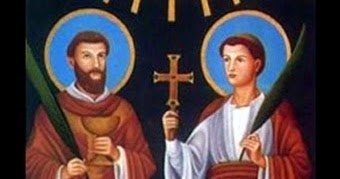
St. Peter, an exorcist, was cast into prison at Rome, under the emperor Diocletian, by the judge Serenus, for confessing the Christian faith. He there set free Paulina, the daughter of Artemius, the keeper of the prison, from an evil spirit which tormented her. Upon this, Artemius and his wife and all their house, with their neighbors who had run together to see the strange thing, were converted to Jesus Christ. Peter therefore brought them to Marcellinus the priest, who baptized them all. When Serenus heard of it, he called Peter and Marcellinus before him, and sharply rebuked them, adding to his bitter words threats and terrors, unless they would deny Christ. Marcellinus answered him with Christian boldness, whereupon he caused him to be buffeted, separated him from Peter, and shut him up naked, in a prison strewn with broken glass, without either food or light. Peter also he confined. But when both of them were found to increase in faith and courage in their bonds, they were beheaded, unshaken in their testimony, and confessing Jesus Christ gloriously by their blood.
—Excerpted from The Liturgical Year, Abbot Gueranger O.S.B.
St. Erasmus - In Campania the bishop Erasmus was, under the empire of Diocletian and Maximian, beaten with clubs and whips loaded with lead, and afterwards plunged into resin, sulphur, melted lead, boiling pitch, wax, and oil. From all this he came forth whole and sound: which wonder converted many to believe in Christ. He was remanded to prison, and bound in iron fetters. But from these he was wondrously delivered by an angel. At last, being taken to Formi, Maximian caused him to be subjected to divers torments, being clad in a coat of red-hot brass, but the power of God made him more than a conqueror in all these things also. Afterwards, having converted many to the faith and confirmed them therein, he obtained the palm of a glorious martyrdom. He is invoked for intestinal diseases, for his legend asserts that he was tortured by winding his entrails round a windlass. He is also called St. Elmo, and the static electricity on boats, Saint Elmo's Fire, is named after him. He is one of the Fourteen Holy Helpers.
—Excerpted from The Liturgical Year, Abbot Gueranger O.S.B.
St. Francis Caracciolo, Confessor
Saint Francis was born in the kingdom of Naples in 1563, of the princely family of Caracciolo. In childhood he shunned all amusements, recited the Rosary regularly, and loved to visit the Blessed Sacrament and to distribute his food to the poor. To avoid idleness, however, he engaged in hunting, which pastime was not pleasing to God; and Our Lord, to detach him from the world, sent him a terrible trial. When he was 22 years old, he developed leprosy and soon was on the brink of death. Seeing his body in this deplorable condition taught him contempt for the vanity of the world and of youth's physical strength, and he promised God to serve Him alone if he were cured. The illness disappeared almost at once. He therefore left his parents, sold his portion of the inheritance for the benefit of the poor, and went to study for the priesthood at Naples. He dedicated himself in particular to visiting prisoners and galley-slaves and preparing criminals for death; he spent his leisure hours visiting the Blessed Sacrament in unfrequented churches.
God called him, when only twenty-five, to found the Order of Regular Minor Clerics, with two other priests who had similar aspirations. The Rule they drew up prescribed that each day one of the members fast on bread and water, another take the discipline, a third wear a hair shirt, and each succeed another for perpetual adoration before the Blessed Sacrament. Thus they hoped to appease the anger of God unceasingly, and draw down His blessings by their penance. They took the usual vows, adding a fourth — not to accept dignities unless required to do so by their sovereign.
These very humble priests resolved to arrive in total poverty in Rome to seek approbation for their Order, and they mingled with the poor who were asking for alms at the door of the Capuchin Fathers. When recognized by relatives, they asked no favor except that of being taken to the presence of the Holy Father, Sixtus V. The Pope approved the new Congregation and gave them a church in Naples, which became the first center of the Order.
To establish the new Order, Francis, with John Augustine Adorno, his co-founder, undertook journeys throughout Italy and Spain, on foot and without money, content with the shelter and crusts given out of charity. A saintly pilgrim exiled from England predicted to Francis that he would be the new Order's first General; and a Dominican in Spain, before he had heard them talk of their intentions, received the two of them and gave them food, saying: You are the founders of a new Order which will soon spread, for the glory of God and the salvation of souls, and will be especially flourishing in this kingdom. Asked when that would occur, he replied, Not for three years. In Spain still, Adorno again heard the same prophecy from Saint Louis Bertrand, who insisted on kissing his feet.
The prediction was realized. When Saint Francis returned to Valencia, he found that the twelve religious who had remained there had multiplied in number to the point that the house could no longer contain them. In 1591 he was elected the first General of his Order, while still a prey to the sorrow recently caused by the premature death of Adorno at the age of forty. He redoubled his austerities, and devoted seven hours daily to meditation on the Passion, besides passing most of the night praying before the Blessed Sacrament. He was commonly called the Preacher of Divine Love, and in Spain the Order did indeed flourish.
It was always before the Blessed Sacrament that his ardent devotion was most clearly visible. In the presence of his divine Lord his face emitted brilliant rays of light, and he often bathed the ground with his tears as he prayed, according to his custom, prostrate before the tabernacle, constantly repeating with the royal psalmist, The zeal of Thy house has consumed me! It was at Ancona in Italy, where he had gone to prepare another foundation, that his holy soul, on the eve of Corpus Christi 1608, went to join his Saviour in Heaven. He was forty-four years old when he fell ill with a severe fever. He died exclaiming, Let us go, let us go to heaven! When his body was opened after death, his heart was found seemingly burnt, with these words imprinted around it: Zelus domus tuae comedit me — The zeal of Thy house has consumed me.
Reflection. It is for men, and not for Angels, that our Blessed Lord resides upon the altar. Yet Angels throng our churches to worship Him, while men desert Him. Learn from Saint Francis to avoid such ingratitude, and to spend time as he did, in adoration before the Most Holy Sacrament.
Les Petits Bollandistes: Vies des Saints, by Msgr. Paul Guérin (Bloud et Barral: Paris, 1882), Vol. 6; Little Pictorial Lives of the Saints, a compilation based on Butler's Lives of the Saints, and other sources by John Gilmary Shea (Benziger Brothers: New York, 1894).
LAST-MODIFIED:20260425T144815Z SEQUENCE:111433009 X-ACCESS:1 X-HITS:55 X-COLOR:f0b80e X-SHOW-END-TIME:1 END:VEVENT BEGIN:VEVENT DTSTART;VALUE=DATE:20260605 DTEND;VALUE=DATE:20260606 UID:C00A1147-9F24-4D60-A679-852F3E122736 SUMMARY:St. Boniface CREATED:20221013T211126Z DTSTAMP:20221013T211126Z URL:https://www.stpaulsweymouth.org/component/dpcalendar/event/1719?calid=13 DESCRIPTION:St. Boniface Bishop, Martyr\N\NSaint Boniface was born in Devonshire, England, in the year 680. Some missionaries staying at his father's house spoke to him of heavenly things and inspired in him a desire to devote himself, as they did, to God. He entered the monastery of Exminster and was trained there for his apostolic labors. His first attempt to convert pagans in Holland having failed, he went to Rome to obtain the Pope's blessing on his mission, and returned with the authority to preach to the German tribes.\NIt was a slow and dangerous task; his life was in constant peril, while his flock was often reduced to abject poverty by wandering bands of robbers. Yet his courage never flagged. He began with Bavaria and Thuringia, next visited Friesland, then passed on to Hesse and Saxony, everywhere destroying the idol temples and raising churches in their place. He endeavored to make every object of idolatry contribute in some way to the glory of God. On one occasion, having cut down an immense oak honored in the name of Jupiter, he used the tree in building a church which he dedicated to the Prince of the Apostles.\NAfter being recalled to Rome and consecrated bishop by the Pope, he returned to extend and organize the rising German Church. With diligent care he reformed abuses among the existing clergy, while establishing religious houses throughout the land. At length, feeling his infirmities increase, and fearful of losing his martyr's crown, Saint Boniface appointed a Superior for his monastery and set out anew to convert a pagan tribe.\NWhile he was about to administer Confirmation to some newly baptized Christians, a troop of pagans arrived, armed with swords and spears. His attendants would have opposed them, but the Saint said to his followers: My children, cease your resistance; the long expected day has come at last. Scripture forbids us to resist evil. Let us put our hope in God; He will save our souls. Scarcely had he stopped speaking, when the barbarians fell upon him and slew him, with all his attendants, fifty-two in number.\NReflection. Saint Boniface teaches us how the love of Christ changes all things. It was for Christ's sake that he toiled for souls, preferring poverty to riches, labor to rest, suffering to pleasure, and death to life, that by dying he might live with Christ.\NLittle Pictorial Lives of the Saints, a compilation based on Butler's Lives of the Saints, and other sources by John Gilmary Shea (Benziger Brothers: New York, 1894). X-ALT-DESC;FMTTYPE=text/html:St. Boniface Bishop, Martyr
Saint Boniface was born in Devonshire, England, in the year 680. Some missionaries staying at his father's house spoke to him of heavenly things and inspired in him a desire to devote himself, as they did, to God. He entered the monastery of Exminster and was trained there for his apostolic labors. His first attempt to convert pagans in Holland having failed, he went to Rome to obtain the Pope's blessing on his mission, and returned with the authority to preach to the German tribes.
It was a slow and dangerous task; his life was in constant peril, while his flock was often reduced to abject poverty by wandering bands of robbers. Yet his courage never flagged. He began with Bavaria and Thuringia, next visited Friesland, then passed on to Hesse and Saxony, everywhere destroying the idol temples and raising churches in their place. He endeavored to make every object of idolatry contribute in some way to the glory of God. On one occasion, having cut down an immense oak honored in the name of Jupiter, he used the tree in building a church which he dedicated to the Prince of the Apostles.
After being recalled to Rome and consecrated bishop by the Pope, he returned to extend and organize the rising German Church. With diligent care he reformed abuses among the existing clergy, while establishing religious houses throughout the land. At length, feeling his infirmities increase, and fearful of losing his martyr's crown, Saint Boniface appointed a Superior for his monastery and set out anew to convert a pagan tribe.
While he was about to administer Confirmation to some newly baptized Christians, a troop of pagans arrived, armed with swords and spears. His attendants would have opposed them, but the Saint said to his followers: My children, cease your resistance; the long expected day has come at last. Scripture forbids us to resist evil. Let us put our hope in God; He will save our souls. Scarcely had he stopped speaking, when the barbarians fell upon him and slew him, with all his attendants, fifty-two in number.
Reflection. Saint Boniface teaches us how the love of Christ changes all things. It was for Christ's sake that he toiled for souls, preferring poverty to riches, labor to rest, suffering to pleasure, and death to life, that by dying he might live with Christ.
Little Pictorial Lives of the Saints, a compilation based on Butler's Lives of the Saints, and other sources by John Gilmary Shea (Benziger Brothers: New York, 1894).
LAST-MODIFIED:20260425T144820Z SEQUENCE:111433014 X-ACCESS:1 X-HITS:202 X-COLOR:f0b80e X-SHOW-END-TIME:1 END:VEVENT BEGIN:VEVENT DTSTART;VALUE=DATE:20260606 DTEND;VALUE=DATE:20260607 UID:46C96E13-5BCD-46CF-88A6-13C576C2C94B SUMMARY:St. Norbert CREATED:20221013T211126Z DTSTAMP:20221013T211126Z URL:https://www.stpaulsweymouth.org/component/dpcalendar/event/1721?calid=13 DESCRIPTION:St. Norbert Bishop, Confessor\N\NBorn near Cologne in 1080, Saint Norbert, of noble rank and rare talents, passed a frivolous youth, abandoning himself to the pleasures and vanities of the world. Though he was a canon of the church, he refused to receive ecclesiastical Orders so as to continue to live in his caprices. He went to the court of the Archbishop of Cologne, then to that of the Emperor Henry IV, the famous adversary of Pope Saint Gregory VII, known also as Hildebrand. His conduct then became a scandal to his sacred calling, since at the court of the Emperor, like many clerics of those times, he was leading a life of dissipation and luxury.\NOne day, when he was thirty-three years of age, he was thrown from his horse in the midst of a terrible storm, and on recovering his senses a half hour later, he resolved upon a new life. After a severe and searching preparation, he went to the Archbishop of Cologne and humbly asked to receive Holy Orders. He was ordained a priest and began to preach against all the abuses and vices of his time. He encountered enemies and was silenced at first by a local council; however, he obtained the Pope's sanction and preached penance to listening crowds in France and the Netherlands. His example spoke still more eloquently than his words; he walked barefoot in the snows and wore a tunic which was a hair shirt, fasting all year long. He was compared to John the Baptist by his austerity and by the fervor of his preaching.\NA chaplain of the bishop of Cambrai, impressed by the extraordinary changes in the former nobleman of the Emperor's court, asked to join him; this good priest, by the name of Hugh, later would succeed him in the government of the new religious Order which he was soon to found. In every place where Saint Norbert preached, those in attendance saw sinners converted, enemies reconciled and usurers return extorted wealth.\NThe bishop of Cambrai desired that he found a monastery and a new Order in his diocese, and the holy monk recognized at once, in a wild vale later called Premontre, the place he should choose. There he was favored, during a night of prayer, with a vision of many white-robed monks in procession with crucifixes and candles; the Blessed Virgin also appeared to him and showed him the habit he should give his religious. It was in 1120 that he gave to some trained disciples the rule of Saint Augustine, with the white habit he had been shown, denoting the angelic purity proper to the priesthood. The Canons Regular, or Premonstratensians, as they were called, were to unite the active work of the country clergy with the obligations of the monastic life. The foundations multiplied, and the fervor of these religious priests renewed the spirit of the priesthood, quickened the faith of the people, and overcame heresy.\NIn the time of Saint Norbert a pernicious heretic named Tankelin appeared at Antwerp, denying the reality of the priesthood, and above all blaspheming the Holy Eucharist. The Saint was sent for, to quench the error and its source, since three thousand persons had followed this man, who was allowing every vice to pass for legitimate. By Saint Norbert's burning words he exposed the impostor, corrected the erring, and rekindled faith in the Blessed Sacrament. Many of the apostates had proved their contempt for the Blessed Sacrament by burying it in walls and damp places; Norbert bade the converted ones search for the Sacred Hosts. They found them entire and uninjured, and the Saint bore them back in triumph to the tabernacle. Hence he is generally portrayed with the monstrance in his hand.\NIn 1126, Norbert was appointed Bishop of Magdeburg; and there, at the risk of his life, he zealously carried on his work of reform until he died, worn out with toil, at the age of fifty-three.\NReflection. Reparation for profanations and outrages to the Blessed Sacrament was the aim of Saint Norbert's great work of reform in himself, in the clergy, and in the faithful. How much do our present habits of worship repair for our own past irreverences and for the outrages offered by others to the Blessed Eucharist?\NLes Petits Bollandistes: Vies des Saints, by Msgr. Paul Guérin (Bloud et Barral: Paris, 1882), Vol. 6; Little Pictorial Lives of the Saints, a compilation based on Butler's Lives of the Saints, and other sources by John Gilmary Shea (Benziger Brothers: New York, 1894). X-ALT-DESC;FMTTYPE=text/html:St. Norbert Bishop, Confessor
Born near Cologne in 1080, Saint Norbert, of noble rank and rare talents, passed a frivolous youth, abandoning himself to the pleasures and vanities of the world. Though he was a canon of the church, he refused to receive ecclesiastical Orders so as to continue to live in his caprices. He went to the court of the Archbishop of Cologne, then to that of the Emperor Henry IV, the famous adversary of Pope Saint Gregory VII, known also as Hildebrand. His conduct then became a scandal to his sacred calling, since at the court of the Emperor, like many clerics of those times, he was leading a life of dissipation and luxury.
One day, when he was thirty-three years of age, he was thrown from his horse in the midst of a terrible storm, and on recovering his senses a half hour later, he resolved upon a new life. After a severe and searching preparation, he went to the Archbishop of Cologne and humbly asked to receive Holy Orders. He was ordained a priest and began to preach against all the abuses and vices of his time. He encountered enemies and was silenced at first by a local council; however, he obtained the Pope's sanction and preached penance to listening crowds in France and the Netherlands. His example spoke still more eloquently than his words; he walked barefoot in the snows and wore a tunic which was a hair shirt, fasting all year long. He was compared to John the Baptist by his austerity and by the fervor of his preaching.
A chaplain of the bishop of Cambrai, impressed by the extraordinary changes in the former nobleman of the Emperor's court, asked to join him; this good priest, by the name of Hugh, later would succeed him in the government of the new religious Order which he was soon to found. In every place where Saint Norbert preached, those in attendance saw sinners converted, enemies reconciled and usurers return extorted wealth.
The bishop of Cambrai desired that he found a monastery and a new Order in his diocese, and the holy monk recognized at once, in a wild vale later called Premontre, the place he should choose. There he was favored, during a night of prayer, with a vision of many white-robed monks in procession with crucifixes and candles; the Blessed Virgin also appeared to him and showed him the habit he should give his religious. It was in 1120 that he gave to some trained disciples the rule of Saint Augustine, with the white habit he had been shown, denoting the angelic purity proper to the priesthood. The Canons Regular, or Premonstratensians, as they were called, were to unite the active work of the country clergy with the obligations of the monastic life. The foundations multiplied, and the fervor of these religious priests renewed the spirit of the priesthood, quickened the faith of the people, and overcame heresy.
In the time of Saint Norbert a pernicious heretic named Tankelin appeared at Antwerp, denying the reality of the priesthood, and above all blaspheming the Holy Eucharist. The Saint was sent for, to quench the error and its source, since three thousand persons had followed this man, who was allowing every vice to pass for legitimate. By Saint Norbert's burning words he exposed the impostor, corrected the erring, and rekindled faith in the Blessed Sacrament. Many of the apostates had proved their contempt for the Blessed Sacrament by burying it in walls and damp places; Norbert bade the converted ones search for the Sacred Hosts. They found them entire and uninjured, and the Saint bore them back in triumph to the tabernacle. Hence he is generally portrayed with the monstrance in his hand.
In 1126, Norbert was appointed Bishop of Magdeburg; and there, at the risk of his life, he zealously carried on his work of reform until he died, worn out with toil, at the age of fifty-three.
Reflection. Reparation for profanations and outrages to the Blessed Sacrament was the aim of Saint Norbert's great work of reform in himself, in the clergy, and in the faithful. How much do our present habits of worship repair for our own past irreverences and for the outrages offered by others to the Blessed Eucharist?
Les Petits Bollandistes: Vies des Saints, by Msgr. Paul Guérin (Bloud et Barral: Paris, 1882), Vol. 6; Little Pictorial Lives of the Saints, a compilation based on Butler's Lives of the Saints, and other sources by John Gilmary Shea (Benziger Brothers: New York, 1894).
LAST-MODIFIED:20260425T144825Z SEQUENCE:111433019 X-ACCESS:1 X-HITS:15 X-COLOR:f0b80e X-SHOW-END-TIME:1 END:VEVENT BEGIN:VEVENT DTSTART;VALUE=DATE:20260607 DTEND;VALUE=DATE:20260608 UID:9BDA1C97-B2CE-46DB-A15F-5ADAAC002F28 SUMMARY:St. Willibald CREATED:20221013T211126Z DTSTAMP:20221013T211126Z URL:https://www.stpaulsweymouth.org/component/dpcalendar/event/2610?calid=13 DESCRIPTION:St. Willibald Bishop, Confessor\N\NBorn a prince, the son of Saint Richard the King. Brother of Saint Winnebald of Heidenheim and Saint Walburga. Related to Saint Boniface. He nearly died as an infant, leading his parents to pray for his life, vowing that he would be dedicated to God if he survived. Entered the Abbey of Waltham, Hampshire, England at age five. Educated by Egwald. Benedictine monk. Pilgrim to Rome, Italy in 722 with Saint Richard and Saint Winnebald; his father died on the way, and Willibald suffered from malaria while there.Pilgrim to the Holy Lands in 724. He reached Jerusalem on 11 November 725, and is the first known Englishman in the Holy Land; the book of his travels, Hodoeporicon, is the first known English travelogue. Pilgrim to assorted holy sites throughout Europe. At one point he was arrested by Saracens at Emessa as a Christian spy, and imprisoned in Constantinople.\NWillibald then spent ten years helping Saint Petronax restore the monastery of Monte Cassino; served there as sacristan, dean, and porter. In 740 he was sent by Pope Gregory III to help Saint Boniface evangelize the area that is modern Germany. Ordained on 22 July 741 by Saint Boniface, and consecrated as a missionary bishop by him on 21 October 741. Founded a missionary monastery in Eichstätt, Franconia (in modern Germany. Worked with Saint Sebaldus. First bishop of the diocese of Eichstätt. With Saint Winnebald, he founded the double monastery at Hiedenheim in 752. X-ALT-DESC;FMTTYPE=text/html:St. Willibald Bishop, Confessor
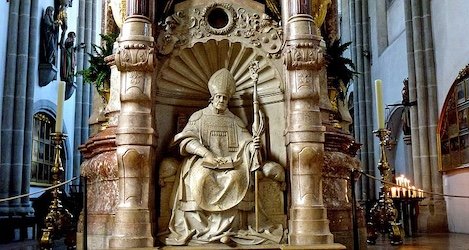
Born a prince, the son of Saint Richard the King. Brother of Saint Winnebald of Heidenheim and Saint Walburga. Related to Saint Boniface. He nearly died as an infant, leading his parents to pray for his life, vowing that he would be dedicated to God if he survived. Entered the Abbey of Waltham, Hampshire, England at age five. Educated by Egwald. Benedictine monk. Pilgrim to Rome, Italy in 722 with Saint Richard and Saint Winnebald; his father died on the way, and Willibald suffered from malaria while there.
Pilgrim to the Holy Lands in 724. He reached Jerusalem on 11 November 725, and is the first known Englishman in the Holy Land; the book of his travels, Hodoeporicon, is the first known English travelogue. Pilgrim to assorted holy sites throughout Europe. At one point he was arrested by Saracens at Emessa as a Christian spy, and imprisoned in Constantinople.
Willibald then spent ten years helping Saint Petronax restore the monastery of Monte Cassino; served there as sacristan, dean, and porter. In 740 he was sent by Pope Gregory III to help Saint Boniface evangelize the area that is modern Germany. Ordained on 22 July 741 by Saint Boniface, and consecrated as a missionary bishop by him on 21 October 741. Founded a missionary monastery in Eichstätt, Franconia (in modern Germany. Worked with Saint Sebaldus. First bishop of the diocese of Eichstätt. With Saint Winnebald, he founded the double monastery at Hiedenheim in 752.
LAST-MODIFIED:20250524T154000Z SEQUENCE:82405714 X-ACCESS:1 X-HITS:8 X-COLOR:f0b80e X-SHOW-END-TIME:1 END:VEVENT BEGIN:VEVENT DTSTART;VALUE=DATE:20260609 DTEND;VALUE=DATE:20260610 UID:9B8F9A8C-AB26-45FA-B9FF-E2623DB0DAE7 SUMMARY:Sts. Primus and Felician CREATED:20221013T211126Z DTSTAMP:20221013T211126Z URL:https://www.stpaulsweymouth.org/component/dpcalendar/event/1722?calid=13 DESCRIPTION:Sts. Primus and Felician, Martyrs\N\NThese two martyrs were brothers who lived in Rome, heirs of a family of great wealth, toward the latter part of the third century. It was through the assiduous love of Pope Felix I that they had the happiness, in their mature years, of being converted to the Christian faith; afterwards they encouraged each other for many years in the practice of all good works. They seemed to possess nothing but for the poor, and often, during the persecutions, they spent both nights and days with the confessors in their dungeons, or at the places of their torments and execution. Some they exhorted to persevere; others who had fallen, they raised again. They made themselves the servants of all in Christ, that all might attain to salvation through Him.\NThough their zeal was very remarkable, they had escaped the dangers of many bloody persecutions; they had grown old in the heroic exercises of their virtue, when it pleased God to crown their labors with a glorious martyrdom. Primus was about 90 years old, when the pagans raised so great an outcry against the brothers that they were apprehended and put in chains. They were inhumanly scourged and tortured, and then sent to a town twelve miles from Rome to be chastised again, as avowed enemies to the gods, by a prefect who detested the Christians. There they were cruelly tortured to make them renounce their faith, both together and then separately, but the grace of God strengthened each of them. Felicianus was nailed by his hands and feet to a post and left without food or water for three days; Primus was beaten with clubs and burnt with torches. God spared them amidst these tortures, and wild beasts in an arena imitated their God's mercy. Finally, they were beheaded on June 9, 286.\NReflection. A soul which truly loves God regards all things of this world as nothing. The loss of goods, the disgrace of the world, torments, sickness, and other afflictions are bitter to the senses, but appear light to the one who loves God. If we cannot bear our trials with patience and silence, it is because we love Him only in words. One who is slothful and lukewarm complains of everything, and calls the lightest precepts hard, says Thomas a Kempis.\NLittle Pictorial Lives of the Saints, a compilation based on Butler's Lives of the Saints, and other sources by John Gilmary Shea (Benziger Brothers: New York, 1894). X-ALT-DESC;FMTTYPE=text/html:Sts. Primus and Felician, Martyrs
These two martyrs were brothers who lived in Rome, heirs of a family of great wealth, toward the latter part of the third century. It was through the assiduous love of Pope Felix I that they had the happiness, in their mature years, of being converted to the Christian faith; afterwards they encouraged each other for many years in the practice of all good works. They seemed to possess nothing but for the poor, and often, during the persecutions, they spent both nights and days with the confessors in their dungeons, or at the places of their torments and execution. Some they exhorted to persevere; others who had fallen, they raised again. They made themselves the servants of all in Christ, that all might attain to salvation through Him.
Though their zeal was very remarkable, they had escaped the dangers of many bloody persecutions; they had grown old in the heroic exercises of their virtue, when it pleased God to crown their labors with a glorious martyrdom. Primus was about 90 years old, when the pagans raised so great an outcry against the brothers that they were apprehended and put in chains. They were inhumanly scourged and tortured, and then sent to a town twelve miles from Rome to be chastised again, as avowed enemies to the gods, by a prefect who detested the Christians. There they were cruelly tortured to make them renounce their faith, both together and then separately, but the grace of God strengthened each of them. Felicianus was nailed by his hands and feet to a post and left without food or water for three days; Primus was beaten with clubs and burnt with torches. God spared them amidst these tortures, and wild beasts in an arena imitated their God's mercy. Finally, they were beheaded on June 9, 286.
Reflection. A soul which truly loves God regards all things of this world as nothing. The loss of goods, the disgrace of the world, torments, sickness, and other afflictions are bitter to the senses, but appear light to the one who loves God. If we cannot bear our trials with patience and silence, it is because we love Him only in words. One who is slothful and lukewarm complains of everything, and calls the lightest precepts hard, says Thomas a Kempis.
Little Pictorial Lives of the Saints, a compilation based on Butler's Lives of the Saints, and other sources by John Gilmary Shea (Benziger Brothers: New York, 1894).
LAST-MODIFIED:20260425T145157Z SEQUENCE:111433231 X-ACCESS:1 X-HITS:49 X-COLOR:f0b80e X-SHOW-END-TIME:1 END:VEVENT BEGIN:VEVENT DTSTART;VALUE=DATE:20260610 DTEND;VALUE=DATE:20260611 UID:CF1871A9-8A75-4E35-A7D4-EA69021A65BD SUMMARY:St. Margaret CREATED:20221013T211126Z DTSTAMP:20221013T211126Z URL:https://www.stpaulsweymouth.org/component/dpcalendar/event/1724?calid=13 DESCRIPTION:St. Margaret, Queen of Scotland, Widow\N\NSaint Margaret's name signifies pearl, a fitting name, says Theodoric, her confessor and her first biographer, for one such as she. Her soul was like a precious pearl; a life spent amidst the luxury of a royal court never dimmed its luster or estranged it from Him who had bought it with His blood. She was the granddaughter of an English king; in 1070 she became the bride of Malcolm of Scotland, thereafter reigning as Queen until her death in 1093.\NHow did she become a Saint in a position where sanctity is so difficult? First, she burned with zeal for the house of God. She built churches and monasteries; she occupied herself by making vestments; she could not rest until she saw the laws of God and His Church observed throughout her realm. Next, amid a thousand cares, she found time to converse with God, ordering her piety with such sweetness and discretion that she won her husband to sanctity like her own. He would rise at night to pray with her; he loved to kiss the holy books she used, and sometimes would take them away with him, bringing them back later to his wife covered with jewels. Lastly, despite Saint Margaret's great virtue, she wept constantly over her sins and begged her confessor to correct her faults.\NSaint Margaret did not neglect her duties in the world even if she was not of the world. God blessed this marriage with eight children, six princes and two princesses who did not fail to respond to their mother's teaching and examples. Never was there a better mother; she spared no pains in their education, and their sanctity was the fruit of her prudence and her zeal. And never was there a better queen. She was the most trusted counselor of her husband, who always found her counsels of great utility, and she labored with him for the spiritual and material improvement of the land. Malcolm, after having pacified his domains for several years, saw to the building of the cathedral of Durham and founded a monastery at Dumfermlin.\NLiving in the midst of all the world's pleasures, Saint Margaret sighed for the true homeland and viewed death as a release. On her deathbed she learned that her husband and their eldest son had been slain in battle. She thanked God for sending this last affliction as a penance for her sins. After receiving Holy Viaticum, she repeated the prayer from the Missal, O Lord Jesus Christ, who by Thy death didst give life to the world, deliver me. And at the words deliver me, says her biographer, her soul took flight to Christ, in 1093, in her forty-seventh year.\NReflection. All perfection consists in keeping a guard upon the heart. Wherever we are, we can make a solitude in our hearts, detach ourselves from the world, and converse familiarly with God, as Saint Margaret did.\NLes Petits Bollandistes: Vies des Saints, by Msgr. Paul Guérin (Bloud et Barral: Paris, 1882), Vol. 6; Little Pictorial Lives of the Saints, a compilation based on Butler's Lives of the Saints, and other sources by John Gilmary Shea (Benziger Brothers: New York, 1894). X-ALT-DESC;FMTTYPE=text/html:St. Margaret, Queen of Scotland, Widow
Saint Margaret's name signifies pearl, a fitting name, says Theodoric, her confessor and her first biographer, for one such as she. Her soul was like a precious pearl; a life spent amidst the luxury of a royal court never dimmed its luster or estranged it from Him who had bought it with His blood. She was the granddaughter of an English king; in 1070 she became the bride of Malcolm of Scotland, thereafter reigning as Queen until her death in 1093.
How did she become a Saint in a position where sanctity is so difficult? First, she burned with zeal for the house of God. She built churches and monasteries; she occupied herself by making vestments; she could not rest until she saw the laws of God and His Church observed throughout her realm. Next, amid a thousand cares, she found time to converse with God, ordering her piety with such sweetness and discretion that she won her husband to sanctity like her own. He would rise at night to pray with her; he loved to kiss the holy books she used, and sometimes would take them away with him, bringing them back later to his wife covered with jewels. Lastly, despite Saint Margaret's great virtue, she wept constantly over her sins and begged her confessor to correct her faults.
Saint Margaret did not neglect her duties in the world even if she was not of the world. God blessed this marriage with eight children, six princes and two princesses who did not fail to respond to their mother's teaching and examples. Never was there a better mother; she spared no pains in their education, and their sanctity was the fruit of her prudence and her zeal. And never was there a better queen. She was the most trusted counselor of her husband, who always found her counsels of great utility, and she labored with him for the spiritual and material improvement of the land. Malcolm, after having pacified his domains for several years, saw to the building of the cathedral of Durham and founded a monastery at Dumfermlin.
Living in the midst of all the world's pleasures, Saint Margaret sighed for the true homeland and viewed death as a release. On her deathbed she learned that her husband and their eldest son had been slain in battle. She thanked God for sending this last affliction as a penance for her sins. After receiving Holy Viaticum, she repeated the prayer from the Missal, O Lord Jesus Christ, who by Thy death didst give life to the world, deliver me. And at the words deliver me, says her biographer, her soul took flight to Christ, in 1093, in her forty-seventh year.
Reflection. All perfection consists in keeping a guard upon the heart. Wherever we are, we can make a solitude in our hearts, detach ourselves from the world, and converse familiarly with God, as Saint Margaret did.
Les Petits Bollandistes: Vies des Saints, by Msgr. Paul Guérin (Bloud et Barral: Paris, 1882), Vol. 6; Little Pictorial Lives of the Saints, a compilation based on Butler's Lives of the Saints, and other sources by John Gilmary Shea (Benziger Brothers: New York, 1894).
LAST-MODIFIED:20260425T145213Z SEQUENCE:111433247 X-ACCESS:1 X-HITS:41 X-COLOR:f0b80e X-SHOW-END-TIME:1 END:VEVENT BEGIN:VEVENT DTSTART;VALUE=DATE:20260611 DTEND;VALUE=DATE:20260612 UID:FB0DCE96-79C2-474D-8A31-FD223E5552F6 SUMMARY:St. Barnabas CREATED:20221013T211126Z DTSTAMP:20221013T211126Z URL:https://www.stpaulsweymouth.org/component/dpcalendar/event/1726?calid=13 DESCRIPTION:St. Barnabas, Apostle\N\NWe read that in the first days of the Church, the multitude of believers had but one heart and one soul; and none said that anything which he possessed was his own. (Acts 4:32) Amid this fervent company of Christians who practiced evangelical poverty, one only is singled out by name, Joseph, a rich Levite from Cyprus. He, having land, sold it, and bringing the price, laid it at the feet of the Apostles. They then gave him a new name, Barnabas, son of consolation. He was a good man, full of the Holy Spirit and of faith, and was soon chosen for an important mission, the rapidly growing Church of Antioch. Here he perceived the great work which was waiting to be done among the Greeks, and therefore he hastened to seek out and bring Saint Paul to Antioch, from his retirement at Tarsus.\NWhen the prophet Agabus at Antioch foretold a great universal famine, Barnabas and Paul were selected by the faithful, to take to the Church of Jerusalem their generous offerings for the poor of that city. It was also at Antioch that the two Saints were named for the apostolate of the Gentiles; and they sailed together for Cyprus and then to the cities of Asia Minor. Their preaching struck men with amazement, and some cried out, The gods have come down to us in the likeness of men! calling Paul Mercury, and Barnabas Jupiter. The Saints traveled together once again, to the Council of Jerusalem, and told of the signs and wonders which God had wrought among the Gentiles during their missionary journey. Shortly after this they separated; Barnabas with John Mark went to Cyprus, while Paul with Silas returned to Asia Minor.\NThe tradition of Milan, Italy, reveals that Saint Barnabas went from Cyprus to Italy, and in Milan founded its church; he is still honored there as its first bishop. After seven years he consecrated Saint Anathalon to replace him, and returned to Cyprus to visit the churches. He crisscrossed the island several times to bring to every city and village the Holy Name of the Son of God. In Salamis, some of the recalcitrants plotted together to kill him. He was aware of the conspiracy; nonetheless, after foretelling to John Mark that he would die that same day, he went to the synagogue to preach as usual. It was there that he was stoned as a blasphemer, in the year 61 of our era. Saint John Mark succeeded in burying him near Salamis.\NLittle Pictorial Lives of the Saints, a compilation based on Butler's Lives of the Saints, and other sources by John Gilmary Shea (Benziger Brothers: New York, 1894); Les Petits Bollandistes: Vies des Saints, by Msgr. Paul Guérin (Bloud et Barral: Paris, 1882), Vol. 6 X-ALT-DESC;FMTTYPE=text/html:St. Barnabas, Apostle
We read that in the first days of the Church, the multitude of believers had but one heart and one soul; and none said that anything which he possessed was his own. (Acts 4:32) Amid this fervent company of Christians who practiced evangelical poverty, one only is singled out by name, Joseph, a rich Levite from Cyprus. He, having land, sold it, and bringing the price, laid it at the feet of the Apostles. They then gave him a new name, Barnabas, son of consolation. He was a good man, full of the Holy Spirit and of faith, and was soon chosen for an important mission, the rapidly growing Church of Antioch. Here he perceived the great work which was waiting to be done among the Greeks, and therefore he hastened to seek out and bring Saint Paul to Antioch, from his retirement at Tarsus.
When the prophet Agabus at Antioch foretold a great universal famine, Barnabas and Paul were selected by the faithful, to take to the Church of Jerusalem their generous offerings for the poor of that city. It was also at Antioch that the two Saints were named for the apostolate of the Gentiles; and they sailed together for Cyprus and then to the cities of Asia Minor. Their preaching struck men with amazement, and some cried out, The gods have come down to us in the likeness of men! calling Paul Mercury, and Barnabas Jupiter. The Saints traveled together once again, to the Council of Jerusalem, and told of the signs and wonders which God had wrought among the Gentiles during their missionary journey. Shortly after this they separated; Barnabas with John Mark went to Cyprus, while Paul with Silas returned to Asia Minor.
The tradition of Milan, Italy, reveals that Saint Barnabas went from Cyprus to Italy, and in Milan founded its church; he is still honored there as its first bishop. After seven years he consecrated Saint Anathalon to replace him, and returned to Cyprus to visit the churches. He crisscrossed the island several times to bring to every city and village the Holy Name of the Son of God. In Salamis, some of the recalcitrants plotted together to kill him. He was aware of the conspiracy; nonetheless, after foretelling to John Mark that he would die that same day, he went to the synagogue to preach as usual. It was there that he was stoned as a blasphemer, in the year 61 of our era. Saint John Mark succeeded in burying him near Salamis.
Little Pictorial Lives of the Saints, a compilation based on Butler's Lives of the Saints, and other sources by John Gilmary Shea (Benziger Brothers: New York, 1894); Les Petits Bollandistes: Vies des Saints, by Msgr. Paul Guérin (Bloud et Barral: Paris, 1882), Vol. 6
LAST-MODIFIED:20260425T145221Z SEQUENCE:111433255 X-ACCESS:1 X-HITS:23 X-COLOR:f0b80e X-SHOW-END-TIME:1 END:VEVENT BEGIN:VEVENT DTSTART;VALUE=DATE:20260612 DTEND;VALUE=DATE:20260613 UID:587BC52F-E8D6-4E14-B70E-52ED6EDA3CDA SUMMARY:St. John of Sahagun CREATED:20221013T211126Z DTSTAMP:20221013T211126Z URL:https://www.stpaulsweymouth.org/component/dpcalendar/event/2661?calid=13 DESCRIPTION:St. John of Sahagun (or of San Fagundo), Confessor\N\NSaint John, one of the greatest preachers Spain has ever known, was born at St. Fagondez, and from his early youth gave signs of his future sanctity. He was the fruit of the ardent prayers of his parents after sixteen years of sterility; God blessed them afterwards with several children. He was entrusted to the Benedictines of the monastery of St. Fagondez for his education. He distributed to the poor virtually all the wealth accruing to him from several benefices, while he himself lived in great poverty; but soon he renounced all of these and obtained from his bishop permission to study theology in Salamanca. As a young priest he was already regarded as a Saint, so ardent was his devotion at Holy Mass. He entered the Order of Saint Augustine soon after he had bestowed on a poor man half of his clothing, and the following night experienced so great an increase in the love of God, that he referred to this as his conversion.\NHe was a model religious, and soon was entrusted with important offices in his Order — master of novices, definitor for the province, and prior of the convent of the city of Salamanca. He commanded well because he knew so well how to obey. When he observed in himself a slight defect in his obedience, he repaired it with extraordinary penances. Often while offering the adorable Sacrifice with tender piety, he enjoyed the sight of Jesus in glory, and held sweet colloquies with Him. The ineffable bliss of these moments caused him to spend much more time than the other priests in celebrating Holy Mass; and everyone was complaining. It was only when his Superior forbid him to delay in this way that he was obliged to acknowledge the favors he enjoyed.\NThe power of his personal holiness was seen in his preaching, which produced a complete reformation of morals in Salamanca. He had a special gift for reconciling differences, and was able to put an end to the quarrels and feuds among noblemen, at that period very common and fatal. The boldness shown by Saint John in reproving vice endangered his life. A powerful nobleman, having been corrected by the Saint for oppressing his vassals, sent two assassins to slay him; but the remarkable holiness of the Saint's aspect, result of the peace constantly reigning in his soul, struck such awe into their minds that they could not execute their purpose, and humbly begged his forgiveness. The nobleman himself, falling sick, was brought to repentance, and recovered his health by the prayers of the Saint whom he had endeavored to murder.\NSaint John was also very zealous in denouncing the vices of impurity, and it was in defense of holy purity that he met his death. A lady of noble birth but evil life, whose companion in sin he had converted, contrived to administer a fatal poison to the Saint. After several months of terrible suffering, borne with unvarying patience, Saint John went to his reward on June 11, 1479. This painful death and the cause for which he suffered it, have caused several of his historians and panegyrists to say that he won a martyr's crown. A great many striking miracles followed at his tomb and elsewhere, even by the simple invocation of his name. He was canonized in 1690 by Pope Alexander VIII.\NReflection. All men desire peace, but only those enjoy it who, like Saint John, are completely dead to themselves, and bear all things with love for Christ.\NLes Petits Bollandistes: Vies des Saints, by Msgr. Paul Guérin (Bloud et Barral: Paris, 1882), Vol. 6; Little Pictorial Lives of the Saints, a compilation based on Butler's Lives of the Saints, and other sources by John Gilmary Shea (Benziger Brothers: New York, 1894). X-ALT-DESC;FMTTYPE=text/html:St. John of Sahagun (or of San Fagundo), Confessor
Saint John, one of the greatest preachers Spain has ever known, was born at St. Fagondez, and from his early youth gave signs of his future sanctity. He was the fruit of the ardent prayers of his parents after sixteen years of sterility; God blessed them afterwards with several children. He was entrusted to the Benedictines of the monastery of St. Fagondez for his education. He distributed to the poor virtually all the wealth accruing to him from several benefices, while he himself lived in great poverty; but soon he renounced all of these and obtained from his bishop permission to study theology in Salamanca. As a young priest he was already regarded as a Saint, so ardent was his devotion at Holy Mass. He entered the Order of Saint Augustine soon after he had bestowed on a poor man half of his clothing, and the following night experienced so great an increase in the love of God, that he referred to this as his conversion.
He was a model religious, and soon was entrusted with important offices in his Order — master of novices, definitor for the province, and prior of the convent of the city of Salamanca. He commanded well because he knew so well how to obey. When he observed in himself a slight defect in his obedience, he repaired it with extraordinary penances. Often while offering the adorable Sacrifice with tender piety, he enjoyed the sight of Jesus in glory, and held sweet colloquies with Him. The ineffable bliss of these moments caused him to spend much more time than the other priests in celebrating Holy Mass; and everyone was complaining. It was only when his Superior forbid him to delay in this way that he was obliged to acknowledge the favors he enjoyed.
The power of his personal holiness was seen in his preaching, which produced a complete reformation of morals in Salamanca. He had a special gift for reconciling differences, and was able to put an end to the quarrels and feuds among noblemen, at that period very common and fatal. The boldness shown by Saint John in reproving vice endangered his life. A powerful nobleman, having been corrected by the Saint for oppressing his vassals, sent two assassins to slay him; but the remarkable holiness of the Saint's aspect, result of the peace constantly reigning in his soul, struck such awe into their minds that they could not execute their purpose, and humbly begged his forgiveness. The nobleman himself, falling sick, was brought to repentance, and recovered his health by the prayers of the Saint whom he had endeavored to murder.
Saint John was also very zealous in denouncing the vices of impurity, and it was in defense of holy purity that he met his death. A lady of noble birth but evil life, whose companion in sin he had converted, contrived to administer a fatal poison to the Saint. After several months of terrible suffering, borne with unvarying patience, Saint John went to his reward on June 11, 1479. This painful death and the cause for which he suffered it, have caused several of his historians and panegyrists to say that he won a martyr's crown. A great many striking miracles followed at his tomb and elsewhere, even by the simple invocation of his name. He was canonized in 1690 by Pope Alexander VIII.
Reflection. All men desire peace, but only those enjoy it who, like Saint John, are completely dead to themselves, and bear all things with love for Christ.
Les Petits Bollandistes: Vies des Saints, by Msgr. Paul Guérin (Bloud et Barral: Paris, 1882), Vol. 6; Little Pictorial Lives of the Saints, a compilation based on Butler's Lives of the Saints, and other sources by John Gilmary Shea (Benziger Brothers: New York, 1894).
LAST-MODIFIED:20250531T174106Z SEQUENCE:83017780 X-ACCESS:1 X-HITS:8 X-COLOR:f0b80e X-SHOW-END-TIME:1 END:VEVENT BEGIN:VEVENT DTSTART;VALUE=DATE:20260612 DTEND;VALUE=DATE:20260613 UID:1E11F4C9-93B5-4F20-A9B5-5543BE3B9E8D SUMMARY:Sts. Basilides, Cyrinus, Nabor & Nazarius CREATED:20221013T211126Z DTSTAMP:20221013T211126Z URL:https://www.stpaulsweymouth.org/component/dpcalendar/event/2663?calid=13 DESCRIPTION:Sts. Basilides, Cyrinus, Nabor & Nazarius, Martyrs\N\NThese saints are yet another example to us of the life we are called to live as Christians. Namely, we are called to devote our entire lives to God and His Church. While many of us will never suffer death for the Faith, we must be willing to endure all things so long as we keep the Faith and reach Heaven. These saints, like so many others, help us put that into perspective in our lives in this modern world.Liturgia Latina summarizes their lives:\NThese saints, Roman soldiers, noble by birth and illustrious by their virtues, became Christians under Diocletian. Arrested and cast into prison, they were condemned to death and beheaded. Their bodies were thrown to the wild beasts who respected them; they were buried with honour by the Christians.\NThe Traditional Reading at Matins shows the courage of these martyrs:\NBasilides, Cyrinus, Nabor, and Nazarius were Roman soldiers of illustrious birth and valour. Having embraced the Christian religion, and being found publishing that Christ is the Son of God, they were arrested by Aurelius, prefect of Rome, under Diocletian. As they despised his orders to sacrifice to the gods, they were committed to prison. While they were at prayer there, a brilliant light broke forth before the eyes of all present and shone in all the prison. Marcellus, the gaoler, and many others were moved by this heavenly glory to believe in the Lord Christ. Having gone forth from the prison, they were afterwards thrown in again, by the emperor Maximian, who caused them, first of all, to be beaten with scorpions, for having, despite his orders, continued to have ever in their mouth that there is but one Christ, one God, one Lord, and so they were laden with chains. Thence, on the seventh day, they were brought out, and set before the emperor, and there still persisting in mocking at the vain idols, and declaring Jesus Christ to be God, they were condemned to death and beheaded. Their bodies were given to wild beasts to be devoured, but as these refused to touch them, the Christians took them and buried them honourably.\NThey suffered and died for the faith around the year 303 AD.Collect:O Lord, may the keeping of this festival of the heavenly birthday of Thy holy martyrs, Basilides, Cyrinus, Nabor and Nazarius, shed brightness on our lives; and may the eternal glory granted them, be increased by the devout service we pay Thee. X-ALT-DESC;FMTTYPE=text/html:Sts. Basilides, Cyrinus, Nabor & Nazarius, Martyrs
These saints are yet another example to us of the life we are called to live as Christians. Namely, we are called to devote our entire lives to God and His Church. While many of us will never suffer death for the Faith, we must be willing to endure all things so long as we keep the Faith and reach Heaven. These saints, like so many others, help us put that into perspective in our lives in this modern world.
Liturgia Latina summarizes their lives:
These saints, Roman soldiers, noble by birth and illustrious by their virtues, became Christians under Diocletian. Arrested and cast into prison, they were condemned to death and beheaded. Their bodies were thrown to the wild beasts who respected them; they were buried with honour by the Christians.
The Traditional Reading at Matins shows the courage of these martyrs:
Basilides, Cyrinus, Nabor, and Nazarius were Roman soldiers of illustrious birth and valour. Having embraced the Christian religion, and being found publishing that Christ is the Son of God, they were arrested by Aurelius, prefect of Rome, under Diocletian. As they despised his orders to sacrifice to the gods, they were committed to prison. While they were at prayer there, a brilliant light broke forth before the eyes of all present and shone in all the prison. Marcellus, the gaoler, and many others were moved by this heavenly glory to believe in the Lord Christ. Having gone forth from the prison, they were afterwards thrown in again, by the emperor Maximian, who caused them, first of all, to be beaten with scorpions, for having, despite his orders, continued to have ever in their mouth that there is but one Christ, one God, one Lord, and so they were laden with chains. Thence, on the seventh day, they were brought out, and set before the emperor, and there still persisting in mocking at the vain idols, and declaring Jesus Christ to be God, they were condemned to death and beheaded. Their bodies were given to wild beasts to be devoured, but as these refused to touch them, the Christians took them and buried them honourably.
They suffered and died for the faith around the year 303 AD.
Collect:
O Lord, may the keeping of this festival of the heavenly birthday of Thy holy martyrs, Basilides, Cyrinus, Nabor and Nazarius, shed brightness on our lives; and may the eternal glory granted them, be increased by the devout service we pay Thee.
St. Anthony of Padua, Confessor
Born in Lisbon, Portugal, in 1195, Fernando de Bouillon was of a noble family related to the famous Godefroy de Bouillon, founder and first sovereign of the Latin Kingdom of Jerusalem, who at the close of the Crusade of 1099 had refused to wear a crown, there where Christ had worn one of thorns.
Favored by nature and grace, Fernand resolved at the age of fifteen to leave the world and consecrate himself to God in the Order of Canons Regular of Saint Augustine. No flattery, threat or caress of his relatives could persuade him to leave that holy refuge. He asked to be transferred to another convent to avoid the family's solicitations, and was sent to Coimbra. Still young, his sanctity became evident through miracles; he cured a poor religious whom the devil was obsessing, by covering him with his cloak.
When this young monk decided, after witnessing the return of the martyred remains of five Franciscans who had gone to Africa, to join that Order so favored with the graces of martyrdom, the Augustinians were desolate but could not prevent his departure, for Saint Francis himself appeared to him in a vision in July 1220, and commanded him to leave. He was then sent by the Franciscans to Africa, but two years later was obliged to return to Italy because of sickness; thus he was deprived of the martyr's crown he would have been happy to receive.
In 1222 Anthony, as he was now called, went with other Brothers and some Dominican friars to be ordained at Forli. There Fra Antonio rose under obedience to preach for the first time to the religious, and took for his theme the text of Saint Paul: Christ chose for our sake to become obedient unto death. As the discourse proceeded, the Hammer of Heretics, the Ark of the Testament, the eldest son of Saint Francis, stood revealed in all his sanctity, learning, and eloquence before his rapt and astonished brethren. He had been serving in the humblest offices of his community; now he was summoned to emerge from this obscurity. And then for nine years France, Italy, and Sicily heard his voice and saw his miracles, whose numbers can scarcely be counted. A crowd to which he was preaching outdoors one day, when the church was too small to hold all who came to hear him, amidst thunder and lightning felt not one drop of water fall upon them, while all around them the rain poured down. And men's hearts turned to God.
We may wonder why we always see Saint Anthony with the Child Jesus in his arms. The account of this heavenly visitation was told only after his death, at the official process concerning his virtues and miracles. It was narrated by the man who witnessed the marvel in question; the Saint himself had never spoken of it. Saint Anthony was in the region of Limoges in France, and was offered hospitality, rest and silence by this businessman of the region, in his country manor. He was given a room apart, to permit him to pray in peace; but during the night his host looked toward his lighted window and saw in the brilliance a little Infant of marvelous beauty in the arms of the Saint, with His own around the Friar's neck. The witness trembled at the sight, and in the morning Saint Anthony, to whom it had been revealed that his host had seen the visitation, called him and enjoined him not to tell it as long as he was alive. The town near Limoges where this occurred remains unknown; the original account of the inquiry does not name it, but says that the man in question narrated it, with tears, after Saint Anthony's death.
After a number of years of teaching of theology, unceasing preaching and writing, Saint Anthony, whose health was never strong, was spending a short time of retreat in a hermitage near Padua. He was overcome one day with a sudden weakness, which prevented him from walking. It progressed so rapidly that it was evident his last days had arrived. He died at the age of thirty-six, after ten years with the Canons Regular and eleven with the Friars Minor, on June 13, 1231. The voices of children were heard crying in the streets of Padua, Our father, Saint Anthony, is dead. The following year, the church bells of Lisbon rang without ringers, while in Rome one of its sons was inscribed among the Saints of God.
Reflection. Let us love to pray and labor unseen, and cherish in the secret of our hearts the graces of God and the growth of our immortal souls. Like Saint Anthony, let us attend to this first of all and leave the rest to God.
Les Petits Bollandistes: Vies des Saints, by Msgr. Paul Guérin (Bloud et Barral: Paris, 1882), Vol. 6; Little Pictorial Lives of the Saints, a compilation based on Butler's Lives of the Saints, and other sources by John Gilmary Shea (Benziger Brothers: New York, 1894).
LAST-MODIFIED:20250531T174633Z SEQUENCE:83018107 X-ACCESS:1 X-HITS:4 X-COLOR:f0b80e X-SHOW-END-TIME:1 END:VEVENT BEGIN:VEVENT DTSTART;VALUE=DATE:20260614 DTEND;VALUE=DATE:20260615 UID:90897C5A-EE7C-4E4B-B19B-A88D578C7021 SUMMARY:St. Basil CREATED:20221013T211126Z DTSTAMP:20221013T211126Z URL:https://www.stpaulsweymouth.org/component/dpcalendar/event/2667?calid=13 DESCRIPTION:St. Basil the Great, Bishop, Confessor, and Doctor of the Church\N\NSaint Basil was born in Asia Minor. Two of his brothers became bishops, and with his mother and his sister, are honored as Saints. He studied with great success in Athens, where he formed a tender and perpetual friendship with Saint Gregory Nazianzen. He then taught oratory. The study of philosophy had already raised him above all worldly ambition, and dreading the honors of the world, he gave up all things to become the father of monastic life in the East. His older sister, Saint Macrina, encouraged him when he abandoned the greater part of his inheritance.\NHe retired into Pontus, where his sister was Superior of a convent, into which his mother also had entered; there he founded a monastery on the opposite side of the river from the convent, and governed it for four years, from 358 to 362. He founded several other religious houses in the same region, both for men and for women. It was for them that he composed his ascetic works, including his famous Rule, still followed by the monks of the Orient.\NHe then resigned, leaving his office to his brother, Saint Peter of Sebastus, to retire in prayer. Saint Gregory came to join his friend for a time, in response to his invitation. Ever afterwards, Basil would recall with regret the peace and happiness they had enjoyed, singing Psalms, studying Scripture, keeping vigil in prayer, and disciplining their flesh by manual work. It was only in 363 that this holy hermit was ordained a priest by Eusebius of Caesarea in Cappadocia.\NThe Arian heretics, supported by the court, were then persecuting the Church, and Basil was summoned from his retirement by his bishop to give aid against them. His energy and zeal soon mitigated the disorders of the Church, and his solid and eloquent words silenced the heretics. On the death of Eusebius, he was chosen Bishop of Caesarea. His commanding character, his firmness and energy, his learning and eloquence, seconded by his humility and the great austerity of his life, made him a model for bishops. He founded in Caesarea a vast hospital, which Saint Gregory called a new city and which remained in existence for long decades. He went there often to console the suffering, and help them to make good use of their pains.\NWhen Saint Basil was summoned by the emperor Valentius to admit the Arians to Communion, the prefect in charge, finding that soft words had no effect, said to him, Are you mad, that you resist the will before which the whole world bows? Do you not dread the wrath of the emperor, nor exile, nor death? No, said Basil calmly; he who has nothing to lose need not dread loss of goods; you cannot exile me, for the whole earth is my home; as for death, it would be the greatest kindness you could bestow upon me; torments cannot harm me; one blow would end both my frail life and my sufferings. The prefect answered, Never has anyone dared to address me thus. Perhaps, suggested Basil, you never before measured your strength with a Christian bishop. The emperor desisted from his commands.\NSaint Basil's entire life was one of suffering, both physical and moral; he lived amidst jealousies, misunderstandings and seeming disappointments. But he sowed the seed which bore good fruit in the future generations. He was God's instrument to resist the Arian and other heretics in the East, and to restore the spirit of discipline and fervor in the Church. He died peacefully in 379 at the age of fifty-one, and is venerated as a Doctor of the Church.\NReflection. Fear God, says the Imitation of Christ, and thou shalt not need to fear any man.\NLes Petits Bollandistes: Vies des Saints, by Msgr. Paul Guérin (Bloud et Barral: Paris, 1882), Vol. 7; Little Pictorial Lives of the Saints, a compilation based on Butler's Lives of the Saints, and other sources by John Gilmary Shea (Benziger Brothers: New York, 1894). X-ALT-DESC;FMTTYPE=text/html:St. Basil the Great, Bishop, Confessor, and Doctor of the Church
Saint Basil was born in Asia Minor. Two of his brothers became bishops, and with his mother and his sister, are honored as Saints. He studied with great success in Athens, where he formed a tender and perpetual friendship with Saint Gregory Nazianzen. He then taught oratory. The study of philosophy had already raised him above all worldly ambition, and dreading the honors of the world, he gave up all things to become the father of monastic life in the East. His older sister, Saint Macrina, encouraged him when he abandoned the greater part of his inheritance.
He retired into Pontus, where his sister was Superior of a convent, into which his mother also had entered; there he founded a monastery on the opposite side of the river from the convent, and governed it for four years, from 358 to 362. He founded several other religious houses in the same region, both for men and for women. It was for them that he composed his ascetic works, including his famous Rule, still followed by the monks of the Orient.
He then resigned, leaving his office to his brother, Saint Peter of Sebastus, to retire in prayer. Saint Gregory came to join his friend for a time, in response to his invitation. Ever afterwards, Basil would recall with regret the peace and happiness they had enjoyed, singing Psalms, studying Scripture, keeping vigil in prayer, and disciplining their flesh by manual work. It was only in 363 that this holy hermit was ordained a priest by Eusebius of Caesarea in Cappadocia.
The Arian heretics, supported by the court, were then persecuting the Church, and Basil was summoned from his retirement by his bishop to give aid against them. His energy and zeal soon mitigated the disorders of the Church, and his solid and eloquent words silenced the heretics. On the death of Eusebius, he was chosen Bishop of Caesarea. His commanding character, his firmness and energy, his learning and eloquence, seconded by his humility and the great austerity of his life, made him a model for bishops. He founded in Caesarea a vast hospital, which Saint Gregory called a new city and which remained in existence for long decades. He went there often to console the suffering, and help them to make good use of their pains.
When Saint Basil was summoned by the emperor Valentius to admit the Arians to Communion, the prefect in charge, finding that soft words had no effect, said to him, Are you mad, that you resist the will before which the whole world bows? Do you not dread the wrath of the emperor, nor exile, nor death? No, said Basil calmly; he who has nothing to lose need not dread loss of goods; you cannot exile me, for the whole earth is my home; as for death, it would be the greatest kindness you could bestow upon me; torments cannot harm me; one blow would end both my frail life and my sufferings. The prefect answered, Never has anyone dared to address me thus. Perhaps, suggested Basil, you never before measured your strength with a Christian bishop. The emperor desisted from his commands.
Saint Basil's entire life was one of suffering, both physical and moral; he lived amidst jealousies, misunderstandings and seeming disappointments. But he sowed the seed which bore good fruit in the future generations. He was God's instrument to resist the Arian and other heretics in the East, and to restore the spirit of discipline and fervor in the Church. He died peacefully in 379 at the age of fifty-one, and is venerated as a Doctor of the Church.
Reflection. Fear God, says the Imitation of Christ, and thou shalt not need to fear any man.
Les Petits Bollandistes: Vies des Saints, by Msgr. Paul Guérin (Bloud et Barral: Paris, 1882), Vol. 7; Little Pictorial Lives of the Saints, a compilation based on Butler's Lives of the Saints, and other sources by John Gilmary Shea (Benziger Brothers: New York, 1894).
LAST-MODIFIED:20250531T175342Z SEQUENCE:83018536 X-ACCESS:1 X-HITS:5 X-COLOR:f0b80e X-SHOW-END-TIME:1 END:VEVENT BEGIN:VEVENT DTSTART;VALUE=DATE:20260615 DTEND;VALUE=DATE:20260616 UID:EDE41459-B272-4678-9288-D299426B2641 SUMMARY:St. Vitus (Guy), Modestus and Crescentia CREATED:20221013T211126Z DTSTAMP:20221013T211126Z URL:https://www.stpaulsweymouth.org/component/dpcalendar/event/2669?calid=13 DESCRIPTION:St. Vitus (Guy), Modestus and Crescentia, Martyrs\N\NSaint Vitus, sometimes called Guy, was a child nobly born, who had the happiness to be instructed in the Faith under the tutelage of his Christian nurse, Crescentia, and Modestus, his preceptor. His father was not aware of his baptism. The boy received the gift of miracles. Before he reached the age of twelve, Valerian came to Sicily representing Diocletian, less to be governor of that island than persecutor of Christians. Vitus was denounced to him as one of them, and Valerian sent for his father, telling him to use his paternal authority to bring his son into line, and have him practice the religion of the empire. Hylas promised to do so.\NFinding Vitus unmoved by his tears and embraces, his warnings of what he would lose if he did not acquiesce to the emperor's wishes, and every persuasion based on the grief his son would cause him by continuing to adore a man who died on an ignominious cross, Hylas delivered Vitus up to Valerian. The governor in turn could not change this child's mind; when Valerian asked him why he resisted his father's will and did not submit to the emperor's laws, Vitus answered, I only disobey the emperors and my father to obey God, my sovereign Lord and first Father. He did not fear chastisement, he said, or death, and would gladly endure all things rather than adore demons, the sworn enemies of men.\NValerian ordered that he be scourged; but the arms of the executioners grew limp, and even the hand of Valerian, which he had raised to give the command, withered. They accused him of being a magician, but Saint Vitus cured them, to show them that the spirit of Jesus Christ is one of gentleness, and that His true disciples have only love for all their enemies. Hylas, his father, furious at his son's refusal to comply with all efforts to change him, resolved to put him to death. But Modestus, his tutor, was told by an Angel to flee with him and his nurse, Crescentia, to Italy.\NThere all three would win the crown of martyrdom. Diocletian himself, hearing of the miracles of Saint Vitus, sent for him but then imprisoned him, after Vitus had delivered the emperor's son from a demon, but had refused to deny Jesus Christ. A furious lion would not harm the young Christian, but lay down at his feet and licked them. When he and his two Christian preceptors were attached to racks and tortured, their protecting Angel released them, but not until after lightning had struck the idol temples and caused them to fall, amidst a terrible storm. Many idolater among the spectators were converted on this occasion. They were set free after this incident, but Saint Vitus prayed that their souls might finally be released also, and his prayer was answered. They were buried at the place to which they had first come in Italy, in the kingdom of Naples.\NLes Petits Bollandistes: Vies des Saints, by Msgr. Paul Guérin (Bloud et Barral: Paris, 1882), Vol. 7 X-ALT-DESC;FMTTYPE=text/html:St. Vitus (Guy), Modestus and Crescentia, Martyrs
Saint Vitus, sometimes called Guy, was a child nobly born, who had the happiness to be instructed in the Faith under the tutelage of his Christian nurse, Crescentia, and Modestus, his preceptor. His father was not aware of his baptism. The boy received the gift of miracles. Before he reached the age of twelve, Valerian came to Sicily representing Diocletian, less to be governor of that island than persecutor of Christians. Vitus was denounced to him as one of them, and Valerian sent for his father, telling him to use his paternal authority to bring his son into line, and have him practice the religion of the empire. Hylas promised to do so.
Finding Vitus unmoved by his tears and embraces, his warnings of what he would lose if he did not acquiesce to the emperor's wishes, and every persuasion based on the grief his son would cause him by continuing to adore a man who died on an ignominious cross, Hylas delivered Vitus up to Valerian. The governor in turn could not change this child's mind; when Valerian asked him why he resisted his father's will and did not submit to the emperor's laws, Vitus answered, I only disobey the emperors and my father to obey God, my sovereign Lord and first Father. He did not fear chastisement, he said, or death, and would gladly endure all things rather than adore demons, the sworn enemies of men.
Valerian ordered that he be scourged; but the arms of the executioners grew limp, and even the hand of Valerian, which he had raised to give the command, withered. They accused him of being a magician, but Saint Vitus cured them, to show them that the spirit of Jesus Christ is one of gentleness, and that His true disciples have only love for all their enemies. Hylas, his father, furious at his son's refusal to comply with all efforts to change him, resolved to put him to death. But Modestus, his tutor, was told by an Angel to flee with him and his nurse, Crescentia, to Italy.
There all three would win the crown of martyrdom. Diocletian himself, hearing of the miracles of Saint Vitus, sent for him but then imprisoned him, after Vitus had delivered the emperor's son from a demon, but had refused to deny Jesus Christ. A furious lion would not harm the young Christian, but lay down at his feet and licked them. When he and his two Christian preceptors were attached to racks and tortured, their protecting Angel released them, but not until after lightning had struck the idol temples and caused them to fall, amidst a terrible storm. Many idolater among the spectators were converted on this occasion. They were set free after this incident, but Saint Vitus prayed that their souls might finally be released also, and his prayer was answered. They were buried at the place to which they had first come in Italy, in the kingdom of Naples.
Les Petits Bollandistes: Vies des Saints, by Msgr. Paul Guérin (Bloud et Barral: Paris, 1882), Vol. 7
LAST-MODIFIED:20250531T175240Z SEQUENCE:83018474 X-ACCESS:1 X-HITS:10 X-COLOR:f0b80e X-SHOW-END-TIME:1 END:VEVENT BEGIN:VEVENT DTSTART;VALUE=DATE:20260617 DTEND;VALUE=DATE:20260618 UID:31E549D4-2C57-476F-831E-21ECF1BE01EB SUMMARY:St. Gregory CREATED:20221013T211126Z DTSTAMP:20221013T211126Z URL:https://www.stpaulsweymouth.org/component/dpcalendar/event/2671?calid=13 DESCRIPTION:St. Gregory Barbarigo, Bishop, Confessor\N\NGregory was born in 1625 to a Venetian noble family which had two doges and several senators in its history, his father among the latter, and would give the Church three other cardinals. He received a typical education in mathematics, philosophy, and the classical languages, and while still quite young, served as secretary to a Venetian ambassador named Aloise Contarini. While accompanying the ambassador to Münster for the negotiations that led to the signing of the Peace of Westphalia, which ended the Thirty Years’ War in the Holy Roman Empire, he became friends with one of the papal nuncios, Archbishop Fabio Chigi. In 1652, Chigi was made a cardinal; the following year, Gregory came to visit him in Rome, and received his encouragement to embark on a career in the Church.\NAfter obtaining the prestigious laurea utriusque (a degree in both civil and canon law), Barbarigo was ordained to the priesthood in his native city, but soon called to Rome by Chigi, who had been elected Pope with the name Alexander VII in 1655. After two years of distinguished service to the papacy, noteworthy especially for his charity to the poor and distressed, he was appointed bishop of Bergamo in Lombardy, which was then a territory of the Republic of Venice. There also he distinguished himself in his office, personally visiting all of the nearly 280 parishes in his diocese. In 1660, he was elevated to the cardinalate, and four years later, transferred to the diocese of Padua, far closer to his native place. Continuing as a model bishop, he visited all 320 of his parishes, and exercised the same pastoral charity for the poor that he had in Rome, even, on one occasion, selling his own bed. For these reason, he was routinely referred to a second St Charles Borromeo.\NPopular devotion to the holy bishop led to a process for his canonization, which was formally introduced at Rome almost exactly 25 years after his death. In 1725, his remains were exhumed, and found to be in a remarkably good state of preservation, though not miraculously so. He was beatified in 1751 by one of the great experts on the subject of canonizations, Pope Benedict XIV, after which his cause stalled for over a century and a half.\NAngelo Roncalli, the future Pope St John XXIII, was ordained a priest in 1904 for St Gregory’s first diocese, Bergamo. Both as priest and bishop, he had a great admiration for and devotion to the holy cardinal, and in 1911, he signed a petition to Pope St Pius X (an alumnus of the diocesan seminary of Padua, and former patriarch of Venice), asking that Barbarigo’s cause be renewed. A decree to that effect was issued the following year, and the cause resumed. Roncalli himself became patriarch of Venice in 1953, from which see he was elected to the papacy in 1958; as Pope, he would bring the cause to completion by canonizing St Gregory in May of 1960. X-ALT-DESC;FMTTYPE=text/html:St. Gregory Barbarigo, Bishop, Confessor
Gregory was born in 1625 to a Venetian noble family which had two doges and several senators in its history, his father among the latter, and would give the Church three other cardinals. He received a typical education in mathematics, philosophy, and the classical languages, and while still quite young, served as secretary to a Venetian ambassador named Aloise Contarini. While accompanying the ambassador to Münster for the negotiations that led to the signing of the Peace of Westphalia, which ended the Thirty Years’ War in the Holy Roman Empire, he became friends with one of the papal nuncios, Archbishop Fabio Chigi. In 1652, Chigi was made a cardinal; the following year, Gregory came to visit him in Rome, and received his encouragement to embark on a career in the Church.
After obtaining the prestigious laurea utriusque (a degree in both civil and canon law), Barbarigo was ordained to the priesthood in his native city, but soon called to Rome by Chigi, who had been elected Pope with the name Alexander VII in 1655. After two years of distinguished service to the papacy, noteworthy especially for his charity to the poor and distressed, he was appointed bishop of Bergamo in Lombardy, which was then a territory of the Republic of Venice. There also he distinguished himself in his office, personally visiting all of the nearly 280 parishes in his diocese. In 1660, he was elevated to the cardinalate, and four years later, transferred to the diocese of Padua, far closer to his native place. Continuing as a model bishop, he visited all 320 of his parishes, and exercised the same pastoral charity for the poor that he had in Rome, even, on one occasion, selling his own bed. For these reason, he was routinely referred to a second St Charles Borromeo.
Popular devotion to the holy bishop led to a process for his canonization, which was formally introduced at Rome almost exactly 25 years after his death. In 1725, his remains were exhumed, and found to be in a remarkably good state of preservation, though not miraculously so. He was beatified in 1751 by one of the great experts on the subject of canonizations, Pope Benedict XIV, after which his cause stalled for over a century and a half.
Angelo Roncalli, the future Pope St John XXIII, was ordained a priest in 1904 for St Gregory’s first diocese, Bergamo. Both as priest and bishop, he had a great admiration for and devotion to the holy cardinal, and in 1911, he signed a petition to Pope St Pius X (an alumnus of the diocesan seminary of Padua, and former patriarch of Venice), asking that Barbarigo’s cause be renewed. A decree to that effect was issued the following year, and the cause resumed. Roncalli himself became patriarch of Venice in 1953, from which see he was elected to the papacy in 1958; as Pope, he would bring the cause to completion by canonizing St Gregory in May of 1960.
LAST-MODIFIED:20250531T175951Z SEQUENCE:83018905 X-ACCESS:1 X-HITS:7 X-COLOR:f0b80e X-SHOW-END-TIME:1 END:VEVENT BEGIN:VEVENT DTSTART;VALUE=DATE:20260618 DTEND;VALUE=DATE:20260619 UID:DA7A9E5F-8917-47EF-BD8C-3C82C83618F6 SUMMARY:St. Ephrem CREATED:20221013T211126Z DTSTAMP:20221013T211126Z URL:https://www.stpaulsweymouth.org/component/dpcalendar/event/2673?calid=13 DESCRIPTION:St. Ephrem Deacon, Confessor and Doctor of the Church\N\NMany wonderful lessons can be derived from the life of this Saint, known in particular for his unfailing and remarkable humility. Born at Nisibe in Syria, his forebears were poor folk, and he as a child tended the herds in the fields. Saint Ephrem would be baptized only as a young adult.\NOne day, while still an adolescent, he pursued the only cow of a neighbor, throwing stones at the poor beast to see it run, until it fell exhausted and died. To add to his fault, he denied having seen the animal when its owner came to look for it. All his life he wept over this double prevarication, and later he related to the religious who were his followers how he was punished for it: About a month later, he was with a shepherd who drank too much one evening, and through neglect lost the sheep of the owner's flock when wolves entered into the fold. Ephrem was taken to prison with the shepherd and confined there. From the stories his companions there narrated, he realized that they too were detained for crimes not committed, but that they had committed others which had remained unpunished. Recognizing in these facts the effects of Divine Justice, he was warned to do penance by a severe Angel who appeared to him several times, helping him also to accept his chastisement. He was released after two months, but never forgot the lessons in humility he had received.\NNever did Saint Ephrem think himself anything other than a great sinner; we can read in his various writings his self-accusations and his confessions. He had the gift of tears and for years he wept, literally without ceasing, according to the testimony of Saint Gregory of Nyssa, who wrote: At times he was weeping over the sins of men, and again over his own. His sighs succeeded his tears, and then brought them forth again. It was also said that the tears he shed so profusely, instead of disfiguring his face, seemed to augment its serenity and grace; all who had seen or heard Saint Ephrem were inspired to venerate his holiness.\NThe death of Saint James of Nisibe and of another Saint who had lived in a cell near his own solitary dwelling, decided him to make a pilgrimage to Edessa, a very Christian city, to honor the relics of the Apostle Saint Thomas, venerated there. While in Edessa he was ordained a deacon and attached permanently to the church of Edessa, then obliged under obedience to preach. The ministry of preaching is not usually that of deacons, but his virtue and capacities were recognized at once. He had not studied and knew only his own language, but he had absorbed Holy Scripture and profited from his intelligence of it. It is he who wrote: You do not understand all that you read there? If you were traveling and, being thirsty, came upon a spring of fresh water, would you be incensed because you could not drink all of it? No, you would be happy that, on another journey, the spring would still be there to quench your thirst.\NSaint Gregory of Nyssa remarked of the preaching of Saint Ephrem: Although his tongue was prompt and the words flowed from his mouth like a torrent, these were too slow to express his thoughts. For this reason he prayed God: Hold back, Lord, the waves of Your grace!' The sea of understanding which was seeking an outlet through his tongue bore heavily upon him, because the organs of speech did not suffice for what his mind presented to him, for the benefit of others. In the Syrian Liturgy, Saint Ephrem still is called the Harp of the Holy Spirit.\NAfter many years of good works, preaching and writing, for he also had great gifts of poetry and written discourse, he died a holy death in the year 378. This occurred one month after the death of Saint Basil, whom he had visited in Caesarea, wanting to profit from the renowned bishop's conversation and sermons. They had found great consolation in one another's company. Saint Ephrem was declared a Doctor of the Church by Pope Benedict XV in October of 1920.\NLes Petits Bollandistes: Vies des Saints, by Msgr. Paul Guérin (Bloud et Barral: Paris, 1882), Vol. 2 X-ALT-DESC;FMTTYPE=text/html:St. Ephrem Deacon, Confessor and Doctor of the Church
Many wonderful lessons can be derived from the life of this Saint, known in particular for his unfailing and remarkable humility. Born at Nisibe in Syria, his forebears were poor folk, and he as a child tended the herds in the fields. Saint Ephrem would be baptized only as a young adult.
One day, while still an adolescent, he pursued the only cow of a neighbor, throwing stones at the poor beast to see it run, until it fell exhausted and died. To add to his fault, he denied having seen the animal when its owner came to look for it. All his life he wept over this double prevarication, and later he related to the religious who were his followers how he was punished for it: About a month later, he was with a shepherd who drank too much one evening, and through neglect lost the sheep of the owner's flock when wolves entered into the fold. Ephrem was taken to prison with the shepherd and confined there. From the stories his companions there narrated, he realized that they too were detained for crimes not committed, but that they had committed others which had remained unpunished. Recognizing in these facts the effects of Divine Justice, he was warned to do penance by a severe Angel who appeared to him several times, helping him also to accept his chastisement. He was released after two months, but never forgot the lessons in humility he had received.
Never did Saint Ephrem think himself anything other than a great sinner; we can read in his various writings his self-accusations and his confessions. He had the gift of tears and for years he wept, literally without ceasing, according to the testimony of Saint Gregory of Nyssa, who wrote: At times he was weeping over the sins of men, and again over his own. His sighs succeeded his tears, and then brought them forth again. It was also said that the tears he shed so profusely, instead of disfiguring his face, seemed to augment its serenity and grace; all who had seen or heard Saint Ephrem were inspired to venerate his holiness.
The death of Saint James of Nisibe and of another Saint who had lived in a cell near his own solitary dwelling, decided him to make a pilgrimage to Edessa, a very Christian city, to honor the relics of the Apostle Saint Thomas, venerated there. While in Edessa he was ordained a deacon and attached permanently to the church of Edessa, then obliged under obedience to preach. The ministry of preaching is not usually that of deacons, but his virtue and capacities were recognized at once. He had not studied and knew only his own language, but he had absorbed Holy Scripture and profited from his intelligence of it. It is he who wrote: You do not understand all that you read there? If you were traveling and, being thirsty, came upon a spring of fresh water, would you be incensed because you could not drink all of it? No, you would be happy that, on another journey, the spring would still be there to quench your thirst.
Saint Gregory of Nyssa remarked of the preaching of Saint Ephrem: Although his tongue was prompt and the words flowed from his mouth like a torrent, these were too slow to express his thoughts. For this reason he prayed God: Hold back, Lord, the waves of Your grace!' The sea of understanding which was seeking an outlet through his tongue bore heavily upon him, because the organs of speech did not suffice for what his mind presented to him, for the benefit of others. In the Syrian Liturgy, Saint Ephrem still is called the Harp of the Holy Spirit.
After many years of good works, preaching and writing, for he also had great gifts of poetry and written discourse, he died a holy death in the year 378. This occurred one month after the death of Saint Basil, whom he had visited in Caesarea, wanting to profit from the renowned bishop's conversation and sermons. They had found great consolation in one another's company. Saint Ephrem was declared a Doctor of the Church by Pope Benedict XV in October of 1920.
Les Petits Bollandistes: Vies des Saints, by Msgr. Paul Guérin (Bloud et Barral: Paris, 1882), Vol. 2
LAST-MODIFIED:20250531T180224Z SEQUENCE:83019058 X-ACCESS:1 X-HITS:10 X-COLOR:f0b80e X-SHOW-END-TIME:1 END:VEVENT BEGIN:VEVENT DTSTART;VALUE=DATE:20260618 DTEND;VALUE=DATE:20260619 UID:68478486-C06C-49D5-8DFD-CC1839D25E7E SUMMARY:St. Mark and Marcellian CREATED:20221013T211126Z DTSTAMP:20221013T211126Z URL:https://www.stpaulsweymouth.org/component/dpcalendar/event/2675?calid=13 DESCRIPTION:St. Mark and Marcellian, Martyrs\N\NSaint Marcus and Saint Marcellianus were twin brothers of an illustrious family in Rome, who had been converted to the Faith in their youth and were honorably married.\NWhen Diocletian ascended the imperial throne in 284, the pagans raised persecutions; the brothers were then thrown into prison and condemned to be beheaded. Their friends obtained a delay of the execution for thirty days, that they might prevail on them to worship the false gods. Tranquillinus and Martia, their afflicted pagan parents, accompanied by their sons' wives and their little babes, endeavored to move them by the most tender entreaties and tears. But Saint Sebastian, an officer of the emperor's household, arriving in Rome soon after their confinement, daily visited and encouraged them.\NThe issue of the conferences was the happy conversion of the father, mother, and wives, also of Nicostratus, the public stenographer, and soon afterwards of Chromatius, the judge, who set the Saints at liberty and abdicating the magistracy, retired into the country. Marcus and Marcellianus were concealed by a Christian officer of the imperial household, in his apartments in the palace, but they were betrayed by an apostate and reimprisoned. Fabian, a judge who had succeeded Chromatius, condemned them to be bound to two pillars, their feet nailed to them. In this posture they remained a day and a night, and on the following day were stabbed with lances. Their martyrdom occurred in the year 286. Their tomb and that of their father, Saint Tranquillinus, was found in Rome, in 1782, in the church of Saint Cosmas and Saint Damian, adjoining that of the martyred pope, Saint Felix II. They are honored particularly in Spain, where the city of Badajoz escaped destruction by their intercession.\NReflection. We know not what we are until we have been tried; that love alone is sincere which has stood the proof. It costs nothing to say we love God above all things, but persecution shows who is a hireling, and who a true pastor, says Saint Bernard.\NLittle Pictorial Lives of the Saints, a compilation based on Butler's Lives of the Saints, and other sources by John Gilmary Shea (Benziger Brothers: New York, 1894). X-ALT-DESC;FMTTYPE=text/html:St. Mark and Marcellian, Martyrs
Saint Marcus and Saint Marcellianus were twin brothers of an illustrious family in Rome, who had been converted to the Faith in their youth and were honorably married.
When Diocletian ascended the imperial throne in 284, the pagans raised persecutions; the brothers were then thrown into prison and condemned to be beheaded. Their friends obtained a delay of the execution for thirty days, that they might prevail on them to worship the false gods. Tranquillinus and Martia, their afflicted pagan parents, accompanied by their sons' wives and their little babes, endeavored to move them by the most tender entreaties and tears. But Saint Sebastian, an officer of the emperor's household, arriving in Rome soon after their confinement, daily visited and encouraged them.
The issue of the conferences was the happy conversion of the father, mother, and wives, also of Nicostratus, the public stenographer, and soon afterwards of Chromatius, the judge, who set the Saints at liberty and abdicating the magistracy, retired into the country. Marcus and Marcellianus were concealed by a Christian officer of the imperial household, in his apartments in the palace, but they were betrayed by an apostate and reimprisoned. Fabian, a judge who had succeeded Chromatius, condemned them to be bound to two pillars, their feet nailed to them. In this posture they remained a day and a night, and on the following day were stabbed with lances. Their martyrdom occurred in the year 286. Their tomb and that of their father, Saint Tranquillinus, was found in Rome, in 1782, in the church of Saint Cosmas and Saint Damian, adjoining that of the martyred pope, Saint Felix II. They are honored particularly in Spain, where the city of Badajoz escaped destruction by their intercession.
Reflection. We know not what we are until we have been tried; that love alone is sincere which has stood the proof. It costs nothing to say we love God above all things, but persecution shows who is a hireling, and who a true pastor, says Saint Bernard.
Little Pictorial Lives of the Saints, a compilation based on Butler's Lives of the Saints, and other sources by John Gilmary Shea (Benziger Brothers: New York, 1894).
LAST-MODIFIED:20250531T180604Z SEQUENCE:83019278 X-ACCESS:1 X-HITS:10 X-COLOR:f0b80e X-SHOW-END-TIME:1 END:VEVENT BEGIN:VEVENT DTSTART;VALUE=DATE:20260619 DTEND;VALUE=DATE:20260620 UID:411D3360-CBC5-4779-8457-2981DEB03E92 SUMMARY:Sts. Gervase & Protase CREATED:20221013T211126Z DTSTAMP:20221013T211126Z URL:https://www.stpaulsweymouth.org/component/dpcalendar/event/2679?calid=13 DESCRIPTION:Sts. Gervase & Protase, Martyrs\N\NThe Roman Martyrology states of them today: “In Milan, Saints Gervase and Protase. The Judge Astasius ordered that Gervase be beaten to death with leaded scourges and Protase beaten with sticks and beheaded. By divine revelation blessed Ambrose discovered their bodies, flecked with blood and incorrupt as if they had just died that day. During the translation of their bodies, a blind man gained his sight by touching the bier and many were set free who had been possessed by demons.”\NGervase and Protase were the twin sons of Martyrs. Their Father, Saint Vitalis of Milan, a man of consular dignity, suffered Martyrdom at Ravenna, possibly under Nero. Their Mother, Saint Valeria, died for her faith at Milan. When their parents died, the two brothers sold the family assets, distributed the proceeds to the poor and retired to a small house where they spent ten years in prayer and meditation. Denounced as Christians in Astasio, they were imprisoned and refusing to sacrifice to pagan gods, they were, therefore, sentenced to death. Gervase died under the blows of the scourges, Protase was instead beheaded.\N X-ALT-DESC;FMTTYPE=text/html:Sts. Gervase & Protase, Martyrs
The Roman Martyrology states of them today: “In Milan, Saints Gervase and Protase. The Judge Astasius ordered that Gervase be beaten to death with leaded scourges and Protase beaten with sticks and beheaded. By divine revelation blessed Ambrose discovered their bodies, flecked with blood and incorrupt as if they had just died that day. During the translation of their bodies, a blind man gained his sight by touching the bier and many were set free who had been possessed by demons.”
Gervase and Protase were the twin sons of Martyrs. Their Father, Saint Vitalis of Milan, a man of consular dignity, suffered Martyrdom at Ravenna, possibly under Nero. Their Mother, Saint Valeria, died for her faith at Milan. When their parents died, the two brothers sold the family assets, distributed the proceeds to the poor and retired to a small house where they spent ten years in prayer and meditation. Denounced as Christians in Astasio, they were imprisoned and refusing to sacrifice to pagan gods, they were, therefore, sentenced to death. Gervase died under the blows of the scourges, Protase was instead beheaded.
LAST-MODIFIED:20250531T181226Z SEQUENCE:83019660 X-ACCESS:1 X-HITS:4 X-COLOR:f0b80e X-SHOW-END-TIME:1 END:VEVENT BEGIN:VEVENT DTSTART;VALUE=DATE:20260619 DTEND;VALUE=DATE:20260620 UID:F587B7CD-15DB-4E06-B09A-115CBE4C7083 SUMMARY:St. Juliana CREATED:20221013T211126Z DTSTAMP:20221013T211126Z URL:https://www.stpaulsweymouth.org/component/dpcalendar/event/2677?calid=13 DESCRIPTION:St. Juliana Falconieri, Virgin\N\NSaint Juliana Falconieri was born in 1270, in answer to prayer. Her father was the builder of the splendid church of the Annunziata in Florence, while her uncle, Saint Alexis Falconieri, became one of the seven Founders of the Servite Order. Under his surveillance Juliana grew up more like an angel than a human being, as he said. Her great modesty was remarkable; never during her entire lifetime did she look at her reflection in a mirror. The mere mention of sin made her shudder and tremble, and once, on hearing of a scandal, she fainted.\NHer devotion to the sorrows of Our Lady drew her to the Servants of Mary or Servite Order, and at the age of fourteen, after refusing an offer of marriage, she received the habit from Saint Philip Benizi, General of the Order. Her sanctity attracted many novices, for whose direction she was bidden to draw up a rule, and thus she became foundress of the Mantellate.\NShe was the servant of her Sisters rather than their mistress, while outside her convent she led a life of apostolic charity, converting sinners, reconciling enemies, and healing the sick. She was sometimes rapt for whole days in ecstasy, and her prayers saved the Servite Order when it was in danger of being suppressed.\NSaint Juliana in her old age suffered various painful illnesses. She was wasting away through a disease of the stomach which prevented her taking food, and bore her silent agony with constant cheerfulness, grieving only for the privation of Holy Communion. At last, when in her seventieth year she was at the point of death, she begged to be allowed once more to see and adore the Blessed Sacrament. It was brought to her cell and reverently laid on a corporal, which was placed over her heart. At this moment she expired, and the Sacred Host disappeared. After her death the form of the Host was found stamped upon her heart, at the exact spot over which the Blessed Sacrament had been placed. Saint Juliana died in her convent in Florence in 1340. Miracles have been frequently effected through her intercession.\NReflection. Meditate often, says Saint Paul of the Cross, on the sorrows of the Blessed Mother, sorrows inseparable from those of Her beloved Son. If you seek the Cross, there you will find the Mother; and where the Mother is, there also is the Son.\NLittle Pictorial Lives of the Saints, a compilation based on Butler's Lives of the Saints, and other sources by John Gilmary Shea (Benziger Brothers: New York, 1894). X-ALT-DESC;FMTTYPE=text/html:
St. Juliana Falconieri, Virgin
Saint Juliana Falconieri was born in 1270, in answer to prayer. Her father was the builder of the splendid church of the Annunziata in Florence, while her uncle, Saint Alexis Falconieri, became one of the seven Founders of the Servite Order. Under his surveillance Juliana grew up more like an angel than a human being, as he said. Her great modesty was remarkable; never during her entire lifetime did she look at her reflection in a mirror. The mere mention of sin made her shudder and tremble, and once, on hearing of a scandal, she fainted.
Her devotion to the sorrows of Our Lady drew her to the Servants of Mary or Servite Order, and at the age of fourteen, after refusing an offer of marriage, she received the habit from Saint Philip Benizi, General of the Order. Her sanctity attracted many novices, for whose direction she was bidden to draw up a rule, and thus she became foundress of the Mantellate.
She was the servant of her Sisters rather than their mistress, while outside her convent she led a life of apostolic charity, converting sinners, reconciling enemies, and healing the sick. She was sometimes rapt for whole days in ecstasy, and her prayers saved the Servite Order when it was in danger of being suppressed.
Saint Juliana in her old age suffered various painful illnesses. She was wasting away through a disease of the stomach which prevented her taking food, and bore her silent agony with constant cheerfulness, grieving only for the privation of Holy Communion. At last, when in her seventieth year she was at the point of death, she begged to be allowed once more to see and adore the Blessed Sacrament. It was brought to her cell and reverently laid on a corporal, which was placed over her heart. At this moment she expired, and the Sacred Host disappeared. After her death the form of the Host was found stamped upon her heart, at the exact spot over which the Blessed Sacrament had been placed. Saint Juliana died in her convent in Florence in 1340. Miracles have been frequently effected through her intercession.
Reflection. Meditate often, says Saint Paul of the Cross, on the sorrows of the Blessed Mother, sorrows inseparable from those of Her beloved Son. If you seek the Cross, there you will find the Mother; and where the Mother is, there also is the Son.
Little Pictorial Lives of the Saints, a compilation based on Butler's Lives of the Saints, and other sources by John Gilmary Shea (Benziger Brothers: New York, 1894).
LAST-MODIFIED:20250531T180840Z SEQUENCE:83019434 X-ACCESS:1 X-HITS:4 X-COLOR:f0b80e X-SHOW-END-TIME:1 END:VEVENT BEGIN:VEVENT DTSTART;VALUE=DATE:20260620 DTEND;VALUE=DATE:20260621 UID:D5E7686B-FFC8-4978-9462-2D6832AEF636 SUMMARY:St. Silverius CREATED:20221013T211126Z DTSTAMP:20221013T211126Z URL:https://www.stpaulsweymouth.org/component/dpcalendar/event/2659?calid=13 DESCRIPTION:St. Silverius Pope, Martyr\N\NSilverius was son of Pope Hormisdas, who had been married before he entered the ministry. Upon the death of Saint Agapetas, and after a vacancy of forty-seven days, Silverius, then subdeacon, was elected Pope and consecrated on the 8th of June, 536, despite maneuvers on the part of heretics opposed to the Council of Chalcedon.\NThe heretical empress Theodora, resolved to win Silverius over to her interests, wrote to him, ordering that he should either acknowledge as lawful bishop the Eutychian heretic Anthimus, who had been deposed as patriarch of Constantinople, or come in person to Constantinople and reexamine his cause. Without the least hesitation or delay, Silverius returned her a short answer, by which he gave her to understand that he neither could nor would obey her unjust demands, which would be to countermand his predecessor's decision and betray the cause of the Catholic faith.\NThe empress, finding that she could expect nothing from him, resolved to have him deposed. Vigilius, archdeacon of the Roman Church, a man of diplomacy, was then at Constantinople. To this ambitious ecclesiastic the empress exposed her wishes, and promised to make him pope and to bestow on him seven hundred pieces of gold, if he would engage himself to condemn the Council of Chalcedon and receive into Communion the three deposed Eutychian patriarchs. Vigilius assented to these conditions, and the empress sent him to Rome, charged with a letter to the Roman general Belisarius, commanding him to drive out Silverius and contrive the election of Vigilius to the pontificate.\NVigilius urged the general to execute this project. In order to implement it, the Pope was accused of corresponding with the enemy, and a forged letter was produced, supposedly written by him to the king of the Goths, inviting him to the city and promising to open the gates to him. These dealings succeeded; Vigilius was made Pope, and Silverius was banished to Patara in Lycia.\NThe bishop of Patara received the illustrious exile with all possible marks of honor and respect, and thinking himself bound to undertake his defense, journeyed to Constantinople and spoke boldly to the emperor Justinian. He terrified him with threats of divine judgments for the expulsion of a bishop of so great a see, telling him, There are many kings in the world, but there is only one Pope over the Church of the whole world. Justinian appeared startled at the atrocity of the proceedings and gave orders that Silverius be sent back to Rome. The enemies of the Pope contrived to prevent this, however, and he was intercepted on his road toward Rome and transported to the deserted island of Palmeria, where he died of hunger a year later, on the 20th of June, 538 and was buried.\NIt was perhaps in response to the martyred pope's prayers that after his death the usurper of the pontifical throne, Vigilius, though he had wished to step down, was forced to remain in function and then transformed, like Saul of Tarsus, into another man. He exercised the pastoral duties with as much courage, piety, zeal and faith, as he formerly had used violence, avarice and cruelty during his predecessor's lifetime. The traitor Belisarius was accused of conspiracy against the emperor, stripped of all he had, and his eyes put out; he was obliged to beg for alms in Constantinople. But he too repented and built a church with an inscription over the door which was a public reparation for his fault.\NLes Petits Bollandistes: Vies des Saints, by Msgr. Paul Guérin (Bloud et Barral: Paris, 1882), Vol. 7; Little Pictorial Lives of the Saints, a compilation based on Butler's Lives of the Saints, and other sources by John Gilmary Shea (Benziger Brothers: New York, 1894). X-ALT-DESC;FMTTYPE=text/html:St. Silverius Pope, Martyr
Silverius was son of Pope Hormisdas, who had been married before he entered the ministry. Upon the death of Saint Agapetas, and after a vacancy of forty-seven days, Silverius, then subdeacon, was elected Pope and consecrated on the 8th of June, 536, despite maneuvers on the part of heretics opposed to the Council of Chalcedon.
The heretical empress Theodora, resolved to win Silverius over to her interests, wrote to him, ordering that he should either acknowledge as lawful bishop the Eutychian heretic Anthimus, who had been deposed as patriarch of Constantinople, or come in person to Constantinople and reexamine his cause. Without the least hesitation or delay, Silverius returned her a short answer, by which he gave her to understand that he neither could nor would obey her unjust demands, which would be to countermand his predecessor's decision and betray the cause of the Catholic faith.
The empress, finding that she could expect nothing from him, resolved to have him deposed. Vigilius, archdeacon of the Roman Church, a man of diplomacy, was then at Constantinople. To this ambitious ecclesiastic the empress exposed her wishes, and promised to make him pope and to bestow on him seven hundred pieces of gold, if he would engage himself to condemn the Council of Chalcedon and receive into Communion the three deposed Eutychian patriarchs. Vigilius assented to these conditions, and the empress sent him to Rome, charged with a letter to the Roman general Belisarius, commanding him to drive out Silverius and contrive the election of Vigilius to the pontificate.
Vigilius urged the general to execute this project. In order to implement it, the Pope was accused of corresponding with the enemy, and a forged letter was produced, supposedly written by him to the king of the Goths, inviting him to the city and promising to open the gates to him. These dealings succeeded; Vigilius was made Pope, and Silverius was banished to Patara in Lycia.
The bishop of Patara received the illustrious exile with all possible marks of honor and respect, and thinking himself bound to undertake his defense, journeyed to Constantinople and spoke boldly to the emperor Justinian. He terrified him with threats of divine judgments for the expulsion of a bishop of so great a see, telling him, There are many kings in the world, but there is only one Pope over the Church of the whole world. Justinian appeared startled at the atrocity of the proceedings and gave orders that Silverius be sent back to Rome. The enemies of the Pope contrived to prevent this, however, and he was intercepted on his road toward Rome and transported to the deserted island of Palmeria, where he died of hunger a year later, on the 20th of June, 538 and was buried.
It was perhaps in response to the martyred pope's prayers that after his death the usurper of the pontifical throne, Vigilius, though he had wished to step down, was forced to remain in function and then transformed, like Saul of Tarsus, into another man. He exercised the pastoral duties with as much courage, piety, zeal and faith, as he formerly had used violence, avarice and cruelty during his predecessor's lifetime. The traitor Belisarius was accused of conspiracy against the emperor, stripped of all he had, and his eyes put out; he was obliged to beg for alms in Constantinople. But he too repented and built a church with an inscription over the door which was a public reparation for his fault.
Les Petits Bollandistes: Vies des Saints, by Msgr. Paul Guérin (Bloud et Barral: Paris, 1882), Vol. 7; Little Pictorial Lives of the Saints, a compilation based on Butler's Lives of the Saints, and other sources by John Gilmary Shea (Benziger Brothers: New York, 1894).
LAST-MODIFIED:20250531T173630Z SEQUENCE:83017504 X-ACCESS:1 X-HITS:19 X-COLOR:f0b80e X-SHOW-END-TIME:1 END:VEVENT BEGIN:VEVENT DTSTART;VALUE=DATE:20260621 DTEND;VALUE=DATE:20260622 UID:DDD170E1-A867-4AD7-8D75-967F4A2EE7EF SUMMARY:St. Aloysius CREATED:20221013T211126Z DTSTAMP:20221013T211126Z URL:https://www.stpaulsweymouth.org/component/dpcalendar/event/2657?calid=13 DESCRIPTION:St. Aloysius Gonzaga, Confessor\N\NSaint Aloysius, the eldest son of Ferdinand Gonzaga, Marquis of Castiglione, was born on the 9th of March, 1568. The first words he pronounced were the holy names of Jesus and Mary. When he was nine years of age he made a vow of perpetual virginity, and by a special grace was always exempted from temptations against purity. He received his first Communion at the hands of Saint Charles Borromeo. At an early age he resolved to leave the world, and in a vision was directed by our Blessed Lady to join the Society of Jesus. The Saint's mother rejoiced on learning his determination to become a religious, but his father for three years refused his consent. At length Saint Aloysius obtained permission to enter the novitiate on November 25, 1585.\NHe pronounced his vows after two years, and studied, as was customary, philosophy and theology. A fervent penitent at all times, he was accustomed to say that he doubted whether without penance grace could continue to make headway against nature, which, when not afflicted and chastised, tends gradually to relapse into its unredeemed state, and thereby loses the habit of suffering. I am a crooked piece of iron, he said, and have come into religion to be made straight by the hammer of mortification and penance.\NDuring his last year of theology a malignant fever broke out in Rome. The Saint offered himself for the service of the sick, and was accepted for the dangerous duty. Several of the religious contracted the fever, and Aloysius was among them. He was at the point of death but recovered, only to relapse a little later into a slow fever, which after three months his fragile health could no longer resist. He died at the age of twenty-three, repeating the Holy Name, a little after midnight between the 20th and 21st of June, on the octave day of Corpus Christi.\NReflection. Saint Robert Bellarmine, the Saint's confessor, testified that Saint Aloysius had never mortally offended God. Pray that, supposing you have not maintained his innocence, you may yet imitate his penance.\NLittle Pictorial Lives of the Saints, a compilation based on Butler's Lives of the Saints, and other sources by John Gilmary Shea (Benziger Brothers: New York, 1894). X-ALT-DESC;FMTTYPE=text/html:St. Aloysius Gonzaga, Confessor
Saint Aloysius, the eldest son of Ferdinand Gonzaga, Marquis of Castiglione, was born on the 9th of March, 1568. The first words he pronounced were the holy names of Jesus and Mary. When he was nine years of age he made a vow of perpetual virginity, and by a special grace was always exempted from temptations against purity. He received his first Communion at the hands of Saint Charles Borromeo. At an early age he resolved to leave the world, and in a vision was directed by our Blessed Lady to join the Society of Jesus. The Saint's mother rejoiced on learning his determination to become a religious, but his father for three years refused his consent. At length Saint Aloysius obtained permission to enter the novitiate on November 25, 1585.
He pronounced his vows after two years, and studied, as was customary, philosophy and theology. A fervent penitent at all times, he was accustomed to say that he doubted whether without penance grace could continue to make headway against nature, which, when not afflicted and chastised, tends gradually to relapse into its unredeemed state, and thereby loses the habit of suffering. I am a crooked piece of iron, he said, and have come into religion to be made straight by the hammer of mortification and penance.
During his last year of theology a malignant fever broke out in Rome. The Saint offered himself for the service of the sick, and was accepted for the dangerous duty. Several of the religious contracted the fever, and Aloysius was among them. He was at the point of death but recovered, only to relapse a little later into a slow fever, which after three months his fragile health could no longer resist. He died at the age of twenty-three, repeating the Holy Name, a little after midnight between the 20th and 21st of June, on the octave day of Corpus Christi.
Reflection. Saint Robert Bellarmine, the Saint's confessor, testified that Saint Aloysius had never mortally offended God. Pray that, supposing you have not maintained his innocence, you may yet imitate his penance.
Little Pictorial Lives of the Saints, a compilation based on Butler's Lives of the Saints, and other sources by John Gilmary Shea (Benziger Brothers: New York, 1894).
LAST-MODIFIED:20250531T173413Z SEQUENCE:83017367 X-ACCESS:1 X-HITS:10 X-COLOR:f0b80e X-SHOW-END-TIME:1 END:VEVENT BEGIN:VEVENT DTSTART;VALUE=DATE:20260622 DTEND;VALUE=DATE:20260623 UID:BDB2D49C-84F5-427D-BA39-9F1756888F88 SUMMARY:St. Alban CREATED:20221013T211126Z DTSTAMP:20221013T211126Z URL:https://www.stpaulsweymouth.org/component/dpcalendar/event/2653?calid=13 DESCRIPTION:St. Alban, Martyr\N\NSt Albans Cathedral is the oldest site of continual Christian worship in these Isles; from small pilgrim church to huge Abbey and Monastery, to parish church and Cathedral. We have an inheritance of faith that has stood firm through Reformation, Civil War, Plagues, and Pandemics, and our faith reflects that of St Alban, Britain’s first Martyr, who was killed for confessing ‘I worship and adore the one true and living God’.\NBack to the beginning -- The story of Alban is a remarkable one. It not only takes us back to the beginning of the Christian faith in Britain and to a time when religious freedom was forbidden, but it is also an astonishing account of standing up for what you believe in.\NInspired -- Alban lived in the early third century in the Roman city of Verulamium, just down the hill from where the Cathedral stands today. One day he gave shelter to a stranger fleeing from persecution. This stranger was a Christian priest, now known as Amphibalus. While sheltering the priest, Alban was inspired by how important faith was to the priest and asked to be taught more about Christianity.\NCaptured -- It was not long until the Roman authorities caught up with Amphibalus. However, Alban’s new-found faith would not allow him to let the authorities arrest the priest. Instead, Alban exchanged clothes with Amphibalus and was arrested, allowing the priest to escape. Alban refused to renounce his beliefs ("I am called Alban and I worship and adore the true and living God!") and the magistrate ordered that he should receive the punishment intended for the escaped priest. Upon this ruling, Alban was led out of Verulamium and up the hillside where he was beheaded.\NContinued -- Alban is honoured as Britain’s first saint, and his grave on this hillside quickly became a place of pilgrimage. This story of an ordinary man, doing an extraordinary thing has endured and continues to inspire to this day. X-ALT-DESC;FMTTYPE=text/html:St. Alban, Martyr
St Albans Cathedral is the oldest site of continual Christian worship in these Isles; from small pilgrim church to huge Abbey and Monastery, to parish church and Cathedral. We have an inheritance of faith that has stood firm through Reformation, Civil War, Plagues, and Pandemics, and our faith reflects that of St Alban, Britain’s first Martyr, who was killed for confessing ‘I worship and adore the one true and living God’.
Back to the beginning -- The story of Alban is a remarkable one. It not only takes us back to the beginning of the Christian faith in Britain and to a time when religious freedom was forbidden, but it is also an astonishing account of standing up for what you believe in.
Inspired -- Alban lived in the early third century in the Roman city of Verulamium, just down the hill from where the Cathedral stands today. One day he gave shelter to a stranger fleeing from persecution. This stranger was a Christian priest, now known as Amphibalus. While sheltering the priest, Alban was inspired by how important faith was to the priest and asked to be taught more about Christianity.
Captured -- It was not long until the Roman authorities caught up with Amphibalus. However, Alban’s new-found faith would not allow him to let the authorities arrest the priest. Instead, Alban exchanged clothes with Amphibalus and was arrested, allowing the priest to escape. Alban refused to renounce his beliefs ("I am called Alban and I worship and adore the true and living God!") and the magistrate ordered that he should receive the punishment intended for the escaped priest. Upon this ruling, Alban was led out of Verulamium and up the hillside where he was beheaded.
Continued -- Alban is honoured as Britain’s first saint, and his grave on this hillside quickly became a place of pilgrimage. This story of an ordinary man, doing an extraordinary thing has endured and continues to inspire to this day.
LAST-MODIFIED:20250531T172816Z SEQUENCE:83017010 X-ACCESS:1 X-HITS:17 X-COLOR:f0b80e X-SHOW-END-TIME:1 END:VEVENT BEGIN:VEVENT DTSTART;VALUE=DATE:20260622 DTEND;VALUE=DATE:20260623 UID:BD4CE8D2-198C-46D9-B1F7-F58408D49283 SUMMARY:St. Paulinus CREATED:20221013T211126Z DTSTAMP:20221013T211126Z URL:https://www.stpaulsweymouth.org/component/dpcalendar/event/2655?calid=13 DESCRIPTION:St. Paulinus of Nola, Bishop, Confessor\N\NPaulinus was of a family which boasted a long line of senators, prefects and consuls of Rome, and he was educated with great care. His genius and eloquence in oratory, prose and verse were the admiration of all the brilliant Christian minds of his time, including Saint Gregory the Great, Saint Ambrose, Saint Jerome, Saint Augustine, and Saint Martin of Tours. It is believed that Saint Ambrose would have chosen him to replace him as bishop of Milan, but Saint Paulinus was far from Milan when Saint Ambrose died. He said of him that Christians should follow and imitate Saint Paulinus, and that the greatest good fortune of the century in which they were living was to be witness to the life of so rare and admirable a man.\NSaint Paulinus, at first Roman Consul and then Prefect or Governor of Rome, had more than doubled his wealth by his marriage with a virtuous Spanish noblewoman; he was one of the wealthiest and most honored men of his time, possessing domains in several nations of Europe. Though he was the chosen friend of Saints, he was still only a catechumen, and trying to serve two masters. But God drew him to Himself along the way of sorrows and trials. The first and only child of Paulinus and Theresia died shortly after birth. Saint Paulinus received baptism soon afterwards, at the age of thirty-eight, from the bishop of Bordeaux, Saint Delphin; then he withdrew into Spain to be at liberty to pray in solitude.\NHe was ordained a priest in Barcelona, and afterwards retired to Nola in Campania. And then, in consort with his holy wife, he liberated all his slaves, sold all his vast estates in various parts of the empire, distributing their proceeds so widely and generously that Saint Jerome says both East and West were filled with his alms. In Nola he built the magnificent Church of Saint Felix and served it night and day, living a life of extreme abstinence and toil. He and his wife agreed to live as brother and sister; they exchanged their silver utensils for those of wood and pottery, and wore robes of rude cloth, practicing from that time on a genuine poverty. Certain highly-placed worldly persons were very much offended by this abrupt change in the way of life of these persons of such great dignity.\NNonetheless, in 409 Saint Paulinus was chosen Bishop of Nola, and for more than thirty years so ruled as to be conspicuous, in an age blessed with many great and wise bishops. Saint Gregory the Great tells us that when the Vandals of Africa made a descent on Campania, Paulinus spent all he had in relieving the distress of his people and redeeming them from slavery. Finally, when all had been disposed of, there came to him a poor widow, whose only son had been taken away by the son-in-law of the Vandal king. What I have I give you, said the Saint to her; we will go to Africa and you will offer me to the prince, saying I am one of your slaves, in exchange for the prisoner. Her resistance once overcome, they went, and Paulinus was accepted in place of the widow's son and employed as gardener. After a time the king discovered, by divine interposition, that this valuable slave of his son-in-law was the renowned Bishop of Nola. He at once set him free, granting him also the freedom of all the townsmen of Nola who were in slavery.\NOne who knew Saint Paulinus well says he was meek as Moses, as priestly as Aaron, innocent as Samuel, tender as David, wise as Solomon, apostolic as Peter, loving as John, cautious as Thomas, brilliant as Stephen, fervent as Apollos. Saint Paulinus died in 431. His holy remains were transferred several times but restored to the cathedral of Nola in 1908.\NReflection. Go to Campania, writes Saint Augustine; there study Paulinus, that choice servant of God. With what generosity, with what even greater humility, has he flung from him the burden of the world's grandeurs to take on the yoke of Christ!\NLes Petits Bollandistes: Vies des Saints, by Msgr. Paul Guérin (Bloud et Barral: Paris, 1882), Vol. 7; Little Pictorial Lives of the Saints, a compilation based on Butler's Lives of the Saints, and other sources by John Gilmary Shea (Benziger Brothers: New York, 1894). X-ALT-DESC;FMTTYPE=text/html:St. Paulinus of Nola, Bishop, Confessor
Paulinus was of a family which boasted a long line of senators, prefects and consuls of Rome, and he was educated with great care. His genius and eloquence in oratory, prose and verse were the admiration of all the brilliant Christian minds of his time, including Saint Gregory the Great, Saint Ambrose, Saint Jerome, Saint Augustine, and Saint Martin of Tours. It is believed that Saint Ambrose would have chosen him to replace him as bishop of Milan, but Saint Paulinus was far from Milan when Saint Ambrose died. He said of him that Christians should follow and imitate Saint Paulinus, and that the greatest good fortune of the century in which they were living was to be witness to the life of so rare and admirable a man.
Saint Paulinus, at first Roman Consul and then Prefect or Governor of Rome, had more than doubled his wealth by his marriage with a virtuous Spanish noblewoman; he was one of the wealthiest and most honored men of his time, possessing domains in several nations of Europe. Though he was the chosen friend of Saints, he was still only a catechumen, and trying to serve two masters. But God drew him to Himself along the way of sorrows and trials. The first and only child of Paulinus and Theresia died shortly after birth. Saint Paulinus received baptism soon afterwards, at the age of thirty-eight, from the bishop of Bordeaux, Saint Delphin; then he withdrew into Spain to be at liberty to pray in solitude.
He was ordained a priest in Barcelona, and afterwards retired to Nola in Campania. And then, in consort with his holy wife, he liberated all his slaves, sold all his vast estates in various parts of the empire, distributing their proceeds so widely and generously that Saint Jerome says both East and West were filled with his alms. In Nola he built the magnificent Church of Saint Felix and served it night and day, living a life of extreme abstinence and toil. He and his wife agreed to live as brother and sister; they exchanged their silver utensils for those of wood and pottery, and wore robes of rude cloth, practicing from that time on a genuine poverty. Certain highly-placed worldly persons were very much offended by this abrupt change in the way of life of these persons of such great dignity.
Nonetheless, in 409 Saint Paulinus was chosen Bishop of Nola, and for more than thirty years so ruled as to be conspicuous, in an age blessed with many great and wise bishops. Saint Gregory the Great tells us that when the Vandals of Africa made a descent on Campania, Paulinus spent all he had in relieving the distress of his people and redeeming them from slavery. Finally, when all had been disposed of, there came to him a poor widow, whose only son had been taken away by the son-in-law of the Vandal king. What I have I give you, said the Saint to her; we will go to Africa and you will offer me to the prince, saying I am one of your slaves, in exchange for the prisoner. Her resistance once overcome, they went, and Paulinus was accepted in place of the widow's son and employed as gardener. After a time the king discovered, by divine interposition, that this valuable slave of his son-in-law was the renowned Bishop of Nola. He at once set him free, granting him also the freedom of all the townsmen of Nola who were in slavery.
One who knew Saint Paulinus well says he was meek as Moses, as priestly as Aaron, innocent as Samuel, tender as David, wise as Solomon, apostolic as Peter, loving as John, cautious as Thomas, brilliant as Stephen, fervent as Apollos. Saint Paulinus died in 431. His holy remains were transferred several times but restored to the cathedral of Nola in 1908.
Reflection. Go to Campania, writes Saint Augustine; there study Paulinus, that choice servant of God. With what generosity, with what even greater humility, has he flung from him the burden of the world's grandeurs to take on the yoke of Christ!
Les Petits Bollandistes: Vies des Saints, by Msgr. Paul Guérin (Bloud et Barral: Paris, 1882), Vol. 7; Little Pictorial Lives of the Saints, a compilation based on Butler's Lives of the Saints, and other sources by John Gilmary Shea (Benziger Brothers: New York, 1894).
LAST-MODIFIED:20250531T173144Z SEQUENCE:83017218 X-ACCESS:1 X-HITS:11 X-COLOR:f0b80e X-SHOW-END-TIME:1 END:VEVENT BEGIN:VEVENT DTSTART;VALUE=DATE:20260624 DTEND;VALUE=DATE:20260625 UID:38909ABC-B4C0-4821-AA3F-5900A60C04CB SUMMARY:St. John the Baptist CREATED:20221013T211126Z DTSTAMP:20221013T211126Z URL:https://www.stpaulsweymouth.org/component/dpcalendar/event/1737?calid=13 DESCRIPTION:Nativity of St. John the Baptist\N\NThe birth of Saint John was foretold by Saint Gabriel, Archangel of the Lord, to his father, Zachary, who was offering incense in the Temple. The son of Zachary was to be the prophesied Messenger, Zachary was told, whose mission would prepare the way for Christ. Before he was born into the world John had already begun to live for the Incarnate God; even in the womb he recognized the presence of Jesus and of Mary, and leaped with joy at the glad coming of the Son of man. Before Christ's public life began, a divine impulse sent Saint John into the desert; there, with locusts for his food and wearing haircloth, in silence and in prayer, he chastened his soul. In his youth he remained hidden, because He for whom he waited was also hidden.\NThen, as crowds broke in upon his solitude, he warned them to flee from the wrath to come, and gave them the baptism of penance, while they confessed their sins. At last there stood in the crowd One whom Saint John did not know, until a voice within told him that it was his Lord. He affirmed: I did not know Him, but He who sent me to baptize with water said to me, He upon whom thou wilt see the Spirit descending and abiding, He it is who baptizes with the Holy Spirit.' With the baptism of Saint John, Christ began His voluntary abasement for the sins of His people; and Saint John indeed saw the Holy Ghost descend, under the visible form of a dove, indicating in the humble Jesus of Nazareth the divine Perfection of the peaceable Eternal King and High Priest. Then the Saint's work was done. He had but to point his own disciples to the Lamb, he had only to decrease as Christ increased. He saw all men leave him and go after Christ. I told you, he said, that I am not the Christ. The friend of the Bridegroom rejoices hearing the Bridegroom's voice. This, my joy, is fulfilled.\NSaint John was cast into the fortress of Herod on the east coast of the Dead Sea by the tyrant whose crimes he had rebuked; he would remain there until beheaded at the will of a girl and her cruel mother. During this time of imprisonment, some of his disciples visited him. Saint John did not speak to them of himself, but sent them to Christ, that they might witness His miracles and hear His doctrine, proofs of His mission. After Saint John's death, the Eternal Truth pronounced the panegyric of the Saint who had lived and breathed for Him alone: Verily I say unto you, among those born of women there has not risen a greater than John the Baptist.\NReflection. Saint John was great before God because in complete forgetfulness of himself he lived only for Jesus Christ, who is the source of all greatness. Sacrifice every day some of your natural inclinations to the Sacred Heart of Our Lord, and learn little by little to lose yourself in Him.\NLittle Pictorial Lives of the Saints, a compilation based on Butler's Lives of the Saints, and other sources by John Gilmary Shea (Benziger Brothers: New York, 1894). X-ALT-DESC;FMTTYPE=text/html:Nativity of St. John the Baptist
The birth of Saint John was foretold by Saint Gabriel, Archangel of the Lord, to his father, Zachary, who was offering incense in the Temple. The son of Zachary was to be the prophesied Messenger, Zachary was told, whose mission would prepare the way for Christ. Before he was born into the world John had already begun to live for the Incarnate God; even in the womb he recognized the presence of Jesus and of Mary, and leaped with joy at the glad coming of the Son of man. Before Christ's public life began, a divine impulse sent Saint John into the desert; there, with locusts for his food and wearing haircloth, in silence and in prayer, he chastened his soul. In his youth he remained hidden, because He for whom he waited was also hidden.
Then, as crowds broke in upon his solitude, he warned them to flee from the wrath to come, and gave them the baptism of penance, while they confessed their sins. At last there stood in the crowd One whom Saint John did not know, until a voice within told him that it was his Lord. He affirmed: I did not know Him, but He who sent me to baptize with water said to me, He upon whom thou wilt see the Spirit descending and abiding, He it is who baptizes with the Holy Spirit.' With the baptism of Saint John, Christ began His voluntary abasement for the sins of His people; and Saint John indeed saw the Holy Ghost descend, under the visible form of a dove, indicating in the humble Jesus of Nazareth the divine Perfection of the peaceable Eternal King and High Priest. Then the Saint's work was done. He had but to point his own disciples to the Lamb, he had only to decrease as Christ increased. He saw all men leave him and go after Christ. I told you, he said, that I am not the Christ. The friend of the Bridegroom rejoices hearing the Bridegroom's voice. This, my joy, is fulfilled.
Saint John was cast into the fortress of Herod on the east coast of the Dead Sea by the tyrant whose crimes he had rebuked; he would remain there until beheaded at the will of a girl and her cruel mother. During this time of imprisonment, some of his disciples visited him. Saint John did not speak to them of himself, but sent them to Christ, that they might witness His miracles and hear His doctrine, proofs of His mission. After Saint John's death, the Eternal Truth pronounced the panegyric of the Saint who had lived and breathed for Him alone: Verily I say unto you, among those born of women there has not risen a greater than John the Baptist.
Reflection. Saint John was great before God because in complete forgetfulness of himself he lived only for Jesus Christ, who is the source of all greatness. Sacrifice every day some of your natural inclinations to the Sacred Heart of Our Lord, and learn little by little to lose yourself in Him.
Little Pictorial Lives of the Saints, a compilation based on Butler's Lives of the Saints, and other sources by John Gilmary Shea (Benziger Brothers: New York, 1894).
LAST-MODIFIED:20260523T155243Z SEQUENCE:113856077 X-ACCESS:1 X-HITS:43 X-COLOR:f0b80e X-SHOW-END-TIME:1 END:VEVENT BEGIN:VEVENT DTSTART;VALUE=DATE:20260625 DTEND;VALUE=DATE:20260626 UID:8B24ABB4-7A28-47D1-8D83-F2BDE75D7EBF SUMMARY:St. William CREATED:20221013T211126Z DTSTAMP:20221013T211126Z URL:https://www.stpaulsweymouth.org/component/dpcalendar/event/1735?calid=13 DESCRIPTION:St. William Abbot\N\NSaint William of Monte Vergine, born in Vercelli, a city of Lombardy, lost his father and mother in his infancy and was brought up by a relative in great sentiments of piety. At fifteen years of age, having an earnest desire to lead a penitential life, he left his native region and made a long and austere pilgrimage to the shrine of the Virgin founded by Saint James at Saragossa. He would have made the pilgrimage to Jerusalem, but God made known to him that he was calling him to a solitary life, and he retired into the kingdom of Naples. There he chose for his abode an uninhabited mountain, and lived in perpetual contemplation and the exercises of rigorous penitential austerities.\NAfter a miracle of healing wrought by his prayers, he was discovered and his contemplation interrupted, so he decided to move to another mountain, where he built a very beautiful church in honor of Our Lady. With several former secular priests who joined him there, in 1119 he began the establishment of the Congregation of Monte Vergine, or Mount of the Virgin. This site is between Nola and Benevento in the same kingdom of Naples. These sons of Our Lady lived in great austerity. Seeing the progress in holiness of the good religious being formed there, the devil sowed division and criticism; but God drew good from the evil when Saint William went elsewhere and founded several more monasteries, both for men and women, in various places in the kingdom of Naples. He assisted the king of Naples, who greatly venerated him, to practice all the Christian virtues of a worthy sovereign, and the king in gratitude had a house of the Order built at Salerno opposite his palace, to have him near him more often.\NWhen Saint William died on the 25th of June, 1142, he had not yet written a Rule for his religious; his second successor, Robert, fearing the dissolution of a community without constitutions, placed them under that of Saint Benedict, and is regarded as the first abbot of the Benedictine Congregation of Monte-Vergine. A portrait of the Virgin venerated there has been an unfailing source of holy compunction; pilgrims continue to visit it.\NLes Petits Bollandistes: Vies des Saints, by Msgr. Paul Guérin (Bloud et Barral: Paris, 1882), Vol. 7; Little Pictorial Lives of the Saints, a compilation based on Butler's Lives of the Saints, and other sources by John Gilmary Shea (Benziger Brothers: New York, 1894). X-ALT-DESC;FMTTYPE=text/html:St. William Abbot
Saint William of Monte Vergine, born in Vercelli, a city of Lombardy, lost his father and mother in his infancy and was brought up by a relative in great sentiments of piety. At fifteen years of age, having an earnest desire to lead a penitential life, he left his native region and made a long and austere pilgrimage to the shrine of the Virgin founded by Saint James at Saragossa. He would have made the pilgrimage to Jerusalem, but God made known to him that he was calling him to a solitary life, and he retired into the kingdom of Naples. There he chose for his abode an uninhabited mountain, and lived in perpetual contemplation and the exercises of rigorous penitential austerities.
After a miracle of healing wrought by his prayers, he was discovered and his contemplation interrupted, so he decided to move to another mountain, where he built a very beautiful church in honor of Our Lady. With several former secular priests who joined him there, in 1119 he began the establishment of the Congregation of Monte Vergine, or Mount of the Virgin. This site is between Nola and Benevento in the same kingdom of Naples. These sons of Our Lady lived in great austerity. Seeing the progress in holiness of the good religious being formed there, the devil sowed division and criticism; but God drew good from the evil when Saint William went elsewhere and founded several more monasteries, both for men and women, in various places in the kingdom of Naples. He assisted the king of Naples, who greatly venerated him, to practice all the Christian virtues of a worthy sovereign, and the king in gratitude had a house of the Order built at Salerno opposite his palace, to have him near him more often.
When Saint William died on the 25th of June, 1142, he had not yet written a Rule for his religious; his second successor, Robert, fearing the dissolution of a community without constitutions, placed them under that of Saint Benedict, and is regarded as the first abbot of the Benedictine Congregation of Monte-Vergine. A portrait of the Virgin venerated there has been an unfailing source of holy compunction; pilgrims continue to visit it.
Les Petits Bollandistes: Vies des Saints, by Msgr. Paul Guérin (Bloud et Barral: Paris, 1882), Vol. 7; Little Pictorial Lives of the Saints, a compilation based on Butler's Lives of the Saints, and other sources by John Gilmary Shea (Benziger Brothers: New York, 1894).
LAST-MODIFIED:20260523T155248Z SEQUENCE:113856082 X-ACCESS:1 X-HITS:123 X-COLOR:f0b80e X-SHOW-END-TIME:1 END:VEVENT BEGIN:VEVENT DTSTART;VALUE=DATE:20260626 DTEND;VALUE=DATE:20260627 UID:4A3E9577-2B31-448D-B32F-DD9E6CBA7921 SUMMARY:Sts. John and Paul CREATED:20221013T211126Z DTSTAMP:20221013T211126Z URL:https://www.stpaulsweymouth.org/component/dpcalendar/event/1733?calid=13 DESCRIPTION:Sts. John and Paul, Martyrs\N\NThese two Saints were brothers and were officers of the Roman army in the days of Constantine the Great. They served in the house of Constance, daughter of Constantine, who was consecrated to God; their virtues and services to her father rendered them very dear to her. They would soon glorify God by a great moral victory; after despising the honors of the world, they triumphed by their martyrdom over its threats and torments.\NWith the aid of the liberality of the Christian princess, they were practicing many works of charity and mercy, until the deaths of both Constantine and Constance. Then, at the accession of Julian the Apostate to the imperial throne, they resigned their position in the palace. Julian had returned to the cult of idols and was attempting to re-establish it in the empire. The Christian brothers saw many wicked men prosper in their impiety, but were not dazzled by their example. They considered that worldly prosperity accompanied by impunity in sin is the most dreadful of all judgments, indicating reprobation. And history reveals how false and short-lived was the glittering prosperity of Julian.\NWhile still in power the apostate attempted to win back these influential officers into active service. When he was refused, he gave them ten days to reconsider. The officer Terentianus, who at the end of that time brought to their house a little idol of Jupiter for their adoration, found them in prayer. In the middle of that night they were decapitated secretly in their own garden, since the emperor feared their execution might cause a sedition in Rome. He instigated a rumor that they had been exiled, but the demons took hold of possessed persons in Rome, and published the fact of their martyrdom everywhere.\NThe son of the officer who had slain them also became possessed, and it was only after their father, Terentianus, had prayed at the tomb of the martyrs that the child was liberated. This so impressed him that he became a Christian, with all his family, and wrote the history we have reported.\NThe martyrs, by their renouncement of favors and their heroic resistance, purchased an immense weight of never-fading glory, and were a spectacle worthy of God. Their house became a magnificent Christian basilica already at the end of the fourth century.\NReflection. The Saints always consider that they have done nothing for Christ as long as they have not resisted unto blood and completed their sacrifice, even to pouring forth its last drop if God asks it. We must always bear in mind that we owe to God all that we are, and that after all our efforts, we remain unprofitable servants, doing only what we are bound to do.\NLittle Pictorial Lives of the Saints, a compilation based on Butler's Lives of the Saints, and other sources by John Gilmary Shea (Benziger Brothers: New York, 1894); Les Petits Bollandistes: Vies des Saints, by Msgr. Paul Guérin (Bloud et Barral: Paris, 1882), Vol. 7 X-ALT-DESC;FMTTYPE=text/html:Sts. John and Paul, Martyrs
These two Saints were brothers and were officers of the Roman army in the days of Constantine the Great. They served in the house of Constance, daughter of Constantine, who was consecrated to God; their virtues and services to her father rendered them very dear to her. They would soon glorify God by a great moral victory; after despising the honors of the world, they triumphed by their martyrdom over its threats and torments.
With the aid of the liberality of the Christian princess, they were practicing many works of charity and mercy, until the deaths of both Constantine and Constance. Then, at the accession of Julian the Apostate to the imperial throne, they resigned their position in the palace. Julian had returned to the cult of idols and was attempting to re-establish it in the empire. The Christian brothers saw many wicked men prosper in their impiety, but were not dazzled by their example. They considered that worldly prosperity accompanied by impunity in sin is the most dreadful of all judgments, indicating reprobation. And history reveals how false and short-lived was the glittering prosperity of Julian.
While still in power the apostate attempted to win back these influential officers into active service. When he was refused, he gave them ten days to reconsider. The officer Terentianus, who at the end of that time brought to their house a little idol of Jupiter for their adoration, found them in prayer. In the middle of that night they were decapitated secretly in their own garden, since the emperor feared their execution might cause a sedition in Rome. He instigated a rumor that they had been exiled, but the demons took hold of possessed persons in Rome, and published the fact of their martyrdom everywhere.
The son of the officer who had slain them also became possessed, and it was only after their father, Terentianus, had prayed at the tomb of the martyrs that the child was liberated. This so impressed him that he became a Christian, with all his family, and wrote the history we have reported.
The martyrs, by their renouncement of favors and their heroic resistance, purchased an immense weight of never-fading glory, and were a spectacle worthy of God. Their house became a magnificent Christian basilica already at the end of the fourth century.
Reflection. The Saints always consider that they have done nothing for Christ as long as they have not resisted unto blood and completed their sacrifice, even to pouring forth its last drop if God asks it. We must always bear in mind that we owe to God all that we are, and that after all our efforts, we remain unprofitable servants, doing only what we are bound to do.
Little Pictorial Lives of the Saints, a compilation based on Butler's Lives of the Saints, and other sources by John Gilmary Shea (Benziger Brothers: New York, 1894); Les Petits Bollandistes: Vies des Saints, by Msgr. Paul Guérin (Bloud et Barral: Paris, 1882), Vol. 7
LAST-MODIFIED:20260523T155253Z SEQUENCE:113856087 X-ACCESS:1 X-HITS:53 X-COLOR:f0b80e X-SHOW-END-TIME:1 END:VEVENT BEGIN:VEVENT DTSTART;VALUE=DATE:20260629 DTEND;VALUE=DATE:20260630 UID:46D1FA21-2E0B-45C8-A3E1-ACB1C7750619 SUMMARY:Sts. Peter and Paul CREATED:20221013T211126Z DTSTAMP:20221013T211126Z URL:https://www.stpaulsweymouth.org/component/dpcalendar/event/1731?calid=13 DESCRIPTION:Sts. Peter and Paul, Apostles\N\NThis feast day commemorates the martyrdom of the two great Apostles, assigned by tradition to the same day of June in the year 67. They had been imprisoned in the famous Mamertine Prison of Rome and both had foreseen their approaching death. Saint Peter was crucified; Saint Paul, a Roman citizen, was slain by the sword. Tomorrow the Church commemorates the Apostle of the Gentiles; today is dedicated primarily to Saint Peter.\NThe Chief of the Apostles was a native of Galilee like Our Lord. As he was fishing on its large lake he was called by Our Lord to be one of His apostles. Peter was poor and unlearned, but candid, eager, and loving. In his heart, first of all, his conviction grew, and then from his lips came the spontaneous confession: Thou art the Christ, the Son of the living God! Our Lord chose him and prepared him to be the Rock on which He would build His Church, His Vicar on earth, the Head and Prince of His Apostles, the center and indispensable bond of the Church's unity, the unique channel of all spiritual powers, the guardian and unerring teacher of His truth.\NAll Scripture is alive with Saint Peter; his name appears no fewer than 160 times in the New Testament. But it is after Pentecost that he stands out in the full grandeur of his office. He sees to the replacement of the fallen disciple; he admits the Jews by thousands into the fold and in the person of Cornelius, opens it to the Gentiles; he founds and for a time rules the Church at Antioch.\NTen years after the Ascension Saint Peter transferred his apostolic capital to Rome, going in person to the center of the majestic Roman Empire, where were gathered the glories and riches of the earth, along with all the powers of evil. From there he sent Saint Mark, his valued secretary, to establish the Church of Alexandria in Egypt. In Rome Saint Peter's Chair was placed; there for twenty-five years he labored at building up the great Roman Church. He was crucified by order of Nero and buried on the Vatican Hill, where now the Basilica stands which bears his name.\NReflection. Saint Peter is the author of two profoundly doctrinal epistles. He still lives on in his successors who maintain the same holy and immutable doctrine; he still rules and feeds the flock committed to him. The reality of our devotion to him is the surest test of the purity of our faith.\NLes Petits Bollandistes: Vies des Saints, by Msgr. Paul Guérin (Bloud et Barral: Paris, 1882), Vol. 7; Little Pictorial Lives of the Saints, a compilation based on Butler's Lives of the Saints, and other sources by John Gilmary Shea (Benziger Brothers: New York, 1894). X-ALT-DESC;FMTTYPE=text/html:Sts. Peter and Paul, Apostles
This feast day commemorates the martyrdom of the two great Apostles, assigned by tradition to the same day of June in the year 67. They had been imprisoned in the famous Mamertine Prison of Rome and both had foreseen their approaching death. Saint Peter was crucified; Saint Paul, a Roman citizen, was slain by the sword. Tomorrow the Church commemorates the Apostle of the Gentiles; today is dedicated primarily to Saint Peter.
The Chief of the Apostles was a native of Galilee like Our Lord. As he was fishing on its large lake he was called by Our Lord to be one of His apostles. Peter was poor and unlearned, but candid, eager, and loving. In his heart, first of all, his conviction grew, and then from his lips came the spontaneous confession: Thou art the Christ, the Son of the living God! Our Lord chose him and prepared him to be the Rock on which He would build His Church, His Vicar on earth, the Head and Prince of His Apostles, the center and indispensable bond of the Church's unity, the unique channel of all spiritual powers, the guardian and unerring teacher of His truth.
All Scripture is alive with Saint Peter; his name appears no fewer than 160 times in the New Testament. But it is after Pentecost that he stands out in the full grandeur of his office. He sees to the replacement of the fallen disciple; he admits the Jews by thousands into the fold and in the person of Cornelius, opens it to the Gentiles; he founds and for a time rules the Church at Antioch.
Ten years after the Ascension Saint Peter transferred his apostolic capital to Rome, going in person to the center of the majestic Roman Empire, where were gathered the glories and riches of the earth, along with all the powers of evil. From there he sent Saint Mark, his valued secretary, to establish the Church of Alexandria in Egypt. In Rome Saint Peter's Chair was placed; there for twenty-five years he labored at building up the great Roman Church. He was crucified by order of Nero and buried on the Vatican Hill, where now the Basilica stands which bears his name.
Reflection. Saint Peter is the author of two profoundly doctrinal epistles. He still lives on in his successors who maintain the same holy and immutable doctrine; he still rules and feeds the flock committed to him. The reality of our devotion to him is the surest test of the purity of our faith.
Les Petits Bollandistes: Vies des Saints, by Msgr. Paul Guérin (Bloud et Barral: Paris, 1882), Vol. 7; Little Pictorial Lives of the Saints, a compilation based on Butler's Lives of the Saints, and other sources by John Gilmary Shea (Benziger Brothers: New York, 1894).
LAST-MODIFIED:20260523T155258Z SEQUENCE:113856092 X-ACCESS:1 X-HITS:81 X-COLOR:f0b80e X-SHOW-END-TIME:1 END:VEVENT BEGIN:VEVENT DTSTART;VALUE=DATE:20260630 DTEND;VALUE=DATE:20260701 UID:11F165B0-1D0C-44BE-BB5C-309E754E72EF SUMMARY:St. Paul CREATED:20221013T211126Z DTSTAMP:20221013T211126Z URL:https://www.stpaulsweymouth.org/component/dpcalendar/event/1729?calid=13 DESCRIPTION:Commemoration of St. Paul Apostle\N\NSaint Paul was originally Saul of Tarsus, born in that city of Cilicia of Jewish parents, two or three years after the Saviour was born in Bethlehem of Judea. He studied in Jerusalem at the feet of the famous teacher Gamaliel, who later would be converted and listed among the Saints.\NWhile still a young man, Saul was present to oversee, as commanding officer, the stoning of the proto-martyr Stephen. In his restless zeal he pressed on to Damascus, breathing threats and slaughter against the disciples of Christ, intending to drag them from their houses and imprison them. But on the road a light from heaven struck him to the earth. He heard a voice which said, Saul, Saul, why do you persecute Me? It is hard for you to kick against the goad. He asked who was speaking, and astonished on hearing His Name, inquired what Jesus wanted of him. And then, struck blind, for three days he saw nothing more. But he had been told what to do. He was led by the hand to Damascus, where he remained in the house of a Christian until, three days later, he rose for his baptism by a Christian leader of that city. Then he saw the light of day again, and the brilliance of the full truth for the first time, as another man, a new creature in Jesus Christ.\NHe left Damascus for a long retreat in Arabia, before he set out at the call of God, and carried the Gospel to the uttermost limits of the known western world, for years living and laboring with no thought but that of Christ crucified, no desire but to dispense himself for Him. He became the Apostle to the Gentiles, whom he had been taught to hate. But he would gladly have been anathema if he could thereby have saved his own countrymen from condemnation, though they sought his life. Perils by land and sea could not dampen his courage, nor sufferings and age dull the tenderness of his heart.\NWhen finally he knew that his hour had come to be dissolved and to be with Christ, as he had long desired, he wrote during his second imprisonment to his spiritual son Timothy, that he had fought the good fight, finished his course, kept the faith", and that there remained for him to receive the crown of justice which His Lord was preparing for him on the final day. With Saint Peter in his final year he consecrated Rome, the new holy city, by his martyrdom.\NSaint Paul has left to the Church fourteen Epistles, which have been a fountainhead of doctrine, elucidating the most basic truths taught by Christ, and constituting the consolation and delight of her greatest Saints. His interior life, insofar as words can express it, lies open before us in these divine writings; it is the life of one who has died forever to himself, and risen again in Christ Jesus. Saint John Chrysostom, his imitator, wrote: The heart of Paul is the Heart of Christ! Nor will his labor cease while the race of man continues. Even now, like a chivalrous knight, he stands alive in our midst, and captivates each of his readers to the obedience of Christ.\NLittle Pictorial Lives of the Saints, a compilation based on Butler's Lives of the Saints, and other sources by John Gilmary Shea (Benziger Brothers: New York, 1894). X-ALT-DESC;FMTTYPE=text/html:Commemoration of St. Paul Apostle
Saint Paul was originally Saul of Tarsus, born in that city of Cilicia of Jewish parents, two or three years after the Saviour was born in Bethlehem of Judea. He studied in Jerusalem at the feet of the famous teacher Gamaliel, who later would be converted and listed among the Saints.
While still a young man, Saul was present to oversee, as commanding officer, the stoning of the proto-martyr Stephen. In his restless zeal he pressed on to Damascus, breathing threats and slaughter against the disciples of Christ, intending to drag them from their houses and imprison them. But on the road a light from heaven struck him to the earth. He heard a voice which said, Saul, Saul, why do you persecute Me? It is hard for you to kick against the goad. He asked who was speaking, and astonished on hearing His Name, inquired what Jesus wanted of him. And then, struck blind, for three days he saw nothing more. But he had been told what to do. He was led by the hand to Damascus, where he remained in the house of a Christian until, three days later, he rose for his baptism by a Christian leader of that city. Then he saw the light of day again, and the brilliance of the full truth for the first time, as another man, a new creature in Jesus Christ.
He left Damascus for a long retreat in Arabia, before he set out at the call of God, and carried the Gospel to the uttermost limits of the known western world, for years living and laboring with no thought but that of Christ crucified, no desire but to dispense himself for Him. He became the Apostle to the Gentiles, whom he had been taught to hate. But he would gladly have been anathema if he could thereby have saved his own countrymen from condemnation, though they sought his life. Perils by land and sea could not dampen his courage, nor sufferings and age dull the tenderness of his heart.
When finally he knew that his hour had come to be dissolved and to be with Christ, as he had long desired, he wrote during his second imprisonment to his spiritual son Timothy, that he had fought the good fight, finished his course, kept the faith", and that there remained for him to receive the crown of justice which His Lord was preparing for him on the final day. With Saint Peter in his final year he consecrated Rome, the new holy city, by his martyrdom.
Saint Paul has left to the Church fourteen Epistles, which have been a fountainhead of doctrine, elucidating the most basic truths taught by Christ, and constituting the consolation and delight of her greatest Saints. His interior life, insofar as words can express it, lies open before us in these divine writings; it is the life of one who has died forever to himself, and risen again in Christ Jesus. Saint John Chrysostom, his imitator, wrote: The heart of Paul is the Heart of Christ! Nor will his labor cease while the race of man continues. Even now, like a chivalrous knight, he stands alive in our midst, and captivates each of his readers to the obedience of Christ.
Little Pictorial Lives of the Saints, a compilation based on Butler's Lives of the Saints, and other sources by John Gilmary Shea (Benziger Brothers: New York, 1894).
LAST-MODIFIED:20260523T155302Z SEQUENCE:113856096 X-ACCESS:1 X-HITS:41 X-COLOR:f0b80e X-SHOW-END-TIME:1 END:VEVENT BEGIN:VEVENT DTSTART;VALUE=DATE:20260701 DTEND;VALUE=DATE:20260702 UID:3666C210-4E7A-402E-9F89-81D50AE53A8E SUMMARY:The Most Precious Blood CREATED:20221013T211126Z DTSTAMP:20221013T211126Z URL:https://www.stpaulsweymouth.org/component/dpcalendar/event/1740?calid=13 DESCRIPTION:The Most Precious Blood of Our Lord Jesus Christ\N\NThe month of July is dedicated to the Most Precious Blood of the Redeemer. Supreme homage is given to the Sacred Blood. As we adore the Sacred Heart, because it is the Heart of Jesus, who is God, so we adore the Most Precious Blood.\NThe Blood of Jesus is the fountain of salvation. Each drop that flowed from the wounds of the Saviour is a pledge of man's eternal salvation. All races of the earth have been ransomed, and all individuals, who will allow the saving power of the Sacred Blood to be applied to their soul, are heirs of heaven. St. John Chrysostom calls the Precious Blood the saviour of souls; St. Thomas Aquinas, the key to heaven's treasures; St. Ambrose, pure gold of ineffable worth; St. Mary Magdalene de Pazzi, a magnet of souls and pledge of eternal life. The sins of mankind, in their number, in their offense to the Supreme Being, in the effects on transgressors, are immense; yet, the Precious Blood of Jesus is not frightened by numbers, it has in Itself the power to appease an angered God and to heal wounded creatures.\NThe Precious Blood is a cleansing bath. Unlike all other blood, which stains, the Blood of Jesus washes clean and white. According to the words of St. John, in the Apocalypse, the Angels wonder, and the question is asked: These that are clothed in white robes, who are they? The Lord answers: These are they that have washed their robes, and have made them white in the Blood of the Lamb. For no other reason did the Precious Blood flow but to regain for the souls of men the beautiful dress of innocence, and , once regained, to preserve it throughout life and into eternity.\NThe Blood of the Saviour is a well of consolation for troubled hearts. Can anyone, confidingly, look at the Sacred Blood trickling down from the Cross without taking courage to carry on, in spite of the difficulties which are the common lot of all? One glance at the Cross must be able to drive away fear. And, another, must be able to instill trust in Him who did not rest until the last drop, mingled with water, flowed out of an opened Heart. He, who was willing to do so much for men, must be willing to overlook and forget the frailties which they deeply regret; He must be willing to come to their assistance when harassed, to defend them when tempted, to comfort them when afflicted. The Blood of Jesus must be for Christians what the north-star is to sailors.\NWould that men on earth honored the Precious Blood in the manner in which they who are in heaven give honor and praise and thanksgiving! They proclaim that It purchased the glory which they enjoy. Without It, they would have remained slaves of Satan and outcasts from the eternal mansions of God. Let us profess that we owe to the Sacred Blood of Jesus all that we have in this life, and that to It we shall owe all that we shall enjoy in a better and eternal life!\NHeavenly Friends, by Rosalie Marie Levy (St. Paul Editions: Boston, 1984) X-ALT-DESC;FMTTYPE=text/html:The Most Precious Blood of Our Lord Jesus Christ
The month of July is dedicated to the Most Precious Blood of the Redeemer. Supreme homage is given to the Sacred Blood. As we adore the Sacred Heart, because it is the Heart of Jesus, who is God, so we adore the Most Precious Blood.
The Blood of Jesus is the fountain of salvation. Each drop that flowed from the wounds of the Saviour is a pledge of man's eternal salvation. All races of the earth have been ransomed, and all individuals, who will allow the saving power of the Sacred Blood to be applied to their soul, are heirs of heaven. St. John Chrysostom calls the Precious Blood the saviour of souls; St. Thomas Aquinas, the key to heaven's treasures; St. Ambrose, pure gold of ineffable worth; St. Mary Magdalene de Pazzi, a magnet of souls and pledge of eternal life. The sins of mankind, in their number, in their offense to the Supreme Being, in the effects on transgressors, are immense; yet, the Precious Blood of Jesus is not frightened by numbers, it has in Itself the power to appease an angered God and to heal wounded creatures.
The Precious Blood is a cleansing bath. Unlike all other blood, which stains, the Blood of Jesus washes clean and white. According to the words of St. John, in the Apocalypse, the Angels wonder, and the question is asked: These that are clothed in white robes, who are they? The Lord answers: These are they that have washed their robes, and have made them white in the Blood of the Lamb. For no other reason did the Precious Blood flow but to regain for the souls of men the beautiful dress of innocence, and , once regained, to preserve it throughout life and into eternity.
The Blood of the Saviour is a well of consolation for troubled hearts. Can anyone, confidingly, look at the Sacred Blood trickling down from the Cross without taking courage to carry on, in spite of the difficulties which are the common lot of all? One glance at the Cross must be able to drive away fear. And, another, must be able to instill trust in Him who did not rest until the last drop, mingled with water, flowed out of an opened Heart. He, who was willing to do so much for men, must be willing to overlook and forget the frailties which they deeply regret; He must be willing to come to their assistance when harassed, to defend them when tempted, to comfort them when afflicted. The Blood of Jesus must be for Christians what the north-star is to sailors.
Would that men on earth honored the Precious Blood in the manner in which they who are in heaven give honor and praise and thanksgiving! They proclaim that It purchased the glory which they enjoy. Without It, they would have remained slaves of Satan and outcasts from the eternal mansions of God. Let us profess that we owe to the Sacred Blood of Jesus all that we have in this life, and that to It we shall owe all that we shall enjoy in a better and eternal life!
Heavenly Friends, by Rosalie Marie Levy (St. Paul Editions: Boston, 1984)
LAST-MODIFIED:20260523T155434Z SEQUENCE:113856188 X-ACCESS:1 X-HITS:183 X-COLOR:f0b80e X-SHOW-END-TIME:1 END:VEVENT BEGIN:VEVENT DTSTART;VALUE=DATE:20260702 DTEND;VALUE=DATE:20260703 UID:112EA22B-A04C-4CDB-BBB5-0345CF8282C5 SUMMARY:Sts. Processus & Martinian CREATED:20221013T211126Z DTSTAMP:20221013T211126Z URL:https://www.stpaulsweymouth.org/component/dpcalendar/event/1744?calid=13 DESCRIPTION:Sts. Processus & Martinian, Martyrs\N\NThe Holy Martyrs Processus and Martinian were pagans and they served as guards at the Mamertine prison in Rome.\NState criminals were held in this prison, among them some Christians. Watching the Christian prisoners and listening to their preaching, Processus and Martinian gradually came to the knowledge of the Savior. When the holy Apostle Peter was locked up at the Mamertine prison, Processus and Martinian came to believe in Christ. They accepted holy Baptism from the apostle and released him from prison.\NThe jailer Paulinus learned about this, and he demanded that Saints Processus and Martinian renounce Christ. But they fearlessly confessed Christ, and they spat at the golden statue of Jupiter. Paulinus ordered that they be slapped on the face, and then seeing the resolute stance of the holy martyrs, he subjected them to torture. The martyrs were beaten with iron rods, scorched with fire, and finally, thrown into prison.\NA certain illustrious and pious woman by the name of Lucina visited them in prison and gave them help and encouragement. The torturer Paulinus was soon punished by God. He fell blind and died three days later. The son of Paulinus went to the city ruler demanding that the martyrs be put to death. Saints Processus and Martinian were beheaded by the sword (+ ca. 67).\NLucina buried the bodies of the martyrs. Today their tomb is in the south transept of Saint Peter’s Basilica in Rome. X-ALT-DESC;FMTTYPE=text/html:Sts. Processus & Martinian, Martyrs
The Holy Martyrs Processus and Martinian were pagans and they served as guards at the Mamertine prison in Rome.
State criminals were held in this prison, among them some Christians. Watching the Christian prisoners and listening to their preaching, Processus and Martinian gradually came to the knowledge of the Savior. When the holy Apostle Peter was locked up at the Mamertine prison, Processus and Martinian came to believe in Christ. They accepted holy Baptism from the apostle and released him from prison.
The jailer Paulinus learned about this, and he demanded that Saints Processus and Martinian renounce Christ. But they fearlessly confessed Christ, and they spat at the golden statue of Jupiter. Paulinus ordered that they be slapped on the face, and then seeing the resolute stance of the holy martyrs, he subjected them to torture. The martyrs were beaten with iron rods, scorched with fire, and finally, thrown into prison.
A certain illustrious and pious woman by the name of Lucina visited them in prison and gave them help and encouragement. The torturer Paulinus was soon punished by God. He fell blind and died three days later. The son of Paulinus went to the city ruler demanding that the martyrs be put to death. Saints Processus and Martinian were beheaded by the sword (+ ca. 67).
Lucina buried the bodies of the martyrs. Today their tomb is in the south transept of Saint Peter’s Basilica in Rome.
LAST-MODIFIED:20260523T155440Z SEQUENCE:113856194 X-ACCESS:1 X-HITS:9 X-COLOR:f0b80e X-SHOW-END-TIME:1 END:VEVENT BEGIN:VEVENT DTSTART;VALUE=DATE:20260702 DTEND;VALUE=DATE:20260703 UID:3AD0F203-5FF8-4437-9B36-A084C5849FF9 SUMMARY:The Visitation CREATED:20221013T211126Z DTSTAMP:20221013T211126Z URL:https://www.stpaulsweymouth.org/component/dpcalendar/event/1742?calid=13 DESCRIPTION:The Visitation of the Blessed Virgin Mary\N\NThe Archangel Gabriel, at the time of the Annunciation, informed the Mother of God that Her cousin Elizabeth had miraculously conceived and was soon to be the mother of a son, the destined precursor of the Messiah. The Blessed Virgin in Her humility concealed the wonderful dignity to which She Herself was raised, through the Incarnation of the Son of God in Her womb, but in the transport of Her holy joy and gratitude, determined to go to congratulate and assist the mother of the Baptist. “Mary therefore arose” Saint Luke says, “and with haste went into the hill country into a city of Judea, and entering into the house of Zachary, greeted Elizabeth.”\NWhat a blessing did the presence of the God-Man bring to this house, the first which He in His humanity honored with His visit! But it is Mary who is the instrument and means by which He imparts His divine blessing. He intends to show us that She is the channel through which He delights to communicate to us His graces, and encourages us to ask them of Him through Her intercession.\NAt the voice of the Mother of God, by the power and grace of Her divine Son in Her womb, Elizabeth was filled with the Holy Spirit; and the infant in her womb, sanctified at that moment, conceived so great a joy as to leap and exult. By the infused light of the Spirit of God Elizabeth understood the great mystery of the Incarnation which God had wrought in Mary, whose humility prevented Her from disclosing it, even to a Saint and an intimate friend. In raptures of astonishment Elizabeth pronounced Mary blessed above all other women, and cried out, “How is it that the mother of my Lord should come to me?” The Virgin, hearing Her own praise, sank yet lower in the abyss of Her nothingness, and melting in an ecstasy of love and gratitude to God, She burst into Her admirable canticle, the Magnificat: “My soul magnifies the Lord, and My spirit rejoices in God, My Saviour.” What marvels of grace and light God reveals to us in the souls of His Saints! Mary stayed with Her cousin almost three months, after which She returned to Nazareth.\NReflection: While with the Church we praise God for the mercies and wonders which He wrought in this mystery, we must apply ourselves to imitating the virtues of which Mary sets us a perfect example. Let us pay particular attention to our visits and conversation, acts which are to many Christians the sources of innumerable dangers and sins. Let us meditate on the holy conversations of the cousins, and the services Mary rendered to Elizabeth, and think how we may imitate Her prudent charity.\NSource: Little Pictorial Lives of the Saints, a compilation based on Butler’s Lives of the Saints,and other sources by John Gilmary Shea (Benziger Brothers: New York, 1894). X-ALT-DESC;FMTTYPE=text/html:The Visitation of the Blessed Virgin Mary
The Archangel Gabriel, at the time of the Annunciation, informed the Mother of God that Her cousin Elizabeth had miraculously conceived and was soon to be the mother of a son, the destined precursor of the Messiah. The Blessed Virgin in Her humility concealed the wonderful dignity to which She Herself was raised, through the Incarnation of the Son of God in Her womb, but in the transport of Her holy joy and gratitude, determined to go to congratulate and assist the mother of the Baptist. “Mary therefore arose” Saint Luke says, “and with haste went into the hill country into a city of Judea, and entering into the house of Zachary, greeted Elizabeth.”
What a blessing did the presence of the God-Man bring to this house, the first which He in His humanity honored with His visit! But it is Mary who is the instrument and means by which He imparts His divine blessing. He intends to show us that She is the channel through which He delights to communicate to us His graces, and encourages us to ask them of Him through Her intercession.
At the voice of the Mother of God, by the power and grace of Her divine Son in Her womb, Elizabeth was filled with the Holy Spirit; and the infant in her womb, sanctified at that moment, conceived so great a joy as to leap and exult. By the infused light of the Spirit of God Elizabeth understood the great mystery of the Incarnation which God had wrought in Mary, whose humility prevented Her from disclosing it, even to a Saint and an intimate friend. In raptures of astonishment Elizabeth pronounced Mary blessed above all other women, and cried out, “How is it that the mother of my Lord should come to me?” The Virgin, hearing Her own praise, sank yet lower in the abyss of Her nothingness, and melting in an ecstasy of love and gratitude to God, She burst into Her admirable canticle, the Magnificat: “My soul magnifies the Lord, and My spirit rejoices in God, My Saviour.” What marvels of grace and light God reveals to us in the souls of His Saints! Mary stayed with Her cousin almost three months, after which She returned to Nazareth.
Reflection: While with the Church we praise God for the mercies and wonders which He wrought in this mystery, we must apply ourselves to imitating the virtues of which Mary sets us a perfect example. Let us pay particular attention to our visits and conversation, acts which are to many Christians the sources of innumerable dangers and sins. Let us meditate on the holy conversations of the cousins, and the services Mary rendered to Elizabeth, and think how we may imitate Her prudent charity.
Source: Little Pictorial Lives of the Saints, a compilation based on Butler’s Lives of the Saints,and other sources by John Gilmary Shea (Benziger Brothers: New York, 1894).
LAST-MODIFIED:20260523T155447Z SEQUENCE:113856201 X-ACCESS:1 X-HITS:91 X-COLOR:f0b80e X-SHOW-END-TIME:1 END:VEVENT BEGIN:VEVENT DTSTART;VALUE=DATE:20260703 DTEND;VALUE=DATE:20260704 UID:8DD0FB5F-D900-489B-8D1B-FE8CAC4B595C SUMMARY:St. Irenaeus CREATED:20221013T211126Z DTSTAMP:20221013T211126Z URL:https://www.stpaulsweymouth.org/component/dpcalendar/event/1746?calid=13 DESCRIPTION:St. Irenaeus Bishop, Martyr\N\NSaint Irenaeus was born in the year 120; he was of the Greek tongue, and probably a native of Asia Minor. His parents, who were Christians, placed him while still young under the care of the great Saint Polycarp, Bishop of Smyrna. It was in this holy school that he learned the sacred science which later made him a great ornament of the Church and the terror of her enemies. Saint Polycarp cultivated his rising genius and formed his mind to piety by his precepts and example, and the zealous young scholar was careful to reap all advantages offered him by the solicitude of such a master. Such was his veneration for his tutor's sanctity that he observed all the acts and virtues he saw in that holy man, the better to copy his example and learn his spirit. He listened to his instructions with an insatiable ardor, and so deeply did he engrave them in his heart that the impressions remained vivid even in his old age. In order to confound the heresies of his age, this Doctor of the Church acquainted himself with the conceits of the pagan philosophers, and thereby became qualified to trace every error to its sources and set it in its full light. By his writings he was already known to Tertullian, Theodoret and Saint Epiphanus, who speak of him as a luminous torch of truth in the darkness of those times.\NAfter Irenaeus had spent a number of years in combat against the eastern gnostics and philosophers of error, Saint Polycarp determined to send him to Gaul, where many of the heretics of Asia Minor had already migrated to pursue the Catholic religion, which was beginning to find roots there. With a company of about forty Christians, the valiant soldier of Christ ascended the Rhone to Lyons to rejoin and aid Saint Pothinus, its bishop. Saint Pothinus was already advanced in age, and his church's neophytes could not always distinguish truth from the gnostic aberrations. Saint Pothinus received the apostles with joy and soon ordained Saint Irenaeus.\NA hundred times he exposed himself to martyrdom by his zeal, acting as the right arm of the aging bishop, but God was reserving that crown for him twenty-five years later. When Saint Pothinus had glorified God by his splendid martyr's death in the year 177, Ireneus was chosen to be the second bishop of Lyons. The persecutors imagined that Christianity had been stifled in Lyons, and they ceased their pursuits for a time.\NThis great Doctor of the Church wrote many important works, of which the most famous is his Adversus Haereses, Against the Heresies, in explanation of the Faith. By his preaching, Saint Irenaeus in a short time converted almost the whole country to the Faith; the Christians of Lyons became models by their candor, their estrangement from all ambition, their poverty, chastity and temperance, and in this way confounded many adversaries of their religion. Saint Irenaeus continued to imitate what he had seen done by his beloved master, Saint Polycarp, himself the disciple and imitator of Saint John the Apostle. One can readily imagine the excellence of the administration and the breadth of charity reigning in the Church of Lyons.\NFinally he suffered martyrdom there, with many others, in the year 202, under the Emperor Septimus Severus, after eighty years spent in the service of the Lord. The imperial decrees renewing the persecutions arrived at Lyons at the time of the celebration of Severus' tenth year of reign; the pagans found amid the celebrations an opportunity to take vengeance on the Christians, who refused to participate in the debaucheries which accompanied these feastings. Assassins armed with daggers, stones and knives filled the city with blood, and thousands of Christians won, with their bishop, the crown they had always admired as the greatest glory God could grant His servants.\NLittle Pictorial Lives of the Saints, a compilation based on Butler's Lives of the Saints, and other sources by John Gilmary Shea (Benziger Brothers: New York, 1894); Les Petits Bollandistes: Vies des Saints, by Msgr. Paul Guérin (Bloud et Barral: Paris, 1882), Vol. 7 X-ALT-DESC;FMTTYPE=text/html:St. Irenaeus Bishop, Martyr
Saint Irenaeus was born in the year 120; he was of the Greek tongue, and probably a native of Asia Minor. His parents, who were Christians, placed him while still young under the care of the great Saint Polycarp, Bishop of Smyrna. It was in this holy school that he learned the sacred science which later made him a great ornament of the Church and the terror of her enemies. Saint Polycarp cultivated his rising genius and formed his mind to piety by his precepts and example, and the zealous young scholar was careful to reap all advantages offered him by the solicitude of such a master. Such was his veneration for his tutor's sanctity that he observed all the acts and virtues he saw in that holy man, the better to copy his example and learn his spirit. He listened to his instructions with an insatiable ardor, and so deeply did he engrave them in his heart that the impressions remained vivid even in his old age. In order to confound the heresies of his age, this Doctor of the Church acquainted himself with the conceits of the pagan philosophers, and thereby became qualified to trace every error to its sources and set it in its full light. By his writings he was already known to Tertullian, Theodoret and Saint Epiphanus, who speak of him as a luminous torch of truth in the darkness of those times.
After Irenaeus had spent a number of years in combat against the eastern gnostics and philosophers of error, Saint Polycarp determined to send him to Gaul, where many of the heretics of Asia Minor had already migrated to pursue the Catholic religion, which was beginning to find roots there. With a company of about forty Christians, the valiant soldier of Christ ascended the Rhone to Lyons to rejoin and aid Saint Pothinus, its bishop. Saint Pothinus was already advanced in age, and his church's neophytes could not always distinguish truth from the gnostic aberrations. Saint Pothinus received the apostles with joy and soon ordained Saint Irenaeus.
A hundred times he exposed himself to martyrdom by his zeal, acting as the right arm of the aging bishop, but God was reserving that crown for him twenty-five years later. When Saint Pothinus had glorified God by his splendid martyr's death in the year 177, Ireneus was chosen to be the second bishop of Lyons. The persecutors imagined that Christianity had been stifled in Lyons, and they ceased their pursuits for a time.
This great Doctor of the Church wrote many important works, of which the most famous is his Adversus Haereses, Against the Heresies, in explanation of the Faith. By his preaching, Saint Irenaeus in a short time converted almost the whole country to the Faith; the Christians of Lyons became models by their candor, their estrangement from all ambition, their poverty, chastity and temperance, and in this way confounded many adversaries of their religion. Saint Irenaeus continued to imitate what he had seen done by his beloved master, Saint Polycarp, himself the disciple and imitator of Saint John the Apostle. One can readily imagine the excellence of the administration and the breadth of charity reigning in the Church of Lyons.
Finally he suffered martyrdom there, with many others, in the year 202, under the Emperor Septimus Severus, after eighty years spent in the service of the Lord. The imperial decrees renewing the persecutions arrived at Lyons at the time of the celebration of Severus' tenth year of reign; the pagans found amid the celebrations an opportunity to take vengeance on the Christians, who refused to participate in the debaucheries which accompanied these feastings. Assassins armed with daggers, stones and knives filled the city with blood, and thousands of Christians won, with their bishop, the crown they had always admired as the greatest glory God could grant His servants.
Little Pictorial Lives of the Saints, a compilation based on Butler's Lives of the Saints, and other sources by John Gilmary Shea (Benziger Brothers: New York, 1894); Les Petits Bollandistes: Vies des Saints, by Msgr. Paul Guérin (Bloud et Barral: Paris, 1882), Vol. 7
LAST-MODIFIED:20260523T155452Z SEQUENCE:113856206 X-ACCESS:1 X-HITS:66 X-COLOR:f0b80e X-SHOW-END-TIME:1 END:VEVENT BEGIN:VEVENT DTSTART;VALUE=DATE:20260704 DTEND;VALUE=DATE:20260705 UID:26A82FF9-80EF-42BE-B062-93F4DEACBA8D SUMMARY:Bl. John Cornelius & Companions, Bl. Hugh Green CREATED:20221013T211126Z DTSTAMP:20221013T211126Z URL:https://www.stpaulsweymouth.org/component/dpcalendar/event/1748?calid=13 DESCRIPTION:Blessed John Cornelius & Companions, Blessed Hugh Green, Martyrs\N\NJohn Cornelius (called also Mohun) was born of Irish parents at Bodmin, in Cornwall, on the estate of Sir John Arundell, of Lanherne, in 1557; martyred at Dorchester, 4 July, 1594. Sir John Arundell took an interest in the talented boy and sent him to Oxford. Not satisfied with the new religion taught there, John Cornelius went to the great "seminary of martyrs", then at Reims, and a little later, on 1 April, 1580, entered the English College, Rome, to pursue his theological studies. After his ordination he was sent as a missionary to England and laboured there for nearly ten years. He practised mortification, was devoted to meditation, and showed much zeal in the ministry. While acting as chaplain to Lady Arundell, he was arrested on 24 April, 1594, at Chideock Castle, by the sheriff of Dorsetshire. He was met on the way by Thomas Bosgrave, a relative of the Arundell family, who offered him his own hat, as he had been dragged out bareheaded. Thereupon Bosgrave was arrested. Two servants of the castle, John (or Terence) Carey and Patrick Salmon, natives of Dublin, shared the same fate. When they reached the sheriff's house a number of Protestant clergymen heaped abuse upon the Catholic religion, but were so well answered that the sheriff stopped the disputation. The missionary was sent to London and brought before the Lord Treasurer, the Archbishop of Canterbury, and others, who, by words and torture, tried in vain to obtain the names of such as had given him shelter or assistance. He was brought back to Dorchester and with his three companions condemned to death, 2 July, 1594. He was accused of high treason, because he was a priest and had returned to England; the others were charged with felony, for having rendered assistance to one whom they knew to be a priest; but all were assured that their lives would be spared if they embraced Protestantism.\NWhile in prison, John Cornelius was admitted to membership in the Society of Jesus. On the way to execution none of the confessors showed signs of fear. The first to ascend the scaffold was John Carey; he kissed the rope, exclaiming "O precious collar", made a solemn profession of faith and died a valiant death. Before his execution Patrick Salmon, a man much admired for his virtues, exhorted the spectators to embrace the Faith, for which he and his companions were giving their lives. Then followed Thomas Bosgrave, a man of education, who delivered a stirring address on the truth of his belief. The last to suffer was John Cornelius, who kissed the gallows with the words of St. Andrew, "O Cross, long desired", etc. On the ladder he tried to speak to the multitude, but was prevented. After praying for his executioners and for the welfare of the queen, John Cornelius also was executed. The body was taken down and quartered, his head was nailed to the gibbet, but soon removed. The bodies were buried by the Catholics.\NHugh Green (c. 1584 – 19 August 1642 in Dorchester) was an English Catholic priest who was beatified by the Catholic Church in 1929. He was also known as Ferdinand Brooks or Ferdinand Brown.\NGreen's parents were members of the Church of England and sent him to Peterhouse, Cambridge, where he took his degree in 1605. Afterward, he converted to the Roman Catholic Church and in 1610 entered Douai College, a center for Catholic studies in the north of France. He was ordained to priesthood on 14 June 1612, and then returned to England to take up the post of a chaplain at Chideock Castle, Dorset.\NOn 8 March 1641, King Charles I, to placate the Puritan Parliament of England, issued a proclamation banishing all priests. Green was arrested, tried, and condemned to death in August.\NCatholic sources report that in prison his constancy so affected his fellow-captives that two or three women sentenced to die with him sent him word that they would ask his absolution before death. They did so after confessing their sins to the people, and were absolved by the martyr. His executioner was quite unskilled and could not find Green's heart; the butchery, with appalling cruelty, was prolonged for nearly half an hour. After his execution, the mob played football with his head. X-ALT-DESC;FMTTYPE=text/html:Blessed John Cornelius & Companions, Blessed Hugh Green, Martyrs
John Cornelius (called also Mohun) was born of Irish parents at Bodmin, in Cornwall, on the estate of Sir John Arundell, of Lanherne, in 1557; martyred at Dorchester, 4 July, 1594. Sir John Arundell took an interest in the talented boy and sent him to Oxford. Not satisfied with the new religion taught there, John Cornelius went to the great "seminary of martyrs", then at Reims, and a little later, on 1 April, 1580, entered the English College, Rome, to pursue his theological studies. After his ordination he was sent as a missionary to England and laboured there for nearly ten years. He practised mortification, was devoted to meditation, and showed much zeal in the ministry. While acting as chaplain to Lady Arundell, he was arrested on 24 April, 1594, at Chideock Castle, by the sheriff of Dorsetshire. He was met on the way by Thomas Bosgrave, a relative of the Arundell family, who offered him his own hat, as he had been dragged out bareheaded. Thereupon Bosgrave was arrested. Two servants of the castle, John (or Terence) Carey and Patrick Salmon, natives of Dublin, shared the same fate. When they reached the sheriff's house a number of Protestant clergymen heaped abuse upon the Catholic religion, but were so well answered that the sheriff stopped the disputation. The missionary was sent to London and brought before the Lord Treasurer, the Archbishop of Canterbury, and others, who, by words and torture, tried in vain to obtain the names of such as had given him shelter or assistance. He was brought back to Dorchester and with his three companions condemned to death, 2 July, 1594. He was accused of high treason, because he was a priest and had returned to England; the others were charged with felony, for having rendered assistance to one whom they knew to be a priest; but all were assured that their lives would be spared if they embraced Protestantism.
While in prison, John Cornelius was admitted to membership in the Society of Jesus. On the way to execution none of the confessors showed signs of fear. The first to ascend the scaffold was John Carey; he kissed the rope, exclaiming "O precious collar", made a solemn profession of faith and died a valiant death. Before his execution Patrick Salmon, a man much admired for his virtues, exhorted the spectators to embrace the Faith, for which he and his companions were giving their lives. Then followed Thomas Bosgrave, a man of education, who delivered a stirring address on the truth of his belief. The last to suffer was John Cornelius, who kissed the gallows with the words of St. Andrew, "O Cross, long desired", etc. On the ladder he tried to speak to the multitude, but was prevented. After praying for his executioners and for the welfare of the queen, John Cornelius also was executed. The body was taken down and quartered, his head was nailed to the gibbet, but soon removed. The bodies were buried by the Catholics.
Hugh Green (c. 1584 – 19 August 1642 in Dorchester) was an English Catholic priest who was beatified by the Catholic Church in 1929. He was also known as Ferdinand Brooks or Ferdinand Brown.
Green's parents were members of the Church of England and sent him to Peterhouse, Cambridge, where he took his degree in 1605. Afterward, he converted to the Roman Catholic Church and in 1610 entered Douai College, a center for Catholic studies in the north of France. He was ordained to priesthood on 14 June 1612, and then returned to England to take up the post of a chaplain at Chideock Castle, Dorset.
On 8 March 1641, King Charles I, to placate the Puritan Parliament of England, issued a proclamation banishing all priests. Green was arrested, tried, and condemned to death in August.
Catholic sources report that in prison his constancy so affected his fellow-captives that two or three women sentenced to die with him sent him word that they would ask his absolution before death. They did so after confessing their sins to the people, and were absolved by the martyr. His executioner was quite unskilled and could not find Green's heart; the butchery, with appalling cruelty, was prolonged for nearly half an hour. After his execution, the mob played football with his head.
LAST-MODIFIED:20260523T155457Z SEQUENCE:113856211 X-ACCESS:1 X-HITS:126 X-COLOR:f0b80e X-SHOW-END-TIME:1 END:VEVENT BEGIN:VEVENT DTSTART;VALUE=DATE:20260705 DTEND;VALUE=DATE:20260706 UID:1BC7514B-F77B-42A3-ABBE-91F120B46719 SUMMARY:St. Anthony Mary CREATED:20221013T211126Z DTSTAMP:20221013T211126Z URL:https://www.stpaulsweymouth.org/component/dpcalendar/event/1750?calid=13 DESCRIPTION:St. Anthony Mary Zaccaria, Priest, Confessor\N\NSaint Anthony Maria Zaccaria was born at Cremona, Italy, in 1502, of noble parents. His father died when very young, and his eighteen-year-old mother was left to bring up her only son in the love of God and tenderness for the poor. As a child he gave his coat to a poor beggar who was shivering with cold. He studied philosophy and medicine at the Universities of Pavia and Padua and became a licensed physician in 1524, but was striving more earnestly to care for souls than to heal their material envelope. Sometimes when he was traveling as a doctor and found abandoned children, he assembled them to teach them their Christian duties. He desired a more perfect life and wider possibilities for the apostolate of a Christian. He therefore studied theology, and was twenty-six years old when ordained in 1528.\NThose present at the first Mass of Saint Anthony Maria saw him surrounded with an extraordinary light and a crown of Angels. He himself seemed to be an Angel on earth. By his preaching and example, Cremona was renewed, and then the young apostle went to Milan. To remedy disorders of every kind resulting from the war, he founded there the Order of Regular Clerics of Saint Paul, since called Barnabites because they were entrusted with the church of Saint Barnabas. He had a great devotion to Saint Paul and desired that his religious imitate the glorious Apostle. He also established a community of Sisters, called the Angelicals, and a confraternity for fathers of families. He animated all of his followers with his great love for God.\NDespite opposition of various kinds, in 1532 the Constitutions of his two communities were approved by Pope Clement VII. Their founder defended his religious with persevering gentleness in all the difficulties they encountered, and recommended to them to spend their free moments in conversation with Jesus crucified. God favored him with exceptional gifts; he read in hearts and saw the future. He died when only 36 years old, in 1539, and was canonized by Pope Leo XIII in 1897.\NLe Calendrier catholique, by Calvet and Martin X-ALT-DESC;FMTTYPE=text/html:St. Anthony Mary Zaccaria, Priest, Confessor
Saint Anthony Maria Zaccaria was born at Cremona, Italy, in 1502, of noble parents. His father died when very young, and his eighteen-year-old mother was left to bring up her only son in the love of God and tenderness for the poor. As a child he gave his coat to a poor beggar who was shivering with cold. He studied philosophy and medicine at the Universities of Pavia and Padua and became a licensed physician in 1524, but was striving more earnestly to care for souls than to heal their material envelope. Sometimes when he was traveling as a doctor and found abandoned children, he assembled them to teach them their Christian duties. He desired a more perfect life and wider possibilities for the apostolate of a Christian. He therefore studied theology, and was twenty-six years old when ordained in 1528.
Those present at the first Mass of Saint Anthony Maria saw him surrounded with an extraordinary light and a crown of Angels. He himself seemed to be an Angel on earth. By his preaching and example, Cremona was renewed, and then the young apostle went to Milan. To remedy disorders of every kind resulting from the war, he founded there the Order of Regular Clerics of Saint Paul, since called Barnabites because they were entrusted with the church of Saint Barnabas. He had a great devotion to Saint Paul and desired that his religious imitate the glorious Apostle. He also established a community of Sisters, called the Angelicals, and a confraternity for fathers of families. He animated all of his followers with his great love for God.
Despite opposition of various kinds, in 1532 the Constitutions of his two communities were approved by Pope Clement VII. Their founder defended his religious with persevering gentleness in all the difficulties they encountered, and recommended to them to spend their free moments in conversation with Jesus crucified. God favored him with exceptional gifts; he read in hearts and saw the future. He died when only 36 years old, in 1539, and was canonized by Pope Leo XIII in 1897.
Le Calendrier catholique, by Calvet and Martin
LAST-MODIFIED:20260523T155502Z SEQUENCE:113856216 X-ACCESS:1 X-HITS:66 X-COLOR:f0b80e X-SHOW-END-TIME:1 END:VEVENT BEGIN:VEVENT DTSTART;VALUE=DATE:20260706 DTEND;VALUE=DATE:20260707 UID:B3FC85E6-691F-45EC-84C3-06D99A352CEF SUMMARY:St. Maria Goretti CREATED:20221013T211126Z DTSTAMP:20221013T211126Z URL:https://www.stpaulsweymouth.org/component/dpcalendar/event/1752?calid=13 DESCRIPTION:St. Maria Goretti, Virgin & Martyr\N\NThis little Italian girl, who before reaching the age of twelve was slain for having preferred death to sin, was beatified and canonized before fifty years had passed. Saint Maria Goretti, born in October, 1890 in the small hilltop village of Corinaldo near Ancône, was the second of the six living children of a very pious poor family. Her mother consecrated the infant to the Blessed Virgin on the day of her baptism. Her courageous parents labored under the sign of Christian poverty to support the children, but by 1896 their little plot of land proved insufficient to feed the growing family. The father decided they would move down to the plains of Rome, where it was said that fertile farm land could be rented at low cost. The move to Ferriere di Conca, near Nettuno, proved fatal to the good Luigi, who after only four years, exhausted by the unhealthy climate, the heavy heat and his hard labor, died a Christian death.\NHis courageous widow could not follow his dying admonition to return to Corinaldo, since their contract obliged her to pay what she owed to their employer. Maria, nine years old and deeply affected by her father's death, seconded her mother's labor in the fields by taking over the care of her four younger brothers and sisters. She was an angelic child whose piety was observed by all who knew her. Her fervor won her the grace to make her First Communion, as she begged to do, with the other children. When she asked that permission, her mother told her she did not know how to read or write, and they did not have the means to buy the shoes, robe, and veil she would need. Maria replied that in the town a lady who knew how to read would teach her, and on Sundays she could go to a village where the priest taught catechism to all the children, and she was sure that God in His providence would care for her material needs. She was right; she passed the questioning session by the Archpriest of Nettuno with honors, and kind benefactors gave what she needed.\NLiving conditions for the little family of orphans were very difficult; they shared a kitchen with another family. This other one was motherless: the mother had died in an asylum, and the father was a drunkard. His son, 19 years old, began to pay much attention to Maria, and the little girl, who wished to remain pure for her beloved Jesus, begged her mother never to leave her alone. But one day in the torrid heat of summer, while Maria watched her baby sister and prepared the meal, Alessandro left the field where everyone was working and went to the house with evil intentions. No one heard Maria's cries for help; it was only an hour or so later that a younger brother of Alessandro entered and found her bathed in her blood on the floor. Her love of purity had cost her fourteen grievous wounds, nine of which were very profound. She lived long enough to tell the priest who came to her in the hospital that she forgave her assassin and wanted him to be with her in Paradise. She received the Last Sacraments in peace and joy, dying on July 6, 1902.\NThe story did not end there. Alessandro was condemned to thirty years of prison. Gruff and totally impenitent, he was mistrusted by the guardians. But the bishop of the diocese, Monsignor Blandini, wanted to save his soul, and went to the prison, asking to talk with him. My son, he said, your bishop wants to greet you and comfort you. I didn't ask for your visit, and I don't need comfort or your sermons, was the reply. But when the prelate told Alessandro how, during her last minutes, Marietta had forgiven him and wished to have him near her in heaven, the nonchalant young man was overcome. That is not possible! he exclaimed. Before the bishop left, Alessandro had fallen into his arms, weeping; and in the hours of solitude which followed, he began to pray. Three years before the end of his term, for his good behavior he was set free, and in 1937, at the age of 55, he went to see the mother of the little victim. When he fell on his knees and begged her pardon, like her little daughter she gladly forgave him. They went to Communion in the little village church at Christmas; and there was no inhabitant who did not rejoice with a Christian joy in this new proof of the sanctity of Maria, to whom they all attributed his wondrous conversion. Pope Pius XII beatified the new Saint Agnes in April 1947, and in June of 1950, she was inscribed among the Saints.\NSainte Marie Goretti, Vierge et Martyre, by Fr. M.-Ludovic Bastyns, Marist (Éditions Marie-Médiatrice: Chateau-Richer, Québec, 1964). X-ALT-DESC;FMTTYPE=text/html:St. Maria Goretti, Virgin & Martyr
This little Italian girl, who before reaching the age of twelve was slain for having preferred death to sin, was beatified and canonized before fifty years had passed. Saint Maria Goretti, born in October, 1890 in the small hilltop village of Corinaldo near Ancône, was the second of the six living children of a very pious poor family. Her mother consecrated the infant to the Blessed Virgin on the day of her baptism. Her courageous parents labored under the sign of Christian poverty to support the children, but by 1896 their little plot of land proved insufficient to feed the growing family. The father decided they would move down to the plains of Rome, where it was said that fertile farm land could be rented at low cost. The move to Ferriere di Conca, near Nettuno, proved fatal to the good Luigi, who after only four years, exhausted by the unhealthy climate, the heavy heat and his hard labor, died a Christian death.
His courageous widow could not follow his dying admonition to return to Corinaldo, since their contract obliged her to pay what she owed to their employer. Maria, nine years old and deeply affected by her father's death, seconded her mother's labor in the fields by taking over the care of her four younger brothers and sisters. She was an angelic child whose piety was observed by all who knew her. Her fervor won her the grace to make her First Communion, as she begged to do, with the other children. When she asked that permission, her mother told her she did not know how to read or write, and they did not have the means to buy the shoes, robe, and veil she would need. Maria replied that in the town a lady who knew how to read would teach her, and on Sundays she could go to a village where the priest taught catechism to all the children, and she was sure that God in His providence would care for her material needs. She was right; she passed the questioning session by the Archpriest of Nettuno with honors, and kind benefactors gave what she needed.
Living conditions for the little family of orphans were very difficult; they shared a kitchen with another family. This other one was motherless: the mother had died in an asylum, and the father was a drunkard. His son, 19 years old, began to pay much attention to Maria, and the little girl, who wished to remain pure for her beloved Jesus, begged her mother never to leave her alone. But one day in the torrid heat of summer, while Maria watched her baby sister and prepared the meal, Alessandro left the field where everyone was working and went to the house with evil intentions. No one heard Maria's cries for help; it was only an hour or so later that a younger brother of Alessandro entered and found her bathed in her blood on the floor. Her love of purity had cost her fourteen grievous wounds, nine of which were very profound. She lived long enough to tell the priest who came to her in the hospital that she forgave her assassin and wanted him to be with her in Paradise. She received the Last Sacraments in peace and joy, dying on July 6, 1902.
The story did not end there. Alessandro was condemned to thirty years of prison. Gruff and totally impenitent, he was mistrusted by the guardians. But the bishop of the diocese, Monsignor Blandini, wanted to save his soul, and went to the prison, asking to talk with him. My son, he said, your bishop wants to greet you and comfort you. I didn't ask for your visit, and I don't need comfort or your sermons, was the reply. But when the prelate told Alessandro how, during her last minutes, Marietta had forgiven him and wished to have him near her in heaven, the nonchalant young man was overcome. That is not possible! he exclaimed. Before the bishop left, Alessandro had fallen into his arms, weeping; and in the hours of solitude which followed, he began to pray. Three years before the end of his term, for his good behavior he was set free, and in 1937, at the age of 55, he went to see the mother of the little victim. When he fell on his knees and begged her pardon, like her little daughter she gladly forgave him. They went to Communion in the little village church at Christmas; and there was no inhabitant who did not rejoice with a Christian joy in this new proof of the sanctity of Maria, to whom they all attributed his wondrous conversion. Pope Pius XII beatified the new Saint Agnes in April 1947, and in June of 1950, she was inscribed among the Saints.
Sainte Marie Goretti, Vierge et Martyre, by Fr. M.-Ludovic Bastyns, Marist (Éditions Marie-Médiatrice: Chateau-Richer, Québec, 1964).
LAST-MODIFIED:20260523T155507Z SEQUENCE:113856221 X-ACCESS:1 X-HITS:236 X-COLOR:f0b80e X-SHOW-END-TIME:1 END:VEVENT BEGIN:VEVENT DTSTART;VALUE=DATE:20260707 DTEND;VALUE=DATE:20260708 UID:80EB34E5-A922-4963-9398-1BA246802001 SUMMARY:Sts. Cyril & Methodius CREATED:20221013T211126Z DTSTAMP:20221013T211126Z URL:https://www.stpaulsweymouth.org/component/dpcalendar/event/1754?calid=13 DESCRIPTION:Sts. Cyril & Methodius Bishops, Confessors\N\NThese two brothers were born in Thessalonica of a senatorial family. Saint Cyril was sent to Constantinople to study, where he became known as the Philosopher; but it was the Holy Church that he desired to serve, and he was ordained a priest. While Cyril was still young, the Patriarch of Constantinople recommended in the year 848 to the reigning Emperor to place him at the head of a mission which was to be sent to the Khazars of the eastern Danube region. Their king desired to learn of Christianity and had requested missionaries. Cyril asked for the time to learn the Turkish language which this people spoke, and after only a short while was ready to preach. The prince of the Khazars received Baptism and the entire nation soon followed his example. Cyril founded churches and furnished them with excellent ministers, then returned to Constantinople, refusing all presents offered him by his converts.\NHe was next missioned to Bulgaria with his younger brother Methodius, who was a monk of eminent sanctity. This nation, which had migrated like the Khazars from the east, had settled in the Moldavian region and a part of Hungary; they had been exposed to Christianity by some Greek prisoners, and the sister of their king had become a Christian by the good offices of the empress Theodora. When Saint Methodius, an excellent artist, was delegated to paint in the palace for the king, as he requested, a scene which could frighten the beholders, he chose for subject the Last Judgment. The king was so impressed that after being instructed he was baptized, in 865, with forty-eight of his followers. The nation followed their leaders after a brief revolt had been promptly quieted.\NThe two brothers preached also in Moravia, invited there by the pious king of that nation, whom they baptized with most of his subjects. It was there that Saint Cyril invented a Slavonic alphabet, translating the Bible and other writings from Greek and Latin into the language of the Slavic peoples. In 867 the missionaries went to Rome, where Saint Cyril, who was ill, died soon afterwards.\NSaint Methodius was named bishop of Moravia and Pannonia or Hungary. Difficulties were not lacking, but he remained there until 880, when he returned to Rome to justify his conduct, which certain enemies had accused to the Pope. The Pope cleared him before the adversaries, and settled some questions regarding the language to be used in worship. He permitted the Mass to be said in the Slavic language, not to the exclusion, however, of Latin. Saint Methodius also baptized the king of the Bohemians, and again many of the king's subjects followed his example. The Saint lived for about 20 years after his brother's decease; the exact date of his death is unknown.\NLes Petits Bollandistes: Vies des Saints, by Msgr. Paul Guérin (Bloud et Barral: Paris, 1882), Vol. 3 X-ALT-DESC;FMTTYPE=text/html:Sts. Cyril & Methodius Bishops, Confessors
These two brothers were born in Thessalonica of a senatorial family. Saint Cyril was sent to Constantinople to study, where he became known as the Philosopher; but it was the Holy Church that he desired to serve, and he was ordained a priest. While Cyril was still young, the Patriarch of Constantinople recommended in the year 848 to the reigning Emperor to place him at the head of a mission which was to be sent to the Khazars of the eastern Danube region. Their king desired to learn of Christianity and had requested missionaries. Cyril asked for the time to learn the Turkish language which this people spoke, and after only a short while was ready to preach. The prince of the Khazars received Baptism and the entire nation soon followed his example. Cyril founded churches and furnished them with excellent ministers, then returned to Constantinople, refusing all presents offered him by his converts.
He was next missioned to Bulgaria with his younger brother Methodius, who was a monk of eminent sanctity. This nation, which had migrated like the Khazars from the east, had settled in the Moldavian region and a part of Hungary; they had been exposed to Christianity by some Greek prisoners, and the sister of their king had become a Christian by the good offices of the empress Theodora. When Saint Methodius, an excellent artist, was delegated to paint in the palace for the king, as he requested, a scene which could frighten the beholders, he chose for subject the Last Judgment. The king was so impressed that after being instructed he was baptized, in 865, with forty-eight of his followers. The nation followed their leaders after a brief revolt had been promptly quieted.
The two brothers preached also in Moravia, invited there by the pious king of that nation, whom they baptized with most of his subjects. It was there that Saint Cyril invented a Slavonic alphabet, translating the Bible and other writings from Greek and Latin into the language of the Slavic peoples. In 867 the missionaries went to Rome, where Saint Cyril, who was ill, died soon afterwards.
Saint Methodius was named bishop of Moravia and Pannonia or Hungary. Difficulties were not lacking, but he remained there until 880, when he returned to Rome to justify his conduct, which certain enemies had accused to the Pope. The Pope cleared him before the adversaries, and settled some questions regarding the language to be used in worship. He permitted the Mass to be said in the Slavic language, not to the exclusion, however, of Latin. Saint Methodius also baptized the king of the Bohemians, and again many of the king's subjects followed his example. The Saint lived for about 20 years after his brother's decease; the exact date of his death is unknown.
Les Petits Bollandistes: Vies des Saints, by Msgr. Paul Guérin (Bloud et Barral: Paris, 1882), Vol. 3
LAST-MODIFIED:20260523T155512Z SEQUENCE:113856226 X-ACCESS:1 X-HITS:25 X-COLOR:f0b80e X-SHOW-END-TIME:1 END:VEVENT BEGIN:VEVENT DTSTART;VALUE=DATE:20260708 DTEND;VALUE=DATE:20260709 UID:71824171-FF29-4B85-8140-8F210BDEF606 SUMMARY:St. Elizabeth CREATED:20221013T211126Z DTSTAMP:20221013T211126Z URL:https://www.stpaulsweymouth.org/component/dpcalendar/event/1756?calid=13 DESCRIPTION:St. Elizabeth Queen, Widow\N\NSaint Elizabeth was born in 1271. She was the daughter of Pedro III of Aragon, and named for her aunt, Saint Elizabeth of Hungary. As a child she was holy, and when she was given in marriage to Dennis, King of Portugal, she became a saintly wife. She heard Mass and recited the Divine Office daily, but her devotions were arranged with such prudence that they interfered with none of her duties of state. She prepared for her frequent Communions by works of charity, austerities and fasts, and by her Communions for these heroic works of charity. Elizabeth herself cared for the sick whom she visited, and never did a poor beggar leave her palace without having received what he needed.\NSeveral times Saint Elizabeth was called on to make peace between her husband and her son Alphonso, who had taken up arms against him. Her royal spouse, by his infidelities and his unfounded jealousy, was an occasion for her to practice increasing patience and virtue. A famous incident resulting from his credulity in the face of calumny, illustrates once again the lesson that the sinner will fall into the traps created by his own aberrations. A slander affecting Elizabeth and one of her pages made the king determine to slay the youth. He told a worker who burnt lime to cast into his kiln the first page who would arrive with a royal message. On the appointed day the suspected page was sent; but the young man, who was in the habit of hearing Mass daily, stopped on his way to do so. The king, impatient for news of the affair, sent a second page, the very originator of the calumny; and he, arriving first at the kiln, was at once cast into the furnace and burned. Soon afterwards the first page arrived from church, and took back to the king the lime-burner's reply that his orders had been fulfilled. This incident, by which the innocent life was saved and the guilty one paid for a grave sin, also caused the king to open his eyes to the queen's innocence.\NThe patience of Saint Elizabeth and the wonderful sweetness with which she cherished the children even of her rivals, eventually won over the king, and he became a devoted husband and a Christian king. She founded many charitable institutions and religious houses, among others a convent of Poor Clares. After her husband's death, she wished to enter their Order; but her people, who could not do without her, dissuaded her, and she took instead the habit of the Third Order of Saint Francis. She spent the rest of her days in redoubled austerities and almsgiving. She died in 1336 at the age of sixty-five, amid endeavors to make peace between her children. The Blessed Virgin appeared to her, accompanied by Saint Clare of Assisi and several other holy women.\NLittle Pictorial Lives of the Saints, a compilation based on Butler's Lives of the Saints, and other sources by John Gilmary Shea (Benziger Brothers: New York, 1894). X-ALT-DESC;FMTTYPE=text/html:St. Elizabeth Queen, Widow
Saint Elizabeth was born in 1271. She was the daughter of Pedro III of Aragon, and named for her aunt, Saint Elizabeth of Hungary. As a child she was holy, and when she was given in marriage to Dennis, King of Portugal, she became a saintly wife. She heard Mass and recited the Divine Office daily, but her devotions were arranged with such prudence that they interfered with none of her duties of state. She prepared for her frequent Communions by works of charity, austerities and fasts, and by her Communions for these heroic works of charity. Elizabeth herself cared for the sick whom she visited, and never did a poor beggar leave her palace without having received what he needed.
Several times Saint Elizabeth was called on to make peace between her husband and her son Alphonso, who had taken up arms against him. Her royal spouse, by his infidelities and his unfounded jealousy, was an occasion for her to practice increasing patience and virtue. A famous incident resulting from his credulity in the face of calumny, illustrates once again the lesson that the sinner will fall into the traps created by his own aberrations. A slander affecting Elizabeth and one of her pages made the king determine to slay the youth. He told a worker who burnt lime to cast into his kiln the first page who would arrive with a royal message. On the appointed day the suspected page was sent; but the young man, who was in the habit of hearing Mass daily, stopped on his way to do so. The king, impatient for news of the affair, sent a second page, the very originator of the calumny; and he, arriving first at the kiln, was at once cast into the furnace and burned. Soon afterwards the first page arrived from church, and took back to the king the lime-burner's reply that his orders had been fulfilled. This incident, by which the innocent life was saved and the guilty one paid for a grave sin, also caused the king to open his eyes to the queen's innocence.
The patience of Saint Elizabeth and the wonderful sweetness with which she cherished the children even of her rivals, eventually won over the king, and he became a devoted husband and a Christian king. She founded many charitable institutions and religious houses, among others a convent of Poor Clares. After her husband's death, she wished to enter their Order; but her people, who could not do without her, dissuaded her, and she took instead the habit of the Third Order of Saint Francis. She spent the rest of her days in redoubled austerities and almsgiving. She died in 1336 at the age of sixty-five, amid endeavors to make peace between her children. The Blessed Virgin appeared to her, accompanied by Saint Clare of Assisi and several other holy women.
Little Pictorial Lives of the Saints, a compilation based on Butler's Lives of the Saints, and other sources by John Gilmary Shea (Benziger Brothers: New York, 1894).
LAST-MODIFIED:20260523T155517Z SEQUENCE:113856231 X-ACCESS:1 X-HITS:69 X-COLOR:f0b80e X-SHOW-END-TIME:1 END:VEVENT BEGIN:VEVENT DTSTART;VALUE=DATE:20260709 DTEND;VALUE=DATE:20260710 UID:B62158FA-C6C2-4F3D-A3C2-6B1F1E21558C SUMMARY:Sts. John Fisher Bishop & Thomas More CREATED:20221013T211126Z DTSTAMP:20221013T211126Z URL:https://www.stpaulsweymouth.org/component/dpcalendar/event/1758?calid=13 DESCRIPTION:Sts. John Fisher Bishop & Thomas More, Martyrs\N\NThese most famous of the Reformation martyrs were also the first to be canonised, being raised to the altars by Pope Pius XI in 1935; St Thomas More was proclaimed Patron of Statesmen on 5 November 2000, during the celebration of the Great Jubilee.\NSt John Fisher\NSt John Fisher was born at Beverley, the son of a draper, and educated at Cambridge university from the age of fourteen. At Cambridge he flourished as a renowned scholar, being elected as a Fellow of Michaelhouse (now Trinity College) and ordained priest in 1491. As his reputation grew, he held a series of increasingly important appointments both within his college and within the university, being appointed Chancellor of the university in 1504, the same year he was consecrated as Bishop of Rochester. Some years earlier, in 1502, he became chaplain to Lady Margaret Beaufort, the King’s mother, also becoming in that year the first Lady Margaret Professor of Divinity at Cambridge. Between them, they refounded the university both financially and academically. Fisher introduced Greek and Hebrew into the curriculum and invited the famous scholar Erasmus to lecture.\NZealous Defender of the Church\NAs Bishop of Rochester, England’s smallest see, Fisher was ardent in his pastoral care and particularly noted for the power of his preaching. He complemented his scholarship with his devout life and was thus well equipped zealously to defend the Church and its Sacraments against Luther’s attacks. Even Henry VIII boasted that no other realm could claim such a distinguished prelate. During this time Fisher had been appointed chaplain to Henry VIII’s wife, Catherine of Aragon.\NAs one of the king’s most admired bishops, John Fisher had no escape from clearly declaring his mind with regards to the validity of King Henry’s marriage. To do so made him a marked man. The matter first arose regarding the nullity suit of 1529, but it was not until 1534 that all public officials were required to swear to a form that the marriage of Henry and Catherine was illegal and invalid. Bishop Fisher, alone among the English bishops, was unable to do this, although he declared that he would be willing to swear allegiance to the succession of the children of Anne Boleyn. For this he was condemned to imprisonment in the Tower of London. In the intervening years between 1529 and 1534, he had protested against the title ‘Head of the Church of England’ for Henry VIII and had qualified it with the words ‘so far as the law of God allows’. Earlier in 1534, before he was presented with the Oath of Succession, he had been threatened with imprisonment for the alleged encouragement of Elizabeth Barton, a young nun of Kent, who claimed to have been granted visions which prophesied divine retribution for King Henry if he divorced Catherine and married Anne Boleyn.\NRed Robes and Spilling Blood\NImprisoned in the Tower, Fisher was deprived of the university Chancellorship and the See of Rochester. For a bishop of genuine asceticism, his letter to Thomas Cromwell, the Secretary of Henry VIII, makes poignant reading, so utterly deprived had the bishop been of clothes and food. But most cruel of all was his deprivation from receiving the sacraments and any priestly visitation.\NThe final days of his earthly life were marked by the newly elected Pope Paul III creating Fisher a cardinal. To many this has seemed a politically inept move – Henry responded by vowing that Fisher’s head would be off before the Cardinal’s hat would be on – but if the scarlet cardinalatial robes are supposed to remind the wearer of his promise to defend the Church to the spilling of his blood, then the honour bestowed on Fisher was indeed a timely one. Fisher was ready for this self-sacrifice.\NDeath\NOn 22 June 1535, John Fisher was taken from the Tower to the scaffold on Tower Hill. Pardoning his executioner and clearly announcing that he was dying for the faith of the Catholic Church, he asked those nearby to pray for him. Praying the Te Deum and a psalm, he rested his head on the block and, with a single blow of the axe, he died.\NFisher’s body was buried in the churchyard of All Hallows at Barking, but was soon exhumed and taken to be buried with the body of Thomas More in the chapel of the Tower in order to deter people from regarding his grave as the shrine of a saint. For a fortnight his head was displayed on London Bridge before being thrown into the Thames.\NSt Thomas More\NBeing held in the Tower at the same time as John Fisher was Sir Thomas More, also a former man of state whom Henry VIII raised up only to throw down again.\NThomas More was son of Sir John More, one of the Justices of the King’s Bench. He was born in 1478 in London. At the age of thirteen he was taken into the household of John Morton, the Archbishop of Canterbury (from 1486 to 1500) from whence he was sent to Canterbury College, Oxford (now incorporated into Christ Church). After returning to London to read Law at Lincoln’s Inn, he was called to the Bar in 1501. Three years later More entered Parliament.\NWidowed\NBefore marrying Jane Colt in 1505, More had seriously considered whether or not he was called to the religious life. During this time he lived for four years at the London Charterhouse. Although he decided that his was not a vocation to a religious order, for the rest of his life More embraced many pious practices such as wearing a hairshirt and reciting the Little Office.\NJane More died in 1511, leaving Thomas with three daughters and one son. He remarried only a few weeks later, taking for his second wife Alice Middleton, who had herself lost her first spouse. The family life of the More household is legendary, immortalised by the famous painting by Hans Holbein. Thomas was as good a father as he was a lawyer, known for his strong commitment to the responsibilities of the former, as he was renowned for his integrity with regards to the duties of the latter. But it was his professional qualities that quickly came to the attention of the newly crowned Henry VIII, and thus Thomas rose swiftly in public office until in 1529 he succeeded the ill-fated Cardinal Wolsey as Lord Chancellor of England.\NThe King’s Good Servant\NThroughout this time, More’s reputation as a man of letters increased around Europe. Most notably his book Utopia was translated from the original Latin into the principal European languages. His wit and wisdom, however, was completely full of common sense, and if anyone was fooled by King Henry’s munificence, More was not. ‘If my head would win him a castle in France’, he said, ‘it should not fail to go.’\NIt was for no castle, however, that More’s demise was to come about, but for the same reasons, with much the same chronology, that John Fisher (whom More greatly admired) came to his earthly end. Having resigned the Lord Chancellorship, More was impounded in the Tower on 13 April 1534, his lands confiscated and his family impoverished. Fifteen months later, on 1 July, he emerged from the Tower, a shadow of his former self, to be tried at Westminster Hall. He gave a robust defence, but was sentenced to death, a sentence executed on Tower Hill, on 6 July 1535, by beheading. To his beloved daughter, Meg, he wrote, ‘Farewell my dear child, and pray for me, and I shall for you and all your friends, that we may merrily meet in heaven.’ As he mounted the scaffold his last words were that he died for the faith of the Holy Catholic Church and was ‘the king’s good servant, but God’s first’.\NPlaces to Visit\NThe Tower of London, where both were imprisoned, and nearby Tower Hill where the executions took place. The seminary of Allen Hall is built upon the site of the More family home, and the nearby church where the saint worshipped preserves a monument of him. Rochester Cathedral was the Episcopal See of St John Fisher.\NQuotes of St Thomas More and St John Fisher\NI die the king’s good servant, but God’s first.\NThe last words of St Thomas More\NI am come here to die for Christ’s Catholic Church. And I thank God…\NThe words of St John Fisher from the scaffold X-ALT-DESC;FMTTYPE=text/html:Sts. John Fisher Bishop & Thomas More, Martyrs
These most famous of the Reformation martyrs were also the first to be canonised, being raised to the altars by Pope Pius XI in 1935; St Thomas More was proclaimed Patron of Statesmen on 5 November 2000, during the celebration of the Great Jubilee.
St John Fisher was born at Beverley, the son of a draper, and educated at Cambridge university from the age of fourteen. At Cambridge he flourished as a renowned scholar, being elected as a Fellow of Michaelhouse (now Trinity College) and ordained priest in 1491. As his reputation grew, he held a series of increasingly important appointments both within his college and within the university, being appointed Chancellor of the university in 1504, the same year he was consecrated as Bishop of Rochester. Some years earlier, in 1502, he became chaplain to Lady Margaret Beaufort, the King’s mother, also becoming in that year the first Lady Margaret Professor of Divinity at Cambridge. Between them, they refounded the university both financially and academically. Fisher introduced Greek and Hebrew into the curriculum and invited the famous scholar Erasmus to lecture.
As Bishop of Rochester, England’s smallest see, Fisher was ardent in his pastoral care and particularly noted for the power of his preaching. He complemented his scholarship with his devout life and was thus well equipped zealously to defend the Church and its Sacraments against Luther’s attacks. Even Henry VIII boasted that no other realm could claim such a distinguished prelate. During this time Fisher had been appointed chaplain to Henry VIII’s wife, Catherine of Aragon.
As one of the king’s most admired bishops, John Fisher had no escape from clearly declaring his mind with regards to the validity of King Henry’s marriage. To do so made him a marked man. The matter first arose regarding the nullity suit of 1529, but it was not until 1534 that all public officials were required to swear to a form that the marriage of Henry and Catherine was illegal and invalid. Bishop Fisher, alone among the English bishops, was unable to do this, although he declared that he would be willing to swear allegiance to the succession of the children of Anne Boleyn. For this he was condemned to imprisonment in the Tower of London. In the intervening years between 1529 and 1534, he had protested against the title ‘Head of the Church of England’ for Henry VIII and had qualified it with the words ‘so far as the law of God allows’. Earlier in 1534, before he was presented with the Oath of Succession, he had been threatened with imprisonment for the alleged encouragement of Elizabeth Barton, a young nun of Kent, who claimed to have been granted visions which prophesied divine retribution for King Henry if he divorced Catherine and married Anne Boleyn.
Imprisoned in the Tower, Fisher was deprived of the university Chancellorship and the See of Rochester. For a bishop of genuine asceticism, his letter to Thomas Cromwell, the Secretary of Henry VIII, makes poignant reading, so utterly deprived had the bishop been of clothes and food. But most cruel of all was his deprivation from receiving the sacraments and any priestly visitation.
The final days of his earthly life were marked by the newly elected Pope Paul III creating Fisher a cardinal. To many this has seemed a politically inept move – Henry responded by vowing that Fisher’s head would be off before the Cardinal’s hat would be on – but if the scarlet cardinalatial robes are supposed to remind the wearer of his promise to defend the Church to the spilling of his blood, then the honour bestowed on Fisher was indeed a timely one. Fisher was ready for this self-sacrifice.
On 22 June 1535, John Fisher was taken from the Tower to the scaffold on Tower Hill. Pardoning his executioner and clearly announcing that he was dying for the faith of the Catholic Church, he asked those nearby to pray for him. Praying the Te Deum and a psalm, he rested his head on the block and, with a single blow of the axe, he died.
Fisher’s body was buried in the churchyard of All Hallows at Barking, but was soon exhumed and taken to be buried with the body of Thomas More in the chapel of the Tower in order to deter people from regarding his grave as the shrine of a saint. For a fortnight his head was displayed on London Bridge before being thrown into the Thames.
Being held in the Tower at the same time as John Fisher was Sir Thomas More, also a former man of state whom Henry VIII raised up only to throw down again.
Thomas More was son of Sir John More, one of the Justices of the King’s Bench. He was born in 1478 in London. At the age of thirteen he was taken into the household of John Morton, the Archbishop of Canterbury (from 1486 to 1500) from whence he was sent to Canterbury College, Oxford (now incorporated into Christ Church). After returning to London to read Law at Lincoln’s Inn, he was called to the Bar in 1501. Three years later More entered Parliament.
Before marrying Jane Colt in 1505, More had seriously considered whether or not he was called to the religious life. During this time he lived for four years at the London Charterhouse. Although he decided that his was not a vocation to a religious order, for the rest of his life More embraced many pious practices such as wearing a hairshirt and reciting the Little Office.
Jane More died in 1511, leaving Thomas with three daughters and one son. He remarried only a few weeks later, taking for his second wife Alice Middleton, who had herself lost her first spouse. The family life of the More household is legendary, immortalised by the famous painting by Hans Holbein. Thomas was as good a father as he was a lawyer, known for his strong commitment to the responsibilities of the former, as he was renowned for his integrity with regards to the duties of the latter. But it was his professional qualities that quickly came to the attention of the newly crowned Henry VIII, and thus Thomas rose swiftly in public office until in 1529 he succeeded the ill-fated Cardinal Wolsey as Lord Chancellor of England.
Throughout this time, More’s reputation as a man of letters increased around Europe. Most notably his book Utopia was translated from the original Latin into the principal European languages. His wit and wisdom, however, was completely full of common sense, and if anyone was fooled by King Henry’s munificence, More was not. ‘If my head would win him a castle in France’, he said, ‘it should not fail to go.’
It was for no castle, however, that More’s demise was to come about, but for the same reasons, with much the same chronology, that John Fisher (whom More greatly admired) came to his earthly end. Having resigned the Lord Chancellorship, More was impounded in the Tower on 13 April 1534, his lands confiscated and his family impoverished. Fifteen months later, on 1 July, he emerged from the Tower, a shadow of his former self, to be tried at Westminster Hall. He gave a robust defence, but was sentenced to death, a sentence executed on Tower Hill, on 6 July 1535, by beheading. To his beloved daughter, Meg, he wrote, ‘Farewell my dear child, and pray for me, and I shall for you and all your friends, that we may merrily meet in heaven.’ As he mounted the scaffold his last words were that he died for the faith of the Holy Catholic Church and was ‘the king’s good servant, but God’s first’.
The Tower of London, where both were imprisoned, and nearby Tower Hill where the executions took place. The seminary of Allen Hall is built upon the site of the More family home, and the nearby church where the saint worshipped preserves a monument of him. Rochester Cathedral was the Episcopal See of St John Fisher.
I die the king’s good servant, but God’s first.
The last words of St Thomas More
I am come here to die for Christ’s Catholic Church. And I thank God…
The words of St John Fisher from the scaffold
LAST-MODIFIED:20260523T155521Z SEQUENCE:113856235 X-ACCESS:1 X-HITS:129 X-COLOR:f0b80e X-SHOW-END-TIME:1 END:VEVENT BEGIN:VEVENT DTSTART;VALUE=DATE:20260710 DTEND;VALUE=DATE:20260711 UID:58E58C8A-F78F-44B2-9E85-D6743605426F SUMMARY:Sts. Rufina & Secunda CREATED:20221013T211126Z DTSTAMP:20221013T211126Z URL:https://www.stpaulsweymouth.org/component/dpcalendar/event/1762?calid=13 DESCRIPTION:Sts. Rufina & Secunda, Virgins & Martyrs\N\NAccording to their "acts", these were sisters, daughters of Asterius, a man of senatorial rank in Rome. They were engaged to be married, the one to Armentarius, the other to Verinus, who were also Christians. But when the persecution of the Emperor Valerian fell upon the Church, these two men apostatized. The two girls refused to follow their example and fled secretly from Rome. Their flight being soon discovered, they were overtaken not far from the city and haled before the perfect, Junius Donatus. He imprisoned them with the object of making them apostatize, and when he found that they were unmoved either by arguments or threats, he ordered Rufina to be scourged; whereupon Secunda cried out, "Why do you judge my sister to honour and me to dishonour? Be pleased to beat us both together, for we declare that Christ is God." After they both had been tortured in divers ways, they were put to death by beheading. A pagan lady named Plautilla gave their bodies burial at a spot eleven miles from Rome on the Aurelian Way, and herself became a Christian from their example. The place where they lay was at that time called Silva Nigra, the Black Forest, but from these martyrs that name was changed to Silva Candida, the White Forest. A church was built over their tomb and a town grew up around it, which also was called Silva Candida, or Santa Rufina; it was made an episcopal see and became appurtenant to the cardinalate in after years. The relics of the martyrs were translated in 1154 to the Lateran basilica, near the baptistery of Constantine. The church dedicated in honour of SS. Rufina and Secunda in the City purports to be built over the site of their dwelling-house. Except their existence, their martyrdom and their early cultus nothing is certainly known of these maidens.\NButler's Lives of The Saints, Herbert J. Thurston, S.J. and Donald Attwater X-ALT-DESC;FMTTYPE=text/html:Sts. Rufina & Secunda, Virgins & Martyrs
According to their "acts", these were sisters, daughters of Asterius, a man of senatorial rank in Rome. They were engaged to be married, the one to Armentarius, the other to Verinus, who were also Christians. But when the persecution of the Emperor Valerian fell upon the Church, these two men apostatized. The two girls refused to follow their example and fled secretly from Rome. Their flight being soon discovered, they were overtaken not far from the city and haled before the perfect, Junius Donatus. He imprisoned them with the object of making them apostatize, and when he found that they were unmoved either by arguments or threats, he ordered Rufina to be scourged; whereupon Secunda cried out, "Why do you judge my sister to honour and me to dishonour? Be pleased to beat us both together, for we declare that Christ is God." After they both had been tortured in divers ways, they were put to death by beheading. A pagan lady named Plautilla gave their bodies burial at a spot eleven miles from Rome on the Aurelian Way, and herself became a Christian from their example. The place where they lay was at that time called Silva Nigra, the Black Forest, but from these martyrs that name was changed to Silva Candida, the White Forest. A church was built over their tomb and a town grew up around it, which also was called Silva Candida, or Santa Rufina; it was made an episcopal see and became appurtenant to the cardinalate in after years. The relics of the martyrs were translated in 1154 to the Lateran basilica, near the baptistery of Constantine. The church dedicated in honour of SS. Rufina and Secunda in the City purports to be built over the site of their dwelling-house. Except their existence, their martyrdom and their early cultus nothing is certainly known of these maidens.
Butler's Lives of The Saints, Herbert J. Thurston, S.J. and Donald Attwater
LAST-MODIFIED:20260523T155534Z SEQUENCE:113856248 X-ACCESS:1 X-HITS:98 X-COLOR:f0b80e X-SHOW-END-TIME:1 END:VEVENT BEGIN:VEVENT DTSTART;VALUE=DATE:20260710 DTEND;VALUE=DATE:20260711 UID:0C77EA95-2427-44BF-9040-7FCC000BD623 SUMMARY:St. Felicity & her seven sons CREATED:20221013T211126Z DTSTAMP:20221013T211126Z URL:https://www.stpaulsweymouth.org/component/dpcalendar/event/1760?calid=13 DESCRIPTION:St. Felicity and her seven sons, Martyrs\N\NSaint Felicity was a noble Roman matron, distinguished above all for her virtue. This mother of seven children raised her sons in the fear of the Lord, and after the death of her husband, served God in continence, concerning herself only with good works. Her good examples and those of her children brought a number of pagans to renounce their superstitions, and also encouraged the Christians to show themselves worthy of their vocation. The pagan priests, furious at seeing their gods abandoned, denounced her. She appeared with her pious sons before the prefect of Rome, who exhorted her to sacrifice to idols, but in reply heard a generous confession of faith.\NWretched woman, he said to her, how can you be so barbarous as to expose your children to torments and death? Have pity on these tender creatures, who are in the flower of their age and can aspire to the highest positions in the Empire! Felicity replied, My children will live eternally with Jesus Christ, if they are faithful; they will have only eternal torments to await, if they sacrifice to idols. Your apparent pity is but a cruel impiety. Then, turning to her children, she said: Look towards heaven, where Jesus Christ is waiting for you with His Saints! Be faithful in His love, and fight courageously for your souls.\NThe Judge, taking the children one by one, tried to overcome their constancy. He began with Januarius, but received for his answer: What you advise me to do is contrary to reason; Jesus, the Saviour, will preserve me, I hope, from such impiety. Felix, the second, was then brought in. When they urged him to sacrifice, he answered: There is only one God, and it is to Him that we must offer the sacrifice of our hearts. Use all artifices, every refinement of cruelty, you will not make us betray our faith! The other brothers, when questioned, answered with the same firmness. Martial, the youngest, who spoke last, said: All those who do not confess that Jesus Christ is the true God, will be cast into a fire which will never be extinguished.\NWhen the interrogation was finished, the Saints underwent the penalty of the lash and then were taken to prison. Soon they completed their sacrifice in various ways: Januarius was beaten until he died by leather straps capped with lead; Felix and Philip were killed with bludgeons; Sylvanus was thrown headfirst from a cliff; Alexander, Vitalis and Martial were beheaded. Felicity, the mother of these new Maccabees, was the last to suffer martyrdom.\NLives of the Saints for Every Day of the Year. (Reprint of the work of John Gilmary Shea, with Appendix including recently canonized Saints) (Benziger Brothers: New York, 1955. Third Edition: Tan Books and Publishers: Rockford, Ill., 1995); Little Pictorial Lives of the Saints, a compilation based on Butler's Lives of the Saints, and other sources by John Gilmary Shea (Benziger Brothers: New York, 1894). X-ALT-DESC;FMTTYPE=text/html:St. Felicity and her seven sons, Martyrs
Saint Felicity was a noble Roman matron, distinguished above all for her virtue. This mother of seven children raised her sons in the fear of the Lord, and after the death of her husband, served God in continence, concerning herself only with good works. Her good examples and those of her children brought a number of pagans to renounce their superstitions, and also encouraged the Christians to show themselves worthy of their vocation. The pagan priests, furious at seeing their gods abandoned, denounced her. She appeared with her pious sons before the prefect of Rome, who exhorted her to sacrifice to idols, but in reply heard a generous confession of faith.
Wretched woman, he said to her, how can you be so barbarous as to expose your children to torments and death? Have pity on these tender creatures, who are in the flower of their age and can aspire to the highest positions in the Empire! Felicity replied, My children will live eternally with Jesus Christ, if they are faithful; they will have only eternal torments to await, if they sacrifice to idols. Your apparent pity is but a cruel impiety. Then, turning to her children, she said: Look towards heaven, where Jesus Christ is waiting for you with His Saints! Be faithful in His love, and fight courageously for your souls.
The Judge, taking the children one by one, tried to overcome their constancy. He began with Januarius, but received for his answer: What you advise me to do is contrary to reason; Jesus, the Saviour, will preserve me, I hope, from such impiety. Felix, the second, was then brought in. When they urged him to sacrifice, he answered: There is only one God, and it is to Him that we must offer the sacrifice of our hearts. Use all artifices, every refinement of cruelty, you will not make us betray our faith! The other brothers, when questioned, answered with the same firmness. Martial, the youngest, who spoke last, said: All those who do not confess that Jesus Christ is the true God, will be cast into a fire which will never be extinguished.
When the interrogation was finished, the Saints underwent the penalty of the lash and then were taken to prison. Soon they completed their sacrifice in various ways: Januarius was beaten until he died by leather straps capped with lead; Felix and Philip were killed with bludgeons; Sylvanus was thrown headfirst from a cliff; Alexander, Vitalis and Martial were beheaded. Felicity, the mother of these new Maccabees, was the last to suffer martyrdom.
Lives of the Saints for Every Day of the Year. (Reprint of the work of John Gilmary Shea, with Appendix including recently canonized Saints) (Benziger Brothers: New York, 1955. Third Edition: Tan Books and Publishers: Rockford, Ill., 1995); Little Pictorial Lives of the Saints, a compilation based on Butler's Lives of the Saints, and other sources by John Gilmary Shea (Benziger Brothers: New York, 1894).
LAST-MODIFIED:20260523T155526Z SEQUENCE:113856240 X-ACCESS:1 X-HITS:131 X-COLOR:f0b80e X-SHOW-END-TIME:1 END:VEVENT BEGIN:VEVENT DTSTART;VALUE=DATE:20260711 DTEND;VALUE=DATE:20260712 UID:5CD3F780-679A-4E42-939E-B83D42D21BD0 SUMMARY:St. Pius I CREATED:20221013T211126Z DTSTAMP:20221013T211126Z URL:https://www.stpaulsweymouth.org/component/dpcalendar/event/1764?calid=13 DESCRIPTION:St. Pius I Pope, Martyr\N\NSaint Pius I, born in the State of Venice, succeeded Saint Hygin in the year 142 as the ninth successor to Saint Peter, during the reign of the emperor Antoninus the Pious. Throughout his pontificate he took great care to make the religion of Christ flourish, and published many beautiful ordinances for the utility of the universal Church. In his decrees he was severe towards blasphemers and with the clergy who showed negligence for the divine Mysteries of the altar. Saint Pius ordained that Easter be celebrated on a Sunday; in this way the custom which the Apostles had already observed became an inviolable law of the Church.\NHis pontificate was marked by the efforts of various heretics in Rome, among them the gnostics Valentinian, Cerdon, and Marcion, to sow their errors in the Church's center. The last-named, when excluded from communion by Saint Pius, founded the heretical group which bears his name. Saint Justin and other Catholic teachers assisted the Pontiff in defending Christian doctrine and preserving it from corruption. After having governed the Church for fifteen years Saint Pius I obtained the crown of martyrdom by the sword, in the year of Our Lord 150.\NLes Petits Bollandistes: Vies des Saints, by Msgr. Paul Guérin (Bloud et Barral: Paris, 1882), Vol. 8 X-ALT-DESC;FMTTYPE=text/html:St. Pius I Pope, Martyr
Saint Pius I, born in the State of Venice, succeeded Saint Hygin in the year 142 as the ninth successor to Saint Peter, during the reign of the emperor Antoninus the Pious. Throughout his pontificate he took great care to make the religion of Christ flourish, and published many beautiful ordinances for the utility of the universal Church. In his decrees he was severe towards blasphemers and with the clergy who showed negligence for the divine Mysteries of the altar. Saint Pius ordained that Easter be celebrated on a Sunday; in this way the custom which the Apostles had already observed became an inviolable law of the Church.
His pontificate was marked by the efforts of various heretics in Rome, among them the gnostics Valentinian, Cerdon, and Marcion, to sow their errors in the Church's center. The last-named, when excluded from communion by Saint Pius, founded the heretical group which bears his name. Saint Justin and other Catholic teachers assisted the Pontiff in defending Christian doctrine and preserving it from corruption. After having governed the Church for fifteen years Saint Pius I obtained the crown of martyrdom by the sword, in the year of Our Lord 150.
Les Petits Bollandistes: Vies des Saints, by Msgr. Paul Guérin (Bloud et Barral: Paris, 1882), Vol. 8
LAST-MODIFIED:20260523T155539Z SEQUENCE:113856253 X-ACCESS:1 X-HITS:7 X-COLOR:f0b80e X-SHOW-END-TIME:1 END:VEVENT BEGIN:VEVENT DTSTART;VALUE=DATE:20260712 DTEND;VALUE=DATE:20260713 UID:983EE243-D5B3-4ACB-8242-C0F31A5E8125 SUMMARY:St. John Gualbert CREATED:20221013T211126Z DTSTAMP:20221013T211126Z URL:https://www.stpaulsweymouth.org/component/dpcalendar/event/1766?calid=13 DESCRIPTION:St. John Gualbert Abbot\N\NSaint John Gualbert was born in Florence in the year 999. He was raised with care in piety and the study of the humanities, but no sooner had he entered adult life than he acquired a taste for pleasures. God, desiring to save and sanctify him, found a means to open his eyes. He was following the profession of arms at that troubled period, when on Good Friday, as he was riding into Florence accompanied by armed men, he encountered his brother's murderer in a place where neither could avoid the other. John would have slain him, according to the customary vengeance of those times; but his adversary, who was totally unprepared to fight, fell upon his knees with his arms outstretched in the form of a cross, and implored him, for the sake of Our Lord's holy Passion, to spare his life. Saint John said to his enemy, I cannot refuse what you ask in Christ's name. I grant you not only your life, but my friendship. Pray that God may forgive me my sin! They embraced and parted; grace had triumphed.\NA humble and changed man, he went to a nearby abbatial church, and while he prayed with fervor for forgiveness, the figure of our crucified Lord, before which he was kneeling, bowed its head toward him, as if to confirm His pardon and manifest His gratitude for the generous pardon John himself had granted. Abandoning the world then, Saint John devoted himself to prayer and penance in the Benedictine Order. His virtue and austerity were so great that when his abbot died, he was unanimously chosen to replace him; but he could not be prevailed upon to accept that honor. He retired to Vallombrosa, which became the cradle of a new Order which followed the Rule of Saint Benedict in all its austerity. It was from this shady valley, a few miles from Florence, that the Order spread over Italy.\NOnce during a time of famine, he went to the nearly empty storeroom, and at his prayer the provisions multiplied to the point that he could distribute grain to all his houses and to all the poor who presented themselves. On an occasion when he found one of the monasteries too rich, he prayed a stream flowing past it to take on the violence of a torrent and overturn the building. This was done without delay. Another time, the enemies of the Saint came to his convent of Saint Salvi, plundered it and set fire to it and, after treating the monks with ignominy, beat them and injured them. Saint John rejoiced. Now, he said, you are true monks. Oh, how I envy your lot!\NSaint John Gualbert fought vigorously against simony, and in many ways promoted the interests of the Faith in Italy. After a life of great austerity, he died while Angels were singing near his bed, on July 12, 1073.\NReflection: The heroic act which merited for Saint John Gualbert his conversion was the forgiveness of his enemy. Let us imitate him in this virtue, resolving never to revenge ourselves in thought, in word, or in deed.\NVie des Saints pour tous les jours de l'année, by Abbé L. Jaud (Mame: Tours, 1950); Little Pictorial Lives of the Saints, a compilation based on Butler's Lives of the Saints, and other sources by John Gilmary Shea (Benziger Brothers: New York, 1894). X-ALT-DESC;FMTTYPE=text/html:St. John Gualbert Abbot
Saint John Gualbert was born in Florence in the year 999. He was raised with care in piety and the study of the humanities, but no sooner had he entered adult life than he acquired a taste for pleasures. God, desiring to save and sanctify him, found a means to open his eyes. He was following the profession of arms at that troubled period, when on Good Friday, as he was riding into Florence accompanied by armed men, he encountered his brother's murderer in a place where neither could avoid the other. John would have slain him, according to the customary vengeance of those times; but his adversary, who was totally unprepared to fight, fell upon his knees with his arms outstretched in the form of a cross, and implored him, for the sake of Our Lord's holy Passion, to spare his life. Saint John said to his enemy, I cannot refuse what you ask in Christ's name. I grant you not only your life, but my friendship. Pray that God may forgive me my sin! They embraced and parted; grace had triumphed.
A humble and changed man, he went to a nearby abbatial church, and while he prayed with fervor for forgiveness, the figure of our crucified Lord, before which he was kneeling, bowed its head toward him, as if to confirm His pardon and manifest His gratitude for the generous pardon John himself had granted. Abandoning the world then, Saint John devoted himself to prayer and penance in the Benedictine Order. His virtue and austerity were so great that when his abbot died, he was unanimously chosen to replace him; but he could not be prevailed upon to accept that honor. He retired to Vallombrosa, which became the cradle of a new Order which followed the Rule of Saint Benedict in all its austerity. It was from this shady valley, a few miles from Florence, that the Order spread over Italy.
Once during a time of famine, he went to the nearly empty storeroom, and at his prayer the provisions multiplied to the point that he could distribute grain to all his houses and to all the poor who presented themselves. On an occasion when he found one of the monasteries too rich, he prayed a stream flowing past it to take on the violence of a torrent and overturn the building. This was done without delay. Another time, the enemies of the Saint came to his convent of Saint Salvi, plundered it and set fire to it and, after treating the monks with ignominy, beat them and injured them. Saint John rejoiced. Now, he said, you are true monks. Oh, how I envy your lot!
Saint John Gualbert fought vigorously against simony, and in many ways promoted the interests of the Faith in Italy. After a life of great austerity, he died while Angels were singing near his bed, on July 12, 1073.
Reflection: The heroic act which merited for Saint John Gualbert his conversion was the forgiveness of his enemy. Let us imitate him in this virtue, resolving never to revenge ourselves in thought, in word, or in deed.
Vie des Saints pour tous les jours de l'année, by Abbé L. Jaud (Mame: Tours, 1950); Little Pictorial Lives of the Saints, a compilation based on Butler's Lives of the Saints, and other sources by John Gilmary Shea (Benziger Brothers: New York, 1894).
LAST-MODIFIED:20260627T134436Z SEQUENCE:116872390 X-ACCESS:1 X-HITS:94 X-COLOR:f0b80e X-SHOW-END-TIME:1 END:VEVENT BEGIN:VEVENT DTSTART;VALUE=DATE:20260712 DTEND;VALUE=DATE:20260713 UID:50773D54-8DDD-4E0B-BD46-14B30BE8D729 SUMMARY:Sts. Nabor & Felix CREATED:20221013T211126Z DTSTAMP:20221013T211126Z URL:https://www.stpaulsweymouth.org/component/dpcalendar/event/1768?calid=13 DESCRIPTION:Sts. Nabor & Felix, Martyrs\N\NSaints Nabor and Felix (†303) were two Berber soldiers who embraced the Christian faith after their arrival in Italy and suffered martyrdom under Diocletian. Saint Ambrose (340-397) extolled their virtues in the hymn Victor, Nabor, Felix pii, also dedicated to Saint Victor, their comrade-in-arms commemorated on 8 May. Other information on the two martyrs celebrated today can be found in a Passio dating to after the time of the holy bishop of Milan.\NNabor and Felix, like Victor, also came from the Roman province of Mauretania (not to be confused with the present state of Mauritania), in North Africa. Their conversion to Christianity had taken place in Milan, where Maximian, the Western Augustus and a friend of Diocletian, had established his capital. The two emperors, at the beginning of the Great Persecution (303-305), commanded the purge of the army. Then Nabor, Felix and Victor - not wanting to deny the true God they had recently discovered and by whom they had been intimately renewed - deserted. All three were captured and sentenced to beheading.\NNabor and Felix were executed at Laus Pompeia, today's Lodi Vecchio,where there was a large Christian community. Their bodies were recovered by Saint Savina, who then secretly moved them to Milan. Here Saint Maternus provided to bury them with dignity. When the persecutions ended and the beautiful early Christian basilicas began to be built, the relics of the two martyrs were placed inside the basilica called “Naboriana”. In front of the gates of this church, thanks to an excavation ordered by Saint Ambrose, on 17June 386 the bodies of Saints Gervasius and Protasius were found and were moved the next day to the Basilica Martyrum (today the Basilica of Saint Ambrose). X-ALT-DESC;FMTTYPE=text/html:Sts. Nabor & Felix, Martyrs
Saints Nabor and Felix (†303) were two Berber soldiers who embraced the Christian faith after their arrival in Italy and suffered martyrdom under Diocletian. Saint Ambrose (340-397) extolled their virtues in the hymn Victor, Nabor, Felix pii, also dedicated to Saint Victor, their comrade-in-arms commemorated on 8 May. Other information on the two martyrs celebrated today can be found in a Passio dating to after the time of the holy bishop of Milan.
Nabor and Felix, like Victor, also came from the Roman province of Mauretania (not to be confused with the present state of Mauritania), in North Africa. Their conversion to Christianity had taken place in Milan, where Maximian, the Western Augustus and a friend of Diocletian, had established his capital. The two emperors, at the beginning of the Great Persecution (303-305), commanded the purge of the army. Then Nabor, Felix and Victor - not wanting to deny the true God they had recently discovered and by whom they had been intimately renewed - deserted. All three were captured and sentenced to beheading.
Nabor and Felix were executed at Laus Pompeia, today's Lodi Vecchio,where there was a large Christian community. Their bodies were recovered by Saint Savina, who then secretly moved them to Milan. Here Saint Maternus provided to bury them with dignity. When the persecutions ended and the beautiful early Christian basilicas began to be built, the relics of the two martyrs were placed inside the basilica called “Naboriana”. In front of the gates of this church, thanks to an excavation ordered by Saint Ambrose, on 17June 386 the bodies of Saints Gervasius and Protasius were found and were moved the next day to the Basilica Martyrum (today the Basilica of Saint Ambrose).
LAST-MODIFIED:20260627T134447Z SEQUENCE:116872401 X-ACCESS:1 X-HITS:63 X-COLOR:f0b80e X-SHOW-END-TIME:1 END:VEVENT BEGIN:VEVENT DTSTART;VALUE=DATE:20260714 DTEND;VALUE=DATE:20260715 UID:71D18C8C-AF24-4995-AD7D-B05679790612 SUMMARY:St. Bonaventure CREATED:20221013T211126Z DTSTAMP:20221013T211126Z URL:https://www.stpaulsweymouth.org/component/dpcalendar/event/1770?calid=13 DESCRIPTION:St. Bonaventure Bishop, Confessor and Doctor of the Church\N\NBorn in Tuscany in 1225, this frail child was given the name of John at his baptism. He soon fell so ill that his cure was despaired of, and his sorrowing mother had recourse to Saint Francis, recognized everywhere in Italy as a Saint. She promised God she would endeavor to have the child take the habit of the Franciscan Order, if he were cured. Her prayer was granted, the child was cured, and Saint Francis himself gave him his new name. In reference to the miraculous cure, he prophetically exclaimed of the infant, O buona ventura!— O good fortune! Saint Francis died a few months later, not without foreseeing the future of this little one, destined to be a seraph of love like himself. Saint Bonaventure is titled the Seraphic Doctor, from the fervor of divine love which breathes in his writings.\NSanctity and learning raised Bonaventure to the Church's highest honors, yet at heart he was ever the poor Franciscan friar, who practiced and taught humility and mortification. He was the friend of Saint Thomas Aquinas; they received the Doctor's cap together in Paris. Saint Thomas asked him one day from what source he drew his great learning; he replied by pointing to his crucifix. Another time Saint Thomas found him in ecstasy while writing the life of Saint Francis. The Angelic Doctor said, while retiring quietly, Let us leave a Saint in peace, to write of a Saint!\NAt the age of thirty-six Saint Bonaventure was made General of his Order. In 1265 he only escaped another dignity, the Archbishopric of York, by dint of tears and entreaties to the Holy Father Clement IV. When he learned of Pope Gregory X's resolve to create him a Cardinal, he quietly made his escape from Italy, and in France began to compose a book. But Gregory sent him a summons to return to Rome. On his way, he stopped to rest at a convent of his Order near Florence; and there two Papal messengers, sent to meet him with the Cardinal's hat, found him washing the dishes. The Saint asked them to hang the hat on a nearby bush, and take a walk in the garden until he had finished what he had begun. Then taking up the hat with unfeigned sorrow, he joined the messengers, and paid them the respect due to their character.\NHe was the guest and adviser of Saint Louis, and the director of Saint Isabella, the king's sister. He sat at the right hand of Pope Gregory X and presided all sessions at the Council of Lyons, assembled to provide for the reform of morals and the needs of the Holy Land, and to cement the union of the Greeks with the Roman Church. The piety and eloquence of Saint Bonaventure won over the Greeks to Catholic union, but his strength failed suddenly, the day after its closure. He died on the 15th of July, 1274, and was buried by the assembly of the Council members, still in Lyons; he was mourned by the entire Christian world.\NReflection: Saint Bonaventure prescribed humility to his brothers in these terms: Let Ministers always receive the religious with gentleness and charity, so that each one can approach them and express his sentiments... The Ministers must be the servants of all the Brothers. This is the mandate of Christ: Let the one who would be first among you be your slave.\NLes Petits Bollandistes: Vies des Saints, by Msgr. Paul Guérin (Bloud et Barral: Paris, 1882), Vol. 8; Little Pictorial Lives of the Saints, a compilation based on Butler's Lives of the Saints, and other sources by John Gilmary Shea (Benziger Brothers: New York, 1894). X-ALT-DESC;FMTTYPE=text/html:St. Bonaventure Bishop, Confessor and Doctor of the Church
Born in Tuscany in 1225, this frail child was given the name of John at his baptism. He soon fell so ill that his cure was despaired of, and his sorrowing mother had recourse to Saint Francis, recognized everywhere in Italy as a Saint. She promised God she would endeavor to have the child take the habit of the Franciscan Order, if he were cured. Her prayer was granted, the child was cured, and Saint Francis himself gave him his new name. In reference to the miraculous cure, he prophetically exclaimed of the infant, O buona ventura!— O good fortune! Saint Francis died a few months later, not without foreseeing the future of this little one, destined to be a seraph of love like himself. Saint Bonaventure is titled the Seraphic Doctor, from the fervor of divine love which breathes in his writings.
Sanctity and learning raised Bonaventure to the Church's highest honors, yet at heart he was ever the poor Franciscan friar, who practiced and taught humility and mortification. He was the friend of Saint Thomas Aquinas; they received the Doctor's cap together in Paris. Saint Thomas asked him one day from what source he drew his great learning; he replied by pointing to his crucifix. Another time Saint Thomas found him in ecstasy while writing the life of Saint Francis. The Angelic Doctor said, while retiring quietly, Let us leave a Saint in peace, to write of a Saint!
At the age of thirty-six Saint Bonaventure was made General of his Order. In 1265 he only escaped another dignity, the Archbishopric of York, by dint of tears and entreaties to the Holy Father Clement IV. When he learned of Pope Gregory X's resolve to create him a Cardinal, he quietly made his escape from Italy, and in France began to compose a book. But Gregory sent him a summons to return to Rome. On his way, he stopped to rest at a convent of his Order near Florence; and there two Papal messengers, sent to meet him with the Cardinal's hat, found him washing the dishes. The Saint asked them to hang the hat on a nearby bush, and take a walk in the garden until he had finished what he had begun. Then taking up the hat with unfeigned sorrow, he joined the messengers, and paid them the respect due to their character.
He was the guest and adviser of Saint Louis, and the director of Saint Isabella, the king's sister. He sat at the right hand of Pope Gregory X and presided all sessions at the Council of Lyons, assembled to provide for the reform of morals and the needs of the Holy Land, and to cement the union of the Greeks with the Roman Church. The piety and eloquence of Saint Bonaventure won over the Greeks to Catholic union, but his strength failed suddenly, the day after its closure. He died on the 15th of July, 1274, and was buried by the assembly of the Council members, still in Lyons; he was mourned by the entire Christian world.
Reflection: Saint Bonaventure prescribed humility to his brothers in these terms: Let Ministers always receive the religious with gentleness and charity, so that each one can approach them and express his sentiments... The Ministers must be the servants of all the Brothers. This is the mandate of Christ: Let the one who would be first among you be your slave.
Les Petits Bollandistes: Vies des Saints, by Msgr. Paul Guérin (Bloud et Barral: Paris, 1882), Vol. 8; Little Pictorial Lives of the Saints, a compilation based on Butler's Lives of the Saints, and other sources by John Gilmary Shea (Benziger Brothers: New York, 1894).
LAST-MODIFIED:20260627T134453Z SEQUENCE:116872407 X-ACCESS:1 X-HITS:51 X-COLOR:f0b80e X-SHOW-END-TIME:1 END:VEVENT BEGIN:VEVENT DTSTART;VALUE=DATE:20260715 DTEND;VALUE=DATE:20260716 UID:08DE73E5-B077-474D-99E8-EC23851D0E63 SUMMARY:St. Henry CREATED:20221013T211126Z DTSTAMP:20221013T211126Z URL:https://www.stpaulsweymouth.org/component/dpcalendar/event/1772?calid=13 DESCRIPTION:St. Henry II Emperor, Confessor\N\NHenry the Pious or the Lame, Duke of Bavaria, was born in 972, and bore his father's name. Saint Wolfgang, bishop of Ratisbonne, baptized him and afterward raised him in the practices of virtue fitting for a great sovereign. His father died when his son was 23 years old, and Saint Henry assumed the paternal title of Duke of Bavaria. It was at this time that he married Cunegundes, the holy spouse whom God gave him, and who like himself is today a canonized Saint. They observed perfect chastity all their lives, and rivaled one another in their zeal and love for their subjects.\NOne night Saint Henry had a dream and saw his very dear deceased master, Saint Wolfgang, who told him to read the words written on a wall: After six. He supposed this meant he would die in six months, and then, after that did not occur, in six years, and he prepared himself for that eventuality by giving generous alms and initiating other good works. At the end of the sixth year, he found the prediction verified in an unexpected way, by his election as emperor and king of Germany on the first day of the year 1002. It was an archbishop who consecrated him emperor on July 8th of that same year. Trained in the fear of God, he ascended the throne with only one thought — that of reigning for God's greater glory. By his happy combination of Christian, royal and military virtues, he proved that a good king is a true gift of heaven. He prayed often, meditated the law of God constantly, and to be armed against pride practiced humility in all circumstances, and never let himself be fascinated by human glory.\NThe pagan Slavs were then despoiling the empire. He provided for the reparation of the episcopal churches of six dioceses, which had been almost entirely destroyed by the invaders. Menaced by an army of one of these, he prayed to the patron of the ruined church of Merseburg, saying, Great Saint Lawrence, illustrious martyr of Jesus Christ, if by your assistance I can submit these barbaric nations to the Christian religion, I will with the help of God re-establish in its original dignity, this church consecrated to your honor. He prayed again before the battle, invoking three martyrs, and then attacked the invaders with a small force; but an Angel and the three holy martyrs were seen leading his troops, and the heathen simply fled in despair. Poland and Bohemia, Moravia and Burgundy, were in turn annexed to his kingdom, and Pannonia and Hungary won for the Church.\NWhen the Faith was secure in Germany, Henry passed into Italy, drove out an antipope and brought Benedict VIII back to Rome. He was crowned in Saint Peter's Basilica by that Pontiff, in 1014. It was Henry's custom, on arriving in any town, to spend his first night in prayer, in some church dedicated to our Blessed Lady. As he was praying in Saint Mary Major's, during the first night of his arrival in Rome, he saw the Sovereign and Eternal Priest-Child Jesus enter to say Mass. Saints Lawrence and Vincent assisted, as deacon and sub-deacon. Countless Saints filled the church, and Angels sang in the choir. After the Gospel, an Angel was sent by Our Lady to give Henry the sacred book to kiss. Touching him lightly on the thigh, he said, Accept this sign of God's love for your chastity and your justice, and from that time on, the emperor always limped.\NSaint Henry employed the fruits of his conquests in the service of the temple, imitating in this the royal prophet-king. The forests and mines of the empire, all the best resources which his treasury could provide, were consecrated to the sanctuary. Stately cathedrals, noble monasteries, innumerable churches enlightened and sanctified the once heathen lands. In 1024 Henry lay on his deathbed; he then gave back to her parents his wife, Saint Cunegundes, a virgin still, as a virgin he had received her from Christ, and at the age of 52 years surrendered his own pure soul to God.\NLes Petits Bollandistes: Vies des Saints, by Msgr. Paul Guérin (Bloud et Barral: Paris, 1882), Vol. 8; Little Pictorial Lives of the Saints, a compilation based on Butler's Lives of the Saints, and other sources by John Gilmary Shea (Benziger Brothers: New York, 1894). X-ALT-DESC;FMTTYPE=text/html:St. Henry II Emperor, Confessor
Henry the Pious or the Lame, Duke of Bavaria, was born in 972, and bore his father's name. Saint Wolfgang, bishop of Ratisbonne, baptized him and afterward raised him in the practices of virtue fitting for a great sovereign. His father died when his son was 23 years old, and Saint Henry assumed the paternal title of Duke of Bavaria. It was at this time that he married Cunegundes, the holy spouse whom God gave him, and who like himself is today a canonized Saint. They observed perfect chastity all their lives, and rivaled one another in their zeal and love for their subjects.
One night Saint Henry had a dream and saw his very dear deceased master, Saint Wolfgang, who told him to read the words written on a wall: After six. He supposed this meant he would die in six months, and then, after that did not occur, in six years, and he prepared himself for that eventuality by giving generous alms and initiating other good works. At the end of the sixth year, he found the prediction verified in an unexpected way, by his election as emperor and king of Germany on the first day of the year 1002. It was an archbishop who consecrated him emperor on July 8th of that same year. Trained in the fear of God, he ascended the throne with only one thought — that of reigning for God's greater glory. By his happy combination of Christian, royal and military virtues, he proved that a good king is a true gift of heaven. He prayed often, meditated the law of God constantly, and to be armed against pride practiced humility in all circumstances, and never let himself be fascinated by human glory.
The pagan Slavs were then despoiling the empire. He provided for the reparation of the episcopal churches of six dioceses, which had been almost entirely destroyed by the invaders. Menaced by an army of one of these, he prayed to the patron of the ruined church of Merseburg, saying, Great Saint Lawrence, illustrious martyr of Jesus Christ, if by your assistance I can submit these barbaric nations to the Christian religion, I will with the help of God re-establish in its original dignity, this church consecrated to your honor. He prayed again before the battle, invoking three martyrs, and then attacked the invaders with a small force; but an Angel and the three holy martyrs were seen leading his troops, and the heathen simply fled in despair. Poland and Bohemia, Moravia and Burgundy, were in turn annexed to his kingdom, and Pannonia and Hungary won for the Church.
When the Faith was secure in Germany, Henry passed into Italy, drove out an antipope and brought Benedict VIII back to Rome. He was crowned in Saint Peter's Basilica by that Pontiff, in 1014. It was Henry's custom, on arriving in any town, to spend his first night in prayer, in some church dedicated to our Blessed Lady. As he was praying in Saint Mary Major's, during the first night of his arrival in Rome, he saw the Sovereign and Eternal Priest-Child Jesus enter to say Mass. Saints Lawrence and Vincent assisted, as deacon and sub-deacon. Countless Saints filled the church, and Angels sang in the choir. After the Gospel, an Angel was sent by Our Lady to give Henry the sacred book to kiss. Touching him lightly on the thigh, he said, Accept this sign of God's love for your chastity and your justice, and from that time on, the emperor always limped.
Saint Henry employed the fruits of his conquests in the service of the temple, imitating in this the royal prophet-king. The forests and mines of the empire, all the best resources which his treasury could provide, were consecrated to the sanctuary. Stately cathedrals, noble monasteries, innumerable churches enlightened and sanctified the once heathen lands. In 1024 Henry lay on his deathbed; he then gave back to her parents his wife, Saint Cunegundes, a virgin still, as a virgin he had received her from Christ, and at the age of 52 years surrendered his own pure soul to God.
Les Petits Bollandistes: Vies des Saints, by Msgr. Paul Guérin (Bloud et Barral: Paris, 1882), Vol. 8; Little Pictorial Lives of the Saints, a compilation based on Butler's Lives of the Saints, and other sources by John Gilmary Shea (Benziger Brothers: New York, 1894).
LAST-MODIFIED:20260627T134458Z SEQUENCE:116872412 X-ACCESS:1 X-HITS:143 X-COLOR:f0b80e X-SHOW-END-TIME:1 END:VEVENT BEGIN:VEVENT DTSTART;VALUE=DATE:20260716 DTEND;VALUE=DATE:20260717 UID:272AD393-DE5C-4C74-8CF9-EBB11A5DF647 SUMMARY:Our Blessed Lady of Mount Carmel CREATED:20221013T211126Z DTSTAMP:20221013T211126Z URL:https://www.stpaulsweymouth.org/component/dpcalendar/event/1774?calid=13 DESCRIPTION:Our Blessed Lady of Mount Carmel\N\NAccording to the most ancient Carmelite chronicles, the Order has its origins with the disciples of the prophets Elias and Eliseus. They lived in caves on Mount Carmel. They honored the Queen of Heaven as the Virgin who is to give birth to the Saviour. When the reality replaced the symbol, the pious ascetics of Carmel were converted to the Christian Faith. In the 12thcentury, many pilgrims from Europe who had followed the Crusaders came to join the solitaries. A rule was established and the Order began to spread to Europe.\NAmid the many persecutions raised against the Order of Mount Carmel, newly arrived in Europe, Saint Simon Stock, General of the Order, turned with filial confidence to the Blessed Mother of God. As he knelt in prayer on July 16, 1251, in the White Friars' convent at Cambridge, She appeared before him and presented him with the well-known brown scapular, a loose sleeveless garment destined for the Order of Carmel, reaching from the shoulders to the knees. It was given as an assurance, for all who died wearing it, of Her heavenly protection from eternal death. An extraordinary promise indeed, but one requiring a life of prayer and sacrifice.\NDevotion to the blessed habit spread quickly throughout the Christian world. Pope after Pope enriched it with indulgences, and innumerable miracles put their seal upon its efficacy. The first of them was worked at Winchester on a man dying in despair, who when the scapular was laid upon him by Saint Simon Stock at once asked for the Sacraments.\NIn the year 1636, a certain gentleman, member of a cavalry regiment, was mortally wounded at the battle of Tehin, a bullet having lodged near his heart. He was then in a state of grievous sin, but he had time to make his confession. Afterwards a surgeon probed his wound, and the bullet was found to have driven his scapular into his heart. When it had been withdrawn he soon expired, making profound acts of gratitude to the Blessed Virgin who had prolonged his life miraculously, thereby preserving him from the irremediable death of his soul.\NAt Lourdes in 1858, the Virgin chose to make Her last apparition on July 16th, feast of Our Lady of Mount Carmel, the day the Church commemorates Her apparition to Saint Simon Stock. And at Fatima on October 13, 1917, it is as Our Lady of Mount Carmel that Mary appeared when She said farewell to the three children. Throughout the ages, the Queen of Carmel has always kept a faithful watch over the destinies of Her cherished children on earth.\NLes Petits Bollandistes: Vies des Saints, by Msgr. Paul Guérin (Bloud et Barral: Paris, 1882), Vol. 8 X-ALT-DESC;FMTTYPE=text/html:Our Blessed Lady of Mount Carmel
According to the most ancient Carmelite chronicles, the Order has its origins with the disciples of the prophets Elias and Eliseus. They lived in caves on Mount Carmel. They honored the Queen of Heaven as the Virgin who is to give birth to the Saviour. When the reality replaced the symbol, the pious ascetics of Carmel were converted to the Christian Faith. In the 12thcentury, many pilgrims from Europe who had followed the Crusaders came to join the solitaries. A rule was established and the Order began to spread to Europe.
Amid the many persecutions raised against the Order of Mount Carmel, newly arrived in Europe, Saint Simon Stock, General of the Order, turned with filial confidence to the Blessed Mother of God. As he knelt in prayer on July 16, 1251, in the White Friars' convent at Cambridge, She appeared before him and presented him with the well-known brown scapular, a loose sleeveless garment destined for the Order of Carmel, reaching from the shoulders to the knees. It was given as an assurance, for all who died wearing it, of Her heavenly protection from eternal death. An extraordinary promise indeed, but one requiring a life of prayer and sacrifice.
Devotion to the blessed habit spread quickly throughout the Christian world. Pope after Pope enriched it with indulgences, and innumerable miracles put their seal upon its efficacy. The first of them was worked at Winchester on a man dying in despair, who when the scapular was laid upon him by Saint Simon Stock at once asked for the Sacraments.
In the year 1636, a certain gentleman, member of a cavalry regiment, was mortally wounded at the battle of Tehin, a bullet having lodged near his heart. He was then in a state of grievous sin, but he had time to make his confession. Afterwards a surgeon probed his wound, and the bullet was found to have driven his scapular into his heart. When it had been withdrawn he soon expired, making profound acts of gratitude to the Blessed Virgin who had prolonged his life miraculously, thereby preserving him from the irremediable death of his soul.
At Lourdes in 1858, the Virgin chose to make Her last apparition on July 16th, feast of Our Lady of Mount Carmel, the day the Church commemorates Her apparition to Saint Simon Stock. And at Fatima on October 13, 1917, it is as Our Lady of Mount Carmel that Mary appeared when She said farewell to the three children. Throughout the ages, the Queen of Carmel has always kept a faithful watch over the destinies of Her cherished children on earth.
Les Petits Bollandistes: Vies des Saints, by Msgr. Paul Guérin (Bloud et Barral: Paris, 1882), Vol. 8
LAST-MODIFIED:20260627T134502Z SEQUENCE:116872416 X-ACCESS:1 X-HITS:112 X-COLOR:f0b80e X-SHOW-END-TIME:1 END:VEVENT BEGIN:VEVENT DTSTART;VALUE=DATE:20260717 DTEND;VALUE=DATE:20260718 UID:A51A4B0A-A55B-44CA-94FA-90F4920185ED SUMMARY:St. Alexis CREATED:20221013T211126Z DTSTAMP:20221013T211126Z URL:https://www.stpaulsweymouth.org/component/dpcalendar/event/1776?calid=13 DESCRIPTION:St. Alexis, Confessor\N\NSaint Alexius (or Alexis), born in Rome in the fourth century, was the only son of parents pre-eminent among the Roman nobles for both their virtue and their great wealth. They were particularly noted for their almsgiving; three tables were prepared every day for all who came for assistance — pilgrims, the poor and the sick. Their son, fruit of their prayers, was married with splendid feasting to a noble young lady of the imperial family, but on his wedding night, by God's special inspiration, he secretly left Rome, longing for a solitude where he could serve God alone. He went to Edessa in the far East, gave away all that he had brought with him, content thereafter to live by alms at the gate of Our Lady's church in that city. His family, in the deepest grief, could not fathom the mystery of his disappearance, and would have been consoled if God had taken him instead through death.\NIt came to pass that the servants of Saint Alexius, whom his father had sent in search of him, arrived in Edessa, and seeing him among the poor at the gate of Our Lady's church, gave him an alms, not recognizing him. Whereupon the man of God, rejoicing, said, I thank You, Lord, who have called me and granted that I should receive for Your Name's name's sake an alms from my own slaves. Deign to fulfill in me the work You have begun.\NAfter seventeen years spent at the portico of the church, when his sanctity was miraculously confirmed by the Blessed Virgin, speaking through Her image to an officer of the church, Saint Alexius once more sought obscurity by flight. On his way to Tarsus contrary winds drove his ship to Rome. There no one recognized, in this pale and tattered mendicant, the heir of Rome's noblest house, not even his sorrowing parents, who had vainly sent throughout the world in search of him. From his own father's charity Saint Alexius begged a miserable shelter in his palace, under a staircase, with the leavings of his table as food. There he spent another seventeen years, bearing patiently the mockery and ill usage of his own servants, and witnessing daily the still inconsolable grief of his spouse and parents.\NAt last, when death had ended this cruel martyrdom, they learned too late, in the year 404, who it was that they had unknowingly sheltered. A voice was heard by all in attendance at the Pope's Mass, saying: Seek the man of God, he will pray for Rome, and the Lord will be favorable to it; he will die Friday. All the city undertook in vain to find this unknown Saint. But God had commanded Alexius himself to write down his life story and sign it, in this way He Himself confirmed His servant's sanctity, when he was found lifeless in his retreat, holding that document in his hand. The Pope read aloud what was written on the parchment of the Saint, and everywhere in Rome there was a single cry of admiration, impossible to describe. The house of Alexius' father Euphemian was later transformed into a church dedicated to Saint Alexius.\NReflection: We must always be ready to sacrifice our dearest and best natural affections in obedience to the call of our heavenly Father. Call none your father upon earth, for one is your Father in heaven. (Matt. 23:9) Our Lord has taught us this not by words only, but by His own example and that of His Saints.\NLittle Pictorial Lives of the Saints, a compilation based on Butler's Lives of the Saints, and other sources by John Gilmary Shea (Benziger Brothers: New York, 1894); Les Petits Bollandistes: Vies des Saints, by Msgr. Paul Guérin (Bloud et Barral: Paris, 1882), Vol. 8 X-ALT-DESC;FMTTYPE=text/html:St. Alexis, Confessor
Saint Alexius (or Alexis), born in Rome in the fourth century, was the only son of parents pre-eminent among the Roman nobles for both their virtue and their great wealth. They were particularly noted for their almsgiving; three tables were prepared every day for all who came for assistance — pilgrims, the poor and the sick. Their son, fruit of their prayers, was married with splendid feasting to a noble young lady of the imperial family, but on his wedding night, by God's special inspiration, he secretly left Rome, longing for a solitude where he could serve God alone. He went to Edessa in the far East, gave away all that he had brought with him, content thereafter to live by alms at the gate of Our Lady's church in that city. His family, in the deepest grief, could not fathom the mystery of his disappearance, and would have been consoled if God had taken him instead through death.
It came to pass that the servants of Saint Alexius, whom his father had sent in search of him, arrived in Edessa, and seeing him among the poor at the gate of Our Lady's church, gave him an alms, not recognizing him. Whereupon the man of God, rejoicing, said, I thank You, Lord, who have called me and granted that I should receive for Your Name's name's sake an alms from my own slaves. Deign to fulfill in me the work You have begun.
After seventeen years spent at the portico of the church, when his sanctity was miraculously confirmed by the Blessed Virgin, speaking through Her image to an officer of the church, Saint Alexius once more sought obscurity by flight. On his way to Tarsus contrary winds drove his ship to Rome. There no one recognized, in this pale and tattered mendicant, the heir of Rome's noblest house, not even his sorrowing parents, who had vainly sent throughout the world in search of him. From his own father's charity Saint Alexius begged a miserable shelter in his palace, under a staircase, with the leavings of his table as food. There he spent another seventeen years, bearing patiently the mockery and ill usage of his own servants, and witnessing daily the still inconsolable grief of his spouse and parents.
At last, when death had ended this cruel martyrdom, they learned too late, in the year 404, who it was that they had unknowingly sheltered. A voice was heard by all in attendance at the Pope's Mass, saying: Seek the man of God, he will pray for Rome, and the Lord will be favorable to it; he will die Friday. All the city undertook in vain to find this unknown Saint. But God had commanded Alexius himself to write down his life story and sign it, in this way He Himself confirmed His servant's sanctity, when he was found lifeless in his retreat, holding that document in his hand. The Pope read aloud what was written on the parchment of the Saint, and everywhere in Rome there was a single cry of admiration, impossible to describe. The house of Alexius' father Euphemian was later transformed into a church dedicated to Saint Alexius.
Reflection: We must always be ready to sacrifice our dearest and best natural affections in obedience to the call of our heavenly Father. Call none your father upon earth, for one is your Father in heaven. (Matt. 23:9) Our Lord has taught us this not by words only, but by His own example and that of His Saints.
Little Pictorial Lives of the Saints, a compilation based on Butler's Lives of the Saints, and other sources by John Gilmary Shea (Benziger Brothers: New York, 1894); Les Petits Bollandistes: Vies des Saints, by Msgr. Paul Guérin (Bloud et Barral: Paris, 1882), Vol. 8
LAST-MODIFIED:20260627T134506Z SEQUENCE:116872420 X-ACCESS:1 X-HITS:53 X-COLOR:f0b80e X-SHOW-END-TIME:1 END:VEVENT BEGIN:VEVENT DTSTART;VALUE=DATE:20260718 DTEND;VALUE=DATE:20260719 UID:DB54860E-1DD1-42AE-B44C-C65D67AD22BE SUMMARY:St. Camille CREATED:20221013T211126Z DTSTAMP:20221013T211126Z URL:https://www.stpaulsweymouth.org/component/dpcalendar/event/1778?calid=13 DESCRIPTION:St. Camille of Lellis, Confessor\N\NSaint Camillus was born in the kingdom of Naples in the year 1549. His early years gave no indication of his future sanctity. At the age of nineteen he entered into military service with his father, an Italian noble, against the Turks. After four years of hard campaigning he found himself, through his violent temper, reckless habits, and inveterate passion for gambling, a discharged soldier in bad health, and in such straitened circumstances that he was obliged to beg in the streets. Finally he found work as a laborer for a Capuchin convent which was being built. A few words from a Capuchin Friar brought about his conversion; the following day he cast himself on his knees, seeing himself clearly by a divine illumination. He prayed, Forgive, Lord, this wretched sinner! and give him time to do penance! And he resolved to become a religious.\NHe served the Capuchin Fathers, working in the garden, sweeping the convent, washing the dishes, until he could be received as an aspirant. Thrice he begin his novitiate with them, but each time an obstinate ulcer on his leg forced him to leave. God had other designs for him. He went to Rome for medical treatment, and there took Saint Philip Neri as his confessor. He entered, as a servant, the hospital of San Giacomo. The carelessness of the paid personnel and nurses towards the suffering patients inspired him with the thought of founding a Congregation of voluntary servants of the sick, to minister to their wants without thought of remuneration. He recalled the Cross of Our Lord, thinking, If they wore it on their breast, the sight of it would sustain them, encourage them, reward them. He spoke of this intention to the most pious ones among his companions, who joined him with enthusiasm. They set up an oratory in a little room where they retired to read and pray. They met great obstacles; their oratory was closed when they were suspected of wanting to control the hospital. But eventually Saint Camillus was ordained priest in 1584 and founded his Congregation with only two co-workers, at the chapel of Our Lady of Miracles. They continued to serve in the large Holy Spirit Hospital, and in 1586 his community, the Servants of the Sick, was confirmed by the Pope.\NIts usefulness was soon felt, not only in hospitals, but in private houses. Summoned at every hour of the day and night, the devotion of Camillus never grew cold. With an inexhaustible tenderness he attended to the needs of his patients. He wept with them, consoled them, and prayed with them. During a famine in 1590, the poor were reduced to eating dead animals and often raw herbs; about sixty thousand died during that winter, which was exceptionally cold. Saint Camillus procured bread and clothing and went out to distribute them in Rome to all who needed them. Never did he refuse what was asked, giving away his cloak more than once, and the last sack of flour in the storeroom. But God always provided for the Brothers when they had nothing more to give.\NSaint Camillus knew miraculously the state of the souls of his patients; and Saint Philip saw Angels whispering to two Servants of the Sick who were consoling a dying person. One day a sick man said to the Saint, Father, may I beg you to make up my bed? it is very hard. Camillus replied, God forgive you, brother! You beg me? Don't you know yet that you should command me, for I am your servant and slave! The Saint founded houses of what had become his Order in several cities — Milan, Bologna, Genoa, Florence, Ferrare and others, and sent out his religious when a pestilence afflicted Hungary and surrounding regions. Several of his religious died on that occasion.\NIn his hospital he was heard to say, Would to God that in the hour of my death one sigh or one blessing of these poor sick creatures might fall upon me! His prayer was answered. He was granted the same consolations in his last hour, which he had so often procured for others. It was in the year 1614, and on the feast of Saint Bonaventure, to whom he had a great devotion, that he died as he had foretold, having the full use of his faculties, as the priest was reciting the words of the ritual, May Jesus Christ appear to thee with a mild and joyful countenance!\NReflection: Saint Camillus venerated the sick as living images of Christ, and by ministering to them in this spirit did penance for the sins of his youth. He led a life precious in merit, and from a violent and quarrelsome soldier became a gentle and tender Saint.\NLes Petits Bollandistes: Vies des Saints, by Msgr. Paul Guérin (Bloud et Barral: Paris, 1882), Vol. 8; Little Pictorial Lives of the Saints, a compilation based on Butler's Lives of the Saints, and other sources by John Gilmary Shea (Benziger Brothers: New York, 1894) X-ALT-DESC;FMTTYPE=text/html:St. Camille of Lellis, Confessor
Saint Camillus was born in the kingdom of Naples in the year 1549. His early years gave no indication of his future sanctity. At the age of nineteen he entered into military service with his father, an Italian noble, against the Turks. After four years of hard campaigning he found himself, through his violent temper, reckless habits, and inveterate passion for gambling, a discharged soldier in bad health, and in such straitened circumstances that he was obliged to beg in the streets. Finally he found work as a laborer for a Capuchin convent which was being built. A few words from a Capuchin Friar brought about his conversion; the following day he cast himself on his knees, seeing himself clearly by a divine illumination. He prayed, Forgive, Lord, this wretched sinner! and give him time to do penance! And he resolved to become a religious.
He served the Capuchin Fathers, working in the garden, sweeping the convent, washing the dishes, until he could be received as an aspirant. Thrice he begin his novitiate with them, but each time an obstinate ulcer on his leg forced him to leave. God had other designs for him. He went to Rome for medical treatment, and there took Saint Philip Neri as his confessor. He entered, as a servant, the hospital of San Giacomo. The carelessness of the paid personnel and nurses towards the suffering patients inspired him with the thought of founding a Congregation of voluntary servants of the sick, to minister to their wants without thought of remuneration. He recalled the Cross of Our Lord, thinking, If they wore it on their breast, the sight of it would sustain them, encourage them, reward them. He spoke of this intention to the most pious ones among his companions, who joined him with enthusiasm. They set up an oratory in a little room where they retired to read and pray. They met great obstacles; their oratory was closed when they were suspected of wanting to control the hospital. But eventually Saint Camillus was ordained priest in 1584 and founded his Congregation with only two co-workers, at the chapel of Our Lady of Miracles. They continued to serve in the large Holy Spirit Hospital, and in 1586 his community, the Servants of the Sick, was confirmed by the Pope.
Its usefulness was soon felt, not only in hospitals, but in private houses. Summoned at every hour of the day and night, the devotion of Camillus never grew cold. With an inexhaustible tenderness he attended to the needs of his patients. He wept with them, consoled them, and prayed with them. During a famine in 1590, the poor were reduced to eating dead animals and often raw herbs; about sixty thousand died during that winter, which was exceptionally cold. Saint Camillus procured bread and clothing and went out to distribute them in Rome to all who needed them. Never did he refuse what was asked, giving away his cloak more than once, and the last sack of flour in the storeroom. But God always provided for the Brothers when they had nothing more to give.
Saint Camillus knew miraculously the state of the souls of his patients; and Saint Philip saw Angels whispering to two Servants of the Sick who were consoling a dying person. One day a sick man said to the Saint, Father, may I beg you to make up my bed? it is very hard. Camillus replied, God forgive you, brother! You beg me? Don't you know yet that you should command me, for I am your servant and slave! The Saint founded houses of what had become his Order in several cities — Milan, Bologna, Genoa, Florence, Ferrare and others, and sent out his religious when a pestilence afflicted Hungary and surrounding regions. Several of his religious died on that occasion.
In his hospital he was heard to say, Would to God that in the hour of my death one sigh or one blessing of these poor sick creatures might fall upon me! His prayer was answered. He was granted the same consolations in his last hour, which he had so often procured for others. It was in the year 1614, and on the feast of Saint Bonaventure, to whom he had a great devotion, that he died as he had foretold, having the full use of his faculties, as the priest was reciting the words of the ritual, May Jesus Christ appear to thee with a mild and joyful countenance!
Reflection: Saint Camillus venerated the sick as living images of Christ, and by ministering to them in this spirit did penance for the sins of his youth. He led a life precious in merit, and from a violent and quarrelsome soldier became a gentle and tender Saint.
Les Petits Bollandistes: Vies des Saints, by Msgr. Paul Guérin (Bloud et Barral: Paris, 1882), Vol. 8; Little Pictorial Lives of the Saints, a compilation based on Butler's Lives of the Saints, and other sources by John Gilmary Shea (Benziger Brothers: New York, 1894)
LAST-MODIFIED:20260627T134511Z SEQUENCE:116872425 X-ACCESS:1 X-HITS:118 X-COLOR:f0b80e X-SHOW-END-TIME:1 END:VEVENT BEGIN:VEVENT DTSTART;VALUE=DATE:20260718 DTEND;VALUE=DATE:20260719 UID:E1D555C8-457A-49DD-9A40-60D6CFB3B72C SUMMARY:St. Symphorosa and her Sons CREATED:20221013T211126Z DTSTAMP:20221013T211126Z URL:https://www.stpaulsweymouth.org/component/dpcalendar/event/1780?calid=13 DESCRIPTION:St. Symphorosa and her Seven Sons, Martyrs\N\NThe Church presents to us today, as she did on the 10th of this Month, seven Christian heroes, who in their youth, manifested more than manly firmness in the confession of the true faith. Their names were, Crescentius, Julianus, Nemesius, Primitivus, Justinus, Stacteus, and Eugenius. Symphorosa, their holy and not less heroic mother, was a native of Rome, and wife of Getulius, a Roman general. When in the reign of the Emperor Adrian, a cruel persecution of the Christians arose, she went with Getulius and Amantius, her brother-in-law, and her seven sons, to Tivoli, to strengthen the Christians in the true faith, and to prepare herself for the approaching struggle. The Emperor, informed of this, despatched Cerealis, one of his officers, to Tivoli, to take Getulius and Amantius, and bring them prisoners to Rome. Cerealis, still a heathen, came to execute the imperial command; but convinced by Getulius and Amantius of the truth of the Christian faith, he embraced it; and hence, all three were beheaded by command of the enraged Emperor, after having suffered a long imprisonment, and many cruel tortures.\NSt. Symphorosa had every reason to believe that she and her children would not long remain unmolested; and as she feared that one or more of her children, owing to their tender age, might be induced to abandon their faith for fear of the tortures, she left Tivoli, and concealed herself for a time in an unfrequented place, in order to gain time to inspire her children with Christian fortitude. She represented to them the priceless grace of dying for Christ’s sake, and the glory which awaits martyrs in heaven. The shortness of the pains of martyrdom, and the never-ending rewards of heaven were the chief points which she almost hourly presented to their consideration, while, at the same time, she exhorted them to follow the example of their uncle and their father, and remain faithful to the true faith. One day, she asked Eugenius, the youngest, what he would do in case he were forced either to sacrifice to the gods, or to be whipped and torn with scourges. The innocent little child answered manfully: “Dear mother, I would rather be torn in pieces than sacrifice to the devils.” “But,” said his mother, addressing all the children, “would you not be frightened if the executioner would seize you, threatening to kill you all most cruelly? Would you not shrink, if they were to place before your eyes fire, swords, the rack, and other instruments of torture? Oh! I fear, my beloved children, I fear that you would lose courage and forsake Christ.” “No, no, dear mother,” said Crescentius, “fear not; I, and all my brothers promise to thee that there shall be nothing dreadful enough to conquer us and cause us to become faithless to Jesus Christ.” Greatly comforted, the pious mother admonished them to pray that God might give them the strength they needed to suffer for Him; a prayer which she herself ceaselessly sent up to the throne of the Most High. Not long after, her anticipations were realized.\NAdrian had her and her children apprehended and brought before him, and commanded them immediately to sacrifice to the gods, or to prepare themselves for a most cruel death. The fearless heroine replied: “There is no need of further preparations, of further consideration. My resolution is taken; I will not sacrifice to idols, and I have only one wish, to give my life for Him who has given His for me.” The tyrant, who had not expected this answer, was doubly enraged, and commanded her to be taken to the temple of the idols, and to be hung up by the hair of the head, after having been most cruelly buffeted. This command was immediately executed. Symphorosa, during this torture, courageously said to her children: ” Be not terrified, my children, at my sufferings; I bear it joyfully; joyfully do I give my life for Christ’s sake. Remain steadfast. Fight bravely. Remember the example your father gave you; look at me, your mother, and follow in our footsteps. This suffering is short, but the glory prepared for us will be everlasting.” With such words, the Christian mother fortified her children who were willing to conduct themselves according to her precepts. The tyrant who would no longer listen to Symphorosa’s exhortations, ordered her to be cast into the river, with a great stone fastened around her neck. In this manner ended her glorious martyrdom, in the 138th year of the Christian Era.\NOn the following day, her seven sons were brought before the Emperor, who represented to them that, as they had neither father nor mother, he would adopt them as his own children and provide for them most bountifully, if they would obey him and sacrifice to the gods. Should they, however, prove as obstinate as their parents had been, they had nothing to expect but torments and death. “This is what we desire,” answered Crescentius,” that we, like our parents, may die for the sake of Christ. Neither promises, nor threats, nor torments can make us faithless to Christ.” The Emperor, being unwilling to put his menaces immediately into execution, still endeavored to win over the children, alternately by promises and threats; but finding all unavailing, he ordered seven stakes to be raised in the idolatrous temple, to which the seven valiant confessors of Christ were tied, and tormented in all possible ways. Their limbs were stretched until they were dislocated, and the witnesses of these awful scenes were filled with compassion. The pain must have been most dreadful; but there was not one of these young heroes who did not praise God, and rejoice in his suffering. The tyrant, ashamed of being conquered by children, ordered an end to be made of their torments, which was accordingly done in various ways. Crescentius had his throat cut with a dagger; Julianus was stabbed in the breast with a sword; Nemesius was pierced through the heart, and Primitivus through the lower part of his body. Justinus was cut in pieces; Stacteus shot with arrows, and Eugenius, the youngest, was cut in two.\NThus gloriously died the seven sons of St. Symphorosa, reminding us of the illustrious martyrdom of the several Machabees, in the reign of the wicked King Antiochus. X-ALT-DESC;FMTTYPE=text/html:St. Symphorosa and her Seven Sons, Martyrs
The Church presents to us today, as she did on the 10th of this Month, seven Christian heroes, who in their youth, manifested more than manly firmness in the confession of the true faith. Their names were, Crescentius, Julianus, Nemesius, Primitivus, Justinus, Stacteus, and Eugenius. Symphorosa, their holy and not less heroic mother, was a native of Rome, and wife of Getulius, a Roman general. When in the reign of the Emperor Adrian, a cruel persecution of the Christians arose, she went with Getulius and Amantius, her brother-in-law, and her seven sons, to Tivoli, to strengthen the Christians in the true faith, and to prepare herself for the approaching struggle. The Emperor, informed of this, despatched Cerealis, one of his officers, to Tivoli, to take Getulius and Amantius, and bring them prisoners to Rome. Cerealis, still a heathen, came to execute the imperial command; but convinced by Getulius and Amantius of the truth of the Christian faith, he embraced it; and hence, all three were beheaded by command of the enraged Emperor, after having suffered a long imprisonment, and many cruel tortures.
St. Symphorosa had every reason to believe that she and her children would not long remain unmolested; and as she feared that one or more of her children, owing to their tender age, might be induced to abandon their faith for fear of the tortures, she left Tivoli, and concealed herself for a time in an unfrequented place, in order to gain time to inspire her children with Christian fortitude. She represented to them the priceless grace of dying for Christ’s sake, and the glory which awaits martyrs in heaven. The shortness of the pains of martyrdom, and the never-ending rewards of heaven were the chief points which she almost hourly presented to their consideration, while, at the same time, she exhorted them to follow the example of their uncle and their father, and remain faithful to the true faith. One day, she asked Eugenius, the youngest, what he would do in case he were forced either to sacrifice to the gods, or to be whipped and torn with scourges. The innocent little child answered manfully: “Dear mother, I would rather be torn in pieces than sacrifice to the devils.” “But,” said his mother, addressing all the children, “would you not be frightened if the executioner would seize you, threatening to kill you all most cruelly? Would you not shrink, if they were to place before your eyes fire, swords, the rack, and other instruments of torture? Oh! I fear, my beloved children, I fear that you would lose courage and forsake Christ.” “No, no, dear mother,” said Crescentius, “fear not; I, and all my brothers promise to thee that there shall be nothing dreadful enough to conquer us and cause us to become faithless to Jesus Christ.” Greatly comforted, the pious mother admonished them to pray that God might give them the strength they needed to suffer for Him; a prayer which she herself ceaselessly sent up to the throne of the Most High. Not long after, her anticipations were realized.
Adrian had her and her children apprehended and brought before him, and commanded them immediately to sacrifice to the gods, or to prepare themselves for a most cruel death. The fearless heroine replied: “There is no need of further preparations, of further consideration. My resolution is taken; I will not sacrifice to idols, and I have only one wish, to give my life for Him who has given His for me.” The tyrant, who had not expected this answer, was doubly enraged, and commanded her to be taken to the temple of the idols, and to be hung up by the hair of the head, after having been most cruelly buffeted. This command was immediately executed. Symphorosa, during this torture, courageously said to her children: ” Be not terrified, my children, at my sufferings; I bear it joyfully; joyfully do I give my life for Christ’s sake. Remain steadfast. Fight bravely. Remember the example your father gave you; look at me, your mother, and follow in our footsteps. This suffering is short, but the glory prepared for us will be everlasting.” With such words, the Christian mother fortified her children who were willing to conduct themselves according to her precepts. The tyrant who would no longer listen to Symphorosa’s exhortations, ordered her to be cast into the river, with a great stone fastened around her neck. In this manner ended her glorious martyrdom, in the 138th year of the Christian Era.
On the following day, her seven sons were brought before the Emperor, who represented to them that, as they had neither father nor mother, he would adopt them as his own children and provide for them most bountifully, if they would obey him and sacrifice to the gods. Should they, however, prove as obstinate as their parents had been, they had nothing to expect but torments and death. “This is what we desire,” answered Crescentius,” that we, like our parents, may die for the sake of Christ. Neither promises, nor threats, nor torments can make us faithless to Christ.” The Emperor, being unwilling to put his menaces immediately into execution, still endeavored to win over the children, alternately by promises and threats; but finding all unavailing, he ordered seven stakes to be raised in the idolatrous temple, to which the seven valiant confessors of Christ were tied, and tormented in all possible ways. Their limbs were stretched until they were dislocated, and the witnesses of these awful scenes were filled with compassion. The pain must have been most dreadful; but there was not one of these young heroes who did not praise God, and rejoice in his suffering. The tyrant, ashamed of being conquered by children, ordered an end to be made of their torments, which was accordingly done in various ways. Crescentius had his throat cut with a dagger; Julianus was stabbed in the breast with a sword; Nemesius was pierced through the heart, and Primitivus through the lower part of his body. Justinus was cut in pieces; Stacteus shot with arrows, and Eugenius, the youngest, was cut in two.
Thus gloriously died the seven sons of St. Symphorosa, reminding us of the illustrious martyrdom of the several Machabees, in the reign of the wicked King Antiochus.
LAST-MODIFIED:20260627T134515Z SEQUENCE:116872429 X-ACCESS:1 X-HITS:30 X-COLOR:f0b80e X-SHOW-END-TIME:1 END:VEVENT BEGIN:VEVENT DTSTART;VALUE=DATE:20260719 DTEND;VALUE=DATE:20260720 UID:DA0B5AEB-90E0-4AB9-97E6-9CEA1E751399 SUMMARY:St. Vincent CREATED:20221013T211126Z DTSTAMP:20221013T211126Z URL:https://www.stpaulsweymouth.org/component/dpcalendar/event/1782?calid=13 DESCRIPTION:St. Vincent de Paul, Confessor\N\NSaint Vincent was born in 1576 near Dax, south of Bordeaux, of a poor family which survived by means of their labor. It seemed that mercy was born with him. When sent by his father to the mill to procure flour, if he met a poor man coming home, he would open the sack and give him handfuls of flour when he had nothing else. His Christian father was not angry; seeing his good dispositions, he was sure his son should become a priest, and placed him as a boarding student with a group of religious priests in Dax. Vincent made rapid progress, and after seven years of studying theology at Toulouse and in Saragossa, Spain, was ordained a priest in 1600. He always concealed his learning and followed the counsel of Saint Paul who said, I have wanted to know nothing in your midst but Jesus Christ, and Jesus Christ crucified.\NSoon after his ordination, he was captured by corsairs and sold as a slave in Tunisia. He converted his renegade master, and escaped with him to France. Then, after a time of study in Rome, he returned to Paris and took for his spiritual director Abbé de Berulle, a famous director of souls. This servant of God saw in him a priest called to render outstanding service to the Church, and to found a community of priests who would labor for its benefit. He told Saint Vincent this, that he might prepare himself insofar as was humanly possible. When Saint Vincent was appointed chaplain-general of the galleys of France, his tender charity brought hope into those prisons where hitherto despair had reigned. When a mother mourned her imprisoned son, Vincent put on his chains and took his place at the oar, and gave him to his mother.\NHis charity embraced the poor, the young and the aged, the provinces desolated by civil war, Christians enslaved by the infidels. The poor man, ignorant and degraded, was to him the image of Him who became as a leper and no man. Turn the medal, he said, and you will see Jesus Christ. He went through the streets of Paris at night, seeking the infants and children left there to die — three or four hundred every year. Once robbers rushed upon him, thinking he carried a treasure, but when he opened his cloak, they recognized him and his burden, an abandoned infant, and fell at his feet. Not only was Saint Vincent the providence of the poor, but also of the rich, for he taught them to undertake works of mercy. When in 1648 the work of the foundlings was in danger of failure for want of funds, he assembled the ladies of the Association of Charity, and said, Compassion and charity have made you adopt these little creatures as your children. You have been their mothers according to grace, when their own mothers abandoned them. Will you now cease to be their mothers? Their life and death are in your hands. I shall take your votes; it is time to pronounce sentence. The tears of the assembly were his only answer, and the work was continued.\NThe Priests of the Mission or Lazarists, as they are called, and thousands of the Daughters of Charity still comfort the afflicted with the charity of their holy Founder. It has been said of him that no one has ever verified more perfectly than Saint Vincent, the words of Our Lord: He who humbles himself shall be exalted... The more he strove to abase himself in the eyes of all, the more God took pleasure in elevating him and bestowing His blessings on him and on all his works. He died in 1660, in an old age made truly golden by his unceasing good works.\NReflection: Most people who profess piety ask advice of directors about their prayers and spiritual exercises. Few inquire whether they are not in danger of damnation from neglect of works of charity. Let us never forget the terrible foretold words of the Final Judge: Depart from me, workers of iniquity; I was hungry, and you did not feed Me; I was without shelter, you did not take Me in...; I was sick, and in prison, and you did not visit Me, etc. (Cf. Matt. 26:31-46)\NLes Petits Bollandistes: Vies des Saints, by Msgr. Paul Guérin (Bloud et Barral: Paris, 1882), Vol. 8; Little Pictorial Lives of the Saints, a compilation based on Butler's Lives of the Saints, and other sources by John Gilmary Shea (Benziger Brothers: New York, 1894) X-ALT-DESC;FMTTYPE=text/html:St. Vincent de Paul, Confessor
Saint Vincent was born in 1576 near Dax, south of Bordeaux, of a poor family which survived by means of their labor. It seemed that mercy was born with him. When sent by his father to the mill to procure flour, if he met a poor man coming home, he would open the sack and give him handfuls of flour when he had nothing else. His Christian father was not angry; seeing his good dispositions, he was sure his son should become a priest, and placed him as a boarding student with a group of religious priests in Dax. Vincent made rapid progress, and after seven years of studying theology at Toulouse and in Saragossa, Spain, was ordained a priest in 1600. He always concealed his learning and followed the counsel of Saint Paul who said, I have wanted to know nothing in your midst but Jesus Christ, and Jesus Christ crucified.
Soon after his ordination, he was captured by corsairs and sold as a slave in Tunisia. He converted his renegade master, and escaped with him to France. Then, after a time of study in Rome, he returned to Paris and took for his spiritual director Abbé de Berulle, a famous director of souls. This servant of God saw in him a priest called to render outstanding service to the Church, and to found a community of priests who would labor for its benefit. He told Saint Vincent this, that he might prepare himself insofar as was humanly possible. When Saint Vincent was appointed chaplain-general of the galleys of France, his tender charity brought hope into those prisons where hitherto despair had reigned. When a mother mourned her imprisoned son, Vincent put on his chains and took his place at the oar, and gave him to his mother.
His charity embraced the poor, the young and the aged, the provinces desolated by civil war, Christians enslaved by the infidels. The poor man, ignorant and degraded, was to him the image of Him who became as a leper and no man. Turn the medal, he said, and you will see Jesus Christ. He went through the streets of Paris at night, seeking the infants and children left there to die — three or four hundred every year. Once robbers rushed upon him, thinking he carried a treasure, but when he opened his cloak, they recognized him and his burden, an abandoned infant, and fell at his feet. Not only was Saint Vincent the providence of the poor, but also of the rich, for he taught them to undertake works of mercy. When in 1648 the work of the foundlings was in danger of failure for want of funds, he assembled the ladies of the Association of Charity, and said, Compassion and charity have made you adopt these little creatures as your children. You have been their mothers according to grace, when their own mothers abandoned them. Will you now cease to be their mothers? Their life and death are in your hands. I shall take your votes; it is time to pronounce sentence. The tears of the assembly were his only answer, and the work was continued.
The Priests of the Mission or Lazarists, as they are called, and thousands of the Daughters of Charity still comfort the afflicted with the charity of their holy Founder. It has been said of him that no one has ever verified more perfectly than Saint Vincent, the words of Our Lord: He who humbles himself shall be exalted... The more he strove to abase himself in the eyes of all, the more God took pleasure in elevating him and bestowing His blessings on him and on all his works. He died in 1660, in an old age made truly golden by his unceasing good works.
Reflection: Most people who profess piety ask advice of directors about their prayers and spiritual exercises. Few inquire whether they are not in danger of damnation from neglect of works of charity. Let us never forget the terrible foretold words of the Final Judge: Depart from me, workers of iniquity; I was hungry, and you did not feed Me; I was without shelter, you did not take Me in...; I was sick, and in prison, and you did not visit Me, etc. (Cf. Matt. 26:31-46)
Les Petits Bollandistes: Vies des Saints, by Msgr. Paul Guérin (Bloud et Barral: Paris, 1882), Vol. 8; Little Pictorial Lives of the Saints, a compilation based on Butler's Lives of the Saints, and other sources by John Gilmary Shea (Benziger Brothers: New York, 1894)
LAST-MODIFIED:20260627T134519Z SEQUENCE:116872433 X-ACCESS:1 X-HITS:47 X-COLOR:f0b80e X-SHOW-END-TIME:1 END:VEVENT BEGIN:VEVENT DTSTART;VALUE=DATE:20260720 DTEND;VALUE=DATE:20260721 UID:3CD61CA1-0886-455D-8D97-32A5356515B0 SUMMARY:St. Jerome CREATED:20221013T211126Z DTSTAMP:20221013T211126Z URL:https://www.stpaulsweymouth.org/component/dpcalendar/event/1784?calid=13 DESCRIPTION:St. Jerome Aemilian, Confessor\N\NSaint Jerome Emiliani, born in 1481, was a member of one of the Christian patrician families of Venice, and in early life a soldier. Showing in his youth much inclination to virtue, he studied the humanities with success until the age of fifteen, when the clash of arms interrupted his peaceful pursuits and his practice of virtue. And then, only his ambition for honors placed limits to his disorders; it was necessary to live honorably in order to receive promotions. He was appointed governor of a fortress in the mountains of Treviso, and while defending his post with outstanding bravery, was made prisoner by the enemy. In the misery of his dungeon he invoked amid tears the great Mother of God, recognizing that his chastisement was just. He promised, nonetheless, if She would set him free, to lead a new and better life, more worthy of his Christian heritage, and to make known Her benefits in every possible way. Our Lady appeared to him at once, gave him the keys he needed, and commanded him to fulfill faithfully what he had promised. She led him out through the ranks of his enemies to the gate of the city. He went to Her church at Treviso and dedicated himself to the service of the One who had delivered him, proclaiming Her mercies to all listeners. He consigned to writing, and had notarized, an account of his deliverance.\NOn reaching his home in Venice he undertook a life of active charity, causing admiration in all who had known him as a worldling. His special love was for the deserted orphan children whom he found wandering in the streets during a famine and an epidemic in 1528. Already he had converted his house into a hospital, selling even its furnishings to clothe and feed the poor folk who came in great numbers to him, when they heard he had procured wheat from other regions. He acquired a house for the children, and after recovering miraculously from the illness which he had contracted during the epidemic, he himself taught them the Christian truths. Soon the accounts of his pious orphanage brought visitors, and financial aid sufficient to sustain the enterprise. He was then entrusted with the Venitian Hospital for the Incurables. When he needed some particular grace, he had four orphans under eight years of age pray with him, and the grace never failed to arrive. In Venice he was aided in his Hospital by his friends, Saint Cajetan of Thienna and Saint Peter Caraffa of Naples.\NHe founded a hospital in Verona and an orphanage in Padua. At Bergamo, which had been struck by a pestilence and famine, he went out with the reapers he could assemble, and cut wheat in the hottest season of the Italian summer. At their head, he sang Christian hymns in his rich voice, engaging the others to follow his example. There he founded two orphanages and succeeded in closing a number of houses of ill repute; he gave their inhabitants whom he converted a rule of life and procured a residence for them. The bishop was aiding him constantly; and he sent him out to other villages and hamlets to teach the children Christian doctrine. Multiple conversions resulted in all directions. Two holy priests joined him in Bergamo, soon followed by other noble gentlemen. This was the origin of the Congregation of Regular Clerics, called the Somascans because of their residence at Somasca, situated between Milan and Bergamo. The Congregation was approved in 1540 by Pope Paul III, and the Order spread in Italy. Saint Jerome died in 1537 at the age of 56, from the illness he contracted while caring for the sick during an epidemic in the region of Bergamo.\NReflection: Let us learn from Saint Jerome to exert ourselves in behalf of the many hundreds of children whose souls are perishing around us, for want of someone to show them the way to heaven.\NLes Petits Bollandistes: Vies des Saints, by Msgr. Paul Guérin (Bloud et Barral: Paris, 1882), Vol. 8 X-ALT-DESC;FMTTYPE=text/html:St. Jerome Aemilian, Confessor
Saint Jerome Emiliani, born in 1481, was a member of one of the Christian patrician families of Venice, and in early life a soldier. Showing in his youth much inclination to virtue, he studied the humanities with success until the age of fifteen, when the clash of arms interrupted his peaceful pursuits and his practice of virtue. And then, only his ambition for honors placed limits to his disorders; it was necessary to live honorably in order to receive promotions. He was appointed governor of a fortress in the mountains of Treviso, and while defending his post with outstanding bravery, was made prisoner by the enemy. In the misery of his dungeon he invoked amid tears the great Mother of God, recognizing that his chastisement was just. He promised, nonetheless, if She would set him free, to lead a new and better life, more worthy of his Christian heritage, and to make known Her benefits in every possible way. Our Lady appeared to him at once, gave him the keys he needed, and commanded him to fulfill faithfully what he had promised. She led him out through the ranks of his enemies to the gate of the city. He went to Her church at Treviso and dedicated himself to the service of the One who had delivered him, proclaiming Her mercies to all listeners. He consigned to writing, and had notarized, an account of his deliverance.
On reaching his home in Venice he undertook a life of active charity, causing admiration in all who had known him as a worldling. His special love was for the deserted orphan children whom he found wandering in the streets during a famine and an epidemic in 1528. Already he had converted his house into a hospital, selling even its furnishings to clothe and feed the poor folk who came in great numbers to him, when they heard he had procured wheat from other regions. He acquired a house for the children, and after recovering miraculously from the illness which he had contracted during the epidemic, he himself taught them the Christian truths. Soon the accounts of his pious orphanage brought visitors, and financial aid sufficient to sustain the enterprise. He was then entrusted with the Venitian Hospital for the Incurables. When he needed some particular grace, he had four orphans under eight years of age pray with him, and the grace never failed to arrive. In Venice he was aided in his Hospital by his friends, Saint Cajetan of Thienna and Saint Peter Caraffa of Naples.
He founded a hospital in Verona and an orphanage in Padua. At Bergamo, which had been struck by a pestilence and famine, he went out with the reapers he could assemble, and cut wheat in the hottest season of the Italian summer. At their head, he sang Christian hymns in his rich voice, engaging the others to follow his example. There he founded two orphanages and succeeded in closing a number of houses of ill repute; he gave their inhabitants whom he converted a rule of life and procured a residence for them. The bishop was aiding him constantly; and he sent him out to other villages and hamlets to teach the children Christian doctrine. Multiple conversions resulted in all directions. Two holy priests joined him in Bergamo, soon followed by other noble gentlemen. This was the origin of the Congregation of Regular Clerics, called the Somascans because of their residence at Somasca, situated between Milan and Bergamo. The Congregation was approved in 1540 by Pope Paul III, and the Order spread in Italy. Saint Jerome died in 1537 at the age of 56, from the illness he contracted while caring for the sick during an epidemic in the region of Bergamo.
Reflection: Let us learn from Saint Jerome to exert ourselves in behalf of the many hundreds of children whose souls are perishing around us, for want of someone to show them the way to heaven.
Les Petits Bollandistes: Vies des Saints, by Msgr. Paul Guérin (Bloud et Barral: Paris, 1882), Vol. 8
LAST-MODIFIED:20260627T134523Z SEQUENCE:116872437 X-ACCESS:1 X-HITS:137 X-COLOR:f0b80e X-SHOW-END-TIME:1 END:VEVENT BEGIN:VEVENT DTSTART;VALUE=DATE:20260720 DTEND;VALUE=DATE:20260721 UID:6D3EAE3B-7DB0-4FC7-8154-54AD0826A913 SUMMARY:St. Margaret CREATED:20221013T211126Z DTSTAMP:20221013T211126Z URL:https://www.stpaulsweymouth.org/component/dpcalendar/event/1786?calid=13 DESCRIPTION:St. Margaret of Antioch, Virgin and Martyr\N\NSaint Margaret was born in the third century at Antioch of Pisidia in southern Asia Minor. Her mother died while she was an infant, and she was instructed in the Christian faith by a virtuous nurse. When her father, a pagan priest named Aedesius, learned she was a Christian, he drove her out of the house. She became a shepherdess to earn her living.\NWhen a Roman prefect arrived in the region to persecute the Christians, Margaret was imprisoned. The prefect, fascinated by her beauty, desired to save her life and add her to the already considerable number of his wives and concubines. He decided to attempt to overcome her resistance by questioning her before an assembly consisting of virtually the entire city. Her reply to his ultimatum, offering her a choice between joy and torments, was recorded and became renowned. She said: The true life and true joy, thanks be to God, I have already found, and have placed them in the stronghold of my heart that they may never be removed. I mean that I adore and glorify the Lord Jesus Christ, that I venerate Him with confidence and will never cease to honor Him with my whole soul. Know that no human power, no torture will be able to extract from my heart so great a treasure. When the prefect replied that someone had certainly put such ideas into her very young and inexperienced head, a long dialogue ensued, Margaret striving to make him understand the reason for her confidence, and that God Himself gives replies to those who believe in Him when they are questioned, according to His own promise.\NHearing her say that her Lord was not merely a man, but very genuinely God and Man at one same time, whose power was far above that of emperors, he became furious and sent her to be scourged, suspended in the air by her hands. Many spectators wept and begged her to have pity on herself. She replied: Illustrious gentlemen and noble ladies, do not weaken my courage, for as the Apostle said, bad conversation corrupts good habits. But I forgive you, because you act this way out of sympathy, and do not possess the true light... Cast into prison still alive, she was visited by a demon whom she put to flight by a sign of the cross; there followed a vision of the cross of salvation, accompanied by a voice exhorting her to persevere. When on the following day she was subjected to the torment of burning torches, she felt no pain. She continued under other ineffectual torments to exhort the spectators to understand who it was she adored, and finally was beheaded with a large number of those whom her words had caused to believe as she did.\NLes Petits Bollandistes: Vies des Saints, by Msgr. Paul Guérin (Bloud et Barral: Paris, 1882), Vol. 8 X-ALT-DESC;FMTTYPE=text/html:St. Margaret of Antioch, Virgin and Martyr
Saint Margaret was born in the third century at Antioch of Pisidia in southern Asia Minor. Her mother died while she was an infant, and she was instructed in the Christian faith by a virtuous nurse. When her father, a pagan priest named Aedesius, learned she was a Christian, he drove her out of the house. She became a shepherdess to earn her living.
When a Roman prefect arrived in the region to persecute the Christians, Margaret was imprisoned. The prefect, fascinated by her beauty, desired to save her life and add her to the already considerable number of his wives and concubines. He decided to attempt to overcome her resistance by questioning her before an assembly consisting of virtually the entire city. Her reply to his ultimatum, offering her a choice between joy and torments, was recorded and became renowned. She said: The true life and true joy, thanks be to God, I have already found, and have placed them in the stronghold of my heart that they may never be removed. I mean that I adore and glorify the Lord Jesus Christ, that I venerate Him with confidence and will never cease to honor Him with my whole soul. Know that no human power, no torture will be able to extract from my heart so great a treasure. When the prefect replied that someone had certainly put such ideas into her very young and inexperienced head, a long dialogue ensued, Margaret striving to make him understand the reason for her confidence, and that God Himself gives replies to those who believe in Him when they are questioned, according to His own promise.
Hearing her say that her Lord was not merely a man, but very genuinely God and Man at one same time, whose power was far above that of emperors, he became furious and sent her to be scourged, suspended in the air by her hands. Many spectators wept and begged her to have pity on herself. She replied: Illustrious gentlemen and noble ladies, do not weaken my courage, for as the Apostle said, bad conversation corrupts good habits. But I forgive you, because you act this way out of sympathy, and do not possess the true light... Cast into prison still alive, she was visited by a demon whom she put to flight by a sign of the cross; there followed a vision of the cross of salvation, accompanied by a voice exhorting her to persevere. When on the following day she was subjected to the torment of burning torches, she felt no pain. She continued under other ineffectual torments to exhort the spectators to understand who it was she adored, and finally was beheaded with a large number of those whom her words had caused to believe as she did.
Les Petits Bollandistes: Vies des Saints, by Msgr. Paul Guérin (Bloud et Barral: Paris, 1882), Vol. 8
LAST-MODIFIED:20260627T134528Z SEQUENCE:116872442 X-ACCESS:1 X-HITS:19 X-COLOR:f0b80e X-SHOW-END-TIME:1 END:VEVENT BEGIN:VEVENT DTSTART;VALUE=DATE:20260721 DTEND;VALUE=DATE:20260722 UID:9282C370-7FA6-49FB-9C23-26A03B587893 SUMMARY:St. Praxedes CREATED:20221013T211126Z DTSTAMP:20221013T211126Z URL:https://www.stpaulsweymouth.org/component/dpcalendar/event/1788?calid=13 DESCRIPTION:St. Praxedes, Virgin and Martyr\N\NThe holy virgin Praxedes was a Roman, daughter of Pudens, a senator, and sister of Novatus, Timothy, and Pudentiana, who are all honored as saints in the Church. The life of Saint Praxedes was a continual occupation and exercise in prayer, fasting, watching, and penance. She spent much of her means and revenues, wherewith she was most richly stored, in succoring and relieving the poor and needy, particularly in serving and comforting those who suffered and were afflicted for the faith of Jesus Christ, of whom there was an infinite multitude. For she provided for their necessities, visited, and comforted them in prison, dressed their wounds, urged them to be patient in their pains, gathered up their blood, buried their bodies, commended herself most earnestly and affectionately to their prayers, rejoiced for their conquests and victories, and desired exceedingly to imitate their sufferings and death for our Lord Jesus Christ, that she might take part with them in their rewards and crowns.\NShe harbored the saints in her house, entertained and cherished them with all love and kindness. And they used to meet and assemble in her home as in a secure harbor and place of refuge, to pray together, to hear Mass, and to receive the most precious body of our Lord. But as the persecution of Emperor Marcus Aurelius1 endured a long while, and an infinite quantity of Christian blood was daily spilled, the virgin’s tender heart was wonderfully wounded with compassion. After which she prayed to our Lord that if it were according to His holy will and pleasure, he would vouchsafe to deliver and take her away from the miseries of the present life and bring her to a place where she might forever enjoy his holy presence and where the tears would be dried up and washed away, where the cruel and heartless murdering of such an infinity of his servants was continually drawing from her eyes. Our merciful Lord heard her devout prayer and took her out of this world on the twenty-first of July in 164, in Marcus Aurelius’s and Lucius Verus’s reign. Her body was buried with her father and those of her family by a priest named Pastor, who wrote her Life. All Martyrologies make mention of her.\NRibadeneyra, Pedro de. “The Life of St. Praxedes, Virgin.” The Lives of Saints, With Other Feasts of the Year, according to the Roman Calendar. Written in Spanish by the Reverend Father Peter Ribadeneyra, Priest of the Society of Jesus. Translated Into English by W.P. (William Petre) Esq; The Second Edition Corrected and Amended, vol. 2, pp. 41–42. London. Printed by B.S., 1730. X-ALT-DESC;FMTTYPE=text/html:St. Praxedes, Virgin and Martyr
The holy virgin Praxedes was a Roman, daughter of Pudens, a senator, and sister of Novatus, Timothy, and Pudentiana, who are all honored as saints in the Church. The life of Saint Praxedes was a continual occupation and exercise in prayer, fasting, watching, and penance. She spent much of her means and revenues, wherewith she was most richly stored, in succoring and relieving the poor and needy, particularly in serving and comforting those who suffered and were afflicted for the faith of Jesus Christ, of whom there was an infinite multitude. For she provided for their necessities, visited, and comforted them in prison, dressed their wounds, urged them to be patient in their pains, gathered up their blood, buried their bodies, commended herself most earnestly and affectionately to their prayers, rejoiced for their conquests and victories, and desired exceedingly to imitate their sufferings and death for our Lord Jesus Christ, that she might take part with them in their rewards and crowns.
She harbored the saints in her house, entertained and cherished them with all love and kindness. And they used to meet and assemble in her home as in a secure harbor and place of refuge, to pray together, to hear Mass, and to receive the most precious body of our Lord. But as the persecution of Emperor Marcus Aurelius1 endured a long while, and an infinite quantity of Christian blood was daily spilled, the virgin’s tender heart was wonderfully wounded with compassion. After which she prayed to our Lord that if it were according to His holy will and pleasure, he would vouchsafe to deliver and take her away from the miseries of the present life and bring her to a place where she might forever enjoy his holy presence and where the tears would be dried up and washed away, where the cruel and heartless murdering of such an infinity of his servants was continually drawing from her eyes. Our merciful Lord heard her devout prayer and took her out of this world on the twenty-first of July in 164, in Marcus Aurelius’s and Lucius Verus’s reign. Her body was buried with her father and those of her family by a priest named Pastor, who wrote her Life. All Martyrologies make mention of her.
Ribadeneyra, Pedro de. “The Life of St. Praxedes, Virgin.” The Lives of Saints, With Other Feasts of the Year, according to the Roman Calendar. Written in Spanish by the Reverend Father Peter Ribadeneyra, Priest of the Society of Jesus. Translated Into English by W.P. (William Petre) Esq; The Second Edition Corrected and Amended, vol. 2, pp. 41–42. London. Printed by B.S., 1730.
LAST-MODIFIED:20260627T134532Z SEQUENCE:116872446 X-ACCESS:1 X-HITS:71 X-COLOR:f0b80e X-SHOW-END-TIME:1 END:VEVENT BEGIN:VEVENT DTSTART;VALUE=DATE:20260721 DTEND;VALUE=DATE:20260722 UID:6A486B13-374D-4C18-BDDD-2F01AC7250AF SUMMARY:St. Lawrence CREATED:20221013T211126Z DTSTAMP:20221013T211126Z URL:https://www.stpaulsweymouth.org/component/dpcalendar/event/1790?calid=13 DESCRIPTION:St. Lawrence of Brindisi, Confessor & Doctor of the Church\N\NAt first glance, perhaps the most remarkable quality of Lawrence of Brindisi is his outstanding gift of languages. In addition to a thorough knowledge of his native Italian, he had complete reading and speaking ability in Latin, Hebrew, Greek, German, Bohemian, Spanish, and French.\NLawrence was born on July 22, 1559, and died exactly 60 years later on his birthday in 1619. His parents William and Elizabeth Russo gave him the name of Julius Caesar, Caesare in Italian. After the early death of his parents, he was educated by his uncle at the College of St. Mark in Venice.\NWhen he was just 16, he entered the Capuchin Franciscan Order in Venice and received the name of Lawrence. He completed his studies of philosophy and theology at the University of Padua and was ordained a priest at 23.\NWith his facility for languages Lawrence was able to study the Bible in its original texts. At the request of Pope Clement VIII, he spent much time preaching to the Jews in Italy. So excellent was his knowledge of Hebrew, the rabbis felt sure he was a Jew who had become a Christian.\NLawrence’s sensitivity to the needs of people—a character trait perhaps unexpected in such a talented scholar—began to surface. He was elected major superior of the Capuchin Franciscan province of Tuscany at the age of 31. He had the combination of brilliance, human compassion, and administrative skill needed to carry out his duties. In rapid succession he was promoted by his fellow Capuchins and was elected minister general of the Capuchins in 1602. In this position he was responsible for great growth and geographical expansion of the Order.\NLawrence was appointed papal emissary and peacemaker, a job which took him to a number of foreign countries. An effort to achieve peace in his native kingdom of Naples took him on a journey to Lisbon to visit the king of Spain. Serious illness in Lisbon took his life in 1619.\NIn 1956, the Capuchins completed a 15-volume edition of Lawrence’s writings. Eleven of these 15 contain his sermons, each of which relies chiefly on scriptural quotations to illustrate his teaching.\NReflection\NHis constant devotion to Scripture, coupled with great sensitivity to the needs of people, present a lifestyle which appeals to Christians today. Lawrence had a balance in his life that blended self-discipline with a keen appreciation for the needs of those whom he was called to serve. X-ALT-DESC;FMTTYPE=text/html:St. Lawrence of Brindisi, Confessor & Doctor of the Church
At first glance, perhaps the most remarkable quality of Lawrence of Brindisi is his outstanding gift of languages. In addition to a thorough knowledge of his native Italian, he had complete reading and speaking ability in Latin, Hebrew, Greek, German, Bohemian, Spanish, and French.
Lawrence was born on July 22, 1559, and died exactly 60 years later on his birthday in 1619. His parents William and Elizabeth Russo gave him the name of Julius Caesar, Caesare in Italian. After the early death of his parents, he was educated by his uncle at the College of St. Mark in Venice.
When he was just 16, he entered the Capuchin Franciscan Order in Venice and received the name of Lawrence. He completed his studies of philosophy and theology at the University of Padua and was ordained a priest at 23.
With his facility for languages Lawrence was able to study the Bible in its original texts. At the request of Pope Clement VIII, he spent much time preaching to the Jews in Italy. So excellent was his knowledge of Hebrew, the rabbis felt sure he was a Jew who had become a Christian.
Lawrence’s sensitivity to the needs of people—a character trait perhaps unexpected in such a talented scholar—began to surface. He was elected major superior of the Capuchin Franciscan province of Tuscany at the age of 31. He had the combination of brilliance, human compassion, and administrative skill needed to carry out his duties. In rapid succession he was promoted by his fellow Capuchins and was elected minister general of the Capuchins in 1602. In this position he was responsible for great growth and geographical expansion of the Order.
Lawrence was appointed papal emissary and peacemaker, a job which took him to a number of foreign countries. An effort to achieve peace in his native kingdom of Naples took him on a journey to Lisbon to visit the king of Spain. Serious illness in Lisbon took his life in 1619.
In 1956, the Capuchins completed a 15-volume edition of Lawrence’s writings. Eleven of these 15 contain his sermons, each of which relies chiefly on scriptural quotations to illustrate his teaching.
Reflection
His constant devotion to Scripture, coupled with great sensitivity to the needs of people, present a lifestyle which appeals to Christians today. Lawrence had a balance in his life that blended self-discipline with a keen appreciation for the needs of those whom he was called to serve.
LAST-MODIFIED:20260627T134536Z SEQUENCE:116872450 X-ACCESS:1 X-HITS:32 X-COLOR:f0b80e X-SHOW-END-TIME:1 END:VEVENT BEGIN:VEVENT DTSTART;VALUE=DATE:20260722 DTEND;VALUE=DATE:20260723 UID:1BA14820-E312-4CD3-9665-DB4BAA39D59F SUMMARY:St. Mary Magdalen CREATED:20221013T211126Z DTSTAMP:20221013T211126Z URL:https://www.stpaulsweymouth.org/component/dpcalendar/event/1792?calid=13 DESCRIPTION:St. Mary Magdalen, Penitent\N\NOf the earlier life of Saint Mary Magdalen we know only that she was a woman who was a sinner. From the depth of her degradation she raised her eyes to Jesus with sorrow, hope, and love. Covered with shame, she came to where Jesus was at table, and knelt behind Him. She said not a word, but bathed His feet with her tears, wiped them with the hair of her head and kissed them with humility. Then she poured on them costly ointment. The divine lips of her Saviour removed her reproach, spoke her absolution, and bade her go in peace. From that time on, she ministered to Jesus, sat at His feet, and listened to His words. She was one of the family of Bethany whom Jesus so loved that He raised her brother Lazarus from the dead.\NIt happened that once again, on the eve of His Passion, she brought precious ointment, and this time, as His purified and beloved follower, poured it on His head; and we may say that the entire House of God is still filled with the fragrance of her anointing. Mary Magdalen stood with Our Lady and Saint John at the foot of the cross, representative of the many who have loved much because much has been forgiven them.\NTo her, the first after His blessed Mother, and through her to His Apostles, Our Lord gave the certainty of His resurrection. When the faithful were scattered by persecution, the family of Bethany found refuge in the south of France. The cave in which Saint Mary Magdalen lived for thirty years is still seen, with a chapel on the mountaintop, in which she was caught up daily, like Saint Paul, to visions and revelations of the Lord. When her end drew near she was borne to a place still marked by a monument, where the holy Bishop Maximin awaited her; and when she had received her Lord, she peacefully fell asleep in death.\NReflection: Compunction of heart, says Saint Bernard, is a treasure infinitely to be desired, and an unspeakable gladness to the heart. It is healing to the soul; it is remission of sins; it brings back the Holy Spirit into the humble and loving heart.\NLittle Pictorial Lives of the Saints, a compilation based on Butler's Lives of the Saints, and other sources by John Gilmary Shea (Benziger Brothers: New York, 1894). X-ALT-DESC;FMTTYPE=text/html:St. Mary Magdalen, Penitent
Of the earlier life of Saint Mary Magdalen we know only that she was a woman who was a sinner. From the depth of her degradation she raised her eyes to Jesus with sorrow, hope, and love. Covered with shame, she came to where Jesus was at table, and knelt behind Him. She said not a word, but bathed His feet with her tears, wiped them with the hair of her head and kissed them with humility. Then she poured on them costly ointment. The divine lips of her Saviour removed her reproach, spoke her absolution, and bade her go in peace. From that time on, she ministered to Jesus, sat at His feet, and listened to His words. She was one of the family of Bethany whom Jesus so loved that He raised her brother Lazarus from the dead.
It happened that once again, on the eve of His Passion, she brought precious ointment, and this time, as His purified and beloved follower, poured it on His head; and we may say that the entire House of God is still filled with the fragrance of her anointing. Mary Magdalen stood with Our Lady and Saint John at the foot of the cross, representative of the many who have loved much because much has been forgiven them.
To her, the first after His blessed Mother, and through her to His Apostles, Our Lord gave the certainty of His resurrection. When the faithful were scattered by persecution, the family of Bethany found refuge in the south of France. The cave in which Saint Mary Magdalen lived for thirty years is still seen, with a chapel on the mountaintop, in which she was caught up daily, like Saint Paul, to visions and revelations of the Lord. When her end drew near she was borne to a place still marked by a monument, where the holy Bishop Maximin awaited her; and when she had received her Lord, she peacefully fell asleep in death.
Reflection: Compunction of heart, says Saint Bernard, is a treasure infinitely to be desired, and an unspeakable gladness to the heart. It is healing to the soul; it is remission of sins; it brings back the Holy Spirit into the humble and loving heart.
Little Pictorial Lives of the Saints, a compilation based on Butler's Lives of the Saints, and other sources by John Gilmary Shea (Benziger Brothers: New York, 1894).
LAST-MODIFIED:20260627T134540Z SEQUENCE:116872454 X-ACCESS:1 X-HITS:12 X-COLOR:f0b80e X-SHOW-END-TIME:1 END:VEVENT BEGIN:VEVENT DTSTART;VALUE=DATE:20260723 DTEND;VALUE=DATE:20260724 UID:26FD45AF-4B80-466C-919F-351B047CB1D3 SUMMARY:St. Apollinaris CREATED:20221013T211126Z DTSTAMP:20221013T211126Z URL:https://www.stpaulsweymouth.org/component/dpcalendar/event/1855?calid=13 DESCRIPTION:St. Apollinaris Bishop, Martyr\N\NWhen Saint Peter, setting out for Rome, left Antioch after seven years as its spiritual Head, he took with him several of the faithful of that city, among them Apollinaris, a disciple of Jesus Christ. He consecrated him bishop a few years later and sent him to Ravenna as its first bishop.\NHis first miracle was on behalf of the blind son of a soldier who gave him hospitality when he first arrived in the city of Ravenna. When the apostle told him of the God he had come to preach and invited him to abandon the cult of idols, the soldier replied: Stranger, if the God you preach is as powerful as you say, beg Him to give sight to my son, and I will believe in Him. The Saint had the child brought and made the sign of the cross on his eyes as he prayed. The miracle was instantaneous, to the great amazement of all, and news of it spread rapidly. A day or so later, a military tribune sent for him to cure his wife from a long illness, which again he did. The house of the tribune became a center of apostolic action, and several persons sent their children to the Saint to instruct them there. Little by little a flourishing Christian assembly was formed, and priests and deacons were ordained. The Saint lived in community with the two priests and two deacons.\NThe idolatrous priests aroused the people against him, as we see the enemies of Saint Paul do in the Acts of the Apostles. He was left half-dead on the seashore, after being severely beaten, but was cared for by the Christians and recovered rapidly. A young girl whom he cured after having her father promise to allow her full liberty to follow Christ, consecrated her virginity to God. It was after this that, in the time of Vespasian, he was arrested and interrogated and again flogged, stretched on the rack and plunged into boiling oil. Alive still, he was exiled to Illyria, east of the Adriatic Sea.\NHe remained three years in that country, having survived a shipwreck with only a few persons whom he converted. Then he evangelized the various districts, with the aid of his converts. When an idol ceased to speak during his sojourn in one of these regions, the pagans again beat him and threw him and his companions on a ship which took them back to Italy. Soon imprisoned, he escaped but was seized again and for the last time subjected to a flogging. He died on July 23rd of the year 79. His body lay first at Classis, four miles from Ravenna, and a church was built over his tomb; later the relics were returned to Ravenna. Pope Honorius had a church built to honor the name of Apollinaris in Rome, about the year 630. From the beginning the Church has held his memory in high veneration.\NLes Petits Bollandistes: Vies des Saints, by Msgr. Paul Guérin (Bloud et Barral: Paris, 1882), Vol. 8\N X-ALT-DESC;FMTTYPE=text/html:St. Apollinaris Bishop, Martyr
When Saint Peter, setting out for Rome, left Antioch after seven years as its spiritual Head, he took with him several of the faithful of that city, among them Apollinaris, a disciple of Jesus Christ. He consecrated him bishop a few years later and sent him to Ravenna as its first bishop.
His first miracle was on behalf of the blind son of a soldier who gave him hospitality when he first arrived in the city of Ravenna. When the apostle told him of the God he had come to preach and invited him to abandon the cult of idols, the soldier replied: Stranger, if the God you preach is as powerful as you say, beg Him to give sight to my son, and I will believe in Him. The Saint had the child brought and made the sign of the cross on his eyes as he prayed. The miracle was instantaneous, to the great amazement of all, and news of it spread rapidly. A day or so later, a military tribune sent for him to cure his wife from a long illness, which again he did. The house of the tribune became a center of apostolic action, and several persons sent their children to the Saint to instruct them there. Little by little a flourishing Christian assembly was formed, and priests and deacons were ordained. The Saint lived in community with the two priests and two deacons.
The idolatrous priests aroused the people against him, as we see the enemies of Saint Paul do in the Acts of the Apostles. He was left half-dead on the seashore, after being severely beaten, but was cared for by the Christians and recovered rapidly. A young girl whom he cured after having her father promise to allow her full liberty to follow Christ, consecrated her virginity to God. It was after this that, in the time of Vespasian, he was arrested and interrogated and again flogged, stretched on the rack and plunged into boiling oil. Alive still, he was exiled to Illyria, east of the Adriatic Sea.
He remained three years in that country, having survived a shipwreck with only a few persons whom he converted. Then he evangelized the various districts, with the aid of his converts. When an idol ceased to speak during his sojourn in one of these regions, the pagans again beat him and threw him and his companions on a ship which took them back to Italy. Soon imprisoned, he escaped but was seized again and for the last time subjected to a flogging. He died on July 23rd of the year 79. His body lay first at Classis, four miles from Ravenna, and a church was built over his tomb; later the relics were returned to Ravenna. Pope Honorius had a church built to honor the name of Apollinaris in Rome, about the year 630. From the beginning the Church has held his memory in high veneration.
Les Petits Bollandistes: Vies des Saints, by Msgr. Paul Guérin (Bloud et Barral: Paris, 1882), Vol. 8
LAST-MODIFIED:20260627T134545Z SEQUENCE:116872459 X-ACCESS:1 X-HITS:55 X-COLOR:f0b80e X-SHOW-END-TIME:1 END:VEVENT BEGIN:VEVENT DTSTART;VALUE=DATE:20260723 DTEND;VALUE=DATE:20260724 UID:C4A4737C-40A3-4305-9E15-A4470AE771FE SUMMARY:St. Liborius CREATED:20221013T211126Z DTSTAMP:20221013T211126Z URL:https://www.stpaulsweymouth.org/component/dpcalendar/event/1857?calid=13 DESCRIPTION:St. Liborius Bishop, Confessor\N\NSt. Liborius was born of an illustrious family of Gaul (a region in the Roman Empire which extended to the area on the west bank of the Rhine river of the present day Germany), and became Bishop of Le Mans, France. He was a trusty companion to St. Marinus (Martin of Tours). They were both bishops, neighbours in office. St. Liborius was bishop for about 49 years and ordained 217 priests, 186 deacons and 93 sub deacons and other churchmen. He is said to have died on July 23, 397 A.D. with Bishop Martin at his side. He was buried in the Apostle Basilica of Le Mans, beside his predecessor, Julian, the founder of the bishopric. Much of the ministerial life of Bishop Liborius covered the second half of the 4th century. By this time, the Roman Empire ended its persecution of Christianity with Emperor Constantine the Great’s Edict of Milan in the year 313. Freed from persecution, the Christian faith was now free to grow. However, during this time, foreign tribes roamed the land. There was chaos and misery. Bishop Liborius’ Episcopal area had been Christian for some time but heathen Druids were still active and through their mysterious pagan rites were able to influence the people. So, Bishop Liborius built many churches and celebrated the Eucharist with piety and dignity. The well-trained priests in his diocese finally triumphed over the Druids. Nowadays, we would call the works of Bishop Liborius and his clergy at the time as primary evangelisation. He is said to have healed sufferers from “gravel and allied complaints” and for this reason his feast was introduced by Pope Clement XI, himself a victim who was cured by the saint’s intercession. Miracles occurred at his tomb. In 835 Bishop Aldrich placed some relics of his body into an altar in the cathedral, and in the following year, on the instructions of Emperor Louis the Pious, sent the body to Bishop Badurad of Paderborn, a diocese founded in 799 by Pope Leo III and Emperor Charlemagne that had no saint of its own. In the year, 836 A.D., (9th century), the relics of Saint Liborius were brought from Le Mans, France, to Paderborn, Germany. At this time, relics of the saints were well guarded and venerated in churches and dioceses which had them. The willingness of the diocese of Le Mans to handover the relics of St. Liborius to the diocese of Paderborn was a true act of charity. The event forged a long lasting friendship between the sister cities of Le Mans and Paderborn; it has existed for over 1,000 years to this day. From this arose a "love bond of lasting brotherhood" that has survived all the hostilities of the succeeding centuries and is considered to be the oldest contract still in force. Both churches bound themselves to help each other by prayer and material assistance, as they have in fact done on more than one occasion. X-ALT-DESC;FMTTYPE=text/html:
St. Liborius Bishop, Confessor
St. Liborius was born of an illustrious family of Gaul (a region in the Roman Empire which extended to the area on the west bank of the Rhine river of the present day Germany), and became Bishop of Le Mans, France. He was a trusty companion to St. Marinus (Martin of Tours). They were both bishops, neighbours in office. St. Liborius was bishop for about 49 years and ordained 217 priests, 186 deacons and 93 sub deacons and other churchmen. He is said to have died on July 23, 397 A.D. with Bishop Martin at his side. He was buried in the Apostle Basilica of Le Mans, beside his predecessor, Julian, the founder of the bishopric.
Much of the ministerial life of Bishop Liborius covered the second half of the 4th century. By this time, the Roman Empire ended its persecution of Christianity with Emperor Constantine the Great’s Edict of Milan in the year 313. Freed from persecution, the Christian faith was now free to grow. However, during this time, foreign tribes roamed the land. There was chaos and misery. Bishop Liborius’ Episcopal area had been Christian for some time but heathen Druids were still active and through their mysterious pagan rites were able to influence the people. So, Bishop Liborius built many churches and celebrated the Eucharist with piety and dignity. The well-trained priests in his diocese finally triumphed over the Druids. Nowadays, we would call the works of Bishop Liborius and his clergy at the time as primary evangelisation.
He is said to have healed sufferers from “gravel and allied complaints” and for this reason his feast was introduced by Pope Clement XI, himself a victim who was cured by the saint’s intercession.
Miracles occurred at his tomb. In 835 Bishop Aldrich placed some relics of his body into an altar in the cathedral, and in the following year, on the instructions of Emperor Louis the Pious, sent the body to Bishop Badurad of Paderborn, a diocese founded in 799 by Pope Leo III and Emperor Charlemagne that had no saint of its own.
In the year, 836 A.D., (9th century), the relics of Saint Liborius were brought from Le Mans, France, to Paderborn, Germany. At this time, relics of the saints were well guarded and venerated in churches and dioceses which had them. The willingness of the diocese of Le Mans to handover the relics of St. Liborius to the diocese of Paderborn was a true act of charity. The event forged a long lasting friendship between the sister cities of Le Mans and Paderborn; it has existed for over 1,000 years to this day.
From this arose a "love bond of lasting brotherhood" that has survived all the hostilities of the succeeding centuries and is considered to be the oldest contract still in force. Both churches bound themselves to help each other by prayer and material assistance, as they have in fact done on more than one occasion.
St. Christina, Virgin & Martyr
Saint Christina was the daughter of a rich and powerful magistrate named Urban. Her father, who was deep in the practices of paganism, had a number of golden idols. His young daughter broke them, then distributed the pieces among the poor. Infuriated by this act, Urban became the persecutor of his own daughter. He had her whipped with rods and thrown into a dungeon. Christina remained unshaken in her faith. Her tormentor brought her forth to have her body torn by iron hooks, then fastened to a rack beneath which a fire was kindled. But God watched over His servant and turned the flames back toward the onlookers, several of whom perished.
The torments to which this young girl was subjected would seem as difficult to devise as to imagine; but God was beside her at all times. After a heavy stone was attached to her neck, Saint Christina was thrown into the lake of Bolsena, but was rescued by an Angel and seen wearing a stole and walking on the water, accompanied by several Angels. Her father, hearing she was still alive, died suddenly amid atrocious sufferings. A new judge succeeded him, a cruel pagan experienced in persecuting the Christians. He tried to win her by reminding her of her nobility, suggesting she was in serious error. Her reply infuriated him: Christ, whom you despise, will tear me out of your hands! Then Saint Christina suffered the most inhuman torments. The second judge also was struck down by divine justice. A third one named Julian, succeeded him. Magician! he cried, adore the gods, or I will put you to death! She survived a raging furnace, after remaining in it for five days. Serpents and vipers thrown into her prison did not touch her, but killed the magician who had brought them there. She sent them away in the name of Christ, after restoring the unfortunate magician to life; he was converted and thanked the God of Christina and the Saint. Then her tongue was cut out.
The Saint prayed to be allowed to finish her course. When she was pierced with arrows, she gained the martyr's crown at Tyro, a city which formerly stood on an island in the lake of Bolsena in Italy, but has since been swallowed up by the waters. Her relics are now at Palermo in Sicily. Her tomb was discovered in the 19th century at Bolsena, marked with an inscription dating from the 10th century.
Les Petits Bollandistes: Vies des Saints, by Msgr. Paul Guérin (Bloud et Barral: Paris, 1882), Vol. 9
LAST-MODIFIED:20260627T134553Z SEQUENCE:116872467 X-ACCESS:1 X-HITS:42 X-COLOR:f0b80e X-SHOW-END-TIME:1 END:VEVENT BEGIN:VEVENT DTSTART;VALUE=DATE:20260725 DTEND;VALUE=DATE:20260726 UID:0D5441CE-CBC7-4639-B695-C1821319572D SUMMARY:St. James CREATED:20221013T211126Z DTSTAMP:20221013T211126Z URL:https://www.stpaulsweymouth.org/component/dpcalendar/event/1861?calid=13 DESCRIPTION:St. James the Greater, Apostle\N\NAmong the twelve Apostles, three were chosen to be the close companions of our Blessed Lord, and of these James was one. He, with Peter and John, was admitted to the house of Jairus when his dead child was raised to life (Luke 8:40 ff.); only these three were taken up to the high mountain of Thabor and beheld the face of Jesus shining as the sun, and His garments white as snow (Mark 9:2-7). These three alone witnessed the fearful agony in Gethsemane. (Luke 22:39-45)\NWhat was it that won James a place among the favorite three? Faith, burning, impetuous and outspoken, the straightforwardness of the true Israelite, were visible in him; but these qualities needed purifying before the Son of Thunder could proclaim the Gospel of peace. It was James who suggested fire from heaven to consume the inhospitable Samaritans, and who sought a place of honor beside Christ in His kingdom. Yet Our Lord, in rebuking his presumption, prophesied his faithfulness unto death. (Mark10:38-40) He went to Spain after the death of Our Lord, and remained there for nine years, according to tradition. The famous Basilica of Saint James of Compostello, one of the most frequented pilgrimage sites of Europe, the site also of countless miracles, commemorates the memory of the nation's beloved Apostle.\NIn the year 44 Saint James, who was at that time in Jerusalem, was brought before King Herod Agrippa. The Apostle had been preaching fearlessly there, curing the sick and the blind, and delivering possessed persons. Two magicians were sent by the authorities to stop his doings by their charms, but both were converted. His enemies were not defeated by that, however, and paid two Roman captains to incite a sedition during the Apostle's preaching, then seize him as its author. A certain Josias, a scribe among the Pharisees, put a cord around his neck and took him before the third Herod, grandson of the first, murderer of the Innocents, and nephew of the second, who had the Baptist decapitated. This new sycophant of the Roman Emperors, desiring to conciliate the Jews and make them forget his non-Jewish origins, decided to do so by persecuting the Christians. Without delay he condemned Saint James to die by the sword. The Apostle's fearless confession of Jesus crucified so moved the scribe Josias, that he too confessed Christ and begged pardon of the Saint. He was taken with the Apostle to the place of execution, where Saint James and his convert died together.\NThe Apostle won the three crowns of heroism: he is a Doctor par excellence of the Faith, he was the first Apostle to be martyred, and according to Saint Epiphanus and other historians, he always conserved his virginity. He is the patron of Spain. A Spanish author by the name of Tamayo reports fifteen different apparitions of Saint James to the kings and princes of Spain, followed each time by some specific assistance for the benefit of the land.\NReflection: We must all desire a place in the kingdom of our Father; but can we drink the chalice which He holds out to each one of us? Possumus,we must say with Saint James — We can! — but only in the strength of Him who drank it first for us.\NLittle Pictorial Lives of the Saints, a compilation based on Butler's Lives of the Saints, and other sources by John Gilmary Shea (Benziger Brothers: New York, 1894); Les Petits Bollandistes: Vies des Saints, by Msgr. Paul Guérin (Bloud et Barral: Paris, 1882), Vol. 9 X-ALT-DESC;FMTTYPE=text/html:St. James the Greater, Apostle
Among the twelve Apostles, three were chosen to be the close companions of our Blessed Lord, and of these James was one. He, with Peter and John, was admitted to the house of Jairus when his dead child was raised to life (Luke 8:40 ff.); only these three were taken up to the high mountain of Thabor and beheld the face of Jesus shining as the sun, and His garments white as snow (Mark 9:2-7). These three alone witnessed the fearful agony in Gethsemane. (Luke 22:39-45)
What was it that won James a place among the favorite three? Faith, burning, impetuous and outspoken, the straightforwardness of the true Israelite, were visible in him; but these qualities needed purifying before the Son of Thunder could proclaim the Gospel of peace. It was James who suggested fire from heaven to consume the inhospitable Samaritans, and who sought a place of honor beside Christ in His kingdom. Yet Our Lord, in rebuking his presumption, prophesied his faithfulness unto death. (Mark10:38-40) He went to Spain after the death of Our Lord, and remained there for nine years, according to tradition. The famous Basilica of Saint James of Compostello, one of the most frequented pilgrimage sites of Europe, the site also of countless miracles, commemorates the memory of the nation's beloved Apostle.
In the year 44 Saint James, who was at that time in Jerusalem, was brought before King Herod Agrippa. The Apostle had been preaching fearlessly there, curing the sick and the blind, and delivering possessed persons. Two magicians were sent by the authorities to stop his doings by their charms, but both were converted. His enemies were not defeated by that, however, and paid two Roman captains to incite a sedition during the Apostle's preaching, then seize him as its author. A certain Josias, a scribe among the Pharisees, put a cord around his neck and took him before the third Herod, grandson of the first, murderer of the Innocents, and nephew of the second, who had the Baptist decapitated. This new sycophant of the Roman Emperors, desiring to conciliate the Jews and make them forget his non-Jewish origins, decided to do so by persecuting the Christians. Without delay he condemned Saint James to die by the sword. The Apostle's fearless confession of Jesus crucified so moved the scribe Josias, that he too confessed Christ and begged pardon of the Saint. He was taken with the Apostle to the place of execution, where Saint James and his convert died together.
The Apostle won the three crowns of heroism: he is a Doctor par excellence of the Faith, he was the first Apostle to be martyred, and according to Saint Epiphanus and other historians, he always conserved his virginity. He is the patron of Spain. A Spanish author by the name of Tamayo reports fifteen different apparitions of Saint James to the kings and princes of Spain, followed each time by some specific assistance for the benefit of the land.
Reflection: We must all desire a place in the kingdom of our Father; but can we drink the chalice which He holds out to each one of us? Possumus,we must say with Saint James — We can! — but only in the strength of Him who drank it first for us.
Little Pictorial Lives of the Saints, a compilation based on Butler's Lives of the Saints, and other sources by John Gilmary Shea (Benziger Brothers: New York, 1894); Les Petits Bollandistes: Vies des Saints, by Msgr. Paul Guérin (Bloud et Barral: Paris, 1882), Vol. 9
LAST-MODIFIED:20260627T134558Z SEQUENCE:116872472 X-ACCESS:1 X-HITS:48 X-COLOR:f0b80e X-SHOW-END-TIME:1 END:VEVENT BEGIN:VEVENT DTSTART;VALUE=DATE:20260725 DTEND;VALUE=DATE:20260726 UID:EC070A15-464F-47D7-A071-4CBCF0FB0F15 SUMMARY:St. Christopher CREATED:20221013T211126Z DTSTAMP:20221013T211126Z URL:https://www.stpaulsweymouth.org/component/dpcalendar/event/1863?calid=13 DESCRIPTION:St. Christopher, Martyr\N\NThe valiant and glorious martyr, Saint Christopher, was by nation a Cananean; being moved by a particular inspiration of God, he came into the province of Lycia to preach and announce the name of Christ to those who were ignorant of him. But first, he armed himself with continual prayer against all encounters and difficulties he was to meet in this holy enterprise. He was a proper and big man, comely, and of an excellent disposition. Whereby he drew his eyes upon him and gained all men’s affections. He carried a wand in his hand; upon a time, he pitched in the ground; it suddenly became green and budded. Which miracle caused the conversion of divers to the holy faith of Christ. And as well as Saint Christopher’s prayers, his preaching, and beautiful signs that our Lord wrought by him, Christian religion in a short time was wonderfully propagated, and the church made the most prosperous progress until Decius came to the empire, Saint Christopher was taken in Samos, which is a city of the province of Lycia.\NThe judge, who exceedingly desired to draw him to his superstition, and persuade him to worship his idols, left nothing un-attempted which he thought might be of power to work upon his mind. But, on the contrary, he spoke to him fair and promised him great rewards if he would yield. Then again threatened him with all manner of torments if he refused to do what he was urged to do. But finding his courage to be of steel, and that it was to speak to a rock, to go about to entice or intimidate him, he found out a diabolical device and sent two lewd and wanton women to him, to solicit him to sin; thinking that if he could bereave him of virtue, it would be no complicated matter to dispossess him of the faith and love of Jesus Christ, whom Saint Christopher defended and maintained to be God. So these impudent creatures entered the prison where the saint was but presently were seized upon by so dreadful a fear and horror that they were made to acknowledge and detest their wickedness and to cast themselves at Saint Christopher’s feet; whom they besought with many tears to obtain the pardon and mercy for them of Almighty God. And he did well to instruct and confirm them in the faith of our Lord Jesus Christ, that they came soon to lay down their lives for the same, together with others, whom the holy man had gained and converted by his preaching. And besides these, diverse others, that were people of good quality, did with great zeal suffer death and shed their blood for our Lord’s sake.\NBut the most inhuman and barbaric judge, despairing ever to conquer the invincible courage and constancy of Saint Christopher, resolved at least to satisfy his rage and cruelty in revenging himself upon him. And to make him die by some unusual and exquisite torments, he would first have him be most unmercifully whipped. Then he puts on an extremely hot iron helmet that it seemed like fiery coal, glowing and sparking upon his head. Afterward, having commanded a form or bench of iron to be made, in length and breadth proportional to his body, he stretches him upon it, kindles under it a fire, and continually pours upon him seething oil to consume him with a flow fire, and most painful; yet withal long and lingering death.\NBut the noble martyr was so favored and assisted by the Almighty God that he said to the judge, with a pleasant and smiling countenance, Through the power of Jesus Christ, I feel not thy torments. And so, without being hurt or singed, he rose from that fiery bed. At this point, many of those present believed in Christ.\NThe judge made him be tied to a post and stand on a mark for all the soldiers to shoot at. But not an arrow could hit him. But, on the contrary, one of the shafts recoiling back fastened itself in the eye of an officer and put it out. But he, taking up some of the sacred blood which had fallen from the martyr while he was scourged and applying it to his eye, recovered sight both of body and soul.\NIn fine, this glorious saint had his head cut off. But when he was under the sword of the executioner, before the final blow was given, he made a humble prayer to Almighty God and begged of Him, That neither hail, nor fire, nor storm, nor famine, nor plague might annoy the place where his body should be buried. Then, after prayer, he rendered his soul into the hands of his Creator, who had made him victorious over death and torment.\NSaint Christopher converted to God by his preaching to 48,000 persons. Saint Ambrose speaks of this glorious saint and martyr, and in the Preface of the Mass, which he puts for his feast, has these words, for they are as it were an abridgment of his life. Lord, sayeth he, thou didst so furnish and adorn Saint Christopher with virtue, grace, and science, that by his divine doctrine and miracles be converted 48,000 persons, dispersing the darkness of gentility and discovering to them the light of faith. He reduced to the glory of chastity Niceta and Aquilina, lewd courtesans that had long weltered in the ordure of sin, teaching them to confess their faith, die for it, and receive the crown of martyrdom. Moreover, when he lay in the fire upon an iron bed, he feared not the raging heat; he could not be pierced by a million arrows, which the soldiers were shooting at him for a whole day. One of the arrows struck out the eye of an executioner, but the blood of the blessed martyr soaked into the ground restored his vision and cured his corporal blindness, giving him sight to his soul. He obtained pardon for sinners and grace that diseases and infirmities might be cured at his intercession. Thus writes Saint Ambrose.\NThe martyrdom of Saint Christopher was on that day, in which the holy Church celebrates it, to wit, the 25th of July, in the year of our Lord 254, in the reign of Decius emperor, according to the Roman Martyrology and Cardinal Baronius. Saint Christopher is usually pictured with the infant Jesus on his shoulders, passing over a river. No other ground than that Saint Christopher passed through many waters of afflictions, pains, and torments, with strength and virtue which our Lord Jesus gave him. His picture is ordinarily put in some high place because of the grace God gave him to defend us from storms and tempests, according to what he begged God.\NRibadeneyra, Pedro de. “The Life of Saint Christopher, Martyr.” The Lives of Saints, With Other Feasts of the Year, according to the Roman Calendar. Written in Spanish by the Reverend Father Peter Ribadeneyra, Priest of the Society of Jesus. Translated Into English by W.P. (William Petre) Esq; The Second Edition Corrected and Amended, vol. 2. London. Printed by B.S., 1730, pp. 57–58. X-ALT-DESC;FMTTYPE=text/html:St. Christopher, Martyr
The valiant and glorious martyr, Saint Christopher, was by nation a Cananean; being moved by a particular inspiration of God, he came into the province of Lycia to preach and announce the name of Christ to those who were ignorant of him. But first, he armed himself with continual prayer against all encounters and difficulties he was to meet in this holy enterprise. He was a proper and big man, comely, and of an excellent disposition. Whereby he drew his eyes upon him and gained all men’s affections. He carried a wand in his hand; upon a time, he pitched in the ground; it suddenly became green and budded. Which miracle caused the conversion of divers to the holy faith of Christ. And as well as Saint Christopher’s prayers, his preaching, and beautiful signs that our Lord wrought by him, Christian religion in a short time was wonderfully propagated, and the church made the most prosperous progress until Decius came to the empire, Saint Christopher was taken in Samos, which is a city of the province of Lycia.
The judge, who exceedingly desired to draw him to his superstition, and persuade him to worship his idols, left nothing un-attempted which he thought might be of power to work upon his mind. But, on the contrary, he spoke to him fair and promised him great rewards if he would yield. Then again threatened him with all manner of torments if he refused to do what he was urged to do. But finding his courage to be of steel, and that it was to speak to a rock, to go about to entice or intimidate him, he found out a diabolical device and sent two lewd and wanton women to him, to solicit him to sin; thinking that if he could bereave him of virtue, it would be no complicated matter to dispossess him of the faith and love of Jesus Christ, whom Saint Christopher defended and maintained to be God. So these impudent creatures entered the prison where the saint was but presently were seized upon by so dreadful a fear and horror that they were made to acknowledge and detest their wickedness and to cast themselves at Saint Christopher’s feet; whom they besought with many tears to obtain the pardon and mercy for them of Almighty God. And he did well to instruct and confirm them in the faith of our Lord Jesus Christ, that they came soon to lay down their lives for the same, together with others, whom the holy man had gained and converted by his preaching. And besides these, diverse others, that were people of good quality, did with great zeal suffer death and shed their blood for our Lord’s sake.
But the most inhuman and barbaric judge, despairing ever to conquer the invincible courage and constancy of Saint Christopher, resolved at least to satisfy his rage and cruelty in revenging himself upon him. And to make him die by some unusual and exquisite torments, he would first have him be most unmercifully whipped. Then he puts on an extremely hot iron helmet that it seemed like fiery coal, glowing and sparking upon his head. Afterward, having commanded a form or bench of iron to be made, in length and breadth proportional to his body, he stretches him upon it, kindles under it a fire, and continually pours upon him seething oil to consume him with a flow fire, and most painful; yet withal long and lingering death.
But the noble martyr was so favored and assisted by the Almighty God that he said to the judge, with a pleasant and smiling countenance, Through the power of Jesus Christ, I feel not thy torments. And so, without being hurt or singed, he rose from that fiery bed. At this point, many of those present believed in Christ.
The judge made him be tied to a post and stand on a mark for all the soldiers to shoot at. But not an arrow could hit him. But, on the contrary, one of the shafts recoiling back fastened itself in the eye of an officer and put it out. But he, taking up some of the sacred blood which had fallen from the martyr while he was scourged and applying it to his eye, recovered sight both of body and soul.
In fine, this glorious saint had his head cut off. But when he was under the sword of the executioner, before the final blow was given, he made a humble prayer to Almighty God and begged of Him, That neither hail, nor fire, nor storm, nor famine, nor plague might annoy the place where his body should be buried. Then, after prayer, he rendered his soul into the hands of his Creator, who had made him victorious over death and torment.
Saint Christopher converted to God by his preaching to 48,000 persons. Saint Ambrose speaks of this glorious saint and martyr, and in the Preface of the Mass, which he puts for his feast, has these words, for they are as it were an abridgment of his life. Lord, sayeth he, thou didst so furnish and adorn Saint Christopher with virtue, grace, and science, that by his divine doctrine and miracles be converted 48,000 persons, dispersing the darkness of gentility and discovering to them the light of faith. He reduced to the glory of chastity Niceta and Aquilina, lewd courtesans that had long weltered in the ordure of sin, teaching them to confess their faith, die for it, and receive the crown of martyrdom. Moreover, when he lay in the fire upon an iron bed, he feared not the raging heat; he could not be pierced by a million arrows, which the soldiers were shooting at him for a whole day. One of the arrows struck out the eye of an executioner, but the blood of the blessed martyr soaked into the ground restored his vision and cured his corporal blindness, giving him sight to his soul. He obtained pardon for sinners and grace that diseases and infirmities might be cured at his intercession. Thus writes Saint Ambrose.
The martyrdom of Saint Christopher was on that day, in which the holy Church celebrates it, to wit, the 25th of July, in the year of our Lord 254, in the reign of Decius emperor, according to the Roman Martyrology and Cardinal Baronius. Saint Christopher is usually pictured with the infant Jesus on his shoulders, passing over a river. No other ground than that Saint Christopher passed through many waters of afflictions, pains, and torments, with strength and virtue which our Lord Jesus gave him. His picture is ordinarily put in some high place because of the grace God gave him to defend us from storms and tempests, according to what he begged God.
Ribadeneyra, Pedro de. “The Life of Saint Christopher, Martyr.” The Lives of Saints, With Other Feasts of the Year, according to the Roman Calendar. Written in Spanish by the Reverend Father Peter Ribadeneyra, Priest of the Society of Jesus. Translated Into English by W.P. (William Petre) Esq; The Second Edition Corrected and Amended, vol. 2. London. Printed by B.S., 1730, pp. 57–58.
LAST-MODIFIED:20260627T134602Z SEQUENCE:116872476 X-ACCESS:1 X-HITS:54 X-COLOR:f0b80e X-SHOW-END-TIME:1 END:VEVENT BEGIN:VEVENT DTSTART;VALUE=DATE:20260726 DTEND;VALUE=DATE:20260727 UID:9A88A571-AA77-4B15-A2AE-23C7A8D05699 SUMMARY:St. Anne CREATED:20221013T211126Z DTSTAMP:20221013T211126Z URL:https://www.stpaulsweymouth.org/component/dpcalendar/event/1865?calid=13 DESCRIPTION:St. Anne, Mother of the Blessed Virgin Mary\N\NSaint Anne, chosen by God to be the mother of Mary, His own Blessed Mother on earth, was the spouse of Saint Joachim. Ancestor of the Eternal King and High Priest, Joachim was of the royal house of David, while Anne was of Levitical descent. Their lives were wholly occupied with prayer and good works. One thing only was wanting to their union — they were childless, and this was held as a bitter misfortune among the Jews. At length, when Anne was well advanced in age, Mary was born, the fruit rather of grace than of nature, and the child more of God than of man.\NWith the birth of Mary the holy matron began a new life; she watched Her every movement with reverent tenderness, and, aware of the little one's destiny, felt herself hourly sanctified by the presence of her Immaculate Child. But she had vowed her daughter to God; to God the child Mary had already consecrated Herself, and to Him Anne gave Her back. Mary was three years old when Anne and Joachim led Her to the Temple steps, saw Her pass by Herself into the inner sanctuary, and then saw Her no more. Thus was Anne left childless in her old age, and deprived of her purest earthly joy. The holiest parents on earth could not, in the plan of God, raise this Child as was needed: Mary had to suffer from Her earliest years. Saint Anne and Saint Joachim humbly adored the Divine Will, and continued to watch and pray, until God called them to unending rest.\NFrance and Canada possess the principal sanctuaries of Saint Anne: in France, at Apt in Provence, and at Auray in Britanny; in Canada at Sainte-Anne-de-Beaupré in the Province of Quebec. At Apt the discovery in 792 of Saint Anne's relics, brought by Lazarus and his two sisters to France, was wholly miraculous, authenticated by the presence of Charlemagne during the discovery, and the signature of Pope Adrian I on the written account of the facts.\NReflection: Saint Anne is glorious among the Saints, not only as the mother of Mary, but because she gave Mary to God. Learn from her to reverence a religious vocation as the highest privilege, and to sacrifice every natural bond, however holy, at the call of God.\NLittle Pictorial Lives of the Saints, a compilation based on Butler's Lives of the Saints, and other sources by John Gilmary Shea (Benziger Brothers: New York, 1894). X-ALT-DESC;FMTTYPE=text/html:St. Anne, Mother of the Blessed Virgin Mary
Saint Anne, chosen by God to be the mother of Mary, His own Blessed Mother on earth, was the spouse of Saint Joachim. Ancestor of the Eternal King and High Priest, Joachim was of the royal house of David, while Anne was of Levitical descent. Their lives were wholly occupied with prayer and good works. One thing only was wanting to their union — they were childless, and this was held as a bitter misfortune among the Jews. At length, when Anne was well advanced in age, Mary was born, the fruit rather of grace than of nature, and the child more of God than of man.
With the birth of Mary the holy matron began a new life; she watched Her every movement with reverent tenderness, and, aware of the little one's destiny, felt herself hourly sanctified by the presence of her Immaculate Child. But she had vowed her daughter to God; to God the child Mary had already consecrated Herself, and to Him Anne gave Her back. Mary was three years old when Anne and Joachim led Her to the Temple steps, saw Her pass by Herself into the inner sanctuary, and then saw Her no more. Thus was Anne left childless in her old age, and deprived of her purest earthly joy. The holiest parents on earth could not, in the plan of God, raise this Child as was needed: Mary had to suffer from Her earliest years. Saint Anne and Saint Joachim humbly adored the Divine Will, and continued to watch and pray, until God called them to unending rest.
France and Canada possess the principal sanctuaries of Saint Anne: in France, at Apt in Provence, and at Auray in Britanny; in Canada at Sainte-Anne-de-Beaupré in the Province of Quebec. At Apt the discovery in 792 of Saint Anne's relics, brought by Lazarus and his two sisters to France, was wholly miraculous, authenticated by the presence of Charlemagne during the discovery, and the signature of Pope Adrian I on the written account of the facts.
Reflection: Saint Anne is glorious among the Saints, not only as the mother of Mary, but because she gave Mary to God. Learn from her to reverence a religious vocation as the highest privilege, and to sacrifice every natural bond, however holy, at the call of God.
Little Pictorial Lives of the Saints, a compilation based on Butler's Lives of the Saints, and other sources by John Gilmary Shea (Benziger Brothers: New York, 1894).
LAST-MODIFIED:20260627T134606Z SEQUENCE:116872480 X-ACCESS:1 X-HITS:15 X-COLOR:f0b80e X-SHOW-END-TIME:1 END:VEVENT BEGIN:VEVENT DTSTART;VALUE=DATE:20260727 DTEND;VALUE=DATE:20260728 UID:CC85FC31-8E12-441F-92FE-CBCB0613E8C9 SUMMARY:St. Pantaleon CREATED:20221013T211126Z DTSTAMP:20221013T211126Z URL:https://www.stpaulsweymouth.org/component/dpcalendar/event/1867?calid=13 DESCRIPTION:St. Pantaleon, Martyr\N\NSaint Pantaleon was born in Nicomedia of a pagan father and a Christian mother, who died while her son was still a child. He was among the court physicians of the Emperor Galerius Maximianus. Deceived by hearing the false maxims of the world applauded, he was without religion when God decided to rescue his soul from its unhappy darkness. A zealous and prudent Christian named Hermolaus took special notice of him and awakened his conscience, telling him that although the famous physicians of ancient times had possessed the science which cures bodies, Jesus Christ was a far more excellent Physician, able to cure not only bodies, but souls, by His divine doctrine. Hermolaus succeeded in bringing him into the fold of the Church.\NThe young Christian strove to procure for his father the same grace he himself had received, and his words had already begun to separate his father from his idols, when one day a blind man, led by friends, came to the door and begged Pantaleon to cure him. His father was present and heard the promise his son made to this man to do so, if he would give to the poor the money he was offering him. The father was amazed and feared that the promise could not be fulfilled. But the young Saint prayed and touched the eyes of the blind man, invoking the name of Jesus Christ, and his eyes were opened. Pantaleon's father and the blind man were both baptized as a result of this miracle. When Eustorgus, his father, died, Saint Pantaleon liberated all his slaves and, having sold most of his possessions, gave to the liberated ones and others the assistance their poverty required. He cured other illnesses and soon became renowned in Nicomedia.\NSaint Pantaleon, being a very sincere penitent, ardently wished to expiate his former idolatry by the martyrdom he could foresee. When a bloody persecution broke out at Nicomedia in 303, the blind man he had cured was beheaded upon refusing to admit that it was the gods who had cured him. Saint Pantaleon, to prepare himself for the imminent combat, distributed all he had left among the poor. Not long after this act of charity he was arrested and subjected to various tortures, during which he was preserved from death. Three other Christians, of whom one was Hermolaus, were apprehended. After suffering many torments, the four confessors were all sentenced to be beheaded.\NThe relics of Saint Pantaleon were translated to Constantinople, and there received great honor. His blood, conserved in a small vial, is said to liquefy on his feast day and become oxygenated. Charlemagne brought a part of his relics into France, where they are presently divided again, a portion being in the abbey of Saint Denys near Paris, and the head at Lyons. Saint Pantaleon, whose name means the all-compassionate one, is the patron of physicians.\NLes Petits Bollandistes: Vies des Saints, by Msgr. Paul Guérin (Bloud et Barral: Paris, 1882), Vol. 9 X-ALT-DESC;FMTTYPE=text/html:St. Pantaleon, Martyr
Saint Pantaleon was born in Nicomedia of a pagan father and a Christian mother, who died while her son was still a child. He was among the court physicians of the Emperor Galerius Maximianus. Deceived by hearing the false maxims of the world applauded, he was without religion when God decided to rescue his soul from its unhappy darkness. A zealous and prudent Christian named Hermolaus took special notice of him and awakened his conscience, telling him that although the famous physicians of ancient times had possessed the science which cures bodies, Jesus Christ was a far more excellent Physician, able to cure not only bodies, but souls, by His divine doctrine. Hermolaus succeeded in bringing him into the fold of the Church.
The young Christian strove to procure for his father the same grace he himself had received, and his words had already begun to separate his father from his idols, when one day a blind man, led by friends, came to the door and begged Pantaleon to cure him. His father was present and heard the promise his son made to this man to do so, if he would give to the poor the money he was offering him. The father was amazed and feared that the promise could not be fulfilled. But the young Saint prayed and touched the eyes of the blind man, invoking the name of Jesus Christ, and his eyes were opened. Pantaleon's father and the blind man were both baptized as a result of this miracle. When Eustorgus, his father, died, Saint Pantaleon liberated all his slaves and, having sold most of his possessions, gave to the liberated ones and others the assistance their poverty required. He cured other illnesses and soon became renowned in Nicomedia.
Saint Pantaleon, being a very sincere penitent, ardently wished to expiate his former idolatry by the martyrdom he could foresee. When a bloody persecution broke out at Nicomedia in 303, the blind man he had cured was beheaded upon refusing to admit that it was the gods who had cured him. Saint Pantaleon, to prepare himself for the imminent combat, distributed all he had left among the poor. Not long after this act of charity he was arrested and subjected to various tortures, during which he was preserved from death. Three other Christians, of whom one was Hermolaus, were apprehended. After suffering many torments, the four confessors were all sentenced to be beheaded.
The relics of Saint Pantaleon were translated to Constantinople, and there received great honor. His blood, conserved in a small vial, is said to liquefy on his feast day and become oxygenated. Charlemagne brought a part of his relics into France, where they are presently divided again, a portion being in the abbey of Saint Denys near Paris, and the head at Lyons. Saint Pantaleon, whose name means the all-compassionate one, is the patron of physicians.
Les Petits Bollandistes: Vies des Saints, by Msgr. Paul Guérin (Bloud et Barral: Paris, 1882), Vol. 9
LAST-MODIFIED:20260627T134611Z SEQUENCE:116872485 X-ACCESS:1 X-HITS:73 X-COLOR:f0b80e X-SHOW-END-TIME:1 END:VEVENT BEGIN:VEVENT DTSTART;VALUE=DATE:20260728 DTEND;VALUE=DATE:20260729 UID:CB6369D6-32BD-452F-9328-3C5E26A58496 SUMMARY:Sts. Nazarius, Celsus, Pope Victor, Pope Innocent CREATED:20221013T211126Z DTSTAMP:20221013T211126Z URL:https://www.stpaulsweymouth.org/component/dpcalendar/event/1869?calid=13 DESCRIPTION:Sts. Nazarius & Celsus, St. Victor Pope, Martyrs\NSt. Innocent Pope, Confessor\N\NSaint Nazarius, born in Rome, was the son of a pagan military man who held an important post in the Roman army. His mother, honored by the Church as Saint Perpetua, was a zealous Christian, instructed by Saint Peter or his disciples in the most perfect maxims of Christianity. Nazarius at the age of nine embraced the Faith with so much ardor that he copied in his own young life all the great virtues he saw in his teachers. He was baptized by Saint Linus, who would later become Pope. His pagan father was touched by his son's virtue and seconded his project to go elsewhere to preach the Gospel. Out of zeal for the salvation of others, Nazarius therefore left Rome, his native city, and preached the Faith in many places with a fervor and disinterestedness fitting for a disciple of the Apostles.\NTen years later he is known to have been in Milan. He was driven from the city by the prefect after being whipped, and he left Italy to go to eastern Gaul or France. There a young boy by the name of Celsus was brought to him; his mother asked him to teach and baptize her son, and to take him for his disciple. The child was docile, and Nazarius did so; and they were never separated. When conversions multiplied, the local governor was alarmed and the apostle was again arrested, beaten and tortured. The wife of this governor was a Christian, however, and succeeded in obtaining liberty for the two young innocents. They were freed on condition they would not preach at this place any longer.\NThe two fervent Christians went to the Alpine villages where only a few solitary settlers braved the rigors of the climate and the altitude. They were not rebuffed and went as far as Embrun. There they built a chapel to the true God, and then continued on to Geneva, and to Treves where Saint Nazarius was arrested and imprisoned. Celsus followed him in tears, longing to share his captivity. When after a few days the prefect ordered them brought before him, they were treated cruelly but appeared before the magistrate, their faces shining with glory. The prodigies which followed caused fear in the pagans, and they were released and told to leave the region.\NThey returned to Milan, but were soon arrested there also. When they would not sacrifice to the gods of the empire, after several tortures in which God again preserved them, they were sentenced to be beheaded. They embraced one another in transports of joy and praise to God for this grace. It was during the reign of Nero, in about the year 56, that these generous Martyrs added their blood to the treasure of the Christians.\NTheir bodies were buried separately in a garden outside the city, where they were discovered and taken up by Saint Ambrose in 395. In the tomb of Saint Nazarius, whose decapitated body and head were perfectly conserved, a vial of the Saint's blood was found as fresh and red as if it had been spilt that same day. Saint Ambrose conveyed the bodies of the two martyrs into the new church of the Apostles which he had just built. A woman was delivered of an evil spirit in their presence. Saint Ambrose sent some of these relics to Saint Paulinus of Nola, who received them with great respect as a most valuable gift, as he himself testifies, and placed them in honor at Nola.\NReflection: The martyrs died as the outcasts of the world, but are crowned by God with immortal honor. The glory of the world is false and transitory, an empty bubble or shadow, but that of virtue is true, solid, and permanent, even in the eyes of men.\N---\NThe date of birth of St. victor is unknown, but we do know that he was Pope from 189 to 199.\NVictor was a native African, and his father's name was Felix. He is known for having obtained the release of many Christians who had been deported to the mines of Sardinia, and for being the first Pope to celebrate the liturgy and write Church documents in Latin rather than Greek.\NHe is most famous, however, for decreeing that Easter be universally celebrated on a Sunday, a practice already common in the West, but not so in the East.\NHe died in 199, possibly from martyrdom.\N---\NInnocent the I was the 40th Pope and reigned from 401 A.D. until March 12, 417 A.D. The exact date of his birth is unknown, but most scholars believe he was around age 41 at the time he took office. He rose to the papacy after being a deacon in Rome and raised among the Roman clergy. He is remembered as a strong defender of orthodoxy and insisted on the primacy of the bishop of Rome as the administrative leader of the Catholic Church.\NHe is most remembered for defending St. John Crysosdom after he was deposed as patriarch of Constantinople, participating in the failed attempt to negotiate a peaceful settlement with Visigoth King Alaric and his letters to St. Jerome. X-ALT-DESC;FMTTYPE=text/html:Sts. Nazarius & Celsus, St. Victor Pope, Martyrs
St. Innocent Pope, Confessor
Saint Nazarius, born in Rome, was the son of a pagan military man who held an important post in the Roman army. His mother, honored by the Church as Saint Perpetua, was a zealous Christian, instructed by Saint Peter or his disciples in the most perfect maxims of Christianity. Nazarius at the age of nine embraced the Faith with so much ardor that he copied in his own young life all the great virtues he saw in his teachers. He was baptized by Saint Linus, who would later become Pope. His pagan father was touched by his son's virtue and seconded his project to go elsewhere to preach the Gospel. Out of zeal for the salvation of others, Nazarius therefore left Rome, his native city, and preached the Faith in many places with a fervor and disinterestedness fitting for a disciple of the Apostles.
Ten years later he is known to have been in Milan. He was driven from the city by the prefect after being whipped, and he left Italy to go to eastern Gaul or France. There a young boy by the name of Celsus was brought to him; his mother asked him to teach and baptize her son, and to take him for his disciple. The child was docile, and Nazarius did so; and they were never separated. When conversions multiplied, the local governor was alarmed and the apostle was again arrested, beaten and tortured. The wife of this governor was a Christian, however, and succeeded in obtaining liberty for the two young innocents. They were freed on condition they would not preach at this place any longer.
The two fervent Christians went to the Alpine villages where only a few solitary settlers braved the rigors of the climate and the altitude. They were not rebuffed and went as far as Embrun. There they built a chapel to the true God, and then continued on to Geneva, and to Treves where Saint Nazarius was arrested and imprisoned. Celsus followed him in tears, longing to share his captivity. When after a few days the prefect ordered them brought before him, they were treated cruelly but appeared before the magistrate, their faces shining with glory. The prodigies which followed caused fear in the pagans, and they were released and told to leave the region.
They returned to Milan, but were soon arrested there also. When they would not sacrifice to the gods of the empire, after several tortures in which God again preserved them, they were sentenced to be beheaded. They embraced one another in transports of joy and praise to God for this grace. It was during the reign of Nero, in about the year 56, that these generous Martyrs added their blood to the treasure of the Christians.
Their bodies were buried separately in a garden outside the city, where they were discovered and taken up by Saint Ambrose in 395. In the tomb of Saint Nazarius, whose decapitated body and head were perfectly conserved, a vial of the Saint's blood was found as fresh and red as if it had been spilt that same day. Saint Ambrose conveyed the bodies of the two martyrs into the new church of the Apostles which he had just built. A woman was delivered of an evil spirit in their presence. Saint Ambrose sent some of these relics to Saint Paulinus of Nola, who received them with great respect as a most valuable gift, as he himself testifies, and placed them in honor at Nola.
Reflection: The martyrs died as the outcasts of the world, but are crowned by God with immortal honor. The glory of the world is false and transitory, an empty bubble or shadow, but that of virtue is true, solid, and permanent, even in the eyes of men.
---
The date of birth of St. victor is unknown, but we do know that he was Pope from 189 to 199.
Victor was a native African, and his father's name was Felix. He is known for having obtained the release of many Christians who had been deported to the mines of Sardinia, and for being the first Pope to celebrate the liturgy and write Church documents in Latin rather than Greek.
He is most famous, however, for decreeing that Easter be universally celebrated on a Sunday, a practice already common in the West, but not so in the East.
He died in 199, possibly from martyrdom.
---
Innocent the I was the 40th Pope and reigned from 401 A.D. until March 12, 417 A.D. The exact date of his birth is unknown, but most scholars believe he was around age 41 at the time he took office. He rose to the papacy after being a deacon in Rome and raised among the Roman clergy. He is remembered as a strong defender of orthodoxy and insisted on the primacy of the bishop of Rome as the administrative leader of the Catholic Church.
He is most remembered for defending St. John Crysosdom after he was deposed as patriarch of Constantinople, participating in the failed attempt to negotiate a peaceful settlement with Visigoth King Alaric and his letters to St. Jerome.
LAST-MODIFIED:20260627T134624Z SEQUENCE:116872498 X-ACCESS:1 X-HITS:111 X-COLOR:f0b80e X-SHOW-END-TIME:1 END:VEVENT BEGIN:VEVENT DTSTART;VALUE=DATE:20260729 DTEND;VALUE=DATE:20260730 UID:23F54314-AB42-451F-8DAF-630EB4AADCFB SUMMARY:St. Martha CREATED:20221013T211126Z DTSTAMP:20221013T211126Z URL:https://www.stpaulsweymouth.org/component/dpcalendar/event/1871?calid=13 DESCRIPTION:St. Martha, Virgin\N\NSaint John tells us that Jesus loved Martha and Mary and Lazarus (John11:5), but only a few glimpses are vouchsafed us of them in the Gospels. First, the sisters are set before us: Martha received Jesus into her house, and was busy in outward, loving, lavish service, while Mary sat in silence at the feet she had bathed with her tears. Then we learn that their brother is ill when they send word to Jesus concerning their brother Lazarus, Lord, he whom Thou lovest is sick. (John 11:3) In His own time the Lord came, and they went out to meet Him; then follows that scene of unutterable tenderness and of sublimity unsurpassed: the silent mourning of Mary; Martha strong in faith, but realizing so vividly, with her practical turn of mind, the fact of death, and hesitating: Lord, by this time he is already decayed! He has been dead four days.\NAnd then once again, on the eve of His Passion, we see Jesus at Bethany, with His resurrected disciple. Martha, true to her character, is serving; Mary, as at first, pours the precious ointment, in adoration and love, on His divine head, as a preliminary to His burial. (John 12:1-4) We do not hear of the beloved family again in the Scriptures, but tradition tells us that when the storm of persecution came, the family of Bethany, with a few companions, were put into a boat without oars or sail, and borne miraculously to the coast of France. Martha assembled a holy company of women, with whom she lived in great austerity of life and admirable sanctity at Tarascon where her tomb is venerated. Saint Mary's tomb is at La Sainte-Baume; Saint Lazarus is venerated as the founder of the Church of Marseilles. It is this family which brought to France the relics of Saint Anne.\NLittle Pictorial Lives of the Saints, a compilation based on Butler's Lives of the Saints, and other sources by John Gilmary Shea (Benziger Brothers: New York, 1894); Les Petits Bollandistes: Vies des Saints, by Msgr. Paul Guérin (Bloud et Barral: Paris, 1882), Vol. 9 X-ALT-DESC;FMTTYPE=text/html:St. Martha, Virgin
Saint John tells us that Jesus loved Martha and Mary and Lazarus (John11:5), but only a few glimpses are vouchsafed us of them in the Gospels. First, the sisters are set before us: Martha received Jesus into her house, and was busy in outward, loving, lavish service, while Mary sat in silence at the feet she had bathed with her tears. Then we learn that their brother is ill when they send word to Jesus concerning their brother Lazarus, Lord, he whom Thou lovest is sick. (John 11:3) In His own time the Lord came, and they went out to meet Him; then follows that scene of unutterable tenderness and of sublimity unsurpassed: the silent mourning of Mary; Martha strong in faith, but realizing so vividly, with her practical turn of mind, the fact of death, and hesitating: Lord, by this time he is already decayed! He has been dead four days.
And then once again, on the eve of His Passion, we see Jesus at Bethany, with His resurrected disciple. Martha, true to her character, is serving; Mary, as at first, pours the precious ointment, in adoration and love, on His divine head, as a preliminary to His burial. (John 12:1-4) We do not hear of the beloved family again in the Scriptures, but tradition tells us that when the storm of persecution came, the family of Bethany, with a few companions, were put into a boat without oars or sail, and borne miraculously to the coast of France. Martha assembled a holy company of women, with whom she lived in great austerity of life and admirable sanctity at Tarascon where her tomb is venerated. Saint Mary's tomb is at La Sainte-Baume; Saint Lazarus is venerated as the founder of the Church of Marseilles. It is this family which brought to France the relics of Saint Anne.
Little Pictorial Lives of the Saints, a compilation based on Butler's Lives of the Saints, and other sources by John Gilmary Shea (Benziger Brothers: New York, 1894); Les Petits Bollandistes: Vies des Saints, by Msgr. Paul Guérin (Bloud et Barral: Paris, 1882), Vol. 9
LAST-MODIFIED:20260627T134629Z SEQUENCE:116872503 X-ACCESS:1 X-HITS:40 X-COLOR:f0b80e X-SHOW-END-TIME:1 END:VEVENT BEGIN:VEVENT DTSTART;VALUE=DATE:20260730 DTEND;VALUE=DATE:20260731 UID:1E1FDA2D-1029-4348-9827-5774EF0EFFC2 SUMMARY:Sts. Abdon and Sennen CREATED:20221013T211126Z DTSTAMP:20221013T211126Z URL:https://www.stpaulsweymouth.org/component/dpcalendar/event/1873?calid=13 DESCRIPTION:Sts. Abdon and Sennen, Martyrs\N\NThe emperor Decius, enemy of Christians, had defeated the king of Persia and become master of several countries over which he reigned. He had already condemned to torture and death Saint Polychrome, with five members of his clergy. Saint Abdon and Saint Sennen, illustrious Persian dignitaries of the third century whom the king of Persia had highly honored, were secretly Christian; it was they who had taken up the body of the martyred bishop, which had been cast contemptuously before a temple of Saturn, to bury it at night, with honor. The two royal officials, now fallen under the domination of Rome, were grieved to witness the emperor's cruelty towards the faithful, and believed it their duty to make known their love for Jesus Christ; thus, without fear of their new sovereign, they undertook by all possible means to spread and fortify the faith, to encourage the confessors and bury the martyrs.\NDecius, learning of their dedication, was extremely irritated. He sent for the two brothers to appear before his tribunal, and attempted to win them over to sacrifice to the gods, by appealing to his recent victory as a sign of their favor. The Saints replied, however, that this victory was not at all a proof of such power, since the unique true God, Creator of heaven and earth with His Son, Jesus Christ, gives victory to some and defeat to others, for reasons hidden in the designs of His providence. They said they could never adore any but Him, and Decius imprisoned them. Soon afterwards, when he learned of the death of the viceroy he had left to govern in his place at Rome, he returned to Rome and took his two captives with him to serve as splendid trophies of his Persian victory. In effect, these magistrates were wearing jewels and rich fabrics under their chains.\NHe arraigned them before the Senate, in whose presence they again testified to the divinity of Christ, saying they could adore no other. The next day they were flogged in the amphitheater; then two lions and four bears were released to devour them. But the beasts lay down at their feet and became their guardians, and no one dared approach for a time. Finally the prefect sent out gladiators to slay them with the sword, which with the permission of God was done. Their bodies remained three days without burial, but a subdeacon, who afterwards wrote their history, took them up and buried them on his own terrain.\NUnder Constantine the Great, their tombs were discovered by divine revelation and their relics reburied in the Pontian cemetery, which afterwards was called by their names. We see them in a picture of the catacombs, crowned by Our Lord Himself. Their glorious martyrdom occurred in the year 254.\NLes Petits Bollandistes: Vies des Saints, by Msgr. Paul Guérin (Bloud et Barral: Paris, 1882), Vol. 9 X-ALT-DESC;FMTTYPE=text/html:Sts. Abdon and Sennen, Martyrs
The emperor Decius, enemy of Christians, had defeated the king of Persia and become master of several countries over which he reigned. He had already condemned to torture and death Saint Polychrome, with five members of his clergy. Saint Abdon and Saint Sennen, illustrious Persian dignitaries of the third century whom the king of Persia had highly honored, were secretly Christian; it was they who had taken up the body of the martyred bishop, which had been cast contemptuously before a temple of Saturn, to bury it at night, with honor. The two royal officials, now fallen under the domination of Rome, were grieved to witness the emperor's cruelty towards the faithful, and believed it their duty to make known their love for Jesus Christ; thus, without fear of their new sovereign, they undertook by all possible means to spread and fortify the faith, to encourage the confessors and bury the martyrs.
Decius, learning of their dedication, was extremely irritated. He sent for the two brothers to appear before his tribunal, and attempted to win them over to sacrifice to the gods, by appealing to his recent victory as a sign of their favor. The Saints replied, however, that this victory was not at all a proof of such power, since the unique true God, Creator of heaven and earth with His Son, Jesus Christ, gives victory to some and defeat to others, for reasons hidden in the designs of His providence. They said they could never adore any but Him, and Decius imprisoned them. Soon afterwards, when he learned of the death of the viceroy he had left to govern in his place at Rome, he returned to Rome and took his two captives with him to serve as splendid trophies of his Persian victory. In effect, these magistrates were wearing jewels and rich fabrics under their chains.
He arraigned them before the Senate, in whose presence they again testified to the divinity of Christ, saying they could adore no other. The next day they were flogged in the amphitheater; then two lions and four bears were released to devour them. But the beasts lay down at their feet and became their guardians, and no one dared approach for a time. Finally the prefect sent out gladiators to slay them with the sword, which with the permission of God was done. Their bodies remained three days without burial, but a subdeacon, who afterwards wrote their history, took them up and buried them on his own terrain.
Under Constantine the Great, their tombs were discovered by divine revelation and their relics reburied in the Pontian cemetery, which afterwards was called by their names. We see them in a picture of the catacombs, crowned by Our Lord Himself. Their glorious martyrdom occurred in the year 254.
Les Petits Bollandistes: Vies des Saints, by Msgr. Paul Guérin (Bloud et Barral: Paris, 1882), Vol. 9
LAST-MODIFIED:20260627T134633Z SEQUENCE:116872507 X-ACCESS:1 X-HITS:34 X-COLOR:f0b80e X-SHOW-END-TIME:1 END:VEVENT BEGIN:VEVENT DTSTART;VALUE=DATE:20260731 DTEND;VALUE=DATE:20260801 UID:70547B67-76C0-4410-A941-31C68151D0DE SUMMARY:St. Ignatius CREATED:20221013T211126Z DTSTAMP:20221013T211126Z URL:https://www.stpaulsweymouth.org/component/dpcalendar/event/1875?calid=13 DESCRIPTION:St. Ignatius of Loyola, Confessor\N\NSaint Ignatius was born at Loyola in Spain, in the year 1491. He served his king as a courtier and a soldier until his thirtieth year. At that time a cannon ball broke the right leg of the young officer, who in a few days had reached the brink of death and received the Last Sacraments. It was the eve of the feast day of Saint Peter and Saint Paul; he fell asleep afterwards and believed he saw Saint Peter in a dream, restoring him to health by touching his wound. When he woke, his high fever was gone and he was out of danger, although lame. To pass the time of his convalescence after three operations, he asked for books; the Life of Christ and lives of the Saints were brought to him. He read them distractedly at first, then with profound emotion. He underwent a violent combat, but finally grace won out.\NHe began to treat his body with the utmost rigor and rose every night to weep over his sins. One night, he consecrated himself to the Saviour through the intercession of Our Lady, Refuge of Sinners, swearing inviolable fidelity to the Son and His Mother. Not long afterwards, to fortify him in his good resolutions, Mary appeared to him surrounded by light, holding in Her arms the Child Jesus. His heart purified by this vision, Ignatius made a general confession and a pilgrimage to Montserrat, to venerate a miraculous image of the Mother of God and implore Her protection, then bought a rude long habit for the pilgrimage he was planning to make to Jerusalem. He set out on foot, wearing only one sandal for his lame leg.\NHe spent some time at Manreza caring for the sick and undertaking a life of austerity equaled only by the most celebrated anchorites. Living by alms, fasting on bread and water, wearing a hair shirt, he remained kneeling every day for six or seven hours in prayer. The devil made vain efforts to discourage him. He fell ill, however, and was carried to the hospital from the cavern where he was staying. It was only out of obedience to his director at Montserrat that he ceased his extreme penance, and found again, through his obedience, the peace of soul he had lost. At Manreza he composed his famous Spiritual Exercises for retreatants, which ever since have brought to grace and fervor great numbers of souls.\NAfter a journey to Rome and other points of pilgrimage in Italy, he embarked for the Holy Land. He wished to remain there to work for the conversion of souls, but was commanded by the enlightened Provincial of the Franciscans, under obedience, to return to Europe. He was then thirty-three years old.\NIgnatius had already won certain Spanish compatriots to join him in the service of God; it was for them that he had composed the Exercises. With them he undertook studies for several years, and at the end of that time had four companions. He taught catechism while at Alcala, and virtually reformed the entire youth of that city.\NIn 1528, when he was already 37 years old, he went to Paris to study in the greatest poverty, eating his meals at a hospital with the poor. He was persecuted when he converted a number of young persons. It was in Paris, with six young companions, that at Montmartre the Society of Jesus was founded. They made a vow to go to Jerusalem in absolute poverty, or if this proved impossible, which it did, to go to Rome to the Vicar of Christ, and place themselves at his disposition for the service of the Church and the salvation of souls. Our Lord promised Saint Ignatius that the precious heritage of His Passion would never be lacking to his Society. By this term, heritage, the Saviour referred to the contradictions and persecutions the just must always face. Founded to combat error, the Company of Jesus has always had to bear the fury of those who favor it.\NWhen Saint Ignatius was cast into prison at Salamanca on suspicion of heresy, he said to a friend who expressed his sympathy, It is a sign that you have little love of Christ in your heart, or you would not deem it so hard a fate to be in chains for His sake. All Salamanca does not contain as many fetters, manacles, and chains as I would gladly wear for love of Jesus Christ. Saint Ignatius went to receive his crown on July 31, 1556.\NReflection: Ask Saint Ignatius to obtain for you the grace to desire ardently the greater glory of God, even though it may cost you much suffering and humiliation.\NLittle Pictorial Lives of the Saints, a compilation based on Butler's Lives of the Saints, and other sources by John Gilmary Shea (Benziger Brothers: New York, 1894); Les Petits Bollandistes: Vies des Saints, by Msgr. Paul Guérin (Bloud et Barral: Paris, 1882), Vol. 9; Vie des Saints pour tous les jours de l'année, by Abbé L. Jaud (Mame: Tours, 1950). X-ALT-DESC;FMTTYPE=text/html:St. Ignatius of Loyola, Confessor
Saint Ignatius was born at Loyola in Spain, in the year 1491. He served his king as a courtier and a soldier until his thirtieth year. At that time a cannon ball broke the right leg of the young officer, who in a few days had reached the brink of death and received the Last Sacraments. It was the eve of the feast day of Saint Peter and Saint Paul; he fell asleep afterwards and believed he saw Saint Peter in a dream, restoring him to health by touching his wound. When he woke, his high fever was gone and he was out of danger, although lame. To pass the time of his convalescence after three operations, he asked for books; the Life of Christ and lives of the Saints were brought to him. He read them distractedly at first, then with profound emotion. He underwent a violent combat, but finally grace won out.
He began to treat his body with the utmost rigor and rose every night to weep over his sins. One night, he consecrated himself to the Saviour through the intercession of Our Lady, Refuge of Sinners, swearing inviolable fidelity to the Son and His Mother. Not long afterwards, to fortify him in his good resolutions, Mary appeared to him surrounded by light, holding in Her arms the Child Jesus. His heart purified by this vision, Ignatius made a general confession and a pilgrimage to Montserrat, to venerate a miraculous image of the Mother of God and implore Her protection, then bought a rude long habit for the pilgrimage he was planning to make to Jerusalem. He set out on foot, wearing only one sandal for his lame leg.
He spent some time at Manreza caring for the sick and undertaking a life of austerity equaled only by the most celebrated anchorites. Living by alms, fasting on bread and water, wearing a hair shirt, he remained kneeling every day for six or seven hours in prayer. The devil made vain efforts to discourage him. He fell ill, however, and was carried to the hospital from the cavern where he was staying. It was only out of obedience to his director at Montserrat that he ceased his extreme penance, and found again, through his obedience, the peace of soul he had lost. At Manreza he composed his famous Spiritual Exercises for retreatants, which ever since have brought to grace and fervor great numbers of souls.
After a journey to Rome and other points of pilgrimage in Italy, he embarked for the Holy Land. He wished to remain there to work for the conversion of souls, but was commanded by the enlightened Provincial of the Franciscans, under obedience, to return to Europe. He was then thirty-three years old.
Ignatius had already won certain Spanish compatriots to join him in the service of God; it was for them that he had composed the Exercises. With them he undertook studies for several years, and at the end of that time had four companions. He taught catechism while at Alcala, and virtually reformed the entire youth of that city.
In 1528, when he was already 37 years old, he went to Paris to study in the greatest poverty, eating his meals at a hospital with the poor. He was persecuted when he converted a number of young persons. It was in Paris, with six young companions, that at Montmartre the Society of Jesus was founded. They made a vow to go to Jerusalem in absolute poverty, or if this proved impossible, which it did, to go to Rome to the Vicar of Christ, and place themselves at his disposition for the service of the Church and the salvation of souls. Our Lord promised Saint Ignatius that the precious heritage of His Passion would never be lacking to his Society. By this term, heritage, the Saviour referred to the contradictions and persecutions the just must always face. Founded to combat error, the Company of Jesus has always had to bear the fury of those who favor it.
When Saint Ignatius was cast into prison at Salamanca on suspicion of heresy, he said to a friend who expressed his sympathy, It is a sign that you have little love of Christ in your heart, or you would not deem it so hard a fate to be in chains for His sake. All Salamanca does not contain as many fetters, manacles, and chains as I would gladly wear for love of Jesus Christ. Saint Ignatius went to receive his crown on July 31, 1556.
Reflection: Ask Saint Ignatius to obtain for you the grace to desire ardently the greater glory of God, even though it may cost you much suffering and humiliation.
Little Pictorial Lives of the Saints, a compilation based on Butler's Lives of the Saints, and other sources by John Gilmary Shea (Benziger Brothers: New York, 1894); Les Petits Bollandistes: Vies des Saints, by Msgr. Paul Guérin (Bloud et Barral: Paris, 1882), Vol. 9; Vie des Saints pour tous les jours de l'année, by Abbé L. Jaud (Mame: Tours, 1950).
LAST-MODIFIED:20260627T134637Z SEQUENCE:116872511 X-ACCESS:1 X-HITS:208 X-COLOR:f0b80e X-SHOW-END-TIME:1 END:VEVENT BEGIN:VEVENT DTSTART;VALUE=DATE:20260801 DTEND;VALUE=DATE:20260802 UID:53B32421-9A55-462C-901E-DB49EC2D528F SUMMARY:St. Peter's Chains CREATED:20221013T211126Z DTSTAMP:20221013T211126Z URL:https://www.stpaulsweymouth.org/component/dpcalendar/event/1883?calid=13 DESCRIPTION:St. Peter's Chains\N\NIn the year 44 King Herod Agrippa, after putting to death Saint James, son of Zebedee, was still avid for popular approval by the Jews. He had Saint Peter cast into prison, intending to put him to death publicly after the Passover; but the entire Church of Jerusalem was offering up prayers to God without ceasing (Acts 12:5) for the deliverance of the Chief Pastor of His flock, and God heard them favorably.\NThe king had taken all possible precautions to prevent the escape of his prisoner. He was guarded day and night by sixteen soldiers, four of whom kept sentry duty in turn — two in the same dungeon with him, and two at the gate. Saint Peter was fastened to the ground by two chains, and a soldier watched on either side of him. He lay fast asleep on the very night before the day fixed for his execution, when it pleased God to deliver him out of the hands of his enemies. In the middle of the night, a bright light shone in the prison, and an Angel appeared beside him. He woke him from his sleep and bade him instantly rise, fasten his cincture, put on his sandals and cloak, and follow him. The Apostle did so, for the chains had fallen off his wrists. Following his heavenly guide, he passed after him through the first and second watches, and when they arrived at the iron gate which led into the city, that gate opened before them of its own accord. The Angel conducted him through one street, then, suddenly disappearing, left him to seek refuge.\NThe Apostle went directly to the house of Mary, mother of John Mark, where several disciples were assembled and sending up their prayers to heaven for his deliverance. As he stood knocking, a young woman who had been sent to the door, hearing Peter's voice, ran back in joy and informed the group that their Pastor was at the door. They paid no attention to her, saying she was beside herself, or that it was probably his Guardian Angel. But the knocking continued until they opened the door, and Saint Peter, entering, told them of his miraculous escape. Having enjoined them to notify the rest of the brethren, he departed to regions of greater security, carrying wherever he went the divine blessing and life.\NReflection: This miracle clearly confirms the divine promise, If two of you consent upon earth about anything at all for which they ask, it shall be done for them by My Father in heaven. (Matt. 18:19)\NNew Testament, Acts of the Apostles, Chapter 12; Little Pictorial Lives of the Saints, a compilation based on Butler's Lives of the Saints and other sources by John Gilmary Shea (Benziger Brothers: New York, 1894). X-ALT-DESC;FMTTYPE=text/html:St. Peter's Chains
In the year 44 King Herod Agrippa, after putting to death Saint James, son of Zebedee, was still avid for popular approval by the Jews. He had Saint Peter cast into prison, intending to put him to death publicly after the Passover; but the entire Church of Jerusalem was offering up prayers to God without ceasing (Acts 12:5) for the deliverance of the Chief Pastor of His flock, and God heard them favorably.
The king had taken all possible precautions to prevent the escape of his prisoner. He was guarded day and night by sixteen soldiers, four of whom kept sentry duty in turn — two in the same dungeon with him, and two at the gate. Saint Peter was fastened to the ground by two chains, and a soldier watched on either side of him. He lay fast asleep on the very night before the day fixed for his execution, when it pleased God to deliver him out of the hands of his enemies. In the middle of the night, a bright light shone in the prison, and an Angel appeared beside him. He woke him from his sleep and bade him instantly rise, fasten his cincture, put on his sandals and cloak, and follow him. The Apostle did so, for the chains had fallen off his wrists. Following his heavenly guide, he passed after him through the first and second watches, and when they arrived at the iron gate which led into the city, that gate opened before them of its own accord. The Angel conducted him through one street, then, suddenly disappearing, left him to seek refuge.
The Apostle went directly to the house of Mary, mother of John Mark, where several disciples were assembled and sending up their prayers to heaven for his deliverance. As he stood knocking, a young woman who had been sent to the door, hearing Peter's voice, ran back in joy and informed the group that their Pastor was at the door. They paid no attention to her, saying she was beside herself, or that it was probably his Guardian Angel. But the knocking continued until they opened the door, and Saint Peter, entering, told them of his miraculous escape. Having enjoined them to notify the rest of the brethren, he departed to regions of greater security, carrying wherever he went the divine blessing and life.
Reflection: This miracle clearly confirms the divine promise, If two of you consent upon earth about anything at all for which they ask, it shall be done for them by My Father in heaven. (Matt. 18:19)
New Testament, Acts of the Apostles, Chapter 12; Little Pictorial Lives of the Saints, a compilation based on Butler's Lives of the Saints and other sources by John Gilmary Shea (Benziger Brothers: New York, 1894).
LAST-MODIFIED:20260627T134659Z SEQUENCE:116872533 X-ACCESS:1 X-HITS:90 X-COLOR:f0b80e X-SHOW-END-TIME:1 END:VEVENT BEGIN:VEVENT DTSTART;VALUE=DATE:20260801 DTEND;VALUE=DATE:20260802 UID:2743596C-F379-4F5B-B206-9C4B150CD6C2 SUMMARY:The Holy Maccabees CREATED:20221013T211126Z DTSTAMP:20221013T211126Z URL:https://www.stpaulsweymouth.org/component/dpcalendar/event/1885?calid=13 DESCRIPTION:The Holy Maccabees, Martyrs\N\NThe seven holy Maccabee martyrs Abim, Antonius, Gurias, Eleazar, Eusebonus, Alimus and Marcellus, their mother Solomonia and their teacher Eleazar suffered in the year 166 before Christ under the impious Syrian king Antiochus IV Epiphanes. This foolish ruler loved pagan and Hellenistic customs, and held Jewish customs in contempt. He did everything possible to turn people from the Law of Moses and from their covenant with God. He desecrated the Temple of the Lord, placed a statue of the pagan god Zeus there, and forced the Jews to worship it. Many people abandoned the God of Abraham, Isaac, and Jacob, but there were also those who continued to believe that the Savior would come.\NA ninety-year-old elder, the scribe and teacher Eleazar, was brought to trial for his faithfulness to the Mosaic Law. He suffered tortures and died at Jerusalem.\NThe disciples of Saint Eleazar, the seven Maccabee brothers and their mother Solomonia, also displayed great courage. They were brought to trial in Antioch by King Antiochus Epiphanes. They fearlessly acknowledged themselves as followers of the True God, and refused to eat pig’s flesh, which was forbidden by the Law.\NThe eldest brother acted as spokesman for the rest, saying that they preferred to die rather than break the Law. He was subjected to fierce tortures in sight of his brothers and their mother. His tongue was cut out, he was scalped, and his hands and feet were cut off. Then a cauldron and a large frying pan were heated, and the first brother was thrown into the frying pan, and he died.\NThe next five brothers were tortured one after the other. The seventh and youngest brother was the last one left alive. Antiochus suggested to Saint Solomonia to persuade the boy to obey him, so that her last son at least would be spared. Instead, the brave mother told him to imitate the courage of his brothers.\NThe child upbraided the king and was tortured even more cruelly than his brothers had been. After all her seven children had died, Saint Solomonia, stood over their bodies, raised up her hands in prayer to God and died.\NThe martyric death of the Maccabee brothers inspired Judas Maccabeus, and he led a revolt against Antiochus Epiphanes. With God’s help, he gained the victory, and then purified the Temple at Jerusalem. He also threw down the altars which the pagans had set up in the streets. All these events are related in the Second Book of Maccabees (Ch. 8-10).\NVarious Fathers of the Church preached sermons on the seven Maccabees, including Saint Cyprian of Carthage, Saint Ambrose of Milan, Saint Gregory Nazianzus and Saint John Chrysostom. X-ALT-DESC;FMTTYPE=text/html:The Holy Maccabees, Martyrs
The seven holy Maccabee martyrs Abim, Antonius, Gurias, Eleazar, Eusebonus, Alimus and Marcellus, their mother Solomonia and their teacher Eleazar suffered in the year 166 before Christ under the impious Syrian king Antiochus IV Epiphanes. This foolish ruler loved pagan and Hellenistic customs, and held Jewish customs in contempt. He did everything possible to turn people from the Law of Moses and from their covenant with God. He desecrated the Temple of the Lord, placed a statue of the pagan god Zeus there, and forced the Jews to worship it. Many people abandoned the God of Abraham, Isaac, and Jacob, but there were also those who continued to believe that the Savior would come.
A ninety-year-old elder, the scribe and teacher Eleazar, was brought to trial for his faithfulness to the Mosaic Law. He suffered tortures and died at Jerusalem.
The disciples of Saint Eleazar, the seven Maccabee brothers and their mother Solomonia, also displayed great courage. They were brought to trial in Antioch by King Antiochus Epiphanes. They fearlessly acknowledged themselves as followers of the True God, and refused to eat pig’s flesh, which was forbidden by the Law.
The eldest brother acted as spokesman for the rest, saying that they preferred to die rather than break the Law. He was subjected to fierce tortures in sight of his brothers and their mother. His tongue was cut out, he was scalped, and his hands and feet were cut off. Then a cauldron and a large frying pan were heated, and the first brother was thrown into the frying pan, and he died.
The next five brothers were tortured one after the other. The seventh and youngest brother was the last one left alive. Antiochus suggested to Saint Solomonia to persuade the boy to obey him, so that her last son at least would be spared. Instead, the brave mother told him to imitate the courage of his brothers.
The child upbraided the king and was tortured even more cruelly than his brothers had been. After all her seven children had died, Saint Solomonia, stood over their bodies, raised up her hands in prayer to God and died.
The martyric death of the Maccabee brothers inspired Judas Maccabeus, and he led a revolt against Antiochus Epiphanes. With God’s help, he gained the victory, and then purified the Temple at Jerusalem. He also threw down the altars which the pagans had set up in the streets. All these events are related in the Second Book of Maccabees (Ch. 8-10).
Various Fathers of the Church preached sermons on the seven Maccabees, including Saint Cyprian of Carthage, Saint Ambrose of Milan, Saint Gregory Nazianzus and Saint John Chrysostom.
LAST-MODIFIED:20260627T134703Z SEQUENCE:116872537 X-ACCESS:1 X-HITS:90 X-COLOR:f0b80e X-SHOW-END-TIME:1 END:VEVENT BEGIN:VEVENT DTSTART;VALUE=DATE:20260802 DTEND;VALUE=DATE:20260803 UID:9F75E873-BBAF-43BB-8C2D-6C9838C87822 SUMMARY:St. Alphonsus CREATED:20221013T211126Z DTSTAMP:20221013T211126Z URL:https://www.stpaulsweymouth.org/component/dpcalendar/event/1887?calid=13 DESCRIPTION:St. Alphonsus Mary de Liguori Bishop, Confessor and Doctor of the Church\N\NSaint Alphonsus was born of noble parents near Naples, in 1696. His spiritual formation was entrusted to the Oratorian Fathers of that city, and from his boyhood Alphonsus was known as a very devout little Brother of the Minor Oratory. At the early age of sixteen he became a doctor in civil law; and entering this career with ardor, he met great success and renown. A mistake, however, by which he lost an important case, showed him the vanity of human fame and glory. He decided to abandon the legal profession at the age of twenty-seven, to labor for the glory of God alone. Alphonsus' father long opposed his decision, but as a man of virtue consented at last.\NSaint Alphonsus was ordained a priest in 1726, and he soon became as renowned a preacher as he had been a lawyer. His father stopped in a church to pray one day, and amazed, heard his son preaching; he suddenly saw clearly how God had marvelously elevated his son, and was filled with joy, saying: My son has made God known to me! As for Alphonsus, he loved and devoted himself to the most neglected souls in the region of Naples. He was a very perfect confessor, and wrote a manual which has been used ever since for the instruction of those who administer the sacrament of Penance. A musician of the first rank, Saint Alphonsus gave up his instruments to devote himself more perfectly to his apostolic labors; he nonetheless composed joyous religious hymns for the poor folk he heard singing in the streets, that they might glorify God and not waste their voices and efforts in vain and worldly songs.\NTo extend and continue his work, he later founded the missionary Congregation of the Most Holy Redeemer, for the evangelization of the poor. At the age of sixty-six he became Bishop of Saint Agatha, a suffragan diocese of Naples, and undertook the reform of his diocese with the zeal of a Saint. He made a vow never to waste a moment of time, and, though his life was spent in prayer and work, he also composed a vast number of books. These volumes were filled with such great science, unction, and wisdom that in 1871 he was declared by Pius IX a Doctor of the Church. Saint Alphonsus wrote his first book at the age of forty-nine, and in his eighty-third year had published about sixty volumes; at that time his director forbade him to continue writing. The best known of his books is his volume entitled The Glories of Mary, by which he exalts the graces and narrates the wondrous deeds of mercy of the Mother of God for those who invoke Her.\NVery many of these books were written in the half hours snatched from his labors as a missionary, as a religious Superior, and finally as a Bishop, often in the midst of unrelenting bodily and mental sufferings. With his left hand he would hold a piece of marble against his aching head, while his right hand wrote. Yet he counted no time lost which was spent in charity. He did not refuse to maintain a long correspondence with a simple soldier who asked for his advice, or to play the harpsichord in his declining years, while he taught his novices to sing spiritual canticles. He lived in times of religious laxity, and met with many persecutions and disappointments. During his last seven years he was prevented by constant sickness from offering the adorable Sacrifice, but he received Holy Communion daily, and his love for Jesus Christ and his trust in Mary's prayers sustained him to the end. He died in 1787, in his ninety-first year.\NReflection: Let us do with all our heart and attention the duty of each day, leaving to God the result as well as the care of the future.\NLittle Pictorial Lives of the Saints, a compilation based on Butler's Lives of the Saints and other sources by John Gilmary Shea (Benziger Brothers: New York, 1894). X-ALT-DESC;FMTTYPE=text/html:St. Alphonsus Mary de Liguori Bishop, Confessor and Doctor of the Church
Saint Alphonsus was born of noble parents near Naples, in 1696. His spiritual formation was entrusted to the Oratorian Fathers of that city, and from his boyhood Alphonsus was known as a very devout little Brother of the Minor Oratory. At the early age of sixteen he became a doctor in civil law; and entering this career with ardor, he met great success and renown. A mistake, however, by which he lost an important case, showed him the vanity of human fame and glory. He decided to abandon the legal profession at the age of twenty-seven, to labor for the glory of God alone. Alphonsus' father long opposed his decision, but as a man of virtue consented at last.
Saint Alphonsus was ordained a priest in 1726, and he soon became as renowned a preacher as he had been a lawyer. His father stopped in a church to pray one day, and amazed, heard his son preaching; he suddenly saw clearly how God had marvelously elevated his son, and was filled with joy, saying: My son has made God known to me! As for Alphonsus, he loved and devoted himself to the most neglected souls in the region of Naples. He was a very perfect confessor, and wrote a manual which has been used ever since for the instruction of those who administer the sacrament of Penance. A musician of the first rank, Saint Alphonsus gave up his instruments to devote himself more perfectly to his apostolic labors; he nonetheless composed joyous religious hymns for the poor folk he heard singing in the streets, that they might glorify God and not waste their voices and efforts in vain and worldly songs.
To extend and continue his work, he later founded the missionary Congregation of the Most Holy Redeemer, for the evangelization of the poor. At the age of sixty-six he became Bishop of Saint Agatha, a suffragan diocese of Naples, and undertook the reform of his diocese with the zeal of a Saint. He made a vow never to waste a moment of time, and, though his life was spent in prayer and work, he also composed a vast number of books. These volumes were filled with such great science, unction, and wisdom that in 1871 he was declared by Pius IX a Doctor of the Church. Saint Alphonsus wrote his first book at the age of forty-nine, and in his eighty-third year had published about sixty volumes; at that time his director forbade him to continue writing. The best known of his books is his volume entitled The Glories of Mary, by which he exalts the graces and narrates the wondrous deeds of mercy of the Mother of God for those who invoke Her.
Very many of these books were written in the half hours snatched from his labors as a missionary, as a religious Superior, and finally as a Bishop, often in the midst of unrelenting bodily and mental sufferings. With his left hand he would hold a piece of marble against his aching head, while his right hand wrote. Yet he counted no time lost which was spent in charity. He did not refuse to maintain a long correspondence with a simple soldier who asked for his advice, or to play the harpsichord in his declining years, while he taught his novices to sing spiritual canticles. He lived in times of religious laxity, and met with many persecutions and disappointments. During his last seven years he was prevented by constant sickness from offering the adorable Sacrifice, but he received Holy Communion daily, and his love for Jesus Christ and his trust in Mary's prayers sustained him to the end. He died in 1787, in his ninety-first year.
Reflection: Let us do with all our heart and attention the duty of each day, leaving to God the result as well as the care of the future.
Little Pictorial Lives of the Saints, a compilation based on Butler's Lives of the Saints and other sources by John Gilmary Shea (Benziger Brothers: New York, 1894).
LAST-MODIFIED:20260627T134708Z SEQUENCE:116872542 X-ACCESS:1 X-HITS:193 X-COLOR:f0b80e X-SHOW-END-TIME:1 END:VEVENT BEGIN:VEVENT DTSTART;VALUE=DATE:20260802 DTEND;VALUE=DATE:20260803 UID:00217F7E-0140-477D-A815-F65B8BC897CD SUMMARY:St. Stephen CREATED:20221013T211126Z DTSTAMP:20221013T211126Z URL:https://www.stpaulsweymouth.org/component/dpcalendar/event/1889?calid=13 DESCRIPTION:St. Stephen I Pope, Martyr\N\NSaint Stephen was by birth a Roman. After being promoted to Holy Orders, he was made Archdeacon of Rome under the holy Popes Saint Cornelius and Saint Lucius. When these had both suffered martyrdom, Saint Stephen was elected Head of the Church in the year 254.\NControversy concerning the rebaptizing of heretics gave Saint Stephen much trouble. The heretics themselves were rebaptizing Catholics who left the orthodox faith to join them; certain oriental bishops decided then to rebaptize those who returned to it from their errors, and some African bishops joined them in this practice. It is the teaching of the Catholic Church, however, that baptism given with natural water and in the name of the Three Persons of the Blessed Trinity is valid, even if conferred by those in error. Saint Stephen suffered patiently when accused of favoring heresy by ratifying such baptisms; he did not doubt that the great men in whom a mistaken zeal seemed to obscure the truth would, when the heat of the dispute had subsided, calmly open their eyes to the truth. Thus by his zeal he preserved the integrity of the Faith, and by his toleration and forbearance saved many souls.\NWhen the persecutions grew violent, he assembled the faithful in the underground tombs of the martyrs, going from one catacomb to another to baptize neophytes, celebrate Mass and exhort them to remain true to Christ. After twelve members of his clergy were martyred, he himself was arrested; but he was set free when a violent storm so frightened the soldiers and executioners sent to put him to death, that they fled. Nonetheless, he was followed to a catacomb by the emperor's satellites, and on August 2, 257, while seated in his pontifical chair, he was beheaded. The chair, stained with his blood, was placed with his relics in the Church which he had built and is still shown in the same church, today Saint Sylvester in capite.\NLes Petits Bollandistes: Vies des Saints, by Msgr. Paul Guérin (Bloud et Barral: Paris, 1882), Vol. 9; Little Pictorial Lives of the Saints, a compilation based on Butler's Lives of the Saints and other sources by John Gilmary Shea (Benziger Brothers: New York, 1894). X-ALT-DESC;FMTTYPE=text/html:St. Stephen I Pope, Martyr
Saint Stephen was by birth a Roman. After being promoted to Holy Orders, he was made Archdeacon of Rome under the holy Popes Saint Cornelius and Saint Lucius. When these had both suffered martyrdom, Saint Stephen was elected Head of the Church in the year 254.
Controversy concerning the rebaptizing of heretics gave Saint Stephen much trouble. The heretics themselves were rebaptizing Catholics who left the orthodox faith to join them; certain oriental bishops decided then to rebaptize those who returned to it from their errors, and some African bishops joined them in this practice. It is the teaching of the Catholic Church, however, that baptism given with natural water and in the name of the Three Persons of the Blessed Trinity is valid, even if conferred by those in error. Saint Stephen suffered patiently when accused of favoring heresy by ratifying such baptisms; he did not doubt that the great men in whom a mistaken zeal seemed to obscure the truth would, when the heat of the dispute had subsided, calmly open their eyes to the truth. Thus by his zeal he preserved the integrity of the Faith, and by his toleration and forbearance saved many souls.
When the persecutions grew violent, he assembled the faithful in the underground tombs of the martyrs, going from one catacomb to another to baptize neophytes, celebrate Mass and exhort them to remain true to Christ. After twelve members of his clergy were martyred, he himself was arrested; but he was set free when a violent storm so frightened the soldiers and executioners sent to put him to death, that they fled. Nonetheless, he was followed to a catacomb by the emperor's satellites, and on August 2, 257, while seated in his pontifical chair, he was beheaded. The chair, stained with his blood, was placed with his relics in the Church which he had built and is still shown in the same church, today Saint Sylvester in capite.
Les Petits Bollandistes: Vies des Saints, by Msgr. Paul Guérin (Bloud et Barral: Paris, 1882), Vol. 9; Little Pictorial Lives of the Saints, a compilation based on Butler's Lives of the Saints and other sources by John Gilmary Shea (Benziger Brothers: New York, 1894).
LAST-MODIFIED:20260627T134712Z SEQUENCE:116872546 X-ACCESS:1 X-HITS:25 X-COLOR:f0b80e X-SHOW-END-TIME:1 END:VEVENT BEGIN:VEVENT DTSTART;VALUE=DATE:20260804 DTEND;VALUE=DATE:20260805 UID:2CE2F7A8-B55C-4191-931C-B9C499319A4F SUMMARY:St. Dominic CREATED:20221013T211126Z DTSTAMP:20221013T211126Z URL:https://www.stpaulsweymouth.org/component/dpcalendar/event/1891?calid=13 DESCRIPTION:St. Dominic, Confessor\N\NSaint Dominic de Guzman was born in Spain in 1170. As a student, he sold his books to feed the poor during a famine, and offered himself to ransom a slave. At the age of twenty-five, after taking the religious habit he became acting Superior of the Canons Regular of Saint Augustine in Osma, and was soon offered an episcopal chair at Compostella. He answered as afterward he also answered many times: God has not sent me to be a bishop, but to preach. He accompanied his prelate to southern France on a commission for the king of Castille. There his heart was well-nigh broken by the ravages of the Albigensian heresy, a variant of ancient Manicheanism, and the source of devastating wars in southern France. His life from that time on was devoted to the conversion of heretics and the defense of the Faith.\NIn the year 1199, while he was still a Canon Regular of Saint Augustine and was preaching near the Spanish coasts, he was taken captive, with all his audience and a Brother in religion, by a band of pirates. They placed the prisoners in their galleys at the oars. When a furious storm broke, the young Saint exhorted the disciples of Mohammed to think seriously of their souls, to open their eyes to the truth of Christianity, and above all, to invoke the Mother of God. They did not listen until his third exhortation, at a moment when it was clear the ship and passengers could not be saved. They swore to him then that if the God of Christians preserved them by the intercession of His Holy Mother, they would dedicate themselves to their service. Immediately the storm ceased, and the pirates kept their word.\NWhen in his 46th year, and with six companions, he began the great Order of Preaching Friars, this Order with that of the Friars Minor, founded by his contemporary friend Saint Francis of Assisi, was the chief means God employed to renew Christian fervor during the Middle Ages. In addition, Saint Dominic founded his Second Order for nuns for the education of Catholic girls, and his Third Order, or Tertiaries, for persons of both sexes living in the world. God abundantly blessed the new Order, and France, Italy, Spain, and England welcomed the Preaching Friars. Our Lady took them under Her special protection. During a debate with the heretics, a book by the Saint, defending Her Immaculate Conception, was thrown into the flames along with one by the heretics, to see whether one might be spared. Saint Dominic's was not injured, and many heretics were converted.\NIt was in 1208, while Saint Dominic knelt in the little chapel of Notre Dame de La Prouille, and implored the great Mother of God to save the Church, that Our Lady appeared to him and gave him the Rosary, bidding him to go forth and preach it. During the famous battles in southern France against the Albigensians, with his rosary in hand he revived the courage of the Catholic armies, led them to victory against overwhelming numbers, and finally subdued the heresy. His nights were spent in prayer; and, though all beheld him as an Angel of purity, before morning broke he would scourge himself to blood. His words rescued countless souls, and three times raised the dead to life. At length, on August 6, 1221, at the age of fifty-one, he gave up his soul to God.\NReflection: God has never refused me what I have asked, said Saint Dominic. How could God refuse to respond to the single intention of His Saints, which is His own — the salvation and sanctification of souls? Saint Dominic has left us the Rosary that we may learn, with Mary's help, to ask what pleases God, and then to pray easily and simply with the same trust.\NLes plus illustres captifs, by Rev. Fr. Calixte de la Providence, Trinitarian (Delhomme et Briguet: Lyons, 1892), Vol. I; Little Pictorial Lives of the Saints, a compilation based on Butler's Lives of the Saints and other sources by John Gilmary Shea (Benziger Brothers: New York, 1894). X-ALT-DESC;FMTTYPE=text/html:St. Dominic, Confessor
Saint Dominic de Guzman was born in Spain in 1170. As a student, he sold his books to feed the poor during a famine, and offered himself to ransom a slave. At the age of twenty-five, after taking the religious habit he became acting Superior of the Canons Regular of Saint Augustine in Osma, and was soon offered an episcopal chair at Compostella. He answered as afterward he also answered many times: God has not sent me to be a bishop, but to preach. He accompanied his prelate to southern France on a commission for the king of Castille. There his heart was well-nigh broken by the ravages of the Albigensian heresy, a variant of ancient Manicheanism, and the source of devastating wars in southern France. His life from that time on was devoted to the conversion of heretics and the defense of the Faith.
In the year 1199, while he was still a Canon Regular of Saint Augustine and was preaching near the Spanish coasts, he was taken captive, with all his audience and a Brother in religion, by a band of pirates. They placed the prisoners in their galleys at the oars. When a furious storm broke, the young Saint exhorted the disciples of Mohammed to think seriously of their souls, to open their eyes to the truth of Christianity, and above all, to invoke the Mother of God. They did not listen until his third exhortation, at a moment when it was clear the ship and passengers could not be saved. They swore to him then that if the God of Christians preserved them by the intercession of His Holy Mother, they would dedicate themselves to their service. Immediately the storm ceased, and the pirates kept their word.
When in his 46th year, and with six companions, he began the great Order of Preaching Friars, this Order with that of the Friars Minor, founded by his contemporary friend Saint Francis of Assisi, was the chief means God employed to renew Christian fervor during the Middle Ages. In addition, Saint Dominic founded his Second Order for nuns for the education of Catholic girls, and his Third Order, or Tertiaries, for persons of both sexes living in the world. God abundantly blessed the new Order, and France, Italy, Spain, and England welcomed the Preaching Friars. Our Lady took them under Her special protection. During a debate with the heretics, a book by the Saint, defending Her Immaculate Conception, was thrown into the flames along with one by the heretics, to see whether one might be spared. Saint Dominic's was not injured, and many heretics were converted.
It was in 1208, while Saint Dominic knelt in the little chapel of Notre Dame de La Prouille, and implored the great Mother of God to save the Church, that Our Lady appeared to him and gave him the Rosary, bidding him to go forth and preach it. During the famous battles in southern France against the Albigensians, with his rosary in hand he revived the courage of the Catholic armies, led them to victory against overwhelming numbers, and finally subdued the heresy. His nights were spent in prayer; and, though all beheld him as an Angel of purity, before morning broke he would scourge himself to blood. His words rescued countless souls, and three times raised the dead to life. At length, on August 6, 1221, at the age of fifty-one, he gave up his soul to God.
Reflection: God has never refused me what I have asked, said Saint Dominic. How could God refuse to respond to the single intention of His Saints, which is His own — the salvation and sanctification of souls? Saint Dominic has left us the Rosary that we may learn, with Mary's help, to ask what pleases God, and then to pray easily and simply with the same trust.
Les plus illustres captifs, by Rev. Fr. Calixte de la Providence, Trinitarian (Delhomme et Briguet: Lyons, 1892), Vol. I; Little Pictorial Lives of the Saints, a compilation based on Butler's Lives of the Saints and other sources by John Gilmary Shea (Benziger Brothers: New York, 1894).
LAST-MODIFIED:20260627T134716Z SEQUENCE:116872550 X-ACCESS:1 X-HITS:8 X-COLOR:f0b80e X-SHOW-END-TIME:1 END:VEVENT BEGIN:VEVENT DTSTART;VALUE=DATE:20260805 DTEND;VALUE=DATE:20260806 UID:168B5FF6-C249-4104-A99F-7E37AA27B076 SUMMARY:Dedication of Our Lady of the Snows CREATED:20221013T211126Z DTSTAMP:20221013T211126Z URL:https://www.stpaulsweymouth.org/component/dpcalendar/event/1893?calid=13 DESCRIPTION:Dedication of Our Lady of the Snows\N\NThere are in Rome three patriarchal churches in which, on different feast days, the Pope officiates. These are the Basilicas of Saint Peter on the Vatican Hill, Saint John Lateran, and Saint Mary Major on the Esquiline Hill. The last-named, the Liberian Basilica, was founded in the time of Pope Liberius, in the fourth century; it was consecrated to the Virgin Mary by Sixtus III in the year 435, under the title of Saint Mary ad Nives, or at the snow, because the Mother of God Herself chose, and indicated by a miracle, its site to be that of Her first church in Rome.\NIn the fourth century a patrician by the name of John and his pious spouse had no children; already advanced in age and without heirs, they resolved to consecrate their wealth to the Most Blessed Virgin. They prayed in order to know how the Queen of Heaven would like them to use their fortune. On August 5, 366, She appeared to each of them in a dream and told them that Her Divine Son's and Her own will was that their wealth be employed in the construction of a church on Mount Esquiline, at a place which in the morning they would find covered with snow. They consulted together when the dawn broke, and went to the Pope at once to tell him what God had made known to them. He himself had had a similar dream and could not doubt that this was a celestial prodigy. He assembled the clergy and people, and all went in procession towards the indicated place, to verify the reality of the marvel. When they arrived on the hilltop, they saw an area covered with snow, extending over a space sufficient to build a vast church. It was built at the expense of the noble couple with great magnificence, and given the name of Saint Mary of the Snows.\NThe same Basilica is sometimes entitled Saint Mary ad Praesepe, of the Manger, from the holy crib or manger of Bethlehem, in which the Infant Jesus was laid at His birth. It was transported to Rome and kept in a sumptuous subterranean chapel of the church. Today this Basilica bears the name of Saint Mary Major, because it is, both by its beauty and its antiquity, the first of the numerous Roman churches dedicated to Mary.\NLittle Pictorial Lives of the Saints, a compilation based on Butler's Lives of the Saints and other sources by John Gilmary Shea (Benziger Brothers: New York, 1894); Lives of the Saints for Every Day of the Year (Reprint of the work of John Gilmary Shea, with Appendix including recently canonized Saints) (Benziger Brothers: New York, 1955). X-ALT-DESC;FMTTYPE=text/html:Dedication of Our Lady of the Snows
There are in Rome three patriarchal churches in which, on different feast days, the Pope officiates. These are the Basilicas of Saint Peter on the Vatican Hill, Saint John Lateran, and Saint Mary Major on the Esquiline Hill. The last-named, the Liberian Basilica, was founded in the time of Pope Liberius, in the fourth century; it was consecrated to the Virgin Mary by Sixtus III in the year 435, under the title of Saint Mary ad Nives, or at the snow, because the Mother of God Herself chose, and indicated by a miracle, its site to be that of Her first church in Rome.
In the fourth century a patrician by the name of John and his pious spouse had no children; already advanced in age and without heirs, they resolved to consecrate their wealth to the Most Blessed Virgin. They prayed in order to know how the Queen of Heaven would like them to use their fortune. On August 5, 366, She appeared to each of them in a dream and told them that Her Divine Son's and Her own will was that their wealth be employed in the construction of a church on Mount Esquiline, at a place which in the morning they would find covered with snow. They consulted together when the dawn broke, and went to the Pope at once to tell him what God had made known to them. He himself had had a similar dream and could not doubt that this was a celestial prodigy. He assembled the clergy and people, and all went in procession towards the indicated place, to verify the reality of the marvel. When they arrived on the hilltop, they saw an area covered with snow, extending over a space sufficient to build a vast church. It was built at the expense of the noble couple with great magnificence, and given the name of Saint Mary of the Snows.
The same Basilica is sometimes entitled Saint Mary ad Praesepe, of the Manger, from the holy crib or manger of Bethlehem, in which the Infant Jesus was laid at His birth. It was transported to Rome and kept in a sumptuous subterranean chapel of the church. Today this Basilica bears the name of Saint Mary Major, because it is, both by its beauty and its antiquity, the first of the numerous Roman churches dedicated to Mary.
Little Pictorial Lives of the Saints, a compilation based on Butler's Lives of the Saints and other sources by John Gilmary Shea (Benziger Brothers: New York, 1894); Lives of the Saints for Every Day of the Year (Reprint of the work of John Gilmary Shea, with Appendix including recently canonized Saints) (Benziger Brothers: New York, 1955).
LAST-MODIFIED:20260627T134720Z SEQUENCE:116872554 X-ACCESS:1 X-HITS:100 X-COLOR:f0b80e X-SHOW-END-TIME:1 END:VEVENT BEGIN:VEVENT DTSTART;VALUE=DATE:20260806 DTEND;VALUE=DATE:20260807 UID:EC43764E-4883-409A-B302-E029A2344258 SUMMARY:Transfiguration CREATED:20221013T211126Z DTSTAMP:20221013T211126Z URL:https://www.stpaulsweymouth.org/component/dpcalendar/event/1895?calid=13 DESCRIPTION:Transfiguration of Our Lord Jesus Christ\N\NOur divine Redeemer, being in Galilee the summer before His sacred Passion, took with Him Saint Peter and the two sons of Zebedee, Saint James and Saint John, and led them to the heights of a solitary mountain. Tradition assures us that this was Mount Tabor, which is exceedingly high and beautiful, and in those days was covered with green trees and shrubs. It rises alone in the midst of a vast plain of Galilee.\NIt is here that the God-Man appeared in His glory. While Jesus prayed, He permitted the glory which was always due to His sacred humanity — and of which for our sake, not to alarm us, He deprived it — to diffuse its brilliance over His whole body. His face was transfigured and shone as the sun, and His garments became white as snow. Moses and Elias were seen in His company by the three apostles on this occasion, and were heard discoursing with Him of the death which He was to suffer in Jerusalem. The three were wondrously delighted with this glorious vision, and Saint Peter cried out to Christ, Lord, it is good for us to be here! Let us make three tents, one for Thee, one for Moses, and one for Elias.\NWhile Saint Peter was speaking, suddenly there came a bright cloud from heaven, emblem of the presence of God's majesty, and from out of this cloud was heard a voice which said, This is My beloved Son, in whom I am well pleased; hear Him. By these words, God made known that in Christ they must recognize the One He had foretold to Moses, saying: I will raise up from among them a Prophet like you; I will put My words in His mouth, and He will tell them all I command Him. If anyone does not want to hear the words that this Prophet will speak in My Name, it is to Me that he will have to answer for it. (Deut. 18:18-19) When the Jews asked John the Baptist if he was the Prophet, this was the Expected One they referred to. The apostles understood perfectly now what these words meant; the prophecy was known to all who listened to the Scriptures read each week in their synagogues. Hearing this voice, they were nonetheless seized with a sudden fear, and fell upon the ground; but Jesus, going to them, touched them, and bade them rise. They immediately did so, and saw no one but Jesus standing there in His ordinary state. This vision happened during the night. As they went down the mountain early the next morning, Jesus forbade them to tell anyone what they had seen, before He had risen from the dead.\NReflection: From the contemplation of this glorious mystery we ought to conceive a true idea of future happiness. If this idea enters our souls, we will think nothing of the difficulties or labors we meet with here, but will regard with great indifference all the goods and evils of this life, provided we obtain our portion in the kingdom of God's glory.\NLittle Pictorial Lives of the Saints, a compilation based on Butler's Lives of the Saints and other sources by John Gilmary Shea (Benziger Brothers: New York, 1894). X-ALT-DESC;FMTTYPE=text/html:Transfiguration of Our Lord Jesus Christ
Our divine Redeemer, being in Galilee the summer before His sacred Passion, took with Him Saint Peter and the two sons of Zebedee, Saint James and Saint John, and led them to the heights of a solitary mountain. Tradition assures us that this was Mount Tabor, which is exceedingly high and beautiful, and in those days was covered with green trees and shrubs. It rises alone in the midst of a vast plain of Galilee.
It is here that the God-Man appeared in His glory. While Jesus prayed, He permitted the glory which was always due to His sacred humanity — and of which for our sake, not to alarm us, He deprived it — to diffuse its brilliance over His whole body. His face was transfigured and shone as the sun, and His garments became white as snow. Moses and Elias were seen in His company by the three apostles on this occasion, and were heard discoursing with Him of the death which He was to suffer in Jerusalem. The three were wondrously delighted with this glorious vision, and Saint Peter cried out to Christ, Lord, it is good for us to be here! Let us make three tents, one for Thee, one for Moses, and one for Elias.
While Saint Peter was speaking, suddenly there came a bright cloud from heaven, emblem of the presence of God's majesty, and from out of this cloud was heard a voice which said, This is My beloved Son, in whom I am well pleased; hear Him. By these words, God made known that in Christ they must recognize the One He had foretold to Moses, saying: I will raise up from among them a Prophet like you; I will put My words in His mouth, and He will tell them all I command Him. If anyone does not want to hear the words that this Prophet will speak in My Name, it is to Me that he will have to answer for it. (Deut. 18:18-19) When the Jews asked John the Baptist if he was the Prophet, this was the Expected One they referred to. The apostles understood perfectly now what these words meant; the prophecy was known to all who listened to the Scriptures read each week in their synagogues. Hearing this voice, they were nonetheless seized with a sudden fear, and fell upon the ground; but Jesus, going to them, touched them, and bade them rise. They immediately did so, and saw no one but Jesus standing there in His ordinary state. This vision happened during the night. As they went down the mountain early the next morning, Jesus forbade them to tell anyone what they had seen, before He had risen from the dead.
Reflection: From the contemplation of this glorious mystery we ought to conceive a true idea of future happiness. If this idea enters our souls, we will think nothing of the difficulties or labors we meet with here, but will regard with great indifference all the goods and evils of this life, provided we obtain our portion in the kingdom of God's glory.
Little Pictorial Lives of the Saints, a compilation based on Butler's Lives of the Saints and other sources by John Gilmary Shea (Benziger Brothers: New York, 1894).
LAST-MODIFIED:20260627T134724Z SEQUENCE:116872558 X-ACCESS:1 X-HITS:16 X-COLOR:f0b80e X-SHOW-END-TIME:1 END:VEVENT BEGIN:VEVENT DTSTART;VALUE=DATE:20260806 DTEND;VALUE=DATE:20260807 UID:CB8C323D-A4DE-4CDD-970C-644E985794EE SUMMARY:Sts. Sixtus, Felicissimus and Agapitus CREATED:20221013T211126Z DTSTAMP:20221013T211126Z URL:https://www.stpaulsweymouth.org/component/dpcalendar/event/1897?calid=13 DESCRIPTION:SS. Sixtus II Pope, Felicissimus and Agapitus, Martyrs\N\N“Know that Sixtus has been beheaded in the cemetery on the 8th of the Ides of August.” (Cyprian, Epist. lxxxii) These words of St. Cyprian mark the opening of a glorious period both for the cycle and for history. From this day to the feast of St. Cyprian himself, taking in that of the deacon Laurence, how many holocausts in a few weeks does the earth offer to the Most High God! One would think that the Church, on the feast of our Lord’s Transfiguration, was impatient to join her testimony as Bride to that of the Prophets, of the Apostles, and of God himself. Heaven proclaims him well-beloved, the earth also declares its love for him: the testimony of blood and of every sort of heroism is the sublime echo wakened by the Father’s voice through all the valleys of our lowly earth, to be prolonged throughout all ages.\NLet us, then, today salute this noble Pontiff, the first to go down into the arena opened wide by Valerian to all the soldiers of Christ. Among the brave leaders who, from Peter down to Melchiades, have headed the struggle whereby Rome was both vanquished and saved, none is more illustrious as a martyr. He was seized in the Catacomb lying to the left of the Appian Way, in the very chair wherein, in spite of the recent edicts, he was presiding over the assembly of the brethren; and after the sentence had been pronounced by the judge, he was brought back to the sacred crypt. There in that same chair, in the midst of the martyrs sleeping in the surrounding tombs their sleep of peace, the good and peaceful Pontiff (Pontius Diac. De vita et passione S. Cypriani, xiv.) received the stroke of death. Of the seven deacons of the Roman Church, six died with him; (Liber Pontific. in Sixt. II) Laurence alone was left, inconsolable at having this time missed the palm, but trusting in the invitation given him to be at the heavenly altar in three days’ time.\NTwo of the Pontiff’s deacons were buried in the cemetery of Pretextatus, where the sublime scene had taken place. Sixtus and his blood-stained chair were carried to the other side of the Appian Way into the crypt of the Popes, where they remained for long centuries an object of veneration to pilgrims. When Damasus, in the days of peace, adorned the tombs of the saints with his beautiful inscriptions, the entire cemetery of Callixtus, which includes the burial place of the Popes, received the title “of Cecelia and of Sixtus,” two glorious names inscribed by Rome upon the venerable diptychs of the Mass. Twice over on this day did the Holy Sacrifice summon the Christian to honor, at each side of the principal Way to the eternal City, the triumphant victims of the 8th of the Ides of August. (Sacramentaria Leon. et Gregor.)\NSixtus II, an Athenian, was first a philosopher, and then a disciple of Christ. In the persecution of Valerian, he was accused of publicly preaching the faith of Christ; and was seized and dragged to the temple of Mars, where he was given his choice between death and offering sacrifice to the idols. As he firmly refused to commit such an impiety, he was led away to martyrdom. As he went, St. Laurence met him, and with great sorrow, spoke to him in this manner: “Whither goest thou, Father, without thy son? Whither art thou hastening, O holy Priest, without thy deacon?” Sixtus answered: “I am not forsaking thee, my son, a greater combat for the faith of Christ awaiteth thee. In three days thou shalt follow me, the Deacon shall follow his Priest. In the meanwhile distribute amongst the poor whatever thou hast in the treasury.” He was put to death that same day, the 8th of the Ides of August, together with the Deacons Filicissimus and Agapitus, and the Subdeacons Januarius, Magnus, Vincent, and Stephen. The Pope was buried in the cemetery of Callixtus, but the other martyrs in the cemetery of Pretextatus. He sat eleven months and twelve days; during which time he held an ordination in the month of December, and made four priests, seven deacons, and two bishops.\NThe following Preface from the Leonian Sacramentary breathes the freshness of the Church’s triumph over persecution:\NIt is truly just to return thanks to thee, O Lord. For we know the effects of thy loving kindness, whereby thou wouldst not suffer us to omit the ever honorable solemnity of thy glorious Pontiff and Martyr, Sixtus, during the past tribulations of the world, and dost enable us to celebrate it now that liberty is restored. X-ALT-DESC;FMTTYPE=text/html:SS. Sixtus II Pope, Felicissimus and Agapitus, Martyrs
“Know that Sixtus has been beheaded in the cemetery on the 8th of the Ides of August.” (Cyprian, Epist. lxxxii) These words of St. Cyprian mark the opening of a glorious period both for the cycle and for history. From this day to the feast of St. Cyprian himself, taking in that of the deacon Laurence, how many holocausts in a few weeks does the earth offer to the Most High God! One would think that the Church, on the feast of our Lord’s Transfiguration, was impatient to join her testimony as Bride to that of the Prophets, of the Apostles, and of God himself. Heaven proclaims him well-beloved, the earth also declares its love for him: the testimony of blood and of every sort of heroism is the sublime echo wakened by the Father’s voice through all the valleys of our lowly earth, to be prolonged throughout all ages.
Let us, then, today salute this noble Pontiff, the first to go down into the arena opened wide by Valerian to all the soldiers of Christ. Among the brave leaders who, from Peter down to Melchiades, have headed the struggle whereby Rome was both vanquished and saved, none is more illustrious as a martyr. He was seized in the Catacomb lying to the left of the Appian Way, in the very chair wherein, in spite of the recent edicts, he was presiding over the assembly of the brethren; and after the sentence had been pronounced by the judge, he was brought back to the sacred crypt. There in that same chair, in the midst of the martyrs sleeping in the surrounding tombs their sleep of peace, the good and peaceful Pontiff (Pontius Diac. De vita et passione S. Cypriani, xiv.) received the stroke of death. Of the seven deacons of the Roman Church, six died with him; (Liber Pontific. in Sixt. II) Laurence alone was left, inconsolable at having this time missed the palm, but trusting in the invitation given him to be at the heavenly altar in three days’ time.
Two of the Pontiff’s deacons were buried in the cemetery of Pretextatus, where the sublime scene had taken place. Sixtus and his blood-stained chair were carried to the other side of the Appian Way into the crypt of the Popes, where they remained for long centuries an object of veneration to pilgrims. When Damasus, in the days of peace, adorned the tombs of the saints with his beautiful inscriptions, the entire cemetery of Callixtus, which includes the burial place of the Popes, received the title “of Cecelia and of Sixtus,” two glorious names inscribed by Rome upon the venerable diptychs of the Mass. Twice over on this day did the Holy Sacrifice summon the Christian to honor, at each side of the principal Way to the eternal City, the triumphant victims of the 8th of the Ides of August. (Sacramentaria Leon. et Gregor.)
Sixtus II, an Athenian, was first a philosopher, and then a disciple of Christ. In the persecution of Valerian, he was accused of publicly preaching the faith of Christ; and was seized and dragged to the temple of Mars, where he was given his choice between death and offering sacrifice to the idols. As he firmly refused to commit such an impiety, he was led away to martyrdom. As he went, St. Laurence met him, and with great sorrow, spoke to him in this manner: “Whither goest thou, Father, without thy son? Whither art thou hastening, O holy Priest, without thy deacon?” Sixtus answered: “I am not forsaking thee, my son, a greater combat for the faith of Christ awaiteth thee. In three days thou shalt follow me, the Deacon shall follow his Priest. In the meanwhile distribute amongst the poor whatever thou hast in the treasury.” He was put to death that same day, the 8th of the Ides of August, together with the Deacons Filicissimus and Agapitus, and the Subdeacons Januarius, Magnus, Vincent, and Stephen. The Pope was buried in the cemetery of Callixtus, but the other martyrs in the cemetery of Pretextatus. He sat eleven months and twelve days; during which time he held an ordination in the month of December, and made four priests, seven deacons, and two bishops.
The following Preface from the Leonian Sacramentary breathes the freshness of the Church’s triumph over persecution:
It is truly just to return thanks to thee, O Lord. For we know the effects of thy loving kindness, whereby thou wouldst not suffer us to omit the ever honorable solemnity of thy glorious Pontiff and Martyr, Sixtus, during the past tribulations of the world, and dost enable us to celebrate it now that liberty is restored.
LAST-MODIFIED:20260627T134728Z SEQUENCE:116872562 X-ACCESS:1 X-HITS:15 X-COLOR:f0b80e X-SHOW-END-TIME:1 END:VEVENT BEGIN:VEVENT DTSTART;VALUE=DATE:20260807 DTEND;VALUE=DATE:20260808 UID:CBE0276B-F5F4-4059-B806-4C37255E9291 SUMMARY:St. Donatus CREATED:20221013T211126Z DTSTAMP:20221013T211126Z URL:https://www.stpaulsweymouth.org/component/dpcalendar/event/1901?calid=13 DESCRIPTION:St. Donatus Bishop, Martyr\N\NBEING illustrious for sanctity and miracles, as St. Gregory the Great as sures us, he was apprehended by Quadratianus, the Augustalis, or imperial prefect of Tuscany, in the reign of Julian the Apostate. Refusing to adore the idols, he suffered many torments with invincible constancy, and at length finished his martyrdom by the sword in 361. His relics are enshrined in the cathedral of Arezzo. At the same time and place St. Hilarinus, a monk, received the like crown, being beaten to death with clubs. His relics were afterward translated to Ostia. X-ALT-DESC;FMTTYPE=text/html:St. Donatus Bishop, Martyr
BEING illustrious for sanctity and miracles, as St. Gregory the Great as sures us, he was apprehended by Quadratianus, the Augustalis, or imperial prefect of Tuscany, in the reign of Julian the Apostate. Refusing to adore the idols, he suffered many torments with invincible constancy, and at length finished his martyrdom by the sword in 361. His relics are enshrined in the cathedral of Arezzo. At the same time and place St. Hilarinus, a monk, received the like crown, being beaten to death with clubs. His relics were afterward translated to Ostia.
LAST-MODIFIED:20260627T134732Z SEQUENCE:116872566 X-ACCESS:1 X-HITS:37 X-COLOR:f0b80e X-SHOW-END-TIME:1 END:VEVENT BEGIN:VEVENT DTSTART;VALUE=DATE:20260807 DTEND;VALUE=DATE:20260808 UID:ED217281-268E-4E7E-8118-70BF62C541F7 SUMMARY:St. Cajetan CREATED:20221013T211126Z DTSTAMP:20221013T211126Z URL:https://www.stpaulsweymouth.org/component/dpcalendar/event/1899?calid=13 DESCRIPTION:St. Cajetan, Confessor\N\NSaint Cajetan was born in 1480 at Vicenza near Venice in Italy, of the pious and noble family by the name of Thiena. His great-uncle, who bore the same name as himself and was a Canon of Padua, was considered to be the prince of the theologians of his century; and several prelates and cardinals, as well as governors of Milan and Naples, were of the same line. His parents dedicated Cajetan to our Blessed Lady. From childhood he was remarked for his obedience, his temperance, and his charity towards the poor.\NA distinguished student, a veritable model for all his peers, he desired a higher perfection and left his native town, where he was in honor, to seek obscurity in Rome. There, however, Pope Julius II, perceiving his merit, named him an apostolic protonotary, a high office. He joined a certain Congregation or Confraternity known as that of Divine Love and, working with its members, introduced frequent Communion in their midst, and elsewhere through their influence. The Pope saw to his ordination, and he then offered many fervent Masses. About that time, on Christmas Eve at the Church of Saint Mary Major, when he entered the church he saw the Holy Mother; She came to him and placed Her divine Infant in his arms. It was also Saint Cajetan who later would introduce the Forty Hours' Adoration of the Blessed Sacrament, as an antidote to the heresy of Calvin.\NHe returned to Vicenza when his mother died, and began to seek out the sick poor and transport them to the Hospital of the Incurables or of Mercy, with which he had united the Congregation of Divine Love, established in that city also. He served the sick in the hospital himself. He placed himself under the direction of a holy Dominican priest, Father John Baptist de Crema, who not long afterwards told him he should go to Venice. His obedience was perfect in this sacrifice, which cost not only himself but those in his hospital many tears. At Venice too, he was needed in a hospital; and the Venetians in those days of luxury and licence, soon reformed what was not correct in their conduct to follow his holy examples.\NTo renew the lives of the clergy, in 1524, with Paul Caraffa, then Bishop of Theata or Chieti in the kingdom of Naples, who later would become Pope Paul IV, and with two other fervent Christians, Saint Cajetan founded the first group of Regular Clerics, since known as Theatines. All had deeply regretted the state of the Church at that time, and with ardor they devoted themselves to preaching, to the administration of the sacraments and the careful execution of the Church's rites and ceremonies.\NWhen the Germans, under Constable Bourbon, sacked Rome, Saint Cajetan was barbarously scourged to extort from him imaginary riches; his only wealth was his good works, which he had long since securely stored in heaven. When the Saint was on his deathbed, resigned to the Will of God, happy to suffer to satisfy his love, and eager for death to attain to life, he again beheld the Mother of God, radiant with splendor and surrounded by ministering seraphim. Turning Her countenance full of majesty and sweetness upon him, She said, Cajetan, My Son calls you. Let us go in peace. Worn out with toil and sickness, he went to his reward in 1547.\NReflection: Imitate Saint Cajetan's devotion to our Blessed Lady, by invoking Her aid before every work.\NLes Petits Bollandistes: Vies des Saints, by Msgr. Paul Guérin (Bloud et Barral: Paris, 1882), Vol. 9; Little Pictorial Lives of the Saints, a compilation based on Butler's Lives of the Saints and other sources by John Gilmary Shea (Benziger Brothers: New York, 1894). X-ALT-DESC;FMTTYPE=text/html:St. Cajetan, Confessor
Saint Cajetan was born in 1480 at Vicenza near Venice in Italy, of the pious and noble family by the name of Thiena. His great-uncle, who bore the same name as himself and was a Canon of Padua, was considered to be the prince of the theologians of his century; and several prelates and cardinals, as well as governors of Milan and Naples, were of the same line. His parents dedicated Cajetan to our Blessed Lady. From childhood he was remarked for his obedience, his temperance, and his charity towards the poor.
A distinguished student, a veritable model for all his peers, he desired a higher perfection and left his native town, where he was in honor, to seek obscurity in Rome. There, however, Pope Julius II, perceiving his merit, named him an apostolic protonotary, a high office. He joined a certain Congregation or Confraternity known as that of Divine Love and, working with its members, introduced frequent Communion in their midst, and elsewhere through their influence. The Pope saw to his ordination, and he then offered many fervent Masses. About that time, on Christmas Eve at the Church of Saint Mary Major, when he entered the church he saw the Holy Mother; She came to him and placed Her divine Infant in his arms. It was also Saint Cajetan who later would introduce the Forty Hours' Adoration of the Blessed Sacrament, as an antidote to the heresy of Calvin.
He returned to Vicenza when his mother died, and began to seek out the sick poor and transport them to the Hospital of the Incurables or of Mercy, with which he had united the Congregation of Divine Love, established in that city also. He served the sick in the hospital himself. He placed himself under the direction of a holy Dominican priest, Father John Baptist de Crema, who not long afterwards told him he should go to Venice. His obedience was perfect in this sacrifice, which cost not only himself but those in his hospital many tears. At Venice too, he was needed in a hospital; and the Venetians in those days of luxury and licence, soon reformed what was not correct in their conduct to follow his holy examples.
To renew the lives of the clergy, in 1524, with Paul Caraffa, then Bishop of Theata or Chieti in the kingdom of Naples, who later would become Pope Paul IV, and with two other fervent Christians, Saint Cajetan founded the first group of Regular Clerics, since known as Theatines. All had deeply regretted the state of the Church at that time, and with ardor they devoted themselves to preaching, to the administration of the sacraments and the careful execution of the Church's rites and ceremonies.
When the Germans, under Constable Bourbon, sacked Rome, Saint Cajetan was barbarously scourged to extort from him imaginary riches; his only wealth was his good works, which he had long since securely stored in heaven. When the Saint was on his deathbed, resigned to the Will of God, happy to suffer to satisfy his love, and eager for death to attain to life, he again beheld the Mother of God, radiant with splendor and surrounded by ministering seraphim. Turning Her countenance full of majesty and sweetness upon him, She said, Cajetan, My Son calls you. Let us go in peace. Worn out with toil and sickness, he went to his reward in 1547.
Reflection: Imitate Saint Cajetan's devotion to our Blessed Lady, by invoking Her aid before every work.
Les Petits Bollandistes: Vies des Saints, by Msgr. Paul Guérin (Bloud et Barral: Paris, 1882), Vol. 9; Little Pictorial Lives of the Saints, a compilation based on Butler's Lives of the Saints and other sources by John Gilmary Shea (Benziger Brothers: New York, 1894).
LAST-MODIFIED:20260627T134737Z SEQUENCE:116872571 X-ACCESS:1 X-HITS:209 X-COLOR:f0b80e X-SHOW-END-TIME:1 END:VEVENT BEGIN:VEVENT DTSTART;VALUE=DATE:20260808 DTEND;VALUE=DATE:20260809 UID:D555DEFF-5E16-45AE-A115-F0DEA3A6894F SUMMARY:St. John Vianney CREATED:20221013T211126Z DTSTAMP:20221013T211126Z URL:https://www.stpaulsweymouth.org/component/dpcalendar/event/1903?calid=13 DESCRIPTION:St. John Mary Vianney, Confessor\N\NIt has been said of more than one person, of more than one Saint, that they were the prodigies of their century. This is perhaps true of no one more than of the Curé of Ars. This man, who was so remarkably humble, for about thirty years saw the whole world, as it were, attentive to his virtues, the entire Christian world at his feet. He is certainly a marvel of the pastoral apostolate and sanctity.\NBorn three years before the French Revolution into a humble and profoundly Christian family, at Dardilly near Lyons, he was at first a little shepherd, occupied also with the cultivation of the land. From his earliest years he was noted for his candor, piety, love for the Blessed Virgin, and charity for the poor. He desired to become a priest and reached the altar through his piety rather than through his talents. Lack of schooling during the Revolution had made Latin grammar virtually inaccessible to his best efforts. The bishop asked, however, whether he was pious; and when he heard that he said his Rosary like an Angel, ordained him.\NAfter a few years of parish work as an Assistant Pastor, in 1817 he was placed in charge of the parish of Ars, a small village considered backward and scarcely half-Christian. On his way there, solitary and in poverty, when he saw in the distance the steeple of the church, he knelt and prayed God to bless his ministry. His first concern was to visit his parishioners, and he soon won them over by his far-from-ordinary virtue. To their indifference to religion, then, a profoundly Christian spirit succeeded, and one saw the Lord's day observed to perfection; under the influence of a Saint, the parish of Ars became like a religious community. Word of this transformation passed from one person to another and soon, from many surrounding regions people came to hear him, enter humbly into the confessional, and obtain miracles. These he attributed to Saint Philomena, whose tomb had recently been discovered, and whom he called his dear little Saint. He was very attentive to the beauty of the sanctuary, to the preparation of his sermons, and to the orphanage which he founded; no application was excessive where these were concerned. For himself he was unsparing, sleeping in a damp basement and persecuted there incessantly by the devil. The villagers themselves became aware of his terrible combats with the one he called the grappin — literally a sharp-pronged anchor — the fitting name he gave the ancient enemy.\NTen years later, the reputation of this humble country priest had spread over Europe, and from everywhere there came impious scoffers, unbelievers, and libertines, as well as fervent Christians and those in sorrow; the former were converted by the thousands, the latter consoled and strengthened for their combats. He spent ordinarily from sixteen to eighteen hours daily in the confessional, in winter with his feet on an unheated stone floor; and the rest of his time in preaching, prayer, and teaching catechism in the church. He died at the advanced age of 84, despite his unrelenting penance and long-standing rheumatism, and loved by the whole world.\NReflection: Let us pray for holy priests to bring the world on its knees to its Saviour. No intention is more important than this one. The Curé of Ars will pray with us, if we ask him to do so, and protect the sacerdotal race from the unending, unrelenting dangers which threaten it everywhere.\NVie des Saints pour tous les jours de l'année, by Abbé L. Jaud (Mame: Tours, 1950); Life of the Curé of Ars, by Msgr. Francis Trochu (translated from the French). X-ALT-DESC;FMTTYPE=text/html:St. John Mary Vianney, Confessor
It has been said of more than one person, of more than one Saint, that they were the prodigies of their century. This is perhaps true of no one more than of the Curé of Ars. This man, who was so remarkably humble, for about thirty years saw the whole world, as it were, attentive to his virtues, the entire Christian world at his feet. He is certainly a marvel of the pastoral apostolate and sanctity.
Born three years before the French Revolution into a humble and profoundly Christian family, at Dardilly near Lyons, he was at first a little shepherd, occupied also with the cultivation of the land. From his earliest years he was noted for his candor, piety, love for the Blessed Virgin, and charity for the poor. He desired to become a priest and reached the altar through his piety rather than through his talents. Lack of schooling during the Revolution had made Latin grammar virtually inaccessible to his best efforts. The bishop asked, however, whether he was pious; and when he heard that he said his Rosary like an Angel, ordained him.
After a few years of parish work as an Assistant Pastor, in 1817 he was placed in charge of the parish of Ars, a small village considered backward and scarcely half-Christian. On his way there, solitary and in poverty, when he saw in the distance the steeple of the church, he knelt and prayed God to bless his ministry. His first concern was to visit his parishioners, and he soon won them over by his far-from-ordinary virtue. To their indifference to religion, then, a profoundly Christian spirit succeeded, and one saw the Lord's day observed to perfection; under the influence of a Saint, the parish of Ars became like a religious community. Word of this transformation passed from one person to another and soon, from many surrounding regions people came to hear him, enter humbly into the confessional, and obtain miracles. These he attributed to Saint Philomena, whose tomb had recently been discovered, and whom he called his dear little Saint. He was very attentive to the beauty of the sanctuary, to the preparation of his sermons, and to the orphanage which he founded; no application was excessive where these were concerned. For himself he was unsparing, sleeping in a damp basement and persecuted there incessantly by the devil. The villagers themselves became aware of his terrible combats with the one he called the grappin — literally a sharp-pronged anchor — the fitting name he gave the ancient enemy.
Ten years later, the reputation of this humble country priest had spread over Europe, and from everywhere there came impious scoffers, unbelievers, and libertines, as well as fervent Christians and those in sorrow; the former were converted by the thousands, the latter consoled and strengthened for their combats. He spent ordinarily from sixteen to eighteen hours daily in the confessional, in winter with his feet on an unheated stone floor; and the rest of his time in preaching, prayer, and teaching catechism in the church. He died at the advanced age of 84, despite his unrelenting penance and long-standing rheumatism, and loved by the whole world.
Reflection: Let us pray for holy priests to bring the world on its knees to its Saviour. No intention is more important than this one. The Curé of Ars will pray with us, if we ask him to do so, and protect the sacerdotal race from the unending, unrelenting dangers which threaten it everywhere.
Vie des Saints pour tous les jours de l'année, by Abbé L. Jaud (Mame: Tours, 1950); Life of the Curé of Ars, by Msgr. Francis Trochu (translated from the French).
LAST-MODIFIED:20260718T133459Z SEQUENCE:118686213 X-ACCESS:1 X-HITS:79 X-COLOR:f0b80e X-SHOW-END-TIME:1 END:VEVENT BEGIN:VEVENT DTSTART;VALUE=DATE:20260808 DTEND;VALUE=DATE:20260809 UID:14E4D850-25AC-436C-982E-0BED8CD746D2 SUMMARY:Sts. Cyriacus, Largus and Smaragdus CREATED:20221013T211126Z DTSTAMP:20221013T211126Z URL:https://www.stpaulsweymouth.org/component/dpcalendar/event/1905?calid=13 DESCRIPTION:Sts. Cyriacus, Largus and Smaragdus, Martyrs\N\NSaint Cyriacus, born of a noble patrician family, embraced the Christian religion and gave all his wealth to the poor. He was ordained a deacon at Rome, under Pope Marcellinus. Diocletian was emperor at that time, assisted by Maximian, his favorite. The latter decided to build a beautiful palace for the emperor, with magnificent baths, and to make the Christians work at the construction. Among the new slaves were elderly gentlemen and persons of the highest rank, clerics and priests. The labor was hard and the food scanty. A Roman nobleman desired to relieve the sufferings of these laborers and sent four Christians with alms and encouragements; these were Saint Cyriacus, Saint Sisinius, Saint Largus and Saint Smaragdus. They pursued their charities at the risk of their lives, and they worked vigorously alongside those who were growing very weak. When Maximian heard of it, he had Saint Sisinius and an old gentleman whom he had helped, decapitated.\NSaint Cyriacus was well known to Diocletian, who was fond of him. Suddenly Diocletian's daughter became possessed by a furious demon, and she announced that only Cyriacus could deliver her. Diocletian sent for him, and he cured her. She became a Christian like her mother, who is today Saint Serena. A short time later the daughter of the king of Persia also became possessed, and cried out like Diocletian's daughter that she could be delivered only by Cyriacus, who was in Rome. A message was sent to Diocletian, who asked his wife to persuade the deacon to go to Persia for this purpose. He did so with his two remaining Christian companions, and again cast out the demon, thus bringing about the conversion of the king, his family and four hundred persons, whom he baptized. The three confessors returned to Rome, having refused all compensation for their services, saying that they had received the gifts of God gratuitously and wished to share them gratuitously, not deriving profit from them. The barbarous Maximian, hearing of their return in 303, had them seized, imprisoned and tortured, and finally decapitated with twenty other courageous Christians. Their bodies were first buried near the place of their execution on the Salarian Way, but were later removed to the city. An abbey in France, at Altorf in Alsace, possesses relics of Saint Cyriacus and bears his name.\NReflection: To honor the martyrs and duly celebrate their feasts, we must learn their spirit and study to imitate them according to our state of life. We must, like them, resist evil, subdue our passions, suffer afflictions with patience, and bear with others without murmuring or complaining. The cross is the ladder by which we must ascend to heaven.\NLes Petits Bollandistes: Vies des Saints, by Msgr. Paul Guérin (Bloud et Barral: Paris, 1882), Vol. 9; Little Pictorial Lives of the Saints, a compilation based on Butler's Lives of the Saints and other sources by John Gilmary Shea (Benziger Brothers: New York, 1894) X-ALT-DESC;FMTTYPE=text/html:Sts. Cyriacus, Largus and Smaragdus, Martyrs
Saint Cyriacus, born of a noble patrician family, embraced the Christian religion and gave all his wealth to the poor. He was ordained a deacon at Rome, under Pope Marcellinus. Diocletian was emperor at that time, assisted by Maximian, his favorite. The latter decided to build a beautiful palace for the emperor, with magnificent baths, and to make the Christians work at the construction. Among the new slaves were elderly gentlemen and persons of the highest rank, clerics and priests. The labor was hard and the food scanty. A Roman nobleman desired to relieve the sufferings of these laborers and sent four Christians with alms and encouragements; these were Saint Cyriacus, Saint Sisinius, Saint Largus and Saint Smaragdus. They pursued their charities at the risk of their lives, and they worked vigorously alongside those who were growing very weak. When Maximian heard of it, he had Saint Sisinius and an old gentleman whom he had helped, decapitated.
Saint Cyriacus was well known to Diocletian, who was fond of him. Suddenly Diocletian's daughter became possessed by a furious demon, and she announced that only Cyriacus could deliver her. Diocletian sent for him, and he cured her. She became a Christian like her mother, who is today Saint Serena. A short time later the daughter of the king of Persia also became possessed, and cried out like Diocletian's daughter that she could be delivered only by Cyriacus, who was in Rome. A message was sent to Diocletian, who asked his wife to persuade the deacon to go to Persia for this purpose. He did so with his two remaining Christian companions, and again cast out the demon, thus bringing about the conversion of the king, his family and four hundred persons, whom he baptized. The three confessors returned to Rome, having refused all compensation for their services, saying that they had received the gifts of God gratuitously and wished to share them gratuitously, not deriving profit from them. The barbarous Maximian, hearing of their return in 303, had them seized, imprisoned and tortured, and finally decapitated with twenty other courageous Christians. Their bodies were first buried near the place of their execution on the Salarian Way, but were later removed to the city. An abbey in France, at Altorf in Alsace, possesses relics of Saint Cyriacus and bears his name.
Reflection: To honor the martyrs and duly celebrate their feasts, we must learn their spirit and study to imitate them according to our state of life. We must, like them, resist evil, subdue our passions, suffer afflictions with patience, and bear with others without murmuring or complaining. The cross is the ladder by which we must ascend to heaven.
Les Petits Bollandistes: Vies des Saints, by Msgr. Paul Guérin (Bloud et Barral: Paris, 1882), Vol. 9; Little Pictorial Lives of the Saints, a compilation based on Butler's Lives of the Saints and other sources by John Gilmary Shea (Benziger Brothers: New York, 1894)
LAST-MODIFIED:20260718T133504Z SEQUENCE:118686218 X-ACCESS:1 X-HITS:69 X-COLOR:f0b80e X-SHOW-END-TIME:1 END:VEVENT BEGIN:VEVENT DTSTART;VALUE=DATE:20260809 DTEND;VALUE=DATE:20260810 UID:3F8ADD3C-5D12-4166-A98C-9B8EC76EFF4A SUMMARY:St. Romanus CREATED:20221013T211126Z DTSTAMP:20221013T211126Z URL:https://www.stpaulsweymouth.org/component/dpcalendar/event/1907?calid=13 DESCRIPTION:St. Romanus, Martyr\N\NSaint Romanus was a soldier in the legion of emperor Valerian in Rome, at the time of the arraignment and interrogation of Saint Lawrence. Seeing the joy and constancy and the absolute silence of that holy martyr during his first torments, he could not understand how a creature of flesh and blood could be thus tormented without opening his mouth to complain. He was moved to embrace the Faith, and at that very moment, he beheld beside the Saint a young man of incomparable grace and beauty, who was wiping away the perspiration of the martyr's face and the blood of his wounds. Addressing himself to Saint Lawrence, still on the rack, he asked to become a Christian. The Saint was untied and imprisoned, and later was able to respond to the pressing request of the soldier, who brought him in prison the water for his baptism.\NSaint Romanus was summoned before the tribunal, for everyone soon learned of his conversion. He said fearlessly and joyfully, there as he had said elsewhere, I am a Christian! He was condemned and beheaded immediately, the day before the martyrdom of Saint Lawrence, on August 9, 258. The body of Saint Romanus was buried by a priest in a cavern on the road to Tibur, but his remains were translated to Lucca, where they are kept under the high altar of a beautiful church which bears his name.\NReflection: We are bound to glorify God by our lives, and Christ commands that our good works shine before men. It was the usual saying of the apostle Saint Matthias, The faithful sins if his neighbor sins. Each one of us should have zeal to instruct and edify his neighbor, by example first of all, and by words when fitting.\NLes Petits Bollandistes: Vies des Saints, by Msgr. Paul Guérin (Bloud et Barral: Paris, 1882), Vol. 9; Little Pictorial Lives of the Saints, a compilation based on Butler's Lives of the Saints and other sources by John Gilmary Shea (Benziger Brothers: New York, 1894). X-ALT-DESC;FMTTYPE=text/html:St. Romanus, Martyr
Saint Romanus was a soldier in the legion of emperor Valerian in Rome, at the time of the arraignment and interrogation of Saint Lawrence. Seeing the joy and constancy and the absolute silence of that holy martyr during his first torments, he could not understand how a creature of flesh and blood could be thus tormented without opening his mouth to complain. He was moved to embrace the Faith, and at that very moment, he beheld beside the Saint a young man of incomparable grace and beauty, who was wiping away the perspiration of the martyr's face and the blood of his wounds. Addressing himself to Saint Lawrence, still on the rack, he asked to become a Christian. The Saint was untied and imprisoned, and later was able to respond to the pressing request of the soldier, who brought him in prison the water for his baptism.
Saint Romanus was summoned before the tribunal, for everyone soon learned of his conversion. He said fearlessly and joyfully, there as he had said elsewhere, I am a Christian! He was condemned and beheaded immediately, the day before the martyrdom of Saint Lawrence, on August 9, 258. The body of Saint Romanus was buried by a priest in a cavern on the road to Tibur, but his remains were translated to Lucca, where they are kept under the high altar of a beautiful church which bears his name.
Reflection: We are bound to glorify God by our lives, and Christ commands that our good works shine before men. It was the usual saying of the apostle Saint Matthias, The faithful sins if his neighbor sins. Each one of us should have zeal to instruct and edify his neighbor, by example first of all, and by words when fitting.
Les Petits Bollandistes: Vies des Saints, by Msgr. Paul Guérin (Bloud et Barral: Paris, 1882), Vol. 9; Little Pictorial Lives of the Saints, a compilation based on Butler's Lives of the Saints and other sources by John Gilmary Shea (Benziger Brothers: New York, 1894).
LAST-MODIFIED:20260718T133509Z SEQUENCE:118686223 X-ACCESS:1 X-HITS:128 X-COLOR:f0b80e X-SHOW-END-TIME:1 END:VEVENT BEGIN:VEVENT DTSTART;VALUE=DATE:20260809 DTEND;VALUE=DATE:20260810 UID:A263F2FC-C939-4F92-9140-1BEF3C02B114 SUMMARY:St. Oswald CREATED:20221013T211126Z DTSTAMP:20221013T211126Z URL:https://www.stpaulsweymouth.org/component/dpcalendar/event/1909?calid=13 DESCRIPTION:St. Oswald King, Martyr\N\NBeginning in the year 449, the pagan Germanic peoples known as the Angles, the Saxons, and the Jutes invaded Britain and drove the native Britons, a Christian Celtic people, north and west into Wales, Scotland, Ireland, and Cornwall. They established seven principal kingdoms (the Heptarchy) in England: The Saxon kingdoms of Essex, Wessex and Sussex (East Saxons, West Saxons, and South Saxons), the Angle kingdoms of East Anglia, Mercia, and Northumbria, and the Jute kingdom of Kent (in southeast England, the London area). To this day, there are seven principal dialects of English spoken in England, and the seven areas in which they are spoken are substantially the same as the areas of the seven ancient Anglo-Saxon kingdoms.\NIn 597, Augustine, a missionary from Rome, established a mission in Kent, where he was favorably received, and became the first Archbishop of Canterbury. (He is remembered on 26 May.) However, his influence was initially confined to the southeast of England.\NIn Northumbria (the region north of the Humber River), in the north of England, in 616, Edwin seized the throne (replacing his sister's husband, Æthelfrith the Ravager), and Oswald, son of Aethelfrith, fled into Scotland, to the monastic settlement on the island of Iona (off the west coast of southern Scotland). Here Oswald encountered the Christian faith and was converted and baptised. Edwin married Ethelburgha, a princess of Kent, who brought with her the missionary Paulinus, who became first Archbishop of York. Edwin and many of his court accepted baptism in 627. In 632, King Cadwallon of Wales and the pagan king Penda of Mercia invaded Northumbria and killed Edwin in battle. The queen and the archbishop fled south, and Christianity was temporarily suppressed in the North.\NThe following year, Oswald returned from exile to claim the throne. He met Cadwallon (or Cadwalla) in battle near Hexham. The night before the battle, vastly outnumbered, with a small army of whom not more than a dozen were Christians, he set up a wooden cross, and asked his soldiers to join him in prayer. They did so, and promised to be baptised if they won the battle. The battle was accordingly joined, and Oswald won a victory "as complete as it was unlikely," defeating and slaying Cadwallon (the victor, as the Welsh bards tell us, of forty battles and sixty single combats). The battle site was thereafter known as Heavensfield. Northumbria, now united, became the most powerful of the Seven Kingdoms, and Oswald was recognized as paramount king of the Heptarchy.\NHis concern was for the conversion of his people to Christianity, and he sent messengers to Iona, where he had himself received the Gospel, asking for a Christian preacher. The first man sent was tactless and a failure, but his replacement, Aidan, was an outstanding success. (We remember Aidan on 31 August.) Since he did not at first speak the Anglo-Saxon language, Oswald, who was fully bilingual, stood beside him as he preached and interpreted the sermon. Aidan was soon joined by other missionaries, and the Church flourished in Northumbria. Oswald went to Wessex (the second most powerful of the Seven Kingdoms, and later to be the most powerful, and the nucleus of a united England) in order to seek a bride. Wessex was at that time largely pagan, but his bride, Kineburga, agreed to become a Christian, and so did her father, the King of Wessex. Thus a door was opened for the Gospel in southwestern England.\NHowever, Penda, the pagan king of Mercia, yet lived, and in 640 war between Mercia and Northumbria was renewed, with the former followers of Cadwallon allied once more with Mercia. In 642 Penda killed Oswald in a great battle near Maserfeld (Salop), on the border between their kingdoms. As he fell dying, Oswald prayed aloud for the souls of his bodyguards, who died with him, and for the salvation of the people of Northumbria, and for his pagan enemies. Penda ordered the corpse of Oswald to be dismembered and its parts set up on stakes as a sacrifice to Odin. The head was reclaimed by Christians and sent to Lindisfarne, and is now thought to rest in a tomb in Durham Cathedral (but it should be noted that because of invasions and tumults it has been moved several times, making its present location uncertain).\NPRAYER\NLord God our King, who by the hand of thy servant Oswald didst Lift up the standard of the cross in the land of Northumbria, that thy Gospel might be preached in that land: Plant, we beseech thee, the standard of the cross in our hearts, and let thy grace shine forth in our lives, that thereby many may be drawn to the knowledge and love of thee; through Jesus Christ our Lord, who liveth and reigneth with thee and the Holy Ghost, one God, now and ever. X-ALT-DESC;FMTTYPE=text/html:St. Oswald King, Martyr
Beginning in the year 449, the pagan Germanic peoples known as the Angles, the Saxons, and the Jutes invaded Britain and drove the native Britons, a Christian Celtic people, north and west into Wales, Scotland, Ireland, and Cornwall. They established seven principal kingdoms (the Heptarchy) in England: The Saxon kingdoms of Essex, Wessex and Sussex (East Saxons, West Saxons, and South Saxons), the Angle kingdoms of East Anglia, Mercia, and Northumbria, and the Jute kingdom of Kent (in southeast England, the London area). To this day, there are seven principal dialects of English spoken in England, and the seven areas in which they are spoken are substantially the same as the areas of the seven ancient Anglo-Saxon kingdoms.
In 597, Augustine, a missionary from Rome, established a mission in Kent, where he was favorably received, and became the first Archbishop of Canterbury. (He is remembered on 26 May.) However, his influence was initially confined to the southeast of England.
In Northumbria (the region north of the Humber River), in the north of England, in 616, Edwin seized the throne (replacing his sister's husband, Æthelfrith the Ravager), and Oswald, son of Aethelfrith, fled into Scotland, to the monastic settlement on the island of Iona (off the west coast of southern Scotland). Here Oswald encountered the Christian faith and was converted and baptised. Edwin married Ethelburgha, a princess of Kent, who brought with her the missionary Paulinus, who became first Archbishop of York. Edwin and many of his court accepted baptism in 627. In 632, King Cadwallon of Wales and the pagan king Penda of Mercia invaded Northumbria and killed Edwin in battle. The queen and the archbishop fled south, and Christianity was temporarily suppressed in the North.
The following year, Oswald returned from exile to claim the throne. He met Cadwallon (or Cadwalla) in battle near Hexham. The night before the battle, vastly outnumbered, with a small army of whom not more than a dozen were Christians, he set up a wooden cross, and asked his soldiers to join him in prayer. They did so, and promised to be baptised if they won the battle. The battle was accordingly joined, and Oswald won a victory "as complete as it was unlikely," defeating and slaying Cadwallon (the victor, as the Welsh bards tell us, of forty battles and sixty single combats). The battle site was thereafter known as Heavensfield. Northumbria, now united, became the most powerful of the Seven Kingdoms, and Oswald was recognized as paramount king of the Heptarchy.
His concern was for the conversion of his people to Christianity, and he sent messengers to Iona, where he had himself received the Gospel, asking for a Christian preacher. The first man sent was tactless and a failure, but his replacement, Aidan, was an outstanding success. (We remember Aidan on 31 August.) Since he did not at first speak the Anglo-Saxon language, Oswald, who was fully bilingual, stood beside him as he preached and interpreted the sermon. Aidan was soon joined by other missionaries, and the Church flourished in Northumbria. Oswald went to Wessex (the second most powerful of the Seven Kingdoms, and later to be the most powerful, and the nucleus of a united England) in order to seek a bride. Wessex was at that time largely pagan, but his bride, Kineburga, agreed to become a Christian, and so did her father, the King of Wessex. Thus a door was opened for the Gospel in southwestern England.
However, Penda, the pagan king of Mercia, yet lived, and in 640 war between Mercia and Northumbria was renewed, with the former followers of Cadwallon allied once more with Mercia. In 642 Penda killed Oswald in a great battle near Maserfeld (Salop), on the border between their kingdoms. As he fell dying, Oswald prayed aloud for the souls of his bodyguards, who died with him, and for the salvation of the people of Northumbria, and for his pagan enemies. Penda ordered the corpse of Oswald to be dismembered and its parts set up on stakes as a sacrifice to Odin. The head was reclaimed by Christians and sent to Lindisfarne, and is now thought to rest in a tomb in Durham Cathedral (but it should be noted that because of invasions and tumults it has been moved several times, making its present location uncertain).
Lord God our King, who by the hand of thy servant Oswald didst Lift up the standard of the cross in the land of Northumbria, that thy Gospel might be preached in that land: Plant, we beseech thee, the standard of the cross in our hearts, and let thy grace shine forth in our lives, that thereby many may be drawn to the knowledge and love of thee; through Jesus Christ our Lord, who liveth and reigneth with thee and the Holy Ghost, one God, now and ever.LAST-MODIFIED:20260718T133513Z SEQUENCE:118686227 X-ACCESS:1 X-HITS:127 X-COLOR:f0b80e X-SHOW-END-TIME:1 END:VEVENT BEGIN:VEVENT DTSTART;VALUE=DATE:20260810 DTEND;VALUE=DATE:20260811 UID:634830BE-A48A-4300-8FC5-4B4DD8E1E573 SUMMARY:St. Lawrence CREATED:20221013T211126Z DTSTAMP:20221013T211126Z URL:https://www.stpaulsweymouth.org/component/dpcalendar/event/1911?calid=13 DESCRIPTION:St. Lawrence Deacon, Martyr\N\NSaint Lawrence was Chief of the seven deacons of Rome. In the year 258 Pope Sixtus was led out to die, and Saint Lawrence followed beside him, weeping because unable to share his fate. Where are you going, my father, without your son? Where are you going, holy pontiff, without your deacon? Never did you offer a sacrifice without my serving you at the altar. In what way have I displeased you? The holy Pope comforted him with the words, I am not abandoning you, my son; a more difficult trial and a more glorious victory are reserved for you; in three days you will follow me.\NThis prophecy was fulfilled. After the Pope's martyrdom the prefect of the city, knowing the rich offerings which the Christians put into the hands of the clergy, demanded the treasures of the Roman Church from Lawrence, their guardian. The Saint promised to show him, at the end of three days, riches exceeding all the wealth of the empire. He was granted the time of delay. The Archdeacon of Rome went about assembling the poor, the infirm, and the religious who lived by the alms of the faithful, and he brought them to the prefect on the appointed day. Behold the treasures I promised you; I add pearls and precious stones — these virgins and widows consecrated to God; the Church has no other riches. The prefect replied: How dare you play games with me, miserable one? Is this how you show your contempt for the imperial power?\NChrist, whom Lawrence had served in His poor, gave him strength in the conflict which ensued. After being placed on the rack, he was stretched on a grill over a slow fire. He joked about his pains. I am roasted enough on this side, he said, perhaps you should turn me over. Soon, his gaze towards heaven, he gave up his soul to God. He was buried in the catacomb near the Tiburtine Way, called the Verano Field, a little over a mile from the city walls. The faithful watched there for three days to mourn their holy Archdeacon who had been so good to them. God, by the glory of this holy martyr, demonstrates the value He sets upon love for the poor. Innumerable prayers were offered at his tomb. Saint Lawrence continued from his throne in heaven his charity to those in need, granting them, as Saint Augustine says, the smaller graces which they sought, and leading them to the desire of better gifts.\NReflection: Our Lord appears before us in the persons of the poor. Charity to them is a great sign of predestination. It is almost impossible, the holy Fathers assure us, for any one who is charitable to the poor, above all for Christ's sake, to perish.\NLes Petits Bollandistes: Vies des Saints, by Msgr. Paul Guérin (Bloud et Barral: Paris, 1882), Vol. 9; Little Pictorial Lives of the Saints, a compilation based on Butler's Lives of the Saints and other sources by John Gilmary Shea (Benziger Brothers: New York, 1894). X-ALT-DESC;FMTTYPE=text/html:
St. Lawrence Deacon, Martyr
Saint Lawrence was Chief of the seven deacons of Rome. In the year 258 Pope Sixtus was led out to die, and Saint Lawrence followed beside him, weeping because unable to share his fate. Where are you going, my father, without your son? Where are you going, holy pontiff, without your deacon? Never did you offer a sacrifice without my serving you at the altar. In what way have I displeased you? The holy Pope comforted him with the words, I am not abandoning you, my son; a more difficult trial and a more glorious victory are reserved for you; in three days you will follow me.
This prophecy was fulfilled. After the Pope's martyrdom the prefect of the city, knowing the rich offerings which the Christians put into the hands of the clergy, demanded the treasures of the Roman Church from Lawrence, their guardian. The Saint promised to show him, at the end of three days, riches exceeding all the wealth of the empire. He was granted the time of delay. The Archdeacon of Rome went about assembling the poor, the infirm, and the religious who lived by the alms of the faithful, and he brought them to the prefect on the appointed day. Behold the treasures I promised you; I add pearls and precious stones — these virgins and widows consecrated to God; the Church has no other riches. The prefect replied: How dare you play games with me, miserable one? Is this how you show your contempt for the imperial power?
Christ, whom Lawrence had served in His poor, gave him strength in the conflict which ensued. After being placed on the rack, he was stretched on a grill over a slow fire. He joked about his pains. I am roasted enough on this side, he said, perhaps you should turn me over. Soon, his gaze towards heaven, he gave up his soul to God. He was buried in the catacomb near the Tiburtine Way, called the Verano Field, a little over a mile from the city walls. The faithful watched there for three days to mourn their holy Archdeacon who had been so good to them. God, by the glory of this holy martyr, demonstrates the value He sets upon love for the poor. Innumerable prayers were offered at his tomb. Saint Lawrence continued from his throne in heaven his charity to those in need, granting them, as Saint Augustine says, the smaller graces which they sought, and leading them to the desire of better gifts.
Reflection: Our Lord appears before us in the persons of the poor. Charity to them is a great sign of predestination. It is almost impossible, the holy Fathers assure us, for any one who is charitable to the poor, above all for Christ's sake, to perish.
Les Petits Bollandistes: Vies des Saints, by Msgr. Paul Guérin (Bloud et Barral: Paris, 1882), Vol. 9; Little Pictorial Lives of the Saints, a compilation based on Butler's Lives of the Saints and other sources by John Gilmary Shea (Benziger Brothers: New York, 1894).
LAST-MODIFIED:20260718T133518Z SEQUENCE:118686232 X-ACCESS:1 X-HITS:32 X-COLOR:f0b80e X-SHOW-END-TIME:1 END:VEVENT BEGIN:VEVENT DTSTART;VALUE=DATE:20260811 DTEND;VALUE=DATE:20260812 UID:1FBE7A44-BCEA-4665-AB96-CD37013BA9F3 SUMMARY:Sts. Tiburtius and Susanna CREATED:20221013T211126Z DTSTAMP:20221013T211126Z URL:https://www.stpaulsweymouth.org/component/dpcalendar/event/1913?calid=13 DESCRIPTION:Sts. Tiburtius and Susanna Virgin, Martyrs\N\NSt. Tiburtius - A certain pagan prefect of Rome, by the name of Agrestius Chromatius, saw arrive before his tribunal a holy man named Tranquillinus. The prefect had already condemned a number of Christians to martyrdom, among them the twin brothers, Marcus and Marcellianus; but when Saint Tranquillinus, who was their father, told him how he had recovered from the gout through his baptism, Chromatius listened to him. He himself had the same malady. He sent for a priest, and he too was freed from his infirmity when baptized. He then liberated 400 slaves and retired to a country home, where he sheltered many Christians who feared they could not resist tortures during the persecutions.\NSaint Tiburtius, whom the Church honors today, was the son of Chromatius, and was baptized with him. He was later ordained a subdeacon, and one day raised to life a man whom he found on the ground, his body broken by a fall from the upper story of a residence. Under Diocletian, Tiburtius was betrayed to the persecutors by an unfaithful Christian. He courageously confessed his ardent faith, saying, I sacrifice only to one God, the Creator of the world, who reigns over heaven and earth, and my greatest desire is to be immolated and sacrificed myself for this confession. After being condemned to walk on hot coals, which he did without suffering any pain, he was beheaded at a site three miles from Rome. A church was afterward built at this site and named for him.\NSaint Susanna - was nobly born in Rome, the daughter of a certain Gabinius, who after his conversion became a priest; she was also the niece of Pope Saint Caius, her father's brother. This family was also related to the emperor Diocletian. Susanna's father had raised her with great care in the fear of God and love of Jesus Christ, and she had made a private vow of virginity. Diocletian, wishing to obtain the consent of this very beautiful maiden to marry his favorite, Maximian, sent a certain Claudius, another member of her family, to propose the espousals. She refused to consent, making known to her father and Saint Caius her vow, and saying that even if she had not resolved to conserve her chastity, she would not wish to marry a man responsible for the massacre of an infinite number of Christians. The Emperor's messenger was converted by her confession of faith, and became a fervent penitent.\NWhen Diocletian received no answer from his messenger concerning the results of the commission, and then learned of the conversion of Claudius, he was very irritated; then with Claudius he arrested Suzanne, Gabinius her father, and several other Christians. He had Suzanne beaten in her residence, then decapitated secretly. The emperor's wife, Prisca, who was also a Christian in secret, buried her body clandestinely and prayed to her as a holy martyr. Later the house of Gabinius was transformed by Pope Saint Caius into a church; it eventually became a convent for Cistercian nuns. Saint Susanna suffered towards the beginning of Diocletian's reign, about the year 295.\NReflection: Sufferings were to the martyrs extraordinary graces, and sources of the greatest crowns and glory. All afflictions which God sends are His greatest mercies and blessings. They are precious talents which we must make fruitful, to increase our love and affection for God. They are exercises for the most heroic virtues of self-denial, patience, humility, resignation, and penance.\NLes Petits Bollandistes: Vies des Saints, by Msgr. Paul Guérin (Bloud et Barral: Paris, 1882), Vol. 9; Little Pictorial Lives of the Saints, a compilation based on Butler's Lives of the Saints and other sources by John Gilmary Shea (Benziger Brothers: New York, 1894). X-ALT-DESC;FMTTYPE=text/html:Sts. Tiburtius and Susanna Virgin, Martyrs
St. Tiburtius - A certain pagan prefect of Rome, by the name of Agrestius Chromatius, saw arrive before his tribunal a holy man named Tranquillinus. The prefect had already condemned a number of Christians to martyrdom, among them the twin brothers, Marcus and Marcellianus; but when Saint Tranquillinus, who was their father, told him how he had recovered from the gout through his baptism, Chromatius listened to him. He himself had the same malady. He sent for a priest, and he too was freed from his infirmity when baptized. He then liberated 400 slaves and retired to a country home, where he sheltered many Christians who feared they could not resist tortures during the persecutions.
Saint Tiburtius, whom the Church honors today, was the son of Chromatius, and was baptized with him. He was later ordained a subdeacon, and one day raised to life a man whom he found on the ground, his body broken by a fall from the upper story of a residence. Under Diocletian, Tiburtius was betrayed to the persecutors by an unfaithful Christian. He courageously confessed his ardent faith, saying, I sacrifice only to one God, the Creator of the world, who reigns over heaven and earth, and my greatest desire is to be immolated and sacrificed myself for this confession. After being condemned to walk on hot coals, which he did without suffering any pain, he was beheaded at a site three miles from Rome. A church was afterward built at this site and named for him.
Saint Susanna - was nobly born in Rome, the daughter of a certain Gabinius, who after his conversion became a priest; she was also the niece of Pope Saint Caius, her father's brother. This family was also related to the emperor Diocletian. Susanna's father had raised her with great care in the fear of God and love of Jesus Christ, and she had made a private vow of virginity. Diocletian, wishing to obtain the consent of this very beautiful maiden to marry his favorite, Maximian, sent a certain Claudius, another member of her family, to propose the espousals. She refused to consent, making known to her father and Saint Caius her vow, and saying that even if she had not resolved to conserve her chastity, she would not wish to marry a man responsible for the massacre of an infinite number of Christians. The Emperor's messenger was converted by her confession of faith, and became a fervent penitent.
When Diocletian received no answer from his messenger concerning the results of the commission, and then learned of the conversion of Claudius, he was very irritated; then with Claudius he arrested Suzanne, Gabinius her father, and several other Christians. He had Suzanne beaten in her residence, then decapitated secretly. The emperor's wife, Prisca, who was also a Christian in secret, buried her body clandestinely and prayed to her as a holy martyr. Later the house of Gabinius was transformed by Pope Saint Caius into a church; it eventually became a convent for Cistercian nuns. Saint Susanna suffered towards the beginning of Diocletian's reign, about the year 295.
Reflection: Sufferings were to the martyrs extraordinary graces, and sources of the greatest crowns and glory. All afflictions which God sends are His greatest mercies and blessings. They are precious talents which we must make fruitful, to increase our love and affection for God. They are exercises for the most heroic virtues of self-denial, patience, humility, resignation, and penance.
Les Petits Bollandistes: Vies des Saints, by Msgr. Paul Guérin (Bloud et Barral: Paris, 1882), Vol. 9; Little Pictorial Lives of the Saints, a compilation based on Butler's Lives of the Saints and other sources by John Gilmary Shea (Benziger Brothers: New York, 1894).
LAST-MODIFIED:20260718T133522Z SEQUENCE:118686236 X-ACCESS:1 X-HITS:67 X-COLOR:f0b80e X-SHOW-END-TIME:1 END:VEVENT BEGIN:VEVENT DTSTART;VALUE=DATE:20260812 DTEND;VALUE=DATE:20260813 UID:9265BE07-60F3-41E9-848B-281BDB2E9DD6 SUMMARY:St. Clare CREATED:20221013T211126Z DTSTAMP:20221013T211126Z URL:https://www.stpaulsweymouth.org/component/dpcalendar/event/1915?calid=13 DESCRIPTION:St. Clare of Assisi, Virgin\N\NOn Palm Sunday, March 19, 1212, a maiden eighteen years of age left her rich and noble family to retire for her reception as a religious to the little church of the Portiuncula. This maiden was Saint Clare. Already she had learned from Saint Francis to scorn the world, and was secretly resolved to live for God alone. There she was met by Saint Francis and his brethren, and at the altar of Our Lady, Saint Francis cut off her hair, clothed her in the habit of penance, a piece of sackcloth, with a cord as a cincture. Thus was she espoused to Christ. Saint Francis placed her for the moment in a Benedictine convent.\NIt was in a tiny house outside Assisi that she founded her Order. Two weeks after Clare's consecration, her sister Agnes left home secretly to go to join her, at the age of fourteen years. Agnes succeeded in her intention, despite their father's strong opposition and a convoy of twelve men who attempted to take her back home by force. While Clare prayed in the convent, Agnes became so heavy they were unable to move her. Later their mother and other noble ladies joined them. They went barefoot, observed perpetual abstinence, constant silence, and perfect poverty.\NSaint Clare is celebrated for a miracle which occurred when the Saracen army of Frederick II was ravaging the valley of Spoleto. A legion of infidels advanced to assault the convent outside Assisi. The Saint, who was ill in the infirmary, rose and went, supported by her religious, to the door of the convent; there she had the Blessed Sacrament placed in a monstrance above the gate of the monastery facing the enemy. She knelt before it and prayed, Deliver not to beasts, O Lord, the souls of those who confess Your Name! A voice from the Host replied, My protection will never fail you. A sudden panic seized the infidel army, which took flight; and the Saint's convent was spared.\NAlthough Saint Clare herself never left her monastery of Saint Damian, her Order spread in many places not only in Europe but elsewhere, and some four thousand convents, divided into several branches, shelter her disciples. Many Saints have come from these, especially from the groups which have maintained the original absolute poverty of her Constitutions. The Sisters of the original Order live by charity, and their convents possess nothing. Saint Clare died in 1253, as the Passion was being read, and Our Lady and the Angels conducted her to glory.\NLes Petits Bollandistes: Vies des Saints, by Msgr. Paul Guérin (Bloud et Barral: Paris, 1882), Vol. 9; Little Pictorial Lives of the Saints, a compilation based on Butler's Lives of the Saints and other sources by John Gilmary Shea (Benziger Brothers: New York, 1894). X-ALT-DESC;FMTTYPE=text/html:St. Clare of Assisi, Virgin
On Palm Sunday, March 19, 1212, a maiden eighteen years of age left her rich and noble family to retire for her reception as a religious to the little church of the Portiuncula. This maiden was Saint Clare. Already she had learned from Saint Francis to scorn the world, and was secretly resolved to live for God alone. There she was met by Saint Francis and his brethren, and at the altar of Our Lady, Saint Francis cut off her hair, clothed her in the habit of penance, a piece of sackcloth, with a cord as a cincture. Thus was she espoused to Christ. Saint Francis placed her for the moment in a Benedictine convent.
It was in a tiny house outside Assisi that she founded her Order. Two weeks after Clare's consecration, her sister Agnes left home secretly to go to join her, at the age of fourteen years. Agnes succeeded in her intention, despite their father's strong opposition and a convoy of twelve men who attempted to take her back home by force. While Clare prayed in the convent, Agnes became so heavy they were unable to move her. Later their mother and other noble ladies joined them. They went barefoot, observed perpetual abstinence, constant silence, and perfect poverty.
Saint Clare is celebrated for a miracle which occurred when the Saracen army of Frederick II was ravaging the valley of Spoleto. A legion of infidels advanced to assault the convent outside Assisi. The Saint, who was ill in the infirmary, rose and went, supported by her religious, to the door of the convent; there she had the Blessed Sacrament placed in a monstrance above the gate of the monastery facing the enemy. She knelt before it and prayed, Deliver not to beasts, O Lord, the souls of those who confess Your Name! A voice from the Host replied, My protection will never fail you. A sudden panic seized the infidel army, which took flight; and the Saint's convent was spared.
Although Saint Clare herself never left her monastery of Saint Damian, her Order spread in many places not only in Europe but elsewhere, and some four thousand convents, divided into several branches, shelter her disciples. Many Saints have come from these, especially from the groups which have maintained the original absolute poverty of her Constitutions. The Sisters of the original Order live by charity, and their convents possess nothing. Saint Clare died in 1253, as the Passion was being read, and Our Lady and the Angels conducted her to glory.
Les Petits Bollandistes: Vies des Saints, by Msgr. Paul Guérin (Bloud et Barral: Paris, 1882), Vol. 9; Little Pictorial Lives of the Saints, a compilation based on Butler's Lives of the Saints and other sources by John Gilmary Shea (Benziger Brothers: New York, 1894).
LAST-MODIFIED:20260718T133527Z SEQUENCE:118686241 X-ACCESS:1 X-HITS:3 X-COLOR:f0b80e X-SHOW-END-TIME:1 END:VEVENT BEGIN:VEVENT DTSTART;VALUE=DATE:20260813 DTEND;VALUE=DATE:20260814 UID:2B0AF640-8918-4381-8909-B038B91F80BE SUMMARY:Sts. Hippolytus and Cassian CREATED:20221013T211126Z DTSTAMP:20221013T211126Z URL:https://www.stpaulsweymouth.org/component/dpcalendar/event/1925?calid=13 DESCRIPTION:Sts. Hippolytus and Cassian, Martyrs\N\NSt. Hippolytus, an officer of the body-guard of the emperor Decius, had been born in the darkness of idolatry, but he had become a Christian, with all his household, in consequence of witnessing the many miracles which St. Lawrence performed while in the prison under his charge. He had also been present when the saint, lying on the red-hot gridiron, endured the most terrible tortures. At the sight of the heroism of St. Lawrence, he was filled with the desire to denounce himself a Christian, but he was prevented by St. Lawrence. But when this martyr had gloriously ended his combat, Hippolytus, with the assistance of a priest, named Justinus, buried the sacred remains with great devotion and veneration. The emperor on being informed of it, had Hippolytus seized and brought before him. He asked him if it was true that he had become a Christian? Hippolytus answered firmly: "Yes, I am a Christian, and moreover resolved to die such." The emperor, who had always highly esteemed him, endeavored, first by promises and then by menaces, to induce him to forsake Christ. As, however, all was unavailing, he caused him to be tortured.\NHe was accordingly stretched on the ground, whipped with scourges, and beaten with clubs so fearfully, that it was believed he could not survive. But God, by a visible miracle, prolonged his life. Keeping his eyes fixed upon Heaven, he frequently repeated: "I am a Christian, I suffer for Christ's sake." After having been tormented for a long time, he was cast into prison, and the prefect received the order to behead him. Before executing this order, however, he went to the house of Hippolytus to secure his property. Finding the entire household had become Christians, he took them beyond the gates of the city and had them beheaded. Concordia, an old and holy matron, who had been Hippolytus' nurse, was scourged until she expired, because she encouraged the others to remain firm in their faith. At last, Hippolytus was taken out of prison and fastened to the tails of two horses, and dragged by them until he was torn to pieces, and his heroic soul was in the presence of Him Whom he had so fearlessly confessed. \NOn the same day, though at another place, St. Cassian suffered a martyrdom of unprecedented cruelty. This saint, was bishop of Brescia, but had been banished from his See on account of his faith. He intended to go to Rome and offer the Pope his services for the salvation of souls in some other place. On his way, he changed his mind, and taking up his residence at Imola, a town in Italy, he resolved to teach children to read and write, hoping that occasion would not be wanting to do good. In this apparently humble position, he was no less zealous than he had been in the administration of his diocese. He taught the children with love and gentleness, and endeavored to inspire them with respect for the Christian faith, fear and horror of sin, and love of virtue and piety. He continued in this occupation with great zeal for some years, to the great benefit of young and old, when suddenly a terrible persecution of the Christians arose.\NHe was one of the first who were taken prisoners. The tyrant commanded him to sacrifice to the gods. The holy bishop and teacher refused, as might have been expected, and tried to convince the judge of his fearful blindness in worshipping dumb idols or making gods of godless men. The tyrant, furious at his arguments, ordered the executioners to strip him of his clothes and tie his hands behind his back, and leave him exposed to the mercy of the children whom he had taken such pains to teach. The children, who had been taught that Cassian was a magician and consequently must die a most painful death, took their sharp iron pencils with which, in those days, they wrote upon their wax tablets, and pierced him with them till the blood ran profusely from his veins. This torture lasted long and was extremely painful. The saint, however, never complained of the ingratitude of his pupils, nor gave a sign of impatience, but praised and thanked the Lord until his soul went to Heaven to receive the crown of martyrdom.\N(by Father Francis Xavier Weninger, 1876) X-ALT-DESC;FMTTYPE=text/html:Sts. Hippolytus and Cassian, Martyrs
St. Hippolytus, an officer of the body-guard of the emperor Decius, had been born in the darkness of idolatry, but he had become a Christian, with all his household, in consequence of witnessing the many miracles which St. Lawrence performed while in the prison under his charge. He had also been present when the saint, lying on the red-hot gridiron, endured the most terrible tortures. At the sight of the heroism of St. Lawrence, he was filled with the desire to denounce himself a Christian, but he was prevented by St. Lawrence. But when this martyr had gloriously ended his combat, Hippolytus, with the assistance of a priest, named Justinus, buried the sacred remains with great devotion and veneration. The emperor on being informed of it, had Hippolytus seized and brought before him. He asked him if it was true that he had become a Christian? Hippolytus answered firmly: "Yes, I am a Christian, and moreover resolved to die such." The emperor, who had always highly esteemed him, endeavored, first by promises and then by menaces, to induce him to forsake Christ. As, however, all was unavailing, he caused him to be tortured.
He was accordingly stretched on the ground, whipped with scourges, and beaten with clubs so fearfully, that it was believed he could not survive. But God, by a visible miracle, prolonged his life. Keeping his eyes fixed upon Heaven, he frequently repeated: "I am a Christian, I suffer for Christ's sake." After having been tormented for a long time, he was cast into prison, and the prefect received the order to behead him. Before executing this order, however, he went to the house of Hippolytus to secure his property. Finding the entire household had become Christians, he took them beyond the gates of the city and had them beheaded. Concordia, an old and holy matron, who had been Hippolytus' nurse, was scourged until she expired, because she encouraged the others to remain firm in their faith. At last, Hippolytus was taken out of prison and fastened to the tails of two horses, and dragged by them until he was torn to pieces, and his heroic soul was in the presence of Him Whom he had so fearlessly confessed.
On the same day, though at another place, St. Cassian suffered a martyrdom of unprecedented cruelty. This saint, was bishop of Brescia, but had been banished from his See on account of his faith. He intended to go to Rome and offer the Pope his services for the salvation of souls in some other place. On his way, he changed his mind, and taking up his residence at Imola, a town in Italy, he resolved to teach children to read and write, hoping that occasion would not be wanting to do good. In this apparently humble position, he was no less zealous than he had been in the administration of his diocese. He taught the children with love and gentleness, and endeavored to inspire them with respect for the Christian faith, fear and horror of sin, and love of virtue and piety. He continued in this occupation with great zeal for some years, to the great benefit of young and old, when suddenly a terrible persecution of the Christians arose.
He was one of the first who were taken prisoners. The tyrant commanded him to sacrifice to the gods. The holy bishop and teacher refused, as might have been expected, and tried to convince the judge of his fearful blindness in worshipping dumb idols or making gods of godless men. The tyrant, furious at his arguments, ordered the executioners to strip him of his clothes and tie his hands behind his back, and leave him exposed to the mercy of the children whom he had taken such pains to teach. The children, who had been taught that Cassian was a magician and consequently must die a most painful death, took their sharp iron pencils with which, in those days, they wrote upon their wax tablets, and pierced him with them till the blood ran profusely from his veins. This torture lasted long and was extremely painful. The saint, however, never complained of the ingratitude of his pupils, nor gave a sign of impatience, but praised and thanked the Lord until his soul went to Heaven to receive the crown of martyrdom.
(by Father Francis Xavier Weninger, 1876)
LAST-MODIFIED:20260718T133531Z SEQUENCE:118686245 X-ACCESS:1 X-HITS:107 X-COLOR:f0b80e X-SHOW-END-TIME:1 END:VEVENT BEGIN:VEVENT DTSTART;VALUE=DATE:20260814 DTEND;VALUE=DATE:20260815 UID:9FED5E5C-B6CC-4F6F-B409-588F99293802 SUMMARY:St. Eusebius CREATED:20221013T211126Z DTSTAMP:20221013T211126Z URL:https://www.stpaulsweymouth.org/component/dpcalendar/event/1917?calid=13 DESCRIPTION:St. Eusebius of Rome, priest, Martyr\N\NThe Church celebrates on this day the memory of Saint Eusebius, who among the Christians of his time distinguished himself by his spirit of prayer and his apostolic virtues. When he was arraigned, Maxentius, the governor of the Province, interrogated him and was furious at the Saint's constancy while he was placed on the rack and his sides were torn with iron hooks. He sentenced him to die by fire at the stake; but his unusual serenity when going to the place of execution caused him to be summoned back to the tribunal, obviously by a particular disposition of Providence.\NThe Emperor himself being in the region, the governor went to him and told him the prisoner asked to be taken before him. The reason for this request was that there had not been any recent edicts published against the Christians. Saint Eusebius was advanced in age, and the emperor Maximian said, after questioning him, What harm is there that this man should adore the God he talks of as superior to all the others? But the brutal Maxentius would not listen, and, like Pilate facing Christ, the Emperor told the persecutors of the accused man to judge the affair themselves. Maxentius therefore sentenced him to be decapitated. Eusebius, hearing the sentence, said aloud, I thank Your goodness and praise Your power, O Lord Jesus Christ, because in calling me to prove my fidelity, You have treated me as one of Yours. His martyrdom occurred towards the end of the third century.\NReflection: Let us learn, from the example of the Saints, courage in the service of God. He calls upon us to endure suffering of body and of mind, if it is necessary, to prove our fidelity to Him; and He promises to support us by His strength, His light, and His heavenly consolation.\NLittle Pictorial Lives of the Saints, a compilation based on Butler's Lives of the Saints and other sources by John Gilmary Shea (Benziger Brothers: New York, 1894); Les Petits Bollandistes: Vies des Saints, by Msgr. Paul Guérin (Bloud et Barral: Paris, 1882), Vol. 9 X-ALT-DESC;FMTTYPE=text/html:St. Eusebius of Rome, priest, Martyr
The Church celebrates on this day the memory of Saint Eusebius, who among the Christians of his time distinguished himself by his spirit of prayer and his apostolic virtues. When he was arraigned, Maxentius, the governor of the Province, interrogated him and was furious at the Saint's constancy while he was placed on the rack and his sides were torn with iron hooks. He sentenced him to die by fire at the stake; but his unusual serenity when going to the place of execution caused him to be summoned back to the tribunal, obviously by a particular disposition of Providence.
The Emperor himself being in the region, the governor went to him and told him the prisoner asked to be taken before him. The reason for this request was that there had not been any recent edicts published against the Christians. Saint Eusebius was advanced in age, and the emperor Maximian said, after questioning him, What harm is there that this man should adore the God he talks of as superior to all the others? But the brutal Maxentius would not listen, and, like Pilate facing Christ, the Emperor told the persecutors of the accused man to judge the affair themselves. Maxentius therefore sentenced him to be decapitated. Eusebius, hearing the sentence, said aloud, I thank Your goodness and praise Your power, O Lord Jesus Christ, because in calling me to prove my fidelity, You have treated me as one of Yours. His martyrdom occurred towards the end of the third century.
Reflection: Let us learn, from the example of the Saints, courage in the service of God. He calls upon us to endure suffering of body and of mind, if it is necessary, to prove our fidelity to Him; and He promises to support us by His strength, His light, and His heavenly consolation.
Little Pictorial Lives of the Saints, a compilation based on Butler's Lives of the Saints and other sources by John Gilmary Shea (Benziger Brothers: New York, 1894); Les Petits Bollandistes: Vies des Saints, by Msgr. Paul Guérin (Bloud et Barral: Paris, 1882), Vol. 9
LAST-MODIFIED:20260718T133535Z SEQUENCE:118686249 X-ACCESS:1 X-HITS:40 X-COLOR:f0b80e X-SHOW-END-TIME:1 END:VEVENT BEGIN:VEVENT DTSTART;VALUE=DATE:20260815 DTEND;VALUE=DATE:20260816 UID:8313F0B5-F484-4E08-B09E-5766B3E8829A SUMMARY:Assumption CREATED:20221013T211126Z DTSTAMP:20221013T211126Z URL:https://www.stpaulsweymouth.org/component/dpcalendar/event/1919?calid=13 DESCRIPTION:The Assumption of the Blessed Virgin Mary\N\NOn this great feast day the Church commemorates the happy departure from mortal life of the Blessed Virgin Mary, and Her translation into the kingdom of Her Son, where He crowned Her with immortal glory and enthroned Her above all the other Saints and heavenly spirits.\NAfter the triumphant Conqueror of hell and death ascended into heaven, His blessed Mother had remained at Jerusalem, persevering in prayer with the disciples, until She received with them the Holy Ghost. She desired to assist the Church in its beginnings, and Her prayer was granted. It is generally believed that She lived for a good many years, until the age of 72 or 73. This supposition is based on the fact that Saint Dennis the Areopagite, who was converted by Saint Paul in the year 54, visited Her not long afterward, according to his own narration. That account is judged authentic by reliable authorities, among them Saint Thomas Aquinas. Finally She paid voluntarily the debt of fallen human nature to God, although like Adam at his creation, She was entirely innocent and exempt from the penalty of the painful separation of soul and body incurred by death. She might have been transported alive to Heaven, but chose instead to die, as Her Son also had chosen to die. If the death of the Saints is called a sweet sleep, how much more does the Dormition of the Queen of Saints, exempt from all sin, merit that name?\NIt is a traditional belief of the Holy Church that the body of the Blessed Virgin was raised up by God on the third day, and introduced at once into glory by a singular privilege. The Assumption of the Blessed Virgin Mary is the consummation of the other great mysteries by which Her life was supremely admirable; it is Her true birthday and the crowning of all Her incomparable virtues which we admire singly in Her other festivals.\NReflection: While we contemplate in profound sentiments of veneration, astonishment, and praise, the glory to which Mary is raised by Her triumph on this day, we ought, for our own advantage, to consider by what means She arrived at this sublime degree of honor and happiness, that we may walk in Her footsteps as God intends. For Mary is imitable in Her daily life. The same path which conducted Her to glory will lead us there; we shall be sharers of Her reward if we imitate Her virtues. Let us ask ourselves in all situations what She might have done, and act accordingly.\NLittle Pictorial Lives of the Saints, a compilation based on Butler's Lives of the Saints and other sources by John Gilmary Shea (Benziger Brothers: New York, 1894) X-ALT-DESC;FMTTYPE=text/html:The Assumption of the Blessed Virgin Mary
On this great feast day the Church commemorates the happy departure from mortal life of the Blessed Virgin Mary, and Her translation into the kingdom of Her Son, where He crowned Her with immortal glory and enthroned Her above all the other Saints and heavenly spirits.
After the triumphant Conqueror of hell and death ascended into heaven, His blessed Mother had remained at Jerusalem, persevering in prayer with the disciples, until She received with them the Holy Ghost. She desired to assist the Church in its beginnings, and Her prayer was granted. It is generally believed that She lived for a good many years, until the age of 72 or 73. This supposition is based on the fact that Saint Dennis the Areopagite, who was converted by Saint Paul in the year 54, visited Her not long afterward, according to his own narration. That account is judged authentic by reliable authorities, among them Saint Thomas Aquinas. Finally She paid voluntarily the debt of fallen human nature to God, although like Adam at his creation, She was entirely innocent and exempt from the penalty of the painful separation of soul and body incurred by death. She might have been transported alive to Heaven, but chose instead to die, as Her Son also had chosen to die. If the death of the Saints is called a sweet sleep, how much more does the Dormition of the Queen of Saints, exempt from all sin, merit that name?
It is a traditional belief of the Holy Church that the body of the Blessed Virgin was raised up by God on the third day, and introduced at once into glory by a singular privilege. The Assumption of the Blessed Virgin Mary is the consummation of the other great mysteries by which Her life was supremely admirable; it is Her true birthday and the crowning of all Her incomparable virtues which we admire singly in Her other festivals.
Reflection: While we contemplate in profound sentiments of veneration, astonishment, and praise, the glory to which Mary is raised by Her triumph on this day, we ought, for our own advantage, to consider by what means She arrived at this sublime degree of honor and happiness, that we may walk in Her footsteps as God intends. For Mary is imitable in Her daily life. The same path which conducted Her to glory will lead us there; we shall be sharers of Her reward if we imitate Her virtues. Let us ask ourselves in all situations what She might have done, and act accordingly.
Little Pictorial Lives of the Saints, a compilation based on Butler's Lives of the Saints and other sources by John Gilmary Shea (Benziger Brothers: New York, 1894)
LAST-MODIFIED:20260718T133539Z SEQUENCE:118686253 X-ACCESS:1 X-HITS:97 X-COLOR:f0b80e X-SHOW-END-TIME:1 END:VEVENT BEGIN:VEVENT DTSTART;VALUE=DATE:20260816 DTEND;VALUE=DATE:20260817 UID:DB2BCF95-9024-47EB-B218-A82B2B7A4B6D SUMMARY:St. Joachim CREATED:20221013T211126Z DTSTAMP:20221013T211126Z URL:https://www.stpaulsweymouth.org/component/dpcalendar/event/1921?calid=13 DESCRIPTION:St. Joachim, Father of the Blessed Virgin Mary, Confessor\N\NJoachim, of the tribe of Juda and the family of David, was a shepherd of Nazareth. Stolanus, father of Saint Anne, gave him his pious daughter in marriage. The two spouses lived in the fear of the Lord and the practice of good works. They divided all their wealth into three parts: the first was regularly given to the temple, for its support and that of the ministers of religion; they gave the second part to the poor, while the last and least excellent served for the needs of the family. Nonetheless, happiness had not come to this home — the spouse of Joachim was sterile.\NFor twenty years already they had prayed to God to deliver them from this opprobrium. The holy couple invariably went, according to custom at the Feast of Tabernacles, to the Holy City. There the high priest was immolating the victims when Joachim presented himself in his turn, bearing a lamb; Anne followed him. The high priest had only words of contempt and reproach for them, and in the presence of the people he rejected their offering.\NJoachim did not have the heart to return to Nazareth; his grief prompted him to seek solitude and prayer. Anne returned alone to their residence, and he retired to a region near Jerusalem, where shepherds were pasturing their sheep. The silent calm of pastoral life, brought some relief to the wound of his heart. Who has not known how solitude brings one closer to God?\NOne day when he was alone in the fields, the Angel Gabriel came and stood before him. Joachim prostrated himself, trembling with fear. Do not fear, said the heavenly messenger. I am the Angel of the Lord, and it is God Himself who sends me. He has heard your prayers; your alms have come before His presence. Anne, your spouse, will bear a daughter whose happiness will be above that of other women; She will be blessed, and named the Mother of eternal blessing. You will name the Child Mary and consecrate Her to God when the time comes. The Holy Spirit, from the time She is in the womb of Her mother, will dwell in Her soul, and He will accomplish in Her great things. With those words, the Angel disappeared.\NThe Archangel's announcement and the Lord's promise were fulfilled. Joachim in his turn was faithful to the commands of the Lord. His daughter received the name of Mary, and when She was three years old, he and Saint Anne entrusted Her to the pious women who in the temple of Jerusalem brought up young girls consecrated to the Lord. Mary had lived there under the gaze of God for eight years, when Joachim died, laden with merits and virtues. Anne, his spouse, had him buried in the Valley of Josaphat, not far from the Garden of Gethsemane, and one year later rejoined him there.\NLa vie des Saints pour tous les jours de l'année, by Abbé Pradier; Les Petits Bollandistes: Vies des Saints, by Msgr. Paul Guérin (Bloud et Barral: Paris, 1882), Vol. 9 X-ALT-DESC;FMTTYPE=text/html:St. Joachim, Father of the Blessed Virgin Mary, Confessor
Joachim, of the tribe of Juda and the family of David, was a shepherd of Nazareth. Stolanus, father of Saint Anne, gave him his pious daughter in marriage. The two spouses lived in the fear of the Lord and the practice of good works. They divided all their wealth into three parts: the first was regularly given to the temple, for its support and that of the ministers of religion; they gave the second part to the poor, while the last and least excellent served for the needs of the family. Nonetheless, happiness had not come to this home — the spouse of Joachim was sterile.
For twenty years already they had prayed to God to deliver them from this opprobrium. The holy couple invariably went, according to custom at the Feast of Tabernacles, to the Holy City. There the high priest was immolating the victims when Joachim presented himself in his turn, bearing a lamb; Anne followed him. The high priest had only words of contempt and reproach for them, and in the presence of the people he rejected their offering.
Joachim did not have the heart to return to Nazareth; his grief prompted him to seek solitude and prayer. Anne returned alone to their residence, and he retired to a region near Jerusalem, where shepherds were pasturing their sheep. The silent calm of pastoral life, brought some relief to the wound of his heart. Who has not known how solitude brings one closer to God?
One day when he was alone in the fields, the Angel Gabriel came and stood before him. Joachim prostrated himself, trembling with fear. Do not fear, said the heavenly messenger. I am the Angel of the Lord, and it is God Himself who sends me. He has heard your prayers; your alms have come before His presence. Anne, your spouse, will bear a daughter whose happiness will be above that of other women; She will be blessed, and named the Mother of eternal blessing. You will name the Child Mary and consecrate Her to God when the time comes. The Holy Spirit, from the time She is in the womb of Her mother, will dwell in Her soul, and He will accomplish in Her great things. With those words, the Angel disappeared.
The Archangel's announcement and the Lord's promise were fulfilled. Joachim in his turn was faithful to the commands of the Lord. His daughter received the name of Mary, and when She was three years old, he and Saint Anne entrusted Her to the pious women who in the temple of Jerusalem brought up young girls consecrated to the Lord. Mary had lived there under the gaze of God for eight years, when Joachim died, laden with merits and virtues. Anne, his spouse, had him buried in the Valley of Josaphat, not far from the Garden of Gethsemane, and one year later rejoined him there.
La vie des Saints pour tous les jours de l'année, by Abbé Pradier; Les Petits Bollandistes: Vies des Saints, by Msgr. Paul Guérin (Bloud et Barral: Paris, 1882), Vol. 9
LAST-MODIFIED:20260718T133543Z SEQUENCE:118686257 X-ACCESS:1 X-HITS:155 X-COLOR:f0b80e X-SHOW-END-TIME:1 END:VEVENT BEGIN:VEVENT DTSTART;VALUE=DATE:20260817 DTEND;VALUE=DATE:20260818 UID:F3E90996-4165-40E2-BC5E-C60070C97924 SUMMARY:St. Hyacinth CREATED:20221013T211126Z DTSTAMP:20221013T211126Z URL:https://www.stpaulsweymouth.org/component/dpcalendar/event/1923?calid=13 DESCRIPTION:St. Hyacinth, Confessor\N\NSaint Hyacinth, named the glorious Apostle of the North, was born of noble parents in Poland, about the year 1185. In 1218, as a Canon of Cracow he accompanied the bishop of that region to Rome. There he met Saint Dominic and soon afterward was one of the first to receive the habit of the Friar Preachers, in a group clothed by the patriarch himself. He became a living copy of his dear master. The church was his only chamber, and the ground his only bed. So wonderful was his progress in virtue that within a year Dominic sent him with a small group to preach and plant the Order in Poland, where he founded two houses.\NHis apostolic journeys extended over numerous and vast regions. Austria, Bohemia, Livonia, the shores of the Black Sea, Tartary, Northern China in the east, Sweden, Norway and Denmark to the west, were evangelized by him, and he is said to have visited Scotland. Everywhere he traveled unarmed, without a horse, with no money, no interpreters, no furs in the severe winters, and often without a guide, abandoning to Divine Providence his mission in its entirety. Everywhere multitudes were converted, churches and convents were built; one hundred and twenty thousand pagans and infidels were baptized by his hands. He worked many miracles; at Cracow he raised a dead youth to life. He had inherited from Saint Dominic a perfect filial confidence in the Mother of God; to Her he ascribed his success, and to Her aid he looked for his own salvation. It was at the request of this indefatigable missionary that Saint Thomas Aquinas wrote his famous philosophical Summa contra Gentiles, proving the reasonableness of the Faith on behalf of those unfamiliar with doctrine.\NWhile Saint Hyacinth was at Kiev the Tartars sacked the town, but it was only as he finished Mass that the Saint heard of the danger. Without waiting to unvest, he took the ciborium in his hands, and was leaving the church. Then occurred the most famous of his countless prodigies. As he passed by a statue of Mary a voice said: Hyacinth, My son, why do you leave Me behind? Take Me with you... The statue was of heavy alabaster, but when Hyacinth took it in his arms it was light as a reed. With the Blessed Sacrament and the statue he walked to the Dnieper river, and crossed dry-shod over the surface of the waters to the far bank.\NOn the eve of the Assumption, 1257, he was advised of his coming death. In spite of an unrelenting fever, he celebrated Mass on the feast day and communicated as a dying man. He was anointed at the foot of altar, and died on the great Feast of Our Lady.\NReflection: Saint Hyacinth teaches us to spare no effort in the service of God, but to rely for success not on our industry but on the assistance and prayer of His Immaculate Mother.\NLittle Pictorial Lives of the Saints, a compilation based on Butler's Lives of the Saints and other sources by John Gilmary Shea (Benziger Brothers: New York, 1894)\N. X-ALT-DESC;FMTTYPE=text/html:St. Hyacinth, Confessor
Saint Hyacinth, named the glorious Apostle of the North, was born of noble parents in Poland, about the year 1185. In 1218, as a Canon of Cracow he accompanied the bishop of that region to Rome. There he met Saint Dominic and soon afterward was one of the first to receive the habit of the Friar Preachers, in a group clothed by the patriarch himself. He became a living copy of his dear master. The church was his only chamber, and the ground his only bed. So wonderful was his progress in virtue that within a year Dominic sent him with a small group to preach and plant the Order in Poland, where he founded two houses.
His apostolic journeys extended over numerous and vast regions. Austria, Bohemia, Livonia, the shores of the Black Sea, Tartary, Northern China in the east, Sweden, Norway and Denmark to the west, were evangelized by him, and he is said to have visited Scotland. Everywhere he traveled unarmed, without a horse, with no money, no interpreters, no furs in the severe winters, and often without a guide, abandoning to Divine Providence his mission in its entirety. Everywhere multitudes were converted, churches and convents were built; one hundred and twenty thousand pagans and infidels were baptized by his hands. He worked many miracles; at Cracow he raised a dead youth to life. He had inherited from Saint Dominic a perfect filial confidence in the Mother of God; to Her he ascribed his success, and to Her aid he looked for his own salvation. It was at the request of this indefatigable missionary that Saint Thomas Aquinas wrote his famous philosophical Summa contra Gentiles, proving the reasonableness of the Faith on behalf of those unfamiliar with doctrine.
While Saint Hyacinth was at Kiev the Tartars sacked the town, but it was only as he finished Mass that the Saint heard of the danger. Without waiting to unvest, he took the ciborium in his hands, and was leaving the church. Then occurred the most famous of his countless prodigies. As he passed by a statue of Mary a voice said: Hyacinth, My son, why do you leave Me behind? Take Me with you... The statue was of heavy alabaster, but when Hyacinth took it in his arms it was light as a reed. With the Blessed Sacrament and the statue he walked to the Dnieper river, and crossed dry-shod over the surface of the waters to the far bank.
On the eve of the Assumption, 1257, he was advised of his coming death. In spite of an unrelenting fever, he celebrated Mass on the feast day and communicated as a dying man. He was anointed at the foot of altar, and died on the great Feast of Our Lady.
Reflection: Saint Hyacinth teaches us to spare no effort in the service of God, but to rely for success not on our industry but on the assistance and prayer of His Immaculate Mother.
Little Pictorial Lives of the Saints, a compilation based on Butler's Lives of the Saints and other sources by John Gilmary Shea (Benziger Brothers: New York, 1894)
.
LAST-MODIFIED:20260718T133547Z SEQUENCE:118686261 X-ACCESS:1 X-HITS:168 X-COLOR:f0b80e X-SHOW-END-TIME:1 END:VEVENT BEGIN:VEVENT DTSTART;VALUE=DATE:20260818 DTEND;VALUE=DATE:20260819 UID:268957CA-0D3E-4061-99ED-429C1B29C00B SUMMARY:St. Agapitus CREATED:20221013T211126Z DTSTAMP:20221013T211126Z URL:https://www.stpaulsweymouth.org/component/dpcalendar/event/1927?calid=13 DESCRIPTION:St. Agapitus Martyr\N\NSaint Agapetus (or Agapitus) suffered in his youth a cruel martyrdom at Praeneste, now called Palestrina, twenty-four miles from Rome. He had dared to reproach for his cruelty towards the Christians, one of the Emperor Aurelian's favorites, who immediately gave the order to arrest him. He was flogged with leaden-tipped straps and scorpions; his constancy and his prayer under torture converted five hundred pagans, who declared themselves Christians and were executed at once. The young martyr was thrown into a horrible prison where a celestial vision fortified him. After a second questioning, he was again scourged, then laid upon the rack that his body might be torn with iron nails.\NHe still lived and was again ordered to sacrifice to Apollo; his refusals won for him still more torments: live coals on his head, suspension by his feet, boiling water poured over him. His courage was superhuman, his answers admirable. Wild beasts in the arena spared him and lay down at his feet, and still more pagans were converted. He was finally beheaded, and his body buried by the Christians, in a field where they found a new tomb prepared as though for his sepulchre. Two churches in Palestrina and others in various places are dedicated to God under his name.\NLes Petits Bollandistes: Vies des Saints, by Msgr. Paul Guérin (Bloud et Barral: Paris, 1882), Vol. 10\N. X-ALT-DESC;FMTTYPE=text/html:St. Agapitus Martyr
Saint Agapetus (or Agapitus) suffered in his youth a cruel martyrdom at Praeneste, now called Palestrina, twenty-four miles from Rome. He had dared to reproach for his cruelty towards the Christians, one of the Emperor Aurelian's favorites, who immediately gave the order to arrest him. He was flogged with leaden-tipped straps and scorpions; his constancy and his prayer under torture converted five hundred pagans, who declared themselves Christians and were executed at once. The young martyr was thrown into a horrible prison where a celestial vision fortified him. After a second questioning, he was again scourged, then laid upon the rack that his body might be torn with iron nails.
He still lived and was again ordered to sacrifice to Apollo; his refusals won for him still more torments: live coals on his head, suspension by his feet, boiling water poured over him. His courage was superhuman, his answers admirable. Wild beasts in the arena spared him and lay down at his feet, and still more pagans were converted. He was finally beheaded, and his body buried by the Christians, in a field where they found a new tomb prepared as though for his sepulchre. Two churches in Palestrina and others in various places are dedicated to God under his name.
Les Petits Bollandistes: Vies des Saints, by Msgr. Paul Guérin (Bloud et Barral: Paris, 1882), Vol. 10
.
LAST-MODIFIED:20260718T133551Z SEQUENCE:118686265 X-ACCESS:1 X-HITS:60 X-COLOR:f0b80e X-SHOW-END-TIME:1 END:VEVENT BEGIN:VEVENT DTSTART;VALUE=DATE:20260819 DTEND;VALUE=DATE:20260820 UID:6CE86C90-B76C-4798-B2E9-512EA97100FE SUMMARY:St. John Eudes CREATED:20221013T211126Z DTSTAMP:20221013T211126Z URL:https://www.stpaulsweymouth.org/component/dpcalendar/event/1929?calid=13 DESCRIPTION:St. John Eudes, Confessor\N\NSaint John Eudes, forerunner of devotion both to the Sacred Heart and the Immaculate Heart of Mary, was born in 1601, some time after France had been torn apart by the revolt of the Huguenots. The rebels were calmed but relegated to western France by King Henry IV, after he himself returned to the Catholic faith. It was in that region that this young Saint spent his childhood, at Argentan in Normandy, and was educated with the Jesuits of Caen. The father of this firstborn of a family of solid and profound virtue, had himself desired the sacerdotal life, and he did not long oppose John's desire to consecrate himself to God as a priest. At eighteen years of age Saint John had already composed a treatise on voluntary abnegation, which his confessor obliged him to publish. He was ordained in Paris as a member of the recently founded French Oratory of Saint Philip Neri; his teachers there were Fathers de Berulle and de Condren, two unsurpassed spiritual directors. The governing theme of his meditation, his preaching and his writings was the importance of the redemptive Incarnation of the Son of God, through the intermediary of His Immaculate Mother. Controversy was not lacking in those days, when the Mother of God had been relegated to a very secondary if not insignificant role by the reformers, and Saint John did not fear controversy. He chose to study both theology and what we would call debate, as essential preparations for his calling. In those days seminaries were scarce; aspiring future priests themselves sought out the instruction they needed.\NAt Caen a pestilence broke out and soon decimated the populace, often deprived of spiritual assistance. John Eudes offered to care for them in person, and while the scourge lasted slept outdoors in a field, in an old barrel, to protect his brothers in religion from contagion. In 1639 he was named Superior of the Oratory of Caen by Father de Condren, although the Superior General feared that office could interfere with his missions, from which they hoped for great renovation in western France. Nonetheless, from 1638 until 1642, Saint John, with his brethren in religion, was engaged in preaching missions in the dioceses of Bayeux and Lisieux, where the bishops encouraged him and soon were praising him highly. The fruits of these missions were rich and long-lived. Father Eudes was a follower of Saint Vincent de Paul in his ardent desire to evangelize the poor folk, so long neglected, and it was to the people that the preaching of the Oratorian missionaries was addressed. Their missions lasted for several weeks. Otherwise, said Saint John, we put a bandage on the wound, but do not heal it. Processions, hymns, little religious plays, special conferences for specific groups, organization of leagues against duels and blasphemy, and visits to the sick occupied the missionaries' very full days.\NSaint John Eudes left the Oratory, a Society of priests which he loved sincerely, like other founders who have been in a similar position, because he was called by God to break new ground in establishing a group of priests without religious vows, destined to occupy posts in the new seminaries of France. The Council of Trent had commanded these establishments everywhere, ordaining that priests be formed to head parishes and to establish in each of them a school. Already in 1658 Saint John himself had founded four seminaries in Normandy — at Caen, Coutances, Lisieux and Rouen. Before the Revolution in France, the Eudists had accepted the responsibility for sixteen seminaries or minor seminaries. This required a foundation in depth in theology and all pastoral duties. Some of his former brethren turned against him when he left them, and he met obstacles also when founding in Caen a Congregation of women to raise up poor girls led astray by ignorance or need. The Sisters of Our Lady of Charity founded by Saint John, parent body of the Good Shepherd nuns, have done an immense good in many countries. The Congregation of Jesus and Mary has sent missionary priests to several countries, all over the world. Saint John Eudes, who died in 1680, was beatified in 1909 by Saint Pius X, and canonized by Pope Pius XI in 1925.\NLe Vénérable Père Eudes, by Henri Joly (V. Lecoffre: Paris, 1907); Saint Jean Eudes, by Paul Milcent, in Vie Eudiste, quarterly review, No. 8, 1973\N. X-ALT-DESC;FMTTYPE=text/html:St. John Eudes, Confessor
Saint John Eudes, forerunner of devotion both to the Sacred Heart and the Immaculate Heart of Mary, was born in 1601, some time after France had been torn apart by the revolt of the Huguenots. The rebels were calmed but relegated to western France by King Henry IV, after he himself returned to the Catholic faith. It was in that region that this young Saint spent his childhood, at Argentan in Normandy, and was educated with the Jesuits of Caen. The father of this firstborn of a family of solid and profound virtue, had himself desired the sacerdotal life, and he did not long oppose John's desire to consecrate himself to God as a priest. At eighteen years of age Saint John had already composed a treatise on voluntary abnegation, which his confessor obliged him to publish. He was ordained in Paris as a member of the recently founded French Oratory of Saint Philip Neri; his teachers there were Fathers de Berulle and de Condren, two unsurpassed spiritual directors. The governing theme of his meditation, his preaching and his writings was the importance of the redemptive Incarnation of the Son of God, through the intermediary of His Immaculate Mother. Controversy was not lacking in those days, when the Mother of God had been relegated to a very secondary if not insignificant role by the reformers, and Saint John did not fear controversy. He chose to study both theology and what we would call debate, as essential preparations for his calling. In those days seminaries were scarce; aspiring future priests themselves sought out the instruction they needed.
At Caen a pestilence broke out and soon decimated the populace, often deprived of spiritual assistance. John Eudes offered to care for them in person, and while the scourge lasted slept outdoors in a field, in an old barrel, to protect his brothers in religion from contagion. In 1639 he was named Superior of the Oratory of Caen by Father de Condren, although the Superior General feared that office could interfere with his missions, from which they hoped for great renovation in western France. Nonetheless, from 1638 until 1642, Saint John, with his brethren in religion, was engaged in preaching missions in the dioceses of Bayeux and Lisieux, where the bishops encouraged him and soon were praising him highly. The fruits of these missions were rich and long-lived. Father Eudes was a follower of Saint Vincent de Paul in his ardent desire to evangelize the poor folk, so long neglected, and it was to the people that the preaching of the Oratorian missionaries was addressed. Their missions lasted for several weeks. Otherwise, said Saint John, we put a bandage on the wound, but do not heal it. Processions, hymns, little religious plays, special conferences for specific groups, organization of leagues against duels and blasphemy, and visits to the sick occupied the missionaries' very full days.
Saint John Eudes left the Oratory, a Society of priests which he loved sincerely, like other founders who have been in a similar position, because he was called by God to break new ground in establishing a group of priests without religious vows, destined to occupy posts in the new seminaries of France. The Council of Trent had commanded these establishments everywhere, ordaining that priests be formed to head parishes and to establish in each of them a school. Already in 1658 Saint John himself had founded four seminaries in Normandy — at Caen, Coutances, Lisieux and Rouen. Before the Revolution in France, the Eudists had accepted the responsibility for sixteen seminaries or minor seminaries. This required a foundation in depth in theology and all pastoral duties. Some of his former brethren turned against him when he left them, and he met obstacles also when founding in Caen a Congregation of women to raise up poor girls led astray by ignorance or need. The Sisters of Our Lady of Charity founded by Saint John, parent body of the Good Shepherd nuns, have done an immense good in many countries. The Congregation of Jesus and Mary has sent missionary priests to several countries, all over the world. Saint John Eudes, who died in 1680, was beatified in 1909 by Saint Pius X, and canonized by Pope Pius XI in 1925.
Le Vénérable Père Eudes, by Henri Joly (V. Lecoffre: Paris, 1907); Saint Jean Eudes, by Paul Milcent, in Vie Eudiste, quarterly review, No. 8, 1973
.
LAST-MODIFIED:20260718T133556Z SEQUENCE:118686270 X-ACCESS:1 X-HITS:92 X-COLOR:f0b80e X-SHOW-END-TIME:1 END:VEVENT BEGIN:VEVENT DTSTART;VALUE=DATE:20260820 DTEND;VALUE=DATE:20260821 UID:25226FE2-328D-45C7-8C7F-671285CFCEA9 SUMMARY:St. Bernard CREATED:20221013T211126Z DTSTAMP:20221013T211126Z URL:https://www.stpaulsweymouth.org/component/dpcalendar/event/1931?calid=13 DESCRIPTION:St. Bernard of Clairvaux, Abbot, Confessor, and Doctor of the Church\N\NBernard was born at the castle of Fontaines, in Burgundy near Dijon, in 1090. The grace of his person and the vigor of his intellect filled his parents with the highest hopes, and the world lay bright and smiling before him. But Bernard renounced it forever to join the monks of Citeaux, a few miles distant. Four of his brothers and a group of friends, thirty young Christians in all, went when he did to Citeaux, leaving the youngest brother, Nivard, to be the mainstay of his father in his old age. You will now be heir to everything, they said to him as they departed. Yes, said the boy; you leave me the earth, and keep heaven for yourselves; do you consider that fair? And he too left the world. At length their aged father came also, exchanging wealth and honor for the poverty of a monk in the monastery of Clairvaux, which Bernard with a band of monks founded in the diocese of Langres in 1115. One sister alone remained behind; she was married, and loved the world and its pleasures. Splendidly clothed, one day she came to visit Bernard, and he refused to see her. He finally consented to do so, not as her brother but as the minister of Christ. The words he then spoke moved her so deeply that two years later she retired to a convent with her husband's consent, dying later in the reputation of sanctity.\NBernard's holy example attracted so many novices that many other monasteries had to be built. Unsparing for himself, he at first expected too much of his monks, who were disheartened by his severity. Soon perceiving his error, he led them forward to wonderful perfection by the sweetness of his correction and the mildness of his government.\NIn spite of his desire to remain secluded, the fame of his sanctity spread far and wide, and many dioceses asked for him as their bishop. Through the help of Pope Eugenius III, his former subject, he escaped this dignity. Nonetheless, his retirement was continually invaded. The poor and the weak sought his protection; bishops, kings, and popes applied to him for advice; and at length Pope Eugenius himself ordered him to preach the crusade. By his fervor, eloquence, and miracles Bernard kindled the enthusiasm of Christendom, and two large armies were organized. Their defeat was only due, said the Saint, to their sins, but many had saved their souls by their dedication to the glory of God. Bernard died in 1153. His very precious writings have earned for him the title of the last Father of the Holy Church and one of its most famous Doctors.\NReflection: Saint Bernard used to say to those who applied for admission to the monastery, If you desire to enter here, leave at the threshold the body you have brought with you from the world; here there is room only for your soul. Every day he asked himself the question: Why have you come here, Bernard?\NLittle Pictorial Lives of the Saints, a compilation based on Butler's Lives of the Saints and other sources by John Gilmary Shea (Benziger Brothers: New York, 1894). X-ALT-DESC;FMTTYPE=text/html:St. Bernard of Clairvaux, Abbot, Confessor, and Doctor of the Church
Bernard was born at the castle of Fontaines, in Burgundy near Dijon, in 1090. The grace of his person and the vigor of his intellect filled his parents with the highest hopes, and the world lay bright and smiling before him. But Bernard renounced it forever to join the monks of Citeaux, a few miles distant. Four of his brothers and a group of friends, thirty young Christians in all, went when he did to Citeaux, leaving the youngest brother, Nivard, to be the mainstay of his father in his old age. You will now be heir to everything, they said to him as they departed. Yes, said the boy; you leave me the earth, and keep heaven for yourselves; do you consider that fair? And he too left the world. At length their aged father came also, exchanging wealth and honor for the poverty of a monk in the monastery of Clairvaux, which Bernard with a band of monks founded in the diocese of Langres in 1115. One sister alone remained behind; she was married, and loved the world and its pleasures. Splendidly clothed, one day she came to visit Bernard, and he refused to see her. He finally consented to do so, not as her brother but as the minister of Christ. The words he then spoke moved her so deeply that two years later she retired to a convent with her husband's consent, dying later in the reputation of sanctity.
Bernard's holy example attracted so many novices that many other monasteries had to be built. Unsparing for himself, he at first expected too much of his monks, who were disheartened by his severity. Soon perceiving his error, he led them forward to wonderful perfection by the sweetness of his correction and the mildness of his government.
In spite of his desire to remain secluded, the fame of his sanctity spread far and wide, and many dioceses asked for him as their bishop. Through the help of Pope Eugenius III, his former subject, he escaped this dignity. Nonetheless, his retirement was continually invaded. The poor and the weak sought his protection; bishops, kings, and popes applied to him for advice; and at length Pope Eugenius himself ordered him to preach the crusade. By his fervor, eloquence, and miracles Bernard kindled the enthusiasm of Christendom, and two large armies were organized. Their defeat was only due, said the Saint, to their sins, but many had saved their souls by their dedication to the glory of God. Bernard died in 1153. His very precious writings have earned for him the title of the last Father of the Holy Church and one of its most famous Doctors.
Reflection: Saint Bernard used to say to those who applied for admission to the monastery, If you desire to enter here, leave at the threshold the body you have brought with you from the world; here there is room only for your soul. Every day he asked himself the question: Why have you come here, Bernard?
Little Pictorial Lives of the Saints, a compilation based on Butler's Lives of the Saints and other sources by John Gilmary Shea (Benziger Brothers: New York, 1894).
LAST-MODIFIED:20260718T133600Z SEQUENCE:118686274 X-ACCESS:1 X-HITS:73 X-COLOR:f0b80e X-SHOW-END-TIME:1 END:VEVENT BEGIN:VEVENT DTSTART;VALUE=DATE:20260821 DTEND;VALUE=DATE:20260822 UID:261753D0-F0A0-47A0-AB8F-7B7D1422A645 SUMMARY:St. Jane CREATED:20221013T211126Z DTSTAMP:20221013T211126Z URL:https://www.stpaulsweymouth.org/component/dpcalendar/event/1933?calid=13 DESCRIPTION:St. Jane Frances Fremiot de Chantal, Widow\N\NAt the age of sixteen, Jane Frances de Fremyot, already a motherless child, was placed under the care of a worldly-minded governess. In this crisis she offered herself to the Mother of God, and secured Mary's protection for life. When a Protestant sought her hand in marriage, she steadily refused to marry an enemy of God and His Church. Later, as the loving and beloved wife of the noble Baron de Chantal, she made her house the pattern of a Christian home. But God had marked her for something higher than domestic sanctity. Two children and a dearly beloved sister died, and then, in the full tide of their prosperity, her husband's life was ended by an accident, through the innocent hand of a friend, when a small group went hunting in the forest.\NFor seven years the sorrows of her widowhood were increased by ill usage from servants and inferiors, and the cruel importunities of those who urged her to marry again. Harassed almost to despair by their entreaties, she branded on her heart the name of Jesus, and in the end left her beloved home and children, to live for God alone. It was on the 19th of March, 1609, that Madame de Chantal bade farewell to her family and relatives. Pale and with tears in her eyes, she passed around the large room, sweetly and humbly taking leave of each one. Her son, a boy of fifteen, used every entreaty, every endearment, to induce his mother not to leave them, and finally flung himself passionately across the doorsill of the room. In an agony of distress, she passed over the body of her son to the embrace of her aged and disconsolate father. The anguish of that parting reached its height when, kneeling at the feet of the venerable old man, she sought and obtained his last blessing, promising to repay his sacrifice in her new life by her prayers.\NWell might Saint Francis de Sales call her the valiant woman. She founded under his direction and patronage the great Order of the Visitation. Sickness, opposition and want beset her, and the deaths of children, friends, and of Saint Francis himself followed, while eighty-seven houses of the Visitation rose under her hand. Nine long years of interior desolation completed the work of God's grace in her soul. The Congregation of the Visitation, whose purpose was to admit widows and persons of fragile health, not accepted elsewhere, was canonically established at Annecy on Trinity Sunday of 1610. The Order counted thirteen houses already in 1622, when Saint Francis de Sales died; and when the Foundress died in her seventieth year, there were eighty-six. Saint Vincent de Paul saw her soul rise up, like a ball of fire, to heaven. At her canonization in 1767, the Sisters in 164 houses of the Visitation rejoiced.\NReflection: Profit by the successive trials of life to gain the strength and courage of Saint Jane Frances, and difficulties will become stepping stones from earth to heaven.\NLittle Pictorial Lives of the Saints, a compilation based on Butler's Lives of the Saints and other sources by John Gilmary Shea (Benziger Brothers: New York, 1894); The Catholic Encyclopedia, edited by C. G. Herbermann with numerous collaborators (Appleton Company: New York, 1908).\N. X-ALT-DESC;FMTTYPE=text/html:St. Jane Frances Fremiot de Chantal, Widow
At the age of sixteen, Jane Frances de Fremyot, already a motherless child, was placed under the care of a worldly-minded governess. In this crisis she offered herself to the Mother of God, and secured Mary's protection for life. When a Protestant sought her hand in marriage, she steadily refused to marry an enemy of God and His Church. Later, as the loving and beloved wife of the noble Baron de Chantal, she made her house the pattern of a Christian home. But God had marked her for something higher than domestic sanctity. Two children and a dearly beloved sister died, and then, in the full tide of their prosperity, her husband's life was ended by an accident, through the innocent hand of a friend, when a small group went hunting in the forest.
For seven years the sorrows of her widowhood were increased by ill usage from servants and inferiors, and the cruel importunities of those who urged her to marry again. Harassed almost to despair by their entreaties, she branded on her heart the name of Jesus, and in the end left her beloved home and children, to live for God alone. It was on the 19th of March, 1609, that Madame de Chantal bade farewell to her family and relatives. Pale and with tears in her eyes, she passed around the large room, sweetly and humbly taking leave of each one. Her son, a boy of fifteen, used every entreaty, every endearment, to induce his mother not to leave them, and finally flung himself passionately across the doorsill of the room. In an agony of distress, she passed over the body of her son to the embrace of her aged and disconsolate father. The anguish of that parting reached its height when, kneeling at the feet of the venerable old man, she sought and obtained his last blessing, promising to repay his sacrifice in her new life by her prayers.
Well might Saint Francis de Sales call her the valiant woman. She founded under his direction and patronage the great Order of the Visitation. Sickness, opposition and want beset her, and the deaths of children, friends, and of Saint Francis himself followed, while eighty-seven houses of the Visitation rose under her hand. Nine long years of interior desolation completed the work of God's grace in her soul. The Congregation of the Visitation, whose purpose was to admit widows and persons of fragile health, not accepted elsewhere, was canonically established at Annecy on Trinity Sunday of 1610. The Order counted thirteen houses already in 1622, when Saint Francis de Sales died; and when the Foundress died in her seventieth year, there were eighty-six. Saint Vincent de Paul saw her soul rise up, like a ball of fire, to heaven. At her canonization in 1767, the Sisters in 164 houses of the Visitation rejoiced.
Reflection: Profit by the successive trials of life to gain the strength and courage of Saint Jane Frances, and difficulties will become stepping stones from earth to heaven.
Little Pictorial Lives of the Saints, a compilation based on Butler's Lives of the Saints and other sources by John Gilmary Shea (Benziger Brothers: New York, 1894); The Catholic Encyclopedia, edited by C. G. Herbermann with numerous collaborators (Appleton Company: New York, 1908).
.
LAST-MODIFIED:20260718T133604Z SEQUENCE:118686278 X-ACCESS:1 X-HITS:44 X-COLOR:f0b80e X-SHOW-END-TIME:1 END:VEVENT BEGIN:VEVENT DTSTART;VALUE=DATE:20260822 DTEND;VALUE=DATE:20260823 UID:1E1AA8A5-E053-4F29-9993-C2B215D34158 SUMMARY:St. Timothy & Companions CREATED:20221013T211126Z DTSTAMP:20221013T211126Z URL:https://www.stpaulsweymouth.org/component/dpcalendar/event/1936?calid=13 DESCRIPTION:Sts. Timothy & Companions, Martyrs\N\NSaint Timothy was a bishop who was imprisoned by Julian the Apostate (331-363) together with his fellow bishop Theodore; the priests Timothy, Peter, John, Sergius, Theodore, Nikēphóros; the deacons Basil and Thomas; the monks Hierotheus, Daniel, Chariton, Socrates, Comasius; and Etymasius. They all suffered martyrdom in Tiberiopolis in 361. X-ALT-DESC;FMTTYPE=text/html:Sts. Timothy & Companions, Martyrs
Saint Timothy was a bishop who was imprisoned by Julian the Apostate (331-363) together with his fellow bishop Theodore; the priests Timothy, Peter, John, Sergius, Theodore, Nikēphóros; the deacons Basil and Thomas; the monks Hierotheus, Daniel, Chariton, Socrates, Comasius; and Etymasius. They all suffered martyrdom in Tiberiopolis in 361.
LAST-MODIFIED:20260718T133608Z SEQUENCE:118686282 X-ACCESS:1 X-HITS:4 X-COLOR:f0b80e X-SHOW-END-TIME:1 END:VEVENT BEGIN:VEVENT DTSTART;VALUE=DATE:20260822 DTEND;VALUE=DATE:20260823 UID:C210C128-6365-4EBD-88B0-49223F85E829 SUMMARY:The Immaculate Heart of Mary CREATED:20221013T211126Z DTSTAMP:20221013T211126Z URL:https://www.stpaulsweymouth.org/component/dpcalendar/event/1935?calid=13 DESCRIPTION:Feast of the Immaculate Heart of the Blessed Virgin Mary\N\NIn 1917 the Mother of God appeared six times at Fatima in Portugal. After showing the three children a vision of hell, She informed Lucy of Fatima, the oldest of the visionaries: You have seen hell, where the souls of poor sinners will go. To save them, the Lord desires to establish devotion to My Immaculate Heart in the world. The Saviour Himself, when He appeared to Lucy again on December 10, 1925 with His Mother, indicating with His hand the Heart of His Mother, said: Have pity on this gentle Heart, continually martyred by the ingratitude of men.\NChristians have long known that at the very origin of the world God threatened the ancient enemy, disguised under the form of a serpent, that the Woman he had seen in vision with Her Son, the Son of God, would eventually crush his head. I Myself, God told him, will place an irreducible enmity between Her race and your race. Thus Satan was informed at that moment, after he had just seduced the first human couple, that in the end, it would be this other Woman and Her Son, who would vanquish him. He had refused to honor the incarnate Son of God in His future human nature, inferior to his own angelic nature; his pride would not permit him to abase himself to serve God in that form. Christian hope has been nourished ever since by the prospect of this victory; nonetheless, the Mother of God wanted the twentieth century from its early years to understand that the time was drawing near when Her Immaculate Heart would triumph, as She explicitly said at Fatima, but that it was only through Her, uniquely by Her maternal aid, that this victory could be attained.\NMary is indispensable to the sanctification of each soul. This is the great truth which in the Latter Times must be better understood. For that purpose, consecration to Her Immaculate Heart was given us at Fatima, as the means She Herself desired, with the daily Rosary. Devotion to Her Heart is not new in the Church; Saint John Eudes, Saint Louis Mary de Montfort, how many others, in truth all the Saints have loved the Heart of their Mother in Heaven. But to know Her well, each one must individually establish the relationship of a child with its loving Mother. For this purpose She asks for our personal and effective consecration to Her Immaculate Heart. The child of Mary turns to Her constantly for counsel, force and courage, gentleness and humility in the affairs of daily life. Many prayers of consecration to Mary exist, in particular that of Montfort; but one may use any simple formula such as the following: Blessed and beloved Mother, I am Your child and I wish to belong to You; I give and consecrate myself forever to Your Immaculate Heart, renewing in Your hands my baptismal promises, and I ask You to ratify my filial homage to Your Immaculate Heart — that of my person and my activities, my temporal and spiritual goods, my resolution to have frequent recourse to Your maternal and merciful intercession. And, insofar as it is within my scope to do so, I offer You also my family, my homeland and all of humanity.\NPourquoi me consacrer au Coeur Immaculée de Marie? brochure by H. Desmullier, Montfort Father (Bonne Presse: Paris, 1955) X-ALT-DESC;FMTTYPE=text/html:Feast of the Immaculate Heart of the Blessed Virgin Mary
In 1917 the Mother of God appeared six times at Fatima in Portugal. After showing the three children a vision of hell, She informed Lucy of Fatima, the oldest of the visionaries: You have seen hell, where the souls of poor sinners will go. To save them, the Lord desires to establish devotion to My Immaculate Heart in the world. The Saviour Himself, when He appeared to Lucy again on December 10, 1925 with His Mother, indicating with His hand the Heart of His Mother, said: Have pity on this gentle Heart, continually martyred by the ingratitude of men.
Christians have long known that at the very origin of the world God threatened the ancient enemy, disguised under the form of a serpent, that the Woman he had seen in vision with Her Son, the Son of God, would eventually crush his head. I Myself, God told him, will place an irreducible enmity between Her race and your race. Thus Satan was informed at that moment, after he had just seduced the first human couple, that in the end, it would be this other Woman and Her Son, who would vanquish him. He had refused to honor the incarnate Son of God in His future human nature, inferior to his own angelic nature; his pride would not permit him to abase himself to serve God in that form. Christian hope has been nourished ever since by the prospect of this victory; nonetheless, the Mother of God wanted the twentieth century from its early years to understand that the time was drawing near when Her Immaculate Heart would triumph, as She explicitly said at Fatima, but that it was only through Her, uniquely by Her maternal aid, that this victory could be attained.
Mary is indispensable to the sanctification of each soul. This is the great truth which in the Latter Times must be better understood. For that purpose, consecration to Her Immaculate Heart was given us at Fatima, as the means She Herself desired, with the daily Rosary. Devotion to Her Heart is not new in the Church; Saint John Eudes, Saint Louis Mary de Montfort, how many others, in truth all the Saints have loved the Heart of their Mother in Heaven. But to know Her well, each one must individually establish the relationship of a child with its loving Mother. For this purpose She asks for our personal and effective consecration to Her Immaculate Heart. The child of Mary turns to Her constantly for counsel, force and courage, gentleness and humility in the affairs of daily life. Many prayers of consecration to Mary exist, in particular that of Montfort; but one may use any simple formula such as the following: Blessed and beloved Mother, I am Your child and I wish to belong to You; I give and consecrate myself forever to Your Immaculate Heart, renewing in Your hands my baptismal promises, and I ask You to ratify my filial homage to Your Immaculate Heart — that of my person and my activities, my temporal and spiritual goods, my resolution to have frequent recourse to Your maternal and merciful intercession. And, insofar as it is within my scope to do so, I offer You also my family, my homeland and all of humanity.
Pourquoi me consacrer au Coeur Immaculée de Marie? brochure by H. Desmullier, Montfort Father (Bonne Presse: Paris, 1955)
LAST-MODIFIED:20260718T133612Z SEQUENCE:118686286 X-ACCESS:1 X-HITS:5 X-COLOR:f0b80e X-SHOW-END-TIME:1 END:VEVENT BEGIN:VEVENT DTSTART;VALUE=DATE:20260823 DTEND;VALUE=DATE:20260824 UID:7FAD7476-7560-4194-BBAE-59814A06AC3A SUMMARY:St. Philip CREATED:20221013T211126Z DTSTAMP:20221013T211126Z URL:https://www.stpaulsweymouth.org/component/dpcalendar/event/1939?calid=13 DESCRIPTION:St. Philip Benizi, Confessor\N\NSaint Philip Benizi was born in Florence on the Feast of the Assumption, 1233. That same day the Order of Servites was founded by the Mother of God. As an infant one year old, Philip spoke when in the presence of these new religious, and announced the Servants of the Virgin. Amid all the temptations of his youth, he longed to become a Servant of Mary, and it was only the fear of his own unworthiness which made him yield to his father's wish and begin to study medicine. He received the bonnet of a doctor of medicine at Padua.\NAfter long and weary waiting, his doubts were solved one day by Our Lady Herself, who in a vision during a Mass in Florence offered in the Servite Chapel, bade him enter Her Order. Still Philip dared only offer himself as a lay brother; and saying nothing of his studies, in this humble state he strove to do penance for his sins. Two Dominican Fathers traveling with him one day recognized the great talents, wisdom and knowledge which he had succeeded in concealing. They talked to his Superiors, and he was told to prepare for the priesthood. As a priest he did immense good. He pacified many dissensions, common among the city-states of those days. One day he met a leper, almost naked, and having no money gave him his tunic. When the leper put it on, he was instantly cured.\NThereafter honors were accorded him in rapid succession; he became General of the Order and only by flight did he escape elevation to the Papal throne; he retired to a grotto in the mountains until the conclave had ended. His preaching restored peace to Italy, wasted by civil wars. He was sent not only to various cities of that country but to the Netherlands and Germany, where he converted many, not without opposition and even a flogging by rebels. At the Council of Lyons, he spoke to the assembled prelates with the gift of tongues. Amid all these favors Philip lived in extreme penitence, constantly examining his soul before God, and condemning himself as only fit for hell.\NSaint Philip, though he was free from every stain of mortal sin, was never weary of beseeching God's mercy. From the time he was ten years old he daily prayed the Penitential Psalms. On his deathbed he recited verses of the Miserere, his cheeks streaming with tears; during his agony he went through a terrible contest to overcome the fear of damnation. But a few minutes before he died, all his doubts disappeared and were succeeded by a holy trust. He uttered the responses to the final prayers in a low but audible voice; and when at last the Mother of God appeared before him, he lifted up his arms with joy and breathed a gentle sigh, as if placing his soul in Her hands. He died on the Octave of the Assumption, 1285.\NReflection: Endeavor so to act as you would wish to have acted when you stand before the Judge of your eternity. This is the rule of the Saints, and the only safe rule for all.\NLittle Pictorial Lives of the Saints, a compilation based on Butler's Lives of the Saints and other sources by John Gilmary Shea (Benziger Brothers: New York, 1894). X-ALT-DESC;FMTTYPE=text/html:St. Philip Benizi, Confessor
Saint Philip Benizi was born in Florence on the Feast of the Assumption, 1233. That same day the Order of Servites was founded by the Mother of God. As an infant one year old, Philip spoke when in the presence of these new religious, and announced the Servants of the Virgin. Amid all the temptations of his youth, he longed to become a Servant of Mary, and it was only the fear of his own unworthiness which made him yield to his father's wish and begin to study medicine. He received the bonnet of a doctor of medicine at Padua.
After long and weary waiting, his doubts were solved one day by Our Lady Herself, who in a vision during a Mass in Florence offered in the Servite Chapel, bade him enter Her Order. Still Philip dared only offer himself as a lay brother; and saying nothing of his studies, in this humble state he strove to do penance for his sins. Two Dominican Fathers traveling with him one day recognized the great talents, wisdom and knowledge which he had succeeded in concealing. They talked to his Superiors, and he was told to prepare for the priesthood. As a priest he did immense good. He pacified many dissensions, common among the city-states of those days. One day he met a leper, almost naked, and having no money gave him his tunic. When the leper put it on, he was instantly cured.
Thereafter honors were accorded him in rapid succession; he became General of the Order and only by flight did he escape elevation to the Papal throne; he retired to a grotto in the mountains until the conclave had ended. His preaching restored peace to Italy, wasted by civil wars. He was sent not only to various cities of that country but to the Netherlands and Germany, where he converted many, not without opposition and even a flogging by rebels. At the Council of Lyons, he spoke to the assembled prelates with the gift of tongues. Amid all these favors Philip lived in extreme penitence, constantly examining his soul before God, and condemning himself as only fit for hell.
Saint Philip, though he was free from every stain of mortal sin, was never weary of beseeching God's mercy. From the time he was ten years old he daily prayed the Penitential Psalms. On his deathbed he recited verses of the Miserere, his cheeks streaming with tears; during his agony he went through a terrible contest to overcome the fear of damnation. But a few minutes before he died, all his doubts disappeared and were succeeded by a holy trust. He uttered the responses to the final prayers in a low but audible voice; and when at last the Mother of God appeared before him, he lifted up his arms with joy and breathed a gentle sigh, as if placing his soul in Her hands. He died on the Octave of the Assumption, 1285.
Reflection: Endeavor so to act as you would wish to have acted when you stand before the Judge of your eternity. This is the rule of the Saints, and the only safe rule for all.
Little Pictorial Lives of the Saints, a compilation based on Butler's Lives of the Saints and other sources by John Gilmary Shea (Benziger Brothers: New York, 1894).
LAST-MODIFIED:20260718T133616Z SEQUENCE:118686290 X-ACCESS:1 X-HITS:179 X-COLOR:f0b80e X-SHOW-END-TIME:1 END:VEVENT BEGIN:VEVENT DTSTART;VALUE=DATE:20260824 DTEND;VALUE=DATE:20260825 UID:0417C388-BFF4-4D35-B2A1-2A40D77FF7BB SUMMARY:St. Bartholomew CREATED:20221013T211126Z DTSTAMP:20221013T211126Z URL:https://www.stpaulsweymouth.org/component/dpcalendar/event/1941?calid=13 DESCRIPTION:St. Bartholomew Apostle\N\NSaint Bartholomew, Bar-Tolmai or son of Tolmai, was one of the twelve Apostles called to the apostolate by our Blessed Lord Himself. His name is more adequately rendered by his given name, Nathanael. If one wonders why the synoptic Gospels always call him Bartholomew, it would be because the name Nathanael in Hebrew is equivalent to that of Matthew, since both in Hebrew signify gift of God; in this way the Evangelists avoided all confusion between the two Apostles. He was a native of Cana in Galilee, a doctor of the Jewish law, and a friend of Philip.\NPhilip, advised by Peter and Andrew, hastened to communicate to his friend the good news of his discovery of Christ: We have found Him whom Moses in the Law, and the Prophets, wrote! Come and see. Jesus saw Nathanael coming to Him, and said of him, Behold a true Israelite, in whom there is no guile. (Cf. John 1:45-49) His innocence and simplicity of heart deserved to be celebrated with this high praise in the divine mouth of Our Redeemer. And Nathanael, when Jesus told him He had already seen him in a certain place, confessed his faith at once: Rabbi, Thou art the Son of God, Thou art the King of Israel!\NBeing eminently qualified by divine grace to discharge the functions of an Apostle, he carried the Gospel through the most barbarous countries of the East, penetrating into the remoter Indies, baptizing neophytes and casting out demons. A copy of the Gospel of Saint Matthew was found in India by Saint Pantænus in the third century, taken there, according to local tradition, by Saint Bartholomew. Saint John Chrysostom said the Apostle also preached in Asia Minor and, with Saint Philip, suffered there, though not mortally, for the faith. Saint Bartholomew's last mission was in Greater Armenia, where, preaching in a place obstinately addicted to the worship of idols, he was crowned with a glorious martyrdom. The modern Greek historians say that he was condemned by the governor of Albanopolis to be crucified. Others affirm that he was flayed alive, which treatment might well have accompanied his crucifixion, this double punishment being in use not only in Egypt, but also among the Persians.\NReflection: The characteristic virtue of the Holy Apostles was zeal for the divine glory. A soldier is always ready to defend the honor of his prince, and a son that of his father; can a Christian say he loves God if he is indifferent to His honor?\NDictionnaire de la Bible, Ed. F. Vigouroux (Letouzey et Ané: Paris, 1912), Vol. 5, Philippe, Apôtre; Little Pictorial Lives of the Saints, a compilation based on Butler's Lives of the Saints and other sources by John Gilmary Shea (Benziger Brothers: New York, 1894). X-ALT-DESC;FMTTYPE=text/html:St. Bartholomew Apostle
Saint Bartholomew, Bar-Tolmai or son of Tolmai, was one of the twelve Apostles called to the apostolate by our Blessed Lord Himself. His name is more adequately rendered by his given name, Nathanael. If one wonders why the synoptic Gospels always call him Bartholomew, it would be because the name Nathanael in Hebrew is equivalent to that of Matthew, since both in Hebrew signify gift of God; in this way the Evangelists avoided all confusion between the two Apostles. He was a native of Cana in Galilee, a doctor of the Jewish law, and a friend of Philip.
Philip, advised by Peter and Andrew, hastened to communicate to his friend the good news of his discovery of Christ: We have found Him whom Moses in the Law, and the Prophets, wrote! Come and see. Jesus saw Nathanael coming to Him, and said of him, Behold a true Israelite, in whom there is no guile. (Cf. John 1:45-49) His innocence and simplicity of heart deserved to be celebrated with this high praise in the divine mouth of Our Redeemer. And Nathanael, when Jesus told him He had already seen him in a certain place, confessed his faith at once: Rabbi, Thou art the Son of God, Thou art the King of Israel!
Being eminently qualified by divine grace to discharge the functions of an Apostle, he carried the Gospel through the most barbarous countries of the East, penetrating into the remoter Indies, baptizing neophytes and casting out demons. A copy of the Gospel of Saint Matthew was found in India by Saint Pantænus in the third century, taken there, according to local tradition, by Saint Bartholomew. Saint John Chrysostom said the Apostle also preached in Asia Minor and, with Saint Philip, suffered there, though not mortally, for the faith. Saint Bartholomew's last mission was in Greater Armenia, where, preaching in a place obstinately addicted to the worship of idols, he was crowned with a glorious martyrdom. The modern Greek historians say that he was condemned by the governor of Albanopolis to be crucified. Others affirm that he was flayed alive, which treatment might well have accompanied his crucifixion, this double punishment being in use not only in Egypt, but also among the Persians.
Reflection: The characteristic virtue of the Holy Apostles was zeal for the divine glory. A soldier is always ready to defend the honor of his prince, and a son that of his father; can a Christian say he loves God if he is indifferent to His honor?
Dictionnaire de la Bible, Ed. F. Vigouroux (Letouzey et Ané: Paris, 1912), Vol. 5, Philippe, Apôtre; Little Pictorial Lives of the Saints, a compilation based on Butler's Lives of the Saints and other sources by John Gilmary Shea (Benziger Brothers: New York, 1894).
LAST-MODIFIED:20260718T133620Z SEQUENCE:118686294 X-ACCESS:1 X-HITS:5 X-COLOR:f0b80e X-SHOW-END-TIME:1 END:VEVENT BEGIN:VEVENT DTSTART;VALUE=DATE:20260825 DTEND;VALUE=DATE:20260826 UID:888EDA29-7BD9-4F91-8767-17773E096756 SUMMARY:St. Louis CREATED:20221013T211126Z DTSTAMP:20221013T211126Z URL:https://www.stpaulsweymouth.org/component/dpcalendar/event/1943?calid=13 DESCRIPTION:St. Louis King, Confessor\N\NThe mother of the incomparable Saint Louis IX of France, Blanche of Castille, told him when he was still a child that she would rather see him dead in a coffin than stained by a single mortal sin. He never forgot her words. Raised to the throne and anointed in the Rheims Cathedral at the age of twelve, while still remaining under his mother's regency for several years, he made the defense of God's honor the aim of his life.\NBefore one year of their mutual sovereignty had ended, the Catholic armies of France, by a particular blessing, had crushed the Albigensians of the south who had risen up under a heretical prince, and forced them by stringent penalties to respect the Catholic faith. Amid the cares of government, the young prince daily recited the Divine Office and heard two Masses. The most glorious churches in France are still memorials to his piety, among them the beautiful Sainte Chapelle of Notre Dame Cathedral in Paris, where the Crown of Thorns, the great relic which he brought back from the Holy Land, is enshrined. When his courtiers remonstrated with Louis for his law that blasphemers must be branded on the lips, he replied, I would willingly have my own lips branded if I could thereby root out blasphemy from my kingdom. A fearless protector of the weak and the oppressed, a monarch whose justice was universally recognized, he was chosen to arbitrate in all the great feuds of his age.\NIn 1248, to rescue the land where Christ had walked, he gathered round him the chivalry of France, and embarked for the East. He visited the holy places; approaching Nazareth he dismounted, knelt down to pray, then entered on foot. He visited the Holy House of Nazareth and on its wall a fresco was afterwards painted, still visible when the House was translated to Loreto, depicting him offering his manacles to the Mother of God. Wherever he was: at home with his many children, facing the infidel armies, in victory or in defeat, on a bed of sickness or as a captive in chains, King Louis showed himself ever the same — the first, the best, and the bravest of Christian knights.\NWhen he was a captive at Damietta, an Emir rushed into his tent brandishing a dagger red with the blood of the Sultan, and threatened to stab him also unless he would make him a knight. Louis calmly replied that no unbeliever could perform the duties of a Christian knight. In the same captivity he was offered his liberty on terms lawful in themselves, but enforced by an oath which implied a blasphemy, and although the infidels held their swords' points at his throat and threatened a massacre of the Christians, Louis inflexibly refused.\NThe death of his mother recalled him to France in 1252; but when order was re-established he again set out for a second crusade. In August of 1270 his army landed at Tunis, won a victory over the enemy, then was laid low by a malignant fever. Saint Louis was one of the victims. He received the Viaticum kneeling by his camp bed, and gave up his life with the same joy in which he had given all else for the honor of God.\NReflection: Saint Louis wrote to his oldest son Philip, heir to the crown: I recommend to you before all else to apply yourself with all your heart to love God.\NLittle Pictorial Lives of the Saints, a compilation based on Butler's Lives of the Saints and other sources by John Gilmary Shea (Benziger Brothers: New York, 1894). X-ALT-DESC;FMTTYPE=text/html:St. Louis King, Confessor
The mother of the incomparable Saint Louis IX of France, Blanche of Castille, told him when he was still a child that she would rather see him dead in a coffin than stained by a single mortal sin. He never forgot her words. Raised to the throne and anointed in the Rheims Cathedral at the age of twelve, while still remaining under his mother's regency for several years, he made the defense of God's honor the aim of his life.
Before one year of their mutual sovereignty had ended, the Catholic armies of France, by a particular blessing, had crushed the Albigensians of the south who had risen up under a heretical prince, and forced them by stringent penalties to respect the Catholic faith. Amid the cares of government, the young prince daily recited the Divine Office and heard two Masses. The most glorious churches in France are still memorials to his piety, among them the beautiful Sainte Chapelle of Notre Dame Cathedral in Paris, where the Crown of Thorns, the great relic which he brought back from the Holy Land, is enshrined. When his courtiers remonstrated with Louis for his law that blasphemers must be branded on the lips, he replied, I would willingly have my own lips branded if I could thereby root out blasphemy from my kingdom. A fearless protector of the weak and the oppressed, a monarch whose justice was universally recognized, he was chosen to arbitrate in all the great feuds of his age.
In 1248, to rescue the land where Christ had walked, he gathered round him the chivalry of France, and embarked for the East. He visited the holy places; approaching Nazareth he dismounted, knelt down to pray, then entered on foot. He visited the Holy House of Nazareth and on its wall a fresco was afterwards painted, still visible when the House was translated to Loreto, depicting him offering his manacles to the Mother of God. Wherever he was: at home with his many children, facing the infidel armies, in victory or in defeat, on a bed of sickness or as a captive in chains, King Louis showed himself ever the same — the first, the best, and the bravest of Christian knights.
When he was a captive at Damietta, an Emir rushed into his tent brandishing a dagger red with the blood of the Sultan, and threatened to stab him also unless he would make him a knight. Louis calmly replied that no unbeliever could perform the duties of a Christian knight. In the same captivity he was offered his liberty on terms lawful in themselves, but enforced by an oath which implied a blasphemy, and although the infidels held their swords' points at his throat and threatened a massacre of the Christians, Louis inflexibly refused.
The death of his mother recalled him to France in 1252; but when order was re-established he again set out for a second crusade. In August of 1270 his army landed at Tunis, won a victory over the enemy, then was laid low by a malignant fever. Saint Louis was one of the victims. He received the Viaticum kneeling by his camp bed, and gave up his life with the same joy in which he had given all else for the honor of God.
Reflection: Saint Louis wrote to his oldest son Philip, heir to the crown: I recommend to you before all else to apply yourself with all your heart to love God.
Little Pictorial Lives of the Saints, a compilation based on Butler's Lives of the Saints and other sources by John Gilmary Shea (Benziger Brothers: New York, 1894).
LAST-MODIFIED:20260718T133624Z SEQUENCE:118686298 X-ACCESS:1 X-HITS:11 X-COLOR:f0b80e X-SHOW-END-TIME:1 END:VEVENT BEGIN:VEVENT DTSTART;VALUE=DATE:20260826 DTEND;VALUE=DATE:20260827 UID:E72F0B4B-E23A-4F55-B29A-F1CE8E9CD20E SUMMARY:St. Zephyrinus CREATED:20221013T211126Z DTSTAMP:20221013T211126Z URL:https://www.stpaulsweymouth.org/component/dpcalendar/event/1945?calid=13 DESCRIPTION:St. Zephyrinus Pope, Martyr\N\NSaint Zephyrinus, a native of Rome, succeeded Victor I in the pontificate in the year 198. In 202 Septimus Severus, a military despot, raised the fifth and most bloody persecution against the Church, which continued for nine years until the death of the emperor in 211. Until this furious storm ended, the holy pastor remained concealed for the sake of his flock, supporting and comforting the distressed disciples of Christ. He suffered by charity and compassion what every confessor underwent. The triumphs of the martyrs were indeed his joy, but his heart received many deep wounds from the fall of apostates and heretics. Nor did this latter affliction cease when peace was restored to the Church. The holy Pope had the affliction of witnessing the fall of Tertullian. He saw to his joy, however, the conversion of Natalis, who had become a heretical bishop when he lapsed into the Theodotian heresy. God, wishing to bring him back to the Church, sent him a solid correction which opened his eyes, and he came to kneel at the feet of the Vicar of Christ, wearing a hair shirt and humbly asking pardon for his revolt.\NEusebius tells us that this holy Pope exerted his zeal so strenuously against the blasphemies of the heretics, that they treated him with the utmost contempt. To his glory, however, they also called him the principal defender of Christ's divinity. Saint Zephyrinus governed the Church for nineteen years, dying in 217 as a martyr under Antoninus Caracalla. He was buried in his own cemetery on the 26th of August.\NReflection: God has always raised up holy pastors zealous to maintain inviolable the faith of His Church, and to watch over the purity of its morals and the sanctity of its discipline. We enjoy the greatest advantages of divine grace through their labors, and owe to God a tribute of perpetual thanksgiving and immortal praise for all the mercies He has accorded His Church.\NLes Petits Bollandistes: Vies des Saints, by Msgr. Paul Guérin (Bloud et Barral: Paris, 1882), Vol. 10; Little Pictorial Lives of the Saints, a compilation based on Butler's Lives of the Saints and other sources by John Gilmary Shea (Benziger Brothers: New York, 1894). X-ALT-DESC;FMTTYPE=text/html:St. Zephyrinus Pope, Martyr
Saint Zephyrinus, a native of Rome, succeeded Victor I in the pontificate in the year 198. In 202 Septimus Severus, a military despot, raised the fifth and most bloody persecution against the Church, which continued for nine years until the death of the emperor in 211. Until this furious storm ended, the holy pastor remained concealed for the sake of his flock, supporting and comforting the distressed disciples of Christ. He suffered by charity and compassion what every confessor underwent. The triumphs of the martyrs were indeed his joy, but his heart received many deep wounds from the fall of apostates and heretics. Nor did this latter affliction cease when peace was restored to the Church. The holy Pope had the affliction of witnessing the fall of Tertullian. He saw to his joy, however, the conversion of Natalis, who had become a heretical bishop when he lapsed into the Theodotian heresy. God, wishing to bring him back to the Church, sent him a solid correction which opened his eyes, and he came to kneel at the feet of the Vicar of Christ, wearing a hair shirt and humbly asking pardon for his revolt.
Eusebius tells us that this holy Pope exerted his zeal so strenuously against the blasphemies of the heretics, that they treated him with the utmost contempt. To his glory, however, they also called him the principal defender of Christ's divinity. Saint Zephyrinus governed the Church for nineteen years, dying in 217 as a martyr under Antoninus Caracalla. He was buried in his own cemetery on the 26th of August.
Reflection: God has always raised up holy pastors zealous to maintain inviolable the faith of His Church, and to watch over the purity of its morals and the sanctity of its discipline. We enjoy the greatest advantages of divine grace through their labors, and owe to God a tribute of perpetual thanksgiving and immortal praise for all the mercies He has accorded His Church.
Les Petits Bollandistes: Vies des Saints, by Msgr. Paul Guérin (Bloud et Barral: Paris, 1882), Vol. 10; Little Pictorial Lives of the Saints, a compilation based on Butler's Lives of the Saints and other sources by John Gilmary Shea (Benziger Brothers: New York, 1894).
LAST-MODIFIED:20260718T133628Z SEQUENCE:118686302 X-ACCESS:1 X-HITS:61 X-COLOR:f0b80e X-SHOW-END-TIME:1 END:VEVENT BEGIN:VEVENT DTSTART;VALUE=DATE:20260827 DTEND;VALUE=DATE:20260828 UID:F24A8514-6F99-4832-83F5-6A064FE1DA90 SUMMARY:St. Joseph Calasanctius CREATED:20221013T211126Z DTSTAMP:20221013T211126Z URL:https://www.stpaulsweymouth.org/component/dpcalendar/event/1947?calid=13 DESCRIPTION:St. Joseph Calasanctius, Confessor\N\NSaint Joseph Calasanctius was born in Aragon in 1556 of a noble family, who gave him a very Christian education. When only five years old, he led a troop of children through the streets to find the devil and slay him. He became a priest, and was engaged in various reforms when he heard a voice saying, Go to Rome, Joseph and had a vision of many children who were being taught by him and by a company of Angels. When he reached the Holy City, his heart was moved by the vice and ignorance of the children of the poor, and he saw clearly that ignorance was the mother of vice and misery. Sunday catechism lessons were insufficient to remedy the situation. When he could find no collaboration under the existing frameworks, the children's need mastered his profound humility, and he undertook to found personally the Order of Clerks Regular of the Pious Schools, or the Piarists.\NThe parish priest of Saint Dorothy's Church in Trastevere, placed two rooms at his disposition and assisted him in all things. Two other good priests joined the founders, and the school soon had several hundred children. He taught the children catechism, reading, writing and arithmetic, and he himself provided all that was necessary for the program of instruction, receiving nothing in payment. Other schools were organized elsewhere in Rome, and the holy priest had scholars of every rank under his care. Each lesson began with prayer. Every half-hour, piety was renewed by acts of faith, hope, and charity. At the end of the day the children were escorted home by the masters, so as to escape all harm on the way. An annual retreat was given them during the Easter season. Clement XIII approved the new Congregation, which became an Order with the ordinary three vows, and in addition a definitive commitment to the instruction of the indigent.\NEnemies arose against Saint Joseph, however, from among his own subjects, thus imposing on the Founder the most sorrowful of all crosses, resembling that of the Lord Himself. They accused him to the Holy Office, and at the age of eighty-six he was led through the streets to prison. The Order was reduced to a simple Congregation under local episcopal authority and was not restored to its former privileges until after the Saint's death. Yet he died full of hope. My work, he said, was done solely for the love of God. Saint Joseph is the first to have given gratuitous instruction to the children of the people. Religion can claim for its own the instruction of the poor, both by birthright and by right of conquest. The body of Saint Joseph Calasanctius reposes in the church of Saint Pantaleon in Rome. He was canonized by Clement XIII in 1767.\NReflection: My children, said the Curé of Ars, I often think that most of the Christians who are lost are lost for want of instruction; they do not know their religion well.\NLes Petits Bollandistes: Vies des Saints, by Msgr. Paul Guérin (Bloud et Barral: Paris, 1882), Vol. 10; Little Pictorial Lives of the Saints, a compilation based on Butler's Lives of the Saints and other sources by John Gilmary Shea (Benziger Brothers: New York, 1894). X-ALT-DESC;FMTTYPE=text/html:St. Joseph Calasanctius, Confessor
Saint Joseph Calasanctius was born in Aragon in 1556 of a noble family, who gave him a very Christian education. When only five years old, he led a troop of children through the streets to find the devil and slay him. He became a priest, and was engaged in various reforms when he heard a voice saying, Go to Rome, Joseph and had a vision of many children who were being taught by him and by a company of Angels. When he reached the Holy City, his heart was moved by the vice and ignorance of the children of the poor, and he saw clearly that ignorance was the mother of vice and misery. Sunday catechism lessons were insufficient to remedy the situation. When he could find no collaboration under the existing frameworks, the children's need mastered his profound humility, and he undertook to found personally the Order of Clerks Regular of the Pious Schools, or the Piarists.
The parish priest of Saint Dorothy's Church in Trastevere, placed two rooms at his disposition and assisted him in all things. Two other good priests joined the founders, and the school soon had several hundred children. He taught the children catechism, reading, writing and arithmetic, and he himself provided all that was necessary for the program of instruction, receiving nothing in payment. Other schools were organized elsewhere in Rome, and the holy priest had scholars of every rank under his care. Each lesson began with prayer. Every half-hour, piety was renewed by acts of faith, hope, and charity. At the end of the day the children were escorted home by the masters, so as to escape all harm on the way. An annual retreat was given them during the Easter season. Clement XIII approved the new Congregation, which became an Order with the ordinary three vows, and in addition a definitive commitment to the instruction of the indigent.
Enemies arose against Saint Joseph, however, from among his own subjects, thus imposing on the Founder the most sorrowful of all crosses, resembling that of the Lord Himself. They accused him to the Holy Office, and at the age of eighty-six he was led through the streets to prison. The Order was reduced to a simple Congregation under local episcopal authority and was not restored to its former privileges until after the Saint's death. Yet he died full of hope. My work, he said, was done solely for the love of God. Saint Joseph is the first to have given gratuitous instruction to the children of the people. Religion can claim for its own the instruction of the poor, both by birthright and by right of conquest. The body of Saint Joseph Calasanctius reposes in the church of Saint Pantaleon in Rome. He was canonized by Clement XIII in 1767.
Reflection: My children, said the Curé of Ars, I often think that most of the Christians who are lost are lost for want of instruction; they do not know their religion well.
Les Petits Bollandistes: Vies des Saints, by Msgr. Paul Guérin (Bloud et Barral: Paris, 1882), Vol. 10; Little Pictorial Lives of the Saints, a compilation based on Butler's Lives of the Saints and other sources by John Gilmary Shea (Benziger Brothers: New York, 1894).
LAST-MODIFIED:20260718T133632Z SEQUENCE:118686306 X-ACCESS:1 X-HITS:119 X-COLOR:f0b80e X-SHOW-END-TIME:1 END:VEVENT BEGIN:VEVENT DTSTART;VALUE=DATE:20260828 DTEND;VALUE=DATE:20260829 UID:B9E1FB6F-A841-4AFE-8E47-7EF4EE2B7F77 SUMMARY:St. Hermes CREATED:20221013T211126Z DTSTAMP:20221013T211126Z URL:https://www.stpaulsweymouth.org/component/dpcalendar/event/1959?calid=13 DESCRIPTION:St. Hermes, Martyr\N\NSt. Hermes was a martyr with companions in Rome, who all suffered at the hands of a judge named Aurelian. They are mentioned in the Acts of Pope St. Alexander I . Butler's Lives of the Saints writes of him: "He suffered at Rome in the persecution of the emperor Adrian about the year 132. His tomb on the Salarian Way was ornamented by Pope Pelagius II. and his name is famous in the ancient western Martyrologies." Let us invoke his patronage today.Collect:O God, it was Your strength that kept the blessed martyr Hermes unfaltering under suffering. May we follow his example in spurning earthly riches for love of You and in fearing no worldly harm. Through Christ our Lord. Amen. X-ALT-DESC;FMTTYPE=text/html:St. Hermes, Martyr
St. Hermes was a martyr with companions in Rome, who all suffered at the hands of a judge named Aurelian. They are mentioned in the Acts of Pope St. Alexander I . Butler's Lives of the Saints writes of him: "He suffered at Rome in the persecution of the emperor Adrian about the year 132. His tomb on the Salarian Way was ornamented by Pope Pelagius II. and his name is famous in the ancient western Martyrologies." Let us invoke his patronage today.
Collect:
O God, it was Your strength that kept the blessed martyr Hermes unfaltering under suffering. May we follow his example in spurning earthly riches for love of You and in fearing no worldly harm. Through Christ our Lord. Amen.
St. Augustine of Hippo, Bishop, Confessor, and Doctor of the Church
Saint Augustine was born in 354 at Tagaste in Africa. He was brought up in the Christian faith but did not receive baptism, result of the practice, common in the first centuries, of deferring it until adulthood. An ambitious schoolboy of brilliant talents and violent passions, he early lost both his faith and his innocence. He pursued with ardor the study of philosophy. He taught grammar, rhetoric and literature for nine years in his native town of Tagaste, and in Carthage. He persisted in his irregular life and doctrinal errors until he was thirty-two. Then one day, stung to the heart by the account of some sudden conversions, he cried out, The unlearned rise and storm heaven, and we, with all our learning, for lack of courage lie inert! The great heart of this future bishop was already evident.
When as a genial student of rhetoric, he was at Milan, where Saint Ambrose was bishop, Augustine tells us later in his autobiography, the Catholic faith of his childhood regained possession of his intellect, but he could not as yet resolve to break the chains of bad habit. His mother helped him to separate from the mother of his son, Adeodatus, who had died as a young man; and she, after this painful separation, retired for life to a convent, regretting that she had long enchained this soul of predilection. Augustine's mother, Saint Monica, died soon afterwards.
Urged also by a friend who had decided to adopt a celibate life, Saint Augustine took up a book of the Holy Scriptures, and read the Epistles of Saint Paul in a new light. A long and terrible conflict ensued, but with the help of grace the battle was won; he went to consult a priest and received baptism, returned to Africa and gave all he had to the poor. At Hippo, where he settled, he was consecrated bishop in 395. For thirty-five years he was the center of ecclesiastical life in Africa, and the Church's strongest champion against heresy. His writings, which compose many volumes, have been everywhere accepted as a major source of both Christian spirituality and theological speculation. The great Doctor died, deeply regretted by the entire Christian world, in 430.
Reflection: Read the lives of the Saints, and you will find yourself living amid company to whose standards you will be forced to raise, at least in some measure, your own in your daily life.
Les Petits Bollandistes: Vies des Saints, by Msgr. Paul Guérin (Bloud et Barral: Paris, 1882), Vol. 10; Little Pictorial Lives of the Saints, a compilation based on Butler's Lives of the Saints and other sources by John Gilmary Shea (Benziger Brothers: New York, 1894)
LAST-MODIFIED:20260718T133639Z SEQUENCE:118686313 X-ACCESS:1 X-HITS:39 X-COLOR:f0b80e X-SHOW-END-TIME:1 END:VEVENT BEGIN:VEVENT DTSTART;VALUE=DATE:20260829 DTEND;VALUE=DATE:20260830 UID:E41AEACE-7878-4686-B360-EF0EE0284280 SUMMARY:St. Sabina CREATED:20221013T211126Z DTSTAMP:20221013T211126Z URL:https://www.stpaulsweymouth.org/component/dpcalendar/event/1963?calid=13 DESCRIPTION:St. Sabina, Martyr\N\NSt. Sabina (d. 126 A.D.) was a wealthy Roman noblewoman, a widow and the daughter of Herod Metallarius. She was converted to Christianity by her virtuous female slave, St. Serapia, a devout Christian from Antioch who entered into voluntary slavery with Sabina after forsaking marriage and consecrating herself to Christ. Following her conversion, St. Sabina’s home became a secret meeting place for Christians where the sacraments were celebrated. St. Serapia was discovered to be a Christian and was burned alive and beheaded. St. Sabina recovered Serapia’s body and buried it in a tomb. Within the same year St. Sabina was also killed for her faith and buried alongside Serapia. After Christianity was legalized in the 5th century, a basilica was built over St. Sabina’s home on Aventine Hill. Originally dedicated to both saints, it is known today as Santa Sabina, one of Rome’s most ancient churches.\NSt. Sabina of Rome, pray for us! X-ALT-DESC;FMTTYPE=text/html:St. Sabina, Martyr
St. Sabina (d. 126 A.D.) was a wealthy Roman noblewoman, a widow and the daughter of Herod Metallarius. She was converted to Christianity by her virtuous female slave, St. Serapia, a devout Christian from Antioch who entered into voluntary slavery with Sabina after forsaking marriage and consecrating herself to Christ. Following her conversion, St. Sabina’s home became a secret meeting place for Christians where the sacraments were celebrated. St. Serapia was discovered to be a Christian and was burned alive and beheaded. St. Sabina recovered Serapia’s body and buried it in a tomb. Within the same year St. Sabina was also killed for her faith and buried alongside Serapia. After Christianity was legalized in the 5th century, a basilica was built over St. Sabina’s home on Aventine Hill. Originally dedicated to both saints, it is known today as Santa Sabina, one of Rome’s most ancient churches.
St. Sabina of Rome, pray for us!
LAST-MODIFIED:20260718T133643Z SEQUENCE:118686317 X-ACCESS:1 X-HITS:146 X-COLOR:f0b80e X-SHOW-END-TIME:1 END:VEVENT BEGIN:VEVENT DTSTART;VALUE=DATE:20260829 DTEND;VALUE=DATE:20260830 UID:5220AE8F-47AE-41BA-9968-D6A68A51506E SUMMARY:The Beheading of St. John the Baptist CREATED:20221013T211126Z DTSTAMP:20221013T211126Z URL:https://www.stpaulsweymouth.org/component/dpcalendar/event/1965?calid=13 DESCRIPTION:The Beheading of St. John the Baptist, Martyr\N\NSaint John the Baptist was called by God to be the precursor of His divine Son. In order to preserve his innocence spotless, and to improve upon the extraordinary graces which he had received in his earliest infancy, he was directed by the Holy Spirit to lead an austere and contemplative life in the wilderness. There he devoted himself to the continuous exercise of devout prayer and penance.\NWhen Saint John was thirty years old, the faithful minister of the Lord began to discharge his mission. Clothed with the garments of penance, he announced to all men the obligation weighing upon them of washing away their iniquities with the tears of sincere compunction. He proclaimed the Messiah, who was of his own age but whom he had never seen, when one day Jesus came to be baptized by him in the Jordan. Saint John was received by the poor folk as the true herald of the Most High God, and his voice was, as it were, a trumpet sounding from heaven to summon all men to avert the divine judgments. Souls were exhorted by him to prepare themselves to reap the benefit of the mercy offered them.\NWhen the tetrarch Herod Antipas, in defiance of all laws divine and human, married Herodias, the wife of his brother Philip who was yet living, Saint John the Baptist boldly reprimanded the tetrarch and his accomplice for so scandalous an adultery. Herod, motivated by his lust and his anger, cast the Saint into prison. About a year after Saint John had been made a prisoner, Herod gave a splendid entertainment to the official world of Galilee. Salome, a daughter of Herodias by her lawful husband, pleased Herod by her dancing, to the point that he made her the foolish promise of granting whatever she might ask. Salome consulted with her mother as to what to ask, and that immoral woman instructed her daughter to demand the death of John the Baptist, and that the head of the prisoner should be immediately brought to her on a platter. This barbaric request startled the tyrant himself; but governed by human respect he assented and sent a soldier of his guard to behead the Saint in prison. Thus died the great forerunner of our blessed Saviour, some two years after his entrance upon his public ministry, and a year before the death of the One he announced.\NReflection: All the signal graces with which Saint John was favored sprang from his humility; in that virtue all his other virtues were founded. If we desire to form ourselves to solid virtue, we must, above all things, labor to lay the same deep foundation.\NLittle Pictorial Lives of the Saints, a compilation based on Butler's Lives of the Saints and other sources by John Gilmary Shea (Benziger Brothers: New York, 1894) X-ALT-DESC;FMTTYPE=text/html:The Beheading of St. John the Baptist, Martyr
Saint John the Baptist was called by God to be the precursor of His divine Son. In order to preserve his innocence spotless, and to improve upon the extraordinary graces which he had received in his earliest infancy, he was directed by the Holy Spirit to lead an austere and contemplative life in the wilderness. There he devoted himself to the continuous exercise of devout prayer and penance.
When Saint John was thirty years old, the faithful minister of the Lord began to discharge his mission. Clothed with the garments of penance, he announced to all men the obligation weighing upon them of washing away their iniquities with the tears of sincere compunction. He proclaimed the Messiah, who was of his own age but whom he had never seen, when one day Jesus came to be baptized by him in the Jordan. Saint John was received by the poor folk as the true herald of the Most High God, and his voice was, as it were, a trumpet sounding from heaven to summon all men to avert the divine judgments. Souls were exhorted by him to prepare themselves to reap the benefit of the mercy offered them.
When the tetrarch Herod Antipas, in defiance of all laws divine and human, married Herodias, the wife of his brother Philip who was yet living, Saint John the Baptist boldly reprimanded the tetrarch and his accomplice for so scandalous an adultery. Herod, motivated by his lust and his anger, cast the Saint into prison. About a year after Saint John had been made a prisoner, Herod gave a splendid entertainment to the official world of Galilee. Salome, a daughter of Herodias by her lawful husband, pleased Herod by her dancing, to the point that he made her the foolish promise of granting whatever she might ask. Salome consulted with her mother as to what to ask, and that immoral woman instructed her daughter to demand the death of John the Baptist, and that the head of the prisoner should be immediately brought to her on a platter. This barbaric request startled the tyrant himself; but governed by human respect he assented and sent a soldier of his guard to behead the Saint in prison. Thus died the great forerunner of our blessed Saviour, some two years after his entrance upon his public ministry, and a year before the death of the One he announced.
Reflection: All the signal graces with which Saint John was favored sprang from his humility; in that virtue all his other virtues were founded. If we desire to form ourselves to solid virtue, we must, above all things, labor to lay the same deep foundation.
Little Pictorial Lives of the Saints, a compilation based on Butler's Lives of the Saints and other sources by John Gilmary Shea (Benziger Brothers: New York, 1894)
LAST-MODIFIED:20260718T133647Z SEQUENCE:118686321 X-ACCESS:1 X-HITS:66 X-COLOR:f0b80e X-SHOW-END-TIME:1 END:VEVENT BEGIN:VEVENT DTSTART;VALUE=DATE:20260830 DTEND;VALUE=DATE:20260831 UID:4ABE1CD9-7DBB-4586-8AE4-E653F6B62DDD SUMMARY:Sts. Felix priest and Adauctus, Martyrs CREATED:20221013T211126Z DTSTAMP:20221013T211126Z URL:https://www.stpaulsweymouth.org/component/dpcalendar/event/1967?calid=13 DESCRIPTION:Sts. Felix priest and Adauctus, Martyrs\N\NSaints Felix Priest and Martyr and Saint Adauctus – both dying in c. 303 by beheading in Rome. Patronages – of Montecalvo Irpino, Italy and Felice del Benaco, Italy.\NThe Roman Martyrology reads today: “At Rome on the Ostian Way the Martyrdom of the blessed Priest, Felix, under the Emperor Diocletian and Maximian. After being racked, he was sentenced to death and as they led him to execution, he met a man who spontaneously declared himself a Christian and was, forthwith, beheaded with the holy Felix. The Christians, not knowing his name, called him Adauctus – the Latin word meaning “added to” because he was added to St Felix and shared his Crown.”\NThe Priest Felix, meaning the “happy one,” was apprehended in Rome at the beginning of the Diocletian persecution and underwent cruel tortures with admirable constancy. Eventually he was condemned to beheading. En route to his place of execution, his coming martyrdom so excited a stranger that, the bystander was unable to contain himself. He cried out, “I too follow and believe the same commandments which this man professes; I too confess the same Jesus Christ and, it is my desire to also lay down my life in this cause.” The magistrates seized him when they heard this and the two were decapitated side by side.\NBoth were reverently buried in the Cemetery of Commodilla on the Ostian Way. Later Pope Saint Damasus had their Tomb restored and added the inscription below. Pope Saint Siricius added another Epitaph. These Martyrs are commemorated in the Sacramentary of Saint Gregory the Great and many ancient calendars, including the Deposito Martyrum (354). Their Church in Rome, built over their graves, in the Catacomb of Commodilla, near the Basilica of Saint Paul Outside the Walls and restored by Pope Leo III, was discovered about three hundred years ago and again unearthed in 1905\N“Felix, truly and rightly named, for you were happy to have confessed Christ and looked for the Kingdom of Heaven, despising the prince of this world and departing with your faith unimpaired. Adauctus, too, another conqueror, reveals, my brothers, the most precious faith which hastened his journey to Heaven.” – The Inscription on the Tomb of Saints Felix and Adauctus. X-ALT-DESC;FMTTYPE=text/html:Sts. Felix priest and Adauctus, Martyrs
Saints Felix Priest and Martyr and Saint Adauctus – both dying in c. 303 by beheading in Rome. Patronages – of Montecalvo Irpino, Italy and Felice del Benaco, Italy.
The Roman Martyrology reads today: “At Rome on the Ostian Way the Martyrdom of the blessed Priest, Felix, under the Emperor Diocletian and Maximian. After being racked, he was sentenced to death and as they led him to execution, he met a man who spontaneously declared himself a Christian and was, forthwith, beheaded with the holy Felix. The Christians, not knowing his name, called him Adauctus – the Latin word meaning “added to” because he was added to St Felix and shared his Crown.”
The Priest Felix, meaning the “happy one,” was apprehended in Rome at the beginning of the Diocletian persecution and underwent cruel tortures with admirable constancy. Eventually he was condemned to beheading. En route to his place of execution, his coming martyrdom so excited a stranger that, the bystander was unable to contain himself. He cried out, “I too follow and believe the same commandments which this man professes; I too confess the same Jesus Christ and, it is my desire to also lay down my life in this cause.” The magistrates seized him when they heard this and the two were decapitated side by side.
Both were reverently buried in the Cemetery of Commodilla on the Ostian Way. Later Pope Saint Damasus had their Tomb restored and added the inscription below. Pope Saint Siricius added another Epitaph. These Martyrs are commemorated in the Sacramentary of Saint Gregory the Great and many ancient calendars, including the Deposito Martyrum (354). Their Church in Rome, built over their graves, in the Catacomb of Commodilla, near the Basilica of Saint Paul Outside the Walls and restored by Pope Leo III, was discovered about three hundred years ago and again unearthed in 1905
“Felix, truly and rightly named, for you were happy to have confessed Christ and looked for the Kingdom of Heaven, despising the prince of this world and departing with your faith unimpaired. Adauctus, too, another conqueror, reveals, my brothers, the most precious faith which hastened his journey to Heaven.” – The Inscription on the Tomb of Saints Felix and Adauctus.
LAST-MODIFIED:20260718T133651Z SEQUENCE:118686325 X-ACCESS:1 X-HITS:64 X-COLOR:f0b80e X-SHOW-END-TIME:1 END:VEVENT BEGIN:VEVENT DTSTART;VALUE=DATE:20260830 DTEND;VALUE=DATE:20260831 UID:9D0A8313-092E-4B8B-AAFB-6E5C64DD3D49 SUMMARY:St. Rose CREATED:20221013T211126Z DTSTAMP:20221013T211126Z URL:https://www.stpaulsweymouth.org/component/dpcalendar/event/1969?calid=13 DESCRIPTION:St. Rose of Lima, Virgin\N\NSaint Rose was beatified in 1667 by Pope Clement IX, and declared saint in 1671 by Pope Clement X. She was the first person born in the Americas to be declared a saint by the Church.\NShe must be rather busy in heaven as she is the patron saint of embroiderers, gardeners, florists, people who are harassed for their piety, and those suffering family problems. She is also the patroness of the Americas, the indigenous people of the Americas, and of Peru, India, and the Philippines.\NRosa was born to parents of Spanish descent in Lima, Peru, at a time when South America was only in its first century of evangelization. Christian faith was not yet deeply rooted in most people’s hearts and souls. When her parents fell into financial trouble, she worked in the garden all day and sewed at night.\NOne characteristic St. Rosa shares with every other saints is the suffering of opposition. Ten years of struggle against her parents began when they tried to make Rose marry. Her mother refused to allow her daughter to pursue her greatest desire and call: religious life. Out of obedience, she stayed at home but she lived as she would have in a convent. Her father provided her with a room to herself, where she spent hours in prayer and was said to sleep only two hours a night so as to have more time for prayer. Rosa’s life became characterised by solitude, prayer, and penance. She chose St. Catherine of Siena as a model — indeed, just as St. Catherine, Rosa, too, joined the Third Order of Saint Dominic — for which she was ruthlessly ridiculed by her family and friends.\NRosa’s beauty was very often noted and she had quite a few suitors, all of them encouraged by her mother. To deter them, Rosa cut off her hair and rubbed her face with hot pepper to produce disfiguring blotches.\NThe other characteristic St. Rosa shared with the saints was mortification — to an extent which we would find extreme today. We have already mentioned how she disfigured her skin and face with hot peppers. Later, she wore a chain of spikes around her waist and a thick circlet of silver on her head, studded on the inside, like a crown of thorns. She also performed other secret and often painful penances, slept on a hard floor, fasted multiple times weekly, and permanently abstained from eating meat.\NThe centre of her spiritual life was the Eucharist. St. Rose attended Mass daily just as she spent time adoring the Blessed Sacrament every day.\NThe saints have so great a love of God that what seems bizarre to us, and is indeed sometimes imprudent or excessive, for them is simply a logical carrying out of a conviction that anything that might endanger a loving relationship with God must be rooted out. For St. Rose it was her beauty, so often admired by others.\NWe might be puzzled by such excessive mortification but we must remember the greatest thing about St. Rose: a love of God so ardent that it withstood ridicule from without, violent temptation from within, and lengthy periods of sickness, like asthma and arthritis. Even when she had to pass lengthy periods of spiritual dryness, she persevered most faithfully in prayer.\NAlso, it is so very easy to dismiss excessive penances of the saints as the expression of a certain culture or temperament. But a woman wearing a crown of thorns may at least prod our consciences. We enjoy the most comfort-oriented life in human history. We eat too much, drink too much, use a million gadgets, fill our eyes and ears with everything imaginable. Commerce thrives on creating useless needs on which to spend our money. In pursuing some false idea of freedom, we have become slaves of so many things and ideologies, and of our own passions and desires. Are we still willing to discipline ourselves to root out temptation and sin? Are we heaven-orientated? Do we have our priorities right? Is God at the centre of our lives and hearts and are we ready/willing to fight to keep him there?\NFinally, another characteristic Rose shared with God’s saints was charity. In her room she cared for homeless children, the elderly, and the sick. She was taught to make herbal medicines and took great delight in distributing these remedies to long lines of the sick poor of Lima. This was the beginning of social services in Peru.\NPerhaps the most spectacular of Rose’s miracles occurred when Dutch pirates invaded Lima’s harbour. They intended not only to loot the city but also to desecrate the churches. In the church of Santo Domingo, Rose stirred all those who were there, seeking refuge, to prayer. As pirates burst into the church, they were confronted with the terrifying spectacle of a young girl ablaze with light, holding a monstrance with the Blessed Sacrament. They turned away and fled to their ships, which sailed away.\NSt. Rose died of a terrible fever and paralysis in 1617, at the age of 31. It is said that at the moment of her death, the city of Lima smelled of roses and later, at her funeral, rose petals fell from the sky.\NHer funeral was a major event, the whole city turning out and the most prominent citizens taking turns carrying her coffin. X-ALT-DESC;FMTTYPE=text/html:St. Rose of Lima, Virgin
Saint Rose was beatified in 1667 by Pope Clement IX, and declared saint in 1671 by Pope Clement X. She was the first person born in the Americas to be declared a saint by the Church.
She must be rather busy in heaven as she is the patron saint of embroiderers, gardeners, florists, people who are harassed for their piety, and those suffering family problems. She is also the patroness of the Americas, the indigenous people of the Americas, and of Peru, India, and the Philippines.
Rosa was born to parents of Spanish descent in Lima, Peru, at a time when South America was only in its first century of evangelization. Christian faith was not yet deeply rooted in most people’s hearts and souls. When her parents fell into financial trouble, she worked in the garden all day and sewed at night.
One characteristic St. Rosa shares with every other saints is the suffering of opposition. Ten years of struggle against her parents began when they tried to make Rose marry. Her mother refused to allow her daughter to pursue her greatest desire and call: religious life. Out of obedience, she stayed at home but she lived as she would have in a convent. Her father provided her with a room to herself, where she spent hours in prayer and was said to sleep only two hours a night so as to have more time for prayer. Rosa’s life became characterised by solitude, prayer, and penance. She chose St. Catherine of Siena as a model — indeed, just as St. Catherine, Rosa, too, joined the Third Order of Saint Dominic — for which she was ruthlessly ridiculed by her family and friends.
Rosa’s beauty was very often noted and she had quite a few suitors, all of them encouraged by her mother. To deter them, Rosa cut off her hair and rubbed her face with hot pepper to produce disfiguring blotches.
The other characteristic St. Rosa shared with the saints was mortification — to an extent which we would find extreme today. We have already mentioned how she disfigured her skin and face with hot peppers. Later, she wore a chain of spikes around her waist and a thick circlet of silver on her head, studded on the inside, like a crown of thorns. She also performed other secret and often painful penances, slept on a hard floor, fasted multiple times weekly, and permanently abstained from eating meat.
The centre of her spiritual life was the Eucharist. St. Rose attended Mass daily just as she spent time adoring the Blessed Sacrament every day.
The saints have so great a love of God that what seems bizarre to us, and is indeed sometimes imprudent or excessive, for them is simply a logical carrying out of a conviction that anything that might endanger a loving relationship with God must be rooted out. For St. Rose it was her beauty, so often admired by others.
We might be puzzled by such excessive mortification but we must remember the greatest thing about St. Rose: a love of God so ardent that it withstood ridicule from without, violent temptation from within, and lengthy periods of sickness, like asthma and arthritis. Even when she had to pass lengthy periods of spiritual dryness, she persevered most faithfully in prayer.
Also, it is so very easy to dismiss excessive penances of the saints as the expression of a certain culture or temperament. But a woman wearing a crown of thorns may at least prod our consciences. We enjoy the most comfort-oriented life in human history. We eat too much, drink too much, use a million gadgets, fill our eyes and ears with everything imaginable. Commerce thrives on creating useless needs on which to spend our money. In pursuing some false idea of freedom, we have become slaves of so many things and ideologies, and of our own passions and desires. Are we still willing to discipline ourselves to root out temptation and sin? Are we heaven-orientated? Do we have our priorities right? Is God at the centre of our lives and hearts and are we ready/willing to fight to keep him there?
Finally, another characteristic Rose shared with God’s saints was charity. In her room she cared for homeless children, the elderly, and the sick. She was taught to make herbal medicines and took great delight in distributing these remedies to long lines of the sick poor of Lima. This was the beginning of social services in Peru.
Perhaps the most spectacular of Rose’s miracles occurred when Dutch pirates invaded Lima’s harbour. They intended not only to loot the city but also to desecrate the churches. In the church of Santo Domingo, Rose stirred all those who were there, seeking refuge, to prayer. As pirates burst into the church, they were confronted with the terrifying spectacle of a young girl ablaze with light, holding a monstrance with the Blessed Sacrament. They turned away and fled to their ships, which sailed away.
St. Rose died of a terrible fever and paralysis in 1617, at the age of 31. It is said that at the moment of her death, the city of Lima smelled of roses and later, at her funeral, rose petals fell from the sky.
Her funeral was a major event, the whole city turning out and the most prominent citizens taking turns carrying her coffin.
LAST-MODIFIED:20260718T133655Z SEQUENCE:118686329 X-ACCESS:1 X-HITS:24 X-COLOR:f0b80e X-SHOW-END-TIME:1 END:VEVENT BEGIN:VEVENT DTSTART;VALUE=DATE:20260831 DTEND;VALUE=DATE:20260901 UID:5B8672D0-F655-4510-BEE1-A32CF9AA6981 SUMMARY:St. Raymund CREATED:20221013T211126Z DTSTAMP:20221013T211126Z URL:https://www.stpaulsweymouth.org/component/dpcalendar/event/1971?calid=13 DESCRIPTION:St. Raymund Nonnatus, Confessor\N\NSaint Raymund Nonnatus was born in Catalonia, Spain, in the year 1204. Motherless from infancy, in his childhood he seemed to find pleasure only in his devotions and serious duties. He chose the Blessed Virgin for his mother, almost as soon as the light of reason made this choice available to him. His father, perceiving in him an inclination to the religious state and unwilling to give up his son, took him from school and sent him to take care of a farm which he owned in the country. Raymund readily obeyed, and, in order to enjoy holy solitude, kept the sheep himself and spent his time in the mountains and forests in holy meditation and prayer. He found there an ancient hermitage containing a portrait of his Blessed Mother, and made this his asylum. There the devil found him and, assuming the disguise of a shepherd, attempted to turn him away from his devotions; but Raymund turned his back on his visitor and called Mary to his assistance. The sole name of the Mother of God caused the demon to disappear, and the hermit prostrated himself and blessed Her for Her assistance.\NSome time afterward, he joined the new Order of Our Lady of Mercy for the redemption of captives, and was admitted to profession at Barcelona by the holy founder, Saint Peter Nolasco. Within two or three years after his profession, he was sent into Barbary with a considerable sum of money; in Algiers he purchased the liberty of a great number of slaves. When all his treasure was exhausted, he gave himself up as a hostage for the ransom of others, according to the Rule of his Order. This magnanimous sacrifice served only to exasperate the Moslems, who treated him with uncommon barbarity, until they began to fear that if he died in their hands, they would lose the ransom which had been asked for his deliverance. A crier announced in the streets that anyone who mistreated him would answer for it, if he died.\NTherefore he was permitted to go abroad in the streets, which liberty he utilized to comfort and encourage the Christians in chains, and to convert and baptize certain Moslems. Learning of this, their pasha, furious, condemned him to be impaled, but his barbarous sentence was commuted at the insistence of those who had an interest in the ransom payments for the slaves he was replacing. He underwent instead a cruel bastinade, but that torment did not daunt his courage. So long as he saw souls in danger of perishing eternally, he thought he had yet done nothing.\NSaint Raymund had no more money to employ in releasing poor captives; and to converse with those of the local beliefs on the subject of religion meant death. He enjoyed sufficient liberty nonetheless to continue the same endeavors, and he did so, hoping either for success or martyrdom. The governor, enraged, ordered our Saint to have his lips pierced and padlocked, then to be imprisoned until his ransom would be brought by members of his Order. He remained in jail for eight months before his brethren arrived with the required sum, sent by Saint Peter Nolasco.\NUpon his return to Spain, he was nominated Cardinal by Pope Gregory IX, and the Pope called him to Rome. The Saint was on his way, but had gone no farther than Cardona when he was seized with a violent fever. He died on August 31, 1240, in his thirty-seventh year. His face in death became beautiful and radiant like that of Moses when he descended from the mountaintop, where he had spoken with God. A heavenly fragrance surrounded his body, and cures were effected on behalf of those who came and touched him.\NReflection: This magnanimous Saint gave not only his substance but his liberty, and exposed himself to the most cruel torments and death for the redemption of captives and the salvation of souls. But we, alas! do we not, merely to gratify our prodigality, vanity, or avarice, refuse to give even the superfluity of our possessions to the poor, who for want of it are perishing with cold and hunger? Let us not forget the terrible Judgment of the Last Day, awaiting those who neglect their brethren in need. (Cf. Matt. 25:31-46) X-ALT-DESC;FMTTYPE=text/html:St. Raymund Nonnatus, Confessor
Saint Raymund Nonnatus was born in Catalonia, Spain, in the year 1204. Motherless from infancy, in his childhood he seemed to find pleasure only in his devotions and serious duties. He chose the Blessed Virgin for his mother, almost as soon as the light of reason made this choice available to him. His father, perceiving in him an inclination to the religious state and unwilling to give up his son, took him from school and sent him to take care of a farm which he owned in the country. Raymund readily obeyed, and, in order to enjoy holy solitude, kept the sheep himself and spent his time in the mountains and forests in holy meditation and prayer. He found there an ancient hermitage containing a portrait of his Blessed Mother, and made this his asylum. There the devil found him and, assuming the disguise of a shepherd, attempted to turn him away from his devotions; but Raymund turned his back on his visitor and called Mary to his assistance. The sole name of the Mother of God caused the demon to disappear, and the hermit prostrated himself and blessed Her for Her assistance.
Some time afterward, he joined the new Order of Our Lady of Mercy for the redemption of captives, and was admitted to profession at Barcelona by the holy founder, Saint Peter Nolasco. Within two or three years after his profession, he was sent into Barbary with a considerable sum of money; in Algiers he purchased the liberty of a great number of slaves. When all his treasure was exhausted, he gave himself up as a hostage for the ransom of others, according to the Rule of his Order. This magnanimous sacrifice served only to exasperate the Moslems, who treated him with uncommon barbarity, until they began to fear that if he died in their hands, they would lose the ransom which had been asked for his deliverance. A crier announced in the streets that anyone who mistreated him would answer for it, if he died.
Therefore he was permitted to go abroad in the streets, which liberty he utilized to comfort and encourage the Christians in chains, and to convert and baptize certain Moslems. Learning of this, their pasha, furious, condemned him to be impaled, but his barbarous sentence was commuted at the insistence of those who had an interest in the ransom payments for the slaves he was replacing. He underwent instead a cruel bastinade, but that torment did not daunt his courage. So long as he saw souls in danger of perishing eternally, he thought he had yet done nothing.
Saint Raymund had no more money to employ in releasing poor captives; and to converse with those of the local beliefs on the subject of religion meant death. He enjoyed sufficient liberty nonetheless to continue the same endeavors, and he did so, hoping either for success or martyrdom. The governor, enraged, ordered our Saint to have his lips pierced and padlocked, then to be imprisoned until his ransom would be brought by members of his Order. He remained in jail for eight months before his brethren arrived with the required sum, sent by Saint Peter Nolasco.
Upon his return to Spain, he was nominated Cardinal by Pope Gregory IX, and the Pope called him to Rome. The Saint was on his way, but had gone no farther than Cardona when he was seized with a violent fever. He died on August 31, 1240, in his thirty-seventh year. His face in death became beautiful and radiant like that of Moses when he descended from the mountaintop, where he had spoken with God. A heavenly fragrance surrounded his body, and cures were effected on behalf of those who came and touched him.
Reflection: This magnanimous Saint gave not only his substance but his liberty, and exposed himself to the most cruel torments and death for the redemption of captives and the salvation of souls. But we, alas! do we not, merely to gratify our prodigality, vanity, or avarice, refuse to give even the superfluity of our possessions to the poor, who for want of it are perishing with cold and hunger? Let us not forget the terrible Judgment of the Last Day, awaiting those who neglect their brethren in need. (Cf. Matt. 25:31-46)
LAST-MODIFIED:20260718T133659Z SEQUENCE:118686333 X-ACCESS:1 X-HITS:118 X-COLOR:f0b80e X-SHOW-END-TIME:1 END:VEVENT BEGIN:VEVENT DTSTART;VALUE=DATE:20260831 DTEND;VALUE=DATE:20260901 UID:4C8EACA0-62F7-4B43-B1BC-D54D6FD5FDDA SUMMARY:St. Cuthburga CREATED:20221013T211126Z DTSTAMP:20221013T211126Z URL:https://www.stpaulsweymouth.org/component/dpcalendar/event/1973?calid=13 DESCRIPTION:St. Cuthburga Abbess, Virgin\N\NSt. Cuthburga was the daughter of Prince Coenred, a second-cousin of Caedwalla, King of Wessex. Her brothers were St. Ine, King of Wessex and Ingild, great-great-grandfather of Egbert, the first King of the English, and direct ancestor of Alfred the Great. Her sisters were St. Cwenburga, Edburga and Tata. Caedwalla became a Christian, in AD 688, and went to Rome to be baptised, resigning the throne to Ine. Cuthburga married Aldfrith, King of Northumbria. He was the illegitimate son of Oswiu, King of Northumbria, and was educated among the monks of Iona. He was learned in the Scriptures and was a great friend of SS. Adomnan and Benedict Biscop. They were the parents of Osred, King of Northumbria, and probably of St. Osanna.\NAldfrith and Cuthburga eventually separated for religious motives. Cuthburga took the veil with her sister, St. Cwenburga, at Barking. This nunnery was famous for the zeal of the nuns in the study of sacred and classic literature; and together they became pupils of St. Hildelith, the second abbess. Ine, now King of Wessex, saw that his sisters had devoted themselves to the service of God and was impressed. Desiring to build a church for the good of his soul and the advantage of his people, he had a double monastery erected, between AD 700 and 705, for Cuthburga, at Wimborne in Dorset, near his own residence. Cuthburga was its first abbess. Cwenburga was a nun there with her.\NThe divided enclosure at Wimborne was rigorously enforced by Cuthburga and not even prelates were allowed into the nuns’ quarters. The saintly lady communicated with them through a little hatch. She was kindly to the brethren and sisters under her care, but austere to herself and assiduous in fasting and prayer. Her nunnery soon became the dominant of the two communities and was even more famous than Barking as a training-school for learned and active women. It was from here, in the next generation, that SS. Lioba, Walburga and others, at the call of St. Boniface, joined the great English apostle of Germany and helped in his grand mission. The abbey of Wimborne was destroyed by the Danes about the year AD 900 and, when afterwards restored, it was dedicated anew in the name of St. Cuthburga and given over to secular canons. St. Cuthburga’s chest, hollowed from a single piece of oak, was supposed to have survived the devastation and it is still pointed out in the North Aisle of the Minster. Her burial-place is said to be under the wall of the chancel.\NCOLLECT\NO God, Who didst teach blessed Cuthburga to leave the pomp of the world for the humble following of Thy cross, grant that, through her merits and intercession, we may learn to trample under foot the perishable delights of the world and in the embrace of Thy cross to overcome all things that oppose us. Who livest and reignest, with God the Father, in the unity of the Holy Ghost, God, Forever and ever. Amen X-ALT-DESC;FMTTYPE=text/html:St. Cuthburga Abbess, Virgin
St. Cuthburga was the daughter of Prince Coenred, a second-cousin of Caedwalla, King of Wessex. Her brothers were St. Ine, King of Wessex and Ingild, great-great-grandfather of Egbert, the first King of the English, and direct ancestor of Alfred the Great. Her sisters were St. Cwenburga, Edburga and Tata. Caedwalla became a Christian, in AD 688, and went to Rome to be baptised, resigning the throne to Ine. Cuthburga married Aldfrith, King of Northumbria. He was the illegitimate son of Oswiu, King of Northumbria, and was educated among the monks of Iona. He was learned in the Scriptures and was a great friend of SS. Adomnan and Benedict Biscop. They were the parents of Osred, King of Northumbria, and probably of St. Osanna.
Aldfrith and Cuthburga eventually separated for religious motives. Cuthburga took the veil with her sister, St. Cwenburga, at Barking. This nunnery was famous for the zeal of the nuns in the study of sacred and classic literature; and together they became pupils of St. Hildelith, the second abbess. Ine, now King of Wessex, saw that his sisters had devoted themselves to the service of God and was impressed. Desiring to build a church for the good of his soul and the advantage of his people, he had a double monastery erected, between AD 700 and 705, for Cuthburga, at Wimborne in Dorset, near his own residence. Cuthburga was its first abbess. Cwenburga was a nun there with her.
The divided enclosure at Wimborne was rigorously enforced by Cuthburga and not even prelates were allowed into the nuns’ quarters. The saintly lady communicated with them through a little hatch. She was kindly to the brethren and sisters under her care, but austere to herself and assiduous in fasting and prayer. Her nunnery soon became the dominant of the two communities and was even more famous than Barking as a training-school for learned and active women. It was from here, in the next generation, that SS. Lioba, Walburga and others, at the call of St. Boniface, joined the great English apostle of Germany and helped in his grand mission. The abbey of Wimborne was destroyed by the Danes about the year AD 900 and, when afterwards restored, it was dedicated anew in the name of St. Cuthburga and given over to secular canons. St. Cuthburga’s chest, hollowed from a single piece of oak, was supposed to have survived the devastation and it is still pointed out in the North Aisle of the Minster. Her burial-place is said to be under the wall of the chancel.
COLLECT
O God, Who didst teach blessed Cuthburga to leave the pomp of the world for the humble following of Thy cross, grant that, through her merits and intercession, we may learn to trample under foot the perishable delights of the world and in the embrace of Thy cross to overcome all things that oppose us. Who livest and reignest, with God the Father, in the unity of the Holy Ghost, God, Forever and ever. Amen
LAST-MODIFIED:20260718T133702Z SEQUENCE:118686336 X-ACCESS:1 X-HITS:34 X-COLOR:f0b80e X-SHOW-END-TIME:1 END:VEVENT BEGIN:VEVENT DTSTART;VALUE=DATE:20260831 DTEND;VALUE=DATE:20260901 UID:F3F07339-F5D3-4722-97CA-46377DE565B1 SUMMARY:St. Aidan CREATED:20221013T211126Z DTSTAMP:20221013T211126Z URL:https://www.stpaulsweymouth.org/component/dpcalendar/event/1975?calid=13 DESCRIPTION:St. Aidan Bishop, Confessor\N\NAidan was an Irish monk from the monastery St.Columba had founded on the island of Iona. The Britons had been Christian before the Irish, since Britain, though not Ireland, was part of the Roman Empire. Some of the missionaries who first took the faith to Ireland were British: St.Patrick (the patron saint of Ireland) was the most famous but not the only one. But when the power of Rome declined the English (from North Germany) began to infiltrate into Britain and gradually turned it into England. These incoming English were pagans. Up here in the north the kingdom of Northumbria was largely created by the English warrior-leader Aethelfrith but when he was killed in battle (616AD) his children fled into exile and some of these children found their way to what is now South-West Scotland. Here they met the Irish monks of Iona and accepted the the Christian faith. Oswald, the second son of Aethelfrith, grew up determined to re-gain the throne of Northumbria and to let the pagans among his people hear about Christianity. In 633 he fought a successful battle and established himself as king, choosing Bamburgh, a natural outcrop of rock on the North-East coast, as his main fortress. He then invited the monks of Iona to send a mission and eventually Aidan arrived with 12 other monks and chose to settle on the island the English had renamed Lindisfarne.\NHere Aidan established an Irish-type monastery of wooden buildings: a small church, small, circular dwelling huts, perhaps one larger building for communal purposes and in time, workshops etc as needed. Here the monks lived a life of prayer, study and austerity (although in this Aidan was said to be moderate – by Irish standards!). From here they went out on mission. First they needed to learn the English language and their English king, Oswald, who had learnt Irish in his boyhood in exile, helped them. Then they went out, using Aidan’s only method as a missionary, which was to walk the lanes, talk to all the people he met and interest them in the faith if he could. His monks visited and revisited the villages where he sowed the seeds and in time local Christian communities were formed. One story tells that the king, worried that bishop Aidan would walk like a peasant, gave him a horse but Aidan gave it away to a beggar. He wanted to walk, to be on the same level as the people he met and no doubt to vary his approach when he discovered something of their background and attitudes.\NAidan had to ensure that his efforts did not die with himself and his Ionian monks. What was needed was an English leadership of the English church. He had to educate the next generation of leaders. Irish monks were very keen on Christian education, which required the new skills of book-learning, reading and writing and Latin – the language in which all the books they could obtain were written. Once the essentials of literacy had been grasped the expansion of mental horizons must have been amazing. Books could bridge the natural restrictions of time and space! They began with the 150 psalms (in Latin) and then went on to the four gospels (in Latin). These were the essentials; then they could master as much as their library offered and their minds could hold. Such education at this time could be obtained only in monastic schools. Aidan began with 12 boys, who of course would learn the practical work of being monks, priests and missionaries by observing and working with the older monks. It seems to have been a good system.\NThe monastery on the Island was for men and boys only. This was not true everywhere. As the Christian faith spread in England double monasteries became popular; under the rule of an Abbess monks and nuns, girls and boys, lived and worked in the same establishment, though not necessarily in close contact! But Lindisfarne was different in that it had been founded specifically to be the centre for mission. It would not have been appropriateto have nuns here, since they could not do the same work: public opinion at the time would not have understood or permitted women to walk the lanes and speak to people they did not know. Yet many of the nuns became very learned and their contribution to the success of the mission was great, for everywhere that Christianity spread books were required and many of these were copied by the nuns in their monasteries. Aidan himself had made sure that it was possible in Northumbria for women to become nuns if they so wished. He had “discovered” the woman who was to become the most famous Abbess of her day, Hild, who was to be in turn the Abbess of Hartlepool and Whitby. Her contribution to the church was great: at least five of her (male) students became bishops.\NAfter 16 years as bishop Aidan died at Bamburgh in 651AD. We do not know his age. What he had achieved may not have been clear to him at death but subsequent history showed the strong foundations and lasting success of his mission. The missionaries trained in his school went out and worked for the conversion of much of Anglo-Saxon England and beyond.\NCOLLECT\NGRANT, we beseech thee, Almighty God: that the devout observance of this festival of blessed Aidan, thy Confessor and Bishop, may be profitable unto us for our advancement in all godliness, and for the attainment of everlasting salvation. Through Jesus Christ, thy Son our Lord, Who liveth and reigneth with thee, in the unity of the Holy Ghost, ever one God, world without end. R. Amen. X-ALT-DESC;FMTTYPE=text/html:St. Aidan Bishop, Confessor
Aidan was an Irish monk from the monastery St.Columba had founded on the island of Iona. The Britons had been Christian before the Irish, since Britain, though not Ireland, was part of the Roman Empire. Some of the missionaries who first took the faith to Ireland were British: St.Patrick (the patron saint of Ireland) was the most famous but not the only one. But when the power of Rome declined the English (from North Germany) began to infiltrate into Britain and gradually turned it into England. These incoming English were pagans. Up here in the north the kingdom of Northumbria was largely created by the English warrior-leader Aethelfrith but when he was killed in battle (616AD) his children fled into exile and some of these children found their way to what is now South-West Scotland. Here they met the Irish monks of Iona and accepted the the Christian faith. Oswald, the second son of Aethelfrith, grew up determined to re-gain the throne of Northumbria and to let the pagans among his people hear about Christianity. In 633 he fought a successful battle and established himself as king, choosing Bamburgh, a natural outcrop of rock on the North-East coast, as his main fortress. He then invited the monks of Iona to send a mission and eventually Aidan arrived with 12 other monks and chose to settle on the island the English had renamed Lindisfarne.
Here Aidan established an Irish-type monastery of wooden buildings: a small church, small, circular dwelling huts, perhaps one larger building for communal purposes and in time, workshops etc as needed. Here the monks lived a life of prayer, study and austerity (although in this Aidan was said to be moderate – by Irish standards!). From here they went out on mission. First they needed to learn the English language and their English king, Oswald, who had learnt Irish in his boyhood in exile, helped them. Then they went out, using Aidan’s only method as a missionary, which was to walk the lanes, talk to all the people he met and interest them in the faith if he could. His monks visited and revisited the villages where he sowed the seeds and in time local Christian communities were formed. One story tells that the king, worried that bishop Aidan would walk like a peasant, gave him a horse but Aidan gave it away to a beggar. He wanted to walk, to be on the same level as the people he met and no doubt to vary his approach when he discovered something of their background and attitudes.
Aidan had to ensure that his efforts did not die with himself and his Ionian monks. What was needed was an English leadership of the English church. He had to educate the next generation of leaders. Irish monks were very keen on Christian education, which required the new skills of book-learning, reading and writing and Latin – the language in which all the books they could obtain were written. Once the essentials of literacy had been grasped the expansion of mental horizons must have been amazing. Books could bridge the natural restrictions of time and space! They began with the 150 psalms (in Latin) and then went on to the four gospels (in Latin). These were the essentials; then they could master as much as their library offered and their minds could hold. Such education at this time could be obtained only in monastic schools. Aidan began with 12 boys, who of course would learn the practical work of being monks, priests and missionaries by observing and working with the older monks. It seems to have been a good system.
The monastery on the Island was for men and boys only. This was not true everywhere. As the Christian faith spread in England double monasteries became popular; under the rule of an Abbess monks and nuns, girls and boys, lived and worked in the same establishment, though not necessarily in close contact! But Lindisfarne was different in that it had been founded specifically to be the centre for mission. It would not have been appropriateto have nuns here, since they could not do the same work: public opinion at the time would not have understood or permitted women to walk the lanes and speak to people they did not know. Yet many of the nuns became very learned and their contribution to the success of the mission was great, for everywhere that Christianity spread books were required and many of these were copied by the nuns in their monasteries. Aidan himself had made sure that it was possible in Northumbria for women to become nuns if they so wished. He had “discovered” the woman who was to become the most famous Abbess of her day, Hild, who was to be in turn the Abbess of Hartlepool and Whitby. Her contribution to the church was great: at least five of her (male) students became bishops.
After 16 years as bishop Aidan died at Bamburgh in 651AD. We do not know his age. What he had achieved may not have been clear to him at death but subsequent history showed the strong foundations and lasting success of his mission. The missionaries trained in his school went out and worked for the conversion of much of Anglo-Saxon England and beyond.
COLLECT
GRANT, we beseech thee, Almighty God: that the devout observance of this festival of blessed Aidan, thy Confessor and Bishop, may be profitable unto us for our advancement in all godliness, and for the attainment of everlasting salvation. Through Jesus Christ, thy Son our Lord, Who liveth and reigneth with thee, in the unity of the Holy Ghost, ever one God, world without end. R. Amen.
LAST-MODIFIED:20260718T133707Z SEQUENCE:118686341 X-ACCESS:1 X-HITS:51 X-COLOR:f0b80e X-SHOW-END-TIME:1 END:VEVENT BEGIN:VEVENT DTSTART;VALUE=DATE:20260901 DTEND;VALUE=DATE:20260902 UID:3AF7C76F-2083-4842-A85E-A79C0890CE77 SUMMARY:Twelve Holy Brothers CREATED:20221013T211126Z DTSTAMP:20221013T211126Z URL:https://www.stpaulsweymouth.org/component/dpcalendar/event/1979?calid=13 DESCRIPTION:Twelve Holy Brothers, Martyrs\N\NAfricans by birth, these saints were martyred in various places in the third century under the Emperors Diocletian and Maximian. Four were beheaded in Potenza, Italy on August 27. Three were beheaded at Vanossa on August 28. The others were beheaded at Sentiana on September 1. They were brought together and enshrined at Benevento in 760. “Donatus, Felix, Arontius, Honoratus, Fortunatus, Sabinian, Septimius, Januarius, another Felix, Vitalis, Sator, and Repositus.” X-ALT-DESC;FMTTYPE=text/html:Twelve Holy Brothers, Martyrs
Africans by birth, these saints were martyred in various places in the third century under the Emperors Diocletian and Maximian. Four were beheaded in Potenza, Italy on August 27. Three were beheaded at Vanossa on August 28. The others were beheaded at Sentiana on September 1. They were brought together and enshrined at Benevento in 760. “Donatus, Felix, Arontius, Honoratus, Fortunatus, Sabinian, Septimius, Januarius, another Felix, Vitalis, Sator, and Repositus.”
LAST-MODIFIED:20260718T133712Z SEQUENCE:118686346 X-ACCESS:1 X-HITS:57 X-COLOR:f0b80e X-SHOW-END-TIME:1 END:VEVENT BEGIN:VEVENT DTSTART;VALUE=DATE:20260901 DTEND;VALUE=DATE:20260902 UID:1C953E39-F6F9-4905-B4B6-B72F11F858B7 SUMMARY:St. Giles CREATED:20221013T211126Z DTSTAMP:20221013T211126Z URL:https://www.stpaulsweymouth.org/component/dpcalendar/event/1977?calid=13 DESCRIPTION:St. Giles Abbot\N\NSaint Giles, whose name has been held in great veneration for many centuries in France and England, was born in the year 640 in Athens, and was of noble extraction. Certain remarkable works of medicine and poetry are attributed to him, but his knowledge was primarily that of the Saints.\NWhen as a young man he met a poor beggar who was sick and half-naked, he was moved with compassion and gave him his splendid tunic; the moment the beggar put it on, he found himself in perfect health. By this miracle, Giles understood how pleasing almsgiving is to God, and shortly afterwards, he distributed all his goods to the poor and entered upon a life of poverty, suffering and humility. But Jesus Christ did not let Himself be outdone in generosity, and soon miracles multiplied so greatly in his wake, that the admiration of the world surrounded him. It became impossible for him to profit in his own country from obscurity and retirement, which he desired above all else. He therefore went to France and chose for his hermitage the open spaces of the south, near the mouth of the Rhone.\NSoon he was known there, too, by the miracles his kindness brought down from heaven. He moved again, and this time Providence brought him near Saint Veredemus, a hermit of Greek origin like himself; then the two rejoiced in a common life of the love of God. For two years they remained together, until the invasion of their solitude caused Giles to migrate to a deep forest of southeastern France, in the diocese of Nimes.\NHe passed many years in this intense solitude, living on wild herbs or roots and clear water, and conversing only with God. He was nourished there by a doe of the forest. One day, being pursued by Visigoths hunting in the forests, she fled for refuge to the Saint and lay down at his feet. Moved to tears, he prayed God to spare the life of the innocent animal. An arrow the hunters had sent in her direction came and lodged in his hand, making a wound which would never heal. When the hunters found the animal there and saw the bleeding wound of the gentle hermit, they begged his pardon on their knees, and the chase was ended. The Visigoth king, hearing of this, came to visit this holy hermit, accompanied by the bishop, who afterwards ordained Giles a priest.\NThe reputation of the sanctity of Saint Giles increased constantly by his many miracles, which rendered his name famous throughout France. He was highly esteemed by the pious king, but could not be prevailed upon to leave his solitude. He accepted several disciples, however, and established excellent discipline in the monastery which the king built for them. Destroyed during the invasions of the Moslems who had entered Spain, it was rebuilt during the lifetime of the founder and his disciples, when they returned after the torment. In succeeding ages, it became a flourishing abbey of the Benedictine Order, which bore his name.\NLittle Pictorial Lives of the Saints, a compilation based on Butler's Lives of the Saints and other sources by John Gilmary Shea (Benziger Brothers: New York, 1894); Vie des Saints pour tous les jours de l'année, by Abbé L. Jaud (Mame: Tours, 1950); Les Petits Bollandistes: Vies des Saints, by Msgr. Paul Guérin (Bloud et Barral: Paris, 1882), Vol. 10 X-ALT-DESC;FMTTYPE=text/html:St. Giles Abbot
Saint Giles, whose name has been held in great veneration for many centuries in France and England, was born in the year 640 in Athens, and was of noble extraction. Certain remarkable works of medicine and poetry are attributed to him, but his knowledge was primarily that of the Saints.
When as a young man he met a poor beggar who was sick and half-naked, he was moved with compassion and gave him his splendid tunic; the moment the beggar put it on, he found himself in perfect health. By this miracle, Giles understood how pleasing almsgiving is to God, and shortly afterwards, he distributed all his goods to the poor and entered upon a life of poverty, suffering and humility. But Jesus Christ did not let Himself be outdone in generosity, and soon miracles multiplied so greatly in his wake, that the admiration of the world surrounded him. It became impossible for him to profit in his own country from obscurity and retirement, which he desired above all else. He therefore went to France and chose for his hermitage the open spaces of the south, near the mouth of the Rhone.
Soon he was known there, too, by the miracles his kindness brought down from heaven. He moved again, and this time Providence brought him near Saint Veredemus, a hermit of Greek origin like himself; then the two rejoiced in a common life of the love of God. For two years they remained together, until the invasion of their solitude caused Giles to migrate to a deep forest of southeastern France, in the diocese of Nimes.
He passed many years in this intense solitude, living on wild herbs or roots and clear water, and conversing only with God. He was nourished there by a doe of the forest. One day, being pursued by Visigoths hunting in the forests, she fled for refuge to the Saint and lay down at his feet. Moved to tears, he prayed God to spare the life of the innocent animal. An arrow the hunters had sent in her direction came and lodged in his hand, making a wound which would never heal. When the hunters found the animal there and saw the bleeding wound of the gentle hermit, they begged his pardon on their knees, and the chase was ended. The Visigoth king, hearing of this, came to visit this holy hermit, accompanied by the bishop, who afterwards ordained Giles a priest.
The reputation of the sanctity of Saint Giles increased constantly by his many miracles, which rendered his name famous throughout France. He was highly esteemed by the pious king, but could not be prevailed upon to leave his solitude. He accepted several disciples, however, and established excellent discipline in the monastery which the king built for them. Destroyed during the invasions of the Moslems who had entered Spain, it was rebuilt during the lifetime of the founder and his disciples, when they returned after the torment. In succeeding ages, it became a flourishing abbey of the Benedictine Order, which bore his name.
Little Pictorial Lives of the Saints, a compilation based on Butler's Lives of the Saints and other sources by John Gilmary Shea (Benziger Brothers: New York, 1894); Vie des Saints pour tous les jours de l'année, by Abbé L. Jaud (Mame: Tours, 1950); Les Petits Bollandistes: Vies des Saints, by Msgr. Paul Guérin (Bloud et Barral: Paris, 1882), Vol. 10
LAST-MODIFIED:20260718T133716Z SEQUENCE:118686350 X-ACCESS:1 X-HITS:28 X-COLOR:f0b80e X-SHOW-END-TIME:1 END:VEVENT BEGIN:VEVENT DTSTART;VALUE=DATE:20260902 DTEND;VALUE=DATE:20260903 UID:25C33618-4E3C-4A82-9492-D01A1B9C548A SUMMARY:St. Stephen CREATED:20221013T211126Z DTSTAMP:20221013T211126Z URL:https://www.stpaulsweymouth.org/component/dpcalendar/event/1981?calid=13 DESCRIPTION:St. Stephen, Apostolic King of Hungary, Confessor\N\NThe fourth Duke of the Huns of Hungary, by the name of Geysa, was converted to the Faith and baptized with his wife and several ministers. With the Christian missionaries, he labored to convince his pagan subjects of the divinity of this religion. His wife saw in a vision the protomartyr Saint Stephen, who told her they would have a son who would perfect the work already begun. This son, born in the year 977, was given the name of Stephen.\NThe little prince was baptized by Saint Adalbert, bishop of Prague, who preached to the Hungarians for a time, and was educated under the care of that bishop and a pious count of Italy.\NWhen he was fifteen years old, his father gave him the commandment of his armies, seeing his virtue and Christian ardor. Already Stephen was beginning to root out idolatry and transform the pagan customs still existing among the people. At twenty years of age, he succeeded his good father, who died in 997. He suppressed a rebellion of his pagan subjects, and founded monasteries and churches all over the land. He sent to Pope Sylvester, begging him to appoint bishops to the eleven sees he had endowed, and to bestow on him, for the greater success of his work, the title of king. The Pope granted his requests, and sent him a cross to be borne before him, saying that he regarded him as the true apostle of his people.\NSaint Stephen's devotion was fervent. He placed his realms under the protection of our Blessed Lady, and kept the feast of Her Assumption with great affection. He established good laws, and saw to their execution. Throughout his life, we are told, he had Christ on his lips, Christ in his heart, and Christ in all he did. His only wars were wars of defense, and in them he was always successful. He married the sister of the Emperor Saint Henry, who was a worthy companion for him. God sent him many grievous trials amid his successes; one by one his children died.\NHe often went out in disguise to exercise his charities; and one day a troop of beggars, not satisfied with the alms they received, threw him down, tore out handfuls of his hair and beard, and took his purse. He prayed to the Lord and thanked Him for an insult he would not have suffered from enemies, but accepted gladly from the poor who, he said to Him, are called Your own, and for whom I can have only indulgence and tenderness. He bore all reversals with perfect submission to the Will of God.\NWhen Saint Stephen was about to die, he summoned the bishops and nobles, and told them to choose his successor. He urged them to nurture and cherish the Catholic Church, which was still a tender plant in Hungary, to follow justice, humility, and charity, to be obedient to the laws, and to show at all times a reverent submission to the Holy See. Then, raising his eyes towards heaven, he said: O Queen of Heaven, August Restorer of a prostrate world, to Thy care I commend the Holy Church, my people, and my realm, and my own departing soul. It was on his favorite feast day, the Assumption, that he died in peace, in the year 1038.\NLittle Pictorial Lives of the Saints, a compilation based on Butler's Lives of the Saints and other sources by John Gilmary Shea (Benziger Brothers: New York, 1894); Les Petits Bollandistes: Vies des Saints, by Msgr. Paul Guérin (Bloud et Barral: Paris, 1882), Vol. 10 X-ALT-DESC;FMTTYPE=text/html:St. Stephen, Apostolic King of Hungary, Confessor
The fourth Duke of the Huns of Hungary, by the name of Geysa, was converted to the Faith and baptized with his wife and several ministers. With the Christian missionaries, he labored to convince his pagan subjects of the divinity of this religion. His wife saw in a vision the protomartyr Saint Stephen, who told her they would have a son who would perfect the work already begun. This son, born in the year 977, was given the name of Stephen.
The little prince was baptized by Saint Adalbert, bishop of Prague, who preached to the Hungarians for a time, and was educated under the care of that bishop and a pious count of Italy.
When he was fifteen years old, his father gave him the commandment of his armies, seeing his virtue and Christian ardor. Already Stephen was beginning to root out idolatry and transform the pagan customs still existing among the people. At twenty years of age, he succeeded his good father, who died in 997. He suppressed a rebellion of his pagan subjects, and founded monasteries and churches all over the land. He sent to Pope Sylvester, begging him to appoint bishops to the eleven sees he had endowed, and to bestow on him, for the greater success of his work, the title of king. The Pope granted his requests, and sent him a cross to be borne before him, saying that he regarded him as the true apostle of his people.
Saint Stephen's devotion was fervent. He placed his realms under the protection of our Blessed Lady, and kept the feast of Her Assumption with great affection. He established good laws, and saw to their execution. Throughout his life, we are told, he had Christ on his lips, Christ in his heart, and Christ in all he did. His only wars were wars of defense, and in them he was always successful. He married the sister of the Emperor Saint Henry, who was a worthy companion for him. God sent him many grievous trials amid his successes; one by one his children died.
He often went out in disguise to exercise his charities; and one day a troop of beggars, not satisfied with the alms they received, threw him down, tore out handfuls of his hair and beard, and took his purse. He prayed to the Lord and thanked Him for an insult he would not have suffered from enemies, but accepted gladly from the poor who, he said to Him, are called Your own, and for whom I can have only indulgence and tenderness. He bore all reversals with perfect submission to the Will of God.
When Saint Stephen was about to die, he summoned the bishops and nobles, and told them to choose his successor. He urged them to nurture and cherish the Catholic Church, which was still a tender plant in Hungary, to follow justice, humility, and charity, to be obedient to the laws, and to show at all times a reverent submission to the Holy See. Then, raising his eyes towards heaven, he said: O Queen of Heaven, August Restorer of a prostrate world, to Thy care I commend the Holy Church, my people, and my realm, and my own departing soul. It was on his favorite feast day, the Assumption, that he died in peace, in the year 1038.
Little Pictorial Lives of the Saints, a compilation based on Butler's Lives of the Saints and other sources by John Gilmary Shea (Benziger Brothers: New York, 1894); Les Petits Bollandistes: Vies des Saints, by Msgr. Paul Guérin (Bloud et Barral: Paris, 1882), Vol. 10
LAST-MODIFIED:20260718T133719Z SEQUENCE:118686353 X-ACCESS:1 X-HITS:27 X-COLOR:f0b80e X-SHOW-END-TIME:1 END:VEVENT BEGIN:VEVENT DTSTART;VALUE=DATE:20260903 DTEND;VALUE=DATE:20260904 UID:F50686CD-970D-452A-ADC1-F76BD93307AF SUMMARY:St. Pius CREATED:20221013T211126Z DTSTAMP:20221013T211126Z URL:https://www.stpaulsweymouth.org/component/dpcalendar/event/1983?calid=13 DESCRIPTION:St. Pius X Pope, Confessor\N\NThis canonized holy Pope of the twentieth century remains beloved by all as the Pope of Frequent Communion. This is indeed a beautiful and fitting title, but we would like to stress here what is less known of his pontifical works — his battle to conserve the faith against those mining it from within.\NJoseph Sarto, born in 1836 into a family poor in earthly goods but very rich in virtue, was the first living son of eight children, including six sisters. He soon found himself orphaned of his profoundly Christian father; Joseph had already announced his desire to become a priest, and his parents had approved. When his widowed mother continued to desire like himself this unique ambition of her son, their parish priest found financial aid for him.\NHe became an assistant priest in 1858, and in 1867 was named in charge of the large parish church of Salzano. His three unmarried sisters followed him, as they would do even to the Vatican. He was immediately appreciated by his parishioners, then seen as heroic when an epidemic of cholera broke out. An ecclesiastic who witnessed his activity wrote that he was everywhere present. He buried the dead and confessed the sick; he saw to the needs of the various houses, he gave remedies if necessary, at all hours of the day and night. He did not permit his vicars to expose themselves to a danger associated with a duty which was first of all that of the parish priest. He inspired courage in all. His sisters tried in vain to moderate his zeal, but the Padre did not contract the disease, and continued to need only four hours of sleep all the time of his pastoral life. In 1875 he was named a Canon of the cathedral of Trevise, where he fulfilled the administrative and pastoral duties of that charge with a success that edified all concerned.\NIn Trevise Father Sarto learned of his nomination in 1884 as bishop of Mantua. He asked not to be received at Mantua by a brilliant reception, but that his diocesans come to the cathedral to pray with him and receive Communion. As bishop he taught catechism to the children and continued to visit the sick like a parish priest; and it seemed to them that it was his passage among them which cured them. He manifested a remarkable compassion for the working people. He defended a man who had calumniated him and who soon afterwards was ruined financially, and sent money anonymously to his wife.\NIn 1891 he became Patriarch of Venice, and never was there one more appreciated than Monsignor Sarto after his arrival. Twelve years there confirmed the inhabitants' profound affection and respect for him, until in 1903 his final promotion came about at the death of Leo XIII. He was chosen to replace him in the Vatican in that year, as Vicar of Christ.\NHe saw with perfect perspicacity that the Church was falling ever more deeply into the disastrous errors of modernism, that crossroads of every heresy. The teachings of his predecessors had entered into deaf ears; everywhere defenders of the Catholic heritage in all domains were becoming sparse. Nonetheless there remained a group of them to second their Head, and strive with him to arrest the rising tide. Saint Pius X absolutely supported all that the great encyclicals of Popes Leo XIII and Pius IX had proclaimed or enjoined upon the authorities of the Church. He brought about the resignation of a considerable number who resisted that authority and who in ambiguous language continued to promulgate the subtle errors propagated by the manifold isms, the false doctrines of the modern world separated from Christ.\NHe will always be known as the Pope of the Eucharist. For he was determined that the faithful should imitate the example of the earliest Christians. In consequence, he urged the reception of frequent and even daily Holy Communion for all in the state of sanctifying grace and of right intention. He insisted that children be allowed to the Spiritual Banquet prepared by Jesus at an earliest age, and declared that they were bound to fulfill the precept of the Easter Communion as soon as they reach the age of discretion.\NSaint Pius labored until the very last days of his life. His Will and Testament contained the words: I was born poor, I have lived poor, and I wish to die poor. He died in 1914 at the age of 78 years, at the onset of the First World War, which he had foreseen. He was canonized by Pope Pius XII forty years later, on May 29, 1954, and recognized universally as a Saint for his charity, his piety, his zeal.\NReflection: Our duty, says Father Newman, is to follow the Vicar of Christ wherever he goes and never to desert him, whatever the cost, but to defend him from all hazards and against all comers, as a son would a father, knowing that his cause is always the cause of God.\NPie X, by René Bazin (Flammarion: Paris, 1928); Les jours et les travaux du bienheureux Pie X,photo album with commentaries (Rome, 1951); Heavenly Friends, by Rosalie Marie Levy (St. Paul Editions: Boston, 1984). X-ALT-DESC;FMTTYPE=text/html:St. Pius X Pope, Confessor
This canonized holy Pope of the twentieth century remains beloved by all as the Pope of Frequent Communion. This is indeed a beautiful and fitting title, but we would like to stress here what is less known of his pontifical works — his battle to conserve the faith against those mining it from within.
Joseph Sarto, born in 1836 into a family poor in earthly goods but very rich in virtue, was the first living son of eight children, including six sisters. He soon found himself orphaned of his profoundly Christian father; Joseph had already announced his desire to become a priest, and his parents had approved. When his widowed mother continued to desire like himself this unique ambition of her son, their parish priest found financial aid for him.
He became an assistant priest in 1858, and in 1867 was named in charge of the large parish church of Salzano. His three unmarried sisters followed him, as they would do even to the Vatican. He was immediately appreciated by his parishioners, then seen as heroic when an epidemic of cholera broke out. An ecclesiastic who witnessed his activity wrote that he was everywhere present. He buried the dead and confessed the sick; he saw to the needs of the various houses, he gave remedies if necessary, at all hours of the day and night. He did not permit his vicars to expose themselves to a danger associated with a duty which was first of all that of the parish priest. He inspired courage in all. His sisters tried in vain to moderate his zeal, but the Padre did not contract the disease, and continued to need only four hours of sleep all the time of his pastoral life. In 1875 he was named a Canon of the cathedral of Trevise, where he fulfilled the administrative and pastoral duties of that charge with a success that edified all concerned.
In Trevise Father Sarto learned of his nomination in 1884 as bishop of Mantua. He asked not to be received at Mantua by a brilliant reception, but that his diocesans come to the cathedral to pray with him and receive Communion. As bishop he taught catechism to the children and continued to visit the sick like a parish priest; and it seemed to them that it was his passage among them which cured them. He manifested a remarkable compassion for the working people. He defended a man who had calumniated him and who soon afterwards was ruined financially, and sent money anonymously to his wife.
In 1891 he became Patriarch of Venice, and never was there one more appreciated than Monsignor Sarto after his arrival. Twelve years there confirmed the inhabitants' profound affection and respect for him, until in 1903 his final promotion came about at the death of Leo XIII. He was chosen to replace him in the Vatican in that year, as Vicar of Christ.
He saw with perfect perspicacity that the Church was falling ever more deeply into the disastrous errors of modernism, that crossroads of every heresy. The teachings of his predecessors had entered into deaf ears; everywhere defenders of the Catholic heritage in all domains were becoming sparse. Nonetheless there remained a group of them to second their Head, and strive with him to arrest the rising tide. Saint Pius X absolutely supported all that the great encyclicals of Popes Leo XIII and Pius IX had proclaimed or enjoined upon the authorities of the Church. He brought about the resignation of a considerable number who resisted that authority and who in ambiguous language continued to promulgate the subtle errors propagated by the manifold isms, the false doctrines of the modern world separated from Christ.
He will always be known as the Pope of the Eucharist. For he was determined that the faithful should imitate the example of the earliest Christians. In consequence, he urged the reception of frequent and even daily Holy Communion for all in the state of sanctifying grace and of right intention. He insisted that children be allowed to the Spiritual Banquet prepared by Jesus at an earliest age, and declared that they were bound to fulfill the precept of the Easter Communion as soon as they reach the age of discretion.
Saint Pius labored until the very last days of his life. His Will and Testament contained the words: I was born poor, I have lived poor, and I wish to die poor. He died in 1914 at the age of 78 years, at the onset of the First World War, which he had foreseen. He was canonized by Pope Pius XII forty years later, on May 29, 1954, and recognized universally as a Saint for his charity, his piety, his zeal.
Reflection: Our duty, says Father Newman, is to follow the Vicar of Christ wherever he goes and never to desert him, whatever the cost, but to defend him from all hazards and against all comers, as a son would a father, knowing that his cause is always the cause of God.
Pie X, by René Bazin (Flammarion: Paris, 1928); Les jours et les travaux du bienheureux Pie X,photo album with commentaries (Rome, 1951); Heavenly Friends, by Rosalie Marie Levy (St. Paul Editions: Boston, 1984).
LAST-MODIFIED:20260718T133723Z SEQUENCE:118686357 X-ACCESS:1 X-HITS:44 X-COLOR:f0b80e X-SHOW-END-TIME:1 END:VEVENT BEGIN:VEVENT DTSTART;VALUE=DATE:20260905 DTEND;VALUE=DATE:20260906 UID:53FAC5E6-B4EE-4732-9FA7-41E8F7F2C588 SUMMARY:St. Lawrence Justinian CREATED:20221013T211126Z DTSTAMP:20221013T211126Z URL:https://www.stpaulsweymouth.org/component/dpcalendar/event/1985?calid=13 DESCRIPTION:St. Lawrence Justinian Bishop, Confessor\N\NLawrence (also spelled Laurence), born in 1381, from his childhood longed to be a Saint, and when he was nineteen years of age he was given a vision of the Eternal Wisdom, in the form of a beautiful and noble Lady who told him to seek the only repose he would ever know in Her, the Eternal Wisdom of God. All earthly things paled in his eyes before the ineffable beauty of this sight, and as it faded away a void was left in his heart which none but God could fill. Refusing the offer of a brilliant marriage, at the age of nineteen he fled from his home in Venice and joined the Canons Regular of Saint George in their monastery, situated on a little island about a mile from Venice, where his uncle was a priest.\NWhen Lawrence first entered religion, a nobleman went to dissuade him from the folly of thus sacrificing every earthly prospect. The young monk listened patiently to his friend's affectionate appeal, which soon changed into scorn and violent abuse. Calmly and kindly he then replied. He pointed out the shortness of life, the uncertainty of earthly happiness, and the incomparable superiority of the prize he sought, to any pleasures his friend had named. The latter could make no answer; he felt in truth that Lawrence was wise, and he himself was the fool. And he too left the world, became a fellow-novice with the Saint, and eventually died a holy death.\NAs a monk, the mortification of Saint Lawrence was exemplary; he never drank outside of meals, and when urged to do so replied: If we cannot endure a little heat on earth, how will we bear that of Purgatory? He underwent two painful operations without saying any word except the holy name of Jesus. Before the second intervention, when the surgeon's hand trembled, he said, Cut with vigor; your instrument cannot match the iron hooks used to tear the sides of the martyrs.\NOrdained a priest, then elected Superior and General of his Order, Saint Lawrence strengthened his brethren. Humility keeps silent and does not become inflated in prosperity, whereas in adversity it is elevated, magnanimous, full of joy and an invincible courage. Few know what this virtue is; it is possessed only by those to whom God has given it by infusion, as a reward for their persevering efforts and their spirit of prayer. He encouraged frequent Communion, saying that the person who does not strive to become united with Him as frequently as possible has very little love for Jesus Christ. When he was consecrated bishop of his diocese in 1433, in the face of slander and insult he thoroughly reformed his see. He founded fifteen monasteries and many churches, and his cathedral became a model for all of Christendom. His door was never closed to the poor, but he himself lived like a poor monk.\NHis zeal led to his being appointed the first Patriarch of Venice, but he remained in heart and soul a humble priest, thirsting for the vision reserved for heaven. He had just finished writing his last work, The Degrees of Perfection, when finally the eternal day began to dawn. Are you preparing a bed of feathers for me? he said. No, my Lord was stretched on a hard and painful tree. Laid upon straw, he exclaimed in rapture, Good Jesus, behold, I come. He died in 1455, at the age of seventy-four.\NReflection: Ask Saint Lawrence Justinian to obtain for you such a sense of the perfections of God, that you too may have recourse to Him in all your needs and be at rest.\NLes Petits Bollandistes: Vies des Saints, by Msgr. Paul Guérin (Bloud et Barral: Paris, 1882), Vol. 10; Little Pictorial Lives of the Saints, a compilation based on Butler's Lives of the Saints and other sources by John Gilmary Shea (Benziger Brothers: New York, 1894). X-ALT-DESC;FMTTYPE=text/html:St. Lawrence Justinian Bishop, Confessor
Lawrence (also spelled Laurence), born in 1381, from his childhood longed to be a Saint, and when he was nineteen years of age he was given a vision of the Eternal Wisdom, in the form of a beautiful and noble Lady who told him to seek the only repose he would ever know in Her, the Eternal Wisdom of God. All earthly things paled in his eyes before the ineffable beauty of this sight, and as it faded away a void was left in his heart which none but God could fill. Refusing the offer of a brilliant marriage, at the age of nineteen he fled from his home in Venice and joined the Canons Regular of Saint George in their monastery, situated on a little island about a mile from Venice, where his uncle was a priest.
When Lawrence first entered religion, a nobleman went to dissuade him from the folly of thus sacrificing every earthly prospect. The young monk listened patiently to his friend's affectionate appeal, which soon changed into scorn and violent abuse. Calmly and kindly he then replied. He pointed out the shortness of life, the uncertainty of earthly happiness, and the incomparable superiority of the prize he sought, to any pleasures his friend had named. The latter could make no answer; he felt in truth that Lawrence was wise, and he himself was the fool. And he too left the world, became a fellow-novice with the Saint, and eventually died a holy death.
As a monk, the mortification of Saint Lawrence was exemplary; he never drank outside of meals, and when urged to do so replied: If we cannot endure a little heat on earth, how will we bear that of Purgatory? He underwent two painful operations without saying any word except the holy name of Jesus. Before the second intervention, when the surgeon's hand trembled, he said, Cut with vigor; your instrument cannot match the iron hooks used to tear the sides of the martyrs.
Ordained a priest, then elected Superior and General of his Order, Saint Lawrence strengthened his brethren. Humility keeps silent and does not become inflated in prosperity, whereas in adversity it is elevated, magnanimous, full of joy and an invincible courage. Few know what this virtue is; it is possessed only by those to whom God has given it by infusion, as a reward for their persevering efforts and their spirit of prayer. He encouraged frequent Communion, saying that the person who does not strive to become united with Him as frequently as possible has very little love for Jesus Christ. When he was consecrated bishop of his diocese in 1433, in the face of slander and insult he thoroughly reformed his see. He founded fifteen monasteries and many churches, and his cathedral became a model for all of Christendom. His door was never closed to the poor, but he himself lived like a poor monk.
His zeal led to his being appointed the first Patriarch of Venice, but he remained in heart and soul a humble priest, thirsting for the vision reserved for heaven. He had just finished writing his last work, The Degrees of Perfection, when finally the eternal day began to dawn. Are you preparing a bed of feathers for me? he said. No, my Lord was stretched on a hard and painful tree. Laid upon straw, he exclaimed in rapture, Good Jesus, behold, I come. He died in 1455, at the age of seventy-four.
Reflection: Ask Saint Lawrence Justinian to obtain for you such a sense of the perfections of God, that you too may have recourse to Him in all your needs and be at rest.
Les Petits Bollandistes: Vies des Saints, by Msgr. Paul Guérin (Bloud et Barral: Paris, 1882), Vol. 10; Little Pictorial Lives of the Saints, a compilation based on Butler's Lives of the Saints and other sources by John Gilmary Shea (Benziger Brothers: New York, 1894).
LAST-MODIFIED:20260718T133727Z SEQUENCE:118686361 X-ACCESS:1 X-HITS:58 X-COLOR:f0b80e X-SHOW-END-TIME:1 END:VEVENT BEGIN:VEVENT DTSTART;VALUE=DATE:20260908 DTEND;VALUE=DATE:20260909 UID:AFD12576-0A2F-4932-B672-70CB32590178 SUMMARY:St. Hadrian CREATED:20221013T211126Z DTSTAMP:20221013T211126Z URL:https://www.stpaulsweymouth.org/component/dpcalendar/event/2737?calid=13 DESCRIPTION:St. Hadrian, Martyr\N\NSt Adrian or Hadrian (+306) Confessor, Lay Martyr, Royal Court Guard in Roman Imperial Court at Nicomedia in Asia-Minor during the time of Emperor Maximian in the early 4th Century. Patronages – against the plague/epidemics, against epilepsy, arms dealers, butchers, guards, soldiers. The Roman Martyrology reads this day: “At Nicomedia, St Adrian, with twenty three other Martyrs, who ended their Martyrdom on the 4th day of March by having their limbs crushed, after enduring many torments, under the Emperors Diocletian and Maximian. Their remains were carried to Byzantium by the Christians and buried with due honours. Afterwards, the body of St Adrian was taken to Rome on this day, on which his festival is celebrated.”\NAdrian was a paganGuard at the Imperial Court of Nicomedia. Impressed by the courage of a group of Christians who were being tortured, he declared himself a Christian and was imprisoned with them and suffered excruciating tortures before he was put to death.\NAfter his execution, the executioners wanted to burn the bodies of the dead but a storm arose and quenched the fire. His young wife, Natalia, who was present at his death, comforted him in his agony, recovered one of his severed hands and took it to Argyropolis near Constantinople, where she fled to escape the importunities of an Imperial Official of Nicomedia, who wanted to marry her. She died there peacefully on 1 December in the same year as her husband.\NSaint Adrian/Hadrian was the chief military Saint of Northern Europe for many Centuries second only to Saint George and is much revered in Belgium, Germany and the north of France. He is usually represented armed, with an anvil in his hands or at his feet. X-ALT-DESC;FMTTYPE=text/html:St. Hadrian, Martyr
St Adrian or Hadrian (+306) Confessor, Lay Martyr, Royal Court Guard in Roman Imperial Court at Nicomedia in Asia-Minor during the time of Emperor Maximian in the early 4th Century. Patronages – against the plague/epidemics, against epilepsy, arms dealers, butchers, guards, soldiers. The Roman Martyrology reads this day: “At Nicomedia, St Adrian, with twenty three other Martyrs, who ended their Martyrdom on the 4th day of March by having their limbs crushed, after enduring many torments, under the Emperors Diocletian and Maximian. Their remains were carried to Byzantium by the Christians and buried with due honours. Afterwards, the body of St Adrian was taken to Rome on this day, on which his festival is celebrated.”
Adrian was a paganGuard at the Imperial Court of Nicomedia. Impressed by the courage of a group of Christians who were being tortured, he declared himself a Christian and was imprisoned with them and suffered excruciating tortures before he was put to death.
After his execution, the executioners wanted to burn the bodies of the dead but a storm arose and quenched the fire. His young wife, Natalia, who was present at his death, comforted him in his agony, recovered one of his severed hands and took it to Argyropolis near Constantinople, where she fled to escape the importunities of an Imperial Official of Nicomedia, who wanted to marry her. She died there peacefully on 1 December in the same year as her husband.
Saint Adrian/Hadrian was the chief military Saint of Northern Europe for many Centuries second only to Saint George and is much revered in Belgium, Germany and the north of France. He is usually represented armed, with an anvil in his hands or at his feet.
LAST-MODIFIED:20250830T151207Z SEQUENCE:90871241 X-ACCESS:1 X-HITS:5 X-COLOR:f0b80e X-SHOW-END-TIME:1 END:VEVENT BEGIN:VEVENT DTSTART;VALUE=DATE:20260908 DTEND;VALUE=DATE:20260909 UID:44F758D2-D6A8-4FB7-8ED4-7E73D1497CD6 SUMMARY:Nativity of Our Lady CREATED:20221013T211126Z DTSTAMP:20221013T211126Z URL:https://www.stpaulsweymouth.org/component/dpcalendar/event/2735?calid=13 DESCRIPTION:Nativity of the Blessed Virgin Mary\N\NThe birth of the Blessed Virgin Mary announced joy and the approaching salvation of a lost world. Mary was brought into the world not like other children of Adam, infected with the contagion of sin, but pure, holy, beautiful, and glorious, adorned with all the most precious graces fitting for the One predestined to be the Mother of the Saviour. Never did She have the slightest inclination towards anything other than the absolute and immediate Will of God. She appeared indeed in the weak condition of all mortals, but in the eyes of Heaven She already transcended the highest seraphim in purity, humility, charity, and the richest ornaments of grace. God had created Her in the original grace, as in the beginning Adam and Eve had enjoyed that ineffable privilege; after original sin, it was lost for all Adam's posterity, until the time of the Redemption dawned in Mary. (Cf. I Cor. 15:21-23)\NThe nations celebrate, often too noisily, the birthdays of the great ones of this earth... How then ought we, Christians, to rejoice in that of the Virgin Mary, Mother of our Salvation, and to present publicly to God the homage of our best praises and thanksgiving for the great mercies He has shown in Her, imploring Her mediation with Her Divine Son! Jesus of Nazareth will not reject the supplications of His most holy Mother, through whom He chose to descend from Heaven; She, the Spouse of the Canticle, is all beautiful and is the One He was pleased to obey while on earth. Her love, care, and tenderness for Him, the title and qualities which She bears, the charity and graces with which She is adorned, and the crown of glory with which She is honored, incline Him readily to receive Her recommendations and petitions.\NReflection: The Angelical Salutation is the prayer which most pleases Mary; but when time is short we can invoke Her constantly by short ejaculatory prayers, such as the one She entrusted to Catherine Labouré in 1830 with the Miraculous Medal: O Mary conceived without sin, pray for us who have recourse to Thee! or, shorter yet: My Mother, my confidence!\NLittle Pictorial Lives of the Saints, a compilation based on Butler's Lives of the Saints and other sources by John Gilmary Shea (Benziger Brothers: New York, 1894). X-ALT-DESC;FMTTYPE=text/html:Nativity of the Blessed Virgin Mary
The birth of the Blessed Virgin Mary announced joy and the approaching salvation of a lost world. Mary was brought into the world not like other children of Adam, infected with the contagion of sin, but pure, holy, beautiful, and glorious, adorned with all the most precious graces fitting for the One predestined to be the Mother of the Saviour. Never did She have the slightest inclination towards anything other than the absolute and immediate Will of God. She appeared indeed in the weak condition of all mortals, but in the eyes of Heaven She already transcended the highest seraphim in purity, humility, charity, and the richest ornaments of grace. God had created Her in the original grace, as in the beginning Adam and Eve had enjoyed that ineffable privilege; after original sin, it was lost for all Adam's posterity, until the time of the Redemption dawned in Mary. (Cf. I Cor. 15:21-23)
The nations celebrate, often too noisily, the birthdays of the great ones of this earth... How then ought we, Christians, to rejoice in that of the Virgin Mary, Mother of our Salvation, and to present publicly to God the homage of our best praises and thanksgiving for the great mercies He has shown in Her, imploring Her mediation with Her Divine Son! Jesus of Nazareth will not reject the supplications of His most holy Mother, through whom He chose to descend from Heaven; She, the Spouse of the Canticle, is all beautiful and is the One He was pleased to obey while on earth. Her love, care, and tenderness for Him, the title and qualities which She bears, the charity and graces with which She is adorned, and the crown of glory with which She is honored, incline Him readily to receive Her recommendations and petitions.
Reflection: The Angelical Salutation is the prayer which most pleases Mary; but when time is short we can invoke Her constantly by short ejaculatory prayers, such as the one She entrusted to Catherine Labouré in 1830 with the Miraculous Medal: O Mary conceived without sin, pray for us who have recourse to Thee! or, shorter yet: My Mother, my confidence!
Little Pictorial Lives of the Saints, a compilation based on Butler's Lives of the Saints and other sources by John Gilmary Shea (Benziger Brothers: New York, 1894).
LAST-MODIFIED:20250830T150756Z SEQUENCE:90870990 X-ACCESS:1 X-HITS:9 X-COLOR:f0b80e X-SHOW-END-TIME:1 END:VEVENT BEGIN:VEVENT DTSTART;VALUE=DATE:20260909 DTEND;VALUE=DATE:20260910 UID:401860D2-3468-4A07-81C7-06D9F54B3D3E SUMMARY:St. Gorgonius CREATED:20221013T211126Z DTSTAMP:20221013T211126Z URL:https://www.stpaulsweymouth.org/component/dpcalendar/event/2739?calid=13 DESCRIPTION:St. Gorgonius, Martyr\N\NSt Gorgonius of Nicomedia (+ 303) Confessor, Martyr, Soldier, Imperial Court Official and companions, St Dorotheus. After many horrific tortures these two were finally strangled to death in 303 in Nicomedia, Bithynia (modern Izmit, Turkey).\NThe Roman Martyrology reads today: “At Nicomedia, the holy Martyrs, Gorgontius, Dorotheus and others. The greatest honours had been conferred on them by the Emperor Diocletian but, as they detested the cruelty which he exercised against the Christians, they were, by his orders, suspended in his presence and lacerated with whips; then their skin being torn from their bodies and vinegar and salt poured over them, they were burned on a gridiron and finally, strangled. After some time, the body of the blessed Gorgonius was brought to Rome and deposited on the Latin Way. Thence, it was transferred to the Basilica of St Peter and later some Relics went to France.”\N \NGorgonius held a high position in the household of the Emperor and had often been entrusted with matters of the greatest importance.\NAt the onset of the persecution, he was consequently, among the first to be charged and, remaining constant in the profession of the Faith, was with his companions, Dorotheus, Peter and several others, subjected to the most frightful torments and finally strangled.\NDiocletian, determined that their bodies should not receive the extraordinary honours which the early Christians were wont to pay the Relics of the Martyrs (honours so great as to occasion the charge of idolatry!) ordered them to be thrown into the sea.\NThe Christians, nevertheless, obtained possession of them and later, the body of Gorgonius was carried to Rome, whence, in the 8th Century, it was translated by St Chrodegang, Bishop of Metz and enshrined in the Monastery of Gorze. Many French Churches obtained portions of the Saint’s body from Gorze,but in the general pillage of the French Revolution, most of these relics were lost.\NOur chief sources of information regarding these Martyrs are Lactantius and Eusebius. Our Saint today and his companions are celebrated today, 9 September. There are many magnificent Churches names for our Saint in Europe, especially in France, Belgium and Germany. X-ALT-DESC;FMTTYPE=text/html:St. Gorgonius, Martyr
St Gorgonius of Nicomedia (+ 303) Confessor, Martyr, Soldier, Imperial Court Official and companions, St Dorotheus. After many horrific tortures these two were finally strangled to death in 303 in Nicomedia, Bithynia (modern Izmit, Turkey).
The Roman Martyrology reads today: “At Nicomedia, the holy Martyrs, Gorgontius, Dorotheus and others. The greatest honours had been conferred on them by the Emperor Diocletian but, as they detested the cruelty which he exercised against the Christians, they were, by his orders, suspended in his presence and lacerated with whips; then their skin being torn from their bodies and vinegar and salt poured over them, they were burned on a gridiron and finally, strangled. After some time, the body of the blessed Gorgonius was brought to Rome and deposited on the Latin Way. Thence, it was transferred to the Basilica of St Peter and later some Relics went to France.”
Gorgonius held a high position in the household of the Emperor and had often been entrusted with matters of the greatest importance.
At the onset of the persecution, he was consequently, among the first to be charged and, remaining constant in the profession of the Faith, was with his companions, Dorotheus, Peter and several others, subjected to the most frightful torments and finally strangled.
Diocletian, determined that their bodies should not receive the extraordinary honours which the early Christians were wont to pay the Relics of the Martyrs (honours so great as to occasion the charge of idolatry!) ordered them to be thrown into the sea.
The Christians, nevertheless, obtained possession of them and later, the body of Gorgonius was carried to Rome, whence, in the 8th Century, it was translated by St Chrodegang, Bishop of Metz and enshrined in the Monastery of Gorze. Many French Churches obtained portions of the Saint’s body from Gorze,but in the general pillage of the French Revolution, most of these relics were lost.
Our chief sources of information regarding these Martyrs are Lactantius and Eusebius. Our Saint today and his companions are celebrated today, 9 September. There are many magnificent Churches names for our Saint in Europe, especially in France, Belgium and Germany.
LAST-MODIFIED:20250830T151654Z SEQUENCE:90871528 X-ACCESS:1 X-HITS:10 X-COLOR:f0b80e X-SHOW-END-TIME:1 END:VEVENT BEGIN:VEVENT DTSTART;VALUE=DATE:20260910 DTEND;VALUE=DATE:20260911 UID:A7EF2FB7-E6F0-4663-B993-2DB3F2C71CAB SUMMARY:St. Nicholas CREATED:20221013T211126Z DTSTAMP:20221013T211126Z URL:https://www.stpaulsweymouth.org/component/dpcalendar/event/2741?calid=13 DESCRIPTION:St. Nicholas of Tolentino, Confessor\N\NThis Patron of the Universal Church was born in 1245, in answer to the prayer of a holy mother, and was vowed before his birth to the service of God. His parents had made a pilgrimage across Italy to visit the shrine of Saint Nicholas of Myre and ask his intercession to obtain a child; the infant granted them was given the same name in his honor.\NSaint Nicholas of Tolentino never lost his baptismal innocence. His austerities as a very young religious were conspicuous even in the austere Order to which he belonged, the Hermits of Saint Augustine. To the remonstrances of his superiors he only replied, How can I be said to fast, while every morning at the altar I receive my God? The demons undertook a war against his spirit of prayer, going so far as to beat him and leave him inert on the floor, but they could not separate his soul from his Lord. He did, however, remain lame for life. He conceived an ardent charity for the holy souls of purgatory, so near and yet so far from their Saviour. Often, after his Mass, it was revealed to him that the souls for whom he had offered the Holy Sacrifice had been admitted to the presence of God.\NSaint Nicholas frequently went out of his monastery to beg for aid to the poor. He visited prisoners and the dying to administer the Last Sacraments. And this great Saint resurrected over one hundred children, on one occasion bringing back to life several who had been under water for several days.\NDuring an illness, he was ordered to eat meat by a physician, which he had made a vow never to do. A plate containing well-prepared fowl was brought to him. In the presence of several witnesses, he made the sign of the cross over it, and the bird flew away out the window.\NDuring the year preceding his death, a star always appeared over the altar where he said his Mass; afterwards it would conduct him to his cell, or lead him back again, later, to the altar. Amid his loving labors for God and man, he was haunted by thoughts of his own unworthiness. The heavens, said he, are not pure in the sight of Him whom I serve; how then shall I, a sinful man, stand before Him? One day, as he pondered on the greatness of God and his own nothingness, Mary, Queen of all Saints, appeared before him. Fear not, Nicholas, She said, all is well with you: My Son bears you in His Heart, and I am your protection. Then his soul was at rest.\NAt the hour of his death, which occurred on September 10, 1310, he heard, it is said, the songs which the Angels sing in the presence of their Lord. He died and was buried in the chapel where he was accustomed to offer Holy Mass and say his prayers. He was canonized in 1446 by Pope Eugene IV. Three hundred and one miracles were recognized during the process. His tomb has become renowned by many more, despite the fact that his relics have been lost, save for two arms from which blood still exudes when the Church is menaced by a great danger. This occurred, for example, when the island of Cyprus was taken over by infidels in 1570. The religious of Saint Augustine continue to maintain the service of the large basilica of Saint Nicholas in Tolentino. Saint Nicholas of Tolentino, like Saint Joseph, virginal father of Jesus, has been declared a Patron of the Universal Church.\NReflection: Would you die the death of the just? There is a certain way and only one, to secure the fulfillment of your wish — live the life of the just. It is impossible that one who has been faithful to God in life should have a bad or an unhappy end.\NLittle Pictorial Lives of the Saints, a compilation based on Butler's Lives of the Saints and other sources by John Gilmary Shea (Benziger Brothers: New York, 1894). X-ALT-DESC;FMTTYPE=text/html:St. Nicholas of Tolentino, Confessor
This Patron of the Universal Church was born in 1245, in answer to the prayer of a holy mother, and was vowed before his birth to the service of God. His parents had made a pilgrimage across Italy to visit the shrine of Saint Nicholas of Myre and ask his intercession to obtain a child; the infant granted them was given the same name in his honor.
Saint Nicholas of Tolentino never lost his baptismal innocence. His austerities as a very young religious were conspicuous even in the austere Order to which he belonged, the Hermits of Saint Augustine. To the remonstrances of his superiors he only replied, How can I be said to fast, while every morning at the altar I receive my God? The demons undertook a war against his spirit of prayer, going so far as to beat him and leave him inert on the floor, but they could not separate his soul from his Lord. He did, however, remain lame for life. He conceived an ardent charity for the holy souls of purgatory, so near and yet so far from their Saviour. Often, after his Mass, it was revealed to him that the souls for whom he had offered the Holy Sacrifice had been admitted to the presence of God.
Saint Nicholas frequently went out of his monastery to beg for aid to the poor. He visited prisoners and the dying to administer the Last Sacraments. And this great Saint resurrected over one hundred children, on one occasion bringing back to life several who had been under water for several days.
During an illness, he was ordered to eat meat by a physician, which he had made a vow never to do. A plate containing well-prepared fowl was brought to him. In the presence of several witnesses, he made the sign of the cross over it, and the bird flew away out the window.
During the year preceding his death, a star always appeared over the altar where he said his Mass; afterwards it would conduct him to his cell, or lead him back again, later, to the altar. Amid his loving labors for God and man, he was haunted by thoughts of his own unworthiness. The heavens, said he, are not pure in the sight of Him whom I serve; how then shall I, a sinful man, stand before Him? One day, as he pondered on the greatness of God and his own nothingness, Mary, Queen of all Saints, appeared before him. Fear not, Nicholas, She said, all is well with you: My Son bears you in His Heart, and I am your protection. Then his soul was at rest.
At the hour of his death, which occurred on September 10, 1310, he heard, it is said, the songs which the Angels sing in the presence of their Lord. He died and was buried in the chapel where he was accustomed to offer Holy Mass and say his prayers. He was canonized in 1446 by Pope Eugene IV. Three hundred and one miracles were recognized during the process. His tomb has become renowned by many more, despite the fact that his relics have been lost, save for two arms from which blood still exudes when the Church is menaced by a great danger. This occurred, for example, when the island of Cyprus was taken over by infidels in 1570. The religious of Saint Augustine continue to maintain the service of the large basilica of Saint Nicholas in Tolentino. Saint Nicholas of Tolentino, like Saint Joseph, virginal father of Jesus, has been declared a Patron of the Universal Church.
Reflection: Would you die the death of the just? There is a certain way and only one, to secure the fulfillment of your wish — live the life of the just. It is impossible that one who has been faithful to God in life should have a bad or an unhappy end.
Little Pictorial Lives of the Saints, a compilation based on Butler's Lives of the Saints and other sources by John Gilmary Shea (Benziger Brothers: New York, 1894).
LAST-MODIFIED:20250830T151911Z SEQUENCE:90871665 X-ACCESS:1 X-HITS:8 X-COLOR:f0b80e X-SHOW-END-TIME:1 END:VEVENT BEGIN:VEVENT DTSTART;VALUE=DATE:20260911 DTEND;VALUE=DATE:20260912 UID:BA560CF7-F4D5-4DEE-9853-92F4A5BF401B SUMMARY:Sts. Protus & Hyacinth CREATED:20221013T211126Z DTSTAMP:20221013T211126Z URL:https://www.stpaulsweymouth.org/component/dpcalendar/event/2743?calid=13 DESCRIPTION:Sts. Protus & Hyacinth, Martyrs\N\NSaint/s of the Day – 11 September – St Protus and St Hyacinth (Died c257) Brother Martyrs during the persecution of Emperor Valerian (257–259), they served as household Officials to St Eugenia. Protus is also known as – Protatius, Proteus, Prothus, Prote and Proto. His name was corrupted in England as Saint Pratt. Hyacinth is sometimes called by his Latin name Hyacinthus (in French: Hyacinthe, Spanish: Jacinto and Italian: Giacinto).\NThe Roman Martyrology states today: “At Rome, in the Cemetery of Basilla, on the old Salarian Way, the birthday of the Holy Martyrs, Protus and Hyacinth, brothers and eunuchs in the service of the blessed Eugenia, who were arrested in the time of the Emperor Gallienus, on the charge of being Christians and urged to offer sacrifice to the gods. But as they refused, both were most severely scourged and finally, beheaded.”\NTradition holds that Protus and Hyacinth were brothers. They served as Chamberlains to Saint Eugenia, a holy Christian Virgin and Martyr and were Baptised along with her by Helenus, Bishop of Heliopolis.\NDevoting themselves zealously to the study of Sacred Scripture, they lived with the hermits of Egypt and later accompanied Eugenia to Rome. There, they were arrested for their Christian Faith by Emperor Gallienus (260–268). Refusing to deny their faith, they were first scourged and then beheaded on 11 September.\NIn 1845, Father Marchi discovered the still undisturbed grave of St Hyacinth in a Crypt of the above-mentioned Catacomb. It was a small square niche in which lay the ashes and pieces of burned bone, wrapped in the remains of costly materials. Evidently the Saint had been burnt, a fate which many Martyrs had suffered, either dying by fire or being burnt after death. The niche was closed by a marble slab similar to that used to close a loculus (or tomb) and bearing the original Latin inscription which confirms the date in the old Roman Martyrology, mentioned above.\NThe day of Protus and Hyacinth’s annual commemoration is mentioned in the “Depositio Martyrum” on 11 September, in the Chronographia for the year 354.\NThe Chronographia also mentions their graves, in the Coemeterium of Basilla on the Via Salaria, later the Catacomb of St Hermes. The “Itineraries” and other early authorities, likewise give this as their place of burial. X-ALT-DESC;FMTTYPE=text/html:Sts. Protus & Hyacinth, Martyrs
Saint/s of the Day – 11 September – St Protus and St Hyacinth (Died c257) Brother Martyrs during the persecution of Emperor Valerian (257–259), they served as household Officials to St Eugenia. Protus is also known as – Protatius, Proteus, Prothus, Prote and Proto. His name was corrupted in England as Saint Pratt. Hyacinth is sometimes called by his Latin name Hyacinthus (in French: Hyacinthe, Spanish: Jacinto and Italian: Giacinto).
The Roman Martyrology states today: “At Rome, in the Cemetery of Basilla, on the old Salarian Way, the birthday of the Holy Martyrs, Protus and Hyacinth, brothers and eunuchs in the service of the blessed Eugenia, who were arrested in the time of the Emperor Gallienus, on the charge of being Christians and urged to offer sacrifice to the gods. But as they refused, both were most severely scourged and finally, beheaded.”
Tradition holds that Protus and Hyacinth were brothers. They served as Chamberlains to Saint Eugenia, a holy Christian Virgin and Martyr and were Baptised along with her by Helenus, Bishop of Heliopolis.
Devoting themselves zealously to the study of Sacred Scripture, they lived with the hermits of Egypt and later accompanied Eugenia to Rome. There, they were arrested for their Christian Faith by Emperor Gallienus (260–268). Refusing to deny their faith, they were first scourged and then beheaded on 11 September.
In 1845, Father Marchi discovered the still undisturbed grave of St Hyacinth in a Crypt of the above-mentioned Catacomb. It was a small square niche in which lay the ashes and pieces of burned bone, wrapped in the remains of costly materials. Evidently the Saint had been burnt, a fate which many Martyrs had suffered, either dying by fire or being burnt after death. The niche was closed by a marble slab similar to that used to close a loculus (or tomb) and bearing the original Latin inscription which confirms the date in the old Roman Martyrology, mentioned above.
The day of Protus and Hyacinth’s annual commemoration is mentioned in the “Depositio Martyrum” on 11 September, in the Chronographia for the year 354.
The Chronographia also mentions their graves, in the Coemeterium of Basilla on the Via Salaria, later the Catacomb of St Hermes. The “Itineraries” and other early authorities, likewise give this as their place of burial.
LAST-MODIFIED:20250830T152249Z SEQUENCE:90871883 X-ACCESS:1 X-HITS:8 X-COLOR:f0b80e X-SHOW-END-TIME:1 END:VEVENT BEGIN:VEVENT DTSTART;VALUE=DATE:20260912 DTEND;VALUE=DATE:20260913 UID:83D9C206-842E-449D-A464-BDA96754598B SUMMARY:The Most Holy Name of Mary CREATED:20221013T211126Z DTSTAMP:20221013T211126Z URL:https://www.stpaulsweymouth.org/component/dpcalendar/event/2745?calid=13 DESCRIPTION:The Most Holy Name of Mary\N\NThis feast was established by Pope Innocent XI in 1683, that the faithful may in a particular manner recommend to God on this day, through the intercession of the Blessed Virgin, the necessities of His Church, and return Him thanks for His gracious protection and numberless mercies.\NWhat gave occasion to the institution of this feast was the desire of all Christendom for a solemn thanksgiving which would commemorate the deliverance of Vienna, obtained through the intercession of Our Lady, when the city was besieged by the Turks in 1683. An army of 550,000 invaders had reached the city walls and was threatening all of Europe. John Sobieski, King of Poland, came with a much smaller army to assist the besieged city during the octave of the Nativity of the Blessed Virgin, and made ready for a great battle. This religious prince began by having a Mass celebrated, which he himself desired to serve, his arms in a cross. After receiving Communion with fervor, he rose at the close of the sacrifice and cried out: Let us march with confidence under the protection of Heaven and with the aid of the Most Holy Virgin! His hope was not disappointed; the Turks were struck with a sudden panic and fled in disorder. From that time the feast day has been celebrated during the octave of the Nativity of Our Lady.\NReflection: If we, like the Christians of Europe in the 17th century, desire to appease by our prayers the divine anger which our sins have justly provoked, we must join the tears of sincere compunction to a perfect conversion of our habits. The first grace we should beg of God is that He will dispose us to maintain at all times a spirit of worthy penance. And to the invocation of Jesus it is a pious and wholesome practice to join our recourse to the Blessed Virgin, that, through Her intercession, we may more readily obtain the effects of our petitions. For this reason devout souls, with great affection and confidence, honor the Holy Hearts and invoke the Holy Names of Jesus and Mary.\NVie des Saints pour tous les jours de l'année, by Abbé L. Jaud (Mame: Tours, 1950); Little Pictorial Lives of the Saints, a compilation based on Butler's Lives of the Saints and other sources by John Gilmary Shea (Benziger Brothers: New York, 1894). X-ALT-DESC;FMTTYPE=text/html:The Most Holy Name of Mary
This feast was established by Pope Innocent XI in 1683, that the faithful may in a particular manner recommend to God on this day, through the intercession of the Blessed Virgin, the necessities of His Church, and return Him thanks for His gracious protection and numberless mercies.
What gave occasion to the institution of this feast was the desire of all Christendom for a solemn thanksgiving which would commemorate the deliverance of Vienna, obtained through the intercession of Our Lady, when the city was besieged by the Turks in 1683. An army of 550,000 invaders had reached the city walls and was threatening all of Europe. John Sobieski, King of Poland, came with a much smaller army to assist the besieged city during the octave of the Nativity of the Blessed Virgin, and made ready for a great battle. This religious prince began by having a Mass celebrated, which he himself desired to serve, his arms in a cross. After receiving Communion with fervor, he rose at the close of the sacrifice and cried out: Let us march with confidence under the protection of Heaven and with the aid of the Most Holy Virgin! His hope was not disappointed; the Turks were struck with a sudden panic and fled in disorder. From that time the feast day has been celebrated during the octave of the Nativity of Our Lady.
Reflection: If we, like the Christians of Europe in the 17th century, desire to appease by our prayers the divine anger which our sins have justly provoked, we must join the tears of sincere compunction to a perfect conversion of our habits. The first grace we should beg of God is that He will dispose us to maintain at all times a spirit of worthy penance. And to the invocation of Jesus it is a pious and wholesome practice to join our recourse to the Blessed Virgin, that, through Her intercession, we may more readily obtain the effects of our petitions. For this reason devout souls, with great affection and confidence, honor the Holy Hearts and invoke the Holy Names of Jesus and Mary.
Vie des Saints pour tous les jours de l'année, by Abbé L. Jaud (Mame: Tours, 1950); Little Pictorial Lives of the Saints, a compilation based on Butler's Lives of the Saints and other sources by John Gilmary Shea (Benziger Brothers: New York, 1894).
LAST-MODIFIED:20250830T152458Z SEQUENCE:90872012 X-ACCESS:1 X-HITS:7 X-COLOR:f0b80e X-SHOW-END-TIME:1 END:VEVENT BEGIN:VEVENT DTSTART;VALUE=DATE:20260913 DTEND;VALUE=DATE:20260914 UID:D7726C2F-4066-4DA6-9396-43B1BEE7E94A SUMMARY:St. John Chrysostom CREATED:20221013T211126Z DTSTAMP:20221013T211126Z URL:https://www.stpaulsweymouth.org/component/dpcalendar/event/2747?calid=13 DESCRIPTION:St. John Chrysostom, Bishop, Confessor & Doctor of the Church\N\NSaint John Chrysostom, born in Antioch in 344, was endowed with a superior genius strengthened by a brilliant education. In order to break with a world which admired and courted him, in 374 he retired for six years to a neighboring mountain, having found Christ through his friendship with Saint Basil. After acquiring the art of Christian silence, he returned to Antioch and there labored as a priest under the direction of its bishop. His eloquence was such that the entire city, up to a hundred thousand listeners, came to hear him, a young man not yet thirty years old. He fled this popularity and adopted the monastic life for fourteen years, until he was taken forcibly to Constantinople, to be consecrated Patriarch of the imperial city in 398.\NThe effect of his sermons was everywhere marvelous. He converted a large number of pagans and heretics by his eloquence, then in its most brilliant luster, and constantly exhorted his Catholic people to frequent the Holy Sacrifice. In order to remove all excuse for absence he abbreviated the long liturgy then in use. Saint Nilus relates that Saint John Chrysostom, when the priest began the Holy Sacrifice, very often saw many of the Blessed coming down from heaven in shining garments, eyes intent, and bowed heads, in utter stillness and silence, assisting at the consummation of the tremendous mystery.\NBeloved as he was in Constantinople, his denunciations of vice made him numerous enemies. In 403 these procured his banishment; and although he was almost immediately recalled, it was not more than a reprieve. In 404 he was banished to Cucusus in the deserts of the Taurus mountains. His reply to the hostile empress was: Chrysostom fears only one thing — not exile, prison, poverty or death — but sin.\NIn 407, at sixty-three years old his strength was waning, but his enemies were impatient and transported him to Pytius on the Euxine, a rough journey of nearly 400 miles. He was assiduously exposed to every hardship — cold, wet clothing, and semi-starvation, but nothing could overcome his cheerfulness and his consideration for others. On the journey his sickness increased, and he was warned that his end was near. Thereupon, exchanging his travel-stained clothes for white garments, he received Viaticum, and with his customary words, Glory be to God for all things. Amen, passed to Christ. He does not have the title of martyrdom, but possesses all its merit and all its glory. He is the author of the famous words characterizing Saint Paul, object of his admiration and love: The heart of Paul was the Heart of Christ.\NLittle Pictorial Lives of the Saints, a compilation based on Butler's Lives of the Saints and other sources by John Gilmary Shea (Benziger Brothers: New York, 1894); Les Petits Bollandistes: Vies des Saints, by Msgr. Paul Guérin (Bloud et Barral: Paris, 1882), Vol. 2 X-ALT-DESC;FMTTYPE=text/html:St. John Chrysostom, Bishop, Confessor & Doctor of the Church
Saint John Chrysostom, born in Antioch in 344, was endowed with a superior genius strengthened by a brilliant education. In order to break with a world which admired and courted him, in 374 he retired for six years to a neighboring mountain, having found Christ through his friendship with Saint Basil. After acquiring the art of Christian silence, he returned to Antioch and there labored as a priest under the direction of its bishop. His eloquence was such that the entire city, up to a hundred thousand listeners, came to hear him, a young man not yet thirty years old. He fled this popularity and adopted the monastic life for fourteen years, until he was taken forcibly to Constantinople, to be consecrated Patriarch of the imperial city in 398.
The effect of his sermons was everywhere marvelous. He converted a large number of pagans and heretics by his eloquence, then in its most brilliant luster, and constantly exhorted his Catholic people to frequent the Holy Sacrifice. In order to remove all excuse for absence he abbreviated the long liturgy then in use. Saint Nilus relates that Saint John Chrysostom, when the priest began the Holy Sacrifice, very often saw many of the Blessed coming down from heaven in shining garments, eyes intent, and bowed heads, in utter stillness and silence, assisting at the consummation of the tremendous mystery.
Beloved as he was in Constantinople, his denunciations of vice made him numerous enemies. In 403 these procured his banishment; and although he was almost immediately recalled, it was not more than a reprieve. In 404 he was banished to Cucusus in the deserts of the Taurus mountains. His reply to the hostile empress was: Chrysostom fears only one thing — not exile, prison, poverty or death — but sin.
In 407, at sixty-three years old his strength was waning, but his enemies were impatient and transported him to Pytius on the Euxine, a rough journey of nearly 400 miles. He was assiduously exposed to every hardship — cold, wet clothing, and semi-starvation, but nothing could overcome his cheerfulness and his consideration for others. On the journey his sickness increased, and he was warned that his end was near. Thereupon, exchanging his travel-stained clothes for white garments, he received Viaticum, and with his customary words, Glory be to God for all things. Amen, passed to Christ. He does not have the title of martyrdom, but possesses all its merit and all its glory. He is the author of the famous words characterizing Saint Paul, object of his admiration and love: The heart of Paul was the Heart of Christ.
Little Pictorial Lives of the Saints, a compilation based on Butler's Lives of the Saints and other sources by John Gilmary Shea (Benziger Brothers: New York, 1894); Les Petits Bollandistes: Vies des Saints, by Msgr. Paul Guérin (Bloud et Barral: Paris, 1882), Vol. 2
LAST-MODIFIED:20250830T152807Z SEQUENCE:90872201 X-ACCESS:1 X-HITS:7 X-COLOR:f0b80e X-SHOW-END-TIME:1 END:VEVENT BEGIN:VEVENT DTSTART;VALUE=DATE:20260914 DTEND;VALUE=DATE:20260915 UID:F29698CF-FA2B-453C-A5B0-56DC0EC97231 SUMMARY:Exaltation of the Holy Cross CREATED:20221013T211126Z DTSTAMP:20221013T211126Z URL:https://www.stpaulsweymouth.org/component/dpcalendar/event/2749?calid=13 DESCRIPTION:Exaltation of the Holy Cross of Our Lord Jesus Christ\N\NIn the year 627, during the reign of the emperor Heraclius I of Constantinople, the Persians conquered the city of Jerusalem and removed from its venerable Sanctuary the major part of the true Cross of Our Lord, which Saint Helen, mother of the emperor Constantine, had left there after discovering it on Calvary. The emperor resolved to win back by combat this precious object, the new Ark of the Covenant for the new people of God. Before he left Constantinople with his army, Heraclius went to the church wearing black in the spirit of penance; he prostrated himself before the altar and begged God to sustain his courage. And on leaving he took with him a miraculous image of the Saviour, determined to combat with it even unto death.\NHeaven visibly assisted the valiant emperor, for his army won victory after victory. One of the conditions of the peace treaty was the return of the Cross of Our Lord, in the same condition as when it was removed. Heraclius on his return was received in Constantinople by the acclamations of the people; with olive branches and torches, they went out to meet him. And the true Cross was honored, on this occasion, in a magnificent triumph.\NThe emperor wished to give thanks to God by going in person to Jerusalem to return this sacred wood, which had been in the power of the pagans for fourteen years. When he reached the Holy City, he placed the precious relic on his shoulders, but when he came to the gate leading out to Calvary, it became impossible for him to go forward. He was greatly astonished, and those in attendance were stupefied. Take care, O Emperor! said the Patriarch Zachary to him. Certainly the imperial clothing you are wearing does not sufficiently resemble the poor and humiliated condition of Jesus carrying His cross. Heraclius was touched on hearing this; he removed his shoes and his imperial robes, adorned with gold and jewels. Wearing a poor man's tunic, he was able to go up to Calvary and depose there his glorious burden. To give greater brilliance to this triumphant march, God permitted several miracles to occur by the power of the Cross of Christ. A dead man returned to life, four paralytics were cured; ten lepers recovered their health and fifteen blind persons their sight; many possessed persons were delivered from the evil spirit, and a large number of sick persons were completely cured.\NIn those days the greatest power of the Catholic world was the Empire of the East, and that bulwark against the eastern pagans was verging toward its ruin, before God put forth His hand to save it in this way. The re-establishment of the Cross at Jerusalem, by means of the emperor's Christian valor, was a sure pledge of its protection. It was after these events that the feast of the Exaltation of the Holy Cross was instituted, to perpetuate their memory in the Church.\NReflection: It is not necessary to make a pilgrimage to Jerusalem to venerate and exalt the Holy Cross: we can do so by meditating upon it daily and exalting it in our own lives.\NVie des Saints pour tous les jours de l'année, by Abbé L. Jaud (Mame: Tours, 1950); Les Petits Bollandistes: Vies des Saints, by Msgr. Paul Guérin (Bloud et Barral: Paris, 1882), Vol. 11 X-ALT-DESC;FMTTYPE=text/html:Exaltation of the Holy Cross of Our Lord Jesus Christ
In the year 627, during the reign of the emperor Heraclius I of Constantinople, the Persians conquered the city of Jerusalem and removed from its venerable Sanctuary the major part of the true Cross of Our Lord, which Saint Helen, mother of the emperor Constantine, had left there after discovering it on Calvary. The emperor resolved to win back by combat this precious object, the new Ark of the Covenant for the new people of God. Before he left Constantinople with his army, Heraclius went to the church wearing black in the spirit of penance; he prostrated himself before the altar and begged God to sustain his courage. And on leaving he took with him a miraculous image of the Saviour, determined to combat with it even unto death.
Heaven visibly assisted the valiant emperor, for his army won victory after victory. One of the conditions of the peace treaty was the return of the Cross of Our Lord, in the same condition as when it was removed. Heraclius on his return was received in Constantinople by the acclamations of the people; with olive branches and torches, they went out to meet him. And the true Cross was honored, on this occasion, in a magnificent triumph.
The emperor wished to give thanks to God by going in person to Jerusalem to return this sacred wood, which had been in the power of the pagans for fourteen years. When he reached the Holy City, he placed the precious relic on his shoulders, but when he came to the gate leading out to Calvary, it became impossible for him to go forward. He was greatly astonished, and those in attendance were stupefied. Take care, O Emperor! said the Patriarch Zachary to him. Certainly the imperial clothing you are wearing does not sufficiently resemble the poor and humiliated condition of Jesus carrying His cross. Heraclius was touched on hearing this; he removed his shoes and his imperial robes, adorned with gold and jewels. Wearing a poor man's tunic, he was able to go up to Calvary and depose there his glorious burden. To give greater brilliance to this triumphant march, God permitted several miracles to occur by the power of the Cross of Christ. A dead man returned to life, four paralytics were cured; ten lepers recovered their health and fifteen blind persons their sight; many possessed persons were delivered from the evil spirit, and a large number of sick persons were completely cured.
In those days the greatest power of the Catholic world was the Empire of the East, and that bulwark against the eastern pagans was verging toward its ruin, before God put forth His hand to save it in this way. The re-establishment of the Cross at Jerusalem, by means of the emperor's Christian valor, was a sure pledge of its protection. It was after these events that the feast of the Exaltation of the Holy Cross was instituted, to perpetuate their memory in the Church.
Reflection: It is not necessary to make a pilgrimage to Jerusalem to venerate and exalt the Holy Cross: we can do so by meditating upon it daily and exalting it in our own lives.
Vie des Saints pour tous les jours de l'année, by Abbé L. Jaud (Mame: Tours, 1950); Les Petits Bollandistes: Vies des Saints, by Msgr. Paul Guérin (Bloud et Barral: Paris, 1882), Vol. 11
LAST-MODIFIED:20250830T153038Z SEQUENCE:90872352 X-ACCESS:1 X-HITS:6 X-COLOR:f0b80e X-SHOW-END-TIME:1 END:VEVENT BEGIN:VEVENT DTSTART;VALUE=DATE:20260915 DTEND;VALUE=DATE:20260916 UID:00F4ACD2-F505-4AA7-A07D-1377C7890E5B SUMMARY:St. Nicomedes CREATED:20221013T211126Z DTSTAMP:20221013T211126Z URL:https://www.stpaulsweymouth.org/component/dpcalendar/event/2762?calid=13 DESCRIPTION:St. Nicomedes, Martyr\N\NSt Nicomedes (Died c. 71) Priest and Martyr. Died in Rome by being beaten to death wiuth clubs. The Roman Martyrology reads today: “In Rome, on the Nomentan Way, the birthday of the blessed Nicomedes, Priest and Martyr. As he said to those who would compel him to sacrifice: 'I sacrifice only to the Omnipotent God, who reigns in Heaven.' He was scourged, for a very long time with leaded whips and thus, went to our Lord.”\NLittle is known of the early life of this heroic Christian Martyr. What we do know for sure, is derived from the historical texts of Holy Mother Church He is spoken of in the legendary ‘Passio’ of the Saints Nereus and Achilleus composed in the 5th-6th Century, whose Author states that Nicomedes was a Priest. He was discovered while burying the body of the Martyr Felicola and arrested by a certain Flaccus, Since he refused to sacrifice to the gods, he was subjected to a cruel flagellation, during which he died. His body was thrown into the Tiber but one of his fellow-clerics ,named Giusto, recovered it and buried it in a small garden along the Via Nomentan. The Author of the ‘Passio’ does not mention the day of his death but from the context, it can be deduced that he died, at the time of the Emperor Domitian (51-96). Subsequent studies and research have hypothesised 15 September as the day of his death, while another ‘Passio’ of the 7th Century places his death on 1 June under Maximian (240-310).\NIn any case, the existence and cult of this Martyr Nicomedes are attested by documents worthy of faith, although the biographical information is uncertain. Moreover, he is mentioned in at least eight historical ‘Martyrologies.’ In the ‘Roman’ one, his feast day remained on 15 September. Already in the 7th Century, it is known that pilgrims venerated the tomb of the Martyr on the Via Nomentan, on which Pope Boniface V (619-625) had a Basilica built which was later restored by Pope Hadrian I (d. 795). X-ALT-DESC;FMTTYPE=text/html:St. Nicomedes, Martyr
St Nicomedes (Died c. 71) Priest and Martyr. Died in Rome by being beaten to death wiuth clubs. The Roman Martyrology reads today: “In Rome, on the Nomentan Way, the birthday of the blessed Nicomedes, Priest and Martyr. As he said to those who would compel him to sacrifice: 'I sacrifice only to the Omnipotent God, who reigns in Heaven.' He was scourged, for a very long time with leaded whips and thus, went to our Lord.”
Little is known of the early life of this heroic Christian Martyr. What we do know for sure, is derived from the historical texts of Holy Mother Church He is spoken of in the legendary ‘Passio’ of the Saints Nereus and Achilleus composed in the 5th-6th Century, whose Author states that Nicomedes was a Priest. He was discovered while burying the body of the Martyr Felicola and arrested by a certain Flaccus, Since he refused to sacrifice to the gods, he was subjected to a cruel flagellation, during which he died. His body was thrown into the Tiber but one of his fellow-clerics ,named Giusto, recovered it and buried it in a small garden along the Via Nomentan. The Author of the ‘Passio’ does not mention the day of his death but from the context, it can be deduced that he died, at the time of the Emperor Domitian (51-96). Subsequent studies and research have hypothesised 15 September as the day of his death, while another ‘Passio’ of the 7th Century places his death on 1 June under Maximian (240-310).
In any case, the existence and cult of this Martyr Nicomedes are attested by documents worthy of faith, although the biographical information is uncertain. Moreover, he is mentioned in at least eight historical ‘Martyrologies.’ In the ‘Roman’ one, his feast day remained on 15 September. Already in the 7th Century, it is known that pilgrims venerated the tomb of the Martyr on the Via Nomentan, on which Pope Boniface V (619-625) had a Basilica built which was later restored by Pope Hadrian I (d. 795).
LAST-MODIFIED:20250906T160744Z SEQUENCE:91479378 X-ACCESS:1 X-HITS:15 X-COLOR:f0b80e X-SHOW-END-TIME:1 END:VEVENT BEGIN:VEVENT DTSTART;VALUE=DATE:20260915 DTEND;VALUE=DATE:20260916 UID:D2DEFCD4-1BF9-4EF3-B2EE-2EC7B48E3789 SUMMARY:Our Lady of Sorrows CREATED:20221013T211126Z DTSTAMP:20221013T211126Z URL:https://www.stpaulsweymouth.org/component/dpcalendar/event/2760?calid=13 DESCRIPTION:The Seven Sorrows of the Blessed Virgin Mary\N\NThe Church twice commemorates the sorrows of its heavenly Mother. The Friday of Passion week, since the 15th century, has also been dedicated by the universal Church to Her Compassion. Why is this so? To understand this double liturgy, we must know that Mary is also the Mother of the Mystical Body. The present feast was instituted by Pius VII after his return from his captivity and exile, which lasted from 1809 to 1814. Christ no longer suffers, and for Our Lady also, all suffering as we understand it has ceased. Nonetheless, the prophet Jeremias in his Lamentations, asks: To whom shall You be compared, O Virgin? Your affliction is like the ocean. A mother who is happy in her home weeps just the same over the sorrows of her children. The statues and pictures of Mary all over Europe wept before the Revolution in France, and Her statues weep again today, in many places. The Passion of Christ continues in His elect, in particular in His Vicar on earth, from whom He does not separate Himself, and against whom the force of hell is deployed unceasingly. The mysterious compassion of the Mother is forever acquired for the Mystical Body of Her Son, which must reproduce the divine death in its human nature, elevated above its natural condition by the superhuman power of grace.\NMary's great sorrows began at the prediction of Simeon that a sword would transpierce Her heart. Soon afterwards, She was obliged to flee with the newborn Infant, already object of a fatal search. She lost Him in the temple for three inexpressibly painful days; She met Him on the road to Calvary, and the sight indeed pierced Her heart. She saw Him die, heard His final cry, and witnessed the opening of His side with the effusion of His last drops of blood, mingled with water; She received in Her arms the inert body of the most beautiful of the sons of men. Finally, She was obliged to depose Him in a tomb, leave Him there and return with Her adopted son, John, to a deicidal Jerusalem.\NThe Queen of Martyrs has never ceased to encourage Her children on earth to bear their own crosses, which complement the Passion of Christ. He suffered first the ordinary contradictions of life; for three years He was taunted and regarded as a menace by those who should have recognized Him and His mission. He knew hunger, cold and fatigue; He slept so heavily in a boat amid a tempest, that we can only suppose He was exhausted. He knew what it was to be abandoned in need and to lose, to the empire of various passions, followers He had called His. Christ is our forerunner in all human sorrows and difficulties. Mary, as His Mother, offered to God with Him all the afflictions of His earthly life, and She continues to offer those of the Church, for its sanctification, for the souls in Purgatory and the salvation of souls.\NL'année liturgique, by Dom Guéranger (Mame et Fils: Tours,1919), La Passion, La Semaine Sainte, Vol. 6, translation. O.D.M. X-ALT-DESC;FMTTYPE=text/html:The Seven Sorrows of the Blessed Virgin Mary
The Church twice commemorates the sorrows of its heavenly Mother. The Friday of Passion week, since the 15th century, has also been dedicated by the universal Church to Her Compassion. Why is this so? To understand this double liturgy, we must know that Mary is also the Mother of the Mystical Body. The present feast was instituted by Pius VII after his return from his captivity and exile, which lasted from 1809 to 1814. Christ no longer suffers, and for Our Lady also, all suffering as we understand it has ceased. Nonetheless, the prophet Jeremias in his Lamentations, asks: To whom shall You be compared, O Virgin? Your affliction is like the ocean. A mother who is happy in her home weeps just the same over the sorrows of her children. The statues and pictures of Mary all over Europe wept before the Revolution in France, and Her statues weep again today, in many places. The Passion of Christ continues in His elect, in particular in His Vicar on earth, from whom He does not separate Himself, and against whom the force of hell is deployed unceasingly. The mysterious compassion of the Mother is forever acquired for the Mystical Body of Her Son, which must reproduce the divine death in its human nature, elevated above its natural condition by the superhuman power of grace.
Mary's great sorrows began at the prediction of Simeon that a sword would transpierce Her heart. Soon afterwards, She was obliged to flee with the newborn Infant, already object of a fatal search. She lost Him in the temple for three inexpressibly painful days; She met Him on the road to Calvary, and the sight indeed pierced Her heart. She saw Him die, heard His final cry, and witnessed the opening of His side with the effusion of His last drops of blood, mingled with water; She received in Her arms the inert body of the most beautiful of the sons of men. Finally, She was obliged to depose Him in a tomb, leave Him there and return with Her adopted son, John, to a deicidal Jerusalem.
The Queen of Martyrs has never ceased to encourage Her children on earth to bear their own crosses, which complement the Passion of Christ. He suffered first the ordinary contradictions of life; for three years He was taunted and regarded as a menace by those who should have recognized Him and His mission. He knew hunger, cold and fatigue; He slept so heavily in a boat amid a tempest, that we can only suppose He was exhausted. He knew what it was to be abandoned in need and to lose, to the empire of various passions, followers He had called His. Christ is our forerunner in all human sorrows and difficulties. Mary, as His Mother, offered to God with Him all the afflictions of His earthly life, and She continues to offer those of the Church, for its sanctification, for the souls in Purgatory and the salvation of souls.
L'année liturgique, by Dom Guéranger (Mame et Fils: Tours,1919), La Passion, La Semaine Sainte, Vol. 6, translation. O.D.M.
LAST-MODIFIED:20250906T160301Z SEQUENCE:91479095 X-ACCESS:1 X-HITS:5 X-COLOR:f0b80e X-SHOW-END-TIME:1 END:VEVENT BEGIN:VEVENT DTSTART;VALUE=DATE:20260916 DTEND;VALUE=DATE:20260917 UID:F2630F5A-7020-4306-9159-0179DEA61391 SUMMARY:Sts. Cornelius & Cyprian CREATED:20221013T211126Z DTSTAMP:20221013T211126Z URL:https://www.stpaulsweymouth.org/component/dpcalendar/event/2764?calid=13 DESCRIPTION:St. Cornelius Pope & St. Cyprian Bishop, Martyrs\N\NSaint Cornelius was elected Pope in 251 during the persecutions of the Emperor Decius. His first challenge, besides the ever present threat of the Roman authorities, was to bring an end to the schism brought on by his rival, the first anti-pope Novatian. He convened a synod of bishops to confirm him as the rightful successor of Peter. The great controversy that arose as a result of the Decian persecution was whether or not the Church could pardon and receive back into the Church those who had apostacized in the face of martyrdom. Against both the bishops who argued that the Church could not welcome back apostates, and those who argued that they should be welcomed back but did not demand a heavy penance of the penitent, Cornelius decreed that they must be welcomed back and insisted that they perform an adequate penance. In 253 Cornelius was exiled by the emperor Gallus and died of the hardships he endured in exile. He is venerated as a martyr.\NSaint Cyprian of Carthage is second in importance only to the great Saint Augustine as a figure and Father of the African church. He was a close friend of Pope Cornelius, and supported him both against the anti-pope Novatian and in his views concerning the re-admittance of apostates into the Church. Saint Cyprian was born to wealthy pagans around the year 190, and was educated in the classics and in rhetoric. He converted at the age of 56, was ordained a priest a year later, and made bishop two years after that. His writings are of great importance, especially his treatise on The Unity of the Catholic Church, in which he argues that unity is grounded in the authority of the bishop, and among the bishops, in the primacy of the See of Rome. In, "The Unity of the Catholic Church," St. Cyprian writes, "You cannot have God for your Father if you do not have the Church for your mother.... God is one and Christ is one, and his Church is one; one is the faith, and one is the people cemented together by harmony into the strong unity of a body.... If we are the heirs of Christ, let us abide in the peace of Christ; if we are the sons of God, let us be lovers of peace." During the Decian persecutions Cyprian considered it wiser to go into hiding and guide his flock covertly rather than seek the glorious crown of martyrdom, a decision that his enemies attacked him for. On September 14, 258, however, he was martyred during the persecutions of the emperor Valerian. X-ALT-DESC;FMTTYPE=text/html:St. Cornelius Pope & St. Cyprian Bishop, Martyrs
Saint Cornelius was elected Pope in 251 during the persecutions of the Emperor Decius. His first challenge, besides the ever present threat of the Roman authorities, was to bring an end to the schism brought on by his rival, the first anti-pope Novatian. He convened a synod of bishops to confirm him as the rightful successor of Peter. The great controversy that arose as a result of the Decian persecution was whether or not the Church could pardon and receive back into the Church those who had apostacized in the face of martyrdom. Against both the bishops who argued that the Church could not welcome back apostates, and those who argued that they should be welcomed back but did not demand a heavy penance of the penitent, Cornelius decreed that they must be welcomed back and insisted that they perform an adequate penance. In 253 Cornelius was exiled by the emperor Gallus and died of the hardships he endured in exile. He is venerated as a martyr.
Saint Cyprian of Carthage is second in importance only to the great Saint Augustine as a figure and Father of the African church. He was a close friend of Pope Cornelius, and supported him both against the anti-pope Novatian and in his views concerning the re-admittance of apostates into the Church. Saint Cyprian was born to wealthy pagans around the year 190, and was educated in the classics and in rhetoric. He converted at the age of 56, was ordained a priest a year later, and made bishop two years after that. His writings are of great importance, especially his treatise on The Unity of the Catholic Church, in which he argues that unity is grounded in the authority of the bishop, and among the bishops, in the primacy of the See of Rome. In, "The Unity of the Catholic Church," St. Cyprian writes, "You cannot have God for your Father if you do not have the Church for your mother.... God is one and Christ is one, and his Church is one; one is the faith, and one is the people cemented together by harmony into the strong unity of a body.... If we are the heirs of Christ, let us abide in the peace of Christ; if we are the sons of God, let us be lovers of peace." During the Decian persecutions Cyprian considered it wiser to go into hiding and guide his flock covertly rather than seek the glorious crown of martyrdom, a decision that his enemies attacked him for. On September 14, 258, however, he was martyred during the persecutions of the emperor Valerian.
LAST-MODIFIED:20250906T161546Z SEQUENCE:91479860 X-ACCESS:1 X-HITS:12 X-COLOR:f0b80e X-SHOW-END-TIME:1 END:VEVENT BEGIN:VEVENT DTSTART;VALUE=DATE:20260916 DTEND;VALUE=DATE:20260917 UID:405FB110-7230-4640-B82D-568231DA030B SUMMARY:Sts. Euphemia, Lucy, & Geminianus CREATED:20221013T211126Z DTSTAMP:20221013T211126Z URL:https://www.stpaulsweymouth.org/component/dpcalendar/event/2765?calid=13 DESCRIPTION:St. Euphemia, virgin; St. Lucy, widow; St. Geminianus, Martyrs\N\NSt. Euphemia, a virgin of Chalcedon, suffered in the persecution continued by the successors of Diocletian, about the year 307. She was condemned to the wild beasts. The Council of Chalcedon was held in her sepulchral church.\NSaint Lucy was a wealthy Roman lady who was a widow of thirty-six years when the persecution of Diocletian (284-304) and Maximian (286-305) broke out in 303. Therefore she was seventy-five years old when her son Eutropus, who was darkened by idolatry, denounced her as a Christian and had her brought before Diocletian. Lucy boldly confessed her faith in Christ before the emperor, and reproved him for worshiping idols in vain. For this she was placed inside a cauldron of burning pitch, in which despite her feeble age she endured for three days. When Diocletian heard that she was still alive, he ordered her to be dragged around the city, with weights loaded on her body, while she was insulted by the populace. When Lucy was paraded by the house of Geminianus, the statues of Roman gods in his home shattered miraculously and a dove made the sign of the Cross over the head of Geminianus. He followed Lucy, asking for instruction in the Christian faith as well as baptism. For this he too was brought before the emperor and imprisoned with Lucy, whom she instructed and took as her spiritual son. A priest named Protasius helped him with his request for baptism, and seventy-five people were converted to Christianity by the example of Geminianus. After three months in prison an Angel of the Lord conveyed Lucy and Geminianus to Taormina in Sicily and from there to Mendilas, where they converted many pagans to Christianity. And when persecution came to the faithful of that region, Lucy took refuge in the mountains, where she delivered her soul in peace to the Lord, while Geminianus accomplished his martyrdom by being beheaded. X-ALT-DESC;FMTTYPE=text/html:St. Euphemia, virgin; St. Lucy, widow; St. Geminianus, Martyrs
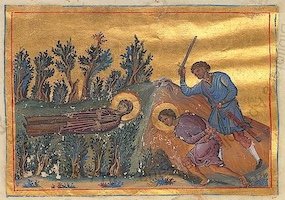
St. Euphemia, a virgin of Chalcedon, suffered in the persecution continued by the successors of Diocletian, about the year 307. She was condemned to the wild beasts. The Council of Chalcedon was held in her sepulchral church.
Saint Lucy was a wealthy Roman lady who was a widow of thirty-six years when the persecution of Diocletian (284-304) and Maximian (286-305) broke out in 303. Therefore she was seventy-five years old when her son Eutropus, who was darkened by idolatry, denounced her as a Christian and had her brought before Diocletian. Lucy boldly confessed her faith in Christ before the emperor, and reproved him for worshiping idols in vain. For this she was placed inside a cauldron of burning pitch, in which despite her feeble age she endured for three days. When Diocletian heard that she was still alive, he ordered her to be dragged around the city, with weights loaded on her body, while she was insulted by the populace. When Lucy was paraded by the house of Geminianus, the statues of Roman gods in his home shattered miraculously and a dove made the sign of the Cross over the head of Geminianus. He followed Lucy, asking for instruction in the Christian faith as well as baptism. For this he too was brought before the emperor and imprisoned with Lucy, whom she instructed and took as her spiritual son. A priest named Protasius helped him with his request for baptism, and seventy-five people were converted to Christianity by the example of Geminianus. After three months in prison an Angel of the Lord conveyed Lucy and Geminianus to Taormina in Sicily and from there to Mendilas, where they converted many pagans to Christianity. And when persecution came to the faithful of that region, Lucy took refuge in the mountains, where she delivered her soul in peace to the Lord, while Geminianus accomplished his martyrdom by being beheaded.
LAST-MODIFIED:20260808T130255Z SEQUENCE:120498689 X-ACCESS:1 X-HITS:11 X-COLOR:f0b80e X-SHOW-END-TIME:1 END:VEVENT BEGIN:VEVENT DTSTART;VALUE=DATE:20260917 DTEND;VALUE=DATE:20260918 UID:13F15F3A-E55B-40C4-AAAB-9E0F7B1163EA SUMMARY:The Stigmata of St. Francis CREATED:20221013T211126Z DTSTAMP:20221013T211126Z URL:https://www.stpaulsweymouth.org/component/dpcalendar/event/2768?calid=13 DESCRIPTION:The Impression of the Stigmata of St. Francis of Assisi, Confessor\N\NSaint Bonaventure, biographer of Saint Francis of Assisi, wrote that two years before his holy death he had been praying on Mount Alverno in a solitary retreat, where he had gone to fast for forty days in honor of the Archangel Michael. No one ever meditated more than Francis on the Passion of his Lord. During his retreat he beheld in vision a six-winged Seraph attached to a cross, and received at the same time a painful wound of the heart, which seemed to transpierce it. When the vision ended his own hands and feet bore the marks of the angelic crucifixion which he had seen in the vision. He understood by his vision that the soul must come to resemble Christ by the ardors of its interior fire, rather than by any physical, exterior means. We reproduce here a meditation of the saintly 19thcentury Abbot, Dom Guéranger of Solemnes in France:\NThe Feast of the Stigmata of Saint Francis, whom we will soon honor again on his feast of October 4th, is not only to glorify a Saint; it commemorates and signifies something which goes beyond the life of any single man, even one of the greatest of the Church. The God-Man never ceases to live on in His Church, and the reproduction of His own mysteries in this Spouse whom He wants to be similar to Himself, is the explanation of history.\NIn the thirteenth century it seemed that charity, whose divine precept many no longer heeded, concentrated in a few souls the fires which had once sufficed to inflame multitudes. Sanctity shone as brilliantly as ever, but the hour for the cooling of the brazier had struck for the peoples. The Church itself says so today in its liturgy, at the Collect: Lord Jesus Christ, when the world was growing cold, You reproduced the sacred marks of Your passion in the body of the most blessed Francis, in order that Your love might also set our hearts afire.' The Spouse of Christ had already begun to experience the long series of social defections among the nations, with their denials, treasons, derision, slaps, spittings in the very praetorium, all of which conclude in the legalized separation of society from its Author. The era of the Passion is advanced; the exaltation of the Holy Cross, which for centuries was triumphant in the eyes of the nations, acquires in the sight of heaven, as the Angels look down upon it, the aspect of an ever closer resemblance with the Spouse to the sufferings of her crucified Beloved.\NSaint Francis, loved today by all who know of him — and few there are who do not — was like precious marble placed before an expert sculptor. The Holy Spirit chose the flesh of the seraph of Assisi to express His divine thought, thus manifesting to the world the very specific direction He intends to give to souls thereafter. This stigmatization offers a first example, a complete image, of the new labor the divine Spirit is meditating — total union, on the very Cross of Christ itself, of the mystical Body with the divine Head. Francis is the one honored by this primacy of choice; but after him the sacred sign will be received by others, who also personify the Church. From this time on, the Stigmata of the Lord Jesus will be at all times visible, here and there on this earth.\NL'Année liturgique, by Dom Prosper Guéranger (Mame et Fils: Tours, 1919), The Time after Pentecost V, Vol. 14, translation O.D.M. X-ALT-DESC;FMTTYPE=text/html:The Impression of the Stigmata of St. Francis of Assisi, Confessor
Saint Bonaventure, biographer of Saint Francis of Assisi, wrote that two years before his holy death he had been praying on Mount Alverno in a solitary retreat, where he had gone to fast for forty days in honor of the Archangel Michael. No one ever meditated more than Francis on the Passion of his Lord. During his retreat he beheld in vision a six-winged Seraph attached to a cross, and received at the same time a painful wound of the heart, which seemed to transpierce it. When the vision ended his own hands and feet bore the marks of the angelic crucifixion which he had seen in the vision. He understood by his vision that the soul must come to resemble Christ by the ardors of its interior fire, rather than by any physical, exterior means. We reproduce here a meditation of the saintly 19thcentury Abbot, Dom Guéranger of Solemnes in France:
The Feast of the Stigmata of Saint Francis, whom we will soon honor again on his feast of October 4th, is not only to glorify a Saint; it commemorates and signifies something which goes beyond the life of any single man, even one of the greatest of the Church. The God-Man never ceases to live on in His Church, and the reproduction of His own mysteries in this Spouse whom He wants to be similar to Himself, is the explanation of history.
In the thirteenth century it seemed that charity, whose divine precept many no longer heeded, concentrated in a few souls the fires which had once sufficed to inflame multitudes. Sanctity shone as brilliantly as ever, but the hour for the cooling of the brazier had struck for the peoples. The Church itself says so today in its liturgy, at the Collect: Lord Jesus Christ, when the world was growing cold, You reproduced the sacred marks of Your passion in the body of the most blessed Francis, in order that Your love might also set our hearts afire.' The Spouse of Christ had already begun to experience the long series of social defections among the nations, with their denials, treasons, derision, slaps, spittings in the very praetorium, all of which conclude in the legalized separation of society from its Author. The era of the Passion is advanced; the exaltation of the Holy Cross, which for centuries was triumphant in the eyes of the nations, acquires in the sight of heaven, as the Angels look down upon it, the aspect of an ever closer resemblance with the Spouse to the sufferings of her crucified Beloved.
Saint Francis, loved today by all who know of him — and few there are who do not — was like precious marble placed before an expert sculptor. The Holy Spirit chose the flesh of the seraph of Assisi to express His divine thought, thus manifesting to the world the very specific direction He intends to give to souls thereafter. This stigmatization offers a first example, a complete image, of the new labor the divine Spirit is meditating — total union, on the very Cross of Christ itself, of the mystical Body with the divine Head. Francis is the one honored by this primacy of choice; but after him the sacred sign will be received by others, who also personify the Church. From this time on, the Stigmata of the Lord Jesus will be at all times visible, here and there on this earth.
L'Année liturgique, by Dom Prosper Guéranger (Mame et Fils: Tours, 1919), The Time after Pentecost V, Vol. 14, translation O.D.M.
LAST-MODIFIED:20250906T163659Z SEQUENCE:91481133 X-ACCESS:1 X-HITS:10 X-COLOR:f0b80e X-SHOW-END-TIME:1 END:VEVENT BEGIN:VEVENT DTSTART;VALUE=DATE:20260918 DTEND;VALUE=DATE:20260919 UID:E7847598-0914-48D9-A66E-96702CC921FF SUMMARY:St. Joseph of Cupertino CREATED:20221013T211126Z DTSTAMP:20221013T211126Z URL:https://www.stpaulsweymouth.org/component/dpcalendar/event/2770?calid=13 DESCRIPTION:St. Joseph of Cupertino, Confessor\N\NJoseph Desa was born in the little city of Cupertino, near the Gulf of Tarento, in 1600. It is said in the acts of the process of his canonization that at the age of five he already showed such signs of sanctity that if he had been an adult, he would have been venerated as a perfect man. Already in his youth he was ravished in ecstasies which literally tore him away from the earth; it has been calculated that perhaps half of his life for some sixty years was spent literally above the ground. But much remains to be said of Saint Joseph, apart from his visible divine favors.\NHe almost died at the age of seven from an interior abscess, which only his prayer to Our Lady cured. He learned to be a shoemaker to earn his living, but was often absent in spirit from his work. He treated his flesh with singular rigor. The Cardinal de Lauria, who knew him well for long years, said he wore a very rude hair shirt and never ate meat, contenting himself with fruits and bread. He seasoned his soup, if he accepted any, with a dry and very bitter powder of wormwood. At the age of seventeen he desired to become a conventual Franciscan, but was refused because he had not studied. He entered the Capuchins as a lay brother, but the divine favors he received seemed everywhere to bring down contempt upon him. He was in continuous contemplation and dropped plates and cauldrons. He would often stop and kneel down, and his long halts in places of discomfort brought on a tumor of the knee which was very painful. It was decided that he lacked both aptitude and health, and he was sent home. He was then regarded everywhere as a vagabond and a fool, and his mother in particular was harsh, as had been her custom for long years. She did, however, obtain permission for him to take charge of the stable for the conventual Franciscans, wearing the habit of the Third Order.\NSaint Joseph proved himself many times to be perfectly obedient. His humility was heroic, and his mortification most exceptional. His words bore fruit and wakened the indifferent, warned against vice and in general were seen to come from a man who was very kind and very virtuous. He was finally granted the habit. He read with difficulty and wrote with still more difficulty, but the Mother of God was watching over him. When by the intervention of the bishop he had been admitted to minor Orders, he desired to be a priest but knew well only one text of the Gospel. By a special Providence of God, that was the text he was asked to expound during the canonical examination for the diaconate. The bishop who was in charge of hearing candidates for the priesthood found that the first ones answered exceptionally well, and he decided to ordain them all without any further hearings, thus passing Joseph with the others. He was ordained in 1628.\NHe retired to a hermitage where he was apparently in nearly continuous ecstasy, or at least contemplation. He kept nothing for himself save the tunic he wore. Rejoicing to be totally poor, he felt entirely free also. He obeyed his Superiors and went wherever he was sent, wearing sandals and an old tunic which often came back with pieces missing; the people had begun to venerate him as a Saint, and had cut them off. When he did not notice what was happening, he was reproached as failing in poverty. The humble Brother wanted to pass for a sinner; he asked for the lowest employments, and transported the building materials for a church on his shoulders. He begged for the community. At the church he was a priest; elsewhere, a poor Brother.\NToward the end of his life all divine consolations were denied the Saint, including his ecstasies. He fell victim to an aridity which was unceasing, and he could find no savor in any holy reading. Then the infernal spirits inspired terrible visions and dreams. He shed tears amid this darkness and prayed his Saviour to help him, but received no answer. When the General of the Order heard of this, he called him to Rome, and there he recovered from the fearful trial, and all his joy returned.\NHe still had combats with the enemy of God to bear just the same, when the demons took human form to attempt to injure him physically. Other afflictions were not spared him, but his soul overcame all barriers between himself and God. He died on September 18, 1663, at the age of 63, in the Franciscan convent of Osino. He had celebrated Holy Mass up to and including the day before his death, as he had foretold he would do.\NLes Petits Bollandistes: Vies des Saints, by Msgr. Paul Guérin (Bloud et Barral: Paris, 1882), Vol. 11 X-ALT-DESC;FMTTYPE=text/html:St. Joseph of Cupertino, Confessor
Joseph Desa was born in the little city of Cupertino, near the Gulf of Tarento, in 1600. It is said in the acts of the process of his canonization that at the age of five he already showed such signs of sanctity that if he had been an adult, he would have been venerated as a perfect man. Already in his youth he was ravished in ecstasies which literally tore him away from the earth; it has been calculated that perhaps half of his life for some sixty years was spent literally above the ground. But much remains to be said of Saint Joseph, apart from his visible divine favors.
He almost died at the age of seven from an interior abscess, which only his prayer to Our Lady cured. He learned to be a shoemaker to earn his living, but was often absent in spirit from his work. He treated his flesh with singular rigor. The Cardinal de Lauria, who knew him well for long years, said he wore a very rude hair shirt and never ate meat, contenting himself with fruits and bread. He seasoned his soup, if he accepted any, with a dry and very bitter powder of wormwood. At the age of seventeen he desired to become a conventual Franciscan, but was refused because he had not studied. He entered the Capuchins as a lay brother, but the divine favors he received seemed everywhere to bring down contempt upon him. He was in continuous contemplation and dropped plates and cauldrons. He would often stop and kneel down, and his long halts in places of discomfort brought on a tumor of the knee which was very painful. It was decided that he lacked both aptitude and health, and he was sent home. He was then regarded everywhere as a vagabond and a fool, and his mother in particular was harsh, as had been her custom for long years. She did, however, obtain permission for him to take charge of the stable for the conventual Franciscans, wearing the habit of the Third Order.
Saint Joseph proved himself many times to be perfectly obedient. His humility was heroic, and his mortification most exceptional. His words bore fruit and wakened the indifferent, warned against vice and in general were seen to come from a man who was very kind and very virtuous. He was finally granted the habit. He read with difficulty and wrote with still more difficulty, but the Mother of God was watching over him. When by the intervention of the bishop he had been admitted to minor Orders, he desired to be a priest but knew well only one text of the Gospel. By a special Providence of God, that was the text he was asked to expound during the canonical examination for the diaconate. The bishop who was in charge of hearing candidates for the priesthood found that the first ones answered exceptionally well, and he decided to ordain them all without any further hearings, thus passing Joseph with the others. He was ordained in 1628.
He retired to a hermitage where he was apparently in nearly continuous ecstasy, or at least contemplation. He kept nothing for himself save the tunic he wore. Rejoicing to be totally poor, he felt entirely free also. He obeyed his Superiors and went wherever he was sent, wearing sandals and an old tunic which often came back with pieces missing; the people had begun to venerate him as a Saint, and had cut them off. When he did not notice what was happening, he was reproached as failing in poverty. The humble Brother wanted to pass for a sinner; he asked for the lowest employments, and transported the building materials for a church on his shoulders. He begged for the community. At the church he was a priest; elsewhere, a poor Brother.
Toward the end of his life all divine consolations were denied the Saint, including his ecstasies. He fell victim to an aridity which was unceasing, and he could find no savor in any holy reading. Then the infernal spirits inspired terrible visions and dreams. He shed tears amid this darkness and prayed his Saviour to help him, but received no answer. When the General of the Order heard of this, he called him to Rome, and there he recovered from the fearful trial, and all his joy returned.
He still had combats with the enemy of God to bear just the same, when the demons took human form to attempt to injure him physically. Other afflictions were not spared him, but his soul overcame all barriers between himself and God. He died on September 18, 1663, at the age of 63, in the Franciscan convent of Osino. He had celebrated Holy Mass up to and including the day before his death, as he had foretold he would do.
Les Petits Bollandistes: Vies des Saints, by Msgr. Paul Guérin (Bloud et Barral: Paris, 1882), Vol. 11
LAST-MODIFIED:20250906T164004Z SEQUENCE:91481318 X-ACCESS:1 X-HITS:6 X-COLOR:f0b80e X-SHOW-END-TIME:1 END:VEVENT BEGIN:VEVENT DTSTART;VALUE=DATE:20260919 DTEND;VALUE=DATE:20260920 UID:D0A67F61-D13B-4337-BBD3-1C8BF6FDF2B9 SUMMARY:St. Januarius & Companions CREATED:20221013T211126Z DTSTAMP:20221013T211126Z URL:https://www.stpaulsweymouth.org/component/dpcalendar/event/2772?calid=13 DESCRIPTION:St. Januarius & Companions, Martyrs\N\NMany centuries ago, Saint Januarius died for the Faith during the persecution of Diocletian. God, through the blood which His servant shed for Him, some of which is conserved in Naples, continues to strengthen the faith of the Church, and to work there a regular miracle by its means.\NThis beloved Saint of the late third century was the bishop of Beneventum, and had a friend, a deacon named Sosius, who like himself was occupied with fortifying the Christians faced with martyrdom. When the prefect of Pouzzoles, where Sosius had been imprisoned, heard that Januarius was coming to visit him and three other fervent Christians being held there, he had him arrested. He urged him to cease his exhortations, forbidden by the imperial edicts, and to offer incense to the idols, if he wanted to avoid torture. The holy bishop replied that he could not do so. He was submitted to torments, the first one of which left him miraculously uninjured. The judge attributed the miracle to magic, as was often said of the Christians whom God chose to spare. He ordered another torture which left the bishop lame, before he was sent to the same prison as the others.\NWhen two ecclesiastics of Benevent came to visit the confessors, they were arrested and condemned to die with the other five in an amphitheater, by the teeth of wild beasts. The animals, furious when released into the space where the seven Confessors stood, came and quietly lay down at their feet, renewing a miracle seen more than once in the history of the first centuries. By this prodigy and other miracles which preceded their execution, five thousand persons were converted. The bishop and his companions were decapitated on September 19, 305. A church was built on a nearby mountain to honor the memory of Saint Januarius.\NLittle did the heathen governor think, when he condemned them, that he would be the instrument in God's hand for ushering in a long succession of miracles which commemorate the faith and attest the sanctity of Januarius. His relics repose in the cathedral of Naples, and it is there that the liquefaction of his blood occurs. The blood is congealed in two glass vials, but when it is brought near the martyr's head, it melts and flows like the blood of a living man. This ordinarily occurs on his feast day celebrated on September 17th in Naples, and on anniversaries of miracles attributed to him, which have preserved the city from eruptions of Mount Vesuvius or the plague. Some have tried to explain this miracle by natural causes, but none have ever contested the reality of the facts.\NLes Petits Bollandistes: Vies des Saints, by Msgr. Paul Guérin (Bloud et Barral: Paris, 1882), Vol. 11; Little Pictorial Lives of the Saints, a compilation based on Butler's Lives of the Saints and other sources by John Gilmary Shea (Benziger Brothers: New York, 1894). X-ALT-DESC;FMTTYPE=text/html:St. Januarius & Companions, Martyrs
Many centuries ago, Saint Januarius died for the Faith during the persecution of Diocletian. God, through the blood which His servant shed for Him, some of which is conserved in Naples, continues to strengthen the faith of the Church, and to work there a regular miracle by its means.
This beloved Saint of the late third century was the bishop of Beneventum, and had a friend, a deacon named Sosius, who like himself was occupied with fortifying the Christians faced with martyrdom. When the prefect of Pouzzoles, where Sosius had been imprisoned, heard that Januarius was coming to visit him and three other fervent Christians being held there, he had him arrested. He urged him to cease his exhortations, forbidden by the imperial edicts, and to offer incense to the idols, if he wanted to avoid torture. The holy bishop replied that he could not do so. He was submitted to torments, the first one of which left him miraculously uninjured. The judge attributed the miracle to magic, as was often said of the Christians whom God chose to spare. He ordered another torture which left the bishop lame, before he was sent to the same prison as the others.
When two ecclesiastics of Benevent came to visit the confessors, they were arrested and condemned to die with the other five in an amphitheater, by the teeth of wild beasts. The animals, furious when released into the space where the seven Confessors stood, came and quietly lay down at their feet, renewing a miracle seen more than once in the history of the first centuries. By this prodigy and other miracles which preceded their execution, five thousand persons were converted. The bishop and his companions were decapitated on September 19, 305. A church was built on a nearby mountain to honor the memory of Saint Januarius.
Little did the heathen governor think, when he condemned them, that he would be the instrument in God's hand for ushering in a long succession of miracles which commemorate the faith and attest the sanctity of Januarius. His relics repose in the cathedral of Naples, and it is there that the liquefaction of his blood occurs. The blood is congealed in two glass vials, but when it is brought near the martyr's head, it melts and flows like the blood of a living man. This ordinarily occurs on his feast day celebrated on September 17th in Naples, and on anniversaries of miracles attributed to him, which have preserved the city from eruptions of Mount Vesuvius or the plague. Some have tried to explain this miracle by natural causes, but none have ever contested the reality of the facts.
Les Petits Bollandistes: Vies des Saints, by Msgr. Paul Guérin (Bloud et Barral: Paris, 1882), Vol. 11; Little Pictorial Lives of the Saints, a compilation based on Butler's Lives of the Saints and other sources by John Gilmary Shea (Benziger Brothers: New York, 1894).
LAST-MODIFIED:20250906T164325Z SEQUENCE:91481519 X-ACCESS:1 X-HITS:12 X-COLOR:f0b80e X-SHOW-END-TIME:1 END:VEVENT BEGIN:VEVENT DTSTART;VALUE=DATE:20260920 DTEND;VALUE=DATE:20260921 UID:33492CBD-920D-43D2-A4DF-383810CF7539 SUMMARY:St. Eustachius & his Family CREATED:20221013T211126Z DTSTAMP:20221013T211126Z URL:https://www.stpaulsweymouth.org/component/dpcalendar/event/2774?calid=13 DESCRIPTION:St. Eustachius & his Family, Martyrs\N\NThe remarkable story of Saint Eustachius (or Eustace), named Placidus before his conversion, is a lesson given by God Himself on the marvels of His Divine Providence. He was a distinguished and very wealthy officer of the Roman army under the Emperor Trajan, in the beginning of the second century. He practiced generous charity to the poor, although he had not yet perceived the errors of idolatry.\NOne day, while this distinguished officer was vainly pursuing a deer, the animal suddenly stood immobile before him in the light of a hilltop, and he perceived between its horns a luminous cross. On the cross was the image of the crucified Saviour, and a voice said to him, I am the Christ whom you honor without knowing it; the alms you give to the poor have reached Me. Like Saint Paul, he fell from his horse and remained inert for a time. Coming to himself, he said interiorly, What is this voice I have heard? You who speak to me, who are you, that I may believe in you? And the Lord told him interiorly that He was the Creator of the light, of the seasons, of man and all things visible, that he had suffered to save the human race, died and been buried, but had risen the third day.\NThis was sufficient, and the officer went home to fulfill the prescription he had received to be baptized with his wife and two young sons. His spouse had received a similar revelation at the same time as himself, and they all went to the Christian authority of the region in secret, to be baptized the same night.\NIn a short time he lost all his possessions through natural catastrophes and robbers. But he had been advised beforehand that the Lord wanted to make of him another Job, that already the ancient enemy had plotted against him, and that he was not to allow any thought of blasphemy to arise in his heart amid the sufferings that were awaiting him. He prayed for strength, and retired from the region after the calamities, with his wife and children. When by unforeseeable and extraordinary accidents, his wife and children were also taken from him, and he believed the children dead, he was close to despair and wished his life might end; but the warning of the Lord returned to his mind, and he entered into the service of a land-owner of a village called Badyssus, to tend the fields. He remained for fifteen years in this occupation. During this time his loved ones were well and safe, all spared in the perilous circumstances which had removed them from his sight, but separated, each one like himself, from the three others.\NIn those days the empire was suffering greatly from the ravages of barbarians, and was sinking under the assaults. The emperor Trajan had Eustachius sought out, and when he was found, had him clothed in splendid garments to give him command over the troops he intended to send against the invaders. During the celebration that accompanied his return, he related to the emperor all that had occurred to him. When the troops were being assembled, his own sons were conscripted. Seeing them, he noticed them as young men taller than most and of great nobility of bearing and countenance, and kept them near him without yet recognizing them. One of the two, while on bivouac near the very house of his own mother, who like Eustachius had taken employment in the garden of a landowner, related the confused memories of his childhood to his companion. Suddenly, the two brothers recognized one another and embraced in an effusion of joy.\NTheir mother, by a delicate attention of Providence, had chanced to overhear them, and reflecting on what she heard, became certain they were her own sons. She went to the captain of the campaign to inquire about them, and immediately recognized him. Not wishing to startle him, she began to relate her story, identifying herself as the wife of a certain Placidus, and saying she believed she was now in the presence of her two sons from whom she had been separated, and whom she had not seen for long years. One must imagine the sentiments of the captain on hearing this narration, the reunion which followed, and the prayers of thanksgiving sent up to God by the family and also the troops, who joined them in their joy and prayers.\NReturning to Rome victorious, Eustachius was received in triumph and greatly honored, but when commanded to sacrifice during the celebration to the false gods, refused. The infuriated emperor Adrian — for Trajan had died — ordered him with his wife and children to be exposed to a starved lion. But instead of harming these servants of God, the beast came up to them, lowered its head as if in homage, and left the arena. The emperor, more furious still, caused the martyrs to be shut up inside a brazen bull, under which a fire was to be kindled, that they might be roasted to death. Saint Eustachius prayed aloud and thanked God, asking Him who had reunited them to cause that their lives end at the same time, so they might be received together by Him into the happiness of His presence. They expired, but neither their bodies nor even their hair was injured. They were found entire the next day, and at first it was believed they were still alive. Many believed in Christ through this final miracle, which to us today seems perhaps less miraculous than the story of their existence while alive. A church in honor of the martyrs still exists in Rome: Saint-Eustachius in Thermis.\NLes Petits Bollandistes: Vies des Saints, by Msgr. Paul Guérin (Bloud et Barral: Paris, 1882), Vol. 11 X-ALT-DESC;FMTTYPE=text/html:St. Eustachius & his Family, Martyrs
The remarkable story of Saint Eustachius (or Eustace), named Placidus before his conversion, is a lesson given by God Himself on the marvels of His Divine Providence. He was a distinguished and very wealthy officer of the Roman army under the Emperor Trajan, in the beginning of the second century. He practiced generous charity to the poor, although he had not yet perceived the errors of idolatry.
One day, while this distinguished officer was vainly pursuing a deer, the animal suddenly stood immobile before him in the light of a hilltop, and he perceived between its horns a luminous cross. On the cross was the image of the crucified Saviour, and a voice said to him, I am the Christ whom you honor without knowing it; the alms you give to the poor have reached Me. Like Saint Paul, he fell from his horse and remained inert for a time. Coming to himself, he said interiorly, What is this voice I have heard? You who speak to me, who are you, that I may believe in you? And the Lord told him interiorly that He was the Creator of the light, of the seasons, of man and all things visible, that he had suffered to save the human race, died and been buried, but had risen the third day.
This was sufficient, and the officer went home to fulfill the prescription he had received to be baptized with his wife and two young sons. His spouse had received a similar revelation at the same time as himself, and they all went to the Christian authority of the region in secret, to be baptized the same night.
In a short time he lost all his possessions through natural catastrophes and robbers. But he had been advised beforehand that the Lord wanted to make of him another Job, that already the ancient enemy had plotted against him, and that he was not to allow any thought of blasphemy to arise in his heart amid the sufferings that were awaiting him. He prayed for strength, and retired from the region after the calamities, with his wife and children. When by unforeseeable and extraordinary accidents, his wife and children were also taken from him, and he believed the children dead, he was close to despair and wished his life might end; but the warning of the Lord returned to his mind, and he entered into the service of a land-owner of a village called Badyssus, to tend the fields. He remained for fifteen years in this occupation. During this time his loved ones were well and safe, all spared in the perilous circumstances which had removed them from his sight, but separated, each one like himself, from the three others.
In those days the empire was suffering greatly from the ravages of barbarians, and was sinking under the assaults. The emperor Trajan had Eustachius sought out, and when he was found, had him clothed in splendid garments to give him command over the troops he intended to send against the invaders. During the celebration that accompanied his return, he related to the emperor all that had occurred to him. When the troops were being assembled, his own sons were conscripted. Seeing them, he noticed them as young men taller than most and of great nobility of bearing and countenance, and kept them near him without yet recognizing them. One of the two, while on bivouac near the very house of his own mother, who like Eustachius had taken employment in the garden of a landowner, related the confused memories of his childhood to his companion. Suddenly, the two brothers recognized one another and embraced in an effusion of joy.
Their mother, by a delicate attention of Providence, had chanced to overhear them, and reflecting on what she heard, became certain they were her own sons. She went to the captain of the campaign to inquire about them, and immediately recognized him. Not wishing to startle him, she began to relate her story, identifying herself as the wife of a certain Placidus, and saying she believed she was now in the presence of her two sons from whom she had been separated, and whom she had not seen for long years. One must imagine the sentiments of the captain on hearing this narration, the reunion which followed, and the prayers of thanksgiving sent up to God by the family and also the troops, who joined them in their joy and prayers.
Returning to Rome victorious, Eustachius was received in triumph and greatly honored, but when commanded to sacrifice during the celebration to the false gods, refused. The infuriated emperor Adrian — for Trajan had died — ordered him with his wife and children to be exposed to a starved lion. But instead of harming these servants of God, the beast came up to them, lowered its head as if in homage, and left the arena. The emperor, more furious still, caused the martyrs to be shut up inside a brazen bull, under which a fire was to be kindled, that they might be roasted to death. Saint Eustachius prayed aloud and thanked God, asking Him who had reunited them to cause that their lives end at the same time, so they might be received together by Him into the happiness of His presence. They expired, but neither their bodies nor even their hair was injured. They were found entire the next day, and at first it was believed they were still alive. Many believed in Christ through this final miracle, which to us today seems perhaps less miraculous than the story of their existence while alive. A church in honor of the martyrs still exists in Rome: Saint-Eustachius in Thermis.
Les Petits Bollandistes: Vies des Saints, by Msgr. Paul Guérin (Bloud et Barral: Paris, 1882), Vol. 11
LAST-MODIFIED:20250906T164631Z SEQUENCE:91481705 X-ACCESS:1 X-HITS:5 X-COLOR:f0b80e X-SHOW-END-TIME:1 END:VEVENT BEGIN:VEVENT DTSTART;VALUE=DATE:20260921 DTEND;VALUE=DATE:20260922 UID:906D307D-CF3C-499D-91AC-DFCDEDEA6A9E SUMMARY:St. Matthew CREATED:20221013T211126Z DTSTAMP:20221013T211126Z URL:https://www.stpaulsweymouth.org/component/dpcalendar/event/2776?calid=13 DESCRIPTION:St. Matthew, Apostle & Evangelist\N\NOne day, as Our Lord was walking by the Sea of Galilee, He saw, seated in his customs bureau, Levi the publican, whose business it was to collect the taxes from the people for their Roman masters. Jesus said to him: Follow Me. Leaving all behind, Matthew arose and did so, thereby giving us all an example of the way in which we should respond to grace. The humble Matthew, as he was thereafter called, tells us himself in his Gospel that he was Levi, one of those publicans abhorred by the Jews as enemies of their country, outcasts and notorious sinners, who enriched themselves by extortion and fraud. No Pharisee would sit with one at table; Our Saviour alone had compassion for them.\NSaint Matthew prepared a great feast, to which he invited Jesus and His disciples, with a number of these publicans, who thereupon began to listen to Him with attention and joy. It was there, in answer to the murmurs of the Pharisees saying that this pretended prophet ate with publicans and sinners, that Jesus said, They that are in good health have no need of a physician. I have not come to call the just, but sinners to penance.\NAfter the Ascension, Saint Matthew remained for over ten years in Judea, writing his Gospel there in about the year 44, to teach his countrymen that the kingdom of heaven had already been instigated, for Jesus was their true Lord and the King foretold by the prophets. He departed then to preach the Faith in Egypt and especially in Ethiopia, where he remained for twenty-three years. When he resurrected the son of the Ethiopian king who had received him, the miracle brought about the conversion of the royal house and with them the entire province.\NThe king's daughter consecrated herself to God with several other maidens. When a young man wished to marry the beautiful Iphigenia, Saint Matthew invited him to come and listen to a discourse he was to make to that community of virgins, to hear what he would say to them. When the Apostle extolled the state of virginity, the suitor became enraged and arranged to have him slain as he came from the altar. Saint Hippolyte calls Saint Matthew the victim and martyr of holy virginity.\NIt is said in the Constitutions of Pope Saint Clement that Saint Matthew instituted holy water, for protection of soul and body; the prayer he used for the purpose is reported in that document. The relics of Saint Matthew were for many years in the city of Naddaver in Ethiopia, where he suffered his martyrdom, but were transferred to Salerno in the year 954, where they remained concealed in a cave, for protection, for over a hundred years.\NReflection: Obey all inspirations of Our Lord as promptly as Saint Matthew, who, at a single word, Saint Bridget says, laid down the heavy burden of the world, to take the light and sweet yoke of Christ.\NLittle Pictorial Lives of the Saints, a compilation based on Butler's Lives of the Saints and other sources by John Gilmary Shea (Benziger Brothers: New York, 1894); Les Petits Bollandistes: Vies des Saints, by Msgr. Paul Guérin (Bloud et Barral: Paris, 1882), Vol. 11 X-ALT-DESC;FMTTYPE=text/html:St. Matthew, Apostle & Evangelist
One day, as Our Lord was walking by the Sea of Galilee, He saw, seated in his customs bureau, Levi the publican, whose business it was to collect the taxes from the people for their Roman masters. Jesus said to him: Follow Me. Leaving all behind, Matthew arose and did so, thereby giving us all an example of the way in which we should respond to grace. The humble Matthew, as he was thereafter called, tells us himself in his Gospel that he was Levi, one of those publicans abhorred by the Jews as enemies of their country, outcasts and notorious sinners, who enriched themselves by extortion and fraud. No Pharisee would sit with one at table; Our Saviour alone had compassion for them.
Saint Matthew prepared a great feast, to which he invited Jesus and His disciples, with a number of these publicans, who thereupon began to listen to Him with attention and joy. It was there, in answer to the murmurs of the Pharisees saying that this pretended prophet ate with publicans and sinners, that Jesus said, They that are in good health have no need of a physician. I have not come to call the just, but sinners to penance.
After the Ascension, Saint Matthew remained for over ten years in Judea, writing his Gospel there in about the year 44, to teach his countrymen that the kingdom of heaven had already been instigated, for Jesus was their true Lord and the King foretold by the prophets. He departed then to preach the Faith in Egypt and especially in Ethiopia, where he remained for twenty-three years. When he resurrected the son of the Ethiopian king who had received him, the miracle brought about the conversion of the royal house and with them the entire province.
The king's daughter consecrated herself to God with several other maidens. When a young man wished to marry the beautiful Iphigenia, Saint Matthew invited him to come and listen to a discourse he was to make to that community of virgins, to hear what he would say to them. When the Apostle extolled the state of virginity, the suitor became enraged and arranged to have him slain as he came from the altar. Saint Hippolyte calls Saint Matthew the victim and martyr of holy virginity.
It is said in the Constitutions of Pope Saint Clement that Saint Matthew instituted holy water, for protection of soul and body; the prayer he used for the purpose is reported in that document. The relics of Saint Matthew were for many years in the city of Naddaver in Ethiopia, where he suffered his martyrdom, but were transferred to Salerno in the year 954, where they remained concealed in a cave, for protection, for over a hundred years.
Reflection: Obey all inspirations of Our Lord as promptly as Saint Matthew, who, at a single word, Saint Bridget says, laid down the heavy burden of the world, to take the light and sweet yoke of Christ.
Little Pictorial Lives of the Saints, a compilation based on Butler's Lives of the Saints and other sources by John Gilmary Shea (Benziger Brothers: New York, 1894); Les Petits Bollandistes: Vies des Saints, by Msgr. Paul Guérin (Bloud et Barral: Paris, 1882), Vol. 11
LAST-MODIFIED:20250906T164836Z SEQUENCE:91481830 X-ACCESS:1 X-HITS:6 X-COLOR:f0b80e X-SHOW-END-TIME:1 END:VEVENT BEGIN:VEVENT DTSTART;VALUE=DATE:20260922 DTEND;VALUE=DATE:20260923 UID:DB140E12-E10F-4250-A651-E5EDB5ED6894 SUMMARY:St. Thomas of Villanova CREATED:20221013T211126Z DTSTAMP:20221013T211126Z URL:https://www.stpaulsweymouth.org/component/dpcalendar/event/2786?calid=13 DESCRIPTION:St. Thomas of Villanova, Bishop & Confessor\N\NSaint Thomas, the glory of the Spanish Church in the sixteenth century, was born in the diocese of Toledo in 1488. His mother was a Christian of extraordinary tenderness for the poor. God worked a miracle for her one day, when her servants had given away absolutely all the flour in their storeroom. When another beggar came to the door, she told them to go back once more and look again, and they found the storeroom filled with flour. Her little son followed his mother's example, and one day gave away, to six poor persons in succession, the six young chicks which had been following the hen around in the yard. When his mother asked where they were, he said, You didn't leave any bread in the house, Mama, so I gave them the chicks! I would have given the hen if another beggar had come.\NAt the age of fifteen years he began his studies and succeeded so well he was judged fit to teach philosophy and theology in a college of Alcala, and then at Salamanca. When his father died he returned to Villanova to dispose of his patrimony. He made his house into a hospital, keeping only what was needed for his mother, and gave the rest to the poor. At the age of twenty-eight he entered the Order of the Hermits of Saint Augustine at Salamanca, becoming professed in 1517.\NWhen ordained a priest three years later, he continued his teaching of theology, but also began to preach so remarkably well that he was compared with Saint Paul and the prophet Elias. The city was reformed, and after the Emperor Charles V heard him once, he returned and often mingled with the crowd to listen, finally making Saint Thomas his official preacher.\NHe became Prior of his Order in three cities, then three times a Provincial Superior. His sanctity continued to increase, and he was nominated archbishop of Valencia in 1544; he had refused a similar offer sixteen years earlier, but this time was obliged to accept. After a long drought, rain fell on the day he assumed his new office. He arrived as a pilgrim accompanied by one fellow monk, and was not recognized in the convent of his Order when the two travelers came asking for shelter during the rain. He was obliged to reveal his identity when the Prior, who wondered where the awaited archbishop might be, asked him if perchance it was he.\NThe new Archbishop was so poor that he was given money for furnishings, but he took it to the hospital for the indigent. On being led to his throne in church, he pushed the silken cushions aside, and with tears kissed the ground. His first visit was to the prison. Two-thirds of his episcopal revenues were annually spent in alms. He daily fed five hundred needy persons, made himself responsible for the bringing up of the city's orphans, and sheltered neglected foundlings with a mother's care. During his eleven years' episcopate, not one poor maiden was married without an alms from the archbishop. Spurred by his example, the rich and the selfish became liberal and generous. And when, on the Nativity of Our Lady, 1555, after one week of illness, Saint Thomas was about to breathe his last, he gave his bed to a poor man and asked to be placed on the floor. It has been said that at his death he was probably the only poor man in his see.\NReflection: When a refractory priest had not heeded his bishop's remonstrances, Saint Thomas took him into a room apart, uncovered his shoulders and knelt before his crucifix, saying: My brother, my sins are the reason you have not changed your life and listened to my warnings. It is just for me to bear the penalty of my fault. And he scourged himself cruelly. This frequent practice brought many to tears and reform of their lives. In this way a perfect Pastor inspired his entire flock with truly Christian sentiments.\NLes Petits Bollandistes: Vies des Saints, by Msgr. Paul Guérin (Bloud et Barral: Paris, 1882), Vol. 11 X-ALT-DESC;FMTTYPE=text/html:St. Thomas of Villanova, Bishop & Confessor
Saint Thomas, the glory of the Spanish Church in the sixteenth century, was born in the diocese of Toledo in 1488. His mother was a Christian of extraordinary tenderness for the poor. God worked a miracle for her one day, when her servants had given away absolutely all the flour in their storeroom. When another beggar came to the door, she told them to go back once more and look again, and they found the storeroom filled with flour. Her little son followed his mother's example, and one day gave away, to six poor persons in succession, the six young chicks which had been following the hen around in the yard. When his mother asked where they were, he said, You didn't leave any bread in the house, Mama, so I gave them the chicks! I would have given the hen if another beggar had come.
At the age of fifteen years he began his studies and succeeded so well he was judged fit to teach philosophy and theology in a college of Alcala, and then at Salamanca. When his father died he returned to Villanova to dispose of his patrimony. He made his house into a hospital, keeping only what was needed for his mother, and gave the rest to the poor. At the age of twenty-eight he entered the Order of the Hermits of Saint Augustine at Salamanca, becoming professed in 1517.
When ordained a priest three years later, he continued his teaching of theology, but also began to preach so remarkably well that he was compared with Saint Paul and the prophet Elias. The city was reformed, and after the Emperor Charles V heard him once, he returned and often mingled with the crowd to listen, finally making Saint Thomas his official preacher.
He became Prior of his Order in three cities, then three times a Provincial Superior. His sanctity continued to increase, and he was nominated archbishop of Valencia in 1544; he had refused a similar offer sixteen years earlier, but this time was obliged to accept. After a long drought, rain fell on the day he assumed his new office. He arrived as a pilgrim accompanied by one fellow monk, and was not recognized in the convent of his Order when the two travelers came asking for shelter during the rain. He was obliged to reveal his identity when the Prior, who wondered where the awaited archbishop might be, asked him if perchance it was he.
The new Archbishop was so poor that he was given money for furnishings, but he took it to the hospital for the indigent. On being led to his throne in church, he pushed the silken cushions aside, and with tears kissed the ground. His first visit was to the prison. Two-thirds of his episcopal revenues were annually spent in alms. He daily fed five hundred needy persons, made himself responsible for the bringing up of the city's orphans, and sheltered neglected foundlings with a mother's care. During his eleven years' episcopate, not one poor maiden was married without an alms from the archbishop. Spurred by his example, the rich and the selfish became liberal and generous. And when, on the Nativity of Our Lady, 1555, after one week of illness, Saint Thomas was about to breathe his last, he gave his bed to a poor man and asked to be placed on the floor. It has been said that at his death he was probably the only poor man in his see.
Reflection: When a refractory priest had not heeded his bishop's remonstrances, Saint Thomas took him into a room apart, uncovered his shoulders and knelt before his crucifix, saying: My brother, my sins are the reason you have not changed your life and listened to my warnings. It is just for me to bear the penalty of my fault. And he scourged himself cruelly. This frequent practice brought many to tears and reform of their lives. In this way a perfect Pastor inspired his entire flock with truly Christian sentiments.
Les Petits Bollandistes: Vies des Saints, by Msgr. Paul Guérin (Bloud et Barral: Paris, 1882), Vol. 11
LAST-MODIFIED:20250906T170231Z SEQUENCE:91482665 X-ACCESS:1 X-HITS:5 X-COLOR:f0b80e X-SHOW-END-TIME:1 END:VEVENT BEGIN:VEVENT DTSTART;VALUE=DATE:20260922 DTEND;VALUE=DATE:20260923 UID:D7C2EE5B-95E7-4E4B-A8E3-9C4471453287 SUMMARY:St. Maurice & Companions CREATED:20221013T211126Z DTSTAMP:20221013T211126Z URL:https://www.stpaulsweymouth.org/component/dpcalendar/event/2788?calid=13 DESCRIPTION:St. Maurice & Companions, Martyrs\N\NThe Roman legion of Christians, called the Theban Legion, under the presidency of their General, Maurice, numbered more than six thousand men. They marched from the East into Gaul, which was in revolt. They were camped near the Lake of Geneva, when they received orders to join with the others in a solemn sacrifice to the gods. They retired a little farther away, to a site today called Saint Maurice d'Augaune, in order to abstain, but were told to return and join in the festival with the others. They found themselves in the sad necessity of disobeying the command. It was not an act of felony for these brave soldiers, who had already fought many battles, but of heroic loyalty. Nonetheless, the barbaric prince gave the order to decimate the Legion. It would seem the emperor's messengers might have feared a forced resistance, but the disciples of Jesus Christ hoped for nothing but a peaceful victory over the world and the demon, with all his false gods.\NThe names of the soldiers were written on papers and placed in the caps of the centurions, for 600 were destined to perish as examples. These embraced their comrades, who encouraged them and even envied their fate. The plain soon flowed with the blood of the martyrs. The survivors persisted in declaring themselves Christians, and the butchery began again; the blood of another 600 reddened the waters of the Rhone. The others all persevered in their faith, and Saint Maurice sent to the tyrant an admirable letter, saying: Emperor, we are your soldiers; we are ready to combat the enemies of the empire, but we are also Christians, and we owe fidelity to the true God. We are not rebels, but we prefer to die, innocent, rather than to live, guilty. The Emperor, seeing himself defeated, ordered them all to be massacred. As the massacre began, these generous soldiers deposed their weapons, offered their necks to the sword, and suffered themselves to be butchered in silence.\NReflection: Thank God for every slight or insult you have to bear. An injury borne in meekness and silence is a true victory. It is the proof that we are good soldiers of Jesus Christ, disciples of that heavenly wisdom which is both pure and peaceable.\NVie des Saints pour tous les jours de l'année, by Abbé L. Jaud (Mame: Tours, 1950). X-ALT-DESC;FMTTYPE=text/html:St. Maurice & Companions, Martyrs
The Roman legion of Christians, called the Theban Legion, under the presidency of their General, Maurice, numbered more than six thousand men. They marched from the East into Gaul, which was in revolt. They were camped near the Lake of Geneva, when they received orders to join with the others in a solemn sacrifice to the gods. They retired a little farther away, to a site today called Saint Maurice d'Augaune, in order to abstain, but were told to return and join in the festival with the others. They found themselves in the sad necessity of disobeying the command. It was not an act of felony for these brave soldiers, who had already fought many battles, but of heroic loyalty. Nonetheless, the barbaric prince gave the order to decimate the Legion. It would seem the emperor's messengers might have feared a forced resistance, but the disciples of Jesus Christ hoped for nothing but a peaceful victory over the world and the demon, with all his false gods.
The names of the soldiers were written on papers and placed in the caps of the centurions, for 600 were destined to perish as examples. These embraced their comrades, who encouraged them and even envied their fate. The plain soon flowed with the blood of the martyrs. The survivors persisted in declaring themselves Christians, and the butchery began again; the blood of another 600 reddened the waters of the Rhone. The others all persevered in their faith, and Saint Maurice sent to the tyrant an admirable letter, saying: Emperor, we are your soldiers; we are ready to combat the enemies of the empire, but we are also Christians, and we owe fidelity to the true God. We are not rebels, but we prefer to die, innocent, rather than to live, guilty. The Emperor, seeing himself defeated, ordered them all to be massacred. As the massacre began, these generous soldiers deposed their weapons, offered their necks to the sword, and suffered themselves to be butchered in silence.
Reflection: Thank God for every slight or insult you have to bear. An injury borne in meekness and silence is a true victory. It is the proof that we are good soldiers of Jesus Christ, disciples of that heavenly wisdom which is both pure and peaceable.
Vie des Saints pour tous les jours de l'année, by Abbé L. Jaud (Mame: Tours, 1950).
LAST-MODIFIED:20250906T170453Z SEQUENCE:91482807 X-ACCESS:1 X-HITS:7 X-COLOR:f0b80e X-SHOW-END-TIME:1 END:VEVENT BEGIN:VEVENT DTSTART;VALUE=DATE:20260923 DTEND;VALUE=DATE:20260924 UID:87585384-ACEB-410D-8606-379275F4377A SUMMARY:St. Thecla CREATED:20221013T211126Z DTSTAMP:20221013T211126Z URL:https://www.stpaulsweymouth.org/component/dpcalendar/event/2792?calid=13 DESCRIPTION:St. Thecla, Virgin & Martyr\N\NSaint Thecla is one of the most ancient, as she is one of the most illustrious Saints in the calendar of the Church. It was at Iconium that Saint Thecla heard the preaching of Saint Paul, who kindled the love of virginity in her heart. She had been promised in marriage to a young man who was rich and generous, but after hearing the discourses of the Apostle's word she died to all thought of earthly espousals. She forgot her beauty; she was deaf to her parent's threats, and at the first opportunity fled from a luxurious home and followed the Apostle.\NThe rage of her parents and of her suitor followed hard after her, and the Roman power did its worst against the virgin whom Christ had chosen for Himself. She was stripped and placed in the public theater, but her innocence shrouded her like a garment. Then the lions were let loose against her; they fell crouching at her feet and licked them like a house pet. Even fire could not harm her. Torment after torment was inflicted upon her without effect, until finally the divine Spouse of virgins spoke the word of deliverance and called her to Himself, with the double crown of martyrdom and virginity upon her head.\NReflection: It is purity in soul and body which will make you strong in pain, in temptation, and in the hour of death. I can do all in the One who fortifies me, said Saint Paul. Imitate the purity of this glorious virgin, and take her for your special patroness in your last agony.\NLittle Pictorial Lives of the Saints, a compilation based on Butler's Lives of the Saints and other sources by John Gilmary Shea (Benziger Brothers: New York, 1894). X-ALT-DESC;FMTTYPE=text/html:St. Thecla, Virgin & Martyr
Saint Thecla is one of the most ancient, as she is one of the most illustrious Saints in the calendar of the Church. It was at Iconium that Saint Thecla heard the preaching of Saint Paul, who kindled the love of virginity in her heart. She had been promised in marriage to a young man who was rich and generous, but after hearing the discourses of the Apostle's word she died to all thought of earthly espousals. She forgot her beauty; she was deaf to her parent's threats, and at the first opportunity fled from a luxurious home and followed the Apostle.
The rage of her parents and of her suitor followed hard after her, and the Roman power did its worst against the virgin whom Christ had chosen for Himself. She was stripped and placed in the public theater, but her innocence shrouded her like a garment. Then the lions were let loose against her; they fell crouching at her feet and licked them like a house pet. Even fire could not harm her. Torment after torment was inflicted upon her without effect, until finally the divine Spouse of virgins spoke the word of deliverance and called her to Himself, with the double crown of martyrdom and virginity upon her head.
Reflection: It is purity in soul and body which will make you strong in pain, in temptation, and in the hour of death. I can do all in the One who fortifies me, said Saint Paul. Imitate the purity of this glorious virgin, and take her for your special patroness in your last agony.
Little Pictorial Lives of the Saints, a compilation based on Butler's Lives of the Saints and other sources by John Gilmary Shea (Benziger Brothers: New York, 1894).
LAST-MODIFIED:20250906T171017Z SEQUENCE:91483131 X-ACCESS:1 X-HITS:9 X-COLOR:f0b80e X-SHOW-END-TIME:1 END:VEVENT BEGIN:VEVENT DTSTART;VALUE=DATE:20260923 DTEND;VALUE=DATE:20260924 UID:68B58E07-A7B0-4201-BC94-3755199A88E6 SUMMARY:St. Linus CREATED:20221013T211126Z DTSTAMP:20221013T211126Z URL:https://www.stpaulsweymouth.org/component/dpcalendar/event/2790?calid=13 DESCRIPTION:St. Linus Pope, Martyr\N\NSaint Linus was converted in Rome in the days when Saint Peter was preaching the Gospel there. This nobleman, originally from the city of Volterra in Tuscany, left his father and renounced his heritage, to practice with greater perfection the doctrine of Our Lord Jesus Christ. He soon gave admirable proofs of his zeal, learning and prudence, and the first Vicar of Christ employed him in preaching and the administration of the Sacraments.\NHe crossed into Gaul, and became the bishop of the city of Besançon. The number of the faithful increased daily by the conversion of many idolaters. The Saint one day attempted to turn some of those away from the celebration of a festival in honor of their gods, telling them that these idols were but statues without breath or sentiment, and represented only human beings whose vices were public knowledge. He exhorted them to turn to the unique God, Creator of the heavens and the earth, to whom alone man owes the homage of sacrifice. A prodigy followed his words; a column of their temple crumbled and caused the fall of an idol, which broke into a thousand pieces. The worshipers, unmoved by this, drove the Saint out of the city of Besançon, as the city's tradition still attests.\NHe returned to Rome and was there when the prince of the Apostles was martyred. He wrote an account of the double martyrdom of Saints Peter and Paul, and was himself judged worthy to replace the first Vicar of Christ. The register of his reign records the creation of fifteen bishops and eighteen priests. The Roman breviary says that the faith and sanctity of this blessed Pope were so great that he drove the demons from many possessed persons. He had governed the Church for scarcely a year before he, too, shed his blood for his Saviour. His body was buried in the Vatican near that of Saint Peter. It was only in the 17th century that his tomb reappeared, marked Linus, when Pope Urban VIII had the work on the Confession of Saint Petercompleted in the Basilica bearing his name.\NLes Petits Bollandistes: Vies des Saints, by Msgr. Paul Guérin (Bloud et Barral: Paris, 1882), Vol. 11 X-ALT-DESC;FMTTYPE=text/html:St. Linus Pope, Martyr
Saint Linus was converted in Rome in the days when Saint Peter was preaching the Gospel there. This nobleman, originally from the city of Volterra in Tuscany, left his father and renounced his heritage, to practice with greater perfection the doctrine of Our Lord Jesus Christ. He soon gave admirable proofs of his zeal, learning and prudence, and the first Vicar of Christ employed him in preaching and the administration of the Sacraments.
He crossed into Gaul, and became the bishop of the city of Besançon. The number of the faithful increased daily by the conversion of many idolaters. The Saint one day attempted to turn some of those away from the celebration of a festival in honor of their gods, telling them that these idols were but statues without breath or sentiment, and represented only human beings whose vices were public knowledge. He exhorted them to turn to the unique God, Creator of the heavens and the earth, to whom alone man owes the homage of sacrifice. A prodigy followed his words; a column of their temple crumbled and caused the fall of an idol, which broke into a thousand pieces. The worshipers, unmoved by this, drove the Saint out of the city of Besançon, as the city's tradition still attests.
He returned to Rome and was there when the prince of the Apostles was martyred. He wrote an account of the double martyrdom of Saints Peter and Paul, and was himself judged worthy to replace the first Vicar of Christ. The register of his reign records the creation of fifteen bishops and eighteen priests. The Roman breviary says that the faith and sanctity of this blessed Pope were so great that he drove the demons from many possessed persons. He had governed the Church for scarcely a year before he, too, shed his blood for his Saviour. His body was buried in the Vatican near that of Saint Peter. It was only in the 17th century that his tomb reappeared, marked Linus, when Pope Urban VIII had the work on the Confession of Saint Petercompleted in the Basilica bearing his name.
Les Petits Bollandistes: Vies des Saints, by Msgr. Paul Guérin (Bloud et Barral: Paris, 1882), Vol. 11
LAST-MODIFIED:20250906T170737Z SEQUENCE:91482971 X-ACCESS:1 X-HITS:8 X-COLOR:f0b80e X-SHOW-END-TIME:1 END:VEVENT BEGIN:VEVENT DTSTART;VALUE=DATE:20260923 DTEND;VALUE=DATE:20260924 UID:B44FDFF6-4841-411D-8981-EA30E803339D SUMMARY:Padre Pio CREATED:20221013T211126Z DTSTAMP:20221013T211126Z URL:https://www.stpaulsweymouth.org/component/dpcalendar/event/2794?calid=13 DESCRIPTION:St. (Padre) Pio of Pietralcina, Confessor\N\NSt. Padre Pio was an Italian priest who was known for his piety and charity, as well as the gift of the stigmata, which has never been explained.\NSt. Padre Pio was born Francesco Forgione, on May 25, 1887, in Pietrelcina, Italy. His parents were peasant farmers. He had an older brother and three younger sisters, as well as two other siblings who died in infancy. As a child, he was very religious and by the age of five he reportedly made the decision to dedicate his life to God.\NFortunately, his parents were also very religious and they supported his Catholic development. His family attended daily Mass. Francisco served as an altar boy at his local parish. Francisco was known for taking on penances and his mother once scolded him for sleeping on a stone floor.\NFrancisco's community was also supportive. Saint's days were popular celebrations and commonly celebrated in his town.\NFrom his tender age, Francisco had a peculiar ability. He could see guardian angels, spoke with Jesus and the Virgin Mary. This was not something taught to him, but occurred so naturally that he assumed other people could see them too.\NAlthough Francisco and his family was very religious, they were also very poor, which required that he work. He spent many years as a child tending to a small flock of sheep owned by his family. Unfortunately, the work meant he was unable to attend school regularly, so he quickly fell behind other kids his age.\NFrancisco was sickly as a child. He suffered an attack of gastroenteritis at age six and when he was ten, he had typhoid fever.\NIn 1897, after three years of schooling, Francisco expressed to his parents that he wanted to become a friar. His parents traveled to a nearby community of monks and asked if Francesco could join them. He was evaluated, despite his young age, and was told that he needed more education before he could join.\NTo prepare Francesco, his parents decided to hire a private tutor. To pay the cost of the tutor, Francesco's father traveled to America to find work, and sent the money home.\NAt the age of 15, Francisco was finally ready and he entered the novitiate of the Capuchin friars at Morcone. He took the name of "Pio" in honor of Pope Pius I, whose relic he often saw at his local chapel.\NAt the age of 17, Brother Pio became extremely ill and could only digest milk and cheese. He was sent to the mountain for better air, and when this did not work, he was sent home to his family. Amid all this, he continued to study for the priesthood.\NOn one occasion during prayer, a fellow monk astonishingly reported he saw Pio levitate during an episode of ecstasy.\NBrother Pio became a priest in 1910, but was permitted to remain at home because of his poor health.\NIn 1915, with World War I afflicting the world, Padre Pio was summoned for military service. He was compelled to leave a tiny community of monks, with whom he was then housed, and drafted into medical service. However, he was so sickly that he was often sent home, only to then be recalled for service. In March 1916, he was finally dismissed because of his poor health.\NOn September 20, Padre Pio was hearing confessions when he felt pain in his hands and feet. He noticed the stigmata, the wounds of Christ, appearing on his hands and feet. The experience was painful. Bleeding occurred. The wounds smelled of roses, and although they continued to weep, they never became infected. Doctors who later examined the stigmata were amazed at their perfectly round shape.\NBy 1919, word began to spread about Padre Pio's stigmata and people came from far away to examine him.\NPadre Pio became popular with the people he encountered and soon began to attribute supernatural occurrences to him. For example, he was said to levitate, and able to perform miracles.\NHis popularity became a source of concern for the Church and the Vatican began to restrict his activities to minimize public interaction. Padre Pio himself was uncomfortable with his newfound popularity and the attention he received because of his stigmata. A Church investigation into his stigmata concluded that his condition was not faked.\NBy 1934, the Vatican began to change its attitude towards Padre Pio and he was again allowed to perform public duties. He could preach, despite never being officially licensed by the Church to do so. Pope Pius XI encouraged people to visit him.\NIn 1947, Fr. Karol Wojtyla visited Padre Pio who prophetically told him he would rise to the highest post in the Church." Fr. Karol Wojtyla became Pope John Paul II in 1978.\NPadre Pio used his newfound popularity to open a hospital in San Giovanni Rotondo. The facility opened in 1956.\NPope Paul VI reviewed the controversies surrounding Padre Pio and dismissed any concerns over his conduct and the authenticity of his stigmata.\NPadre Pio became internationally famous. He was known for his piety, charity and the quality of his preaching. He famously advised, "Pray, hope and don't worry."\NHe had other illnesses, as well, including cancer which was miraculously healed after just two treatments. Other problems, such as arthritis, which plagued him in his later years, never went away.\NPadre Pio died on September 23, 1968. His funeral was attended by over 100,000 people.\NPope John Paul II recognized Padre Pio as a saint on June 16, 2002. His feast day is September 23. He is the patron of civil defense volunteers, adolescents, and the village of Pietrelcina. X-ALT-DESC;FMTTYPE=text/html:St. (Padre) Pio of Pietralcina, Confessor
St. Padre Pio was an Italian priest who was known for his piety and charity, as well as the gift of the stigmata, which has never been explained.
St. Padre Pio was born Francesco Forgione, on May 25, 1887, in Pietrelcina, Italy. His parents were peasant farmers. He had an older brother and three younger sisters, as well as two other siblings who died in infancy. As a child, he was very religious and by the age of five he reportedly made the decision to dedicate his life to God.
Fortunately, his parents were also very religious and they supported his Catholic development. His family attended daily Mass. Francisco served as an altar boy at his local parish. Francisco was known for taking on penances and his mother once scolded him for sleeping on a stone floor.
Francisco's community was also supportive. Saint's days were popular celebrations and commonly celebrated in his town.
From his tender age, Francisco had a peculiar ability. He could see guardian angels, spoke with Jesus and the Virgin Mary. This was not something taught to him, but occurred so naturally that he assumed other people could see them too.
Although Francisco and his family was very religious, they were also very poor, which required that he work. He spent many years as a child tending to a small flock of sheep owned by his family. Unfortunately, the work meant he was unable to attend school regularly, so he quickly fell behind other kids his age.
Francisco was sickly as a child. He suffered an attack of gastroenteritis at age six and when he was ten, he had typhoid fever.
In 1897, after three years of schooling, Francisco expressed to his parents that he wanted to become a friar. His parents traveled to a nearby community of monks and asked if Francesco could join them. He was evaluated, despite his young age, and was told that he needed more education before he could join.
To prepare Francesco, his parents decided to hire a private tutor. To pay the cost of the tutor, Francesco's father traveled to America to find work, and sent the money home.
At the age of 15, Francisco was finally ready and he entered the novitiate of the Capuchin friars at Morcone. He took the name of "Pio" in honor of Pope Pius I, whose relic he often saw at his local chapel.
At the age of 17, Brother Pio became extremely ill and could only digest milk and cheese. He was sent to the mountain for better air, and when this did not work, he was sent home to his family. Amid all this, he continued to study for the priesthood.
On one occasion during prayer, a fellow monk astonishingly reported he saw Pio levitate during an episode of ecstasy.
Brother Pio became a priest in 1910, but was permitted to remain at home because of his poor health.
In 1915, with World War I afflicting the world, Padre Pio was summoned for military service. He was compelled to leave a tiny community of monks, with whom he was then housed, and drafted into medical service. However, he was so sickly that he was often sent home, only to then be recalled for service. In March 1916, he was finally dismissed because of his poor health.
On September 20, Padre Pio was hearing confessions when he felt pain in his hands and feet. He noticed the stigmata, the wounds of Christ, appearing on his hands and feet. The experience was painful. Bleeding occurred. The wounds smelled of roses, and although they continued to weep, they never became infected. Doctors who later examined the stigmata were amazed at their perfectly round shape.
By 1919, word began to spread about Padre Pio's stigmata and people came from far away to examine him.
Padre Pio became popular with the people he encountered and soon began to attribute supernatural occurrences to him. For example, he was said to levitate, and able to perform miracles.
His popularity became a source of concern for the Church and the Vatican began to restrict his activities to minimize public interaction. Padre Pio himself was uncomfortable with his newfound popularity and the attention he received because of his stigmata. A Church investigation into his stigmata concluded that his condition was not faked.
By 1934, the Vatican began to change its attitude towards Padre Pio and he was again allowed to perform public duties. He could preach, despite never being officially licensed by the Church to do so. Pope Pius XI encouraged people to visit him.
In 1947, Fr. Karol Wojtyla visited Padre Pio who prophetically told him he would rise to the highest post in the Church." Fr. Karol Wojtyla became Pope John Paul II in 1978.
Padre Pio used his newfound popularity to open a hospital in San Giovanni Rotondo. The facility opened in 1956.
Pope Paul VI reviewed the controversies surrounding Padre Pio and dismissed any concerns over his conduct and the authenticity of his stigmata.
Padre Pio became internationally famous. He was known for his piety, charity and the quality of his preaching. He famously advised, "Pray, hope and don't worry."
He had other illnesses, as well, including cancer which was miraculously healed after just two treatments. Other problems, such as arthritis, which plagued him in his later years, never went away.
Padre Pio died on September 23, 1968. His funeral was attended by over 100,000 people.
Pope John Paul II recognized Padre Pio as a saint on June 16, 2002. His feast day is September 23. He is the patron of civil defense volunteers, adolescents, and the village of Pietrelcina.
LAST-MODIFIED:20250906T171425Z SEQUENCE:91483379 X-ACCESS:1 X-HITS:8 X-COLOR:f0b80e X-SHOW-END-TIME:1 END:VEVENT BEGIN:VEVENT DTSTART;VALUE=DATE:20260924 DTEND;VALUE=DATE:20260925 UID:B5037C59-A6CA-4FC4-A042-B0667BE0F6D5 SUMMARY:Our Lady of Ransom CREATED:20221013T211126Z DTSTAMP:20221013T211126Z URL:https://www.stpaulsweymouth.org/component/dpcalendar/event/2784?calid=13 DESCRIPTION:Our Lady of Ransom (or of Mercy)\N\NThe story of Our Lady of Ransom is, at its outset, that of Saint Peter Nolasco, born in Languedoc about 1189. At the age of twenty-five he took a vow of chastity and made over his vast estates to the Church. After making a pilgrimage to Our Lady of Montserrat, he went to Barcelona where he began to practice various works of charity. He conceived the idea of establishing an Order for the redemption of captives seized by the Moors on the seas and in Spain itself; they were being cruelly tormented in their African prisons to make them deny their faith. He spoke of it to the king of Aragon, James I, who knew him well and already respected him as a Saint; for the king had already asked for his prayers when he sent out his armies to combat the Moors, and he attributed his victories to those prayers.\NIn effect all the Christians of Europe, and above all of Spain, were praying a great deal to obtain from God the remedy for the great evil that had befallen them. The divine Will was soon manifested. On the same night, August 1, 1218, the Blessed Virgin appeared to Saint Peter, to his confessor, Raymond of Pennafort, and to the king, and through these three servants of God established a work of the most perfect charity, the redemption of captives.\NOn that night, while the Church was celebrating the feast of Saint Peter in Chains, the Virgin Mary came from heaven and appeared first to Saint Peter, saying that She indeed desired the establishment of a religious Order bearing the name of Her mercy. Its members would undertake to deliver Christian captives and offer themselves, if necessary, as a gage. Word of the miracle soon spread over the entire kingdom; and on August 10th the king went to the cathedral for a Mass celebrated by the bishop of Barcelona. Saint Raymond went up into the pulpit and narrated his vision, with admirable eloquence and fervor. The king besought the blessing of the bishop for the heaven-sent plan, and the bishop bestowed the habit on Saint Peter, who emitted the solemn vow to give himself as a hostage if necessary.\NThe Order, thus solemnly established in Spain, was approved by Gregory IX under the name of Our Lady of Mercy. By the grace of God and under the protection of His Virgin Mother, the Order spread rapidly. Its growth was increased as the charity and piety of its members was observed; they very often followed Her directive to give themselves up to voluntary slavery when necessary, to aid the good work. It was to return thanks to God and the Blessed Virgin that a feast day was instituted and observed on September 24th, first in this Order of Our Lady, then everywhere in Spain and France. It was finally extended to the entire Church by Innocent XII.\NReflection: Saint Peter Nolasco and his knights were not priests, and yet they considered that the salvation of their neighbor was entrusted to them. We, too, can by good counsel and by prayer, but above all by holy example, assist the salvation of our brethren, and thereby secure our own.\NLes Petits Bollandistes: Vies des Saints, by Msgr. Paul Guérin (Bloud et Barral: Paris, 1882), Vol. 11; Little Pictorial Lives of the Saints, a compilation based on Butler's Lives of the Saints and other sources by John Gilmary Shea (Benziger Brothers: New York, 1894). X-ALT-DESC;FMTTYPE=text/html:Our Lady of Ransom (or of Mercy)
The story of Our Lady of Ransom is, at its outset, that of Saint Peter Nolasco, born in Languedoc about 1189. At the age of twenty-five he took a vow of chastity and made over his vast estates to the Church. After making a pilgrimage to Our Lady of Montserrat, he went to Barcelona where he began to practice various works of charity. He conceived the idea of establishing an Order for the redemption of captives seized by the Moors on the seas and in Spain itself; they were being cruelly tormented in their African prisons to make them deny their faith. He spoke of it to the king of Aragon, James I, who knew him well and already respected him as a Saint; for the king had already asked for his prayers when he sent out his armies to combat the Moors, and he attributed his victories to those prayers.
In effect all the Christians of Europe, and above all of Spain, were praying a great deal to obtain from God the remedy for the great evil that had befallen them. The divine Will was soon manifested. On the same night, August 1, 1218, the Blessed Virgin appeared to Saint Peter, to his confessor, Raymond of Pennafort, and to the king, and through these three servants of God established a work of the most perfect charity, the redemption of captives.
On that night, while the Church was celebrating the feast of Saint Peter in Chains, the Virgin Mary came from heaven and appeared first to Saint Peter, saying that She indeed desired the establishment of a religious Order bearing the name of Her mercy. Its members would undertake to deliver Christian captives and offer themselves, if necessary, as a gage. Word of the miracle soon spread over the entire kingdom; and on August 10th the king went to the cathedral for a Mass celebrated by the bishop of Barcelona. Saint Raymond went up into the pulpit and narrated his vision, with admirable eloquence and fervor. The king besought the blessing of the bishop for the heaven-sent plan, and the bishop bestowed the habit on Saint Peter, who emitted the solemn vow to give himself as a hostage if necessary.
The Order, thus solemnly established in Spain, was approved by Gregory IX under the name of Our Lady of Mercy. By the grace of God and under the protection of His Virgin Mother, the Order spread rapidly. Its growth was increased as the charity and piety of its members was observed; they very often followed Her directive to give themselves up to voluntary slavery when necessary, to aid the good work. It was to return thanks to God and the Blessed Virgin that a feast day was instituted and observed on September 24th, first in this Order of Our Lady, then everywhere in Spain and France. It was finally extended to the entire Church by Innocent XII.
Reflection: Saint Peter Nolasco and his knights were not priests, and yet they considered that the salvation of their neighbor was entrusted to them. We, too, can by good counsel and by prayer, but above all by holy example, assist the salvation of our brethren, and thereby secure our own.
Les Petits Bollandistes: Vies des Saints, by Msgr. Paul Guérin (Bloud et Barral: Paris, 1882), Vol. 11; Little Pictorial Lives of the Saints, a compilation based on Butler's Lives of the Saints and other sources by John Gilmary Shea (Benziger Brothers: New York, 1894).
LAST-MODIFIED:20250906T165942Z SEQUENCE:91482496 X-ACCESS:1 X-HITS:8 X-COLOR:f0b80e X-SHOW-END-TIME:1 END:VEVENT BEGIN:VEVENT DTSTART;VALUE=DATE:20260926 DTEND;VALUE=DATE:20260927 UID:83E188FF-6FE0-4271-A9CF-C11841280A3A SUMMARY:Sts. Cyprian & Justina CREATED:20221013T211126Z DTSTAMP:20221013T211126Z URL:https://www.stpaulsweymouth.org/component/dpcalendar/event/2782?calid=13 DESCRIPTION:Sts. Cyprian & Justina, Martyrs\N\NThe detestable superstitions of Saint Cyprian's idolatrous parents delivered him, from his infancy, to the devil, and he was brought up in all the impious mysteries of idolatry, astrology, and black magic. Cyprian, having learned all the extravagances of these schools of error and delusion, hesitated at no crime, blasphemed Christ and committed secret murders.\NIn the time of the emperor Diocletian, there lived at Antioch a young Christian called Justina, of high birth and great beauty. A pagan nobleman fell in love with her, and finding her modesty inaccessible and her resolution to evade him invincible, he applied to Cyprian for assistance. Cyprian tried every secret with which he was acquainted to overcome her resolution. Justina, perceiving herself vigorously attacked, armed herself by prayer, watchfulness, and mortification against all his demonic artifices and the power of his spells. Cyprian, realizing he was being bested by a superior power, began to recognize the weakness of the infernal spirits, and resolved to quit their service and become a Christian himself. Agladius, the suitor of the holy virgin, was likewise converted and baptized.\NWhen the persecution of Diocletian broke out, Cyprian and Justina were seized and presented to the same judge. She was inhumanly scourged, and Cyprian was torn with iron hooks. After this they were sent in chains to Diocletian, who commanded their heads to be struck off. This sentence was executed at Nicomedia, in the year 304.\NReflection: If the errors and disorders of Saint Cyprian show the degeneracy of human nature corrupted by sin and enslaved to vice, his conversion displays the power of grace and virtue to repair it. Let us beg of God to send grace to those who are still slaves of error today, and be confident that He will not be deaf to our charitable prayer.\NLittle Pictorial Lives of the Saints, a compilation based on Butler's Lives of the Saints and other sources by John Gilmary Shea (Benziger Brothers: New York, 1894). X-ALT-DESC;FMTTYPE=text/html:Sts. Cyprian & Justina, Martyrs
The detestable superstitions of Saint Cyprian's idolatrous parents delivered him, from his infancy, to the devil, and he was brought up in all the impious mysteries of idolatry, astrology, and black magic. Cyprian, having learned all the extravagances of these schools of error and delusion, hesitated at no crime, blasphemed Christ and committed secret murders.
In the time of the emperor Diocletian, there lived at Antioch a young Christian called Justina, of high birth and great beauty. A pagan nobleman fell in love with her, and finding her modesty inaccessible and her resolution to evade him invincible, he applied to Cyprian for assistance. Cyprian tried every secret with which he was acquainted to overcome her resolution. Justina, perceiving herself vigorously attacked, armed herself by prayer, watchfulness, and mortification against all his demonic artifices and the power of his spells. Cyprian, realizing he was being bested by a superior power, began to recognize the weakness of the infernal spirits, and resolved to quit their service and become a Christian himself. Agladius, the suitor of the holy virgin, was likewise converted and baptized.
When the persecution of Diocletian broke out, Cyprian and Justina were seized and presented to the same judge. She was inhumanly scourged, and Cyprian was torn with iron hooks. After this they were sent in chains to Diocletian, who commanded their heads to be struck off. This sentence was executed at Nicomedia, in the year 304.
Reflection: If the errors and disorders of Saint Cyprian show the degeneracy of human nature corrupted by sin and enslaved to vice, his conversion displays the power of grace and virtue to repair it. Let us beg of God to send grace to those who are still slaves of error today, and be confident that He will not be deaf to our charitable prayer.
Little Pictorial Lives of the Saints, a compilation based on Butler's Lives of the Saints and other sources by John Gilmary Shea (Benziger Brothers: New York, 1894).
LAST-MODIFIED:20250906T165605Z SEQUENCE:91482279 X-ACCESS:1 X-HITS:7 X-COLOR:f0b80e X-SHOW-END-TIME:1 END:VEVENT BEGIN:VEVENT DTSTART;VALUE=DATE:20260927 DTEND;VALUE=DATE:20260928 UID:3AD16207-697D-4316-9787-4CD490DDA6C2 SUMMARY:Sts. Cosmas & Damian CREATED:20221013T211126Z DTSTAMP:20221013T211126Z URL:https://www.stpaulsweymouth.org/component/dpcalendar/event/2780?calid=13 DESCRIPTION:Sts. Cosmas & Damian, Martyrs\N\NSaints Cosmas and Damian were brothers, born in Arabia in the third century, of noble and virtuous parents. Saint Gregory of Tours wrote that they were twins. They studied the sciences in Syria, and became eminent for their skill in medicine. Being Christians and filled with the charity which characterizes our holy religion, they practiced their profession with great application and wonderful success, but never accepted any fee. They were loved and respected by the people for their good offices and their zeal for the Christian faith, which they took every opportunity to propagate.\NWhen the persecution of Diocletian began to rage, it was impossible for persons of such distinction to remain concealed. They were denounced to the governor of Cilicia, named Lysias, as Christians who cured various illnesses and delivered possessed persons in the name of the one called Christ; they do not permit others to go to the temple to honor the gods by sacrifices. The two brothers were apprehended by the order of the governor, and after various preliminary torments were sentenced to be bound hand and foot and thrown into the sea. Their prayer has been conserved: We rejoice, Lord, to follow the path of Your commandments, as in the midst of immense riches; and even though we walk through the valley of the shadow of death, we fear no evil. And they recited the 23rdPsalm. The sentence was accomplished, but an Angel untied their bonds and drew them out of the sea. The witnesses of this fact returned to announce to the governor what had happened. They were brought back to Lysias as magicians, and he decided to imprison them until he could decide upon their fate.\NHe condemned them to be burnt alive, but they prayed to God to manifest His power, lest His name be blasphemed, and an earthquake moved the fire into the midst of the pagans and spared the martyrs. When the rack also left them unharmed, the prefect swore by his gods he would continue to torture them until they became the food of birds of prey. They were crucified and stoned by the people, but this and still other tortures were ineffectual. They were finally beheaded with three Christian companions.\NLes Petits Bollandistes: Vies des Saints, by Msgr. Paul Guérin (Bloud et Barral: Paris, 1882), Vol. 11 X-ALT-DESC;FMTTYPE=text/html:Sts. Cosmas & Damian, Martyrs
Saints Cosmas and Damian were brothers, born in Arabia in the third century, of noble and virtuous parents. Saint Gregory of Tours wrote that they were twins. They studied the sciences in Syria, and became eminent for their skill in medicine. Being Christians and filled with the charity which characterizes our holy religion, they practiced their profession with great application and wonderful success, but never accepted any fee. They were loved and respected by the people for their good offices and their zeal for the Christian faith, which they took every opportunity to propagate.
When the persecution of Diocletian began to rage, it was impossible for persons of such distinction to remain concealed. They were denounced to the governor of Cilicia, named Lysias, as Christians who cured various illnesses and delivered possessed persons in the name of the one called Christ; they do not permit others to go to the temple to honor the gods by sacrifices. The two brothers were apprehended by the order of the governor, and after various preliminary torments were sentenced to be bound hand and foot and thrown into the sea. Their prayer has been conserved: We rejoice, Lord, to follow the path of Your commandments, as in the midst of immense riches; and even though we walk through the valley of the shadow of death, we fear no evil. And they recited the 23rdPsalm. The sentence was accomplished, but an Angel untied their bonds and drew them out of the sea. The witnesses of this fact returned to announce to the governor what had happened. They were brought back to Lysias as magicians, and he decided to imprison them until he could decide upon their fate.
He condemned them to be burnt alive, but they prayed to God to manifest His power, lest His name be blasphemed, and an earthquake moved the fire into the midst of the pagans and spared the martyrs. When the rack also left them unharmed, the prefect swore by his gods he would continue to torture them until they became the food of birds of prey. They were crucified and stoned by the people, but this and still other tortures were ineffectual. They were finally beheaded with three Christian companions.
Les Petits Bollandistes: Vies des Saints, by Msgr. Paul Guérin (Bloud et Barral: Paris, 1882), Vol. 11
LAST-MODIFIED:20250906T165344Z SEQUENCE:91482138 X-ACCESS:1 X-HITS:8 X-COLOR:f0b80e X-SHOW-END-TIME:1 END:VEVENT BEGIN:VEVENT DTSTART;VALUE=DATE:20260928 DTEND;VALUE=DATE:20260929 UID:08968262-0439-4153-BE48-364FC6173EF9 SUMMARY:St. Wenceslaus CREATED:20221013T211126Z DTSTAMP:20221013T211126Z URL:https://www.stpaulsweymouth.org/component/dpcalendar/event/2778?calid=13 DESCRIPTION:St. Wenceslaus duke, Martyr\N\NWenceslaus, born towards the end of the ninth century, was the son of a Christian Duke of Bohemia, but his mother was a harsh and cruel pagan. His holy grandmother, Ludmilla, seeing the danger to the future king, asked to bring him up. Wenceslas was educated by her good offices in the true faith, and under her tutelage acquired an exceptional devotion to the Blessed Sacrament. At the death of his father, however, he was still a minor, and his mother assumed the government and passed a series of persecuting laws. In the interests of the Faith, Wenceslas, encouraged by his grandmother, claimed and obtained through the support of the people, a large portion of the country as his own kingdom. Soon afterwards his grandmother was martyred, out of hatred of her faith and services to her country, while making her thanksgiving after Holy Communion.\NHis mother secured the apostasy and alliance of her second son, Boleslas, who became henceforth her ally against the Christians. Wenceslaus in the meantime ruled as the brave and pious king of Bohemia. When his kingdom was attacked, the prince of the invading army, which had been called in by certain seditious individuals, was approaching with a lance to slay him. This prince, named Radislas, saw two celestial spirits beside him; he had already seen him make the sign of the cross and then heard a voice saying not to strike him. These marvels so astonished him that he descended from his horse, knelt at the feet of Wenceslas and asked his pardon. Peace was then reestablished in the land.\NIn the service of God Saint Wenceslaus was constant, planting with his own hands the wheat and pressing the grapes for Holy Mass, at which he never failed to assist each day. He provided for the poor and himself took what they needed to them at night, to spare them the shame they might incur if their poverty became public knowledge. He desired to introduce the Benedictine Order into his kingdom, but was struck down by a violent death before he could do so and himself enter a monastery, as he wished to do.\NHis piety provided the occasion for his death. After a banquet at his brother's palace, to which he had been treacherously invited and where he manifested great gentleness towards his brother and mother, he went to pray at night before the tabernacle, as he was accustomed to do. There, at midnight on the feast of the Angels in the year 938, he received the crown of martyrdom by the sword, at the hand of his own brother.\NReflection: Saint Wenceslaus teaches us that the safest retreat amid the trials of life, or to prepare for the stroke of death, is the sanctuary of Jesus in the Blessed Sacrament.\NLittle Pictorial Lives of the Saints, a compilation based on Butler's Lives of the Saints and other sources, by John Gilmary Shea (Benziger Brothers: New York, 1894); Les Petits Bollandistes: Vies des Saints, by Msgr. Paul Guérin (Bloud et Barral: Paris, 1882), Vol. 11 X-ALT-DESC;FMTTYPE=text/html:St. Wenceslaus duke, Martyr
Wenceslaus, born towards the end of the ninth century, was the son of a Christian Duke of Bohemia, but his mother was a harsh and cruel pagan. His holy grandmother, Ludmilla, seeing the danger to the future king, asked to bring him up. Wenceslas was educated by her good offices in the true faith, and under her tutelage acquired an exceptional devotion to the Blessed Sacrament. At the death of his father, however, he was still a minor, and his mother assumed the government and passed a series of persecuting laws. In the interests of the Faith, Wenceslas, encouraged by his grandmother, claimed and obtained through the support of the people, a large portion of the country as his own kingdom. Soon afterwards his grandmother was martyred, out of hatred of her faith and services to her country, while making her thanksgiving after Holy Communion.
His mother secured the apostasy and alliance of her second son, Boleslas, who became henceforth her ally against the Christians. Wenceslaus in the meantime ruled as the brave and pious king of Bohemia. When his kingdom was attacked, the prince of the invading army, which had been called in by certain seditious individuals, was approaching with a lance to slay him. This prince, named Radislas, saw two celestial spirits beside him; he had already seen him make the sign of the cross and then heard a voice saying not to strike him. These marvels so astonished him that he descended from his horse, knelt at the feet of Wenceslas and asked his pardon. Peace was then reestablished in the land.
In the service of God Saint Wenceslaus was constant, planting with his own hands the wheat and pressing the grapes for Holy Mass, at which he never failed to assist each day. He provided for the poor and himself took what they needed to them at night, to spare them the shame they might incur if their poverty became public knowledge. He desired to introduce the Benedictine Order into his kingdom, but was struck down by a violent death before he could do so and himself enter a monastery, as he wished to do.
His piety provided the occasion for his death. After a banquet at his brother's palace, to which he had been treacherously invited and where he manifested great gentleness towards his brother and mother, he went to pray at night before the tabernacle, as he was accustomed to do. There, at midnight on the feast of the Angels in the year 938, he received the crown of martyrdom by the sword, at the hand of his own brother.
Reflection: Saint Wenceslaus teaches us that the safest retreat amid the trials of life, or to prepare for the stroke of death, is the sanctuary of Jesus in the Blessed Sacrament.
Little Pictorial Lives of the Saints, a compilation based on Butler's Lives of the Saints and other sources, by John Gilmary Shea (Benziger Brothers: New York, 1894); Les Petits Bollandistes: Vies des Saints, by Msgr. Paul Guérin (Bloud et Barral: Paris, 1882), Vol. 11
LAST-MODIFIED:20250906T165143Z SEQUENCE:91482017 X-ACCESS:1 X-HITS:9 X-COLOR:f0b80e X-SHOW-END-TIME:1 END:VEVENT BEGIN:VEVENT DTSTART;VALUE=DATE:20260929 DTEND;VALUE=DATE:20260930 UID:466AFFA8-94C9-4DEA-828D-65D563EAA31A SUMMARY:St. Michael CREATED:20221013T211126Z DTSTAMP:20221013T211126Z URL:https://www.stpaulsweymouth.org/component/dpcalendar/event/1987?calid=13 DESCRIPTION:Dedication of St. Michael the Archangel\N\NMI-CA-EL, or Who is like unto God? was the cry of the great Archangel when he smote the rebel Lucifer in the conflict of the heavenly hosts. From that hour he has been known as Michael, Captain of the armies of God, the archetype of divine fortitude, the champion of every faithful soul in strife with the powers of evil. What is more, we see him in Holy Scripture as the special guardian of the children of Israel, their comfort and protector in times of sorrow or conflict. It is he who prepares their return from the Persian captivity, when the prophet Daniel prays for that favor (Daniel10:12-13); who leads the valiant Maccabees to victory in battle, after the prayer of Judas Maccabeus (I Mac. 7:41-44).\NEver since its foundation by Jesus Christ, the Church has venerated Saint Michael as her special patron and protector. She invokes him by name in her Confiteor, when accusing her faults; she summons him to the side of her children in the agony of death, and chooses him as their escort from the chastening flames of purgatory to the realms of holy light. Lastly, when Antichrist shall have set up his kingdom on earth, it is Michael who will unfurl once more the standard of the Cross. This we know from a prophecy of Scripture which states clearly that in those days the great prince Michael will rise up to protect the children of God. (Daniel 12:1-4)\NDuring the plague in Rome in the 6th century, Pope Gregory the Great saw Saint Michael in a vision sheathing his flaming sword to show that he would put an end to the scourge which was ravaging the city. In 608 a church was erected in thanksgiving to Saint Michael for the help he gave.\NReflection: Saint Bernard wrote: Whenever any grievous temptation or vehement sorrow oppresses you, invoke your Guardian, your Leader. Cry out to him and say, Lord, save us, lest we perish!\NLittle Pictorial Lives of the Saints, a compilation based on Butler's Lives of the Saints and other sources by John Gilmary Shea (Benziger Brothers: New York, 1894). X-ALT-DESC;FMTTYPE=text/html:
MI-CA-EL, or Who is like unto God? was the cry of the great Archangel when he smote the rebel Lucifer in the conflict of the heavenly hosts. From that hour he has been known as Michael, Captain of the armies of God, the archetype of divine fortitude, the champion of every faithful soul in strife with the powers of evil. What is more, we see him in Holy Scripture as the special guardian of the children of Israel, their comfort and protector in times of sorrow or conflict. It is he who prepares their return from the Persian captivity, when the prophet Daniel prays for that favor (Daniel10:12-13); who leads the valiant Maccabees to victory in battle, after the prayer of Judas Maccabeus (I Mac. 7:41-44).
Ever since its foundation by Jesus Christ, the Church has venerated Saint Michael as her special patron and protector. She invokes him by name in her Confiteor, when accusing her faults; she summons him to the side of her children in the agony of death, and chooses him as their escort from the chastening flames of purgatory to the realms of holy light. Lastly, when Antichrist shall have set up his kingdom on earth, it is Michael who will unfurl once more the standard of the Cross. This we know from a prophecy of Scripture which states clearly that in those days the great prince Michael will rise up to protect the children of God. (Daniel 12:1-4)
During the plague in Rome in the 6th century, Pope Gregory the Great saw Saint Michael in a vision sheathing his flaming sword to show that he would put an end to the scourge which was ravaging the city. In 608 a church was erected in thanksgiving to Saint Michael for the help he gave.
Reflection: Saint Bernard wrote: Whenever any grievous temptation or vehement sorrow oppresses you, invoke your Guardian, your Leader. Cry out to him and say, Lord, save us, lest we perish!
Little Pictorial Lives of the Saints, a compilation based on Butler's Lives of the Saints and other sources by John Gilmary Shea (Benziger Brothers: New York, 1894).
LAST-MODIFIED:20260808T130142Z SEQUENCE:120498616 X-ACCESS:1 X-HITS:20 X-COLOR:f0b80e X-SHOW-END-TIME:1 END:VEVENT BEGIN:VEVENT DTSTART;VALUE=DATE:20260930 DTEND;VALUE=DATE:20261001 UID:6754259C-4DDB-49DA-8B19-6C306D679EFB SUMMARY:St. Jerome CREATED:20221013T211126Z DTSTAMP:20221013T211126Z URL:https://www.stpaulsweymouth.org/component/dpcalendar/event/1989?calid=13 DESCRIPTION:St. Jerome priest, Confessor and Doctor of the Church\N\NSaint Jerome, born in Dalmatia in 329, was sent to school in Rome. His boyhood was not free from faults; his thirst for knowledge was excessive, and his love of books, a passion. He had studied under the best masters, visited foreign cities, and devoted himself to the pursuit of learning. But Christ had need of his strong will and active intellect for the service of His Church. He told him in a supernatural experience he never forgot that he was not a Christian, but a Ciceronian: Your heart is where your treasure is, said the Lord to him — that is, in the eloquent writings of antique times. Saint Jerome obeyed the divine call, making a vow never again to read profane works, and another of celibacy. In Rome he had already assisted a number of holy women to organize houses of retirement where they consecrated themselves to God by vow. Calumnies, arising from jealousy, made a certain headway against the scholar whose competence was beginning to attract honors.\NHe fled from Rome to the wild Syrian desert, and there for four years learned in solitude, intense sufferings and persecution from the demons, new lessons in humility, penance and prayer, and divine wisdom. I was very foolish to want to sing the hymns of the Lord on foreign soil, and to abandon the mountain of Sinai to beg help from Egypt, he declared.\NPope Damasus summoned him back to Rome, and there assigned to the famous scholar, already expert in Hebrew and other ancient languages, the task of revising the Latin Bible. Saint Jerome obeyed his earthly Head as he had obeyed his Lord. Retiring once more in 386 to Bethlehem, the eloquent hermit sent forth from his solitary cell not only a solidly accurate version of the Scriptures, but during thirty years' time, a veritable stream of luminous writings for the Christian world. He combated with unfailing efficacy several heresies being subtly introduced by various personages in his own region and elsewhere.\NFor fourteen years the hand of the great scholar could no longer write; but Saint Jerome could still dictate to six secretaries at a time, to each on a different subject, in those final years. He died in his beloved Bethlehem in 420, when over 80 years old. His tomb is still in a subterranean chapel of its ancient basilica, but his relics were transported to Saint Mary Major Basilica of Rome, where the crib of Bethlehem is conserved.\NLittle Pictorial Lives of the Saints, a compilation based on Butler's Lives of the Saints and other sources by John Gilmary Shea (Benziger Brothers: New York, 1894); Les Petits Bollandistes: Vies des Saints, by Msgr. Paul Guérin (Bloud et Barral: Paris, 1882), Vol. 11 X-ALT-DESC;FMTTYPE=text/html:
Saint Jerome, born in Dalmatia in 329, was sent to school in Rome. His boyhood was not free from faults; his thirst for knowledge was excessive, and his love of books, a passion. He had studied under the best masters, visited foreign cities, and devoted himself to the pursuit of learning. But Christ had need of his strong will and active intellect for the service of His Church. He told him in a supernatural experience he never forgot that he was not a Christian, but a Ciceronian: Your heart is where your treasure is, said the Lord to him — that is, in the eloquent writings of antique times. Saint Jerome obeyed the divine call, making a vow never again to read profane works, and another of celibacy. In Rome he had already assisted a number of holy women to organize houses of retirement where they consecrated themselves to God by vow. Calumnies, arising from jealousy, made a certain headway against the scholar whose competence was beginning to attract honors.
He fled from Rome to the wild Syrian desert, and there for four years learned in solitude, intense sufferings and persecution from the demons, new lessons in humility, penance and prayer, and divine wisdom. I was very foolish to want to sing the hymns of the Lord on foreign soil, and to abandon the mountain of Sinai to beg help from Egypt, he declared.
Pope Damasus summoned him back to Rome, and there assigned to the famous scholar, already expert in Hebrew and other ancient languages, the task of revising the Latin Bible. Saint Jerome obeyed his earthly Head as he had obeyed his Lord. Retiring once more in 386 to Bethlehem, the eloquent hermit sent forth from his solitary cell not only a solidly accurate version of the Scriptures, but during thirty years' time, a veritable stream of luminous writings for the Christian world. He combated with unfailing efficacy several heresies being subtly introduced by various personages in his own region and elsewhere.
For fourteen years the hand of the great scholar could no longer write; but Saint Jerome could still dictate to six secretaries at a time, to each on a different subject, in those final years. He died in his beloved Bethlehem in 420, when over 80 years old. His tomb is still in a subterranean chapel of its ancient basilica, but his relics were transported to Saint Mary Major Basilica of Rome, where the crib of Bethlehem is conserved.
Little Pictorial Lives of the Saints, a compilation based on Butler's Lives of the Saints and other sources by John Gilmary Shea (Benziger Brothers: New York, 1894); Les Petits Bollandistes: Vies des Saints, by Msgr. Paul Guérin (Bloud et Barral: Paris, 1882), Vol. 11
LAST-MODIFIED:20260808T130149Z SEQUENCE:120498623 X-ACCESS:1 X-HITS:38 X-COLOR:f0b80e X-SHOW-END-TIME:1 END:VEVENT BEGIN:VEVENT DTSTART;VALUE=DATE:20261001 DTEND;VALUE=DATE:20261002 UID:1B0FD05F-9B9C-42B0-A1C8-D84BDF26BF5E SUMMARY:St. Remigius Bishop CREATED:20221013T211126Z DTSTAMP:20221013T211126Z URL:https://www.stpaulsweymouth.org/component/dpcalendar/event/854?calid=13 DESCRIPTION:St. Remigius, Bishop & Confessor\N\NSaint Remi or Remigius was born in the middle of the fifth century, of noble and pious parents. His mother, Saint Celine, had borne two other sons before him; the eldest, Saint Principius, became the twelfth bishop of Soissons, and the second was the father of Saint Lupus, thirteenth bishop of the same see. Saint Remi was given to his parents many years later, miraculously; a blind hermit named Montanus, afflicted by the state of religion in the churches of Gaul, was told three times, supernaturally, to advise his worthy parents that they would have a son who would be the light of the Francs, and would bring these new conquerors out of the idolatry in which they were plunged.\NThe child born to them in fulfillment of the prediction, was at the age of twenty-two years acclaimed Archbishop of Rheims, despite his humble doubts as to his competence. He was unusually tall, his countenance manifested a blend of majesty and serenity; his bearing was gentle, humble, and retiring. He was learned and eloquent, and his pity and charity were boundless. In his labors he knew no weariness. His body was the outward expression of a noble and holy soul, breathing the spirit of meekness and compunction. The archbishop received the gift of miracles. When a great fire was threatening the city of Rheims with total ruin, by his presence he arrested it; he faced it with a crucifix and made the sign of the cross, and the flames retired as he advanced. He resurrected a young woman, and his fame continued to increase.\NFor His predestined servant, God had a particular and great work in store. The south of France was in the hands of Arians, and in the last years of the 5th century the pagan Franks were wresting the north from the Romans. But Saint Remigius was loved by Clovis, the fifth of the Merovingian kings. The king was converted and baptized by him in 496, after winning the famous battle of Tolbiac, to fulfill a promise he had made to adopt the religion of his Christian wife if he repulsed the invading armies. A very large army of invaders, which had cast all of France into panic, fled in disarray when the small army of Clovis attacked, and their leader was slain.\NClovis had married the noble Christian maiden known to us as Saint Clotilda, and these three acting concertedly gained virtually the entire nation to the Christian religion. The army was baptized at the same time as Clovis, by Saint Remi and his assistants. The Saint threw down the altars of the idols, built churches, and appointed bishops. He silenced the Arians and presided at the Catholic First Council of Orleans. Eventually he converted so many that he left France a Catholic kingdom; its king was also the first crowned son of the Church, and at that time the only one. Ever since Saint Remi, Catholic France has rejoiced in its title of eldest daughter of the Church.\NAfter an episcopate of seventy-four years, the longest on record, Saint Remi died in 533, leaving to France his famous Testament, predicting God's graces of predilection for this blessed kingdom, as long as its Heads remained faithful to Him, with the most severe chastisements if the contrary ensued. The prophecy has already been fulfilled three times, as the nation's Catholic historians affirm, for the three royal dynasties.\NReflection: Few men have had such natural advantages and such gifts of grace as Saint Remi, and few have done so great a work. Learn from him to comport yourself amid the world's praise, as well in its scorn, with a lowly and chastened heart.\N(Les Petits Bollandistes: Vies des Saints, by Msgr. Paul Guérin (Bloud et Barral: Paris, 1882), Vol. 11; Little Pictorial Lives of the Saints, a compilation based on Butler's Lives of the Saints and other sources by John Gilmary Shea; Benziger Brothers: New York, 1894) X-ALT-DESC;FMTTYPE=text/html:
Saint Remi or Remigius was born in the middle of the fifth century, of noble and pious parents. His mother, Saint Celine, had borne two other sons before him; the eldest, Saint Principius, became the twelfth bishop of Soissons, and the second was the father of Saint Lupus, thirteenth bishop of the same see. Saint Remi was given to his parents many years later, miraculously; a blind hermit named Montanus, afflicted by the state of religion in the churches of Gaul, was told three times, supernaturally, to advise his worthy parents that they would have a son who would be the light of the Francs, and would bring these new conquerors out of the idolatry in which they were plunged.
The child born to them in fulfillment of the prediction, was at the age of twenty-two years acclaimed Archbishop of Rheims, despite his humble doubts as to his competence. He was unusually tall, his countenance manifested a blend of majesty and serenity; his bearing was gentle, humble, and retiring. He was learned and eloquent, and his pity and charity were boundless. In his labors he knew no weariness. His body was the outward expression of a noble and holy soul, breathing the spirit of meekness and compunction. The archbishop received the gift of miracles. When a great fire was threatening the city of Rheims with total ruin, by his presence he arrested it; he faced it with a crucifix and made the sign of the cross, and the flames retired as he advanced. He resurrected a young woman, and his fame continued to increase.
For His predestined servant, God had a particular and great work in store. The south of France was in the hands of Arians, and in the last years of the 5th century the pagan Franks were wresting the north from the Romans. But Saint Remigius was loved by Clovis, the fifth of the Merovingian kings. The king was converted and baptized by him in 496, after winning the famous battle of Tolbiac, to fulfill a promise he had made to adopt the religion of his Christian wife if he repulsed the invading armies. A very large army of invaders, which had cast all of France into panic, fled in disarray when the small army of Clovis attacked, and their leader was slain.
Clovis had married the noble Christian maiden known to us as Saint Clotilda, and these three acting concertedly gained virtually the entire nation to the Christian religion. The army was baptized at the same time as Clovis, by Saint Remi and his assistants. The Saint threw down the altars of the idols, built churches, and appointed bishops. He silenced the Arians and presided at the Catholic First Council of Orleans. Eventually he converted so many that he left France a Catholic kingdom; its king was also the first crowned son of the Church, and at that time the only one. Ever since Saint Remi, Catholic France has rejoiced in its title of eldest daughter of the Church.
After an episcopate of seventy-four years, the longest on record, Saint Remi died in 533, leaving to France his famous Testament, predicting God's graces of predilection for this blessed kingdom, as long as its Heads remained faithful to Him, with the most severe chastisements if the contrary ensued. The prophecy has already been fulfilled three times, as the nation's Catholic historians affirm, for the three royal dynasties.
Reflection: Few men have had such natural advantages and such gifts of grace as Saint Remi, and few have done so great a work. Learn from him to comport yourself amid the world's praise, as well in its scorn, with a lowly and chastened heart.
(Les Petits Bollandistes: Vies des Saints, by Msgr. Paul Guérin (Bloud et Barral: Paris, 1882), Vol. 11; Little Pictorial Lives of the Saints, a compilation based on Butler's Lives of the Saints and other sources by John Gilmary Shea; Benziger Brothers: New York, 1894)
LAST-MODIFIED:20260815T154008Z SEQUENCE:121112922 X-ACCESS:1 X-HITS:430 X-COLOR:f0b80e X-SHOW-END-TIME:1 END:VEVENT BEGIN:VEVENT DTSTART;VALUE=DATE:20261002 DTEND;VALUE=DATE:20261003 UID:979669BE-49C7-4E42-99A4-454E38971992 SUMMARY:Holy Guardian Angels CREATED:20221013T211126Z DTSTAMP:20221013T211126Z URL:https://www.stpaulsweymouth.org/component/dpcalendar/event/842?calid=13 DESCRIPTION:Holy Guardian Angels\N\NGod does not abandon to what we call chance, any of His creatures. By His essence and providence He is everywhere present; not a sparrow falls to the ground, nor a hair from our heads, without His consent. He is not content, however, with assisting His creation daily and at every moment, with sustaining His handiwork, which without His continuous support would return to dust. His divine and infinite Love, not only maintaining the existence which He gives and perpetuates in living beings, has charged His Holy Angels with the ministry of watching and safeguarding each one of His rational creatures.\NThe Angels, divided into nine hierarchies, have varied obligations. Their intelligence and prudence are penetrating like the beam of a lighthouse; so it appears even when we compare it to the best of human intelligences, which are like the light of a little candle in contrast. An Angel, visualizing an end to be attained, sees instantly the means necessary to achieve it, whereas we must pray, study, deliberate, inquire, and choose during many phases of effort, in order to reach our proposed ends.\NKingdoms have their Angels assigned to them; dignitaries of the Church and of the world have more than one Angel to guide them; and every child who enters into the world receives a Guardian Angel. Our Lord says in the Gospel: Beware lest you scandalize any of these little ones, for their Angels in heaven behold the face of My Father. Thus the existence of Guardian Angels is a dogma of the Christian faith, based on Holy Scripture itself.\NReflection: This being so, what should our respect be for that holy and sure intelligence, ever present at our side? And how great should our solicitude be, lest, by any act of ours, we offend those eyes which, without losing the divine vision, are ever turned upon poor creatures in all their ways!\N(Little Pictorial Lives of the Saints, a compilation based on Butler's Lives of the Saints and other sources by John Gilmary Shea; Benziger Brothers: New York, 1894) X-ALT-DESC;FMTTYPE=text/html:
God does not abandon to what we call chance, any of His creatures. By His essence and providence He is everywhere present; not a sparrow falls to the ground, nor a hair from our heads, without His consent. He is not content, however, with assisting His creation daily and at every moment, with sustaining His handiwork, which without His continuous support would return to dust. His divine and infinite Love, not only maintaining the existence which He gives and perpetuates in living beings, has charged His Holy Angels with the ministry of watching and safeguarding each one of His rational creatures.
The Angels, divided into nine hierarchies, have varied obligations. Their intelligence and prudence are penetrating like the beam of a lighthouse; so it appears even when we compare it to the best of human intelligences, which are like the light of a little candle in contrast. An Angel, visualizing an end to be attained, sees instantly the means necessary to achieve it, whereas we must pray, study, deliberate, inquire, and choose during many phases of effort, in order to reach our proposed ends.
Kingdoms have their Angels assigned to them; dignitaries of the Church and of the world have more than one Angel to guide them; and every child who enters into the world receives a Guardian Angel. Our Lord says in the Gospel: Beware lest you scandalize any of these little ones, for their Angels in heaven behold the face of My Father. Thus the existence of Guardian Angels is a dogma of the Christian faith, based on Holy Scripture itself.
Reflection: This being so, what should our respect be for that holy and sure intelligence, ever present at our side? And how great should our solicitude be, lest, by any act of ours, we offend those eyes which, without losing the divine vision, are ever turned upon poor creatures in all their ways!
(Little Pictorial Lives of the Saints, a compilation based on Butler's Lives of the Saints and other sources by John Gilmary Shea; Benziger Brothers: New York, 1894)
LAST-MODIFIED:20260815T154014Z SEQUENCE:121112928 X-ACCESS:1 X-HITS:47 X-COLOR:f0b80e X-SHOW-END-TIME:1 END:VEVENT BEGIN:VEVENT DTSTART;VALUE=DATE:20261003 DTEND;VALUE=DATE:20261004 UID:B948AA1C-AD55-4416-8C55-5D034DF13BF0 SUMMARY:Saint Thérèse of the Child Jesus CREATED:20221013T211126Z DTSTAMP:20221013T211126Z URL:https://www.stpaulsweymouth.org/component/dpcalendar/event/844?calid=13 DESCRIPTION:St. Therese of the Child Jesus, Virgin & Doctor of the Church\N\NFew Saints have aroused so much admiration and enthusiasm immediately after their death; few have acquired a more astonishing popularity everywhere on earth; few have been so rapidly raised to the altars as was this holy young Carmelite. Marie Françoise Thérèse Martin, known as the Little Flower of Jesus, was born January 2, 1873 at Alençon in Normandy, France, of very Christian parents. The Martins, who lost four of their little ones in early infancy or childhood, regarded their children as gifts from heaven and offered them to God before their birth. Thérèse was the last flower of this blessed stem, which gave four Sisters to the Carmel of Lisieux, still another to the Visitation of Caen. The five sisters were left without their mother, a victim of cancer, when Thérèse was only four years old; but her two oldest sisters were of an age to take excellent care of the household and continue the Christian character formation of the younger ones, which their mother had initiated. Their saintly father was soon to see his little flock separated, however, when one after the other they left to enter religious life. He blessed each one and gave them all back to God, with humble gratitude to God for having chosen his daughters.\NFrom childhood Thérèse had manifested a tender piety which her naturally lively temperament could not alter. Her mother's death affected her profoundly, however, and at the age of nine she was visited with a severe trial in the form of an illness the doctors could not diagnose, and which seemed incurable. She was instantly restored to her ordinary good health by the Virgin Mary, in answer to her desolate sisters' prayers; Thérèse saw Her statue become animated, to smile at her with an ineffable tenderness as she lay on her bed of suffering.\NBefore the age of fifteen Thérèse already desired to enter the Carmel of Lisieux, where her two eldest sisters were already nuns; a trip to Rome and a petition at the knees of the Holy Father Leo XIII gave her the inalterable answer that her Superiors would regulate the matter. Many prayers finally obtained an affirmative reply to her ardent request, and four months after her fifteenth birthday she entered Carmel with an ineffable joy. She could say then, I no longer have any desire but to love Jesus even to folly.\NShe adopted the flowers as the symbol of her love for her Divine Spouse and offered all her little daily sacrifices and works as rose petals at the feet of Jesus. Divine Providence gave to the world the autobiography of this true Saint, whose little way of spiritual childhood was described in her own words in her Story of a Soul. She could not offer God the macerations of the great soldiers of God, only her desires to love Him as they had loved Him, and to serve Him in every way possible, not only as a cloistered nun, but as a missionary, a priest, a hero of the faith, a martyr. She chose all in spirit, for her beloved Lord. Later she would be named patroness of missions. Her spirituality does not imply only sweetness and light, however; this loving child of God passed by a tunnel of desolate spiritual darkness, yet never ceased to smile at Him, wanting to serve Him, if it were possible, without His even knowing it.\NWhen nine years had passed in the Carmel, the little flower was ready to be plucked for heaven; and in a slow agony of consumption, Thérèse made her final offering to God. She suffered so severely that she said she would never have believed it possible, and could only explain it by her desire to save souls for God. She died in 1897, was beatified in 1923 and canonized in 1925. And now, as she foretold, she is spending her heaven in doing good upon earth. Countless miracles have been attributed to her intercession.\NLives of the Saints for Every Day of the Year. (Reprint of the work of John Gilmary Shea, with Appendix including recently canonized Saints) (Benziger Brothers: New York, 1955. Third Edition: Tan Books and Publishers: Rockford, Ill., 1995); Vie des Saints pour tous les jours de l'année, by Abbé L. Jaud (Mame: Tours, 1950) X-ALT-DESC;FMTTYPE=text/html:
Few Saints have aroused so much admiration and enthusiasm immediately after their death; few have acquired a more astonishing popularity everywhere on earth; few have been so rapidly raised to the altars as was this holy young Carmelite. Marie Françoise Thérèse Martin, known as the Little Flower of Jesus, was born January 2, 1873 at Alençon in Normandy, France, of very Christian parents. The Martins, who lost four of their little ones in early infancy or childhood, regarded their children as gifts from heaven and offered them to God before their birth. Thérèse was the last flower of this blessed stem, which gave four Sisters to the Carmel of Lisieux, still another to the Visitation of Caen. The five sisters were left without their mother, a victim of cancer, when Thérèse was only four years old; but her two oldest sisters were of an age to take excellent care of the household and continue the Christian character formation of the younger ones, which their mother had initiated. Their saintly father was soon to see his little flock separated, however, when one after the other they left to enter religious life. He blessed each one and gave them all back to God, with humble gratitude to God for having chosen his daughters.
From childhood Thérèse had manifested a tender piety which her naturally lively temperament could not alter. Her mother's death affected her profoundly, however, and at the age of nine she was visited with a severe trial in the form of an illness the doctors could not diagnose, and which seemed incurable. She was instantly restored to her ordinary good health by the Virgin Mary, in answer to her desolate sisters' prayers; Thérèse saw Her statue become animated, to smile at her with an ineffable tenderness as she lay on her bed of suffering.
Before the age of fifteen Thérèse already desired to enter the Carmel of Lisieux, where her two eldest sisters were already nuns; a trip to Rome and a petition at the knees of the Holy Father Leo XIII gave her the inalterable answer that her Superiors would regulate the matter. Many prayers finally obtained an affirmative reply to her ardent request, and four months after her fifteenth birthday she entered Carmel with an ineffable joy. She could say then, I no longer have any desire but to love Jesus even to folly.
She adopted the flowers as the symbol of her love for her Divine Spouse and offered all her little daily sacrifices and works as rose petals at the feet of Jesus. Divine Providence gave to the world the autobiography of this true Saint, whose little way of spiritual childhood was described in her own words in her Story of a Soul. She could not offer God the macerations of the great soldiers of God, only her desires to love Him as they had loved Him, and to serve Him in every way possible, not only as a cloistered nun, but as a missionary, a priest, a hero of the faith, a martyr. She chose all in spirit, for her beloved Lord. Later she would be named patroness of missions. Her spirituality does not imply only sweetness and light, however; this loving child of God passed by a tunnel of desolate spiritual darkness, yet never ceased to smile at Him, wanting to serve Him, if it were possible, without His even knowing it.
When nine years had passed in the Carmel, the little flower was ready to be plucked for heaven; and in a slow agony of consumption, Thérèse made her final offering to God. She suffered so severely that she said she would never have believed it possible, and could only explain it by her desire to save souls for God. She died in 1897, was beatified in 1923 and canonized in 1925. And now, as she foretold, she is spending her heaven in doing good upon earth. Countless miracles have been attributed to her intercession.
Lives of the Saints for Every Day of the Year. (Reprint of the work of John Gilmary Shea, with Appendix including recently canonized Saints) (Benziger Brothers: New York, 1955. Third Edition: Tan Books and Publishers: Rockford, Ill., 1995); Vie des Saints pour tous les jours de l'année, by Abbé L. Jaud (Mame: Tours, 1950)
LAST-MODIFIED:20260815T154018Z SEQUENCE:121112932 X-ACCESS:1 X-HITS:163 X-COLOR:f0b80e X-SHOW-END-TIME:1 END:VEVENT BEGIN:VEVENT DTSTART;VALUE=DATE:20261004 DTEND;VALUE=DATE:20261005 UID:16B10745-F59F-4505-97B0-44778E7B2BF5 SUMMARY:St. Francis of Assisi CREATED:20221013T211126Z DTSTAMP:20221013T211126Z URL:https://www.stpaulsweymouth.org/component/dpcalendar/event/846?calid=13 DESCRIPTION:St. Francis of Assisi, Confessor\N\NSaint Francis, the son of a merchant of Assisi, was born in the year 1182 in a poor stable, his birth already prophesying the Saint who would preach poverty to a world seduced by luxury. Though chosen by God to be for the world a living manifestation of Christ's poor and suffering life on earth, in his youth he was generous, always of equal humor, and much appreciated by his friends; he was fond of splendors, fine clothing, and good company, and easily won the affection of all who knew him. More than once various holy persons foretold for him a future of glory, but in veiled terms. Francis did not understand these predictions, and supposed he would become the leader of a large militia.\NThe military life he had adopted ended when Jesus told him he was destined to fight another kind of combat, one against the demon and sin; that the grandeurs predicted were spiritual, not temporal — and to return home. He became inspired with a great esteem for poverty and humiliation. The thought of the Man of Sorrows, who had nowhere to lay His head, filled him with holy envy of the poor, and constrained him to renounce the wealth and the worldly station which he had come to abhor. One day, while on horseback, he met a leper begging alms who inspired him with repugnance, and he took a path to avoid him. Then, repenting, he turned his horse around and returned to embrace him and give him a generous alms, as was his custom for all beggars. He continued on his way, but looked back, and nowhere on the plain could the stranger be seen, though there were no trees, no refuges anywhere. He was from that day a completely transformed person.\NHe decided to use his wealth to care for the poor and the sick, and dedicate himself in person to the same works. When he prayed one day in the little chapel to do only what God willed of him, the Saviour spoke again to him, repeating three times the mysterious words: Go, Francis, and repair My house which is falling into ruin. He then undertook to repair the old church of San Damiano where he had heard these words, retiring for refuge to a grotto. He was regarded as a fool by the people, when he returned to the city in the clothing of a poor beggar. This was indeed the folly of the Cross.\NFrancis renounced his heritage definitively, to beg thereafter his daily sustenance and what he needed for the repair of the church, and left the city singing the praises of God. He repaired two other churches. The love of God which was burning brightly in the poor man of Assisi began to give light and warmth to many others also, and it was not long before several came to join him. One of them was a very wealthy man of Assisi, the second a Canon of the Assisi cathedral, and the third the now Blessed Brother Gilles. They adopted the absolute poverty of Francis, and the foundations of the Franciscan Order were laid. They were first called the penitents of Assisi. No counsels could make Francis change his resolution to possess nothing at all. God revealed to him then that he was to found a religious Order.\NPope Innocent III, when Francis with his first twelve companions journeyed to Rome, after first rebuffing them, recognized him as the monk God showed him in a vision, supporting on his shoulders the Church of Saint John Latran, which was growing decrepit. He received the profession of Francis and his twelve companions, and in 1215 they were formally constituted as a religious Order, which then spread rapidly throughout Christendom.\NIn 1216, Saint Francis after assembling his religious, sent them out to preach in France, Spain, England and Germany, where they established monasteries, lasting proofs of the efficacy of their missions. A second general Chapter was held in 1219 on the feast of Pentecost, and the little Brothers gathered from all over the world at Saint Mary of the Angels, the church which Francis and his first twelve disciples had received only nine years earlier. Cabins of reeds and tents were put up all over the countryside. The Cardinal who visited them exclaimed, with tears in his eyes, O Brother, truly this is the camp of the Lord! They were more than 5,000 in number. Saint Francis exhorted his brethren: My Brothers, above all, let us love the Holy Church; let us pray for her exaltation, and never abandon poverty. Is it not written, Trust in the Lord, and He Himself will sustain you'?\NFrancis, after visiting the Orient in a vain quest for martyrdom, spent his life like his Divine Master — now in preaching to the multitudes, now amid the desert solitudes in fasting and contemplation. His constant prayer was My God and my All! During one of these retreats on Mount Alverno, he received on his hands, feet, and side the imprints of the five wounds of Jesus. With the cry, Welcome, sister Death! he passed to the glory of his God, October 4, 1226, at the age of 44 years.\NReflection: The prayer of Saint Francis, My God and my All! explains both his poverty and his wealth.\NLes Petits Bollandistes: Vies des Saints, by Msgr. Paul Guérin (Bloud et Barral: Paris, 1882), Vol. 12; Little Pictorial Lives of the Saints, a compilation based on Butler's Lives of the Saints and other sources by John Gilmary Shea (Benziger Brothers: New York, 1894). X-ALT-DESC;FMTTYPE=text/html:
Saint Francis, the son of a merchant of Assisi, was born in the year 1182 in a poor stable, his birth already prophesying the Saint who would preach poverty to a world seduced by luxury. Though chosen by God to be for the world a living manifestation of Christ's poor and suffering life on earth, in his youth he was generous, always of equal humor, and much appreciated by his friends; he was fond of splendors, fine clothing, and good company, and easily won the affection of all who knew him. More than once various holy persons foretold for him a future of glory, but in veiled terms. Francis did not understand these predictions, and supposed he would become the leader of a large militia.
The military life he had adopted ended when Jesus told him he was destined to fight another kind of combat, one against the demon and sin; that the grandeurs predicted were spiritual, not temporal — and to return home. He became inspired with a great esteem for poverty and humiliation. The thought of the Man of Sorrows, who had nowhere to lay His head, filled him with holy envy of the poor, and constrained him to renounce the wealth and the worldly station which he had come to abhor. One day, while on horseback, he met a leper begging alms who inspired him with repugnance, and he took a path to avoid him. Then, repenting, he turned his horse around and returned to embrace him and give him a generous alms, as was his custom for all beggars. He continued on his way, but looked back, and nowhere on the plain could the stranger be seen, though there were no trees, no refuges anywhere. He was from that day a completely transformed person.
He decided to use his wealth to care for the poor and the sick, and dedicate himself in person to the same works. When he prayed one day in the little chapel to do only what God willed of him, the Saviour spoke again to him, repeating three times the mysterious words: Go, Francis, and repair My house which is falling into ruin. He then undertook to repair the old church of San Damiano where he had heard these words, retiring for refuge to a grotto. He was regarded as a fool by the people, when he returned to the city in the clothing of a poor beggar. This was indeed the folly of the Cross.
Francis renounced his heritage definitively, to beg thereafter his daily sustenance and what he needed for the repair of the church, and left the city singing the praises of God. He repaired two other churches. The love of God which was burning brightly in the poor man of Assisi began to give light and warmth to many others also, and it was not long before several came to join him. One of them was a very wealthy man of Assisi, the second a Canon of the Assisi cathedral, and the third the now Blessed Brother Gilles. They adopted the absolute poverty of Francis, and the foundations of the Franciscan Order were laid. They were first called the penitents of Assisi. No counsels could make Francis change his resolution to possess nothing at all. God revealed to him then that he was to found a religious Order.
Pope Innocent III, when Francis with his first twelve companions journeyed to Rome, after first rebuffing them, recognized him as the monk God showed him in a vision, supporting on his shoulders the Church of Saint John Latran, which was growing decrepit. He received the profession of Francis and his twelve companions, and in 1215 they were formally constituted as a religious Order, which then spread rapidly throughout Christendom.
In 1216, Saint Francis after assembling his religious, sent them out to preach in France, Spain, England and Germany, where they established monasteries, lasting proofs of the efficacy of their missions. A second general Chapter was held in 1219 on the feast of Pentecost, and the little Brothers gathered from all over the world at Saint Mary of the Angels, the church which Francis and his first twelve disciples had received only nine years earlier. Cabins of reeds and tents were put up all over the countryside. The Cardinal who visited them exclaimed, with tears in his eyes, O Brother, truly this is the camp of the Lord! They were more than 5,000 in number. Saint Francis exhorted his brethren: My Brothers, above all, let us love the Holy Church; let us pray for her exaltation, and never abandon poverty. Is it not written, Trust in the Lord, and He Himself will sustain you'?
Francis, after visiting the Orient in a vain quest for martyrdom, spent his life like his Divine Master — now in preaching to the multitudes, now amid the desert solitudes in fasting and contemplation. His constant prayer was My God and my All! During one of these retreats on Mount Alverno, he received on his hands, feet, and side the imprints of the five wounds of Jesus. With the cry, Welcome, sister Death! he passed to the glory of his God, October 4, 1226, at the age of 44 years.
Reflection: The prayer of Saint Francis, My God and my All! explains both his poverty and his wealth.
Les Petits Bollandistes: Vies des Saints, by Msgr. Paul Guérin (Bloud et Barral: Paris, 1882), Vol. 12; Little Pictorial Lives of the Saints, a compilation based on Butler's Lives of the Saints and other sources by John Gilmary Shea (Benziger Brothers: New York, 1894).
LAST-MODIFIED:20260815T154023Z SEQUENCE:121112937 X-ACCESS:1 X-HITS:244 X-COLOR:f0b80e X-SHOW-END-TIME:1 END:VEVENT BEGIN:VEVENT DTSTART;VALUE=DATE:20261005 DTEND;VALUE=DATE:20261006 UID:FB33FAFC-0C3C-4FB3-8DDE-B00AAB1FC5C8 SUMMARY:St. Placid & Companions CREATED:20221013T211126Z DTSTAMP:20221013T211126Z URL:https://www.stpaulsweymouth.org/component/dpcalendar/event/852?calid=13 DESCRIPTION:St. Placid & Companions, Martyrs\N\NSaint Placid was born in Rome, in the year 515, of a patrician family, and at seven years of age was taken by his father to the Benedictine monastery of Subiaco, recently founded, to be educated. At thirteen years of age he followed Saint Benedict to a new foundation at Monte Cassino, where he grew up in the practices of a wonderful austerity and innocence of life.\NHe had scarcely completed his twenty-first year when he was chosen to found a monastery at Messina, in Sicily, upon some estates which had been given by his father to Saint Benedict. He spent four years in building that monastery. There miracles made him known, and it was said that his humility was so perfect and had such charm, that it earned for him the affection of all. He could not see a poor man without hastening to aid him. One day he cured all the sick of the island at the same time, when they were brought and assembled before him for his benediction.\NThe fifth year spent by the monks in Messina had not yet ended when a band of Saracen pirates who had already killed a great many persons, burnt everything to the ground in 541. They then put to a lingering death not only Placid and thirty monks who had joined him, but also his two brothers, Eutychius and Victorinus, and his holy sister Flavia, who had come to visit him. The entire flotilla of the invaders perished when these barbarians left the island, amid a sudden storm; although they had a hundred ships and were 16,800 in number, not one ship or passenger survived. A religious who had escaped notice wrote to Saint Benedict an account of the massacre, after burying the martyrs. Saint Placid was the first Benedictine martyr, and the monastery of Messina, which was rebuilt not long afterwards, was henceforth known by his name.\NReflection: Adversity is the touchstone of the soul, because it makes manifest the degree of its virtue. One act of thanksgiving when matters go wrong, is worth a thousand thanks when all things please us.\N(Les Petits Bollandistes: Vies des Saints, by Msgr. Paul Guérin (Bloud et Barral: Paris, 1882), Vol. 12; Little Pictorial Lives of the Saints, a compilation based on Butler's Lives of the Saints and other sources by John Gilmary Shea; Benziger Brothers: New York, 1894) X-ALT-DESC;FMTTYPE=text/html:
Saint Placid was born in Rome, in the year 515, of a patrician family, and at seven years of age was taken by his father to the Benedictine monastery of Subiaco, recently founded, to be educated. At thirteen years of age he followed Saint Benedict to a new foundation at Monte Cassino, where he grew up in the practices of a wonderful austerity and innocence of life.
He had scarcely completed his twenty-first year when he was chosen to found a monastery at Messina, in Sicily, upon some estates which had been given by his father to Saint Benedict. He spent four years in building that monastery. There miracles made him known, and it was said that his humility was so perfect and had such charm, that it earned for him the affection of all. He could not see a poor man without hastening to aid him. One day he cured all the sick of the island at the same time, when they were brought and assembled before him for his benediction.
The fifth year spent by the monks in Messina had not yet ended when a band of Saracen pirates who had already killed a great many persons, burnt everything to the ground in 541. They then put to a lingering death not only Placid and thirty monks who had joined him, but also his two brothers, Eutychius and Victorinus, and his holy sister Flavia, who had come to visit him. The entire flotilla of the invaders perished when these barbarians left the island, amid a sudden storm; although they had a hundred ships and were 16,800 in number, not one ship or passenger survived. A religious who had escaped notice wrote to Saint Benedict an account of the massacre, after burying the martyrs. Saint Placid was the first Benedictine martyr, and the monastery of Messina, which was rebuilt not long afterwards, was henceforth known by his name.
Reflection: Adversity is the touchstone of the soul, because it makes manifest the degree of its virtue. One act of thanksgiving when matters go wrong, is worth a thousand thanks when all things please us.
(Les Petits Bollandistes: Vies des Saints, by Msgr. Paul Guérin (Bloud et Barral: Paris, 1882), Vol. 12; Little Pictorial Lives of the Saints, a compilation based on Butler's Lives of the Saints and other sources by John Gilmary Shea; Benziger Brothers: New York, 1894)
LAST-MODIFIED:20260815T154027Z SEQUENCE:121112941 X-ACCESS:1 X-HITS:97 X-COLOR:f0b80e X-SHOW-END-TIME:1 END:VEVENT BEGIN:VEVENT DTSTART;VALUE=DATE:20261006 DTEND;VALUE=DATE:20261007 UID:C148FACA-8B22-41D3-8EBA-716BC9D010A3 SUMMARY:St. Bruno CREATED:20221013T211126Z DTSTAMP:20221013T211126Z URL:https://www.stpaulsweymouth.org/component/dpcalendar/event/848?calid=13 DESCRIPTION:St. Bruno, Confessor, Founder of the Carthusian Order\N\NSaint Bruno was born in Cologne in about the year 1030, of an illustrious family. He was endowed with rare natural gifts, which soon shone with outstanding brilliance in Paris, though he was studying among other gifted young men. Ordained at Cologne, his native city, he became a Canon of its cathedral, and then was a Canon at Rheims, where the direction of studies in theology was entrusted to him. He already had a very strong distaste for honors, and a great desire for the life of contemplation.\NOn the death of the excellent Gervais, Archbishop of Rheims, the region fell for a time into evil hands, and Bruno, who had resisted the decay of religion, became the object of a persecution. He stood firm and called for a papal legate; a council was assembled at Autun, of which Bruno was the soul, and the intruder at Rheims was repulsed, to die later in total obscurity. Bruno was not yet forty years old, but all desired that he assume the charge of the see; yet he could not bring himself to accept this honor. He retired from Rheims, and resolved to forsake the world definitively, to live a life of retirement and penance. Others joined him in retreat, desiring the pursuit of perfection, according to the means Christ prescribed. If you will be perfect, go, sell all that you have and give it to the poor, and you shall have treasure in heaven; and come, follow Me. (Matthew 19:21) Saint Bruno aspired to a desert and, inspired by God, looked towards the Alps of the east.\NWith six companions, four priests and two laymen, Saint Bruno applied to Hugh, Bishop of Grenoble, who led them to a wild solitude called the Chartreuse. There they lived in poverty, self-denial, and silence, each apart in his own cell, meeting only for the worship of God, and employing themselves in copying books. From the name of the solitude the Order of Saint Bruno was called the Carthusian Order. Six years later, Urban II called Bruno to Rome, that he might benefit from his counsel. Bruno tried to live there as he had lived in the desert; but the echoes of the great city disturbed his solitude, and, after refusing high dignities, he finally obtained, by force of persuasion, the permission of the Pope to resume his monastic life, this time in Calabria, with only a few companions. There he lived, in humility and mortification and great peace, until his blessed death occurred, in the arms of his faithful monks, in 1101.\NReflection: O everlasting kingdom, said Saint Augustine; kingdom of endless ages, whereon rest untroubled light and the peace of God which surpasses all understanding, where the souls of the Saints are in rest, and everlasting joy crowns their heads, where sorrow and sighing have fled away! When shall I come and appear before God? X-ALT-DESC;FMTTYPE=text/html:
Saint Bruno was born in Cologne in about the year 1030, of an illustrious family. He was endowed with rare natural gifts, which soon shone with outstanding brilliance in Paris, though he was studying among other gifted young men. Ordained at Cologne, his native city, he became a Canon of its cathedral, and then was a Canon at Rheims, where the direction of studies in theology was entrusted to him. He already had a very strong distaste for honors, and a great desire for the life of contemplation.
On the death of the excellent Gervais, Archbishop of Rheims, the region fell for a time into evil hands, and Bruno, who had resisted the decay of religion, became the object of a persecution. He stood firm and called for a papal legate; a council was assembled at Autun, of which Bruno was the soul, and the intruder at Rheims was repulsed, to die later in total obscurity. Bruno was not yet forty years old, but all desired that he assume the charge of the see; yet he could not bring himself to accept this honor. He retired from Rheims, and resolved to forsake the world definitively, to live a life of retirement and penance. Others joined him in retreat, desiring the pursuit of perfection, according to the means Christ prescribed. If you will be perfect, go, sell all that you have and give it to the poor, and you shall have treasure in heaven; and come, follow Me. (Matthew 19:21) Saint Bruno aspired to a desert and, inspired by God, looked towards the Alps of the east.
With six companions, four priests and two laymen, Saint Bruno applied to Hugh, Bishop of Grenoble, who led them to a wild solitude called the Chartreuse. There they lived in poverty, self-denial, and silence, each apart in his own cell, meeting only for the worship of God, and employing themselves in copying books. From the name of the solitude the Order of Saint Bruno was called the Carthusian Order. Six years later, Urban II called Bruno to Rome, that he might benefit from his counsel. Bruno tried to live there as he had lived in the desert; but the echoes of the great city disturbed his solitude, and, after refusing high dignities, he finally obtained, by force of persuasion, the permission of the Pope to resume his monastic life, this time in Calabria, with only a few companions. There he lived, in humility and mortification and great peace, until his blessed death occurred, in the arms of his faithful monks, in 1101.
Reflection: O everlasting kingdom, said Saint Augustine; kingdom of endless ages, whereon rest untroubled light and the peace of God which surpasses all understanding, where the souls of the Saints are in rest, and everlasting joy crowns their heads, where sorrow and sighing have fled away! When shall I come and appear before God?
LAST-MODIFIED:20260815T154031Z SEQUENCE:121112945 X-ACCESS:1 X-HITS:79 X-COLOR:f0b80e X-SHOW-END-TIME:1 END:VEVENT BEGIN:VEVENT DTSTART;VALUE=DATE:20261007 DTEND;VALUE=DATE:20261008 UID:749267F7-382C-4AC7-878C-BF592C9516C1 SUMMARY:Our Lady of the Rosary CREATED:20221013T211126Z DTSTAMP:20221013T211126Z URL:https://www.stpaulsweymouth.org/component/dpcalendar/event/850?calid=13 DESCRIPTION:The Blessed Virgin Mary, Queen of the Most Holy Rosary\N\NIn thanksgiving for the victory of Lepanto, an ancient stronghold of Greece and a modern port of that nation, Saint Pius V in 1571 instituted an annual feast in honor of Our Lady of Victory. Two years later, Gregory XIII changed this title to Our Lady of the Rosary; in 1740, Clement XII extended the feast to the universal Church.\NWe have related in the life of Saint Pius V the victory of Lepanto; here we will speak of the Rosary itself, granted to Saint Dominic by Our Lady Herself in the thirteenth century, with promises of the greatest blessings for those who recite it well. The Rosary of fifteen decades affords a simple means of meditation on the principal mysteries of our holy Religion, and a means of drawing closer to the Saviour through the intercession of the One to whom He never refuses anything. One can also say the chaplet of five decades, since the fifteen are divided into three groups of five: The Joyful, the Sorrowful, and the Glorious Mysteries of the life of Christ.\NOn the crucifix, one recites the Credo or Apostles' Creed, which the Apostles themselves composed at the first Council of Jerusalem, before their definitive separation, thereby resolving the question of what exactly should be taught to the neophytes. By it we honor the Three Persons of the Holy Trinity and express our faith in the Church established by God; in the Communion of the faithful, whether living or deceased; in the pardon of sins, the general resurrection at the end of the world, and eternal life.\NBefore each decade, the Pater or Our Father, taught by our Saviour Himself when His Apostles asked how they should pray, includes three petitions for the glory of God in heaven: May His Name be sanctified, rendered holy in the sight of all nations; may His Kingdom come — the interior reign of God which renders Him the Sovereign governing every heart and mind by His love — this, while we await Christ's own final return as visible King of His Church and all creation; thirdly, may His Will be accomplished on earth, to perfection, as it is in heaven. There follow four petitions for ourselves and our salvation. We ask, under the general term of our daily bread, that God provide for all our needs, both spiritual and material; we beg His forgiveness for our sins, in the same measure we have forgiven our neighbor's offenses, real or imaginary. And we implore to be spared temptation or to be delivered from succumbing to it and all other evils that would separate us from God.\NIn the Ave Maria or Hail Mary, we repeat the words of the Angel Gabriel to Mary (Luke 1:18), repeated and augmented by Saint Elizabeth at the Visitation (Luke 1:42), adding the invocation of the Church for Her aid at the present moment and at the formidable hour of our death.\NAfter each decade, we add the Gloria Patri or Doxology, to honor the Three Persons of the Holy Trinity.\NThe Joyful Mysteries: The Annunciation, the Visitation, the Nativity of Jesus, the Presentation of Jesus in the Temple, the Finding of Jesus in the Temple.\NThe Sorrowful Mysteries: The Agony in the Garden of Gethsemane, the Scourging at the Pillar, the Crowning with Thorns, the Carrying of the Cross, the Crucifixion and Death of Jesus.\NThe Glorious Mysteries: The Resurrection, the Ascension, the Descent of the Holy Ghost upon the Apostles, the Assumption of Mary, the Crowning of the Blessed Virgin in Heaven.\NCan one imagine a more perfect prayer than the Holy Rosary of the Queen of Heaven, the Blessed Virgin and Mother Mary? It would require large volumes or even an entire library to narrate the graces and miracles that have been obtained by its humble recitation.\N(Les Petits Bollandistes: Vies des Saints, by Msgr. Paul Guérin (Bloud et Barral: Paris, 1882), Vol. 12; Little Pictorial Lives of the Saints, a compilation based on Butler's Lives of the Saints and other sources by John Gilmary Shea; Benziger Brothers: New York, 1894) X-ALT-DESC;FMTTYPE=text/html:
In thanksgiving for the victory of Lepanto, an ancient stronghold of Greece and a modern port of that nation, Saint Pius V in 1571 instituted an annual feast in honor of Our Lady of Victory. Two years later, Gregory XIII changed this title to Our Lady of the Rosary; in 1740, Clement XII extended the feast to the universal Church.
We have related in the life of Saint Pius V the victory of Lepanto; here we will speak of the Rosary itself, granted to Saint Dominic by Our Lady Herself in the thirteenth century, with promises of the greatest blessings for those who recite it well. The Rosary of fifteen decades affords a simple means of meditation on the principal mysteries of our holy Religion, and a means of drawing closer to the Saviour through the intercession of the One to whom He never refuses anything. One can also say the chaplet of five decades, since the fifteen are divided into three groups of five: The Joyful, the Sorrowful, and the Glorious Mysteries of the life of Christ.
On the crucifix, one recites the Credo or Apostles' Creed, which the Apostles themselves composed at the first Council of Jerusalem, before their definitive separation, thereby resolving the question of what exactly should be taught to the neophytes. By it we honor the Three Persons of the Holy Trinity and express our faith in the Church established by God; in the Communion of the faithful, whether living or deceased; in the pardon of sins, the general resurrection at the end of the world, and eternal life.
Before each decade, the Pater or Our Father, taught by our Saviour Himself when His Apostles asked how they should pray, includes three petitions for the glory of God in heaven: May His Name be sanctified, rendered holy in the sight of all nations; may His Kingdom come — the interior reign of God which renders Him the Sovereign governing every heart and mind by His love — this, while we await Christ's own final return as visible King of His Church and all creation; thirdly, may His Will be accomplished on earth, to perfection, as it is in heaven. There follow four petitions for ourselves and our salvation. We ask, under the general term of our daily bread, that God provide for all our needs, both spiritual and material; we beg His forgiveness for our sins, in the same measure we have forgiven our neighbor's offenses, real or imaginary. And we implore to be spared temptation or to be delivered from succumbing to it and all other evils that would separate us from God.
In the Ave Maria or Hail Mary, we repeat the words of the Angel Gabriel to Mary (Luke 1:18), repeated and augmented by Saint Elizabeth at the Visitation (Luke 1:42), adding the invocation of the Church for Her aid at the present moment and at the formidable hour of our death.
After each decade, we add the Gloria Patri or Doxology, to honor the Three Persons of the Holy Trinity.
The Joyful Mysteries: The Annunciation, the Visitation, the Nativity of Jesus, the Presentation of Jesus in the Temple, the Finding of Jesus in the Temple.
The Sorrowful Mysteries: The Agony in the Garden of Gethsemane, the Scourging at the Pillar, the Crowning with Thorns, the Carrying of the Cross, the Crucifixion and Death of Jesus.
The Glorious Mysteries: The Resurrection, the Ascension, the Descent of the Holy Ghost upon the Apostles, the Assumption of Mary, the Crowning of the Blessed Virgin in Heaven.
Can one imagine a more perfect prayer than the Holy Rosary of the Queen of Heaven, the Blessed Virgin and Mother Mary? It would require large volumes or even an entire library to narrate the graces and miracles that have been obtained by its humble recitation.
(Les Petits Bollandistes: Vies des Saints, by Msgr. Paul Guérin (Bloud et Barral: Paris, 1882), Vol. 12; Little Pictorial Lives of the Saints, a compilation based on Butler's Lives of the Saints and other sources by John Gilmary Shea; Benziger Brothers: New York, 1894)
LAST-MODIFIED:20260815T154036Z SEQUENCE:121112950 X-ACCESS:1 X-HITS:119 X-COLOR:f0b80e X-SHOW-END-TIME:1 END:VEVENT BEGIN:VEVENT DTSTART;VALUE=DATE:20261008 DTEND;VALUE=DATE:20261009 UID:80A7FA93-82F7-464A-ACBB-090BB20636CA SUMMARY:St. Bridget of Sweden CREATED:20221013T211126Z DTSTAMP:20221013T211126Z URL:https://www.stpaulsweymouth.org/component/dpcalendar/event/858?calid=13 DESCRIPTION:St. Bridget of Sweden, Widow\N\NSaint Bridget was born into the Swedish royal family in the year 1302, the daughter of very virtuous Christian parents. More than one prophetic episode attended the birth of Bridget, whose voice would be heard with admiration by the entire world, according to a bishop of her country. Curiously, for three years she said not a word, then began to speak with facility and clarity, like persons of mature years. At the age of seven, after her mother had died, she beheld the Mother of God, who presented her with a beautiful crown. She became sober, modest, candid, humble, and peaceful. At the age of ten she saw Our Lord as He was on the Cross, and she began to meditate constantly on the mysteries of the Passion, while occupying herself exteriorly with needlework.\NIn obedience to her father, she was married to Prince Ulpho of Sweden. Saint Bridget became the mother of eight children, four boys and four girls, one of whom, Saint Catherine of Sweden, is honored as a Saint. Their four sons died young, two during one of the crusades. After some years she and her husband separated by mutual consent; he entered the Cistercian Order, where he died thirty years before his holy spouse. After his death, her life became still more austere; for her guide she had a celebrated Doctor of Theology, a Canon of the cathedral of Linkoeping. Severe for herself, Saint Bridget remained gentle for the poor and nourished twelve persons every day, serving them herself; she established hospices for the sick and the convalescent. She founded the Order of the Holy Saviour for sixty nuns, at the Abbey of Wastein or Wadstena in Sweden.\NSaint Bridget received a series of sublime revelations, all of which she scrupulously submitted to the judgment of her confessor. During a famous pilgrimage which she made to Rome at the command of her Lord, He dictated to her the Fifteen Prayers of Saint Bridget, in honor of His Passion. Saint Bridget also went on pilgrimage to the Holy Land with her daughter, Saint Catherine, and amid the very scenes of the Passion was further instructed in the sacred mysteries. She died in Rome, after her return from this pilgrimage, in 1373.\NReflection: Saint Bridget appreciated in an extraordinary way the grace of the Sacrament of Penance. Is confession a matter of much time or expense? asks Saint John Chrysostom. Is it a difficult and painful remedy? Without cost or hurt, this medicine is ever ready to restore you to perfect health.\NLes Petits Bollandistes: Vies des Saints, by Msgr. Paul Guérin (Bloud et Barral: Paris, 1882), Vol. 12; Little Pictorial Lives of the Saints, a compilation based on Butler's Lives of the Saints and other sources by John Gilmary Shea (Benziger Brothers: New York, 1894). X-ALT-DESC;FMTTYPE=text/html:
Saint Bridget was born into the Swedish royal family in the year 1302, the daughter of very virtuous Christian parents. More than one prophetic episode attended the birth of Bridget, whose voice would be heard with admiration by the entire world, according to a bishop of her country. Curiously, for three years she said not a word, then began to speak with facility and clarity, like persons of mature years. At the age of seven, after her mother had died, she beheld the Mother of God, who presented her with a beautiful crown. She became sober, modest, candid, humble, and peaceful. At the age of ten she saw Our Lord as He was on the Cross, and she began to meditate constantly on the mysteries of the Passion, while occupying herself exteriorly with needlework.
In obedience to her father, she was married to Prince Ulpho of Sweden. Saint Bridget became the mother of eight children, four boys and four girls, one of whom, Saint Catherine of Sweden, is honored as a Saint. Their four sons died young, two during one of the crusades. After some years she and her husband separated by mutual consent; he entered the Cistercian Order, where he died thirty years before his holy spouse. After his death, her life became still more austere; for her guide she had a celebrated Doctor of Theology, a Canon of the cathedral of Linkoeping. Severe for herself, Saint Bridget remained gentle for the poor and nourished twelve persons every day, serving them herself; she established hospices for the sick and the convalescent. She founded the Order of the Holy Saviour for sixty nuns, at the Abbey of Wastein or Wadstena in Sweden.
Saint Bridget received a series of sublime revelations, all of which she scrupulously submitted to the judgment of her confessor. During a famous pilgrimage which she made to Rome at the command of her Lord, He dictated to her the Fifteen Prayers of Saint Bridget, in honor of His Passion. Saint Bridget also went on pilgrimage to the Holy Land with her daughter, Saint Catherine, and amid the very scenes of the Passion was further instructed in the sacred mysteries. She died in Rome, after her return from this pilgrimage, in 1373.
Reflection: Saint Bridget appreciated in an extraordinary way the grace of the Sacrament of Penance. Is confession a matter of much time or expense? asks Saint John Chrysostom. Is it a difficult and painful remedy? Without cost or hurt, this medicine is ever ready to restore you to perfect health.
Les Petits Bollandistes: Vies des Saints, by Msgr. Paul Guérin (Bloud et Barral: Paris, 1882), Vol. 12; Little Pictorial Lives of the Saints, a compilation based on Butler's Lives of the Saints and other sources by John Gilmary Shea (Benziger Brothers: New York, 1894).
LAST-MODIFIED:20260815T154039Z SEQUENCE:121112953 X-ACCESS:1 X-HITS:323 X-COLOR:f0b80e X-SHOW-END-TIME:1 END:VEVENT BEGIN:VEVENT DTSTART;VALUE=DATE:20261008 DTEND;VALUE=DATE:20261009 UID:9472AC95-BA9D-4E60-B2AA-28957B3C7AD2 SUMMARY:Sts. Sergius, Bacchus, Marcellus, and Apuleius CREATED:20221013T211126Z DTSTAMP:20221013T211126Z URL:https://www.stpaulsweymouth.org/component/dpcalendar/event/2063?calid=13 DESCRIPTION:Sts. Sergius, Bacchus, Marcellus, and Apuleius, Martyrs\N\NIn the Roman Martyrology we read:\N\N"In lower Syria, the holy Martyrs Sergius and Bacchus, noble Romans, who lived under the Emperor Maximian. Bacchus was scourged with thongs that tore his flesh; he died in his torments confessing the name of Jesus. Sergius, forced to wear shoes with nails piercing his feet, remained firm in the faith and was beheaded. At Rome the holy Martyrs Marcellus and Apuleius abandoned Simon the Magician, whose disciples they had been, to follow the teaching of St. Peter. After the martyrdom of the apostles they themselves obtained the same crown under the ex-consul Aurelian and were buried near Rome."\N\NThe Catholic Encyclopedia also bears witness to their lives and mentions how these saints, whose names are surely forgotten by nearly all today, were honored since ancient times:\N\N"Their martyrdom is well authenticated by the earliest martyrologies and by the early veneration paid them, as well as by such historians as Theodoret. They were officers of troops on the frontier, Sergius being primicerius, and Bacchus secundarius. According to the legend, there were high in esteem of the Caesar Maximianus on account of their bravery, but this favour was turned into hate when they acknowledged their Christian faith. When examined under torture they were beaten so severely with thongs that Bacchus died under the blows. Sergius, though, had much more suffering to endure; among other tortures, as the legend relates, he had to run eighteen miles in shoes which were covered on the soles with sharp-pointed nails that pierced through the foot. He was finally beheaded. The burial-place of Sergius and Bacchus was pointed out in the city of Resaph; in honour of Sergius the Emperor Justinian also built churches in honour of Sergius at Constantinople and Acre; the one at Constantinople, now a mosque, is a great work of Byzantine art. In the East, Sergius and Bacchus were universally honoured. Since the seventh century they have a celebrated church in Rome. Christian art represents the two saints as soldiers in military garb with branches of palm in their hands. Their feast is observed on 7 October. The Church calendar gives the two saints Marcellus and Apuleius on the same day as Sergius and Bacchus. They are said to have been converted to Christianity by the miracles of St. Peter. According to the "Martyrologium Romanum" they suffered martyrdom soon after the deaths of Sts. Peter and Paul and were buried near Rome. Their existing Acts are not genuine and agree to a great extent with those of Sts. Nereus and Achilleus. The veneration of the two saints is very old. A mass is assigned to them in the "Sacramentarium" of Pope Gelasius.:\N\NCollect:\NMay the blessed deeds of Thy holy martyrs Sergius, Bacchus, Marcellus, and Apuleius plead for us, O Lord, and may they make us ever burn with love for Thee. X-ALT-DESC;FMTTYPE=text/html:
In the Roman Martyrology we read:
"In lower Syria, the holy Martyrs Sergius and Bacchus, noble Romans, who lived under the Emperor Maximian. Bacchus was scourged with thongs that tore his flesh; he died in his torments confessing the name of Jesus. Sergius, forced to wear shoes with nails piercing his feet, remained firm in the faith and was beheaded. At Rome the holy Martyrs Marcellus and Apuleius abandoned Simon the Magician, whose disciples they had been, to follow the teaching of St. Peter. After the martyrdom of the apostles they themselves obtained the same crown under the ex-consul Aurelian and were buried near Rome."
The Catholic Encyclopedia also bears witness to their lives and mentions how these saints, whose names are surely forgotten by nearly all today, were honored since ancient times:
"Their martyrdom is well authenticated by the earliest martyrologies and by the early veneration paid them, as well as by such historians as Theodoret. They were officers of troops on the frontier, Sergius being primicerius, and Bacchus secundarius. According to the legend, there were high in esteem of the Caesar Maximianus on account of their bravery, but this favour was turned into hate when they acknowledged their Christian faith. When examined under torture they were beaten so severely with thongs that Bacchus died under the blows. Sergius, though, had much more suffering to endure; among other tortures, as the legend relates, he had to run eighteen miles in shoes which were covered on the soles with sharp-pointed nails that pierced through the foot. He was finally beheaded. The burial-place of Sergius and Bacchus was pointed out in the city of Resaph; in honour of Sergius the Emperor Justinian also built churches in honour of Sergius at Constantinople and Acre; the one at Constantinople, now a mosque, is a great work of Byzantine art. In the East, Sergius and Bacchus were universally honoured. Since the seventh century they have a celebrated church in Rome. Christian art represents the two saints as soldiers in military garb with branches of palm in their hands. Their feast is observed on 7 October. The Church calendar gives the two saints Marcellus and Apuleius on the same day as Sergius and Bacchus. They are said to have been converted to Christianity by the miracles of St. Peter. According to the "Martyrologium Romanum" they suffered martyrdom soon after the deaths of Sts. Peter and Paul and were buried near Rome. Their existing Acts are not genuine and agree to a great extent with those of Sts. Nereus and Achilleus. The veneration of the two saints is very old. A mass is assigned to them in the "Sacramentarium" of Pope Gelasius.:
Collect:
May the blessed deeds of Thy holy martyrs Sergius, Bacchus, Marcellus, and Apuleius plead for us, O Lord, and may they make us ever burn with love for Thee.
LAST-MODIFIED:20260815T154044Z SEQUENCE:121112958 X-ACCESS:1 X-HITS:40 X-COLOR:f0b80e X-SHOW-END-TIME:1 END:VEVENT BEGIN:VEVENT DTSTART;VALUE=DATE:20261009 DTEND;VALUE=DATE:20261010 UID:B1C66D16-3AA6-4246-B31E-1796EE6DED19 SUMMARY:St. John Leonardi CREATED:20221013T211126Z DTSTAMP:20221013T211126Z URL:https://www.stpaulsweymouth.org/component/dpcalendar/event/868?calid=13 DESCRIPTION:St. John Leonardi, Confessor\N\N“I am only one person! Why should I do anything? What good would it do?” Today, as in any age, people seem plagued with the dilemma of getting involved. In his own way, John Leonardi answered these questions. He chose to become a priest. After his ordination, Fr. Leonardi became very active in the works of the ministry, especially in hospitals and prisons. The example and dedication of his work attracted several young laymen who began to assist him. They later became priests themselves.\NJohn lived after the Protestant Reformation and the Council of Trent. He and his followers projected a new congregation of diocesan priests. For some reason the plan, which was ultimately approved, provoked great political opposition. John was exiled from his home town of Lucca, Italy, for almost the entire remainder of his life. He received encouragement and help from Saint Philip Neri, who gave him his lodgings—along with the care of his cat!\NIn 1579, John formed the Confraternity of Christian Doctrine, and published a compendium of Christian doctrine that remained in use until the 19th century.\NFather Leonardi and his priests became a great power for good in Italy, and their congregation was confirmed by Pope Clement in 1595. John died at the age of 68 from a disease caught when tending those stricken by the plague. By the deliberate policy of the founder, the Clerks Regular of the Mother of God have never had more than 15 churches, and today form only a very small congregation. He is the patron saint of pharmacists.\NReflection: What can one person do? The answer is plenty! In the life of each saint, one thing stands clear: God and one person are a majority! What one individual, following God’s will and plan for his or her life, can do is more than our mind could ever hope for or imagine. Each of us, like John Leonardi, has a mission to fulfill in God’s plan for the world. Each one of us is unique and has been given talent to use for the service of our brothers and sisters for the building up of God’s kingdom.\Nfranciscanmedia.org X-ALT-DESC;FMTTYPE=text/html:
“I am only one person! Why should I do anything? What good would it do?” Today, as in any age, people seem plagued with the dilemma of getting involved. In his own way, John Leonardi answered these questions. He chose to become a priest. After his ordination, Fr. Leonardi became very active in the works of the ministry, especially in hospitals and prisons. The example and dedication of his work attracted several young laymen who began to assist him. They later became priests themselves.
John lived after the Protestant Reformation and the Council of Trent. He and his followers projected a new congregation of diocesan priests. For some reason the plan, which was ultimately approved, provoked great political opposition. John was exiled from his home town of Lucca, Italy, for almost the entire remainder of his life. He received encouragement and help from Saint Philip Neri, who gave him his lodgings—along with the care of his cat!
In 1579, John formed the Confraternity of Christian Doctrine, and published a compendium of Christian doctrine that remained in use until the 19th century.
Father Leonardi and his priests became a great power for good in Italy, and their congregation was confirmed by Pope Clement in 1595. John died at the age of 68 from a disease caught when tending those stricken by the plague. By the deliberate policy of the founder, the Clerks Regular of the Mother of God have never had more than 15 churches, and today form only a very small congregation. He is the patron saint of pharmacists.
Reflection: What can one person do? The answer is plenty! In the life of each saint, one thing stands clear: God and one person are a majority! What one individual, following God’s will and plan for his or her life, can do is more than our mind could ever hope for or imagine. Each of us, like John Leonardi, has a mission to fulfill in God’s plan for the world. Each one of us is unique and has been given talent to use for the service of our brothers and sisters for the building up of God’s kingdom.
franciscanmedia.org
LAST-MODIFIED:20260815T154048Z SEQUENCE:121112962 X-ACCESS:1 X-HITS:150 X-COLOR:f0b80e X-SHOW-END-TIME:1 END:VEVENT BEGIN:VEVENT DTSTART;VALUE=DATE:20261009 DTEND;VALUE=DATE:20261010 UID:6E56A76B-BDD3-4E9A-9ABB-5E570E1C1BC9 SUMMARY:Sts. Dionysius, Rusticus, and Eleutherius CREATED:20221013T211126Z DTSTAMP:20221013T211126Z URL:https://www.stpaulsweymouth.org/component/dpcalendar/event/2065?calid=13 DESCRIPTION:St. Dionysius Bishop, Rusticus priest, and Eleutherius, Martyrs\N\NOf all the Roman missionaries sent into Gaul, Saint Dionysius or Denys the Areopagite, converted by Saint Paul in Athens, carried the Faith farthest into the west, fixing his see at Paris. France claims him as one of her greatest glories.\NHe was a highly educated philosopher of Greece, and one of the nine archontes or leaders of the city of Athens, a counselor, as some say, if not the Head of the Athenian senate. He was born in the year 9 of the Christian era, and had traveled to Heliopolis in Egypt to learn mathematics and astrology. There he saw for himself, in his early twenties, the eclipse of the sun contrary to all the laws of nature, which occurred at the death of the Son of God. His teachers could not explain it to him otherwise than as a sign of changes in divine matters. In his letters to Saint Polycarp he says himself that the astrologer he questioned had answered him rather by divine inspiration than by any natural knowledge. And he himself had cried out: Either the God of nature is suffering, or the entire mechanism of the world is going to be destroyed to return to its ancient state of chaos! Already he was being prepared for his conversion twenty years later, which is related by Saint Luke in the Acts of the Apostles, chapter seven.\NThrough Saint Paul, the see of Athens was established with Saint Denys as its first bishop, and this flock, which he extended through the entire region, became one of the most considerable of Greece. He made a number of journeys outside Greece and was present when the Apostles were assembled at the Dormition and glorious Assumption of the Mother of God. He wrote of Her, and he became a friend of Saint John, Her guardian. He corresponded with Saint Timothy, Saint Titus, Saint Polycarp and others of the Apostles' successors. It appears that it was after a conversation with Saint John the Apostle that Saint Denys, already in his late sixties, determined to go to the Occident to preach to the idolaters of that region. He left Saint Publius as his successor in Athens, and departed for Rome with Eleutherius and Rusticus. Pope Saint Clement of Rome confirmed this enterprise, and added to the group at least ten more priests, all of whom are now listed among the Saints. The authors of the oriental church are steadfast in asserting, with Roman tradition, that it was Saint Denys the Areopagite, converted by Saint Paul, who was sent to Gaul. Others have thought Saint Denys was a fourth century missionary, but this theory cannot be credited, as the Bollandists explain at length. (Vol. 14)\NThrough him and his disciples, whom he sent to evangelize various districts, the sees of Rouen, Chartres, Evreux, Verdun, and Beauvais were established. With his two original companions, Eleutherius and Rusticus, Saint Denis went to Paris, where he built four oratories. The first baptized Christian, who received them into his house, was decapitated, denounced to a Roman official by his own pagan wife, as an accomplice of their three guests. The three missionaries were imprisoned and chained in such a way as to suffer torture, then flogged while they blessed God. Other torments were devised, but God preserved the bishop, at this time nearly 100 years old. They were finally beheaded on Montmartre; a large group of Christians, who wept on this occasion, as well as others of the city and the entire region, were also massacred. The wife of the first Parisian Christian and martyr was converted and died with the others. Their joint martyrdom occurred about the year 117.\NLes Petits Bollandistes: Vies des Saints, by Msgr. Paul Guérin (Bloud et Barral: Paris, 1882), Vol. 12 X-ALT-DESC;FMTTYPE=text/html:St. Dionysius Bishop, Rusticus priest, and Eleutherius, Martyrs
Of all the Roman missionaries sent into Gaul, Saint Dionysius or Denys the Areopagite, converted by Saint Paul in Athens, carried the Faith farthest into the west, fixing his see at Paris. France claims him as one of her greatest glories.
He was a highly educated philosopher of Greece, and one of the nine archontes or leaders of the city of Athens, a counselor, as some say, if not the Head of the Athenian senate. He was born in the year 9 of the Christian era, and had traveled to Heliopolis in Egypt to learn mathematics and astrology. There he saw for himself, in his early twenties, the eclipse of the sun contrary to all the laws of nature, which occurred at the death of the Son of God. His teachers could not explain it to him otherwise than as a sign of changes in divine matters. In his letters to Saint Polycarp he says himself that the astrologer he questioned had answered him rather by divine inspiration than by any natural knowledge. And he himself had cried out: Either the God of nature is suffering, or the entire mechanism of the world is going to be destroyed to return to its ancient state of chaos! Already he was being prepared for his conversion twenty years later, which is related by Saint Luke in the Acts of the Apostles, chapter seven.
Through Saint Paul, the see of Athens was established with Saint Denys as its first bishop, and this flock, which he extended through the entire region, became one of the most considerable of Greece. He made a number of journeys outside Greece and was present when the Apostles were assembled at the Dormition and glorious Assumption of the Mother of God. He wrote of Her, and he became a friend of Saint John, Her guardian. He corresponded with Saint Timothy, Saint Titus, Saint Polycarp and others of the Apostles' successors. It appears that it was after a conversation with Saint John the Apostle that Saint Denys, already in his late sixties, determined to go to the Occident to preach to the idolaters of that region. He left Saint Publius as his successor in Athens, and departed for Rome with Eleutherius and Rusticus. Pope Saint Clement of Rome confirmed this enterprise, and added to the group at least ten more priests, all of whom are now listed among the Saints. The authors of the oriental church are steadfast in asserting, with Roman tradition, that it was Saint Denys the Areopagite, converted by Saint Paul, who was sent to Gaul. Others have thought Saint Denys was a fourth century missionary, but this theory cannot be credited, as the Bollandists explain at length. (Vol. 14)
Through him and his disciples, whom he sent to evangelize various districts, the sees of Rouen, Chartres, Evreux, Verdun, and Beauvais were established. With his two original companions, Eleutherius and Rusticus, Saint Denis went to Paris, where he built four oratories. The first baptized Christian, who received them into his house, was decapitated, denounced to a Roman official by his own pagan wife, as an accomplice of their three guests. The three missionaries were imprisoned and chained in such a way as to suffer torture, then flogged while they blessed God. Other torments were devised, but God preserved the bishop, at this time nearly 100 years old. They were finally beheaded on Montmartre; a large group of Christians, who wept on this occasion, as well as others of the city and the entire region, were also massacred. The wife of the first Parisian Christian and martyr was converted and died with the others. Their joint martyrdom occurred about the year 117.
Les Petits Bollandistes: Vies des Saints, by Msgr. Paul Guérin (Bloud et Barral: Paris, 1882), Vol. 12
LAST-MODIFIED:20260815T154052Z SEQUENCE:121112966 X-ACCESS:1 X-HITS:49 X-COLOR:f0b80e X-SHOW-END-TIME:1 END:VEVENT BEGIN:VEVENT DTSTART;VALUE=DATE:20261010 DTEND;VALUE=DATE:20261011 UID:ED51DF7A-963D-4508-94E1-E5440042B97C SUMMARY:St. Francis Borgia CREATED:20221013T211126Z DTSTAMP:20221013T211126Z URL:https://www.stpaulsweymouth.org/component/dpcalendar/event/860?calid=13 DESCRIPTION:St. Francis Borgia, Confessor\N\NSaint Francis Borgia, named for Francis of Assisi at his birth in 1510, was placed under the tutelage of his uncle, Archbishop of Saragossa, after the death of his mother when he was ten years old. Soon he had to go to the court of Spain, as he was destined to be one of the great lords of that nation. There he remained Christian, modest and virtuous. His noble and beautiful appearance soon brought upon him snares which he succeeded in escaping, setting for himself regimes of prayer and study to escape from the dangers. He wore a hair shirt, and never would enter into any of those games of chance which cause the loss not only of money but of time, the spirit of devotion, and peace of soul. The Empress arranged for him to marry Eleanor de Castro of Portugal, who like himself was very pious. They were blessed with eight children, five sons and three daughters, who continued to practice the virtue of their parents.\NHaving become the Duke of Gandia after his father's death, he became one of the richest and most honored nobles in Spain. In 1539, there was laid upon him the sad duty of escorting the mortal remains of his once beautiful sovereign, the Empress Isabella, who had died still young, to the royal burial ground at Granada. The coffin had to be opened for him, that he might verify the body before it was placed in the tomb; and so unrecognizable, so astonishing a sight met his eyes that he vowed never again to serve any earthly sovereign, subject to so drastic and terrible a change.\NIt was many years before he could follow the call of his Lord; the emperor named him Captain-General of Catalonia, and sent him to bring to justice a group of bandits who had ravaged the countryside. The poor found in him strong protection against oppression. Vices were banished by his ordinances; he endowed poor girls and assisted families ruined by misery and reversals; he delivered debtors from prisons by paying what they owed. He was in effect the very Christian Viceroy of the Emperor. Saint Francis was relieved of this duty when he asked the Emperor, after the death of his father, to return and govern his subjects at Gandia. In Gandia he again did much public good; he built monasteries, founded hospitals, helped the poor in every possible way. But suddenly, his wife was taken from him. He was told by God that this loss was for both his and her own advantage, and amid his tears he offered his own life and that of his children, if that would please the Eternal Master.\NAfter making a retreat according to the Exercises of Saint Ignatius, under Blessed Peter Favre, he made the vows of a Jesuit privately until he could see to the establishment of his children. When he went to Rome with one of them, it was rumored he would be made a cardinal like two of his brothers. But he wished to avoid all dignities, and succeeded in doing so by leaving Rome as soon as possible. Saint Ignatius made him his Vicar General for Spain, Portugal, and the East Indies, and there was scarcely a city of Spain and Portugal where he did not establish colleges or houses of the Company of Jesus. At the death of Saint Ignatius two years later, the Order chose him to be its General. Then his journeys became countless; to narrate them all would be an impossibility.\NThe Turks were threatening Christendom, and Pope Saint Pius V commissioned two cardinal-legates to go and assemble the European Christian princes into a league for its defense. The holy Pope chose Francis to accompany one of the Cardinals and, worn out as he was, the Saint obeyed at once. The fatigues of the embassy exhausted what little life was left to him. Saint Francis died in the same year as Saint Pius V, happy to do so in the service of God and the Church, when he returned to Rome in October, 1572.\NReflection: Francis Borgia learned the value of earthly grandeurs at the funeral of Queen Isabella. Do the deaths of friends teach us anything about what awaits us also?\NLes Petits Bollandistes: Vies des Saints, by Msgr. Paul Guérin (Bloud et Barral: Paris, 1882), Vol. 12; Little Pictorial Lives of the Saints, a compilation based on Butler's Lives of the Saints and other sources by John Gilmary Shea (Benziger Brothers: New York, 1894). X-ALT-DESC;FMTTYPE=text/html:
Saint Francis Borgia, named for Francis of Assisi at his birth in 1510, was placed under the tutelage of his uncle, Archbishop of Saragossa, after the death of his mother when he was ten years old. Soon he had to go to the court of Spain, as he was destined to be one of the great lords of that nation. There he remained Christian, modest and virtuous. His noble and beautiful appearance soon brought upon him snares which he succeeded in escaping, setting for himself regimes of prayer and study to escape from the dangers. He wore a hair shirt, and never would enter into any of those games of chance which cause the loss not only of money but of time, the spirit of devotion, and peace of soul. The Empress arranged for him to marry Eleanor de Castro of Portugal, who like himself was very pious. They were blessed with eight children, five sons and three daughters, who continued to practice the virtue of their parents.
Having become the Duke of Gandia after his father's death, he became one of the richest and most honored nobles in Spain. In 1539, there was laid upon him the sad duty of escorting the mortal remains of his once beautiful sovereign, the Empress Isabella, who had died still young, to the royal burial ground at Granada. The coffin had to be opened for him, that he might verify the body before it was placed in the tomb; and so unrecognizable, so astonishing a sight met his eyes that he vowed never again to serve any earthly sovereign, subject to so drastic and terrible a change.
It was many years before he could follow the call of his Lord; the emperor named him Captain-General of Catalonia, and sent him to bring to justice a group of bandits who had ravaged the countryside. The poor found in him strong protection against oppression. Vices were banished by his ordinances; he endowed poor girls and assisted families ruined by misery and reversals; he delivered debtors from prisons by paying what they owed. He was in effect the very Christian Viceroy of the Emperor. Saint Francis was relieved of this duty when he asked the Emperor, after the death of his father, to return and govern his subjects at Gandia. In Gandia he again did much public good; he built monasteries, founded hospitals, helped the poor in every possible way. But suddenly, his wife was taken from him. He was told by God that this loss was for both his and her own advantage, and amid his tears he offered his own life and that of his children, if that would please the Eternal Master.
After making a retreat according to the Exercises of Saint Ignatius, under Blessed Peter Favre, he made the vows of a Jesuit privately until he could see to the establishment of his children. When he went to Rome with one of them, it was rumored he would be made a cardinal like two of his brothers. But he wished to avoid all dignities, and succeeded in doing so by leaving Rome as soon as possible. Saint Ignatius made him his Vicar General for Spain, Portugal, and the East Indies, and there was scarcely a city of Spain and Portugal where he did not establish colleges or houses of the Company of Jesus. At the death of Saint Ignatius two years later, the Order chose him to be its General. Then his journeys became countless; to narrate them all would be an impossibility.
The Turks were threatening Christendom, and Pope Saint Pius V commissioned two cardinal-legates to go and assemble the European Christian princes into a league for its defense. The holy Pope chose Francis to accompany one of the Cardinals and, worn out as he was, the Saint obeyed at once. The fatigues of the embassy exhausted what little life was left to him. Saint Francis died in the same year as Saint Pius V, happy to do so in the service of God and the Church, when he returned to Rome in October, 1572.
Reflection: Francis Borgia learned the value of earthly grandeurs at the funeral of Queen Isabella. Do the deaths of friends teach us anything about what awaits us also?
Les Petits Bollandistes: Vies des Saints, by Msgr. Paul Guérin (Bloud et Barral: Paris, 1882), Vol. 12; Little Pictorial Lives of the Saints, a compilation based on Butler's Lives of the Saints and other sources by John Gilmary Shea (Benziger Brothers: New York, 1894).
LAST-MODIFIED:20260815T154056Z SEQUENCE:121112970 X-ACCESS:1 X-HITS:95 X-COLOR:f0b80e X-SHOW-END-TIME:1 END:VEVENT BEGIN:VEVENT DTSTART;VALUE=DATE:20261011 DTEND;VALUE=DATE:20261012 UID:3CF5CB79-0822-4E84-8CA2-C8AC34F13034 SUMMARY:The Divine Maternity of Mary CREATED:20221013T211126Z DTSTAMP:20221013T211126Z URL:https://www.stpaulsweymouth.org/component/dpcalendar/event/862?calid=13 DESCRIPTION:The Divine Maternity of the Blessed Virgin Mary\N\NWhen Mary of Nazareth conceived in Her womb the Word of God, that conception was the effect of the fullness of Her grace, and of an action of the Holy Spirit which occurred in Her soul first of all, thereby making of Her flesh a tabernacle and a sanctuary. The dignity of the Mother of God is Her great sanctity, it is the incomparable grace which raises Her above all the Angels, the grace in which She was predestined and created for this glorious purpose. By the acts of Her blessed Maternity, She bordered on divinity while remaining entirely human. In this way She seems to exhaust, as it were, the power of God — the fullness of the grace accorded Her cannot be surpassed. It is easier for us to conceive of the greatness of Mary, however, when we consider Her maternity of the Mystical Body, the Church, which like Herself is entirely human, and composed of persons who are very far indeed from being what our Saviour was, a Divine Person incarnate.\NWe understand better what Mary is for the Church by listening to Saint Louis Mary de Montfort, Apostle of the Cross and of the Rosary of Our Lady. As Mary was necessary for God in the Incarnation of the Word, so She is necessary for Him to sanctify souls and bring about their likeness to Christ, and She is much needed by us, in our great infirmity:\NThe Holy Ghost gives no heavenly gift to men which He does not have pass through Her virginal hands...; such is the sentiment of the Church and its holy Fathers. Mary, being altogether transformed into God by grace and by the glory which transforms all the Saints into Him, asks nothing, wishes nothing, does nothing contrary to the eternal and immutable Will of God. When we read then in the writings of Saints Bernard, Bernardine, Bonaventure and others, that in heaven and on earth everything, even God Himself, is subject to the Blessed Virgin, they mean that the authority which God has been well pleased to give Her is so great that it seems as if She had the same power as God; and that Her prayers and petitions are so powerful with God that they always pass for commandments with His Majesty, who never resists the prayer of His dear Mother, because She is always humble and conformed to His Will. If Moses, by the force of his prayer, stayed the anger of God against the Israelites in a manner so powerful that the most high and infinitely merciful Lord, being unable to resist him, told him to let Him alone that He might be angry with and punish that rebellious people, what must we not, with much greater reason, think of the prayer of the humble Mary, the worthy Mother of God, which is more powerful with His Majesty than the prayers and intercessions of all the Angels and Saints both in heaven and on earth?\NThe sin of our first father has spoiled us all, soured us, puffed us up and corrupted us... The actual sins which we have committed, whether mortal or venial, pardoned though they may be, have nevertheless increased our concupiscence, our weakness, our inconstancy and our corruption, and have left evil remains in our souls... We have nothing for our portion but pride and blindness of spirit, hardness of heart, weakness and inconstancy of soul, revolted passions, and sicknesses in the body... Let us say boldly with Saint Bernard that we have need of a mediator with the Mediator Himself, and that it is the divine Mary who is most capable of filling that charitable office. It was through Her that Jesus Christ came to us, and it is through Her that we must go to Him. If we fear to go directly to Jesus Christ, our God, whether because of His infinite greatness or because of our vileness, or because of our sins, let us boldly implore the aid and intercession of Mary, our Mother. She is good, She is tender, She has nothing in Her that is austere and forbidding, nothing too sublime and too brilliant... She is so charitable that She repels none of those who ask Her intercession, no matter how great sinners they have been; for, as the Saints say, never has it been heard, since the world was the world, that anyone has confidently and perseveringly had recourse to our Blessed Lady and yet been repelled.\NTrue Devotion to Mary, by Saint Louis Mary de Montfort(Montfort Publications: Bay Shore, 1960); Les Petits Bollandistes: Vies des Saints, by Msgr. Paul Guérin (Bloud et Barral: Paris, 1882), Vol. 12 X-ALT-DESC;FMTTYPE=text/html:
When Mary of Nazareth conceived in Her womb the Word of God, that conception was the effect of the fullness of Her grace, and of an action of the Holy Spirit which occurred in Her soul first of all, thereby making of Her flesh a tabernacle and a sanctuary. The dignity of the Mother of God is Her great sanctity, it is the incomparable grace which raises Her above all the Angels, the grace in which She was predestined and created for this glorious purpose. By the acts of Her blessed Maternity, She bordered on divinity while remaining entirely human. In this way She seems to exhaust, as it were, the power of God — the fullness of the grace accorded Her cannot be surpassed. It is easier for us to conceive of the greatness of Mary, however, when we consider Her maternity of the Mystical Body, the Church, which like Herself is entirely human, and composed of persons who are very far indeed from being what our Saviour was, a Divine Person incarnate.
We understand better what Mary is for the Church by listening to Saint Louis Mary de Montfort, Apostle of the Cross and of the Rosary of Our Lady. As Mary was necessary for God in the Incarnation of the Word, so She is necessary for Him to sanctify souls and bring about their likeness to Christ, and She is much needed by us, in our great infirmity:
The Holy Ghost gives no heavenly gift to men which He does not have pass through Her virginal hands...; such is the sentiment of the Church and its holy Fathers. Mary, being altogether transformed into God by grace and by the glory which transforms all the Saints into Him, asks nothing, wishes nothing, does nothing contrary to the eternal and immutable Will of God. When we read then in the writings of Saints Bernard, Bernardine, Bonaventure and others, that in heaven and on earth everything, even God Himself, is subject to the Blessed Virgin, they mean that the authority which God has been well pleased to give Her is so great that it seems as if She had the same power as God; and that Her prayers and petitions are so powerful with God that they always pass for commandments with His Majesty, who never resists the prayer of His dear Mother, because She is always humble and conformed to His Will. If Moses, by the force of his prayer, stayed the anger of God against the Israelites in a manner so powerful that the most high and infinitely merciful Lord, being unable to resist him, told him to let Him alone that He might be angry with and punish that rebellious people, what must we not, with much greater reason, think of the prayer of the humble Mary, the worthy Mother of God, which is more powerful with His Majesty than the prayers and intercessions of all the Angels and Saints both in heaven and on earth?
The sin of our first father has spoiled us all, soured us, puffed us up and corrupted us... The actual sins which we have committed, whether mortal or venial, pardoned though they may be, have nevertheless increased our concupiscence, our weakness, our inconstancy and our corruption, and have left evil remains in our souls... We have nothing for our portion but pride and blindness of spirit, hardness of heart, weakness and inconstancy of soul, revolted passions, and sicknesses in the body... Let us say boldly with Saint Bernard that we have need of a mediator with the Mediator Himself, and that it is the divine Mary who is most capable of filling that charitable office. It was through Her that Jesus Christ came to us, and it is through Her that we must go to Him. If we fear to go directly to Jesus Christ, our God, whether because of His infinite greatness or because of our vileness, or because of our sins, let us boldly implore the aid and intercession of Mary, our Mother. She is good, She is tender, She has nothing in Her that is austere and forbidding, nothing too sublime and too brilliant... She is so charitable that She repels none of those who ask Her intercession, no matter how great sinners they have been; for, as the Saints say, never has it been heard, since the world was the world, that anyone has confidently and perseveringly had recourse to our Blessed Lady and yet been repelled.
True Devotion to Mary, by Saint Louis Mary de Montfort(Montfort Publications: Bay Shore, 1960); Les Petits Bollandistes: Vies des Saints, by Msgr. Paul Guérin (Bloud et Barral: Paris, 1882), Vol. 12
LAST-MODIFIED:20260815T154101Z SEQUENCE:121112975 X-ACCESS:1 X-HITS:39 X-COLOR:f0b80e X-SHOW-END-TIME:1 END:VEVENT BEGIN:VEVENT DTSTART;VALUE=DATE:20261012 DTEND;VALUE=DATE:20261013 UID:AE394557-EF46-4D8F-A8B3-922EE25A612C SUMMARY:St. Wilfrid CREATED:20221013T211126Z DTSTAMP:20221013T211126Z URL:https://www.stpaulsweymouth.org/component/dpcalendar/event/2067?calid=13 DESCRIPTION:St. Wilfrid Bishop, Confessor\N\NIt was the glory of the great Saint Wilfrid to fasten securely the happy links which bound England to Rome. He was born about the year 634 of an excellent Christian family; at that time a brightly burning torch was seen over the house of his father, shedding light all along the street where the house was, without doing any damage. This was regarded as a presage that the newborn babe would one day be a brilliant light in the Church.\NWilfrid was brought up by the Celtic monks at Lindisfarne in the rites and usages of the British Church. Yet even as a boy Wilfrid longed for perfect conformity with the Holy See in discipline as well as in doctrine, and at the first opportunity he set out for Rome. When his devotion and his desire for instruction in the difficulties of the liturgy were satisfied, he was ready to return to England. On his way he visited the archbishop of Lyons, Saint Chamond, who had very kindly received him on his route to Rome. Before re-embarking for England, Wilfrid received the tonsure and remained with him for three years, until his death. At home once more, he built a monastery at Stamford, and made of another one at Ripon a strictly Roman monastery under the rule of Saint Benedict. There he was ordained a priest, and after having governed it as Abbot for five years, he was consecrated a bishop in France. He again remained for a time across the Channel, and then found, when he returned to England, that another had replaced him in his newly assigned see of York. That bishop, whose position was more than doubtful, was persuaded to retire when the Archbishop of Canterbury visited Northumbria; Wilfrid was thereby reinstated in 669. He enforced the Roman obedience in his see and founded many monasteries of the Benedictine Order.\NAs Bishop of York he had to combat the passions of wicked kings, the cowardice of worldly prelates, the errors of holy men. He was twice exiled and once imprisoned; finally the difficulties were settled with the aid of Roman authority. In 686 he was called back to his diocese of York, where eventually he swept away the abuses of many years and a too national system, and substituted instead a vigorous Catholic discipline, modeled and dependent on Rome. When the large see of York was definitively divided and suffragan dioceses established, Saint Wilfrid was given two smaller sees but not York. He decided to accept the settlement reached with other British ecclesiastics, since the principle of Roman authority had been vindicated. He died October 12, 709, amid the monks of Ripon and was buried in this monastery. A monk of the monastery of Ripon who had worked with Saint Wilfrid for forty years wrote the first biography of the former Abbot and Archbishop. The greater part of his relics were transferred to the cathedral of Canterbury in the year 959.\NLes Petits Bollandistes: Vies des Saints, by Msgr. Paul Guérin (Bloud et Barral: Paris, 1882), Vol. 12; Little Pictorial Lives of the Saints, a compilation based on Butler's Lives of the Saints and other sources by John Gilmary Shea (Benziger Brothers: New York, 1894); The Catholic Encyclopedia, edited by C. G. Herbermann with numerous collaborators (Appleton Company: New York, 1908) X-ALT-DESC;FMTTYPE=text/html:
It was the glory of the great Saint Wilfrid to fasten securely the happy links which bound England to Rome. He was born about the year 634 of an excellent Christian family; at that time a brightly burning torch was seen over the house of his father, shedding light all along the street where the house was, without doing any damage. This was regarded as a presage that the newborn babe would one day be a brilliant light in the Church.
Wilfrid was brought up by the Celtic monks at Lindisfarne in the rites and usages of the British Church. Yet even as a boy Wilfrid longed for perfect conformity with the Holy See in discipline as well as in doctrine, and at the first opportunity he set out for Rome. When his devotion and his desire for instruction in the difficulties of the liturgy were satisfied, he was ready to return to England. On his way he visited the archbishop of Lyons, Saint Chamond, who had very kindly received him on his route to Rome. Before re-embarking for England, Wilfrid received the tonsure and remained with him for three years, until his death. At home once more, he built a monastery at Stamford, and made of another one at Ripon a strictly Roman monastery under the rule of Saint Benedict. There he was ordained a priest, and after having governed it as Abbot for five years, he was consecrated a bishop in France. He again remained for a time across the Channel, and then found, when he returned to England, that another had replaced him in his newly assigned see of York. That bishop, whose position was more than doubtful, was persuaded to retire when the Archbishop of Canterbury visited Northumbria; Wilfrid was thereby reinstated in 669. He enforced the Roman obedience in his see and founded many monasteries of the Benedictine Order.
As Bishop of York he had to combat the passions of wicked kings, the cowardice of worldly prelates, the errors of holy men. He was twice exiled and once imprisoned; finally the difficulties were settled with the aid of Roman authority. In 686 he was called back to his diocese of York, where eventually he swept away the abuses of many years and a too national system, and substituted instead a vigorous Catholic discipline, modeled and dependent on Rome. When the large see of York was definitively divided and suffragan dioceses established, Saint Wilfrid was given two smaller sees but not York. He decided to accept the settlement reached with other British ecclesiastics, since the principle of Roman authority had been vindicated. He died October 12, 709, amid the monks of Ripon and was buried in this monastery. A monk of the monastery of Ripon who had worked with Saint Wilfrid for forty years wrote the first biography of the former Abbot and Archbishop. The greater part of his relics were transferred to the cathedral of Canterbury in the year 959.
Les Petits Bollandistes: Vies des Saints, by Msgr. Paul Guérin (Bloud et Barral: Paris, 1882), Vol. 12; Little Pictorial Lives of the Saints, a compilation based on Butler's Lives of the Saints and other sources by John Gilmary Shea (Benziger Brothers: New York, 1894); The Catholic Encyclopedia, edited by C. G. Herbermann with numerous collaborators (Appleton Company: New York, 1908)
LAST-MODIFIED:20260815T154105Z SEQUENCE:121112979 X-ACCESS:1 X-HITS:23 X-COLOR:f0b80e X-SHOW-END-TIME:1 END:VEVENT BEGIN:VEVENT DTSTART;VALUE=DATE:20261013 DTEND;VALUE=DATE:20261014 UID:22C24C3F-146B-4DB9-A64F-6B43C31C8C4E SUMMARY:St. Edward King CREATED:20221013T211126Z DTSTAMP:20221013T211126Z URL:https://www.stpaulsweymouth.org/component/dpcalendar/event/864?calid=13 DESCRIPTION:St. Edward King, Confessor\N\NSaint Edward, son of King Ethelred, whose kingdom of England fell to the Danish invaders, was unexpectedly raised to the throne of England in 1041, at the age of forty years. God had shown Edward to a pious bishop in a vision, as England's King, anointed by Saint Peter: Behold the one who will be King through My favor; he will be cherished by heaven, agreeable to men, terrible to his enemies, loving to his subjects, very useful to the Church of God. The English people, tired of being governed by a foreign domination, decided in 1041 to reinstate the surviving son of their legitimate sovereign, and under the leadership of three noblemen, succeeded in crowning Edward on Easter Sunday of the year 1042. Edward had spent twenty-seven years of his forty in exile in Normandy, in the palace of his maternal uncle.\NWhen he was raised to the throne, the virtues of his earlier years, simplicity, gentleness, humility and a tender charity, but above all his angelic purity, shone with new brightness. By a rare inspiration of God, though he married to content his nobles and people, he preserved perfect chastity in the wedded state. So little did he set his heart on riches, that three times when he saw a servant robbing his treasury, he let him escape, saying the poor man needed the gold more than he. He loved to stand at his palace-gate, speaking kindly to the poor beggars and lepers who crowded about him, and many of whom he healed of their diseases. The people rejoiced in having a Saint for their king.\NLong wars had brought the kingdom to a sad state, but Edward's zeal and sanctity soon wrought a great change. His reign of twenty-four years was one of almost unbroken peace. He undertook only one war, which was victorious, to reinstate Malcolm, legitimate king of Scotland. The country grew prosperous, the ruined churches rose again under his hand, the weak lived secure, and for ages afterwards men spoke with affection of the laws of good Saint Edward. The holy king delighted in building and enriching churches; Westminster Abbey was his last and noblest work.\NHe had a particular devotion to the holy Apostles Saint Peter and Saint John the Evangelist, and had made a promise never to refuse an alms asked in the name of the latter. One day when he had no money with him, a poor man reached out his hand in the name of the Apostle, and the king gave him a valuable ring he was wearing. Some time later, Saint John appeared to two pilgrims returning from the Holy Land. He gave them a ring and said: Take it to the king; he gave it to me one day when I asked for an alms in the habit of a pilgrim. Tell him that in six months I will visit him and take him with me, to follow the unblemished Lamb. The King received it from them after hearing their relation of this incident, and broke into tears. And Edward did indeed die six months later, on January 5, 1066. Many miracles occurred at his tomb. In 1102 his body was exhumed and found intact and flexible, with its habits perfectly preserved also, appearing to be new. He was canonized in 1161 by Pope Alexander III.\NLes Petits Bollandistes: Vies des Saints, by Msgr. Paul Guérin (Bloud et Barral: Paris, 1882), Vol. 12; Little Pictorial Lives of the Saints, a compilation based on Butler's Lives of the Saints and other sources by John Gilmary Shea (Benziger Brothers: New York, 1894). X-ALT-DESC;FMTTYPE=text/html:
Saint Edward, son of King Ethelred, whose kingdom of England fell to the Danish invaders, was unexpectedly raised to the throne of England in 1041, at the age of forty years. God had shown Edward to a pious bishop in a vision, as England's King, anointed by Saint Peter: Behold the one who will be King through My favor; he will be cherished by heaven, agreeable to men, terrible to his enemies, loving to his subjects, very useful to the Church of God. The English people, tired of being governed by a foreign domination, decided in 1041 to reinstate the surviving son of their legitimate sovereign, and under the leadership of three noblemen, succeeded in crowning Edward on Easter Sunday of the year 1042. Edward had spent twenty-seven years of his forty in exile in Normandy, in the palace of his maternal uncle.
When he was raised to the throne, the virtues of his earlier years, simplicity, gentleness, humility and a tender charity, but above all his angelic purity, shone with new brightness. By a rare inspiration of God, though he married to content his nobles and people, he preserved perfect chastity in the wedded state. So little did he set his heart on riches, that three times when he saw a servant robbing his treasury, he let him escape, saying the poor man needed the gold more than he. He loved to stand at his palace-gate, speaking kindly to the poor beggars and lepers who crowded about him, and many of whom he healed of their diseases. The people rejoiced in having a Saint for their king.
Long wars had brought the kingdom to a sad state, but Edward's zeal and sanctity soon wrought a great change. His reign of twenty-four years was one of almost unbroken peace. He undertook only one war, which was victorious, to reinstate Malcolm, legitimate king of Scotland. The country grew prosperous, the ruined churches rose again under his hand, the weak lived secure, and for ages afterwards men spoke with affection of the laws of good Saint Edward. The holy king delighted in building and enriching churches; Westminster Abbey was his last and noblest work.
He had a particular devotion to the holy Apostles Saint Peter and Saint John the Evangelist, and had made a promise never to refuse an alms asked in the name of the latter. One day when he had no money with him, a poor man reached out his hand in the name of the Apostle, and the king gave him a valuable ring he was wearing. Some time later, Saint John appeared to two pilgrims returning from the Holy Land. He gave them a ring and said: Take it to the king; he gave it to me one day when I asked for an alms in the habit of a pilgrim. Tell him that in six months I will visit him and take him with me, to follow the unblemished Lamb. The King received it from them after hearing their relation of this incident, and broke into tears. And Edward did indeed die six months later, on January 5, 1066. Many miracles occurred at his tomb. In 1102 his body was exhumed and found intact and flexible, with its habits perfectly preserved also, appearing to be new. He was canonized in 1161 by Pope Alexander III.
Les Petits Bollandistes: Vies des Saints, by Msgr. Paul Guérin (Bloud et Barral: Paris, 1882), Vol. 12; Little Pictorial Lives of the Saints, a compilation based on Butler's Lives of the Saints and other sources by John Gilmary Shea (Benziger Brothers: New York, 1894).
LAST-MODIFIED:20260815T154109Z SEQUENCE:121112983 X-ACCESS:1 X-HITS:84 X-COLOR:f0b80e X-SHOW-END-TIME:1 END:VEVENT BEGIN:VEVENT DTSTART;VALUE=DATE:20261014 DTEND;VALUE=DATE:20261015 UID:3AAD24C2-8838-40D0-A6F0-20FEBD585C8F SUMMARY:St. Callistus CREATED:20221013T211126Z DTSTAMP:20221013T211126Z URL:https://www.stpaulsweymouth.org/component/dpcalendar/event/866?calid=13 DESCRIPTION:St. Callistus I Pope, Martyr\N\NEarly in the third century, it was to Callistus, then a deacon, that Pope Saint Zephyrinus confided the government of the clergy, as well as the creation and maintenance of the Christian cemeteries, which at that time were the catacombs of Rome. At the death of the Sovereign Pontiff, Callistus succeeded him as Head of the Church.\NIt is he who made obligatory for the entire Church, the fast of the Ember Days which the Apostles had instituted, to bring down blessings on each season of the year. During his time, the Christians began to build churches, which though destroyed during the various persecutions, were eventually rebuilt. Among the catacombs owed to his government, is the one on the Appian Way which bears his name. Many precious memories are conserved there; in it are found the tomb of Saint Cecilia, the crypts of several popes, and paintings which attest the perfect conformity of the primitive Faith with that of the present-day Church.\NDuring the pontificate of Saint Callistus, several very striking conversions occurred among the very officers of the persecuting emperor Alexander Severus. At one time an officer, his family and household, forty-two persons in all, were baptized by the Pope on the same day. Many others asked him for Baptism; among them a Senator and sixty-eight persons of his household, and a guardian of the saintly Pope, whose name was Privatus, after the prayers of the Holy Father had cured him of an ulcer. All these new Christians were martyred, and their heads were exposed at the various gates of Rome to discourage any who would propagate the Faith of Christ in that city. Despite the continuing pursuits and his constant solicitude for all the churches, Saint Callistus found the means to have a diligent search made by fishermen for the body of a priest of his clergy, which had been cast into the Tiber after his martyrdom. When it was found he was filled with joy, and buried it with hymns of praise.\NDuring the persecution Saint Callistus was obliged to take shelter in the poor and populous quarters of the city. The martyred priest, Calipodius, appeared to him soon afterwards, saying: Father, take courage; the hour of the reward is approaching; your crown will be proportionate to your sufferings. Soon afterwards he was discovered there, and the house was guarded by soldiers who received the order to allow no food to enter it for several days. And Saint Callistus was martyred in his turn. With a rock suspended from his neck, he was thrown from a window into a well on October 14, 223. The priest Asterius recovered and buried his body in the catacomb named for Calipodius. A week later Asterius too was arrested and thrown into the Tiber. The Christians interred this martyr also.\NReflection: In the mortal remains of a Christian, we see what has been the temple of the Holy Ghost, and which still is precious in the sight of God, who will watch over it and one day raise it up in glory to shine forever in His kingdom. May our actions bear witness to our belief in these truths.\NLes Petits Bollandistes: Vies des Saints, by Msgr. Paul Guérin (Bloud et Barral: Paris, 1882), Vol. 12; Little Pictorial Lives of the Saints, a compilation based on Butler's Lives of the Saints and other sources by John Gilmary Shea (Benziger Brothers: New York, 1894). X-ALT-DESC;FMTTYPE=text/html:
Early in the third century, it was to Callistus, then a deacon, that Pope Saint Zephyrinus confided the government of the clergy, as well as the creation and maintenance of the Christian cemeteries, which at that time were the catacombs of Rome. At the death of the Sovereign Pontiff, Callistus succeeded him as Head of the Church.
It is he who made obligatory for the entire Church, the fast of the Ember Days which the Apostles had instituted, to bring down blessings on each season of the year. During his time, the Christians began to build churches, which though destroyed during the various persecutions, were eventually rebuilt. Among the catacombs owed to his government, is the one on the Appian Way which bears his name. Many precious memories are conserved there; in it are found the tomb of Saint Cecilia, the crypts of several popes, and paintings which attest the perfect conformity of the primitive Faith with that of the present-day Church.
During the pontificate of Saint Callistus, several very striking conversions occurred among the very officers of the persecuting emperor Alexander Severus. At one time an officer, his family and household, forty-two persons in all, were baptized by the Pope on the same day. Many others asked him for Baptism; among them a Senator and sixty-eight persons of his household, and a guardian of the saintly Pope, whose name was Privatus, after the prayers of the Holy Father had cured him of an ulcer. All these new Christians were martyred, and their heads were exposed at the various gates of Rome to discourage any who would propagate the Faith of Christ in that city. Despite the continuing pursuits and his constant solicitude for all the churches, Saint Callistus found the means to have a diligent search made by fishermen for the body of a priest of his clergy, which had been cast into the Tiber after his martyrdom. When it was found he was filled with joy, and buried it with hymns of praise.
During the persecution Saint Callistus was obliged to take shelter in the poor and populous quarters of the city. The martyred priest, Calipodius, appeared to him soon afterwards, saying: Father, take courage; the hour of the reward is approaching; your crown will be proportionate to your sufferings. Soon afterwards he was discovered there, and the house was guarded by soldiers who received the order to allow no food to enter it for several days. And Saint Callistus was martyred in his turn. With a rock suspended from his neck, he was thrown from a window into a well on October 14, 223. The priest Asterius recovered and buried his body in the catacomb named for Calipodius. A week later Asterius too was arrested and thrown into the Tiber. The Christians interred this martyr also.
Reflection: In the mortal remains of a Christian, we see what has been the temple of the Holy Ghost, and which still is precious in the sight of God, who will watch over it and one day raise it up in glory to shine forever in His kingdom. May our actions bear witness to our belief in these truths.
Les Petits Bollandistes: Vies des Saints, by Msgr. Paul Guérin (Bloud et Barral: Paris, 1882), Vol. 12; Little Pictorial Lives of the Saints, a compilation based on Butler's Lives of the Saints and other sources by John Gilmary Shea (Benziger Brothers: New York, 1894).
LAST-MODIFIED:20260815T154113Z SEQUENCE:121112987 X-ACCESS:1 X-HITS:178 X-COLOR:f0b80e X-SHOW-END-TIME:1 END:VEVENT BEGIN:VEVENT DTSTART;VALUE=DATE:20261015 DTEND;VALUE=DATE:20261016 UID:45D61C00-F933-4C44-8EDE-2B4BD39D95AB SUMMARY:St. Teresa of Avila CREATED:20221013T211126Z DTSTAMP:20221013T211126Z URL:https://www.stpaulsweymouth.org/component/dpcalendar/event/870?calid=13 DESCRIPTION:St. Teresa of Avila, Virgin & Doctor of the Church\N\NBy their fruits you will know them, says Our Lord of those who claim to be His followers. The fruits which remain of the life, labors and prayer of Saint Teresa of Avila bear to her virtue a living and enduring testimony which none can refuse to admit. She herself wrote her life and many other celebrated spiritual works, and much more can still be said of this soul of predilection, whose writings and examples have led so many souls to high sanctity.\NBorn in 1515 in the kingdom of Castile in Spain, she was the youngest child of a virtuous nobleman. When she was seven years old, Teresa fled from her home with one of her young brothers, in the hope of going to Africa and receiving the palm of martyrdom. Brought back and asked the reason for her flight, she replied: I want to see God, and I must die before I can see Him. She then began, with her same brother, Rodriguez, to build a hermitage in the garden, and was often heard repeating: Forever, forever! She lost her mother at the age of twelve years, and was led by worldly companions into various frivolities. Her father decided to place her in a boarding convent, and she obeyed without any inclination for this kind of life. Grace came to her assistance with the good guidance of the Sisters, and she decided to enter religion in the Carmelite monastery of the Incarnation at Avila.\NFor a time frivolous conversations there, too, checked her progress toward perfection, but finally in her thirty-first year, she abandoned herself entirely to God. A vision showed her the very place in hell to which her apparently light faults would have led her, and she was told by Our Lord that all her conversation must be with heaven. Ever afterwards she lived in the deepest distrust of herself. When she was named Prioress against her will at the monastery of the Incarnation, she succeeded in conciliating even the most hostile hearts by placing a statue of Our Lady in the seat she would ordinarily have occupied, to preside over the Community.\NGod enlightened her to understand that He desired the reform of her Order, and her heart was pierced with divine love. The Superior General gave her full permission to found as many houses as might become feasible. She dreaded nothing so much as delusion in the decisions she would make in difficult situations; we can well understand this, knowing she founded seventeen convents for the Sisters, and that fifteen others for the Fathers of the Reform were established during her lifetime, with the aid of Saint John of the Cross. To the end of her life she acted only under obedience to her confessors, and this practice both made her strong and preserved her from error. Journeying in those days was far from comfortable and even perilous, but nothing could stop the Saint from accomplishing the holy Will of God. When the cart was overturned one day and she had a broken leg, her sense of humor became very evident by her remark: Dear Lord, if this is how You treat Your friends, it is no wonder You have so few! She died October 4, 1582, and was canonized in 1622.\NThe history of her mortal remains is as extraordinary as that of her life. After nine months in a wooden coffin, caved in from the excess weight above it, the body was perfectly conserved, though the clothing had rotted. A fine perfume it exuded spread throughout the entire monastery of the nuns, when they reclothed it. Parts of it were later removed as relics, including the heart showing the marks of the Transverberation, and her left arm. At the last exhumation in 1914, the body was found to remain in the same condition as when it was seen previously, still recognizable and very fragrant with the same intense perfume.\NReflection: The devotion of Saint Teresa of Avila to Saint Joseph, virginal father of Jesus, is proverbial. She said she had never asked anything of him without receiving what she requested. In the eighteenth century the Carmelite churches named for him numbered over one hundred and fifty. Let us imitate this holy Foundress and invoke Saint Joseph for our needs, both spiritual and temporal.\NLes Petits Bollandistes: Vies des Saints, by Msgr. Paul Guérin (Bloud et Barral: Paris, 1882), Vol. 12; Little Pictorial Lives of the Saints, a compilation based on Butler's Lives of the Saints and other sources by John Gilmary Shea (Benziger Brothers: New York, 1894). X-ALT-DESC;FMTTYPE=text/html:
By their fruits you will know them, says Our Lord of those who claim to be His followers. The fruits which remain of the life, labors and prayer of Saint Teresa of Avila bear to her virtue a living and enduring testimony which none can refuse to admit. She herself wrote her life and many other celebrated spiritual works, and much more can still be said of this soul of predilection, whose writings and examples have led so many souls to high sanctity.
Born in 1515 in the kingdom of Castile in Spain, she was the youngest child of a virtuous nobleman. When she was seven years old, Teresa fled from her home with one of her young brothers, in the hope of going to Africa and receiving the palm of martyrdom. Brought back and asked the reason for her flight, she replied: I want to see God, and I must die before I can see Him. She then began, with her same brother, Rodriguez, to build a hermitage in the garden, and was often heard repeating: Forever, forever! She lost her mother at the age of twelve years, and was led by worldly companions into various frivolities. Her father decided to place her in a boarding convent, and she obeyed without any inclination for this kind of life. Grace came to her assistance with the good guidance of the Sisters, and she decided to enter religion in the Carmelite monastery of the Incarnation at Avila.
For a time frivolous conversations there, too, checked her progress toward perfection, but finally in her thirty-first year, she abandoned herself entirely to God. A vision showed her the very place in hell to which her apparently light faults would have led her, and she was told by Our Lord that all her conversation must be with heaven. Ever afterwards she lived in the deepest distrust of herself. When she was named Prioress against her will at the monastery of the Incarnation, she succeeded in conciliating even the most hostile hearts by placing a statue of Our Lady in the seat she would ordinarily have occupied, to preside over the Community.
God enlightened her to understand that He desired the reform of her Order, and her heart was pierced with divine love. The Superior General gave her full permission to found as many houses as might become feasible. She dreaded nothing so much as delusion in the decisions she would make in difficult situations; we can well understand this, knowing she founded seventeen convents for the Sisters, and that fifteen others for the Fathers of the Reform were established during her lifetime, with the aid of Saint John of the Cross. To the end of her life she acted only under obedience to her confessors, and this practice both made her strong and preserved her from error. Journeying in those days was far from comfortable and even perilous, but nothing could stop the Saint from accomplishing the holy Will of God. When the cart was overturned one day and she had a broken leg, her sense of humor became very evident by her remark: Dear Lord, if this is how You treat Your friends, it is no wonder You have so few! She died October 4, 1582, and was canonized in 1622.
The history of her mortal remains is as extraordinary as that of her life. After nine months in a wooden coffin, caved in from the excess weight above it, the body was perfectly conserved, though the clothing had rotted. A fine perfume it exuded spread throughout the entire monastery of the nuns, when they reclothed it. Parts of it were later removed as relics, including the heart showing the marks of the Transverberation, and her left arm. At the last exhumation in 1914, the body was found to remain in the same condition as when it was seen previously, still recognizable and very fragrant with the same intense perfume.
Reflection: The devotion of Saint Teresa of Avila to Saint Joseph, virginal father of Jesus, is proverbial. She said she had never asked anything of him without receiving what she requested. In the eighteenth century the Carmelite churches named for him numbered over one hundred and fifty. Let us imitate this holy Foundress and invoke Saint Joseph for our needs, both spiritual and temporal.
Les Petits Bollandistes: Vies des Saints, by Msgr. Paul Guérin (Bloud et Barral: Paris, 1882), Vol. 12; Little Pictorial Lives of the Saints, a compilation based on Butler's Lives of the Saints and other sources by John Gilmary Shea (Benziger Brothers: New York, 1894).
LAST-MODIFIED:20260815T154117Z SEQUENCE:121112991 X-ACCESS:1 X-HITS:76 X-COLOR:f0b80e X-SHOW-END-TIME:1 END:VEVENT BEGIN:VEVENT DTSTART;VALUE=DATE:20261016 DTEND;VALUE=DATE:20261017 UID:5868DC00-937B-4A2A-9000-F9739076A9F8 SUMMARY:St. Hedwig CREATED:20221013T211126Z DTSTAMP:20221013T211126Z URL:https://www.stpaulsweymouth.org/component/dpcalendar/event/872?calid=13 DESCRIPTION:St. Hedwig, Widow\N\NSaint Hedwig was the wife of Henry, Duke of Silesia and Poland, and the mother of six children. To one of her sisters, married to the King of Hungary, was born the future Saint Elizabeth of Hungary; another was the wife of Philip-Augustus of France, and the third, Abbess of a celebrated monastery at Lutzingen. Saint Hedwig led a humble, austere, and holy life amid all the pomp of her royal state. While still young, she and her spouse made a solemn vow of chastity, ratified by their bishop. Her house was a school of piety and good order; with Duke Henry she built the large monastery of Trebnitz, where she placed nuns of the Order of Citeaux.\NInspired by these holy examples, the Secretary of State of the Duke and Duchess left the court and dedicated all his wealth to the construction of a Cistercian monastery, which he then entered, to spend there the rest of his life.\NSaint Hedwig attended to the needs of all the monasteries and the hermits of the region, visiting them herself and taking them clothing, food and all she judged necessary. She visited prisoners and saw that they did not suffer from the cold or from lack of light. She cared for the poor and served them herself in her residence. On Holy Thursday she washed the feet of several lepers, remembering the lessons of Our Saviour. She fasted often and walked barefoot in the snow when she prayed; she slept on the ground.\NDevotion to the Blessed Sacrament was the keynote of her life. She considered it her very great privilege to supply the bread and wine for the Sacred Mysteries, and each morning would attend as many Masses as were celebrated. After the death of her husband in 1238, she retired to the Cistercian convent of Trebnitz, where she lived under obedience to her daughter Gertrude, abbess of that monastery, growing day by day in holiness, until God called her to Himself in the year 1243. She was canonized twenty-four years later, by Pope Clement IV. This Pontiff, during the ceremony of her canonization, asked God through her intercession to cure a girl who was blind, and the cure was immediately effected. Saint Hedwig is buried in the church of Trebnitz.\NLes Petits Bollandistes: Vies des Saints, by Msgr. Paul Guérin (Bloud et Barral: Paris, 1882), Vol. 12; Little Pictorial Lives of the Saints, a compilation based on Butler's Lives of the Saints and other sources by John Gilmary Shea (Benziger Brothers: New York, 1894). X-ALT-DESC;FMTTYPE=text/html:
Saint Hedwig was the wife of Henry, Duke of Silesia and Poland, and the mother of six children. To one of her sisters, married to the King of Hungary, was born the future Saint Elizabeth of Hungary; another was the wife of Philip-Augustus of France, and the third, Abbess of a celebrated monastery at Lutzingen. Saint Hedwig led a humble, austere, and holy life amid all the pomp of her royal state. While still young, she and her spouse made a solemn vow of chastity, ratified by their bishop. Her house was a school of piety and good order; with Duke Henry she built the large monastery of Trebnitz, where she placed nuns of the Order of Citeaux.
Inspired by these holy examples, the Secretary of State of the Duke and Duchess left the court and dedicated all his wealth to the construction of a Cistercian monastery, which he then entered, to spend there the rest of his life.
Saint Hedwig attended to the needs of all the monasteries and the hermits of the region, visiting them herself and taking them clothing, food and all she judged necessary. She visited prisoners and saw that they did not suffer from the cold or from lack of light. She cared for the poor and served them herself in her residence. On Holy Thursday she washed the feet of several lepers, remembering the lessons of Our Saviour. She fasted often and walked barefoot in the snow when she prayed; she slept on the ground.
Devotion to the Blessed Sacrament was the keynote of her life. She considered it her very great privilege to supply the bread and wine for the Sacred Mysteries, and each morning would attend as many Masses as were celebrated. After the death of her husband in 1238, she retired to the Cistercian convent of Trebnitz, where she lived under obedience to her daughter Gertrude, abbess of that monastery, growing day by day in holiness, until God called her to Himself in the year 1243. She was canonized twenty-four years later, by Pope Clement IV. This Pontiff, during the ceremony of her canonization, asked God through her intercession to cure a girl who was blind, and the cure was immediately effected. Saint Hedwig is buried in the church of Trebnitz.
Les Petits Bollandistes: Vies des Saints, by Msgr. Paul Guérin (Bloud et Barral: Paris, 1882), Vol. 12; Little Pictorial Lives of the Saints, a compilation based on Butler's Lives of the Saints and other sources by John Gilmary Shea (Benziger Brothers: New York, 1894).
LAST-MODIFIED:20260815T154121Z SEQUENCE:121112995 X-ACCESS:1 X-HITS:330 X-COLOR:f0b80e X-SHOW-END-TIME:1 END:VEVENT BEGIN:VEVENT DTSTART;VALUE=DATE:20261017 DTEND;VALUE=DATE:20261018 UID:6BCFB41B-4200-48DE-BB3D-79581D90EBCF SUMMARY:St. Margaret Mary Alacoque, Virgin CREATED:20221013T211126Z DTSTAMP:20221013T211126Z URL:https://www.stpaulsweymouth.org/component/dpcalendar/event/875?calid=13 DESCRIPTION:St. Margaret Mary Alacoque, Virgin\N\NSaint Margaret Mary, a soul of divine predilection, was born at Terreau in Burgundy, on July 22, 1647. During her infancy she showed a wonderfully sensitive revulsion to the very idea of sin, and while still a young child always recited the entire Rosary every day. She lost her father at the age of eight years, and her mother placed her with the Poor Clares. She was often sick and for four years was bedridden, losing almost entirely the use of her members. She made a vow to Our Lady to become one of Her daughters if She cured her, and was suddenly entirely well.She was of a happy temperament and her heart became easily attached to human affections. God began her purification when the charge of her mother's house was confided to persons who reduced the family to a sort of servitude. Margaret Mary turned to God for strength and consolation when she was accused of various crimes she had not committed. In short, the Saint of the Sacred Heart learned to suffer for Christ, with patience, what innocence can suffer in such situations.She desired to be a religious, but her mother could not bear to hear a word of that desire. Finally God came to her assistance through a Franciscan priest, who told her brother that he would answer to God for the vocation of his sister. In 1671 she entered the Order of the Visitation of Mary, at Paray-le-Monial, and was professed the following year. She followed all the practices of the monastery in perfect obedience, spending as much time as she could in the chapel with her Lord. After sanctifying her by many trials, Jesus appeared to her in numerous visions, displaying to her His Sacred Heart, sometimes burning as a furnace, and sometimes torn and bleeding on account of the coldness and sins of men. "Behold this Heart which has so loved men, and been so little loved by them in return!"In 1675, she was told by Our Lord that she, with the aid of Father Claude de la Colombiere of the Society of Jesus, was to be His instrument for instituting the feast of the Sacred Heart, and for spreading that devotion everywhere. This was not accomplished without great sufferings. The good Jesuit did all in his power to make known and loved the Heart of Jesus, but when it seemed all obstacles were about to disappear, his credit diminished, and his Superiors sent him to England. He returned to France exhausted and soon died.Saint Margaret Mary was for a time Mistress of Novices, and in this office exercised a true apostolate, working to win for the Heart of Jesus the hearts of the young girls who were aspiring to religious consecration. She was persecuted when she sent one of them home, not having seen in her the indications of a genuine vocation; the family attempted to have her deposed. She remained in the charge but was deprived of Holy Communion on the First Friday of the month. This practice was one of Our Lord's specific requests; for souls who communicate nine First Fridays in succession, He promised the most wonderful graces. The demons also persecuted her visibly; nonetheless her entire Community was finally won over to devotion to the Divine Heart.\N(Little Pictorial Lives of the Saints, 1894) X-ALT-DESC;FMTTYPE=text/html:
Saint Margaret Mary, a soul of divine predilection, was born at Terreau in Burgundy, on July 22, 1647. During her infancy she showed a wonderfully sensitive revulsion to the very idea of sin, and while still a young child always recited the entire Rosary every day. She lost her father at the age of eight years, and her mother placed her with the Poor Clares. She was often sick and for four years was bedridden, losing almost entirely the use of her members. She made a vow to Our Lady to become one of Her daughters if She cured her, and was suddenly entirely well.
She was of a happy temperament and her heart became easily attached to human affections. God began her purification when the charge of her mother's house was confided to persons who reduced the family to a sort of servitude. Margaret Mary turned to God for strength and consolation when she was accused of various crimes she had not committed. In short, the Saint of the Sacred Heart learned to suffer for Christ, with patience, what innocence can suffer in such situations.
She desired to be a religious, but her mother could not bear to hear a word of that desire. Finally God came to her assistance through a Franciscan priest, who told her brother that he would answer to God for the vocation of his sister. In 1671 she entered the Order of the Visitation of Mary, at Paray-le-Monial, and was professed the following year. She followed all the practices of the monastery in perfect obedience, spending as much time as she could in the chapel with her Lord. After sanctifying her by many trials, Jesus appeared to her in numerous visions, displaying to her His Sacred Heart, sometimes burning as a furnace, and sometimes torn and bleeding on account of the coldness and sins of men. "Behold this Heart which has so loved men, and been so little loved by them in return!"
In 1675, she was told by Our Lord that she, with the aid of Father Claude de la Colombiere of the Society of Jesus, was to be His instrument for instituting the feast of the Sacred Heart, and for spreading that devotion everywhere. This was not accomplished without great sufferings. The good Jesuit did all in his power to make known and loved the Heart of Jesus, but when it seemed all obstacles were about to disappear, his credit diminished, and his Superiors sent him to England. He returned to France exhausted and soon died.
Saint Margaret Mary was for a time Mistress of Novices, and in this office exercised a true apostolate, working to win for the Heart of Jesus the hearts of the young girls who were aspiring to religious consecration. She was persecuted when she sent one of them home, not having seen in her the indications of a genuine vocation; the family attempted to have her deposed. She remained in the charge but was deprived of Holy Communion on the First Friday of the month. This practice was one of Our Lord's specific requests; for souls who communicate nine First Fridays in succession, He promised the most wonderful graces. The demons also persecuted her visibly; nonetheless her entire Community was finally won over to devotion to the Divine Heart.
(Little Pictorial Lives of the Saints, 1894)
LAST-MODIFIED:20260815T154125Z SEQUENCE:121112999 X-ACCESS:1 X-HITS:302 X-COLOR:f0b80e X-SHOW-END-TIME:1 END:VEVENT BEGIN:VEVENT DTSTART;VALUE=DATE:20261018 DTEND;VALUE=DATE:20261019 UID:61A9C8BB-492C-4666-8D40-5CECBA66314A SUMMARY:St. Luke CREATED:20221013T211126Z DTSTAMP:20221013T211126Z URL:https://www.stpaulsweymouth.org/component/dpcalendar/event/874?calid=13 DESCRIPTION:St. Luke Evangelist\N\NSaint Luke, a physician at Antioch and a painter, was also an excellent rhetorician in Greek, his native language. He became a disciple of Saint Paul, the Apostle's fellow-worker and his faithful friend during his two imprisonments, and is best known to us as the historian of the New Testament acts of both Christ and the Apostles. Though not an eye-witness of Our Lord's life, the meticulous Evangelist diligently gathered information from those who had followed or listened to Jesus of Nazareth, and wrote, as he tells us, all things in order. His command of Greek is much admired. Saint Clement of Alexandria, Saint Jerome and Saint Thomas Aquinas state that it is he who translated Saint Paul's famous Epistle to the Hebrews, written in the language of the Jerusalem Christians, into the admirable Greek which we presently possess as the only ancient version.\NThe Acts of the Apostles were written by the Evangelist as a sequel to his Gospel, bringing the history of the Church down to the first imprisonment of Saint Paul in Rome, in the year 64. The humble historian never names himself, but by his occasional use of we instead of he or they, we are able to detect his presence in the scenes of Saint Paul's life which he describes. We thus find that he sailed with Paul and Silas from Troas to Macedonia, where he remained behind, apparently, for seven years at Philippi. Finally, after remaining near Saint Paul during the time he was imprisoned in Palestine, he accompanied him, still a prisoner, when he was transported to Rome. Thus he shared the shipwreck and perils of that memorable voyage, narrated in Chapter 27 of Acts — which book no Christian should fail to read, along with the four Gospels. He then narrates the two years of Saint Paul's first imprisonment, ending in his liberation.\NThere his narrative ends, but from Saint Paul's Epistles we learn that Saint Luke was his faithful companion to the last. His paintings of Our Lady are still conserved with care in a number of places in Europe. Saint Luke certainly learned from the Mother of Christ Herself, the story of the Annunciation, the Visitation, and the Angelic mission to the shepherds of Bethlehem. After the martyrdom of the Apostle to the Gentiles, Saint Epiphanus says that Saint Luke preached in Italy, Gaul, Dalmatia and Macedonia. Others say he went to Egypt and preached in the Thebaid, the region of the Fathers of the desert. Saint Hippolyte says he was crucified in Greece. His mortal remains were transferred to the Church of the Apostles, built by Constantine the Great at Constantinople, with those of Saint Andrew and Saint Timothy. Some of his relics remain in the Greek monastery of Mount Athos.\NThe Holy Bible: Old and New Testaments; Little Pictorial Lives of the Saints, a compilation based on Butler's Lives of the Saints and other sources by John Gilmary Shea (Benziger Brothers: New York, 1894). X-ALT-DESC;FMTTYPE=text/html:
Saint Luke, a physician at Antioch and a painter, was also an excellent rhetorician in Greek, his native language. He became a disciple of Saint Paul, the Apostle's fellow-worker and his faithful friend during his two imprisonments, and is best known to us as the historian of the New Testament acts of both Christ and the Apostles. Though not an eye-witness of Our Lord's life, the meticulous Evangelist diligently gathered information from those who had followed or listened to Jesus of Nazareth, and wrote, as he tells us, all things in order. His command of Greek is much admired. Saint Clement of Alexandria, Saint Jerome and Saint Thomas Aquinas state that it is he who translated Saint Paul's famous Epistle to the Hebrews, written in the language of the Jerusalem Christians, into the admirable Greek which we presently possess as the only ancient version.
The Acts of the Apostles were written by the Evangelist as a sequel to his Gospel, bringing the history of the Church down to the first imprisonment of Saint Paul in Rome, in the year 64. The humble historian never names himself, but by his occasional use of we instead of he or they, we are able to detect his presence in the scenes of Saint Paul's life which he describes. We thus find that he sailed with Paul and Silas from Troas to Macedonia, where he remained behind, apparently, for seven years at Philippi. Finally, after remaining near Saint Paul during the time he was imprisoned in Palestine, he accompanied him, still a prisoner, when he was transported to Rome. Thus he shared the shipwreck and perils of that memorable voyage, narrated in Chapter 27 of Acts — which book no Christian should fail to read, along with the four Gospels. He then narrates the two years of Saint Paul's first imprisonment, ending in his liberation.
There his narrative ends, but from Saint Paul's Epistles we learn that Saint Luke was his faithful companion to the last. His paintings of Our Lady are still conserved with care in a number of places in Europe. Saint Luke certainly learned from the Mother of Christ Herself, the story of the Annunciation, the Visitation, and the Angelic mission to the shepherds of Bethlehem. After the martyrdom of the Apostle to the Gentiles, Saint Epiphanus says that Saint Luke preached in Italy, Gaul, Dalmatia and Macedonia. Others say he went to Egypt and preached in the Thebaid, the region of the Fathers of the desert. Saint Hippolyte says he was crucified in Greece. His mortal remains were transferred to the Church of the Apostles, built by Constantine the Great at Constantinople, with those of Saint Andrew and Saint Timothy. Some of his relics remain in the Greek monastery of Mount Athos.
The Holy Bible: Old and New Testaments; Little Pictorial Lives of the Saints, a compilation based on Butler's Lives of the Saints and other sources by John Gilmary Shea (Benziger Brothers: New York, 1894).
LAST-MODIFIED:20260815T154129Z SEQUENCE:121113003 X-ACCESS:1 X-HITS:105 X-COLOR:f0b80e X-SHOW-END-TIME:1 END:VEVENT BEGIN:VEVENT DTSTART;VALUE=DATE:20261019 DTEND;VALUE=DATE:20261020 UID:C9EB4BEC-F771-49A7-BA0B-15427C5F7AD8 SUMMARY:St. Peter of Alcantara CREATED:20221013T211126Z DTSTAMP:20221013T211126Z URL:https://www.stpaulsweymouth.org/component/dpcalendar/event/877?calid=13 DESCRIPTION:St. Peter of Alcantara, Confessor\N\NSaint Peter was born in 1499 near the Portuguese border of Spain. While still a youth of sixteen, he left his home at Alcantara and entered a convent of Discalced Franciscans near Valencia. He rose quickly to high posts in the Order, as a guardian, a definitor, and then Superior of the Province of Saint Gabriel. But his thirst for penance was still unappeased, and in 1539, being then forty years old, he founded the Congregation of Saint Joseph of the Strict Observance, to conserve the letter of the Rule of Saint Francis. He suffered great tribulations to conserve that Rule in its integrity. Eventually Saint Peter himself, the year before his death, raised it to the status of a province under obedience to the Minister General of the entire Seraphic Order. The Reform he instituted has since been extended even to the farthest Orient and the Indies; it is believed God ordained that it repair the ravages to the faith of the sixteenth century.\NThe modesty of Saint Peter remains proverbial in the Franciscan Order; never did he raise his eyes to look at the non-essentials of his interior life with God. His fast was constant and severe; he lived perpetually on bread and water alone, even during his illnesses. He devised a sort of harness to keep him upright on his seat during the short hour and a half of sleep which he took every day, for forty years. He acknowledged to Saint Teresa of Avila that this mortification was the one which cost him the most. The cells of the friars of Saint Joseph resembled graves rather than dwelling-places. That of Saint Peter himself was four and a half feet in length, so that he could never lie down; his sackcloth habit and a cloak were his only garments; he never covered his head or feet. In the bitter winter he would open the door and window of his cell in order that, by closing them again, he might be grateful for the shelter of his cell. Among those whom he guided to perfection we may name Saint Teresa, who fully appreciated this remarkable director. He read her soul, approved her spirit of prayer, and strengthened her to carry out her reforms.\NEverywhere he could do so, he planted crosses, for the Passion of Our Lord was engraved in his heart. Wherever they were to be placed, even on mountains, and however heavy they might be, he went to the destined sites carrying them on his shoulders. From these heights he would then preach the mysteries of the Cross, afterwards remaining in prayer there. Shepherds saw him several times in the air, at the height of the highest trees of the forests. Never did he go anywhere except on foot, even in his old age. He was often seen prostrated before a large crucifix, shedding torrents of tears; and he was found in ecstasy once at the height of the traverse of a crucifix. Saint Peter died at the age of sixty-three, repeating with the Psalmist, I rejoiced when it was said unto me, let us go unto the house of the Lord! The date was October 18, 1562; he was kneeling in prayer.\NReflection: If men do not go about barefoot now, nor undergo sharp penances as Saint Peter did, there remain many ways of trampling on the spirit of the world; and Our Lord teaches them, when He finds in souls the necessary courage.\NLes Petits Bollandistes: Vies des Saints, by Msgr. Paul Guérin (Bloud et Barral: Paris, 1882), Vol. 12; Little Pictorial Lives of the Saints, a compilation based on Butler's Lives of the Saints and other sources by John Gilmary Shea (Benziger Brothers: New York, 1894). X-ALT-DESC;FMTTYPE=text/html:
Saint Peter was born in 1499 near the Portuguese border of Spain. While still a youth of sixteen, he left his home at Alcantara and entered a convent of Discalced Franciscans near Valencia. He rose quickly to high posts in the Order, as a guardian, a definitor, and then Superior of the Province of Saint Gabriel. But his thirst for penance was still unappeased, and in 1539, being then forty years old, he founded the Congregation of Saint Joseph of the Strict Observance, to conserve the letter of the Rule of Saint Francis. He suffered great tribulations to conserve that Rule in its integrity. Eventually Saint Peter himself, the year before his death, raised it to the status of a province under obedience to the Minister General of the entire Seraphic Order. The Reform he instituted has since been extended even to the farthest Orient and the Indies; it is believed God ordained that it repair the ravages to the faith of the sixteenth century.
The modesty of Saint Peter remains proverbial in the Franciscan Order; never did he raise his eyes to look at the non-essentials of his interior life with God. His fast was constant and severe; he lived perpetually on bread and water alone, even during his illnesses. He devised a sort of harness to keep him upright on his seat during the short hour and a half of sleep which he took every day, for forty years. He acknowledged to Saint Teresa of Avila that this mortification was the one which cost him the most. The cells of the friars of Saint Joseph resembled graves rather than dwelling-places. That of Saint Peter himself was four and a half feet in length, so that he could never lie down; his sackcloth habit and a cloak were his only garments; he never covered his head or feet. In the bitter winter he would open the door and window of his cell in order that, by closing them again, he might be grateful for the shelter of his cell. Among those whom he guided to perfection we may name Saint Teresa, who fully appreciated this remarkable director. He read her soul, approved her spirit of prayer, and strengthened her to carry out her reforms.
Everywhere he could do so, he planted crosses, for the Passion of Our Lord was engraved in his heart. Wherever they were to be placed, even on mountains, and however heavy they might be, he went to the destined sites carrying them on his shoulders. From these heights he would then preach the mysteries of the Cross, afterwards remaining in prayer there. Shepherds saw him several times in the air, at the height of the highest trees of the forests. Never did he go anywhere except on foot, even in his old age. He was often seen prostrated before a large crucifix, shedding torrents of tears; and he was found in ecstasy once at the height of the traverse of a crucifix. Saint Peter died at the age of sixty-three, repeating with the Psalmist, I rejoiced when it was said unto me, let us go unto the house of the Lord! The date was October 18, 1562; he was kneeling in prayer.
Reflection: If men do not go about barefoot now, nor undergo sharp penances as Saint Peter did, there remain many ways of trampling on the spirit of the world; and Our Lord teaches them, when He finds in souls the necessary courage.
Les Petits Bollandistes: Vies des Saints, by Msgr. Paul Guérin (Bloud et Barral: Paris, 1882), Vol. 12; Little Pictorial Lives of the Saints, a compilation based on Butler's Lives of the Saints and other sources by John Gilmary Shea (Benziger Brothers: New York, 1894).
LAST-MODIFIED:20260815T154133Z SEQUENCE:121113007 X-ACCESS:1 X-HITS:184 X-COLOR:f0b80e X-SHOW-END-TIME:1 END:VEVENT BEGIN:VEVENT DTSTART;VALUE=DATE:20261020 DTEND;VALUE=DATE:20261021 UID:7E18F90B-3B30-4F63-B3C9-2B63D21B797C SUMMARY:St. John Cantius CREATED:20221013T211126Z DTSTAMP:20221013T211126Z URL:https://www.stpaulsweymouth.org/component/dpcalendar/event/879?calid=13 DESCRIPTION:St. John Cantius, Confessor\N\NSaint John was born at Kenty in Poland in 1403. He studied philosophy and theology at the University of Cracow with great intelligence, industry, and success, while his modesty and virtue drew all hearts to him. After earning his degrees, he was appointed to the Chair of Theology at the university. He inflamed his hearers with the desire of every kind of piety, no less by his deeds than by his words. He was ordained a priest and was for a short time in charge of a parish, where he manifested great concern for the poor, at his own expense. At the University's request, he resumed the professor's Chair and taught there until his holy death.\NHe found a poor man on the snow one day, dying of hunger and cold; he clothed him in his own frock and took him to the rectory, to eat at his table. Afterwards, for many years, every professor of the College of Varsovie was obliged, once every year, to invite a poor man to dine with him.\NHe made a pilgrimage to Jerusalem, preaching along the way to the Turks, and hoping for the grace of martyrdom. He went four times to Rome to visit the tombs of the Apostles and pay honor to the Holy See, desiring thereby to be spared the pains of purgatory. He always traveled on foot, carrying his own effects. Robbed one day by bandits, he forgot he had a few gold pieces sewn into his cloak; he soon remembered and called them back to give them to his benefactors. They were so astonished they refused to accept the offering, and even returned to him what they had taken.\NSaint John Cantius wrote on the walls of his residence some verses which showed the horror he had for the vice of backbiting or detraction, talking without cause of our neighbor's faults. He slept very little and often spent entire nights praying before a crucifix. After his classes he went to pray before the Blessed Sacrament in a church. Before his death, he gave absolutely everything he still had to the poor. He died in 1473, at the age of seventy-six years. The purple robe which he had worn as a Doctor was religiously conserved and always given to the venerable Head of the School of Philosophy on the day of his reception; and a promise was required of the teachers there, to imitate the virtues of this beloved Saint. He is a patron of both Poland and Lithuania; Clement XIII canonized him in 1767.\NReflection: He who orders all his doings according to the Will of God may often be spoken of by the world as simple, even stupid; but in the end he wins the esteem and confidence even of the world itself.\NLes Petits Bollandistes: Vies des Saints, by Msgr. Paul Guérin (Bloud et Barral: Paris, 1882), Vol. 12 X-ALT-DESC;FMTTYPE=text/html:
Saint John was born at Kenty in Poland in 1403. He studied philosophy and theology at the University of Cracow with great intelligence, industry, and success, while his modesty and virtue drew all hearts to him. After earning his degrees, he was appointed to the Chair of Theology at the university. He inflamed his hearers with the desire of every kind of piety, no less by his deeds than by his words. He was ordained a priest and was for a short time in charge of a parish, where he manifested great concern for the poor, at his own expense. At the University's request, he resumed the professor's Chair and taught there until his holy death.
He found a poor man on the snow one day, dying of hunger and cold; he clothed him in his own frock and took him to the rectory, to eat at his table. Afterwards, for many years, every professor of the College of Varsovie was obliged, once every year, to invite a poor man to dine with him.
He made a pilgrimage to Jerusalem, preaching along the way to the Turks, and hoping for the grace of martyrdom. He went four times to Rome to visit the tombs of the Apostles and pay honor to the Holy See, desiring thereby to be spared the pains of purgatory. He always traveled on foot, carrying his own effects. Robbed one day by bandits, he forgot he had a few gold pieces sewn into his cloak; he soon remembered and called them back to give them to his benefactors. They were so astonished they refused to accept the offering, and even returned to him what they had taken.
Saint John Cantius wrote on the walls of his residence some verses which showed the horror he had for the vice of backbiting or detraction, talking without cause of our neighbor's faults. He slept very little and often spent entire nights praying before a crucifix. After his classes he went to pray before the Blessed Sacrament in a church. Before his death, he gave absolutely everything he still had to the poor. He died in 1473, at the age of seventy-six years. The purple robe which he had worn as a Doctor was religiously conserved and always given to the venerable Head of the School of Philosophy on the day of his reception; and a promise was required of the teachers there, to imitate the virtues of this beloved Saint. He is a patron of both Poland and Lithuania; Clement XIII canonized him in 1767.
Reflection: He who orders all his doings according to the Will of God may often be spoken of by the world as simple, even stupid; but in the end he wins the esteem and confidence even of the world itself.
Les Petits Bollandistes: Vies des Saints, by Msgr. Paul Guérin (Bloud et Barral: Paris, 1882), Vol. 12
LAST-MODIFIED:20260815T154137Z SEQUENCE:121113011 X-ACCESS:1 X-HITS:78 X-COLOR:f0b80e X-SHOW-END-TIME:1 END:VEVENT BEGIN:VEVENT DTSTART;VALUE=DATE:20261021 DTEND;VALUE=DATE:20261022 UID:D1B91DB3-D1B5-4A79-86FC-71AA48C0CD43 SUMMARY:Blessed Charles of Austria & Hungary CREATED:20221013T211126Z DTSTAMP:20221013T211126Z URL:https://www.stpaulsweymouth.org/component/dpcalendar/event/881?calid=13 DESCRIPTION:Blessed Charles, Emperor of Austria & Apostolic King of Hungary\N\NCharles of Austria was born August 17, 1887, in the Castle of Persenbeug in the region of Lower Austria. His parents were the Archduke Otto and Princess Maria Josephine of Saxony, daughter of the last King of Saxony. Emperor Francis Joseph I was Charles' Great Uncle.\NCharles was given an expressly Catholic education and the prayers of a group of persons accompanied him from childhood, since a stigmatic nun prophesied that he would undergo great suffering and attacks would be made against him. That is how the “League of prayer of the Emperor Charles for the peace of the peoples” originated after his death. In 1963 it became a prayer community ecclesiastically recognized.\NA deep devotion to the Holy Eucharist and to the Sacred Heart of Jesus began to grow in Charles. He turned to prayer before making any important decisions.\NOn the 21st of October, 1911, he married Princess Zita of Bourbon and Parma. The couple was blessed with eight children during the ten years of their happy and exemplary married life. Charles still declared to Zita on his deathbed: “I'll love you forever.”\NCharles became heir to the throne of the Austro‑Hungarian Empire on June 28, 1914, following the assassination of the Archduke Francis Ferdinand.\N World War I was underway and with the death of the Emperor Francis Joseph, on November 21, 1916 Charles became Emperor of Austria. On December 30th he was crowned apostolic King of Hungary.\NCharles envisaged this office also as a way to follow Christ: in the love and care of the peoples entrusted to him, and in dedicating his life to them.\NHe placed the most sacred duty of a king - a commitment to peace - at the center of his preoccupations during the course of the terrible war. He was the only one among political leaders to support Benedict XV's peace efforts.\NAs far as domestic politics are concerned, despite the extremely difficult times he initiated wide and exemplary social legislation, inspired by social Christian teaching.\NThanks to his conduct, the transition to a new order at the end of the conflict was made possible without a civil war. He was however banished from his country.\NThe Pope feared the rise of communist power in central Europe, and expressed the wish that Charles re‑establish the authority of his government in Hungary. But two attempts failed, since above all Charles wished to avoid the outbreak of a civil war.\NCharles was exiled to the island of Madeira. Since he considered his duty as a mandate from God, he could not abdicate his office.\NReduced to poverty, he lived with his family in a very humid house. He then fell fatally ill and accepted this as a sacrifice for the peace and unity of his peoples.\NCharles endured his suffering without complaining. He forgave all those who conspired against him and died April 1st 1922 with his eyes turned toward the Holy Sacrament. On his deathbed he repeated the motto of his life: "I strive always in all things to understand as clearly as possible and follow the will of God, and this in the most perfect way."\Nwww.vatican.va X-ALT-DESC;FMTTYPE=text/html:
Charles of Austria was born August 17, 1887, in the Castle of Persenbeug in the region of Lower Austria. His parents were the Archduke Otto and Princess Maria Josephine of Saxony, daughter of the last King of Saxony. Emperor Francis Joseph I was Charles' Great Uncle.
Charles was given an expressly Catholic education and the prayers of a group of persons accompanied him from childhood, since a stigmatic nun prophesied that he would undergo great suffering and attacks would be made against him. That is how the “League of prayer of the Emperor Charles for the peace of the peoples” originated after his death. In 1963 it became a prayer community ecclesiastically recognized.
A deep devotion to the Holy Eucharist and to the Sacred Heart of Jesus began to grow in Charles. He turned to prayer before making any important decisions.
On the 21st of October, 1911, he married Princess Zita of Bourbon and Parma. The couple was blessed with eight children during the ten years of their happy and exemplary married life. Charles still declared to Zita on his deathbed: “I'll love you forever.”
Charles became heir to the throne of the Austro‑Hungarian Empire on June 28, 1914, following the assassination of the Archduke Francis Ferdinand.
World War I was underway and with the death of the Emperor Francis Joseph, on November 21, 1916 Charles became Emperor of Austria. On December 30th he was crowned apostolic King of Hungary.
Charles envisaged this office also as a way to follow Christ: in the love and care of the peoples entrusted to him, and in dedicating his life to them.
He placed the most sacred duty of a king - a commitment to peace - at the center of his preoccupations during the course of the terrible war. He was the only one among political leaders to support Benedict XV's peace efforts.
As far as domestic politics are concerned, despite the extremely difficult times he initiated wide and exemplary social legislation, inspired by social Christian teaching.
Thanks to his conduct, the transition to a new order at the end of the conflict was made possible without a civil war. He was however banished from his country.
The Pope feared the rise of communist power in central Europe, and expressed the wish that Charles re‑establish the authority of his government in Hungary. But two attempts failed, since above all Charles wished to avoid the outbreak of a civil war.
Charles was exiled to the island of Madeira. Since he considered his duty as a mandate from God, he could not abdicate his office.
Reduced to poverty, he lived with his family in a very humid house. He then fell fatally ill and accepted this as a sacrifice for the peace and unity of his peoples.
Charles endured his suffering without complaining. He forgave all those who conspired against him and died April 1st 1922 with his eyes turned toward the Holy Sacrament. On his deathbed he repeated the motto of his life: "I strive always in all things to understand as clearly as possible and follow the will of God, and this in the most perfect way."
www.vatican.va
LAST-MODIFIED:20260815T154141Z SEQUENCE:121113015 X-ACCESS:1 X-HITS:193 X-COLOR:f0b80e X-SHOW-END-TIME:1 END:VEVENT BEGIN:VEVENT DTSTART;VALUE=DATE:20261021 DTEND;VALUE=DATE:20261022 UID:95720FE1-982D-4DF9-8035-73785A848132 SUMMARY:St. Ursula CREATED:20221013T211126Z DTSTAMP:20221013T211126Z URL:https://www.stpaulsweymouth.org/component/dpcalendar/event/883?calid=13 DESCRIPTION:St. Ursula Virgin & Companions, Martyrs\N\NSaint Ursula was born in Great Britain of Christian parents; her father, Maurus, was king of Cornubia in Scotland. Ursula was sought in marriage by a young pagan prince, but had already vowed her life and her heart to Jesus Christ.\NIn the year 383 she was boarded onto a boat with a large number of young girls and Christian women whom a Roman conqueror wished to give as wives to his soldiers, after having endowed them with rich terrains. But during the crossing of the Channel a storm arose, and the ships, instead of reaching western Gaul, were driven towards the mouth of the Rhine. The Huns who at that time were ravaging Europe saw the ships, and were making ready to pillage them and inflict on these virgins and women a dishonor more dreaded by them than death. Commanded by Ursula, they resisted heroically and so well that suddenly the sentiments of the barbarians changed. They took up their arms to be rid of this peaceful army. Soon the victims fell under the blows of the executioners, and their souls winged their way to heaven.\NThe prince of the Huns, struck by Ursula's beauty, spared her at first; he tried to console her for the death of her companions and promised to marry her. When she did not assent he shot her with an arrow, and this consecrated virgin fell with the others. She was considered the leader of the eleven thousand brought by the Romans from Great Britain. Many churches have relics of this army of martyrs, but no region is more richly endowed than that of Cologne, since it is to that city that the Christians of the region devotedly carried the mortal remains of the martyrs.\NIn the seventh century a magnificent church rose over their tomb, whose walls itself served as reliquaries. This holy cemetery has been rendered illustrious by many miracles. Pilgrims and especially young girls have come from all over Europe, to beg protection for their virginity from Saint Ursula and her companions. The very arrow which pierced Saint Ursula is still conserved there. A religious, who had great devotion to these martyrs, had fallen dangerously ill; a virgin appeared to him and said: I am one of the virgins whom you honor. To reward you for the eleven thousand Our Father's you recited to honor us, you will have our assistance at the hour of death. And soon the glorious troop came to escort his soul. Saint Ursula is the patron of young teachers, and many congregations of nuns, dedicated to education, bear her name.\NReflection: In the estimation of the wise man, to teach the safeguard of virtue is the most important part of the education of youth: My son, conserve thy soul in meekness, and render to it the honor it deserves... Who will honor the one who dishonors it? The poor man finds his glory in his instruction and in his fear of God. (Eccl. 10:31-33)\NVie des Saints pour tous les jours de l'année, by Abbé L. Jaud (Mame: Tours, 1950). X-ALT-DESC;FMTTYPE=text/html:
Saint Ursula was born in Great Britain of Christian parents; her father, Maurus, was king of Cornubia in Scotland. Ursula was sought in marriage by a young pagan prince, but had already vowed her life and her heart to Jesus Christ.
In the year 383 she was boarded onto a boat with a large number of young girls and Christian women whom a Roman conqueror wished to give as wives to his soldiers, after having endowed them with rich terrains. But during the crossing of the Channel a storm arose, and the ships, instead of reaching western Gaul, were driven towards the mouth of the Rhine. The Huns who at that time were ravaging Europe saw the ships, and were making ready to pillage them and inflict on these virgins and women a dishonor more dreaded by them than death. Commanded by Ursula, they resisted heroically and so well that suddenly the sentiments of the barbarians changed. They took up their arms to be rid of this peaceful army. Soon the victims fell under the blows of the executioners, and their souls winged their way to heaven.
The prince of the Huns, struck by Ursula's beauty, spared her at first; he tried to console her for the death of her companions and promised to marry her. When she did not assent he shot her with an arrow, and this consecrated virgin fell with the others. She was considered the leader of the eleven thousand brought by the Romans from Great Britain. Many churches have relics of this army of martyrs, but no region is more richly endowed than that of Cologne, since it is to that city that the Christians of the region devotedly carried the mortal remains of the martyrs.
In the seventh century a magnificent church rose over their tomb, whose walls itself served as reliquaries. This holy cemetery has been rendered illustrious by many miracles. Pilgrims and especially young girls have come from all over Europe, to beg protection for their virginity from Saint Ursula and her companions. The very arrow which pierced Saint Ursula is still conserved there. A religious, who had great devotion to these martyrs, had fallen dangerously ill; a virgin appeared to him and said: I am one of the virgins whom you honor. To reward you for the eleven thousand Our Father's you recited to honor us, you will have our assistance at the hour of death. And soon the glorious troop came to escort his soul. Saint Ursula is the patron of young teachers, and many congregations of nuns, dedicated to education, bear her name.
Reflection: In the estimation of the wise man, to teach the safeguard of virtue is the most important part of the education of youth: My son, conserve thy soul in meekness, and render to it the honor it deserves... Who will honor the one who dishonors it? The poor man finds his glory in his instruction and in his fear of God. (Eccl. 10:31-33)
Vie des Saints pour tous les jours de l'année, by Abbé L. Jaud (Mame: Tours, 1950).
LAST-MODIFIED:20260815T154145Z SEQUENCE:121113019 X-ACCESS:1 X-HITS:110 X-COLOR:f0b80e X-SHOW-END-TIME:1 END:VEVENT BEGIN:VEVENT DTSTART;VALUE=DATE:20261021 DTEND;VALUE=DATE:20261022 UID:A8B91050-EC9C-4ACC-AEEA-1E84C5650A8F SUMMARY:St. Hilarion CREATED:20221013T211126Z DTSTAMP:20221013T211126Z URL:https://www.stpaulsweymouth.org/component/dpcalendar/event/885?calid=13 DESCRIPTION:St. Hilarion, Abbot\N\NSaint Hilarion was born of pagan parents near Gaza, and was converted while studying grammar in Alexandria. He renounced games, the theater and all the vain amusements of young people, to attend the reunions of his fellow Christians. He desired to see the great Saint Anthony in the desert and went to Egypt, where he remained near him for two months. He carefully observed everything in his life and conduct — his affability, his gentleness towards others and his severity towards himself, then returned to Palestine with a few solitaries to settle his affairs. His father and mother had both died, and he kept nothing of his heritage for himself. At this time he was only fifteen years old.\NDespite his youth and delicate health, he retired to a desert; he practiced severe mortification, tempted continually by the demons expending all their efforts to make him abandon this life of total renouncement. He redoubled his austerities, tilled the ground and, following the example of the Egyptian monks, made baskets of reeds and willow branches. He lived first in a cabin of reeds, then in one of clay, so low and narrow that it seemed more like a tomb than a lodging for a young man. He learned all of Holy Scripture by heart and repeated it with admirable devotion. When thieves approached him one day he told them he did not fear them, because he had nothing to lose, and death did not alarm him since he was ready to die. They were so touched by his answers they promised him to abandon their life of pillage.\NHe soon began to work miracles by his prayers, and visitors made their way to his former solitude. Several remained nearby to become his disciples, and thus gave rise to the monastic life in Palestine, of which Hilarion is regarded as the founder. Saint Anthony esteemed him highly, sometimes wrote him letters, and sent to him the sick persons who came to him from Syria, telling them they had no need to make so long a journey. Saint Hilarion was a master exorcist and healer of all illnesses, but he refused all remuneration for his assistance, saying to his visitors from the city that they were better placed than he to distribute in alms the money they were offering him. Frequently the scattered solitaries of Palestine came to him to listen to his instructions, and he also visited them. The pagans too gathered around him. His exhortations to abandon idolatry were so powerful that on one occasion a group of Saracens promised to convert, asking him to send them a priest to baptize them and establish a church. One day, accompanied by three thousand persons who were following him, he blessed the vine of a solitary who received him. The vine furnished a triple harvest and all in the crowd were well nourished.\NSaint Hilarion found his solitude transformed into a city, and decided at the age of sixty-five to go elsewhere. His Palestinian disciples attempted to change his mind without success, and taking with him only forty monks, he set out for Egypt on foot. Saint Anthony had recently died, and he wished to visit the places where he had dwelt. After spending some time in Egypt, he went with only two religious to a village a few days' distance from Babylon. He remained only a short time there also, afterwards going elsewhere, and everywhere assisting those who had recourse to his prayers. In Sicily he delivered a demoniac, and then a crowd came to surround him once again. In Dalmatia he worked still more miracles, and saved a city from being engulfed by tidal waves raised by an earthquake. These traditions are still alive in the regions where he passed. He tried many times to live unknown but never could succeed.\NSaint Hilarion died in 372 on the island of Cyprus, at the age of seventy years. His last words were: Go forth, my soul; why dost thou doubt? Nigh seventy years hast thou served God, and dost thou fear death? His body was found incorrupt some time afterwards, and was transported to Palestine to his original monastery. Saint Jerome was his original biographer.\NLes Petits Bollandistes: Vies des Saints, by Msgr. Paul Guérin (Bloud et Barral: Paris, 1882), Vol. 12 X-ALT-DESC;FMTTYPE=text/html:
Saint Hilarion was born of pagan parents near Gaza, and was converted while studying grammar in Alexandria. He renounced games, the theater and all the vain amusements of young people, to attend the reunions of his fellow Christians. He desired to see the great Saint Anthony in the desert and went to Egypt, where he remained near him for two months. He carefully observed everything in his life and conduct — his affability, his gentleness towards others and his severity towards himself, then returned to Palestine with a few solitaries to settle his affairs. His father and mother had both died, and he kept nothing of his heritage for himself. At this time he was only fifteen years old.
Despite his youth and delicate health, he retired to a desert; he practiced severe mortification, tempted continually by the demons expending all their efforts to make him abandon this life of total renouncement. He redoubled his austerities, tilled the ground and, following the example of the Egyptian monks, made baskets of reeds and willow branches. He lived first in a cabin of reeds, then in one of clay, so low and narrow that it seemed more like a tomb than a lodging for a young man. He learned all of Holy Scripture by heart and repeated it with admirable devotion. When thieves approached him one day he told them he did not fear them, because he had nothing to lose, and death did not alarm him since he was ready to die. They were so touched by his answers they promised him to abandon their life of pillage.
He soon began to work miracles by his prayers, and visitors made their way to his former solitude. Several remained nearby to become his disciples, and thus gave rise to the monastic life in Palestine, of which Hilarion is regarded as the founder. Saint Anthony esteemed him highly, sometimes wrote him letters, and sent to him the sick persons who came to him from Syria, telling them they had no need to make so long a journey. Saint Hilarion was a master exorcist and healer of all illnesses, but he refused all remuneration for his assistance, saying to his visitors from the city that they were better placed than he to distribute in alms the money they were offering him. Frequently the scattered solitaries of Palestine came to him to listen to his instructions, and he also visited them. The pagans too gathered around him. His exhortations to abandon idolatry were so powerful that on one occasion a group of Saracens promised to convert, asking him to send them a priest to baptize them and establish a church. One day, accompanied by three thousand persons who were following him, he blessed the vine of a solitary who received him. The vine furnished a triple harvest and all in the crowd were well nourished.
Saint Hilarion found his solitude transformed into a city, and decided at the age of sixty-five to go elsewhere. His Palestinian disciples attempted to change his mind without success, and taking with him only forty monks, he set out for Egypt on foot. Saint Anthony had recently died, and he wished to visit the places where he had dwelt. After spending some time in Egypt, he went with only two religious to a village a few days' distance from Babylon. He remained only a short time there also, afterwards going elsewhere, and everywhere assisting those who had recourse to his prayers. In Sicily he delivered a demoniac, and then a crowd came to surround him once again. In Dalmatia he worked still more miracles, and saved a city from being engulfed by tidal waves raised by an earthquake. These traditions are still alive in the regions where he passed. He tried many times to live unknown but never could succeed.
Saint Hilarion died in 372 on the island of Cyprus, at the age of seventy years. His last words were: Go forth, my soul; why dost thou doubt? Nigh seventy years hast thou served God, and dost thou fear death? His body was found incorrupt some time afterwards, and was transported to Palestine to his original monastery. Saint Jerome was his original biographer.
Les Petits Bollandistes: Vies des Saints, by Msgr. Paul Guérin (Bloud et Barral: Paris, 1882), Vol. 12
LAST-MODIFIED:20260815T154149Z SEQUENCE:121113023 X-ACCESS:1 X-HITS:198 X-COLOR:f0b80e X-SHOW-END-TIME:1 END:VEVENT BEGIN:VEVENT DTSTART;VALUE=DATE:20261023 DTEND;VALUE=DATE:20261024 UID:1BC6EC09-F8C0-439A-A454-963B63072924 SUMMARY:St. Anthony Mary CREATED:20221013T211126Z DTSTAMP:20221013T211126Z URL:https://www.stpaulsweymouth.org/component/dpcalendar/event/2069?calid=13 DESCRIPTION:St. Anthony Mary Claret, Bishop & Confessor\N\NSaint Anthony Mary Claret is the Founder of the Claretian Fathers, or the Congregation of the Sons of the Immaculate Heart of Mary. Born in 1807 in Spain, he was a very pious child. He later wrote that, already at the age of five, my little heart trembled at the thought of hell, and I said to myself: Will those who fall into hell never stop suffering? No, never. Will they always suffer? Yes, always. This thought remained profoundly engraved in my mind, and I can say that it is ever present to me. That is what has animated me to work for the conversion of sinners. Why? Because I received [from God] so tender a heart that I cannot see a misfortune without assisting it. The young Anthony practiced his father's trade, the weaving of fabrics, in which he excelled, until one day in church, All the efforts I made not to voluntarily entertain thoughts of my trade were in vain; I was like a wheel turning with great speed, which cannot be stopped all at once... There were more machines running in my head than there are Saints on the altars. He entered the local seminary in the same year, 1829.\NAs a young priest he went to Rome to place himself at the disposition of the Congregation of the Propaganda; there the director of a retreat counseled him to enter the Society of Jesus. He did so but was obliged to leave it soon afterwards because of poor health. He returned to Spain, and for nine years preached everywhere the word of God and promoted the Catholic Press. In 1848 he founded a publishing house at Barcelona, and soon afterwards established his Claretian congregation of priests. The six priests of this Congregation had just received the formal approbation of the bishop of Vich, and completed a retreat at the Seminary in July of 1848, with the Exercises of Saint Ignatius; on August 11th, while their new Superior was preaching a mission to the clergy of the diocese, he received a royal decree nominating him Archbishop of Santiago, in Cuba. He was inclined to refuse it categorically and attempted to do so, but was not heard; he asked his five companions to pray for light for several days, then to advise him as to their reply — should he or not accept the nomination? They were unanimous in saying they believed he should accept, and he did.\NFor six years he dedicated himself to the organization and evangelization of his diocese. In Cuba he founded another new congregation, the Sisters of Mary Immaculate, dedicated to the instruction of the young. A School of Arts and Trades was opened there, and Latin America saw established its first common funds resources. Abuses vanished under his strict and persevering disciplinary measures. In Cuba an attempt was made on his life; he received a severe wound of the head which limited his preaching capacity for a time, and he was recalled to Spain, summoned by Queen Isabella II to replace her deceased confessor. He continued to travel to various places on the peninsula, preaching everywhere in Andalusia and elsewhere. In 1862, from September 12th until October 29th, during one royal visitation, one of the Queen's servants counted the sermons he had given — two hundred and five: 16 to the clergy, nine to the seminarians; 95 to the various groups of Sisters; thirty-five to the poor in the various houses of charity; and twenty-two others to the people in general in the churches. He created the Academy of Saint Michael for the Catholic intellectuals, called to sustain the influence of the Church; he founded popular libraries and saw to the diffusion of good literature; he accompanied the exiled Queen to Rome and took part in the First Vatican Council, 1869. Finally he settled in France, where he died in 1870.\NHe was commanded to write his life by his spiritual director; this he did, beginning in 1861. We are fortunate to possess this autobiography of an extraordinary soul, both contemplative and active in the love and service of God. It serves for the formation of missionaries, since his director told him it should be conceived with that purpose. In this book he wrote a paragraph which has become classic, to describe what an apostle of the Gospel should be. In it the paths he followed himself are made articulate:\NA son of the Immaculate Heart of Mary is a man who is consumed with love and who sets on fire everything in his path. He is a man who unceasingly expends himself to light the fire of divine love in the world. Nothing stops him; he places his joy in privations, he undertakes all works for the glory of God; he embraces willingly every sacrifice, he is happy in the midst of calumnies; he exults in torments. He can think of but one thing — working, suffering, and seeking at all times the greater glory of God and the salvation of souls, to imitate Our Lord Jesus Christ.\NSaint Antoine-Marie Claret: Autobiography. Translation from the Spanish by Rev. Léonor-Alban, F.S.C. Preface by Jean-Marie Lozano, C.M.F. (Les Éditions du soleil levant: Namur, 1961). Available in English with a biography, and a book narrating his miracles (Tan Books and Publishers: Rockford, 1985). X-ALT-DESC;FMTTYPE=text/html:
Saint Anthony Mary Claret is the Founder of the Claretian Fathers, or the Congregation of the Sons of the Immaculate Heart of Mary. Born in 1807 in Spain, he was a very pious child. He later wrote that, already at the age of five, my little heart trembled at the thought of hell, and I said to myself: Will those who fall into hell never stop suffering? No, never. Will they always suffer? Yes, always. This thought remained profoundly engraved in my mind, and I can say that it is ever present to me. That is what has animated me to work for the conversion of sinners. Why? Because I received [from God] so tender a heart that I cannot see a misfortune without assisting it. The young Anthony practiced his father's trade, the weaving of fabrics, in which he excelled, until one day in church, All the efforts I made not to voluntarily entertain thoughts of my trade were in vain; I was like a wheel turning with great speed, which cannot be stopped all at once... There were more machines running in my head than there are Saints on the altars. He entered the local seminary in the same year, 1829.
As a young priest he went to Rome to place himself at the disposition of the Congregation of the Propaganda; there the director of a retreat counseled him to enter the Society of Jesus. He did so but was obliged to leave it soon afterwards because of poor health. He returned to Spain, and for nine years preached everywhere the word of God and promoted the Catholic Press. In 1848 he founded a publishing house at Barcelona, and soon afterwards established his Claretian congregation of priests. The six priests of this Congregation had just received the formal approbation of the bishop of Vich, and completed a retreat at the Seminary in July of 1848, with the Exercises of Saint Ignatius; on August 11th, while their new Superior was preaching a mission to the clergy of the diocese, he received a royal decree nominating him Archbishop of Santiago, in Cuba. He was inclined to refuse it categorically and attempted to do so, but was not heard; he asked his five companions to pray for light for several days, then to advise him as to their reply — should he or not accept the nomination? They were unanimous in saying they believed he should accept, and he did.
For six years he dedicated himself to the organization and evangelization of his diocese. In Cuba he founded another new congregation, the Sisters of Mary Immaculate, dedicated to the instruction of the young. A School of Arts and Trades was opened there, and Latin America saw established its first common funds resources. Abuses vanished under his strict and persevering disciplinary measures. In Cuba an attempt was made on his life; he received a severe wound of the head which limited his preaching capacity for a time, and he was recalled to Spain, summoned by Queen Isabella II to replace her deceased confessor. He continued to travel to various places on the peninsula, preaching everywhere in Andalusia and elsewhere. In 1862, from September 12th until October 29th, during one royal visitation, one of the Queen's servants counted the sermons he had given — two hundred and five: 16 to the clergy, nine to the seminarians; 95 to the various groups of Sisters; thirty-five to the poor in the various houses of charity; and twenty-two others to the people in general in the churches. He created the Academy of Saint Michael for the Catholic intellectuals, called to sustain the influence of the Church; he founded popular libraries and saw to the diffusion of good literature; he accompanied the exiled Queen to Rome and took part in the First Vatican Council, 1869. Finally he settled in France, where he died in 1870.
He was commanded to write his life by his spiritual director; this he did, beginning in 1861. We are fortunate to possess this autobiography of an extraordinary soul, both contemplative and active in the love and service of God. It serves for the formation of missionaries, since his director told him it should be conceived with that purpose. In this book he wrote a paragraph which has become classic, to describe what an apostle of the Gospel should be. In it the paths he followed himself are made articulate:
A son of the Immaculate Heart of Mary is a man who is consumed with love and who sets on fire everything in his path. He is a man who unceasingly expends himself to light the fire of divine love in the world. Nothing stops him; he places his joy in privations, he undertakes all works for the glory of God; he embraces willingly every sacrifice, he is happy in the midst of calumnies; he exults in torments. He can think of but one thing — working, suffering, and seeking at all times the greater glory of God and the salvation of souls, to imitate Our Lord Jesus Christ.
Saint Antoine-Marie Claret: Autobiography. Translation from the Spanish by Rev. Léonor-Alban, F.S.C. Preface by Jean-Marie Lozano, C.M.F. (Les Éditions du soleil levant: Namur, 1961). Available in English with a biography, and a book narrating his miracles (Tan Books and Publishers: Rockford, 1985).
LAST-MODIFIED:20260815T154154Z SEQUENCE:121113028 X-ACCESS:1 X-HITS:15 X-COLOR:f0b80e X-SHOW-END-TIME:1 END:VEVENT BEGIN:VEVENT DTSTART;VALUE=DATE:20261024 DTEND;VALUE=DATE:20261025 UID:13B5006A-6F50-4FE7-8FE4-9125624A85A8 SUMMARY:St. Raphael CREATED:20221013T211126Z DTSTAMP:20221013T211126Z URL:https://www.stpaulsweymouth.org/component/dpcalendar/event/2071?calid=13 DESCRIPTION:St. Raphael Archangel\N\NThis holy Archangel identified himself to the exiled Jew Tobias as one of the Seven who stand before God (Tob. 12:15). His name means the healing of God, and he is thought to be the Angel who came down and agitated the water of the pool of Bethsaida in Jerusalem. The sick, who always lay around the pool, strove to be the first to enter the water afterwards, because that fortunate one was always cured. We read of this in the story of the paralytic cured by Jesus, who had waited patiently for thirty-eight years, unable to move when the occasion presented itself. (Cf. John 5:1-9)\NSaint Raphael is best known through the beautiful history of the two Tobias, father and son, exiled to Persia in the days of the Assyrian conquest in the eighth century before Christ. In their story, the Archangel plays the major role.\NThe father Tobias was a faithful son of Jacob and was old and worn out by his manifold good works; for many years he had assisted his fellow exiles in every possible way, even burying the slain of Israel during a persecution by Sennacherib, and continuing this practice despite the wrath that king manifested towards him. Having been stripped of all his possessions, he desired to have his son recover a substantial sum of money he had once lent to a member of his family in a distant city. He needed a companion for the young Tobias. God provided that guide in the Archangel Raphael, whom the son met providentially one day, in the person of a stranger from the very area where he was to go, in the country of the Medes. Raphael to all appearances was a young man like himself, who said his name was Azarias (Assistance of God). Everything went well, as proposed; the young Tobias recovered the sum and then was married, during their stay in Media, to the virtuous daughter of another relative, whom Providence had reserved for him.\NAll aspects of this journey had been thorny with difficulties, but the wise guide had found a way to overcome all of them. When a huge fish threatened to devour Tobias, camped on the shores of the Tigris, the guide told him how to remove it from the water, and the fish expired at his feet; then remedies and provisions were derived from this creature by the directives of Azarias. When the Angel led Tobias for lodging in the city of Rages, to the house of his kinsman Raguel, father of the beautiful Sara, the young man learned that seven proposed husbands had died on the very day of the planned marriage. How would Tobias fare? The Angel reassured him that this would not be his own fate, and told him to pray with his future spouse for three nights, that they might be blessed with a holy posterity. Sara was an only daughter, as Tobias was an only son, and she was endowed with a large heritage.\NDuring the absence of the young Tobias, his father had become blind when the droppings of a pigeon had fallen into his eyes. When the two travelers returned after an extended absence, which had cost his mother many tears, the young Tobias was deeply grieved to find his father unable to see him and his new daughter-in-law. But Raphael told the son how to cure his father's blindness by means of the gall of the fish; and after the remedy had proved efficacious, all of them rejoiced time in their blessings.\NWhen Tobias the son narrated his story and told his father that all their benefits had come to them through this stranger, both father and son wished to give Azarias half of the inheritance. Raphael declined and revealed his identity, saying he was sent to assist the family of the man who had never failed to obey and honor the blessed God of Israel. Raphael, before he disappeared, said to the family: It is honorable to reveal and confess the works of God. Prayer is good, with fasting and alms, more than to lay up treasures, for alms deliver from death and purge away sins, and cause the giver to find mercy and life everlasting... When thou didst pray with tears and didst bury the dead, and didst leave thy dinner to hide the dead by day in thy house, and bury them by night, I offered thy prayer to the Lord. And because thou wast acceptable to God, it was necessary that trials prove thee... I am the Angel Raphael, one of the seven who stand before the Lord. X-ALT-DESC;FMTTYPE=text/html:
This holy Archangel identified himself to the exiled Jew Tobias as one of the Seven who stand before God (Tob. 12:15). His name means the healing of God, and he is thought to be the Angel who came down and agitated the water of the pool of Bethsaida in Jerusalem. The sick, who always lay around the pool, strove to be the first to enter the water afterwards, because that fortunate one was always cured. We read of this in the story of the paralytic cured by Jesus, who had waited patiently for thirty-eight years, unable to move when the occasion presented itself. (Cf. John 5:1-9)
Saint Raphael is best known through the beautiful history of the two Tobias, father and son, exiled to Persia in the days of the Assyrian conquest in the eighth century before Christ. In their story, the Archangel plays the major role.
The father Tobias was a faithful son of Jacob and was old and worn out by his manifold good works; for many years he had assisted his fellow exiles in every possible way, even burying the slain of Israel during a persecution by Sennacherib, and continuing this practice despite the wrath that king manifested towards him. Having been stripped of all his possessions, he desired to have his son recover a substantial sum of money he had once lent to a member of his family in a distant city. He needed a companion for the young Tobias. God provided that guide in the Archangel Raphael, whom the son met providentially one day, in the person of a stranger from the very area where he was to go, in the country of the Medes. Raphael to all appearances was a young man like himself, who said his name was Azarias (Assistance of God). Everything went well, as proposed; the young Tobias recovered the sum and then was married, during their stay in Media, to the virtuous daughter of another relative, whom Providence had reserved for him.
All aspects of this journey had been thorny with difficulties, but the wise guide had found a way to overcome all of them. When a huge fish threatened to devour Tobias, camped on the shores of the Tigris, the guide told him how to remove it from the water, and the fish expired at his feet; then remedies and provisions were derived from this creature by the directives of Azarias. When the Angel led Tobias for lodging in the city of Rages, to the house of his kinsman Raguel, father of the beautiful Sara, the young man learned that seven proposed husbands had died on the very day of the planned marriage. How would Tobias fare? The Angel reassured him that this would not be his own fate, and told him to pray with his future spouse for three nights, that they might be blessed with a holy posterity. Sara was an only daughter, as Tobias was an only son, and she was endowed with a large heritage.
During the absence of the young Tobias, his father had become blind when the droppings of a pigeon had fallen into his eyes. When the two travelers returned after an extended absence, which had cost his mother many tears, the young Tobias was deeply grieved to find his father unable to see him and his new daughter-in-law. But Raphael told the son how to cure his father's blindness by means of the gall of the fish; and after the remedy had proved efficacious, all of them rejoiced time in their blessings.
When Tobias the son narrated his story and told his father that all their benefits had come to them through this stranger, both father and son wished to give Azarias half of the inheritance. Raphael declined and revealed his identity, saying he was sent to assist the family of the man who had never failed to obey and honor the blessed God of Israel. Raphael, before he disappeared, said to the family: It is honorable to reveal and confess the works of God. Prayer is good, with fasting and alms, more than to lay up treasures, for alms deliver from death and purge away sins, and cause the giver to find mercy and life everlasting... When thou didst pray with tears and didst bury the dead, and didst leave thy dinner to hide the dead by day in thy house, and bury them by night, I offered thy prayer to the Lord. And because thou wast acceptable to God, it was necessary that trials prove thee... I am the Angel Raphael, one of the seven who stand before the Lord.
LAST-MODIFIED:20260815T154158Z SEQUENCE:121113032 X-ACCESS:1 X-HITS:16 X-COLOR:f0b80e X-SHOW-END-TIME:1 END:VEVENT BEGIN:VEVENT DTSTART;VALUE=DATE:20261025 DTEND;VALUE=DATE:20261026 UID:F6A26C0B-38B2-40A3-BA4E-3B8B7B19A219 SUMMARY:Sts/ Chrysanthus & Daria CREATED:20221013T211126Z DTSTAMP:20221013T211126Z URL:https://www.stpaulsweymouth.org/component/dpcalendar/event/2073?calid=13 DESCRIPTION:Sts. Chrysanthus & Daria, Martyrs\N\NChrysanthus was the son of a Roman senator, born in Egypt. While still young he went with his father to Rome, where his superior intelligence was quickly appreciated. Convinced of the vanity of idol-worship, he undertook every means at his disposition to learn the truth and deliver his soul from the doubts afflicting him. An elderly gentlemen was pointed out to him as a sage, and Chrysanthus went to him with his questions. The old man, who was a Christian, had no difficulty in opening the eyes of the young neophyte; Chrysanthus instantly embraced the truth with ardor and became an apostle.\NHis father, at first astonished, became irritated and decided to bring his son back from what he called his superstitions and errors. No means were effectual for this purpose. Thus, influenced by his associates, the father locked him in his palace and sent a courtesan to seduce his purity.\NWhen the first one did not succeed, others were commissioned for the infamous task, and finally a vestal virgin, priestess of an idol regarded as the empire's bulwark, attempted every artifice to corrupt the young Christian. Instead, she herself became the conquest of grace. The two Christians saw themselves united by the bonds of faith, hope and charity, and determined to add to these holy chains those of a virginal marriage. This decision brought about liberty for Chrysanthus and gave him the means to continue his preaching of Christ. Many conversions among the officers of the Roman society with which he was already familiar, were the fruit of the apostolate of the young spouses, including that of the tribune Claudius, with his household and seventy soldiers.\NBut complaints began to be addressed to the prefect of Rome, who arrested the young couple. After enduring torments, Chrysanthus was shut up in the Mamertine prison, and Daria was sent to a house of ill fame. But the Lord watched over both of them as He had done over many others, and they surmounted their trials, intact and pure. To be done with them, the irritated emperor had them buried alive. It appears this torment was chosen in order to inflict on Daria the death reserved for unfaithful vestals. The principal relics of Chrysanthus and Daria are in the Abbey of Saint Avold in the diocese of Metz.\NLes Petits Bollandistes: Vies des Saints, by Msgr. Paul Guérin (Bloud et Barral: Paris, 1882), Vol. 12 X-ALT-DESC;FMTTYPE=text/html:
Chrysanthus was the son of a Roman senator, born in Egypt. While still young he went with his father to Rome, where his superior intelligence was quickly appreciated. Convinced of the vanity of idol-worship, he undertook every means at his disposition to learn the truth and deliver his soul from the doubts afflicting him. An elderly gentlemen was pointed out to him as a sage, and Chrysanthus went to him with his questions. The old man, who was a Christian, had no difficulty in opening the eyes of the young neophyte; Chrysanthus instantly embraced the truth with ardor and became an apostle.
His father, at first astonished, became irritated and decided to bring his son back from what he called his superstitions and errors. No means were effectual for this purpose. Thus, influenced by his associates, the father locked him in his palace and sent a courtesan to seduce his purity.
When the first one did not succeed, others were commissioned for the infamous task, and finally a vestal virgin, priestess of an idol regarded as the empire's bulwark, attempted every artifice to corrupt the young Christian. Instead, she herself became the conquest of grace. The two Christians saw themselves united by the bonds of faith, hope and charity, and determined to add to these holy chains those of a virginal marriage. This decision brought about liberty for Chrysanthus and gave him the means to continue his preaching of Christ. Many conversions among the officers of the Roman society with which he was already familiar, were the fruit of the apostolate of the young spouses, including that of the tribune Claudius, with his household and seventy soldiers.
But complaints began to be addressed to the prefect of Rome, who arrested the young couple. After enduring torments, Chrysanthus was shut up in the Mamertine prison, and Daria was sent to a house of ill fame. But the Lord watched over both of them as He had done over many others, and they surmounted their trials, intact and pure. To be done with them, the irritated emperor had them buried alive. It appears this torment was chosen in order to inflict on Daria the death reserved for unfaithful vestals. The principal relics of Chrysanthus and Daria are in the Abbey of Saint Avold in the diocese of Metz.
Les Petits Bollandistes: Vies des Saints, by Msgr. Paul Guérin (Bloud et Barral: Paris, 1882), Vol. 12
LAST-MODIFIED:20260815T154202Z SEQUENCE:121113036 X-ACCESS:1 X-HITS:8 X-COLOR:f0b80e X-SHOW-END-TIME:1 END:VEVENT BEGIN:VEVENT DTSTART;VALUE=DATE:20261026 DTEND;VALUE=DATE:20261027 UID:F89A7685-EFBD-431D-B29E-01EB050801A2 SUMMARY:St. Evaristus CREATED:20221013T211126Z DTSTAMP:20221013T211126Z URL:https://www.stpaulsweymouth.org/component/dpcalendar/event/2075?calid=13 DESCRIPTION:St. Evaristus Pope, Martyr\N\NSaint Evaristus succeeded Saint Anacletus on the throne of Saint Peter, elected during the second general persecution, under the reign of Domitian. That emperor no doubt did not know that the Christian pontificate was being perpetuated in the shadows of the catacombs. The text of the Liber Pontificalis, says of the new pope:\NEvaristus, born in Greece of a Jewish father named Juda, originally from the city of Bethlehem, reigned for thirteen years, six months and two days, under the reigns of Domitian, Nerva and Trajan, from the Consulate of Valens and Veter (96) until that of Gallus and Bradua (108). This pontiff divided among the priests the titles of the city of Rome. By a constitution he established seven deacons who were to assist the bishop and serve as authentic witnesses for him. During the three ordinations which he conducted in the month of December, he promoted six priests, two deacons and five bishops, destined for various churches. Evaristus received the crown of martyrdom. He was buried near the body of Blessed Peter in the Vatican, on the sixth day of the Calends of November (October 25, 108). The episcopal throne remained vacant for nineteen days.\NThe Bollandists explain two passages of this text as follows: Saint Anacletus had ordained twenty-five priests for the city of Rome; Saint Evaristus completed this institution by settling the boundaries of each of these titles, and filling the vacancies which probably occurred during the persecution of Diocletian. As for the decree by which he ordains that seven deacons make up the cortege of the bishop, we find in the first epistle of Saint Anacletus a text which helps us to grasp and better perceive the discipline of the early Church. There existed amid the diverse elements which composed it in its first years, proud minds, envious souls, ambitious hearts which could not bear the yoke of obedience, and who by their revolts and incessant detraction fatigued the patience of the Apostles. The deacons were to be the Pope's guards against their ill-intentioned projects.\NIt was at the same time as Saint Ignatius, the illustrious bishop of Antioch, that Pope Saint Evaristus gave his life by martyrdom. The acts of his martyrdom are lost, but we perceive that the same faith, heroism and devotion united the churches of the East and of the West. He is often represented with a sword because he was decapitated, or with a crib, because it is believed that he was born in Bethlehem, from which his father migrated.\NReflection: The disciples of the apostles, by assiduous meditation on heavenly things, were so rapt by foreshadowings of the life to come, that they seemed no longer to inhabit this world. If Christians esteem and set their hearts on earthly goods and lose sight of eternity, they are no longer animated by the spirit of the primitive Saints and have become children of this world, slaves to its vanities and to their own irregular passions. If we do not correct this disorder of our heart and conform our interior life, with its decisions and propensities, to the spirit of Christ, we cannot be heirs to His promises.\NLes Petits Bollandistes: Vies des Saints, by Msgr. Paul Guérin (Bloud et Barral: Paris, 1882), Vol. 12; Little Pictorial Lives of the Saints, a compilation based on Butler's Lives of the Saints and other sources by John Gilmary Shea (Benziger Brothers: New York, 1894) X-ALT-DESC;FMTTYPE=text/html:
Saint Evaristus succeeded Saint Anacletus on the throne of Saint Peter, elected during the second general persecution, under the reign of Domitian. That emperor no doubt did not know that the Christian pontificate was being perpetuated in the shadows of the catacombs. The text of the Liber Pontificalis, says of the new pope:
Evaristus, born in Greece of a Jewish father named Juda, originally from the city of Bethlehem, reigned for thirteen years, six months and two days, under the reigns of Domitian, Nerva and Trajan, from the Consulate of Valens and Veter (96) until that of Gallus and Bradua (108). This pontiff divided among the priests the titles of the city of Rome. By a constitution he established seven deacons who were to assist the bishop and serve as authentic witnesses for him. During the three ordinations which he conducted in the month of December, he promoted six priests, two deacons and five bishops, destined for various churches. Evaristus received the crown of martyrdom. He was buried near the body of Blessed Peter in the Vatican, on the sixth day of the Calends of November (October 25, 108). The episcopal throne remained vacant for nineteen days.
The Bollandists explain two passages of this text as follows: Saint Anacletus had ordained twenty-five priests for the city of Rome; Saint Evaristus completed this institution by settling the boundaries of each of these titles, and filling the vacancies which probably occurred during the persecution of Diocletian. As for the decree by which he ordains that seven deacons make up the cortege of the bishop, we find in the first epistle of Saint Anacletus a text which helps us to grasp and better perceive the discipline of the early Church. There existed amid the diverse elements which composed it in its first years, proud minds, envious souls, ambitious hearts which could not bear the yoke of obedience, and who by their revolts and incessant detraction fatigued the patience of the Apostles. The deacons were to be the Pope's guards against their ill-intentioned projects.
It was at the same time as Saint Ignatius, the illustrious bishop of Antioch, that Pope Saint Evaristus gave his life by martyrdom. The acts of his martyrdom are lost, but we perceive that the same faith, heroism and devotion united the churches of the East and of the West. He is often represented with a sword because he was decapitated, or with a crib, because it is believed that he was born in Bethlehem, from which his father migrated.
Reflection: The disciples of the apostles, by assiduous meditation on heavenly things, were so rapt by foreshadowings of the life to come, that they seemed no longer to inhabit this world. If Christians esteem and set their hearts on earthly goods and lose sight of eternity, they are no longer animated by the spirit of the primitive Saints and have become children of this world, slaves to its vanities and to their own irregular passions. If we do not correct this disorder of our heart and conform our interior life, with its decisions and propensities, to the spirit of Christ, we cannot be heirs to His promises.
Les Petits Bollandistes: Vies des Saints, by Msgr. Paul Guérin (Bloud et Barral: Paris, 1882), Vol. 12; Little Pictorial Lives of the Saints, a compilation based on Butler's Lives of the Saints and other sources by John Gilmary Shea (Benziger Brothers: New York, 1894)
LAST-MODIFIED:20260815T154207Z SEQUENCE:121113041 X-ACCESS:1 X-HITS:20 X-COLOR:f0b80e X-SHOW-END-TIME:1 END:VEVENT BEGIN:VEVENT DTSTART;VALUE=DATE:20261028 DTEND;VALUE=DATE:20261029 UID:9D2560B2-DF32-4AE5-87F9-5906C4C17176 SUMMARY:Sts. Simon & Jude CREATED:20221013T211126Z DTSTAMP:20221013T211126Z URL:https://www.stpaulsweymouth.org/component/dpcalendar/event/2077?calid=13 DESCRIPTION:Sts. Simon & Jude Apostles\N\NSimon was a simple Galilean, a brother of Jesus, as the ancients called one's close relatives — aunts, uncles, first cousins; he was one of the Saviour's four first cousins, with James the Less, Jude and Joseph, all sons of Mary, the wife of Alpheus, or Cleophas, either name being a derivative of the Aramaic Chalphai. The latter was the brother of Saint Joseph, according to tradition. All the sons of this family were raised at Nazareth near the Holy Family. (See the Gospel of Saint Matthew 13:53-58.) Simon, Jude and James were called by Our Lord to be Apostles, pillars of His Church, and Joseph the Just was His loyal disciple.\NSaint Simon the Zealot or the Zealous, was the name this Apostle bore among the twelve. He preached in Egypt, Mauritania (Spain), and Lybia, leaving behind him the fertile hills of Galilee, where he had been engaged in the healthful cultivation of the vineyards and olive gardens. He later rejoined his brother, Saint Jude, in Persia, where they labored and died together. At first they were respected by the king, for they had manifested power over two ferocious tigers who had terrorized the land. With the king, sixty thousand Persians became Christians, and churches rose over the ruins of the idolatrous temples.\NBut the ancient enemy, who never sleeps, rose up, and when the two went elsewhere the pagans commanded them to sacrifice to the sun. Both Apostles, just before that time, had seen Our Lord amid His Angels. Simon said to Jude, One of the Angels said to me, I will take you out of the temple and bring the building down upon their heads. I answered him, Let it not be so; perhaps some of them will be converted. They prayed for mercy for the people and offered their lives to God. Saint Simon told the crowd that their gods were only demons, and ordered them to come out of the statues, which they did, revealing themselves under hideous forms. But the idolaters fell on the Apostles and massacred them, while they blessed God and prayed for their murderers.\NSaint Jude has left us a short but powerful epistle, written after the death of his brother James, bishop of Jerusalem, and addressed to the new Christians being tempted by false brethren and heretics.\NReflection: Zeal is an ardent love which makes a man fearless in defense of God's honor, and earnest to make known the truth at all costs. If we desire to be children of the Saints, we must be zealous for the Faith.\NVie des Saints pour tous les jours de l'année, by Abbé L. Jaud (Mame: Tours, 1950). X-ALT-DESC;FMTTYPE=text/html:
Simon was a simple Galilean, a brother of Jesus, as the ancients called one's close relatives — aunts, uncles, first cousins; he was one of the Saviour's four first cousins, with James the Less, Jude and Joseph, all sons of Mary, the wife of Alpheus, or Cleophas, either name being a derivative of the Aramaic Chalphai. The latter was the brother of Saint Joseph, according to tradition. All the sons of this family were raised at Nazareth near the Holy Family. (See the Gospel of Saint Matthew 13:53-58.) Simon, Jude and James were called by Our Lord to be Apostles, pillars of His Church, and Joseph the Just was His loyal disciple.
Saint Simon the Zealot or the Zealous, was the name this Apostle bore among the twelve. He preached in Egypt, Mauritania (Spain), and Lybia, leaving behind him the fertile hills of Galilee, where he had been engaged in the healthful cultivation of the vineyards and olive gardens. He later rejoined his brother, Saint Jude, in Persia, where they labored and died together. At first they were respected by the king, for they had manifested power over two ferocious tigers who had terrorized the land. With the king, sixty thousand Persians became Christians, and churches rose over the ruins of the idolatrous temples.
But the ancient enemy, who never sleeps, rose up, and when the two went elsewhere the pagans commanded them to sacrifice to the sun. Both Apostles, just before that time, had seen Our Lord amid His Angels. Simon said to Jude, One of the Angels said to me, I will take you out of the temple and bring the building down upon their heads. I answered him, Let it not be so; perhaps some of them will be converted. They prayed for mercy for the people and offered their lives to God. Saint Simon told the crowd that their gods were only demons, and ordered them to come out of the statues, which they did, revealing themselves under hideous forms. But the idolaters fell on the Apostles and massacred them, while they blessed God and prayed for their murderers.
Saint Jude has left us a short but powerful epistle, written after the death of his brother James, bishop of Jerusalem, and addressed to the new Christians being tempted by false brethren and heretics.
Reflection: Zeal is an ardent love which makes a man fearless in defense of God's honor, and earnest to make known the truth at all costs. If we desire to be children of the Saints, we must be zealous for the Faith.
Vie des Saints pour tous les jours de l'année, by Abbé L. Jaud (Mame: Tours, 1950).
LAST-MODIFIED:20260815T154211Z SEQUENCE:121113045 X-ACCESS:1 X-HITS:5 X-COLOR:f0b80e X-SHOW-END-TIME:1 END:VEVENT BEGIN:VEVENT DTSTART;VALUE=DATE:20261101 DTEND;VALUE=DATE:20261102 UID:D55BEE13-B4FB-4403-8487-B3FA7E90DF44 SUMMARY:All Saints CREATED:20221013T211126Z DTSTAMP:20221013T211126Z URL:https://www.stpaulsweymouth.org/component/dpcalendar/event/953?calid=13 DESCRIPTION:Solemnity of All the Saints\N\NThe Church day by day gives special veneration to one or more of the holy men and women who have helped to establish it by their blood, develop it by their labors, or edify it by their virtues. But, in addition to those whom the Church honors by special designation or has inscribed in her calendar, how many martyrs are there whose names are not recorded! How many humble virgins and holy penitents! How many unknown anchorites and monks, Christian fathers and mothers, young children snatched away in their innocence! How many courageous Christians, whose merits are known only to God and His heavenly court!\NShould we forget those who remember us in their intercession? Are not some among them our ancestors? members of our immediate family? our friends and fellow-Christians, with whom we have lived in daily companionship? In fact, all of Heaven is but one family — Our Lord's, as He Himself said: Who is My mother and who are My brethren? And stretching forth His hand towards His disciples, He said, Behold My mother and My brethren! For whoever does the Will of My Father in heaven, is My brother and sister and mother. Today we have the opportunity to thank God, if at other times we forget, for their aid and their love. And today we adore Him with them, for the grace which raised them to their present joy. The Church requires this homage of us, by making this day a holy day of obligation for all. Our place, too, is awaiting us in this home of eternal light, peace and love, if we persevere to the end in the fulfillment of God's holy Will.\NReflection: Let us be solicitous to render ourselves worthy of that chaste generation, so beautiful amid the glory where it dwells. (Cf. Wisdom 4:1)\N(Little Pictorial Lives of the Saints, a compilation based on Butler's Lives of the Saints and other sources by John Gilmary Shea, Benziger Brothers: New York, 1894) X-ALT-DESC;FMTTYPE=text/html:
The Church day by day gives special veneration to one or more of the holy men and women who have helped to establish it by their blood, develop it by their labors, or edify it by their virtues. But, in addition to those whom the Church honors by special designation or has inscribed in her calendar, how many martyrs are there whose names are not recorded! How many humble virgins and holy penitents! How many unknown anchorites and monks, Christian fathers and mothers, young children snatched away in their innocence! How many courageous Christians, whose merits are known only to God and His heavenly court!
Should we forget those who remember us in their intercession? Are not some among them our ancestors? members of our immediate family? our friends and fellow-Christians, with whom we have lived in daily companionship? In fact, all of Heaven is but one family — Our Lord's, as He Himself said: Who is My mother and who are My brethren? And stretching forth His hand towards His disciples, He said, Behold My mother and My brethren! For whoever does the Will of My Father in heaven, is My brother and sister and mother. Today we have the opportunity to thank God, if at other times we forget, for their aid and their love. And today we adore Him with them, for the grace which raised them to their present joy. The Church requires this homage of us, by making this day a holy day of obligation for all. Our place, too, is awaiting us in this home of eternal light, peace and love, if we persevere to the end in the fulfillment of God's holy Will.
Reflection: Let us be solicitous to render ourselves worthy of that chaste generation, so beautiful amid the glory where it dwells. (Cf. Wisdom 4:1)
(Little Pictorial Lives of the Saints, a compilation based on Butler's Lives of the Saints and other sources by John Gilmary Shea, Benziger Brothers: New York, 1894)
LAST-MODIFIED:20261003T160858Z SEQUENCE:125348252 X-ACCESS:1 X-HITS:21 X-COLOR:f0b80e X-SHOW-END-TIME:1 END:VEVENT BEGIN:VEVENT DTSTART;VALUE=DATE:20261102 DTEND;VALUE=DATE:20261103 UID:54F66052-6195-4C1A-98E5-E4A95EDAA541 SUMMARY:All Souls CREATED:20221013T211126Z DTSTAMP:20221013T211126Z URL:https://www.stpaulsweymouth.org/component/dpcalendar/event/954?calid=13 DESCRIPTION:All Souls - Commemoration of All the Faithful Departed\N\NThe Church teaches us that the souls of the just who have left this world with traces of venial sin remain for a time in a place of expiation, where they suffer whatever punishment may be due to their offenses. Even if pardon has been obtained for our sins, satisfaction must be made to God, our Creator, in this world or in the next; for His sanctity has been, as it were, insulted by the self-will of one of His ignoble creatures. The more noble the person offended, the more serious the offense, even according to human laws. It is a dogma of our faith that the suffering souls are relieved by the intercession of the Saints in heaven and by the prayers of the faithful upon earth. To pray for the dead is therefore an act of charity and of piety, certainly obligatory for a Christian who professes to have charity in his heart. We read in Holy Scripture: It is a holy and wholesome thought to pray for the dead, that they may be loosed from their sins. (II Maccabees 12:46)\NWhen towards the close of the tenth century, Our Lord inspired Saint Odilon, Abbot of Cluny, to establish in his Benedictine Order a general commemoration of all the faithful departed, the practice was soon afterwards adopted by the entire Western Church and has been continued unceasingly to our day. Let us always bear in mind the departed who have died in the love of God, and offer up our prayers and sacrifices to help expiate for them. By showing this mercy to the suffering souls in purgatory, we gain for ourselves very devoted friends, who will in their turn pray for us. We shall then be entitled to be treated with mercy at our departure from this world, and to share more abundantly in the suffrages of the Church, continually offered for all who have fallen asleep in Christ.\NReflection: When we offer satisfaction to God in this life for our offenses, there is merit attached to our penances. There is no longer any merit in purgatory; others must provide. Let us reflect well that if we do not ourselves repair our sins and faults, we place our burden on others; is that what we want?\N(Little Pictorial Lives of the Saints, a compilation based on Butler's Lives of the Saints and other sources by John Gilmary Shea, Benziger Brothers: New York, 1894) X-ALT-DESC;FMTTYPE=text/html:
The Church teaches us that the souls of the just who have left this world with traces of venial sin remain for a time in a place of expiation, where they suffer whatever punishment may be due to their offenses. Even if pardon has been obtained for our sins, satisfaction must be made to God, our Creator, in this world or in the next; for His sanctity has been, as it were, insulted by the self-will of one of His ignoble creatures. The more noble the person offended, the more serious the offense, even according to human laws. It is a dogma of our faith that the suffering souls are relieved by the intercession of the Saints in heaven and by the prayers of the faithful upon earth. To pray for the dead is therefore an act of charity and of piety, certainly obligatory for a Christian who professes to have charity in his heart. We read in Holy Scripture: It is a holy and wholesome thought to pray for the dead, that they may be loosed from their sins. (II Maccabees 12:46)
When towards the close of the tenth century, Our Lord inspired Saint Odilon, Abbot of Cluny, to establish in his Benedictine Order a general commemoration of all the faithful departed, the practice was soon afterwards adopted by the entire Western Church and has been continued unceasingly to our day. Let us always bear in mind the departed who have died in the love of God, and offer up our prayers and sacrifices to help expiate for them. By showing this mercy to the suffering souls in purgatory, we gain for ourselves very devoted friends, who will in their turn pray for us. We shall then be entitled to be treated with mercy at our departure from this world, and to share more abundantly in the suffrages of the Church, continually offered for all who have fallen asleep in Christ.
Reflection: When we offer satisfaction to God in this life for our offenses, there is merit attached to our penances. There is no longer any merit in purgatory; others must provide. Let us reflect well that if we do not ourselves repair our sins and faults, we place our burden on others; is that what we want?
(Little Pictorial Lives of the Saints, a compilation based on Butler's Lives of the Saints and other sources by John Gilmary Shea, Benziger Brothers: New York, 1894)
LAST-MODIFIED:20261003T160903Z SEQUENCE:125348257 X-ACCESS:1 X-HITS:23 X-COLOR:f0b80e X-SHOW-END-TIME:1 END:VEVENT BEGIN:VEVENT DTSTART;VALUE=DATE:20261104 DTEND;VALUE=DATE:20261105 UID:E7739834-FC63-403B-82B8-F2A15C103383 SUMMARY:St Charles Borromeo, Bishop CREATED:20221013T211126Z DTSTAMP:20221013T211126Z URL:https://www.stpaulsweymouth.org/component/dpcalendar/event/955?calid=13 DESCRIPTION:St. Charles Borromeo, Bishop & Confessor\N\NSaint Charles Borromeo was born in 1538 in the castle of Arona on the borders of Lake Major, fourteen miles from Milan. He was the son of Count Gilbert Borromeo, a descendant of one of the most ancient families of Lombardy, very famous for its great men. The Count was known for his almsgiving and his rigorous fasts; it was his custom never to eat a meal without first giving alms. The Countess, Charles' mother, was also exceptionally virtuous. Their family was composed of two sons and four daughters, all of whom manifested in their lives the splendor of their Christian heritage. Their maternal uncle, John Angelus of Medici, became Pope Pius IV. Charles was clearly destined for the ecclesiastical vocation; all his preferences in study made it clear.\NWhen he was twelve years old, a paternal uncle willed to him an abbey in commendam; and the child constantly reminded his father that this revenue was the patrimony of the poor. His father wept for joy, seeing his son's solicitude for the just application of his trust.\NCount Gilbert died when Charles was twenty years old, and he was obliged to come home from Pavia where he had been studying law; he returned there, however, to complete his doctorate at the university after settling his affairs. One year later, when his maternal uncle became Pope Pius IV, he created Charles cardinal, and after another year nominated him Archbishop of Milan. The Pontiff detained him in Rome, however, seeing his extensive capacities and adding to these offices other administrative duties which ordinarily require the prudence of mature years. No one was disappointed in his services, despite the fact he was maintaining delicate papal relations with other nations, as protector of Portugal and the Low Countries, and was at the head of the Knights of Malta, the Orders of Carmel and Saint Francis, among other duties.\NWhen the Council of Trent (1545-1563) was nearing its conclusion, Saint Charles, who had participated with authority in many of its twenty-five sessions, desired to leave Rome to attend to his diocese of Milan, a duty which his vicar general had carried out until that time. The urgency of the situation there persuaded the Pope to consent regretfully to his departure. Saint Charles intended to put into execution the reforming decrees of the Council, create seminaries and schools and in general restore discipline in the Church of Milan.\NAs Archbishop of Milan he enforced the observance of the decrees, and thoroughly restored the discipline of his see. Criticism hounded him there, but left him unmoved; he kept with him in his episcopal household of about one hundred persons, a certain priest who delighted in finding fault with whatever he did; he treated him with great consideration, and in his will left him a pension for life. He was very severe with himself, eating only once a day, and limiting himself often to bread and water. When someone suggested he should have a garden at Milan to get some fresh air, he replied that the Holy Scriptures should be the garden of a bishop.\NThe sermons of Saint Charles produced great fruits among all ranks of the people. When young he had manifested a speech defect with a tendency to speak too fast, but he overcame these handicaps with many efforts. A man who admired him said that he always forgot the orator himself when he preached, so transported was he by the great truths he heard explained, and the longest sermons of Saint Charles seemed short to him. Everywhere the holy Archbishop established schools of Christian doctrine, numbering in all seven hundred and forty, in which over three thousand catechists were employed, presiding over forty thousand students.\NOnce Saint Charles heard a cardinal who was a bishop of a small diocese say that his diocese was too small to require his constant residence there, as canon law required; Saint Charles said to him with force that the price of one soul is such as to merit the residence and entire time of the greatest of men. He himself visited the most remote corners of his diocese, traveling in mountainous regions amid the greatest dangers, which he regarded as nothing unusual, and unworthy of mention.\NInflexible in maintaining discipline, to his flock he was a most tender father. He would sit by the roadside to teach a poor man the Pater and Ave.During the great plague which broke out in Milan, which he had foretold as a chastisement for the disorders of the Carnival, he refused to leave, asking those who remonstrated with him if it were not more perfect to remain with one's flock than to abandon them in need, and adding that a bishop is obliged to choose what is most perfect. He was ever at the side of the sick and dying. He stripped his palace of literally everything to aid those who had lost their support in their fathers and spouses, even giving away his straw mattress. As he lived, so he died, having governed his church for twenty-four years and eight months. To the heroic sanctity of this faithful copy of the Good Shepherd, many miracles came to testify, through his relics and his intercession. In 1610 he was canonized by Pope Paul V.\NThe Lives of the Fathers, Martyrs and Principal Saints, by Rev. Alban Butler (Metropolitan Press: Baltimore, 1845), Vol. IV, October-December; Little Pictorial Lives of the Saints, a compilation based on Butler's Lives of the Saints and other sources by John Gilmary Shea, Benziger Brothers: New York, 1894) X-ALT-DESC;FMTTYPE=text/html:
Saint Charles Borromeo was born in 1538 in the castle of Arona on the borders of Lake Major, fourteen miles from Milan. He was the son of Count Gilbert Borromeo, a descendant of one of the most ancient families of Lombardy, very famous for its great men. The Count was known for his almsgiving and his rigorous fasts; it was his custom never to eat a meal without first giving alms. The Countess, Charles' mother, was also exceptionally virtuous. Their family was composed of two sons and four daughters, all of whom manifested in their lives the splendor of their Christian heritage. Their maternal uncle, John Angelus of Medici, became Pope Pius IV. Charles was clearly destined for the ecclesiastical vocation; all his preferences in study made it clear.
When he was twelve years old, a paternal uncle willed to him an abbey in commendam; and the child constantly reminded his father that this revenue was the patrimony of the poor. His father wept for joy, seeing his son's solicitude for the just application of his trust.
Count Gilbert died when Charles was twenty years old, and he was obliged to come home from Pavia where he had been studying law; he returned there, however, to complete his doctorate at the university after settling his affairs. One year later, when his maternal uncle became Pope Pius IV, he created Charles cardinal, and after another year nominated him Archbishop of Milan. The Pontiff detained him in Rome, however, seeing his extensive capacities and adding to these offices other administrative duties which ordinarily require the prudence of mature years. No one was disappointed in his services, despite the fact he was maintaining delicate papal relations with other nations, as protector of Portugal and the Low Countries, and was at the head of the Knights of Malta, the Orders of Carmel and Saint Francis, among other duties.
When the Council of Trent (1545-1563) was nearing its conclusion, Saint Charles, who had participated with authority in many of its twenty-five sessions, desired to leave Rome to attend to his diocese of Milan, a duty which his vicar general had carried out until that time. The urgency of the situation there persuaded the Pope to consent regretfully to his departure. Saint Charles intended to put into execution the reforming decrees of the Council, create seminaries and schools and in general restore discipline in the Church of Milan.
As Archbishop of Milan he enforced the observance of the decrees, and thoroughly restored the discipline of his see. Criticism hounded him there, but left him unmoved; he kept with him in his episcopal household of about one hundred persons, a certain priest who delighted in finding fault with whatever he did; he treated him with great consideration, and in his will left him a pension for life. He was very severe with himself, eating only once a day, and limiting himself often to bread and water. When someone suggested he should have a garden at Milan to get some fresh air, he replied that the Holy Scriptures should be the garden of a bishop.
The sermons of Saint Charles produced great fruits among all ranks of the people. When young he had manifested a speech defect with a tendency to speak too fast, but he overcame these handicaps with many efforts. A man who admired him said that he always forgot the orator himself when he preached, so transported was he by the great truths he heard explained, and the longest sermons of Saint Charles seemed short to him. Everywhere the holy Archbishop established schools of Christian doctrine, numbering in all seven hundred and forty, in which over three thousand catechists were employed, presiding over forty thousand students.
Once Saint Charles heard a cardinal who was a bishop of a small diocese say that his diocese was too small to require his constant residence there, as canon law required; Saint Charles said to him with force that the price of one soul is such as to merit the residence and entire time of the greatest of men. He himself visited the most remote corners of his diocese, traveling in mountainous regions amid the greatest dangers, which he regarded as nothing unusual, and unworthy of mention.
Inflexible in maintaining discipline, to his flock he was a most tender father. He would sit by the roadside to teach a poor man the Pater and Ave.During the great plague which broke out in Milan, which he had foretold as a chastisement for the disorders of the Carnival, he refused to leave, asking those who remonstrated with him if it were not more perfect to remain with one's flock than to abandon them in need, and adding that a bishop is obliged to choose what is most perfect. He was ever at the side of the sick and dying. He stripped his palace of literally everything to aid those who had lost their support in their fathers and spouses, even giving away his straw mattress. As he lived, so he died, having governed his church for twenty-four years and eight months. To the heroic sanctity of this faithful copy of the Good Shepherd, many miracles came to testify, through his relics and his intercession. In 1610 he was canonized by Pope Paul V.
The Lives of the Fathers, Martyrs and Principal Saints, by Rev. Alban Butler (Metropolitan Press: Baltimore, 1845), Vol. IV, October-December; Little Pictorial Lives of the Saints, a compilation based on Butler's Lives of the Saints and other sources by John Gilmary Shea, Benziger Brothers: New York, 1894)
LAST-MODIFIED:20261003T160912Z SEQUENCE:125348266 X-ACCESS:1 X-HITS:64 X-COLOR:f0b80e X-SHOW-END-TIME:1 END:VEVENT BEGIN:VEVENT DTSTART;VALUE=DATE:20261104 DTEND;VALUE=DATE:20261105 UID:8837CF7A-E982-4B2B-AE6C-79745BB1827F SUMMARY:Sts Vitalis & Agricola, Martyrs CREATED:20221013T211126Z DTSTAMP:20221013T211126Z URL:https://www.stpaulsweymouth.org/component/dpcalendar/event/957?calid=13 DESCRIPTION:Sts Vitalis & Agricola, Martyrs\N\NSaint Agricola was a gentleman of the city of Bologna at the time of the persecution of Diocletian. He led a very pious life; by his universal kindness he conciliated to himself the esteem and affections of all, even the pagans. He had in his service a very holy man, called Vitalis, who served him with great fidelity. As they both ardently loved Jesus Christ, they assisted each other in the practice of virtue, and encouraged each other to shed their blood for the faith, when God should so ordain it. But it was the lot of Vitalis to obtain the crown first to go before, as Saint Ambrose says, and prepare a place for his master in heaven.\N \NThe enemies of the faith having seized him, tortured him so cruelly that his entire body was one wound; but Vitalis remained firm to the death. As the termination of his struggle approached, the Lord Jesus sent an angel to show him, in a vision, the crown which was being prepared for him in heaven. Whereupon Vitalis, with his dying breath, pronounced this prayer " Jesus, my Saviour, and my God! command my longing soul to come to Thee, to receive the crown which has been shown me by Thy angel." Having uttered these words, he expired.\N \NThe persecutors vainly hoped that by the torments and death of Vitalis they would induce his master, Agricola, to abjure the faith. They, however, soon discovered that all their arguments to induce him to obey the imperial edicts, by sacrificing to the idols, were vain; for Agricola, far from being dismayed by the cruelties practised upon his servant, derived from them greater courage, and a still more ardent desire to be made worthy of the crown that awaits those who lay down their lives for Jesus Christ. He had the happiness of dying, like his Saviour, nailed to a cross.\N \NThe bodies of these two martyrs, together with the instruments of their martyrdom, were buried in a cemetery, where they lay unknown until it pleased God to manifest the place of their burial to Saint Ambrose. This holy bishop, when passing through Bologna, in the year 393, found the depository of these precious relics, and transferred them, with becoming solemnity, to a neigh boring church. He took a portion of the blood of the martyrs, and of the cross of Saint Agricola, which he had found in the sepulchre, and carried them to Florence, and placed them under the altar of a church which he afterwards consecrated in that city.\N \NSaint Ambrose preached upon the occasion, and from his sermon these facts have been extracted. They are to be found also in Ruinart.\N \NMartyrs of the First Ages – Saint Agricola and Saint Vitalis of Bologna, by Saint Alphonsus de Liguori X-ALT-DESC;FMTTYPE=text/html:
Two separate groups who suffered for the faith, called Sancti Quatuor Coronati, "the Four Holy Crowned Ones." Castorius, Claudius, Nicostratus, and Symphorian were tortured and slain in Pannonia, having been carvers from Sirmium. They refused to carve a pagan statue and were martyred by retired co-Emperor Diocletian. They were scourged, placed in led coffins and submerged in a stream. A martyr named Simplicius died with them. The second group of Four Holy Crowned Ones died at Albano, Italy. They were Carpophorus, Secundius, Severian, and Victorinus. A basilica was erected in honour of these martyrs in Rome.
So the Four Crowned Martyrs or Four Holy Crowned Ones were actually nine individuals who are venerated as martyrs and saints of Early Christianity. According to the Golden Legend, the names of the members of the first group were not known at the time of their death "but were learned through the Lord’s revelation after many years had passed." They were called the "Four Crowned Martyrs" because their names were unknown ("crown" referring to the crown of martyrdom).
Almighty ever-living God, who adorned your pilgrim Church with the blood of the Four Holy Crowned Martyrs, a most fruitful seed of Christian witness and courage, grant that we may be defended by their help and profit from their example and intercession. Through our Lord Jesus Christ, your Son, who lives and reigns with you together in the unity of the Holy Spirit, one God, for ever and ever. Amen.
LAST-MODIFIED:20261003T160927Z SEQUENCE:125348281 X-ACCESS:1 X-HITS:11 X-COLOR:f0b80e X-SHOW-END-TIME:1 END:VEVENT BEGIN:VEVENT DTSTART;VALUE=DATE:20261109 DTEND;VALUE=DATE:20261110 UID:AAC3C08E-B1C1-4090-8D36-E2D4F9F63DF0 SUMMARY:Dedication of the Lateran Basilica CREATED:20221013T211126Z DTSTAMP:20221013T211126Z URL:https://www.stpaulsweymouth.org/component/dpcalendar/event/2079?calid=13 DESCRIPTION:Dedication of the Lateran Basilica\N\NThe residence of the Popes which was named the Lateran Palace was built by Lateranus Palutius, whom Nero put to death to seize his goods. It was given in the year 313 by Constantine the Great to Saint Miltiades, Pope, and was inhabited by his successors until 1308, when they moved to Avignon. The Lateran Basilica built by Constantine near the palace of the same name, is the first Basilica of the West. Twelve councils, four of which were ecumenical, have assembled there, the first in 649, the last in 1512.\NIf for several centuries the Popes have no longer dwelt in the Palace, the primacy of the Basilica is not thereby altered; it remains the head of all churches. Saint Peter Damian wrote that just as the Saviour is the Head of the elect, the church which bears His name is the head of all the churches. Those of Saints Peter and Paul, to its left and its right, are the two arms by which this sovereign and universal Church embraces the entire earth, saving all who desire salvation, warming them, protecting them in its maternal womb.\NThe Divine Office narrates the dedication of the Church by the Pope of Peace, Saint Sylvester:\NIt was the Blessed Pope Sylvester who established the rites observed by the Roman Church for the consecration of churches and altars. From the time of the Apostles there had been certain places dedicated to God, which some called oratories, and others, churches. There, on the first day of the week, the assembly was held, and there the Christian people were accustomed to pray, to hear the Word of God, and to receive the Eucharist. But never had these places been consecrated so solemnly; nor had a fixed altar been placed there which, anointed with sacred chrism, was the symbol of Our Lord Jesus Christ, who for us is altar, victim and Pontiff. But when the Emperor Constantine through the sacrament of Baptism had obtained health of body and salvation of soul, a law was issued by him which for the first time permitted that everywhere in the world Christians might build churches. Not satisfied to establish this edict, the prince wanted to give an example and inaugurate the holy labors. Thus in his own Lateran palace, he dedicated a church to the Saviour, and founded the attached baptistry under the name of Saint John the Baptist, in the place where he himself, baptized by Saint Sylvester, had been cured of leprosy. It is this church which the Pontiff consecrated in the fifth of the ides of November; and we celebrate the commemoration on that day, when for the first time in Rome a church was thus publicly consecrated, and where a painting of the Saviour was visible on the wall before the eyes of the Roman people.\NWhen the Lateran Church was partially ruined by fires, enemy invasions, and earthquakes, it was always rebuilt with great zeal by the Sovereign Pontiffs. In 1726, after one such restoration, Pope Benedict XIII consecrated it anew and assigned the commemoration of that event to the present day. The church was afterwards enlarged and beautified by Popes Pius IX and Leo XIII.\NL'Année liturgique, by Dom Prosper Guéranger (Mame et Fils: Tours, 1919), The Time after Pentecost, VI, Vol. 15. Translation O.D.M. X-ALT-DESC;FMTTYPE=text/html:
The residence of the Popes which was named the Lateran Palace was built by Lateranus Palutius, whom Nero put to death to seize his goods. It was given in the year 313 by Constantine the Great to Saint Miltiades, Pope, and was inhabited by his successors until 1308, when they moved to Avignon. The Lateran Basilica built by Constantine near the palace of the same name, is the first Basilica of the West. Twelve councils, four of which were ecumenical, have assembled there, the first in 649, the last in 1512.
If for several centuries the Popes have no longer dwelt in the Palace, the primacy of the Basilica is not thereby altered; it remains the head of all churches. Saint Peter Damian wrote that just as the Saviour is the Head of the elect, the church which bears His name is the head of all the churches. Those of Saints Peter and Paul, to its left and its right, are the two arms by which this sovereign and universal Church embraces the entire earth, saving all who desire salvation, warming them, protecting them in its maternal womb.
The Divine Office narrates the dedication of the Church by the Pope of Peace, Saint Sylvester:
It was the Blessed Pope Sylvester who established the rites observed by the Roman Church for the consecration of churches and altars. From the time of the Apostles there had been certain places dedicated to God, which some called oratories, and others, churches. There, on the first day of the week, the assembly was held, and there the Christian people were accustomed to pray, to hear the Word of God, and to receive the Eucharist. But never had these places been consecrated so solemnly; nor had a fixed altar been placed there which, anointed with sacred chrism, was the symbol of Our Lord Jesus Christ, who for us is altar, victim and Pontiff. But when the Emperor Constantine through the sacrament of Baptism had obtained health of body and salvation of soul, a law was issued by him which for the first time permitted that everywhere in the world Christians might build churches. Not satisfied to establish this edict, the prince wanted to give an example and inaugurate the holy labors. Thus in his own Lateran palace, he dedicated a church to the Saviour, and founded the attached baptistry under the name of Saint John the Baptist, in the place where he himself, baptized by Saint Sylvester, had been cured of leprosy. It is this church which the Pontiff consecrated in the fifth of the ides of November; and we celebrate the commemoration on that day, when for the first time in Rome a church was thus publicly consecrated, and where a painting of the Saviour was visible on the wall before the eyes of the Roman people.
When the Lateran Church was partially ruined by fires, enemy invasions, and earthquakes, it was always rebuilt with great zeal by the Sovereign Pontiffs. In 1726, after one such restoration, Pope Benedict XIII consecrated it anew and assigned the commemoration of that event to the present day. The church was afterwards enlarged and beautified by Popes Pius IX and Leo XIII.
L'Année liturgique, by Dom Prosper Guéranger (Mame et Fils: Tours, 1919), The Time after Pentecost, VI, Vol. 15. Translation O.D.M.
LAST-MODIFIED:20261003T160933Z SEQUENCE:125348287 X-ACCESS:1 X-HITS:65 X-COLOR:f0b80e X-SHOW-END-TIME:1 END:VEVENT BEGIN:VEVENT DTSTART;VALUE=DATE:20261109 DTEND;VALUE=DATE:20261110 UID:D9933A21-655C-417C-B91B-F4CFB8B7930B SUMMARY:St. Theodore CREATED:20221013T211126Z DTSTAMP:20221013T211126Z URL:https://www.stpaulsweymouth.org/component/dpcalendar/event/2082?calid=13 DESCRIPTION:St. Theodore, Martyr\N\NSaint Theodore Tyro, one of the most celebrated of the oriental martyrs, was born of a noble family in the East, and enrolled while still a youth in the imperial army. Early in 306, when he had just joined the legion and marched with its soldiers into the Pont, the Roman Emperor issued an edict requiring all Christians to offer sacrifice. The young man was faced with the choice between apostasy and death. He declared before his commander that he was ready to be cut in pieces and offer up every limb to his Creator, who had died for him. Wishing to conquer him by gentleness, the commander left him in peace for a while, that he might think over his resolution.\NHe profited from his liberty to fortify other confessors for martyrdom, and in his ardor for the downfall of idolatry he set fire to a temple dedicated to the goddess Cybel, called the mother of the gods. He did not attempt to conceal his act, but when arrested admitted at once that he was the author of it, and that he had undertaken it to prevent the sacrileges committed every day in that place of abomination. The judge could not persuade him to renounce this crime and adore the empire's divinities; he therefore had him cruelly whipped and then shut up in a solitary cell with the order to give him nothing to eat and let him die of hunger.\NOur Lord visited him during the night and consoled him, and He told his servant He Himself would nourish him invisibly. This visit filled him with such joy that he began to sing; and at the same moment, Angels in white robes appeared in his prison, to sing hymns of joy with him. The jailers and guardians all witnessed this spectacle, as did also the judge Publius who had condemned him, but none of them were touched by it. They gave him an ounce of bread and a flask of water every day, only to prolong his martyrdom. The Saint refused these offerings.\NWhen the authorities made him fine promises and attempted to persuade him to conform, he protested that never would he say one word or make one gesture contrary to the fidelity he owed to his sovereign Lord. He was again beaten and tortured with iron hooks, then burnt with torches, and condemned finally to be burnt alive, to punish him for the fire he had ignited. He made the sign of the Cross, and filled with faith, hope and pure love of God, gave up to Him his beautiful soul, victorious and laden with merits. The year was 304. The Christians saw his soul rise to heaven like a flash of light and fire.\NLes Petits Bollandistes: Vies des Saints, by Msgr. Paul Guérin (Bloud et Barral: Paris, 1882), Vol. 13; Little Pictorial Lives of the Saints, a compilation based on Butler's Lives of the Saints and other sources by John Gilmary Shea (Benziger Brothers: New York, 1894). X-ALT-DESC;FMTTYPE=text/html:
Saint Theodore Tyro, one of the most celebrated of the oriental martyrs, was born of a noble family in the East, and enrolled while still a youth in the imperial army. Early in 306, when he had just joined the legion and marched with its soldiers into the Pont, the Roman Emperor issued an edict requiring all Christians to offer sacrifice. The young man was faced with the choice between apostasy and death. He declared before his commander that he was ready to be cut in pieces and offer up every limb to his Creator, who had died for him. Wishing to conquer him by gentleness, the commander left him in peace for a while, that he might think over his resolution.
He profited from his liberty to fortify other confessors for martyrdom, and in his ardor for the downfall of idolatry he set fire to a temple dedicated to the goddess Cybel, called the mother of the gods. He did not attempt to conceal his act, but when arrested admitted at once that he was the author of it, and that he had undertaken it to prevent the sacrileges committed every day in that place of abomination. The judge could not persuade him to renounce this crime and adore the empire's divinities; he therefore had him cruelly whipped and then shut up in a solitary cell with the order to give him nothing to eat and let him die of hunger.
Our Lord visited him during the night and consoled him, and He told his servant He Himself would nourish him invisibly. This visit filled him with such joy that he began to sing; and at the same moment, Angels in white robes appeared in his prison, to sing hymns of joy with him. The jailers and guardians all witnessed this spectacle, as did also the judge Publius who had condemned him, but none of them were touched by it. They gave him an ounce of bread and a flask of water every day, only to prolong his martyrdom. The Saint refused these offerings.
When the authorities made him fine promises and attempted to persuade him to conform, he protested that never would he say one word or make one gesture contrary to the fidelity he owed to his sovereign Lord. He was again beaten and tortured with iron hooks, then burnt with torches, and condemned finally to be burnt alive, to punish him for the fire he had ignited. He made the sign of the Cross, and filled with faith, hope and pure love of God, gave up to Him his beautiful soul, victorious and laden with merits. The year was 304. The Christians saw his soul rise to heaven like a flash of light and fire.
Les Petits Bollandistes: Vies des Saints, by Msgr. Paul Guérin (Bloud et Barral: Paris, 1882), Vol. 13; Little Pictorial Lives of the Saints, a compilation based on Butler's Lives of the Saints and other sources by John Gilmary Shea (Benziger Brothers: New York, 1894).
LAST-MODIFIED:20261003T160940Z SEQUENCE:125348294 X-ACCESS:1 X-HITS:10 X-COLOR:f0b80e X-SHOW-END-TIME:1 END:VEVENT BEGIN:VEVENT DTSTART;VALUE=DATE:20261110 DTEND;VALUE=DATE:20261111 UID:6A34000C-A7D5-419C-A7CA-78D482138D36 SUMMARY:Sts Tryphon & Companions, Martyrs CREATED:20221013T211126Z DTSTAMP:20221013T211126Z URL:https://www.stpaulsweymouth.org/component/dpcalendar/event/959?calid=13 DESCRIPTION:Sts Tryphon & Companions, Martyrs\N\NMartyr popular in the early Greek Church, also called Trypho, was a 3rd-century Christian saint. He was supposedly a gooseherder near Apamea (modern Syria) who was executed at Nicea (modem Turkey) under Emperor Trajanus Decius. Attached to his feast day since the eleventh century have been two other saints, Respicius and Nympha, of whom nothing is known.\NSaint Tryphon is born at Kampsada in Phrygia (now Turkey), and as a boy took care of geese. His name is derived from the Greek τρυφή (tryphe) meaning "softness, delicacy". He acquired fame as a healer, especially of animals, and is considered one of the Holy Unmercenaries, particularly invoked on farms. During the Decian persecution he was taken to Nicaea about the year 250 and was tortured in a horrible manner. He was beheaded with a sword after he had converted the heathen prefect Licius.\NHe is greatly venerated in the Eastern Orthodox Church, in which he is also the patron saint of gardeners and winegrowers. In Serbia, North Macedonia and Bulgaria, St Tryphon is celebrated by vine growers. In Russia, Tryphon is venerated as a patron of birds. In Russian icons of the saint, he is often shown holding a falcon, a reference to a miracle attributed to his intercessions. Prayers attributed to him are used against infestations of rodents and locusts; one such prayer appears in the Great Euchologion. Saint Trifon is often depicted with a merlin on hand as he was traditionally venerated by Moscow hunters.\N\N\N\N\NMany churches were dedicated to him, and the Eastern Emperor, Leo VI the Wise (d. 912), delivered a eulogy in Tryphon's honour. He is the protector saint of the town of Kotor in Montenegro, and one of the patron saints of Moscow. The Cathedral of Saint Tryphon in Kotor is dedicated to him. His relics were first buried in his native Kampsada. Later, they were translated to Constantinople, and then to Rome. His head is kept in the Kotor Cathedral.\NRespicius and Nympha - Nympha was a virgin martyr from Palermo who was put to death for the faith at the beginning of the fourth century.\N\N\N\N X-ALT-DESC;FMTTYPE=text/html:
Martyr popular in the early Greek Church, also called Trypho, was a 3rd-century Christian saint. He was supposedly a gooseherder near Apamea (modern Syria) who was executed at Nicea (modem Turkey) under Emperor Trajanus Decius. Attached to his feast day since the eleventh century have been two other saints, Respicius and Nympha, of whom nothing is known.
Saint Tryphon is born at Kampsada in Phrygia (now Turkey), and as a boy took care of geese. His name is derived from the Greek τρυφή (tryphe) meaning "softness, delicacy". He acquired fame as a healer, especially of animals, and is considered one of the Holy Unmercenaries, particularly invoked on farms. During the Decian persecution he was taken to Nicaea about the year 250 and was tortured in a horrible manner. He was beheaded with a sword after he had converted the heathen prefect Licius.
He is greatly venerated in the Eastern Orthodox Church, in which he is also the patron saint of gardeners and winegrowers. In Serbia, North Macedonia and Bulgaria, St Tryphon is celebrated by vine growers. In Russia, Tryphon is venerated as a patron of birds. In Russian icons of the saint, he is often shown holding a falcon, a reference to a miracle attributed to his intercessions. Prayers attributed to him are used against infestations of rodents and locusts; one such prayer appears in the Great Euchologion. Saint Trifon is often depicted with a merlin on hand as he was traditionally venerated by Moscow hunters.
Many churches were dedicated to him, and the Eastern Emperor, Leo VI the Wise (d. 912), delivered a eulogy in Tryphon's honour. He is the protector saint of the town of Kotor in Montenegro, and one of the patron saints of Moscow. The Cathedral of Saint Tryphon in Kotor is dedicated to him. His relics were first buried in his native Kampsada. Later, they were translated to Constantinople, and then to Rome. His head is kept in the Kotor Cathedral.
Respicius and Nympha - Nympha was a virgin martyr from Palermo who was put to death for the faith at the beginning of the fourth century.
After a holy youth devoted to serious studies of philosophy and the humanities in Venice, Lancelot Avellino was ordained priest by the bishop of Naples. He was assigned to the chaplaincy of a community of nuns, sadly in need of reform; his intrepid courage and perseverance finally overcame many difficulties, and regular observance was restored in the monastery. Certain irritated libertines, however, decided to do away with him and, waiting for him when he was about to leave a church, felled him with three sword thrusts. He lost much blood, but his wounds healed perfectly without leaving any trace. The viceroy of Naples was ready to employ all his authority to punish the authors of this sacrilege; the holy priest, not desiring the death of sinners but rather their conversion and their salvation, declined to pursue them. One of them, however, died soon afterwards, assassinated by a man who wished to avenge a dishonor to his house.
He was still practicing law, which he had studied in Naples; one day a slight untruth escaped him in the defense of a client, and he conceived such regret for his fault that he vowed to practice law no longer. In 1556, at the age of thirty-six, he entered the Theatine Order, taking the name of Andrew out of love for the cross. After a pilgrimage to Rome to the tombs of the Apostles, he returned to Naples and was named master of novices in his Community, a duty he fulfilled for ten years. He was also chosen to be Superior of the house there, and then was sent out to found two houses elsewhere, at Milan and Piacenza. At the latter city he again met the opposition of libertines; but the Duke of Parma, to whom letters accusing him were directed, was completely charmed when he met him, and regarded him thereafter as a Saint.
He then became Superior of the Milan foundation, where his friendship with Saint Charles Borromeo took root; the two Saints conversed together often. And Saint Andrew, with his admirable simplicity, confided to the Archbishop that he had seen Our Lord, and that since that time the impression of His divine beauty, remaining with him constantly, had rendered insipid all other so-called beauties of the earth. Petitions were presented to Pope Gregory XIV to make him a bishop, but he declined that honor with firmness, having always desired to remain obedient rather than to command. When his term as superior ended, he was successful in avoiding the government of another Theatine residence for only three years, then became superior at Saint Paul of Naples.
Once when Saint Andrew was taking the Viaticum to a dying person and a storm extinguished the lamps, a heavenly light surrounded him, guided his steps, and sheltered him from the rain. But he was far from exempt from sufferings. His horse threw him one day on a rough road, and since his feet were caught in the stirrups, dragged him for a long time along this road. He invoked Saint Dominic and Saint Thomas Aquinas, who came to him, wiped his face covered with blood, cured his wounds, and even helped him back onto the horse. He attributed such episodes to his unworthiness, believing he was among the reprobate, but Saint Thomas once again came to him, accompanied by Saint Augustine, and restored his confidence in the love and mercy of God.
On the last day of his life, November 10, 1608, Saint Andrew rose to say Mass. He was eighty-eight years old, and so weak he could scarcely reach the altar. He began the Judica me, Deus, the opening prayer, but fell forward, the victim of apoplexy. Laid on a straw mattress, his whole frame was convulsed in agony, while the ancient fiend, in visible form, advanced as though to seize his soul. Then, while the onlookers prayed and wept, he invoked Our Lady, and his Guardian Angel seized the monster and dragged it out of the room. A calm and holy smile settled on the features of the dying Saint and, as he gazed with a grateful countenance on the image of Mary, his holy soul winged its way to God.
Reflection: Saint Andrew, who suffered so terrible an agony, is invoked as special protector from an unprovided and sudden death. Ask this holy priest to be with you in your last hour, and bring Jesus and Mary to your aid.
Les Petits Bollandistes: Vies des Saints, by Msgr. Paul Guérin (Bloud et Barral: Paris, 1882), Vol. 13; Little Pictorial Lives of the Saints, a compilation based on Butler's Lives of the Saints and other sources by John Gilmary Shea (Benziger Brothers: New York, 1894).
LAST-MODIFIED:20261003T161013Z SEQUENCE:125348327 X-ACCESS:1 X-HITS:14 X-COLOR:f0b80e X-SHOW-END-TIME:1 END:VEVENT BEGIN:VEVENT DTSTART;VALUE=DATE:20261111 DTEND;VALUE=DATE:20261112 UID:2D680E72-09E0-4BF0-BE80-B0F0493DE9BF SUMMARY:St Mennas Martyr CREATED:20221013T211126Z DTSTAMP:20221013T211126Z URL:https://www.stpaulsweymouth.org/component/dpcalendar/event/963?calid=13 DESCRIPTION:St. Mennas Martyr\N\NMenas, martyred in 295, a Christian and an Egyptian by birth, served in the Roman army under the tribune Firmilian. When the army came to Cotyaeus in Phrygia, Menas hearing of the impious edicts issued against the Christians by the Emperors Diocletian and Maximian left the army, retired to a solitude in the mountains and served God by fasting vigils and prayer. During the celebration of a great festival Menas appeared in the midst of the populace in the circus, and fearlessly professed his faith. He was led before the prefect Pyrrhus, cruelly scourged, put to torture and finally beheaded. His body was brought to Egypt and the martyr was soon invoked in many needs and afflictions. The fame of the miracles wrought, spread far and wide and thousands of pilgrims came to the grave in the desert of Mareotis between Alexandria and the valley of Natron. For centuries Bumma (Karm-Abum-Abu Mina) was a national sanctuary and grew into a large city with costly temples a holy well, and baths. A beautiful basilica was erected by the Emperor Arcadius. The cult was spread into other countries, perhaps by travelling merchants who honoured him as their patron.\NAs a result of various vicissitudes the doctrinal disputes and the conquest of Egypt by the Arabians under Omar in 641 the sanctuary was neglected and ultimately forgotten. During 1905 Mgr C.M. Kaufmann of Frankfort led an expedition into Egypt which made excavations at Bumma. He found in a vast field of ruins, the grave, the well and thermae, the basilica, the monastery, numerous inscriptions on the walls imploring aid through the intercession of the saint, and thousands of little water pitchers and oil lamps. The rich finds are partly in the Museum of Alexandria and Cairo, and partly in Frankfort and Berlin. The monsignor published an official report of his expedition in 1908, "La découverte des Sanctuaires de Menas dans le désert de Mareotis".\NCatholic Encyclopaedia X-ALT-DESC;FMTTYPE=text/html:
Menas, martyred in 295, a Christian and an Egyptian by birth, served in the Roman army under the tribune Firmilian. When the army came to Cotyaeus in Phrygia, Menas hearing of the impious edicts issued against the Christians by the Emperors Diocletian and Maximian left the army, retired to a solitude in the mountains and served God by fasting vigils and prayer. During the celebration of a great festival Menas appeared in the midst of the populace in the circus, and fearlessly professed his faith. He was led before the prefect Pyrrhus, cruelly scourged, put to torture and finally beheaded. His body was brought to Egypt and the martyr was soon invoked in many needs and afflictions. The fame of the miracles wrought, spread far and wide and thousands of pilgrims came to the grave in the desert of Mareotis between Alexandria and the valley of Natron. For centuries Bumma (Karm-Abum-Abu Mina) was a national sanctuary and grew into a large city with costly temples a holy well, and baths. A beautiful basilica was erected by the Emperor Arcadius. The cult was spread into other countries, perhaps by travelling merchants who honoured him as their patron.
As a result of various vicissitudes the doctrinal disputes and the conquest of Egypt by the Arabians under Omar in 641 the sanctuary was neglected and ultimately forgotten. During 1905 Mgr C.M. Kaufmann of Frankfort led an expedition into Egypt which made excavations at Bumma. He found in a vast field of ruins, the grave, the well and thermae, the basilica, the monastery, numerous inscriptions on the walls imploring aid through the intercession of the saint, and thousands of little water pitchers and oil lamps. The rich finds are partly in the Museum of Alexandria and Cairo, and partly in Frankfort and Berlin. The monsignor published an official report of his expedition in 1908, "La découverte des Sanctuaires de Menas dans le désert de Mareotis".
Catholic Encyclopaedia
LAST-MODIFIED:20261003T161023Z SEQUENCE:125348337 X-ACCESS:1 X-HITS:63 X-COLOR:f0b80e X-SHOW-END-TIME:1 END:VEVENT BEGIN:VEVENT DTSTART;VALUE=DATE:20261111 DTEND;VALUE=DATE:20261112 UID:7002BC66-9FE1-4238-B812-7E0820D5F1E5 SUMMARY:St. Martin Bishop CREATED:20221013T211126Z DTSTAMP:20221013T211126Z URL:https://www.stpaulsweymouth.org/component/dpcalendar/event/961?calid=13 DESCRIPTION:St. Martin of Tours, Bishop & Confessor\N\NSaint Martin, born in Pannonia (Hungary), followed his father, a military tribune in the service of Rome, to Italy. Although he was raised in paganism, he felt nothing but contempt for its cult, and as though he were Christian by nature, he took pleasure only in the assemblies of the faithful, which he attended despite his family's opposition. When he was fifteen years old, he was forcibly enrolled in the Roman armies and went to serve in Gaul, the land he was predestined to evangelize one day. What would become of this young boy, when exposed to the libertinage of the camps? Would his faith not be obliterated? No, for God was watching over His vessel of election.\NThe most famous episode of this period in his life is his meeting with a poor man almost naked in the dead of winter, and trembling with cold. Martin did not have a penny to give him, but he remembered the text of the Gospel: I was naked, and you clothed Me. My friend, he said, I have nothing but my weapons and my garments. And taking up his sword, he divided his cloak into two parts and gave one to the beggar. The following night he saw Jesus Christ in a dream, clothed with this half-cloak and saying to His Angels: It is Martin, still a catechumen, who covered Me. Soon afterwards he received Baptism.\NDisinterested charity, purity, and bravery distinguished the life of the young soldier. He obtained his discharge at the age of about twenty. Martin succeeded in converting his mother, but was driven from his home by the Arians. He took refuge with Saint Hilary, Bishop of Poitiers. After having given striking proofs of his attachment to the faith of Nicea, he founded near Poitiers the celebrated monastery of Ligugé, the first in Gaul. The brilliance of his sanctity and his miracles raised him in 372 to the episcopal throne of Tours, despite his lively resistance. His life thereafter was but a continual succession of prodigies and apostolic labors. His flock, though Christian in name, was still pagan at heart. Unarmed and attended only by his monks, Martin destroyed the heathen temples and groves, and completed by his preaching and miracles the conversion of the people. His power over demons was extraordinary. Idolatry never recovered from the blows given it by Saint Martin.\NAfter having visited and renewed his diocese, the servant of God felt pressed to extend his journeyings and labors beyond its confines. Clothed in a poor tunic and a rude cloak, and seated on an ass, accompanied only by a few religious, he left like a poor missionary to evangelize the countryside. He passed through virtually all the provinces of Gaul, and neither mountains, nor rivers, nor dangers of any description stopped him. Everywhere his undertakings were victorious, and he more than earned his title of the Light and the Apostle of Gaul.\NVie des Saints pour tous les jours de l'année, by Abbé L. Jaud (Mame: Tours, 1950) X-ALT-DESC;FMTTYPE=text/html:
Saint Martin, born in Pannonia (Hungary), followed his father, a military tribune in the service of Rome, to Italy. Although he was raised in paganism, he felt nothing but contempt for its cult, and as though he were Christian by nature, he took pleasure only in the assemblies of the faithful, which he attended despite his family's opposition. When he was fifteen years old, he was forcibly enrolled in the Roman armies and went to serve in Gaul, the land he was predestined to evangelize one day. What would become of this young boy, when exposed to the libertinage of the camps? Would his faith not be obliterated? No, for God was watching over His vessel of election.
The most famous episode of this period in his life is his meeting with a poor man almost naked in the dead of winter, and trembling with cold. Martin did not have a penny to give him, but he remembered the text of the Gospel: I was naked, and you clothed Me. My friend, he said, I have nothing but my weapons and my garments. And taking up his sword, he divided his cloak into two parts and gave one to the beggar. The following night he saw Jesus Christ in a dream, clothed with this half-cloak and saying to His Angels: It is Martin, still a catechumen, who covered Me. Soon afterwards he received Baptism.
Disinterested charity, purity, and bravery distinguished the life of the young soldier. He obtained his discharge at the age of about twenty. Martin succeeded in converting his mother, but was driven from his home by the Arians. He took refuge with Saint Hilary, Bishop of Poitiers. After having given striking proofs of his attachment to the faith of Nicea, he founded near Poitiers the celebrated monastery of Ligugé, the first in Gaul. The brilliance of his sanctity and his miracles raised him in 372 to the episcopal throne of Tours, despite his lively resistance. His life thereafter was but a continual succession of prodigies and apostolic labors. His flock, though Christian in name, was still pagan at heart. Unarmed and attended only by his monks, Martin destroyed the heathen temples and groves, and completed by his preaching and miracles the conversion of the people. His power over demons was extraordinary. Idolatry never recovered from the blows given it by Saint Martin.
After having visited and renewed his diocese, the servant of God felt pressed to extend his journeyings and labors beyond its confines. Clothed in a poor tunic and a rude cloak, and seated on an ass, accompanied only by a few religious, he left like a poor missionary to evangelize the countryside. He passed through virtually all the provinces of Gaul, and neither mountains, nor rivers, nor dangers of any description stopped him. Everywhere his undertakings were victorious, and he more than earned his title of the Light and the Apostle of Gaul.
Vie des Saints pour tous les jours de l'année, by Abbé L. Jaud (Mame: Tours, 1950)
LAST-MODIFIED:20261003T161028Z SEQUENCE:125348342 X-ACCESS:1 X-HITS:116 X-COLOR:f0b80e X-SHOW-END-TIME:1 END:VEVENT BEGIN:VEVENT DTSTART;VALUE=DATE:20261112 DTEND;VALUE=DATE:20261113 UID:DDEB7CEF-5A4A-436B-987D-EB6305F7E2DE SUMMARY:St. Martin Pope CREATED:20221013T211126Z DTSTAMP:20221013T211126Z URL:https://www.stpaulsweymouth.org/component/dpcalendar/event/2081?calid=13 DESCRIPTION:St. Martin I Pope, Martyr\N\NSaint Martin, who occupied the Roman See from 649 to 655, was a native of Toscany, and became celebrated amid the clergy of Rome for his learning and his sanctity. When he was elected Pope, Rome echoed with cries of joy; the clergy, the Senate and the people gave witness to their great satisfaction, and the emperor approved this happy choice. He did not disappoint the hopes of the Church; piety towards God and charity to the poor were his two rules of life. He repaired churches falling into ruin and restored peace between divergent factions, but his greatest concern was to maintain in the Church the precious heritage of the true faith.\NFor this purpose he assembled in the Lateran Church a Council of a hundred bishops, which condemned the principal heads of the eastern Monothelite heresy, again raising its head. Saint Martin himself sent out an encyclical letter to all prelates, showing that a spurious Credo circulating in the east was erroneous, and excommunicating all who followed it. He incurred the enmity of the Byzantine court and even of two patriarchs, by his energetic opposition to their errors, and the Exarch of Ravenna, representing the oriental Emperor Constant II in Italy, went so far as to endeavor to procure the assassination of the Pope while he stood at the altar in the Church of Saint Mary Major. The would-be murderer, a page of the Exarch, was miraculously struck blind, however, and his lord refused to have any further role in the matter. But the eastern Emperor's successor had no such scruples. After having the holy Pontiff accused of many fabricated misdeeds, he seized Saint Martin — who did not resist or permit resistance, for fear of bloodshed in Rome — then had him conveyed to Constantinople on board a vessel bound for that port. None of his clergy were permitted to accompany him; he was boarded at night in secret.\NAfter a three month's voyage the ship anchored at the island of Naxos in the Aegean Sea, where the Pope was kept in confinement for a year, then finally brought in chains to the imperial city in 654, where he was imprisoned for three months. When he appeared before his judge he was unable to stand without support; but the pitiless magistrate heard his accusers and sentenced him to be chained and dragged through the streets of the city. He bade farewell to his companions in captivity before he left, banished to the present-day Crimea (the Chersonese in those days), saying to them when they wept: Rejoice with me that I have been found worthy to suffer for the name of Jesus Christ. There, where a famine prevailed, he lingered on for four months, abandoned to sickness and starvation but maintaining perfect serenity, until God released him by death from his tribulations on the 12th of November, 655. In a letter he sent from there, which has been conserved, the Pope wrote: For this miserable body, the Lord will have care; He is near. What is there to alarm me? I hope in His mercy, it will not be long before it terminates my career.\NReflection: There have been times in the history of Christianity when its truths have seemed on the verge of extinction. But there is a Church whose testimony has never failed — it is the Church of Saint Peter. Where Peter is, there also is the Church!\NLittle Pictorial Lives of the Saints, a compilation based on Butler's Lives of the Saints and other sources by John Gilmary Shea (Benziger Brothers: New York, 1894). X-ALT-DESC;FMTTYPE=text/html:
Saint Martin, who occupied the Roman See from 649 to 655, was a native of Toscany, and became celebrated amid the clergy of Rome for his learning and his sanctity. When he was elected Pope, Rome echoed with cries of joy; the clergy, the Senate and the people gave witness to their great satisfaction, and the emperor approved this happy choice. He did not disappoint the hopes of the Church; piety towards God and charity to the poor were his two rules of life. He repaired churches falling into ruin and restored peace between divergent factions, but his greatest concern was to maintain in the Church the precious heritage of the true faith.
For this purpose he assembled in the Lateran Church a Council of a hundred bishops, which condemned the principal heads of the eastern Monothelite heresy, again raising its head. Saint Martin himself sent out an encyclical letter to all prelates, showing that a spurious Credo circulating in the east was erroneous, and excommunicating all who followed it. He incurred the enmity of the Byzantine court and even of two patriarchs, by his energetic opposition to their errors, and the Exarch of Ravenna, representing the oriental Emperor Constant II in Italy, went so far as to endeavor to procure the assassination of the Pope while he stood at the altar in the Church of Saint Mary Major. The would-be murderer, a page of the Exarch, was miraculously struck blind, however, and his lord refused to have any further role in the matter. But the eastern Emperor's successor had no such scruples. After having the holy Pontiff accused of many fabricated misdeeds, he seized Saint Martin — who did not resist or permit resistance, for fear of bloodshed in Rome — then had him conveyed to Constantinople on board a vessel bound for that port. None of his clergy were permitted to accompany him; he was boarded at night in secret.
After a three month's voyage the ship anchored at the island of Naxos in the Aegean Sea, where the Pope was kept in confinement for a year, then finally brought in chains to the imperial city in 654, where he was imprisoned for three months. When he appeared before his judge he was unable to stand without support; but the pitiless magistrate heard his accusers and sentenced him to be chained and dragged through the streets of the city. He bade farewell to his companions in captivity before he left, banished to the present-day Crimea (the Chersonese in those days), saying to them when they wept: Rejoice with me that I have been found worthy to suffer for the name of Jesus Christ. There, where a famine prevailed, he lingered on for four months, abandoned to sickness and starvation but maintaining perfect serenity, until God released him by death from his tribulations on the 12th of November, 655. In a letter he sent from there, which has been conserved, the Pope wrote: For this miserable body, the Lord will have care; He is near. What is there to alarm me? I hope in His mercy, it will not be long before it terminates my career.
Reflection: There have been times in the history of Christianity when its truths have seemed on the verge of extinction. But there is a Church whose testimony has never failed — it is the Church of Saint Peter. Where Peter is, there also is the Church!
Little Pictorial Lives of the Saints, a compilation based on Butler's Lives of the Saints and other sources by John Gilmary Shea (Benziger Brothers: New York, 1894).
LAST-MODIFIED:20261003T161038Z SEQUENCE:125348352 X-ACCESS:1 X-HITS:11 X-COLOR:f0b80e X-SHOW-END-TIME:1 END:VEVENT BEGIN:VEVENT DTSTART;VALUE=DATE:20261113 DTEND;VALUE=DATE:20261114 UID:E4A86F0B-901C-485D-918F-128C1E5ADBED SUMMARY:St. Didacus CREATED:20221013T211126Z DTSTAMP:20221013T211126Z URL:https://www.stpaulsweymouth.org/component/dpcalendar/event/965?calid=13 DESCRIPTION:St. Didacus (Diego), Confessor\N\NSaint Didacus was born in Andalusia in Spain, towards the beginning of the fifteenth century. He was remarkable from childhood for his love of solitude, and for conversations concerning holy things. When still young he retired to live with a hermit not far from his village, where he spent several years in vigils, fasting, and manual work. Like the Fathers of the desert, he made baskets and other objects with willow branches and gave them to those who brought alms to the two hermits.\NGod inspired him to enter into the Order of the seraphic Saint Francis; he did so at the convent of Arrizafa, not far from Cordova. He did not aspire to ecclesiastical honors, but to the perfection and inviolable observance of his Rule — an admirable ideal, the practice of which, according to Saint Thomas Aquinas, is equivalent to martyrdom in merit. He made himself the servant of all his brethren. Any occupation was his choice. All his possessions were a tunic, a crucifix, a rosary, a prayer book and a book of meditations; and these he did not consider as his own and wanted them to be the most worn of all that were in the house. He found ways to nourish the poor who came to the convent, depriving himself of bread and other food given him, and if unable to do so consoled them with such gentle words that they left with profit nonetheless.\NAt one time he was sent by his superiors to the Canary Islands, and went there joyfully, hoping to win the crown of martyrdom. Such, however, was not God's Will. After making many conversions by his example and holy words, he was recalled to Spain. He was assigned to the care of the sick and when he went to Rome for the Jubilee year of 1450, with 3,800 other religious of his Order, most of whom fell ill there, he undertook to care for them, succeeding in procuring for them all they needed even in that time of scarcity.\NSaint Didacus one day heard a poor woman lamenting, and learned that she had not known that her seven-year-old son had gone to sleep in her large oven; she had lighted a fire, and lost her senses when she heard his cries. He sent her to the altar of the Blessed Virgin to pray and went with a large group of persons to the oven; although all the wood was burnt, the child was taken from it without so much as a trace of burns. The miracle was so evident that the neighbors took the child in triumph to the church where his mother was praying, and the Canons of the Church dressed him in white in honor of the Blessed Virgin. Since then, many afflicted persons have invoked the Mother of Heaven there.\NAfter a long and painful illness, Saint Didacus ended his days in 1463, embracing the cross which he had so dearly loved during his entire life. He died having on his lips the words of the hymn, Dulce lignum [Sweet wood - a chant of Good Friday]. His body remained incorrupt for several months, exposed to the devotion of the faithful, ever exhaling a marvelous fragrance. He was canonized in 1588; Philip II, king of Spain, had labored to obtain that grace after his own son was miraculously cured in 1562 by the relics of the Saint, when he had fallen from a ladder and incurred a mortal wound on his head.\NReflection: If God be in your heart, He will be also on your lips; for Christ has said, Out of the abundance of the heart the mouth speaketh.\NLes Petits Bollandistes: Vies des Saints, by Msgr. Paul Guérin (Bloud et Barral: Paris, 1882), Vol. 13; Little Pictorial Lives of the Saints, a compilation based on Butler's Lives of the Saints and other sources by John Gilmary Shea (Benziger Brothers: New York, 1894) X-ALT-DESC;FMTTYPE=text/html:
Saint Didacus was born in Andalusia in Spain, towards the beginning of the fifteenth century. He was remarkable from childhood for his love of solitude, and for conversations concerning holy things. When still young he retired to live with a hermit not far from his village, where he spent several years in vigils, fasting, and manual work. Like the Fathers of the desert, he made baskets and other objects with willow branches and gave them to those who brought alms to the two hermits.
God inspired him to enter into the Order of the seraphic Saint Francis; he did so at the convent of Arrizafa, not far from Cordova. He did not aspire to ecclesiastical honors, but to the perfection and inviolable observance of his Rule — an admirable ideal, the practice of which, according to Saint Thomas Aquinas, is equivalent to martyrdom in merit. He made himself the servant of all his brethren. Any occupation was his choice. All his possessions were a tunic, a crucifix, a rosary, a prayer book and a book of meditations; and these he did not consider as his own and wanted them to be the most worn of all that were in the house. He found ways to nourish the poor who came to the convent, depriving himself of bread and other food given him, and if unable to do so consoled them with such gentle words that they left with profit nonetheless.
At one time he was sent by his superiors to the Canary Islands, and went there joyfully, hoping to win the crown of martyrdom. Such, however, was not God's Will. After making many conversions by his example and holy words, he was recalled to Spain. He was assigned to the care of the sick and when he went to Rome for the Jubilee year of 1450, with 3,800 other religious of his Order, most of whom fell ill there, he undertook to care for them, succeeding in procuring for them all they needed even in that time of scarcity.
Saint Didacus one day heard a poor woman lamenting, and learned that she had not known that her seven-year-old son had gone to sleep in her large oven; she had lighted a fire, and lost her senses when she heard his cries. He sent her to the altar of the Blessed Virgin to pray and went with a large group of persons to the oven; although all the wood was burnt, the child was taken from it without so much as a trace of burns. The miracle was so evident that the neighbors took the child in triumph to the church where his mother was praying, and the Canons of the Church dressed him in white in honor of the Blessed Virgin. Since then, many afflicted persons have invoked the Mother of Heaven there.
After a long and painful illness, Saint Didacus ended his days in 1463, embracing the cross which he had so dearly loved during his entire life. He died having on his lips the words of the hymn, Dulce lignum [Sweet wood - a chant of Good Friday]. His body remained incorrupt for several months, exposed to the devotion of the faithful, ever exhaling a marvelous fragrance. He was canonized in 1588; Philip II, king of Spain, had labored to obtain that grace after his own son was miraculously cured in 1562 by the relics of the Saint, when he had fallen from a ladder and incurred a mortal wound on his head.
Reflection: If God be in your heart, He will be also on your lips; for Christ has said, Out of the abundance of the heart the mouth speaketh.
Les Petits Bollandistes: Vies des Saints, by Msgr. Paul Guérin (Bloud et Barral: Paris, 1882), Vol. 13; Little Pictorial Lives of the Saints, a compilation based on Butler's Lives of the Saints and other sources by John Gilmary Shea (Benziger Brothers: New York, 1894)
LAST-MODIFIED:20261003T161042Z SEQUENCE:125348356 X-ACCESS:1 X-HITS:205 X-COLOR:f0b80e X-SHOW-END-TIME:1 END:VEVENT BEGIN:VEVENT DTSTART;VALUE=DATE:20261114 DTEND;VALUE=DATE:20261115 UID:4AFABAFF-EC68-45AD-ACD2-2EC8688D4268 SUMMARY:St Josaphat Bishop & Martyr CREATED:20221013T211126Z DTSTAMP:20221013T211126Z URL:https://www.stpaulsweymouth.org/component/dpcalendar/event/178?calid=13 DESCRIPTION:St. Josaphat Bishop & Martyr\N\NBorn in 1584 in Vladimir, a city of ancient Poland, Saint Josaphat was the son of Gabriel Kuncewicz. His was a family of honorable Christians of the Greco-Slavic rite, in use among the Russians. His mother took care to raise him in the fear of God, and in his tender heart formed the first longings for virtue. He was never in any way lightheaded, but separated willingly from the games of his companions to pray. He made excellent progress in his studies, always preferring the sacred branches to the profane, and for thirty years he recited each day, without ever failing even once to do so, a large section of the Divine Office which he learned by heart.\NAt twenty years of age Josaphat deplored the situation of religion in Poland. In 1596, the Ruthenian Church was divided into two contending parties — the Unionates and those who persevered in schism. He saw divisions growing in the Church, and that few were remaining faithful to the Holy See, to safeguard the true orthodoxy and their eastern rites. He studied philosophy and theology under two famous Jesuits, and decided to enter religious life. When his employer, who was childless and wished to keep him, offered him his commerce as his adopted son, he declined that offer without hesitating, and entered the Convent of the Trinity at Vilna, where Basilian religious submissive to the Holy See were residing. He received the religious habit and was professed in 1604.\NSaint Josaphat was ordained a priest and began to preach in various churches of the city, bringing back many dissidents to the Union. He was invited also to preach and govern in various regions of the land; he accepted to become head of a monastery at Bytene. He restored there celebrated sanctuaries, built a convent, and converted, among others, one of the most zealous of the dissidents. In 1614 Josaphat's friend Joseph Routski became Archbishop of the city of Vilna, and recalled his holy former companion to that city, confiding the monastery of the Trinity to him. Saint Josaphat never made harsh reproaches, but corrections warmed by a wholly paternal affection. The conversion of the separated brethren continued through the preaching of the one called by the Uniates The Scourge of the Schismatics, whereas the latter called him The Ravisher of Souls.\NHe became the Archbishop of Polotsk in 1617 at the age of thirty-eight, on the very day when, six years later, he would earn the consecration of blood, November 12th. He restored five major cathedrals and several lesser ones; he aided the poor, stripping himself often of the most necessary objects or funds. He maintained total frugality in his residence; he recovered certain properties retained unjustly by powerful lords of the region, through his mildness of language in the lawcourts, to which he had recourse for that purpose. But he was soon to acquire, in a certain Melece Smotritski, a formidable enemy, who had himself consecrated, in Russia, Archbishop of the same city as Josaphat, with other aspirants to like authority. Despite the opposition of King Sigismond of Poland, who forbade all his subjects to have any communication with the usurper, the latter won adherents. The people of the city of Vitebsk, a little like those of Jerusalem, who in one week's time changed their hosanna's into tolle's, turned toward the newcomers in large numbers, and in an uprising succeeded in giving eighteen wounds to the head of the Archdeacon of the church, and leaving for dead another official, bathed in his blood.\NWhen their Archbishop went there to calm the tumult in 1623, knowing well that his hour had come, in effect he was most cruelly assassinated and his body profaned; he was in his forty-fourth year. His mortal remains were recovered after five days from the waters of a river, and exposed for nine days, constantly emitting a fragrance of roses and lilies. A councillor of Polotsk, where the body was returned, abandoned the schism merely at the sight of the archbishop's beautiful countenance. Many of the parricides struck their breasts, and did likewise. The Archbishop had gone gladly to his death, offering his life that the schism might end; he had said as much beforehand. Four years after his death the author of the troubles, Smotritski, the false archbishop, after many combats made a decisive step and consecrated his life to penance, prayer and the defense of the Union. Such changes of heart are indeed the greatest of miracles, won by the sanctity of the true servants of God.\NAbout five years after Saint Josaphat's martyrdom his body was found intact, though the clothing had rotted away. Again in 1637 it was still white and supple. A beautiful silver reliquary was made for it, with a life-size image of the reclining Saint surmounting it. The body was again exposed intact in 1767. It was eventually taken to the Basilica of Saint Peter in Rome. Pope Leo XIII canonized Saint Josaphat in 1867.\NThe Incorruptibles, by Joan Carroll Cruz (Tan Books and Publishers: Rockford, 1977); Les Petits Bollandistes: Vies des Saints, by Msgr. Paul Guérin (Bloud et Barral: Paris, 1882), Vol. 13 X-ALT-DESC;FMTTYPE=text/html:
Born in 1584 in Vladimir, a city of ancient Poland, Saint Josaphat was the son of Gabriel Kuncewicz. His was a family of honorable Christians of the Greco-Slavic rite, in use among the Russians. His mother took care to raise him in the fear of God, and in his tender heart formed the first longings for virtue. He was never in any way lightheaded, but separated willingly from the games of his companions to pray. He made excellent progress in his studies, always preferring the sacred branches to the profane, and for thirty years he recited each day, without ever failing even once to do so, a large section of the Divine Office which he learned by heart.
At twenty years of age Josaphat deplored the situation of religion in Poland. In 1596, the Ruthenian Church was divided into two contending parties — the Unionates and those who persevered in schism. He saw divisions growing in the Church, and that few were remaining faithful to the Holy See, to safeguard the true orthodoxy and their eastern rites. He studied philosophy and theology under two famous Jesuits, and decided to enter religious life. When his employer, who was childless and wished to keep him, offered him his commerce as his adopted son, he declined that offer without hesitating, and entered the Convent of the Trinity at Vilna, where Basilian religious submissive to the Holy See were residing. He received the religious habit and was professed in 1604.
Saint Josaphat was ordained a priest and began to preach in various churches of the city, bringing back many dissidents to the Union. He was invited also to preach and govern in various regions of the land; he accepted to become head of a monastery at Bytene. He restored there celebrated sanctuaries, built a convent, and converted, among others, one of the most zealous of the dissidents. In 1614 Josaphat's friend Joseph Routski became Archbishop of the city of Vilna, and recalled his holy former companion to that city, confiding the monastery of the Trinity to him. Saint Josaphat never made harsh reproaches, but corrections warmed by a wholly paternal affection. The conversion of the separated brethren continued through the preaching of the one called by the Uniates The Scourge of the Schismatics, whereas the latter called him The Ravisher of Souls.
He became the Archbishop of Polotsk in 1617 at the age of thirty-eight, on the very day when, six years later, he would earn the consecration of blood, November 12th. He restored five major cathedrals and several lesser ones; he aided the poor, stripping himself often of the most necessary objects or funds. He maintained total frugality in his residence; he recovered certain properties retained unjustly by powerful lords of the region, through his mildness of language in the lawcourts, to which he had recourse for that purpose. But he was soon to acquire, in a certain Melece Smotritski, a formidable enemy, who had himself consecrated, in Russia, Archbishop of the same city as Josaphat, with other aspirants to like authority. Despite the opposition of King Sigismond of Poland, who forbade all his subjects to have any communication with the usurper, the latter won adherents. The people of the city of Vitebsk, a little like those of Jerusalem, who in one week's time changed their hosanna's into tolle's, turned toward the newcomers in large numbers, and in an uprising succeeded in giving eighteen wounds to the head of the Archdeacon of the church, and leaving for dead another official, bathed in his blood.
When their Archbishop went there to calm the tumult in 1623, knowing well that his hour had come, in effect he was most cruelly assassinated and his body profaned; he was in his forty-fourth year. His mortal remains were recovered after five days from the waters of a river, and exposed for nine days, constantly emitting a fragrance of roses and lilies. A councillor of Polotsk, where the body was returned, abandoned the schism merely at the sight of the archbishop's beautiful countenance. Many of the parricides struck their breasts, and did likewise. The Archbishop had gone gladly to his death, offering his life that the schism might end; he had said as much beforehand. Four years after his death the author of the troubles, Smotritski, the false archbishop, after many combats made a decisive step and consecrated his life to penance, prayer and the defense of the Union. Such changes of heart are indeed the greatest of miracles, won by the sanctity of the true servants of God.
About five years after Saint Josaphat's martyrdom his body was found intact, though the clothing had rotted away. Again in 1637 it was still white and supple. A beautiful silver reliquary was made for it, with a life-size image of the reclining Saint surmounting it. The body was again exposed intact in 1767. It was eventually taken to the Basilica of Saint Peter in Rome. Pope Leo XIII canonized Saint Josaphat in 1867.
The Incorruptibles, by Joan Carroll Cruz (Tan Books and Publishers: Rockford, 1977); Les Petits Bollandistes: Vies des Saints, by Msgr. Paul Guérin (Bloud et Barral: Paris, 1882), Vol. 13
LAST-MODIFIED:20261003T161054Z SEQUENCE:125348368 X-ACCESS:1 X-HITS:156 X-COLOR:f0b80e X-SHOW-END-TIME:1 END:VEVENT BEGIN:VEVENT DTSTART;VALUE=DATE:20261114 DTEND;VALUE=DATE:20261115 UID:145B2737-F6A6-4CBA-A9DE-AB6131BB1736 SUMMARY:Blessed Hugh Cook & Companions CREATED:20221013T211126Z DTSTAMP:20221013T211126Z URL:https://www.stpaulsweymouth.org/component/dpcalendar/event/2133?calid=13 DESCRIPTION:Blessed Hugh Cook & Companions, Martyrs\N\NEnglish martyr; born probably at Faringdon, Berkshire, date unknown; died at Reading, 15 November, 1539. The name of his probable birthplace is also the surname by which he is generally known, but he bore the arms of Cook of Kent. He was elected Abbot of Reading in July, and confirmed, 26 Sept., 1520. Henry VIII was his guest on 30 January, 1521, and he later became one of the royal chaplains. Among Henry's New Year gifts in 1532 was £20 in a white leather purse to the Abbot of Reading. Faringdon sat in Parliament from 1523 to 1539. In 1536 he signed the articles of faith passed by Convocation at the king's desire, which virtually acknowledge the royal supremacy. On Sunday, 4 November, 1537, he sang the requiem and dirge for Queen Jane Seymour, and was present at the burial on 12 Nov. As late as March, 1538, he was in favour, being placed in the commission of the peace for Berkshire; but in 1539, as he declined to surrender the abbey, it became necessary to attaint him of high treason. As a mitred abbot he was entitled to be tried by Parliament, but no scruples troubled the chancellor, Thomas Cromwell. His death sentence was passed before his trial began. With him suffered John Eynon (or Onyon), a priest of St. Giles's, Reading, and John Rugg, a former fellow of the two St. Mary Winton colleges and the first holder of the Wykehamical prebend "Bursalis" at Chichester, who had obtained a dispensation from residence and was living at Reading in 1532. X-ALT-DESC;FMTTYPE=text/html:
English martyr; born probably at Faringdon, Berkshire, date unknown; died at Reading, 15 November, 1539. The name of his probable birthplace is also the surname by which he is generally known, but he bore the arms of Cook of Kent. He was elected Abbot of Reading in July, and confirmed, 26 Sept., 1520. Henry VIII was his guest on 30 January, 1521, and he later became one of the royal chaplains. Among Henry's New Year gifts in 1532 was £20 in a white leather purse to the Abbot of Reading. Faringdon sat in Parliament from 1523 to 1539. In 1536 he signed the articles of faith passed by Convocation at the king's desire, which virtually acknowledge the royal supremacy. On Sunday, 4 November, 1537, he sang the requiem and dirge for Queen Jane Seymour, and was present at the burial on 12 Nov. As late as March, 1538, he was in favour, being placed in the commission of the peace for Berkshire; but in 1539, as he declined to surrender the abbey, it became necessary to attaint him of high treason. As a mitred abbot he was entitled to be tried by Parliament, but no scruples troubled the chancellor, Thomas Cromwell. His death sentence was passed before his trial began. With him suffered John Eynon (or Onyon), a priest of St. Giles's, Reading, and John Rugg, a former fellow of the two St. Mary Winton colleges and the first holder of the Wykehamical prebend "Bursalis" at Chichester, who had obtained a dispensation from residence and was living at Reading in 1532.
LAST-MODIFIED:20261003T161059Z SEQUENCE:125348373 X-ACCESS:1 X-HITS:35 X-COLOR:f0b80e X-SHOW-END-TIME:1 END:VEVENT BEGIN:VEVENT DTSTART;VALUE=DATE:20261115 DTEND;VALUE=DATE:20261116 UID:C560D3D5-DD02-41BA-BAFC-969CEEED3533 SUMMARY:St Albert the Great, Bishop CREATED:20221013T211126Z DTSTAMP:20221013T211126Z URL:https://www.stpaulsweymouth.org/component/dpcalendar/event/180?calid=13 DESCRIPTION:St. Albert the Great, Bishop, Confessor, Doctor of the Church\N\NSaint Albert the Great was born in the region of Ausgbourg, of parents rich in the goods of fortune. From the time he was a child, he manifested in his studies an unusual aptitude for the exact sciences. While he was still a boy, he had himself let down the side of a cliff to examine at close range an eagle's nest which interested him. At the age of fifteen he was already a student of the natural sciences and the humanities at Bologna; Saint Dominic had died in that city the preceding year, 1221, and was buried in the Dominican Convent. Their house, in a suburban area of Bologna, was closely associated with the activities at the University, and students in large numbers were requesting admission to the Order.\NBlessed Reginald of Orleans, Dominican, a former professor in Paris, came to preach there in the streets. The second Dominican General, Blessed Jordan of Saxony, a compatriot of Albert and a very eloquent preacher, was in Padua, and when the students of Bologna were transferred there Albert heard him at the Padua Dominican Church. He had already desired to enter the Order, but his uncle opposed to that plan a very vigorous opposition, and Albert was still very young. He dreamed one night that he had become a Dominican but left the Order soon afterwards. The same day he heard Master Jordan preach, and the Dominican General spoke of how the demon attempts to turn aside those who want to enter into religion, knowing that he will suffer great losses from their career in the Church; he persuades them in dreams that they will leave it, or else they see themselves on horseback, or clothed in purple, or as solitaries in the desert, or surrounded by cordial friends; thus he makes them fear entering because they would not be able to persevere. This was precisely Albert's great concern, faced as he was with his uncle's opposition. Afterwards the young student, amazed, went to Blessed Jordan, saying: Master, who revealed my heart to you? And he lost no time then in entering the Order at the age of sixteen, in 1223, having heard the same preacher remark to him personally that he should consider what a pity it would be if his excellent youthful qualities became the prey of eternal fires.\NWhen he had earned the title of Doctor in theology, he was sent to Cologne, where for a long time his reputation attracted many illustrious disciples. The humble Albert, filled with the love of God, taught also in Padua and Bologna, in Saxony, at Fribourg, Ratisbonne and Strasbourg, and when Blessed Jordan of Saxony died in 1237, he occupied his place and fulfilled his functions until 1238, when the election of his successor was held. He returned then to Cologne, where he would encounter a disciple who alone among all of them would suffice for his glory — Saint Thomas Aquinas. This young religious, already steeped in the highest theological studies, was silent among the others, to the point of being called by his fellow students the Mute Ox of Sicily. But Albert silenced them, saying, The bellowings of this ox will resound throughout the entire world.\NFrom Cologne, Saint Albert was called to the University of Paris, with his dear disciple. There his genius appeared in all its brilliance, and there he composed a large number of his writings. Later, obedience took him back to Germany as Provincial of his Order. Without a murmur, he said farewell to his cell, his books, and his numerous disciples, and as Provincial thereafter journeyed with no money, always on foot, visiting the numerous monasteries under his jurisdiction, throughout an immense territory in which were included Austria, Bavaria, Saxony, and other regions even to Holland.\NHe was no longer young when he had to submit to the formal order of the Pope and accept, in difficult circumstances, the episcopal see of Ratisbonne; there his indefatigable zeal was rewarded only by harsh trials, in the midst of which his virtue was perfected. When, in response to his persevering requests to be relieved of the responsibilities of a large see, Pope Urban IV restored to him the conventual peace of his Order, he was nonetheless obliged to take up his apostolic journeyings again. Finally he could enter into a definitive retreat, to prepare for death. One is astonished that amid so many labors, journeys and works of zeal, Albert could find the time to write on the natural sciences, on philosophy and theology, works which form from twenty-one to thirty-eight volumes, depending on the edition — and one may ask in which of his titles he most excelled, that of scholar, of Saint, or of Apostle.\NHe died, apparently of fatigue, at the age of seventy-three, on November 15, 1280, and his body was buried in Cologne in the Dominican church. He had to wait until December 16, 1931 for the honors of canonization and the extension of his cult to the universal Church. Proclaiming his holiness, Pope Pius XI added the glorious title, so well merited, of Doctor of the Church. From time immemorial, he has been known as Albert the Great.\NSaint Albert le Grand, textes et études, translated and with a preface by Albert Garreau (Éditions Montaigne: Paris, 1942); Vie des Saints pour tous les jours de l'année, by Abbé L. Jaud (Mame: Tours, 1950). X-ALT-DESC;FMTTYPE=text/html:
Saint Albert the Great was born in the region of Ausgbourg, of parents rich in the goods of fortune. From the time he was a child, he manifested in his studies an unusual aptitude for the exact sciences. While he was still a boy, he had himself let down the side of a cliff to examine at close range an eagle's nest which interested him. At the age of fifteen he was already a student of the natural sciences and the humanities at Bologna; Saint Dominic had died in that city the preceding year, 1221, and was buried in the Dominican Convent. Their house, in a suburban area of Bologna, was closely associated with the activities at the University, and students in large numbers were requesting admission to the Order.
Blessed Reginald of Orleans, Dominican, a former professor in Paris, came to preach there in the streets. The second Dominican General, Blessed Jordan of Saxony, a compatriot of Albert and a very eloquent preacher, was in Padua, and when the students of Bologna were transferred there Albert heard him at the Padua Dominican Church. He had already desired to enter the Order, but his uncle opposed to that plan a very vigorous opposition, and Albert was still very young. He dreamed one night that he had become a Dominican but left the Order soon afterwards. The same day he heard Master Jordan preach, and the Dominican General spoke of how the demon attempts to turn aside those who want to enter into religion, knowing that he will suffer great losses from their career in the Church; he persuades them in dreams that they will leave it, or else they see themselves on horseback, or clothed in purple, or as solitaries in the desert, or surrounded by cordial friends; thus he makes them fear entering because they would not be able to persevere. This was precisely Albert's great concern, faced as he was with his uncle's opposition. Afterwards the young student, amazed, went to Blessed Jordan, saying: Master, who revealed my heart to you? And he lost no time then in entering the Order at the age of sixteen, in 1223, having heard the same preacher remark to him personally that he should consider what a pity it would be if his excellent youthful qualities became the prey of eternal fires.
When he had earned the title of Doctor in theology, he was sent to Cologne, where for a long time his reputation attracted many illustrious disciples. The humble Albert, filled with the love of God, taught also in Padua and Bologna, in Saxony, at Fribourg, Ratisbonne and Strasbourg, and when Blessed Jordan of Saxony died in 1237, he occupied his place and fulfilled his functions until 1238, when the election of his successor was held. He returned then to Cologne, where he would encounter a disciple who alone among all of them would suffice for his glory — Saint Thomas Aquinas. This young religious, already steeped in the highest theological studies, was silent among the others, to the point of being called by his fellow students the Mute Ox of Sicily. But Albert silenced them, saying, The bellowings of this ox will resound throughout the entire world.
From Cologne, Saint Albert was called to the University of Paris, with his dear disciple. There his genius appeared in all its brilliance, and there he composed a large number of his writings. Later, obedience took him back to Germany as Provincial of his Order. Without a murmur, he said farewell to his cell, his books, and his numerous disciples, and as Provincial thereafter journeyed with no money, always on foot, visiting the numerous monasteries under his jurisdiction, throughout an immense territory in which were included Austria, Bavaria, Saxony, and other regions even to Holland.
He was no longer young when he had to submit to the formal order of the Pope and accept, in difficult circumstances, the episcopal see of Ratisbonne; there his indefatigable zeal was rewarded only by harsh trials, in the midst of which his virtue was perfected. When, in response to his persevering requests to be relieved of the responsibilities of a large see, Pope Urban IV restored to him the conventual peace of his Order, he was nonetheless obliged to take up his apostolic journeyings again. Finally he could enter into a definitive retreat, to prepare for death. One is astonished that amid so many labors, journeys and works of zeal, Albert could find the time to write on the natural sciences, on philosophy and theology, works which form from twenty-one to thirty-eight volumes, depending on the edition — and one may ask in which of his titles he most excelled, that of scholar, of Saint, or of Apostle.
He died, apparently of fatigue, at the age of seventy-three, on November 15, 1280, and his body was buried in Cologne in the Dominican church. He had to wait until December 16, 1931 for the honors of canonization and the extension of his cult to the universal Church. Proclaiming his holiness, Pope Pius XI added the glorious title, so well merited, of Doctor of the Church. From time immemorial, he has been known as Albert the Great.
Saint Albert le Grand, textes et études, translated and with a preface by Albert Garreau (Éditions Montaigne: Paris, 1942); Vie des Saints pour tous les jours de l'année, by Abbé L. Jaud (Mame: Tours, 1950).
LAST-MODIFIED:20261003T161112Z SEQUENCE:125348386 X-ACCESS:1 X-HITS:47 X-COLOR:f0b80e X-SHOW-END-TIME:1 END:VEVENT BEGIN:VEVENT DTSTART;VALUE=DATE:20261116 DTEND;VALUE=DATE:20261117 UID:DD10708E-AD21-4323-856E-FC07319C330C SUMMARY:St Edmund of Abingdon, Bishop CREATED:20221013T211126Z DTSTAMP:20221013T211126Z URL:https://www.stpaulsweymouth.org/component/dpcalendar/event/182?calid=13 DESCRIPTION:St. Edmund of Abingdon, Bishop & Confessor\N\NSaint Edmund, Edmundus, or Edme, was born at Abingdon in England towards the end of the twelfth century, the son of very virtuous Christians. His father withdrew from the world before many years passed, and entered a monastery, where he later died; and his pious spouse raised her children in the love and fear of God, accustoming them to an austere life, and by means of little presents, encouraging them to practice mortification and penance.\NEdmund, the oldest, with his brother Robert, left his home at Abingdon as a boy of twelve to study in Paris. There he protected himself against many grievous temptations by a vow of chastity, and by consecrating himself to the Blessed Virgin Mary for life. While he was still a schoolboy there, he one day saw the Child Jesus, who told him He was always at his side in school, and accompanied him everywhere he went. He said he should inscribe His Name deeply in his heart, and at night print it on his forehead, and it would preserve him and all who would do likewise, from a sudden death.\NHis mother fell seriously ill while he was still studying in Paris; he returned home for her final benediction, and she recommended that he provide for his brother and his sisters. When the latter were all received by the Superior of a nearby convent, Edmund was able to return to Paris to complete his studies. He began to profess the liberal arts there and acquired an excellent reputation, striving also to teach virtue to his students and to aid them in all their difficulties. After six years, he was advised by his mother in a dream to abandon the teaching of secular disciplines, and devote himself to learning to know God better. He then became a Doctor of sacred learning, and many who heard him teach left their former occupations to embrace religious life. When ordained a priest, he was the treasurer of the Church of the diocese of Salisbury. There he manifested such charity to the poor that the dean said he was rather the treasure than the treasurer of their church.\NThe Pope, having heard of his sanctity and his zeal, charged him to preach the Crusade against the Saracens. He was raised in 1234 to the archiepiscopal see of Canterbury. There he fearlessly defended the rights of Church and State against the avarice and greed of Henry III. The complacent ecclesiastics and lords persecuted him in various ways, but could not alter his patience. Finding himself unable, however, to force the monarch to relinquish the benefices which he kept vacant on behalf of the royal coffers, Edmund retired into exile at the Cistercian monastery of Pontigny, rather than appear as an accomplice to so flagrant a wrong. After two years spent in solitude and prayer, he went to his reward. The miracles wrought at his tomb at Pontigny were so numerous that he was canonized in 1247, only a few years after his death. His body was found incorrupt in that year, when it was translated in the presence of Saint Louis IX and his court to Pontigny, from its former resting place in the church of Soisy.\NLes Petits Bollandistes: Vies des Saints, by Msgr. Paul Guérin (Bloud et Barral: Paris, 1882), Vol. 13 X-ALT-DESC;FMTTYPE=text/html:
Saint Edmund, Edmundus, or Edme, was born at Abingdon in England towards the end of the twelfth century, the son of very virtuous Christians. His father withdrew from the world before many years passed, and entered a monastery, where he later died; and his pious spouse raised her children in the love and fear of God, accustoming them to an austere life, and by means of little presents, encouraging them to practice mortification and penance.
Edmund, the oldest, with his brother Robert, left his home at Abingdon as a boy of twelve to study in Paris. There he protected himself against many grievous temptations by a vow of chastity, and by consecrating himself to the Blessed Virgin Mary for life. While he was still a schoolboy there, he one day saw the Child Jesus, who told him He was always at his side in school, and accompanied him everywhere he went. He said he should inscribe His Name deeply in his heart, and at night print it on his forehead, and it would preserve him and all who would do likewise, from a sudden death.
His mother fell seriously ill while he was still studying in Paris; he returned home for her final benediction, and she recommended that he provide for his brother and his sisters. When the latter were all received by the Superior of a nearby convent, Edmund was able to return to Paris to complete his studies. He began to profess the liberal arts there and acquired an excellent reputation, striving also to teach virtue to his students and to aid them in all their difficulties. After six years, he was advised by his mother in a dream to abandon the teaching of secular disciplines, and devote himself to learning to know God better. He then became a Doctor of sacred learning, and many who heard him teach left their former occupations to embrace religious life. When ordained a priest, he was the treasurer of the Church of the diocese of Salisbury. There he manifested such charity to the poor that the dean said he was rather the treasure than the treasurer of their church.
The Pope, having heard of his sanctity and his zeal, charged him to preach the Crusade against the Saracens. He was raised in 1234 to the archiepiscopal see of Canterbury. There he fearlessly defended the rights of Church and State against the avarice and greed of Henry III. The complacent ecclesiastics and lords persecuted him in various ways, but could not alter his patience. Finding himself unable, however, to force the monarch to relinquish the benefices which he kept vacant on behalf of the royal coffers, Edmund retired into exile at the Cistercian monastery of Pontigny, rather than appear as an accomplice to so flagrant a wrong. After two years spent in solitude and prayer, he went to his reward. The miracles wrought at his tomb at Pontigny were so numerous that he was canonized in 1247, only a few years after his death. His body was found incorrupt in that year, when it was translated in the presence of Saint Louis IX and his court to Pontigny, from its former resting place in the church of Soisy.
Les Petits Bollandistes: Vies des Saints, by Msgr. Paul Guérin (Bloud et Barral: Paris, 1882), Vol. 13
LAST-MODIFIED:20261003T161117Z SEQUENCE:125348391 X-ACCESS:1 X-HITS:90 X-COLOR:f0b80e X-SHOW-END-TIME:1 END:VEVENT BEGIN:VEVENT DTSTART;VALUE=DATE:20261116 DTEND;VALUE=DATE:20261117 UID:CD93A840-84C5-4A14-8C1C-989E6C3033F1 SUMMARY:St Gertrude the Great CREATED:20221013T211126Z DTSTAMP:20221013T211126Z URL:https://www.stpaulsweymouth.org/component/dpcalendar/event/184?calid=13 DESCRIPTION:St. Gertrude the Great, Abbess & Virgin\N\NSaint Gertrude of Eisleben is the most celebrated of several Saints of the same name, and for this reason the ancient authors named her Gertrude the Great. She was born in the year 1264 of a noble Saxon family, and placed at the age of five for education with the Benedictines of Helfta. She dwelt there as a simple religious, very mistrustful of herself, under the direction of an Abbess having the same name as herself. The Abbess' sister was Saint Mechtilde of Hackeborn; and she was the mistress and friend of the young Saint Gertrude, who consulted her excellent teacher whenever she was tempted by vain and useless thoughts, or troubled by doubts suggested by the ancient enemy.\NSaint Gertrude learned Latin in her youth, as in those days was customary for persons of her sex who consecrated themselves to God, and she wrote Latin with unusual elegance and force. She also had an uncommon knowledge of Holy Scripture and of all the branches of learning having religion as their object; but one day Our Lord reproached her with having too great a taste for her studies. Afterwards she could find in them nothing but bitterness; but soon Our Lord came to instruct her Himself. For many years she never lost His amiable Presence, save for eleven days when He decided to test her fidelity. Prayer and contemplation were her principal exercise, and to those she consecrated the greater part of her time.\NZeal for the salvation of souls was ardent in the heart of Gertrude. Thinking of the souls of sinners, she would shed torrents of tears at the foot of the cross and before the Blessed Sacrament. She especially loved to meditate on the Passion and the Eucharist, and at those times, too, could not restrain the tears that flowed in abundance from her eyes. When she spoke of Jesus Christ and His mysteries, she ravished those who heard her. One day while in church the Sisters were singing, I have seen the Lord face to face, Saint Gertrude beheld what appeared to be the divine Face, brilliant in beauty; His eyes pierced her heart and filled her soul and flesh with inexpressible delights. Divine love, ever the unique principle of her affections and her actions, was the principle by which she was crucified to the world and all its vanities.\NShe was the object of a great number of extraordinary graces; Jesus Christ engraved His wounds in the heart of His holy spouse, placed rings on her fingers, presented Himself to her in the company of His Mother, and in her spirit acted as though He had exchanged hearts with her. All these astonishing graces only developed her love for suffering. It was impossible for her to live without some kind of pain; the time she spent without suffering seemed to her to be wasted.\NDuring the long illness of five months from which she would die, she gave not the slightest sign of impatience or sadness; her joy, on the contrary, increased with her pains. When the day of her death arrived in 1334, she saw the Most Blessed Virgin descend from heaven to assist her, and one of her Sisters perceived her soul going straight to the Heart of Jesus, which opened to receive it. Saint Gertrude is one of the great mystics of the Church; the book of her Revelations, recorded out of obedience, remains celebrated. In it she traces in words of indescribable beauty the intimate converse of her soul with Jesus and Mary. She was gentle to all, most gentle to sinners; filled with devotion to the Saints of God, to the souls in purgatory, and above all to the Passion of Our Lord and to His Sacred Heart.\NReflection: No preparation for death can be better than to offer and resign ourselves constantly to the Divine Will, humbly, lovingly, and with unbounded confidence in the infinite mercy and goodness of God.\NVie des Saints pour tous les jours de l'année, by Abbé L. Jaud (Mame: Tours, 1950); Little Pictorial Lives of the Saints, a compilation based on Butler's Lives of the Saints and other sources by John Gilmary Shea (Benziger Brothers: New York, 1894). X-ALT-DESC;FMTTYPE=text/html:
Saint Gertrude of Eisleben is the most celebrated of several Saints of the same name, and for this reason the ancient authors named her Gertrude the Great. She was born in the year 1264 of a noble Saxon family, and placed at the age of five for education with the Benedictines of Helfta. She dwelt there as a simple religious, very mistrustful of herself, under the direction of an Abbess having the same name as herself. The Abbess' sister was Saint Mechtilde of Hackeborn; and she was the mistress and friend of the young Saint Gertrude, who consulted her excellent teacher whenever she was tempted by vain and useless thoughts, or troubled by doubts suggested by the ancient enemy.
Saint Gertrude learned Latin in her youth, as in those days was customary for persons of her sex who consecrated themselves to God, and she wrote Latin with unusual elegance and force. She also had an uncommon knowledge of Holy Scripture and of all the branches of learning having religion as their object; but one day Our Lord reproached her with having too great a taste for her studies. Afterwards she could find in them nothing but bitterness; but soon Our Lord came to instruct her Himself. For many years she never lost His amiable Presence, save for eleven days when He decided to test her fidelity. Prayer and contemplation were her principal exercise, and to those she consecrated the greater part of her time.
Zeal for the salvation of souls was ardent in the heart of Gertrude. Thinking of the souls of sinners, she would shed torrents of tears at the foot of the cross and before the Blessed Sacrament. She especially loved to meditate on the Passion and the Eucharist, and at those times, too, could not restrain the tears that flowed in abundance from her eyes. When she spoke of Jesus Christ and His mysteries, she ravished those who heard her. One day while in church the Sisters were singing, I have seen the Lord face to face, Saint Gertrude beheld what appeared to be the divine Face, brilliant in beauty; His eyes pierced her heart and filled her soul and flesh with inexpressible delights. Divine love, ever the unique principle of her affections and her actions, was the principle by which she was crucified to the world and all its vanities.
She was the object of a great number of extraordinary graces; Jesus Christ engraved His wounds in the heart of His holy spouse, placed rings on her fingers, presented Himself to her in the company of His Mother, and in her spirit acted as though He had exchanged hearts with her. All these astonishing graces only developed her love for suffering. It was impossible for her to live without some kind of pain; the time she spent without suffering seemed to her to be wasted.
During the long illness of five months from which she would die, she gave not the slightest sign of impatience or sadness; her joy, on the contrary, increased with her pains. When the day of her death arrived in 1334, she saw the Most Blessed Virgin descend from heaven to assist her, and one of her Sisters perceived her soul going straight to the Heart of Jesus, which opened to receive it. Saint Gertrude is one of the great mystics of the Church; the book of her Revelations, recorded out of obedience, remains celebrated. In it she traces in words of indescribable beauty the intimate converse of her soul with Jesus and Mary. She was gentle to all, most gentle to sinners; filled with devotion to the Saints of God, to the souls in purgatory, and above all to the Passion of Our Lord and to His Sacred Heart.
Reflection: No preparation for death can be better than to offer and resign ourselves constantly to the Divine Will, humbly, lovingly, and with unbounded confidence in the infinite mercy and goodness of God.
Vie des Saints pour tous les jours de l'année, by Abbé L. Jaud (Mame: Tours, 1950); Little Pictorial Lives of the Saints, a compilation based on Butler's Lives of the Saints and other sources by John Gilmary Shea (Benziger Brothers: New York, 1894).
LAST-MODIFIED:20261003T161122Z SEQUENCE:125348396 X-ACCESS:1 X-HITS:108 X-COLOR:f0b80e X-SHOW-END-TIME:1 END:VEVENT BEGIN:VEVENT DTSTART;VALUE=DATE:20261117 DTEND;VALUE=DATE:20261118 UID:879F91EC-180A-4805-BDCF-9DF1ABBED398 SUMMARY:St. Gregory Thaumaturgus, Bishop CREATED:20221013T211126Z DTSTAMP:20221013T211126Z URL:https://www.stpaulsweymouth.org/component/dpcalendar/event/967?calid=13 DESCRIPTION:St. Gregory Thaumaturgus, Bishop, Confessor, and Doctor of the Church\N\NSaint Gregory was born in the Pont, of distinguished parents who were still engaged in the superstitions of paganism. He lost his father at the age of fourteen, and began to reflect on the folly of idolatry's fables. He recognized the unity of God and was becoming disposed to accept the truths of Christianity. His father had destined him for the legal profession, in which the art of oratory is very necessary, and in this pursuit he was succeeding very well, having learned Latin. He was counseled to apply himself to Roman law.\NGregory and his brother Athenodorus, later to be a bishop like himself, had a sister living in Palestine at Caesarea. Not far from that city was a school of law, and in Caesarea itself, another which the famous Origen had opened in the year 231 and in which he was teaching philosophy. The two brothers heard Origen there, and that master discovered in them a remarkable capacity for knowledge, and more important still, rare dispositions for virtue. He strove to inspire love for truth in them and an ardent desire to attain greater knowledge and the possession of the Supreme Good; and the two brothers soon put aside their intentions to study law. Gregory studied also in Alexandria for three years, after a persecution drove his master, Origen, from Palestine, but returned there with the famous exegete in 238. He was then baptized, and in the presence of a large audience delivered a speech in which he testified to his gratitude towards his teacher, praising his methods, and thanking God for so excellent a professor.\NWhen he returned to his native city of Neocaesarea in the Pont, his friends urged him to seek high positions, but Gregory desired to retire into solitude and devote himself to prayer. For a time he did so, often changing his habitation, because the archbishop of the region desired to make him Bishop of Neocaesarea. Eventually he was obliged to consent. That city was very prosperous, and the inhabitants were corrupted by paganism. Saint Gregory, with Christian zeal and charity, and with the aid of the gift of miracles which he had received, began to attempt every means to bring them to the light of Christ. As he lay awake one night an elderly man entered his room, and pointed to a Lady of superhuman beauty who accompanied him, radiant with heavenly light. This elderly man was Saint John the Evangelist, and the Lady of Light was the Mother of God. She told Saint John to give Gregory the instruction he desired; thereupon he gave Saint Gregory a creed which contained in all its plenitude the doctrine of the Trinity. Saint Gregory consigned it to writing, directed all his preaching by it, and handed it down to his successors. This creed later preserved his flock from the Arian heresy.\NHe converted a pagan priest one day, when the latter requested a miracle, and a very large rock moved to another location at his command. The pagan priest abandoned all things to follow Christ afterwards. One day the bishop planted his staff beside the river which passed alongside the city and often ravaged it by floods. He commanded it never again to pass the limit marked by his staff, and in the time of Saint Gregory of Nyssa, who wrote of his miracles nearly a hundred years later, it had never done so. The bishop settled a conflict which was about to cause bloodshed between two brothers, when he prayed all night beside the lake whose possession they were disputing. It dried up and the miracle ended the difficulty.\NWhen the persecution of Decius began in 250, the bishop counseled his faithful to depart and not expose themselves to trials perhaps too severe for their faith; and none fell into apostasy. He himself retired to a desert, and when he was pursued was not seen by the soldiers. On a second attempt they found him praying with his companion, the converted pagan priest, now a deacon; they had mistaken them the first time for trees. The captain of the soldiers was convinced this had been a miracle, and became a Christian to join him. Some of his Christians were captured, among them Saint Troadus the martyr, who merited the grace of dying for the Faith. The persecution ended at the death of the emperor in 251.\NIt is believed that Saint Gregory died in the year 270, on the 17th of November. Before his death he asked how many pagans still remained in the city, and was told there were only seventeen. He thanked God for the graces He had bestowed on the population, for when he arrived, there had been only seventeen Christians.\NReflection: Devotion to the blessed Mother of God is the sure guarantee of faith in Her Divine Son. Every time we invoke Her, we renew our faith in the Incarnate God, we reverse the sin and unbelief of our first parents, and we establish communion with the One who was blessed because She believed.\NLes Petits Bollandistes: Vies des Saints, by Msgr. Paul Guérin (Bloud et Barral: Paris, 1882), Vol. 13 X-ALT-DESC;FMTTYPE=text/html:
Saint Gregory was born in the Pont, of distinguished parents who were still engaged in the superstitions of paganism. He lost his father at the age of fourteen, and began to reflect on the folly of idolatry's fables. He recognized the unity of God and was becoming disposed to accept the truths of Christianity. His father had destined him for the legal profession, in which the art of oratory is very necessary, and in this pursuit he was succeeding very well, having learned Latin. He was counseled to apply himself to Roman law.
Gregory and his brother Athenodorus, later to be a bishop like himself, had a sister living in Palestine at Caesarea. Not far from that city was a school of law, and in Caesarea itself, another which the famous Origen had opened in the year 231 and in which he was teaching philosophy. The two brothers heard Origen there, and that master discovered in them a remarkable capacity for knowledge, and more important still, rare dispositions for virtue. He strove to inspire love for truth in them and an ardent desire to attain greater knowledge and the possession of the Supreme Good; and the two brothers soon put aside their intentions to study law. Gregory studied also in Alexandria for three years, after a persecution drove his master, Origen, from Palestine, but returned there with the famous exegete in 238. He was then baptized, and in the presence of a large audience delivered a speech in which he testified to his gratitude towards his teacher, praising his methods, and thanking God for so excellent a professor.
When he returned to his native city of Neocaesarea in the Pont, his friends urged him to seek high positions, but Gregory desired to retire into solitude and devote himself to prayer. For a time he did so, often changing his habitation, because the archbishop of the region desired to make him Bishop of Neocaesarea. Eventually he was obliged to consent. That city was very prosperous, and the inhabitants were corrupted by paganism. Saint Gregory, with Christian zeal and charity, and with the aid of the gift of miracles which he had received, began to attempt every means to bring them to the light of Christ. As he lay awake one night an elderly man entered his room, and pointed to a Lady of superhuman beauty who accompanied him, radiant with heavenly light. This elderly man was Saint John the Evangelist, and the Lady of Light was the Mother of God. She told Saint John to give Gregory the instruction he desired; thereupon he gave Saint Gregory a creed which contained in all its plenitude the doctrine of the Trinity. Saint Gregory consigned it to writing, directed all his preaching by it, and handed it down to his successors. This creed later preserved his flock from the Arian heresy.
He converted a pagan priest one day, when the latter requested a miracle, and a very large rock moved to another location at his command. The pagan priest abandoned all things to follow Christ afterwards. One day the bishop planted his staff beside the river which passed alongside the city and often ravaged it by floods. He commanded it never again to pass the limit marked by his staff, and in the time of Saint Gregory of Nyssa, who wrote of his miracles nearly a hundred years later, it had never done so. The bishop settled a conflict which was about to cause bloodshed between two brothers, when he prayed all night beside the lake whose possession they were disputing. It dried up and the miracle ended the difficulty.
When the persecution of Decius began in 250, the bishop counseled his faithful to depart and not expose themselves to trials perhaps too severe for their faith; and none fell into apostasy. He himself retired to a desert, and when he was pursued was not seen by the soldiers. On a second attempt they found him praying with his companion, the converted pagan priest, now a deacon; they had mistaken them the first time for trees. The captain of the soldiers was convinced this had been a miracle, and became a Christian to join him. Some of his Christians were captured, among them Saint Troadus the martyr, who merited the grace of dying for the Faith. The persecution ended at the death of the emperor in 251.
It is believed that Saint Gregory died in the year 270, on the 17th of November. Before his death he asked how many pagans still remained in the city, and was told there were only seventeen. He thanked God for the graces He had bestowed on the population, for when he arrived, there had been only seventeen Christians.
Reflection: Devotion to the blessed Mother of God is the sure guarantee of faith in Her Divine Son. Every time we invoke Her, we renew our faith in the Incarnate God, we reverse the sin and unbelief of our first parents, and we establish communion with the One who was blessed because She believed.
Les Petits Bollandistes: Vies des Saints, by Msgr. Paul Guérin (Bloud et Barral: Paris, 1882), Vol. 13
LAST-MODIFIED:20261003T161127Z SEQUENCE:125348401 X-ACCESS:1 X-HITS:10 X-COLOR:f0b80e X-SHOW-END-TIME:1 END:VEVENT BEGIN:VEVENT DTSTART;VALUE=DATE:20261118 DTEND;VALUE=DATE:20261119 UID:1A880212-62A3-4397-8138-1A2FDE44E26D SUMMARY:Dedication of the Basilicas of St. Peter and St. Paul CREATED:20221013T211126Z DTSTAMP:20221013T211126Z URL:https://www.stpaulsweymouth.org/component/dpcalendar/event/186?calid=13 DESCRIPTION:Dedication of the Basilicas of St. Peter and St. Paul\N\NThe ancient basilica of Saint Peter stood, like the present one, on the hill of Rome called in Latin Mons Vaticanus, at the northwestern extremity of the city, on the right bank of the Tiber. What we call the Vatican is a Roman palace, the ordinary dwelling of the Pope. Near the Lateran palace where the early Popes dwelt, which was itself built by Constantine the Great or Saint Liberius, Constantine built on the same hill, over the tomb of Saint Peter called the Confession, the Church of the first Vicar of Christ, where once a Roman circus had stood. This first Christian emperor placed there a plaque to honor Saint Peter, on which he had inscribed:\NBecause the world under your guidance has risen triumphant to the very heavens, Constantine, victorious, has built this temple to your glory.\NThe Divine Office for this day narrates its origins as follows:\NThe Emperor Constantine the Great, on the eighth day after his baptism, after deposing the diadem and prostrating himself, shed a great many tears; then taking up a pick and a shovel, he dug into the soil and drew out twelve loads of earth in honor of the twelve Apostles, thereby designating the site of the basilica he desired to build to honor their Prince. This basilica was dedicated by Pope Saint Sylvester on the fourteenth day of the calendes of December, just as on the fifth of the ides of November he had consecrated the Church of the Lateran, but here he did so by raising a stone altar which he anointed with sacred chrism... When the old Vatican basilica became decrepit, it was rebuilt, through the piety of several Pontiffs, on the same foundations but larger and more magnificent. And in the year 1626, on this same day, Urban VII solemnly consecrated it.\NAs during the earliest centuries, still today from all corners of the world Christians go to venerate the tomb of the Prince of the Apostles.\NThe tomb of Saint Paul is on the Ostian Way, at the southern extremity of the city. The characters indicating the Apostle buried there, which clearly date from the epoch of Constantine, are engraved in the marble which closes the sarcophagus: PAULO APOSTOLO ET MARTYRI.\NOn the same day, Saint Sylvester dedicated the Basilica of Saint Paul the Apostle which the emperor Constantine had also built with magnificence on the Ostian Way, enriching this one, too, with revenues, ornaments and valuable gifts. In the year 1823, a violent fire totally consumed this Basilica, but it was raised again, more beautiful than before, by the persevering zeal of four Pontiffs, who recovered it from its ruins. Pius IX chose for the time of its consecration the blessed occasion of the definition of the Immaculate Conception of the Blessed Virgin Mary, which he had just proclaimed, and which had drawn to Rome from the farthest places of the Catholic world, a number of Bishops and Cardinals. It was on the 10th day of December in 1854, that amid this beautiful crown of prelates and princes of the Church, he carried out the solemn dedication, and fixed its annual commemoration for the present day. (November 18)\NThus the city is laid out between the two pillars of the Church, the two Apostles who from Rome made the Word of God resound throughout the entire world.\NL'Année liturgique, by Dom Prosper Guéranger (Mame et Fils: Tours: 1919), The Time after Pentecost, VI, Vol. 15. Translation O.D.M. X-ALT-DESC;FMTTYPE=text/html:
The ancient basilica of Saint Peter stood, like the present one, on the hill of Rome called in Latin Mons Vaticanus, at the northwestern extremity of the city, on the right bank of the Tiber. What we call the Vatican is a Roman palace, the ordinary dwelling of the Pope. Near the Lateran palace where the early Popes dwelt, which was itself built by Constantine the Great or Saint Liberius, Constantine built on the same hill, over the tomb of Saint Peter called the Confession, the Church of the first Vicar of Christ, where once a Roman circus had stood. This first Christian emperor placed there a plaque to honor Saint Peter, on which he had inscribed:
Because the world under your guidance has risen triumphant to the very heavens, Constantine, victorious, has built this temple to your glory.
The Divine Office for this day narrates its origins as follows:
The Emperor Constantine the Great, on the eighth day after his baptism, after deposing the diadem and prostrating himself, shed a great many tears; then taking up a pick and a shovel, he dug into the soil and drew out twelve loads of earth in honor of the twelve Apostles, thereby designating the site of the basilica he desired to build to honor their Prince. This basilica was dedicated by Pope Saint Sylvester on the fourteenth day of the calendes of December, just as on the fifth of the ides of November he had consecrated the Church of the Lateran, but here he did so by raising a stone altar which he anointed with sacred chrism... When the old Vatican basilica became decrepit, it was rebuilt, through the piety of several Pontiffs, on the same foundations but larger and more magnificent. And in the year 1626, on this same day, Urban VII solemnly consecrated it.
As during the earliest centuries, still today from all corners of the world Christians go to venerate the tomb of the Prince of the Apostles.
The tomb of Saint Paul is on the Ostian Way, at the southern extremity of the city. The characters indicating the Apostle buried there, which clearly date from the epoch of Constantine, are engraved in the marble which closes the sarcophagus: PAULO APOSTOLO ET MARTYRI.
On the same day, Saint Sylvester dedicated the Basilica of Saint Paul the Apostle which the emperor Constantine had also built with magnificence on the Ostian Way, enriching this one, too, with revenues, ornaments and valuable gifts. In the year 1823, a violent fire totally consumed this Basilica, but it was raised again, more beautiful than before, by the persevering zeal of four Pontiffs, who recovered it from its ruins. Pius IX chose for the time of its consecration the blessed occasion of the definition of the Immaculate Conception of the Blessed Virgin Mary, which he had just proclaimed, and which had drawn to Rome from the farthest places of the Catholic world, a number of Bishops and Cardinals. It was on the 10th day of December in 1854, that amid this beautiful crown of prelates and princes of the Church, he carried out the solemn dedication, and fixed its annual commemoration for the present day. (November 18)
Thus the city is laid out between the two pillars of the Church, the two Apostles who from Rome made the Word of God resound throughout the entire world.
L'Année liturgique, by Dom Prosper Guéranger (Mame et Fils: Tours: 1919), The Time after Pentecost, VI, Vol. 15. Translation O.D.M.
LAST-MODIFIED:20261003T161140Z SEQUENCE:125348414 X-ACCESS:1 X-HITS:99 X-COLOR:f0b80e X-SHOW-END-TIME:1 END:VEVENT BEGIN:VEVENT DTSTART;VALUE=DATE:20261119 DTEND;VALUE=DATE:20261120 UID:003B922D-1231-4614-AAFB-D82AADC6B612 SUMMARY:St Elizabeth of Hungary CREATED:20221013T211126Z DTSTAMP:20221013T211126Z URL:https://www.stpaulsweymouth.org/component/dpcalendar/event/188?calid=13 DESCRIPTION:St. Elizabeth of Hungary, Widow\N\NElizabeth was the daughter of the just and pious Andrew II, king of Hungary, the niece of Saint Hedwig, and the sister of the virtuous Bela IV, king of Hungary, who became the father of Saint Cunegundes and of Saint Margaret of Hungary, a Dominican nun. Another of her brothers was Coloman, King of Galicia and prince of Russia, who led an angelic life amid the multiple affairs of the world and the troubles of war.\NShe was betrothed in infancy to Louis, Landgrave of Thuringia, and brought up from the age of four in his father's court. Never could she bear to adopt the ornaments of the court for her own usage, and she took pleasure only in prayer. She would remove her royal crown when she entered the church, saying she was in the presence of the Saviour who wore a crown of thorns. As she grew older, she employed the jewels offered her for the benefit of the poor. Not content with receiving numbers of them daily in her palace, and relieving all in distress, she built several hospitals, where she herself served the sick, bathing them, feeding them, dressing their wounds and ulcers. The relatives of her fiancé tried to prevent the marriage, saying she was fit only for a cloister; but the young prince said he would not accept gold in the quantity of a nearby mountain, if it were offered him to abandon his resolution to marry Elizabeth.\NOnce as she was carrying in the folds of her mantle some provisions for the poor, she met her husband returning from the hunt. Astonished to see her bending under the weight of her burden, he opened the mantle and found in it nothing but beautiful red and white roses, though it was not the season for flowers. He told her to continue on her way, and took one of the marvelous roses, which he conserved all his life. She never ceased to edify him in all of her works. One of her twelve excellent Christian maxims, by which she regulated all her conduct was, Often recall that you are the work of the hands of God and act accordingly, in such a way as to be eternally with Him.\NWhen her pious young husband died in Sicily on his way to a Crusade with the Emperor Frederick, she was cruelly driven from her palace by her brother-in-law. Those whom she had aided showed nothing but coldness for her; God was to purify His Saint by harsh tribulations. She was forced to wander through the streets with her little children, a prey to hunger and cold. The bishop of Bamberg, her maternal uncle, finally forced the cruel prince to ask pardon for his ill treatment of her, but she voluntarily renounced the grandeurs of the world, and went to live in a small house she had prepared in the city of Marburgh. There she practiced the greatest austerities. She welcomed all her sufferings, and continued to be the mother of the poor, distributing all of the heritage eventually conceded to her, and converting many by her holy life. She died in 1231, at the age of twenty-four.\NReflection: This young and delicate princess made herself the servant and nurse of the poor. Let her example teach us to disregard the opinions of the world and to overcome our natural hesitation, in order to serve Christ in the person of His poor.\NLes Petits Bollandistes: Vies des Saints, by Msgr. Paul Guérin (Bloud et Barral: Paris, 1882), Vol. 13; Little Pictorial Lives of the Saints, a compilation based on Butler's Lives of the Saints and other sources by John Gilmary Shea (Benziger Brothers: New York, 1894). X-ALT-DESC;FMTTYPE=text/html:
Elizabeth was the daughter of the just and pious Andrew II, king of Hungary, the niece of Saint Hedwig, and the sister of the virtuous Bela IV, king of Hungary, who became the father of Saint Cunegundes and of Saint Margaret of Hungary, a Dominican nun. Another of her brothers was Coloman, King of Galicia and prince of Russia, who led an angelic life amid the multiple affairs of the world and the troubles of war.
She was betrothed in infancy to Louis, Landgrave of Thuringia, and brought up from the age of four in his father's court. Never could she bear to adopt the ornaments of the court for her own usage, and she took pleasure only in prayer. She would remove her royal crown when she entered the church, saying she was in the presence of the Saviour who wore a crown of thorns. As she grew older, she employed the jewels offered her for the benefit of the poor. Not content with receiving numbers of them daily in her palace, and relieving all in distress, she built several hospitals, where she herself served the sick, bathing them, feeding them, dressing their wounds and ulcers. The relatives of her fiancé tried to prevent the marriage, saying she was fit only for a cloister; but the young prince said he would not accept gold in the quantity of a nearby mountain, if it were offered him to abandon his resolution to marry Elizabeth.
Once as she was carrying in the folds of her mantle some provisions for the poor, she met her husband returning from the hunt. Astonished to see her bending under the weight of her burden, he opened the mantle and found in it nothing but beautiful red and white roses, though it was not the season for flowers. He told her to continue on her way, and took one of the marvelous roses, which he conserved all his life. She never ceased to edify him in all of her works. One of her twelve excellent Christian maxims, by which she regulated all her conduct was, Often recall that you are the work of the hands of God and act accordingly, in such a way as to be eternally with Him.
When her pious young husband died in Sicily on his way to a Crusade with the Emperor Frederick, she was cruelly driven from her palace by her brother-in-law. Those whom she had aided showed nothing but coldness for her; God was to purify His Saint by harsh tribulations. She was forced to wander through the streets with her little children, a prey to hunger and cold. The bishop of Bamberg, her maternal uncle, finally forced the cruel prince to ask pardon for his ill treatment of her, but she voluntarily renounced the grandeurs of the world, and went to live in a small house she had prepared in the city of Marburgh. There she practiced the greatest austerities. She welcomed all her sufferings, and continued to be the mother of the poor, distributing all of the heritage eventually conceded to her, and converting many by her holy life. She died in 1231, at the age of twenty-four.
Reflection: This young and delicate princess made herself the servant and nurse of the poor. Let her example teach us to disregard the opinions of the world and to overcome our natural hesitation, in order to serve Christ in the person of His poor.
Les Petits Bollandistes: Vies des Saints, by Msgr. Paul Guérin (Bloud et Barral: Paris, 1882), Vol. 13; Little Pictorial Lives of the Saints, a compilation based on Butler's Lives of the Saints and other sources by John Gilmary Shea (Benziger Brothers: New York, 1894).
LAST-MODIFIED:20261003T161145Z SEQUENCE:125348419 X-ACCESS:1 X-HITS:80 X-COLOR:f0b80e X-SHOW-END-TIME:1 END:VEVENT BEGIN:VEVENT DTSTART;VALUE=DATE:20261119 DTEND;VALUE=DATE:20261120 UID:3BB1A04E-2D6A-40C1-AFBC-88CE9DD2C5EB SUMMARY:St. Pontian Pope, Martyr CREATED:20221013T211126Z DTSTAMP:20221013T211126Z URL:https://www.stpaulsweymouth.org/component/dpcalendar/event/969?calid=13 DESCRIPTION:St. Pontian Pope, Martyr\N\NPope Pontian was the 18th pope and the ruler of the Church for more than five years. After being exiled from Rome, he abdicated the throne to make the process of choosing the next pope easier for the bishops. You can use this article to learn about his exile and papacy.\NEarly Life - Pontianus was born in Rome, Italy circa 175 AD. An early biography of the popes claims that he was born to Calpurnius and an unnamed mother. He lived in Rome for most of his life and was a citizen of the city. The future pope likely worked with an under other popes, including Urban I and Callixtus I.\NPapacy - Pope Pontian did not face the permission and opposition that his predecessors did. Emperor Severus Alexander was a tolerant man who saw no reason to persecute Christians. The pope called a synod to discuss the expulsion of Origen not long after beginning his papacy. Origen was a Christian scholar who saw his father martyred at a young age. He worked with the Bishop of Alexandria and asked for help becoming a priest. The bishop instead sent him on a trip where Origen found someone willing to ordain him. Demetrius, the bishop who sent him on the trip, was upset and condemned him. During the synod, the pope listed to the bishop and sided with him, agreeing that Origen should be condemned.\NExile and Banishment - After Emperor Alexander died, Maximinus rejected the policies of his predecessor and decided to once again oppose Christians. To seal his decision, he sent soldiers to arrest Pontian and had him exiled to Sardinia. The emperor also ordered the arrest and banishment of Hippolytus of Rome who was the antipope from 217 to 235. Both men were sentenced to work in the mines, which most regarded as an execution because the men were older and could not handle the hard work. Pope Pontian was 60 at the time.\NDeath and Burial - Knowing what awaited him, Pontian decided to abdicate the papal throne. The Liberian Catalogue lists the official dates for the beginning and end of his papacy, making him the first pope in history to have those specific dates known. Pontian hoped that his abdication would make it easier for the Church to elect a new pope. According to The Oxford Dictionary of Popes, he died on orders from the pope and was beaten by soldiers with large sticks.\NPope Fabian would later order the return of his and Hippolytus’s bodies and had the former pope buried in the Catacomb of Calixtus. Archaeologists found the slab that covered his tomb in 1909 and discovered that someone added the word martyr to the tomb in later years. Pope Pontian is a saint in both the Eastern Orthodox Church and the Catholic Church with feast days held on August 13 and November 19.\NInteresting Facts About Pontian\N*The Liberian Catalogue is a manuscript from around 354 that details the history of the Christian Church. This record lists an official death date for Pope Pontian and is the earliest exact known date of any pope in history.*Pope Pontian was the first pope in history to abdicate the throne. All other popes were either martyred or died during their reins.*There are rumors that Hippolytus of Rome and Pope Pontian came together and reconciled their issues before they died. Some believe that they became close while working in the mines, but others believe that it probably happened when they were arrested in Rome before being sent to the mines.*Pope Pontian is one of only five popes who abdicated before the 21st century. One of those was Celestine V who abdicated and spent his remaining days living alone as a hermit. Celestine V was also the first pope to make it canon that a pope could step down from the position.*Pontian ruled for 1,864 days, but his successor was the pope for only 43 days.\NFrom popehistory.com X-ALT-DESC;FMTTYPE=text/html:
Pope Pontian was the 18th pope and the ruler of the Church for more than five years. After being exiled from Rome, he abdicated the throne to make the process of choosing the next pope easier for the bishops. You can use this article to learn about his exile and papacy.
Early Life - Pontianus was born in Rome, Italy circa 175 AD. An early biography of the popes claims that he was born to Calpurnius and an unnamed mother. He lived in Rome for most of his life and was a citizen of the city. The future pope likely worked with an under other popes, including Urban I and Callixtus I.
Papacy - Pope Pontian did not face the permission and opposition that his predecessors did. Emperor Severus Alexander was a tolerant man who saw no reason to persecute Christians. The pope called a synod to discuss the expulsion of Origen not long after beginning his papacy. Origen was a Christian scholar who saw his father martyred at a young age. He worked with the Bishop of Alexandria and asked for help becoming a priest. The bishop instead sent him on a trip where Origen found someone willing to ordain him. Demetrius, the bishop who sent him on the trip, was upset and condemned him. During the synod, the pope listed to the bishop and sided with him, agreeing that Origen should be condemned.
Exile and Banishment - After Emperor Alexander died, Maximinus rejected the policies of his predecessor and decided to once again oppose Christians. To seal his decision, he sent soldiers to arrest Pontian and had him exiled to Sardinia. The emperor also ordered the arrest and banishment of Hippolytus of Rome who was the antipope from 217 to 235. Both men were sentenced to work in the mines, which most regarded as an execution because the men were older and could not handle the hard work. Pope Pontian was 60 at the time.
Death and Burial - Knowing what awaited him, Pontian decided to abdicate the papal throne. The Liberian Catalogue lists the official dates for the beginning and end of his papacy, making him the first pope in history to have those specific dates known. Pontian hoped that his abdication would make it easier for the Church to elect a new pope. According to The Oxford Dictionary of Popes, he died on orders from the pope and was beaten by soldiers with large sticks.
Pope Fabian would later order the return of his and Hippolytus’s bodies and had the former pope buried in the Catacomb of Calixtus. Archaeologists found the slab that covered his tomb in 1909 and discovered that someone added the word martyr to the tomb in later years. Pope Pontian is a saint in both the Eastern Orthodox Church and the Catholic Church with feast days held on August 13 and November 19.
Interesting Facts About Pontian
*The Liberian Catalogue is a manuscript from around 354 that details the history of the Christian Church. This record lists an official death date for Pope Pontian and is the earliest exact known date of any pope in history.
*Pope Pontian was the first pope in history to abdicate the throne. All other popes were either martyred or died during their reins.
*There are rumors that Hippolytus of Rome and Pope Pontian came together and reconciled their issues before they died. Some believe that they became close while working in the mines, but others believe that it probably happened when they were arrested in Rome before being sent to the mines.
*Pope Pontian is one of only five popes who abdicated before the 21st century. One of those was Celestine V who abdicated and spent his remaining days living alone as a hermit. Celestine V was also the first pope to make it canon that a pope could step down from the position.
*Pontian ruled for 1,864 days, but his successor was the pope for only 43 days.
From popehistory.com
LAST-MODIFIED:20261003T161150Z SEQUENCE:125348424 X-ACCESS:1 X-HITS:907 X-COLOR:f0b80e X-SHOW-END-TIME:1 END:VEVENT BEGIN:VEVENT DTSTART;VALUE=DATE:20261120 DTEND;VALUE=DATE:20261121 UID:38CEAEED-3176-49FF-A107-09FD112E4A7E SUMMARY:St. Edmund King, Martyr CREATED:20221013T211126Z DTSTAMP:20221013T211126Z URL:https://www.stpaulsweymouth.org/component/dpcalendar/event/971?calid=13 DESCRIPTION:St. Edmund King, Martyr\N\N It is commonly known that St. George is the Patron Saint of England. We celebrate St George’s Day on April 23rd when the red cross of St George flies proudly from the flag pole. But should we instead be raising the White Dragon flag on November 20th? It is surprising to learn that St George was not the first patron saint of England. That honour was originally held by St Edmund, or Edmund the Martyr, King of East Anglia in the 9th century. Here are 10 + 1 quick facts and curiosities about St. Edmund:\N1. Edmund was crowned King of East Anglia at Bures in Essex on Christmas Day 855.\N2. He died on 20 November 869, now marked as St Edmund’s Day. He refused to give up his Christian faith and so was tied to a tree and shot full of arrows before being beheaded. According to a legend his decapitated head is said to have been reunited with its body with the help of a talking wolf who protected the head and then called out “Hic, Hic, Hic” (“Here, Here, Here”) to alert Edmund’s followers.\N3. Edmund is the patron of Kings, pandemics, the Roman Catholic diocese of East Anglia, Douai Abbey, wolves, torture victims, and protection from the plague.\N4. It is still a mystery where Edmund was killed. In 1101 Haegelisdun (or Hellesden) is mentioned as being the spot where Edmund was martyred. For many years Hoxne claimed this honour. Another theory is that it is Bradfield St Clare, south of Bury St Edmunds.\N5. One miracle attributed to Saint Edmund tells the story of a blind man with a boy who sheltered overnight in the chapel who left in the morning with his eyesight restored.\N6. By 1014, the formidable Danish warrior Sweyn Forkbeard, had seized most of England and proclaimed himself King. According to legend, the people’s prayers to St. Edmund were answered when Sweyn cried out in agony early one morning ‘I am struck by St Edmund’ and died.\N7. St Edmund’s shrine at the Abbey of St Edmund in Bury St Edmunds became one of the most famous and wealthy pilgrimage locations in England. For centuries the shrine was visited by various kings of England, many of whom gave generously to the abbey.\N8. The Abbey of St Edmund was destroyed during the dissolution of the monasteries in 1539. Edmund’s bejewelled shrine was plundered but his remains were removed to France where they remained until 1911. Today they are kept in the chapel in Arundel Castle.\N9. St. Edmund’s influence began to fade when, during the Third Crusade in 1199, King Richard I visited the tomb of St. George in Lydda on the eve of battle. The next day he won a great victory. Following this triumph, Richard adopted St. George as his personal patron and protector of the army. Although the banner of St. Edmund was still carried into battle by the English army, by the time of Edward I it had been joined by the flag of St. George. In 1348, Edward III founded a new order of chivalry, the Knights of the Garter. Edward made St. George the patron of the Order and also declared him Patron Saint of England.\N10. An attempt was made in 2006 to have St. Edmund reinstated as patron saint of England. A petition was handed into Parliament but it was rejected by the government. In 2013 another campaign was launched to reinstate St. Edmund as patron saint. This was the ‘St. Edmund for England’ e-petition, backed by the Bury St Edmunds based brewery, Greene King. This tongue-in-cheek yet serious campaign questioned whether St. George, patron saint of 16 other countries, ever even visited England. It suggested he should be replaced by an Englishman, and who better than the Anglo-Saxon martyr-king, St. Edmund.\N+1. Between 1233 and 1258, Franciscan friars attempted to establish themselves in the town of Bury St Edmunds, which was jealously guarded by the Benedictine monks of St. Edmunds abbey. In the ensuing conflict (which sometimes spilled over into acts of violence), the monks invoked St. Edmund as the protector of the abbey. The monks eventually managed to eject the friars from the town in 1263. By calling on the saints, both sides elevated the clash between new and old religious orders to the heavenly plane, but the popularity of the new saint, Francis, complicated the monks’ efforts…\N(++1… As it was more difficult and more expensive to find a statue of St. Edmund King than to purchase a statue of a much more popular Saint, in a Norfolk church there is a St. Sebastian statue venerated as St. Edmund. They simply removed St. Sebastian’s name from it and put a crown on his head. As St. Sebastian was also tied to a tree and shot full of arrows, the “trick” was not noticed by anyone…) X-ALT-DESC;FMTTYPE=text/html:
It is commonly known that St. George is the Patron Saint of England. We celebrate St George’s Day on April 23rd when the red cross of St George flies proudly from the flag pole. But should we instead be raising the White Dragon flag on November 20th? It is surprising to learn that St George was not the first patron saint of England. That honour was originally held by St Edmund, or Edmund the Martyr, King of East Anglia in the 9th century. Here are 10 + 1 quick facts and curiosities about St. Edmund:
1. Edmund was crowned King of East Anglia at Bures in Essex on Christmas Day 855.
2. He died on 20 November 869, now marked as St Edmund’s Day. He refused to give up his Christian faith and so was tied to a tree and shot full of arrows before being beheaded. According to a legend his decapitated head is said to have been reunited with its body with the help of a talking wolf who protected the head and then called out “Hic, Hic, Hic” (“Here, Here, Here”) to alert Edmund’s followers.
3. Edmund is the patron of Kings, pandemics, the Roman Catholic diocese of East Anglia, Douai Abbey, wolves, torture victims, and protection from the plague.
4. It is still a mystery where Edmund was killed. In 1101 Haegelisdun (or Hellesden) is mentioned as being the spot where Edmund was martyred. For many years Hoxne claimed this honour. Another theory is that it is Bradfield St Clare, south of Bury St Edmunds.
5. One miracle attributed to Saint Edmund tells the story of a blind man with a boy who sheltered overnight in the chapel who left in the morning with his eyesight restored.
6. By 1014, the formidable Danish warrior Sweyn Forkbeard, had seized most of England and proclaimed himself King. According to legend, the people’s prayers to St. Edmund were answered when Sweyn cried out in agony early one morning ‘I am struck by St Edmund’ and died.
7. St Edmund’s shrine at the Abbey of St Edmund in Bury St Edmunds became one of the most famous and wealthy pilgrimage locations in England. For centuries the shrine was visited by various kings of England, many of whom gave generously to the abbey.
8. The Abbey of St Edmund was destroyed during the dissolution of the monasteries in 1539. Edmund’s bejewelled shrine was plundered but his remains were removed to France where they remained until 1911. Today they are kept in the chapel in Arundel Castle.
9. St. Edmund’s influence began to fade when, during the Third Crusade in 1199, King Richard I visited the tomb of St. George in Lydda on the eve of battle. The next day he won a great victory. Following this triumph, Richard adopted St. George as his personal patron and protector of the army. Although the banner of St. Edmund was still carried into battle by the English army, by the time of Edward I it had been joined by the flag of St. George. In 1348, Edward III founded a new order of chivalry, the Knights of the Garter. Edward made St. George the patron of the Order and also declared him Patron Saint of England.
10. An attempt was made in 2006 to have St. Edmund reinstated as patron saint of England. A petition was handed into Parliament but it was rejected by the government. In 2013 another campaign was launched to reinstate St. Edmund as patron saint. This was the ‘St. Edmund for England’ e-petition, backed by the Bury St Edmunds based brewery, Greene King. This tongue-in-cheek yet serious campaign questioned whether St. George, patron saint of 16 other countries, ever even visited England. It suggested he should be replaced by an Englishman, and who better than the Anglo-Saxon martyr-king, St. Edmund.
+1. Between 1233 and 1258, Franciscan friars attempted to establish themselves in the town of Bury St Edmunds, which was jealously guarded by the Benedictine monks of St. Edmunds abbey. In the ensuing conflict (which sometimes spilled over into acts of violence), the monks invoked St. Edmund as the protector of the abbey. The monks eventually managed to eject the friars from the town in 1263. By calling on the saints, both sides elevated the clash between new and old religious orders to the heavenly plane, but the popularity of the new saint, Francis, complicated the monks’ efforts…
(++1… As it was more difficult and more expensive to find a statue of St. Edmund King than to purchase a statue of a much more popular Saint, in a Norfolk church there is a St. Sebastian statue venerated as St. Edmund. They simply removed St. Sebastian’s name from it and put a crown on his head. As St. Sebastian was also tied to a tree and shot full of arrows, the “trick” was not noticed by anyone…)
LAST-MODIFIED:20261003T161217Z SEQUENCE:125348451 X-ACCESS:1 X-HITS:361 X-COLOR:f0b80e X-SHOW-END-TIME:1 END:VEVENT BEGIN:VEVENT DTSTART;VALUE=DATE:20261120 DTEND;VALUE=DATE:20261121 UID:5D5C9E36-FE16-417E-8689-3E28F9E1BAE9 SUMMARY:St. Felix of Valois CREATED:20221013T211126Z DTSTAMP:20221013T211126Z URL:https://www.stpaulsweymouth.org/component/dpcalendar/event/973?calid=13 DESCRIPTION:St. Felix of Valois, Confessor\N\NSaint Felix was the son of the Count of Valois. His mother carried him to Saint Bernard at his monastery of Clairvaux, to offer him there to God, when he was three years old; she kept him, however, under her own care and took particular care of him, permitting him, still young, to distribute the alms she was pleased to give to the poor. When the exiled Pope Innocent II sought refuge in France, the Count of Valois, father of Felix, offered his castle of Crepy to the Pontiff, who often blessed the young child whom he saw being trained in virtue. One day when Felix gave away his own habits to a poor beggar, he found them that evening neatly laid on his bed; and he thanked God for this sign of His divine goodness, proving that one loses nothing when one gives to the poor.\NWhen he was ten years old he obtained grace for a prisoner condemned to death, by means of his prayer and his pleadings with his uncle, a lord of whom the man was the subject. Felix had a presentiment that this man would become a saint; and in fact, he retired into a deep solitude where he undertook severe penance and died the death of the just.\NThe unfortunate divorce of the parents of Felix, and the excommunication of his father, who had remarried and whose condemnation raised serious troubles on his domains, caused to mature in the young man a long-formed resolution to leave the world. Confiding his mother to her pious brother, Thibault, Count of Champagne, Felix took the Cistercian habit at Clairvaux. His rare virtues drew on him an admiration such that, with Saint Bernard's consent, he fled from it to Italy, where he began to live an austere life with an aged hermit in the Alps. For this purpose he had departed secretly, and the servants his uncle sent believed him dead, being unable to trace him; they published the rumor of his death. About this time the old hermit procured the ordination of his disciple as a priest.\NAfter his elderly counselor died in his arms, Saint Felix returned to France. He built a cell in the diocese of Meaux in an uninhabited forest; this place was later named Cerfroid. Amid savage beasts he led an angelic life of perpetual fasting. Here God inspired him with the desire of founding an Order for the redemption of Christian captives. The Lord also moved Saint John of Matha, a young nobleman of Provence, to seek out the hermit and join him. The two applied themselves to the practice of all virtues. It was John who overtly proposed to Saint Felix the project of an Order for the redemption of captives, when his preceptor was already seventy years old. The latter gladly offered himself to God for that purpose, and after praying for three days the two solitaries made a pilgrimage to Rome in the middle of winter. They were kindly received by the Pope, after he read the recommendation which the Bishop of Paris had given them. He too prayed and became convinced that the two Saints were inspired by the Holy Spirit, and he gave his approbation to the Trinitarian Order\NWithin forty years the Order would have six hundred monasteries. Saint John, who was Superior General, left to Saint Felix the direction of the convents in France, exercised from the monastery which the founders had built at Cerfroid. There Saint Felix died in November of 1212, at the age of eighty-five, only about six weeks before his younger co-founder. It is a constant tradition in the Trinitarian Order that Saint Felix and Saint John were canonized by Urban IV in 1260, though no bull has ever been found. In 1219 already the feast of Saint Felix was kept in the entire diocese of Meaux. In 1666 Alexander VI declared that veneration of the servant of God was immemorial.\NThe Lives of the Fathers, Martyrs and Principal Saints, by Rev. Alban Butler (Metropolitan Press: Baltimore, 1845), Vol. IV, October-December; Les Petits Bollandistes: Vies des Saints, by Msgr. Paul Guérin (Bloud et Barral: Paris, 1882), Vol. 13 X-ALT-DESC;FMTTYPE=text/html:
Saint Felix was the son of the Count of Valois. His mother carried him to Saint Bernard at his monastery of Clairvaux, to offer him there to God, when he was three years old; she kept him, however, under her own care and took particular care of him, permitting him, still young, to distribute the alms she was pleased to give to the poor. When the exiled Pope Innocent II sought refuge in France, the Count of Valois, father of Felix, offered his castle of Crepy to the Pontiff, who often blessed the young child whom he saw being trained in virtue. One day when Felix gave away his own habits to a poor beggar, he found them that evening neatly laid on his bed; and he thanked God for this sign of His divine goodness, proving that one loses nothing when one gives to the poor.
When he was ten years old he obtained grace for a prisoner condemned to death, by means of his prayer and his pleadings with his uncle, a lord of whom the man was the subject. Felix had a presentiment that this man would become a saint; and in fact, he retired into a deep solitude where he undertook severe penance and died the death of the just.
The unfortunate divorce of the parents of Felix, and the excommunication of his father, who had remarried and whose condemnation raised serious troubles on his domains, caused to mature in the young man a long-formed resolution to leave the world. Confiding his mother to her pious brother, Thibault, Count of Champagne, Felix took the Cistercian habit at Clairvaux. His rare virtues drew on him an admiration such that, with Saint Bernard's consent, he fled from it to Italy, where he began to live an austere life with an aged hermit in the Alps. For this purpose he had departed secretly, and the servants his uncle sent believed him dead, being unable to trace him; they published the rumor of his death. About this time the old hermit procured the ordination of his disciple as a priest.
After his elderly counselor died in his arms, Saint Felix returned to France. He built a cell in the diocese of Meaux in an uninhabited forest; this place was later named Cerfroid. Amid savage beasts he led an angelic life of perpetual fasting. Here God inspired him with the desire of founding an Order for the redemption of Christian captives. The Lord also moved Saint John of Matha, a young nobleman of Provence, to seek out the hermit and join him. The two applied themselves to the practice of all virtues. It was John who overtly proposed to Saint Felix the project of an Order for the redemption of captives, when his preceptor was already seventy years old. The latter gladly offered himself to God for that purpose, and after praying for three days the two solitaries made a pilgrimage to Rome in the middle of winter. They were kindly received by the Pope, after he read the recommendation which the Bishop of Paris had given them. He too prayed and became convinced that the two Saints were inspired by the Holy Spirit, and he gave his approbation to the Trinitarian Order
Within forty years the Order would have six hundred monasteries. Saint John, who was Superior General, left to Saint Felix the direction of the convents in France, exercised from the monastery which the founders had built at Cerfroid. There Saint Felix died in November of 1212, at the age of eighty-five, only about six weeks before his younger co-founder. It is a constant tradition in the Trinitarian Order that Saint Felix and Saint John were canonized by Urban IV in 1260, though no bull has ever been found. In 1219 already the feast of Saint Felix was kept in the entire diocese of Meaux. In 1666 Alexander VI declared that veneration of the servant of God was immemorial.
The Lives of the Fathers, Martyrs and Principal Saints, by Rev. Alban Butler (Metropolitan Press: Baltimore, 1845), Vol. IV, October-December; Les Petits Bollandistes: Vies des Saints, by Msgr. Paul Guérin (Bloud et Barral: Paris, 1882), Vol. 13
LAST-MODIFIED:20261003T161222Z SEQUENCE:125348456 X-ACCESS:1 X-HITS:150 X-COLOR:f0b80e X-SHOW-END-TIME:1 END:VEVENT BEGIN:VEVENT DTSTART;VALUE=DATE:20261121 DTEND;VALUE=DATE:20261122 UID:62BB4A4B-310B-49A0-A160-31A8F1CB41E7 SUMMARY:Presentation of Our Lady CREATED:20221013T211126Z DTSTAMP:20221013T211126Z URL:https://www.stpaulsweymouth.org/component/dpcalendar/event/208?calid=13 DESCRIPTION:Presentation of the Blessed Virgin Mary in the Temple of Jerusalem\N\NReligious parents never fail by devout prayer to consecrate their children to God, His divine service and love, both before and after their birth. Some among the Jews, not content with this general consecration of their children, offered them to God in their infancy, by the hands of the priests in the Temple, to be brought up in quarters attached to the Temple, attending the priests and Levites in their sacred ministry. There were special divisions in these lodgings for the women and children dedicated to the divine service. (III Kings 6:5-9) We have examples of this special consecration of children in the person of Samuel, for example. Today the Church celebrates the feast of the Presentation of the Blessed Virgin Mary in the Temple of Jerusalem. It is very probable that the holy prophet Simeon and the prophetess Anna, who witnessed the Presentation of Jesus in the Temple, as we read in the second chapter of the Gospel of Saint Luke (verses 25 ff.) had known His Mother as a little girl in the Temple and observed her truly unique sanctity.\NIt is an ancient and very trustworthy tradition that the Blessed Virgin was thus solemnly offered in the Temple to God at the age of three by Her parents, Saint Anne and Saint Joachim. The Gospel tells us nothing of the childhood of Mary; Her title Mother of God, eclipses all the rest. Where, better than in the Temple, could Mary be prepared for Her mission? Twelve years of recollection and prayer, contemplation and sufferings, were the preparation of the chosen one of God. The tender soul of Mary was adorned with the most precious graces and became an object of astonishment and praise for the holy Angels, as well as of the highest complacency for the adorable Trinity. The Father looked upon Her as His beloved Daughter, the Son as One set apart and prepared to become His Mother, and the Holy Ghost as His undefiled Spouse.\NHere is how Mary's day in the Temple was apportioned, according to Saint Jerome. From dawn until nine in the morning, She prayed; from 9:00 until 3:00 She applied Herself to manual work; then She turned again to prayer. She was always the first to undertake night watches, the One most applied to study, the most fervent in the chanting of Psalms, the most zealous in works of charity, the purest among the virgins, Her companions, the most perfect in the practice of every virtue. On this day She appears as the standard-bearer for Christian virginity: after Her will come countless legions of virgins consecrated to the Lord, both in the shadow of the altars or engaged in the charitable occupations of the Church in the world. Mary will be their eternal Model, their dedicated Patroness, their sure guide on the paths of perfection.\NReflection: The consecration of Mary to God presented all the conditions of the most perfect sacrifice: it was prompt, generous, joyous, unregretted, without reservation. How agreeable it must have been to God! May our consecration of ourselves to God be made under Her patronage, assisted by Her powerful intercession and united with Her ineffable merits.\NVie des Saints pour tous les jours de l'année, by Abbé L. Jaud (Mame: Tours, 1950); Little Pictorial Lives of the Saints, a compilation based on Butler's Lives of the Saints and other sources by John Gilmary Shea (Benziger Brothers: New York, 1894). X-ALT-DESC;FMTTYPE=text/html:
Religious parents never fail by devout prayer to consecrate their children to God, His divine service and love, both before and after their birth. Some among the Jews, not content with this general consecration of their children, offered them to God in their infancy, by the hands of the priests in the Temple, to be brought up in quarters attached to the Temple, attending the priests and Levites in their sacred ministry. There were special divisions in these lodgings for the women and children dedicated to the divine service. (III Kings 6:5-9) We have examples of this special consecration of children in the person of Samuel, for example. Today the Church celebrates the feast of the Presentation of the Blessed Virgin Mary in the Temple of Jerusalem. It is very probable that the holy prophet Simeon and the prophetess Anna, who witnessed the Presentation of Jesus in the Temple, as we read in the second chapter of the Gospel of Saint Luke (verses 25 ff.) had known His Mother as a little girl in the Temple and observed her truly unique sanctity.
It is an ancient and very trustworthy tradition that the Blessed Virgin was thus solemnly offered in the Temple to God at the age of three by Her parents, Saint Anne and Saint Joachim. The Gospel tells us nothing of the childhood of Mary; Her title Mother of God, eclipses all the rest. Where, better than in the Temple, could Mary be prepared for Her mission? Twelve years of recollection and prayer, contemplation and sufferings, were the preparation of the chosen one of God. The tender soul of Mary was adorned with the most precious graces and became an object of astonishment and praise for the holy Angels, as well as of the highest complacency for the adorable Trinity. The Father looked upon Her as His beloved Daughter, the Son as One set apart and prepared to become His Mother, and the Holy Ghost as His undefiled Spouse.
Here is how Mary's day in the Temple was apportioned, according to Saint Jerome. From dawn until nine in the morning, She prayed; from 9:00 until 3:00 She applied Herself to manual work; then She turned again to prayer. She was always the first to undertake night watches, the One most applied to study, the most fervent in the chanting of Psalms, the most zealous in works of charity, the purest among the virgins, Her companions, the most perfect in the practice of every virtue. On this day She appears as the standard-bearer for Christian virginity: after Her will come countless legions of virgins consecrated to the Lord, both in the shadow of the altars or engaged in the charitable occupations of the Church in the world. Mary will be their eternal Model, their dedicated Patroness, their sure guide on the paths of perfection.
Reflection: The consecration of Mary to God presented all the conditions of the most perfect sacrifice: it was prompt, generous, joyous, unregretted, without reservation. How agreeable it must have been to God! May our consecration of ourselves to God be made under Her patronage, assisted by Her powerful intercession and united with Her ineffable merits.
Vie des Saints pour tous les jours de l'année, by Abbé L. Jaud (Mame: Tours, 1950); Little Pictorial Lives of the Saints, a compilation based on Butler's Lives of the Saints and other sources by John Gilmary Shea (Benziger Brothers: New York, 1894).
LAST-MODIFIED:20261003T161227Z SEQUENCE:125348461 X-ACCESS:1 X-HITS:10 X-COLOR:f0b80e X-SHOW-END-TIME:1 END:VEVENT BEGIN:VEVENT DTSTART;VALUE=DATE:20261122 DTEND;VALUE=DATE:20261123 UID:D4F5599E-07FA-4230-A352-D722AD943195 SUMMARY:St. Cecilia CREATED:20221013T211126Z DTSTAMP:20221013T211126Z URL:https://www.stpaulsweymouth.org/component/dpcalendar/event/210?calid=13 DESCRIPTION:St. Cecilia, Virgin & Martyr\N\NIt is under the emperor Alexander Severus that this young Saint, one of the most fragrant flowers of Christian virginity and martyrdom, suffered for the Faith she had chosen; to choose it was at that moment as certain an end to earthly felicity as it is a guarantee, at every epoch, of the eternal felicity of those who remain faithful to it. Cecilia was the daughter of an illustrious patrician, and was the only Christian of her family; she was permitted to attend the reunions held in the catacombs by the Christians, either through her parents' condescension or out of indifference. She continually kept a copy of the holy Gospel hidden under her clothing over her heart. Her parents obliged her, however, despite her vow of virginity, which most probably they knew nothing of, to marry the young Valerian, whom she esteemed as noble and good, but who was still pagan.\NDuring the evening of the wedding day, with the music of the nuptial feast still in the air, Cecilia, this intelligent, beautiful, and noble Roman maiden, renewed her vow. When the new spouses found themselves alone, she gently said to Valerian, Dear friend, I have a secret to confide to you, but will you promise me to keep it? He promised her solemnly that nothing would ever make him reveal it, and she continued, Listen: an Angel of God watches over me, for I belong to God. If he sees that you would approach me under the influence of a sensual love, his anger will be inflamed, and you will succumb to the blows of his vengeance. But if you love me with a perfect love and conserve my virginity inviolable, he will love you as he loves me, and will lavish on you, too, his favors. Valerian replied that if he might see this Angel, he would certainly correspond to her wishes, and Cecilia answered, Valerian, if you consent to be purified in the fountain which wells up eternally; if you will believe in the unique, living and true God who reigns in heaven, you will be able to see the Angel. And to his questions concerning this water and who might bestow it, she directed him to a certain holy old man named Urban.\NThat holy Pontiff rejoiced exceedingly when Valerian came to him the same night, to be instructed and baptized; his long prayer touched the young man greatly, and he too rejoiced with an entirely new joy in his new-found and veritable faith, so far above the religion of the pagans. He returned to his house, and on entering the room where Cecilia had continued to pray for the remainder of the night, he saw the Angel waiting, with two crowns of roses and lilies, which he would place on the head of each of them. Cecilia understood at once that if the lilies symbolized their virginity, the roses foretold for them both the grace of martyrdom. Valerian was told he might ask any grace at all of God, who was very pleased with him; and he requested that his brother Tiburtius might also receive the grace he had obtained; and the conversion of Tiburtius soon afterwards became a reality.\NThe two brothers, who were very wealthy, began to aid the families which had lost their support through the martyrdom of the fathers, spouses, and sons; they saw to the burial of the Christians, and continually braved the same fate as these victims. In effect they were soon captured, and their testimony was such as to convert a young officer chosen to conduct them to the site of their martyrdom. He succeeded in delaying it for a day, and took them to his house, where before the day was ended he had decided to receive Baptism with his entire family and household. The two brothers offered their heads to the sword; and soon afterward the officer they had won for Christ followed them to the eternal divine kingdom. It was Cecilia who saw to the burial of all three martyrs. She then distributed to the poor all the valuable objects of her house, in order that the property of Valerian might not be confiscated according to current Roman law, and knowing that her own time was close at hand.\NShe was soon arrested and arraigned, but having asked a delay after her interrogation, she assembled those who had heard her with admiration and instructed them in the faith; the Pontiff Urban baptized a large number of them. The death appointed for her was suffocation by steam. Saint Cecilia remained unharmed and calm, for a day and a night, in the calderium, or place of hot baths, in her own palace, despite a fire heated to seven times its ordinary violence. Finally, an executioner was sent to dispatch her by the sword; he struck with trembling hand the three blows which the law allowed, and left her still alive. For two days and nights Cecilia would lie with her head half severed, on the pavement of her bath, fully sensible and joyfully awaiting her crown. When her neophytes came to bury her after the departure of the executioner, they found her alive and smiling. They surrounded her there, not daring to touch her, for three days, having collected the precious blood from her wounds. On the third day, after the holy Pontiff Urban had come to bless her, the agony ended, and in the year 177 the virgin Saint gave back her glorious soul to Christ. It was the Supreme Pontiff who presided at her funeral; she was placed in a coffin in the position in which she had lain, as we often see her pictured, and interred in the vault prepared by Saint Callixtus for the Church's pontiffs. The authentic acts of her life and martyrdom were prepared by Pope Anteros in the year 235. When the tomb was opened in 1599 her body was entirely intact still.\NLes Petits Bollandistes: Vie des Saints, by Msgr. Paul Guérin (Bloud et Barral; Paris, 1882). The account is based on a Histoire de Sainte Cécile, by Dom Guéranger, Abbot of Solemnes X-ALT-DESC;FMTTYPE=text/html:
It is under the emperor Alexander Severus that this young Saint, one of the most fragrant flowers of Christian virginity and martyrdom, suffered for the Faith she had chosen; to choose it was at that moment as certain an end to earthly felicity as it is a guarantee, at every epoch, of the eternal felicity of those who remain faithful to it. Cecilia was the daughter of an illustrious patrician, and was the only Christian of her family; she was permitted to attend the reunions held in the catacombs by the Christians, either through her parents' condescension or out of indifference. She continually kept a copy of the holy Gospel hidden under her clothing over her heart. Her parents obliged her, however, despite her vow of virginity, which most probably they knew nothing of, to marry the young Valerian, whom she esteemed as noble and good, but who was still pagan.
During the evening of the wedding day, with the music of the nuptial feast still in the air, Cecilia, this intelligent, beautiful, and noble Roman maiden, renewed her vow. When the new spouses found themselves alone, she gently said to Valerian, Dear friend, I have a secret to confide to you, but will you promise me to keep it? He promised her solemnly that nothing would ever make him reveal it, and she continued, Listen: an Angel of God watches over me, for I belong to God. If he sees that you would approach me under the influence of a sensual love, his anger will be inflamed, and you will succumb to the blows of his vengeance. But if you love me with a perfect love and conserve my virginity inviolable, he will love you as he loves me, and will lavish on you, too, his favors. Valerian replied that if he might see this Angel, he would certainly correspond to her wishes, and Cecilia answered, Valerian, if you consent to be purified in the fountain which wells up eternally; if you will believe in the unique, living and true God who reigns in heaven, you will be able to see the Angel. And to his questions concerning this water and who might bestow it, she directed him to a certain holy old man named Urban.
That holy Pontiff rejoiced exceedingly when Valerian came to him the same night, to be instructed and baptized; his long prayer touched the young man greatly, and he too rejoiced with an entirely new joy in his new-found and veritable faith, so far above the religion of the pagans. He returned to his house, and on entering the room where Cecilia had continued to pray for the remainder of the night, he saw the Angel waiting, with two crowns of roses and lilies, which he would place on the head of each of them. Cecilia understood at once that if the lilies symbolized their virginity, the roses foretold for them both the grace of martyrdom. Valerian was told he might ask any grace at all of God, who was very pleased with him; and he requested that his brother Tiburtius might also receive the grace he had obtained; and the conversion of Tiburtius soon afterwards became a reality.
The two brothers, who were very wealthy, began to aid the families which had lost their support through the martyrdom of the fathers, spouses, and sons; they saw to the burial of the Christians, and continually braved the same fate as these victims. In effect they were soon captured, and their testimony was such as to convert a young officer chosen to conduct them to the site of their martyrdom. He succeeded in delaying it for a day, and took them to his house, where before the day was ended he had decided to receive Baptism with his entire family and household. The two brothers offered their heads to the sword; and soon afterward the officer they had won for Christ followed them to the eternal divine kingdom. It was Cecilia who saw to the burial of all three martyrs. She then distributed to the poor all the valuable objects of her house, in order that the property of Valerian might not be confiscated according to current Roman law, and knowing that her own time was close at hand.
She was soon arrested and arraigned, but having asked a delay after her interrogation, she assembled those who had heard her with admiration and instructed them in the faith; the Pontiff Urban baptized a large number of them. The death appointed for her was suffocation by steam. Saint Cecilia remained unharmed and calm, for a day and a night, in the calderium, or place of hot baths, in her own palace, despite a fire heated to seven times its ordinary violence. Finally, an executioner was sent to dispatch her by the sword; he struck with trembling hand the three blows which the law allowed, and left her still alive. For two days and nights Cecilia would lie with her head half severed, on the pavement of her bath, fully sensible and joyfully awaiting her crown. When her neophytes came to bury her after the departure of the executioner, they found her alive and smiling. They surrounded her there, not daring to touch her, for three days, having collected the precious blood from her wounds. On the third day, after the holy Pontiff Urban had come to bless her, the agony ended, and in the year 177 the virgin Saint gave back her glorious soul to Christ. It was the Supreme Pontiff who presided at her funeral; she was placed in a coffin in the position in which she had lain, as we often see her pictured, and interred in the vault prepared by Saint Callixtus for the Church's pontiffs. The authentic acts of her life and martyrdom were prepared by Pope Anteros in the year 235. When the tomb was opened in 1599 her body was entirely intact still.
Les Petits Bollandistes: Vie des Saints, by Msgr. Paul Guérin (Bloud et Barral; Paris, 1882). The account is based on a Histoire de Sainte Cécile, by Dom Guéranger, Abbot of Solemnes
LAST-MODIFIED:20261003T161231Z SEQUENCE:125348465 X-ACCESS:1 X-HITS:186 X-COLOR:f0b80e X-SHOW-END-TIME:1 END:VEVENT BEGIN:VEVENT DTSTART;VALUE=DATE:20261123 DTEND;VALUE=DATE:20261124 UID:E3EF4DD2-1863-4D2D-AF0E-FDFF399B2954 SUMMARY:St. Clement CREATED:20221013T211126Z DTSTAMP:20221013T211126Z URL:https://www.stpaulsweymouth.org/component/dpcalendar/event/212?calid=13 DESCRIPTION:St. Clement I, Pope & Martyr\N\NSaint Clement is a Roman of noble birth, the son of the Senator Faustinian. Saint Paul speaks of him in his Epistle to the Philippians, chapter 4, assuring that Clement had worked with him in the ministry of the Gospel, and that his name was written in the Book of Life. Later Saint Clement was consecrated bishop by Saint Peter himself. He succeeded in the supreme office to Saint Linus, the immediate successor to Saint Peter, and the Liber Pontificalis says that he reigned nine years, two months and ten days, from 67 to 76, ...until the reign of Vespasian and Titus.\NIt was, we may say, with the words of the Apostles still resounding in his ears that he began to rule the Church of God; he was among the first, as he was among the most illustrious, in the long line of those who have held the place and power of Peter. Living at the same time and in the same city with Domitian, persecutor of the Church, and having to face not only external foes but to contend with schism and rebellion from within, his days were not tranquil. The Corinthian Church was torn by intestine strife, and its members were defying the authority of their clergy. It was then that Saint Clement intervened in the plenitude of his apostolic authority, and sent his famous Epistle to the Corinthians. He reminded them of the duties of charity, and above all of submission to the clergy. He did not speak in vain; peace and order were restored. Saint Clement had done his work on earth, and shortly after sealed with his blood the Faith which he had learned from Peter and taught to the nations.\NLes Petits Bollandistes: Vies des Saints, by Msgr. Paul Guérin (Bloud et Barral: Paris, 1882), Vol. 13; Little Pictorial Lives of the Saints, a compilation based on Butler's Lives of the Saints and other sources by John Gilmary Shea (Benziger Brothers: New York, 1894). X-ALT-DESC;FMTTYPE=text/html:
Saint Clement is a Roman of noble birth, the son of the Senator Faustinian. Saint Paul speaks of him in his Epistle to the Philippians, chapter 4, assuring that Clement had worked with him in the ministry of the Gospel, and that his name was written in the Book of Life. Later Saint Clement was consecrated bishop by Saint Peter himself. He succeeded in the supreme office to Saint Linus, the immediate successor to Saint Peter, and the Liber Pontificalis says that he reigned nine years, two months and ten days, from 67 to 76, ...until the reign of Vespasian and Titus.
It was, we may say, with the words of the Apostles still resounding in his ears that he began to rule the Church of God; he was among the first, as he was among the most illustrious, in the long line of those who have held the place and power of Peter. Living at the same time and in the same city with Domitian, persecutor of the Church, and having to face not only external foes but to contend with schism and rebellion from within, his days were not tranquil. The Corinthian Church was torn by intestine strife, and its members were defying the authority of their clergy. It was then that Saint Clement intervened in the plenitude of his apostolic authority, and sent his famous Epistle to the Corinthians. He reminded them of the duties of charity, and above all of submission to the clergy. He did not speak in vain; peace and order were restored. Saint Clement had done his work on earth, and shortly after sealed with his blood the Faith which he had learned from Peter and taught to the nations.
Les Petits Bollandistes: Vies des Saints, by Msgr. Paul Guérin (Bloud et Barral: Paris, 1882), Vol. 13; Little Pictorial Lives of the Saints, a compilation based on Butler's Lives of the Saints and other sources by John Gilmary Shea (Benziger Brothers: New York, 1894).
LAST-MODIFIED:20261003T161236Z SEQUENCE:125348470 X-ACCESS:1 X-HITS:162 X-COLOR:f0b80e X-SHOW-END-TIME:1 END:VEVENT BEGIN:VEVENT DTSTART;VALUE=DATE:20261123 DTEND;VALUE=DATE:20261124 UID:BB933730-0F80-4D20-AB1D-440C8635EE3A SUMMARY:St. Felicitas, Martyr CREATED:20221013T211126Z DTSTAMP:20221013T211126Z URL:https://www.stpaulsweymouth.org/component/dpcalendar/event/975?calid=13 DESCRIPTION:St. Felicitas, Martyr\N\NSaint Felicitas was born into a wealthy Roman family under the emperor Antoninus Pius (138-161). Having given birth to seven sons (Januarius, Felix, Philip, Silvanus, Alexander, Vitalius and Martial) and become a widow, she devoted her life to the proper raising of her children and the service of God. By her public and edifying example, many idolaters were moved to renounce the worship of their false gods. For this Felicitas and her seven sons were turned over to the Prefect Publius to be examined and compelled to sacrifice to the idols.\NPublius tried to persuade her to renounce her faith in Christ, with such words as: “Take pity on your children, Felicitas; they are in the bloom of youth, and may aspire to the greatest honors and preferments.” The holy mother answered: “Your pity is really impiety, and the compassion to which you exhort me would make me the most cruel of mothers.” Then turning herself towards her children, she said to them: “My sons, look up to heaven where Jesus Christ with his saints expects you. Be faithful in his love, and fight courageously for your souls.”\NSeeing her steadfast in her faith, Publius ordered for Felicitas to be beaten. Then one by one, the children were questioned by the prefect. All likewise, by the good example of their mother, boldly confessed their faith and would not be persuaded to worship the idols, despite being threatened. They were all therefore imprisoned, showing not a fear of death, but rather feared eternal punishment if they should deny their beloved Christ.\NAntoninus having read the interrogatory, gave an order that they should be sent to different judges, and be condemned to different deaths. Januarius was scourged to death with whips loaded with plummets of lead. The two next, Felix and Philip, were beaten with clubs till they expired. Silvanus, the fourth, was thrown headlong down a steep precipice. The three youngest, Alexander, Vitalius, and Martial, were beheaded, and the same sentence was executed upon the mother four months after.\NHer body was laid to rest in the catacomb of Maximus on the Via Salaria; in that cemetery all Roman itineraries, or guides to the burial-places of martyrs, locate her burial-place, specifying that her tomb was in a church above this catacomb. The crypt where Saint Felicitas was laid to rest was later enlarged into a subterranean chapel, and was rediscovered in 1885. In the early Middle Ages there was a chapel in honor of Saint Felicitas in an ancient Roman edifice near the ruins of the Baths of Titus. Some of her relics are in the Capuchin church at Montefiascone, Tuscany. Others are in the church of Santa Susanna in Rome. Her sons were buried in four different Roman cemeteries:\N- Saints Alexander, Vitalis, and Martial (Cemetery of the Jordani, on the Via Salaria)\N- Saint Januarius (Cemetery of Praetextatus, on the Via Appia)\N- Saints Felix and Philip (Cemetery of Priscilla, on the Via Salaria)\N- Saint Silvanus (Cemetery of Maximus, on the Via Salaria)\NSaint Gregory the Dialogist, Pope of Rome, delivered his third homily on the Gospel of Saint Matthew (Mt. 12:47), on the festival of Saint Felicitas, in the church built over her tomb on the Salarian road. In this discourse he says, that this Saint “having seven children was as much afraid of leaving them behind her on earth, as other mothers are of surviving theirs. She was more than a martyr, for seeing her seven dear children martyred before her eyes, she was in some sort a martyr in each of them. She was the eighth in the order of time, but was from the first to the last in pain, and began her martyrdom in the eldest, which she only finished in her own death. She received a crown not only for herself, but likewise for all her children. Seeing them in torments she remained constant, feeling their pains by nature as their mother, but rejoicing for them in her heart by hope.”\NThe same father takes notice how weak faith is in us: in her it was victorious over flesh and blood; but in us is not able to check the sallies of our passions, or wean our hearts from a wicked and deceitful world. “Let us be covered with shame and confusion,” says he, “that we should fall so far short of the virtue of this martyr, and should suffer our passions still to triumph over faith in our hearts. Often one word spoken against us disturbs our minds; at the least blast of contradiction we are discouraged or provoked; but neither torments nor death were able to shake her courageous soul. We weep without ceasing when God requires of us the children he hath lent us; and she bewailed her children when they did not die for Christ, and rejoiced when she saw them die.”\Nfrom johnsanidopoulos.com X-ALT-DESC;FMTTYPE=text/html:
Saint Felicitas was born into a wealthy Roman family under the emperor Antoninus Pius (138-161). Having given birth to seven sons (Januarius, Felix, Philip, Silvanus, Alexander, Vitalius and Martial) and become a widow, she devoted her life to the proper raising of her children and the service of God. By her public and edifying example, many idolaters were moved to renounce the worship of their false gods. For this Felicitas and her seven sons were turned over to the Prefect Publius to be examined and compelled to sacrifice to the idols.
Publius tried to persuade her to renounce her faith in Christ, with such words as: “Take pity on your children, Felicitas; they are in the bloom of youth, and may aspire to the greatest honors and preferments.” The holy mother answered: “Your pity is really impiety, and the compassion to which you exhort me would make me the most cruel of mothers.” Then turning herself towards her children, she said to them: “My sons, look up to heaven where Jesus Christ with his saints expects you. Be faithful in his love, and fight courageously for your souls.”
Seeing her steadfast in her faith, Publius ordered for Felicitas to be beaten. Then one by one, the children were questioned by the prefect. All likewise, by the good example of their mother, boldly confessed their faith and would not be persuaded to worship the idols, despite being threatened. They were all therefore imprisoned, showing not a fear of death, but rather feared eternal punishment if they should deny their beloved Christ.
Antoninus having read the interrogatory, gave an order that they should be sent to different judges, and be condemned to different deaths. Januarius was scourged to death with whips loaded with plummets of lead. The two next, Felix and Philip, were beaten with clubs till they expired. Silvanus, the fourth, was thrown headlong down a steep precipice. The three youngest, Alexander, Vitalius, and Martial, were beheaded, and the same sentence was executed upon the mother four months after.
- Saints Alexander, Vitalis, and Martial (Cemetery of the Jordani, on the Via Salaria)
- Saint Januarius (Cemetery of Praetextatus, on the Via Appia)
- Saints Felix and Philip (Cemetery of Priscilla, on the Via Salaria)
- Saint Silvanus (Cemetery of Maximus, on the Via Salaria)
Saint Gregory the Dialogist, Pope of Rome, delivered his third homily on the Gospel of Saint Matthew (Mt. 12:47), on the festival of Saint Felicitas, in the church built over her tomb on the Salarian road. In this discourse he says, that this Saint “having seven children was as much afraid of leaving them behind her on earth, as other mothers are of surviving theirs. She was more than a martyr, for seeing her seven dear children martyred before her eyes, she was in some sort a martyr in each of them. She was the eighth in the order of time, but was from the first to the last in pain, and began her martyrdom in the eldest, which she only finished in her own death. She received a crown not only for herself, but likewise for all her children. Seeing them in torments she remained constant, feeling their pains by nature as their mother, but rejoicing for them in her heart by hope.”
The same father takes notice how weak faith is in us: in her it was victorious over flesh and blood; but in us is not able to check the sallies of our passions, or wean our hearts from a wicked and deceitful world. “Let us be covered with shame and confusion,” says he, “that we should fall so far short of the virtue of this martyr, and should suffer our passions still to triumph over faith in our hearts. Often one word spoken against us disturbs our minds; at the least blast of contradiction we are discouraged or provoked; but neither torments nor death were able to shake her courageous soul. We weep without ceasing when God requires of us the children he hath lent us; and she bewailed her children when they did not die for Christ, and rejoiced when she saw them die.”
from johnsanidopoulos.com
LAST-MODIFIED:20261003T161241Z SEQUENCE:125348475 X-ACCESS:1 X-HITS:96 X-COLOR:f0b80e X-SHOW-END-TIME:1 END:VEVENT BEGIN:VEVENT DTSTART;VALUE=DATE:20261124 DTEND;VALUE=DATE:20261125 UID:D95CDFB3-EE51-4B4C-9548-8CE9A7FA5AEF SUMMARY:St. Chrysogonus Martyr CREATED:20221013T211126Z DTSTAMP:20221013T211126Z URL:https://www.stpaulsweymouth.org/component/dpcalendar/event/977?calid=13 DESCRIPTION:St. Chrysogonus Martyr\N\NSt. Chrysogonus, a Greek Christian, was martyred under Emperor Diocletian at Aquileia at the beginning of the fourth century. He is one of the saints mentioned in the Roman Canon of the Mass: "...Linus, Cletus, Clement, Sixtus, Cornelius, Cyprian, Lawrence, Chrysogonus, John and Paul, Cosmas and Damian..."\NWho was St. Chrysogonus? The Catholic Encyclopedia summarizes:\N\N"According to this legend, Chrysogonus, at first a functionary of the vicarius Urbis, was the Christian teacher of Anastasia, the daughter of the noble Roman Praetextatus. Being thrown into prison during the persecution of Diocletian, he comforted by his letters the severely afflicted Anastasia. By order of Diocletian, Chrysogonus was brought before the emperor at Aquileia, condemned to death, and beheaded. His corpse, thrown into the sea, was washed ashore and buried by the aged priest, Zoilus. In the legend the death of the saint is placed on the 23rd of November. In the actual Roman martyrology his feast is celebrated on 24 November; by the Greeks on 16 April."\N\NCollect: O Lord, hear our humble prayers. May the intercession of Your blessed martyr Chrysogonus free us from the guilt of sin which troubles us. Through Christ our Lord. Amen.\N X-ALT-DESC;FMTTYPE=text/html:
St. Chrysogonus, a Greek Christian, was martyred under Emperor Diocletian at Aquileia at the beginning of the fourth century. He is one of the saints mentioned in the Roman Canon of the Mass: "...Linus, Cletus, Clement, Sixtus, Cornelius, Cyprian, Lawrence, Chrysogonus, John and Paul, Cosmas and Damian..."
Who was St. Chrysogonus? The Catholic Encyclopedia summarizes:
"According to this legend, Chrysogonus, at first a functionary of the vicarius Urbis, was the Christian teacher of Anastasia, the daughter of the noble Roman Praetextatus. Being thrown into prison during the persecution of Diocletian, he comforted by his letters the severely afflicted Anastasia. By order of Diocletian, Chrysogonus was brought before the emperor at Aquileia, condemned to death, and beheaded. His corpse, thrown into the sea, was washed ashore and buried by the aged priest, Zoilus. In the legend the death of the saint is placed on the 23rd of November. In the actual Roman martyrology his feast is celebrated on 24 November; by the Greeks on 16 April."
Collect: O Lord, hear our humble prayers. May the intercession of Your blessed martyr Chrysogonus free us from the guilt of sin which troubles us. Through Christ our Lord. Amen.
LAST-MODIFIED:20261003T161250Z SEQUENCE:125348484 X-ACCESS:1 X-HITS:66 X-COLOR:f0b80e X-SHOW-END-TIME:1 END:VEVENT BEGIN:VEVENT DTSTART;VALUE=DATE:20261124 DTEND;VALUE=DATE:20261125 UID:516E83BC-048A-4418-B60B-0C6AD38E3386 SUMMARY:St. John of the Cross CREATED:20221013T211126Z DTSTAMP:20221013T211126Z URL:https://www.stpaulsweymouth.org/component/dpcalendar/event/214?calid=13 DESCRIPTION:St. John of the Cross, Confessor & Doctor of the Church\N\NSaint John of the Cross was born near Avila in Spain. As a child, he was playing near a pond one day. He slid into the depths of the water, but came up unharmed and did not sink again. A tall and beautiful Lady came to offer him Her hand. No, said the child, You are too beautiful; my hand will dirty Yours. Then an elderly gentleman appeared on the shore and extended his staff to the child to bring him to shore. These two were Mary and Joseph. Another time he fell into a well, and it was expected he would be retrieved lifeless. But he was seated and waiting peacefully. A beautiful lady, he said, took me into Her cloak and sheltered me. Thus John grew up under the gaze of Mary.\NOne day he was praying Our Lord to make known his vocation to him, and an interior voice said to him: You will enter a religious Order, whose primitive fervor you will restore. He was twenty-one years old when he entered Carmel, and although he concealed his exceptional works, he outshone all his brethren. He dwelt in an obscure corner whose window opened upon the chapel, opposite the Most Blessed Sacrament. He wore around his waist an iron chain full of sharp points, and over it a tight vestment made of reeds joined by large knots. His disciplines were so cruel that his blood flowed in abundance. The priesthood only redoubled his desire for perfection. He thought of going to bury his existence in the Carthusian solitude, when Saint Teresa, whom God enlightened as to his merit, made him the confidant of her projects for the reform of Carmel and asked him to be her auxiliary.\NJohn retired alone to a poor and inadequate dwelling and began a new kind of life, conformed with the primitive Rules of the Order of Carmel. Shortly afterwards two companions came to join him; the reform was founded. It was not without storms that it developed, for hell seemed to rage and labor against it, and if the people venerated John as a Saint, he had to accept, from those who should have seconded him, incredible persecutions, insults, calumnies, and even prison. When Our Lord told him He was pleased with him, and asked him what reward he wished, the humble religious replied: To suffer and to be scorned for You. His reform, though approved by the General of the Order, was rejected by the older friars, who condemned the Saint as a fugitive and an apostate and cast him into prison, from which he only escaped, after nine months' suffering, with the help of Heaven and at the risk of his life. He took refuge with the Carmelite nuns for a time, saying his experience in prison had been an extraordinary grace for him. Twice again, before his death, he was shamefully persecuted by his brethren, and publicly disgraced.\NWhen he fell ill, he was given a choice of monasteries to which he might go; he chose the one governed by a religious whom he had once reprimanded and who could never pardon him for it. In effect, he was left untended most of the time, during his last illness. But at his death the room was filled with a marvelous light, and his unhappy Prior recognized his error, and that he had mistreated a Saint. After a first exhumation of his remains, they were found intact; many others followed, the last one in 1955. The body was at that time found to be entirely moist and flexible still.\NSaint John wrote spiritual books of sublime elevation. A book printed in 1923 which has now become famous, authored by a Dominican theologian*, justly attributed to Saint John and to Saint Thomas Aquinas, whom the Carmelite Saint followed, the indisputable foundations for exact ascetic and mystical theology. He was proclaimed a Doctor of the Church in 1926 by Pope Pius XI.\NVie des Saints pour tous les jours de l'année, by Abbé L. Jaud (Mame: Tours, 1950). X-ALT-DESC;FMTTYPE=text/html:
Saint John of the Cross was born near Avila in Spain. As a child, he was playing near a pond one day. He slid into the depths of the water, but came up unharmed and did not sink again. A tall and beautiful Lady came to offer him Her hand. No, said the child, You are too beautiful; my hand will dirty Yours. Then an elderly gentleman appeared on the shore and extended his staff to the child to bring him to shore. These two were Mary and Joseph. Another time he fell into a well, and it was expected he would be retrieved lifeless. But he was seated and waiting peacefully. A beautiful lady, he said, took me into Her cloak and sheltered me. Thus John grew up under the gaze of Mary.
One day he was praying Our Lord to make known his vocation to him, and an interior voice said to him: You will enter a religious Order, whose primitive fervor you will restore. He was twenty-one years old when he entered Carmel, and although he concealed his exceptional works, he outshone all his brethren. He dwelt in an obscure corner whose window opened upon the chapel, opposite the Most Blessed Sacrament. He wore around his waist an iron chain full of sharp points, and over it a tight vestment made of reeds joined by large knots. His disciplines were so cruel that his blood flowed in abundance. The priesthood only redoubled his desire for perfection. He thought of going to bury his existence in the Carthusian solitude, when Saint Teresa, whom God enlightened as to his merit, made him the confidant of her projects for the reform of Carmel and asked him to be her auxiliary.
John retired alone to a poor and inadequate dwelling and began a new kind of life, conformed with the primitive Rules of the Order of Carmel. Shortly afterwards two companions came to join him; the reform was founded. It was not without storms that it developed, for hell seemed to rage and labor against it, and if the people venerated John as a Saint, he had to accept, from those who should have seconded him, incredible persecutions, insults, calumnies, and even prison. When Our Lord told him He was pleased with him, and asked him what reward he wished, the humble religious replied: To suffer and to be scorned for You. His reform, though approved by the General of the Order, was rejected by the older friars, who condemned the Saint as a fugitive and an apostate and cast him into prison, from which he only escaped, after nine months' suffering, with the help of Heaven and at the risk of his life. He took refuge with the Carmelite nuns for a time, saying his experience in prison had been an extraordinary grace for him. Twice again, before his death, he was shamefully persecuted by his brethren, and publicly disgraced.
When he fell ill, he was given a choice of monasteries to which he might go; he chose the one governed by a religious whom he had once reprimanded and who could never pardon him for it. In effect, he was left untended most of the time, during his last illness. But at his death the room was filled with a marvelous light, and his unhappy Prior recognized his error, and that he had mistreated a Saint. After a first exhumation of his remains, they were found intact; many others followed, the last one in 1955. The body was at that time found to be entirely moist and flexible still.
Saint John wrote spiritual books of sublime elevation. A book printed in 1923 which has now become famous, authored by a Dominican theologian*, justly attributed to Saint John and to Saint Thomas Aquinas, whom the Carmelite Saint followed, the indisputable foundations for exact ascetic and mystical theology. He was proclaimed a Doctor of the Church in 1926 by Pope Pius XI.
Vie des Saints pour tous les jours de l'année, by Abbé L. Jaud (Mame: Tours, 1950).
LAST-MODIFIED:20261003T161246Z SEQUENCE:125348480 X-ACCESS:1 X-HITS:28 X-COLOR:f0b80e X-SHOW-END-TIME:1 END:VEVENT BEGIN:VEVENT DTSTART;VALUE=DATE:20261125 DTEND;VALUE=DATE:20261126 UID:E0CA1D99-5C34-4819-8027-6A1B32610D2E SUMMARY:S. Catherine of Alexandria CREATED:20221013T211126Z DTSTAMP:20221013T211126Z URL:https://www.stpaulsweymouth.org/component/dpcalendar/event/216?calid=13 DESCRIPTION:St. Catherine of Alexandria, Virgin & Martyr\N\NCatherine was a noble virgin of Alexandria, born in the fourth century. Before her Baptism, she saw in a dream the Blessed Virgin asking Her Son to receive her among His servants, but the Divine Infant turned away, saying she was not yet regenerated by the waters of Baptism. She made haste to receive that sacrament, and afterwards, when the dream was repeated, Catherine saw that the Saviour received her with great affection, and espoused her before the court of heaven, with a fine ring. She woke with it on her finger.\NShe had a very active intelligence, fit for all matters, and she undertook the study of philosophy and theology. At that time there were schools in Alexandria for the instruction of Christians, where excellent Christian scholars taught. She made great progress and became able to sustain the truths of our religion against even very subtle sophists. At that time Maximinus II was sharing the empire with Constantine the Great and Licinius, and had as his district Egypt; and this cruel Christian-hater ordinarily resided in Alexandria, capital of the province. He announced a gigantic pagan sacrifice, such that the very air would be darkened with the smoke of the bulls and sheep immolated on the altars of the gods. Catherine before this event strove to strengthen the Christians against the fatal lures, repeating that the oracles vaunted by the infidels were pure illusion, originating in the depths of the lower regions.\NShe foresaw that soon it would be the Christians' turn to be immolated, when they refused to participate in the ceremonies. She therefore went to the emperor himself, asking to speak with him, and her singular beauty and majestic air won an audience for her. She said to him that it was a strange thing that he should by his example attract so many peoples to such an abominable cult. By his high office he was obliged to turn them away from it, since reason itself shows us that there can be only one sovereign Being, the first principle of all else. She begged him to cease so great a disorder by giving the true God the honor due Him, lest he reap the wages of his indifference in this life already, as well as in the next. The consequences of her hardy act extended over a certain time; he decided to call in fifty sophists of his suite, to bring back this virgin from her errors. A large audience assembled to hear the debate; the emperor sat on his throne with his entire court, dissimulating his rage.\NCatherine began by saying she was surprised that he obliged her to face, alone, fifty individuals, but she asked the grace of him, that if the true God she adored rendered her victorious, he would adopt her religion and renounce the cult of the demons. He was not pleased and replied that it was not for her to lay down conditions for the discussion. The head of the sophists began the orations and reprimanded her for opposing the authority of poets, orators and philosophers, who unanimously had revered Jupiter, Juno, Neptune, Minerva and others. He cited their writings, and said she should consider that these persons were far anterior to this new religion she was following. She listened carefully before answering, then spoke, showing that the ridiculous fables which Homer, Orpheus and other poets had invented concerning their divinities, and the fact that many offered a cult to them, as well as the abominable crimes attributed to them, proved them to be gods only in the opinion of the untutored and credulous. And then she proved that the prophecies of the Hebrew Scriptures had clearly announced the time and the circumstances of the life of the future Saviour, and that these were now fulfilled. Prodigy; the head of the sophists avowed that she was entirely correct and renounced his errors; the others said they could not oppose their chief. Maximinus had them put to death by fire, but the fire did not consume their remains. Thus they died as Christians, receiving the Baptism of blood.\NThe story of Saint Catherine continues during the time of the emperor's efforts to persuade her to marry him; he put to death his converted wife and the captain of his guards who had received Baptism with two hundred of his soldiers. He delivered Catherine up to prison and then to tortures as a result of her firmness in refusing his overtures. The famous wheel of Saint Catherine — in reality several interacting wheels — which he invented to torment her, was furnished with sharp razor blades and sharp points of iron; all who saw it trembled. But as soon as it was set in movement it was miraculously disjointed and broken into pieces, and these pieces flew in all directions and wounded the spectators. The barbaric emperor finally commanded that she be decapitated; and she offered her neck to the executioner, after praying that her mortal remains would be respected.\NThe story of Saint Catherine continues with the discovery of the intact body of a young and beautiful girl on Mount Sinai in the ninth century, that is, four centuries later. The Church, in the Collect of her feast day, bears witness to the transport of her body. A number of proofs testified to the identity of her mortal remains found in the region of the famous monastery existing on that mountain since the fifth century. Her head is today conserved in Rome.\NReflection: The constancy displayed by the Saints in their glorious martyrdom cannot be isolated from their previous lives, but is their logical sequence. If we wish to emulate their perseverance, let us first imitate their fidelity to grace.\NLes Petits Bollandistes: Vies des Saints, by Msgr. Paul Guérin (Bloud et Barral: Paris, 1882), Vol. 13 X-ALT-DESC;FMTTYPE=text/html:
Catherine was a noble virgin of Alexandria, born in the fourth century. Before her Baptism, she saw in a dream the Blessed Virgin asking Her Son to receive her among His servants, but the Divine Infant turned away, saying she was not yet regenerated by the waters of Baptism. She made haste to receive that sacrament, and afterwards, when the dream was repeated, Catherine saw that the Saviour received her with great affection, and espoused her before the court of heaven, with a fine ring. She woke with it on her finger.
She had a very active intelligence, fit for all matters, and she undertook the study of philosophy and theology. At that time there were schools in Alexandria for the instruction of Christians, where excellent Christian scholars taught. She made great progress and became able to sustain the truths of our religion against even very subtle sophists. At that time Maximinus II was sharing the empire with Constantine the Great and Licinius, and had as his district Egypt; and this cruel Christian-hater ordinarily resided in Alexandria, capital of the province. He announced a gigantic pagan sacrifice, such that the very air would be darkened with the smoke of the bulls and sheep immolated on the altars of the gods. Catherine before this event strove to strengthen the Christians against the fatal lures, repeating that the oracles vaunted by the infidels were pure illusion, originating in the depths of the lower regions.
She foresaw that soon it would be the Christians' turn to be immolated, when they refused to participate in the ceremonies. She therefore went to the emperor himself, asking to speak with him, and her singular beauty and majestic air won an audience for her. She said to him that it was a strange thing that he should by his example attract so many peoples to such an abominable cult. By his high office he was obliged to turn them away from it, since reason itself shows us that there can be only one sovereign Being, the first principle of all else. She begged him to cease so great a disorder by giving the true God the honor due Him, lest he reap the wages of his indifference in this life already, as well as in the next. The consequences of her hardy act extended over a certain time; he decided to call in fifty sophists of his suite, to bring back this virgin from her errors. A large audience assembled to hear the debate; the emperor sat on his throne with his entire court, dissimulating his rage.
Catherine began by saying she was surprised that he obliged her to face, alone, fifty individuals, but she asked the grace of him, that if the true God she adored rendered her victorious, he would adopt her religion and renounce the cult of the demons. He was not pleased and replied that it was not for her to lay down conditions for the discussion. The head of the sophists began the orations and reprimanded her for opposing the authority of poets, orators and philosophers, who unanimously had revered Jupiter, Juno, Neptune, Minerva and others. He cited their writings, and said she should consider that these persons were far anterior to this new religion she was following. She listened carefully before answering, then spoke, showing that the ridiculous fables which Homer, Orpheus and other poets had invented concerning their divinities, and the fact that many offered a cult to them, as well as the abominable crimes attributed to them, proved them to be gods only in the opinion of the untutored and credulous. And then she proved that the prophecies of the Hebrew Scriptures had clearly announced the time and the circumstances of the life of the future Saviour, and that these were now fulfilled. Prodigy; the head of the sophists avowed that she was entirely correct and renounced his errors; the others said they could not oppose their chief. Maximinus had them put to death by fire, but the fire did not consume their remains. Thus they died as Christians, receiving the Baptism of blood.
The story of Saint Catherine continues during the time of the emperor's efforts to persuade her to marry him; he put to death his converted wife and the captain of his guards who had received Baptism with two hundred of his soldiers. He delivered Catherine up to prison and then to tortures as a result of her firmness in refusing his overtures. The famous wheel of Saint Catherine — in reality several interacting wheels — which he invented to torment her, was furnished with sharp razor blades and sharp points of iron; all who saw it trembled. But as soon as it was set in movement it was miraculously disjointed and broken into pieces, and these pieces flew in all directions and wounded the spectators. The barbaric emperor finally commanded that she be decapitated; and she offered her neck to the executioner, after praying that her mortal remains would be respected.
The story of Saint Catherine continues with the discovery of the intact body of a young and beautiful girl on Mount Sinai in the ninth century, that is, four centuries later. The Church, in the Collect of her feast day, bears witness to the transport of her body. A number of proofs testified to the identity of her mortal remains found in the region of the famous monastery existing on that mountain since the fifth century. Her head is today conserved in Rome.
Reflection: The constancy displayed by the Saints in their glorious martyrdom cannot be isolated from their previous lives, but is their logical sequence. If we wish to emulate their perseverance, let us first imitate their fidelity to grace.
Les Petits Bollandistes: Vies des Saints, by Msgr. Paul Guérin (Bloud et Barral: Paris, 1882), Vol. 13
LAST-MODIFIED:20261003T161254Z SEQUENCE:125348488 X-ACCESS:1 X-HITS:119 X-COLOR:f0b80e X-SHOW-END-TIME:1 END:VEVENT BEGIN:VEVENT DTSTART;VALUE=DATE:20261126 DTEND;VALUE=DATE:20261127 UID:AF799F53-8567-404D-BED6-C1794A4C5D35 SUMMARY:St. Sylvester Abbot CREATED:20221013T211126Z DTSTAMP:20221013T211126Z URL:https://www.stpaulsweymouth.org/component/dpcalendar/event/218?calid=13 DESCRIPTION:St. Sylvester Abbot\N\NSylvester, of the noble Gozzolini family, was born in Italy in 1177. After making a distinguished record at the universities of Bologna and Padua, he was made a canon at Osimo, his native city. His inclination toward the contemplative life was strengthened by the sight of the dead body of a once handsome relative. "I am what he was," said Sylvester to himself, "and I will also be what he is." After the funeral services, the words of our Lord kept ringing in his ears, "If anyone wishes to come after Me, let him deny himself, and take up his cross and follow Me" (Matt. 16:24). At the age of 50 he resigned his post and became a hermit. Many disciples came to him, and these he organized under the rule of St. Benedict. After his death the order became known as the Sylvestrines, especially noted for their spirit of poverty. Their founder died at the age of 90.The members of his Order wear a Benedictine habit, Turkish blue in color. Today there remain seven Sylvestrine monasteries in Italy and several mission houses in Ceylon and in the United States. Dom Gueranger writes on the significance of St. Sylvester: "God often brings the world to those who flee from it, as Sylvester Gozzolini among others experienced. In the thirteenth century, the world, all in admiration at the sanctity and the eloquence of the new Orders, seemed to have forgotten the monks and the desert. God, who never forgets, led his elect silently into solitude, and the wilderness began again to rejoice and flourish like the lily; strength was restored to the weak hands and feeble knees of the sons of the cloister. The austerities of olden days and the fervor of prolonged prayer were revived at Monte Fano, and extended into sixty other monasteries; the new religious family of the Sylvestrians was approved by Innocent IV in 1247. Though originated seven centuries after St. Benedict, and distinguished from the elder families by its blue habit, it claims the Patriarch of Cassino for its legislator and father."Fr. Pius Parsch: The Church's Year of Grace\NTraditional Matins Reading:\N \N\NSylvester was born of a noble family at Osimo in the Marches of Ancona, and in his boyhood was remarkable for his love of study and his good conduct. As a youth he was sent by his father to Bologna to study jurisprudence, but was admonished by God to devote himself to sacred learning. This incited his father to anger, which Sylvester patiently endured for ten years. On account of his remarkable virtue, the Canons of Osimo elected him an honorary member of their chapter, in which position he benefited the people by his prayers, his example, and his sermons.\N \NWhile assisting at the funeral of a nobleman, his relative, who had been remarkably handsome, he looked into the open coffin, and seeing the corpse all deformed, said to himself: What this man was, I am now; what he is now, I shall be hereafter. As soon as the funeral was over, reading these words of our Lord: If any one will come after me, let him deny himself and take up his cross and follow me, he retired into solitude in order to attain greater perfection; there he gave himself up to watching, prayer and fasting, often eating nothing but raw herbs. The better to conceal himself from men he frequently changed his place of abode ; and at length settled at Monte Fano, which, though near to Fabriano, was at that time a desert. There he built a church in honour of the most holy father Benedict, and founded the Congregation of Sylvestrians, under the rule and habit shown him by St. Benedict in vision.\N \NSatan, roused to envy, strove in many ways to terrify his monks, making assaults by night at the monastery gates. But the man of God repressed the enemy's attack with such vigour, that the monks, recognizing their father's sanctity, were more and more confirmed in their holy purpose. Sylvester was remarkable for the spirit of prophecy and other gifts, which he guarded by deep humility. This so stirred up the devil's envy that he cast the saint headlong down the oratory stairs and well nigh killed him, but the blessed Virgin at once graciously restored him to health. In gratitude for this benefit, Sylvester showed her the tenderest unfailing piety to the end of his life. He died at the age of about ninety years, renowned for sanctity and miracles, on the sixth of the Kalends of December, in the year of salvation 1267. The Sovereign Pontiff Leo XIII. extended his Office and Mass to the universal Church.\N \NCollect:O Most merciful God, You gave the holy abbot Sylvester his vocation to be a hermit as he stood before an open grave, contemplating the vanity of this world; and then later made his hidden life brilliant with merit. May we imitate him in despising the pleasures of this life, so that we may enjoy Your presence for all eternity. Through our Lord . . .Source: 1962 Roman Catholic Daily Missal X-ALT-DESC;FMTTYPE=text/html:
Sylvester, of the noble Gozzolini family, was born in Italy in 1177. After making a distinguished record at the universities of Bologna and Padua, he was made a canon at Osimo, his native city. His inclination toward the contemplative life was strengthened by the sight of the dead body of a once handsome relative. "I am what he was," said Sylvester to himself, "and I will also be what he is."
After the funeral services, the words of our Lord kept ringing in his ears, "If anyone wishes to come after Me, let him deny himself, and take up his cross and follow Me" (Matt. 16:24). At the age of 50 he resigned his post and became a hermit. Many disciples came to him, and these he organized under the rule of St. Benedict. After his death the order became known as the Sylvestrines, especially noted for their spirit of poverty. Their founder died at the age of 90.
The members of his Order wear a Benedictine habit, Turkish blue in color. Today there remain seven Sylvestrine monasteries in Italy and several mission houses in Ceylon and in the United States. Dom Gueranger writes on the significance of St. Sylvester: "God often brings the world to those who flee from it, as Sylvester Gozzolini among others experienced. In the thirteenth century, the world, all in admiration at the sanctity and the eloquence of the new Orders, seemed to have forgotten the monks and the desert. God, who never forgets, led his elect silently into solitude, and the wilderness began again to rejoice and flourish like the lily; strength was restored to the weak hands and feeble knees of the sons of the cloister. The austerities of olden days and the fervor of prolonged prayer were revived at Monte Fano, and extended into sixty other monasteries; the new religious family of the Sylvestrians was approved by Innocent IV in 1247. Though originated seven centuries after St. Benedict, and distinguished from the elder families by its blue habit, it claims the Patriarch of Cassino for its legislator and father."
Fr. Pius Parsch: The Church's Year of Grace
The Church of Alexandria, founded by the Evangelist Saint Mark in the name of the Apostle Saint Peter, was the head of the churches of Egypt and of several other provinces; it had lost its Metropolitan when Saint Thomas of Alexandria died at the end of the third century. Saint Peter, a priest of that city, replaced him, and soon was governing the church amid the terrors of the persecution by Diocletian and Maximian. Two bishops and more than six hundred Christians were in irons and on the verge of torture; he sent to them pastoral letters to animate them to fervor and perseverance, and rejoiced to learn that a number of them had won the grace of martyrdom.
Many, however, had preferred apostasy to a cruel death. Saint Peter was obliged to instigate penances in order for them to return to the communion of the faithful. When he deposed a bishop who had incensed an idol during the persecution, his act of justice acquired for him the hostility of a certain Arius, the bishop's favorite, who became thereafter the author of a schism and an instrument of the cruel emperor Maximian who persecuted the Christians. He in fact animated this tyrant against Saint Peter. The sentence of excommunication which Saint Peter was the first to pronounce against the two schismatics, Arius and Melitius, and which he strenuously upheld despite the united efforts of powerful members of their parties, is proof that he possessed firmness as well as sagacity and zeal.
The Patriarch was soon seized and thrown into prison. There he encouraged the confessors imprisoned with him to sing the praises of God and pray to their Saviour in their hearts, without ceasing. Saint Peter never ceased repeating to the faithful that, in order not to fear death, it is necessary to begin by dying to oneself, renouncing our self-will and detaching ourselves from all things. He was soon to give proof of his own perfect detachment in his glorious martyrdom.
While in prison he was advised in an apparition as to his successors in the Alexandrian church, and he recognized that the day of his eternal liberation was at hand. He informed these two faithful sons that his martyrdom was imminent. In effect, the emperor passed sentence of death on him, despite the fact that a crowd of persons had come to the prison with the intention of preventing by force the martyrdom of their patriarch; they remained all night for fear he might be executed in secret. But Saint Peter delivered himself up to his executioners, and died by the sword on November 26, 310. His appearance on the scaffold was so majestic that none of them dared to touch him; it was necessary to pay one of them in gold to strike the fatal blow.
Les Petits Bollandistes: Vies des Saints, by Msgr. Paul Guérin (Bloud et Barral: Paris, 1882), Vol. 13; Little Pictorial Lives of the Saints, a compilation based on Butler's Lives of the Saints and other sources by John Gilmary Shea (Benziger Brothers: New York, 1894).
LAST-MODIFIED:20261003T161320Z SEQUENCE:125348514 X-ACCESS:1 X-HITS:8 X-COLOR:f0b80e X-SHOW-END-TIME:1 END:VEVENT BEGIN:VEVENT DTSTART;VALUE=DATE:20261129 DTEND;VALUE=DATE:20261130 UID:32AF59B0-B8D0-4141-AD92-3FD849E09F5F SUMMARY:St. Saturninus CREATED:20221013T211126Z DTSTAMP:20221013T211126Z URL:https://www.stpaulsweymouth.org/component/dpcalendar/event/220?calid=13 DESCRIPTION:St. Saturninus Bishop, Martyr\N\NSaint Saturninus was a contemporary and a disciple of Our Lord Jesus Christ; he came to Palestine from Greece, attracted by the reputation of Saint John the Baptist, which had echoed even to the northern Mediterranean region. He then followed our Saviour, heard His teaching, and was a witness to many of His miracles. He was present in the Cenacle when the Holy Spirit descended at Pentecost upon the Mother of Christ, the Apostles and Disciples assembled in the number of 120. (Acts of the Apostles 1:15) He departed to teach Christianity under Saint Peter's authority, evangelizing the lands east of Palestine, and going as far as the region of the Persians and Medes and their neighboring provinces. He cured the sick, the lepers, and the paralytics and delivered souls from the demons; and before he left, he gave written instructions to the new Christians concerning what they should believe and practice.\NWhen Saint Saturninus went with Saint Peter to Rome, the Apostle was inspired to send out a number of fervent evangelists to the West, to dissipate by the light of Christ the darkness in which those regions were still plunged. Saturninus was directed to go to what is now southern France, to Toulouse in particular. Saint Peter consecrated him a bishop, that he might form and ordain native priests for the future Christian churches of Gaul. He was given for his companion Papulus, later to become Saint Papulus the Martyr.\NThe two companions acquired at Nimes an ardent assistant in the person of Honestus. At Carcassonne, when the three announced Christ they were thrown into a prison, where they suffered from hunger; but an Angel was sent by the Lord to deliver them, and they continued on their way to Toulouse, preaching the doctrine and the name of Christ publicly. At this large and opulent city, where idolatry was entrenched, the idols became mute when the missionaries arrived. This caused great astonishment, and the cause of the silence was sought. Saint Saturninus in the meantime was working miracles which produced a strong impression on the witnesses; among them, the cure of a woman with advanced leprosy. The sign of the cross which he made over crowds often cured many sick persons at the same time, and he then baptized those who showed themselves ready for the sacrament. For a time he left his two disciples there and continued on elsewhere, preaching in the cities of what are now Auch and Eauze. A Spaniard heard of him and crossed the Pyrenees to hear him; this man, by the name of Paternus, advanced so rapidly on the paths of virtue that Saint Saturninus ordained him and then established him bishop of Eauze. He himself returned to Toulouse and sent Honestus to Spain to preach. When the latter returned to ask him to come with him to Spain, he left his disciple Papulus in charge for a time at Toulouse.\NAt Pampeluna his preaching brought thousands to the truth, delivering these former idolaters from the heavy yoke of the ancient enemy. While he continued his apostolic labors elsewhere, in Toulouse a persecution broke out against Papulus, and the faithful Christian obtained the crown of martyrdom by a violent death. At once Saint Saturnin returned to Toulouse, when he learned of it.\NThe idols again became mute. One day a great multitude was gathered near a pagan altar, where a bull stood ready for the sacrifice. A man in the crowd pointed out Saturninus, who was passing by, as the cause of the silence. There is the one who preaches everywhere that our temples must be torn down, and who dares to call our gods devils! It is his presence that imposes silence on our oracles! He was chained and dragged to the summit of the capitol, situated on a high hill, and commanded to offer sacrifice to the idols and cease to preach Jesus Christ. An Angel appeared to him to fortify him, and the terrible flagellation he endured could not alter his firmness. I know only one God, the only true one; to Him alone I will offer sacrifice on the altar of my heart... How can I fear gods who you yourselves say are afraid of me? He was tied by a rope to the bull, which was driven down the stairs leading to the capitol. His skull was broken, and the Saint entered into the beatitude of the unceasing vision of God. His body was taken up and buried by two devout young women. Tradition conserved the memory of the place of his burial, where later a church was built.\NReflection: When beset by the temptations of the devil, let us call upon the Saints, who reign with Christ. They were powerful during their lives against the devil and his angels. They are more powerful now that they have passed from the Church on earth to the Church triumphant.\NLes Petits Bollandistes: Vies des Saints, by Msgr. Paul Guérin (Bloud et Barral: Paris, 1882), Vol. 13 X-ALT-DESC;FMTTYPE=text/html:
Saint Saturninus was a contemporary and a disciple of Our Lord Jesus Christ; he came to Palestine from Greece, attracted by the reputation of Saint John the Baptist, which had echoed even to the northern Mediterranean region. He then followed our Saviour, heard His teaching, and was a witness to many of His miracles. He was present in the Cenacle when the Holy Spirit descended at Pentecost upon the Mother of Christ, the Apostles and Disciples assembled in the number of 120. (Acts of the Apostles 1:15) He departed to teach Christianity under Saint Peter's authority, evangelizing the lands east of Palestine, and going as far as the region of the Persians and Medes and their neighboring provinces. He cured the sick, the lepers, and the paralytics and delivered souls from the demons; and before he left, he gave written instructions to the new Christians concerning what they should believe and practice.
When Saint Saturninus went with Saint Peter to Rome, the Apostle was inspired to send out a number of fervent evangelists to the West, to dissipate by the light of Christ the darkness in which those regions were still plunged. Saturninus was directed to go to what is now southern France, to Toulouse in particular. Saint Peter consecrated him a bishop, that he might form and ordain native priests for the future Christian churches of Gaul. He was given for his companion Papulus, later to become Saint Papulus the Martyr.
The two companions acquired at Nimes an ardent assistant in the person of Honestus. At Carcassonne, when the three announced Christ they were thrown into a prison, where they suffered from hunger; but an Angel was sent by the Lord to deliver them, and they continued on their way to Toulouse, preaching the doctrine and the name of Christ publicly. At this large and opulent city, where idolatry was entrenched, the idols became mute when the missionaries arrived. This caused great astonishment, and the cause of the silence was sought. Saint Saturninus in the meantime was working miracles which produced a strong impression on the witnesses; among them, the cure of a woman with advanced leprosy. The sign of the cross which he made over crowds often cured many sick persons at the same time, and he then baptized those who showed themselves ready for the sacrament. For a time he left his two disciples there and continued on elsewhere, preaching in the cities of what are now Auch and Eauze. A Spaniard heard of him and crossed the Pyrenees to hear him; this man, by the name of Paternus, advanced so rapidly on the paths of virtue that Saint Saturninus ordained him and then established him bishop of Eauze. He himself returned to Toulouse and sent Honestus to Spain to preach. When the latter returned to ask him to come with him to Spain, he left his disciple Papulus in charge for a time at Toulouse.
At Pampeluna his preaching brought thousands to the truth, delivering these former idolaters from the heavy yoke of the ancient enemy. While he continued his apostolic labors elsewhere, in Toulouse a persecution broke out against Papulus, and the faithful Christian obtained the crown of martyrdom by a violent death. At once Saint Saturnin returned to Toulouse, when he learned of it.
The idols again became mute. One day a great multitude was gathered near a pagan altar, where a bull stood ready for the sacrifice. A man in the crowd pointed out Saturninus, who was passing by, as the cause of the silence. There is the one who preaches everywhere that our temples must be torn down, and who dares to call our gods devils! It is his presence that imposes silence on our oracles! He was chained and dragged to the summit of the capitol, situated on a high hill, and commanded to offer sacrifice to the idols and cease to preach Jesus Christ. An Angel appeared to him to fortify him, and the terrible flagellation he endured could not alter his firmness. I know only one God, the only true one; to Him alone I will offer sacrifice on the altar of my heart... How can I fear gods who you yourselves say are afraid of me? He was tied by a rope to the bull, which was driven down the stairs leading to the capitol. His skull was broken, and the Saint entered into the beatitude of the unceasing vision of God. His body was taken up and buried by two devout young women. Tradition conserved the memory of the place of his burial, where later a church was built.
Reflection: When beset by the temptations of the devil, let us call upon the Saints, who reign with Christ. They were powerful during their lives against the devil and his angels. They are more powerful now that they have passed from the Church on earth to the Church triumphant.
Les Petits Bollandistes: Vies des Saints, by Msgr. Paul Guérin (Bloud et Barral: Paris, 1882), Vol. 13
LAST-MODIFIED:20261003T161325Z SEQUENCE:125348519 X-ACCESS:1 X-HITS:103 X-COLOR:f0b80e X-SHOW-END-TIME:1 END:VEVENT BEGIN:VEVENT DTSTART;VALUE=DATE:20261130 DTEND;VALUE=DATE:20261201 UID:A6F3357C-B737-421F-B18F-7F157223D949 SUMMARY:St. Andrew CREATED:20221013T211126Z DTSTAMP:20221013T211126Z URL:https://www.stpaulsweymouth.org/component/dpcalendar/event/222?calid=13 DESCRIPTION:St. Andrew Apostle\N\NSaint Andrew was one of the fishermen of Bethsaida, and was the brother of Saint Peter. He became a disciple of Saint John the Baptist. When called himself by Christ on the banks of the Jordan, his first thought was to go in search of his brother, and he said to Peter, We have found the Messiah! and brought him to Jesus.\NIt was Saint Andrew who, when Christ wished to feed the five thousand in the desert, pointed out a little lad with five loaves and a few fishes. After Pentecost, Saint Andrew went forth upon his mission to plant the Faith in Scythia and Greece and, at the end of years of toil, to win a martyr's crown at Patrae in Achaia. When Saint Andrew first caught sight of the gibbet on which he was to die, he greeted the precious wood with joy. O good cross! he cried, made beautiful by the limbs of Christ, so long desired, now so happily found! Receive me into thy arms and present me to my Master, that He who redeemed me through thee may now accept me from thee! After suffering a cruel scourging he was left, bound by cords, to die upon this diagonal cross. For two whole days the martyr remained hanging on it, alive, preaching with outstretched arms from this chair of truth, to all who came near, and entreating them not to hinder his passion.\NReflection: If we would do good to others, we must, like Saint Andrew, receive our cross with loving gratitude and not desire to be separated from it, until God so wills. To take up our cross is Jesus' command; are we perhaps dragging ours?\NLittle Pictorial Lives of the Saints, a compilation based on Butler's Lives of the Saints and other sources by John Gilmary Shea (Benziger Brothers: New York, 1894). X-ALT-DESC;FMTTYPE=text/html:
Saint Andrew was one of the fishermen of Bethsaida, and was the brother of Saint Peter. He became a disciple of Saint John the Baptist. When called himself by Christ on the banks of the Jordan, his first thought was to go in search of his brother, and he said to Peter, We have found the Messiah! and brought him to Jesus.
It was Saint Andrew who, when Christ wished to feed the five thousand in the desert, pointed out a little lad with five loaves and a few fishes. After Pentecost, Saint Andrew went forth upon his mission to plant the Faith in Scythia and Greece and, at the end of years of toil, to win a martyr's crown at Patrae in Achaia. When Saint Andrew first caught sight of the gibbet on which he was to die, he greeted the precious wood with joy. O good cross! he cried, made beautiful by the limbs of Christ, so long desired, now so happily found! Receive me into thy arms and present me to my Master, that He who redeemed me through thee may now accept me from thee! After suffering a cruel scourging he was left, bound by cords, to die upon this diagonal cross. For two whole days the martyr remained hanging on it, alive, preaching with outstretched arms from this chair of truth, to all who came near, and entreating them not to hinder his passion.
Reflection: If we would do good to others, we must, like Saint Andrew, receive our cross with loving gratitude and not desire to be separated from it, until God so wills. To take up our cross is Jesus' command; are we perhaps dragging ours?
Little Pictorial Lives of the Saints, a compilation based on Butler's Lives of the Saints and other sources by John Gilmary Shea (Benziger Brothers: New York, 1894).
LAST-MODIFIED:20261003T161329Z SEQUENCE:125348523 X-ACCESS:1 X-HITS:33 X-COLOR:f0b80e X-SHOW-END-TIME:1 END:VEVENT BEGIN:VEVENT DTSTART;VALUE=DATE:20261201 DTEND;VALUE=DATE:20261202 UID:55DB709D-5D11-4A51-8FA8-DA060EEF280A SUMMARY:St. Edmund Campion & Companions, Martyrs CREATED:20221013T211126Z DTSTAMP:20221013T211126Z URL:https://www.stpaulsweymouth.org/component/dpcalendar/event/981?calid=13 DESCRIPTION:St. Edmund Campion & His Companions, Martyrs\N\NThe most famous of the English martyrs, Edmund Campion (1540-1581) gave up a promising career at Oxford and an invitation to enter Queen Elizabeth's service in order to become a Catholic priest and minister to the abandoned Catholics who greatly desired the sacraments.\NCampion was born in London of Catholic parents who later became Protestant. He attended St. John's College, Oxford, where he gained renown as a lecturer and a following of students who called themselves "Campionites." When he was 26 years old, he gave a speech of welcome in Latin to Queen Elizabeth on her visit to Oxford; he made such an impression on the queen that she and Lords Cecil and Leicester tried to recruit him for her service. He probably took the Oath of Supremacy, and was ordained a deacon for the Established Church. The more he studied to be a priest, the more convinced he became that the Catholic Church had the true faith. He moved to Dublin in 1569 in an effort to find a place to live as a Catholic, but the Irish capital showed an anti-Catholic feeling that drove him back to London. In June 1571 he left England for Douai, Belgium where the recently founded English College trained seminarians for England.\NCampion finished his degree in 1573 and set out soon after for Rome with the intention of becoming a Jesuit. Within a month of his arrival in Rome, he was accepted into the Society. At that time there was neither an English province nor an English mission, so he was assigned to the Austrian province and went to Prague and Brno to make his novitiate. He remained in Prague after he took vows and was ordained there, expecting to spend the rest of his life teaching in that city. He wrote and directed plays for his students and won renown as an orator.\NThe English Jesuit's life changed course suddenly when the Superior General in Rome decided to open a mission in England. Father Campion was one of the first to be assigned to it. He stopped in Rome on his way back to England and joined Father Rober Persons and Brother Ralph Emerson. They turned north and joined other recruits for the new mission at Saint Omer in Flanders. English spies in Flanders learned of their impending departure and informed the English ports of entry, who awaited their arrival. Campion and Emerson left the Continent on the evening of June 24. Campion disguised himself as a "Mr. Edmonds," a jewelry merchant. Port authorities were suspicious, but Campion answered their questions adequately and they let the merchant enter.\NIt had been eight years since Campion had left England. He briefly remained in London where he wrote a manifesto of the mission which has become known as "Campion's Brag." Its point was that the mission was religious, not political; so well-written and powerful was it, that copies were made and widely distributed to confirm Catholics in their faith. Campion himself moved on to Berkshire, Oxfordshire, Lancashire and Yorkshire. He would stay at a Catholic house for one or two nights or visit households where Catholics were employed. His pattern was to arrive during the day, preach and hear confessions during the evening, and then celebrate Mass in the morning before moving on to the next location. He continued to write and composed a book addressed to the academic world; entitled Rationes decem ("Ten Reasons"), the book gave arguments to prove the truth of Catholicism and the falsity of Protestantism. It was printed by the end of June 1581. Many of the 400 copies printed were left on the benches of Oxford's University Church of St. Mary. Campion was still well-enough known that the book was eagerly read.\NCampion's freedom to minister to Catholics soon ended. In July he left London and stopped at the Yate family in Berkshire. The family's Catholic neighbors learned that the Jesuit priest had been there and pressed the Yates to invite him back. Mrs. Yate sent word to Campion who returned, unfortunately at a time when a professional priest-hunter was in the congregation pretending to be Catholic. After Mass the hunter slipped away to notify the authorities who quickly returned to the house but could not find any priests. The guards remained on the grounds, listening for sounds of unusual activity. They alertly heard a group of people leaving a meeting that Campion had addressed. The guards searched the house again, this time finding Campion and two other priests.\NThe three were taken to the Tower of London on July 22, where Campion was put in a cell so small he could neither stand upright nor lie down. After three days there he was brought to Leicester house, where he met Queen Elizabeth for a second time. She offered him the opportunity to renounce his Catholic faith and become a Protestant minister, with the offer of great advancement. He refused and was returned to his cell; five days later he was tortured on the rack. He had four conferences with Anglican divines, something he himself had requested in the book rationes decem, but the disputations were inconclusive, partly because the first one was held shortly after he had been tortured. The government determined that he should be executed, but they needed a stronger charge than the fact that he was a Catholic priest. On Nov. 14, the priests were led to Westminster Hall where charges were raised against them that they had formed a conspiracy against the life of the queen, had exhorted foreigners to invade the country and had entered England with the intent of fomenting rebellion to support the invaders. At his trial six days later, Campion was asked to raise his right hand and take an oath; he was unable to do so because of recent torture, so another one of the priests had to lift his arm for him. Campion attempted to defend all the priests by pointing out their motives were religious, not political; but they were found guilty of high treason and condemned to be hanged, drawn and quartered. The priests joined in singing the Te Deum when they heard the verdict.\NCampion remained in chains for another 11 days, and then was dragged through the muddy streets of London to Tyburn. With him were Briant, and Father Ralph Sherwin, a diocesan priest. As Campion forgave those who had condemned him, the cart he was standing on was driven from under him and he was left hanging. The executioner then cut him down and tore out his heart and intestines before cutting his body into pieces. Briant had been tried a day after Campion, but was executed soon after the other Jesuit. He was cut down while still alive after being hung so that he could be disemboweled and his body cut into quarters. He was only 25 years old.\N(source: jesuits.global) X-ALT-DESC;FMTTYPE=text/html:
The most famous of the English martyrs, Edmund Campion (1540-1581) gave up a promising career at Oxford and an invitation to enter Queen Elizabeth's service in order to become a Catholic priest and minister to the abandoned Catholics who greatly desired the sacraments.
Campion was born in London of Catholic parents who later became Protestant. He attended St. John's College, Oxford, where he gained renown as a lecturer and a following of students who called themselves "Campionites." When he was 26 years old, he gave a speech of welcome in Latin to Queen Elizabeth on her visit to Oxford; he made such an impression on the queen that she and Lords Cecil and Leicester tried to recruit him for her service. He probably took the Oath of Supremacy, and was ordained a deacon for the Established Church. The more he studied to be a priest, the more convinced he became that the Catholic Church had the true faith. He moved to Dublin in 1569 in an effort to find a place to live as a Catholic, but the Irish capital showed an anti-Catholic feeling that drove him back to London. In June 1571 he left England for Douai, Belgium where the recently founded English College trained seminarians for England.
Campion finished his degree in 1573 and set out soon after for Rome with the intention of becoming a Jesuit. Within a month of his arrival in Rome, he was accepted into the Society. At that time there was neither an English province nor an English mission, so he was assigned to the Austrian province and went to Prague and Brno to make his novitiate. He remained in Prague after he took vows and was ordained there, expecting to spend the rest of his life teaching in that city. He wrote and directed plays for his students and won renown as an orator.
The English Jesuit's life changed course suddenly when the Superior General in Rome decided to open a mission in England. Father Campion was one of the first to be assigned to it. He stopped in Rome on his way back to England and joined Father Rober Persons and Brother Ralph Emerson. They turned north and joined other recruits for the new mission at Saint Omer in Flanders. English spies in Flanders learned of their impending departure and informed the English ports of entry, who awaited their arrival. Campion and Emerson left the Continent on the evening of June 24. Campion disguised himself as a "Mr. Edmonds," a jewelry merchant. Port authorities were suspicious, but Campion answered their questions adequately and they let the merchant enter.
It had been eight years since Campion had left England. He briefly remained in London where he wrote a manifesto of the mission which has become known as "Campion's Brag." Its point was that the mission was religious, not political; so well-written and powerful was it, that copies were made and widely distributed to confirm Catholics in their faith. Campion himself moved on to Berkshire, Oxfordshire, Lancashire and Yorkshire. He would stay at a Catholic house for one or two nights or visit households where Catholics were employed. His pattern was to arrive during the day, preach and hear confessions during the evening, and then celebrate Mass in the morning before moving on to the next location. He continued to write and composed a book addressed to the academic world; entitled Rationes decem ("Ten Reasons"), the book gave arguments to prove the truth of Catholicism and the falsity of Protestantism. It was printed by the end of June 1581. Many of the 400 copies printed were left on the benches of Oxford's University Church of St. Mary. Campion was still well-enough known that the book was eagerly read.
Campion's freedom to minister to Catholics soon ended. In July he left London and stopped at the Yate family in Berkshire. The family's Catholic neighbors learned that the Jesuit priest had been there and pressed the Yates to invite him back. Mrs. Yate sent word to Campion who returned, unfortunately at a time when a professional priest-hunter was in the congregation pretending to be Catholic. After Mass the hunter slipped away to notify the authorities who quickly returned to the house but could not find any priests. The guards remained on the grounds, listening for sounds of unusual activity. They alertly heard a group of people leaving a meeting that Campion had addressed. The guards searched the house again, this time finding Campion and two other priests.
The three were taken to the Tower of London on July 22, where Campion was put in a cell so small he could neither stand upright nor lie down. After three days there he was brought to Leicester house, where he met Queen Elizabeth for a second time. She offered him the opportunity to renounce his Catholic faith and become a Protestant minister, with the offer of great advancement. He refused and was returned to his cell; five days later he was tortured on the rack. He had four conferences with Anglican divines, something he himself had requested in the book rationes decem, but the disputations were inconclusive, partly because the first one was held shortly after he had been tortured. The government determined that he should be executed, but they needed a stronger charge than the fact that he was a Catholic priest. On Nov. 14, the priests were led to Westminster Hall where charges were raised against them that they had formed a conspiracy against the life of the queen, had exhorted foreigners to invade the country and had entered England with the intent of fomenting rebellion to support the invaders. At his trial six days later, Campion was asked to raise his right hand and take an oath; he was unable to do so because of recent torture, so another one of the priests had to lift his arm for him. Campion attempted to defend all the priests by pointing out their motives were religious, not political; but they were found guilty of high treason and condemned to be hanged, drawn and quartered. The priests joined in singing the Te Deum when they heard the verdict.
Campion remained in chains for another 11 days, and then was dragged through the muddy streets of London to Tyburn. With him were Briant, and Father Ralph Sherwin, a diocesan priest. As Campion forgave those who had condemned him, the cart he was standing on was driven from under him and he was left hanging. The executioner then cut him down and tore out his heart and intestines before cutting his body into pieces. Briant had been tried a day after Campion, but was executed soon after the other Jesuit. He was cut down while still alive after being hung so that he could be disemboweled and his body cut into quarters. He was only 25 years old.
(source: jesuits.global)
LAST-MODIFIED:20261003T161341Z SEQUENCE:125348535 X-ACCESS:1 X-HITS:58 X-COLOR:f0b80e X-SHOW-END-TIME:1 END:VEVENT BEGIN:VEVENT DTSTART;VALUE=DATE:20261202 DTEND;VALUE=DATE:20261203 UID:7D9EDCF5-94D0-4C0B-8034-8EF49E7F4239 SUMMARY:St. Bibiana CREATED:20221013T211126Z DTSTAMP:20221013T211126Z URL:https://www.stpaulsweymouth.org/component/dpcalendar/event/224?calid=13 DESCRIPTION:St. Bibiana, Virgin & Martyr\N\NSaint Bibiana was a native of Rome, born in the fourth century, the daughter and sister of martyrs. Flavian, her Christian father, was apprehended during the reign of Julian the Apostate, branded on the face as a slave, and banished to Toscany, where he died of his wounds a few days later. Her mother, Dafrosa, was beheaded two weeks later. Their two daughters, Bibiana and Demetria, after the death of their parents were stripped of all they had in the world, and then imprisoned with orders to give them no food. The Roman praetorian offered them rewards if they would abandon their faith, and threatened a cruel death if they would not conform, but they replied courageously that the goods and advantages of this world had no attraction for them, and that they would endure a thousand deaths rather than betray their faith and their Saviour. Demetria, after having pronounced this ardent defense, fell to the ground and expired at her sister's side; she is inscribed in the Roman martyrology on June 21st.\NThe officer gave orders that Bibiana be placed in the custody of a woman named Rufina, who was commanded to corrupt her or mistreat her. But the martyr made prayer her shield and remained invincible. Enraged at the courage and perseverance of the young virgin, the persecutor ordered her to be tied to a pillar and whipped until she expired, with scourges tipped with leaden plummets. The Saint underwent this punishment cheerfully, and died at the hands of the executioners. She was buried by a holy priest at a site where afterwards a chapel and then a church were built above her tomb. In 1628 the church was splendidly rebuilt by Pope Urban VIII, and in it he placed the relics of the two sisters and of Saint Dafrosa, their mother.\NReflection: Pray for fidelity and patience like Bibiana's under all trials, that neither convenience nor any worldly advantage may ever prevail upon you to transgress the laws of God.\NLittle Pictorial Lives of the Saints, a compilation based on Butler's Lives of the Saints and other sources, by John Gilmary Shea (Benziger Brothers: New York, 1894); Les Petits Bollandistes: Vies des Saints, by Msgr. Paul Guérin (Bloud et Barral: Paris, 1882), Vol. 14 X-ALT-DESC;FMTTYPE=text/html:
Saint Bibiana was a native of Rome, born in the fourth century, the daughter and sister of martyrs. Flavian, her Christian father, was apprehended during the reign of Julian the Apostate, branded on the face as a slave, and banished to Toscany, where he died of his wounds a few days later. Her mother, Dafrosa, was beheaded two weeks later. Their two daughters, Bibiana and Demetria, after the death of their parents were stripped of all they had in the world, and then imprisoned with orders to give them no food. The Roman praetorian offered them rewards if they would abandon their faith, and threatened a cruel death if they would not conform, but they replied courageously that the goods and advantages of this world had no attraction for them, and that they would endure a thousand deaths rather than betray their faith and their Saviour. Demetria, after having pronounced this ardent defense, fell to the ground and expired at her sister's side; she is inscribed in the Roman martyrology on June 21st.
The officer gave orders that Bibiana be placed in the custody of a woman named Rufina, who was commanded to corrupt her or mistreat her. But the martyr made prayer her shield and remained invincible. Enraged at the courage and perseverance of the young virgin, the persecutor ordered her to be tied to a pillar and whipped until she expired, with scourges tipped with leaden plummets. The Saint underwent this punishment cheerfully, and died at the hands of the executioners. She was buried by a holy priest at a site where afterwards a chapel and then a church were built above her tomb. In 1628 the church was splendidly rebuilt by Pope Urban VIII, and in it he placed the relics of the two sisters and of Saint Dafrosa, their mother.
Reflection: Pray for fidelity and patience like Bibiana's under all trials, that neither convenience nor any worldly advantage may ever prevail upon you to transgress the laws of God.
Little Pictorial Lives of the Saints, a compilation based on Butler's Lives of the Saints and other sources, by John Gilmary Shea (Benziger Brothers: New York, 1894); Les Petits Bollandistes: Vies des Saints, by Msgr. Paul Guérin (Bloud et Barral: Paris, 1882), Vol. 14
LAST-MODIFIED:20261003T161346Z SEQUENCE:125348540 X-ACCESS:1 X-HITS:240 X-COLOR:f0b80e X-SHOW-END-TIME:1 END:VEVENT BEGIN:VEVENT DTSTART;VALUE=DATE:20261203 DTEND;VALUE=DATE:20261204 UID:0F26D9C5-C042-4AEB-9BF2-D6488A607E77 SUMMARY:St. Francis Xavier CREATED:20221013T211126Z DTSTAMP:20221013T211126Z URL:https://www.stpaulsweymouth.org/component/dpcalendar/event/226?calid=13 DESCRIPTION:St. Francis Xavier, Missionary & Confessor\N\N\NA young Spanish gentleman, in the dangerous days of the Reformation, was making a name for himself as a professor of philosophy at the University of Paris. He was aspiring, apparently, to a high dignity, until Saint Ignatius of Loyola decided to undertake the spiritual conquest of this ardent soul. What does it profit a man to gain the entire world, if he suffers the loss of his soul? Ignatius often repeated to the brilliant teacher. The words of Christ, joined to the example of Ignatius and his disciples, prevailed. It was not long before his gifted friend decided to labor for the glory of God, by adopting the evangelical life of an apostle, to which he was indeed called. He was among the first five members of the Society of Jesus, those who with Ignatius made their religious vows in the church of Montmartre in Paris, on the feast of the Assumption in 1534.\NOn his way to Rome with the others, handicapped by severe penances he had imposed on himself, he remained in Venice and exercised a brief apostolate by caring for the sick in the city hospital. The others waited for him to regain his ability to walk. These first fervent Jesuits were intending to embark for the Holy Land, but were prevented by a war. In Rome, Francis again went to a hospital to serve the sick; he also visited the prisons to encourage and console the poor inmates, while preparing for ordination with the others, according to the desire of the pope.\NSaint Ignatius having remained in Venice, the other five returned there afterwards. Francis was sent by Saint Ignatius to the Orient in 1534, where for twelve years he labored unceasingly to win souls, sleeping only three hours a night, eating very little, and bearing the Gospel to Hindustan, to Malacca, and as far as Japan. At all times thwarted by jealousy, covetousness, and the carelessness of those who should have helped and encouraged him, he did not slacken in his apostolic endeavors despite opposition and the difficulties of every sort which he encountered. The gift of tongues and miracles accompanied him everywhere; he resurrected several dead persons. And his inexhaustible kindness was not the least of his assets in winning thousands of pagans to the Faith. He baptized so many that his arm became virtually disabled, ten thousand in a single month in the kingdom of Trevancor, where in the same space of time he saw to the building of forty-five churches. At Meliapour, site of the martyrdom of Saint Thomas, he found the marble on which the Apostle was sacrificed, and which exuded blood the first time Mass was said upon it. Passing through various islands, cities and provinces of India, he strengthened his first conquests by additional preaching. He planted crosses in the public squares and overcame all obstacles.\NFrom India he went to Japan; Saint Francis is called Apostle of Japan as well as of India. There the pagan priests opposed and calumniated him, and tried without success to outwit him in debates. Humiliated, they used subtle means to instill dislike for him in the minds of the court authorities. But he won the love as well as the respect of those he evangelized, blessing them with such miracles as filling the hitherto sterile sea of Cangoxima with inexhaustible reserves of fish. The vast kingdom of China appealed to his charity, and he was resolved to risk his life to force an entry, when God took him to Himself. It was on December 2, 1552, that the Apostle of the Indies died on Sancian, an island facing the city of Canton in China, like Moses, in sight of the land of promise.\NReflection: Some are specially called to work for souls; but there is no one who cannot help greatly to win their salvation. Holy example, earnest intercession, the offerings of our sacrifices and works on their behalf, are within the reach of all. What is needed is the spirit which animated Saint Francis Xavier — the desire to make some return to God for His bounties, with much confidence in His paternal love.\NLittle Pictorial Lives of the Saints, a compilation based on Butler's Lives of the Saints and other sources, by John Gilmary Shea (Benziger Brothers: New York, 1894); Les Petits Bollandistes: Vies des Saints, by Msgr. Paul Guérin (Bloud et Barral: Paris, 1882), Vol. 14\N X-ALT-DESC;FMTTYPE=text/html:
A young Spanish gentleman, in the dangerous days of the Reformation, was making a name for himself as a professor of philosophy at the University of Paris. He was aspiring, apparently, to a high dignity, until Saint Ignatius of Loyola decided to undertake the spiritual conquest of this ardent soul. What does it profit a man to gain the entire world, if he suffers the loss of his soul? Ignatius often repeated to the brilliant teacher. The words of Christ, joined to the example of Ignatius and his disciples, prevailed. It was not long before his gifted friend decided to labor for the glory of God, by adopting the evangelical life of an apostle, to which he was indeed called. He was among the first five members of the Society of Jesus, those who with Ignatius made their religious vows in the church of Montmartre in Paris, on the feast of the Assumption in 1534.
On his way to Rome with the others, handicapped by severe penances he had imposed on himself, he remained in Venice and exercised a brief apostolate by caring for the sick in the city hospital. The others waited for him to regain his ability to walk. These first fervent Jesuits were intending to embark for the Holy Land, but were prevented by a war. In Rome, Francis again went to a hospital to serve the sick; he also visited the prisons to encourage and console the poor inmates, while preparing for ordination with the others, according to the desire of the pope.
Saint Ignatius having remained in Venice, the other five returned there afterwards. Francis was sent by Saint Ignatius to the Orient in 1534, where for twelve years he labored unceasingly to win souls, sleeping only three hours a night, eating very little, and bearing the Gospel to Hindustan, to Malacca, and as far as Japan. At all times thwarted by jealousy, covetousness, and the carelessness of those who should have helped and encouraged him, he did not slacken in his apostolic endeavors despite opposition and the difficulties of every sort which he encountered. The gift of tongues and miracles accompanied him everywhere; he resurrected several dead persons. And his inexhaustible kindness was not the least of his assets in winning thousands of pagans to the Faith. He baptized so many that his arm became virtually disabled, ten thousand in a single month in the kingdom of Trevancor, where in the same space of time he saw to the building of forty-five churches. At Meliapour, site of the martyrdom of Saint Thomas, he found the marble on which the Apostle was sacrificed, and which exuded blood the first time Mass was said upon it. Passing through various islands, cities and provinces of India, he strengthened his first conquests by additional preaching. He planted crosses in the public squares and overcame all obstacles.
From India he went to Japan; Saint Francis is called Apostle of Japan as well as of India. There the pagan priests opposed and calumniated him, and tried without success to outwit him in debates. Humiliated, they used subtle means to instill dislike for him in the minds of the court authorities. But he won the love as well as the respect of those he evangelized, blessing them with such miracles as filling the hitherto sterile sea of Cangoxima with inexhaustible reserves of fish. The vast kingdom of China appealed to his charity, and he was resolved to risk his life to force an entry, when God took him to Himself. It was on December 2, 1552, that the Apostle of the Indies died on Sancian, an island facing the city of Canton in China, like Moses, in sight of the land of promise.
Reflection: Some are specially called to work for souls; but there is no one who cannot help greatly to win their salvation. Holy example, earnest intercession, the offerings of our sacrifices and works on their behalf, are within the reach of all. What is needed is the spirit which animated Saint Francis Xavier — the desire to make some return to God for His bounties, with much confidence in His paternal love.
Little Pictorial Lives of the Saints, a compilation based on Butler's Lives of the Saints and other sources, by John Gilmary Shea (Benziger Brothers: New York, 1894); Les Petits Bollandistes: Vies des Saints, by Msgr. Paul Guérin (Bloud et Barral: Paris, 1882), Vol. 14
Bishop of Salisbury who helped compile the Domesday Book. A member of the Norman nobility, he was the son of Count Henry of Seez and Isabella, half-sister of King William the Conqueror of England. He took part in the Norman Conquest and served Williamas his chancellor. In 1078, he was appointed bishop of Salisbury, completing the cathedral there and founding a cathedral chapter of canons regular and school for clerics. Osmund also assisted the king in assembling the massive census which became the Domesday Book. In the dispute over investiture between King William II and St. Anselm of Canterbury, Osmund initially sided with the king, but later he admitted he had made a mistake, and he begged Anselm's forgiveness. Osmund also collected manuscripts for the cathedral library, was a copier and binder of books, authored a life of St. Aldhelm, and was thought to be responsible for drawing up the books governing the liturgical matters for the diocese such as the Mass and Divine Office, the so called Sarum Use.
On July 23, 1457, his remains were translated from Old Sarum to the Lady Chapel in Salisbury. Canonized in 1457 by Pope Callistus III, he was the last English person to be declared a saint until the canonization of Sts. Thomas More and John Fisher in 1935.
LAST-MODIFIED:20261003T161401Z SEQUENCE:125348555 X-ACCESS:1 X-HITS:27 X-COLOR:f0b80e X-SHOW-END-TIME:1 END:VEVENT BEGIN:VEVENT DTSTART;VALUE=DATE:20261204 DTEND;VALUE=DATE:20261205 UID:7AAB57C7-9ADD-40FE-938C-9260F6F7F331 SUMMARY:St. Barbara CREATED:20221013T211126Z DTSTAMP:20221013T211126Z URL:https://www.stpaulsweymouth.org/component/dpcalendar/event/985?calid=13 DESCRIPTION:St. Barbara, Virgin and Martyr\N\NSaint Barbara was brought up by a pagan father, Dioscorus. With the intention of protecting her beauty, he kept her jealously secluded in a lonely but very luxurious tower which he built for that purpose; for in his own way he loved her. In her forced solitude, this very gifted young girl undertook to study religion, and soon saw clearly all the vices and absurdities of paganism; her clear mind realized that there could be only one supreme Creator-God, and that He is entitled to the worship of His reasonable creatures. Divine Providence by its wonderful ways contrived to obtain for her the means to send a message to Origen, the famous exegete, asking for knowledge of the Christian faith. That teacher of Alexandria immediately sent to her, at Nicomedia, a disciple named Valentinian. Soon she was baptized, and Our Lord appeared to her, as He would appear to others such as Saint Catherine of Alexandria and Saint Teresa of Avila, to tell her He had chosen her to be His spouse. Saint Barbara, rejoicing, hoped to be able to communicate her precious new faith to her father, but would soon discover that hope was vain.\NWhen she was of an age to marry, many requests for her hand came to her wealthy father. She was his only heiress, and he rejected her expressed wish not to accept any such offer, although she said she wished to remain his consolation for his declining years. When she continued to refuse every suitor's demands, and when Dioscorus returned from a journey to find all the idols he had placed in her tower broken in pieces and scattered about, he was furious. Discovering his daughter's conversion, he was beside himself with rage. She escaped and dwelt for a time in a cavern, where she was concealed by the vegetation growing at the entrance. But finally her father's threats of chastisement, which he made known during his searches, for anyone who might be concealing her, caused some local shepherds who knew of her whereabouts, to reveal her retreat.\NHer father denounced her to the civil tribunal, and Barbara was horribly tortured twice, and finally beheaded. Her own father, merciless to the last, asked to deal her the fatal blow himself. God, however, speedily punished her persecutors. While her soul was being borne by the Angels to Paradise, a flash of lightning struck Dioscorus and Marcian, the civil prefect, and both were summoned in haste to the judgment-seat of God.\NSaint Barbara is beloved of the Spanish-speaking peoples. She is the special protectress of the region of Metz in France, where a magnificent church, later destroyed, was built in her honor in the 1500's. She is invoked against sudden and unprovided death, and invariably answers all requests for the favor of receiving the Last Sacraments. A famous instance of her intervention on behalf of a Saint who was on the verge of death, can be read in the life of Saint Stanislaus Kostka.\NReflection: Pray often to be protected from a sudden and unprovided death; and, above all, that you may be strengthened by the Holy Viaticum against the dangers of your final hour.\NLes Petits Bollandistes: Vies des Saints, by Msgr. Paul Guérin (Bloud et Barral: Paris, 1882), Vol. 14; Little Pictorial Lives of the Saints, a compilation based on Butler's Lives of the Saints and other sources, by John Gilmary Shea (Benziger Brothers: New York, 1894) X-ALT-DESC;FMTTYPE=text/html:
Saint Barbara was brought up by a pagan father, Dioscorus. With the intention of protecting her beauty, he kept her jealously secluded in a lonely but very luxurious tower which he built for that purpose; for in his own way he loved her. In her forced solitude, this very gifted young girl undertook to study religion, and soon saw clearly all the vices and absurdities of paganism; her clear mind realized that there could be only one supreme Creator-God, and that He is entitled to the worship of His reasonable creatures. Divine Providence by its wonderful ways contrived to obtain for her the means to send a message to Origen, the famous exegete, asking for knowledge of the Christian faith. That teacher of Alexandria immediately sent to her, at Nicomedia, a disciple named Valentinian. Soon she was baptized, and Our Lord appeared to her, as He would appear to others such as Saint Catherine of Alexandria and Saint Teresa of Avila, to tell her He had chosen her to be His spouse. Saint Barbara, rejoicing, hoped to be able to communicate her precious new faith to her father, but would soon discover that hope was vain.
When she was of an age to marry, many requests for her hand came to her wealthy father. She was his only heiress, and he rejected her expressed wish not to accept any such offer, although she said she wished to remain his consolation for his declining years. When she continued to refuse every suitor's demands, and when Dioscorus returned from a journey to find all the idols he had placed in her tower broken in pieces and scattered about, he was furious. Discovering his daughter's conversion, he was beside himself with rage. She escaped and dwelt for a time in a cavern, where she was concealed by the vegetation growing at the entrance. But finally her father's threats of chastisement, which he made known during his searches, for anyone who might be concealing her, caused some local shepherds who knew of her whereabouts, to reveal her retreat.
Her father denounced her to the civil tribunal, and Barbara was horribly tortured twice, and finally beheaded. Her own father, merciless to the last, asked to deal her the fatal blow himself. God, however, speedily punished her persecutors. While her soul was being borne by the Angels to Paradise, a flash of lightning struck Dioscorus and Marcian, the civil prefect, and both were summoned in haste to the judgment-seat of God.
Saint Barbara is beloved of the Spanish-speaking peoples. She is the special protectress of the region of Metz in France, where a magnificent church, later destroyed, was built in her honor in the 1500's. She is invoked against sudden and unprovided death, and invariably answers all requests for the favor of receiving the Last Sacraments. A famous instance of her intervention on behalf of a Saint who was on the verge of death, can be read in the life of Saint Stanislaus Kostka.
Reflection: Pray often to be protected from a sudden and unprovided death; and, above all, that you may be strengthened by the Holy Viaticum against the dangers of your final hour.
Les Petits Bollandistes: Vies des Saints, by Msgr. Paul Guérin (Bloud et Barral: Paris, 1882), Vol. 14; Little Pictorial Lives of the Saints, a compilation based on Butler's Lives of the Saints and other sources, by John Gilmary Shea (Benziger Brothers: New York, 1894)
LAST-MODIFIED:20261003T161405Z SEQUENCE:125348559 X-ACCESS:1 X-HITS:41 X-COLOR:f0b80e X-SHOW-END-TIME:1 END:VEVENT BEGIN:VEVENT DTSTART;VALUE=DATE:20261204 DTEND;VALUE=DATE:20261205 UID:9FEA6759-EFF9-4F13-8274-6D43E8F1328A SUMMARY:St. Peter Chrysologus CREATED:20221013T211126Z DTSTAMP:20221013T211126Z URL:https://www.stpaulsweymouth.org/component/dpcalendar/event/987?calid=13 DESCRIPTION:St. Peter Chrysologus Bishop, Confessor and Doctor of the Church\N\NA man who vigorously pursues a goal may produce results far beyond his expectations and his intentions. Thus it was with Peter “of the Golden Words,” as he was called, who as a young man became bishop of Ravenna, the capital of the empire in the West.\NAt the time there were abuses and vestiges of paganism evident in his diocese, and these Peter was determined to battle and overcome. His principal weapon was the short sermon, and many of them have come down to us. They do not contain great originality of thought. They are, however, full of moral applications, sound in doctrine, and historically significant in that they reveal Christian life in fifth-century Ravenna. So authentic were the contents of his sermons that some 13 centuries later, he was declared a doctor of the Church by Pope Benedict XIII. He who had earnestly sought to teach and motivate his own flock was recognized as a teacher of the universal Church.\NIn addition to his zeal in the exercise of his office, Peter Chrysologus was distinguished by a fierce loyalty to the Church, not only in its teaching, but in its authority as well. He looked upon learning not as a mere opportunity but as an obligation for all, both as a development of God-given faculties and as a solid support for the worship of God.\NSome time before his death around A.D. 450, Peter returned to his birthplace of Imola, in northern Italy. His liturgical feast is celebrated on July 30.\NReflection\NQuite likely, it was Saint Peter Chrysologus’ attitude toward learning that gave substance to his exhortations. Next to virtue, learning, in his view, was the greatest improvement to the human mind and the support of true religion. Ignorance is not a virtue, nor is anti-intellectualism. Knowledge is neither more nor less a source of pride than physical, administrative, or financial prowess. To be fully human is to expand our knowledge—whether sacred or secular—according to our talent and opportunity.\N(source: franciscan media) X-ALT-DESC;FMTTYPE=text/html:
A man who vigorously pursues a goal may produce results far beyond his expectations and his intentions. Thus it was with Peter “of the Golden Words,” as he was called, who as a young man became bishop of Ravenna, the capital of the empire in the West.
At the time there were abuses and vestiges of paganism evident in his diocese, and these Peter was determined to battle and overcome. His principal weapon was the short sermon, and many of them have come down to us. They do not contain great originality of thought. They are, however, full of moral applications, sound in doctrine, and historically significant in that they reveal Christian life in fifth-century Ravenna. So authentic were the contents of his sermons that some 13 centuries later, he was declared a doctor of the Church by Pope Benedict XIII. He who had earnestly sought to teach and motivate his own flock was recognized as a teacher of the universal Church.
In addition to his zeal in the exercise of his office, Peter Chrysologus was distinguished by a fierce loyalty to the Church, not only in its teaching, but in its authority as well. He looked upon learning not as a mere opportunity but as an obligation for all, both as a development of God-given faculties and as a solid support for the worship of God.
Some time before his death around A.D. 450, Peter returned to his birthplace of Imola, in northern Italy. His liturgical feast is celebrated on July 30.
Reflection
Quite likely, it was Saint Peter Chrysologus’ attitude toward learning that gave substance to his exhortations. Next to virtue, learning, in his view, was the greatest improvement to the human mind and the support of true religion. Ignorance is not a virtue, nor is anti-intellectualism. Knowledge is neither more nor less a source of pride than physical, administrative, or financial prowess. To be fully human is to expand our knowledge—whether sacred or secular—according to our talent and opportunity.
(source: franciscan media)
LAST-MODIFIED:20261003T161410Z SEQUENCE:125348564 X-ACCESS:1 X-HITS:85 X-COLOR:f0b80e X-SHOW-END-TIME:1 END:VEVENT BEGIN:VEVENT DTSTART;VALUE=DATE:20261205 DTEND;VALUE=DATE:20261206 UID:7F2C23B2-F021-446E-BD50-7F1CDB43ED40 SUMMARY:St. Sabbas CREATED:20221013T211126Z DTSTAMP:20221013T211126Z URL:https://www.stpaulsweymouth.org/component/dpcalendar/event/989?calid=13 DESCRIPTION:St. Sabbas Abbot\N\NSaint Sabas, one of the most renowned patriarchs of the monks of Palestine, was born in the year 439, near Caesarea. At the age of fifteen, in the absence of his parents, he suffered under the conduct of an uncle, and weary of the world's problems decided to forsake the world and enter a monastery not far from his family home. After he had spent ten years in religious life, his two uncles and his parents attempted to persuade him to leave the monastery to which he had migrated in Palestine. He replied: Do you want me to be a deserter, leaving God after placing myself in His service? If those who abandon the militia of earthly kings are severely punished, what chastisement would I not deserve if I abandoned that of the King of heaven?\NWhen he was thirty years old, desiring greater solitude, he began to live an angelic life so far above nature that he seemed no longer to have a body. The young sage, as he was called by Saint Euthymius, Abbot of a nearby monastery, dwelt in a cavern on a mountain near Jerusalem, where he prayed, sang Psalms and wove baskets of palm branches. He was forty-five years old when he began to direct those who came to live as hermits, as he did, and he gave each of them a place to build a cell; soon this was the largest monastery of Palestine. He left the region when certain agitators complained of him, for he considered himself incapable of maintaining good discipline. The Patriarch of Jerusalem, Sallustus, did not easily credit the complaints, and instead ordained Sabas a priest, that he might say Mass for his disciples — for they had been displeased by his lack of desire for that honor. He was at that time fifty-three years old. The Patriarch presented him to them as their father, whom they should obey and honor, and made him Superior of all the Palestine monasteries. But several monks remained obstinate, and Saint Sabas again went elsewhere, to a cavern near Scythopolis.\NAs the years passed, he was in charge of seven monasteries; but his influence was not limited to Palestine. The heresies afflicting religion were being sustained by the emperor of Constantinople, who had exiled the Catholic Patriarch of that city, Elias. Saint Sabas converted the one who had replaced Elias, and wrote to the emperor that he should cease to persecute the Church of Jerusalem, and to impose taxes on the cities of Palestine which they were unable to pay. In effect, the people were reduced to extreme misery. The emperor died soon afterwards, and the pious Justin replaced him. Justin restored the true faith by an edict and recalled the exiles, re-establishing the exiled prelates in their sees.\NWhen Saint Sabas was ninety-one years old, he made the long journey to Constantinople to ask Justinian, successor to Justin, not to act with severity against the province of Palestine, where a revolt had occurred by the non-submission of a group of Samaritans. The emperor honored him highly and wished to endow his monasteries with wealth, but the holy Patriarch asked him to use the riches he was offering to build a hospice for pilgrims in Jerusalem, to decorate the unfinished Church of the Blessed Virgin, to build a fortress where the monks could take refuge when barbarians invaded the land, and finally, to re-establish preaching of the true Faith, by edicts proscribing the various errors being propagated. The holy Abbot lived to be ninety-two years old, and died in 531, in the arms of the monks of his first monastery.\NLes Petits Bollandistes: Vies des Saints, by Msgr. Paul Guérin (Bloud et Barral: Paris, 1882), Vol. 14 X-ALT-DESC;FMTTYPE=text/html:
Saint Sabas, one of the most renowned patriarchs of the monks of Palestine, was born in the year 439, near Caesarea. At the age of fifteen, in the absence of his parents, he suffered under the conduct of an uncle, and weary of the world's problems decided to forsake the world and enter a monastery not far from his family home. After he had spent ten years in religious life, his two uncles and his parents attempted to persuade him to leave the monastery to which he had migrated in Palestine. He replied: Do you want me to be a deserter, leaving God after placing myself in His service? If those who abandon the militia of earthly kings are severely punished, what chastisement would I not deserve if I abandoned that of the King of heaven?
When he was thirty years old, desiring greater solitude, he began to live an angelic life so far above nature that he seemed no longer to have a body. The young sage, as he was called by Saint Euthymius, Abbot of a nearby monastery, dwelt in a cavern on a mountain near Jerusalem, where he prayed, sang Psalms and wove baskets of palm branches. He was forty-five years old when he began to direct those who came to live as hermits, as he did, and he gave each of them a place to build a cell; soon this was the largest monastery of Palestine. He left the region when certain agitators complained of him, for he considered himself incapable of maintaining good discipline. The Patriarch of Jerusalem, Sallustus, did not easily credit the complaints, and instead ordained Sabas a priest, that he might say Mass for his disciples — for they had been displeased by his lack of desire for that honor. He was at that time fifty-three years old. The Patriarch presented him to them as their father, whom they should obey and honor, and made him Superior of all the Palestine monasteries. But several monks remained obstinate, and Saint Sabas again went elsewhere, to a cavern near Scythopolis.
As the years passed, he was in charge of seven monasteries; but his influence was not limited to Palestine. The heresies afflicting religion were being sustained by the emperor of Constantinople, who had exiled the Catholic Patriarch of that city, Elias. Saint Sabas converted the one who had replaced Elias, and wrote to the emperor that he should cease to persecute the Church of Jerusalem, and to impose taxes on the cities of Palestine which they were unable to pay. In effect, the people were reduced to extreme misery. The emperor died soon afterwards, and the pious Justin replaced him. Justin restored the true faith by an edict and recalled the exiles, re-establishing the exiled prelates in their sees.
When Saint Sabas was ninety-one years old, he made the long journey to Constantinople to ask Justinian, successor to Justin, not to act with severity against the province of Palestine, where a revolt had occurred by the non-submission of a group of Samaritans. The emperor honored him highly and wished to endow his monasteries with wealth, but the holy Patriarch asked him to use the riches he was offering to build a hospice for pilgrims in Jerusalem, to decorate the unfinished Church of the Blessed Virgin, to build a fortress where the monks could take refuge when barbarians invaded the land, and finally, to re-establish preaching of the true Faith, by edicts proscribing the various errors being propagated. The holy Abbot lived to be ninety-two years old, and died in 531, in the arms of the monks of his first monastery.
Les Petits Bollandistes: Vies des Saints, by Msgr. Paul Guérin (Bloud et Barral: Paris, 1882), Vol. 14
LAST-MODIFIED:20261003T161422Z SEQUENCE:125348576 X-ACCESS:1 X-HITS:87 X-COLOR:f0b80e X-SHOW-END-TIME:1 END:VEVENT BEGIN:VEVENT DTSTART;VALUE=DATE:20261206 DTEND;VALUE=DATE:20261207 UID:EB62AC6E-CB37-4CE1-98F5-DAE052611052 SUMMARY:St. Nicholas CREATED:20221013T211126Z DTSTAMP:20221013T211126Z URL:https://www.stpaulsweymouth.org/component/dpcalendar/event/991?calid=13 DESCRIPTION:St. Nicholas Bishop, Confessor\N\NSaint Nicholas, the patron Saint of Russia, has won the warmest of praises from other Saints such as Saint John Chrysostom and Saint Peter Damian, who called him the glory of young men, the honor of the elderly, the splendor of priests and the light of Pontiffs. All the world was filled with his praises, Saint Peter added. The universal Church, in the Collect of his office, claims that God made known his nobility by an infinite number of miracles.\NHe was born during the third century, nephew of the Archbishop of Myra. He had lost his parents while still very young, and he desired not to conserve his rich heritage. Gradually he gave away everything of which he could dispose, establishing dowries for poor maidens and seeking out the needy wherever they could be found. The Archbishop, his uncle, already aware of his vocation to sanctity, ordained Saint Nicholas priest and appointed him Abbot of the monastery of Holy Sion near Myra. He undertook a pilgrimage to the Holy Land, resurrecting a sailor who fell from a mast during the voyage; he prayed for the frightened passengers in a near-fatal tempest and calmed it. He visited Saint Anthony of the Desert and healed many sick persons in Alexandria during a stopover in Egypt.\NOn the death of the Archbishop of Myra, he was elected to the vacant see. Immediately after the pontifical Mass, he resurrected an infant who had fallen into a fire.\NA persecution broke out under the emperor Licinius; Saint Nicholas was banished and kept in chains. He suffered from severe mistreatment but returned to his church when Constantine the Great defeated Licinius, and in 313 then put a definitive end to the persecutions. Saint Nicholas labored in his domains to stop the worship of false gods, still practiced there as elsewhere. With his own hands he cut down a huge tree, site of a sacrilegious cult of the goddess Diana. During a famine his prayers multiplied the provisions of wheat which he had ordered for the port of Myra, to such an extent that what would have sufficed for his people for only a few days, was found to be sufficient for more than two years. He rescued from death, just before they were hanged, three innocents condemned by a judge who had been corrupted by money, reprehended the latter for his crime and sent these liberated ones home, entirely exonerated.\NThroughout his life he retained the bright and simple manners of his early years; no one could converse with him without finding himself spiritually renewed. Saint Nicholas was the special protector of the innocent and the wronged. He is usually represented at the side of a container in which a cruel butcher had concealed the bodies of three young persons, whom he had killed and was intending to use in his commerce, but who were restored to life by the Saint. This miracle was reported by Saint Bonaventure in a sermon.\NSaint Nicholas rejoiced when God made known to him that the end of his pilgrimage was near. He retired to his Monastery of Holy Sion, and after a short but intense episode of fever, died in the year 342. He is the patron of schoolchildren, sailors, travelers and pilgrims, prisoners and many others. His relics were translated in 1087 to Bari, Italy, where a church was built in their honor. And there, after fifteen centuries, the manna of Saint Nicholasstill flows from his bones and heals all kinds of illnesses.\NReflection: Those who would enter heaven must become like little children, whose greatest glory is their innocence. Two duties impose themselves on Christians: first, either to preserve our innocence by sage precautions or regain it by penance; secondly, to love and shield it in others.\NLittle Pictorial Lives of the Saints, a compilation based on Butler's Lives of the Saints and other sources, by John Gilmary Shea (Benziger Brothers: New York, 1894); Les Petits Bollandistes: Vies des Saints, by Msgr. Paul Guérin (Bloud et Barral: Paris, 1882), Vol. 14 X-ALT-DESC;FMTTYPE=text/html:
Saint Nicholas, the patron Saint of Russia, has won the warmest of praises from other Saints such as Saint John Chrysostom and Saint Peter Damian, who called him the glory of young men, the honor of the elderly, the splendor of priests and the light of Pontiffs. All the world was filled with his praises, Saint Peter added. The universal Church, in the Collect of his office, claims that God made known his nobility by an infinite number of miracles.
He was born during the third century, nephew of the Archbishop of Myra. He had lost his parents while still very young, and he desired not to conserve his rich heritage. Gradually he gave away everything of which he could dispose, establishing dowries for poor maidens and seeking out the needy wherever they could be found. The Archbishop, his uncle, already aware of his vocation to sanctity, ordained Saint Nicholas priest and appointed him Abbot of the monastery of Holy Sion near Myra. He undertook a pilgrimage to the Holy Land, resurrecting a sailor who fell from a mast during the voyage; he prayed for the frightened passengers in a near-fatal tempest and calmed it. He visited Saint Anthony of the Desert and healed many sick persons in Alexandria during a stopover in Egypt.
On the death of the Archbishop of Myra, he was elected to the vacant see. Immediately after the pontifical Mass, he resurrected an infant who had fallen into a fire.
A persecution broke out under the emperor Licinius; Saint Nicholas was banished and kept in chains. He suffered from severe mistreatment but returned to his church when Constantine the Great defeated Licinius, and in 313 then put a definitive end to the persecutions. Saint Nicholas labored in his domains to stop the worship of false gods, still practiced there as elsewhere. With his own hands he cut down a huge tree, site of a sacrilegious cult of the goddess Diana. During a famine his prayers multiplied the provisions of wheat which he had ordered for the port of Myra, to such an extent that what would have sufficed for his people for only a few days, was found to be sufficient for more than two years. He rescued from death, just before they were hanged, three innocents condemned by a judge who had been corrupted by money, reprehended the latter for his crime and sent these liberated ones home, entirely exonerated.
Throughout his life he retained the bright and simple manners of his early years; no one could converse with him without finding himself spiritually renewed. Saint Nicholas was the special protector of the innocent and the wronged. He is usually represented at the side of a container in which a cruel butcher had concealed the bodies of three young persons, whom he had killed and was intending to use in his commerce, but who were restored to life by the Saint. This miracle was reported by Saint Bonaventure in a sermon.
Saint Nicholas rejoiced when God made known to him that the end of his pilgrimage was near. He retired to his Monastery of Holy Sion, and after a short but intense episode of fever, died in the year 342. He is the patron of schoolchildren, sailors, travelers and pilgrims, prisoners and many others. His relics were translated in 1087 to Bari, Italy, where a church was built in their honor. And there, after fifteen centuries, the manna of Saint Nicholasstill flows from his bones and heals all kinds of illnesses.
Reflection: Those who would enter heaven must become like little children, whose greatest glory is their innocence. Two duties impose themselves on Christians: first, either to preserve our innocence by sage precautions or regain it by penance; secondly, to love and shield it in others.
Little Pictorial Lives of the Saints, a compilation based on Butler's Lives of the Saints and other sources, by John Gilmary Shea (Benziger Brothers: New York, 1894); Les Petits Bollandistes: Vies des Saints, by Msgr. Paul Guérin (Bloud et Barral: Paris, 1882), Vol. 14
LAST-MODIFIED:20261003T161426Z SEQUENCE:125348580 X-ACCESS:1 X-HITS:103 X-COLOR:f0b80e X-SHOW-END-TIME:1 END:VEVENT BEGIN:VEVENT DTSTART;VALUE=DATE:20261207 DTEND;VALUE=DATE:20261208 UID:48E00303-38E8-4572-A004-B5F299E99DE7 SUMMARY:St. Ambrose CREATED:20221013T211126Z DTSTAMP:20221013T211126Z URL:https://www.stpaulsweymouth.org/component/dpcalendar/event/993?calid=13 DESCRIPTION:St. Ambrose Bishop, Confessor and Doctor of the Church\N\NWhen in the year 369 Saint Ambrose, the young son of a Roman Senator, was sent by Probus, the Prefect of Italy, to the large province of Liguria Emilia in Italy, the officer said to him, Go and act not as a judge, but as a bishop. Ambrose, though not Christian, had already resisted by his probity the corrupting influence of the Roman youth of his day. In Liguria he showed himself to be clement as directed, and his great erudition also became well known to the inhabitants of the region. In the year 374 he was already governor of the province, at the moment when at Milan, in this same region, a bishop was needed for that great see. Since the heretics in Milan were many and fierce, he went to preserve order during the election of the new prelate. Though he was still only a catechumen, it was the Will of God that the provincial governor be chosen by acclamation. Despite his protestations and his subsequent flight from Milan when they were not accepted, he was found, baptized and consecrated for the archiepiscopal see.\NUnwearied then in every pastoral duty, full of sympathy and charity, gentle and condescending in matters of indifference, he was inflexible in questions of principle. He manifested his fearless zeal when it was necessary to brave the anger of the Empress Justina, by resisting and foiling her impious attempt to give one of the churches of Milan to the Arians. He distributed all that he had of gold and silver to the poor, and confided all financial administration of his archdiocese to his brother, Saint Satyrus, who came to reside with him in Milan. To master theology, he studied the Sacred Scriptures and the Fathers of the Church, and conferred with learned Christians concerning the rules of ecclesiastical discipline. He was very active, and took such great care of the catechumens' instruction that no one could surpass him in that duty.\NHis zeal in rebuking and bringing to penance the great Emperor Theodosius, who in a moment of irritation had cruelly punished a sedition by the inhabitants of Thessalonica, is a well known fact of history. The Saint met him at the door of the cathedral to prevent his entering, and said to him that if he had imitated David in his crime, he must now imitate him in his penance. Later the chastened and humble Emperor said that in his life he had known but one true bishop — Ambrose.\NSaint Ambrose was the friend and consoler of Saint Monica in all her sorrows, and in 387 had the joy of admitting to the Church Saint Augustine, her son. He died in 397, full of years and of honors, and is revered by the Church of God as one of her greatest Doctors.\NReflection: Whence came to Saint Ambrose his grandeur of mind, his clearness of insight, his intrepidity in maintaining the faith and discipline of the Church? Whence, if not from his contempt of the world and his fear of God alone?\NLittle Pictorial Lives of the Saints, a compilation based on Butler's Lives of the Saints and other sources, by John Gilmary Shea (Benziger Brothers: New York, 1894); Les Petits Bollandistes: Vies des Saints, by Msgr. Paul Guérin (Bloud et Barral: Paris, 1882), Vol. 14 X-ALT-DESC;FMTTYPE=text/html:
When in the year 369 Saint Ambrose, the young son of a Roman Senator, was sent by Probus, the Prefect of Italy, to the large province of Liguria Emilia in Italy, the officer said to him, Go and act not as a judge, but as a bishop. Ambrose, though not Christian, had already resisted by his probity the corrupting influence of the Roman youth of his day. In Liguria he showed himself to be clement as directed, and his great erudition also became well known to the inhabitants of the region. In the year 374 he was already governor of the province, at the moment when at Milan, in this same region, a bishop was needed for that great see. Since the heretics in Milan were many and fierce, he went to preserve order during the election of the new prelate. Though he was still only a catechumen, it was the Will of God that the provincial governor be chosen by acclamation. Despite his protestations and his subsequent flight from Milan when they were not accepted, he was found, baptized and consecrated for the archiepiscopal see.
Unwearied then in every pastoral duty, full of sympathy and charity, gentle and condescending in matters of indifference, he was inflexible in questions of principle. He manifested his fearless zeal when it was necessary to brave the anger of the Empress Justina, by resisting and foiling her impious attempt to give one of the churches of Milan to the Arians. He distributed all that he had of gold and silver to the poor, and confided all financial administration of his archdiocese to his brother, Saint Satyrus, who came to reside with him in Milan. To master theology, he studied the Sacred Scriptures and the Fathers of the Church, and conferred with learned Christians concerning the rules of ecclesiastical discipline. He was very active, and took such great care of the catechumens' instruction that no one could surpass him in that duty.
His zeal in rebuking and bringing to penance the great Emperor Theodosius, who in a moment of irritation had cruelly punished a sedition by the inhabitants of Thessalonica, is a well known fact of history. The Saint met him at the door of the cathedral to prevent his entering, and said to him that if he had imitated David in his crime, he must now imitate him in his penance. Later the chastened and humble Emperor said that in his life he had known but one true bishop — Ambrose.
Saint Ambrose was the friend and consoler of Saint Monica in all her sorrows, and in 387 had the joy of admitting to the Church Saint Augustine, her son. He died in 397, full of years and of honors, and is revered by the Church of God as one of her greatest Doctors.
Reflection: Whence came to Saint Ambrose his grandeur of mind, his clearness of insight, his intrepidity in maintaining the faith and discipline of the Church? Whence, if not from his contempt of the world and his fear of God alone?
Little Pictorial Lives of the Saints, a compilation based on Butler's Lives of the Saints and other sources, by John Gilmary Shea (Benziger Brothers: New York, 1894); Les Petits Bollandistes: Vies des Saints, by Msgr. Paul Guérin (Bloud et Barral: Paris, 1882), Vol. 14
LAST-MODIFIED:20261003T161431Z SEQUENCE:125348585 X-ACCESS:1 X-HITS:93 X-COLOR:f0b80e X-SHOW-END-TIME:1 END:VEVENT BEGIN:VEVENT DTSTART;VALUE=DATE:20261208 DTEND;VALUE=DATE:20261209 UID:788DDC49-7788-42A5-98E7-E94FFFD1B6A0 SUMMARY:Immaculate Conception CREATED:20221013T211126Z DTSTAMP:20221013T211126Z URL:https://www.stpaulsweymouth.org/component/dpcalendar/event/995?calid=13 DESCRIPTION:Immaculate Conception of the Blessed Virgin Mary\N\NOn this day, so dear to every Christian-Catholic heart, we celebrate first of all the moment when Almighty God, in a vision telescoping the ages, showed Mary both to our first parents and to the demon, as the Virgin Mother of the future divine Redeemer, the Woman destined to crush the proud head of the serpent. This episode is narrated in the first book of Scripture, Genesischapter 3. We find Her again in the last canonical prophecy of the Bible, the Apocalypse or Revelation of Saint John the Apostle, as the Woman clothed with the sun, having on Her head a crown of twelve stars. In this beautiful vision She is also identified with the persecuted Apostolic Church, obliged to flee into the desert, and as the Mother of a great Head of that Church, destined to govern the flock of the latter times in the final combat, who like that flock is Her own Child. (chapter 12) Mary, like Her Son, is at the beginning and the end of all God's intentions, an integral part of His designs for the Redemption of the human race.\NSince by eternal decree She was exempted from all stain of original sin from the first moment of Her Creation, and was endowed with the richest treasures of grace and sanctity, it is fitting that we honor Her glorious prerogatives by this special feast of the Immaculate Conception. We should join in spirit with the Blessed in heaven and rejoice with our dear Mother, not only for Her own sake, but for ours, Her children, for we are partakers of Her glory and happiness. The treasures of the mother are the heritage of the children, said Saint Thérèse of the Child Jesus.\NWe celebrate at the same time the ever-memorable day, the 8th of December of 1854, which raised the Immaculate Conception of Our Blessed Lady from a pious belief to the dignity of a dogma of the infallible Church, causing a great and universal joy among the faithful. The Holy See had already permitted the feast day from the time of Sixtus IV, by his papal bull Cum Praecelsa (1477), formally allowing its celebration for all dioceses desiring it. In 1854, the ancient faith of the people in their Mother exulted.\NReflection: Let us repeat frequently these words applied by the Church to the Blessed Virgin: Thou art all fair, O Mary! and there is no stain in Thee (Cant. 4:7).\NThe Holy Bible: Old and New Testaments; Little Pictorial Lives of the Saints, a compilation based on Butler's Lives of the Saints and other sources, by John Gilmary Shea (Benziger Brothers: New York, 1894). X-ALT-DESC;FMTTYPE=text/html:
On this day, so dear to every Christian-Catholic heart, we celebrate first of all the moment when Almighty God, in a vision telescoping the ages, showed Mary both to our first parents and to the demon, as the Virgin Mother of the future divine Redeemer, the Woman destined to crush the proud head of the serpent. This episode is narrated in the first book of Scripture, Genesischapter 3. We find Her again in the last canonical prophecy of the Bible, the Apocalypse or Revelation of Saint John the Apostle, as the Woman clothed with the sun, having on Her head a crown of twelve stars. In this beautiful vision She is also identified with the persecuted Apostolic Church, obliged to flee into the desert, and as the Mother of a great Head of that Church, destined to govern the flock of the latter times in the final combat, who like that flock is Her own Child. (chapter 12) Mary, like Her Son, is at the beginning and the end of all God's intentions, an integral part of His designs for the Redemption of the human race.
Since by eternal decree She was exempted from all stain of original sin from the first moment of Her Creation, and was endowed with the richest treasures of grace and sanctity, it is fitting that we honor Her glorious prerogatives by this special feast of the Immaculate Conception. We should join in spirit with the Blessed in heaven and rejoice with our dear Mother, not only for Her own sake, but for ours, Her children, for we are partakers of Her glory and happiness. The treasures of the mother are the heritage of the children, said Saint Thérèse of the Child Jesus.
We celebrate at the same time the ever-memorable day, the 8th of December of 1854, which raised the Immaculate Conception of Our Blessed Lady from a pious belief to the dignity of a dogma of the infallible Church, causing a great and universal joy among the faithful. The Holy See had already permitted the feast day from the time of Sixtus IV, by his papal bull Cum Praecelsa (1477), formally allowing its celebration for all dioceses desiring it. In 1854, the ancient faith of the people in their Mother exulted.
Reflection: Let us repeat frequently these words applied by the Church to the Blessed Virgin: Thou art all fair, O Mary! and there is no stain in Thee (Cant. 4:7).
The Holy Bible: Old and New Testaments; Little Pictorial Lives of the Saints, a compilation based on Butler's Lives of the Saints and other sources, by John Gilmary Shea (Benziger Brothers: New York, 1894).
LAST-MODIFIED:20261003T161436Z SEQUENCE:125348590 X-ACCESS:1 X-HITS:25 X-COLOR:f0b80e X-SHOW-END-TIME:1 END:VEVENT BEGIN:VEVENT DTSTART;VALUE=DATE:20261210 DTEND;VALUE=DATE:20261211 UID:4F174C79-8132-428D-AECD-35F9E504ADBE SUMMARY:St. Militades CREATED:20221013T211126Z DTSTAMP:20221013T211126Z URL:https://www.stpaulsweymouth.org/component/dpcalendar/event/1043?calid=13 DESCRIPTION:St. Miltiades (Maelchiades) Pope, Martyr\N\NPope St. Miltiades was the head of the Western Church and bishop of Rome during the years 311 A.D. through 314 A.D. when he died. It was during the papacy of this Melchiades the African that the Roman Emperor Constantine (“the Great”) proclaimed his history changing Edict of Milan in 313 A.D. providing long-persecuted Christianity with its first legal status in the empire. Pope Miltiades is also remembered for accepting the gift of the Empress Fausta Palace where the church would later build the Lateran Palace the pontiff’s residence and seat of administration.\NHistory does not record the exact year of birth for Pope Miltiades although it does remember that his citizenship was Roman, his ancestry was North African and he was of Berber descent (per the Liber Pontificalis). Miltiades and the Pope Sylvester I who succeeded him were both from the clergy group of the apostate Pope Marcellinus.\NFollowing the election of Pope St. Miltiades, property belonging to the church that had been seized under the notorious Diocletian Persecution became restored by Roman leader Maxentius. Several customs have become associated with Pope Miltiades per the Liber Pontificalis. These included the idea of not practicing fasting on either Sundays or Thursdays and the distributing of consecrated bread to all churches near Rome as an expression of unity.\NIn October of 312 A.D., Constantine vanquished Maxentius at the critical Battle of the Milovian Bridge, ascending to the role of undisputed Western Roman Emperor in the process. After accepting Christianity, Constantine gave the Empress Fausta Palace to Pope Miltiades. This would become the site of the Lateran Palace the stronghold and seat of power for the Catholic Church administration and the official residence of the popes.\NPope St. Miltiades is remembered for being the pontiff who experienced the peace of the church granted by Constantine. Thanks to an arrangement between Western Emperor Constantine and Eastern Emperor Licinius in February of 313 A.D., this peace expanded to all parts of the Roman Empire. Christians could now worship freely and also received back their confiscated churches and other property.\NThe church in Carthage, North Africa suffered from a schism surrounding Bishop Caecilianus’ election under the pontificate of Pope Miltiades. Donatus opposed the bishop on the basis that any heretics and schismatics should have to be baptized and ordained a second time before regaining their former offices. Donatus’ supporters appealed directly to Constantine and asked for judges out of the province of Gaul (modern day France) to hear the case.\NConstantine appointed Pope Miltiades and three bishops from Gaul to judge the argument in what became the first instance of a Roman emperor getting involved in affairs of the church. Pope Miltiades was torn between his relationship with Constantine and a church council that might provide an outcome less than certain so he converted the hearing into a traditional church synod and named another 15 Italian bishops to the adjudication panel.\NThe Donatists did not like these Lateran Council arrangements which now centered on Roman civil proceedings and required arguments backed by evidence. They departed the council permitting Pope Miltiades to rule against them and to declare their teachings as heresy. This did not prevent Donatism from spreading throughout North Africa. Meanwhile they appealed again directly to Emperor Constantine who convened a church Council of Arles that also ruled against the teachings of the Donatists in 314 A.D.\NThe innocence of Pope St. Miltiades was argued vehemently by near-contemporary and legendary church historian and writer St. Augustine of Hippo. X-ALT-DESC;FMTTYPE=text/html:
Pope St. Miltiades was the head of the Western Church and bishop of Rome during the years 311 A.D. through 314 A.D. when he died. It was during the papacy of this Melchiades the African that the Roman Emperor Constantine (“the Great”) proclaimed his history changing Edict of Milan in 313 A.D. providing long-persecuted Christianity with its first legal status in the empire. Pope Miltiades is also remembered for accepting the gift of the Empress Fausta Palace where the church would later build the Lateran Palace the pontiff’s residence and seat of administration.
History does not record the exact year of birth for Pope Miltiades although it does remember that his citizenship was Roman, his ancestry was North African and he was of Berber descent (per the Liber Pontificalis). Miltiades and the Pope Sylvester I who succeeded him were both from the clergy group of the apostate Pope Marcellinus.
Following the election of Pope St. Miltiades, property belonging to the church that had been seized under the notorious Diocletian Persecution became restored by Roman leader Maxentius. Several customs have become associated with Pope Miltiades per the Liber Pontificalis. These included the idea of not practicing fasting on either Sundays or Thursdays and the distributing of consecrated bread to all churches near Rome as an expression of unity.
In October of 312 A.D., Constantine vanquished Maxentius at the critical Battle of the Milovian Bridge, ascending to the role of undisputed Western Roman Emperor in the process. After accepting Christianity, Constantine gave the Empress Fausta Palace to Pope Miltiades. This would become the site of the Lateran Palace the stronghold and seat of power for the Catholic Church administration and the official residence of the popes.
Pope St. Miltiades is remembered for being the pontiff who experienced the peace of the church granted by Constantine. Thanks to an arrangement between Western Emperor Constantine and Eastern Emperor Licinius in February of 313 A.D., this peace expanded to all parts of the Roman Empire. Christians could now worship freely and also received back their confiscated churches and other property.
The church in Carthage, North Africa suffered from a schism surrounding Bishop Caecilianus’ election under the pontificate of Pope Miltiades. Donatus opposed the bishop on the basis that any heretics and schismatics should have to be baptized and ordained a second time before regaining their former offices. Donatus’ supporters appealed directly to Constantine and asked for judges out of the province of Gaul (modern day France) to hear the case.
Constantine appointed Pope Miltiades and three bishops from Gaul to judge the argument in what became the first instance of a Roman emperor getting involved in affairs of the church. Pope Miltiades was torn between his relationship with Constantine and a church council that might provide an outcome less than certain so he converted the hearing into a traditional church synod and named another 15 Italian bishops to the adjudication panel.
The Donatists did not like these Lateran Council arrangements which now centered on Roman civil proceedings and required arguments backed by evidence. They departed the council permitting Pope Miltiades to rule against them and to declare their teachings as heresy. This did not prevent Donatism from spreading throughout North Africa. Meanwhile they appealed again directly to Emperor Constantine who convened a church Council of Arles that also ruled against the teachings of the Donatists in 314 A.D.
The innocence of Pope St. Miltiades was argued vehemently by near-contemporary and legendary church historian and writer St. Augustine of Hippo.
LAST-MODIFIED:20261003T161441Z SEQUENCE:125348595 X-ACCESS:1 X-HITS:94 X-COLOR:f0b80e X-SHOW-END-TIME:1 END:VEVENT BEGIN:VEVENT DTSTART;VALUE=DATE:20261211 DTEND;VALUE=DATE:20261212 UID:AB1176AE-3FAA-4138-8E07-B17635C946BE SUMMARY:St. Damasus CREATED:20221013T211126Z DTSTAMP:20221013T211126Z URL:https://www.stpaulsweymouth.org/component/dpcalendar/event/1036?calid=13 DESCRIPTION:St. Damasus I Pope, Confessor\N\NSaint Damasus was born in Rome at the beginning of the fourth century. His father, a widower, had received Holy Orders there and served as parish priest in the church of St. Laurence. Damasus was archdeacon of the Roman Church in 355, when the Pope, Saint Liberius, was banished to Berda; he followed him into exile, but afterwards returned to Rome. On the death of Saint Liberius in 366, our Saint was chosen to succeed him, at the age of sixty-two. A certain Ursinus, jealous of his election and desiring for himself that high office, had himself proclaimed pope by his followers, inciting a revolt against Damasus in Rome, in which 137 persons died. The holy Pope did not choose to resort to armed defense, but the Emperor Valentinian, to defend him, drove the usurper from Rome for a time. Later he returned, and finding accomplices for his evil intentions, accused the holy Pontiff of adultery. Saint Damasus took only such action as was becoming to the common father of the faithful; he assembled a synod of forty-four bishops, in which he justified himself so well that the calumniators were excommunicated and banished.\NHaving freed the Church of this new schism, Saint Damasus turned his attention to the extirpation of Arianism in the West and of Apollinarianism in the East, and for this purpose convened several councils. He sent Saint Zenobius, later bishop of Florence, to Constantinople in 381 to console the faithful, cruelly persecuted by the Emperor Valens. He commanded Saint Jerome to prepare a correct Latin version of the Bible, since known as the Vulgate; he ordered the Psalms to be sung accordingly. He rebuilt and adorned the Church of Saint Laurence, still called Saint Laurence in Damaso. He caused to be drained all the springs of the Vatican, which were inundating the tombs of the holy persons buried there, and he decorated the sepulchres of a great number of martyrs in the cemeteries, adorning them with epitaphs in verse. Before his death, he consecrated sixty-two bishops.\NSaint Damasus is praised by Theodoret as head of the famous doctors of divine grace of the Latin church; the General Council of Chalcedon calls him the honor and glory of Rome. Having reigned for eighteen years and two months, he died on the 10th of December in 384, when he was nearly eighty years old. In the eighth century, his relics were definitively placed in the church of Saint Laurence in Damaso, except for his head, conserved in the Basilica of Saint Peter.\NLes Petits Bollandistes: Vies des Saints, by Msgr. Paul Guérin (Bloud et Barral: Paris, 1882), Vol. 14; The Lives of the Fathers, Martyrs and Principal Saints, by Rev. Alban Butler (Metropolitan Press: Baltimore, 1845), October-December, Vol. IV X-ALT-DESC;FMTTYPE=text/html:
Saint Damasus was born in Rome at the beginning of the fourth century. His father, a widower, had received Holy Orders there and served as parish priest in the church of St. Laurence. Damasus was archdeacon of the Roman Church in 355, when the Pope, Saint Liberius, was banished to Berda; he followed him into exile, but afterwards returned to Rome. On the death of Saint Liberius in 366, our Saint was chosen to succeed him, at the age of sixty-two. A certain Ursinus, jealous of his election and desiring for himself that high office, had himself proclaimed pope by his followers, inciting a revolt against Damasus in Rome, in which 137 persons died. The holy Pope did not choose to resort to armed defense, but the Emperor Valentinian, to defend him, drove the usurper from Rome for a time. Later he returned, and finding accomplices for his evil intentions, accused the holy Pontiff of adultery. Saint Damasus took only such action as was becoming to the common father of the faithful; he assembled a synod of forty-four bishops, in which he justified himself so well that the calumniators were excommunicated and banished.
Having freed the Church of this new schism, Saint Damasus turned his attention to the extirpation of Arianism in the West and of Apollinarianism in the East, and for this purpose convened several councils. He sent Saint Zenobius, later bishop of Florence, to Constantinople in 381 to console the faithful, cruelly persecuted by the Emperor Valens. He commanded Saint Jerome to prepare a correct Latin version of the Bible, since known as the Vulgate; he ordered the Psalms to be sung accordingly. He rebuilt and adorned the Church of Saint Laurence, still called Saint Laurence in Damaso. He caused to be drained all the springs of the Vatican, which were inundating the tombs of the holy persons buried there, and he decorated the sepulchres of a great number of martyrs in the cemeteries, adorning them with epitaphs in verse. Before his death, he consecrated sixty-two bishops.
Saint Damasus is praised by Theodoret as head of the famous doctors of divine grace of the Latin church; the General Council of Chalcedon calls him the honor and glory of Rome. Having reigned for eighteen years and two months, he died on the 10th of December in 384, when he was nearly eighty years old. In the eighth century, his relics were definitively placed in the church of Saint Laurence in Damaso, except for his head, conserved in the Basilica of Saint Peter.
Les Petits Bollandistes: Vies des Saints, by Msgr. Paul Guérin (Bloud et Barral: Paris, 1882), Vol. 14; The Lives of the Fathers, Martyrs and Principal Saints, by Rev. Alban Butler (Metropolitan Press: Baltimore, 1845), October-December, Vol. IV
LAST-MODIFIED:20261003T161446Z SEQUENCE:125348600 X-ACCESS:1 X-HITS:10 X-COLOR:f0b80e X-SHOW-END-TIME:1 END:VEVENT BEGIN:VEVENT DTSTART;VALUE=DATE:20261213 DTEND;VALUE=DATE:20261214 UID:68E6DCF7-B873-4B63-9482-7FD1F39F1160 SUMMARY:St. Lucy CREATED:20221013T211126Z DTSTAMP:20221013T211126Z URL:https://www.stpaulsweymouth.org/component/dpcalendar/event/1037?calid=13 DESCRIPTION:St. Lucy, Virgin & Martyr\N\NSaint Lucy was a young Christian maiden of Syracuse in Sicily. She had already offered her virginity to God and refused to marry, when her mother pressed her to accept the offer of a young pagan. The mother was afflicted afterwards for several years by an issue of blood, and all human remedies were ineffectual. Lucy reminded her mother that a woman in the Gospel, suffering from the same disorder, had been healed by the divine power. They determined to make a journey to Catania, a port of Sicily, where the tomb of Saint Agatha, martyred in 251, was already a site of pilgrimage. Saint Agatha, Lucy said, stands ever in the sight of Him for whom she died. Only touch her sepulchre with faith, and you will be healed. The Saint of Catania had already saved that city, when Mount Etna had erupted the year after her martyrdom: some frightened pagans, seeing a course of lava descending directly toward the city, had uncovered her tomb, and at once it had stopped.\NSaint Lucy and her mother spent an entire night praying by the tomb, until, overcome by weariness, both fell asleep. Saint Agatha appeared in vision to Saint Lucy, and addressing her sister in the faith, foretold her mother's recovery and Lucy's future martyrdom: You will soon be the glory of Syracuse, as I am of Catania. At that instant the cure was effected; and in her gratitude the mother allowed her daughter to distribute her wealth among the poor, and to conserve her virginity.\NThe young man who had sought her hand in marriage denounced her as a Christian during the persecution of Diocletian, but Our Lord, by a special miracle, saved from outrage this virgin He had chosen for His own. The executioners who would have taken her to a house of ill fame were unable to move her. The exasperated prefect gave orders to attach her by cords to harnessed bulls, but the bulls, too, did not succeed, and he accused her of being a magician. How can you, a feeble woman, triumph over a thousand men? She replied, Bring ten thousand, and they will not be able to combat against God! A fire kindled around her did her no harm, though she was covered with resin and oil. When a sword was plunged into her heart, the promise made at the tomb of Saint Agatha was fulfilled. Saint Lucy died, predicting peace for the Church.\NReflection: The Saints had to bear sufferings and temptations greater far than any of ours. How did they overcome them? By the love of Christ. Nourish this pure love by meditating on the mysteries of Christ's life; and, above all, by devotion to the Holy Eucharist, which is the antidote against sin and the pledge of eternal life.\NLes Petits Bollandistes: Vies des Saints, by Msgr. Paul Guérin (Bloud et Barral: Paris, 1882), Vol. 14; Vie des Saints pour tous les jours de l'année, by Abbé L. Jaud (Mame: Tours, 1950). X-ALT-DESC;FMTTYPE=text/html:
Saint Lucy was a young Christian maiden of Syracuse in Sicily. She had already offered her virginity to God and refused to marry, when her mother pressed her to accept the offer of a young pagan. The mother was afflicted afterwards for several years by an issue of blood, and all human remedies were ineffectual. Lucy reminded her mother that a woman in the Gospel, suffering from the same disorder, had been healed by the divine power. They determined to make a journey to Catania, a port of Sicily, where the tomb of Saint Agatha, martyred in 251, was already a site of pilgrimage. Saint Agatha, Lucy said, stands ever in the sight of Him for whom she died. Only touch her sepulchre with faith, and you will be healed. The Saint of Catania had already saved that city, when Mount Etna had erupted the year after her martyrdom: some frightened pagans, seeing a course of lava descending directly toward the city, had uncovered her tomb, and at once it had stopped.
Saint Lucy and her mother spent an entire night praying by the tomb, until, overcome by weariness, both fell asleep. Saint Agatha appeared in vision to Saint Lucy, and addressing her sister in the faith, foretold her mother's recovery and Lucy's future martyrdom: You will soon be the glory of Syracuse, as I am of Catania. At that instant the cure was effected; and in her gratitude the mother allowed her daughter to distribute her wealth among the poor, and to conserve her virginity.
The young man who had sought her hand in marriage denounced her as a Christian during the persecution of Diocletian, but Our Lord, by a special miracle, saved from outrage this virgin He had chosen for His own. The executioners who would have taken her to a house of ill fame were unable to move her. The exasperated prefect gave orders to attach her by cords to harnessed bulls, but the bulls, too, did not succeed, and he accused her of being a magician. How can you, a feeble woman, triumph over a thousand men? She replied, Bring ten thousand, and they will not be able to combat against God! A fire kindled around her did her no harm, though she was covered with resin and oil. When a sword was plunged into her heart, the promise made at the tomb of Saint Agatha was fulfilled. Saint Lucy died, predicting peace for the Church.
Reflection: The Saints had to bear sufferings and temptations greater far than any of ours. How did they overcome them? By the love of Christ. Nourish this pure love by meditating on the mysteries of Christ's life; and, above all, by devotion to the Holy Eucharist, which is the antidote against sin and the pledge of eternal life.
Les Petits Bollandistes: Vies des Saints, by Msgr. Paul Guérin (Bloud et Barral: Paris, 1882), Vol. 14; Vie des Saints pour tous les jours de l'année, by Abbé L. Jaud (Mame: Tours, 1950).
LAST-MODIFIED:20261003T161454Z SEQUENCE:125348608 X-ACCESS:1 X-HITS:18 X-COLOR:f0b80e X-SHOW-END-TIME:1 END:VEVENT BEGIN:VEVENT DTSTART;VALUE=DATE:20261216 DTEND;VALUE=DATE:20261217 UID:703040CF-B464-4636-B1FB-8F3A071A0666 SUMMARY:St. Eusebius CREATED:20221013T211126Z DTSTAMP:20221013T211126Z URL:https://www.stpaulsweymouth.org/component/dpcalendar/event/1039?calid=13 DESCRIPTION:St. Eusebius of Vercelli, Bishop & Martyr\N\NSaint Eusebius was born of a noble family on the island of Sardinia, where his father is said to have died in prison for the Faith. He was brought up in Rome in the practice of piety, and studied in Vercelli, a city of Piedmont. Eusebius was ordained a priest there, and served the Church of Vercelli with such zeal that when the episcopal chair became vacant he was unanimously chosen, by both clergy and people, to fill it.\NThe holy bishop saw that the best and principal means to labor effectually for the edification and sanctification of his people was to have a zealous clergy. Saint Ambrose assures us that he was the first bishop who in the West united the monastic life with the clerical, living and having his clergy live almost like the monks of the East in the deserts. They shared a common life of prayer and penance, in a single residence, that of the bishop, as did the clergy of Saint Augustine in his African see. Saint Eusebius was very careful to instruct his flock in the maxims of the Gospel. The force of the truth which he preached, together with his example, brought many sinners to a change of life.\NWhen a Council was held in Italy, under the influence of the Emperor Constans and the Arian heretics, with the intention of condemning Saint Athanasius, bishop of Alexandria, Saint Eusebius courageously resisted the heretics. He attempted to have all present sign the Nicene Creed, but the paper was torn out of his hands and his pen was broken. With Saint Dionysus of Milan, he refused to sign the condemnation of the bishop of Alexandria. The Emperor therefore had him banished to Scythopolis in Palestine with Saint Dionysus of Milan, then to Cappadocia, where Saint Dionysus died; and finally he was taken to the Upper Thebaid in Egypt, where he suffered grievously. The Arians of these places loaded him with outrages and treated him cruelly, and Saint Eusebius confounded them wherever they were.\NAt the death of Constans in 361, he was permitted to return to his diocese, where he continued to combat Arianism, concertedly with Saint Hilarion of Poitiers. He has been called a martyr in two panegyrics appended to the works of Saint Ambrose. Two of his letters, written from his dungeons, are still extant, the only ones of his writings which have survived. One is addressed to his church, the other to the bishop of Elvira to encourage him to oppose a fallen heretic and not fear the power of princes. He died in about the year 370. His relics are in a shrine in the Cathedral of Vercelli.\NLittle Pictorial Lives of the Saints, a compilation based on Butler's Lives of the Saints and other sources, by John Gilmary Shea (Benziger Brothers: New York, 1894); Les Petits Bollandistes: Vies des Saints, by Msgr. Paul Guérin (Bloud et Barral: Paris, 1882), Vol. 14 X-ALT-DESC;FMTTYPE=text/html:
Saint Eusebius was born of a noble family on the island of Sardinia, where his father is said to have died in prison for the Faith. He was brought up in Rome in the practice of piety, and studied in Vercelli, a city of Piedmont. Eusebius was ordained a priest there, and served the Church of Vercelli with such zeal that when the episcopal chair became vacant he was unanimously chosen, by both clergy and people, to fill it.
The holy bishop saw that the best and principal means to labor effectually for the edification and sanctification of his people was to have a zealous clergy. Saint Ambrose assures us that he was the first bishop who in the West united the monastic life with the clerical, living and having his clergy live almost like the monks of the East in the deserts. They shared a common life of prayer and penance, in a single residence, that of the bishop, as did the clergy of Saint Augustine in his African see. Saint Eusebius was very careful to instruct his flock in the maxims of the Gospel. The force of the truth which he preached, together with his example, brought many sinners to a change of life.
When a Council was held in Italy, under the influence of the Emperor Constans and the Arian heretics, with the intention of condemning Saint Athanasius, bishop of Alexandria, Saint Eusebius courageously resisted the heretics. He attempted to have all present sign the Nicene Creed, but the paper was torn out of his hands and his pen was broken. With Saint Dionysus of Milan, he refused to sign the condemnation of the bishop of Alexandria. The Emperor therefore had him banished to Scythopolis in Palestine with Saint Dionysus of Milan, then to Cappadocia, where Saint Dionysus died; and finally he was taken to the Upper Thebaid in Egypt, where he suffered grievously. The Arians of these places loaded him with outrages and treated him cruelly, and Saint Eusebius confounded them wherever they were.
At the death of Constans in 361, he was permitted to return to his diocese, where he continued to combat Arianism, concertedly with Saint Hilarion of Poitiers. He has been called a martyr in two panegyrics appended to the works of Saint Ambrose. Two of his letters, written from his dungeons, are still extant, the only ones of his writings which have survived. One is addressed to his church, the other to the bishop of Elvira to encourage him to oppose a fallen heretic and not fear the power of princes. He died in about the year 370. His relics are in a shrine in the Cathedral of Vercelli.
Little Pictorial Lives of the Saints, a compilation based on Butler's Lives of the Saints and other sources, by John Gilmary Shea (Benziger Brothers: New York, 1894); Les Petits Bollandistes: Vies des Saints, by Msgr. Paul Guérin (Bloud et Barral: Paris, 1882), Vol. 14
LAST-MODIFIED:20261003T161458Z SEQUENCE:125348612 X-ACCESS:1 X-HITS:8 X-COLOR:f0b80e X-SHOW-END-TIME:1 END:VEVENT BEGIN:VEVENT DTSTART;VALUE=DATE:20261221 DTEND;VALUE=DATE:20261222 UID:71C80B3F-C655-47E1-8319-CCA26E71C01C SUMMARY:St. Thomas CREATED:20221013T211126Z DTSTAMP:20221013T211126Z URL:https://www.stpaulsweymouth.org/component/dpcalendar/event/1041?calid=13 DESCRIPTION:St. Thomas Apostle\N\NSaint Thomas was one of the fisherman on the Lake of Galilee whom Our Lord called to be His Apostles. By nature slow to believe, too apt to see difficulties and to look at the dark side of things, he had nonetheless a very sympathetic, loving, and courageous heart.\NWhen Jesus spoke to His apostles of His forthcoming departure, and told His faithful disciples that they already knew the Way to follow Him, Saint Thomas, in his simplicity, asked: Lord, we know not whither Thou goest, and how can we know the way?\NWhen the Master during a journey turned back to go toward Bethany, near Jerusalem, to the grave of Lazarus, the apostle Thomas, knowing of the malevolent intentions of the Jerusalem religious authorities, at once feared the worst for his beloved Lord. Yet he cried out bravely: Let us go then and die with Him!\NAfter the Resurrection his doubts prevailed, and while the wounds of the crucifixion remained vividly imprinted in his affectionate memory, he could not credit the report that Christ had risen. But at the actual sight of the pierced hands and side, and the gentle rebuke of his Saviour, his unbelief vanished forever. His faith and ours have always triumphed in his joyous utterance: My Lord and my God!\NThat Saint Thomas, after the dispersion of the Apostles, went to India, where he labored and died at Meliapour, is a certain fact of history. The Roman Breviary states that he preached in Ethiopia and Abyssinia, as well as in Persia and Media. Surely his was a remarkable history, reserved for the inhabitants of Christ's glory to see in its fullness some day.\NBefore he died in Meliapour, he erected a very large cross and predicted to the people that when the sea would advance to the very foot of that cross, God would send them, from a far-distant land, white men who would preach to them the same doctrine he had taught them. This prophecy was verified when the Portuguese arrived in the region, and found that the ocean had advanced so far as to be truly at the foot of the cross. At the foot of this cross was a rock where Saint Thomas, while praying fervently, suffered his martyrdom by a blow from the lance of a pagan priest. This happened, according to the Roman Breviary, at Calamine, which is in fact Meliapour, for in the language of the people the word Calurmine means on the rock (mina). The name was given the site in memory of the Apostle's martyrdom.\NReflection: Cast away all disquieting doubts, and learn to triumph over outlived weaknesses as Saint Thomas did, who by his ignorance has instructed the ignorant, and by his incredulity has served the faith of all ages.\NLittle Pictorial Lives of the Saints, a compilation based on Butler's Lives of the Saints and other sources, by John Gilmary Shea (Benziger Brothers: New York, 1894); Les Petits Bollandistes: Vies des Saints, by Msgr. Paul Guérin (Bloud et Barral: Paris, 1882), Vol. 14 X-ALT-DESC;FMTTYPE=text/html:
Saint Thomas was one of the fisherman on the Lake of Galilee whom Our Lord called to be His Apostles. By nature slow to believe, too apt to see difficulties and to look at the dark side of things, he had nonetheless a very sympathetic, loving, and courageous heart.
When Jesus spoke to His apostles of His forthcoming departure, and told His faithful disciples that they already knew the Way to follow Him, Saint Thomas, in his simplicity, asked: Lord, we know not whither Thou goest, and how can we know the way?
When the Master during a journey turned back to go toward Bethany, near Jerusalem, to the grave of Lazarus, the apostle Thomas, knowing of the malevolent intentions of the Jerusalem religious authorities, at once feared the worst for his beloved Lord. Yet he cried out bravely: Let us go then and die with Him!
After the Resurrection his doubts prevailed, and while the wounds of the crucifixion remained vividly imprinted in his affectionate memory, he could not credit the report that Christ had risen. But at the actual sight of the pierced hands and side, and the gentle rebuke of his Saviour, his unbelief vanished forever. His faith and ours have always triumphed in his joyous utterance: My Lord and my God!
That Saint Thomas, after the dispersion of the Apostles, went to India, where he labored and died at Meliapour, is a certain fact of history. The Roman Breviary states that he preached in Ethiopia and Abyssinia, as well as in Persia and Media. Surely his was a remarkable history, reserved for the inhabitants of Christ's glory to see in its fullness some day.
Before he died in Meliapour, he erected a very large cross and predicted to the people that when the sea would advance to the very foot of that cross, God would send them, from a far-distant land, white men who would preach to them the same doctrine he had taught them. This prophecy was verified when the Portuguese arrived in the region, and found that the ocean had advanced so far as to be truly at the foot of the cross. At the foot of this cross was a rock where Saint Thomas, while praying fervently, suffered his martyrdom by a blow from the lance of a pagan priest. This happened, according to the Roman Breviary, at Calamine, which is in fact Meliapour, for in the language of the people the word Calurmine means on the rock (mina). The name was given the site in memory of the Apostle's martyrdom.
Reflection: Cast away all disquieting doubts, and learn to triumph over outlived weaknesses as Saint Thomas did, who by his ignorance has instructed the ignorant, and by his incredulity has served the faith of all ages.
Little Pictorial Lives of the Saints, a compilation based on Butler's Lives of the Saints and other sources, by John Gilmary Shea (Benziger Brothers: New York, 1894); Les Petits Bollandistes: Vies des Saints, by Msgr. Paul Guérin (Bloud et Barral: Paris, 1882), Vol. 14
LAST-MODIFIED:20261003T161519Z SEQUENCE:125348633 X-ACCESS:1 X-HITS:40 X-COLOR:f0b80e X-SHOW-END-TIME:1 END:VEVENT BEGIN:VEVENT DTSTART;VALUE=DATE:20261226 DTEND;VALUE=DATE:20261227 UID:2677C174-2946-4FCD-A5AC-60612278C543 SUMMARY:St. Stephen Deacon, Protomartyr CREATED:20221013T211126Z DTSTAMP:20221013T211126Z URL:https://www.stpaulsweymouth.org/component/dpcalendar/event/243?calid=13 DESCRIPTION:St. Stephen Deacon, Protomartyr\N\NThe Jewish origin of Saint Stephen is universally acknowledged; he is known and loved everywhere as the first follower of Christ to give to his martyred God love for love, blood for blood. It is not certain whether he was among the seventy-two disciples of Jesus; some believe he was of the Greek tongue and not a native of Palestine. He studied with Saint Paul and Saint Barnabas under the famous Doctor of the Law, Gamaliel, who, being a member of the Sanhedrin, attempted to stop the persecution of the Apostles. (Acts of the Apostles 5:34-40) What is certain, however, is that he distinguished himself among his brethren as an admirable Christian, replete with the gifts of the Holy Spirit. To his great beauty and angelic chastity were joined humility, patience, gentleness and charity, so perfect that they drew from all the faithful great admiration and esteem for him.\NHe was head of the seven disciples whom the Apostles named as deacons, to execute the works of charity which their mandate to preach did not permit them to carry out. Stephen manifested all the qualities one could wish for in a minister of charity and of the Gospel. He knew Scripture to perfection and was steeped in its divine spirit; he was endowed with invincible force because he feared nothing in the service of God. Everywhere in Jerusalem, he was proving Jesus of Nazareth to be the Messiah, and working great prodigies to confirm the truths he taught. Some believe he was the cousin of Saul, later Saint Paul; in any case, the latter, still a fire-breathing Pharisee, took offense at his boldness and presided at the scene of his martyrdom by stoning. The fervent deacon, insensible to his own fate, defended Christ before the Jerusalem tribunal with a perfection which enraged the proud authorities of Jerusalem, unwilling to recognize a humble carpenter of Nazareth for their Saviour. He boldly upbraided the chief priests with their hard-hearted resistance to the Holy Spirit. And when he accused them of putting to death, just as their forebears had treated the prophets who foretold Him, the long-awaited Just One announced by Moses, they stoned him without further delay. (Acts of the Apostles, chapter 7)\NSaint Stephen died, beholding his Lord standing at the right hand of God. He imitated Him in death; crying out, Lord Jesus, receive my spirit! He concluded on his knees, Lord, do not impute to them this sin! And then he fell asleep, the narrative says.\NHis mortal remains were left outdoors to be devoured by beasts, but were protected by God; and Gamaliel, the Doctor of the Law, took the body of the martyr to his own country home, a few leagues from the city, where he buried him. His tomb was discovered miraculously in the fifth century, by the intervention of Gamaliel himself in a priest's dream. The greater part of his relics are still conserved in the Basilica of Saint Lawrence and Saint Stephen in Rome. His death was the signal for a great persecution of the Christians in Jerusalem, spurred on by Saul, who had approved his death. But Saint John Chrysostom remarks that because Stephen prayed, we have Saint Paul, whose conversion miraculously came about soon afterwards.\NThe New Testament: Acts of the Apostles; Les Petits Bollandistes: Vies des Saints, by Msgr. Paul Guérin (Bloud et Barral: Paris, 1882), Vol. 14 X-ALT-DESC;FMTTYPE=text/html:
The Jewish origin of Saint Stephen is universally acknowledged; he is known and loved everywhere as the first follower of Christ to give to his martyred God love for love, blood for blood. It is not certain whether he was among the seventy-two disciples of Jesus; some believe he was of the Greek tongue and not a native of Palestine. He studied with Saint Paul and Saint Barnabas under the famous Doctor of the Law, Gamaliel, who, being a member of the Sanhedrin, attempted to stop the persecution of the Apostles. (Acts of the Apostles 5:34-40) What is certain, however, is that he distinguished himself among his brethren as an admirable Christian, replete with the gifts of the Holy Spirit. To his great beauty and angelic chastity were joined humility, patience, gentleness and charity, so perfect that they drew from all the faithful great admiration and esteem for him.
He was head of the seven disciples whom the Apostles named as deacons, to execute the works of charity which their mandate to preach did not permit them to carry out. Stephen manifested all the qualities one could wish for in a minister of charity and of the Gospel. He knew Scripture to perfection and was steeped in its divine spirit; he was endowed with invincible force because he feared nothing in the service of God. Everywhere in Jerusalem, he was proving Jesus of Nazareth to be the Messiah, and working great prodigies to confirm the truths he taught. Some believe he was the cousin of Saul, later Saint Paul; in any case, the latter, still a fire-breathing Pharisee, took offense at his boldness and presided at the scene of his martyrdom by stoning. The fervent deacon, insensible to his own fate, defended Christ before the Jerusalem tribunal with a perfection which enraged the proud authorities of Jerusalem, unwilling to recognize a humble carpenter of Nazareth for their Saviour. He boldly upbraided the chief priests with their hard-hearted resistance to the Holy Spirit. And when he accused them of putting to death, just as their forebears had treated the prophets who foretold Him, the long-awaited Just One announced by Moses, they stoned him without further delay. (Acts of the Apostles, chapter 7)
Saint Stephen died, beholding his Lord standing at the right hand of God. He imitated Him in death; crying out, Lord Jesus, receive my spirit! He concluded on his knees, Lord, do not impute to them this sin! And then he fell asleep, the narrative says.
His mortal remains were left outdoors to be devoured by beasts, but were protected by God; and Gamaliel, the Doctor of the Law, took the body of the martyr to his own country home, a few leagues from the city, where he buried him. His tomb was discovered miraculously in the fifth century, by the intervention of Gamaliel himself in a priest's dream. The greater part of his relics are still conserved in the Basilica of Saint Lawrence and Saint Stephen in Rome. His death was the signal for a great persecution of the Christians in Jerusalem, spurred on by Saul, who had approved his death. But Saint John Chrysostom remarks that because Stephen prayed, we have Saint Paul, whose conversion miraculously came about soon afterwards.
The New Testament: Acts of the Apostles; Les Petits Bollandistes: Vies des Saints, by Msgr. Paul Guérin (Bloud et Barral: Paris, 1882), Vol. 14
LAST-MODIFIED:20261003T161523Z SEQUENCE:125348637 X-ACCESS:1 X-HITS:125 X-COLOR:f0b80e X-SHOW-END-TIME:1 END:VEVENT BEGIN:VEVENT DTSTART;VALUE=DATE:20261227 DTEND;VALUE=DATE:20261228 UID:96797269-58E0-4D6C-A502-04EAFB9DB46B SUMMARY:St. John Apostle CREATED:20221013T211126Z DTSTAMP:20221013T211126Z URL:https://www.stpaulsweymouth.org/component/dpcalendar/event/245?calid=13 DESCRIPTION:St. John Apostle & Evangelist, The Beloved Disciple\N\NSaint John, brother of Saint James the Greater, the Apostle of Spain, is the beloved disciple. He was privileged, with his brother and Saint Peter, to behold the Saviour raise up a dead child to life, then saw Him transfigured on the mountaintop; he alone reposed his head on His breast at the Last Supper. After the crucifixion it is he who, with Saint Peter, hastened to the empty tomb on the morning of the Resurrection. Standing beside Mary at the Cross, he had heard his Master confide that Blessed Mother to him to be henceforth his Mother also. He took his precious treasure for refuge to Ephesus when the persecution of the Jerusalem Christians became too intense; and from there he went out to evangelize Asia Minor, of which he became the first Archbishop. He was later exiled to the Island of Patmos, where he wrote the Apocalypse, but afterwards returned to Ephesus.\NCompared with an eagle by his flights of elevated contemplation, Saint John is the supreme Doctor of the Divinity of Jesus of Nazareth. Endowed with an astounding memory, he was able even in his later years, to reproduce the discourses of Christ in such a way as to make the reader experience their power and impact on their audiences as if present to hear them. He is the author of five books of the New Testament, his Gospel, three Epistles, and the last canonical prophecy, the Apocalypse or Revelation of Saint John — all of which were composed after the ruin of Jerusalem in 70 A.D.\NIn his extreme old age he continued to visit the churches of Asia, and Saint Jerome relates that when age and weakness grew upon him so that he was no longer able to preach to the people, he would be carried to the assembly of the faithful by his disciples, with great difficulty; and every time said to his flock only these words: My dear children, love one another.\NSaint John died in peace at Ephesus in the third year of Trajan, that is, the hundredth of the Christian era, or the sixty-sixth from the crucifixion of Christ, Saint John then being about ninety-four years old, according to Saint Epiphanus.\NReflection: Saint John is a living proof of Our Lord's beatitude: Blessed are the pure of heart, for they shall see God. (Matthew 5:8)\NThe New Testament: Acts of the Apostles; Heavenly Friends, by Rosalie M. Levy (St. Paul: Boston, 1958). X-ALT-DESC;FMTTYPE=text/html:
Saint John, brother of Saint James the Greater, the Apostle of Spain, is the beloved disciple. He was privileged, with his brother and Saint Peter, to behold the Saviour raise up a dead child to life, then saw Him transfigured on the mountaintop; he alone reposed his head on His breast at the Last Supper. After the crucifixion it is he who, with Saint Peter, hastened to the empty tomb on the morning of the Resurrection. Standing beside Mary at the Cross, he had heard his Master confide that Blessed Mother to him to be henceforth his Mother also. He took his precious treasure for refuge to Ephesus when the persecution of the Jerusalem Christians became too intense; and from there he went out to evangelize Asia Minor, of which he became the first Archbishop. He was later exiled to the Island of Patmos, where he wrote the Apocalypse, but afterwards returned to Ephesus.
Compared with an eagle by his flights of elevated contemplation, Saint John is the supreme Doctor of the Divinity of Jesus of Nazareth. Endowed with an astounding memory, he was able even in his later years, to reproduce the discourses of Christ in such a way as to make the reader experience their power and impact on their audiences as if present to hear them. He is the author of five books of the New Testament, his Gospel, three Epistles, and the last canonical prophecy, the Apocalypse or Revelation of Saint John — all of which were composed after the ruin of Jerusalem in 70 A.D.
In his extreme old age he continued to visit the churches of Asia, and Saint Jerome relates that when age and weakness grew upon him so that he was no longer able to preach to the people, he would be carried to the assembly of the faithful by his disciples, with great difficulty; and every time said to his flock only these words: My dear children, love one another.
Saint John died in peace at Ephesus in the third year of Trajan, that is, the hundredth of the Christian era, or the sixty-sixth from the crucifixion of Christ, Saint John then being about ninety-four years old, according to Saint Epiphanus.
Reflection: Saint John is a living proof of Our Lord's beatitude: Blessed are the pure of heart, for they shall see God. (Matthew 5:8)
The New Testament: Acts of the Apostles; Heavenly Friends, by Rosalie M. Levy (St. Paul: Boston, 1958).
LAST-MODIFIED:20261003T161528Z SEQUENCE:125348642 X-ACCESS:1 X-HITS:201 X-COLOR:f0b80e X-SHOW-END-TIME:1 END:VEVENT BEGIN:VEVENT DTSTART;VALUE=DATE:20261228 DTEND;VALUE=DATE:20261229 UID:E741F0A5-CA65-48FA-9CE0-E73F4AD2787C SUMMARY:Holy Innocents CREATED:20221013T211126Z DTSTAMP:20221013T211126Z URL:https://www.stpaulsweymouth.org/component/dpcalendar/event/247?calid=13 DESCRIPTION:Holy Innocents, Martyrs\N\NThe wily king Herod, who was reigning in Judea at the time of the birth of Our Saviour, learned from three Wise Men from the East that they had come to Jerusalem, advised by a star in the heavens, in search of the newborn King of the Jews. Herod's superstitious fear of losing his throne was awakened, and he grew troubled. He called together the chief priests, questioned them, and learned from them that the awaited Messiah was to be born in Bethlehem, the city of David. He said to the strangers: When you have found Him, bring me word, that I too may go and adore Him.\NThe star which had guided the Magi re-appeared over Bethlehem, and they found the Infant and adored Him, and offered Him their royal gifts of gold, frankincense and myrrh, recognizing by these His perfect Divinity, His royalty, and His prophesied sufferings. God warned them in a dream afterwards not to go back to Herod, and they returned to their lands, rejoicing, by a different route. Saint Joseph, too, was warned during his sleep by an Angel to take the Child and His Mother and flee into Egypt, for Herod will seek the life of the Infant.\NWhen Herod realized that the Wise Men would not return, he was furious, and in his rage ordered that every male child in Bethlehem and its vicinity, of the age of two years or less, be slain. These innocent victims were the flowers and first-fruits of the Saviour's legions of martyrs; they triumphed over the world without having ever known it or experienced its dangers.\NReflection: That the Holy Innocents may be invoked to be preserved from illusion is the Church's belief. Herod's illusion of threat from the newborn King cost their lives... How few, perhaps, of these innocent little ones, if they had lived, would have escaped the dangers of the world! From what snares, what sins, what miseries were they preserved! Surely they rejoice now in their fate. We often lament, as misfortunes, many accidents which in the designs of Heaven are the greatest mercies.\NThe New Testament: Acts of the Apostles; Little Pictorial Lives of the Saints, a compilation based on Butler's Lives of the Saints and other sources, by John Gilmary Shea (Benziger Brothers: New York, 1894). X-ALT-DESC;FMTTYPE=text/html:
The wily king Herod, who was reigning in Judea at the time of the birth of Our Saviour, learned from three Wise Men from the East that they had come to Jerusalem, advised by a star in the heavens, in search of the newborn King of the Jews. Herod's superstitious fear of losing his throne was awakened, and he grew troubled. He called together the chief priests, questioned them, and learned from them that the awaited Messiah was to be born in Bethlehem, the city of David. He said to the strangers: When you have found Him, bring me word, that I too may go and adore Him.
The star which had guided the Magi re-appeared over Bethlehem, and they found the Infant and adored Him, and offered Him their royal gifts of gold, frankincense and myrrh, recognizing by these His perfect Divinity, His royalty, and His prophesied sufferings. God warned them in a dream afterwards not to go back to Herod, and they returned to their lands, rejoicing, by a different route. Saint Joseph, too, was warned during his sleep by an Angel to take the Child and His Mother and flee into Egypt, for Herod will seek the life of the Infant.
When Herod realized that the Wise Men would not return, he was furious, and in his rage ordered that every male child in Bethlehem and its vicinity, of the age of two years or less, be slain. These innocent victims were the flowers and first-fruits of the Saviour's legions of martyrs; they triumphed over the world without having ever known it or experienced its dangers.
Reflection: That the Holy Innocents may be invoked to be preserved from illusion is the Church's belief. Herod's illusion of threat from the newborn King cost their lives... How few, perhaps, of these innocent little ones, if they had lived, would have escaped the dangers of the world! From what snares, what sins, what miseries were they preserved! Surely they rejoice now in their fate. We often lament, as misfortunes, many accidents which in the designs of Heaven are the greatest mercies.
The New Testament: Acts of the Apostles; Little Pictorial Lives of the Saints, a compilation based on Butler's Lives of the Saints and other sources, by John Gilmary Shea (Benziger Brothers: New York, 1894).
LAST-MODIFIED:20261003T161532Z SEQUENCE:125348646 X-ACCESS:1 X-HITS:28 X-COLOR:f0b80e X-SHOW-END-TIME:1 END:VEVENT BEGIN:VEVENT DTSTART;VALUE=DATE:20261229 DTEND;VALUE=DATE:20261230 UID:B9F42737-D9A3-4F01-B9C1-350C0B54F90E SUMMARY:St. Thomas Becket, Bishop & Martyr CREATED:20221013T211126Z DTSTAMP:20221013T211126Z URL:https://www.stpaulsweymouth.org/component/dpcalendar/event/249?calid=13 DESCRIPTION:St. Thomas Becket, Archbishop of Canterbury, Martyr\N\NSaint Thomas, son of an English nobleman, Gilbert Becket, was born on the day consecrated to the memory of Saint Thomas the Apostle, December 21, 1117, in Southwark, England. He was endowed by both nature and grace with gifts recommending him to his fellow men; and his father, certain he would one day be a great servant of Christ, confided his education to a monastery. His first employment was in the government of the London police. There he was obliged to learn the various rights of the Church and of the secular arm, but already he saw so many injustices imposed upon the clergy that he preferred to leave that employment rather than to participate in iniquity. He was perfectly chaste and truthful, and no snares could cause to waver his hatred for any form of covert action.\NHe was employed then by the Archbishop of Canterbury, who sent him on missions to Rome and permitted him to study civil law at the University of Bologna (Italy) for an entire year. After a few years, witnessing his perfect service, he made him his Archdeacon and endowed him with several benefices. The young cleric's virtue and force soon recommended him also to the king, who made of him his Lord Chancellor. In that high office, while inflexible in the rendition of justice, he was generous and solicitous for the relief of misery. He was severe towards himself, spending the better part of every night in prayer. He often employed a discipline, to be less subject to the revolts of the flesh against the spirit. In a war with France he won the respect of his enemies, including that of the young king Louis VII. To Saint Thomas, his own sovereign, Henry II, confided the education of the crown prince. Of the formation of the future king and the young lords who composed his suite, the Chancellor took extreme care, knowing well that the strength of a State depends largely on the early impressions received by the elite of its youth.\NWhen Archbishop Theobald of Canterbury died, the king insisted on the consecration of Saint Thomas in his stead. Saint Thomas at first declined, warning the king that from that hour their friendship would be threatened by his own obligations to uphold the rights of the Church against infringement by the sovereign, whose tendencies were not different from those of his predecessors. In the end he was obliged by obedience to yield. The inevitable conflict was not long in coming. Saint Thomas resisted when the king's courtiers drew up a list of royal customs at Clarendon, where the parliament of the king was assembled, and Henry obliged all the bishops as well as the lords to sign a promise to uphold these without permitting any restrictions whatsoever. Many of these pretended customs violated the liberties of the Church, and some were even invented for the occasion. Saint Thomas, obliged in conscience to resist, was soon the object of persecution, not only from the irritated king but by all who had sworn loyalty to his nefarious doings.\NSaint Thomas took refuge in France under the protection of the generous Louis VII, who resisted successfully the repeated efforts of Henry to turn away his favor from the Archbishop. The Pope at that time was in France, and he, too, was besieged by Henry's emissaries, but knew well how to pacify minds and protect the defender of the Church. Thomas retired to a Benedictine monastery for two years, and when Henry wrote a threatening letter to its abbot, moved to another. After six years, his office restored as the Pope's apostolic legate, a title which Henry had wrested from him for a time, he returned to England, to preach again and enforce order in his see. He knew well that it was to martyrdom that he was destined; it is related that the Mother of God appeared to him in France to foretell it to him, and that She presented him for that intention with a red chasuble. By this time the persecuted Archbishop's case was known to all of Christian Europe, which sympathized with him and elicited from king Henry an appearance of conciliation.\NA few words which the capricious Henry spoke to certain courtiers who hated Thomas, sufficed for the latter to decide to do away with the prelate who contravened all their unchristian doings. They violated a monastic cloister and chapel to enter there while he was assisting at Vespers; the Saint himself prevented the monks from resisting the assassins at the door. Refusing to flee the church as the assassins summoned him to do, he was slain before the altar, by cruel and murderous repeated blows on the head. He died, saying: I die willingly, for the name of Jesus and for the defense of the Church.\NThe actions of the Pope in this conflict make clear what all of history teaches: the lives of the Church's Saints themselves comprise the history of the world. The humility of Thomas had prompted him, after a moment of weakness he had manifested in a difficult situation, to judge himself unfit for his office and offer his resignation as Archbishop. The Pope did not hesitate a moment in refusing his resignation. He judged with apostolic wisdom that if Thomas should be deprived of his rank for having opposed the unjust pretensions of the English royalty, no bishop would ever dare oppose the impingements of iniquity on the Church's rights, and the Spouse of Christ would be no longer sustained by marble columns, but by reeds bending in the wind.\NThe martyred Archbishop was canonized by Pope Alexander III on Ash Wednesday, 1173, not yet three years after his death on December 29, 1170, to the edification of the entire Church.\NLes Petits Bollandistes: Vies des Saints, by Msgr. Paul Guérin (Bloud et Barral: Paris, 1882), Vol. X-ALT-DESC;FMTTYPE=text/html:
Saint Thomas, son of an English nobleman, Gilbert Becket, was born on the day consecrated to the memory of Saint Thomas the Apostle, December 21, 1117, in Southwark, England. He was endowed by both nature and grace with gifts recommending him to his fellow men; and his father, certain he would one day be a great servant of Christ, confided his education to a monastery. His first employment was in the government of the London police. There he was obliged to learn the various rights of the Church and of the secular arm, but already he saw so many injustices imposed upon the clergy that he preferred to leave that employment rather than to participate in iniquity. He was perfectly chaste and truthful, and no snares could cause to waver his hatred for any form of covert action.
He was employed then by the Archbishop of Canterbury, who sent him on missions to Rome and permitted him to study civil law at the University of Bologna (Italy) for an entire year. After a few years, witnessing his perfect service, he made him his Archdeacon and endowed him with several benefices. The young cleric's virtue and force soon recommended him also to the king, who made of him his Lord Chancellor. In that high office, while inflexible in the rendition of justice, he was generous and solicitous for the relief of misery. He was severe towards himself, spending the better part of every night in prayer. He often employed a discipline, to be less subject to the revolts of the flesh against the spirit. In a war with France he won the respect of his enemies, including that of the young king Louis VII. To Saint Thomas, his own sovereign, Henry II, confided the education of the crown prince. Of the formation of the future king and the young lords who composed his suite, the Chancellor took extreme care, knowing well that the strength of a State depends largely on the early impressions received by the elite of its youth.
When Archbishop Theobald of Canterbury died, the king insisted on the consecration of Saint Thomas in his stead. Saint Thomas at first declined, warning the king that from that hour their friendship would be threatened by his own obligations to uphold the rights of the Church against infringement by the sovereign, whose tendencies were not different from those of his predecessors. In the end he was obliged by obedience to yield. The inevitable conflict was not long in coming. Saint Thomas resisted when the king's courtiers drew up a list of royal customs at Clarendon, where the parliament of the king was assembled, and Henry obliged all the bishops as well as the lords to sign a promise to uphold these without permitting any restrictions whatsoever. Many of these pretended customs violated the liberties of the Church, and some were even invented for the occasion. Saint Thomas, obliged in conscience to resist, was soon the object of persecution, not only from the irritated king but by all who had sworn loyalty to his nefarious doings.
Saint Thomas took refuge in France under the protection of the generous Louis VII, who resisted successfully the repeated efforts of Henry to turn away his favor from the Archbishop. The Pope at that time was in France, and he, too, was besieged by Henry's emissaries, but knew well how to pacify minds and protect the defender of the Church. Thomas retired to a Benedictine monastery for two years, and when Henry wrote a threatening letter to its abbot, moved to another. After six years, his office restored as the Pope's apostolic legate, a title which Henry had wrested from him for a time, he returned to England, to preach again and enforce order in his see. He knew well that it was to martyrdom that he was destined; it is related that the Mother of God appeared to him in France to foretell it to him, and that She presented him for that intention with a red chasuble. By this time the persecuted Archbishop's case was known to all of Christian Europe, which sympathized with him and elicited from king Henry an appearance of conciliation.
A few words which the capricious Henry spoke to certain courtiers who hated Thomas, sufficed for the latter to decide to do away with the prelate who contravened all their unchristian doings. They violated a monastic cloister and chapel to enter there while he was assisting at Vespers; the Saint himself prevented the monks from resisting the assassins at the door. Refusing to flee the church as the assassins summoned him to do, he was slain before the altar, by cruel and murderous repeated blows on the head. He died, saying: I die willingly, for the name of Jesus and for the defense of the Church.
The actions of the Pope in this conflict make clear what all of history teaches: the lives of the Church's Saints themselves comprise the history of the world. The humility of Thomas had prompted him, after a moment of weakness he had manifested in a difficult situation, to judge himself unfit for his office and offer his resignation as Archbishop. The Pope did not hesitate a moment in refusing his resignation. He judged with apostolic wisdom that if Thomas should be deprived of his rank for having opposed the unjust pretensions of the English royalty, no bishop would ever dare oppose the impingements of iniquity on the Church's rights, and the Spouse of Christ would be no longer sustained by marble columns, but by reeds bending in the wind.
The martyred Archbishop was canonized by Pope Alexander III on Ash Wednesday, 1173, not yet three years after his death on December 29, 1170, to the edification of the entire Church.
Les Petits Bollandistes: Vies des Saints, by Msgr. Paul Guérin (Bloud et Barral: Paris, 1882), Vol.
LAST-MODIFIED:20261003T161537Z SEQUENCE:125348651 X-ACCESS:1 X-HITS:7 X-COLOR:f0b80e X-SHOW-END-TIME:1 END:VEVENT BEGIN:VEVENT DTSTART;VALUE=DATE:20261231 DTEND;VALUE=DATE:20270101 UID:700983E8-BAE7-4A64-B127-72C66D32492F SUMMARY:St. Sylvester I Pope CREATED:20221013T211126Z DTSTAMP:20221013T211126Z URL:https://www.stpaulsweymouth.org/component/dpcalendar/event/251?calid=13 DESCRIPTION:St. Sylvester I Pope, Confessor\N\NSaint Sylvester was born in Rome. When he reached the age to dispose of his fortune, he took pleasure in giving hospitality to Christians passing through the city. He would take them with him, wash their feet, serve them at table, and in sum give them in the name of Christ, all the care that the most sincere charity inspired. One day Timothy of Antioch, an illustrious confessor of the Faith, arrived in Rome. No one dared receive him, but Sylvester considered it an honor. For a year Timothy, preaching Jesus Christ with unflagging zeal, received at Sylvester's dwelling the most generous hospitality. When this heroic man had won the palm of martyrdom, Sylvester took up his precious remains and buried them during the night. But he himself was soon denounced to the prefect and accused of having hidden the martyr's treasures. He replied, Timothy left to me only the heritage of his faith and courage. The governor threatened him with death and had him imprisoned, but Sylvester said to him, Senseless one, this very night it is you who will render an account to God. And the persecutor that evening swallowed a fish bone, and died in fact that night.\NFear of heavenly chastisements softened the guardians, and the brave young man was set at liberty. Sylvester's courageous acts became known to Saint Melchiad, Pope, who elevated him to the diaconate. He was a young priest when persecution of the Christians grew worse under the tyrant Diocletian. Idols were erected at the street corners, in the market-places, and over the public fountains, so that it was scarcely possible for a Christian to go abroad without being put to the test of offering sacrifice, with the alternative of apostasy or death. During this fiery trial, Sylvester strengthened the confessors and martyrs, and God preserved his life from many dangers. It was indeed he who was destined to succeed the Pope who had recognized his virtues.\NHis long pontificate of twenty-one years, famous for several reasons, is remembered in particular for the Council of Nicea, the Baptism of Constantine, and the triumph of the Church. Some authors would place Constantine's Baptism later, but there are numerous and serious testimonies which fix the emperor's reception into the Church under the reign of Saint Sylvester, and the Roman Breviary confirms that opinion. Constantine, while still pagan and little concerned for the Christians, whose doctrine was entirely unknown to him, was attacked by a kind of leprosy which soon covered his entire body. One night Saint Peter and Saint Paul, shining with light, appeared to him and commanded him to call for Pope Sylvester, who would cure him by giving him Baptism. In effect, the Pope instructed the royal neophyte and baptized him. Thus began the social reign of Jesus Christ: Constantine's conversion, culminating in the Edict of Milan in 313, had as its happy consequence that of the known world.\NReflection: Never forget to thank God daily for having made you a member of His indefectible Church, and grow daily in your attachment, devotion, and loyalty to the Vicar of Christ. Ubi Petrus, ibi ecclesia: Where Peter is, there the Church is.\NLes Petits Bollandistes: Vies des Saints, by Msgr. Paul Guérin (Bloud et Barral: Paris, 1882), Vol. 14; Little Pictorial Lives of the Saints, a compilation based on Butler's Lives of the Saints and other sources, by John Gilmary Shea (Benziger Brothers: New York, 1894) X-ALT-DESC;FMTTYPE=text/html:
Saint Sylvester was born in Rome. When he reached the age to dispose of his fortune, he took pleasure in giving hospitality to Christians passing through the city. He would take them with him, wash their feet, serve them at table, and in sum give them in the name of Christ, all the care that the most sincere charity inspired. One day Timothy of Antioch, an illustrious confessor of the Faith, arrived in Rome. No one dared receive him, but Sylvester considered it an honor. For a year Timothy, preaching Jesus Christ with unflagging zeal, received at Sylvester's dwelling the most generous hospitality. When this heroic man had won the palm of martyrdom, Sylvester took up his precious remains and buried them during the night. But he himself was soon denounced to the prefect and accused of having hidden the martyr's treasures. He replied, Timothy left to me only the heritage of his faith and courage. The governor threatened him with death and had him imprisoned, but Sylvester said to him, Senseless one, this very night it is you who will render an account to God. And the persecutor that evening swallowed a fish bone, and died in fact that night.
Fear of heavenly chastisements softened the guardians, and the brave young man was set at liberty. Sylvester's courageous acts became known to Saint Melchiad, Pope, who elevated him to the diaconate. He was a young priest when persecution of the Christians grew worse under the tyrant Diocletian. Idols were erected at the street corners, in the market-places, and over the public fountains, so that it was scarcely possible for a Christian to go abroad without being put to the test of offering sacrifice, with the alternative of apostasy or death. During this fiery trial, Sylvester strengthened the confessors and martyrs, and God preserved his life from many dangers. It was indeed he who was destined to succeed the Pope who had recognized his virtues.
His long pontificate of twenty-one years, famous for several reasons, is remembered in particular for the Council of Nicea, the Baptism of Constantine, and the triumph of the Church. Some authors would place Constantine's Baptism later, but there are numerous and serious testimonies which fix the emperor's reception into the Church under the reign of Saint Sylvester, and the Roman Breviary confirms that opinion. Constantine, while still pagan and little concerned for the Christians, whose doctrine was entirely unknown to him, was attacked by a kind of leprosy which soon covered his entire body. One night Saint Peter and Saint Paul, shining with light, appeared to him and commanded him to call for Pope Sylvester, who would cure him by giving him Baptism. In effect, the Pope instructed the royal neophyte and baptized him. Thus began the social reign of Jesus Christ: Constantine's conversion, culminating in the Edict of Milan in 313, had as its happy consequence that of the known world.
Reflection: Never forget to thank God daily for having made you a member of His indefectible Church, and grow daily in your attachment, devotion, and loyalty to the Vicar of Christ. Ubi Petrus, ibi ecclesia: Where Peter is, there the Church is.
Les Petits Bollandistes: Vies des Saints, by Msgr. Paul Guérin (Bloud et Barral: Paris, 1882), Vol. 14; Little Pictorial Lives of the Saints, a compilation based on Butler's Lives of the Saints and other sources, by John Gilmary Shea (Benziger Brothers: New York, 1894)
LAST-MODIFIED:20261003T161542Z SEQUENCE:125348656 X-ACCESS:1 X-HITS:114 X-COLOR:f0b80e X-SHOW-END-TIME:1 END:VEVENT END:VCALENDAR